

Computer und IT
Practical JAMstack
Learn what JAMstack is all about, what those three big letters in the front mean and why it’s so beneficial. This book shows you how to create sites and apps on the JAMstack using GatsbyJS, a tool made specifically for generating them. As part of that, you’ll learn about React, one of the hottest front-end development tools out there today.You will build three separate projects, starting with a relatively simple site to get your feet wet, then a more robust and dynamic application to see more advanced topics like API usage and data storage. Finally, you’ll build a game on the JAMstack to get a whole different perspective on how all the pieces can fit together.JAMstack, a modern take on best practices, is taking the web development world by storm and allowing developers to create web site and apps that are blazingly fast and highly secure. In many ways JAMstack is a throwback to web development of yesteryear, all while providing a simpler development experience that is streamlined by many years of best practices being brought to bear.WHAT YOU'LL LEARN* Review the principles of JAMstack: Javascript, APIs and Markup* Use React to build a front-end* Set up a GitHub account and hosting using GitHub Pages* Host in Netlify (the creators of JAMstack!)* Understand Netlify functions and FaunaDB for persistent data storage* Explore GraphQL usage for querying data* Work with the Phaser game libraryWHO THIS BOOK IS FORWeb developers with some HTML, CSS and JavaScript experience, who want to apply best practices to build web sites that have no back-end server infrastructure while still providing dynamic content along with a streamlined development process. Architects who just want to learn JAMstack, even if they aren’t going to be hacking code all day.FRANK ZAMMETTI is the author of several Apress titles on a variety of web and mobile development topics. He has over 25 years of experience as a developer. You can find him on Twitter @fzammetti.1. What is JAMstack All About?2. Making a Simple Sandwich with JAMstack3. Bringing in The Big Guns: Gatsby4. A Deeper Dive into React5. Building JAMboard6. The 'A' in JAMstack7. JAMstack for Fun and...Well, Just FUN!8. Completing the Game
Malware Analysis and Detection Engineering
Discover how the internals of malware work and how you can analyze and detect it. You will learn not only how to analyze and reverse malware, but also how to classify and categorize it, giving you insight into the intent of the malware. MALWARE ANALYSIS AND DETECTION ENGINEERING is a one-stop guide to malware analysis that simplifies the topic by teaching you undocumented tricks used by analysts in the industry. You will be able to extend your expertise to analyze and reverse the challenges that malicious software throws at you.The book starts with an introduction to malware analysis and reverse engineering to provide insight on the different types of malware and also the terminology used in the anti-malware industry. You will know how to set up an isolated lab environment to safely execute and analyze malware. You will learn about malware packing, code injection, and process hollowing plus how to analyze, reverse, classify, and categorize malware using static and dynamic tools. You will be able to automate your malware analysis process by exploring detection tools to modify and trace malware programs, including sandboxes, IDS/IPS, anti-virus, and Windows binary instrumentation.The book provides comprehensive content in combination with hands-on exercises to help you dig into the details of malware dissection, giving you the confidence to tackle malware that enters your environment.WHAT YOU WILL LEARN* Analyze, dissect, reverse engineer, and classify malware* Effectively handle malware with custom packers and compilers* Unpack complex malware to locate vital malware components and decipher their intent* Use various static and dynamic malware analysis tools * Leverage the internals of various detection engineering tools to improve your workflow * Write Snort rules and learn to use them with Suricata IDS WHO THIS BOOK IS FORSecurity professionals, malware analysts, SOC analysts, incident responders, detection engineers, reverse engineers, and network security engineers"This book is a beast! If you're looking to master the ever-widening field of malware analysis, look no further. This is the definitive guide for you." PEDRAM AMINI, CTO INQUEST; FOUNDER OPENRCE.ORG AND ZERODAYINITIATIVEABHIJIT MOHANTA is an independent cybersecurity consultant and corporate trainer who has worked extensively in malware reverse engineering, vulnerability research, anti-virus engine development, anti-malware signature writing, and sandbox development. He has worked with the Symantec, McAfee, and Juniper Networks anti-malware labs. He holds several patents. He blogs regularly and has been a speaker at security conferences and workshops. His articles have been republished and quoted in a number of blogs and whitepapers, including eForensics magazine. He is also the author of the book Preventing Ransomware: Understand, Prevent, and Remediate Ransomware Attacks.ANOOP SALDANHA is one of the core authors of the Suricata Intrusion Detection and Prevention System, funded by the US Department of Homeland Security (DHS). He works as an independent security consultant and as a corporate security trainer. He designs and develops various detection technologies to secure both the host and the network, ranging from network security tools such as IDS/IPS to malware sandboxes, malware analysis tools, firewalls, and endpoints. He holds multiple patents in the field of security and speaks at security conferences and workshops. He has previously worked in threat research labs and detection engineering teams at RSA Security, Juniper Networks, Cyphort Cybersecurity, and various other cybersecurity startups.Part 1: Introduction1. Introduction2. Malware Analysis Lab SetupPart 2: OS and System Fundamentals3. File & File Formats4. Virtual Memory & Portable Executable(PE) File5. Windows InternalsPart 3: Malware Components & Analysis6. Malware Components & Distribution7. Malware Packers8. Persistence Mechanisms9. Network Communication10. Code Injection, Process Hollowing & API Hooking11. Stealth and RootkitsPart 3: Malware Analysis & Classification12. Static Analysis13. Dynamic Analysis14. Memory Forensics With Volatility15. Malware Payload Dissection & ClassificationPart 4: Malware Reverse Engineering16. Debuggers & Assembly Language17. Debugging Tricks for Unpacking Malwares18. Debugging Code Injection19. Armoring & Evasion - The Anti Techniques20. File-less, Macros & Other Malware TrendsPart 5: Detection Engineering21. Dev Analysis Lab Setup22. Anti-Virus Engines23. IDS/IPS & Snort/Suricata Rule Writing24. Malware Sandbox Internals25. Binary Instrumentation for Reversing Automation
Introducing Bootstrap 4
Get introduced to front-end CSS frameworks using the latest version of Bootstrap. Through easy-to-follow instructions and examples, this book will prepare you to create powerful web applications using Bootstrap 4.5.This updated second edition of Introducing Bootstrap 4 builds your understanding of the basic rules of CSS, the SASS pre-compiler, Bootstrap, and how they work together. After learning to set up CSS on both Linux (Ubuntu) and Windows, you will discover how you can make use of templates and themes written for Bootstrap, and how to refine the user interface. You will also find out how you can utilize and activate components. Numerous screenshots and code snippets are provided to help explain and reinforce the concepts discussed in the book.CSS frameworks give front-end developers the capability to create responsible and adaptive web designs that are able to accommodate the various variations of modern browsers. Start front-end development using Bootstrap 4.5 with this book.WHAT YOU WILL LEARN* Explore the Bootstrap features required to create web applications* Understand the basics of responsive web design using CSS 3* Install the SASS framework and understand how to use it* Master practical aspects of using Bootstrap in real-life scenariosWHO THIS BOOK IS FORThis book is intended for beginner-level web designers and developers interested in front-end development.JÖRG KRAUSE has been working with software and software technology since the early 1980s, beginning with a Sinclair and taking his first steps as a programmer in BASIC and assembly language. He studied Information Technology at Humboldt University, Berlin, but left early, in the 1990s, to start his own company. He has worked with Internet technology and software development since the early days when CompuServe and FidoNet dominated. In 1998, he worked on one of the first commercial e-commerce solutions, and wrote his first book in Germany. Due to its wide success, he started working as a freelance consultant and author in order to share his experience and knowledge with others. He has written several books with Apress, Hanser, Addison Wesley, and other major publishers along with several self-published books—a total of over sixty titles. He also publishes articles in magazines and speaks at major conferences in Germany. Currently, Jörg works as an independent consultant, software developer, and author in Berlin, Germany. The main focus is Web development (nowadays called full-stack), cloud native architectures, and Web security. In his occasional spare time, Jörg enjoys reading thrillers and science fiction novels, and going on a round of golf.
Die Kunst des Game Designs
* GRUNDLAGEN DER KONZEPTION UND ENTWICKLUNG ERFOLGREICHER COMPUTERSPIELE VON EINEM DER WELTWEIT FÜHRENDEN GAME DESIGNER* ÜBER 100 REGELN UND ZENTRALE FRAGEN ZUR INSPIRATION FÜR DEN KREATIVEN PROZESS* ZAHLREICHE WERTVOLLE DENKANSTÖẞE UND BEST PRACTICES AUS DEM GAME DESIGNJeder kann erfolgreiche Spiele entwickeln – dazu bedarf es keines technischen Fachwissens. Dabei zeigt sich, dass die gleichen psychologischen Grundprinzipien, die für Brett-, Karten- und Sportspiele funktionieren, ebenso der Schlüssel für die Entwicklung beliebter Videospiele sind.Mit diesem Buch lernen Sie, wie Sie im Prozess der Spielekonzeption und -entwicklung vorgehen, um perfekt durchdachte Games zu kreieren. Jesse Schell zeigt, wie Sie Ihr Game durch eine strukturierte methodische Vorgehensweise Schritt für Schritt deutlich verbessern.Mehr als 100 gezielte Fragestellungen und zahlreiche Beispiele aus klassischen und modernen Spielen eröffnen Ihnen neue Perspektiven, so dass Sie für Ihr eigenes Spiel die Features finden, die es erfolgreich machen. Hierzu gehören z.B. Fragen wie: Welche Herausforderungen stellt mein Spiel an die Spieler? Fördert es den Wettbewerb unter den Spielern? Werden sie dazu motiviert, gewinnen zu wollen?Im Buch erfahren Sie, worauf es bei einem Game ankommt, das die Erwartungen Ihrer Spieler erfüllt und gerne gespielt wird. Zugleich liefert der Autor Ihnen jede Menge Inspiration – halten Sie beim Lesen Zettel und Stift bereit, um Ihre neuen Ideen sofort festhalten zu können.AUS DEM INHALT:* Ein Erlebnis erschaffen* Elemente des Spiels* Die Spielidee* Prototypentwicklung* Spieler motivieren und Bedürfnisse erfüllen* Spielmechaniken wie Aktionen, Regeln, Fähigkeiten, Wahrscheinlichkeiten* Game Balancing* Das Interface* Best Practices aus Virtual Reality und Augmented Reality* Die Story* Spielwelten und -charaktere* Spieletests* Profit erzielen-Magazin des MIT als einer der 100 führenden Nachwuchsinnovatoren der Welt ausgezeichnet.

Machine Learning Concepts with Python and the Jupyter Notebook Environment
* Create, execute, modify, and share machine learning applications with Python and TensorFlow 2.0 in the Jupyter Notebook environment. This book breaks down any barriers to programming machine learning applications through the use of Jupyter Notebook instead of a text editor or a regular IDE.You’ll start by learning how to use Jupyter Notebooks to improve the way you program with Python. After getting a good grounding in working with Python in Jupyter Notebooks, you’ll dive into what TensorFlow is, how it helps machine learning enthusiasts, and how to tackle the challenges it presents. Along the way, sample programs created using Jupyter Notebooks allow you to apply concepts from earlier in the book.Those who are new to machine learning can dive in with these easy programs and develop basic skills. A glossary at the end of the book provides common machine learning and Python keywords and definitions to make learning even easier.WHAT YOU WILL LEARN* Program in Python and TensorFlow* Tackle basic machine learning obstacles* Develop in the Jupyter Notebooks environmentWHO THIS BOOK IS FORIdeal for Machine Learning and Deep Learning enthusiasts who are interested in programming with Python using Tensorflow 2.0 in the Jupyter Notebook Application. Some basic knowledge of Machine Learning concepts and Python Programming (using Python version 3) is helpful.NIKITA SILAPARASETTY is a Data Scientist and an AI/Deep Learning Enthusiast specializing in Statistics and Mathematics. She is presently the head of the Indian based ‘AI For Women’ initiative, which aims to empower women in the field of Artificial Intelligence. She has strong experience programming using Jupyter Notebooks and a deep enthusiasm for TensorFlow and the potentials of Machine Learning. Through the book, she hopes to help readers become better at Python Programming using Tensorflow 2.0 with the help of Jupyter Notebooks, which can benefit them immensely in their Machine Learning journey. MACHINE LEARNING CONCEPTS WITH PYTHON AND THE JUPYTER NOTEBOOK ENVIRONMENTChapter 1: An Overview of Artificial IntelligenceChapter 2: An Overview of Machine LearningChapter 3: Introduction to Deep LearningChapter 4: Machine Learning Versus Deep LearningChapter 5: Machine Learning with PythonChapter 6: Introduction to Jupyter NotebooksChapter 7: Python Programming on the Jupyter NotebookChapter 8: The Tensorflow Machine Learning LibraryChapter 9: Programming with Tensorflow 1.0Chapter 10: Introducing TensorFlow 2.0Chapter 11: Machine Learning Programming with TensorFlow 2.0
Getting Started with Oracle Cloud Free Tier
Use this comprehensive guide to get started with the Oracle Cloud Free Tier. Reading this book and creating your own application in the Free Tier is an excellent way to build familiarity with, and expertise in, Oracle Cloud Infrastructure. Even better is that the Free Tier by itself is capable enough and provides all the ingredients needed for you to create secure and robust, multi-tiered web applications of modest size.Examples in this book introduce the broad suite of Always Free options that are available from Oracle Cloud Infrastructure. You will learn how to provision autonomous databases and autonomous Linux compute nodes. And you will see how to use Terraform to manage infrastructure as code. You also will learn about the virtual cloud network and application deployment, including how to create and deploy public-facing Oracle Application Express solutions and three-tier web applications on a foundation of Oracle REST Data Services. The book also includes a brief introduction to using and managing access to Oracle Machine Learning Notebooks.Cloud computing is a strong industry trend. Mastering the content in this book leaves you well-positioned to make the transition into providing and supporting cloud-based applications and databases. You will have the knowledge and skills that you need to deploy modest applications along with a growing understanding of Oracle’s Cloud platform that will serve you well as you go beyond the limits of the Always Free options and take full advantage of all that Oracle Cloud Infrastructure can offer.WHAT YOU WILL LEARN* Know which resources are available for free forever from Oracle Cloud Infrastructure* Provision your virtual cloud network* Host, manage, and monitor web applications using the freely available components* Provision and manage Autonomous Databases and Autonomous Linux Compute Nodes* Use and manage access to Oracle Machine Learning Notebooks* Automate and manage your infrastructure as code using Terraform* Monitor and manage costs when you grow beyond the Always Free platformWHO THIS BOOK IS FORDatabase administrators and application developers who want to learn about Oracle’s cloud offerings, application developers seeking a robust platform on which to build and deploy modest applications at zero cost, and developers and administrators interested in exploring Oracle Application Express running on a self-managing, self-tuning Oracle DatabaseADRIAN PNG is Senior Consultant at Insum Solutions. He has over two decades of experience in designing and implementing software solutions using a wide variety of programming languages. Adrian has a deep passion for Oracle Application Express and has helped many organizations succeed in developing robust data management practices. As a full-stack developer, he also does double-duty as a database and cloud administrator. “Design for the user” is his motto, and he continually seeks to optimize processes and adopt new strategies and technologies to improve how data is captured, integrated, and used effectively.LUC DEMANCHE is an Oracle DBA with 20 years of experience. His high-level expertise recently earned him the distinctions of Oracle Cloud Infrastructure 2018 Certified Architect, Oracle Autonomous Database Cloud 2019 Specialist, and Oracle Certified Professional 12c. His passion for the discipline has also led him to share his knowledge through a 2016 IOUG-published book titled Oracle Application Express Administration, which he co-authored with his colleague Francis Mignault, CTO at Insum. Luc specializes in Oracle databases from 7.3 to 19c and is particularly knowledgeable about the numerous Oracle tools used on his projects. He is heavily involved in building the Oracle Cloud team at Insum and has several successfully completed cloud projects to his credit.IntroductionPART I. GETTING STARTED1. Create an Account2. Identity and Access ManagementPART II. INFRASTRUCTURE AND OPERATIONS3. Basic Networking4. Compute Instances5. Storage6. Oracle Autonomous Linux7. Autonomous Databases8. Load Balancers9. Notifications and MonitoringPART III. APPLICATIONS10. SQL Developer Web11. Oracle Application Express12. Oracle REST Data Services13. Deploy Multitiered Web Applications14. Oracle Machine Learning NotebooksPART IV. NEXT STEPS15. Infrastructure as Code16. Account Management

Understanding Oracle APEX 20 Application Development
This book shows developers and Oracle professionals how to build practical, non-trivial web applications using Oracle’s rapid application development environment – Application Express (APEX). This third edition Is revised to cover the new features and user interface experience found in APEX 20. Interactive grids and form regions are two of the newer aspects of APEX covered in this edition. The book is targeted at those who are new to APEX and just beginning to develop real projects for deployment, as well as those who are familiar with APEX and want a deeper understanding. The book takes you through the development of a demo web application that illustrates the concepts all APEX programmers should know.This book introduces the world of APEX properties, explaining the functionality supported by each page component as well as the techniques developers use to achieve that functionality. Topics include conditional formatting, user-customized reports, data entry forms, concurrency and lost updates, and security control. Specific attention is given in the book to the thought process involved in choosing and assembling APEX components and features to deliver a specific result. UNDERSTANDING ORACLE APEX 20 APPLICATION DEVELOPMENT, 3RD EDITION is the ideal book to take you from an understanding of the individual pieces of APEX to an understanding of how those pieces are assembled into polished applications.WHAT YOU WILL LEARN* Build attractive, highly functional web apps from the ground up* Enhance and customize pages created by the APEX wizards* Understand the security implications of page design* Write PL/SQL code for process activity and verification* Build complex components such as forms and interactive gridsWHO THIS BOOK IS FORDevelopers new to APEX who desire a strong fundamental understanding of how APEX applications work. For existing developers and database administrators desiring to mine the most value from APEX by improving their development techniques.EDWARD SCIORE is a recently retired Associate Professor in the computer science department at Boston College. He has been teaching college students for more than 35 years. His research specialty is database systems, and he thoroughly enjoys teaching the wonders of database technology to captive students.1. The SQL Workshop2. Applications and Pages3. Regions4. Navigation5. Items and Buttons6. Session State7. Processes8. Data Validation9. Branches10. Forms11. Interactive Grids12. Dynamic SQL13. Security
Microsoft Azure Architect Technologies Study Companion
Use this invaluable study companion and hands-on guide to help you prepare for the AZ-300 and AZ-303 certification exam and get well on your way to becoming an Azure Solutions Architect.The book starts with an overview of public, private, and hybrid clouds and then goes into configuration of virtual machines. Azure Resource Manager (ARM) and VM encryption are discussed along with Azure Monitor. You will learn how to work with Azure recommendations and analyze your resource configuration. Storage solutions, connecting to networks, and Azure Active Directory are discussed in depth, with examples. You will be able to migrate servers to Azure and demonstrate server-less computing, load balancing, and app services in Azure. You also will learn about Service Fabric, Azure Kubernetes services, and data security in Azure. Cosmos DB and Relational DB are covered and you will know how to connect to cloud databases using SQL Server Management Studio (SSMS). The book presents exercises, practice questions, and Azure architecture best practices.WHAT WILL YOU LEARN* Be able to speak with customers, understand their infrastructure, and provide a blueprint to migrate their framework to Azure* Go beyond moving on-premise frameworks to Azure and design solutions on Azure from the start* Know Azure architecture best practices to optimize Azure deployments* Complete practice exercises to prepare for exam lab assignments* Take a mock exam for practiceWHO THIS BOOK IS FORAzure developers, Azure Solution Architects, and those aspiring to fill these roles, who possess some familiarity with cloud computingRAHUL SAHAY is a Microsoft MVP specializing in web technologies. He is Software Development Engineer at Kongsberg Digital. He has been working in various aspects of the software development life cycle for 11+ years, focusing on web stack development. He is part of software development in different applications, ranging from client applications to web services to websites. Rahul is well versed with C#, ASP.NET, .Net Core, Angular, Microservices, Azure, Kubernetes, Docker, DevOps, Power BI, etc. He is also involved in designing application architecture from scratch. He spends most of his time in writing platform-agnostic and cloud-agnostic code. CHAPTER 1. SETTING THE EXPECTATION, sets the tone of this book. It starts from ground zero like what is cloud, what are public, private and hybrid cloud. It also explains how to spin up free azure account and sets the budget alert. Finally it talks about resource groups, subscriptions etc.CHAPTER 2. VIRTUAL MACHINES, explains how to get started with machine configuration. You will first get the glimpse of how to choose these machine configurations based on your need. Then, you will spin up your first virtual machine with default settings. Next, you will understand availability set, availability zones. Then, you will see how to create Virtual machine scale set. You will also learn how to connect to VM via bastion login.CHAPTER 3. ARM TEMPLATES, explains how to get started with ARM Templates and automate your deployment process. Azure Resource Manager aka ARM is the modern way of deploying resources to azure. You will learn various techniques to automate the deployment model.CHAPTER 4. VIRTUAL MACHINE ENCRYPTION, explains the VM encryption process. You will learn techniques to encrypt virtual machines. You will also see how to use Azure Key Vault to achieve encryption. Then, how to apply the key to encrypt it.CHAPTER 5. AZURE MONITORING, explains the resource monitoring process. You will learn how to make use of Azure monitor dashboard. You will also learn how diagnostics work, how to enable guest level monitoring. You will also learn how to set customized diagnostics for a particular resource, how to set agents. Finally you will see how make use of Alerts and Metrics, cost management.CHAPTER 6. AZURE RECOMMENDATIONS, enables you to get the cost recommendations. This is personalized cloud consultant to help you follow best practices to optimize your azure deployments. You will learn how it analyses your resource configuration and usage telemetry to recommend solution to improve cost effectiveness.CHAPTER 7. STORAGE SOLUTIONS, explains how to get started with storage accounts and then what are the different ways to manage it. You will also see how to handle endpoint configurations, different access keys associated with it. Then you will learn how to make use of azure storage explorer. You will also learn how to make use of AD authentication against storage accounts. Finally, you will see how to replication and failover for storage accounts.CHAPTER 8. MANAGING VIRTUAL NETWORKS, explains you how to get started with creating our first virtual network. Next, you will understand what subnets are and why it’s important. You will also see how to setup public and private IP addresses. Finally you will learn about application security group aka (ASG).CHAPTER 9. CONNECTING NETWORKS, explains how to connect two or more than two virtual networks. Here you will learn different techniques like peering between networks, gateways, virtual private networks aka (VPN). Finally you will also learn about ExpressRoute Direct. You will also learn about scalability as well as costing factor associated with virtual networks.CHAPTER 10. AZURE ACTIVE DIRECTORY, explains how to create an active directory, adding and managing users, groups, guest users. You will also learn how to add custom domains. Next, you will learn about Identity Protection, self-service password reset, conditional access, identity governance, and hybrid identity. Finally, you will learn about Azure AD B2C and B2B account.CHAPTER 11. MIGRATE SERVERS TO AZURE, covers azure recovery service. You will learn how to setup disaster recovery. You will also see best practices to choose from different available zones for setting up these services. Next, you will learn about different backup management types. Then, you will see how to prepare infrastructure for any site recovery. Finally you will test the failover.CHAPTER 12. SERVERLESS COMPUTING, covers concepts like function apps, azure functions, logic apps etc. You will learn how to create a function app then how to integrate the same using blob container means you will experience one full cycle with storage solution. Next comes logic apps where in you will create one simple logic app to create a file in one drive. Here, you will learn how to stitch multiple dynamic conditions together. Finally, you will also learn about event grid and service bus.CHAPTER 13. LOAD BALANCING, covers different concepts of balancing like load balancing, application gateways and front door. In this chapter, you will learn how to create these and when to use which service. You will also learn concepts like backend pools, health probes, frontend configurations, http settings, routing table and so on.CHAPTER 14. MULTI FACTOR AUTHENTICATION, covers how to setup multi factor authentication for a user. Here, you will learn complete flow of MFA also how to setup fraud alerts, one time bypass, and role based access control etc.CHAPTER 15. APP SERVICES, covers how to create a simple web app, app services with containers etc. Next, you will learn how to setup background jobs, auto scaling options and so on. You will also see how to setup different deployment options. Finally, you will also learn how to create rules for auto scaling feature.CHAPTER 16. SERVICE FABRIC, covers the concept of service fabric then how to get started with service fabric cluster. You will also learn about containers support in service fabric. Next, we will see how to manage the service fabric on local machine and also understand different programming models.CHAPTER 17. APPS WITH CONTAINERS, covers apps with container support. Here, you will learn about Azure Kubernetes services aka (AKS). We will see how to get started with AKS from scratch. Next, we will see how to deploy kubernetes cluster. Next, we will see how to visualize the kubernetes dashboard locally.CHAPTER 18. DATA SECURITY, covers variety of techniques say encryption, firewall, virtual network service endpoints, non-public networks. You will learn to apply these techniques on different resources say Database, ARM Templates etc.CHAPTER 19. COSMOS DB covers cosmos Db in depth. In this chapter, you will learn how to create a cosmos db, apply replication globally. Next, you will learn how to create items container, database collection. Then, you will learn how to create records in database, query records from database. Finally, you will also learn how to apply default consistency based on different needs.CHAPTER 20. RELATIONAL DB covers relational database from high level. In this chapter, you will learn how to create SQL Db in azure, next how to apply Geo replication, firewall settings to database. Next, you will also learn how to set active directory admin against your database. Then, you will see how to use built in query editor in azure. Finally, you will learn how to connect to cloud db using SQL Server management studio locally.CHAPTER 21. CASE STUDIES presents various case studies to you to solve. In this section, you will be presented with variety of questions to get the feel of actual exam. These questions will be scenario based where in you will be expected to present good, cost-effective solution to solve client’s requirement.CHAPTER 22. PRACTICE QUESTIONS presents a set of mock exam questions. This is the place where you can validate your knowledge before taking actual test.CHAPTER 23. AZURE ARCHITECTURAL PRACTICES - covers structured approach for designing applications on Azure which are scalable, resilient, and highly available. This is based on proven practices which we have learned from customer engagements. An Architecture style is a family of architectures which share common characteristics irrespective of what technologies used under the hood. In this section, you will gain the same insight.

Data Teams
Learn how to run successful big data projects, how to resource your teams, and how the teams should work with each other to be cost effective. This book introduces the three teams necessary for successful projects, and what each team does.Most organizations fail with big data projects and the failure is almost always blamed on the technologies used. To be successful, organizations need to focus on both technology and management.Making use of data is a team sport. It takes different kinds of people with different skill sets all working together to get things done. In all but the smallest projects, people should be organized into multiple teams to reduce project failure and underperformance.This book focuses on management. A few years ago, there was little to nothing written or talked about on the management of big data projects or teams. DATA TEAMS shows why management failures are at the root of so many project failures and how to proactively prevent such failures with your project.WHAT YOU WILL LEARN* Discover the three teams that you will need to be successful with big data* Understand what a data scientist is and what a data science team does* Understand what a data engineer is and what a data engineering team does* Understand what an operations engineer is and what an operations team does* Know how the teams and titles differ and why you need all three teams* Recognize the role that the business plays in working with data teams and how the rest of the organization contributes to successful data projectsWHO THIS BOOK IS FORManagement, at all levels, including those who possess some technical ability and are about to embark on a big data project or have already started a big data project. It will be especially helpful for those who have projects which may be stuck and they do not know why, or who attended a conference or read about big data and are beginning their due diligence on what it will take to put a project in place.This book is also pertinent for leads or technical architects who are: on a team tasked by the business to figure out what it will take to start a project, in a project that is stuck, or need to determine whether there are non-technical problems affecting their project.JESSE ANDERSON serves in three roles at Big Data Institute: data engineer, creative engineer, and managing director. He works on big data with companies ranging from startups to Fortune 100 companies. His work includes training on cutting-edge technologies such as Apache's Kafka, Hadoop, and Spark. He has taught over 30,000 people the skills needed to become data engineers.Jesse is widely regarded as an expert in the field and for his novel teaching practices. He has published for O’Reilly and Pragmatic Programmers. He has been covered in prestigious publications such as: The Wall Street Journal, CNN, BBC, NPR, Engadget, and Wired. He has spent the past 6+ years observing, mentoring, and working with data teams. He has condensed this knowledge of why teams succeed or fail into this book.
Practical TensorFlow.js
Develop and deploy deep learning web apps using the TensorFlow.js library. TensorFlow. js is part of a bigger framework named TensorFlow, which has many tools that supplement it, such as TensorBoard , ml5js , tfjs-vis. This book will cover all these technologies and show they integrate with TensorFlow. js to create intelligent web apps.The most common and accessible platform users interact with everyday is their web browser, making it an ideal environment to deploy AI systems. TensorFlow.js is a well-known and battle-tested library for creating browser solutions. Working in JavaScript, the so-called language of the web, directly on a browser, you can develop and serve deep learning applications.You'll work with deep learning algorithms such as feedforward neural networks, convolutional neural networks (CNN), recurrent neural networks (RNN), and generative adversarial network (GAN). Through hands-on examples, apply these networks in use cases related to image classification, natural language processing, object detection, dimensionality reduction, image translation, transfer learning, and time series analysis.Also, these topics are very varied in terms of the kind of data they use, their output, and the training phase. Not everything in machine learning is deep networks, there is also what some call shallow or traditional machine learning. While TensorFlow.js is not the most common place to implement these, you'll be introduce them and review the basics of machine learning through TensorFlow.js.WHAT YOU'LL LEARN* Build deep learning products suitable for web browsers* Work with deep learning algorithms such as feedforward neural networks, convolutional neural networks (CNN), recurrent neural networks (RNN), and generative adversarial network (GAN)* Develop apps using image classification, natural language processing, object detection, dimensionality reduction, image translation, transfer learning, and time series analysisWHO THIS BOOK IS FORProgrammers developing deep learning solutions for the web and those who want to learn TensorFlow.js with at least minimal programming and software development knowledge. No prior JavaScript knowledge is required, but familiarity with it is helpful.JUAN DE DIOS SANTOS RIVERA is a machine learning engineer who focuses on building data-driven and machine learning-driven platforms. As a Big Data Software Engineer for mobile apps, his role has been to build solutions to detect spammers and avoid the proliferation of them. This book goes hand-to-hand with that role in building data solutions. As the AI field keeps growing, developers need to keep extending the reach of our products to every platform out there, which includes web browsers.Chapter 1Welcome to TensorFlow.jsHeadings* ● What is TensorFlow.js?* ● TensorFlow.js API○ Tensors○ Operations ○ Variables● How to install it● Use casesChapter 2Building your First ModelHeadings* ● Building a logistic regression classification model* ● Building a linear regression model* ● Doing unsupervised learning with k-means* ● Dimensionality reduction and visualization with t-SNE and d3.js* ● Our first neural networkChapter 3Create a drawing app to predict handwritten digits usingConvolutional Neural Networks and MNISTHeadings* ● Convolutional Neural Networks* ● The MNIST Dataset* ● Design the model architecture* ● Train the model* ● Evaluate the model* ● Build the drawing app* ● Integrate the model within the appChapter 4"Move your body!" A game featuring PoseNet, a pose estimator modelHeadings* ● What is PoseNet?* ● Loading the model* ● Interpreting the result* ● Building a game around itChapter 5Detect yourself in real-time using an object detection model trained inGoogle Cloud's AutoMLHeadings* ● TensorFlow Object Detection API* ● Google Cloud's AutoML* ● Training the model* ● Exporting the model and importing it in TensorFlow.js* ● Building the webcam appChapter 6Transfer Learning with Image Classifier and Voice RecognitionHeadings* ● What's Transfer Learning?* ● MobileNet and ImageNet (MobileNet is the base model and ImageNet is the training set)* ● Transferring the knowledge* ● Re-training the model* ● Testing the model with a videoChapter 7Censor food you do not like with pix2pix, Generative AdversarialNetworks, and ml5.jsHeadings* ● Introduction to Generative Adversarial Networks* ● What is image translation?* ● Training your custom image translator with pix2pix* ● Deploying the model with ml5.jsChapter 8Detect toxic words from a Chrome Extension using a UniversalSentence EncoderHeadings* ● Toxicity classifier* ● Training the model* ● Testing the model* ● Integrating the model in a Chrome ExtensionChapter 9Time Series Analysis and Text Generation with Recurrent NeuralNetworksHeadings* ● Recurrent Neural Networks* ● Example 1: Building an RNN for time series analysis* ● Example 2: Building an RNN to generate textChapter 10Best practices, integrations with other platforms, remarks and finalwordsHeadings* ● Best practices* ● Integration with other platforms* ● Materials for further practice* ● Conclusion
Big Public Data aus dem Programmable Web
Die Verbreitung des Internets und die zunehmende Digitalisierung in der öffentlichen Verwaltung und Politik haben über die letzten Jahre zu einer starken Zunahme an hochdetaillierten digitalen Datenbeständen über politische Akteure und Prozesse geführt. Diese big public data werden oft über programmatische Schnittstellen (Web APIs; programmable Web) verbreitet, um die Einbettung der Daten in anderen Webanwendungen zu vereinfachen. Die Analyse dieser Daten für wissenschaftliche Zwecke in der politischen Ökonomie und Politologie ist vielversprechend, setzt jedoch die Implementierung einer data pipeline zur Beschaffung und Aufbereitung von Daten aus dem programmable Web voraus. Dieses Buch diskutiert die Chancen und Herausforderungen der praktischen Nutzung dieser Datenbestände für die empirische Forschung und zeigt anhand einer Fallstudie ein mögliches Vorgehen zur systematischen Analyse von big public data aus dem programmable Web auf.ULRICH MATTER ist Assistenzprofessor für Volkswirtschaftslehre an der Universität St. Gallen.Einleitung.- Chancen: Datengenerierung und Datenqualität.- Herausforderungen: Webtechnologien und Variabilität der Daten.- Konzeptioneller Lösungsansatz: Data pipelines.- Fallstudie: Religion in der US Politik.- Replizierbarkeit und Verifizierbarkeit der Datensammlung.- Diskussion und Ausblick
Advanced Platform Development with Kubernetes
Leverage Kubernetes for the rapid adoption of emerging technologies. Kubernetes is the future of enterprise platform development and has become the most popular, and often considered the most robust, container orchestration system available today. This book focuses on platforming technologies that power the Internet of Things, Blockchain, Machine Learning, and the many layers of data and application management supporting them._Advanced Platform Development with Kubernetes_ takes you through the process of building platforms with these in-demand capabilities. You'll progress through the development of Serverless, CICD integration, data processing pipelines, event queues, distributed query engines, modern data warehouses, data lakes, distributed object storage, indexing and analytics, data routing and transformation, query engines, and data science/machine learning environments. You’ll also see how to implement and tie together numerous essential and trending technologies including: Kafka, NiFi, Airflow, Hive, Keycloak, Cassandra, MySQL, Zookeeper, Mosquitto, Elasticsearch, Logstash, Kibana, Presto, Mino, OpenFaaS, and Ethereum.The book uses Golang and Python to demonstrate the development integration of custom container and Serverless functions, including interaction with the Kubernetes API. The exercises throughout teach Kubernetes through the lens of platform development, expressing the power and flexibility of Kubernetes with clear and pragmatic examples. Discover why Kubernetes is an excellent choice for any individual or organization looking to embark on developing a successful data and application platform.WHAT YOU'LL LEARN* Configure and install Kubernetes and k3s on vendor-neutral platforms, including generic virtual machines and bare metal* Implement an integrated development toolchain for continuous integration and deployment* Use data pipelines with MQTT, NiFi, Logstash, Kafka and Elasticsearch* Install a serverless platform with OpenFaaS* Explore blockchain network capabilities with Ethereum * Support a multi-tenant data science platform and web IDE with JupyterHub, MLflow and Seldon Core* Build a hybrid cluster, securely bridging on-premise and cloud-based Kubernetes nodes WHO THIS BOOK IS FORSystem and software architects, full-stack developers, programmers, and DevOps engineers with some experience building and using containers. This book also targets readers who have started with Kubernetes and need to progress from a basic understanding of the technology and "Hello World" example to more productive, career-building projects.Craig Johnson currently holds the positions of CTO and partner in Deasil Cognitive, Inc. and Chief Architect at Deasil Works, Inc and has been developing software for over 25 years. Craig’s expertise revolves around microservices, artificial intelligence, algorithms, machine learning and blockchain technologies.Craig has helped lead his team to significantly improved productivity and return on investment across many client projects; leveraging Kubernetes, Docker, Golang, Cassandra, Kafka and Elastic to name a few. The team and he are developing more productive, stable, clean and faster applications than ever in the past, and the results are beautiful and innovative IoT management systems, IoT implementations, mobile applications, business intelligence, data management and machine learning platforms.As the former Director of R&D at Napster and later a hand full of Universal and Sony subsidiaries, Craig has been fortunate to spend many of my early days on the bleeding edge, in the open green fields of new media and disruptive technology.Craig is successfully operating multiple commercial Kubernetes platforms utilizing nearly all the technology and concepts proposed in Platform Development with Kubernetes. Over the next 8-12 months he will be developing the next iteration of these concepts for a number of clients. Platform Development with Kubernetes will be based on successful real-world systems currently in development and production.ADVANCED PLATFORM DEVELOPMENT WITH KUBERNETESPart 1: InfrastructureChapter 1: Platform as InfrastructureChapter 2: DevOpsChapter 3: Development EnvironmentChapter 4: CI/CDPart 2: Data PlatformChapter 5: PipelineChapter 6: Indexing, Analysis, and VisualizationChapter 7: Lakes and WarehousesChapter 8: Routing and TransformationPart 3: ApplicationChapter 9: Blockchain PlatformChapter 10: Blockchain EventsChapter 11: AI/ML AutomationChapter 12: Kubernetes API
Beginning Quarkus Framework
Harness the power of Quarkus, the supersonic subatomic cloud-native Java platform from Red Hat. This book covers everything you need to know to get started with the platform, which has been engineered from the ground up for superior performance and cloud-native deployment.You’ll start with an overview of the Quarkus framework and its features. Next, you'll dive into building your first microservice using Quarkus, including the use of JAX-RS, Swagger, Microprofile, REST, reactive programming, and more. You’ll see how to seamlessly add Quarkus to existing Spring framework projects. The book continues with a dive into the dependency injection pattern and how Quarkus supports it, working with annotations and facilities from both Jakarta EE CDI and the Spring framework. You’ll also learn about dockerization and serverless technologies to deploy your microservice.Next you’ll cover how data access works in Quarkus with Hibernate, JPA, Spring Boot, MongoDB, and more. This will also give you an eye for efficiency with reactive SQL, microservices, and many more reactive components. You’ll also see tips and tricks not available in the official documentation for Quarkus.Lastly, you'll test and secure Quarkus-based code and use different deployment scenarios to package and deploy your Quarkus-based microservice for the cloud, using Amazon Web Services as a focus. After reading and using Beginning Quarkus Framework, you'll have the essentials to build and deploy cloud-native microservices and full-fledged applications.Author Tayo Koleoso goes to great lengths to ensure this book has up to date material including brand new and some unreleased features!WHAT YOU WILL LEARN* Build and deploy cloud-native Java applications with Quarkus* Create Java-based microservices* Integrate existing technologies such as the Spring framework and vanilla Java EE into the Quarkus frameworkWork with the Quarkus data layer on persistence with SQL, reactive SQL, and NoSQL* Test code in Quarkus with the latest versions of JUnit and Testcontainers* Secure your microservices with JWT and other technologies* Package your microservices with Docker containers and GraalVM native image tooling* Tips and techniques you won't find in the official Quarkus documentationWHO THIS BOOK IS FORIntermediate Java developers familiar with microservices, the cloud in general, and REST web services, but interested in modern approaches.TAYO KOLEOSO is a full-time technical lead and consulting architect with a burning passion for learning - because he knows there’s too much he doesn’t know; and teaching - because it’s the best way to reinforce knowledge. He’s an in-person instructor and author, dedicated to topics and technologies he’ll have to study religiously to deliver. His journey started from Lagos, in Nigeria, bringing him to the United States as an immigrant software engineer. Across industries, from finance to cybersecurity, he has led teams; architected complicated integrations; broken and built many fun and mission-critical projects in the enterprise space, with Java and Python, in the cloud. Quarkus is his latest victim.Outside of technology, he’s very passionate about personal finance and the securities market. Throw a couple of habanero peppers in, and he’s happy! You can watch and follow his courses on LinkedIn Learning.1. Welcome to Quarkus – Gives the reader a high-level overview of the Quarkus platform, the goals, features and a comparison with alternatives- Supersonic Subatomic!- Quarkus Feature Tour- Quarkus vs Springboot vs JavaEE- Getting started with Quarkus2. Microservices – Gets the reader started with building microservices with Quarkus, including production-grade features- Getting started with microservices in Quarkus- Swagger Support- OpenAPI Documentation- SwaggerUI- Microprofile Support (I might add a few more microprofile-specific components if there’s any Quarkus-flavored twist to them)- REST Client- Security- Validation- Reactive Programming- Vert.x- Reactive Routes- Reactive Filters- Configuration - Configuration Options- Configuration Management with HashiCorp Vault3. Dependency Injection - Shows the reader how Quarkus works with existing DI frameworks in the Java ecosystem- CDI- Spring4. Quarkus Data Layer – Introduce the reader to handling data using Quarkus- Reactive SQL- JSON- Flyway- DynamoDB- MongoDB5. Batch Processing – Show the reader how to perform batch operations in Quarkus6. Testing – Show the reader how to test Quarkus-based code7. Quarkus Security – Implement Quarkus-specific security features (might roll this into the Microservice chapter)8. Deployment and Packaging – Introduce the reader to different deployment scenarios that Quarkus is engineered for (might whittle down/collapse some of these as the writing progresses)- Basic Deployment- Native Packaging- Kubernetes- GraalVM - Hot Reloading Code- Serverless
Introducing Deno
Learn everything there is to know about the new secure runtime for JavaScript: Deno. A proposed replacement for Node.js envisioned and created by the same developer who wrote the first version of Node, Deno is a simple, modern and secure runtime for JavaScript and TypeScript that uses V8 and is built in Rust. This book will cover everything from its inception to the currently available version.You’ll see how to take advantage of the security layer in order to avoid unwanted security holes, and how to use TypeScript to develop your applications without having to manually set up a build process. You'll also learn how to create and use modules without having to depend on a package manager, and much more. Armed with these newly learned concepts, by the time you finish this book, you’ll be ready to build and test your own Deno applications.Whether you’re a brand new developer to the back end with a JavaScript background or a seasoned Node.js developer looking to understand this competing technology, Introducing Deno will put you on the right path.WHAT YOU'LL LEARN* Learn why Deno was created and why it is different from Node* Build real applications using Deno and related technologies* Create backend applications with Typescript * Resolve how to live without npm and package.json* Set permissions and default behaviorWHO THIS BOOK IS FORAnyone with knowledge of back-end development looking to learn a new way of doing things and those with a basic understanding of JavaScript and Node.js core concepts.FERNANDO DOGLIO has been a part of the Software Development industry for the past 16 years. He’s worked on countless web projects, which include (amongst other things) APIs, Web Services, SPA, Node.js applications, PHP, Ruby, and a lot of JavaScript/HTML/CSS. He was there when SOAP hit the web and it was all the rage and he was also there when XML was the magic X on AJAX. He’s worked with Node.js for several years now and he’s written several books and countless articles about it, covering everything from the art of designing REST APIs with it to understanding the best design patterns and how they can be implemented with it. Now, working as a Technical Manager, he’s an eager evangelist of using JavaScript for backend development given how flexible and powerful this language is. You can find him on Twitter @deleteman123.CHAPTER 1: WHY DENO?Covering the reasons why Deno was created, what new features and improvements it brings over Node.js, and some basic code samples.● What problems is it trying to solve?● A quick overview of what’s new○ TypeScript as first-class citizen○ Security○ Top-level await○ Extended and improved standard library○ No more npm● Trying Deno○ Online playgrounds○ Installing Deno on your computerCHAPTER 2: TYPESCRIPT YOU NEED TO KNOWThe chapter will cover the basic concepts of TypeScript to make sure the reader understands the basics for the code samples that will follow.CHAPTER 3: LIVING A SECURE LIFEA more in-depth chapter covering everything about the new security layer and code examples to showcase the feature.● Understanding how to set permissions & default behavior● Code examplesCHAPTER 4: NO MORE NPMA detailed chapter covering how Deno intends to handle modules including several code examples showcasing the different features.● Importing external modules● Handling versions● Importing once, requiring many times● What happened to package.json?● What if the external resource is removed?● Potential pitfallsCHAPTER 5: EXISTING MODULESReview of the standard library and some already existing ports from Node.js that can be used with Deno. All covered modules will have at least one code sample associated with them.● The standard library, what is it and how can we use it?● Ported modules from NodeCHAPTER 6: PUTTING IT ALL TOGETHER-SAMPLE APPSThe final chapter will cover a few practical projects to showcase how different types of applications can look like using Deno and how to structure them.● Building an API with Deno and Mongo● Building a chat server with Deno● Building a command line tool with Deno
Spring Quick Reference Guide
Quickly gain the insight necessary to address a multitude of Java-based Spring Framework and Spring Boot coding challenges using this succinct reference guide. Short, focused code examples will help you master many of the Spring elements such as AOP, data access, MVC for web development, security, web services/REST for microservices development, Batch for large data sets, and more. You’ll also get a rundown of the increasingly popular Spring Boot microframework as well.You won’t find any technical jargon, bloated samples, drawn out history lessons, or witty stories in this book. What you will find is a language reference that is concise, to the point, and highly accessible. The book is packed with useful information and is a must-have for any Java programmer.WHAT YOU WILL LEARN* Discover the Spring Framework and its many sub-projects* Work with the Spring Boot microframework* Program with the Spring Boot framework to build Java-based* microservices, native cloud applications, and more* Use some of the lesser-known but still important frameworks and tools such as REST Docs, HATEOAS, Cloud, and more* Leverage these Spring frameworks and tools for building your next Java-based cloud applicationWHO THIS BOOK IS FORThose with prior experience with Java who want a quick and handy reference to using Spring.Adam L. Davis makes software. He’s spent many years developing in Java (since Java 1.2) and has enjoyed using Spring and Hibernate for more than a decade. Since 2006 he’s been using Groovy, Grails, HTML, CSS, and JavaScript, in addition to Java to create SaaS web applications that help track finances for large institutions (among other things).Adam has a Masters and a Bachelors degree in Computer Science from Georgia Tech. He is also the author of Reactive Streams in Java (Apress, 2019) and Learning Groovy: Second Edition (Apress, 2019).1. Introduction2. Core3. Libraries4. Spring AOP5. Spring Data6. Spring MVC7. Spring Mobile8. Spring Security9. Spring Web Services10. Spring REST11. Reactor12. Spring XD13. Spring Batch14. Spring Social15. Spring Boot16. Spring Boot with WebFlux17. Spring IO18. Spring Shell19. Spring Cloud
GANs mit PyTorch selbst programmieren
GANs mit PyTorch selbst programmieren - Ein verständlicher Einstieg in Generative Adversarial NetworksNeues von Bestsellerautor Tariq Rashid: Eine Einführung in die innovative Deep-Learning-Technik GANsGANs sind »die coolste Idee im Deep Learning in den letzten 20 Jahren« – sagt Yann LeCun, einer der weltweit führenden Forscher auf dem Gebiet neuronaler Netze, über Generative Adversarial Networks. Bei dieser noch neuen KI-Technik treten zwei neuronale Netze gegeneinander an mit dem Ziel, realistisch wirkende Fotos, Videos oder Texte neu zu generieren. Die Netze trainieren sich gegenseitig: Auf Basis realer Daten erzeugt der Generator künstliche Inhalte, der Diskriminator weist Daten mit schlechter Qualität zurück.Mit diesem Buch können Sie selbst ganz praktisch ausprobieren, wie GANs funktionieren. Wie in seinem Bestseller Neuronale Netze selbst programmieren, auf den dieses Buch aufbaut, erläutert Tariq Rashid jede Technik Schritt für Schritt mit vielen anschaulichen Abbildungen. Sie erfahren, wie Sie mit dem populären Framework PyTorch Ihre eigenen GANs erstellen und trainieren:Sie lernen die Grundlagen von PyTorch und programmieren damit Ihr erstes neuronales Netz auf Google ColabSie starten dann mit einem einfachen GAN, um einen typischen Workflow einzurichten, und üben erste Techniken anhand der MNIST-Datenbank mit handgeschriebenen ZahlenMit diesem Wissen programmieren Sie ein GAN, das realistische menschliche Gesichter erzeugen kannSie finden heraus, wo das GAN versagt, schaffen Abhilfe und verbessern die Leistung und Stabilität Ihres ModellsAbschließend erkunden Sie auch anspruchsvollere Themen wie Convolutional und Conditional GANsLeseprobe (PDF-Link)Inhaltsverzeichnis (PDF-Link) Tariq Rashids besondere Fähigkeit, komplexe Ideen verständlich zu erklären, macht diese schwierige Materie für jeden Interessierten zugänglich und praktisch nachvollziehbar.
Pro C# 8 with .NET Core 3
This essential classic provides a comprehensive foundation in the C# programming language and the frameworks it lives in. Now in its 9th edition, you will find the latest C# 8 and .NET Core features, along with new chapters on Microsoft’s lightweight, cross-platform framework, .NET Core 3.1. Coverage of ASP.NET Core, Entity Framework Core, and more, sits alongside the latest updates to .NET Core, including Windows Presentation Foundation (WPF). Not only does this book cover all of the latest features in C# 8, but all chapters and code samples have been rewritten for this latest release.Dive in and discover why this book has been a favorite of C# developers worldwide for more than 15 years. Gain a solid foundation in object-oriented development techniques, attributes and reflection, generics and collections, and numerous advanced topics not found in other texts (such as CIL opcodes and emitting dynamic assemblies). With the help of Pro C# 8 with .NET Core 3 gain the confidence to put C# into practice and explore the .NET Core universe on your own terms.WHAT YOU WILL LEARN* Discover the bells and whistles of C# 8 features and updates to previous features* Hit the ground running with ASP.NET Core web applications and web services, and Entity Framework Core* Work with the latest version of Windows Presentation Foundation, now a part of .NET Core* Understand the philosophy behind .NET and the cross-platform alternative, .NET Core* Develop applications with C# and modern frameworks for services, web, and smart client applicationsWHO THIS BOOK IS FORDevelopers who are interested in .NET programming and the C# language“Amazing! Provides easy-to-follow explanations and examples. I remember reading the first version of thisbook; this is a 'must-have' for your collection if you are learning .NET Core!”– Rick McGuire, Senior Application Development Manager, Microsoft“Phil is a journeyman programmer who brings years of experience and a passion for teaching to make this fully revised and modernized ‘classic’ a ‘must-have’. Any developer who wants full-spectrum, up-to-date coverage of both the C# language and how to use it with .NET Core and ASP.NET Core should get this book.”– Brian A. Randell, Partner, MCW Technologies and Microsoft MVPANDREW TROELSEN has more than 20 years of experience in the software industry. Over this time he has worked as a developer, educator, author, public speaker, and now team lead and lead engineer. He is the author of numerous books in the Microsoft universe. He holds a master of science degree in software engineering (MSSE) from the University of St. Thomas and another in computational linguistics (CLMS) from the University of Washington.PHIL JAPIKSE is an international speaker, Microsoft MVP, ASPInsider, Professional Scrum Trainer, and a passionate member of the developer community. He is the lead director of the Cincinnati .NET User Group and the Cincinnati Software Architect Roundtable, and he founded the CincyDeliver conference, Currently, Phil works as a Director of Consulting and Enterprise Architect. Follow Phil on his blog (skimedic.com) or on Twitter @skimedic.PART I: INTRODUCING C# AND .NET CORE.- Chapter 1: Introducing .NET Core.- Chapter 2: Building C# Applications.- PART II: CORE C# PROGRAMMING.- Chapter 3: Core C# Programming Constructs, Part I.- Chapter 4: Core C# Programming Constructs, Part II.- PART III: OBJECT ORIENTED PROGRAMMING WITH C#.- Chapter 5: Understanding Encapsulation.- Chapter 6: Understanding Inheritance and Polymorphism.- Chapter 7: Understanding Structured Exception Handling.- Chapter 8: Working with Interfaces.- Chapter 9: Understanding Object Lifetime .- PART IV: ADVANCED C# PROGRAMMING.- Chapter 10: Collections and Generics.- Chapter 11: Advanced C# Language Features.- Chapter 12: Delegates, Events, and Lambda Expressions.- Chapter 13: LINQ To Objects.- Chapter 14: Processes, AppDomains, and Load Contexts.- Chapter 15: Multithreaded, Parallel, and Async Programming.- PART V: PROGRAMMING WITH .NET CORE ASSEMBLIES.- Chapter 16: Building and Configuring Class Libraries.- Chapter 17: Type Reflection, Late Binding, and Attribute-Based Programming.- Chapter 18: Dynamic Types and the Dynamic Languare Runtime.- Chapter 19:Understanding CIL and the Role of Dynamic Assemblies.- PART VI: FILE AND DATA HANDLING.- Chapter 20: File I/O and Object Serialization.- Chapter 21: Data Access with ADO.NET.- Chapter 22: Introducing Entity Framework Core.- Chapter 23: Finishing the Data Access Layer.- PART VII: WINDOWS CLIENT DEVELOPMENT.- Chapter 24: Introducing Windows Presentation Foundation and XAML.- Chapter 25: WPF Controls, Layouts, Events, and Data Binding.- Chapter 26: WPF Graphics Rendering Services.- Chapter 27: WPF Resources, Animations, Styles, and Templates.- Chapter 28: WPF Notifications, Validations, Commands, and MVVM.- PART VIII: ASP.NET CORE.- Chapter 29: Introducing ASP.NET Core.- Chapter 30: Restful Services with ASP.NET Core.- Chapter 31: MVC Applications with ASP.NET Core.
Rust for the IoT
Get started programming Rust applications for the Internet of Things (IoT). This book is a programming skills migration book that teaches you the Rust programming techniques most useful for IoT applications. You'll step through from server to board development in creating a set of IoT applications.In Rust for the IoT, you'll learn how to build a modern server-side application using Rust on the backend. Then you'll use docker and Kubernetes to deploy these to a managed cloud. Finally you will use a Raspberry Pi with a SenseHat and Camera to capture the world around you and send that information to the cloud.While you will be able to follow along without any cloud or hardware, to make the most of it we recommend a few cloud pieces and hardware that is designed to integrate with the software in this book. After reading and using this book, you'll see how to apply Rust to the Internet of Things.WHAT YOU WILL LEARN* Create a modern Rust backend complete with handling eventual consistency and interacting via a GraphQL interface* Use the Raspberry PI to serve as a cheap IoT device that one can easily deploy around the house* Capture temperature, video, and use the interactive joystick to interact with the software you’ve created* Use OpenCV to perform facial detection from the PI’s camera and save that information to the cloud.* Create deployable helm charts for the cloud, and for the device create complete ISOs that allow you to easily deploy the Pi’s OS + custom softwareWHO THIS BOOK IS FORYou will need to have a basic understanding of cloud application development at a minimum and the basics of Rust coding. This book is for those interested in or working with the IoT and the Raspberry Pi who want to learn how Rust can work for them.JOSEPH FAISAL NUSAIRAT is a a senior partner at Integrallis Software and is a software developer who has been working full-time in the Columbus, Ohio, area since 1998, primarily focused on Java and most recently Rust application development. His career has taken him into a variety of Fortune 500 industries, including military applications, data centers, banking, Internet security, pharmaceuticals, and insurance. Throughout this experience, he has worked on all varieties of application development from design to architecture to development. Joseph, like most Java developers, is particularly fond of open source projects and tries to use as much open source software as possible when working with clients. Joseph is a graduate of Ohio University with dual degrees in computer science and microbiology and a minor in chemistry. While at Ohio University, Joseph also dabbled in student politics and was a research assistant in the virology labs.* Introduction, covers what this book is going to solve, we tackle the issues and problems surrounding IoT applications and their architecture. We also go over the hardware that is needed for this book and the chapter ends with some simple Rust examples.* Server Side, starts with setting up and creating our first microservice the retrieval_svc, this will set up simple calls to it and integrate and set up the database for it.* File Uploading and Parsing, this chapter is more heavily focused on the upload_svc and in here we learn how to upload images and video files to store locally. We then parse the metadata out of the files and call the retrieval_svc to store their metadata.* Messaging and GraphQL, back to the retrieval_svc we add GraphQL to use on top of the web tier instead of pure RESTful endpoints. We also create the mqtt_service that will serve as our bridge to communicate between the backend and the Pi using MQTT.* Performance, enhancing both the retrieval_svc and the mqtt_service by instead having the communication between the two be REST calls, instead they will use serialized binary data via Cap’n Proto to talk. Also on the retrieval_svc side we add CQRS and eventual consistency to our graph mutations for comments.* Security, this adds using Auth0 to authenticate the user so that our database can identify a device to a user. We also add self signed certificates to secure the communication of the MQTT.* Deployment, this chapter we learn how to create Docker images of all our microservices, combining them with Kubernetes and deploying to a cloud provider with Helm charts.* Sense HAT, our first hands on chapter with the Raspberry Pi we will set up the heartbeat to communicate to the MQTT backend we created earlier.* Sense HAT, this incorporates the Sense HAT device to gather data about our environment to the Pi. The SenseHat provides us a visual LED display, temperature sensors, and a joystick for interactions.* Camera, this chapter we add a camera to the device which will allow us to do facial tracking and recording.* Integration, one of the last chapters we incorporate the video camera to send data back to the cloud as well as allowing the Pi to receive recording commands from the cloud and finally we allow the Pi to be used as a HomeKit device to show temperature and motion.* Final Thoughts, this final short chapter discusses how we would build an ISO image for our given application and other bundling issues.
GNU Octave by Example
Get a quick start to learn, understand, and apply GNU Octave using a math- and programming-friendly approach. This book focuses on an end-to-end track to teach mathematical programming, data science, signal processing, and image processing with GNU Octave.GNU Octave by Example starts with an introduction to GNU Octave, a free and open-source alternative to MATLAB. Next, it explains the processes to install GNU Octave on popular operating systems such as Windows, Ubuntu, Raspberry Pi, and other platforms. Further, it covers hands-on exercises with GNU Octave exploring the basic functionality and command line in interactive mode. This is followed by covering matrices and various operations including how to read and analyze data from various sources. Moving forward, it introduces commonly used programming constructs in data visualization. It explains 2D and 3D data visualization along with data analysis. It also demonstrates the concepts related to geometry and its application with GNU Octave. It concludes with coverage of signal processing followed by image, video, and audio processing techniques.After reading this book, you will be able to write your own programs for scientific and numerical applications.WHAT YOU WILL LEARN● Understand the practical aspects of GNU Octave with math and programming-friendly abstractions● Install GNU Octave on multiple platforms including Windows, Raspberry Pi, and Ubuntu● Work with GNU Octave using the GUI, the command line, and Jupyter notebooks● Implement 2D and 3D data visualization and analysis with GNU OctaveWHO THIS BOOK IS FORSoftware engineers, data engineers, data science enthusiasts, and computer vision professionals.ASHWIN PAJANKAR holds a Master of Technology from IIIT Hyderabad. He started programming and tinkering with electronics at the tender age of seven. BASIC was the first programming language he worked with. He was gradually exposed to C programming, 8085, and x86 assembly programming during his higher secondary schooling. He is proficient in x86 assembly, C, Java, Python, and shell programming. He is also proficient with Raspberry Pi, Arduino, and other single board computers and microcontrollers. Ashwin is passionate about training and mentoring. He has trained more than 60,000 students and professionals in live and online training courses. He has published more than a dozen books with many international and Indian publishers. He has also reviewed numerous books and educational video courses. This is his fourth book with Apress and he is working on more books. He regularly conducts programming bootcamps and hands-on training for software companies.He is also an avid YouTuber with more than 10,000 subscribers to his channel. You can find him on LinkedIn.SHARVANI CHANDU holds an MS in Computer Vision from CMU and BTech in Electronics and Communication Engineering from IIIT Hyderabad. She has research experience in the areas of computer vision and machine learning. She currently works for Amazon and has also worked in Bangalore as a software engineer for a couple of years focusing on machine learning and natural language processing. During her undergraduate and graduate studies, she worked as a research intern, teaching assistant, and research assistant. She has also published research papers related to her work. She is enthusiastic about working in the areas of mathematics, computer vision, and programming.You can find her on LinkedIn.Chapter 1: An introduction to GNU OctaveCHAPTER GOAL: Introduce the reader to the GNU Octave tool and steps for the installation on various popular platformNO OF PAGES - 15 (will include the screenshots of GUI too)SUB -TOPICS1. What is GNU Octave and its history2. Applications3. Limitations of Octave4. The Octave Community5. Comparison with other tools (MATLAB and Scilab)6. Install Octave and Jupyter● Windows● Ubuntu● Raspberry Pi7. Octave Programming Modes● Octave CLI and launching CLI from the command prompt● Octave GUI and *.m files● Jupyter NotebookChapter 2: Action with Octave ProgrammingCHAPTER GOAL: Help the reader to engage with hands-on exercises with GNU Octave. Readers will explore the basic functionality of the GUI and command line in the interactive mode.No of pages: 10SUB - TOPICS1. Getting started with the interactive mode2. Basics of variables3. Data types and naming conversions4. Global and local variables5. Clear the screen and get the help6. Writing scripts and launching them from the command prompt7. Predefined constants and common mathematical functions8. Complex variables9. Various Operations on variablesChapter 3: Matrices and OperationsCHAPTER GOAL: Demonstrate the multidimensional data with matrices and their operations with GNU OctaveNO OF PAGES: 15Sub - Topics:1. Scalars, vectors, and matrices2. Operations on Matrices and ArraysChapter 4: Scripts, Loops, and User defined functionsChapter Goal: Write Scripts and Loops. Learn how to write own custom user defined functions in GNU Octave. This chapter heavily focuses on scripting part and programming constructs. We will also see how to read the data from various sources for further working.NO OF PAGES: 15SUB - TOPICS:1. Scripts2. Loops3. Define functions4. Inline functions5. Save data into files6. Read data from csv files7. Work with online data sources8. Binary file formatCHAPTER 5 : DATA VISUALIZATIONChapter goal – Learn to visualize data with octave. Readers working in the data science and visualization domains will be benefited from this.NO OF PAGES: 15SUB - TOPICS:1. 2D Plotting2. 3D Plotting3. Surface PlottingCHAPTER 6 : DATA ANALYSISCHAPTER GOAL – Learn to analyze data with octave. Again, the readers working in the domain of data science and analytics will benefit from this.No of pages: 10SUB - TOPICS:1. Simple descriptive statistics2. Histogram and moments3. Comparing data sets4. Function fitting5. Polynomial fittingChapter 7 : GeometryCHAPTER GOAL – Understand geometry and its applications with octave. We will explore the GNU Octave implementation of important geometry related algorithms.NO OF PAGES: 10Sub - Topics:1. Delaunay Triangulation2. Voronoi Diagrams3. Convex Hull4. Interpolation on Scattered DataCHAPTER 8 : SIGNAL PROCESSINGCHAPTER GOAL – Learn to work with Fourier analysis and processing techniques for signal.No of pages: 10SUB - TOPICS:1. Signal Generation2. Fourier AnalysisCHAPTER 9 : IMAGE, VIDEO, AND AUDIO PROCESSINGCHAPTER GOAL – Learn to process images, video, and audio. We will see all the techniques in details.NO OF PAGES: 20SUB - TOPICS:1. Image Processing2. Video Processing3. Audio ProcessingAPPENDIXChapter goal – This chapter will have all assorted topics that are not related to each other but very important for readers.NO OF PAGES: 10SUB - TOPICS:1. Oct2py2. Structures and cellarrays
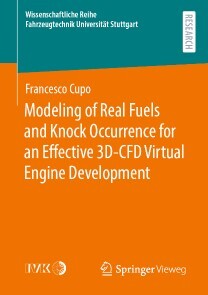
Modeling of Real Fuels and Knock Occurrence for an Effective 3D-CFD Virtual Engine Development
To drastically reduce the emission of greenhouse gases, the development of future internal combustion engines will be strictly linked to the development of CO2 neutral fuels (e.g. biofuels and e-fuels). This evolution implies an increase in development complexity, which needs the support of engine 3D-CFD simulations. Francesco Cupo presents approaches to accurately describe fuel characteristics and knock occurrence in SI engines, thus improving the current simulation capability in investigating alternative fuels and innovative combustion processes. The developed models are successfully used to investigate the influence of ethanol-based fuels and water injection strategies on knock occurrence and to conduct a virtual fuel design for and engine operating with the innovative SACI combustion strategy. Detailed description of real fuels.- Locally-distributed auto-ignition model and knock detection.- Influence of ethanol-based fuels and water injection on combustion and knock.- Virtual fuel design for SACI combustion strategy.

Einsatz der Blockchain-Technologie im Energiesektor
Die Blockchain-Technologie erweist sich als eine neue, hochinteressante Technologie, die seit der Einführung des Bitcoins in zahlreichen Anwendungsfeldern diskutiert wird. Die zahlreichen Forschungsprojekte untermauern die hohen Erwartungen an diese Technologie. Das vorliegende Essential soll ein grundlegendes Verständnis über die Blockchain-Technologie vermitteln und insbesondere den Fokus auf die technologische Ausgestaltung und Konzeptentwicklung in ausgewählten Bereichen der Energiewirtschaft legen.
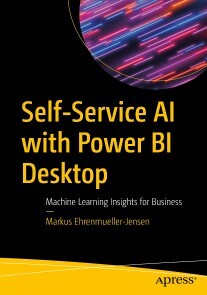
Self-Service AI with Power BI Desktop
This book explains how you can enrich the data you have loaded into Power BI Desktop by accessing a suite of Artificial Intelligence (AI) features. These AI features are built into Power BI Desktop and help you to gain new insights from existing data. Some of the features are automated and are available to you at the click of a button or through writing Data Analysis Expressions (DAX). Other features are available through writing code in either the R, Python, or M languages. This book opens up the entire suite of AI features to you with clear examples showing when they are best applied and how to invoke them on your own datasets.No matter if you are a business user, analyst, or data scientist – Power BI has AI capabilities tailored to you. This book helps you learn what types of insights Power BI is capable of delivering automatically. You will learn how to integrate and leverage the use of the R and Python languages for statistics, how to integrate with Cognitive Services and Azure Machine Learning Services when loading data, how to explore your data by asking questions in plain English ... and more! There are AI features for discovering your data, characterizing unexplored datasets, and building what-if scenarios.There’s much to like and learn from this book whether you are a newcomer to Power BI or a seasoned user. Power BI Desktop is a freely available tool for visualization and analysis. This book helps you to get the most from that tool by exploiting some of its latest and most advanced features.WHAT YOU WILL LEARN* Ask questions in natural language and get answers from your data* Let Power BI explain why a certain data point differs from the rest* Have Power BI show key influencers over categories of data* Access artificial intelligence features available in the Azure cloud* Walk the same drill down path in different parts of your hierarchy* Load visualizations to add smartness to your reports* Simulate changes in data and immediately see the consequences* Know your data, even before you build your first report* Create new columns by giving examples of the data that you need* Transform and visualize your data with the help of R and Python scriptsWHO THIS BOOK IS FORFor the enthusiastic Power BI user who wants to apply state-of-the-art artificial intelligence (AI) features to gain new insights from existing data. For end-users and IT professionals who are not shy of jumping into a new world of machine learning and are ready to make that step and take a deeper look into their data. For those wanting to step up their game from doing simple reporting and visualizations by making the move into diagnostic and predictive analysis.MARKUS EHRENMUELLER-JENSEN is a data professional who started his career as a consultant for Business Intelligence solutions on an IBM AS/400 system before he was introduced into the world of Microsoft’s Data Platform in 2006. He has since built Data Warehouses and Business Intelligence solutions for a wide variety of clients. His portfolio includes training and workshops, architectural designs, and the development of data-oriented solutions. In 2018 he founded Savory Data, an independent consultancy company.Markus is certified as a Microsoft Certified Solution Expert (MCSE) for Data Platform and Business Intelligence, and as a Microsoft Certified Trainer (MCT). He teaches databases, information management, and project management at HTL Leonding, Austria. He co-founded both PASS Austria and PUG Austria and co-organizes the yearly SQL Saturday in Vienna. He has been a Microsoft Most Valuable Professional (MVP) each year since 2017. 1. Asking Questions in Natural Language2. The Insights Feature3. Discovering Key Influencers4. Drill-Down and Decomposing Hierarchies5. Adding Smart Visualizations6. Experimenting with Scenarios7. Characterizing a Dataset8. Creating Columns from Example9. Executing R and Python Visualizations10. Transforming Data with R and Python11. Execute Machine Learning Models in the Azure Cloud

CompTIA Security+ Certification Study Guide
Prepare for the CompTIA Security+ certification exam that covers the skills required to perform core security functions and pursue a career in IT. You will learn the basic principles of network security.Computer network vulnerabilities and threats are covered and you will learn how to safeguard computer networks. Network security planning, technology, and organization are discussed along with associated legal and ethical issues.Lesson objectives and instruction succinctly review each major topic, including: network fundamentals, operational and organizational security, risk management, wireless security, change management, physical security, forensics, network attacks, and much more.WHAT YOU WILL LEARN* Identify the concepts of confidentiality, integrity, and availability* Implement secure network administration principles* Apply appropriate risk mitigation strategies* Explain the impact of physical security on computer and network security* Use assessment tools to discover security threats and vulnerabilities* Implement appropriate security controls when performing account managementWHO THIS BOOK IS FORSecurity professionals looking to get this credential, including systems administrators, network administrators, security administrators, junior IT auditors and penetration testers, security specialists, security consultants, security engineers, and moreAHMED SHEIKH is a Fulbright alumnus and has earned a master's degree in electrical engineering from Kansas State University, USA. He is a seasoned IT expert with a specialty in network security planning and skills in cloud computing. Currently, he is working as IT Expert Engineer at a leading IT electrical company.CHAPTER 1. GENERAL CONCEPTSIdentify the concepts of confidentiality, integrity and availability.Perform packet level analysis.CHAPTER 2. CHAPTER 2. NETWORK FUNDAMENTALS INFRASTRUCTURE SECURITYExplain the security function and purpose of network devices and technologies.Implement secure network administration principles.Differentiate network design elements and compounds.Use common protocols to employ infrastructure security.Identify commonly used default network ports.CHAPTER 3. IDS WIRELESS SECURITYExplain the security function and purpose of network devices and technologies.Apply secure network administration principles.Implement a wireless network in a secure manner.CHAPTER 4. ROLE OF PEOPLE IN SECURITY—OPERATIONAL AND ORGANIZATIONAL SECURITYExplain the importance of security-related awareness and training.CHAPTER 5. RISK MANAGEMENTExplain risk related concepts.Apply appropriate risk mitigation strategies.CHAPTER 6. CHANGE MANAGEMENTCompare aspects of business continuity.Execute disaster recovery plans and procedures.CHAPTER 7. PHYSICAL SECURITYExplain the impact of physical security on computer and network security.Explain the impact and proper use of environmental controls.CHAPTER 8. FORENSICS, LEGAL ISSUES, PRIVACYApply appropriate incident response procedures.Identify the various laws that affect cybersecurity.CHAPTER 9. ATTACKSIdentify the different types of malware that exist.Describe computer attacks.CHAPTER 10. NETWORK ATTACKSIdentify different types of network attacks.Use assessment tools to discover security threats and vulnerabilities.CHAPTER 11. BASELINE SECURE SOFTWARE DEVELOPMENTExplain the importance of application security.Carry out appropriate procedures to establish host security.Explain the importance of data security.CHAPTER 12. EMAIL AND IM WEB COMPONENTSDescribe security issues associated with Email and Instant Messaging.Explain web applications, plug-ins, and related security issues.Explain web-based application security issues.CHAPTER 13. AUTHENTICATION AND REMOTE ACCESSExplain the function and purpose of authentication services.Explain the fundamental concepts and best practices related to authentication.Identify the methods and protocols used for remote access to networks.CHAPTER 14. ACCESS CONTROL AND PRIVILEGE MANAGEMENTExplain the fundamental concepts and best practices related to authorization and access control.Implement appropriate security controls when performing account management.CHAPTER 15. CRYPTOGRAPHYSummarize general cryptography concepts.Apply appropriate cryptographic tools and products.CHAPTER 16. PUBLIC KEY INFRASTRUCTUREExplain the core concepts of public key infrastructure.Implement Public Key Infrastructure (PKI), certificate management and associated components.
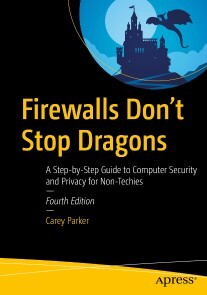
Firewalls Don't Stop Dragons
Rely on this practical, end-to-end guide on cyber safety and privacy written expressly for a non-technical audience. You will have just what you need to protect yourself—step by step, without judgment, and with as little jargon as possible. Just how secure is your computer right now? You probably don't know. Computers and the Internet have revolutionized the modern world, but if you are like most people, you have no clue how these things work and don't know the real threats. Protecting your computer is like defending a medieval castle. While moats, walls, drawbridges, and castle guards can be effective, you would go broke trying to build something dragon-proof. This book is not about protecting yourself from a targeted attack by the NSA; it is about arming yourself against common hackers and mass surveillance. There are dozens of no-brainer things we all should be doing to protect our computers and safeguard our data—just like wearing a seat belt, installing smoke alarms,and putting on sunscreen. Author Carey Parker has structured this book to give you maximum benefit with minimum effort. If you just want to know what to do, every chapter has a complete checklist with step-by-step instructions and pictures. This revised and expanded fourth edition contains more than 170 tips to make you and your family safer. It includes: * Updates for Windows 10 (May 2020) and Mac OS 10.15 (Catalina) * Updates for iOS 13 and Android 10 * Updated recommendations on the best apps, products, and services * More than 170 tips with complete step-by-step instructions and pictures * A preview of Mac OS 11 Big Sur and iOS 14 You will: * Create killer passwords that you do not have to remember * Browse the web safely and with confidence * Protect your data and reclaim your privacy * Shop and bank online with maximum security * Defend against identity theft * Protect yourself from viruses and scams * Maximize your smartphone security and privacy * Safeguard your children online * Block online tracking and dangerous ads * Send files and messages securely and privately * Set up secure home networking * Keep your smart devices from spying on you * Stop oversharing on social media * Create automated backups of all your devices * Learn how the Internet actually works * And more! Rely on this practical, end-to-end guide on cyber safety and privacy written expressly for a non-technical audience. You will have just what you need to protect yourself—step by step, without judgment, and with as little jargon as possible. Just how secure is your computer right now? You probably don't know. Computers and the Internet have revolutionized the modern world, but if you are like most people, you have no clue how these things work and don't know the real threats. Protecting your computer is like defending a medieval castle. While moats, walls, drawbridges, and castle guards can be effective, you would go broke trying to build something dragon-proof. This book is not about protecting yourself from a targeted attack by the NSA; it is about arming yourself against common hackers and mass surveillance. There are dozens of no-brainer things we all should be doing to protect our computers and safeguard our data—just like wearing a seat belt, installing smoke alarms,and putting on sunscreen. Author Carey Parker has structured this book to give you maximum benefit with minimum effort. If you just want to know what to do, every chapter has a complete checklist with step-by-step instructions and pictures. This revised and expanded fourth edition contains more than 170 tips to make you and your family safer. It includes: * Updates for Windows 10 (May 2020) and Mac OS 10.15 (Catalina) * Updates for iOS 13 and Android 10 * Updated recommendations on the best apps, products, and services * More than 170 tips with complete step-by-step instructions and pictures * A preview of Mac OS 11 Big Sur and iOS 14 What You Will Learn * Create killer passwords that you do not have to remember * Browse the web safely and with confidence * Protect your data and reclaim your privacy * Shop and bank online with maximumsecurity * Defend against identity theft * Protect yourself from viruses and scams * Maximize your smartphone security and privacy * Safeguard your children online * Block online tracking and dangerous ads * Send files and messages securely and privately * Set up secure home networking * Keep your smart devices from spying on you * Stop oversharing on social media * Create automated backups of all your devices * Learn how the Internet actually works * And more! Who This Book Is For Those who use computers and mobile devices, but do not know (or care) how they work. The book is for people who want to know what they need to do to protect themselves—step by step, without judgment, and with as little jargon as possible. Chapter 1: Before We Begin.- Chapter 2: Cybersecurity 101.- Chapter 3: First Things First.- Chapter 4: Passwords.- Chapter 5: Computer Security.- Chapter 6: Lan Sweet Lan.- Chapter 7: Practice Safe Surfing.- Chapter 8: Secure Communication.- Chapter 9: Online Accounts and Social Media.- Chapter 10: Parental Guidance.- Chapter 11: Don’t Be a Smart Phone Dummy.- Chapter 12: Odds and Ends.- Chapter 13: Parting Thoughts.- Chapter 14: Glossary. Carey Parker, CIPM was born and raised in Indiana, an only child who loved to tear apart his electronic toys and reassemble them in interesting ways. He began programming computers in middle school when personal computers were just starting to become popular. For years, these twin interests percolated until he attended Purdue University and learned that you could get paid to do this stuff—it was called electrical engineering! After obtaining both bachelor and master degrees in electrical engineering, Carey launched his career in telecommunications software development at Bell Northern Research (aka the "Big Nerd Ranch"). Over the next 20 years, he wrote software for multiple companies, large and small, and lived in various cities across the southern United States. In recent years, particularly after the Edward Snowden revelations in 2013, Carey became deeply concerned about computer security and privacy. In 2014, he began combining his passion for computers, cybersecurity,and fantasy novels with his long-time desire to write a book, and the result is Firewalls Don't Stop Dragons. This eventually launched a blog, newsletter, and weekly podcast of the same name.