

Computer und IT

Using Gatsby and Netlify CMS
Leverage the powerful new combination of Gatsby and Netlify CMS, a free open source content management solution, to build blazing fast apps. This book shows you how to create a React-powered website using the Gatsby framework for the frontend, and Netlify CMS as the content backend.Through the course of the book you'll gradually build a website for a coffee shop that includes a blog and a bakery/coffee menu that is customizable through Netlify CMS. The project starts with a bare-bones Gatsby site to which you'll add functionality such as setting up/configuring the CMS, creating different types of content, and writing some Gatsby glue code to consume the Markdown data via plugins. When done, you'll be well-equipped to build on your existing JavaScript and React knowledge to effectively use Gatsby and Netlify CMS for yourself or your clients.Using Gatsby and Netlify CMS is an ideal guide for anyone looking to build their own sites and manage their own content without having to deal with creating Markdown files or Git repositories.WHAT YOU'LL LEARN* Clone repositories, install dependencies and deploy on Netlify* Configure Netlify Identity and Git Gateway* Use Netlify CMS Content Manager* Source blog data using Gatsby plugin* Manage dynamic page reactions using Gatsby Node APIs* Work with pagination, content and menus* Customize Netlify CMSWHO THIS BOOK IS FORExperienced JavaScript developers with a good handle on React who want to learn how to build a maintainable Gatsby powered site. Basic familiarity with Gatsby is assumed but not required.JOE ATTARDI is a software engineer specializing in front-end development. He has over 15 years’ experience working with JavaScript, HTML, and CSS, and has worked extensively with front-end technologies such as Angular and React. He currently works at Salesforce, and has worked in the past with companies such as Dell and Nortel. He is also the author of Modern CSS (Apress, 2020). He lives in the Boston area with his wife and son. You can find him on Twitter at @JoeAttardi.1. Introduction to Netlify CMS2. Gatsby Crash Course3. Setting Up the Example Project4. Setting Up Netlify CMS5. The Netlify CMS Application6. Sourcing Blog Data7. Dynamic Page Creation8. Blog Pagination9. Adding More Content10. Creating the Coffee Menu11. Working with Images12. Customizing the CMS13. The Editorial Workflow14. Wrap Up

Serverless Security
Apply the basics of security in serverless computing to new or existing projects. This hands-on guide provides practical examples and fundamentals. You will apply these fundamentals in all aspects of serverless computing: improving the code, securing the application, and protecting the infrastructure. You will come away having security knowledge that enables you to secure a project you are supporting and have technical conversations with cybersecurity personnel.At a time when there are many news stories on cybersecurity breaches, it is crucial to think about security in your applications. It is tempting to believe that having a third-party host the entire computing platform will increase security. This book shows you why cybersecurity is the responsibility of everyone working on the project.WHAT YOU WILL LEARN* Gain a deeper understanding of cybersecurity in serverless computing* Know how to use free and open source tools (such as the Node Package Manager, ESLint, and VSCode) to reduce vulnerabilities in your application code* Assess potential threats from event triggers in your serverless functions* Understand security best practices in serverless computing* Develop an agnostic security architecture while reducing risk from vendor-specific infrastructureWHO THIS BOOK IS FORDevelopers or security engineers looking to expand their current knowledge of traditional cybersecurity into serverless computing projects. Individuals just beginning in serverless computing and cybersecurity can apply the concepts in this book in their projects.MIGUEL CALLES is a freelance cybersecurity content writer. He has an information assurance certification, and works as an engineer on a serverless project. He started in cybersecurity in 2016 for a US government contract, and has been doing technical writing since 2007, and has worked in various engineering roles since 2004. Miguel started his interest in cybersecurity when he was in middle school and was trying to backward engineer websites.INTRODUCTIONPART I: THE NEED FOR SECURITYCHAPTER 1: DETERMINING SCOPEUnderstanding the ApplicationScopingCHAPTER 2: PERFORMING A RISK ASSESSMENTUnderstanding the Threat LandscapeThreat ModelingPreparing the Risk AssessmentPart II: Securing the ApplicationCHAPTER 3: SECURING THE CODEAssessing DependenciesUsing Static Code Analysis ToolsWriting Unit TestsCHAPTER 4: SECURING THE INTERFACESIdentifying the InterfacesDetermining the Interface InputsReducing the Attack SurfaceCHAPTER 5: SECURING THE CODE REPOSITORYUsing a Code RepositoryLimiting Saved ContentPART III: SECURING THE INFRASTRUCTURECHAPTER 5: RESTRICTING PERMISSIONSUnderstanding PermissionsIdentifying the ServicesUpdating the PermissionsCHAPTER 6: ACCOUNT MANAGEMENTUnderstanding Account AccessRestricting Account AccessImplementing Multi-Factor AuthenticationUsing SecretsPART IV: MONITORING AND ALERTINGCHAPTER 7: MONITORING LOGSUnderstanding Logging MethodsReviewing LogsCHAPTER 8: MONITORING METRICSUnderstanding MetricsReviewing MetricsCHAPTER 9: MONITORING BILLINGUnderstanding BillingReviewing BillingCHAPTER 10: MONITORING SECURITY EVENTSUnderstanding Security EventsReviewing Security EventCHAPTER 10: ALERTINGUnderstanding AlertingImplementing AlertingCHAPTER 11: AUDITINGUnderstanding AuditingImplementing AuditingPART V: SECURITY ASSESSMENT AND REPORTCHAPTER 12: FINALIZING THE RISK ASSESSMENTScoring the Identified RisksDefining the Mitigation StepsAssessing the Business ImpactDetermining the Overall Security Risk Level

Learn PHP 8
Write solid, secure, object-oriented code in the new PHP 8. In this book you will create a complete three-tier application using a natural process of building and testing modules within each tier. This practical approach teaches you about app development and introduces PHP features when they are actually needed rather than providing you with abstract theory and contrived examples.In Learn PHP 8, programming examples take advantage of the newest PHP features; you’ll follow a learn-by-doing approach, which provides you with complete coding examples. “Do It” exercises in each chapter provide the opportunity to make adjustments to the example code. The end-of-chapter programming exercises allow you to develop your own applications using the algorithms demonstrated in the chapter.Each tier is logically and physically separated using object-oriented and dependency injection techniques, thus allowing independent tiers that can be updated with little or no effect on the other tiers. In addition to teaching good programming practices through OOP, there is a strong emphasis on creating secure code.As each chapter is completed, you’ll have the opportunity to design and create an application reinforcing the concepts learned.WHAT YOU WILL LEARN* Program PHP 8 web applications* Use interfaces, containers, and platforms* Apply modular programming * Manage data objects and use MySQL and other databasesWork with multi-functional and secure user interfaces * Handle logging exceptions and moreWHO THIS BOOK IS FORThose new to web development, specifically PHP programming. Also, this book can be useful to those who have some PHP/web development experience who are new to PHP 8.Steve Prettyman is a college instructor on PHP programming, web development, and related technologies. He is and has been a practicing web developer and is a book author.1. Introduction to PHP 82. Interfaces, Platforms, Containers: Three-Tiers Programming3. Modular Programming4. Secure User Interfaces5. Handling and Logging Exceptions6. Data Objects7. Authentication8. Multi-functional Interfaces

Beginning C++20
Begin your programming journey with C++ , starting with the basics and progressing through step-by-step examples that will help you become a proficient C++ programmer. This book includes new features from the C++20 standard such as modules, concepts, ranges, and the spaceship operator. All you need are Beginning C++20 and any recent C++ compiler and you'll soon be writing real C++ programs. There is no assumption of prior programming knowledge.All language concepts that are explained in the book are illustrated with working program examples, and all chapters include exercises for you to test and practice your knowledge. Free source code downloads are provided for all examples from the text and solutions to the exercises.This latest edition has been fully updated to the latest version of the language, C++20, and to all conventions and best practices of modern C++. Beginning C++20 also introduces the elements of the C++ Standard Library that provide essential support for the C++20 language.WHAT YOU WILL LEARN* Begin programming with the C++20 standard* Carry out modular programming in C++* Work with arrays and loops, pointers and references, strings, and more* Write your own functions, types, and operators* Discover the essentials of object-oriented programming* Use overloading, inheritance, virtual functions, and polymorphism* Write generic function and class templates, and make them safer using concepts * Learn the ins and outs of containers, algorithms, and ranges* Use auto type declarations, exceptions, move semantics, lambda expressions, and much moreWHO THIS BOOK IS FORProgrammers new to C++ and those who may be looking for a refresh primer on C++ in general.IVOR HORTON is self-employed in consultancy and writes programming tutorials. He is the author of many programming books. Ivor worked for IBM for many years and holds a bachelor's degree, with honors, in mathematics. Horton's experience at IBM includes programming in most languages (including assembler and high-level languages on a variety of machines), real-time programming, and designing and implementing real-time closed loop industrial control systems. He has extensive experience teaching programming to engineers and scientists (Fortran, PL/1, APL, etc.). Horton is an expert in mechanical, process, and electronic CAD systems; mechanical CAM systems; and DNC/CNC systems.PETER VAN WEERT works for Danaher in its R&D unit for digital dentistry software, developing software for the dental practice of tomorrow. In his spare time, he has co-authored two books on C++ and two award-winning Windows 8 apps and is a regular expert speaker at, and board member of, the Belgian C++ Users Group. He is a software engineer whose main interests and expertise are application software development, programming languages, algorithms, and data structures.He received his master of science degree in computer science summa cum laude with congratulations of the Board of Examiners from the University of Leuven. In 2010, he completed his PhD thesis there on the design and efficient compilation of rule-based programming languages at the research group for declarative programming languages and artificial intelligence. During his doctoral studies, he was a teaching assistant for object-oriented programming (Java), software analysis and design, and declarative programming. After graduating, Peter worked at Nikon Metrology for more than six years on large-scale, industrial application software in the area of 3D laser scanning and point cloud inspection. He learned to master C++ and refactoring and debugging of very large code bases, and he gained further proficiency in all aspects of the software development process, including the analysis of functional and technical requirements, and agile and scrum-based project and team management.1. Basic Ideas2. Introducing Fundamental Types of Data3. Working Fundamental Types4. Making Decisions5. Arrays and Loops6. Pointers and References7. Working with Strings8. Defining Functions9. Vocabulary Types10. Function Templates11. Modules and Namespaces12. Defining your own Data Types13. Operator Overloading14. Inheritance15. Polymorphism16. Runtime Errors and Exceptions17. Class Templates18. Move Semantics19. First-Class Functions20. Containers and Algorithms21. Constrained Templates and ConceptsAppendix A (online only; to be offered as part of source code download)

Creating Good Data
Create good data from the start, rather than fixing it after it is collected. By following the guidelines in this book, you will be able to conduct more effective analyses and produce timely presentations of research data.Data analysts are often presented with datasets for exploration and study that are poorly designed, leading to difficulties in interpretation and to delays in producing meaningful results. Much data analytics training focuses on how to clean and transform datasets before serious analyses can even be started. Inappropriate or confusing representations, unit of measurement choices, coding errors, missing values, outliers, etc., can be avoided by using good dataset design and by understanding how data types determine the kinds of analyses which can be performed.This book discusses the principles and best practices of dataset creation, and covers basic data types and their related appropriate statistics and visualizations. A key focus of the book is why certain data types are chosen for representing concepts and measurements, in contrast to the typical discussions of how to analyze a specific data type once it has been selected.WHAT YOU WILL LEARN* Be aware of the principles of creating and collecting data* Know the basic data types and representations* Select data types, anticipating analysis goals* Understand dataset structures and practices for analyzing and sharing* Be guided by examples and use cases (good and bad)* Use cleaning tools and methods to create good dataWHO THIS BOOK IS FORResearchers who design studies and collect data and subsequently conduct and report the results of their analyses can use the best practices in this book to produce better descriptions and interpretations of their work. In addition, data analysts who explore and explain data of other researchers will be able to create better datasets.HARRY J. FOXWELL is a professor. He teaches graduate data analytics courses at George Mason University in the department of Information Sciences and Technology and he designed the data analytics curricula for his university courses. He draws on his decades of experience as Principal System Engineer for Oracle and for other major IT companies to help his students understand the concepts, tools, and practices of big data projects. He is co-author of several books on operating systems administration. He is a US Army combat veteran, having served in Vietnam as a Platoon Sergeant in the First Infantry Division. He lives in Fairfax, Virginia with his wife Eileen and two bothersome cats.INTRODUCTIONGoal: The problem of dataset cleaning and why better design is neededWho this book is forCHAPTER 1: BASIC DATA TYPESGoal: understanding data typesNominal, ordinal, interval, ratio, otherHow/why to choose specific representationsCHAPTER 2: PLANNING YOUR DATA COLLECTIONGoal: preventive action, avoiding data creation errorsAnticipating your required analysisThe goals of descriptive statistics and visualizationsThe goals of relationship statistics and visualizationsIndependent and dependent variablesCHAPTER 3: DATASET STRUCTURESGoal: Understanding how to structure/store dataTypes of datasets.csv, SQL, Excel, Web, JSON,Sharing data (open formats)Managing datasetsCHAPTER 4: DATA COLLECTION ISSUESGoal: Understanding how to collect dataUnderstand and avoid BiasSamplingCHAPTER 5: EXAMPLES AND USE CASESGoal: Illustrate good & not so good datasetsCHAPTER 6: TOOLS FOR DATASET CLEANINGGoal: still need some data cleanup? here’s some helpData cleaning using R, Python, commercial tools (e.g., Tableau)ANNOTATED REFERENCESGoal: include helpful data design and cleaning references

Learn Data Science Using SAS Studio
Do you want to create data analysis reports without writing a line of code? This book introduces SAS Studio, a free data science web browser-based product for educational and non-commercial purposes. The power of SAS Studio comes from its visual point-and-click user interface that generates SAS code. It is easier to learn SAS Studio than to learn R and Python to accomplish data cleaning, statistics, and visualization tasks.The book includes a case study about analyzing the data required for predicting the results of presidential elections in the state of Maine for 2016 and 2020. In addition to the presidential elections, the book provides real-life examples including analyzing stocks, oil and gold prices, crime, marketing, and healthcare. You will see data science in action and how easy it is to perform complicated tasks and visualizations in SAS Studio.You will learn, step-by-step, how to do visualizations, including maps. In most cases, you will not need a line of code as you work with the SAS Studio graphical user interface. The book includes explanations of the code that SAS Studio generates automatically. You will learn how to edit this code to perform more complicated advanced tasks. The book introduces you to multiple SAS products such as SAS Viya, SAS Analytics, and SAS Visual Statistics.WHAT YOU WILL LEARN* Become familiar with SAS Studio IDE* Understand essential visualizations* Know the fundamental statistical analysis required in most data science and analytics reports* Clean the most common data set problems* Use linear progression for data prediction* Write programs in SAS* Get introduced to SAS-Viya, which is more potent than SAS studioWHO THIS BOOK IS FORA general audience of people who are new to data science, students, and data analysts and scientists who are experienced but new to SAS. No programming or in-depth statistics knowledge is needed.ENGY FOUDA is an author, freelance engineer, and journalist. She also is a freelance instructor and teaches SAS, Docker Fundamentals, Docker for Enterprise Developers, Docker for Enterprise Operations, and Kubernetes. Engy holds two master's degrees, one in journalism from Harvard University, Extension School, and another in computer engineering from Cairo University, Egypt. She earned the Data Science Professional Graduate Certificate from Harvard University, Extension School. She volunteers as the Team Lead for Momken Group (Engineering for the Blind), Egypt Scholars Inc. The team designs and manufactures devices and develops Arabic applications for visually impaired people in the MENA region. Engy volunteers as a Member-at-Large and as newsletter editor of the IEEE Mid-Hudson section. And she published several books that made Amazon's best-selling charts for Arabic books.

Designing Products for Evolving Digital Users
Digital user behavior is evolving at an ever-increasing pace, and predicting future trends is a booming business as a result. Users associate technology with their identities now more than ever, and it is up to you as a product designer to enhance their experience for the better. Designing Products for Evolving Digital Users is a 21st century handbook that helps you do just that. By providing insights that allow you to study UX (user experience) behavior patterns, online communities, and future digital trends, Designing Products for Evolving Digital Users instills confidence and fact-based foundations for your digital creations. Author Anastasia Utesheva expertly teaches you how to account for the way the technology impacts the identity of users and how that identity shifts through ongoing interaction with a product or service. She also brings in important case studies on social media, gaming, eRetail, and more to illustrate past examples of technology’s profound impact on communal and individual identity. Digital product design’s ultimate end goal is end user satisfaction. While a myriad of material is available out there consisting of simple tips and tricks for optimal digital design, Designing Products for Evolving Digital Users is a rare and remarkable title that cohesively accounts for all environmental factors involved. Comprehend how distributed technology impacts creation and negotiation of identity and explore communities that form around digital products. UX designers, futurists, students, and industry veterans alike have an abundance of invaluable learning ahead of them in Designing Products for Evolving Digital Users. What You Will Learn Learn how to design digital products/services that resonate with and transform identity of usersStudy how digital impacts formation of identityConsider how digital technology has impacted our world and implications for future digital trends Who This Book Is For UX designers, digital product creators, entrepreneurs, educators, philosophy of technology enthusiasts, futurists

BigQuery for Data Warehousing
Create a data warehouse, complete with reporting and dashboards using Google’s BigQuery technology. This book takes you from the basic concepts of data warehousing through the design, build, load, and maintenance phases. You will build capabilities to capture data from the operational environment, and then mine and analyze that data for insight into making your business more successful. You will gain practical knowledge about how to use BigQuery to solve data challenges in your organization.BigQuery is a managed cloud platform from Google that provides enterprise data warehousing and reporting capabilities. Part I of this book shows you how to design and provision a data warehouse in the BigQuery platform. Part II teaches you how to load and stream your operational data into the warehouse to make it ready for analysis and reporting. Parts III and IV cover querying and maintaining, helping you keep your information relevant with other Google Cloud Platform services and advanced BigQuery. Part V takes reporting to the next level by showing you how to create dashboards to provide at-a-glance visual representations of your business situation. Part VI provides an introduction to data science with BigQuery, covering machine learning and Jupyter notebooks.WHAT YOU WILL LEARN* Design a data warehouse for your project or organization* Load data from a variety of external and internal sources* Integrate other Google Cloud Platform services for more complex workflows* Maintain and scale your data warehouse as your organization grows* Analyze, report, and create dashboards on the information in the warehouse* Become familiar with machine learning techniques using BigQuery MLWHO THIS BOOK IS FORDevelopers who want to provide business users with fast, reliable, and insightful analysis from operational data, and data analysts interested in a cloud-based solution that avoids the pain of provisioning their own servers.MARK MUCCHETTI is an industry technology leader in healthcare and ecommerce. He has been working with computers and writing software for over 30 years, starting with BASIC and Turbo C on an Intel 8088 and now using Node.js in the cloud. He has been building and managing technology groups for much of that time, combining his deep love of technical topics with his management skills to create world-class platforms. Mark has also worked in databases, release engineering, front- and back-end coding, and project management. He believes that the best decisions are made with the best data available, and that BigQuery is a great technology to increase the value and accessibility of data for business leaders on a day-to-day basis. He has seen the transformation that accurate, timely data has on an organization’s ability to succeed, and wants to bring that knowledge to the world in a people-first way. PART I. BUILDING A WAREHOUSE1. Settling into BigQuery2. Starting Your Warehouse Project3. All My Data4. Managing BigQuery CostsPART II. FILLING THE WAREHOUSE5. Loading Data Into the Warehouse6. Streaming Data Into the Warehouse7. DataflowPART III. USING THE WAREHOUSE8. Care and Feeding of Your Warehouse9. Querying the Warehouse10. Scheduling Jobs11. Serverless Functions with GCP12. Cloud LoggingPART IV. MAINTAINING THE WAREHOUSE13. Advanced BigQuery14. Data Governance15. Adapting to Long-Term ChangePART V. REPORTING ON AND VISUALIZING YOUR DATA16. Reporting17. Dashboards and Visualization18. Google Data StudioPART VI. ENHANCING YOUR DATA'S POTENTIAL19. BigQuery ML20. Jupyter Notebooks and Public Datasets21. Conclusion22. Appendix A: Cloud Shell and Cloud SDK23. Appendix B: Sample Project Charter

Monitoring Microservices and Containerized Applications
Discover the methodologies and best practices for getting started with container services monitoring using Prometheus, AppDynamics, and Dynatrace. The book begins with the basics of working with the containerization and microservices architecture while establishing the need for monitoring and management technologies. You’ll go through hands-on deployment, configuration, and best practices for Prometheus. Next, you’ll delve deeper into monitoring of container ecosystems for availability, performance, and logs, and then cover the reporting capabilities of Prometheus. Further, you’ll move on to advanced topics of extending Prometheus including how to develop new use cases and scenarios.You’ll then use enterprise tools such as AppDynamics and Wavefront to discover deeper application monitoring best practices. You’ll conclude with fully automated deployment of the monitoring and management platforms integrated with the container ecosystem using infrastructure-as -code tools such as Jenkins, Ansible and Terraform. The book provides sample code and best practices for you to look at container monitoring from a holistic viewpoint.This book is a good starting point for developers, architects, and administrators who want to learn about monitoring and management of cloud native and microservices containerized applications.WHAT YOU WILL LEARN* Examine the fundamentals of container monitoring* Get an overview of the architecture for Prometheus and Alert Manager* Enable Prometheus monitoring for containers* Monitor containers using Wavefront* Use the guidelines on container monitoring with enterprise solutions AppDynamics and Wavefront WHO THIS BOOK IS FORSoftware developers, system administrators, and DevOps engineers working for enterprise customers who want to use monitoring solutions for their container ecosystems.Navin Sabharwal is an innovator, thought leader, author, and consultant in the areas of AI, machine learning, cloud computing, big data analytics, and software product development. He is responsible for IP development and service delivery in the areas of AI and machine learning, automation products, GCP, cloud computing, public cloud AWS, and Microsoft Azure. Navin has created niche award-winning products and solutions and has filed numerous patents in diverse fields such as IT services, assessment engines, ranking algorithms, capacity planning engines, and knowledge management.Piyush is a solution architect for automation, DevOps, and cloud services with 10 years of IT experience. He is currently working as a deputy general manager at HCL DRYiCE, focusing on creating solutions catering to cloud adoption (including cloud landing zone, migration, and operations), automation, orchestration, and cloud life-cycle management.Chapter 1 Container Overview• Container introduction• Container ecosystem overview• Container architectureChapter 2 Getting Started with Container• Container images• Running the first container• Deploying applicationChapter 3 Introduction to Prometheus and Alert manager• Prometheus overview• Monitoring architecture• Setting up Prometheus & Alert managerChapter 4 Container Availability Monitoring• Availability monitoring introduction• Key KPI and metrics for Container ecosystem• Hands on configuration of availability monitoringChapter 5 Container Performance Monitoring• Performance monitoring introduction• Key KPI and metrics for Container ecosystem• Hands on configuration of performance monitoringChapter 6 Container Log Monitoring• Log Monitoring introduction• Key KPI and Metrics for Container ecosystem• Hands on configuration of Log monitoringChapter 7 Container Reporting & Dashboards• Introduction to reporting dashboard solution• Prometheus with Grafana• Prometheus with KibanaChapter 8 Working with Prometheus Query Language (PromQL)• Introduction to basic concepts• Working with time series data• Integration APIChapter 9 Automation and Orchestration of Container Monitoring• Introduction to Infra as code solution• Integration with IaC solution• Hands on configuration of Jenkins/Ansible/Terraform based pipeline

Entwicklung eines Customization Frameworks für cloudbasierte Shopfloor Management Systeme. Wie digitale Produkte für Kunden individualisierbar bleiben
Durch die voranschreitende Digitalisierung und die damit verbundene digitale Verfügbarkeit von Produktionsprozessdaten in Echtzeit ergeben sich auf Shopfloor-Ebene neue Möglichkeiten. Besonderes Potenzial bieten die rechnergestützte Auswertung und die Interaktion mit den Mitarbeitern vor Ort, aber auch mit dem Management. Doch die Datenintegration in Produktionsprozesse bringt auch Herausforderungen. Digitale Produkte sollen kundenspezifisch individualisierbar sein, bei der Einbindung in Unternehmen sind daher meist funktionale und technische Anpassungen notwendig. Dadurch wird für den Kunden die angestrebte Digitalisierung langwierig und kostenintensiv, für den Anbieter herrscht Planungsunsicherheit. Jan Heimer leitet ein Customization Framework für ein digitales Shopfloor Management System her. Mit diesem sollen Skalierbarkeit, Standardisierung und Flexibilität auch bei einer cloudbasierten Systemarchitektur erreicht werden, sodass Kunden neue Systeme flexibel nach ihren Wünschen anpassen können. Aus dem Inhalt: - Hybrid-Cloud; - Industrie 4.0; - Lean Management; - Digitale Transformation; - Nutzenkontext

Projekt Unicorn
Mit Spannung erwarteter Folgeband zum Bestseller "Projekt Phoenix" - Roman, der "Projekt Phoenix" um die Perspektive der Entwickler ergänzt - Wall Street Journal-Bestseller in den USA - fesselnde Story über die Herausforderungen moderner Softwareentwicklung in Zeiten der digitalen Transformation Parts Unlimited – ein milliardenschweres Unternehmen der Automobilbranche – steht kurz davor, aus dem Markt verdrängt zu werden. Nach einer folgenschweren Panne bei der Lohn- und Gehaltsabrechnung wird Maxine, eine leitende Softwareentwicklerin, unverschuldet in das berüchtigte Projekt Phoenix strafversetzt. Dort verzweifelt sie fast an einem bürokratischen Monsterapparat mit endlosen Meetings und hochkomplizierten Regeln – bis sie von firmeninternen Rebellen angeworben wird, die die bestehende Ordnung umstürzen wollen: Damit Entwicklerinnen und Entwickler wieder echte Freude an ihrer Arbeit haben. Die kluge und kämpferische Maxine und ihre rebellischen Kolleginnen und Kollegen rufen Projekt Unicorn ins Leben und setzen dabei auf die "Fünf Ideale". Damit verändern sie grundlegend, wie die Business- und Technologiebereiche des Unternehmens zusammenarbeiten – und geraten in das Fadenkreuz einflussreicher und gefährlicher Gegner. Gelingt es ihnen, das Überleben von Parts Unlimited in einem Wettrennen gegen die Zeit zu sichern? Packend beschreibt Gene Kim, Autor des Bestsellers "Projekt Phoenix", die Herausforderungen, denen sich Unternehmen – und alle, die in ihnen arbeiten – im Zeitalter von Digital Disruption stellen müssen: in der Softwareentwicklung und als lernende Organisation. Sie werden sich in diesem Roman wiederfinden – und die fesselnde Story wird Sie unterhalten und Ihnen viele Denkanstöße geben.
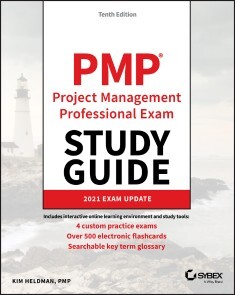
PMP Project Management Professional Exam Study Guide
PREPARE FOR PMP CERTIFICATION EXAM SUCCESS WITH THIS FULLY UPDATED AND COMPREHENSIVE STUDY GUIDEThis study guide serves as a comprehensive resource for those who plan on taking the Project Management Professional (PMP) certification exam administered by PMI. The book helps you prepare for the exam, and it will continue to serve project managers as an on-the-job reference book.The PMP Project Management Professional Exam Study Guide, Tenth Edition is fully updated to include recent changes to the exam. New content covers the integral role that Agile and other iterative practices have in project management. Updates also address the pivotal responsibilities of the project manager and the skill sets required for this position. The study guide was written to reflect the Project Management Process and Procedures found in the revised A Guide to the Project Management Body of Knowledge -- PMBOK® Guide, 6th Edition.Well-known author and expert Kim Heldman, PMP, helps to prepare you for the exam with in-depth coverage of topics, concepts, and key terms. Learn more about the three main domain areas of people, process, and business environment, plus the predictive, agile, and hybrid approaches to project management.This guide is an effective learning aid that will take your understanding to the next level.* Provides comprehensive material, covering the complete exam outline* Lists chapter objectives and offers detailed discussions of these objectives* Reflects differences in project management environments and approaches* Effectively presents real world scenarios, project application sidebars, and chapter review questionsYou’ll also connect to a beneficial, on-the-go resource: an interactive online learning environment and test bank. This environment includes an assessment test, chapter tests, practice exams, electronic flashcards, and a glossary of key terms. A thorough review is the best prep for a challenging certification exam. So, get ready with this essential PMP study guide.ABOUT THE AUTHORKIM HELDMAN, PMP®, is Senior Manager, IT/Chief Information Officer for the Regional Transportation District in Denver, Colorado, where she oversees an IT portfolio of projects that range from those small in scope and budget to multimillion-dollar, multiyear projects. Kim has more than 25 years of experience in IT project management, resource planning, budgeting, project prioritization, and strategic and tactical planning. Most of the real-world scenarios in this Study Guide are based on her actual experiences on the job. Visit her website at www.kimheldman.com. Introduction xixAssessment Test xxixAnswers to Assessment Test xlixCHAPTER 1 BUILDING THE FOUNDATION 1Establishing the Foundation 3Projects vs. Operations 4Project Characteristics 6What Is Project Management? 7Programs 8Portfolios 8Organizational Project Management 11Project Management Offices 11Understanding How Projects Come About 13Needs and Demands and Other Factors That Lead to Project Creation 14Skills Every Good Project Manager Needs 17Technical Project Management Skills 18Business Management and Strategic Skills 18Communication Skills 19Organizational and Planning Skills 19Conflict Management Skills 20Negotiation and Influencing Skills 20Leadership Skills 21Team-Building and Motivating Skills 21Role of a Project Manager 22Understanding Project Management Process Groups 22Determining a Project Methodology or Approach 28Life Cycle Categories 29Predictive Life Cycle Methodology 30Agile Methodologies 33Hybrid 38Project Life Cycles 38Understanding How This Applies to Your Next Project 39Summary 40Exam Essentials 41Review Questions 43CHAPTER 2 ASSESSING PROJECT NEEDS 49Exploring the Project Management Knowledge Areas 51Project Integration Management 53Project Scope Management 56Project Schedule Management 57Project Cost Management 58Project Quality Management 59Project Resource Management 59Project Communications Management 60Project Risk Management 62Project Procurement Management 62Project Stakeholder Management 63Assessing Project Viability 64Using Project Selection Methods 65Assessing Project Needs and Creating the Project Charter 73Enterprise Environmental Factors 78Organizational Process Assets 78Tools and Techniques 81Formalizing and Publishing the Project Charter 82Pulling the Project Charter Together 83Key Stakeholders 84Project Charter Sign-Off 87Maintaining Project Artifacts 88Introducing the Kitchen Heaven Project Case Study 89Understanding How This Applies to Your Next Project 93Summary 94Exam Essentials 96Review Questions 98CHAPTER 3 DELIVERING BUSINESS VALUE 103Understanding Organizational Structures 106Functional Organizations 108Project-Oriented Organizations 112Matrix Organizations 114Other Organizational Structures 118Pmo 118PMO in an Agile Environment 119Project-Based Organizations 121Influences of Organizational Structure on Agile Methodologies 122Identifying Stakeholders 123Discovering Stakeholders 124Stakeholder Analysis 126Categorizing Stakeholders 127Stakeholder Register 134Stakeholders on an Agile Project 135Six Sigma Adaptive Methodology 137Delivering Business Value 140Business Value Network 142Assessing Business Value 143Delivering Business Value Incrementally 145Examining Business Value 147Subdividing Project Tasks 148Understanding How This Applies to Your Next Project 151Summary 152Exam Essentials 153Review Questions 155CHAPTER 4 DEVELOPING THE PROJECT SCOPE 161Developing the Project Management Plan 164Project Complexity 168Data Gathering and Interpersonal Skills 168Documenting the Project Management Plan 169Documenting the Project Management Plan Using a Predictive Methodology 172Plan Scope Management 173Alternatives Analysis 175Documenting the Scope Management Plan 177Documenting the Requirements Management Plan 178Collecting Requirements 178Gathering Documents for the Collect Requirements Process 180Gathering and Documenting Requirements 185Finalizing Requirements 189Defining Scope 192Writing the Project Scope Statement 194Managing the Product Backlog 199Creating the Work Breakdown Structure 201Decomposing the Deliverables 202Constructing the WBS 203Backlog 211Finalizing the WBS 212Understanding How This Applies to Your Next Project 216Summary 218Exam Essentials 219Review Questions 221CHAPTER 5 CREATING THE PROJECT SCHEDULE 229Creating the Schedule Management Plan 232Defining Activities 233Creating the Activity List 234Breaking Down User Stories 235Understanding the Sequence Activities Process 237Precedence Diagramming and Leads and Lags 238Project Management Information System 243Project Schedule Network Diagrams 243Estimating Activity Resources 244How to Estimate Activity Resources 245Documenting Resource Requirements 246Estimating Resources in an Adaptive Methodology 247Estimating Activity Durations 247Project Calendars and Other Considerations 248Estimating Techniques 249Duration Estimates 253Estimating Activity Durations Using Adaptive Methodologies 255Developing the Project Schedule 257Gather Documents to Assist in Developing the Schedule 257Developing the Project Schedule 258Project Schedule and the Schedule Baseline 272Using a Kanban Board and Scrum Board 277Scrum Board 279Combining Techniques 280Agile Release Planning 281Applying Process Groups in an Agile Approach 281Understanding How This Applies to Your Next Project 286Summary 287Exam Essentials 289Review Questions 291CHAPTER 6 DEVELOPING THE PROJECT BUDGET AND ENGAGING STAKEHOLDERS 297Creating the Cost Management Plan 300Performing Plan Cost Management 301Creating the Cost Management Plan 302Estimating Costs 303Estimating Techniques 307Estimating Costs for an Agile Project 308Creating the Cost Estimates 309Establishing the Cost Baseline 311Techniques for Developing the Project Budget 313Developing the Cost Baseline 314Understanding Stakeholders 318Analyzing Stakeholders 319Stakeholder Engagement Plan 320Mentoring Stakeholders 321Engaging Stakeholders in an Adaptive Methodology 322Communicating the Plan 323Planning Communications 324Determining Communication Needs 325Documenting the Communications Management Plan 331Communicating on an Agile Team 333A Closer Look at Adaptive Methodologies 335Other Methodologies 340Combining Methodologies 345Understanding How This Applies to Your Next Project 348Summary 349Exam Essentials 351Review Questions 353CHAPTER 7 IDENTIFYING PROJECT RISKS 359Understanding Risk 361Creating the Risk Management Plan 362Risk Attitude 363Conducting Risk Meetings 364Documenting the Risk Management Plan 366Identifying Potential Risks 372Data Gathering and Data Analysis Techniques for Identifying Risks 374Documenting the Risk Register 378Identifying Risks Using an Agile Approach 380Analyzing Risks Using Qualitative Techniques 381Performing Qualitative Risk Analysis 382Ranking Risks in the Risk Register 390Quantifying Risk 391Performing Quantitative Risk Analysis 392Updating the Risk Report 397Developing a Risk Response Plan 398Strategies for Creating Risk Responses 399Documenting the Risk Responses Plan 404Assessing Risks Using an Agile Approach 407Planning for Project Compliance 409Understanding How This Applies to Your Next Project 413Summary 414Exam Essentials 415Review Questions 417CHAPTER 8 PLANNING AND PROCURING RESOURCES 423Procurement Planning 425Gathering Documents for the Procurement Management Plan 427Source Selection Criteria 433Procurement Management Plan 435Procurements in an Agile Environment 442Developing the Resource Management Plan 445Understanding Enterprise Environmental Factors 446Using Data Representation Techniques for Plan Resource Management 448Documenting the Resource Management Plan 451Resources on an Agile Project 455Quality Planning 456Preparing for Quality 457Developing the Quality Management Plan 458Documenting the Quality Management Plan 466Quality Planning for Agile Projects 468Project Planning Using Agile Methodologies 469Bringing It All Together 470Choosing a Life Cycle Methodology 473Understanding How This Applies to Your Next Project 480Summary 481Exam Essentials 482Review Questions 485CHAPTER 9 DEVELOPING THE PROJECT TEAM 491Directing and Managing Project Work 494Direct and Manage Project Work Inputs 496Project Management Information System 499Deliverables and Work Performance Data 499Directing Project Work on Agile Projects 504Executing Practices for Delivering Project Work 508Acquiring the Project Team and Project Resources 510The Resource Management Plan 510Techniques for Acquiring Resources 511Project Team Assignments 515Developing the Project Team 517Generational Diversity 518Tools and Techniques to Develop the Team 520Developing Agile Teams 536Team Performance Assessments 539Managing Project Teams 543Emotional Intelligence and Other Tools for Managing Teams 543Lessons Learned Managing Teams 545Understanding How This Applies to Your Next Project 547Summary 548Exam Essentials 550Review Questions 552CHAPTER 10 SHARING INFORMATION 559Implementing Risk Responses 563Conducting Procurements 563Evaluating Proposals 564Creating Procurement Agreements 571Conducting Procurements on Agile Projects 573Laying Out Quality Assurance Procedures 574Managing Quality with Data and Audits 575Quality Reports and Test and Evaluation Documents 580Conducting Quality Assessments on an Agile Project 581Managing Project Knowledge 582Knowledge Management 583Information Management 583Managing Project Artifacts 583Managing Project Information 584Communication and Conflict Resolution Skills 585Project Communications and Elements of Communicating 594Communicating on Agile Projects 596Managing Stakeholder Engagement 597Observing and Conversing 598Agile Frameworks 599Agile Methodologies or Frameworks 600Scaling Frameworks 601Understanding How This Applies to Your Next Project 606Summary 607Exam Essentials 608Review Questions 611CHAPTER 11 MEASURING AND CONTROLLING PROJECT PERFORMANCE 619Monitoring and Controlling Project Work 624Forecasting Methods 625Work Performance Reports 626Controlling Procurements 627Procurement Documents and Approved Change Requests 629Monitoring Vendor Performance 631Closing Out Procurements 632Monitoring Communications 636Documents to Help Monitor Communications 637Monitoring Communications with Meetings 637Work Performance Information 639Performing Integrated Change Control 642How Change Occurs 643Change Control Concerns 644Configuration Control 645Change Control System 646Approved Change Requests 650Changes in the Business Environment 651Monitoring Stakeholder Engagement 654Controlling Resources 654Utilizing Control Quality Techniques 655Control Quality Tools and Techniques 656Verifying Deliverables 664Monitoring and Controlling Risk 664Monitor Risks Analysis and Meetings 666Monitor Risks Updates 667Monitoring Project Management Integrations 668Understanding How This Applies to Your Next Project 671Summary 672Exam Essentials 674Review Questions 676CHAPTER 12 CONTROLLING WORK RESULTS AND CLOSING OUT THE PROJECT 683Controlling Cost Changes 686Earned Value Analysis 687Variance Analysis 689Trend Analysis 692To-Complete Performance Index 697Earned Value Measures on Agile Projects 700Monitoring and Controlling Schedule Changes 702Burndown and Burnup Charts 703Performance Reviews 705Changes to the Schedule 706Validating Project Scope 707Controlling Scope 708Measuring Work Results on Agile Projects 710Formulating Project Closeout 713Characteristics of Closing 713Project Endings 714Closing Out the Project 717Administrative Closure Procedures 718Regression Analysis 719Close Project or Phase Final Report 719Closing Out the Procurements 723Closing Out an Agile Project 724Celebrate! 725Releasing Project Team Members 725Balancing Stakeholders’ Interests at Project Close 725Competing Needs 726Dealing with Issues and Problems 727Balancing Constraints 727Professional Responsibility 727Responsibility 728Respect 731Fairness 734Honesty 737Role Delineation Study 739Applying Professional Knowledge 739Project Management Knowledge 740Education Providers 740Industry Knowledge 740Understanding How This Applies to Your Next Project 746Summary 748Exam Essentials 750Review Questions 752APPENDICES 757APPENDIX A ANSWERS TO REVIEW QUESTIONS 759Chapter 1: Building the Foundation 760Chapter 2: Assessing Project Needs 761Chapter 3: Delivering Business Value 763Chapter 4: Developing the Project Scope 765Chapter 5: Creating the Project Schedule 767Chapter 6: Developing the Project Budget and Engaging Stakeholders 768Chapter 7: Identifying Project Risks 770Chapter 8: Planning and Procuring Resources 771Chapter 9: Developing the Project Team 773Chapter 10: Sharing Information 775Chapter 11: Measuring and Controlling Project Performance 776Chapter 12: Controlling Work Results and Closing Out the Project 778APPENDIX B PROCESS INPUTS AND OUTPUTS 781Initiating Processes 782Planning Processes 784Executing Processes 807Monitoring and Controlling Processes 821Closing Processes 836Index 839
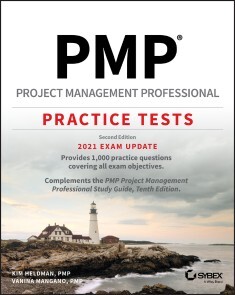
PMP Project Management Professional Practice Tests
THE BEST PRACTICE TEST PREPARATION FOR THE PMP EXAM!Boost your confidence through preparation before you take the new Project Management Professional (PMP) exam. The PMP Project Management Professional Practice Tests is the hands-on way to prepare for the exam and achieve your certification.* Access three practice tests* Study questions that cover the three PMP performance domains* Test your knowledge with three additional bonus exams* Practice with a total of 1,000 unique test questions.The Project Management Professional (PMP) certification was developed by the Project Management Institute (PMI). The certification requires extensive project management experience, instructional hours, and successful completion of the certification exam. Well-known PMP authors and experts, Kim Heldman and Vanina Mangano, have written practice questions that will help you get ready for testing as you work toward certification. The test questions provide you with coverage within each of the performance domains: people, process, and business environments.Project managers play a critical role in today’s organizations. When you pass the exam and earn certification, you will gain additional recognition for your skill set and expertise. This confidence-building guide also connects you to an interactive online learning environment and test bank including all the practice exam questions. Get help reaching your professional goals with the right PMP tools!ABOUT THE AUTHORSKIM HELDMAN, MBA, PMP, is the Chief Information Officer for the Regional Transportation District in Denver, Colorado. She has over 25 years of experience in project management and more than 18 years of experience in senior management positions. VANINA MANGANO, PMP, is a project portfolio management leader within Microsoft Corporation and leads a security PMO within the Cloud and AI division. She devotes time to furthering the project management profession through her volunteer work at the Project Management Institute. Introduction xvChapter 1 People (Domain 1.0) 1Chapter 2 Process (Domain 2.0) 37Chapter 3 Business Environment (Domain 3.0) 75Chapter 4 Full-Length Practice Exam 1 99Chapter 5 Full-Length Practice Exam 2 145Chapter 6 Full-Length Practice Exam 3 191Appendix Answers and Explanations 237Chapter 1: People (Domain 1.0) 238Chapter 2: Process (Domain 2.0) 250Chapter 3: Business Environment (Domain 3.0) 264Chapter 4: Full-Length Practice Exam 1 273Chapter 5: Full-Length Practice Exam 2 290Chapter 6: Full-Length Practice Exam 3 307Index 329

Persönlichkeitsschutz in Social Networks
Dieses Buch befasst sich mit dem Schutz der Persönlichkeitsrechte der Nutzer von Social Networks. Es werden die Vorgaben der Datenschutz-Grundverordnung dezidiert auf Social Networks angewendet. Diese haben auf unionsrechtlicher Ebene mit dem Wirksamwerden der Datenschutz-Grundverordnung wichtige Veränderungen erfahren. Besondere Beachtung findet dabei die Verteilung der Verantwortlichkeit auf Anbieter und Nutzer, die durch die komplexen Datenverarbeitungsvorgänge in Social Networks in der Praxis sehr vielschichtig sind. Außerdem werden mithilfe der interdisziplinären Methode KORA aus verfassungsrechtlichen Vorgaben und Anforderungen rechtliche Kriterien identifiziert und organisatorische und technische Gestaltungsziele entwickelt, um eine rechtsverträgliche Systemgestaltung von Social Networks anzustoßen.MAXI NEBEL ist wissenschaftliche Mitarbeiterin in der Projektgruppe verfassungsverträgliche Technikgestaltung (provet) unter der Leitung von Prof. Dr. Alexander Roßnagel am Wissenschaftlichen Zentrum für Informationstechnik-Gestaltung (ITeG) an der Universität Kassel. Sie ist Mitglied im Forum Privatheit.MAXI NEBEL ist wissenschaftliche Mitarbeiterin in der Projektgruppe verfassungsverträgliche Technikgestaltung (provet) unter der Leitung von Prof. Dr. Alexander Roßnagel am Wissenschaftlichen Zentrum für Informationstechnik-Gestaltung (ITeG) an der Universität Kassel. Sie ist Mitglied im Forum Privatheit. Einleitung.- Untersuchungsgegenstand Social Networks.- Individuelle und gesellschaftliche Auswirkungen der Nutzung von Social Networks.- Privatsphäre und Privatheit.- Verfassungsrechtliche Vorgaben.- Unionsrechtliche Vorgaben.- Regelungen der Datenschutz-Grundverordnung.- Rechtsverträgliche Systemgestaltung.- Zusammenfassung und Ausblick

Intermediate C Programming for the PIC Microcontroller
Delve into the exciting world of embedded programming with PIC microcontrollers in C. The key to learning how to program is to understand how the code works – and that is what you’ll learn here.Following C Programming for the PIC Microcontroller, this book continues exploring the coding required to control the PIC microcontroller and can be used as a standalone single reference, or paired with the previous title to enhance your programming skills. You'll see how to control the position of a servo motor and use the compare aspect of the CCP module to create a square wave with varying frequency. You'll also work with the capture aspect of the CCP to determine the frequency of a signal inputted to the PIC and use external and internal interrupts.This book breaks down the programs with line-by-line analysis to give you a deep understanding of the code. After reading it you’ll be able to use all three aspects of the Capture, Compare and PWM module; work with different types of interrupts; create useful projects with the 7 segment display; and use the LCD and push button keyboard.WHAT YOU’LL LEARN* Create a small musical keyboard with the PIC* Manage a stepper motor with the PIC* Use the main features of the MPLABX IDE* Interface the PIC to the real world* Design and create useful programs based around the PIC18F4525WHO THIS BOOK IS FOREngineering students and hobbyist who want to try their hand at embedded programming the PIC micros.Hubert Ward has nearly 25 years of experience as a college lecturer delivering the BTEC, and now Pearson's, Higher National Certificate and Higher Diploma in Electrical & Electronic Engineering. Hubert has a 2.1 Honours Bachelor's Degree in Electrical & Electronic Engineering. Hubert has also worked as a consultant in embedded programming. His work has established his expertise in the assembler and C programming languages, within the MPLABX IDE from Microchip, as well as designing electronic circuits, and PCBs, using ECAD software. Hubert was also the UK technical expert in Mechatronics for three years, training the UK team and taking them to enter in the Skills Olympics in Seoul 2001, resulting in one of the best outcomes to date for the UK in Mechatronics.Introduction The Aims and Objectives of the Book The Objectives of the Book The PrerequisitesChapter 1: Creating a Header File Header Files Creating a Header File Creating a Project in MPLABX Including the Header File Create the Project Source File Analysis of Listing 1.1 SynopsisChapter 2: Controlling a Seven Segment Display The Seven Segment Display Common Anode LED Common Cathode The Program The Algorithm The Flowchart The Listing for the Seven Segment Display Improving the Seven Segment Display Program The Issue with the Program Arrays Using Pointers Analysis The Improved Program Exercise 2.1 SynopsisChapter 3: The 24 Hour Clock The Seven Segment Display The Algorithm The Initialization of the PIC. Analysis of Listing 3.1 A 24 Hr Clock with the LCD Display Analysis of the Header File for the LCD The Analysis of Listing 3.2 Improvements for the 24Hr Clock LCD Program Using Switch and Case Key Words Analysis of the New SubroutineChapter 4: Creating a Square Wave Why Create a Square Wave? Musical Notes Exercise 4.1 The Speed of the Simple DC Motor PWM Pulse Width Modulation Creating a Square Wave Creating a 500Hz Square Wave The Mark Time or Duty Cycle Creating Two Square Wave Outputs Setting the Speed of a DC Motor Driving the Motor Creating a Three speed DC Motor Program Varying the Space Width Using A Variable Input Voltage to Control the Speed of a DC Motor Creating a Musical Note Creating the Middle C Note Create a Musical Keyboard The Analysis of Listing 4.6 Summary of Chapter 4Chapter 5: Making Music Creating a Musical Note Creating the Middle C NoteChapter 6: The Stepper Motor The Servo Motor Controlling the Positions of the Servo Motor with a Variable ResistorChapter 7 :Interrupts The Fetch and Execute Cycle The Program Counter PC The Sources of Interrupts Setting the Interrupts The Algorithm for the Interrupt Test Program The Analysis of the Listing 7.1.

Empower Decision Makers with SAP Analytics Cloud
Discover the capabilities and features of SAP Analytics Cloud to draw actionable insights from a variety of data, as well as the functionality that enables you to meet typical business challenges. With this book, you will work with SAC and enable key decision makers within your enterprise to deliver crucial business decisions driven by data and key performance indicators. Along the way you’ll see how SAP has built a strong repertoire of analytics products and how SAC helps you analyze data to derive better business solutions.This book begins by covering the current trends in analytics and how SAP is re-shaping its solutions. Next, you will learn to analyze a typical business scenario and map expectations to the analytics solution including delivery via a single platform. Further, you will see how SAC as a solution meets each of the user expectations, starting with creation of a platform for sourcing data from multiple sources, enabling self-service for a spectrum of business roles, across time zones and devices. There’s a chapter on advanced capabilities of predictive analytics and custom analytical applications. Later there are chapters explaining the security aspects and their technical features before concluding with a chapter on SAP’s roadmap for SAC.Empower Decision Makers with SAP Analytics Cloud takes a unique approach of facilitating learning SAP Analytics Cloud by resolving the typical business challenges of an enterprise. These business expectations are mapped to specific features and capabilities of SAC, while covering its technical architecture block by block.WHAT YOU WILL LEARN* Work with the features and capabilities of SAP Analytics Cloud* Analyze the requirements of a modern decision-support systemUse the features of SAC that make it a single platform for decision support in a modern enterprise. * See how SAC provides a secure and scalable platform hosted on the cloud WHO THIS BOOK IS FOREnterprise architects, SAP BI analytic solution architects, and developers.VINAYAK is a seasoned analytics consultant with experience across multiple business domains and roles. As senior architect at Tata Consultancy Services Ltd., Vinayak has been engaged in technology consulting and architecting solutions across the SAP analytics portfolio for Fortune 500 firms. He has been instrumental in building, mentoring, and enabling teams delivering complex digital transformations for global clients. Passionate about technology, Vinayak regularly publishes articles and technical papers with well-known publications. He is also an active contributor to the SAP community and regularly publishes blogs on technologies in the SAP analytics portfolio.SHREEKANT is a senior management professional with expertise on leading and managing business functions and technology consulting. He established and developed business units for Fortune 500 firms, namely the public service business for the world’s leading professional services company, launched the Shell Gas business in India for a JV of Shell. Shreekant grew the SAP technology business for Tata Consultancy Services Ltd. by winning strategic clients in new and existing geographies, creating innovative service offerings. He played a critical part in multiple transformation programs for Bharat Petroleum Corporation Ltd. He has mentored authors, published best seller books and white papers on technology, and has patents on technology and service delivery. He specializes in realizing concepts to their value-creation stage, innovation and transformation, and building organizations.CHAPTER 1: CURRENT TRENDS IN ANALYTICS AND SAP’S ROAD MAPChapter Goal: To understand the latest trends in analytics and how SAP is adapting to these trends. To understand SAP’s digital core and how analytics forms a pillar of the methodology.CHAPTER 2: BUSINESS SCENARIO FOR ANALYTICS LANDSCAPE TRANSFORMATIONChapter Goal: To understand a real-world scenario of an enterprise which is planning to upgrade its traditional business intelligence to a modern analytics landscape.SUB TOPICS:Customer introductionCustomer’s current landscape and pain pointsCustomer’s expectation from analytics landscapeExpected landscapeCHAPTER 3: SAC FOR ENABLING “SINGLE VERSION OF TRUTH”Chapter Goal: Understand how SAP Analytics Cloud enables a single platform for multiple data sources to come together for analysis.SUB TOPICS:Analysis of customer requirementAlignment to specific SAP Analytics Cloud capabilityStep by step process to implement the capabilityCustomer benefits and future directionCHAPTER 4: LEVERAGE SAC TO CREATE “ALL-IN-ONE” ANALYTICS PLATFORMChapter Goal: SAC enables analytics for multiple business roles in an organization with options for 360 degree dashboards to self service data analysis to planning. This chapter explores these capabilities in detail.SUB TOPICS:Analysis of customer requirementAlignment to specific SAP Analytics Cloud capabilityStep by step process to implement the capabilityCustomer benefits and future directionCHAPTER 5: EXPLOIT “AUGMENTED ANALYTICS” CAPABILITY OF SACChapter Goal: SAC enables self-service with augmented analytics like search to insight and multiple smart features. This chapter explores each of these concepts in detail along with benefits of each feature.SUB TOPICS:Analysis of customer requirementAlignment to specific SAP Analytics Cloud capabilityStep by step process to implement the capabilityCustomer benefits and future directionCHAPTER 6: DEVELOP SAC FOR “ANYTIME AVAILABLE” PLATFORMChapter Goal: One of the advantages of cloud application is the accessibility in addition to the freedom from maintaining costly infrastructure. This chapter explores how SAC is available across time zones and across devices.SUB TOPICS:Analysis of customer requirementAlignment to specific SAP Analytics Cloud capabilityStep by step process to implement the capabilityCustomer benefits and future directionCHAPTER 7: CAPITALIZE ON “PREDICTIVE ANALYTICS” CAPABILITY THROUGH SACChapter Goal: SAC includes built in capabilities to create predictive models and incorporate predictive analytics in data analysis and dashboards. This chapter explores this capability in detail.SUB TOPICS:Analysis of customer requirementAlignment to specific SAP Analytics Cloud capabilityStep by step process to implement the capabilityCustomer benefits and future directionCHAPTER 8: CRAFT SPECIAL BUSINESS REQUIREMENTS ON SAC VIA CUSTOM APPLICATION DESIGNChapter Goal: One of the recently added capability is to build custom applications using a scripting language very similar to JavaScript. This enables developers to create custom apps and make them available for the business. This capability is the focus of this chapterSUB TOPICS:Analysis of customer requirementAlignment to specific SAP Analytics Cloud capabilityStep by step process to implement the capabilityCustomer benefits and future directionCHAPTER 9: DESIGN A SECURE PLATFORM USING SACChapter Goal: Especially with cloud applications, security is always a major concern in terms of data protection and authenticated access. This chapter explores SAC’s security capabilities in terms of data and application access.SUB TOPICS:Analysis of customer requirementAlignment to specific SAP Analytics Cloud capabilityStep by step process to implement the capabilityCustomer benefits and future directionCHAPTER 10: PRODUCT ROAD MAP & FUTURE DIRECTION FOR SACChapter Goal: This chapter explores the future road map of SAC and how SAP’s direction for the toolAppendix AAppendix B

Immersive Office 365
Bring mixed reality into your office workplace by building immersive experiences using data and content from your Office 365 platform. Imagine being able to sit at your desk and surround yourself with a 3D chart showing your work relationships as mined from your relationships with others based on how you collaborate together. This book shows you how to access your Office 365 data using the Microsoft Graph API, and then helps you present that data in a 3D modeling visualization using the Microsoft HoloLens 2 as a mixed reality device.This book covers the growing number of tools and techniques you can use to access and visualize data on a Microsoft HoloLens 2 device. Foremost is the Graph API, giving access to the full range of data in Office 365. Also covered are Unity and Visual Studio, the development environments from which you can create mixed reality applications for Microsoft HoloLens 2. You will learn how to load data from and save data to your Office 365 platform based on several interesting use cases. You will be able to extend your digital workplace into a 3D space powered by Microsoft HoloLens 2.Whether you know Office 365 and want to move toward mixed reality, or whether you know the Microsoft HoloLens 2 and want to build functionality around Office 365 data, this book helps you step up and accomplish your goal of bridging between mixed reality and Office 365.WHAT YOU WILL LEARN* Create immersive experiences using Microsoft HoloLens 2 and Office 365* Access Office 365 data programmatically using the Microsoft Graph API* Control your immersive experiences using natural gestures and eye tracking* Understand and correctly use different visualization models* Implement design patterns to write better code in Unity* Know how to access services using web requests via DLLsWHO THIS BOOK IS FORDevelopers who want to expand their knowledge of the Office 365 platform into the world of mixed reality by creating immersive experiences and 3D visualizations using the Microsoft HoloLens 2 and similar devices, and mixed reality developers who want to extend their repertoire toward serving everyday business needs of workers in corporate office environmentsALEXANDER MEIJERS is a professional who inspires, motivates, and supports others while helping them to innovate. His goal is to help organizations achieve more by creating, improving, and working smarter as well as shortening business processes and improving the environment for employees. As a Global XR Tech lead and Microsoft Windows MVP for Mixed Reality, and working for Avanade, Alexander understands business issues and translates them into logical solutions using technology. He supports companies in applying emerging experiences during their journey to transition to digital. He works with technologies such as virtual, augmented, and mixed reality in combination with cloud services such as the Mixed Reality services and Azure Digital Twins from the Microsoft Azure platform, Office 365, and Dynamics 365. Alexander's primary focus is in manufacturing, utilities, and the engineering and construction sector. However, he certainly does not stay away from other sectors. He engages in speaking, blogging, and is an organizer of local and global events such as the Mixed Reality User Group in the Netherlands and globally with the Global XR Talks and Global XR Bootcamp that are part of the GlobalXR.Community.1. Immersive Experiences2. Controlling Data3. Environment and Configuration4. Unity5. Unity Advanced6. HoloLens7. HoloLens Development8. Visualization9. Building A Social App10. Model Implementation11. Interact with the Model

The Complete ASP.NET Core 3 API Tutorial
Use this ASP.NET Core API tutorial and straightforward step-by-step guide to build, test, and deploy an ASP.NET Core API to Azure. It will help you code confidently and efficiently, and provides just what you need for context.The book starts with detailing how to set up your development environment, and then introduces a variety of tools and technologies to build, test, and deploy your API. It covers tools such as .NET Core SDK, (Version 3.1), Visual Studio Code, Git, xUnit, Docker, PostgreSQL, Postman, Azure DevOps, Azure, AutoMapper, and many more.Practical guidance is provided so you can achieve a tangible and valuable outcome, and you also are given a dose of theory on REST (Representational State Transfer), JSON, (JavaScript Object Notation), DTOs (Data Transfer Objects), and the MVC (Model View Controller) architectural pattern.WHAT YOU WILL LEARN* Build an ASP.NET Core API using C#, test it, and deploy it to Azure * Understand concepts on Entity Framework Core* Gain hard-earned secrets, shortcuts, and gotchas throughout the “build along” * Get comfortable with ASP NET Core Environments* Be introduced to unit testing, CI/CD pipelines, bearer authentication, and JSON Web Tokens (JWT)WHO THIS BOOK IS FORDevelopers using the Microsoft stack. Some basic understanding of .NET Core is assumed.LES JACKSON, originally from Glasgow, Scotland, lives and works in Melbourne, Australia. He has been an IT professional since completing his computer science degree. He holds several industry accreditations, including a Microsoft Certified Solution Developer (MCSD) certification, His mantra is that there is no substitute for experience and passion. In his down time, he enjoys producing content for his popular tutorials on YouTube.Chapter 1: IntroductionChapter 2 : Setting Up Your Development EnvironmentChapter 3: Overview of Our APIChapter 4: Scaffold Our API SolutionChapter 5: The "C" in MVCChapter 6: Our Model & RepositoryChapter 7: Persisting Our DataChapter 8: Environment Variables & User SecretsChapter 9: Data Transfer ObjectsChapter 10: Completing Our API EndpointsChapter 11: Unit Testing Our APIChapter 12: The CI/CD PipelineChapter 13: Deploying to Azure

Roguelike Development with JavaScript
Go on an adventure and build a roguelike from scratch using JavaScript. With the help of the battle-tested Phaser library, you’ll go through all the steps to build a small, fun, playable web roguelite game. The author will guide you on how to add further features to the game such as populating the game with enemies, adding treasures, and so on. You will acquire technical knowledge about procedural generation and tile-based mapping as well as learn game design skills such as what makes dungeons fun and how to evoke an emotion in your game.Roguelikes are very popular with indie developers because of their focus on gameplay over graphics. You’ll see why they appeal to game designers on a budget and discover that they serve as a good platform to experiment with novel ideas and designs. Along the way, you’ll cover the increasingly popular roguelite genre that provides a hyper casual form of the genre that is approachable and often mobile.After reading this book, you’ll be ready to create your own roguelikes, to dive deep into procedural generation, and also to bring some of the techniques shown here into other genres and game projects.WHAT YOU WILL LEARN* Make use of procedural generation for dungeons, mazes, monsters, and treasure* Pick up skills to use Phaser to build games* Implement turn-based mechanics* Use tile-based graphicsWHO THIS BOOK IS FORGame developers who want to build something fun and who have at least some prior JavaScript programming experience. Andre Alves Garzia is a developer who loves web and game development. In recent years, he has published books about building games for Firefox OS and managed a web literacy program in vulnerable neighborhoods of Rio de Janeiro. He is a firm believer in empowerment through technological experimentation and thinks game development should be on everyone’s bucket list. He lives in London and wonders if the UK procedural generator is biased toward raining. Chapter 1: Before We BeginCHAPTER GOAL: Introduces the reader to roguelike and the technologies used.SUB -TOPICS· Roguelike history· Why develop roguelikes· Why use web technologies· Why PhaserChapter 2: Introduction to PhaserCHAPTER GOAL: Provide a quick introduction to PhaserSUB - TOPICS· Displaying a scene· Game loops· Controlling a player character· Tile-based maps without procedural generationChapter 3: Enemies and PermadeathCHAPTER GOAL: Populating the game from the previous chapter with enemies and providing the initial game mechanicsSUB - TOPICS:· How to build enemies· Turn-based action· Enemy AI· CombatChapter 4: Treasure and UpgradesCHAPTER GOAL: Adding rewards for the player and how to provide gameplay progressionSUB - TOPICS:· Multiple levels in a dungeon· Adding treasure· Adding upgrades· Adding monster loot· Inventory screenChapter 5: Character ClassesCHAPTER GOAL: Create multiple character classes with different abilities and double check how that affects gameplaySUB - TOPICS:· Character classes· Wizard· Cleric· Elf· NecromancerChapter 6: Procedurally Generated DungeonsCHAPTER GOAL: Introduces you to procedural generation. Replace the current maps with procedurally generated dungeonsSUB - TOPICS:· Procedural generation introduction· Generating dungeons· Bias· Different types of dungeonsChapter 7: Procedurally Generated Monsters and TreasureCHAPTER GOAL: Use procedural generation to customize the monsters and treasures according to the dungeon layoutSUB - TOPICS:· Custom monsters· Custom treasure· Changing parameters depending on dungeon layoutChapter 8: The Power of StorytellingCHAPTER GOAL: Tie the features we currently have in the game together in a cohesive experience through the power of storytellingSUB - TOPICS:· Storytelling concepts· Non-player characters· Adding storytelling to a dungeon crawler· PacingChapter 9: Finished GameCHAPTER GOAL: Add the final touches to have a publishable gameSUB - TOPICS:· Intro screen· Winning conditions· Multiple objectives· Publishing to the webChapter 10: Extra Chapter - MonetizationCHAPTER GOAL: Briefly explore potential routes for monetizing the gameSUB - TOPICS:· Selling the game on your site· Itch.io· Steam· Web monetization APIs

Design Patterns in C#
Get hands-on experience with each Gang of Four (GoF) design pattern using C#. For each of the patterns, you will see at least one real-world scenario, a coding example, and a complete implementation including output. In addition to GoF patterns, you will learn additional design patterns which are common and equally important.In this second edition, you will go through the design patterns and their implementation in Visual Studio 2019 and C# 8. Common patterns in asynchronous programming are covered, including the TAP pattern and APM pattern. You will learn via easy-to-follow examples and understand the concepts in depth. With these updated patterns, you will have a collection of programs to port over to your own projects.The book begins with the 23 GoF design patterns, and then moves onto alternative design patterns, including the Simple Factory, Null Object, and MVC patterns plus various patterns in asynchronous programming. The book concludes with a discussion of the criticisms of design patterns and chapters on anti-patterns.Each chapter includes a Q&A session that clears up any doubts and covers the pros and cons of each pattern. FAQs will help you consolidate your knowledge.WHAT YOU WILL LEARN* Work with each of the design patterns* Implement the design patterns in real-world applications* Select an alternative to these patterns by comparing their pros and cons* Use Visual Studio Community Edition 2019 to write code and generate outputWHO THIS BOOK IS FORSoftware developers, testers, and architectsVaskaran Sarcar obtained his Master of Engineering in software engineering from Jadavpur University, Kolkata (India) and an MCA from Vidyasagar University, Midnapore (India). He was a National Gate Scholar (2007-2009) and has more than 12 years of experience in Education and the IT industry. Vaskaran devoted his early years (2005-2007) in teaching at various engineering colleges, and later he joined HP India PPS R&D Hub Bangalore .He worked there until August, 2019. At the time of his retirement from the IT industry, he was a Senior Software Engineer and Team Lead at HP. To follow his dream and passion, Vaskaran is now an independent full-time author. Other books by him include: • Getting Started with Advanced C# (Apress,2020) • Interactive Object-Oriented Programming in Java Second Edition (Apress,2019) • Java Design Patterns Second Edition (Apress,2019) • Design Patterns in C# (Apress,2018) • Interactive C# (Apress,2017) • Interactive Object-Oriented Programming in Java(Apress,2016) • Java Design Patterns(Apress,2016) • C# Basics: Test Your Skills(Createspace,2015) • Operating System: Computer Science Interview Series(Createspace,2014) Part-I: Gang of Four Design Patterns 1.A: Creational Patterns Chapter 1: Singleton PatternCHAPTER GOAL: To discuss about the Singleton Pattern with the GoF Definition and the core concept behind that with a real life example and a computer world example. The chapter ends with a concrete implementation and its corresponding output. Author has used visual studio community 2017 for this purpose. This is free and latest in this field.NO OF PAGES: 8-10+ (Rough estimate)Chapter 2: Prototype PatternCHAPTER GOAL: To discuss about the Prototype Pattern with the GoF Definition and the core concept behind that with a real life example and a computer world example. The chapter ends with a concrete implementation and its corresponding output. Author has used visual studio community 2017 for this purpose. This is free and latest in this field.NO OF PAGES 8-10+(Rough estimate)Chapter 3: Builder PatternCHAPTER GOAL: To discuss about the Builder Pattern with the GoF Definition and the core concept behind that with a real life example and a computer world example. The chapter ends with a concrete implementation and its corresponding output. Author has used visual studio community 2017 for this purpose. This is free and latest in this field.NO OF PAGES 8-10+(Rough estimate)Chapter 4: Factory Method PatternCHAPTER GOAL: To discuss about the Factory Method Pattern with the GoF Definition and the core concept behind that with a real life example and a computer world example. The chapter ends with a concrete implementation and its corresponding output. Author has used visual studio community 2017 for this purpose. This is free and latest in this field.NO OF PAGES 8-10+(Rough estimate)Chapter 5: Abstract Factory PatternCHAPTER GOAL: To discuss about the Abstract Factory Pattern with the GoF Definition and the core concept behind that with a real life example and a computer world example. The chapter ends with a concrete implementation and its corresponding output. Author has used visual studio community 2017 for this purpose. This is free and latest in this field.NO OF PAGES: 8-10+ (Rough estimate)1.B: Structural Patterns Chapter 6: Proxy PatternCHAPTER GOAL: To discuss about the Proxy Pattern with the GoF Definition and the core concept behind that with a real life example and a computer world example. The chapter ends with a concrete implementation and its corresponding output. Author has used visual studio community 2017 for this purpose. This is free and latest in this field.NO OF PAGES 8-10+(Rough estimate)Chapter 7: Decorator PatternCHAPTER GOAL: To discuss about the Decorator Pattern with the GoF Definition and the core concept behind that with a real life example and a computer world example. The chapter ends with a concrete implementation and its corresponding output. Author has used visual studio community 2017 for this purpose. This is free and latest in this field.NO OF PAGES 8-10+(Rough estimate)Chapter 8: Adapter PatternCHAPTER GOAL: To discuss about the Adapter Pattern with the GoF Definition and the core concept behind that with a real life example and a computer world example. The chapter ends with a concrete implementation and its corresponding output. Author has used visual studio community 2017 for this purpose. This is free and latest in this field.NO OF PAGES: 8-10+ (Rough estimate)Chapter 9: Facade PatternCHAPTER GOAL: To discuss about the Facade Pattern with the GoF Definition and the core concept behind that with a real life example and a computer world example. The chapter ends with a concrete implementation and its corresponding output. Author has used visual studio community 2017 for this purpose. This is free and latest in this field.NO OF PAGES: 8-10+ (Rough estimate)Chapter 10: Flyweight PatternCHAPTER GOAL: To discuss about the Flyweight Pattern with the GoF Definition and the core concept behind that with a real life example and a computer world example. The chapter ends with a concrete implementation and its corresponding output. Author has used visual studio community 2017 for this purpose. This is free and latest in this field.NO OF PAGES: 8-10+ (Rough estimate)Chapter 11: Composite PatternCHAPTER GOAL: To discuss about the Composite Pattern with the GoF Definition and the core concept behind that with a real life example and a computer world example. The chapter ends with a concrete implementation and its corresponding output. Author has used visual studio community 2017 for this purpose. This is free and latest in this field.NO OF PAGES: 8-10+ (Rough estimate)CHAPTER 12: BRIDGE PATTERNCHAPTER GOAL: To discuss about the Bridge Pattern with the GoF Definition and the core concept behind that with a real life example and a computer world example. The chapter ends with a concrete implementation and its corresponding output. Author has used visual studio community 2017 for this purpose. This is free and latest in this field.NO OF PAGES: 8-10+ (Rough estimate)1.C:Behavioral Patterns Chapter 13: Visitor PatternCHAPTER GOAL: To discuss about the Visitor Pattern with the GoF Definition and the core concept behind that with a real life example and a computer world example. The chapter ends with a concrete implementation and its corresponding output. Author has used visual studio community 2017 for this purpose. This is free and latest in this field.NO OF PAGES: 8-10+ (Rough estimate)CHAPTER 14: OBSERVER PATTERNCHAPTER GOAL: To discuss about the Observer Pattern with the GoF Definition and the core concept behind that with a real life example and a computer world example. The chapter ends with a concrete implementation and its corresponding output. Author has used visual studio community 2017 for this purpose. This is free and latest in this field.NO OF PAGES 8-10+(Rough estimate)Chapter 15: Strategy PatternCHAPTER GOAL: To discuss about the Strategy Pattern with the GoF Definition and the core concept behind that with a real life example and a computer world example. The chapter ends with a concrete implementation and its corresponding output. Author has used visual studio community 2017 for this purpose. This is free and latest in this field.NO OF PAGES: 8-10+ (Rough estimate)Chapter 16: Template Method PatternCHAPTER GOAL: To discuss about the Template Method Pattern with the GoF Definition and the core concept behind that with a real life example and a computer world example. The chapter ends with a concrete implementation and its corresponding output. Author has used visual studio community 2017 for this purpose. This is free and latest in this field.NO OF PAGES: 8-10+ (Rough estimate)Chapter 17: Command PatternCHAPTER GOAL: To discuss about the Command Pattern with the GoF Definition and the core concept behind that with a real life example and a computer world example. The chapter ends with a concrete implementation and its corresponding output. Author has used visual studio community 2017 for this purpose. This is free and latest in this field.NO OF PAGES: 8-10+ (Rough estimate)CHAPTER 18: ITERATOR PATTERNCHAPTER GOAL: To discuss about the Iterator Pattern with the GoF Definition and the core concept behind that with a real life example and a computer world example. The chapter ends with a concrete implementation and its corresponding output. Author has used visual studio community 2017 for this purpose. This is free and latest in this field.NO OF PAGES 8-10+(Rough estimate)CHAPTER 19: MEMENTO PATTERNCHAPTER GOAL: To discuss about the Memento Pattern with the GoF Definition and the core concept behind that with a real life example and a computer world example. The chapter ends with a concrete implementation and its corresponding output. Author has used visual studio community 2017 for this purpose. This is free and latest in this field.NO OF PAGES 8-10+(Rough estimate)Chapter 20: State PatternCHAPTER GOAL: To discuss about the State Pattern with the GoF Definition and the core concept behind that with a real life example and a computer world example. The chapter ends with a concrete implementation and its corresponding output. Author has used visual studio community 2017 for this purpose. This is free and latest in this field.NO OF PAGES: 8-10+ (Rough estimate)Chapter 21: Mediator PatternCHAPTER GOAL: To discuss about the Mediator Pattern with the GoF Definition and the core concept behind that with a real life example and a computer world example. The chapter ends with a concrete implementation and its corresponding output. Author has used visual studio community 2017 for this purpose. This is free and latest in this field.NO OF PAGES: 8-10+ (Rough estimate)Chapter 22: Chain of Responsibility PatternCHAPTER GOAL: To discuss about the Chain of Responsibility Pattern with the GoF Definition and the core concept behind that with a real life example and a computer world example. The chapter ends with a concrete implementation and its corresponding output. Author has used visual studio community 2017 for this purpose. This is free and latest in this field.NO OF PAGES: 8-10+ (Rough estimate)Chapter 23: Interpreter PatternCHAPTER GOAL: To discuss about the Interpreter Pattern with the GoF Definition and the core concept behind that with a real life example and a computer world example. The chapter ends with a concrete implementation and its corresponding output. Author has used visual studio community 2017 for this purpose. This is free and latest in this field.NO OF PAGES: 8-10+ (Rough estimate)Part-II:Additional Design PatternsCHAPTER 24: SIMPLE FACTORY PATTERNCHAPTER GOAL: To discuss about the Simple Factory Pattern with the GoF Definition and the core concept behind that with a real life example and a computer world example. The chapter ends with a concrete implementation and its corresponding output. Author has used visual studio community 2017 for this purpose. This is free and latest in this field.NO OF PAGES: 8-10+ (Rough estimate)Chapter 25: Null Object PatternCHAPTER GOAL: To discuss about the Null Object Pattern with the GoF Definition and the core concept behind that with a real life example and a computer world example. The chapter ends with a concrete implementation and its corresponding output. Author has used visual studio community 2017 for this purpose. This is free and latest in this field.NO OF PAGES: 8-10+ (Rough estimate)Chapter 26: MVC PatternCHAPTER GOAL: To discuss about the MVC Pattern with the GoF Definition and the core concept behind that with a real life example and a computer world example. The chapter ends with a concrete implementation and its corresponding output. Author has used visual studio community 2017 for this purpose. This is free and latest in this field.NO OF PAGES: 8-10+ (Rough estimate)Part-III: Final talks on Design PatternsChapter 27: Criticism to Design PatternsCHAPTER GOAL: To discuss about the criticism to design patternsNO OF PAGES: 5 (Rough estimate)CHAPTER 28: AVOID THE TRAPS OF ANTI-PATTERNSCHAPTER GOAL: To discuss about the anti-patternsNO OF PAGES: 5 (Rough estimate)CHAPTER 29: SEAL THE LEAKS IN YOUR APPLICATIONCHAPTER GOAL: To discuss about memory leaks and garbage collections to build a steady and healthy system.NO OF PAGES: 15 (Rough estimate)CHAPTER 30: ASYNCHRONOUS PROGRAMMINGCHAPTER GOAL: To discuss new patterns in Task-based Asynchronous Pattern and IAsync PatternCHAPTER 31: FAQCHAPTER GOAL: This chapter will consist of the frequently asked questions to help readers for a quick revision. This chapter will also clear the doubts that may arise among similar patterns.NO OF PAGES: 7-10+ (Rough estimate)

Practical JAMstack
Learn what JAMstack is all about, what those three big letters in the front mean and why it’s so beneficial. This book shows you how to create sites and apps on the JAMstack using GatsbyJS, a tool made specifically for generating them. As part of that, you’ll learn about React, one of the hottest front-end development tools out there today.You will build three separate projects, starting with a relatively simple site to get your feet wet, then a more robust and dynamic application to see more advanced topics like API usage and data storage. Finally, you’ll build a game on the JAMstack to get a whole different perspective on how all the pieces can fit together.JAMstack, a modern take on best practices, is taking the web development world by storm and allowing developers to create web site and apps that are blazingly fast and highly secure. In many ways JAMstack is a throwback to web development of yesteryear, all while providing a simpler development experience that is streamlined by many years of best practices being brought to bear.WHAT YOU'LL LEARN* Review the principles of JAMstack: Javascript, APIs and Markup* Use React to build a front-end* Set up a GitHub account and hosting using GitHub Pages* Host in Netlify (the creators of JAMstack!)* Understand Netlify functions and FaunaDB for persistent data storage* Explore GraphQL usage for querying data* Work with the Phaser game libraryWHO THIS BOOK IS FORWeb developers with some HTML, CSS and JavaScript experience, who want to apply best practices to build web sites that have no back-end server infrastructure while still providing dynamic content along with a streamlined development process. Architects who just want to learn JAMstack, even if they aren’t going to be hacking code all day.FRANK ZAMMETTI is the author of several Apress titles on a variety of web and mobile development topics. He has over 25 years of experience as a developer. You can find him on Twitter @fzammetti.1. What is JAMstack All About?2. Making a Simple Sandwich with JAMstack3. Bringing in The Big Guns: Gatsby4. A Deeper Dive into React5. Building JAMboard6. The 'A' in JAMstack7. JAMstack for Fun and...Well, Just FUN!8. Completing the Game

Malware Analysis and Detection Engineering
Discover how the internals of malware work and how you can analyze and detect it. You will learn not only how to analyze and reverse malware, but also how to classify and categorize it, giving you insight into the intent of the malware. MALWARE ANALYSIS AND DETECTION ENGINEERING is a one-stop guide to malware analysis that simplifies the topic by teaching you undocumented tricks used by analysts in the industry. You will be able to extend your expertise to analyze and reverse the challenges that malicious software throws at you.The book starts with an introduction to malware analysis and reverse engineering to provide insight on the different types of malware and also the terminology used in the anti-malware industry. You will know how to set up an isolated lab environment to safely execute and analyze malware. You will learn about malware packing, code injection, and process hollowing plus how to analyze, reverse, classify, and categorize malware using static and dynamic tools. You will be able to automate your malware analysis process by exploring detection tools to modify and trace malware programs, including sandboxes, IDS/IPS, anti-virus, and Windows binary instrumentation.The book provides comprehensive content in combination with hands-on exercises to help you dig into the details of malware dissection, giving you the confidence to tackle malware that enters your environment.WHAT YOU WILL LEARN* Analyze, dissect, reverse engineer, and classify malware* Effectively handle malware with custom packers and compilers* Unpack complex malware to locate vital malware components and decipher their intent* Use various static and dynamic malware analysis tools * Leverage the internals of various detection engineering tools to improve your workflow * Write Snort rules and learn to use them with Suricata IDS WHO THIS BOOK IS FORSecurity professionals, malware analysts, SOC analysts, incident responders, detection engineers, reverse engineers, and network security engineers"This book is a beast! If you're looking to master the ever-widening field of malware analysis, look no further. This is the definitive guide for you." PEDRAM AMINI, CTO INQUEST; FOUNDER OPENRCE.ORG AND ZERODAYINITIATIVEABHIJIT MOHANTA is an independent cybersecurity consultant and corporate trainer who has worked extensively in malware reverse engineering, vulnerability research, anti-virus engine development, anti-malware signature writing, and sandbox development. He has worked with the Symantec, McAfee, and Juniper Networks anti-malware labs. He holds several patents. He blogs regularly and has been a speaker at security conferences and workshops. His articles have been republished and quoted in a number of blogs and whitepapers, including eForensics magazine. He is also the author of the book Preventing Ransomware: Understand, Prevent, and Remediate Ransomware Attacks.ANOOP SALDANHA is one of the core authors of the Suricata Intrusion Detection and Prevention System, funded by the US Department of Homeland Security (DHS). He works as an independent security consultant and as a corporate security trainer. He designs and develops various detection technologies to secure both the host and the network, ranging from network security tools such as IDS/IPS to malware sandboxes, malware analysis tools, firewalls, and endpoints. He holds multiple patents in the field of security and speaks at security conferences and workshops. He has previously worked in threat research labs and detection engineering teams at RSA Security, Juniper Networks, Cyphort Cybersecurity, and various other cybersecurity startups.Part 1: Introduction1. Introduction2. Malware Analysis Lab SetupPart 2: OS and System Fundamentals3. File & File Formats4. Virtual Memory & Portable Executable(PE) File5. Windows InternalsPart 3: Malware Components & Analysis6. Malware Components & Distribution7. Malware Packers8. Persistence Mechanisms9. Network Communication10. Code Injection, Process Hollowing & API Hooking11. Stealth and RootkitsPart 3: Malware Analysis & Classification12. Static Analysis13. Dynamic Analysis14. Memory Forensics With Volatility15. Malware Payload Dissection & ClassificationPart 4: Malware Reverse Engineering16. Debuggers & Assembly Language17. Debugging Tricks for Unpacking Malwares18. Debugging Code Injection19. Armoring & Evasion - The Anti Techniques20. File-less, Macros & Other Malware TrendsPart 5: Detection Engineering21. Dev Analysis Lab Setup22. Anti-Virus Engines23. IDS/IPS & Snort/Suricata Rule Writing24. Malware Sandbox Internals25. Binary Instrumentation for Reversing Automation

Introducing Bootstrap 4
Get introduced to front-end CSS frameworks using the latest version of Bootstrap. Through easy-to-follow instructions and examples, this book will prepare you to create powerful web applications using Bootstrap 4.5.This updated second edition of Introducing Bootstrap 4 builds your understanding of the basic rules of CSS, the SASS pre-compiler, Bootstrap, and how they work together. After learning to set up CSS on both Linux (Ubuntu) and Windows, you will discover how you can make use of templates and themes written for Bootstrap, and how to refine the user interface. You will also find out how you can utilize and activate components. Numerous screenshots and code snippets are provided to help explain and reinforce the concepts discussed in the book.CSS frameworks give front-end developers the capability to create responsible and adaptive web designs that are able to accommodate the various variations of modern browsers. Start front-end development using Bootstrap 4.5 with this book.WHAT YOU WILL LEARN* Explore the Bootstrap features required to create web applications* Understand the basics of responsive web design using CSS 3* Install the SASS framework and understand how to use it* Master practical aspects of using Bootstrap in real-life scenariosWHO THIS BOOK IS FORThis book is intended for beginner-level web designers and developers interested in front-end development.JÖRG KRAUSE has been working with software and software technology since the early 1980s, beginning with a Sinclair and taking his first steps as a programmer in BASIC and assembly language. He studied Information Technology at Humboldt University, Berlin, but left early, in the 1990s, to start his own company. He has worked with Internet technology and software development since the early days when CompuServe and FidoNet dominated. In 1998, he worked on one of the first commercial e-commerce solutions, and wrote his first book in Germany. Due to its wide success, he started working as a freelance consultant and author in order to share his experience and knowledge with others. He has written several books with Apress, Hanser, Addison Wesley, and other major publishers along with several self-published books—a total of over sixty titles. He also publishes articles in magazines and speaks at major conferences in Germany. Currently, Jörg works as an independent consultant, software developer, and author in Berlin, Germany. The main focus is Web development (nowadays called full-stack), cloud native architectures, and Web security. In his occasional spare time, Jörg enjoys reading thrillers and science fiction novels, and going on a round of golf.

Verteiltes Arbeiten kompakt
Verteiltes Arbeiten und virtuelle Projekte schaffen Effizienz und Flexibilität. Nach Corona muss jeder damit umgehen können, egal ob im Unternehmen oder als Freiberufler. Doch es gibt eine Menge Risiken und Fallstricke.Mit diesem Buch optimieren Sie Verteiltes Arbeiten für Ihre Aufgaben. Sie erhalten praxisnahe und leicht umsetzbare Vorgehensweisen. Tipps, Tools und Soft Skills.Profitieren Sie von den leicht umsetzbaren Erfahrungen und Checklisten.CHRISTOF EBERT ist Geschäftsführer der Vector Consulting Services. Er unterstützt Kunden bei Produktstrategie, Entwicklung und agiler Transformation und sitzt in verschiedenen Aufsichtsgremien. Zuvor war er zwölf Jahre bei einem IT Konzern in weltweiten Führungsaufgaben. Seine Bücher zu Requirements Engineering und globalem Software Engineering dienen als Branchenreferenzen. Als Business Angel und Professor an der Universität Stuttgart und der Sorbonne in Paris fördert er innovative Unternehmen. Er ist in den Herausgeber-Komitees führender Zeitschriften wie IEEE Software.Herausforderung Verteiltes Arbeiten - Verteilte und Virtuelle Teams - Führung in verteilten Teams - Sourcing und Lieferanten - Länder und Kulturen - Recht und Risikomanagement - Tools und Infrastruktur - Wohin geht die Reise?