

Computer und IT

Geographical Data Imperfection 2
Geographical data often contains imperfections associated with insufficient precision, errors or incompleteness. If these imperfections are not identified, taken into account and controlled when using the data, the potential for errors may arise, leading to significant consequences with unforeseeable effects, particularly in a decisionmaking context. It is then necessary to characterize and model this imperfection, and take it into account throughout the process.In the previous volume, we introduced different approaches for defining, representing and processing imperfections in geographic data. Volume 2 will now present a number of concrete applications in a variety of fields, demonstrating the practical application of the methodology to use cases such as agriculture, natural disaster management, mountain hazards, land management and assistance for the visually impaired.François Pinet is a researcher at the French National Research Institute for Agriculture, Food and the Environment.Mireille Batton-Hubert is a professor at the École Nationale Supérieure des Mines de Saint- Étienne, France.Eric Desjardin is a lecturer at the University of Reims ChampagneArdenne within the STIC Research Center (CReSTIC), France.

Artificial Intelligence in Health
Undeniable, inescapable, exhilarating and breaking free from the exclusive domain of science, artificial intelligence has become our main preoccupation.A major generator of new mathematical thinking, AI is the result of easy access to information and data, as facilitated by computer technology. Big Data has come to be seen as an unlimited source of knowledge, the use of which is still being fully explored, but its industrialization has swiftly followed in the footsteps of mathematicians; today's tools are increasingly designed to replace human beings, which comes with social and philosophical consequences.Drawing on examples of scientific work and the insights of experts, this book offers food for thought on the consequences and future of AI technology in education, health, the workplace and aging.MARIANNE SARAZIN is a public health doctor with a doctorate in Life Sciences from the Engineering and Health Center (CIS) of the École nationale supérieure des mines de Saint-Étienne, France. She is the Head of the Medical Information department of the Mutualiste Sanitary Group of Saint-Étienne (Aesio group) and a CIS collaborator in the Optimization of Healthcare Systems department as well as UMRS 1136 Inserm, specializing in the modeling of epidemics.

Mastering Microsoft Fabric
Learn and explore the capabilities of Microsoft Fabric, the latest evolution in cloud analytics suites. This book will help you understand how users can leverage Microsoft Office equivalent experience for performing data management and advanced analytics activity.The book starts with an overview of the analytics evolution from on premises to cloud infrastructure as a service (IaaS), platform as a service (PaaS), and now software as a service (SaaS version) and provides an introduction to Microsoft Fabric. You will learn how to provision Microsoft Fabric in your tenant along with the key capabilities of SaaS analytics products and the advantage of using Fabric in the enterprise analytics platform. OneLake and Lakehouse for data engineering is discussed as well as OneLake for data science. Author Ghosh teaches you about data warehouse offerings inside Microsoft Fabric and the new data integration experience which brings Azure Data Factory and Power Query Editor of Power BI together in a single platform. Also demonstrated is Real-Time Analytics in Fabric, including capabilities such as Kusto query and database. You will understand how the new event stream feature integrates with OneLake and other computations. You also will know how to configure the real-time alert capability in a zero code manner and go through the Power BI experience in the Fabric workspace. Fabric pricing and its licensing is also covered.After reading this book, you will understand the capabilities of Microsoft Fabric and its Integration with current and upcoming Azure OpenAI capabilities.WHAT YOU WILL LEARN* Build OneLake for all data like OneDrive for Microsoft Office* Leverage shortcuts for cross-cloud data virtualization in Azure and AWS* Understand upcoming OpenAI integration* Discover new event streaming and Kusto query inside Fabric real-time analytics* Utilize seamless tooling for machine learning and data scienceWHO THIS BOOK IS FORCitizen users and experts in the data engineering and data science fields, along with chief AI officersDEBANANDA GHOSH is a Data and AI specialist and has been working in the Data and AI field for the past 18 years in Singapore. His expertise includes data warehouse, database admin, data engineering, big data and AI, data architecture, and related cloud analytics practice. Prior to Microsoft he worked in the Rolls Royce Singapore Data lab developing aviation analytics products in cloud, big data, and AI platforms. He completed his graduation from Jadavpur University, Kolkata and a Post Graduate Program in Data Science and Business Analytics from McCombs School of Business at the University of Texas at Austin. Deb has worked with customers across multiple industries such as finance, manufacturing, utilities, telecom, retail, ecommerce, and aviation. He is currently working with Microsoft cloud analytics products and helping industry partners achieve their digital transformation journey using advanced analytics and AI capability.
Beginning C
Learn how to program using C, beginning from first principles and progressing through step-by-step examples. This seventh edition is fully updated to reflect new features of C23, and addresses deprecated functions and features that are no longer supported.You’ll discover that C is a foundation language that every programmer ought to know. Beginning C is written by renowned author Ivor Horton and expert programmer German Gonzalez-Morris. This book increases your programming expertise by guiding you through the development of fully working C applications that use what you've learned in a practical context. Examples of how to use deprecated functions are also provided, along with new examples for replacing them when a simple solution is possible.By the end of the book you'll be confident in your skills with all facets of the widely-used and powerful C language and be able to strike out on your own by trying the exercises included at the end of each chapter. All you need are this book and any of the widely available C compilers, and you'll soon be writing real C programs.WHAT YOU WILL LEARN* Discover the C programming language* Program using C starting with first steps, then making decisions* Use loops, arrays, strings, text, pointers, functions, I/O, and more* Code applications with strings and text* Structure your programs efficiently* Work with data, files, facilities, and moreWHO THIS BOOK IS FORThose new to C programming who may or may not have some prior programming experience.GERMAN GONZALEZ-MORRIS is a software architect/engineer working with C/C++, Java, and different application containers, in particular, with WebLogic Server. He has developed different applications including JEE/Spring/Python. His areas of expertise also include OOP, design patterns, Spring Core/MVC, and microservices.IVOR HORTON is self-employed in consultancy and writes programming tutorials. He worked for IBM for many years and holds a bachelor's degree, with honors, in mathematics. Horton's experience at IBM includes programming in most languages (such as assembler and high-level languages on a variety of machines), real-time programming, and designing and implementing real-time closed-loop industrial control systems. He has extensive experience teaching programming to engineers and scientists (Fortran, PL/1, APL, etc.). Horton is an expert in mechanical, process, and electronic CAD systems; mechanical CAM systems; and DNC/CNC systems.1. Programming in C2. First Steps in Programming3. Making Decisions4. Loops5. Arrays6. Applications with Strings and Text7. Pointers8. Structuring Your Programs9. More on Functions10. Essential Input and Output Operations11. Structuring Data12. Working with Files13. Supporting Facilities14. Advanced and Specialized TopicsA. Computer ArithmeticB. ASCII Character Code DefinitionsC. Reserved Words in CD. Input and Output Format SpecificationsE. Standard Library Headers

AmigaOS 3.2 - Das Handbuch
Ein praktischer Wegweiser durch das Amiga-Betriebssystem für Wieder- und Neueinsteiger, Fortgeschrittene und Profis.“AmigaOS 3.2 – Das Handbuch” ist das umfassende Nachschlagewerk zum aktuellen Amiga-Betriebssystem. Das Buch stellt das Betriebssystem von A bis Z vor und gibt Tipps und Tricks zur effizienten Nutzung, einfach und verständlich erklärt.Das Buch richtet sich an ambitionierte Anwender, die die Grundlagen des Betriebssystems beherrschen, tiefere Techniken erlernen und einen Einblick in die Möglichkeiten zur erweiterten Nutzung des Systems erhalten wollen. Und es soll die Lust auf die Bedienung und den Wiedereinstieg wecken und den Grundlagen-Weg über das Betriebssystem hinaus ebnen.Sie erhalten einen umfassenden Überblick über das AmigaOS 3.2 einschließlich der Updates bis 3.2.2.1: Wie wird das Betriebssystem richtig und einfach installiert, welche Einstellungen sind für eine grundlegende Bedienung nötig, wozu dienen die unterschiedlichen Tools, Commodities und Utilities? Darüber hinaus geben wir einen tiefen Einblick in die Shell des Amigas mit sämtlichen Befehlen und Varianten. Außerdem erfahren Sie beispielsweise alles über die Nutzung und Funktion von einzelnen Startsequenzen, AmigaGuide-System, Shortcuts und Fehlercodes oder ARexx. Schließlich liefert das Buch auch einen Überblick über die reinen Betriebssystemfunktionen hinaus, unter anderem zum Anschluss an das Internet, zum Datenaustausch und zum sinnvollen Ausbau der Hardware mit Erweiterungen. Das Buch wird Sie also mit vielen Detail-Erklärungen und Schritt-für-Schritt-Anleitungen in die Lage versetzen, das AmigaOS 3.2 Ihren Anforderungen und Erwartungen entsprechend einzusetzen und zu erweitern.Aus dem Inhalt:Installation auf Classic, Emulation und MiniEinbau der Kickstart-ROMs in alle AmigasGrundlagen des BetriebssystemsSystemoptimierung mit PrefsTools, Utilities und Commodities richtig nutzenDie Shell: Alle Befehle im Detail erklärtPower-User: Skripte, ARexx und Co.Nächste Schritte: Internet, Datenübertragung und USBAmiga-Erweiterung: Hardware und SoftwareService: Tipps und Tricks, Shortcuts, Glossar u.v.m.

Speed Metrics Guide
Faster websites offer a better user experience and typically have higher conversion rates. It can be challenging to know where to invest to meaningfully improve a website's speed. Investing correctly to improve speed starts with understanding how to correctly measure speed and knowing how to use those measurements to identify the biggest opportunities.Speed Metrics Guide helps marketers, SEOs, business leaders, designers, and everybody else involved in website performance select the right metrics to use to optimize their website's speed. Each chapter examines a specific metric, discusses what it measures, why the metric matters and what tactics will help improve that metric.WHAT YOU'LL LEARN* The best metrics and tools to help you measure website speed, including Google's Core Web Vitals* How and when to best use each metric* Where each metric fits within the website loading process* How to use each metric to find different ways of improving website speedWHO THIS BOOK IS FORNon-technical audience, including marketers, SEOs, designers, and UX professionals.MATTHEW EDGAR is a partner at Colorado-based Elementive (www.elementive.com), a consulting firm specializing in technical SEO. Author of Elements of a Successful Website and Tech SEO Guide, Matthew has worked in the web performance field since 2001. He has been interviewed by Forbes, American Express, and other publications about analytics, CRO, UX, and SEO. He regularly speaks at conferences and teaches workshops, including speaking at MozCon, SMX, MarTech and teaching courses with O’Reilly Media. Matthew holds a Master’s in Information and Communications Technology from the University of Denver. Learn more and connect at MatthewEdgar.net.Part 1. Initial Connection* DNS Lookup Time* Time to First Byte (TTFB)Part 2. Displaying the Page* DOMContentLoaded Time (DCL Time)* Total Requests and Transfer Size* First Contentful Paint (FCP)Part 3. Completing the Website Load* Chapter 6 - Time to Interactive (TTI) and Total Blocking Time (TBT)* Total Load Time Part 4. Core Web Vitals* Largest Contentful Paint (LCP)* Cumulative Layout Shift (CLS)* Interaction to Next Paint (INP)* Conclusion: Choosing Website Speed Metrics

Patterns kompakt
Patterns kompakt fasst die wichtigsten Entwurfsmuster zusammen, die Sie für Softwareentwicklung benötigen. Sie finden praxisnahe und effektiv anwendbare Lösungen für typische Entwurfsprobleme.Das Buch gliedert Patterns anhand typischer Aspekte des Softwareentwurfs:Basismuster für mehr Flexibilität und WartbarkeitPräsentationKommunikation und VerteilungIntegrationPersistenzDie sechste aktualisierte und erweiterte Auflage erklärt darüber hinaus weitere Musterkategorien.Patterns kompakt unterstützt mit praktischen Tipps zur Softwareentwicklung und -architektur und gibt einen praxisorientierten Überblick zu wesentlichen Entwurfsmustern.DR. GERNOT STARKE (INNOQ-Fellow) arbeitet als Berater für Softwarearchitekturen, Entwicklungsprozesse und methodisches Software-Engineering. Nach seinem Informatikstudium promovierte er über Software-Entwicklungsprozesse. Dr. Starke besitzt mehr als 25 Jahre Erfahrung in komplexen IT-Projekten und ist Autor mehrerer erfolgreicher Fachbücher.DIPL.-INFORM. KARL EILEBRECHT verfügt über mehr als 20 Jahre praktische Erfahrung in Entwicklung und Consulting moderner E-Business-Systeme. Er war in IT-Projekten unterschiedlicher Branchen als Software-Architekt und -Entwickler tätig. Heute leitet er agile Entwicklungsteams im AdTech-Umfeld.Basismuster für mehr Flexibilität und Wartbarkeit - Präsentation - Kommunikation und Verteilung - Integration - Persistenz

Artificial Intelligence for Autonomous Vehicles
With the advent of advanced technologies in AI, driverless vehicles have elevated curiosity among various sectors of society. The automotive industry is in a technological boom with autonomous vehicle concepts. Autonomous driving is one of the crucial application areas of Artificial Intelligence (AI). Autonomous vehicles are armed with sensors, radars, and cameras. This made driverless technology possible in many parts of the world. In short, our traditional vehicle driving may swing to driverless technology. Many researchers are trying to come out with novel AI algorithms that are capable of handling driverless technology. The current existing algorithms are not able to support and elevate the concept of autonomous vehicles. This addresses the necessity of novel methods and tools focused to design and develop frameworks for autonomous vehicles.There is a great demand for energy-efficient solutions for managing the data collected with the help of sensors. These operations are exclusively focused on non-traditional programming approaches and depend on machine learning techniques, which are part of AI. There are multiple issues that AI needs to resolve for us to achieve a reliable and safe driverless technology.The purpose of this book is to find effective solutions to make autonomous vehicles a reality, presenting their challenges and endeavors. The major contribution of this book is to provide a bundle of AI solutions for driverless technology that can offer a safe, clean, and more convenient riskless mode of transportation.SATHIYARAJ RAJENDRAN, PHD, is an assistant professor in the School of Engineering & Technology at the Chikka Muniyappa Reddy University, Bangalore. He completed his PhD at Anna University, Chennai. He has more than nine years of experience and has collaborated actively with researchers in several other disciplines of computer science, particularly traffic prediction systems and intelligent systems. Additionally, he has authored more than 25 publications and filed five patents.MUNISH SABHARWAL, PHD, is a professor and dean in the School of Computing Science & Engineering, Galgotias University, Greater Noida, India, as well as an adjunct professor in the department of Applied Mathematics and IT at Samarkand State University, Samarkand, Uzbekistan. He has contributed over 21 years in teaching, education management, research, and software development. Additionally, he has published more than 55 research papers in conferences and journals and three books.YU-CHEN HU, PHD, is a professor in the Department of Computer Science and Information Management, Providence University, Sha-Lu, Taiwan. He is a senior member of Institute of Electrical and Electronics Engineers. He is also a member of Computer Vision, Graphics, and Image Processing (CVGIP), the Chinese Cryptology and Information Security Association (CCISA), Computer Science and Information Management (CSIM), and the Phi Tau Phi Society of the Republic of China. His research interests include digital forensics, information hiding, image and signal processing, data compression, information security, and data engineering.RAJESH KUMAR DHANARAJ, PHD, is an associate professor in the School of Computing Science and Engineering at Galgotias University, Greater Noida, Uttar Pradesh, India. He has published over 35 articles in various journals and conference proceedings and contributed chapters to many books. In addition to his teaching role, he is also an Expert Advisory Panel Member of Texas Instruments Inc., USA.BALAMURUGAN BALUSAMY is a professor at Galgotias University, Greater Noida, Uttar Pradesh, India with over 14 years of experience. He has published close to 30 books on various technologies, as well as over 150 quality journal, conference, and book chapters combined, visiting over 15 countries for his technical discourse. He serves on the advisory committee for several startups and forums and does consultancy work for the industry on Industrial Internet of Things.Preface xi1 Artificial Intelligence in Autonomous Vehicles—A Survey of Trends and Challenges 1Umamaheswari Rajasekaran, A. Malini and Mahalakshmi Murugan2 Age of Computational AI for Autonomous Vehicles 25Akash Mohanty, U. Rahamathunnisa, K. Sudhakar and R. Sathiyaraj3 State of the Art of Artificial Intelligence Approaches Toward Driverless Technology 55Sriram G. K., A. Malini and Santhosh K.M.R.4 A Survey on Architecture of Autonomous Vehicles 75Ramyavarshini P., A. Malini and Mahalakshmi S.5 Autonomous Car Driver Assistance System 105R. Annamalai, S. Sudha Mercy, J. M. Mathana, N. Banupriya, Rajalakshmi S. and S. D. Lalitha6 AI-Powered Drones for Healthcare Applications 131M. Nalini7 An Approach for Avoiding Collisions with Obstacles in Order to Enable Autonomous Cars to Travel Through Both Static and Moving Environments 151T. Sivadharshan, K. Kalaivani, N. Golden Stepha, Rajitha Jasmine R., A. Jasmine Gilda and S. Godfrey8 Drivers' Emotions' Recognition Using Facial Expression from Live Video Clips in Autonomous Vehicles 173Tumaati Rameshtrh, Anusha Sanampudi, S. Srijayanthis, S. Vijayakumarsvk, Vijayabhaskar and S. Gomathigomathi9 Models for the Driver Assistance System 193B. Shanthini, K. Cornelius, M. Charumathy, Lekshmy P., P. Kavitha and T. Sethukarasi10 Control of Autonomous Underwater Vehicles 209M. P. Karthikeyan, S. Anitha Jebamani, P. Umaeswari, K. Chitti Babu, C. Geetha and Kirupavathi S.11 Security and Privacy Issues of AI in Autonomous Vehicles 229K. Ramalakshmi, Sankar Ganesh and L. KrishnaKumariReferences 245Index 247

Coding with AI For Dummies
BOOST YOUR CODING OUTPUT AND ACCURACY WITH ARTIFICIAL INTELLIGENCE TOOLSCoding with AI For Dummies introduces you to the many ways that artificial intelligence can make your life as a coder easier. Even if you’re brand new to using AI, this book will show you around the new tools that can produce, examine, and fix code for you. With AI, you can automate processes like code documentation, debugging, updating, and optimization. The time saved thanks to AI lets you focus on the core development tasks that make you even more valuable. Learn the secrets behind coding assistant platforms and get step-by-step instructions on how to implement them to make coding a smoother process. Thanks to AI and this Dummies guide, you’ll be coding faster and better in no time.* Discover all the core coding tasks boosted by artificial intelligence* Meet the top AI coding assistance platforms currently on the market* Learn how to generate documentation with AI and use AI to keep your code up to date* Use predictive tools to help speed up the coding process and eliminate bugsThis is a great Dummies guide for new and experienced programmers alike. Get started with AI coding and expand your programming toolkit with Coding with AI For Dummies.CHRIS MINNICK is an accomplished author, teacher, and programmer. Minnick authored or co-authored over 20 books, including titles in the For Dummies series. He has developed video courses for top online training platforms and he teaches programming and machine learning to professional developers at some of the largest global companies.

Geographical Data Imperfection 2
Geographical data often contains imperfections associated with insufficient precision, errors or incompleteness. If these imperfections are not identified, taken into account and controlled when using the data, the potential for errors may arise, leading to significant consequences with unforeseeable effects, particularly in a decisionmaking context. It is then necessary to characterize and model this imperfection, and take it into account throughout the process.In the previous volume, we introduced different approaches for defining, representing and processing imperfections in geographic data. Volume 2 will now present a number of concrete applications in a variety of fields, demonstrating the practical application of the methodology to use cases such as agriculture, natural disaster management, mountain hazards, land management and assistance for the visually impaired.François Pinet is a researcher at the French National Research Institute for Agriculture, Food and the Environment.Mireille Batton-Hubert is a professor at the École Nationale Supérieure des Mines de Saint- Étienne, France.Eric Desjardin is a lecturer at the University of Reims ChampagneArdenne within the STIC Research Center (CReSTIC), France.

Nutzung der Fahrzeug-Schnittstelle zur Datenerfassung im dynamischen Fahrzeug-Betrieb
Andreas Heinz führt im Fahrzeugumfeld erstmalig ein Verfahren ein, um ein Messvorhaben mittels ereignisorientierter Datenübertragung zu konzipieren und dessen Durchführbarkeit abzuschätzen. Darüber hinaus zeigt er, wie Messungen effizienter gestaltet bzw. qualitativ hinsichtlich Auflösung und Zeitverhalten optimiert werden können. Dabei werden gegebene Sicherheitsanforderungen und normative Vorgaben stets eingehalten und eine Buslastberechnung für den CAN eingeführt, die zusätzliche Buslasten für Messzwecke berücksichtigen kann. Dies ermöglicht dem Autor, im Vorfeld der Messung eine Aussage treffen zu können, ob diese Messaufgabe für einen sicheren Einsatz im realen Fahrbetrieb realisierbar ist oder nicht. Einleitung.- Potentialabschätzung aktuell geltender Standards.- Methode für die Messdatenerfassung im dynamischen Fahrzeugbetrieb.- Anwendung und praktischer Nachweis.

AI Investing For Dummies
WINNING STRATEGIES FOR INVESTORS LOOKING TO BOOST GAINS WITH ARTIFICIAL INTELLIGENCEAI is one of the hottest investment trends on Wall Street. AI Investing For Dummies gives you all the must-know details on how artificial intelligence can benefit investors. You’ll learn how powerful AI can be in helping you make better decisions, identify hidden opportunities, and build wealth in stocks, bonds, commodities, and real estate. This easy-to-understand Dummies guide also covers budgeting, taxes, estates, and planning for college and retirement—all with AI-specific tactics that can improve efficiency, mitigate risk, and level up your portfolio’s performance. You’ll also find all the info you need to sift through and implement the right resources and solutions for you.* Understand the benefits and drawbacks of AI investing * Debunk the biggest myths about AI investing * Get an in-depth analysis of the top AI stocks to watch* Learn how to avoid common pitfalls in AI investing * Take a peek at the role of AI in shaping the future of finance This is the ideal Dummies resource for consumers and investors who are new to AI and want to wrap their heads around this emerging technology. PAUL MLADJENOVIC is a financial, business, and investment educator and national speaker with 40-plus years of experience. He has authored numerous Dummies guides, including the bestselling Stock Investing For Dummies, Currency Trading For Dummies, Investing in Gold & Silver For Dummies, High-Level Investing For Dummies, and others. Introduction 1PART 1: ARTIFICIAL INTELLIGENCE BASICS 5Chapter 1: Artificial Intelligence 101 7Chapter 2: A Primer on ChatGPT 13Chapter 3: Spanning the AI Landscape: Different Inputs and Outputs 23PART 2: AI STOCK INVESTING 29Chapter 4: Large-Cap AI Stocks 31Chapter 5: Small-Cap AI Stocks and IPOs 43Chapter 6: Diversifying with ETFs and Mutual Funds 51Chapter 7: Robo-Advisors 65Chapter 8: Fundamental and Technical Analysis 75PART 3: AI STOCK INVESTING ALTERNATIVES 85Chapter 9: Hard Assets and Commodities 87Chapter 10: Bonds, Bank Investments, and Digital Currencies 109Chapter 11: Real Estate Investing 123Chapter 12: Business and Career Ventures 139PART 4: SMART INVESTMENT TACTICS 159Chapter 13: Using AI for Economic Analysis 161Chapter 14: Financial Planning and Other Money Matters 181Chapter 15: Retirement and Estate Planning 193Chapter 16: Tax Considerations 209PART 5: THE PART OF TENS 227Chapter 17: Ten Cautions about Artificial Intelligence 229Chapter 18: Ten or So Types of Prompts You Can Use for AI Investing 235Chapter 19: Ten Tools and Resources That AI Beginners Should Consider 243Chapter 20: Ten Strategies to Complement Your AI Investing Pursuits 249PART 6: APPENDIXES 257Appendix A: AI Resources 259Appendix B: AI Tools 265Appendix C: General Investing Resources 271Index 275

iPad & iPad Pro For Dummies
HELP FOR NEWCOMERS TO APPLE’S POPULAR TABLET COMPUTERFully updated to cover the latest version of iPadOS and all the newest features, iPad & iPad Pro For Dummies is your fun, full-color guide to the most popular tablet on the market. There are a lot of things you can do with an iPad—browse the internet, take photos and videos, manage your schedule, play games, stream media, create documents, send e-mail, and beyond. Learn how to tackle everything from the basics to more advanced iPad operations, and find tips on how to make the most of the new features and customize your device to your liking. You’re on your way to becoming an iPad power user, with this Dummies title.* Discover the basics of setting up and navigating your tablet* Take great pictures and videos—then edit and share them with the world* Get tips and shortcuts that will help you do things easier and faster with iPad* Learn security best practices to keep your data and your iPad safeAnyone with a new iPad or iPad Pro and the new iPadOS will love this step-by-step guide to iPad operation, personalization, and maintenance. PAUL MCFEDRIES has worked with, programmed, and, yes, talked to computers large and small since 1975. Although he’s now primarily a writer, Paul has worked as a programmer, consultant, database developer, and website developer. He has written more than 100 books that have sold more than four million copies worldwide.
Kanban (Band 1, Better with Kanban)
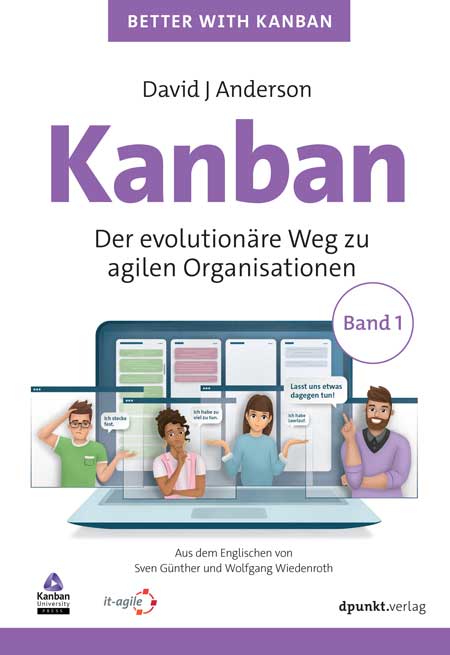
Kanban. Der evolutionäre Weg zu agilen Organisationen. (Februar 2024)»Kanban – der evolutionäre Weg zur agilen Organisation« beschreibt die Ursprünge und den Grundgedanken der Kanban-Methode und wie die Konzepte aus der physischen Industrie für die moderne Wissensarbeit des 21. Jahrhunderts angepasst und übernommen wurden. Darüber hinaus erläutert und illustriert das Buch die Praktiken, Prinzipien und Werte der Kanban-Methode anhand realer Fallstudien von Microsoft und zwei weiteren Technologieunternehmen aus Seattle und San Francisco. Es umfasst die kritischen Elemente eines erfolgreichen organisatorischen Wandels und stellt das Kanban-Reifegradmodell vor.Die hier vorgestellten Konzepte bilden die Grundlage für die gesamte Kanban-Methode und die neue Buchreihe »Better with Kanban«. Das Buch ist ein Muss für alle Wissensarbeiter, ganz gleich, ob Sie ein erfahrener Kanban-Praktiker sind, ob Sie bereits nach der Kanban-Methode zertifiziert sind und nach weiteren Anleitungen suchen, oder ob Sie ein Neueinsteiger, der sich ein solides Verständnis der Kanban-Methode aneignen möchte.David J Anderson ist ein Innovator von Managementkonzepten für die Geschäftswelt des 21. Jahrhunderts. Er ist Vorsitzender von Lean Kanban Inc., einem Unternehmen für Trainings, Beratung, Veranstaltungen und Veröffentlichungen, das Führungskräften weltweit neue Ideen zugänglich macht. David verfugt über mehr als 30 Jahre Erfahrung in der Hightechindustrie, wo er in den frühen 80er-Jahren im Umfeld der Spieleentwicklung begann. Er arbeitete für IBM, Sprint, Motorola und Microsoft sowie für eine Reihe von Start-up-Unternehmen. David ist der Begründer sowohl der Kanban-Methode als auch von Enterprise Services Planning, ist regelmäßiger Sprecher auf intern. Konferenzen und hat mehrere Bücher veröffentlicht.Übersetzer: Sven Günther ist Berater bei der it-agile GmbH in Hamburg. Seit 1997 entwickelt er in Java und C-Sprachen sowohl im Enterprise- Umfeld als auch für mobile Geräte. Agile Entwicklungsmethoden hat er 2007 für sich entdeckt und ist seitdem begeistert von ihnen. Sein besonderes Interesse gilt der Verbesserung von Arbeitsabläufen mit Kanban. Wolfgang Wiedenroth ist ausgebildeter Fachinformatiker der Fachrichtung Anwendungsentwicklung . Von 2007 an arbeitete er als Scrum Master in verschiedenen Unternehmen. Seit 2010 liegt sein Schwerpunkt auf der Kanban-Methode. Heute arbeitet er bei it-agile als Berater. Wolfgang ist akkreditierter Kanban Trainer (AKT) und Kanban Coaching Professional (KCP). Er bloggt auf agilemanic.com und twittert als @wwiedenroth.Leseprobe (PDF-Link)

Cryptography
CRYPTOGRAPHYAN INTRODUCTION TO ONE OF THE BACKBONES OF THE DIGITAL WORLDCryptography is one of the most important aspects of information technology security, central to the protection of digital assets and the mitigation of risks that come with increased global connectivity. The digital world is wholly reliant on secure algorithms and protocols for establishing identity, protecting user data, and more. Groundbreaking recent developments in network communication and a changing digital landscape have been accompanied by similar advances in cryptography, which is more central to digital life than ever before. This book constitutes a comprehensive yet accessible introduction to the algorithms, protocols, and standards which protect the modern internet. Built around both foundational theories and hundreds of specific algorithms, it also incorporates the required skills in complex mathematics. The result is an indispensable introduction to the protocols and systems which should define cryptography for decades to come. Readers will also find:* Over 450 problems with accompanying solutions to reinforce key concepts and test retention* Detailed discussion of topics including symmetric and asymmetric algorithms, random number generation, user authentication, and many more* Over 200 figures and tables that provide rich detail to the contentCryptography: Algorithms, Protocols, and Standards for Computer Security is ideal for undergraduate and graduate students in cryptography and information technology subjects, as well as for researchers looking for a working reference on existing cryptographic algorithms and protocols. ZOUBIR MAMMERI, PHD, is a Full Professor at Paul Sabatier University in Toulouse, France. He teaches a variety of computer science subjects. He has published extensively on cybersecurity and related subjects, and has served as expert and evaluator in research programs of the European Commission and the French National Research Agency on communication networks and their security.

Artificial Intelligence in Health
Undeniable, inescapable, exhilarating and breaking free from the exclusive domain of science, artificial intelligence has become our main preoccupation.A major generator of new mathematical thinking, AI is the result of easy access to information and data, as facilitated by computer technology. Big Data has come to be seen as an unlimited source of knowledge, the use of which is still being fully explored, but its industrialization has swiftly followed in the footsteps of mathematicians; today's tools are increasingly designed to replace human beings, which comes with social and philosophical consequences.Drawing on examples of scientific work and the insights of experts, this book offers food for thought on the consequences and future of AI technology in education, health, the workplace and aging.MARIANNE SARAZIN is a public health doctor with a doctorate in Life Sciences from the Engineering and Health Center (CIS) of the École nationale supérieure des mines de Saint-Étienne, France. She is the Head of the Medical Information department of the Mutualiste Sanitary Group of Saint-Étienne (Aesio group) and a CIS collaborator in the Optimization of Healthcare Systems department as well as UMRS 1136 Inserm, specializing in the modeling of epidemics.

Programming for Game Design
Create video game elements using the Godot game engine, gaining practical experience in programming and video game development. The Godot game engine uses a simplified programming language called GDScript, which closely resembles Python. By learning GDScript, you can focus more on learning the basics of programming.You’ll explore concepts such as variables and data structures variables used to store information about video game objects that can be manipulated using a keyboard or a mouse. You’ll also learn about user interface design, branching statements, and looping statements, enabling you to actively engage in programming and create your own interactive games.By the end of the book, you’ll have a solid understanding of how video game elements work and how the basic principles of programming work as well. By programming simple video game elements in the Godot game engine, you’ll learn both programming and the principles of 2D video game design.WHAT YOU WILL LEARN* Understand the basics of programming by creating simple video game elements in the Godot game engine.* Explore variables and data structures to actively store and modify information about video game objects.* Gain a deeper understanding of user interface design.* Master simplified programming languages like GDScript.WHO THIS BOOK IS FORAspiring programmers and game enthusiasts seeking an engaging introduction to programming through video game creation.WALLACE WANG has been writing computer books for over 30 years, including Steal This Computer Book, Microsoft Office for Dummies, Beginning Programming for Dummies, Beginning iPhone Development with SwiftUI, and The Structure of Game Design” to name just a few. He created the board game, “Orbit War,” for Steve Jackson Games, which simulated satellite warfare in the near future. He also writes screenplays and won first place in Scriptapalooza’s 2023 screenwriting competition.TONNETTA WALCOTT is a writer, podcaster, gamer, and programmer who is passionate about video games and technology. She graduated from San Diego State University with a English Bachelor’s and has a certificate in Computer Programming. After being offered an internship at Sony Online Entertainment, Tonnetta learned computer programming (C++, Java), web development, and game design using the Unity and Godot game engines. Tonnetta has programmed a simulation to chess, Battleship, and a matching concentration game, and is currently working on a game called NinChibi, where tiny chibi ninjas play tag in a single player and multiplayer mode. The NinChibi game is built with the Godot game engine.Chapter 1: Why learn programming with the Godot game engineChapter 2: Getting to know GodotChapter 3: Writing scriptsChapter 4: Storing data in variablesChapter 5: Mathematical operationsChapter 6: Branching statementsChapter 7: Looping statementsChapter 8: Understanding arraysChapter 9: Understanding dictionariesChapter 10: FunctionsChapter 11: Object-oriented programmingChapter 12: Getting input from the userChapter 13: Shooting projectilesChapter 14: Adding projectiles to a playerChapter 15: Hitting enemies with projectilesChapter 16: Displaying a user interfaceChapter 17: Adding physicsChapter 18: Playing audioChapter 19: Creating and using scenesChapter 20: Using SignalsChapter 21: Creating a Simple Tic-Tac-Toe Game

RISC-V Assembly Language Programming
Gain the skills required to dive into the fundamentals of the RISC-V instruction set architecture. This book explains the basics of code optimization, as well as how to interoperate with C and Python code, thus providing the starting points for your own projects as you develop a working knowledge of assembly language for various RISC-V processors.The RISC-V processor is the new open-source CPU that is quickly gaining popularity and this book serves as an introduction to assembly language programming for the processor in either 32- or 64-bit mode. You’ll see how to write assembly language programs for several single board computers, including the Starfive Visionfive 2 and the Espressif ESP32-C3 32-bit RISC-V microcontroller. The book also covers running RISC-V Linux with the QEMU emulator on and Intel/AMD based PC or laptop and all the tools required to do so.Moving on, you’ll examine the basics of the RISC-V hardware architecture, all the groups of RISC-V assembly language instructions and understand how data is stored in the computer’s memory. In addition, you’ll learn how to interface to hardware such as GPIO ports. With RISC-V Assembly Language Programming you’ll develop enough background to use the official RISC-V reference documentation for your own projects.WHAT YOU'LL LEARN* Program basic RISC-V Assembly Language* See how data is represented and stored in a RISC-V based computer* Make operating system calls from Assembly Language and include other software libraries in projects* Interface to various hardware devices* Comprehend code containing Assembly Language* Reverse engineer and hack code* Use the official RISC-V reference documentationWHO THIS BOOK IS FORThose who have already learned to program in a higher-level language like Python, Java, C# or even C and now wish to learn Assembly Language programming.Stephen Smith is a Software Architect, located in Gibsons, BC, Canada. He's been developing software since high school, or way too many years to record. He is an expert in Artificial Intelligence and Assembly Language programming, earned his Advanced HAM Radio License. Smith also enjoys mountain biking, hiking and nature photography, and volunteers for Sunshine Coast Search and Rescue. He is the author of Raspberry Pi Assembly Language Programming, Programming with 64-Bit ARM Assembly Language, and Mobile Devices and RP2040 Assembly Language Programming, all published by Apress. Also, he writes his popular technology blog, at smist08.wordpress.com.Chapter 1: Getting Started. - Chapter 2: Loading and Adding. - Chapter 3: Tooling Up. - Chapter 4: Controlling Program Flow. - Chapter 5: Thanks for the Memories. - Chapter 6: Functions and the Stack. - Chapter 7: Linux Operating System Services. - Chapter 8: Programming GPIO Pins. - Chapter 9: Interacting with C & Python. - Chapter 10: Multiply and Divide. - Chapter 11: Floating-Point Operations. - Chapter 12: Optimizing Code. - Chapter 13: Reading and Understanding Code. - Chapter 14: Hacking Code. - Appendix A: The RISC-V Instruction Set. - Appendix B: Binary Formats. - Appendix C: Assembler Directives. - Appendix D: ASCII Character Set. - Appendix E: Answers to Exercises.

Computer für Kids (9. Auflg.)
So funktionieren PCs, Laptops, Smartphones & Co.Was haben Desktop-PCs, Laptops, Tablets, Smartphones, Playstations und sogar Taschenrechner gemeinsam? Sie sind alle Computer! Aber weißt du eigentlich, wie so ein Gerät aufgebaut ist und was man alles Spannendes mit ihm anstellen kann? Dieses Buch zeigt dir von Grund auf, wie Computer funktionieren. Vorkenntnisse brauchst du keine.Zunächst erforschst du Windows in seiner neuesten Version. Du erfährst, wie du mit Dateien, Ordnern und Fenstern umgehst und wie du speicherst und druckst. Dann lernst du unterschiedliche Teile des Computers und die angeschlossenen Geräte kennen. Auch zur Software erfährst du eine Menge, zum Beispiel wie du Word benutzt oder was Open-Source-Programme sind.Danach geht es ins Internet und du lernst, wie du mit einer Cloud umgehst und wie du zum Beispiel dein Smartphone mit deinem PC abgleichst.Mit einer Pannenhilfe und einem Lexikon am Ende des Buches kannst du dich bei offenen Fragen und kleineren Problemen mit deinem Computer jederzeit schlaumachen.Aus dem Inhalt:Klicken, Tippen, Ziehen: Ein System in BetriebMit Schere und Kleber: TextbearbeitungJede Menge Speicherplatz: Harddisk, Flash, CD und mehrJetzt wird aufgeräumt: Kopieren, verschieben, löschenNeue »Möbel« im System: Dateien und OrdnerNicht nur für Technikfreaks: die HardwareOhne sie läuft nichts: die SoftwareÜber den Autor:Hans-Georg Schumann war Informatik- und Mathematiklehrer an einer Gesamtschule. Er hat bereits viele erfolgreiche Bücher in der Reihe „... für Kids“ geschrieben.Leseprobe (PDF-Link)

AI Investing For Dummies
WINNING STRATEGIES FOR INVESTORS LOOKING TO BOOST GAINS WITH ARTIFICIAL INTELLIGENCEAI is one of the hottest investment trends on Wall Street. AI Investing For Dummies gives you all the must-know details on how artificial intelligence can benefit investors. You’ll learn how powerful AI can be in helping you make better decisions, identify hidden opportunities, and build wealth in stocks, bonds, commodities, and real estate. This easy-to-understand Dummies guide also covers budgeting, taxes, estates, and planning for college and retirement—all with AI-specific tactics that can improve efficiency, mitigate risk, and level up your portfolio’s performance. You’ll also find all the info you need to sift through and implement the right resources and solutions for you.* Understand the benefits and drawbacks of AI investing * Debunk the biggest myths about AI investing * Get an in-depth analysis of the top AI stocks to watch* Learn how to avoid common pitfalls in AI investing * Take a peek at the role of AI in shaping the future of finance This is the ideal Dummies resource for consumers and investors who are new to AI and want to wrap their heads around this emerging technology. PAUL MLADJENOVIC is a financial, business, and investment educator and national speaker with 40-plus years of experience. He has authored numerous Dummies guides, including the bestselling Stock Investing For Dummies, Currency Trading For Dummies, Investing in Gold & Silver For Dummies, High-Level Investing For Dummies, and others.

Künstliche Intelligenz: Brücke zwischen Psychoanalyse und Neurologie
Die Psyche mit dem neuronalen System verschmelzen zu können, ist ein lang angestrebtes Ziel. Wissenschaftler brauchen oft Jahre, um die Hürden auf dem Weg dahin zu begreifen. Ist das unumgänglich? Welche naturwissenschaftlichen Prinzipien liegen dem vorliegenden Modell zugrunde? Kann es ohne mathematischen Formalismus verstanden werden? Wie kann ein simuliertes Modell dieser Zusammenführung von Psyche und Neurologie – nennen wir es das Psi-Organ – aus heutiger Sicht aussehen?Mit Hilfe von Simulationsexperimenten können damit psychologische und soziale Theorien auf naturwissenschaftlicher Basis überprüft werden. Das Modell kann als Grundlage für KI-Systeme dienen, die Menschenleben retten, Energie sparen, für Sicherheit auf Flughäfen sorgen, bei der Pflege älterer Menschen unterstützen und vieles mehr. Dieses Psi-Organ-Modell geht weit über die heutigen, hauptsächlich verhaltensbasierten KI-Systeme hinaus.Das Manuskript ist als Einführung zum Verständnis und der Modellierung des menschlichen Geistes und der künstlichen, humanoiden "Intelligenz" zu verstehen.DIETMAR DIETRICH ist Elektroniker. Mit Hilfe der Studienstiftung des Deutschen Volkes studierte er Elektrotechnik in Karlsruhe. Nach seiner Promotion arbeitete er in der Luftfahrttechnik und später in der Nachrichtentechnik. Seine Hauptthemen als Professor für Computertechnik (in Bielefeld und Wien) waren nach Tätigkeiten in der Industrie vor allem Automatisierungsprozesse, Flugsicherung und zunehmend Probleme der künstlichen Intelligenz. Er war Organisator und Mitorganisator vieler nationaler und internationaler wissenschaftlicher Konferenzen und jahrzehntelang weltweit in industriellen und wissenschaftlichen Gremien tätig. Er war Herausgeber des Buches "Simulating the Mind - A Technical Neuropsychoanalytical Approach" (Springer, 2009). Er ist Autor von weit über 200 Publikationen und 19 Büchern in den Bereichen Automatisierung, Flugsicherung, Feldbustechnik, Informationstechnik, Kommunikationstechnik oder Computertechnik.Prinzipien der Beschreibung - Funktionen und ihr Verhalten - Erweiterte Mealy-Theorie - Informationssysteme - Die Welt der Hardware / Neurowissenschaft und mehr - Die Welt der Information / Psychoanalyse und mehr - Das Ψ-Organ / das SiMA-Modell - Turing, Intelligenz und das Selbst - Modellierung des Bewusstseins

Cryptography
CRYPTOGRAPHYAN INTRODUCTION TO ONE OF THE BACKBONES OF THE DIGITAL WORLDCryptography is one of the most important aspects of information technology security, central to the protection of digital assets and the mitigation of risks that come with increased global connectivity. The digital world is wholly reliant on secure algorithms and protocols for establishing identity, protecting user data, and more. Groundbreaking recent developments in network communication and a changing digital landscape have been accompanied by similar advances in cryptography, which is more central to digital life than ever before. This book constitutes a comprehensive yet accessible introduction to the algorithms, protocols, and standards which protect the modern internet. Built around both foundational theories and hundreds of specific algorithms, it also incorporates the required skills in complex mathematics. The result is an indispensable introduction to the protocols and systems which should define cryptography for decades to come. Readers will also find:* Over 450 problems with accompanying solutions to reinforce key concepts and test retention* Detailed discussion of topics including symmetric and asymmetric algorithms, random number generation, user authentication, and many more* Over 200 figures and tables that provide rich detail to the contentCryptography: Algorithms, Protocols, and Standards for Computer Security is ideal for undergraduate and graduate students in cryptography and information technology subjects, as well as for researchers looking for a working reference on existing cryptographic algorithms and protocols. ZOUBIR MAMMERI, PHD, is a Full Professor at Paul Sabatier University in Toulouse, France. He teaches a variety of computer science subjects. He has published extensively on cybersecurity and related subjects, and has served as expert and evaluator in research programs of the European Commission and the French National Research Agency on communication networks and their security.

Next Generation Internet
Die Entwicklung des Internets, insbesondere des WWW, stößt aktuell an ihre Grenzen – sowohl technisch als auch sozio-kulturell und ökonomisch. Als Lösung wird ein neues Internet versprochen, das die Grenzen der realen und der virtuellen Welt überwinden und Realität und Digitalität verschmelzen soll – das Metaversum. Technische, semantische und organisatorische Details greifen hierzu eng ineinander. Was aber bedeutet dies bei genauerer Betrachtung? Welche technisch-technologischen Herausforderungen müssen bewältigt werden, um ein solches Verschmelzen zu erreichen? Welche ökonomischen Möglichkeiten eröffnen sich– und welche verbieten sich möglicherweise? Wie kann erreicht werden, dass ein offenes und für jeden benutzbares Metaversum entsteht? Und wie kann vermieden werden, dass auch in diesem neuen Metaversum wenige große Anbieter ihre proprietären Ideen durchsetzen? Für diese Fragen soll dieses Buch Antworten aufzeigen.DR. PETER HOFFMANN, einerseits Hochschullehrer für Wirtschaftsinformatik, andererseits Medieninformatiker mit Herz und Seele, beschäftigt sich seit mittlerweile mehr als 20 Jahren mit den Fragen danach, was „digitale Medien“ und „virtuelle Welten“ eigentlich sind und wie der Benutzer mit ihnen interagieren kann.Metaversum?.- Woher … wohin … oder: was überhaupt.- Das Verschmelzen von Welten und …versen.- Eine andere Dimension: Ökonomisches Verschmelzen.- Was nicht fehlen darf: Kritik.- Die wirkliche Vision.- Jetzt ist die Zeit zum Bauen!.- Nachtrag 1 - Weil es so aktuell ist: Künstliche Intelligenz im Metaversum?.

Data Engineering with Scala and Spark
Most data engineers know that performance issues in a distributed computing environment can easily lead to issues impacting the overall efficiency and effectiveness of data engineering tasks. While Python remains a popular choice for data engineering due to its ease of use, Scala shines in scenarios where the performance of distributed data processing is paramount.This book will teach you how to leverage the Scala programming language on the Spark framework and use the latest cloud technologies to build continuous and triggered data pipelines. You’ll do this by setting up a data engineering environment for local development and scalable distributed cloud deployments using data engineering best practices, test-driven development, and CI/CD. You’ll also get to grips with DataFrame API, Dataset API, and Spark SQL API and its use. Data profiling and quality in Scala will also be covered, alongside techniques for orchestrating and performance tuning your end-to-end pipelines to deliver data to your end users.By the end of this book, you will be able to build streaming and batch data pipelines using Scala while following software engineering best practices.