

Computer und IT

ChatGPT for Beginners
If you’re a complete newbie who’s wondering exactly what ChatGPT is, what is does, and how it can be a valuable resource for non-coders, this is the book for you. With a comprehensive exploration of ChatGPT’s features, foundations, and applications, this guide will serve as a valuable resource for beginners venturing into the world of conversational AI.ChatGPT for Beginners has four parts. Part one provides a step-by-step introduction to using ChatGPT, from accessing the OpenAI website and creating an account to starting conversations, changing responses, and getting conversation summaries. Part two delves into the foundations of the large language model that powers ChatGPT. It covers topics such as the definition of ChatGPT, its knowledge domains, the basics of natural language processing, machine learning techniques applied to language processing, and the role of neural networks in ChatGPT’s operation. Part three covers a wide range of practical applications, from letter writing to business content creation, text translation, language learning, recruitment processes, artistic content creation, and fostering innovation and creativity. Part four examines the strengths and limitations of ChatGPT, addressing ethical considerations related to data security, bias, and partiality. It also delves into the future advancements and challenges that lie ahead for ChatGPT, providing insights into the developing landscape of conversational AI.After completing this book, you will be able to harness the full potential of ChatGPT. Whether you are a student, professional, or are just curious about the capabilities of this AI technology, this book will serve as your essential companion in unlocking the possibilities of ChatGPT.WHAT YOU WILL LEARN* Access ChatGPT, create an account, and initiate conversations* Understand what ChatGPT is, its knowledge domains, and how it works through natural language processing, machine learning, and neural networks* Ask relevant questions to ChatGPT, and obtain quality responses* Manage the degree of randomness in the responses using parameters such as temperature, frequency, and presenceWHO THIS BOOK IS FORStudents, professionals, and anyone else curious about the capabilities of ChatGPT.ERIC SARRION is a trainer, a developer, and an independent consultant. He has been involved in all kinds of IT projects for over 30 years. He is also a long-time author of web development technologies and is renowned for the clarity of his explanations and examples. He resides in Paris, France.

AWS IoT With Edge ML and Cybersecurity
In an era where the fusion of connectivity and technology is redefining industries, this book is a must-have guide for aspiring technologists and seasoned professionals alike. This meticulously crafted handbook guides you through every aspect of AWS IoT, touching upon vital spheres such as edge computing, machine learning, and industrial IoT, with a distinct spotlight on cybersecurity.Over the course of this book, industry veteran Syed Rehad unveils the secrets to setting up your AWS IoT environment and walks you through advanced concepts such as leveraging MQTT, mastering Digital Twin implementation, and plumbing the depths of edge machine learning. Whether you're experimenting with virtual devices or hands-on with Raspberry Pi setups, this book will steer you towards innovation and a transformative journey where technology meets intelligence and security, all under the expansive umbrella of AWS IoT.WHAT YOU WILL LEARN* AWS MASTERY: Dive deep into AWS IoT essentials, from setup to hands-on SDK tools* ADVANCED CONNECTIVITY: Explore advanced MQTT features and the potential of AWS IoT Core MQTT clients* DEVICE INTEGRATION: Master AWS IoT device creation, connection, and deployment, blending the digital and physical* DIGITAL TWIN: Unleash IoT's future with AWS IoT device shadow, capitalizing on digital twin technology* DEVICE MANAGEMENT: Transform remote oversight using secure IoT tunnelling and innovative actions* EDGE DEVELOPMENT: Merge IoT and Machine Learning via AWS IoT Greengrass, spotlighting image classification* DATA TO INSIGHTS: Swiftly move from raw data to actionable insights leveraging Amazon Timestream* IOT CYBERSECURITY: Strengthen your defenses using AWS IoT Device Defender, Zero Trust principles, and Machine Learning (ML) Detect to prepare for and counter threatsWHO THIS BOOK IS FORIoT developers and enthusiasts, professionals who want to implement IoT solutions in industrial scenarios, system architects and designers interested in edge machine learning, business intelligence analysts, and cybersecurity professionals.SYED REHAN has established himself as a luminary in the world of cloud technologies over the course of a career spanning 18+ years in the fields of development, IoT, and cybersecurity. Having joined AWS in 2017, Syed has been at the forefront of their initiatives, consistently driving innovation and contributing to the platform's evolution. His rich portfolio includes numerous insightful blogs, workshops and authoritative whitepapers for AWS, showcasing his deep expertise and thought leadership in the industry.Syed has graced the main stage as a speaker at AWS re:Invent and numerous global conferences, shedding light on the rapidly evolving landscapes of cybersecurity, IoT, and cloud technologies.Presently, Syed serves as a Senior Global Cybersecurity Specialist in the AWS IoT Core Security Foundation team. His collaborative spirit has been reflected in his instrumental role with the product teams in launching pivotal services like AWS IoT Device Defender and AWS IoT Greengrass.Syed's trailblazing journey is marked with several firsts. He was among the initial cohort of specialist solution architects for AWS IoT in EMEA, and he also earned the honor of being the first specialist Solution Architect for Amazon Connect.Syed's legacy in AWS and the cloud domain is a blend of vast experience, innovation, unwavering passion and leadership, a legacy that continues to inspire and guide the next generation of tech enthusiasts.

CompTIA Security+ Practice Tests
PREPARE FOR THE SECURITY+ CERTIFICATION EXAM CONFIDENTLY AND QUICKLYCompTIA Security+ Practice Tests: Exam SY0-701, Third Edition, prepares you for the newly updated CompTIA Security+ exam. You’ll focus on challenging areas and get ready to ace the exam and earn your Security+ certification. This essential collection of practice tests contains study questions covering every single objective domain included on the SY0-701. Comprehensive coverage of every essential exam topic guarantees that you’ll know what to expect on exam day, minimize test anxiety, and maximize your chances of success.You’ll find 1000 practice questions on topics like general security concepts, threats, vulnerabilities, mitigations, security architecture, security operations, and security program oversight. You’ll also find:* Complimentary access to the Sybex test bank and interactive learning environment* Clear and accurate answers, complete with explanations and discussions of exam objectives* Material that integrates with the CompTIA Security+ Study Guide: Exam SY0-701, Ninth EditionThe questions contained in CompTIA Security+ Practice Tests increase comprehension, strengthen your retention, and measure overall knowledge. It’s an indispensable part of any complete study plan for Security+ certification.
Cloud-native Computing (2. Auflage)
Cloud-native Computing. Software Engineering von Diensten und Applikationen für die Cloud. In 2., aktualisierter Auflage. Dezember 2023. Märkte verändern sich immer schneller, Kundenwünsche stehen im Mittelpunkt – viele Unternehmen sehen sich Herausforderungen gegenüber, die nur digital beherrschbar sind. Um diese Anforderungen zu bewältigen, bietet sich der Einsatz von Cloud-native-Technologien an. Dabei reicht es jedoch nicht aus, einen Account bei einem Cloud-Anbieter anzulegen. Es geht auch darum, die unterschiedlichen Faktoren zu verstehen, die den Erfolg von Cloud-native-Projekten beeinflussen.Das Buch beleuchtet den Cloud-native-Wandel aus unterschiedlichen Perspektiven: von der Unternehmenskultur, der Cloud-Ökonomie und der Einbeziehung der Kunden (Co-Creation) über das Projektmanagement (Agilität) und die Softwarearchitektur bis hin zu Qualitätssicherung (Continuous Delivery), Betrieb (DevOps) und Sicherheit. Anhand von realen Praxisbeispielen wird gezeigt, was bei der Umsetzung in unterschiedlichen Branchen gut und was schlecht gelaufen ist und welche Best Practices sich daraus ableiten lassen. Dabei wird auch die Migration von Legacy-Code berücksichtigt.IT-Architekten vermittelt dieses Buch zudem das grundlegende Wissen, um Cloud-native-Technologien und die DevOps-Kultur in ihrem Projekt oder im gesamten Unternehmen einzuführen. Nane Kratzke ist Professor für Informatik an der Technischen Hochschule Lübeck und befasst sich seit mehr als 10 Jahren in Forschung, Beratung und Lehre mit Cloud-nativen Technologien.Leseprobe (PDF-Link)
Business Intelligence mit Excel (3. Auflage)
Business Intelligence mit Excel. Datenanalyse und Reporting mit Power Query, Power Pivot und Power BI Desktop. In 3., aktualisierter Auflage. Dezember 2023.Die benutzerfreundlichen BI-Tools von Microsoft Excel sind die erste Wahl im Management und Controlling, Sie helfen, Trends und Risiken zu erkennen, Zusammenhänge zu begreifen und Entscheidungsgrundlagen zu verbessern. Bereiten Sie Unternehmensdaten auf verbunden mit intelligentem Reporting und Visualisierung. Dabei können Sie die Analysen ständig, sofort und auf allen Medien verfügbar halten.Dieses Praxisbuch vermittelt die Grundlagen für den Einstieg in Business Intelligence. Es erklärt Begriffe und Methoden und zeigt, wie Daten aus unterschiedlichen Quellen mit Microsoft Excel importiert, transformiert und visualisiert werden. Lernen Sie, mit Power Query und der Skriptsprache M Daten aufzubereiten und üben Sie den Aufbau von Datenmodellen mit Power Pivot und DAX. Anschauliche Visualisierungen, Berichte und Dashboards erstellen Sie mit PivotTables, PivotCharts und Power BI. Ignatz Schels ist Technik-Informatiker, zertifizierter Projektfachmann (GPM / IPMA) und Excel-Experte der Spitzenklasse. Er programmiert Praxislösungen mit VBA und erstellt Access-Datenbanken. Viele seiner zahlreichen Fachbücher für Controller und Projektmanager sind Bestseller.
IT-Dokumentation im Wandel
Jedes Unternehmen muss sich heute mit Digitalisierung und digitalem Wandel beschäftigen. Diese Entwicklungen haben zwangsläufig auch Einfluss auf die Ausgestaltung der IT-Dokumentation. Sie muss zum einen an den Anforderungen zunehmender Digitalisierung ausgerichtet werden und diese wirkungsvoll unterstützen. Zum anderen ist die IT-Dokumentation nach wie vor ein wichtiges Management- und Compliance-Werkzeug. Dieses Buch unterstützt Sie bei der Anpassung Ihrer IT-Dokumentation an die Erfordernisse der digitalen Transformation. Hierbei werden die Anforderungen betrachtet, die sich aus veränderten Prozessen und Methoden sowie steigende regulatorische Vorgaben ergeben. Ausgehend von der traditionellen IT-Dokumentation wird auf die aktuellen Entwicklungen eingegangen. Im Fokus steht hierbei die Dokumentation für ausgewählte Aufgabenbereiche der IT-Organisationen wie • Sicherheitsmanagement, • Notfallmanagement, • System- und Architekturbetrieb, • Softwareentwicklung, • Dienstleistersteuerung. Darüber hinaus werden die Einsatzmöglichkeiten geeigneter Dokumentationswerkzeuge beleuchtet. Ihr exklusiver Vorteil: E-Book inside beim Kauf des gedruckten Buches
Agile Testing (3. Auflage)
Agile Testing. Der agile Weg zur Qualität. In 3., überarbeiteter Auflage. Dezember 2023.Der Trend zu agilen Vorgehen ist ungebrochenDieser Trend geht auch am Softwaretest nicht spurlos vorüber. Nachdem die Bedeutung des Tests in agilen Projekten unumstritten ist, treten jetzt vor allem die Professionalisierung und die Integration der einzelnen Mitarbeiter in den rollenübergreifenden Tätigkeiten des agilen Vorgehens in den Vordergrund.Die klassischen Rollenbilder des Tests verschwimmen und gehen ineinander über. Die Eigenverantwortung der Tester steigt. Für den klassischen Tester bedeutet dies eine Bereicherung und Aufwertung seiner Rolle, da er auch Aufgaben und Tätigkeiten anderer Professionen übernimmt.Der Stellenwert des TeamsDie Crux mit den Werkzeugen in agilen ProjektenDie sieben schlechtesten Ideen für die TestautomatisierungTestmethoden im agilen UmfeldTester: Generalist vs. Spezialist?Welches sind nun aber die Aufgaben des Softwaretests in agilen Projekten? Wie sind diese in unterschiedlichen agilen Vorgehensweisen – wie etwa Scrum oder Kanban – zu organisieren? Welche Bedeutung haben Testwerkzeuge in diesem Kontext? Wie grenzen sich die Verantwortlichkeiten gegeneinander ab oder wirken synergetisch zusammen?Auf diese sehr konkreten Fragen, die sich im operativen Projektgeschehen immer wieder stellen, liefert dieses Buch mögliche Antworten, ergänzt durch bewährte Ansätze aus der Praxis.Manfred Baumgartner, Martin Klonk, Helmut Pichler, Richard Seidl und Siegfried Tanczos sind seit langer Zeit im Bereich des Software-Tests tätig. In den letzten Jahren hatten sie die Chance, immer mehr agile Projekte aus den unterschiedlichsten Branchen kennenzulernen und zu begleiten. So treffen hier Erfahrungen aus der Telekommunikations-, Medizintechnik-, Banken-, Energieversorger- und Luftfahrtbranche aufeinander.Ihr exklusiver Vorteil: E-Book inside beim Kauf des gedruckten Buches Manfred Baumgartner ist seit Beginn seiner beruflichen Laufbahn im Bereich der Software-Qualitätssicherung tätig und arbeitet als Berater bei der Nagarro GmbH in Wien.Christian Mastnak leitet die globale „Agile Testing Practice“ von Nagarro und implementiert innovative QA-Lösungen für internationale Kunden mit besonderen Ansprüchen an Agilität und Effizienz.Richard Seidl ist seit über 20 Jahren als Softwaretest-Experte und Agile Quality Coach in Deutschland und Österreich tätig.Leseprobe (PDF-Link)

Angular for Business
Written from author Michael D. Callaghan's personal experience teaching Angular to web development teams, this book will serve as a practical guide to help you adopt Angular for your organization.This book consists of a series of essays related to Angular development, adoption, and the wider eco-system designed to appeal to experienced web developers and managers who have some experience with Angular and are looking to adopt and integrate it into their business for their web development projects.You'll begin with an introduction to Angular15, along with associated frameworks and tools such as Typescript, Firebase RxJS and Docker. You'll then explore Angular components, progressive Web Apps (PWA’s) APIs, Test-driven development, testing, security and the basics of agile project management. This includes how to train your team and effectively communicate with management and key stake-holders within your organization while transitioning onto an Angular workflow.WHAT YOU'LL LEARN* Advocate for Angular from within your organization * Create a simple "no-code" Angular component* Keep up with Angular releases for enterprise projects * Understand service APIs from both the producer and consumer point of view* Test APIs quickly and using Firebase* Implement the basics of agile project managementWHO THIS BOOK IS FORExperienced web developers and managers with some knowledge of Angular and the related JavaScript eco-system who are looking at adopting Angular for enterprise projects and those who need to get co-workers up to speed with an Angular-based workflow.MICHAEL D. CALLAGHAN is a software developer and tech lead with more than twenty years’ experience, primarily in Microsoft and Linux environments, the past 10 years of which has been spent assembling, mentoring, and leading development teams. Most recently specialized in designing and leading the development of web-based and mobile applications, utilizing light-weight components and open frameworks, using Agile, test-driven methodologies.PART I:CORE CONCEPTS.- 1: A Gentle Introduction to Angular.- 2: A Brief Introduction to Typescript.- 3: Angular CLI Quick Reference.- 4: Making a Simple Angular Component.- 5: Offline Networks.- 6: Custom Angular Checkboxes with [(ngModel)] Support.- 7: Error Handling Strategies for Handling Data 8: Upgrading Angular.- 9: Understanding Service API’s.- 10: Deploy with Azure with ng Deploy.- 11: Hosting an API.- 12: Progressive Web Applications (PWAs).- 13: RxJS: To Use or Not to Use?.- PART II: TESTING AND DEBUGGING.- 14: Test-Driven Development with Angular.- 15: Unit Testing Strategies.- 16: Debugging with Docker Containers.- PART III: THE COMMAND LINE.- 17: What Do All Those Symbols Mean?.- PART IV: SOURCE CONTROL.- 18: Fixing Broken Git Commits.- 19: Archiving Your Git Repositories.- PART V: COMMUNICATION AND TRAINING.- 20: How We Learn and Teach.- 21: Slow Down to be Noticed.- 22: Watch Your Language.- 23: Agile Planning and Management with Trello.- PART VI: OTHER TOPICS.- 24: Automate Screenshots with Protractor.- 25: Image Repositories.

Deep Dive into Power Automate
Understand the basics of flow and learn how to implement guidelines in real-life scenarios, including Robotic Process Automation (RPA) capabilities. This book covers the evolution of flow and how it is transformed to a full-fledged RPA (such as Power Automate).The book starts with an introduction to flow and its transformation to Process Automation. You will learn how to create a Power Automate environment and demonstrate different types of flows within it. Author Goloknath Mishra takes you through various types of cloud flows and their best practices. Desktop Flows (RPA) or Power Automate Desktop (PAD) is discussed and the author teaches you its architecture, installation steps, and how to manage, schedule, and share a desktop. You will learn about Business Process Flow, Process Advisors, and AI Builder. You also will go through licensing considerations in Power Automate and AI Builder, and demonstrate all of your learnings through a mini project.After reading the book, you will have gained expertise in Power Automate and be able to implement its guidelines and solve problems at your organization.WHAT WILL YOU LEARN* Know the difference between Intelligent Process Automation (IPA) and Robotic Process Automation (RPA)* Understand the different types of flows in Power Automate* Create various types of cloud flows, Desktop flows, Business Process flows, and AI Builder models* Study common use cases and be aware of Power Automate best practicesWHO THIS BOOK IS FORBusiness executives, citizen developers, IT professionals, and computer scientists who wish to efficiently automate monotonous workGOLOKNATH MISHRA is a Microsoft Most Valuable Professional (MVP), Microsoft Certified Trainer (MCT), and a Power Platform Solution Architect Expert with over 14 years of experience in digital transformation using Microsoft Tech Stack as an enabler. He has worked with various organizations in different domains and is currently associated with NCS Group, Singapore as Senior IT Architect.During his tenure of work, he was involved in enterprise solution architecture and design, delivery management (Scaled Agile, Agile and Waterfall), pre-sales, project management, client consulting and business analysis.He is active in the tech community and participates in different Microsoft programs. He is an instructor, speaker, blogger, and YouTuber. He runs the Microsoft User Group in Singapore and Odisha focusing on Microsoft Dynamics 365 and Power Platform. He is also one of the founding members of #PowerPlatformClassmates.

Hardware and Software Projects Troubleshooting
Learn how to create good requirements when designing hardware and software systems. While this book emphasizes writing traditional “shall” statements, it also provides guidance on use case design and creating user stories in support of agile methodologies. The book surveys modelling techniques and various tools that support requirements collection and analysis. You’ll learn to manage requirements, including discussions of document types and digital approaches using spreadsheets, generic databases, and dedicated requirements tools. Good, clear examples are presented, many related to real-world work the author has performed during his career. More importantly, you will learn how these techniques can prevent the problems that occur during requirements development. Most of all, you will learn how good requirements governance will greatly increase the success of development projects by getting all people involved to eliminate the adverse impacts to requirements throughout the development lifecycle.Hardware and Software Projects Troubleshooting covers techniques for defining user needs, so you can determine which combination of approaches to use for your projects. You’ll also learn how to analyze the different development methodologies so that you can determine the advantages and disadvantages of different requirements approaches and implement them correctly as your needs evolve. Unlike most requirements books, this one teaches writing both hardware and software requirements because many projects include both areas. To exemplify this approach, two example projects are developed throughout the book, one focusing on hardware, and the other on software.WHAT YOU WILL LEARN* Focus on how to eliminate or mitigate requirements problems* Understand the 14 techniques for capturing all requirements* Address software and hardware needs; because most projects involve both* Ensure all statements meet the 16 attributes of a good requirement* Differentiate the 19 different functional types of requirements, and the 31 non-functional types* Write requirements properly based on extensive examples of good ‘shall’ statements, user stories, and use cases* Employ modelling techniques to mitigate the imprecision of words* Install requirements governance to significantly improve project successWHO THIS BOOK IS FORRequirements engineers who want to improve and master their craft, as well as students and those employed in government or other organizations at all levels. GEORGE KOELSCH was a systems engineer who retired to West Virginia. He started writing requirements 47 years ago while in the US Army and had continued that work for his last 33 years as a contractor for the Federal Government. He became an efficiency expert during a five-year stint as an Industrial Engineer at Michelin Tire Corporation, and he then applied that new skill to system engineering to tailor the lifecycle development process. He was among the first requirement engineers in the DC metro area to employ such a technique. Koelsch has authored more than ten non-fiction articles on computers, coin collecting, stamp collecting, and high-energy physics. This is the second time he has combined his two passions, system engineering and writing.
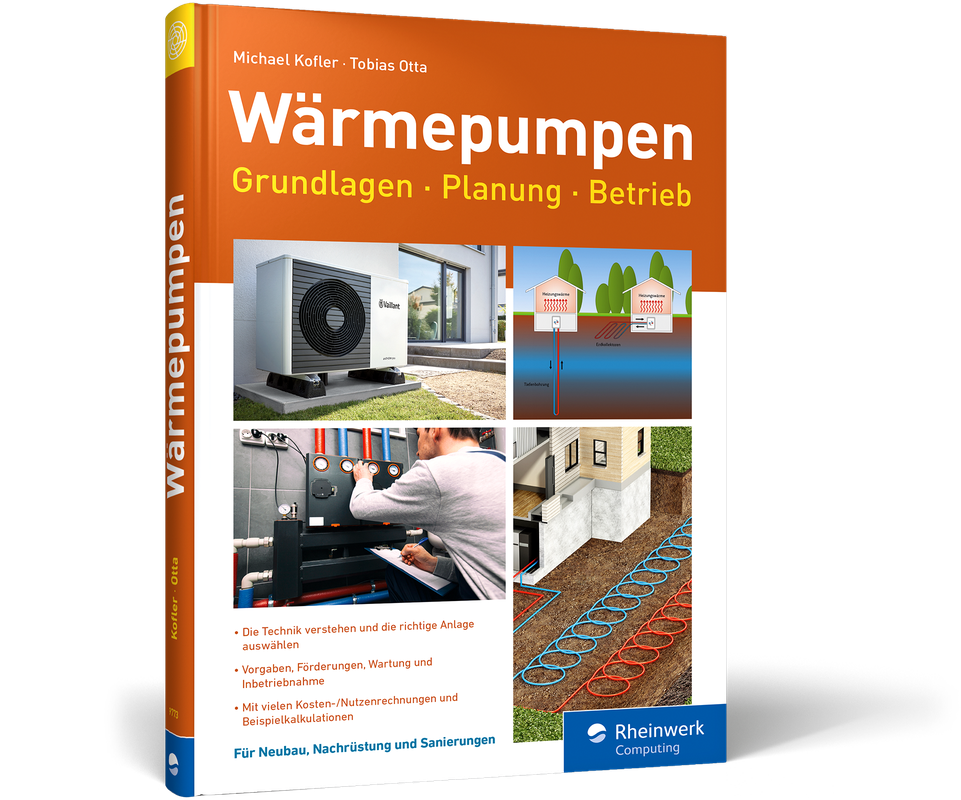
Wärmepumpen - Grundlagen, Planung, Betrieb
Modernes Heizen für die Zukunft. Jetzt erhältlich im heise shop, Dezember 2023.Muss Ihre Gas- oder Öl-Heizung ersetzt werden? Was tun bei einem Neubau? Und brauchen Sie unbedingt eine PV-Anlage auf dem Dach, die den nötigen Strom produziert? Wenn Sie ein Haus besitzen oder einen Neubau planen, müssen Sie sich mit diesen Fragen beschäftigen – oder der nächste Winter wird ziemlich kalt. Fachleute sind sich einig: der Wärmepumpe gehört die Zukunft. Michael Kofler und Tobias Otta geben Ihnen einen Überblick zu allen Fragen rund um das Heizen mit einer Wärmepumpe. Sie erläutern verständlich, worauf Sie bei der Planung achten müssen. So verstehen Sie die Technik und können anhand von zahlreichen Beispielszenarien die richtige Entscheidung für Ihr Zuhause treffen. Aus dem Inhalt:Von der fossilen Heizung zur WärmepumpeGrundlagen und FunktionsweiseIntegration in die HeizungsanlageBrauchwasserwärmepumpenKühlen mit der WärmepumpeFörderungen, Gesetze, BetriebPhotovoltaikBeispielszenarien mit Kosten-/NutzenrechnungenDie Autoren:Michael Kofler hat Elektrotechnik studiert und beschäftigt sich seit Jahren intensiv mit allen Themen rund um die private Energie- und Wärmewende.Ob privat mit dem Lastenrad zum Kindergarten oder seit 15 Jahren als Ingenieur in der Heizungsbranche: Tobias Otta steht für die Energiewende und einen nachhaltigen Lebensstil.

KI 2.023 Die Evolution des Denkens
Künstliche Intelligenz hält immer mehr Einzug in unser tägliches Leben. Dabei ist es ein viel diskutiertes Thema mit den unterschiedlichsten Ansichten und Prognosen. Doch was steckt hinter all dem? Was ist Künstliche Intelligenz? Warum gibt es so viele Anhänger, die eine wundervolle Zukunft erwarten während andere grosse Gefahren sehen?Dieses Buch vertieft die Thematik, zeigt Zusammenhänge auf, liefert die technisch und wissenschaftlichen Hintergründe. Es zeigt einen Überblick über die gegenwärtige Situation und gibt Prognosen für die künftige Entwicklung. Welche Auswirkungen sind für die Gesellschaft zu erwarten und wie ändert sich unser Alltag? Und es zeigt auf, wie mittels der Künstlichen Intelligenz eine Veränderung, die Evolution des Denkens stattfindet.Dipl. Ing Uwe Irmer:Dipl. Ing. Uwe Irmer studierte Elektrotechnik und Wirtschaftsingenieur mit den Schwerpunkten Energietechnik, Informatik und Projektmanagement. Seit 1990 in vielen nationalen und internationalen Projekten der Fachbereiche Energieverteilung, Informationssicherheit und IT Architektur tätig, befasst er sich seit 1992 mit dem Thema Informationssicherheit und forscht auf den Gebieten Projektmanagement, Informationssicherheit, IT Forensics, Künstliche Intelligenz und Cloud Technologie.

Adobe Illustrator - Das umfassende Handbuch (9. Auflg.)
Generationen von Illustrator-Anwendern haben dieses hilfreiche Nachschlagewerk von Monika Gause bereits im Regal stehen. Klar strukturiert und leicht verständlich erläutert es wirklich alle Werkzeuge und Funktionen und zeigt, wie Sie mit Illustrator kreativ arbeiten können. Ein umfassendes Lern- und Nachschlagewerk für jeden Illustrator-Anwender. Aus dem Inhalt: Die ArbeitsumgebungVektorgrafik-GrundlagenGeometrische Objekte und TransformationenPfade konstruieren und bearbeitenFarbe, Verläufe, VerlaufsgitterFlächen und KonturenTransparenzen, MaskenEffekte, PathfinderText und TypografieDiagramme, Muster, Raster, SymbolePerspektive und 3D-Live-EffekteAustausch, Weiterverarbeitung, Druck

Hacking und Cyber Security mit KI
Erforschen Sie die faszinierende Welt der Cyber-Sicherheit! Das umfassende Buch für Einsteiger und Interessierte. Cyber-Sicherheit ist heute relevanter denn je. Die heutige Zeit erfordert ein tiefes Verständnis für Cyber-Sicherheit. Das Buch „Hacking und Cyber Security mit KI“ begleitet Sie auf Ihrer Reise, um die Grundlagen zu verstehen und sich vor modernen digitalen Bedrohungen zu schützen. Lernen Sie von einem Experten: Der Autor Florian Dalwigk hat umfassende Erfahrung im Bereich der Informatik. Nach einem dualen Informatik-Studium bei der Landeshauptstadt München sowie in der IT-Abteilung eines Krankenhauses und einer Behörde hat er sich als renommierter Sicherheitsforscher etabliert. Mit über 90.000 Abonnenten auf seinem YouTube-Kanal ist er eine prominente Figur in der IT-Community. Schritt für Schritt zur Cyber-Sicherheit: In diesem Buch werden komplexe Themen der Cyber-Sicherheit verständlich erklärt. Von KI-gestützten Angriffen von Hackern bis hin zur Erkennung von Phishing-Mails. Angriffe auf KI-Modelle und darauf basierende Anwendungen werden aufgedeckt – von Prompt-Injection bis Model Stealing. Sie erhalten eine klare Einführung in das aufstrebende Gebiet des Prompt-Engineering, das Ihnen ermöglicht, Hacking-Tools wie gobuster, hydra, fcrackzip und Passwort-Cracker zu beherrschen und anzupassen.Dieses Buch ist nicht nur ideal für Einsteiger, es ist auch eine wertvolle Ressource für Technologie-Enthusiasten und Sicherheitsinteressierte. Ihre Vorteile auf einen Blick: Klar strukturiert: Perfekt für Einsteiger, um sich Schritt für Schritt in die Welt der Cyber-Sicherheit einzufinden. Verständliche Erklärungen: Komplexe Konzepte werden verständlich dargestellt, begleitet von anschaulichen Beispielen. Umfassende Einsichten: Von KI-gestützten Angriffen bis zum Prompt-Engineering, hier finden Sie alle Werkzeuge, die Sie benötigen. Expertenwissen: Florian Dalwigk, ein angesehener Sicherheitsforscher, teilt sein fundiertes Wissen mit Ihnen. Digitale Kompetenz: Tauchen Sie ein und entdecken Sie, wie Sie die Welt der Cyber-Sicherheit beherrschen können. Sparen Sie sich teure Kurse und verbessern Sie Ihre Kenntnisse von digitaler Sicherheit bequem von Zuhause aus. Machen Sie sich bereit für ein Abenteuer in der Cyberwelt und bestellen Sie jetzt „Hacking und Cyber Security mit KI“ von Florian Dalwigk.Florian André Dalwigk ist Informatiker. Bereits während seines Studiums hat er Studenten in zahlreichen Tutorien geholfen. Nach seinem Studium der Informatik hat er in der IT eines großen Kankenhauses und bei einer Bundesbehörde gearbeitet. Sein fachlicher Schwerpunkt liegt in den Bereichen "IT Sicherheit" und "Datenanalyse". Seit April 2022 ist er als freiberuflicher Autor, YouTuber und Video-Journalist tätig.
Konzeption eines IT-basierten Entscheidungsunterstützungssystems für die Gestaltung dezentraler Datenhaltungen in analytischen Informationssystemen
Der steigende Stellenwert von Daten als Ressource und die zunehmende Ausweitung des Aufgabenspektrums der IT-basierten Entscheidungsunterstützung verändern die logischen Architekturen analytischer Informationssysteme. Insbesondere die Datenhaltungen entwickeln sich vermehrt von zentralen Konstrukten hin zu dezentralen Konglomeraten verschiedenster Speicheransätze. Die zunehmend heterogenen Technologien und die häufig unzureichenden Erfahrungen mit neuartigen Konzepten erhöhen die Komplexität in der Planung und dem Betrieb analytischer Systemlandschaften. Das Ziel dieser Arbeit ist daher die Konzeption eines IT-basierten Entscheidungsunterstützungssystems für die Gestaltung dezentraler Datenhaltungen in analytischen Informationssystemen. Es wird ein Fachkonzept für die Überführung von Architekturansätzen aus realen Umgebungen in abstrahierte Architekturmuster sowie für die fallspezifische Ableitung von Handlungsempfehlungen entwickelt, prototypisch als Software-Werkzeug implementiert und evaluiert. Das hierbei entwickelte Verständnis eines Architekturmusters ermöglicht durch die Kombination von fachlichen-orientierten analytischen Capabilitites und technischen Aspekten eine ganzheitliche und systematische Unterstützung von IT-Architekturentscheidungen. Der Autor Julian Ereth ist als Forscher im Themenbereich Business Intelligence & Analytics (BIA) aktiv. Darüber hinaus ist er als Solution Architect beratend in der freien Wirtschaft tätig. Der steigende Stellenwert von Daten als Ressource und die zunehmende Ausweitung des Aufgabenspektrums der IT-basierten Entscheidungsunterstützung verändern die logischen Architekturen analytischer Informationssysteme. Insbesondere die Datenhaltungen entwickeln sich vermehrt von zentralen Konstrukten hin zu dezentralen Konglomeraten verschiedenster Speicheransätze. Die zunehmend heterogenen Technologien und die häufig unzureichenden Erfahrungen mit neuartigen Konzepten erhöhen die Komplexität in der Planung und dem Betrieb analytischer Systemlandschaften. Das Ziel dieser Arbeit ist daher die Konzeption eines IT-basierten Entscheidungsunterstützungssystems für die Gestaltung dezentraler Datenhaltungen in analytischen Informationssystemen. Es wird ein Fachkonzept für die Überführung von Architekturansätzen aus realen Umgebungen in abstrahierte Architekturmuster sowie für die fallspezifische Ableitung von Handlungsempfehlungen entwickelt, prototypisch als Software-Werkzeug implementiertund evaluiert. Das hierbei entwickelte Verständnis eines Architekturmusters ermöglicht durch die Kombination von fachlichen-orientierten analytischen Capabilitites und technischen Aspekten eine ganzheitliche und systematische Unterstützung von IT-Architekturentscheidungen. Einleitung.- Grundlagen und Bezugsrahmen.- Empirische Exploration.- Entwicklung eines Fachkonzepts.- Prototypische Umsetzung und Evaluation.- Schlussbetrachtung.- Literaturverzeichnis. Julian Ereth ist als Forscher im Themenbereich Business Intelligence & Analytics (BIA) aktiv. Darüber hinaus ist er als Solution Architect beratend in der freien Wirtschaft tätig.

The Power of Artificial Intelligence for the Next-Generation Oil and Gas Industry
THE POWER OF ARTIFICIAL INTELLIGENCE FOR THE NEXT-GENERATION OIL AND GAS INDUSTRYCOMPREHENSIVE RESOURCE DESCRIBING HOW OPERATIONS, OUTPUTS, AND OFFERINGS OF THE OIL AND GAS INDUSTRY CAN IMPROVE VIA ADVANCEMENTS IN AIThe Power of Artificial Intelligence for the Next-Generation Oil and Gas Industry describes the proven and promising digital technologies and tools available to empower the oil and gas industry to be future-ready. It shows how the widely reported limitations of the oil and gas industry are being nullified through the application of breakthrough digital technologies and how the convergence of digital technologies helps create new possibilities and opportunities to take this industry to its next level. The text demonstrates how scores of proven digital technologies, especially in AI, are useful in elegantly fulfilling complicated requirements such as process optimization, automation and orchestration, real-time data analytics, productivity improvement, employee safety, predictive maintenance, yield prediction, and accurate asset management for the oil and gas industry. The text differentiates and delivers sophisticated use cases for the various stakeholders, providing easy-to-understand information to accurately utilize proven technologies towards achieving real and sustainable industry transformation. The Power of Artificial Intelligence for the Next-Generation Oil and Gas Industry includes information on:* How various machine and deep learning (ML/DL) algorithms, the prime modules of AI, empower AI systems to deliver on their promises and potential* Key use cases of computer vision (CV) and natural language processing (NLP) as they relate to the oil and gas industry* Smart leverage of AI, the Industrial Internet of Things (IIoT), cyber physical systems, and 5G communication* Event-driven architecture (EDA), microservices architecture (MSA), blockchain for data and device security, and digital twinsClearly expounding how the power of AI and other allied technologies can be meticulously leveraged by the oil and gas industry, The Power of Artificial Intelligence for the Next-Generation Oil and Gas Industry is an essential resource for students, scholars, IT professionals, and business leaders in many different intersecting fields. PETHURU RAJ CHELLIAH, PHD, is the Vice President and Chief Architect at Reliance Jio Platforms Ltd. In Bangalore, India. VENKATRAMAN JAYASANKAR is the Lead Solutions Architect (Upstream) at a leading oil and gas company. MATS AGERSTAM is a Principal Engineer at Intel’s Network and Edge Group, Portland, Oregon, USA. B. SUNDARAVADIVAZHAGAN, PHD, is a Professor with the Department of Information Technology at the University of Technology and Applied Sciences Al Mussanah, Oman. ROBIN CYRIAC, PHD, is a Professor with the Department of Information Technology at the University of Technology and Applied Sciences Al Mussanah, Oman. About the Authors xxiiiForeword xxvPreface xxvii1 A PERSPECTIVE OF THE OIL AND GAS INDUSTRY 11.1 Exploration and Production 21.2 Midstream Transportation 41.3 Downstream–Refining and Marketing 61.4 Meaning of Different Terms of Products Produced by the Oil and Gas Industry 71.5 Oil and Gas Pricing 161.6 A Note on Renewable Energy Sources 171.7 Environmental Impact 201.8 Uses of Hydrogen 202 ARTIFICIAL INTELLIGENCE (AI) FOR THE FUTURE OF THE OIL AND GAS (O&G) INDUSTRY 232.1 Introduction 232.2 The Emergence of Digitization Technologies and Tools 242.3 Demystifying Digitalization Technologies and Tools 252.4 Briefing the Potentials of Artificial Intelligence (AI) 252.5 AI for the Oil and Gas (O&G) Industry 272.6 Computer Vision (CV)-Enabled Use Cases 342.7 Natural Language Processing (NLP) Use Cases 362.8 Robots in the Oil and Gas Industry 362.9 Drones in the Oil and Gas Industry 372.10 AI Applications for the Oil and Gas (O&G) Industry 392.11 Better Decision-Making Using AI 412.12 Cloud AI vs. Edge AI for the Oil and Gas Industry 442.13 AI Model Optimization Techniques 472.14 Conclusion 483 ARTIFICIAL INTELLIGENCE FOR SOPHISTICATED APPLICATIONS IN THE OIL AND GAS INDUSTRY 513.1 Introduction 513.2 Oil and Gas Industry 523.3 Artificial Intelligence 543.4 Lifecycle of Oil and Gas Industry 543.5 Applications of AI in Oil and Gas industry 563.6 Chatbots 563.7 Optimized Procurement 593.8 Drilling, Production, and Reservoir Management 613.9 Inventory Management 623.10 Well Monitoring 643.11 Process Excellence and Automation 643.12 Asset Tracking and Maintenance/Digital Twins 653.13 Optimizing Production and Scheduling 673.14 Emission Tracking 683.15 Logistics Network Optimizations 693.16 Conclusion 704 DEMYSTIFYING THE OIL AND GAS EXPLORATION AND EXTRACTION PROCESS 734.1 Process of Crude Oil Formation 734.2 Composition of Crude Oil 744.3 Crude Oil Classification 744.4 Crude Oil Production Process 764.5 Oil Exploration 774.6 Oil Extraction 784.7 Processing of Crude Oil 814.8 Overview of Refining 884.9 Marketing and Distribution of Oil and Gas 924.10 End of Production 934.11 Factors Influencing the Timing of Oil and Gas Exploration and Production 934.12 Non-revenue Benefits of the Oil and Gas Industry 954.13 Conclusion 955 EXPLAINING THE MIDSTREAM ACTIVITIES IN THE OIL AND GAS DOMAIN 975.1 Introduction 975.2 Role of Midstream Sector in Oil and Gas Industry 985.3 Midstream Oil and Gas Operations 995.4 Technological Advancements in Midstream Sector 1045.5 Midstream Sector Challenges 1115.6 Conclusion 1146 THE SIGNIFICANCE OF THE INDUSTRIAL INTERNET OF THINGS (IIOT) FOR THE OIL AND GAS SPACE 1176.1 Overview of IIoT 1176.2 Technical Innovators of Industrial Internet 1256.3 IoT for Oil and Gas Sector 1276.4 Rebellion of IoT in the Oil and Gas Sector 1326.5 Oil and Gas Remote Monitoring Systems 1366.6 Advantages of IIOT for the Oil and Gas Industry 1426.7 Conclusion 1447 THE POWER OF EDGE AI TECHNOLOGIES FOR REAL-TIME USE CASES IN THE OIL AND GAS DOMAIN 1477.1 Introduction 1477.2 Demystifying the Paradigm of Artificial Intelligence (AI) 1487.3 Describing the Phenomenon of Edge Computing 1497.4 Delineating Edge Computing Advantages 1517.5 Demarcating the Move Toward Edge AI 1547.6 Why Edge AI Gains Momentum? 1557.7 The Enablers of Edge AI 1607.8 5G-Advanced Communication 1607.9 Why Edge AI is Being Pursued with Alacrity? 1647.10 Edge AI Frameworks and Accelerators 1657.11 Conclusion 1758 AI-ENABLED ROBOTS FOR AUTOMATING OIL AND GAS OPERATIONS 1778.1 Briefing the Impending Digital Era 1778.2 Depicting the Digital Power 1788.3 Robotics: The Use Cases 1818.4 Real-Life Examples of Robotic Solutions in the Oil and Gas Industry 1848.5 The Advantages of Robotic Solutions 1908.6 The Dawn of the Internet of Robotic Things 1948.7 Conclusion 1979 AI-EMPOWERED DRONES FOR VERSATILE OIL AND GAS USE CASES 1999.1 Introduction 1999.2 The Upstream Process 2009.3 The Midstream Process 2019.4 The Downstream Process 2029.5 Navigation Technologies for Drones 2029.6 Drones Specialities and Successes 2069.7 The Emergence of State-of-the-Art Drones 2099.8 Drones in the Oil and Gas Industry 2159.9 AI-Enabled Drone Services 2179.10 AI Platforms for Drones 2199.11 Conclusion 22210 THE IMPORTANCE OF ARTIFICIAL INTELLIGENCE FOR THE OIL AND GAS INDUSTRY 22410.1 Introduction 22410.2 Reducing Well/Equipment Downtime 22510.3 Optimizing Production and Scheduling 22810.4 Detecting Anomalies by Enabling Automation in Assets using Robots 23010.5 Inspection and Cleanliness of Reactors, Heat Exchangers, and Its Components 23310.6 AI-Enabled Training and Safety 23410.7 Summary 23411 ILLUSTRATING THE 5G COMMUNICATION CAPABILITIES FOR THE FUTURE OF THE OIL AND GAS INDUSTRY 23711.1 Introduction to 5G Communication 23711.2 5G Architecture 24311.3 Antennas For 5G 24611.4 5G Use Cases 24711.5 5G and Digitalization in Oil and Gas 25211.6 5G Smart Monitoring Instruments 25911.7 Conclusion 26012 DELINEATING THE CLOUD AND EDGE-NATIVE TECHNOLOGIES FOR INTELLIGENT OIL AND GAS SYSTEMS 26312.1 Introduction 26312.2 Cloud Native Technologies – Motivation 26412.3 Containers 26512.4 Microservices 26812.5 Continuous Integration, Continuous Deployment (CI/CD) 27412.6 Edge Computing 27712.7 Conclusion 29213 EXPLAINING THE INDUSTRIAL IOT STANDARDIZATION EFFORTS TOWARD INTEROPERABILITY 29313.1 Introduction 29313.2 Different Aspects of Interoperability 29313.3 ISA95 29413.4 SCADA (Supervisory Control and Data Acquisition) 29613.5 The Choice of Network Technology 29613.6 OPAF 30213.7 OPC-UA 30513.8 DDS 31013.9 Integration with Telemetry and Big Data 31113.10 IEC Standards used in the OPAF 31113.11 RedFish 31213.12 The FieldComm Group 31414 DIGITAL TWINS FOR THE DIGITALLY TRANSFORMED O&G INDUSTRY 31614.1 Digital Twins (DTs) 31614.2 Digital Twins in Manufacturing 31614.3 Digital Twins in Process Efficiency 31714.4 Digital Twins and Quality Assurance 31714.5 Digital Twins and Supply Chain 31714.6 Digital Twins and Predictive Maintenance 31714.7 Industry 4.0 31814.8 Digital Twin Concept 31914.9 Standards and Interoperability 32014.10 IDTA Standard 32114.11 Digital Twin Consortium 32214.12 Digital Twin in O&G 32214.13 DT Complexity and Trade-offs 32314.14 Architectural Concepts 32314.15 Simulations 32414.16 Digital Twins vs. Simulations 32714.17 Digital Twin Products 32814.18 Digital Twins and Manufacturing in the Future 32915 IOT EDGE SECURITY METHODS FOR SECURE AND SAFE OIL AND GAS ENVIRONMENTS 33115.1 Introduction 33115.2 Protecting Data 33215.3 Past Examples of Security Attacks 33215.4 Security Foundation 33415.5 Cryptographic Hash Function 33715.6 Keyed Hash Message Authentication Code 33815.7 Public Key Infrastructure (PKI) 33815.8 Digital Signatures 34015.9 Threat Analysis and Understanding Adversaries 34115.10 Trusted Computing Base 34215.11 Edge Security and RoT (Root of Trust) 34215.12 DICE – Device Identifier Composition Engine 34315.13 Boot Integrity 34315.14 Data Sanitization 34515.15 Total Memory Encryption 34615.16 Secure Device Onboarding 34715.17 Attestation 35015.18 Defense in Depth 35215.19 Zero Trust Architecture (ZTA) 35415.20 Security Hardened Edge Compute Architectures 35416 SECURING THE ENERGY INDUSTRY WITH AI-POWERED CYBERSECURITY SOLUTIONS 35616.1 Introduction 35616.2 Energy Industry 35716.3 Present and Future of Energy Industry Supply Chain 35916.4 Cybersecurity 36116.5 Digitizing of the Energy Industry 36416.6 MITRE ATT&CK Framework 36716.7 CVE 36816.8 CWE 37016.9 CAPEC 37016.10 CPE 37016.11 Cybersecurity Framework 37016.12 NIST Framework 37116.13 Zero-Day Vulnerability 37216.14 Machine Learning 37316.15 Artificial Intelligence 37416.16 Fusing AI into Cybersecurity 37516.17 Threat Modeling in AI 37916.18 Incident Response 38216.19 Fire Sale Scenario 38316.20 Conclusion 38417 EXPLAINABLE ARTIFICIAL INTELLIGENCE (XAI) FOR THE TRUST AND TRANSPARENCY OF THE OIL AND GAS SYSTEMS 38717.1 Introduction 38717.2 The Growing Power of Artificial Intelligence 38817.3 The Challenges and Concerns of Artificial Intelligence 39017.4 About the Need for AI Explainability 39117.5 AI Explainability: The Problem It Solves 39217.6 What is the AI Explainability Challenges? 39317.7 The Importance of Explainable AI 39317.8 The Importance of Model Interpretation 39617.9 Briefing Feature Importance Scoring Methods 40117.10 Local Interpretable Model-agnostic Explanations (LIME) 40217.11 SHAP Explainability Algorithm 40417.12 Conclusion 40718 BLOCKCHAIN FOR ENHANCED EFFICIENCY, TRUST, AND TRANSPARENCY IN THE OIL AND GAS DOMAIN 40918.1 Introduction 40918.2 The Brewing Challenges of the Oil and Gas Industry 41018.3 About the Blockchain Technology 41318.4 Blockchain-Powered Use Cases for the Oil and Gas Industry 41518.5 Blockchain for Improved Trust 41618.6 Sensor-Enabled Invoicing 41718.7 Transportation Tracing 41818.8 Data Storage and Management 41918.9 Digital Oil and Gas: Strengthening and Simplifying Supply Chain 41918.10 Commodity Trading 42118.11 Land Record Management 42118.12 Financial Reconciliation 42218.13 Oil Wells and Equipment Maintenance 42318.14 Waste Management and Recycling 42318.15 Tracking Carbon Footprint 42418.16 Improved Pipeline Inspection 42418.17 Other Miscellaneous Advantages of Blockchain 42518.18 Blockchain Challenges 42518.19 Conclusion 42619 AI-INSPIRED DIGITAL TWINS FOR THE OIL AND GAS DOMAIN 42819.1 How to Ensure Certainty Using DT for AI 43219.2 Tools Needed to Develop Digital Twins 43419.3 Digital Twin Implementation Approach at a High Level 43419.4 Digital Twin of Oil and Gas Production 44119.5 Solution Approach 44219.6 Future of Digital Twins 44320 FUTURE DIRECTIONS OF GREEN HYDROGEN AND OTHER FUELING SOURCES 44720.1 Introduction 44720.2 Green Hydrogen Technologies 44820.3 Current and Future Industrial Applications of Hydrogen 44920.4 The Exploitation of Hydrogen Fuel in a Future System 45020.5 Green Hydrogen: Fuel of the Future 45120.6 Extraction of Hydrogen with Diagrammatic Representation 45320.7 Hydrogen Fuel System Advantages and Disadvantages 45420.8 AI-Based Approach for Emerging Green Hydrogen Technologies for Sustainability 45520.9 Challenges of Hydrogen with AI Technologies 45820.10 The Expected Use and Forecast for Hydrogen Fuel Cells in the Future 45820.11 Conclusion 459Bibliography 460Index 461

The Ultimate Guide to Functions in Power Query
This book is a complete guide to using functions in Power Query and is designed to help users of all skill levels learn and master its various functions.The Ultimate Guide to Functions in Power Query begins with an introduction to Power Query and an overview of the different types of functions available, along with detailed explanations of how to use each of them. You’ll see how to leverage power functions to process and transform large datasets from various sources and learn advanced techniques such as creating custom functions and using conditional statements. The book also covers best practices for using functions, including tips on how to optimize query performance and troubleshoot common errors. Using practical example applications, Author Omid Motamedisedeh demonstrates how to optimize your data processing workflows, saving time and boosting productivity.By the end of the book, readers will have a deep understanding of Power Query functions and be able to apply their knowledge to a wide range of data analysis tasks.WHAT YOU WILL LEARN* Master the fundamentals of Power Query, including how to load and transform data from various sources* Understand all the functions available in Power Query, including text, date/time, logical, numeric, and more* Use functions to transform data and perform complex calculations* Employ advanced techniques such as custom functions, conditional statements, and working with parameters* Optimize query performance, handle errors, and use the M language effectively* Use real-world examples and exercises to hone your skills and gain practical experience with the toolWHO THIS BOOK IS FORAnyone who wants to learn how to use functions in Power Query to transform and analyze data. This includes data analysts, business analysts, Excel users, and data scientists. Readers should have a basic understanding of Excel and data analysis concepts, but may be new to Power Query and functions.OMID MOTAMEDISEDEH is a freelance data and business intelligence analyst with a PhD in Industrial Engineering. He’s currently working towards his second PhD at Queensland University of Technology. Omid has authored six books in the field of Excel in Farsi, along with several articles in industry journals (Electric Power Systems Research, Journal of Building Engineering, Energy, Neural Computing and Applications, and more). His primary reason for writing his first book in English is the lack of a comprehensive and complete reference for Power Query functions. He decided to fill this gap by writing one himself.Chapter 1: Introduction to Power Query.- Chapter 2: Data Types.- Chapter 3: Number Functions.- Chapter 4: Text Functions.- Chapter 5: Date and Time Functions.- Chapter 6: List Functions.- Chapter 7: Record Functions.- Chapter 8: Table Functions.- Chapter 9: Extracting from Data Sources.- Chapter 10: Other Functions.

Low-Code Development with Appsmith
This book will show you how to harness the power of Appsmith, an open-source low-code platform with a large set of integration tools and an active community.The book begins with an introduction to Appsmith and its features. As you explore the platform, you will learn about widgets, UI Canvas, and data stores, among other things. Authors Rahul Sharma and Rajat Arora then show you how to build customizations and navigation workflows, as well as how to handle error handling, debugging, and troubleshooting with Appsmith. You will also learn efficient monitoring and authentication for deploying production-ready systems. Low-Code Development with AppSmith provides examples, realistic scenarios, and explanations of the tools you'll need to build successful low-code apps, helping you gain practical skills.Upon completing this book, you will be able to use Appsmith to build low-code solutions that suit your business requirements.WHAT YOU WILL LEARN* Understand low-code development and the factors driving its adoption* Solve your business's most pressing issues with Appsmith* Gain an understanding of the key concepts of app development, such as data management, APIs, troubleshooting, and debugging* Model different design patterns for low-code developmentWHO THIS BOOK IS FORAnyone interested in designing technical solutions with minimal programming. This book assumes a basic understanding of object-oriented programming and JavaScript.RAHUL SHARMA is an architect with18 years of experience developing Java/J2EE and Python applications. He has worked in a variety of organizations ranging from enterprises to startups. He has experience with various architectures, including monolith, distributed, Big data, and streaming.RAJAT ARORA is a hands-on programmer with over ten years of experience building software in the fintech domain. He has worked with both monolith and microservices-based architectures using .NET and Java technology stacks. He is currently working as an Engineering Manager.Chapter 1: Introduction to Appsmith.- Chapter 2: Working with the Appsmith Platform.- Chapter 3: Working with Data.- Chapter 4: Building Application Flows.- Chapter 5: Integration with Web Services.- Chapter 6: Access Control.- Chapter 7: Error Handling and Troubleshooting.- Chapter 8: Monitoring Appsmith.- Chapter 9: Implementation Patterns with Appsmith.- Chapter 10: Working with Appsmith Cloud.

A Beginner's Guide to SSD Firmware
Explore the concepts and techniques that are essential for designing, optimizing, and maintaining SSD (solid state drive) firmware. This book discusses the role of firmware in the functioning of SSDs and the importance of keeping firmware up to date to ensure optimal performance and security.The book starts with an introduction to SSD firmware and its role in SSDs. You will then learn basic NAND operations and common firmware features, followed by various design considerations and best practices for optimizing and maintaining SSD firmware. Moving ahead, you will learn some of the advanced features that are included in modern SSD firmware, such as wear leveling algorithms, garbage collection algorithms, error prevention and correction methods, and algorithms to reduce write amplification. User data flow and exception handling are discussed next, along with performance and debugging. To wrap things up, you will gain insight into possible future developments and innovations in SSD firmware.After reading this book, you will have a solid understanding of the key concepts and techniques that are crucial to designing, optimizing, and maintaining SSD firmware.WHAT WILL YOU LEARN* Understand the fundamentals of NAND flash memory, including its architecture, operation, and limitations* Explore the basics and evolution of firmware, specifically in the context of SSDs* Grasp the basics of firmware, including its purpose, structure, and development process* Survey the specific features of SSD firmware, such as wear leveling, error correction, and garbage collection* Understand performance criteria for SSDs* Master the art of designing a fundamental SSD firmware, encompassing host interfaces and vital requirementsWHO IS THIS BOOK FOR:Engineers involved in designing and developing firmware.GOPI KUPPAN THIRUMALAI is a highly experienced embedded design engineer with a proven track record of success in the industry. He has over 15 years of experience in a variety of domains, including wireless networks, software, automotive, and storage. He is an expert in client and data center SSD design and implementation, and has a history of leading and mentoring teams to achieve their goals.. He is also an outdoor enthusiast and enjoys hiking, fitness, reading books and cooking.1. Introduction to SSD firmware.- 2. Understanding the role of firmware in SSDs.- 3. The history and evolution of SSD firmware.- 4. Basic of Flash Memory.- 5. 3D Vertical NAND.- 6. Basic understanding of NAND Flash Interface.- 7. Common SSD firmware features.- 8. SSD firmware design considerations.- 9. Flash Translation Layer – FTL.- 10. User Data Flow.- 11. Throttling.- 12. Exception Handling.- 13. Performance.- 14. Debugging.- 15. Future developments and innovations in SSD firmware.- 16. Closing.- Bibliography.
Softwarearchitektur für Dummies
TRAGFÄHIGE LITERATUR FÜR IHRE SOFTWAREARCHITEKTURENBesuchen Sie eine Veranstaltung zu Softwarearchitektur oder stehen Sie in einem Projekt vor Architekturentscheidungen und wollen daher die aktuellen Architekturansätze verstehen? Dann hilft Ihnen dieses Buch. Holger Gast erläutert zunächst die grundlegenden Elemente von Architekturen und führt die technischen Hintergründe aus. Er erklärt Ihnen danach die klassischen Stile und Patterns und geht schließlich auf Cloud-Architekturen ein. Durchgängig legt er den Fokus auf konkrete Softwarestrukturen statt auf Theorie und ermöglicht Ihnen so einen verständlichen und zügigen Einstieg in das Thema. SIE ERFAHREN* Wie Sie Entscheidungen zum Aufbau einer Anwendung treffen* Wann bestimmte Architekturen oder Frameworks für Ihr Projekt geeignet sind* Welche Herausforderungen Sie bei der Erstellung oder Weiterentwicklung einer Anwendung lösen müssenHOLGER GAST studierte in Tübingen Informatik, promo-vierte zu Programmiersprachen und habilitierte sich zur Software-Korrektheit. Seit 2006 gibt er an der Universität Tübingen Vorlesungen und Seminare zu Softwarearchitektur und -design und leitet seit 2014 das Steinbeis-Beratungszentrum Agile-Entwicklung von Informationssystemen.

Pro Oracle Database 23c Administration
Master Oracle Database administration in both on-premises and cloud environments. This new edition covers the tasks you’ll need to perform to keep your databases stable, tuned, and running. The book also includes administrative tasks specific to cloud environments, including the Oracle Autonomous Database running in the Oracle Cloud Infrastructure. New in this edition is help for DBAs who are becoming involved in data management, and a look at the idea of a converged database and what that means in handling various data types and workloads. The book covers some of the machine learning features now in Oracle and shows how the same SQL that you know for database administration also helps you with data management tasks. The information in this book helps you to apply the right solution at the right time, mitigating risk and making robust choices that protect your data and avoid midnight phone calls.Data management is increasingly a DBA function, and DBAs are often called upon for help in getting data loaded into analytics environments such as a data lakehouse or a data mesh. This book addresses this fast-growing new role for database administrators and helps you build on your existing knowledge to make the transition into a new skill set that is in high demand. You’ll learn how to look at data optimization from the standpoint of data analysis and machine learning so that you can be seen as a key player in preparing your organization’s data for those type of activities. You’ll know how to pull back information from a combination of relational tables and JSON structures. You’ll become familiar with the tools that Oracle Database provides to make analytics easier and more straightforward. And you’ll learn simpler ways to manage time-based tables that eliminate the need for painfully creating triggers to track the history of row changes over time.This book builds your skills as an Oracle Database administrator with the aim of helping you to be seen as a key player in data management as your organization pivots toward cloud computing and a greater use of machine learning and analytics technologies.WHAT YOU'LL LEARN* Configure and manage Oracle 23c databases both on-premises and in the cloud* Meet your DBA responsibilities in the Oracle Cloud and with Database Cloud Services* Perform administrative tasks for Autonomous Database dedicated environments* Perform DBA tasks and effectively use data management tools * Migrate from on-premises to the Oracle Cloud Infrastructure* Troubleshoot issues with Oracle 23c databases and quickly solve performance problems* Architect cloud, on-premises, hybrid, and multi-cloud database environments WHO THIS BOOK IS FOROracle database administrators (DBAs) who want to be current with the new features in Oracle Database 23c. For any DBA who is tasked with managing Oracle databases in cloud, hybrid cloud, and multi-cloud configurations. Also helpful for data architects who are designing analytic solutions in data lakehouse and data mesh environments.MICHELLE MALCHER is a senior manager for database product management at Oracle. Her deep technical expertise, from database to security, as well as her senior level contributions as a speaker, author, Oracle ACE director, and customer advisory board participant have aided many corporations in areas such as architecture and risk assessment, purchasing and installation, and ongoing systems oversight. She was a founding board member for FUEL, the Palo Alto Networks User community, as well as a past president and long time volunteer for the Independent Oracle User Group (IOUG). She has built out teams for database security and data services, and enjoys sharing knowledge about data intelligence and providing secure and standardized database environments.DARL KUHN is an Oracle DBA consultant at RMCI. He handles all facets of database administration from design and development to production support. He also teaches advanced database courses at University of Denver. He does volunteer DBA work for the Rocky Mountain Oracle User Group. He has a graduate degree from Colorado State University and lives near Spanish Peaks, Colorado, with his wife, Heidi, and daughters, Brandi and Lisa.

Wissensbasierte KI-Anwendungen
Dieses Buch beschreibt Methoden zur Entwicklung semantischer Anwendungen. Semantische Anwendungen sind Softwareanwendungen, die explizit oder implizit die Semantik, d.h. die Bedeutung einer Domänen-Terminologie, nutzen, um die Benutzerfreundlichkeit, Korrektheit und Vollständigkeit zu verbessern. Ein Beispiel ist die semantische Suche, bei der Synonyme und verwandte Begriffe zur Anreicherung der Ergebnisse einer einfachen textbasierten Suche verwendet werden. Ontologien, Thesauri oder kontrollierte Vokabularien sind das Herzstück semantischer Anwendungen.Das Buch enthält technologische und architektonische Best Practices für den Einsatz in Unternehmen. Die Autoren sind Experten aus Industrie und Wissenschaft mit Erfahrung in der Entwicklung semantischer Anwendungen.THOMAS HOPPE ist Wissenschaftlicher Mitarbeiter und Projektmanager in der Arbeitsgruppe “Data Analytics Center” (DANA) des Fraunhofer-Instituts für Offene Kommunikationssysteme (FOKUS) und Dozent für Datenbanken, Informationssysteme, Suchtechnologie und Bayes’sche Datenanalyse im Studiengang „Angewandte Informatik“ der Hochschule für Technik und Wirtschaft Berlin – University of Applied Sciences. Im Jahr 2008 gründete er zusammen mit drei Partnern die Ontonym GmbH. Außerdem gründete er 2014 das Datenlabor Berlin.BERNHARD HUMM ist Professor am Fachbereich Informatik der Hochschule Darmstadt - University of Applied Sciences, Deutschland. Er koordiniert den Promotionsstudiengang und ist geschäftsführender Direktor des Instituts für Angewandte Informatik Darmstadt (aiDa). Er leitet mehrere nationale und internationale Forschungsprojekte in Zusammenarbeit mit der Industrie und Forschungsorganisationen.ANATOL REIBOLD studierte Mathematik und Maschinenbau an der Universität von Novosibirsk. Derzeit arbeitet er als Supply-Chain-Analyst und Wirtschaftsmathematiker bei der Raiffeisen Waren-Zentrale Rhein-Main eG. Außerdem ist er einer der Mitbegründer von OntoPort und deren Chief Data Scientist.Einführung.- Ontologieentwicklung.- Compliance mit Metadaten.- Variety Management für Big Data.- Text Mining in der Wirtschaft.- Generierung natürlichsprachlicher Texte.- Sentimentanalyse.- Aufbau prägnanter Textkorpora aus Webinhalten.- Ontologiebasierte Modellierung von Webinhalten.- Personalisierte klinische Entscheidungsunterstützung für die Krebsbehandlung.- Anwendungen temporaler konzeptueller semantischer Systeme.- Kontextbewusste Dokumentation in der Smart Factory.- Wissensbasierte Produktionsplanung für Industrie 4.0.- Informationsaustausch in der Rechtsprechung.- Unterstützung des automatisierten Lizenzclearings.- Verwaltung von Kulturgütern: Umsetzung typischer Nutzungsszenarien von Kulturgutarchiven durch Semantic Web-Technologien.- Semantische Anwendungen für das Prozessmanagement.- Domänenspezifische semantische Suchanwendungen.

Machine Learning for Imbalanced Data
As machine learning practitioners, we often encounter imbalanced datasets in which one class has considerably fewer instances than the other. Many machine learning algorithms assume an equilibrium between majority and minority classes, leading to suboptimal performance on imbalanced data. This comprehensive guide helps you address this class imbalance to significantly improve model performance.Machine Learning for Imbalanced Data begins by introducing you to the challenges posed by imbalanced datasets and the importance of addressing these issues. It then guides you through techniques that enhance the performance of classical machine learning models when using imbalanced data, including various sampling and cost-sensitive learning methods.As you progress, you’ll delve into similar and more advanced techniques for deep learning models, employing PyTorch as the primary framework. Throughout the book, hands-on examples will provide working and reproducible code that’ll demonstrate the practical implementation of each technique.By the end of this book, you’ll be adept at identifying and addressing class imbalances and confidently applying various techniques, including sampling, cost-sensitive techniques, and threshold adjustment, while using traditional machine learning or deep learning models.

Developing IoT Projects with ESP32
ESP32, a low-cost and energy-efficient system-on-a-chip microcontroller, has become the backbone of numerous WiFi devices, fueling IoT innovation. This book offers a holistic approach to building an IoT system from the ground up, ensuring secure data communication from sensors to cloud platforms, empowering you to create production-grade IoT solutions using the ESP32 SoC.Starting with IoT essentials supported by real-world use cases, this book takes you through the entire process of constructing an IoT device using ESP32. Each chapter introduces new dimensions to your IoT applications, covering sensor communication, the integration of prominent IoT libraries like LittleFS and LVGL, connectivity options via WiFi, security measures, cloud integration, and the visualization of real-time data using Grafana. Furthermore, a dedicated section explores AI/ML for embedded systems, guiding you through building and running ML applications with tinyML and ESP32-S3 to create state-of-the-art embedded products.This book adopts a hands-on approach, ensuring you can start building IoT solutions right from the beginning. Towards the end of the book, you'll tackle a full-scale Smart Home project, applying all the techniques you've learned in real-time.Embark on your journey to build secure, production-grade IoT systems with ESP32 today!