

Security
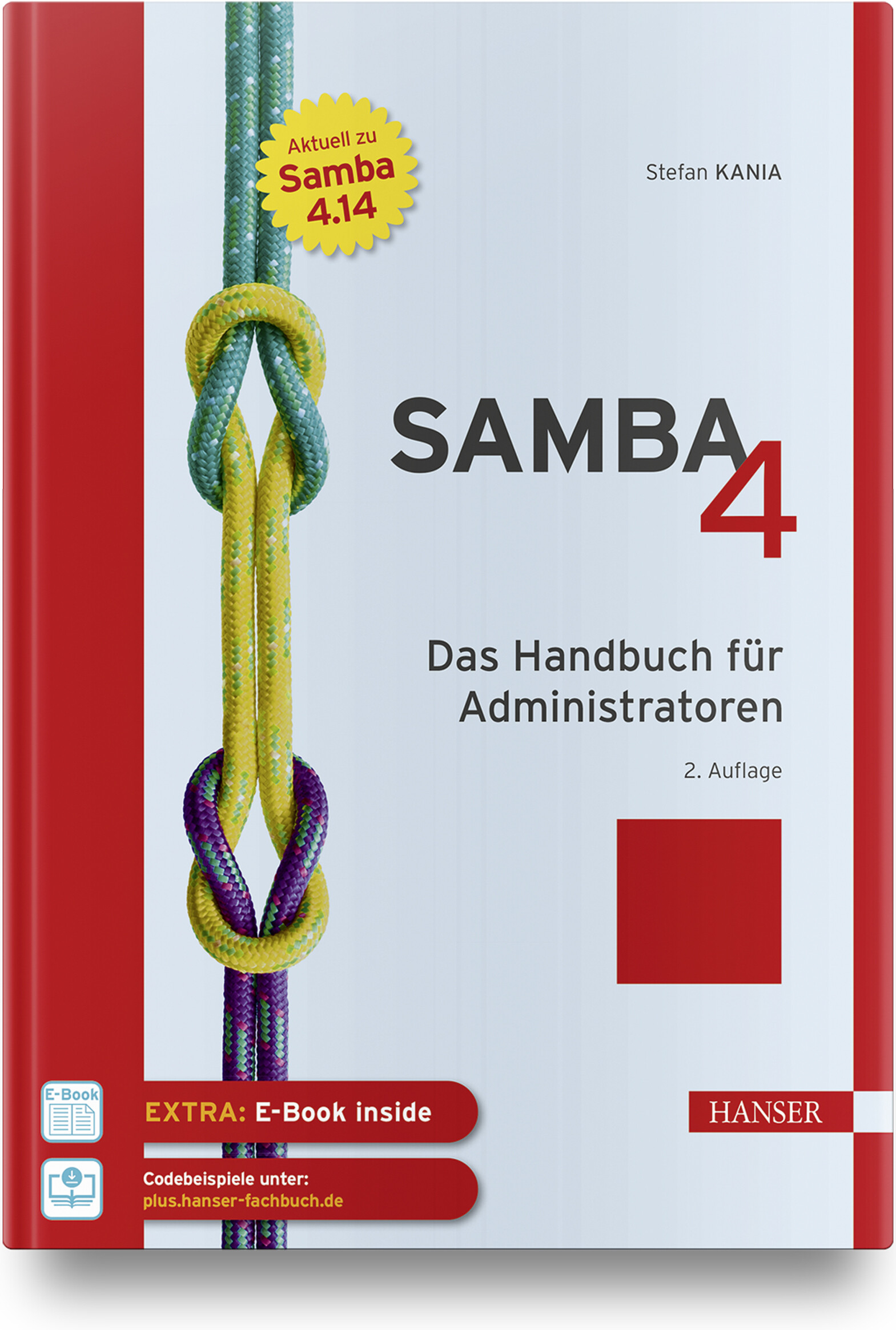
Samba 4 (2. Auflg.)
Das Handbuch für Administratoren in aktualisierter 2. Auflage. Aktuell zu Samba 4.14.Dieses Buch gibt Ihnen eine umfangreiche Anleitung für die Einrichtung und den Betrieb einer Samba-4-Umgebung.Ein Schwerpunkt liegt auf der Verwendung von Samba 4 als Active Directory-Domaincontroller. Dabei werden alle Schritte zu deren Verwaltung beschrieben bis hin zur Behebung eines Ausfalls von Domaincontrollern.Ein weiterer Schwerpunkt ist die Verwaltung von Fileservern in einer Netzwerkumgebung, sei es als einzelner Server oder als Cluster. Bei der Einrichtung des Clusters wird dabei komplett auf Open-Source-Software gesetzt. Auch die Einbindung von Clients – von Windows, Linux und (neu) macOS – kommt nicht zu kurz. Zudem wird die neue Möglichkeit der GPOs für Linux-Clients erklärt. Die Einrichtung von zwei DHCP-Servern für die ausfallsichere DDNS-Umgebung wird mit allen Schritten und Skripten beschrieben.Gerade als Linux-Administrator ist man es gewohnt, alles möglichst über Skripte auf der Kommandozeile durchführen zu können. Deshalb gibt es zu diesem Bereich ein eigenes Kapitel.Auch die Durchführung der Migration von Samba 3 auf Samba 4 oder von einem Windows Active Directory auf ein Samba 4 Active Directory wird ausführlich erläutert. Das Buch ist somit eine gute Grundlage für Einsteiger und erfahrene Administratoren.Aus dem Inhalt:Installation aus verschiedenen Repositories und DistributionenEinrichten und Testen von DomaincontrollernBenutzerverwaltungGrundlagen zu GruppenrichtlinienEinrichtung servergespeicherter Profile und Ordnerumleitung via GPOsEinrichtung von RODC (Read Only Domain Controller)Ausfallsichere DDNS-InfrastrukturFileserver in der DomäneFreigaben einrichten und verwaltenEinrichtung des VirusfiltersClients in der DomäneCluster mit CTDB und GlusterFSSchemaerweiterungEinrichten von VertrauensstellungenMigrationSamba 4 als PrintserverHilfe zur FehlersucheInstallation mit Ansible Leseprobe (PDF-Link)
Security Issues and Privacy Concerns in Industry 4.0 Applications
SECURITY ISSUES AND PRIVACY CONCERNS IN INDUSTRY 4.0 APPLICATIONSWRITTEN AND EDITED BY A TEAM OF INTERNATIONAL EXPERTS, THIS IS THE MOST COMPREHENSIVE AND UP-TO-DATE COVERAGE OF THE SECURITY AND PRIVACY ISSUES SURROUNDING INDUSTRY 4.0 APPLICATIONS, A MUST-HAVE FOR ANY LIBRARY.The scope of Security Issues and Privacy Concerns in Industry 4.0 Applications is to envision the need for security in Industry 4.0 applications and the research opportunities for the future. This book discusses the security issues in Industry 4.0 applications for research development. It will also enable the reader to develop solutions for the security threats and attacks that prevail in the industry. The chapters will be framed on par with advancements in the industry in the area of Industry 4.0 with its applications in additive manufacturing, cloud computing, IoT (Internet of Things), and many others. This book helps a researcher and an industrial specialist to reflect on the latest trends and the need for technological change in Industry 4.0. Smart water management using IoT, cloud security issues with network forensics, regional language recognition for industry 4.0, IoT-based health care management systems, artificial intelligence for fake profile detection, and packet drop detection in agriculture-based IoT are covered in this outstanding new volume. Leading innovations such as smart drone for railway track cleaning, everyday life-supporting blockchain and big data, effective prediction using machine learning, classification of dog breed based on CNN, load balancing using the SPE approach and cyber culture impact on media consumers are also addressed. Whether a reference for the veteran engineer or an introduction to the technologies covered in the book for the student, this is a must-have for any library. SHIBIN DAVID is an assistant professor in the Department of Computer Science and Engineering at Karunya Institute of Technology and Sciences, India. His research interest includes cryptography, network security and mobile computing. He has an industry certification from Oracle, several awards, and a number of publications to his credit.R. S. ANAND is a researcher in the field of mechanical engineering at the Karunya Institute of Technology and Sciences, India, after being an assistant professor at the Narayana Guru College of Engineering from 2014 to 2016. He has numerous papers and presentations to his credit. V. JEYAKRISHNAN, PhD, is an assistant professor at Saintgits College of Engineering, Kottayam, India. His research area includes wireless networks, cloud computing and its applications. He has a number of publications in his research area. M. NIRANJANAMURTHY, PhD, is an assistant professor in the Department of Computer Applications, M S Ramaiah Institute of Technology, Bangalore, Karnataka. He received his doctorate in computer science from JJTU, Rajasthan. He has over ten years of teaching experience and two years of industry experience as a software engineer. He has published four books, 70 papers, and has filed for 17 Patents with three so far granted. He is a reviewer for 22 international academic journals and has twice won Best Research Journal Reviewer award. He has numerous other awards and in is active in research associations. Preface xiii1 INDUSTRY 4.0: SMART WATER MANAGEMENT SYSTEM USING IOT 1S. Saravanan, N. Renugadevi, C.M. Naga Sudha and Parul Tripathi1.1 Introduction 21.1.1 Industry 4.0 21.1.2 IoT 21.1.3 Smart City 31.1.4 Smart Water Management 31.2 Preliminaries 41.2.1 Internet World to Intelligent World 41.2.2 Architecture of IoT System 41.2.3 Architecture of Smart City 61.3 Literature Review on SWMS 71.3.1 Water Quality Parameters Related to SWMS 81.3.2 SWMS in Agriculture 81.3.3 SWMS Using Smart Grids 91.3.4 Machine Learning Models in SWMS 101.3.5 IoT-Based SWMS 111.4 Conclusion 11References 122 FOURTH INDUSTRIAL REVOLUTION APPLICATION: NETWORK FORENSICS CLOUD SECURITY ISSUES 15Abdullah Ayub Khan, Asif Ali Laghari, Shafique Awan and Awais Khan Jumani2.1 Introduction 162.1.1 Network Forensics 162.1.2 The Fourth Industrial Revolution 172.1.2.1 Machine-to-Machine (M2M) Communication 182.1.3 Cloud Computing 182.1.3.1 Infrastructure-as-a-Service (IaaS) 192.1.3.2 Challenges of Cloud Security in Fourth Industrial Revolution 192.2 Generic Model Architecture 202.3 Model Implementation 242.3.1 OpenNebula (Hypervisor) Implementation Platform 242.3.2 NetworkMiner Analysis Tool 252.3.3 Performance Matrix Evaluation & Result Discussion 272.4 Cloud Security Impact on M2M Communication 282.4.1 Cloud Computing Security Application in the Fourth Industrial Revolution (4.0) 292.5 Conclusion 30References 313 REGIONAL LANGUAGE RECOGNITION SYSTEM FOR INDUSTRY 4.0 35Bharathi V, N. Renugadevi, J. Padmapriya and M. Vijayprakash3.1 Introduction 363.2 Automatic Speech Recognition System 393.2.1 Preprocessing 413.2.2 Feature Extraction 423.2.2.1 Linear Predictive Coding (LPC) 423.2.2.2 Linear Predictive Cepstral Coefficient (LPCC) 443.2.2.3 Perceptual Linear Predictive (PLP) 443.2.2.4 Power Spectral Analysis 443.2.2.5 Mel Frequency Cepstral Coefficients 453.2.2.6 Wavelet Transform 463.2.3 Implementation of Deep Learning Technique 463.2.3.1 Recurrent Neural Network 473.2.3.2 Long Short-Term Memory Network 473.2.3.3 Hidden Markov Models (HMM) 473.2.3.4 Hidden Markov Models - Long Short-Term Memory Network (HMM-LSTM) 483.2.3.5 Evaluation Metrics 493.3 Literature Survey on Existing TSRS 493.4 Conclusion 52References 524 APPROXIMATION ALGORITHM AND LINEAR CONGRUENCE: AN APPROACH FOR OPTIMIZING THE SECURITY OF IOT-BASED HEALTHCARE MANAGEMENT SYSTEM 55Anirban Bhowmik and Sunil Karforma4.1 Introduction 564.1.1 IoT in Medical Devices 564.1.2 Importance of Security and Privacy Protection in IoT-Based Healthcare System 574.1.3 Cryptography and Secret Keys 584.1.4 RSA 584.1.5 Approximation Algorithm and Subset Sum Problem 584.1.6 Significance of Use of Subset Sum Problem in Our Scheme 594.1.7 Linear Congruence 604.1.8 Linear and Non-Linear Functions 614.1.9 Pell’s Equation 614.2 Literature Survey 624.3 Problem Domain 634.4 Solution Domain and Objectives 644.5 Proposed Work 654.5.1 Methodology 654.5.2 Session Key Generation 654.5.3 Intermediate Key Generation 674.5.4 Encryption Process 694.5.5 Generation of Authentication Code and Transmission File 704.5.6 Decryption Phase 714.6 Results and Discussion 714.6.1 Statistical Analysis 724.6.2 Randomness Analysis of Key 734.6.3 Key Sensitivity Analysis 754.6.4 Security Analysis 764.6.4.1 Key Space Analysis 764.6.4.2 Brute-Force Attack 774.6.4.3 Dictionary Attack 774.6.4.4 Impersonation Attack 784.6.4.5 Replay Attack 784.6.4.6 Tampering Attack 784.6.5 Comparative Analysis 794.6.5.1 Comparative Analysis Related to IoT Attacks 794.6.6 Significance of Authentication in Our Proposed Scheme 854.7 Conclusion 85References 865 A HYBRID METHOD FOR FAKE PROFILE DETECTION IN SOCIAL NETWORK USING ARTIFICIAL INTELLIGENCE 89Ajesh F, Aswathy S U, Felix M Philip and Jeyakrishnan V5.1 Introduction 905.2 Literature Survey 915.3 Methodology 945.3.1 Datasets 945.3.2 Detection of Fake Account 945.3.3 Suggested Framework 955.3.3.1 Pre-Processing 975.3.3.2 Principal Component Analysis (PCA) 985.3.3.3 Learning Algorithms 995.3.3.4 Feature or Attribute Selection 1025.4 Result Analysis 1035.4.1 Cross-Validation 1035.4.2 Analysis of Metrics 1045.4.3 Performance Evaluation of Proposed Model 1055.4.4 Performance Analysis of Classifiers 1055.5 Conclusion 109References 1096 PACKET DROP DETECTION IN AGRICULTURAL-BASED INTERNET OF THINGS PLATFORM 113Sebastian Terence and Geethanjali Purushothaman6.1 Introduction 1136.2 Problem Statement and Related Work 1146.3 Implementation of Packet Dropping Detection in IoT Platform 1156.4 Performance Analysis 1206.5 Conclusion 129References 1297 SMART DRONE WITH OPEN CV TO CLEAN THE RAILWAY TRACK 131Sujaritha M and Sujatha R7.1 Introduction 1327.2 Related Work 1327.3 Problem Definition 1347.4 The Proposed System 1347.4.1 Drones with Human Intervention 1347.4.2 Drones without Human Intervention 1357.4.3 Working Model 1377.5 Experimental Results 1377.6 Conclusion 139References 1398 BLOCKCHAIN AND BIG DATA: SUPPORTIVE AID FOR DAILY LIFE 141Awais Khan Jumani, Asif Ali Laghari and Abdullah Ayub Khan8.1 Introduction 1428.1.1 Steps of Blockchain Technology Works 1448.1.2 Blockchain Private 1448.1.3 Blockchain Security 1458.2 Blockchain vs. Bitcoin 1458.2.1 Blockchain Applications 1468.2.2 Next Level of Blockchain 1468.2.3 Blockchain Architecture’s Basic Components 1498.2.4 Blockchain Architecture 1508.2.5 Blockchain Characteristics 1508.3 Blockchain Components 1518.3.1 Cryptography 1528.3.2 Distributed Ledger 1538.3.3 Smart Contracts 1538.3.4 Consensus Mechanism 1548.3.4.1 Proof of Work (PoW) 1558.3.4.2 Proof of Stake (PoS) 1558.4 Categories of Blockchain 1558.4.1 Public Blockchain 1568.4.2 Private Blockchain 1568.4.3 Consortium Blockchain 1568.4.4 Hybrid Blockchain 1568.5 Blockchain Applications 1588.5.1 Financial Application 1588.5.1.1 Bitcoin 1588.5.1.2 Ripple 1588.5.2 Non-Financial Applications 1598.5.2.1 Ethereum 1598.5.2.2 Hyperledger 1598.6 Blockchain in Different Sectors 1608.7 Blockchain Implementation Challenges 1608.8 Revolutionized Challenges in Industries 1638.9 Conclusion 170References 1729 A NOVEL FRAMEWORK TO DETECT EFFECTIVE PREDICTION USING MACHINE LEARNING 179Shenbaga Priya, Revadi, Sebastian Terence and Jude Immaculate9.1 Introduction 1809.2 ML-Based Prediction 1809.3 Prediction in Agriculture 1829.4 Prediction in Healthcare 1839.5 Prediction in Economics 1849.6 Prediction in Mammals 1859.7 Prediction in Weather 1869.8 Discussion 1869.9 Proposed Framework 1879.9.1 Problem Analysis 1879.9.2 Preprocessing 1889.9.3 Algorithm Selection 1889.9.4 Training the Machine 1889.9.5 Model Evaluation and Prediction 1889.9.6 Expert Suggestion 1889.9.7 Parameter Tuning 1899.10 Implementation 1899.10.1 Farmers and Sellers 1899.10.2 Products 1899.10.3 Price Prediction 1909.11 Conclusion 192References 19210 DOG BREED CLASSIFICATION USING CNN 195Sandra Varghese and Remya S10.1 Introduction 19510.2 Related Work 19610.3 Methodology 19810.4 Results and Discussions 20110.4.1 Training 20110.4.2 Testing 20110.5 Conclusions 203References 20311 METHODOLOGY FOR LOAD BALANCING IN MULTI-AGENT SYSTEM USING SPE APPROACH 207S. Ajitha11.1 Introduction 20711.2 Methodology for Load Balancing 20811.3 Results and Discussion 21311.3.1 Proposed Algorithm in JADE Tool 21311.3.1.1 Sensitivity Analysis 21811.3.2 Proposed Algorithm in NetLogo 21811.4 Algorithms Used 21911.5 Results and Discussion 21911.6 Summary 226References 22612 THE IMPACT OF CYBER CULTURE ON NEW MEDIA CONSUMERS 229Durmuş KoÇak12.1 Introduction 22912.2 The Rise of the Term of Cyber Culture 23112.2.1 Cyber Culture in the 21st Century 23112.2.1.1 Socio-Economic Results of Cyber Culture 23212.2.1.2 Psychological Outcomes of Cyber Culture 23312.2.1.3 Political Outcomes of Cyber Culture 23412.3 The Birth and Outcome of New Media Applications 23412.3.1 New Media Environments 23612.3.1.1 Social Sharing Networks 23712.3.1.2 Network Logs (Blog, Weblog) 24012.3.1.3 Computer Games 24012.3.1.4 Digital News Sites and Mobile Media 24012.3.1.5 Multimedia Media 24112.3.1.6 What Affects the New Media Consumers’ Tendencies? 24212.4 Result 244References 245Index 251
Logic Pro
Wenn Sie mit Logic Pro X Musik aufnehmen, produzieren oder abmischen wollen, dann ist dieses Handbuch Ihr umfassender Begleiter. Kompetente Anleitungen, zahlreiche Hintergrundinfos und praxisnahe Beispiele helfen Ihnen auf dem Weg zum perfekten Track – von den technischen Details der Aufnahme und Timing-Bearbeitung bis zur klassischen Harmonielehre, von den ersten Schritten mit der Software bis zum Feinschliff der Produktion. Aktuell mit allen neuen Tools wie Quick Sampler, Live Loops, Remix und Multi FX, Step Sequencer, Drum Synths, dem überarbeiteten Drum Machine Designer, Smart Tempo, und Vintage EQs Aus dem Inhalt: Installieren und einrichten, mit Schnellkurs: Schritt für Schritt zum ersten TrackEinstellungen, Dateiverwaltung, Sounds und BibliothekAufnehmen und EditierenNeue Tools: Live Loops und Step SequencerTempoanpassungen & Smart TempoMIDI-Editoren, MIDI-EnviromentAudio-Editoren, Audioexport und -importMixdown von Drums, Bass, Sounds und VocalsStrategien und Ziele beim Abmischen & Tipps für die Musikkomposition: Harmonien und RhytmikInstrumente, Mixer und EffekteFilmmusikkomposition, Filmvertonung, Remixing, Live-Act, MasterProjektbeispiel: Pop, Klassik, Hip Hop, Trap, Techno, Drum & Bass Materialien zum Buch ... 43 1. Einführung, Schnellkurs Mac, Logic-Installation ... 45 1.1 ... Einführung ... 45 1.2 ... Mac-Basics und -Shortcuts, Unterschiede zwischen Mac und PC ... 50 1.3 ... Logic-Installation, Computer- und Systemvoraussetzungen, Touchbar ... 68 1.4 ... Logic Pro in Betrieb nehmen ... 73 1.5 ... Peripherie: Audio, MIDI und eine Einführung in das Audio-MIDI-Setup ... 80 1.6 ... iPad-Steuerung für Logic via Logic Remote ... 83 1.7 ... Logic-Updates installieren und mit Backups arbeiten, Time Machine ... 83 2. Schnellkurs: Musikproduktion und Hauptfenster in Logic ... 85 2.1 ... Einführung, Hinweise zum Schnellkurs, zu Live Loops und Videos ... 85 2.2 ... Vorbereitung und Einstellungen, Demoprojekt, Logic Remote ... 86 2.3 ... Schnellkurs Teil 1: Projekt anlegen, erste MIDI- und Audioaufnahmen und Edits ... 87 2.4 ... Schnellkurs Teil 2: weitere Edits, FX, Automation, Mix und Export ... 121 2.5 ... Ausblick ... 153 3. Setup/Konfiguration, Speichern und MIDI-Hintergrundwissen ... 157 3.1 ... Speichern und Verwalten von Projekten ... 157 3.2 ... Speichern und Verwalten von Sounds; Logic-Inhalte auf dem Mac ... 165 3.3 ... Logic-Einstellungen ... 171 3.4 ... Projekteinstellungen ... 186 3.5 ... Plug-in-Manager und Audio Units ... 194 3.6 ... Tastaturkurzbefehle nutzen, verwalten und selbst erstellen ... 197 3.7 ... Touchbar ... 202 3.8 ... Undo- und Redo-Funktionalität in Logic ... 205 3.9 ... Audiointerface-Konfiguration im Audio-MIDI-Setup ... 206 3.10 ... MIDI im Audio-MIDI-Setup ... 208 3.11 ... MIDI in Theorie und Praxis ... 209 4. Hauptfenster-Übersicht, Hauptmenüs, Fensterübersicht ... 217 4.1 ... Übersicht: Hauptmenüs in Logic ... 217 4.2 ... Übersicht: Fenster und Fensteranordnungen ... 219 4.3 ... Das Hauptfenster: Aufbau und Bereiche ... 221 4.4 ... Oben: Steuerungsleiste, Display, Songeinstellungen ... 223 4.5 ... Oben: Transport, Taktlineal und Menü »Navigieren« ... 227 4.6 ... Oben: Symbolleiste für schnellen Zugriff auf Befehle ... 236 4.7 ... Links: Bibliothek als Soundquelle ... 237 4.8 ... Links: Informationsbereich und dynamische Hilfe ... 240 4.9 ... Mittig: Bereiche »Spuren« und »Live Loops«, Hauptmenü »Spur« ... 241 4.10 ... Rechter Fensterbereich: Übersicht ... 258 4.11 ... Rechts: Listeneditoren ... 258 4.12 ... Rechts: Notizblock ... 259 4.13 ... Rechts: Apple Loops und Loop Browser als Soundquelle ... 260 4.14 ... Rechts: Übersichten »Projekt« und »Alle Dateien« ... 265 4.15 ... Unten: Editoren, Smart Controls und Mixer im Hauptfenster ... 268 5. Aufnahme im Hauptfenster (incl. Live Loops) ... 273 5.1 ... Allgemeine Aufnahmefunktionalität und das Menü »Aufnahme« ... 273 5.2 ... Aufnahmen in der »Live Loops«-Ansicht ... 279 5.3 ... MIDI aufnehmen oder programmieren ... 281 5.4 ... Audio aufnehmen ... 291 5.5 ... Philosophisches zum Thema Audioaufnahmen ... 307 5.6 ... Online-Jams? SonoBus ... 309 5.7 ... Übung: externe MIDI-Spur als Audio aufnehmen ... 309 6. Editieren und Arrangieren im Hauptfenster (incl. Live Loops) ... 311 6.1 ... Allgemeines Editing 1: Menüübersicht, Einrasten und Verschieben ... 311 6.2 ... Allgemeines Editing 2: Regions-Editing im Hauptfenster, Menüs ... 317 6.3 ... Allgemeines Editing 3: Werkzeuge im Hauptfenster ... 327 6.4 ... Allgemeines Editing 4: Informationsfenster »Region« und »Spur« allgemein ... 333 6.5 ... MIDI-Editing im Hauptfenster: spezielle Funktionen ... 339 6.6 ... Audio-Editing im Hauptfenster ... 349 6.7 ... Arrangiertechniken, Ordner, Spuralternativen, Spurstapel und ergänzende Funktionen im Hauptfenster ... 364 6.8 ... »Live Loops«: Übersicht, Performance, Editing, Arrangement-Composing ... 387 7. MIDI-Editoren, Artikulationsset-Editor, Step Sequencer ... 397 7.1 ... Die Editoren: Überblick und gemeinsame Eigenschaften ... 397 7.2 ... Pianorolle und MIDI-Editor für Zellen ... 402 7.3 ... Automation und MIDI (in Pianorolle und Notationseditor) ... 415 7.4 ... Notationseditor ... 420 7.5 ... Schritteditor ... 427 7.6 ... »Event«-Liste/Event-Schwebefenster ... 429 7.7 ... Artikulationen, Artikulations-IDs und Artikulations-ID-Editor ... 433 7.8 ... MIDI-Transformer ... 438 7.9 ... Step Sequencer und Patterns ... 443 8. Audiobearbeitung in »Projektaudio«-Fenster und Audiodateieditor ... 451 8.1 ... »Projektaudio«-Fenster (und Übersicht »Projekt«) ... 451 8.2 ... Audiodateieditor ... 465 8.3 ... Nutzung eines externen Audioeditors ... 479 9. Tempo und »Smart Tempo«-Editor, Tuning, Timing und Groove ... 481 9.1 ... Einführung und einfache Tempoanpassung ... 481 9.2 ... Groove-Optimierungen mit Groove-Templates, Quantisierungen und Groove-Tracks ... 483 9.3 ... Flex-Time-Algorithmen für Tempo- und Timingbearbeitung im Detail ... 488 9.4 ... »Flex Pitch« und andere Tonhöhenkorrekturen ... 498 9.5 ... Tempowechsel im Song ... 507 9.6 ... Tempoanpassungen und »Smart Tempo«-Editor ... 509 9.7 ... Sonderfall: Tempo von Mehrspuraufnahmen anpassen und unsauber eingespielte Stellen korrigieren ... 529 9.8 ... Slicing, Tempoanpassung via Slicing und ReCycle-Datei-Import ... 533 9.9 ... Tempoanpassungen mit Tap-Tempo, dem Tempo-Interpreter oder dem Tempo-Regler ... 542 10. Export und Import von Audio, MIDI, Sonderformaten und Projektbestandteilen ... 547 10.1 ... Audio: Dateiformate, Bitrate, Abtastrate/Samplerate ... 547 10.2 ... Audio: gesamtes Projekt oder Abschnitt bouncen ... 551 10.3 ... Audio: Spuren oder Regionen als Audio exportieren oder bouncen ... 558 10.4 ... Audio und MIDI: Apple Loops erzeugen/exportieren ... 567 10.5 ... Sonderformate exportieren ... 570 10.6 ... Importieren ... 570 10.7 ... MIDI-Im- und -Export ... 575 10.8 ... Teilen mit AirDrop und Co. ... 578 10.9 ... Dateiaustausch mit iOS-Geräten, GarageBand iOS, Sprachmemos ... 579 10.10 ... Sonstige Import- und Exportoptionen ... 582 11. Die Instrumente: Synths, »Sampler«, »Drummer« und Co. ... 583 11.1 ... Logic-Instrumenten-Plug-ins laden ... 583 11.2 ... Output-Konfiguration für Instrumente (Stereo/Mono/Surround/Multi-Out), mehrere Outputs für ein Instrument nutzen ... 584 11.3 ... AU-(Audio Unit-)Instrumente laden ... 585 11.4 ... Side-Chain-Input bei Instrumenten/AU-MIDI-gesteuerte Effekte ... 585 11.5 ... Plug-in-Bedienung und -Darstellung ... 586 11.6 ... Einführung in Klangerzeuger (Synths und Sampler) und Klangsyntheseformen ... 588 11.7 ... Retro Synth ... 600 11.8 ... Quick Sampler, Sampler, Auto Sampler und Alchemy: Kurzübersicht und Sampler-Einführung ... 608 11.9 ... Quick Sampler (Single Sample) ... 610 11.10 ... Sampler (Multi-Sample) ... 618 11.11 ... Alchemy-Synthesizer und Sampler ... 637 11.12 ... »Drummer« und Drummer-Regionen ... 670 11.13 ... Drum Kit Designer ... 680 11.14 ... Drum Machine Designer (DMD) ... 684 11.15 ... Ultrabeat ... 690 11.16 ... Drum Synth ... 700 11.17 ... ES1 ... 701 11.18 ... ES E, ES M, ES P ... 705 11.19 ... EFM 1 und FM-Synthese ... 708 11.20 ... ES2 ... 711 11.21 ... Sculpture ... 724 11.22 ... Vintage Electric Piano ... 740 11.23 ... Vintage Clav ... 743 11.24 ... Vintage B3 Organ ... 747 11.25 ... Vintage Mellotron ... 759 11.26 ... EVOC 20 PS-Vocoder ... 760 11.27 ... Studio Horn und Studio Strings ... 762 11.28 ... External Instrument ... 765 11.29 ... Klopfgeist ... 766 11.30 ... Test Oscillator ... 767 11.31 ... Multitimbrale Instrumente nutzen ... 767 11.32 ... MPE (MIDI Polyphonic Expression) mit Logic nutzen ... 768 11.33 ... Ausblick: weitere interessante Software-Instrumente von Drittherstellern/modulare Hardware ... 771 12. Harmonielehre, Skalen und Rhythmik: eine Einführung ... 775 12.1 ... Logic hilft beim Lernen: Noten- und Akkordanzeige ... 775 12.2 ... Tonleitern und Klaviertöne, Dur und Moll, Intervalle ... 775 12.3 ... Stammtonprinzip und die Namen der schwarzen Tasten ... 780 12.4 ... Akkorde und Harmonien ... 781 12.5 ... Obertöne und Fourier-Theorem, Stimmungen und Hermode Tuning ... 782 12.6 ... Kadenzen, Akkordfunktionen, der Auf- und Abbau von Spannung -- und die »Hit-Formel« ... 787 12.7 ... Akkordumkehrung, weite und enge Lage ... 792 12.8 ... Grundsätzliche Gedanken zur Kompositionsphilosophie ... 793 12.9 ... Quintenzirkel und Tonleitern in der Notation ... 794 12.10 ... Vierklänge und andere Akkorde ... 796 12.11 ... Taktzählweise und Rhythmik, Polyrhythmik ... 796 12.12 ... Melodien: einfache Lieder, Spannung, Pentatonik, Motiv und Phrase ... 800 12.13 ... Aufbau von Songs und Songteilen, Arrangement ... 802 12.14 ... Skalen und Kirchentonleitern, modale Komposition, Filmmusik ... 804 12.15 ... Ausblick: Theorie und Praxis ... 810 12.16 ... Ausblick: Literaturtipps ... 810 13. Die MIDI-FX-Plug-ins und die MIDI-Umgebung ... 811 13.1 ... MIDI-FX-Plug-ins ... 811 13.2 ... MIDI-Umgebung/Environment ... 834 14. Der Mixer und das Routing ... 861 14.1 ... Einführung in den Mixer ... 861 14.2 ... Aux-Kanäle, Busse, Sends, Routing-Strategien, Insert- vs. Send-FX und Einzelouts ... 876 14.3 ... Einschleif- vs. Zumischeffekte (Insert-FX vs. Send-FX) -- und die Möglichkeiten der Verkabelung ... 878 14.4 ... Summierung, Subgruppen und Stems ... 884 14.5 ... Output-Konfiguration von Instrumenten; mehrere Ausgänge; Multi-Outs in Spurstapeln nutzen ... 886 14.6 ... Aux-Kanäle als ReWire-Input ... 888 14.7 ... Aux- oder Audio-Kanäle zum Abmischen externer Klangerzeuger im Mixer ... 888 14.8 ... Mix-, Edit- und VCA-Gruppen, gemeinsame Bearbeitung von Mix-Kanälen ... 889 14.9 ... Side Chain in Logic Pro ... 893 14.10 ... Ausblick ... 894 15. Die Effekte in Logic Pro ... 895 15.1 ... Einführung und allgemeine Eigenschaften der Effekte ... 895 15.2 ... Equalizer (EQ) ... 900 15.3 ... Dynamics ... 911 15.4 ... Reverb ... 930 15.5 ... Distortion ... 944 15.6 ... Amps and Pedals ... 949 15.7 ... Delay ... 955 15.8 ... Metering ... 964 15.9 ... Imaging ... 972 15.10 ... Filter ... 977 15.11 ... Modulation ... 986 15.12 ... Pitch-Effekte und Vocal-Bearbeitung ... 996 15.13 ... Multi Effects ... 1000 15.14 ... Specialized ... 1005 15.15 ... Utility ... 1008 15.16 ... Ausblick für Musiker, denen die Effekte in Logic nicht reichen ... 1014 16. Automation, Smart Controls, Controller, Logic Remote ... 1017 16.1 ... Automation ... 1017 16.2 ... Smart Controls ... 1039 16.3 ... Bedienoberflächen und Controller-Zuweisungen ... 1050 16.4 ... Logic Remote und Touch-Instrumente ... 1059 17. Mixingstrategien, musikalische Ziele und Stile ... 1083 17.1 ... Mixing Teil 1: Schnellkurs und die drei Dimensionen beim Mixing ... 1083 17.2 ... Mixing Teil 2: akustische Phänomene und Mixing-Backgroundwissen ... 1092 17.3 ... Mixing Teil 3: sonstige Mixthemen ... 1101 17.4 ... Musikalische Stile und Ziele sowie künstlerische Aspekte ... 1103 18. Filmmusik, Live-Performance, Mastering und Meta-Events ... 1133 18.1 ... Filmmusik und Soundvertonung mit Logic ... 1133 18.2 ... Live-Performance mit Logic und/oder MainStage ... 1149 18.3 ... Mastering ... 1155 18.4 ... Meta-Events in Logic ... 1163 19. Andere Programme, Synchronisation, spezielle Verbindungen ... 1165 19.1 ... GarageBand für iOS ... 1165 19.2 ... iOS-Apps ... 1168 19.3 ... Musizieren über das Internet ... 1169 19.4 ... ReWire: Ableton, Reason und Co. mit Logic nutzen ... 1170 19.5 ... Computerinternes MIDI- und Audio-Routing, Synchronisation (computerintern und -extern) ... 1171 19.6 ... Logic und Maschine ... 1174 19.7 ... Audio Hijack und Piezo: Sampling von Computerprogrammen ... 1175 19.8 ... TwistedWave ... 1176 19.9 ... Sample-Management und externe Libraries ... 1177 19.10 ... MIDI über WLAN, Netzwerk und Bluetooth ... 1177 19.11 ... DMX-Steuerung ... 1179 20. Fehler, Workarounds, Problemlösungen ... 1181 20.1 ... Lösungen für Mac-Probleme ... 1181 20.2 ... Logic-bezogene Problemlösungen ... 1183 Über den Autor ... 1190 Index ... 1192

Beginning Unity Editor Scripting
Learn about editor scripting in Unity, including different possible methods of editor customization to fit your custom game workflow or even to create assets that could be published on the Asset Store to earn a passive income. The knowledge of editor scripting, although rarely covered in books, gives a game developer insight into how things work in Unity under the hood, which you can leverage to create custom tools that empower your unique game idea.This book starts with the very basics of editor scripting in Unity, such as using built-in attributes to customize your component’s editor and creating custom editors and windows with IMGUI and UI Toolkit. Next, we move to a general use case example by creating an object spawner EditorTool for the scene view. Later, we dive straight to in-depth stats and detailed case studies of two Unity assets: ProArray and Rhythm Game Starter. Here you’ll get more context on how editor scripting is used in published assets.You will also learn how to set up a better workflow for editor scripting, asset publishing, maintenance, and iterative updates. You will leverage the power of modern web technology to build a documentation site with GitBook and DocFX. Finally, you will see some tips and tricks for automating asset versioning and changelogs.WHAT YOU WILL LEARN* Get started with Editor scripting in Unity * Work with advanced editor topics such as custom EditorWindows and EditorTool* Structure your C# code with namespaces and asmdef * Use IMGUI and UI Toolkit for creating editor GUIs* Master packaging and selling your own editor tools* Set up a better workflow for asset publishing, maintenance, and iterative updatesWHO THIS BOOK IS FORReaders who want to learn about editor scripting to improve their game-development process and create tools for themselves. Moderate experience with C# and a fundamental knowledge of Unity is expected.BennyKok is primarily a Unity asset publisher, indie game developer, and music producer. He is a creative individual who loves creating tools for Unity and published ProArray and Rhythm Game Starter on the Unity Asset Store. He also dedicates his time to sharing open-source Unity tools on GitHub for the community.Chapter 1: IntroductionChapter 2: Customize Editor with Attributes and CallbacksChapter 3: Custom Editor with IMGUIChapter 4: Custom Editor with UI ToolkitChapter 5: Object Spawner Tool Using EditorTool and ScriptableObject- Chapter 6: Case Study: ProArrayChapter 7: . Case Study: Rhythm Game StarterChapter 8: Asset Workflow for PublishingChapter 9: Package Distribution and PublishingChapter 10: Conclusion.
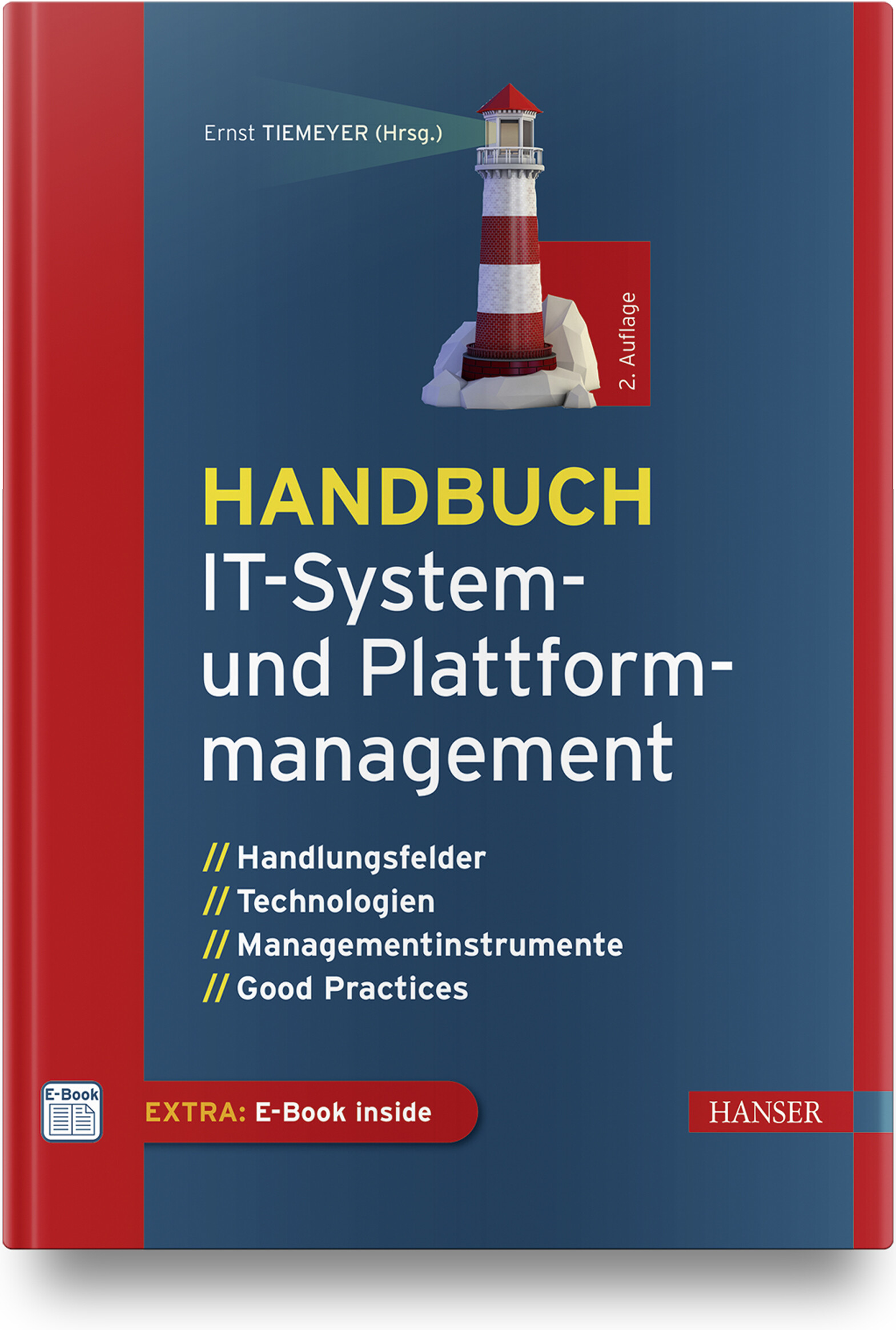
Handbuch IT-System- und Plattformmanagement (2. Auflg.)
Handlungsfelder, Technologien, Managementinstrumente, Good Practices in 2., überarbeitete und erweiterte Auflage.Ein effizientes und ganzheitliches Management der installierten IT-Systeme (Applikationen, Datenbanken, IT-Infrastrukturen) und IT-Plattformen (Cloud, Daten, Integration) ist heute unverzichtbar. Nur so lassen sich Geschäftsprozesse optimal unterstützen und neue Geschäftspotenziale generieren.Dieses Handbuch bietet das relevante Wissen für einen erfolgreichen Einsatz von IT-Systemen in systematischer Form (Darlegung der Methoden, Instrumente und Prozesse). Fragen der Planung und Weiterentwicklung der IT-Systemlandschaft werden genauso behandelt wie Aspekte der Koordination (Auftragsmanagement, Systemsupport) und der sicheren Steuerung der installierten IT-Systeme (Qualitätsmanagement, Risiko- und Sicherheitsmanagement, Notfallplanung etc.).Viele Praxistipps und Beispiele helfen Ihnen, IT-Systeme und die Plattformnutzung zu planen und zu verwalten sowie deren stabilen Betrieb zu gewährleisten.Neu in der 2. Auflage:DevOps-Applikationsentwicklung und ApplikationsbetriebDatenplattformenIntegrationsplattformen und API-ManagementAus dem Inhalt:IT-Systeme und IT-Plattformen planen und betreibenIT-Architekturen und IT-Assets – Planung, Dokumentation undManagement der IT-SystemlandschaftIT-Systeme betreuen und Systemsupport leistenIT-Infrastrukturen und IT-Netzwerke managenIT-Applikationen planen und den Einsatz steuernHandlungsfeld DevOpsCloud-Services managenEnterprise Mobility Management (MDM, EMM)Datenmanagement und Datenplattformen administrierenIT-Integrationslösungen professionell managenAPI-ManagementBeschaffung von IT-Systemen und IT-PlattformenRisikomanagement für IT-SystemeSecurity-Management und NotfallmanagementOrganisations- und Personalfragen für das Managen von IT-SystemenWirtschaftlichen Betrieb von IT-Systemen und IT-Plattformen managenLeseprobe (PDF-Link)
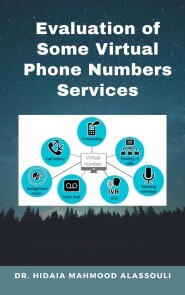
Evaluation of Some Virtual Phone Numbers Services
Phone number apps are software that enables you to send messages, Wi-Fi, and cellular calling. Phone number apps are used to make a call, record, and transfer a call, and send customize the greetings. They also are used to send unlimited SMS and MMS. Second Phone Number apps enable you to select a custom phone number and pace phone calls. This ideal when you do not want to share your real number. Here are the features of Phone Number Apps: Offers unlimited virtual phone numbers.It helps you to share a number with your team.Supports unlimited MMS, talk, and text.This application enables you to save roaming costs.Some applications enable you to make a regular call or conference call.The objective of this book is to evaluate some phone number apps. The book consists from the following parts:1. Overview about the Phone Number Apps:2. Quick comparison between some Second Phone Number Apps covered in the book:3. How to solve the problem that the Google Play Store Application not supported in your country:4. List of some good Virtual Private Network Services VPN :5. How to install Google Pay mobile App:6. How to install PayPal Mobile App:7. How to install Mobile ID changer App:8. Installing Multiple Accounts Apps9. Evaluation of some Virtual Phone Number Services that can provide USA and Canada Phone Numbers only such as. Such as:Textnow.com, Sideline.com, GoDaddy Smartline, Line 2.com,voice.google.com,textfree.us,Nextplus, Textplus, CoverMe, RingCentral.com,Voxdirect.com, RingCentral.com,Mightycall.com10. Evaluation of some Virtual Phone Number Services that can provide Phone Number Services on certain countries. Such as:Virtual Sim, Sonetel, Flyp, Telos, Numero eSIM, Numberpeople.co.uk, TalkU,Wabi, AntiPhone, Phoner, Smscodes.io11. Evaluation of some Virtual Phone Number Services that did not work under my country Palestine using VPN or did not work properly because of un identified reason. Such as:Textme, Textme UP, Freetone, Dingtone, Talkatone, Burner, Ring4, Cloud SIM, Secure messenger SafeUM, Hushed, 2nr Darmowy Drugi Number, 2ndLine, Twilio.I am Dr. Hidaia Mahmoud Mohamed Alassouli. I completed my PhD degree in Electrical Engineering from Czech Technical University by February 2003, and my M. Sc. degree in Electrical Engineering from Bahrain University by June 1995. I completed also one study year of most important courses in telecommunication and computer engineering courses in Islamic university in Gaza. So, I covered most important subjects in Electrical Engineering, Computer Engineering and Telecommunications Engineering during my study. My nationality is Palestinian from gaza strip.I obtained a lot of certified courses in MCSE, SPSS, Cisco (CCNA), A+, Linux.I worked as Electrical, Telecommunicating and Computer Engineer in a lot of institutions. I worked also as a computer networking administrator. I had considerable undergraduate teaching experience in several types of courses in many universities. I handled teaching the most important subjects in Electrical and Telecommunication and Computer Engineering. I could publish a lot of papers a top-tier journals and conference proceedings, besides I published a lot of books in Publishing and Distribution houses.I wrote a lot of important Arabic articles on online news websites. I also have my own magazine website that I publish on it all my articles: http:// www.anticorruption.000space.comMy personal website: www.hidaia-alassouli.000space.comEmail: hidaia_alassouli@hotmail.com

Microsoft Azure für Dummies
Dieses Buch erklärt Ihnen die Grundlagen von Azure, der Microsoft-Cloud-Technologie, und beschreibt klar und verständlich die grundlegenden Dienste. Nach der Lektüre können Sie die unterschiedlichen Cloud-Betriebsmodelle (Infrastructure as a Service, Platform as a Service und Software as a Service) unterscheiden und einschätzen. Sie kennen die wichtigsten Azure-Dienste und können dann eigene Azure-Umgebungen aufbauen. Damit Sie die Dienste auch automatisieren können, finden Sie im Buch viele Beispiele mit Azure CLI Code. Frank Geisler und Benjamin Kettner arbeiten seit vielen Jahren in der IT und beraten ihre Kunden zu innovativen Technologien. Sie sind beide erfahrene Cloud-Architekten, Microsoft Certified Trainer und beide Microsoft Most Valuable Professionals.Über die Autoren 13Vorwort 23EINFÜHRUNG27Über dieses Buch 27Über Azure 27Was Sie nicht lesen müssen 28Törichte Annahmen über den Leser 29Wie dieses Buch aufgebaut ist 30Teil I: Azure-Grundlagen 30Teil II: Azure-Infrastrukturdienste 31Teil III: Azure-Plattformdienste 31Teil IV: Mehrwertdienste auf Azure 32Teil V: Der Top-Ten-Teil 32Symbole, die in diesem Buch verwendet werden 32Wie es weitergeht 33TEIL I: AZURE-GRUNDLAGEN 35KAPITEL 1 WAS IST CLOUD COMPUTING? WAS IST MICROSOFT AZURE?37Cloud-Merkmale 39Geschmacksrichtungen der Cloud 41Cloud-Bereitstellungsmodelle 45Die Cloud wirtschaftlich betrachtet 46KAPITEL 2 DIE AZURE-ARCHITEKTUR49Azure-Management-Tools 52Azure-Konten, -Abonnements und –Verwaltungsgruppen 57Azure-Regionen und -Geografien 59Azure-Ressourcen und -Ressourcengruppen 61KAPITEL 3 AZURE MARKETPLACE UND DIENSTE63KAPITEL 4 RECHTE, ROLLEN UND RICHTLINIEN69Sicherheitskonzepte in Azure 69Geteilte Verantwortlichkeit für die Sicherheit 72Rollenbasierte Zugriffskontrolle 74Azure-Sperren 77Azure-Richtlinien 77KAPITEL 5 SUPPORT ANFORDERN81Ein Ticket eröffnen 83Azure Service Level Agreements (SLAs) 84Der Azure Advisor 85Weitere Unterstützungsangebote 87KAPITEL 6 AZURE UND DER DATENSCHUTZ89Das Azure Trust Center 89Das Service Trust Portal 90Der Compliance-Manager 91Das Azure Security Center 92Azure-Security-Komponenten für den Datenschutz 93KAPITEL 7 WAS KOSTET DAS ALLES?95Bezugsmodelle für Azure 98Der Azure-Preisrechner in Aktion 100TEIL II: AZURE-INFRASTRUKTURDIENSTE 103KAPITEL 8 VIRTUELLE MASCHINEN105Eine virtuelle Maschine anlegen 106Im Azure-Portal 106In PowerShell 123In Azure-CLI 132Mit einer ARM-Vorlage 135Eine virtuelle Maschine konfigurieren 137Backup einrichten 138Überwachung mit Log Analytics 139Der Bastionhost 142Verfügbarkeitsoptionen für virtuelle Maschinen 144KAPITEL 9 NETZWERK, FIREWALLS UND VPN147Virtuelle Netzwerke 147VPN-Gateways (Gateways für virtuelle Netzwerke) 149Netzwerk-Peering 153Netzwerksicherheitsgruppen 156Loadbalancer 160VNET-Dienstendpunkte.162Azure-Firewall und Application Gateway 163Benutzerdefinierte Routing-Tabellen und Routen 164KAPITEL 10 STORAGE165Azure-Speicherkonten 168Tools, mit denen Sie mit Azure-Speicherkonten arbeiten können 173KAPITEL 11 ACTIVE DIRECTORY175Azure Active Directory 176Azure-Active-Directory-Gruppen 180Active Directory Domain Services 181Wann sollte man was verwenden? 182Hybride Umgebungen 183TEIL III: AZURE-PLATTFORMDIENSTE 187KAPITEL 12 RELATIONALE DATENBANKEN: OPEN SOURCE189Relationale Datenbanken 189Open Source in Azure? 190Azure Database for MySQL 192Azure Database for MariaDB 196PostgreSQL 198Redis Cache 199KAPITEL 13 RELATIONALE DATENBANKEN: AZURE SQL203Preismodelle und SKUs 206Dienstebenen 209Verwenden Ihrer Datenbank 210KAPITEL 14 NICHT-RELATIONALE DATENBANKEN215Cosmos DB 216Weitere NoSQL-Datenspeicher 222Weitere Dienste im Marktplatz 224KAPITEL 15 WEB-APPS UND APIS227Architektur für Cloud-Anwendungen 228App-Service-Pläne 229Webanwendungen 232Berechtigungen und Integration 234Überwachung und Skalierung 237KAPITEL 16 SERVERLESS COMPUTING IN AZURE243Serverlose Azure Functions 245Weitere Serverless-Dienste 253Bringen Sie alles zusammen 256KAPITEL 17 DATEN BEWEGEN: AZURE DATA FACTORY259Eine Azure Data Factory anlegen 260Die Oberfläche der Azure Data Factory kennenlernen 261Ihre erste Pipeline in der Azure Data Factory 265Ein Blick hinter die Kulissen 273KAPITEL 18 CONTAINER, REGISTRIES UND KUBERNETES277Grundlegende Elemente der Container-Technologie 278Azure Container Instance 283Azure Container Registry 285Azure Kubernetes Service 286KAPITEL 19 IOT, DATENSTRÖME UND WEITERE DIENSTE289Azure IoT Hub 290Azure Event Hub 293Azure Service Bus 296Azure Storage Queues 297Azure Stream Analytics und Time Series Insights 298TEIL IV: MEHRWERTDIENSTE AUF AZURE 303KAPITEL 20 COGNITIVE SERVICES305Im Angebot 306Verwendung der Cognitive Services 308KAPITEL 21 AZURE SYNAPSE ANALYTICS313Lernen Sie Synapse Analytics kennen 314Erstellen Sie einen Synapse-Analytics-Arbeitsbereich 316Mit Azure Synapse Analytics arbeiten 318KAPITEL 22 AZURE DATABRICKS325Verwaltete Databricks-Cluster 326Die Databricks-Weboberfläche 328Azure-Ressourcen 332KAPITEL 23 AZURE BOT SERVICE 335Das Bot-Framework 335Bereitstellung auf Azure 338Ihren Bot entwickeln 340KAPITEL 24 MACHINE LEARNING IN AZURE345Die Azure Data Science VM 345Azure Machine Learning 347TEIL V: DER TOP-TEN-TEIL 351KAPITEL 25 DIE ZEHN WICHTIGSTEN DIENSTE353Virtuelle Maschinen 353Azure Active Directory 353Azure-SQL-Datenbank 354Azure Data Factory 354Azure IoT Hub 354Azure Virtual Network Gateway 354Azure-Webanwendungen 354Azure Event Hub 355Azure Logic Apps 355Azure Functions 355KAPITEL 26 DIE ZEHN WICHTIGSTEN HILFSMITTEL UND TOOLS357Visual Studio Code 357Git 357Azure DevOps 358Power BI 358Azure Kostenrechner 358Azure Storage Explorer 358Azure Data Studio 359Azure-Portal 359Azure-CLI 359Visual Studio 359KAPITEL 27 DIE ZEHN WICHTIGSTEN TIPPS, UM KOSTEN ZU SPAREN361Start small 361Stoppen Sie nicht benötigte Dienste und VMs 361Nutzen Sie den Azure Advisor 362Minimieren Sie ausgehenden Datenverkehr 362Nutzen Sie alle Optionen für Azure-Speicherkonten 362Nutzen Sie die Skalierungsmöglichkeiten der Cloud 362Nutzen Sie Plattformdienste 362Nutzen Sie serverlose Dienste 363Skripten Sie Ihre Umgebung 363Lesen Sie die Anleitung 363KAPITEL 28 ZEHN MYTHEN ÜBER AZURE365Azure ist teuer! 365Die Daten sind nicht sicher! 365Ich habe keine Kontrolle, wo meine Daten liegen! 366Azure kostet mich meinen Arbeitsplatz! 366Microsoft kann auf alle meine Daten zugreifen! 366Man kann nur Microsoft-Software in Azure laufen lassen! 366Wenn ich mit Azure starte, bin ich für immer an Microsoft gebunden! 367Ich muss alles auf einer virtuellen Maschine betreiben! 367Ich brauche einen Windows-PC, um Azure-Ressourcen zu administrieren 367Für unsere Systemlandschaft bietet Azure keine Vorteile 367Stichwortverzeichnis 371
Windows Server (2. Auflg.)
Das umfassende Handbuch zum Windows Server 2019 in 2., aktualisierte und erweiterte Auflage.Der Windows Server ist das Herzstück Ihrer Firmen-IT – und dieses umfassende Handbuch zeigt Ihnen, wie Sie den sicheren Betrieb gewährleisten. Dazu erläutert es Ihnen alle Serverrollen und gibt praxisorientierte Antworten auf alle Fragen des täglichen Betriebs. Das Autorenteam aus Microsoft Premier Field Engineers und erfahrenen Administratoren liefert Ihnen detaillierte Hintergrundinformationen und zahlreiche Praxistipps, die dafür sorgen, dass Ihnen die Konfiguration reibungslos gelingt. Aus dem Inhalt: Neuerungen und FunktionsumfangAlle Rollen und FeaturesNetzwerkgrundlagen und -TopologienActive Directory: Benutzer, Gruppen, Rechte und DelegationenMigration von ServerdienstenPowerShell-GrundkursVirtualisierung mit Hyper-VPatchmanagement mit WSUSRemotedesktopdiesnte, VPN und NPSIntegration in AzureTroubleshooting und Sicherheit Inhalt (PDF-Link)Leseprobe (PDF-Link)

SQL Data Warehousing mit SAP HANA
Die Standardlösung SAP BW/4HANA passt nicht für Ihr Unternehmen? Dieses umfassende Handbuch zeigt Ihnen, wie Sie ein SQL Data Warehouse auf SAP HANA aufbauen. Von der Entwicklung einer geeigneten Architektur über die Datenmodellierung bis hin zur Beladung des Data Warehouse erfahren Sie anhand zahlreicher Beispiele, wie Sie vorgehen sollten. Auch die Anbindung an SAP Data Warehouse Cloud erläutert das erfahrene Autorenteam Ihnen. Aus dem Inhalt: Data-Warehousing-Ansätze von SAP im VergleichEinsatzgebiete von SQL Data WarehousingArchitektur- und DatenmodellierungskonzepteDevOps-AnsatzPhysisches, logisches und konzeptionelles DatenmodellEntwicklung auf der SAP-HANA-PlattformDatenspeicherung und -analyseDatenbeschaffung und BetriebWerkzeuge der SAP HANA Data Warehousing Foundation Einleitung ... 17 TEIL I. Einführung ... 23 1. Ziele und Einsatzgebiete von Data Warehousing ... 25 1.1 ... Neue Anforderungen an das Data Warehousing ... 27 1.2 ... Data-Warehousing-Ansätze von SAP im Vergleich ... 33 1.3 ... Warum SAP SQL Data Warehousing? ... 47 1.4 ... Zusammenfassung ... 53 2. Einführung in SAP HANA als Plattform ... 55 2.1 ... Architektur der SAP-HANA-Plattform ... 55 2.2 ... Die Funktionen der SAP-HANA-Plattform ... 63 2.3 ... Werkzeuge der SAP-HANA-Plattform ... 77 2.4 ... Zusammenfassung ... 83 TEIL II. Architektur- und Datenmodellierungskonzepte eines SQL Data Warehouse ... 85 3. Referenzarchitektur eines modernen Data Warehouse ... 87 3.1 ... Data-Warehouse-Architektur ... 87 3.2 ... Zweck der Referenzarchitektur ... 96 3.3 ... Konzeption und Vorteile der Referenzarchitektur ... 97 3.4 ... Bestandteile der Referenzarchitektur ... 98 3.5 ... Business-Intelligence-Tools ... 108 3.6 ... Zusammenfassung ... 109 4. Entwicklungsansatz für das SAP SQL DWH ... 111 4.1 ... Unterschiedliche Entwicklungsansätze im Vergleich ... 111 4.2 ... DevOps-Ansatz für SAP SQL Data Warehousing ... 126 4.3 ... Zusammenfassung ... 139 5. Methodische Grundlagen für das Data Warehousing ... 141 5.1 ... Modellierungsprozess ... 142 5.2 ... Modellierungsarten ... 154 5.3 ... Prozessorganisation ... 178 5.4 ... Teamarbeit und Prozessautomatisierung ... 181 5.5 ... Zusammenfassung ... 187 6. Technische Grundlagen ... 189 6.1 ... Infrastruktur ... 190 6.2 ... Core Data Services ... 201 6.3 ... Persistenztypen ... 211 6.4 ... Datenzugriff ... 214 6.5 ... Datentransformation und Orchestrierung ... 236 6.6 ... Analyseobjekte ... 245 6.7 ... Sonstige Datenbankobjekte ... 255 6.8 ... Zusammenfassung ... 258 TEIL III. Modellierung und Implementierung eines SQL Data Warehouse ... 259 7. Modellierung des konzeptionellen Datenmodells ... 261 7.1 ... Issue Tracking ... 262 7.2 ... Anforderungsaufnahme ... 266 7.3 ... Zusammenfassung ... 279 8. Modellierung der physischen Datenmodelle ... 281 8.1 ... Erstellen des Datenmodells der Quellsysteme ... 283 8.2 ... Erstellen des quellgetriebenen Datenmodells ... 292 8.3 ... Erstellen des Core-Datenmodells ... 303 8.4 ... Erstellen der analytischen Datenmodelle ... 321 8.5 ... Export der Datenmodelle ... 331 8.6 ... Zusammenfassung ... 334 9. Entwicklung des SQL Data Warehouse ... 337 9.1 ... Initialisierung von Git und SAP Web IDE ... 338 9.2 ... Import der SAP-PowerDesigner-Datenmodelle ... 342 9.3 ... Datenzugriff ... 346 9.4 ... Datentransformation ... 357 9.5 ... Implementierung von Calculation Views im Virtual Analytical Layer ... 378 9.6 ... Implementierung von Calculation Views in Data Marts ... 387 9.7 ... Berechtigungskonzept für analytische Sichten ... 391 9.8 ... Zusammenfassung ... 393 10. Deployment des SAP SQL Data Warehouse ... 395 10.1 ... Manuelles Deployment ... 396 10.2 ... Automatisches Deployment ... 400 10.3 ... Testautomation ... 404 10.4 ... Zusammenfassung ... 408 11. Beladung und Betrieb des SQL Data Warehouse ... 409 11.1 ... Beladung und Orchestrierung ... 410 11.2 ... Data Lifecycle Manager ... 415 11.3 ... Data Distribution Optimizer ... 419 11.4 ... Data Warehouse Monitoring ... 425 11.5 ... Zusammenfassung ... 426 TEIL IV. Ergänzende Werkzeuge ... 429 12. SAP Analytics Cloud ... 431 12.1 ... SAP Analytics Cloud im Überblick ... 432 12.2 ... Anbinden von Datenquellen ... 436 12.3 ... Datenmodellierung ... 441 12.4 ... Erstellen von Storys ... 446 12.5 ... Zusammenfassung ... 452 13. SAP Data Warehouse Cloud ... 453 13.1 ... SAP Data Warehouse Cloud im Überblick ... 454 13.2 ... SAP Data Warehouse Cloud und SAP SQL DWH ... 474 13.3 ... Zusammenfassung ... 483 14. SAP Data Intelligence ... 485 14.1 ... Architektur von SAP Data Intelligence ... 486 14.2 ... Datenmanagement und Datenorchestrierung ... 494 14.3 ... Machine Learning ... 504 14.4 ... Anwendungsbeispiel für SAP Data Intelligence ... 514 14.5 ... SAP Data Intelligence und SAP SQL DWH ... 532 14.6 ... Zusammenfassung ... 540 Abkürzungsverzeichnis ... 543 Literaturverzeichnis ... 549 Die Autoren ... 553 Index ... 555
SAP Fieldglass
Sparen Sie Ressourcen und sichern Sie die Compliance Ihres Unternehmens! Dieses praktische Handbuch stellt Ihnen alle wichtigen Module von SAP Fieldglass und ihren Einsatz bei der Personalbeschaffung vor. Sie lernen, wie Sie Fieldglass implementieren und konfigurieren, wie Sie die einzelnen Module verwenden und welche übergreifenden Funktionen es z. B. für das Reporting bietet. Auch die Integration mit SAP S/4HANA und Cloud-Produkten wie SuccessFactors und Ariba wird beschrieben. Aus dem Inhalt: Beschaffungsprozesse und ModuleManaged Service Provider (MSP)Fremdpersonal und LeistungsbeschreibungenDienst- und WerkverträgeProfilmitarbeiter*innenTarife und RatenTätigkeits- und AusgabennachweiseOnboarding und OffboardingDatenaufbewahrungReportingStandard- und produktisierte Integrationen Danksagungen ... 19 Vorwort ... 23 Foreword ... 25 Über dieses Buch ... 27 TEIL I. SAP Fieldglass - Übersicht und Prozesse ... 31 1. Einführung in SAP Fieldglass ... 33 1.1 ... Einsatzfelder ... 34 1.2 ... Positionierung im Intelligent Enterprise ... 37 1.3 ... Programmorganisation ... 39 1.4 ... Implementierung und Lifecycle Management ... 42 1.5 ... Benutzeroberfläche ... 47 1.6 ... Zusammenfassung ... 52 2. Architektur: Beschaffungsprozesse und Module ... 53 2.1 ... Zugang und Module ... 53 2.2 ... Beschaffungsprozesse ... 55 2.3 ... Periphere Module ... 66 2.4 ... Zusammenfassung ... 82 3. Fremdpersonal: Prozesse und Funktionen ... 83 3.1 ... Beschaffungsprozess ... 83 3.2 ... Prozessdetails ... 87 3.3 ... Typ des Fremdpersonals und Tätigkeitsprofilvorlagen ... 107 3.4 ... Qualifikationen ... 113 3.5 ... Bewerbungsgespräch ... 115 3.6 ... Arbeitnehmerüberlassung in Deutschland ... 118 3.7 ... Zusammenfassung ... 119 4. Ausschreibungen und Leistungsbeschreibungen: Prozesse und Funktionen ... 121 4.1 ... Ausschreibungen und Leistungsbeschreibungen ... 123 4.2 ... Funktionen, Einstellungen und Prozesse ... 136 4.3 ... Klassifizierung der Ausschreibungen und Leistungsbeschreibungen ... 138 4.4 ... Leistungsbeschreibungstyp ... 142 4.5 ... Leistungsbeschreibungsvorlagen ... 148 4.6 ... Weitere Konfigurationen und Überlegungen ... 155 4.7 ... Einzelposten und Bibliotheken ... 159 4.8 ... Anwendungsfälle und Beispiele ... 190 4.9 ... Zusammenfassung ... 192 TEIL II. Modulübergreifende Funktionen ... 193 5. Unternehmensstruktur ... 195 5.1 ... Implementierung ... 196 5.2 ... Master Data: Einsatzort und Ort ... 198 5.3 ... Master Data: Geschäftsbereich ... 204 5.4 ... Master Data: Kostenstelle ... 207 5.5 ... Master Data: Rechtseinheit ... 213 5.6 ... Art der Arbeit ... 217 5.7 ... Benutzer ... 218 5.8 ... Benutzerrolle ... 226 5.9 ... Lieferanten ... 228 5.10 ... Externe Mitarbeiter*innen ... 236 5.11 ... Zusammenfassung ... 249 6. Tarife und Raten ... 251 6.1 ... Raten im Beschaffungsprozess ... 251 6.2 ... Grundkenntnisse ... 259 6.3 ... Ratengestaltung ... 265 6.4 ... Komplexe Ratenstrukturen ... 285 6.5 ... Anwendungsfälle und Überlegungen ... 300 6.6 ... Zusammenfassung ... 305 7. Tätigkeitsnachweise, Ausgabennachweise und Rechnungsstellung ... 307 7.1 ... Tätigkeitsnachweise ... 308 7.2 ... Ausgabennachweis ... 327 7.3 ... Rechnung für Sonstiges ... 334 7.4 ... Rechnungsstellung ... 337 7.5 ... Zusammenfassung ... 347 8. Andere Einstellungen ... 349 8.1 ... Kundenspezifische Felder ... 350 8.2 ... Kundenspezifisches Lookup ... 361 8.3 ... Stellencodes ... 362 8.4 ... Kategorien ... 363 8.5 ... Gründe ... 363 8.6 ... Genehmigungen ... 364 8.7 ... Messaging und Benachrichtigungen ... 373 8.8 ... Systemnotifikationen ... 380 8.9 ... Social Enterprise ... 386 8.10 ... Zusammenfassung ... 392 9. Compliance ... 393 9.1 ... Aktivitätsposten und Aktivitäten-Checklisten ... 393 9.2 ... Meilensteine ... 404 9.3 ... Vermögensgegenstandstypen ... 406 9.4 ... Elektronische Signatur mit DocuSign ... 407 9.5 ... Zusammenfassung ... 411 10. Berichte und Analysen ... 413 10.1 ... Voreinstellungen und Voraussetzungen ... 414 10.2 ... Berichtsfelder und Formeln ... 418 10.3 ... Berichterstellung ... 421 10.4 ... Analysewerkzeuge und Analysefunktionen ... 428 10.5 ... Empfehlungen zur effektiven Verwendung der Reporting-Funktion ... 436 10.6 ... Zusammenfassung ... 438 11. Datenaufbewahrung ... 439 11.1 ... Datenhaltungsrichtlinien verwalten ... 439 11.2 ... Löschen von Benutzerinformationen ... 447 11.3 ... Zusammenfassung ... 449 TEIL III. Integrationen und Zusammenspiel mit anderen SAP-Produkten ... 451 12. Standardintegrationen ... 453 12.1 ... Übersicht ... 454 12.2 ... Standard-Konnektoren ... 459 12.3 ... Configuration Manager ... 469 12.4 ... Single Sign-On ... 481 12.5 ... Produktisierte Integrationen ... 484 12.6 ... SAP Fieldglass Integrations Add-on 1.0 ... 485 12.7 ... Zusammenfassung ... 488 13. Integration mit SAP SuccessFactors ... 489 13.1 ... Produktisierte Integrationen: Übersicht ... 490 13.2 ... Master-Data-Integration ... 493 13.3 ... Position-Management-Integration ... 499 13.4 ... Mitarbeiterdaten-Integration ... 506 13.5 ... Zusammenfassung ... 512 14. Integration mit SAP Ariba ... 513 14.1 ... Produktisierte Integrationen: Übersicht ... 514 14.2 ... Master-Data-Integration ... 519 14.3 ... Transaktionale Integrationen: Übersicht ... 524 14.4 ... SAP Ariba Sourcing und SAP Ariba Contracts ... 527 14.5 ... Beschaffungsintegration: Bestellanforderung/Bestellung ... 531 14.6 ... Rechnungsintegration ... 540 14.7 ... Zusammenfassung ... 547 15. Integration mit SAP S/4HANA ... 549 15.1 ... Produktisierte Integrationen: Übersicht ... 550 15.2 ... Replikation der Master Data von SAP S/4HANA nach SAP Fieldglass ... 555 15.3 ... Geschäftspartner-Replikation von SAP S/4HANA nach SAP Fieldglass ... 564 15.4 ... Transaktionsintegrationen ... 567 15.5 ... Beschaffungsintegration mit Bestellanforderung und Bestellung ... 571 15.6 ... Integration von Leistungserfassungsblättern ... 578 15.7 ... Rechnungsintegration ... 583 15.8 ... Zusammenfassung ... 588 Anhang ... 589 A ... Begriffserklärungen ... 591 B ... Reihenfolge der Implementierung ... 599 C ... Übersichten ... 605 Das Autorenteam ... 615 Index ... 619

SAP Business Technology Platform - Sicherheit und Berechtigungen
SAP in der Cloud? Aber sicher! Dieses Buch führt Sie in die Sicherheitsmechanismen der SAP Business Technology Platform (vormals SAP Cloud Platform) ein. Sie lernen, Benutzer und Berechtigungen für Ihre Szenarien einzurichten, sichere Verbindungen zu Cloud- und On-Premise-Systemen zu konfigurieren und mit den Administrationstools der Plattform zu arbeiten. Die Sicherheitsfunktionen sowohl der Neo- als auch der Cloud-Foundry-Umgebung werden umfassend vorgestellt. Aus dem Inhalt: Accounts und SpacesSichere KommunikationIdentity ProviderSAP Cloud Identity ServicesBenutzer, Rollen und BerechtigungenCloud ConnectorAPIs absichernAdministration per KommandozeileChecklisten und Praxisbeispiele Einleitung ... 13 1. Einführung in die SAP Business Technology Platform ... 17 1.1 ... Positionierung der SAP Business Technology Platform innerhalb der SAP-Strategie ... 18 1.2 ... Umgebungen der SAP Business Technology Platform ... 27 1.3 ... Architektur der SAP BTP ... 37 2. Sicherheit auf der SAP Business Technology Platform im Überblick ... 53 2.1 ... Sichere Kommunikation ... 53 2.2 ... Authentifizierung ... 63 2.3 ... Autorisierung ... 76 2.4 ... SAP Cloud Identity Services ... 79 2.5 ... SAP Cloud Identity Access Governance ... 120 2.6 ... Checkliste zur allgemeinen Sicherheit der SAP Business Technology Platform ... 122 3. Sicherheit und Berechtigungen in der Neo-Umgebung konfigurieren ... 125 3.1 ... Kommandozeile für die Neo-Umgebung einrichten ... 126 3.2 ... Benutzerverwaltung ... 129 3.3 ... Trust-Konfiguration ... 137 3.4 ... Berechtigungsverwaltung ... 148 3.5 ... Checkliste zu Sicherheit und Berechtigungen in der Neo-Umgebung ... 167 3.6 ... Beispiele für die Benutzer- und Berechtigungsverwaltung aus der Praxis ... 168 4. Sicherheit und Berechtigungen in der Cloud-Foundry-Umgebung konfigurieren ... 191 4.1 ... Kommandozeile für die Cloud-Foundry-Umgebung einrichten ... 193 4.2 ... Benutzerverwaltung ... 195 4.3 ... Trust-Konfiguration ... 198 4.4 ... Berechtigungsverwaltung ... 203 4.5 ... Checkliste zu Sicherheit und Berechtigungen in der Cloud-Foundry-Umgebung ... 217 4.6 ... Beispiele für die Benutzer- und Berechtigungsverwaltung aus der Praxis ... 219 5. Cloud Connector ... 239 5.1 ... Architektur ... 240 5.2 ... Installation und Konfiguration des Cloud Connectors ... 244 5.3 ... Authentifizierungsmethoden ... 256 5.4 ... Cloud-zu-on-Premise-Verbindungen ... 258 5.5 ... Einrichtung des SAP Destination Service ... 276 5.6 ... Checkliste für die Konfiguration des Cloud Connectors ... 281 5.7 ... Beispiele zur sicheren Konfiguration des Cloud Connectors in der Praxis ... 282 6. Administrationswerkzeuge der SAP Business Technology Platform ... 299 6.1 ... Administration der Neo-Umgebung über die Kommandozeile ... 300 6.2 ... Verwaltung des Global Accounts mit dem SAP BTP Command Line Interface ... 303 6.3 ... Administration über APIs ... 305 6.4 ... Checkliste zur Arbeit mit der Kommandozeile und APIs ... 331 6.5 ... Beispiele zur sicheren Verwendung der Kommandozeile ... 331 7. Sicherheitsaspekte wichtiger Cloud-Services ... 339 7.1 ... SAP Web IDE und SAP Business Application Studio ... 341 7.2 ... SAP Cloud Integration ... 348 7.3 ... SAP API Management ... 362 7.4 ... SAP Cloud Portal Service und SAP Launchpad Service ... 366 7.5 ... SAP Internet of Things ... 371 7.6 ... SAP BTP, ABAP Environment ... 375 7.7 ... Corporate User Store ... 380 7.8 ... Checkliste zur Absicherung von Cloud-Services ... 383 Das Autorenteam ... 385 Index ... 387

The Definitive Guide to Conversational AI with Dialogflow and Google Cloud
Build enterprise chatbots for web, social media, voice assistants, IoT, and telephony contact centers with Google's Dialogflow conversational AI technology. This book will explain how to get started with conversational AI using Google and how enterprise users can use Dialogflow as part of Google Cloud. It will cover the core concepts such as Dialogflow essentials, deploying chatbots on web and social media channels, and building voice agents including advanced tips and tricks such as intents, entities, and working with context.The Definitive Guide to Conversational AI with Dialogflow and Google Cloud also explains how to build multilingual chatbots, orchestrate sub chatbots into a bigger conversational platform, use virtual agent analytics with popular tools, such as BigQuery or Chatbase, and build voice bots. It concludes with coverage of more advanced use cases, such as building fulfillment functionality, building your own integrations, securing your chatbots, and building your own voice platform with the Dialogflow SDK and other Google Cloud machine learning APIs.After reading this book, you will understand how to build cross-channel enterprise bots with popular Google tools such as Dialogflow, Google Cloud AI, Cloud Run, Cloud Functions, and Chatbase.WHAT YOU WILL LEARN* Discover Dialogflow, Dialogflow Essentials, Dialogflow CX, and how machine learning is used* Create Dialogflow projects for individuals and enterprise usage* Work with Dialogflow essential concepts such as intents, entities, custom entities, system entities, composites, and how to track context* Build bots quickly using prebuilt agents, small talk modules, and FAQ knowledge bases* Use Dialogflow for an out-of-the-box agent review* Deploy text conversational UIs for web and social media channels* Build voice agents for voice assistants, phone gateways, and contact centers* Create multilingual chatbots* Orchestrate many sub-chatbots to build a bigger conversational platform* Use chatbot analytics and test the quality of your Dialogflow agent* See the new Dialogflow CX concepts, how Dialogflow CX fits in, and what’s different in Dialogflow CXWHO THIS BOOK IS FOREveryone interested in building chatbots for web, social media, voice assistants, or contact centers using Google’s conversational AI/cloud technology.Lee Boonstra is a senior developer advocate at Google working with conversational AI. In this role she focuses on Dialogflow, Contact Center AI and speech technology. Lee is based in Amsterdam, the Netherlands, where she has been working with different technologies over the past 15 years, ranging from web/mobile, Ext JS, Sencha Touch, and Node.js, to conversational AI, Dialogflow, Actions on Google and Contact Centers.Over the years she has helped many brands and enterprises to build and deploy conversational AI solutions (chatbots and voice assistants) at enterprise scale. She’s worn different hats from engineer to technical trainer to sales engineer to developer advocate. Prior to Google, Lee worked at Sencha Inc.You can find Lee on online via the Twitter handle: @ladysign.CHAPTER 1: INTRODUCTION TO CONVERSATIONAL AIWhy do some chatbots fail?Machine learning simply explainedChatbots and machine learningMachine learning and GoogleAbout DialogflowDialogflow essentials & Dialogflow CXAbout Google CloudAbout Contact Center AIOther Google conversational AI productsActions on Google / Action BuilderAdLingoChatbaseDuplexMeenaSummaryReferenceCHAPTER 2: GETTING STARTED WITH DIALOGFLOW ESSENTIALSCreating a Dialogflow agentCreating Dialogflow agents for enterprisesConfiguring your Dialogflow projectSummaryReferenceCHAPTER 3: DIALOGFLOW ESSENTIALS CONCEPTSSetting up intentsCreating custom entitiesCreating intents with entities in training phrasesKeeping contextTesting in the simulatorSummaryReferenceCHAPTER 4: BUILDING CHATBOTS WITH TEMPLATESCreating prebuilt agentsEnabling small talk modulesCreating a FAQ knowledge baseSummaryReferenceCHAPTER 5: REVIEWING YOUR AGENTValidating your Dialogflow agentSummaryReferenceCHAPTER 6: DEPLOYING YOUR CHATBOT TO WEB & SOCIAL MEDIA CHANNELSIntegrating your agent with Google ChatIntegrating your agent with a web demoIntegrating your agent with a Dialogflow MessengerSummaryReferenceCHAPTER 7: BUILDING VOICE AGENTSBuilding a voice AI for a virtual assistant like the Google AssistantBuilding a callbot with a phone gatewayBuilding bots for contact centers with Contact Center AIImproving speech qualityFine tuning voice bots with SSMLSummaryReferenceCHAPTER 8: CREATING A MULTILINGUAL CHATBOTBuilding multilingual chatbotsSummaryReferenceCHAPTER 9: ORCHESTRATE MULTIPLE SUB CHATBOTS FROM ONE CHAT INTERFACECreating a mega agentSummaryReferenceCHAPTER 10: CREATING FULFILLMENT WEBHOOKSBuilding a fulfillment with the built-in editorBuilding webhook fulfillmentsBuilding multilingual webhook fulfillmentsUsing local webhooksSecuring webhooksSummaryReferenceCHAPTER 11: CREATING A CUSTOM INTEGRATION WITH THE DIALOGFLOW SDKImplementing a custom chatbot in your website front-endCreating rich responses in your chatbot integrationUsing markdown syntax & conditional templates in in your Dialogflow responsesSummaryReferenceCHAPTER 12: IMPLEMENTING A DIALOGFLOW VOICE AGENT IN YOUR WEBSITE OR APP USING THE SDKBuilding a client-side web application which streams audio from a browser microphone to a serverBuilding a web server which receives a browser microphone stream to detect intentsRetrieving audio results from Dialogflow and play it in your browserSummaryReferenceCHAPTER 13: COLLECTING & MONITORING ADVANCED AGENT INSIGHTSCapturing conversation related metrics to store in BigQuerySession IdDate / time stampSentiment scoreLanguage & keywordPlatformIntent detectionBuilding a platform for capturing conversation related metrics and redact sensitive informationDetecting user sentimentMonitoring chat session & funnel metrics with Dialogflow , Chatbase or Actions on GoogleTotal UsageThe number of requests the intent was matched to and the percentage of all users that matched the intent.Completion Rate & Drop off Rate / Drop off PlaceUser retentionEndpoint healthDiscoveryDialogflow Built-in AnalyticsMonitoring metrics with ChatbaseAnalytics on Actions on GoogleCapturing chatbot model health metrics for testing the underlying NLU model qualityTrue positive - A correctly matched intentFalse positive - A misunderstood requestTrue negative - An unsupported requestFalse negative - A missed requestAccuracyPrecisionRecall & falloutF1 scoreConfusion matrixROC curveImprove the Dialogflow NLU model with built-in trainingSummaryReference
Cloud Native Security
EXPLORE THE LATEST AND MOST COMPREHENSIVE GUIDE TO SECURING YOUR CLOUD NATIVE TECHNOLOGY STACKCloud Native Security delivers a detailed study into minimizing the attack surfaces found on today's Cloud Native infrastructure. Throughout the work hands-on examples walk through mitigating threats and the areas of concern that need to be addressed. The book contains the information that professionals need in order to build a diverse mix of the niche knowledge required to harden Cloud Native estates.The book begins with more accessible content about understanding Linux containers and container runtime protection before moving on to more advanced subject matter like advanced attacks on Kubernetes. You'll also learn about:* Installing and configuring multiple types of DevSecOps tooling in CI/CD pipelines* Building a forensic logging system that can provide exceptional levels of detail, suited to busy containerized estates* Securing the most popular container orchestrator, Kubernetes* Hardening cloud platforms and automating security enforcement in the cloud using sophisticated policiesPerfect for DevOps engineers, platform engineers, security professionals and students, Cloud Native Security will earn a place in the libraries of all professionals who wish to improve their understanding of modern security challenges.CHRIS BINNIE is a Technical Consultant who has worked for almost 25 years with critical Linux systems in banking and government, both on-premise and in the cloud. He has written two Linux books, has written for Linux and ADMIN magazines and has five years of experience in DevOps security consultancy roles.RORY MCCUNE has over 20 years of experience in the Information and IT security arenas. His professional focus is on container, cloud, and application security and he is an author of the CIS Benchmarks for Docker and Kubernetes and has authored and delivered container security training at conferences around the world.Introduction xixPART I CONTAINER AND ORCHESTRATOR SECURITY 1CHAPTER 1 WHAT IS A CONTAINER? 3Common Misconceptions 4Container Components 6Kernel Capabilities 7Other Containers 13Summary 14CHAPTER 2 ROOTLESS RUNTIMES 17Docker Rootless Mode 18Installing Rootless Mode 20Running Rootless Podman 25Setting Up Podman 26Summary 31CHAPTER 3 CONTAINER RUNTIME PROTECTION 33Running Falco 34Configuring Rules 38Changing Rules 39Macros 41Lists 41Getting Your Priorities Right 41Tagging Rulesets 42Outputting Alerts 42Summary 43CHAPTER 4 FORENSIC LOGGING 45Things to Consider 46Salient Files 47Breaking the Rules 49Key Commands 52The Rules 52Parsing Rules 54Monitoring 58Ordering and Performance 62Summary 63CHAPTER 5 KUBERNETES VULNERABILITIES 65Mini Kubernetes 66Options for Using kube-hunter 68Deployment Methods 68Scanning Approaches 69Hunting Modes 69Container Deployment 70Inside Cluster Tests 71Minikube vs. kube-hunter 74Getting a List of Tests 76Summary 77CHAPTER 6 CONTAINER IMAGE CVES 79Understanding CVEs 80Trivy 82Getting Started 83Exploring Anchore 88Clair 96Secure Registries 97Summary 101PART II DEVSECOPS TOOLING 103CHAPTER 7 BASELINE SCANNING (OR, ZAP YOUR APPS) 105Where to Find ZAP 106Baseline Scanning 107Scanning Nmap’s Host 113Adding Regular Expressions 114Summary 116CHAPTER 8 CODIFYING SECURITY 117Security Tooling 117Installation 118Simple Tests 122Example Attack Files 124Summary 127CHAPTER 9 KUBERNETES COMPLIANCE 129Mini Kubernetes 130Using kube-bench 133Troubleshooting 138Automation 139Summary 140CHAPTER 10 SECURING YOUR GIT REPOSITORIES 141Things to Consider 142Installing and Running Gitleaks 144Installing and Running GitRob 149Summary 151CHAPTER 11 AUTOMATED HOST SECURITY 153Machine Images 155Idempotency 156Secure Shell Example 158Kernel Changes 162Summary 163CHAPTER 12 SERVER SCANNING WITH NIKTO 165Things to Consider 165Installation 166Scanning a Second Host 170Running Options 171Command-Line Options 172Evasion Techniques 172The Main Nikto Configuration File 175Summary 176PART III CLOUD SECURITY 177CHAPTER 13 MONITORING CLOUD OPERATIONS 179Host Dashboarding with NetData 180Installing Netdata 180Host Installation 180Container Installation 183Collectors 186Uninstalling Host Packages 186Cloud Platform Interrogation with Komiser 186Installation Options 190Summary 191CHAPTER 14 CLOUD GUARDIANSHIP 193Installing Cloud Custodian 193Wrapper Installation 194Python Installation 195EC2 Interaction 196More Complex Policies 201IAM Policies 202S3 Data at Rest 202Generating Alerts 203Summary 205CHAPTER 15 CLOUD AUDITING 207Runtime, Host, and Cloud Testing with Lunar 207Installing to a Bash Default Shell 209Execution 209Cloud Auditing Against Benchmarks 213AWS Auditing with Cloud Reports 215Generating Reports 217EC2 Auditing 219CIS Benchmarks and AWS Auditing with Prowler 220Summary 223CHAPTER 16 AWS CLOUD STORAGE 225Buckets 226Native Security Settings 229Automated S3 Attacks 231Storage Hunting 234Summary 236PART IV ADVANCED KUBERNETES AND RUNTIME SECURITY 239CHAPTER 17 KUBERNETES EXTERNAL ATTACKS 241The Kubernetes Network Footprint 242Attacking the API Server 243API Server Information Discovery 243Avoiding API Server Information Disclosure 244Exploiting Misconfigured API Servers 245Preventing Unauthenticated Access to the API Server 246Attacking etcd 246etcd Information Discovery 246Exploiting Misconfigured etcd Servers 246Preventing Unauthorized etcd Access 247Attacking the Kubelet 248Kubelet Information Discovery 248Exploiting Misconfigured Kubelets 249Preventing Unauthenticated Kubelet Access 250Summary 250CHAPTER 18 KUBERNETES AUTHORIZATION WITH RBAC 251Kubernetes Authorization Mechanisms 251RBAC Overview 252RBAC Gotchas 253Avoid the cluster-admin Role 253Built-In Users and Groups Can Be Dangerous 254Read-Only Can Be Dangerous 254Create Pod is Dangerous 256Kubernetes Rights Can Be Transient 257Other Dangerous Objects 258Auditing RBAC 258Using kubectl 258Additional Tooling 259Rakkess 259kubectl-who-can 261Rback 261Summary 262CHAPTER 19 NETWORK HARDENING 265Container Network Overview 265Node IP Addresses 266Pod IP Addresses 266Service IP Addresses 267Restricting Traffic in Kubernetes Clusters 267Setting Up a Cluster with Network Policies 268Getting Started 268Allowing Access 271Egress Restrictions 273Network Policy Restrictions 274CNI Network Policy Extensions 275Cilium 275Calico 276Summary 278CHAPTER 20 WORKLOAD HARDENING 279Using Security Context in Manifests 279General Approach 280allowPrivilegeEscalation 280Capabilities 281privileged 283readOnlyRootFilesystem 283seccompProfile 283Mandatory Workload Security 285Pod Security Standards 285PodSecurityPolicy 286Setting Up PSPs 286Setting Up PSPs 288PSPs and RBAC 289PSP Alternatives 291Open Policy Agent 292Installation 292Enforcement Actions 295Kyverno 295Installation 296Operation 296Summary 298Index 299
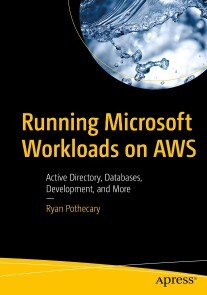
Running Microsoft Workloads on AWS
Did you know that Amazon Web Services runs nearly double the amount of Microsoft Workloads in the cloud than any other provider?RUNNING MICROSOFT WORKLOADS IN AWS is your single-source solution for learning the best practice skills and guidance that AWS consultants offer their customers in the field. Over 70% of enterprise workloads are based on Microsoft technologies and AWS has been running these technologies in the AWS Cloud for more than 12 years—far longer than Microsoft’s own Azure cloud platform.This book introduces AWS foundations and compares them to traditional Microsoft architectures, showing you how to design your AWS Cloud platform to run your current Microsoft solutions. It covers the crucial area of identity and access control, showing how to implement Active Directory inside the AWS platform and the most secure ways of enabling Single Sign On from your own data centers and from Microsoft AzureAD.The book goes in-depth and shows how developers across the globe are using their existing .NET skills to develop directly on top of AWS, using current AWS development services such as AWS Code Pipeline, AWS Code Build, and AWS Code Deploy to create the next generation of cloud-native applications using the most popular cloud serverless service—AWS Lambda.WHAT YOU WILL LEARN* Be familiar with the basic building blocks of AWS and how the terminology differs from your own data center and Microsoft Azure* Understand Amazon Machine Images (AMI) strategies and solutions to best manage the trade-off between speed and manageability* Run one of the most popular Microsoft products: SQL Server on AWS* Be aware of the different database architecture designs for using Amazon RDS and Amazon EC2* Read an overview of Serverless Development in the AWS cloud from a Microsoft .NET perspective* Know migration strategies for moving your Microsoft Workloads to the AWS CloudWHO THIS BOOK IS FORCovers high-level concepts and solutions for CTOs and CCTOs; provides a solution for architects; and dives deep into the topic for administrators and DevOps engineersRyan Pothecary is Senior Specialist Solution Architect for a Cloud-based services company, which he joined four years ago. He has worked on the AWS platform for the last eight years as part of a near 30-year career in IT. Over the last four years he’s worked directly with customers and partners who are moving to the AWS Cloud. He specializes in helping customers move Microsoft Workloads to AWS and works with customers throughout their entire cloud journey. He is also a member of a Community of engineers, architects, and consultants who help customers run Microsoft Workloads on AWS in every part of the world. Outside of work he is determined to learn how to play the guitar his wife bought him, even though he has small stubby fingers.

Cybersecurity and Third-Party Risk
MOVE BEYOND THE CHECKLIST AND FULLY PROTECT YOURSELF FROM THIRD-PARTY CYBERSECURITY RISKOver the last decade, there have been hundreds of big-name organizations in every sector that have experienced a public breach due to a vendor. While the media tends to focus on high-profile breaches like those that hit Target in 2013 and Equifax in 2017, 2020 has ushered in a huge wave of cybersecurity attacks, a near 800% increase in cyberattack activity as millions of workers shifted to working remotely in the wake of a global pandemic.The 2020 SolarWinds supply-chain attack illustrates that lasting impact of this dramatic increase in cyberattacks. Using a technique known as Advanced Persistent Threat (APT), a sophisticated hacker leveraged APT to steal information from multiple organizations from Microsoft to the Department of Homeland Security not by attacking targets directly, but by attacking a trusted partner or vendor. In addition to exposing third-party risk vulnerabilities for other hackers to exploit, the damage from this one attack alone will continue for years, and there are no signs that cyber breaches are slowing.Cybersecurity and Third-Party Risk delivers proven, active, and predictive risk reduction strategies and tactics designed to keep you and your organization safe. Cybersecurity and IT expert and author Gregory Rasner shows you how to transform third-party risk from an exercise in checklist completion to a proactive and effective process of risk mitigation.* Understand the basics of third-party risk management* Conduct due diligence on third parties connected to your network* Keep your data and sensitive information current and reliable* Incorporate third-party data requirements for offshoring, fourth-party hosting, and data security arrangements into your vendor contracts* Learn valuable lessons from devasting breaches suffered by other companies like Home Depot, GM, and EquifaxThe time to talk cybersecurity with your data partners is now.Cybersecurity and Third-Party Risk is a must-read resource for business leaders and security professionals looking for a practical roadmap to avoiding the massive reputational and financial losses that come with third-party security breaches.GREGORY C. RASNER is the lead of Cyber Third-Party Risk at Truist Financial Corporation. He has extensive experience in cybersecurity and technology leadership in banking, biotech, software, telecom, and manufacturing. He is the author of several published articles on Third Party Risk and is a sought-after keynote speaker in this area.Foreword xviIntroduction xviiiSECTION 1 CYBERSECURITY THIRD-PARTY RISKCHAPTER 1 WHAT IS THE RISK? 1The SolarWinds Supply-Chain Attack 4The VGCA Supply-Chain Attack 6The Zyxel Backdoor Attack 9Other Supply-Chain Attacks 10Problem Scope 12Compliance Does Not Equal Security 15Third-Party Breach Examples 17Third-Party Risk Management 24Cybersecurity and Third-Party Risk 27Cybersecurity Third-Party Risk as a Force Multiplier 32Conclusion 33CHAPTER 2 CYBERSECURITY BASICS 35Cybersecurity Basics for Third-Party Risk 38Cybersecurity Frameworks 46Due Care and Due Diligence 53Cybercrime and Cybersecurity 56Types of Cyberattacks 59Analysis of a Breach 63The Third-Party Breach Timeline: Target 66Inside Look: Home Depot Breach 68Conclusion 72CHAPTER 3 WHAT THE COVID-19 PANDEMIC DID TO CYBERSECURITY AND THIRD-PARTY RISK 75The Pandemic Shutdown 77Timeline of the Pandemic Impact on Cybersecurity 80Post-Pandemic Changes and Trends 84Regulated Industries 98An Inside Look: P&N Bank 100SolarWinds Attack Update 102Conclusion 104CHAPTER 4 THIRD-PARTY RISK MANAGEMENT 107Third-Party Risk Management Frameworks 113ISO 27036:2013+ 114NIST 800-SP 116NIST 800-161 Revision 1: Upcoming Revision 125NISTIR 8272 Impact Analysis Tool for Interdependent Cyber Supply-Chain Risks 125The Cybersecurity and Third-Party Risk Program Management 127Kristina Conglomerate (KC) Enterprises 128KC Enterprises’ Cyber Third-Party Risk Program 131Inside Look: Marriott 140Conclusion 141CHAPTER 5 ONBOARDING DUE DILIGENCE 143Intake 145Data Privacy 146Cybersecurity 147Amount of Data 149Country Risk and Locations 149Connectivity 150Data Transfer 150Data Location 151Service-Level Agreement or Recovery Time Objective 151Fourth Parties 152Software Security 152KC Enterprises Intake/Inherent Risk Cybersecurity Questionnaire 153Cybersecurity in Request for Proposals 154Data Location 155Development 155Identity and Access Management 156Encryption 156Intrusion Detection/Prevention System 157Antivirus and Malware 157Data Segregation 158Data Loss Prevention 158Notification 158Security Audits 159Cybersecurity Third-Party Intake 160Data Security Intake Due Diligence 161Next Steps 167Ways to Become More Efficient 173Systems and Organization Controls Reports 174Chargebacks 177Go-Live Production Reviews 179Connectivity Cyber Reviews 179Inside Look: Ticketmaster and Fourth Parties 182Conclusion 183CHAPTER 6 ONGOING DUE DILIGENCE 185Low-Risk Vendor Ongoing Due Diligence 189Moderate-Risk Vendor Ongoing Due Diligence 193High-Risk Vendor Ongoing Due Diligence 196“Too Big to Care” 197A Note on Phishing 200Intake and Ongoing Cybersecurity Personnel 203Ransomware: A History and Future 203Asset Management 205Vulnerability and Patch Management 206802.1x or Network Access Control (NAC) 206Inside Look: GE Breach 207Conclusion 208CHAPTER 7 ON-SITE DUE DILIGENCE 211On-site Security Assessment 213Scheduling Phase 214Investigation Phase 215Assessment Phase 217On-site Questionnaire 221Reporting Phase 227Remediation Phase 227Virtual On-site Assessments 229On-site Cybersecurity Personnel 231On-site Due Diligence and the Intake Process 233Vendors Are Partners 234Consortiums and Due Diligence 235Conclusion 237CHAPTER 8 CONTINUOUS MONITORING 239What is Continuous Monitoring? 241Vendor Security-Rating Tools 241Inside Look: Health Share of Oregon’s Breach 251Enhanced Continuous Monitoring 252Software Vulnerabilities/Patching Cadence 253Fourth-Party Risk 253Data Location 254Connectivity Security 254Production Deployment 255Continuous Monitoring Cybersecurity Personnel 258Third-Party Breaches and the Incident Process 258Third-Party Incident Management 259Inside Look: Uber’s Delayed Data Breach Reporting 264Inside Look: Nuance Breach 265Conclusion 266CHAPTER 9 OFFBOARDING 267Access to Systems, Data, and Facilities 270Physical Access 274Return of Equipment 275Contract Deliverables and Ongoing Security 275Update the Vendor Profile 276Log Retention 276Inside Look: Morgan StanleyDecommissioning Process Misses 277Inside Look: Data Sanitization 279Conclusion 283SECTION 2 NEXT STEPSCHAPTER 10 SECURING THE CLOUD 285Why is the Cloud So Risky? 287Introduction to NIST Service Models 288Vendor Cloud Security Reviews 289The Shared Responsibility Model 290Inside Look: Cloud Controls Matrix by the Cloud Security Alliance 295Security Advisor Reports as Patterns 298Inside Look: The Capital One Breach 312Conclusion 313CHAPTER 11 CYBERSECURITY AND LEGAL PROTECTIONS 315Legal Terms and Protections 317Cybersecurity Terms and Conditions 321Offshore Terms and Conditions 324Hosted/Cloud Terms and Conditions 327Privacy Terms and Conditions 331Inside Look: Heritage Valley Health vs. Nuance 334Conclusion 335CHAPTER 12 SOFTWARE DUE DILIGENCE 337The Secure Software Development Lifecycle 340Lessons from SolarWinds and Critical Software 342Inside Look: Juniper 344On-Premises Software 346Cloud Software 348Open Web Application Security Project Explained 350OWASP Top 10 350OWASP Web Security Testing Guide 352Open Source Software 353Software Composition Analysis 355Inside Look: Heartbleed 355Mobile Software 357Testing Mobile Applications 358Code Storage 360Conclusion 362CHAPTER 13 NETWORK DUE DILIGENCE 365Third-Party Connections 368Personnel Physical Security 368Hardware Security 370Software Security 371Out-of-Band Security 372Cloud Connections 374Vendor Connectivity Lifecycle Management 375Zero Trust for Third Parties 379Internet of Things and Third Parties 385Trusted Platform Module and Secure Boot 388Inside Look: The Target Breach (2013) 390Conclusion 391CHAPTER 14 OFFSHORE THIRD-PARTY CYBERSECURITY RISK 393Onboarding Offshore Vendors 397Ongoing Due Diligence for Offshore Vendors 399Physical Security 399Offboarding Due Diligence for Offshore Vendors 402Inside Look: A Reminder on Country Risk 404Country Risk 405KC’s Country Risk 406Conclusion 409CHAPTER 15 TRANSFORM TO PREDICTIVE 411The Data 414Vendor Records 415Due Diligence Records 416Contract Language 416Risk Acceptances 417Continuous Monitoring 417Enhanced Continuous Monitoring 417How Data is Stored 418Level Set 418A Mature to Predictive Approach 420The Predictive Approach at KC Enterprises 420Use Case #1: Early Intervention 423Use Case #2: Red Vendors 425Use Case #3: Reporting 426Conclusion 427CHAPTER 16 CONCLUSION 429Advanced Persistent Threats Are the New Danger 431Cybersecurity Third-Party Risk 435Index 445

Wireless and Mobile Hacking and Sniffing Techniques
Sniffing is the process of monitoring and capturing all the packets passing through a given network using sniffing tools. It is a form of tapping phone wires and get to know about the conversation. It is also called wiretapping applied to the computer networks.Phishing is a cybercrime in which a target or targets are contacted by email, telephone or text message by someone posing as a legitimate institution to lure individuals into providing sensitive data such as personally identifiable information, banking and credit card details, and passwords.There are several ways how hackers can gain access to a public WiFi network and infiltrate connected devices to steal data. The most common practice that hackers use is called sniffing. This method allows hackers to hijack any packet of data that is being transmitted between a device and a router.The mobile device has become an inseparable part of life today. The attackers are easily able to compromise the mobile network because of various vulnerabilities, the majority of the attacks are because of the untrusted apps. SMS is another way the attackers are gaining access to the mobile devices by sending phishing messages/spam messages to userThis report covers the main Wireless and Mobile Hacking and Sniffing Techniques. The report contains the following pars: Part A: Setup LabPart B: Sniffer and Phishing HackingPart C: Wireless Hacking Networks in LinuxPart D: Mobile Platforms HackingI am Dr. Hidaia Mahmoud Mohamed Alassouli. I completed my PhD degree in Electrical Engineering from Czech Technical University by February 2003, and my M. Sc. degree in Electrical Engineering from Bahrain University by June 1995. I completed also one study year of most important courses in telecommunication and computer engineering courses in Islamic university in Gaza. So, I covered most important subjects in Electrical Engineering, Computer Engineering and Telecommunications Engineering during my study. My nationality is Palestinian from gaza strip.I obtained a lot of certified courses in MCSE, SPSS, Cisco (CCNA), A+, Linux.I worked as Electrical, Telecommunicating and Computer Engineer in a lot of institutions. I worked also as a computer networking administrator. I had considerable undergraduate teaching experience in several types of courses in many universities. I handled teaching the most important subjects in Electrical and Telecommunication and Computer Engineering. I could publish a lot of papers a top-tier journals and conference proceedings, besides I published a lot of books in Publishing and Distribution houses.I wrote a lot of important Arabic articles on online news websites. I also have my own magazine website that I publish on it all my articles: http:// www.anticorruption.000space.comMy personal website: www.hidaia-alassouli.000space.comEmail: hidaia_alassouli@hotmail.com

Footprinting, Reconnaissance, Scanning and Enumeration Techniques of Computer Networks
Reconnaissance is a set of processes and techniques (Footprinting, Scanning & Enumeration) used to covertly discover and collect information about a target system. During reconnaissance, an ethical hacker attempts to gather as much information about a target system as possible.Footprinting refers to the process of collecting as much as information as possible about the target system to find ways to penetrate into the system. An Ethical hacker has to spend the majority of his time in profiling an organization, gathering information about the host, network and people related to the organization. Information such as ip address, Whois records, DNS information, an operating system used, employee email id, Phone numbers etc is collected.Network scanning is used to recognize available network services, discover and recognize any filtering systems in place, look at what operating systems are in use, and to protect the network from attacks. It can also be used to determine the overall health of the network.Enumeration is defined as the process of extracting user names, machine names, network resources, shares and services from a system. The gathered information is used to identify the vulnerabilities or weak points in system security and tries to exploit in the System gaining phase.The objective of the report is to explain to the user Footprinting, Reconnaissance, Scanning and Enumeration techniques and tools applied to computer networks The report contains of the following parts:Part A: Lab Setup Part B: Foot printing and ReconnaissancePart C: Scanning MethodologyPart D: EnumerationI am Dr. Hidaia Mahmoud Mohamed Alassouli. I completed my PhD degree in Electrical Engineering from Czech Technical University by February 2003, and my M. Sc. degree in Electrical Engineering from Bahrain University by June 1995. I completed also one study year of most important courses in telecommunication and computer engineering courses in Islamic university in Gaza. So, I covered most important subjects in Electrical Engineering, Computer Engineering and Telecommunications Engineering during my study. My nationality is Palestinian from gaza strip.I obtained a lot of certified courses in MCSE, SPSS, Cisco (CCNA), A+, Linux.I worked as Electrical, Telecommunicating and Computer Engineer in a lot of institutions. I worked also as a computer networking administrator. I had considerable undergraduate teaching experience in several types of courses in many universities. I handled teaching the most important subjects in Electrical and Telecommunication and Computer Engineering. I could publish a lot of papers a top-tier journals and conference proceedings, besides I published a lot of books in Publishing and Distribution houses.I wrote a lot of important Arabic articles on online news websites. I also have my own magazine website that I publish on it all my articles: http:// www.anticorruption.000space.comMy personal website: www.hidaia-alassouli.000space.comEmail: hidaia_alassouli@hotmail.com

Common Windows, Linux and Web Server Systems Hacking Techniques
A Trojan horse or Trojan is a type of malware that is often disguised as legitimate software. Trojans can be employed by cyber-thieves and hackers trying to gain access to users' systems. Users are typically tricked by some form of social engineering into loading and executing Trojans on their systems. Once activated, Trojans can enable cyber-criminals to spy on you, steal your sensitive data, and gain backdoor access to your system.A computer virus is a type of computer program that, when executed, replicates itself by modifying other computer programs and inserting its own code. If this replication succeeds, the affected areas are then said to be "infected" with a computer virus. Computer viruses generally require a host program.System hacking is defined as the compromise of computer systems and software to access the target computer and steal or misuse their sensitive information. Here the malicious hacker exploits the weaknesses in a computer system or network to gain unauthorized access to its data or take illegal advantage.Web content is generated in real time by a software application running at server-side. So hackers attack on the web server to steal credential information, passwords, and business information by using DoS (DDos) attacks, SYN flood, ping flood, port scan, sniffing attacks, and social engineering attacks.This report covers the common techniques and tools used for System, Windows, Linux and Web Server Hacking. The report contains from the following sections:Part A: Setup Lab:Part B: Trojens and Backdoors and VirusesPart C: System HackingPart D: Hacking Web ServersPart E: Windows and Linux HackingI am Dr. Hidaia Mahmoud Mohamed Alassouli. I completed my PhD degree in Electrical Engineering from Czech Technical University by February 2003, and my M. Sc. degree in Electrical Engineering from Bahrain University by June 1995. I completed also one study year of most important courses in telecommunication and computer engineering courses in Islamic university in Gaza. So, I covered most important subjects in Electrical Engineering, Computer Engineering and Telecommunications Engineering during my study. My nationality is Palestinian from gaza strip.I obtained a lot of certified courses in MCSE, SPSS, Cisco (CCNA), A+, Linux.I worked as Electrical, Telecommunicating and Computer Engineer in a lot of institutions. I worked also as a computer networking administrator. I had considerable undergraduate teaching experience in several types of courses in many universities. I handled teaching the most important subjects in Electrical and Telecommunication and Computer Engineering. I could publish a lot of papers a top-tier journals and conference proceedings, besides I published a lot of books in Publishing and Distribution houses.I wrote a lot of important Arabic articles on online news websites. I also have my own magazine website that I publish on it all my articles: http:// www.anticorruption.000space.comMy personal website: www.hidaia-alassouli.000space.comEmail: hidaia_alassouli@hotmail.com
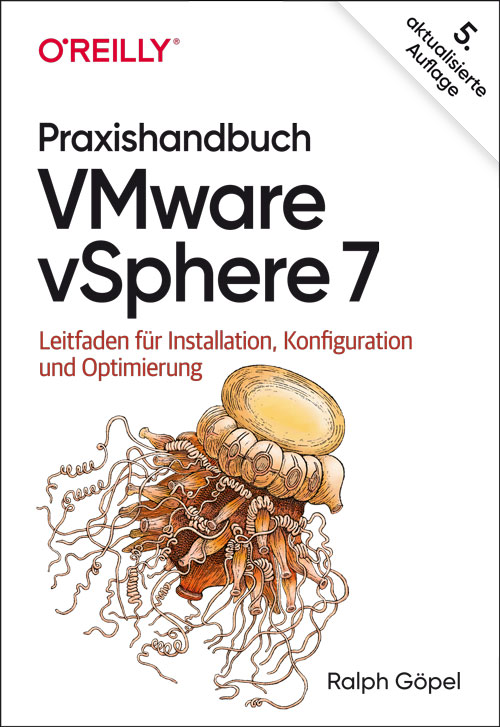
Praxishandbuch VMware vSphere 7 (5. Auflg.)
Leitfaden für Installation, Konfiguration und Optimierung.Sie brauchen praxisrelevante Informationen zur technischen Realisierung einer virtualisierten Infrastruktur mittels vSphere 7? Dann halten Sie mit dem »Praxishandbuch VMware vSphere 7.0« genau das richtige Buch in Ihren Händen. In diesem Handbuch finden Sie komprimiert alles, was Sie über Virtualisierung im Allgemeinen und vSphere 7 im Speziellen wissen müssen – samt unzähligen Tipps und Tricks aus der Praxis, Warnungen und Hinweisen zu angrenzenden Technologien.Schritt für Schritt zur optimalen virtualisierten UmgebungDas Buch gibt Ihnen schnell eine Übersicht über die einzelnen vSphere-Komponenten, deren Konfiguration und Optimierung. Sobald der Hypervisor (ESXi) installiert ist, können die ersten virtuellen Maschinen von Grund auf richtig eingerichtet und optimiert werden.Dann erfahren Sie, wie Sie Ihr Netzwerk am besten konfigurieren müssen und die ESXi Server an gemeinsamen Speicher anbinden. Was die Funktion Hostprofile, der VMware Lifecycle Manager oder der VMware Converter für Sie tun können, fehlt genauso wenig wie der Einsatz von vApps und Templates. Und auch wenn die vSphere-Umgebung steht, bleibt immer etwas zu tun: Backups und Sicherheitsstrategien (am Beispiel von Veeam Backup & Replication), die geschickte Verwaltung der Ressourcen und eine kontinuierliche Optimierung des laufenden Betriebs lassen sich mit den richtigen Werkzeugen und Konzepten besser in die Tat umsetzen. Auch die Kommandozeile und PowerCLI kommen nicht zu kurz.Aktualisierte fünfte AuflageDie fünfte Auflage wurde komplett auf VMware vSphere 7 aktualisiert. Zusätzlich aufgenommen wurden die Neuerungen von vSphere 7, z.B. vSAN, virtuelle Volumes, der HTML5-Client und die neue vSphere Appliance auf Photon Linux Basis. Weiterhin beinhaltet die fünfte Auflage die Themen Upgrade von einer Vorversion, NFS Storage unter Linux erstellen, Alarme, Hostprofile (erweitert), Troubleshooting (erweitert) und eine bestmögliche Netzwerkkonfiguration.
Warehouse Management mit SAP
Leere Läger oder explodierende Lagerkosten? Mit diesem Buch können Sie beides vermeiden! Es stellt sowohl die Abläufe in der Lagerverwaltung als auch die Funktionen und das grundlegende Customizing von WM umfassend dar. Anhand zahlreicher Beispiele erfahren Sie, wie Sie Ihre Prozesse verbessern und neue Prozesse effizient einsetzen können. Ob Sie WM implementieren, optimieren oder in der Fachabteilung nutzen: André Käber zeigt Ihnen, wie Sie Ihr Lager schnell und vor allem nachhaltig optimieren. Aus dem Inhalt: Betriebswirtschaftliche GrundlagenOrganisationsstrukturelementeStammdaten und BestandsverwaltungWareneingangsprozess und EinlagerungsstrategienAuslagerungssteuerungProduktionsversorgungsstrategienWarenbewegungen und operative LagerprozesseLieferabwicklungLagerprozess- und Materialflussoptimierung 1. Einleitung ... 17 2. Betriebswirtschaftliche Grundlagen der Lagerhaltung ... 21 2.1 ... Bedeutung der Lagerlogistik ... 21 2.2 ... Einfluss aktueller Markttrends auf die Lagerlogistik ... 22 2.3 ... Lagerkosten ... 23 2.4 ... Funktionen der Lagerhaltung ... 24 2.5 ... Kosteneffekte der Lagerhaltung ... 27 2.6 ... Lagerprozess ... 30 2.7 ... Lagerarten ... 31 2.8 ... Lagerverwaltung ... 32 2.9 ... Inventur ... 39 2.10 ... Funktionen von Lagerverwaltungssystemen ... 40 3. Organisationsstrukturelemente in WM und SAP LES ... 45 3.1 ... Übergreifende Organisationsstruktur von WM und LES ... 46 3.2 ... LES mit und ohne WM ... 48 3.3 ... Organisationseinheiten ... 51 3.4 ... Änderungen in SAP S/4HANA Stock Room Management ... 77 4. Stammdaten und Bestandsverwaltung in WM ... 79 4.1 ... Lagerplatzstammdaten ... 79 4.2 ... Materialstammdaten ... 84 4.3 ... Gefahrstoffstammdaten ... 94 4.4 ... Chargenstammdaten ... 96 4.5 ... Mindesthaltbarkeitsdatum/Verfallsdatum ... 98 4.6 ... Bestandsverwaltung ... 99 4.7 ... Lagerung unterschiedlicher Mengeneinheiten in WM ... 102 4.8 ... Lagereinheitenverwaltung in WM ... 104 4.9 ... Änderungen in SAP S/4HANA Stock Room Management ... 107 5. Elemente der Prozesssteuerung in WM ... 109 5.1 ... Bewegungsarten ... 109 5.2 ... Transportbedarfe ... 122 5.3 ... Umbuchungsanweisungen ... 125 5.4 ... Transportaufträge - zentrale Belege in WM ... 127 5.5 ... Bewegungssonderkennzeichen ... 137 5.6 ... Lagerortsteuerung ... 142 5.7 ... Änderungen in SAP S/4HANA Stock Room Management ... 150 6. Wareneingangsprozesse und Einlagerungsstrategien in WM ... 151 6.1 ... Wareneingangsprozesse in SAP ERP ... 151 6.2 ... Steuerung der Einlagerung ... 172 6.3 ... Einlagerungsstrategien von WM ... 176 6.4 ... Weitere Bestandteile des Einlagerungsprozesses ... 195 6.5 ... Änderungen in SAP S/4HANA Stock Room Management ... 201 7. Auslagerungssteuerung in WM ... 203 7.1 ... Auslagerungssteuerung ... 203 7.2 ... Auslagerungsstrategien ... 208 7.3 ... Weitere Steuerungskriterien der Auslagerung ... 218 7.4 ... Änderungen in SAP S/4HANA Stock Room Management ... 228 8. Produktionsversorgungsstrategien in WM ... 229 8.1 ... Betriebswirtschaftliche Grundlagen ... 229 8.2 ... Grundlagen der Fertigungsarten und der Materialbereitstellung in SAP ERP ... 230 8.3 ... Produktionsversorgung ohne WM-Bereitstellung ... 233 8.4 ... Produktionsversorgung mit WM-Bereitstellung ... 236 8.5 ... Kanban-Bereitstellung ... 255 8.6 ... Änderungen in SAP S/4HANA Stock Room Management ... 267 9. Warenbewegungen und operative Lagerprozesse in WM ... 269 9.1 ... Grundlagen von Umlagerungen in SAP ERP ... 269 9.2 ... Lagerinterne Umlagerungen ... 271 9.3 ... Umlagerungen zwischen Lagerorten ... 281 9.4 ... Umbuchungen ... 313 9.5 ... Sperren von Lagerplätzen, Lagereinheiten und Lagerbeständen ... 321 9.6 ... Nachschubprozesse in WM ... 325 9.7 ... Änderungen in SAP S/4HANA Stock Room Management ... 340 10. Lieferabwicklung in WM ... 341 10.1 ... Gesamtprozess der Auslagerung zum Kundenauftrag ... 341 10.2 ... Lieferbezogene Kommissionierung (Einzelauftragsbearbeitung) ... 351 10.3 ... Sammelgangsbearbeitung von Lieferungen ... 356 10.4 ... Lieferübergreifender Transportauftrag ... 362 10.5 ... Zweistufige Kommissionierung ... 365 10.6 ... Änderungen in SAP S/4HANA Stock Room Management ... 369 11. Weitere Grundfunktionen in WM ... 371 11.1 ... Handling Unit Management ... 371 11.2 ... Chargenverwaltung in WM ... 396 11.3 ... Gefahrstoffverwaltung in WM ... 403 11.4 ... Inventurabwicklung in WM ... 426 11.5 ... Operatives Lagercontrolling in WM ... 445 11.6 ... Leistungsdatenberechnung in WM ... 463 11.7 ... Änderungen in SAP S/4HANA Stock Room Management ... 474 12. WM-Komponenten zur Lagerprozess- und Materialflussoptimierung ... 475 12.1 ... Mobile Datenerfassung mit SAP Radio Frequency ... 475 12.2 ... Dezentrale Lagerverwaltung mit WM ... 513 12.3 ... Prozessoptimierung mit dem Task & Resource Management System (TRM) ... 523 12.4 ... Yard Management ... 537 12.5 ... Cross-Docking ... 559 12.6 ... Prozessoptimierung in Supply-Chain-Execution-Prozessen durch RFID und Event Management ... 568 12.7 ... SAP Auto-ID Infrastructure ... 579 12.8 ... Änderungen in SAP S/4HANA Stock Room Management ... 591 13. SAP Extended Warehouse Management (EWM) ... 595 13.1 ... Lagermodellierung ... 596 13.2 ... Prozesse in SAP EWM ... 599 13.3 ... Radio-Frequency-Framework ... 624 13.4 ... Integration mit SAP Transportation Management (TM) ... 625 13.5 ... Evolution von SAP EWM 9.0 zu SAP S/4HANA 1909 ... 629 14. SAP S/4HANA Stock Room Management ... 631 14.1 ... Funktionale Unterschiede ... 631 14.2 ... SAP-Lagerlösungen im Vergleich ... 634 14.3 ... Migration von WM nach SAP S/4HANA Stock Room Management ... 638 A. Glossar ... 641 B. Literaturverzeichnis ... 649 Der Autor ... 651 Index ... 653
SAP-Schnittstellenmanagement
So beherrschen Sie die Schnittstellen Ihrer komplexen Systemlandschaft. Dieser praktische Leitfaden hilft Ihnen dabei, sich im Dschungel der verschiedenen Schnittstellenformate und Datenaustauschprotokolle zurechtzufinden. Die Autoren stellen Ihnen die Werkzeuge der hybriden Integrationsplattform von SAP vor und führen Sie durch die Anwendung der Integration Solution Advisory Methodology (ISA-M). So entsteht eine kohärente Integrationsarchitektur aus Cloud- und On-Premise-Software. Aus dem Inhalt: Methoden und FrameworksSAP API Business Hub und SAP GraphIntegrationskonzepte und ArchitekturenSAP Enterprise MessagingSAP API ManagementOpen ConnectorsSAP Cloud IntegrationMonitoring, Governance und BetriebSAP Data IntelligenceDigital Integration Hub Einleitung ... 15 Teil I. Grundlagen ... 19 1. SAP-Schnittstellenverwaltung im Zeitalter der Digitalisierung ... 21 1.1 ... Was bedeutet Integration? ... 21 1.2 ... Evolution der Schnittstellentechnologien von SAP R/3 bis SAP S/4HANA ... 24 1.3 ... SAP-Schnittstellenbibliotheken ... 35 1.4 ... Herausforderungen an das Schnittstellenmanagement ... 44 2. Integrationskonzepte und -technologien im SAP-Umfeld ... 51 2.1 ... Integrationsarchitekturen ... 51 2.2 ... Integrationsstile ... 72 2.3 ... Integrationstechnologien, Standards und Protokolle ... 84 3. Methoden und Frameworks ... 109 3.1 ... Integration Solution Advisory Methodology (ISA-M) ... 109 3.2 ... Reifegradmodell ... 130 3.3 ... Integration Competency Center of Excellence ... 136 3.4 ... Hybrid Integration Platform ... 150 4. Die hybride Integrationsplattform von SAP ... 165 4.1 ... Vision ... 166 4.2 ... Komponenten ... 177 Teil II. Werkzeuge der hybriden Integrationsplattform von SAP ... 183 5. SAP Process Orchestration ... 185 5.1 ... Übersicht über SAP Process Orchestration ... 186 5.2 ... Funktionen für das Schnittstellenmanagement ... 189 5.3 ... Anwendungsmöglichkeiten ... 202 6. SAP Cloud Integration ... 207 6.1 ... Übersicht ... 208 6.2 ... Funktionen für das Schnittstellenmanagement ... 210 6.3 ... Anwendungsmöglichkeiten ... 220 7. SAP API Management ... 227 7.1 ... Übersicht ... 228 7.2 ... Funktionen für das Schnittstellenmanagement ... 232 7.3 ... Anwendungsmöglichkeiten ... 243 8. SAP Enterprise Messaging ... 247 8.1 ... Übersicht über SAP Enterprise Messaging ... 248 8.2 ... Funktionen für das Schnittstellenmanagement ... 250 8.3 ... Anwendungsmöglichkeiten ... 258 9. Open Connectors ... 265 9.1 ... Übersicht über Open Connectors ... 266 9.2 ... Funktionen für das Schnittstellenmanagement ... 267 9.3 ... Anwendungsmöglichkeiten ... 279 10. SAP Data Intelligence ... 283 10.1 ... Übersicht ... 284 10.2 ... Funktionen für das Schnittstellenmanagement ... 287 10.3 ... Anwendungsmöglichkeiten ... 298 11. Werkzeuge zur Datenintegration ... 301 11.1 ... Übersicht ... 302 11.2 ... Funktionen ... 310 11.3 ... Anwendungsmöglichkeiten ... 315 12. SAP Application Interface Framework ... 319 12.1 ... Übersicht ... 319 12.2 ... Funktionen für das Schnittstellenmanagement ... 321 12.3 ... Anwendungsmöglichkeiten ... 333 13. Digital Integration Hub ... 335 13.1 ... Übersicht über den Digital Integration Hub ... 336 13.2 ... Digital Integration Hub von SAP ... 338 13.3 ... Anwendungsmöglichkeiten und Empfehlungen ... 343 Teil III. Aufgaben des Schnittstellenmanagements ... 349 14. Governance ... 351 14.1 ... Prinzipien und Policys ... 351 14.2 ... Entwicklungsrichtlinien ... 363 14.3 ... Katalogisierung ... 377 14.4 ... Reporting ... 385 15. Betrieb ... 397 15.1 ... Monitoring und Alerting ... 397 15.2 ... Testmanagement ... 411 15.3 ... Change Management und Transportwesen ... 422 16. Organisation ... 437 16.1 ... Produktorientierte Organisationsmodelle ... 438 16.2 ... Rollen ... 446 16.3 ... Verantwortlichkeiten ... 457 17. Plattformwerkzeuge ... 465 17.1 ... SAP Solution Manager ... 465 17.2 ... SAP-Partnerlösungen ... 480 18. Zusammenfassung und Ausblick ... 497 18.1 ... Zusammenfassung ... 497 18.2 ... Ausblick ... 499 18.3 ... Schlusswort ... 500 Quellen- und Literaturverzeichnis ... 503 Die Autoren ... 505 Index ... 507

Android for Absolute Beginners
Get started as a mobile app developer and learn the art and science of Android app development. With no assumed knowledge about programming languages or Android required, you will gain the key skills for constructing fully functional Android apps for smartphones, tablets, and other devices.You will also build a solid foundation in the Java programming language and the business of creating and releasing software for Android. Along the way you’ll get comfortable with Android Studio - the best way to write modern Android apps - before diving into your first Android code. The author spends plenty of time explaining how to build a robust UI with widgets, menus, layouts and more. These components will be the basis of your Android apps and so are covered in depth.Having grasped the basics, you’ll move onto what will make your app stand out: sound, music, images, animations, and notifications. Taking these elements and combining them with phone features like calling and sensors, will take your apps to the next level.The final part of the book covers services, events, intents, receivers, files and databases, essential sources of information and functionality for users and your app. In addition, you'll see how to protect your users and their data with permissions and security in examples throughout the bookWHAT YOU WILL LEARN* Get started with Android and build your first apps with it* Install and use the Android Studio IDE* Set up and manage the app development life cycle* Master the basics of Java and XML required to create Android apps* Discover the strengths and features of the Android APIs and device capabilitiesWHO THIS BOOK IS FORTotal beginners who have little or no exposure to software development. This book is also useful for developers who are completely new to Android. GRANT ALLEN, PH.D. has worked in the technology field for over 20 years, as a CTO, entrepreneur, and emerging technology expert. After successful startup exits and a decade at Google, Grant's focus is now mentoring and coaching startups and hi-tech companies on building great teams and great technology. He is a frequent speaker on topics such as big data, mobile ecosystems, Android, wearables, IoT, disruptive innovation, and more. Grant has a PhD in computer science based on research he performed whilst at Google, an MBA specializing in technology management, and he is the author of seven books on various mobile platform and data technology topics.Part I - Get Android, Get Started1. Introducing AndroidWhat is it, history, Google, etc.2. Introducing Android StudioWhat and IDE is, Android Studio and IntelliJ, downloading, installing.3. Your First Android App, Already!Create first project and first emulator, run it successfully4. Exploring Your First ProjectAnatomy of an Android Studio project5. Android Studio in depthExploring all the features of Android Studio, including debugging, profiling, and other tools6. Mastering Your Entire Development EcosystemAll other tools outside of Android Studio, including JDK, gradle, source control, etc.Part II - Get The Android Development Know-how7. Introducing Java for Android DevelopmentCore topics to learn to start java programming8. Introductin XML for Android DevelopmentCore topics to learn to understand XML and its use in Android9. Exploring Android UI Concepts - Widgets, Menus and moreAndroid API components for building basic UIs10. Exploring Android UI Concepts - Layouts, Activity Bars, and moreWider Android API components for more sophisticated UIs11. Activities and Fragments to Organize Your AppsActivities, lifecycles, Fragments, screen handlingPart III - Get Sophisticated12. Sound, Music and Audio for Android Apps creating, recording, using, playback of audio13. Video and Movies for Android Appscreating, recording, using, playback of video14. Exploring Images, Pictures and Animation for Android Appscreating, capturing, using of still images15. Exploring device capabilities - calls, location, sensors and moremore device featuresPart IV - Get Together16. Understanding Events, Notifcations, Intents and Receiversevents, intents and user- and system-handling17. Working with Services, Libraries, Notifications and Parallel Applicationscreating and using services, and threads, using other libraries18. Understanding Files, Databases and Content Providers for Androidfile handling, SQLite, 3rd-party providers19. Protecting Users and Data with Permissions and Securitymanifest controls, encryption, basic infosec20. Preparing Your Android App for Release and Sale!APK packaging, Google developer accounts, Google Play

Extending Kubernetes
Rely on this comprehensive guide to understand the extension patterns and discover the extension plugins for Kubernetes.In this book, state-of-the-art extension patterns and extension points of Kubernetes are covered in depth with real-life use cases and examples. There are comprehensive discussions in the text on all possible aspects of Kubernetes, starting from end-user to the fully-automated controller development. The book focuses on creating applications that work on Kubernetes and also interact and operate Kubernetes itself.The book starts with a recap of Kubernetes, its rich configuration options, extension patterns, and points. The journey of extending Kubernetes starts with the CLI tool plugins. By the end of this section, you will be able to create and manage kubectl plugins. Then, the API access plugins with authentication and authorization webhooks are presented. In this section, you will learn how to extend and interfere with the API flow of Kubernetes. You then move on to learn how to extend Kubernetes API with new resources and controllers. You will make Kubernetes API work for you by creating a Kubernetes operator. Extensions for Kubernetes schedulers are covered to create a custom scheduler and run it side-by-side with the default scheduler. Finally, the last extension points will be discussed for the infrastructure, such as networking or storage. At the end of the text, you will learn the upcoming extension points. This book is designed to cover all the extension points of Kubernetes with state-of-the-art implementations.This book is intended for those who wish to understand Kubernetes in depth and go further by making Kubernetes work for their custom requirements. By the end of this book, readers with a cloud-native mindset will broaden their vision to create future-proof applications. Rather than focus on overwhelming theoretical information and YAML files for Kubernetes resources, readers are provided with the philosophy behind Kubernetes extensions. With real-life examples and hands-on development steps, you will be more confident in working with Kubernetes.WHAT YOU WILL LEARN* Know the Kubernetes extension patterns and available extension points * Be familiar with the philosophy behind Kubernetes extensions and how they should be integrated into the clusters* Design Kubernetes extensions and make Kubernetes work for you* Develop, deploy, and operate plugins for Kubernetes ranging from the CLI tool to custom resources, schedulers, infrastructure, and more * Study real-life use cases for extending Kubernetes with code examplesWHO THIS BOOK IS FORSoftware engineers, developers, DevOps engineers, cloud security analysts, architects, and managers who have Kubernetes in their short- and long-term plansONUR YILMAZ is a senior software engineer at a multinational enterprise software company. He is a Certified Kubernetes Administrator (CKA) and works on Kubernetes and cloud management systems. He is a keen supporter of cutting-edge technologies, including Docker, Kubernetes, and cloud-native applications. He is the author of multiple books on Kubernetes, Docker, serverless architectures, and cloud-native continuous integration and delivery. He has one master and two bachelor degrees in the engineering field.Chapter 1: IntroductionCHAPTER GOAL: Provide an introduction to Kubernetes, configuration options, extension patterns, and extension points with real-life use casesNO OF PAGES: 25-30SUB-TOPICS:1. Kubernetes Recap2. Configuring Kubernetes Cluster3. Kubernetes Extension Patterns4. Kubernetes Extension PointsChapter 2: kubectl pluginsCHAPTER GOAL: Understand how to extend Kubernetes CLI tool, kubectl, for the custom requirements. How to develop, install and release new plugins for kubectlNO OF PAGES: 30-35SUB-TOPICS:* kubectl Installation and Usage* kubectl Plugin Design* Create Your First kubectl Plugin* Plugin Repository and LifecycleCHAPTER 3: API FLOW EXTENSIONSCHAPTER GOAL: Understand the flow of Kubernetes API server to handle requests. Learn how to extend the flow with authentication, authorization, and admission controls.NO OF PAGES: 25-30SUB -TOPICS:* Authentication WebhooksAuthorization Webhooks * Dynamic Admission ControlCHAPTER 4: EXTENDING KUBERNETES APICHAPTER GOAL: Discuss how Kubernetes API can be extended with custom resources and the automation of the custom resources, namely operators.NO OF PAGES: 50-55SUB-TOPICS:* Kubernetes API Overview* Kubernetes Client Libraries* Custom Resources in Kubernetes* Operator Pattern in Kubernetes* kubebuilder Framework* Operators in ActionCHAPTER 5: SCHEDULER EXTENSIONSCHAPTER GOAL: Learn how Kubernetes scheduling mechanism works and how it could be extended. Write, deploy, and use a custom scheduler for Kubernetes cluster.NO OF PAGES: 35-40SUB-TOPICS:* Kubernetes Scheduler OverviewDevelop and Deploy a Custom Scheduler * Configure and Manage Multiple Schedulers CHAPTER 6: INFRASTRUCTURE EXTENSIONSCHAPTER GOAL: Discover how Kubernetes interacts with the infrastructure in terms of storage and networking. Learn how to extend Kubernetes clusters with new pod networking and volume drivers.NO OF PAGES: 25-30SUB-TOPICS:* Storage Plugins* Network Plugins (They are still in development, and in alpha stage, if they become stable, it is an excellent asset to have in the book) CHAPTER 7: UPCOMING EXTENSION POINTSCHAPTER GOAL: Summarize the extension points of Kubernetes and discuss the upcoming trends and libraries in the market.NO OF PAGES: 20-25

Comparison between Internet Fax Services
Internet faxing uses the same principles as facsimile transmission, but it uses a Web interface instead of a fax machine. It can be a flexible, inexpensive option for transmitting documents.Internet fax services usually assign a fax number to each person who signs up for the service. people can send faxes to this number, and customers can send faxes via e-mail without using a fax machine.To send a fax through an Internet fax service:• The sender attaches a document to an e-mail message. The document can be a scan of a paper document, or it can be created in a program like Microsoft Word.• The sender addresses the message to the recipient's fax number, followed by the name of the faxing service (for example: 18005551234@emailfaxes.com).• The service translates the attachment so that a fax machine can read it.• The service sends the data across the phone line.• The recipient's fax machine decodes the data and prints the fax.To receive a document from a traditional fax machine through an Internet fax service:• The sender dials the fax number that the service has assigned to the recipient.• The fax machine translates the data and transmits it over the phone line.• The service receives the data, translates it into an image file and sends the image to the recipient's e-mail address.• The recipient opens the em-ail message and the attachment and views the file.As getting cheap internet fax service is important, I tried to look for cheap internet fax service that can fax to any country worldwide and can also use PayPal as it is safe payment than credit card. Unfortunately, I could not find cheap fax service for international destination. All internet fax services offer only cheap services to the free zones countries such as usa and Canada. I could not find cheap service to international destinations.Maybe the best of my search for faxing to international destination was FAX.PLUS that allows also paypal. But when I tried to subscribe to basic plane using paypal, paypal asked me to give them permission to access my registered credit card, and I refused that and so I could not subscribe.I will divide web sites that I had look to their internet fax services in the following groups1-Part1: Websites that accepts paypal payments and supports faxing to international countries. Some of these are:• Gotfreefax• fax.to• Faxfresh• PamFax.biz• Faxzero• FAX.PLUS2-Part2: Websites that accepts only credit/debit card payments and supports faxing to international countries• Hellofax• J2 global services vendors. It includes Metrofax, myfax, smartfax, efax, trustfax, rapidfax and fax.com3-Part3: Websites that supports faxing to usa and Canada only• Nextiva• FAXAGE• FAXBetterIn this report, I will compare the internet fax services according to the cost for sending fax to United Arab Emirate. I will assume that I have three pages to be sent to any fax number in UAE.I am Dr. Hidaia Mahmoud Mohamed Alassouli. I completed my PhD degree in Electrical Engineering from Czech Technical University by February 2003, and my M. Sc. degree in Electrical Engineering from Bahrain University by June 1995. I completed also one study year of most important courses in telecommunication and computer engineering courses in Islamic university in Gaza. So, I covered most important subjects in Electrical Engineering, Computer Engineering and Telecommunications Engineering during my study. My nationality is Palestinian from gaza strip.I obtained a lot of certified courses in MCSE, SPSS, Cisco (CCNA), A+, Linux.I worked as Electrical, Telecommunicating and Computer Engineer in a lot of institutions. I worked also as a computer networking administrator.I had considerable undergraduate teaching experience in several types of courses in many universities. I handled teaching the most important subjects in Electrical and Telecommunication and Computer Engineering.I could publish a lot of papers a top-tier journals and conference proceedings, besides I published a lot of books in Publishing and Distribution houses.I wrote a lot of important Arabic articles on online news websites. I also have my own magazine website that I publish on it all my articles: http:// www.anticorruption.000space.comMy personal website: www.hidaia-alassouli.000space.comEmail: hidaia_alassouli@hotmail.com