

Computer und IT

WhatsApp für Senioren
WhatsApp ist eine der beliebtesten Apps für Smartphones. Wie Sie alle seine Vorteile auf Ihrem iPhone gezielt nutzen, zeigt Ihnen dieses Handbuch.Systematisch lernen Sie, wie Sie WhatsApp installieren, Nachrichten inklusive Anhänge versenden und empfangen, in einer Gruppe kommunizieren, Chats löschen, Ihre Daten auf ein neues Gerät übertragen u. v. m. Erfahren Sie zudem alles Wichtige zum Thema Datenschutz und Sicherheit, z. B. wie Sie unerwünschte Teilnehmer blockieren oder festlegen, wer Ihr Profilbild sehen darf.Freuen Sie sich auf viele hilfreiche Praxistipps – und bleiben Sie mit Familie und Freunden in Kontakt!- Nachrichten emotional gestalten und versenden- Fotos und Videos verschicken und erhalten- An einem Gruppenchat teilnehmen- Lesebestätigung – wie funktioniert das?- Status: Die schönsten Momente mit allen teilen- Was ist ein Broadcast?- Über WhatsApp telefonieren und ein Livebild übertragen- Persönliche Einstellungen, Datenschutz und Sicherheit- WhatsApp am PC bedienen- Tipps für Ihren Umzug auf das neue Smartphone
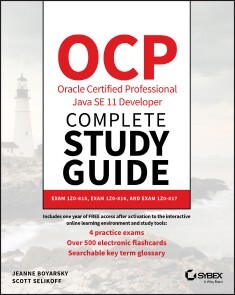
OCP Oracle Certified Professional Java SE 11 Developer Complete Study Guide
THIS OCP ORACLE CERTIFIED PROFESSIONAL JAVA SE 11 DEVELOPER COMPLETE STUDY GUIDE WAS PUBLISHED BEFORE ORACLE ANNOUNCED MAJOR CHANGES TO ITS OCP CERTIFICATION PROGRAM AND THE RELEASE OF THE NEW DEVELOPER 1Z0-819 EXAM. NO MATTER THE CHANGES, REST ASSURED THIS STUDY GUIDE COVERS EVERYTHING YOU NEED TO PREPARE FOR AND TAKE THE EXAM.NOTE: The OCP Java SE 11 Programmer I Exam 1Z0-815 and Programmer II Exam 1Z0-816 have been retired (as of October 1, 2020), and Oracle has released a new Developer Exam 1Z0-819 to replace the previous exams. The Upgrade Exam 1Z0-817 remains the same.THIS IS THE MOST COMPREHENSIVE PREP GUIDE AVAILABLE FOR THE OCP ORACLE CERTIFIED PROFESSIONAL JAVA SE 11 DEVELOPER CERTIFICATION—IT COVERS EXAM 1Z0-819 AND THE UPGRADE EXAM 1Z0-817 (AS WELL AS THE RETIRED PROGRAMMER I EXAM 1Z0-815 AND PROGRAMMER II EXAM 1Z0-816)!Java is widely-used for backend cloud applications, Software as a Service applications (SAAS), and is the principal language used to develop Android applications. This object-oriented programming language is designed to run on all platforms that support Java without the need for recompilation. Oracle Java Programmer certification is highly valued by employers throughout the technology industry.The OCP Oracle Certified Professional Java SE 11 Developer Complete Study Guide in an indispensable resource for anyone preparing for the certification exam. This fully up-to-date guide covers 100% of exam objectives for Exam 1Z0-819 and Upgrade Exam 1Z0-817 (in addition to the previous Exam 1Z0-815 and Exam 1Z0-816). In-depth chapters present clear, comprehensive coverage of the functional-programming knowledge necessary to succeed. Each chapter clarifies complex material while reinforcing your understanding of vital exam topics. Also included is access to Sybex's superior online interactive learning environment and test bank that includes self-assessment tests, chapter tests, bonus practice exam questions, electronic flashcards, and a searchable glossary of important terms. The ultimate study aid for the challenging OCP exams, this popular guide:* Helps you master the changes in depth, difficultly, and new module topics of the latest OCP exams* Covers all exam objectives such as Java arrays, primitive data types, string APIs, objects and classes, operators and decision constructs, and applying encapsulation* Allows developers to catch up on all of the newest Java material like lambda expressions, streams, concurrency, annotations, generics, and modules* Provides practical methods for building Java applications, handling exceptions, programming through interfaces, secure coding in Java SE, and more* Enables you to gain the information, understanding, and practice you need to pass the OCP examsThe OCP Oracle Certified Professional Java SE 11 Developer Complete Study Guide is a must-have book for certification candidates needing to pass these challenging exams, as well as junior- to senior-level developers who use Java as their primary programming language.JEANNE BOYARSKY, OCA/OCP 8 AND OCP 11, is a Java Champion and has worked as a Java developer for a major bank for more than 18 years. She is a senior moderator at CodeRanch, and trains and mentors students of all levels, including the programming division of a FIRST robotics team.SCOTT SELIKOFF, OCA/OCP 8 AND OCP 11, has been a professional Java Enterprise architect for over 20 years. He is the founder of Selikoff Solutions, LLC, specializing in building custom mobile and server solutions for businesses in the tri-state New York City area.Introduction xxixAssessment Tests lixPART I EXAM 1Z0-815, OCP JAVA SE 11 PROGRAMMER I 1Chapter 1 Welcome to Java 3Chapter 2 Java Building Blocks 37Chapter 3 Operators 81Chapter 4 Making Decisions 115Chapter 5 Core Java APIs 163Chapter 6 Lambdas and Functional Interfaces 223Chapter 7 Methods and Encapsulation 249Chapter 8 Class Design 297Chapter 9 Advanced Class Design 365Chapter 10 Exceptions 403Chapter 11 Modules 453PART II EXAM 1Z0-816, OCP JAVA SE 11 PROGRAMMER II EXAM 1Z0-817, UPGRADE OCP JAVA SE 11 493Chapter 12 Java Fundamentals 495Chapter 13 Annotations 553Chapter 14 Generics and Collections 599Chapter 15 Functional Programming 669Chapter 16 Exceptions, Assertions, and Localization 741Chapter 17 Modular Applications 803Chapter 18 Concurrency 839Chapter 19 I/O 913Chapter 20 NIO.2 969Chapter 21 JDBC 1023Chapter 22 Security 1069APPENDIX ANSWERS TO REVIEW QUESTIONS 1105Index 1177
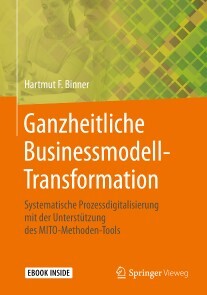
Ganzheitliche Businessmodell-Transformation
In diesem Buch wird der regelkreisorientierte Changemanagementprozess zur Implementierung eines digitalen Businessmodells über das ganzheitliche Organisation 4.0-MITO-Konfigurationsmanagement beschrieben. Die inhaltliche Kapitelstruktur dieses MITO-Buches mit der Beschreibung der unterschiedlichen Transformations-Gestaltungssichten orientiert sich an dem übergeordneten betrieblichen Regelkreisprinzip innerhalb der in Abbildung 1 gezeigten MITO-Modellsegmente. Wobei das Managementsegment (M) noch vorgabeseitig in das prozessbezogene Führungssegment und rückmeldeseitig in das sachbezogene Leitungssegment unterteilt ist. Das darauf aufsetzende MITO-Businessmodell ergänzt die 5 Modellsegmente um das nachgelagerte Kunden- und vorgelagerte Lieferantensegment und integriert in die MITO-Modelldarstellung das hierarchische Prozessebenenmodell für die Konzeption des prozessorientierten Ziel-, Führungs- und Leitungssystems.Hartmut F. Binner war von 1978 - 2009 hauptamtlicher Professor an der Hochschule Hannover im Fachbereich Maschinenbau. Im Rahmen seiner Doktorarbeit entwickelte er die Swimlane-Darstellung, heute wesentliches BPMN 2.0-Strukturelement.Von 1999 - 2003 war er Präsident des REFA e.V., von 2007-2017 Vorstandsvorsitzender der Gesellschaft für Organisation.Innerhalb der letzten 20 Jahre schrieb er Beiträge in über 500 Zeitschriften und mehr als 18 Grundlagenwerke zum Thema Organisations- und Prozessgestaltung. Seit Dezember 2015 ist er der Vice Chairman der iTA (IT Automotive Service Partner e.V.).

Enterprise AI For Dummies
MASTER THE APPLICATION OF ARTIFICIAL INTELLIGENCE IN YOUR ENTERPRISE WITH THE BOOK SERIES TRUSTED BY MILLIONSIn Enterprise AI For Dummies, author Zachary Jarvinen simplifies and explains to readers the complicated world of artificial intelligence for business. Using practical examples, concrete applications, and straightforward prose, the author breaks down the fundamental and advanced topics that form the core of business AI.Written for executives, managers, employees, consultants, and students with an interest in the business applications of artificial intelligence, Enterprise AI For Dummies demystifies the sometimes confusing topic of artificial intelligence. No longer will you lag behind your colleagues and friends when discussing the benefits of AI and business.The book includes discussions of AI applications, including:* Streamlining business operations* Improving decision making* Increasing automation* Maximizing revenueThe For Dummies series makes topics understandable, and as such, this book is written in an easily understood style that's perfect for anyone who seeks an introduction to a usually unforgiving topic.ZACHARY JARVINEN, MBA/MSC is a product & marketing executive and sought-after author and speaker in the Enterprise AI space. Over the course of his career, he's headed up Technology Strategy for Artificial Intelligence and Analytics at OpenText, expanded markets for Epson, worked at the U.S. State Department, and was a member of the 2008 Obama Campaign Digital Team. Presently, Zachary is focused on helping organizations get tangible benefits from AI. INTRODUCTION 1About This Book 2Strong, Weak, General, and Narrow 2Foolish Assumptions 3Icons Used in This Book 4Beyond the Book 4Where to Go from Here 5PART 1: EXPLORING PRACTICAL AI AND HOW IT WORKS 7CHAPTER 1: DEMYSTIFYING ARTIFICIAL INTELLIGENCE 9Understanding the Demand for AI 11Converting big data into actionable information 11Relieving global cost pressure 13Accelerating product development and delivery 14Facilitating mass customization 14Identifying the Enabling Technology 14Processing 15Algorithms 15Data 16Storage18Discovering How It Works 18Semantic networks and symbolic reasoning 19Text and data mining 20Machine learning 22Auto-classification 24Predictive analysis 25Deep learning 26Sentiment analysis 27CHAPTER 2: LOOKING AT USES FOR PRACTICAL AI 29Recognizing AI When You See It 30ELIZA 30Grammar check 30Virtual assistants 30Chatbots 31Recommendations 31Medical diagnosis 32Network intrusion detection and prevention 33Fraud protection and prevention 34Benefits of AI for Your Enterprise 34Healthcare 35Manufacturing 36Energy 36Banking and investments 37Insurance 37Retail 38Legal 39Human resources 39Supply chain 40Transportation and travel 40Telecom 41Public sector 41Professional services 42Marketing 43Media and entertainment 43CHAPTER 3: PREPARING FOR PRACTICAL AI 45Democratizing AI 46Visualizing Results 46Comparison 46Composition 47Distribution 48Relationship 48Digesting Data 50Identifying data sources 52Cleaning the data 52Defining Use Cases 54A → B 55Good use cases 55Bad use cases 56Reducing bias 58Choosing a Model 59Unsupervised learning 59Supervised learning 60Deep learning 60Reinforcement learning 61CHAPTER 4: IMPLEMENTING PRACTICAL AI 63The AI Competency Hierarchy 63Data collection 63Data flow 64Explore and transform 64Business intelligence and analytics 64Machine learning and benchmarking 65Artificial intelligence 65Scoping, Setting Up, and Running an Enterprise AI Project 65Define the task 67Collect the data 68Prepare the data 69Build the model 70Test and evaluate the model 72Deploy and integrate the model 72Maintain the model 72Creating a High-Performing Data Science Team 73The Critical Role of Internal and External Partnerships 74Internal partnerships 74External partnerships 75The importance of executive buy-in 75Weighing Your Options: Build versus Buy 75When you should do it yourself 75When you should partner with a provider 77Hosting in the Cloud versus On Premises 77What the cloud providers say 78What the hardware vendors say 78The truth in the middle 78PART 2: EXPLORING VERTICAL MARKET APPLICATIONS 81CHAPTER 5: HEALTHCARE/HMOS: STREAMLINING OPERATIONS 83Surfing the Data Tsunami 84Breaking the Iron Triangle with Data 84Matching Algorithms to Benefits 86Examining the Use Cases 87Delivering lab documents electronically 87Taming fax 88Automating redaction 88Improving patient outcomes 89Optimizing for a consumer mindset 89CHAPTER 6: BIOTECH/PHARMA: TAMING THE COMPLEXITY 91Navigating the Compliance Minefield 92Weaponizing the Medical, Legal, and Regulatory Review 93MLR review for product development 93MLR review for sales and marketing 94Enlisting Algorithms for the Cause 95Examining the Use Cases 96Product discovery 96Clinical trials 96Product development 96Quality control 97Predictive maintenance 97Manufacturing logistics 97Regulatory compliance 98Product commercialization 98Accounting and finance 98CHAPTER 7: MANUFACTURING: MAXIMIZING VISIBILITY 99Peering through the Data Fog 100Finding ways to reduce costs 100Handling zettabytes of data 101Clearing the Fog 101Connected supply chain 102Proactive replenishment103Predictive maintenance 104Pervasive visibility 104Clarifying the Connection to the Code 106Optimize inventory 106Optimize maintenance 106Optimize supply chain106Improve quality 106Automate repetitive tasks 107Examining the Use Cases 107Minimize risk 107Maintain product quality107Streamline database queries 108Outsource predictive maintenance 108Customize products 109Expand revenue streams 109Save the planet 109Delegate design 110CHAPTER 8: OIL AND GAS: FINDING OPPORTUNITY IN CHAOS 111Wrestling with Volatility 111Pouring Data on Troubled Waters 112Deriving meaningful insights 113Regaining control over your data 113Wrangling Algorithms for Fun and Profit 114Examining the Use Cases 115Achieving predictive maintenance 115Enhancing maintenance instructions 115Optimizing asset performance 116Exploring new projects 116CHAPTER 9: GOVERNMENT AND NONPROFITS: DOING WELL BY DOING GOOD 119Battling the Budget 120Government 120Nonprofit 122Fraud 122Optimizing Past the Obstacles 123Digital transformation 123The future of work 124Data security 125Operational costs 125Fraud 125Engagement 126Connecting the Tools to the Job 128Examining the Use Cases 129Enhance citizen services 129Provide a global voice of the citizen 130Make your city smarter 130Boost employee productivity and engagement 131Find the right employees (and volunteers) 131Improve cybersecurity 132CHAPTER 10: UTILITIES: RENEWING THE BUSINESS 133Coping with the Consumer Mindset 134Utilizing Big Data 135The smart grid 135Empowering the organization 136Connecting Algorithms to Goals 136Examining the Use Cases 137Optimizing equipment performance and maintenance 137Enhancing the customer experience 137Providing better support 138Streamlining back-office operations 138Managing demand 139CHAPTER 11: BANKING AND FINANCIAL SERVICES: MAKING IT PERSONAL 141Finding the Bottom Line in the Data 142Moving to “open banking” 142Dealing with regulation and privacy 143Offering speedier service 144Leveraging Big Data 144Restructuring with Algorithms 145Examining the Use Cases 146Improving personalization 146Enhancing customer service 146Strengthening compliance and security 147CHAPTER 12: RETAIL: READING THE CUSTOMER’S MIND 149Looking for a Crystal Ball 150Omnichanneling 150Personalizing 151Reading the Customer’s Mail 152A fluid omnichannel experience 153Enhanced personalization 153Accurate forecasting 153Looking Behind the Curtain 154Examining the Use Cases 155Voice of the customer 155Personalized recommendations 155AI-powered inventory 156CHAPTER 13: TRANSPORTATION AND TRAVEL: TUNING UP YOUR RIDE 157Avoiding the Bumps in the Road 158Planning the Route 159Checking Your Tools 161Examining the Use Cases 162Autonomous vehicles 162Predictive maintenance 162Asset performance optimization 163Enhanced driver and passenger experiences 164CHAPTER 14: TELECOMMUNICATIONS: CONNECTING WITH YOUR CUSTOMERS 167Listening Past the Static 168Finding the Signal in the Noise 168Looking Inside the Box 169Examining the Use Cases 170Achieve predictive maintenance and network optimization 170Enhance customer service with chatbots 170Improve business decisions 171CHAPTER 15: LEGAL SERVICES: CUTTING THROUGH THE RED TAPE 173Climbing the Paper Mountain 173Reading and writing 174And arithmetic 175Foot in mouth disease 175Planting Your Flag at the Summit 175Linking Algorithms with Results 177Examining the Use Cases 178Discovery and review 178Predicting cost and fit 179Analyzing data to support litigation 180Automating patent and trademark searches 180Analyzing costs for competitive billing 180CHAPTER 16: PROFESSIONAL SERVICES: INCREASING VALUE TO THE CUSTOMER 181Exploring the AI Pyramid 182Climbing the AI Pyramid 183Unearthing the Algorithmic Treasures 184Healthcare 184Content management 184Compliance 185Law 185Manufacturing 186Oil and gas 186Utilities 186Examining the Use Cases 187Document intake, acceptance, digitization, maintenance, and management 187Auditing, fraud detection, and prevention187Risk analysis and mitigation 187Regulatory compliance management 188Claims processing 188Inventory management 188Resume processing and candidate evaluation 188CHAPTER 17: MEDIA AND ENTERTAINMENT: BEATING THE GOLD RUSH 189Mining for Content 190Asset management 190Metadata 191Distribution 191Silos 192Content compliance 192Striking It Rich 193Metadata 193Digital distribution 193Digital asset management 194Assaying the Algorithms 194Examining the Use Cases 195Search optimization 195Workflow optimization 196Globalization 196PART 3: EXPLORING HORIZONTAL MARKET APPLICATIONS 197CHAPTER 18: VOICE OF THE CUSTOMER/CITIZEN: FINDING COHERENCE IN THE CACOPHONY 199Hearing the Message in the Media 200Delivering What They Really Want 201Answering the Right Questions 203Examining Key Industries 204Consumer packaged goods 205Public and nonprofit organizations 205CHAPTER 19: ASSET PERFORMANCE OPTIMIZATION: INCREASING VALUE BY EXTENDING LIFESPANS 207Spying on Your Machines 208Fixing It Before It Breaks 209Learning from the Future 210Data collection 210Analysis 211Putting insights to use 212Examining the Use Cases 212Production automation and quality control 213Preventive maintenance 213Process optimization 215CHAPTER 20: INTELLIGENT RECOMMENDATIONS: GETTING PERSONAL 217Making Friends by the Millions 218Listening to social media 218Mining data exhaust 219Reading Minds 219Knowing Which Buttons to Push 219Popular product recommendation 220Market-basket analysis 220Propensity modelling 220Data and text mining 222Collaborative filtering (CF) 223Content-based filtering (CBF) 224Cross-validation 224Data visualization 225Examining Key Industries 226Finance 226Credit card offers 227Retail 228CHAPTER 21: CONTENT MANAGEMENT: FINDING WHAT YOU WANT, WHEN YOU WANT IT 231Introducing the Square Peg to the Round Hole 232Categorizing and organizing content 232Automating with AI 233Finding Content at the Speed of AI 233Expanding Your Toolbox 235Access the content 235Extract concepts and entities 235Categorize and classify content 236Automate or recommend next best actions 236Examining the Use Cases 236Legal discovery process 237Content migration 237PII detection 237CHAPTER 22: AI-ENHANCED CONTENT CAPTURE: GATHERING ALL YOUR EGGS INTO THE SAME BASKET 239Counting All the Chickens, Hatched and Otherwise 240Tracing the history of capture technology 240Moving capture technology forward 241Monetizing All the Piggies, Little and Otherwise 241Streamline back-office operations 242Improve compliance 242Reduce risk of human error 243Support business transformation 243Improve operational knowledge 243Getting All Your Ducks in a Row 244Capture 244Digitize where needed 244Process, classify, and extract 244Validate edge cases 245Manage 246Visualize 246Examining Key Industries 246Financial services 246State government 247Healthcare 247CHAPTER 23: REGULATORY COMPLIANCE AND LEGAL RISK REDUCTION: HITTING THE BULLSEYE ON A MOVING TARGET 249Dodging Bullets 250Fines 250Increasing regulation 252Data privacy 254Strategy 254Shooting Back 255Make better decisions 255Increase customer confidence 256Win more business 257Boost the bottom line 257Building an Arsenal 258Examining the Use Cases 259Manage third-party risk 259Manage operational risk 259Monitor compliance risk 260Monitor changes in regulations 261Maintain data privacy 261Maintain data security 262Detect fraud and money laundering 262Optimize workflow 263CHAPTER 24: KNOWLEDGE ASSISTANTS AND CHATBOTS: MONETIZING THE NEEDLE IN THE HAYSTACK 265Missing the Trees for the Forest 266Recognizing the problem 266Defining terms 267Hearing the Tree Fall 268Making Trees from Acorns 269Examining the Use Cases 270Customer support 270Legal practice 271Enterprise search 272Compliance management 272Academic research 272Fact checking 273CHAPTER 25: AI-ENHANCED SECURITY: STAYING AHEAD BY WATCHING YOUR BACK 275Closing the Barn Door 276The story in the statistics 276The state of current solutions 278Locking the Barn Door 279Knowing Which Key to Use 281Examining the Use Cases 283Detecting threats by matching a known threat marker 284Detecting breaches by identifying suspicious behaviour 284Remediating attacks 286PART 4: THE PART OF TENS 287CHAPTER 26: TEN WAYS AI WILL INFLUENCE THE NEXT DECADE 289Proliferation of AI in the Enterprise 290AI Will Reach Across Functions 291AI R&D Will Span the Globe 291The Data Privacy Iceberg Will Emerge 292More Transparency in AI Applications 292Augmented Analytics Will Make It Easier 293Rise of Intelligent Text Mining 293Chatbots for Everyone 294Ethics Will Emerge for the AI Generation 294Rise of Smart Cities through AI 294CHAPTER 27: TEN REASONS WHY AI IS NOT A PANACEA 297AI is Not Human 298Pattern Recognition is Not the Same As Understanding 299AI Cannot Anticipate Black Swan Events 300AI Might Be Democratized, but Data is Not 302AI is Susceptible to Inherent Bias in the Data 302#RacialBias 303#GenderBias 303#EthnicBias 303Collection bias 304Proxy bias 304AI is Susceptible to Poor Problem Framing 305AI is Blind to Data Ambiguity 306AI Will Not, or Cannot, Explain Its Own Results 307AI sends you to jail 307AI cuts your medical benefits 308AI and the black box 308AI diagnoses your latent schizophrenia309AI can be fooled 310AI is Not Immune to the Law of Unintended Consequences 311Index

Fake News & Verschwörungstheorien
Wer einmal im Internet "Impfungen" googelt, gerät schnell auf die Websites der Anhänger von Verschwörungstheorien, die zum Bei- spiel behaupten, dass Impfungen gegen Hepatitis B multiple Sklero- se hervorrufen, was nachgewiesenermaßen Unfug ist. Und dieselben Websites verbreiten oft auch andere Verschwörungstheorien, etwa von der drohenden "Umvolkung" durch Flüchtlinge bis hin zu Chem- trails, Außerirdischen oder den unsäglichen, aber anscheinend auch unausrottbaren Protokollen der Weisen von Zion.Bronner erklärt, wie Fake News und Verschwörungstheorien funktio- nieren, warum wir so leicht auf sie hereinfallen und wie wir Informa- tionen auf ihren Realitätsgehalt hin checken können.GÉRALD BRONNER, geboren 1969, ist ein bekannter französischer Soziologe, der sich vor allem mit Fanatismus, Radikalisierung und Verschwörungstheorien auseinandergesetzt hat.KRASSINSKY (Jean-Paul Krassinsky), geboren 1972, ist ein in Bay- ern geborener sehr gefragter französischer Comickünstler.

Rational Cybersecurity for Business
Use the guidance in this comprehensive field guide to gain the support of your top executives for aligning a rational cybersecurity plan with your business. You will learn how to improve working relationships with stakeholders in complex digital businesses, IT, and development environments. You will know how to prioritize your security program, and motivate and retain your team.Misalignment between security and your business can start at the top at the C-suite or happen at the line of business, IT, development, or user level. It has a corrosive effect on any security project it touches. But it does not have to be like this.Author Dan Blum presents valuable lessons learned from interviews with over 70 security and business leaders. You will discover how to successfully solve issues related to: risk management, operational security, privacy protection, hybrid cloud management, security culture and user awareness, and communication challenges.This open access book presents six priority areas to focus on to maximize the effectiveness of your cybersecurity program: risk management, control baseline, security culture, IT rationalization, access control, and cyber-resilience. Common challenges and good practices are provided for businesses of different types and sizes. And more than 50 specific keys to alignment are included.WHAT YOU WILL LEARN* Improve your security culture: clarify security-related roles, communicate effectively to businesspeople, and hire, motivate, or retain outstanding security staff by creating a sense of efficacy* Develop a consistent accountability model, information risk taxonomy, and risk management framework* Adopt a security and risk governance model consistent with your business structure or culture, manage policy, and optimize security budgeting within the larger business unit and CIO organization IT spend* Tailor a control baseline to your organization’s maturity level, regulatory requirements, scale, circumstances, and critical assets* Help CIOs, Chief Digital Officers, and other executives to develop an IT strategy for curating cloud solutions and reducing shadow IT, building up DevSecOps and Disciplined Agile, and more* Balance access control and accountability approaches, leverage modern digital identity standards to improve digital relationships, and provide data governance and privacy-enhancing capabilities* Plan for cyber-resilience: work with the SOC, IT, business groups, and external sources to coordinate incident response and to recover from outages and come back stronger* Integrate your learnings from this book into a quick-hitting rational cybersecurity success planWHO THIS BOOK IS FORChief Information Security Officers (CISOs) and other heads of security, security directors and managers, security architects and project leads, and other team members providing security leadership to your businessDan Blum is an internationally recognized cybersecurity and risk management strategist. He is a former Golden Quill Award-winning VP, Distinguished Analyst at Gartner, Inc., and has served as the de facto head of security for startups and consulting companies. He's advised hundreds of corporations, universities, and government organizations, and currently partners with top media, analyst firms, and clients to produce cybersecurity thought leadership research and to deliver cybersecurity workshops and coaching for security leaders.INTRODUCTIONExplain the book’s focus, audience, organization, and contents.CHAPTER 1: RATIONALIZE CYBERSECURITY FOR YOUR BUSINESS LANDSCAPEDescribes the six cybersecurity priority focus areas.CHAPTER 2: IDENTIFY AND EMPOWER SECURITY-RELATED ROLESExplains how the people in the business each contribute to the secure operation of the business and its digital systems.CHAPTER 3: ESTABLISH A CONTROL BASELINECombs through control frameworks such as ISO 27001 and the NIST Cybersecurity Framework to select controls providing a minimum viable program (MVP) for many businesses. It also details how to align people, process, and technology for these controls; how to scale the implementation for different types of businesses; and how to sure share responsibility for delivering the controls with third parties.CHAPTER 4: SIMPLIFY AND RATIONALIZE IT AND SECURITYArgues that security leaders have a stake in developing an effective IT strategy, what that strategy might look like, and how security leaders – who don’t own IT - can still engage IT functions to help develop and deliver on the strategy.CHAPTER 5: MANAGE RISK IN THE LANGUAGE OF BUSINESSClarifies why risk management literally must be the brains of the security program. It must analyze, monitor, and communicate what potential losses or circumstances constitute the business’s top risk scenarios. An effective tiered risk analysis process can efficiently address the myriad secondary risk issues that arise through processes and prioritize controls or other risk treatments.CHAPTER 6: CREATE A STRONG SECURITY CULTUREBrings the cultural subtext that can make or break a cybersecurity environment into the foreground. It analyzes the components of security culture and provides guidance on how to devise a security culture improvement process and measure its effectiveness. User awareness, training, and appropriate day to day engagement with the business can all play a part in forging a constructive security culture.CHAPTER 7: PUT THE RIGHT GOVERNANCE MODEL IN PLACEContrasts basic security governance structures that businesses can use, and provides guidance on how to select one and make it work. It describes core elements of the security program such as steering committees and security policy life cycle management. It also offers guidance on where the CISO should report in an organization.CHAPTER 8: CONTROL ACCESS WITH MINIMAL DRAG ON THE BUSINESSExplains why access is the critical balance beam for the business, compliance mandates, and the security program. It addresses the need for information classification, data protection, and identity and access management (IAM) controls to implement access restrictions as required to reduce risk or attain regulatory compliance but do so in a way that enables appropriate digital relationships and data sharing with internal and external users.CHAPTER 9: INSTITUTE RESILIENCE, DETECTION, AND RESPONSEGuides readers on how to formulate contingency plans and strategies for detection, response, and recovery which together comprise cyber-resilience.CHAPTER 10: PUTTING THE PIECES TOGETHERSummarizes guidance given throughout the book in the “keys” for aligning with the business. It reiterates guidance on how to scale security programs and the way they align to the business based on business size, complexity, and other factors.

Build Location Apps on iOS with Swift
Work with Apple Maps, Google Maps, and Mapbox in iOS with Swift programming. Guided by practical examples, this book covers all three map frameworks to ensure you properly select which one best suits your iOS app's needs in working with iOS location.You'll see how Apple's privacy settings apply to a user's location, and how to access that user's location from an application. Once you have access to the user's location, allow your app to display points of interest from Apple's database on the map inside the app, as well as to provide a search through that database by name.You can also incorporate turn by turn directions inside your own app to provide routes. Or trigger different functionality or notifications based on locational queues. With Build Location Apps on iOS with Swift, you'll even find out how to provide offline map support for hiking, camping, or other outdoors applications where cell phone service is weak.WHAT YOU'LL LEARN* Display points of interest within your own app* Work with Apple's privacy settings so pertinent information comes through* Trigger functionality based on geographic prompts* Create your own custom map styles with Mapbox Studio and display them in the appWHO THIS BOOK IS FORIntermediate to advanced Swift programmers who would like to add location based services to their apps.JEFF LINWOOD is an experienced author who has worked on many iOS and Android apps that use maps or location functionality. He's also taught and mentored college student application teams as they develop their first apps. In teaching, he noticed a lack of good sample applications and tutorials for map and location applications. He'd like to create the definitive book for developers creating these types of apps. Chapter 1: Creating your first MapKit appGetting StartedAdding a MapAdding a Pin to your MapChapter 2: Getting the user's locationUnderstanding CoreLocationPrivacy and Location PermissionsUsing the Core Location Location Manager (CLLManager)Chapter 3: Displaying points of interest on a MapKit mapDisplaying multiple pins on a MapKit mapCustomizing the appearance of those pinsDisplaying annotations for pinsCustomizing the annotationsChapter 4: Searching for Points of Interest with MapKitGetting started with MKLocalSearchRequestProviding search inside your app for points of interestLimiting that search to the region displayed on the mapDisplaying the points of interest on a mapChapter 5: Providing Route Directions from MapKitIntroduction to Apple's routingBuilding a walking tour appSending a routing request to the APIDisplaying directions in a list within the AppsChapter 6: Working with Geofences in CoreLocationSetting up geofencesListening for geofence triggersDisplaying a local notification inside the appRemoving geofences from the appChapter 7: Getting Started with Google Maps SDK for iOSIntroduction to Google Maps on iOSDifferences between Google Maps for the Web and iOSSetting up Google Maps for iOSDisplaying a Google map in the appDisplaying a pin and a callout in the appChanging the layers used by the mapChapter 8: Using Google Places with iOSRequirements for using Google Places in your appGetting started with the Google Places APIProviding search inside your app for Google PlacesDisplaying Google Places locations on a mapChapter 9: Using Directions with the Google Directions APIIntroduction to the Google Directions APIBuilding a package delivery appUsing the Google Directions APIChapter 10: Getting Started with Mapbox for iOSSigning up with MapboxInstalling the Mapbox libraryDisplaying a basic mapAdding an annotation to the mapDisplaying different map layersChapter 11: Customizing Map Styles with MapboxIntroduction to customizationCustomizing map colorsTurning off features for a simpler mapCollaborating with designers on Mapbox mapsChapter 12: Turn by Turn Navigation with MapboxIntroduction to Mapbox Navigation APIBuilding a rideshare appUsing the Mapbox Navigation APIChapter 13: Using Offline Maps with MapboxIntroduction to offline mappingDownloading map tiles from MapboxUsing offline map tiles in your mapConsiderations for offline tile management
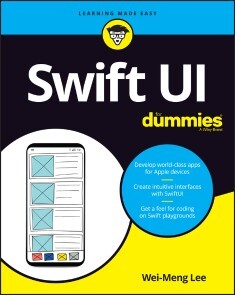
SwiftUI For Dummies
THE SIMPLEST WAY TO CREATE WORLD-CLASS APPSHave a unique app idea but worried you don’t quite have the coding skills to build it? Good news: You can stop fretting about someone beating you to market with the same idea and start work right now using SwiftUI. SwiftUI is a gateway app development framework that has become one of the best ways for fledgling developers to get iOS apps off the ground without having to become a coding expert overnight.SwiftUI For Dummies makes that process even faster, providing a friendly introduction to the SwiftUI and Swift programming language and helping you feel right at home creating and building with playgrounds. The book also covers the frameworks and APIs that make it so easy to create smooth, intuitive interfaces—just dive right in and have fun!* Combine projects into workspaces * Employ Xcode editing tools * Use constants and variables * Test your code on iOS Simulator Time is of the essence, and with SwiftUI For Dummies, it’s also on your side. Get going with this friendly guide today, and you’ll be celebrating the successful launch of your app way before you thought possible!WEI-MENG LEE (Singapore) is founder of Developer Learning Solutions, a firm specializing in hands-on training for software developers. He teaches courses in mobile development, blockchain, machine learning, and AI. He is author of a number of books, including Beginning Swift Programming (Wiley).INTRODUCTION 1About This Book 1Foolish Assumptions 2Icons Used in This Book 2Beyond the Book 3Where to Go from Here 3PART 1: GETTING STARTED WITH SWIFT AND SWIFTUI 5CHAPTER 1: INTRODUCING SWIFTUI 7Understanding What SwiftUI Is 7Getting the Tools 11Hello, SwiftUI 12Automatically previewing your user interface using the canvas 14Working with Live Preview 18Generating different previews 19The Gory Details 21Info plist 22AppDelegate swift 22SceneDelegate swift 23CHAPTER 2: BASICS OF THE SWIFT PROGRAMMING LANGUAGE 25Basic Swift Syntax 26Constants 26Variables 27Strings 27Comments 27Basic Data Types 28Integers 28Floating-point numbers 29Booleans 29Tuples 30Arrays 30Retrieving elements from an array 31Inserting elements into an array 31Modifying elements in an array 31Appending elements to an array 31Removing elements from an array 32Dictionaries 32Retrieving elements from a dictionary 32Modifying an item in a dictionary 33Removing an item from a dictionary 33Optional Types 33Working with implicitly unwrapped optionals 35Using optional binding 36Unwrapping optionals using “?” 36Using the nil coalescing operator 37Functions 38Understanding input parameters 38Returning a value 39Flow Control 39If-Else statement 40Ternary conditional operator 40Switch statement 40Looping 41For-In loop 42While loop 42Repeat-While loop 42Control transfer statements 42Range operators 43Structures 43Memberwise initializers 44Structures as value types 45Classes 47Defining a class 47Understanding properties 47Using methods in classes 49Trying out the self property 50Closures 51Understanding closures 51Using functions as closures 52Assigning closures to variables 52Writing closures inline 53Understanding type inference 53Using shorthand argument names 54Working with the operator function 54Using trailing closures 55Protocols 55Defining and using a protocol 56Conforming to a protocol 56Using the Codable protocol 57Using the some keyword 59PART 2: UNDERSTANDING THE BASICS OF SWIFTUI 61CHAPTER 3: GETTING STARTED WITH THE BASICS OF SWIFTUI 63Taking a Look at SwiftUI Views 63Conforming to the View protocol 64Using modifiers 66Stacking modifiers 66Using the Inspector 67Displaying an Image 70Using modifiers on the Image view 72Resizing images 73Displaying a Button 75Customizing the button 76Adding actions 77Stacking the Views 78VStack 79HStack 80Putting on the Finishing Touches 85CHAPTER 4: HANDLING USER INPUTS AND CUSTOM VIEWS 87Looking at Input Views 87TextField 88SecureField 92Toggle 93Slider 94Stepper 98Picker 100Composing Custom Views 103Composing the custom view 104Using the custom view 111CHAPTER 5: DISPLAYING LISTS OF ITEMS 113Using the List View to Display Items 113Customizing the rows 114Adding rows programmatically 116Alternative way to generate rows in a List view 119Displaying the List within a NavigationView 120Making the items tappable 121Adding rows 123Using the Identifiable protocol 125Deleting rows 126Editing rows 128Moving rows 130Displaying Sections 133Displaying sections from a dictionary 134Changing the style of the List view 136Previewing in Light and Dark Modes 138During runtime 138During design time 139CHAPTER 6: CREATING NAVIGATION AND TABBED APPLICATIONS 143Creating Navigation Apps 144Working with the two key views in navigation-style apps 145Navigating to a page 148Navigating programmatically 149Creating a news reader application 151Creating Tabbed Applications 167Using the TabView 168Selecting TabViews programmatically 169CHAPTER 7: FORMATTING YOUR USER INTERFACE 173Laying Out Views Using Stacks 173VStack 174HStack 186ZStack 190Using Container Views 195Form and Section 198Group 200Divider 203PART 3: EXPLORING WITH SWIFTUI IN MORE DETAIL 205CHAPTER 8: UNDERSTANDING STATE MANAGEMENT IN SWIFTUI 207Using a Property Wrapper 207Maintaining State Using State Variables 209Binding State Variables 213Managing State from External Objects 218Using the ObservableObject protocol and @Published 219Using the @ObservedObject 221Sharing Objects 223Accessing Built-in Environment Variables 228Defining your own environment keys 230Using your own environment keys 231CHAPTER 9: USING LEGACY UIKIT VIEWS AND VIEW CONTROLLERS IN SWIFTUI 235Using UIKit in SwiftUI 236Understanding the UIKit View Controller life cycle 237Understanding the SwiftUI view life cycle 239Using the UIViewRepresentable Protocol for UIKit Views 247ActivityIndicator 248WebView 251Using the UIViewControllerRepresentable Protocol for UIKit View Controllers 253Creating the ImagePickerViewController 254Handling events using coordinators 256Defining the methods in the Coordinator class 258Using the updated ImagePickerViewController 260PART 4: PERFORMING ANIMATIONS AND DRAWINGS 263CHAPTER 10: DRAWINGS AND SPECIAL EFFECTS 265Drawing Using the Five Built-in Shapes 266Rectangles 266Rounded rectangles 270Circles 273Capsules 274Ellipses 275Clipping with the Basic Shapes 277Drawing Custom Shapes 281Drawing lines 283Filling the shape 284Drawing a border 286Drawing an arc 287Combining fill and stroke 289Using Special Effects in SwiftUI 292Blend modes 292Blurs 297Saturation 298CHAPTER 11: PERFORMING ANIMATIONS IN SWIFTUI 299Understanding How to Animate 299Specifying the type of animation 303Repeating the animation 303Stopping the animation 304Performing Your Own Animation 307Rotating in 2D 307Rotating in 3D 309Creating a Custom Progress Indicator 314Indeterminate progress indicator 314Determinate progress indicator 318CHAPTER 12: CREATING A COMPLETE PROJECT 323Understanding What the App Does 323Building the Project 325Creating the layouts 325Defining the news sources and observable objects 328Fetching the data 330Displaying the news headlines 331Displaying the images 334Displaying the news 336Creating the share sheet 338Creating the preferences view 339Persisting the user’s preferences 344Deploying the App 346PART 5: THE PART OF TENS 351CHAPTER 13: TEN SWIFTUI TIPS AND TRICKS 353Resuming Live Preview 353Implementing Localization 354Combining Text Views 358Creating Custom Modifiers 360Displaying Multiple Alerts 362Enabling Debug Preview 363Previewing Using Different Devices 364Dark Mode Only Works On NavigationView 368Extracting Subviews 370Displaying a Context Menu 373CHAPTER 14: TEN GREAT SWIFTUI RESOURCES 375Apple 375SwiftUI by Example 376100 Days of SwiftUI 376Gosh Darn SwiftUI 376SwiftUI Hub 376Awesome SwiftUI 377raywenderlich com 377Swift Talk 377About SwiftUI 377Stack Overflow 378Appendix: Code Snippets for Common Swiftui Views 379Index 387

KI-Kompass für Entscheider
So setzen Sie Künstliche Intelligenz gewinnbringend in Ihrem Unternehmen einEndlich ist die Künstliche Intelligenz reif für die Nutzung in industriellen Prozessen, Produkten und Diensten. Die Potenziale sind enorm, doch eine erfolgreiche Integration von KI-Anwendungen kann nur gelingen, wenn man das Thema zur Chefsache macht. Dieser Leitfaden wendet sich an Entscheidungsträger, die ihr Unternehmen fit für den Einsatz industrieller KI machen wollen.Folgende Themen erwarten Sie:- Kompakter Einstieg in die KI-Technik: Data Science, Machine Learning, Künstliche Neuronale Netze- Das Zusammenspiel von KI, Industrie 4.0 und IoT- KI in der Industrie: Einsatzszenarien in Produktentwicklung und Produktion sowie für produktbasierende Dienste, KI in der (Edge-)Cloud und auf dem Chip- Die Rolle der Industrieplattformen: B2B-Angebote für KI-Apps, Managed Services, Cloud Infrastructure as a Service- Fragen der Datensicherheit und EthikWertvolle Einblicke in die Strategien, Angebote und Use Cases führender Unternehmen und Forschungseinrichtungen auf dem Gebiet der industriellen KI, wie ABB, Dassault Systèmes, Siemens, it’s OWL und das Werkzeugmaschinenlabor der RWTH Aachen, runden den Inhalt ab.Systemvoraussetzungen für E-Book inside: Internet-Verbindung und Adobe-Reader oder Ebook-Reader bzw. Adobe Digital Editions Dipl.-Ing. (FH) Ulrich Sendler (www.ulrichsendler.de) ist Feinwerktechnik-Ingenieur, Werkzeugmacher und NC-Programmierer. Seit Ende der Achtzigerjahre ist er als freier Fachjournalist, Buchautor, Technologieanalyst, Redner und Moderator im Umfeld der virtuellen Produktentwicklung und Digitalisierung tätig. Er ist Gründer und Organisator des sendler\circle, einer Interessengemeinschaft der Anbieter von Software und Services für die Industrie, und betreibt ein Nachrichtenportal zu Digitalisierung, Industrie 4.0 und PLM (www.plmportal.org).

Letters to a New Developer
Learn what you need to succeed as a developer beyond the code. The lessons in this book will supercharge your career by sharing lessons and mistakes from real developers.Wouldn’t it be nice to learn from others’ career mistakes? “Soft” skills are crucial to success, but are haphazardly picked up on the job or, worse, never learned. Understanding these competencies and how to improve them will make you a more effective team member and a more attractive hire.This book will teach you the key skills you need, including how to ask questions, how and when to use common tools, and how to interact with other team members. Each will be presented in context and from multiple perspectives so you’ll be able to integrate them and apply them to your own career quickly.WHAT YOU'LL LEARN* Know when the best code is no code* Understand what to do in the first month of your job* See the surprising number of developers who can’t program* Avoid the pitfalls of working aloneWHO THIS BOOK IS FORAnyone who is curious about software development as a career choice. You have zero to five years of software development experience and want to learn non-technical skills that can help your career. It is also suitable for teachers and mentors who want to provide guidance to their students and/or mentees.DAN MOORE has over 20 years of experience as a developer. His roles have included employee, contractor, community member, engineering manager, and CTO. He currently leads developer advocacy at FusionAuth, a Denver company, building software to handle authentication, authorization, and user management for any app. In 2018, Dan started a blog exclusively focused on helping new developers “level up” and has published over 150 posts to help them improve their skills and avoid common mistakes. He resides in Boulder, CO. You can find him on Twitter at @mooreds.1. Your First Month2. Questions3. Writing4. Tools to Learn5. Practices6. Understanding the Business7. Learning8. Mistakes9. Your Career10. Community
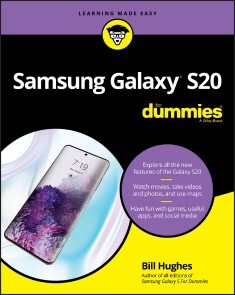
Samsung Galaxy S20 For Dummies
GET THE MOST OUT OF THE POWERFUL NEW SAMSUNG GALAXY S20With its superfast refresh rate for seamless browsing and spectacularly enhanced camera—among many other goodies—there’s a lot to enjoy about your sleek new Samsung S20. Whether you’re a Samsung newbie or an upgrading customer, Samsung Galaxy S20 for Dummies is the perfect guide to the latest generation.From the basics, like setup and security, to the fun, like the supercool Single Take mode, this book has you covered from the moment you take your new smartphone out of its shiny new box. Want to watch movies? Navigate your way around with GPS? Say hello to family and friends on social media? All the easy-to-follow tips and tricks that make it fast and fun are pages away!* Configure and personalize your new phone* Get going with the best features, apps, and games* Shoot eye-popping photo and video with 30x zoom and nighttime mode* Sync with your other devicesWhatever you want to use it for gaming with friends, in-app conferencing or emailing for work, shooting home movies, sending witty Tweets—or even making phone calls—this friendly, no-nonsense how-to is the best guide to your galaxy. Enjoy!BILL HUGHES is a veteran marketing strategy executive who has led new product development initiatives and created marketing solutions for companies including Xerox, Microsoft, IBM, General Electric, Motorola, and US West Cellular. He has written for several wireless industry trade magazines as well as for USA Today and Forbes.INTRODUCTION 1About This Book 3Foolish Assumptions 3Icons Used in This Book 3Beyond the Book 4Where to Go from Here 4PART 1: GETTING STARTED WITH THE SAMSUNG GALAXY S20 7CHAPTER 1: EXPLORING WHAT YOU CAN DO WITH YOUR PHONE 9Discovering the Basics of Your Phone 9Taking Your Phone to the Next Level: The Smartphone Features 10Internet access 11Photos 11Wireless email 12Multimedia 13Customizing Your Phone with Games and Applications 13Downloading games 13Downloading applications 13What’s cool about the Android platform 14Surviving Unboxing Day 15CHAPTER 2: BEGINNING AT THE BEGINNING 19First Things First: Turning On Your Phone 19Charging Your Phone and Managing Battery Life 21Navigating the Galaxy S20 26The phone’s hardware buttons 26The touchscreen 28The extended Home screen 33The notification area and screen 38The Device Function keys 39The keyboard 40The orientation of the phone 41Going to Sleep Mode/Turning Off the Phone 42PART 2: COMMUNICATING WITH OTHER PEOPLE 45CHAPTER 3: CALLING PEOPLE 47Making Calls 47Answering Calls 51Keeping Track of Your Calls: The Recents 53Making an Emergency Call: The 411 on 911 55Syncing a Bluetooth Headset 56Options Other than Headsets 59CHAPTER 4: DISCOVERING THE JOY OF TEXT 61Sending the First Text Message 62Carrying on a Conversation via Texting 65Sending an Attachment with a Text 67Receiving Text Messages 69Managing Your Text History 69CHAPTER 5: SENDING AND RECEIVING EMAIL 71Setting Up Your Email 71Getting ready 72Setting up your existing Gmail account 73Setting up a new Gmail account 75Working with non-Gmail email accounts 76Setting up a corporate email account 82Reading Email on Your Phone 84Writing and Sending Email 85Replying to and Forwarding Email 87CHAPTER 6: MANAGING YOUR CONTACTS 89Using the Galaxy S20 Contacts App 90Learning the Contacts App on your phone 90Deciding where to store your contacts 92Linking Contacts on your phone 96Creating Contacts within Your Database 98Adding contacts as you dial 99Adding contacts manually 101How Contacts Make Life Easy 101Playing Favorites 103PART 3: LIVING ON THE INTERNET 105CHAPTER 7: YOU’VE GOT THE WHOLE (WEB) WORLD IN YOUR HANDS 107Starting the Browser 108Accessing Mobile (or Not) Websites 109Choosing Your Search Engine 111Deciding between Mobile Browsing and Mobile Apps 114CHAPTER 8: PLAYING IN GOOGLE’S PLAY STORE 117Exploring the Play Store: The Mall for Your Phone 118Getting to the Store 118Seeing What’s Available: Shopping for Android Apps 120Navigating the Google Play apps offerings 121Navigating the Google Play games offerings 124Installing and Managing an Android App 126Downloading the Facebook app 126Rating or Uninstalling Your Apps 131PART 4: HAVING FUN WITH YOUR PHONE 135CHAPTER 9: SHARING PICTURES 137Say Cheese! Taking a Picture with Your Phone 139Getting a Little Fancier with Your Camera 148Using the Photo mode settings 149Settings options on the viewfinder 150Photo Effects options 152Managing Your Photo Images 152Using Images on Your Phone 153Deleting Images on Your Phone 154CHAPTER 10: CREATING VIDEOS 155Ready Action! Taking a Video with Your Phone 156Taking Videography to the Next Level 159The Video mode settings 160Settings options on the viewfinder 161Messing with the AR Doodle option 163CHAPTER 11: PLAYING GAMES 165The Play Store Games Category 166The Games Home screen 167The Games Categories tab 168Leaving Feedback on Games 171CHAPTER 12: PLAYING MUSIC AND VIDEOS 175Getting Ready to Be Entertained 176Choosing your headset 176Wired headsets 177Choosing your Bluetooth speaker 179Connecting to your stereo 180Licensing Your Multimedia Files 181Listening up on licensing 182Licensing for videos 182Using the Full Capacity of Your SD Card 183Enjoying Basic Multimedia Capabilities 184Grooving with the Play Music app 185Playing downloaded music 189Jamming to Internet Radio 193Looking at your video options 196PART 5: GETTING DOWN TO BUSINESS 201CHAPTER 13: USING THE CALENDAR 203Syncing Calendars 203Setting Calendar Display Preferences 205Setting Other Display Options 208Creating an Event on the Right Calendar 210Creating, editing, and deleting an event 210Keeping events separate and private 213CHAPTER 14: MAPPING OUT WHERE YOU WANT TO BE 215GPS 101: First Things First 216Practically Speaking: Using Maps 217Changing map scale 218Finding nearby services 221Getting and Using Directions 223Upgrading Your Navigation 226CHAPTER 15: PAYING WITH SAMSUNG PAY 229How Mobile Payment Works 230Getting Started with Samsung Pay 232Setting Up Samsung Pay 234Using Samsung Pay 238Managing Samsung Pay 240PART 6: THE PART OF TENS 243CHAPTER 16: TEN WAYS TO MAKE YOUR PHONE TOTALLY YOURS 245Using a Bluetooth Speaker 246Cruising in the Car 247Considering Wireless Charging Mats 249Making a Statement with Wraps 250You Look Wonderful: Custom Screen Images 251Empowering Power Savings 253Controlling Your Home Electronics 254Wearing Wearables 254Using Your Phone as a PC 255Creating Your Own AR Emoji 256CHAPTER 17: TEN (OR SO) WAYS TO MAKE YOUR PHONE SECURE 259Using a Good Case 260Putting It on Lockdown 262Preparing for your Screen Lock option 265Selecting among the Screen Lock options 265Entering your face 267Entering your fingerprints 268Encrypting Your SD Card 269Using Knox to Make Your Phone as Secure as Fort Knox 271Being Careful with Bluetooth 272Protecting against Malware 273Downloading Apps Only from Reputable Sources 274Rescuing Your Phone When It Gets Lost 274Wiping Your Device Clean 276CHAPTER 18: TEN FEATURES TO LOOK FOR DOWN THE ROAD 277Always-on Personal “Dash-Cam” 277Home IoT Services to Differentiate Real Estate 278New Delivery Concepts 278Smarter Customer Care for Your Phone 279Smartphone as Entertainment Hub 280Driving in Your Car 280Serving You Better 281Placing You Indoors 282Better 911 Services 282Reducing Your Carbon Footprint 283Index 285

YouTube Channels For Dummies
CREATE A YOUTUBE CHANNEL THAT DRAWS SUBSCRIBERS WITH TOP-NOTCH CONTENTYouTube has the eyes and ears of two billion monthly users. YouTube Channels for Dummies, 2nd Editionoffers proven steps to attracting a chunk of those billions to your personal or business channel.This updated guide offers insight from a quartet of YouTube channel content creators, managers, marketers, and analysts as they share the secrets of creating great content, building an audience, and interacting with your viewers. The book includes information on:· Setting up a channel· Creating videos that attract viewers· Putting together a video studio· Editing your final product· Reaching your target audience· Interacting with your fans· Building a profitable business· Tips on copyright lawWritten for both the budding YouTube creator and the business professional seeking to boost their company’s profile on the popular social networking site, YouTube Channels for Dummies allows its readers to access the over two billion active YouTube users who log on each day.Learn how to create a channel, build a YouTube following, and get insight on content creation, planning, and marketing from established YouTube creators.ROB CIAMPA works with worldwide brands, agencies, and business leaders on sales, marketing, and YouTube strategies. THERESA GO is Vice President of Platform Partnerships for Pixability. MATT CIAMPA has been a professional YouTube video creator and producer for more than a decade. RICH MURPHY is a Product Manager at Pixability and an expert on YouTube advertising and analytics. INTRODUCTION 1About This Book 2Foolish Assumptions 3How This Book is Organized 4Part 1: Getting Started with YouTube Channels 4Part 2: Making Good Videos and Not Making Bad Videos 5Part 3: Growing and Knowing Your Audience 5Part 4: YouTube Channels Are Serious Business 5Part 5: The Part of Tens 5Icons Used in This Book 5Beyond the Book 6Where to Go from Here 6PART 1: GETTING STARTED WITH YOUTUBE 7CHAPTER 1: MAKING A HOME ON YOUTUBE 9The YouTube Phenomenon: Why You Need to Be on YouTube 10Audience, audience, audience 11Incorporating YouTube into your business and marketing plans 12Becoming a star! 14Going viral 15Wasting lots and lots of time 16Seeing What Makes a YouTube Channel Unique 16Angling for subscriptions 18Establishing your brand 19Managing Channels for Fun and/or Profit 21Creating content 21Building an audience 22Building a business 23Monetizing 23CHAPTER 2: THE BASICS OF YOUTUBE 25What You’ll Find on YouTube 26Managing your identity 26Navigating the home page 27Watching a video 36Working with a YouTube Account 41Logging On to Your YouTube Account 48Creating a YouTube Channel 49Verifying Your YouTube Channel 56Setting Up a Custom Channel URL 60Joining the YouTube Partner Program 61CHAPTER 3: BUILDING YOUR CHANNEL FROM THE GROUND UP 63Navigating Your Channel 63The Your Channel menu item 64The Channel tabs 66Customizing and Branding Your Channel 68Creating channel art 68Managing channel art 70Creating the Channel icon 72Uploading the channel icon 73Managing your links 74Managing Uploads 76PART 2: MAKING A GREAT YOUTUBE VIDEO 79CHAPTER 4: WHAT MAKES A GOOD VIDEO A GOOD VIDEO? 81Picking the Right Camera for Your Needs 82Knowing What Makes a Good Video 85Mastering the Genres in Your YouTube Videos 87Mastering music videos 87Producing your very own vlog 89Making an educational video 91Making tutorial and how-to videos 92Let’s play (and make) gaming videos 93Making animal videos 94Capturing sporting events 95Film and animation 96Entertainment 97News and information 98Autos and vehicles 99Comedy 99Travel and events 100Science and technology 101Nonprofits and activism 101Viral Videos versus Evergreen Content 102Viral content 103Evergreen content 103CHAPTER 5: MAKING PLANS BOTH LARGE AND SMALL 105Establishing Your Channel’s Mission 106Determining your goals 107Being different, being valuable, being authentic 109Surveying the YouTube landscape 110Understanding Your Target Audience 112Going narrow versus going broad 113Knowing why your audience matters 113Finding out the nitty-gritty about your audience 114Defining Desired Actions 115Planning an Outstanding YouTube Channel 116Having a spokesperson 117Branding 117Planning the channel layout 118Crafting a Content Strategy 120Recognizing that content includes video and more 120Looking at content formats 121Curation recycling 123Programming for Success 124Delivering content consistently 124Being flexible and reactive 125Going live for more engagement 126Planning Never Ends 127CHAPTER 6: ACQUIRING THE TOOLS OF THE TRADE 129Checking Out Your Camera Options 129Working through the (camera) basics 130Looking at DSLRs 133Settling for smartphones 137Stabilizing the Shot 138Seeing Your Way with Light 139Setting up 3-point lighting 139Setting up high-key lighting 140Capturing Sound 141Looking at microphones 141Capturing good audio 142CHAPTER 7: PUTTING IT ALL TOGETHER TO CAPTURE SOME VIDEO 145Setting Up for a Shoot 146Getting organized 146Completing your checklists and shoot sack 146Arriving on set 149Planning a realistic shooting schedule 150Practicing good habits before a shot 151Maintaining continuity 152Shooting a Great-Looking Video 153Composing and dividing the screen 154Determining the best shot 154Moving and grooving the camera 156Matching your eyelines 157Following the 180-degree rule 158Shooting an interview 159Shooting extra footage and B-roll 160Capturing the perfect take — several times 160Working with Voice 161Practicing diction and dialects 161The power of the pause 162Managing crowd audio 163CHAPTER 8: FIXING IT IN POST: THE EDIT 165Picking the Right Software Package 165Mac tools 166Windows tools 167Knowing Where to Get Started with Editing 169Attempting a test project 169Handling file formats, resolution, and conversion 170Editing Your Video 172Logging your footage 173Trimming video clips 175Making a rough cut 176Switching it around 177Creating cuts 178Filling the gaps with B-roll 180Polishing Your Video 180Fine-tuning your edit 181Adding bells and whistles 181Adding Music to Your Video 182Adding built-in music in video editing tools 183Incorporating stock music libraries 184Putting music in your video 184Adding emotional impact 185Cutting your video to music 186Cutting your music to video 186Incorporating Voiceover and Sound Effects 187Exporting the Final Version 188CHAPTER 9: PREPARING FOR UPLOAD DAY 189Preparing Your Channel for Uploads 190Checking your YouTube account hygiene 190Enabling channel features 193Tending to Video SEO Matters 194Titles 195Descriptions 197Tags 199Thumbnails 200Uploading Your Video 201Picking the source 202Going public about YouTube privacy 202Uploading to YouTube 203Entering information about your video 206Setting upload defaults 213Publishing and Unpublishing Videos 213PART 3: GROWING AND KNOWING YOUR AUDIENCE 217CHAPTER 10: BUILDING YOUR AUDIENCE 219Developing a Community 220Deciphering audience evolution 220Determining what you want your audience to do 221Appreciating the importance of community 221Determining your subscription source 223Understanding Subscribers and Their Value 224Persuading viewers to subscribe 225Specifying how subscribers get updates 226Controlling channel settings and privacy levels 227Managing Comments 230Seeing why comments matter 231Setting up your channel for comments 232Moderating comments 233Reacting to inappropriate comments 234Configuring Community Settings 235Getting Viewers to Engage 236Capturing the Captioning Opportunity 238Producing Live Events 240CHAPTER 11: KNOWING YOUR AUDIENCE 241Getting Started with YouTube Analytics 242Reading YouTube Analytics reports 243Breaking down the report components 246Grouping information 248Comparing data 249Setting up report filters 249Selecting a report 250Understanding visual charts 251Understanding the table 254Learning about Video Views 254Seeing which content is the most popular 254Determining whether viewers are watching or leaving 255Understanding Your Audience 258Diving into demographics 258Diving into subscribers 260Optimizing Discoverability 261Seeing where viewers find your content 261Finding out where (and how) viewers watch your content 264Making Sure Your Audience is Engaged 266Imagining the Future of YouTube Analytics 268PART 4: YOUTUBE CHANNELS ARE SERIOUS BUSINESS 269CHAPTER 12: HOW AND WHY BUSINESSES USE YOUTUBE 271Understanding Video and Business 272Understanding Your YouTube Business Components 274Content matters 275Community and content creators 279Advertising 281Integrating YouTube with Other Campaigns 283Cross-media integration 283YouTube is TV now 284YouTube isn’t Google, either 286CHAPTER 13: EXPANDING YOUR AUDIENCE WITH GOOGLE ADS 287Understanding YouTube Advertising 289Recognizing the importance of ad policy 290Looking at YouTube ad types 290Planning for Advertising 292Creating a Google Ads account 292Linking your Google Ads account and YouTube channel 293Determining Your Ad Targets 296People targeting 297Content targeting 299Navigating Google Ads 300Setting Up a YouTube Ad Campaign 302Going with a general campaign 302Creating an ad group and setting up targeting 306Creating a YouTube Ad 308Setting up remarketing lists 313Looking at Your campaign details 315Measuring Clicks and Results 316Looking at campaign information 316Getting earned metrics 318Optimizing Your Campaign 319CHAPTER 14: YOUTUBE MONETIZATION: HOW TO EARN MONEY ON YOUTUBE 321Partnering with YouTube 323From Ads to AdSense 323Setting up YouTube monetization 324Analyzing ad performance with YouTube Analytics 326Getting your YouTube revenue information 327Seeing which metrics are offered 327Making changes to your video strategy based on the data 329Strikes 330Brand safety and suitability 331Federal Trade Commission Guidelines and COPPA 332PART 5: THE PART OF TENS 335CHAPTER 15: TEN KEY STEPS TO IMPROVING YOUTUBE SEARCH RESULTS 337Updating Video Metadata 338Managing Video Titles 339Understanding Working Titles 340Optimizing Thumbnails for Viewer Session Time 340Managing Video Descriptions 341Adding Closed Captioning 342Handling Tags 343Refreshing Metadata 343Understanding Channel SEO 343Avoiding Misleading Metadata 345CHAPTER 16: TEN THINGS TO KNOW ABOUT COPYRIGHT 347Remember Who Owns the Copyright 348Attribution Does Not Absolve a Copyright Violation 348Know the Consequences 349The Profit Motive is Irrelevant 351Get Permission for Using Copyrighted Material 351Fair Use is s Complicated 352Don’t Let Copyright Issues on YouTube Lead to a Strikeout 353Wipe the Slate Clean 354YouTube’s Algorithms Are Good at Finding Copyright Infringements 354Copyright is (Almost) Forever 355Index 357

Datengetriebenes Marketing
Wir leben in einer Zeit, in der Daten immer mehr Relevanz besitzen, und zwar sowohl für die Geschäftsmodelle von Unternehmen im Gesamten als auch für einzelne Funktionsbereiche. Insbesondere im Marketing besitzen Daten eine hohe Relevanz, denn sie helfen, den Kunden zu verstehen und geeignete Maßnahmen abzuleiten. Doch viele Unternehmen tun sich schwer, einen Einstieg in das datengetriebene Marketing zu finden. Jonas Rashedi stellt mit diesem Buch einen Orientierungs- und Handlungsrahmen vor, der Unternehmen bei der Umsetzung und organisatorischen Verankerung eines datengetriebenen Marketings unterstützt. Der vorgestellte Prozess ist unabhängig von aktuell vorhandenen technologischen Lösungen gestaltet, sodass er für Unternehmen längerfristig Gültigkeit besitzt.

Control Your Home with Raspberry Pi
Ever since the Raspberry Pi was introduced, it has been used by enthusiasts to automate their homes. The Raspberry Pi is a powerful computer in a small package, with lots of interfacing options to control various devices. This book shows you how you can automate your home with a Raspberry Pi. You'll learn how to use various wireless protocols for home automation, such as Bluetooth, 433.92 MHz radio waves, Z-Wave, and Zigbee. Soon you'll automate your home with Python, Node-RED, and Home Assistant, and you'll even be able to speak to your home automation system. All this is done securely, with a modular system, completely open-source, without relying on third-party services. You're in control of your home, and no one else. At the end of this book, you can install and configure your Raspberry Pi as a highly flexible home automation gateway for protocols of your choice, and link various services with MQTT to make it your own system. This DIY (do it yourself) approach is a bit more laborious than just installing an off-the-shelf home automation system, but in the process, you can learn a lot, and in the end, you know exactly what's running your house and how to tweak it. This is why you were interested in the Raspberry Pi in the first place, right? - Turn your Raspberry Pi into a reliable gateway for various home automation protocols. - Make your home automation setup reproducible with Docker Compose. Secure all your network communication with TLS. - Create a video surveillance system for your home. - Automate your home with Python, Node-RED, Home Assistant and AppDaemon. - Securely access your home automation dashboard from remote locations. - Use fully offline voice commands in your own language. Koen Vervloesem has been writing for over 20 years on Linux, open-source software, security, home automation, AI, and programming. He holds a Master's degree in Computer Science Engineering, a Master's degree in Philosophy and an LPIC-3 303 Security certificate. He is editor-in-chief of the Dutch MagPi magazine and is a board member of the Belgian privacy activist organization, the Ministry of Privacy.

Hacking und Bug Hunting
Bugs in Websites aufspüren, Gutes tun, Spaß dabei haben ... und Geld verdienen Ein praktischer Leitfaden für die Suche nach Softwarefehlern Ein Blick hinter die Kulissen: Sie sehen, wie professionelle Bughunter vorgehen Eine Anleitung, wie man mit Bughunting Geld verdient Lernen Sie, wie Hacker Websites knacken und wie auch Sie das tun können. Dieses Buch ist ein praktischer Leitfaden für die Suche nach Software-Bugs. Egal ob Sie in die Cybersicherheit einsteigen, um das Internet zu einem sichereren Ort zu machen, oder ob Sie als erfahrener Entwickler sichereren Code schreiben wollen – Peter Yaworski, ein überzeugter "Ethical Hacker", zeigt Ihnen, wie es geht. Sie lernen die gängigsten Arten von Bugs kennen, wie Cross-Site-Scripting, unsichere Objekt-Referenzen oder Server-Side Request-Forgery. Echte Fallbeispiele aufgedeckter und entlohnter Schwachstellen in Anwendungen von Twitter, Facebook, Google und Uber zeigen erstaunliche Hacks, und sie erfahren, wie Hacker bei Überweisungen Race Conditions nutzen, URL-Parameter verwenden, um unbeabsichtigt Tweets zu liken, und vieles mehr. Sie lernen: - wie Angreifer Websites kompromittieren - wo Sie mit der Suche nach Bugs anfangen - welche Funktionalitäten üblicherweise mit Schwachstellen assoziiert werden - wie Sie Bug-Bounty-Programme finden - wie Sie effektive Schwachstellen-Reports verfassen "Hacking und Bug-Hunting" ist eine faszinierende und umfassende Einführung in die Sicherheit von Webanwendungen, mit Geschichten von der vordersten Schwachstellenfront und praktischen Erkenntnissen. Mit Ihrem neu gewonnenen Wissen um die Websicherheit und Schwachstellen können Sie das Web zu einem sichereren Ort machen—und dabei noch Geld verdienen.

Beginning Jakarta EE Web Development
Start building Java-based web applications now, even if you’re a complete newcomer to Java. Comprehensive and example-driven, this book is all you need to develop dynamic Java-based web applications using JSP, connect to databases with JSF, and put them into action using the popular open source Java web server, Apache Tomcat.Beginning Jakarta EE Web Development is a comprehensive introduction to building Java-based web applications using JSP, JSF, MySQL, and the Apache Tomcat web application server. Other APIs including JSON, JSTL, and XML parser are covered along the way.Key concepts are made easy to grasp with numerous working examples and a walk-through of the development of a complete ecommerce project. This book is written for professionals by practicing Java web application professionals and experts.WHAT YOU WILL LEARN* Build Java-based web applications using JSP and JSF with Eclipse Jakarta EE* Configure your database with MySQL* Define XML documents for your applications* Use the Apache MyFaces APIs to create JSF applications* Integrate and implement JSF and JSP together* Build an online ecommerce web application WHO THIS BOOK IS FORProgrammers new to programming in Java and programming in general.Luciano Manelli earned a PhD in computer science from the IT department, University of Bari - Aldo Moro. His PhD focused on grid computing and formal methods, and he published the results in international publications. Luciano obtained several certificates in the IT sector, and, in 2014, began working for the Port Network Authority of the Ionian Sea – Port of Taranto, after working for 13 years for InfoCamere SCpA. He has worked mainly in the design, analysis, and development of large software systems; research and development; testing; and production with roles of increasing responsibility in several areas over the years. Luciano has developed a great capability to make decisions in a technical and business context and is mainly interested in project management and business process management. In his current position, he deals with port community systems and software innovation. Additionally, he has written several IT books and is a contract professor at the Polytechnic of Bari (foundations of computer science), and at the University of Bari - Aldo Moro (programming for web, computer science, and computer lab).Giulio Zambon's first love was physics, but he decided to dedicate himself to software development more than 30 years ago: back when computers were still made of transistors and core memories, programs were punched on cards, and Fortran only had arithmetic IFs. Over the years, he learned a dozen computer languages and worked with all sorts of operating systems. His specific interests were in telecom and real-time systems, and he managed several projects to their successful completion. In 2001 Giulio founded his own company offering computer telephony integration (CTI) services, and he used JSP and Tomcat exclusively to develop the web side of the service platform. Back in Australia after many years in Europe, he now dedicates himself to writing software to generate and solve numeric puzzles.1. Introducing Jakarta Server Pages (JSP) and Apache Tomcat2. JSP Elements3. JSP Application Architectures4. JSP in Action5. JSON, XML-based JSL and JSP6. JSP and Databases7. Jakarta Server Faces (JSF)8. JSF and EshopA. Eclipse IDE/FrameworkNOTES from Author on Revision Plan:I'd like to propose a revision of the Beginning Jakarta EE Web Development book and I would change the structure of the book to make it more modern and implementable:1) I would prefer to start the reading of a book for beginners step by step avoiding the copy&paste operations of complex code (i.e. Listing 1-1. pag 6);2) It's a good idea the theory&practice used in the book, so I would delete the appendices and Chapter9, inserting part of them directly in the main text;3) I would avoid so many areas of software development (there are a lot of xml /tipology of tags applications): I think is better focus on the eshop application;4) I would use more graphical tools, like Eclipse using autocompilation or automatic generation tools (for example of beans) in order to maximize learning and to minimize the copy&paste operations of the code.5) I will update it.Thank you,LM
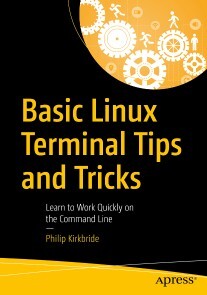
Basic Linux Terminal Tips and Tricks
Learn command line tricks, programs, and hacks you can use day to day as a Linux user, programmer, and system administrator. When you interact with the digital world, you can’t go far without interacting with Linux systems. This book shows you how to leverage its power to serve your needs.Many users know "top" is installed on almost all Linux machines, but did you know with a few keystrokes you can customize it specifically for your needs? Stuck using `cd` and `ls` commands for navigating file systems? This book looks at how you can use Ranger to quickly navigate through multiple levels of folders, and quickly run bash commands without ever leaving the terminal. We also suggest programs that can be used for common tasks such as finding which programs are using the most processing, data download/upload, and file space.You’ll know how to quickly connect to remote machines and run your commonly needed jobs in a keystroke or even on auto-pilot. With Basic Linux Terminal Tips and Tricks you'll be equipped with a wide range of tools that can be used for daily work and maintenance on all sorts of Linux systems including servers, desktops, and even embedded devices.WHAT YOU WILL LEARN* Work with common tools on your local network.* Techniques for efficient use of command line.* Easily manipulate text files for processing.* Monitor the state of a system with a handful of popular programs.* Combine programs to create useful processes.WHO THIS BOOK IS FORAnyone who is interested in Linux and Unix based operating systems as a hobby or for work.PHILIP KIRKBRIDE has been developing software for over 10 years. After college he worked as a contractor developing websites and mobile apps in Southern Ontario, Canada. He has since worked at several software and hardware startups, and contributed to open-source projects. He is currently maintaining applications for a handful of clients while completing his masters. When he is not working on tech, he enjoys spending time being outdoors. He can be reached at kirkins@gmail.com.1. Linux Primer2. File/Folder Navigation3. History and Shortcuts4. Scripts and Pipes5. Using SSH6. File Transfer7. Network Scanning8. System Monitoring9. Hardware Details and /dev10. Parsing Text11. systemd12. Vim13. Emacs14. Configure Bash15. Tmux Workflow16. Work with Images and Video17. Extras17. Cheat Sheets

Delphi Quick Syntax Reference
The Delphi Quick Syntax Reference is a succinct code and syntax reference guide to Delphi. It presents the fundamental knowledge to get newcomers started with the language and provides a refresher to seasoned or returning Delphi developers.It covers all the new features added by Embarcadero during the last few years. Delphi celebrates 25 years in 2020 and, alongside the free community version that was introduced a couple of years ago, this syntax guide is a great way to get into the language.WHAT YOU WILL LEARN* Quickly use and learn Delphi* Compile, build and run a Delphi program* Master Delphi strings, variables, constants, and operators and how to apply them* Use conditions, loops, procedures, and functions in Delphi * Apply object-oriented programming in Delphi WHO THIS BOOK IS FORReturning or current Delphi developers: The book is a resource for reference for this group of developers especially for the new features that were introduced in the language over the last couple of years. Newcomers to the language: These developers will learn the fundamentals of the language in a very condensed and effective text that accelerates learning. John Kouraklis started exploring computers when he was 16 and since then has followed all the way from Turbo Pascal to Delphi and Delphi Tokyo as a hobby initially and as a profession for most of his adult life. He has developed a wide range of applications, from financial software to reverse engineering tools, including an application for professional gamblers.He is part of the Delphi community and participates in online communities, forums, and many other events. For example, he is active on Delphi Praxis, which is perhaps the biggest English-speaking online forum about Delphi. John also has a personal website where he posts articles regularly. Lastly, he has written two books about Delphi published by Apress.Chapter 1: Introduction to DelphiChapter 2: Anatomy of a Delphi programChapter 3: Compiling, Building and Running a program (including cross platform environments)Chapter 3: Variables, Constants and OperatorsChapter 4: StringsChapter 5: Conditionals and LoopsChapter 6: Procedures and FunctionsChapter 7: OOP in DelphiChapter 8: Enhancements (Anonymous Methods, etc.)

KI verändert die Spielregeln
Geschäftsmodelle, Kundenbeziehungen und Produkte neu denken.Künstliche Intelligenz (KI) ist in der Wirtschaft in aller Munde. Aber nur die wenigsten Firmen wissen, wie sie KI für den Aufbau neuer Geschäftsfelder nutzen können. Genau darum geht es in diesem Buch. Die Autoren kommen aus der Praxis und beschreiben unter anderem KI-Projekte, die sie gemeinsam mit ihren Kunden umgesetzt haben. Profitieren Sie von diesem Know-how , um mit KI erfolgreich zu sein:- grundlegendes Verständnis für die Möglichkeiten von Künstlicher Intelligenz- Vorgehensmodell für das Entwickeln von KI-Anwendungen- Folgenabschätzung für Prozesse und Geschäftsmodelle in verschiedenen Branchen durch KI- Einsatzszenarien für Prozesse von Kommunikation bis Verwaltung- Unterstützung mobiler Prozesse mithilfe von KIDas Buch enthält konkrete, realisierbare Anwendungsfälle für das verarbeitende Gewerbe und für Dienstleister. Lassen Sie sich davon inspirieren, um eigene Lösungen zu entwickeln und zu vermarkten.
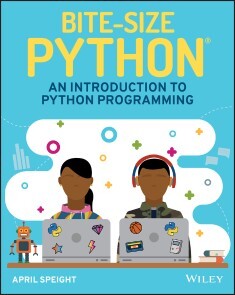
Bite-Size Python
INTRODUCE CHILDREN TO THE POPULAR PYTHON PROGRAMMING LANGUAGE THROUGH RELATABLE EXAMPLES AND FUN PROJECTS!Python has now surpassed Java as the most commonly used programming language. As the language rises in popularity, this complete guide can teach basic Python concepts to kids with its simple, friendly format. Bite-Size Python: An Introduction to Python Programming provides children with a foundation in the Python language. This unique book shares knowledge through easy-to-understand examples, fast exercises, and fun projects!As children learn, their parents, caregivers, and instructors can also join in their discoveries. Bite-Size Python is ideal for those who are new to programming, giving kids ages 9 and up a beginners’ approach to learning one of the most important programming languages.* Gives an overview of Python* Provides exciting programming projects* Offers instruction on how to download and install Python* Presents key programming language concepts* Simplifies technical definitionsWith this playful guide to learning Python, readers can try out activities on their computers for a hands-on learning experience. The artwork in Bite-Size Python represents children of various backgrounds, so any child who picks up this book will be empowered to learn and young readers will love showing their projects to friends and family!APRIL SPEIGHT is a Python developer with a passion for helping beginners get started with programming. She believes that by providing programming instruction that is equal parts approachable, relatable, and fun she can truly foster a welcoming learning experience. Considered a true creator at heart, April enjoys programming AI assistants and chat bots, creating experiences with mixed reality, and discovering new ways to teach technical concepts to nontechnical audiences. Curious about what she's currently learning or creating? Follow her on Twitter @VogueandCode. 1 What is Python? 32 Install Python 93 IDLE 154 Variables 235 Numbers 396 Strings 517 Conditionals and Control Flow 698 Lists 839 for Loops 9710 while Loops 11711 Functions 13312 Dictionaries 16113 Modules 18714 Next Steps 205Appendix 213Index 219
Blended Learning mit Moodle
BLENDED LEARNING MIT MOODLE - Moodle-Infrastruktur aufbauen und verstehen- Moodle professionell verwalten- Kurse gestalten und in das Unterrichtsprogramm integrieren- Unterstützender Einsatz von Hot Potatoes und H5P im Präsenzunterricht- Erfolgreich und zuverlässig Prüfungen mit Moodle durchführenBei „Moodle“ bzw. „E-/Blended Learning“ geht es vor allem darum, gezielt Kurse zu entwickeln, die sich ideal in das didaktische Konzept der Lehre integrieren und diese unterstützen. Auch die Durchführung von Prüfungen und Lernzielkontrollen sowie die Abgabe von Hausaufgaben sind ein wichtiges Thema. Das Lehrpersonal und der menschliche Kontakt sollen dadurch aber nicht ersetzt werden.Vorbereitende Übungen zur Vertiefung des Stoffs sollen kurzweilig gestaltet und auch für kurze Übungssequenzen geeignet sein. Einen Einblick in externe Software, die über den SCORM-Standard (Sharable Content Object Reference Model) in Moodle integriert werden kann, gibt die Vorstellung von Hot Potatoes. In der Zukunft wird für die Unterstützung der Präsenzlehre und der Fernschulung sowie als motivierendes Recherchemedium die Integration multimedialer, interaktiver Technologien wie H5P in Moodle immer wichtiger.Blended-Learning-Technologien (hier am Beispiel des am weitesten verbreiteten LMS Moodle) sollen eine Unterstützung der Aus- und Fortbildung sein, nicht jedoch als eine disruptive Konkurrenz zu einer zwischenmenschlich geprägten Pädagogik aufgefasst werden. Dazu soll dieses Werk beitragen.AUS DEM INHALTTeil I - Allgemeine Ansätze- Potenzielle Zielgruppen- Potenzielle EinsatzbereicheTeil II – Technik- Der Moodle-Server- Moodle-Grundinstallation- Benutzerverwaltung- Rollen im Moodle-System- Bereichs- und Kursverwaltung- E-Mail-Kommunikation- DesignsTeil III - Moodle in der Praxis- Moodle im Überblick- Aktivitäten - Werkzeuge zur Kursgestaltung- Ergänzende Lernhilfen für Moodle- Fragenkataloge in Moodle- Lernzielkontrollen und Prüfungen
Python 3 Crashkurs - 2., aktualisierte Auflage
Ihr Weg zum Python-Profi! US-Bestseller Lernen Sie Python programmieren wie die Profis Komplett aktualisiert auf Python 3 »Python Crashkurs« ist eine kompakte und gründliche Einführung, die es Ihnen nach kurzer Zeit ermöglicht, Python-Programme zu schreiben, die für Sie Probleme lösen oder Ihnen erlauben, Aufgaben mit dem Computer zu erledigen. In der ersten Hälfte des Buches werden Sie mit grundlegenden Programmierkonzepten wie Listen, Wörterbücher, Klassen und Schleifen vertraut gemacht. Sie erlernen das Schreiben von sauberem und lesbarem Code mit Übungen zu jedem Thema. Sie erfahren auch, wie Sie Ihre Programme interaktiv machen und Ihren Code testen, bevor Sie ihn einem Projekt hinzufügen. Danach werden Sie Ihr neues Wissen in drei komplexen Projekten in die Praxis umsetzen: ein durch »Space Invaders« inspiriertes Arcade-Spiel, eine Datenvisualisierung mit Pythons superpraktischen Bibliotheken und eine einfache Web-App, die Sie online bereitstellen können. Während der Arbeit mit dem »Python Crashkurs« lernen Sie, wie Sie: leistungsstarke Python-Bibliotheken und Tools richtig einsetzen – einschließlich matplotlib, NumPy und Pygal 2D-Spiele programmieren, die auf Tastendrücke und Mausklicks reagieren, und die schwieriger werden, je weiter das Spiel fortschreitet mit Daten arbeiten, um interaktive Visualisierungen zu generieren Web-Apps erstellen und anpassen können, um diese sicher online zu deployen mit Fehlern umgehen, die häufig beim Programmieren auftreten Dieses Buch wird Ihnen effektiv helfen, Python zu erlernen und eigene Programme damit zu entwickeln. Warum länger warten? Fangen Sie an!

C++ mit Visual Studio 2019
C++ hat sich in den letzten Jahren rasant entwickelt: C++11, C++14, C++17 und C++20 haben viele Verbesserungen und neue Möglichkeiten gebracht. Vieles, was vor 10 Jahren noch gut und empfehlenswert war, kann heute besser und sicherer gemacht werden.Dieses Buch stellt C++ mit Visual Studio 2019 auf dem Stand von Mai 2020 umfassend dar. Das ist nicht nur der Umfang von C++17, sondern auch schon ein Teil von C++20.Es entstand aus zahlreichen Vorlesungen und Firmenseminaren. Dementsprechend richtet es sich einerseits an STUDIERENDE, die C++ lernen wollen. Der Aufbau, die vielen Beispiele und Übungsaufgaben sind erprobt und bewährt. Es eignet sich zum Selbststudium und als Lehrbuch für Vorlesungen an Fachhochschulen und Universitäten.Dieses Buch zeigt aber ebenso PROFESSIONELLEN SOFTWARE-ENTWICKLERN mit einer jahrelangen C++-Praxis den aktuellen Stand der Technik. Viele der Spracherweiterungen machen elementare Programmiertechniken einfacher und sicherer. Dazu kommen neue Konzepte, die bessere und effizientere Lösungen als noch vor einigen Jahren ermöglichen.Dieses Buch erscheint in zwei weitgehend identischen Ausgaben:– IN DER VORLIEGENDEN AUSGABE werden Programme ohne eine graphische Benutzeroberfläche geschrieben. Alle Ein- und Ausgaben erfolgen mit cin und cout über die Konsole.– IN DER ANDEREN AUSGABE „C++ mit Visual Studio 2019 und Windows-Forms-Anwendungen“ werden Programme geschrieben, in denen alle Ein- und Ausgaben über eine Windows-Benutzeroberfläche erfolgen.Nach seinem Mathematikstudium an der Universität Tübingen war Richard Kaiser in der Lehrerausbildung tätig, Trainer in der Industrie, Software-Entwickler und -Abteilungsleiter. Als Professor an der Dualen Hochschule Baden-Württemberg hat er Vorlesungen über C, C++, C# und Mathematik gehalten und zahlreiche Firmenseminare über C++ und C# durchgeführt.Die Entwicklungsumgebung.- Steuerelemente für die Benutzeroberfläche.- Elementare Datentypen und Anweisungen in C und C++.- Sie Stringklassen string und wstring.- Arrays und Container.- Einfache selbstdefinierte Datentypen.- Zeiger, Strings und dynamisch erzeugte Variablen.- Überladene Funktionen und Operatoren.- ObjektorientierteProgrammierung.- Namensbereiche.- Exception-Handling.- Containerklassen der C++-Standardbibliothek.- Dateibearbeitung mit den Stream-Klassen.- Funktionsobjekte und Lambda-Ausdrücke.- Templates und STL.- C++11 Smart Pointer: shared_ptr, unique_ptr und weak_ptr.- Literatur.- Index.

KI & Recht kompakt
Das Buch gibt einen kompakten Einblick in alle wesentlichen Rechtsfragen rund um den Einsatz Künstlicher Intelligenz in Unternehmen oder Produkten. Versierte Autoren mit Praxiserfahrung erläutern die wichtigsten rechtlichen Themen beim Einsatz intelligenter Systeme und behandeln nach einer Einführung in die technischen Grundlagen die Auswirkungen und Besonderheiten Künstlicher Intelligenz in den Bereichen:* Zivilrecht* Vertragsgestaltung* Lizenzierung * Haftung* Immaterialgüterrechte * Datenschutz* Strafrecht* ArbeitsrechtMatthias Hartmann ist Rechtsanwalt und Fachanwalt für IT-Recht. Er beschäftigt sich seit über 20 Jahren mit Rechtsfragen der Künstlichen Intelligenz und berät Hersteller und Nutzer von KI-Systemen als Gründungspartner der auf IT-Recht spezialisierten Kanzlei HK2 Rechtsanwälte. Die weiteren Autoren des Buches sind Experten in ihren jeweiligen Fachbereichen und haben sich intensiv mit den Rechtsfragen beim Einsatz Künstlicher Intelligenz auseinandergesetzt.Technische Grundlagen.-Künstliche Intelligenz im Zivilrecht.- Haftung am Beispiel automatisierter Fahrzeuge.- KI im Immaterialgüterrecht.-Datenschutz.- Datenschutz in öffentlichen KI-Forschungsprojekten.- KI im Arbeitsrecht.- Künstliche Intelligenz und das Strafrecht.