

Computer und IT

Refactoring
* UMFASSEND ÜBERARBEITETE UND AKTUALISIERTE NEUAUFLAGE DES STANDARDWERKS IN VOLLSTÄNDIG NEUER ÜBERSETZUNG* VERBESSERUNGSMÖGLICHKEITEN VON BESTEHENDER SOFTWARE ANHAND VON CODE-SMELLS ERKENNEN UND CODE EFFIZIENT ÜBERARBEITEN* UMFASSENDER KATALOG VON REFACTORING-METHODEN MIT CODE-BEISPIELEN IN JAVASCRIPTSeit mehr als zwanzig Jahren greifen erfahrene Programmierer rund um den Globus auf dieses Buch zurück, um bestehenden Code zu verbessern und leichter lesbar zu machen sowie Software besser warten und erweitern zu können.In diesem umfassenden Standardwerk zeigt Ihnen Martin Fowler, was die Vorteile von Refactoring sind, wie Sie verbesserungsbedürftigen Code erkennen und wie Sie ein Refactoring - unabhängig von der verwendeten Programmiersprache - erfolgreich durchführen. In einem umfangreichen Katalog gibt Fowler Ihnen verschiedene Refactoring-Methoden mit ausführlicher Erläuterung, Motivation, Vorgehensweise und einfachen Beispielen in JavaScript an die Hand.Darüber hinaus behandelt er insbesondere folgende Schwerpunkte:* Allgemeine Prinzipien und Durchführung des Refactorings* Refactoring anwenden, um die Lesbarkeit, Wartbarkeit und Erweiterbarkeit von Programmen zu verbessern* Code-Smells erkennen, die auf Verbesserungsmöglichkeiten durch Refactoring hinweisen* Entwicklung zuverlässiger Tests für das Refactoring* Erkennen von Fallstricken und notwendigen Kompromissen bei der Durchführung eines RefactoringsDiese vollständig neu übersetzte Ausgabe wurde von Grund auf überarbeitet, um den maßgeblichen Veränderungen der modernen Programmierung Rechnung zu tragen. Sie enthält einen aktualisierten Katalog von Refactoring-Methoden sowie neue Beispiele für einen funktionalen Programmieransatz.AUS DEM INHALT:* Definition und Grund-lagen von Refactoring* Der richtige Zeitpunkt für ein Refactoring* Verbesserungsbedürftigen Code erkennen (Code-Smells)* Tests und selbsttestender Code* Umfangreicher Refactoring-Katalog:* Kapselung* Verschiebungen* Daten organisieren* Bedingungen vereinfachen* Refactoring von APIs* Umgang mit VererbungAMAZON-LESERSTIMME ZUR VORAUFLAGE:»Dieses Buch gibt einen sehr guten Einstieg in das Refactoring und hält auch eine übersichtliche, gut erklärte Sammlung von Refactoring-Patterns parat. Ein Buch, das sich jeder Programmierer unters Kopfkissen legen sollte.«Martin Fowler ist Chief Scientist bei ThoughtWorks sowie Autor, Speaker und Consultant auf dem Gebiet der Softwareentwicklung. Er konzentriert sich auf die Entwicklung von Unternehmenssoftware und beschäftigt sich damit, was ein gutes Design auszeichnet und mit welchen Verfahren es umgesetzt werden kann.

Docker Praxiseinstieg
* Docker-Images und -Container verwenden * Container deployen und debuggen * Einsatz von Tools: Docker Swarm, Kubernetes, Amazon EC2 Container Services Linux-Container besitzen das Potenzial, das Deployment von Applikationen für verschiedene Umgebungen stark zu verändern. Dieses Buch weist Ihnen den Weg zu einer funktionierenden Docker-Umgebung. Die Autoren zeigen Ihnen, wie Sie Docker-Images Ihrer Anwendungen inklusive aller Abhängigkeiten erstellen, wie Sie diese testen, deployen und skalieren können, und wie Sie die Container in der Produktivumgebung pflegen und warten. Dabei kommen Themen wie die Einrichtung, das Testen und das Deployment von Docker-Anwendungen ebenso zur Sprache wie das Debugging eines laufenden Systems. Mit diesem Buch werden Sie verstehen, was Docker wirklich leistet, welche Relevanz es hat, wie Sie es zum Laufen bekommen, wie Sie damit Ihre Anwendungen deployen können und was erforderlich ist, um es in einer Produktivumgebung einzusetzen. Die Autoren dieses Buches sind in dem Unternehmen New Relic für die Sicherstellung der Stabilität der dort entwickelten Anwendungen zuständig und lassen Sie an ihren im praktischen Umgang mit Docker gesammelten Erfahrungen teilhaben. Ihre Zielsetzung lautet, Sie von ihren Erkenntnissen profitieren zu lassen und davor zu bewahren, dieselben Rückschläge hinnehmen zu müssen, die den Autoren in diesem Kontext widerfahren sind. Aus dem Inhalt: * Einfachere Handhabung der Abhängigkeiten und des Deployments von Anwendungen mit Docker * Docker-Architektur und Optimierung des Workflows * Installation unter Linux, macOS und Windows * Einsatz von Docker-Images und -Containern * Das Kommandozeilentool docker * Praxisnahe Verfahren für das Deployment und das Testen von Linux-Containern in Produktivumgebungen * Container-Debugging * Einsatz von Docker Compose * Deployment skalierbarer Container in Produktivumgebungen * Weiterführende Themen: * Deployment-Tools * Vernetzung * Orchestrierung * Sicherheitsaspekte * Konfiguration Karl Matthias war als Entwickler, Systemadministrator und Netzwerktechniker für Start-ups und verschiedene Fortune-500-Unternehmen tätig. Sean P. Kane war lange als IT-Techniker tätig und hat in sehr breit gefächerten Industriebranchen (Biotechnologie, Verteidigungswesen, Hightech-Unternehmen) viele verschiedene Posten bekleidet.

Algorithm Concept for Crash Detection in Passenger Cars
State-of-the-art airbag algorithms make a decision to fire restraint systems in a crash by evaluating the deceleration of the entire vehicle during the single events of the accident. In order to meet the ever increasing requirements of consumer test organizations and global legislators, a detailed knowledge of the nature and direction of the crash would be of great benefit. The algorithms used in current vehicles can only do this to a limited extent. André Leschke presents a completely different algorithm concept to solve these problems. In addition to vehicle deceleration, the chronological sequence of an accident and the associated local and temporal destruction of the vehicle are possible indicators for an accident’s severity. About the Author: Dr. André Leschke has earned his doctoral degree from Tor-Vergata University of Rome, Italy. Currently, he is working as head of a team of vehicle safety developers in the German automotive industry.

Alexa Skills programmieren für Amazon Echo & Co.
* EINFACHER EINSTIEG IN DIE PROGRAMMIERUNG VON ALEXA SKILLS MIT JAVASCRIPT* NUTZERANTWORTEN SPEICHERN UND VERARBEITEN, BILDER UND AUDIOFILES EINBINDEN, FORTGESCHRITTENES DIALOGMANAGEMENT, ANBINDUNG EXTERNER APIS U.V.M.* SKILLS BEKANNT MACHEN UND DAMIT GELD VERDIENENÜber 11 Millionen Menschen in Deutschland nutzen Amazon Alexa aktiv und das Potenzial der verfügbaren Skills ist noch lange nicht ausgeschöpft. Egal, ob Sie experimentierfreudiger Privatanwender oder professioneller Programmierer sind - wenn Sie einen Skill für Amazon Alexa entwickeln möchten und bereits erste Erfahrungen mit JavaScript haben, ist dieses Buch genau das richtige für Sie.Anhand verschiedener Praxisbeispiele zeigt der Autor, wie Sie mit der Alexa Developer Console und Node.js ganz einfach Ihren ersten Skill erstellen und Schritt für Schritt um neue Funktionen erweitern. Dank des AWS-Promotional-Credits-Programms ist das für Entwickler völlig kostenlos möglich.Sie lernen, Nutzerantworten zu speichern und zu verarbeiten, Skill Cards für die Ausgabe in der Alexa App zu erstellen und Alexa mit verschiedenen Stimmen sprechen zu lassen. Für alle, die noch einen Schritt weitergehen wollen, beschreibt der Autor das fortgeschrittene Dialogmanagement, das Erstellen von Skills mit der AWS Cloud sowie die Nutzung externer Informationen, beispielsweise für das Abrufen von Wetterdaten oder Versenden von E-Mails.Abschließend zeigt der Autor Ihnen Schritt für Schritt, wie Sie einen Eintrag im Alexa Skill Store erstellen und gibt Ihnen praktische Tipps für die Veröffentlichung und die Monetarisierung Ihrer Skills an die Hand.AUS DEM INHALT:* Skills in der Alexa Developer Console anlegen* Skill-Code automatisch erzeugen* JSON-Sprachmodell und Skill-Logik in Node.js* Antworten speichern mit DynamoDB* Skills testen* Debugging mit CloudWatch* SSML-Tags zur Veränderung der Aussprache* Skill Cards für die Alexa App erstellen* Audiodateien, Bilder und Videos einbinden* Antworten auf Plausibilität prüfen und Kontextwechsel* Alexa Skills in der AWS Cloud* Externe Informationen nutzen und APIs einbinden* Skills zertifizieren und veröffentlichen* Alexa-SEO und Monetarisierung* Code-Beispiele zum DownloadZimmermanns Internet & PR-Beratung
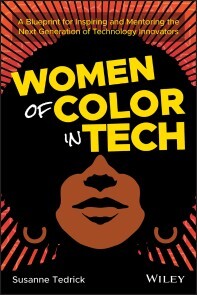
Women of Color in Tech
HIGHLY COMMENDED INTERNATIONAL BUSINESS BOOK FROM THE 2021 BUSINESS BOOK AWARDSNONFICTION BOOK AWARDS SILVER WINNER FROM THE NONFICTION AUTHORS ASSOCIATIONWINNER OF COMPTIA'S 2020 DIVERSITY TECHNOLOGY LEADER SPOTLIGHT AWARDWINNER OF A TECHNOLOGY RISING STAR AWARD FROM THE 2020 WOMEN OF COLOR IN STEM CONFERENCEBREAK THROUGH BARRIERS TO ACHIEVE A REWARDING FUTURE IN TECHWomen of Color in Tech: A Blueprint for Inspiring and Mentoring the Next Generation of Technology Innovators will help you overcome the obstacles that often prevent women of color from pursuing and staying in tech careers. Contrary to popular belief, tech careers are diverse and fun—and they go far beyond just coding. This book will show you that today's tech careers are incredibly dynamic, and you'll learn how your soft skills—communication, public speaking, networking—can help you succeed in tech.This book will guide you through the process of cultivating strong relationships and building a network that will get you were you want to be. You'll learn to identify a strong, knowledgeable support network that you can rely on for guidance or mentorship. This step is crucial in getting young women of color into tech careers and keeping them there.* Build your professional network to get the guidance you need* Find a mentor who understands your goals and your struggles* Overcome negativity and stay motivated through difficult times* Identify and develop the soft skills that you need to get ahead in techRead this book to help bring to life your vision of a future in tech. With practical advice and inspiring stories, you’ll develop the right tools and the right mindset. Whether you're just considering going into tech or you want to take your current career to the next level, Women of Color in Tech will show you how to uncover the resources you need to succeed.SUSANNE TEDRICK is a technical specialist for a leading Fortune 50 technology company. Fiercely committed to increasing participation of women and people of color in STEM educational and professional opportunities, she is a career mentor for the Pathways in Technology Early College High School (P-TECH) Initiative and a volunteer workshop technical assistant for Black Girls Code, a non-profit that empowers girls of color to develop in-demand IT skills and prepare to advance careers in tech. Foreword xxiiiIntroduction xxvCHAPTER 1 THE CURRENT STATE OF WOMEN OF COLOR IN TECH 1The Realities 1What’s Going On? 3Early Childhood 4Primary, Middle, and High School 5College 6The Workplace 8Why You Should Be Here 10My Journey to Tech 10It’s (Slowly) Getting Better 12Support 13Number of Job Opportunities 14Pay 15It’s Fun 15Opportunities to Help Others 16We Need You! 16Tech Career Misconceptions 17Tech Careers Require Constant, Hands-On Programming 18All Tech Careers Require a Four-Year Degree 18All Tech Careers Require Studying Computer Science, Computer Engineering, or Another Specific Field 18All Tech Careers Pay a Ton of Money 19Tech Careers Exist Only at Top Tech Companies 20Tech Careers Are Only for People with Certain Backgrounds, Grades, Etc. 21Creating a Blueprint 25Summary 26CHAPTER 2 THE DIFFERENT FLAVORS OF TECH CAREERS 27Business Analysis 29What They Do 29Top Skills Needed 31Educational Requirements 31For Additional Information 32Consulting 32What They Do 33Top Skills Needed 34Educational Requirements 35For Additional Information 35Computer Networking 36What They Do 37Top Skills 37Educational Requirements 38For Additional Information 38Data Science 39What They Do 40Top Skills 40Educational Requirements 41For Additional Information 41Information Security 42What They Do 42Top Skills 44Educational Requirements 44For Additional Information 45Product Management 45What They Do 46Top Skills 46Educational Requirements 47For Additional Information 47Project Management 47What They Do 48Top Skills 49Educational Requirements 49For Additional Information 50Software Development and Engineering 50What They Do 51Top Skills 52Educational Requirements 53For Additional Information 53Technical Sales 53What They Do 54Top Skills 54Educational Requirements 55For Additional Information 55Technical Support 55What They Do 56Top Skills 56Educational Requirements 57For Additional Information 57User Experience Design 57What They Do 58Top Skills 59Educational Requirements 60For Additional Information 60Web Design 60What They Do 61Top Skills 61Educational Requirements 61For Additional Information 62Where Do You Fit In? 62What Are Your Strengths and Your Weaknesses? 62What Do You Value? 63What Are Your Interests? 65Summary 65CHAPTER 3 INDUSTRY AND OTHER OPTIONS 67Advertising and Marketing 68Civics and Public Interest 69Construction and Manufacturing 71Education 73Finance 75Healthcare 77The US Government 79On Your Own: Entrepreneurism 82What It Takes to Be an Entrepreneur 83Getting Started 84Research Your Market 84Write a (Solid) Business Plan 85Estimate Initial Costs 86Determine Sources of Initial Funding 86Keep Going or Stop? 88Summary 89CHAPTER 4 EMERGING TECHNOLOGIES 91What is an Emerging Technology? 91The Future of Work 92Artificial Intelligence 93The Difference Between Artificial Intelligence, Machine Learning, and Deep Learning 94Why Does It Matter? 95Where Can I Learn More? 96Augmented, Virtual, and Mixed Reality 97Why Does It Matter? 98Where Can I Learn More? 99Blockchain 99Why Does It Matter? 101Where Can I Learn More? 102Cloud Computing 102Service Models 104Deployment Models 106Why Does It Matter? 106Where Can I Learn More? 107Internet of Things 108Why Does It Matter? 109Where Can I Learn More? 1103D Printing 110Why Does It Matter? 111Where Can I Learn More? 112Keeping Up with Technology Trends 112Information Sources 113Tools 114Summary 115CHAPTER 5 BUILDING YOUR NETWORK 117The Importance of Building Your Network 117Where to Network 119Mentoring 121Where to Find Mentors 121Blueprints for a Beneficial Mentoring Relationship 121You’ve Found a Mentor—Now What? 124Listen, This Isn’t Working Out 125You Need a Sponsor, Not a Mentor 126Overcoming Social Anxiety 127Strengthening Your Connections 129Summary 130CHAPTER 6 BUILDING YOUR SKILLS 131Skills Gap Analysis: Where Do You Need to Be? 131Exception 1 133Exception 2 133Formal Education (Is It Worth It?) 133Trade Schools 135Massive Online Open Courses 137Boot Camps 138Hackathons 139Conferences and Seminars 140Internships, Externships, and Co-ops 141Volunteering 143Certifications 144Do You Need Certification? 145How to Pay for Skills Training 146Loans 146Student Loans 146Personal Loans 147Credit and Charge Cards 147Use Credit Responsibly and Sparingly 148Grants and Scholarships 148Tuition Reimbursement 149Deferred Tuition Plans and Income Share Agreements 150Crowdfunding 151Summary 152CHAPTER 7 DEMONSTRATING YOUR SKILLS 153Building Your Resume(s) 153Chronological 154Functional 155Combination 156What Every Resume Must Have 157The Heading 158The Body 158What You Can Leave Out 162First Impressions Matter 165Additional Tips and Resources for Resume Writing 166LinkedIn 169The Difference between LinkedIn and Your Resume 170Creating a LinkedIn Profile 171Essential Elements of a LinkedIn Profile 171Additional LinkedIn Tips 174Writing 175Online Publishing Platforms 175Academic and Professional Journals 176Public Speaking 177Public Speaking Misconceptions 178Public Speaking Basics 178Where to Find Speaking Opportunities 180Other Creative Ways to Show What You Know 181GitHub 181Personal Websites 182Building Your Interviewing Skills 184Becoming a Better Interviewee 185Summary 187CHAPTER 8 JOB OFFERS AND NEGOTIATING COMPENSATION 189A Cautionary Tale (or, Don’t Do This!) 189Understanding Compensation and Salary 191Compensation 191Salary 192The Job Offer Process 193Evaluating a Job Offer 194Do You Like the Job and This Company? 195Are Your “Must Haves” Addressed? 196Is the Salary Offered Fair? 197Why Negotiate Your Job Offer? 199More of What You Want, Now 199Solidify Your Negotiation Skills 199Show Employers You Know Your Value 199There Are Few Downsides to Asking 199You May Not Get as Much Later 200You’ll Hurt Your Finances in the Long Run 201Preparing to Negotiate 201Negotiation Dos and Don’ts 202You Didn’t Negotiate! Is It Too Late? 205Additional Resources 205Final Thoughts—It’s Okay to Want (and Ask for) Money 206Summary 207CHAPTER 9 WHEN TIMES GET TOUGH 209The Need for Grid 209The Problem with “Twice as Good” 212Failure 213Impostor Syndrome 216Bias 218Tokenism and Being “The Only” 221Bullying 222Lack of Support and Help 223The Importance of Mental Health 226Allies and When They Fall Short 228The Need for Allyship 228Allies Are Human 229Summary 230CHAPTER 10 THE IMPORTANCE AND JOY OF GIVING BACK 233Why Give Back 233You Make a Difference 233Helping Others See and Know What’s Possible 234Great Rewards 235Building Relationships 237Coping with a Bad Day 237You’ve Been in Their Shoes 238How to Give Back 239Summary 241Index 243

MySQL 8 Query Performance Tuning
Identify, analyze, and improve poorly performing queries that damage user experience and lead to lost revenue for your business. This book will help you make query tuning an integral part of your daily routine through a multi-step process that includes monitoring of execution times, identifying candidate queries for optimization, analyzing their current performance, and improving them to deliver results faster and with less overhead. Author Jesper Krogh systematically discusses each of these steps along with the data sources and the tools used to perform them.MYSQL 8 QUERY PERFORMANCE TUNING aims to help you improve query performance using a wide range of strategies. You will know how to analyze queries using both the traditional EXPLAIN command as well as the new EXPLAIN ANALYZE tool. You also will see how to use the Visual Explain feature to provide a visually-oriented view of an execution plan. Coverage of indexes includes indexing strategies and index statistics, and you will learn how histograms can be used to provide input on skewed data distributions that the optimizer can use to improve query performance. You will learn about locks, and how to investigate locking issues. And you will come away with an understanding of how the MySQL optimizer works, including the new hash join algorithm, and how to change the optimizer’s behavior when needed to deliver faster execution times. You will gain the tools and skills needed to delight application users and to squeeze the most value from corporate computing resources.WHAT YOU WILL LEARN* Monitor query performance to identify poor performers* Choose queries to optimize that will provide the greatest gain* Analyze queries using tools such as EXPLAIN ANALYZE and Visual Explain* Improve slow queries through a wide range of strategies* Properly deploy indexes and histograms to aid in creating fast execution plans* Understand and analyze locks to resolve contention and increase throughputWHO THIS BOOK IS FORDatabase administrators and SQL developers who are familiar with MySQL and need to participate in query tuning. While some experience with MySQL is required, no prior knowledge of query performance tuning is needed.JESPER WISBORG KROGH has worked with MySQL databases since 2006 both as an SQL developer, a database administrator, and for more than eight years as part of the Oracle MySQL Support team. He has spoken at MySQL Connect and Oracle OpenWorld on several occasions, and addition to his books, he regularly blogs on MySQL topics and has authored around 800 documents in the Oracle Knowledge Base. He has contributed to the sys schema and four Oracle Certified Professional (OCP) exams for MySQL 5.6 to 8.0.He earned a PhD in computational chemistry before changing to work with MySQL and other software development in 2006. Jesper lives in Sydney, Australia, and enjoys spending time outdoors walking, traveling, and reading. His areas of expertise include MySQL Cluster, MySQL Enterprise Backup, performance tuning, and the Performance and sys schemas.PART I. GETTING STARTED1. MySQL Performance Tuning2. Query Tuning Methodology3. Benchmarking with Sysbench4. Test DataPART II. SOURCES OF INFORMATION5. The Performance Schema6. The sys Schema7. The Information Schema8. SHOW Statements9. The Slow Query LogPART III. TOOLS10. MySQL Enterprise Monitor11. MySQL Workbench12. MySQL ShellPART IV. SCHEMA CONSIDERATIONS AND THE QUERY OPTIMIZER13. Data Types14. Indexes15. Index Statistics16. Histograms17. The Query Optimizer18. Locking Theory and MonitoringPART V. QUERY ANALYSIS19. Finding Candidate Queries for Optimization20. Analyzing Queries21. Transactions22. Diagnosing Lock ContentionPART VI. IMPROVING THE QUERIES23. Configuration24. Change the Query Plan25. DDL and Bulk Data Load26. Replication27. Caching

PostgreSQL Configuration
Obtain all the skills you need to configure and manage a PostgreSQL database. In this book you will begin by installing and configuring PostgreSQL on a server by focusing on system-level parameter settings before installation. You will also look at key post-installation steps to avoid issues in the future. The basic configuration of PostgreSQL is tuned for compatibility rather than performance. Keeping this in mind, you will fine-tune your PostgreSQL parameters based on your environment and application behavior. You will then get tips to improve database monitoring and maintenance followed by database security for handling sensitive data in PostgreSQL.Every system containing valuable data needs to be backed-up regularly. PostgreSQL follows a simple back-up procedure and provides fundamental approaches to back up your data. You will go through these approaches and choose the right one based on your environment. Running your application with limited resources can be tricky. To achieve this you will implement a pooling mechanism for your PostgreSQL instances to connect to other databases. Finally, you will take a look at some basic errors faced while working with PostgreSQL and learn to resolve them in the quickest manner.WHAT YOU WILL LEARN* Configure PostgreSQL for performanceMonitor and maintain PostgreSQL instances * Implement a backup strategy for your dataResolve errors faced while using PostgreSQLWHO THIS BOOK IS FORReaders with basic knowledge of PostgreSQL who wish to implement key solutions based on their environment.Baji Shaik is a database administrator and developer. He was introduced to databases in 2011 and over the years, has worked with Oracle, PostgreSQL, Postgres Advance Server, RedShift, and Greenplum. He has a wide range of expertise and experience in SQL/NoSQL databases such as Cassandra and DynamoDB. He is a database migration expert and has developed many successful database solutions addressing challenging business requirements for moving databases from on-premises to AWS Cloud using multiple AWS services. Baji has organized a number of PostgreSQL meet-ups and maintains his own technical blog, where he likes to share his knowledge with the community. He co-authored Beginning PostgreSQL on the Cloud, released in March 2018.CHAPTER 01. INSTALLING POSTGRESQL THE RIGHT WAY! (10 PAGES)There are multiple ways you can install PostgreSQL on a server. This chapter will talk about the best ways to do so, focusing on system-level parameter settings before installation as a prerequisite and also post-installation steps to avoid issues in the future.CHAPTER 02. CONFIGURING YOUR DATABASE FOR PERFORMANCE (20 PAGES)PostgreSQL ships with a basic configuration tuned for wide compatibility rather than performance. Although the default settings of PostgreSQL are viable, it is always recommended to tune some basic parameters based on your environment and application behavior.CHAPTER 03. ENABLE LOGGING OF YOUR DATABASE (15 PAGES)Logging is key when you troubleshoot issues of PostgreSQL for security and performance to find out the trends. Default PostgreSQL configuration comes with very minimal logging and it is not always enough to troubleshoot the issues. So, this chapter will explain how to set logging and consequences of high logging and how to deal with it.CHAPTER 04. MONITORING POSTGRESQL INSTANCES (15 PAGES)Good monitoring is a symbol of a peaceful life for an administrator. If you set up monitoring of your databases to alert you whenever an issue comes up, then you need not worry about keeping an eye at your databases' health. This chapter will show you ways to monitor PostgreSQL instances.CHAPTER 05. EXECUTE MAINTENANCE (15 PAGES)Why do you need maintenance? What would you get from it? when do decide "it's time for maintenance"? How do you do it? Is there any way I can improve my maintenance time? This chapter will shed some light on all these questions.CHAPTER 06. SECURING DATABASES (15 PAGES)Security is one of the major concerns for storing sensitive data. It could be one of the reasons customers change their database engines. So, this chapter will talk about how best you can secure your data in PostgreSQL.CHAPTER 07. BACKUP AND RESTORE BEST PRACTICES (15 PAGES)For critical data systems, backup and restore is a very important consideration. However, it's very important to know what factors you should consider before you implement a backup strategy and how to implement one. This chapter talks about developing backup procedures for critical/non-critical data systems and quick restore procedures as well.CHAPTER 08. HIGH AVAILABILITY PROCEDURES (15 PAGES)You may come across some situations where you cannot make your primary working with-in your affordable time window. What do you do in that scenario? Implementing High Availability is always the best practice for such critical applications. This chapter talks about HA implementation and open source tools that can be used with PostgreSQL to implement the same.CHAPTER 09. IMPLEMENTING POOLER (15 PAGES)While running your application with limited resources, then it is highly recommended to use Pooling to connect the database. Performance of a database depends on the parallel connections that it can allow. Huge connections to a database in parallel degrades the database performance. This chapter will teach you to implement a pooler mechanism for your PostgreSQL instances.CHAPTER 10. BASIC ERRORS AND HANDY QUERIES (15 PAGES)Working with PostgreSQL, there are bound to be some errors you might face that takes a lot of time to resolve. And, some times you might need some queries which are based on catalogs to fetch the information. This chapter talks about some of these errors and their resolution so that it can save some time for administrators followed by handy queries to help them perform their daily duties.

Cognitive Virtual Assistants Using Google Dialogflow
Follow a step-by-step, hands-on approach to building production-ready enterprise cognitive virtual assistants using Google Dialogflow. This book provides an overview of the various cognitive technology choices available and takes a deep dive into cognitive virtual agents for handling complex real-life use cases in various industries such as travel and weather.You’ll delve deeper into the advanced features of cognitive virtual assistants implementing features such as input/output context, follow-up intents, actions and parameters, and handling complex multiple intents. You’ll learn how to integrate with third-party messaging platforms by integrating your cognitive bot with Facebook messenger. You’ll also integrate with third-party APIs to enrich your cognitive bots using webhooks.Cognitive Virtual Assistants Using Google Dialogflow takes the complexity out of the cognitive platform and provides rich guidance which you can use when developing your own cognitive bots. The book covers Google Dialogflow in-depth and starts with the basics, serving as a hands-on guide for developers who are starting out on their journey with Google Dialogflow. All the code presented in the book will be available in the form of scripts and configuration files, which allows you to try out the examples and extend them in interesting ways.WHAT YOU WILL LEARN* Develop cognitive bots with Google Dialogflow technology* Use advanced features to handle complex conversation scenarios* Enrich the bot’s conversations by understanding the sentiment of the user* See best practices for developing cognitive bots* Enhance a cognitive bot by integrating with third-party servicesWHO THIS BOOK IS FORAI and ML developers.Navin Sabharwal is an innovator, thought leader, author, and consultant in the areas of AI, machine learning, cloud computing, big data analytics, and software product development. He is responsible for IP development and service delivery in the areas of AI and machine learning, automation products, GCP, cloud computing, public cloud AWS, and Microsoft Azure. Navin has created niche award-winning products and solutions and has filed numerous patents in diverse fields such as IT services, assessment engines, ranking algorithms, capacity planning engines, and knowledge management.Amit Agrawal is a principal data scientist and researcher delivering solutions in the fields of AI and machine learning. He is responsible for designing end-to-end solutions and architecture for enterprise products.Chapter 1: Introduction to Cognitive Virtual BotChapter Goal: To introduce the basics of Cognitive Virtual Bot1.1 What is Cognitive ChatbotChapter 2: Introduction to Google DialogflowChapter Goal: To introduce the basics of Google Dialogflow2.2 What is Google Dialogflow2.3 Use cases for Google Dialogflow2.4 Bot Frameworks2.5 Building your First Bot using Google DialogflowChapter 3: Advanced Concepts of Google DialogflowChapter Goal: Details how to build a chatbot with Google Dialogflow3.1 Input context and output context3.2 Follow up intents3.3 Multiple responses3.4 Contextual entities3.5 Handling combination of intents and entities3.6 Event creation3.7 Enable fulfillment – webhook and inline editor3.8 Slots3.9 Handling intent conflicts3.10 Showcasing the solutions in various formats like Text, HTML and to integrations such as Google Assistant3.11 Multi-lingual chatbots3.12 Prebuilt agentsChapter 4: Use cases for Cognitive Chatbots using Google DialogflowChapter Goal: Provide different use cases and integrations for Cognitive Chatbots using Google Dialogflow.4.1 Chatbot personality via webhook4.2 Simple and complex dialogflow design for travel use case4.3 Integration with Google weather API.4.4 Additional integrations4.5 Intent Identifications – audio, speech responses and sentiment analysis4.6 Integrate Google Dialogflow with other services to enhance the conversational flow and searchChapter 5: Researches in field of Cognitive Virtual ChatbotsChapter Goal: Provides an introduction to the new researches in the areas of Cognitive Virtual Chatbots5.1 Cognitive Virtual Chatbots - research

Dein Smartphone mit Android 10
Dein Smartphone mit Android 10Sie haben sich gerade ein Android-Smartphone gekauft oder möchten Ihr Gerät auf die neue Android-Version updaten. Dann ist dies Ihr Buch dazu. Leicht verständlich führt Sie der Android-Experte Christian Immler durch die Vielfalt der Android-Funktionen: Surfen, Mailen, Telefonieren, Termine verwalten, Kontakte einrichten, Fotografieren – Sie haben Ihr Smartphone mühelos im Griff.Die Sicherheit ist ebenfalls Thema: Insidertipps verraten Ihnen, wie Sie ein gestohlenes oder verlorenes Android-Smartphone wiederfinden und Ihr Gerät vor ungewollten Zugriffen schützenAus dem Inhalt:- Android-Smartphone: Inbetriebnahme und Einrichtung- Zentrale Funktionen im täglichen Einsatz- Apps finden und installieren- Mit Android ins Internet- Kommunikation und Multimedia- Fotos aufnehmen und bearbeiten- Unterwegs mit dem Smartphone- Sicherheit, Schutz und InsidertippsDer AutorMit dem ersten Palm PDA entdeckte der erfahrene IT-Autor Christian Immler sein Spezialgebiet "mobile computing" und damit den Beginn der sogenannten Post-PC-Ära.In den letzten Jahren veröffentlichte er zahlreiche Titel zu Smartphones und Tablets der verschiedensten Betriebssystemplattformen.

Microsoft Exchange Server 2019 - Das Handbuch
Das Standardwerk für Administratoren zur neuen Version* Gewinnen Sie einen tiefgehenden Einblick in den Einsatz von Exchange Server 2019.* Voller praxisnaher Beispiele und unschlagbaren Expertentipps* Für Neueinsteiger, Umsteiger und Profis* Alle wichtigen Themen in einem Buch: Grundlagen, Einrichtung, Verwaltung, Compliance, Sicherheit, Hochverfügbarkeit, Migration und ÜberwachungMit dieser komplett aktualisierten Neuauflage seines bekannten Handbuchs führt Thomas Joos Neueinsteiger und Umsteiger durch alle Aspekte der Arbeit mit Microsoft Exchange Server 2019 – inkl. Office 365-Anbindung.Nach einem Überblick über die Neuerungen installieren und konfigurieren Sie den Server und lernen Konzepte und Werkzeuge zu seiner Administration kennen. Sie verstehen, wie Sie mit Connectoren Nachrichtenflüsse aufbauen, wie die Exchange-Datenbanken arbeiten, wie Sie verschiedenste Clients anbinden, Empfänger, Gruppen und Kontakte verwalten und Teamfähigkeit implementieren. Sie lernen, Compliance-konform zu archivieren sowie Maßnahmen zum Schutz vor Spam, Viren und Datenverlust zu treffen u. v. a. m.■ Überblick, Grundlagen und erste SchritteServerrollen, Edge-Transport, Web-App, ReFS und Database Divergence Detection, Virtualisierung, Exchange Admin Center, Exchange Management Shell, Arbeiten via PowerShell■ Einrichtung und VerwaltungE-Mail-Routing und Connectors, Exchange-Datenbankstruktur, PST-Dateien, Client-Anbindung (Desktop, mobil und Web), Verschlüsselung, Empfänger-, Gruppen- und Kontaktverwaltung, Teamwork mit öffentlichen Ordnern■ ComplianceRichtlinieneinhaltung und Archivierung, Data Loss Prevention (DLP), Verwaltung von Informationen (IRM)■ Sicherheit und HochverfügbarkeitEdge-Transport-Server, Viren- und Spamschutz, Verstehen und Verwalten von Berechtigungen, Datensicherung und Wiederherstellung, Hochverfügbarkeit, Exchange mit Office 365■ Migration, Sprachkommunikation und ÜberwachungMigration und Planung einer Exchange 2019-Infrastruktur, Exchange im Verbund, Überwachung und LeistungsoptimierungThomas Joos ist selbstständiger IT-Consultant und seit über 20 Jahren in der IT-Branche tätig. Er schreibt Fachbücher und berät Unternehmen in den Bereichen Active Directory, Exchange Server und IT-Sicherheit. Durch seinen praxisorientierten und verständlichen Schreibstil sind seine Fachbücher für viele IT-Spezialisten eine wichtige Informationsquelle geworden. Neben vielen erfolgreichen Büchern schreibt er für zahlreiche IT-Publikationen wie z. B. c't, Computerwoche und IT-Administrator sowie LinkedIn. Seinen Blog finden Sie auf http://thomasjoos.wordpress.com.

Essential ASP.NET Web Forms Development
Go from beginner to pro using one of the most effective and widely used technology stacks, Microsoft ASP.NET. Beginning with the basics, you will learn how to create interactive, professional-grade, database-driven web applications in no time, using ASP.NET, C#, SQL, Ajax, and JavaScript.ESSENTIAL ASP.NET WEB FORMS DEVELOPMENT is divided into six learning modules and will take you from soup to nuts with ASP.NET. Part I is an introduction to the major concepts, methodologies, and technologies associated with .NET web application development. You will learn about the client-server model, the .NET Framework, the ASP.NET and C# programming languages, and the Visual Studio integrated development environment. Part II teaches you how to develop a single-page .NET web application and add server and data validation controls, laying the foundation for learning languages in the context of an ASP.NET web application. Part III is all about C# operations and shows you how to perform assignment operations, conversion operations, control operations, string operations, arithmetic operations, date and time operations, array operations, collection operations, and file system operations, as well as create custom C# classes in the context of a .NET web application.In Part IV, you dive into a multiple-page .NET web application and learn how to maintain state between pages and create master pages, themes, and navigation controls. Part V shows you how to connect a .NET web application to a SQL Server database. You will learn to read a database schema, program in the SQL language, utilize data binding, perform single- and multiple-row database table maintenance, and write code behind database operations. And finally, Part VI teaches you how to enhance the interactivity of a .NET web application. You will learn how to generate email messages, make use of basic Ajax controls and the Ajax Control Toolkit, and program in the JavaScript language.WHAT YOU WILL LEARN* Delve into the basics of the client-server model, the .NET Framework, the ASP.NET and C# programming languages, and the Visual Studio integrated development environment* Create a page and add server and data validation controls* Develop basic programming skills in the C# language* Maintain state between pages and create master pages, themes, and navigation controls* Read a database schema, program in the SQL language, utilize data binding, perform single- and multiple-row database table maintenance, and write code behind database operations* Generate email messages, make use of basic Ajax controls and the Ajax Control Toolkit, and program in the JavaScript languageWHO THIS BOOK IS FORAnyone who wants to learn how to build ASP.NET web applications. Basic computer skills and the use of a database management system are recommended.Instructor materials and examples are available.ROBERT E. BEASLEY is Professor of Computing at Franklin College in Franklin, Indiana, USA where he teaches a variety of software engineering courses. He received both his BS and MS degrees from Illinois State University and his PhD from the University of Illinois at Urbana-Champaign. He has been developing software since 1981, has been an active software consultant in both the public and private sectors since 1987 and has been teaching software engineering since 1995. He has authored three books on software engineering, contributed chapters to two books, published over 50 articles in refereed journals and conference proceedings, and delivered numerous speeches and keynote addresses at international conferences.PART I – OVERVIEWChapter 1: Web Application DevelopmentPART II – SINGLE-PAGE WEB APPLICATION DEVELOPMENTChapter 2: Page DevelopmentChapter 3: Basic Server ControlsChapter 4: More Server ControlsChapter 5: Data Validation ControlsPART III – C# PROGRAMMINGChapter 6: Assignment OperationsChapter 7: Conversion OperationsChapter 8: Control OperationsChapter 9: String OperationsChapter 10: Arithmetic OperationsChapter 11: Date and Time OperationsChapter 12: Array OperationsChapter 13: Collection OperationsChapter 14: File System OperationsChapter 15: Custom C# ClassesPART IV – MULTIPLE-PAGE WEB APPLICATION DEVELOPMENTChapter 16: State MaintenanceChapter 17: Master PagesChapter 18: ThemesChapter 19: NavigationPART V – DATABASE CONNECTIVITYChapter 20: Database Design, SQL, and Data BindingChapter 21: Single-Row Database Table MaintenanceChapter 22: Multiple-Row Database Table MaintenanceChapter 23: Code-Behind Database OperationsPART VI – ADDITIONAL FUNCTIONALITYChapter 24: Email MessagingChapter 25: Ajax ProgrammingChapter 26: JavaScript Programming

Living with Computers
The computing technology on which we are now so dependent has risen to its position of ascendency so rapidly that few of us have had the opportunity to take a step back and wonder where we are headed. This book urges us to do so.Taking a big-picture perspective on digital technology, Living with Computers leads the reader on a whistle-stop tour of the history of information and information technology. This journey culminates in a deep exploration into the meaning and role of computers in our lives, and what this experience might possibly mean for the future of human society – and the very existence of humanity itself.In the face of the transformative power of computing, this book provokes us to ask big questions. If computers become integrated into our bodies, merging with the information processing of our very DNA, will computing help to shape the evolution of biological life? If artificial intelligence advances beyond the abilities of the human brain, will this overturn our anthropocentrism and lead to a new view of reality? Will we control the computers of the future, or will they control us?These questions can be discomforting, yet they cannot be ignored. This book argues that it is time to reshape our definition of our species in the context of our interaction with computing. For although such science-fiction scenarios are not likely to happen any time soon – and may, in fact, never happen – it is nevertheless vital to consider these issues now if we wish to have any influence over whatever is to come. So, humans, let’s confront our possible destiny!JAMES W. CORTADA is a Senior Research Fellow at the Charles Babbage Institute at the University of Minnesota. He holds a Ph.D. in modern history and worked at IBM in various positions for 38 years, including in IBM’s management research institute, The IBM Institute for Business Value (IBV). He is the author of over a dozen books on management, andnearly two dozen books on the history of information technology. These include the Springer title From Urban Legends to Political Fact-Checking: Online Scrutiny in America, 1990-2015 (with William Aspray).JAMES W. CORTADA is a Senior Research Fellow at the Charles Babbage Institute at the University of Minnesota. He holds a Ph.D. in modern history and worked at IBM in various sales, consulting, management, and executive positions for 38 years, including in IBM’s management research institute, The IBM Institute for Business Value (IBV). There, he led and participated in over three dozen global studies on the use of information and business managerial practices. He is also the author of over a dozen books on the management of business, information technologies, and management. He also authored nearly two dozen books on the history of information technology, its business practices and industry, and about knowledge management. These include the Springer title From Urban Legends to Political Fact-Checking: Online Scrutiny in America, 1990-2015 (with William Aspray). His articles on the history of information have appeared in many of the “journals of record” for each topic he has studied, including Information and Culture, Library and Information History, Business History Review, IEEE Annals of the History of Computing, Enterprise and Society, and Technology and Culture, among others. He serves on the editorial boards of Information and Culture, Library and Information History, and IEEE Annals of the History of Computing.Introduction: Why Listen to Me? Why You Should Take Seriously Your Own Knowledge of Computers.- What Is Computing?.- How Did We Get Here?.- Early Views of Computing.- How People View Computing Today.- How We Might See the End of the Information Age.- Life in a Post-Information Era.- Is It the End of Our World? How to Think About Implications and Challenges.- How to Live with Computers.

Real-Time IoT Imaging with Deep Neural Networks
This book shows you how to build real-time image processing systems all the way through to house automation. Find out how you can develop a system based on small 32-bit ARM processors that gives you complete control through voice commands.Real-time image processing systems are utilized in a wide variety of applications, such as in traffic monitoring systems, medical image processing, and biometric security systems. In Real-Time IoT Imaging with Deep Neural Networks, you will learn how to make use of the best DNN models to detect object in images using Java and a wrapper for OpenCV. Take a closer look at how Java scripting works on the Raspberry Pi while preparing your Visual Studio code for remote programming. You will also gain insights on image and video scripting. Author Nicolas Modrzyk shows you how to use the Rhasspy voice platform to add a powerful voice assistant and completely run and control your Raspberry Pi from your computer.To get your voice intents for house automation ready, you will explore how Java connects to the MQTT and handles parametrized Rhasspy voice commands. With your voice-controlled system ready for operation, you will be able to perform simple tasks such as detecting cats, people, and coffee pots in your selected environment. Privacy and freedom are essential, so priority is given to using open source software and an on-device voice environment where you have full control of your data and video streams. Your voice commands are your own—and just your own.With recent advancements in the Internet of Things and machine learning, cutting edge image processing systems provide complete process automation. This practical book teaches you to build such a system, giving you complete control with minimal effort.WHAT YOU WILL LEARN:* Show mastery by creating OpenCV filters* Execute a YOLO DNN model for image detection* Apply the best Java scripting on Raspberry Pi 4* Prepare your setup for real-time remote programming* Use the Rhasspy voice platform for handling voice commands and enhancing your house automation setupWHO THIS BOOK IS FOR:Engineers, and Hobbyists wanting to use their favorite JVM to run Object Detection and Networks on a Raspberry PiNicolas Modrzyk has over 15 years of IT experience in Asia, Europe, and the United States. He is currently the CTO of an international consulting company in Tokyo, Japan. An author of four other published books, he mostly focuses on the Clojure language and expressive code. When not bringing new ideas to customers, he spends time with his two fantastic daughters Mei and Manon, and playing live music internationally.CHAPTER 1: TRAINING A DNN NETWORKReaders will use Java for basic functions and develop a custom DNN model. They will learn to their models to detect images and videos* Using JavaCV to run some basic detection* using a YOLO DNN on a picture* using a YOLO DNN on a videoCHAPTER 2: DEVELOPING AND RUNNING ON THE RASPBERRY PIReaders will learn to script Java/Clojure on the Raspberry Pi. They will also learn how image and video scripting can be achieved.* Is the Raspberry Pi fast enough for the JVM?* Preparing visual studio code for remote programming* Clojure scripting on the Raspberry Pi* Image scripting on the Raspberry Pi* Video scripting on the Raspberry Pi CHAPTER 3: SNIPS VOICE PLATFORMReaders will be introduced to the Snips video platform for creating their personal voice assistant. They will also learn more about the Sam CLI for controlling the Raspberry Pi from their computers.* Why Snips?* Preparing the Snips Pi* Connecting using Sam, testing microphone and speaker

Starting an Online Business All-in-One For Dummies
THE TOOLS YOU NEED TO FOLLOW YOUR DREAM OF STARTING AND RUNNING AN ONLINE BUSINESS!With the right knowledge and resources, you can take action to start the online business you’ve been dreaming of. This comprehensive guide provides tips and tricks for turning your dream into a reality.The sixth edition of Starting an Online Business: All-in-One For Dummieswill teach you the basics and beyond. It will prepare you to set up your business website, offer your products in an online store, and keep accurate books. The authors help you navigate the primary legal, accounting, and security challenges related to running an online business.* Fund your business for success and future growth * Use SEO strategically to drive traffic to a well-designed site* Market your business effectively as an entrepreneur* Stand out, build customer relationships, and sell on social media* Keep up with ecommerce trends to stay a step aheadWith some guidance, you can find your market niche, create a business plan, and decide on a revenue model. Then, it’s time to set up shop! Starting an Online Business can help bring your dream of an online business to life and guide you on the road to success.SHANNON BELEW is a nationally recognized digital marketing strategist, speaker and consultant for B2B brands, and leads an engagement marketing team for a global infrastructure software company.JOEL ELAD is the head of Real Method Consulting, where he provides consulting and advice for e-commerce companies and entrepreneurs. Introduction 1BOOK 1: START-UP ESSENTIALS 5Chapter 1: Starting from Scratch 7Chapter 2: Turning Ideas into a Viable Internet Business 17Chapter 3: Getting Real: Creating a Usable Business Plan 31Chapter 4: Funding Your Online Business 39Chapter 5: Creating Policies to Protect Your Website and Customers 57Chapter 6: Setting Up Shop: What You Need for Online Efficiency 67BOOK 2: LEGAL AND ACCOUNTING 83Chapter 1: Minding the Law 85Chapter 2: Choosing the Right Foundation: From Partnerships to Corporations 95Chapter 3: The Trademark-and-Copyright Two-Step 105Chapter 4: Accounting for Taxes (and Then Some) 113BOOK 3: WEBSITE FUNCTIONALITY AND AESTHETICS 135Chapter 1: What’s in a (Domain) Name? 137Chapter 2: Designing for User Experience 151Chapter 3: Building a Site Without Spending a Fortune 169Chapter 4: Serving Up Your Site 189Chapter 5: Developing Content That Satisfies Visitors and Search Engines 199Chapter 6: Going Beyond Beta and Launching Your Site 213BOOK 4: ONLINE AND OPERATING 223Chapter 1: Determining Your Revenue Model 225Chapter 2: Making Money with Affiliate Programs 245Chapter 3: Turning Information into Profit: From E-Books to Webinars 257Chapter 4: Paying with the Right Payment Options 269Chapter 5: Putting the (Shopping) Cart before the Horse 281Chapter 6: Taking Inventory 295Chapter 7: Fulfilling Expectations and Orders 305BOOK 5: MANAGING SECURITY RISKS 325Chapter 1: Understanding Security and Your Risks 327Chapter 2: Developing a Plan: Security and Business Continuity 337Chapter 3: Spotting and Thwarting Hackers and Net-Thieves 351Chapter 4: Locking Down Your Site and Your Business 369BOOK 6: ONLINE MARKETING BASICS 377Chapter 1: Jump-Starting Traffic and Driving Sales 379Chapter 2: Your Own Public Relations for the Web 397Chapter 3: Web Marketing at Work 411Chapter 4: Converting Browsers to Buyers 435Chapter 5: Analyzing and Monitoring Your Customers 451Chapter 6: Mastering Search Engines, Optimization, and Rankings 473BOOK 7: RETAIL TO E-TAIL 493Chapter 1: Expanding Online to Keep and Grow Customers 495Chapter 2: Managing the Differences between In-Store and Online Commerce 513Chapter 3: Window Dressing for the Online Display 525Chapter 4: Revving Up with Mobile Marketing, Social Media, and More 535Chapter 5: Troubleshooting the Transition to Online Retail 553BOOK 8: E-COMMERCE FUNDAMENTALS 565Chapter 1: Starting Up with E-Commerce Functionality 567Chapter 2: Mastering the Amazon 577Chapter 3: Web-ify Your Store with Shopify 589Chapter 4: Making eBay THE Way 607Chapter 5: Posting Pictures for Profit 625BOOK 9: E-BUSINESS FOR NONPROFITS 645Chapter 1: Raining Donations: Fundamentals for Online Giving 647Chapter 2: Adding Online Moneymakers to an Existing Site 657Chapter 3: Growing an Active Donor Base: Your Virtual Community 673Chapter 4: Identifying Online Marketing Strategies That Fit the Cause 683Chapter 5: Legal Considerations for Nonprofit Organizations 693BOOK 10: E-COMMERCE TRENDS AND MARKET OPPORTUNITIES 701Chapter 1: Discovering Niche Markets 703Chapter 2: Building Business via Social Commerce 709Chapter 3: Evaluating the SaaS Model: Selling Software and Apps 729Chapter 4: Generating Opportunities through the Generations: Millennials, Boomers, and Beyond 741BOOK 11: E-COMMERCE ADVANCED 759Chapter 1: Mapping the Digital Buyer’s Journey 761Chapter 2: Getting Personal with Content Marketing 771Chapter 3: Listening to the Voice of the Customer 789Chapter 4: Overhauling an Aging Online Business 805Chapter 5: Expanding Products to Increase Stagnant Sales 819Chapter 6: Transitioning a Small Site into Big Business 829Index 845
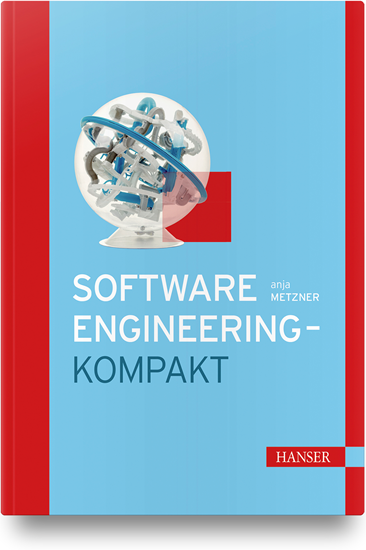
Software-Engineering - kompakt
Von zentraler Bedeutung für das Software-Engineering ist der Software-Lebenszyklus. Gemeint ist damit der gesamte Prozess, der zur Erstellung und Erhaltung eines Softwaresystems führt. Sowohl in traditionellen als auch in agilen Softwareerstellungsprozessen läuft dieser Lebenszyklus ab. Bewährt hat sich in der Praxis die Einteilung in sogenannte Phasen, denen die Gliederung folgt.Nach einer kurzen Einführung werden in Kapitel 2 vorab phasenübergreifende Verfahren wie divergierende Vorgehensmodelle und Projektmanagement besprochen. Kapitel 3 behandelt die Planungsphase; Kapitel 4 ist dem Requirements-Engineering gewidmet, bei dem die Software-Anforderungen kreativ konstruiert, analysiert und – traditionell oder agil – dokumentiert werden. In Kapitel 5 folgt die Besprechung der Verfahren für die Designphase der Software. Hier wird hinterfragt, wie gute Software-Architekturen Erfolg versprechend erdacht, mit der UML-Notation geeignet modelliert und in späteren Projekten wiederverwendet werden können. Kapitel 6 widmet sich der Test- und Abnahmephase und damit den wichtigen Qualitätssicherungsfragen. Abschließend wird in Kapitel 7 die Wartung – zur wirksamen Erhaltung von Softwaresystemen – erklärt.Anfänger erhalten eine schnelle Orientierung und kompaktes, fundiertes Grundwissen. Fortgeschrittene Leser finden hier ein aktuelles, gut strukturiertes Nachschlagewerk.

Introducing Play Framework
Enter the world of rapid web application development. This gentle introduction to Play covers all you need to know: it carefully introduces the background concepts before diving into examples, making learning Play 2 enjoyable (it includes the latest Play framework version 2.8).Introducing Play Framework is crisp, up-to-the-point, and full of valuable information. You will find chapters covering the basics of Play, the sbt build system, the Ebean ORM, web services using Play, production deployment, cache, and more with actual pragmatic code snippets for common tasks.After reading and using this book, you'll be able to build and deploy Java-based web applications with the Play framework.WHAT YOU WILL LEARN* Use the Play framework to do rapid Java-based web application development * Work with Play controllers and Play views* Create web services using JSON and XML* Persist data and access databases* Use Play modulesCarry out asynch programming * Cache, deploy, and work with code snippets in PlayWHO THIS BOOK IS FORThose with at least some prior experience with Java.Prem Kumar Karunakaran is an enterprise architect with around 14 years of industry experience. He holds a bachelors degree in electronics engineering and is also an Oracle Certified Java Enterprise Edition Master. He was involved in the architecture and design of many cutting-edge products used by clients around the globe. He has worked with organizations such as Infosys and IBS as an architect and has worked in many projects spanning airlines, logistics, travel and retail. He is passionate about Java and loves to learn new technologies and contributes his time to open source initiatives as well.Chapter 1. Getting started with Play 2Chapter 2: Build SystemChapter 3: Play Controllers and HTTP RoutingChapter 4: Play Views and Templating with ScalaChapter 5: Concurrency and Asynchronous programmingChapter 6: Web Services, Json and XMLChapter 7: Accessing DatabasesChapter 8: Complete ExampleChapter 9: Using Play modulesChapter 10 - Application Settings & Error handlingChapter 11: Working with CacheChapter 12: Production Deployment

Freistellen mit Adobe Photoshop CC und Photoshop Elements - Gewusst wie
Freistellen mit Photoshop und Photoshop Elements"Freistellen" Photoshop CCPhotoshop Elementswelche Technik für welche Motive besonders geeignet ist.konzentriert, kompakt und übersichtlich.Aus dem Inhalt:

Windows 10 kompakt für Dummies (2. Auflg.)
Andy Rathbone zeigt Ihnen schnell und dennoch verständlich alles Wichtige, was Sie über Windows 10 und dessen Updates wissen müssen: Erfahren Sie, was neu ist, wie Sie die neuen Funktionen nutzen und wie Sie altbekannte wiederfinden. Der Autor unterstützt Sie dabei, Ihre Daten von einem alten Computer auf einen neuen Windows-10-PC zu übertragen und Windows 10 an Ihre Bedürfnisse anzupassen. So kommen Sie mit Ihrem neuen Betriebssystem im Handumdrehen zurecht und fühlen sich schnell wieder zuhause. Andy Rathbone ist einer der Urväter der "... für Dummies"-Reihe und hat zahlreiche Bücher für PC-Anwender geschrieben. Er versteht es, komplexe Themen leicht verständlich zu erklären und seine Bücher mit der richtigen Dosis Humor zu würzen.ÜBER DEN AUTOR 11Danksagung 11EINFÜHRUNG 21Über dieses Buch 21Wie Sie mit diesem Buch arbeiten 21Törichte Annahmen über den Leser 22Wie dieses Buch aufgebaut ist 22Teil I: Windows-10-Grundlagen 22Teil II: Ab ins Internet 22Teil III: Die Windows-Werkstatt 23Teil IV: Musik, Fotos und Filme 23Teil V: Der Top-Ten-Teil 23Symbole, die in diesem Buch verwendet werden 23Wie es weitergeht 24TEIL I: WINDOWS-10-GRUNDLAGEN 25KAPITEL 1 WAS GENAU IST WINDOWS 10?27Was ist Windows und warum benutzen Sie es? 27Was ist neu in Windows 10? 29Was ist nun wirklich dran an Windows 10? 31Läuft Windows 10 auf Ihrem Computer? 33Die verschiedenen Varianten von Windows 10 34KAPITEL 2 WIR STARTEN MIT DEM STARTMENÜ37Willkommen in der Welt von Windows 38Mit einem Microsoft-Konto anmelden 40Das Startmenü erforschen 42Eine App über das Startmenü starten 45Geöffnete Apps anzeigen und schließen 46Eine App im Startmenü ausfindig machen 48Apps »für umsonst« 49Neue Apps aus dem Windows Store downloaden 50Kacheln im Startmenü hinzufügen oder daraus entfernen 53Das Startmenü passend machen 54Windows beenden 57Eine kurze Pause einlegen 58Den Computer ausschalten 59KAPITEL 3 DER TRADITIONELLE DESKTOP61Desktop und Startmenü entdecken 61Mit dem Desktop arbeiten 62Den Desktop aufpeppen 63Den Tabletmodus ein- und ausschalten 65Mit der Taskleiste arbeiten 66Die Sprunglisten der Taskleiste als Sprungbrett verwenden 68Auf die sensiblen Stellen der Taskleiste klicken 69Das Info-Center einblenden 72Mehrere Desktops einrichten 73KAPITEL 4 SPEICHERORTE – INTERN, EXTERN UND ÜBER DEN WOLKEN77Der digitale Aktenschrank 77Einen neuen Ordner anlegen und umbenennen 81Mehrere Dateien oder Ordner auswählen 81Dateien oder Ordner loswerden 82Details zu Dateien und Ordnern anzeigen 83Dateien auf oder von CDs oder DVDs kopieren 84Mit Speichersticks und Speicherkarten hantieren 85OneDrive – Ihre Ablage in den Wolken 86Sie bestimmen, welche OneDrive-Ordner mit Ihrem PC synchronisiert werden 87Die OneDrive-Einstellungen ändern 91Vom Webbrowser aus auf OneDrive-Dateien zugreifen 93TEIL II: AB INS INTERNET 95KAPITEL 5 UNTERWEGS IM WEB97Sinn und Zweck von ISPs 97Eine drahtlose Verbindung zum Internet herstellen 98Mit Microsoft Edge im Web surfen 100Eine Startseite für Microsoft Edge festlegen 103Lieblingssites erneut besuchen 104Im Internet fündig werden 105Mehr Infos mit Cortana aufspüren 106Informationen aus dem Internet speichern 107Text speichern 107Ein Bild speichern 108Ein Programm, einen Song oder einen anderen Dateityp herunterladen 109KAPITEL 6 SOZIALE KONTAKTE PFLEGEN111Ihre Konten in Windows einbinden 111Die Mail-App kennenlernen 113Die Ansichten, Menüs und Konten der Mail-App erkunden 114Eine E-Mail-Nachricht schreiben und senden 115Eine empfangene Mail lesen 117Kontakte in der Kontakte-App pflegen 120Kontakte hinzufügen 121Kontakte löschen oder bearbeiten 121Termine in der Kalender-App verwalten 123TEIL III: DIE WINDOWS-WERKSTATT 127KAPITEL 7 WINDOWS ANPASSEN129Die Einstellungen-App 129Die Systemsteuerung 130Beliebte Einstellungen ändern 132Das Design wechseln 132Die Bildschirmauflösung ändern 133Den Arbeitsbereich mit einem zweiten Bildschirm oder einem Projektor vergrößern 135Lautstärke und Sound anpassen 138Lautsprecher einrichten 138Ein Bluetooth-Gerät anschließen 140Einen Drucker hinzufügen 142Windows für Menschen mit Behinderungen einrichten 144KAPITEL 8 WINDOWS HEGEN UND PFLEGEN147Feineinstellungen mit den integrierten Wartungswerkzeugen von Windows vornehmen 147Daten mit dem Dateiversionsverlauf retten 148Platz auf der Festplatte freiräumen 152Alle Macht dem Netzschalter 154Mit Gerätetreibern hantieren 156Wiederherstellungspunkte setzen 157Viren mit Windows Defender meiden 158KAPITEL 9 EINEN RECHNER MIT ANDEREN TEILEN161Benutzerkonten verstehen lernen 161Ein Benutzerkonto ändern oder ein neues erstellen 163Ein Konto für ein Familienmitglied oder einen Freund hinzufügen 163Ein vorhandenes lokales Konto ändern 168Mit dem Profilbild Profil zeigen 169Schnell zwischen verschiedenen Benutzern wechseln 169Kennwörter und sonstige Sicherheitsvorkehrungen 170KAPITEL 10 WENN GAR NICHTS MEHR GEHT … 173Die magischen Wartungsfunktionen von Windows 174Den PC wiederherstellen 174Daten aus dem Dateiversionsverlauf wiederherstellen 178Kennwort vergessen 183Rechner eingefroren 185Von einem alten Rechner auf einen Windows-10-Computer umziehen 186TEIL IV: MUSIK, FOTOS UND FILME 191KAPITEL 11 MUSIK ABSPIELEN UND KOPIEREN193Musik mit der Groove-Musik-App abspielen 193Musik mit Windows Media Player abspielen 195Musikdateien abspielen 197Die aktuelle Wiedergabe steuern 198Videos und TV-Aufzeichnungen wiedergeben 199KAPITEL 12 DIGITALE FOTOSCHÄTZE201Ihr Computer – der digitale Schuhkarton 201Fotos mit der Kamera-App aufnehmen 205TEIL V: DER TOP-TEN-TEIL 207KAPITEL 13 DIE TOP TEN DER NERVIGSTEN WINDOWS-FUNKTIONEN (UND WAS SIE DAGEGEN TUN KÖNNEN)209Weg mit den Apps 209Apps aus dem Startmenü und vom Rechner entfernen 210Desktopprogramme statt Apps für das Öffnen von Dateien bestimmen 211Ich will kein Microsoft-Konto 212Weg mit der Kennworteingabe beim Sperrbildschirm 213Die Taskleiste soll nicht verschwinden 214Fenster nebeneinander ausrichten 214Die lästigen Berechtigungsanfragen 215Welche Windows-Version habe ich denn? 216Die Taste »Druck« will nicht 216Den Bildschirm drehen 217Stichwortverzeichnis 219
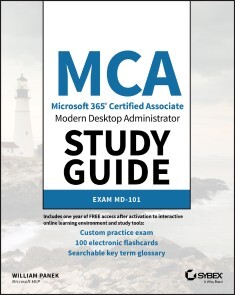
MCA Modern Desktop Administrator Study Guide
THE MUST-HAVE PREPARATION GUIDE FOR MCA MODERN DESKTOP CERTIFICATION—COVERS THE NEW EXAM MD-101: MANAGING MODERN DESKTOPS!Microsoft’s Modern Desktop integrates Windows 10, Office 365, and advanced security capabilities. Microsoft 365 Certified Associate (MCA) Modern Desktop certification candidates need to be familiar with Microsoft 365 workloads and demonstrate proficiency in deploying, configuring, and maintaining Windows 10 and non-Windows devices and technologies. The new Exam MD-101: Managing Modern Desktops measures candidate’s ability to deploy and update operating systems, manage policies and profiles, manage and protect devices, and manage apps and data. Candidates are required to know how to perform a range of tasks to pass the exam and earn certification.The MCA Modern Desktop Administrator Study Guide: Exam MD-101 provides in-depth examination of the complexities of Microsoft 365. Focusing on the job role of IT administrators, this clear, authoritative guide covers 100% of the new exam objectives. Real-world examples, detailed explanations, practical exercises, and challenging review questions help readers fully prepare for the exam. Sybex's comprehensive online learning environment—in which candidates can access an assessment test, electronic flash cards, a searchable glossary, and bonus practice exams—is included to provide comprehensive exam preparation. Topics include:* Planning and implementing Windows 10 using dynamic deployment and Windows Autopilot* Upgrading devices to Windows 10 and managing updates and device authentication* Managing access polices, compliance policies, and device and user profiles* Implementing and managing Windows Defender and Intune device enrollment* Deploying and updating applications and implementing Mobile Application Management (MAM)The move to Windows 10 has greatly increased the demand for qualified and certified desktop administrators in corporate and enterprise settings. MCA Modern Desktop Administrator Study Guide: Exam MD-101: Managing Modern Desktops is an invaluable resource for IT professionals seeking MCA certification.ABOUT THE AUTHORWILLIAM PANEK, MCP, MCSE, MCSA, MCTS, MCITP, CCNA, is a Five-Time Microsoft MVP Winner. He has taught at Boston University, Clark University, and the University of Maryland, and presently conducts live online classes for StormWind Studios (www.stormwind.com). Will has been a consultant and trainer for the United States Secret Service, Cisco, the United States Air Force, and the United States Army. He also creates training videos to help students prepare for various Microsoft exams. Introduction xixAssessment Test xxxCHAPTER 1 INSTALLING AND UPDATING WINDOWS 10 1Understanding the Basics 2Windows 10 Features 7Understanding the Windows 10 Architecture 8Preparing to Install Windows 10 9Windows 10 Pro 10Windows 10 Enterprise 11Windows 10 Enterprise E3 and E5 12New Install or Upgrade? 12Disk Partitioning 16Language and Locale 17Installing Windows 10 17Performing a Clean Install of Windows 10 18Performing an Upgrade to Windows 10 26Troubleshooting Installation Problems 31Supporting Multiple-Boot Options 33Using Windows Activation 34Understanding Automated Deployment Options 35An Overview of the Microsoft Deployment Toolkit 36An Overview of Unattended Installation 41An Overview of Windows Deployment Services 43An Overview of the System Preparation Tool and Disk Imaging 46Overview of the Windows Assessment and Deployment Kit 50Summary of Windows 10 Deployment Options 51Deploying Unattended Installations 52Using the System Preparation Tool to Prepare an Installation for Imaging 53Using the Deployment Image Servicing and Management Tool 55Using Windows System Image Manager to Create Answer Files 57Deploying with Windows Autopilot 58Windows Autopilot Requirements 59Windows Autopilot Profiles 61Understanding Windows Updates 62Windows Update Process 64Using Windows Update for Business 64Summary 68Exam Essentials 68Review Questions 70CHAPTER 2 MANAGING AUTHENTICATION 73Active Directory vs. Azure Active Directory 74Understanding Active Directory 74Understanding Azure Active Directory 84Managing Hybrid Networks 110Password Hash Synchronization with Azure AD 111Azure Active Directory Pass-through Authentication 111Federation with Azure AD 112Common Identity Scenarios 115Azure AD Connect 116Implementing Active Directory Federation Services 123What is a Claim? 123AD FS in Windows Server 2016 127Configuring a Web Application Proxy 129Active Directory Federation Services Installation 131Using PowerShell Commands 140Summary 145Exam Essentials 146Review Questions 148CHAPTER 3 MANAGING DEVICES 151Understanding File Systems 152File System Selection 153File System Conversion 155Configuring NTFS 157Configuring Disk Storage 159Basic Storage 159Dynamic Storage 160GUID Partition Table 162Cloud-Based Storage 163Using the Disk Management Utility 167Using the Microsoft Management Console 167Understanding the Disk Management Utility 171Managing Storage 185Managing Dynamic Storage 185Windows 10 Devices in Azure 187Compliance Policies 188Device Configuration Profiles 193Summary 196Exam Essentials 197Review Questions 198CHAPTER 4 PLANNING AND MANAGING MICROSOFT INTUNE 201Managing Devices with Microsoft Intune 202Understanding Microsoft Intune Benefits 204Configuring Intune Subscriptions 205Provisioning User Accounts 207Supporting Applications 222Deploying Applications Using Intune 222Supporting Broadband Connectivity 226Understanding Data Synchronization 227Using Mobile Application Management 229Windows Information Protection 231Understanding Updates 238Deploying Software Updates Using Intune 238Using Intune Compliance Reports 243Using Intune Reports 243PowerShell Commands 244Summary 245Exam Essentials 245Review Questions 247CHAPTER 5 MANAGING SECURITY 251Managing Windows Security 252Windows Defender Security Center 253Configuring Windows Firewall 256Understanding the Windows Defender Firewall Basics 256Windows Firewall with Advanced Security 257Managing Security 263Implementing Azure Windows Defender Advanced Threat Protection 263Understanding Windows Defender Application Guard 265Understanding Windows Defender Credential Guard 271Implementing and Managing WindowsDefender Exploit Guard 273Using Windows Defender Application Control 278Summary 278Exam Essentials 279Review Questions 280CHAPTER 6 CONFIGURING AUDITING 283Monitoring Windows 285Introducing Performance Monitor 285Using Other Performance-Monitoring Tools 294Monitor Cloud-Based Tools 302Monitor Azure Device Security 311Summary 314Exam Essentials 315Review Questions 316APPENDIX ANSWERS TO REVIEW QUESTIONS 321Chapter 1: Installing and Updating Windows 10 322Chapter 2: Managing Authentication 322Chapter 3: Managing Devices 323Chapter 4: Planning and Managing Microsoft Intune 324Chapter 5: Managing Security 325Chapter 6: Configuring Auditing 326Index 327

Driving Networked Service Productivity
Christofer F. Daiberl explores how to enhance the productivity of services delivered by a network of co-providers. Harnessing empirical insights and synthesizing contributions from service design, information systems, and engineering, the author develops a systematic productivity improvement technique. The technique supports practitioners to iteratively discover and seize opportunities to enhance productivity for their own organization, customers, and relevant co-providers. Reflecting on the overall results, five general design principles are proposed that support the development of new artifacts fostering truly productive services in a networked world. Christofer F. Daiberl received his PhD from the Friedrich-Alexander-Universität Erlangen-Nürnberg, where he worked as a Research Associate for Prof. Dr. Kathrin M. Möslein at the Chair of Information Systems – Innovation & Value Creation. The concepts of networked service delivery and networked service productivity.- Approaches for improving productivity from a network perspective.- The networked service productivity improvement technique.- Design principles for improving networked service productivity.

Pro Perl Programming
Master intermediate to advanced techniques of the Perl programming language starting with a focus on regular expressions and some of their advanced features. This book then covers other pro-level features, including formatted output, file handling, and more.Additionally, you'll learn and explore the most useful built-in variables, pragmas, and modules available in the Perl language. Furthermore, you'll work with geometry managers and get a thorough treatment of graphical user interface development using Perl/TK and widgets. Lastly, you’ll cover debugging techniques.Pro Perl Programming is a professional-level reference guide on Perl and includes important aspects of it that you need as a professional programmer.WHAT YOU WILL LEARN* Program regular expressions including atoms, smartmatch operators, and moreUse advanced features such as HiRes Time, slurp() functions, Critic, Tidy and many more functions * Handle advanced formatted output such as printf and sprintfExplore useful built-in variables, including status variables, separator variables, and the signal handle variable * Explore and use Perl's built-in modules, including the Pragma modulesWork with Perl/TK and its widgets-like geometry managers, frames, labels, buttons, check buttons, radio buttons, scrollbars, scales, entries, and menusWHO THIS BOOK IS FORThose with at least some prior experience with Perl programming or have read Beginning Perl Programming by William Rothwell.At the impressionable age of 14, WILLIAM "BO" ROTHWELL crossed paths with a TRS-80 Micro Computer System (affectionately known as a “Trash 80”). Soon after the adults responsible for Bo made the mistake of leaving him alone with the TSR-80. He immediately dismantled it and held his first computer class, showing his friends what made this “computer thing” work. Since this experience, Bo’s passion for understanding how computers work and sharing this knowledge with others has resulting in a rewarding career in IT training. His experience includes Linux, Unix, DevOps tools, and programming languages such as Perl, Python, Tcl, and BASH. Chapter One Intermediate Regular Expressions1.1 Review: Basic Regular Expressions1.2 Modifiers1.3 Getting the Nth occurrence of a match1.4 Greedy vs. Non-Greedy matches1.5 Regular Expression variables1.6 Special characters in regular expressions1.7 Assertions1.8 Reading from filehandles using split 1.9 Multiple line matching1.10 Commenting Regular Expressions1.11 Alternative Delimiters1.12 Additional resources1.13 Lab ExercisesChapter Two Advanced Regular Expressions2.1 Make use of the Smartmatch Operator2.2 Understand Regular Expression precedence2.3 Understand what is *NOT* a Regular Expression atom2.4 Using Regular Expressions in List Context2.5 Match whitespace properly2.6 Use \G2.7 Use the \A, \Z and \z assertions2.8 Avoid capturing2.9 Avoid the variables $`, $& and $'2.10 Compile your Regular Expressions before using them2.11 Benchmark your patterns2.12 Use Regexp::Common2.13 Flags you should consider always using2.14 Avoid escapes2.15 Use the re Pragma2.16 Understand backtrackingChapter Three Advanced Features3.1 Use my iterator variables with for loops3.2 Utilize loop labels3.3 Avoid using for file matching3.4 Time::HiRes3.5 Contextual::Return3.6 Indirect Filehandles3.7 The three argument technique to the open statement3.8 Always check the return values of open, close and when printing to a file3.9 Close filehandles as soon as possible3.10 Avoid slurping3.11 Creatively use the do statement3.12 Use the slurp() function3.13 Test for interactivity3.14 Use IO::Prompt3.15 Understand where to find documentation3.16 Understand context3.17 Understand the => operator3.18 Understand subroutine calls3.19 Understand and/or versus &/||3.20 Use Perl::Tidy3.21 Use Perl::Critic3.22 Understand Getopt::Std3.23 Understand Getopt::Long3.24 Alternative commenting technique3.25 Passing notes within a Perl program 3.26 Use Smart::CommentsChapter Four Advanced Formatted Output4.1 Review: The format statement4.2 Advanced format statement features4.3 printf and sprintf4.4 Using select4.5 The operator4.6 Additional Resources4.7 Lab ExercisesChapter Five Exploring Useful Built-in Variables5.1 Perl's built-in variables5.2 Variables reference chart5.3 Use English5.4. Status variables5.5 Separator variables5.6 The signal handle variable5.7 Version of Perl5.8 Program start time5.9 Additional Resources5.10 Lab ExercisesChapter Six Advanced File Handling6.1 Review: Basic File Handling6.2 Displaying the file position6.3 Moving the file position6.4 Opening files for reading and writing6.5 Making "files" within your script6.6 Locking files6.7 Flushing output buffers6.8 Additional Resources6.9 Lab ExercisesChapter Seven Pragmas 7.1 Perl pragmas7.2 Pragma chart7.3 Review: use strict7.4 Predeclaring subroutines7.5 Predeclaring global variables7.6 Additional Resources7.7 Lab ExercisesChapter Eight Exploring Useful Built-in Modules8.1 Built-in modules8.2 Module table8.3 Cwd8.4 Env8.5 File8.6 Math8.7 Sys8.8 Text8.9 Fatal8.10 Benchmark8.11 Getopt::Std8.12 Getopt::Long8.13 Additional Resources8.14 Lab ExercisesChapter Nine Debugging Tools9.1 Review: The -w switch9.2 Review: The Perl debugger9.3 Debugger commands9.4 Diagnostics9.5 Carp9.6 Data::Dumper9.7 Additional Resources9.8 Lab ExercisesChapter Ten Perl/TK Basics10.1 Working with Windows10.2 Types of Widgets10.3 Geometry Managers10.4 Creating Widgets10.5 The OO nature of the Tk module10.6 Additional resources10.7 Lab ExercisesChapter Eleven Perl TK Widgets11.1 Frames11.2 Labels11.3 Buttons11.4 Checkbuttons11.5 Radiobuttons11.6 Listboxes11.7 Scrollbars11.8 Scales11.9 Entries11.10 Creating menus11.11 Additional Resources11.12 Lab ExercisesModule Twelve Geometry Managers12.1 pack options12.2 The -after and -before option12.3 The -anchor and -side options12.4 The -fill option12.5 Padding with pack12.6 Managing widgets with pack12.7 Binding12.8 The focus command 12.9 Additional Resources12.10 Lab Exercises

Getting Started with Containers in Azure
Deploy and execute Microsoft Azure container and containerized applications on Azure. This second book in author Shimon Ifrah’s series on containers will help you manage and scale containers along with their applications, tools and services.You’ll start by setting up the Azure environment and quickly work through techniques and methods of managing container images with Azure Container Registry (ACR). As you move forward, deploying containerized applications with Azure container instances and Azure Kubernetes Service is discussed in detail, and in the process, you’ll see how to install Docker container host on Azure Virtual Machine.This is followed by a discussion on security in Azure containers where you’ll learn how to monitor containers and containerized applications backed by illustrative examples. Next, you will review how to scale containers along with methods for backing up and restoring containers and containerized applications on Azure. Towards the end, the book demonstrates troubleshooting applications and Docker container host issues in Azure.Getting Started with Containers in Azure will equip you to deploy, manage and secure containerized applications using Azure tools and services for containers.WHAT YOU’LL LEARN* Explore containers on Microsoft Azure.* Store Docker images on Azure Container Registry* Automate deployment of container services using Azure CLI and Azure Cloud Shell * Use Azure Container Instances (ACI) for smaller deployment WHO THIS BOOK IS FORAzure administrators, developers, and architects who want to get started and learn more about containers and containerized applications on Microsoft Azure.Shimon Ifrah is an IT professional with over years of experience in the design, management, and deployment of information technology systems and networks. In the last few years Shimon has been specializing in cloud computing and containerized applications on Amazon AWS and other public cloud providers. Shimon also holds more than 20 vendor certificates from Microsoft, AWS, VMware, and Cisco. During his career in the IT industry he has worked for some of the largest managed services and technology companies in the world helping them administer systems for the largest enterprises. He is based out of Melbourne, Australia.CHAPTER 1: GET STARTED WITH MICROSOFT AZURECHAPTER GOAL: Setup your Microsoft Azure environmentNo of pages: 40SUB -TOPICS1. Setup you Azure tenant2. Setup Azure Cloud Shell3. Secure your account4. Azure Container Services overviewCHAPTER 2: STORE AND MANAGE DOCKER CONTAINER IMAGES ON AZURE CONTAINER REGISTRY (ACR)CHAPTER GOAL: Learn how to manage Container images with Azure ACRNO OF PAGES: 40SUB - TOPICS1. Setup Microsoft Azure Container Registry (ACR)2. Push Docker images to Azure Container Registry (ACR)3. Pull images from Azure Container Registry (ACR)4. Manage and secure Azure Container Registry (ACR)CHAPTER 3: DEPLOY CONTAINERIZED APPLICATIONS WITH AZURE CONTAINER INSTANCES (ACI)CHAPTER GOAL: Learn how to deploy Containers and Containerized Applications with Azure ACINO OF PAGES: 40SUB - TOPICS:1. Set up Azure Container Instances (ACI)2. Deploy Linux and Windows Containers to ACI3. Scale containerized applications on ACI4. Monitor and Manage containerized applications on ACICHAPTER 4: DEPLOY CONTAINERIZED APPLICATIONS WITH AZURE KUBERNETES SERVICE (AKS)CHAPTER GOAL: Learn how to deploy Containers and Containerized Applications with Azure AKSNO OF PAGES:SUB - TOPICS:1. Getting started with AKS2. Setup and configure AKS Networking3. Deploy Kubernetes Dashboard (Web UI) on AKS4. Manage and Secure AKSCHAPTER 5: DEPLOY DOCKER CONTAINER HOST ON AZURE VIRTUAL MACHINEChapter Goal: Learn how to deploy Containers and Containerized Applications on Azure VMNO OF PAGES: 40SUB - TOPICS:1. Install Docker Container host on Ubuntu Linux VM2. Install Docker Container Host on Windows Server 2019 VM3. Deploy and manage containers on Azure VM (Linux and Windows)CHAPTER 6: SECURE YOUR MICROSOFT AZURE CONTAINERSCHAPTER GOAL: Learn how to secure and protect Containers and Containerized Applications on AzureNO OF PAGES: 40SUB - TOPICS:1. Protect and manage accounts on Microsoft Azure using Azure AD2. Use Azure Security Center and Secure Score to protect you tenant3. Secure your Containers with Azure Firewall and Network Security Groups (NSG)CHAPTER 7: SCALE CONTAINERS AND CONTAINERIZED APPLICATIONS ON AZURECHAPTER GOAL:Learn how to scale Containers and Containerized Applications on AzureNO OF PAGES: 40SUB - TOPICS:1. Scale Azure Kubernetes Service (AKS)2. Scale Azure Container Instances (ACI)3. Scale Azure Container Registry (ACR)4. Scale Azure Web Apps for Containers5. Scale Azure Docker Container host VMCHAPTER 8: MONITOR CONTAINERS AND CONTAINERIZED APPLICATIONS ON AZURECHAPTER GOAL: Learn how to Monitor Containers and Containerized Applications on AzureNO OF PAGES: 40SUB - TOPICS:1. Monitor Azure Kubernetes Service (AKS)2. Monitor Azure Container Instances (ACI)3. Monitor Azure Container Registry (ACR)4. Monitor Azure Web Apps for Containers5. Monitor Azure Docker Container host VMCHAPTER 9: BACKUP AND RESTORE CONTAINERS AND CONTAINERIZED APPLICATIONS ON AZURECHAPTER GOAL: Backup and Restore Containers and Containerized Applications on AzureNO OF PAGES: 40SUB - TOPICS:1. Backup Azure Kubernetes Service (AKS)2. Backup Azure Container Instances (ACI)3. Backup Azure Container Registry (ACR)4. Backup Azure Web Apps for Containers5. Backup Azure Docker Container host VMCHAPTER 10: TROUBLESHOOTING CONTAINERS AND CONTAINERIZED APPLICATIONS ON AZUREChapter Goal: Learn how to Troubleshoot Containers and Containerized Applications issues on AzureNO OF PAGES: 40SUB - TOPICS:1. Troubleshoot Azure Kubernetes Service (AKS)2. Troubleshoot Azure Container Instances (ACI)3. Troubleshoot Azure Container Registry (ACR)4. Troubleshoot Azure Web Apps for Containers5. Troubleshoot Azure Docker Container host VM

Practical Highcharts with Angular
Learn to create stunning animated and interactive charts using Highcharts and Angular. Use and build on your existing knowledge of HTML, CSS, and JavaScript to develop impressive dashboards that will work in all modern browsers. You will learn how to use Highcharts, call backend services for data, and easily construct real-time data dashboards. You'll also learn how you can club your code with jQuery and Angular. This book provides the best solutions for real-time challenges and covers a wide range of charts including line, area, maps, plot, different types of pie chart, Gauge, heat map, Histogram, stacked bar, scatter plot and 3D charts. After reading this book, you'll be able to export your charts in different formats for project-based learning. Highcharts is one the most useful products worldwide for develop charting on the web, and Angular is well known for speed. Using Highcharts with Angular, developers can build fast, interactive dashboards. Get up to speed using this book today. You will: * Learn how to develop interactive, animated dashboards * Understand how you can implement Highcharts using Angular * Develop a real-time application with the use of WebAPI, Angular, and Highcharts * Create interactive styling themes and colors for a dashboard Learn to create stunning animated and interactive charts using Highcharts and Angular. Use and build on your existing knowledge of HTML, CSS, and JavaScript to develop impressive dashboards that will work in all modern browsers. You will learn how to use Highcharts, call backend services for data, and easily construct real-time data dashboards. You'll also learn how you can club your code with jQuery and Angular. This book provides the best solutions for real-time challenges and covers a wide range of charts including line, area, maps, plot, different types of pie chart, Gauge, heat map, Histogram, stacked bar, scatter plot and 3d charts. After reading this book, you'll be able to export your charts in different formats for project-based learning. Highcharts is one the most useful products worldwide for develop charting on the web, and Angular is well known for speed. Using Highcharts with Angular, developers can build fast, interactive dashboards. Get up to speed using this book today. What You’ll Learn * How to develop interactive, animated dashboards How you can implement Highcharts using Angular * How to develop a real-time application with the use of WebAPI, Angular, and Highcharts How to create interactive styling themes and colors for a dashboard Who This Book Is For This book is aimed at developers, dev leads, software architects, students or enthusiasts who are already familiar with HTML, CSS, and JavaScript. Sourabh Mishra is an Entrepreneur, Developer, Speaker, Author, Corporate Trainer, and Animator. He is a Microsoft guy; he is very passionate about Microsoft technologies and a true .Net Warrior. Sourabh started his career, when he was just 15 years old. He’s loved computers from childhood. His programming experience includes C/C++, Asp.Net, C#, Vb.net, WCF, Sqlserver, Entity Framework, MVC, Web API, Azure, Jquery, Highcharts, and Angular. Sourabh has been awarded a Microsoft Most Valuable Professional (MVP) status. He has zeal to learn new technologies, sharing his knowledge on several online community forums. He is a founder of “IECE Digital” and “Sourabh Mishra Notes”, an online knowledge sharing platform where one can learn new technologies very easily and comfortably. 1. Getting Started with Highcharts.- 2. Concept of Highcharts.- 3. Integrating Highcharts with Angular.- 4. Different Charting Types.- 6. Working with Real-time Data.- 6. Themes and Additional Features in Highcharts.- 7. Building a Real-time Dashboard.

Neue Methoden zur Untersuchung der Sichtfreihaltung an Kraftfahrzeugen
Thomas Landwehr beschreibt die Weiterentwicklung des Prozesses zur Quantifizierung und Untersuchung der Sichtfreihaltung von Fahrzeugscheiben im Windkanal und zeigt Verschmutzungsmechanismen auf. Hierzu untersucht er zunächst, wie Wasseransammlungen die Sicht des Fahrers beeinträchtigen können. Die Erkenntnisse aus diesen Untersuchungen dienen dem Autor als Grundlage für eine neue Methode zur Quantifizierung der Fahrzeugverschmutzung. Mit Hilfe dieser Methode stellt er einzelne Verschmutzungsmechanismen nach, erläutert sie und veranschaulicht, wo die Verschmutzung ihren Ursprung hat. Des Weiteren zeigt er, dass die Anströmgeschwindigkeit und das Benetzungsverhalten einen entscheidenden Einfluss auf die Sichtbeeinträchtigung haben. Der Autor: Thomas Landwehr wurde am Institut für Verbrennungsmotoren und Kraftfahrwesen am Lehrstuhl für Kraftfahrwesen im Bereich Fahrzeugaerodynamik und Thermomanagement promoviert. Er arbeitet als Entwicklungsingenieur bei einem namhaften deutschen Automobilhersteller im Bereich Aerodynamik. Sichtbeeinträchtigung durch Wasseransammlungen.- Methoden zur Quantifizierung und Untersuchung der Sichtfreihaltung von Fahrzeugseitenscheiben.- Experimentelle Untersuchungen zu Verschmutzungsmechanismen.