

Computer und IT
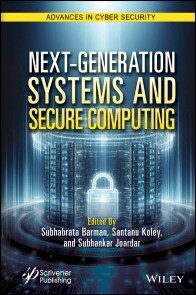
Next-Generation Systems and Secure Computing
NEXT-GENERATION SYSTEMS AND SECURE COMPUTING IS ESSENTIAL FOR ANYONE LOOKING TO STAY AHEAD IN THE RAPIDLY EVOLVING LANDSCAPE OF TECHNOLOGY. IT OFFERS CRUCIAL INSIGHTS INTO ADVANCED COMPUTING MODELS AND THEIR SECURITY IMPLICATIONS, EQUIPPING READERS WITH THE KNOWLEDGE NEEDED TO NAVIGATE THE COMPLEX CHALLENGES OF TODAY’S DIGITAL WORLD.The development of technology in recent years has produced a number of scientific advancements in sectors like computer science. The advent of new computing models has been one particular development within this sector. New paradigms are always being invented, greatly expanding cloud computing technology. Fog, edge, and serverless computing are examples of these revolutionary advanced technologies. Nevertheless, these new approaches create new security difficulties and are forcing experts to reassess their current security procedures. Devices for edge computing aren’t designed with the same IT hardware protocols in mind. There are several application cases for edge computing and the Internet of Things (IoT) in remote locations. Yet, cybersecurity settings and software upgrades are commonly disregarded when it comes to preventing cybercrime and guaranteeing data privacy. Next-Generation Systems and Secure Computing compiles cutting-edge studies on the development of cutting-edge computing technologies and their role in enhancing current security practices. The book will highlight topics like fault tolerance, federated cloud security, and serverless computing, as well as security issues surrounding edge computing in this context, offering a thorough discussion of the guiding principles, operating procedures, applications, and unexplored areas of study. Next-Generation Systems and Secure Computing is a one-stop resource for learning about the technology, procedures, and individuals involved in next-generation security and computing. SUBHABRATA BARMAN is an assistant professor in the Department of Computer Science and Engineering, Haldia Institute of Technology, West Bengal, India, with over 19 years of teaching and research experience. He has edited a number of internationally published books and journals. Additionally, he is a professional member of the Computer Society of India, the Institute for Electrical and Electronics Engineers, the International Association of Computer Science and Information Technology, and the International Association of Engineers. His research interests include wireless networks, computational intelligence, remote sensing and geoinformatics, precision agriculture, and parallel and grid computing. SANTANU KOLEY, PHD, is a professor in the Computer Science and Engineering Department at Haldia Institute of Technology, West Bengal, India, with more than 19 years of teaching experience and more than eighteen years of research experience. He has published over 50 research publications in numerous national and international journals, conferences, books, and book chapters. His main areas of research include machine learning, cloud computing, digital image processing, and artificial intelligence. SUBHANKAR JOARDAR, PHD, is a professor and head of the Department of Computer Science and Engineering, Haldia Institute of Technology, India. He has published over 20 technical papers in referred journals and conferences. Additionally, he has served as an organizing chair and program committee member for several international conferences and is a member of the Computer Society of India. His current research interests include swarm intelligence, routing in mobile ad hoc networks, and machine learning.

Machine Learning and AI with Simple Python and Matlab Scripts
A PRACTICAL GUIDE TO AI APPLICATIONS FOR SIMPLE PYTHON AND MATLAB SCRIPTSMachine Learning and AI with Simple Python and Matlab Scripts: Courseware for Non-computing Majors introduces basic concepts and principles of machine learning and artificial intelligence to help readers develop skills applicable to many popular topics in engineering and science. Step-by-step instructions for simple Python and Matlab scripts mimicking real-life applications will enter the readers into the magical world of AI, without requiring them to have advanced math and computational skills. The book is supported by instructor only lecture slides and sample exams with multiple-choice questions. Machine Learning and AI with Simple Python and Matlab Scripts includes information on:* Artificial neural networks applied to real-world problems such as algorithmic trading of financial assets, Alzheimer’s disease prognosis* Convolution neural networks for speech recognition and optical character recognition* Recurrent neural networks for chatbots and natural language translators* Typical AI tasks including flight control for autonomous drones, dietary menu planning, and route planning* Advanced AI tasks including particle swarm optimization and differential and grammatical evolution as well as the current state of the art in AI toolsMachine Learning and AI with Simple Python and Matlab Scripts is an accessible, thorough, and practical learning resource for undergraduate and graduate students in engineering and science programs along with professionals in related industries seeking to expand their skill sets. M. ÜMIT UYAR is a Professor at the City College of the City University of New York, USA. Dr. Uyar is an IEEE Fellow, author, co-author and co-editor of seven books, holder of seven U.S. patents, and developer of AI and game theory-based algorithms for applications in topology control in mobile networks and personalized cancer treatment. About the Author xiiiPreface xvAcknowledgments xviiAbout the Companion Website xix1 INTRODUCTION 11.1 Artificial Intelligence 11.2 A Historical Perspective 11.3 Principles of AI 21.4 Applications That Are Impossible Without AI 21.5 Organization of This Book 32 ARTIFICIAL NEURAL NETWORKS 72.1 Introduction 72.2 Applications of ANNs 72.3 Components of ANNs 82.3.1 Neurons 82.3.2 Sigmoid Activation Function 92.3.3 Rectilinear Activation Function 92.3.4 Weights of Synapses 102.4 Training an ANN 112.5 Forward Propagation 122.5.1 Forward Propagation from Input to Hidden Layer 132.6 Back Propagation 132.6.1 Back Propagation for a Neuron 132.6.2 Back Propagation – from Output to Hidden Layer 152.6.3 Back Propagation – from Hidden Layer to Input 162.7 Updating Weights 172.8 ANN with Input Bias 172.9 A Simple Algorithm for ANN Training 182.10 Computational Complexity of ANN Training 182.11 Normalization of ANN Inputs and Outputs 192.12 Concluding Remarks 202.13 Exercises for Chapter 2 203 ANNS FOR OPTIMIZED PREDICTION 233.1 Introduction 233.2 Selection of ANN Inputs 243.3 Selection of ANN Outputs 243.4 Construction of Hidden Layers 253.5 Case Study 1: Sleep-Study Example 253.5.1 Using Matrices for ANN Training 263.5.2 Forward Propagation 283.5.3 Back Propagation 283.5.4 Updating Weights 293.5.5 Forward Propagation with New Weights 293.5.6 Back Propagation with New Weights 303.5.7 Using Normalized Input and Output Values 313.5.8 Reducing Errors During Training 343.5.9 Implementation of Sleep-Study ANN in Python 343.5.10 Implementation of Sleep-Study ANN in Matlab 373.6 Case Study 2: Prediction of Bike Rentals 413.6.1 Python Script for Bike Rentals Using an ANN 413.6.2 Matlab Script for Bike Rentals Using an ANN 463.7 Concluding Remarks 483.8 Exercises for Chapter 3 484 ANNS FOR FINANCIAL STOCK TRADING 514.1 Introduction 514.2 Programs that Buy and Sell Stocks 514.3 Technical Indicators 514.3.1 Simple Moving Average 524.3.2 Momentum 534.3.3 Exponential Moving Average 544.3.4 Bollinger Bands 544.4 A Simple Algorithmic Trading Policy 554.5 A Simple ANN for Algorithmic Stock Trading 574.5.1 ANN Inputs and Outputs 574.5.2 ANN Architecture 584.6 Python Script for Stock Trading Using an ANN 594.7 Matlab Script for Stock Trading Using an ANN 634.8 Concluding Remarks 654.9 Exercises for Chapter 4 655 ANNS FOR ALZHEIMER’S DISEASE PROGNOSIS 675.1 Introduction 675.2 Alzheimer’s Disease 675.3 A Simple ANN for AD Prognosis 685.4 Python Script for AD Prognosis Using an ANN 715.5 Matlab Script for AD Prognosis Using an ANN 755.6 Concluding Remarks 805.7 Exercises for Chapter 5 816 ANNS FOR NATURAL LANGUAGE PROCESSING 836.1 Introduction 836.2 Impact of Text Messages on Stock Markets 846.3 A Simple ANN for NLP 856.3.1 ANN Inputs and Outputs 856.3.2 Keywords 856.3.3 Formation of Training Data 866.3.4 ANN Architecture 886.4 Python Script for NLP Using an ANN 896.5 Matlab Script for NLP Using an ANN 926.6 Concluding Remarks 966.7 Exercises for Chapter 6 977 CONVOLUTIONAL NEURAL NETWORKS 997.1 Introduction 997.1.1 Training CNNs 1007.2 Variations of CNNs 1017.3 Applications of CNNs 1017.4 CNN Components 1027.5 A Numerical Example of a CNN 1027.6 Computational Cost of CNN Training 1087.7 Concluding Remarks 1127.8 Exercises for Chapter 7 1128 CNNS FOR OPTICAL CHARACTER RECOGNITION 1158.1 Introduction 1158.2 A Simple CNN for OCR 1158.3 Organization of Training and Reference Files 1178.4 Python Script for OCR Using a CNN 1198.5 Matlab Script for OCR Using a CNN 1248.6 Concluding Remarks 1308.7 Exercises for Chapter 8 1309 CNNS FOR SPEECH RECOGNITION 1339.1 Introduction 1339.2 A Simple CNN for Speech Recognition 1349.3 Organization of Training and Reference Files 1369.4 Python Script for Speech Recognition Using a CNN 1389.5 Matlab Script for Speech Recognition Using a CNN 1449.6 Concluding Remarks 1509.7 Exercises for Chapter 9 15010 RECURRENT NEURAL NETWORKS 15110.1 Introduction 15110.2 One-to-One Single RNN Cell 15310.2.1 A Simple Alphabet and One-Hot Encoding 15610.2.2 Forward and Back Propagation 15710.3 A Numerical Example 15810.4 Multiple Hidden Layers 16310.5 Embedding Layer 16510.5.1 Forward and Back Propagation with Embedding 16710.5.2 A Numerical Example with Embedding 16810.6 Concluding Remarks 17210.7 Exercises for Chapter 10 17211 RNNS FOR CHATBOT IMPLEMENTATION 17511.1 Introduction 17511.2 Many-to-Many RNN Architecture 17511.3 A Simple Chatbot 17611.4 Python Script for a Chatbot Using an RNN 17911.5 Matlab Script for a Chatbot Using an RNN 18311.6 Concluding Remarks 18811.7 Exercises for Chapter 11 18912 RNNS WITH ATTENTION 19112.1 Introduction 19112.2 One-to-One RNN Cell with Attention 19112.3 Forward and Back Propagation 19312.4 A Numerical Example 19512.5 Embedding Layer 20012.6 A Numerical Example with Embedding 20212.7 Concluding Remarks 20712.8 Exercises for Chapter 12 20713 RNNS WITH ATTENTION FOR MACHINE TRANSLATION 20913.1 Introduction 20913.2 Many-to-Many Architecture 21013.3 Python Script for Machine Translation by an RNN-Att 21113.4 Matlab Script for Machine Translation by an RNN-Att 21613.5 Concluding Remarks 22313.6 Exercises for Chapter 13 22314 GENETIC ALGORITHMS 22514.1 Introduction 22514.2 Genetic Algorithm Elements 22614.3 A Simple Algorithm for a GA 22714.4 An Example of a GA 23014.5 Convergence in GAs 23114.6 Concluding Remarks 23214.7 Exercises for Chapter 14 23215 GAS FOR DIETARY MENU SELECTION 23515.1 Introduction 23515.2 Definition of the KP 23615.3 A Simple Algorithm for the KP 23815.4 Variations of the KP 23915.5 GAs for KP Solution 24015.6 Python Script for Dietary Menu Selection Using a GA 24215.7 Matlab Script for Dietary Menu Selection Using a GA 24515.8 Concluding Remarks 24815.9 Exercises for Chapter 15 24816 GAS FOR DRONE FLIGHT CONTROL 25116.1 Introduction 25116.2 UAV Swarms 25116.3 UAV Flight Control 25216.4 A Simple GA for UAV Flight Control 25316.4.1 Virtual Force-Based Fitness Function 25416.4.2 FGA Progression 25516.4.3 Chromosome for FGA 25716.5 Python Script for UAV Flight Control Using a GA 26016.6 Matlab Script for UAV Flight Control Using a GA 26416.7 Concluding Remarks 27016.8 Exercises for Chapter 16 27117 GAS FOR ROUTE OPTIMIZATION 27317.1 Introduction 27317.2 Definition of the TSP 27417.3 A Simple Algorithm for the TSP 27617.4 Variations of the TSP 27717.5 GA Solution for the TSP 27717.6 Python Script for Route Optimization Using a GA 27917.7 Matlab Script for Route Optimization Using a GA 28417.8 Concluding Remarks 28717.9 Exercises for Chapter 17 28918 EVOLUTIONARY METHODS 29118.1 Introduction 29118.2 Particle Swarm Optimization 29118.2.1 Applications of PSO 29218.2.2 PSO Operation 29318.2.3 Remarks for PSO 29818.3 Differential Evolution 29818.3.1 Different Versions of DE 29918.3.2 Applications of DE 29918.3.3 A Simple Algorithm for DE 29918.3.4 Numerical Example: Maximum of sinc by DE 30218.3.5 Remarks for DE 30518.4 Grammatical Evolution 30618.4.1 A Simple Algorithm for GE 30618.4.2 Definition of GE 30718.4.3 A Simple GA to Implement GE 31418.4.4 Remarks on GE 315Appendix A ANNs with Bias 317A.1 Introduction 317A.2 Training with Bias Input 317A.3 Forward Propagation 318A.3.1 Forward Propagation from Input to Hidden Layer 319A.3.2 Neuron Back Propagation with Bias Input 319Appendix B Sleep Study ANN with Bias 321B.1 Inclusion of Bias Term in ANN 321B.1.1 Inclusion of Bias in Matrices 321B.1.2 Forward Propagation with Biases 322Appendix C Back Propagation in a CNN 327Appendix D Back Propagation Through Time in an RNN 331D.1 Back Propagation in an RNN 331D.2 Embedding Layer 335Appendix E Back Propagation Through Time in an RNN with Attention 337E.1 Back Propagation in an RNN-Att 337E.2 Embedding Layer 340Bibliography 343Index 353

Data Governance (2. Auflg.)
Data Governance (2. Auflage)Daten sind eine wichtige strategische Ressource im digitalen Wettbewerb. Damit sie gewinnbringend genutzt werden können, muss ein Rahmen in Organisationen geschaffen werden. Diesen Rahmen bietet Data Governance. Doch welchen Mehrwert bietet Data Governance für Organisationen und wie lässt es sich in die Praxis umsetzen? Dieses Buch zeigt Ihnen, was wirklich funktioniert. Profitieren Sie von den Ergebnissen intensiver praxisnaher Forschung und der jahrelangen Projekterfahrung der Autorinnen in Organisationen unterschiedlicher Größe und Branchen. Das qualitätsorientierte Data Governance Framework adressiert unterschiedliche Handlungsebenen und unterscheidet nicht zwischen verschiedenen Datendomänen. Die Autorinnen geben einen wertvollen Überblick zum Thema Datenqualität und dessen Relevanz für Organisationen. Konkrete Handlungsempfehlungen ermöglichen Ihnen, die ersten Data-Governance-Aktivitäten in Ihrer Organisation schnell vorzubereiten und umzusetzen.AUS DEM INHALT //Begriffe und Grundlagen, Überblick über Data Governance FrameworksDas qualitätsorientierte Data Governance FrameworkRollen und GremienBedeutung von Datenqualität in der PraxisInstrumente, Techniken und Tools zur Umsetzung in UnternehmenAnwendungsbeispiele aus über fünfzehn Jahren ErfahrungÜber die Autoren:Dr. Christiana Klingenberg ist Expertin für Datenmanagement, Datenqualität und Data Governance. Sie erarbeitet mit Organisationen passende Strategien und Maßnahmen für ein nachhaltiges Datenmanagement sowie Data Governance und setzt diese unter Berücksichtigung technischer und organisatorischer Aspekte um. Des Weiteren hat sie an verschiedenen Publikationen und Fachbüchern mitgewirkt, hält Vorträge auf nationalen und internationalen Konferenzen und ist als Gastdozentin an der Hochschule für angewandte Wissenschaften Würzburg-Schweinfurt aktiv.Prof. Dr. Kristin Weber ist Vizepräsidentin für Digitalisierung an der Technischen Hochschule Würzburg-Schweinfurt. Sie lehrt, forscht, veröffentlicht und berät zu den Themen Data Governance, Datenqualität, Datenmanagement, Information. Zudem ist Kristin Weber als Autorin, Referentin und Beraterin für die Themenstellungen Information Security Awareness, ISMS, Data Governance, Datenqualität und Stammdatenmanagement tätig.Leseprobe (PDF-Link)
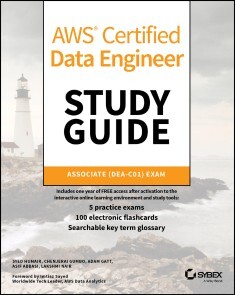
AWS Certified Data Engineer Study Guide
YOUR COMPLETE GUIDE TO PREPARING FOR THE AWS® CERTIFIED DATA ENGINEER: ASSOCIATE EXAMThe AWS® Certified Data Engineer Study Guide is your one-stop resource for complete coverage of the challenging DEA-C01 Associate exam. This Sybex Study Guide covers 100% of the DEA-C01 objectives. Prepare for the exam faster and smarter with Sybex thanks to accurate content including, an assessment test that validates and measures exam readiness, real-world examples and scenarios, practical exercises, and challenging chapter review questions. Reinforce and retain what you’ve learned with the Sybex online learning environment and test bank, accessible across multiple devices. Get ready for the AWS Certified Data Engineer exam – quickly and efficiently – with Sybex. COVERAGE OF 100% OF ALL EXAM OBJECTIVES IN THIS STUDY GUIDE MEANS YOU’LL BE READY FOR:* Data Ingestion and Transformation* Data Store Management* Data Operations and Support* Data Security and GovernanceABOUT THE AWS DATA ENGINEER – ASSOCIATE CERTIFICATIONThe AWS Data Engineer – Associate certification validates skills and knowledge in core data-related Amazon Web Services. It recognizes your ability to implement data pipelines and to monitor, troubleshoot, and optimize cost and performance issues in accordance with best practices INTERACTIVE LEARNING ENVIRONMENTTake your exam prep to the next level with Sybex’s superior interactive online study tools. To access our learning environment, simply visit WWW.WILEY.COM/GO/SYBEXTESTPREP, register your book to receive your unique PIN, and instantly gain one year of FREE access after activation to: • INTERACTIVE TEST BANK with 5 practice exams to help you identify areas where further review is needed. Get more than 90% of the answers correct, and you’re ready to take the certification exam. • 100 ELECTRONIC FLASHCARDS to reinforce learning and last-minute prep before the exam • COMPREHENSIVE GLOSSARY in PDF format gives you instant access to the key terms so you are fully prepared ABOUT THE AUTHORSSYED HUMAIR is a Senior Specialist Solutions Architect (Data Analytics) at Amazon Web Services. CHENJERAI GUMBO is an AWS Solutions Architect Leader – Analytics for the EMEA region. ADAM GATT is a Senior Specialist Solution Architect – Analytics at AWS. He has over 20 years’ experience in data and data warehousing. ASIF ABBASI is a Principal Specialist Solutions Architect at AWS, a published author on various data related topics, and has over 20 years of experience working in various data roles, leading the engineering to executive conversations at various enterprises. LAKSHMI NAIR is a Senior Analytics Solutions Architect at Amazon Web Services with experience of over 14 years, spanning across different enterprise architecture areas, data strategy and analytics. Introduction xxiiiAssessment Test xxxChapter 1 Streaming and Batch Data Ingestion 1Chapter 2 Building Automated Data Pipelines 79Chapter 3 Data Transformation 143Chapter 4 Storage Services 243Chapter 5 Databases and Data Warehouses on AWS 289Chapter 6 Data Catalogs 351Chapter 7 Visualizing Your Data 371Chapter 8 Monitoring and Auditing Data 417Chapter 9 Maintaining and Troubleshooting Data Operations 435Chapter 10 Authentication and Authorization 453Chapter 11 Data Encryption and Masking 509Chapter 12 Data Privacy and Governance 529Appendix A Answers to Review Questions 565Appendix B References 591Index 593

Cyber Defense
PRACTICAL AND THEORETICAL GUIDE TO UNDERSTANDING CYBER HYGIENE, EQUIPPING READERS WITH THE TOOLS TO IMPLEMENT AND MAINTAIN DIGITAL SECURITY PRACTICESCyber Defense is a comprehensive guide that provides an in-depth exploration of essential practices to secure one’s digital life. The book begins with an introduction to cyber hygiene, emphasizing its importance and the foundational concepts necessary for maintaining digital security. It then dives into financial security, detailing methods for protecting financial accounts, monitoring transactions, and compartmentalizing accounts to minimize risks. Password management and multifactor authentication are covered, offering strategies for creating strong passwords, using password managers, and enabling multifactor authentication. With a discussion on secure internet browsing practices, techniques to avoid phishing attacks, and safe web browsing, this book provides email security guidelines for recognizing scams and securing email accounts. Protecting personal devices is discussed, focusing on smartphones, tablets, laptops, IoT devices, and app store security issues. Home network security is explored, with advice on securing home networks, firewalls, and Wi-Fi settings. Each chapter includes recommendations for success, offering practical steps to mitigate risks. Topics covered in Cyber Defense include:* Data protection and privacy, providing insights into encrypting information and managing personal data* Backup and recovery strategies, including using personal cloud storage services* Social media safety, highlighting best practices, and the challenges of AI voice and video* Actionable recommendations on protecting your finances from criminals* Endpoint protection, ransomware, and malware protection strategies, alongside legal and ethical considerations, including when and how to report cyber incidents to law enforcementCyber Defense is an essential guide for anyone, including business owners and managers of small and medium-sized enterprises, IT staff and support teams, and students studying cybersecurity, information technology, or related fields. JASON EDWARDS, DM, CISSP, is an accomplished cybersecurity leader with extensive experience in the technology, finance, insurance, and energy sectors. Holding a Doctorate in Management, Information Systems, and Technology, Jason specializes in guiding large public and private companies through complex cybersecurity challenges. His career includes leadership roles across the military, insurance, finance, energy, and technology industries. He is a husband, father, former military cyber officer, adjunct professor, avid reader, dog dad, and a popular voice on LinkedIn. ContentsChapter 1: Why Cyber Safety Matters Today9The Rise of Digital Connectivity10The Expanding Threat Landscape12Personal Implications of Cyber Insecurity15The Importance of Proactive Cyber Safety18Adopting Safe Online Proactices20Recommendations23Chapter Conclusion25Chapter Questions26Chapter 2: Understanding Cyber Safety in the Digital Age29Defining Cyber Safety and Security30Fundamentals of Digital Literacy33Developing Critical Thinking Skills Online35The Human Element in Cybersecurity38Recommendations42Chapter Conclusion43Chapter Questions44Chapter 3: Understanding and Preventing Identity Theft47What is Identity Theft?48Recognizing Signs of Identity Theft51Understanding Data Breaches55Preventing Identity Theft58Responding to Identity Theft and Data Breaches62Recommendations66Chapter Conclusion68Chapter Questions69Chapter 4: Protecting Your Accounts with Strong Passwords and MFA72The Importance of Strong Passwords72Creating and Managing Strong Passwords76Understanding Multi-Factor Authentication (MFA)78Advanced Account Security Measures80Protecting Business and Shared Accounts83Recommendations86Chapter Conclusion87Chapter Questions88Chapter 5: Email Security Best Practices91Understanding Email Threats92Recognizing and Avoiding Phishing Attempts95Securing Your Email Accounts99Safe Email Practices102Professional Email Etiquette and Security105Recommendations108Chapter Conclusion110Chapter Questions110Chapter 6: Managing Your Digital Footprint and Online Reputation114Understanding Your Digital Footprint115Monitoring and Controlling Your Online Presence118Building a Positive Online Reputation120Privacy Considerations123Future Implications of Your Digital Footprint125Recommendations127Chapter Conclusion129Chapter Questions130Chapter 7: Safe and Professional Use of Social Media133Navigating Social Media Platforms Securely133Protecting Personal Information136Professional Conduct on Social Media139Dealing with Social Media Threats141Leveraging Social Media Safely143Recommendations145Chapter Conclusion147Chapter Questions148Chapter 8: Dealing with Cyberbullying and Online Harassment152Understanding Cyberbullying and Harassment153Recognizing Signs of Cyberbullying155Strategies for Victims158Preventing Cyberbullying160Supporting Others and Advocacy163Recommendations166Chapter Conclusion167Chapter Questions168Chapter 9: Children's Online Safety and Parental Controls171The Digital World of Children and Teens172Communicating with Children About Cyber Safety175Implementing Parental Controls and Monitoring177Educating Children on Safe Online Practices180Collaborating with Schools and Communities183Recommendations185Chapter Conclusion187Chapter Questions188Chapter 10: Avoiding Online Scams and Social Engineering Tricks192Understanding Social Engineering193Common Online Scams195Recognizing Red Flags199Protecting Yourself from Scams202Educating Others and Staying Informed206Recommendations208Chapter Conclusion210Chapter Questions210Chapter 11: Using AI Securely and Protecting Your Privacy214The Role of AI in Everyday Life215Privacy Concerns with AI Technologies218Secure Use of AI-Powered Devices and Services221Protecting Personal Data in the Age of AI224Preparing for Future AI Developments228Recommendations230Chapter Conclusion232Chapter Questions233Chapter 12: Securing Your Devices and Wearables236Mobile Device Security Essentials237Protecting Against Mobile Malware240Securing Wearable Devices242Physical Security and Theft Prevention245Disposal and Recycling of Devices248Recommendations251Chapter Conclusion253Chapter Questions254Chapter 13: Managing Software and App Security on All Devices257Importance of Software Security258Safe Installation and Use of Applications261Configuration and Hardening of Software263Application Whitelisting and Blacklisting266Responding to Software Vulnerabilities270Recommendations272Chapter Conclusion274Chapter Questions275Chapter 14: Defending Yourself Against Ransomware and Malware278Understanding Malware and Ransomware279Preventing Malware Infections283Recognizing Signs of Infection286Responding to a Malware Attack290Mitigating the Impact of Ransomware292Recommendations295Chapter Conclusion296Chapter Questions297Chapter 15: How to Stay Safe While Browsing the Internet301Secure Browsing Practices302Avoiding Malicious Websites and Content305Protecting Personal Information Online308Mental Health and Digital Well-being312Safe Participation in Online Communities314Recommendations317Chapter Conclusion318Chapter Questions319Chapter 16: Network Security322Securing Your Home Network323Protecting Internet of Things (IoT) Devices326Safe Use of Public Wi-Fi Networks328Encryption and VPNs330Cybersecurity for Remote Work and Home Offices333Securing Online Gaming and Virtual Reality Platforms336Recommendations339Chapter Conclusion340Chapter Questions341Chapter 17: Safeguarding Your Financial Assets and Secure Online Transactions345Secure Online Banking Practices346Safe Online Shopping349Protecting Against Financial Fraud352Understanding Cryptocurrency Security356Planning for Financial Security359Recommendations361Chapter Conclusion362Chapter Questions363Chapter 18: Protecting Your Data: Backups, Cloud Storage, and Disaster Recovery367Importance of Data Protection368Effective Backup Strategies371Secure Use of Cloud Storage373Disaster Recovery Planning376Data Disposal and Destruction379Recommendations381Chapter Conclusion382Chapter Questions384Chapter 19: Cyber Crimes and How to Report Them387Understanding Cyber Crimes388Recognizing When You're a Victim391Reporting Cyber Crimes394The Investigation and Legal Process398Preventing Future Incidents400Recommendations402Chapter Conclusion404Chapter Questions405Chapter 20: Preparing for Emerging Cyber Threats408Emerging Cyber Threats409AI and Machine Learning in Cybersecurity411Adapting Security Practices415Personal Strategies for Future-Proofing Security418The Role of Individuals in Shaping Cybersecurity421Recommendations424Chapter Conclusion425Chapter Questions426Chapter 21: Teaching and Empowering Others in Cyber Safety429Sharing Knowledge and Resources430Encouraging Safe Practices in the Workplace433Supporting Friends and Family436Mentoring and Community Involvement439Continuing the Journey of Cyber Safety441Recommendations443Chapter Conclusion445Chapter Questions446Appendix – Answers to Chapter Questions449Chapter 1449Chapter 2452Chapter 3454Chapter 4456Chapter 5459Chapter 6462Chapter 7465Chapter 8468Chapter 9470Chapter 10472Chapter 11474Chapter 12476Chapter 13478Chapter 14480Chapter 15482Chapter 16484Chapter 17486Chapter 18488Chapter 19490Chapter 20492Chapter 21494Glossary496

Microsoft Power FX in Power Apps für Dummies
EFFIZIENTE APP-ENTWICKLUNG AUF DER POWER PLATFORMSie haben Interesse an der App-Entwicklung mit Low-Code/No-Code? Dirk Larisch vermittelt Ihnen praxisnah einen strukturierten Einstieg in Microsoft Power Fx, insbesondere in die Entwicklung von Canvas Apps in Power Apps. Neben Grundlagen der App-Entwicklung lernen Sie die Funktionen und Bedienung von Power Apps, erhalten Einblick in Datentypen und Operatoren in Power Fx, erstellen Prozeduren und Funktionen, nutzen Copilot und setzen JSON und YAML ein. SIE ERFAHREN* Wie Sie mit Power Fx Canvas Apps entwickeln* Wie Sie andere Anwendungen der Power Platform an Ihre App anbinden* Tipps und Tricks zur Administration und App-EntwicklungDIRK LARISCH war als Informatiker lange in der IT und im Management tätig. Er ist Autor zahlreicher Bücher zu den Themen Computer, Netzwerktechnik, Programmierung und Anwendungen. Seine Erfahrungen als Coach und Trainer wendet er heute unter anderem im Bereich Power Platform an.
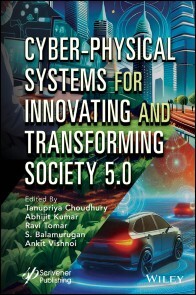
Cyber-Physical Systems for Innovating and Transforming Society 5.0
THE BOOK PRESENTS A SUITE OF INNOVATIVE TOOLS TO RESHAPE SOCIETY INTO AN INTERCONNECTED FUTURE WHERE TECHNOLOGY EMPOWERS HUMANS TO EFFICIENTLY RESOLVE PRESSING SOCIO-ECONOMIC ISSUES WHILE FOSTERING INCLUSIVE GROWTH.This book introduces a spectrum of pioneering advancements across various sectors within Society 5.0, all underpinned by cutting-edge technological innovations. It aims to deliver an exhaustive collection of contemporary concepts, practical applications, and groundbreaking implementations that have the potential to enhance diverse areas of society. Society 5.0 signifies human advancement and is distinguished by its unique synthesis of cyberspace with physical space. This integration harnesses data gathered via environmental sensors, processed by artificial intelligence, to enhance real-world interactions. This volume encompasses an extensive array of scholarly works with detailed insights into fields such as image processing, natural language processing, computer vision, sentiment analysis, and analyses based on voice and gestures. The content presented will be beneficial to multiple disciplines, including the legal system, medical systems, intelligent societal constructs, integrated cyber-physical systems, and innovative agricultural practices. In summary, Cyber-Physical Systems for Innovating and Transforming Society 5.0 presents a suite of innovative tools to reshape society into an interconnected future where technology empowers humans to efficiently resolve pressing socio-economic issues while fostering inclusive growth. AUDIENCEThe book will be beneficial to researchers, engineers, and students in multiple disciplines, including the legal system, medical systems, intelligent societal constructs, integrated cyber-physical systems, and innovative agricultural practices. TANUPRIYA CHOUDHURY, PHD, is a professor and Associate Dean of Research at Graphic Era University, Dehradun, India, and a visiting professor at Daffodil International University, Bangladesh, with 15 years of research and teaching experience. He has published hundreds of papers in national and international journals and conferences, and more than 30 books and book chapters. He has also filed 25 patents and secured copyrights for 16 software programs for India’s Ministry of Human Resource Development. ABHIJIT KUMAR, PHD, is an assistant professor in the School of Computer Science, University of Petroleum and Energy Sciences, Dehradun, India, with more than 13 years of academic and industry experience. He has published two patents and many research papers in international peer-reviewed journals and conferences. He is also a seasoned speaker and is a member of several professional bodies, including the International Association of Computer Science and Information Technology, Singapore; the International Association of Engineers, Hong Kong; and the Universal Association of Computer and Electronics Engineers. RAVI TOMAR, PHD, is a Senior Architect for Persistent Systems, India, with a history as an experienced academician in the higher education industry. He has trained numerous national and international corporations, including Confluent Apache Kafka, KeyBank, Accenture, and the Union Bank of the Philippines. He is skilled in programming, computer networking, stream processing, Python, Oracle database, C++, core Java, and CorDApp. S. BALAMURUGAN, PHD, is the Director of Research and Development, Intelligent Research Consultancy Services (iRCS), Coimbatore, Tamil Nadu, India. He is also Director of the Albert Einstein Engineering and Research Labs (AEER Labs), as well as Vice-Chairman of the Renewable Energy Society of India (RESI), India. He has published 50+ books, 200+ international journals/conferences, and 35 patents. ANKIT VISHNOI, PHD, is an associate professor at Graphic Era University, Dehradun, India, with over 19 years of comprehensive experience in academia and industry. He has published 20 research articles in esteemed journals and conferences, and holds two patents. Notably, he was involved in a Department of Science and Technology project during his tenure at the University of Petroleum and Energy Sciences, Dehradun.

Securing Microsoft Azure OpenAI
SECURELY HARNESS THE FULL POTENTIAL OF OPENAI’S ARTIFICIAL INTELLIGENCE TOOLS IN AZURESecuring Microsoft Azure OpenAI is an accessible guide to leveraging the comprehensive AI capabilities of Microsoft Azure while ensuring the utmost data security. This book introduces you to the collaborative powerhouse of Microsoft Azure and OpenAI, providing easy access to cutting-edge language models like GPT-4o, GPT-3.5-Turbo, and DALL-E. Designed for seamless integration, the Azure OpenAI Service revolutionizes applications from dynamic content generation to sophisticated natural language translation, all hosted securely within Microsoft Azure’s environment. Securing Microsoft Azure OpenAI demonstrates responsible AI deployment, with a focus on identifying potential harm and implementing effective mitigation strategies. The book provides guidance on navigating risks and establishing best practices for securely and responsibly building applications using Azure OpenAI. By the end of this book, you’ll be equipped with the best practices for securely and responsibly harnessing the power of Azure OpenAI, making intelligent decisions that respect user privacy and maintain data integrity. KARL OTS is Global Head of Cloud Security at EPAM Systems, an engineering and consulting firm. He leads a team of experts in delivering security and compliance solutions for cloud and AI deployments for Fortune 500 enterprises in a variety of industries. He has over 15 years’ experience in tech and is a trusted advisor and thought leader. Karl is also a Microsoft Regional Director and Security MVP. Introduction xxiiiCHAPTER 1 OVERVIEW OF GENERATIVE ARTIFICIAL INTELLIGENCE SECURITY 1Common Use Cases for Generative AI in the Enterprise 1Generative Artificial Intelligence 1Generative AI Use Cases 2LLM Terminology 3Sample Three-Tier Application 4Presentation Tier 5Application Tier 5Data Tier 5Generative AI Application Risks 5Hallucinations 6Malicious Usage 6Shadow AI 7Unfavorable Business Decisions 8Established Risks 8Shared AI Responsibility Model 8Shared Responsibility Model for the Cloud 9Shared Responsibility Model for AI 10AI Usage 10AI Application 10AI Platform 11Applying the Shared Responsibility Model 11Regulation and Control Frameworks 12Regulation in the United States 12Regulation in the European Union 12NIST AI Risk Management Framework 14Govern 15Map 15Measure 16Manage 16Key Takeaways 16References 17CHAPTER 2 SECURITY CONTROLS FOR AZURE OPENAI SERVICE 19On the Importance of Selecting Appropriate Security Controls 19Risk Appetite 20Comparing OpenAI Hosting Models 21OpenAI ChatGPT 21Privacy and Compliance 21Identity and Access Management 21Data Protection and Encryption 22Audit Logging 22Network Isolation 22Data Residency 22Azure OpenAI 22Privacy and Compliance 23Identity and Access Management 23Data Protection and Encryption 23Audit Logging 23Network Isolation 23Data Residency 23Recommendation for Enterprise Usage 24Evaluating Security Controls with MCSB 24Control Domains 26Network Security 27Identity Management 28Privileged Access 28Data Protection 29Asset Management 29Logging and Threat Detection 29Incident Response 30Posture and Vulnerability Management 30Endpoint Security 31Backup and Recovery 31DevOps Security 32Governance and Strategy 32Security Baselines 33Applying Microsoft Cloud Security Baseline to Azure OpenAI 33Security Profile 34How to Approach the Security Baseline 34Data Protection 35Identity Management 36Logging and Threat Detection 37Network Security 38Asset Management 38Backup and Recovery 39Endpoint Security 40Posture and Vulnerability Management 40Privileged Access 41Selected Controls 42Mapping the Selected Controls to CIS and NIST 44Using Azure Policy to Secure Azure OpenAI at Scale 46Azure Policy 46Continuous Compliance Monitoring 47Azure Policies for Azure OpenAI 48Key Takeaways 49References 49CHAPTER 3 IMPLEMENTING AZURE OPENAI SECURITY CONTROLS 51OWASP Top 10 for LLM Applications 51Prompt Injection 52Insecure Output Handling 52Training Data Poisoning 53Model Denial of Service 53Supply Chain Vulnerabilities 53Sensitive Information Disclosure 54Insecure Plugin Design 54Excessive Agency 54Overreliance 55Model Theft 55Access Control 56Implementing Access Control for Azure OpenAI 56Cognitive Services OpenAI User 57Cognitive Services OpenAI Contributor 58Azure AI Administrator 59Azure AI Developer 61Azure AI Enterprise Network Connection Approver 62Azure AI Inference Deployment Operator 64Preventing Local Authentication 65Disable Local Authentication Using Bicep 66Disable Local Authentication Using Terraform 66Disable Local Authentication Using ARM Templates 67Prevent Local Authentication Using PowerShell 67Enforcing with Azure Policy 67Audit Logging 68Control Plane Audit Logging 68Data Plane Audit Logging 71Enable Data Plane Audit Logging Using Azure Portal 72Enable Data Plane Audit Logging Using Bicep 73Enable Data Plane Audit Logging Using Terraform 73Enable Data Plane Audit Logging Using ARM Templates 74Enable Data Plane Audit Logging Using PowerShell 76Enable Data Plane Audit Logging Using Azure cli 76Enforcing with Azure Policy 77Enable Logging by Category Group for Cognitive Services 77Network Isolation 82Default Network Controls 83Control Inbound Network Traffic 83Control Inbound Network Traffic Using the Azure Portal 84Control Inbound Network Traffic Using Bicep 84Control Inbound Network Traffic with Private Endpoints Using Infrastructure as Code 85Control Inbound Network Traffic Using Terraform 87Control Inbound Network Traffic with Private Endpoints Using Terraform 87Control Inbound Network Traffic Using ARM Templates 89Control Inbound Network Traffic with Private Endpoints Using ARM Templates 90Control Inbound Network Traffic Using PowerShell 93Control Inbound Network Traffic with Private Endpoints Using PowerShell 94Control Inbound Network Traffic Using Azure cli 95Control Inbound Network Traffic with Private Endpoints Using Azure cli 95Control Outbound Network Traffic 97Enable Data Loss Prevention Using REST 97Enable Data Loss Prevention Using Bicep 98Enable Data Loss Prevention Using Terraform 98Enable Data Loss Prevention Using ARM Templates 99Enforcing with Azure Policy 101Azure AI Services Resources Should Restrict Network Access 101Azure AI Services Resources Should Use Azure Private Link 103Encryption at Rest 105Implementing Azure OpenAI with CMK 106Implement CMK Using Azure Portal 106Implement CMK Using Bicep 107Implement CMK Using Terraform 109Implement CMK Using ARM Templates 111Implement CMK Using PowerShell 114Implement CMK Using the Azure cli 115Enforcing with Azure Policy 116Azure AI Services Resources Should Encrypt Data at Rest with a CMK 117Content Filtering Controls 119System Safety Prompts 119Azure AI Content Safety 120Content Filtering 120Prompt Shields 121Protected Material Detection 121Groundedness Detection 121Creating a Content Filter 121Implementing Content Filtering Programmatically 122Content Safety Input Restrictions 123Key Takeaways 123References 124CHAPTER 4 SECURING THE ENTIRE APPLICATION 125The Three-Tier LLM Application in Azure 125Presentation Tier 126Application Tier 126Data Tier 126On Threat Modeling 126Threat Model of the Three-Tier Application 127Revised Application Architecture 129Retrieval-Augmented Generation 129RAG in Azure 130Azure AI Search 130Azure Cosmos DB 131Application Architecture with RAG 131Azure Front Door 132Security Profile 132Security Baseline 132Implementing Security Controls 133Access Control 133Audit Logging 133Network Isolation 141Encryption at Rest 152Enforcing Controls with Policies 152Azure App Service 153Security Profile 153Security Baseline 153Implementing Security Controls 155Access Control 156Audit Logging 163Network Isolation 169Encryption at Rest 176Enforcing Controls with Policies 176API Management 177Security Profile 177Security Baseline 178Implementing Security Controls 178Access Control 179Audit Logging 180Network Isolation 186Encryption at Rest 201Enforcing Controls with Policies 202Storage Account 202Security Profile 202Security Baseline 203Implementing Security Controls 204Access Control 204Audit Logging 209Network Isolation 216Encryption at Rest 225Backup and Recovery 232Discover, Classify, and Protect Sensitive Data 238Enforcing Controls with Policies 238Cosmos DB 238Security Profile 239Security Baseline 239Implementing Security Controls 241Access Control 241Audit Logging 244Network Isolation 249Encryption at Rest 256Backup and Recovery 262Enforcing Controls with Policies 266Azure AI Search 266Security Profile 266Security Baseline 267Implementing Security Controls 268Access Control 268Audit Logging 272Network Isolation 278Encryption at Rest 287Enforcing Controls with Policies 294Key Takeaways 294References 294CHAPTER 5 MOVING TO PRODUCTION 297LLM Application Security Lifecycle 297Model Supply Chain 298Security Testing 299Model Safety Evaluation 299How to Use Model Safety Evaluation 300Adversarial Testing 300How to Use the Adversarial Simulator Service 301Red Teaming 304Crescendo Multiturn Attack 304Red Teaming with PyRIT 304Content Credentials 305AI Security Posture Management 307Discover and Manage Shadow AI 307Discover SaaS Applications 307Discover Generative AI Applications 309Manage Generative AI Applications 312Alert on Anomalous Activity and Applications 313Defender for Cloud AI Workloads 314Discovery 314Posture Management 314Security Alerting 314Security Posture Management 315Investigating Security Alerts 316Alert Details 317Supporting Evidence 318Take Action 319Managing Incidents 323Instrumenting Security Alert Ingestion 324Azure OpenAI Alerts 326Detected Credential Theft Attempts on an Azure OpenAI Model Deployment 327A Jailbreak Attempt on an Azure OpenAI Model Deployment Was Blocked by Azure AI Content Safety Prompt Shields 327A Jailbreak Attempt on an Azure OpenAI Model Deployment Was Detected by Azure AI Content Safety Prompt Shields 327Sensitive Data Exposure Detected in Azure OpenAI Model Deployment 327Corrupted AI Application, Model, or Data Directed a Phishing Attempt at a User 328Phishing URL Shared in an AI Application 328Phishing Attempt Detected in an AI Application 328Defender for Cloud Alerts for Other Services 328App Service Alerts 329API Management Alerts 330Storage Account Alerts 331Cosmos DB Alerts 332LLM Application in Your Cloud Security Architecture 332Cloud Security Control Domains 333Asset Management 333Incident Response 334Privileged Access 336Posture and Vulnerability Management 337Landing Zones 339About Landing Zones 339Microsoft Enterprise-Scale Landing Zones 339Microsoft Landing Zone Accelerator for OpenAI 342LLM Application in the Landing Zone 342The Sample Application in the Landing Zone 342Access Control 343Security Monitoring 343Incident Response 344Network 344Key Takeaways 345References 345Index 347

Machine Learning and AI with Simple Python and Matlab Scripts
A PRACTICAL GUIDE TO AI APPLICATIONS FOR SIMPLE PYTHON AND MATLAB SCRIPTSMachine Learning and AI with Simple Python and Matlab Scripts: Courseware for Non-computing Majors introduces basic concepts and principles of machine learning and artificial intelligence to help readers develop skills applicable to many popular topics in engineering and science. Step-by-step instructions for simple Python and Matlab scripts mimicking real-life applications will enter the readers into the magical world of AI, without requiring them to have advanced math and computational skills. The book is supported by instructor only lecture slides and sample exams with multiple-choice questions. Machine Learning and AI with Simple Python and Matlab Scripts includes information on:* Artificial neural networks applied to real-world problems such as algorithmic trading of financial assets, Alzheimer’s disease prognosis* Convolution neural networks for speech recognition and optical character recognition* Recurrent neural networks for chatbots and natural language translators* Typical AI tasks including flight control for autonomous drones, dietary menu planning, and route planning* Advanced AI tasks including particle swarm optimization and differential and grammatical evolution as well as the current state of the art in AI toolsMachine Learning and AI with Simple Python and Matlab Scripts is an accessible, thorough, and practical learning resource for undergraduate and graduate students in engineering and science programs along with professionals in related industries seeking to expand their skill sets. M. ÜMIT UYAR is a Professor at the City College of the City University of New York, USA. Dr. Uyar is an IEEE Fellow, author, co-author and co-editor of seven books, holder of seven U.S. patents, and developer of AI and game theory-based algorithms for applications in topology control in mobile networks and personalized cancer treatment. About the Author xiiiPreface xvAcknowledgments xviiAbout the Companion Website xix1 INTRODUCTION 11.1 Artificial Intelligence 11.2 A Historical Perspective 11.3 Principles of AI 21.4 Applications That Are Impossible Without AI 21.5 Organization of This Book 32 ARTIFICIAL NEURAL NETWORKS 72.1 Introduction 72.2 Applications of ANNs 72.3 Components of ANNs 82.3.1 Neurons 82.3.2 Sigmoid Activation Function 92.3.3 Rectilinear Activation Function 92.3.4 Weights of Synapses 102.4 Training an ANN 112.5 Forward Propagation 122.5.1 Forward Propagation from Input to Hidden Layer 132.6 Back Propagation 132.6.1 Back Propagation for a Neuron 132.6.2 Back Propagation – from Output to Hidden Layer 152.6.3 Back Propagation – from Hidden Layer to Input 162.7 Updating Weights 172.8 ANN with Input Bias 172.9 A Simple Algorithm for ANN Training 182.10 Computational Complexity of ANN Training 182.11 Normalization of ANN Inputs and Outputs 192.12 Concluding Remarks 202.13 Exercises for Chapter 2 203 ANNS FOR OPTIMIZED PREDICTION 233.1 Introduction 233.2 Selection of ANN Inputs 243.3 Selection of ANN Outputs 243.4 Construction of Hidden Layers 253.5 Case Study 1: Sleep-Study Example 253.5.1 Using Matrices for ANN Training 263.5.2 Forward Propagation 283.5.3 Back Propagation 283.5.4 Updating Weights 293.5.5 Forward Propagation with New Weights 293.5.6 Back Propagation with New Weights 303.5.7 Using Normalized Input and Output Values 313.5.8 Reducing Errors During Training 343.5.9 Implementation of Sleep-Study ANN in Python 343.5.10 Implementation of Sleep-Study ANN in Matlab 373.6 Case Study 2: Prediction of Bike Rentals 413.6.1 Python Script for Bike Rentals Using an ANN 413.6.2 Matlab Script for Bike Rentals Using an ANN 463.7 Concluding Remarks 483.8 Exercises for Chapter 3 484 ANNS FOR FINANCIAL STOCK TRADING 514.1 Introduction 514.2 Programs that Buy and Sell Stocks 514.3 Technical Indicators 514.3.1 Simple Moving Average 524.3.2 Momentum 534.3.3 Exponential Moving Average 544.3.4 Bollinger Bands 544.4 A Simple Algorithmic Trading Policy 554.5 A Simple ANN for Algorithmic Stock Trading 574.5.1 ANN Inputs and Outputs 574.5.2 ANN Architecture 584.6 Python Script for Stock Trading Using an ANN 594.7 Matlab Script for Stock Trading Using an ANN 634.8 Concluding Remarks 654.9 Exercises for Chapter 4 655 ANNS FOR ALZHEIMER’S DISEASE PROGNOSIS 675.1 Introduction 675.2 Alzheimer’s Disease 675.3 A Simple ANN for AD Prognosis 685.4 Python Script for AD Prognosis Using an ANN 715.5 Matlab Script for AD Prognosis Using an ANN 755.6 Concluding Remarks 805.7 Exercises for Chapter 5 816 ANNS FOR NATURAL LANGUAGE PROCESSING 836.1 Introduction 836.2 Impact of Text Messages on Stock Markets 846.3 A Simple ANN for NLP 856.3.1 ANN Inputs and Outputs 856.3.2 Keywords 856.3.3 Formation of Training Data 866.3.4 ANN Architecture 886.4 Python Script for NLP Using an ANN 896.5 Matlab Script for NLP Using an ANN 926.6 Concluding Remarks 966.7 Exercises for Chapter 6 977 CONVOLUTIONAL NEURAL NETWORKS 997.1 Introduction 997.1.1 Training CNNs 1007.2 Variations of CNNs 1017.3 Applications of CNNs 1017.4 CNN Components 1027.5 A Numerical Example of a CNN 1027.6 Computational Cost of CNN Training 1087.7 Concluding Remarks 1127.8 Exercises for Chapter 7 1128 CNNS FOR OPTICAL CHARACTER RECOGNITION 1158.1 Introduction 1158.2 A Simple CNN for OCR 1158.3 Organization of Training and Reference Files 1178.4 Python Script for OCR Using a CNN 1198.5 Matlab Script for OCR Using a CNN 1248.6 Concluding Remarks 1308.7 Exercises for Chapter 8 1309 CNNS FOR SPEECH RECOGNITION 1339.1 Introduction 1339.2 A Simple CNN for Speech Recognition 1349.3 Organization of Training and Reference Files 1369.4 Python Script for Speech Recognition Using a CNN 1389.5 Matlab Script for Speech Recognition Using a CNN 1449.6 Concluding Remarks 1509.7 Exercises for Chapter 9 15010 RECURRENT NEURAL NETWORKS 15110.1 Introduction 15110.2 One-to-One Single RNN Cell 15310.2.1 A Simple Alphabet and One-Hot Encoding 15610.2.2 Forward and Back Propagation 15710.3 A Numerical Example 15810.4 Multiple Hidden Layers 16310.5 Embedding Layer 16510.5.1 Forward and Back Propagation with Embedding 16710.5.2 A Numerical Example with Embedding 16810.6 Concluding Remarks 17210.7 Exercises for Chapter 10 17211 RNNS FOR CHATBOT IMPLEMENTATION 17511.1 Introduction 17511.2 Many-to-Many RNN Architecture 17511.3 A Simple Chatbot 17611.4 Python Script for a Chatbot Using an RNN 17911.5 Matlab Script for a Chatbot Using an RNN 18311.6 Concluding Remarks 18811.7 Exercises for Chapter 11 18912 RNNS WITH ATTENTION 19112.1 Introduction 19112.2 One-to-One RNN Cell with Attention 19112.3 Forward and Back Propagation 19312.4 A Numerical Example 19512.5 Embedding Layer 20012.6 A Numerical Example with Embedding 20212.7 Concluding Remarks 20712.8 Exercises for Chapter 12 20713 RNNS WITH ATTENTION FOR MACHINE TRANSLATION 20913.1 Introduction 20913.2 Many-to-Many Architecture 21013.3 Python Script for Machine Translation by an RNN-Att 21113.4 Matlab Script for Machine Translation by an RNN-Att 21613.5 Concluding Remarks 22313.6 Exercises for Chapter 13 22314 GENETIC ALGORITHMS 22514.1 Introduction 22514.2 Genetic Algorithm Elements 22614.3 A Simple Algorithm for a GA 22714.4 An Example of a GA 23014.5 Convergence in GAs 23114.6 Concluding Remarks 23214.7 Exercises for Chapter 14 23215 GAS FOR DIETARY MENU SELECTION 23515.1 Introduction 23515.2 Definition of the KP 23615.3 A Simple Algorithm for the KP 23815.4 Variations of the KP 23915.5 GAs for KP Solution 24015.6 Python Script for Dietary Menu Selection Using a GA 24215.7 Matlab Script for Dietary Menu Selection Using a GA 24515.8 Concluding Remarks 24815.9 Exercises for Chapter 15 24816 GAS FOR DRONE FLIGHT CONTROL 25116.1 Introduction 25116.2 UAV Swarms 25116.3 UAV Flight Control 25216.4 A Simple GA for UAV Flight Control 25316.4.1 Virtual Force-Based Fitness Function 25416.4.2 FGA Progression 25516.4.3 Chromosome for FGA 25716.5 Python Script for UAV Flight Control Using a GA 26016.6 Matlab Script for UAV Flight Control Using a GA 26416.7 Concluding Remarks 27016.8 Exercises for Chapter 16 27117 GAS FOR ROUTE OPTIMIZATION 27317.1 Introduction 27317.2 Definition of the TSP 27417.3 A Simple Algorithm for the TSP 27617.4 Variations of the TSP 27717.5 GA Solution for the TSP 27717.6 Python Script for Route Optimization Using a GA 27917.7 Matlab Script for Route Optimization Using a GA 28417.8 Concluding Remarks 28717.9 Exercises for Chapter 17 28918 EVOLUTIONARY METHODS 29118.1 Introduction 29118.2 Particle Swarm Optimization 29118.2.1 Applications of PSO 29218.2.2 PSO Operation 29318.2.3 Remarks for PSO 29818.3 Differential Evolution 29818.3.1 Different Versions of DE 29918.3.2 Applications of DE 29918.3.3 A Simple Algorithm for DE 29918.3.4 Numerical Example: Maximum of sinc by DE 30218.3.5 Remarks for DE 30518.4 Grammatical Evolution 30618.4.1 A Simple Algorithm for GE 30618.4.2 Definition of GE 30718.4.3 A Simple GA to Implement GE 31418.4.4 Remarks on GE 315Appendix A ANNs with Bias 317A.1 Introduction 317A.2 Training with Bias Input 317A.3 Forward Propagation 318A.3.1 Forward Propagation from Input to Hidden Layer 319A.3.2 Neuron Back Propagation with Bias Input 319Appendix B Sleep Study ANN with Bias 321B.1 Inclusion of Bias Term in ANN 321B.1.1 Inclusion of Bias in Matrices 321B.1.2 Forward Propagation with Biases 322Appendix C Back Propagation in a CNN 327Appendix D Back Propagation Through Time in an RNN 331D.1 Back Propagation in an RNN 331D.2 Embedding Layer 335Appendix E Back Propagation Through Time in an RNN with Attention 337E.1 Back Propagation in an RNN-Att 337E.2 Embedding Layer 340Bibliography 343Index 353

Data Governance
- Setzt den Rahmen für erfolgreiches Datenmanagement und sorgt für die umsatzsteigernde Nutzung der Organisationsdaten - Konzipiert ein qualitätsorientiertes Datenmanagement für die gesamte Organisation - Hat die Entstehungs- und Verarbeitungsprozesse von Organisationsdaten im Blick - Liefert Standards, Methoden und Instrumente für eine hohe Datenqualität - Neu in der 2. Auflage: umfangreiche Aktualisierung aller Kapitel und Ergänzung von u. a. Data-Governance-Formen, Datenprinzipien, Datendomänen, Data Office sowie einer Vielzahl von Tools und neuen Anwendungsfällen. - Ihr exklusiver Vorteil: E-Book inside beim Kauf des gedruckten Buches Daten sind eine wichtige strategische Ressource im digitalen Wettbewerb. Damit sie gewinnbringend genutzt werden können, muss ein Rahmen in Organisationen geschaffen werden. Diesen Rahmen bietet Data Governance. Doch welchen Mehrwert bietet Data Governance für Organisationen und wie lässt es sich in die Praxis umsetzen? Dieses Buch zeigt Ihnen, was wirklich funktioniert. Profitieren Sie von den Ergebnissen intensiver praxisnaher Forschung und der jahrelangen Projekterfahrung der Autorinnen in Organisationen unterschiedlicher Größe und Branchen. Das qualitätsorientierte Data Governance Framework adressiert unterschiedliche Handlungsebenen und unterscheidet nicht zwischen verschiedenen Datendomänen. Die Autorinnen geben einen wertvollen Überblick zum Thema Datenqualität und dessen Relevanz für Organisationen. Konkrete Handlungsempfehlungen ermöglichen Ihnen, die ersten Data-Governance-Aktivitäten in Ihrer Organisation schnell vorzubereiten und umzusetzen. AUS DEM INHALT // - Begriffe und Grundlagen, Überblick über Data Governance Frameworks - Das qualitätsorientierte Data Governance Framework - Rollen und Gremien - Bedeutung von Datenqualität in der Praxis - Instrumente, Techniken und Tools zur Umsetzung in Unternehmen - Anwendungsbeispiele aus über fünfzehn Jahren Erfahrung

Task Programming in C# and .NET
At a high level, to understand asynchronous programming, you need to be familiar with task programming, efficient use of the async and await keywords, and a few more important topics. However, task programming is the first major step towards modern-day asynchronous programming. This book tries to simplify the topic with simple examples, Q&A sessions, and exercisesThe book starts with an introduction to asynchronous programming and covers task creation and execution. Next, you will learn how to work with continuing and nested tasks. Next, it demonstrates exception handling with different scenarios. Towards the end, you will understand how to manage task cancellations through examples and case studies. After reading this book, you can write efficient codes for multithreaded, asynchronous, and parallel development in C#.WHAT YOU WILL LEARN:* Dig deep into task programming which is an essential part of the concurrent and multithreaded developments.* Learn modern-day C# features that are foundations of asynchronous programming* How the advanced features in C# such as delegates, lambdas, generics, etc. can be used in concurrencyWHO THIS BOOK IS FOR:C# and .NET developersVaskaran Sarcar obtained his Master of Engineering in Software Engineering from Jadavpur University, Kolkata (India), and an MCA from Vidyasagar University, Midnapore (India). He was a National Gate Scholar (2007-2009) and has over 12 years of experience in Education and the IT industry. He devoted his early years (2005-2007) to the teaching profession at various engineering colleges, and later he joined HP India PPS R&D Hub Bangalore. He worked there until August 2019. At the time of his retirement from HP, he was a Senior Software Engineer and Team Lead at HP. To follow his dream and passion, Vaskaran is now an independent full-time author.Chapter 1: Asynchronous Programming and Tasks.- Chapter 2: Tasks Creation and Execution.- Chapter 3: Continuation and Nested Tasks.- Chapter 4: Exception Handling.- Chapter 5: Managing Cancellations.- Chapter 6: Bonus.- App A & App B.

When Docker Meets Java
Discover how to become a more efficient Java developer using Docker. This book will help you streamline your development process, boost portability, and enhance the efficiency of your applications.Docker has transformed the landscape of application and deployment by simplifying the creation and management of development environments, saving valuable time and reducing compatibility issues. With this book, you will learn how to package Java applications into Docker containers, making them consistent and portable across different environments. As a result, you’ll gain the expertise to efficiently scale and manage your applications, ensuring they run smoothly in production to boost development efficiency.This book sets itself apart through its emphasis on Java developers’ specific needs and challenges, providing relevant examples and use cases. The hands-on practical approach provides you with the necessary skills to be a more valuable Java developer.WHAT YOU WILL LEARN* Understand the fundamental concepts of Docker and containerization* Package Java applications into Docker containers* Gain hands-on experience in Dockerizing Java applications* Efficiently test, debug, deploy, and scale Java applications using Docker* Acquire skills that will make you a more valuable and efficient Java developerWHO THIS BOOK IS FORJava developers who want to make their applications more portable and easier to manageASHISH CHOUDHARY is a senior software engineer and published author. He has over 14 years of experience in the IT industry. He has experience in designing, developing, and deploying web applications. His technical expertise includes Java, Spring Boot, Docker, Kubernetes, IMDG, distributed systems, microservices, DevOps, and the cloud. Ashish is an active blogger and technical writer. He has delivered talks at renowned conferences such as GitHub Satellite India and Fosdem. He is a strong advocate of Open Source technologies. He has been contributing to various open source projects for quite some time. Ashish believes in continuous learning and knowledge sharing.Chapter 1: Overview of Containers.- Chapter 2: Docker High-Level Overview.- Chapter 3: Up and Running with Docker.- Chapter 4: Learning Advanced Docker Concepts.- Chapter 5: Containerizing Java Applications with Dockerfile.- Chapter 6: Working with Container Builder Tools for Java Applications.- Chapter 7: Deploying Docker Containers using GitHub Actions.- Chapter 8: Exploring Docker Alternatives.- Chapter 9: Building Native Images with GraalVM.- Chapter 10: Testing Java Applications using Testcontainers.- Chapter 11: Docker Best Practices for Java Developers.

Microsoft 365 Excel Formulas & Functions For Dummies
TURN EXCEL INTO AN UNSTOPPABLE DATA-AND NUMBER-CRUNCHING MACHINEMicrosoft Excel is the Swiss Army knife of apps. With over 470 built-in functions and countless custom formulas, the program can help make you the smartest guy or gal in any room. And now that it's been supercharged with Copilot—Microsoft's AI-powered helper—it's even easier to produce accurate and useful results anywhere, anytime. Best of all, it doesn't take an advanced degree in mathematics or data science to take full advantage of Excel's functionality. Just grab a copy of this latest edition of Excel Formulas & Functions For Dummies and get a flying start on the Excel functions and formulas that power up your data superpowers. With this book, you'll:* Learn to create and use hundreds of formulas and functions, correct common mistakes, and make calculations* Discover how to analyze data and calculate statistics, and even work with dates and times* Use the ever-evolving, AI-powered Copilot to expand Excel's functionality and make it easier to useGet ready to transform your copy of Excel at home or at work into an unstoppable toolkit equipped for almost any occasion. Grab a copy of Excel Formulas & Functions For Dummies today! KEN BLUTTMAN is a veteran developer specializing in Excel/VBA and database-centric web applications. He has written many articles and books on topics including Office/VBA development, XML, SQL Server, and InfoPath. Ken is the author of Excel Charts For Dummies and all previous editions of Excel®Formulas & Functions For Dummies.

Teach Yourself VISUALLY Microsoft 365
AN ILLUSTRATED, A-TO-Z, AND NEWLY UPDATED GUIDE TO MASTERING MICROSOFT OFFICE 365Teach Yourself VISUALLY Microsoft 365, 2nd Edition is a newly revised edition of the easy-to-use and up-to-date visual walkthrough of Microsoft's ubiquitous office products. It#s the fastest and most efficient way to get up to speed on world-famous apps like Word, Excel, and PowerPoint, offering crystal-clear, high-resolution screenshots that show you exactly how to get things done. Tired of confusing, text-based “instructions” that leave you scratching your head and wondering, “Why didn't that work?” Then grab a copy of TYV Microsoft 365, 2nd Edition for a complete, A-to-Z tour of Microsoft 365 that takes you through how to generate sophisticated documents in Word, crunch numbers in Excel, keep your life organized in Outlook, and build attractive and persuasive presentations in PowerPoint. This book shows you how to master basic, foundational features that have been around for years, as well as cutting-edge new additions to the software—like Microsoft's Copilot AI—that make your job easier and make you more productive. From working with files in the cloud to setting up your own local databases in Access, TYV Microsoft 365, 2nd Edition puts the info, screenshots, and instructions you need at your fingertips. Readers will find:* Hundreds of hi-res, full-page screenshots that demonstrate Microsoft 365's most useful features* Specific instructions on how to get more from your favorite Office 365 apps, like how to add attachments to your Outlook emails or include narration in a PowerPoint presentation* Techniques to incorporate artificial intelligence in your everyday work to supercharge your productivity by summarizing Word documents or automatically generating Excel formulasPerfect for anyone looking for an intuitive and visual guide to Microsoft 365 that comes with full-screen images that show you exactly what to do and where to click, Teach Yourself VISUALLY Microsoft 365, 2nd Edition is the simplest and most effective resource for mastering the world's most popular suite of office apps. PART I MICROSOFT 365 FEATURESCHAPTER 1 MICROSOFT 365 BASICSStart and Exit Microsoft 365 Apps 4Explore the App Window 6Work with Backstage View 7Change the Color Scheme 8Work with the Ribbon 10Select Data 12Using a Microsoft 365 App with a Touch Screen 14Create a New File 16Save a File 18Open a File 20CHAPTER 2 MICROSOFT 365 GRAPHICS TOOLSInsert a Picture from Your PC 22Insert an Online Picture 24Resize and Move Graphic Objects 26Understanding Graphics Modification Techniques 28CHAPTER 3 WORKING WITH MICROSOFT 365 FILES ONLINEMicrosoft 365 and the Cloud 30Sign In to Microsoft 365 32Share a Document from Microsoft 365 34Sign In to OneDrive 36Using an Online App in OneDrive 38Open a Document in a Desktop App from OneDrive 40Upload a Document to OneDrive 42CHAPTER 4 GETTING AI ASSISTANCE WITH COPILOTUnderstanding Copilot 44Draft New Text in Word 46Rewrite Existing Text 48Get Help with a Word Document 50Analyze Excel Data 52Create Excel Formulas 54Draft a PowerPoint Presentation 56Create an Image 58PART II WORDCHAPTER 5 ADDING TEXTChange Word’s Views 62Create Lists 64Insert Quick Parts 66Insert Symbols 68CHAPTER 6 FORMATTING TEXTAlign Text 70Set Line Spacing 71Indent Text 72Set Tabs 74Set Margins 76Copy Formatting 78Clear Formatting 79Format with Styles 80CHAPTER 7 ADDING EXTRA TOUCHESAssign a Theme 82Add Borders 84Create Columns 86Insert a Table 88Apply Table Styles 90Insert Table Rows or Columns 91Add Headers and Footers 92CHAPTER 8 REVIEWING DOCUMENTSWork in Read Mode View 94Find and Replace Text 98Navigate Document Content 100Check Spelling and Grammar 102Customize AutoCorrect 104Using Word’s Thesaurus and Dictionary 106Translate Text 108Track and Review Document Changes 110Lock and Unlock Tracking 112PART III EXCELCHAPTER 9 BUILDING SPREADSHEETSEnter Cell Data 116Select Cells 118Using AutoFill for Faster Data Entry 120Turn On Text Wrapping 122Center Data Across Columns 123Adjust Cell Alignment 124Change the Font and Font Size 126Change Number Formats 128Increase or Decrease Decimals 129Add Cell Borders and Shading 130Format Data with Styles 132Apply Conditional Formatting 134Insert Rows and Columns 136Resize Columns and Rows 138Freeze Column and Row Titles On-Screen 139Name a Range 140Clear or Delete Cells 142CHAPTER 10 WORKSHEET BASICSAdd a Worksheet 144Rename a Worksheet 145Move or Copy Worksheets 146Delete a Worksheet 147Find and Replace Data 148Create a Table 150Filter or Sort Table Information 152Analyze Data Quickly 154Understanding Data Analysis Choices 155CHAPTER 11 WORKING WITH FORMULAS AND FUNCTIONSUnderstanding Formulas 156Create a Formula 158Apply Absolute and Relative Cell References 160Understanding Functions 162Insert a Function 164Total Cells with AutoSum 166CHAPTER 12 WORKING WITH CHARTSCreate a Chart 168Move and Resize a Chart 170Change the Chart Type 172Change the Chart Style 173Change the Chart Layout 174Add Chart Elements 175Format Chart Elements 176Change the Chart Data 177PART IV POWERPOINTCHAPTER 13 CREATING A PRESENTATIONCreate a New Presentation 180Create a Photo Album Presentation 182Change PowerPoint Views 184Insert Slides 186Change the Slide Layout 188CHAPTER 14 POPULATING PRESENTATION SLIDESAdd and Edit Slide Text 190Change the Font, Size, and Color 192Apply a Theme 196Set Line Spacing 197Align Text 198Add a Text Box to a Slide 199Add a Table to a Slide 200Add a Chart to a Slide 202Add a Video Clip to a Slide 204Move a Slide Object 206Resize a Slide Object 207Reorganize Slides 208CHAPTER 15 ASSEMBLING AND PRESENTING A SLIDE SHOWReuse a Slide 210Organize Slides into Sections 212Define Slide Transitions 214Add Animation Effects 216Create a Custom Animation 218Record Narration 220Insert a Background Song 221Create Speaker Notes 222Rehearse a Slide Show 224Run a Slide Show 226PART V ACCESSCHAPTER 16 DATABASE BASICSUnderstanding Database Basics 232Create a Database Based on a Template 234Create a Blank Database 236Create a New Table 238Change Table Views 240Add a Field to a Table 242Delete a Field from a Table 243Hide a Field in a Table 244Move a Field in a Table 245Create a Form 246Change Form Views 248Move a Field in a Form 249Delete a Field in a Form 250Format Form Fields 251CHAPTER 17 ADDING, FINDING, AND QUERYING DATAAdd Records to a Table 252Add a Record Using a Form 254Navigate Records Using a Form 256Search for a Record Using a Form 257Delete a Record from a Table 258Delete a Record Using a Form 259Sort Records 260Filter Records 262Perform a Simple Query 264PART VI OUTLOOKCHAPTER 18 ORGANIZING WITH OUTLOOKNavigate in Outlook 270Schedule an Event 272Create a New Contact 274Create a New Task 276CHAPTER 19 E-MAILING WITH OUTLOOKCompose and Send a Message 278Send a File Attachment 280Read an Incoming Message 281Reply to or Forward a Message 282Add a Sender to Your Outlook Contacts 284Delete a Message 285Screen Junk E-Mail 286Create a Message Rule 288Index 290

Secure RESTful APIs
Secure your RESTful APIs with confidence and efficiency. This straightforward guide outlines the essential strategies and best practices for protecting sensitive data when developing RESTful APIs for your applications.Inside, you’ll explore the fundamental functionalities to implement industry-standard authentication authorization mechanisms for Java applications. With chapters covering key security concerns, data protection, and designing and testing secure APIs, this book provides a hands-on approach to protecting user data, validating inputs, and implementing security mechanisms such as JSON Web Tokens (JWT) and OAuth2 authentication.This book offers a focused introduction without unnecessary complexity. Whether you are a beginner or busy professional, this is the only book designed to help you secure your RESTful APIs in no time.WHAT YOU WILL LEARN* Understand the fundamentals of RESTful APIs and why it is critical to secure them* Identify common security risks concerning RESTful APIs and explore effective protection techniques* Know how to design and test RESTful APIs, including with input and response data validation* Review examples of how to secure JSON Web Token (JWT) and OAuth3 with RestFUL APIsWHO THIS BOOK IS FORWeb developer beginners who want to learn how to develop Security RESTful APIs applicationsMASSIMO NARDONE has more than 29 years of experience in information and cybersecurity for IT/OT/IoT/IIoT, web/mobile development, cloud, and IT architecture. His true IT passions are security and Android. He holds an MSc degree in computing science from the University of Salerno, Italy. Throughout his working career, he has held various positions, starting as a programming developer, and then security teacher, PCI QSA, auditor, assessor, lead IT/OT/SCADA/SCADA/cloud architect, CISO, BISO, executive, program director, OT/IoT/IIoT security competence leader, VP OT security, etc. In his last working engagement, he worked as a seasoned cyber and information security executive, CISO and OT, IoT and IIoT security competence leader helping many clients to develop and implement cyber, information, OT, IoT security activities. He is currently working as Vice President of OT Security for SSH Communications Security. He is an Apress co-author of numerous books, including _Pro Spring Security_, _Pro JPA 2 in Java EE 8_ ,_Pro Android Games_, and has reviewed more than 70 titles.1. Introduction of RESTful APIs.- 2. Key Security Concerns and Risks for RESTFUL APIs.- 3. Data Protection and Validation for RESTful APIS.- 4. Securing JSON Web Token (JWT).- 5. Securing OAtuh2 Authentication Flow.

Next-Generation Systems and Secure Computing
NEXT-GENERATION SYSTEMS AND SECURE COMPUTING IS ESSENTIAL FOR ANYONE LOOKING TO STAY AHEAD IN THE RAPIDLY EVOLVING LANDSCAPE OF TECHNOLOGY. IT OFFERS CRUCIAL INSIGHTS INTO ADVANCED COMPUTING MODELS AND THEIR SECURITY IMPLICATIONS, EQUIPPING READERS WITH THE KNOWLEDGE NEEDED TO NAVIGATE THE COMPLEX CHALLENGES OF TODAY’S DIGITAL WORLD.The development of technology in recent years has produced a number of scientific advancements in sectors like computer science. The advent of new computing models has been one particular development within this sector. New paradigms are always being invented, greatly expanding cloud computing technology. Fog, edge, and serverless computing are examples of these revolutionary advanced technologies. Nevertheless, these new approaches create new security difficulties and are forcing experts to reassess their current security procedures. Devices for edge computing aren’t designed with the same IT hardware protocols in mind. There are several application cases for edge computing and the Internet of Things (IoT) in remote locations. Yet, cybersecurity settings and software upgrades are commonly disregarded when it comes to preventing cybercrime and guaranteeing data privacy. Next-Generation Systems and Secure Computing compiles cutting-edge studies on the development of cutting-edge computing technologies and their role in enhancing current security practices. The book will highlight topics like fault tolerance, federated cloud security, and serverless computing, as well as security issues surrounding edge computing in this context, offering a thorough discussion of the guiding principles, operating procedures, applications, and unexplored areas of study. Next-Generation Systems and Secure Computing is a one-stop resource for learning about the technology, procedures, and individuals involved in next-generation security and computing. SUBHABRATA BARMAN is an assistant professor in the Department of Computer Science and Engineering, Haldia Institute of Technology, West Bengal, India, with over 19 years of teaching and research experience. He has edited a number of internationally published books and journals. Additionally, he is a professional member of the Computer Society of India, the Institute for Electrical and Electronics Engineers, the International Association of Computer Science and Information Technology, and the International Association of Engineers. His research interests include wireless networks, computational intelligence, remote sensing and geoinformatics, precision agriculture, and parallel and grid computing. SANTANU KOLEY, PHD, is a professor in the Computer Science and Engineering Department at Haldia Institute of Technology, West Bengal, India, with more than 19 years of teaching experience and more than eighteen years of research experience. He has published over 50 research publications in numerous national and international journals, conferences, books, and book chapters. His main areas of research include machine learning, cloud computing, digital image processing, and artificial intelligence. SUBHANKAR JOARDAR, PHD, is a professor and head of the Department of Computer Science and Engineering, Haldia Institute of Technology, India. He has published over 20 technical papers in referred journals and conferences. Additionally, he has served as an organizing chair and program committee member for several international conferences and is a member of the Computer Society of India. His current research interests include swarm intelligence, routing in mobile ad hoc networks, and machine learning.

Cybersecurity For Dummies
GET THE KNOW-HOW YOU NEED TO SAFEGUARD YOUR DATA AGAINST CYBER ATTACKSCybercriminals are constantly updating their strategies and techniques in search of new ways to breach data security—shouldn't you learn how to keep yourself and your loved ones safe? Fully updated with information on AI, hybrid work environments, and more, Cybersecurity For Dummies is the best-selling guide you need to learn how to protect your personal and business information from the latest cyber threats. This book helps you build stronger defenses, with detailed instructions on how to protect your computer, your online data, and your mobile devices. Learn how to set up the right security measures and prevent breaches—as well as what to do if your information or systems are compromised.* Learn about the different types of cyberattacks and how to defend against them* Beef up your data security for hybrid work environments and cloud storage* Keep your family members safe against deepfake and other social engineering attacks* Make sure you have a plan to respond quickly and limit damage in the event of a breachIdeal for businesses and individuals who want to be cyber-secure. Cybersecurity For Dummies is also a great primer for anyone interested in pursuing a career in cybersecurity. JOSEPH STEINBERG holds many security certifications, including CISSP, ISSAP, ISSMP, and CSSLP. He serves as a cybersecurity expert witness, an advisor to businesses and governments, and a lecturer on cybersecurity at Columbia University. He has been named one of the top three cybersecurity influencers worldwide.

Design and Forecasting Models for Disease Management
THE BOOK PROVIDES AN ESSENTIAL OVERVIEW OF AI TECHNIQUES IN DISEASE MANAGEMENT AND HOW THESE COMPUTATIONAL METHODS CAN LEAD TO FURTHER INNOVATIONS IN HEALTHCARE.Design and Forecasting Models for Disease Management is a resourceful volume of 13 chapters that elaborates on computational methods and how AI techniques can aid in smart disease management. It contains several statistical and AI techniques that can be used to acquire data on many different diseases. The main objective of this book is to demonstrate how AI techniques work for early disease detection and forecasting useful information for medical experts. As such, this volume intends to serve as a resource to elicit and elaborate on possible intelligent mechanisms for helping detect early signs of diseases. Additionally, the book examines numerous machine learning and data analysis techniques in the biomedical field that are used for detecting and forecasting disease management at the cellular level. It discusses various applications of image segmentation, data analysis techniques, and hybrid machine learning techniques for illnesses, and encompasses modeling, prediction, and diagnosis of disease data. AUDIENCEResearchers, engineers and graduate students in the fields of computational biology, information technology, bioinformatics, and epidemiology. PIJUSH DUTTA, PHD, is an assistant professor and head of the Department of Electronics and Communication Engineering at Greater Kolkata College of Engineering and Management, West Bengal, India, with over 11 years of teaching and over seven years of research experience. He has published eight books, as well as 14 patents and over 100 research articles in national and international journals and conferences. His research interests include sensors and transducers, nonlinear process control systems, the Internet of Things (IoT), and machine and deep learning. SUDIP MANDAL, PHD, is an assistant professor in the Electronics and Communication Engineering Department at Jalpaiguri Government Engineering College, India. He has over 50 publications in national and international peer-reviewed journals and conferences, as well as two Indian patents and two books. He is a member of the Institute of Electrical and Electronics Engineers’ Computational Intelligence Society. KORHAN CENGIZ, PHD, is an associate professor in the Department of Computer Engineering at Istinye University, Istanbul, Turkey. He has published over 40 articles in international peer-reviewed journals, five international patents, and edited over ten books. His research interests include wireless sensor networks, wireless communications, and statistical signal processing. ARINDAM SADHU, PHD, is an assistant professor in the Electronics and Communication Engineering Department at Swami Vivekananda University, West Bengal, India, with over five years of teaching and over three years of research experience. He has published two international patents and over ten articles in national and international journals and conferences. His research interests include post-complementary metal-oxide-semiconductor transistors, quantum computing, and quantum dot cellular automata. GOUR GOPAL JANA is an assistant professor in the Electronics and Communication Engineering Department at Greater Kolkata College of Engineering and Management, West Bengal, India, with over 13 years of teaching and over three years of research experience. He has published two international patents and over ten research articles in national and international journals and conference proceedings. His research interests include metal thin film sensors, biosensors, nanobiosensors, and nanocomposites.

Computer-Netzwerke (8. Auflg.)
Wissen für Ausbildung und Beruf. In 8. Auflage vom Rheinwerk Verlag aus März 2025.Für Informatikerinnen und Informatiker in Studium, Beruf und Ausbildung ist solides Grundlagenwissen zur Arbeit mit moderner Netzwerktechnik essenziell. In diesem Buch finden Sie Antworten auf Ihre Fragen und praxisnahe Lösungen für gängige Anwendungsfälle. Harald Zisler vermittelt Ihnen die wichtigen Grundlagen zu Planung, Aufbau und Betrieb von Netzwerken mithilfe vieler anschaulicher Beispiele, Anleitungen und Fehlertafeln. Mit umfangreichem Netzwerk-Glossar und Übersicht über alle relevanten RFCs.Alle Grundlagen und Praxistipps: Netzwerktechnik: Theorie und Praxis verstehen Von MAC-, IPv4- und IPv6-Adressen über Netzmasken, DNS und Adressumsetzungen bis zu Datentransport mit TCP und UDP, Protokollen, Ports oder Sockets: Gehen Sie das OSI-Modell schrittweise durch und lernen Sie alle Grundlagen. Netzwerk planen, aufbauen und betreiben Welche Hardware ist für welche Anforderung am besten geeignet? Wie konfigurieren Sie benötigte Switches oder Router? Was müssen Sie bei der Planung von Kabeltrassen beachten und wie sorgen Sie umfassend für Sicherheit in Ihrem Netzwerk? Dieses Buch liefert konkrete Lösungen! Ihr Begleiter für die Praxis Praxisbeispiele, Anleitungen, Fehlertafeln, Netzwerk-Glossar oder Prüfungsfragen mit Lösungen: Zahlreiche Hilfsmittel unterstützen Sie gezielt im beruflichen Alltag oder bei der Prüfungsvorbereitung. Aus dem Inhalt: Netzwerkplanung und -aufbau TCP/IP, MAC-Adressen, IPv4- und IPv6-Adressen DHCP, Routing, Adressierung Datei-, Druck- und Nachrichtendienste, PAT/NAT Switches, Bridges, Hubs Lichtwellenleiter, Funktechniken, PLC Netzwerksicherheit, Firewalls, Proxies Leseprobe (PDF-Link)Über die Autoren:Tobias Aubele ist Professor für Usability und Conversion-Optimierung an der Hochschule Würzburg-Schweinfurt und hier für den Studiengang E-Commerce verantwortlich. Er ist aber auch in der Praxis tätig und seit vielen Jahren Berater für Usability, Conversion-Optimierung sowie Webanalyse. Barrierefreiheit spielt eine große Rolle in seiner Beratung und im Studiengang, da er in den Prinzipien grundsätzlich einen Gewinn sieht – für Benutzerführung und Verständlichkeit. Und für jeden Menschen.Detlef Girke ist als Experte für barrierefreie IT seit über 20 Jahren in diesem Bereich tätig. Seine Erfahrungen umfassen die Entwicklung von Prüfverfahren, Workshops, die Durchführung von Tests, Projektmanagement sowie begleitende Beratung. Zu seinen Hauptinteressen gehören Musik, Soziales, Kommunikation, vernetztes Arbeiten, Webtechnologien – und Menschen.
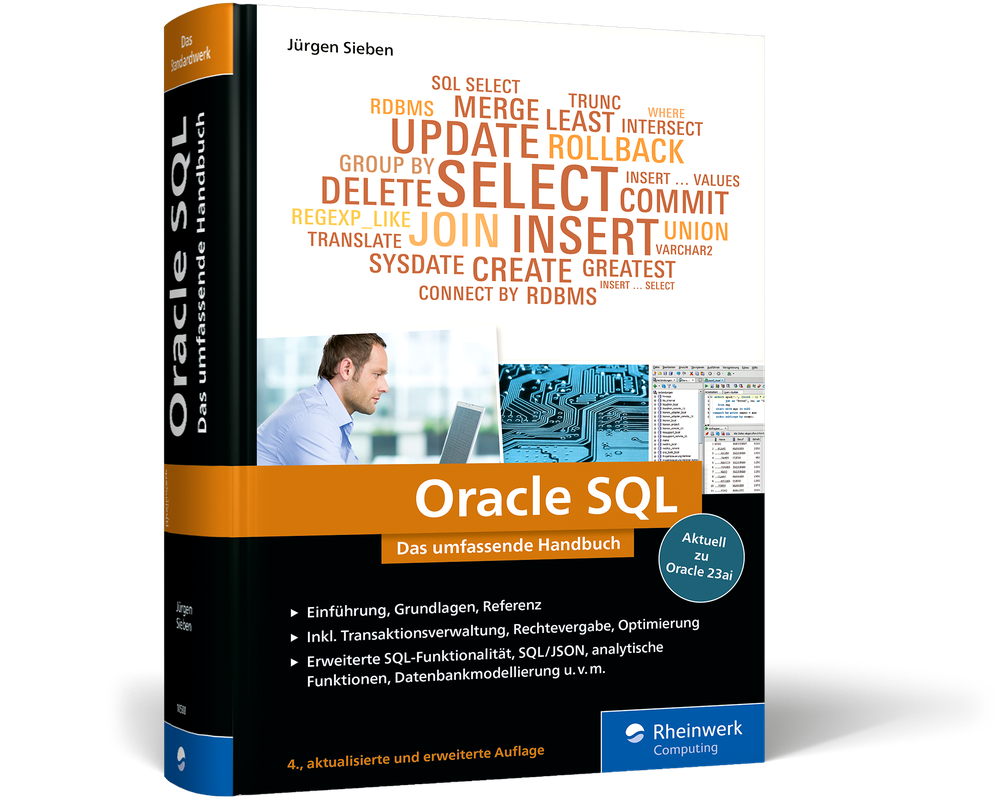
Oracle SQL (4. Auflg.)
Oracle SQL effizient einsetzen (4. Auflage)Wenn Sie sich professionell mit Oracle beschäftigen, sind umfassende Kenntnisse des entsprechenden SQL-Dialekts unverzichtbar. Jürgen Sieben, vielen bereits bekannt durch seine Bücher zu Oracle PL/SQL und Oracle APEX, hat nun auch sein Buch zu Oracle SQL aktualisiert. Er zeigt Ihnen darin, wie Oracle und SQL zusammenspielen und welche Strategien Sie nutzen können, um Daten in der Datenbank zu speichern, zu analysieren oder auch zu löschen. Die vierte Auflage berücksichtigt die umfassenden Erleichterungen und Syntaxänderung der Datenbankversion 23ai und gibt auch erfahrenen Anwendern einen profunden Einstieg in die verbesserten Möglichkeiten der Sprache SQL.Einstieg in Oracle SQLZu Beginn lernen Sie, wie Sie eine Datenbank planen und aufsetzen. Anschließend machen Sie sich mit der SQL-SELECT-Abfrage vertraut und lernen, wie Sie Zeilen- und Gruppenfunktionen einsetzen.2. Leistungsfähige AbfragenSie werden an typische Abfrageprobleme aus dem Alltag herangeführt und lernen Techniken zur Erzeugung von XML, zur Abfrage hierarchischer Daten, zur Bewältigung von Datumsangaben u. v. m.3. Datenmanipulation für ProfisIm weiteren Verlauf manipulieren Sie Daten und erzeugen Tabellen, Views und weitere Datenbankobjekte. So haben Sie jederzeit die volle Kontrolle über gespeicherte Daten.4. Weiterführende InformationenJürgen Sieben gibt Ihnen einen Einblick in fortgeschrittene Themen wie Data Warehousing, die Modellierung von Datenbanken und grundlegende administrative Themen.Aus dem InhaltSELECT-AnweisungZeilen & GruppenfunktionenLogische Verbindungen mit JoinsUnterabfragenAnalytische FunktionenDatenbankmanipulation/DatenbankobjekteViews, Tabellen, IndizesRechtevergabeSpezielle AbfragetechnikenXML-Abfragen, MODEL-KlauselLeseprobe (PDF-Link)
Adobe Illustrator (8. Auflg.)
Der praktische Adobe Illustrator-Einstieg: alle wichtigen Funktionen Schritt für Schritt erklärt. In 8. Auflage aus März 2025.Erstellen Sie beeindruckende Illustrationen, Diagramme und Logos mit Adobe Illustrator – mit unserem umfassenden Einsteigerbuch gelingt Ihnen der perfekte Start. Durch einfache Schritt-für-Schritt-Anleitungen und wertvolle Tipps erlernen Sie die Grundlagen im Handumdrehen und erhalten auch einen Einblick in fortgeschrittene Techniken. Erfahren Sie, wie Sie Vektorgrafiken erstellen, Farben und Typografie effektiv einsetzen und komplexe Designs realisieren. Und mit den neuen Möglichkeiten durch KI optimieren Sie Ihren Workflow und werden schnell kreativ. Schnell einsteigen, sofort loslegen Hier lernen Sie all die Grundlagen, Techniken und Werkzeuge kennen, die Sie für die Arbeit mit Illustrator benötigen. So erhalten Sie das Rüstzeug, um mit eigenen Kreationen zu überzeugen. Illustrator kreativ einsetzen Arbeiten Sie die Workshops des Buchs durch und setzen Sie das Gelernte direkt um: Sie erstellen Comics, Infografiken und Animationen für das Web und geben ihnen mit Verläufen, Mustern und Effekten den letzten Schliff. Sie werden sehen: Der Weg von der ersten Freihandzeichnung bis zu überzeugenden Illustrationen, Logos und Diagrammen ist ganz einfach. Fortgeschrittene Themen schnell beherrschen Kai Flemming bringt Ihnen auch die anspruchsvollen Funktionen von Illustrator nahe: 3D, Transparenzen, Perspektive, Effekte und die Zusammenarbeit mit den Programmen der Creative Cloud. Arbeiten mit den KI-Funktionen Optimieren Sie Ihren Workflow mit den neuen KI-Funktionen: Durch intelligente Werkzeuge wie das automatische Vektorisieren von Skizzen, das Generieren von Farbpaletten basierend auf Bildvorlagen und die Erstellung von Vektorgrafiken per Prompt können Sie Ihre Designs schneller und präziser umsetzen. Aus dem Inhalt: Die Arbeitsoberfläche, alle Werkzeuge Pfade zeichnen leicht gemacht Ebenen und Aussehen Objekte erstellen, transformieren, ausrichten, verzerren Generative KI, Generieren von Vektorgrafiken mit einem Text-Prompt Farben und Verläufe Neufärben von Grafiken per Prompt, Farberstellung per Text-Prompt Muster, Pinsel und Symbole, Transparenzen und Effekte Illustrator 3D Diagramme erstellen Ausgabe für Print, Web, Video Leseprobe (PDF-Link)
Embedded Systems
Embedded Systems entwickeln – von der Hardware über alle Ebenen bis zur konfigurierbaren Anwendung! Uwe Altenburg zeigt Ihnen in diesem Buch alles, was Sie brauchen, um ein Komplettsystem samt eigener Skriptsprache zu entwerfen und zu implementieren. Das praktische Konzept mit erprobten Lösungen, umfangreicher Software und vielen Hinweisen ist ideal für alle, denen fundierte, praxisrelevante Kenntnisse wichtig sind.Was Sie in diesem Buch lernenEigene Hardware entwerfen Hardware: Sie beginnen mit dem Schaltplan und entwerfen schließlich ein EMV-gerechtes Leiterplattenlayout für ein Breakout-Board mit dem Mikrocontroller STM32F412. Software entwickeln Komplexität: Am Anfang ist es nur ein Bootloader, dann ein einfaches Multitasking-Betriebssystem – und schließlich eine Skiptsprache mit Compiler. Schritt für Schritt werden die Aufgaben und Beispiele komplexer und interessanter. Externe Hardware ansteuern Zusammenspiel: Treiber für das weit verbreitete Modbus-RTU Protokoll sowie zum Ansteuern verschiedener LCD-Grafik-Displays runden die umfangreiche Software ab und ermöglichen vielfältige praktische Anwendungen. Testen und optimieren Qualität: Software ist immer nur so gut wie ihre Tests. Tausende davon auf Knopfdruck? Nutzen Sie die Möglichkeiten moderner Entwicklungswerkzeuge! Eine Software für ganz verschiedene Plattformen? Auch diese Herausforderung meistern Sie mit diesem Buch – und noch einige mehr!Aus dem InhaltEinführung in Embedded SystemsEntwicklungstools und TestumgebungSchaltungsentwurf und LeiterplattenlayoutBootloader-Funktion implementierenBetriebssystem mit MultitaskingEine Skriptsprache implementierenInterpreter und LaufzeitsystemLexikalische und syntaktische AnalyseCode-GenerierungLeseprobe (PDF-Link)

Data Structures in Depth Using C++
Understand and implement data structures and bridge the gap between theory and application. This book covers a wide range of data structures, from basic arrays and linked lists to advanced trees and graphs, providing readers with in-depth insights into their implementation and optimization in C++.You’ll explore crucial topics to optimize performance and enhance their careers in software development. In today's environment of growing complexity and problem scale, a profound grasp of C++ data structures, including efficient data handling and storage, is more relevant than ever. This book introduces fundamental principles of data structures and design, progressing to essential concepts for high-performance application.Finally, you’ll explore the application of data structures in real-world scenarios, including case studies and use in machine learning and big data. This practical, step-by-step approach, featuring numerous code examples, performance analysis and best practices, is written with a wide range of C++ programmers in mind. So, if you’re looking to solve complex data structure problems using C++, this book is your complete guide.WHAT YOU WILL LEARN* Write robust and efficient C++ code.* Apply data structures in real-world scenarios.* Transition from basic to advanced data structures* Understand best practices and performance analysis.* Design a flexible and efficient data structure library.WHO THIS BOOK IS FORSoftware developers and engineers seeking to deepen their knowledge of data structures and enhanced coding efficiency, and ideal for those with a foundational understanding of C++ syntax. Secondary audiences include entry-level programmers seeking deeper dive into data structures, enhancing their skills, and preparing them for more advanced programming tasks. Finally, computer science students or programmers aiming to transition to C++ may find value in this book.MAHMMOUD A. MAHDI is a computer science professional with over 18 years of experience in the field, specializing in machine learning, natural language processing, and programming languages, including C++. As an Assistant Professor in the Computer Science Department at Zagazig University, he has a deep understanding of both the theoretical and practical aspects of computer science, which he brings to his writing. His decision to write "Data Structures in Depth Using C++" stems from a desire to share his knowledge and experience in a way that bridges the gap between theory and practical application. This book aims to provide readers with a thorough understanding of data structures, optimizing performance, and applying them in real-world scenarios, making it a valuable resource for both students and professionals. This book is the culmination of his years of teaching, research, and hands-on experience in the field.Chapter 1: Introduction.- Chapter 2: Primary Building Blocks.- Chapter 3: Arrays and Dynamic Arrays.- Chapter 4: Linked List.- Chapter 5: Stack and Queue.- Chapter 6: Hash Tables.- Chapter 7: Trees.- Chapter 8: Graphs.- Chapter 9: Specialized Data Structures and Techniques.- Chapter 10: Applications and Real-World Examples.

Salesforce Platform App Builder Certification Companion
Salesforce Platform App Builder Certification, second edition is a comprehensive guide for budding and intermediate developers aiming to deepen their understanding of Salesforce. This book will start with the basics of Salesforce, shedding light on the limitations of its declarative platform and guiding readers on when to choose programmatic development or explore App Exchange solutions. The journey through the book will then delve into various configurations like data management and analytics, segueing into how to customize the application's appearance and functionality at an organizational level. Subsequent chapters will explore enterprise sandbox design patterns, process automation tools within Salesforce, and their appropriate applications. Finally, the book will tackle designing mobile-compatible applications and delve into Salesforce reporting.This book's uniqueness lies in its focus on a niche yet crucial area of Salesforce, a domain where existing literature is sparse and formal training can be prohibitively expensive. By incorporating real-world examples, practical exercises, and multiple-choice questions, this guide will equip readers for the Platform App Builder certification, offering a comprehensive and efficient preparation tool.This second edition of the book is especially timely, as it updates content to reflect the latest developments and features in Salesforce.WHAT YOU WILL LEARN* Gain expertise in designing, constructing, and launching tailor-made applications utilizing the Force.com platform's declarative customization features* Understand the Salesforce data model, field type (when to use which fields), and how and when to use an external object in Salesforce* Be familiar with security and settings in Salesforce.* Gain skills in creating data models, managing security, and automating business logic.* Prepare for the Platform App Builder exam.* Learn and understand the latest Salesforce interface, the Lightning Experience.RAKESH GUPTA is a seasoned Salesforce Solution Architect, known for his strategic expertise in developing and delivering Salesforce solutions across various industries, including Public Sector, Manufacturing, Accommodation and Food, and Financial Services. With over 14 years of experience in Salesforce development, consulting, and architecture, he has led successful implementations of complex, large-scale solutions. He is a 9-time Salesforce MVP and a member of the MVP Hall of Fame, recognized for his exceptional contributions to the Salesforce community.Rakesh is also a well-known author, speaker, and coach, having written multiple books and over 300 articles on Salesforce Flow, CRM Analytics, Lightning Web Component, Apex, and automation best practices. As co-host of the popular Automation Hour webinar series, he shares practical insights and advanced techniques to help Salesforce users minimize code usage and maximize platform efficiency. He is passionate about empowering individuals and organizations to achieve their goals through Salesforce and has trained over 2,100 professionals globally.Actively engaged in the Salesforce ecosystem, Rakesh leads the Mumbai Architect User Group in India and maintains the Automation Champion blog, a go-to resource for Salesforce automation.CHAPTER 1: SALESFORCE PLATFORM FUNDAMENTALS.- CHAPTER 2: UNDERPINNINGS OF DATA MODELING.- CHAPTER 3: PLATFORM SECURITY.- CHAPTER 4: CUSTOMIZING THE USER INTERFACE.- CHAPTER 5: IMPROVING AND ENRICHING DATA QUALITY.- CHAPTER 6: AUTOMATING BUSINESS PROCESSES.- CHAPTER 7: NUTS AND BOLTS OF APPLICATION DEVELOPMENT.- CHAPTER 8: POWER OF SOCIAL ANALYTICS.- APPENDIX A: ANSWERS TO HANDS-ON EXERCISES.