

Computer und IT

SAP-Lizenzmanagement
Dieses Buch bietet Ihnen praxisnahe Lösungen, um den passenden Lizenzierungsumfang zu wählen und Kosten zu sparen. Erhalten Sie praktische Einblicke in Vermessungsprozesse und Cloud-Monitoring und strategische Empfehlungen für effizientes Lizenzmanagement. Tauchen Sie in die vielschichtige SAP-Lizenzwelt ein, und optimieren Sie Ihre Lizenzstrategie. Aus dem Inhalt: On-Premise, Cloud, HybridKostenoptimierungLizenzen bei der Migration auf SAP S/4HANASAP-Metriken und -AuditsDatenbanklizenzierungBeschreibung der SAP-PreislistenSAP Digital AccessMonitoring und ComplianceVertragsmanagementSupport und WartungSTAR-Service/SAM4U 1. Grundlagen des SAP-Lizenzmanagements ... 29 1.1 ... Grundlagen des SAP-Lizenzmanagements und seine Bedeutung ... 29 1.2 ... Kaufmännische Begriffsbestimmungen ... 38 1.3 ... Was macht gute SAP-Lizenzmanager*innen aus? ... 43 1.4 ... Zusammenfassung ... 51 2. SAP-Lizenzmodelle je Deployment-Option ... 53 2.1 ... SAP-Editionen: Historie ... 54 2.2 ... Die grundsätzlichen SAP-Deployment-Modelle ... 55 2.3 ... SAP-Betriebsmodelle im Vergleich -- Unterschiede je Deployment-Modell ... 57 2.4 ... SAP im On-Premise-Deployment, das BYOL-Modell ... 61 2.5 ... SAP in der Cloud ... 64 2.6 ... Kommerzielle Modelle RISE with SAP und GROW with SAP ... 69 2.7 ... Erweiterungsmöglichkeiten in den SAP-S/4HANA-Editionen ... 78 2.8 ... Zusammenfassung ... 83 3. SAP-Dokumentation ... 87 3.1 ... SAP Preis- und Konditionenliste für SAP-Software und -Pflege ... 87 3.2 ... Feature Scope Description ... 89 3.3 ... SAP Trust Center ... 93 3.4 ... Zusammenfassung ... 107 4. SAP-Preisinformationen ... 109 4.1 ... SAP-Preislisten ... 110 4.2 ... Preisliste für On-Premise-SAP-Softwareprodukte ... 114 4.3 ... SAP-Cloud-Preisinformationen ... 131 4.4 ... Preisinformationen und Beschaffungswege für SAP-Cloud-Softwareprodukte ... 136 4.5 ... Checklisten für SAP-Lizenzmanager*innen ... 152 4.6 ... Zusammenfassung ... 155 5. SAP-Metriken ... 157 5.1 ... Übersicht über SAP-Metriken ... 157 5.2 ... SAP-Metriken On-Premise ... 159 5.3 ... Handlungsempfehlungen für abweichende Metriken ... 168 5.4 ... SAP-Metriken in der Cloud ... 169 5.5 ... Vermessungszeitpunkte und -zeiträume ... 188 5.6 ... Zusammenfassung ... 189 6. Besonderheiten der On-Premise-Lizenzierung ... 191 6.1 ... Verwaltung der SAP-Benutzer ... 191 6.2 ... Optimierung der SAP-Benutzerpflege ... 193 6.3 ... SAP-Berechtigungskonzepte ... 209 6.4 ... SAP NetWeaver Foundation for Third Party Applications ... 214 6.5 ... Zusammenfassung ... 220 7. Besonderheiten der Cloud-Lizenzierung ... 221 7.1 ... Infrastruktur und Betrieb bei RISE with SAP und GROW with SAP ... 221 7.2 ... Enterprise Agreements ... 234 7.3 ... Checkliste für die Beschaffung von Cloud-Services ... 243 7.4 ... EU-Access-Only-Option ... 245 7.5 ... SAP Integration Suite aus Lizenzsicht ... 246 7.6 ... Erweiterungsmöglichkeiten von SAP Order Forms ... 248 7.7 ... Zusammenfassung ... 255 8. Lizenzierung der SAP-HANA-Datenbank ... 257 8.1 ... Allgemeine Informationen zur SAP-HANA-Datenbank ... 257 8.2 ... Lizenzmodelle der SAP-HANA-Datenbank ... 258 8.3 ... SAP-HANA-Datenbankadministration ... 268 8.4 ... Vermessung und Compliance ... 282 8.5 ... Kaufmännische Aspekte der SAP-HANA-Datenbank ... 296 8.6 ... Zusammenfassung ... 298 9. Indirekte Nutzung ... 301 9.1 ... Definition und Hintergrund von indirekter Nutzung ... 302 9.2 ... Lizenzierungsmodelle für indirekte Nutzung im SAP-Umfeld ... 303 9.3 ... Digital Access in verschiedenen Deployment-Szenarien ... 307 9.4 ... SAP-Unterstützungsangebote ... 310 9.5 ... Indirect Static Read ... 314 9.6 ... Digital Access -- Beispiele und Einschätzungen ... 316 9.7 ... Drittanbieterwerkzeuge zur SAP-Lizenzoptimierung ... 317 9.8 ... Zusammenfassung ... 318 10. Lizenzierung besonderer SAP-Lösungen ... 321 10.1 ... KI-Services von SAP ... 321 10.2 ... SAP-Lösungen für das Personalwesen ... 329 10.3 ... SAP Extended Warehouse Management ... 335 10.4 ... SAP Document and Reporting Compliance ... 340 10.5 ... SAP for Utilities und SAP S/4HANA Utilities ... 345 10.6 ... SAP-Analytics-Lösungen ... 349 10.7 ... Drittanbieter-Softwareprodukte ... 359 10.8 ... Zusammenfassung ... 364 11. SAP-Lizenzvermessungsprozess im On-Premise-Umfeld ... 367 11.1 ... Prozess der SAP-Systemvermessung ... 368 11.2 ... Prozessschritte und Vermessungsergebnisse ... 372 11.3 ... Vermessung anderer SAP-Softwareprodukte ... 435 11.4 ... Zusammenfassung ... 437 12. Monitoring in der Cloud ... 439 12.1 ... SAP for Me ... 439 12.2 ... SAP BTP Cockpit ... 452 12.3 ... SAP BTPEA Consumption App ... 455 12.4 ... Zusammenfassung ... 459 13. STAR-Service und SAM4U ... 461 13.1 ... STAR-Service ... 461 13.2 ... SAM4U ... 476 13.3 ... Zusammenfassung ... 490 14. SAP-S/4HANA-Lizenztransformation ... 491 14.1 ... SAP-S/4HANA-Transformation ... 491 14.2 ... Product Conversion ... 498 14.3 ... Contract Conversion ... 503 14.4 ... Compatibility Packs ... 509 14.5 ... Extension Programs ... 512 14.6 ... Zusammenfassung ... 516 15. SAP-Vertragsmanagement ... 519 15.1 ... SAP-Vertragsanalyse: Wie lese ich einen SAP-Vertrag? ... 519 15.2 ... Allgemeine Geschäftsbedingungen ... 531 15.3 ... Verträge über Testlizenzen ... 538 15.4 ... Besondere Vertragskonstrukte bei SAP ... 539 15.5 ... Mergers, Akquisitionen und Carve-outs ... 542 15.6 ... Empfehlungen zum SAP-Vertragsmanagement ... 548 15.7 ... Zusammenfassung ... 556 16. SAP-Wartung und -Support ... 557 16.1 ... Supportmodelle ... 557 16.2 ... Customer Center of Expertise ... 564 16.3 ... Zusätzliche Supportangebote von SAP ... 567 16.4 ... Wartungsphasen von SAP-Software ... 574 16.5 ... Application Lifecycle Management ... 578 16.6 ... SAP-Releaseplanung ... 581 16.7 ... Ansprechpartner bei SAP ... 582 16.8 ... Zusammenfassung ... 583 Index ... 595

Instandhaltung mit SAP S/4HANA - Customizing
Jeder Maschinenpark ist anders. Lernen Sie mit diesem Buch, wie Sie die Instandhaltungsprozesse in Ihrem Unternehmen gestalten: von den Objektinformationen über die Fahrzeugverwaltung bis hin zu Meldungen und Aufträgen. Ausführliche Anleitungen und Screenshots zeigen im Detail, wie Sie die verschiedenen Customizing-Funktionen nutzen können, um SAP EAM (PM) an Ihre eigenen Geschäftsprozesse anzupassen. Aus dem Inhalt: OrganisationsstrukturenTechnische Plätze und ReferenzplätzeEquipmentsSerialnummernMaterialien und StücklistenMeldungs- und AuftragsabwicklungVorbeugende InstandhaltungSubcontractingKalibrierung von Prüf- und MessmittelnPool Asset ManagementSchichtnotizen und SchichtberichteSAP Fiori Launchpad Über dieses Buch ... 13 1. Das SAP-Projekt in der Instandhaltung ... 25 1.1 ... Wie Ihr SAP-Projekt in der Instandhaltung ablaufen könnte ... 25 1.2 ... Allgemeine Risiko- und Erfolgsfaktoren in SAP-Projekten: eine empirische Studie ... 33 1.3 ... Hinweise für Ihr Instandhaltungsprojekt ... 37 1.4 ... Zusammenfassung ... 76 2. Customizing der Organisationsstrukturen ... 79 2.1 ... Allgemeine SAP-Organisationseinheiten ... 80 2.2 ... Das Werk aus Instandhaltungssicht ... 90 2.3 ... Instandhaltungsspezifische Organisationseinheiten ... 94 2.4 ... Arbeitsplätze ... 97 2.5 ... Zusammenfassung ... 108 3. Customizing generischer Funktionen ... 109 3.1 ... Objektinformation ... 110 3.2 ... Statusverwaltung ... 113 3.3 ... Nummernvergabe ... 119 3.4 ... Garantien ... 124 3.5 ... Messpunkte und Zähler ... 127 3.6 ... Genehmigungen ... 132 3.7 ... Partner ... 133 3.8 ... Dokumente ... 140 3.9 ... Feldauswahl ... 153 3.10 ... Listvarianten ... 156 3.11 ... Mehrstufige Listen ... 161 3.12 ... Änderungsbelege ... 164 3.13 ... Zusammenfassung ... 166 4. Customizing der technischen Objekte ... 167 4.1 ... Technische Objekte ... 167 4.2 ... Technische Plätze und Referenzplätze ... 169 4.3 ... Equipments ... 181 4.4 ... Fahrzeugverwaltung ... 189 4.5 ... Verbindungen und Netze ... 197 4.6 ... Linear Asset Management ... 200 4.7 ... Material und Baugruppen ... 210 4.8 ... Serialnummern ... 232 4.9 ... Stücklisten ... 240 4.10 ... Zusammenfassung ... 249 5. Customizing des Auftragszyklus ... 251 5.1 ... Meldung ... 253 5.2 ... Auftrag ... 286 5.3 ... Rückmeldung ... 413 5.4 ... Zusammenfassung ... 424 6. Customizing der vorbeugenden Instandhaltung ... 427 6.1 ... Arbeitspläne ... 428 6.2 ... Wartungspläne ... 438 6.3 ... Zusammenfassung ... 445 7. Customizing sonstiger Geschäftsprozesse ... 447 7.1 ... Fremdabwicklung ... 448 7.2 ... Aufarbeitung ... 462 7.3 ... Subcontracting (Lohnbearbeitung) ... 478 7.4 ... Kalibrierung von Prüf- und Messmitteln ... 484 7.5 ... Pool Asset Management ... 518 7.6 ... Maintenance Event Builder ... 534 7.7 ... Schichtberichte und Schichtnotizen ... 536 7.8 ... Checklisten ... 548 7.9 ... Der phasenbasierte Auftragszyklus ... 572 7.10 ... Zusammenfassung ... 602 8. Konfigurieren eines SAP Fiori Launchpads für die Instandhaltung ... 605 8.1 ... Die Grundlagen von SAP Fiori ... 605 8.2 ... Das SAP Fiori Launchpad mit SAPUI5-Fiori-Apps konfigurieren ... 612 8.3 ... Tabellarische Übersicht über alle SAPUI5-Fiori-Apps ... 633 8.4 ... Das SAP Fiori Launchpad mit Nicht-SAPUI5-Fiori-Apps konfigurieren ... 639 8.5 ... Tabellarische Übersicht über alle Web-Dynpro-Apps ... 649 8.6 ... Zusammenfassung ... 651 9. Die Benutzerfreundlichkeit ... 653 9.1 ... Kategorie 1: Möglichkeiten des Benutzers ... 655 9.2 ... Kategorie 2: Möglichkeiten der IT ohne Programmierung ... 680 9.3 ... Kategorie 3: Möglichkeiten der IT mit Programmierung ... 708 9.4 ... Zusammenfassung ... 726 Anhang ... 727 A ... Projektpläne und Übersichten ... 729 B ... Der Autor ... 747 C ... Danksagung ... 749 Index ... 751

Cut-over-Management in SAP-Projekten
Der Cut-over ist der kritische Moment in SAP-Projekten: Dieses Buch liefert einen detaillierten Leitfaden vom Cut-over-Plan über die Absicherung bis zur Durchführung. Profitieren Sie von zahlreichen Praxistipps, Beispielplänen und Checklisten für einen erfolgreichen Systemwechsel. Aus dem Inhalt: ProjekttypenProjektorganisation und Go-live-Termin Erstellung des Cut-over-Plans Jira, MS Project, SAP Cloud ALMImplementierungs-, Konsolidierungs- und UpgradeprojekteDatenmigration und TransporteBerechtigungenTests und AbnahmenÄnderungsstoppPoint of No ReturnGo-/No-Go-EntscheidungFallback-Szenarien Einleitung ... 11 1. Einführung ... 15 2. Projekttypen und Cut-over ... 19 2.1 ... Implementierungsprojekte ... 21 2.2 ... Roll-out-Projekte ... 40 2.3 ... Standardisierung, Harmonisierung und Konsolidierung ... 47 2.4 ... Upgrade-Projekte ... 50 2.5 ... Konvertierungsprojekte ... 70 2.6 ... Implementierung zusätzlicher Lösungen ... 108 3. Projektorganisation ... 135 3.1 ... Organisatorische Einbindung ... 135 3.2 ... Terminliche Einbindung ... 139 4. Erstellung des Cut-over-Plans ... 143 4.1 ... Strategie, Konzept, Plan ... 143 4.2 ... Go-live-Termin ... 145 4.3 ... Inhalte und Gliederung des Cut-over-Plans ... 146 4.4 ... Mitarbeitende für die Erstellung des Cut-over-Plans ... 153 4.5 ... Auswahl der generellen Tools für das Cut-over-Management ... 155 4.6 ... Mit den Tools zur Cut-over-Durchführung arbeiten ... 157 5. Den Cut-over ausgestalten und absichern ... 197 5.1 ... Sub-Cut-over-Pläne ... 198 5.2 ... Kritischer Pfad ... 199 5.3 ... Point of no Return ... 202 5.4 ... Notfallszenarien ... 203 5.5 ... Fallback-Plan ... 204 5.6 ... Buchungsfreie Zeit ... 208 5.7 ... Transporte ... 212 5.8 ... Berechtigungen ... 213 5.9 ... Downtime-Optimierung ... 214 6. Flankierende Maßnahmen ... 217 6.1 ... Risikomanagement ... 217 6.2 ... Änderungsstopp (PLM) ... 223 6.3 ... Reduzierung des Einkaufsvolumens ... 224 6.4 ... Reduzierung des Vertriebsvolumens ... 226 6.5 ... Reduzierung des Produktionsvolumens ... 227 6.6 ... Periodenabschluss im Rechnungswesen ... 228 6.7 ... Inventur ... 229 6.8 ... Bestandshöhe versus Einführungsrisiko ... 229 6.9 ... Reduzierung offener Posten ... 230 6.10 ... Arbeitszeit ... 230 6.11 ... Kommunikation ... 232 6.12 ... Doppelpflege ... 235 7. Abnahmen ... 237 7.1 ... Abnahme des Cut-over-Plans und des Cut-over ... 237 7.2 ... Abnahme der Datenmigration ... 239 7.3 ... Abnahme durch die Wirtschaftsprüfungsgesellschaft ... 240 8. Durchführung des Cut-over ... 245 8.1 ... Cut-over-Tests ... 246 8.2 ... Infrastruktur ... 247 8.3 ... Mitarbeitende ... 249 8.4 ... Abwicklung ... 250 8.5 ... Live-Test ... 258 8.6 ... Go-/No-go-Entscheidung ... 259 9. Abschluss des Cut-over ... 269 9.1 ... Altsysteme ... 269 9.2 ... Dokumentation ... 272 9.3 ... Übergabe ... 273 10. Zusammenfassung ... 275 A. Checklisten ... 277 Die Autoren ... 287 Index ... 289

Oracle SQL
Wenn Sie sich professionell mit Oracle beschäftigen, sind umfassende Kenntnisse des entsprechenden SQL-Dialekts unverzichtbar. Jürgen Sieben, vielen bereits bekannt durch seine Bücher zu Oracle PL/SQL und Oracle APEX, hat nun auch sein Buch zu Oracle SQL aktualisiert. Er zeigt Ihnen darin, wie Oracle und SQL zusammenspielen und welche Strategien Sie nutzen können, um Daten in der Datenbank zu speichern, zu analysieren oder auch zu löschen. Die vierte Auflage berücksichtigt die umfassenden Erleichterungen und Syntaxänderung der Datenbankversion 23ai und gibt auch erfahrenen Anwendern einen profunden Einstieg in die verbesserten Möglichkeiten der Sprache SQL. Aus dem Inhalt: Konzept einer relationalen DatenbankGrundlagen: Auswahl und ProjektionDaten aus mehreren Tabellen lesen: JoinsZeilenfunktionen, Gruppenfunktionen, analytische FunktionenUnterabfragenDatenmanipulationViews, Tabellen und Indizes erstellenEinführung in die Rechteverwaltung von OracleHierarchische Abfragen und XML-AbfragenDie Model-KlauselRow Pattern MatchingPivotierung und AbfragetabellenArbeit mit großen DatenstrukturenPerformanzoptimierung von SQL-AbfragenNormalisierung von DatenmodellenHäufige Fehler der DatenmodellierungParameter verwaltenMultilinguale Daten 1. Materialien zum Buch ... 23 1. Einführung ... 25 1.1 ... Für wen ist dieses Buch geschrieben? ... 25 1.2 ... Aufbau des Buches ... 26 1.3 ... Anmerkung zur vierten Auflage ... 35 1.4 ... Anmerkung zur dritten Auflage ... 36 1.5 ... Anmerkung zur zweiten Auflage ... 37 1.6 ... Danksagung ... 38 TEIL I. Einführung und Grundlagen ... 39 2. Verwendete Werkzeuge und Skripte ... 41 2.1 ... Aufsetzen einer Beispieldatenbank ... 41 2.2 ... SQL Developer ... 44 2.3 ... Die Datenbankbenutzer ... 49 2.4 ... Online-Dokumentation und weiterführende Literatur ... 50 3. Konzept einer relationalen Datenbank ... 53 3.1 ... Die Idee der relationalen Speicherung ... 53 3.2 ... SQL -- die »Lingua franca« der Datenbank ... 70 3.3 ... Analyse vorhandener Datenmodelle ... 78 TEIL II. Die SELECT-Anweisung ... 85 4. Grundlagen: Auswahl und Projektion ... 87 4.1 ... Projektion ... 87 4.2 ... Auswahl ... 102 4.3 ... Sortieren von Zeilenmengen ... 116 4.4 ... Fallunterscheidungen ... 120 4.5 ... Die Klausel ROW LIMITING ... 128 4.6 ... Pseudospalten ... 131 4.7 ... Kommentare ... 137 4.8 ... Der NULL-Wert ... 139 4.9 ... Übungen ... 146 5. Daten aus mehreren Tabellen lesen: Joins ... 147 5.1 ... Einführung in Joins ... 148 5.2 ... Inner Join ... 149 5.3 ... Outer Join ... 160 5.4 ... Anti-Join, Semi-Join, Self-Join und Natural Join ... 169 5.5 ... Mengenoperationen mit UNION, MINUS und INTERSECT ... 175 5.6 ... Übungen ... 182 5.7 ... Zusatz: Weiterführende Join-Konzepte ... 183 6. Zeilenfunktionen ... 191 6.1 ... Grundsätzliches zu Funktionen ... 191 6.2 ... Zeichenfunktionen ... 195 6.3 ... Datumsfunktionen ... 219 6.4 ... Mathematische Funktionen ... 239 6.5 ... Allgemeine Funktionen ... 255 6.6 ... Eigene Funktionen erstellen: Berechnung der Fakultät ... 274 7. Gruppenfunktionen ... 279 7.1 ... Die Standardgruppenfunktionen ... 280 7.2 ... Gruppierung von Gruppenfunktionen ... 285 7.3 ... Spezielle Gruppenfunktionen ... 300 7.4 ... Wenn ungefähr ausreicht ... 308 7.5 ... Übungen ... 309 8. Unterabfragen ... 311 8.1 ... Die Unterabfrage in der WHERE-Klausel ... 311 8.2 ... Die Unterabfrage in der FROM-Klausel (Inner View) ... 322 8.3 ... Unterabfragen und Joins ... 329 8.4 ... Funktionen in der WITH-Klausel ... 334 8.5 ... Übungen ... 336 9. Analytische Funktionen ... 337 9.1 ... Die Idee der analytischen Funktionen ... 337 9.2 ... Gruppenfunktionen als analytische Funktionen ... 343 9.3 ... Analytische Rangfunktionen ... 354 9.4 ... Zusammenfassung ... 370 9.5 ... Übungen ... 371 TEIL III. Datenmanipulation und Erzeugung von Datenbankobjekten ... 373 10. Datenmanipulation ... 375 10.1 ... Die INSERT-Anweisung ... 376 10.2 ... Die UPDATE-Anweisung ... 382 10.3 ... Die DELETE-Anweisung ... 389 10.4 ... Die MERGE-Anweisung ... 390 10.5 ... Exkurs: Flashback ... 401 10.6 ... Sequenzen und Trigger ... 403 10.7 ... Ihr Sicherheitsnetz -- die Transaktion ... 409 10.8 ... Fehlerbehandlung während der Datenmanipulation ... 412 10.9 ... Multi-Table-Insert ... 420 11. Views erstellen ... 429 11.1 ... »Normale« Views ... 429 11.2 ... Einsatzbereiche von Views ... 440 11.3 ... Wer sollte Views verwenden? ... 445 11.4 ... Materialized View ... 447 12. Tabellen erstellen ... 463 12.1 ... Einfache Tabellen erstellen ... 463 12.2 ... Datentypen ... 480 12.3 ... Domänen ... 493 12.4 ... Annotationen und Kommentare ... 504 12.5 ... Weitere Tabellentypen ... 507 12.6 ... Erweiterung zur »aktiven Tabelle« ... 520 13. Indizes erstellen ... 527 13.1 ... Was ist ein Index? ... 528 13.2 ... Indextypen bei Oracle ... 532 13.3 ... Spezielle Indextypen ... 537 14. Aufbau einer Oracle-Datenbank ... 553 14.1 ... Wie arbeitet eine Oracle-Datenbank? ... 553 14.2 ... Datensicherheit ... 564 14.3 ... Zeichensatzcodierung ... 579 15. Anwendungsbeispiele ... 585 15.1 ... Delta-View ... 585 15.2 ... Dubletten bereinigen ... 596 15.3 ... Entscheidungstabellen ... 601 15.4 ... Entscheidungstabelle 2: »Expertensystem« ... 608 TEIL IV. Spezielle Abfragetechniken ... 613 16. Umgang mit Datum und Zeit ... 615 16.1 ... Erzeugung von Datumstypen ... 615 16.2 ... Erzeugung von Intervallen ... 622 16.3 ... Konvertierung von Zeichenketten in Datumstypen ... 626 16.4 ... Zeilenfunktionen für Zeitstempel mit Zeitzonen ... 632 16.5 ... Abfragen über die Zeit: Flashback ... 635 17. Hierarchische Abfragen ... 641 17.1 ... Das Problem ... 641 17.2 ... Lösung mit der CONNECT BY-Klausel ... 644 17.3 ... Erweiterungen der CONNECT BY-Klausel ... 651 17.4 ... Hierarchische Abfragen nach ISO-Standard ... 662 18. Arbeiten mit XML ... 675 18.1 ... XML-Instanzen mit SQL/XML erzeugen ... 678 18.2 ... Bearbeitung von XML-Instanzen in SQL/XML ... 696 18.3 ... Extraktion relationaler Daten aus XML ... 702 18.4 ... Speicherung von XML in der Datenbank ... 707 18.5 ... Der Datentyp XMLTYPE ... 716 19. JSON ... 725 19.1 ... Übersicht über JSON ... 725 19.2 ... Oracles JSON-Unterstützung ... 728 19.3 ... Abfragen gegen JSON-Instanzen ... 731 19.4 ... JSON-Funktionen und -Operatoren ... 736 19.5 ... Erzeugung von JSON aus relationalen Daten ... 742 19.6 ... Relationale Daten aus JSON extrahieren ... 752 19.7 ... JSON-Instanzen bearbeiten ... 758 19.8 ... JSON Data Guide ... 764 19.9 ... JSON-Schema ... 767 19.10 ... JSON Duality Views ... 770 20. Pivotieren von Daten ... 777 20.1 ... Pivotierung mit Gruppenfunktionen ... 778 20.2 ... Pivotierung mit der PIVOT-Klausel ... 780 20.3 ... Unpivotierung mit Gruppenfunktionen ... 787 20.4 ... Unpivotierung mit der UNPIVOT-Klausel ... 790 21. Row Pattern Matching ... 793 21.1 ... Die Grundlagen ... 793 21.2 ... Syntaktische Grundlagen ... 795 21.3 ... Erweiterungen zur Grundsyntax ... 801 21.4 ... Weitere Beispiele und Optionen ... 809 21.5 ... Zusammenfassung ... 817 22. Die MODEL-Klausel ... 819 22.1 ... Lösung des Problems mit der MODEL-Klausel ... 822 22.2 ... Partitionierung, Dimension und Messung ... 825 22.3 ... Regeln ... 828 22.4 ... Weiterführende Konzepte ... 838 22.5 ... Bewertung der MODEL-Klausel ... 846 23. SQL Property Graphen ... 849 23.1 ... Einführung in Graphen ... 849 23.2 ... Erstellen von Property-Graphen ... 851 23.3 ... SQL/PGQ ... 857 23.4 ... Beurteilung ... 863 24. Objektorientierung in der Oracle-Datenbank ... 865 24.1 ... Einführung in die Objektorientierung ... 866 24.2 ... SQL-Typen ... 873 24.3 ... Multiset-Operatoren und -Bedingungen ... 887 24.4 ... Objektorientierte Tabellen ... 890 24.5 ... Beurteilung ... 902 25. Performanzoptimierung von SQL ... 905 25.1 ... Sagen Sie der Datenbank, was Sie wollen! ... 905 25.2 ... Nutzen Sie alle verfügbaren Optionen von SQL ... 909 25.3 ... Vermeiden Sie Umgebungswechsel ... 913 25.4 ... Die Verwendung von Indizes ... 921 Datenbankmodellierung ... 933 26. Die Grundlagen der Datenmodellierung ... 935 26.1 ... Normalisierung ... 935 26.2 ... Tabellendesign ... 939 26.3 ... Primärschlüssel ... 942 26.4 ... Fremdschlüssel ... 946 26.5 ... Überlegungen zu Datentypen und zur Namenskonvention in Tabellen ... 947 26.6 ... Zusammenfassung ... 955 27. Datenmodellierung von Datum und Zeit ... 959 27.1 ... Datumsbereiche ... 959 27.2 ... Analyse gegen eine Zeitdimension ... 975 27.3 ... Historisierung und Logging ... 979 28. Speicherung hierarchischer Daten ... 995 28.1 ... Hierarchie mittels zusätzlicher Hierarchietabelle ... 995 28.2 ... Closure Table ... 999 28.3 ... Weitere Modelle ... 1003 28.4 ... Zusammenfassung ... 1004 29. Datenwarenhaus ... 1007 29.1 ... Star-Schema und Indizierung ... 1010 29.2 ... Dimensionen ... 1013 29.3 ... Arbeiten mit dem Star-Schema ... 1017 29.4 ... Analytische Views ... 1022 29.5 ... Zusammenfassung ... 1035 30. Abbildung objektorientierter Strukturen ... 1037 30.1 ... Vererbung ... 1038 30.2 ... Kollektionen ... 1043 30.3 ... Alternative Lösungsansätze ... 1044 30.4 ... Zusammenfassung ... 1046 31. Internationalisierung ... 1049 31.1 ... Oracle im multilingualen Kontext ... 1049 31.2 ... Datenmodelle zur Übersetzung von Stammdaten ... 1057 Index ... 1073

Computer-Netzwerke
Computer-Netzwerke sind überall. Für Ihren Beruf oder Ihre Ausbildung brauchen Sie daher ein solides Fundament zu modernen Netzwerk-Themen. Mit diesem Buch lernen Sie die Schichten des OSI-Modells kennen und machen sich mit den Protokollen und Techniken moderner Netze vertraut. Mit seiner langjährigen Erfahrung gibt Ihnen unser Autor Harald Zisler zahlreiche nützliche Tipps für die Praxis und hilft Ihnen, den Aufbau und die Funktionsweise moderner Rechnernetze zu verstehen. Aus dem Inhalt: TCP/IP, MAC-AdressenIPv4- und IPv6-AdressenInternetprotokolle: TCP, UDP, QUIKDHCP und RoutingAdressierung im NetzwerkVirtuelle Netze (VLAN)Datei-, Druck- und NachrichtendienstePAT/NATSMB/CIFS, NFS, HTTP, SMTPNFS, SSH, SFTP, SCP, VoIPLichtwellenleiter, Kabel und VerbinderFunktechnik, WLAN, PLCSwitches, Bridges, HubsRouter, NetzwerkkartenNetzwerkspeicherFirewall und ProxyserverPlanung und Aufbau 1. Grundlagen moderner Netzwerke ... 19 1.1 ... Definition und Eigenschaften von Netzwerken ... 20 1.2 ... Die Netzwerkprotokollfamilie TCP/IP ... 22 1.3 ... OSI-Schichtenmodell und TCP/IP-Referenzmodell ... 23 1.4 ... Räumliche Abgrenzung von Netzwerken ... 26 1.5 ... Regel- und Nachschlagewerk für TCP/IP-Netze (RFCs) ... 27 1.6 ... Prüfungsfragen ... 28 2. Netzwerktechnik ... 29 2.1 ... Elektrische Netzwerkverbindungen und -standards ... 30 2.2 ... Lichtwellenleiter, Kabel und Verbinder ... 60 2.3 ... Datenübertragung per Funktechnik ... 80 2.4 ... Technische Anbindung von Rechnern und Netzen ... 85 2.5 ... Weitere Netzwerkkomponenten ... 85 2.6 ... Zugriffsverfahren ... 86 2.7 ... Prüfungsfragen ... 87 3. Adressierung im Netzwerk -- Theorie ... 89 3.1 ... Physikalische Adresse (MAC-Adresse) ... 89 3.2 ... Ethernet-Pakete (Ethernet-Frames) ... 91 3.3 ... Zusammenführung von MAC- und IP-Adresse ... 92 3.4 ... IP-Adressen ... 97 3.5 ... IPv4-Adressen ... 98 3.6 ... IPv6-Adressen ... 110 3.7 ... Internetprotokoll ... 121 3.8 ... Prüfungsfragen ... 125 4. MAC- und IP-Adressen in der Praxis ... 127 4.1 ... MAC-Adressen ... 127 4.2 ... IP-Adressen setzen ... 130 4.3 ... Verwendung von Rechnernamen ... 149 4.4 ... Überprüfung der Erreichbarkeit und Namensauflösung von Hosts ... 163 4.5 ... Zentrale Netzwerkgeräte auf Sicherungs- und Vermittlungsebene ... 177 4.6 ... Switches -- Verbindungsknoten ohne Kollisionen ... 179 4.7 ... Routing -- Netzwerkgrenzen überschreiten ... 197 4.8 ... Multicast-Routing ... 206 4.9 ... Praxisübungen ... 206 5. Steuer- und Fehlercodes mit ICMP und ICMPv6 übertragen ... 209 5.1 ... ICMP-Pakete (IPv4) ... 210 5.2 ... ICMPv6-Pakete ... 211 6. Datentransport mit TCP und UDP ... 215 6.1 ... Transmission Control Protocol (TCP) ... 215 6.2 ... User Datagram Protocol (UDP) ... 221 6.3 ... QUIC ... 222 6.4 ... Nutzung von Services mittels Ports und Sockets ... 223 6.5 ... Die Firewall ... 230 6.6 ... Der Proxyserver ... 236 6.7 ... Port and Address Translation (PAT), Network Address Translation (NAT) ... 239 6.8 ... Praxis ... 241 6.9 ... Prüfungsfragen ... 244 7. Kommunikation und Sitzung ... 247 7.1 ... SMB/CIFS (Datei-, Druck- und Nachrichtendienste) ... 247 7.2 ... Network File System (NFS) ... 260 7.3 ... HTTP für die Informationen im Internet ... 264 7.4 ... Mail-Transport ... 274 7.5 ... Secure Shell (SSH) und Secure Socket Layer (SSL), Transport Layer Security (TLS) ... 283 7.6 ... Praxisübungen ... 286 8. Netzwerkanwendungen ... 289 8.1 ... Datenübertragung ... 289 8.2 ... SSH, SFTP und SCP: Schlüssel erzeugen zur Erhöhung der Sicherheit oder zur kennwortfreien Anmeldung ... 299 8.3 ... Aufbau eines SSH-Tunnels ... 301 8.4 ... Fernsitzungen ... 302 8.5 ... Telefonie-Anwendungen über Netzwerke (VoIP) ... 313 9. Netzwerkpraxis ... 321 9.1 ... Planung von Netzwerken ... 321 9.2 ... Netzwerke mit Kupferkabeln ... 328 9.3 ... Netzwerke mit Glasfaserkabeln ... 332 9.4 ... Geräte für Netzwerkverbindungen und -dienste ... 336 9.5 ... Einbindung externer Netzwerkteilnehmer ... 372 9.6 ... Sicherheit ... 373 9.7 ... Prüf- und Diagnoseprogramme für Netzwerke ... 394 Anhang ... 413 A ... Fehlertafeln ... 413 B ... Auflösungen zu den Prüfungsfragen ... 421 C ... Netzwerkbegriffe kurz erklärt ... 427 Index ... 441

Smart Factory mit SAP
Machen Sie sich auf den Weg zur intelligenten Fabrik! Dieses Buch zeigt Ihnen, welche Schritte Sie unternehmen müssen, um Ihre Fertigungsprozesse zu digitalisieren. Sie lernen die wichtigsten Einsatzfelder und SAP-Werkzeuge für die Umsetzung von Smart-Factory-Szenarien in der Fertigungsindustrie kennen. Finden Sie heraus, welche Tools und Best Practices Sie in jeder Phase des Produktlebenszyklus unterstützen, und welche Rollen Integration und Analytics dabei spielen können. Aus dem Inhalt: SAP Manufacturing Integration and Intelligence (MII)SAP Manufacturing Execution (ME)SAP Plant Connectivity (PCo)SAP Digital Manufacturing Cloud (DMC)SAP Business Technology Platform (BTP)SAP Extended Warehouse Management (EWM)SAP S/4HANA, SAP Fiori und SAPUI5SAP Engineering Control CenterEngineering Change Request ManagementIntegriertes Produkt- und Prozess-Engineering (iPPE)Dokumentenmanagement (DMS)Production Engineering and Operations (PEO)SAP Enterprise Product Development (EPD)SAP Product Lifecycle Management (PLM) Vorwort ... 15 Einleitung ... 17 1. Grundlagen der Smart Factory ... 23 1.1 ... Was ist Industrie 4.0? ... 23 1.2 ... Phasen des Digitalisierungsprojekts: von der Idee bis zur Umsetzung ... 32 1.3 ... Voraussetzungen für das Digitalisierungsprojekt ... 38 1.4 ... Vorgehensweise bei der Zielsetzung ... 39 1.5 ... Unternehmensdigitalisierung: Chance oder Risiko? ... 42 1.6 ... Häufige Fehler bei der Unternehmensdigitalisierung ... 44 1.7 ... Zusammenfassung ... 52 2. Digitalisierung der Produktion ... 53 2.1 ... Change Management ... 53 2.2 ... Product Lifecycle Management ... 70 2.3 ... Produktionsplanung ... 79 2.4 ... Manufacturing Execution ... 89 2.5 ... Negativbeispiel eines Digitalisierungsprojekts ... 108 2.6 ... Zusammenfassung ... 113 3. Product Lifecycle Management ... 115 3.1 ... Was ist Product Lifecycle Management? ... 116 3.2 ... SAP-Werkzeuge für das PLM ... 128 3.3 ... Digital Thread und Digital Twin ... 138 3.4 ... Dokumentenmanagement ... 144 3.5 ... Änderungsmanagement ... 155 3.6 ... Anforderungsdefinitionen ... 168 3.7 ... Soll-Definition ... 170 3.8 ... Auftragsabwicklung ... 184 3.9 ... Die Produktlebensakte ... 187 3.10 ... Ausmusterung und Abkündigung ... 192 3.11 ... Datenmodell ... 194 3.12 ... Zusammenfassung ... 200 4. Smart Factory ... 201 4.1 ... Was ist die Smart Factory? ... 202 4.2 ... SAP-Applikationen für das Manufacturing ... 202 4.3 ... Aktuelle Technologien ... 208 4.4 ... Bewährte Verfahren zur Optimierung einer Smart Factory ... 220 4.5 ... Smarte Planung ... 230 4.6 ... Smarte Logistik ... 234 4.7 ... Smart Maintenance ... 238 4.8 ... Smart Production ... 244 4.9 ... Zusammenfassung ... 258 5. System- und Technologieintegration ... 259 5.1 ... Vertikale Systemintegration ... 259 5.2 ... Horizontale Systemintegration ... 279 5.3 ... Hardwareintegration ... 289 5.4 ... Datenmengen und Datengranularität ... 295 5.5 ... Überlegungen vor dem Start der Integration ... 304 5.6 ... Zusammenfassung ... 311 6. Mitarbeiterintegration ... 313 6.1 ... Benutzerfreundliche Software ... 314 6.2 ... Change Management und Mitarbeiterakzeptanz ... 322 6.3 ... Praxisbeispiele ... 328 6.4 ... Zusammenfassung und Ausblick ... 353 7. Analytics ... 355 7.1 ... Live-Auswertungen ... 355 7.2 ... Kurzfristige Auswertungen ... 366 7.3 ... Langfristige Auswertungen ... 370 7.4 ... Big-Data-Analysen ... 372 7.5 ... Process Mining ... 376 7.6 ... Künstliche Intelligenz ... 383 7.7 ... Zusammenfassung ... 389 8. Ihr Weg zur Smart Factory ... 391 8.1 ... Was Sie vor der Planung Ihres Digitalisierungsprojekts bedenken sollten ... 391 8.2 ... Planung Ihres Digitalisierungsprojekts ... 400 8.3 ... Start Ihres Digitalisierungsprojekts ... 419 8.4 ... Zusammenfassung ... 421 Das Autorenteam ... 423 Index ... 427

Excel - Formeln und Funktionen
Dieses übersichtlich gestaltete Nachschlagewerk hilft Ihnen bei der täglichen Arbeit mit Excel. Egal, ob Text- und Datumsfunktionen, statistische Funktionen, Finanzmathematik, Matrix- oder Datenbankfunktionen, hier finden Sie schnell und zuverlässig die von Ihnen benötigte Hilfestellung. Anhand anschaulicher Beispiele aus der Praxis erfahren Sie, wie Sie die benötigte Funktion konkret anwenden. Sämtliche Formeln und Funktionen des Tabellenkalkulationsprogramms bis einschließlich Excel 2024! Aus dem Inhalt: Einstieg in Berechnungen mit ExcelBerechnungstoolsFinanzmathematische FunktionenDatums- und ZeitfunktionenMathematische und trigonometrische FunktionenTechnische FunktionenStatistische FunktionenKompatible statistische FunktionenNachschlage- und VerweisfunktionenDatenbankfunktionenCube-FunktionenTextfunktionenLogische FunktionenInformationsfunktionenZusätzliche Tools für die DatenanalyseEntwicklung eigener FunktionenAnhang: Alphabetische Liste der Funktionen, Funktionsliste Deutsch–Englisch/Englisch–Deutsch Vorwort ... 31 1. Einstieg in Berechnungen mit Excel ... 37 1.1 ... Hinweise zum Programmstart ... 37 1.2 ... Excel auf dem Touchscreen ... 39 1.3 ... Hinweise zur Dateneingabe ... 43 1.4 ... Die Rolle der Zahlenformate ... 60 1.5 ... Formellose Berechnungen ... 71 1.6 ... Einsatz von Formeln ... 73 1.7 ... Arbeit mit Operatoren ... 76 1.8 ... Arbeit mit verknüpften Datentypen ... 78 1.9 ... Hinweise zu den Grundrechenarten ... 85 1.10 ... Texte verketten ... 87 1.11 ... Hinweise zu logischen Formeln ... 88 1.12 ... Formeln mit Bezugsoperatoren ... 88 1.13 ... Tabellenfunktionen ... 89 1.14 ... Eingabe von Formeln und Funktionen ... 92 1.15 ... Einsatz von relativen und absoluten Bezügen ... 111 1.16 ... Einsatz von Formeln in Tabellen ... 116 1.17 ... Arbeit mit benannten Bereichen ... 123 1.18 ... Matrixberechnungen ... 130 1.19 ... Verfahren der Fehlervermeidung ... 137 1.20 ... Berechnungseinstellung und -optimierung ... 152 1.21 ... Arbeit mit bedingten Formaten ... 155 1.22 ... Exkurs über die Visualisierung von Daten: Sparklines und Diagramme ... 158 2. Berechnungstools ... 173 2.1 ... Zielwertsuche ... 173 2.2 ... Lösungen mit dem Solver suchen ... 175 2.3 ... Was wäre, wenn ... mit Datentabellen ... 183 2.4 ... Arbeit mit Szenarios ... 187 3. Finanzmathematische Funktionen ... 195 3.1 ... Einsatzbereiche der finanzmathematischen Funktionen ... 196 3.2 ... Zur Berechnung von Zins und Zinseszins ... 198 3.3 ... Häufig benötigte Argumente und ihr Zusammenhang ... 201 3.4 ... Berechnungen zu Darlehen ... 203 3.5 ... Die Berechnung von Abschreibungen ... 204 3.6 ... Funktionen für Wertpapierberechnungen ... 206 3.7 ... Referenz der finanzmathematischen Funktionen ... 210 4. Datums- und Zeitfunktionen ... 281 4.1 ... Einsatzbereich der Datums- und Zeitfunktionen ... 281 4.2 ... Periodische Datumsreihen berechnen ... 283 4.3 ... Periodische Zeitreihen berechnen ... 285 4.4 ... Uhrzeit und Dauer ... 286 4.5 ... Tabellen für Arbeitszeiterfassung ... 288 4.6 ... Referenz der Datums- und Zeitfunktionen ... 295 5. Mathematische und trigonometrische Funktionen ... 329 5.1 ... Einsatzbereiche ... 330 5.2 ... Zu den trigonometrischen Funktionen ... 333 5.3 ... Zu den hyperbolischen Funktionen ... 337 5.4 ... Referenz der mathematischen Funktionen ... 339 6. Technische Funktionen ... 427 6.1 ... Einsatzbereiche der technischen Funktionen ... 428 6.2 ... Besselfunktionen ... 428 6.3 ... Umwandlungen zwischen Zahlensystemen ... 429 6.4 ... Umwandeln von Maßeinheiten ... 431 6.5 ... Rechenoperationen mit komplexen Zahlen ... 431 6.6 ... Referenz der technischen Funktionen ... 435 7. Statistische Funktionen ... 479 7.1 ... Einsatzbereiche für statistische Funktionen ... 480 7.2 ... Stichproben und Grundgesamtheiten ... 483 7.3 ... Zufallsvariable und Wahrscheinlichkeit ... 484 7.4 ... Korrelation ... 487 7.5 ... Regressionsanalyse ... 488 7.6 ... Statistische Tests ... 492 7.7 ... Verteilungsfunktionen ... 493 7.8 ... Jüngere und geänderte Funktionen ... 497 7.9 ... Referenz der statistischen Funktionen ... 502 8. Kompatible Funktionen ... 659 8.1 ... Hinweise zu dieser Kategorie ... 660 8.2 ... Referenz der kompatiblen Funktionen ... 662 9. Nachschlage- und Verweisfunktionen ... 697 9.1 ... Einsatzbereiche für Nachschlage- und Verweisfunktionen ... 697 9.2 ... Arbeiten mit Verweisfunktionen ... 698 9.3 ... Daten filtern, sortieren und reduzieren ... 700 9.4 ... Einsatz der Funktion INDEX() ... 704 9.5 ... Einsatz der Funktion WAHL() ... 705 9.6 ... Bilder als Zellinhalt einfügen ... 707 9.7 ... Weitere Funktionen für Matrizen ... 707 9.8 ... Referenz der Nachschlage- und Verweisfunktionen ... 708 10. Datenbankfunktionen ... 763 10.1 ... Einsatzbereiche für Datenbankfunktionen ... 763 10.2 ... Referenz der Datenbankfunktionen ... 771 11. Cube-Funktionen ... 781 11.1 ... Einsatzbereiche für Cube-Funktionen ... 781 11.2 ... Zugriff auf Cubes ... 782 11.3 ... Referenz der Cube-Funktionen ... 788 12. Textfunktionen ... 795 12.1 ... Einsatzbereiche der Textfunktionen ... 795 12.2 ... Referenz der Textfunktionen ... 803 13. Logische Funktionen ... 845 13.1 ... Einsatzbereiche der logischen Funktionen ... 845 13.2 ... Prüfen mit der WENN()-Funktion ... 847 13.3 ... Bewertungen erzeugen ... 849 13.4 ... Bedingte Berechnungen ... 850 13.5 ... Bedingte Textanzeige ... 851 13.6 ... Prüfungen mit komplexen Bedingungen ... 852 13.7 ... Bedingte Zuordnung ... 853 13.8 ... Mehrfachverzweigungen ... 854 13.9 ... Bedingte Formate ... 857 13.10 ... Funktionen für Matrizen ... 858 13.11 ... LET() und LAMBDA() ... 858 13.12 ... Referenz der logischen Funktionen ... 861 14. Informationsfunktionen ... 875 14.1 ... Einsatzbereiche für Informationsfunktionen ... 875 14.2 ... Referenz der Informationsfunktionen ... 877 15. Webfunktionen ... 899 15.1 ... Einsatzbereich der Webfunktionen ... 899 15.2 ... Referenz der Webfunktionen ... 900 16. Analyse mit Pivot-Tabellen und -Diagrammen ... 907 16.1 ... Eine Pivot-Tabelle anlegen ... 908 16.2 ... Layout der Pivot-Tabelle ... 912 16.3 ... Elementfilter und Datenschnitte ... 914 16.4 ... Ändern der Berechnungsart ... 915 16.5 ... Auswertungen mit Pivot-Diagrammen ... 917 16.6 ... Funktionen bei Datenmodellen anwenden ... 919 17. Zusätzliche Tools für die Datenanalyse ... 921 17.1 ... Aktivieren der Analyse-Funktionen ... 921 17.2 ... Anova-Varianzanalyse mit einem Faktor ... 923 17.3 ... Anova: Zweifaktorielle Varianzanalyse mit Messwiederholung ... 927 17.4 ... Anova: Zweifaktorielle Varianzanalyse ohne Messwiederholung ... 928 17.5 ... Korrelation ... 929 17.6 ... Kovarianz ... 930 17.7 ... Populationskenngrößen ... 931 17.8 ... Exponentielles Glätten ... 932 17.9 ... Zwei-Stichproben F-Test ... 933 17.10 ... Fourieranalyse ... 934 17.11 ... Histogramme für die Darstellung von Häufigkeiten ... 935 17.12 ... Gleitender Durchschnitt ... 937 17.13 ... Zufallszahlengenerierung ... 938 17.14 ... Rang und Quantil ... 940 17.15 ... Regression ... 941 17.16 ... Stichprobenziehung ... 943 17.17 ... t-Test-Varianten ... 944 17.18 ... Stichprobentest mit bekannten Varianzen ... 947 18. Entwicklung eigener Funktionen ... 949 18.1 ... Funktionen mit VBA erstellen ... 949 18.2 ... Hinweise zu VBA ... 952 18.3 ... Eine komfortablere Funktion für die Zinseszinsberechnung ... 963 18.4 ... Anlegen einer Blattliste ... 965 18.5 ... Funktion zur Berechnung des Osterdatums ... 967 18.6 ... Alternative Funktionen für die Streuung ... 968 18.7 ... Auf den Nettobetrag zurückrechnen ... 969 18.8 ... Eigene Funktionen in einem Add-In verpacken ... 970 Anhang ... 973 A ... Alphabetische Liste der Tabellenfunktionen ... 973 B ... Funktionen im Überblick ... 1009 Stichwortverzeichnis ... 1017

Word 2024
Microsoft Word 2024 komplett Bild für Bild erklärt! Dieses durchgehend farbige Buch zeigt Ihnen, wie Sie alles machen können, was man mit Word so wunderbar machen kann: Texte schreiben, gestalten, drucken, versenden u. v. m. Mit diesen Schritt-für-Schritt-Anleitungen gelingt Ihnen all das spielend. Außerdem bietet das Buch viele Vorlagen und Beispiele, die Sie direkt übernehmen können. Unsere Autorin Christine Peyton konzentriert sich ganz auf Ihre Bedürfnisse als Anfänger oder Anfängerin. Freundlich, verständlich und kompetent. Aus dem Inhalt: Was ist wo in Word?Texte schreiben und korrigierenTexte gestalten und formatierenNummerierungen und Aufzählungen einfügenBilder und Effekte verwendenTabellen und Diagramme erstellenBriefe und Flyer gestaltenInhaltsverzeichnis und Querverweise anlegenKopfzeilen und Seitenzahlen einfügenMit Vorlagen arbeitenDokumente sicher speichernProblemlos drucken 1. Bevor es losgeht ... 10 So funktioniert die Tastatur ... 12 So funktioniert die Maus ... 14 So benutzen Sie das Touchpad am Notebook ... 16 Tricks, die den Umgang mit Word erleichtern ... 18 Word starten ... 20 Word über einen Touchscreen bedienen ... 22 2. Was ist wo in Word? ... 24 Ein erster Überblick ... 26 Die einzelnen Registerkarten -- wo findet sich was? ... 28 Registerkarten ein- und ausblenden ... 33 Die verschiedenen Ansichten ... 34 Praktisch: der Lesemodus und der Plastische Reader ... 36 Den Bildschirm einrichten ... 38 3. Dokumente anlegen, öffnen und speichern ... 40 Ein neues Dokument erstellen ... 42 Eine gespeicherte Datei öffnen ... 44 Auf vorhandenen Vorlagen aufbauen ... 46 Eine Datei speichern -- auf dem PC oder auf OneDrive ... 48 Dokumente auf OneDrive aufrufen ... 54 Die Dateiformate von Word ... 56 PDF-Dateien in Word öffnen und bearbeiten ... 60 4. Texte schreiben und bearbeiten ... 62 Text eingeben ... 64 Fehlerfreie Texte -- die (Auto-)Korrektur in Word ... 66 Silbentrennung ... 70 Text markieren ... 72 Text kopieren und verschieben ... 76 Textstellen suchen ... 78 Text ersetzen ... 80 Mit Schnellbausteinen arbeiten ... 82 Die Seite einrichten ... 84 5. Text gestalten und formatieren ... 86 Die Schriftart festlegen ... 86 Die Schriftgröße festlegen ... 89 Eine Schriftfarbe festlegen ... 92 Textabschnitte ordentlich ausrichten ... 94 Abstände zwischen Absätzen festlegen ... 96 Abstände zwischen Zeilen festlegen ... 97 Text mit Hervorhebungen und Effekten versehen ... 100 Rahmen und Linien um Texte setzen ... 102 Schattierungen zuweisen ... 104 Seiten unterschiedlich formatieren -- Abschnittswechsel ... 106 Fußnoten einfügen ... 107 Kopf- und Fußzeilen anlegen und bearbeiten ... 110 Seitenzahlen einfügen ... 114 Kopfzeilen für einzelne Kapitel anlegen ... 116 Mit Formatvorlagen arbeiten ... 117 Vorhandene Formatvorlagen ändern ... 120 Eigene Dokumentvorlagen erstellen ... 122 Eigene Dokumentvorlagen aufrufen ... 124 Arbeit im Team -- Kommentare ... 125 Kommentare kommentieren ... 128 Text sichtbar korrigieren ... 130 6. Drucken ... 132 Die Druckvorschau im Dialog »Drucken« ... 132 Optionen für den Ausdruck ... 136 Einzelne Seiten drucken ... 140 Tipps und Tricks beim Drucken ... 142 Word-Dokumente extern drucken ... 144 7. Nummerierungen und Aufzählungen ... 146 Eine einfache Nummerierung einfügen ... 148 Die automatische Nummerierung ausschalten ... 150 Nummerierungen fortsetzen ... 152 Aufzählungszeichen einfügen und ändern ... 154 Listen mit mehreren Ebenen ... 156 Listen formatieren ... 158 Überschriften nummerieren ... 160 8. Tabellen erstellen und bearbeiten ... 162 Eine Tabelle per Klick erzeugen ... 164 Zeilen und Spalten einfügen und löschen ... 166 Die Tabelle bearbeiten und formatieren ... 168 Formatvorlagen für Tabellen nutzen ... 172 Text in Tabellen umwandeln ... 174 Tabellen in Text umwandeln ... 176 Tabellen aus Excel übernehmen ... 178 Profitipps für Tabellen ... 180 9. Grafiken, Diagramme und Links einfügen ... 184 Bilder einfügen ... 186 Grafikelemente positionieren ... 189 Bilder zuschneiden und bearbeiten ... 192 Onlinebilder einfügen ... 196 3D-Bilder einfügen ... 197 Formen hinzufügen ... 200 Formatierte Schriftzüge -- WordArt ... 201 Mehrere Grafiken kombinieren ... 204 Organigramme einfügen ... 206 Diagramme erstellen und formatieren ... 208 Excel-Diagramme einfügen ... 210 Links in ein Word-Dokument einfügen ... 211 10. Verzeichnisse, Verweise und Co. ... 214 Ein Inhaltsverzeichnis erstellen ... 216 Zum Nachschlagen: Dokumente mit Index ... 219 Auf Textstellen verweisen -- Querverweise ... 221 Literaturverzeichnisse nach den Regeln der Kunst ... 223 11. Die große Vorlagensammlung ... 228 Serienbrief ... 230 ... 238 Brief nach DIN 5008 -- Form A ... 239 Brief nach DIN 5008 -- Form B ... 245 Ein Kündigungschreiben mithilfe von Copilot ... 250 Etiketten ... 253 Bewerbungsunterlagen ... 258 Flyer ... 261 Einladungskarte ... 265 Rechnung ... 272 Glossar ... 278 Stichwortverzeichnis ... 286

The Techno-Legal Dynamics of Cyber Crimes in Industry 5.0
THIS BOOK EXPLORES THE CORE PRINCIPLES, TECHNOLOGICAL ADVANCEMENTS, AND LEGAL CHALLENGES OF INDUSTRY 5.0’S DIGITAL TRANSFORMATION.Industry 5.0 has enhanced the operational efficiency of the entire manufacturing process by incorporating multiple emerging technologies; however, high-tech cybercrimes have prompted legal scholars worldwide to rethink the fundamental principles of technology and law. The Techno-Legal Dynamics of Cyber Crimes in Industry 5.0 shows how advanced technologies, such as artificial intelligence, the Internet of Things, and robotics, are integrated within manufacturing environments. It explores the intricate relationship between legal systems and technological advancements and addresses the rise of cybercrime following Industry 5.0’s digital transformation. Focusing on the interaction between technology and law, the book investigates current cyberlaw issues and solutions. It draws insights from diverse experts, including scholars, legal professionals, and industry leaders, emphasizing effective regulations to minimize cyber threat risks for Industry 5.0. By adopting an international viewpoint, this book sheds light on various dimensions of nascent cybercrimes and legislative efforts worldwide aimed at governing them effectively. AUDIENCEThis book should be read by legal scholars, lawyers, judges, legal and information technology researchers, cybersecurity experts, computer and software engineers, and students of law and technology. Regulators, policymakers, international trade specialists, and business executives should read it as well. GAGANDEEP KAUR, PHD, is an assistant professor of law at the School of Law, University of Petroleum & Energy Studies, Dehradun, India. She specializes in cyber law, information technology law, cybercrimes, and digital copyright and has over 14 years of teaching and research experience at prestigious universities. She has authored five law books, published more than 100 articles in peer-reviewed journals, and received numerous awards. TANUPRIYA CHOUDHURY, PHD, is a professor and associate dean of research at Graphic Era (Deemed to be University), Dehradun, India. He has authored more than 150 research papers and filed 25 patents. He serves as the Honorary Secretary of the Indian Engineering Teachers’ Association, a Senior Advisor in the INDO-UK Confederation of Science, Technology, and Research Ltd., London, UK, and the International Association of Professional and Fellow Engineers, Delaware, USA. S. BALAMURUGAN, PHD, is the Director of Research and Development at Intelligent Research Consultancy Services (iRCS), Coimbatore, Tamil Nadu, India. He also holds the position of Director at the Albert Einstein Engineering and Research Labs (AEER Labs) and Vice Chairman of the Renewable Energy Society of India (RESI). He has published over 50 books, more than 200 international journal articles and conference papers, and has 35 patents.

Microsoft 365 Excel Formulas & Functions For Dummies
TURN EXCEL INTO AN UNSTOPPABLE DATA-AND NUMBER-CRUNCHING MACHINEMicrosoft Excel is the Swiss Army knife of apps. With over 470 built-in functions and countless custom formulas, the program can help make you the smartest guy or gal in any room. And now that it's been supercharged with Copilot—Microsoft's AI-powered helper—it's even easier to produce accurate and useful results anywhere, anytime. Best of all, it doesn't take an advanced degree in mathematics or data science to take full advantage of Excel's functionality. Just grab a copy of this latest edition of Excel Formulas & Functions For Dummies and get a flying start on the Excel functions and formulas that power up your data superpowers. With this book, you'll:* Learn to create and use hundreds of formulas and functions, correct common mistakes, and make calculations* Discover how to analyze data and calculate statistics, and even work with dates and times* Use the ever-evolving, AI-powered Copilot to expand Excel's functionality and make it easier to useGet ready to transform your copy of Excel at home or at work into an unstoppable toolkit equipped for almost any occasion. Grab a copy of Excel Formulas & Functions For Dummies today! KEN BLUTTMAN is a veteran developer specializing in Excel/VBA and database-centric web applications. He has written many articles and books on topics including Office/VBA development, XML, SQL Server, and InfoPath. Ken is the author of Excel Charts For Dummies and all previous editions of Excel®Formulas & Functions For Dummies.

Information Visualization for Intelligent Systems
INFORMATION VISUALIZATION FOR INTELLIGENT SYSTEMS PROVIDES READERS WITH ESSENTIAL INSIGHTS INTO CUTTING-EDGE ADVANCEMENTS IN MACHINE INTELLIGENCE AND EXPLORES HOW THESE TRANSFORMATIVE TECHNOLOGIES ARE REVOLUTIONIZING DATA ANALYSIS AND DECISION-MAKING IN AN INCREASINGLY COMPLEX WORLD.The book explores advanced computing, or machine intelligence, which enables technology—machines, devices, or algorithms—to interact intelligently with their surroundings, make decisions, and take actions to achieve objectives. Unlike natural human intelligence, artificial intelligence (AI) is demonstrated by machines. Modern advancements in high-speed computing drive paradigm shifts, enabling complex machine intelligence systems and novel cyber systems that utilize data to perform specific tasks. While standalone cyber systems are common, integrating multiple systems into cohesive, intelligent structures interacting deeply with physical systems remains underexplored and primarily philosophical in existing literature. These technological breakthroughs have revolutionized data generation, cloud storage, global information exchange, and rapid computing. For example, machine intelligence models analyze video surveillance to identify threats, support early infection detection in healthcare, and enhance chemical industry processes. While promising, these advancements remain in their infancy, offering significant potential for further development. PREMANAND SINGH CHAUHAN, PHD, is a director at the Sushila Devi Bansal College of Technology, Indore, India with seven years of industry experience and 20 years of teaching experience. He has edited one book, authored two books and 55 research articles, and has published three patents, one of which was granted. He is the editor of the proceedings of many reputed international conferences, technical adviser for many industries working in the field of manufacturing, and also a member of many professional bodies. RAJESH ARYA, PHD, is a principal at the Sushila Devi Bansal College of Engineering, Indore, India. He has more than 15 years of experience teaching courses related to electrical and computer engineering. He has published more than 45 research papers in the journals and conferences of repute publishers and is an Associate Member of the Institution of Engineers. RAJESH KUMAR CHAKRAWARTI, PHD, is a professor and dean at the Department of Computer Science and Engineering/Information Technology, Sushila Devi Bansal College, Indore, India with over 21 years of experience in academia and industry. He is actively involved in teaching courses at both the undergraduate and postgraduate levels and is eagerly involved in teaching, training, research and development, and department, institution, and university development activities. He has organized and attended over 100 seminars, workshops, conferences, and certifications and has presented and published over 100 research papers, chapters in books, and abstracts in national and international conferences and journals. ELAMMARAN JAYAMANI, PHD, is an associate professor in the Mechanical Engineering program in the Faculty of Engineering, Computing, and Science at the Swinburne University of Technology, Sarawak Campus. Dr. Elammaran has been a creative educator for over 23 years, promoting sustainable materials research and development and is well-versed in training and mentoring students, research scholars, and educators. He is a member of the Institution of Mechanical Engineers as a Chartered Engineer. NEELAM SHARMA, PHD, is an associate professor and the head of Electronics and Communication Engineering at Sushila Devi Bansal College of Technology, Indore, India with over 18 years of teaching experience. She has been published in various SCI and Scopus journals and IEEE conferences and is a life member of the International Society for Technology in Education. ROMIL RAWAT has attended several research programs and received research grants from the United States, Germany, Italy, and the United Kingdom. He has chaired international conferences and hosted several research events, in addition to publishing several research patents. His research interests include cyber security, Internet of Things, dark web crime analysis and investigation techniques, and working towards tracing illicit anonymous contents of cyber terrorism and criminal activities.

Edge of Intelligence
THE BOOK OFFERS CUTTING-EDGE INSIGHTS AND PRACTICAL APPLICATIONS FOR EDGE AI, MAKING IT ESSENTIAL FOR ANYONE LOOKING TO STAY AHEAD IN THE RAPIDLY EVOLVING LANDSCAPE OF ARTIFICIAL INTELLIGENCE AND EDGE COMPUTING.Edge of Intelligence: Exploring the Frontiers of AI at the Edge examines the transformative potential of edge AI, showcasing how artificial intelligence is being seamlessly integrated with Edge computing to revolutionize various industries. This book offers a comprehensive overview of the latest research, trends, and practical applications of Edge AI, providing readers with valuable insights into how this cutting-edge technology is enhancing efficiency, reducing latency, and enabling real-time decision-making. From optimizing vehicular networks in the era of 6G to the innovative use of AI in crop monitoring and educational technology, this book covers a broad spectrum of topics, making it an essential read for anyone interested in the future of AI and Edge computing. Featuring contributions from leading experts and researchers, Edge of Intelligence highlights real-world examples and case studies that demonstrate the practical implementation of edge AI in diverse sectors such as smart cities, recruitment, and nano-process optimization. The book also addresses critical issues related to privacy, security, and the fusion of blockchain with edge computing, providing a holistic view of the challenges and opportunities in this rapidly evolving field. AUDIENCEEngineers, data scientists, IT professionals, researchers, and academics in the fields of artificial intelligence, computer science, and telecommunications, as well as industry professionals in sectors such as the automotive, agriculture, education, and urban planning industries. SHUBHAM MAHAJAN, PHD, is an assistant professor at Amity University, Haryana with a remarkable track record in the field of artificial intelligence and image processing. He has published over 77 articles in peer-reviewed journals and conferences, as well as eleven Indian, one Australian, and one German patent. His research includes video compression, image segmentation, fuzzy entropy, nature-inspired computing methods, optimization, data mining, machine learning, robotics, and optical communication. SATHYAN MUNIRATHINAM, PHD, is a senior manager on the Customer Service Data and Diagnostics team for the ASML Corporation with over 24 years of experience in business intelligence and 17 years in the semiconductor industry. His responsibilities involve developing and executing a roadmap for data and diagnostics innovation for customer service engineers, aiming to transition equipment from unscheduled downtime to scheduled maintenance. In addition to this role, he has authored numerous papers and participated in numerous international conferences. PETHURU RAJ, PHD, is a chief architect in the Edge AI division of Reliance Jio Platforms Ltd., Bangalore. with over 23 years of IT industry and 9 years of research experience. He has been granted two international research fellowships from the Japan Society for the Promotion of Science and the Japan Science and Technology Agency. His research interests include the industrial Internet of Things (IIoT), efficient, explainable, and Edge AI, blockchain, digital twins, cloud-native and edge computing, green and generative AI, and quantum computing.
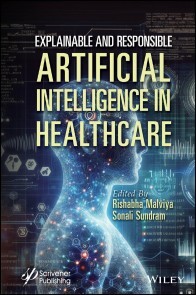
Explainable and Responsible Artificial Intelligence in Healthcare
THIS BOOK PRESENTS THE FUNDAMENTALS OF EXPLAINABLE ARTIFICIAL INTELLIGENCE (XAI) AND RESPONSIBLE ARTIFICIAL INTELLIGENCE (RAI), DISCUSSING THEIR POTENTIAL TO ENHANCE DIAGNOSIS, TREATMENT, AND PATIENT OUTCOMES.This book explores the transformative potential of explainable artificial intelligence (XAI) and responsible AI (RAI) in healthcare. It provides a roadmap for navigating the complexities of healthcare-based AI while prioritizing patient safety and well-being. The content is structured to highlight topics on smart health systems, neuroscience, diagnostic imaging, and telehealth. The book emphasizes personalized treatment and improved patient outcomes in various medical fields. In addition, this book discusses osteoporosis risk, neurological treatment, and bone metastases. Each chapter provides a distinct viewpoint on how XAI and RAI approaches can help healthcare practitioners increase diagnosis accuracy, optimize treatment plans, and improve patient outcomes. Readers will find the book:* explains recent XAI and RAI breakthroughs in the healthcare system;* discusses essential architecture with computational advances ranging from medical imaging to disease diagnosis;* covers the latest developments and applications of XAI and RAI-based disease management applications; * demonstrates how XAI and RAI can be utilized in healthcare and what problems the technology faces in the future. AUDIENCEThe main audience for this book is targeted to scientists, healthcare professionals, biomedical industries, hospital management, engineers, and IT professionals interested in using AI to improve human health. RISHABHA MALVIYA, PHD, is an associate professor in the Department of Pharmacy, School of Medical and Allied Sciences, Galgotias University. He has authored more than 150 research/review papers for national/international journals of repute. He has been granted more than 10 patents from different countries while a further 40 patents have either been published or under evaluation. His areas of interest include formulation optimization, nanoformulation, targeted drug delivery, localized drug delivery, and characterization of natural polymers as pharmaceutical excipients. SONALI SUNDRAM, PHD AND MPHARM, completed her doctorate in pharmacy and is an assistant professor at Galgotias University, Greater Noida. Her areas of interest are neurodegeneration, clinical research, and artificial intelligence. She has edited four books.

Samsung Galaxy S25 - alle Modelle
Samsung Galaxy S25 – alle Modelle – Die verständliche Anleitung für Ihr Smartphone:- Alle Funktionen & Einstellungen auf einen Blick- Schritt für Schritt erklärt – mit praktischen TippsMit diesem smarten Praxisbuch gelingt Ihnen der schnelle und sichere Einstieg in Ihr Smartphone. Lernen Sie die Samsung Galaxy S25-Modelle kennen und beherrschen! Anschauliche Anleitungen, Beispiele und Bilder zeigen Ihnen gut nachvollziehbar, wie Sie Ihr mobiles Gerät optimal handhaben – von der Ersteinrichtung und Personalisierung über die große Funktionsvielfalt bis zu den wichtigsten Anwendungen. Nutzen Sie darüber hinaus die übersichtlichen Spicker-Darstellungen: Damit können Sie jene Bedienungsschritte, die man am häufigsten braucht, aber immer wieder vergisst, auf einen Blick finden und umsetzen. Freuen Sie sich auf viele hilfreiche Tipps und legen Sie ganz einfach los!Aus dem Inhalt:- Alle Bedienelemente der Samsung Galaxy S25-Modelle auf einen Blick- Ersteinrichtung und Tipps zum Umzug- Die Benutzeroberfläche Ihres Smartphones personalisieren- Apps aus dem Play Store herunterladen- Kontakte anlegen und im Adressbuch verwalten- Anrufe tätigen und SMS austauschen- Nachrichten über Mail und WhatsApp versenden und empfangen- Fotos sowie Videos aufnehmen, verwalten und teilen- Bilder verbessern, Texte übersetzen und neue Suchoptionen dank KI- Uhr, Kalender, Maps und andere praktische Apps nutzen- Updates, Datenschutz und Sicherheit
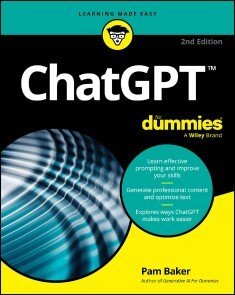
ChatGPT For Dummies
UPDATED TO PROVIDE A DEEPER AND CLOSER LOOK AT CHATGPTExpanded and extended, this new edition of ChatGPT For Dummies covers the latest tools, models, and options available on the popular generative AI platform. You'll learn best practices for using ChatGPT as a text and media generation tool, research assistant, and content reviewer. If you're new to the world of AI, you'll get all the basic know-how needed to add ChatGPT to your professional toolbox. And if you've been doing the genAI thing for a while already, this book will sharpen your skills as you apply AI to real-world projects in an ethical manner. You'll get insight on the best practice for using ChatGPT to make your life and work easier and how to write prompts that result in high-quality output.* Understand what generative AI is and how ChatGPT produces human-like responses* Get tips on writing effective prompts and using ChatGPT to generate sound and images* Apply ChatGPT to your daily work or personal life* Discover the best way to fact-check AI-generated content to avoid errors and hallucinationsAnyone using ChatGPT to enhance their work—whether for professional or personal use—will get better results with ChatGPT For Dummies.PAM BAKER is an author and a trainer with over two decades of experience as a journalist focused on the tech industry. She recently won an AZBEE award from the American Society of Business Publication Editors for B2B writing. She is author of the first edition of ChatGPT For Dummies and Generative AI For Dummies.

Visualisierung in der Medizin
Dieses Buch fasst die jüngsten Fortschritte in der visualisierten Medizin zusammen, sowohl hinsichtlich der grundlegenden Prinzipien als auch der Entwicklung neuer Techniken und deren Grenzen. Besonders in Kombination mit künstlicher Intelligenz (KI), medizinischen Bildgebungsverfahren und medizinischen Robotern wurden intelligente Medizintechnologien entwickelt und klinisch angewendet, um die Diagnose, Behandlung, Prognose und Datenanalyse von lebensbedrohlichen Krankheiten zu verbessern. Diese Philosophie revolutioniert umfassend die Behandlungsstrategie im Gesundheitswesen und wird die Präzisionsmedizin und Präzisionschirurgie weiter intuitiv erfassbar, intelligent analysierbar und präzise umsetzbar machen. Das Buch beinhaltet folgende Themen und fasst sie zusammen: 1. Die hochmoderne Definition der visualisierten Medizin. 2. Fortschrittliche Techniken und klinische Anwendungen der visualisierten Medizin im vergangenen Jahrzehnt. 3. Neue Grenzen und brandneue Technologien, z.B. künstliche Intelligenz (KI), chirurgische Roboter, etc. 4. Revolutionäre Auswirkungen auf Diagnose, Behandlung und Prognose von Krankheiten. 5. Zukünftige Herausforderungen und Perspektiven.

The Art of Decoding Microservices
Stay competitive in today’s software industry by mastering microservices. As microservices architecture becomes the modern standard, this book demystifies the transition from monoliths to microservices with clear guidance and practical examples for easier adoption and implementation.The book starts with the basics, explaining what microservices are, their benefits, and how they compare to monolithic architectures. From there, you will explore a wide range of topics including service discovery, load balancing, authentication and authorization, resilience, fault tolerance, and much more as well as practical Java examples throughout. Each chapter is meticulously crafted to offer a balance of theory and hands-on application, ensuring you not only understand the concepts but also apply them effectively in real-world scenarios.By the end of the book, you will be ready to design, implement, and manage scalable and efficient microservices-based systems. Additionally, you will gain a forward-looking perspective on emerging trends and the integration of microservices in AI and IoT.WHAT YOU WILL LEARN* Compare microservices and monolithic systems, understanding the basics, benefits and key differences* Understand key principles for decomposing monoliths and designing for failure* Master synchronous vs. asynchronous communication and when to use each* Explore containerization, orchestration with Kubernetes, and scaling strategies* Secure microservices and monitor health and performance in distributed systemsWHO THIS BOOK IS FORNovice and experienced developers who are new to microservices and want to master the topic to drive successful software projects. The book is programming language-agnostic, and can be understood by developers of any language, but those with some familiarity with Java will benefit more from the specific examples provided.SUMIT BHATNAGAR has nearly two decades of hands-on experience in the IT industry, serving as a visionary leader and a respected authority in the realm of modern software architecture. Specializing in J2EE, microservices, and cloud-based applications, Sumit has a proven track record of delivering cutting-edge solutions in the financial domain.An accomplished project leader, Sumit combines deep technical expertise with strategic insight, seamlessly bridging the gap between innovation and implementation. His contributions to the industry have earned prestigious accolades at a global platform. As a distinguished member of the Forbes Technology Council, and IEEE, Sumit is at the forefront of technological advancement, continually shaping the future of software development. His extensive portfolio of published research papers and thought leadership in renowned journals underscores his commitment to pushing the boundaries of what’s possible.In this book Sumit leverages his vast experience and deep understanding to provide readers with a comprehensive guide to mastering microservices. Whether you’re a seasoned developer or an aspiring architect, this book is your gateway to understanding and implementing robust, scalable, and resilient software solutions.ROSHAN MAHANT is a seasoned expert in strategizing and designing IT solutions, with a strong emphasis on successful execution. As a Senior Technical Consultant at Launch IT Corp, he specializes in e-governance platform enhancements, particularly in public sector IT modernization using the Microservices Architecture, and Amanda e-governance licensing platform. Over his 15-year career, Roshan has mastered holistic analysis, systems integration, architecture design, and strategic consulting, enabling the transformation of critical governance functions across various state agencies. His work has significantly impacted several government boards, including the Iowa Board of Nursing and the Michigan Gaming Control Board.Before joining LaunchIT Corp, Roshan served as the Director of Access Technologies, where he developed innovative mentoring techniques and software products. With a master’s degree in CAD/CAM from Nagpur University, Roshan continues to contribute to the field through research papers, conference reviews, and technical book critiques, earning him various esteemed memberships and awards.Chapter 1: Evolution of Software Architecture.- Chapter 2: Overview of Microservices.- Chapter 3: Designing Microservices.- Chapter 4: Developing Microservices.- Chapter 5: Testing, Deploying, and Scaling Microservices.- Chapter 6: Microservices Security, Monitoring, and Maintenance.- Chapter 7: Lessons from Case Studies, Avoiding Pitfalls, and Shaping the Future.- Chapter 8: Conclusion and Quick Recap.- Appendix A: Glossary.- Appendix B: Closure and Final Thoughts.

AWS Certified Advanced Networking - Specialty (ANS-C01) Certification Guide
The AWS Certified Advanced Networking – Specialty certification exam focuses on leveraging AWS services alongside industry standards to create secure, resilient, and scalable cloud networks.Written by industry experts with decades of experience in the field, this comprehensive exam guide will enable you to transform into an AWS networking expert, going beyond the ANS-C01 exam blueprint to maximize your impact in the field. You’ll learn all about intricate AWS networking options and services with clear explanations, detailed diagrams, and practice questions in each chapter. The chapters help you gain hands-on experience with essential components, such as VPC networking, AWS Direct Connect, Route 53, security frameworks, and infrastructure as code. With access to mock exams, interactive flashcards, and invaluable exam tips, you have everything you need to excel in the AWS ANS-C01 exam.This book not only prepares you to confidently take the exam, but also deepens your understanding and provides practical insights that are vital for a successful career in AWS cloud networking.By the end of this exam guide, you’ll be thoroughly trained to take the AWS ANS-C01 exam and efficiently design and maintain network architectures across a wide range of AWS services.

MuleSoft for Salesforce Developers
Salesforce developers often need help with complex integrations to manage multi-cloud environments, data mapping, data security, API scalability, and real-time integration issues. Written by industry veterans with 20+ years of experience, this revised edition will help you overcome these challenges and unlock data with MuleSoft.In this second edition, you’ll learn about MuleSoft’s newest IDE (aka Anypoint Code Builder) and its tools and capabilities. The chapters will show you how to use AI-enabled APIs to maximize productivity, integration of Data Cloud with MuleSoft, Mule APIs with AI agents, and Mule AI Chain connectors. You’ll grasp the fundamentals of APIs and integration and confidently design your APIs, while also utilizing a no-code visual editor for API design to build your Mule applications using MuleSoft’s Anypoint Code Builder. The chapters will teach you about data transformation, API management, deployment models, and MuleSoft’s security features. Progressively, you’ll leverage MuleSoft connectors to integrate with Salesforce, Data Cloud, and other systems. You’ll explore AI-driven integrations and automation, and get practical tips to ace MuleSoft interviews and achieve MCD Level 1 certification.By the end of this book, you’ll be able to implement the entire API lifecycle and manage complex integrations with MuleSoft like a pro.

The Infinite Retina
What is Spatial Computing, and why are companies like Tesla, Apple, and Meta investing billions into it? In The Infinite Retina, Irena Cronin and Robert Scoble explore how spatial computing—where humans and machines interact in a digital–physical space—has progressed beyond theory into real-world applications.This second edition has many substantial updates, including two new chapters on the relevance of Generative AI in Spatial Computing and a new chapter on the impact of Apple Vision Pro. Each existing chapter has been updated to have the most current information and commentary. The book offers a fresh look at seven major industries, including healthcare and retail, featuring updated case studies, expert commentary, and real-world examples. Additionally, it addresses crucial risks and challenges, such as data privacy, automation's impact on employment, and ethical concerns. This edition moves beyond speculation to critically analyze what Spatial Computing means for businesses and individuals today.

Mastering AutoCAD 2025
AutoCAD helps you communicate your design intent by plotting your designs to drawings, in both paper and electronic format. But using AutoCAD can be daunting, even for an experienced user who wants to get their designs into the AutoCAD native DWG file format.Written by an Autodesk Certified Instructor at Platinum level with 30+ years of industry experience, this book will guide you on how to use new and existing AutoCAD tools to work smarter, not harder, and it will familiarize you with the processes needed to use AutoCAD much more effectively. As you work through the chapters, you’ll get used to these new methodologies in AutoCAD and build up "muscle memory" so that these skills become second nature. You’ll also take advantage of the author's expertise and experience, learning some highly effective AutoCAD tips and tricks along the way.By the end of this AutoCAD book, you’ll have gained valuable insights into the knowledge needed to confidently prepare for your Autodesk AutoCAD certification.

Unmanned Aerial Vehicles Swarm for Protecting Smart Cities
Explore the intersection between unmanned aerial vehicles (UAVs) and the evolving landscape of smart cities. With the increasing integration of technology into urban environments, there is a growing need to understand how UAV swarms can contribute to the safety, efficiency, and resilience of these complex urban ecosystems. The book aims to provide a technical understanding of UAV swarms and their applications within the context of smart cities.It begins by laying the groundwork with an introduction to UAV swarms and smart cities, establishing the foundational concepts and motivations behind their integration. As the book progresses, it delves into various aspects of smart cities, exploring concepts, technologies, and challenges inherent in their development and operation. This includes discussions on cloud computing, cybersecurity, machine learning applications, surveillance and monitoring systems, urban planning, and infrastructure management. It also examines the integration of IoT devices with UAV swarms, highlighting the synergies between these emerging technologies and their potential impact on urban environments.The book examines cutting-edge topics such as edge computing, blockchain applications, 5G integration, and augmented reality/virtual reality (AR/VR) visualization techniques in the context of UAV swarm operations. It concludes with reflections on innovations and future directions, offering insights into the evolving landscape of UAV swarm technologies and their implications for the protection and advancement of smart cities.The book serves as a comprehensive guide for researchers, practitioners, and policymakers interested in understanding the technical, social, and economic dimensions of UAV swarm technology within the context of smart city development and management.WHAT YOU WILL LEARNIdentify practical applications of UAV swarms in surveillance monitoring, urban planning, disaster management, and infrastructure resilienceGain comprehensive understanding of UAV swarms by exploring diverse disciplinesApply insights from emerging technologies like cloud computing, machine learning, blockchain, IoT devices, and so on to UAV swarm technologyWHO IS THIS BOOK FORThis book appeals to a wide range of readers with different interests and backgrounds, including researchers, policymakers, industry stakeholders, practitioners, experts, and general fans who are curious in the confluence of smart cities with UAV swarm technologies with little to no experience or knowledge of UAV swarms.OROOS ARSHI is a Research Scientist at AI-EYS and was awarded the Young Researcher award at the International Conference on Emerging Trends and Innovations (ICETI) 2024 held in Pakistan. She is a dedicated Research Scholar at the University of Petroleum and Energy Studies in Dehradun, India. She was the speaker at the International Conference on Emerging Trends and Innovations held in Pakistan. She has contributed significantly to the technological discourse with some Scopus, SCI, and a noteworthy publication with Springer. Since then, Oroos has embarked on an intricate exploration of diverse technological realms, displaying a profound interest in the Natural Processing Language (NLP), Computer Vision, Internet of Things (IoT), Artificial Intelligence (AI), Cybersecurity, and Cloud Computing.DR. INAM ULLAH KHAN is the Founder of AI-EYS. He was a visiting researcher at King’s College London, UK and was a faculty member at different universities in Pakistan including the Center for Emerging Sciences Engineering & Technology (CESET), Islamabad, Abdul Wali Khan University, Garden Campus, Timergara Campus, University of Swat & Shaheed Zulfikar Ali Bhutto Institute of Science and Technology (SZABIST), Islamabad Campus. He has authored/co-authored more than 30 research articles in reputable journals, conferences, and book chapters. His research interests include Network System Security, Intrusion Detection, Intrusion Prevention, cryptography, Optimisation techniques, WSN, IoT, Mobile Ad Hoc Networks (MANETS), Flying Ad Hoc Networks, and Machine Learning. He was a technical program committee member at an international workshop on intelligent systems for sustainable smart cities, New Delhi, India, February 19–20, 2022.KESHAV KAUSHIK is an experienced educator with around ten years of teaching and research experience in Cybersecurity, Digital Forensics, and the Internet of Things. He is working as an Assistant Professor (Senior Scale) in the systemic cluster under the School of Computer Science at the University of Petroleum and Energy Studies, Dehradun, India. He has published 100+ research papers in International Journals and has presented at reputed International Conferences. Currently, he is also serving as à Vice Chairperson of the Meerut ACM Professional Chapter and is also a brand ambassador for Bentham Science.NADEEM IQBAL (Senior Member IEEE) received a Ph.D. degree in bio and brain engineering from the Korea Advanced Institute of Science and Technology (KAIST), Daejeon, South Korea, in 2013. He has completed a Fulbright Fellowship at St. John’s University in New York, USA. Dr. Iqbal was a postdoctoral fellow at the School of Mechanical Engineering, University of Leeds, UK. He is currently working as an Associate Professor with the Department of Computer Science, Abdul Wali Khan University Mardan, Pakistan. His research interests include biological information processing mechanisms in the brain, Natural Language Processing, the Internet of Things, and Pattern recognition.INAM ULLAH received a B.Sc. degree in Electrical Engineering (Telecommunication) from the Department of Electrical Engineering, University of Science and Technology Bannu (USTB), KPK, Pakistan, in 2016 and a Master's and Ph.D. degree in Information and Communication Engineering from the College of Internet of Things (IoT) Engineering, Hohai University (HHU), China, in 2018 and 2022, respectively. He is currently an Assistant Professor at the Department of Computer Engineering, Gachon University, S Korea. His research interests include Robotics, Internet of Things (IoT), Wireless Sensor Networks (WSNs), Underwater Communication and Localization, Underwater Sensor Networks (USNs), Artificial Intelligence (AI), Big data, Deep learning, etc. He has authored more than 70 peer-reviewed articles on various research topics.DR. KHADIJA SLIMANI completed her PhD, which was jointly supervised by the University of Ibn Tofail in Morocco and the University of Technology of Belfort Montbeliard (UTBM) in France. This collaborative international effort showcased her commitment to academic excellence and cross-cultural research. For her doctoral studies, Dr. Slimani delved into the realms of machine learning, deep learning, pattern recognition, and computer vision, with a specific focus on academic emotion recognition. This interdisciplinary approach, spanning both Moroccan and French academic environments, enriched her research experience and contributed to the global perspective of her work. Dr. Slimani's academic contributions extended to various engineering schools in Paris, France, where she took on teaching responsibilities across multiple modules, including data science, deep learning, machine learning, data bases, and computer vision. She currently holds the title of Associate Professor at the Graduate School of Automatic Electronic Computing in Paris, France. Through her diverse roles, Dr. Slimani consistently inspires and contributes to shaping the next generation of researchers.Chapter 1: Introduction to UAV Swarms and Smart Cities.- Chapter 2: Fundamentals of UAV Swarms.- Chapter 3: Smart Cities: Concepts and Technologies.- Chapter 4: Cloud Computing for UAV Swarms.- Chapter 5: Cybersecurity in UAV Swarm Operations.- Chapter 6: Machine Learning Applications in UAV Swarms.- Chapter 7: Surveillance and Monitoring in Smart Cities.- Chapter 8: Urban Planning and Infrastructure Management.- Chapter 9: Public Perception and Acceptance.- Chapter 10: Infrastructure Resilience and Disaster Management.- Chapter 11: International Perspectives on UAV Swarms.- Chapter 12: Real-world Deployments of UAV Swarms.- Chapter 13: Integration of IoT Devices with UAV Swarms.- Chapter 14: Smart Infrastructure for IoT and UAV Swarms.- Chapter 15: Economic Analysis of IoT and UAV Swarm Integration.- Chapter 16: Edge Computing for UAV Swarm Operations.- Chapter 17: Blockchain Applications in UAV Swarm Security.- Chapter 18: 5G Integration for Enhanced UAV Swarm Connectivity.- Chapter 19: Augmented Reality (AR) and Virtual Reality (VR) for UAV Swarm Visualization.- Chapter 20: Innovations and Future Directions in UAV Swarm for Protecting Smart Cities.

Network Coding for Engineers
UNDERSTAND THE FUNDAMENTALS OF NETWORK CODING FROM AN ENGINEERING PERSPECTIVE WITH THIS ACCESSIBLE GUIDENetwork Coding is a method of increasing network throughput and efficiency by encoding and decoding transmitted data packets instead of simply forwarding them. It was mainly a body of information theory until the rise of random linear networking coding (RLNC), a method ideally suited to wireless networks and other cooperative environments. The ease of introducing network coding to legacy systems and the resulting gains in efficiency have made this a widely applied technology with the potential to revolutionize networked communications. Network Coding for Engineers introduces the fundamentals of this exciting subject from an engineering perspective. Beginning with the basics, including step-by-step details for implementing network coding and current applications, it also highlights potential uses of network coding in the communications technologies of the future. The result is an innovative and accessible introduction to a subject quickly becoming indispensable. Network Coding for Engineers readers will also find:* A structure that facilitates gradual deepening of knowledge, ideal for students and new readers* Follows a semester-long course curriculum structure, making it suitable for direct adaptation for academic purposes* Detailed discussion of future applications in technology areas including post-quantum cryptography, 6G, and more* Design principles for different network models, such as multi-path and mesh networksNetwork Coding for Engineers is ideal for electrical engineering and computer science students, particularly those studying advanced networking and communications and related subjects. MURIEL MÉDARD, PHD, is NEC Professor of Software Science and Engineering in the Electrical Engineering and Computer Science (EECS) Department and Head of the Network Coding and Reliable Communications Group in the Research Laboratory of Electronics at the Massachusetts Institute of Technology (MIT), USA. She is a member of the US National Academy of Engineering and a Fellow of the US National Academy of Inventors and the Institute of Electrical and Electronics Engineers, among other organizations, and is a past president of the IEEE Information Theory Society. VIPINDEV ADAT VASUDEVAN, PHD, is a Postdoctoral Associate in the Network Coding and Reliable Communications Group in the Research Laboratory of Electronics, Massachusetts Institute of Technology (MIT), USA. He has previously worked as an MSCA Fellow in the Wireless Telecommunications Laboratory of the University of Patras, Greece, and has researched extensively into network coding, network security, 5G, and related subjects. MORTEN VIDEBÆK PEDERSEN, PHD, is co-founder and Chief Technology Officer of Steinwurf APS, a company specializing in industrial-grade high-performance content distribution systems, where he focuses on low-complexity network coding algorithms and cooperative networking programs. He is a member of the Mobile Devices Research Group, Aalborg, Denmark, and a past recipient of the Forum Nokia Developer Champion Award. KEN R. DUFFY, PHD, is a Professor of Electrical and Computer Engineering, and a Professor of Mathematics, at Northeastern University (NU), USA. He leads the Engineering Probability Information and Communications Laboratory and is core faculty at NU’s Institute for the Wireless Internet of Things. He was previously the Director of the Hamilton Institute at the National University of Ireland, Maynooth, and a co-director of the Science Foundation Ireland Centre for Research Training in Foundations of Data Science. List of Figures xiiiList of Tables xviiAbout The Authors xixPreface xxiiiAcknowledgments xxvAcronyms xxvii1 INTRODUCTION 11.1 Vision and Outline 21.2 Coding 51.3 Data as Mutable – A Relaxation 61.3.1 Immutable Data 71.3.2 Mutable Data 81.4 Network Coding – Data as Equations 91.5 Use Cases and Examples 91.5.1 Addressing Bottlenecks 101.5.2 Addressing Packet Drops in a Point-to-Point Communication 111.5.3 Multiple Receivers – Reliable Broadcast 141.5.4 Recoding and Multi-hop Networks 151.5.5 Distributed Storage – Incast 161.5.6 Security 161.6 A Toolbox for Implementing Network Coding 171.6.1 Tool 1: The Python Programming Language 171.6.2 Getting Python (Step-by-Step)* 181.6.3 Tool 2: PyErasure – Erasure Correcting Algorithms in Python 191.7 Summary 22Additional Reading Materials 22References 222 FINITE FIELD ARITHMETIC FOR NETWORK CODING 252.1 (Not So) Brute Force Determination of Inverses 272.2 Division in the Integers and Greatest Common Divisors 282.3 Division with Modulo in the Integers – Why Primes 322.3.1 Existence of Multiplicative Inverses** 342.4 Prime Fields 372.5 Mathematical Aside: Beyond Linear Equations** 382.6 Extension Fields 402.6.1 Suitability for Binary Data 412.6.2 Basics of Extension Fields 432.6.3 Binary Extension Field 442.7 Polynomial Multiplication/Division 462.7.1 Binary Extension Field Multiplication 462.7.2 Binary Extension Field Division 482.8 Primitive Polynomials 482.9 Polynomials in Delay – Data Streams 502.10 Solutions 522.11 Summary 52Additional Reading Materials 53References 533 FINITE FIELD IMPLEMENTATIONS FOR NETWORK CODING* 553.1 Binary Field Implementations 573.2 Binary Extension Field Implementations 583.2.1 Runtime Addition and Subtraction 593.2.2 Runtime Multiplication and Division 593.2.3 Runtime Division Algorithm 633.2.4 Full Multiplication Table 663.2.5 Log and AntiLog Table 683.2.6 Extended Log and AntiLog Table 713.3 Extended Euclidean Algorithm** 763.3.1 Find Degree Function 823.4 Summary 83Additional Reading Materials 83References 834 CODING FOR ERASURES 854.1 From Chunks to Packets 864.2 Erasure Resilience 894.3 Gauss–Jordan Elimination 894.4 Code Construction 924.4.1 Proportion of Non-invertible Matrices 924.4.2 Non-RLNC Erasure Codes 944.4.3 Simple Scenario to Evaluate Potential Gain 944.5 Innovative Packet and Acknowledgment 964.5.1 Innovative Packet 964.5.2 Role of Acknowledgments 984.6 Network Coding for Losses 1004.6.1 Coding Until Completion 1024.6.2 Coding Until Completion – Sliding Window 1044.6.3 Semi-systematic Code with Feedback 1074.7 Queueing and Network Coding 1094.7.1 Managing Queue Size at the Sender 1094.7.2 Feedback for Network Coding and Its Implications 1094.7.3 A Quick Primer on Queueing Theory 1114.7.4 The Magic of Independent Exponentials 1144.7.5 Relating Average Queue Length to Average Waiting Time 1174.7.6 Drop When Seen 1194.7.7 Drop When Decoded 1194.8 Summary 122Additional Reading Materials 122References 1225 DESIGNING OF PROTOCOLS WITH NETWORK CODING 1255.1 TCP Variants 1285.2 Logical Description of TCP/NC 1295.3 Seen Packets and Congestion Control 1305.4 Mechanisms of Use of Seen Packets 1315.4.1 Source Side 1345.4.2 Receiver Side 1345.4.3 Soundness of the Protocol 1355.5 Queueing Analysis for an Idealized Case of TCP/NC 1365.5.1 System Model 1365.5.2 Queue Update Mechanism 1375.5.3 Queueing Analysis 1385.6 Performance Analysis 1415.6.1 A Model for Congestion Control 1425.6.2 Intuition 1445.6.3 Throughput Analysis for TCP* 1455.6.4 Throughput Analysis for TCP/NC 1485.6.5 TCP/NC Average Throughput 1515.7 Summary 152Additional Reading Materials 152References 1536 IMPLEMENTATION OF NETWORK CODING PROTOCOLS 1556.1 A Real-World Implementation of TCP/NC 1556.1.1 Sender-Side Module 1556.1.2 Receiver-Side Module 1606.1.3 Discussion of Implementation Parameters 1626.1.4 Recoding Process 1686.1.5 Feedback Mechanism 1686.1.6 Implementation Strategies 1696.2 Adaptive Sliding Window 1726.2.1 Adaptive Coding Algorithm 1736.3 Network Coding and QUIC 1816.3.1 Flexible Erasure Correction (FlEC) 1836.3.2 Bulk File Transfers 1866.3.3 Buffer-limited File Transfers 1876.3.4 Delay-constrained Messaging 1896.4 Summary 193Additional Reading Materials 194References 1947 NETWORK AS A MATRIX 1977.1 Mathematical Model 1977.2 Routing 1987.3 Algebraic Network Coding 1997.3.1 Formulation 1997.3.2 The Network as a Matrix 2037.3.3 Multicast 2077.3.4 Multiple Sources and Multiple Sinks** 2097.4 Erasures 2147.5 An Aside on Misapplication 2157.6 Summary 216Additional Reading Materials 217References 2178 SECURITY AND NETWORK CODING 2198.1 Information Theoretic Security – Quick Primer 2208.2 Data Hiding 2248.2.1 Hiding Equations 2248.2.2 Hiding Coefficients 2278.3 Pollution Attacks 2288.3.1 Detection of Pollution After Decoding 2288.3.2 Detection of Pollution Without Decoding** 2308.4 Summary 232Additional Reading Materials 232References 232Concluding Remarks 235Appendix Sample List of Patents 237Index 241

TypeScript 5 Design Patterns and Best Practices
Design patterns are the backbone of many world-renowned software applications, both commercial and open source. Written by a well-known author and accomplished software developer, this in-depth guide will empower you to build robust and scalable TypeScript apps with design patterns in TypeScript 5, making it your go-to resource for mastering TypeScript and leveraging design patterns effectively.This second edition has been updated with TypeScript 5 features, such as improved type inference, union enums, and decorators to write clean and maintainable code that can adapt to future changes. The chapters teach you the classic Gang of Four design patterns, providing traditional and modern real-world implementations. You’ll also get a clear understanding of the power of functional and reactive programming patterns that have been specifically designed for idiomatic TypeScript development.By the end of this book, you’ll be a design pattern pro, capable of confidently identifying and applying the right pattern for any scenario, as well as crafting well-structured, maintainable, and testable TypeScript code.