

Computer und IT
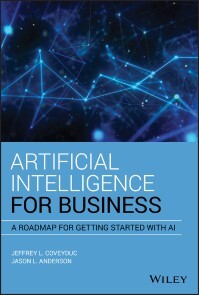
Artificial Intelligence for Business
Artificial Intelligence for Business: A Roadmap for Getting Started with AI will provide the reader with an easy to understand roadmap for how to take an organization through the adoption of AI technology. It will first help with the identification of which business problems and opportunities are right for AI and how to prioritize them to maximize the likelihood of success. Specific methodologies are introduced to help with finding critical training data within an organization and how to fill data gaps if they exist. With data in hand, a scoped prototype can be built to limit risk and provide tangible value to the organization as a whole to justify further investment. Finally, a production level AI system can be developed with best practices to ensure quality with not only the application code, but also the AI models. Finally, with this particular AI adoption journey at an end, the authors will show that there is additional value to be gained by iterating on this AI adoption lifecycle and improving other parts of the organization. JEFFREY L. COVEYDUC is Vice President and Master Inventor at IBM. His diverse background consists of positions that encompass the creation of innovative, technologically advanced global AI solutions and client adoption. JASON L. ANDERSON is a Partner and CTO with the data consultancy, Comp Three, where he established a new AI line of business. He is also a former IBM Cognitive Architect and Master Inventor. He received both BS and MS degrees in Computer Science from California Polytechnic State University, SLO. Preface ixAcknowledgments xiCHAPTER 1 INTRODUCTION 1Case Study #1: FANUC Corporation 2Case Study #2: H&R Block 4Case Study #3: BlackRock, Inc. 5How to Get Started 6The Road Ahead 10Notes 11CHAPTER 2 IDEATION 13An Artificial Intelligence Primer 13Becoming an Innovation-Focused Organization 23Idea Bank 25Business Process Mapping 27Flowcharts, SOPs, and You 28Information Flows 29Coming Up with Ideas 31Value Analysis 31Sorting and Filtering 34Ranking, Categorizing, and Classifying 35Reviewing the Idea Bank 37Brainstorming and Chance Encounters 38AI Limitations 41Pitfalls 44Action Checklist 45Notes 46CHAPTER 3 DEFINING THE PROJECT 47The What, Why, and How of a Project Plan 48The Components of a Project Plan 49Approaches to Break Down a Project 53Project Measurability 62Balanced Scorecard 63Building an AI Project Plan 64Pitfalls 66Action Checklist 69CHAPTER 4 DATA CURATION AND GOVERNANCE 71Data Collection 73Leveraging the Power of Existing Systems 81The Role of a Data Scientist 81Feedback Loops 82Making Data Accessible 84Data Governance 85Are You Data Ready? 89Pitfalls 90Action Checklist 94Notes 94CHAPTER 5 PROTOTYPING 97Is There an Existing Solution? 97Employing vs. Contracting Talent 99Scrum Overview 101User Story Prioritization 103The Development Feedback Loop 105Designing the Prototype 106Technology Selection 107Cloud APIs and Microservices 110Internal APIs 112Pitfalls 112Action Checklist 114Notes 114CHAPTER 6 PRODUCTION 117Reusing the Prototype vs. Starting from a Clean Slate 117Continuous Integration 119Automated Testing 124Ensuring a Robust AI System 128Human Intervention in AI Systems 129Ensure Prototype Technology Scales 131Cloud Deployment Paradigms 133Cloud API’s SLA 135Continuing the Feedback Loop 135Pitfalls 135Action Checklist 137Notes 137CHAPTER 7 THRIVING WITH AN AI LIFECYCLE 139Incorporate User Feedback 140AI Systems Learn 142New Technology 144Quantifying Model Performance 145Updating and Reviewing the Idea Bank 147Knowledge Base 148Building a Model Library 150Contributing to Open Source 155Data Improvements 157With Great Power Comes Responsibility 158Pitfalls 159Action Checklist 161Notes 161CHAPTER 8 CONCLUSION 163The Intelligent Business Model 164The Recap 164So What are You Waiting For? 168APPENDIX A AI EXPERTS 169AI Experts 169Chris Ackerson 169Jeff Bradford 173Nathan S. Robinson 175Evelyn Duesterwald 177Jill Nephew 179Rahul Akolkar 183Steven Flores 187APPENDIX B ROADMAP ACTION CHECKLISTS 191Step 1: Ideation 191Step 2: Defining the Project 191Step 3: Data Curation and Governance 192Step 4: Prototyping 192Step 5: Production 193Thriving with an AI Lifecycle 193APPENDIX C PITFALLS TO AVOID 195Step 1: Ideation 195Step 2: Defining the Project 196Step 3: Data Curation and Governance 199Step 4: Prototyping 203Step 5: Production 204Thriving with an AI Lifecycle 206Index 209
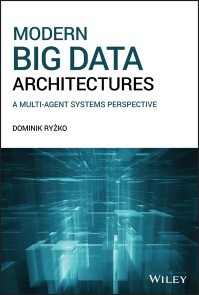
Modern Big Data Architectures
PROVIDES AN UP-TO-DATE ANALYSIS OF BIG DATA AND MULTI-AGENT SYSTEMSThe term Big Data refers to the cases, where data sets are too large or too complex for traditional data-processing software. With the spread of new concepts such as Edge Computing or the Internet of Things, production, processing and consumption of this data becomes more and more distributed. As a result, applications increasingly require multiple agents that can work together. A multi-agent system (MAS) is a self-organized computer system that comprises multiple intelligent agents interacting to solve problems that are beyond the capacities of individual agents. Modern Big Data Architectures examines modern concepts and architecture for Big Data processing and analytics.This unique, up-to-date volume provides joint analysis of big data and multi-agent systems, with emphasis on distributed, intelligent processing of very large data sets. Each chapter contains practical examples and detailed solutions suitable for a wide variety of applications. The author, an internationally-recognized expert in Big Data and distributed Artificial Intelligence, demonstrates how base concepts such as agent, actor, and micro-service have reached a point of convergence—enabling next generation systems to be built by incorporating the best aspects of the field. This book:* Illustrates how data sets are produced and how they can be utilized in various areas of industry and science* Explains how to apply common computational models and state-of-the-art architectures to process Big Data tasks* Discusses current and emerging Big Data applications of Artificial IntelligenceModern Big Data Architectures: A Multi-Agent Systems Perspective is a timely and important resource for data science professionals and students involved in Big Data analytics, and machine and artificial learning.DOMINIK RYŻKO is an Assistant Professor at the Institute of Computer Science at Warsaw University of Technology. His research interests include Big Data and Distributed Artificial Intelligence. He is widely published, serves on program committees at international conferences, and is Vice President of artificial intelligence and analytics at Adform, a global ad-tech platform provider. He also spent three years at Allegro Group as the Chief Data Scientist where he oversaw Data Science activities, design and methodology of experiments, and model building. List of Figures ixList of Tables xiPreface xiiiAcknowledgments xvAcronyms xviiCHAPTER 1 INTRODUCTION 11.1 Motivation 11.2 Assumptions 31.3 For Whom is This Book? 41.4 Book Structure 4CHAPTER 2 EVOLUTION OF IT ARCHITECTURES AND PARADIGMS 72.1 Evolution of IT Architectures 72.1.1 Monolith 72.1.2 Service Oriented Architecture 92.1.3 Microservices 122.2 Actors and Agents 152.2.1 Actors 152.2.2 Agents 172.3 From ACID to BASE, CAP, and NoSQL – The Database (R)evolution 222.4 The Cloud 242.5 From Distributed Sensor Networks to the Internet of Things and Cyber-Physical Systems 272.6 The Rise of Big Data 28CHAPTER 3 SOURCES OF DATA 313.1 The Internet 323.1.1 The Semantic Web 323.1.2 Linked Data 353.1.3 Knowledge Graphs 363.1.4 Social Media 383.1.5 Web Mining 383.2 Scientific Data 403.2.1 Biomedical Data 403.2.2 Physics and Astrophysics Data 413.2.3 Environmental Sciences 443.3 Industrial Data 453.3.1 Smart Factories 453.3.2 SmartGrid 473.3.3 Aviation 473.4 Internet of Things 48CHAPTER 4 BIG DATA TASKS 514.1 Recommender Systems 514.2 Search 524.3 Ad-tech and RTB Algorithms 554.4 Cross-Device Graph Generation 574.5 Forecasting and Prediction Systems 584.6 Social Media Big Data 594.7 Anomaly and Fraud Detection 614.8 New Drug Discovery 634.9 Smart Grid Control and Monitoring 644.10 IoT and Big Data Applications 65CHAPTER 5 CLOUD COMPUTING 675.1 Cloud Enabled Architectures 675.1.1 Cloud Management Platforms 675.1.2 Efficient Cloud Computing 735.1.3 Distributed Storage Systems 755.2 Agents and the Cloud 825.2.1 Multi-agent Versus Cloud Paradigms 835.2.2 Agents in the Cloud 83CHAPTER 6 BIG DATA ARCHITECTURES 876.1 Big Data Computation Models 876.1.1 MapReduce 876.1.2 Directed Acyclic Graph Models 896.1.3 All-Pairs 926.1.4 Very Large Bitmap Operations 936.1.5 Message Passing Interface 946.1.6 Graphical Processing Unit Computing 956.2 Publish-Subscribe Systems 976.3 Stream Processing 996.3.1 Information Flow Processing Concepts 996.3.2 Stream Processing Systems 1016.4 Higer Level Big Data Architectures 1106.4.1 Spark 1106.4.2 Lambda 1126.4.3 Multi-Agent View of the Lambda Architecture 1136.4.4 Questioning the Lambda 1156.5 Industry and Other Approaches 1166.6 Actor and Agent-Based Big Data Architectures 118CHAPTER 7 BIG DATA ANALYTICS, MINING, AND MACHINE LEARNING 1217.1 To SQL or Not to SQL 1227.1.1 SQL Hadoop Interfaces 1237.1.2 From Shark to SparkSQL 1257.2 Big Data Mining and Machine Learning 1287.2.1 Graph Mining 1337.2.2 Agent Based Machine Learning and Data Mining 134CHAPTER 8 PHYSICALLY DISTRIBUTED SYSTEMS – MOBILE CLOUD, INTERNET OF THINGS, EDGE COMPUTING 1378.1 Mobile Cloud 1388.2 Edge and Fog Computing 1458.2.1 Business Case: Mobile Context Aware Recommender System 1478.3 Internet of Things 1488.3.1 IoT Fundamentals 1488.3.2 IoT and the Cloud 1518.3.3 MAS in IoT 156CHAPTER 9 SUMMARY 159Bibliography 161Index 179

Die Digitalisierung der Controlling-Funktion
Der digitale Wandel hat die Unternehmen fest im Griff. Auf die Controlling-Funktion wirkt sich die Digitalisierung mehrdimensional aus und verändert Controlling-Prozesse, Controlling-Methoden sowie das Rollenbild des Controllers. Dieses Herausgeberwerk zeigt auf, wie die Chancen der Digitalisierung für die Controlling-Funktion wertschöpfend genutzt werden können. Die Autoren beschreiben einzelne Dimensionen der Digitalisierung im Controlling und vermitteln notwendige Grundlagen und Konzepte. Fallbeispiele aus der Controlling-Praxis ergänzen die theoretischen Grundlagen und zeigen branchenübergreifende Lösungsansätze auf.
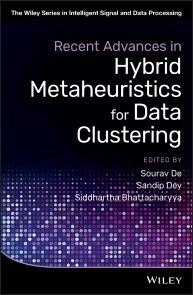
Recent Advances in Hybrid Metaheuristics for Data Clustering
AN AUTHORITATIVE GUIDE TO AN IN-DEPTH ANALYSIS OF VARIOUS STATE-OF-THE-ART DATA CLUSTERING APPROACHES USING A RANGE OF COMPUTATIONAL INTELLIGENCE TECHNIQUESRecent Advances in Hybrid Metaheuristics for Data Clustering offers a guide to the fundamentals of various metaheuristics and their application to data clustering. Metaheuristics are designed to tackle complex clustering problems where classical clustering algorithms have failed to be either effective or efficient. The authors—noted experts on the topic—provide a text that can aid in the design and development of hybrid metaheuristics to be applied to data clustering. The book includes performance analysis of the hybrid metaheuristics in relationship to their conventional counterparts. In addition to providing a review of data clustering, the authors include in-depth analysis of different optimization algorithms. The text offers a step-by-step guide in the build-up of hybrid metaheuristics and to enhance comprehension. In addition, the book contains a range of real-life case studies and their applications. This important text:* Includes performance analysis of the hybrid metaheuristics as related to their conventional counterparts* Offers an in-depth analysis of a range of optimization algorithms* Highlights a review of data clustering* Contains a detailed overview of different standard metaheuristics in current use* Presents a step-by-step guide to the build-up of hybrid metaheuristics* Offers real-life case studies and applicationsWritten for researchers, students and academics in computer science, mathematics, and engineering, Recent Advances in Hybrid Metaheuristics for Data Clustering provides a text that explores the current data clustering approaches using a range of computational intelligence techniques. SOURAV DE, PhD, is an Associate Professor of Computer Science and Engineering at Cooch Behar Government Engineering College, West Bengal, India. SANDIP DEY, PhD, is an Assistant Professor of Computer Science at Sukanta Mahavidyalaya, Dhupguri, Jalpaiguri, India. SIDDHARTHA BHATTACHARYYA, PhD, is a Professor of Computer Science and Engineering at CHRIST (Deemed to be University), Bangalore, India. List of Contributors xiiiSeries Preface xvPreface xvii1 METAHEURISTIC ALGORITHMS IN FUZZY CLUSTERING 1Sourav De, Sandip Dey, and Siddhartha Bhattacharyya1.1 Introduction 11.2 Fuzzy Clustering 11.2.1 Fuzzy c-means (FCM) clustering 21.3 Algorithm 21.3.1 Selection of Cluster Centers 31.4 Genetic Algorithm 31.5 Particle Swarm Optimization 51.6 Ant Colony Optimization 61.7 Artificial Bee Colony Algorithm 71.8 Local Search-Based Metaheuristic Clustering Algorithms 71.9 Population-Based Metaheuristic Clustering Algorithms 81.9.1 GA-Based Fuzzy Clustering 81.9.2 PSO-Based Fuzzy Clustering 91.9.3 Ant Colony Optimization–Based Fuzzy Clustering 101.9.4 Artificial Bee Colony Optimization–Based Fuzzy Clustering 101.9.5 Differential Evolution–Based Fuzzy Clustering 111.9.6 Firefly Algorithm–Based Fuzzy Clustering 121.10 Conclusion 13References 132 HYBRID HARMONY SEARCH ALGORITHM TO SOLVE THE FEATURE SELECTION FOR DATA MINING APPLICATIONS 19Laith Mohammad Abualigah, Mofleh Al-diabat, Mohammad Al Shinwan, Khaldoon Dhou, Bisan Alsalibi, Essam Said Hanandeh, and Mohammad Shehab2.1 Introduction 192.2 Research Framework 212.3 Text Preprocessing 222.3.1 Tokenization 222.3.2 StopWords Removal 222.3.3 Stemming 232.3.4 Text Document Representation 232.3.5 TermWeight (TF-IDF) 232.4 Text Feature Selection 242.4.1 Mathematical Model of the Feature Selection Problem 242.4.2 Solution Representation 242.4.3 Fitness Function 242.5 Harmony Search Algorithm 252.5.1 Parameters Initialization 252.5.2 Harmony Memory Initialization 262.5.3 Generating a New Solution 262.5.4 Update Harmony Memory 272.5.5 Check the Stopping Criterion 272.6 Text Clustering 272.6.1 Mathematical Model of the Text Clustering 272.6.2 Find Clusters Centroid 272.6.3 Similarity Measure 282.7 k-means text clustering algorithm 282.8 Experimental Results 292.8.1 Evaluation Measures 292.8.1.1 F-measure Based on Clustering Evaluation 302.8.1.2 Accuracy Based on Clustering Evaluation 312.8.2 Results and Discussions 312.9 Conclusion 34References 343 ADAPTIVE POSITION–BASED CROSSOVER IN THE GENETIC ALGORITHM FOR DATA CLUSTERING 39Arnab Gain and Prasenjit Dey3.1 Introduction 393.2 Preliminaries 403.2.1 Clustering 403.2.1.1 k-means Clustering 403.2.2 Genetic Algorithm 413.3 RelatedWorks 423.3.1 GA-Based Data Clustering by Binary Encoding 423.3.2 GA-Based Data Clustering by Real Encoding 433.3.3 GA-Based Data Clustering for Imbalanced Datasets 443.4 Proposed Model 443.5 Experimentation 463.5.1 Experimental Settings 463.5.2 DB Index 473.5.3 Experimental Results 493.6 Conclusion 51References 574 APPLICATION OF MACHINE LEARNING IN THE SOCIAL NETWORK 61Belfin R. V., E. Grace Mary Kanaga, and Suman Kundu4.1 Introduction 614.1.1 Social Media 614.1.2 Big Data 624.1.3 Machine Learning 624.1.4 Natural Language Processing (NLP) 634.1.5 Social Network Analysis 644.2 Application of Classification Models in Social Networks 644.2.1 Spam Content Detection 654.2.2 Topic Modeling and Labeling 654.2.3 Human Behavior Analysis 674.2.4 Sentiment Analysis 684.3 Application of Clustering Models in Social Networks 684.3.1 Recommender Systems 694.3.2 Sentiment Analysis 704.3.3 Information Spreading or Promotion 704.3.4 Geolocation-Specific Applications 704.4 Application of Regression Models in Social Networks 714.4.1 Social Network and Human Behavior 714.4.2 Emotion Contagion through Social Networks 734.4.3 Recommender Systems in Social Networks 744.5 Application of Evolutionary Computing and Deep Learning in Social Networks 744.5.1 Evolutionary Computing and Social Network 754.5.2 Deep Learning and Social Networks 754.6 Summary 76Acknowledgments 77References 785 PREDICTING STUDENTS’ GRADES USING CART, ID3, AND MULTICLASS SVM OPTIMIZED BY THE GENETIC ALGORITHM (GA): A CASE STUDY 85Debanjan Konar, Ruchita Pradhan, Tania Dey, Tejaswini Sapkota, and Prativa Rai5.1 Introduction 855.2 Literature Review 875.3 Decision Tree Algorithms: ID3 and CART 885.4 Multiclass Support Vector Machines (SVMs) Optimized by the Genetic Algorithm (GA) 905.4.1 Genetic Algorithms for SVM Model Selection 925.5 Preparation of Datasets 935.6 Experimental Results and Discussions 955.7 Conclusion 96References 966 CLUSTER ANALYSIS OF HEALTH CARE DATA USING HYBRID NATURE-INSPIRED ALGORITHMS 101Kauser Ahmed P, Rishabh Agrawal6.1 Introduction 1016.2 RelatedWork 1026.2.1 Firefly Algorithm 1026.2.2 k-means Algorithm 1036.3 Proposed Methodology 1046.4 Results and Discussion 1066.5 Conclusion 110References 1117 PERFORMANCE ANALYSIS THROUGH A METAHEURISTIC KNOWLEDGE ENGINE 113Indu Chhabra and Gunmala Suri7.1 Introduction 1137.2 Data Mining and Metaheuristics 1147.3 Problem Description 1157.4 Association Rule Learning 1167.4.1 Association Mining Issues 1167.4.2 Research Initiatives and Projects 1167.5 Literature Review 1177.6 Methodology 1197.6.1 Phase 1: Pattern Search 1207.6.2 Phase 2: Rule Mining 1207.6.3 Phase 3: Knowledge Derivation 1217.7 Implementation 1217.7.1 Test Issues 1217.7.2 System Evaluation 1217.7.2.1 Indicator Matrix Formulation 1227.7.2.2 Phase 1: Frequent Pattern Derivation 1237.7.2.3 Phase 2: Association Rule Framing 1237.7.2.4 Phase 3: Knowledge Discovery Through Metaheuristic Implementation 1237.8 Performance Analysis 1247.9 Research Contributions and Future Work 1257.10 Conclusion 126References 1268 MAGNETIC RESONANCE IMAGE SEGMENTATION USING A QUANTUM-INSPIRED MODIFIED GENETIC ALGORITHM (QIANA) BASED ON FRCM 129Sunanda Das, Sourav De, Sandip Dey, and Siddhartha Bhattacharyya8.1 Introduction 1298.2 Literature Survey 1318.3 Quantum Computing 1338.3.1 Quoit-Quantum Bit 1338.3.2 Entanglement 1338.3.3 Measurement 1338.3.4 Quantum Gate 1348.4 Some Quality Evaluation Indices for Image Segmentation 1348.4.1 F(I) 1348.4.2 F’(I) 1358.4.3 Q(I) 1358.5 Quantum-Inspired Modified Genetic Algorithm (QIANA)–Based FRCM 1358.5.1 Quantum-Inspired MEGA (QIANA)–Based FRCM 1368.6 Experimental Results and Discussion 1398.7 Conclusion 147References 1479 A HYBRID APPROACH USING THE K-MEANS AND GENETIC ALGORITHMS FOR IMAGE COLOR QUANTIZATION 151Marcos Roberto e Souza, Anderson Carlos Sousa e Santos, and Helio Pedrini9.1 Introduction 1519.2 Background 1529.3 Color Quantization Methodology 1549.3.1 Crossover Operators 1579.3.2 Mutation Operators 1589.3.3 Fitness Function 1589.4 Results and Discussions 1599.5 Conclusions and Future Work 168Acknowledgments 168References 168Index 173
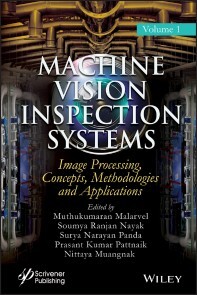
Machine Vision Inspection Systems, Image Processing, Concepts, Methodologies, and Applications
This edited book brings together leading researchers, academic scientists and research scholars to put forward and share their experiences and research results on all aspects of an inspection system for detection analysis for various machine vision applications. It also provides a premier interdisciplinary platform to present and discuss the most recent innovations, trends, methodology, applications, and concerns as well as practical challenges encountered and solutions adopted in the inspection system in terms of image processing and analytics of machine vision for real and industrial application.Machine vision inspection systems (MVIS) utilized all industrial and non-industrial applications where the execution of their utilities based on the acquisition and processing of images. MVIS can be applicable in industry, governmental, defense, aerospace, remote sensing, medical, and academic/education applications but constraints are different. MVIS entails acceptable accuracy, high reliability, high robustness, and low cost. Image processing is a well-defined transformation between human vision and image digitization, and their techniques are the foremost way to experiment in the MVIS. The digital image technique furnishes improved pictorial information by processing the image data through machine vision perception. Digital image processing has widely been used in MVIS applications and it can be employed to a wide diversity of problems particularly in Non-Destructive testing (NDT), presence/absence detection, defect/fault detection (weld, textile, tiles, wood, etc.,), automated vision test & measurement, pattern matching, optical character recognition & verification (OCR/OCV), barcode reading and traceability, medical diagnosis, weather forecasting, face recognition, defence and space research, etc. This edited book is designed to address various aspects of recent methodologies, concepts and research plan out to the readers for giving more depth insights for perusing research on machine vision using image processing techniques.MUTHUKUMARAN MALARVEL obtained his PhD in Digital Image Processing and he is currently working as an Associate Professor in the Department of Computer Science and Engineering at Chitkara University, Punjab, India. His research interests include digital image processing, machine vision systems, image statistical analysis & feature extraction, and machine learning algorithms. SOUMYA RANJAN NAYAK obtained his PhD in computer science and engineering from the Biju Patnaik University of Technology, India. He has more than a decade of teaching and research experience and currently is working as an Assistant Professor, Amity University, Noida, India. His research interests include image analysis on fractal geometry, color and texture analysis jointly and separately. SURYA NARAYAN PANDA is a Professor and Director Research at Chitkara University, Punjab, India. His areas of interest include Cybersecurity, Networking, Advanced Computer Networks, Machine Learning, and Artificial Intelligence. He has developed the prototype of Smart Portable Intensive Care Unit through which the doctor can provide immediate virtual medical assistance to emergency cases in the ambulance. He is currently involved in designing different healthcare devices for real-time issues using AI and ML. PRASANT KUMAR PATTNAIK Ph.D. (Computer Science), Fellow IETE, Senior Member IEEE is a Professor at the School of Computer Engineering, KIIT Deemed to be University, Bhubaneswar, India. He has more than a decade of teaching and research experience. His areas of interest include Mobile Computing, Cloud Computing, Cyber Security, Intelligent Systems and Brain Computer Interface. NITTAYA MUANGNAK is a lecturer at Kasetsart University, Thailand. Her PhD research has been on medical image analysis, particularly retinal fundus image, at Sirindhorn International Institute of Technology, Thammasat University in Thailand. Preface xi1 LAND-USE CLASSIFICATION WITH INTEGRATED DATA 1D. A. Meedeniya, J. A. A. M Jayanetti, M. D. N. Dilini, M. H. Wickramapala and J. H. Madushanka1.1 Introduction 21.2 Background Study 31.2.1 Overview of Land-Use and Land-Cover Information 31.2.2 Geographical Information Systems 41.2.3 GIS-Related Data Types 41.2.3.1 Point Data Sets 41.2.3.2 Aerial Data Sets 51.2.4 Related Studies 61.3 System Design 61.4 Implementation Details 101.4.1 Materials 101.4.2 Preprocessing 111.4.3 Built-Up Area Extraction 111.4.4 Per-Pixel Classification 121.4.5 Clustering 141.4.6 Segmentation 141.4.7 Object-Based Image Classification 161.4.8 Foursquare Data Preprocessing and Quality Analysis 201.4.9 Integration of Satellite Images with Foursquare Data 211.4.10 Building Block Identification 211.4.11 Overlay of Foursquare Points 221.4.12 Visualization of Land Usage 231.4.13 Common Platform Development 231.5 System Evaluation 251.5.1 Experimental Evaluation Process 251.5.2 Evaluation of the Classification Using Base Error Matrix 281.6 Discussion 311.6.1 Contribution of the Proposed Approach 311.6.2 Limitations of the Data Sets 321.6.3 Future Research Directions 331.7 Conclusion 34References 352 INDIAN SIGN LANGUAGE RECOGNITION USING SOFT COMPUTING TECHNIQUES 37Ashok Kumar Sahoo, Pradeepta Kumar Sarangi and Parul Goyal2.1 Introduction 372.2 Related Works 382.2.1 The Domain of Sign Language 392.2.2 The Data Acquisition Methods 412.2.3 Preprocessing Steps 422.2.3.1 Image Restructuring 432.2.3.2 Skin Color Detection 432.2.4 Methods of Feature Extraction Used in the Experiments 442.2.5 Classification Techniques 452.2.5.1 K-Nearest Neighbor 452.2.5.2 Neural Network Classifier 452.2.5.3 Naive Baÿes Classifier 462.3 Experiments 462.3.1 Experiments on ISL Digits 462.3.1.1 Results and Discussions on the First Experiment 472.3.1.2 Results and Discussions on Second Experiment 492.3.2 Experiments on ISL Alphabets 512.3.2.1 Experiments with Single-Handed Alphabet Signs 512.3.2.2 Results of Single-Handed Alphabet Signs 522.3.2.3 Experiments with Double-Handed Alphabet Signs 532.3.2.4 Results on Double-Handed Alphabets 542.3.3 Experiments on ISL Words 582.3.3.1 Results on ISL Word Signs 592.4 Summary 63References 633 STORED GRAIN PEST IDENTIFICATION USING AN UNMANNED AERIAL VEHICLE (UAV)-ASSISTED PEST DETECTION MODEL 67Kalyan Kumar Jena, Sasmita Mishra, Sarojananda Mishra and Sourav Kumar Bhoi3.1 Introduction 683.2 Related Work 693.3 Proposed Model 703.4 Results and Discussion 723.5 Conclusion 77References 784 OBJECT DESCRIPTOR FOR MACHINE VISION 85Aparna S. Murthy and Salah Rabba4.1 Outline 854.2 Chain Codes 874.3 Polygonal Approximation 894.4 Moments 924.5 HU Invariant Moments 964.6 Zernike Moments 974.7 Fourier Descriptors 984.8 Quadtree 994.9 Conclusion 102References 1145 FLOOD DISASTER MANAGEMENT: RISKS, TECHNOLOGIES, AND FUTURE DIRECTIONS 115Hafiz Suliman Munawar5.1 Flood Management 1155.1.1 Introduction 1155.1.2 Global Flood Risks and Incidents 1165.1.3 Causes of Floods 1185.1.4 Floods in Pakistan 1195.1.5 Floods in Australia 1215.1.6 Why Floods are a Major Concern 1235.2 Existing Disaster Management Systems 1245.2.1 Introduction 1245.2.2 Disaster Management Systems Used Around the World 1245.2.2.1 Disaster Management Model 1255.2.2.2 Disaster Risk Analysis System 1265.2.2.3 Geographic Information System 1265.2.2.4 Web GIS 1265.2.2.5 Remote Sensing 1275.2.2.6 Satellite Imaging 1275.2.2.7 Global Positioning System for Imaging 1285.2.3 Gaps in Current Disaster Management Technology 1285.3 Advancements in Disaster Management Technologies 1295.3.1 Introduction 1295.3.2 AI and Machine Learning for Disaster Management 1305.3.2.1 AIDR 1305.3.2.2 Warning Systems 1305.3.2.3 QCRI 1315.3.2.4 The Concern 1315.3.2.5 BlueLine Grid 1315.3.2.6 Google Maps 1325.3.2.7 RADARSAT-1 1325.3.3 Recent Research in Disaster Management 1325.3.4 Conclusion 1375.4 Proposed System 1375.4.1 Image Acquisition Through UAV 1385.4.2 Preprocessing 1385.4.3 Landmarks Detection 1385.4.3.1 Buildings 1395.4.3.2 Roads 1395.4.4 Flood Detection 1405.4.4.1 Feature Matching 1405.4.4.2 Flood Detection Using Machine Learning 1415.4.5 Conclusion 143References 1436 TEMPORAL COLOR ANALYSIS OF AVOCADO DIP FOR QUALITY CONTROL 147Homero V. Rios-Figueroa, Micloth López del Castillo-Lozano, Elvia K. Ramirez-Gomez and Ericka J. Rechy-Ramirez6.1 Introduction 1476.2 Materials and Methods 1486.3 Image Acquisition 1496.4 Image Processing 1506.5 Experimental Design 1506.5.1 First Experimental Design 1506.5.2 Second Experimental Design 1516.6 Results and Discussion 1516.6.1 First Experimental Design (RGB Color Space) 1516.6.2 Second Experimental Design (L*a*b* Color Space) 1526.7 Conclusion 156References 1567 IMAGE AND VIDEO PROCESSING FOR DEFECT DETECTION IN KEY INFRASTRUCTURE 159Hafiz Suliman Munawar7.1 Introduction 1607.2 Reasons for Defective Roads and Bridges 1617.3 Image Processing for Defect Detection 1627.3.1 Feature Extraction 1627.3.2 Morphological Operators 1637.3.3 Cracks Detection 1647.3.4 Potholes Detection 1657.3.5 Water Puddles Detection 1667.3.6 Pavement Distress Detection 1677.4 Image-Based Defect Detection Methods 1697.4.1 Thresholding Techniques 1707.4.2 Edge Detection Techniques 1707.4.3 Wavelet Transform Techniques 1717.4.4 Texture Analysis Techniques 1717.4.5 Machine Learning Techniques 1727.5 Factors Affecting the Performance 1727.5.1 Lighting Variations 1737.5.2 Small Database 1737.5.3 Low-Quality Data 1737.6 Achievements and Issues 1737.6.1 Achievements 1747.6.2 Issues 1747.7 Conclusion 174References 1758 METHODOLOGY FOR THE DETECTION OF ASYMPTOMATIC DIABETIC RETINOPATHY 179Jaskirat Kaur and Deepti Mittal8.1 Introduction 1808.2 Key Steps of Computer-Aided Diagnostic Methods 1818.3 DR Screening and Grading Methods 1838.4 Key Observations from Literature Review 1888.5 Design of Experimental Methodology 1898.6 Conclusion 192References 1939 OFFLINE HANDWRITTEN NUMERAL RECOGNITION USING CONVOLUTION NEURAL NETWORK 197Abhisek Sethy, Prashanta Kumar Patra and Soumya Ranjan Nayak9.1 Introduction 1989.2 Related Work Done 1999.3 Data Set Used for Simulation 2019.4 Proposed Model 2029.5 Result Analysis 2049.6 Conclusion and Future Work 207References 20910 A REVIEW ON PHISHING—MACHINE VISION AND LEARNING APPROACHES 213Hemamalini Siranjeevi, Swaminathan Venkatraman and Kannan Krithivasan10.1 Introduction 21310.2 Literature Survey 21410.2.1 Content-Based Approaches 21410.2.2 Heuristics-Based Approaches 21510.2.3 Blacklist-Based Approaches 21510.2.4 Whitelist-Based Approaches 21610.2.5 CANTINA-Based Approaches 21610.2.6 Image-Based Approaches 21610.3 Role of Data Mining in Antiphishing 21710.3.1 Phishing Detection 21910.3.2 Phishing Prevention 22010.3.3 Training and Education 22210.3.4 Phishing Recovery and Avoidance 22210.3.5 Visual Methods 22310.4 Conclusion 224Acknowledgments 224References 224Index 231
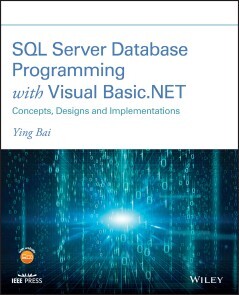
SQL Server Database Programming with Visual Basic.NET
A GUIDE TO THE PRACTICAL ISSUES AND APPLICATIONS IN DATABASE PROGRAMMING WITH UPDATED VISUAL BASIC.NETSQL Server Database Programming with Visual Basic.NET offers a guide to the fundamental knowledge and practical techniques for the design and creation of professional database programs that can be used for real-world commercial and industrial applications. The author—a noted expert on the topic—uses the most current version of Visual Basic.NET, Visual Basic.NET 2017 with Visual Studio.NET 2017. In addition, he introduces the updated SQL Server database and Microsoft SQL Server 2017 Express. All sample program projects can be run in the most updated version, Visual Basic.NET 2019 with Visual Studio.NET 2019.Written in an accessible, down-to-earth style, the author explains how to build a sample database using the SQL Server management system and Microsoft SQL Server Management Studio 2018. The latest version of ASP.NET, ASP.NET 4.7, is also discussed to provide the most up-to-date Web database programming technologies. This important book:* Offers illustrative practical examples and detailed descriptions to aid in comprehension of the material presented* Includes both fundamental and advanced database programming techniques* Integrates images into associated database tables using a DevExpress UI tools -WindowsUIWritten for graduate and senior undergraduate students studying database implementations and programming courses, SQL Server Database Programming with Visual Basic.NET shows how to develop professional and practical database programs in Visual Basic.NET 2017/Visual Basic.NET 2019.YING BAI, PHD, is a Professor in the Department of Computer Science and Engineering at Johnson C. Smith University (JCSU). He has published multiple books with Wiley-IEEE Press including Practical Microcontroller Engineering with ARM Technology, Practical Database Programming with Visual C#.NET and Practical Database Programming with Java. About the Author xixPreface xxiAcknowledgment xxiiiAbout the Companion Website xxivCHAPTER 1 INTRODUCTION 11.1 Outstanding Features About This Book 21.2 This Book is For 21.3 What This Book Covers 21.4 How This Book is Organized and How to Use This Book 51.5 How to Use Source Codes and Sample Database 61.6 Instructors and Customers Supports 8CHAPTER 2 INTRODUCTION TO DATABASES 9Ying Bai and Satish Bhalla2.1 What are Databases and Database Programs? 102.1.1 File Processing System 102.1.2 Integrated Databases 112.2 Develop a Database 122.3 Sample Database 132.3.1 Relational Data Model 132.3.2 Entity-Relationship Model (ER) 172.4 Identifying Keys 182.5 Define Relationships 182.6 ER Notation 222.7 Data Normalization 232.7.1 First Normal Form (1NF) 232.7.2 Second Normal Form (2NF) 242.7.3 Third Normal Form (3NF) 262.8 Database Components in Some Popular Databases 282.8.1 Microsoft Access Databases 282.8.2 SQL Server Databases 292.8.3 Oracle Databases 322.9 Create Microsoft SQL Server 2017 Express Sample Database 352.9.1 Create the LogIn Table 362.9.2 Create the Faculty Table 372.9.3 Create Other Tables 392.9.4 Create Relationships Among Tables 452.9.4.1 Create Relationship Between the LogIn and the Faculty Tables 462.9.4.2 Create Relationship Between the LogIn and the Student Tables 492.9.4.3 Create Relationship Between the Faculty and the Course Tables 502.9.4.4 Create Relationship Between the Student and the StudentCourse Tables 502.9.4.5 Create Relationship Between the Course and the StudentCourse Tables 512.9.5 Store Images to the SQL Server 2017 Express Database 532.10 Chapter Summary 61Homework 63CHAPTER 3 INTRODUCTION TO ADO.NET 673.1 The ADO and ADO.NET 673.2 Overview of the ADO.NET 693.3 The Architecture of the ADO.NET 703.4 The Components of ADO.NET 713.4.1 The Data Provider 723.4.1.1 The ODBC Data Provider 733.4.1.2 The OLEDB Data Provider 733.4.1.3 The SQL Server Data Provider 743.4.1.4 The Oracle Data Provider 743.4.2 The Connection Class 743.4.2.1 The Open() Method of the Connection Class 773.4.2.2 The Close() Method of the Connection Class 773.4.2.3 The Dispose() Method of the Connection Class 783.4.3 The Command and the Parameter Classes 783.4.3.1 The Properties of the Command Class 793.4.3.2 The Constructors and Properties of the Parameter Class 793.4.3.3 Parameter Mapping 803.4.3.4 The Methods of the ParameterCollection Class 823.4.3.5 The Constructor of the Command Class 833.4.3.6 The Methods of the Command Class 843.4.4 The DataAdapter Class 873.4.4.1 The Constructor of the DataAdapter Class 873.4.4.2 The Properties of the DataAdapter Class 873.4.4.3 The Methods of the DataAdapter Class 883.4.4.4 The Events of the DataAdapter Class 883.4.5 The DataReader Class 903.4.6 The DataSet Component 923.4.6.1 The DataSet Constructor 943.4.6.2 The DataSet Properties 943.4.6.3 The DataSet Methods 943.4.6.4 The DataSet Events 943.4.7 The DataTable Component 973.4.7.1 The DataTable Constructor 983.4.7.2 The DataTable Properties 983.4.7.3 The DataTable Methods 993.4.7.4 The DataTable Events 1003.4.8 ADO.NET Entity Framework 1023.4.8.1 Advantages of Using the Entity Framework 6 1043.4.8.2 The ADO.NET 4.3 Entity Data Model 1063.4.8.3 Using Entity Framework 6 Entity Data Model Wizard 1103.5 Chapter Summary 118Homework 120CHAPTER 4 INTRODUCTION TO LANGUAGE INTEGRATED QUERY (LINQ) 1234.1 Overview of Language Integrated Query 1234.1.1 Some Special Interfaces Used in LINQ 1244.1.1.1 The IEnumerable and IEnumerable(Of T) Interfaces 1244.1.1.2 The IQueryable and IQueryable(Of T) Interfaces 1254.1.2 Standard Query Operators 1264.1.3 Deferred Standard Query Operators 1274.1.4 Non-Deferred Standard Query Operators 1314.2 Introduction to LINQ Query 1354.3 The Architecture and Components of LINQ 1374.3.1 Overview of LINQ to Objects 1384.3.2 Overview of LINQ to DataSet 1394.3.3 Overview of LINQ to SQL 1394.3.4 Overview of LINQ to Entities 1404.3.5 Overview of LINQ to XML 1404.4 LINQ to Objects 1414.4.1 LINQ and ArrayList 1424.4.2 LINQ and Strings 1434.4.2.1 Query a String to Determine the Number of Numeric Digits 1444.4.2.2 Sort Lines of Structured Text By any Field in the Line 1454.4.3 LINQ and File Directories 1474.4.3.1 Query the Contents of Files in a Folder 1484.4.4 LINQ and Reflection 1504.5 LINQ to DataSet 1524.5.1 Operations to DataSet Objects 1524.5.1.1 Query Expression Syntax 1534.5.1.2 Method-Based Query Syntax 1544.5.1.3 Query the Single Table 1574.5.1.4 Query the Cross Tables 1594.5.1.5 Query Typed DataSet 1624.5.2 Operations to DataRow Objects Using the Extension Methods 1654.5.3 Operations to DataTable Objects 1694.6 LINQ to SQL 1704.6.1 LINQ to SQL Entity Classes and DataContext Class 1714.6.1.1 Add LINQ to Data Reference 1714.6.1.2 Add LINQ To SQL Tools 1714.6.2 LINQ to SQL Database Operations 1754.6.2.1 Data Selection Query 1754.6.2.2 Data Insertion Query 1774.6.2.3 Data Updating Query 1784.6.2.4 Data Deletion Query 1794.6.3 LINQ to SQL Implementations 1824.7 LINQ to Entities 1824.7.1 The Object Services Component 1834.7.2 The ObjectContext Component 1834.7.3 The ObjectQuery Component 1844.7.4 LINQ to Entities Flow of Execution 1844.7.5 Implementation of LINQ to Entities 1864.8 LINQ to XML 1874.8.1 LINQ to XML Class Hierarchy 1874.8.2 Manipulate XML Elements 1884.8.2.1 Creating XML from Scratch 1884.8.2.2 Insert XML 1904.8.2.3 Update XML 1914.8.2.4 Delete XML 1924.8.3 Manipulate XML Attributes 1924.8.3.1 Add XML Attributes 1924.8.3.2 Get XML Attributes 1934.8.3.3 Delete XML Attributes 1934.8.4 Query XML with LINQ to XML 1944.8.4.1 Standard Query Operators and XML 1944.8.4.2 XML Query Extensions 1954.8.4.3 Using Query Expressions with XML 1964.8.4.4 Using XPath and XSLT with LINQ to XML 1964.8.4.5 Mixing XML and Other Data Models 1974.9 Visual Basic.NET Language Enhancement for LINQ 1994.9.1 Lambda Expressions 1994.9.2 Extension Methods 2014.9.3 Implicitly Typed Local Variables 2054.9.4 Query Expressions 2064.10 Chapter Summary 208Homework 209CHAPTER 5 DATA SELECTION QUERY WITH VISUAL BASIC.NET 215PART I DATA QUERY WITH VISUAL STUDIO.NET DESIGN TOOLS AND WIZARDS 2165.1 A Completed Sample Database Application Example 2165.2 Visual Studio.NET Design Tools and Wizards 2195.2.1 Data Components in the Toolbox Window 2205.2.1.1 The DataSet 2205.2.1.2 DataGridView 2215.2.1.3 BindingSource 2225.2.1.4 BindingNavigator 2225.2.1.5 TableAdapter 2235.2.1.6 TableAdapter Manager 2235.2.2 Data Source Window 2235.2.2.1 Add New Data Sources 2245.2.2.2 Data Source Configuration Wizard 2245.2.2.3 DataSet Designer 2285.3 Query Data from SQL Server Database Using Design Tools and Wizards 2315.3.1 Application User Interface 2315.3.1.1 The LogIn Form 2325.3.1.2 The Selection Form 2325.3.1.3 The Faculty Form 2325.3.1.4 The Course Form 2345.3.1.5 The Student Form 2345.4 Use Visual Studio Wizards and Design Tools to Query and Display Data 2365.4.1 Query and Display Data using the DataGridView and Detail Controls 2365.4.1.1 View the Entire Table 2385.4.1.2 View Each Record or the Specified Columns with Detail View 2415.4.2 Use DataSet Designer to Edit the Structure of the DataSet 2435.4.3 Bind Data to the Associated Controls in LogIn Form 2455.4.4 Develop Codes to Query Data Using the Fill() Method 2495.4.5 Use Return a Single Value to Query Data for LogIn Form 2515.4.6 Develop the Codes for the Selection Form 2545.4.7 Query Data from the Faculty Table for the Faculty Form 2565.4.8 Develop Codes to Query Data from the Faculty Table 2585.4.8.1 Develop Codes to Query Data Using the TableAdapter Method 2585.4.8.2 Develop Codes to Query Data Using the LINQ to DataSet Method 2615.4.9 Query Data from the Course Table for the Course Form 2625.4.9.1 Build the Course Queries Using the Query Builder 2635.4.9.2 Bind Data Columns to the Associated Controls in the Course Form 2655.4.9.3 Develop Codes to Query Data for the Course Form 267PART II DATA QUERY WITH RUNTIME OBJECTS 2715.5 Introduction to Runtime Objects 2725.5.1 Procedure of Building a Data-Driven Application Using Runtime Object 2745.6 Query Data from SQL Server Database Using Runtime Object 2745.6.1 Access to SQL Server Database 2745.6.2 Declare Global Variables and Runtime Objects 2765.6.3 Query Data Using Runtime Objects for the LogIn Form 2785.6.3.1 Connect to the Data Source with the Runtime Object 2785.6.3.2 Coding for Method 1: Using the TableAdapter to Query Data 2795.6.3.3 Coding for Method 2: Using the DataReader to Query Data 2815.6.4 The Coding for the Selection Form 2835.6.5 Query Data Using Runtime Objects for the Faculty Form 2845.6.5.1 Using Three Query Methods to Retrieve Images from SQL Server Database 2905.6.6 Query Data Using Runtime Objects for the Course Form 2905.6.6.1 Retrieve Data from Multiple Tables Using Tables JOINS 2935.6.7 Query Data Using Runtime Objects for the Student Form 3015.6.7.1 Query Student Data Using Stored Procedures 3025.6.7.2 Query Data Using Stored Procedures for Student Form 3065.6.7.3 Query Data Using More Complicated Stored Procedures 3155.7 Chapter Summary 320Homework 321CHAPTER 6 DATA INSERTING WITH VISUAL BASIC.NET 327PART I INSERT DATA WITH VISUAL BASIC.NET DESIGN TOOLS AND WIZARDS 3286.1 Insert Data Into a Database 3286.1.1 Insert New Records into a Database Using the TableAdapter.Insert Method 3296.1.2 Insert New Records into a Database Using the TableAdapter.Update Method 3296.2 Insert Data into the SQL Server Database Using a Sample Project InsertWizard 3306.2.1 Create InsertWizard Project Based on the SelectWizard Project 3306.2.2 Application User Interfaces 3316.2.3 Validate Data Before the Data Insertion 3316.2.3.1 Visual Basic Collection and .NET Framework Collection Classes 3316.2.3.2 Validate Data Using the Generic Collection 3326.2.4 Initialization Coding Process for the Data Insertion 3356.2.5 Build the Insert Query 3366.2.5.1 Configure the TableAdapter and Build the Data Inserting Query 3366.2.6 Develop Codes to Insert Data Using the TableAdapter.Insert Method 3376.2.7 Develop Codes to Insert Data Using the TableAdapter.Update Method 3416.2.8 Insert Data into the Database Using the Stored Procedures 3456.2.8.1 Create the Stored Procedure Using the TableAdapter Query Configuration Wizard 3466.2.8.2 Modify the Codes to Perform the Data Insertion Using the Stored Procedure 346PART II DATA INSERTION WITH RUNTIME OBJECTS 3506.3 The General Run Time Objects Method 3516.4 Insert Data into the SQL Server Database Using the Run Time Object Method 3526.4.1 Insert Data into the Faculty Table for the SQL Server Database 3536.4.1.1 Validate Data Before the Data Insertion 3536.4.1.2 Insert Data into the Faculty Table 3556.4.1.3 Validate Data After the Data Insertion 3576.5 Insert Data into the Database Using Stored Procedures 3606.5.1 Insert Data into the SQL Server Database Using Stored Procedures 3606.5.1.1 Develop Stored Procedures in SQL Server Database 3616.5.1.2 Develop Codes to Call Stored Procedures to Insert Data into the Course Table 3636.6 Insert Data into the Database Using the LINQ To SQL Method 3686.6.1 Insert Data Into the SQL Server Database Using the LINQ to SQL Queries 3696.7 Chapter Summary 369Homework 370CHAPTER 7 DATA UPDATING AND DELETING WITH VISUAL BASIC.NET 377PART I DATA UPDATING AND DELETING WITH VISUAL STUDIO.NET DESIGN TOOLS AND WIZARDS 3787.1 Update or Delete Data Against Databases 3787.1.1 Updating and Deleting Data from Related Tables in a DataSet 3797.1.2 Update or Delete Data Against Database Using TableAdapter DBDirect Methods - TableAdapter.Update and TableAdapter.Delete 3797.1.3 Update or Delete Data Against Database Using TableAdapter.Update Method 3807.2 Update and Delete Data For Microsoft SQL Server Database 3817.2.1 Create a New Project Based on the InsertWizard Project 3817.2.2 Application User Interfaces 3827.2.3 Validate Data Before the Data Updating and Deleting 3827.2.4 Build the Update and Delete Queries 3827.2.4.1 Configure the TableAdapter and Build the Data Updating Query 3837.2.4.2 Build the Data Deleting Query 3847.2.5 Develop Codes to Update Data Using the TableAdapter DBDirect Method 3857.2.5.1 Modifications of the Codes 3857.2.5.2 Creations of the Codes 3857.2.6 Develop Codes to Update Data Using the TableAdapter.Update Method 3877.2.7 Develop Codes to Delete Data Using the TableAdapter DBDirect Method 3887.2.8 Develop Codes to Delete Data Using the TableAdapter.Update Method 3907.2.9 Validate the Data After the Data Updating and Deleting 391PART II DATA UPDATING AND DELETING WITH RUNTIME OBJECTS 3957.3 The Run Time Objects Method 3957.4 Update and Delete Data for SQL Server Database Using the Run Time Objects 3967.4.1 Update Data Against the Faculty Table in the SQL Server Database 3977.4.1.1 Develop Codes to Update the Faculty Data 3977.4.1.2 Validate the Data Updating 3997.4.2 Delete Data from the Faculty Table in the SQL Server Database 3997.4.2.1 Develop Codes to Delete Data 3997.4.2.2 Validate the Data Deleting 4017.5 Update and Delete Data against SQL Server Database Using Stored Procedures 4047.5.1 Modify an Existing Project to Create Our New Project 4057.5.2 Create the Codes to Update and Delete Data from the Course Table 4057.5.2.1 Develop Two Stored Procedures in the SQL Server Database 4077.5.2.2 Call the Stored Procedures to Perform the Data Updating and Deleting 4097.5.3 Update and Delete Data against Databases Using the LINQ to SQL Query 4127.5.3.1 Update and Delete Data Using LINQ to SQL Query for Student Table 4137.5.3.2 Create a New Object of the DataContext Class for Student Form 4147.5.3.3 Develop the Codes for the Select Button Click Event Procedure 4157.5.3.4 Develop the Codes for the Insert Button Click Event Procedure 4167.5.3.5 Develop the Codes for the Update Button Click Event Procedure 4197.5.3.6 Develop the Codes for the Delete Button Click Event Procedure 4197.5.3.7 Run the Project to Test Data Updating and Deleting Actions for Student Table 4217.6 Chapter Summary 423Homework 423CHAPTER 8 ACCESSING DATA IN ASP.NET 4298.1 What is .NET Framework? 4308.2 What is ASP.NET? 4318.2.1 ASP.NET Web Application File Structure 4338.2.2 ASP.NET Execution Model 4338.2.3 What is Really Happened When a Web Application is Executed? 4348.2.4 The Requirements to Test and Run the Web Project 4358.3 Develop ASP.NET Web Application to Select Data from SQL Server Databases 4358.3.1 Create the User Interface – LogIn Form 4368.3.2 Develop the Codes to Access and Select Data from the Database 4388.3.3 Validate the Data in the Client Side 4428.3.4 Create the Second User Interface – Selection Page 4438.3.5 Develop the Codes to Open the Other Page 4448.3.6 Modify the Codes in the LogIn Page to Transfer to the Selection Page 4468.3.7 Create the Third User Interface – Faculty Page 4478.3.8 Develop the Codes to Select the Desired Faculty Information 4488.3.8.1 Develop the Codes for the Page_Load Event Procedure 4498.3.8.2 Develop the Codes for the Select Button Click Event Procedure 4508.3.8.3 Develop the Codes for Other Procedures 4528.3.9 Create the Fourth User Interface – Course Page 4548.3.9.1 The AutoPostBack Property of the List Box Control 4578.3.10 Develop the Codes to Select the Desired Course Information 4578.3.10.1 Coding for the Course Page Loading and Ending Event Procedures 4588.3.10.2 Coding for the Select Button’s Click Event Procedure 4598.3.10.3 Coding for the SelectedIndexChanged Event Procedure of the CourseList Box 4618.3.10.4 Coding for Other User Defined Subroutine Procedures 4638.4 Develop ASP.NET Web Application to Insert Data Into SQL Server Databases 4658.4.1 Develop the Codes to Perform the Data Insertion Function 4668.4.2 Develop the Codes for the Insert Button Click Event Procedure 4668.4.3 Validate the Data Insertion 4738.5 Develop Web Applications to Update and Delete Data in SQL Server Databases 4738.5.1 Modify the Codes for the Faculty Page 4748.5.2 Develop the Codes for the Update Button Click Event Procedure 4758.5.3 Develop the Codes for the Delete Button Click Event Procedure 4798.5.3.1 Relationships Between Five Tables in Our Sample Database 4808.5.3.2 Data Deleting Sequence 4818.5.3.3 Use the Cascade Deleting Option to Simplify the Data Deleting 4818.5.3.4 Create the Stored Procedure to Perform the Data Deleting 4838.5.3.5 Develop the Codes to Call the Stored Procedure to Perform the Data Deleting 4868.6 Develop ASP.NET Web Applications with LINQ to SQL Query 4898.6.1 Create a New Object of the DataContext Class 4918.6.2 Develop the Codes for the Data Selection Query 4928.6.3 Develop the Codes for the Data Insertion Query 4938.6.4 Develop the Codes for the Data Updating and Deleting Queries 4968.7 Chapter Summary 500Homework 500CHAPTER 9 ASP.NET WEB SERVICES 5059.1 What are Web Services and Their Components? 5069.2 Procedures to Build a Web Service 5089.2.1 The Structure of a Typical Web Service Project 5089.2.2 The Real Considerations When Building a Web Service Project 5099.2.3 Introduction to Windows Communication Foundation (WCF) 5099.2.3.1 What is the WCF? 5109.2.3.2 WCF Data Services 5109.2.3.3 WCF Services 5119.2.3.4 WCF Clients 5119.2.3.5 WCF Hosting 5129.2.3.6 WCF Visual Studio Templates 5129.2.4 Procedures to Build an ASP.NET Web Service 5139.3 Build ASP.NET Web Service Project to Access SQL Server Database 5149.3.1 Files and Items Created in the New Web Service Project 5159.3.2 A Feeling of the Hello World Web Service Project As it Runs 5189.3.3 Modify the Default Namespace 5209.3.4 Create a Base Class to Handle Error Checking for Our Web Service 5229.3.5 Create a Customer Returned Class to Hold All Retrieved Data 5229.3.6 Add Web Methods into Our Web Service Class 5249.3.7 Develop the Codes for Web Methods to Perform the Web Services 5249.3.7.1 Web Service Connection Strings 5249.3.7.2 Modify the Existing HelloWorld Web Method 5279.3.7.3 Develop the Codes to Perform the Database Queries 5289.3.7.4 Develop the Codes for Subroutines Used in the Web Method 5309.3.8 Develop the Stored Procedure to Perform the Data Query 5339.3.8.1 Develop the Stored Procedure WebSelectFacultySP 5339.3.8.2 Add Another Web Method to Call the Stored Procedure 5349.3.9 Use DataSet as the Returning Object for the Web Method 5369.3.10 Build Windows-based Web Service Clients to Consume the Web Services 5389.3.10.1 Create a Web Service Proxy Class 5399.3.10.2 Develop the Graphic User Interface for the Windows-based Client Project 5419.3.10.3 Develop the Code to Consume the Web Service 5419.3.11 Build Web-based Web Service Clients to Consume the Web Service 5489.3.11.1 Create a New Web Site Project and Add an Existing Web Page 5489.3.11.2 Add a Web Service Reference and Modify the Web Form Window 5499.3.11.3 Modify the Designer and Codes for the Related Event Procedures 5509.3.12 Deploy the Completed Web Service to Production Servers 5559.3.12.1 Publish the Desired Web Service 5579.4 Build ASP.NET Web Service Project to Insert Data Into SQL Server Database 5599.4.1 Create a New Web Service Project WebServiceSQLInsert 5599.4.2 Develop Four Web Service Methods 5609.4.2.1 Develop Codes for the First Web Method SetSQLInsertSP 5619.4.2.2 Develop Codes for User Defined Functions and Subroutine Procedures 5639.4.2.3 Develop the Second Web Method GetSQLInsert 5659.4.2.4 Develop the Third Web Method SQLInsertDataSet 5689.4.2.5 Develop the Fourth Web Method GetSQLInsertCourse 5729.4.3 Build Windows-based Web Service Clients to Consume the Web Services 5789.4.3.1 Create a Windows-Based Consume Project and a Web Service Proxy Class 5789.4.3.2 Develop the Graphic User Interface for the Client Project 5799.4.3.3 Develop the Code to Consume the Web Service 5819.4.4 Build Web-based Web Service Clients to Consume the Web Services 5949.4.4.1 Create a New Web Site Project and Add an Existing Web Page 5949.4.4.2 Add a Web Service Reference and Modify the Web Form Window 5959.4.4.3 Modify the Codes for the Related Event Procedures 5969.5 Build ASP.NET Web Service to Update and Delete Data for SQL Server Database 6069.5.1 Modify the Default Namespace and Add Database Connection String 6079.5.2 Create Our Customer-Built Base and Returned Classes 6089.5.3 Create a Web Method to Call Stored Procedure to Update Student Records 6099.5.4 Create a Web Method to Call Stored Procedure to Delete Student Records 6119.5.5 Develop Two Stored Procedures WebUpdateStudentSP and WebDeleteStudentSP 6139.5.5.1 Develop the Stored Procedure WebUpdateStudentSP 6139.5.5.2 Develop the Stored Procedure WebDeleteStudentSP 6169.6 Build Windows-Based Web Service Clients to Consume the Web Services 6189.6.1 Modify the Student Form Window 6189.6.2 Add a New Web Reference to Our Client Project 6199.6.3 Build the Codes to the Update Button Click Event Procedure 6209.6.4 Build the Codes to the Delete Button Click Event Procedure 6219.7 Build Web-Based Web Service Clients to Consume the Web Services 6249.7.1 Create a New Web Site Application Project and Add an Existing Web Page 6259.7.2 Add a Web Service Reference and Modify the Web Form Window 6259.7.3 Modify the Codes Inside the Back Button Click Event Procedure 6269.7.4 Add the Codes to the Update Button Click Event Procedure 6269.7.5 Develop Codes for the Delete Button Click Event Procedure 6289.8 Chapter Summary 631Homework 632Appendix A: Install and Configure SQL Server 2017 Express Database 637Appendix B: Download and Install DevExpress .NET UI Controls 649Appendix C: Download & Install FrontPage Server Extension for Windows 10 651Appendix D: How to Use Sample Database 655Index 657
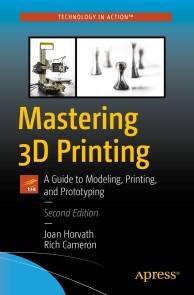
Mastering 3D Printing
Get the most out of your printer, including how to design models, choose materials, work with different printers, and integrate 3D printing with traditional prototyping to make techniques like sand casting more efficient.This book is for new 3D printer owners, makers of all kinds, entrepreneurs, technology educators, and anyone curious about what you can do with a 3D printer.In this revised and expanded new edition of Mastering 3D Printing, which has been a trusted resource through five years of evolution in the 3D printing industry, you’ll gain a comprehensive understanding of 3D printing. This book presumes no foreknowledge and describes what you need to know about how printers work, how to decide which type of printer (filament, resin, or powder) makes the most sense for you, and then how to go forward in the case of filament and resin printers.This new edition now includes material about consumer resin printing, the evolution of lower-cost metal printing, and the plethora of both materials and applications.WHAT YOU’LL LEARN* Choose among the different 3D printing technologies* Create or find 3D models to print* Make both easy and challenging prints come out as you imagined* Assess whether your business, factory, home or classroom will benefit from 3D printing* Work with applications that are good candidates for first projects in home and industrial applicationsWHO THIS BOOK IS FORPeople who are encountering 3D printing for the first time, or for those who want to level up their skills. It is designed for the nontechnical adult and minimizes jargon. However more sophisticated users will still find tips and insights of value.As an engineer and management consultant, JOAN HORVATH has coordinated first-of-a-kind interdisciplinary technical and business projects, helping people with no common vocabulary (startups, universities, small towns, etc). work together. Her experience as a systems engineer has spanned software development, spacecraft flight operations, risk management, and spacecraft/ground system test and contingency planning.As an educator, Joan’s passion is bringing science and technology to the non-specialist in a comprehensible and entertaining way that will stay with the learner for a lifetime. As an educator, Joan’s passion is bringing science and technology to the non-specialist in a comprehensible and entertaining way that will stay with the learner for a lifetime.RICH CAMERON is a cofounder of Pasadena-based Nonscriptum LLC. Nonscriptum consults for educational and scientific users in the areas of 3D printing and maker technologies. Rich (known online as "Whosawhatsis") is an experienced open source developer who has been a key member of the RepRap 3D-printer development community for many years. His designs include the original spring/lever extruder mechanism used on many 3D printers, the RepRap Wallace, and the Deezmaker Bukito portable 3D printer. By building and modifying several of the early open source 3D printers to wrestle unprecedented performance out of them, he has become an expert at maximizing the print quality of filament-based printers. When he's not busy making every aspect of his own 3D printers better, from slicing software to firmware and hardware, he likes to share that knowledge and experience online so that he can help make everyone else’s printers better too.MASTERING 3D PRINTINGPart I: 3D Printer Hardware and SoftwareChapter 1: Why Use a 3D Printer?Chapter 2: 3D Printers and Printable MaterialsChapter 3: 3D Printer Workflow and SoftwareChapter 4: Selecting a Printer: Comparing TechnologiesChapter 5: Operating and Troubleshooting Your 3D PrinterChapter 6. Surface Finishing and Filament PrintsPart II: Designing for 3D PrintingChapter 7: 3D ModelsChapter 8: Design Rules for 3D PrintingChapter 9: Special GeometriesPart III: ApplicationsChapter 10: Manufacturing Plastic PartsChapter 11: Metal 3D Printing and CastingChapter 12: Prototyping and 3D VisualizationChapter 13: Printers in the classroomChapter 14: The Future: Research AreasAppendix & Links
DevSecOps for .NET Core
Automate core security tasks by embedding security controls and processes early in the DevOps workflow through DevSecOps. You will not only learn the various stages in the DevOps pipeline through examples of solutions developed and deployed using .NET Core, but also go through open source SDKs and toolkits that will help you to incorporate automation, security, and compliance.The book starts with an outline of modern software engineering principles and gives you an overview of DevOps in .NET Core. It further explains automation in DevOps for product development along with security principles to improve product quality. Next, you will learn how to improve your product quality and avoid code issues such as SQL injection prevention, cross-site scripting, and many more. Moving forward, you will go through the steps necessary to make security, compliance, audit, and UX automated to increase the efficiency of your organization. You’ll see demonstrations of the CI phase of DevOps, on-premise and hosted, along with code analysis methods to verify product quality. Finally, you will learn network security in Docker and containers followed by compliance and security standards.After reading DevSecOps for .NET Core, you will be able to understand how automation, security, and compliance works in all the stages of the DevOps pipeline while showcasing real-world examples of solutions developed and deployed using .NET Core 3.WHAT YOU WILL LEARN* Implement security for the .NET Core runtime for cross-functional workloads * Work with code style and review guidelines to improve the security, performance, and maintenance of components* Add to DevOps pipelines to scan code for security vulnerabilities* Deploy software on a secure infrastructure, on Docker, Kubernetes, and cloud environmentsWHO THIS BOOK IS FORSoftware engineers and developers who develop and maintain a secure code repository.Afzaal Ahmad Zeeshan is a software engineer based in Rabwah, Pakistan, and likes .NET Core for regular day development. He has experience with cloud, mobile, and API development. Afzaal Ahmad has experience with the Azure platform and likes to build cross-platform libraries/software with .NET Core. He has been awarded MVP Award by Alibaba Cloud for cloud expertise and has been recognized as a Microsoft MVP for his work in the field of software development twice, four times as a CodeProject MVP for technical writing and mentoring, and four times as a C# Corner MVP in the same field. CHAPTER 1: MODERN SOFTWARE ENGINEERINGCHAPTER GOAL: THIS CHAPTER WILL OUTLINE THE MODERN SOFTWARE ENGINEERING PRINCIPLES AND INTRODUCE DEVOPS AS WELL AS REQUIREMENTS AND RESPONSIBILITIES OF A SOFTWARE ENGINEERING TEAM TO PUBLISH QUALITY SOFTWARE.NO OF PAGES 20SUB -TOPICS1. Software Design2. Solutions on the Internet3. Multicultural Customers4. Changing Market5. Security and Compliance RequirementsCHAPTER 2: DEVOPS WITH SECURITYCHAPTER GOAL: THIS IS A PRACTICAL TOPIC AND DISCUSSES DEVOPS PIPELINES AS A MODE OF AUTOMATION FOR SOFTWARE PRODUCTION AND OUTLINES IMPORTANT TASKS IN DEVOPS WHERE AUTOMATION CAN INJECT SECURITY PRINCIPLES TO IMPROVE PRODUCT QUALITY.NO OF PAGES: 20-25SUB - TOPICS1. DevOps in a Nutshell2. Securing Software3. Quality Assurance4. Pre-commit testing5. HTTP vs SSHCHAPTER 3: WRITING SECURE CODECHAPTER GOAL: THIS CHAPTER DISCUSSES THE DEVELOPMENT PHASE OF DEVOPS PIPELINE AND OUTLINES HOW TO IMPROVE SOFTWARE QUALITY AND DECREASE FRICTION IN LATER STAGES BY PREVENTING KNOWN VULNERABILITIES AND CODE FLAWS BEFORE HAND. DURING THIS CHAPTER WE WILL EXPLORE CODE ISSUES SUCH AS SQL INJECTION PREVENTION, CROSS-SITE SCRIPTING, AND OTHER SIMILAR ISSUES.NO OF PAGES : 45SUB - TOPICS:1. Write Less, Write Secure2. Developer Training3. Runtime Selection and Configuration4. Microservices: Separation of Concerns5. Authentication in ServicesCHAPTER 4: AUTOMATING EVERYTHING AS CODECHAPTER GOAL: WE DISCUSS THE STEPS NECESSARY TO MAKE SECURITY, COMPLIANCE, AUDIT, AND UX AUTOMATED TO DECREASE DECOUPLING AND FRICTION IN THE DEPARTMENTS, AND INTRODUCE KEY FACTORS THAT HELP IMPROVE BUILD AND HOSTING ENVIRONMENTS, WHICH WILL BE DISCUSSED IN DETAIL IN LATER CHAPTER.No of pages:40-45SUB - TOPICS:1. Version Control and Audit2. Hosted Code Storage3. Infrastructure as Code4. Automating Security5. Compliance and Policies6. Risk and Bugs AnalysisCHAPTER 5: SECURING BUILD SYSTEMS FOR DEVOPSCHAPTER GOAL: In this chapter we demonstrate the CI phase of DevOps and utilize our build systems; hosted and on-premises, to apply security and compliance checks throughout the task, we apply code analysis methods to verify quality of product and discusses different approaches to host package archives for deployment.NO OF PAGES: 451. On-Premises vs Hosted CI/CD2. Code Analysis Methods3. Archive Caching and Hashing4. Automated DeploymentsCHAPTER 6: AUTOMATING PRODUCTION ENVIRONMENTS FOR QUALITYChapter Goal: This chapter focuses on production hosting environments and their security, such as container and host platform security, network ports scanning, firewall and application gateways to prevent unauthorized access. We also explore how to extract sensitive information out of source code and configuration files using external services to improve privacy.NO OF PAGES: 401. Host Platforms2. Docker and Containers3. Network Security4. Configuration and Credentials5. System Failure and Post-mortems6. Infrastructure RollbacksCHAPTER 7: COMPLIANCE AND SECURITYCHAPTER GOAL: THIS CHAPTER ENLISTS INTERNATIONAL STANDARDS AND THEIR REQUIREMENTS BY A SOFTWARE PRODUCT, SUCH AS GDPR, AND HOW TEAMS CAN TACKLE THESE IN THEIR PRODUCTS USING AUTOMATED AUDITS.NO OF PAGES: 151. Audit2. GDPR Requirements3. DevOps Audit Toolkit4. Automated Issue Tracking
Advanced Perl Programming
William "Bo" Rothwell's Advanced Perl Programming continues where his previous book left off, more or less, as it guides you through advanced techniques of the Perl programming language starting with command-line options, references, and arrays and hashes from advanced data types. Next, you'll learn about typeglobs for symbolic entries.Additionally, you'll see advanced subroutine handling, then packages and namespaces. Furthermore, you'll build advanced modules and install CPAN modules. Unlike Java and C++, modules have been around in Perl for a long time now. Along the way, you'll learn and use POD mark up language for Perl documentation.Moreover, you'll get a survey of the many advanced features and data structures of the current Perl programming language. You'll also get a survey of the new features of the latest Perl 5.x release. After reading and using this book, you'll have the tools, techniques, and source code to be an expert Perl programmer.WHAT YOU WILL LEARN* Carry out command-line parsing and extract scripts * Create references; return values from a reference; work with the ref Function and strict refs* Work with advanced Perl data types using arrays, hashes, and hash of hashes * Use Typeglobs for symbol table entries * Build modules and install CPAN modules* Write documentation for Perl using POD * Work with the newest features in Perl, including the smartmatch operator, yada yada, automated regex modifiers, the CORE namespace and moreWHO THIS BOOK IS FORThose with experience with Perl or who have read Rothwell's prior books, Beginning Perl Programming and Pro Perl Programming. At the impressionable age of 14, William "Bo" Rothwell crossed paths with a TRS-80 Micro Computer System (affectionately known as a “Trash 80”). Soon after the adults responsible for Bo made the mistake of leaving him alone with the TSR-80. He immediately dismantled it and held his first computer class, showing his friends what made this “computer thing” work. Since this experience, Bo’s passion for understanding how computers work and sharing this knowledge with others has resulting in a rewarding career in IT training. His experience includes Linux, Unix, DevOps tools, and programming languages such as Perl, Python, Tcl, and BASH.Chapter One Command Line Options1.1 Introducing Command Line Options1.2 Changing Input Record Separator1.3 Create a Loop Around Your Script1.4 Editing in Place1.5 Syntax Checking1.6 Pre-appending to @INC1.7 Including Modules1.8 Command Line Parsing1.9 Displaying Configuration Information1.10 Extracting Scripts from Messages1.11 Additional Resources1.12 Lab ExercisesChapter Two References2.1 What are References?2.2 Creating References2.3 Returning the Value from a Reference2.4 The ref Function2.5 Making Anonymous References2.6 References to Functions2.7 use strict ‘refs’2.8 Additional Resources2.9 Lab ExercisesChapter Three Advanced Data Types: Arrays3.1 Review: What You Should Already Know About Arrays3.2 What You Might Know About Arrays3.3 Arrays of Arrays3.4 Creating Arrays of Arrays3.5 Accessing Values in an Array of Arrays3.6 Adding a Sub Array (Row)3.7 Adding a column3.8 Printing an Array of Arrays3.9 Additional Resources3.10 Lab ExercisesChapter Four Advanced Data Types: Hashes4.1 Review: What You Should Already Know About Hashes4.2 What You Might Know About Hashes4.3 Hashes of Hashes4.4 Creating Hashes of Hashes4.5 Accessing Values in a Hash of Hashes4.6 Other Data Structures4.7 Additional Resources4.8 Lab ExercisesChapter Five Typeglobs5.1 Symbolic Tables5.2 Typeglobs5.3 Using typeglobs5.4 References vs. Typeglobs5.5 Avoiding Aliases to Entire Identifier5.6 Making constants5.7 Passing Filehandles into Functions5.8 Redefining a Function5.9 Temporarily Redefining a Function5.10 Additional Resources5.11 Lab ExercisesChapter Six Advanced Subroutine Handling6.1 Review: What You Should Already Know About Functions6.2 What You Might Know About Functions6.3 Making Persistent Function Variables6.4 Using the caller Function6.5 Passing Arguments by Reference6.6 Determining Functions Return Data6.7 Returning Multiple Values6.8 Exception Handling6.9 Constant Functions6.10 Prototypes6.11 Additional Resources6.12 Lab ExercisesChapter Seven Packages and Namespaces7.1 Scope7.2 Creating Namespaces with the package Command7.3 Fully Qualified Package Names7.4 Nested Packages7.5 use strict 'vars'7.6 Identifiers Not Affected by Packages7.7 Determine the Current Package7.8 Packages vs. my Variables7.9 Additional Resources7.10 Lab ExercisesChapter Eight Building Modules8.1 Introduction to Perl Modules8.2 Creating a Module8.3 BEGIN and END Blocks8.4 Symbol Tables in Modules8.5 Exporting Identifiers from Modules8.6 Private Identifiers8.7 Oking Symbols to Export from Modules8.8 Module Version Numbers8.9 use vs. require8.10 A Note About Library Files8.11 Additional Resources8.12 Lab ExercisesChapter Nine Installing CPAN Modules9.1 What is CPAN?9.2 Accessing CPAN9.3 CPAN Organization9.4 Installing a CPAN Module Manually9.5 Installing CPAN Modules Using the CPAN Module9.6 Using the Perl Package Manager to Install CPAN Modules9.7 Listing What Modules are Currently Installed9.8 Additional Resources9.9 Lab ExercisesChapter Ten POD10.1 Overview of POD10.2 POD Commands10.3 POD Text10.4 POD Verbatim10.5 POD Examples10.6 Common POD Problems10.7 POD Utilities10.8 Additional Resources10.9 Lab ExercisesChapter Eleven Advanced Features11.1 Perl development environments11.2 The power of the do statement11.3 autodie11.4 String variables as files11.5 File::Spec11.6 Proper use of soft references11.7 Install modules from CPAN without admin privileges11.8 Basic testing11.9 Advanced testing11.10 Using prove11.11 BenchmarkingChapter Twelve Advanced Data Structures12.1 Introduction to Benchmarking12.2 Use the Readonly module to create constants12.3 Make large numbers more readable12.4 Make use of Scalar::Util12.5 Make use of List::Util12.6 Make use of List::MoreUtils12.7 List formatting12.8 Understand slices12.9 Make use of Hash::Util12.10 Make use of Hash::MoreUtils12.11 Smart use of subscripts12.12 Understand the advantages and disadvantages of for, foreach, grep and map12.13 Know different sort techniques12.14 Avoid using memory to store large dataChapter Thirteen New Features12.1 Perl versions12.2 The latest/greatest?12.3 Changes by version12.4 The feature pragma12.5 Make use of the Smartmatch Operator12.6 The // operator12.7 The UNITCHECK block12.8 Yada yada12.9 The autodie pragma12.10 Using each, keys, values with arrays 12.11 New Regular Expression modifiers12.12 Non-destructive substation12.13 Automating Regular Expression modifiers12.14 New feature for given12.15 Change in use feature12.16 The CORE namespace12.17 Overriding Perl keywords

The SQL Server DBA's Guide to Docker Containers
Get introduced to the world of Docker containers from a SQL Server DBA’s perspective. This book explains container technology and how it can improve the deployment of your SQL Server databases without infrastructure lock-in. You will be equipped with the right technical skills to guide stakeholders in your business as they adopt and adapt to new technologies to improve time-to-market and competitiveness. You will learn how to build a lab environment at home on which to build skills that transfer directly into your day job.This book teaches you how to install and configure Docker on both Windows Server and Linux operating systems. You will learn the most common Docker commands that you need to know as a DBA to deploy and manage SQL Server on containers. Support for SQL Server on Linux is new, and this book has your back with guidance on creating Docker images specifically for deployment to a Linux platform. Included is coverage of key Linux commands needed to manage SQL Server on that operating system. By the end of the book you will have learned how to create your own custom SQL Server container images with configuration settings that are specific to your organization, that are capable of being deployed to both Windows Server and Linux.WHAT YOU WILL LEARN* Create Docker containers for agile deployment of SQL Server* Run multiple SQL Server instances on a single Linux machine* Deploy custom images specific to your organization’s needs* Know the benefits and architecture of container technology* Install and configure Docker on Windows Server and Linux * Manage and persist SQL Server data in Docker containersWHO THIS BOOK IS FORIntermediate to senior SQL Server DBAs who are familiar with SQL Server on Windows and want to build their existing skills to deploy and manage SQL Server on Linux and through Docker containers. Readers should have a grasp of relational database concepts and be comfortable with the Transact-SQL language.EDWIN M. SARMIENTO is Managing Director of 15C, a consulting company that specializes in designing, implementing, and managing high-availability infrastructures. Proud of his heritage as a Filipino, Edwin now lives in Ottawa, Canada and specializes in high availability, disaster recovery, and system infrastructure. He is a former Microsoft Data Platform MVP of 12 years standing and is a Microsoft Certified Master for SQL Server. He is very passionate about technology, and has interests in music, neuroscience, social psychology, professional and organizational development, leadership, and management matters when not working with databases. Edwin strives continually to live up to his primary mission statement: To help people and organizations grow and develop their full potential. 1. Introduction to Containers2. Install and Configure Docker on Windows Server 20163. Install and Configure Docker on Linux4. The Docker Ecosystem5. Docker Images and Containers6. Managing and Administering Containers7. Persisting Data8. Working with SQL Server on Linux9. Creating Custom SQL Server on Windows Container Images10. Creating Custom SQL Server on Linux Container Images11. Guide to Docker Networking for SQL Server DBAs12. Appendix A. Building a Personal Lab Environment

Understanding System.IO for .NET Core 3
Take full advantage of the .NET APIs in System.IO to achieve fundamental I/O operations and produce better quality software.You’ll start with the basics of creating a .NET Core custom library for System.IO. You will learn the purpose and benefits of a custom cross-platform .NET Core library along with the implementation architecture of the custom library components. Moving forward, you will learn how to use the .NET APIs of System.IO for getting information about resources. Here, you will go through drives, directories, files, and much more in the .NET API.You’ll discuss manipulation of resources and the environment, where you will learn how to build custom IO actions for resource manipulation followed by its properties and security. Next, you will learn special .NET API operations with System.IO with demonstrations on working with collection of resources, directories, files, and system information. Finally, you will go through the managed and unmanaged streams in the .NET API such as memory stream, file stream, and much more.After reading Understanding System.IO for .NET Core 3, you will be able to work with different features of .System.IO in .NET Core and implement its internal and commercial tools for different I/O scenarios.WHAT YOU WILL LEARNDiscover the inner workings of the System.IO BCL implementation on the .NET Core platform * Work with System.IO mechanisms available through the .NET Core platform* Write a custom library that encapsulates .NET APIs from System.IODesign and implement various tools in System.IOWHO THIS BOOK IS FORDevelopers with prior experience of working in .NET or .NET Core.ROGER VILLELA is a software engineer and entrepreneur with almost 30 years of experience in the industry and works as an independent professional. Currently, he is focused on his work as a book author and technical educator and specializes in the inner works of orthogonal features of the following Microsoft development platforms:* Microsoft Windows base services* Microsoft Universal Windows Platform (UWP)* Microsoft WinRT* Microsoft .NET Framework implementation of the runtime environment (CLR)His work is based on Microsoft Visual Studio (Microsoft Windows) using the following programming languages, extensions, and projections:* C/C++* Assembly (Intel IA-32/Intel 64 (x64/amd64))* Component extensions for runtimes (C++/CLI and C++/CX)Chapter 1 – About .NET CoreChapter 2 – Overview of Architecture for ImplementationChapter 3 – Custom Data Types for a Custom LibraryChapter 4 – Custom Collections for a Custom LibraryChapter 5 – Custom Collections – About C++ Templates, and .NET GenericsChapter 6 – Custom Collections and System.IO organizationChapter 7 – Unmanaged data types and System.IO
Microsoft Blazor
Build web applications in C# and Microsoft .NET that run in any modern browser. This second edition is updated to work with the release version of Blazor and covers Blazor’s use in creating both server-side and WebAssembly Blazor applications. Developers are able to use all their experience in .NET along with thousands of existing libraries, right in the browser.There is important new coverage in this edition on the new and improved Razor syntax, how to easily validate user input with Blazor validation, and how to build complex interacting components with Cascading Properties and Templated Components. You will learn how to build user interfaces and present data to a user for display and modification, capturing the user’s changes via data binding. The book shows you how to access a rich library of .NET functionality such as a component model for building a composable user interface, including how to develop reusable components that can be used across many pages and websites. Also covered is data exchange with a server, giving you access to microservices and database services.Blazor provides a fresh take on web development by eliminating the need for you to learn different languages and frameworks for client- and server-side development. Blazor allows C# and .NET to be used on all sides, providing a robust feature set that is well suited toward scalable, enterprise-level applications. This book gets you started using this important new toolkit for web application development.WHAT YOU WILL LEARN* Build user interfaces and display data for users to edit* Capture the user’s changes via data binding* Transfer data back and forth between server and client* Communicate with microservices and database services* Develop reusable components and assemble them into bigger components* Use routing to build single-page applications (SPAs)* Build Blazor libraries that are reusable across applicationsWHO THIS BOOK IS FORExperienced .NET developers who want to apply their existing skills toward building professional-quality, client-side web applications that run in any browser. The book is for web developers who want to step away from JavaScript and its complexities, and instead use a proven technology (.NET) that is robust toward creating enterprise-quality applications that scale and are reliable, that provide good user experience.PETER HIMSCHOOT works as a lead trainer, architect, and strategist at U2U Training. He has a wide interest in software development that includes applications for the web, Windows, and mobile devices. He has trained thousands of developers, is a regular speaker at international conferences, and has been involved in many web and mobile development projects as a software architect. He has been a Microsoft Regional Director (from 2003 to 2019), which is a group of trusted advisors to developer and IT professional audiences, and to Microsoft.1. Your First Blazor Project2. Data Binding3. Components and Structure for Blazor Applications4. Services and Dependency Injection5. Data Storage and Microservices6. Communication with Microservices7. Single Page Applications and Routing8. JavaScript Interoperability

Internet, Cyber- und IT-Sicherheit von A-Z
Die wichtigsten Begriffe zu Internet, Cyber-Risiken, IT-Sicherheit und Datenschutz. Kurz, aktuell, prägnant und einfach zu verstehen. Finden Sie hier schnell und ohne lange Texte lesen zu müssen die Bedeutung von aktuellen und in Zukunft wichtig werdenden Begriffen wie Blockchain, GDPR, Quantencomputer, WannaCry, Hacking, Ransomware oder Künstlicher Intelligenz. Dieses Standardwerk ist schnell zur Hand und darf heutzutage auf keinem Schreibtisch fehlen.Dr. Ron Porath ist technischer Berater und Experte für Internet, Cyber- und IT-Sicherheit sowie Artificial Intelligence. Er unterstützt sowohl Privatpersonen, als auch kleine und großen Unternehmen bei der Auswahl und Implementation von IT-Sicherheitslösungen, bei der Wissensvermittlung und der Entwicklung von Software und Algorithmen.Lexikon mit mehr als 2600 aktuellen und in Zukunft wichtig werdenden Begriffen zu Internet, Cyber- und IT-Sicherheit .-Tipps zum eigenen Schutz vor Cyberattacken.-Häufig benötigte Tabellen, wie ASCII-Tabelle, RegEx-Übersicht, Markdown-Übersicht sowie HTTP Status Codes.

Beginning PyQt
Learn GUI application development from the ground up, taking a practical approach by building simple projects that teach the fundamentals of using PyQt. Each chapter gradually moves on to teach more advanced and diverse concepts to aid you in designing interesting applications using the latest version of PyQt.You’ll start by reviewing the beginning steps of GUI development from, using different projects in every chapter to teach new widgets or concepts that will help you to build better UIs. As you follow along, you will construct more elaborate GUIs, covering topics that include storing data using the clipboard, graphics and animation, support for SQL databases, and multithreading applications. Using this knowledge, you’ll be able to build a photo editor, games, a text editor, a working web browser and an assortment of other GUIs.Beginning PyQt will guide you through the process of creating UIs to help you bring your own ideas to life. Learn what is necessary to begin making your own applications and more with PyQt!WHAT YOU'LL LEARN* Create your own cross-platform GUIs with PyQt and Python* Use PyQt’s many widgets and apply them to building real applications* Build larger applications and break the steps into smaller parts for deeper understanding* Work with complex applications in PyQt, from animation to databases and moreWHO THIS BOOK IS FORIndividuals who already have a fundamental understanding of the Python programming language and are looking to either expand their skills in Python or have a project where they need to create a UI, but may have no prior experience or no idea how to begin.Joshua Willman began using Python in 2015, when his first task was to build neural networks using machine learning libraries, including Keras and Tensorflow, for image classification. While creating large image data sets for his research, he needed to build a GUI that would simplify the workload and labeling process, which introduced him to PyQt. He currently works as a Python Developer and Instructor, designing courses to help others learn about coding in Python for game development, AI and machine learning, and programming using microcontollers. More recently, he set up the site Red Huli to explore his and others’ interests in using Python and programming for creative purposes.BEGINNING PYQTChapter 1 - Charting the CourseChapter 2 - Getting StartedChapter 3 - Adding Functions Through ButtonsChapter 4 - Learning about LayoutChapter 5 - Menus, Toolbars,and MoreChapter 6 - Styling Your GUIsChapter 7 - Creating GUIs with Qt DesignerChapter 8 - Working with the ClipboardChapter 9 - Graphics and Animation in PyQtChapter 10 - Intro to Handling DatabasesChapter 11 - Asynchronous ProgrammingChapter 12 - Extra ProjectsAppendix A - Reference Guide for PyQtAppendix B - Python Refresher

The Definitive Guide to Masonite
Build fast and effective applications using Masonite, a Python-based framework. This book covers creating a digital home assistant application, but it’s certainly not the only kind of application you could build. By working on this kind of project, you’ll cover the broad range of topics and requirements you’re likely to find as you establish your own web empire.You’ll see how Masonite is a developer-centric Python framework, which provides all the tools you’ll need to build powerful and maintainable web applications. After reading and using this book, you'll have the tools to make and deploy your own web ecommerce application from scratch using the Masonite framework.WHAT YOU WILL LEARN* Customize your request and response cycle with middleware, route groups, and headers* Add security into your application and protect against possible vulnerabilities* Create and control your application’s maintenance features from a terminal* Manage a database, so your teammates and environments will always be in sync* Represent relational database data with object-oriented programming techniques* Read and write from the file system* Process large datasets and slow operations in the background* Add real-time features and recurring tasks to your applicationWHO THIS BOOK IS FORWeb developers new to the Masonite framework. Some prior Python experience is helpful but is not required.Christopher Pitt is a developer and writer, working at SilverStripe. He usually works on application architecture, though sometimes you’ll find him building compilers or robots. He is also the author of several web development books and is a contributor on various open source projects such as AdonisJs and Masonite.1. Getting started2. Routing3. The Service Container4. Accepting data through forms5. Using a database6. Security7. Authentication8. Middleware9. Helpers10. Doing Work in the Background11. Adding Websockets with Pusher12. Testing13. Deploying

SQL Server Big Data Clusters
Use this guide to one of SQL Server 2019’s most impactful features—Big Data Clusters. You will learn about data virtualization and data lakes for this complete artificial intelligence (AI) and machine learning (ML) platform within the SQL Server database engine. You will know how to use Big Data Clusters to combine large volumes of streaming data for analysis along with data stored in a traditional database. For example, you can stream large volumes of data from Apache Spark in real time while executing Transact-SQL queries to bring in relevant additional data from your corporate, SQL Server database.Filled with clear examples and use cases, this book provides everything necessary to get started working with Big Data Clusters in SQL Server 2019. You will learn about the architectural foundations that are made up from Kubernetes, Spark, HDFS, and SQL Server on Linux. You then are shown how to configure and deploy Big Data Clusters in on-premises environments or in the cloud. Next, you are taught about querying. You will learn to write queries in Transact-SQL—taking advantage of skills you have honed for years—and with those queries you will be able to examine and analyze data from a wide variety of sources such as Apache Spark.Through the theoretical foundation provided in this book and easy-to-follow example scripts and notebooks, you will be ready to use and unveil the full potential of SQL Server 2019: combining different types of data spread across widely disparate sources into a single view that is useful for business intelligence and machine learning analysis.WHAT YOU WILL LEARN* Install, manage, and troubleshoot Big Data Clusters in cloud or on-premise environments* Analyze large volumes of data directly from SQL Server and/or Apache Spark* Manage data stored in HDFS from SQL Server as if it were relational data* Implement advanced analytics solutions through machine learning and AI* Expose different data sources as a single logical source using data virtualizationWHO THIS BOOK IS FORData engineers, data scientists, data architects, and database administrators who want to employ data virtualization and big data analytics in their environmentsBEN WEISSMAN is the owner and founder of Solisyon, a consulting firm based in Germany and focused on business intelligence, business analytics, and data warehousing as well as forecasting and budgeting. He is a Microsoft Data Platform MVP, the first German BimlHero, and has been working with SQL Server since SQL Server 6.5. If he is not currently working with data, Ben is probably traveling and exploring the world, running, or enjoying delicious food. You can find Ben on Twitter at @bweissman.ENRICO VAN DE LAAR has been working with data in various formats and sizes for over 15 years. He is a data and advanced analytics consultant at Dataheroes where he helps organizations get the most out of their data. He has been a Microsoft Data Platform MVP since 2014 and a frequent speaker at various data-related events all over the world. He writes about a wide variety of Microsoft data-related technologies on his blog at enricovandelaar.com. You can reach Enrico on Twitter at @evdlaar.1. What Are Big Data Clusters?2. Big Data Cluster Architecture3. Deployment of Big Data Clusters4. Loading Data into Big Data Clusters5. Querying Big Data Clusters through T-SQL6. Working with Spark in Big Data Clusters7. Machine Learning on Big Data Clusters8. Create and Consume Big Data Cluster Apps9. Maintenance of Big Data Clusters

Beginning PBR Texturing
Delve into the concepts of physically based rendering (PBR) using Allegorithmic’s Substance Painter. This book covers the integration of PBR textures with various 3D modeling and rendering packages as well as with the Unreal Engine 4 game engine.BEGINNING PBR TEXTURING covers all aspects of the software and guides you in implementing its incredible possibilities, including using materials, masks, and baking. Integration with both internal and popular external rendering engines is covered.This book teaches you the skills you need to use the texturing tool that is recognized by studios worldwide. You will know tips and tricks to implement the pipeline and speed up your workflow.WHAT YOU WILL LEARN* Know the fundamentals of PBR-based texturing from the ground up* Create production-ready textured models from scratch* Integrate PBR textures with standard 3D modeling and rendering applications* Create portfolio-ready renders using offline renderersWHO THIS BOOK IS FORBeginners in the fields of 3D animation, computer graphics, and game technologyDR. ABHISHEK KUMAR is Assistant Professor in the Department of Computer Science at the Institute of Science at Banaras Hindu University. He is an Apple Certified Associate, Adobe Education Trainer, and certified by Autodesk. He is actively involved in course development in animation and design engineering courses for various institutions and universities as they will be a future industry requirement.Dr. Kumar has published a number of research papers and covered a wide range of topics in various digital scientific areas (image analysis, visual identity, graphics, digital photography, motion graphics, 3D animation, visual effects, editing, composition). He holds two patents in the field of design and IoT and has created two inventions related to a pipeline inspection robot to help visually impaired people.Dr. Kumar has completed professional studies related to animation, computer graphics, virtual reality, stereoscopy, filmmaking, visual effects, and photography from Norwich University of Arts, University of Edinburg, and Wizcraft MIME & FXPHD, Australia. He is passionate about the media and entertainment industry, and has directed two animation short films.Dr. Kumar has trained more than 50,000 students across the globe from 153 countries (top five: India, Germany, United States, Spain, Australia). His alumni have worked for national and international movies such as Ra-One, Krissh, Dhoom, Life of Pi, the Avengers series, the Iron Man series, GI Joe 3D, 300, Alvin and the Chipmunks, Prince of Persia, Titanic 3D, the Transformers series, Bahubali 1 & 2, London Has Fallen, Warcraft, Aquaman 3D, Alita, and more.CHAPTER 1: INTRODUCTIONChapter Goal: This chapter introduces the reader to the layout of the book and how to best use the book in a practical way to develop their skills.Sub-Topics• What is our goal• A career as game developer• How to best use this bookCHAPTER 2: GRAPHICS IN THE GAME INDUSTRYChapter Goal: In this chapter, the readers will take a peek into the working of the video game industry. Also, software used in the Production pipeline are discussed.Sub-Topics• Concept of computer graphics• Visualization basics• What is PBR?• Game render engines or game enginesCHAPTER 3: WORKFLOW OF TEXTURINGChapter Goal: This chapter discusses the general workflows of preparing a model for texturing. The concept and importance of UV unwrapping are also considered as well as common problems that usually arise during work and how to handle them.Sub-Topics• Game texturing pipeline• What is UV mapping?• What are the different types of texture maps?CHAPTER 4: TEXTURING GAMES VS TEXTURING MOVIESChapter Goal: Here the reader will learn more about the major differences as well as the similarities between texturing assets for movies and texturing assets for games.Sub-Topics• Texture map fundamental• What are the major differences?• Common pipelines and similaritiesCHAPTER 5: PBR TEXTURING VS TRADITIONAL TEXTURINGChapter Goal: In this chapter, we discuss the various traditional and modern texturing methods and their pros and cons. This will help readers decide which method is best suited for them.Sub-Topics• Texturing using 2D painting applications• Texturing using 3D texture painting applications• PBR texturing examples• PBR vs traditional texturingCHAPTER 6: SUBSTANCE SUITEChapter Goal: The readers are introduced to the four softwares that come with the Substance Suite and the different functions of each of them and where they are used in the industry.Sub-Topics• What is Substance Painter?• Why should we use substances?• Uses of other Substance Suite applicationsCHAPTER 7: HARDWARE SPECIFICATIONChapter Goal: The recommended hardware configurations required to run Substance Painter properly are discussed.Sub-Topics• GPU vs CPU• Recommended hardwareCHAPTER 8: GRAPHICAL USER INTERFACEChapter Goal: All the essential shortcuts and the GUI for Substance Painter are listed in this chapter.Sub-Topics• Main menu• Sliders• Toolbars• Properties• Texture Set• Layer Stack• History• Shelf• Display SettingsCHAPTER 9: VIEWPORT NAVIGATIONChapter Goal: The readers are introduced to the Viewport and all the tools and shelves of Substance Painter.Sub-Topics• Common shortcuts• A detailed guide to commonly used toolsCHAPTER 10: PROJECT SETUPChapter Goal: How to setup a project in Substance Painter and what are the correct settings for the same? We will discuss all that in this chapter.Sub-Topics• Choosing a substance workflow• Import into Substance Painter• Project configuration in detailCHAPTER 11: BAKING AND IMPORTANCE OF MAPSChapter Goal: In this chapter, the readers will learn about the importance of baking maps and their uses.Sub-Topics• Introduction to the Baker• Baking parameters in Substance Painter• Uses of different maps created by BakerCHAPTER 12: WORKING WITH MATERIALS, LAYERS, AND MASKSChapter Goal: This chapter introduces the students to the materials and the robust layer-based workflow that allows the creation of complex materials using masks.Sub-Topics• Introduction to Materials and Smart Materials• Building up your material• Layers and MasksCHAPTER 13: WORKING WITH PROCEDURAL MAPSChapter Goal: Here, we discuss how to texture procedurally using various maps and filters and more advanced uses of masks.Sub-Topics• Detailed introduction of filters• Comprehensive introduction of generators• Uses of grunge and other procedural texturesCHAPTER 14: SUBSTANCE ANCHORSChapter Goal: The students will now learn about the anchor system of Substance Painter and how powerful they are.Sub-Topics• What is an anchor?• Anchor point as a reference• How to effectively use anchorCHAPTER 15: RENDERING WITH I-RAYChapter Goal: The internal of render engine of Substance Painter, the Nvidia I-Ray is discussed in this chapter and how to render an asset using it.Sub-Topics• What is I-Ray?• I-Ray Render settings• Exporting Painter filesCHAPTER 16: INTEGRATION WITH MARMOSET, MAYA, AND BLENDERChapter Goal: Here, we discuss the procedure for export of the created material from Substance Painter to other popular render engines.Sub-Topics• Exporting for Marmoset, Maya, and Blender• Importing into Marmoset, Maya, and Blender• Material setup in Marmoset, Maya, and BlenderCHAPTER 17: RENDERING A PORTFOLIOChapter Goal: Finally, we discuss the process of importing maps in the render engine of your choice and rendering a portfolio ready image. In our case, we will use Blender and Marmoset tool bag.Sub-Topics• Material setup in Blender• Rendering with Blender• Rendering with Marmoset tool bagCHAPTER 18: INTEGRATION WITH GAME ENGINE (UE4)Chapter Goal: In this chapter, readers will learn about the process of exporting materials for game engine (Unreal Engine 4 in our case) as well as setting up the material inside the game engine for use.Sub-Topics• Exporting to Unreal Engine 4• Importing into Unreal Engine 4• Material setupCHAPTER 19: TIPS AND TRICKS OF SUBSTANCE PAINTERChapter Goal: In this final chapter, we will discuss some tips and tricks that will help speed up your work-flow or help you in creating something interesting.Sub-Topics• Some general tips• Integration of substance painter with Designer• Some tricks with tools• Substance painter use in media and entertainment industry

Robotic Process Automation
Sie planen Robotic Process Automation (RPA) im Unternehmen einzuführen und ihre administrativen Prozesse ins digitale Zeitalter zu überführen? Dieser pragmatische Ratgeber, bietet Ihnen praxisgerecht, komprimiert und auf den Punkt zusammengefasst Erfahrungen aus deutschen Unternehmen. Neben der Erläuterung der Vorteile und notwendigen Schritte zur Einführung der innovativen RPA Technologie, werden mögliche Anwendungsfelder näher beleuchtet.Worauf muss man bei der Implementierung und dem Betrieb achten, welche Stolpersteine gilt es zu umgehen, wie setze ich den ersten Software-Robot um und was ist notwendig für einen flächendeckenden, störungsfreien Einsatz? Wie bringt man die eigene Mitarbeiterbelegschaft und die Gremien hinter sein Vorhaben? Welchen Compliance- und Sicherheitsanforderungen muss RPA genügen? All diese Fragestellung werden in diesem Buch mit Beispielen, Checklisten und Illustrationen praxisnah beantwortet.CHRISTINA KOCH hat in ihrer Rolle als Projektleiterin bei einem DAX-Konzern in über 10 Jahren vielzählige Großprojekte eigenverantwortlich geleitet und erfolgreich umgesetzt – zuletzt die konzernweite Einführung von RPA. Hierbei profitierte sievom Austausch mit RPA-Experten diverser deutschen Industriegrößen und greift somit auf einen breiten Erfahrungsschatz aus erster Hand zurück. Christina Koch als die Autorin dieses Buches hat, basierend auf ihrer mehrjährigen praktischen RPA-Erfahrung in der deutschen Industrie, den Text und die Grafiken erarbeitet.DR. STEPHEN FEDTKE ist CTO des auf IT-Sicherheit und -Compliance spezialisierten Lösungsanbieters Enterprise-IT-security.com. Er hat das Manuskript unter Einsatz seiner fundierten IT-Expertise qualitätsgesichert.Roboter gehören in die Fertigungshallen, nicht ins Büro! Oder doch nicht?.- Der Leuchtturm-Robot – welche Schritte sind notwendig zur Einführung des ersten Robots?.- Der Rollout – wie führe ich RPA flächendeckend im Unternehmen ein?.- Wo kann die Reise hingehen und wann werden die Zukunftsvisionen im Bereich Business Process Automation real?.

Bauen, erleben, begreifen: fischertechnik®-Roboter mit Arduino
Arduino-Modellroboter zum Nachbauen und Selbermachen!* Baue mit fischertechnik und Arduino erstaunliche Modell-Roboter* Konstruiere ein Fernsteuer-Auto mit GPS-Navigation, einen schnellen Roboter-Arm und einen 2-D-Drucker* Entwickle deine eigen RoboterDer Arduino eröffnet für kleines Geld auch Programmier-Einsteigern die Welt der Robotik: Er ist ein universeller Steuerungs-Controller, an den sich unzählige Sensoren, Motoren und andere Aktoren anschließen lassen. Kombiniert mit dem Baukastensystem fischertechnik lassen sich so Modellroboter mit erstaunlicher Leistungsfähigkeit entwickeln.Das Buch zeigt an drei Grundmodellen die schier unbegrenzten Möglichkeiten solcher Arduino-gesteuerter fischertechnik-Roboter:- der "Plotter": ein hoch präziser und schneller 2D-Drucker, der HP-GL-Dateien einlesen und plotten kann,- der "Delta": ein Roboter-Arm, der Objekte mit hoher Geschwindigkeit greifen, sortieren und gegen den man Tic-Tac-Toe spielen kann,- der "Flitzer": ein Auto, das sich fernsteuern lässt oder auch selbständig einer Fahrbahn folgen, eine Parklücke finden, einparken sowie eine vorgegebene GPS-Position anfahren kann.Das Buch möchte zum Weiterbauen und Experimentieren anregen und enthält, neben einer Einführung in die verwendeten Arduino Shields und Sensoren, zahlreiche Ideen und Vorschläge, welche weiteren Modelle und Steuerungen sich aus diesen drei Grundmodellen konstruieren lassen.Dirk Fox ist Informatiker, Gründer und Geschäftsführer eines Beratungsunternehmens für IT-Sicherheit, Herausgeber einer Fachzeitschrift für Datenschutz und Datensicherheit, Vorstand eines großen IT-Netzwerks – und begeisterter "fischertechniker". Er gibt die fischertechnik-Zeitschrift "ft:pedia" heraus und setzt sich für den Ausbau des Technikunterrichts an deutschen Schulen ein – mit fischertechnik. Thomas Püttmann ist außerplanmäßiger Professor für Mathematik an der Ruhr-Universität Bochum. Zur Vermittlung von Themen aus den Bereichen Mathematik, Technik und Naturwissenschaften entwickelt er gezielt lehrreiche Modelle, wenn möglich aus fischertechnik. Als echter Mathematiker optimiert er seine Konstruktionen so lange, bis man keinen Stein mehr weglassen oder verschieben kann. Regelmäßig schreibt er Beiträge für die "ft:pedia".

Kubernetes in Action
Mit Kubernetes große Container-Infrastrukturen ausfallsicher verwaltenNach einer Einführung in die typischen Problemstellungen, mit denen Softwareentwickler und Administratoren konfrontiert sind, und wie diese mit Kubernetes gelöst werden können, lernen Sie in einem ersten Beispielprojekt die praktische Umsetzung. Es wird gezeigt, wie eine einfache in einem Container laufende Web-Applikation über ein Kubernetes-Cluster verwaltet werden kann. Im zweiten Teil des Buches lernen Sie die zu Grunde liegenden Konzepte kennen, deren Verständnis unbedingt notwendig ist, um große Container-Cluster mit Kubernetes zu betreiben. Im letzten Teil wird die Funktionsweise von Kubernetes beschrieben und auf weiterführende Aspekte eingegangen. Hier wird außerdem das erworbene Wissen aus den ersten beiden Teilen zusammengeführt, damit Sie den vollen Nutzen aus der Kubernetes-Plattform ziehen können. Marko Lukša ist Software Engineer bei Red Hat im Cloud Enablement Team. Das Team sorgt dafür, dass Red Hat's Enterprise Middleware-Produkte auf OpenShift funktionieren – eine PaaS-Plattform, die auf Kubernetes läuft. Durch seine 15-jährige Erfahrung als Trainer gelingt es ihm besonders gut schwierige Inhalte einfach und verständlich zu vermitteln.

Wie Business Intelligence das IT-Controlling vereinfacht. Einsatzpotentiale und Möglichkeiten der Automatisierung in IT-Unternehmen
In IT-Unternehmen ist das Controlling dafür zuständig, die Verwendung von IT-Ressourcen zu planen und somit die Entscheidung des Managements vorzubereiten. Business Intelligence stellt eine Möglichkeit dar, diese Entscheidungsfindung zu unterstützen: relevante Daten werden erhoben, zusammengefasst, ausgewertet und anschließend werden die Ergebnisse veranschaulicht. Welche Aufgaben hat das IT-Controlling konkret? Welchen Zweck verfolgt Business Intelligence? Und welche Prozesse im IT-Controlling können durch Business Intelligence automatisiert werden? Nur Üzümcü untersucht die Möglichkeiten von Business Intelligence im IT-Controlling. Dazu klärt sie wichtige Grundlagen zum Thema Business Intelligence und stellt Organisationskonzepte des IT-Controllings vor. Üzümcü geht in ihrer Publikation auf die Potentiale ein, die eine Automatisierung mit Hilfe der Business Intelligence mit sich bringt. Gleichzeitig benennt sie aber auch Herausforderungen, die eine Implementierung erschweren können. Aus dem Inhalt: - Digitalisierung; - Informationstechnologie; - Organisation; - Strategische Managemententscheidungen; - Datenintegration; - Kostenplanung

Programming with 64-Bit ARM Assembly Language
Mastering ARM hardware architecture opens a world of programming for nearly all phones and tablets including the iPhone/iPad and most Android phones. It’s also the heart of many single board computers like the Raspberry Pi. Gain the skills required to dive into the fundamentals of the ARM hardware architecture with this book and start your own projects while you develop a working knowledge of assembly language for the ARM 64-bit processor.You'll review assembly language programming for the ARM Processor in 64-bit mode and write programs for a number of single board computers, including the Nvidia Jetson Nano and the Raspberry Pi (running 64-bit Linux). The book also discusses how to target assembly language programs for Apple iPhones and iPads along with 64-Bit ARM based Android phones and tablets. It covers all the tools you require, the basics of the ARM hardware architecture, all the groups of ARM 64-Bit Assembly instructions, and how data is stored in the computer’s memory. In addition, interface apps to hardware such as the Raspberry Pi’s GPIO ports. The book covers code optimization, as well as how to inter-operate with C and Python code. Readers will develop enough background to use the official ARM reference documentation for their own projects.With Programming with 64-Bit ARM Assembly Language as your guide you’ll study how to read, reverse engineer and hack machine code, then be able to apply these new skills to study code examples and take control of both your ARM devices’ hardware and software.WHAT YOU'LL LEARN* Make operating system calls from assembly language and include other software libraries in your projects* Interface apps to hardware devices such as the Raspberry Pi GPIO ports* Reverse engineer and hack code* Use the official ARM reference documentation for your own projectsWHO THIS BOOK IS FORSoftware developers who have already learned to program in a higher-level language like Python, Java, C#, or even C and now wish to learn Assembly programming.STEPHEN SMITH is a retired Software Architect, located in Gibsons, BC, Canada. He's been developing software since high-school, or way too many years to record. Since retiring he has pursued Artificial Intelligence programming, earned his Advanced HAM Radio License and enjoys mountain biking, hiking, and nature photography. He continues to write his popular technology blog at smist08.wordpress.com. IntroductionGeneral preface information in most computer books.Chapter 1: Getting StartedProvide a bit of background and history of the ARM Processor leading up to the modern 64-bit processors that this book is about. Covers what you need to write programs like those in this book. GNU GCC compiler, GDB, a text editor, etc. Covers hardware you require to run the programs in this book including how to run a Raspberry Pi in 64-bit mode or using another SBC like the NVidia Jetson Nano.Talk about how programs are represented in memory and then how you use an Assembler to generate them. Cover the linking process and give a very small example. The chapter concludes with a simple “Hello World” program written in ARM 64-bit Assembler.About the ARM ProcessorWhat You Will LearnWhy Use AssemblyTools You NeedComputers & NumbersARM Assembly InstructionsCPU RegistersARM Instruction FormatMemoryAbout the GCC AssemblerHello WorldAbout the Starting CommentWhere to StartAssembly InstructionsDataCalling LinuxReverse Engineering Our ProgramThe goal is to always have working sample programs, this is the first, to just ensure the reader can enter, assemble and link.Chapter 2: Loading, Adding & SubtractingNegative NumbersAbout Two’s ComplementAbout Gnome Programmer’s CalculatorAbout One’s ComplementBig vs. Little EndianAbout Bi-endianPros of Little EndianShifting & RotatingAbout Carry FlagAbout the Barrel ShifterBasics of shifting and rotatingLogical Shift LeftLogical Shift RightArithmetic Shift RightRotate RightRotate Right ExtendMOV/MVNAbout MOVTThe Dreaded Flexible Operand2Register & ShiftSmall Number & RotationMVNMOV ExamplesADD/ADCAdd With CarrySUBChapter 3: Tooling UpNow that we can start to write some longer code, we need to get into debugging. We also introduce makefiles. Cover the basics and typical workflows for writing/debugging programs.GNU MakeRebuilding a fileA Rule for Building .s filesDefining VariablesCross CompilingBuilding for ARM on IntelBuilding for AndroidBuilding for iOSGDBPreparing to DebugBeginning GDBSource Control and Build ServersGitJenkinsChapter 4: Controlling Program FlowIntroduce how to do if/else statements and loops. Introduce design patterns. Talk more about making your programs readable and maintainable.Unconditional BranchAbout the CPSRBranch on ConditionAbout the CMP InstructionLoopsFOR LoopsWhile LoopsIf/Then/ElseLogical OperatorsANDEORORRBICDesign PatternsConverting Integers to AsciiUsing Expressions in Immediate ConstantsStoring a Register to MemoryWhy Not Print in Decimal?Performance of Branch InstructionsMore Comparison InstructionsSummaryChapter 5: Thanks for the MemoriesCovers loading from and storing to the Pi’s memory. Indexed memory operation, etc.Defining Memory ContentsLoading a RegisterPC Relative AddressingLoading from MemoryIndexing Through MemoryWrite BackPost-Indexed AddressingConverting to Upper-caseStoring a RegisterDouble RegistersSummaryChapter 6: Functions & the StackStacks on LinuxBranch with LinkNesting Function CallsFunction Parameters & Return ValuesManaging the RegistersSummary of the Function Call AlgorithmUpper-Case RevisitedStack FramesStack Frame ExampleDefining SymbolsOne More OptimizationMacrosInclude DirectiveMacro DefinitionLabelsWhy Macros?SummaryChapter 7: Linux Operating System ServicesCover how Linux system calls work from Assembler. Cover how to do basic file I/O and other useful tasks like timing code.So Many ServicesCalling ConventionStructuresWrappersConverting a File to Upper CaseOpening a FileError CheckingLoopingSummaryChapter 8: Programming GPIO PinsCreate a simple Assembler program to flash some LEDs attached via a breadboard to the GPIO pins.GPIO OverviewIn Linux, Everything is a FileFlashing LEDsMoving Closer to the MetalAbout Raspberry Pi 4 RAMIn Devices, Everything is MemoryRegisters in BitsGPIO Function Select RegistersGPIO Output Set and Clear RegistersMore Flashing LEDsRoot AccessTable DrivenSetting Pin DirectionSetting & Clearing PinsSummaryChapter 9: Interacting with C & PythonUsually people use minimal Assembly code to supplement their programming in other languages. Cover the most common use cases and provide examples of each.Calling C RoutinesPrinting Debug InformationPreserving StateCalling PrintfPassing a StringAdding with Carry RevisitedCalling Assembly Routines from CPackaging our CodeStatic LibraryShared LibraryEmbedding Assembly Code inside C CodeCalling Assembly from PythonSummaryChapter 10: Multiply, Divide & AccumulateMultiplicationExamplesDivisionExampleMultiply & AccumulateVectors & MatricesAccumulate InstructionsDual Multiply with AccumulateExample 1Accessing Matrix ElementsMultiply with AccumulateRegister UsageExample 2SummaryChapter 11: Floating Point OperationsShow how to write Assembler to perform floating point calculations. Show how to do division. Cover the data formats supported here.About Floating Point NumbersNormalization & NaNsRounding ErrorsDefining Floating Point NumbersFPU RegistersFunction Call ProtocolAbout BuildingLoading & Saving FPU RegistersBasic ArithmeticDistance Between PointsFloating Point ConversionsFloating Point ComparisonExampleSummaryChapter 12: Neon CoprocessorExplain Single Instruction Multiple Data (SIMD) programming. Examples from AI and graphics. Give examples and demonstrate how this can speed up your program.The Neon RegistersStay in Your LaneArithmetic Operations4D Vector Distance3x3 Matrix MultiplicationSummaryChapter 13: Reading, Understanding and Hacking CodeHow to use GCC to generate an Assembler listing from higher level language source code, how to use GDB to view Assembly code in memory and how to use Ghidra to reverse engineer a compiled program. Then look at an example of injecting executable code using a buffer overrun.Linux & GCCDivision RevisitedCode Created by GCCReverse Engineering & GhidraOverflowing the BufferSummaryAppendix A: ARM 64-Bit Instruction SetAppendix B: Linux Operating System ServicesAppendix C: Binary FormatsAppendix D: Assembler DirectivesAppendix E: ASCII Character SetReferences
Spring Boot Persistence Best Practices
This book is a collection of developer code recipes and best practices for persisting data using Spring, particularly Spring Boot. The book is structured around practical recipes, where each recipe discusses a performance case or performance-related case, and almost every recipe has one or more applications. Mainly, when we try to accomplish something (e.g., read some data from the database), there are several approaches to do it, and, in order to choose the best way, you have to know the implied trades-off from a performance perspective. You’ll see that in the end, all these penalties slow down the application. Besides presenting the arguments that favor a certain choice, the application is written in Spring Boot style which is quite different than plain Hibernate.Persistence is an important set of techniques and technologies for accessing and using data, and this book demonstrates that data is mobile regardless of specific applications and contexts. In Java development, persistence is a key factor in enterprise, ecommerce, cloud and other transaction-oriented applications.After reading and using this book, you'll have the fundamentals to apply these persistence solutions into your own mission-critical enterprise Java applications that you build using Spring.WHAT YOU WILL LEARN* Shape *-to-many associations for best performances* Effectively exploit Spring Projections (DTO) * Learn best practices for batching inserts, updates and deletes * Effectively fetch parent and association in a single SELECT* Learn how to inspect Persistent Context content* Dissect pagination techniques (offset and keyset)* Handle queries, locking, schemas, Hibernate types, and moreWHO THIS BOOK IS FORAny Spring and Spring Boot developer that wants to squeeze the persistence layer performances.ANGHEL LEONARD is a Chief Technology Strategist with 20+ years of experience in the Java ecosystem. In daily work, he is focused on architecting and developing Java distributed applications that empower robust architectures, clean code, and high-performance. Also passionate about coaching, mentoring and technical leadership. He is the author of several books, videos and dozens of articles related to Java technologies.Chapter 1: AssociationsChapter 2: EntititesChapter 3: FetchingChapter 4: BatchingChapter 5: CollectionsChapter 6: Connections and TransactionsChapter 7: IdentifiersChapter 8: Calculating PropertiesChapter 9: MonitoringChapter 10: Configuring DataSource and Connection PoolChapter 11: AuditChapter 12: SchemasChapter 13: PaginationChapter 14: QueriesChapter 15: Locking16: Types and Hibernate TypesAppendix A: JPA FundamentalsAppendix B: Associations EfficiencyAppendix C: 5 SQL Performance Tips That Will Save Your DayAppendix D: How to Create Useful Database IndexesAppendix E: SQL PhenomenaAppendix F: Spring Transaction Isolation LevelAppendix G: Spring Transaction PropagationAppendix H: Understanding Flushing MechanismAppendix I: Second Level CacheAppendix J: ToolsAppendix K: Hibernate 6

The Project Managers Guide to Microsoft Project 2019
Learn Microsoft Project 2019 from the perspective of the project manager.This guide is an all-in-one training resource and reference that covers all versions found in the Microsoft Project 2019 suite. It is not a “how-to” manual covering the features and functions of the software, but is designed to explain and demonstrate why those features and functions are important to you as a project manager, allowing you to maximize the value of Microsoft Project 2019.Each aspect of project-manager-specific coverage was selectively compiled by author and Microsoft Project expert Cicala over more than two decades of consulting, project management training, and managing real-world projects using Microsoft Project. Readers will appreciate the robust index and intuitively organized and learning-oriented chapters, and sub-sections for quick reference and problem solving. “Try it” exercises at the close of every chapter help ensure understanding of the content.WHAT YOU WILL LEARN* Understand key components to the Microsoft Project 2019 solution* Reinforce learning via hands-on exercises with step-by-step illustrations * Build a plan and work breakdown structure, and manage resources and assignments* Utilize enterprise project management for creating a project, monitoring, controlling, and tracking* Export and communicate project information to an external audienceWHO THIS BOOK IS FORProject managers with limited time and resources who need to maximize their efficiency with Microsoft ProjectAnswer keys and supporting PowerPoint slides are available for academic instructors upon request.GUS CICALA is the founder and CEO of Project Assistants, an Inc. 500 company founded in 1996. Project Assistants focuses on best practices, proven technology, and highly trained consultants who help companies optimize their business strategy. Gus and his team deliver process, technology, and people-based solutions across many industry verticals in the US and Western Europe and have been awarded Silver Competency in project and portfolio management by Microsoft. Gus specializes in Microsoft Project Server and online deployment, training, application development, and portfolio management consulting. He is a certified Microsoft Cloud and Office 365 partner.PART I: INTRODUCTION TO PROJECT MANAGEMENTChapter 1: IntroductionChapter 2: Understanding Project Management ConceptsChapter 3: Introduction to Microsoft Project 2019PART II: PROJECT DEFINITIONChapter 4: Understanding Project DefinitionChapter 5: Defining Your Project Using Microsoft Project 2019PART III: PROJECT TASK PLANNINGChapter 6: Developing a Work Breakdown StructureChapter 7: Building a Work Breakdown Structure with Microsoft Project 2019Chapter 8: Managing Project Resources and AssignmentsChapter 9: Using Microsoft Project 2019 to Optimize the PlanPART IV: ENTERPRISE PROJECT MANAGEMENTChapter 10: Creating Enterprise ProjectsChapter 11: Monitoring and Controlling – The Project Manager’s FunctionsChapter 12: Using Project Web Application for TrackingChapter 13: Other Features in Project Web ApplicationChapter 14: Variance Analysis, Plan Revision, and Project CommunicationChapter 15: Presenting Project Information with Microsoft Project 2019