

Computer und IT

Maschinelles Lernen lernen
Maschinelles Lernen prägt zunehmend unseren Alltag, doch fehlt bislang eine Fachdidaktik, die das Thema als Lerngegenstand für Schulen und Hochschulen systematisch untersucht. In der vorliegenden Arbeit werden Methoden der fachdidaktische Entwicklungsforschung genutzt, um unter Einbezug verschiedener Naturwissenschaftsdidaktiken eine Lehr-Lernumgebung zu maschinellem Lernen für Ingenieurstudierende zu entwickeln. Die qualitative und quantitative empirische Untersuchung des entwickelten Materials in Design-Experimenten liefert Einsichten in die Lernprozesse der Studierenden, um den didaktischen Diskurs zu bereichern und Hinweise für die Lehrpraxis abzuleiten.Einleitung.- Maschinelles Lernen.- Spezifizierung und Strukturierung der Lerngegenstände.- Design(weiter)entwicklung.- Designentwicklung und Datenerhebung.- Methoden der Datenanalyse.- Die Wirksamkeitsanalyse.- Evaluation der Mikrozyklen.- Erstellung und Nutzung von ML-Modellen.- Das individuelle Modellkonzept.- Die Weiterentwicklung des Designs und der Wirksamkeitszyklus.- Zusammenfassung und Diskussion.- Ausblick.

AWS Certified Machine Learning Engineer Study Guide
PREPARE FOR THE AWS MACHINE LEARNING ENGINEER EXAM SMARTER AND FASTER AND GET JOB-READY WITH THIS EFFICIENT AND AUTHORITATIVE RESOURCEIn AWS Certified Machine Learning Engineer Study Guide: Associate (MLA-C01) Exam, veteran AWS Practice Director at Trace3—a leading IT consultancy offering AI, data, cloud and cybersecurity solutions for clients across industries—Dario Cabianca delivers a practical and up-to-date roadmap to preparing for the MLA-C01 exam. You'll learn the skills you need to succeed on the exam as well as those you need to hit the ground running at your first AI-related tech job.You'll learn how to prepare data for machine learning models on Amazon Web Services, build, train, refine models, evaluate model performance, deploy and secure your machine learning applications against bad actors.INSIDE THE BOOK:* Complimentary access to the Sybex online test bank, which includes an assessment test, chapter review questions, practice exam, flashcards, and a searchable key term glossary* Strategies for selecting and justifying an appropriate machine learning approach for specific business problems and identifying the most efficient AWS solutions for those problems* Practical techniques you can implement immediately in an artificial intelligence and machine learning (AI/ML) development or data science rolePerfect for everyone preparing for the AWS Certified Machine Learning Engineer -- Associate exam, AWS Certified Machine Learning Engineer Study Guide is also an invaluable resource for those preparing for their first role in AI or data science, as well as junior-level practicing professionals seeking to review the fundamentals with a convenient desk reference.ABOUT THE AUTHORDARIO CABIANCA is the AWS Practice Director at Trace3—a leading IT consultancy and AWS Advanced Consulting Partner—offering AI, data, cloud and cybersecurity solutions. He is the author of Google Cloud Platform (GCP) Professional Cloud Security Engineer Certification Companion and Google Cloud Platform (GCP) Professional Cloud Network Engineer Certification Companion. Dario has collaborated with leading global consulting firms and enterprises for over 20 years, delivering impactful solutions in enterprise architecture, cloud computing, cybersecurity, and artificial intelligence. ContentsChapter 1Introduction to Machine Learning1Understanding Artificial Intelligence2Data, Information, Knowledge3Data3Information4Knowledge5Understanding Machine Learning6ML Lifecycle6Define ML Problem6Collect Data8Process Data8Choose Algorithm8Train Model9Evaluate Model9Deploy Model9Derive Inference11Monitor Model11ML Concepts11Features11Target Variable12Optimization Problem12Objective Function13ML Algorithms vs. ML Models13Differences Between ML and AI14Understanding Deep Learning16Introduction to Neural Networks16Structure of a Neural Network16Neuron16Input Layer18Hidden Layers18Output Layer18How Neural Networks Work18Neural Networks Types19Artificial Neural Networks20Deep Neural Networks20Convolutional Neural Networks20Recurrent Neural Networks20Differences Between DL and ML21Case Studies21Case Study 1: Mobileye’s Autonomous Driving Technology21Case Study 2: Leidos’ Healthcare ML Applications21Summary22Exam Essentials23Review Questions24Chapter 2Data Ingestion and Storage27Introducing Ingestion and Storage28Ingesting and Storing Data28Data Formats and Ingestion Techniques31Choosing AWS Ingestion Services34Amazon Data Firehose35Amazon Kinesis Data Streams35Amazon Managed Streaming for Apache Kafka (MSK)36Amazon Managed Service for Apache Flink38AWS DataSync39AWS Glue40Choosing AWS Storage Services41Amazon Simple Storage Service (S3)42Amazon Elastic File System (EFS)45Amazon FSx for Lustre47Amazon FSx for NetApp ONTAP49Amazon FSx for Windows File Server50Amazon FSx for OpenZFS51Amazon Elastic Block Storage (EBS)51Amazon Relational Database Service (RDS)52Amazon DynamoDB52Troubleshooting53Summary54Exam Essentials55Review Questions57Chapter 4Model Selection61Understanding AWS AI Services63Vision64Amazon Rekognition64Amazon Textract65Speech66Amazon Polly66Amazon Transcribe67Language67Amazon Translate67Amazon Comprehend68Chatbot69Amazon Lex69Recommendation70Amazon Personalize70Generative AI71Amazon Bedrock71Developing Models with Amazon SageMaker Built-in Algorithms81Supervised ML Algorithms81General Regression and Classification Algorithms83Recommendation102Forecasting104Unsupervised ML Algorithms105Clustering105Dimensionality Reduction113Topic Modeling119Anomaly Detection121Textual Analysis123BlazingText124Sequence-to-Sequence126Image Processing127Image Classification127Object Detection128Semantic Segmentation130Criteria for Model Selection131Summary132Exam Essentials133Review Questions136Chapter 5Model Training and Evaluation141Training143Local Training144Remote Training145Distributed Training146Monitoring Training Jobs147Debugging Training Jobs148Hyperparameter Tuning149Model Parameter and Hyperparameter151Exploring the Hyperparameter Space with Amazon SageMaker AI Automatic Model Tuning152Evaluation Metrics154Classification Problem Metrics154Regression Problem Metrics160Hyperparameter Tuning Techniques164Manual Search164Grid Search165Random Search165Bayesian Search165Multi-algorithm Optimization166Managing Bias and Variance Trade-Off166Addressing Overfitting and Underfitting168Underfitting168Overfitting170Regularization170Advanced Techniques173Model Performance Evaluation173Performance Evaluation Methods173K-Fold Cross-Validation174Random Train-Test Split175Holdout Set176Bootstrap176Evaluating Foundation Models177Automatic Evaluations177Human Evaluations177LLM-as-a-Judge177Programmatic Evaluations177Knowledge Base Evaluations177Deep Dive Model Tuning Example177Summary185Exam Essentials187Review Questions190Chapter 6Model Deployment and Orchestration193AWS Model Deployment Services194Deploying AI Services195Amazon Rekognition196Amazon Textract197Amazon Polly197Amazon Transcribe198Amazon Comprehend198Amazon Lex199Amazon Personalize199Amazon Bedrock200Deploying Your Model201Infrastructure Selection Considerations202Managed Model Deployments203Unmanaged Model Deployments211Optimizing ML Models for Edge Devices216Advanced Model Deployment Techniques218Autoscaling Endpoints218Deployment and Testing Strategies221Blue/Green Deployment221Orchestrating ML Workflows227Introducing Amazon SageMaker Pipelines228Code Repository and Version Control228Introducing Amazon SageMaker Model Registry229CI/CD230MLOps Orchestration230AWS Step Functions231Amazon Managed Workflows for Apache Airflow232Choosing an Orchestration Tool232Automating Model Building and Deployment233Define the Workflow Steps234Create and Configure Pipeline Steps234Define the Pipeline237Set Up Triggers and Schedules237Execute the Pipeline238Key Considerations238Deep-Dive Model Deployment Example238Summary247Exam Essentials248Review Questions250Chapter 7Model Monitoring and Cost Optimization253Monitoring Model Inference255Drifts in Models256Techniques to Monitor Data Quality and Model Performance257Monitoring Workflow259Design Principles for Monitoring261Operational Excellence Pillar261Security Pillar262Reliability Pillar263Performance Efficiency Pillar264Cost Optimization Pillar266Sustainability Pillar269Monitoring Infrastructure and Cost270Monitoring and Observability Services271Amazon CloudWatch Logs Insights272Amazon EventBridge273AWS CloudTrail274AWS X-Ray274Amazon GuardDuty275Amazon Inspector276AWS Security Hub277Cost Tracking and Optimization Services278AWS Cost Explorer278AWS Cost and Usage Reports279AWS Trusted Advisor280AWS Budgets280Pricing Models281Summary283Exam Essentials284Review Questions286Chapter 8Model Security289Security Design Principles290Implement a Strong Identity Foundation290Apply Security at all Layers291Enable Traceability292Protect Your Data (At-Rest, In-Use, and In-Transit)293Automate Security Processes294Prepare for Security Events295Securing AWS Services295Securing Identities with IAM296Identities296Access Policies302Securing Infrastructure and Data305Network Isolation with VPC305Private Connectivity306Data Protection306Monitoring and Auditing307Ensuring Compliance307Summary308Exam Essentials309Review Questions311

96 Common Challenges in Power Query
This comprehensive guide is designed to address the most frequent and challenging issues faced by users of Power Query, a powerful data transformation tool integrated into Excel, Power BI, and Microsoft Azure. By tackling 96 real-world problems with practical, step-by-step solutions, this book is an essential resource for data analysts, Excel enthusiasts, and Power BI professionals. It aims to enhance your data transformation skills and improve efficiency in handling complex data sets.Structured into 12 chapters, the book covers specific areas of Power Query such as data extraction, referencing, column splitting and merging, sorting and filtering, and pivoting and unpivoting tables. You will learn to combine data from Excel files with varying column names, handle multi-row headers, perform advanced filtering, and manage missing values using techniques such as linear interpolation and K-nearest neighbors (K-NN) imputation. The book also dives into advanced Power Query functions such as Table.Group, List.Accumulate, and List.Generate, explored through practical examples such as calculating running totals and implementing complex grouping and iterative processes. Additionally, it covers crucial topics such as error-handling strategies, custom function creation, and the integration of Python and R with Power Query.In addition to providing explanations on the use of functions and the M language for solving real-world challenges, this book discusses optimization techniques for data cleaning processes and improving computational speed. It also compares the execution time of functions across different patterns and proposes the optimal approach based on these comparisons.In today’s data-driven world, mastering Power Query is crucial for accurate and efficient data processing. But as data complexity grows, so do the challenges and pitfalls that users face. This book serves as your guide through the noise and your key to unlocking the full potential of Power Query. You’ll quickly learn to navigate and resolve common issues, enabling you to transform raw data into actionable insights with confidence and precision.WHAT YOU WILL LEARN* Master data extraction and transformation techniques for various Excel file structures* Apply advanced filtering, sorting, and grouping methods to organize and analyze data* Leverage powerful functions such as Table.Group, List.Accumulate, and List.Generate for complex transformations* Optimize queries to execute faster* Create and utilize custom functions to handle iterative processes and advanced list transformation* Implement effective error-handling strategies, including removing erroneous rows and extracting error reasons* Customize Power Query solutions to meet specific business needs and share custom functions across filesWHO THIS BOOK IS FORAspiring and developing data professionals using Power Query in Excel or Power BI who seek practical solutions to enhance their skills and streamline complex data transformation workflowsOMID MOTAMEDISEDEH is a seasoned data analyst, educator, and author with extensive experience in business intelligence and data visualization. Based in Australia, he specializes in leveraging Microsoft tools to provide practical solutions for complex data challenges. Omid is the author of eight books, seven written in Persian and one in English, covering a wide range of topics, including Excel, data visualization, and Power Query. His works are known for their clear explanations and actionable insights, catering to data professionals, students, and educators alike. Holding a PhD in Industrial Engineering, Omid combines academic depth with over a decade of hands-on experience in the IT industry, where he has served as a consultant and manager. His professional journey includes implementing data-driven strategies, optimizing processes, and mentoring teams to achieve their analytical goals. Omid is deeply committed to education and knowledge sharing. Beyond writing, he conducts workshops, creates YouTube tutorials, and mentors aspiring data analysts.Chapter 1: Data Extraction from Files.- Chapter 2: Referencing.- Chapter 3: Sorting & Filtering.- Chapter 4: Column Splitting & Merging.- Chapter 5: Pivoting & Unpivoting Tables.- Chapter 6: Grouping Rows with Table.Group.- Chapter 7: Merging & Appending Tables.- Chapter 8: Handling Missing Values.- Chapter 9: Looping in Power Query.- Chapter 10: Leveraging Scripting and External Integrations in Power Query.- Chapter 11: Error Handling Strategies.- Chapter 12: Custom Functions.

Software Engineering Made Easy
Learn how to write good code for humans. This user-friendly book is a comprehensive guide to writing clear and bug-free code. It integrates established programming principles and outlines expert-driven rules to prevent you from over-complicating your code.You’ll take a practical approach to programming, applicable to any programming language and explore useful advice and concrete examples in a concise and compact form. Sections on Single Responsibility Principle, naming, levels of abstraction, testing, logic (if/else), interfaces, and more, reinforce how to effectively write low-complexity code. While many of the principles addressed in this book are well-established, it offers you a single resource._Software Engineering Made Easy_ modernizes classic software programming principles with quick tips relevant to real-world applications. Most importantly, it is written with a keen awareness of how humans think. The end-result is human-readable code that improves maintenance, collaboration, and debugging—critical for software engineers working together to make purposeful impacts in the world.WHAT YOU WILL LEARN* Understand the essence of software engineering.* Simplify your code using expert techniques across multiple languages.* See how to structure classes.* Manage the complexity of your code by using level abstractions.* Review test functions and explore various types of testing.WHO THIS BOOK IS FORIntermediate programmers who have a basic understanding of coding but are relatively new to the workforce. Applicable to any programming language, but proficiency in C++ or Python is preferred. Advanced programmers may also benefit from learning how to deprogram bad habits and de-complicate their code.MARCO GÄHLER began his career studying physics at ETH Zurich before transitioning to software engineering. In 2018, he joined Zurich Instruments, where he developed electronic devices used in quantum computing. Throughout his career, Marco has observed the pitfalls in code written by self-taught developers, for example PhD students, and recognized the need for clear, practical guidance on simple programming practices. This book reflects his preference for clear, short functions, and minimal class usage, aiming to make good programming practices accessible to all.Chapter 1: Fundamentals of Software Engineering.- Chapter 2: Components of Code.- Chapter 3: Classes.- Chapter 4:Testing.- Chapter 5: Design Principles.- Chapter 6: Programming.- Chapter 7: High-Level Design.- Chapter 8: Refactoring.- Chapter 9: Other Common Topics.- Chapter 10: Collaborating.- Glossary.


Microsoft Power Platform Solution Architect Certification Companion
This comprehensive guide book equips you with the knowledge and confidence needed to prep for the exam and thrive as a Power Platform Solution Architect.The book starts with a foundation for successful solution architecture, emphasizing essential skills such as requirements gathering, governance, and security. You will learn to navigate customer discovery, translate business needs into technical requirements, and design solutions that address both functional and non-functional needs. The second part of the book delves into the Microsoft Power Platform ecosystem, offering an in-depth look at its core components—Power Apps, Power Automate, Power BI, Microsoft Copilot, and Robotic Process Automation (RPA).Detailed insights into data modeling, security strategies, and AI integration will guide you in building scalable, secure solutions. Coverage of application life cycle management, which empowers solution architects to design, implement, and deploy Power Platform solutions effectively, is discussed next. You will then go through real-world scenarios, giving you a practical understanding of the challenges and considerations in managing Power Platform projects within a business context.The book concludes with strategies for continuous learning and resources for professional development, including practice questions to assess knowledge and readiness for the PL-600 exam. After reading the book, you will be ready to take the exam and become a successful Power Platform Solution Architect.WHAT YOU WILL LEARN* Understand the Solution Architect's role, responsibilities, and strategic approaches to successfully navigate projects* Master the basics of Power Platform Solution Architecture* Understand governance, security, and integration concepts in real-world scenarios* Design and deploy effective business solutions using Power Platform components* Gain the skills necessary to prep for the PL-600 certification examWHO THIS BOOK IS FORProfessionals pursuing Microsoft PL-600 Solution Architect certification and IT consultants and developers transitioning to solution architect rolesLOGANATHAN K is a seasoned Microsoft Certified Trainer (MCT) and Functional Consultant with extensive experience in Power Platform, Dynamics 365, and business process automation. Currently working as a Functional Consultant in a Microsoft Partner company, he is passionate about helping organizations drive digital transformation through the Power Platform and Microsoft Business Applications.As the author of the popular blog LK Techs (lktechs.com), he shares knowledge of Microsoft technologies, certification paths, and real-world use cases to help individuals build careers in IT. He holds several advanced certifications, including those in Microsoft Business Central and the Power Platform, and regularly conducts training sessions for students, professionals, and educators.Chapter 1: Getting Started with the PL-600 Exam: Overview and Essentials.- Chapter 2: Building a Successful Solution Architect Framework: Key Stages and Skills.- Chapter 3: Governance, Architecture, and Core Components in Power Platform and Dynamics 365.- Chapter 4: Leveraging Microsoft Copilot, RPA, and Securing Data Models in Power Platform Solutions.- Chapter 5: Implementing Analytics, AI, and ALM Strategies for Power Platform Success.- Chapter 6: Evaluating Your Expertise Through Real-World Scenarios.

Emerging Smart Agricultural Practices Using Artificial Intelligence
BRING THE LATEST TECHNOLOGY TO BEAR IN THE FIGHT FOR SUSTAINABLE AGRICULTURE WITH THIS TIMELY VOLUMEArtificial intelligence (AI) has the potential to revolutionize virtually every area of research and scientific practice, including agriculture. With AI solutions emerging to drive higher yields, produce increased resource efficiency, and foster sustainability, there is an urgent need for a volume outlining this progress and charting its future course. Emerging Smart Agricultural Practices Using Artificial Intelligence meets this need with a deep dive into the rapidly developing intersection of agriculture and artificial intelligence. Taking an interdisciplinary approach which applies data science, computer science, and engineering techniques, the book provides cutting-edge insights on the latest advancements in AI-driven agricultural practices. The result is an absolutely critical tool in the ongoing fight to develop sustainable world agriculture. In addition, this book provides:* Case studies and real-world applications of new techniques throughout* Detailed discussion of agricultural applications for AI-driven technologies such as machine learning, computer vision, and data analytics * A regional approach showcasing international best practices and addressing the varying needs of farmers worldwideEmerging Smart Agricultural Practices Using Artificial Intelligence is ideal for agricultural professionals and scientists, as well as data scientists, technologists, and agricultural policymakers. ASHISH KUMAR, PHD, is an Associate Professor with Bennett University, Greater Noida, U.P. India. He has published widely on subjects including object tracking, image processing, artificial intelligence, and medical imaging analysis, and is a member of the IEEE. JAI PRAKASH VERMA, PHD, is an Associate Professor in the Department of Computer Science and Engineering, Nirma University, Ahmedabad, India. He offers customized training on big data analytics to the Indian Navy, SAC-ISRO scientists in Ahmedabad, and other experts from industry and academia. RACHNA JAIN, PHD, is an Associate Professor in the Department of Information Technology Bhagwan Parshuram Institute of Technology. She has 18+ years of academic/research experience with more than 100+ publications in various international conferences and international journals (Scopus/ISI/SCI) of high repute.

AWS Certified Machine Learning Engineer Study Guide
PREPARE FOR THE AWS MACHINE LEARNING ENGINEER EXAM SMARTER AND FASTER AND GET JOB-READY WITH THIS EFFICIENT AND AUTHORITATIVE RESOURCEIn AWS Certified Machine Learning Engineer Study Guide: Associate (MLA-C01) Exam, veteran AWS Practice Director at Trace3—a leading IT consultancy offering AI, data, cloud and cybersecurity solutions for clients across industries—Dario Cabianca delivers a practical and up-to-date roadmap to preparing for the MLA-C01 exam. You'll learn the skills you need to succeed on the exam as well as those you need to hit the ground running at your first AI-related tech job.You'll learn how to prepare data for machine learning models on Amazon Web Services, build, train, refine models, evaluate model performance, deploy and secure your machine learning applications against bad actors.INSIDE THE BOOK:* Complimentary access to the Sybex online test bank, which includes an assessment test, chapter review questions, practice exam, flashcards, and a searchable key term glossary* Strategies for selecting and justifying an appropriate machine learning approach for specific business problems and identifying the most efficient AWS solutions for those problems* Practical techniques you can implement immediately in an artificial intelligence and machine learning (AI/ML) development or data science rolePerfect for everyone preparing for the AWS Certified Machine Learning Engineer -- Associate exam, AWS Certified Machine Learning Engineer Study Guide is also an invaluable resource for those preparing for their first role in AI or data science, as well as junior-level practicing professionals seeking to review the fundamentals with a convenient desk reference.ABOUT THE AUTHORDARIO CABIANCA is the AWS Practice Director at Trace3—a leading IT consultancy and AWS Advanced Consulting Partner—offering AI, data, cloud and cybersecurity solutions. He is the author of Google Cloud Platform (GCP) Professional Cloud Security Engineer Certification Companion and Google Cloud Platform (GCP) Professional Cloud Network Engineer Certification Companion. Dario has collaborated with leading global consulting firms and enterprises for over 20 years, delivering impactful solutions in enterprise architecture, cloud computing, cybersecurity, and artificial intelligence. ContentsChapter 1Introduction to Machine Learning1Understanding Artificial Intelligence2Data, Information, Knowledge3Data3Information4Knowledge5Understanding Machine Learning6ML Lifecycle6Define ML Problem6Collect Data8Process Data8Choose Algorithm8Train Model9Evaluate Model9Deploy Model9Derive Inference11Monitor Model11ML Concepts11Features11Target Variable12Optimization Problem12Objective Function13ML Algorithms vs. ML Models13Differences Between ML and AI14Understanding Deep Learning16Introduction to Neural Networks16Structure of a Neural Network16Neuron16Input Layer18Hidden Layers18Output Layer18How Neural Networks Work18Neural Networks Types19Artificial Neural Networks20Deep Neural Networks20Convolutional Neural Networks20Recurrent Neural Networks20Differences Between DL and ML21Case Studies21Case Study 1: Mobileye’s Autonomous Driving Technology21Case Study 2: Leidos’ Healthcare ML Applications21Summary22Exam Essentials23Review Questions24Chapter 2Data Ingestion and Storage27Introducing Ingestion and Storage28Ingesting and Storing Data28Data Formats and Ingestion Techniques31Choosing AWS Ingestion Services34Amazon Data Firehose35Amazon Kinesis Data Streams35Amazon Managed Streaming for Apache Kafka (MSK)36Amazon Managed Service for Apache Flink38AWS DataSync39AWS Glue40Choosing AWS Storage Services41Amazon Simple Storage Service (S3)42Amazon Elastic File System (EFS)45Amazon FSx for Lustre47Amazon FSx for NetApp ONTAP49Amazon FSx for Windows File Server50Amazon FSx for OpenZFS51Amazon Elastic Block Storage (EBS)51Amazon Relational Database Service (RDS)52Amazon DynamoDB52Troubleshooting53Summary54Exam Essentials55Review Questions57Chapter 4Model Selection61Understanding AWS AI Services63Vision64Amazon Rekognition64Amazon Textract65Speech66Amazon Polly66Amazon Transcribe67Language67Amazon Translate67Amazon Comprehend68Chatbot69Amazon Lex69Recommendation70Amazon Personalize70Generative AI71Amazon Bedrock71Developing Models with Amazon SageMaker Built-in Algorithms81Supervised ML Algorithms81General Regression and Classification Algorithms83Recommendation102Forecasting104Unsupervised ML Algorithms105Clustering105Dimensionality Reduction113Topic Modeling119Anomaly Detection121Textual Analysis123BlazingText124Sequence-to-Sequence126Image Processing127Image Classification127Object Detection128Semantic Segmentation130Criteria for Model Selection131Summary132Exam Essentials133Review Questions136Chapter 5Model Training and Evaluation141Training143Local Training144Remote Training145Distributed Training146Monitoring Training Jobs147Debugging Training Jobs148Hyperparameter Tuning149Model Parameter and Hyperparameter151Exploring the Hyperparameter Space with Amazon SageMaker AI Automatic Model Tuning152Evaluation Metrics154Classification Problem Metrics154Regression Problem Metrics160Hyperparameter Tuning Techniques164Manual Search164Grid Search165Random Search165Bayesian Search165Multi-algorithm Optimization166Managing Bias and Variance Trade-Off166Addressing Overfitting and Underfitting168Underfitting168Overfitting170Regularization170Advanced Techniques173Model Performance Evaluation173Performance Evaluation Methods173K-Fold Cross-Validation174Random Train-Test Split175Holdout Set176Bootstrap176Evaluating Foundation Models177Automatic Evaluations177Human Evaluations177LLM-as-a-Judge177Programmatic Evaluations177Knowledge Base Evaluations177Deep Dive Model Tuning Example177Summary185Exam Essentials187Review Questions190Chapter 6Model Deployment and Orchestration193AWS Model Deployment Services194Deploying AI Services195Amazon Rekognition196Amazon Textract197Amazon Polly197Amazon Transcribe198Amazon Comprehend198Amazon Lex199Amazon Personalize199Amazon Bedrock200Deploying Your Model201Infrastructure Selection Considerations202Managed Model Deployments203Unmanaged Model Deployments211Optimizing ML Models for Edge Devices216Advanced Model Deployment Techniques218Autoscaling Endpoints218Deployment and Testing Strategies221Blue/Green Deployment221Orchestrating ML Workflows227Introducing Amazon SageMaker Pipelines228Code Repository and Version Control228Introducing Amazon SageMaker Model Registry229CI/CD230MLOps Orchestration230AWS Step Functions231Amazon Managed Workflows for Apache Airflow232Choosing an Orchestration Tool232Automating Model Building and Deployment233Define the Workflow Steps234Create and Configure Pipeline Steps234Define the Pipeline237Set Up Triggers and Schedules237Execute the Pipeline238Key Considerations238Deep-Dive Model Deployment Example238Summary247Exam Essentials248Review Questions250Chapter 7Model Monitoring and Cost Optimization253Monitoring Model Inference255Drifts in Models256Techniques to Monitor Data Quality and Model Performance257Monitoring Workflow259Design Principles for Monitoring261Operational Excellence Pillar261Security Pillar262Reliability Pillar263Performance Efficiency Pillar264Cost Optimization Pillar266Sustainability Pillar269Monitoring Infrastructure and Cost270Monitoring and Observability Services271Amazon CloudWatch Logs Insights272Amazon EventBridge273AWS CloudTrail274AWS X-Ray274Amazon GuardDuty275Amazon Inspector276AWS Security Hub277Cost Tracking and Optimization Services278AWS Cost Explorer278AWS Cost and Usage Reports279AWS Trusted Advisor280AWS Budgets280Pricing Models281Summary283Exam Essentials284Review Questions286Chapter 8Model Security289Security Design Principles290Implement a Strong Identity Foundation290Apply Security at all Layers291Enable Traceability292Protect Your Data (At-Rest, In-Use, and In-Transit)293Automate Security Processes294Prepare for Security Events295Securing AWS Services295Securing Identities with IAM296Identities296Access Policies302Securing Infrastructure and Data305Network Isolation with VPC305Private Connectivity306Data Protection306Monitoring and Auditing307Ensuring Compliance307Summary308Exam Essentials309Review Questions311

Navigating Misinformation
Informed navigation of misinformation on social media constitutes a major challenge. The field of Human-Computer Interaction (HCI) suggests digital misinformation interventions as user-centered countermeasures. This book clusters (1) existing misinformation interventions within a taxonomy encompassing designs, interaction types, and timings. The book demonstrates that current research mostly addresses higher-educated participants, and targets Twitter/X and Facebook. It highlights trends toward comprehensible interventions in contrast to top-down approaches. The findings informed (2) the design, implementation, and evaluation of simulated apps for TikTok, voice messages, and Twitter/X as indicator-based interventions. Therefore, (3) the book identified misinformation indicators for various modalities that were perceived as comprehensible.The book empirically demonstrates that (4) indicator-based interventions are positively received due to their transparency. However, they also come with challenges, such as users' blind trust and lack of realistic assessments of biases. This research outlines chances and implications for future research.

Konstruierte Wahrheiten
In einer Welt, in der immer mehr Fake News verbreitet werden, wird es zunehmend schwieriger, Wahrheit und Lüge, Wissen und Meinung auseinanderzuhalten. Desinformationskampagnen werden nicht nur als ein politisches Problem wahrgenommen, vielmehr geht es in der Fake-News-Debatte auch um fundamentale philosophische Fragen: Was ist Wahrheit? Wie können wir sie erkennen? Gibt es so etwas wie objektive Fakten oder ist alles sozial konstruiert? Dieses Buch erklärt, wie Echokammern und alternative Weltbilder entstehen, es macht das postfaktische Denken für die gegenwärtige Wahrheitskrise verantwortlich und zeigt, wie wir einem drohenden Wahrheitsrelativismus entgehen können.THOMAS ZOGLAUER (Dr. phil. habil.) lehrt Philosophie an der Brandenburgischen Technischen Universität Cottbus-Senftenberg und an der Graduierten-Akademie der Universität Stuttgart und ist Autor zahlreicher Bücher zur Technikphilosophie und angewandten Ethik.Filterblasen und Echokammern.- Verschwörungstheorien.- Fake News.- Epistemologie des Postfaktischen.- Wahrheitstheorien.- Information und Wissen.

Protecting and Mitigating Against Cyber Threats
THE BOOK PROVIDES INVALUABLE INSIGHTS INTO THE TRANSFORMATIVE ROLE OF AI AND ML IN SECURITY, OFFERING ESSENTIAL STRATEGIES AND REAL-WORLD APPLICATIONS TO EFFECTIVELY NAVIGATE THE COMPLEX LANDSCAPE OF TODAY’S CYBER THREATS.Protecting and Mitigating Against Cyber Threats delves into the dynamic junction of artificial intelligence (AI) and machine learning (ML) within the domain of security solicitations. Through an exploration of the revolutionary possibilities of AI and ML technologies, this book seeks to disentangle the intricacies of today’s security concerns. There is a fundamental shift in the security soliciting landscape, driven by the extraordinary expansion of data and the constant evolution of cyber threat complexity. This shift calls for a novel strategy, and AI and ML show great promise for strengthening digital defenses. This volume offers a thorough examination, breaking down the concepts and real-world uses of this cutting-edge technology by integrating knowledge from cybersecurity, computer science, and related topics. It bridges the gap between theory and application by looking at real-world case studies and providing useful examples. Protecting and Mitigating Against Cyber Threats provides a roadmap for navigating the changing threat landscape by explaining the current state of AI and ML in security solicitations and projecting forthcoming developments, bringing readers through the unexplored realms of AI and ML applications in protecting digital ecosystems, as the need for efficient security solutions grows. It is a pertinent addition to the multi-disciplinary discussion influencing cybersecurity and digital resilience in the future. Readers will find in this book:* Provides comprehensive coverage on various aspects of security solicitations, ranging from theoretical foundations to practical applications;* Includes real-world case studies and examples to illustrate how AI and machine learning technologies are currently utilized in security solicitations;* Explores and discusses emerging trends at the intersection of AI, machine learning, and security solicitations, including topics like threat detection, fraud prevention, risk analysis, and more;* Highlights the growing importance of AI and machine learning in security contexts and discusses the demand for knowledge in this area.AUDIENCECybersecurity professionals, researchers, academics, industry professionals, technology enthusiasts, policymakers, and strategists interested in the dynamic intersection of artificial intelligence (AI), machine learning (ML), and cybersecurity. SACHI NANDAN MOHANTY, PHD is an associate professor at the School of Computer Science and Engineering, VIT-AP University, Amaravati, Andhra Pradesh, India, He has published 60 articles in journals of international repute, edited 24 books, and serves as an editor for several international journals. His research interests include data mining, big data analysis, cognitive science, fuzzy decision making, brain-computer interface, cognition, and computational intelligence. SUNEETA SATPATHY, PHD is an associate professor in the Center for Artificial Intelligence and Machine Learning at Siksha O. Anusandhan University, India. She has published several papers in international journals and conferences of repute and edited numerous books. Her research interests include computer forensics, cyber security, data fusion, data mining, big data analysis, and decision mining. MING YANG, PHD is a professor in the College of Computing and Software Engineering at Kennesaw State University, Georgia, USA and serves as a consultant for many companies. He has published over 70 peer-reviewed conference and journal papers and book chapters in addition to serving as an editor for several journals. His research interests include image processing, multimedia communication, computer vision, and machine learning. D. KHASIM VALI, PHD is an assistant professor in the School of Computer Science and Engineering, the Vellore Institute of Technology, Andhra Pradesh University, India, with over 18 years of teaching experience. He has 21 international publications to his credit and is a life member of ISTE and IETE. His research interests include artificial intelligence, machine learning, and deep learning.
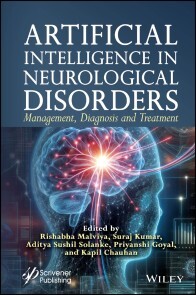
Artificial Intelligence in Neurological Disorders
THE BOOK GIVES INVALUABLE INSIGHTS INTO HOW ARTIFICIAL INTELLIGENCE IS REVOLUTIONIZING THE MANAGEMENT AND TREATMENT OF NEUROLOGICAL DISORDERS, EMPOWERING YOU TO STAY AHEAD IN THE RAPIDLY EVOLVING LANDSCAPE OF HEALTHCARE.Embark on a groundbreaking exploration of the intersection between cutting-edge technology and the intricate complexities of neurological disorders. Artificial Intelligence in Neurological Disorders: Management, Diagnosis and Treatment comprehensively introduces how artificial intelligence is becoming a vital ally in neurology, offering unprecedented advancements in management, diagnosis, and treatment. As the digital age converges with medical expertise, this book unveils a comprehensive roadmap for leveraging artificial intelligence to revolutionize neurological healthcare. Delve into the core principles that underpin AI applications in the field by exploring intricate algorithms that enhance the precision of diagnosis and how machine learning not only refines the understanding of neurological disorders but also paves the way for personalized treatment strategies tailored to individual patient needs. With compelling case studies and real-world examples, the realms of neuroscience and artificial intelligence converge, illustrating the symbiotic relationship that holds the promise of transforming patient care. Readers of this book will find it:* Provides future perspectives on advancing artificial intelligence applications in neurological disorders;* Focuses on the role of AI in diagnostics, delving into how advanced algorithms and machine learning techniques contribute to more accurate and timely diagnosis of neurological disorders;* Emphasizes practical integration of AI tools into clinical practice, offering insights into how healthcare professionals can leverage AI technology for more effective patient care;* Recognizes the interdisciplinary nature of neurology and AI, bridging the gap between these fields, making it accessible to healthcare professionals, researchers, and technologists;* Addresses the ethical implications of AI in healthcare, exploring issues such as data privacy, bias, and the responsible deployment of AI technologies in the neurological domain.AUDIENCEResearchers, scientists, industrialists, faculty members, healthcare professionals, hospital management, biomedical industrialists, engineers, and IT professionals interested in studying the intersection of AI and neurology. RISHABHA MALVIYA, PHD is an associate professor in the Department of Pharmacy in the School of Medical and Allied Services at Galgotias University with over 13 years of research experience. He has authored 57 books, 58 chapters, and over 150 research papers for national and international journals of repute, as well as 51 patents. His areas of interest include formulation optimization, nanoformulation, targeted drug delivery, localized drug delivery, and characterization of natural polymers as pharmaceutical excipients. SURAJ KUMAR is an assistant professor in the School of Medical and Allied Sciences at Galgotias University. He has published over ten papers in international journals and five book chapters. His research interests include sustainable polymeric fibers, nanoparticles, and controlled drug delivery. ADITYA SUSHIL SOLANKE, PHD is a Senior Resident in Neurosurgery at Byramjee Jeejeebhoy Government Medical College and Sassoon Hospital, India. He completed his Bachelor of Medicine, Bachelor of Surgery, and Masters in General Surgery from the Government Medical College in Nagpur. PRIYANSHI GOYAL, M.PHARM is an assistant professor in the School of Pharmacy at Mangalayatan University. She has authored seven review articles and two books and attended 14 national and international conferences and webinars. Her area of interest is treatment strategies for neurological disorders. KAPIL CHAUHAN, PHD is an emergency physician at Max Hospital in Dehradun, India. He completed his Bachelor of Medicine and Bachelor of Surgery from Teerthanker Mahavir Medical College and Masters in Emergency Medicine from Max Hospital.

Mathematics for Digital Science 3
Over the past century, advancements in computer science have consistently resulted from extensive mathematical work. Even today, innovations in the digital domain continue to be grounded in a strong mathematical foundation. To succeed in this profession, both today's students and tomorrow’s computer engineers need a solid mathematical background.The goal of this book series is to offer a solid foundation of the knowledge essential to working in the digital sector. Across three volumes, it explores fundamental principles, digital information, data analysis, and optimization. Whether the reader is pursuing initial training or looking to deepen their expertise, the Mathematics for Digital Science series revisits familiar concepts, helping them refresh and expand their knowledge while also introducing equally essential, newer topics.GÉRARD-MICHEL COCHARD is Professor Emeritus at Université de Picardie Jules Verne, France, where he has held various senior positions. He has also served at the French Ministry of Education and the CNAM (Conservatoire National des Arts et Métiers). His research is conducted at the Eco-PRocédés, Optimisation et Aide à la Décision (EPROAD) laboratory, France.MHAND HIFI is Professor of Computer Science at Université de Picardie Jules Verne, France, where he heads the EPROAD UR 4669 laboratory and manages the ROD team. As an expert in operations research and NP-hard problem-solving, he actively contributes to numerous international conferences and journals in the field.

The AI Act Handbook
Compliant Usage of Artificial Intelligence in the Private and Public Sectors- Detailed overview of the AI Act- Impact of the AI Act on various areas (including fi nance, employment law, advertising and administration)- Related areas of law (data protection, IP and IT law)- Practical overview of AI governance, risk and compliance in companies- Information on standards, norms and certificationsBy experts for practitioners – with this handbook, you can prepare yourself for the requirements of the European AI Act in a practical and compliant manner. Get comprehensive information on the effects on the various application fields of artificial intelligence in the private and public sectors. After a brief introduction to the history and technology of AI, you will receive a detailed subsumption of the content of the AI Act based on the various risk categories. Subsequently, areas of law closely related to the use of AI, in particular data protection, IP and IT law, will be dealt with in detail. By providing case studies, the book shares insights about the impact of the AI Act on various areas such as autonomous driving, work, critical infrastructure, medicine, insurance, etc. The correlation with the areas of law relevant to these areas will also be considered. A practical overview of the topic of AI governance, risk and compliance (GRC) in companies, tips on the application of guidelines and governance frameworks, implementation ideas for trustworthy AI as well as standards, norms and certifications complement the book.The TEAM OF AUTHORS consists of lawyers specializing in IT and data protection law and the use of AI. It includes, among others, one of Austria's representative in the AI Act negotiations at EU Council level and the founder of the Austrian association Women in AI.FROM THE CONTENTS- What Is AI and How Do Data Science and Data Analytics Differ?- Geopolitics of Artificial Intelligence- AI Act: Rights and Obligations- Data Protection- Intellectual Property- AI and IT Contract Law- Private Sector- Public Sector- Ethics- Governance in the Company

The AI Act Handbook
THE AI ACT HANDBOOK // - Detailed overview of the AI Act - Impact of the AI Act on various areas (including fi nance, employment law, advertising and administration) - Related areas of law (data protection, IP and IT law) - Practical overview of AI governance, risk and compliance in companies - Information on standards, norms and certifications By experts for practitioners – with this handbook, you can prepare yourself for the requirements of the European AI Act in a practical and compliant manner. Get comprehensive information on the effects on the various application fields of artificial intelligence in the private and public sectors. After a brief introduction to the history and technology of AI, you will receive a detailed subsumption of the content of the AI Act based on the various risk categories. Subsequently, areas of law closely related to the use of AI, in particular data protection, IP and IT law, will be dealt with in detail. By providing case studies, the book shares insights about the impact of the AI Act on various areas such as autonomous driving, work, critical infrastructure, medicine, insurance, etc. The correlation with the areas of law relevant to these areas will also be considered. A practical overview of the topic of AI governance, risk and compliance (GRC) in companies, tips on the application of guidelines and governance frameworks, implementation ideas for trustworthy AI as well as standards, norms and certifications complement the book. The TEAM OF AUTHORS consists of lawyers specializing in IT and data protection law and the use of AI. It includes, among others, one of Austria's representative in the AI Act negotiations at EU Council level and the founder of the Austrian association Women in AI. FROM THE CONTENTS // - What Is AI and How Do Data Science and Data Analytics Differ? - Geopolitics of Artificial Intelligence - AI Act: Rights and Obligations - Data Protection - Intellectual Property - AI and IT Contract Law - Private Sector - Public Sector - Ethics - Governance in the Company

Mobile Systeme
Konzeption, Entwicklung und Betrieb mobiler Systeme. In Erstauflage aus dem Juni 2025.- Erklärt, wie mobile Systeme von Anfang bis Ende entwickelt und genutzt werden.- Vermittelt fundiert die Grundlagen und bietet praktische Einblicke für Studium und Beruf.- Zeigt Strategien und bewährte Methoden, um erfolgreiche und nachhaltige mobile Systeme zu entwickeln.- Stellt neue Entwicklungen, Trends und Technologien vor, die die mobile Welt in Zukunft verändern werden.„Mobile Systeme – Konzeption, Entwicklung und Betrieb“ ist ein umfassendes Grundlagenwerk, das fundiertes Wissen über mobile Technologien, deren Entwicklung und praktischen Einsatz vermittelt. Es erklärt die technischen Grundlagen ebenso wie fortgeschrittene Anwendungsbereiche und deckt den gesamten Lebenszyklus mobiler Systeme ab. Dabei geht es um Themen wie User Experience Design, Entwicklungsstrategien, Application Management, Green IT, XR-Technologien, Mobile Security und Zukunftsthemen wie das Mobile Metaverse. Das Ziel ist es, Studierende der Informatik, Wirtschaftsinformatik und Medieninformatik sowie IT-Manager:innen mit den Besonderheiten, Chancen und Herausforderungen mobiler Ökosysteme vertraut zu machen. Sie sollen lernen, wie man mobile Technologien gezielt und nachhaltig einsetzt. Das Buch bereitet sie auf die Umsetzung innovativer mobiler Projekte in verschiedenen Branchen vor.AUS DEM INHALT- Mobile Systeme: Komponenten und Basistechnologien- Mobile Geräte: Klassen, Technik und Infrastruktur- Mobile Entwicklungsframeworks: Nativ, Cross-Plattform, Hybrid- Mobile User Experience (UX)- Mobile Application Life Cycle Management (ALM), Mobile Application Management (MAM)- Mobile Security: Risiken und Prävention- Mobile KI- Mobile Business: Geschäftsmodelle und globaler Markt- Mobile XR und Mobile Metaverse- Green IT und Green Coding- Technikfolgenabschätzung und soziokulturelle Implikationen

Samba 4 (3. Auflage)
Das Handbuch für Administratoren in 3. Auflage aus Juli 2025.- Ein Buch für alle, die Samba 4 in ihrem Netzwerk einsetzen wollen – sei es als Active Directory Domaincontroller, als Fileserver oder als Cluster.- Es begleitet von Anfang bis Ende den Aufbau einer kompletten Samba-4-Umgebung, aber für bestimmte Dienste erhalten Sie auch Informationen in einzelnen Kapiteln.- In einem neuen Kapitel wird besonders auf das Thema Sicherheit eingegangen. Hier werden die Möglichkeiten des Function Level 2016 besprochen.Dieses Buch gibt Ihnen eine umfangreiche Anleitung für die Einrichtung und den Betrieb einer Samba-4-Umgebung. Ein Schwerpunkt liegt auf der Verwendung von Samba 4 als Active Directory-Domaincontroller.Dabei werden alle Schritte zu deren Verwaltung beschrieben bis hin zur Behebung eines Ausfalls von Domaincontrollern.Ein weiterer Schwerpunkt ist die Verwaltung von Fileservern in einer Netzwerkumgebung, sei es als einzelner Server oder als Cluster. Bei der Einrichtung des Clusters wird dabei komplett auf Open-Source-Software gesetzt. Auch die Einbindung von Clients – von Windows, Linux und macOS – kommt nicht zu kurz.Die Einrichtung von zwei DHCP-Servern für die ausfallsichere DDNS-Umgebung wird mit allen Schritten und Skripten beschrieben. CTDB wird um die Funktion NFS-Server hochverfügbar bereitstellen erweitert. Gerade als Linux-Administrator ist man es gewohnt, alles möglichst über Skripte auf der Kommandozeile durchführen zu können. Deshalb gibt es zu diesem Bereich ein eigenes Kapitel.Auch wird in dieser Auflage das Thema Sicherheit genauer beleuchtet. Dabei geht es um neue Techniken und die Möglichkeiten, die sich daraus ergeben.AUS DEM INHALT- Installation von Domaincontrollern und Fileservern- Einrichten und Testen von Domaincontrollern- Benutzerverwaltung- Grundlagen zu Gruppenrichtlinien- Einrichtung servergespeicherter Profi le und Ordnerumleitung via GPOs- Einrichtung von RODC (Read Only Domain Controller)- Ausfallsichere DDNS-Infrastruktur- Fileserver in der Domäne- Freigaben einrichten und verwalten- Einrichtung des Virusfilters- Clients in der Domäne- Cluster mit CTDB und GlusterFS- Schemaerweiterung- Einrichten von Vertrauensstellungen- Sicherheit- Hilfe zur Fehlersuche- CTDB und NFS als Cluster

Human Capital Analytics
THE BOOK EQUIPS READERS WITH ESSENTIAL INSIGHTS AND STRATEGIES FOR LEVERAGING CUTTING-EDGE TECHNOLOGY AND HUMAN CAPITAL ANALYTICS, ENSURING ORGANIZATIONS THRIVE IN THE ERA OF HUMAN-ROBOT COLLABORATION AND SUSTAINABLE WORKFORCE DEVELOPMENT.Human Capital Analytics: Exploring the HR Spectrum in Industry 5.0 provides a comprehensive investigation into the ever-changing junction of human capital and cutting-edge technology in the context of the Fifth Industrial Revolution. This volume emphasizes the revolutionary role that human capital analytics plays in changing workforce management, talent development, and HR strategies. This position is particularly relevant as organizations transition into Industry 5.0, where human-robot collaboration is the norm. The purpose of this book is to provide a forward-looking perspective on how data-driven human resource strategies will become vital for boosting worker potential and driving organizational success. This is accomplished by integrating developing technologies such as artificial intelligence, machine learning, and robots. Readers will find that this book:* Explores the transformative role of human-robot collaboration, emerging technologies, and strategic HR planning in the context of the Fifth Industrial Revolution;* Provides a comprehensive overview of how predictive analytics and human capital analytics can enhance workforce management, employee engagement, and performance measurement;* Focuses on how HR 5.0 contributes to advancing the United Nations Sustainable Development Goals, driving both social and business impact;* Includes empirical studies, case studies, and real-world examples of implementing Industry 5.0 in organizations;* Provides actionable strategies for HR professionals to navigate the digital transformation of human resource management, incorporating AI, robotics, and data-driven approaches.AUDIENCEHuman resource developers, analysts, professionals, business executives, data scientists, consultants, professors, academics, and students exploring ways to leverage technology for Industry 5.0. DEEPA GUPTA, PHD is a distinguished academician with over 24 years of experience in management studies, currently serving as Dean at GL Bajaj Institute of Management. Her expertise extends to organizational development, corporate relations, and international collaboration. MUKUL GUPTA, PHD is a professor at GL Bajaj Institute of Management with over 25 years of experience in teaching and the corporate sector. His research and expertise in consumer behavior are invaluable for understanding the human-centric aspects of Human Capital Analytics, offering insights into user behavior, adoption, and interaction with AI-driven systems and services. PAWAN BUDHWAR, PHD is a professor of International Human Resource Management and the Associate Deputy Vice Chancellor International at Aston Business School. His research interests include personnel and human resource management, organizational performance, and artificial intelligence. JIM WESTERMAN, PHD is a professor in the Department of Management at Appalachian State University, Boone, North Carolina, USA. His areas of expertise include human resource management, organizational behavior, leadership, sustainable business, and business ethics. RAJESH KUMAR DHANARAJ, PHD is a professor at Symbiosis International University. His research in areas such as machine learning, cyber-physical systems, and wireless sensor networks is directly relevant to the core technologies underpinning computational intelligence in HR. BALAMURUGAN BALUSAMY, PHD is an Associate Dean of Students at Shiv Nadar University with 12 years of teaching experience. He has published over 200 papers and over 80 books in collaboration with professors worldwide. His research interests include engineering education, blockchain, and data sciences.

Blockchain Technology for the Engineering and Service Sectors
BLOCKCHAIN TECHNOLOGY FOR THE ENGINEERING AND SERVICE SECTORS IS ESSENTIAL FOR ANYONE LOOKING TO UNDERSTAND HOW TO HARNESS BLOCKCHAIN TECHNOLOGY, DRIVING INNOVATION AND EFFICIENCY ACROSS VARIOUS SECTORSBlockchain technology stands as one of the most transformative innovations of the 21st century, significantly impacting sectors including finance, manufacturing, and the service industry. Despite its relatively recent emergence, blockchain has the potential to revolutionize a wide array of industries, including tourism, agriculture, healthcare, and automobiles. With the growing interest in decentralized finance, governments and businesses are increasingly investing in research and development to enhance blockchain’s capabilities. As the technology continues to evolve, we can expect even more ground-breaking advancements in the near future. Blockchain Technology for the Engineering and Service Sectors is designed to provide a comprehensive exploration of blockchain technology, divided into two key areas of study. The first section delves into the history and technical evolution of blockchain, tracing its development from the inception of Bitcoin to its integration with other advanced technologies like the Internet of Things. The second section focuses on the frameworks and applications of blockchain, examining its use across various industries, including supply chain management, tourism, banking, healthcare, and automation. Additionally, the book addresses current challenges, emerging trends, and the future potential of blockchain technology. Through a detailed and structured presentation of these topics, readers will gain a deep understanding and expertise in the field of blockchain technology. AUDIENCEResearchers, engineers, and industry professionals working in research and development to explore the possibilities of blockchain.

Artificial Intelligence and Machine Learning for Industry 4.0
THIS BOOK IS ESSENTIAL FOR ANY LEADER SEEKING TO UNDERSTAND HOW TO LEVERAGE INTELLIGENT AUTOMATION AND PREDICTIVE MAINTENANCE TO DRIVE INNOVATION, ENHANCE PRODUCTIVITY, AND MINIMIZE DOWNTIME IN THEIR MANUFACTURING PROCESSES.Intelligent automation is widely considered to have the greatest potential for Industry 4.0 innovations for corporations. Industrial machinery is increasingly being upgraded to intelligent machines that can perceive, act, evolve, and interact in an industrial environment. The innovative technologies featured in this machinery include the Internet of Things, cyber-physical systems, and artificial intelligence. Artificial intelligence enables computer systems to learn from experience, adapt to new input data, and perform intelligent tasks. The significance of AI is not found in its computational models, but in how humans can use them. Consistently observing equipment to keep it from malfunctioning is the procedure of predictive maintenance. Predictive maintenance includes a periodic maintenance schedule and anticipates equipment failure rather than responding to equipment problems. Currently, the industry is struggling to adopt a viable and trustworthy predictive maintenance plan for machinery. The goal of predictive maintenance is to reduce the amount of unanticipated downtime that a machine experiences due to a failure in a highly automated manufacturing line. In recent years, manufacturing across the globe has increasingly embraced the Industry 4.0 concept. Greater solutions than those offered by conventional maintenance are promised by machine learning, revealing precisely how AI and machine learning-based models are growing more prevalent in numerous industries for intelligent performance and greater productivity. This book emphasizes technological developments that could have great influence on an industrial revolution and introduces the fundamental technologies responsible for directing the development of innovative firms. Decision-making requires a vast intake of data and customization in the manufacturing process, which managers and machines both deal with on a regular basis. One of the biggest issues in this field is the capacity to foresee when maintenance of assets is necessary. Leaders in the sector will have to make careful decisions about how, when, and where to employ these technologies. Artificial Intelligence and Machine Learning for Industry 4.0offers contemporary technological advancements in AI and machine learning from an Industry 4.0 perspective, looking at their prospects, obstacles, and potential applications. M. THIRUNAVUKKARASAN, PHD is an assistant professor in the School of Computer Science and Engineering at the Vellore Institute of Technology with over 15 years of research and teaching experience. He has published papers in several international conferences and journals and given keynote speeches at many international conferences. His research interests include Internet of Things (IoT), wireless sensor networks, wireless communication, cloud computing, artificial intelligence, and machine learning. S.A. SAHAAYA ARUL MARY, PHD is a professor in the School of Computer Science and Engineering, Vellore Institute of Technology with over 29 years of teaching and over 15 years of research experience. She has over 70 publications in various reputed journals and conferences and reviewed over 35 papers in addition to mentoring aspiring PhD students. Her research includes software engineering, data mining, machine learning, and artificial intelligence. SATHIYARAJ R., PHD is an assistant professor in the Department of Computer Science and Engineering at Gandhi Institute of Technology and Management University in Bangalore, India. He has contributed to two books, served as lead editor for an additional two books, and published five patents and over 20 articles in various international journals and conferences. His research interests include machine learning, big data analytics, and intelligent systems. G.S. PRADEEP GHANTASALA, PHD is a professor in the Department of Computer Science and Engineering, at Alliance University with over 16 years of academic experience. He has contributed to internationally published books, chapters, patents, and numerous papers in journals and conferences. He also serves as an editor and reviewer for several journals. His research interests include machine learning, deep learning, healthcare applications, and software engineering applications. MUDASSIR KHAN, PHD is an assistant professor in the Department of Computer Science at King Khalid University with over ten years of teaching experience. He has published over 25 papers in international journals and conferences and one patent. He is a member of various technical and professional societies including the Institute for Electrical and Electronics Engineers and Computer Science Teachers Association. His research interests include big data, deep learning, machine learning, eLearning, fuzzy logic, image processing, and cyber security. Preface xiii1 Industry 4.0 and the AI/ML Era: Revolutionizing Manufacturing 1Balusamy Nachiappan, C. Viji, N. Rajkumar, A. Mohanraj, N. Karthikeyan, Judeson Antony Kovilpillai J. and Pellakuri Vidyullatha2 Business Intelligence and Big Data Analytics for Industry 4.0 29N. Rajkumar, C. Viji, Balusamy Nachiappan, A. Mohanraj, N. Karthikeyan, Judeson Antony Kovilpillai J. and Sathiyaraj. R3 "AI-Powered Mental Health Innovations": Handling the Effects of Industry 4.0 on Health 55U Ananthanagu and Pooja Agarwal4 AI ML Empowered Smart Buildings and Factories 87Akey Sungheetha, Rajesh Sharma R., R. Chinnaiyan and G. S. Pradeep Ghantasala5 Applications of Artificial Intelligence and Machine Learning in Industry 4.0 107Tina Babu, Rekha R. Nair and Kishore S.6 Application of Machine Learning in Moisture Content Prediction of Coffee Drying Process 145Tuan M. Le, Thuy T. Tran, Hieu M. Tran and Son V.T. Dao7 Survivable AI for Defense Strategies in Industry 4.0 169Anuradha Reddy, G. S. Pradeep Ghantasala, Ochin Sharma, Mamatha Kurra, Kumar Dilip and Pellakuri Vidyullatha8 Industry 4.0 Based Turbofan Performance Prediction 197M. Sai Narayan, Prajakta P. Nandanwar, Annabathini Lokesh, Bathula Lakshmi Narayana, Varun Revadigar, Judeson Antony Kovilpillai J., Neelapala Anil Kumar and D.M. Deepak Raj9 Industrial Predictive Maintenance for Sustainable Manufacturing 223Mohammed Rihan, Ethiswar Muchherla, Shwejit Shri, Kushagra Jasoria, Judeson Antony Kovilpillai J. and G. S. Pradeep Ghantasala10 Enhanced Security Framework with Blockchain for Industry 4.0 Cyber-Physical Systems, Exploring IoT Integration Challenges and Applications 247P. Vijayalakshmi, B. Selvalakshmi, K. Subashini, Sudhakar G., Kavin Francis Xavier and Pradeepa K.11 Integrating Artificial Intelligence and@Machine Learning for Enhanced Cyber Security in Industry 4.0: Designing a Smart Factory with IoT and CPS 267Kavin Francis Xavier, Subashini K., Vijayalakshmi P., Selvalakshmi B., Sudhakar G. and Pradeepa K.12 Application of AI and ML in Industry 4.0 287V. Vinaya Kumari, G. S. Pradeep Ghantasala, S. A. Sahaaya Arul Mary, M. Thirunavukkarasan and Sathiyaraj. RReferences 303About the Editors 307Index 309

Frictionless Data
YOU’VE HEARD THE PROMISES OF DATA: IF YOU JUST UNLOCK THE HIDDEN INSIGHTS, YOU CAN WIN AN UNFAIR GAME. BUT FOR PEOPLE AT MOST COMPANIES, FRICTION PREVENTS DATA FROM FLOWING EFFORTLESSLY INTO DECISIONS. Technology alone won’t make the connection for you. Neither will finding more data; you’ve already got plenty. To connect data with decisions, you’ll need to reverse the way data flows through all your systems and decisions.If you’re a business decision-maker – a CEO, CIO, or CxO – you’ll see the connection between a data strategy and the thousands of decisions people in your company make every day. If you’re a data worker, you’ll see how your work changes the direction of a company. And if you’re an analyst – someone who bridges the gap between top-level decision makers and what’s really happening in the business – you’ll find a new vision of how to use data to transform your job and your company.Instead of new technology offering tired promises to make your job easier, you’ll find management solutions for better, faster decisions. Unified data flowing through your company, to everyone at the same time, improving business decisions through alignment and visibility, trust and scale.That’s Frictionless Decision Data.

Integrating Neurocomputing with Artificial Intelligence
INTEGRATING NEUROCOMPUTING WITH ARTIFICIAL INTELLIGENCE PROVIDES UNPARALLELED INSIGHTS INTO THE CUTTING-EDGE CONVERGENCE OF NEUROSCIENCE AND COMPUTING, ENRICHED WITH REAL-WORLD CASE STUDIES AND EXPERT ANALYSES THAT HARNESS THE TRANSFORMATIVE POTENTIAL OF NEUROCOMPUTING IN VARIOUS DISCIPLINES.Integrating Neurocomputing with Artificial Intelligence is a comprehensive volume that delves into the forefront of the neurocomputing landscape, offering a rich tapestry of insights and cutting-edge innovations. This volume unfolds as a carefully curated collection of research, showcasing multidimensional perspectives on the intersection of neuroscience and computing. Readers can expect a deep exploration of fundamental theories, methodologies, and breakthrough applications that span the spectrum of neurocomputing. Throughout the book, readers will find a wealth of case studies and real-world examples that exemplify how neurocomputing is being harnessed to address complex challenges across different disciplines. Experts and researchers in the field contribute their expertise, presenting in-depth analyses, empirical findings, and forward-looking projections. Integrating Neurocomputing with Artificial Intelligence serves as a gateway to this fascinating domain, offering a comprehensive exploration of neurocomputing’s foundations, contemporary developments, ethical considerations, and future trajectories. It embodies a collective endeavor to drive progress and unlock the potential of neurocomputing, setting the stage for a future where artificial intelligence is not merely artificial, but profoundly inspired by the elegance and efficiency of the human brain. ABHISHEK KUMAR, PHD is a professor and Assistant Director in the Computer Science and Engineering Department at Chandigarh University, Punjab with over 13 years of teaching experience. He has published over 170 peer-reviewed papers, seven books, and one patent and edited over 50 volumes. His research interests include artificial intelligence, renewable energy systems, image processing, and data mining. PRAMOD SINGH RATHORE is an assistant professor in the Department of Computer and Communication Engineering at Manipal University with over 11 years of teaching experience. He has published over 55 papers in reputable national and international journals, books, and conferences. His research interests include NS2, computer networks, mining, and database management systems. SACHIN AHUJA, PHD is the Executive Director of Engineering at Chandigarh University with extensive research and academic experience. He has served in key academic positions at various reputed higher education institutes, guiding several master’s and doctoral scholars in areas including artificial intelligence, machine learning, and data mining. UMESH KUMAR LILHORE, PHD is affiliated with Galgotias University where he actively engages in academic leadership, research, and mentoring. He has published over 100 scholarly articles and is a senior member of the Institue for Electrical and Electronics Engineers. His areas of expertise include artificial intelligence, machine learning, Internet of Things (IoT), cloud computing, and cybersecurity.

Blockchain Technology for the Engineering and Service Sectors
BLOCKCHAIN TECHNOLOGY FOR THE ENGINEERING AND SERVICE SECTORS IS ESSENTIAL FOR ANYONE LOOKING TO UNDERSTAND HOW TO HARNESS BLOCKCHAIN TECHNOLOGY, DRIVING INNOVATION AND EFFICIENCY ACROSS VARIOUS SECTORSBlockchain technology stands as one of the most transformative innovations of the 21st century, significantly impacting sectors including finance, manufacturing, and the service industry. Despite its relatively recent emergence, blockchain has the potential to revolutionize a wide array of industries, including tourism, agriculture, healthcare, and automobiles. With the growing interest in decentralized finance, governments and businesses are increasingly investing in research and development to enhance blockchain’s capabilities. As the technology continues to evolve, we can expect even more ground-breaking advancements in the near future. Blockchain Technology for the Engineering and Service Sectors is designed to provide a comprehensive exploration of blockchain technology, divided into two key areas of study. The first section delves into the history and technical evolution of blockchain, tracing its development from the inception of Bitcoin to its integration with other advanced technologies like the Internet of Things. The second section focuses on the frameworks and applications of blockchain, examining its use across various industries, including supply chain management, tourism, banking, healthcare, and automation. Additionally, the book addresses current challenges, emerging trends, and the future potential of blockchain technology. Through a detailed and structured presentation of these topics, readers will gain a deep understanding and expertise in the field of blockchain technology. AUDIENCEResearchers, engineers, and industry professionals working in research and development to explore the possibilities of blockchain.

Integrating Neurocomputing with Artificial Intelligence
INTEGRATING NEUROCOMPUTING WITH ARTIFICIAL INTELLIGENCE PROVIDES UNPARALLELED INSIGHTS INTO THE CUTTING-EDGE CONVERGENCE OF NEUROSCIENCE AND COMPUTING, ENRICHED WITH REAL-WORLD CASE STUDIES AND EXPERT ANALYSES THAT HARNESS THE TRANSFORMATIVE POTENTIAL OF NEUROCOMPUTING IN VARIOUS DISCIPLINES.Integrating Neurocomputing with Artificial Intelligence is a comprehensive volume that delves into the forefront of the neurocomputing landscape, offering a rich tapestry of insights and cutting-edge innovations. This volume unfolds as a carefully curated collection of research, showcasing multidimensional perspectives on the intersection of neuroscience and computing. Readers can expect a deep exploration of fundamental theories, methodologies, and breakthrough applications that span the spectrum of neurocomputing. Throughout the book, readers will find a wealth of case studies and real-world examples that exemplify how neurocomputing is being harnessed to address complex challenges across different disciplines. Experts and researchers in the field contribute their expertise, presenting in-depth analyses, empirical findings, and forward-looking projections. Integrating Neurocomputing with Artificial Intelligence serves as a gateway to this fascinating domain, offering a comprehensive exploration of neurocomputing’s foundations, contemporary developments, ethical considerations, and future trajectories. It embodies a collective endeavor to drive progress and unlock the potential of neurocomputing, setting the stage for a future where artificial intelligence is not merely artificial, but profoundly inspired by the elegance and efficiency of the human brain. ABHISHEK KUMAR, PHD is a professor and Assistant Director in the Computer Science and Engineering Department at Chandigarh University, Punjab with over 13 years of teaching experience. He has published over 170 peer-reviewed papers, seven books, and one patent and edited over 50 volumes. His research interests include artificial intelligence, renewable energy systems, image processing, and data mining. PRAMOD SINGH RATHORE is an assistant professor in the Department of Computer and Communication Engineering at Manipal University with over 11 years of teaching experience. He has published over 55 papers in reputable national and international journals, books, and conferences. His research interests include NS2, computer networks, mining, and database management systems. SACHIN AHUJA, PHD is the Executive Director of Engineering at Chandigarh University with extensive research and academic experience. He has served in key academic positions at various reputed higher education institutes, guiding several master’s and doctoral scholars in areas including artificial intelligence, machine learning, and data mining. UMESH KUMAR LILHORE, PHD is affiliated with Galgotias University where he actively engages in academic leadership, research, and mentoring. He has published over 100 scholarly articles and is a senior member of the Institue for Electrical and Electronics Engineers. His areas of expertise include artificial intelligence, machine learning, Internet of Things (IoT), cloud computing, and cybersecurity.