

Computer und IT
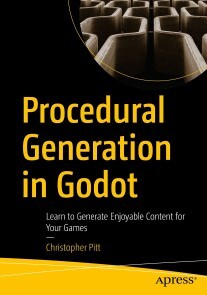
Procedural Generation in Godot
Learn the tricks of simple procedural generation and how various genres, such as racing simulators, platformers, and roguelikes, can all benefit from these techniques.In this book, you'll learn how to combine hand-crafted content with algorithms to create immersive and beautiful environments. You'll learn how to create a seeding system, so that you can replay great levels with your friends. We'll cover how to create good tilesets, how to use the tilemap editor effectively, and how to inject just the right amount of logic into an otherwise automated machine that is your own personal procedural content generation engine.We will use 2D examples to demonstrate the concepts covered throughout the book. By the time you complete this book, you’ll have a good handle on how to add procedural generation to your games.WHAT YOU WILL LEARN* Learn to set up the perfect content generation system * Master the tools for randomization and repeatability* Understand how much content to craft versus how much to generateWHO THIS BOOK IS FORBasic familiarity with the Godot engine and GDScript is essential. While all concepts are explained in the book, it can be overwhelming learning these techniques at the same time as learning the engine.Christopher Pitt is a developer living in South Africa. He has published a bunch of indie games, many of which use procedural content generation, on mobile, and desktop environments. Most of his games have been built in JavaScript or the Godot engine. He also likes to bake sweet things and build wood things.Chapter 1: Hand crafted vs. ProceduralSub -Topics• A study of hand-crafted content• Case study of Limbo• A study of procedural content• Case study of Oxygen Not Included• How much of each is good?• Case study of Diablo 2• Brief overview of different approaches we'll take in the rest of the bookChapter 2: Generating with NodesSub - Topics• Set up new project• Create node hierarchy (with limited inheritance)• Use randomization to place nodes in an area• Vary node behavior to create realismChapter 3: Generating with TilesSub - Topics:• Create Tilemaps and Tilesets• Change tiles via code• Creating and using Autotile via the editor• Using Autotile via codeChapter 4: Recreating SokobanSub - Topics:• Create a new project (rapid)• Create a player character• Add movement to the player character• Create a push able crate• Create a storage location• Create different levels with code• Add level transitionsChapter 5: Designing Levels in Pixel ArtSub - Topics: • Brief introduction to Aseprite• Importing map assets into Godot• Reading image data• Defining map cell types• Drawing cells into a gameChapter 6: Creating a Seeding SystemSub - Topics:• Using seeded PRNG randomization• Loading word lists into a game• Displaying, storing, and using seeds in generationChapter 7: Recreating Bouncy CarsSub - Topics:• Create a new project (rapid)• Create a seed screen• Create a few maps in pixel art, read them into the game• Manipulate quadrant maps to form a loop• Put players into the loop• Trace the "correct" path, display helper direction arrowChapter 8: Navigating in Generated LevelsSub - Topics:• Intro to navigation polygons in tile maps• Combining collision shapes with navigation meshes• Exploring alternatives to mesh manipulation• Randomizing specific obstacles to optionally include navigation or collisionChapter 9: Randomized Collective Nodes within a Generated MapSub - Topics:• Identifying collections of cells• Representing these as larger structures in a generated space• Adding variability to these structuresChapter 10: Recreating InvasionSub - Topics:• Create a new project (rapid)• Prototype a global generator, rooms, levels, tiles, and doodads• Generate rooms• Handle room transitions• Collect compound doodads• Create houses with variability• Spawn survivors, add acquisition and rescue• Spawn soldiers, add capture and harass• Create exit pointChapter 11: Paths and Path FollowersSub - Topics:• Create path by hand• Create node to follow• Make node follow path• Create path via pixel art• Connect multiple separate paths together (train switch)Chapter 12: Interaction SystemsSub - Topics:• Create player and intractable nodes• Create area-based (proximity) nodes that can be reused• Implement event-based interaction• Brief intro for dialogic add-on, as a means of extending the interaction systemChapter 13: Recreating This War of MineSub - Topics:• Create new project (rapid)• Prototype rooms, make pixel art map• Create paths• Create playable characters with path followers• Create intractable nodes in rooms• Add dialogic add-on for interaction between playable characters

IBM Software Systems Integration
Examine the working details for real-world Java programs used for system integration with IBM Software, applying various API libraries (as used by Banking and Insurance companies). This book includes the step-by-step procedure to use the IBM FileNet Case Manager 5.3.3 Case Builder solution and the similar IBM System, IBM Business Automation Workflow to create an Audit System.You'll learn how to implement the workflow with a client Java Message Service (JMS) java method developed with Workflow Custom Operations System Step components. Using IBM Cognos Analytics Version 11.2, you'll be able to create new views for IBM Case Manager Analytics for custom time dimensions. The book also explains the SQL code and procedures required to create example Online Analytical Processing (OLAP) cubes with multi-level time dimensions for IBM Case Manager analytics.IBM Software Systems Integration features the most up to date systems software procedures using tested API calls.WHAT YOU WILL LEARN* Review techniques for generating custom IBM JMS code* Create a new custom view for a multi-level time dimension* See how a java program can provide the IBM FileNet document management API calls for content store folder and document replication* Configure Java components for content engine eventsWHO THIS BOOK IS FORIT consultants, Systems and Solution Architects.ALAN BLUCK has over 45 years IT experience. He has been a Solutions Architect for IBM for over 10 years. Elected as an IBM Champion (2022), he is now the Director and owner of ASB Software Development Limited, an IBM PartnerWorld partner, and a consultancy providing systems architecture for a broad range of services. He is a Member of the British Computer Society (MBCS, CITP).Chapter 1IBM FileNet Case Manager 5.3.3 Case Builder Solution Development Steps for The Audit SystemCHAPTER GOAL: Building the initial IBM Case Manager Audit SolutionNO OF PAGES 90SUB -TOPICSSECTIONS* Bill of Materials* Add a new solution* Add properties and Business Objects* Add Roles* Add properties to the Inbaskets for each role* Add Document class* Add Business Objects* Add Business Object Types as Case propertiesAdd Case Types* Audit Department Task* Add Business Objects to be searched* Audit Solution First Test* Remove the Case Search Business Objects* Edit the Cases Page to allow Case Search to work correctly* Debug the Case Manager Client* Check FileNet Version* Check FileNet Health* Check FileNet Object Store Upgrade Status* Check FileNet Workflow Upgrade StatusFix / Workaround for Error on Case Search * Other Fixes (Recommended)Chapter 2: Configuring Java Custom ComponentsCHAPTER GOAL: CREATION AND CONFIGURATION OF THE JAVA CUSTOMISATIONSNO OF PAGES: 20SUB - TOPICSSECTIONS* Configuring Java Components for Content Engine Events* Custom Code Module java JAR API call development* Adding a Code ModuleCreating a Custom Event Object* Configuring Workflow Subscriptions* Configuring Component Manager for WebSphere control* Component Manager Extension MBean Provider* Creating the Component Manager Custom Service* DbExecute system function* Setting DbExecute connections* Example DB2 Stored procedure* Example Oracle Stored procedure* Example SQL*Server Stored procedureChapter 3: IBM JMS (Java Message Service) Interface Development IBM FileNet 5.5.x WorkflowCHAPTER GOAL: Theexample development of a java jar file for the IBM Java Messaging Service calls and its deployment for use in an IBM Case Manager Workflow.NO OF PAGES : 240SUB - TOPICS:* MQ Series 7.5 Install and Configure* Notification of successful repository load into FileNet* Custom Operations Component Development- JMSMessage Operation* Custom Operations Component Development- Fix list for WebSphere MQ Version 7.5* IBM MQ Series 7.x Fix Pack Installation* Linux: Applying maintenance level updates on WebSphere MQ version* Setting up the client on Windows* Setting up the client on Linux* Sending a message from a client to a server* AuditOperations method parameterisation* AuditOperations.java Code Development* AuditOperations re-build and deploy .jar* Final pre-build test AuditOperations.jar* FileNet Workflow System Component AuditOperations.jar deployment* Checking deployment in the Component Manager and Workflow* Transfer Workflow and set up Workflow subscriptionsChapter 4: A Replication Java Program for IBM FileNet Object StoresCHAPTER GOAL: The development of the java API calls and the configuration required to replicate an IBM FileNet Document Management ObjectStore.NO OF PAGES: 100SUB - TOPICS:* Setting up the Creator Property* Setting Object Store Access Rights* Batch Jobs* Required supporting Library .jar files* The Configuration set up file* Encryption of the administrator user password in a config.xml Configuration file* Update of the Config.xml Start Date* Event Set-up * Folder Class - Update Event and Deletion Events* Document Class - Deletion Events* Unit Test results ( New Folder and Document )* Existing Folder Name and Security updatesNew Folder Name and Document updatesChapter 5: Cognos RTM Custom DevelopmentCHAPTER GOAL: Create a new Custom View for a Multi-level Time DimensionNO OF PAGES: 90SUB - TOPICS:SECTIONS* Creation and test of Multilevel Time Dimension for a new OLAP Database* Update to add Year YearNumber and Month* Update to add Hour* Create a new View for Workflow Tasks* Create a new data stream in Cognos RTM – Task Load Data Stream* Create a new Cube including the Multilevel Time Dimension* Case Attribute Review for Exposed Dimensions* Creation and test of Multilevel Time Dimensions* Create a new Multilevel Time Dimension Cube* Average Age Hours* Average Wait Time Hours* Average Processing Time Hours* Average Ready Time Hours* Average Failed Time HoursCHAPTER 6: PDF Document Creation using iTextCHAPTER GOAL: A Java Program to generate PDF document using the iText libraryNO OF PAGES: 20SUB - TOPICS:SECTIONS1. Adding an Image to a PDF2. Adding a Table to a PDF3. Creating a PdfWriter object4. Creating a PdfDocument object5. Creating the Document object6. Creating an Image object7. Adding image to the documentClosing the Document
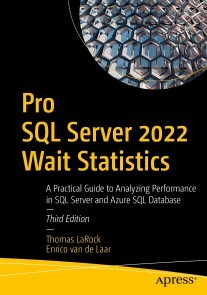
Pro SQL Server 2022 Wait Statistics
Use this practical guide to analyze and troubleshoot SQL Server performance using wait statistics. You'll learn to identify precisely why your queries are running slowly. And you'll know how to measure the amount of time consumed by each bottleneck so you can focus attention on making the largest improvements first. This edition is updated to cover analysis of wait statistics current with SQL Server 2022. Whether you are new to wait statistics, or already familiar with them, this book provides a deeper understanding on how wait statistics are generated and what they mean for your SQL Server instance’s performance.The book goes beyond the most common wait types into the more complex and performance-threatening wait types. You’ll learn about per-query wait statistics and session-based wait statistics, and the types of problems they can help you solve. The different wait types are categorized by their area of impact, including CPU, IO, Latching, Locking, and many more.Clear examples are included to help you gain practical knowledge of why and how specific wait times increase or decrease, how they impact your SQL Server’s performance, and what you can do to improve performance. After reading this book, you won’t want to be without the valuable information that wait statistics provide regarding where you should be spending your limited tuning time to maximize performance and value to your business.WHAT YOU'LL LEARN* Understand how the SQL Server engine processes requests* Identify resource bottlenecks in a running SQL Server instance* Locate wait statistics information inside DMVs and Query Store* Analyze the root cause of sub-optimal performance* Diagnose I/O contention and locking contention* Benchmark SQL Server performance* Improve database performance by lowering overall wait time WHO THIS BOOK IS FORDatabase administrators who want to identify and resolve performance bottlenecks, those who want to learn more about how the SQL Server engine accesses and uses resources inside SQL Server, and administrators concerned with achieving—and knowing they have achieved—optimal performance__THOMAS LAROCK has over 20 years of IT experience holding roles such as programmer, developer, analyst, and database administrator. He is a Microsoft Certified Master in SQL Server and a Microsoft Data Platform MVP since 2009. Thomas has spent much of his career working with data and databases, which led to his selection as Technical Advocate for Confio Software in 2010 for the software now known as SolarWinds Database Performance Analyzer (DPA).Currently, Thomas serves as Head Geek for SolarWinds, a company specializing in software for enterprise infrastructure monitoring. This role allows him to work with a variety of customers, helping to solve questions regarding network, application, and database performance tuning and virtualization. You can reach him through his blog (thomaslarock.com/blog) and find him on Twitter @SQLRockstar).ENRICO VAN DE LAAR has been working with data in various formats and sizes for over 15 years. He is a data and advanced analytics consultant for Dataheroes where he helps organizations optimize their data platform environment and helps them with their first steps in the world of advanced analytics. He is a Data Platform MVP since 2014 and a frequent speaker on various data-related events throughout the world. He frequently blogs about technologies such as Microsoft SQL Server and Azure Machine Learning on his blog at enricovandelaar.com. You can contact Enrico on Twitter @evdlaar.PART I: FOUNDATIONS OF WAIT STATISTICS ANALYSIS1. Wait Statistics Internals2. Querying SQL Server Wait Statistics3. The Query Store4. Building a Solid BaselinePART II: WAIT TYPES5. CPU-Related Wait Types6. IO-Related Wait Types7. Backup-Related Wait Types8. Lock-Related Wait Types9. Latch-Related Wait Types10. High-Availability and Disaster-Recovery Wait Types11: Preemptive Wait Types12: Background and Miscellaneous Wait Types13. In-Memory OLTP-Related Wait Types14. Appendix I. Example SQL Server Machine Configurations15. Appendix II. Spinlocks16. Appendix III. Latch Classes

Microsoft Conversational AI-Platform für Entwickler
Erstellen Sie einen Chatbot mit der Microsoft Conversational AI-Plattform. In diesem Buch lernen Sie Schritt für Schritt, wie Sie Zeit und Geld sparen können, indem Sie Chatbots in die Strategie Ihres Unternehmens integrieren. Sie werden lernen, wie Sie jede Phase der Entwicklung beherrschen, von der Zusammenarbeit an einem Chatbot in einem End-to-End-Szenario über die erste Mock-up-Phase bis hin zur Einsatz- und Bewertungsphase. Microsoft hat ein Cloud-Service-Ökosystem für die Ausführung von künstlichen Intelligenz-Workloads in öffentlichen Cloud-Szenarien und eine robuste KI-Plattform aufgebaut, die eine breite Palette von Diensten für konversationelle künstliche Intelligenz-Lösungen wie Chatbots bietet. Die Entwicklung eines Chatbots erfordert nicht nur Programmierkenntnisse von Entwicklern, sondern auch besondere Überlegungen, einschließlich des Inputs von Geschäftsinteressenten wie Fachexperten und Power-Usern. Sie werden anhand von Beispielen lernen, wie Sie eine Reihe von Tools und Diensten nutzen können, um die Kluft zwischen Unternehmen und Technik zu überbrücken.Sie werden lernen, wie Sie Geschäftsanforderungen erfolgreich in umsetzbare IT- und technische Anforderungen umwandeln können. Sie lernen den Bot Framework Composer kennen, der es Power-Usern ermöglicht, die Erstellung eines Chatbots zu initiieren, der dann an das Entwicklungsteam weitergegeben werden kann, um durch Code weitere Funktionen hinzuzufügen. Der Prozess der Aufteilung der Implementierungsaufgaben und des Arbeitsaufwands zwischen Power-Usern, die einen Low-Code- oder No-Code-Ansatz verwenden, und Entwicklern, die die erweiterten Funktionen für den Chatbot entwickeln, wird ebenfalls behandelt.Was Sie lernen werden:* Verstehen Sie Microsofts umfassendes KI-Ökosystem und seine Dienste und Lösungen* Erkennen Sie, welche Lösungen und Dienste in jedem Geschäftsszenario angewendet werden sollten* Entdecken Sie No-Code-/Low-Code-Ansätze für die Erstellung von Chatbots* Entwickeln Sie Chatbots unter Verwendung des Conversational AI Stacks* Richten Sie Geschäft und Entwicklung für verbesserte Chatbot-Ergebnisse und kürzere Markteinführungszeiten ausDieses Buch richtet sich an Entwickler und Power-User, die Chatbots erstellen möchten. Ein Verständnis für die Grundprinzipien des Programmierens moderner Webanwendungen (.NET oder JavaScript) wird vorausgesetzt.STEPHAN BISSER ist technischer Leiter bei Solvion und ein Microsoft MVP für künstliche Intelligenz. In seiner aktuellen Rolle konzentriert er sich auf Conversational AI, Microsoft 365 und Azure. Seine Leidenschaft gilt der Conversational AI Plattform und dem Cognitive-Services-Ökosystem. Stephan und mehrere andere MVPs gründeten die Community-Initiativen BotBuilderCommunity und SelectedTech, die sich auf Bot-Framework-SDKs, Tools und technische Themen im Zusammenhang mit Microsoft 365 und KI konzentrieren.Kapitel 1: Einführung in die Microsoft Conversational AI PlatformKapitel 2: Einführung in das Microsoft Bot FrameworkKapitel 3: Einführung in Azure Cognitive ServicesKapitel 4: Gestaltungsprinzipien eines ChatbotsKapitel 5: Aufbau eines ChatbotsKapitel 6: Testen eines ChatbotsKapitel 7: Veröffentlichung eines ChatbotsKapitel 8: Verbinden eines Chatbots mit Kanälen

Connecting the Internet of Things
Navigating the fragmented IoT connectivity ecosystem of standards, protocols, and architectures can be a challenge. Not to mention scaling a solution to a viable product. This book guides you through this fractured landscape with real world examples and projects that can be leverage for an IoT product.Backed by an overview of IoT use cases and key connectivity elements of IoT solutions, you'll gain an understanding of the breadth of the IoT landscape and the fragmentation of connectivity standards and solutions and the challenge in navigating the many standards and technologies. You'll also be able to understand the essentials of connectivity including, hardware, software, and business models.IoT is essential for increasing productivity of many industries and quality of life (making the world smart and autonomous). Both wired and wireless connectivity technologies are essential ingredients in an IoT product. Written by Intel engineers and architects, Connecting the Internet of Things understands that connectivity is a key topic of IoT and comprehensively covers the topic from a system engineering and practical perspective.WHAT YOU'LL LEARN* Understand the trade offs between different wireless technologies and network topologies* Use wireless technologies in IoT products* Examine connectivity technologies and considerations on selecting it for the IoT use cases* Assemble all of the components of a working solution * Scale your solution to a product* Review emerging connectivity technologies for addressing new use cases* Advance and optimize the performance of existing technologiesWHO THIS BOOK IS FORResearchers, managers, strategists, technologists, makers, and students in the embedded and Internet of Things (IoT) space trying to understand and implement connectivity in the devices/platforms.ANIL KUMAR is a Principal Engineer at Intel Corporation. As a System Architect in the Client Computing Group, he works with Intel’s partners to unlock people’s potential by bringing computing devices to market, allowing them to focus, create and connect in ways that matter most to them. Before this role, Anil was responsible for the Connectivity Platform Architecture in the Internet of Things Group (IOTG). In IOTG, he successfully drove platform and chip-level integration of several critical connectivity and communication technologies, resulting in a broad set of IoT applications across different vertical markets.Anil joined Intel in 2007 as a design engineer in the Digital Home Group. He served as Platform Architect for several Intel Architecture-based Media Processors for TV and Set Top Box applications. As the chief architect in Intel Media Group, Anil led several designs that resulted in award-winning consumer electronic device designs at CES (Consumer Electronics Show). The world’s first Google TV devices are based on reference designs created by Anil.Before joining Intel, Anil held design engineering positions at multinational companies such as Fujitsu & Alcatel. Anil’s passion and purpose is driven by taking designs from concept to production. Anil is a co-author of Demystifying Internet of Things Security (Apress 2019).JAFER HUSSAIN is a Senior Product Line Manager in the Network and Edge Group (NEX) at Intel Corporation. Jafer is responsible for the product management of Intel’s Core based Smart and Intelligent AI platforms. In his current role, Jafer engages with Intel’s ecosystem partners to drive Intel’s leadership in various IoT markets.Jafer has previously led the development and integration of wireless connectivity solutions and contributed to the development of wireless connectivity strategy. He also led several customer engagements to drive these solutions to the market.Jafer is an accomplished inventor with multiple patents on embedded systems, wireless technologies, and IoT. He received B.S. in Electrical Engineering from University of Engineering and Technology Taxila, Pakistan, and M.S. in Management of Technology from the National University of Singapore.DR. ANTHONY (TONY) CHUN is head of digital access and an Encore.org/CoGenerate Fellow, at The Bridging Tech Charitable Fund, a nonprofit that is closing the digital divide for K-12 students via computers and connectivity. He recently retired from Intel Corporation, where he was the Wi-Fi product manager in the Internet of Things Group.He joined Intel in 2000 and was a research scientist in Intel Labs where he developed architectures for reconfigurable software defined radios and accelerators.He has co-authored 20 patents in wireless architectures and accelerators. He has co-authored several papers in engineering journals and received best paper awards at the Intel Design Technology and Test Conference 2011 and at the IEEE Computer Society Annual Symposium on VLSI, 2009. He has B.S., M.S. and PhD degrees in Electrical Engineering from Stanford University, Stanford, California.Chapter 1: Introduction to IoT ConnectivityChapter Goal: This chapter provides an overview of key IoT use cases and key connectivity elements of IoT solutions. The reader will get an understanding of the breadth of the IoT landscape.• Purpose of this book• Background and Terminology• Key IoT use caseso Smart citieso Asset trackingo Smart factorieso Industrialo Transportationo Digital surveillance systemso Retailo Medicalo Indoor location• End-to-end IoT building blockso Things/devices/sensorso Edge/Gateway/Fogo Cloud• IoT Stakeholders/Value Chaino Chip Vendorso Module Vendorso System Integratorso ODMso ISVso End CustomersChapter 2: Considerations in choosing a connectivity technologyChapter Goals: This chapter highlights the fragmentation of connectivity standards and solutions and the challenge in navigating the many standards and technologies and also discusses the tradeoffs between different wireless technologies and network topologies. Also, this chapter provides the motivation for using wireless technologies in IoT products as well as challenges.• Compute and connect are integral functions that are fully integrated in single SoC-for lower cost and low power solutions• Benefits of wireless• Seamless wireless connectivity for mobility applications• Remote Commissioning, ease of deployment, OTA update, device identification• Challenges of Wireless Connectivity• Fragmentation of the IoT Ecosystemo Discussion of IoT Framework Open Connectivity Foundation etc.o Interoperability (open standards)• Coexistence and interference• Wireless security is vital• Certification (Industry, regulatory, operator)o Certified labs• Antenna design challenges• Considerations in choosing a connectivity technologyo Energy/power/cost tradeoffso Selection of network architectures and topologieso Wireless standards and alignment to use cases-how to choose the right wireless protocol for the jobo Selection criteria-range, data rate, power, security, latency, capacity, etc.• Wireless Standard BodiesSubchapter Goal: Overview of Connectivity standards including 15.4, ZigBee, Thread, 6LoWPAN, wi-fi, BT, LTE, 5G etc. and which is appropriate for each use case; include cost considerationso WiFi Allianceo BT SIGo ZigBee Allianceo Thread Groupo Dot doto Z-Waveo 3GPP (ITU-T)Chapter Goals: The following chapters (3 to 10) provide a deep dive on each connectivity technology and considerations on selecting it for the IoT use casesChapter 3: Wi-Fi• Wi-Fi mesh• WiFi 802.11a/b/g/n/ac• WiFi 6Chapter 4: Bluetooth• BLE• BT mesh• BT direction finding• BT beaconsChapter 5: 802.15.4 (unlicensed)• ZigBee• ThreadChapter 6: LPWAN• Lora• SigFoxChapter 7: Cellular Technologies• NB IoT• 3G• 4G LTE• CBRS (Private LTE) / OnGoChapter 8: 5G• eMBB• mMTC• urLLC• 5G TSNChapter 9: Ethernet• TSN• Industrial Ethernet TechnologiesChapter 10: GNSSChapter 11: IoT Connectivity Frameworks and StacksChapter Goal: This chapter goes into detail on how to assemble all of the components of a working solution and discusses how to scale your solution to a product• Software stacks, drivers, operating systems, RTOS• Gateway architecture including protocolso IoT protocols CoAP MQTT OPCUA• RF: antenna, PA, etc.• Coexistence• Environmental considerations, reliability, long life etc.• Security and privacy• Managing the network• Certification• Putting it together• How to integrate and validate (chip vs pre-certified module)• Scaling from project to product• Putting it together: Sample Projects• Go through the earlier examples and discuss the complete productsChapter 12: The Future of IoT ConnectivityChapter Goal: This chapter discusses emerging connectivity technologies for addressing new use cases as well as advancing and optimizing the performance of existing technologies• Things/sensors (low power, battery powered, low compute, need wireless connectivity, small memory footprint, small RTOS footprint)• Software defined radio• What is coming next?• Future technologies: Wi-Fi 7, etc.• Next steps for the reader• Where to get more informationReferencesIndex
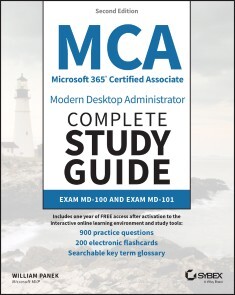
MCA Microsoft 365 Certified Associate Modern Desktop Administrator Complete Study Guide with 900 Practice Test Questions
COMPLETE, UPDATED STUDY GUIDE FOR MCA MODERN DESKTOP ADMINISTRATOR CERTIFICATION EXAMS, MD-100 AND MD-101. COVERS NEW WINDOWS 11, SERVICES, TECHNOLOGIES, AND MORE!MCA Microsoft 365 Certified Associate Modern Desktop Administrator Complete Study Guide, Second Edition, is your all-in-one guide to preparing for the exams that will earn you the MCA Modern Desktop Administrator certification! In this book, well-known Windows guru and five-time Microsoft MVP, William Panek, guides you through the latest versions of the Windows Client exam (MD-100) and the Managing Modern Desktops exam (MD-101). This one-stop resource covers 100% of the objectives for both exams, providing real world scenarios, hands-on exercises, and challenging review questions. You’ll also dive deeper into some of the more complex topics and technologies, including deploying, maintaining, and upgrading Windows; managing devices and data; configuring storage and connectivity; managing apps and data; and more.* Learn everything you need to know to pass the MD-100 and MD-101 exams* Earn your MCA Modern Desktop Administrator certification to launch or advance your career* Access exercises, review questions, flashcards, and practice exams, in the book and online* Master all of the test objectives for the latest exam versions—updated for Windows 11With this study guide, you also get access to Sybex’s superior online learning environment, including an assessment test, hundreds of practice exams, flashcards, searchable glossary, and videos for many of the chapter exercises. This is the perfect test prep resource for admins preparing for certification and anyone looking to upgrade their existing skills to Microsoft’s latest desktop client. ABOUT THE AUTHORWILLIAM PANEK is a Five-Time Microsoft MVP Winner. He has taught at Boston University, Clark University, and the University of Maryland, and presently conducts live online classes for StormWind Studios (www.stormwindstudios.com). Will has been a consultant and trainer for the United States Secret Service, Cisco, the United States Air Force, and the United States Army. He also creates training videos to help students prepare for various Microsoft exams. Introduction xxixAssessment Test – MD- 100 xliiiAssessment Test – MD- 101 xlixAnswers to Assessment Test – MD- 100 lvAnswers to Assessment Test – MD- 101 lviiiPART I EXAM MD-100 1CHAPTER 1 WINDOWS CLIENT INSTALLATION 3Understanding the Basics 4Windows 10/11 Features 9Windows 10 vs. Windows 11 11What Has Been Changed in Windows 11? 12Windows 10 and 11 Architecture 13Preparing to Install Windows 14Windows Home 15Windows Pro 15Windows Enterprise 16Windows 10 Enterprise E3 and E 5 17Windows Client Requirements 18New Installation or Upgrade? 20Disk Partitioning 24Language and Region Pack 25Installing Windows 10 25Performing a Clean Installation of Windows 10 26Performing an Upgrade to Windows 10 from Windows 8.1 36Installing Windows 11 41Performing a Clean Installation of Windows 11 42Performing an Upgrade to Windows 11from Windows 10 43Troubleshooting Installation Problems 43Supporting Multiple- Boot Options 45Using Windows Activation 47Understanding Automated Deployment Options 48An Overview of the Microsoft Deployment Toolkit 48An Overview of Unattended Installation 54An Overview of Windows Deployment Services 56An Overview of the System Preparation Tool and Disk Imaging 59Overview of the Windows Assessment and Deployment Kit 63Windows Configuration Designer 64Summary of Windows Client Deployment Options 64Deploying Unattended Installations 66Using the System Preparation Tool to Prepare an Installation for Imaging 67Using Windows Configuration Designer to Create a Disk Image 69Using the Deployment Image Servicing and Management Tool 71Using Windows System Image Manager to Create Answer Files 73Windows Update 74The Update Process 75Using Windows Update 76Using Windows Update for Business 78Delivery Optimization 81Using Command- Line Options 83Installing Microsoft Store Updates 83Summary 85Exam Essentials 86Video Resources 87Review Questions 88CHAPTER 2 CONFIGURING USERS 93Understanding User Accounts 94Account Types 95Built- In Accounts 96Local and Domain User Accounts 97Working with User Accounts 98Using the Local Users and Groups Utility 98Using the User Accounts Option in Control Panel 101Creating New Users 102Disabling User Accounts 107Deleting User Accounts 108Renaming User Accounts 109Changing a User’s Password 110Using Windows Hello, Pictures, and Biometrics 111Using Device Guard 112Understanding Windows Defender Credential Guard 114Configuring Device Health Attestation 116Managing User Properties 117Managing User Group Membership 117Setting Up User Profiles, Logon Scripts, and Home Folders 119Troubleshooting User Account Authentication 126Managing and Creating Groups 127Using Built- In Groups 127Creating Groups 131Managing Group Membership 133Deleting Groups 135Managing Security Using GPOs and LGPOs 135Understanding the GPO and LGPO Basics 135Using the Group Policy Result Tool 137Managing and Applying LGPOs 138Configuring Local Security Policies 140Using Account Policies 141Using Local Policies 147Configuring User Account Control 155Privilege Elevation 156Managing Credentials by Using Credential Manager 157Local Administrator Password Solutions (LAPS) 159Registry and File Virtualization 165Understanding Smart Cards 165Configuring Remote Management 167Remote Assistance 168Easy Connect 168Remote Desktop 173Quick Assist 176Windows Admin Center 180Enabling PowerShell Remoting 182Configuring a VPN Connection 182Transparent Caching 185Broadband Tethering 185Using PowerShell 186Summary 189Exam Essentials 189Video Resources 190Review Questions 191CHAPTER 3 MANAGING DATA 197Managing File and Folder Security 198Folder Options/File Explorer Options 199Understanding Dynamic Access Control 203Securing Access to Files and Folders 204Determining and Viewing Effective Permissions for NTFS 208Determining NTFS Permissions for Copied or Moved Files 211Managing Network Access 211Creating and Managing Shared Folders 211Configuring Share Permissions 213Cloud- Based Storage 214Configuring OneDrive 215Understanding Hardware Security 220Using BitLocker Drive Encryption 221Features of BitLocker 222Windows 7 vs. Windows 10/11 224Using the BitLocker Administration and Monitoring Utility 227Use Configuration Manager to Manage BitLocker Drive Encryption (BDE) 228Understanding Smart Cards 229Summary 230Exam Essentials 231Video Resources 231Review Questions 232CHAPTER 4 MANAGING THE WINDOWS CLIENT ENVIRONMENT 239Managing Windows 240Manipulating the Desktop Environment 241Configuring Personalization 251Using Control Panel 259Using the Microsoft Management Console 270Using the System Settings 272Understanding the Settings Window 273Using PowerShell 277Configuring Mobility Options 279Configuring Offline Files and Synchronization 279Configuring Power Policies 281Managing Windows 10/11 Services 288Configuring Internet Browsers 291Cortana 291Browser Controls 293Pinning Sites to the Taskbar 293Searchable Address Bar 293Security and Privacy Enhancements 293Using the Browser’s Compatibility Mode 294Using Enhanced Security Mode in Edge 295Using InPrivate Browsing 297Configuring Internet Options 297Manage and Use Hyper- V on Windows Client 303Hyper- V System Requirements 304Enabling the Hyper- V Role 304Opening the Hyper- V Manager 305Changing Configuration on an Existing Virtual Machine 311Deleting Virtual Machines 313Manage Virtual Switches 314Managing Virtual Hard Disks 316PowerShell Commands 322Windows Sandbox 325Summary 328Exam Essentials 329Video Resources 329Review Questions 330CHAPTER 5 CONFIGURING SECURITY AND DEVICES 335Configuring Disk Storage 336Basic Storage 337Dynamic Storage 337GUID Partition Table 339Using the Disk Management Utility 340Understanding the Disk Management Utility 340Managing Storage 355Managing Dynamic Storage 355Understanding Filesystems 358Filesystem Selection 358Filesystem Conversion 361Configuring NTFS 361Configuring Hardware 365Understanding Devices 365Using Device Manager 366Installing and Updating Device Drivers 370Driver Signing 379Managing I/O Devices 381Configuring Removable Storage Devices 381Managing Printers 385Configuring Windows Defender Firewall 401Understanding the Windows Defender Firewall Basics 401Windows Defender Firewall with Advanced Security 403Managing Windows Security 408Windows Security Center 408Summary 411Exam Essentials 412Video Resources 412Review Questions 413CHAPTER 6 CONFIGURING NETWORK CONNECTIVITY 419Understanding the Basics 420Peer- to- Peer Networks 420On- Site Active Directory Networks 422Cloud- Based Azure Active Directory 424Other Microsoft Networking Terms and Roles 424Configuring NIC Devices 427Configuring a Network Adapter 428Troubleshooting a Network Adapter 434Configuring Wireless NIC Devices 434Configuring Wi- Fi Direct 442Understanding TCP/IP 445Benefits and Features of TCP/IP 446Basics of IP Addressing and Configuration 448Using IPv6 Addresses 452Configuring TCP/IP on Windows 10 463Testing Your IP Configuration 467Configuring Windows Client on a Network 468Configure VPN Clients 470Create a VPN Profile 471Configure and Manage Certificates on Client Devices 475Summary 478Exam Essentials 479Video Resources 479Review Questions 480CHAPTER 7 CONFIGURING RECOVERY 485Understanding Recovery 487Knowing the Startup/Boot Options 488Starting in Safe Mode 489Enabling Boot Logging 492Using Other Startup Setting Options 494Understanding System Restore 495Using the System Image Recovery 497Using the Startup Repair Tool 498Maintaining Windows 10/11 with Backup and Restore 498Creating a Backup 499Restoring Files from a Backup 500Recovering Files from OneDrive 501Using the WBAdmin Command Utility 502Using Advanced Backup Options 503Using System Protection 505Creating Restore Points 506Restoring Restore Points 507Cleaning Up Old Restore Points 507Storage Sense 508Using the Recycle Bin 510Monitoring Windows 511Introducing Performance Monitor 511Using Other Performance- Monitoring Tools 521Manage the Registry 531Summary 532Exam Essentials 533Video Resources 533Review Questions 534PART II EXAM MD- 101 539CHAPTER 8 DEPLOY WINDOWS CLIENT 541Plan a Windows Client Deployment 542Microsoft Endpoint Manager (MEM) Overview 542Endpoint Analytics 544Deploying with Windows Autopilot 551Windows Autopilot Requirements 552Configure Device Registration for Autopilot 557Windows Autopilot Profiles 559Provision Windows Devices by Using Autopilot 563Troubleshoot an Autopilot Deployment 564Using Microsoft Deployment Toolkit (MDT) 567Planning MDT Deployments 567MDT Configuration Options 568Plan and Implement PXE Boot by Using Windows Deployment Services (WDS) 569Summary 576Exam Essentials 576Video Resources 577Review Questions 578CHAPTER 9 MANAGING IDENTITY AND ACCESS 585Active Directory vs. Azure Active Directory 586Understanding Active Directory 586Understanding Azure Active Directory 597Managing Hybrid Networks 625Password Hash Synchronization with Azure AD 625Azure Active Directory Pass-Through Authentication 626Federation with Azure AD 627Common Identity Scenarios 630Azure AD Connect 631Configure Enterprise State Roaming in Azure AD 638Requirements of Enterprise State Roaming 638Enable Enterprise State Roaming 639Plan and Implement Conditional Access Policies 639Create a Conditional Access Policy 642Troubleshooting Conditional Access 643Using PowerShell Commands 645Summary 647Exam Essentials 648Video Resources 649Review Questions 650CHAPTER 10 PLANNING AND MANAGING MICROSOFT INTUNE 655Managing Devices with Microsoft Intune 656Understanding Microsoft Intune Benefits 658Configuring Intune Subscriptions 658Provisioning User Accounts 665Setting Administrator Accounts 665Supporting Applications 687Deploying Applications Using Intune 687Supporting Broadband Connectivity 694Understanding Data Synchronization 695Using Mobile Application Management 697Understanding Updates 699Deploying Software Updates Using Intune 699Using Intune Compliance Reports 705Using Intune Reports 705Implement App Protection and App Configuration Policies 706PowerShell Commands 710Summary 711Exam Essentials 711Video Resources 712Review Questions 713CHAPTER 11 MANAGING DEVICES 719Compliance Policies 721Conditional Access 721Plan Device Compliance Policies 723Device Configuration Profiles 728Summary 740Exam Essentials 741Video Resources 741Review Questions 742CHAPTER 12 MANAGING SECURITY 747Windows Security 748Planning and Implementing Endpoint Protection 749Endpoint Security 751Managing Endpoint Security in Microsoft Intune 752Implementing Microsoft Defender for Endpoint 759Understanding Microsoft Defender Application Guard 771Understanding Microsoft Defender Credential Guard 780Implementing and Managing Microsoft Defender Exploit Guard 783Using Windows Defender Application Control 787Summary 788Exam Essentials 789Video Resources 790Review Questions 791CHAPTER 13 MONITORING DEVICES 797Monitoring Windows 799Monitor Cloud- Based Tools 799Monitor Azure Device Security 809Monitor Devices by Using Endpoint Manager Admin Center 813Monitoring Devices by Using Endpoint Analytics 818Summary 820Exam Essentials 820Video Resources 820Review Questions 821Appendix Answers to Review Questions 827Chapter 1: Windows Client Installation 828Chapter 2: Configuring Users 830Chapter 3: Managing Data 833Chapter 4: Managing the Windows Client Environment 836Chapter 5: Configuring Security and Devices 840Chapter 6: Configuring Network Connectivity 843Chapter 7: Configuring Recovery 846Chapter 8: Deploy Windows Client 850Chapter 9: Managing Identity and Access 855Chapter 10: Planning and Managing Microsoft Intune 858Chapter 11: Managing Devices 862Chapter 12: Managing Security 865Chapter 13: Monitoring Devices 869Index 873

Die Kunst der agilen Entwicklung (2. Auflage)
Grundlagen, Methoden und PraktikenUm agile Entwicklung zu meistern, müssen Sie im Team lernen, unzählige Möglichkeiten von Moment zu Moment zu bewerten und intuitiv die beste Vorgehensweise auszuwählen.Dieses Buch beschreibt umfassend und praxisorientiert die Grundlagen, Methoden und Praktiken agiler Softwareentwicklung. James Shore gibt wertvolle Ratschläge für den Projektstart, inkrementellen Entwurf, Continuous Integration, iterative Planung und testgetriebene Entwicklung sowie die Bereitstellung und Refactoring von Software, die aus über zwei Jahrzehnten Erfahrung mit Agilität stammen. Er bringt den State of the Art aus Extreme Programming, Scrum, Lean, DevOps und mehr in ein zusammenhängendes Ganzes und vermittelt darüber hinaus, dass Agilität zu meistern auch bedeutet, in Abhängigkeit von Projektgegebenheiten und der Organisation, in der Software entwickelt wird, Praktiken anzupassen.Diese 2. Auflage ist vollständig überarbeitet und von Grund auf neu geschrieben worden und berücksichtigt dabei die Weiterentwicklung auf dem Gebiet der agilen Entwicklung der letzten 14 Jahre. Neu aufgenommen wurden Themen wie agile Skalierung, DevOps, die Arbeit mit Remote-Teams sowie das Agile Fluency Model zur Einführung und Anpassung von Agilität an die Bedürfnisse des Unternehmens. Autor:James Shore leitet seit 1999 Teams, die agile Entwicklung praktizieren. Er kombiniert ein tiefes Verständnis der agilen Ideen mit jahrzehntelanger praktischer Erfahrung in der Entwicklung und nutzt diese Erfahrung, um Menschen dabei zu unterstützen, zu verstehen, wie alle Aspekte von Agilität zusammenpassen, um herausragende Ergebnisse zu erzielen. James hat den Gordon Pask Award der Agile Alliance für Beiträge zur agilen Praxis erhalten, ist Moderator mehrerer Screencasts zur Softwareentwicklung und Mitbegründer des Agile Fluency Model. Er ist online unter jamesshore.com zu finden.Zielgruppe: Programmierer*innenSoftwareentwickler*innenProduktverantwortlicheProjektmanager*innenQualitätsverantwortlicheManagementStudierende

Cybersecurity All-in-One For Dummies
OVER 700 PAGES OF INSIGHT INTO ALL THINGS CYBERSECURITYCybersecurity All-in-One For Dummies covers a lot of ground in the world of keeping computer systems safe from those who want to break in. This book offers a one-stop resource on cybersecurity basics, personal security, business security, cloud security, security testing, and security awareness. Filled with content to help with both personal and business cybersecurity needs, this book shows you how to lock down your computers, devices, and systems—and explains why doing so is more important now than ever. Dig in for info on what kind of risks are out there, how to protect a variety of devices, strategies for testing your security, securing cloud data, and steps for creating an awareness program in an organization.* Explore the basics of cybersecurity at home and in business* Learn how to secure your devices, data, and cloud-based assets* Test your security to find holes and vulnerabilities before hackers do* Create a culture of cybersecurity throughout an entire organizationThis For Dummies All-in-One is a stellar reference for business owners and IT support pros who need a guide to making smart security choices. Any tech user with concerns about privacy and protection will also love this comprehensive guide. This All-in-One gathers the expertise of the leading For Dummies authors in the world of cybersecurity, including JOSEPH STEINBERG, author of Cybersecurity For Dummies; KEVIN BEAVER, author of Hacking For Dummies; TED COOMBS, author of Cloud Security For Dummies; and IRA WINKLER, author of Security Awareness For Dummies. BOOK 1: CYBERSECURITY BASICS 5Chapter 1: What Exactly Is Cybersecurity? 7Chapter 2: Getting to Know Common Cyberattacks 23Chapter 3: The Bad Guys You Must Defend Against 49BOOK 2: PERSONAL CYBERSECURITY 69Chapter 1: Evaluating Your Current Cybersecurity Posture 71Chapter 2: Enhancing Physical Security 93Chapter 3: Cybersecurity Considerations When Working from Home 103Chapter 4: Securing Your Accounts 113Chapter 5: Passwords 131Chapter 6: Preventing Social Engineering Attacks 147BOOK 3: SECURING A BUSINESS 169Chapter 1: Securing Your Small Business 171Chapter 2: Cybersecurity and Big Businesses 195Chapter 3: Identifying a Security Breach 211Chapter 4: Recovering from a Security Breach 229Chapter 5: Backing Up 249Chapter 6: Resetting Your Device 277Chapter 7: Restoring from Backups 287BOOK 4: SECURING THE CLOUD 311Chapter 1: Clouds Aren’t Bulletproof 313Chapter 2: Getting Down to Business 333Chapter 3: Developing Secure Software 349Chapter 4: Restricting Access 377Chapter 5: Implementing Zero Trust 407Chapter 6: Using Cloud Security Services 429BOOK 5: TESTING YOUR SECURITY 451Chapter 1: Introduction to Vulnerability and Penetration Testing 453Chapter 2: Cracking the Hacker Mindset 473Chapter 3: Developing Your Security Testing Plan 485Chapter 4: Hacking Methodology 497Chapter 5: Information Gathering 507Chapter 6: Social Engineering 513Chapter 7: Physical Security 529BOOK 6: ENHANCING CYBERSECURITY AWARENESS 541Chapter 1: Knowing How Security Awareness Programs Work 543Chapter 2: Creating a Security Awareness Strategy 553Chapter 3: Determining Culture and Business Drivers 559Chapter 4: Choosing the Best Tools for the Job 573Chapter 5: Measuring Performance 589Chapter 6: Assembling Your Security Awareness Program 601Chapter 7: Running Your Security Awareness Program 621Chapter 8: Implementing Gamification 641Index 655

The Art of Virtual LEGO Design
Have you ever dreamed of designing your own LEGOs? Do you love building huge LEGO models, but don’t have enough bricks? This book will show you how to do all that and more with Bricklink Studio 2.0, a software program that's widely used by LEGO designers to create LEGO models virtually before making them with real LEGO bricks.You'll learn how to start a new project, use the camera control options, and drag and drop parts into your building plate. Then take your bricks from a pile of random pieces into intricate masterpiece models using building tools like Select, Hinge, Clone, Hide, Connect, Collision, and more! You’ll master all the building tools that help you build LEGO models. Then you’ll learn to search and manage LEGO bricks in Studio 2.0 using different palette options like Master, Hidden parts, and Custom parts.Beyond the official LEGO colors, there are special color options you can use to render neon, glow in the dark, and translucent brick. Use this expanded color palette to add to the complexity of your models, and then render your model to see it realistically in 3D! You’ll also learn to animate your model and watch it come to life.After finishing your design, you’ll learn to share what you’ve built with the world. You’ll create professional LEGO instructions for your model that can be printed or shared. Making you a true LEGO design master!WHAT YOU'LL LEARN* Make fascinating models with virtual LEGO bricks* Design LEGO models more efficiently with Studio 2.0’s powerful tools* Use “Build Together” simultaneously with another designer on the same project* Build massive, amazing models on a small budget WHO THIS BOOK IS FORAnyone interested in digital modelling or who loves building with LEGOs. Students, hobbyists, and enthusiasts will find fun learning activities.VISHNU AGARWAL has years of experience in the field of STEAM Education using the LEGO Education platform. He is the founder of ROBO-G, a robotics and STEAM education service provider. Vishnu has successfully coached teams in the World Robot Olympiad and First LEGO League competitions. Many students and teachers alike have learned STEAM concepts from Vishnu’s courses and coaching.He has also presented a research paper on Teaching Programming and Computational Thinking to Elementary Level Children Using LEGO Robotics Education Kit at Technology for Education (T4E) at IIT, Bombay.He is also the founder and LEGO artist at PICK A BRICK - BUILD YOUR IMAGINATION. He uses LEGO bricks to make people's imaginations come to life through custom models, workshops, and employee engagement activities. In other words, he 3D prints their thoughts using LEGO bricks.He is the author of "THE ART OF VIRTUAL LEGO DESIGN: DESIGN LEGO MODELS USING STUDIO 2.0" published by Apress, a Springer Nature company.Chapter 1: Getting Started• Welcome Screen• Starting a project• Dragging and dropping parts• Rotate Camera• Pan Camera• Zoom in Zoom out• Viewport Controls• Viewport Rotation LockChapter 2: Building Tools• Select• Hinge• Clone• Hide• Connect• Collision• Snap• Grid• Finding Compatible Bricks• Finding Alternatives• Copy & Mirror• SubmodelsChapter 3: Bricks Palette• Master• Hidden Parts• New Parts• Custom Parts• Create an empty palette• Import an official LEGO Set• Import a wanted list• Searching parts using key words• Palette Colors• Decorated Bricks on/off• Thumbnail SizeChapter 4: Color Palette• Paint with the selected color• Grab color from parts• Favorite Colors• Content Colors• Solid Colors• Transparent Colors• Chrome Colors• Pearl Colors• Metallic Colors• Milky Colors• Glitter Colors• Speckle Colors• Rubber Colors• Satin Colors• Glowing Neon (Render Only)• Luminous Soft (Render only)• Luminous (Render Only)• Translucent (Render Only)• Glow in Dark (Render Only)Chapter 5: Building Techniques• Mastering the Tools• Selecting and Copying ElementsChapter 6: How to Create Steps• Step List• Color Validator• Build a basic model• Render• StabilityChapter 7: Creating Instructions• Building a Robot Model• Step Editor (In detail explaination)• Page Editior (In detail explaination)Chapter 8: Interesting Features of Studio 2.0• Mosaic• Preferences• Import & Export Files• Hide Panels Options• Sign in to Bricklink• Upload to my Studio creations• Build Together• Add to wanted list• Buy Creations

Practical Debugging at Scale
Overhaul your debugging techniques and master the theory and tools needed to debug and troubleshoot cloud applications in production environments. This book teaches debugging skills that universities often avoid, but that typically consume as much as 60% of our time as developers. The book covers the use of debugger features such as tracepoints, object marking, watch renderers, and more. Author Shai Almog presents a scientific approach to debugging that is grounded in theory while being practical enough to help you to chase stubborn bugs through the maze of a Kubernetes deployment.Practical Debugging at Scale assumes a polyglot environment as is common for most enterprises, but focuses on JVM environments. Most of the tooling and techniques described are applicable to Python, Node, and other platforms, as well as to Java and other JVM languages. The book specifically covers debugging in production, an often-neglected discipline but an all too painful reality. You’ll learn modern techniques around observability, monitoring, logging, and full stack debugging that you can put to immediate use in troubleshooting common ailments in production environments.YOU WILL LEARN:* The scientific method underlying the process of debugging* Debugger capabilities such as tracepoints and marker objects* The correct use of less understood features such as exception breakpoints* Techniques for tracing issues in production Kubernetes environments* Observability and monitoring to resolve production problems* Industry best practices for common tooling such as logging * Profiling to understand performance and memory problems WHO THIS BOOK IS FORDevelopers in Java and JVM-related languages who want to improve their debugging skills and production reliability; and developers of cloud applications who are facing the pain of production bugs that are hard to replicate and fixSHAI ALMOG is an entrepreneur, open source hacker, speaker, author, blogger, Java rockstar, and more. He is a former Sun (later Oracle) developer with more than 30 years of experience. Shai has built JVMs, development tools, mobile phone environments, banking systems, startup/enterprise backends, user interfaces, development frameworks, and much more. He speaks at conferences all over the world and has shared the stage with luminaries such as James Gosling (father of Java). Shai is an award-winning, highly rated speaker with deep technical experience to share and he has a knack for engaging his audience. IntroductionPART I. BASICS1. Know Your Debugger2. The Checklist3. The Auxiliary Tools4. Logging, Testing, and Fail Fast5. Time Travel DebuggingPART II. THE MODERN PRODUCTION ENVIRONMENT6. Debugging Kubernetes7. Serverless Debugging8. Fullstack Debugging9. Observability and Monitoring10. Developer ObservabilityPART III. IN PRACTICE11. Tools of Learning12. Performance and Memory13. Security14. Bug Strategies

Apply Data Science
This book offers an introduction to the topic of data science based on the visual processing of data. It deals with ethical considerations in the digital transformation and presents a process framework for the evaluation of technologies. It also explains special features and findings on the failure of data science projects and presents recommendation systems in consideration of current developments. Machine learning functionality in business analytics tools is compared and the use of a process model for data science is shown.The integration of renewable energies using the example of photovoltaic systems, more efficient use of thermal energy, scientific literature evaluation, customer satisfaction in the automotive industry and a framework for the analysis of vehicle data serve as application examples for the concrete use of data science. The book offers important information that is just as relevant for practitioners as for students and teachers.PROF. DR THOMAS BARTON is a professor at Worms University of Applied Sciences. His focus is on the development of operational applications, e-business, cloud computing and data science.PROF. DR CHRISTIAN MÜLLER is a professor at the Technical University of Wildau. His focus is on operations research, simulation of business processes and internet technologies. Introduction.- Introduction to Data Science.- Systems, Tools and Methods.- Applications.

Algorithmic Bias: Verzerrungen durch Algorithmen verstehen und verhindern
Sind Algorithmen Freund oder Feind?Der menschliche Verstand ist evolutionär darauf ausgelegt, Abkürzungen zu nehmen, um zu überleben. Wir ziehen voreilige Schlüsse, weil unser Gehirn uns in Sicherheit wiegen will. Die meisten unserer Voreingenommenheiten wirken sich zu unseren Gunsten aus, z. B. wenn wir ein Auto, das in unsere Richtung fährt, für gefährlich halten und sofort ausweichen oder wenn wir beschließen, einen Bissen Essen nicht zu essen, der verdorben zu sein scheint. Allerdings wirken sich inhärente Vorurteile negativ auf das Arbeitsumfeld und die Entscheidungsfindung in unseren Gemeinschaften aus. Zwar wird mit der Entwicklung von Algorithmen und maschinellem Lernen versucht, Voreingenommenheit zu beseitigen, doch werden sie schließlich von Menschen geschaffen und sind daher anfällig für das, was wir algorithmische Voreingenommenheit nennen.In Understand, Manage, and Prevent Algorithmic Bias (Algorithmische Voreingenommenheit verstehen, handhaben und verhindern) hilft Ihnen der Autor Tobias Baer zu verstehen, woher algorithmische Voreingenommenheit kommt, wie man sie als Geschäftsanwender oder Regulierungsbehörde handhaben kann und wie die Datenwissenschaft verhindern kann, dass Voreingenommenheit in statistische Algorithmen einfließt. Baer befasst sich fachkundig mit einigen der mehr als 100 Arten natürlicher Verzerrungen wie Confirmation Bias, Stability Bias, Pattern Recognition Bias und vielen anderen. Algorithmische Verzerrungen spiegeln diese menschlichen Tendenzen wider und haben ihren Ursprung in ihnen. Baer befasst sich mit so unterschiedlichen Themen wie der Erkennung von Anomalien, hybriden Modellstrukturen und selbstverbesserndem maschinellen Lernen.Während sich die meisten Schriften über algorithmische Voreingenommenheit auf die Gefahren konzentrieren, weist der Kern dieses positiven, unterhaltsamen Buches auf einen Weg hin, auf dem Voreingenommenheit in Schach gehalten und sogar beseitigt werden kann. Sie erhalten Managementtechniken, um unvoreingenommene Algorithmen zu entwickeln, die Fähigkeit, Voreingenommenheit schneller zu erkennen, und das Wissen, um unvoreingenommene Daten zu erstellen. Algorithmic Bias verstehen, verwalten und verhindern ist ein innovatives, zeitgemäßes und wichtiges Buch, das in Ihr Regal gehört. Egal, ob Sie eine erfahrene Führungskraft in der Wirtschaft, ein Datenwissenschaftler oder einfach nur ein Enthusiast sind, jetzt ist ein entscheidender Zeitpunkt, um sich über die Auswirkungen algorithmischer Verzerrungen auf die Gesellschaft zu informieren und eine aktive Rolle im Kampf gegen Verzerrungen zu übernehmen.Was Sie lernen werdenUntersuchung der vielen Quellen algorithmischer Verzerrungen, einschließlich kognitiver Verzerrungen in der realen Welt, verzerrter Daten und statistischer ArtefakteVerstehen Sie die Risiken algorithmischer Verzerrungen, wie sie erkannt werden können und welche Managementtechniken es gibt, um sie zu verhindern oder zu verwaltenErkennen, wie maschinelles Lernen sowohl neue Quellen für algorithmische Verzerrungen schafft als auch ein Teil der Lösung sein kannKenntnis spezifischer statistischer Techniken, die ein Datenwissenschaftler anwenden kann, um algorithmische Verzerrungen zu erkennen und zu beseitigenFür wen dieses Buch gedacht istFührungskräfte von Unternehmen, die Algorithmen im täglichen Betrieb einsetzen; Datenwissenschaftler (von Studenten bis hin zu erfahrenen Praktikern), die Algorithmen entwickeln; Compliance-Beamte, die über algorithmische Verzerrungen besorgt sind; Politiker, Journalisten und Philosophen, die über algorithmische Verzerrungen im Hinblick auf ihre Auswirkungen auf die Gesellschaft und mögliche regulatorische Maßnahmen nachdenken; und Verbraucher, die darüber besorgt sind, wie sie von algorithmischen Verzerrungen betroffen sein könntenTobias Baer ist Datenwissenschaftler, Psychologe und Top-Management-Berater mit über 20 Jahren Erfahrung in der Risikoanalyse. Bis Juni 2018 war er Master-Experte und Partner bei McKinsey & Co. und baute dort 2004 das Risk Advanced Analytics Center of Competence von McKinsey in Indien auf, leitete die Credit Risk Advanced Analytics Service Line weltweit und betreute Kunden in über 50 Ländern zu Themen wie der Entwicklung analytischer Entscheidungsmodelle für das Underwriting von Krediten, die Preisgestaltung von Versicherungen und die Steuervollstreckung sowie zu Entlastungsentscheidungen. Tobias hat eine Forschungsagenda rund um Analytik und Entscheidungsfindung verfolgt, sowohl bei McKinsey (z.B. zur Entlastung von Urteilsentscheidungen und zur Nutzung von maschinellem Lernen zur Entwicklung hochtransparenter Vorhersagemodelle) als auch an der University of Cambridge, UK (z.B. die Auswirkung mentaler Ermüdung auf Entscheidungsvoreingenommenheit).Tobias hat einen Doktortitel in Finanzwissenschaften von der Universität Frankfurt, einen MPhil in Psychologie von der Universität Cambridge, einen MA in Wirtschaftswissenschaften von der UWM und hat ein Grundstudium in Betriebswirtschaft und Jura an der Universität Gießen absolviert. Er begann bereits als Teenager, in einem deutschen Software-Magazin über Programmiertricks für den Commodore C64 zu schreiben, und bloggt nun regelmäßig auf seiner LinkedIn-Seite.Teil I: Eine Einführung in Verzerrungen und Algorithmen.Kapitel 1: Einführung.-Kapitel 2: Voreingenommenheit in der menschlichen Entscheidungsfindung -Kapitel 3: Wie Algorithmen Entscheidungen verfälschen.-Kapitel 4: Der Modellentwicklungsprozess -Kapitel 5: Maschinelles Lernen in der Kurzfassung.-Teil II: Woher kommen algorithmische Verzerrungen?Kapitel 6: Wie Vorurteile in der realen Welt von Algorithmen widergespiegelt werden.-Kapitel 7: Die Voreingenommenheit von Datenwissenschaftlern.-Kapitel 8: Wie Daten Verzerrungen hervorrufen können.Kapitel 9: Die Stabilitätsverzerrung von Algorithmen -Kapitel 10: Vorurteile, die durch den Algorithmus selbst verursacht werden.Kapitel 11: Algorithmische Verzerrungen und soziale Medien -Teil III: Algorithmische Verzerrungen aus der Nutzerperspektive - Was kann man dagegen tun?Kapitel 12: Optionen für die Entscheidungsfindung.-Kapitel 13: Bewertung des Risikos algorithmischer Verzerrungen -Kapitel 14: Wie man Algorithmen sicher verwendetKapitel 15: Algorithmische Verzerrungen erkennen -Kapitel 16: Management-Strategien zur Korrektur algorithmischer Verzerrungen -Kapitel 17: Wie man unverzerrte Daten generiert.Teil IV: Algorithmische Verzerrungen aus der Sicht eines Datenwissenschaftlers - Was ist zu tun?Kapitel 18: Die Rolle des Datenwissenschaftlers bei der Überwindung algorithmischer Verzerrungen -Kapitel 19: Eine Röntgenuntersuchung Ihrer Daten.-Kapitel 20: Wann man maschinelles Lernen einsetzen sollte -Kapitel 21: Wie man maschinelles Lernen mit traditionellen Methoden verbindet.Kapitel 22: Wie man Verzerrungen in selbstverbessernden Modellen vermeidet.Kapitel 23: Wie man Debiasing institutionalisiert.-

Pro Deep Learning with TensorFlow 2.0
This book builds upon the foundations established in its first edition, with updated chapters and the latest code implementations to bring it up to date with Tensorflow 2.0.Pro Deep Learning with TensorFlow 2.0 begins with the mathematical and core technical foundations of deep learning. Next, you will learn about convolutional neural networks, including new convolutional methods such as dilated convolution, depth-wise separable convolution, and their implementation. You’ll then gain an understanding of natural language processing in advanced network architectures such as transformers and various attention mechanisms relevant to natural language processing and neural networks in general. As you progress through the book, you’ll explore unsupervised learning frameworks that reflect the current state of deep learning methods, such as autoencoders and variational autoencoders. The final chapter covers the advanced topic of generative adversarial networks and their variants, such as cycle consistency GANs and graph neural network techniques such as graph attention networks and GraphSAGE.Upon completing this book, you will understand the mathematical foundations and concepts of deep learning, and be able to use the prototypes demonstrated to build new deep learning applications.WHAT YOU WILL LEARN* Understand full-stack deep learning using TensorFlow 2.0* Gain an understanding of the mathematical foundations of deep learning * Deploy complex deep learning solutions in production using TensorFlow 2.0* Understand generative adversarial networks, graph attention networks, and GraphSAGEWHO THIS BOOK IS FOR:Data scientists and machine learning professionals, software developers, graduate students, and open source enthusiasts.SANTANU PATTANAYAK works as a Senior Staff Machine Learning Specialist at Qualcomm Corp R&D and is the author of Quantum Machine Learning with Python, published by Apress. He has more than 16 years of experience, having worked at GE, Capgemini, and IBM before joining Qualcomm. He graduated with a degree in electrical engineering from Jadavpur University, Kolkata and is an avid math enthusiast. Santanu has a master’s degree in data science from the Indian Institute of Technology (IIT), Hyderabad. He also participates in Kaggle competitions in his spare time, where he ranks in the top 500. Currently, he resides in Bangalore with his wife.Chapter 1: Mathematical FoundationsChapter Goal: Setting the mathematical base for machine learning and deep learning .No of pages 100Sub -Topics1. Linear algebra2. Calculus3. Probability4. Formulation of machine learning algorithms and optimization techniques.Chapter 2: Introduction to Deep learning Concepts and Tensorflow 2.0Chapter Goal: Setting the foundational base for deep learning and introduction to Tensorflow 2.0 programming paradigm.No of pages: 75Sub - Topics:5. Deep learning and its evolution.6. Evolution of the learning techniques: from perceptron based learning to back-propagation7. Different deep learning objectives functions for supervised and unsupervised learning.8. Tensorflow 2.09. GPUChapter 3: Convolutional Neural networksChapter Goal: The mathematical and technical aspects of convolutional neural networkNo of pages: 801. Convolution operation2. Analog and digital signal3. 2D and 3D convolution, dilation and depth-wise separable convolution4. Common image processing filter5. Convolutional neural network and components6. Backpropagation through convolution and pooling layers7. Translational invariance and equivariance8. Batch normalization9. Image segmentation and localization methods (Moved from advanced Neural Network to here, to make room for Graph Neural Networks )Chapter 4: Deep learning for Natural Language ProcessingChapter Goal: Deep learning methods and natural language processing No of pages:Sub - Topics:1. Vector space model2. Word2Vec3. Introduction to recurrent neural network and LSTM4. Attention5. Transformer network architecturesChapter 5: Unsupervised Deep Learning MethodsChapter Goal: Foundations for different unsupervised deep learning techniquesNo of pages: 60Sub - Topics:1. Boltzmann distribution2. Bayesian inference3. Restricted Boltzmann machines4. Auto Encoders and variation methodsChapter 6: Advanced Neural NetworksChapter Goal: Generative adversarial networks and graph neural networksNo of pages: 70Sub - Topics:1. Introduction to generative adversarial networks2. CycleGAN, LSGAN Wasserstein GAN3. Introduction to graph neural network4. Graph attention network and graph SAGEChapter 7: Reinforcement LearningChapter Goal: Reinforcement Learning using Deep LearningNo of pages: 50Sub - Topics:1. Introduction to reinforcement learning and MDP formulation2. Value based methods3. DQN4. Policy based methods5. Reinforce and actor critic network in policy based formulations6. Transition-less reinforcement learning and bandit methods
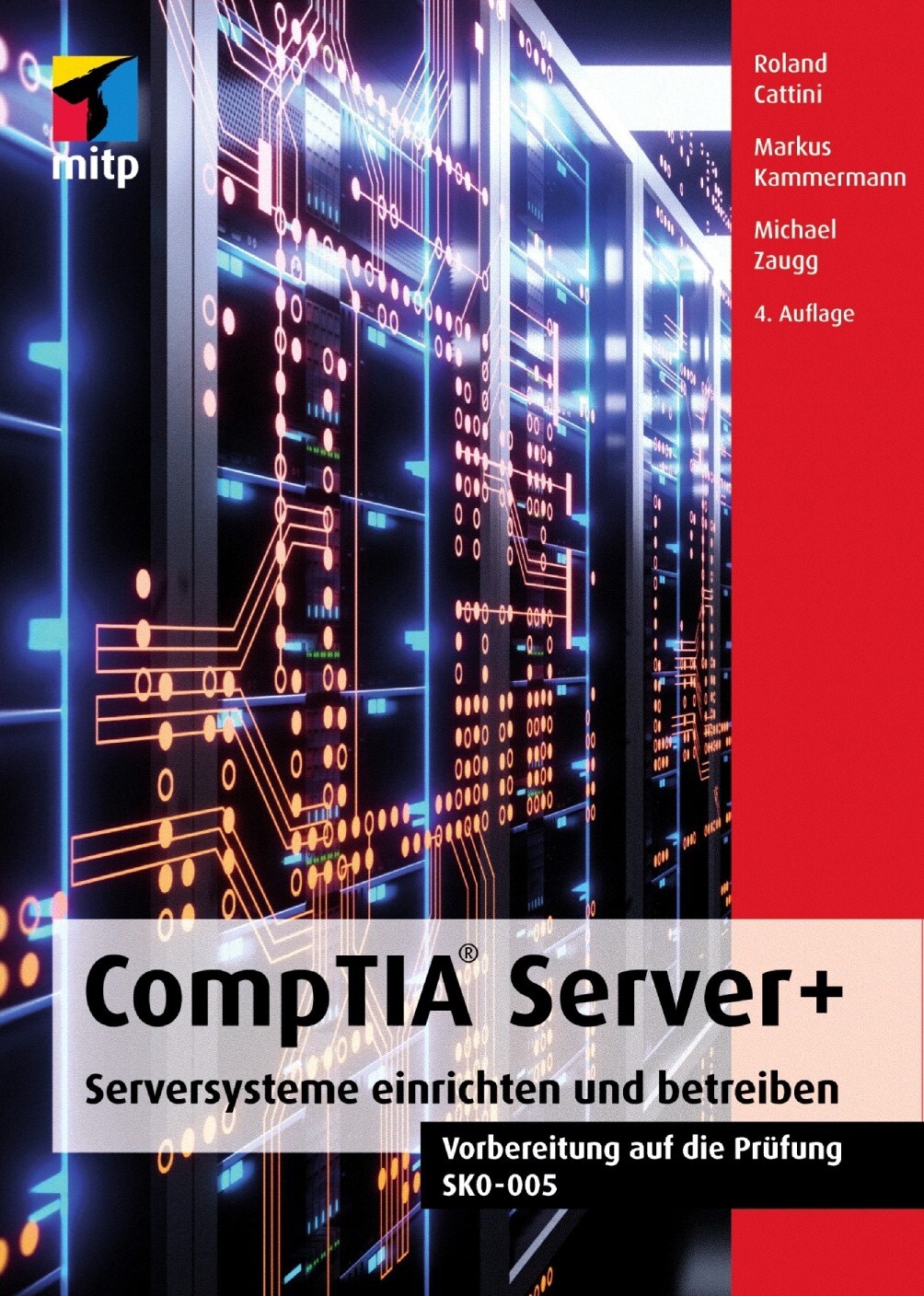
CompTIA Server+ (4. Auflg.)
Serversysteme einrichten und betreiben. Vorbereitung auf die Prüfung SK0-005. 4. Auflage 2023.Die Prüfung CompTIA Server+ richtet sich an IT-Fachleute und Administratoren und weist die Fähigkeiten nach, Server in Rechenzentren sowie in lokalen und hybriden Umgebungen zu installieren, zu verwalten und Fehler zu beheben. Die Zertifizierung ist nicht auf eine einzige Plattform beschränkt, so dass Sie die Aufgaben in jeder Umgebung ausführen können. Das Zertifikat ist international anerkannt.Die Prüfung SK0-005 teilt sich in diese Fachgebiete auf:Server-Hardware: Installation und ManagementServeradministrationSicherheit und Disaster RecoveryFehlerbehebungSie lernen in diesem Buch die Eigenschaften, den Einsatz und die Konfiguration von Servern von Grund auf kennen, sowohl was die Hardware als auch was die spezifischen Betriebs-systeme und Applikationen von Servern anbelangt.Des Weiteren erläutern die Autoren die Planung und die physischen Umgebungsbedingungen von Servern sowie aktuelle Themen wie z.B. Hochverfügbarkeit, Cloud Computing und Skripterstellung. Außerdem werden wichtige Fragen zur Sicherheit, Datensicherung und zum Disaster Recovery ausführlich behandelt.So können Sie sich das für die Zertifizierung benötigte Fachwissen aneignen und ein praxistaugliches Verständnis der Thematik entwickeln, das Sie in Ihrem Arbeitsalltag bei der Server-Administration voranbringt.Aus dem Inhalt:Server-Hardware: Prozessoren, Arbeitsspeicher, BIOS/UEFIStorage-Lösungen und -technologien: SSD, SAS, SATA, Fibre Channel, iSCSIFehlertoleranz: RAID, EnergieversorgungServer installieren und aktualisierenHardware im Netzwerk: Kabel, Netzwerkkarten, ÜbertragungsgeräteTCP/IP: IPv4 und IPv6Serverrollen: Datei- und Druckdienste, Internet- und Maildienste, NetzwerkdiensteNetzwerkbetriebssysteme: Windows Server, UNIX/Linux und deren InstallationKonfigurationsbetrachtungen: Dateisystem, Kontingentierung, Verzeichnisdienste, GruppenrichtlinienServer Management: Remote-Verbindungen, Ereignisprotokolle, MonitoringSpeichertechnologien, Virtualisierung und Cloud-DiensteDeployment- und VirtualisierungsszenarienPhysische, technische und organisatorische SicherheitDatensicherung in Theorie und PraxisDisaster Recovery PlanningUnterhalt und Troubleshooting in der PraxisDie CompTIA Server+-Prüfung: Fragen, Antworten sowie ein Simulationstest in EnglischÜber die Autoren:Roland Cattini ist von Beruf Betriebs- und Elektroingenieur und befasst sich seit Windows NT-Zeiten als Microsoft-Experte mit Servern. Er ist aktiv in der Installation und Weiterbildung, nicht nur selber als MCSE, MCT, MCDBA, MCTS und MCITP, sondern auch als Trainer für Expertenschulungen in der Schweiz.Markus Kammermann, ausgebildeter ICT-Projektleiter und CompTIA Server+-Techniker, ist seit mehr als zwanzig Jahren in der System- und Netzwerktechnik tätig, fast ebenso lang als Ausbilder und Autor. Er engagiert sich zudem als Dozent in der höheren beruflichen Bildung.Michael Zaugg ist der UNIX- und Linux-Spezialist unter den drei Autoren. Er arbeitet als Network- und Security-Manager und betreut mit seinem Team eine ganze Reihe verschiedener Unix- und Linux-Server.Leseprobe (PDF-Link)

Internet of Things Using Single Board Computers
Rapidly prototype and program new IoT and Edge solutions using low-cost Maker tech, such as those from Arduino, Raspberry Pi and Nvidia. With a focus on the electronics, this book allows experienced computer science students as well as researchers, practitioners, and even hobbyists to dive right into actual engineering of prototypes and not just theoretical programming and algorithms.You'll learn to interface sensors, work with various communication mediums, incorporate wired and wireless communication protocols, and more with these single board computers. All while working in the popular Python programming language. Additionally, you’ll discover both scripting-based and drag and drop solutions for different problems. As well as a variety of useful, data gathering approaches. Then you can apply what you’ve learned to IoT projects and troubleshooting Industry 4.0 problems.The rapid growth of technology and new development initiatives has made the Internet of Things and Edge analytics an inevitable platform in all engineering domains. The need for sophisticated and ambient environments controlled by tech has resulted in an exponential growth of automation and artificial intelligence. Internet of Things Using Single Board Computers reflects these recent developments while providing a low-cost, easy ramp into the fields of IoT using single board computers and Python programming.WHAT YOU'LL LEARN* Program Arduino, Raspberry Pi, and Nvidia boards for rapid prototyping in IoT and Edge environments* Interface sensors, communication mediums, and wired and wireless communications into your programs and projects.* Study practical applications of these low-cost solutions in fields such as home automation, smart cities, electrical vehicle charging, and more.WHO THIS BOOK IS FOREngineers and hobbyists working on Internet of Things prototypes and applications. Basic skills in electronics and a working knowledge of Python are recommended. Engineers and scientists working on smart environment projects and smart city applications will also benefit.DR. G. R. KANAGACHIDAMBARESAN completed his Ph.D. at Anna University Chennai in 2017. He is currently an Associate Professor in the Department of CSE at Vel Tech Rangarajan Dr. Sagunthala R&D Institute of Science and Technology. His main research interests include Body Sensor Networks and Fault Tolerant Wireless Sensor Networks. He has published several articles and undertaken consultancy activities for leading MNC companies. He has also guest-edited special issue volumes and books and served as an editorial review board member for peer-reviewed journals. He is presently working on several government sponsored research projects like ISRO, DBT, and DST. Presently, he is the Editor in chief for the Next Generation Computer and Communication Engineering series. INTERNET OF THINGS USING SINGLE BOARD COMPUTERSChapter 1: An Overview of IoTChapter 2: IoT ArchitectureChapter 3: Programming Through pythonChapter 4: Wireless Technology for IoTChapter 5: Building IoT with Raspberry PiChapter 6: Home AutomationChapter 7: Smart Cities and Smart GridsChapter 8: Electric Vehicle ChargingChapter 9: Agriculture

Numerical Methods Using Kotlin
This in-depth guide covers a wide range of topics, including chapters on linear algebra, root finding, curve fitting, differentiation and integration, solving differential equations, random numbers and simulation, a whole suite of unconstrained and constrained optimization algorithms, statistics, regression and time series analysis. The mathematical concepts behind the algorithms are clearly explained, with plenty of code examples and illustrations to help even beginners get started.In this book, you'll implement numerical algorithms in Kotlin using NM Dev, an object-oriented and high-performance programming library for applied and industrial mathematics. Discover how Kotlin has many advantages over Java in its speed, and in some cases, ease of use. In this book, you’ll see how it can help you easily create solutions for your complex engineering and data science problems.After reading this book, you'll come away with the knowledge to create your own numerical models and algorithms using the Kotlin programming language.WHAT YOU WILL LEARN* Program in Kotlin using a high-performance numerical library* Learn the mathematics necessary for a wide range of numerical computing algorithms* Convert ideas and equations into code* Put together algorithms and classes to build your own engineering solutions* Build solvers for industrial optimization problems* Perform data analysis using basic and advanced statisticsWHO THIS BOOK IS FORProgrammers, data scientists, and analysts with prior experience programming in any language, especially Kotlin or Java.HAKSUN LI, PHD, is founder of NM Group, a scientific and mathematical research company. He has the vision of “Making the World Better Using Mathematics”. Under his leadership, the firm serves worldwide brokerage houses and funds, multinational corporations and very high net worth individuals. Haksun is an expert in options trading, asset allocation, portfolio optimization and fixed-income product pricing. He has coded up a variety of numerical software, including SuanShu (a library of numerical methods), NM Dev (a library of numerical methods), AlgoQuant (a library for financial analytics), NMRMS (a portfolio management system for equities), and supercurve (a fixed-income options pricing system). Prior to this, Haksun was a quantitative trader/quantitative analyst with multiple investment banks. He has worked in New York, London, Tokyo, and Singapore. Additionally, Haksun is the vice dean of the Big Data Finance and Investment Institute of Fudan University, China. He was an adjunct professor with multiple universities. He has taught at the National University of Singapore (mathematics), Nanyang Technological University (business school), Fudan University (economics), as well as Hong Kong University of Science and Technology (mathematics). Dr. Haksun Li has a B.S. and M.S. in pure and financial mathematics from the University of Chicago, and an M.S. and a PhD in computer science and engineering from the University of Michigan, Ann Arbor.1: Introduction to Numerical Methods in Kotlin.-2: Linear Algebra.-3: Finding Roots of Equations.-4: Finding Roots of Systems of Equations.-5: Curve Fitting and Interpolation.-6: Numerical Differentiation and Integration.-7: Ordinary Differential Equations.-8: Partial Differential Equations.-9: Unconstrained Optimization.-10: Constrained Optimization.-11: Heuristics.-12: Basic Statistics.-13: Random Numbers and Simulation.-14: Linear Regression.-15: Time Series Analysis.-References.Table of ContentsAbout the Authors...........................................................................................................iPreface............................................................................................................................ii1. Why Kotlin?..............................................................................................................61.1. Kotlin in 2022.....................................................................................................61.2. Kotlin vs. C++....................................................................................................61.3. Kotlin vs. Python................................................................................................61.4. Kotlin in the future .............................................................................................62. Data Structures.......................................................................................................72.1. Function...........................................................................................................72.2. Polynomial ......................................................................................................73. Linear Algebra .......................................................................................................83.1. Vector and Matrix ...........................................................................................83.1.1. Vector Properties .....................................................................................83.1.2. Element-wise Operations.........................................................................83.1.3. Norm ........................................................................................................93.1.4. Inner product and angle ...........................................................................93.2. Matrix............................................................................................................103.3. Determinant, Transpose and Inverse.............................................................103.4. Diagonal Matrices and Diagonal of a Matrix................................................103.5. Eigenvalues and Eigenvectors.......................................................................103.5.1. Householder Tridiagonalization and QR Factorization Methods..........103.5.2. Transformation to Hessenberg Form (Nonsymmetric Matrices)...........104. Finding Roots of Single Variable Equations .......................................................114.1. Bracketing Methods ......................................................................................114.1.1. Bisection Method ...................................................................................114.2. Open Methods...............................................................................................114.2.1. Fixed-Point Method ...............................................................................114.2.2. Newton’s Method (Newton-Raphson Method) .....................................114.2.3. Secant Method .......................................................................................114.2.4. Brent’s Method ......................................................................................115. Finding Roots of Systems of Equations...............................................................125.1. Linear Systems of Equations.........................................................................125.2. Gauss Elimination Method............................................................................125.3. LU Factorization Methods ............................................................................125.3.1. Cholesky Factorization ..........................................................................125.4. Iterative Solution of Linear Systems.............................................................125.5. System of Nonlinear Equations.....................................................................126. Curve Fitting and Interpolation............................................................................146.1. Least-Squares Regression .............................................................................146.2. Linear Regression..........................................................................................146.3. Polynomial Regression..................................................................................146.4. Polynomial Interpolation...............................................................................146.5. Spline Interpolation .......................................................................................147. Numerical Differentiation and Integration...........................................................157.1. Numerical Differentiation .............................................................................157.2. Finite-Difference Formulas...........................................................................157.3. Newton-Cotes Formulas................................................................................157.3.1. Rectangular Rule....................................................................................157.3.2. Trapezoidal Rule....................................................................................157.3.3. Simpson’s Rules.....................................................................................157.3.4. Higher-Order Newton-Coles Formulas..................................................157.4. Romberg Integration .....................................................................................157.4.1. Gaussian Quadrature..............................................................................157.4.2. Improper Integrals..................................................................................158. Numerical Solution of Initial-Value Problems....................................................168.1. One-Step Methods.........................................................................................168.2. Euler’s Method..............................................................................................168.3. Runge-Kutta Methods...................................................................................168.4. Systems of Ordinary Differential Equations.................................................169. Numerical Solution of Partial Differential Equations..........................................179.1. Elliptic Partial Differential Equations...........................................................179.1.1. Dirichlet Problem...................................................................................179.2. Parabolic Partial Differential Equations........................................................179.2.1. Finite-Difference Method ......................................................................179.2.2. Crank-Nicolson Method.........................................................................179.3. Hyperbolic Partial Differential Equations.....................................................1710..................................................................................................................................1811..................................................................................................................................1912. Random Numbers and Simulation ....................................................................2012.1. Uniform Distribution .................................................................................2012.2. Normal Distribution...................................................................................2012.3. Exponential Distribution............................................................................2012.4. Poisson Distribution ..................................................................................2012.5. Beta Distribution........................................................................................2012.6. Gamma Distribution ..................................................................................2012.7. Multi-dimension Distribution ....................................................................2013. Unconstrainted Optimization ............................................................................2113.1. Single Variable Optimization ....................................................................2113.2. Multi Variable Optimization .....................................................................2114. Constrained Optimization .................................................................................2214.1. Linear Programming..................................................................................2214.2. Quadratic Programming ............................................................................2214.3. Second Order Conic Programming............................................................2214.4. Sequential Quadratic Programming...........................................................2214.5. Integer Programming.................................................................................2215. Heuristic Optimization......................................................................................2315.1. Genetic Algorithm .....................................................................................2315.2. Simulated Annealing .................................................................................2316. Basic Statistics..................................................................................................2416.1. Mean, Variance and Covariance................................................................2416.2. Moment......................................................................................................2416.3. Rank...........................................................................................................2417. Linear Regression .............................................................................................2517.1. Least-Squares Regression..........................................................................2517.2. General Linear Least Squares....................................................................2518. Time Series Analysis ........................................................................................2618.1. Univariate Time Series..............................................................................2618.2. Multivariate Time Series ...........................................................................2618.3. ARMA .......................................................................................................2618.4. GARCH .....................................................................................................2618.5. Cointegration .............................................................................................2619. Bibliography .....................................................................................................2720. Index .....................................................................................................
Wireshark for Network Forensics
With the advent of emerging and complex technologies, traffic capture and analysis play an integral part in the overall IT operation. This book outlines the rich set of advanced features and capabilities of the Wireshark tool, considered by many to be the de-facto Swiss army knife for IT operational activities involving traffic analysis. This open-source tool is available as CLI or GUI. It is designed to capture using different modes, and to leverage the community developed and integrated features, such as filter-based analysis or traffic flow graph view.You'll start by reviewing the basics of Wireshark, and then examine the details of capturing and analyzing secured application traffic such as SecureDNS, HTTPS, and IPSec. You'll then look closely at the control plane and data plane capture, and study the analysis of wireless technology traffic such as 802.11, which is the common access technology currently used, along with Bluetooth. You'll also learn ways to identify network attacks, malware, covert communications, perform security incident post mortems, and ways to prevent the same.The book further explains the capture and analysis of secure multimedia traffic, which constitutes around 70% of all overall internet traffic. Wireshark for Network Forensics provides a unique look at cloud and cloud-native architecture-based traffic capture in Kubernetes, Docker-based, AWS, and GCP environments.WHAT YOU'LL LEARN* Review Wireshark analysis and network forensics* Study traffic capture and its analytics from mobile devices* Analyze various access technology and cloud traffic* Write your own dissector for any new or proprietary packet formats* Capture secured application traffic for analysisWHO THIS BOOK IS FORIT Professionals, Cloud Architects, Infrastructure Administrators, and Network/Cloud OperatorsNagendra Kumar Nainar (CCIE#20987) is a Principal Engineer with Cisco Customer Experience(CX) Organization (Formerly TAC), focusing on Enterprise customers. He is the co-inventor of more than 130 patent applications in different technologies including Virtualization/Container technologies. He is the co-author of multiple Internet RFCs, various Internet drafts and IEEE papers. Nagendra also co-authored multiple technical books with leading publishers such as Cisco Press and Packt Publication. He is a guest lecturer in North Carolina State University and a speaker in different network forums.ASHISH PANDA (CCIE#33270) is a Senior Technical Leader with Cisco Systems Customer Experience CX Organization primarily focused on handling complex service provider network design and troubleshooting escalations. He has 19+ years of rich experience in network design, operation, and troubleshooting with various large enterprises and service provider networks (ISP, satellite, MPLS, 5G, and cloud) worldwide. He is a speaker at various Cisco internal and external events and is very active in the network industry standard bodies.CHAPTER 1: WIRESHARK PRIMER· Introduction to Wireshark Architecture· Wireshark Package installation and Usage· Wireshark Cloud Services· Version and feature parity· Basic Analysis and filtering· Data stream and Graphs· SummaryCHAPTER 2: PACKET CAPTURE AND ANALYSIS§ Native Tool based Traffic Capture§ Wireshark tool based Traffic Capture§ Wireless Capture Modes and Configurations· High volume packet analysis (size based, capture filters)· Wireshark command line tool· Mobile devices Traffic CaptureCHAPTER 3: CAPTURING SECURED APPLICATION FOR ANALYSIS· Introduction to Secured Applications· Secure DNS· HTTPS· mTLS· IPsec, ISAKMP, Kerberos· SNMPv3· WEP, and WPA/WPA2/WPA3CHAPTER4: WIRELESS PACKET CAPTURE AND ANALYSIS· Basics of Wireless Technology· Wireless packet types (data, control, auth)· Wireless operational aspects and effect on wireshark capture· Effect of Wireshark modes (monitor, promiscuous) on wireless capture· Setting up Wireshark 802.11 captures for various OS types· Decoding beacons/WEP/WPA/WPA2· Wireless packet analysisCHAPTER 5: MULTIMEDIA CAPTURE AND ANALYSIS· Introduction to Multimedia Applications· Export Objects (file, images applications) from data stream· video content extraction and replay (RTP / RTSP)· mpeg live streams capture and replay· VoIP call analysis and replayCHAPTER 6: CLOUD AND CLOUD-NATIVE TRAFFIC CAPTURE· Introduction and Cloud and Cloud Native Applications· Native and Wireshark Captures in AWS· Native and Wireshark Captures in GCP· Native and Wireshark Captures in Azure· LXC and Namespace based capture· Kubernetes POD captureCHAPTER 7: BLUETOOTH PROTOCOL CAPTURE AND ANALYSIS· Introduction to Bluetooth and Usecase· HCIDump captures· Bluetooth protocol analysisCHAPTER 8: WIRESHARK ANALYSIS AND NETWORK FORENSIC· Networking protocol operation analysis· Analyzing network throughput issues, performance degradations· Network security attack identification , post mortems, prevention· Discovering malwares, covert communications· Packet replaysCHAPTER 9: WRITING YOUR OWN DISSECTOR· Wireshark Dissectors· Use Case Example· Dissector Example

Agile Model-Based Systems Engineering Cookbook
Agile MBSE can help organizations manage change while ensuring system correctness and meeting customers’ needs. But deployment challenges have changed since our first edition. The Agile Model-Based Systems Engineering Cookbook’s second edition focuses on workflows – or recipes – that will help MBSE practitioners and team leaders address practical situations that are part of deploying MBSE as part of an agile development process across the enterprise. In this 2nd edition, the Cameo MagicDraw Systems Modeler tool – the most popular tool for MBSE – is used in examples (models are downloadable by readers). Written by a world-renowned expert in MBSE, this book will take you through systems engineering workflows in the Cameo Systems Modeler SysML modeling tool and show you how they can be used with an agile and model-based approach. You’ll start with the key concepts of agile methods for systems engineering. Next, each recipe will take you through initiating a project, outlining stakeholder needs, defining and analyzing system requirements, specifying system architecture, performing model-based engineering trade studies, all the way to handling systems specifications off to downstream engineering. By the end of this MBSE book, you’ll learn how to implement systems engineering workflows and create systems engineering models.

Modern Deep Learning for Tabular Data
Deep learning is one of the most powerful tools in the modern artificial intelligence landscape. While having been predominantly applied to highly specialized image, text, and signal datasets, this book synthesizes and presents novel deep learning approaches to a seemingly unlikely domain – tabular data. Whether for finance, business, security, medicine, or countless other domain, deep learning can help mine and model complex patterns in tabular data – an incredibly ubiquitous form of structured data.Part I of the book offers a rigorous overview of machine learning principles, algorithms, and implementation skills relevant to holistically modeling and manipulating tabular data. Part II studies five dominant deep learning model designs – Artificial Neural Networks, Convolutional Neural Networks, Recurrent Neural Networks, Attention and Transformers, and Tree-Rooted Networks – through both their ‘default’ usage and their application to tabular data. Part III compounds the power of the previously covered methods by surveying strategies and techniques to supercharge deep learning systems: autoencoders, deep data generation, meta-optimization, multi-model arrangement, and neural network interpretability. Each chapter comes with extensive visualization, code, and relevant research coverage.Modern Deep Learning for Tabular Data is one of the first of its kind – a wide exploration of deep learning theory and applications to tabular data, integrating and documenting novel methods and techniques in the field. This book provides a strong conceptual and theoretical toolkit to approach challenging tabular data problems.WHAT YOU WILL LEARN* Important concepts and developments in modern machine learning and deep learning, with a strong emphasis on tabular data applications.* Understand the promising links between deep learning and tabular data, and when a deep learning approach is or isn’t appropriate.* Apply promising research and unique modeling approaches in real-world data contexts.* Explore and engage with modern, research-backed theoretical advances on deep tabular modeling* Utilize unique and successful preprocessing methods to prepare tabular data for successful modelling.WHO THIS BOOK IS FORData scientists and researchers of all levels from beginner to advanced looking to level up results on tabular data with deep learning or to understand the theoretical and practical aspects of deep tabular modeling research. Applicable to readers seeking to apply deep learning to all sorts of complex tabular data contexts, including business, finance, medicine, education, and security.ANDRE YE is a deep learning researcher with a focus on building and training robust medical deep computer vision systems for uncertain, ambiguous, and unusual contexts. He has published another book with Apress, Modern Deep Learning Design and Applications, and writes short-form data science articles on his blog. In his spare time, Andre enjoys keeping up with current deep learning research and jamming to hard metal.ANDY WANG is a researcher and technical writer passionate about data science and machine learning. With extensive experiences in modern AI tools and applications, he has competed in various professional data science competitions while gaining hundreds and thousands of views across his published articles. His main focus lies in building versatile model pipelines for different problem settings including tabular and computer-vision related tasks. At other times while Andy is not writing or programming, he has a passion for piano and swimming.○ Section 1: Machine Learning and Tabular Data■ Chapter 1 – Introduction to Machine Learning■ Chapter 2 – Data Tools○ Section 2: Applied Deep Learning Architectures■ Chapter 3 – Artificial Neural Networks■ Chapter 4 – Convolutional Neural Networks■ Chapter 5 – Recurrent Neural Networks■ Chapter 6 – Attention Mechanism■ Chapter 7 – Tree-based Neural Networks○ Section 3: Deep Learning Design and Tools■ Chapter 8 – Autoencoders■ Chapter 9 – Data Generation■ Chapter 10 – Meta-optimization■ Chapter 11 – Multi-model arrangement■ Chapter 12 – Deep Learning Interpretability○ Appendix A

Understanding Semiconductors
Gain complete understanding of electronic systems and their constituent parts. From the origins of the semiconductor industry right up until today, this book serves as a technical primer to semiconductor technology. Spanning design and manufacturing to the basic physics of electricity, it provides a comprehensive base of understanding from transistor to iPhone.Melding an accessible, conversational style with over 100 diagrams and illustrations, Understanding Semiconductors provides clear explanations of technical concepts going deep enough to fully explain key vernacular, mechanisms, and basic processes, without getting lost in the supporting theories or the theories that support the supporting theories. Concepts are tethered to the real world with crisp analysis of industry dynamics and future trends.As a break from the straight-ahead scientific concepts that keep the world of semiconductors spinning, Understanding Semiconductors is liberally sprinkled with apt analogies that elucidate difficult concepts. For example, when describing the relationship between voltage, current, power, and the flow of electricity through an electronic system, the book draws a parallel to a hot shower and the water utility system. Most of these are paired with clear visuals, giving you the best chance possible to absorb the concept at hand before moving on to the next topic.Whether you’re narrowly technical or don’t know silicon from silly putty, working directly in hardware technologies and want to know more, or simply a curious person seeking hard information about the technology that powers the modern world, Understanding Semiconductors will be an informative, dependable resource.WHAT YOU'LL LEARN:* Charge, Electricity, and Basic Physics * What are Semiconductors* The Semiconductor Value Chain and Design Trade-Offs* Transistors and Other Common Circuit Building Blocks* Semiconductor Design from Concept to Tapeout * Wafer Fabrication and Semiconductor Manufacturing Process* Integrated Circuit (IC) Packaging and Signal & Power Integrity (SIPI)* Common Circuits and System Components * RF and Wireless Technologies* System Architecture and Integration* The Semiconductor Industry - Challenges, History, and Trends* The Future of Semiconductors and Electronic SystemsWHO THIS BOOK IS FOR:People working directly in the semiconductor, electronics, and hardware technologies fields or in supporting industries, hobbyists and new electrical engineering enthusiasts with minimal technical experience or pre-existing qualifications, and curious individuals interested in learning more about a fascinating area of technology. Though designed for a non- or semi-technical reader, engineers focused in one particular domain can also use this book to broaden their understanding in areas that aren’t directly related to their core area of expertise.COREY RICHARD leads the Executive Search and Developer Recruiting practice at SignalFire, an SF-based $2B Venture Capital Fund with notable investments in Grammarly, Uber, Ro, and Color Genomics. He supports over 150 seed and growth stage startups, helping founders attract and hire key talent across Engineering, Product, and GTM. Before coming to SignalFire, Corey supported Apple’s Silicon Engineering Group for four years, where he built next generation engineering organizations across all facets of silicon design – supporting both the Analog-Mixed-Signal (AMS) Design and IC Packaging Orgs. Prior to Apple, he consulted for a wide array of hardware technology giants including Harman International, Cirrus Logic, and Xilinx FPGA. Corey completed his MBA in Organizational Development & Entrepreneurship at the University of Pennsylvania's Wharton School of Business and was valedictorian of his undergraduate class at SDSU, where he studied Finance, Sustainability, and Organizational Psychology. Chapter One: Semiconductors BasicsElectricityElectric ChargeElectric CurrentElectromagnetic Force (EMF) and VoltagePowerJoule’s LawConductivityConductorsInsulatorsSemiconductorsSilicon – The Crucial SemiconductorSemiconductor History – Part OneSemiconductor Value ChainCustomer Need & Market DemandChip DesignFabrication & ManufacturingPackaging & AssemblySystem IntegrationProduct DeliveryPerformance, Power, Area, and Cost (PPAC)Who Uses Semiconductors?Chapter Two: Circuit Building BlocksDiscrete Components – The Building Blocks of CircuitsTransistorsTransistor StructureHow Transistors Work – A Water AnalogyFinFET vs. MOSFET TransistorsCMOSGeometric vs. Functional Scaling – Part 1Logic GatesChapter Three: Building a SystemDifferent Levels of Electronics – How the System Fits TogetherIntegrated Circuit Design FlowSystem Level ArchitectureFront End DesignDesign VerificationPhysical DesignHigh Level SynthesisDesign NetlistFloorplanningPlace-and-RouteClock-tree SynthesisBack End ValidationManufacturing (GDS)EDA ToolsChapter Four: Semiconductor ManufacturingFront-End ManufacturingDepositionPatterning & LithographyRemoval ProcessesPhysical Property AlterationCycling – Pre & Post MetalWafer Probing, Yield, and Failure AnalysisBack-End ManufacturingAssembly & TestWafer DicingDie BondingExternal Interconnect FormationEncapsulation and SealingFinal TestingChapter Five:Tying the System TogetherInput / Output (I/O)IC PackagingWire BondingFlip Chip PackagingWafer Level PackagingMulti-Chip Modules & System-In Packages2.5/3D PackagingSignal IntegrityBus InterfacesPower Flow within Electronic SystemsChapter Six:Common Circuits and System ComponentsDigital vs. AnalogWavelength vs. FrequencyBuilding a System - Putting Components Together Common System Components – The SIA FrameworkMicro ComponentsLogicMemoryOSDAnalog ComponentsMicro ComponentsMicroprocessors & MicrocontrollersDigital Signal ProcessorsMicro Component Market SummaryLogicSpecial Purpose LogicCentral Processing UnitGraphics Processing UnitASIC vs. FPGASystem on ChipLogic Market SummaryMemoryMemory StackVolatile MemoryRandom Access MemoryDRAMSRAMNon-Volatile MemoryPrimary MemoryROMPROMEPROMEEPROMNANDSecondary MemoryHDDSSDStacked Die MemoryHigh Bandwidth MemoryHybrid Memory CubeMemory Market SummaryOptoelectronics, Sensors & Actuators, and Discrete ComponentsOptoelectronicsSensors & ActuatorsMEMSDiscrete ComponentsPMICPMUOSD Market SummaryAnalog ComponentsGeneral Purpose Analog IC vs. ASSPAnalog Component Market SummaryChapter Seven: RF & Wireless TechnologiesRF Signals and The Electromagnetic SpectrumRFIC – Transmitters and ReceiversPower SourceOscillatorsModulators & DemodulatorsAmplifiersAntennaFiltersOSI Reference ModelApplication LayerPhysical Layer (PHY)Macro System StackRF and Wireless – The Big PictureBase StationsTracking a Phone CallBroadcasting and Frequency RegulationDigital Signal ProcessingTDMA & CDMA1G to 5G – An EvolutionWireless Communication and Cloud ComputingChapter Eight: System Architecture and IntegrationMacro vs. Micro-ArchitectureCommon Chip ArchitecturesVon Neumann ArchitectureHarvard ArchitectureCISC vs. RISCChoosing an ISAHeterogenous vs. Monolithic IntegrationChapter Nine: The Semiconductor Industry – Past, Present, and FutureSemiconductor Industry – Major ChallengesDesign CostsManufacturing CostsEvolution of the Semiconductor Industry1960-1980’s: Fully Integrated Semiconductor Companies1980’s-2000: IDM + Fabless Design + Pure-Play Foundry2000-Today: IDM + Fabless Design + Foundries + System CompaniesFabs vs. Fabless Design – The Case Against IDM’sIndustry OutlookCyclical Revenues and High VolatilityHigh R&D and Capital InvestmentPositive Productivity GrowthLong-Term ProfitabilityHigh Consolidation2010-2021: Major Acquisitions by YearU.S. vs. International Semiconductor MarketCOVID-19 & The Semiconductor Supply ChainChinese CompetitionChapter Ten: The Future of Semiconductors and Electronic SystemsProlonging Moore’s Law – Sustaining Technologies2.5 & 3D Die StackingGate-All-Around (GAA) Transistors & New Channel MaterialsCustom Silicon & Specialized AcceleratorsGraphene Carbon Nanotubes & 2D TransistorsOvercoming Moore’s Law – New TechnologiesQuantum Computing & Quantum TransistorsNeuromorphic Computing

Green IT - Status Quo und Anwendungsmöglichkeiten in Unternehmen
In Anbetracht des stetig voranschreitenden Klimawandels rücken Bestrebungen zur Reduzierungder Umweltbelastung immer mehr in den Fokus der Öffentlichkeit, so auch in derInformations- und Kommunikationstechnik. Aufgrund des veränderten Konsumverhaltensund vielerorts gesetzlicher Aspekte werden im Rahmen unternehmerischer EntscheidungenMaßnahmen zur Reduzierung des eigenen Umwelteinflusses immer stärker gewichtet.Das Konzept der Green IT bietet Unternehmen verschiedene Anwendungsmöglichkeitenim Zusammenhang mit der Informations- und Kommunikationstechnik mit dem Ziel, deneigenen Grad der Nachhaltigkeit zu fördern. Diese Bachelorarbeit führt das Konzept derGreen IT auf Basis der Literatur ein und definiert einen aktuellen Zustand, den StatusQuo der Green IT. Es werden außerdem Anwendungsmöglichkeiten der Green ITfür Unternehmen identifiziert und eingeordnet. Durch die Erhebung von Daten und Forschungsergebnissenaus der Literatur wird die Relevanz der Anwendungsmöglichkeitenbelegt und eine ökologische sowie ökonomische Bewertung durchgeführt. Diese Arbeitzeigt, dass insbesondere die Nutzung von Videokonferenzen und die nachhaltige Beschaffungvon Hardware ökologisch sowie ökonomisch effektive Anwendungsmöglichkeiten derGreen IT für Unternehmen sind. Es ist erkennbar, dass Unternehmen durch den Einsatzvon Informations- und Kommunikationstechnik Ressourcen einsparen und damit ihre Umweltbelastungverringern sowie einen Beitrag zum Schutz der Umwelt leisten können.

Software Development with Go
Gain insights into the different challenges that can be solved using Go, with a focus on containers, Linux, security, networking, user interfaces and other relevant cloud based topics. This book reviews the necessary tools to create container-based cloud solutions with Go, a programming language that was born out of the need to address scalable, high availability cloud computing architecture needs inside Google.Go, also known as Golang, has been adopted across different industries and products with many popular Open Source projects that power cloud computing technologies such as Docker and Kubernetes being written with Go. As the complexity of cloud technology increases, so does the need for people to understand how things work under-the-hood and to fix them when they’re broken.WHAT YOU WILL LEARN* Understand how the various components of a container-based system works* Tackle complex technical issues using Go* Integrate tools that can be used as part of your daily operational needs* Build system-based productsWHO THIS BOOK IS FORDevelopers and Engineers familiar with Go who want to know how different parts of the system work and who want to write command line tools. It will also be beneficial to programmers who already have a system-level understanding and want to use Go to build tools for existing projects and applications.NANIK TOLARAM is a big proponent of open source software with over 20 years of industry experience. He has dabbled in different programming languages, including Java, C, and C++. He has developed products from the ground up working in early startup companies. He is a software engineer at heart, but loves to write technical articles and share his knowledge with others.He learned to program with Go during the COVID 19 pandemic and hasn't looked back.SOFTWARE DEVELOPMENT WITH GOPART 1: SYSTEM PROGRAMMINGChapter 1 - System CallsChapter 2 - System Calls Using GoChapter 3 - Accessing proc File SystemPART 2: CONTAINERSChapter 4 - Simple ContainersChapter 5 - Containers with NetworkingChapter 6 - Docker SecurityPART 3: APPLICATION SECURITYChapter 7 - Gosec and ASTChapter 8 – ScorecardPART 4: NETWORKINGChapter 9 - Simple NetworkingChapter 10 - System NetworkingChapter 11 - Google gopacketChapter 12 - Epoll LibraryPART 5: SECURING LINUXChapter 13 - Vulnerability ScannerChapter 14 – CrowdSecPART 6: TERMINAL USER INTERFACEChapter 15 - ANSI and UIChapter 16 - TUI FrameworkPART 7: LINUX SYSTEMChapter 17 – systemdChapter 18 – cadvisor

Beginning Spring Data
Use the popular Spring Data project for data access and persistence using various Java-based APIs such as JDBC, JPA, MongoDB, and more.This book shows how to easily incorporate data persistence and accessibility into your microservices, cloud-native applications, and monolithic enterprise applications. It also teaches you how to perform unit and performance testing of a component that accesses a database. And it walks you through an example of each type of SQL and NoSQL database covered.After reading this book, you’ll be able to create an application that interacts with one or multiple types of databases, and conduct unit and performance testing to analyze possible problems. Source code is available on GitHub.WHAT YOU’LL LEARN* Become familiar with the Spring Data project and its modules for data access and persistence* Explore various SQL and NoSQL persistence types* Uncover the persistence and domain models, and handle transaction management for SQL* Migrate database changes and versioning for SQL* Dive into NoSQL persistence with Redis, MongoDB, Neo4j, and Cassandra* Handle reactive database programming and access with R2DBC and MongoDB* Conduct unit, integration, and performance testing, and moreWHO THIS BOOK IS FORExperienced Java software application developers; programmers with experience using the Spring framework or the Spring Boot micro frameworkANDRES SACCO is a Technical Lead at Prisma. He has experience using languages such as Java, PHP, and NodeJs. He also has experience using Spring. In his previous job, Andres helped find alternative ways to optimize the transference of data between microservices, which reduced the cost of infrastructure by 55%. He also has written internal courses about new technologies and articles on Medium. Andres shares his knowledge of using different types of databases, depending on the situation. He has experience with various types of testing, to search for problems in queries or repositories that access the database. Part I - IntroductionChapter 1: Architecture of the ApplicationsChapter 2: Spring Basics and BeyondChapter 3: Spring Data and Persistence TypesPart II - SQL PersistenceChapter 4: Persistence and Domain ModelChapter 5: Transaction ManagementChapter 6: Versioning or Migrate the Changes of the DatabasePart III - NO-SQL PersistenceChapter 7: Redis key/value DatabaseChapter 8: MongoDB Document DatabaseChapter 9: Neo4j Graph DatabaseChapter 10: Cassandra wide-column DatabaseChapter 11: Reactive access w/R2DBC and MongoDBChapter 12: Unit/Integration TestingChapter 13: Performance TestingChapter 14: Best PracticesPart I - IntroductionThis part or section contains all the introduction about the basics of the Spring and the architecture of theapplication to use the persistence.Chapter 1: Architecture of the applicationsChapter Goal: In this chapter, the readers will see the different ways of structuring one application and thebest practices to organize all the things related to persistence like the use of DAO (repositories on Spring).• Small history of the methods of persistence (Plain query using the class of Java, ORM)• Different types of architectureso Layerso Hexagonal or onion• Persistence design patterso DAO (Repositories in Spring)o Data Transfer Object (DTO)Chapter 2: Spring basics and beyondChapter Goal: In this chapter, the readers will see the different ways of structuring one application and thebest practices to organize all the things related to persistence like the use of DAO (repositories on Spring).• Spring’s Architecture• Dependency Injection and Inversion of Control• Basic Application SetupChapter 3: Spring Data and different types of persistenceChapter Goal: This chapter will provide a full explanation about Spring Data, how it works and what this librarydoes behind the scenes.• How the Spring Data works• How the Repositories workso Using interfaceso Defining a custom implementationPart II - SQL persistenceThis part or section contains the information about different aspects of the persistence of databases whichhave a rigid schema. Also, the readers will see different strategies of deploying the changes on the schemas.Chapter 4: Persistence and domain modelChapter Goal: In this chapter, the readers will learn the basics about persistence and how it works behind thescenes. Also, the readers will see how to create validations in the schema like the size of the column and thedifferent types of relationship between entities.• JPA configuration using annotationso Entity, Ido Types of relationshipso Pre-update, pre-persist• Ways to define the querieso Using specificationso Define SQL• How validate the schema• Types of InherenceChapter 5: Transaction managementChapter Goal: In this chapter, the readers will learn the basics of the transactions and some concepts of ACID.• Definition of ACID• Isolation Levels• Transactional levelsChapter 6: Versioning or migrate the changes of the databaseChapter Goal: In this chapter the readers will see different tools or strategies to include the changes of thedatabases, e.g use Liquibase/Flyway, running the scripts manually, or using the auto-update of the Spring.Also, this chapter will include some mechanism to move the data from one column to another using featureflags.• Mechanism to migrate the changes• Tools to versioning the changeso Liquibaseo Flyway• Using Feature Flags to new featureso What is a Feature flag?o Benefits of use this approacho Common librariesPart III - NO-SQL persistenceIn this section the idea is to cover one example of each type of the databases NO-SQL like key/value,document, graph, and wide-column database. The idea is not to cover all more than one example of a type ofdatabase because most of them have certain operations similar.Chapter 7: Redis key/value databaseChapter Goal: In this chapter, the readers will see how to run a database and save the information using aspecific key. Also, this chapter will show the readers to create a serializer to persist data that is complex andsome best practices like persist the information in async mode.The last point is how to configure the TTL in the information that the readers persist in the database.• What is Redis and which are the benefits?• Connecting with multiples Redis• Persist synchronous or asynchronous• Object Mapping and ConversionChapter 8: MongoDB Document databaseChapter Goal: In this chapter, the readers will see how to run a mongo database and how to persist theinformation with the definition of the entities using the different operations that are permitted on MongoDB.• What is a document store?• Setting up a Mongo• Access using repositories• Manage transactions in a programmatic wayChapter 9: Neo4j Graph databaseChapter Goal: In this chapter, the readers will see how to run a database and how to create different types ofqueries. Also the reader will see the different aspects of the persistence of the information and the use ofreactive approach.• Modeling the problem as a Grapho Cases of usero Benefits• Persisting the domain• Manage transactionsChapter 10: Cassandra wide-column databaseChapter Goal: In this chapter, the readers will see how to configure the database on Spring and thedeclaration of the entities that need to be used to persist the information. Also, the different ways topersist or modify the information on Cassandra.The last point is how to configure the TTL in the information that the readers persist in the database.• What is Cassandra and how works?• Configuration for Cassandra• Access using repositories• Defining a TTLPart IV – Advanced, testing and best practicesThis part covers some aspects of any type of database to create different types of tests and validate theperformance of the queries. Also, this section covers some best practices to reduce the possible problems ormistakes in the applications that access a database.Chapter 11: Reactive accessChapter Goal: This chapter needs to cover how you can access and obtain the information in a reactive way.• What is reactive access?• Modifying queries to be reactiveo R2DBCo MongoDBChapter 12: Unit/Integration testingChapter Goal: This chapter needs to cover more in detail how you can write unit tests without using anexistent database but using the same motor of the database, to do this the reader will use Test Cointainerswith Junit 5 which is the standard to write unit tests.• Unit Testing with Mocks• Integration Testing with a Databaseo What is Test containers?o Test Containers vs embeddedo How you can use it?o Possible problems in the pipelineChapter 13: Performance testingChapter Goal: In this chapter the reader will use some tools like Gatling or QuickPerform to see how tocreate a performance test and analyze if the queries have some issue related with the use ofCPU/memory.• How check or analyze the performance of the queries?• Analyzing the complexity of queries• Performance test of an endpoint that access to a DBChapter 14: Best practicesChapter Goal: In this chapter the reader will know some strategies to improve the performance of thedatabase including some mechanism of cache to reduce the number of times that anyone accesses toobtain information.• Access to the information◦ Master-slave• Using cache to reduce the accessed to DB• Compress the information• Lazy Loading Issues• Pagination and ways to reduce the response

PHP 8 Basics
Take advantage of PHP 8's powerful features to create basic web applications, solve code tests (required for most job interviews nowadays), and begin moving towards more advanced PHP concepts. This book provides an introduction to PHP 8, including modules, attributes, JIT compiler, and union types, as well as related frameworks such as Symfony.You will explore fundamental PHP concepts through both practical and hands-on examples. You'll not only gain a solid understanding of PHP fundamentals, but will also be prepared to handle new concepts and technologies as they emerge.After working through the book and its associated demo code, you will be able to build your first basic web application.WHAT YOU WILL LEARN* Develop web applications with PHP 8* Use Vagrant, Docker, JSON API and more* Work with data, form data, arrays, objections, exceptions, regex, and more* Utilize PHP frameworks like Laravel and SymfonyWHO THIS BOOK IS FORThose new to PHP 8 or PHP in general. Some prior experience in web development and DB handling is recommended.GUNNARD ENGEBRETH began coding at the age of 11 through a “Learning BASIC” book given to him by his father. Technology was changing fast and Gunnard rode the wave from 1200 to 56k baud modems. Logging in to BBSs, Prodigy, Compuserve, Delphi and IRC he could see the world changing and he wanted to be a part of it. He soon got involved in the ansi/demo scene, making several application generators for many groups in the 90’s. Visual Basic was the next language of choice allowing him to develop “tools” for online systems such as AOL. This introduced many aspects of development, security and UI while they were still in their infancy. Once the WWW arrived via Mindspring in Atlanta, Ga. Gunnard quickly joined in the race for the web. Learning HTML, PERL and Linux (Slackware at the time) he began to build his skill-set which lead to a full-time Sysadmin position at the age of 20 (2000) at Activegrams/Silverpop. Gunnard has moved around the IT industry from SAN/NAS storage at IBM to custom Wordpress sites for marketing companies, but one thing has stayed the same, a passion for learning and problem solving. Gunnard also DJ’s Drum and Bass as Section31, Playing drums and baking bread.SATEJ KUMAR SAHU works in the role of Senior Enterprise Architect at Honeywell. He is passionate about technology, people, and nature. He believes through technology and conscientious decision making, each of us has the power to make this world a better place. In his free time, he can be found reading books, playing basketball, and having fun with friends and family.Chapter 1: Getting StartedChapter 2: PHP FundimentalsChapter 3: Functions and ClassesChapter 4: DataChapter 5: Form dataChapter 6: ArraysChapter 7: Cookies and SessionsChapter 8: ObjectsChapter 9: Exceptions, Validation, Regular expressionsChapter 10: PHP & MySQL working togetherChapter 11: Basic Database DesignChapter 12: Creating a DB with PHP and MYsqlChapter 13: Basic Website with DBChapter 14: Basic JSON APIChapter 15: Intro to PHP FrameworksChapter 16: Intro to LaravelChapter 17: Intro to SymfonyChapter 18: Basic Symfony applicationChapter 19: Symfony Json APIChapter 20: Intro to Zend / Laminas ProjectChapter 21: Basic Zend / Laminas Project applicationChapter 22: Zend / Laminas Project JSON APIChapter 23: Intro to Slim PHPChapter 24: Basic Slim PHP applicationChapter 25: Slim PHP JSON APIChapter 26 or appendix: Wordpress developmentChapter 27 or appendix: Shopify development