

Computer und IT

Digineering
Als Folge der zunehmenden Verfügbarkeit neuer Informationstechnologien entstehen völlig neue Kundenerwartungen, Geschäftsmodelle und Prozesse. Die umfassende Neugestaltung digitaler Prozesse ist mit Konzepten der Vergangenheit nicht zu bewältigen. Business Process Management benötigt angepasste Methoden, Fähigkeiten, Technologien und Strukturen.„Digineering“ steht für die Kombination der Aspekte einer zunehmenden Digitalisierung mit den Methoden und Vorgehensweisen des Re-Engineering und überträgt damit Ansätze aus dem Business Process Management, dem Management der digitalen Transformation und dem Software-Engineering auf die aktuellen Herausforderungen der Prozessdigitalisierung.„Digineering“ liefert einen agilen Lösungsansatz, der alle Phasen der Prozessdigitalisierung von der Analyse der Kundenanforderungen über die Prozessgestaltung bis zur Implementierung neuer IT-Anwendungen umfasst. In allen Phasen werden die Potenziale innovativer IT einbezogen, um so ganzheitliche Prozesse mit einzigartigem Kundenerlebnis und hoher Effizienz zu schaffen.PROF. DR. ARNO MÜLLER lehrt an der NORDAKADEMIE Hochschule der Wirtschaft Prozessmanagement, strategisches IT-Management und Logistik und ist Geschäftsführer der bps business process solutions GmbH.PROF. DR. HINRICH SCHRÖDER ist Professor und Studiengangsleiter für Wirtschaftsinformatik an der NORDAKADEMIE Hochschule der Wirtschaft.LARS VON THIENEN ist Geschäftsführer der bps business process solutions GmbH und berät Unternehmen bei der Transformation der IT-Organisation und dem Aufbau von innovativen IT-Management-Methoden.Bausteine des Digineering.- Fitness-Check zur Entwicklung der Technology- und Capability-Roadmap.- Methoden und Rollenmodell für die Prozessdigitalisierung: (Ro)-Bots: Orchestrierung von digitalen Services und Mensch-Maschine-Kommunikation.- Roadmap zur Aufdeckung und Realisierung der KI-Potenziale in der Prozessdigitalisierung.- Dataism: Wertschöpfung mit datengetriebenen Geschäftsmodellen.- Steuerung der unternehmensweiten Prozessdigitalisierung.- Operating-Model für digitalisierte Prozesse.

Beginning IntelliJ IDEA
Get started quickly with IntelliJ, from installation to configuration to working with the source code and more. This tutorial will show you how to leverage IntelliJ’s tools to develop clean, efficient Java applications.Author TED HAGOS will first walk you through buidling your first Java applications using IntelliJ. Then, he’ll show you how to analyze your application, top to bottom; using version control and tools that allow you expand your application for big data or data science applications and more. You'll also learn some of the IDE’s advanced features to fully maximize your application's capabilities.The last portion of the book focuses on application testing and deployment, and language- and framework- specific guidelines. After reading this book and working through its freely available source code, you'll be up to speed with this powerful IDE for today's Java development.WHAT YOU WILL LEARN* Use IntelliJ IDEA to build Java applications* Set up your IDE and project* Work with source code* Extend your Java application to data science and other kinds of applications* Test and deploy your application and much moreWHO THIS BOOK IS FORProgrammers new to IntelliJ IDEA who may have some prior exposure to Java programming.Ted Hagos is a software developer by trade; at the moment, he’s Chief Technology Officer and Data Protection Officer of RenditionDigital International, a software development company based out of Dublin. He wore many hats in his 20+ years in software development e.g. team lead, project manager, architect and director for development. He also spent time as a trainer for IBM Advanced Career Education, Ateneo ITI and Asia Pacific College. He wrote a couple of books for Apress.1. Install IntelliJ2. Getting Started3. Configuring the IDE4. Configuring Projects5. Working with Source Code6. Building Applications7. Analyzing Applications8. Version Control9. Big Data / Data Science Tools10. Other Tools11. Advanced IDE Features12. Migration Guides13. Language and Framework Specific Guidelines14. Testing15. Deployment

Four Laws for the Artificially Intelligent
ASK NOT WHAT AI CAN DO FOR A COMPANY, RATHER WHAT ARTIFICIAL INTELLIGENCE MAY DO TO A COMPANY.* How does a company successfully integrate artificial intelligence into its operations?* What are the problems in doing so?* And how does the introduction of AI into society change the answer to the first question?As companies delay or even cancel initiatives in artificial intelligence, Four Laws for the Artificially Intelligent redefines possibilities and offers leverage to turn AI visions into reality. It is a story of transformation: of people, of companies, and of artificial intelligence itself.The Four Laws is unique in its combination of stories and science illustrating how a technology competing with human consciousness is introduced and assimilated within a company. A work of creative nonfiction stretched on a frame of research, it is an essential trail guide for navigating the Industry Version 4.0 jungle in a search of the fruits of innovation.

Unity Networking Fundamentals
Learn the fundamentals of networking with Unity and C#. This book covers a variety of topics, including accessing data using RESTful APIs, local networked games, and creating multiplayer online games using client-server architecture.The book provides the basics of networking, sockets, TCP vs. UDP, client-server architecture, serialization, RESTful APIs, network latency, and client-side prediction. Projects are presented to illustrate the concepts, including a chat client/server overlay for your game, and a 3D maze game that allows up to four players to connect over the network.By the end of the book, you will be familiar with low-level networking concepts such as protocols and architecture as well as high-level knowledge on how to create applications that use a client/server architecture for multiplayer games.WHAT YOU WILL LEARN* Know the difference between TCP and UDP, and the pros and cons of these protocols* Create client-server multiplayer games in Unity using C#* Receive and process data from a remote server using RESTful APIs* Understand latency and how to mitigate its impact WHO THIS BOOK IS FORReaders familiar with Unity and C# development who want to create multiplayer games SLOAN KELLY has worked in the games industry for more than 13 years. He has worked on a number of AAA and indie titles and currently works for an educational game company. He lives in Ontario, Canada with his wife and children. Sloan is on Twitter @codehoose and makes YouTube videos in his spare time.KHAGENDRA KUMAR has worked with a number of educational institutions and game studios for training and solutions. He lives in Bihar, India and spends most of his time working with game AI. He can be reached via Linkedin at /itskhagendra and Instagram @Khagendra_Developer.Chapter 1: Networking ConceptsChapter 2: SerializationChapter 3: Restful APIsChapter 4: TCP connectionsChapter 5: Networking IssuesChapter 6: Develop Maze ShooterChapter 7: LAN NetworkingChapter 8: Servers

WebAssembly for Cloud
Journey into the amazing world of WebAssembly (Wasm) and learn about how it can be applied on the cloud. This book is an introduction to Wasm aimed at professionals accustomed to working with cloud-related technologies such as Kubernetes and Istio service mesh.Author SHASHANK JAIN begins with an introduction to Wasm and its related tooling such as wasm-bindgen and wapc. He then walks you through code examples using Rust, Golang, and JavaScript to demonstrate how they can be compiled to Wasm and consumed from Wasm runtimes deployed standalone, as well as on the cloud. You will see how a wasm module can be run through an http interface, and how Wasm fits into CNCF projects such as Kubernetes and Istio service mesh. After that, you’ll learn how the polyglot nature of WebAssembly can be leveraged through examples written in languages like Rust and consumed via Golang and JavaScript, with a focus on how WebAssembly allows interoperability between them. You’ll gain an understanding of how Wasm-based modules can be deployed inside Linux containers and orchestrated via Kubernetes, and how Wasm can be used within the Istio proxy to apply rules and filters.After reading this book, you’ll have the knowledge necessary to apply WebAssembly to create multi tenanted workloads which can be polyglot in nature and can be deployed on cloud environments like Kubernetes.WHAT YOU WILL LEARN* Understand how Wasm can be used for server-side applications* Learn about Wasm memory model and Wasm module layout* How communication between host and Wasm module is facilitated* The basics of Wasm sandboxing and security* The fundamentals of tooling around Wasm, such as WAT and Wasm-pack* Create a Wasm module in Rust and consume it from JavaScript, Rust and Golang.* Grasp how Kubernetes can be used to orchestrate Wasm-based workloads* How Wasm fits into service meshWHO IS THIS BOOK FORSoftware developers/architects who are looking to hone their skills in virtualization and explore alternatives to Docker and container-based technologies for their workload deployments. Readers should have a basic programming background in languages such as Rust and Golang to get the most out of this book.Shashank Mohan Jain has been working in the IT industry for around 20 years mainly in the areas of cloud computing and distributed systems. He has keen interests in virtualization techniques, security, and complex systems. Shashank has 32 software patents (many yet to be published) to his name in the area of cloud computing, IoT, and machine learning. He is a speaker at multiple reputed cloud conferences. Shashank holds Sun, Microsoft, and Linux kernel certifications.CHAPTER 1: INTRODUCTION TO WEBASSEMBLY (WASM)Chapter Goal :History and Introduction to Wasm• What is WebAssembly and why is it important for Cloud native• Wasm architecture and how we realize virtualization via Wasm• Kind of workloads supported by Wasm (Cloud, Browser, and Edge)CHAPTER 2: WEBASSEMBLY MEMORY MODEL AND RUNTIMESChapter Goal: Memory model internals and layout of Wasm modules in memory• Introduction to Wasm file format• Deep dive into the sections of the Wasm file (function table, types, etc.) and their relevance• Memory layout for tenant isolation within a linux process using WasmCHAPTER 3: WEBASSEMBLY TEXT TOOLKITChapter Goal: Covers the WebAssembly text format by showing examples of how to write Wasm. Usage of tools like wasm2wat will also be covered with examples• Introduction to WebAssembly text format (wat)• Creating simple wat programs and compiling to Wasm using wat2wasm toolCHAPTER 4: RUST AND WEBASSEMBLY Chapter Goal: Covers examples of how to create a Wasm module in Rust and invoke it via JS and other runtimes• Creating a Rust program and compiling it as a Wasm module• Explain wasm-bindgen tool for compiling Rust to Wasm• Consuming the Rust program from a JavaScript-based runtime like Node.jsCHAPTER 5: GOLANG AND WEBASSEMBLY Chapter Goal: Covers examples of how to create a Wasm module in Golang and invoke it via JS and other runtimes• Create a Golang program and expose it as a Wasm module• Use WaPC (web assembly procedure call) to consume this program fromo Rusto Node.js• Show how complex types can be created in Wasm using WaPC and how these types can be passed between guest and host boundariesCHAPTER 6: WRITING A SIMPLE WEB APPLICATION IN WEBASSEMBLYChapter Goal: How to create a simple web app in WebAssembly• Expose the Wasm module using a web application• Web application will be written ino Rusto Node.jso Golang• All three runtimes will embed a Wasm engine and load a Wasm module on an http request. Invoke the exposed function within Wasm module and return back the http responseCHAPTER 7: DEPLOYING WASM WORKLOADS TO KUBERNETES AND SERVICE MESHChapter Goal: Showcase how Wasm modules can be deployed using the kubernetes control plane and can be represented as pods instead of Docker containers. Also covers some of the serverless aspects around and detail out a service mesh scenario where we can use Wasm-based filters for massaging the data on the Istio data plane• Intro to Kubernetes• Dockerize the embedded Wasm engine in the runtimes created in Chapter 6• Host these docker images into dockerhub• Create a Kubernetes pod using these docker images• Deploy the pod into kubernetes• Expose the web servers (hosting the Wasm runtime) as a service in k8s• Show invocation of the Wasm modules via the service• Intro to Istio and Service Mesh in context of API gateways• Create a simple Wasm filter for Istio/Envoy• Show invocation of the Wasm filter as part of the data pathCHAPTER 8: SUMMARYChapter Goal : Summary of the topics around Wasm and its usage• Summary of Wasm and various runtimes for Wasm• Summarize enablement of Wasm-based workloads on k8s

Language Server Protocol and Implementation
Understand the important aspects of implementing a production-grade language server in support of language-smart tools such as code editors and other programming utilities. This book shows you how to create a single implementation of a language server that can be used by multiple tools, enabling you to do the job once in a way that can be shared and reused.This book covers the language server protocol used for communication between programming tools and your language server. The book also provides an in-depth understanding of the design, implementation, and user experience aspects which should be considered when implementing a language server. The book walks you through an example language server implementation to illustrate the basic concepts, then goes on to cover advanced aspects of language server use such as progress reporting, launchers, and extension points.User experience is an important aspect of language server implementation and different tooling vendors strive to provide their own unique user experiences. This book explains how the protocol features can be leveraged to address the unique developer experience provided by different tooling vendors. The book also shows how to enhance the smoothness of the editing experience by orchestrating multiple features together.WHAT YOU WILL LEARN* Implement a language server from scratch* Understand language server protocol and its data models* Leverage the protocol while preserving the unique user experience of different editors* Extend the protocol to support more than its standard capabilities* Run a language server on top of launchers such as standard I/O and TCP socket* Seamlessly incorporate language semantics into your protocol featuresWHO THIS BOOK IS FORDevelopers focused on and passionate about implementing language development tools such as plug-ins and extensions for interactive development environments (IDEs) or other tools that rely upon parsing of language statements and commands, and developers who need an in-depth understanding of the language server protocol as well as how to use the language server protocol to develop extensible language servicesNADEESHAAN GUNASINGHE is Technical Lead at WSO2 and has more than five years of experience in enterprise integration, programming languages, and developer tooling. He leads the Ballerina Language Server team and is a key contributor to Ballerina, which is an open-source programming language and platform for the cloud, and he is an active contributor to the WSO2 Enterprise Service Bus.NIPUNA MARCUS is Technical Lead at WSO2 and has more than five years of experience in front end development, programming languages, and developer tooling. He was a member of the Ballerina Language Server team and a key contributor to the Ballerina programming language. 1. Developer Tools and Language Services2. Understanding the Language Server Protocol3. Implementing a Language Server4. General Messages5. Text Synchronization6. Diagnostics, Smart Editing, and Documentation7. Refactoring and Code Fixes8. Code Navigation and Navigation Helpers9. Presentation and Folding10. Workspace Operations11. Advanced ConceptsA. Data Models and Resources

Expert Oracle Database Architecture
Now in its fourth edition and covering Oracle Database 21c, this best-selling book continues to bring you some of the best thinking on how to apply Oracle Database to produce scalable applications that perform well and deliver correct results. Tom Kyte and Darl Kuhn share a simple philosophy: "you can treat Oracle as a black box and just stick data into it, or you can understand how it works and exploit it as a powerful computing environment." If you choose the latter, then you’ll find that there are few information management problems that you cannot solve quickly and elegantly.This fully revised fourth edition covers the developments and new features up to Oracle Database 21c. Up-to-date features are covered for tables, indexes, data types, sequences, partitioning, data loading, temporary tables, and more. All the examples are demonstrated using modern techniques and are executed in container and pluggable databases. The book’s proof-by-example approach encourages you to let evidence be your guide. Try something. See the result. Understand why the result is what it is. Apply your newfound knowledge with confidence. The book covers features by explaining how each one works, how to implement software using it, and the common pitfalls associated with it.Don’t treat Oracle Database as a black box. Get this book. Dive deeply into Oracle Database’s most powerful features that many do not invest the time to learn about. Set yourself apart from your competition and turbo-charge your career.WHAT YOU WILL LEARN* Identify and effectively resolve application performance issues and bottlenecks* Architect systems to leverage the full power and feature set of Oracle’s database engine* Configure a database to maximize the use of memory structures and background processes* Understand internal locking and latching technology and how it impacts your system* Proactively recommend best practices around performance for table and index structures* Take advantage of advanced features such as table partitioning and parallel executionWHO THIS BOOK IS FOROracle developers and Oracle DBAs. If you’re a developer and want a stronger understanding of Oracle features and architecture that will enable your applications to scale regardless of the workload, this book is for you. If you’re a DBA and want to intelligently work with developers to design applications that effectively leverage Oracle technology, then look no further.DARL KUHN is a DBA/developer working for Oracle. He also teaches Oracle classes at Regis University in Denver, Colorado, and is an active member of the Rocky Mountain Oracle Users Group. Darl enjoys sharing knowledge and has authored several books.THOMAS KYTE is a former vice president of the Core Technologies Group at Oracle Corporation. He is the same Tom who created the "Ask Tom" website and the Oracle Magazine column of the same name. He has a long history of answering questions about the Oracle database and tools that developers and database administrators struggle with every day.1. Developing Successful Oracle Applications2. Architecture Overview3. Files4. Memory Structures5. Oracle Processes6. Locking and Latching7. Concurrency and Multi-versioning8. Transactions9. Redo and Undo10. Database Tables11. Indexes12. Datatypes13. Partitioning14. Parallel Execution15. Data Loading and Unloading

Automated Essay Scoring
THIS BOOK DISCUSSES THE STATE OF THE ART OF AUTOMATED ESSAY SCORING, ITS CHALLENGES AND ITS POTENTIAL. One of the earliest applications of artificial intelligence to language data (along with machine translation and speech recognition), automated essay scoring has evolved to become both a revenue-generating industry and a vast field of research, with many subfields and connections to other NLP tasks. In this book, we review the developments in this field against the backdrop of Elias Page's seminal 1966 paper titled "The Imminence of Grading Essays by Computer."Part 1 establishes what automated essay scoring is about, why it exists, where the technology stands, and what are some of the main issues.In Part 2, the book presents guided exercises to illustrate how one would go about building and evaluating a simple automated scoring system, while Part 3 offers readers a survey of the literature on different types of scoring models, the aspects of essay quality studied in prior research, and the implementation and evaluation of a scoring engine. Part 4 offers a broader view of the field inclusive of some neighboring areas, and Part \ref{part5} closes with summary and discussion.This book grew out of a week-long course on automated evaluation of language production at the North American Summer School for Logic, Language, and Information (NASSLLI), attended by advanced undergraduates and early-stage graduate students from a variety of disciplines. Teachers of natural language processing, in particular, will find that the book offers a useful foundation for a supplemental module on automated scoring. Professionals and students in linguistics, applied linguistics, educational technology, and other related disciplines will also find the material here useful.* Preface* Building an Automated Essay Scoring System* From Lessons to Guidelines* Models* Generic Features* Genre- and Task-Specific Features* Automated Scoring Systems: From Prototype to Production* Evaluating for Real-World Use* Automated Feedback* Automated Scoring of Content* Automated Scoring of Speech* Fooling the System: Gaming Strategies* Looking Back, Looking Ahead* Definitions-in-Context* Index* References* Authors' Biographies

AI and Ed
The United States has undergone several major transformations economically, politically, and socially. Today, the impact of artificial intelligence will bring another transformation affecting citizens’ private lives as well as employment, communication, politics, and almost every other aspect of life.The question artificial intelligence raises is: what kind of education will students need in confronting the obvious and projected impact of technology? Transformations affect obvious aspects of life, but also raise significant issues that challenge values, ethics and standards.The purpose of this book is to define the role of education and its goals, content, and approaches that will assist citizens in addressing the challenges the artificial intelligence movement brings to the life of citizens. Positive aspects of the transformation include communication, productivity, and other issues. However, there are hazards and downsides to artificial intelligence that must be addressed through an educated society.Education’s role encompasses assisting individuals to address the positive and negative aspects of any creative intervention. Thinking coupled with insight into principles, ethics, and the meaning of life are critical. Education prepares individuals for changing times in order to protect their freedoms and democracy and find a life of purpose and meaning.George A. Goens, PhD, has written seven books and co-authored four on leadership, school reform, education, and social issues. He served an executive in teaching positions, as well as leadership consultant to public boards and individuals.Chapter 1: TransformationChapter 2: Personal TransformationChapter 3: Innovation: The Big and Small PictureChapter 4: TechnologyChapter 5: Artificial IntelligenceChapter 6: From Butterflies to Black SwansChapter 7: Artificial Intelligence and Real World IssuesChapter 8: Gains and LossesChapter 9: Implications: EducationChapter 10: Humans BeingsEpilogue: Intelligence, Mind, and HeartBibliographyIndexAbout the Author
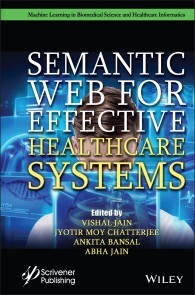
Semantic Web for Effective Healthcare Systems
SEMANTIC WEB FOR EFFECTIVE HEALTHCARE SYSTEMSTHE BOOK SUMMARIZES THE TRENDS AND CURRENT RESEARCH ADVANCES IN WEB SEMANTICS, DELINEATING THE EXISTING TOOLS, TECHNIQUES, METHODOLOGIES, AND RESEARCH SOLUTIONSSemantic Web technologies have the opportunity to transform the way healthcare providers utilize technology to gain insights and knowledge from their data and make treatment decisions. Both Big Data and Semantic Web technologies can complement each other to address the challenges and add intelligence to healthcare management systems. The aim of this book is to analyze the current status on how the semantic web is used to solve health data integration and interoperability problems, and how it provides advanced data linking capabilities that can improve search and retrieval of medical data. Chapters analyze the tools and approaches to semantic health data analysis and knowledge discovery. The book discusses the role of semantic technologies in extracting and transforming healthcare data before storing it in repositories. It also discusses different approaches for integrating heterogeneous healthcare data. This innovative book offers:* The first of its kind and highlights only the ontology driven information retrieval mechanisms and techniques being applied to healthcare as well as clinical information systems;* Presents a comprehensive examination of the emerging research in areas of the semantic web; * Discusses studies on new research areas including ontological engineering, semantic annotation and semantic sentiment analysis;* Helps readers understand key concepts in semantic web applications for the biomedical engineering and healthcare fields;* Includes coverage of key application areas of the semantic web.AUDIENCE: Researchers and graduate students in computer science, biomedical engineering, electronic and software engineering, as well as industry scientific researchers, clinicians, and systems managers in biomedical fields. VISHAL JAIN is an associate professor in the Department of Computer Science and Engineering, School of Engineering and Technology, Sharda University, Greater Noida, U. P. India. He obtained Ph.D (CSE), M.Tech (CSE), MBA (HR), MCA, MCP and CCNA. He has authored more than 80 research papers in reputed conferences and journals, including Web of Science and Scopus. He has authored and edited more than 10 books with various international publishers. JYOTIR MOY CHATTERJEE is an assistant professor in the Department of Information Technology at Lord Buddha Education Foundation (Asia Pacific University of Technology & Innovation), Kathmandu, Nepal. ANKITA BANSAL is an assistant professor in the Division of Information Technology at Netaji Subhas University of Technology. She received her master’s and doctoral degree in computer science from Delhi Technological University (DTU). ABHA JAIN is an assistant professor in the Department of Computer Science Engineering, Shaheed Rajguru College of Applied Sciences for Women, Delhi University, India. She received her master’s and doctorate degree in software engineering from Delhi Technological University. Preface xvAcknowledgment xix1 AN ONTOLOGY-BASED CONTEXTUAL DATA MODELING FOR PROCESS IMPROVEMENT IN HEALTHCARE 1A. M. Abirami and A. Askarunisa1.1 Introduction 11.1.1 Ontology-Based Information Extraction 31.1.2 Ontology-Based Knowledge Representation 41.2 Related Work 51.3 Motivation 81.4 Feature Extraction 91.4.1 Vector Space Model 101.4.2 Latent Semantic Indexing (LSI) 111.4.3 Clustering Techniques 121.4.4 Topic Modeling 121.5 Ontology Development 171.5.1 Ontology-Based Semantic Indexing (OnSI) Model 171.5.2 Ontology Development 181.5.3 OnSI Model Evaluation 191.5.4 Metrics Analysis 231.6 Dataset Description 241.7 Results and Discussions 251.7.1 Discussion 1 291.7.2 Discussion 2 291.7.3 Discussion 3 301.8 Applications 311.9 Conclusion 321.10 Future Work 33References 332 SEMANTIC WEB FOR EFFECTIVE HEALTHCARE SYSTEMS: IMPACT AND CHALLENGES 39Hemendra Shankar Sharma and Ashish Sharma2.1 Introduction 402.2 Overview of the Website in Healthcare 452.2.1 What is Website? 452.2.2 Types of Website 452.2.2.1 Static Website 452.2.2.2 Dynamic Website 462.2.3 What is Semantic Web? 462.2.4 Role of Semantic Web 472.2.4.1 Pros and Cons of Semantic Web 492.2.4.2 Impact on Patient 512.2.4.3 Impact on Practitioner 522.2.4.4 Impact on Researchers 522.3 Data and Database 532.3.1 What is Data? 542.3.2 What is Database? 542.3.3 Source of Data in the Healthcare System 542.3.3.1 Electronic Health Record (EHR) 552.3.3.2 Biomedical Image Analysis 562.3.3.3 Sensor Data Analysis 572.3.3.4 Genomic Data Analysis 572.3.3.5 Clinical Text Mining 582.3.3.6 Social Media 592.3.4 Why Are Databases Important? 602.3.5 Challenges With the Database in the Healthcare System 612.4 Big Data and Database Security and Protection 612.4.1 What is Big Data 612.4.2 Five V’s of Big Data 622.4.2.1 Volume 622.4.2.2 Variety 632.4.2.3 Velocity 632.4.2.4 Veracity 642.4.2.5 Value 652.4.3 Architectural Framework of Big Data 652.4.4 Data Protection Versus Data Security in Healthcare 672.4.4.1 Phishing Attacks 672.4.4.2 Malware and Ransomware 672.4.4.3 Cloud Threats 672.4.5 Technology in Use to Secure the Healthcare Data 682.4.5.1 Access Control Policy 692.4.6 Monitoring and Auditing 692.4.7 Standard for Data Protection 702.4.7.1 Healthcare Standard in India 702.4.7.2 Security Technical Standards 712.4.7.3 Administrative Safeguards Standards 712.4.7.4 Physical Safeguard Standards 71References 713 ONTOLOGY-BASED SYSTEM FOR PATIENT MONITORING 75R. Mervin, Tintu Thomas and A. Jaya3.1 Introduction 763.1.1 Basics of Ontology 773.1.2 Need of Ontology in Patient Monitoring 783.2 Literature Review 783.2.1 Uses of Ontology in Various Domains 783.2.2 Ontology in Patient Monitoring System 803.3 Architectural Design 803.3.1 Phases of Patient Monitoring System 823.3.2 Reasoner in Patient Monitoring 873.4 Experimental Results 883.4.1 SPARQL Results 893.4.2 Comparison Between Other Systems 893.5 Conclusion and Future Enhancements 90References 914 SEMANTIC WEB SOLUTIONS FOR IMPROVISED SEARCH IN HEALTHCARE SYSTEMS 95Nidhi Malik, Aditi Sharan and Sadika Verma4.1 Introduction 954.1.1 Key Benefits and Usage of Technology in Healthcare System 964.2 Background 974.2.1 Significance of Semantics in Healthcare Systems 974.2.2 Scope and Benefits of Semantics in Healthcare Systems 984.2.3 Issues in Incorporating Semantics 984.2.4 Existing Semantic Web Technologies 994.3 Searching Techniques in Healthcare Systems 1004.3.1 Keyword-Based Search 1004.3.2 Controlled Vocabularies Based Search 1014.3.3 Improvising Searches With Semantic Web Solutions 1014.3.4 Health Domain-Specific Resources for Semantic Search 1024.3.4.1 Ontologies 1034.3.4.2 Libraries 1034.3.4.3 Search Engines 1034.4 Emerging Technologies/Resources in Health Sector 1084.4.1 Elasticsearch 1094.4.2 BioBERT 1094.4.3 Knowledge Graphs 1104.5 Conclusion 110References 1115 ACTIONABLE CONTENT DISCOVERY FOR HEALTHCARE 115Ujwala Bharambe and Anuradha Srinivasaraghavan5.1 Introduction 1165.2 Actionable Content 1175.2.1 Actionable Content in Theory 1175.2.2 Actionable Content in Practice 1225.3 Health Analytics 1245.3.1 Artificial Intelligence/Machine Learning-Based Predictive Analytics 1255.3.2 Semantic Technology for Prescriptive Health Analytics 1265.4 Ontologies and Actionable Content 1275.4.1 Ontologies in Healthcare Domain 1295.5 General Architecture for the Discovery of Actionable Content for Healthcare Domain 1305.5.1 Ontology-Driven Actionable Content Discovery in Healthcare Domain 1315.5.2 Case Study for Actionable Content Discovery in Cancer Domain 1345.6 Conclusion 136References 1366 INTELLIGENT AGENT SYSTEM USING MEDICINE ONTOLOGY 139Tintu Thomas and R. Mervin6.1 Introduction to Semantic Search 1406.1.1 What is an Ontology in Terms of Medicine? 1406.1.2 Needs and Benefits of Ontology in Medical Search 1416.2 Sematic Search 1426.2.1 How NLP Works in Sematic Search? 1426.2.2 Part of Speech Tagging and Chunking 1426.2.3 Sentence Parsing 1436.2.4 Discussion About the Various Semantic Search in Medical Databases 1446.2.5 Discussion About the Retrieval Tools Used in Sematic Search in Medline 1456.3 Structural Pattern of Semantic Search 1466.3.1 Architectural Diagram 1476.3.2 Agent Ontology 1486.3.3 Rule-Based Approach 1496.3.4 Reasoners-Based Approach 1516.4 Implementation of Reasoners 1526.5 Implementation and Results 1536.6 Conclusion and Future Prospective 153References 1547 ONTOLOGY-BASED SYSTEM FOR ROBOTIC SURGERY—A HISTORICAL ANALYSIS 159Ajay Agarwal and Amit Kumar Mishra7.1 Historical Discourse of Surgical Robots 1607.2 The Necessity for Surgical Robots 1627.3 Ontological Evolution of Robotic Surgical Procedures in Various Domains 1637.4 Inferences Drawn From the Table 1647.5 Transoral Robotic Surgery 1667.6 Pancreatoduodenectomy 1677.7 Robotic Mitral Valve Surgery 1687.8 Rectal Tumor Surgery 1707.9 Robotic Lung Cancer Surgery 1707.10 Robotic Surgery in Gynecology 1717.11 Robotic Radical Prostatectomy 1717.12 Conclusion 1727.13 Future Work 172References 1728 IOT-ENABLED EFFECTIVE HEALTHCARE MONITORING SYSTEM USING SEMANTIC WEB 175Sapna Juneja, Abhinav Juneja, Annu Dhankhar and Vishal Jain8.1 Introduction 1768.2 Literature Review 1778.3 Phases of IoT-Based Healthcare 1788.4 IoT-Based Healthcare Architecture 1798.5 IoT-Based Sensors for Health Monitoring 1808.6 IoT Applications in Healthcare 1828.7 Semantic Web, Ontology, and Its Usage in Healthcare Sector 1838.8 Semantic Web-Based IoT Healthcare 1838.9 Challenges of IoT in Healthcare Industry 1858.10 Conclusion 186References 1869 PRECISION MEDICINE IN THE CONTEXT OF ONTOLOGY 191Rehab A. Rayan and Imran Zafar9.1 Introduction 1929.2 The Rationale Behind Data 1959.3 Data Standards for Interoperability 1979.4 The Evolution of Ontology 1989.5 Ontologies and Classifying Disorders 1999.6 Phenotypic Ontology of Humans in Rare Disorders 2019.7 Annotations and Ontology Integration 2029.8 Precision Annotation and Integration 2039.9 Ontology in the Contexts of Gene Identification Research 2049.10 Personalizing Care for Chronic Illness 2079.11 Roadblocks Toward Precision Medicine 2089.12 Future Perspectives 2099.13 Conclusion 209References 21010 A KNOWLEDGEBASE MODEL USING RDF KNOWLEDGE GRAPH FOR CLINICAL DECISION SUPPORT SYSTEMS 215Ravi Lourdusamy and Xavierlal J. Mattam10.1 Introduction 21610.2 Relational Database to Graph Database 21710.2.1 Relational Database for Knowledge Representation 21810.2.2 NoSQL Databases 22010.2.3 Graph Database 22310.3 RDF 22510.3.1 RDF Model and Technology 22610.3.2 Metadata and URI 22610.3.3 RDF Stores 22810.4 Knowledgebase Systems and Knowledge Graphs 23010.4.1 Knowledgebase Systems 23010.4.2 Knowledge Graphs 23210.4.3 RDF Knowledge Graphs 23310.4.4 Information Retrieval Using SPARQL 23410.5 Knowledge Base for CDSS 23510.5.1 Curation of Knowledge Base for CDSS 23610.5.2 Proposed Model for Curation 23610.5.3 Evaluation Methodology 23810.6 Discussion for Further Research and Development 23910.7 Conclusion 239References 24011 MEDICAL DATA SUPERVISED LEARNING ONTOLOGIES FOR ACCURATE DATA ANALYSIS 249B. Tarakeswara Rao, R. S. M. Lakshmi Patibandla, V. Lakshman Narayana and Arepalli Peda Gopi11.1 Introduction 25011.2 Ontology of Biomedicine 25111.2.1 Ontology Resource Open Sharing 25411.3 Supervised Learning 25511.4 AQ21 Rule in Machine Learning 25611.5 Unified Medical Systems 25911.5.1 Note of Relevance to Bioinformatic Experts 25911.5.2 Terminological Incorporation Principles 26011.5.3 Cross-References External 26111.5.4 UMLS Data Access 26211.6 Performance Analysis 26211.7 Conclusion 265References 26512 RARE DISEASE DIAGNOSIS AS INFORMATION RETRIEVAL TASK 269Jaya Lakkakula, Rutuja Phate, Alfiya Korbu and Sagar Barage12.1 Introduction 27012.2 Definition 27112.3 Characteristics of Rare Diseases (RDs) 27212.4 Types of Rare Diseases 27312.4.1 Genetic Causes 27412.4.2 Non-Genetic Causes 27512.4.3 Pathogenic Causes (Infectious Agents) 27512.4.4 Toxic Agents 27512.4.5 Other Causes 27612.5 A Brief Classification 27612.6 Rare Disease Databases and Online Resources 27712.6.1 European Reference Network: ERN 27712.6.2 Genetic and Rare Diseases Information Center: GARD 27812.6.3 International Classification of Diseases, 10th Revision: ICD-10 27912.6.4 Orphanet-INSERM (Institut National de la Santé et de la Recherche Médicale) 28012.6.5 Medical Dictionary for Regulatory Activities: MedDRA 28012.6.6 Medical Subject Headings: MeSH 28112.6.7 Online Mendelian Inheritance in Man: OMIM 28212.6.8 Orphanet Rare Disease Ontology: ORDO 28212.6.9 UMLS: Unified Medical Language System 28212.6.10 SNOMED-CT: Systematized Nomenclature of Human and Veterinary Medicine—Clinical Terms 28312.7 Information Retrieval of Rare Diseases Through a Web Search and Other Methods 28412.7.1 What is Information Retrieval (IR)? 28412.7.2 Listed Below Are Some of the Methods for Information Retrieval 28412.7.2.1 Web Search for a Diagnosis 28412.7.2.2 Cause of Diagnostic Errors in Web-Based Tools 28512.7.2.3 Nonprofessional Use of Web Tool for Diagnosis 28512.7.2.4 Performance of Web Search Tools 28512.7.2.5 Design of Watson 28612.8 Tips and Tricks for Information Retrieval 28712.9 Research on Rare Disease Throughout the World 28812.10 Conclusion 290References 29013 ATYPICAL POINT OF VIEW OF SEMANTIC COMPUTING IN HEALTHCARE 293L. Mayuri and K. M. Mehata13.1 Introduction 29413.2 Mind the Language 29513.2.1 Why Words Matter 29613.2.2 What Words Matter 29613.2.3 How Words Matter 29713.3 Semantic Analytics and Cognitive Computing: Recent Trends 29713.3.1 Semantic Data Analysis 29813.3.2 Semantic Data Integration 29913.3.3 Semantic Applications 30013.4 Semantics-Powered Healthcare SOS Engineering 30213.5 Conclusion 303References 30414 USING ARTIFICIAL INTELLIGENCE TO HELP COVID-19 PATIENTS 309Ayush Hans14.1 Introduction 31014.2 Method 31314.3 Results 31414.4 Discussion 31514.4.1 What is the Use of AI in Healthcare? 31514.4.2 How to Use AI for Critical Care Units 31514.4.2.1 Input Stage 31514.4.2.2 Process Stage 31614.4.2.3 Output Stage 31714.5 Conclusion 320Acknowledgment 321References 321Index 325

Data Science
Data Science ist in vielen Organisationen angekommen und oft alltägliche Praxis. Dennoch stehen viele Verantwortliche vor der Herausforderung, sich erstmalig mit konkreten Fragestellungen zu beschäftigen oder laufende Projekte weiterzuentwickeln. Die Spannbreite der Methoden, Werkzeuge und Anwendungsmöglichkeiten ist sehr groß und entwickelt sich kontinuierlich weiter. Die Vielzahl an Publikationen zu Data Science ist spezialisiert und behandelt fokussiert Einzelaspekte.Das vorliegende Werk gibt den Leserinnen und Lesern eine umfassende Orientierung zum Status Quo aus der wissenschaftlichen Perspektive und zahlreiche vertiefende Darstellungen praxisrelevanter Aspekte. Die Inhalte bauen auf den wissenschaftlichen CAS-Zertifikatskursen zu Big Data und Data Science der Hochschule Niederrhein in Kooperation mit der Hochschule Bonn-Rhein-Sieg und der FH Dortmund auf. Sie berücksichtigen wissenschaftliche Grundlagen und Vertiefungen, aber auch konkrete Erfahrungen aus Data Science Projekten. Das Buch greift praxisrelevante Fragen auf wissenschaftlichem Niveau aus Sicht der Rollen eines „Data Strategist“, „Data Architect“ und „Data Analyst“ auf und bindet erprobte Praxiserfahrungen u. a. von Seminarteilnehmern mit ein. Das Buch gibt für Interessierte einen Einblick in die aktuell relevante Vielfalt der Aspekte zu Data Science bzw. Big Data und liefert Hinweise für die praxisnahe Umsetzung.PROF. DR. DETLEV FRICK ist Professor für BWL, insb. Wirtschaftsinformatik an der Hochschule Niederrhein,PROF. DR. ANDREAS GADATSCH ist Professor für BWL, insb. für Wirtschaftsinformatik an der Hochschule Bonn-Rhein-Sieg,PROFESSOR DR. JENS KAUFMANN ist Professor für Wirtschaftsinformatik, insb. Data Science an der Hochschule Niederrhein,DIPL.-KFF. (FH) BIRGIT LANKES ist Lehrkraft für besondere Aufgaben an der Hochschule Niederrhein,PROF. DR. CHRISTOPH QUIX ist Professor für Wirtschaftsinformatik und Data Science an der Hochschule Niederrhein,ANDREAS SCHMIDT, M.A. ist Wissenschaftlicher Mitarbeiter im Data Innovation Lab der Hochschule Bonn-Rhein-Sieg undPROF. DR. UWE SCHMITZ ist Professor für Wirtschaftsinformatik an der FH Dortmund.Data Strategist: Digitalisierung von Geschäftsmodellen – Big Data Technologien erfolgreich implementieren - Data Architect: Informationsarchitekturen gestalten – Daten effizient verwalten - Data Analyst: Auswerten, Präsentieren, Entscheiden – Systematische Datenanalyse im Unternehmen - Anwendungsorientierte Data Science
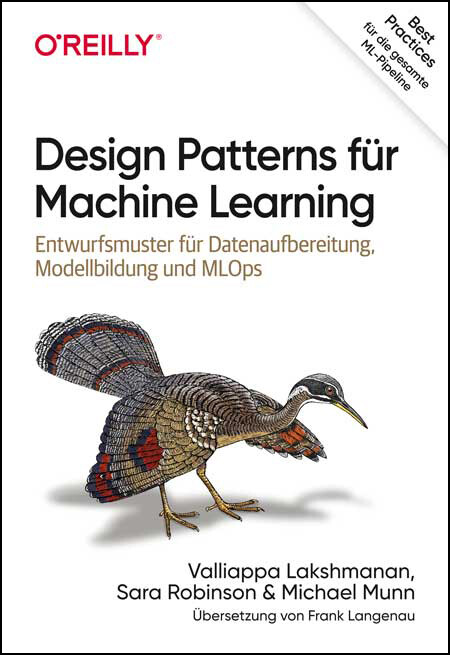
Design Patterns für Machine Learning
Entwurfsmuster für Datenaufbereitung Modellbildung und MLOpsDie Design Patterns in diesem Buch zeigen praxiserprobte Lösungen für wiederkehrende Aufgaben im Machine Learning. Die Autor:innen – ML-Experten bei Google – beschreiben Methoden, die Data Scientists helfen, typische Probleme im gesamten ML-Prozess zu bewältigen. Die Entwurfsmuster verdichten die Erfahrungen von Hunderten von Expert:innen zu klar strukturierten, zugänglichen Best Practices. Das Buch bietet detaillierte Erläuterungen zu 30 Mustern für die Daten- und Problemdarstellung, Operationalisierung, Wiederholbarkeit, Reproduzierbarkeit, Flexibilität, Erklärbarkeit und Fairness. Zu jedem Muster erhält man eine Beschreibung des Problems, eine Vielzahl möglicher Lösungen sowie Empfehlungen, welche Technik die beste für Problemstellungen ist. Aus dem Inhalt:Herausforderungen beim Trainieren, Bewerten und Deployen von ML-Modellen erkennen und überwindenDaten für verschiedene ML-Modelltypen mit Einbettungen, Feature Crosses und mehr darstellenden richtigen Modelltyp für bestimmte Fragestellungen auswähleneine robuste Trainingsschleife mit Checkpoints, Verteilungsstrategie und Hyperparameter-Tuning erstellenskalierbare ML-Systeme deployen, die bei erneutem Training aktuelle Daten berücksichtigenModellvorhersagen für Stakeholder interpretierenModellgenauigkeit, Reproduzierbarkeit, Resilienz und Fairness verbessernAutoren:Valliappa Lakshmanan ist Global Head für Datenanalyse und KI-Lösungen bei Google Cloud. Sara Robinson ist Developer Advocate im Google-Cloud-Team, sie ist spezialisiert auf Machine Learning. Michael Munn ist ML Solutions Engineer bei Google. Er unterstützt Kunden bei der Entwicklung, Implementierung und Bereitstellung von Machine-Learning-Modellen.

Practical Event-Driven Microservices Architecture
In the simplest terms, event-driven architectures are like onions; they are manageable as a single layer (like a monolith) but when you get into them, they begin to cascade apart and you quickly realize that there are many complex layers (distributed microservices architecture). And that’s when the tears begin.This prescriptive guide takes you through the steps of moving a platform with millions of users from a monolith to a microservices event-driven architecture. You will learn about the challenges and complexities that arise in high-throughput environments that often contain upwards of hundreds of microservices. This book is designed to be your single best resource for learning how to apply event-driven architectures in real-world scenarios and offers hundreds of patterns to overcome the common and not so common challenges.While event-driven architectures have been the standard for decoupled, pluggable, evolutionary architectures for years, they have only recently been adopted by enterprises for the purpose of distributed microservices and there is little information about adopting them. Using them at scale can save valuable resources, but requires different considerations, including the added complexity of supporting several moving parts and getting the event schema right from the start in order to avoid large restructuring later on.Author Hugo Rocha understands that these kinds of challenges, as well as many others, need to be considered from the beginning, and helps teach you the mindset needed to create a deliberate strategy upfront. This book offers learning approaches and patterns to get you up to speed in order to sustainably build and manage event-driven architectures.WHAT YOU WILL LEARN* Understand the real-world challenges of event-driven architectures and the patterns to deal with those challenges and the trade-offs of each solution* Leverage the advantages of event-driven architectures to build scalable solutions and address legacy applications* Plan successful future implementations to avoid common pitfalls and apply proven patterns to deal with challenges in a real-world platform with millions of users* Decide whether event-driven solutions are the right choice for the requirements at hand* Discuss and understand advanced concepts about event-driven architecturesWHO IS THIS BOOK FORSoftware engineers and software architects. Anyone currently working with microservice architectures, primarily event-driven microservices, will greatly benefit from this book. Readers working with monoliths will benefit, as the book explores migration from a monolithic application to an event-driven microservice architecture.HUGO ROCHA has nearly a decade of experience working with highly distributed event-driven microservices architectures. He currently is an engineering lead for the leading global ecommerce platform for luxury products (Farfetch), providing services to millions of active users, backed by an event-driven architecture with hundreds of microservices processing hundreds of changes per second. Before that, he worked for several reference telecommunications companies that transitioned from monolithic applications to microservice-oriented architectures. Hugo has managed several teams that directly face the caveats of event-driven architectures every day. He designed solutions for critical pieces of the platform’s highly distributed backoffice platform, handling hundreds of changes per second, concurrently, scalably, and with high performance.CHAPTER 1. EMBRACING EVENT-DRIVEN ARCHITECTURES1.1. The truth about monoliths1.1.1. Anatomy of a typical monolith1.1.2. It's not all bad1.1.3. When monoliths become the business constrictor knot1.1.4. Using event-driven architectures to move away from a monolith1.2. What are microservices and how do they relate to event-driven1.3. SOA, microservice, and event-driven architectures1.4. The promise of event-driven microservices1.5. When should you use event-driven microservices?1.6. Overview of the challenges in event-driven architectures1.7. SummaryCHAPTER 2. MOVING FROM A MONOLITH TO AN EVENT-DRIVEN ARCHITECTURE2.1. Is migrating to an event-driven architecture your best option?2.2. How to decide where to start2.3. Using an event-driven approach to migrate data2.4. Using change data capture (CDC)2.4.1. Event-driven and change data capture (CDC), a real-world example2.5. Event-driven as a source of truth for both systems2.6. Managing dependencies between the two systems2.6.1. Dependency from new event-driven services to the monolith2.6.2. Dependency from the monolith to new event-driven services2.7. Gradually moving traffic2.8. Two-way synchronization and living with two sources of truth2.9. SummaryCHAPTER 3. DEFINING AN EVENT-DRIVEN MICROSERVICE AND ITS BOUNDARIES3.1. Building event-driven microservices3.1.1. Durable vs. ephemeral message brokers and GDPR3.1.2. Message types3.1.3. When to use documents over events3.1.4. Common event-driven messaging patterns3.1.5. Event-driven service topologies3.1.6. Common event-driven pitfalls and anti-patterns3.2. Organizing event-driven microservice boundaries3.3. Brief and practical introduction to domain-driven design and bounded contexts3.4. The impact of aggregate size and common pitfalls3.5. Request-driven vs. event-driven services3.6. Adding functionality to an existing microservice vs. creating a new one3.7. SummaryCHAPTER 4. EVENT-DRIVEN STRUCTURAL PATTERNS AND HIGH-LEVEL PROCESSES4.1. The challenges of transactional consistency in distributed systems4.1.1. Why abandon a monolithic database in the first place?4.1.2. The limitations of distributed transactions4.1.3. Managing multi-step processes with Sagas4.2. Event-driven orchestration pattern4.3. Event-driven choreography pattern4.4. Orchestration, choreography, or both?4.5. Data retrieval in event-driven architectures and associated patterns4.5.1. CQS, CQRS and when to use them4.5.2. The different flavors of CQRS4.5.3. When and how to use event sourcing4.5.4. Using command sourcing and its applicability4.6. Building multiple read models4.7. The pitfall of microservice spaghetti architectures and how to avoid it4.8. SummaryCHAPTER 5. HOW TO MANAGE EVENTUAL CONSISTENCY5.1. The impacts of eventual consistency and the need for alignment with the business5.2. Using event schema to leverage eventual consistency5.3. Applying domain boundaries to leverage eventual consistency5.4. Event versioning to manage delays5.5. Saving state to avoid eventual consistency5.6. End-to-end argument: a real-world use case5.7. For most use cases, it's not eventual if nobody notices5.7.1. Autoscaling use case with Prometheus and Kafka5.8. Tradeoffs of each solution5.9. SummaryCHAPTER 6. DEALING WITH EVENT-DRIVEN CONCURRENCY AND OUT OF ORDER MESSAGES6.1. Why is concurrency different in a monolith from an event-driven architecture?6.2. Pessimistic vs. optimistic concurrency, when and when not to use6.2.1. Pessimistic vs. optimistic approaches6.2.2. Solving concurrency by implementation and by architecture6.3. Using optimistic concurrency6.4. Using pessimistic concurrency6.4.1. Distributed locks6.4.2. Database transactions6.5. Dealing with out-of-order events6.5.1. How can events lose their order?6.5.2. Solving out of order events with versioning6.6. Using end-to-end message partitioning to handle concurrency and guarantee message ordering6.6.1. The relevance of message routing and partitioning6.6.2. Real-world example of message routing using Kafka6.6.3. Using end-to-end partitioning6.6.4. Limitations of end-to-end partitioning6.7. SummaryCHAPTER 7. ACHIEVING RESILIENCE AND EVENT PROCESSING RELIABILITY IN EVENT-DRIVEN MICROSERVICES7.1. Common failures in microservice architectures and how they relate to event-driven architectures7.1.1. Cascading failures and event-driven services7.1.2. Load balancing and rate limiters in event-driven services7.2. Understanding message delivery semantics7.3. Avoiding inconsistencies when saving state and publishing events7.3.1. Event stream as the only source of truth7.3.2. Outbox pattern7.3.3. Transactions and compensating actions7.4. Applying ACID 2.0 as a resilience strategy7.5. Avoiding message leak7.6. Applying common resilience patterns7.6.1. Retries7.6.2. Circuit breakers7.7. Recovering data and repairing state7.8. Bulkhead pattern7.9. SummaryCHAPTER 8. CHOOSING THE CORRECT EVENT SCHEMA DESIGN8.1. Event storming8.2. Event headers and envelopes8.2.1. Headers vs envelopes8.2.2. Relevant event contextual information8.3. Town crier events8.4. Bee events8.5. The event schema goldilocks principle8.6. Denormalized event schema8.7. Schema evolution8.7.1. Event stream versioning8.7.2. Using a downscaler/upscaler8.8. SummaryCHAPTER 9. HOW TO LEVERAGE THE USER INTERFACE9.1. Using an aggregating layer9.2. Backends for frontends9.3. UI Decomposition9.3.1. Application decomposition9.3.2. Page decomposition9.3.3. Section decomposition9.4. The limitations of API composition9.5. Task-based UIs9.6. Event-driven APIs9.7. SummaryCHAPTER 10. OVERCOMING THE CHALLENGES IN QUALITY ASSURANCE10.1. The only happens in production syndrome10.2. Component tests vs integration tests10.3. The correct mix of component validation and production validations10.4. Monitoring and alarmistic from the ground up10.5. SummaryCHAPTER 11. ORGANIZATIONAL COST OF EVENT-DRIVEN MICROSERVICES11.1. The epic journey to be onboarded11.2. When implementation overhead impacts time to market11.3. Dependencies management11.4. Summary
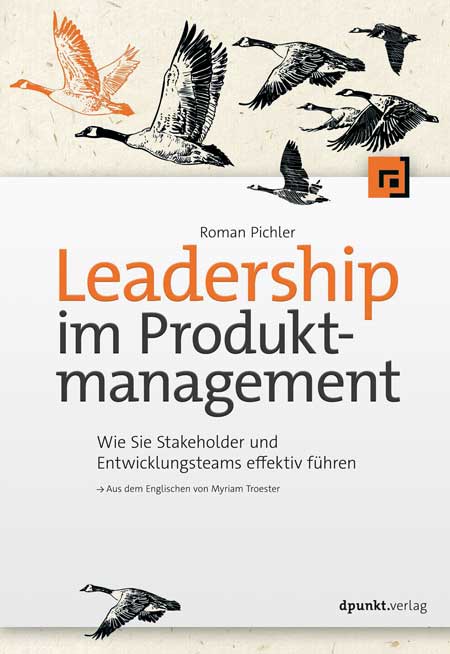
Leadership im Produktmanagement
Pflichtlektüre für angehende und erfahrene Produktmanager:innen»Leadership im Produktmanagement« hilft, ein besserer Product Owner zu werden. Von Roman Pichlers umfangreicher Erfahrung profitieren und lernen, Stakeholder auf gemeinsame Ziele auszurichten und Entwicklungsteams auch unter herausfordernden Umständen zu führen, häufige Führungsfehler vermeiden und als Führungskraft wachsen.In einem ansprechenden und leicht verständlichen Stil geschrieben, bietet dieses Buch eine Fülle von praktischen Tipps und Strategien. Durch hilfreiche Beispiele veranschaulicht das Buch, wie Sie die Techniken direkt auf Ihre Arbeit anwenden können.Der Inhalt umfasst:Den passenden Leadership-Stil wählen und Empathiefähigkeit stärkenVertrauensvolle Partnerschaften mit Stakeholdern, Entwicklungsteam und Scrum Master etablierenDie richtigen produktbezogenen Ziele setzenEffektiv kommunizieren: aktives Zuhören und bewusstes SprechenEntscheidungen treffen, die von den Mitarbeitenden mitgetragen und umgesetzt werdenKonflikte nachhaltig lösenEntscheidungen treffen und die Zustimmung der Stakeholder sichernSich selbst bewusst führen: Achtsamkeit, Growth Mindset und Zeitmanagement

Entwurfsmuster von Kopf bis Fuß
JETZT AKTUALISIERT UND ERWEITERT: DAS STANDARDWERK ZU ENTWURFSMUSTERN * »Dieses Buch vereint Spaß, herzhaftes Lachen, profundes technisches Verständnis und geniale Praxistipps zu einem denkwürdigen Lesegenuss.« Richard Helm, Gang of Four * Softwareentwickler wollen das Rad nicht neu erfinden: Mit Entwurfsmustern können Sie von den Erfahrungen und Best Practices anderer profitieren * Die Design Patterns werden detailliert und verständlich erklärt, inklusive Herleitung und geeigneten Anwendungsfällen Dieses Buch ist ein moderner Klassiker zum Thema Entwurfsmuster. Mit dem einzigartigen Von-Kopf-bis-Fuß-Lernkonzept gelingt es den Autoren, die anspruchsvolle Materie witzig, leicht verständlich und dennoch gründlich darzustellen. Jede Seite ist ein Kunstwerk für sich, mit vielen visuellen Überraschungen, originellen Comic-Zeichnungen, humorvollen Dialogen und geistreichen Selbstlernkontrollen. Spätestens, wenn es heißt "Spitzen Sie Ihren Bleistift", wird Leser:innen klar, dass bei diesem Buch Mitmachen gefragt ist. Das ist nicht nur unterhaltsam, sondern auch effektiv: Komplexe Sachverhalte lassen sich nach Erkenntnis der modernen Lernwissenschaft am gründlichsten über mehrere verschiedene Kanäle verstehen. Das Buch verspricht Ihnen daher nicht nur Spaß beim Lernen, Sie werden nach der Lektüre auch die Herausforderungen des Softwaredesigns meistern können.
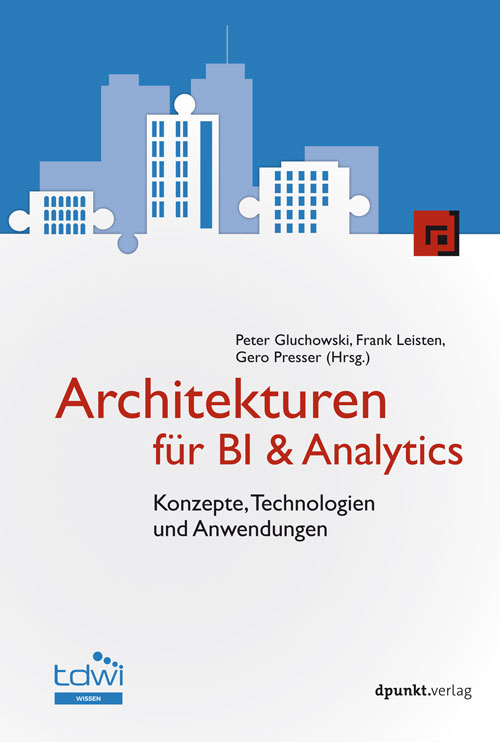
Architekturen für BI & Analytics
Konzepte, Technologien und Anwendung - Erstauflage aus November 2021.Sowohl regulatorische Vorgaben als auch gesteigerte Anforderungen seitens der Fachanwender haben in den letzten Jahren zu immer komplexeren Business-Intelligence- und Analytics-Landschaften geführt, die es zu entwickeln und betreiben gilt. So setzt sich eine heute übliche Architektur aus zahlreichen Einzelkomponenten zusammen, deren Zusammenspiel und funktionale Abdeckung als wesentlicher Erfolgsfaktor für zugehörige BIA-Initiativen zu werten ist.»Architekturen für Business Intelligence & Analytics« setzt sich das Ziel, die derzeit gebräuchlichen Architekturmuster zu beschreiben und dabei einen Überblick über die aktuell verwendeten Technologien zu liefern. Dabei werden nicht nur die architektonischen Frameworks der großen Produktanbieter aufgegriffen, sondern darüber hinaus Lösungen für konkrete Anwendungsfälle präsentiert. Im Einzelnen werden behandelt:Anforderungen an eine ganzheitliche BIA-ArchitekturArchitekturen und Technologien für Data LakesDatenzugriffsstrategien für AnalyticsEnterprise Application IntegrationCloud-Konzepte und -ArchitekturenEinfluss regulatorischer AnforderungenDatenvirtualisierungBIA-Architekturen für KMU Das Buch vermittelt wertvolle Einblicke und hilfreiche Anregungen für die erfolgreiche Konzeptionierung und Realisierung von BIA-Ökosystemen und -Landschaften in der Praxis. Zielgruppe:Business-Intelligence-Manager*innenDaten- und InformationsverantwortlicheProjektleiter*innenStudierende der Informatik und Wirtschaftsinformatik Autoren:Prof. Dr. Peter Gluchowski leitet den Lehrstuhl für Wirtschaftsinformatik, insb. Systementwicklung und Anwendungssysteme, an der Technischen Universität in Chemnitz und konzentriert sich dort mit seinen Forschungsaktivitäten auf das Themengebiet Business Intelligence & Analytics. Er beschäftigt sich seit mehr als 25 Jahren mit Fragestellungen, die den praktischen Aufbau dispositiver bzw. analytischer Systeme zur Entscheidungsunterstützung betreffen. Seine Erfahrungen aus unterschiedlichsten Praxisprojekten sind in zahlreichen Veröffentlichungen zu diesem Themenkreis dokumentiert. Frank Leisten ist passionierter Berater für datengetriebene Vorhaben mit modernen Technologien. Seine Expertise in den Funktionen des Datenmanagements sowie jahrelange Praxiserfahrung in verschiedenen IT-Domänen und Rollen kommen seinen Kunden bei der Orchestrierung sowie der kulturellen und strategischen Entwicklung ihrer Transformationen zugute. Dr. Gero Presser ist Mitgründer und Geschäftsführer bei der QuinScape GmbH, einem Dortmunder IT-Dienstleistungsunternehmen mit 170 Mitarbeitern und Fokus auf Data & Analytics. Er organisiert die Meetup-Gruppe „Business Intelligence & Analytics Dortmund“ mit über 1.000 Mitgliedern und ist Vorsitzender des TDWI Roundtable Ruhrgebiet.

UX-Strategie
MIT DER RICHTIGEN STRATEGIE ZEIT UND GELD SPAREN UND KUNDEN ÜBERZEUGEN * Das Buch verbindet UX-Design mit Geschäftsstrategie. * Übersetzung der zweiten englischen Auflage mit topaktuellen Beispielen und Techniken, inkl. Online-Nutzerforschung * Voller Praxisbezug und einem kostenlosen Toolkit zum Herunterladen und Loslegen User-Experience-Strategie schließt die Wissenslücke zwischen Geschäftsstrategie und UX-Design, aber bis jetzt gab es kein einfach anzuwendendes Framework für die Umsetzung. Dieser praktische Leitfaden stellt leicht verständliche Strategie-Tools und -Techniken vor, die Ihnen und Ihrem Team helfen, innovative Multi-Device-Produkte zu entwickeln, die von den Nutzern gerne verwendet werden. Die erfolgreiche UX-Strategin Jaime Levy zeigt UX/UI-Designer*innen, Produktmanager*innen und angehenden Strateg*innen einfache bis fortgeschrittene Methoden, die sofort angewendet werden können. Durch Business Cases und anschauliche Praxisbeispiele erhalten Sie wertvolle Einblicke und ein topaktuelles Kapitel über die Durchführung qualitativer Online-Nutzerforschung rundet das Buch ab. - Definieren Sie Wertversprechen und validieren Sie Zielkunden durch provisorische Personas und Techniken zur Kundenfindung - Erkunden Sie Marktchancen durch die Durchführung von Wettbewerbsforschung und -analyse - Entwerfen Sie Experimente mit schnellen Prototypen, die auf das Geschäftsmodell ausgerichtet sind - Führen Sie Online-Nutzerforschung durch, um schnell und mit jedem Budget wertvolle Erkenntnisse zu gewinnen - Testen Sie Geschäftsideen und validieren Sie Marketingkanäle, indem Sie Online-Werbung und Landing-Page-Kampagnen durchführen
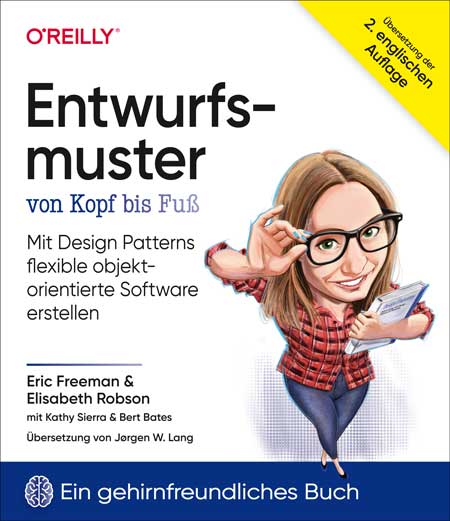
Entwurfsmuster von Kopf bis Fuß (2. Auflg.)
Mit Design Patterns flexible objektorientierte Software erstellen. Worum geht es in diesem Buch? Entwurfsmustern bieten die geballte Erfahrung von Entwicklern, die elegante, übertragbare Lösungen für typische Herausforderungen des Softwaredesigns gefunden haben. Dieses Buch zeigt auf spielerische, visuell abwechslungsreiche Art bewährte Muster, mit denen man flexible Software entwerfen kann. Es zeigt, auf welche Muster es ankommt, wie diese für eigene Designs eingesetzt werden können und auf welchen objektorientierten Entwurfsprinzipien sie beruhen. Mit diesem modernen Klassiker werden Sie – wie schon Hunderttausende Entwicklern vor Ihnen – Ihr Wissen über Softwaredesign entscheidend verbessern. Wieso sieht dieses Buch so anders aus? Das Buch ist ein Workbook mit zahlreichen visuellen Überraschungen, das Spaß macht und auf die Arbeitsweise Ihres Gehirns zugeschnitten ist: Statt einschläfernder Bleiwüsten werden verschiedenste Textformen und Selbstlernkontrollen verwendet, die Ihnen das Wissen direkt ins Hirn spielen. Spätestens, wenn es heißt »Spitzen Sie Ihren Bleistift«, wird klar, dass hier Mitmachen gefragt ist. Zielgruppe: Programmierer*innenStudent*innenSoftwareentwickler*innen Autoren: Eric Freeman ist Informatiker, Technologieautor, Unternehmer und ehemaliger CTO der Walt Disney Company. Er hat einen Doktortitel in Informatik von der Yale University. Aktuell ist er Kodirektor der Head-First-Reihe, die in Deutschland als Von-Kopf-bis-Fuß-Reihe bekannt ist. Bei der von ihm mitgegründeten Online-Lernplattform WickedlySmart widmet er seine Zeit der Erstellung von Print- und Video-Inhalten, die über die führenden Bildungskanäle vertrieben werden. Eric lebt in Austin, Texas. Elisabeth Robson ist Softwareentwicklerin, Autorin und IT-Trainerin. Seit ihren Studententagen an der Yale University, wo sie ihren Master in Informatik erworben hat, ist sie mit Leib und Seele Informatikerin. Sie ist Mitbegründerin von WickedlySmart, einer Online-Lernplattform für Softwareentwickler:innen, für die sie Bücher, Artikel und Videos erstellt. Zuvor hat sie als Director of Special Projects bei O’Reilly Media Präsenz-Workshops und Onlinekurse zu einer Vielzahl von technischen Themen gestaltet.

Mastering VMware Horizon 8
Learn all about designing, installing, configuring, and managing VMware Horizon, with a core focus on how to deliver virtual desktops using Horizon. This book allows you to follow the complete process for deploying VMware Horizon and covers the design, deployment, and management of solutions.You'll start by reviewing remote solutions, from virtual desktops to published applications, including the benefits and what the different solutions deliver. Once through the high-level technology you'll then look at the VMware Horizon solution focusing on the architecture and the components that make up the solution and how to design a production-ready environment. Other VMware EUC technologies that complement the core Horizon solution will also be incorporate into it.Armed with the knowledge of how to design a solution, you'll move onto the installation phase and start to build a test lab environment. Once your lab is installed, you'll move onto the configuration stage where you will understand how to build, configure, and optimize virtual desktops, and desktop pools ready for end-users to use. As part of this you will also look at delivering published applications with Horizon Apps.With resources built and configured you can optimize the end-user experience with Horizon clients. The final sections of the book will focus on the other complementary solutions introducing you to VMware App Volumes and VMware Dynamic Environment Manager before finishing with how to manage the solution where we will look at some advanced configuration options and troubleshooting techniques.WHAT YOU WILL LEARN* See the core components of VMware Horizon and their functionality* Design and install a Horizon environment* Deliver the best end-user experience* Manage the deployed solution* Use VMware reference architectures to create real-life scenario examples* Review the minimum requirements for designing a solutionWHO THIS BOOK IS FORVMware professionals, system integrators, IT professionals, and consultants.PETER VON OVEN is an experienced technical consultant working closely with customers and partners designing technology solutions, to meet business needs. During his career, Peter has presented at key IT events such as VMworld, IP EXPO, and various VMUGs and CCUG events. He has also worked in senior presales roles and presales management roles for Fujitsu, HP, Citrix, and VMware, and has been awarded VMware vExpert for the last six years in a row. In 2016, Peter founded his own company, Droplet Computing, where he works today as the founder and chief executive officer, helping redefine the way applications are delivered today. He is also an avid author, having now written 13 books and made videos about VMware end-user computing solutions. In his spare time, Peter volunteers as a STEM Ambassador, helping the next generation develop the skills and confidence in building careers in technology.Chapter 1: What Are Remote Desktop Solutions?Chapter 2: Getting Started with VMware HorizonChapter 3: Architecting Horizon for DeploymentChapter 4: Installing and Configuring Your Horizon EnvironmentChapter 5: Creating Virtual Desktop Images for DeploymentChapter 6: Building and Configuring Desktop PoolsChapter 7: Managing Horizon with Active Directory GPOsChapter 8: Horizon Computer GPOs Settings (split from chapter 7)Chapter 9: Horizon User GPO Settings (split from chapter 7)Chapter 10: Managing the End User Environments (former chapter 8)Chapter 11: Horizon Apps (former chapter 9)Chapter 12: Horizon Published Desktop (former chapter 10)Chapter 13: Connecting End Users (former chapter 11)Chapter 14: Horizon Enterprise Edition (former chapter 12)Chapter 15: Upgrading Horizon (former chapter 13)Chapter 16: Running Horizon in the Cloud (former chapter 14)Chapter 17: Horizon Troubleshooting (former chapter 15)Online Resource: Advanced Configuration and Management (former chapter 16)

Solving the Riddle of Microsoft and Your Computer
Solving the Riddle of Microsoft and Your Computer provides easy to follow step by step instructions.Chapter one provides some useful facts about your computer. This Chapter describes such things as how to operate your mouse; how to modify your screen saver and printer settings; options for printing files; how to use different functions of the calculator; playing and storing music; using Snipping Tool to capture images; determining amount of Radom Access Memory (RAM) is on your computer; determining your computer name; how to use Microsoft Excel to keep track of financial transactions.Chapter two discusses how to use Microsoft File Explorer. I refer to File Explorer as the electronic filing cabinet. This chapter provides a description of the drives in your computer; how to create top level and sub-folders in your C-Drive also known as the hard drive; how to find files in File Explorer; copying files from the C-Drive and changing properties on files.Chapter three is the real meat of this book. It provides detailed information on the most useful Microsoft Word functions. You will learn how to use pull down menus to include (Find, Replace, Tracking Changes, Accepting or Rejecting Changes, saving files, Print Preview, Printing, inserting Headers and Footers); additional topics on cover pages, inserting blank pages, inserting page breaks, inserting tables and inserting pictures; next you will learn how to adjust margins, adjust orientation, adjusting size of paper, inserting columns, inserting page and section breaks, how to vertical line numbers; an in depth discussion concerning interactive table of contents; other useful tools include inserting symbols, inserting footnotes, inserting text boxes, inserting other files into Word, how to use Format Painter, description of formatting fonts and how to insert splits in Word.

Knowledge Graphs
This book provides a comprehensive and accessible introduction to knowledge graphs, which have recently garnered notable attention from both industry and academia. Knowledge graphs are founded on the principle of applying a graph-based abstraction to data, and are now broadly deployed in scenarios that require integrating and extracting value from multiple, diverse sources of data at large scale. The book defines knowledge graphs and provides a high-level overview of how they are used. It presents and contrasts popular graph models that are commonly used to represent data as graphs, and the languages by which they can be queried before describing how the resulting data graph can be enhanced with notions of schema, identity, and context. The book discusses how ontologies and rules can be used to encode knowledge as well as how inductive techniques—based on statistics, graph analytics, machine learning, etc.—can be used to encode and extract knowledge. It covers techniques for the creation, enrichment, assessment, and refinement of knowledge graphs and surveys recent open and enterprise knowledge graphs and the industries or applications within which they have been most widely adopted. The book closes by discussing the current limitations and future directions along which knowledge graphs are likely to evolve. This book is aimed at students, researchers, and practitioners who wish to learn more about knowledge graphs and how they facilitate extracting value from diverse data at large scale. To make the book accessible for newcomers, running examples and graphical notation are used throughout. Formal definitions and extensive references are also provided for those who opt to delve more deeply into specific topics. * Preface * Acknowledgments * Introduction * Data Graphs * Schema, Identity, and Context * Deductive Knowledge * Inductive Knowledge * Creation and Enrichment * Quality Assessment * Refinement * Publication * Knowledge Graphs in Practice * Conclusions * Bibliography * Authors' Biographies
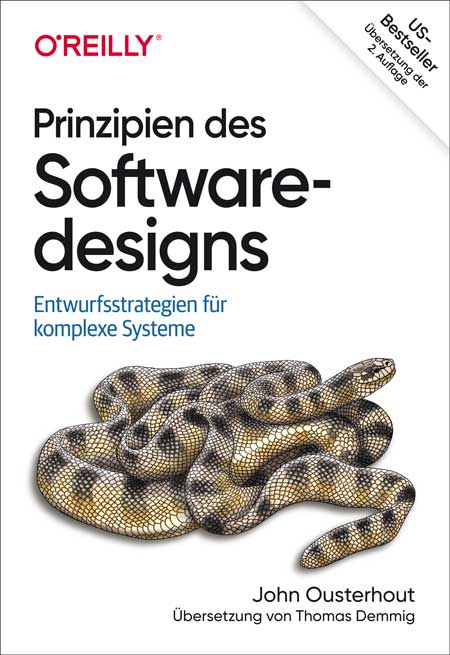
Prinzipien des Softwaredesigns
Entwurfsstrategien für komplexe SystemeDie Prinzipien guten Softwaredesigns zu verstehen, hält John Ousterhout für eine Schlüsselqualifikation in der Softwareentwicklung. Sein Buch gibt Impulse für eine anregende und notwendige Diskussion und bietet praxistaugliche Hilfestellungen für gute Designentscheidungen. Ausgehend von der Frage »Wie können wir die Komplexität in großen Softwaresystemen reduzieren und managen?« arbeitet John Ousterhout Prinzipien für das Softwaredesign heraus, die als Leitlinie für den gesamten Softwareentwicklungsprozess dienen können. Ousterhout stellt Überzeugungen infrage, die weit verbreitet sind: Er rät davon ab, die Anzahl der Codezeilen einer Methode oder Klasse als Gradmesser für die Komplexität von Software zu verstehen, und plädiert dafür, sich auf ihre »Tiefe« zu konzentrieren – wie gut sie also Komplexität verstecken. Und während viele Entwicklerinnen und Entwickler meinen, dass sich gut geschriebene Programme von selbst dokumentierten, zeigt Ousterhout, wie essenziell Kommentare sind: Das Schreiben guter Kommentare ermöglicht Abstraktion, und es wird zu besserem Softwaredesign führen.Zielgruppe:Softwareentwickler*innenProgrammierendeSoftwarearchitekt*innenAutor:John Ousterhout ist Professor für Informatik an der Stanford University. Er hat die Entwicklung weit verbreiteter Softwaresysteme wie Raft, Tcl/Tk, Sprite und Magic geleitet und eigene Unternehmen gegründet. Er ist Mitglied der National Academy of Engineering und erhielt zahlreiche Auszeichnungen wie den U.C. Berkeley Distinguished Teaching Award.Aus dem Inhalt:Wie man komplexe Systeme in möglichst unabhängige Module mit einfachen Schnittstellen zerlegen kannWie Spezialisierung in Modulen zu vermeiden istWie man die Anzahl der Stellen im Code minimieren kann, an denen Exceptions behandelt werden müssenWie Kommentare und gut gewählte Namen genutzt werden können, um den Code verständlicher zu machenWie es zu vermeiden ist, dass sich Komplexität einschleicht, wenn Systeme sich weiterentwickelnWelche Warnhinweise darauf hindeuten, dass Designentscheidungen überprüft werden sollten

Design Patterns in Modern C++20
Apply the latest editions of the C++ standard to the implementation of design patterns. As well as covering traditional design patterns, this book fleshes out new design patterns and approaches that will be useful to modern C++ developers. Author DMITRI NESTERUK presents concepts as a fun investigation of how problems can be solved in different ways, along the way using varying degrees of technical sophistication and explaining different sorts of trade-offs.Design Patterns in Modern C++20, Second Edition also provides a technology demo for modern C++, showcasing how some of its latest features (e.g., coroutines, modules and more) make difficult problems a lot easier to solve. The examples in this book are all suitable for putting into production, with only a few simplifications made in order to aid readability.WHAT YOU WILL LEARN* Use creational patterns such as builder, factories, prototype and singleton* Implement structural patterns such as adapter, bridge, decorator, facade and more* Work with the behavioral patterns such as chain of responsibility, command, iterator, mediator and more* Apply functional design patterns such as the Maybe MonadWHO THIS BOOK IS FORThis book is for both beginner and experienced C++ developers.DMITRI NESTERUK is a quantitative analyst, developer, course and book author, and an occasional conference speaker. His interests lie in software development and integration practices in the areas of computation, quantitative finance and algorithmic trading. His technological interests include C# and C++ programming as well high-performance computing using technologies such as CUDA and FPGAs. He has been a C# MVP since 2009.1. IntroductionPart- I: Creational Patterns2. Builder3. Factories4. Prototype5. SingletonPart- II: Structural Patterns6. Adapter7. Bridge8. Composite9. Decorator10. Façade11. Flyweight12. ProxyPart- III: Behavioral Patterns13. Chain of Responsibility14. Command15. Interpreter16. Iterator17. Mediator18. Memento19. Null Object20. Observer21. State22. Strategy23. Template Method24. Visitor

Learn to Program with Assembly
Many programmers have limited effectiveness because they don't have a deep understanding of how their computer actually works under the hood. In Learn to Program with Assembly, you will learn to program in assembly language - the language of the computer itself.Assembly language is often thought of as a difficult and arcane subject. However, author Jonathan Bartlett presents the material in a way that works just as well for first-time programmers as for long-time professionals. Whether this is your first programming book ever or you are a professional wanting to deepen your understanding of the computer you are working with, this book is for you. The book teaches 64-bit x86 assembly language running on the Linux operating system. However, even if you are not running Linux, a provided Docker image will allow you to use a Mac or Windows computer as well.The book starts with extremely simple programs to help you get your grounding, going steadily deeper with each chapter. At the end of the first section, you will be familiar with most of the basic instructions available on the processor that you will need for any task. The second part deals with interactions with the operating system. It shows how to make calls to the standard library, how to make direct system calls to the kernel, how to write your own library code, and how to work with memory. The third part shows how modern programming language features such as exception handling, object-oriented programming, and garbage collection work at the assembly language level.Additionally, the book comes with several appendices covering various topics such as running the debugger, vector processing, optimization principles, a list of common instructions, and other important subjects.This book is the 64-bit successor to Jonathan Bartlett's previous book, Programming from the Ground Up, which has been a programming classic for more than 15 years. This book covers similar ground but with modern 64-bit processors, and also includes a lot more information about how high level programming language features are implemented in assembly language.WHAT YOU WILL LEARN* How the processor operates * How computers represent data internally * How programs interact with the operating system* How to write and use dynamic code libraries* How high-level programming languages implement their features WHO THIS BOOK IS FORAnyone who wants to know how their computer really works under the hood, including first time programmers, students, and professionals.JONATHAN BARTLETT is a software developer, researcher, and writer. His first book, Programming from the Ground Up, has been required reading in computer science programs from DeVry to Princeton. He has been the sole or lead author for eight books on topics ranging from computer programming to calculus. He is a technical lead for ITX, where his specialty is getting stuck projects unstuck.Chapter 1: IntroductionChapter 2: The Truth About ComputersPart I: Assembly Language BasicsChapter 3: Your First ProgramChapter 4: Registers and Simple ArithmeticChapter 5: Comparison, Branching and LoopingChapter 6: Working with Data in MemoryChapter 7: Data RecordsChapter 8: Signed Numbers and Bitwise OperationsChapter 9: More Instructions You Should KnowPart II: Operating System BasicsChapter 10: Making System CallsChapter 11: The Stack and Function CallsChapter 12: Calling Functions from LibrariesChapter 13: Common and Useful Assembler DirectivesChapter 14: Dynamic Memory AllocationChapter 15: Dynamic LinkingPart III: Programming Language TopicsChapter 16: Basic Language Features Represented in Assembly LanguageChapter 17: Tracking Memory AllocationsChapter 18: Object-Oriented ProgrammingChapter 19: Conclusion and AcknowlegmentsPart IV: AppendicesAppendix A: Getting Set Up with DockerAppendix B: The Command LineAppendix C: Debugging with GDBAppendix D: Nasm (Intel) Assembly Language SyntaxAppendix E: Common x86-64 InstructionsAppendix F: Floating Point NumbersAppendix G: The Starting State of the StackAppendix H: ASCII, Unicode, and UTF-8Appendix I: OptimizationAppendix J: A Simplified Garbage CollectorAppendix K: Going to an Even Lower Level