

Computer und IT

Designing and Building Enterprise Knowledge Graphs
This book is a guide to designing and building knowledge graphs from enterprise relational databases in practice. It presents a principled framework centered on mapping patterns to connect relational databases with knowledge graphs, the roles within an organization responsible for the knowledge graph, and the process that combines data and people. The content of this book is applicable to knowledge graphs being built either with property graph or RDF graph technologies. Knowledge graphs are fulfilling the vision of creating intelligent systems that integrate knowledge and data at large scale. Tech giants have adopted knowledge graphs for the foundation of next-generation enterprise data and metadata management, search, recommendation, analytics, intelligent agents, and more. We are now observing an increasing number of enterprises that seek to adopt knowledge graphs to develop a competitive edge. In order for enterprises to design and build knowledge graphs, they need to understand the critical data stored in relational databases. How can enterprises successfully adopt knowledge graphs to integrate data and knowledge, without boiling the ocean? This book provides the answers. * Preface * Foreword by an Anonymous CDO * Foreword by Tom Plasterer * Acknowledgments * Disclaimer * Introduction * Designing Enterprise Knowledge Graphs * Mapping Design Patterns * Building Enterprise Knowledge Graphs * What's Next? * Conclusions * Bibliography * Authors' Biographies

Practical Vaadin
Implement web applications in Java using the open-source Vaadin framework version 20 and later. This easy-to-follow book covers all the key concepts and steps to become competent with modern versions of Vaadin. The book covers everything from setting up the development environment to implementing advanced features such as Server Push and database connectivity. The book helps you become proficient in the Vaadin framework, prepare for Vaadin certifications, and shows you how to apply the power of the Java programming language in developing applications for the web.Author Alejandro Duarte starts with an introduction to web development and its key technologies. He then describes and demonstrates how Vaadin simplifies web development by allowing you to implement web graphical user interfaces using the Java programming language without having to code in JavaScript or HTML. Once a solid foundation on the key web and Vaadin concepts is established, Duarte digs deeper into explaining layouts and user interface components such as combo boxes, dialogs, upload fields, and data grids. He also covers topics such as styling with CSS, data binding, client-side views implementation with TypeScript, and integration with Spring Boot and Jakarta EE.WHAT YOU WILL LEARN* Build web applications in Java using Servlet technology and Vaadin* Combine layouts and user interface components to create views in Java* Connect values in UI components to Java objects in the server through data binding* Customize display styles and add responsive capabilities using CSS* Display tabular data using the Grid component* Implement client-side views using TypeScript* Integrate Vaadin applications with Spring Boot and Jakarta EE* Connect Vaadin applications to SQL databasesWHO THIS BOOK IS FORDevelopers with a basic or higher knowledge of Java programming who want to build on their Java skills to create web graphical user interfaces, Java developers who want to create web applications without having to code in JavaScript, and developers who are preparing to take and pass Vaadin certification examsALEJANDRO DUARTE is a Software Engineer currently working for Vaadin Ltd as their Developer Relations Manager. This is his third book on Vaadin. Alejandro started to code at age 13 using the BASIC programming language on a black screen with a blinking cursor serving as the IDE. He quickly moved to the C and C++ languages—which he still loves and enjoys—and then to Java during his Computer Science studies at the National University of Colombia from where he graduated. Alejandro moved to the UK and later to Finland to foster his career in the open-source software industry. He became one of the well-known faces in the Vaadin and Java communities, having published articles and videos with hundreds of thousands of views in official Vaadin channels and other content portals, and presented technical topics at international Java conferences and Java User Groups. Alejandro splits his free time between his passion for the electric guitar and the photography world. PART I. GETTING STARTED1. The World of Vaadin2. Setting Up the Development EnvironmentPART II. THE FUNDAMENTALS OF VAADIN3. Layouts4. UI Components5. Data Binding6. The Grid ComponentPART III. ADVANCED FEATURES7. Multi-view Navigation and Routing8. Server Push9. The Element API10. Custom Styles and Responsiveness11. Client-side Views with TypeScriptPART IV. INTEGRATIONS AND DATABASE CONNECTIVITY12. Spring Boot13. Jakarta EE
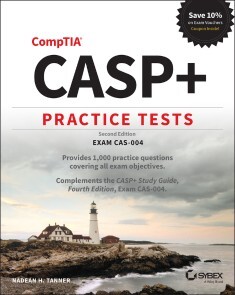
CASP+ CompTIA Advanced Security Practitioner Practice Tests
PREPARE FOR SUCCESS ON THE CHALLENGING CASP+ CAS-004 EXAMIn the newly updated Second Edition of CASP+ CompTIA Advanced Security Practitioner Practice Tests Exam CAS-004, accomplished cybersecurity expert Nadean Tanner delivers an extensive collection of CASP+ preparation materials, including hundreds of domain-by-domain test questions and two additional practice exams.Prepare for the new CAS-004 exam, as well as a new career in advanced cybersecurity, with Sybex’s proven approach to certification success. You’ll get ready for the exam, to impress your next interviewer, and excel at your first cybersecurity job.This book includes:* Comprehensive coverage of all exam CAS-004 objective domains, including security architecture, operations, engineering, cryptography, and governance, risk, and compliance * In-depth preparation for test success with 1000 practice exam questions * Access to the Sybex interactive learning environment and online test bank Perfect for anyone studying for the CASP+ Exam CAS-004, CASP+ CompTIA Advanced Security Practitioner Practice Tests Exam CAS-004 is also an ideal resource for anyone with IT security experience who seeks to brush up on their skillset or seek a valuable new CASP+ certification.NADEAN H. TANNER, CASP+, CISSP, MCSA, ITILV3, has worked in technology for more than 20 years, learning about every aspect of the field as a marketer, trainer, web developer, and hardware technician. She has served as an IT director and technology instructor at the postgraduate level, and has been a cybersecurity trainer and consultant for Fortune 500 companies as well as for the U.S. Department of Defense.Introduction xixChapter 1 Security Architecture 1Chapter 2 Security Operations 61Chapter 3 Security Engineering and Cryptography 123Chapter 4 Governance, Risk, and Compliance 175Chapter 5 Practice Test 1 207Chapter 6 Practice Test 2 227Appendix Answers to Review Questions 247Chapter 1: Security Architecture 248Chapter 2: Security Operations 278Chapter 3: Security Engineering and Cryptography 308Chapter 4: Governance, Risk, and Compliance 333Chapter 5: Practice Test 1 346Chapter 6: Practice Test 2 353Index 363
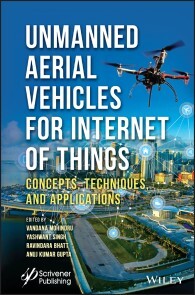
Unmanned Aerial Vehicles for Internet of Things (IoT)
UNMANNED AERIAL VEHICLES FOR INTERNET OF THINGSTHIS COMPREHENSIVE BOOK DEEPLY DISCUSSES THE THEORETICAL AND TECHNICAL ISSUES OF UNMANNED AERIAL VEHICLES FOR DEPLOYMENT BY INDUSTRIES AND CIVIL AUTHORITIES IN INTERNET OF THINGS (IOT) SYSTEMS. Unmanned aerial vehicles (UAVs) has become one of the rapidly growing areas of technology, with widespread applications covering various domains. UAVs play a very important role in delivering Internet of Things (IoT) services in small and low-power devices such as sensors, cameras, GPS receivers, etc. These devices are energy-constrained and are unable to communicate over long distances. The UAVs work dynamically for IoT applications in which they collect data and transmit it to other devices that are out of communication range. Furthermore, the benefits of the UAV include deployment at remote locations, the ability to carry flexible payloads, reprogrammability during tasks, and the ability to sense for anything from anywhere. Using IoT technologies, a UAV may be observed as a terminal device connected with the ubiquitous network, where many other UAVs are communicating, navigating, controlling, and surveilling in real time and beyond line-of-sight. The aim of the 15 chapters in this book help to realize the full potential of UAVs for the IoT by addressing its numerous concepts, issues and challenges, and develops conceptual and technological solutions for handling them. Applications include such fields as disaster management, structural inspection, goods delivery, transportation, localization, mapping, pollution and radiation monitoring, search and rescue, farming, etc. In addition, the book covers:* Efficient energy management systems in UAV-based IoT networks* IoE enabled UAVs* Mind-controlled UAV using Brain-Computer Interface (BCI)* The importance of AI in realizing autonomous and intelligent flying IoT* Blockchain-based solutions for various security issues in UAV-enabled IoT* The challenges and threats of UAVs such as hijacking, privacy, cyber-security, and physical safety.AUDIENCE: Researchers in computer science, Internet of Things (IoT), electronics engineering, as well as industries that use and deploy drones and other unmanned aerial vehicles. VANDANA MOHINDRU PhD is an assistant professor in the Department of Computer Science and Engineering, Chandigarh Group of Colleges, Mohali, Punjab, India. Her research interests are in the areas of Internet of Things, wireless sensor networks, security, blockchain and cryptography, unmanned aerial vehicles. She has published more than 20 technical research papers in leading journals and conferences.YASHWANT SINGH PhD is an associate professor & Head in the Department of Computer Science & Information Technology at the Central University of Jammu. His research interests lie in the area of Internet of Things, wireless sensor networks, unmanned aerial vehicles, cybersecurity. He has published more than 70 research articles in the international journals and conferences. RAVINDARA BHATT PhD is an assistant professor at Jaypee University of Information Technology, Solan, H.P., India. He has over 20 years of experience in academics and industry in India. He has published more than 30 research papers in leading journals and conferences. His areas of research include sensor networks, deployment modeling, communication, and energy-efficient algorithms, security and unmanned aerial vehicles. ANUJ KUMAR GUPTA PhD is professor & Head in CSE at Chandigarh Group of Colleges, Mohali, Punjab, India. He has published 100+ research papers in reputed journals. Preface xvii1 UNMANNED AERIAL VEHICLE (UAV): A COMPREHENSIVE SURVEY 1Rohit Chaurasia and Vandana Mohindru1.1 Introduction 21.2 Related Work 21.3 UAV Technology 31.3.1 UAV Platforms 31.3.1.1 Fixed-Wing Drones 31.3.1.2 Multi-Rotor Drones 41.3.1.3 Single-Rotor Drones 51.3.1.4 Fixed-Wing Hybrid VTOL 61.3.2 Categories of the Military Drones 61.3.3 How Drones Work 81.3.3.1 Firmware—Platform Construction and Design 91.3.4 Comparison of Various Technologies 101.3.4.1 Drone Types & Sizes 101.3.4.2 Radar Positioning and Return to Home 101.3.4.3 GNSS on Ground Control Station 111.3.4.4 Collision Avoidance Technology and Obstacle Detection 111.3.4.5 Gyroscopic Stabilization, Flight Controllers and IMU 121.3.4.6 UAV Drone Propulsion System 121.3.4.7 Flight Parameters Through Telemetry 131.3.4.8 Drone Security & Hacking 131.3.4.9 3D Maps and Models With Drone Sensors 131.3.5 UAV Communication Network 151.3.5.1 Classification on the Basis of Spectrum Perspective 151.3.5.2 Various Types of Radio communication Links 161.3.5.3 VLOS (Visual Line-of-Sight) and BLOS (Beyond Line-of-Sight) Communication in Unmanned Aircraft System 181.3.5.4 Frequency Bands for the Operation of UAS 191.3.5.5 Cellular Technology for UAS Operation 191.4 Application of UAV 211.4.1 In Military 211.4.2 In Geomorphological Mapping and Other Similar Sectors 221.4.3 In Agriculture 221.5 UAV Challenges 231.6 Conclusion and Future Scope 24References 242 UNMANNED AERIAL VEHICLES: STATE-OF-THE-ART, CHALLENGES AND FUTURE SCOPE 29Jolly Parikh and Anuradha Basu2.1 Introduction 302.2 Technical Challenges 302.2.1 Variations in Channel Characteristics 322.2.2 UAV-Assisted Cellular Network Planning and Provisioning 332.2.3 Millimeter Wave Cellular Connected UAVs 342.2.4 Deployment of UAV 352.2.5 Trajectory Optimization 362.2.6 On-Board Energy 372.3 Conclusion 37References 373 BATTERY AND ENERGY MANAGEMENT IN UAV-BASED NETWORKS 43Santosh Kumar, Amol Vasudeva and Manu Sood3.1 Introduction 433.2 The Need for Energy Management in UAV-Based Communication Networks 453.2.1 Unpredictable Trajectories of UAVs in Cellular UAV Networks 463.2.2 Non-Homogeneous Power Consumption 473.2.3 High Bandwidth Requirement/Low Spectrum Availability/Spectrum Scarcity 473.2.4 Short-Range Line-of-Sight Communication 483.2.5 Time Constraint (Time-Limited Spectrum Access) 483.2.6 Energy Constraint 493.2.7 The Joint Design for the Sensor Nodes’ Wake-Up Schedule and the UAV’s Trajectory (Data Collection) 493.3 Efficient Battery and Energy Management Proposed Techniques in Literature 503.3.1 Cognitive Radio (CR)-Based UAV Communication to Solve Spectrum Congestion 513.3.2 Compressed Sensing 523.3.3 Power Allocation and Position Optimization 533.3.4 Non-Orthogonal Multiple Access (NOMA) 533.3.5 Wireless Charging/Power Transfer (WPT) 543.3.6 UAV Trajectory Design Using a Reinforcement Learning Framework in a Decentralized Manner 553.3.7 Efficient Deployment and Movement of UAVs 553.3.8 3D Position Optimization Mixed With Resource Allocation to Overcome Spectrum Scarcity and Limited Energy Constraint 563.3.9 UAV-Enabled WSN: Energy-Efficient Data Collection 573.3.10 Trust Management 573.3.11 Self-Organization-Based Clustering 583.3.12 Bandwidth/Spectrum-Sharing Between UAVs 593.3.13 Using Millimeter Wave With SWIPT 593.3.14 Energy Harvesting 603.4 Conclusion 61References 674 ENERGY EFFICIENT COMMUNICATION METHODS FOR UNMANNED ARIEL VEHICLES (UAVS): LAST FIVE YEARS’ STUDY 73Nagesh Kumar4.1 Introduction 734.1.1 Introduction to UAV 744.1.2 Communication in UAV 754.2 Literature Survey Process 774.2.1 Research Questions 774.2.2 Information Source 774.3 Routing in UAV 784.3.1 Communication Methods in UAV 784.3.1.1 Single-Hop Communication 794.3.1.2 Multi-Hop Communication 804.4 Challenges and Issues 824.4.1 Energy Consumption 824.4.2 Mobility of Devices 824.4.3 Density of UAVs 824.4.4 Changes in Topology 854.4.5 Propagation Models 854.4.6 Security in Routing 854.5 Conclusion 85References 865 A REVIEW ON CHALLENGES AND THREATS TO UNMANNED AERIAL VEHICLES (UAVS) 89Shaik Johny Basha and Jagan Mohan Reddy Danda5.1 Introduction 895.2 Applications of UAVs and Their Market Opportunity 905.2.1 Applications 905.2.2 Market Opportunity 925.3 Attacks and Solutions to Unmanned Aerial Vehicles (UAVs) 925.3.1 Confidentiality Attacks 935.3.2 Integrity Attacks 955.3.3 Availability Attacks 965.3.4 Authenticity Attacks 975.4 Research Challenges 995.4.1 Security Concerns 995.4.2 Safety Concerns 995.4.3 Privacy Concerns 1005.4.4 Scalability Issues 1005.4.5 Limited Resources 1005.5 Conclusion 101References 1016 INTERNET OF THINGS AND UAV: AN INTEROPERABILITY PERSPECTIVE 105Bharti Rana and Yashwant Singh6.1 Introduction 1066.2 Background 1086.2.1 Issues, Controversies, and Problems 1096.3 Internet of Things (IoT) and UAV 1106.4 Applications of UAV-Enabled IoT 1136.5 Research Issues in UAV-Enabled IoT 1146.6 High-Level UAV-Based IoT Architecture 1176.6.1 UAV Overview 1176.6.2 Enabling IoT Scalability 1196.6.3 Enabling IoT Intelligence 1206.6.4 Enabling Diverse IoT Applications 1216.7 Interoperability Issues in UAV-Based IoT 1216.8 Conclusion 123References 1247 PRACTICES OF UNMANNED AERIAL VEHICLE (UAV) FOR SECURITY INTELLIGENCE 129Swarnjeet Kaur, Kulwant Singh and Amanpreet Singh7.1 Introduction 1307.2 Military 1327.3 Attack 1337.4 Journalism 1347.5 Search and Rescue 1367.6 Disaster Relief 1387.7 Conclusion 139References 1398 BLOCKCHAIN-BASED SOLUTIONS FOR VARIOUS SECURITY ISSUES IN UAV-ENABLED IOT 143Madhuri S. Wakode and Rajesh B. Ingle8.1 Introduction 1448.1.1 Organization of the Work 1458.2 Introduction to UAV and IoT 1458.2.1 UAV 1458.2.2 IoT 1468.2.3 UAV-Enabled IoT 1478.2.4 Blockchain 1508.3 Security and Privacy Issues in UAV-Enabled IoT 1518.4 Blockchain-Based Solutions to Various Security Issues 1538.5 Research Directions 1548.6 Conclusion 1548.7 Future Work 155References 1559 EFFICIENT ENERGY MANAGEMENT SYSTEMS IN UAV-BASED IOT NETWORKS 159V. Mounika Reddy, Neelima K. and G. Naresh9.1 Introduction 1609.2 Energy Harvesting Methods 1619.2.1 Basic Energy Harvesting Mechanisms 1629.2.2 Markov Decision Process-Based Energy Harvesting Mechanisms 1639.2.3 mm Wave Energy Harvesting Mechanism 1649.2.4 Full Duplex Wireless Energy Harvesting Mechanism 1659.3 Energy Recharge Methods 1659.4 Efficient Energy Utilization Methods 1669.4.1 GLRM Method 1669.4.2 DRL Mechanism 1679.4.3 Onboard Double Q-Learning Mechanism 1689.4.4 Collision-Free Scheduling Mechanism 1689.5 Conclusion 170References 17010 A SURVEY ON IOE-ENABLED UNMANNED AERIAL VEHICLES 173K. Siddharthraju, R. Dhivyadevi, M. Supriya, B. Jaishankar and Shanmugaraja T.10.1 Introduction 17410.2 Overview of Internet of Everything 17610.2.1 Emergence of IoE 17610.2.2 Expectation of IoE 17710.2.2.1 Scalability 17710.2.2.2 Intelligence 17810.2.2.3 Diversity 17810.2.3 Possible Technologies 17910.2.3.1 Enabling Scalability 17910.2.3.2 Enabling Intelligence 18010.2.3.3 Enabling Diversity 18010.2.4 Challenges of IoE 18110.2.4.1 Coverage Constraint 18110.2.4.2 Battery Constraint 18110.2.4.3 Computing Constraint 18110.2.4.4 Security Constraint 18210.3 Overview of Unmanned Aerial Vehicle (UAV) 18210.3.1 Unmanned Aircraft System (UAS) 18310.3.2 UAV Communication Networks 18310.3.2.1 Ad Hoc Multi-UAV Networks 18310.3.2.2 UAV-Aided Communication Networks 18410.4 UAV and IoE Integration 18410.4.1 Possibilities to Carry UAVs 18410.4.1.1 Widespread Connectivity 18510.4.1.2 Environmentally Aware 18510.4.1.3 Peer-Maintenance of Communications 18510.4.1.4 Detector Control and Reusing 18510.4.2 UAV-Enabled IoE 18610.4.3 Vehicle Detection Enabled IoE Optimization 18610.4.3.1 Weak-Connected Locations 18610.4.3.2 Regions with Low Network Support 18610.5 Open Research Issues 18710.6 Discussion 18710.6.1 Resource Allocation 18710.6.2 Universal Standard Design 18810.6.3 Security Mechanism 18810.7 Conclusion 189References 18911 ROLE OF AI AND BIG DATA ANALYTICS IN UAV-ENABLED IOT APPLICATIONS FOR SMART CITIES 193Madhuri S. Wakode11.1 Introduction 19411.1.1 Related Work 19511.1.2 Contributions 19511.1.3 Organization of the Work 19511.2 Overview of UAV-Enabled IoT Systems 19611.2.1 UAV-Enabled IoT Systems for Smart Cities 19711.3 Overview of Big Data Analytics 19711.4 Big Data Analytics Requirements in UAV-Enabled IoT Systems 19811.4.1 Big Data Analytics in UAV-Enabled IoT Applications 19911.4.2 Big Data Analytics for Governance of UAV-Enabled IoT Systems 20111.5 Challenges 20211.6 Conclusion 20211.7 Future Work 203References 20312 DESIGN AND DEVELOPMENT OF MODULAR AND MULTIFUNCTIONAL UAV WITH AMPHIBIOUS LANDING, PROCESSING AND SURROUND SENSE MODULE 207Lakshit Kohli, Manglesh Saurabh, Ishaan Bhatia, Nidhi Sindhwani and Manjula Vijh12.1 Introduction 20812.2 Existing System 20812.3 Proposed System 21012.4 IoT Sensors and Architecture 21212.4.1 Sensors and Theory 21212.4.2 Architectures Available 21312.4.2.1 3-Layer IoT Architecture 21312.4.2.2 5-Layer IoT Architecture 21412.4.2.3 Architecture & Supporting Modules 21512.4.2.4 Integration Approach 21512.4.2.5 System of Modules 21612.5 Advantages of the Proposed System 21712.6 Design 21812.6.1 System Design 21912.6.2 Auto-Leveling 21912.6.3 Amphibious Landing Module 22112.6.4 Processing Module 22312.6.5 Surround Sense Module 22312.7 Results 22412.8 Conclusion 22712.9 Future Scope 228References 22813 MIND CONTROLLED UNMANNED AERIAL VEHICLE (UAV) USING BRAIN–COMPUTER INTERFACE (BCI) 231Prasath M.S., Naveen R. and Sivaraj G.13.1 Introduction 23213.1.1 Classification of UAVs 23213.1.2 Drone Controlling 23213.2 Mind-Controlled UAV With BCI Technology 23313.3 Layout and Architecture of BCI Technology 23413.4 Hardware Components 23513.4.1 Neurosky Mindwave Headset 23513.4.2 Microcontroller Board—Arduino 23613.4.3 A Computer 23713.4.4 Drone for Quadcopter 23813.5 Software Components 23913.5.1 Processing P3 Software 23913.5.2 Arduino IDE Software 24013.5.3 ThinkGear Connector 24013.6 Hardware and Software Integration 24113.7 Conclusion 243References 24414 PRECISION AGRICULTURE WITH TECHNOLOGIES FOR SMART FARMING TOWARDS AGRICULTURE 5.0 247Dhirendra Siddharth, Dilip Kumar Saini and Ajay Kumar14.1 Introduction 24714.2 Drone Technology as an Instrument for Increasing Farm Productivity 24814.3 Mapping and Tracking of Rice Farm Areas With Information and Communication Technology (ICT) and Remote Sensing Technology 24914.3.1 Methodology and Development of ICT 25014.4 Strong Intelligence From UAV to the Agricultural Sector 25214.4.1 Latest Agricultural Drone History 25214.4.2 The Challenges 25414.4.3 SAP’s Next Wave of Drone Technologies 25414.4.4 SAP Connected Agriculture 25614.4.5 Cases of Real-World Use 25714.4.5.1 Crop Surveying 25714.4.5.2 Capture the Plantation 25814.4.5.3 Image Processing 25814.4.5.4 Working to Create GeoTiles and an Image Pyramid 25914.5 Drones-Based Sensor Platforms 26014.5.1 Context and Challenges 26014.5.2 Stakeholder and End Consumer Benefits 26114.5.3 The Technology 26214.5.3.1 Provisions of the Unmanned Aerial Vehicles 26214.6 Jobs of Space Technology in Crop Insurance 26314.7 The Institutionalization of Drone Imaging Technologies in Agriculture for Disaster Managing Risk 26714.7.1 A Modern Working 26714.7.2 Discovering Drone Mapping Technology 26814.7.3 From Lowland to Uplands, Drone Mapping Technology 26914.7.4 Institutionalization of Drone Monitoring Systems and Farming Capability 26914.8 Usage of Internet of Things in Agriculture and Use of Unmanned Aerial Vehicles 27014.8.1 System and Application Based on UAV-WSN 27014.8.2 Using a Complex Comprehensive System 27114.8.3 Benefits Assessment of Conventional System and the UAV-Based System 27114.8.3.1 Merit 27214.8.3.2 Saving Expenses 27214.8.3.3 Traditional Agriculture 27314.8.3.4 UAV-WSN System-Based Agriculture 27314.9 Conclusion 273References 27315 IOT-BASED UAV PLATFORM REVOLUTIONIZED IN SMART HEALTHCARE 277Umesh Kumar Gera, Dilip Kumar Saini, Preeti Singh and Dhirendra Siddharth15.1 Introduction 27815.2 IoT-Based UAV Platform for Emergency Services 27915.3 Healthcare Internet of Things: Technologies, Advantages 28115.3.1 Advantage 28115.3.1.1 Concurrent Surveillance and Tracking 28115.3.1.2 From End-To-End Networking and Availability 28215.3.1.3 Information and Review Assortment 28215.3.1.4 Warnings and Recording 28215.3.1.5 Wellbeing Remote Assistance 28315.3.1.6 Research 28315.3.2 Complications 28315.3.2.1 Privacy and Data Security 28315.3.2.2 Integration: Various Protocols and Services 28415.3.2.3 Overload and Accuracy of Data 28415.3.2.4 Expenditure 28415.4 Healthcare’s IoT Applications: Surgical and Medical Applications of Drones 28515.4.1 Hearables 28515.4.2 Ingestible Sensors 28515.4.3 Moodables 28515.4.4 Technology of Computer Vision 28615.4.5 Charting for Healthcare 28615.5 Drones That Will Revolutionize Healthcare 28615.5.1 Integrated Enhancement in Efficiency 28615.5.2 Offering Personalized Healthcare 28715.5.3 The Big Data Manipulation 28715.5.4 Safety and Privacy Optimization 28715.5.5 Enabling M2M Communication 28815.6 Healthcare Revolutionizing Drones 28815.6.1 Google Drones 28815.6.2 Healthcare Integrated Rescue Operations (HiRO) 28915.6.3 EHang 28915.6.4 TU Delft 28915.6.5 Project Wing 28915.6.6 Flirtey 28915.6.7 Seattle’s VillageReach 29015.6.8 ZipLine 29015.7 Conclusion 290References 290Index 295

Security Issues and Privacy Concerns in Industry 4.0 Applications
SECURITY ISSUES AND PRIVACY CONCERNS IN INDUSTRY 4.0 APPLICATIONSWRITTEN AND EDITED BY A TEAM OF INTERNATIONAL EXPERTS, THIS IS THE MOST COMPREHENSIVE AND UP-TO-DATE COVERAGE OF THE SECURITY AND PRIVACY ISSUES SURROUNDING INDUSTRY 4.0 APPLICATIONS, A MUST-HAVE FOR ANY LIBRARY.The scope of Security Issues and Privacy Concerns in Industry 4.0 Applications is to envision the need for security in Industry 4.0 applications and the research opportunities for the future. This book discusses the security issues in Industry 4.0 applications for research development. It will also enable the reader to develop solutions for the security threats and attacks that prevail in the industry. The chapters will be framed on par with advancements in the industry in the area of Industry 4.0 with its applications in additive manufacturing, cloud computing, IoT (Internet of Things), and many others. This book helps a researcher and an industrial specialist to reflect on the latest trends and the need for technological change in Industry 4.0. Smart water management using IoT, cloud security issues with network forensics, regional language recognition for industry 4.0, IoT-based health care management systems, artificial intelligence for fake profile detection, and packet drop detection in agriculture-based IoT are covered in this outstanding new volume. Leading innovations such as smart drone for railway track cleaning, everyday life-supporting blockchain and big data, effective prediction using machine learning, classification of dog breed based on CNN, load balancing using the SPE approach and cyber culture impact on media consumers are also addressed. Whether a reference for the veteran engineer or an introduction to the technologies covered in the book for the student, this is a must-have for any library. SHIBIN DAVID is an assistant professor in the Department of Computer Science and Engineering at Karunya Institute of Technology and Sciences, India. His research interest includes cryptography, network security and mobile computing. He has an industry certification from Oracle, several awards, and a number of publications to his credit.R. S. ANAND is a researcher in the field of mechanical engineering at the Karunya Institute of Technology and Sciences, India, after being an assistant professor at the Narayana Guru College of Engineering from 2014 to 2016. He has numerous papers and presentations to his credit. V. JEYAKRISHNAN, PhD, is an assistant professor at Saintgits College of Engineering, Kottayam, India. His research area includes wireless networks, cloud computing and its applications. He has a number of publications in his research area. M. NIRANJANAMURTHY, PhD, is an assistant professor in the Department of Computer Applications, M S Ramaiah Institute of Technology, Bangalore, Karnataka. He received his doctorate in computer science from JJTU, Rajasthan. He has over ten years of teaching experience and two years of industry experience as a software engineer. He has published four books, 70 papers, and has filed for 17 Patents with three so far granted. He is a reviewer for 22 international academic journals and has twice won Best Research Journal Reviewer award. He has numerous other awards and in is active in research associations. Preface xiii1 INDUSTRY 4.0: SMART WATER MANAGEMENT SYSTEM USING IOT 1S. Saravanan, N. Renugadevi, C.M. Naga Sudha and Parul Tripathi1.1 Introduction 21.1.1 Industry 4.0 21.1.2 IoT 21.1.3 Smart City 31.1.4 Smart Water Management 31.2 Preliminaries 41.2.1 Internet World to Intelligent World 41.2.2 Architecture of IoT System 41.2.3 Architecture of Smart City 61.3 Literature Review on SWMS 71.3.1 Water Quality Parameters Related to SWMS 81.3.2 SWMS in Agriculture 81.3.3 SWMS Using Smart Grids 91.3.4 Machine Learning Models in SWMS 101.3.5 IoT-Based SWMS 111.4 Conclusion 11References 122 FOURTH INDUSTRIAL REVOLUTION APPLICATION: NETWORK FORENSICS CLOUD SECURITY ISSUES 15Abdullah Ayub Khan, Asif Ali Laghari, Shafique Awan and Awais Khan Jumani2.1 Introduction 162.1.1 Network Forensics 162.1.2 The Fourth Industrial Revolution 172.1.2.1 Machine-to-Machine (M2M) Communication 182.1.3 Cloud Computing 182.1.3.1 Infrastructure-as-a-Service (IaaS) 192.1.3.2 Challenges of Cloud Security in Fourth Industrial Revolution 192.2 Generic Model Architecture 202.3 Model Implementation 242.3.1 OpenNebula (Hypervisor) Implementation Platform 242.3.2 NetworkMiner Analysis Tool 252.3.3 Performance Matrix Evaluation & Result Discussion 272.4 Cloud Security Impact on M2M Communication 282.4.1 Cloud Computing Security Application in the Fourth Industrial Revolution (4.0) 292.5 Conclusion 30References 313 REGIONAL LANGUAGE RECOGNITION SYSTEM FOR INDUSTRY 4.0 35Bharathi V, N. Renugadevi, J. Padmapriya and M. Vijayprakash3.1 Introduction 363.2 Automatic Speech Recognition System 393.2.1 Preprocessing 413.2.2 Feature Extraction 423.2.2.1 Linear Predictive Coding (LPC) 423.2.2.2 Linear Predictive Cepstral Coefficient (LPCC) 443.2.2.3 Perceptual Linear Predictive (PLP) 443.2.2.4 Power Spectral Analysis 443.2.2.5 Mel Frequency Cepstral Coefficients 453.2.2.6 Wavelet Transform 463.2.3 Implementation of Deep Learning Technique 463.2.3.1 Recurrent Neural Network 473.2.3.2 Long Short-Term Memory Network 473.2.3.3 Hidden Markov Models (HMM) 473.2.3.4 Hidden Markov Models - Long Short-Term Memory Network (HMM-LSTM) 483.2.3.5 Evaluation Metrics 493.3 Literature Survey on Existing TSRS 493.4 Conclusion 52References 524 APPROXIMATION ALGORITHM AND LINEAR CONGRUENCE: AN APPROACH FOR OPTIMIZING THE SECURITY OF IOT-BASED HEALTHCARE MANAGEMENT SYSTEM 55Anirban Bhowmik and Sunil Karforma4.1 Introduction 564.1.1 IoT in Medical Devices 564.1.2 Importance of Security and Privacy Protection in IoT-Based Healthcare System 574.1.3 Cryptography and Secret Keys 584.1.4 RSA 584.1.5 Approximation Algorithm and Subset Sum Problem 584.1.6 Significance of Use of Subset Sum Problem in Our Scheme 594.1.7 Linear Congruence 604.1.8 Linear and Non-Linear Functions 614.1.9 Pell’s Equation 614.2 Literature Survey 624.3 Problem Domain 634.4 Solution Domain and Objectives 644.5 Proposed Work 654.5.1 Methodology 654.5.2 Session Key Generation 654.5.3 Intermediate Key Generation 674.5.4 Encryption Process 694.5.5 Generation of Authentication Code and Transmission File 704.5.6 Decryption Phase 714.6 Results and Discussion 714.6.1 Statistical Analysis 724.6.2 Randomness Analysis of Key 734.6.3 Key Sensitivity Analysis 754.6.4 Security Analysis 764.6.4.1 Key Space Analysis 764.6.4.2 Brute-Force Attack 774.6.4.3 Dictionary Attack 774.6.4.4 Impersonation Attack 784.6.4.5 Replay Attack 784.6.4.6 Tampering Attack 784.6.5 Comparative Analysis 794.6.5.1 Comparative Analysis Related to IoT Attacks 794.6.6 Significance of Authentication in Our Proposed Scheme 854.7 Conclusion 85References 865 A HYBRID METHOD FOR FAKE PROFILE DETECTION IN SOCIAL NETWORK USING ARTIFICIAL INTELLIGENCE 89Ajesh F, Aswathy S U, Felix M Philip and Jeyakrishnan V5.1 Introduction 905.2 Literature Survey 915.3 Methodology 945.3.1 Datasets 945.3.2 Detection of Fake Account 945.3.3 Suggested Framework 955.3.3.1 Pre-Processing 975.3.3.2 Principal Component Analysis (PCA) 985.3.3.3 Learning Algorithms 995.3.3.4 Feature or Attribute Selection 1025.4 Result Analysis 1035.4.1 Cross-Validation 1035.4.2 Analysis of Metrics 1045.4.3 Performance Evaluation of Proposed Model 1055.4.4 Performance Analysis of Classifiers 1055.5 Conclusion 109References 1096 PACKET DROP DETECTION IN AGRICULTURAL-BASED INTERNET OF THINGS PLATFORM 113Sebastian Terence and Geethanjali Purushothaman6.1 Introduction 1136.2 Problem Statement and Related Work 1146.3 Implementation of Packet Dropping Detection in IoT Platform 1156.4 Performance Analysis 1206.5 Conclusion 129References 1297 SMART DRONE WITH OPEN CV TO CLEAN THE RAILWAY TRACK 131Sujaritha M and Sujatha R7.1 Introduction 1327.2 Related Work 1327.3 Problem Definition 1347.4 The Proposed System 1347.4.1 Drones with Human Intervention 1347.4.2 Drones without Human Intervention 1357.4.3 Working Model 1377.5 Experimental Results 1377.6 Conclusion 139References 1398 BLOCKCHAIN AND BIG DATA: SUPPORTIVE AID FOR DAILY LIFE 141Awais Khan Jumani, Asif Ali Laghari and Abdullah Ayub Khan8.1 Introduction 1428.1.1 Steps of Blockchain Technology Works 1448.1.2 Blockchain Private 1448.1.3 Blockchain Security 1458.2 Blockchain vs. Bitcoin 1458.2.1 Blockchain Applications 1468.2.2 Next Level of Blockchain 1468.2.3 Blockchain Architecture’s Basic Components 1498.2.4 Blockchain Architecture 1508.2.5 Blockchain Characteristics 1508.3 Blockchain Components 1518.3.1 Cryptography 1528.3.2 Distributed Ledger 1538.3.3 Smart Contracts 1538.3.4 Consensus Mechanism 1548.3.4.1 Proof of Work (PoW) 1558.3.4.2 Proof of Stake (PoS) 1558.4 Categories of Blockchain 1558.4.1 Public Blockchain 1568.4.2 Private Blockchain 1568.4.3 Consortium Blockchain 1568.4.4 Hybrid Blockchain 1568.5 Blockchain Applications 1588.5.1 Financial Application 1588.5.1.1 Bitcoin 1588.5.1.2 Ripple 1588.5.2 Non-Financial Applications 1598.5.2.1 Ethereum 1598.5.2.2 Hyperledger 1598.6 Blockchain in Different Sectors 1608.7 Blockchain Implementation Challenges 1608.8 Revolutionized Challenges in Industries 1638.9 Conclusion 170References 1729 A NOVEL FRAMEWORK TO DETECT EFFECTIVE PREDICTION USING MACHINE LEARNING 179Shenbaga Priya, Revadi, Sebastian Terence and Jude Immaculate9.1 Introduction 1809.2 ML-Based Prediction 1809.3 Prediction in Agriculture 1829.4 Prediction in Healthcare 1839.5 Prediction in Economics 1849.6 Prediction in Mammals 1859.7 Prediction in Weather 1869.8 Discussion 1869.9 Proposed Framework 1879.9.1 Problem Analysis 1879.9.2 Preprocessing 1889.9.3 Algorithm Selection 1889.9.4 Training the Machine 1889.9.5 Model Evaluation and Prediction 1889.9.6 Expert Suggestion 1889.9.7 Parameter Tuning 1899.10 Implementation 1899.10.1 Farmers and Sellers 1899.10.2 Products 1899.10.3 Price Prediction 1909.11 Conclusion 192References 19210 DOG BREED CLASSIFICATION USING CNN 195Sandra Varghese and Remya S10.1 Introduction 19510.2 Related Work 19610.3 Methodology 19810.4 Results and Discussions 20110.4.1 Training 20110.4.2 Testing 20110.5 Conclusions 203References 20311 METHODOLOGY FOR LOAD BALANCING IN MULTI-AGENT SYSTEM USING SPE APPROACH 207S. Ajitha11.1 Introduction 20711.2 Methodology for Load Balancing 20811.3 Results and Discussion 21311.3.1 Proposed Algorithm in JADE Tool 21311.3.1.1 Sensitivity Analysis 21811.3.2 Proposed Algorithm in NetLogo 21811.4 Algorithms Used 21911.5 Results and Discussion 21911.6 Summary 226References 22612 THE IMPACT OF CYBER CULTURE ON NEW MEDIA CONSUMERS 229Durmuş KoÇak12.1 Introduction 22912.2 The Rise of the Term of Cyber Culture 23112.2.1 Cyber Culture in the 21st Century 23112.2.1.1 Socio-Economic Results of Cyber Culture 23212.2.1.2 Psychological Outcomes of Cyber Culture 23312.2.1.3 Political Outcomes of Cyber Culture 23412.3 The Birth and Outcome of New Media Applications 23412.3.1 New Media Environments 23612.3.1.1 Social Sharing Networks 23712.3.1.2 Network Logs (Blog, Weblog) 24012.3.1.3 Computer Games 24012.3.1.4 Digital News Sites and Mobile Media 24012.3.1.5 Multimedia Media 24112.3.1.6 What Affects the New Media Consumers’ Tendencies? 24212.4 Result 244References 245Index 251

Datenschutz für Softwareentwicklung und IT
Dieses Buch beschreibt das Thema Datenschutz aus der Sicht von Softwareentwicklung und IT. Die Verantwortlichen in diesen Bereichen gestalten die praktische Umsetzung des Datenschutzes zu erheblichen Teilen mit, benötigen dafür aber entsprechende Kenntnisse über die rechtlichen Rahmenbedingungen und Möglichkeiten zu deren Umsetzung. Der Fokus dieses Buchs liegt daher auf den Aspekten des Datenschutzes, die durch Softwareentwicklung stark beeinflusst werden, wie z.B. Privacy by Design, Privacy by Default, Datenminimierung, Umsetzung von Auskunftsrechten sowie Datenlöschung. RALF KNEUPER ist Professor für Wirtschaftsinformatik und Informatik an der IUBH Internationale Hochschule im Bereich Fernstudium. Daneben arbeitet er als Berater für Softwarequalitätsmanagement und Prozessverbesserung sowie als externer Datenschutzbeauftragter bei mehreren IT-Unternehmen.Einführung - Allgemeine Grundlagen des Datenschutzes nach DSGVO - Grundsätze des Datenschutzes und deren Umsetzung - Rechte der Betroffenen und deren Umsetzung - Austausch von Daten zwischen Beteiligten - Technische und organisatorische Gestaltung des Datenschutzes - Grundbegriffe der IT-Sicherheit - Datenschutz innerhalb einer IT-Organisation
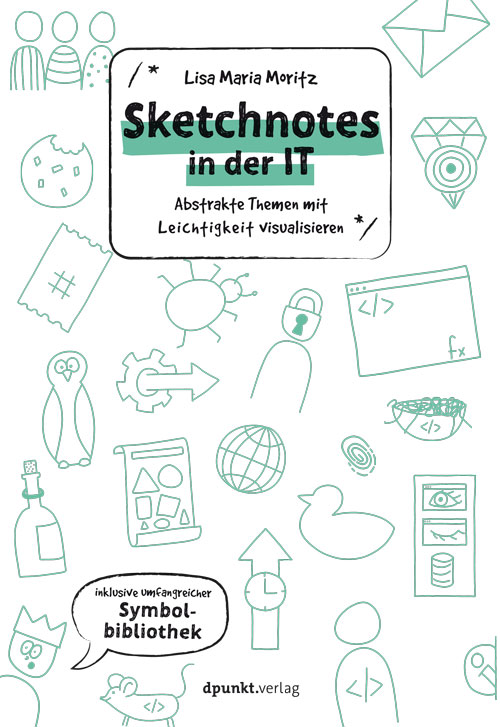
Sketchnotes in der IT
Abstrakte Themen mit Leichtigkeit visualisieren. Die praktische Einführung mit Tipps, Tricks und Symbolen.Im IT-Berufsalltag sammeln sich unzählige Notizen – zu Vorträgen, Meetings, Aufzeichnungen zu komplexen Aufgaben … Häufig sind sie hässlich, lang, unleserlich – und landen schnell im Altpapier. Sketchnotes dagegen sehen nicht nur schick aus, sie helfen auch dabei, sich an die wichtigsten Dinge zu erinnern, und erfreuen Kolleginnen und Kollegen.Dieses Buch gibt eine praktische Einführung in die Welt der Sketchnotes. Schon auf den ersten Seiten erstellst du deine erste Sketchnote – unabhängig von Vorwissen oder Talent. Nach einem Grundlagenkapitel, das Hilfen für den Einstieg bietet, zeigt die Softwareentwicklerin Lisa-Maria Moritz, in welchen Bereichen deines Arbeitsalltags in der IT du Sketchnotes einsetzen kannst. Um dabei die passende Visualisierung zu finden, hat sie eine umfangreiche Bibliothek mit zahlreichen Symbolideen zu abstrakten Begriffen der IT zusammengestellt, deren Erstellung sie in Schritt-für-Schritt-Anleitungen zeigt.

Adobe InDesign: Das umfassende Handbuch
Umfassend, detailliert und auf dem neuesten Stand – mit diesem Bestseller beherrschen Sie Adobe InDesign! Auf 1.200 Seiten erhalten Sie fundiertes Profiwissen zu allen Themen rund um Ihre Software. Die Informationen sind klar gegliedert, sodass sich das Buch gut zum schnellen Nachschlagen eignet. Leicht verständlich erläutert Hans Peter Schneeberger alles, was Sie wissen müssen: von der ersten Layoutarbeit über das Anlegen komplexer Dokumente bis hin zu den modernen Techniken wie EPUB, barrierefreie PDFs, PDF-Formulare und kollaboratives Zusammenarbeiten. Auch Profis kommen voll auf ihre Kosten: Tiefgehende Infos zu Skripten, GREP, zum XML-Publishing und zur Automatisierung lassen die Arbeit schnell von der Hand gehen. Aus dem Inhalt: InDesign einrichtenLayouts anlegen und organisierenRahmen, Ebenen, Hilfsmittel, RasterInhalte für das Layout: Bilder, Text, Farben, Effekte, VektorenText professionell: Tabellen, Formate, Formensatz, Zeichen, AbsätzeLange Dokumente: Musterseiten, Buch, Inhaltsverzeichnis, Index, Listen, Variablen, Bibliotheken, SnippetsDie Print-Produktion: Preflight, PDF-Export, FarbmanagementVariables Layout, interaktive Dokumente, AnimationenEPUB und E-Books: Was geht?PDF-Formulare, barrierefreies PDFAutomatisieren: GREP, Skripte, XMLRedaktionelle Aufgaben, ReviewsHier geht's zur Leserprobe

Essential Java for AP CompSci
Gain the essential skills for computer science using one of today's most popular programming languages, Java. This book will prepare you for AP CompSci Complete, but you don’t need to be sitting that class to benefit. Computer science has become a basic life skill that everyone is going to need to learn. Whether you are going into a career or side hustle in business, technology, creativity, architecture, or almost any other field, you will find coding and computer science play a role.So when we learn programming we are going to focus on three things: what is the process; what is the syntax; and what is the flow. The process is represented as a flowchart. We will learn how to make these to help you plan out what you are going to do before you write a line of code. At first, the flowcharts will be pretty simple, but then they will get more complex. The syntax is the code: this is what you write that translates the process you create in a flowchart to the instructions that the computer can understand. Finally, there is the flow. This is where you trace through the code and see how the data and information it stores along the way changes. You can see how the operation of the program cascades from line to line. You will be building charts that will capture the programming flow so you can better understand how the computer processes code to make your next program easier to conceive and code.Along the way to aid in the learning of the essential Java skills, there will be three kinds of project types throughout this book: business software projects for applications where you work for a company and need to complete an internal project for a team such as the sales, marketing, or data science teams; social good projects where you are working for non-profits or for agencies that are trying to research and provide solutions to economic, environmental, medical, or humanitarian projects; and game development projects for games based on player input, random chance, or other mechanics for the use of entertainment.What is unique about computer science is how it has become a skill, and not just a career. While there are jobs and titles of “computer scientist”, the skill of computer science, and specifically programming, are almost everywhere. After reading and using this book, you'll have the essential skills to think like a computer scientist, even if you are not. As a result you’ll be of greater value to your clients, your company, and yourself.WHAT YOU WILL LEARNDiscover the primary building blocks of programming using the Java programming language * See terminology and best practices of software development* Work with object-oriented programming concepts* Use common-language definitions and examples to help drive understanding and comprehension of computer science fundamentalsWHO THIS BOOK IS FORThose who want to learn programming and want to think like a computer scientist. Ideal for anyone taking AP CompSci Complete.Doug Winnie is director of learning experience at H&R Block, responsible for learning and development platforms supporting associates across the organization. Previously, Doug was principal program manager at Microsoft and LinkedIn leading the LinkedIn Learning instructor community, curriculum strategy for technology learning content, and as a member the Windows Insider team supporting educational and career growth for millions of Windows Insiders worldwide.Throughout his career and consulting with companies such as Adobe, PG&E, Safeway, HP, and the US Army, Doug has worked to help developers and designers through education, product management, and interactive development. Doug was honored with two Webby award nominations with projects for Industrial Light and Magic and has written multiple publications to teach beginners how to code. He is also an AP Computer Science teacher, teaching the next generation of developers. Doug lives in the Kansas City metro area and Palm Springs, California.1. WELCOME TO COMPUTER SCIENCE2. SPRINT 01: INTRODUCTION3. SPRINT 02: SETTING UP THE JAVA JDK AND INTELLIJ4. SPRINT 03: SETTING UP GITHUBa. QUIZ 01b. QUIZ 025. SPRINT 04: PROGRAMMING LANGUAGES6. SPRINT 05: HISTORY AND USES OF JAVA7. SPRINT 06: HOW JAVA WORKSa. QUIZ 038. SPRINT 07: FLOWCHARTINGa. ASSIGNMENT 01: PBJ’Db. QUIZ 049. SPRINT 08: HELLO, WORLDa. QUIZ 0510. SPRINT 09: SIMPLE JAVA PROGRAM STRUCTURE11. SPRINT 10: TEXT LITERALS AND OUTPUTa. ASSIGNMENT 02: EE’D12. SPRINT 11: VALUE LITERALS13. SPRINT 12: OUTPUT FORMATTING14. SPRINT 13: COMMENTS AND WHITESPACE15. SPRINT 14: ABSTRACTION OF NUMBERS16. SPRINT 15: BINARYa. QUIZ 0617. SPRINT 16: UNICODE18. SPRINT 17: VARIABLES19. SPRINT 18: MATH. UGH.a. QUIZ 07b. ASSIGNMENT 03: SILO’D20. SPRINT 19: MATH FUNCTIONS21. SPRINT 20: MANAGING TYPEa. ASSIGNMENT 04: SPACE’Db. QUIZ 08c. QUIZ 09d. QUIZ 10e. QUIZ 1122. SPRINT 21: RANDOM NUMBERS23. SPRINT 22: CAPTURE INPUT24. SPRINT 23: CREATING TRACE TABLES25. SPRINT 24: FUNCTIONSa. ASSIGNMENT 05: ORC’D26. SPRINT 25: NESTED FUNCTIONS27. SPRINT 26: FUNCTIONS AND VALUESa. QUIZ 1228. SPRINT 27: FUNCTIONS AND SCOPEa. QUIZ 13b. QUIZ 14c. QUIZ 15d. ASSIGNMENT 06: ULTIMA’De. ASSIGNMENT 07: CYCLONE’D29. SPRINT 28: BOOLEAN VALUES AND EQUALITYa. QUIZ 16b. ASSIGNMENT 08: SPRINT’Dc. USER STORY: 52-PICKUP30. SPRINT 29: SIMPLE CONDITIONAL STATEMENTSa. USER STORY: YAHTZEEb. USER STORY: YAHTZEE TESTINGc. QUIZ 17d. QUIZ 18e. QUIZ 1931. SPRINT 30: MATCHING CONDITIONS WITH THE SWITCH STATEMENT32. SPRINT 31: THE TERNARY OPERATOR33. SPRINT 32: THE STACK AND THE HEAP34. SPRINT 33: TESTING EQUALITY WITH STRINGSa. ASSIGNMENT 09: ESCAPE’Db. USER STORY: ESCAPE’D WHITE BOX35. SPRINT 34: DEALING WITH ERRORS36. SPRINT 35: DOCUMENTING WITH JAVADOC37. SPRINT 36: FORMATTED STRINGS38. SPRINT 37: THE WHILE LOOPa. QUIZ 20b. QUIZ 21c. QUIZ 2239. SPRINT 38: AUTOMATIC PROGRAM LOOPS40. SPRINT 39: THE DO/WHILE LOOPa. ASSIGNMENT 10: SEQUENCE’Db. USER STORY: DICEYc. USER STORY SOLUTION: DICEYd. USER STORY: CONVERTERe. USER STORY SOLUTION: CONVERTER41. SPRINT 40: PROBABILITY42. SPRINT 41: SIMPLIFIED ASSIGNMENT OPERATORS43. SPRINT 42: THE FOR LOOPa. QUIZ 23b. ASSIGNMENT 11: ODDS’D44. SPRINT 43: NESTING LOOPSa. USER STORY: MAP BUILDER45. SPRINT 44: STRINGS AS COLLECTIONSa. ASSIGNMENT 12: PALINDROME’Db. QUIZ 2446. SPRINT 45: MAKE COLLECTIONS USING ARRAYSa. QUIZ 2547. SPRINT 46: CREATING ARRAYS FROM STRINGSa. ASSIGNMENT 13: ELECTION’Db. QUIZ 2648. SPRINT 47: MULTIDIMENSIONAL ARRAYS49. SPRINT 48: LOOPING THROUGH MULTIDIMENSIONAL ARRAYSa. QUIZ 27b. QUIZ 2850. SPRINT 49: BEYOND ARRAYS WITH ARRAYLISTS51. SPRINT 50: INTRODUCING GENERICS52. SPRINT 51: LOOPING WITH ARRAYLISTSa. ASSIGNMENT 14: LIST’D53. SPRINT 52: USING FOR…EACH LOOPSa. ASSIGNMENT 15: NUMBER’Db. QUIZ 29c. QUIZ 3054. SPRINT 53: THE ROLE-PLAYING GAME CHARACTERa. ASSIGNMENT 16: ROLL’D55. SPRINT 54: POLYMORPHISMa. ASSIGNMENT 17: EXTEN’D56. SPRINT 55: MAKE ALL THE THINGS…CLASSES57. SPRINT 56: CLASS, EXTEND THYSELF!a. QUIZ 3158. SPRINT 57: I DON'T COLLECT THOSE; TOO ABSTRACT.59. SPRINT 58: ACCESS DENIED: PROTECTED AND PRIVATEa. QUIZ 32b. QUIZ 3360. SPRINT 59: INTERFACING WITH INTERFACESa. QUIZ 34b. QUIZ 35c. QUIZ 36d. QUIZ 37e. ASSIGNMENT 18: STARSHIP’D61. SPRINT 60: ALL I'M GETTING IS STATIC62. SPRINT 61: AN ALL-STAR CAST, FEATURING NULL63. ANSWER KEY
Digitale Transformation, Arbeit und Gesundheit
Die digitale Transformation verändert die Arbeitswelt. Wie wird die Digitalisierung gesundheitsgerecht in kleinen und mittleren Unternehmen umgesetzt? Der aktuelle Wissensstand wird zusammengefasst, mit detaillierten Einblicken in die Praxis und Werkzeugen zur Bewältigung betrieblicher Digitalisierungsprojekte.THOMAS ENGEL, Leiter ZeTT – Zentrum Digitale Transformation Thüringen, Friedrich-Schiller-Universität Jena, forscht zum Wandel von Arbeit und Beschäftigung in der Digitalisierung.CHRISTIAN ERFURTH, Professor für Informatik, Ernst-Abbe-Hochschule Jena, beschäftigt sich mit den technologischen und organisatorischen Gestaltungsmöglichkeiten der digitalen Arbeitswelt.STEPHANIE DRÖSSLER arbeitet am Institut und Poliklinik für Arbeits- und Sozialmedizin der Medizinischen Fakultät der TU Dresden zu gesundheitlichen Belastungen und Prävention im digitalen Wandel.SANDRA LEMANSKI arbeitet am Lehrstuhl Gesundheit und Prävention der Universität Greifswald zu Stress im Arbeitskontext und den Gestaltungsmöglichkeiten von Arbeit in der und durch die digitale Transformation.

SQL Server on Kubernetes
Build a modern data platform by deploying SQL Server in Kubernetes. Modern application deployment needs to be fast and consistent to keep up with business objectives and Kubernetes is quickly becoming the standard for deploying container-based applications, fast. This book introduces Kubernetes and its core concepts. Then it shows you how to build and interact with a Kubernetes cluster. Next, it goes deep into deploying and operationalizing SQL Server in Kubernetes, both on premises and in cloud environments such as the Azure Cloud.You will begin with container-based application fundamentals and then go into an architectural overview of a Kubernetes container and how it manages application state. Then you will learn the hands-on skill of building a production-ready cluster. With your cluster up and running, you will learn how to interact with your cluster and perform common administrative tasks. Once you can admin the cluster, you will learn how to deploy applications and SQL Server in Kubernetes. You will learn about high-availability options, and about using Azure Arc-enabled Data Services. By the end of this book, you will know how to set up a Kubernetes cluster, manage a cluster, deploy applications and databases, and keep everything up and running.WHAT YOU WILL LEARN* Understand Kubernetes architecture and cluster components* Deploy your applications into Kubernetes clusters* Manage your containers programmatically through API objects and controllers* Deploy and operationalize SQL Server in Kubernetes* Implement high-availability SQL Server scenarios on Kubernetes using Azure Arc-enabled Data Services* Make use of Kubernetes deployments for Big Data ClustersWHO THIS BOOK IS FORDBAs and IT architects who are ready to begin planning their next-generation data platform and want to understand what it takes to run SQL Server in a container in Kubernetes. SQL Server on Kubernetes is an excellent choice for those who want to understand the big picture of why Kubernetes is the next-generation deployment method for SQL Server but also want to understand the internals, or the how, of deploying SQL Server in Kubernetes. When finished with this book, you will have the vision and skills to successfully architect, build and maintain a modern data platform deploying SQL Server on Kubernetes.ANTHONY E. NOCENTINO is the Founder and President of Centino Systems as well as a Pluralsight author, a Microsoft Data Platform MVP, and an industry-recognized Kubernetes, SQL Server, and Linux expert. In his consulting practice, Anthony designs solutions, deploys the technology, and provides expertise on system performance, architecture, and security. He has bachelor's and master's degrees in computer science, with research publications in machine virtualization, high performance/low latency data access algorithms, and spatial database systems.BEN WEISSMAN is the owner and founder of Solisyon, a consulting firm based in Germany and focused on business intelligence (BI), business analytics, and data warehousing. He is a Microsoft Data Platform MVP, the first German BimlHero, and has been working with SQL Server since SQL Server 6.5. Ben is also an MCSE, Charter Member of the Microsoft Professional Program for Big Data, Artificial Intelligence and Data Science, and he is a Certified Data Vault Data Modeler. If he is not currently working with data, he is probably travelling to explore the world. You can find him online at @bweissman on Twitter.PART I. CONTAINER AND KUBERNETES FOUNDATIONS1. Getting Started2. Container Fundamentals3. Kubernetes ArchitecturePART II. KUBERNETES IN PRACTICE4. Installing Kubernetes5. Interacting with your Kubernetes Cluster6. Storing Persistent Data in KubernetesPART III. SQL SERVER IN KUBERNETES7. Deploying SQL Server in Kubernetes8. Monitoring SQL Server in Kubernetes9. Azure Arc-enabled Data Services and High Availability for SQL Server in Kubernetes10. Big Data Clusters

Towards Sustainable Artificial Intelligence
So far, little effort has been devoted to developing practical approaches on how to develop and deploy AI systems that meet certain standards and principles. This is despite the importance of principles such as privacy, fairness, and social equality taking centre stage in discussions around AI. However, for an organization, failing to meet those standards can give rise to significant lost opportunities. It may further lead to an organization’s demise, as the example of Cambridge Analytica demonstrates. It is, however, possible to pursue a practical approach for the design, development, and deployment of sustainable AI systems that incorporates both business and human values and principles.This book discusses the concept of sustainability in the context of artificial intelligence. In order to help businesses achieve this objective, the author introduces the sustainable artificial intelligence framework (SAIF), designed as a reference guide in the development and deployment of AI systems.The SAIF developed in the book is designed to help decision makers such as policy makers, boards, C-suites, managers, and data scientists create AI systems that meet ethical principles. By focusing on four pillars related to the socio-economic and political impact of AI, the SAIF creates an environment through which an organization learns to understand its risk and exposure to any undesired consequences of AI, and the impact of AI on its ability to create value in the short, medium, and long term.WHAT YOU WILL LEARN* See the relevance of ethics to the practice of data science and AI* Examine the elements that enable AI within an organization* Discover the challenges of developing AI systems that meet certain human or specific standards* Explore the challenges of AI governance* Absorb the key factors to consider when evaluating AI systemsWHO THIS BOOK IS FORDecision makers such as government officials, members of the C-suite and other business managers, and data scientists as well as any technology expert aspiring to a data-related leadership role.GHISLAIN TSAFACK is Head of Data Science at Elemental Concept 2016 LTD (EC), where he leads the organization’s AI strategy. As part of this, he leads the company’s work in leveraging the latest advances in AI to help clients create value from their data and auditing AI systems developed by third parties on behalf of potential investors.Ghislain’s work in the healthcare industry at EC involves supporting the development of data related healthcare products for his clients. This made him appreciate the challenges and the complexity of developing AI systems that people trust to make the right decision for them and stimulated him to write this book.Before joining EC Ghislain held positions as data scientist in the telecommunications and energy sectors. Prior to this, Ghislain worked as an academic at the French National Institute for Research and Automation (INRIA) and the University of Lyon 1. His work primarily focused on analyzing the behaviors of high performance systems to improve their energy efficiency and gave him the opportunity to co-author several scientific books presenting methodologies for improving the energy efficiency for large scale computing infrastructures. He holds a PhD in computer science from Ecole Normale Supérieure of Lyon, France.● Chapter 1: AI in our Society● Chapter goal: Reviews the place of AI within our society, discuss the various challenges that it AI faces, and introduces the foundational concepts of our sustainable AI framework○ 1.1 The Need for Artificial Intelligence○ 1.2 Challenges of Artificial Intelligence○ 1.3 Sustainable Artificial Intelligence● Chapter 2 Ethics of the Data Science Practice● Chapter goal: Reviews the human factor pillar of artificial intelligence, the relevance of ethics in AI and the source of ethical hazards in AI○ 2.1 Introduction○ 2.2 Ethics and their relevance to AI○ 2.3 Ethical nature of AI inferencing capability○ 2.4 Data – The business asset○ 2.5 AI regulatory outlook○ 2.6 Conclusion● Chapter 3 Overview of the Sustainable Artificial Intelligence Framework (SAIF)● Chapter goal: Summarises the SAIF framework for the development and deployment of AI applications● Chapter 4 Intra-organizational understanding of AI: Towards Transparency● Chapter goal: Discusses the need for understanding AI at the organization’s level and introduces concepts of AI governance○ 4.1 Introduction○ 4.2 Data Science Development Process○ 4.3 AI development process Controls○ 4.4 Governance■ 4.4.1 Expectations from AI governance■ 4.4.2 People and Values■ 4.4.3 Assessment of AI governance arrangements○ 4.5 Conclusion● Chapter 5 AI Performance Measurement: Think business values and objectives● Chapter goal: Summarises performance metrics for evaluating AI systems and introduces a framework to account for the human factor of AI○ 5.1 Introduction○ 5.2 AI performance metrics overview■ 5.2.1 Supervised problems■ 5.2.2 Unsupervised problems○ 5.3 Beyond traditional AI performance metrics■ 5.3.1 Soft performance metrics■ 5.3.2 From AI performance metrics to business objectives○ 5.4 Conclusion● Chapter 6 SAIF in Action● Chapter goal: This chapter illustrates how SAIF would work in practice through use cases● Chapter 7 Alternatives avenues for regulating AI systems● Chapter goal: Draws from experiences in academic, Telecom/Utility, and healthcare sectors to explore and examine the need for industry specific regulations.● Chapter 8 AI decision-making – from expectations to reality: The use case of healthcare● Chapter goal: Explores the use of artificial intelligence in the healthcare, its practical limitations an implications● Chapter 9 Conclusions and discussion● Chapter goal: Presents concluding remarks and discuss current lack of standards○ 9.1 Conclusions○ 9.2 Need for standards and definitions
Real-Time Twilio and Flybase
Use Flybase and Twilio with Node.js to build real-time solutions and understand how real-time web technologies work. Written by the founder of Flybase, this book offers you practical solutions for communicating effectively with users on the modern web.Flybase.io is a web platform, used to store and retrieve data in real-time, as well as to send and receive real-time events such as triggers for incoming calls, incoming messages, agents logging off, etc.You will learn to send daily SMS messages, build an SMS call center to provide support to users, and build a call center to handle incoming and outgoing phone calls from the browser. You'll also build a group calling system to let groups send messages to each other: handy for managing events.Real-Time Twilio brings to light using the winning combination of Flybase and Twilio with Node.js for anyone with basic web development skills.WHAT YOU'LL LEARN* Develop web apps with Flybase and Twilio* Build a live blogging tool and a group chat app* Create a click-to-call call center and a Salesforce-powered call center* Send daily SMS reminders* Develop a real-time call tracking dashboardWHO THIS BOOK IS FORThose who want to learn to use Twilio and who wants to learn real-time development.ROGER STRINGER is the founder of Flybase, a real-time application platform that makes it easy for developers to design, build, and scale real-time web and mobile apps in minutes instead of days using client-side code. You can find him on Twitter @freekrai.1. Introducing Real-Time Apps2. Build a real-time SMS call center3. Build a Live Blogging tool4. Build a Real-time Group Chat App5. Creating a Click to Call Call Center6. Building A Salesforce Powered Call Center7. Sending Daily SMS Reminders8. Building a real-time Call Tracking Dashboard

Quantum Machine Learning: An Applied Approach
Know how to adapt quantum computing and machine learning algorithms. This book takes you on a journey into hands-on quantum machine learning (QML) through various options available in industry and research.The first three chapters offer insights into the combination of the science of quantum mechanics and the techniques of machine learning, where concepts of classical information technology meet the power of physics. Subsequent chapters follow a systematic deep dive into various quantum machine learning algorithms, quantum optimization, applications of advanced QML algorithms (quantum k-means, quantum k-medians, quantum neural networks, etc.), qubit state preparation for specific QML algorithms, inference, polynomial Hamiltonian simulation, and more, finishing with advanced and up-to-date research areas such as quantum walks, QML via Tensor Networks, and QBoost.Hands-on exercises from open source libraries regularly used today in industry and research are included, such as Qiskit, Rigetti's Forest, D-Wave's dOcean, Google's Cirq and brand new TensorFlow Quantum, and Xanadu's PennyLane, accompanied by guided implementation instructions. Wherever applicable, the book also shares various options of accessing quantum computing and machine learning ecosystems as may be relevant to specific algorithms.The book offers a hands-on approach to the field of QML using updated libraries and algorithms in this emerging field. You will benefit from the concrete examples and understanding of tools and concepts for building intelligent systems boosted by the quantum computing ecosystem. This work leverages the author’s active research in the field and is accompanied by a constantly updated website for the book which provides all of the code examples.WHAT YOU WILL LEARN* Understand and explore quantum computing and quantum machine learning, and their application in science and industry* Explore various data training models utilizing quantum machine learning algorithms and Python libraries* Get hands-on and familiar with applied quantum computing, including freely available cloud-based access* Be familiar with techniques for training and scaling quantum neural networks* Gain insight into the application of practical code examples without needing to acquire excessive machine learning theory or take a quantum mechanics deep diveWHO THIS BOOK IS FORData scientists, machine learning professionals, and researchersSANTANU GANGULY has been working in the fields of quantum technologies, cloud computing, data networking, and security (on research, design, and delivery) for over 21 years. He works in Switzerland and the United Kingdom (UK) for various Silicon Valley vendors and ISPs. He has two postgraduate degrees (one in mathematics and another in observational astrophysics), and research experience and publications in nanoscale photonics and laser spectroscopy. He is currently leading global projects out of the UK related to quantum communication and machine learning, among other technologies.Chapter 1: IntroductionCHAPTER GOAL: Introduction to book and topics to be coveredNO OF PAGES 12SUB -TOPICS1. Rise of The Quantum Computers2. Learning from data: AI, ML and Deep Learning3. Way forward4. Bird’s Eye view of Quantum Machine Learning Algorithms5. Organisation of the book6. Software and Languages (Linux and Python libraries)Chapter 2: Quantum Computing & Information1. CHAPTER GOAL: A comprehensive understanding of key concepts related to Quantum information science and cloud based free access options for quantum computation quantum domain with examplesNO OF PAGES: 65SUB - TOPICS:2. Basics of Quantum Computing: Qubits, Bloch sphere and gates3. Quantum Circuits4. Quantum Parallelism5. Quantum Computing by Annealing6. Quantum Computing with Superconducting qubits7. Other flavours of Quantum Computing8. Algorithms: Grover, Deutsch, Deutsch-Josza9. Optimisation theory10. Hands-on exercisesChapter 3: Quantum Information EncodingChapter Goal:To understand how to encode data in quantum machine learning space with examplesNO OF PAGES: 30SUB - TOPICS:26. Initiation and selection of data27. Basis encoding28. Superposition of inputs29. Sampling Theory30. Hamiltonian31. Amplitude Encoding32. Other Encoding techniques33. Hands-on exercisesChapter 4: QML AlgorithmsCHAPTER GOAL: Understanding hardware driven algorithmic computations for quantum machine learningNo of pages: 35SUB - TOPICS:34. Hardware Interface (Quantum Processors)35. Quantum K-Means and K-Medians36. Quantum Clustering37. Quantum Classifiers (e.g., nearest neighbours)38. Support Vector Machine (SVM) in quantum space39. Hands-on exercisesChapter 5: InferenceCHAPTER GOAL: Models and methods used in Quantum Machine LearningNO OF PAGES: 35SUB - TOPICS:40. Principal Component Analysis41. Feature Maps42. Linear Models43. Probabilistic Models44. Hands-on ExercisesChapter 6: Training the DataCHAPTER GOAL: Training models and techniques of Quantum Machine LearningNO OF PAGES: 105SUB - TOPICS:45. Unsupervised and supervised learning46. Matrix inversion47. Amplitude amplification for QML48. Quantum optimization49. Travelling Salesman Problem50. Variational Algorithms51. QAOA52. Maxcut Problem53. VQE (Virtual Quantum Eigensolver)54. Varitaional Classification algorithms55. Hands-on ExercisesChapter 7: Quantum Learning ModelsCHAPTER GOAL: Learning models and techniques of Quantum Machine LearningNo of pages: 75SUB - TOPICS:56. Optimal state for learning57. Channel State duality58. Tomography59. Quantum Neural Networks60. Quantum Walk61. Tensor Network applications62. Hands-on ExercisesChapter 8: Future of QML in Research and IndustryCHAPTER GOAL: Forward looking prospects of Quantum Machine Learning in industry, enterprises and opportunitiesNO OF PAGES: 15SUB - TOPICS:1. Speed up that Big Data2. Effect of Error Correction3. Machine learning marries Quantum Computing4. QBoost5. Quantum Walk6. Mapping to hardware7. Hands-on ExercisesReferences Index

Software Testing Foundations
FUNDAMENTAL KNOWLEDGE AND BASIC EXPERIENCE – BROUGHT THROUGH PRACTICAL EXAMPLES * Thoroughly revised and updated 5th edition, following upon the success of four previous editions * Updated according to the most recent ISTQB® Syllabus for the Certified Tester Foundations Level (2018) * Authors are among the founders of the Certified Tester Syllabus Professional testing of software is an essential task that requires a profound knowledge of testing techniques. The International Software Testing Qualifications Board (ISTQB®) has developed a universally accepted, international qualification scheme aimed at software and system testing professionals, and has created the Syllabi and Tests for the Certified Tester. Today about 673,000 people have taken the ISTQB® certification exams. The authors of Software Testing Foundations, 5th Edition, are among the creators of the Certified Tester Syllabus and are currently active in the ISTQB®. This thoroughly revised and updated fifth edition covers the Foundation Level (entry level) and teaches the most important methods of software testing. It is designed for self-study and provides the information necessary to pass the Certified Tester-Foundations Level exam, version 2018, as defined by the ISTQB®. Topics covered: - Fundamentals of Testing - Testing and the Software Lifecycle - Static and Dynamic Testing Techniques - Test Management - Test Tools
Raspberry Pi For Dummies
A RECIPE FOR HAVING FUN AND GETTING THINGS DONE WITH THE RASPBERRY PIThe Raspberry Pi makes it easy to learn about computers and computer programming, and Raspberry Pi For Dummies makes it even easier! Using this extremely affordable and compact computer, you can learn to code in languages like Scratch and Python, explore how electronics work, create computer-generated buildings in Minecraft and music in Sonic Pic, become Linux-savvy, make Internet-of-Things devices, or just play around! This book gets you up and running on your Raspberry Pi, starting with setting it up, downloading the operating system, and using the desktop environment. Then, the only limit is your imagination! It doesn’t matter whether you have a Raspberry Pi 4, Raspberry Pi 400, Raspberry Pi Zero W or an older model: we’ve got you covered.Raspberry Pi For Dummies explores the latest technology—the Raspberry Pi 4 and 400, Scratch 3 programming language, new games bundled with the Raspberry Pi, and the hottest Add-Ons out there. This introductory guide is the perfect place to start if you want to get a taste of everything the Raspberry Pi can do!* Set up your Raspberry Pi, install the operating system, and connect to the Internet * Learn the basics of the Linux desktop and Linux shell so you can program, work, and play * Use Python, Scratch, and Sonic Pi to write your first programs and make games and digital music * Discover how circuits work hand-in-hand with your Pi If you want to make the most of the Raspberry Pi for school, work, or play, you’ll love this easy-to-read reference.SEAN MCMANUS is an expert technology and business author. His previous books include Mission Python, Coder Academy, and Cool Scratch Projects in Easy Steps.MIKE COOK is a former professor in physics at Manchester Metropolitan University. His other books include Raspberry Pi Projects and Raspberry Pi Projects For Dummies.INTRODUCTION 1Part 1: Setting Up Your Raspberry Pi 5Chapter 1: Introducing the Raspberry Pi 7Chapter 2: Downloading the Operating System 25Chapter 3: Connecting Your Raspberry Pi 33PART 2: GETTING STARTED WITH LINUX 49Chapter 4: Using the Desktop Environment 51Chapter 5: Using the Linux Shell 79PART 3: USING THE RASPBERRY PI FOR BOTH WORK AND PLAY 119Chapter 6: Being Productive with the Raspberry Pi 121Chapter 7: Editing Photos on the Raspberry Pi with GIMP 133Chapter 8: Playing Audio and Video on the Raspberry Pi 143PART 4: PROGRAMMING THE RASPBERRY PI 155Chapter 9: Introducing Programming with Scratch 157Chapter 10: Programming an Arcade Game Using Scratch 177Chapter 11: Writing Programs in Python 201Chapter 12: Creating a Game with Python and Pygame Zero 233Chapter 13: Programming Minecraft with Python 251Chapter 14: Making Music with Sonic Pi 275PART 5: EXPLORING ELECTRONICS WITH THE RASPBERRY PI 291Chapter 15: Understanding Circuits 293Chapter 16: Taking Control of Your Pi’s Circuitry 319Chapter 17: Lots of Multicolored LEDs 357Chapter 18: Old McDonald’s Farm and Other RFID Adventures 391PART 6: THE PART OF TENS 425Chapter 19: Ten Great Software Packages for the Raspberry Pi 427Chapter 20: Ten Inspiring Projects for the Raspberry Pi 439Chapter 21: Ten Great Add-Ons for the Raspberry Pi 447Appendix: Troubleshooting and Configuring the Raspberry Pi 455Index 467
Data Analytics for Organisational Development
A PRACTICAL GUIDE FOR ANYONE WHO ASPIRES TO BECOME DATA ANALYTICS–SAVVYData analytics has become central to the operation of most businesses, making it an increasingly necessary skill for every manager and for all functions across an organisation. Data Analytics for Organisational Development: Unleashing the Potential of Your Data introduces a methodical process for gathering, screening, transforming, and analysing the correct datasets to ensure that they are reliable tools for business decision-making. Written by a Six Sigma Master Black Belt and a Lean Six Sigma Black Belt, this accessible guide explains and illustrates the application of data analytics for organizational development and design, with particular focus on Customer and Strategy Analytics, Operations Analytics and Workforce Analytics.Designed as both a handbook and workbook, Data Analytics for Organisational Development presents the application of data analytics for organizational design and development using case studies and practical examples. It aims to help build a bridge between data scientists, who have less exposure to actual business issues, and the "non-data scientists." With this guide, anyone can learn to perform data analytics tasks from translating a business question into a data science hypothesis to understanding the data science results and making the appropriate decisions. From data acquisition, cleaning, and transformation to analysis and decision making, this book covers it all. It also helps you avoid the pitfalls of unsound decision making, no matter where in the value chain you work.* Follow the “Five Steps of a Data Analytics Case” to arrive at the correct business decision based on sound data analysis* Become more proficient in effectively communicating and working with the data experts, even if you have no background in data science* Learn from cases and practical examples that demonstrate a systematic method for gathering and processing data accurately* Work through end-of-chapter exercises to review key concepts and apply methods using sample data setsData Analytics for Organisational Development includes downloadable tools for learning enrichment, including spreadsheets, Power BI slides, datasets, R analysis steps and more. Regardless of your level in your organisation, this book will help you become savvy with data analytics, one of today’s top business tools.UWE H. KAUFMANN, PHD, is the founder of the Centre for Organisational Effectiveness, a business advisory firm based in Singapore. He is Adjunct Senior Fellow at the Singapore University of Technology and Design and Affiliate Faculty at Singapore Management University Academy.AMY B.C. TAN is Director and Partner at the Centre for Organisational Effectiveness and Affiliate Faculty at Singapore Management University Academy. She has over 20 years of experience in strategic HR management, organisational development, succession planning, performance management, and leadership development.ForewordPrefaceIntroduction: Why Data Analytics is ImportantChapter 1: Introduction to Data Analytics and Data ScienceChapter 2: Customer Domain – Customer AnalyticsChapter 3: Process Domain – Operations AnalyticsChapter 4: Workforce Domain – Workforce AnalyticsChapter 5: Implementing Data Analytics for Organisational DevelopmentMaterials for DownloadIndex

External Labeling
THIS BOOK FOCUSES ON TECHNIQUES FOR AUTOMATING THE PROCEDURE OF CREATING EXTERNAL LABELINGS, ALSO KNOWN AS CALLOUT LABELINGS. In this labeling type, the features within an illustration are connected by thin leader lines (called leaders) with their labels, which are placed in the empty space surrounding the image.In general, textual labels describing graphical features in maps, technical illustrations (such as assembly instructions or cutaway illustrations), or anatomy drawings are an important aspect of visualization that convey information on the objects of the visualization and help the reader understand what is being displayed.Most labeling techniques can be classified into two main categories depending on the "distance" of the labels to their associated features. Internal labels are placed inside or in the direct neighborhood of features, while external labels, which form the topic of this book, are placed in the margins outside the illustration, where they do not occlude the illustration itself. Both approaches form well-studied topics in diverse areas of computer science with several important milestones.The goal of this book is twofold. The first is to serve as an entry point for the interested reader who wants to get familiar with the basic concepts of external labeling, as it introduces a unified and extensible taxonomy of labeling models suitable for a wide range of applications. The second is to serve as a point of reference for more experienced people in the field, as it brings forth a comprehensive overview of a wide range of approaches to produce external labelings that are efficient either in terms of different algorithmic optimization criteria or in terms of their usability in specific application domains. The book mostly concentrates on algorithmic aspects of external labeling, but it also presents various visual aspects that affect the aesthetic quality and usability of external labeling.* Bibliography* Preface* Acknowledgments* Figure Credits* Introduction* A Unified Taxonomy* Visual Aspects of External Labeling* Labeling Techniques* External Labelings with Straight-Line Leaders* External Labelings with Polyline Leaders* Conclusions and Outlook* Bibliography* Authors' Biographies* Index

Beginning Unity Editor Scripting
Learn about editor scripting in Unity, including different possible methods of editor customization to fit your custom game workflow or even to create assets that could be published on the Asset Store to earn a passive income. The knowledge of editor scripting, although rarely covered in books, gives a game developer insight into how things work in Unity under the hood, which you can leverage to create custom tools that empower your unique game idea.This book starts with the very basics of editor scripting in Unity, such as using built-in attributes to customize your component’s editor and creating custom editors and windows with IMGUI and UI Toolkit. Next, we move to a general use case example by creating an object spawner EditorTool for the scene view. Later, we dive straight to in-depth stats and detailed case studies of two Unity assets: ProArray and Rhythm Game Starter. Here you’ll get more context on how editor scripting is used in published assets.You will also learn how to set up a better workflow for editor scripting, asset publishing, maintenance, and iterative updates. You will leverage the power of modern web technology to build a documentation site with GitBook and DocFX. Finally, you will see some tips and tricks for automating asset versioning and changelogs.WHAT YOU WILL LEARN* Get started with Editor scripting in Unity * Work with advanced editor topics such as custom EditorWindows and EditorTool* Structure your C# code with namespaces and asmdef * Use IMGUI and UI Toolkit for creating editor GUIs* Master packaging and selling your own editor tools* Set up a better workflow for asset publishing, maintenance, and iterative updatesWHO THIS BOOK IS FORReaders who want to learn about editor scripting to improve their game-development process and create tools for themselves. Moderate experience with C# and a fundamental knowledge of Unity is expected.BennyKok is primarily a Unity asset publisher, indie game developer, and music producer. He is a creative individual who loves creating tools for Unity and published ProArray and Rhythm Game Starter on the Unity Asset Store. He also dedicates his time to sharing open-source Unity tools on GitHub for the community.Chapter 1: IntroductionChapter 2: Customize Editor with Attributes and CallbacksChapter 3: Custom Editor with IMGUIChapter 4: Custom Editor with UI ToolkitChapter 5: Object Spawner Tool Using EditorTool and ScriptableObject- Chapter 6: Case Study: ProArrayChapter 7: . Case Study: Rhythm Game StarterChapter 8: Asset Workflow for PublishingChapter 9: Package Distribution and PublishingChapter 10: Conclusion.
Emerging Technologies for Healthcare
“Emerging Technologies for Healthcare” begins with an IoT-based solution for the automated healthcare sector which is enhanced to provide solutions with advanced deep learning techniques.The book provides feasible solutions through various machine learning approaches and applies them to disease analysis and prediction. An example of this is employing a three-dimensional matrix approach for treating chronic kidney disease, the diagnosis and prognostication of acquired demyelinating syndrome (ADS) and autism spectrum disorder, and the detection of pneumonia. In addition, it provides healthcare solutions for post COVID-19 outbreaks through various suitable approaches, Moreover, a detailed detection mechanism is discussed which is used to devise solutions for predicting personality through handwriting recognition; and novel approaches for sentiment analysis are also discussed with sufficient data and its dimensions.This book not only covers theoretical approaches and algorithms, but also contains the sequence of steps used to analyze problems with data, processes, reports, and optimization techniques. It will serve as a single source for solving various problems via machine learning algorithms.MONIKA MANGLA, received her PhD from Thapar Institute of Engineering & Technology, Patiala, Punjab, in 2019. Currently, she is working as an assistant professor in the Department of Computer Engineering at Lokmanya Tilak College of Engineering (LTCoE), Navi Mumbai.NONITA SHARMA is working as assistant professor, National Institute of Technology, Jalandhar. She received the B. Tech degree in Computer Science Engineering in 2002, the M. Tech degree in Computer Science engineering in 2004, and her PhD degree in Wireless Sensor Network from the National Institute of Technology, Jalandhar, India in 2017. POONAM MITTAL received her PhD from J.C Bose University of Science and Technology YMCA, Faridabad, India, in 2019. Currently, she is working as an assistant professor in the Department of Computer Engineering at J.C Bose University of Science and Technology YMCA, Faridabad, India. VAISHALI MEHTA WADHWA obtained her PhD in Facility Location Problems from Thapar University. Her research interests include approximation algorithms, location modeling, IoT, cloud computing and machine learning. She has multiple articles and 2 patents to her name. THIRUNAVAKKARASU K. is a distinguished academician with over twenty-two years of experience in teaching and working in the software industry. Curently, he is heading the Department of BCA and Specialization at Galgotias University. He has done Bachelor in computer science from the University of Madras in 1994 and received 3 master’s degrees in computer science. SHAHNAWAZ KHAN is an assistant professor and serving as Secretary-General of Scientific Research Council at University College of Bahrain. He holds a PhD (Computer Science) from the Indian Institute of Technology (BHU), India. Preface xviiPART I: BASICS OF SMART HEALTHCARE 11 AN OVERVIEW OF IOT IN HEALTH SECTORS 3Sheeba P. S.1.1 Introduction 31.2 Influence of IoT in Healthcare Systems 61.2.1 Health Monitoring 61.2.2 Smart Hospitals 71.2.3 Tracking Patients 71.2.4 Transparent Insurance Claims 81.2.5 Healthier Cities 81.2.6 Research in Health Sector 81.3 Popular IoT Healthcare Devices 91.3.1 Hearables 91.3.2 Moodables 91.3.3 Ingestible Sensors 91.3.4 Computer Vision 101.3.5 Charting in Healthcare 101.4 Benefits of IoT 101.4.1 Reduction in Cost 101.4.2 Quick Diagnosis and Improved Treatment 101.4.3 Management of Equipment and Medicines 111.4.4 Error Reduction 111.4.5 Data Assortment and Analysis 111.4.6 Tracking and Alerts 111.4.7 Remote Medical Assistance 111.5 Challenges of IoT 121.5.1 Privacy and Data Security 121.5.2 Multiple Devices and Protocols Integration 121.5.3 Huge Data and Accuracy 121.5.4 Underdeveloped 121.5.5 Updating the Software Regularly 121.5.6 Global Healthcare Regulations 131.5.7 Cost 131.6 Disadvantages of IoT 131.6.1 Privacy 131.6.2 Access by Unauthorized Persons 131.7 Applications of IoT 131.7.1 Monitoring of Patients Remotely 131.7.2 Management of Hospital Operations 141.7.3 Monitoring of Glucose 141.7.4 Sensor Connected Inhaler 151.7.5 Interoperability 151.7.6 Connected Contact Lens 151.7.7 Hearing Aid 161.7.8 Coagulation of Blood 161.7.9 Depression Detection 161.7.10 Detection of Cancer 171.7.11 Monitoring Parkinson Patient 171.7.12 Ingestible Sensors 181.7.13 Surgery by Robotic Devices 181.7.14 Hand Sanitizing 181.7.15 Efficient Drug Management 191.7.16 Smart Sole 191.7.17 Body Scanning 191.7.18 Medical Waste Management 201.7.19 Monitoring the Heart Rate 201.7.20 Robot Nurse 201.8 Global Smart Healthcare Market 211.9 Recent Trends and Discussions 221.10 Conclusion 23References 232 IOT-BASED SOLUTIONS FOR SMART HEALTHCARE 25Pankaj Jain, Sonia F Panesar, Bableen Flora Talwar and Mahesh Kumar Sah2.1 Introduction 262.1.1 Process Flow of Smart Healthcare System 262.1.1.1 Data Source 262.1.1.2 Data Acquisition 272.1.1.3 Data Pre-Processing 272.1.1.4 Data Segmentation 282.1.1.5 Feature Extraction 282.1.1.6 Data Analytics 282.2 IoT Smart Healthcare System 292.2.1 System Architecture 302.2.1.1 Stage 1: Perception Layer 302.2.1.2 Stage 2: Network Layer 322.2.1.3 Stage 3: Data Processing Layer 322.2.1.4 Stage 4: Application Layer 332.3 Locally and Cloud-Based IoT Architecture 332.3.1 System Architecture 332.3.1.1 Body Area Network (BAN) 342.3.1.2 Smart Server 342.3.1.3 Care Unit 352.4 Cloud Computing 352.4.1 Infrastructure as a Service (IaaS) 372.4.2 Platform as a Service (PaaS) 372.4.3 Software as a Service (SaaS) 372.4.4 Types of Cloud Computing 372.4.4.1 Public Cloud 372.4.4.2 Private Cloud 382.4.4.3 Hybrid Cloud 382.4.4.4 Community Cloud 382.5 Outbreak of Arduino Board 382.6 Applications of Smart Healthcare System 392.6.1 Disease Diagnosis and Treatment 412.6.2 Health Risk Monitoring 422.6.3 Voice Assistants 422.6.4 Smart Hospital 422.6.5 Assist in Research and Development 432.7 Smart Wearables and Apps 432.8 Deep Learning in Biomedical 442.8.1 Deep Learning 462.8.2 Deep Neural Network Architecture 472.8.3 Deep Learning in Bioinformatic 492.8.4 Deep Learning in Bioimaging 492.8.5 Deep Learning in Medical Imaging 502.8.6 Deep Learning in Human-Machine Interface 532.8.7 Deep Learning in Health Service Management 532.9 Conclusion 55References 553 QLATTICE ENVIRONMENT AND FEYN QGRAPH MODELS—A NEW PERSPECTIVE TOWARD DEEP LEARNING 69Vinayak Bharadi3.1 Introduction 703.1.1 Machine Learning Models 703.2 Machine Learning Model Lifecycle 713.2.1 Steps in Machine Learning Lifecycle 713.2.1.1 Data Preparation 723.2.1.2 Building the Machine Learning Model 723.2.1.3 Model Training 723.2.1.4 Parameter Selection 723.2.1.5 Transfer Learning 733.2.1.6 Model Verification 733.2.1.7 Model Deployment 743.2.1.8 Monitoring 743.3 A Model Deployment in Keras 753.3.1 Pima Indian Diabetes Dataset 753.3.2 Multi-Layered Perceptron Implementation in Keras 763.3.3 Multi-Layered Perceptron Implementation With Dropout and Added Noise 773.4 QLattice Environment 803.4.1 Feyn Models 803.4.1.1 Semantic Types 823.4.1.2 Interactions 833.4.1.3 Generating QLattice 833.4.2 QLattice Workflow 833.4.2.1 Preparing the Data 843.4.2.2 Connecting to QLattice 843.4.2.3 Generating QGraphs 843.4.2.4 Fitting, Sorting, and Updating QGraphs 853.4.2.5 Model Evaluation 863.5 Using QLattice Environment and QGraph Models for COVID-19 Impact Prediction 87References 914 SENSITIVE HEALTHCARE DATA: PRIVACY AND SECURITY ISSUES AND PROPOSED SOLUTIONS 93Abhishek Vyas, Satheesh Abimannan and Ren-Hung Hwang4.1 Introduction 944.1.1 Types of Technologies Used in Healthcare Industry 944.1.2 Technical Differences Between Security and Privacy 954.1.3 HIPAA Compliance 954.2 Medical Sensor Networks/Medical Internet of Things/Body Area Networks/WBANs 974.2.1 Security and Privacy Issues in WBANs/WMSNs/WMIOTs 1014.3 Cloud Storage and Computing on Sensitive Healthcare Data 1124.3.1 Security and Privacy in Cloud Computing and Storage for Sensitive Healthcare Data 1144.4 Blockchain for Security and Privacy Enhancement in Sensitive Healthcare Data 1194.5 Artificial Intelligence, Machine Learning, and Big Data in Healthcare and Its Efficacy in Security and Privacy of Sensitive Healthcare Data 1224.5.1 Differential Privacy for Preserving Privacy of Big Medical Healthcare Data and for Its Analytics 1244.6 Conclusion 124References 125PART II: EMPLOYMENT OF MACHINE LEARNING IN DISEASE DETECTION 1295 DIABETES PREDICTION MODEL BASED ON MACHINE LEARNING 131Ayush Kumar Gupta, Sourabh Yadav, Priyanka Bhartiya and Divesh Gupta5.1 Introduction 1315.2 Literature Review 1335.3 Proposed Methodology 1355.3.1 Data Accommodation 1355.3.1.1 Data Collection 1355.3.1.2 Data Preparation 1365.3.2 Model Training 1385.3.2.1 K Nearest Neighbor Classification Technique 1395.3.2.2 Support Vector Machine 1405.3.2.3 Random Forest Algorithm 1425.3.2.4 Logistic Regression 1445.3.3 Model Evaluation 1455.3.4 User Interaction 1455.3.4.1 User Inputs 1465.3.4.2 Validation Using Classifier Model 1465.3.4.3 Truth Probability 1465.4 System Implementation 1475.5 Conclusion 153References 1536 LUNG CANCER DETECTION USING 3D CNN BASED ON DEEP LEARNING 157Siddhant Panda, Vasudha Chhetri, Vikas Kumar Jaiswal and Sourabh Yadav6.1 Introduction 1576.2 Literature Review 1596.3 Proposed Methodology 1616.3.1 Data Handling 1616.3.1.1 Data Gathering 1616.3.1.2 Data Pre-Processing 1626.3.2 Data Visualization and Data Split 1626.3.2.1 Data Visualization 1626.3.2.2 Data Split 1626.3.3 Model Training 1636.3.3.1 Training Neural Network 1636.3.3.2 Model Optimization 1666.4 Results and Discussion 1686.4.1 Gathering and Pre-Processing of Data 1696.4.1.1 Gathering and Handling Data 1696.4.1.2 Pre-Processing of Data 1706.4.2 Data Visualization 1716.4.2.1 Resampling 1736.4.2.2 3D Plotting Scan 1736.4.2.3 Lung Segmentation 1736.4.3 Training and Testing of Data in 3D Architecture 1756.5 Conclusion 178References 1787 PNEUMONIA DETECTION USING CNN AND ANN BASED ON DEEP LEARNING APPROACH 181Priyanka Bhartiya, Sourabh Yadav, Ayush Gupta and Divesh Gupta7.1 Introduction 1827.2 Literature Review 1837.3 Proposed Methodology 1857.3.1 Data Gathering 1857.3.1.1 Data Collection 1857.3.1.2 Data Pre-Processing 1867.3.1.3 Data Split 1867.3.2 Model Training 1877.3.2.1 Training of Convolutional Neural Network 1897.3.2.2 Training of Artificial Neural Network 1917.3.3 Model Fitting 1937.3.3.1 Fit Generator 1937.3.3.2 Validation of Accuracy and Loss Plot 1937.3.3.3 Testing and Prediction 1937.4 System Implementation 1947.4.1 Data Gathering, Pre-Processing, and Split 1947.4.1.1 Data Gathering 1947.4.1.2 Data Pre-Processing 1957.4.1.3 Data Split 1967.4.2 Model Building 1967.4.3 Model Fitting 1977.4.3.1 Fit Generator 1977.4.3.2 Validation of Accuracy and Loss Plot 1977.4.3.3 Testing and Prediction 1987.5 Conclusion 199References 1998 PERSONALITY PREDICTION AND HANDWRITING RECOGNITION USING MACHINE LEARNING 203Vishal Patil and Harsh Mathur8.1 Introduction to the System 2048.1.1 Assumptions and Limitations 2068.1.1.1 Assumptions 2068.1.1.2 Limitations 2068.1.2 Practical Needs 2068.1.3 Non-Functional Needs 2068.1.4 Specifications for Hardware 2078.1.5 Specifications for Applications 2078.1.6 Targets 2078.1.7 Outcomes 2078.2 Literature Survey 2088.2.1 Computerized Human Behavior Identification Through Handwriting Samples 2088.2.2 Behavior Prediction Through Handwriting Analysis 2098.2.3 Handwriting Sample Analysis for a Finding of Personality Using Machine Learning Algorithms 2098.2.4 Personality Detection Using Handwriting Analysis 2108.2.5 Automatic Predict Personality Based on Structure of Handwriting 2108.2.6 Personality Identification Through Handwriting Analysis: A Review 2108.2.7 Text Independent Writer Identification Using Convolutional Neural Network 2108.2.8 Writer Identification Using Machine Learning Approaches 2118.2.9 Writer Identification from HandwrittenText Lines 2118.3 Theory 2128.3.1 Pre-Processing 2128.3.2 Personality Analysis 2158.3.3 Personality Characteristics 2168.3.4 Writer Identification 2178.3.5 Features Used 2198.4 Algorithm To Be Used 2208.5 Proposed Methodology 2248.5.1 System Flow 2258.6 Algorithms vs. Accuracy 2268.6.1 Implementation 2288.7 Experimental Results 2318.8 Conclusion 2328.9 Conclusion and Future Scope 232Acknowledgment 232References 2339 RISK MITIGATION IN CHILDREN WITH AUTISM SPECTRUM DISORDER USING BRAIN SOURCE LOCALIZATION 237Joy Karan Singh, Deepti Kakkar and Tanu Wadhera9.1 Introduction 2389.2 Risk Factors Related to Autism 2399.2.1 Assistive Technologies for Autism 2409.2.2 Functional Connectivity as a Biomarker for Autism 2419.2.3 Early Intervention and Diagnosis 2429.3 Materials and Methodology 2439.3.1 Subjects 2439.3.2 Methods 2439.3.3 Data Acquisition and Processing 2439.3.4 sLORETA as a Diagnostic Tool 2449.4 Results and Discussion 2459.5 Conclusion and Future Scope 247References 24710 PREDICTING CHRONIC KIDNEY DISEASE USING MACHINE LEARNING 251Monika Gupta and Parul Gupta10.1 Introduction 25210.2 Machine Learning Techniques for Prediction of Kidney Failure 25310.2.1 Analysis and Empirical Learning 25410.2.2 Supervised Learning 25510.2.3 Unsupervised Learning 25610.2.3.1 Understanding and Visualization 25710.2.3.2 Odd Detection 25710.2.3.3 Object Completion 25810.2.3.4 Information Acquisition 25810.2.3.5 Data Compression 25810.2.3.6 Capital Market 25810.2.4 Classification 25910.2.4.1 Training Process 26010.2.4.2 Testing Process 26010.2.5 Decision Tree 26110.2.6 Regression Analysis 26310.2.6.1 Logistic Regression 26310.2.6.2 Ordinal Logistic Regression 26510.2.6.3 Estimating Parameters 26610.2.6.4 Multivariate Regression 26810.3 Data Sources 26910.4 Data Analysis 27210.5 Conclusion 27410.6 Future Scope 274References 274PART III: ADVANCED APPLICATIONS OF MACHINE LEARNING IN HEALTHCARE 27911 BEHAVIORAL MODELING USING DEEP NEURAL NETWORK FRAMEWORK FOR ASD DIAGNOSIS AND PROGNOSIS 281Tanu Wadhera, Deepti Kakkar and Rajneesh Rani11.1 Introduction 28211.2 Automated Diagnosis of ASD 28411.2.1 Deep Learning 28911.2.2 Deep Learning in ASD 29011.2.3 Transfer Learning Approach 29011.3 Purpose of the Chapter 29211.4 Proposed Diagnosis System 29311.5 Conclusion 294References 29512 RANDOM FOREST APPLICATION OF TWITTER DATA SENTIMENT ANALYSIS IN ONLINE SOCIAL NETWORK PREDICTION 299Arnav Munshi, M. Arvindhan and Thirunavukkarasu K.12.1 Introduction 30012.1.1 Motivation 30012.1.2 Domain Introduction 30012.2 Literature Survey 30212.3 Proposed Methodology 30412.4 Implementation 31112.5 Conclusion 311References 31113 REMEDY TO COVID-19: SOCIAL DISTANCING ANALYZER 315Sourabh Yadav13.1 Introduction 31513.2 Literature Review 31813.3 Proposed Methodology 32113.3.1 Person Detection 32113.3.1.1 Frame Creation 32413.3.1.2 Contour Detection 32513.3.1.3 Matching with COCO Model 32613.3.2 Distance Calculation 32613.3.2.1 Calculation of Centroid 32613.3.2.2 Distance Among Adjacent Centroids 32713.4 System Implementation 32813.5 Conclusion 333References 33414 IOT-ENABLED VEHICLE ASSISTANCE SYSTEM OF HIGHWAY RESOURCING FOR SMART HEALTHCARE AND SUSTAINABILITY 337Shubham Joshi and Radha Krishna Rambola14.1 Introduction 33814.2 Related Work 34014.2.1 Adoption of IoT in Vehicle to Ensure Driver Safety 34114.2.2 IoT in Healthcare System 34114.2.3 The Technology Used in Assistance Systems 34314.2.3.1 Adaptive Cruise Control (ACC) 34314.2.3.2 Lane Departure Warning 34314.2.3.3 Parking Assistance 34314.2.3.4 Collision Avoidance System 34314.2.3.5 Driver Drowsiness Detection 34414.2.3.6 Automotive Night Vision 34414.3 Objectives, Context, and Ethical Approval 34414.4 Technical Background 34514.4.1 IoT With Health 34514.4.2 Machine-to-Machine (M2M) Communication 34514.4.3 Device-to-Device (D2D) Communication 34514.4.4 Wireless Sensor Network 34614.4.5 Crowdsensing 34614.5 IoT Infrastructural Components for Vehicle Assistance System 34614.5.1 Communication Technology 34614.5.2 Sensor Network 34714.5.3 Infrastructural Component 34814.5.4 Human Health Detection by Sensors 34814.6 IoT-Enabled Vehicle Assistance System of Highway Resourcing for Smart Healthcare and Sustainability 34914.7 Challenges in Implementation 35314.8 Conclusion 353References 35415 AIDS OF MACHINE LEARNING FOR ADDITIVELY MANUFACTURED BONE SCAFFOLD 359Nimisha Rahul Shirbhate and Sanjay Bokade15.1 Introduction 36015.1.1 Bone Scaffold 36015.1.2 Bone Grafting 36215.1.3 Comparison Bone Grafting and Bone Scaffold 36315.2 Research Background 36415.3 Statement of Problem 36415.4 Research Gap 36515.5 Significance of Research 36615.6 Outline of Research Methodology 36615.6.1 Customized Design of Bone Scaffold 36615.6.2 Manufacturing Methods and Biocompatible Material 36715.6.2.1 Conventional Scaffold Fabrication 36815.6.2.2 Additive Manufacturing 36915.6.2.3 Application of Additive Manufacturing/3D Printing in Healthcare 37015.6.2.4 Automated Process Monitoring in 3D Printing Using Supervised Machine Learning 37615.7 Conclusion 377References 377Index 381

Introduction to Computational Thinking
Learn approaches of computational thinking and the art of designing algorithms. Most of the algorithms you will see in this book are used in almost all software that runs on your computer.Learning how to program can be very rewarding. It is a special feeling to seeing a computer translate your thoughts into actions and see it solve your problems for you. To get to that point, however, you must learn to think about computations in a new way—you must learn computational thinking.This book begins by discussing models of the world and how to formalize problems. This leads onto a definition of computational thinking and putting computational thinking in a broader context. The practical coding in the book is carried out in Python; you’ll get an introduction to Python programming, including how to set up your development environment.WHAT YOU WILL LEARN* Think in a computational way* Acquire general techniques for problem solving* See general and concrete algorithmic techniques* Program solutions that are both computationally efficient and maintainableWHO THIS BOOK IS FORThose new to programming and computer science who are interested in learning how to program algorithms and working with other computational aspects of programming.Thomas Mailund, PhD is an associate professor in bioinformatics at Aarhus University, Denmark. He has a background in math and computer science, including experience programming and teaching in the C, Python and R programming languages. For the last decade, his main focus has been on genetics and evolutionary studies, particularly comparative genomics, speciation, and gene flow between emerging species.1 Introduction 1Models of the world and formalising problems . . 4What is computational thinking? . . . . . . . . . 6Computational thinking in a broader context . . . 12What is to come . . . . . . . . . . . . . . . . . . 152 Introducing Python programming 19Obtaining Python . . . . . . . . . . . . . . . . . 20Running Python . . . . . . . . . . . . . . . . . . 22Expressions in Python . . . . . . . . . . . . . . . 22Logical (or boolean) expressions . . . . . . . . . . 26Variables . . . . . . . . . . . . . . . . . . . . . . 30Working with strings . . . . . . . . . . . . . . . . 32Lists . . . . . . . . . . . . . . . . . . . . . . . . 36Tuples . . . . . . . . . . . . . . . . . . . . . . . 41iiiSets and dictionaries . . . . . . . . . . . . . . . . 42Input and output . . . . . . . . . . . . . . . . . . 44Conditional statements (if statements) . . . . . . 47Loops (for and while) . . . . . . . . . . . . . . . 50Using modules . . . . . . . . . . . . . . . . . . . 543 Introduction to algorithms 57Designing algorithms . . . . . . . . . . . . . . . 62Exercises for sequential algorithms . . . . . . . . 81Exercises on lists . . . . . . . . . . . . . . . . . . 874 Algorithmic eciency 95The RAM model of a computer and its primitiveoperations . . . . . . . . . . . . . . . . . . 97Types of eciency . . . . . . . . . . . . . . . . . 107Asymptotic running time and big-Oh notation . . 116Empirically validating an algorithms running time 1355 Searching and sorting 141Searching . . . . . . . . . . . . . . . . . . . . . . 142Sorting . . . . . . . . . . . . . . . . . . . . . . . 147Generalising searching and sorting . . . . . . . . 182How computers represent numbers . . . . . . . . 1866 Functions 197Parameters and local and global variables . . . . . 203Side eects . . . . . . . . . . . . . . . . . . . . . 210Returning from a function . . . . . . . . . . . . . 215Higher order functions . . . . . . . . . . . . . . . 221Functions vs function instances . . . . . . . . . . 227Default parameters and keyword arguments . . . 230Generalising parameters . . . . . . . . . . . . . . 234Exceptions . . . . . . . . . . . . . . . . . . . . . 239Writing your own Python modules . . . . . . . . 2517 Inner functions 253A comparison function for a search algorithm . . 256Counter function . . . . . . . . . . . . . . . . . . 261Apply . . . . . . . . . . . . . . . . . . . . . . . . 265Currying functions . . . . . . . . . . . . . . . . . 269Function composition . . . . . . . . . . . . . . . 274Thunks and lazy evaluation . . . . . . . . . . . . 276Decorators . . . . . . . . . . . . . . . . . . . . . 281Eciency . . . . . . . . . . . . . . . . . . . . . . 2888 Recursion 291Denitions of recursion . . . . . . . . . . . . . . 291Recursive functions . . . . . . . . . . . . . . . . 293Recursion stacks . . . . . . . . . . . . . . . . . . 297Recursion and iteration . . . . . . . . . . . . . . 307Tail-calls . . . . . . . . . . . . . . . . . . . . . . 316Continuations . . . . . . . . . . . . . . . . . . . 324Continuations, thunks and trampolines . . . . . . 3359 Divide and conquer and dynamic programming 343Divide and conquer running times . . . . . . . . 355Dynamic programming . . . . . . . . . . . . . . 371Representing oating point numbers . . . . . . . 39210 Hidden Markov models 399Probabilities . . . . . . . . . . . . . . . . . . . . 399Conditional probabilities and dependency graphs . 410Markov models . . . . . . . . . . . . . . . . . . . 412Hidden Markov models . . . . . . . . . . . . . . 421Forward algorithm . . . . . . . . . . . . . . . . . 425Viterbi algorithm . . . . . . . . . . . . . . . . . . 43311 Data structures, objects and classes 439Classes . . . . . . . . . . . . . . . . . . . . . . . 441Exceptions and classes . . . . . . . . . . . . . . . 448Methods . . . . . . . . . . . . . . . . . . . . . . 453Magical methods . . . . . . . . . . . . . . . . . . 460Class variables . . . . . . . . . . . . . . . . . . . 464Objects, classes, meta-classes, and attributes . . . 471Return of the decorator . . . . . . . . . . . . . . 494Polymorphism . . . . . . . . . . . . . . . . . . . 500Abstract data structures . . . . . . . . . . . . . . 50412 Class hierarchies and inheritance 507Inheritance and code reuse . . . . . . . . . . . . 516Multiple inheritance . . . . . . . . . . . . . . . . 524Mixins . . . . . . . . . . . . . . . . . . . . . . . 53213 Sequences 537Sequences . . . . . . . . . . . . . . . . . . . . . 538Linked lists sequences . . . . . . . . . . . . . . . 540Doubly linked lists . . . . . . . . . . . . . . . . . 560A word on garbage collection . . . . . . . . . . . 579Iterators . . . . . . . . . . . . . . . . . . . . . . 587Python iterators and other interfaces . . . . . . . 590Generators . . . . . . . . . . . . . . . . . . . . . 59814 Sets 607Sets with builtin lists . . . . . . . . . . . . . . . . 612Linked lists sets . . . . . . . . . . . . . . . . . . . 618Search trees . . . . . . . . . . . . . . . . . . . . 620Hash table . . . . . . . . . . . . . . . . . . . . . 648Dictionaries . . . . . . . . . . . . . . . . . . . . 66315 Red-black search trees 669A persistent recursive solution . . . . . . . . . . . 670An iterative solution . . . . . . . . . . . . . . . . 71216 Stacks and queues 739Building stacks and queues from scratch . . . . . 745Expression stacks and stack machines . . . . . . . 748Quick-sort and the call stack . . . . . . . . . . . . 761Writing an iterator for a search tree . . . . . . . . 763Merge sort with an explicit stack . . . . . . . . . . 768Breadth-rst tree traversal and queues . . . . . . 77517 Priority queues 779A tree representation for a heap . . . . . . . . . . 782Leftist heaps . . . . . . . . . . . . . . . . . . . . 786Binomial heaps . . . . . . . . . . . . . . . . . . . 794Binary heaps . . . . . . . . . . . . . . . . . . . . 814Adding keys and values . . . . . . . . . . . . . . 825Comparisons . . . . . . . . . . . . . . . . . . . . 842Human encoding . . . . . . . . . . . . . . . . . 84618 Conclusions 853Where to go from here . . . . . . . . . . . . . . 855

Advanced Analytics with Transact-SQL
Learn about business intelligence (BI) features in T-SQL and how they can help you with data science and analytics efforts without the need to bring in other languages such as R and Python. This book shows you how to compute statistical measures using your existing skills in T-SQL. You will learn how to calculate descriptive statistics, including centers, spreads, skewness, and kurtosis of distributions. You will also learn to find associations between pairs of variables, including calculating linear regression formulas and confidence levels with definite integration.No analysis is good without data quality. ADVANCED ANALYTICS WITH TRANSACT-SQL introduces data quality issues and shows you how to check for completeness and accuracy, and measure improvements in data quality over time. The book also explains how to optimize queries involving temporal data, such as when you search for overlapping intervals. More advanced time-oriented information in the book includes hazard and survival analysis. Forecasting with exponential moving averages and autoregression is covered as well.Every web/retail shop wants to know the products customers tend to buy together. Trying to predict the target discrete or continuous variable with few input variables is important for practically every type of business. This book helps you understand data science and the advanced algorithms use to analyze data, and terms such as data mining, machine learning, and text mining.Key to many of the solutions in this book are T-SQL window functions. Author Dejan Sarka demonstrates efficient statistical queries that are based on window functions and optimized through algorithms built using mathematical knowledge and creativity. The formulas and usage of those statistical procedures are explained so you can understand and modify the techniques presented.T-SQL is supported in SQL Server,Azure SQL Database, and in Azure Synapse Analytics. There are so many BI features in T-SQL that it might become your primary analytic database language. If you want to learn how to get information from your data with the T-SQL language that you already are familiar with, then this is the book for you.WHAT YOU WILL LEARN* Describe distribution of variables with statistical measures* Find associations between pairs of variables* Evaluate the quality of the data you are analyzing* Perform time-series analysis on your data* Forecast values of a continuous variable* Perform market-basket analysis to predict customer purchasing patterns* Predict target variable outcomes from one or more input variables* Categorize passages of text by extracting and analyzing keywordsWHO THIS BOOK IS FORDatabase developers and database administrators who want to translate their T-SQL skills into the world of business intelligence (BI) and data science. For readers who want to analyze large amounts of data efficiently by using their existing knowledge of T-SQL and Microsoft’s various database platforms such as SQL Server and Azure SQL Database. Also for readers who want to improve their querying by learning new and original optimization techniques.DEJAN SARKA, MCT and Data Platform MVP, is an independent trainer and consultant with more than 30 years of experience who focuses on development of database and business intelligence (BI) applications. He works on projects, and spends about half of his time on training and mentoring. He is the founder of the Slovenian SQL Server and .NET Users Group. Dejan Sarka is the main author or co-author of 19 books about databases and SQL Server, and has developed many courses and seminars for Microsoft, Radacad, SolidQ, and Pluralsight. PART I. STATISTICS.- 1. Descriptive Statistics.-2. Associations Between Pairs of Variables.- PART II. DATA PREPARATION AND QUALITY.- 3. Data Preparation.- 4. Data Quality and Information.- PART III. DEALING WITH TIME.- 5. Time-Oriented Data.- 6. Time-Oriented Analyses.- PART IV. DATA SCIENCE.- 7. Data Mining.- 8. Text Mining.
Machine Learning Approaches for Convergence of IoT and Blockchain
MACHINE LEARNING APPROACHES FOR CONVERGENCE OF IOT AND BLOCKCHAINTHE UNIQUE ASPECT OF THIS BOOK IS THAT ITS FOCUS IS THE CONVERGENCE OF MACHINE LEARNING, IOT, AND BLOCKCHAIN IN A SINGLE PUBLICATION.Blockchain technology and the Internet of Things (IoT) are two of the most impactful trends to have emerged in the field of machine learning. Although there are a number of books available solely on the subjects of machine learning, IoT and blockchain technology, no such book has been available which focuses on machine learning techniques for IoT and blockchain convergence until now. Thus, this book is unique in terms of the topics it covers. Designed as an essential guide for all academicians, researchers, and those in industry who are working in related fields, this book will provide insights into the convergence of blockchain technology and the IoT with machine learning. Highlights of the book include:* Examines many industries such as agriculture, manufacturing, food production, healthcare, the military, and IT* Security of the Internet of Things using blockchain and AI* Developing smart cities and transportation systems using machine learning and IoTAUDIENCEThe target audience of this book is professionals and researchers (artificial intelligence specialists, systems engineers, information technologists) in the fields of machine learning, IoT, and blockchain technology. KRISHNA KANT SINGH is an associate professor in the Faculty of Engineering & Technology, Jain (Deemed-to-be University), Bengaluru, India. Dr. Singh has acquired BTech, MTech, and PhD (IIT Roorkee) in the area of machine learning and remote sensing. He has authored more than 50 technical books and research papers in international conferences and SCIE journals.AKANSHA SINGH is an associate professor in the Department of Computer Science Engineering in Amity University, Noida, India. Dr. Singh has acquired BTech, MTech, and PhD (IIT Roorkee) in the area of neural networks and remote sensing. She has authored more than 40 technical books and research papers in international conferences and SCIE journals. Her area of interest includes mobile computing, artificial intelligence, machine learning, digital image processing. SANJAY KUMAR SHARMA PhD is professor and Head in the Department of Electronics and Communication Engineering at KIET Group of Institutions. Dr. Sanjay Sharma has a total of 24 years of teaching and research experience. He has more than 45 publications in journals and international conferences. Preface xi1 BLOCKCHAIN AND INTERNET OF THINGS ACROSS INDUSTRIES 1Ananya Rakhra, Raghav Gupta and Akansha Singh1.1 Introduction 11.2 Insight About Industry 31.2.1 Agriculture Industry 51.2.2 Manufacturing Industry 51.2.3 Food Production Industry 61.2.4 Healthcare Industry 71.2.5 Military 71.2.6 IT Industry 81.3 What is Blockchain? 81.4 What is IoT? 111.5 Combining IoT and Blockchain 141.5.1 Agriculture Industry 151.5.2 Manufacturing Industry 171.5.3 Food Processing Industry 181.5.4 Healthcare Industry 201.5.5 Military 211.5.6 Information Technology Industry 241.6 Observing Economic Growth and Technology’s Impact 251.7 Applications of IoT and Blockchain Beyond Industries 281.8 Conclusion 32References 332 LAYERED SAFETY MODEL FOR IOT SERVICES THROUGH BLOCKCHAIN 35Anju Malik and Bharti Sharma2.1 Introduction 362.1.1 IoT Factors Impacting Security 382.2 IoT Applications 392.3 IoT Model With Communication Parameters 402.3.1 RFID (Radio Frequency Identification) 402.3.2 WSH (Wireless Sensor Network) 402.3.3 Middleware (Software and Hardware) 402.3.4 Computing Service (Cloud) 412.3.5 IoT Software 412.4 Security and Privacy in IoT Services 412.5 Blockchain Usages in IoT 442.6 Blockchain Model With Cryptography 442.6.1 Variations of Blockchain 452.7 Solution to IoT Through Blockchain 462.8 Conclusion 50References 513 INTERNET OF THINGS SECURITY USING AI AND BLOCKCHAIN 57Raghav Gupta, Ananya Rakhra and Akansha Singh3.1 Introduction 583.2 IoT and Its Application 593.3 Most Popular IoT and Their Uses 613.4 Use of IoT in Security 633.5 What is AI? 643.6 Applications of AI 653.7 AI and Security 663.8 Advantages of AI 683.9 Timeline of Blockchain 693.10 Types of Blockchain 703.11 Working of Blockchain 723.12 Advantages of Blockchain Technology 743.13 Using Blockchain Technology With IoT 743.14 IoT Security Using AI and Blockchain 763.15 AI Integrated IoT Home Monitoring System 783.16 Smart Homes With the Concept of Blockchain and AI 793.17 Smart Sensors 813.18 Authentication Using Blockchain 823.19 Banking Transactions Using Blockchain 833.20 Security Camera 843.21 Other Ways to Fight Cyber Attacks 853.22 Statistics on Cyber Attacks 883.23 Conclusion 90References 904 AMALGAMATION OF IOT, ML, AND BLOCKCHAIN IN THE HEALTHCARE REGIME 93Pratik Kumar, Piyush Yadav, Rajeev Agrawal and Krishna Kant Singh4.1 Introduction 934.2 What is Internet of Things? 954.2.1 Internet of Medical Things 974.2.2 Challenges of the IoMT 974.2.3 Use of IoT in Alzheimer Disease 994.3 Machine Learning 1004.3.1 Case 1: Multilayer Perceptron Network 1014.3.2 Case 2: Vector Support Machine 1024.3.3 Applications of the Deep Learning in the Healthcare Sector 1034.4 Role of the Blockchain in the Healthcare Field 1044.4.1 What is Blockchain Technology? 1044.4.2 Paradigm Shift in the Security of Healthcare Data Through Blockchain 1054.5 Conclusion 106References 1065 APPLICATION OF MACHINE LEARNING AND IOT FOR SMART CITIES 109Nilanjana Pradhan, Ajay Shankar Singh, Shrddha Sagar, Akansha Singh and Ahmed A. Elngar5.1 Functionality of Image Analytics 1105.2 Issues Related to Security and Privacy in IoT 1125.3 Machine Learning Algorithms and Blockchain Methodologies 1145.3.1 Intrusion Detection System 1165.3.2 Deep Learning and Machine Learning Models 1185.3.3 Artificial Neural Networks 1185.3.4 Hybrid Approaches 1195.3.5 Review and Taxonomy of Machine Learning 1205.4 Machine Learning Open Source Tools for Big Data 1215.5 Approaches and Challenges of Machine Learning Algorithms in Big Data 1235.6 Conclusion 127References 1276 MACHINE LEARNING APPLICATIONS FOR IOT HEALTHCARE 129Neha Agarwal, Pushpa Singh, Narendra Singh, Krishna Kant Singh and Rohit Jain6.1 Introduction 1306.2 Machine Learning 1306.2.1 Types of Machine Learning Techniques 1316.2.1.1 Unsupervised Learning 1316.2.1.2 Supervised Learning 1316.2.1.3 Semi-Supervised Learning 1326.2.1.4 Reinforcement Learning 1326.2.2 Applications of Machine Learning 1326.2.2.1 Prognosis 1326.2.2.2 Diagnosis 1346.3 IoT in Healthcare 1356.3.1 IoT Architecture for Healthcare System 1356.3.1.1 Physical and Data Link Layer 1366.3.1.2 Network Layer 1376.3.1.3 Transport Layer 1376.3.1.4 Application Layer 1376.4 Machine Learning and IoT 1386.4.1 Application of ML and IoT in Healthcare 1386.4.1.1 Smart Diagnostic Care 1386.4.1.2 Medical Staff and Inventory Tracking 1396.4.1.3 Personal Care 1396.4.1.4 Healthcare Monitoring Device 1396.4.1.5 Chronic Disease Management 1396.5 Conclusion 140References 1407 BLOCKCHAIN FOR VEHICULAR AD HOC NETWORK AND INTELLIGENT TRANSPORTATION SYSTEM: A COMPREHENSIVE STUDY 145Raghav Sharma, Anirudhi Thanvi, Shatakshi Singh, Manish Kumar and Sunil Kumar Jangir7.1 Introduction 1467.2 Related Work 1497.3 Connected Vehicles and Intelligent Transportation System 1527.3.1 VANET 1537.3.2 Blockchain Technology and VANET 1537.4 An ITS-Oriented Blockchain Model 1557.5 Need of Blockchain 1567.5.1 Food Track and Trace 1597.5.2 Electric Vehicle Recharging 1607.5.3 Smart City and Smart Vehicles 1617.6 Implementation of Blockchain Supported Intelligent Vehicles 1647.7 Conclusion 1657.8 Future Scope 166References 1678 APPLICATIONS OF IMAGE PROCESSING IN TELERADIOLOGY FOR THE MEDICAL DATA ANALYSIS AND TRANSFER BASED ON IOT 175S. N. Kumar, A. Lenin Fred, L. R. Jonisha Miriam, Parasuraman Padmanabhan, Balázs Gulyás and Ajay Kumar H.8.1 Introduction 1768.2 Pre-Processing 1788.2.1 Principle of Diffusion Filtering 1788.3 Improved FCM Based on Crow Search Optimization 1838.4 Prediction-Based Lossless Compression Model 1848.5 Results and Discussion 1888.6 Conclusion 202Acknowledgment 202References 2039 INNOVATIVE IDEAS TO BUILD SMART CITIES WITH THE HELP OF MACHINE AND DEEP LEARNING AND IOT 205ShylajaVinaykumar Karatangi, Reshu Agarwal, Krishna Kant Singh and Ivan Izonin9.1 Introduction 2069.2 Related Work 2079.3 What Makes Smart Cities Smart? 2089.3.1 Intense Traffic Management 2089.3.2 Smart Parking 2099.3.3 Smart Waste Administration 2109.3.4 Smart Policing 2119.3.5 Shrewd Lighting 2119.3.6 Smart Power 2119.4 In Healthcare System 2129.5 In Homes 2139.6 In Aviation 2139.7 In Solving Social Problems 2139.8 Uses of AI-People 2149.8.1 Google Maps 2149.8.2 Ridesharing 2149.8.3 Voice-to-Text 2159.8.4 Individual Assistant 2159.9 Difficulties and Profit 2159.10 Innovations in Smart Cities 2169.11 Beyond Humans Focus 2179.12 Illustrative Arrangement 2179.13 Smart Cities with No Differentiation 2189.14 Smart City and AI 2199.15 Further Associated Technologies 2219.15.1 Model Identification 2219.15.2 Picture Recognition 2219.15.3 IoT 2229.15.4 Big Data 2239.15.5 Deep Learning 2239.16 Challenges and Issues 2249.16.1 Profound Learning Models 2249.16.2 Deep Learning Paradigms 2259.16.3 Confidentiality 2269.16.4 Information Synthesis 2269.16.5 Distributed Intelligence 2279.16.6 Restrictions of Deep Learning 2289.17 Conclusion and Future Scope 228References 229Index 233

Generating a New Reality
The emergence of artificial intelligence (AI) has brought us to the precipice of a new age where we struggle to understand what is real, from advanced CGI in movies to even faking the news. AI that was developed to understand our reality is now being used to create its own reality.In this book we look at the many AI techniques capable of generating new realities. We start with the basics of deep learning. Then we move on to autoencoders and generative adversarial networks (GANs). We explore variations of GAN to generate content. The book ends with an in-depth look at the most popular generator projects.By the end of this book you will understand the AI techniques used to generate different forms of content. You will be able to use these techniques for your own amusement or professional career to both impress and educate others around you and give you the ability to transform your own reality into something new.WHAT YOU WILL LEARN* Know the fundamentals of content generation from autoencoders to generative adversarial networks (GANs)* Explore variations of GAN* Understand the basics of other forms of content generation* Use advanced projects such as Faceswap, deepfakes, DeOldify, and StyleGAN2WHO THIS BOOK IS FORMachine learning developers and AI enthusiasts who want to understand AI content generation techniquesMICHEAL LANHAM is a proven software and tech innovator with more than 20 years of experience. During that time, he has developed a broad range of software applications in areas including games, graphics, web, desktop, engineering, artificial intelligence (AI), GIS, and machine learning (ML) applications for a variety of industries as an R&D developer. At the turn of the millennium, Micheal began working with neural networks and evolutionary algorithms in game development. He is an avid educator, has written more than eight books covering game development, extended reality, and AI, and teaches at meetups and other events. Micheal also likes to cook for his large family in his hometown of Calgary, Canada. Chapter 1: Deep Learning PerceptronChapter Goal: In this chapter we introduce the basics of deep learning from the perceptron to multi-layer perceptron.No of pages: 30Sub -Topics1. Understanding deep learning and supervised learning.1. Using the perceptron for supervised learning.2. Constructing a multilayer perceptron.3. Discover the basics of activation, loss, optimization and back propagation for problems of regression and classification.Chapter 2: Unleashing Autoencoders and Generative Adversarial NetworksChapter Goal: This chapter introduces the autoencoder and GAN for simple content generation. Along the way we also learn about using convolutional network layers for better feature extraction.No of pages: 30Sub - Topics1. Why we need autoencoders and how they function.2. Improving on the autoencoder with convolutional network layers.3. Generating content with the GAN.4. Explore methods for improving on the vanilla GAN.Chapter 3: Exploring the Latent SpaceChapter Goal: In this chapter we discover the latent space in AI. What it means to move through the AI latent space using variational autoencoders and conditional GANs.No of pages : 30Sub - Topics:1. Understanding variation and the variational autoencoder.2. Exploring the latent space with a VAE.3. Extending a GAN to be conditional.4. Generate interesting foods using a conditional GAN.Chapter 4: GANs, GANs and More GANsChapter Goal: In this chapter we begin uncovering the vast variations in GANs and their applications. We start with basics like the double convolution GAN and work up to the Stack and Progressive GANs.No of pages: 30Sub - Topics:1. Look at samples from the many variations of GANs.2. Setup and use a DCGAN.3. Understand how a StackGAN works.4. Work with and use a ProGAN.Chapter 5: Image to Image Translation with GANsCovers: Pix2Pix and DualGAN, side projects for understanding with ResNET and UNET, advanced network architectures for image classification/generationChapter 6: Translating Images with Cycle ConsistencyCovers: Cycle consistency loss and the CycleGAN, BiCycleGAN and StarGANChapter 7: Styling with GANsCovers: StyleGAN, Attention and the Self-attention GAN with a look at DeOldifyChapter 8: Developing DeepFakesChapter Goal: DeepFakes are taking the world by storm and in this chapter, we explore how to use a DeepFakes project. No of pages: 301. Learn how to isolate faces or other points of interest in images or video.2. Extract and replace faces from images or video.3. Use DeepFakes GAN to generate facial images based on input image.4. Put it all together and allow the user to generate their own DeepFake video.Chapter 9: Uncovering Adversarial Latent AutoencodersChapter Goal: GANs are not the only technique that allows for content manipulation and generations. In this chapter we look at the ALAE method for generating content.No of pages:1. Look at how to extend autoencoders for adversarial learning.2. Understanding how AE can be used to explore the latent space in data.3. Use ALAE to generate conditional content.4. Revisit our previous foods example and see what new foods we can generate.Chapter 10: Video Content with First Order Model MotionChapter Goal: In this chapter we explore a new technique for animating static images called First Order Model Motion. At the end of this chapter we will use this technique to create avatars for Skype or Zoom.No of pages: 301. Discover the basic of First Order Model Motion, what it is and how it works.2. Be able to apply FOMM to a number of static image datasets for various applications.3. Use the project Avatarify for generating real-time avatars from static avatars.4. Use Avatarify real-time in applications like Zoom or Skype.