

Software
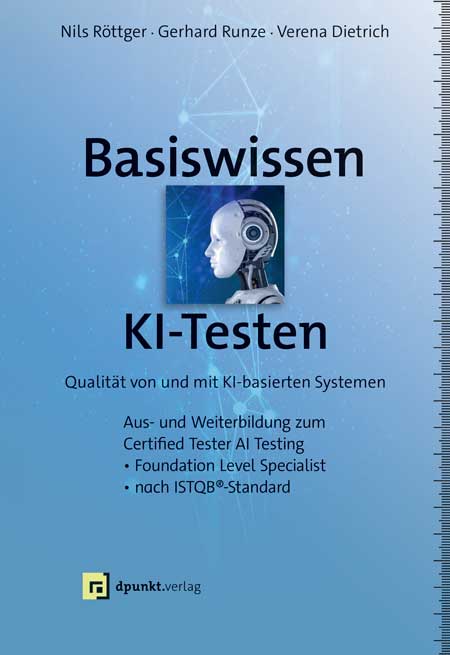
Basiswissen KI-Testen
Basiswissen KI-Testen. Qualität von und mit KI-basierten Systemen. (Februar 2024)Qualitätssicherung in KI-basierten System – damit KI-Projekte nicht scheiternUmfragen in der Industrie zeigen deutlich: KI-Projekte scheitern häufiger als angenommen. Eine kontinuierliche Qualitätssicherung für KI-basierte Systeme ist daher unabdingbar.Das Autorenteam bietet einen fundierten Überblick und einen praxisnahen Einstieg in die Konzepte, Best Practices, Problemstellungen und Lösungsansätze rund um die Qualitätssicherung von und mit KI-basierten Systemen. Im Einzelnen werden behandelt:Einführung in KIQualitätsmerkmale KI-basierter SystemeMaschinelles Lernen (ML)ML-DatenFunktionale LeistungsmetrikenNeuronale Netze und TestenTesten KI-basierter SystemeTesten KI-spezifischer QualitätsmerkmaleMethoden und Verfahren für das Testen KI-basierter SystemeTestumgebungen für KI-basierte SystemeEinsatz von KI beim TestenDas Buch enthält mehrere Exkurse, z.B. »ChatGPT als Teammitglied?«, Praxisbeispiele und zu vielen Kapiteln auch praktische Übungen, wobei die Lerninhalte durch Codebeispiele und Programmierübungen in Python veranschaulicht werden. Die Aufgaben und Lösungen sind als Jupyter Notebooks auf GitHub verfügbar.Das Buch orientiert sich am ISTQB®-Syllabus »Certified Tester AI Testing« (CT-AI) und eignet sich daher nicht nur bestens zur Prüfungsvorbereitung, sondern dient gleichzeitig als kompaktes Grundlagenwerk zu diesen Themen in der Praxis und an Hochschulen.Leseprobe (PDF-Link)Über die Autoren:Nils Röttger hat an der Universität in Göttingen Informatik studiert. Bereits während des Masterstudiums lag sein Schwerpunkt im Themengebiet Softwaretest und Qualitätssicherung, in dem er seit über 15 Jahren tätig ist. Seit 2008 arbeitet er bei der imbus AG in Möhrendorf, aktuell als Seniorberater und Projektleiter. Er ist u.a. für die fachliche Aus- und Weiterbildung sowie den Bereich Mobile Testing verantwortlich und als Scrum Master im internen KI-Team tätig. Außerdem beschäftigt er sich immer wieder mit neuen Themen und berichtet darüber in vielen Vorträgen, zuletzt insbesondere mit Bezug zur künstlichen Intelligenz.Dr. Gerhard Runze hat an der Friedrich-Alexander-Universität Erlangen-Nürnberg Elektrotechnik studiert und dort im Bereich digitaler Signalverarbeitungsalgorithmen promoviert. Er hat über viele Jahre als Entwickler, Projekt- und Testteamleiter in der Telekommunikationsindustrie in klassischen und agilen Projekten gearbeitet. Seit 2015 ist er bei der imbus AG als Testmanager, Trainer für ISTQB®-Schulungen und Seniorberater für Qualitätssicherung von KI, Embedded Software und agiles Testen tätig. Seit 2020 ist er zudem Product Owner für KI-Themen und hält Schulungen zum Certified Tester AI Testing.Verena Dietrich hat an der Friedrich-Alexander-Universität Erlangen-Nürnberg Integrated Life Sciences studiert. In ihrem Masterstudium wählte sie Vorlesungen aus den Bereichen Bioinformatik, biologisch inspirierte Algorithmen und maschinelles Lernen. Von 2019 bis 2021 war sie bei der imbus AG als Softwaretesterin und Trainerin für die A4Q-Schulung KI-Testen tätig. Als Mitglied im KI-Team hat sie mit Nils und Gerhard die Arbeiten an diesem Buch begonnen und auch nach ihrem Wechsel in die Bioinformatik mit großem Engagement fortgeführt.

Git - kurz & gut
Das Versionierungstool Git verstehen und typische Aufgaben des Programmieralltags lösen - Verständliche Einführung in das beliebte Versionierungswerkzeug; v.a. für Einsteiger*innen und Entwickler*innen, die Git von Zeit zu Zeit nutzen - Wesentliche Begriffe und Arbeitsschritte kompakt erklärt - Praxistipps für den Programmieralltag - Neu in der 2. Auflage: Weitere Workflows, Anleitungen zu GitHub und GitLab sowie Einblicke, wie Git intern funktioniert Wer heute Software entwickelt, kommt um Git nicht herum, denn Git hat sich als Werkzeug zur Versionskontrolle durchgesetzt. Es ist ein mächtiges Tool, gilt aber nicht gerade als intuitiv. Dieser Kompakteinstieg unterstützt bei den ersten Schritten mit Git und erklärt praxisnah alles Wesentliche — ob es darum geht, eigene Projekte zu versionieren, an Open-Source-Software mitzuarbeiten oder im Team zu entwickeln. Verständlich bringt das Taschenbuch zentrale Begriffe, technische Konzepte, gängige Workflows und das notwendige Wissen für den Programmieralltag auf den Punkt. Darüber hinaus inspiriert es durch Good Practices und wertvolle Tipps. Aus dem Inhalt - Versionskontrolle und die technischen Konzepte von Git - Git installieren und konfigurieren - Mit Git arbeiten: typische Arbeitsschritte und Workflows - Git-Onlinedienste wie GitHub, GitLab u.a. - Good Practices für den Programmieralltag - Häufige Fehler und Probleme - Fortgeschrittenere Kommandos, Tipps und Tricks - Git als Baustein moderner und agiler Softwareentwicklung - Git unter der Haube: die Funktionsweise von Git besser verstehen

ChatGPT for Java
Embrace the future of software development! ChatGPT for Java is the perfect starting point for Java developers to learn how to build intelligent applications using ChatGPT and Open AI APIs.This book takes you from the ground up to demonstrate how to use ChatGPT programmatically. You will learn the basics of ChatGPT and OpenAI APIs, including how to authenticate, send prompts, generate responses, test in the Playground, and handle errors. Each chapter includes practical exercises which demonstrate different API functionalities and bring your concepts to life. You will learn how to AI-enable your own applications using models such as GPT-4, GPT-3.5, Whisper, DALL-E, and many more.As a result, developers will understand that generative AI tools will not replace software development jobs! Instead, you will leverage ChatGPT as your Java AI-pair programmer to increase speed and productivity. You will also learn how ChatGPT can provide powerful Natural Language Processing (NLP) capabilities to your Java apps in order to understand various formats of unstructured text. Step-by-step, you will apply the concepts covered to create your own intelligent chatbots that can automatically process messages from either Slack on Discord.With this book, Java developers will be empowered to take their applications to new heights by leveraging the power of AI as this exciting field continues to evolve and transform.What You Will Learn* Authenticate with the ChatGPT and OpenAI APIs and learn how to engineer and send prompts* Test your prompts in the ChatGPT Playground* How to use multiple artificial intelligence models * Harness the power the temperature, top_p, and other parameters that can ONLY be accessed by developers to create more unique and engaging responses from ChatGPT* Create intelligent bots for Slack or Discord servers* Incorporate context into prompts for better responses and apply advanced features of the APIs.* Explore future directions for ChatGPT and OpenAI WHO THIS BOOK IS FORBeginning and intermediate Java developers who have a basic understanding of Java programming concepts and are interested in learning how to add intelligence to their applications by using ChatGPT programmatically. No prior experience with ChatGPT or OpenAI APIs is required.BRUCE HOPKINS is a technical writer and world-renown expert. He is both an Oracle Java Champion as well as an Intel Software Innovator. Bruce is also the author of the Apress book, Bluetooth for Java.Chapter 1: Introducing ChatGPT for Java Developers.- Chapter 2: Using ChatGPT as Your Java Pair-Programmer.- Chapter 3: Using AI in the Enterprise!:Creating a Text Summarizer for Slack Messages.- Chapter 4: Multimodal AI: Creating a Podcast Visualizer with Whisper and DALL·E 3.- Chapter 5: Creating an Automated Community Manager Bot with Discord and Java.- Chapter 6: Enhancing Our Bot for Both Q&A and Content Moderation.
Basiswissen KI-Testen
Qualitätssicherung in KI-basierten System – damit KI-Projekte nicht scheitern Zahlreiche Beispiele aus verschiedenen Branchen Viele praktische Übungen mit Beispiellösungen Mit Exkursen auf Basis industrieller Projekterfahrungen Umfragen in der Industrie zeigen deutlich: KI-Projekte scheitern häufiger als angenommen. Eine kontinuierliche Qualitätssicherung für KI-basierte Systeme ist daher unabdingbar. Das Autorenteam bietet einen fundierten Überblick und einen praxisnahen Einstieg in die Konzepte, Best Practices, Problemstellungen und Lösungsansätze rund um die Qualitätssicherung von und mit KI-basierten Systemen. Im Einzelnen werden behandelt: Einführung in KI Qualitätsmerkmale KI-basierter Systeme Maschinelles Lernen (ML) ML-Daten Funktionale Leistungsmetriken Neuronale Netze und Testen Testen KI-basierter Systeme Testen KI-spezifischer Qualitätsmerkmale Methoden und Verfahren für das Testen KI-basierter Systeme Testumgebungen für KI-basierte Systeme Einsatz von KI beim Testen Das Buch enthält mehrere Exkurse, z.B. »ChatGPT als Teammitglied?«, Praxisbeispiele und zu vielen Kapiteln auch praktische Übungen, wobei die Lerninhalte durch Codebeispiele und Programmierübungen in Python veranschaulicht werden. Die Aufgaben und Lösungen sind als Jupyter Notebooks auf GitHub verfügbar. Das Buch orientiert sich am ISTQB®-Syllabus »Certified Tester AI Testing« (CT-AI) und eignet sich daher nicht nur bestens zur Prüfungsvorbereitung, sondern dient gleichzeitig als kompaktes Grundlagenwerk zu diesen Themen in der Praxis und an Hochschulen.
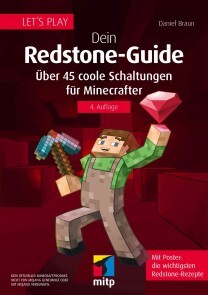
Let´s Play. Dein Redstone-Guide
MIT POSTER: DIE WICHTIGSTEN REDSTONE-REZEPTE* DEIN HAUS AUFRÜSTEN MIT TÜRÖFFNERN, ZAHLENSCHLÖSSERN, GEHEIMGÄNGEN, AUFZÜGEN UND FALLEN* GEGENSTÄNDE AUF SCHIENEN TRANSPORTIEREN: VON KREUZUNGEN UND WEICHEN ÜBER EINE U-BAHN BIS ZU EINEM AUTOMATISCHEN GÜTERBAHNHOF* NOCH TRICKREICHER BAUEN: KANONEN, SCHIEẞSTAND, AUTOMATISCHE FARMEN UND LAGERHÄUSER, ZAHLENDISPLAY, KANÄLE UND LUFTSCHIFFEMit Redstone-Schaltungen hebst du deine Minecraft-Skills auf ein neues Level! In diesem Buch erfährst du Schritt für Schritt, wie du raffinierte Fallen und andere ausgeklügelte Mechanismen baust.Redstone eröffnet dir ganz neue Spiel-Möglichkeiten. Du kannst dein Haus mit Schlössern, Geheimgängen und Aufzügen aufrüsten und mit raffinierten TNT- oder Wasserfallen vor Gegnern schützen. Mithilfe von automatischen Farmen versorgst du dich mit Essen, Schießpulver und mehr. Mit Schienen oder Bootskanälen kannst du Gegenstände oder Spieler schnell über weite Strecken transportieren. Wenn dir das immer noch nicht genug ist, baust du dir eigene Motoren, um richtige Luftschiffe anzutreiben oder einen vollautomatischen Schießstand für ein spezielles Bogen-Training!Die Anleitungen für all das und noch viel mehr sind im Buch ganz genau beschrieben, sodass du sie einfach nachbauen kannst. So wirst du im Handumdrehen zum Redstone-Profi!AUS DEM INHALT:* Redstone-Grundlagen* Liste aller wichtigen Redstone-Crafting-Rezepte* Haustechnik:* Schlösser* versteckte Eingänge* Aufzüge* Fallen und Waffen:* TNT-Fallen * Selbstschussanlagen * Wasserfallen* Kanonen* Farmen und Lager:* Automatische Farmen* Monsterfarmen* Lagerhaus* Automatischer Ofen* Transport und Fortbewegung:* U-Bahn* Güterbahnhof* Bootskanäle und Schiffshebewerk* Luftschiffe* Schießstand für Zielscheiben und bewegliche Ziele* Zahlendisplay und ZählmaschineDaniel Braun ist seit den ersten Tagen Minecraft-Anhänger und kennt als Profi alle Facetten des Spiels. Er hat bereits mehrere Bücher zu Minecraft geschrieben.
Beginning C
Learn how to program using C, beginning from first principles and progressing through step-by-step examples. This seventh edition is fully updated to reflect new features of C23, and addresses deprecated functions and features that are no longer supported.You’ll discover that C is a foundation language that every programmer ought to know. Beginning C is written by renowned author Ivor Horton and expert programmer German Gonzalez-Morris. This book increases your programming expertise by guiding you through the development of fully working C applications that use what you've learned in a practical context. Examples of how to use deprecated functions are also provided, along with new examples for replacing them when a simple solution is possible.By the end of the book you'll be confident in your skills with all facets of the widely-used and powerful C language and be able to strike out on your own by trying the exercises included at the end of each chapter. All you need are this book and any of the widely available C compilers, and you'll soon be writing real C programs.WHAT YOU WILL LEARN* Discover the C programming language* Program using C starting with first steps, then making decisions* Use loops, arrays, strings, text, pointers, functions, I/O, and more* Code applications with strings and text* Structure your programs efficiently* Work with data, files, facilities, and moreWHO THIS BOOK IS FORThose new to C programming who may or may not have some prior programming experience.GERMAN GONZALEZ-MORRIS is a software architect/engineer working with C/C++, Java, and different application containers, in particular, with WebLogic Server. He has developed different applications including JEE/Spring/Python. His areas of expertise also include OOP, design patterns, Spring Core/MVC, and microservices.IVOR HORTON is self-employed in consultancy and writes programming tutorials. He worked for IBM for many years and holds a bachelor's degree, with honors, in mathematics. Horton's experience at IBM includes programming in most languages (such as assembler and high-level languages on a variety of machines), real-time programming, and designing and implementing real-time closed-loop industrial control systems. He has extensive experience teaching programming to engineers and scientists (Fortran, PL/1, APL, etc.). Horton is an expert in mechanical, process, and electronic CAD systems; mechanical CAM systems; and DNC/CNC systems.1. Programming in C2. First Steps in Programming3. Making Decisions4. Loops5. Arrays6. Applications with Strings and Text7. Pointers8. Structuring Your Programs9. More on Functions10. Essential Input and Output Operations11. Structuring Data12. Working with Files13. Supporting Facilities14. Advanced and Specialized TopicsA. Computer ArithmeticB. ASCII Character Code DefinitionsC. Reserved Words in CD. Input and Output Format SpecificationsE. Standard Library Headers
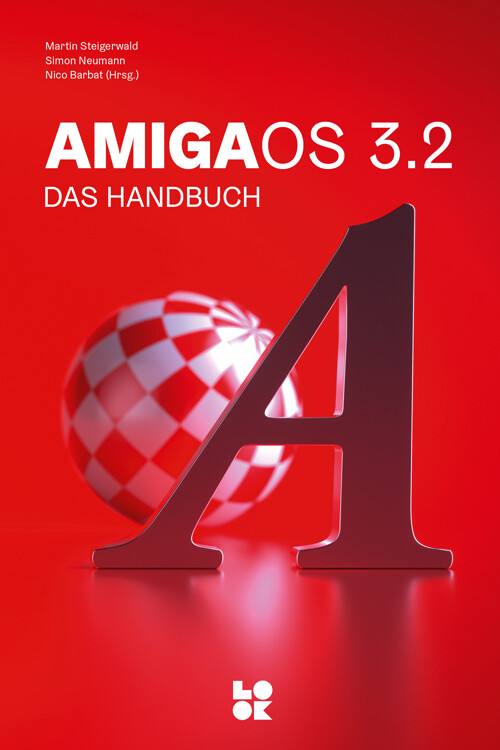
AmigaOS 3.2 - Das Handbuch
Ein praktischer Wegweiser durch das Amiga-Betriebssystem für Wieder- und Neueinsteiger, Fortgeschrittene und Profis.“AmigaOS 3.2 – Das Handbuch” ist das umfassende Nachschlagewerk zum aktuellen Amiga-Betriebssystem. Das Buch stellt das Betriebssystem von A bis Z vor und gibt Tipps und Tricks zur effizienten Nutzung, einfach und verständlich erklärt.Das Buch richtet sich an ambitionierte Anwender, die die Grundlagen des Betriebssystems beherrschen, tiefere Techniken erlernen und einen Einblick in die Möglichkeiten zur erweiterten Nutzung des Systems erhalten wollen. Und es soll die Lust auf die Bedienung und den Wiedereinstieg wecken und den Grundlagen-Weg über das Betriebssystem hinaus ebnen.Sie erhalten einen umfassenden Überblick über das AmigaOS 3.2 einschließlich der Updates bis 3.2.2.1: Wie wird das Betriebssystem richtig und einfach installiert, welche Einstellungen sind für eine grundlegende Bedienung nötig, wozu dienen die unterschiedlichen Tools, Commodities und Utilities? Darüber hinaus geben wir einen tiefen Einblick in die Shell des Amigas mit sämtlichen Befehlen und Varianten. Außerdem erfahren Sie beispielsweise alles über die Nutzung und Funktion von einzelnen Startsequenzen, AmigaGuide-System, Shortcuts und Fehlercodes oder ARexx. Schließlich liefert das Buch auch einen Überblick über die reinen Betriebssystemfunktionen hinaus, unter anderem zum Anschluss an das Internet, zum Datenaustausch und zum sinnvollen Ausbau der Hardware mit Erweiterungen. Das Buch wird Sie also mit vielen Detail-Erklärungen und Schritt-für-Schritt-Anleitungen in die Lage versetzen, das AmigaOS 3.2 Ihren Anforderungen und Erwartungen entsprechend einzusetzen und zu erweitern.Aus dem Inhalt:Installation auf Classic, Emulation und MiniEinbau der Kickstart-ROMs in alle AmigasGrundlagen des BetriebssystemsSystemoptimierung mit PrefsTools, Utilities und Commodities richtig nutzenDie Shell: Alle Befehle im Detail erklärtPower-User: Skripte, ARexx und Co.Nächste Schritte: Internet, Datenübertragung und USBAmiga-Erweiterung: Hardware und SoftwareService: Tipps und Tricks, Shortcuts, Glossar u.v.m.
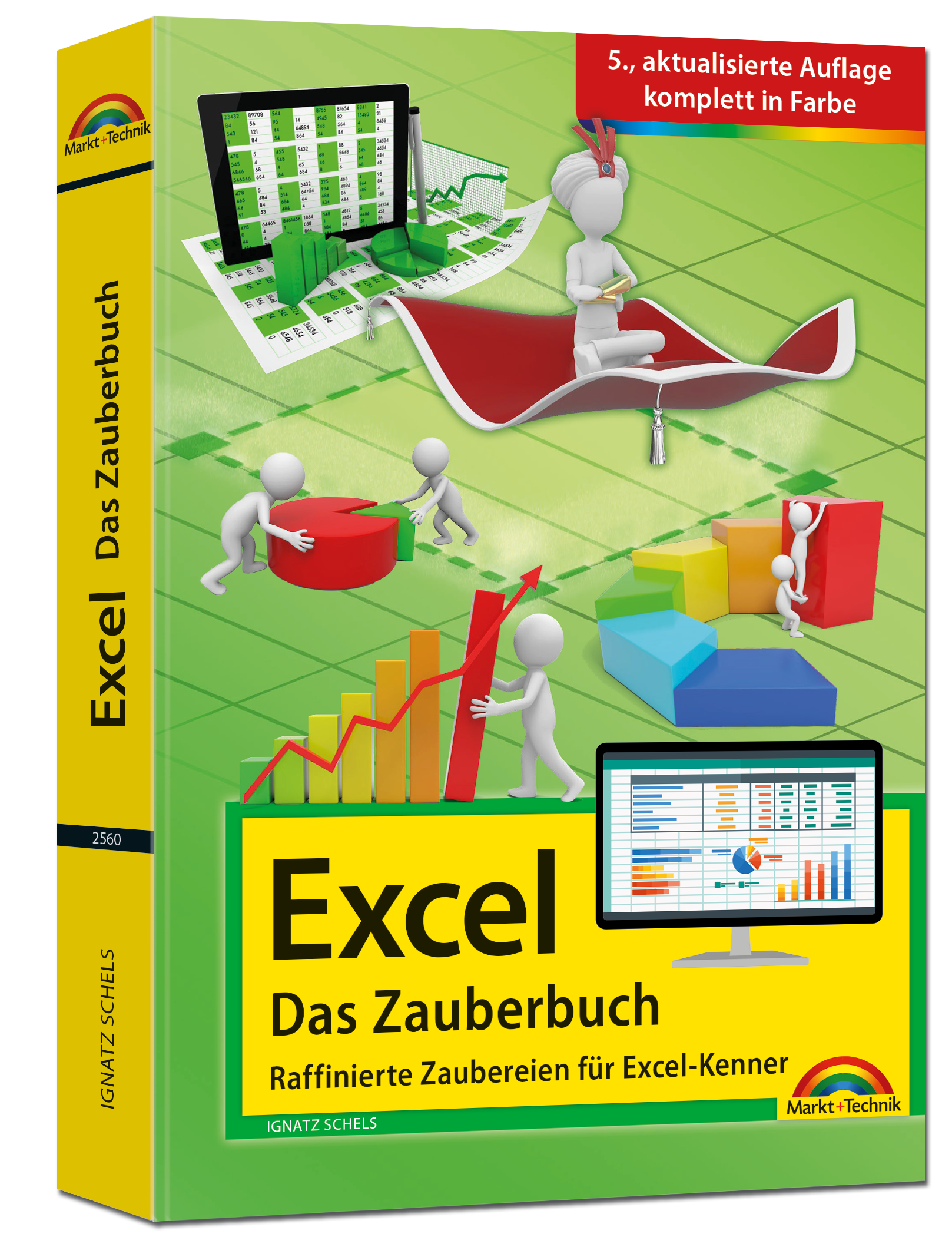
Excel - Das Zauberbuch (5. Auflage)
Excel - Das Zauberbuch. In 5., aktualisierter Auflage (komplett in Farbe), Februar 2024.Dieses Buch erzählt faszinierende Geschichten aus der Excel-Welt. Es versorgt Sie mit dem Rüstzeug, das Sie als ambitionierter Excel-Anwender benötigen, von Formelklassikern über dynamische Arrays bis zum BI-Werkzeug Power Query. Zudem zeigt es Ihnen Zaubereien mit neuen Funktionen wie etwa den Lambda-Funktionen. So können Sie komplexe Anwendungen selbst entwickeln und verschiedene Excel-Funktionalitäten geschickt miteinander kombinieren.Über den Autor: Ignatz Schels ist Informatiker, Programmierer und Experte für Microsoft Windows sowie Microsoft Office. Er schreibt seit über 30 Jahren für Markt+Technik, viele seiner Bücher sind Bestseller. Auf www.schels.de finden Sie alle Infos über den Autor.Zielgruppe: Fortgeschrittene Excel-Anwender

Next Generation Internet
Die Entwicklung des Internets, insbesondere des WWW, stößt aktuell an ihre Grenzen – sowohl technisch als auch sozio-kulturell und ökonomisch. Als Lösung wird ein neues Internet versprochen, das die Grenzen der realen und der virtuellen Welt überwinden und Realität und Digitalität verschmelzen soll – das Metaversum. Technische, semantische und organisatorische Details greifen hierzu eng ineinander. Was aber bedeutet dies bei genauerer Betrachtung? Welche technisch-technologischen Herausforderungen müssen bewältigt werden, um ein solches Verschmelzen zu erreichen? Welche ökonomischen Möglichkeiten eröffnen sich– und welche verbieten sich möglicherweise? Wie kann erreicht werden, dass ein offenes und für jeden benutzbares Metaversum entsteht? Und wie kann vermieden werden, dass auch in diesem neuen Metaversum wenige große Anbieter ihre proprietären Ideen durchsetzen? Für diese Fragen soll dieses Buch Antworten aufzeigen.DR. PETER HOFFMANN, einerseits Hochschullehrer für Wirtschaftsinformatik, andererseits Medieninformatiker mit Herz und Seele, beschäftigt sich seit mittlerweile mehr als 20 Jahren mit den Fragen danach, was „digitale Medien“ und „virtuelle Welten“ eigentlich sind und wie der Benutzer mit ihnen interagieren kann.Metaversum?.- Woher … wohin … oder: was überhaupt.- Das Verschmelzen von Welten und …versen.- Eine andere Dimension: Ökonomisches Verschmelzen.- Was nicht fehlen darf: Kritik.- Die wirkliche Vision.- Jetzt ist die Zeit zum Bauen!.- Nachtrag 1 - Weil es so aktuell ist: Künstliche Intelligenz im Metaversum?.

Systemnahe Programmierung mit C und Linux
Alles zur systemnahen Anwendungsprogrammierung: von den E/A-Funktionen, dem Zugriff auf Systeminformationen über Prozesse, Signale, Interprozesskommunikation und Threads bis hin zu Netzwerkprogrammierung, Datenbanken und GUIs. Für alle, die Programme schreiben wollen und alte Software warten oder portieren müssen. Alle Beispiele sind auch auf dem Raspberry Pi ausführbar. Solide C- und Linux-Kenntnisse werden vorausgesetzt. Aus dem Inhalt: E/A-FunktionenAttribute von Dateien und VerzeichnissenZugriff auf SysteminformationenDevices – eine einfache Verbindung zur HardwareSystem- und BenutzerdateienDämonen, Zombies und ProzesseSignaleIPC – InterprozesskommunikationThreadsNetzwerkprogrammierungDatenbanken (MySQL, PostgreSQL)GUIs mit GTK+Werkzeuge für Programmierer Materialien zum Buch ... 23 1. Einführung ... 25 1.1 ... Anforderungen an den Leser ... 25 1.2 ... Anforderungen an das Betriebssystem ... 26 1.3 ... UNIX, der Vorgänger von Linux ... 27 1.4 ... Die Entwicklung von Linux ... 29 1.5 ... Der Compiler GCC -- eine kurze Einführung ... 31 1.6 ... POSIX, X/OPEN und ANSI C ... 37 1.7 ... Übersicht zu diesem Buch ... 40 1.8 ... Schreibkonventionen ... 42 1.9 ... Weitere Hilfen ... 43 2. E/A-Funktionen ... 45 2.1 ... Elementare E/A-Funktionen ... 45 2.2 ... Filedeskriptoren ... 47 2.3 ... Funktionen, die einen Filedeskriptor verwenden ... 50 2.4 ... Standard-E/A-Funktionen ... 99 2.5 ... Die Arbeit mit Verzeichnissen ... 113 2.6 ... Fehlerbehandlung ... 134 2.7 ... Ausblick ... 137 3. Attribute von Dateien und Verzeichnissen abfragen und ändern ... 139 3.1 ... Die Struktur stat ... 139 4. Zugriff auf Systeminformationen ... 157 4.1 ... Informationen aus dem /proc-Verzeichnis herausziehen ... 157 4.2 ... Hardware-/Systeminformationen ermitteln ... 160 4.3 ... Prozessinformationen auslesen ... 166 4.4 ... Kernel-Informationen in /proc ... 171 4.5 ... Verschiedene Dateisysteme unter Linux verwalten ... 180 4.6 ... Weiterführendes ... 181 5. Devices -- eine einfache Verbindung zur Hardware ... 183 5.1 ... Die Gerätedateitypen ... 183 5.2 ... Die Gerätedateinummern ... 185 5.3 ... Zugriff auf die Gerätedateien ... 186 5.4 ... Gerätenamen ... 188 5.5 ... Spezielle Gerätedateien ... 190 5.6 ... Gerätedateien in der Praxis einsetzen ... 191 6. System- und Benutzerdateien ... 227 6.1 ... Die Datei /etc/passwd ... 227 6.2 ... Die Datei /etc/shadow ... 234 6.3 ... Die Datei /etc/group ... 239 6.4 ... uname -- Informationen zum lokalen System erfragen ... 243 6.5 ... Das Verzeichnis /etc/skel und Network Information Service (NIS) ... 245 6.6 ... Dateien für Netzwerkinformationen ... 246 7. Prozesse, Dämonen und Zombies ... 247 7.1 ... Was ist ein Prozess? ... 247 7.2 ... Prozesskomponente ... 248 7.3 ... Prozesse überwachen mit ps, top und kpm ... 258 7.4 ... Der Lebenszyklus eines Prozesses ... 261 7.5 ... Umgebungsvariablen eines Prozesses ... 263 7.6 ... Ressourcenlimits eines Prozesses ... 271 7.7 ... Prozesserkennung ... 275 7.8 ... Erzeugung von neuen Prozessen mit fork() ... 277 7.9 ... Warten auf einen anderen Prozess ... 288 7.10 ... Die exec-Familie ... 296 7.11 ... Kommandoaufrufe aus dem Programm -- system() ... 302 7.12 ... Dämonprozesse ... 304 7.13 ... Mehr über die Ausführung von Prozessen ... 315 7.14 ... Zusammenfassung und Ausblick ... 330 8. Signale ... 331 8.1 ... Grundlagen zu den Signalen ... 331 8.2 ... Das neue Signalkonzept ab Kernel 2.6.18 ... 338 8.3 ... Die Signalmenge initialisieren ... 339 8.4 ... Elemente zu der Signalmenge hinzufügen oder aus ihr entfernen ... 339 8.5 ... Signale einrichten und abfragen ... 340 8.6 ... Signale an andere Prozesse senden mit kill() ... 347 8.7 ... Eine Zeitschaltuhr einrichten mit alarm() ... 348 8.8 ... Prozesse stoppen, bis ein Signal eintritt, mit pause() ... 349 8.9 ... Prozesse für eine bestimmte Zeit stoppen mit sleep() und usleep() ... 349 8.10 ... Die Signalmaske erfragen oder ändern mit sigprocmask() ... 350 8.11 ... Einen Prozess während einer Änderung der Signalmaske stoppen mit sigsuspend() ... 351 8.12 ... Prozesse synchronisieren ... 351 9. IPC -- Interprozesskommunikation ... 355 9.1 ... Unterschiedliche Interprozesskommunikations-Techniken im Überblick ... 356 9.2 ... Gründe für IPC ... 364 9.3 ... Pipes ... 365 9.4 ... System-V-Interprozesskommunikation ... 408 9.5 ... Semaphore ... 410 9.6 ... Message Queues ... 419 9.7 ... Shared Memory ... 432 10. Threads ... 443 10.1 ... Unterschiede zwischen Threads und Prozessen ... 443 10.2 ... Thread-Bibliotheken ... 444 10.3 ... Kernel- und User-Threads ... 445 10.4 ... Scheduling und Zustände von Threads ... 445 10.5 ... Die grundlegenden Funktionen der Thread-Programmierung ... 447 10.6 ... Die Attribute von Threads und das Scheduling ... 459 10.7 ... Threads synchronisieren ... 465 10.8 ... Threads abbrechen (canceln) ... 493 10.9 ... Erzeugen von threadspezifischen Daten (TSD) ... 498 10.10 ... Mit pthread_once() einen Codeabschnitt auf einmal ausführen ... 501 10.11 ... Thread-safe-Funktionen (thread-sichere Funktionen) ... 504 10.12 ... Threads und Signale ... 505 10.13 ... Zusammenfassung und Ausblick ... 510 11. Netzwerkprogrammierung ... 513 11.1 ... Einführung ... 513 11.2 ... Aufbau von Netzwerken ... 514 11.3 ... TCP/IP -- Aufbau und Struktur ... 520 11.4 ... TCP-Socket ... 524 11.5 ... Das Kommunikationsmodell der Sockets ... 525 11.6 ... Grundlegende Funktionen zum Zugriff auf die Socket-Schnittstelle ... 525 11.7 ... Aufbau eines Clientprogramms ... 535 11.8 ... Aufbau des Serverprogramms ... 540 11.9 ... IP-Adressen konvertieren, manipulieren und extrahieren ... 545 11.10 ... Namen und IP-Adressen ineinander umwandeln ... 552 11.11 ... Pufferung bei Netzwerk-Sockets ... 562 11.12 ... Standard-E/A-Funktionen verwenden ... 563 11.13 ... Parallele Server ... 565 11.14 ... Synchrones Multiplexing mit select() ... 582 11.15 ... POSIX-Threads und Netzwerkprogrammierung ... 604 11.16 ... Optionen für Sockets setzen und abfragen ... 610 11.17 ... Das UDP-Protokoll (User Datagram Protocol) ... 615 11.18 ... Unix Domain Sockets ... 624 11.19 ... Multicast-Socket ... 630 11.20 ... Nicht blockierende I/O-Sockets ... 639 11.21 ... Streams, TLI, Raw Socket und XTI ... 642 11.22 ... IPv4 und IPv6 ... 644 11.23 ... Netzwerksoftware nach IPv6 portieren ... 646 11.24 ... Sicherheit und Verschlüsselung ... 647 12. MySQL und PostgreSQL ... 649 12.1 ... Relationale Datenbanksysteme ... 649 12.2 ... Der relationale Datenbankserver ... 653 12.3 ... SQL-Server im Überblick ... 653 12.4 ... Die MySQL-Datenbank ... 654 12.5 ... Die MySQL-C-API ... 684 12.6 ... Beispiel: Ein einfaches Newssystem ... 728 12.7 ... Neue SQL-Funktionen für die Shell -- MySQL erweitern ... 759 12.8 ... MySQL-Funktionen mit der UDF-Schnittstelle entwerfen ... 760 12.9 ... PostgreSQL: Ein objektrelationales Datenbankverwaltungssystem ... 771 13. Terminal-E/A und Benutzerschnittstellen für die Konsole ... 813 13.1 ... termios ... 813 13.2 ... Terminalinformationen in terminfo ... 837 13.3 ... Halbgrafik erstellen mit ncurses ... 847 14. GTK+ ... 891 14.1 ... Was ist GTK+? ... 891 14.2 ... GTK+-Anwendungen übersetzen ... 896 14.3 ... Eine Einführung in die GLib-Bibliothek ... 897 14.4 ... Grundlagen der GTK+-Programmierung ... 923 14.5 ... Fenster anlegen mit GtkWindow ... 935 14.6 ... Anzeigeelemente ... 944 14.7 ... Behälter für Widgets ... 953 14.8 ... Buttons und Toggled-Buttons ... 967 14.9 ... Dateneingaben auswerten ... 977 14.10 ... Menüs und Toolbars erstellen ... 989 14.11 ... Mehrzeiligen Text erstellen ... 1009 14.12 ... Auswählen von Widgets (Selection) ... 1023 14.13 ... Events auswerten ... 1033 14.14 ... Weitere Widget- und GTK+-Elemente im Überblick ... 1039 15. Übersicht über weitere beliebte GUI-Bibliotheken ... 1043 15.1 ... gtkmm -- GTK+ für C++ ... 1043 15.2 ... wxWidgets ... 1047 15.3 ... FLTK ... 1051 15.4 ... Qt ... 1053 15.5 ... Die niedrige Ebene: X-Window-Programmierung ... 1056 15.6 ... Multimediabibliotheken ... 1057 16. Werkzeuge für Programmierer ... 1065 16.1 ... Der Compiler GCC ... 1065 16.2 ... make ... 1074 16.3 ... Eigene Bibliotheken erstellen ... 1091 16.4 ... RPM-Pakete ... 1101 16.5 ... RCS und CVS ... 1114 16.6 ... Laufzeitmessung von Programmen ... 1143 16.7 ... Debuggen mit GDB und DDD ... 1151 16.8 ... STRACE -- Systemaufrufe verfolgen ... 1164 16.9 ... Memory Leaks und unerlaubte Speicherzugriffe ... 1167 16.10 ... Ausblick ... 1175 Anhang ... 1177 A ... Sicherheit unter Linux ... 1179 B ... Funktionsreferenz ... 1201 C ... Linux/UNIX-Kommandoreferenz ... 1283 Index ... 1365
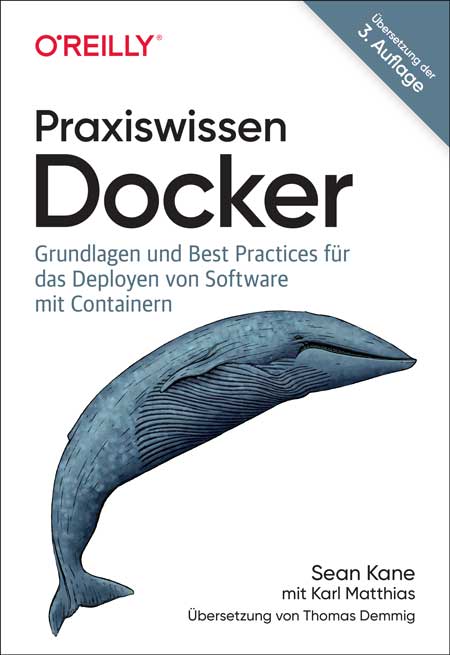
Praxiswissen Docker (3. Auflg.)
Praxiswissen Docker. Grundlagen und Best Practices für das Deployen von Software mit Containern. (Januar 2024)Docker und Linux-Container haben die Art und Weise, wie Unternehmen Software entwickeln, bereitstellen und ausführen, grundlegend verändert. Daher ist es wichtig zu verstehen, was diese Tools genau leisten und wie Sie sie erfolgreich in das Ökosystem Ihres Unternehmens integrieren.Sean Kane und Karl Matthias haben dieses Handbuch vollständig überarbeitet und erweitert. Sie vermitteln Entwicklern, Ops, Architektinnen und IT-Managern ein umfassendes Verständnis von Docker und beschreiben, wie Container nahezu jeden Aspekt der modernen Softwarebereitstellung und -verwaltung verbessern können.Die Übersetzung der 3. US-Auflage dokumentiert die vielfältigen Möglichkeiten, die Docker ein Jahrzehnt nach der ersten Veröffentlichung bietet. Kane und Matthias beschreiben aktuelle Best Practices und neue Funktionen wie BuildKit, die Unterstützung von Multi-Architektur-Images, Rootless Container u.v.a.m.Behandelte Themen sind:Wie Docker und Linux-Container mit Cloud-Diensten und Kubernetes integriert werdenDas Erstellen von OCI-Images sowie die Bereitstellung und Verwaltung von Linux-Containern über leistungsstarke Befehlszeilen-ToolsWie OCI-Images das Dependency Management und den Deployment-Workflow für Anwendungen vereinfachenPraktische Techniken für das Deployment und Testen von Linux-Containern in der ProduktionContainer in der Produktion dort bereitstellen, wo sie benötigt werdenFortgeschrittene Themen einschließlich Deployment-Tools, Networking, Orchestrierung, Sicherheit und Konfiguration.Leseprobe (PDF-Link)
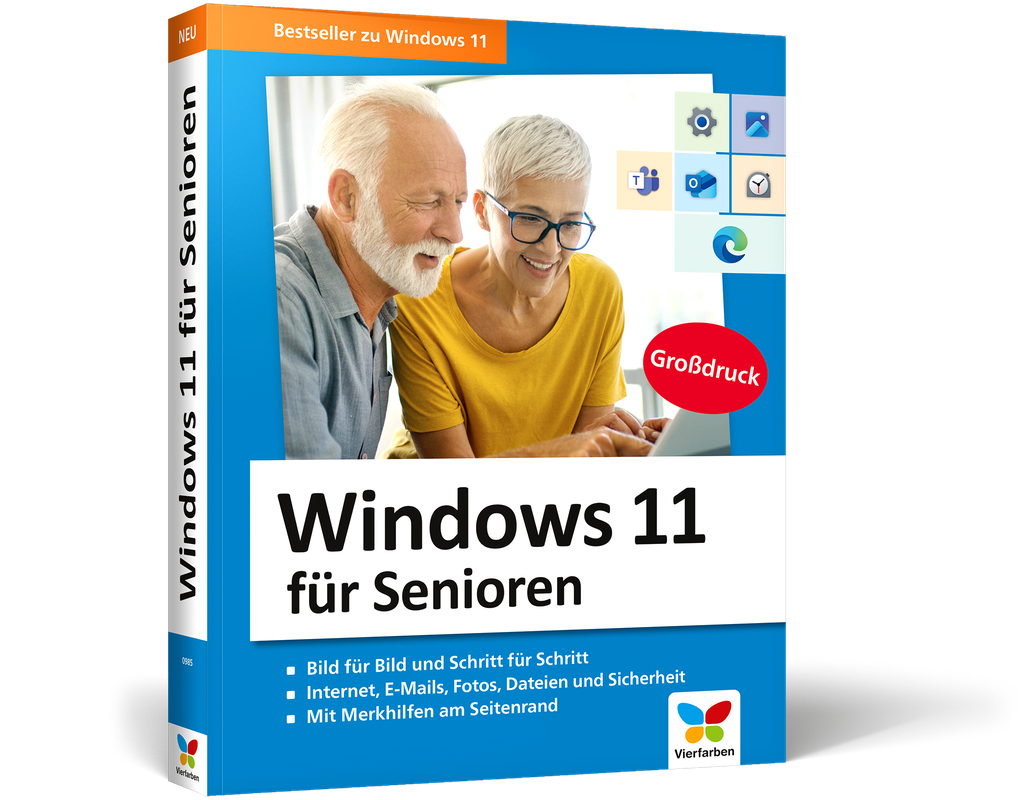
Windows 11 für Senioren (5. Auflg.)
Der Lernkurs für Späteinsteiger – mit extra großer Schrift und vielen Merkhilfen.Windows 11 mühelos Bild für Bild und Schritt für Schritt kennenlernen! Das wünschen sich sicher nicht nur Einsteiger der sogenannten Generation 50 plus. Diese Anleitung zum aktuellen Windows-Betriebssystem ist sehr verständlich geschrieben. Zahlreiche Kurzzusammenfassungen, Merkhilfen und Hinweise zur Sicherheit sowie zu möglichen Stolperfallen machen den Lernkurs zu einem Vergnügen für alle, die sich Windows und seine vielfältigen Möglichkeiten ohne weitere Hilfe aneignen möchten. In extra großer Schrift und in Farbe.Aus dem Inhalt:Neueinsteigen oder von Windows 10 wechselnWindows 11 sicher anwendenWichtige Einstellungen vornehmenApps und Programme nutzenDokumente gestalten und druckenKontakte, Termine und das Wetter im BlickFotoalben und Diashows erstellenVideogespräche und Chats mit TeamsDateien ordnen und Daten schützenSicher im Internet surfenE-Mails schreiben und versendenKünstliche Intelligenz in Windows 11 nutzenLeseprobe (PDF-Link)

Grundlagenwissen der Software-Entwicklung
Das Buch erklärt wichtige Begriffe der modernen Software-Entwicklung. Sämtliche Ausführungen betrachten das jeweilige Thema aus Sicht eines Managers mit Fokus auf die Bedeutung im unternehmerischen Prozess der Entwicklung einer Software und weniger aus der Perspektive eines Programmierers. Die vermittelten Kenntnisse dienen als Basis, um technologische Probleme in ihrer Schwere und Komplexität erfassen und Entscheidungen in ihrer Auswirkung einschätzen zu können. Zudem ermöglicht das dargebotene Grundwissen eine unmissverständliche und reibungslose Kommunikation zwischen IT-Fachkräften und der Zielgruppe der Manager. Das Werk beschränkt sich nicht nur auf eine Zusammenfassung aller wichtigen Fakten zu einem Thema, sondern vermittelt auch den Umgang in der Praxis und damit verbundene Vor- und Nachteile bzw. potentielle Gefahren.PHILIPP WINNIEWSKI absolvierte 2016 sein Masterstudium im Fach Informatik an der Julius-Maximilians-Universität Würzburg. Anschließend war er als Entwickler in einem mittelständischen Software-Unternehmen tätig. Dort sammelte er nicht nur Erfahrung in Sachen Programmierung, sondern war für interne und externe Projekte verantwortlich, leitete Teams und entwickelte Lösungen in enger Zusammenarbeit mit Großkunden. 2019 gründete er nebenberuflich sein eigenes Unternehmen Frequture, dem er sich inzwischen ganz widmet und über welches er Software-Lösungen und diverse IT-Dienstleistungen wie Consulting anbietet.Agile Software-Entwicklung - API - Architektur - Automation - Betriebssystem - Breaking-Change - Bugs - Bus - Bus-Faktor - Clean Coding - Cloud - Code-Monkey - Code-Review - Compiling - Computer - Cookies - Daten und Informationen - Datenbank - Deadlock - Deployment - Einrichtungszeit und Kontextwechsel - Entwicklungs-Team - Entwurfsmuster - Exception - Framework - Frontend und Backend - GUI - Hacking und Attacken - IDE - IP und Ports - ISO/OSI - JSON - Kodierung - Komplexität - LaTeX - Laufzeit - Logik - Machine-Learning - Methoden und Funktionen - Pair-Programming - Performanz gegen Persistenz - Programmieren nach Vertrag - Programmiersprache - Redundanz - Refaktorierung - Server - Stack Overflow - Technische Schulden - Technischer Overhead - Technologie-Stack - Testen - Threads - UML - UUID und GUID - Verschlüsselung - Versionskontrolle - Virtualisierung - Warteschlange - WYSIWYG - XML
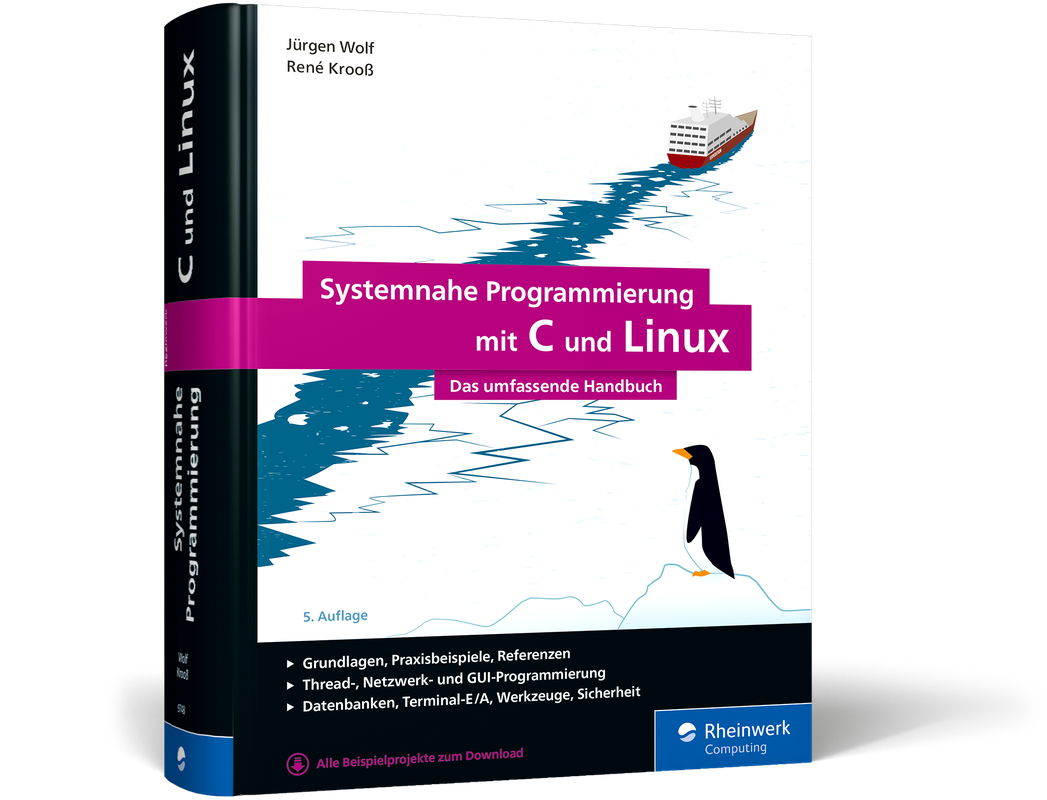
Systemnahe Programmierung mit C und Linux (5. Auflg.)
Das umfassende Handbuch in 5. aktualisierter Auflage aus Januar 2024.Alles zur systemnahen Programmierung unter Linux! Von E/A-Funktionen, dem Zugriff auf Systeminformationen über Prozesse, Signale und Threads bis hin zu Netzwerkprogrammierung, Datenbanken und GUIs. Entwickler*innen mit soliden Kenntnissen von Linux-Betriebssystemen und der Sprache C kommen hier voll auf ihre Kosten. Alle Beispiele sind auch auf dem Raspberry Pi ausführbar.Zum Inhalt:E/A-FunktionenDämonen, Zombies und ProzesseThreadsIPC – InterprozesskommunikationNetzwerkprogrammierungMySQL und PostgreSQLGUI-Programmierung mit GTKWerkzeuge für ProgrammiererLeseprobe (PDF-Link)Zu den Autoren:Jürgen Wolf ist Softwareentwickler und Autor aus Leidenschaft. Er programmiert seit Jahren auf Linux- und Unix-Systemen.René Krooß ist Diplom-Informatiker, begeisterter Programmierer und Experte für Prozessorstrukturen, Betriebssysteme, Hardware-Programmierung und Algorithmen.

Archicad 27
* MIT VIELEN KONSTRUKTIONSBEISPIELEN AUS DER PRAXIS* EINFüHRUNG IN DIE WICHTIGSTEN BEDIENELEMENTE* ZAHLREICHE Ã?BUNGSFRAGEN MIT LöSUNGENDieses Grundlagen- und Lehrbuch zeigt Ihnen anhand typischer Konstruktionsaufgaben aus Studium und Berufsleben die Möglichkeiten von Archicad 27. Der Autor richtet sich dabei insbesondere an Archicad-Neulinge, die Wert auf einen praxisnahen Einstieg legen. Alle Elemente und Befehle erlernen Sie anhand von Beispielen.Sie beginnen mit der Konstruktion eines einfachen Grundrisses, um die generelle Arbeitsweise und die grundlegenden Schritte einzuüben. Dabei lernen Sie die Benutzeroberfläche, die Eingabemöglichkeiten für Koordinaten sowie den Einsatz von Fanghilfen, Fangpunkten und Hilfslinien kennen. Dann demonstriert der Autor die Architektur-Elemente (Wände, Fenster, Eckfenster u.v.m.) im Grundriss und im 3D-Fenster.Weiterhin berücksichtigt er die Möglichkeiten für grafische Ã?berschreibungen und die Regeln für Schichtaufbau und Verschneidungen bei Wänden, Decken, Dächern und Schalen. Zusätzlich wird der HKLSE-Modeler kurz vorgestellt.Ein Schwerpunkt liegt auf der Einübung von Bearbeitungsbefehlen, insbesondere der Nutzung von Pet-Paletten, die automatisch durch Markieren von Elementen aktiviert werden und dann ganz spezifische Ã'nderungsaktionen anbieten. In weiteren Bearbeitungsschritten lernen Sie, die Konstruktion durch Hinzufügen von individuellen und automatischen BemaÃ?ungen zu ergänzen sowie Schnitte und Ansichten zu erzeugen. Auch das Vorgehen zum Erstellen und zur Auswahl von Varianten wird beschrieben.Um Ihr Projekt eindrucksvoll zu präsentieren, erstellen Sie schlieÃ?lich fotorealistische Visualisierungen.Am Ende jedes Kapitels finden Sie Ã?bungsfragen mit dazugehörigen Lösungen im Anhang. Im letzten Kapitel wird abschlieÃ?end als Beispiel ein Einfamilienhaus mit dokumentierten Befehlseingaben konstruiert.AUS DEM INHALT:* Schnelleinstieg mit dokumentiertem Beispiel* Benutzeroberfläche: Wichtigste Paletten, das Pfeil-Werkzeug und Ansichtsmanipulationen* Positionen eingeben: Koordinaten, Tracker, Punkte* Dynamische Hilfslinien, relative Konstruktionsmethoden* 2D-Zeichnen* Werkzeuge: Wand, Fenster, Tür, Decke, Dach, Schale, Ã-ffnungen, Stützen mit Segmenten, Träger mit Segmenten und Biegung, Freiflächen, Geländer, Treppe mit Kopffreiheit, Fassade mit eigenen Mustern, Morph-Elemente etc.* Bearbeitungsfunktionen: Menüs, Kontextmenüs, Pet-Paletten* BemaÃ?ung, Text* Zeichnungsstruktur, Raumstempel, Listen* Schnitte, Ansichten, Innenansichten, Details, 3D-Dokumente und Variantenmanagement* Plot, Druck, grafische Ã?berschreibungen* Realistische Bilder, Animationen, Sonnenstudien* Ã?bersichten über Menüs, Paletten und Symbolleisten* Praxisbeispiel: Einfamilienhaus* Ã?bungsfragen mit AntwortenDetlef Ridder hat bereits zahlreiche Bücher zu AutoCAD, Inventor, Revit und Archicad veröffentlicht und gibt Schulungen zu diesen Programmen und im Bereich CNC.
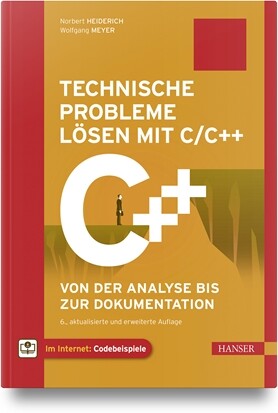
Technische Probleme lösen mit C/C++ (6. Auflg.)
Technische Probleme lösen mit C+/C++. Von der Analyse bis zur Dokumentation. In 6., aktualisierter und erweiterter Auflage. Januar 2024. Anhand von konkreten Beispielen aus dem technisch-wissenschaftlichen und mathematischen Bereich vermittelt dieses Lehrbuch Programmier- und Dokumentationstechniken mit C/C++. Aufbauend auf einer gut verständlichen und fundierten Einführung in die Arbeit mit C/C++ geht es Schritt für Schritt zur professionellen Softwareentwicklung.Die Probleme sind nach steigendem Schwierigkeitsgrad geordnet - von einfachen Anwendungen wie der Reihung von Widerständen bis hin zu komplexen Fragestellungen aus der Schaltalgebra. Vorkenntnisse sind nicht erforderlich. Sie lösen unter anderem Probleme wie die Umrechnung von Temperatursystemen oder die Programmierung eines eigenen Funktionsplotters. Die Beispiele werden mit Microsoft Visual C++ umgesetzt, das kostenlos verfügbar ist. Auf plus.hanser-fachbuch.de finden Sie zu diesem Titel die im Buch dargestellten Codebeispiele zum Download.Für die Neuauflage wurde das gut eingeführte Lehrbuch aktualisiert und um weitere Beispiele ergänzt.Die gut verständliche Einführung und die vielen technischen Beispiele machen dieses Lehrbuch zum idealen Begleiter für Fachschüler:innen und Bachelor-Studierende. Dipl.-Math. Norbert Heiderich arbeitet als Lehrer u.a. für Programmierung am Berufskolleg des Kreises Kleve in Kleve.Dipl.-Ing. Wolfgang Meyer war Leiter des Heinz-Nixdorf-Berufskollegs. Er unterrichtete Datenverarbeitungstechnik und Programmieren. Er ist Beauftragter für Ingenieur-Studiengänge der FOM Hochschule.Leseprobe (PDF-Link)

Java Schritt für Schritt
Die Programmiersprache Java von Anfang bis Ende durchzuarbeiten und zu erlernen scheint für viele Studierende eine große Hürde zu sein. Nicht mit diesem Arbeitsbuch. Es führt Schritt für Schritt und leicht verständlich in die Programmiersprache ein. Das Buch umfasst 14 Kapitel: Einführung in Java; Variablen, Datentypen, Operatoren; Kontrollstrukturen; Felder / Arrays; Methoden; Sichtbarkeit / Gültigkeit; Objektorientierte Konzepte; Ausnahmen / Exceptions; Zeichenketten / Strings; Lineare Datenstrukturen; Datenströme / Streams; Datenbanken mit Java; Graphische Benutzeroberflächen mit Swing: Einführung; komplexere Oberflächen. Zahlreiche Übersichten und Zusammenfassungen erleichtern das Verständnis. utb+: Begleitend zum Buch steht den Leser:innen ein eLearning-Kurs für die Prüfungsvorbereitung zur Verfügung. Erhältlich über utb.de.Prof. Dr. Marcus Deininger lehrt Informatik an der Hochschule für Technik Stuttgart.Prof. Dr. Thomas Kessel lehrt Wirtschaftsinformatik an der Dualen Hochschule Baden-Württemberg in Stuttgart.VorwortInhaltsübersichtInhaltsverzeichnisSchritt 1: Einführung in JavaSchritt 2: Variablen, Datentypen, OperatorenSchritt 3: KontrollstrukturenSchritt 4: Felder / ArraysSchritt 5: MethodenSchritt 6: Sichtbarkeit / GültigkeitSchritt 7: Objektorientierte KonzepteSchritt 8: Ausnahmen / ExceptionsSchritt 9: Zeichenketten / StringsSchritt 10: Lineare DatenstrukturenSchritt 11: Datenströme / StreamsSchritt 12: Datenbanken mit JavaSchritt 13: Graphische Benutzeroberflächen mit Swing: EinführungSchritt 14: Graphische Benutzeroberflächen mit Swing: komplexere OberflächenStichwortverzeichnisSchritt 1: Einführung in Java1.1 Historie1.2 Begriffe1.3 Besonderheiten von Java1.4 Konventionen und Notationen1.5 Das erste Java-ProgrammSchritt 2: Variablen, Datentypen, Operatoren2.1 Datentypen2.2 OperatorenSchritt 3: Kontrollstrukturen3.1 Anweisungen3.2 Sequenz3.3 Auswahl3.4 Schleifen / WiederholungenSchritt 4: Felder / Arrays4.1 Werte in Arrays anordnenSchritt 5: Methoden5.1 Anweisungen in Methoden zusammenfassenSchritt 6: Sichtbarkeit / Gültigkeit6.1 Java-Komponenten6.2 Das Geheimnisprinzip und Zugriffsmodifier6.3 Qualifikation und Import6.4 Gültige und sichtbare Elemente6.5 Innere ElementeSchritt 7: Objektorientierte Konzepte7.1 Klassen und Objekte7.2 Erweiterung / Vererbung7.3 Abstrakte Klassen und Methoden7.4 Schnittstellen / Interfaces7.5 Aufzählungstypen / Enumerations7.6 Polymorphismus7.7 Best Practices der objektorientierten ProgrammierungSchritt 8: Ausnahmen / Exceptions8.1 Ausnahmen auslösen und behandelnSchritt 9: Zeichenketten / Strings9.1 Die Klassen String und StringBuilder9.2 Erzeugung von Strings9.3 Vergleich von Strings9.4 Extraktion von Zeichen oder Teilstrings9.5 Umwandeln von Strings9.6 Umwandlung von elementaren Datentypen in Strings9.7 Verarbeitung von Zeichenketten mit der Klasse StringBuilderSchritt 10: Lineare Datenstrukturen10.1 Überblick10.2 Typisierung von Collections10.3 Das Interface Collection10.4 Die Liste / List10.5 Die Menge / Set10.6 Die Schlange / Queue10.7Der Keller / Stapel / Stack10.8 Die Assoziationsliste / MapSchritt 11: Datenströme / Streams11.1 Datenquellen und -senken11.2 Daten- und Stream-Arten11.3 Lesen und Schreiben von Strömen in Java11.4 Lesen und Schreiben von Byte-Strömen11.5 Lesen und Schreiben von Textdateien11.6 Lesen und Schreiben von Java-Daten11.7 Objekte speichern und lesenSchritt 12: Datenbanken mit Java12.1 Java und Datenbanken12.2 Relationale Datenbanken und SQL12.3 Datenbankzugriff mit JDBCSchritt 13: Graphische Benutzeroberflächen mit Swing: Einführung13.1 Benutzeroberflächen13.2 Aufbau von Swing-Oberflächen13.3 Einfache Widgets13.4 Interaktion mit WidgetsSchritt 14: Graphische Benutzeroberflächen mit Swing: komplexere Oberflächen14.1 Komplexere Oberflächen14.2 Übersicht über das Anwendungsbeispiel14.3 MVC: Trennung von Oberfläche und Anwendung14.4 Weitere Widgets: Auswahllisten14.5 Layout-Manager14.6 Strukturierung der Oberfläche14.7 Weitere WidgetsStichwortverzeichnis
Software-Metriken (2. Auflg.)
GUT GEMESSEN, SCHON GEWONNEN- Erfahren Sie, wie Software in den drei Dimensionen Quantität, Komplexität und Qualität gemessen werden kann.- Lernen Sie Methoden zur besseren Planung, Schätzung und Steuerung von Softwareprojekten kennen.- Profitieren Sie von vielfach in der Praxis bewährten Software- und Projekt-Metriken.- Die zahlreichen Beispiele, Tipps und Best Practices aus der Erfahrung der Autoren helfen Ihnen, diese auf ihre Projekte anzuwenden.- Neu in der 2. Auflage: Berücksichtigung aktueller Entwicklungen im Bereich der Metriken und deren Bedeutung in DevOps und Agilität.Metriken und Messgrößen werden in der Regel verwendet, um einen Zustand, Mengen und Volumina, physikalische und zeitliche Größen, Relationen, Abweichungen und Veränderungen zu ermitteln. Aus den Ergebnissen kann man den Ist-Zustand und die Vergangenheit bewerten und Ableitungen für die Zukunft ziehen. Die Software- und Projekt-Metriken in diesem Buch helfen in vielen Situationen, ein tieferes Verständnis der Ausganglage und fundierte Informationen für die Planung und Steuerung von traditionellen und agilen Softwareprojekten zu gewinnen. Für die Wartung oder Weiterentwicklung eines Softwaresystems oder dessen Neuentwicklung ist eine gute Bestandsaufnahme und Bewertung der Software eine wichtige Entscheidungsgrundlage. Das Wissen um die eigene Produktivität und Effizienz auf der Basis verlässlicher Informationen ist essenziell für die Optimierung der gewählten Vorgehensweise.In diesem Praxisbuch finden Sie Methoden und Metriken, um Softwareartefakte von den Anforderungen über das Softwaredesign und den Code bis hin zu den Testmitteln in den drei Dimensionen Quantität, Komplexität und Qualität zu messen und zu bewerten. Sie helfen Ihnen, Projekte besser zu gestalten, einen Überblick über Produkte und Legacy-Systeme zu erhalten und den Projektfortschritt besser zu verwalten.AUS DEM INHALT //- Softwaremessung- Softwarequantität- Softwarekomplexität- Die Messung der Softwarequalität- Anforderungsmessung- Entwurfsmessung- Codemetrik- Testmetrik- Produktivitätsmessung in der Softwareentwicklung- Die Messung der Wartungsproduktivität- Softwaremessung in der Praxis Richard Seidl ist seit über 20 Jahren als Softwaretest-Experte und Agile Quality Coach in Deutschland und Österreich tätig.Manfred Baumgartner ist seit Beginn seiner beruflichen Laufbahn im Bereich der Software-Qualitätssicherung tätig und arbeitet als Berater bei der Nagarro GmbH in Wien.Harry M. Sneed ist ein Pionier des Softwaretestens im deutschsprachigen Raum, wofür er auch mit dem Deutschen Preis für Softwarequalität ausgezeichnet wurde.
Inkscape (2. Auflage)
Neu in der 2. Auflage: Ansicht und Anzeigemodi, Verlaufsgitter, Formerstellungswerkzeug, neue Pfadoperationen, ansprechende Dialogfenster, verbessertes Knotenwerkzeug, Schriftartensammlung etc.Sie wollen ansprechende Einladungskarten, Logos, Visitenkarten, Flyer, Plakate, Werbematerial (und vieles mehr) gestalten? Dann ist dieses Buch genau richtig für Sie! Es zeigt Ihnen, wie Sie Ihre grafischen Projekte erfolgreich und professionell umsetzen können. Dafür werden in jedem Kapitel schwerpunktmäßig die Inkscape-Funktionen vorgestellt. Die Themen des Buchs – Grundlagen, Zeichnen in Inkscape, die neuen Funktionen der aktuellen Version, die Filter und Erweiterungen sowie Pfaderstellung und -bearbeitung – sind praxisbezogen aufbereitet. Außerdem wird die in Inkscape integrierte XML-Komponente beschrieben. Tipps, Workshops und Beispiele runden das Buch ab. Es ist somit die ideale Lektüre für ambitionierte Inkscape-Einsteiger und ebenso für Fortgeschrittene.Aus dem Inhalt//Schnelleinstieg/Inkscape Basics/Farbmanagement/Pfade und Bearbeitungswerkzeuge/Textbearbeitung/Eigene Ideen umsetzen/Filter/Benutzerkonfiguration/Erweiterungen/Der Umgang mit Dateien Uwe Schöler ist begeisterter OpenSource-Anhänger, der sich seit 2006 mit verschiedenen OpenSource-Projekten beschäftigt. Einen großen Beitrag leistete er für das deutsche Projekt von OpenOffice.org, welches inzwischen unter Libreoffi ce.org geführt wird. Ebenfalls zu dieser Zeit kam er als Übersetzer zum Inkscape- Projekt und half beim Übersetzen der Programmoberfläche und von Beiträgen auf der Webseite. Zwischendurch war er fester Bestandteil des Übersetzerteams. Seine Freizeit verbringt er am liebsten mit seiner Familie und Freunden, im Verein oder in seinem Garten.

C Programmieren lernen für Einsteiger - In einfachen Schritten zum Programmier-Experten: Der leicht verständliche und praxisnahe Leitfaden zum professionellen Programmieren im Handumdrehen
C-Programmierung für Einsteiger: Wie Sie mit den richtigen Skills in kürzester Zeit zum absoluten Programmier-Profi werden – ganz ohne Vorkenntnisse! Möchten Sie sich für Ihren Job oder Ihr Studium einen Vorteil verschaffen und Programmieren mit der Programmiersprache C erlernen? Wollen Sie Ihre eigenen Codes schreiben, auch wenn Sie noch keine Ahnung von Programmiersprachen haben? Brauchen Sie eine Schritt-für Schritt Anleitung, mit der Sie mühelos Ihre ersten eigenen Befehle erstellen können? Dann haben Sie jetzt das perfekte Buch gefunden! Dieser umfassende praxisorientierte Ratgeber nimmt Sie an die Hand und bietet Ihnen das gesamte Wissen, das Sie als Anfänger benötigen, um sofort loszulegen und Ihre eigenen Anwendungen zu programmieren! •Objekte, Klassen, Attribute: Erfahren Sie alle notwendigen Begriffe, Grundlagen und Hintergrundinformationen für einen reibungslosen Einstieg in die Programmierwelt! •Lernen Sie komplett ohne Vorwissen die wesentlichen Merkmale der Programmiersprachen C und JavaScript, sowie der JavaScript Bibliothek jQuery und schreiben Sie im Handumdrehen Ihr erstes eigenes JavaScript! •Entdecken Sie smarte Methoden zur Fehlersuche in erstellten Codes – für ein frustfreies Programmieren! •Strukturieren Sie in kürzester Zeit mit HTML und CSS elektronische Dokumente übersichtlich und effizient! Mit den professionellen Tipps und Tricks von Informatik Experten und den anschaulichen Beispielen und Übungen werden Sie schon bald unfassbar gute Codes schreiben, komplexe Systeme effektiv strukturieren und solide Designs entwerfen! Außerdem wird es Ihnen in Zukunft deutlich einfacher fallen, weitere Programmiersprachen (wie Python oder Java) zu erlernen. Die Inhalte in diesem Ratgeber sind leicht verständlich aufbereitet und somit für wirklich jeden anwendbar! Sie können sich sicher sein: Um dieses Buch kommen Sie nicht herum, wenn Sie als Anfänger Programmieren lernen wollen! Sichern Sie sich gleich Ihr Exemplar und werden Sie ohne Vorerfahrung noch heute zum Experten der Softwareentwicklung!
HTML5 und CSS3 für Einsteiger - In einfachen Schritten zum Programmier-Experten: Der leicht verständliche und praxisnahe Leitfaden zum professionellen Programmieren im Handumdrehen
Mit HTML und CSS professionelle Webseiten erstellen! Sie möchten Ihre eigene Webseite erstellen? Sie wollen Ihre bestehende Webseite optimieren oder in einem neuen Design erstrahlen lassen? Dann ist dies der ideale Ratgeber für Sie! In Zeiten des Internets kommt keiner mehr an einer Webseite vorbei. Ganz gleich, ob Sie Produkte oder Dienstleistungen anbieten, Sie benötigen eine eigne Webseite für Ihren Erfolg. Das haben auch viele Webdesigner erkannt, welche sich auf den profitablen Bereich der Webseitenerstellung, beispielsweise mit Wordpress, spezialisiert haben. Aber immer mehr Menschen beschäftigen sich selbst mit HTML und CSS, um ihre Webseite zu programmieren. Mit dem richtigen Wissen und den passenden Anleitungen ist das auch gar kein Problem. Alle notwendigen Details für die Erstellung Ihrer Website, von Grundlagen bis zu fortgeschrittenen Techniken, wie die Einbindung von Formularen und Tabellen, finden Sie in diesem Buch. Schritt für Schritt erhalten Sie tiefgreifende Einblicke in HTML und CSS und werden im Handumdrehen in der Lage sein, Ihre eigene Webseite zum Leben zu erwecken! Dieses Buch sollten Sie auf jeden Fall lesen, wenn: •Sie eine eigene Webseite benötigen •Sie Ihre Webseite gerne selbst erstellen möchten •Sie mehr über die Grundlagen des Webdesigns erfahren wollen •Sie sich für HTML und CSS interessieren Dieser Ratgeber nimmt Sie mit hinter die Kulissen des Internets? Hier werden Fragen beantwortet, auf welche Sie bisher keine passende Antwort hatte, beispielsweise: •Wie funktioniert das World Wide Web? •Welche Struktur hat HTML? •Welche HTML-Elemente und HTML-Attribute gibt es? •Wie kann man ein HTML-Element erstellen und aufrufen? •Was ist ein semantisches Markup? •Wie programmiert man Listen und Aufzählungen mit HTML? •Wie ist die Anatomie von CSS? •Wie werden in CSS Farben und Schrift umgesetzt? •Was bedeutet Font-weight und Font-style im CSS? •Was sind Pseudo-Elemente und Psedo-Klassen? •Welche verschiedenen Symbole können für Listen verwendet werden? •Was ist ein Bootstrap? •Was sind die Vorteile und welches die Nachteile von Bootstrap? •Wie macht man Webdesign? •Und weit mehr... Dieser Ratgeber zum Webseitendesign mit HTML und CSS basiert auf dem notwendigen Fachwissen und hilfreichen Veranschaulichungen. Dank der Tipps und Tricks von Experten profitieren nicht nur Anfänger sondern auch Fortgeschrittene von diesem Webdesign-Handbuch. Diese können Sie sofort anwenden und für ein professionelles Webdesign Ihrer Homepage für Ihren Erfolg einsetzen. Nur noch einen Mausklick sind Sie von den detaillierten Einblicken in HTML und CSS entfernt. Mit einem Klick auf "JETZT KAUFEN" können Sie noch heute die ersten Schritte Ihres neuen Webdesigns für Ihre Webseite umsetzen. Warum teure Webdesigner beauftragen? Mit diesem Buch gestalten Sie Ihre Webseite nicht nur selbst, sondern ganz nach Ihrer persönlichen Vorstellung! Werden Sie erfolgreich mit Ihrer eigenen selbst erstellten Webseite!

JavaScript für Einsteiger - In einfachen Schritten zum Programmier-Experten: Der leicht verständliche und praxisnahe Leitfaden zum professionellen Programmieren im Handumdrehen
Wie Sie mit den richtigen Skills in kürzester Zeit zum absoluten Programmier-Profi werden – ganz ohne Vorkenntnisse! Möchten Sie sich für Ihren Job oder Ihr Studium einen Vorteil verschaffen und objektorientiertes Programmieren lernen? Wollen Sie Ihre eigenen Codes schreiben, auch wenn Sie noch keine Ahnung von Programmiersprachen haben? Brauchen Sie eine Schritt-für Schritt Anleitung, mit der Sie mühelos Ihre ersten eigenen Befehle in Java erstellen können? Dann haben Sie jetzt das perfekte Buch gefunden! Dieser praxisorientierte Ratgeber nimmt Sie an die Hand und bietet Ihnen das gesamte Wissen, das Sie als Anfänger benötigen, um sofort loszulegen und Ihre eigenen Anwendungen zu programmieren! •Erfahren Sie alle Grundlagen und Hintergrundinformationen zum objektorientierten Programmieren - für einen reibungslosen Einstieg! •Lernen Sie komplett ohne Vorwissen die wesentlichen Merkmale der Programmiersprache Java, sowie der JavaScript Bibliothek jQuery und schreiben Sie im Handumdrehen Ihr erstes JavaScript! •Entdecken Sie smarte Methoden zur Fehlersuche in erstellten Codes – für ein frustfreies Programmieren! •Strukturieren Sie in kürzester Zeit mit HTML und CSS elektronische Dokumente übersichtlich und effizient! Mit den professionellen Tipps und Tricks der Programmier-Experten werden Sie schon bald unfassbar gute Codes schreiben, komplexe Systeme effektiv strukturieren und solide Designs entwerfen! Außerdem wird es Ihnen in Zukunft deutlich einfacher fallen, weitere Programmiersprachen zu erlernen. Die Inhalte in diesem Ratgeber sind leicht und verständlich aufbereitet und somit für wirklich jeden anwendbar! Sie können sich sicher sein: Dieses Buch ist ein ultimatives Must-Have, wenn Sie als Anfänger in das objektorientierte Programmieren einsteigen wollen! Sichern Sie sich gleich Ihr Exemplar und werden Sie ohne Vorerfahrung noch heute zum Experten der Softwareentwicklung!
Funktionale Programmierung verstehen
Funktionale Programmierung verstehen. Konzepte und Entwurfsmuster für guten Code. Januar 2024.Möchten Sie sauberen, wartbaren und eleganten Code schreiben? Dann lernen Sie das Paradigma der funktionalen Programmierung kennen! Tauchen Sie in eine neue Denkweise ein und schreiben Sie eleganten Code auf die funktionale Art. Die meisten Codebeispiele in diesem Buch sind in leicht verständlichem Scala formuliert und außerdem in Python übersetzt. Mit Codebeispielen in Java, JavaScript und C# geht der Autor außerdem auf sprachabhängige Aspekte ein. So nutzen Sie funktionale Programmierung in Ihren Projekten – auch in einem objektorientierten Kontext.Grundlagen, Design Patterns und Lösungen für die PraxisElegante Wege zu robustem, leicht wartbarem CodeUnabhängig von der Programmiersprache nutzbar, mit Beispielen in Scala, Python und mehrMit Python-Special nur in der deutschen AusgabeFunktional Denken und Coden1. Grundlagen und ProblemlösungLernen Sie die Grundlagen kennen – und damit eine neue Denkweise, wenn es darum geht, Probleme zu lösen. Gehen Sie die Dinge auf die funktionale Art an!2. Funktionale Programmierung und ObjektorientierungFP und OOP – sie unterscheiden sich, und sie ergänzen sich wunderbar. Lassen Sie sich durch Konzepte, Entwurfsmuster und Lösungsansätze führen, um beides miteinander zu nutzen.3. Von der Denkweise zum CodeKonzepte sind wichtig, aber Ihren Code schreiben Sie in Python, Java oder einer anderen Sprache. Jack Widman nutzt Scala, aber nicht nur: Er zeigt, welche Besonderheiten in gängigen Sprachen zu beachten sind, und bringt Codebeispiele auch in Java, Python und C#.4. Inklusive Python-SpecialFür die Python-Community gehen wir noch weiter: In der deutschen Ausgabe hat Torsten Will alle wichtigen Codebeispiele übertragen und gibt zusätzliche Tipps für Python. Wer möchte, kann das Buch damit komplett im »Python-Modus« lesen.Aus dem Inhalt: Die Denkweise kennenlernenEin paar (einfache) mathematische GrundlagenEntwurfsmusterDatenstrukturenUnveränderlichkeitNebenläufigkeitKombination mit OOPBesonderheiten verschiedener ProgrammiersprachenLeseprobe (PDF-Link)
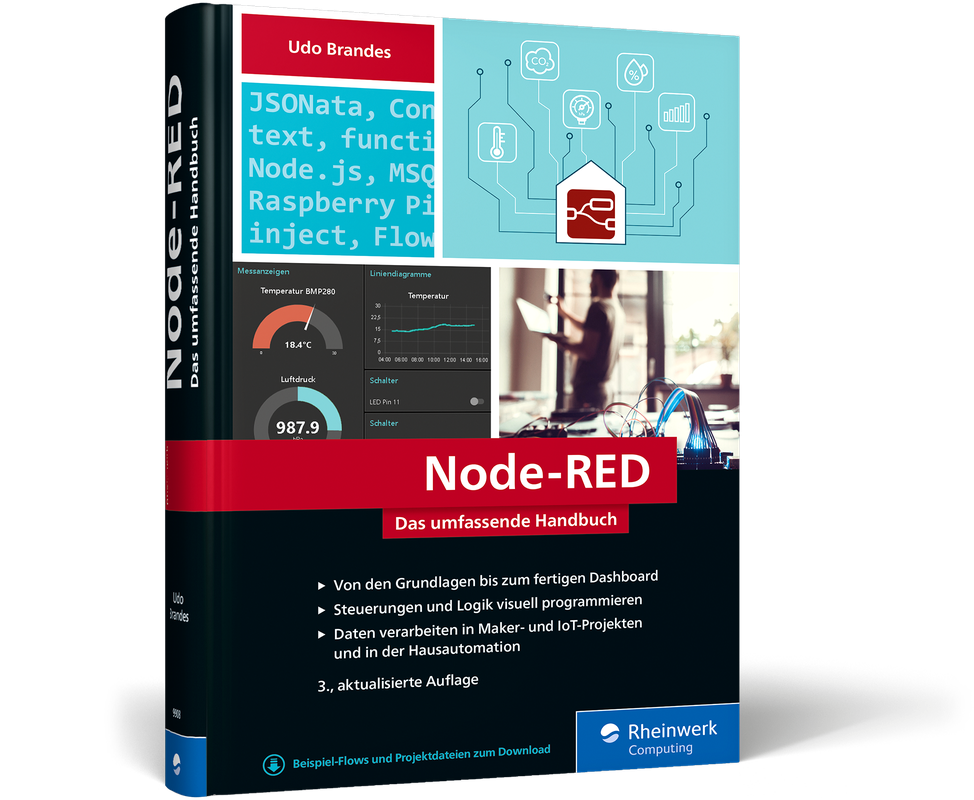
Node-RED - Das umfassende Handbuch (3. Auflage)
Node-Red. Das umfassende Handbuch. 3., aktualisierte Auflage. Januar 2024.Bauen Sie komplexe Schaltungen auf, ohne eine einzige Zeile Code zu schreiben – Node-RED macht es möglich. Mit dem visuellen Programmierkonzept erstellen Sie Flows und Logiken, die Ihre Projekte steuern. Udo Brandes stellt Ihnen dazu in diesem Handbuch alle Nodes vor und zeigt Ihnen, wie Sie Ihre Anforderungen übersichtlich modellieren und passende Dashboards erstellen. So lesen Sie im Handumdrehen automatisiert Sensoren aus, speichern Messwerte ab oder teilen Daten über das Netzwerk mit anderen Systemen.Von den Grundlagen zum fertigen DashboardSteuerungen und Logik visuell programmierenDaten in der Heimautomation, in Maker- und IoT-Projekten verarbeiten1. Ohne Vorkenntnisse einsteigenWer sich mit komplexen Systemen beschäftigt, weiß, dass nichts über KISS geht: Keep it Simple, Stupid. Und was könnte einfacher sein als Programmierlogik visuell direkt im Browser zu erstellen? Vermeiden Sie Code-Chaos und bauen Sie ohne viel Aufwand erste Tests und Prototypen.2. Für Maker, Bastler und ProgrammiereinsteigerSie finden für alle Aufgaben die passenden Werkzeuge, ob in der Heimautomation, dem IoT-Prototyping oder in Maker-Projekten. Speichern Sie beispielsweise Daten performant in InfluxDB ab, integrieren Sie Ihre FRITZ!Box ins Setup oder lesen Sie Sensoren über den Raspberry Pi aus: Ihrer Fantasie werden keine Grenzen gesetzt.3. Node-RED für Ihre ProjekteMit Node-RED setzen Sie auch anspruchsvolle Szenarien um: Programmieren Sie eigene Nodes, gestalten Sie professionelle Dashboards oder steuern Sie Ihr Setup mobil per App. Dieses Handbuch gibt Ihnen einen umfassenden Einstieg und begleitet Sie auf den ersten Schritten.Aus dem Inhalt:Installation und GrundlagenDas zentrale Tool: Der Node-RED-EditorDie Basics: Nodes und FlowDas Dashboard von Node-REDFunktionen programmierenGrundlagenwissen für JavaScript, Node.js und gutes ProgrammierenDaten abrufen und speichernDatenaustausch über MQTT und TCP/IPHacks: Fortgeschrittene Nodes nutzenAppsteuerung und externe AnbindungEigene Nodes entwickelnMikrocontroller-Steuerung mit Node-REDLeseprobe (PDF-Link)