

Computer und IT

Web Data APIs for Knowledge Graphs
THIS BOOK DESCRIBES A SET OF METHODS, ARCHITECTURES, AND TOOLS TO EXTEND THE DATA PIPELINE AT THE DISPOSAL OF DEVELOPERS WHEN THEY NEED TO PUBLISH AND CONSUME DATA FROM KNOWLEDGE GRAPHS (GRAPH-STRUCTURED KNOWLEDGE BASES THAT DESCRIBE THE ENTITIES AND RELATIONS WITHIN A DOMAIN IN A SEMANTICALLY MEANINGFUL WAY) USING SPARQL, WEB APIS, AND JSON. To do so, it focuses on the paradigmatic cases of two middleware software packages, grlc and SPARQL Transformer, which automatically build and run SPARQL-based REST APIs and allow the specification of JSON schema results, respectively.The authors highlight the underlying principles behind these technologies—query management, declarative languages, new levels of indirection, abstraction layers, and separation of concerns—, explain their practical usage, and describe their penetration in research projects and industry.The book, therefore, serves a double purpose: to provide a sound and technical description of tools and methods at the disposal of publishers and developers to quickly deploy and consume Web Data APIs on top of Knowledge Graphs; and to propose an extensible and heterogeneous Knowledge Graph access infrastructure that accommodates a growing ecosystem of querying paradigms.* Foreword by Tobias Kuhn* Preface* Acknowledgments* Knowledge Graphs of Linked Data* Accessing Knowledge Graphs Programmatically* Shaping JSON Results: SPARQL Transformer* Applications* Conclusion and Future Challenges* Bibliography* Authors' Biographies

POCO M3 Pro 5G
Die verständliche Anleitung für Ihr Smartphone:- Alle Funktionen & Einstellungen auf einen Blick- Schritt für Schritt erklärt – mit praktischen TippsMit diesem smarten Praxisbuch gelingt Ihnen der schnelle Einstieg in Ihr Smartphone. Lernen Sie das POCO M3 Pro 5G von Grund auf kennen und beherrschen! Anschauliche Anleitungen, Beispiele und Bilder zeigen Ihnen gut nachvollziehbar, wie Sie Ihr mobiles Gerät optimal handhaben – von der Ersteinrichtung und Personalisierung über die große Funktionsvielfalt bis zu den wichtigsten Anwendungen.Nutzen Sie darüber hinaus die übersichtlichen Spicker-Darstellungen: Damit können Sie jene Bedienungsschritte, die man am häufigsten braucht, aber immer wieder vergisst, auf einen Blick finden und umsetzen. Freuen Sie sich auf viele hilfreiche Tipps und legen Sie ganz einfach los!Aus dem Inhalt- Alle Bedienelemente des POCO M3 Pro 5G auf einen Blick- Ersteinrichtung und Tipps zum Umzug- Google-Konto erstellen und verwalten- Die Benutzeroberfläche Ihres Smartphones personalisieren- Apps aus dem Play Store herunterladen- Kontakte anlegen und im Adressbuch verwalten- Anrufe tätigen und SMS austauschen- Nachrichten über Mail und WhatsApp versenden und empfangen- Uhr, Kalender, Maps und andere praktische Apps nutzen- Fotos sowie Videos aufnehmen, verwalten und teilen- Ins Internet gehen über WLAN und mobile Daten- Updates, Datenschutz und Sicherheit

Samsung Galaxy A22 / A22 5G
Mit diesem smarten Praxisbuch gelingt Ihnen der schnelle und sichere Einstieg in Ihr Smartphone. Lernen Sie das Samsung Galaxy A22 bzw. A22 5G kennen und beherrschen!Anschauliche Anleitungen, Beispiele und Bilder zeigen Ihnen gut nachvollziehbar, wie Sie Ihr mobiles Gerät optimal handhaben – von der Ersteinrichtung und Personalisierung über die große Funktionsvielfalt bis zu den wichtigsten Anwendungen.Nutzen Sie darüber hinaus die übersichtlichen Spicker-Darstellungen: Damit können Sie jene Bedienungsschritte, die man am häufigsten braucht, aber immer wieder vergisst, auf einen Blick finden und umsetzen. Freuen Sie sich auf viele hilfreiche Tipps und legen Sie ganz einfach los!Aus dem Inhalt:- Alle Bedienelemente des Galaxy A22 / A22 5G auf einen Blick- Ersteinrichtung und Tipps zum Umzug- Google-Konto erstellen und verwalten- Die Benutzeroberfläche Ihres Smartphones personalisieren- Apps aus dem Play Store herunterladen- Kontakte anlegen und im Adressbuch verwalten- Anrufe tätigen und SMS austauschen- Nachrichten über Mail und WhatsApp versenden und empfangen- Uhr, Kalender, Maps und andere praktische Apps nutzen- Fotos sowie Videos aufnehmen, verwalten und teilen- Ins Internet gehen über WLAN und mobile Daten- Updates, Datenschutz und Sicherheit

Android Smartphone Photography For Dummies
WAIT—YOU TOOK THAT AMAZING PICTURE?Taking a photo is as simple as point and click. Taking a good photo takes a bit more know-how, and Android Smartphone Photography For Dummies is your quick-and-easy guide. No matter what model of Android phone you have, this book teaches you to produce high-quality images using the powerhouse camera you carry in your pocket every day. You’ll learn the photography techniques pros use, like how to recognize beautiful outdoor lightning, how to capture moving subjects, and how to make stuff look good.Whatever kind of photos you want to take, this book will help you identify the gear and the apps you need for stunning results. With Dummies as your friendly instructor, you’ll be wowing your friends and family before you know it.* Explore your phone’s camera, including little-known advanced features that will make a big difference in your images * Figure out how to edit your pictures, correct lighting imbalances, apply neat filters, remove blemishes, and more * Learn the basic principles of photography and apply your knowledge to outdoor photography, action shots, and still life * Plus: capture video, organize your images, share photos online, choose a phone tripod, and protect your camera from the elements Dummies makes it easy for Android users of all skill levels to morph into masterful image-makers.MARK HEMMINGS is an internationally recognized professional photographer and instructor. Each year he conducts fun and informative photo workshops in Asia, Europe, the Middle East, and North America. He is the author of iPhone Photography for Dummies, published in 2020. He’s also a prolific online photography course instructor, with six courses available online and more to come.INTRODUCTION 1About This Book 1Foolish Assumptions 3Icons Used in This Book 3Beyond the Book 4Where to Go from Here 4PART 1: USING YOUR CAMERA STRAIGHT OUT OF THE BOX 5CHAPTER 1: INTRODUCING ANDROID SMARTPHONE PHOTOGRAPHY 7Becoming Familiar with Your Android Camera 8Single-lens models 8Dual-lens models 9Triple-lens models 9Models with more than three lenses 11Taking a Look Around the Camera App 12Taking a Picture 13Viewing Your Photo 15Editing Your Photo 16Sharing Your Photo 18CHAPTER 2: TAKING AN IN-DEPTH TOUR OF YOUR CAMERA 19Holding Your Phone Properly for Steady Photos 20Using Different Ways to Open Your Camera 24Zooming In to Your Subject 26Using the digital zoom 27Trying optical zoom instead of digital zoom 29Capturing Selfies with and without Background Blur 31Understanding When to Use (and Not to Use) the Camera Flash 32Photographing with the Camera Timer for Sharp Photos 36Landscape photography using your timer 36Family portraits 37Selfies with a tripod or stand 38CHAPTER 3: ALTERING YOUR CAMERA’S SETTINGS AND STORING YOUR PHOTOS 39Opening and Activating Google Photos 40Choosing Storage Options for Your Photos 42Deciding on photo upload quality 43Managing on-device photo storage 45Transferring photos to a PC or Mac 50Being Mindful of Cellular Data Over-Usage 52Allowing Your Camera to Track Your Location 57CHAPTER 4: TAKING A DEEP DIVE INTO THE CAMERA APP 59Preparing to Take Selfies 59Lighting and background 60Selfie sticks and stabilizers 62Taking Selfies 64Choosing the Portrait selfie mode 65Adjusting background blur amounts 65Adding facial skin smoothening 66Choosing your favorite selfie effect 68Adding Live Filters to your selfies 71Adjusting selfie zoom to add your friends into the picture 72Considering Alternate Aspect Ratios 73Creating Panorama Photos 77Horizontal panorama photos 78Vertical panorama photos 81PART 2: HAVING FUN WITH THE FUNDAMENTALS OF PHOTOGRAPHIC GENRES 83CHAPTER 5: CAPTURING THE PERFECT LANDSCAPE PHOTOGRAPH 85Camera Considerations: Levels and Exposure 85Levelling your camera 86Controlling exposure 87Lighting Considerations 90Photograph during the magic hours 90Timing the magic hours 90Gear Considerations 92Steadying your Android camera with a tripod 92Choosing a lens (for multi-lens Android cameras) 95Photography Tips for Your Next Outing 97Applying the Rule of Thirds for better compositions 97Framing an “L” shaped composition 98Positioning a primary and secondary subject 99CHAPTER 6: SHOOTING SPORTS PHOTOGRAPHY 101Camera Considerations: Using Burst Mode to Capture Motion 102Gear Considerations 105A tough smartphone protective case 105A smartphone screen protector 106Battery packs or battery cases 106Touch-sensitive gloves in cold weather 107Lighting Considerations 107Photographing into the setting sun 107Capturing team sports with the sun behind you 107Using the setting sun for portraits 110Incorporating cool and warm color tones 111Choosing high contrast lighting 111Photography Tips for Dynamic Sports Photos 112Using your Portrait mode 112Allowing the subject to enter the composition 114Choosing curved backgrounds 115Framing your athletes 116Creating negative space 117CHAPTER 7: SAVING MEMORIES THROUGH FAMILY AND INDIVIDUAL PORTRAITURE 119Camera Considerations: Portrait Mode and Lenses 119Knowing when to use Portrait mode 120Understanding lens compression 121Gear Considerations: Editing Tools for Better Compositions 123Lighting Considerations 125Avoiding certain types of interior lighting 125Dealing with interior backlighting 126Creating silhouettes for artistic family portraits 127Using shadows to create artistic portraits 127Placing family members in the shade for even light 129Photographing from a lower position 131Photography Tips for Your Next Portrait Session 132Taking multiple photos at your location 132Avoiding objects sticking out of people’s heads 133Composing small for artistic portraits 134Including family member’s interests 135Practicing close-up portraits 135Including mirrors for hands-free selfies 137Using food as bait for pet photos 138CHAPTER 8: PHOTOGRAPHING DURING YOUR TRAVELS AND VACATIONS 141Camera Considerations: Multiple Lenses and Exposure 141Photographing the same scene with multiple lenses 142Quickly using exposure control for fleeting subjects 143Gear Considerations 144Protecting your Android smartphone 144Packing a tripod 146Lighting Considerations 147Front light 147Back light 148Side light 14845-degree diagonal light 150Blue and golden hour light 152Lens flares from photographing into the setting sun 152Making use of cloudy days 154Photography Tips for Your Next Trip 156Leaving space for text 156Placing s-curves in your compositions 157Composing using geometric forms 159Reviewing newly discovered businesses 159Searching for faces 160CHAPTER 9: CREATING DYNAMIC STILL LIFE AND PRODUCT PHOTOGRAPHY 163Camera Considerations: Creating Background Blur 163Gear Considerations 166Choosing the background for your product 166Using tabletop tripods 168Lighting Considerations 170Using raking light for products 170Positioning for sunset light rays 171Exterior architecture photography 174Interior architecture photography 176Creating Beautiful Still Life Photos 176Positioning your background for equidistance 177Photographing through a window 177Photographing food 178CHAPTER 10: TAKING IT TO THE STREETS: PHOTOGRAPHING STRANGERS 181Camera Considerations: Choosing Lenses and Locations 182Choosing your lens 182Selecting your location 183Gear Considerations 185Lighting Considerations 187Tips for Your Next Street Photography Session 191Using arrows for conceptual street photography 192Considering the flow of your composition 192Converting your composition to black and white 193Choosing design-based backgrounds 193Appreciating the mundane 195Maintaining anonymity using scale and shadows 195Being sensitive to people’s privacy 196PART 3: EDITING, ORGANIZING, AND SHARING YOUR PHOTOS 199CHAPTER 11: EDITING WITH THE GOOGLE PHOTOS APP 201Using the Google Photos App Editing Tools 202Choosing a filter 202Saving changes 202Choosing between Save and Save as Copy 204Applying Filters 205Vivid 205West 206Palma 206Metro 207Eiffel 207Blush 207Modena 208Reel 208Vogue 209Ollie 209Bazaar 210Alpaca 210Vista 211Cropping a Photo 212Using the Auto Straightening tool 212Adjusting the crop handles 214Rotating your photo 216Understanding crop aspect ratios 218Rotating your photo 90 or 180 degrees 222Skewing your photo 223Editing Your Photography 228Editing Your Portrait Photos 234Portrait 235B&W Portrait 235Blur 236Depth 237Colour Focus 238Portrait Light 239CHAPTER 12: ORGANIZING AND SHARING YOUR PHOTOS LIKE A PRO 241Understanding Post-Production Workflows 241Deleting Unwanted Photos 242Deleting a photo 243Restoring a deleted photo 244Favoriting Photos with the Star icon 246Mastering Album Organization 247Selecting photos to create a new album 248Removing a photo from an album 251Naming albums logically 252Exploring the Search Tools 253Finding photos of a single person using People 253Checking your location using Places 255Using Things to locate photos by type 256Accessing photos using Your Activity 257Using Categories and Creations to sort by media type 257Sharing Your Photo Albums 259PART 4: THE PART OF TENS 263CHAPTER 13: TEN ANDROID APPS TO FURTHER YOUR SKILLS 265Adobe Photoshop Express 266Adobe Photoshop Camera 267Photo365 268Foodie 269Prisma Photo Editor 269Facetune2 270Canva 271VSCO 272TouchRetouch 273PhotoScan 274CHAPTER 14: TEN TIPS FOR CREATING STUNNING VIDEOS 277Accessing the Video Camera 277Properly Holding Your Camera for Videos 278Trimming the Length of Your Video Clip 279Reducing Video Shakiness 281Exporting a Still Frame 282Cropping Your Video 284Adjusting Your Video 286Applying Filters to Your Video 287Capturing Video Clips with Slow Motion 288Creating Time Lapse Video Clips 288CHAPTER 15: TEN EXTRA GOOGLE PHOTOS FEATURES 289Viewing the Memories Carousel 289Watching Creations 290Creating Auto Panoramas 291Adding a Partner Account 292Marking Up Your Photo 293Accessing Your Metadata 294Searching with Google Lens 295Buying Photo Books 296Creating Screenshots 297Clearing the Clutter 298Index 299

Spring Boot with React and AWS
Create and deploy full-stack Spring Boot applications with React and AWS. This practical and authoritative guide teaches you the fundamentals of Amazon Web Services with no prior experience.You will start by learning the fundamentals of AWS, including EC2, S3, IAM, and load balancer. Next, you will learn to deploy a Spring Boot REST API to AWS with Elastic Beanstalk, which will give you the ability to build and deploy a Spring Boot application. You will explore the RDS relational database and create an instance of a MySQL database in AWS with RDS.You will then deploy a Spring Boot application to MySQL in AWS and deploy a full-stack Spring Boot React application to AWS using Elastic Beanstalk and S3. Lastly, you will be introduced to ELB, CloudWatch, and Route 53. By the end of this book you will understand full-stack Spring Boot React applications and their deployment. If you prefer "learning by coding" then Spring Boot with React and AWS is the book for you.WHAT YOU'LL LEARN* Review the fundamentals of Amazon Web Services* Install a Spring Boot REST API with CRUD operation to AWS using AWS Elastic Beanstalk* Deploy a full-stack Spring Boot React application to AWS using AWS Elastic Beanstalk and S3* Work with MySQL as a database in AWS using RDS* Use Spring Boot with React and AWSWHO THIS BOOK IS FORIdeal for readers who have some programming experience with Java, Spring Boot, and React, and who now want to deploy a full-stack Spring Boot React application to AWS using AWS Elastic Beanstalk and S3.Ravi Kant Soni is a Principal Full Stack Engineer with 11+ years of IT experience and is an AWS Certified Solutions Architect. Ravi has worn many hats throughout his tenure, ranging from software development, software design, systems architecture, application programming, and automation testing. Ravi has a Bachelor’s degree in Information Science and Engineering from Reva University, Bangalore; and schooling from Bal Vikash Vidyalaya, Sasaram, and Bihar (India). He is the author of Full Stack AngularJS for Java Developers (Apress, 2018), Spring: Developing Java Applications for the Enterprise (Packt, 2017), and Learning Spring Application Development (Packt, 2015). He is also an Esteemed Member of the BOS (Board of Studies) – School of Computing and IT, at Reva University, Bangalore.Namrata Soni is a self-taught web application developer who has been a Web Application Developer since the early years of 2018, with a passion for beautiful and interactive UIs. She has a degree in Computer Science from SISTEC, Bhopal; and schooling from Bal Vikash Vidyalaya, Sasaram, and Bihar (India). She loves clean and well-tested code. She is a big fan of open-source and always tries to learn something new. Currently, she is working with React and NodeJS, crafting modern JavaScript applications.Chapter 1: An Introduction to Amazon Web ServicesCHAPTER GOAL: An Introduction of Amazon Web Service (AWS). And, then we will be creating a Free AWS Account for Developer. We explore AWS Elastic Beanstalk and will create a server. Then, we create HelloWorld JSP application. We will build a WAR file with Maven and upload WAR to AWS Elastic Beanstalk.NO OF PAGES 35SUB -TOPICS1. Introduction to Amazon Web Service2. Create a Free AWS Account for Developer3. Explore and Create an AWS Elastic Beanstalk Server4. Create HelloWorld JSP App, Build WAR with Maven, and Upload WAR to Elastic Beanstalk5. SummaryChapter 2: Deploying Spring Boot Application as REST API in AWSCHAPTER GOAL: Creation of Java Spring Boot Application as REST API with Swagger in Local. And, then we test REST API in Local. We build jar for Spring Boot Application and deploy JAR in AWS Elastic Beanstalk. Then, we will explore AWS environment logs of Spring Boot Application.NO OF PAGES: 35SUB - TOPICS1. Create a Spring Boot Application as REST API with Swagger in Local2. Test Spring Boot Application as REST API in Local3. Build jar for Spring Boot Application as REST API4. Deploy Spring Boot Application as REST API in AWS Elastic Beanstalk5. Explore Logs from AWS Beanstalk6. SummaryChapter 3: Deploying MySQL as Database in AWS with RDSCHAPTER GOAL: In this chapter, we introduce Relational Database Service in AWS with RDS. Then, we create an Instance of MySQL Database in AWS, and configure Database. We create tables inside MySQL DatabaseNO OF PAGES : 25Sub - Topics:1. Overview of MySQL Relational Database Service in AWS with RDS2. Create an Instance of RDS Database in AWS3. Configure Database4. Create tables inside Database5. SummaryChapter 4: Deploying Spring Boot Application Talking to MySQL in AWSCHAPTER GOAL: An overview of CRUD operation in Spring Boot Application. We create RDS profile for Spring Boot Application talking to MySQL. We setup Spring Boot Application to connect to RDS relational Database. We deploy WAR to AWS Elastic Beanstalk and test AWS deployment of Spring Boot application to perform CRUD operation. And, we explore AWS environment logs of Spring Boot Application.NO OF PAGES: 40SUB - TOPICS:1. An Overview of CRUD operation in Spring Boot Application2. Create RDS profile for Spring Boot Application3. Code Review of Spring Boot Application talking to MySQL4. Setting up Spring Boot Application to connect to RDS Database5. Deploy Spring Boot CRUD Application WAR to AWS Elastic Beanstalk6. Testing Spring Boot Application AWS Deployment7. Exploring Environment logs of Spring Boot Application in AWS8. SummaryChapter 5: Deploying Full Stack Spring Boot React Application in AWS and S3CHAPTER GOAL: Explore Full Stack Spring Boot React Application. We develop and Run React as Frontend application in local. First we deploy Spring Boot REST API as Backend application to AWS Elastic Beanstalk. Then we build React Code as Frontend application for AWS deployment. Also, we introduce S3 as Simple Storage Service in AWS.NO OF PAGES: 35SUB - TOPICS:1. Explore Full Stack Spring Boot React Application2. Develop and Run React as Frontend Application in Local3. Deploy Spring Boot REST API as Backend Application to AWS Elastic Beanstalk4. Build React Code as Frontend Application for AWS Deployment5. Introduction to S3 – Simple Storage Service in AWS6. Deploy React Frontend to AWS S3 – Hosting Static Website7. SummaryAppendix A: Installing MySQL Workbench on WindowsNO OF PAGES: 10Appendix B: AWS Command Line Interface CLICHAPTER GOAL:NO OF PAGES: 10
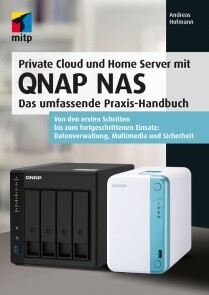
Private Cloud und Home Server mit QNAP NAS
* MUSIK, FOTOS, VIDEOS UND DOKUMENTE ZENTRAL SPEICHERN UND MIT ANDEREN TEILEN* BENUTZER VERWALTEN, BACKUPS ERSTELLEN UND DATEN VOR UNERLAUBTEN ZUGRIFFEN SCHÜTZEN* FORTGESCHRITTENE THEMEN WIE VPN UND VIRTUALISIERUNG* ZAHLREICHE SCHRITT-FÜR-SCHRITT-ANLEITUNGEN UND PRAXIS-TIPPSMit diesem Buch lernen Sie umfassend alles, was Sie brauchen, um Ihr QNAP NAS an Ihre persönlichen Bedürfnisse anzupassen und das Potenzial Ihres Geräts voll auszuschöpfen. Dafür gibt der Autor Ihnen zahlreiche praktische Tipps an die Hand. So können Sie all Ihre Dateien wie Musik, Videos und Fotos zentral sichern und effektiv verwalten.Andreas Hofmann stellt die verschiedenen NAS-Modelle vor, so dass Sie wissen, welches für Sie am besten geeignet ist. In leicht nachvollziehbaren Schritten erläutert er detailliert, wie Sie Ihr NAS in Betrieb nehmen und mit dem Betriebssystem QTS konfigurieren.Anhand einfacher Schritt-für-Schritt-Anleitungen zeigt er Ihnen, wie Sie Ihr NAS als Private Cloud und Home Server optimal einrichten: Dateien sichern, verwalten und mit anderen teilen, Benutzer verwalten, Fernzugriff einrichten, automatische Backups erstellen sowie Office-Dokumente und Multimedia-Dateien freigeben und mit dem SmartTV und anderen Geräten wiedergeben.Für alle, die noch tiefer in die Welt von QNAP NAS eintauchen möchten, geht der Autor auf weiterführende Themen wie Datensicherheit und die Überwachung und Optimierung des Betriebs ein und zeigt Ihnen die Konfiguration abseits der QNAP-Apps für die Einrichtung eines eigenen Chatservers sowie die Virtualisierung von Webanwendungen und Betriebssystemen.AUS DEM INHALT:* Kaufberatung und Inbetriebnahme* Das Betriebssystem * QTS im Detail* Dateien zentral verwalten mit der File Station* RAID-Konfiguration und automatische Backups* Dateifreigabe und Fernzugriff via App, FTP u.v.m.* Datensicherheit, Virenschutz und Firewall* Fotos organisieren und teilen mit der Photo Station* Musik zentral verwalten mit der Music Station * Filme katalogisieren und streamen mit dem Plex Media Server* Office-Dokumente, Kalender, Adressbuch und Notizen verwalten* E-Mail-Verwaltung mit dem QmailAgent* Zentrales Download-Management* Videoüberwachung mit der Surveillance Station* Virtualisierung* Speicher und RAID erweiternblog.viking-studios.net

iPad Handbuch für iPadOS 15
Benutzen Sie schon länger ein iPad und suchen Sie Informationen zur neuen Software iPadOS 15? Oder freuen Sie sich über Ihr erstes iPad und möchten Sie sich einen Überblick über seine Funktionsweise verschaffen und die zahlreichen Apps erkunden? In beiden Fällen halten Sie die ideale Anleitung für Ihr iPad in der Hand. Das iPad-Betriebssystem hat viel zu bieten! Sowohl Besitzer/-innen älterer iPad-Modelle als auch Neueinsteiger/-innen kommen auf ihre Kosten. Alles, was Sie lieben, hat Apple besser denn je aufbereitet: iPadOS 15 ist deutlich flotter und intuitiver in der Bedienung als alle seine Vorgängerversionen. Aus dem Inhalt So installieren Sie iPadOS 15, richten es ein und finden sich zügig zurecht. Widgets auf dem Home-Screen, App Library, optimiertes Multitasking, neue Funktionen der Nachrichten-App uvm. Internet, Kommunikation, iCloud-Dienste, Kamera und Bildbearbeitung, Kalender, Erinnerungen, Bildschirmzeit, Aktien, Sprachmemos und vieles mehr Nutzen Sie die neue Dateien-App, versenden Sie Fotos ganz einfach via AirDrop, übertragen Sie Ihre Diashow via AirPlay auf Ihren Fernseher, Drucken Sie wichtige Dokumente via AirPrint u. v. m. Alles zu den Themen Mitteilungen, Sicherheit, Stromsparen, Fehlerbehebung und den perfekten Einstellungen.

iPhone Handbuch (iOS 15)
Mit jeder neuen iOS-Version wird die Bedienung eines iPhone-Modells noch einfacher und vor allem vielseitiger. Mit der aktuellen Version iOS 15 sind wieder eine Menge nützlicher Funktionen hinzugekommen, die man bereits nach kurzer Eingewöhnungszeit nicht mehr missen möchte. Besonders hervorzuheben ist hier die Texterkennung, die nun ganz einfach Textmodule auf Fotos erkennt und zur Weiterbearbeitung zur Verfügung stellt.Zudem wurden Dinge wie FaceTime, Siri, Nachrichten etc. kräftig überarbeitet und bieten noch mehr Funktionen. Via Übersetzen ist es nun ein Einfaches, Texte in andere Sprachen zu übersetzen.In diesem Buch finden Sie als iPhone-Nutzer alle Funktionen nachvollziehbar beschrieben. Viele nummerierte Bildschirmfoto, Schritt-für-Schritt-Anleitungen und Lern-Videos helfen Ihnen, sofort alles in die Praxis umzusetzen. Wenn Sie neuer iPhone-Besitzer sind, dann ist das Buch perfekt für Sie. Aus dem Inhalt: Installation und Update auf iOS 15Datenabgleich mit einem Mac- oder Windows-RechnerAlles im Überblick: Widgets, Mitteilungen, Heute-Ansicht, BildschirmzeitProduktiv sein mit Erinnerungen, Mail, KalenderNeue Funktionen in Safari, Aktivität, Home, etc.Verbesserungen in der Karten-, Nachrichten- und App-Store-App

Arduino in Science
It’s a simple question, but do you know how to take basic measurements with your Arduino, Raspberry Pi or PC? A lot of the times, you know how to use microcontrollers, sensors, and programming skills to collect data. This book takes it one step further to teach you how to transform your PC, Raspberry Pi, and Arduino to a device that can measure, collect, and analyze data.You'll begin from a simple starting point reviewing the basics of electronics and digital and analog concepts. As you advance through this book, you’ll work through 10 exercises to develop a working knowledge of microcontroller properties and graphical data presentation concepts, basic electronic technology, and the fundamentals of controlling and acquiring data.Arduino in Science is your guide to monitoring and measuring physical – chemical parameters with integrated circuitry and physical computational systems.WHAT YOU’LL LEARN* Review fundamental human machine interfacing with supervisory control and data acquisition software* Examine timing, counting, and serial communication concepts* Adapt microcontrollers to perform sophisticated functions* Understand collection and presentation of dataWHO THIS BOOK IS FORBeginner-level students, citizen scientists, and hobbyists, and is also great for educators who can seamlessly implement this content into STEM programs.Richard J. Smythe attended Brock University in its initial years of operation in southern Ontario and graduated with a four year honours degree in chemistry with minors in mathematics and physics prior to attending the University of Waterloo for a master’s degree in analytical chemistry and computing science and a doctorate in analytical chemistry. After a post-doctoral fellowship at the State University of New York at Buffalo in electro-analytical chemistry Richard went into business in 1974 as Peninsula Chemical Analysis Ltd. Introduced in 1966 to time-shared computing with paper tapes, punched cards, BASIC prior to Fortran IV at Waterloo, the PDP 11 mini-computers and finally the PC, Richard has maintained a currency in physical computing using several computer languages and scripting codes. Professionally Richard has functioned as a commercial laboratory owner and is currently a consulting analytical chemist, a civil forensic scientist as PCA Ltd., a full partner in Walters Forensic Engineering in Toronto, Ontario and senior scientist for Contrast Engineering in Halifax Nova Scotia. A large portion of Richard's professional career consists of devising methods by which a problem that ultimately involves making one or more fundamental measurements can be solved by using the equipment at hand or using a readily available “off-the shelf/ out of the box” facility to provide the data required.Chapter 1: Button Control of LED Illumination.- Chapter 2: Power Control Monitoring and Creation of Dedicated Graphical User Interfaces.- Chapter 3: Introduction to Scripting.- Chapter 4: Data Entry from the Screen.- Chapter 5: Digital Signal Concepts and Digital Signal Outputs.- Chapter 6: Analog or Digital Conversions for Input and Output.- Chapter 7: Variable Intensity and Power Controls.- Chapter 8: Counting Events and Timing.- Chapter 9: Graphical Data Recording .- Chapter 10: Current Control.- Chapter 11: Microcontrollers and Serial Communications.-

Advanced Home Automation Using Raspberry Pi
Build a versatile home automation system from scratch. There are many ways of controlling home appliances with your smartphones, voice, gestures, etc. This book dives into the many options for for communicating with appliances wirelessly and we’ll discuss and implement the leading protocols in the field.In first few chapters, you will develop a basic understanding of the Raspberry Pi and how one can control it wirelessly from anywhere in the world. Then you’ll get to know about the local server for your home automation projects and control the Raspberry Pi GPIOs using smartphone and web apps. Every appliance will be able to talk to each other, as well, with the help of mesh networking, which you’ll learn to implement. The user interface is also an important aspect of handling all the appliances, so you’ll create your own user dashboard using OpenHAB. From there, you can monitor all the appliances and sensor data in one environment.Next, implement your own custom voice assistant to control your appliances and perform basic tasks like playing music, checking weather, etc. You’ll also integrate a smart door bell into your system using image processing so that you can restrict an unknown person’s entry. Finally, we’ll combine all the knowledge that we have learned to make a fully versatile home automation project controlled using voice, gestures, and image processing. Throughout this whole project, Raspberry Pi will be your master server or node and other devices will be connected wirelessly using wi-fi/Bluetooth modules. Create a smart home with fully custom interfaces to do exactly what you need!WHAT YOU'LL LEARN* Create a user interface using openHAB* Implement the MQTT protocol* Install Alexa and Google Home API to control appliances wirelesslyWHO THIS BOOK IS FOREnthusiasts with a working knowledge of the Raspberry Pi, electronic engineering, and Python programming. This book will also interest hobbyists and students from Computer Science or related disciplines.RISHABH JAIN has had strong success in national level robotics and innovations-based competitions with his team. He has a keen interest in technology that emerged in childhood when he would customize and experiment with his toys and electronic devices. He believes in “learning by doing”. He is an avid contributor on technical sites dedicated to learning hardware, from beginner to pro and has contributed 50+ projects, which include a stepwise writeup and project demonstration videos. Recently, he joined an India-based product design company as an Electronics and Embedded design engineer.Chapter 1 : Introduction to Raspberry Pi· Introduction· Raspberry Pi at a glance· Software and Hardware requirements· SetupChapter 2 : Controlling the Raspberry Pi Remotely· Remote server setup· Create a local server· Controlling Raspberry Pi GPIO using local serverChapter 3: Understanding MQTT Broker· What is MQTT Broker?· Packet Structure· Publisher and Subscriber· Installing Mosquitto BrokerChaptre 4: Controlling Raspberry Pi GPIO· Writing Python Program for GPIO· Using MQTT for controlling GPIO· Example code for getting sensor data on smartphoneChapter 5: Building Your Own Alexa and Google Home· How voice assistant works· Understanding flow of Amazon Alexa and Google home· Installing the Alexa voice assistant· Installing Google Home voice assistant· TestingChapter 6: Making a Wireless Node· What is Mesh networking?· Types of Mesh· Hardware requirements· Sensors and Modules· Implementation and TestingChapter 7: AC Light Dimming Node and Circuit Design· Basics of Electronics and components· Designing Dimming circuit· Designing PCB· TestingChapter 8: User Interface Using OpenHAB· What is openHAB?· Initial Setup· Installing in Raspberry Pi· Creating User Interface· TestingChapter 9: Custom Voice Assistant· What is STT and TTS and available types?· What is Jasper Framework?· Installing and setup process· Making Receipes· TestingChapter 10: GPIO Control Using Gestures· Sensor Requirement· Interfacing with the node· Coding and TestingChapter 11: Smart Door Bell and Integration· Camera Interfacing with Raspberry Pi· Basics of Image processing· Installing image processing Packages· Testing and Integration

macOS Daemonology
Take advantage of the full power of Swift through XPC. Development for macOS differs from iOS and web-based development because of multicomponent applications. Besides the usual GUI-based applications and app extensions, there are a wide range of daemons—processes that run in the background—to worry about. These include system monitoring, event listening, notification agents, and many-many more.First, you'll take a tour around different types of daemons: user agents, privileged helpers, login items, XPC services, and System Extensions. Knowing key specifics of the daemons will open a wide range of possibilities from non-trivial application development to system development. You'll find lots of examples, working code samples, and even ready-to-use utilities. The book will guide you step-by-step through preparation, registration, and management of all kinds of daemons.System Extensions are brand new for macOS and open additional powerful features for developers. You'll explore installation, user flow, and communication with System Extensions, too, with examples, of course. XPC provides an object-oriented way of communication. There’s no need for custom byte/text-based protocols. A good macOS developer has to know not only programming interfaces, but also design patterns related to technology. XPC communication has a few patterns of its own, and we'll go through them all, including uni- and bi-directional communication, passing objects by-value and by-proxy, handling connection invalidation, named and anonymous connections, and many more.WHAT YOU'LL LEARN* Use multiples types of daemons in your applications* Deal with System Extensions – the new type of system daemons* Get acquainted with Swift bridging patterns for XPC communicationWHO THIS BOOK IS FORSoftware developers and solution architects with at least a working knowledge of macOS and Swift programming. As overview, may be interested for software/solution architects.VOLODYMYR VASHURKIN (@ALKENSO) is an experienced macOS system and security developer and engineer. His first steps in daemonology were made while researching FileVault full disk encryption on macOS, and its interaction with iCloud services. iCloud on macOS uses plenty of system daemons and user agents, and investigating macOS’s infrastructure led to a solid understanding of how the background world of macOS works. This led him deeply into the development of security solutions for macOS. Working in the security area, Volodymyr gained practical skills for creating GUI-based applications with fewer user agents (user background processes) and root daemons (root'ed background processes). In developing his knowledge and skills, Volodymyr faced numerous tricky cases, lack of documentation, and minor and major documentation gaffes. He would like to help his readers avoid the same pitfalls. PART 1. DAEMONS: OVERVIEW & MANAGEMENTCHAPTER 1. DAEMONS AT A GLANCETHE OPERATING SYSTEM BACKGROUND WORLDDIFFERENT TYPES OF DAEMONSCHAPTER 2. LAUNCHD AND LAUNCHD JOBSLAUNCHD FUNCTIONAL RELATED TO DAEMONSDAEMONS' CONFIGURATION (.PLIST FILES).CHAPTER 3. LAUNCHCTLSETUP AND MANAGE DAEMONSLAUNCHCTL TOOL IN DETAILSWIFT API FOR DAEMONS MANAGEMENTPART 2. DAEMONS IN DETAILCHAPTER 4. CHOOSE THE RIGHT DAEMON FOR YOUCOMPARING DAEMON TYPESPICKING A DAEMON TYPE BASED ON NEEDSCHAPTER 5. CLASSIC DAEMONSWHAT IS A CLASSIC DAEMON?ROOT BACKGROUND PROCESSESCHAPTER 6. USER AGENTSSPECIFICS OF USER AGENTSUSER BACKGROUND PROCESSESCHAPTER 7. XPC SERVICESTHE SIMPLEST DAEMONWORKING WITH XPC SERVICESCHAPTER 8. PRIVILEGED HELPERSSPECIAL DAEMONSTHE OFFICIAL AND MODERN WAY OF PRIVILEGE ESCALATION IN MACOSCHAPTER 9. LOGIN ITEMSUSER AGENT LOGINITEMAPIS RELATED TO LOGINITEMCHAPTER 10. SYSTEM EXTENSIONS (SINCE MACOS 10.15)BRAND NEW DAEMON TYPESSYSTEM EXTENSIONENDPOINTSECURITY.FRAMEWORKREQUIRED ENTITLEMENTSSPECIFIC INSTALLATIONMANAGEMENTPART 3. TALKING TO DAEMONSCHAPTER 11. XPC COMMUNICATIONEXAMPLES OF XPC COMMUNICATION BETWEEN PROCESSESCORNER CASESPASSING OBJECTS BY-PROXYUSING NSPROGRESS WITHIN XPCOTHER DETAILSCHAPTER 12. XPC SECURITYNOTES AND RECOMMENDATIONSSECURING XPC COMMUNICATION BETWEEN PROCESSESCODE SIGNINGCHAPTER 13. XPC AND SWIFTADOPTING XPC COMMUNICATION TO SWIFTPASSING STRUCTURES OVER XPCWORKING WITH CALLBACKS INSTEAD OF DELEGATESPART 4. SPECIFICS AND NUANCESCHAPTER 14. USERAGENTS AND SANDBOXS (APPSTORE COMPATIBLE)USE USERAGENTS AS PART OF SANDBOXED APPLICATIONSAPPSTORE COMPATIBILITY

Practical Svelte
Learn to leverage the power of Svelte to produce web applications that are efficient and fast. This project-oriented book simplifies creating sites using Svelte from start to finish, with little more than a text editor and familiar languages such as HTML, CSS, and JavaScript. It equips you with a starting toolset that you can use to develop future projects, incorporate into your existing workflow, and allow you to take your websites to the next level.Practical Svelte is an excellent resource for getting acquainted with creating and manipulating websites or online applications using a component framework approach. It takes the view that we don’t have to create something complex and unwieldy. We can build something quickly, using less code than some of its competitors, and extend it using the power of the API and plugins over time, without sacrificing speed or features.You will learn how to use the Svelte framework to rapidly create and deploy websites or online applications that are performant, with the minimum of fuss and using existing tools already available in the browser, get up to speed with individual features of the Svelte framework, and work through a series of small projects that will combine to produce a finished site at the end of the book – this to help consolidate skills from day one and create something that you can use as a basis for future projects.WHAT YOU WILL LEARN* Understand why Svelte’s popularity makes it the go-to framework for constructing applications* Learn how to scaffold and implement web sites or online applications using Svelte* Create reusable components using Svelte that are interoperable with other frameworks and can solve real-world problems* Perform automated testing and deployment using tools such as CI/CD testing * Work through some mini projects from start to finish, understanding what we can achieve using Svelte and where we may need to bring other tools into playWHO THIS BOOK IS FORWebsite developers who are already familiar with JavaScript, CSS, and HTML and are keen to learn how to leverage the Svelte component framework to quickly create web sites or online applications with little more than a text editor. It’s perfect for development teams who do not want to follow the mold and use a credible alternative to React or Angular.Alex Libby is a frontend engineer and seasoned computer book author who hails from England. His passion for all things Open Source dates back to the days of his degree studies, where he first came across web development and has been hooked ever since. His daily work involves extensive use of React, NodeJS, JavaScript, HTML, and CSS; Alex enjoys tinkering with different open source libraries to see how they work. He has spent a stint maintaining the jQuery Tools library and enjoys writing about Open Source technologies, principally for front end UI development.INTRODUCTION (2 PAGES)CHAPTER 1: GETTING STARTED – 20 PAGES1. Setting up our development environment – Git, Git repository, Svelte, editor, etc2. Exploring the basic principles of using Svelte – a primer only: enough to give beginners something to work on3. Setting up the starting site for the book4. Reviewing the changes made5. Setting the background for this bookCHAPTER 2: CREATING COMPONENTS – 30 PAGES1. Understanding the makeup of components2. Creating some examples3. Publishing examples4. X5. Adding functionality to the frontend demoCHAPTER 3: MANAGING STATE AND DATA – 30 PAGES1. Passing and setting values in code2. Exploring the world of props3. Creating and maintaining Svelte stores4. X5. Adding functionality to the frontend demoCHAPTER 4: CONTROLLING LOGIC – 30 PAGES1. Creating if-else conditions2. Working through some examples3. X4. X5. Adding functionality to the frontend demoCHAPTER 5: MANAGING EVENTS – 35 PAGES1. The theory of reactivity – updating the DOM2. Different event types – which to choose?3. X4. X5. Adding functionality to the frontend demoCHAPTER 6: BINDING ELEMENTS – 30 PAGES1. Creating forms in Svelte2. Binding and managing events3. Catering for different form elements4. Managing context5. Adding functionality to the frontend demoCHAPTER 7: ADDING STYLES – 20 PAGES1. Understanding styling in Svelte2. Inlining or external?3. Taking it further – using a style preprocessor4. Applying themes – using a plugin or manually5. Adding functionality to the frontend demoCHAPTER 8: UNIT TESTING AND SVELTE – 30 PAGES1. Deciding our strategy2. Setting up testing environment3. Creating example tests4. Assessing the outcome5. Applying principles to our projectCHAPTER 9: DEPLOYING SVELTE – 30 PAGES1. Debugging Svelte2. Understanding the deployment process3. Setting up the hosting provider4. Deploying content to production5. Bonus – applying a domain nameCHAPTER 10: WORKING WITH EXTERNAL LIBRARIES – 30 PAGES1. Exploring example libraries2. Working client-side v. server-side – watch out!3. Adding Stripe to our frontend site project4. Reviewing the changes made5. What about React?CHAPTER 11: ANIMATING SVELTE – 30 PAGES1. Auditing the site – how could we use animation?2. A quick review of types of animation options3. Working through some examples4. Creating custom animations5. Using Svelte libraries6. Applying animation to our frontend projectCHAPTER 12: ADAPTING FOR SAPPER – 20 PAGES1. Introducing Sapper2. Setting up a Sapper site3. Exploring the structure of a Sapper site4. Migrating our frontend project to SapperAPPENDIX: API REFERENCE (15 PAGES) – ITS INCLUSION TO BE CONFIRMEDThis section will cover guidance on where to seek help when using Svelte if needed and how to debug Svelte
Java Programmieren für Einsteiger
Wie Sie als Einsteiger praxisnah und einfach Java programmieren lernen!- inkl. kostenfreien Zugang zur E-Book Version (PDF) –Egal ob für Ihr Studium, Ihren Beruf, bessere Jobmöglichkeiten und Karrierechancen, oder Ihr Hobby: Mithilfe dieses Buches werden Sie auch ohne Vorkenntnisse alle wichtigen Programmiergrundlagen Schritt für Schritt erlernen und Ihr Wissen in Java vertiefen. Somit erschaffen Sie sich ein solides Fundament und sammeln erste wichtige Erfahrungen für die Praxis, um im Anschluss Ihre eigenen Programme, Anwendungen, Apps und Spiele mit Java programmieren zu können.Da die Programmiersprache Java sich bereits seit langer Zeit als eine zentrale Programmiersprache etabliert hat, werden damit Smartphone-Apps für Android, Computerprogramme und Spiele programmiert. Somit lernen Sie mit diesem Buch eine sehr beliebte Allrounder-Sprache, die Ihnen viele Möglichkeiten liefert und dabei trotzdem relativ leicht zu erlernen ist.Von Datenstrukturen, mathematischen und logischen Operatoren über Kontrollstrukturen, Textverarbeitung bis hin zur rekursiven und objektorientierten Programmierung erwartet Sie alles Notwendige in diesem Buch, damit Sie erfolgreich programmieren lernen und Ihre eigenen Anwendungen mit Java schreiben können!Im Detail erwarten Sie folgende Inhalte:-Schritt für Schritt Anleitungen, damit Sie direkt mit dem Programmieren starten können-alle Grundlagen, damit Sie auch ohne Vorerfahrung erfolgreich programmieren lernen-objektorientierte Programmierung mit Java, damit Sie eigene Anwendungen schreiben können-Exception Handling, damit Sie Fehlerquellen schnell erkennen und so reibungslos programmieren können-Übungen nach jedem Kapitel, damit Sie Ihr Wissen optimal für die Praxis vorbereiten können-zahlreiche Beispiele, Tipps und Tricks, damit Ihnen programmieren noch einfacher fälltIch freue mich darauf, mich mit Ihnen gemeinsam auf die spannende Reise in die Programmierwelt mit Java zu begeben und wünsche Ihnen viel Spaß und Erfolg beim Programmieren lernen!Simon Flaig Neben exzellenten Leistungen im Programmieren im Schulunterricht, eignete sich Simon Flaig in seiner Freizeit selbstständig verschiedene Programmierkenntnisse an. Nach einem sehr guten Abschluss seines Informatikstudiums, konnte Simon reichlich praktische Erfahrung im Bereich der Softwareentwicklung in etablierten Unternehmen im In- und Ausland sammeln. Nun vermittelt Simon sein Know-How im Bereich der Programmierung mithilfe seiner praxisnahen Lehrbücher.
Transforming Your Business with AWS
EXPERT GUIDANCE ON HOW TO USE AMAZON WEB SERVICES TO SUPERCHARGE YOUR DIGITAL SERVICES BUSINESSIn Transforming Your Business with AWS: Getting the Most Out of Using AWS to Modernize and Innovate Your Digital Services, renowned international consultant and sought-after speaker Philippe Abdoulaye delivers a practical and accessible guide to using Amazon Web Services to modernize your business and the digital services you offer. This book provides you with a concrete action plan to build a team capable of creating world-class digital services and long-term competitive advantages.You'll discover what separates merely average digital service organizations from the truly outstanding, as well as how moving to the cloud will enable your business to deliver your services faster, better, and more efficiently.This book also includes:* A comprehensive overview of building industry-leading digital service delivery capabilities, including discussions of the development lifecycle, best practices, and AWS-based development infrastructure* Explanations of how to implement a digital business transformation strategy* An exploration of key roles like DevOps Continuous Delivery, Continuous Deployment, Continuous Integration, Automation, and DevSecOps* Hands-on treatments of AWS application management tools, including Elastic Beanstalk, CodeDeploy, and CodePipelinePerfect for executives, managers, and other business leaders attempting to clarify and implement their organization's digital vision and strategy, Transforming Your Business with AWS is a must-read reference that answers the "why" and, most importantly, the "how," of digital transformation with Amazon Web Services.PHILIPPE ABDOULAYE is an international digital business transformation consultant. He advises business and IT leaders on how to take advantage of digital technologies to grow and prosper. He is a sought-after speaker for technology conferences around the world and has authored seven books on digital transformation and digital technologies.Introduction xxviiPART I UNDERSTANDING THE DIGITAL TRANSFORMATION CHALLENGES 1CHAPTER 1 THE DIGITAL ECONOMY’S CHALLENGES, OPPORTUNITIES, AND RELEVANCE OF AWS 3Understanding the Digital Economy’s Impacts 4Surviving Disruptions Are Your Business’s Primary Challenge 4Understanding the Digital Economy’s Opportunities 4Surviving the Disruptions: The AWS Solutions 5The AWS Universal Architecture: Simplifying AWS Understanding 5Navigating AWS IaaS Building Block 6AWS Compute Resources 7AWS Network Resources 8AWS Storage Resources 9Understanding Essential AWS PaaS Tools 10AWS Elastic Beanstalk 10AWS CodeDeploy 10AWS CodePipeline 11Understanding Innovation with AWS: Machine Learning, Internet of Things, and Elastic MapReduce 11AWS Machine Learning 11AWS Internet of Things 12Amazon Elastic MapReduce 12Understanding the AWS Integration Building Block 13Site-to-Site VPN 13Hybrid Cloud with VMware Cloud on AWS 13Changes in the AWS Implementation Paradigm 14Lift-and-Shift Migration is a Problem 14Failure Factors Making Lift-and-Shift Irrelevant 14Understanding the Benefits of Enterprise Architecture for AWS 15Key Takeaways 16References 16CHAPTER 2 WHAT IS A DIGITAL PRODUCT? 17Differences Between Digital Products and Digital Services 17Digital Service Delivers Information 18Digital Product Exists in Intangible Formats 18Anatomy of the Digital Product 18The Digital Product’s Technology Stack 18The 4G/5G Services 19Cloud Computing Services: Innovation as a Service 20Smart Mobile Devices 24Impacts on Digital Product and Service Development 24The Growing Complexity of the Technological Stack 24Technology Innovation Alone Isn’t Enough Anymore 25Key Takeaways 25References 26CHAPTER 3 DIGITAL PRODUCT AND SERVICE DEVELOPMENT CHALLENGES 27What is Digital Product and Service Development? 28Digital Product and Service Development Defined 28How is Digital Product and Service Development Performed? 28Ideation 29Concept 30Business Case 30Development 30Testing 31Launch 31Digital Product and Service Development Approach Evaluation 31Understanding the Digital Product and Service Development Assessment Framework 32Assessment Framework Overview 32The Context Elements 33The Performance Enablers 33The Digital Transformation Solutions 34Assessing Current Digital Product and Service Development 35What is a Digital Product and Service Development Platform? 35Capturing Business Context 37Evaluating Your Digital Operating Model 37Evaluating Your Technical Platform 38Evaluating Your Organizational Model 40Assessing Your Human Capital 41Challenges of Current Digital Product Development 42Focus on Digital Product and Service Development 42Accurate Customer Insights 43Competitive Pricing 43Premium Customer Experience 43Rapid Go-to-Market 44Key Takeaways 44References 44CHAPTER 4 INDUSTRIALIZING DIGITAL PRODUCT AND SERVICE DEVELOPMENT 47The Total Quality Management and Mass Production Heritage 48Total Quality Management Principles Defined 48Customer Focus 48Workforce Commitment 49Process Approach 49Integrated System 49Continual Improvement 49Transversal Communication 49Mass Production Principles Defined 49Assembly Line 50Work Specialization 50Automation 50Industrialization Factors 50Industrialization Factor Defined 50Families of Industrialization Factors 51Principles Family 51Design Patterns Family 52Methodology Family 52Technology Family 53Understanding DevOps as the Framework for Implementing Your Digital Product and Service Development Platform 54DevOps Defined 54Understanding DevOps Components 54Software Delivery Lifecycle’s Importance 54DevOps Practices Purpose 56Methodologies Benefit 58DevOps Toolchain Importance 63AWS Industrialization Factors 64Understanding AWS Design Patterns: The Enterprise Cloud Migration Pattern 64Defining AWS Enterprise Cloud Migration Pattern 65Understanding the Baseline Architecture Purpose 66AWS Methodology 66Defining AWS Well-Architected Framework 66Understanding the Industrialization Matrix for AWS 70Key Takeaways 73References 73PART II DIGITIZING THE BUSINESS MODEL USING AWS 75CHAPTER 5 THE J&S FOOD DIGITAL TRANSFORMATION PROJECT 77History of J&S Food, Inc. 77Company’s Evolution 78Territorial Conquest 78Diversification 79Company’s Culture 79Productivity 80Effectiveness 80Innovation 80Technology 81Transformation Journey’s First Stage: Planning the Transformation 81The Kickoff Meeting 82Understanding the Grocery Sector’s Digital Disruption Impacts on J&S Food 82Capturing and Analyzing the Factors Driving the Grocery Sector Disruption 84Discussing and Agreeing on the Factors Affecting J&S’s Food Business 87Developing and Sharing J&S Food’s Digital Mission and Digital Strategy 90Defining J&S Food’s Mission 90Developing J&S Food’s Digital Strategy 91Developing J&S Food’s Digital Transformation Roadmap 94Digital Transformation Roadmap Defined 94Developing a Digital Transformation Roadmap 96Understanding J&S Food’s Digital Transformation Roadmap 98The J&S Food Digital Transformation Project’s Statement of Work 99The Statement of Work Defined 99Introduction/Background 99Scope of Work 100Work Requirements 100Schedule/Milestones 101Acceptance Criteria 101Other Requirements 101The Next Step 102Key Takeaways 102References 102CHAPTER 6 RETHINKING J&S FOOD’S BUSINESS 103Transformation Journey’s Second Stage: Rethinking the Business 104Understanding J&S Food’s Current Business 105Capturing the Current Business Model 105Understanding Use Cases 106Understanding Actors 106Understanding Links 106The Current Business Model Captured 106Buy 107Fulfill Order 108Pay 109Perform Customer Service 109Manage Supply Chain 110Maintain Website 111Develop Food Product 112Understanding J&S Food’s Current Data Model 112Assessing the As-Is Operational Model 113Digital Food Experience Defined 113Assessing J&S Food’s Operational Model 114Defining the Digital Smart Shopping Bag 116Optimizing the Fulfill Order Experience Based on a Two-SidedMarketplace Platform 117Enhancing Online Order Experience Using a Mobile App 118Implementing a Digital Products and Services Development Platform 118Defining the Future Digital Business Model 118Reconfiguring J&S Food’s Operational Model 119Understanding Michael Porter’s Value Chain 119The Value Chain for Digital Business Defined 121J&S Food’s Digital Business Model Defined 123Understanding J&S Food’s Next Digital Value Chain 123Support Digital Business Activities 123Primary Digital Business Activities 124Understanding J&S Food’s AWS Cloud Platform 126J&S Food’s AWS Software as a Service 126The J&S Food’s Platform as a Service 126The J&S Food’s AWS Virtual Infrastructure 126Integrating J&S Food’s Digital Operational Model with the Organization 127The Digital Business Value Chain: A Shortcut to the Digital Business Organization 127Digital Business Organizational Model Defined 127Developing the Digital Business Organizational Model 128The J&S Organizational Model Defined 130Roles and Responsibilities 130Interaction and Collaboration Mechanisms 132Key Takeaways 132References 133CHAPTER 7 DIGITIZING J&S FOOD’S BUSINESS MODEL USING AWS—IMPLEMENTING THE VPC 135Transformation Journey’s Third Stage: Digitizing the Business Model 136Defining J&S Food’s AWS Migration Strategy 137Sharing J&S Food’s Digital Business Model 138Defining the J&S Food’s Digital Business Application Portfolio 139Specifying J&S Food’s Virtual Private Cloud Architecture 141Understanding the Enterprise Cloud Migration Model For AWS 141J&S Food’s Virtual Private Cloud Specified 141The Availability Zone 142Amazon CloudFront and the Content Delivery Network 143J&S Food’s Virtual Private Cloud 143J&S Food’s Extended Elastic Compute Cloud Building Block 145J&S Food’s Extended Storage Build Block 149J&S Food’s Extended Fault Tolerance Building Block4 150J&S Food’s Extended Security Build Block 151Executing J&S Food’s AWS Migration Strategy 152Understanding the AWS Application Migration Process 152Discover 152Design 152Build 153Integrate 153Validate 153Cutover 153Migrating J&S Food’s Ecommerce Website Into a Two-Sided Marketplace Platform 154Implementing J&S Food’s Virtual Private Cloud 154Discovering the Ecommerce Website Three-Tier Architecture 155Extending the Ecommerce Website Architecture to a Two-Sided Marketplace Platform 157Implementing J&S Food’s Two-Sided Marketplace Platform 161Validating the Two-Sided Marketplace Platform 165Key Takeaways 165References 166CHAPTER 8 IMPLEMENTING J&S FOOD’S DEVOPS PLATFORM USING AWS PAAS 167Transformation Journey’s Third Stage: Implementing J&S Food’s DevOps Platform 168Understanding What J&S Food is Trying to Achieve 169Understanding the DevOps Implementation in the AWS Computing Environment 169Discussing the Challenges 170Understanding the Common Mistakes 171The DevOps Implementation Framework for AWS 171The Digital Business Value Chain Primary Activities and AWS Modern Application Influence 172The AWS CodePipeline Service 173Understanding DevOps Implementation for AWS 175Implementing J&S Food’s Digital Product and Service Development Platform 177J&S Food’s Digital Product and Service Development Platform 177J&S Food’s DevOps Toolchain 178J&S Food’s Digital Business Primary Activities 180Designing the Agile Operating Model 181The Usual Challenges and Solutions 181J&S Food’s Agile Operating Model Defined 182Key Takeaways 183References 184CHAPTER 9 DEVELOPING J&S FOOD’S INNOVATION AS A SERVICE PLATFORM USING AWS 185Transformation Journey’s Third Stage: Developing J&S Food’s Innovation as a Service 185Software Engineering Methodology for Innovations Development in the AWS Cloud 186Software Engineering Methodology for Innovations Development 187Driving Principles Explained 187Key Concepts to Understand 189Understanding the Innovative Digital Product Development Lifecycle 193The Five-Step Development Lifecycle 193Specifying the Innovative Digital Product Using a UML Use Case Diagram 194Designing the Innovative Digital Product Using a UML Package Diagram 196Prototyping the Microservices Using AWS Amplify 197Developing and Deploying the Application Supporting the Innovative Digital Product 198Implementing the Microservices Architecture of the Digital Product and Service 200The User Interface Microservices 201The Business Logic Microservices 201The Technology Microservices 201Key Takeaways 202References 202PART III DEVELOPING WORLD-CLASS DIGITAL PRODUCTS AND SERVICES USING AWS 205CHAPTER 10 J&S FOOD’S SMART SHOPPING BAG DIGITAL PRODUCT PROJECT 207Transformation Journey’s Fourth Stage: Experimenting with the Digital Business Model 208The Smart Shopping Bag Project Overview 208The Smart Shopping Bag Project’s Organization 209The Smart Shopping Bag Project’s Opportunity Statement 209The Smart Shopping Bag Project’s Objectives 210The Smart Shopping Bag Project’s Scope 210The Pilot Project Management 211Key Takeaways 211References 212CHAPTER 11 SPECIFYING J&S FOOD’S SMART SHOPPING BAG DIGITAL PRODUCT 213Transformation Journey’s Fourth Stage: Specification of the Smart Shopping Bag Digital Product 213Specifying the Smart Shopping Bag Digital Product’s Scope 214Using Context Diagrams to Improve the Specification Process 215Developing the Smart Shopping Bag’s Context Diagram 215J&S Food’s Stores IoT Infrastructure 215J&S Food’s AWS IoT Core Platform 216Developing the Smart Shopping Bag Use Case Diagram 216Identifying the Smart Shopping Bag’s Actors and Use Cases 218Specifying the Smart Shopping Bag’s Functions Using Sequence Diagrams 221Use Case Description: Press Start to Begin Shopping 221Use Case Description: Respond to In-Store Customer Button Presses 222Use Case Description: Detect Product Code Put in the Bag 223Use Case Description: Send EEPROM Data to Billing System 225Use Case Description: Respond to RFID Reader Queries 226Use Case Description: Calculate the Bill Amount 226Specifying the Smart Shopping Business Rules Using Class Diagram 228The In-Store Customer 228The Smart Shopping Bag 230The RFID Reader 230The Product RFID Tag 230The Smart Mobile Device 231The Shopping Session 231The Smart Shopping Service 231The Smart Shopping Bag Application 231Key Takeaways 232References 232CHAPTER 12 DESIGNING J&S FOOD’S SMART SHOPPING BAG DIGITAL PRODUCT 233Transformation Journey’s Fourth Stage: Designing the Smart Shopping Bag Digital Product 233The Agile Operational Model Confirmed as the Foundation of J&S Food’s Work Organization 234J&S Food’s New Organization of Work 234The Princeton’s Digital Product Development Team Defined 235UML Package Diagram Facilitates the Microservices Architecture Design Process 237Lucidchart Confirmed as the Best Architecture Tool 237Overall Feedback 237The Resulting Smart Shopping Bag’s Architecture 238The Smart Shopping Bag Blueprint 239The In-Store Customer Package 240The Shopping Session Package 240The Smart Shopping Bag Package 241Acquired Digital Business Competency: Digital Products and Services Architecture Design 241Key Takeaways 241References 242CHAPTER 13 PROTOTYPING J&S FOOD’S SMART SHOPPING BAG USING INNOVATION AS A SERVICE 243Transformation Journey’s Fourth Stage: Prototyping the Smart Shopping Bag’s Application 244Sharing the Prototyping Process Goal and Approach 245Prototyping Using AWS Amplify Defined 245The Prototyping Iterations Using AWS Amplify 245The Prototyping Team 251The Team’s Feedback 252The Smart Shopping Bag Application Prototype 253The Business Logic, Technological, and UI Microservices Prototyped 255The Microservices Development Process in the AWS Amplify Context 255Defining the Microservices Granularity 256The Smart Shopping Bag Business Logic Microservices Implemented 257The Smart Shopping Bag Business Logic Microservices Documented 257The Smart Shopping Bag Technological Innovation Microservices Implemented 259IoT Gateway Microservices 259AWS IoT Core Microservices 261RFID Reader Microservices 263RFID Tag Microservices 265The Smart Shopping Bag UI Microservices Implemented 265Key Takeaways 266References 267CHAPTER 14 IMPLEMENTING J&S FOOD’S SMART SHOPPING BAG APPLICATION 269Transformation Journey’s Fourth Stage: Implementing the Smart Shopping Bag’s Production Release 270The Smart Shopping Bag App: Production Release 270Blueprint of the Smart Shopping Bag in Production 270Understanding the Production Release Building Blocks 271Application Layer 271AWS Innovation Layer 273AWS Virtual Infrastructure Layer 274Understanding the Pivotal Role Played by Agile Methodologies 275The Architectural Spike and Prototyping Benefits 275The Importance of Scrum Sprints in the Incremental Development Effort 275Understanding the Vital Role of the Daily Scrums 276The Development Team’s Feedback: Lessons Learned 277Key Takeaways 278References 278CHAPTER 15 LAUNCHING J&S FOOD’S FIRST DIGITAL FOOD PRODUCT 279Transformation Journey’s Fourth Stage: Deploy J&S Food’s Digital Business 279Defining J&S Food’s Go-To-Market Strategy 280The Go-To-Market Strategy Defined 281Articulating J&S Food’s Go-To-Market Strategy 281The Objectives Questionnaire 282The Value Propositions Questionnaire 282The Key Processes to Stress Questionnaire 282The Organizational and Technological Assets to Stress Questionnaire 282J&S Food’s Go-To-Market Strategy Defined 282Understanding J&S Food’s Go-To-Market Strategy 283Declaring J&S Food’s Digital Business Opened 284Key Takeaways 284References 285CHAPTER 16 MAINTAINING AND SUPPORTING J&S FOOD’S DIGITAL BUSINESS ON A DAILY BASIS 287The New J&S Food Day-to-Day Business 287J&S Food’s Customer Value Creation Virtuous Circle 288J&S Food’s Virtuous Circle for Creating Customer Value 288Customer Insights Management on a Daily Basis 289J&S Food’s AWS EMR Infrastructure 289Business Data Providers 290Data Lake 290Data Warehouse 290Data Mart 290The Big Data Analytics Activity in the Customer Insights Management Team 291Customer Value Increase Management’s Day-to-Day Operations 292J&S Food’s AI/ML Development Environment 292Generate Data 293Train Models 293Deploy Models 294The Customer Increase Value Management Team’s Activity 294Digital Product and Service Releases Development 295Defining Product Backlog 295Sprint Planning 296Sprint Execution 296Key Takeaways 296References 297Index 299

Snowflake Security
This book is your complete guide to Snowflake security, covering account security, authentication, data access control, logging and monitoring, and more. It will help you make sure that you are using the security controls in a right way, are on top of access control, and making the most of the security features in Snowflake.Snowflake is the fastest growing cloud data warehouse in the world, and having the right methodology to protect the data is important both to data engineers and security teams. It allows for faster data enablement for organizations, as well as reducing security risks, meeting compliance requirements, and solving data privacy challenges.There are currently tens of thousands of people who are either data engineers/data ops in Snowflake-using organizations, or security people in such organizations. This book provides guidance when you want to apply certain capabilities, such as data masking, row-level security, column-level security, tackling role hierarchy, building monitoring dashboards, etc., to your organizations.WHAT YOU WILL LEARN* Implement security best practices for Snowflake* Set up user provisioning, MFA, OAuth, and SSO* Set up a Snowflake security model* Design roles architecture* Use advanced access control such as row-based security and dynamic masking* Audit and monitor your Snowflake Data CloudWHO THIS BOOK IS FORData engineers, data privacy professionals, and security teams either with security knowledge (preferably some data security knowledge) or with data engineering knowledge; in other words, either “Snowflake people” or “data people” who want to get security right, or “security people” who want to make sure that Snowflake gets handled right in terms of securityBEN HERZBERG is an experienced hacker and developer with years of experience in endpoint security, behavioral analytics, application security, and data security. His professional experience in development, research, and security includes roles such as the CTO of Cynet and leading the threat research group at Imperva. Ben is now the Chief Scientist for Satori, streamlining data access and security with DataSecOps. Ben also loves to write, speak at conferences, travel, and meet new people.YOAV COHEN is the Co-Founder and Chief Technology Officer of Satori Cyber. At Satori, Yoav is building the company’s technology vision and leading the research and engineering teams. Before founding Satori Cyber, Yoav was the Senior Vice President of Product Development for Imperva, which he joined as part of the acquisition of Incapsula, a cloud-based web applications security and acceleration company, where he was the Vice President of Engineering. Before joining Incapsula, Yoav held several technology leadership positions at SAP. When he isn’t glued to his laptop or on a whiteboard, Yoav can be found traveling with his wife and four kids in an RV, playing electric guitar, or doing laps at the pool. He is still dreaming about building his own operating system. Yoav holds an MSc in computer science from Tel-Aviv University and a BSc in computer science and biology from Tel-Aviv University.CHAPTER 1. INTRODUCTION TO SNOWFLAKEWhat’s happening to dataWhere Snowflake fits inBuilding your first Snowflake Data WarehouseCHAPTER 2. ACCOUNT SECURITYSecurity Best Practices for SnowflakePrivate Link ConnectionCHAPTER 3. AUTHENTICATIONAuthentication in Snowflake overviewSetting Up MFASetting Up OAuthSetting Up SSOConnecting through a 3rd party SSOConnecting through a custom OAuth Authentication ServiceNetwork Access ControlManaging Roles Through SCIMCHAPTER 4. DATA ACCESS CONTROLIntroduction to Data Access ControlsSnowflake Security ModelDesigning roles architectureCustom Data Access ControlColumn Based Access ControlUsing AbstractionUsing Dynamic MaskingRow Based Access ControlUsing AbstractionUsing Row Based PoliciesCustom Access ControlCHAPTER 5. LOGGING & MONITORINGIntroductionSnowflake MetadataAccount Usage vs Information SchemaMain Views for SecurityLimitationsSnowAlertBuilding a Custom Security DashboardSetting Things UpDashboardIncident ResponseCHAPTER 6. EPILOGUERecapWhat’s Coming Up
Computation in BioInformatics
COMPUTATION IN BIOINFORMATICS1 BIOINFOMATICS AS A TOOL IN DRUG DESIGNING 1Rene Barbie Browne, Shiny C. Thomas and Jayanti Datta Roy1.1 Introduction 11.2 Steps Involved in Drug Designing 31.2.1 Identification of the Target Protein/Enzyme 51.2.2 Detection of Molecular Site (Active Site) in the Target Protein 61.2.3 Molecular Modeling 61.2.4 Virtual Screening 91.2.5 Molecular Docking 101.2.6 QSAR (Quantitative Structure-Activity Relationship) 121.2.7 Pharmacophore Modeling 141.2.8 Solubility of Molecule 141.2.9 Molecular Dynamic Simulation 141.2.10 ADME Prediction 151.3 Various Softwares Used in the Steps of Drug Designing 161.4 Applications 181.5 Conclusion 20References 202 NEW STRATEGIES IN DRUG DISCOVERY 25Vivek Chavda, Yogita Thalkari and Swati Marwadi2.1 Introduction 262.2 Road Toward Advancement 272.3 Methodology 302.3.1 Target Identification 302.3.2 Docking-Based Virtual Screening 322.3.3 Conformation Sampling 332.3.4 Scoring Function 342.3.5 Molecular Similarity Methods 352.3.6 Virtual Library Construction 372.3.7 Sequence-Based Drug Design 372.4 Role of OMICS Technology 382.5 High-Throughput Screening and Its Tools 402.6 Chemoinformatic 442.6.1 Exploratory Data Analysis 452.6.2 Example Discovery 462.6.3 Pattern Explanation 462.6.4 New Technologies 462.7 Concluding Remarks and Future Prospects 46References 483 ROLE OF BIOINFORMATICS IN EARLY DRUG DISCOVERY: AN OVERVIEW AND PERSPECTIVE 49Shasank S. Swain and Tahziba Hussain3.1 Introduction 503.2 Bioinformatics and Drug Discovery 513.2.1 Structure-Based Drug Design (SBDD) 523.2.2 Ligand-Based Drug Design (LBDD) 533.3 Bioinformatics Tools in Early Drug Discovery 543.3.1 Possible Biological Activity Prediction Tools 553.3.2 Possible Physicochemical and Drug-Likeness Properties Verification Tools 583.3.3 Possible Toxicity and ADME/T Profile Prediction Tools 603.4 Future Directions With Bioinformatics Tool 613.5 Conclusion 63Acknowledgements 64References 644 ROLE OF DATA MINING IN BIOINFORMATICS 69Vivek P. Chavda, Amit Sorathiya, Disha Valu and Swati Marwadi4.1 Introduction 704.2 Data Mining Methods/Techniques 714.2.1 Classification 714.2.1.1 Statistical Techniques 714.2.1.2 Clustering Technique 734.2.1.3 Visualization 744.2.1.4 Induction Decision Tree Technique 744.2.1.5 Neural Network 754.2.1.6 Association Rule Technique 754.2.1.7 Classification 754.3 DNA Data Analysis 774.4 RNA Data Analysis 794.5 Protein Data Analysis 794.6 Biomedical Data Analysis 804.7 Conclusion and Future Prospects 81References 815 IN SILICO PROTEIN DESIGN AND VIRTUAL SCREENING 85Vivek P. Chavda, Zeel Patel, Yashti Parmar and Disha Chavda5.1 Introduction 865.2 Virtual Screening Process 885.2.1 Before Virtual Screening 905.2.2 General Process of Virtual Screening 905.2.2.1 Step 1 (The Establishment of the Receptor Model) 915.2.2.2 Step 2 (The Generation of Small-Molecule Libraries) 925.2.2.3 Step 3 (Molecular Docking) 925.2.2.4 Step 4 (Selection of Lead Protein Compounds) 945.3 Machine Learning and Scoring Functions 945.4 Conclusion and Future Prospects 95References 966 NEW BIOINFORMATICS PLATFORM-BASED APPROACH FOR DRUG DESIGN 101Vivek Chavda, Soham Sheta, Divyesh Changani and Disha Chavda6.1 Introduction 1026.2 Platform-Based Approach and Regulatory Perspective 1046.3 Bioinformatics Tools and Computer-Aided Drug Design 1076.4 Target Identification 1096.5 Target Validation 1106.6 Lead Identification and Optimization 1116.7 High-Throughput Methods (HTM) 1126.8 Conclusion and Future Prospects 114References 1157 BIOINFORMATICS AND ITS APPLICATION AREAS 121Ragini Bhardwaj, Mohit Sharma and Nikhil Agrawal7.1 Introduction 1217.2 Review of Bioinformatics 1247.3 Bioinformatics Applications in Different Areas 1267.3.1 Microbial Genome Application 1267.3.2 Molecular Medicine 1297.3.3 Agriculture 1307.4 Conclusion 131References 1318 DNA MICROARRAY ANALYSIS: FROM AFFYMETRIX CEL FILES TO COMPARATIVE GENE EXPRESSION 139Sandeep Kumar, Shruti Shandilya, Suman Kapila, Mohit Sharma and Nikhil Agrawal8.1 Introduction 1408.2 Data Processing 1408.2.1 Installation of Workflow 1408.2.2 Importing the Raw Data for Processing 1418.2.3 Retrieving Sample Annotation of the Data 1428.2.4 Quality Control 1438.2.4.1 Boxplot 1448.2.4.2 Density Histogram 1458.2.4.3 MA Plot 1458.2.4.4 NUSE Plot 1458.2.4.5 RLE Plot 1458.2.4.6 RNA Degradation Plot 1458.2.4.7 QCstat 1488.3 Normalization of Microarray Data Using the RMA Method 1488.3.1 Background Correction 1488.3.2 Normalization 1498.3.3 Summarization 1498.4 Statistical Analysis for Differential Gene Expression 1518.5 Conclusion 153References 1539 MACHINE LEARNING IN BIOINFORMATICS 155Rahul Yadav, Mohit Sharma and Nikhil Agrawal9.1 Introduction and Background 1569.1.1 Bioinformatics 1589.1.2 Text Mining 1599.1.3 IoT Devices 1599.2 Machine Learning Applications in Bioinformatics 1599.3 Machine Learning Approaches 1619.4 Conclusion and Closing Remarks 162References 16210 DNA-RNA BARCODING AND GENE SEQUENCING 165Gifty Sawhney, Mohit Sharma and Nikhil Agrawal10.1 Introduction 16610.2 RNA 16910.3 DNA Barcoding 17210.3.1 Introduction 17210.3.2 DNA Barcoding and Molecular Phylogeny 17710.3.3 Ribosomal DNA (rDNA) of the Nuclear Genome (nuDNA)—ITS 17810.3.4 Chloroplast DNA 18010.3.5 Mitochondrial DNA 18110.3.6 Molecular Phylogenetic Analysis 18110.3.7 Metabarcoding 18910.3.8 Materials for DNA Barcoding 19010.4 Main Reasons of DNA Barcoding 19110.5 Limitations/Restrictions of DNA Barcoding 19210.6 RNA Barcoding 19210.6.1 Overview of the Method 19310.7 Methodology 19410.7.1 Materials Required 19510.7.2 Barcoded RNA Sequencing High-Level Mapping of Single-Neuron Projections 19610.7.3 Using RNA to Trace Neurons 19610.7.4 A Life Conservation Barcoder 19810.7.5 Gene Sequencing 19910.7.5.1 DNA Sequencing Methods 20010.7.5.2 First-Generation Sequencing Techniques 20410.7.5.3 Maxam’s and Gilbert’s Chemical Method 20410.7.5.4 Sanger Sequencing 20510.7.5.5 Automation in DNA Sequencing 20610.7.5.6 Use of Fluorescent-Marked Primers and ddNTPs 20610.7.5.7 Dye Terminator Sequencing 20710.7.5.8 Using Capillary Electrophoresis 20710.7.6 Developments and High-Throughput Methodsin DNA Sequencing 20810.7.7 Pyrosequencing Method 20910.7.8 The Genome Sequencer 454 FLX System 21010.7.9 Illumina/Solexa Genome Analyzer 21010.7.10 Transition Sequencing Techniques 21110.7.11 Ion-Torrent’s Semiconductor Sequencing 21110.7.12 Helico’s Genetic Analysis Platform 21110.7.13 Third-Generation Sequencing Techniques 21210.8 Conclusion 212Abbreviations 213Acknowledgement 214References 21411 BIOINFORMATICS IN CANCER DETECTION 229Mohit Sharma, Umme Abiha, Parul Chugh, Balakumar Chandrasekaran and Nikhil Agrawal11.1 Introduction 23011.2 The Era of Bioinformatics in Cancer 23011.3 Aid in Cancer Research via NCI 23211.4 Application of Big Data in Developing Precision Medicine 23311.5 Historical Perspective and Development 23511.6 Bioinformatics-Based Approaches in the Study of Cancer 23711.6.1 SLAMS 23711.6.2 Module Maps 23811.6.3 COPA 23911.7 Conclusion and Future Challenges 240References 24012 GENOMIC ASSOCIATION OF POLYCYSTIC OVARIAN SYNDROME: SINGLE-NUCLEOTIDE POLYMORPHISMS AND THEIR ROLE IN DISEASE PROGRESSION 245Gowtham Kumar Subbaraj and Sindhu Varghese12.1 Introduction 24612.2 FSHR Gene 25212.3 IL-10 Gene 25212.4 IRS-1 Gene 25312.5 PCR Primers Used 25412.6 Statistical Analysis 25512.7 Conclusion 258References 25913 AN INSIGHT OF PROTEIN STRUCTURE PREDICTIONS USING HOMOLOGY MODELING 265S. Muthumanickam, P. Boomi, R. Subashkumar, S. Palanisamy, A. Sudha, K. Anand, C. Balakumar, M. Saravanan, G. Poorani, Yao Wang, K. Vijayakumar and M. Syed Ali13.1 Introduction 26613.2 Homology Modeling Approach 26813.2.1 Strategies for Homology Modeling 26913.2.2 Procedure 26913.3 Steps Involved in Homology Modeling 27013.3.1 Template Identification 27013.3.2 Sequence Alignment 27113.3.3 Backbone Generation 27113.3.4 Loop Modeling 27113.3.5 Side Chain Modeling 27213.3.6 Model Optimization 27213.3.6.1 Model Validation 27213.4 Tools Used for Homology Modeling 27313.4.1 Robetta 27313.4.2 M4T (Multiple Templates) 27313.4.3 I-Tasser (Iterative Implementation of the Threading Assembly Refinement) 27313.4.4 ModBase 27413.4.5 Swiss Model 27413.4.6 PHYRE2 (Protein Homology/Analogy Recognition Engine 2) 27413.4.7 Modeller 27413.4.8 Conclusion 275Acknowledgement 275References 27514 BASIC CONCEPTS IN PROTEOMICS AND APPLICATIONS 279Jesudass Joseph Sahayarayan, A.S. Enogochitra and Murugesan Chandrasekaran14.1 Introduction 28014.2 Challenges on Proteomics 28114.3 Proteomics Based on Gel 28314.4 Non-Gel–Based Electrophoresis Method 28414.5 Chromatography 28414.6 Proteomics Based on Peptides 28514.7 Stable Isotopic Labeling 28614.8 Data Mining and Informatics 28714.9 Applications of Proteomics 28914.10 Future Scope 29014.11 Conclusion 291References 29215 PROSPECTS OF COVALENT APPROACHES IN DRUG DISCOVERY: AN OVERVIEW 295Balajee Ramachandran, Saravanan Muthupandian and Jeyakanthan Jeyaraman15.1 Introduction 29615.2 Covalent Inhibitors Against the Biological Target 29715.3 Application of Physical Chemistry Concepts in Drug Designing 29915.4 Docking Methodologies—An Overview 30115.5 Importance of Covalent Targets 30215.6 Recent Framework on the Existing Docking Protocols 30315.7 SN2 Reactions in the Computational Approaches 30415.8 Other Crucial Factors to Consider in the Covalent Docking 30515.8.1 Role of Ionizable Residues 30515.8.2 Charge Regulation 30615.8.3 Charge-Charge Interactions 30615.9 QM/MM Approaches 30915.10 Conclusion and Remarks 310Acknowledgements 311References 311Index 321
CompTIA PenTest+ Study Guide
PREPARE FOR SUCCESS ON THE NEW PENTEST+ CERTIFICATION EXAM AND AN EXCITING CAREER IN PENETRATION TESTINGIn the revamped Second Edition of CompTIA PenTest+ Study Guide: Exam PT0-002, veteran information security experts Dr. Mike Chapple and David Seidl deliver a comprehensive roadmap to the foundational and advanced skills every pentester (penetration tester) needs to secure their CompTIA PenTest+ certification, ace their next interview, and succeed in an exciting new career in a growing field.You’ll learn to perform security assessments of traditional servers, desktop and mobile operating systems, cloud installations, Internet-of-Things devices, and industrial or embedded systems. You’ll plan and scope a penetration testing engagement including vulnerability scanning, understand legal and regulatory compliance requirements, analyze test results, and produce a written report with remediation techniques.This book will:* Prepare you for success on the newly introduced CompTIA PenTest+ PT0-002 Exam * Multiply your career opportunities with a certification that complies with ISO 17024 standards and meets Department of Defense Directive 8140/8570.01-M requirements * Allow access to the Sybex online learning center, with chapter review questions, full-length practice exams, hundreds of electronic flashcards, and a glossary of key terms Perfect for anyone preparing for the updated CompTIA PenTest+ certification exam, CompTIA PenTest+ Study Guide: Exam PT0-002 is also a must-read resource for aspiring penetration testers and IT security professionals seeking to expand and improve their skillset.MIKE CHAPPLE, SECURITY+, CYSA+, CISSP, is Teaching Professor of IT, Analytics, and Operations at the University of Notre Dame. He's a cybersecurity professional and educator with over 20 years of experience. Mike provides cybersecurity certification resources at his website, CertMike.com.DAVID SEIDL, SECURITY+, CYSA+, CISSP, PENTEST+, is Vice President for Information Technology and CIO at Miami University. David co-led Notre Dame's move to the cloud, and has written multiple cybersecurity certification books.Introduction xxvAssessment Test xxxixCHAPTER 1 PENETRATION TESTING 1What Is Penetration Testing? 2Cybersecurity Goals 2Adopting the Hacker Mindset 4Ethical Hacking 5Reasons for Penetration Testing 5Benefits of Penetration Testing 6Regulatory Requirements for Penetration Testing 7Who Performs Penetration Tests? 8Internal Penetration Testing Teams 8External Penetration Testing Teams 9Selecting Penetration Testing Teams 10The CompTIA Penetration Testing Process 10Planning and Scoping 11Information Gathering and Vulnerability Scanning 11Attacks and Exploits 12Reporting and Communication 13Tools and Code Analysis 13The Cyber Kill Chain 14Reconnaissance 15Weaponization 16Delivery 16Exploitation 16Installation 16Command and Control 16Actions on Objectives 17Tools of the Trade 17Reconnaissance 20Vulnerability Scanners 21Social Engineering 21Credential Testing Tools 22Debuggers and Software Testing Tools 22Network Testing 23Remote Access 23Exploitation 24Steganography 24Cloud Tools 25Summary 25Exam Essentials 25Lab Exercises 26Activity 1.1: Adopting the Hacker Mindset 26Activity 1.2: Using the Cyber Kill Chain 26Review Questions 27CHAPTER 2 PLANNING AND SCOPING PENETRATION TESTS 31Scoping and Planning Engagements 34Assessment Types 35Known Environments and Unknown Environments 35The Rules of Engagement 37Scoping Considerations—A Deeper Dive 39Support Resources for Penetration Tests 42Penetration Testing Standards and Methodologies 44Key Legal Concepts for Penetration Tests 46Contracts 46Data Ownership and Retention 47Permission to Attack (Authorization) 47Environmental Differences and Location Restrictions 48Regulatory Compliance Considerations 49Summary 51Exam Essentials 52Lab Exercises 53Review Questions 54CHAPTER 3 INFORMATION GATHERING 59Footprinting and Enumeration 63OSINT 64Location and Organizational Data 65Infrastructure and Networks 68Security Search Engines 74Google Dorks and Search Engine Techniques 77Password Dumps and Other Breach Data 77Source Code Repositories 78Passive Enumeration and Cloud Services 78Active Reconnaissance and Enumeration 78Hosts 79Services 79Networks, Topologies, and Network Traffic 85Packet Crafting and Inspection 88Enumeration 90Information Gathering and Code 97Avoiding Detection 99Information Gathering and Defenses 99Defenses Against Active Reconnaissance 100Preventing Passive Information Gathering 100Summary 100Exam Essentials 101Lab Exercises 102Activity 3.1: Manual OSINT Gathering 102Activity 3.2: Exploring Shodan 102Activity 3.3: Running an Nmap Scan 103Review Questions 104CHAPTER 4 VULNERABILITY SCANNING 109Identifying Vulnerability Management Requirements 112Regulatory Environment 112Corporate Policy 116Support for Penetration Testing 116Identifying Scan Targets 117Determining Scan Frequency 118Active vs. Passive Scanning 120Configuring and Executing Vulnerability Scans 121Scoping Vulnerability Scans 121Configuring Vulnerability Scans 122Scanner Maintenance 129Software Security Testing 131Analyzing and Testing Code 131Web Application Vulnerability Scanning 133Developing a Remediation Workflow 138Prioritizing Remediation 140Testing and Implementing Fixes 141Overcoming Barriers to Vulnerability Scanning 141Summary 143Exam Essentials 143Lab Exercises 144Activity 4.1: Installing a Vulnerability Scanner 144Activity 4.2: Running a Vulnerability Scan 145Activity 4.3: Developing a Penetration Test Vulnerability Scanning Plan 145Review Questions 146CHAPTER 5 ANALYZING VULNERABILITY SCANS 151Reviewing and Interpreting Scan Reports 152Understanding CVSS 156Validating Scan Results 162False Positives 162Documented Exceptions 162Understanding Informational Results 163Reconciling Scan Results with Other Data Sources 164Trend Analysis 164Common Vulnerabilities 165Server and Endpoint Vulnerabilities 166Network Vulnerabilities 175Virtualization Vulnerabilities 181Internet of Things (IoT) 183Web Application Vulnerabilities 184Summary 186Exam Essentials 187Lab Exercises 188Activity 5.1: Interpreting a Vulnerability Scan 188Activity 5.2: Analyzing a CVSS Vector 188Activity 5.3: Developing a Penetration Testing Plan 189Review Questions 190CHAPTER 6 EXPLOITING AND PIVOTING 195Exploits and Attacks 198Choosing Targets 198Enumeration 199Identifying the Right Exploit 201Exploit Resources 204Exploitation Toolkits 206Metasploit 206PowerSploit 212BloodHound 213Exploit Specifics 213RPC/DCOM 213PsExec 214PS Remoting/WinRM 214WMI 214Fileless Malware and Living Off the Land 215Scheduled Tasks and cron Jobs 216SMB 217DNS 219RDP 220Apple Remote Desktop 220VNC 220SSH 220Network Segmentation Testing and Exploits 221Leaked Keys 222Leveraging Exploits 222Common Post-Exploit Attacks 222Cross Compiling 225Privilege Escalation 226Social Engineering 226Escaping and Upgrading Limited Shells 227Persistence and Evasion 228Scheduled Jobs and Scheduled Tasks 228Inetd Modification 228Daemons and Services 229Backdoors and Trojans 229Data Exfiltration and Covert Channels 230New Users 230Pivoting 231Covering Your Tracks 232Summary 233Exam Essentials 234Lab Exercises 235Activity 6.1: Exploit 235Activity 6.2: Discovery 235Activity 6.3: Pivot 236Review Questions 237CHAPTER 7 EXPLOITING NETWORK VULNERABILITIES 243Identifying Exploits 247Conducting Network Exploits 247VLAN Hopping 247DNS Cache Poisoning 249On-Path Attacks 251NAC Bypass 254DoS Attacks and Stress Testing 255Exploit Chaining 257Exploiting Windows Services 257NetBIOS Name Resolution Exploits 257SMB Exploits 261Identifying and Exploiting Common Services 261Identifying and Attacking Service Targets 262SNMP Exploits 263SMTP Exploits 264FTP Exploits 265Kerberoasting 266Samba Exploits 267Password Attacks 268Stress Testing for Availability 269Wireless Exploits 269Attack Methods 269Finding Targets 270Attacking Captive Portals 270Eavesdropping, Evil Twins, and Wireless On-Path Attacks 271Other Wireless Protocols and Systems 275RFID Cloning 276Jamming 277Repeating 277Summary 278Exam Essentials 279Lab Exercises 279Activity 7.1: Capturing Hashes 279Activity 7.2: Brute-ForcingServices 280Activity 7.3: Wireless Testing 281Review Questions 282CHAPTER 8 EXPLOITING PHYSICAL AND SOCIAL VULNERABILITIES 287Physical Facility Penetration Testing 290Entering Facilities 290Information Gathering 294Social Engineering 294In-Person Social Engineering 295Phishing Attacks 297Website-BasedAttacks 298Using Social Engineering Tools 298Summary 302Exam Essentials 303Lab Exercises 303Activity 8.1: Designing a Physical Penetration Test 303Activity 8.2: Brute-Forcing Services 304Activity 8.3: Using BeEF 305Review Questions 306CHAPTER 9 EXPLOITING APPLICATION VULNERABILITIES 311Exploiting Injection Vulnerabilities 314Input Validation 314Web Application Firewalls 315SQL Injection Attacks 316Code Injection Attacks 319Command Injection Attacks 319LDAP Injection Attacks 320Exploiting Authentication Vulnerabilities 320Password Authentication 321Session Attacks 322Kerberos Exploits 326Exploiting Authorization Vulnerabilities 327Insecure Direct Object References 327Directory Traversal 328File Inclusion 330Privilege Escalation 331Exploiting Web Application Vulnerabilities 331Cross-Site Scripting (XSS) 331Request Forgery 334Clickjacking 335Unsecure Coding Practices 335Source Code Comments 335Error Handling 336Hard-Coded Credentials 336Race Conditions 337Unprotected APIs 337Unsigned Code 338Steganography 340Application Testing Tools 341Static Application Security Testing (SAST) 341Dynamic Application Security Testing (DAST) 342Mobile Tools 346Summary 346Exam Essentials 347Lab Exercises 347Activity 9.1: Application Security Testing Techniques 347Activity 9.2: Using the ZAP Proxy 348Activity 9.3: Creating a Cross-Site Scripting Vulnerability 348Review Questions 349CHAPTER 10 ATTACKING HOSTS, CLOUD TECHNOLOGIES, AND SPECIALIZED SYSTEMS 355Attacking Hosts 360Linux 361Windows 365Cross-Platform Exploits 367Credential Attacks and Testing Tools 368Credential Acquisition 368Offline Password Cracking 369Credential Testing and Brute-Forcing Tools 371Wordlists and Dictionaries 371Remote Access 372SSH 372NETCAT and Ncat 373Metasploit and Remote Access 373Proxies and Proxychains 374Attacking Virtual Machines and Containers 374Virtual Machine Attacks 375Containerization Attacks 377Attacking Cloud Technologies 379Attacking Cloud Accounts 379Attacking and Using Misconfigured Cloud Assets 380Other Cloud Attacks 382Tools for Cloud Technology Attacks 383Attacking Mobile Devices 384Attacking IoT, ICS, Embedded Systems, and SCADA Devices 389Attacking Data Storage 392Summary 393Exam Essentials 395Lab Exercises 396Activity 10.1: Dumping and Cracking the Windows SAM and Other Credentials 396Activity 10.2: Cracking Passwords Using Hashcat 397Activity 10.3: Setting Up a Reverse Shell and a Bind Shell 398Review Questions 400CHAPTER 11 REPORTING AND COMMUNICATION 405The Importance of Communication 409Defining a Communication Path 409Communication Triggers 410Goal Reprioritization 410Recommending Mitigation Strategies 411Finding: Shared Local Administrator Credentials 412Finding: Weak Password Complexity 413Finding: Plaintext Passwords 414Finding: No Multifactor Authentication 414Finding: SQL Injection 416Finding: Unnecessary Open Services 416Writing a Penetration Testing Report 416Structuring the Written Report 417Secure Handling and Disposition of Reports 420Wrapping Up the Engagement 421Post-Engagement Cleanup 421Client Acceptance 421Lessons Learned 421Follow-UpActions/Retesting 422Attestation of Findings 422Retention and Destruction of Data 422Summary 423Exam Essentials 423Lab Exercises 424Activity 11.1: Remediation Strategies 424Activity 11.2: Report Writing 424Review Questions 425CHAPTER 12 SCRIPTING FOR PENETRATION TESTING 429Scripting and Penetration Testing 431Bash 432PowerShell 433Ruby 434Python 435Perl 435JavaScript 436Variables, Arrays, and Substitutions 438Bash 439PowerShell 440Ruby 441Python 441Perl 442JavaScript 442Comparison Operations 444String Operations 445Bash 446PowerShell 447Ruby 448Python 449Perl 450JavaScript 451Flow Control 452Conditional Execution 453for Loops 458while Loops 465Input and Output (I/O) 471Redirecting Standard Input and Output 471Comma-SeparatedValues (CSV) 472Error Handling 472Bash 472PowerShell 473Ruby 473Python 473Advanced Data Structures 474JavaScript Object Notation (JSON) 474Trees 475Reusing Code 475The Role of Coding in Penetration Testing 476Analyzing Exploit Code 476Automating Penetration Tests 477Summary 477Exam Essentials 477Lab Exercises 478Activity 12.1: Reverse DNS Lookups 478Activity 12.2: Nmap Scan 479Review Questions 480APPENDIX A ANSWERS TO REVIEW QUESTIONS 485Chapter 1: Penetration Testing 486Chapter 2: Planning and Scoping Penetration Tests 487Chapter 3: Information Gathering 489Chapter 4: Vulnerability Scanning 491Chapter 5: Analyzing Vulnerability Scans 493Chapter 6: Exploiting and Pivoting 495Chapter 7: Exploiting Network Vulnerabilities 497Chapter 8: Exploiting Physical and Social Vulnerabilities 499Chapter 9: Exploiting Application Vulnerabilities 501Chapter 10: Attacking Hosts, Cloud Technologies, and Specialized Systems 503Chapter 11: Reporting and Communication 505Chapter 12: Scripting for Penetration Testing 506APPENDIX B SOLUTION TO LAB EXERCISE 509Solution to Activity 5.2: Analyzing a CVSS Vector 510Index 511

Wahrheit und Fake im postfaktisch-digitalen Zeitalter
Die Zunahme von Fake News, die stärker werdende Beeinflussung von Wahlen, zunehmende Falschmeldungen und gezielte Desinformationskampagnen sind nicht zuletzt eine Folge der fortschreitenden Digitalisierung. Um diesen Fehlentwicklungen Einhalt zu gebieten, ist die Informationstechnik gefragt. Mit intelligenten Algorithmen und einer verfeinerten Datenanalyse müssen zukünftig Fakes schneller erkannt und deren Verbreitung verhindert werden. Um jedoch Fakes mittels künstlicher Intelligenz sinnvoll zu erkennen und zu filtern, muss es möglich sein, Fakes von Fakten, Fakten von Fiktionen und Fiktionen von Fakes zu unterscheiden.In diesem Buch werden daher auch Fragen nach den Distinktionen von Fake, Faktizität und Fiktionalität gestellt. Es wird auf die dahinter liegenden Wahrheitstheorien eingegangen und es werden praktisch-technische Möglichkeiten aufgezeigt, um Wahrheit von Falschheit zu differenzieren. Mit der Berücksichtigung des Fiktionalen sowie der Annahme, dass informationstechnische Weiterentwicklung von geisteswissenschaftlichen Erkenntnissen profitieren kann, hoffen die Autorinnen und Autoren, dass inhaltliche, technische und methodische Herausforderungen der Gegenwart und Zukunft bewältigt werden können.PETER KLIMCZAK (Dr. phil. et Dr. rer. nat. habil.) lehrt als Privatdozent Medien-, Kultur- und Technikwissenschaften an der Brandenburgischen Technischen Universität und forscht im Rahmen eines Feodor Lynen Research Fellowship an der University of Wroclaw. Er ist Autor zahlreicher Publikationen zum Einsatz künstlicher Sprachen in den Medien- und Kulturwissenschaften, zu digitalen und sozialen Medien sowie zu kognitiven Systemen und künstlicher Intelligenz.THOMAS ZOGLAUER (Dr. phil. habil.) lehrt als außerplanmäßiger Professor Philosophie an der Brandenburgischen Technischen Universität und als Lehrbeauftragter an den Universitäten Freiburg und Stuttgart. Er ist Autor zahlreicher Bücher zur Technikphilosophie, Logik und angewandten Ethik. Einleitung - Wahrheitsrelativismus, Wissenschaftsskeptizismus und die politischen Folgen - Von Fakes und Frauds: Können wissenschaftliche „Hoaxes“ ein legitimes Erkenntnisinstrument sein? - Fiction, Fake and Fact - Stranger than Fiction - Die marxistisch-leninistische Faschismusdefinition und der Mauerbau - Vorsicht: mögliche „Fake News“ – ein technischer Ansatz zur frühen Erkennung - Fake News technisch begegnen – Detektions- und Behandlungsansätze zur Unterstützung von NutzerInnen - NewsDeps: Visualizing the Origin of Information in News Articles

Modeling and Optimization in Software-Defined Networks
THIS BOOK PROVIDES A QUICK REFERENCE AND INSIGHTS INTO MODELING AND OPTIMIZATION OF SOFTWARE-DEFINED NETWORKS (SDNS). It covers various algorithms and approaches that have been developed for optimizations related to the control plane, the considerable research related to data plane optimization, and topics that have significant potential for research and advances to the state-of-the-art in SDN.Over the past ten years, network programmability has transitioned from research concepts to more mainstream technology through the advent of technologies amenable to programmability such as service chaining, virtual network functions, and programmability of the data plane. However, the rapid development in SDN technologies has been the key driver behind its evolution.The logically centralized abstraction of network states enabled by SDN facilitates programmability and use of sophisticated optimization and control algorithms for enhancing network performance, policy management, and security.Furthermore, the centralized aggregation of network telemetry facilitates use of data-driven machine learning-based methods. To fully unleash the power of this new SDN paradigm, though, various architectural design, deployment, and operations questions need to be addressed. Associated with these are various modeling, resource allocation, and optimization opportunities.The book covers these opportunities and associated challenges, which represent a ``call to arms'' for the SDN community to develop new modeling and optimization methods that will complement or improve on the current norms.* Preface* Acknowledgments* Introduction* SDN Control Plane Optimization* SDN Data Plane Optimization* Future Research Directions* Bibliography* Authors' Biographies

Böses Geld
Das Internet: ungeahnte Möglichkeiten, beeindruckende Innovationsstätte – und Spielplatz für eine völlig neue Generation von Finanzgeschäften, die schnelles Geld versprechen. Die Kehrseite: die Welt der volatilen Kryptowährungen wie Bitcoin, Ripple, Dogecoin &Co., die die Anleger meist nicht wirklich verstehen; und die undurchsichtige Welt elektronischer Dienstleister wie Wirecard, die zwar begeistern, aber oft große Betrugsmaschinen kaschieren. Cornelius Granig hat als Bankvorstand die Entwicklung der hochgelobten neuen Finanzwelt erlebt und schildert spektakuläre Betrugsfälle wie den Wirecard- und den OneCoin-Skandal, die exemplarisch für "böses Geld" stehen. Er zeigt, wie Fortschrittsgläubigkeit, Technologievertrauen und die Sehnsucht nach dem schnellen Reichtum zur DNA großer Straftaten gehören, und ruft zu mehr Wachsamkeit gegenüber allzu euphorischen Jubelmeldungen auf, um sich selbst vor dem Absturz zu schützen.

Cloud Defense Strategies with Azure Sentinel
Use various defense strategies with Azure Sentinel to enhance your cloud security. This book will help you get hands-on experience, including threat hunting inside Azure cloud logs and metrics from services such as Azure Platform, Azure Active Directory, Azure Monitor, Azure Security Center, and others such as Azure Defender's many security layers.This book is divided into three parts. Part I helps you gain a clear understanding of Azure Sentinel and its features along with Azure Security Services, including Azure Monitor, Azure Security Center, and Azure Defender. Part II covers integration with third-party security appliances and you learn configuration support, including AWS. You will go through multi-Azure Tenant deployment best practices and its challenges. In Part III you learn how to improve cyber security threat hunting skills while increasing your ability to defend against attacks, stop data loss, prevent business disruption, and expose hidden malware. You will get an overview of the MITRE Attack Matrix and its usage, followed by Azure Sentinel operations and how to continue Azure Sentinel skill improvement.After reading this book, you will be able to protect Azure resources from cyberattacks and support XDR (Extend, Detect, Respond), an industry threat strategy through Azure Sentinel.WHAT YOU WILL LEARN* Understand Azure Sentinel technical benefits and functionality* Configure to support incident response* Integrate with Azure Security standards* Be aware of challenges and costs for the Azure log analytics workspaceWHO THIS BOOK IS FORSecurity consultants, solution architects, cloud security architects, and IT security engineersMARSHALL COPELAND is a Senior Consultant focused on Cyber Security in Azure public cloud defensive deployments using Azure cloud native and third-party cyber solutions. His work focuses on security in customers hybrid cloud deployments, Secure DevOps and security partner cloud integrations that enhance “blue team hunting” efficiencies. Marshall currently works at Microsoft Corporation supporting enterprise customers security teams using Azure security services for hybrid network security management and data protection. He previously worked in cloud security roles at Optiv Security, and Salesforce. PART I (PAGE COUNT 100)GOALS: Introduction to Azure Sentinel es with technical featurthat benefit the business. Initial configuration using Azure subscription data connectors, discuss 3rd party integration and alignment with other Azure Security Services. XDR introduction, why it is an industry standard and how to use it in Sentinel.SUB-TOPICS1. Overview of Technical Features2. Benefit and cost support for the business, initial configuration3. Azure Defender support into Azure Sentinel4. Azure Security Center support into Azure SentinelCHAPTER 1 AZURE SENTINEL OVERVIEWPlatform benefits, SOC security reference, alignment to Cyber framework, Log Analytics planning, cost structureCHAPTER 2 OTHER AZURE SECURITY SERVICESAzure Monitor, Azure Security Center, Azure Defender, working together to support Azure SentinelCHAPTER 3 AZURE SENTINEL XDR CAPABILITIESIntegration with Azure Security standards, protection for additional Azure workloads, guidance for XDR and how it should be used to modernize security operations.PART II (PAGE COUNT 100)GOALS: Deployment best practices, platform integration and support for AWSSUB - TOPICS1. Enable integration with 3rd party security appliances2. Configure support for AWS3. Multi-Azure Tenant deployment best practicesCHAPTER 4 DATA CONNECTIONSingle Tenant: Data connectors native, Log Analytics storage options, 3rd party data, KQL validation processes, AWS connection, Service NOW integrationCHAPTER 5 THREAT INTELLIGENCE (TI)TI connectors and feeds, Sentinel Workbooks introduction, Sentinel Notebook usage, Python integrationCHAPTER 6 MULTI-TENANT ARCHITECTUREChallenges and cost of Azure log analytics workspace, KQL modification requirements, SOC alignment neededPART III (PAGE COUNT 100)GOALS: Improve Cyber Security Threat Hunting TechniquesSUB - TOPICS:1. Threat Hunting with KQL Language deep dive with examples2. Integration with MITRE attack Matrix and support for TAXII3. Data flow examples: User logon, track and validate. Stop network connection to China, etc.4. Configuration changes needed for multiple Sentinel deploymentsCHAPTER 7 THREAT HUNTING WITH AZURE SENTINELKQL Hunting introduction, custom queries, Sentinel bookmarks, Sentinel notebooksCHAPTER 8 INTRODUCTION TO MITRE MATRIXMITRE Attack Matrix overview and usage, STIX defined, TAXII defined, free TI -vs- service SLACHAPTER 9 AZURE SENTINEL OPERATIONSDaily, Weekly, Monthly tasks, SOC engineer alignment, Continued SOC operations support from official Microsoft supported forumCHAPTER APPENDIX:CHAPTER GOAL: WHERE TO GAIN ADDITIONAL KNOWLEDGE FOR AZURE SENTINELNO OF PAGES: 20SUB - TOPICS:1. Guidance to continue Azure Sentinel skill improvement2. Relating information to Cyber Security standards

A Greater Foundation for Machine Learning Engineering
This research scholarly illustrated book has more than 250 illustrations. The simple models of supervised machine learning with Gaussian Naïve Bayes, Naïve Bayes, decision trees, classification rule learners, linear regression, logistic regression, local polynomial regression, regression trees, model trees, K-nearest neighbors, and support vector machines lay a more excellent foundation for statistics. The author of the book Dr. Ganapathi Pulipaka, a top influencer of machine learning in the US, has created this as a reference book for universities. This book contains an incredible foundation for machine learning and engineering beyond a compact manual. The author goes to extraordinary lengths to make academic machine learning and deep learning literature comprehensible to create a new body of knowledge. The book aims at readership from university students, enterprises, data science beginners, machine learning and deep learning engineers at scale for high-performance computing environments. A Greater Foundation of Machine Learning Engineering covers a broad range of classical linear algebra and calculus with program implementations in PyTorch, TensorFlow, R, and Python with in-depth coverage. The author does not hesitate to go into math equations for each algorithm at length that usually many foundational machine learning books lack leveraging the JupyterLab environment. Newcomers can leverage the book from University or people from all walks of data science or software lives to the advanced practitioners of machine learning and deep learning. Though the book title suggests machine learning, there are several implementations of deep learning algorithms, including deep reinforcement learning.The book's mission is to help build a strong foundation for machine learning and deep learning engineers with all the algorithms, processors to train and deploy into production for enterprise-wide machine learning implementations. This book also introduces all the concepts of natural language processing required for machine learning algorithms in Python. The book covers Bayesian statistics without assuming high-level mathematics or statistics experience from the readers. It delivers the core concepts and implementations required with R code with open datasets. The book also covers unsupervised machine learning algorithms with association rules and k-means clustering, metal-learning algorithms, bagging, boosting, random forests, and ensemble methods.The book delves into the origins of deep learning in a scholarly way covering neural networks, restricted Boltzmann machines, deep belief networks, autoencoders, deep Boltzmann machines, LSTM, and natural language processing techniques with deep learning algorithms and math equations. It leverages the NLTK library of Python with PyTorch, Python, and TensorFlow's installation steps, then demonstrates how to build neural networks with TensorFlow. Deploying machine learning algorithms require a blend of cloud computing platforms, SQL databases, and NoSQL databases. Any data scientist with a statistics background that looks to transition into a machine learning engineer role requires an in-depth understanding of machine learning project implementations on Amazon, Google, or Microsoft Azure cloud computing platforms. The book provides real-world client projects for understanding the complete implementation of machine learning algorithms.This book is a marvel that does not leave any application of machine learning and deep learning algorithms. It sets a more excellent foundation for newcomers and expands the horizons for experienced deep learning practitioners. It is almost inevitable that there will be a series of more advanced algorithms follow-up books from the author in some shape or form after setting such a perfect foundation for machine learning engineering.

Beginning IoT Projects
Experiment with building IoT projects without the demanding time or patience required to learn about electronics. This book thoroughly introduces readers of all ages to the world of IoT devices and electronics without getting bogged down by the overly technical aspects or being tied to a specific platform. You'll learn IoT, Arduino, Raspberry Pi from the ground up using the Qwiic and Grove components systems.The book begins with a brief overview of IoT followed by primers for the two most popular platforms; Arduino and Raspberry Pi. There is also a short tutorial on programming each host; Arduino C-like sketches and Python scripts respectfully. Thus, the book also helps you get started with your choice of platform. Next, you’ll learn the basics for the Qwiic and Grove component systems.The rest of the book presents a number of projects organized into easy-to-follow chapters that details the goal for the project, the components used, a walk-through of the code, and a challenge section that provides suggestions on how to improve or augment the project. Projects are presented for both the Arduino and Raspberry Pi where possible making each project as versatile as possible.WHAT YOU'LL LEARN* Write Arduino sketches* Create Python scripts for the Raspberry Pi* Build IoT projects with Arduino and Raspberry Pi* Use the Qwiic and Grove component systems* Join the electronics and IoT hobby world with almost no experience* Host projects data in the cloud using ThingSpeakWHO THIS BOOK IS FORThose interested in building or experimenting with IoT solutions but have little or no experience working with electronics. This includes those with little or no programming experience. A secondary target would include readers interested in teaching the basics of working with Arduino and Raspberry Pi to others.Charles Bell conducts research in emerging technologies. He is a member of the Oracle MySQL Development team and is a Principal Developer for the MySQL Cloud Services team. He lives in a small town in rural Virginia with his loving wife. He received his Doctor of Philosophy in Engineering from Virginia Commonwealth University in 2005. Dr. Bell is an expert in the database field and has extensive knowledge and experience in software development and systems engineering. His research interests include 3D printers, microcontrollers, three-dimensional printing, database systems, software engineering, and sensor networks. He spends his limited free time as a practicing Maker focusing on microcontroller projects and refinement of three-dimensional printers.Part 1 - Getting Started with IoT.- Chapter 1. Introduction to IoT.- Chapter 2. Introducing the Arduino.- Chapter 3. Arduino Programming .- Chapter 4. Introducing the Raspberry Pi.- Chapter 5. Python Programming for the Raspberry Pi.- Part 2 - The Qwiic Component System.- Chapter 6. Introducing Qwiic, STEMMA, and QT.- Chapter 7. Qwiic Example: Keep your distance!.- Chapter 8. Qwiic Example: Weather Station.- Chapter 9. Qwiic Example: Digital Compass.- Chapter 10. STEMMA and Qwiic Example: Plant Monitoring.- Chapter 11. STEMMA and Qwiic Example: Balancing Act.- Part 3 - The Grove Component System.- Chapter 12. Introducing Grove.- Chapter 13. Example: Knock-Knock!.- Chapter 14. Example: Mood Lighting.- Chapter 15. Example: Monitoring your Environment.- Chapter 16. Example: Simon Game.- Part 4: Going Further: IoT and the Cloud.- Chapter 17. Introducing IoT for the Cloud.- Chapter 18. Using ThingSpeak.- Appendix.

FRITZ!Box - Der umfassende Ratgeber (2. Auflg.)
Die ganze Power der FRITZ!Box nutzen. Der umfassende Ratgeber in 2. Auflage, September 2021.Erfahren Sie alles, was Sie zum sicheren Umgang mit der FRITZ!Box wissen müssen! Verständlich erklärt und reich bebildert hilft Ihnen dieses Buch bei der Kaufentscheidung. So finden Sie das richtige Modell, das perfekt zu Ihren persönlichen Ansprüchen passt. Dennis Rühmer zeigt Ihnen, worauf Sie bei der Ersteinrichtung achten sollten. Er führt Sie Schritt für Schritt durch die zahlreichen Funktionen und Einsatzmöglichkeiten, ob (Mesh-)WLAN, Telefonie oder die Steuerung eines Smart Homes. So lernen Sie, wie Sie Ihren Router richtig konfigurieren und ein sicheres Heimnetzwerk einrichten.Aus dem Inhalt:Die FRITZ!Box stellt sich vorDas richtige Modell auswählen3... 2... 1: der erste StartDie Benutzeroberfläche verstehenDie NetzwerkfunktionenKabellos glücklich - alles rund ums WLANReichweite vergrößer: Mesh, AccessPoints und Repeater einrichtenRuf doch mal an - TelefoniefunktionenErweiterte Systemfunktionen