

Computer und IT

Raku Fundamentals
Gain the skills to begin developing Raku applications from the ground up in this hands-on compact book, which includes a foreword from Larry Wall, creator of Perl. You’ll learn enough to get started building with Raku, using Raku's gradual typing, handy object orientated features, powerful parsing capabilities, and human-usable concurrency. This book has been updated to include the latest version of Raku based upon the Perl 6.d major version which includes over 3,400 new commits in its specification.After a short introduction, each chapter develops a small example project, explaining the Raku features used. When the example is done, you’ll explore another aspect, such as optimizing further for readability or testing the code. Along the way you’ll see Raku basics, such as variables and scoping; subroutines; classes and objects; regexes; and code testing.When you’ve mastered the basics, Raku Fundamentals moves onto more advanced topics to give you a deeper understanding of the language. You’ll learn, amongst other things, how to work with persistent storage, how to generate good error messages, and how to write tricky applications such as a file and directory usage graph and a Unicode search tool.WHAT YOU WILL LEARN* Get coding with latest version of Raku* Work on several hands-on examples and projectsIntegrate Python libraries into your Raku-based programs * Parse INI files using regexes and grammars* Build a date-time converter * Carry out refactoring and other automated testsWHO THIS BOOK IS FORIf you already know one or more programming languages, and want to learn about Raku, then this book is for you. MORITZ LENZ is a Perl 6, now Raku, core developer. He has contributed significantly to the official test suite, the Rakudo Perl compiler, and is the initiator of the official Raku documentation project. He has also authored several modules, and runs infrastructure for the Raku community. In his day job, he develops Perl 5 and Python code, and maintains a continuous delivery system for his employer.1. What is Raku?1.1 Perl 5, the Older Sister1.2 Library Availability1.3 Why Should I Use Raku?2. Running Rakudo Raku2.1 Installers2.2 Docker2.3 Building from Source2.4 Testing your Rakudo Star Installation3. Formatting a Sudoku Puzzle3.1 Making the Sudoku Playable3.2 Shortcuts, Constants, and more Shortcuts3.3 IO and other Tragedies3.4 Get Creative!4. Datetime Conversion for the Command Line4.1 Libraries To The Rescue4.2 DateTime Formatting4.3 Looking the Other Way4.4 Dealing With Time4.5 Tighten Your Seat Belt4.6 MAIN magic4.7 Automatic Tests4.8 Summary5. Testing say()5.1 Summary6. Silent Cron, a Cron Wrapper6.1 Running Commands Asynchronously6.2 Implementing Timeouts6.3 More on Promises6.4 Possible Extensions6.5 Refactoring and Automated TestsRefactoringMocking and TestingImproving Reliability and TimingInstalling a Module6.6 Summary7. Stateful Silent Cron7.1 Persistent Storage7.2 Developing the Storage Backend7.3 Using the Storage Backend7.4 Room for Expansion7.5 Summary8. Review of the Raku Basics8.1 Variables and Scoping8.2 Subroutines8.3 Classes and Objects8.4 Concurrency8.5 Outlook9. Parsing INI files using Regexes and Grammars9.1 Regex BasicsCharacter ClassesQuantifiersAlternatives9.2 Parsing the INI primitives9.3 Putting Things Together9.4 Backtracking9.5 Grammars9.6 Extracting Data from the Match9.7 Generating Good Error MessagesFailure is NormalDetecting Harmful FailureProviding ContextShortcuts for Parsing Matching Pairs9.8 Write Your Own Grammars9.9 Summary10. A File and Directory Usage Graph10.1 Reading File Sizes10.2 Generating a Tree Map10.3 Flame Graphs10.4 Functional Refactorings10.5 More Language Support for Functional Programming10.6 More Improvements10.7 Explore!10.8 Summary11. A Unicode Search Tool11.1 Code Points, Grapheme Clusters and Bytes11.2 Numbers11.3 Other Unicode Properties11.4 Collation11.5 Summary12. Plotting Using Inline::Python and Matplotlib13. What's Next?

Artificial Intelligent Techniques for Electric and Hybrid Electric Vehicles
ELECTRIC VEHICLES ARE CHANGING TRANSPORTATION DRAMATICALLY AND THIS UNIQUE BOOK MERGES THE MANY DISCIPLINES THAT CONTRIBUTE RESEARCH TO MAKE EV POSSIBLE, SO THE READER IS INFORMED ABOUT ALL THE UNDERLYING SCIENCE AND TECHNOLOGIES DRIVING THE CHANGE.An emission-free mobility system is the only way to save the world from the greenhouse effect and other ecological issues. This belief has led to a tremendous growth in the demand for electric vehicles (EV) and hybrid electric vehicles (HEV), which are predicted to have a promising future based on the goals fixed by the European Commission's Horizon 2020 program.This book brings together the research that has been carried out in the EV/HEV sector and the leading role of advanced optimization techniques with artificial intelligence (AI). This is achieved by compiling the findings of various studies in the electrical, electronics, computer, and mechanical domains for the EV/HEV system. In addition to acting as a hub for information on these research findings, the book also addresses the challenges in the EV/HEV sector and provides proven solutions that involve the most promising AI techniques. Since the commercialization of EVs/HEVs still remains a challenge in industries in terms of performance and cost, these are the two tradeoffs which need to be researched in order to arrive at an optimal solution. Therefore, this book focuses on the convergence of various technologies involved in EVs/HEVs. Since all countries will gradually shift from conventional internal combustion (IC) engine-based vehicles to EVs/HEVs in the near future, it also serves as a useful reliable resource for multidisciplinary researchers and industry teams.CHITRA A. received her PhD from Pondicherry University and is now an associate professor in the School of Electrical Engineering, at Vellore Institute of Technology, Vellore, India. She has published many papers in SCI journals and her research areas include PV-based systems, neural networks, induction motor drives, reliability analysis of multilevel inverters, and electrical vehicles. SANJEEVIKUMAR PADMANABAN obtained his PhD from the University of Bologna, Italy, in 2012, and since 2018, he has been a faculty member in the Department of Energy Technology, Aalborg University, Esbjerg, Denmark. He has authored more than 300 scientific papers. JENS BO HOLM-NIELSEN currently works at the Department of Energy Technology, Aalborg University and is Head of the Esbjerg Energy Section. He has executed many large-scale European Union and United Nations projects in research aspects of bioenergy, biorefinery processes, the full chain of biogas and green engineering. He has authored more than 100 scientific papers. S. HIMAVATHI received her PhD degree in the area of fuzzy modelling from Anna University, Chennai, India in 2003. Currently, she is a professor in the Department of Electrical and Electronics Engineering, Pondicherry Engineering College, Pondicherry, India. Preface xiii1 IOT-BASED BATTERY MANAGEMENT SYSTEM FOR HYBRID ELECTRIC VEHICLE 1P. Sivaraman and C. Sharmeela1.1 Introduction 11.2 Battery Configurations 31.3 Types of Batteries for HEV and EV 51.4 Functional Blocks of BMS 61.4.1 Components of BMS System 71.5 IoT-Based Battery Monitoring System 11References 142 A NOBLE CONTROL APPROACH FOR BRUSHLESS DIRECT CURRENT MOTOR DRIVE USING ARTIFICIAL INTELLIGENCE FOR OPTIMUM OPERATION OF THE ELECTRIC VEHICLE 17Upama Das, Pabitra Kumar Biswas and Chiranjit Sain2.1 Introduction 182.2 Introduction of Electric Vehicle 192.2.1 Historical Background of Electric Vehicle 192.2.2 Advantages of Electric Vehicle 202.2.2.1 Environmental 202.2.2.2 Mechanical 202.2.2.3 Energy Efficiency 202.2.2.4 Cost of Charging Electric Vehicles 212.2.2.5 The Grid Stabilization 212.2.2.6 Range 212.2.2.7 Heating of EVs 222.2.3 Artificial Intelligence 222.2.4 Basics of Artificial Intelligence 232.2.5 Advantages of Artificial Intelligence in Electric Vehicle 242.3 Brushless DC Motor 242.4 Mathematical Representation Brushless DC Motor 252.5 Closed-Loop Model of BLDC Motor Drive 302.5.1 P-I Controller & I-P Controller 312.6 PID Controller 322.7 Fuzzy Control 332.8 Auto-Tuning Type Fuzzy PID Controller 342.9 Genetic Algorithm 352.10 Artificial Neural Network-Based Controller 362.11 BLDC Motor Speed Controller With ANN-Based PID Controller 372.11.1 PID Controller-Based on Neuro Action 382.11.2 ANN-Based on PID Controller 382.12 Analysis of Different Speed Controllers 392.13 Conclusion 41References 423 OPTIMIZATION TECHNIQUES USED IN ACTIVE MAGNETIC BEARING SYSTEM FOR ELECTRIC VEHICLES 49Suraj Gupta, Pabitra Kumar Biswas, Sukanta Debnath and Jonathan Laldingliana3.1 Introduction 503.2 Basic Components of an Active Magnetic Bearing (AMB) 543.2.1 Electromagnet Actuator 543.2.2 Rotor 543.2.3 Controller 553.2.3.1 Position Controller 563.2.3.2 Current Controller 563.2.4 Sensors 563.2.4.1 Position Sensor 563.2.4.2 Current Sensor 573.2.5 Power Amplifier 573.3 Active Magnetic Bearing in Electric Vehicles System 583.4 Control Strategies of Active Magnetic Bearing for Electric Vehicles System 593.4.1 Fuzzy Logic Controller (FLC) 593.4.1.1 Designing of Fuzzy Logic Controller (FLC) Using MATLAB 603.4.2 Artificial Neural Network (ANN) 633.4.2.1 Artificial Neural Network Using MATLAB 633.4.3 Particle Swarm Optimization (PSO) 673.4.4 Particle Swarm Optimization (PSO) Algorithm 683.4.4.1 Implementation of Particle Swarm Optimization for Electric Vehicles System 703.5 Conclusion 71References 724 SMALL-SIGNAL MODELLING ANALYSIS OF THREE-PHASE POWER CONVERTERS FOR EV APPLICATIONS 77Mohamed G. Hussien, Sanjeevikumar Padmanaban, Abd El-Wahab Hassan and Jens Bo Holm-Nielsen4.1 Introduction 774.2 Overall System Modelling 794.2.1 PMSM Dynamic Model 794.2.2 VSI-Fed SPMSM Mathematical Model 804.3 Mathematical Analysis and Derivation of the Small-Signal Model 864.3.1 The Small-Signal Model of the System 864.3.2 Small-Signal Model Transfer Functions 874.3.3 Bode Diagram Verification 964.4 Conclusion 100References 1005 ENERGY MANAGEMENT OF HYBRID ENERGY STORAGE SYSTEM IN PHEV WITH VARIOUS DRIVING MODE 103S. Arun Mozhi, S. Charles Raja, M. Saravanan and J. Jeslin Drusila Nesamalar5.1 Introduction 1045.1.1 Architecture of PHEV 1045.1.2 Energy Storage System 1055.2 Problem Description and Formulation 1065.2.1 Problem Description 1065.2.2 Objective 1065.2.3 Problem Formulation 1065.3 Modeling of HESS 1075.4 Results and Discussion 1085.4.1 Case 1: Gradual Acceleration of Vehicle 1085.4.2 Case 2: Gradual Deceleration of Vehicle 1095.4.3 Case 3: Unsystematic Acceleration and Deceleration of Vehicle 1105.5 Conclusion 111References 1126 RELIABILITY APPROACH FOR THE POWER SEMICONDUCTOR DEVICES IN EV APPLICATIONS 115Krishnachaitanya, D., Chitra, A. and Biswas, S.S.6.1 Introduction 1156.2 Conventional Methods for Prediction of Reliability for Power Converters 1166.3 Calculation Process of the Electronic Component 1186.4 Reliability Prediction for MOSFETs 1196.5 Example: Reliability Prediction for Power Semiconductor Device 1216.6 Example: Reliability Prediction for Resistor 1226.7 Conclusions 123References 1237 MODELING, SIMULATION AND ANALYSIS OF DRIVE CYCLES FOR PMSM-BASED HEV WITH OPTIMAL BATTERY TYPE 125Chitra, A., Srivastava, Shivam, Gupta, Anish, Sinha, Rishu, Biswas, S.S. and Vanishree, J.7.1 Introduction 1267.2 Modeling of Hybrid Electric Vehicle 1277.2.1 Architectures Available for HEV 1287.3 Series—Parallel Hybrid Architecture 1297.4 Analysis With Different Drive Cycles 1297.4.1 Acceleration Drive Cycle 1307.4.1.1 For 30% State of Charge 1307.4.1.2 For 60% State of Charge 1317.4.1.3 For 90% State of Charge 1317.5 Cruising Drive Cycle 1327.6 Deceleration Drive Cycle 1327.6.1 For 30% State of Charge 1347.6.2 For 60% State of Charge 1367.6.3 For 90% State of Charge 1377.7 Analysis of Battery Types 1397.8 Conclusion 140References 1418 MODIFIED FIREFLY-BASED MAXIMUM POWER POINT TRACKING ALGORITHM FOR PV SYSTEMS UNDER PARTIAL SHADING CONDITIONS 143Chitra, A., Yogitha, G., Karthik Sivaramakrishnan, Razia Sultana, W. and Sanjeevikumar, P.8.1 Introduction 1438.2 System Block Diagram Specifications 1468.3 Photovoltaic System Modeling 1488.4 Boost Converter Design 1508.5 Incremental Conductance Algorithm 1528.6 Under Partial Shading Conditions 1538.7 Firefly Algorithm 1548.8 Implementation Procedure 1568.9 Modified Firefly Logic 1578.10 Results and Discussions 1598.11 Conclusion 162References 1629 INDUCTION MOTOR CONTROL SCHEMES FOR HYBRID ELECTRIC VEHICLES/ELECTRIC VEHICLES 165Sarin, M.V., Chitra, A., Sanjeevikumar, P. and Venkadesan, A.9.1 Introduction 1669.2 Control Schemes of IM 1679.2.1 Scalar Control 1679.3 Vector Control 1689.4 Modeling of Induction Machine 1699.5 Controller Design 1749.6 Simulations and Results 1759.7 Conclusions 176References 17710 INTELLIGENT HYBRID BATTERY MANAGEMENT SYSTEM FOR ELECTRIC VEHICLE 179Rajalakshmi, M. and Razia Sultana, W.10.1 Introduction 17910.2 Energy Storage System (ESS) 18110.2.1 Lithium-Ion Batteries 18310.2.1.1 Lithium Battery Challenges 18310.2.2 Lithium–Ion Cell Modeling 18410.2.3 Nickel-Metal Hydride Batteries 18610.2.4 Lead-Acid Batteries 18710.2.5 Ultracapacitors (UC) 18710.2.5.1 Ultracapacitor Equivalent Circuit 18710.2.6 Other Battery Technologies 18910.3 Battery Management System 19010.3.1 Need for BMS 19110.3.2 BMS Components 19210.3.3 BMS Architecture/Topology 19310.3.4 SOC/SOH Determination 19310.3.5 Cell Balancing Algorithms 19710.3.6 Data Communication 19710.3.7 The Logic and Safety Control 19810.3.7.1 Power Up/Down Control 19810.3.7.2 Charging and Discharging Control 19910.4 Intelligent Battery Management System 19910.4.1 Rule-Based Control 20110.4.2 Optimization-Based Control 20110.4.3 AI-Based Control 20210.4.4 Traffic (Look Ahead Method)-Based Control 20310.5 Conclusion 203References 20311 A COMPREHENSIVE STUDY ON VARIOUS TOPOLOGIES OF PERMANENT MAGNET MOTOR DRIVES FOR ELECTRIC VEHICLES APPLICATION 207Chiranjit Sain, Atanu Banerjee and Pabitra Kumar Biswas11.1 Introduction 20811.2 Proposed Design Considerations of PMSM for Electric Vehicle 20911.3 Impact of Digital Controllers 21111.3.1 DSP-Based Digital Controller 21211.3.2 FPGA-Based Digital Controller 21211.4 Electric Vehicles Smart Infrastructure 21211.5 Conclusion 214References 21512 A NEW APPROACH FOR FLUX COMPUTATION USING INTELLIGENT TECHNIQUE FOR DIRECT FLUX ORIENTED CONTROL OF ASYNCHRONOUS MOTOR 219A. Venkadesan, K. Sedhuraman, S. Himavathi and A. Chitra12.1 Introduction 22012.2 Direct Field-Oriented Control of IM Drive 22112.3 Conventional Flux Estimator 22212.4 Rotor Flux Estimator Using CFBP-NN 22312.5 Comparison of Proposed CFBP-NN With Existing CFBP-NN for Flux Estimation 22412.6 Performance Study of Proposed CFBP-NN Using MATLAB/SIMULINK 22512.7 Practical Implementation Aspects of CFBP-NN-Based Flux Estimator 22912.8 Conclusion 231References 23113 A REVIEW ON ISOLATED DC–DC CONVERTERS USED IN RENEWABLE POWER GENERATION APPLICATIONS 233Ingilala Jagadeesh and V. Indragandhi13.1 Introduction 23313.2 Isolated DC–DC Converter for Electric Vehicle Applications 23413.3 Three-Phase DC–DC Converter 23813.4 Conclusion 238References 23914 BASICS OF VECTOR CONTROL OF ASYNCHRONOUS INDUCTION MOTOR AND INTRODUCTION TO FUZZY CONTROLLER 241S.S. Biswas14.1 Introduction 24114.2 Dynamics of Separately Excited DC Machine 24314.3 Clarke and Park Transforms 24414.4 Model Explanation 25114.5 Motor Parameters 25214.6 PI Regulators Tuning 25414.7 Future Scope to Include Fuzzy Control in Place of PI Controller 25614.8 Conclusion 257References 258Index 259
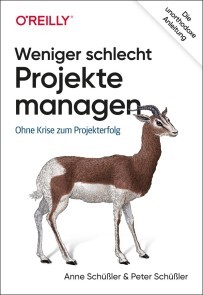
Weniger schlecht Projekte managen
Projektmanagement - die unorthodoxe Anleitung* Ratgeber für alle Aspekte, Fragen und Fallstricke rund um die Rolle und die Aufgaben eines Projektmanagers* Informative und unterhaltsame Lektüre für angehende, aber auch gestandene Projektmanager*innen, die ihr Methodik-Wissen auffrischen wollenAnne Schüßler studierte aus Interessensüberforderung erst brotlose Kunst, kriegte dann aber doch noch die Kurve und macht jetzt was mit Software. Sie bloggt über die Welt so im Allgemeinen oder twittert rum. Wenn ihr langweilig ist, guckt sie Bahnhöfe an. Sie ist ein bisschen zu oft in diesem Internet. Peter Schüßler ist zertifizierter Senior Projektmanager (IPMA Level B) und verantwortete in den letzten fünf Jahren als Leiter eines Projektmanagement-Office die konzeptionelle und operative Weiterentwicklung der Projektmanagementsystematik für Großprojekte im nationalen und internationalen Umfeld.
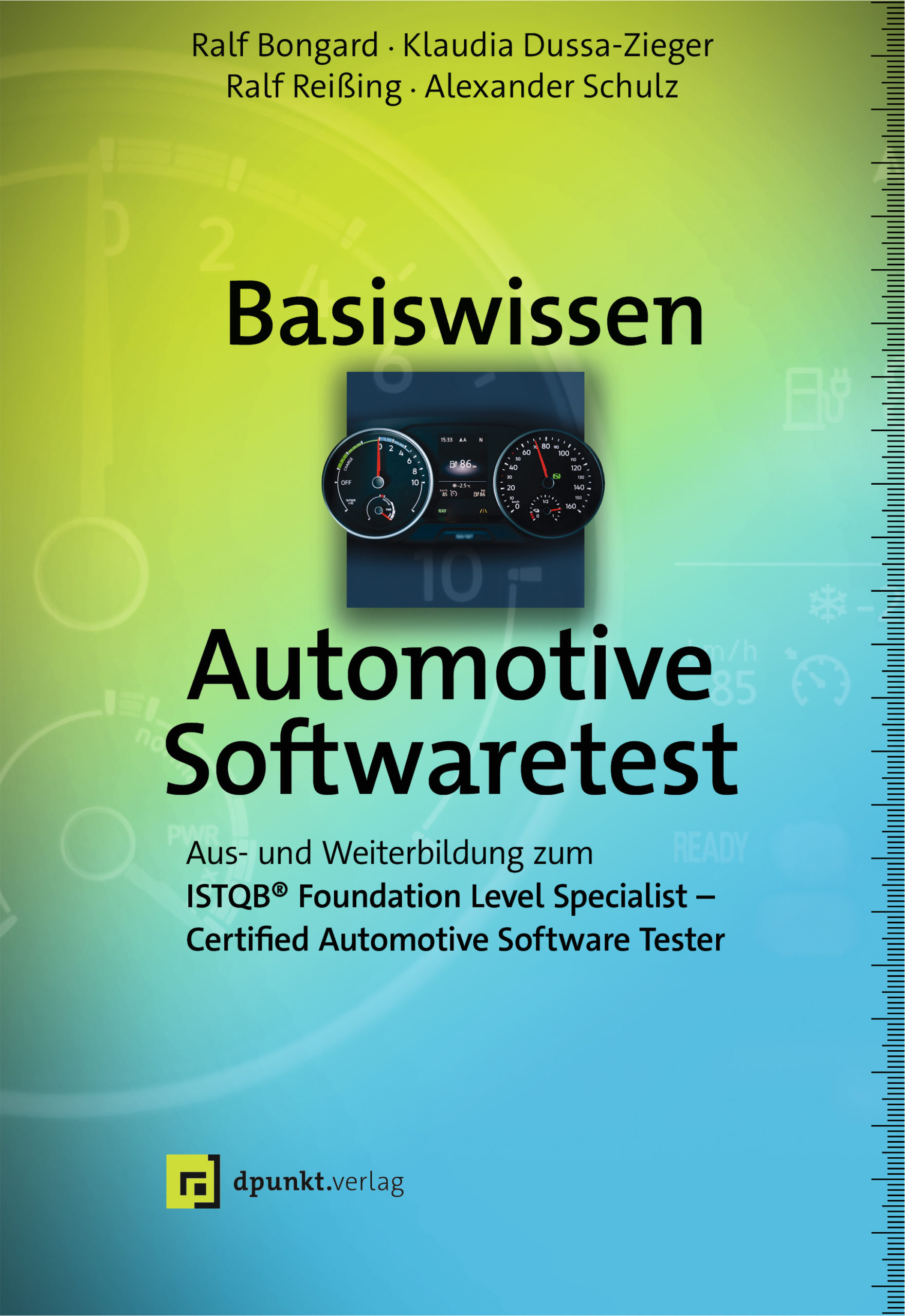
Basiswissen Automotive Softwaretest
Kompaktes Grundlagenwerk für den Certified Automotive Software Tester.Das Buch gibt einen fundierten Überblick über die Besonderheiten von Softwaretests im automobilen Umfeld und vermittelt das notwendige Praxiswissen für den Automotive Software Tester. Es erläutert ausführlich, wie bei der Auswahl von angemessenen Testverfahren die grundlegenden Anforderungen der relevanten Normen und Standards wie Automotive SPICE, ISO 26262 und AUTOSAR berücksichtigt werden.Auch auf das Testen in virtuellen Testumgebungen wird im Detail eingegangen. Zur Vertiefung finden sich im Anhang weiterführende Informationen zu ISO 26262 und Automotive SPICE.»Basiswissen Automotive Softwaretest« eignet sich mit vielen erläuternden Beispielen gleichermaßen für das Selbststudium, zur Vorbereitung auf die Zertifizierung sowie als kompaktes Basiswerk zum Thema in der Praxis und an Hochschulen.Über die Autoren:Ralf Bongard ist Geschäftsführer und Trainer der ISARTAL akademie und war über 15 Jahre in der Automobilindustrie als Entwickler und Projektleiter sowie als Consultant für Anforderungs- und Testmanagement tätig. Er ist Mitglied des GTB und stellvertretender Leiter der GTB- Arbeitsgruppe „Certified Automotive Software Tester“.Klaudia Dussa-Zieger ist leitende Beraterin bei der imbus AG und verfügt über 20 Jahre Berufserfahrung in den Bereichen Softwaretest, Testmanagement und Testprozessberatung. Seit 2018 ist sie die Vorsitzende des GTB.Prof. Dr. Ralf Reißing ist Informatiker und seit über 17 Jahren im Automobilbereich tätig - aktuell als Professor für Automobilinformatik an der Hochschule Coburg. Er ist Gründer und Leiter des Steinbeis-Transferzentrums Automotive Software Engineering sowie Mitglied des GTB.Alexander Schulz arbeitet bei der BMW Group in der Fahrzeugentwicklung im Bereich der Funktionssicherheit. Er ist seit 2012 schwerpunktmäßig im Bereich der Funktionalen Sicherheit nach IEC 61508 und ISO 26262 tätig.Alle Autoren dieses Buchs waren aktiv an der Entwicklung des Lehrplans zum „ISTQB Certified Automotive Software Tester“ beteiligt.

Practical Blockchains and Cryptocurrencies
Create cryptocurrency and blockchain applications by examining the key algorithms and concepts pertaining to blockchains, transaction processing, mining, distributed consensus, and anonymous currencies. In this book, you’ll develop a fully functional cryptocurrency from scratch in the Python language. PRACTICAL BLOCKCHAINS AND CRYPTOCURRENCIES is a reference for development of blockchain applications and provides you with rigorous information on cryptography and the theory underlying blockchains.This book consists of small chapters that focus on particular topics. You’ll start with a short history of money. Next, you will survey the bitcoin and altcoin ecosystem before delving into cryptographic hash functions, symmetric encryption, public key cryptography, and digital signatures. All the mathematics required to develop blockchain applications is covered. The emphasis is on providing a lucid and rigorous exposition on the nature and working of these constructs.The next major segment of the book discusses the key concepts and algorithms required to develop blockchain and cryptocurrency applications. There are expositions on blockchain construction, Merkle trees, peer-to-peer networks, cryptocurrency addresses, transactions, and mining. You’ll take a deep dive into the formation of consensus in distributed systems.In this book you’ll develop a fully functional cryptocurrency called Helium from scratch in Python. The language requirements are modest since it is presumed that most readers will not be acquainted with Python. The entire source code and unit test code is included in this book.PRACTICAL BLOCKCHAINS AND CRYPTOCURRENCIES interleaves theory and Helium program code chapters in order to demonstrate the practical application of theory in working Helium program code.WHAT YOU WILL LEARN* Gain the mathematical foundations as well as the concepts and algorithms of blockchains and cryptocurrencies* Implement a cryptocurrency from scratch in Python* Master the design of distributed blockchain applications WHO THIS BOOK IS FORAnyone interested in creating cryptocurrency and blockchain applicationsKARAN SINGH GAREWAL is an attorney at law in Canada. He has over 20 years of software development experience in C, C++, Go, JavaScript, Node, Ruby/Rails, Python/Django, Vue, PostgresSQL, MySQL, and Cassandra. His current interests are in financial engineering and real-time algorithmic trading systems. He is developing a neural network cryptocurrency trading platform on a C++, Go, Cassandra, and Vue stack.CHAPTER 1: THE HISTORY OF MONEY AND ALTERNATE CURRENCIESChapter Goal: Explain the historical evolution of money and alternate currencies prior to bitcoinSub-Topics1. Characteristics of money2. Gold and silver backed currencies3. Gold standard and fiat currencies4. Alternate currencies prior to bitcoin (Liberty coin, etc.)5. Bitcoin6. The Darknet7. Future evolution of cryptocurrenciesCHAPTER 2: BITCOIN AND ALTCOINSChapter Goal: Discussion of bitcoin and altcoins in circulation and their properties and their raison d’etre.Sub-Topics1. Introduction2. Bitcoin3. Ethereum4. Monero5. Ripple6. Stellar, Tron, and other cryptocurrenciesCHAPTER 3: CRYPTOGRAPHIC HASH FUNCTIONSChapter Goal: Explain cryptographic hash functions, their characteristics, and why they are important in blockchain and cryptocurrency application development.Sub-Topics1. Introduction2. Cryptographic hash functions3. The collision free property of cryptographic hash functions4. Proving the tamper free property5. The irreversible property6. The unique range property7. Hash pointers and data structures8. Proving authenticity with crytpographic hashes9. The SHA-256 cryptographic hash10. Common cryptographic hash functionsCHAPTER 4: SYMMETRIC ENCRYPTIONChapter Goal: Explain what symmetric encryption is and it’s deficiency in secure key distributionSub-Topics:1. Introduction2. How symmetric encryption works3. The key distribution problem4. Common symmetric encryption algorithmsCHAPTER 5: PUBLIC KEY CRYPTOGRAPHYChapter Goal: Explain what public key cryptography is and how it worksSub-Topics:1. Introduction2. Algorithms to generate public private key pairs3. RSA and elliptic curve cryptography4. Using public–private key pairs for encryption and decryption5. Identity formation and proof with public keys6. Generating globally unique IDsCHAPTER 6: DIGITAL SIGNATURESChapter Goal: Show how the digital signature algorithm is implemented and how it can be used to prove authorship and authenticity of documentsSub-Topics:1. Introduction2. Creating digital signatures3. Proving authorship and authenticity of documentsCHAPTER 7: BLOCKCHAIN CONSTRUCTIONChapter Goal: Discuss properties of a blockchain and how to create a blockchainSub-Topics:1. Introduction2. Properties of blockchain3. How to create a blockchain4. The bitcoin blockchain5. Scalability issues in blockchain6. Blockchain databases7. The genesis block8. Creating a simple cryptocurrencyCHAPTER 8: THE MERKLE TREE ALGORITHMChapter Goal: A discussion of the Merkle tree algorithm along with source code implementationsSub-Topics:1. Introduction2. Implementation of the Merkle tree algorithmCHAPTER 9: TOPOLOGY OF CRYPTOCURRENCY NETWORKSChapter Goal: What is a peer-to-peer network and the use of such P2P networks in blockchain applications to broadcast and verify transactions.Sub-Topics:1. Introduction2. Peer-to-peer networks3. Node identity and supernodes4. The bitcoin blockchain5. Block and transaction propagationCHAPTER 10: CRYPTOCURRENCY PARAMETERS AND CONFIGURATIONChapter Goal: Enumerate some common configuration parameters that are used when creating a cryptocurrency and their implications.Sub-Topics:1. Introduction2. Common cryptocurrency parametersCHAPTER 11: CRYPTOCURRENCY ADDRESSESChapter Goal: Creating and using cryptocurrency addressesSub-Topics:1. Introduction2. How to make a cryptocurrency address3. How bitcoin uses addresses4. Key generation algorithms5. Hierarchical deterministic key generationCHAPTER 12: CRYPTOCURRENCY TRANSACTIONSChapter Goal: How transactions are implemented and broadcast in a cryptocurrency network.Sub-Topics:1. Introduction2. Transaction mechanics3. Canonical transaction structures4. Broadcasting transactions5. Transaction validation6. How bitcoin implements transactions7. Locking and unlocking transactions8. Transaction feesCHAPTER 13: CRYPTOCURRENCY STORAGEChapter Goal: Discuss methods for storing cryptocurrenciesSub-Topics:1. Introduction2. Cold storage and hot storage3. Wallets and local storage4. Storage on the blockchain5. Online wallets6. ExchangesCHAPTER 14: MININGChapter Goal: Explain how blocks are mined in a cryptocurrency networkSub-Topics:1. Introduction2. How mining works3. Incentives for block formation4. Bitcoin mining5. Chainstate database6. Proof of work and the difficulty number7. Energy consumption8. ASIC resistant mining9. Mining attacks10. Proof of stake and virtual mining11. Hash power computationsCHAPTER 15: THE BITCOIN DISTRIBUTED CONSENSUS ALGORITHMChapter Goal: Discussion of the distributed consensus algorithm in bitcoinSub-Topics:1. Introduction2. Consensus formation in bitcoin3. Blockchain forks4. Double spend resolution in the bitcoin networkCHAPTER 16: ALTERNATE DISTRIBUTED CONSENSUS ALGORITHMSChapter Goal: Discussion of distributed consensus algorithm that is not based on bitcoin’s proof of work algorithmSub-Topics:1. Introduction2. Proof of stake distributed consensus3. Delegated proof of stake4. Proof of weight algorithms5. The Byzantine Generals problem6. Byzantine Fault tolerance7. Federated Byzantine agreement algorithm8. Proof of weight, DAGs, and other algorithmsCHAPTER 17: WORKING AT SCALEChapter Goal: How to build blockchain and cryptocurrency applications that scaleSub-Topics:1. Introduction2. Scalability in the bitcoin network3. Subchains4. The lightening network5. Sharded networks6. Other solutionsCHAPTER 18: ANONYMOUS CRYPTOCURRENCY NETWORKSChapter Goal: Discussion of anonymity in cryptocurrency networksSub-Topics:1. Introduction2. Why bitcoin is not an anonymous currency3. Some simple precautions for bitcoin transactions4. Mixers5. Implementing anonymity for a cryptocurrency6. Using TorCHAPTER 19: DESIGNING A CRYPTOCURRENCYChapter Goal: Architecture and logical design principles in cryptocurrency creationSub-Topics:1. Introduction2. Network architectures3. Blockchain specification and implementation4. Database implementation5. Transaction specification6. Selecting a distributed consensus algorithm7. The mining algorithm8. The money supply9. The velocity of money10. Creating the genesis block11. Founder’s reserve12. Language selection13. Bon voyageAPPENDIX: INSTALLING AND USING A BITCOIN NODEChapter Goal: Install a full Bitcoin node on a Linux machine

Implementing Effective Code Reviews
The ideal code review process differs from organization to organization, but the needs all boil down to the same foundational factors. A software development team cannot properly grow if its code reviews are not consistent, straightforward, and aspire to hit several company goals at once, such as security, performance, longevity, and more. Implementing Effective Code Reviews is the manual your team has been seeking.Author Giuliana Carullo uses her expert background to guide you through the basics of building and maintaining clean code, and she is known for distilling complex concepts into entertaining and easy-to-grasp lessons. Healthy code requires incremental improvements, and knowing how to execute this is essential for conducting effective reviews on your team. While complex and fancy code can be interesting to work with, it will not always achieve business goals or solve urgent problems. Good coding practices are at the heart of a high-performing team, and Carullo instills these core values in a simple, straight-forward way in Implementing Effective Code Reviews.Whether you are a passionate programmer looking to go the extra mile at the office, or an experienced software engineer seeking a guide to how to improve your leadership and code review process, this book covers it all. With each chapter wrapped up in a handy checklist of crucial takeaways, Carullo has created an essential handbook for coders everywhere. There are a lot of myths that dominate the programming landscape, and Implementing Effective Code Reviews grounds the process and gets to the heart of the matter.WHAT YOU WILL LEARN* Understand how to work with your team to implement effective code reviews* Master good programming practices that will build healthy code* Discover how you should tackle different complex areas during code review like, security and performance WHO THIS BOOK IS FORPassionate programmers willing to go the extra mile to be better at their jobs, new programmers looking to strengthen their programming skills, and experienced software engineers looking for a quick guide on how to review codeGiuliana Carullo, CCSK, PSM certified, is a Research Engineering Manager at Tenable. With over 15 years of engineering experience, she has grown her expertise mainly in the networking, security, cloud computing, telecommunications, and Internet of Things (IoT) industries. Through her career, she's has worn many hats, including researcher, engineer, project manager, and engineering manager. Giuliana has been doing research in a number of application fields for over 7 years, 5 of which in the InfoSec area. She dealt with research in a number of application fields, from academia to industrial research, within SMEs (small and mid-size enterprises) and corporations, including Intel and Ericsson. As the author of 15 research papers and several books, Giuliana loves to make even difficult concepts entertaining and easy to grasp.

Reinforcement Learning
In uralten Spielen wie Schach oder Go können sich die brillantesten Spieler verbessern, indem sie die von einer Maschine produzierten Strategien studieren. Robotische Systeme üben ihre Bewegungen selbst. In Arcade Games erreichen lernfähige Agenten innerhalb weniger Stunden übermenschliches Niveau. Wie funktionieren diese spektakulären Algorithmen des bestärkenden Lernens? Mit gut verständlichen Erklärungen und übersichtlichen Beispielen in Java und Greenfoot können Sie sich die Prinzipien des bestärkenden Lernens aneignen und in eigenen intelligenten Agenten anwenden. Greenfoot (M.Kölling, King’s College London) und das Hamster-Modell (D.Bohles, Universität Oldenburg) sind einfache aber auch mächtige didaktische Werkzeuge, die entwickelt wurden, um Grundkonzepte der Programmierung zu vermitteln. Wir werden Figuren wie den Java-Hamster zu lernfähigen Agenten machen, die eigenständig ihre Umgebung erkunden.Nach seinem Studium der Informatik und Philosophie mit Schwerpunkt künstliche Intelligenz und maschinelles Lernen an der Humboldt-Universität in Berlin und einigen Jahren als Projektingenieur ist Uwe Lorenz derzeit als Gymnasiallehrer für Informatik und Mathematik tätig. Seit seinem Erstkontakt mit Computern Ende der 80er Jahre hat ihn das Thema Künstliche Intelligenz nicht mehr losgelassen.Bestärkendes Lernen als Teilgebiet des Maschinellen Lernens.-Grundbegriffe des Bestärkenden Lernens.-Optimale Entscheidungen in einem bekannten Umweltsystem.-Dynamische Programmierung.- rekursive Tiefensuche.-Entscheiden und Lernen in einem unbekannten Umweltsystem.-Q- und Sarsa Learning, Eignungspfade, Dyna-Q.-Policy Gradient und Actor Critic.- Monte Carlo-Evaluationen und Monte Carlo-Baumsuche (MCTS).-Künstliche neuronalen Netze als Schätzer für Zustandsbewertungen und Handlungspreferenzen.-Werden digitale Agenten bald intelligenter als Menschen sein?.-Leitbilder in der K.I..
Machine Learning and Big Data
THIS BOOK IS INTENDED FOR ACADEMIC AND INDUSTRIAL DEVELOPERS, EXPLORING AND DEVELOPING APPLICATIONS IN THE AREA OF BIG DATA AND MACHINE LEARNING, INCLUDING THOSE THAT ARE SOLVING TECHNOLOGY REQUIREMENTS, EVALUATION OF METHODOLOGY ADVANCES AND ALGORITHM DEMONSTRATIONS.The intent of this book is to provide awareness of algorithms used for machine learning and big data in the academic and professional community. The 17 chapters are divided into 5 sections: Theoretical Fundamentals; Big Data and Pattern Recognition; Machine Learning: Algorithms & Applications; Machine Learning's Next Frontier and Hands-On and Case Study. While it dwells on the foundations of machine learning and big data as a part of analytics, it also focuses on contemporary topics for research and development. In this regard, the book covers machine learning algorithms and their modern applications in developing automated systems.Subjects covered in detail include:* Mathematical foundations of machine learning with various examples.* An empirical study of supervised learning algorithms like Naïve Bayes, KNN and semi-supervised learning algorithms viz. S3VM, Graph-Based, Multiview.* Precise study on unsupervised learning algorithms like GMM, K-mean clustering, Dritchlet process mixture model, X-means and Reinforcement learning algorithm with Q learning, R learning, TD learning, SARSA Learning, and so forth.* Hands-on machine leaning open source tools viz. Apache Mahout, H2O.* Case studies for readers to analyze the prescribed cases and present their solutions or interpretations with intrusion detection in MANETS using machine learning.* Showcase on novel user-cases: Implications of Electronic Governance as well as Pragmatic Study of BD/ML technologies for agriculture, healthcare, social media, industry, banking, insurance and so on.UMA N. DULHARE is a Professor in the Department of Computer Science & Eng., MJCET affiliated to Osmania University, Hyderabad, India. She has more than 20 years teaching experience years with many publications in reputed international conferences, journals and online book chapter contributions. She received her PhD from Osmania University, Hyderabad. KHALEEL AHMAD is an Assistant Professor in the Department of Computer Science & Information Technology at Maulana Azad National Urdu University, Hyderabad, India. He holds a PhD in Computer Science & Engineering. He has published more than 25 papers in refereed journals and conferences as well as edited two books. KHAIROL AMALI BIN AHMAD obtained a BSc in Electrical Engineering in 1992 from the United States Military Academy, West Point, MSc in Military Electronic Systems Engineering in 1999 from Cranfield University, England, and PhD from ISAE-SUPAERO, France in 2015. Currently, he is the Dean of the Engineering Faculty at the National Defense University of Malaysia. Preface xixSECTION 1: THEORETICAL FUNDAMENTALS 11 MATHEMATICAL FOUNDATION 3Afroz and Basharat Hussain1.1 Concept of Linear Algebra 31.1.1 Introduction 31.1.2 Vector Spaces 51.1.3 Linear Combination 61.1.4 Linearly Dependent and Independent Vectors 71.1.5 Linear Span, Basis and Subspace 81.1.6 Linear Transformation (or Linear Map) 91.1.7 Matrix Representation of Linear Transformation 101.1.8 Range and Null Space of Linear Transformation 131.1.9 Invertible Linear Transformation 151.2 Eigenvalues, Eigenvectors, and Eigendecomposition of a Matrix 151.2.1 Characteristics Polynomial 161.2.1.1 Some Results on Eigenvalue 161.2.2 Eigendecomposition 181.3 Introduction to Calculus 201.3.1 Function 201.3.2 Limits of Functions 211.3.2.1 Some Properties of Limits 221.3.2.2 1nfinite Limits 251.3.2.3 Limits at Infinity 261.3.3 Continuous Functions and Discontinuous Functions 261.3.3.1 Discontinuous Functions 271.3.3.2 Properties of Continuous Function 271.3.4 Differentiation 28References 292 THEORY OF PROBABILITY 31Parvaze Ahmad Dar and Afroz2.1 Introduction 312.1.1 Definition 312.1.1.1 Statistical Definition of Probability 312.1.1.2 Mathematical Definition of Probability 322.1.2 Some Basic Terms of Probability 322.1.2.1 Trial and Event 322.1.2.2 Exhaustive Events (Exhaustive Cases) 332.1.2.3 Mutually Exclusive Events 332.1.2.4 Equally Likely Events 332.1.2.5 Certain Event or Sure Event 332.1.2.6 Impossible Event or Null Event (ϕ) 332.1.2.7 Sample Space 342.1.2.8 Permutation and Combination 342.1.2.9 Examples 352.2 Independence in Probability 382.2.1 Independent Events 382.2.2 Examples: Solve the Following Problems 382.3 Conditional Probability 412.3.1 Definition 412.3.2 Mutually Independent Events 422.3.3 Examples 422.4 Cumulative Distribution Function 432.4.1 Properties 442.4.2 Example 442.5 Baye’s Theorem 462.5.1 Theorem 462.5.1.1 Examples 472.6 Multivariate Gaussian Function 502.6.1 Definition 502.6.1.1 Univariate Gaussian (i.e., One Variable Gaussian) 502.6.1.2 Degenerate Univariate Gaussian 512.6.1.3 Multivariate Gaussian 51References 513 CORRELATION AND REGRESSION 53Mohd. Abdul Haleem Rizwan3.1 Introduction 533.2 Correlation 543.2.1 Positive Correlation and Negative Correlation 543.2.2 Simple Correlation and Multiple Correlation 543.2.3 Partial Correlation and Total Correlation 543.2.4 Correlation Coefficient 553.3 Regression 573.3.1 Linear Regression 643.3.2 Logistic Regression 643.3.3 Polynomial Regression 653.3.4 Stepwise Regression 663.3.5 Ridge Regression 673.3.6 Lasso Regression 673.3.7 Elastic Net Regression 683.4 Conclusion 68References 69SECTION 2: BIG DATA AND PATTERN RECOGNITION 714 DATA PREPROCESS 73Md. Sharif Hossen4.1 Introduction 734.1.1 Need of Data Preprocessing 744.1.2 Main Tasks in Data Preprocessing 754.2 Data Cleaning 774.2.1 Missing Data 774.2.2 Noisy Data 784.3 Data Integration 804.3.1 χ2 Correlation Test 824.3.2 Correlation Coefficient Test 824.3.3 Covariance Test 834.4 Data Transformation 834.4.1 Normalization 834.4.2 Attribute Selection 854.4.3 Discretization 864.4.4 Concept Hierarchy Generation 864.5 Data Reduction 884.5.1 Data Cube Aggregation 884.5.2 Attribute Subset Selection 904.5.3 Numerosity Reduction 914.5.4 Dimensionality Reduction 954.6 Conclusion 101Acknowledgements 101References 1015 BIG DATA 105R. Chinnaiyan5.1 Introduction 1055.2 Big Data Evaluation With Its Tools 1075.3 Architecture of Big Data 1075.3.1 Big Data Analytics Framework Workflow 1075.4 Issues and Challenges 1095.4.1 Volume 1095.4.2 Variety of Data 1105.4.3 Velocity 1105.5 Big Data Analytics Tools 1105.6 Big Data Use Cases 1145.6.1 Banking and Finance 1145.6.2 Fraud Detection 1145.6.3 Customer Division and Personalized Marketing 1145.6.4 Customer Support 1155.6.5 Risk Management 1165.6.6 Life Time Value Prediction 1165.6.7 Cyber Security Analytics 1175.6.8 Insurance Industry 1185.6.9 Health Care Sector 1185.6.9.1 Big Data Medical Decision Support 1205.6.9.2 Big Data–Based Disorder Management 1205.6.9.3 Big Data–Based Patient Monitoring and Control 1205.6.9.4 Big Data–Based Human Routine Analytics 1205.6.10 Internet of Things 1215.6.11 Weather Forecasting 1215.7 Where IoT Meets Big Data 1225.7.1 IoT Platform 1225.7.2 Sensors or Devices 1235.7.3 Device Aggregators 1235.7.4 IoT Gateway 1235.7.5 Big Data Platform and Tools 1245.8 Role of Machine Learning For Big Data and IoT 1245.8.1 Typical Machine Learning Use Cases 1255.9 Conclusion 126References 1276 PATTERN RECOGNITION CONCEPTS 131Ambeshwar Kumar, R. Manikandan and C. Thaventhiran6.1 Classifier 1326.1.1 Introduction 1326.1.2 Explanation-Based Learning 1336.1.3 Isomorphism and Clique Method 1356.1.4 Context-Dependent Classification 1386.1.5 Summary 1396.2 Feature Processing 1406.2.1 Introduction 1406.2.2 Detection and Extracting Edge With Boundary Line 1416.2.3 Analyzing the Texture 1426.2.4 Feature Mapping in Consecutive Moving Frame 1436.2.5 Summary 1456.3 Clustering 1456.3.1 Introduction 1456.3.2 Types of Clustering Algorithms 1466.3.2.1 Dynamic Clustering Method 1486.3.2.2 Model-Based Clustering 1486.3.3 Application 1496.3.4 Summary 1506.4 Conclusion 151References 151SECTION 3: MACHINE LEARNING: ALGORITHMS & APPLICATIONS 1537 MACHINE LEARNING 155Elham Ghanbari and Sara Najafzadeh7.1 History and Purpose of Machine Learning 1557.1.1 History of Machine Learning 1557.1.1.1 What is Machine Learning? 1567.1.1.2 When the Machine Learning is Needed? 1577.1.2 Goals and Achievements in Machine Learning 1587.1.3 Applications of Machine Learning 1587.1.3.1 Practical Machine Learning Examples 1597.1.4 Relation to Other Fields 1617.1.4.1 Data Mining 1617.1.4.2 Artificial Intelligence 1627.1.4.3 Computational Statistics 1627.1.4.4 Probability 1637.1.5 Limitations of Machine Learning 1637.2 Concept of Well-Defined Learning Problem 1647.2.1 Concept Learning 1647.2.1.1 Concept Representation 1667.2.1.2 Instance Representation 1677.2.1.3 The Inductive Learning Hypothesis 1677.2.2 Concept Learning as Search 1677.2.2.1 Concept Generality 1687.3 General-to-Specific Ordering Over Hypotheses 1697.3.1 Basic Concepts: Hypothesis, Generality 1697.3.2 Structure of the Hypothesis Space 1697.3.2.1 Hypothesis Notations 1697.3.2.2 Hypothesis Evaluations 1707.3.3 Ordering on Hypotheses: General to Specific 1707.3.3.1 Most Specific Generalized 1717.3.3.2 Most General Specialized 1737.3.3.3 Generalization and Specialization Operators 1737.3.4 Hypothesis Space Search by Find-S Algorithm 1747.3.4.1 Properties of the Find-S Algorithm 1767.3.4.2 Limitations of the Find-S Algorithm 1767.4 Version Spaces and Candidate Elimination Algorithm 1777.4.1 Representing Version Spaces 1777.4.1.1 General Boundary 1787.4.1.2 Specific Boundary 1787.4.2 Version Space as Search Strategy 1797.4.3 The List-Eliminate Method 1797.4.4 The Candidate-Elimination Method 1807.4.4.1 Example 1817.4.4.2 Convergence of Candidate-Elimination Method 1837.4.4.3 Inductive Bias for Candidate-Elimination 1847.5 Concepts of Machine Learning Algorithm 1857.5.1 Types of Learning Algorithms 1857.5.1.1 Incremental vs. Batch Learning Algorithms 1867.5.1.2 Offline vs. Online Learning Algorithms 1887.5.1.3 Inductive vs. Deductive Learning Algorithms 1897.5.2 A Framework for Machine Learning Algorithms 1897.5.2.1 Training Data 1907.5.2.2 Target Function 1907.5.2.3 Construction Model 1917.5.2.4 Evaluation 1917.5.3 Types of Machine Learning Algorithms 1947.5.3.1 Supervised Learning 1967.5.3.2 Unsupervised Learning 1987.5.3.3 Semi Supervised Learning 2007.5.3.4 Reinforcement Learning 2007.5.3.5 Deep Learning 2027.5.4 Types of Machine Learning Problems 2037.5.4.1 Classification 2047.5.4.2 Clustering 2047.5.4.3 Optimization 2057.5.4.4 Regression 205Conclusion 205References 2068 PERFORMANCE OF SUPERVISED LEARNING ALGORITHMS ON MULTI-VARIATE DATASETS 209Asif Iqbal Hajamydeen and Rabab Alayham Abbas Helmi8.1 Introduction 2098.2 Supervised Learning Algorithms 2108.2.1 Datasets and Experimental Setup 2118.2.2 Data Treatment/Preprocessing 2128.3 Classification 2128.3.1 Support Vector Machines (SVM) 2138.3.2 Naive Bayes (NB) Algorithm 2148.3.3 Bayesian Network (BN) 2148.3.4 Hidden Markov Model (HMM) 2158.3.5 K-Nearest Neighbour (KNN) 2168.3.6 Training Time 2168.4 Neural Network 2178.4.1 Artificial Neural Networks Architecture 2198.4.2 Application Areas 2228.4.3 Artificial Neural Networks and Time Series 2248.5 Comparisons and Discussions 2258.5.1 Comparison of Classification Accuracy 2258.5.2 Forecasting Efficiency Comparison 2268.5.3 Recurrent Neural Network (RNN) 2268.5.4 Backpropagation Neural Network (BPNN) 2288.5.5 General Regression Neural Network 2298.6 Summary and Conclusion 230References 2319 UNSUPERVISED LEARNING 233M. Kumara Swamy and Tejaswi Puligilla9.1 Introduction 2339.2 Related Work 2349.3 Unsupervised Learning Algorithms 2359.4 Classification of Unsupervised Learning Algorithms 2389.4.1 Hierarchical Methods 2389.4.2 Partitioning Methods 2399.4.3 Density-Based Methods 2429.4.4 Grid-Based Methods 2459.4.5 Constraint-Based Clustering 2459.5 Unsupervised Learning Algorithms in ML 2469.5.1 Parametric Algorithms 2469.5.2 Non-Parametric Algorithms 2469.5.3 Dirichlet Process Mixture Model 2479.5.4 X-Means 2489.6 Summary and Conclusions 248References 24810 SEMI-SUPERVISED LEARNING 251Manish Devgan, Gaurav Malik and Deepak Kumar Sharma10.1 Introduction 25210.1.1 Semi-Supervised Learning 25210.1.2 Comparison With Other Paradigms 25510.2 Training Models 25710.2.1 Self-Training 25710.2.2 Co-Training 25910.3 Generative Models—Introduction 26110.3.1 Image Classification 26410.3.2 Text Categorization 26610.3.3 Speech Recognition 26810.3.4 Baum-Welch Algorithm 26810.4 S3VMs 27010.5 Graph-Based Algorithms 27410.5.1 Mincut 27510.5.2 Harmonic 27610.5.3 Manifold Regularization 27710.6 Multiview Learning 27710.7 Conclusion 278References 27911 REINFORCEMENT LEARNING 281Amandeep Singh Bhatia, Mandeep Kaur Saggi, Amit Sundas and Jatinder Ashta11.1 Introduction: Reinforcement Learning 28111.1.1 Elements of Reinforcement Learning 28311.2 Model-Free RL 28411.2.1 Q-Learning 28511.2.2 R-Learning 28611.3 Model-Based RL 28711.3.1 SARSA Learning 28911.3.2 Dyna-Q Learning 29011.3.3 Temporal Difference 29111.3.3.1 TD(0) Algorithm 29211.3.3.2 TD(1) Algorithm 29311.3.3.3 TD(λ) Algorithm 29411.3.4 Monte Carlo Method 29411.3.4.1 Monte Carlo Reinforcement Learning 29611.3.4.2 Monte Carlo Policy Evaluation 29611.3.4.3 Monte Carlo Policy Improvement 29811.4 Conclusion 298References 29912 APPLICATION OF BIG DATA AND MACHINE LEARNING 305Neha Sharma, Sunil Kumar Gautam, Azriel A. Henry and Abhimanyu Kumar12.1 Introduction 30612.2 Motivation 30712.3 Related Work 30812.4 Application of Big Data and ML 30912.4.1 Healthcare 30912.4.2 Banking and Insurance 31212.4.3 Transportation 31412.4.4 Media and Entertainment 31612.4.5 Education 31712.4.6 Ecosystem Conservation 31912.4.7 Manufacturing 32112.4.8 Agriculture 32212.5 Issues and Challenges 32412.6 Conclusion 326References 326SECTION 4: MACHINE LEARNING’S NEXT FRONTIER 33513 TRANSFER LEARNING 337Riyanshi Gupta, Kartik Krishna Bhardwaj and Deepak Kumar Sharma13.1 Introduction 33813.1.1 Motivation, Definition, and Representation 33813.2 Traditional Learning vs. Transfer Learning 33813.3 Key Takeaways: Functionality 34013.4 Transfer Learning Methodologies 34113.5 Inductive Transfer Learning 34213.6 Unsupervised Transfer Learning 34413.7 Transductive Transfer Learning 34613.8 Categories in Transfer Learning 34713.9 Instance Transfer 34813.10 Feature Representation Transfer 34913.11 Parameter Transfer 34913.12 Relational Knowledge Transfer 35013.13 Relationship With Deep Learning 35113.13.1 Transfer Learning in Deep Learning 35113.13.2 Types of Deep Transfer Learning 35213.13.3 Adaptation of Domain 35213.13.4 Domain Confusion 35313.13.5 Multitask Learning 35413.13.6 One-Shot Learning 35413.13.7 Zero-Shot Learning 35513.14 Applications: Allied Classical Problems 35513.14.1 Transfer Learning for Natural Language Processing 35613.14.2 Transfer Learning for Computer Vision 35613.14.3 Transfer Learning for Audio and Speech 35713.15 Further Advancements and Conclusion 357References 358SECTION 5: HANDS-ON AND CASE STUDY 36114 HANDS ON MAHOUT—MACHINE LEARNING TOOLUma N. Dulhare and Sheikh Gouse14.1 Introduction to Mahout 36314.1.1 Features 36614.1.2 Advantages 36614.1.3 Disadvantages 36614.1.4 Application 36614.2 Installation Steps of Apache Mahout Using Cloudera 36714.2.1 Installation of VMware Workstation 36714.2.2 Installation of Cloudera 36814.2.3 Installation of Mahout 38314.2.4 Installation of Maven 38414.2.5 Testing Mahout 38614.3 Installation Steps of Apache Mahout Using Windows 10 38614.3.1 Installation of Java 38614.3.2 Installation of Hadoop 38714.3.3 Installation of Mahout 38714.3.4 Installation of Maven 38714.3.5 Path Setting 38814.3.6 Hadoop Configuration 39114.4 Installation Steps of Apache Mahout Using Eclipse 39514.4.1 Eclipse Installation 39514.4.2 Installation of Maven Through Eclipse 39614.4.3 Maven Setup for Mahout Configuration 39914.4.4 Building the Path- 40214.4.5 Modifying the pom.xml File 40514.4.6 Creating the Data File 40714.4.7 Adding External Jar Files 40814.4.8 Creating the New Package and Classes 41014.4.9 Result 41114.5 Mahout Algorithms 41214.5.1 Classification 41214.5.2 Clustering 41314.5.3 Recommendation 41514.6 Conclusion 418References 41815 HANDS-ON H2O MACHINE LEARNING TOOL 423Uma N. Dulhare, Azmath Mubeen and Khaleel Ahmed15.1 Introduction 42415.2 Installation 42515.2.1 The Process of Installation 42515.3 Interfaces 43115.4 Programming Fundamentals 43215.4.1 Data Manipulation 43215.4.1.1 Data Types 43215.4.1.2 Data Import 43515.4.2 Models 43615.4.2.1 Model Training 43615.4.3 Discovering Aspects 43715.4.3.1 Converting Data Frames 43715.4.4 H2O Cluster Actions 43815.4.4.1 H2O Key Value Retrieval 43815.4.4.2 H2O Cluster Connection 43815.4.5 Commands 43915.4.5.1 Cluster Information 43915.4.5.2 General Data Operations 44115.4.5.3 String Manipulation Commands 44215.5 Machine Learning in H2O 44215.5.1 Supervised Learning 44215.5.2 Unsupervised Learning 44315.6 Applications of H2O 44315.6.1 Deep Learning 44315.6.2 K-Fold Cross-Authentication or Validation 44815.6.3 Stacked Ensemble and Random Forest Estimator 45015.7 Conclusion 452References 45316 CASE STUDY: INTRUSION DETECTION SYSTEM USING MACHINE LEARNING 455Syeda Hajra Mahin, Fahmina Taranum and Reshma Nikhat16.1 Introduction 45616.1.1 Components Used to Design the Scenario Include 45616.1.1.1 Black Hole 45616.1.1.2 Intrusion Detection System 45716.1.1.3 Components Used From MATLAB Simulator 45816.2 System Design 46516.2.1 Three Sub-Network Architecture 46516.2.2 Using Classifiers of MATLAB 46516.3 Existing Proposals 46716.4 Approaches Used in Designing the Scenario 46916.4.1 Algorithm Used in QualNet 46916.4.2 Algorithm Applied in MATLAB 47116.5 Result Analysis 47116.5.1 Results From QualNet 47116.5.1.1 Deployment 47116.5.1.2 Detection 47216.5.1.3 Avoidance 47316.5.1.4 Validation of Conclusion 47316.5.2 Applying Results to MATLAB 47316.5.2.1 K-Nearest Neighbor 47516.5.2.2 SVM 47716.5.2.3 Decision Tree 47716.5.2.4 Naive Bayes 47916.5.2.5 Neural Network 47916.6 Conclusion 484References 48417 INCLUSION OF SECURITY FEATURES FOR IMPLICATIONS OF ELECTRONIC GOVERNANCE ACTIVITIES 487Prabal Pratap and Nripendra Dwivedi17.1 Introduction 48717.2 Objective of E-Governance 49117.3 Role of Identity in E-Governance 49317.3.1 Identity 49317.3.2 Identity Management and its Buoyancy Against Identity Theft in E-Governance 49417.4 Status of E-Governance in Other Countries 49617.4.1 E-Governance Services in Other Countries Like Australia and South Africa 49617.4.2 Adaptation of Processes and Methodology for Developing Countries 49617.4.3 Different Programs Related to E-Governance 49917.5 Pros and Cons of E-Governance 50117.6 Challenges of E-Governance in Machine Learning 50217.7 Conclusion 503References 503Index 505

Electronics for Beginners
Jump start your journey with electronics! If you’ve thought about getting into electronics, but don’t know where to start, this book gives you the information you need. Starting with the basics of electricity and circuits, you'll be introduced to digital electronics and microcontrollers, capacitors and inductors, and amplification circuits – all while gaining the basic tools and information you need to start working with low-power electronics.Electronics for Beginners walks the fine line of focusing on projects-based learning, while still keeping electronics front and center. You'll learn the mathematics of circuits in an uncomplicated fashion and see how schematics map on to actual breadboards. Written for the absolute beginner, this book steers clear of being too math heavy, giving readers the key information they need to get started on their electronics journey.WHAT YOU’LL LEARN* Review the basic “patterns” of resistor usage—pull up, pull down, voltage divider, and current limiter* Understand the requirements for circuits and how they are put together* Read and differentiate what various parts of the schematics do* Decide what considerations to take when choosing components* Use all battery-powered circuits, so projects are safeWHO THIS BOOK IS FORMakers, students, and beginners of any age interested in getting started with electronics. Jonathan Bartlett is a software developer, researcher, and writer. His first book, Programming from the Ground Up, has been required reading in computer science programs from DeVry to Princeton. He has been the sole or lead author for eight books on topics ranging from computer programming to calculus. He is a technical lead for ITX, where his specialty is getting stuck projects unstuck. Jonathan regularly writes for the blog MindMatters.ai. Chapter 1: IntroductionChapter 2. Before We BeginPart I – Basic ConceptsChapter 3. Dealing with UnitsChapter 4. What is Electricity?Chapter 5. Voltage and ResistanceChapter 6. Your First CircuitChapter 7. Constructing and Testing CircuitsChapter 8. Analyzing Series and Parallel CircuitsChapter 9. Diodes and How to Use ThemChapter 10. Basic Resistor Circuit PatternsChapter 11. Understanding PowerPart II – Digital Electronics and MicrocontrollersChapter 12. Integrated Circuits and Resistive SensorsChapter 13. Using Logic ICsChapter 14. Introduction to MicrocontrollersChapter 15. Building Projects with ArduinoChapter 16. Analog Input and Output on an ArduinoPart III – Capacitors and InductorsChapter 17. Capacitor IntroductionChapter 18. Capacitors as TimersChapter 19. Introduction to Oscillating CircuitsChapter 20. Producing Sound with OscillationChapter 21. InductorsChapter 22. Inductors and Capacitors in CircuitsChapter 23. Reactance and ImpedancePart IV – Amplification CircuitsChapter 24. DC MotorsChapter 25. Amplifying Power with TransistorsChapter 26. Transistor Voltage AmplifiersChapter 27. Examining Partial CircuitsChapter 28. Going FurtherAppendicesA. GlossaryB. Electronics SymbolsC. Integrated Circuit Naming ConventionsD. Electronics Equations and Where They Come FromE. Simplified Datasheets for Common Devices

Neue Möglichkeiten für die Motorsteuergeräte-Software durch Car-to-Cloud-Vernetzung
Lars Hagen zeigt Anwendungsszenarien auf, wie „Connected Car“ und insbesondere Vernetzung durch Car-to-Cloud in der Softwareentwicklung sowie im Serieneinsatz für die Motorsteuerung eingesetzt werden können. Dabei legt der Autor ein Augenmerk auf Themen, die über das reine Datensammeln hinausgehen und sowohl den Up- als auch Download von Daten am Fahrzeug miteinbeziehen. Die externe Rechenleistung auf einer Cloud findet ebenso Berücksichtigung wie die limitierte Datenrate des Fahrzeugbusses und des Mobilfunks. Der Autor: Lars Hagen promovierte am Institut für Fahrzeugtechnik Stuttgart (IFS)der Universität Stuttgart am Lehrstuhl für Fahrzeugantriebe. Außerdem arbeitet er als Software-Funktionsentwickler im Bereich der Motorsteuerung bei einem deutschen Automobilzulieferer. Anwendungsfelder für Car-to-Cloud im Bereich der Motorsteuerung.- Anwendungsbeispiele Applikation und Diagnose für Car-to-Cloud in der Motorsteuergeräte-Software.

The Read Aloud Cloud
WHAT IS “THE CLOUD”? IS IT HERE OR THERE? SHOULD IT BE ALLOWED? SHOULD I EVEN CARE?Have you ever imagined the internet as a giant Rube Goldberg machine? Or the fast-evolving cloud computing space as a literal jungle filled with prehistoric beasts? Does a data breach look like a neo-noir nightmare full of turned-up coat collars and rain-soaked alleys? Wouldn’t all these vital concepts be easier to understand if they looked as interesting as they are? And wouldn’t they be more memorable if we could explain them in rhyme? Whether you’re a kid or an adult, the answer is: YES!The medicine in this spoonful of sugar is a sneaky-informative tour through the past, present and future of cloud computing, from mainframes to serverless and from the Internet of Things to artificial intelligence. Forrest is a professional explainer whose highly-rated conference talks and viral cartoon graphics have been teaching engineers to cloud for years. He knows that a picture is worth a thousand words. But he has plenty of words, too.Your hotel key, your boarding pass,The card you swipe to pay for gas,The smart TV atop the bar,The entertainment in your car,Your doorbell, toothbrush, thermostat,The vacuum that attacked your cat,They all connect the cloud and you.Maybe they shouldn't, but they do.As a graduation gift (call it “Oh the Places You’ll Go” for engineering students), a cubicle conversation starter, or just a delightfully nerdy bedtime story for your kids, “The Read-Aloud Cloud” will be the definitive introduction to the technologies that everyone uses and nobody understands. You can even read it silently if you want. But good luck with that.FORREST BRAZEAL has worked in the tech industry for more than a decade. He's installed software updates during a live cataract surgery and designed robots that perform machine learning on pizza, all while keeping his trademark sense of humor. In 2015, he began drawing a weekly webcomic about his life in the cloud which now reaches more than one hundred thousand regular readers. Forrest regularly interviews the biggest names in cloud computing through his "Think FaaS" podcast and his "Serverless Superheroes" blog series. An original AWS Serverless Hero, Forrest speaks regularly on business and technology at conferences, universities, and private events around the world. CHAPTER 1: WHAT IS THE CLOUDVisual language: minimalist. Cartoon characters on white background. Images are goofy and memorable, such as a Roomba chasing a cat Content: Covers the ubiquity of the cloud in real life (connected/smart home devices, online services, etc) and sets the tone for why we should care that a book is dedicated to this topic. Asks the big questions that will be answered throughout the text: What is the cloud? How does it work? Why should I care? Now that I know that, what should I do?CHAPTER 2: EVOLUTION OF THE CLOUD (A PREHISTORY)Visual language: This section will take place in a prehistoric jungle. Tangled vines, volcanoes, dinosaurs, etc. Content: Covers the background of computing, from mainframes through the client/server era up to virtualizationCHAPTER 3: THE INTERNET: A SERIES OF TUBESVisual language: A steampunk mad scientist’s laboratory, with lots of Rube Goldberg-esque tubes and gears Content: Covers the basics of how data gets from you to the cloud and back again, including remote servers, DNS, IP, etc.CHAPTER 4: CLOUD ARCHITECTUREVisual language: A construction job site. Bricks and mortar. Think Bob the Builder Content: Covers the core building blocks of cloud architecture. Cloud storage, databases, compute. High availability, scalability, and elasticity. Explains why these things are desirable and, in some cases, revolutionary.CHAPTER 5: CLOUD SECURITYVisual language: Noir (black and white, heavy shadows, stark silhouettes) Content: Covers some of the key risks associated with placing your data in the cloud, both personally and professionally. Uses a fictionalized breach to illustrate what can go wrongCHAPTER 6: THE INTERNET OF THINGSVisual language: Cubist, non-representational Content: Explains the Internet of Things, including why a smart device isn’t always better (lower security, risk of it not being supported)CHAPTER 7: ARTIFICIAL INTELLIGENCEVisual language: Used future. Think Blade Runner or Terminator. Red-eyed robots, smog, and neon Content: Covers some basics of how the cloud accelerates AI and machine learning through the centralization of data. Gives examples of when that’s good and when it can be bad (for example, reinforcing conscious or unconscious biases)CHAPTER 8: WHAT NOW?Visual language: Minimalist (same as the opening section; ties everything together) Content: Looks ahead to the future of the cloud, particularly increasing levels of abstraction like serverless, voice programming, and automation. Strikes a hopeful tone and finishes by encouraging the reader to go out and build a better cloud.

Machine Learning für Softwareentwickler
* Eine Einführung in das maschinelle Lernen für Entwickler * Alle wesentlichen Ideen, Werkzeuge und Konzepte des supervised Learning, von neuronalen Netzen und des Deep Learning werden präsentiert * Der gesamte Programmcode ist in Python geschrieben

Das ultimative DAX-Handbuch
Die DAX-Referenz von den DAX-Koryphäen* Meistern Sie die Formelsprache von Power Pivot, Power BI und Microsoft Analysis Services.* Mit vielen praxisnahen Beispielen für den praktischen Einsatz* inkl. kostenlosem Zusatzmaterial wie einer Beispieldatenbank und Power BI-Modellen für alle BeispieleDie bekannten DAX-Experten Marco Russo und Alberto Ferrari führen Sie mit diesem Leitfaden tief in die Formelsprache DAX (Data Analysis Expressions) ein und helfen Ihnen dabei, alles von einfachen Tabellenfunktionen bis zu komplexer Code- und Modelloptimierung zu beherrschen. Erfahren Sie genau, was unter der Haube passiert, wenn Sie einen DAX-Ausdruck ausführen, und nutzen Sie dieses Wissen, um schnelle, robuste Codes zu schreiben.Diese Ausgabe konzentriert sich auf Beispiele, die Sie mit der kostenlosen Power BI Desktop-Version erstellen und ausführen können, und hilft Ihnen, die leistungsstarke Syntax von Variablen (VAR) in Power BI, Excel oder Analysis Services optimal zu nutzen.Marco Russo und Alberto Ferrari sind die Gründer von sqlbi.com und veröffentlichen dort regelmäßig Artikel über Microsoft Power Pivot, Power BI, DAX und SQL Server Analysis Services. Beide Autoren beraten Unternehmen zu BI und sprechen häufig auf bedeutenden internationalen Konferenzen wie Microsoft Ignite, PASS Summit und SQLBits.
CompTIA CySA+ Practice Tests
EFFICIENTLY PREPARE YOURSELF FOR THE DEMANDING COMPTIA CYSA+ EXAMCompTIA CySA+ Practice Tests: Exam CS0-002, 2nd Edition offers readers the fastest and best way to prepare for the CompTIA Cybersecurity Analyst exam. With five unique chapter tests and two additional practice exams for a total of 1000 practice questions, this book covers topics including:* Threat and Vulnerability Management* Software and Systems Security * Security Operations and Monitoring * Incident Response* Compliance and AssessmentThe new edition of CompTIA CySA+ Practice Tests is designed to equip the reader to tackle the qualification test for one of the most sought-after and in-demand certifications in the information technology field today.The authors are seasoned cybersecurity professionals and leaders who guide readers through the broad spectrum of security concepts and technologies they will be required to master before they can achieve success on the CompTIA CySA exam. The book also tests and develops the critical thinking skills and judgment the reader will need to demonstrate on the exam.MIKE CHAPPLE, PHD, CYSA+, CISSP, is Teaching Professor of IT, Analytics, and Operations at the University of Notre Dame. He's a cybersecurity professional and educator with over 20 years of experience. Mike provides cybersecurity certification resources at his website, CertMike.com. DAVID SEIDL, CYSA+, CISSP, PENTEST+, is Vice President for Information Technology and CIO at Miami University. David co-led Notre Dame's move to the cloud, and has written multiple cybersecurity certification books. Introduction xviiChapter 1 Domain 1.0: Threat and Vulnerability Management 1Chapter 2 Domain 2.0: Software and Systems Security 105Chapter 3 Domain 3.0: Security Operations and Monitoring 151Chapter 4 Domain 4.0: Incident Response 207Chapter 5 Domain 5.0: Compliance and Assessment 265Chapter 6 Practice Exam 1 289Chapter 7 Practice Exam 2 315APPENDIX ANSWERS TO REVIEW QUESTIONS 347Answers to Chapter 1: Domain 1.0: Threat and Vulnerability Management 348Answers to Chapter 2: Domain 2.0: Software and Systems Security 381Answers to Chapter 3: Domain 3.0: Security Operations and Monitoring 403Answers to Chapter 4: Domain 4.0: Incident Response 425Answers to Chapter 5: Domain 5.0: Compliance and Assessment 450Answers to Chapter 6: Practice Exam 1 461Answers to Chapter 7: Practice Exam 2 470Index 481

Java Challenge
Ihr persönlicher Java-Coach !* Ihr Java-Trainingsbuch mit Musterlösungen* Lernen Sie Tipps und Kniffe vom Java-Experten kennen* Erweitern Sie Ihr Java-Knowhow in praxisrelevanten BereichenDieses Buch bietet Ihnen ein breit gefächertes Spektrumvon über 100 Übungsaufgaben und Programmierpuzzlesinklusive Lösungen zum Knobeln und Erweitern IhrerKenntnisse zu unterschiedlichen praxisrelevantenThemengebieten wie Arrays, Datenstrukturen, Rekursion,Date and Time API usw.Jedes Themengebiet wird in einem eigenen Kapitelbehandelt, das zunächst mit einer Einführung in dieGrundlagen beginnt. Danach finden sich zumeist10 bis 15 Übungsaufgaben verschiedenerSchwierigkeitsgrade, sodass von Anfänger bisFortgeschrittenen immer etwas dabei ist undsich die Programmierkenntnisse effektiv verbessernlassen. Dabei helfen am Kapitelabschluss insbesonderedetaillierte Musterlösungen inklusive der genutztenAlgorithmen zu allen Aufgaben. Vielfach werdenzudem alternative Lösungswege aufgezeigt, aberauch mögliche Fallstricke und typische Fehlerthematisiert.Abgerundet wird das Buch durch zwei Anhänge.Einer gibt einen Überblick in wesentliche Neuerungenvon Java 8. Der zweite beschäftigt sich mit derJShell, die zum Ausprobieren der Codeschnipselund Beispiele des Buchs oftmals hilfreich ist.Dipl.-Inform. Michael Inden ist Oracle-zertifizierter Java-Entwickler. Nach seinem Studium in Oldenburg hat er bei diversen internationalen Firmen in verschiedenen Rollen etwa als Softwareentwickler und -architekt, als Consultant, Teamleiter, CTO und Leiter Academy sowie Trainer gearbeitet. Zurzeit ist er freiberuflich in Zürich tätig.Michael Inden hat über zwanzig Jahre Berufserfahrung beim Entwurf komplexer Softwaresysteme gesammelt, an diversen Fortbildungen und mehreren Java-One-Konferenzen teilgenommen. Sein besonderes Interesse gilt dem Design qualitativ hochwertiger Applikationen mit ergonomischen GUIs sowie dem Coaching. Sein Wissen gibt er gerne als Trainer in internen und externen Schulungen und auf Konferenzen weiter, etwa bei der Java User Group Switzerland, bei der JAX/W-JAX, ch.open und den IT-Tagen.

Android Apps Security
Gain the information you need to design secure, useful, high-performing apps that expose end-users to as little risk as possible. This book shows you how to best design and develop Android apps with security in mind: explore concepts that you can use to secure apps and how you can use and incorporate these security features into your apps.WHAT YOU WILL LEARN* Identify data that should be secured* Use the Android APIs to ensure confidentiality and integrity of data* Build secure apps for the enterprise* Implement Public Key Infrastructure and encryption APIs in apps* Master owners, access control lists, and permissions to allow user control over app properties* Manage authentication, transport layer encryption, and server-side securityWHO THIS BOOK IS FORExperienced Android app developers.Sheran Gunasekera is a security researcher and software developer with more than 13 years of information security experience. He is director of research and development for ZenConsult Pte. Ltd., where he oversees security research in both the personal computer and mobile device platforms. Sheran has been very active in BlackBerry and mobile Java security research and was the author of the whitepaper that revealed the inner workings of the first corporate-sanctioned malware application deployed to its subscribers by the UAE telecommunications operator Etisalat. He has spoken at many security conferences in the Middle East, Europe and Asia Pacific regions and also provides training on malware analysis for mobile devices and secure software development for both web and mobile devices. He also writes articles and publishes research on his security-related blog.1. Introduction.- 2. Recap of Secure Development Principles.- 3. Changes in Security Architecture.- 4. Security when Building Apps to Scale.- 5. Testing the Security of Your App (this covers pentesting and bug bounties).- 6. The Toolbag.- 7. Rooting an Android phone. 8. Looking at your App's Data through a Root shell.- Bypassing SSL Pinning (the holy grail of hacking apps).- 10. Reverse Engineering Android Apps.- 11. Incident Response.

Practical Smart Device Design and Construction
With the rapid development of the Internet of Things, a gap has emerged in skills versus knowledge in an industry typically segmented into hardware versus software. Practitioners are now expected to possess capabilities across the spectrum of hardware and software skills to create these smart devices.This book explores these skill sets in an instructive way, beginning at the foundations of what makes “smart” technology smart, addressing the basics of hardware and hardware design, software, user experiences, and culminating in the considerations and means of building a fully formed smart device, capable of being used in a commercial capacity, versus a DIY project.Practical Smart Device Design and Construction includes a set of starter projects designed to encourage the novice to build and learn from doing. Each project also includes a summary guiding you where to go next, and how to tie the practical, hands-on experience together with what they have learned to take the next step on their own.WHAT YOU'LL LEARN* Practical smart device design and construction considerations such as size, power consumption, wiring needs, analog vs digital, and sensor types and uses* Methods and tools for creating their own designs such as circuit board designs; and wiring and prototyping tools* Hands-on guidance through their own prototype projects and building it alongside the projects in this book* Software considerations for speed versus ease, security, and basics of programming and data analytics for smart devicesWHO THIS BOOK IS FORThose with some technical skills, or at least a familiarity with technical topics, who are looking for the means and skills to start experimenting with combined hardware and software projects in order to gain familiarity and comfort with the smart device space. Chris Harrold is a 25 year veteran of IT, starting from help-desk and tech support through to leading technology organizations and departments. Throughout that career he has been privileged to witness one of the most exciting times in technology as the rapid pace of innovation and growth has driven technology from the realm of the corporation into the hands of the consumer. This has also spawned a rise in the creation of smart devices – devices that extend our own abilities and reach through the application of technology.As a maker and creator, this ability to build things that can do tasks is innately exciting to Chris, and so he has stayed close to the smart device space, and has learned and built numerous things in that time. It is that process of building my skills in hardware, engineering, and product design that prompted Chris to write this book. While there is no way to convey a career of learning and study in a single book, his aim in writing this is to help others like Chris get started in the smart device space, by giving them the basic background, context, tools, and guidance to build on as they take their own projects to the next level.PRACTICAL SMART DEVICE DESIGN AND CONSTRUCTIONPART 1: SMARTChapter 1: A Brief History of Smart ThingsChapter 2: The DYI Smart EraChapter 3: Beyond the HypePART 2: SMART HARDWAREChapter 4: EE for the total n00bChapter 5: Advanced Circuit ComponentsChapter 6: Circuit Building LabPART 3: SMART SOFTWAREChapter 7: Touch, Taste, See, Hear, SmellChapter 8: The Small ComputerChapter 9: Smart Device Building LabPART 4: PERFORMANCEChapter 10: Your First Circuit BoardChapter 11: Your first good PCB

Practical Bootstrap
Learn to use one of the most popular CSS frameworks and build mobile-friendly web pages. Used for numerous websites and applications, Bootstrap is a key tool for modern web development.You will explore the grid system and then be introduced to the power of Bootstrap in practical projects. You’ll make navigation bars, use themes and styling, create and manipulate cover pages, admin dashboards, forms, and modal dialogs. You’ll learn to use Scrollspy and create tooltips and popovers.Today's web is responsive and Bootstrap continues to be at the forefront with web professionals. Learn by doing with Practical Bootstrap today.WHAT YOU WILL LEARN* Review how the grid system applies to Bootstrap* Create stunning cover pages that encompass a large background image* Build an admin dashboard page that changes its layout according to a device’s display width* Work with the modal HTML markup and its main parts* Customize modal behavior by setting various options using JavaScript* Integrate Bootstrap JavaScript libraries with your own HTML page* Add scroll spying functionality to your long-content pages* Adjust the offset and activation point of the scroll sectionsWHO THIS BOOK IS FORAnyone who wants to learn how to use Bootstrap. You should have knowledge of HTML, CSS and basic JavaScript.PANOS MATSINOPOULOS loves developing programs, both for web browsers and for mobile apps. He has been doing that for the last 25 years and has developed numerous applications. He also loves writing books, blogging and teaching computer programming. He has organized a lot of programming classes for kids, adults and elderly people.PRACTICAL BOOTSTRAP1. Getting Started2. Advanced Grid Techniques3. Target Project 14. Theme Reference: Part 15. Theme Reference: Part 26. Cover Page Project7. Admin Dashboard8. Forms9. Modal Dialogs10. ScrollSpy11. Tooltips and Popovers
Demystifying Azure AI
Explore artificial intelligence offerings by Microsoft Azure, along with its other services. This book will help you implement AI features in various Azure services to help build your organization and customers.The book starts by introducing you to the Azure Cognitive Search service to create and use an application. You then will learn the built-in automatic tuning intelligence mechanism in Azure SQL Database. This is an important feature you can use to enable Azure SQL Database to optimize the performance of your queries. Next, you will go through AI services with Azure Integration Platform service and Azure Logic Apps to build a modern intelligent workflow in your application. Azure functions are discussed as a part of its server-less feature. The book concludes by teaching you how to work with Power Automate to analyze your business workflow.After reading this book, you will be able to understand and work with different Azure Cognitive Services in AI.WHAT YOU WILL LEARN* Get started with Azure Cognitive Search service* Use AI services with Low Code – Power Automate* Use AI services with Azure Integration services* Use AI services with Azure Server-less offerings* Use automatic tuning in Azure SQL databaseWHO THIS BOOK IS FORAspiring Azure and AI professionalsKASAM SHAIKH, Cloud advocate, is a seasoned professional having 13 years of demonstrated industry experience working as Cloud Architect with one of the leading IT companies in Mumbai, INDIA. He is recognized as MVP by an online Tech community, also a Global AzureAI Speaker, and author of two best-selling books on Microsoft Azure and AI. He is the founder of Azure INDIA (az-INDIA) community, DearAzure, which is an online community for learning AzureAI. He owns a YouTube channel and shares his experience over his website www.kasamshaikh.comCHAPTER 1: AZURE SEARCH WITH AICHAPTER GOALS: In this chapter reader will learn about the only AI powered Cloud search offering by Microsoft, Azure Cognitive Search service. Using Cognitive Services with Azure Search with your web apps. Skip hiring search experts who know what an inverted index is. Don't worry about distributed systems expertise to scale your service to handle large amount of data. And forget about setting up, owning and managing the infrastructure. Let Azure Search do it all for you. When and How to use with step by step Demo creating an application.CHAPTER 2: AI AND BACKEND SERVICE OFFERINGCHAPTER GOALS: In this Chapter reader will learn the built-in automatic tuning intelligence mechanism in Azure SQL Database. Automatic tuning is a fully managed intelligent performance service that uses built-in intelligence to continuously monitor queries executed on a database, and it automatically improves their performance. Automatic tuning in Azure SQL Database might be one of the most important features that one can enable on Azure SQL Database to optimize the performance of your queries.CHAPTER 3: AI SERVICES WITH AZURE IPAASCHAPTER GOALS: In this Chapter, readers will explore the Azure Cognitive services, that can be leverage with Azure Integration Platform service, Azure Logic Apps. This gives developer a power to infuse an intelligent workflow in application. Will have a step by step demo to create a workflow with business use-case.CHAPTER 4: AI SERVICES WITH SERVERLESS OFFERINGCHAPTER GOALS: In this Chapter, readers will explore the Azure Cognitive services offerings, that can be leverage with Azure Serverless Offerings, Azure Functions. This gives developer a power to extend the scalable Functions with a smart and intelligent functional implementation in application. Will have a step by step demo on how to work with Cognitive extensions.CHAPTER 5: AI WITH NO CODECHAPTER GOALS: In this Chapter, readers will explore the Azure Cognitive services offerings, that can be leverage with No Code – PowerAutomate. This gives business an easy hand to present with a smart analysis in business workflow. Will have a step by step demo to create a workflow.

Understanding Hybrid Environments in SharePoint 2019
Design and develop hybrid scenarios with SharePoint Online and SharePoint Server 2019. This book will help you build hybrid environments from scratch, and covers basic to advanced scenarios.The book takes you through the setup and configuration of SharePoint 2019 on virtual machines in Microsoft Azure. It gives you an overview of the features of the SharePoint Server 2019 User Experience. Integration of SP 2019 with PowerApps and Microsoft Flow is covered, along with Power BI reporting. You will learn to manage the data gateway and understand how to publish the Power BI Report. Configuration of the SP 2019 home page is explained and you learn how to enable a hybrid experience via the SP Office 365 link setting. You will know how to register a public domain in Office 365 and configure it for SP hybrid. Cloud hybrid search with the PowerShell script approach is discussed as well as SP 2019 hybrid Self-Service Site Creation. Configuration of the hybrid taxonomy, content types, and SharePoint framework development with SP 2019 are covered. And the book ends on using the office online server for SharePoint Server 2019 along with SP Server 2019 upgrade scenarios.After reading this book, you will be able to build and manage different hybrid environments with SharePoint Online and SharePoint Server 2019.WHAT WILL YOU LEARN* Enlarge your hybrid terminology* Get familiar with the new and improved features of SharePoint Server 2019* Develop a hybrid experience with SharePoint Server 2019* Enable hybrid search* Understand the on-premises data gateway* Configure and integrate SharePoint Server 2019 with Power Platform, including Power BI, Power Apps, and Power AutomateWHO IS THIS BOOK FORSharePoint professionals who want to configure hybrid solutions in SharePointNANDDEEP SADANAND NACHAN is a Microsoft MVP (Office Apps and Services) and technology architect with experience in Microsoft technologies, including SharePoint, MS Azure, and .NET. He has been working with SharePoint for the last 15+ years and has worked with SharePoint versions starting with SharePoint 2007 (MOSS). He wrote the book Mastering SharePoint Framework. He organizes and speaks at industry seminars, conferences, and community events, including SPS, Global Microsoft 365 Developer Bootcamp, and Global Power Platform Bootcamp. He is an active contributor to Office 365 Dev Patterns and Practices on GitHub and writes articles on his blog. He is also a creative and technically sound photographer with experience in custom and specialized photography.SMITA SADANAND NACHAN is a SharePoint professional with 12+ years of experience in design, implementation, configuration, and maintenance of large-scale projects. She focuses on architectural design and implementation, website design and development, and complete application development cycles, with an intense focus on SharePoint and Office 365. She is a frequent speaker at various community events, including SPS, Global Microsoft 365 Developer Bootcamp, and Global Power Platform Bootcamp. She is a travel, fashion, and food blogger.CHAPTER 1, SETUP SHAREPOINT 2019 DEVELOPER VM IN MS AZUREChapter Goal:· Hardware and Software Requirements· Microsoft Azure VM Setup Options· Setup Server 2019 Trial VM in MS AzureCHAPTER 2, CONFIGURE SHAREPOINT SERVER 2019Chapter Goal:· Setup Active Directory· Setup AD Users· Configure SharePoint 2019 with AutoSPInstaller· Convert SharePoint Trial to RTM LicenseCHAPTER 3, SHAREPOINT SERVER 2019 USER EXPERIENCEChapter Goal:· SharePoint 2019 User Experience· Modern User ExperienceCHAPTER 4, SHAREPOINT SERVER 2019 FEATURES OVERVIEWChapter Goal:· SharePoint 2019 Focus Areas· Improved Features· Features Leaving Behind / Does Not make to On-PremiseCHAPTER 5, SHAREPOINT 2019 POWERAPPS INTEGRATIONChapter Goal:· PowerApps Overview· Install Gateway· Build PowerApps Canvas App· Gateway Windows Service· Publish the PowerApps AppCHAPTER 6, SHAREPOINT 2019 MS FLOW INTEGRATIONChapter Goal:· MS Flow Overview· On-premises Data Gateway· Configure MS Flow Connection· Create Microsoft Flow· Test the MS FlowCHAPTER 7, SHAREPOINT 2019 - POWER BI REPORTINGChapter Goal:· Power BI Overview· On-premises Data Gateway· Manage Gateway· Create Data Source· Install Personal Gateway· Power BI Reports· Publish the Power BI Report· Scheduled Refresh of DatasetsCHAPTER 8, SHAREPOINT 2019 - CONFIGURE HOME PAGEChapter Goal:· SharePoint Home· Features of Home Page· Supporting ServicesCHAPTER 9, SHAREPOINT 2019 - ENABLE HYBRID EXPERIENCEChapter Goal:· SharePoint Hybrid· Enable Hybrid Experience· SPO365 Link Settings Overview· Re-run SharePoint Hybrid Configuration Wizard· Configuration SummaryCHAPTER 10. REGISTER PUBLIC DOMAIN WITH OFFICE 365Chapter Goal:· Need for Public Domain· Buy a new domain· Use an existing domain· Set Default Office 365 Domain· Edit Active UsersCHAPTER 11, CONFIGURE OFFICE 365 FOR SHAREPOINT HYBRID· Prerequisites· Add UPN suffix to the Local AD· Manage Office 365 Directory from Azure Active Directory· Verify User Sync· Assign Licenses to UsersCHAPTER 12, SHAREPOINT 2019 - CLOUD HYBRID SEARCHChapter Goal:· Cloud Hybrid Search Overview· Enable Hybrid Search Experience· PowerShell Script Approach· On-Premises Cloud Search Service Application Configuration· Verify Hybrid SearchCHAPTER 13, SHAREPOINT 2019 HYBRID SELF-SERVICE SITE CREATIONChapter Goal:· Hybrid Self-Service Site Creation· Enable Hybrid Experience· Create Site Collection Page· Enable Hybrid Self-Service Site Creation from SharePoint Hybrid Configuration Wizard· Manage hybrid self-service site creation· Test Hybrid Self-Service Site CreationCHAPTER 14, SHAREPOINT 2019 CONFIGURE HYBRID TAXONOMY· SharePoint Hybrid Taxonomy· Copy SharePoint Server Taxonomy to SharePoint Online· Configure hybrid SharePoint taxonomy· Timer Job· Verify Taxonomy Groups ReplicationCHAPTER 15, SHAREPOINT 2019 CONFIGURE HYBRID CONTENT TYPESChapter Goal:· SharePoint Hybrid Content Types· Content Type Hub in SharePoint Online· Copy SharePoint Server Content Types to SharePoint Online· Configure hybrid SharePoint Content Types· Timer Job· Verify Content Types ReplicationCHAPTER 16, SHAREPOINT FRAMEWORK DEVELOPMENT WITH SHAREPOINT 2019· Decide Upon SharePoint Framework Version· Get SharePoint Server 2019 Ready for SPFx· Develop SharePoint Framework Web Part· Run the SPFx WebPart· TroubleshootingCHAPTER 17, OFFICE ONLINE SERVER FOR SHAREPOINT SERVER 2019Chapter Goal:· Introduction to Office Online Server· Download and Install Office Online Server· Install Office Online Server· Setup Office Online Farm· Verify the Office Online Server working· Connecting to SharePoint 2019 FarmCHAPTER 18, SHAREPOINT SERVER 2019 UPGRADE SCENARIOSChapter Goal:· Upgrade Scenarios· High Level Upgrade Scenarios
Design Thinking in Software and AI Projects
Learn the fundamentals of Design Thinking and how to apply Design Thinking techniques in defining software development and AI solutions. Design Thinking is an approach to innovation which identifies problems and generates solution ideas that can be rapidly proven through prototyping.This book provides a brief history of Design Thinking and an overview of the process. It then drills down into more detail regarding methods and tools used in a Design Thinking workshops leading to useful prototypes. Guidance is provided on:* Preparing for a Design Thinking Workshop * Uncovering potential business problems that might be solved* Prioritizing potential solutions* Identifying and characterizing stakeholders* Choosing the right prototypes for development* Limiting scope and best practices in prototype buildingThe book concludes with a discussion of best practices in operationalizing successful prototypes, and describes change management techniques critical for successful adoption. You can use the knowledge gained from reading this book to incorporate Design Thinking techniques in your software development and AI projects, and assure timely and successful delivery of solutions.WHAT YOU WILL LEARN* Gain foundational knowledge of what Design Thinking is and when to apply the technique* Discover preparation and facilitation techniques used in workshops* Know how ideas are generated and then validated through prototyping* Understand implementation best practices, including change management considerationsWHO THIS BOOK IS FORBusiness decision makers and project stakeholders as well as IT project owners who seek a method leading to fast development of successful software and AI prototypes demonstrating real business value. Also for data scientists, developers, and systems integrators who are interested in facilitating or utilizing Design Thinking workshops to drive momentum behind potential software development and AI projects.ROBERT STACKOWIAK works as an independent consultant, advisor, and author. He is a former data & artificial intelligence architect and technology business strategist at the Microsoft Technology Center in Chicago, and previously worked in similar roles at Oracle and IBM. He has conducted business discovery workshops, ideation workshops, and technology architecture sessions with many of North America’s leading-edge companies across a variety of industries and with government agencies. Bob has also spoken at numerous industry conferences internationally, served as a guest instructor at various universities, and is an author of several books. You can follow him on Twitter @rstackow and read his articles and posts on LinkedIn.TRACEY KELLY is Envisioning Lead with the Catalyst team at Microsoft. She has been leading the design thinking training through North America and Europe to help Microsoft technology-focused architects and business leadership transition and transform to customer-centric and business outcome solutions. Tracey is also on the board of the Women’s Technology Coalition and a former Women in Technology Director in Dallas. She leads design workshops and customer strategy sessions and has a long 20-year history of technology and design leadership at Fortune 500 companies to drive innovation.Chapter 1: Design Thinking Overview and History.- Chapter 2: Preparing for a Workshop.- Chapter 3: Problem Definition.- Chapter 4: Solution Definition.- Chapter 5: Prototype Creation.- Chapter 6: Production Development.- Chapter 7: Production Rollout.- Chapter 8. Appendix A: Sources.

SAP S/4HANA
»Schnell« und »einfach« soll sie sein, die neue SAP Business Suite 4 SAP HANA. In unserem Bestseller erfahren Sie, was Sie erwartet: Ulf Koglin erläutert Funktionen, Nutzen und Technologie des zukünftigen SAP-Standardsystems. Informieren Sie sich, ob die Cloud- oder On-Premise-Lösung besser zu Ihren Anforderungen passt und welche Optionen Ihnen bei der Implementierung zur Verfügung stehen. Als Entscheider, Berater oder einfach Interessierter finden Sie Antworten auf Ihre Fragen rund um SAP S/4HANA. Aus dem Inhalt: Digitale Transformation, KI und RoboticPrinciple of OneDie Datenbank SAP HANAEigenentwicklungen für SAP S/4HANA SAP Fiori und die UX-StrategieDeployment in der Cloud oder On-PremiseSimplification ListGreenfield, Brownfield, BluefieldSAP Cloud PlatformAnalysewerkzeuge, z.B. SAP Analytics CloudGeschäftspartnerkonzept (Business Partner) Einleitung ... 13 1. Konzepte von SAP S/4HANA ... 21 1.1 ... Digitale Transformation und intelligentes Unternehmen ... 23 1.2 ... Anforderungen an moderne IT-Systeme ... 31 1.3 ... Lösungsansätze in und mit SAP S/4HANA ... 42 1.4 ... Zusammenfassung ... 57 2. SAP S/4HANA - die technische Konzeption ... 59 2.1 ... Die SAP HANA Platform ... 60 2.2 ... Entwicklung unter SAP S/4HANA ... 70 2.3 ... Analysewerkzeuge von SAP HANA ... 90 2.4 ... SAP Fiori ... 99 2.5 ... SAP Cloud Platform ... 108 2.6 ... Künstliche Intelligenz ... 128 2.7 ... Zusammenfassung ... 137 3. Prinzipien des Redesigns ... 139 3.1 ... Das Principle of One ... 140 3.2 ... Wie wirkt sich das Redesign auf die Systemarchitektur aus? ... 142 3.3 ... Welche Auswirkungen gibt es auf die Funktionen? ... 149 3.4 ... Kontinuität beim Datenzugriff mit Compatibility Views ... 153 3.5 ... Was bewirkt die neue User-Interface-Strategie? ... 155 3.6 ... Die Simplification List als Hilfswerkzeug ... 161 3.7 ... Zusammenfassung ... 165 4. SAP S/4HANA Finance ... 167 4.1 ... Konzeptionelle Änderungen ... 168 4.2 ... Neue Funktionen in SAP S/4HANA Finance ... 179 4.3 ... Geänderte Funktionen in SAP S/4HANA Finance ... 191 4.4 ... Central Finance ... 202 4.5 ... Fiori-Apps und das Rollenkonzept ... 206 4.6 ... Zusammenfassung ... 212 5. SAP S/4HANA in der Logistik ... 215 5.1 ... Änderungen in der Architektur ... 216 5.2 ... Funktionale Neuerungen für die Logistik ... 227 5.3 ... Neue Konzepte in der Logistik ... 237 5.4 ... Zusammenfassung ... 261 6. Umstellungsszenarien und prototypischer Ablauf einer Migration ... 263 6.1 ... Feststellen der Ausgangssituation und des Migrationsweges ... 264 6.2 ... Prüfen der Systemvoraussetzungen ... 273 6.3 ... Vorbereiten des Systems auf SAP HANA ... 274 6.4 ... Durchführung der Migration und unterstützende Werkzeuge ... 278 6.5 ... Konfiguration der Benutzeroberfläche ... 286 6.6 ... Zusammenfassung ... 294 7. Praxisbeispiele: Einführung von SAP S/4HANA ... 299 7.1 ... SAP-S/4HANA-Neuimplementierung mit einer Masterlösung am Beispiel des Bistums Limburg ... 300 7.2 ... Systemkonsolidierung am Beispiel der ELKB ... 311 7.3 ... Beispielvorgehen für eine Konvertierungsprojekt ... 320 7.4 ... Projektbeispiele für den SAP-Fiori-Einsatz ... 388 7.5 ... Zusammenfassung ... 405 8. Erfolgsfaktoren für die Umstellung auf SAP S/4HANA ... 409 8.1 ... Vorprojekte für die SAP-S/4HANA-Umstellung ... 410 8.2 ... Entwicklung eines »Umstellungsfahrplans« als notwendiger Erfolgsfaktor ... 413 8.3 ... Welche Erfolgsfaktoren wirken in den Phasen? ... 424 8.4 ... Ausgewählte Werkzeuge für die Unterstützung der Umstellung ... 449 8.5 ... Zusammenfassung ... 465 Ausblick ... 469 Die Autoren ... 475 Index ... 479

Zoom
Mit Zoom, der umfangreichen Videokonferenz-Software, können Sie sich mit Kollegen per Online-Meetings abstimmen und produktiv arbeiten. Christine Peyton und Andre Möller zeigen Ihnen Schritt für Schritt die vielfältigen Funktionen, die sichere Verwendung und alle Einsatzmöglichkeiten: vom ersten Videochat und der gemeinsamen Arbeit im Team bis zu hilfreichen Tipps für effizientes Homeoffice. Aus dem Inhalt: Versionen und AngeboteDie Funktionen im ÜberblickVoraussetzungen und ProblemeVideokonferenzen, aber richtig!Teamwork: gemeinsam an Dokumenten arbeitenPräsentieren Sie Ihr ProjektAls Moderator ein Meeting leitenEin Seminar für viele: WebinareZoom auf dem Smartphone Über dieses Buch ... 9 1. Was ist Zoom? ... 11 Wann wird Zoom eingesetzt? ... 13 2. Die verschiedenen Versionen und Angebote ... 15 Die Basic-Variante ... 16 Die Pro-Variante ... 17 Die Business-Variante ... 18 Die Enterprise-Variante ... 19 Zoom-Webinare ... 19 Die Leistungen im Überblick ... 19 3. Die Funktionen im Überblick ... 21 Die Funktionen für den Teilnehmer ... 21 Zusammenarbeit über das Whiteboard ... 23 Die Funktionen zur Freigabe ... 24 Die Funktionen und Optionen des Hosts ... 25 Mehr Funktionen mit einem Pro-Abo ... 28 Zoom als Chat und Kontaktbörse ... 30 Webinare ... 30 Zoom erweitern ... 31 4. Hardware-Voraussetzungen und Hardware-Probleme ... 33 Computer/Laptop ... 33 Smartphones und Tablets ... 34 Zusätzliche Lautsprecher/Mikrofon -- ja, bitte! ... 34 Kamera ... 35 Kontrollieren und testen ... 35 5. Sich bei einer Videokonferenz richtig verhalten ... 45 6. So nehmen Sie aktiv an einer Konferenz teil ... 51 Sie erhalten eine Einladung zu einer Konferenz ... 51 Die Einladung als Terminanfrage ... 59 Per Link oder über die Meeting-ID in die Konferenz gehen ... 62 Die verschiedenen Ansichten ausprobieren ... 66 In der Konferenz: sprechen, sehen und gesehen werden ... 74 Geben Sie Feedback ... 82 Noch kein Alteisen: der gute alte Chat ... 84 Arbeit in Kleingruppen: Breakout-Rooms ... 90 Ein flottes Hintergrundbild für Ihre Videoaufnahme ... 93 Laden Sie zum Meeting ein ... 100 7. Teamwork für Dokumente ... 103 Die Tools zum Annotieren auf dem Whiteboard ... 104 So nutzen Sie die Tools ... 106 Die komplexe Fenstersteuerung bei der Bildschirmfreigabe ... 111 Excel und Co. in der Bildschirmfreigabe ... 116 Sie sind am Zug: die Bearbeitung eines Dokuments übernehmen ... 119 8. So präsentieren Sie Ihr Projekt ... 125 Den eigenen Bildschirm freigeben ... 126 Bildschirmelemente und Funktionen bei der Bildschirmfreigabe ... 129 Annotierungen während Ihrer Freigabe ... 133 Die Bildschirmsteuerung pausieren, abgeben und zurückholen ... 138 Mehrere Bildschirmfreigaben gleichzeitig ... 140 So wird's professionell: eine PowerPoint-Bildschirmpräsentation ... 142 Zur Erinnerung: das Meeting als Video aufzeichnen ... 152 Weitere Freigabemöglichkeiten ... 158 9. Als Moderator eine Konferenz starten und leiten ... 161 Bei Zoom registrieren und die Software downloaden ... 161 Einladung zu einem Ad-hoc-Meeting ... 168 Wer darf was: die Rechte der Teilnehmer kontrollieren ... 174 Breakout-Room erstellen ... 183 So planen Sie eine zukünftige Konferenz ... 188 Meetings im Webportal planen und starten ... 195 Zusammenspiel zwischen Outlook und Zoom ... 201 Ihr Zoom-Profil mit einem individuellen Bild ... 204 10. Werden Sie ein Pro ... 207 Ein Upgrade durchführen ... 207 Pro kündigen -- wieder Amateur werden ... 212 Die Benutzerverwaltung: Wer gehört zu Ihnen? ... 214 So akzeptieren Sie die Einladung zu einem Zoom-Konto ... 223 Cloud-Aufzeichnungen ... 227 Die persönliche Meeting-ID und persönliche Meetingräume ... 234 Veranstaltungen mit registrierten Benutzern ... 242 11. Kontakte pflegen und chatten mit Zoom ... 253 Kontaktanfragen beantworten ... 258 Chatten mit Pfiff ... 259 Ihr persönlicher Chat-Bereich ... 265 Verfügbarkeiten ... 266 Keine Ingenieurskunst -- Kanäle anlegen ... 269 Meetings mit Kontakten oder Gruppen starten ... 272 12. Die Zoom-Einstellungen ... 275 Die Einladung zum Meeting ... 275 Wie beginnt das Meeting? ... 276 Welche Rechte haben die Teilnehmer im Meeting? ... 277 Wer darf aufzeichnen? ... 279 Sonstige wichtige Einstellungen ... 279 Sicherheit ... 280 Einstellungen in der Software ... 281 13. Zoom als App ... 283 Sie sind eingeladen ... 287 Ein Chat in der App ... 294 Stichwortverzeichnis ... 299

Das Buch für Ideensucher
Wie schaffen Sie es, sich Ihre Kreativität im Alltag und zwischen engen Zeitplänen zu bewahren? Was Ihnen dabei helfen wird, sind neue Denkanstöße und Impulse für eine erfolgreiche Ideensuche! Nach 13 Jahren als Texter und Creative Director bei Jung von Matt verrät Philipp Barth nun die inspirierendsten Methoden, mit denen es Ihnen gelingen wird, (wieder) leichter auf gute Ideen zu kommen. Ein Buch aus der Praxis für die Praxis! Aus dem Inhalt: Aller Anfang ist schwer: Keine Angst vor dem weißen BlattIdeenfindung über das BriefingDer Blick über den TellerrandIdeen kommen aus Dir selbstAuch der Zufall hat IdeenIdeen-Techniken für den täglichen Einsatz- Die Berater-Technik- Die Abweichen-vom-Gewöhnlichen-Technik- Die DNA-der-Marke-Technik- Die Flow-Technik- Die Chaos- und Ordnung-Technik- Die Andere-Perspektive-Technik- Die Schlagzeilen-Technik- Die Zeitdruck-Technik- Die Neues-entsteht-durch-Neues-Technik- Die Design-Thinking-Technik- Die Akkordeon-Technik- Die Bullshit-Technik- Die Ping-Pong-Technik- Immer wieder wichtig: Die Brainstorming- und Brainwriting-Technik10 Tipps für Ideensucher- Halte die Augen offen- Kompliziert verliert. Vereinfache- Riskier was- Sei hartnäckig- Sei ehrgeizig- Haushalte mit Deiner Kreativkraft- Bring deinen Ideen Wertschätzung entgegen- Sei ein Stehaufmännchen- Geh Deinen eigenen Weg- Glaube an Dich selbstIdeen bewerten und präsentierenMotivationsschub: Was tun, wenn man absolut keine Idee hat?Kreativ bleiben: Wie man den Biss behält Ideen muss man haben. Der Treibstoff, der die Menschheit voranbringt. ... 7 Die richtige Einstellung finden. So sind Sie bereit für große Ideen. ... 27 Die Kunst, einfach anzufangen. Wie Sie, ohne Zeit zu verlieren, loslegen. ... 65 Ideen kommen von allen Seiten. Wie Sie sich von außen Unterstützung holen. ... 89 Kreativtechniken für die Praxis. So kommen Sie auf Ideen. ... 119 Storytelling-Techniken. So kommen Sie auf Ideen für Geschichten. ... 211 Tipps für Ideensucher. So werden Sie leichter fündig. ... 235 10 Leitsätze für mehr Kreativität. Anregungen für Ideensucher. ... 249 Ideen präsentieren. So entfalten Ideen Ihre Kraft. ... 277 Nachhaltig erfolgreich sein. So etablieren Sie Ihre eigene Ideenkultur. ... 289 Index ... 299