

Computer und IT

Effektiv Python programmieren
90 Wege für bessere Python-Programme Bewährte Verfahren, Tipps und Tricks für robusten, leistungsfähigen und wartungsfreundlichen Code Grundlegende Aufgaben besser und effektiver erledigen Lösungen für das Debuggen, Testen und Optimieren zur Verbesserung von Qualität und Performance Der Einstieg in die Python-Programmierung ist einfach, daher ist die Sprache auch so beliebt. Pythons einzigartige Stärken und Ausdrucksmöglichkeiten sind allerdings nicht immer offensichtlich. Zudem gibt es diverse verborgene Fallstricke, über die man leicht stolpern kann. Dieses Buch vermittelt insbesondere eine Python-typische Herangehensweise an die Programmierung. Brett Slatkin nutzt dabei die Vorzüge von Python zum Schreiben von außerordentlich stabilem und schnellem Code. Er stellt 90 bewährte Verfahren, Tipps und Tricks vor, die er anhand praxisnaher Codebeispiele erläutert. Er setzt dabei den kompakten, an Fallbeispielen orientierten Stil von Scott Meyers populärem Buch »Effektiv C++ programmieren« ein. Auf Basis seiner jahrelangen Erfahrung mit der Python-Infrastruktur bei Google demonstriert Slatkin weniger bekannte Eigenarten und Sprachelemente, die großen Einfluss auf das Verhalten des Codes und die Performance haben. Sie erfahren, wie sich grundlegende Aufgaben am besten erledigen lassen, damit Sie leichter verständlichen, wartungsfreundlicheren und einfach zu verbessernden Code schreiben können. Aus dem Inhalt: Umsetzbare Richtlinien für alle wichtigen Bereiche der Entwicklung in Python 3 mit detaillierten Erklärungen und Beispielen Funktionen so definieren, dass Code leicht wiederverwendet und Fehler vermieden werden können Bessere Verfahren und Idiome für die Verwendung von Abstraktionen und Generatorfunktionen Systemverhalten mithilfe von Klassen und Interfaces präzise definieren Stolpersteine beim Programmieren mit Metaklassen und dynamischen Attributen umgehen Effizientere und klare Ansätze für Nebenläufigkeit und parallele Ausführung Tipps und Tricks zur Nutzung von Pythons Standardmodulen Tools und Best Practices für die Zusammenarbeit mit anderen Entwicklern Lösungen für das Debuggen, Testen und Optimieren zur Verbesserung von Qualität und Performance

Mailchimp
Vom Setup des Accounts über das Anlegen von Adresslisten, Gruppen, Segmenten und Tags sowie das Aufsetzen von Kampagnen bis zu Newsletter-Gestaltung, -Versand und ErfolgskontrolleAlle neuen Funktionen für Facebook-, Google- und Instagram-Werbung, Landingpages und Postkartenversand sowie ausführliche Erklärung des neuen Mailchimp-PreismodellsZahlreiche Schritt-für-Schritt-Anleitungen und wertvolle Praxistipps für erfolgreiches E-Mail-MarketingMailchimp ist mit 60% Marktanteil weltweit führend im Bereich der E-Mail-Marketing- und Newsletter-Software und ist für jeden geeignet - ganz unabhängig vom Einsatzgebiet: Unternehmen, Organisationen, Blogger und private Anwender können Mailchimp kostenlos zum Versand von Newslettern und Transaktionsmails und für die Marketing-Automation nutzen.Mit diesem Praxis-Handbuch erhalten Sie eine leicht verständliche Einführung in Mailchimp. Alle Themen werden Schritt für Schritt und praxisnah erläutert. Fortgeschrittenen Nutzern dient das Buch als praktisches Nachschlagewerk mit umfangreichem Stichwortverzeichnis.Neben einer grundlegenden Einführung in das Thema E-Mail-Marketing und Newsletter-Versand behandelt der Autor detailliert alle Themen, die für die Arbeit mit Mailchimp eine Rolle spielen:Nach dem Setup des Accounts erfahren Sie, wie Sie Listen für Ihre E-Mail-Adressen erstellen und diese effizient verwalten. Ausführlich und Schritt für Schritt wird beschrieben, wie Sie die Anmeldeformulare und die Benutzeroberfläche so überarbeiten, dass sie den Anforderungen an modernes E-Mail-Marketing optimal gerecht werden.Nachdem die Grundsteine gelegt sind, geht es um das Design und den Versand Ihrer Newsletter: Der Autor zeigt, welche Templates zur Verfügung stehen, und Sie lernen alle verfügbaren Inhaltselemente kennen. Sie erfahren, wie Sie einzelne Kampagnen aufsetzen, versenden und mittels Statistiken und A/B-Tests den Erfolg Ihrer Newsletter kontrollieren.Für den fortgeschrittenen Einsatz geht der Autor am Ende des Buches noch auf Facebook- und Instagram-Kampagnen, Webhooks, die API-Programmierung und Mailchimp-Apps ein.Aus dem Inhalt:Preismodell und ComplianceAccount-SetupAdresslisten aufsetzenNewsletter-AnmeldungenMailchimp-Formulare übersetzenImport und Export von ListenGruppen und Segmente anlegenNewsletter-Design und TemplatesE-Commerce-IntegrationNewsletter-Versand: Kampagnen aufsetzen, Inhalte verfassen, A/B-TestsAutomationsFacebook-, Google- und Instagram-KampagnenPostkartenversandAnalyse und AuswertungWebhooksAPI-ProgrammierungMailchimp-AppsAuf der Webseite zum Buch finden Sie hilfreiche Praxistipps und Informationen über neue Funktionen und Erweiterungen zu Mailchimp:www.mailchimp-buch.deMichael Keukert berät beim E-Commerce-Dienstleister AIXhibit AG seit mehreren Jahren Kunden im E-Mail-Marketing mit MailChimp. Auf der Webseite zum Buch unter www.mailchimp-buch.de finden Sie hilfreiche Praxistipps und Informationen über neue Funktionen und Erweiterungen zu MailChimp.

Affinity Publisher 1.8 (2. Auflg.)
Praxiswissen für Einsteiger in 2. AuflageDie Layout- und Desktop-Publishing-Software Affinity Publisher besticht durch einen professionellen Funktionsumfang - und dies ohne Abo- und Cloud-Zwang zu einem günstigen Preis. Trotzdem erhalten Sie ein sehr leistungsfähiges Werkzeug, mit dem Sie hochwertige Publikationen für Druck, Web und andere Medien erstellen können. Der Schwerpunkt des Buches liegt auf der Gestaltung von Druckpublikationen, wie sie bei vielen kleinen und mittleren Unternehmen, Vereinen, Behörden oder auch Privatleuten, die ihre Werke professionell gestalten möchten, anfallen.Winfried Seimert gibt Ihnen zunächst eine Übersicht über das Programm und seine Arbeitsweise, so dass Sie sich schnell zurechtfinden. Neben dem Erstellen von und dem Umgang mit Satzdateien erfahren Sie, was es mit den Master-Seiten auf sich hat. Der Autor zeigt Ihnen außerdem, wie genial StudioLink die beiden Schwesterprogramme Affinity Photo und Affinity Designer in den Workflow einbindet. Schritt für Schritt lernen Sie, mit Typografie und Grundlinienrastern umzugehen, komplexe Layouts für Flyer oder Zeitschriften anzulegen, Grafikelemente einzusetzen und die Farben gezielt zu steuern. Schließlich können Sie Ihre Layout-Entwürfe als PDF ausgeben, diese optimal für den Druck vorbereiten und dabei die notwendigen Einstellungen beachten.Abgerundet wird das Buch durch einen Praxisteil, in dem Sie das Erlernte gleich umsetzen und so Layouts für Visitenkarten, eindrucksvolle Fotobücher, Flyer und Broschüren erhalten.Aus dem Inhalt:Erste Schritte mit dem PublisherArbeit mit SatzdateienTexterfassung: Rahmentext, Grafiktext, Pfadtext und TabellenTexte mit Publisher gestalten und Objekte selbst erstellen und arrangierenBilder und Grafiken platzierenHilfreiche Techniken und Einstellungen z. B. zu Farbprofilen, Werkzeugen und AssetsAnsprechende Gestaltung von Visitenkarten, Fotobüchern, Flyern und BroschürenÜber den Autor:Winfried Seimert ist IT-Dozent, Consultant und Autor zahlreicher Fachbücher insbesondere zu den Themen Software und Betriebssysteme. Dabei hat er immer den Komfort des Anwenders im Blick und erklärt entsprechend praxisnah. So erfreuen sich seine Bücher aufgrund ihrer durchdachten Strukturierung bereits seit Mitte der neunziger Jahre großer Beliebtheit.
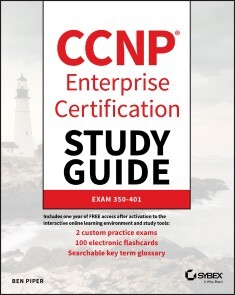
CCNP Enterprise Certification Study Guide: Implementing and Operating Cisco Enterprise Network Core Technologies
THE PRACTICAL AND CONCEPTUAL KNOWLEDGE YOU NEED TO ATTAIN CCNP ENTERPRISE CERTIFICATIONFrom one of the most trusted study guide publishers comes CCNP Enterprise Certification Study Guide: Exam 350-401. This guide helps you develop practical knowledge and best practices for critical aspects of enterprise infrastructure so you can gain your CCNP Enterprise certification. If you’re hoping to attain a broader range of skills and a solid understanding of Cisco technology, this guide will also provide fundamental concepts for learning how to implement and operate Cisco enterprise network core technologies.By focusing on real-world skills, each chapter prepares you with the knowledge you need to excel in your current role and beyond. It covers emerging and industry-specific topics, such as SD-WAN, network design, wireless, and automation. This practical guide also includes lessons on:● Automation● Network assurance● Security● Enterprise infrastructure● Dual-stack architecture● VirtualizationIn addition to helping you gain enterprise knowledge, this study guidecan lead you toward your Cisco specialist certification.When you purchase this guide, you get access to the information you need to prepare yourself for advances in technology and new applications, as well as online study tools such as:● Bonus practice exams● Pre-made flashcards● Glossary of key terms● Specific focus areasExpand your skillset and take your career to the next level with CCNP Enterprise Certification Study Guide.ABOUT THE AUTHORBEN PIPER is an IT consultant who has created more than 20 training courses, covering Cisco routing and switching, Amazon Web Services, Puppet configuration management, and Windows Server Administration. He is the co-author of AWS Certified Cloud Practitioner Study Guide: Foundational (CLF-C01) Exam, AWS Certified Solutions Architect Study Guide: Associate (SAA-C01) Exam, AWS Certified SysOps Administrator Practice Tests: Associate (SOA-C01) Exam, and Learn Cisco Network Administration in a Month of Lunches.Introduction xxiAssessment Test xxviiiCHAPTER 1 NETWORKING FUNDAMENTALS 1The OSI Model 2The Upper Layers: Application, Presentation, and Session 4Making Sense of Layers 4The Lower Layers: Physical, Data Link, Network, and Transport 6Layer 1: The Physical Layer 7Layer 2: The Data Link Layer 8A Brief History of Ethernet 8The MAC Address Table 10Maximum Transmission Unit 12Subnet Limits 12Layer 3: The Network Layer 13Forwarding within a Subnet 14Forwarding between Subnets 14Address Resolution Protocol 16Fragmentation 17Routing vs. Forwarding 18Layer 4: The Transport Layer 18Transmission Control Protocol 19Encapsulation and Decapsulation 21Summary 22Exam Essentials 22Review Questions 24CHAPTER 2 SPANNING TREE PROTOCOLS 29The Need for Spanning Tree 31VLANs and Trunking 32Dynamic Trunking 34Unconditional Trunking 35Active and Allowed VLANs 36Rapid Per-VLAN Spanning Tree 38Electing the Root Bridge 38Calculating the Root Ports 41Calculating the Root Ports of Indirectly Connected Switches 44Modifying Port Cost 46Modifying Port Priority 47Calculating Blocked Ports 48Port States 49Port Roles 49Link Types 49Multiple Spanning Tree 50Root Bridges and Port Priority 52Internal Spanning Tree 53Native VLAN 54Topology Change Detection 55Spanning Tree Extensions 55Root Guard 55BPDU Guard and BPDU Filter 57Unidirectional Link Detection 58Loop Guard 58Summary 58Exam Essentials 59Exercises 60Review Questions 62CHAPTER 3 ENTERPRISE NETWORK DESIGN 67Physical Network Architectures 68Comparing Campus and Data Center Networks 69The Three-Tier Architecture 70The Two-Tier Collapsed Core: A Cheaper Alternative 73Layer 2 Design 74Switched and Routed Interfaces 75Switched Topologies 76Routed Access Topology 81EtherChannels 82Load-Balancing Methods 83Static EtherChannels 84Port Aggregation Control Protocol 88Link Aggregation Control Protocol 90First-Hop Redundancy Protocols 91Hot Standby Router Protocol 92Virtual Router Redundancy Protocol 94Gateway Load-Balancing Protocol 95Summary 97Exam Essentials 98Review Questions 100CHAPTER 4 WIRELESS LAN (WLAN) 105Radio Frequency Fundamentals 106Frequency and Amplitude 107Carrier Frequency 109Power Levels 110WLAN 802.11 Standards 115The Physical Layer: Frequencies and Channels 115Layer 2: 802.11 Media Access Control (MAC) 119Access Point Modes 124Autonomous 124Lightweight 124Wireless LAN Controller Selection Process 125Roaming and Location Services 126Roaming 126Location Services 128Summary 128Exam Essentials 129Review Questions 130CHAPTER 5 OPEN SHORTEST PATH FIRST (OSPF) 135Link-State Advertisements 136OSPF Areas 137LSA Types 137Neighbor Operations 141Configuring OSPF 142Configuring Area 0 on a Broadcast Network 142Viewing Neighbor Adjacencies 143Rigging the Designated Router Election 144Viewing and Understanding LSAs 146Authentication 154Passive Interfaces 158Injecting a Default Route 159Inter-Area Summarization 161Route Filtering 162Distribute Lists 162Summary 163Exam Essentials 164Exercises 164Review Questions 166CHAPTER 6 ENHANCED INTERIOR GATEWAY ROUTING PROTOCOL (EIGRP) 171EIGRP Fundamentals 172EIGRP Packet Types 172The Diffusing Update Algorithm (DUAL) 173Weighted Metrics 176Configuring EIGRP 178Equal Cost Multipathing 181Modifying Metrics 182Switching Types 186Unequal Cost Multipathing 187Summary 190Exam Essentials 190Exercises 191Review Questions 192CHAPTER 7 THE BORDER GATEWAY PROTOCOL (BGP) 197BGP Fundamentals 198BGP AS Numbers 199BGP Session States 201Configuring BGP 202Advertising Prefixes 204Path Selection 205Route Redistribution among BGP, OSPF, and EIGRP 210Testing IP Reachability Using Tcl Scripts 214Troubleshooting 215Modifying Weight 218Advertising Summary Routes Using Route Aggregation 220Route Filtering Using Route Maps and Prefix Lists 222Summary 225Exam Essentials 226Exercises 226Review Questions 228CHAPTER 8 NETWORK ADDRESS TRANSLATION AND MULTICAST 233Network Address Translation 234Address Types 234Static NAT 236Dynamic NAT 241NAT Overload with Port Address Translation 247Outside Static NAT 250Removing NAT Configurations 251Multicast 252IP Multicast 253LAN Multicast 253Multicast Routing 257Configuring PIM 258Configuring a Multicast Receiver 262IP Multicast and Ethernet 264Summary 265Exam Essentials 267Exercises 268Review Questions 270CHAPTER 9 QUALITY OF SERVICE 275Understanding Quality of Service 276Classification and Marking 277Differentiated Services 277Layer 2 Marking 280Class Maps and Policy Maps 280Wireless QoS 281Policing 284Single-Rate, Two-Color Policing 284Single-Rate, Three-Color Policing 285Two-Rate Policing 287Queuing 288Class-Based Weighted Fair Queuing 288Low-Latency Queuing 293Explicit Congestion Notification 295Shaping 295Summary 297Exam Essentials 297Exercises 298Review Questions 299CHAPTER 10 NETWORK VIRTUALIZATION 303Virtual Machines, Hypervisors, and Network Virtualization 304Virtual Machines and Server Virtualization 305Network Virtualization 307Generic Routing Encapsulation Tunnels 312Configuring a GRE Tunnel to Tunnel IPv4 and IPv6 over IPv4 312Recursive Routing 318IP Security 319Internet Key Exchange 320Encapsulating Security Payload 320Configuring IPsec in Transport Mode with a GRE Tunnel 321Configuring IPsec in Tunnel Mode 324Location/ID Separation Protocol 326LISP Terminology 328Configuring LISP 328Simulating IP Mobility 332Is LISP a Routing Protocol? 334Virtual Extensible Local Area Network 334MAC Address Learning 335Forwarding 335Configuring VXLAN 336VXLAN Control Planes 336Configuring the Underlay 337Configuring the Overlay 338Configuring R1 and R2 339Virtual Routing and Forwarding 340Configuring a VRF 340Configuring Multi-VRF EIGRP 342Summary 345Exam Essentials 345Exercises 346Review Questions 347CHAPTER 11 SOFTWARE-DEFINED NETWORKING AND NETWORK PROGRAMMABILITY 353What Is Software-Defined Networking? 355Software-Defined Access 356SD-Access Layers 357Physical Layer 357Network Underlay 358Fabric Overlay 359Controller Layer 363Management Layer 364Software-Defined WAN 369vManage Network Management System 370vSmart Controller 370vBond Orchestrator 371vEdge Routers 371Network Programmability and Automation 372The Cisco DNA Center Intent API 372vManage REST API 379NETCONF 383Embedded Event Manager 386Configuration Management Platforms 388Summary 391Exam Essentials 391Exercises 392Review Questions 393CHAPTER 12 NETWORK SECURITY AND MONITORING 397Infrastructure Security 398Device Access 399Authentication, Authorization, and Accounting 402Access Control Lists 407Control Plane Policing 412Cisco Security Products 414AnyConnect Secure Mobility Client 414Umbrella 414Advanced Malware Protection ThreatGrid 414Advanced Malware Protection for Endpoints 415Firepower Next-Generation Firewall 415TrustSec 416MAC Security 418Wireless Security 418WebAuth 418Configuring WPA2 with 802.1X 422Configuring 802.1X on the Client 422Configure Preshared Keys 424Monitoring 425Conditional Debugs 425Simple Network Management Protocol (SNMP) 425Syslog 426Network Time Protocol 428NetFlow and Flexible NetFlow 429Switched Port Analyzer 432IP Service Level Agreement 434Summary 436Exam Essentials 437Exercises 438Review Questions 439Appendix Answers to Review Questions 443Chapter 1: Networking Fundamentals 444Chapter 2: Spanning Tree Protocols 445Chapter 3: Enterprise Network Design 447Chapter 4: Wireless LAN (WLAN) 448Chapter 5: Open Shortest Path First (OSPF) 450Chapter 6: Enhanced Interior Gateway Routing Protocol (EIGRP) 451Chapter 7: The Border Gateway Protocol (BGP) 453Chapter 8: Network Address Translation and Multicast 454Chapter 9: Quality of Service 456Chapter 10: Network Virtualization 457Chapter 11: Software-Defined Networking and Network Programmability 459Chapter 12: Network Security and Monitoring 460Index 463

C# für Dummies
C# ist eine der am meisten genutzten Programmiersprachen, doch wie den Ein- oder Umstieg schaffen? Genau dabei hilft Ihnen dieses Buch. Nachdem Sie sich zunächst die notwendigen Grundlagen erarbeitet haben, lernen Sie auch alles Notwendige über LINQ, XML und ADO.NET. Anschließend werden Sie sicher durch das Schreiben Ihrer ersten eigenen .NET-Anwendung geleitet. Noch nicht genug? Kapitel zu fortgeschrittenen .NET-Techniken wie die dynamische Programmierung oder die Task Parallel Library runden das Buch ab. Steffen Steinbrecher programmiert schon seit über 15 Jahren. Nach dem Studium sammelte er mehrjährige Erfahrung in der professionellen Softwareentwicklung im .NET-Umfeld. Er lebt in der Nähe von Kaiserslautern. In seiner Freizeit betreibt er einen Blog, auf dem er hauptsächlich über verschiedene .NET-Themen schreibt.Über den Autor 11EINLEITUNG 23Über dieses Buch 23Wie dieses Buch aufgebaut ist 24Symbole, die in diesem Buch verwendet werden 26Wie es weiter geht 27TEIL I: LOS GEHT’S 29KAPITEL 1 GRUNDLAGEN UND EINFÜHRUNG31Grundlagen der Programmierung 31Warum programmieren wir eigentlich? 32Programmiersprachen 33.NET-Plattformarchitektur 37Wie funktioniert eine .NET-Sprache? 39Das .NET-Framework 42Die Programmiersprache C# 44Das Prinzip der objektorientierten Programmierung 44Objekte und ihre Klassen 44Abstraktion 47Kapselung 48Vererbung 48Polymorphie 49KAPITEL 2 ENTWICKLUNGSWERKZEUGE UND TOOLS53Ein Programm erstellen 53Microsoft Visual Studio 2019 Community Edition 59Ihr erstes eigenes Projekt 60Der Marktplatz für fertige Lösungen: NuGet 71KAPITEL 3 DAS ABC DER SPRACHE C#75Bezeichner 75Namenskonventionen 76Schlüsselwörter 78Anweisungen 79Kommentare 79Datentypen, Variablen und Konstanten 82Deklaration von Variablen 84Das Schlüsselwort var oder Typinferenz 86Konstanten deklarieren 88Zugriff und Verwendung von Variablen 89Wert- und Referenztypen 90Weitere Datentypen 97Gültigkeitsbereiche von Variablen 100Konvertieren von Datentypen 101Was ist eine Methode? 110Übergeben von Parametern 112Methoden mit Rückgabewert 115Methoden ohne Rückgabewert 117Namensräume 119Wo finde ich was? 121Verwendung von Namensräumen 122Alias für einen Namensraum 124KAPITEL 4 OPERATOREN UND PROGRAMMSTEUERUNG127Operatoren 127Rechenoperatoren 128Zuweisungsoperatoren 132Logische Operatoren 133Den Programmablauf steuern: Verzweigungen und Kontrollstrukturen 136if-Anweisung 137switch-Anweisung und -Ausdruck 144Vorgänge wiederholen: Schleifen 148for-Schleife 149while-Schleife 151do-while-Schleife 155foreach-Schleife 157Sie haben es sich anders überlegt? 158KAPITEL 5 ZEICHENFOLGEN, ARRAYS UND DATUMSWERTE161Zeichen und Zeichenfolgen 161String-Variablen deklarieren 162String-Interpolation und kombinierte Formatierung 164Zeichenfolgen analysieren 166Zeichenfolgen manipulieren 168Sonderzeichen in Zeichenfolgen 170StringBuilder: Wenn Geschwindigkeit eine Rolle spielt 172Formatierung von Zeichenfolgen 173Arrays 178Arrays deklarieren 179Arrays erzeugen 179Arrays initialisieren 180Zugriff auf Array-Elemente 182Eigenschaften und Methoden von Arrays 185Datums- und Zeitberechnungen 188Die DateTime-Struktur 188Die TimeSpan-Struktur 192Praxisbeispiele 193KAPITEL 6 OBJEKTORIENTIERTE PROGRAMMIERUNG MIT C#197Klassen, Eigenschaften und Methoden 197Klassen 198Eigenschaften 198Objekte 204Methoden und Konstruktoren 205Statische Klassen 207Vererbung 210Ober- und Unterklassen 210Methoden überschreiben 212Der Zugriff auf die Member der Basisklasse mit base 213Abstrakte Klassen 214Interfaces 216KAPITEL 7 FEHLER PASSIEREN, MACHT ABER NICHTS: AUSNAHMEBEHANDLUNG221Mit Ausnahmen umgehen 222Wie man einen Fehler »fängt«! 225Der Parameter einer catch-Klausel 226Ausnahmetypen 228Fehler auslösen 231Eigene Fehlerklassen erstellen 232KAPITEL 8 WEITERE SPRACHFEATURES 235Delegates 235Anonyme Methoden 239Lambda-Ausdrücke 240Ereignisse – was geht ab? 242Ereignisse registrieren und behandeln 243Ereignisse veröffentlichen 244Generics – generische Datentypen 247Generische Klassen, Methoden und Eigenschaften 248Generische Auflistungen 251Nette Helfer: Attribute 259Sie wollen mehr? Erweiterungsmethoden 261TEIL II: WEITERE SPRACHFEATURES VON C# 265KAPITEL 9 ZUGRIFFE AUF DAS DATEISYSTEM267Klassen für den Zugriff auf das Dateisystem 267Arbeiten mit Verzeichnissen 269Arbeiten mit Dateien 276Nicht bei der Ausnahmebehandlung sparen! 280Praxisbeispiele 282Verzeichnisgröße ermitteln 282Kopieren von Verzeichnissen 284KAPITEL 10 DATEIZUGRIFF UND STREAMS287Arbeiten mit Dateien 287Text-Dateien erstellen, lesen und ändern 288Arbeiten mit Streams 291Lesen und Schreiben 293Datei mit einem Stream schreiben 296Komprimieren von Dateien mit .NET-Klassen 297Neues ZIP-Archiv erzeugen 298Alle Dateien eines ZIP-Archivs extrahieren 300Objekte serialisieren 301Im Binärformat serialisieren 302XML 306JSON-Dateien 308KAPITEL 11 ASYNCHRONE UND PARALLELE PROGRAMMIERUNG313Grundlagen und Begrifflichkeiten 314Asynchrone Programmiermuster 318Programmieren mit Threads 318Die TPL – Task Parallel Library 331Ein gutes Team: async und await 342KAPITEL 12 DATEN ABFRAGENMIT LINQ349LINQ-Grundlagen 349Die Basis für LINQ-Abfragen 351Abfragen mit LINQ 353Die alternativen Schreibweisen von LINQ-Abfragen 358Die wichtigsten Abfrageoperatoren 359Ergebnis filtern (where-Operator) 359Ergebnis sortieren (orderby-Operator) 362Ergebnis partitionieren (skip- und take-Operator) 363Doppelte Einträge löschen (distinct-Operator) 365Aggregat-Operatoren 366Praxisbeispiele 367CSV-Datei mit LINQ einlesen 367KAPITEL 13 GRUNDLAGEN VON ADO.NET371Vorbereitungen 372Installation der Datenbank 372Beispieldaten importieren 374Datenbankzugriffe mit ADO.NET 377Verbindung zur Datenbank herstellen 378Datensätze abfragen 381Datensätze einfügen 386Datensätze aktualisieren 388Datensätze löschen 390Das DataSet und der DataAdapter 392Der DataAdapter –die Brücke zu den Daten 393Asynchrone Datenbankzugriffe 404TEIL III: EINE EIGENE C#-ANWENDUNG SCHREIBEN 411KAPITEL 14 FEHLERSUCHE UND SOFTWAREQUALITÄT413Welche Fehlerarten gibt es überhaupt? 414Fehler zur Compiletime (Übersetzungszeit) 414Fehler zur Runtime (Laufzeit) – Bugs 414Der Debugger 415Ein paar Grundlagen 415Überprüfen von Code und Variablen zur Laufzeit 416Überprüfen von Zeichenfolgen in der Schnellansicht 421Anzeigen von Rückgabewerten einer Funktion 422Attributed Debugging 423Dem Fehler auf die Schliche kommen – der Stacktrace 425Codequalität verbessern 427Suchen Sie nach roten und grünen Schlangenlinien 428Achten Sie auf die Glühbirne 430KAPITEL 15 BENUTZEROBERFLÄCHE MIT WINDOWS FORMS433Grundgerüst einer Windows-Forms-Anwendung 434Die Datei Program.cs 435Die Dateien Form1.cs und Form1.Designer.cs 436Benutzeroberfläche erstellen 439Steuerelemente verwenden 440Ereignisse von Steuerelementen 443Windows-Forms-Anwendung: Ja oder Nein? 449KAPITEL 16 MODERNE OBERFLÄCHEN MIT WPF UND XAML451Meine erste WPF-Anwendung 452XAML –Extended Application Markup Language 454Logischer und visueller Elementbaum in WPF 457Layout in WPF 458Ereignisse in WPF 470Commands 473Ressourcen in WPF 476Ressourcen in separate Datei auslagern 479Das gewisse Etwas: Styles 481Was ist ein Style? 482Templates 487Databinding –die Benutzeroberfläche mit Daten versorgen 491Die Richtung des Bindings: Wie Daten aktualisiert werden 493Der UpdateSourceTrigger: Wann Daten aktualisiert werden 494TEIL IV: FORTGESCHRITTENE TECHNIKEN IN C# UND WPF 497KAPITEL 17 FORTGESCHRITTENE TECHNIKEN RUND UM DIE WPF499Das Beispielprogramm 499Das MVVM-Entwurfsmuster 501Das Model 503Das ViewModel 503Datenbeschaffung 510Eigene Commands implementieren 511KAPITEL 18 MODULARE ANWENDUNG AUF BASIS VON C# UND WPF – EIN BEISPIEL517Die Beispielanwendung 518Vorbereitungen und Erstellung der Solution 520Styling der Anwendung 524Das Dependency-Injection-Entwurfsmuster 527Dynamische Oberflächen mit Prism-Regionen 529Erstellung eines UserControls 533Registrierung von Views 535Erstellung eines Prism-Moduls 536Anlegen des Projekts für das Modul 537Erstellen der Benutzeroberfläche 538Registrierung des Moduls 544Austausch- und wiederverwendbare Komponenten 545Registrierung und Verwendung der Klasse 547Fazit –Was haben Sie jetzt gewonnen? 549TEIL V: DER TOP-TEN-TEIL 551KAPITEL 19 ZEHN DINGE IN C#, DIE SIE WIRKLICH LERNEN UND VERWENDEN SOLLTEN!553Initialisierer für Objekte und Collections 553Automatisch implementierte Eigenschaften initialisieren 554null-coalescing Operator ?? 555String-Interpolation für dynamische Zeichenfolgen 555Null-conditional Operator 556nameof()-Ausdruck 557is- und as-Operatoren 558Zeichenfolgen mit String.IsNullOrEmpty() überprüfen 559break- und continue-Anweisung 560TryParse für die Umwandlung von Zeichenketten 561KAPITEL 20 ZEHN NÜTZLICHE OPEN-SOURCE-PROJEKTE563MahApps.Metro: Verpassen Sie Ihrer Anwendung den Metro-Style 563Modern UI for WPF (MUI) 563MaterialDesignInXamlToolkit 564Extended WPF Toolkit™ 564WPFLocalizationExtension 564ResXManager 565Prism 565Sammlung von Erweiterungsmethoden 565Modern UI Icons 566Material Design Icons 566Stichwortverzeichnis 567
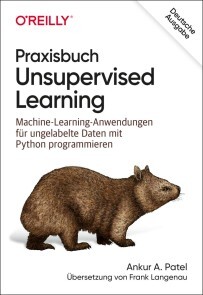
Praxisbuch Unsupervised Learning
Entdecken Sie Muster in Daten, die für den Menschen nicht erkennbar sindUnsupervised Learning könnte der Schlüssel zu einer umfassenderen künstlichen Intelligenz seinVoller praktischer Techniken für die Arbeit mit ungelabelten Daten, verständlich geschrieben und mit unkomplizierten Python-BeispielenVerwendet Scikit-learn, TensorFlow und KerasEin Großteil der weltweit verfügbaren Daten ist ungelabelt. Auf diese nicht klassifizierten Daten lassen sich die Techniken des Supervised Learning, die im Machine Learning viel genutzt werden, nicht anwenden. Dagegen kann das Unsupervised Learning - auch unüberwachtes Lernen genannt - für ungelabelte Datensätze eingesetzt werden, um aussagekräftige Muster zu entdecken, die tief in den Daten verborgen sind – Muster, die für den Menschen fast unmöglich zu entdecken sind.Wie Data Scientists Unsupervised Learning für ihre Daten nutzen können, zeigt Ankur Patel in diesem Buch anhand konkreter Beispiele, die sich schnell und effektiv umsetzen lassen. Sie erfahren, wie Sie schwer zu findende Muster in Daten herausarbeiten und dadurch z.B. tiefere Einblicke in Geschäftsprozesse gewinnen. Sie lernen auch, wie Sie Anomalien erkennen, automatisches Feature Engineering durchführen oder synthetische Datensätze generieren.Ankur A. Patel ist Vice President Data Science bei 7Park Data, einem Portfolio-Unternehmen von Vista Equity Partners. Bei 7Park Data verwenden Ankur und sein Data-Science-Team alternative Daten, um Datenprodukte für Hedge-Fonds und Unternehmen sowie Machine Learning als Service (MLaaS) für Geschäftskunden zu entwickeln.
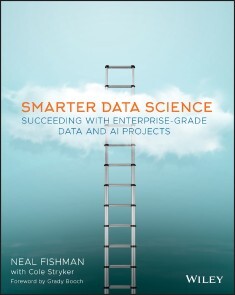
Smarter Data Science
ORGANIZATIONS CAN MAKE DATA SCIENCE A REPEATABLE, PREDICTABLE TOOL, WHICH BUSINESS PROFESSIONALS USE TO GET MORE VALUE FROM THEIR DATAEnterprise data and AI projects are often scattershot, underbaked, siloed, and not adaptable to predictable business changes. As a result, the vast majority fail. These expensive quagmires can be avoided, and this book explains precisely how.Data science is emerging as a hands-on tool for not just data scientists, but business professionals as well. Managers, directors, IT leaders, and analysts must expand their use of data science capabilities for the organization to stay competitive. Smarter Data Science helps them achieve their enterprise-grade data projects and AI goals. It serves as a guide to building a robust and comprehensive information architecture program that enables sustainable and scalable AI deployments.When an organization manages its data effectively, its data science program becomes a fully scalable function that’s both prescriptive and repeatable. With an understanding of data science principles, practitioners are also empowered to lead their organizations in establishing and deploying viable AI. They employ the tools of machine learning, deep learning, and AI to extract greater value from data for the benefit of the enterprise.By following a ladder framework that promotes prescriptive capabilities, organizations can make data science accessible to a range of team members, democratizing data science throughout the organization. Companies that collect, organize, and analyze data can move forward to additional data science achievements:* Improving time-to-value with infused AI models for common use cases* Optimizing knowledge work and business processes* Utilizing AI-based business intelligence and data visualization* Establishing a data topology to support general or highly specialized needs* Successfully completing AI projects in a predictable manner* Coordinating the use of AI from any compute node. From inner edges to outer edges: cloud, fog, and mist computingWhen they climb the ladder presented in this book, businesspeople and data scientists alike will be able to improve and foster repeatable capabilities. They will have the knowledge to maximize their AI and data assets for the benefit of their organizations.NEAL FISHMAN is a Distinguished Engineer and CTO of Data-Based Pathology at IBM. He is an IBM-certified Senior IT Architect and Open Group Distinguished Chief Architect. COLE STRYKER is a journalist based in Los Angeles. He is the author of Epic Win for Anonymous and Hacking the Future. Foreword for Smarter Data Science xixEpigraph xxiPreamble xxiiiCHAPTER 1 CLIMBING THE AI LADDER 1Readying Data for AI 2Technology Focus Areas 3Taking the Ladder Rung by Rung 4Constantly Adapt to Retain Organizational Relevance 8Data-Based Reasoning is Part and Parcel in the Modern Business 10Toward the AI-Centric Organization 14Summary 16CHAPTER 2 FRAMING PART I: CONSIDERATIONS FOR ORGANIZATIONS USING AI 17Data-Driven Decision-Making 18Using Interrogatives to Gain Insight 19The Trust Matrix 20The Importance of Metrics and Human Insight 22Democratizing Data and Data Science 23Aye, a Prerequisite: Organizing Data Must Be a Forethought 26Preventing Design Pitfalls 27Facilitating the Winds of Change: How Organized Data Facilitates Reaction Time 29Quae Quaestio (Question Everything) 30Summary 32CHAPTER 3 FRAMING PART II: CONSIDERATIONS FOR WORKING WITH DATA AND AI 35Personalizing the Data Experience for Every User 36Context Counts: Choosing the Right Way to Display Data 38Ethnography: Improving Understanding Through Specialized Data 42Data Governance and Data Quality 43The Value of Decomposing Data 43Providing Structure Through Data Governance 43Curating Data for Training 45Additional Considerations for Creating Value 45Ontologies: A Means for Encapsulating Knowledge 46Fairness, Trust, and Transparency in AI Outcomes 49Accessible, Accurate, Curated, and Organized 52Summary 54CHAPTER 4 A LOOK BACK ON ANALYTICS: MORE THAN ONE HAMMER 57Been Here Before: Reviewing the Enterprise Data Warehouse 57Drawbacks of the Traditional Data Warehouse 64Paradigm Shift 68Modern Analytical Environments: The Data Lake 69By Contrast 71Indigenous Data 72Attributes of Difference 73Elements of the Data Lake 75The New Normal: Big Data is Now Normal Data 77Liberation from the Rigidity of a Single Data Model 78Streaming Data 78Suitable Tools for the Task 78Easier Accessibility 79Reducing Costs 79Scalability 79Data Management and Data Governance for AI 80Schema-on-Read vs. Schema-on-Write 81Summary 84CHAPTER 5 A LOOK FORWARD ON ANALYTICS: NOT EVERYTHING CAN BE A NAIL 87A Need for Organization 87The Staging Zone 90The Raw Zone 91The Discovery and Exploration Zone 92The Aligned Zone 93The Harmonized Zone 98The Curated Zone 100Data Topologies 100Zone Map 103Data Pipelines 104Data Topography 105Expanding, Adding, Moving, and Removing Zones 107Enabling the Zones 108Ingestion 108Data Governance 111Data Storage and Retention 112Data Processing 114Data Access 116Management and Monitoring 117Metadata 118Summary 119CHAPTER 6 ADDRESSING OPERATIONAL DISCIPLINES ON THE AI LADDER 121A Passage of Time 122Create 128Stability 128Barriers 129Complexity 129Execute 130Ingestion 131Visibility 132Compliance 132Operate 133Quality 134Reliance 135Reusability 135The xOps Trifecta: DevOps/MLOps, DataOps, and AIOps 136DevOps/MLOps 137DataOps 139AIOps 142Summary 144CHAPTER 7 MAXIMIZING THE USE OF YOUR DATA: BEING VALUE DRIVEN 147Toward a Value Chain 148Chaining Through Correlation 152Enabling Action 154Expanding the Means to Act 155Curation 156Data Governance 159Integrated Data Management 162Onboarding 163Organizing 164Cataloging 166Metadata 167Preparing 168Provisioning 169Multi-Tenancy 170Summary 173CHAPTER 8 VALUING DATA WITH STATISTICAL ANALYSIS AND ENABLING MEANINGFUL ACCESS 175Deriving Value: Managing Data as an Asset 175An Inexact Science 180Accessibility to Data: Not All Users are Equal 183Providing Self-Service to Data 184Access: The Importance of Adding Controls 186Ranking Datasets Using a Bottom-Up Approach for Data Governance 187How Various Industries Use Data and AI 188Benefi ting from Statistics 189Summary 198CHAPTER 9 CONSTRUCTING FOR THE LONG-TERM 199The Need to Change Habits: Avoiding Hard-Coding 200Overloading 201Locked In 202Ownership and Decomposition 204Design to Avoid Change 204Extending the Value of Data Through AI 206Polyglot Persistence 208Benefi ting from Data Literacy 213Understanding a Topic 215Skillsets 216It’s All Metadata 218The Right Data, in the Right Context, with the Right Interface 219Summary 221CHAPTER 10 A JOURNEY’S END: AN IA FOR AI 223Development Efforts for AI 224Essential Elements: Cloud-Based Computing, Data, and Analytics 228Intersections: Compute Capacity and Storage Capacity 234Analytic Intensity 237Interoperability Across the Elements 238Data Pipeline Flight Paths: Preflight, Inflight, Postflight 242Data Management for the Data Puddle, Data Pond, and Data Lake 243Driving Action: Context, Content, and Decision-Makers 245Keep It Simple 248The Silo is Dead; Long Live the Silo 250Taxonomy: Organizing Data Zones 252Capabilities for an Open Platform 256Summary 260Appendix Glossary of Terms 263Index 269

Emerging Extended Reality Technologies for Industry 4.0
In the fast-developing world of Industry 4.0, which combines Extended Reality (XR) technologies, such as Virtual Reality (VR) and Augmented Reality (AR), creating location aware applications to interact with smart objects and smart processes via Cloud Computing strategies enabled with Artificial Intelligence (AI) and the Internet of Things (IoT), factories and processes can be automated and machines can be enabled with self-monitoring capabilities. Smart objects are given the ability to analyze and communicate with each other and their human co-workers, delivering the opportunity for much smoother processes, and freeing up workers for other tasks. Industry 4.0 enabled smart objects can be monitored, designed, tested and controlled via their digital twins, and these processes and controls are visualized in VR/AR. The Industry 4.0 technologies provide powerful, largely unexplored application areas that will revolutionize the way we work, collaborate and live our lives. It is important to understand the opportunities and impact of the new technologies and the effects from a production, safety and societal point of view.JOLANDA G. TROMP is a Human-Computer Interaction expert for User-Centered design and evaluation of new technologies (VR/AR/AI/IoT), with 20 years' experience as principal Usability investigator. She has a PhD in Systematic Usability Design and Evaluation for Collaborative Virtual Environments, 2001, University of Nottingham, United Kingdom, a BSc in Psychology (with honors) University of Amsterdam, Holland (1995). She is a research consultant for the Center of Visualization and Simulation at Duy Tan University, Vietnam; for the Mixed Reality Task Group of the State University of New York; and for the global Simulations Working Group. DAC-NHUONG LE is PhD Deputy-Head of Faculty of Information Technology, Haiphong University, Vietnam. His areas of research include: evolutionary computation, specialized with evolutionary multiobjective optimization, approximate algorithms, network communication, security and vulnerability, network performance analysis and simulation, cloud computing, image processing in biomedical. His core work in evolutionary multi-objective optimization, network security, wireless, mobile computing and virtual reality. He has edited several books for the Wiley-Scrivener imprint. CHUNG VAN LE is Vice-Director Center of Visualization and Simulation. He has a MSc in Computer Science from Duy Tan University, 2011, Vietnam and a BSc in Computer Science at Da Nang University, 2004, Vietnam. He is currently pursuing a PhD at Duy Tan University, Vietnam. He researches medical image processing, e-Health, virtual simulation in medicine. He is Duy Tan University Lead Software Developer for 3D virtual body system for teaching anatomy and virtual endoscopic techniques for medical students. List of Figures xiList of Tables xvForeword xviiIntroduction xixPreface xxiiiAcknowledgments xxvAcronyms xxviiPART I EXTENDED REALITY EDUCATION1 MIXED REALITY USE IN HIGHER EDUCATION: RESULTS FROM AN INTERNATIONAL SURVEY 3J. Riman, N. Winters, J. Zelenak, I. Yucel, J. G. Tromp1.1 Introduction 41.2 Organizational Framework 41.3 Online Survey About MR Usage 51.4 Results 61.4.1 Use in Classrooms 81.4.2 Challenges 91.4.3 Examples of Research in Action 101.4.4 Hardware and Software for Use in Classrooms and Research 101.4.5 Challenges Described by Researcher Respondents 121.4.6 Anecdotal Responses about Challenges 121.5 Conclusion 13References 152 APPLYING 3D VR TECHNOLOGY FOR HUMAN BODY SIMULATION TO TEACHING, LEARNING AND STUDYING 17Le Van Chung, Gia Nhu Nguyen, Tung Sanh Nguyen, Tri Huu Nguyen, Dac-Nhuong Le2.1 Introduction 182.2 Related Works 182.3 3D Human Body Simulation System 192.3.1 The Simulated Human Anatomy Systems 192.3.2 Simulated Activities and Movements 202.3.3 Evaluation of the System 232.4 Discussion of Future Work 252.5 Conclusion 26References 26PART II INTERNET OF THINGS3 A SAFETY TRACKING AND SENSOR SYSTEM FOR SCHOOL BUSES IN SAUDI ARABIA 31Samah Abbas, Hajar Mohammed, Laila Almalki Maryam Hassan, Maram Meccawy3.1 Introduction 323.2 Related Work 323.3 Data Gathering Phase 333.3.1 Questionnaire 343.3.2 Driver Interviews 353.4 The Proposed Safety Tracking and Sensor School Bus System 363.4.1 System Analysis and Design 373.4.2 User Interface Design 383.5 Testing and Results 413.6 Discussion and Limitation 423.7 Conclusions and Future Work 42References 424 A LIGHTWEIGHT ENCRYPTION ALGORITHM APPLIED TO A QUANTIZED SPEECH IMAGE FOR SECURE IOT 45Mourad Talbi4.1 Introduction 464.2 Applications of IoT 464.3 Security Challenges in IoT 474.4 Cryptographic Algorithms for IoT 474.5 The Proposed Algorithm 484.6 Experimental Setup 504.7 Results and Discussion 524.8 Conclusion 57References 58PART III MOBILE TECHNOLOGY5 THE IMPACT OF SOCIAL MEDIA ADOPTION ON ENTREPRENEURIAL ECOSYSTEM 63Bodor Almotairy, Manal Abdullah, Rabeeh Abbasi5.1 Introduction 645.2 Background 655.2.1 Small and Medium-Sized Enterprises (SMEs) 655.2.2 Social Media 655.2.3 Social Networks and Entrepreneurial Activities 665.3 Analysis Methodology 665.4 Understanding the Entrepreneurial Ecosystem 675.5 Social Media and Entrepreneurial Ecosystem 695.5.1 Social Media Platforms and Entrepreneurship 715.5.2 The Drivers of Social Media Adoption 715.5.3 The Motivations and Benefits for Entrepreneurs to Use Social Media 715.5.4 Entrepreneurship Activities Analysis Techniques in Social Media Networks 715.6 Research Gap and Recommended Solution 735.6.1 Research Gap 735.6.2 Recommended Solution 745.7 Conclusion 74References 756 HUMAN FACTORS FOR E-HEALTH TRAINING SYSTEM: UX TESTING FOR XR ANATOMY TRAINING APP 81Zhushun Timothy Cai, Oliver Medonza, Kristen Ray, Chung Van Le, Damian Schofield, Jolanda Tromp6.1 Introduction 826.2 Mobile Learning Applications 826.3 Ease of Use and Usability 826.3.1 Effectiveness 836.3.2 Efficiency 836.3.3 Satisfaction 836.4 Methods and Materials 866.5 Results 896.5.1 Task Completion Rate (TCR) 896.5.2 Time-on-Task (TOT) 906.5.3 After-Scenario Questionnaire (ASQ) 916.5.4 Post-Study System Usability Questionnaire (PSSUQ) 936.6 Conclusion 93References 94PART IV TOWARDS DIGITAL TWINS AND ROBOTICS7 AUGMENTED REALITY AT HERITAGE SITES: TECHNOLOGICAL ADVANCES AND EMBODIED SPATIALLY MINDED INTERACTIONS 101Lesley Johnston, Romy Galloway, Jordan John Trench, Matthieu Poyade, Jolanda Tromp, Hoang Thi My7.1 Introduction 1027.2 Augmented Reality Devices 1037.3 Detection and Tracking 1057.4 Environmental Variation 1067.5 Experiential and Embodied Interactions 1097.6 User Experience and Presence in AR 1147.7 Conclusion 115References 1168 TELECI ARCHITECTURE FOR MACHINE LEARNING ALGORITHMS INTEGRATION IN AN EXISTING LMS 121V. Zagorskis, A. Gorbunovs, A. Kapenieks8.1 Introduction 1228.2 TELECI Architecture 1238.2.1 TELECI Interface to a Real LMS 1238.2.2 First RS Steps in the TELECI System 1248.2.3 Real Student Data for VS Model 1258.2.4 TELECI Interface to VS Subsystem 1268.2.5 TELECI Interface to AI Component 1288.3 Implementing ML Technique 1288.3.1 Organizational Activities 1288.3.2 Data Processing 1298.3.3 Computing and Networking Resources 1308.3.4 Introduction to Algorithm 1308.3.5 Calibration Experiment 1328.4 Learners’ Activity Issues 1338.5 Conclusion 136References 137PART V BIG DATA ANALYTICS9 ENTERPRISE INNOVATION MANAGEMENT IN INDUSTRY 4.0: MODELING ASPECTS 141V. Babenko9.1 Introduction 1429.2 Conceptual Model of Enterprise Innovation Process Management 1449.3 Formation of Restrictions for Enterprise Innovation Management Processes 1479.4 Formation of Quality Criteria for Assessing Implementation of Enterprise Innovation Management Processes 1489.5 Statement of Optimization Task of Implementation of Enterprise Innovation Management Processes 1489.6 Structural and Functional Model for Solving the Task of Dynamic 1509.7 Formulation of the Task of Minimax Program Management of Innovation Processes at Enterprises 1529.8 General Scheme for Solving the Task of Minimax Program Management of Innovation Processes at the Enterprises 1549.9 Model of Multicriteria Optimization of Program Management of Innovation Processes 1569.10 Conclusion 161References 16210 USING SIMULATION FOR DEVELOPMENT OF AUTOMOBILE GAS DIESEL ENGINE SYSTEMS AND THEIR OPERATIONAL CONTROL 165Mikhail G. Shatrov, Vladimir V. Sinyavski, Andrey Yu. Dunin, Ivan G. Shishlov, Sergei D. Skorodelov, Andrey L. Yakovenko10.1 Introduction 16610.2 Computer Modeling 16710.3 Gas Diesel Engine Systems Developed 16810.3.1 Electronic Engine Control System 16810.3.2 Modular Gas Feed System 16910.3.3 Common Rail Fuel System for Supply of the Ignition Portion of Diesel Fuel 16910.4 Results and Discussion 17210.4.1 Results of Diesel Fuel Supply System Simulation 17210.4.2 Results of Engine Bed Tests 18110.5 Conclusion 183References 184PART VI TOWARDS COGNITIVE COMPUTING11 CLASSIFICATION OF CONCEPT DRIFT IN EVOLVING DATA STREAM 189Mashail Althabiti and Manal Abdullah11.1 Introduction 19011.2 Data Mining 19011.3 Data Stream Mining 19111.3.1 Data Stream Challenges 19111.3.2 Features of Data Stream Methods 19311.4 Data Stream Sources 19311.5 Data Stream Mining Components 19311.5.1 Input 19411.5.2 Estimators 19411.6 Data Stream Classification and Concept Drift 19411.6.1 Data Stream Classification 19411.6.2 Concept Drift 19411.6.3 Data Stream Classification Algorithms with Concept Drift 19611.6.4 Single Classifier 19611.6.5 Ensemble Classifiers 19711.6.6 Output 20011.7 Datasets 20011.8 Evaluation Measures 20011.9 Data Stream Mining Tools 20111.10 Data Stream Mining Applications 20211.11 Conclusion 202References 20212 DYNAMICAL MASS TRANSFER SYSTEMS IN BUSLAEV CONTOUR NETWORKS WITH CONFLICTS 207Marina Yashina, Alexander Tatashev, Ivan Kuteynikov12.1 Introduction 20812.2 Construction of Buslaev Contour Networks 21012.3 Concept of Spectrum 21112.4 One-Dimensional Contour Network Binary Chain of Contours 21212.5 Two-Dimensional Contour Network-Chainmail 21412.6 Random Process with Restrictions on the Contour with the Possibility of Particle Movement in Both Directions 21812.7 Conclusion 218References 21913 PARALLEL SIMULATION AND VISUALIZATION OF TRAFFIC FLOWS USING CELLULAR AUTOMATA THEORY AND QUASIGASDYNAMIC APPROACH 223Antonina Chechina, Natalia Churbanova, Pavel Sokolov, Marina Trapeznikova, Mikhail German, Alexey Ermakov, Obidzhon Bozorov13.1 Introduction 22413.2 The Original CA Model 22413.3 The Slow-to-Start Version of the CA Model 22513.4 Numerical Realization 22513.5 Test Predictions for the CA Model 22913.6 The QGD Approach to Traffic Flow Modeling 23013.7 Parallel Implementation of the QGD Traffic Model 23213.8 Test Predictions for the QGD Traffic Model 23213.9 Conclusion 235References 236

Cloud Debugging and Profiling in Microsoft Azure
Use this collection of best practices and tips for assessing the health of a solution. This book provides detailed techniques and instructions to quickly diagnose aspects of your Azure cloud solutions.The initial chapters of this book introduce you to the many facets of Microsoft Azure, explain why and how building for the cloud differs from on-premise development, and outline the need for a comprehensive strategy to debugging and profiling in Azure. You learn the major types of blades (FaaS, SaaS, PaaS, IaaS), how different views can be created for different scenarios, and you will become familiar with the Favorites section, Cost Management & Billing blade, support, and Cloud Shell. You also will know how to leverage Application Insights for application performance management, in order to achieve a seamless cloud development experience. Application Insights, Log Analytics, and database storage topics are covered. The authors further guide you on identity security with Azure AD and continuous delivery with CI and CD covered in detail along with the capabilities of Azure DevOps. And you are exposed to external tooling and trouble shooting in a production environment.After reading this book, you will be able to apply methods to key Azure services, including App Service (Web Apps, Function Apps,and Logic Apps), Cloud Services, Azure Container Service, Azure Active Directory, Azure Storage, Azure SQL Database, Cosmos DB, Log Analytics, and many more.WHAT YOU WILL LEARN* Debug and manage the performance of your applications* Leverage Application Insights for application performance management* Extend and automate CI/CD with the help of various build tools, including Azure DevOps, TeamCity, and Cake bootstrapperWHO THIS BOOK IS FORApplication developers, designers, and DevOps personnel who want to find a one-stop shop in best practices for managing their application’s performance in the cloud and for debugging the issues accordinglyJEFFREY CHILBERTO is a software consultant specializing in the Microsoft technical stack, including Azure, BizTalk, MVC, WCF, and SQL Server. He has enterprise development experience in a wide range of industries, including banking, telecommunications, and healthcare in the USA, Europe, Australia, and New Zealand.SJOUKJE ZAAL is a managing consultant, Microsoft Cloud architect, and Microsoft Azure MVP with over 15 years of experience providing architecture, development, consultancy, and design expertise. She works at Capgemini, a global leader in consulting, technology services, and digital transformation.GAURAV ARORAA is a serial entrepreneur and startup mentor. He has a MPhil in computer science, and is a Microsoft MVP award recipient. He is a lifetime member of the Computer Society of India (CSI), an advisory member and senior mentor of IndiaMentor, certified as a Scrum trainer/coach, ITIL-F certified, and PRINCE-F and PRINCE-P certified. He is an open source developer, and a contributor to the Microsoft TechNet community. Recently, he was awarded the Icon of the Year for Excellence in Mentoring Technology Startups for the 2018-19 by Radio City, which is a Jagran Initiative, for his extraordinary work during his career of 22 years in the industry and the field of technology mentoring.ED PRICE is Senior Program Manager in Engineering at Microsoft, with an MBA in technology management. He ran Microsoft customer feedback programs for Azure Development and Visual Studio. He also was a technical writer at Microsoft for six years, helped lead TechNet Wiki, and now leads efforts to publish key guidance from AzureCAT (Customer Advisory Team).CHAPTER 1: Building Solutions in the Azure CloudCHAPTER GOAL: The first chapter will introduce the reader to the many facets of Microsoft Azure, why and how building for the cloud differs from on-prem development, and the need for a comprehensive strategy to debugging and profiling in Azure.We will cover the major types of blades (FaaS, SaaS, PaaS, IaaS).NO OF PAGES: 20SUB -TOPICS1. Microsoft Azure overview2. FaaS (Functions as a Service/Code as a Service) – a tour of Azure Functions and Logic Apps3. SaaS (Software as a Service) – Web Apps, Office3654. PaaS (Platform as a Service) – Cloud Services5. IaaS (Infrastructure as a Service) – Virtual Machines, SQL ServerChapter 2: The Azure PortalCHAPTER GOAL: The different Azure blades have many common features. This chapter will explore the Azure portal and some of the common features. The dashboard will be explained and how different views can be created for different scenarios. The Favorites section, the Cost Management & Billing blade, support, and Cloud Shell will all be introduced. The goal of the chapter is to get the reader comfortable with navigating the portal and feeling less overwhelmed, especially if this is the first time they’ve used the portal.NO OF PAGES: 35SUB - TOPICS1. Azure portal – what is a blade?2. Dashboard3. Navigation – favorites, subscription filtering, and searching4. You’re not alone – help and support5. Cost management6. Cloud shellChapter 3: Services in the CloudCHAPTER GOAL: Using examples in Azure Functions and Logic Apps, this chapter will provide an example of building an Azure Function and calling it from a Logic App. The logging and debugging capabilities will be explored in the appropriate blades.NO OF PAGES: 25SUB - TOPICS1. What is serverless?2. Azure Functions* Logic Apps* Using tags for billing Chapter 4: Application Insights and Log AnalyticsCHAPTER GOAL: Using the example built in Chapter 2, we will apply Application Insights and use it to monitor the solution.NO OF PAGES: 20SUB - TOPICS:1. Application Insights overview2. Adding to Azure Functions3. Adding Log Analytics to a Logic AppChapter 5: Databases and StorageCHAPTER GOAL: Building upon chapters 1 and 2, persistent storage will be incorporated into the example. Different implementations will be explored, including Azure SQL Database, Azure Cosmos DB, and Azure Storage Tables.NO OF PAGES: 25SUB - TOPICS:1. Azure SQL Database2. Azure Cosmos DB3. Azure Storage TablesCHAPTER 6: Azure Web AppCHAPTER GOAL: An Azure Web App will now be added to the example, and we’ll expand on the Application Insights capabilities, including custom events.NO OF PAGES: 20SUB – TOPICS:1. Overview of the Web App (functional)2. App Service blade overview – default and adding new graphs3. Diagnose and solve problemsChapter 7: Identity Security with Azure ADCHAPTER GOAL: Azure AD security will be added to the solution. OpenID will be used to secure the Azure Web App. The Logic App and Azure Function will be secured to only be accessible from the Web App (not directly to the user).NO OF PAGES: 20SUB – TOPICS:1. Overview of Azure AD2. Tracking user activity3. AD Connect Health4. AD reportingChapter 8: Continuous DeliveryCHAPTER GOAL: CI, CD will be covered. Capabilities of VSTS (covering Git, TFVC) will be shown, with the help of Build and Deployment. The chapter will focus on getting a better understanding of the state of a solution under change. What is currently deployed and where is it? How does VSTS and the Azure portal relate, and how can you get a complete view of the solution?NO OF PAGES: 25SUB – TOPICS:1. Introduction to VSTS2. Projects and dashboards3. Code – TFVC4. Code – Git5. Work, Wiki, Test – How these can be used to better understand the development process6. Build7. ReleaseChapter 9: External ToolingCHAPTER GOAL: Extend and automate CI, CD with the help of various build tools, viz. VSTS, TeamCity, and Cake bootstrapper.NO OF PAGES: 15SUB – TOPICS:1. Azure portal dashboard – widgets2. VSTS – pluginsChapter 10: Visualizing the Health of a SolutionCHAPTER GOAL: We cover troubleshooting in a production environment.NO OF PAGES: 18SUB – TOPICS:1. Remote combining reports for a complete picture2. Combining reports for a complete picture3. Disaster recovery and versioning of applications in a solution4. Enterprise reporting
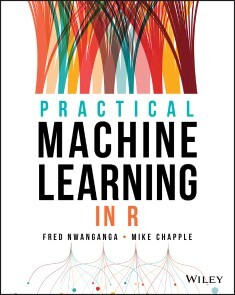
Practical Machine Learning in R
GUIDES PROFESSIONALS AND STUDENTS THROUGH THE RAPIDLY GROWING FIELD OF MACHINE LEARNING WITH HANDS-ON EXAMPLES IN THE POPULAR R PROGRAMMING LANGUAGEMachine learning—a branch of Artificial Intelligence (AI) which enables computers to improve their results and learn new approaches without explicit instructions—allows organizations to reveal patterns in their data and incorporate predictive analytics into their decision-making process. Practical Machine Learning in R provides a hands-on approach to solving business problems with intelligent, self-learning computer algorithms.Bestselling author and data analytics experts Fred Nwanganga and Mike Chapple explain what machine learning is, demonstrate its organizational benefits, and provide hands-on examples created in the R programming language. A perfect guide for professional self-taught learners or students in an introductory machine learning course, this reader-friendly book illustrates the numerous real-world business uses of machine learning approaches. Clear and detailed chapters cover data wrangling, R programming with the popular RStudio tool, classification and regression techniques, performance evaluation, and more.* Explores data management techniques, including data collection, exploration and dimensionality reduction* Covers unsupervised learning, where readers identify and summarize patterns using approaches such as apriori, eclat and clustering* Describes the principles behind the Nearest Neighbor, Decision Tree and Naive Bayes classification techniques* Explains how to evaluate and choose the right model, as well as how to improve model performance using ensemble methods such as Random Forest and XGBoostPractical Machine Learning in R is a must-have guide for business analysts, data scientists, and other professionals interested in leveraging the power of AI to solve business problems, as well as students and independent learners seeking to enter the field.FRED NWANGANGA, PHD, is an assistant teaching professor of business analytics at the University of Notre Dame's Mendoza College of Business. He has over 15 years of technology leadership experience. MIKE CHAPPLE, PHD, is associate teaching professor of information technology, analytics, and operations at the Mendoza College of Business. Mike is a bestselling author of over 25 books, and he currently serves as academic director of the University's Master of Science in Business Analytics program. About the Authors viiAbout the Technical Editors ixAcknowledgments xiIntroduction xxiPART I: GETTING STARTED 1CHAPTER 1 WHAT IS MACHINE LEARNING? 3Discovering Knowledge in Data 5Introducing Algorithms 5Artificial Intelligence, Machine Learning, and Deep Learning 6Machine Learning Techniques 7Supervised Learning 8Unsupervised Learning 12Model Selection 14Classification Techniques 14Regression Techniques 15Similarity Learning Techniques 16Model Evaluation 16Classification Errors 17Regression Errors 19Types of Error 20Partitioning Datasets 22Holdout Method 23Cross-Validation Methods 23Exercises 24CHAPTER 2 INTRODUCTION TO R AND RSTUDIO 25Welcome to R 26R and RStudio Components 27The R Language 27RStudio 28RStudio Desktop 28RStudio Server 29Exploring the RStudioEnvironment 29R Packages 38The CRAN Repository 38Installing Packages 38Loading Packages 39Package Documentation 40Writing and Running an R Script 41Data Types in R 44Vectors 45Testing Data Types 47Converting Data Types 50Missing Values 51Exercises 52CHAPTER 3 MANAGING DATA 53The Tidyverse 54Data Collection 55Key Considerations 55Collecting Ground Truth Data 55Data Relevance 55Quantity of Data 56Ethics 56Importing the Data 56Reading Comma-Delimited Files 56Reading Other Delimited Files 60Data Exploration 60Describing the Data 61Instance 61Feature 61Dimensionality 62Sparsity and Density 62Resolution 62Descriptive Statistics 63Visualizing the Data 69Comparison 69Relationship 70Distribution 72Composition 73Data Preparation 74Cleaning the Data 75Missing Values 75Noise 79Outliers 81Class Imbalance 82Transforming the Data 84Normalization 84Discretization 89Dummy Coding 89Reducing the Data 92Sampling 92Dimensionality Reduction 99Exercises 100PART II: REGRESSION 101CHAPTER 4 LINEAR REGRESSION 103Bicycle Rentals and Regression 104Relationships Between Variables 106Correlation 106Regression 114Simple Linear Regression 115Ordinary Least Squares Method 116Simple Linear Regression Model 119Evaluating the Model 120Residuals 121Coefficients 121Diagnostics 122Multiple Linear Regression 124The Multiple Linear Regression Model 124Evaluating the Model 125Residual Diagnostics 127Influential Point Analysis 130Multicollinearity 133Improving the Model 135Considering Nonlinear Relationships 135Considering Categorical Variables 137Considering Interactions Between Variables 139Selecting the Important Variables 141Strengths and Weaknesses 146Case Study: Predicting Blood Pressure 147Importing the Data 148Exploring the Data 149Fitting the Simple Linear Regression Model 151Fitting the Multiple Linear Regression Model 152Exercises 161CHAPTER 5 LOGISTIC REGRESSION 165Prospecting for Potential Donors 166Classifi cation 169Logistic Regression 170Odds Ratio 172Binomial Logistic Regression Model 176Dealing with Missing Data 178Dealing with Outliers 182Splitting the Data 187Dealing with Class Imbalance 188Training a Model 190Evaluating the Model 190Coeffi cients 193Diagnostics 195Predictive Accuracy 195Improving the Model 198Dealing with Multicollinearity 198Choosing a Cutoff Value 205Strengths and Weaknesses 206Case Study: Income Prediction 207Importing the Data 208Exploring and Preparing the Data 208Training the Model 212Evaluating the Model 215Exercises 216PART III: CLASSIFICATION 221CHAPTER 6 K-NEAREST NEIGHBORS 223Detecting Heart Disease 224k-Nearest Neighbors 226Finding the Nearest Neighbors 228Labeling Unlabeled Data 230Choosing an Appropriate k 231k-Nearest Neighbors Model 232Dealing with Missing Data 234Normalizing the Data 234Dealing with Categorical Features 235Splitting the Data 237Classifying Unlabeled Data 237Evaluating the Model 238Improving the Model 239Strengths and Weaknesses 241Case Study: Revisiting the Donor Dataset 241Importing the Data 241Exploring and Preparing the Data 242Dealing with Missing Data 243Normalizing the Data 245Splitting and Balancing the Data 246Building the Model 248Evaluating the Model 248Exercises 249CHAPTER 7 NAÏVE BAYES 251Classifying Spam Email 252Naïve Bayes 253Probability 254Joint Probability 255Conditional Probability 256Classification with Naïve Bayes 257Additive Smoothing 261Naïve Bayes Model 263Splitting the Data 266Training a Model 267Evaluating the Model 267Strengths and Weaknesses of the Naïve Bayes Classifier 269Case Study: Revisiting the Heart Disease Detection Problem 269Importing the Data 270Exploring and Preparing the Data 270Building the Model 272Evaluating the Model 273Exercises 274CHAPTER 8 DECISION TREES 277Predicting Build Permit Decisions 278Decision Trees 279Recursive Partitioning 281Entropy 285Information Gain 286Gini Impurity 290Pruning 290Building a Classification Tree Model 291Splitting the Data 294Training a Model 295Evaluating the Model 295Strengths and Weaknesses of the Decision Tree Model 298Case Study: Revisiting the Income Prediction Problem 299Importing the Data 300Exploring and Preparing the Data 300Building the Model 302Evaluating the Model 302Exercises 304PART IV: EVALUATING AND IMPROVING PERFORMANCE 305CHAPTER 9 EVALUATING PERFORMANCE 307Estimating Future Performance 308Cross-Validation 311k-Fold Cross-Validation 311Leave-One-Out Cross-Validation 315Random Cross-Validation 316Bootstrap Sampling 318Beyond Predictive Accuracy 321Kappa 323Precision and Recall 326Sensitivity and Specificity 328Visualizing Model Performance 332Receiver Operating Characteristic Curve 333Area Under the Curve 336Exercises 339CHAPTER 10 IMPROVING PERFORMANCE 341Parameter Tuning 342Automated Parameter Tuning 342Customized Parameter Tuning 348Ensemble Methods 354Bagging 355Boosting 358Stacking 361Exercises 366PART V: UNSUPERVISED LEARNING 367CHAPTER 11 DISCOVERING PATTERNS WITH ASSOCIATION RULES 369Market Basket Analysis 370Association Rules 371Identifying Strong Rules 373Support 373Confi dence 373Lift 374The Apriori Algorithm 374Discovering Association Rules 376Generating the Rules 377Evaluating the Rules 382Strengths and Weaknesses 386Case Study: Identifying Grocery Purchase Patterns 386Importing the Data 387Exploring and Preparing the Data 387Generating the Rules 389Evaluating the Rules 389Exercises 392Notes 393CHAPTER 12 GROUPING DATA WITH CLUSTERING 395Clustering 396k-Means Clustering 399Segmenting Colleges with k-Means Clustering 403Creating the Clusters 404Analyzing the Clusters 407Choosing the Right Number of Clusters 409The Elbow Method 409The Average Silhouette Method 411The Gap Statistic 412Strengths and Weaknesses of k-Means Clustering 414Case Study: Segmenting Shopping Mall Customers 415Exploring and Preparing the Data 415Clustering the Data 416Evaluating the Clusters 418Exercises 420Notes 420Index 421

Microsoft Teams - Die Anleitung für Einsteiger im Homeoffice
Aktualisierte Auflage September 2020!- Effizient und entspannt von zu Hause arbeiten- Schritt für Schritt erklärt - mit Tipps und HilfenMicrosoft Teams ist das optimale Onlinetool, um mit Ihren Kolleginnen und Kollegen vom Homeoffice aus zusammen zu arbeiten. Dieses Buch zeigt, welche Möglichkeiten Ihnen das Programm bietet, wie Sie Teams und Kanäle richtig nutzen und wie Sie Informationen über Aktivitäten erhalten. Schritt für Schritt erfahren Sie, wie Sie gemeinsam an Dateien arbeiten, Besprechungen planen, chatten und per Video telefonieren. Sorgen Sie dafür, dass Sie während eines Meetings nicht gestört werden, erstellen Sie eine Kontaktliste für Anrufe und finden Sie gesendete Dateien wieder. Mit dieser Anleitung lernen Sie, wie Sie sich mit MS Teams organisieren, um zu Hause produktiv und stressfrei arbeiten zu können.Aus dem Inhalt:- Mit Kollegen und Arbeitsgruppen chatten- Dateien freigeben und gemeinsam bearbeiten- Persönliche Einstellungen verwalten- Teams und Kanäle erstellen und Teammitglieder hinzufügen- Während eines Videoanrufs den Bildschirm freigeben- Gastbenutzer einladen- Besprechungen planen - Nachrichten und Kontakte suchen und organisieren- Microsoft Teams auf dem Smartphone nutzen- Übersicht der Tastenkombinationen

Cybersecurity and Decision Makers
Cyber security is a key issue affecting the confidence of Internet users and the sustainability of businesses. It is also a national issue with regards to economic development and resilience. As a concern, cyber risks are not only in the hands of IT security managers, but of everyone, and non-executive directors and managing directors may be held to account in relation to shareholders, customers, suppliers, employees, banks and public authorities. The implementation of a cybersecurity system, including processes, devices and training, is essential to protect a company against theft of strategic and personal data, sabotage and fraud. Cybersecurity and Decision Makers presents a comprehensive overview of cybercrime and best practice to confidently adapt to the digital world; covering areas such as risk mapping, compliance with the General Data Protection Regulation, cyber culture, ethics and crisis management. It is intended for anyone concerned about the protection of their data, as well as decision makers in any organization. Marie de Freminville is a non-executive director and founding partner of Starboard Advisory. She is also a member of the IFA (French Institute of non-executive Directors), HEC Governance and Swiss Association of Women Directors. In addition, de Freminville is an expert in governance, financial performance, risk mapping and data protection.Foreword xiPreface xiiiIntroduction xviiCHAPTER 1. AN INCREASINGLY VULNERABLE WORLD 11.1. The context 11.1.1. Technological disruptions and globalization 11.1.2. Data at the heart of industrial productivity 31.1.3. Cyberspace, an area without boundaries 31.1.4. IT resources 41.2. Cybercrime 41.2.1. The concept of cybercrime 41.2.2. Five types of threats 61.2.3. Five types of attackers 91.3. The cybersecurity market 151.3.1. The size of the market and its evolution 151.3.2. The market by sector of activity 151.3.3. Types of purchases and investments 161.3.4. Geographical distribution 171.4. Cyber incidents 171.4.1. The facts 171.4.2. Testimonials versus silence 241.4.3. Trends 251.4.4. Examples 271.5. Examples of particularly exposed sectors of activity 301.5.1. Cinema 301.5.2. Banks 311.5.3. Health 341.5.4. Tourism and business hotels 351.5.5. Critical national infrastructure 361.6. Responsibilities of officers and directors 37CHAPTER 2. CORPORATE GOVERNANCE AND DIGITAL RESPONSIBILITY 392.1. Corporate governance and stakeholders 392.2. The shareholders 402.2.1. Valuation of the company 412.2.2. Cyber rating agencies 422.2.3. Insider trading 432.2.4. Activist shareholders 442.2.5. The stock exchange authorities 452.2.6. The annual report 452.3. The board of directors472.3.1. The facts 472.3.2. The four missions of the board of directors. 472.3.3. Civil and criminal liability 492.3.4. The board of directors and cybersecurity 502.3.5. The board of directors and data protection 532.3.6. The statutory auditors 542.3.7. The numerical responsibility of the board of directors 552.4. Customers and suppliers 562.5. Operational management 582.5.1. The impacts of digital transformation 582.5.2. The digital strategy 592.5.3. The consequences of poor digital performance 622.5.4. Cybersecurity 632.5.5. Merger and acquisition transactions 652.5.6. Governance and data protection, cybersecurity 66CHAPTER 3. RISK MAPPING 693.1. Cyber-risks 693.2. The context 713.3. Vulnerabilities 723.3.1. Fraud against the president 733.3.2. Supplier fraud 733.3.3. Other economic impacts 743.4. Legal risks 763.4.1. Class actions 763.4.2. Sanctions by the CNIL and the ICO 773.5. The objectives of risk mapping 783.6. The different methods of risk analysis 793.7. Risk assessment (identify) 813.7.1. The main actors 813.7.2. The steps 823.8. Protecting 833.9. Detecting 833.10. Reacting 843.11. Restoring 853.12. Decentralized mapping 853.12.1. The internal threat 853.12.2. Industrial risks 873.12.3. Suppliers, subcontractors and service providers 883.12.4. Connected objects 893.13. Insurance 943.14. Non-compliance risks and ethics 96CHAPTER 4. REGULATIONS 994.1. The context 994.1.1. Complaints filed with the CNIL 1004.1.2. Vectaury 1014.1.3. Optical Center 1024.1.4. Dailymotion 1034.2. The different international regulations (data protection) 1034.2.1. The United States 1044.2.2. China 1044.2.3. Asia 1054.2.4. Europe 1054.3. Cybersecurity regulations, the NIS Directive 1054.4. Sectoral regulations 1064.4.1. The banking industry 1064.4.2. Health 1084.5. The General Data Protection Regulation (GDPR) 1094.5.1. The foundations 1104.5.2. Definition of personal data 1104.5.3. The so-called “sensitive” data 1114.5.4. The principles of the GDPR 1124.5.5. The five actions to be in compliance with the GDPR 1134.5.6. The processing register 1134.5.7. The five actions to be carried out 1134.5.8. Cookies 1164.6. Consequences for the company and the board of directors 117CHAPTER 5. BEST PRACTICES OF THE BOARD OF DIRECTORS 1195.1. Digital skills 1205.2. Situational awareness 1215.2.1. The main issues 1215.2.2. Insurance 1255.3. Internal governance 1265.3.1. The CISO 1265.3.2. The CISO and the company 1275.3.3. Clarifying responsibilities 1315.3.4. Streamlining the supplier portfolio 1335.3.5. Security policies and procedures 1345.3.6. The human being 1375.4. Data protection 1385.4.1. Emails 1395.4.2. The tools 1415.4.3. Double authentication: better, but not 100% reliable 1425.5. Choosing your service providers 1425.6. The budget 1435.7. Cyberculture 1445.8. The dashboard for officers and directors 145CHAPTER 6. RESILIENCE AND CRISIS MANAGEMENT 1476.1. How to ensure resilience? 1476.2. Definition of a CERT 1496.3. Definition of a SOC 1496.4. The role of ENISA 1506.5. The business continuity plan 1506.6. Crisis management 1516.6.1. The preparation 1516.6.2. Exiting the state of sideration 1526.6.3. Ensuring business continuity 1536.6.4. Story of the TV5 Monde attack 1546.6.5. Management of the first few hours 1596.7. Crisis simulation 163Conclusion. The Digital Committee 165APPENDICES 167Appendix 1. Cybersecurity Dashboard 169Appendix 2. Ensuring Cybersecurity in Practice and on a Daily Basis 173Appendix 3. Tools to Identify, Protect, Detect, Train, React and Restore 175Glossary 179References 183Index 187

Das Internet der Dinge und Künstliche Intelligenz als Game Changer
Das Internet der Dinge (IoT) und Künstliche Intelligenz (KI) bieten im Zuge der Digitalisierung große Chancen für innovative Geschäftsmodelle und Produktivitätssteigerungen von Unternehmen. Diese Chancen nutzen gegenwärtig vor allem die großen Digital-Champions und Startups. Umfassend und aktuell greifen die Autoren diese Herausforderung für etablierte Unternehmen auf. Zentrale These des Buches ist, dass diese digitalen Technologien die Spielregeln des Wettbewerbs grundlegend verändern und zu Game Changern werden. Die Autoren belegen dies in vier Blöcken: Im ersten Teil erläutern sie wichtige Begriffe. Im zweiten Teil beschreiben Timothy Kaufmann und Hans-Gerd Servatius die Entwicklung zum neuen Management 4.0-Paradigma und dessen Bausteine. Der dritte Teil beschäftigt sich mit dem Wandel der Informations- und Kommunikationstechnik hin zu einer durch IoT- und KI-Technologien geprägten digitalen Architektur. Der abschließende vierte Teil skizziert die Bausteine einer Innovationspolitik 4.0 für den digitalen Wandel, die den Rahmen für Management- und Architektur-Innovationen liefert.Dank klarer Gliederung, anschaulicher Erläuterung der neuen Konzepte und zahlreicher Beispiele aus der Praxis ist das Buch eine wichtige Orientierungshilfe für alle, die nach erfolgreichen Wegen zu einem Management 4.0 und einer digitalen Architektur suchen.TIMOTHY KAUFMANN arbeitet bei SAP als Business Development Director für neue Technologien. Er ist Mitinitiator der Open Industry 4.0 Alliance.PROF. DR. HANS-GERD SERVATIUS ist geschäftsführender Gesellschafter des Innovationsspezialisten Competivation. Daneben lehrt er an der Universität Stuttgart und der RWTH Aachen. Er ist Autor mehrerer Bücher und zahlreicher Fachartikel.Digitale Technologien verändern den Wettbewerb.- Das neue Management 4.0-Paradigma.- Digitale Geschäftsmodelle gemeinsam mit IoT- und KI-Plattformpartnern.- Integration der Objectives and Key Results (OKR-) Methode in agile Strategie- und Innovationsprozesse.- Digitaler Wandel in einer evolutionären Organisation.- Produktivitätssteigerung mit Künstlicher Intelligenz.- Eine IT-Architektur 4.0 unterstützt IoT und KI.- IoT- und KI-Architekturen.- Datengetriebene Services und die Architektur 4.0.- Geschäftsprozesse und die Architektur 4.0.- Das Wertversprechen und die Architektur 4.0.- IoT- und KI-Innovationsökosysteme und die Architektur 4.0.- Auf dem Weg zu einer Innovationspolitik 4.0.

Mobile Security
Das Buch bietet eine fundierte Einführung in die Chronologie bekannter Angriffe und Verwundbarkeiten auf mobile Systeme und dessen konzeptionelle Einordnung der letzten zwei Dekaden. So erhält der Leser einen einmaligen Überblick über die Vielfältigkeit nachweisbar ausgenutzter Angriffsvektoren auf verschiedenste Komponenten mobiler drahtloser Geräte sowie den teilweise inhärent sicherheitskritischen Aktivitäten moderner mobiler OS. Eine für Laien wie Sicherheitsarchitekten gleichermaßen fesselnde Lektüre, die das Vertrauen in sichere mobile Systeme stark einschränken dürfte.DIRK WESTHOFF kann auf nunmehr 25 Jahre Erfahrung im Bereich der IT-Sicherheit verweisen. Sowohl als Chief-Researcher innerhalb der Europäischen Forschungseinrichtung eines weltweit agierenden Elektronikkonzerns, als auch als Professor für Informationssicherheit an verschiedenen Hochschulen. Er ist Mitautor einer Reihe von Patenten sowie von ca. 90 Veröffentlichungen auf dem Gebiet der IT-Sicherheit.Verwundbarkeit von 802.15.4: PiP-Injektion.- Verwundbarkeit von WLAN: KRACK-Angriff auf WPA2.- Verwundbarkeit von Bluetooth: Blueborne und Co..-Verwundbarkeiten von NFC und durch NFC.- Angriffe über das Baseband.- Android Sicherheitsarchitektur.- Horizontale Rechteausweitung.-Techniken zu Obfuskierung und De-Obfuskierung von Apps.- Apps mit erhöhten Sicherheitsbedarf: Banking App.- Positionsbestimmung durch Swarm-Mapping.- Seitenkanäle zur Überwindung des ‚Air-gap‘.- Ausblick: 5G Sicherheitsarchitektur.- .
Introducing the HTML5 Web Speech API
Leverage the power of HTML5 Web Speech API to quickly add voice capabilities to your websites. This project-oriented book simplifies the process of setting up and manipulating the API in the browser using little more than a text editor or free software.You'll be presented with a starting toolset that you can use to develop future projects, incorporate into your existing workflow and allow you to take your websites to the next level, reducing the reliance on entering choices through a keyboard and making the overall experience easier for customers.This excellent resource is perfect for getting acquainted with creating and manipulating browser-based APIs. You don’t have to convert your whole work process immediately; you can incorporate as little or as much as you want of the API, and build on this as your skills develop. We live in an age where speed and simplicity are of the essence – this book provides a perfect way to add speech capabilities to our websites, directly in the browser and with the minimum of fuss.Introducing the HTML5 Web Speech API is the right choice for developers who want to focus on simplicity to produce properly optimized content in modern browsers using tools already in their possession.WHAT YOU'LL LEARN* Implement the Web Speech API in a project* Explore some of the options for personalizing them for a project* Gain an appreciation of pointers around user experience and how this affects the API* Understand how to manage issues and security when using the API* Work through some example projects, from standalone demos to implementing with other tools or librariesWHO THIS BOOK IS FORWebsite developers who are already familiar with JavaScript, and are keen to learn how to leverage the Web Speech API to quickly add voice-enabled capabilities to a website, using little more than a text editor. It’s ideal for those in agile development teams, where time is of the essence, and the pressure is on to deliver results quickly.ALEX LIBBY is a front end engineer and seasoned computer book author, who hails from England. His passion for all things Open Source dates back to the days of his degree studies, where he first came across web development, and has been hooked ever since. His daily work involves extensive use of JavaScript, HTML and CSS to manipulate existing website content; Alex enjoys tinkering with different open source libraries to see how they work. He has spent a stint maintaining the jQuery Tools library, and enjoys writing about Open Source technologies, principally for front end UI development.1. Getting Started2. Exploring the APIs in More Detail3. Supporting Mobile Devices4. Combining the APIs- Building a ChatBot5. Project- Leaving Review Feedback6. Project- Building Alexa7. Project- Finding a Restaurant8. Project- Finding and Playing Music9. Project- Automating the Purchase ProcessAppendix: API Reference

Der PC als Medienzentrale
Dieses Buch ist ein Kompendium für die Nutzung eines PCs als Medienzentrale. Für verschiedene Betriebssysteme werden Schritt-für-Schritt-Anleitungen zur Verfügung gestellt, die dem Leser zeigen, wie eine Medienzentrale aufgebaut werden kann. Dies beinhaltet u.a. die Themen Multimedia und Fernsehen, produktive Tools, Server, Datenbanken und Spiele.RÜDIGER FOLLMANN studierte Elektrotechnik an der RWTH Aachen. 1995 begann er seine Arbeit als wissenschaftlicher Mitarbeiter im Bereich Messtechnik bei der IMST GmbH - einem Design- und Entwicklungshaus für elektronische Komponenten. Nach seiner Promotion leitete er hier zunächst das Team MMIC-Design, welches sich mit der Entwicklung von GaAs-und SiGe-Schaltungen beschäftigt. Anschließend war er als Teamleiter 'HF-Komponenten' für den Ausbau des Schaltungs-Design-Bereichs verantwortlich.Heute ist Follmann in seiner Funktion als 'Vice President' für die Akquisition von Großprojekten, technische Beratung sowie die Durchführung internationaler Seminare zuständig.Auswahl eines PCs und Zusammenstellen der Komponenten nach Bedarf.-Installation von MacOS (Hackintosh) und Praxistest (iMovie, Fortnite).-Installation und Konfiguration von Ubuntu (Triple Boot mit MacOS und Windows, …).-Netzwerke und Funktionen (SAMBA, Drucken, …).-Spiele und Emulatoren (Wii U, Switch, N64, …).-LINUX nutzen (Programme, Quelltexte, Grundlagen, …).-Fernsehen und Videos (VDR, Kodi, Amazon Prime, Ambilight, …).-Server und Datenbanken (Webseiten, CMS, Philips Hue, DLNA, …).-Textverarbeitung im Vergleich (Office Tools, LaTeX, Microsoft-Programme unter LINUX, …).
Mastering VMware NSX for vSphere
A CLEAR, COMPREHENSIVE GUIDE TO VMWARE’S LATEST VIRTUALIZATION SOLUTIONMastering VMware NSX for vSphere is the ultimate guide to VMware’s network security virtualization platform. Written by a rock star in the VMware community, this book offers invaluable guidance and crucial reference for every facet of NSX, with clear explanations that go far beyond the public documentation. Coverage includes NSX architecture, controllers, and edges; preparation and deployment; logical switches; VLANS and VXLANS; logical routers; virtualization; edge network services; firewall security; and much more to help you take full advantage of the platform’s many features.More and more organizations are recognizing both the need for stronger network security and the powerful solution that is NSX; usage has doubled in the past year alone, and that trend is projected to grow—and these organizations need qualified professionals who know how to work effectively with the NSX platform. This book covers everything you need to know to exploit the platform’s full functionality so you can:* Step up security at the application level* Automate security and networking services* Streamline infrastructure for better continuity* Improve compliance by isolating systems that handle sensitive dataVMware’s NSX provides advanced security tools at a lower cost than traditional networking. As server virtualization has already become a de facto standard in many circles, network virtualization will follow quickly—and NSX positions VMware in the lead the way vSphere won the servers. NSX allows you to boost security at a granular level, streamline compliance, and build a more robust defense against the sort of problems that make headlines. Mastering VMware NSX for vSphere helps you get up to speed quickly and put this powerful platform to work for your organization.ELVER SENA SOSA is a data center solutions architect with 20 years' networking experience. He is the author of two VMWare Press VCP certification books, holds VCDX-NV and VCI certifications from VMWare, and he is a frequent speaker and blogger well known in the VMware community. Introduction xviiCHAPTER 1 ABSTRACTING NETWORK AND SECURITY 1Networks: 1990s 1Colocation 2Workload-to-Server Ratio 3Inefficient Resource Allocation 3The Long Road to Provisioning 3Data Centers Come of Age 4Data Center Workloads 4Workloads Won’t Stay Put 5VMWARE 6Virtualization 6What is Happening in There? 6Portability 8Virtualize Away 8Extending Virtualization to Storage 9Virtual Networking and Security 9NSX to the Rescue 10The Bottom Line 13CHAPTER 2 NSX ARCHITECTURE AND REQUIREMENTS 15NSX Network Virtualization 16Planes of Operation 16NSX Manager Role and Function 18ESXi Hosts 19vCenter Server 20vSphere Distributed Switch 21NSX VIBs 23Competitive Advantage: IOChain 24IOChain Security Features 24NSX Controllers 25NSX Controller Clustering 26NSX Controller Roles 26NSX Edge 28ESG Sizing 30NSX Role-Based Access Control 30Overlay and Underlay Networks 32Replication Modes for Traffic Going to Multiple Destinations 34The Bottom Line 36CHAPTER 3 PREPARING NSX 39NSX Manager Prerequisites 39Open Ports and Name Resolution 40Minimum Resource Requirements for NSX Data Center Appliances 40vSphere HA and DRS 41IP Addressing and Port Groups 43Installing the Client Integration Plug-in 44Installing NSX Manager 44Associating NSX Manager to vCenter 46Adding AD/LDAP to NSX 47Linking Multiple NSX Managers Together (Cross- vCenter NSX) 51Multi-site Consistency with Universal Components 51Primary and Secondary NSX Managers 53Preparing ESXi Clusters for NSX 54Creating a Universal Transport Zone on the Primary NSX Manager 56vSphere Distributed Switches Membership 57Adding Secondary NSX Managers 58The Bottom Line 59CHAPTER 4 DISTRIBUTED LOGICAL SWITCH 61vSphere Standard Switch (vSS) 62Traffic Shaping 63Understanding Port Groups 64NIC Teaming 65Ensuring Security 66Virtual Distributed Switch (vDS) 67Virtual eXtensible LANs (VXLANs) 68Employing Logical Switches 71Three Tables That Store VNI Information 73Collecting VNI Information 74Centralized MAC Table 75VTEP Table 76We Might as Well Talk about ARP Now 79Filling In the L2 and L3 Headers 79Switch Security Module 81Understanding Broadcast, Unknown Unicast, and Multicast 83Layer 2 Flooding 83Replication Modes 83Deploying Logical Switches 84Creating a Logical Switch 85The Bottom Line 85CHAPTER 5 MARRYING VLANS AND VXLANS 87Shotgun Wedding: Layer 2 Bridge 87Architecture 88Challenges 89Deployment 90Under the Hood 102Layer 2 VPN 102NSX Native L2 Bridging 103Hardware Switches to the Rescue 103Hardware VTEPs 103Deployment 104Under the Hood 104The Bottom Line 105CHAPTER 6 DISTRIBUTED LOGICAL ROUTER 107Distributed Logical Router (DLR) 107Control Plane Smarts 108Logical Router Control Virtual Machine 108Understanding DLR Efficiency 111Another Concept to Consider 115Let’s Get Smart about Routing 117OSPF 119Border Gateway Protocol (BGP) 120Oh Yeah, Statics Too 123Deploying Distributed Logical Routers 125The Bottom Line 134CHAPTER 7 NFV: ROUTING WITH NSX EDGES 137Network Function Virtualization: NSX Has It Too 137This is Nice: Edge HA A 138Adding HA 139Let’s Do Routing Like We Always Do 140Deploying the Edge Services Gateway 144Configuring BGP 151Configuring OSPF 154Configuring Static Routes 155Routing with the DLR and ESG 156Using CLI Commands 156Default Behaviors to Be Aware Of 157Equal Cost Multi-Path Routing157The Bottom Line 160CHAPTER 8 MORE NVF: NSX EDGE SERVICES GATEWAY 163ESG Network Placement 163Network Address Translation 164Configuring Source NAT 166Configuring Destination NAT 166Configuring SNAT on the ESG 167Configuring DNAT on the ESG 169ESG Load Balancer 171Configuring an ESG Load Balancer 173Layer 2 VPN (If You Must) 178Secure Sockets Layer Virtual Private Network 179Split Tunneling 180Configuring SSL VPN 180Internet Protocol Security VPN 187Understanding NAT Traversal 188Configuring IPsec Site-to-Site VPN with the ESG 188Round Up of Other Services 190DHCP Service 191Configuring the ESG as a DHCP Server 192DHCP Relay 194Configuring the DLR for DHCP Relay 196DNS Relay 198Configuring DNS Relay on the ESG 199The Bottom Line 200CHAPTER 9 NSX SECURITY, THE MONEY MAKER 203Traditional Router ACL Firewall 203I Told You about the IOChain 204Slot 2: Distributed Firewall 206Under the Hood 207Adding DFW Rules 210Segregating Firewall Rules 214IP Discovery 215Gratuitous ARP Used in ARP Poisoning Attacks 216Why is My Traffic Getting Blocked? 218Great, Now It’s Being Allowed 219Identity Firewall: Rules Based on Who Logs In 220Distributing Firewall Rules to Each ESXi Host: What’s Happening? 220The Bottom Line 222CHAPTER 10 SERVICE COMPOSER AND THIRD-PARTY APPLIANCES 223Security Groups 224Dynamic Inclusion 225Static Inclusion 226Static Exclusion 226Defining a Security Group through Static Inclusion 227Defining a Security Group through Dynamic Inclusion 229Customizing a Security Group with Static Exclusion 231Defining a Security Group Using Security Tags 231Adding to DFW Rules 233Service Insertion 236IOChain, the Gift that Keeps on Giving 236Layer 7 Stuff: Network Introspection 236Guest Introspection 237Service Insertion Providers 238Security Policies 239Creating Policies 239Enforcing Policies 243The Bottom Line 245CHAPTER 11 VREALIZE AUTOMATION AND REST APIS 247vRealize Automation Features 247vRA Editions 249Integrating vRA and NSX 250vRealize Automation Endpoints 250Associating NSX Manager with vRealize Automation 252Network Profiles 253vRA External, Routed, and NAT Network Profiles 255Reservations 258vRealize Orchestrator Workflows 261Creating a Blueprint for One Machine261Adding NSX Workflow to a Blueprint 264Creating a Request Service in the vRA Catalog 265Configuring an Entitlement 268Deploying a Blueprint that Consumes NSX Services 271REST APIs 273NSX REST API GET Request 275NSX REST API POST Request 275NSX REST API DELETE Request 276The Bottom Line 277APPENDIX THE BOTTOM LINE 279Chapter 1: Abstracting Network and Security 279Chapter 2: NSX Architecture and Requirements 280Chapter 3: Preparing NSX 280Chapter 4: Distributed Logical Switch 281Chapter 5: Marrying VLANs and VXLANs 283Chapter 6: Distributed Logical Router 284Chapter 7: NFV: Routing with NSX Edges 286Chapter 8: More NVF: NSX Edge Services Gateway 287Chapter 9: NSX Security, the Money Maker 289Chapter 10: Service Composer and Third-Party Appliances 290Chapter 11: vRealize Automation and REST APIs 291Index 293

eLearning und Mobile Learning - Konzept und Drehbuch
In dem Praxishandbuch beschreibt die Autorin, wie ein Drehbuch nach lernpsychologischen und didaktischen Kriterien erstellt werden kann. Sie stellt Werkzeuge für das Konzipieren und Schreiben vor und evaluiert sie. Das Buch und die begleitende Website bieten zahlreiche Hilfsmittel: u. a. eine Checkliste zur Prüfung des fertigen Drehbuchs und eine Qualitätssicherungsmaßnahme, die Zeit und Kosten spart. Die Neuauflage wurde durchgehend aktualisiert. Für Projektleiter in Multimediaagenturen, Fachleute in Unternehmen sowie (zukünftige) Drehbuchautoren.DANIELA MODLINGER M.A. ist seit 1990 in der Verlags- und Multimedia-Branche tätig. Seit dem Jahr 2000 arbeitet sie als Medienautorin und Beraterin für eLearning-Anwendungen im institutionellen und betrieblichen Bildungswesen und bietet außerdem Inhouse-Schulungen zum Thema „Konzeption und Drehbuchschreiben für eLearning und Mobile Learning“ an. Ihre reiche Praxiserfahrung aus zahlreichen Projekten und ihrer weiterhin aktiven Unterrichtstätigkeit ist in dieses Buch eingeflossen.Wie kommt das Drehbuch vom Film zum eLearning - Wer bezieht Stellung bei der Produktion von eLearning - Briefing – welche Inhalte sollen ins Drehbuch? - Konzeption – wie kommt Struktur in die Inhalte? - Was macht ein gutes eLearning-Drehbuch aus? - Mobile Learning – Konzept und Drehbuch - Wie organisiere ich die Arbeit am Drehbuch? - Woran erkenne ich einen guten Medienautor? - Weiterführende Informationen - Checklisten - Glossar

Deep Learning kompakt für Dummies
Wollen Sie sich über Deep Learning informieren und vielleicht erste kleine Schritte machen, diese Technologie zu nutzen? Dann hilft Ihnen dieses Buch. Die Autoren erklären Ihnen, welchen Einfluss Deep Learning im Alltag hat und in welcher Beziehung es zu maschinellem Lernen steht. Sie sammeln erste eigene Erfahrungen mit vorgegebenen Python-Programmen und verstehen so die Funktionsweise von neuronalen Netzen und wie Bilder klassifiziert und Sprache sowie Text verarbeitet werden. So ist dieses Buch ein schneller erster und verständlicher Einstieg in Deep Learning. John Paul Mueller ist freier Autor und technischer Redakteur. Er hat das Schreiben im Blut. Bis heute hat er 100 Bücher und mehr als 600 Zeitschriftenartikel geschrieben. Seine Themen reichen von Netzwerken bis Haussicherheit und von Datenbankmanagement bis Programmierung.Luca Massaron ist Data Scientist und spezialisiert auf die Aufbereitung und Analyse von Big Data. Er beherrscht die einfachsten und effektivsten Data-Mining- und Maschinelles-Lernen-Techniken und macht so aus Big Data Smart Data. Als Marketing-Consultant und -Forscher hat er seit dem Jahr 2000 mit Data Science zu tun, mit verschiedenen Kunden und in verschiedenen Märkten. Er ist Top-Ten-Kaggle-Data-Scientist.ÜBER DIE AUTOREN9Widmung von John Mueller 9Widmung von Luca Massaron 10Danksagung von John Mueller 10Danksagung von Luca Massaron 10EINFÜHRUNG21Über dieses Buch 21Törichte Annahmen über den Leser 23Symbole, die in diesem Buch verwendet werden 23Weitere Ressourcen 24Wie es weitergeht 24TEIL I: EINFÜHRUNG IN DEEP LEARNING 27KAPITEL 1 EINFÜHRUNG IN DEEP LEARNING29Definition von Deep Learning 30Künstliche Intelligenz als Oberbegriff 30Die Rolle der KI 32Maschinelles Lernen als Teil der KI 35Deep Learning als Form des maschinellen Lernens 37Deep Learning in der Praxis 39Der Prozess des Lernens 39Aufgabenbewältigung mit Deep Learning 39Deep Learning als Bestandteil größerer Anwendungen 40Programmierumgebung für Deep Learning 40Deep Learning: Hype vs Realität 43Ihre ersten Schritte 43Ungeeignete Szenarien für Deep Learning 43KAPITEL 2 MASCHINELLES LERNEN45Definition von maschinellem Lernen 45Funktionsweise von maschinellem Lernen 46Lernen durch unterschiedliche Strategien 47Training, Validierung und Test 49Suche nach Generalisierungen 51Der Einfluss von Bias 51Beachtung der Komplexität des Modells 52Lernstrategien und Arten von Algorithmen 52Fünf wesentliche Strategien 53Verschiedene Arten von Algorithmen 54Sinnvolle Einsatzbereiche für maschinelles Lernen 59Anwendungsszenarien für maschinelles Lernen 59Die Grenzen des maschinellen Lernens 62KAPITEL 3 INSTALLATION UND VERWENDUNG VON PYTHON65Verwendung von Python in diesem Buch 66Installation von Anaconda 66Anaconda von Continuum Analytics 67Installation von Anaconda unter Linux 67Installation von Anaconda unter Mac OS X 68Installation von Anaconda unter Windows 70Jupyter Notebook 72Verwendung von Jupyter Notebook 73Verwendete Datensätze in diesem Buch 79Erstellen einer Anwendung 81Die Arbeit mit Zellen 81Hinzufügen von Dokumentationszellen 82Andere Zellarten 83Einrückung von Codezeilen 83Hinzufügen von Kommentaren 85Weitere Informationen zu Python 88Arbeiten in der Cloud 89Verwendung der Datensätze und Kernels von Kaggle 89Verwendung von Google Colaboratory 89KAPITEL 4 FRAMEWORKS FÜR DEEP LEARNING93Das Framework-Prinzip 94Unterschiede zwischen Frameworks 94Hohe Beliebtheit von Frameworks 95Frameworks speziell für Deep Learning 96Auswahl eines Frameworks 97Einfache Frameworks für Deep Learning 98Kurzvorstellung von TensorFlow 101TEIL II: GRUNDLAGEN VON DEEP LEARNING 113KAPITEL 5 RECHNEN MIT MATRIZEN115Nötige mathematische Grundlagen 116Die Arbeit mit Daten 116Matrixdarstellung von Daten 117Skalar-, Vektor- und Matrixoperationen 118Erzeugung einer Matrix 119Multiplikation von Matrizen 121Fortgeschrittene Matrixoperationen 123Datenanalysen mit Tensoren 125Effektive Nutzung von Vektorisierung 127Der Lernprozess als Optimierung 128Kostenfunktionen 128Minimierung des Fehlers 129Die richtige Richtung 130KAPITEL 6 GRUNDLAGEN DER LINEAREN REGRESSION133Kombination von Variablen 134Die einfache lineare Regression 134Die multiple lineare Regression 135Verwendung des Gradientenabstiegs 137Die lineare Regression in Aktion 138Vermischung von Variablen unterschiedlichen Typs 140Modellierung der Antworten 140Modellierung der Merkmale 141Umgang mit komplexen Zusammenhängen 142Nutzung von Wahrscheinlichkeiten 144Spezifikation einer binären Antwort 144Umwandlung numerischer Schätzungen in Wahrscheinlichkeiten 145Schätzung der richtigen Merkmale 148Irreführende Ergebnisse durch inkompatible Merkmale 148Vermeidung einer Überanpassung durch Merkmalsauswahl und Regularisierung 149Lernen aus einzelnen Beispielen 150Verwendung des Gradientenabstiegs 150Stochastisches Gradientenabstiegsverfahren 151KAPITEL 7 EINFÜHRUNG IN NEURONALE NETZE155Das faszinierende Perzeptron 156Höhen und Tiefen des Perzeptrons 156Die Funktionsweise des Perzeptrons 157Trennbare und nicht trennbare Daten 158Komplexere Lernverfahren und neuronale Netze 160Das Neuron als Grundbaustein 160Vorwärtsausrichtung in Feedforward-Netzen 162Schichten und noch mehr Schichten 164Lernen mittels Rückwärtspropagierung 167Vermeidung von Überanpassung 170KAPITEL 8 ENTWURF EINES EINFACHEN NEURONALEN NETZES173Grundlegende Funktionsweise neuronaler Netze 173Definition der grundlegenden Architektur 175Die wichtigsten Funktionen eines neuronalen Netzes 176Lösen eines einfachen Problems 180Ein Blick ins Innere von neuronalen Netzen 183Auswahl der richtigen Aktivierungsfunktion 183Auswahl eines cleveren Optimierers 185Auswahl einer sinnvollen Lernrate 186KAPITEL 9 DEEP LEARNING IM DETAIL187Daten, Daten, Daten 188Strukturierte und unstrukturierte Daten 188Mooresches Gesetz 189Datenwachstum infolge des mooreschen Gesetzes 191Vorteile durch all die neuen Daten 191Innovationen dank Daten 192Rechtzeitigkeit und Qualität von Daten 192Mehr Tempo bei der Datenverarbeitung 193Nutzung leistungsstarker Hardware 194Weitere Investitionen in Deep Learning 195Neuerungen von Deep Learning 195Immer mehr Schichten 196Bessere Aktivierungsfunktionen 198Regularisierung durch Dropout 199Die Suche nach noch smarteren Lösungen 201Kontinuierliches Lernen (Online Learning) 201Übertragung von Wissen (Transfer Learning) 201Simple Komplettlösungen (End-to-End Learning) 202KAPITEL 10 KONVOLUTIONSNETZE205Bilderkennung mit Konvolutionsnetzen 206Grundsätzlicher Aufbau von digitalen Bildern 206Konvolutionen (Faltungen) 208Funktionsprinzip von Konvolutionen 209Vereinfachtes Pooling 212Beschreibung der LeNet-Architektur 214Erkennung von Kanten und Formen in Bildern 219Visualisierung von Konvolutionen 220Einige erfolgreiche Architekturen 222Übertragung von Wissen (Transfer Learning) 223KAPITEL 11 REKURRENTE NEURONALE NETZE227Einführung in rekurrente neuronale Netze 227Modellierung von Sequenzen durch Erinnerung 228Erkennung und Übersetzung von Sprache 230Korrekte Beschriftung von Bildern 233LSTM-Zellen (Long Short-Term Memory) 234Unterschiedliche »Gedächtnisse« 235Die LSTM-Architektur 235Verschiedene LSTM-Varianten 238Der Aufmerksamkeitsmechanismus 239TEIL III: ANWENDUNG VON DEEP LEARNING 241KAPITEL 12 BILDKLASSIFIKATION 243Herausforderungen bei der Bildklassifikation 244ImageNet und Alternativen 244Erstellen von Zusatzbildern (Image Augmentation) 246Unterscheidung von Verkehrszeichen 249Vorbereitung der Bilddaten 250Durchführen einer Klassifikation 253KAPITEL 13 KOMPLEXE KONVOLUTIONSNETZE259Unterschiedliche Aufgaben beim Erkennen von Objekten im Bild 260Lokalisierung von Objekten 261Klassifikation mehrerer Objekte 262Annotation mehrerer Objekte in Bildern 263Segmentierung von Bildern 264Wahrnehmung von Objekten in ihrer Umgebung 265Funktionsweise von RetinaNet 266Verwendung des Codes von Keras RetinaNet 267Böswillige Angriffe auf DL-Anwendungen 272Heimtückische Pixel 274Hacking mit Stickern und anderen Artefakten 275KAPITEL 14 SPRACHVERARBEITUNG277Verarbeitung von Sprache 278Verstehen durch Tokenisierung 279Zusammenführen aller Texte 281Auswendiglernen von wichtigen Sequenzen 284Semantikanalyse durch Worteinbettungen 284KI für Stimmungsanalysen 289KAPITEL 15 AUTOMATISCH ERZEUGTE MUSIK UND VISUELLE KUNST297Computergenerierte Kunst 298Nachahmung eines künstlerischen Stils 298Statistische Verfahren als Grundlage 300Der Unterschied zwischen Kreativität und Deep Learning 302Imitation eines Künstlers 303Neue Werke im Stile eines bestimmten Malers 303Kombination von Stilen zum Erzeugen neuer Werke 305Überzeugende Imitate mit einem GAN 305Musikkomposition mit Deep Learning 306KAPITEL 16 GENERATIVE ADVERSARIAL NETWORKS309Konkurrierende neuronale Netze 310Wettbewerb als Schlüssel zum Erfolg 310Realistischere Ergebnisse 313Komplexere GANs für anspruchsvollere Aufgaben 320Realistische Imitate von Promigesichtern 321Mehr Bilddetails und Bildübersetzung 321KAPITEL 17 VERSTÄRKENDES LERNEN MIT DEEP LEARNING 323Strategische Spiele mit neuronalen Netzen 324Grundprinzip des verstärkenden Lernens 324Simulierte Spielumgebungen 326Q-learning 330Funktionsweise von AlphaGo 333Eine echte Gewinnerstrategie 335Selbstständiges Lernen in großem Stil 337TEIL IV: DER TOP-TEN-TEIL 339KAPITEL 18 ZEHN ANWENDUNGSSZENARIEN FÜR DEEP LEARNING341Kolorieren von Schwarz-Weiß-Aufnahmen 341Analyse der Körperhaltung in Echtzeit 342Verhaltensanalysen in Echtzeit 343Übersetzung von Sprachen 344Einsparungen mit Solaranlagen 345Computer als Spielgegner 345Erzeugung von Stimmen 346Demografische Analysen 347Kunst basierend auf normalen Fotos 348Vorhersage von Naturkatastrophen 348KAPITEL 19 ZEHN UNVERZICHTBARE TOOLS FÜR DEEP LEARNING351Kompilieren von mathematischen Ausdrücken mit Theano 351Stärkung von TensorFlow mit Keras 352Dynamische Berechnung von Graphen mit Chainer 353Einrichtung einer MATLAB-ähnlichen Umgebung mit Torch 354Dynamische Ausführung von Aufgaben mit PyTorch 354Schnellere DL-Forschung dank CUDA 355Geschäftliche Erfolge mit Deeplearning4j 357Data-Mining mit Neural Designer 358Algorithmentraining mit Microsoft Cognitive Toolkit (CNTK) 359Volle GPU-Leistung mit MXNet 359Stichwortverzeichnis 361
Building React Apps with Server-Side Rendering
Leverage the benefits of both client-side and server-side rendering to get the most out of your React applications. By the end of this book you will be able to build and deploy React applications using the Next.js framework to fully render server-side HTML on every Web page.You'll begin by reviewing JavaScript fundamentals and how they work with the core principles of React. You'll then move on to Next.js, the React framework for server-rendered applications. Using this framework, you will create a fast and secure solutional React application that renders content on the server-side, protects sensitive information, and optimizes response times. Before deploying the application using Docker containers, you'll create automated unit tests to verify that every component is appropriately doing its jobBuilding React Apps with Server-Side Rendering also covers other fun and interesting topics such as Bootstrap 4, JSX (JavaScript XML), adding styling to your React applications, and much more. By the end of this book, you will be able to build and deploy React applications that fully render server-side HTML on every page. In the end you'll have a client-side rendered React application that integrates server-side rendering into it using Next.js framework.WHAT YOU'LL LEARN* Examine fundamental concepts of JavaScript (ES 2015)* Create client-side apps using JavaScript frameworks React and Redux* Add server-side rendering to React apps using the NextJS FrameworkWHO THIS BOOK IS FORWeb developers who have prior experience in working with JavaScript, HTML and CSS, who wish to step up a level and create better web applications using modern JavaScript frameworks like React, Reduct & Next.MOHIT THAKKAR is a Software Engineer with a multinational company. He has published five books and a research paper in the International Journal of Advanced Research in Management, Architecture, Technology and Engineering.Chapter 1, JavaScript FundamentalsChapter Goal:· Introduction to JavaScript· Constants· Variable Declaration· Rest Parameters· Spread Syntax· Destructuring· Control Loops· Type Conversion· Operators· Functions· Closures· Arrays· Classes & Modules· DOM Modification· Error Handling· HTTP Requests· Promises· Form Handling in JSChapter 2, Introducing React.jsChapter Goal:· Installing Node.js· Installing React· Basic Concepts of Reacto Single Page Applicationso Immutabilityo Purityo Compositiono Presentational vs Container Componentso Eventso Form Handling in Reacto Hooks· React Element using JavaScript· React Element using JSX· Stateless & Stateful React Components· Creating Your First React Component· Working with Data· AJAX Calls· Working with the State Object· Styling React Componentso CSS in Reacto SASS in Reacto Styled Components· Babel· WebpackChapter 3, Next.jsChapter Goal:· Introduction to Next.js· Features of Next.js· Getting Started· Routing in Next.js· Dynamic Loading· Adding Multimedia Content· Creating Interactive App using Next.js· Configuring Webpack & Babel· Getting Data from Remote Server· Using Redux with Next.js· Using GraphQL with Next.jsChapter 4, Adding Server-Side Rendering to Your React ApplicationChapter Goal:· Importance of Server-Side Rendering· Building a Simple React App· Using DOM to Post Content· Using React Calls to Post Content· Creating Functional React Component· Passing Props to Functional React Component· Converting Functional Component to Class Component· Using JSX & Next.js for Server-Side Rendering· Adding CSS to Next.js· Integrating Bootstrap 4 to Your AppChapter 5, Unit Testing using JestChapter Goal:· Setting Up Jest· Writing Your First Test Using Jest· Matchers· Using Enzyme to Access React DOM· Testing a React ComponentChapter 6, Deploying Your App to a ServerChapter Goal:· Deployment Basics· Setting up Environment Variables· Introduction to Docker· Creating a Docker Container for Your App· Hosting the Container

Tribe of Hackers Security Leaders
TRIBAL KNOWLEDGE FROM THE BEST IN CYBERSECURITY LEADERSHIPThe Tribe of Hackers series continues, sharing what CISSPs, CISOs, and other security leaders need to know to build solid cybersecurity teams and keep organizations secure. Dozens of experts and influential security specialists reveal their best strategies for building, leading, and managing information security within organizations. Tribe of Hackers Security Leaders follows the same bestselling format as the original Tribe of Hackers, but with a detailed focus on how information security leaders impact organizational security.Information security is becoming more important and more valuable all the time. Security breaches can be costly, even shutting businessesand governments down, so security leadership is a high-stakes game. Leading teams of hackers is not always easy, but the future of your organization may depend on it. In this book, the world’s top security experts answer the questions that Chief Information Security Officers and other security leaders are asking, including:* What’s the most important decision you’ve made or action you’ve taken to enable a business risk?* How do you lead your team to execute and get results?* Do you have a workforce philosophy or unique approach to talent acquisition?* Have you created a cohesive strategy for your information security program or business unit?Anyone in or aspiring to an information security leadership role, whether at a team level or organization-wide, needs to read this book. Tribe of Hackers Security Leaders has the real-world advice and practical guidance you need to advance your cybersecurity leadership career.MARCUS J. CAREY is a cybersecurity researcher and inventor with patents in cryptography and cybersecurity and over 25 years of experience in protecting the public, private, and government sectors. He was the Founder and CEO of Threatcare which was acquired by ReliaQuest. Follow Marcus on Twitter at @marcusjcarey. JENNIFER JIN graduated from The University of Texas at Austin in 2017 and started her first job at Threatcare soon after. She became Threatcare's Head of Communications and Marketing before Threatcare was acquired by ReliaQuest. Jennifer is now the Product Marketing Manager at Mio and is the co-author of Tribe of Hackers. Follow Jennifer on Twitter at @jen_jin. Acknowledgments viiIntroduction viii01 Marcus J. Carey 102 Ian Anderson 603 James Arlen 1404 Mark Arnold 2505 Andrew Bagrin 3106 Zate Berg 3607 Tash Bettridge 4608 Philip Beyer 5009 Kyle Bubp 5810 Joanna Burkey 6411 Bill Burns 7012 Lesley Carhart 7813 Christopher Caruso 8314 Mike Chapple 9115 Steve Christey Coley 9816 Jim Christy 10217 Chris Cochran 11018 Edward Contreras 11419 Dan Cornell 11720 Mary Ann Davidson 12421 Kimber Dowsett 13222 David Evenden 13623 Martin Fisher 14124 Chris Hadnagy 14725 Andrew Hay 15326 Mark Hillick 15727 Terence Jackson 16528 Tanya Janca 16829 David Kennedy 17430 Joe Krull 18031 Robert M. Lee 18832 Rafal Los 19433 Tracy Z. Maleeff 19934 Jeffrey Man 20235 Angela Marafino 20936 James Medlock 21237 Kent Nabors 22138 Charles Nwatu 22839 Greg Ose 23240 Edward Prevost 23941 Ray [REDACTED] 24442 Stephen A. Ridley 24943 David Rook 25544 Marina Segal 25945 Khalil Sehnaoui 26246 Jackie Singh 26747 Dan Tentler 27148 Eugene Teo 27449 Dominique West 27950 Jake Williams 28351 Wirefall 288Appendix: Recommended Reading 293
Penetration Testing For Dummies
TARGET, TEST, ANALYZE, AND REPORT ON SECURITY VULNERABILITIES WITH PEN TESTINGPen Testing is necessary for companies looking to target, test, analyze, and patch the security vulnerabilities from hackers attempting to break into and compromise their organizations data. It takes a person with hacking skills to look for the weaknesses that make an organization susceptible to hacking.Pen Testing For Dummies aims to equip IT enthusiasts at various levels with the basic knowledge of pen testing. It is the go-to book for those who have some IT experience but desire more knowledge of how to gather intelligence on a target, learn the steps for mapping out a test, and discover best practices for analyzing, solving, and reporting on vulnerabilities.* The different phases of a pen test from pre-engagement to completion* Threat modeling and understanding risk* When to apply vulnerability management vs penetration testing* Ways to keep your pen testing skills sharp, relevant, and at the top of the gameGet ready to gather intelligence, discover the steps for mapping out tests, and analyze and report results!ROBERT SHIMONSKI is an ethical hacker and a professional IT leader who has led numerous efforts to architect, design, strategize and implement enterprise solutions that must remain secure. Rob has been involved in security and technology operations for over 25 years and has written his books from the trenches of experience.

Knockout Networking for Financial Advisors and Other Sales Producers
90% of financial advisors fail at being financial advisors. Why? Because advisors, brokers, reps, and agents need to see more people to make more sales appointments. And nobody in their firm, agency, branch, or shop trains them how! Knockout Networking for Financial Advisors is the only book written for sales producers in the financial services industry focused on making more connections through networkingIn the wake of the COVID 19 pandemic, networking, developing relationships, generating referrals, and making important connections are as important as ever. The ideas and approaches in Knock Out Networking for Financial Advisors can be applied immediately to virtual meetings, online networking groups, social media, podcasts, and of course, phone calls. The problem is, most advisors and sales producers are not born networkers; they develop the skills and confidence through education, training, practice, and having a positive attitude.Knockout Networking for Financial Advisors covers everything you need to know about going to the right places (virtual or not!), saying the right things, and meeting the right people―essential skills for a financial advisor or sales producer that's serious about making more and better connections! The result? More prospects, more referrals, and more business.Author Michael Goldberg is a networking specialist, speaker, trainer, author (and boxer!) focused on helping financial advisors, brokers, agents, reps, wholesalers, and other sales producers grow their business or practice through networking.In this �must read if you�re a financial advisor� book, you will learn how to:* Confidently meet and greet new people in business settings* Further define your Target Market to establish more and better connections* Deliver a �knockout� elevator speech (not a script!)* Generate more prospects and referrals from current client base* Establish important relationships generating more business opportunitiesBottom line, networking is the most effective way to attract more prospects, more referrals, and more business to your corner. Remember�keep the left up!MICHAEL GOLDBERG is a networking expert specializing in helping financial advisors, brokers, agents, reps, product wholesalers, and other sales producers grow their business. His clients include Morgan Stanley, Merrill Lynch, John Hancock Investments, Northern Trust, Griffin Capital, SAP, Brother International, Rabobank, Guardian Life, Jackson National, State Farm Insurance, and Chubb. Michael is also a two-time TEDx speaker, a Certified Speaking Professional and an award-winning adjunct professor at Rutgers University. Preface xiPART 1 OPENING ROUNDS 1CHAPTER 1 NETWORKING IS THE KEY TO A SUCCESSFUL CAREER (ESPECIALLY IN FINANCIAL SERVICES) 3Why Financial Advisors Should Network 3Top Producers Should Network Too 6Why Financial Advisors Don’t Network 8CHAPTER 2 WHAT IS NETWORKING? HAVING A NETWORKING MINDSET 17Six Reasons for Networking 18Why Understanding the Six Reasons for Networking is Important 23What is Networking Anyway? 28CHAPTER 3 WHY YOU WON’T CONNECT WITH EVERYONE: THE ONE-THIRDER DYNAMIC 37One-Thirder Dynamic 39Two-Thirder Dynamic 42Focus on the One-Thirders! 43Zero-Thirder Dynamic 44Mirror Image 46Sometimes You Can Reduce the Fraction 47PART 2 THE RULES OF NETWORKING™ 49CHAPTER 4 NO SELLING EVER: KEEP BOBBING AND WEAVING 51The Cost of Selling at a Networking Event 54Trade Shows: An Exception to the Rule 60CHAPTER 5 EVERYONE IS NOT A PROSPECT: DON’T WASTE YOUR PUNCHES 63What is a Prospect Anyway? 65True and Probable Referral Sources 69Natural Market 71Prospecting is Important! 73CHAPTER 6 FOCUS ON A TARGET MARKET: HIT THOSE FOCUS MITTS 75How I Discovered My Target Market 76Do You Have the Right Formula? 81How to Discover, Establish, and Develop Your Target Market 84Why Advisors Resist Having a Target Market 90Remember, Stay Focused! 92CHAPTER 7 CREATE (AND USE!) YOUR ELEVATOR SPEECH: THE PEEC STATEMENT™ 93Profession 96Expertise 99Environments 101Call to Action 103The Rules of the PEEC Statement 106Sample PEEC Statements 112CHAPTER 8 BUSINESS CARDS BREED BUSINESS: AND OTHER RULES OF NETWORKING™ 115Have Your Business Cards and Other Tools of the Trade 116It is Never About You 119Always Be Positive, Professional, and Respectful 120Look the Part 121Know about Contacts, Leads, and Referrals 122Count Your Chickens and Eggs 124Eat and Drink Strategically 124Initiate Conversations by Introducing Yourself and Asking Questions 125Have a Goal and a Plan 126Listen More, Talk Less 127Keep Your Eyes Focused on Your Conversation 127Introduce Others with Passion 128Implement a Time Limit 129Intend to Follow Up 130Terminate Conversations Politely 131It’s a We Thing, Not a Me Thing 132Get to Know: The Know, Like, and Trust Factor 133Have Fun! 133PART 3 WHERE TO GO, WHAT TO SAY, AND WHO TO MEET 135CHAPTER 9 WHERE TO GO? CHAMBERS, ASSOCIATIONS, AND OTHER HIGH-POTENTIAL EVENTS 137Not All Events are Created Equal 138Hard Contact Meetings 140Soft Contact Meetings 142You Can’t Just Show Up 153CHAPTER 10 WHAT TO SAY? HOW TO START A CONVERSATION, ASK GOOD QUESTIONS, AND CONNECT 155What Prevents Us from Listening? 156Four-Step Process for Active Listening 157Initiate Conversations by Introducing Yourself and Asking Questions 159CHAPTER 11 WHO WILL YOU MEET? THE FACES OF NETWORKING 167The Faces of Networking 168People Seldom Change 175PART 4 SPECIAL TOPICS 177CHAPTER 12 HOW TO HANDLE AWKWARD SITUATIONS: FORGETTING NAMES AND OTHER WEIRD MOMENTS 179How Do I Introduce Myself? 180How Do I Introduce Others in a Conversation Without Being Rude? 182How Do I Introduce Others and Walk Away? 182What Should I Do If I Forget Someone’s Name? 183How Do I Ask Someone for a Business Card? 185How Do I Take Notes on Someone’s Business Card? 186How Do I Know When to End a Conversation? 187What If I’ve Done Something Embarrassing or Stupid? 189CHAPTER 13 KNOCKOUT LINKEDIN STRATEGIES: BOOM! 191Step 1: Define Your LinkedIn Marketing Goals 194Step 2: Pick Your Target Market on LinkedIn 195Step 3: Create the Right Messaging for Social Media 196Step 4: Tell Your Story to Engage People 197Step 5: Optimize Your LinkedIn Profile to Five Stars 197Step 6: Set Up the Right Networking Dashboards to Track LinkedIn Success 198Step 7: Post Something of Value Each Day on LinkedIn 199Step 8: Engage with Your First- and Second-Degree LinkedIn Network 200Step 9: Reach Out Via Direct Message to Your LinkedIn Connections 200The Bottom Line 201CHAPTER 14 GENERATING MORE REFERRALS: WHY DON’T YOU GET MORE? 203Reasons You’re Not Getting Referrals 204Knockout Ways to Generate More Referrals 210CHAPTER 15 ONE-ON-ONE NETWORKING MEETINGS: HOW TO PUNCH UP YOUR TIME OVER COFFEE 219Best Practices 221Your PUNCH Card 222Important Points to Keep in Mind 227One-on-One Meeting PUNCH Card 230PART 5 DEVELOPING AND IMPLEMENTING YOUR NETWORKING SYSTEM 231CHAPTER 16 THE FOUR PHASES OF NETWORKING: PREPARATION, PRESENTATION, FOLLOW-UP, MAINTENANCE 233Preparation 234Presentation 240Follow-up 247Maintenance (OOSIOOM) 250CHAPTER 17 WHAT NOW? 90-DAY GOALS: PUTTING YOUR “DAILY FIGHT PLAN” INTO ACTION! 255Goals 258Objectives or Tasks 262Business and Networking Examples 263Daily Fight Plan (DFP) 264Daily Fight PlanTM 267Final Round 268Acknowledgments 271About the Author 273Index 275

KI in der Industrie
Grundlagen, Anwendungen, PerspektivenDie Industrie ist im KI-Fieber. Doch was bedeutet KI für Industrieprozesse eigentlich, was ist schwache und starke KI, wie starten Unternehmen erste Projekte, wie kann der Unternehmer Mitarbeiter weiterbilden, wo findet er Mitstreiter, wie geht der Betrieb mit Daten um, wie sammeln die Mitarbeiter Daten, was tun sie damit, existiert eine Cloud- oder Edge-Strategie? Das Buch bietet einen Einblick, wie KI in der Industrie – mit Fokus auf Maschinenbau und Prozessindustrie – eingesetzt werden kann und was die ersten Schritte im Umgang mit Daten und deren Auswertung durch Algorithmen sind. In Kurzinterviews kommen Experten aus Themenfeldern wie Datenanalyse, IT-Security oder KI-Ethik zu Wort, anhand von Praxisbeispielen werden konkrete Anwendungsfälle erläutert.