

Computer und IT
SQL Server Database Programming with Visual Basic.NET
A GUIDE TO THE PRACTICAL ISSUES AND APPLICATIONS IN DATABASE PROGRAMMING WITH UPDATED VISUAL BASIC.NETSQL Server Database Programming with Visual Basic.NET offers a guide to the fundamental knowledge and practical techniques for the design and creation of professional database programs that can be used for real-world commercial and industrial applications. The author—a noted expert on the topic—uses the most current version of Visual Basic.NET, Visual Basic.NET 2017 with Visual Studio.NET 2017. In addition, he introduces the updated SQL Server database and Microsoft SQL Server 2017 Express. All sample program projects can be run in the most updated version, Visual Basic.NET 2019 with Visual Studio.NET 2019.Written in an accessible, down-to-earth style, the author explains how to build a sample database using the SQL Server management system and Microsoft SQL Server Management Studio 2018. The latest version of ASP.NET, ASP.NET 4.7, is also discussed to provide the most up-to-date Web database programming technologies. This important book:* Offers illustrative practical examples and detailed descriptions to aid in comprehension of the material presented* Includes both fundamental and advanced database programming techniques* Integrates images into associated database tables using a DevExpress UI tools -WindowsUIWritten for graduate and senior undergraduate students studying database implementations and programming courses, SQL Server Database Programming with Visual Basic.NET shows how to develop professional and practical database programs in Visual Basic.NET 2017/Visual Basic.NET 2019.YING BAI, PHD, is a Professor in the Department of Computer Science and Engineering at Johnson C. Smith University (JCSU). He has published multiple books with Wiley-IEEE Press including Practical Microcontroller Engineering with ARM Technology, Practical Database Programming with Visual C#.NET and Practical Database Programming with Java. About the Author xixPreface xxiAcknowledgment xxiiiAbout the Companion Website xxivCHAPTER 1 INTRODUCTION 11.1 Outstanding Features About This Book 21.2 This Book is For 21.3 What This Book Covers 21.4 How This Book is Organized and How to Use This Book 51.5 How to Use Source Codes and Sample Database 61.6 Instructors and Customers Supports 8CHAPTER 2 INTRODUCTION TO DATABASES 9Ying Bai and Satish Bhalla2.1 What are Databases and Database Programs? 102.1.1 File Processing System 102.1.2 Integrated Databases 112.2 Develop a Database 122.3 Sample Database 132.3.1 Relational Data Model 132.3.2 Entity-Relationship Model (ER) 172.4 Identifying Keys 182.5 Define Relationships 182.6 ER Notation 222.7 Data Normalization 232.7.1 First Normal Form (1NF) 232.7.2 Second Normal Form (2NF) 242.7.3 Third Normal Form (3NF) 262.8 Database Components in Some Popular Databases 282.8.1 Microsoft Access Databases 282.8.2 SQL Server Databases 292.8.3 Oracle Databases 322.9 Create Microsoft SQL Server 2017 Express Sample Database 352.9.1 Create the LogIn Table 362.9.2 Create the Faculty Table 372.9.3 Create Other Tables 392.9.4 Create Relationships Among Tables 452.9.4.1 Create Relationship Between the LogIn and the Faculty Tables 462.9.4.2 Create Relationship Between the LogIn and the Student Tables 492.9.4.3 Create Relationship Between the Faculty and the Course Tables 502.9.4.4 Create Relationship Between the Student and the StudentCourse Tables 502.9.4.5 Create Relationship Between the Course and the StudentCourse Tables 512.9.5 Store Images to the SQL Server 2017 Express Database 532.10 Chapter Summary 61Homework 63CHAPTER 3 INTRODUCTION TO ADO.NET 673.1 The ADO and ADO.NET 673.2 Overview of the ADO.NET 693.3 The Architecture of the ADO.NET 703.4 The Components of ADO.NET 713.4.1 The Data Provider 723.4.1.1 The ODBC Data Provider 733.4.1.2 The OLEDB Data Provider 733.4.1.3 The SQL Server Data Provider 743.4.1.4 The Oracle Data Provider 743.4.2 The Connection Class 743.4.2.1 The Open() Method of the Connection Class 773.4.2.2 The Close() Method of the Connection Class 773.4.2.3 The Dispose() Method of the Connection Class 783.4.3 The Command and the Parameter Classes 783.4.3.1 The Properties of the Command Class 793.4.3.2 The Constructors and Properties of the Parameter Class 793.4.3.3 Parameter Mapping 803.4.3.4 The Methods of the ParameterCollection Class 823.4.3.5 The Constructor of the Command Class 833.4.3.6 The Methods of the Command Class 843.4.4 The DataAdapter Class 873.4.4.1 The Constructor of the DataAdapter Class 873.4.4.2 The Properties of the DataAdapter Class 873.4.4.3 The Methods of the DataAdapter Class 883.4.4.4 The Events of the DataAdapter Class 883.4.5 The DataReader Class 903.4.6 The DataSet Component 923.4.6.1 The DataSet Constructor 943.4.6.2 The DataSet Properties 943.4.6.3 The DataSet Methods 943.4.6.4 The DataSet Events 943.4.7 The DataTable Component 973.4.7.1 The DataTable Constructor 983.4.7.2 The DataTable Properties 983.4.7.3 The DataTable Methods 993.4.7.4 The DataTable Events 1003.4.8 ADO.NET Entity Framework 1023.4.8.1 Advantages of Using the Entity Framework 6 1043.4.8.2 The ADO.NET 4.3 Entity Data Model 1063.4.8.3 Using Entity Framework 6 Entity Data Model Wizard 1103.5 Chapter Summary 118Homework 120CHAPTER 4 INTRODUCTION TO LANGUAGE INTEGRATED QUERY (LINQ) 1234.1 Overview of Language Integrated Query 1234.1.1 Some Special Interfaces Used in LINQ 1244.1.1.1 The IEnumerable and IEnumerable(Of T) Interfaces 1244.1.1.2 The IQueryable and IQueryable(Of T) Interfaces 1254.1.2 Standard Query Operators 1264.1.3 Deferred Standard Query Operators 1274.1.4 Non-Deferred Standard Query Operators 1314.2 Introduction to LINQ Query 1354.3 The Architecture and Components of LINQ 1374.3.1 Overview of LINQ to Objects 1384.3.2 Overview of LINQ to DataSet 1394.3.3 Overview of LINQ to SQL 1394.3.4 Overview of LINQ to Entities 1404.3.5 Overview of LINQ to XML 1404.4 LINQ to Objects 1414.4.1 LINQ and ArrayList 1424.4.2 LINQ and Strings 1434.4.2.1 Query a String to Determine the Number of Numeric Digits 1444.4.2.2 Sort Lines of Structured Text By any Field in the Line 1454.4.3 LINQ and File Directories 1474.4.3.1 Query the Contents of Files in a Folder 1484.4.4 LINQ and Reflection 1504.5 LINQ to DataSet 1524.5.1 Operations to DataSet Objects 1524.5.1.1 Query Expression Syntax 1534.5.1.2 Method-Based Query Syntax 1544.5.1.3 Query the Single Table 1574.5.1.4 Query the Cross Tables 1594.5.1.5 Query Typed DataSet 1624.5.2 Operations to DataRow Objects Using the Extension Methods 1654.5.3 Operations to DataTable Objects 1694.6 LINQ to SQL 1704.6.1 LINQ to SQL Entity Classes and DataContext Class 1714.6.1.1 Add LINQ to Data Reference 1714.6.1.2 Add LINQ To SQL Tools 1714.6.2 LINQ to SQL Database Operations 1754.6.2.1 Data Selection Query 1754.6.2.2 Data Insertion Query 1774.6.2.3 Data Updating Query 1784.6.2.4 Data Deletion Query 1794.6.3 LINQ to SQL Implementations 1824.7 LINQ to Entities 1824.7.1 The Object Services Component 1834.7.2 The ObjectContext Component 1834.7.3 The ObjectQuery Component 1844.7.4 LINQ to Entities Flow of Execution 1844.7.5 Implementation of LINQ to Entities 1864.8 LINQ to XML 1874.8.1 LINQ to XML Class Hierarchy 1874.8.2 Manipulate XML Elements 1884.8.2.1 Creating XML from Scratch 1884.8.2.2 Insert XML 1904.8.2.3 Update XML 1914.8.2.4 Delete XML 1924.8.3 Manipulate XML Attributes 1924.8.3.1 Add XML Attributes 1924.8.3.2 Get XML Attributes 1934.8.3.3 Delete XML Attributes 1934.8.4 Query XML with LINQ to XML 1944.8.4.1 Standard Query Operators and XML 1944.8.4.2 XML Query Extensions 1954.8.4.3 Using Query Expressions with XML 1964.8.4.4 Using XPath and XSLT with LINQ to XML 1964.8.4.5 Mixing XML and Other Data Models 1974.9 Visual Basic.NET Language Enhancement for LINQ 1994.9.1 Lambda Expressions 1994.9.2 Extension Methods 2014.9.3 Implicitly Typed Local Variables 2054.9.4 Query Expressions 2064.10 Chapter Summary 208Homework 209CHAPTER 5 DATA SELECTION QUERY WITH VISUAL BASIC.NET 215PART I DATA QUERY WITH VISUAL STUDIO.NET DESIGN TOOLS AND WIZARDS 2165.1 A Completed Sample Database Application Example 2165.2 Visual Studio.NET Design Tools and Wizards 2195.2.1 Data Components in the Toolbox Window 2205.2.1.1 The DataSet 2205.2.1.2 DataGridView 2215.2.1.3 BindingSource 2225.2.1.4 BindingNavigator 2225.2.1.5 TableAdapter 2235.2.1.6 TableAdapter Manager 2235.2.2 Data Source Window 2235.2.2.1 Add New Data Sources 2245.2.2.2 Data Source Configuration Wizard 2245.2.2.3 DataSet Designer 2285.3 Query Data from SQL Server Database Using Design Tools and Wizards 2315.3.1 Application User Interface 2315.3.1.1 The LogIn Form 2325.3.1.2 The Selection Form 2325.3.1.3 The Faculty Form 2325.3.1.4 The Course Form 2345.3.1.5 The Student Form 2345.4 Use Visual Studio Wizards and Design Tools to Query and Display Data 2365.4.1 Query and Display Data using the DataGridView and Detail Controls 2365.4.1.1 View the Entire Table 2385.4.1.2 View Each Record or the Specified Columns with Detail View 2415.4.2 Use DataSet Designer to Edit the Structure of the DataSet 2435.4.3 Bind Data to the Associated Controls in LogIn Form 2455.4.4 Develop Codes to Query Data Using the Fill() Method 2495.4.5 Use Return a Single Value to Query Data for LogIn Form 2515.4.6 Develop the Codes for the Selection Form 2545.4.7 Query Data from the Faculty Table for the Faculty Form 2565.4.8 Develop Codes to Query Data from the Faculty Table 2585.4.8.1 Develop Codes to Query Data Using the TableAdapter Method 2585.4.8.2 Develop Codes to Query Data Using the LINQ to DataSet Method 2615.4.9 Query Data from the Course Table for the Course Form 2625.4.9.1 Build the Course Queries Using the Query Builder 2635.4.9.2 Bind Data Columns to the Associated Controls in the Course Form 2655.4.9.3 Develop Codes to Query Data for the Course Form 267PART II DATA QUERY WITH RUNTIME OBJECTS 2715.5 Introduction to Runtime Objects 2725.5.1 Procedure of Building a Data-Driven Application Using Runtime Object 2745.6 Query Data from SQL Server Database Using Runtime Object 2745.6.1 Access to SQL Server Database 2745.6.2 Declare Global Variables and Runtime Objects 2765.6.3 Query Data Using Runtime Objects for the LogIn Form 2785.6.3.1 Connect to the Data Source with the Runtime Object 2785.6.3.2 Coding for Method 1: Using the TableAdapter to Query Data 2795.6.3.3 Coding for Method 2: Using the DataReader to Query Data 2815.6.4 The Coding for the Selection Form 2835.6.5 Query Data Using Runtime Objects for the Faculty Form 2845.6.5.1 Using Three Query Methods to Retrieve Images from SQL Server Database 2905.6.6 Query Data Using Runtime Objects for the Course Form 2905.6.6.1 Retrieve Data from Multiple Tables Using Tables JOINS 2935.6.7 Query Data Using Runtime Objects for the Student Form 3015.6.7.1 Query Student Data Using Stored Procedures 3025.6.7.2 Query Data Using Stored Procedures for Student Form 3065.6.7.3 Query Data Using More Complicated Stored Procedures 3155.7 Chapter Summary 320Homework 321CHAPTER 6 DATA INSERTING WITH VISUAL BASIC.NET 327PART I INSERT DATA WITH VISUAL BASIC.NET DESIGN TOOLS AND WIZARDS 3286.1 Insert Data Into a Database 3286.1.1 Insert New Records into a Database Using the TableAdapter.Insert Method 3296.1.2 Insert New Records into a Database Using the TableAdapter.Update Method 3296.2 Insert Data into the SQL Server Database Using a Sample Project InsertWizard 3306.2.1 Create InsertWizard Project Based on the SelectWizard Project 3306.2.2 Application User Interfaces 3316.2.3 Validate Data Before the Data Insertion 3316.2.3.1 Visual Basic Collection and .NET Framework Collection Classes 3316.2.3.2 Validate Data Using the Generic Collection 3326.2.4 Initialization Coding Process for the Data Insertion 3356.2.5 Build the Insert Query 3366.2.5.1 Configure the TableAdapter and Build the Data Inserting Query 3366.2.6 Develop Codes to Insert Data Using the TableAdapter.Insert Method 3376.2.7 Develop Codes to Insert Data Using the TableAdapter.Update Method 3416.2.8 Insert Data into the Database Using the Stored Procedures 3456.2.8.1 Create the Stored Procedure Using the TableAdapter Query Configuration Wizard 3466.2.8.2 Modify the Codes to Perform the Data Insertion Using the Stored Procedure 346PART II DATA INSERTION WITH RUNTIME OBJECTS 3506.3 The General Run Time Objects Method 3516.4 Insert Data into the SQL Server Database Using the Run Time Object Method 3526.4.1 Insert Data into the Faculty Table for the SQL Server Database 3536.4.1.1 Validate Data Before the Data Insertion 3536.4.1.2 Insert Data into the Faculty Table 3556.4.1.3 Validate Data After the Data Insertion 3576.5 Insert Data into the Database Using Stored Procedures 3606.5.1 Insert Data into the SQL Server Database Using Stored Procedures 3606.5.1.1 Develop Stored Procedures in SQL Server Database 3616.5.1.2 Develop Codes to Call Stored Procedures to Insert Data into the Course Table 3636.6 Insert Data into the Database Using the LINQ To SQL Method 3686.6.1 Insert Data Into the SQL Server Database Using the LINQ to SQL Queries 3696.7 Chapter Summary 369Homework 370CHAPTER 7 DATA UPDATING AND DELETING WITH VISUAL BASIC.NET 377PART I DATA UPDATING AND DELETING WITH VISUAL STUDIO.NET DESIGN TOOLS AND WIZARDS 3787.1 Update or Delete Data Against Databases 3787.1.1 Updating and Deleting Data from Related Tables in a DataSet 3797.1.2 Update or Delete Data Against Database Using TableAdapter DBDirect Methods - TableAdapter.Update and TableAdapter.Delete 3797.1.3 Update or Delete Data Against Database Using TableAdapter.Update Method 3807.2 Update and Delete Data For Microsoft SQL Server Database 3817.2.1 Create a New Project Based on the InsertWizard Project 3817.2.2 Application User Interfaces 3827.2.3 Validate Data Before the Data Updating and Deleting 3827.2.4 Build the Update and Delete Queries 3827.2.4.1 Configure the TableAdapter and Build the Data Updating Query 3837.2.4.2 Build the Data Deleting Query 3847.2.5 Develop Codes to Update Data Using the TableAdapter DBDirect Method 3857.2.5.1 Modifications of the Codes 3857.2.5.2 Creations of the Codes 3857.2.6 Develop Codes to Update Data Using the TableAdapter.Update Method 3877.2.7 Develop Codes to Delete Data Using the TableAdapter DBDirect Method 3887.2.8 Develop Codes to Delete Data Using the TableAdapter.Update Method 3907.2.9 Validate the Data After the Data Updating and Deleting 391PART II DATA UPDATING AND DELETING WITH RUNTIME OBJECTS 3957.3 The Run Time Objects Method 3957.4 Update and Delete Data for SQL Server Database Using the Run Time Objects 3967.4.1 Update Data Against the Faculty Table in the SQL Server Database 3977.4.1.1 Develop Codes to Update the Faculty Data 3977.4.1.2 Validate the Data Updating 3997.4.2 Delete Data from the Faculty Table in the SQL Server Database 3997.4.2.1 Develop Codes to Delete Data 3997.4.2.2 Validate the Data Deleting 4017.5 Update and Delete Data against SQL Server Database Using Stored Procedures 4047.5.1 Modify an Existing Project to Create Our New Project 4057.5.2 Create the Codes to Update and Delete Data from the Course Table 4057.5.2.1 Develop Two Stored Procedures in the SQL Server Database 4077.5.2.2 Call the Stored Procedures to Perform the Data Updating and Deleting 4097.5.3 Update and Delete Data against Databases Using the LINQ to SQL Query 4127.5.3.1 Update and Delete Data Using LINQ to SQL Query for Student Table 4137.5.3.2 Create a New Object of the DataContext Class for Student Form 4147.5.3.3 Develop the Codes for the Select Button Click Event Procedure 4157.5.3.4 Develop the Codes for the Insert Button Click Event Procedure 4167.5.3.5 Develop the Codes for the Update Button Click Event Procedure 4197.5.3.6 Develop the Codes for the Delete Button Click Event Procedure 4197.5.3.7 Run the Project to Test Data Updating and Deleting Actions for Student Table 4217.6 Chapter Summary 423Homework 423CHAPTER 8 ACCESSING DATA IN ASP.NET 4298.1 What is .NET Framework? 4308.2 What is ASP.NET? 4318.2.1 ASP.NET Web Application File Structure 4338.2.2 ASP.NET Execution Model 4338.2.3 What is Really Happened When a Web Application is Executed? 4348.2.4 The Requirements to Test and Run the Web Project 4358.3 Develop ASP.NET Web Application to Select Data from SQL Server Databases 4358.3.1 Create the User Interface – LogIn Form 4368.3.2 Develop the Codes to Access and Select Data from the Database 4388.3.3 Validate the Data in the Client Side 4428.3.4 Create the Second User Interface – Selection Page 4438.3.5 Develop the Codes to Open the Other Page 4448.3.6 Modify the Codes in the LogIn Page to Transfer to the Selection Page 4468.3.7 Create the Third User Interface – Faculty Page 4478.3.8 Develop the Codes to Select the Desired Faculty Information 4488.3.8.1 Develop the Codes for the Page_Load Event Procedure 4498.3.8.2 Develop the Codes for the Select Button Click Event Procedure 4508.3.8.3 Develop the Codes for Other Procedures 4528.3.9 Create the Fourth User Interface – Course Page 4548.3.9.1 The AutoPostBack Property of the List Box Control 4578.3.10 Develop the Codes to Select the Desired Course Information 4578.3.10.1 Coding for the Course Page Loading and Ending Event Procedures 4588.3.10.2 Coding for the Select Button’s Click Event Procedure 4598.3.10.3 Coding for the SelectedIndexChanged Event Procedure of the CourseList Box 4618.3.10.4 Coding for Other User Defined Subroutine Procedures 4638.4 Develop ASP.NET Web Application to Insert Data Into SQL Server Databases 4658.4.1 Develop the Codes to Perform the Data Insertion Function 4668.4.2 Develop the Codes for the Insert Button Click Event Procedure 4668.4.3 Validate the Data Insertion 4738.5 Develop Web Applications to Update and Delete Data in SQL Server Databases 4738.5.1 Modify the Codes for the Faculty Page 4748.5.2 Develop the Codes for the Update Button Click Event Procedure 4758.5.3 Develop the Codes for the Delete Button Click Event Procedure 4798.5.3.1 Relationships Between Five Tables in Our Sample Database 4808.5.3.2 Data Deleting Sequence 4818.5.3.3 Use the Cascade Deleting Option to Simplify the Data Deleting 4818.5.3.4 Create the Stored Procedure to Perform the Data Deleting 4838.5.3.5 Develop the Codes to Call the Stored Procedure to Perform the Data Deleting 4868.6 Develop ASP.NET Web Applications with LINQ to SQL Query 4898.6.1 Create a New Object of the DataContext Class 4918.6.2 Develop the Codes for the Data Selection Query 4928.6.3 Develop the Codes for the Data Insertion Query 4938.6.4 Develop the Codes for the Data Updating and Deleting Queries 4968.7 Chapter Summary 500Homework 500CHAPTER 9 ASP.NET WEB SERVICES 5059.1 What are Web Services and Their Components? 5069.2 Procedures to Build a Web Service 5089.2.1 The Structure of a Typical Web Service Project 5089.2.2 The Real Considerations When Building a Web Service Project 5099.2.3 Introduction to Windows Communication Foundation (WCF) 5099.2.3.1 What is the WCF? 5109.2.3.2 WCF Data Services 5109.2.3.3 WCF Services 5119.2.3.4 WCF Clients 5119.2.3.5 WCF Hosting 5129.2.3.6 WCF Visual Studio Templates 5129.2.4 Procedures to Build an ASP.NET Web Service 5139.3 Build ASP.NET Web Service Project to Access SQL Server Database 5149.3.1 Files and Items Created in the New Web Service Project 5159.3.2 A Feeling of the Hello World Web Service Project As it Runs 5189.3.3 Modify the Default Namespace 5209.3.4 Create a Base Class to Handle Error Checking for Our Web Service 5229.3.5 Create a Customer Returned Class to Hold All Retrieved Data 5229.3.6 Add Web Methods into Our Web Service Class 5249.3.7 Develop the Codes for Web Methods to Perform the Web Services 5249.3.7.1 Web Service Connection Strings 5249.3.7.2 Modify the Existing HelloWorld Web Method 5279.3.7.3 Develop the Codes to Perform the Database Queries 5289.3.7.4 Develop the Codes for Subroutines Used in the Web Method 5309.3.8 Develop the Stored Procedure to Perform the Data Query 5339.3.8.1 Develop the Stored Procedure WebSelectFacultySP 5339.3.8.2 Add Another Web Method to Call the Stored Procedure 5349.3.9 Use DataSet as the Returning Object for the Web Method 5369.3.10 Build Windows-based Web Service Clients to Consume the Web Services 5389.3.10.1 Create a Web Service Proxy Class 5399.3.10.2 Develop the Graphic User Interface for the Windows-based Client Project 5419.3.10.3 Develop the Code to Consume the Web Service 5419.3.11 Build Web-based Web Service Clients to Consume the Web Service 5489.3.11.1 Create a New Web Site Project and Add an Existing Web Page 5489.3.11.2 Add a Web Service Reference and Modify the Web Form Window 5499.3.11.3 Modify the Designer and Codes for the Related Event Procedures 5509.3.12 Deploy the Completed Web Service to Production Servers 5559.3.12.1 Publish the Desired Web Service 5579.4 Build ASP.NET Web Service Project to Insert Data Into SQL Server Database 5599.4.1 Create a New Web Service Project WebServiceSQLInsert 5599.4.2 Develop Four Web Service Methods 5609.4.2.1 Develop Codes for the First Web Method SetSQLInsertSP 5619.4.2.2 Develop Codes for User Defined Functions and Subroutine Procedures 5639.4.2.3 Develop the Second Web Method GetSQLInsert 5659.4.2.4 Develop the Third Web Method SQLInsertDataSet 5689.4.2.5 Develop the Fourth Web Method GetSQLInsertCourse 5729.4.3 Build Windows-based Web Service Clients to Consume the Web Services 5789.4.3.1 Create a Windows-Based Consume Project and a Web Service Proxy Class 5789.4.3.2 Develop the Graphic User Interface for the Client Project 5799.4.3.3 Develop the Code to Consume the Web Service 5819.4.4 Build Web-based Web Service Clients to Consume the Web Services 5949.4.4.1 Create a New Web Site Project and Add an Existing Web Page 5949.4.4.2 Add a Web Service Reference and Modify the Web Form Window 5959.4.4.3 Modify the Codes for the Related Event Procedures 5969.5 Build ASP.NET Web Service to Update and Delete Data for SQL Server Database 6069.5.1 Modify the Default Namespace and Add Database Connection String 6079.5.2 Create Our Customer-Built Base and Returned Classes 6089.5.3 Create a Web Method to Call Stored Procedure to Update Student Records 6099.5.4 Create a Web Method to Call Stored Procedure to Delete Student Records 6119.5.5 Develop Two Stored Procedures WebUpdateStudentSP and WebDeleteStudentSP 6139.5.5.1 Develop the Stored Procedure WebUpdateStudentSP 6139.5.5.2 Develop the Stored Procedure WebDeleteStudentSP 6169.6 Build Windows-Based Web Service Clients to Consume the Web Services 6189.6.1 Modify the Student Form Window 6189.6.2 Add a New Web Reference to Our Client Project 6199.6.3 Build the Codes to the Update Button Click Event Procedure 6209.6.4 Build the Codes to the Delete Button Click Event Procedure 6219.7 Build Web-Based Web Service Clients to Consume the Web Services 6249.7.1 Create a New Web Site Application Project and Add an Existing Web Page 6259.7.2 Add a Web Service Reference and Modify the Web Form Window 6259.7.3 Modify the Codes Inside the Back Button Click Event Procedure 6269.7.4 Add the Codes to the Update Button Click Event Procedure 6269.7.5 Develop Codes for the Delete Button Click Event Procedure 6289.8 Chapter Summary 631Homework 632Appendix A: Install and Configure SQL Server 2017 Express Database 637Appendix B: Download and Install DevExpress .NET UI Controls 649Appendix C: Download & Install FrontPage Server Extension for Windows 10 651Appendix D: How to Use Sample Database 655Index 657

Beginning Ring Programming
Gain a gentle introduction to the world of Ring programming with clarity as a first concern using a lot of practical examples. The first part lays the foundations of the language and its basic features (data types, control structures, functions, and classes). The unique way to rigorously structure Ring programs is also explained.Then, in the second part you’ll discover Ring inputs, outputs, and what is in between. You’ll use the basic constructs of computer logic (sequence, selection, and iteration) to build simple and complex logic flows. You’ll go over the common mistakes that lead to code complexity, by example, and cover several strategies to solve them (refactoring, code cleansing, and good variable naming). Then, you’ll see a visual illustration of how Ring deals with scopes at the local, object, and global levels.In part three, you’ll play with two artifacts vital to Ring programming: functions and objects. You’ll learn how they can be composed to solve a problem and how advanced programming paradigms, such as declarative and natural, are beautifully implemented on top of them. As part of the discussion, you’ll also work on game programming. You’ll learn how you design your game declaratively, in Ring code, just as if you were designing it in visual software.Finally, the author lays out how programming can be understood in a gamified context. You will be told the truth about how gaming can be a better metaphor to achieve mastery of Ring programming.This book is for those who are passionate about writing beautiful, expressive, and learnable code. It has been designed so you can enjoy a beginner-friendly set of knowledge about Ring, and benefit from a one-stop collection of lessons learned from real-world, customer-facing programming projects.WHAT YOU WILL LEARN* Get started with Ring and master its data types, I/O, functions, and classes* Carry out structural, object-oriented, functional, declarative, natural, and meta programming in Ring* Use the full power of Ring to refactor program code and develop clean program architectures* Quickly design professional-grade video games on top of the Ring game engineWHO THIS BOOK IS FORBeginners looking for a consistent and hackable programming environment with a strong flavor of learnability and expressiveness.Mansour Ayouni is one of the leading contributors to the new Ring programming language. He wrote his first BASIC computer statement, in the mid-80s, using only pen and paper, when he was 10 years old. It wasn’t in a California garage though nor under the lights of the prestigious Evil tour of Paris, but in the rural village of Regueb in the center of Tunisia (North Africa) where there was no electricity nor computers at all. Over the years, programming took him in an otherwise impossible international journey. From Tunisia, to Niger, to Canada, he contributed to the development of dozens of software products ranging from lawyer office management solutions to banking and nuclear waste management systems. During his career, he used to oversee programmers from three cultures and lead software teams in various companies such as Whitecape, Keyrus, and Webgenetics. Now, he is a member of the Ring core team and running Kalidia Consulting helping businesses make effective software. Chapter 1: Getting Started with RingChapter 2: Data Types in RingChapter 3: Ins of RingChapter 4: Outs of RingChapter 5: Ring AlgorithmsChapter 6: Juggling with ScopesChapter 7: Functions, Objects and BeyondChapter 8: Designing Games in RingChapter 9: A Gamified Foundation for Mastering RingAppendix A: A Dialogue with Mahmoud Fayed
Mastering 3D Printing
Get the most out of your printer, including how to design models, choose materials, work with different printers, and integrate 3D printing with traditional prototyping to make techniques like sand casting more efficient.This book is for new 3D printer owners, makers of all kinds, entrepreneurs, technology educators, and anyone curious about what you can do with a 3D printer.In this revised and expanded new edition of Mastering 3D Printing, which has been a trusted resource through five years of evolution in the 3D printing industry, you’ll gain a comprehensive understanding of 3D printing. This book presumes no foreknowledge and describes what you need to know about how printers work, how to decide which type of printer (filament, resin, or powder) makes the most sense for you, and then how to go forward in the case of filament and resin printers.This new edition now includes material about consumer resin printing, the evolution of lower-cost metal printing, and the plethora of both materials and applications.WHAT YOU’LL LEARN* Choose among the different 3D printing technologies* Create or find 3D models to print* Make both easy and challenging prints come out as you imagined* Assess whether your business, factory, home or classroom will benefit from 3D printing* Work with applications that are good candidates for first projects in home and industrial applicationsWHO THIS BOOK IS FORPeople who are encountering 3D printing for the first time, or for those who want to level up their skills. It is designed for the nontechnical adult and minimizes jargon. However more sophisticated users will still find tips and insights of value.As an engineer and management consultant, JOAN HORVATH has coordinated first-of-a-kind interdisciplinary technical and business projects, helping people with no common vocabulary (startups, universities, small towns, etc). work together. Her experience as a systems engineer has spanned software development, spacecraft flight operations, risk management, and spacecraft/ground system test and contingency planning.As an educator, Joan’s passion is bringing science and technology to the non-specialist in a comprehensible and entertaining way that will stay with the learner for a lifetime. As an educator, Joan’s passion is bringing science and technology to the non-specialist in a comprehensible and entertaining way that will stay with the learner for a lifetime.RICH CAMERON is a cofounder of Pasadena-based Nonscriptum LLC. Nonscriptum consults for educational and scientific users in the areas of 3D printing and maker technologies. Rich (known online as "Whosawhatsis") is an experienced open source developer who has been a key member of the RepRap 3D-printer development community for many years. His designs include the original spring/lever extruder mechanism used on many 3D printers, the RepRap Wallace, and the Deezmaker Bukito portable 3D printer. By building and modifying several of the early open source 3D printers to wrestle unprecedented performance out of them, he has become an expert at maximizing the print quality of filament-based printers. When he's not busy making every aspect of his own 3D printers better, from slicing software to firmware and hardware, he likes to share that knowledge and experience online so that he can help make everyone else’s printers better too.MASTERING 3D PRINTINGPart I: 3D Printer Hardware and SoftwareChapter 1: Why Use a 3D Printer?Chapter 2: 3D Printers and Printable MaterialsChapter 3: 3D Printer Workflow and SoftwareChapter 4: Selecting a Printer: Comparing TechnologiesChapter 5: Operating and Troubleshooting Your 3D PrinterChapter 6. Surface Finishing and Filament PrintsPart II: Designing for 3D PrintingChapter 7: 3D ModelsChapter 8: Design Rules for 3D PrintingChapter 9: Special GeometriesPart III: ApplicationsChapter 10: Manufacturing Plastic PartsChapter 11: Metal 3D Printing and CastingChapter 12: Prototyping and 3D VisualizationChapter 13: Printers in the classroomChapter 14: The Future: Research AreasAppendix & Links
DevSecOps for .NET Core
Automate core security tasks by embedding security controls and processes early in the DevOps workflow through DevSecOps. You will not only learn the various stages in the DevOps pipeline through examples of solutions developed and deployed using .NET Core, but also go through open source SDKs and toolkits that will help you to incorporate automation, security, and compliance.The book starts with an outline of modern software engineering principles and gives you an overview of DevOps in .NET Core. It further explains automation in DevOps for product development along with security principles to improve product quality. Next, you will learn how to improve your product quality and avoid code issues such as SQL injection prevention, cross-site scripting, and many more. Moving forward, you will go through the steps necessary to make security, compliance, audit, and UX automated to increase the efficiency of your organization. You’ll see demonstrations of the CI phase of DevOps, on-premise and hosted, along with code analysis methods to verify product quality. Finally, you will learn network security in Docker and containers followed by compliance and security standards.After reading DevSecOps for .NET Core, you will be able to understand how automation, security, and compliance works in all the stages of the DevOps pipeline while showcasing real-world examples of solutions developed and deployed using .NET Core 3.WHAT YOU WILL LEARN* Implement security for the .NET Core runtime for cross-functional workloads * Work with code style and review guidelines to improve the security, performance, and maintenance of components* Add to DevOps pipelines to scan code for security vulnerabilities* Deploy software on a secure infrastructure, on Docker, Kubernetes, and cloud environmentsWHO THIS BOOK IS FORSoftware engineers and developers who develop and maintain a secure code repository.Afzaal Ahmad Zeeshan is a software engineer based in Rabwah, Pakistan, and likes .NET Core for regular day development. He has experience with cloud, mobile, and API development. Afzaal Ahmad has experience with the Azure platform and likes to build cross-platform libraries/software with .NET Core. He has been awarded MVP Award by Alibaba Cloud for cloud expertise and has been recognized as a Microsoft MVP for his work in the field of software development twice, four times as a CodeProject MVP for technical writing and mentoring, and four times as a C# Corner MVP in the same field. CHAPTER 1: MODERN SOFTWARE ENGINEERINGCHAPTER GOAL: THIS CHAPTER WILL OUTLINE THE MODERN SOFTWARE ENGINEERING PRINCIPLES AND INTRODUCE DEVOPS AS WELL AS REQUIREMENTS AND RESPONSIBILITIES OF A SOFTWARE ENGINEERING TEAM TO PUBLISH QUALITY SOFTWARE.NO OF PAGES 20SUB -TOPICS1. Software Design2. Solutions on the Internet3. Multicultural Customers4. Changing Market5. Security and Compliance RequirementsCHAPTER 2: DEVOPS WITH SECURITYCHAPTER GOAL: THIS IS A PRACTICAL TOPIC AND DISCUSSES DEVOPS PIPELINES AS A MODE OF AUTOMATION FOR SOFTWARE PRODUCTION AND OUTLINES IMPORTANT TASKS IN DEVOPS WHERE AUTOMATION CAN INJECT SECURITY PRINCIPLES TO IMPROVE PRODUCT QUALITY.NO OF PAGES: 20-25SUB - TOPICS1. DevOps in a Nutshell2. Securing Software3. Quality Assurance4. Pre-commit testing5. HTTP vs SSHCHAPTER 3: WRITING SECURE CODECHAPTER GOAL: THIS CHAPTER DISCUSSES THE DEVELOPMENT PHASE OF DEVOPS PIPELINE AND OUTLINES HOW TO IMPROVE SOFTWARE QUALITY AND DECREASE FRICTION IN LATER STAGES BY PREVENTING KNOWN VULNERABILITIES AND CODE FLAWS BEFORE HAND. DURING THIS CHAPTER WE WILL EXPLORE CODE ISSUES SUCH AS SQL INJECTION PREVENTION, CROSS-SITE SCRIPTING, AND OTHER SIMILAR ISSUES.NO OF PAGES : 45SUB - TOPICS:1. Write Less, Write Secure2. Developer Training3. Runtime Selection and Configuration4. Microservices: Separation of Concerns5. Authentication in ServicesCHAPTER 4: AUTOMATING EVERYTHING AS CODECHAPTER GOAL: WE DISCUSS THE STEPS NECESSARY TO MAKE SECURITY, COMPLIANCE, AUDIT, AND UX AUTOMATED TO DECREASE DECOUPLING AND FRICTION IN THE DEPARTMENTS, AND INTRODUCE KEY FACTORS THAT HELP IMPROVE BUILD AND HOSTING ENVIRONMENTS, WHICH WILL BE DISCUSSED IN DETAIL IN LATER CHAPTER.No of pages:40-45SUB - TOPICS:1. Version Control and Audit2. Hosted Code Storage3. Infrastructure as Code4. Automating Security5. Compliance and Policies6. Risk and Bugs AnalysisCHAPTER 5: SECURING BUILD SYSTEMS FOR DEVOPSCHAPTER GOAL: In this chapter we demonstrate the CI phase of DevOps and utilize our build systems; hosted and on-premises, to apply security and compliance checks throughout the task, we apply code analysis methods to verify quality of product and discusses different approaches to host package archives for deployment.NO OF PAGES: 451. On-Premises vs Hosted CI/CD2. Code Analysis Methods3. Archive Caching and Hashing4. Automated DeploymentsCHAPTER 6: AUTOMATING PRODUCTION ENVIRONMENTS FOR QUALITYChapter Goal: This chapter focuses on production hosting environments and their security, such as container and host platform security, network ports scanning, firewall and application gateways to prevent unauthorized access. We also explore how to extract sensitive information out of source code and configuration files using external services to improve privacy.NO OF PAGES: 401. Host Platforms2. Docker and Containers3. Network Security4. Configuration and Credentials5. System Failure and Post-mortems6. Infrastructure RollbacksCHAPTER 7: COMPLIANCE AND SECURITYCHAPTER GOAL: THIS CHAPTER ENLISTS INTERNATIONAL STANDARDS AND THEIR REQUIREMENTS BY A SOFTWARE PRODUCT, SUCH AS GDPR, AND HOW TEAMS CAN TACKLE THESE IN THEIR PRODUCTS USING AUTOMATED AUDITS.NO OF PAGES: 151. Audit2. GDPR Requirements3. DevOps Audit Toolkit4. Automated Issue Tracking
Advanced Perl Programming
William "Bo" Rothwell's Advanced Perl Programming continues where his previous book left off, more or less, as it guides you through advanced techniques of the Perl programming language starting with command-line options, references, and arrays and hashes from advanced data types. Next, you'll learn about typeglobs for symbolic entries.Additionally, you'll see advanced subroutine handling, then packages and namespaces. Furthermore, you'll build advanced modules and install CPAN modules. Unlike Java and C++, modules have been around in Perl for a long time now. Along the way, you'll learn and use POD mark up language for Perl documentation.Moreover, you'll get a survey of the many advanced features and data structures of the current Perl programming language. You'll also get a survey of the new features of the latest Perl 5.x release. After reading and using this book, you'll have the tools, techniques, and source code to be an expert Perl programmer.WHAT YOU WILL LEARN* Carry out command-line parsing and extract scripts * Create references; return values from a reference; work with the ref Function and strict refs* Work with advanced Perl data types using arrays, hashes, and hash of hashes * Use Typeglobs for symbol table entries * Build modules and install CPAN modules* Write documentation for Perl using POD * Work with the newest features in Perl, including the smartmatch operator, yada yada, automated regex modifiers, the CORE namespace and moreWHO THIS BOOK IS FORThose with experience with Perl or who have read Rothwell's prior books, Beginning Perl Programming and Pro Perl Programming. At the impressionable age of 14, William "Bo" Rothwell crossed paths with a TRS-80 Micro Computer System (affectionately known as a “Trash 80”). Soon after the adults responsible for Bo made the mistake of leaving him alone with the TSR-80. He immediately dismantled it and held his first computer class, showing his friends what made this “computer thing” work. Since this experience, Bo’s passion for understanding how computers work and sharing this knowledge with others has resulting in a rewarding career in IT training. His experience includes Linux, Unix, DevOps tools, and programming languages such as Perl, Python, Tcl, and BASH.Chapter One Command Line Options1.1 Introducing Command Line Options1.2 Changing Input Record Separator1.3 Create a Loop Around Your Script1.4 Editing in Place1.5 Syntax Checking1.6 Pre-appending to @INC1.7 Including Modules1.8 Command Line Parsing1.9 Displaying Configuration Information1.10 Extracting Scripts from Messages1.11 Additional Resources1.12 Lab ExercisesChapter Two References2.1 What are References?2.2 Creating References2.3 Returning the Value from a Reference2.4 The ref Function2.5 Making Anonymous References2.6 References to Functions2.7 use strict ‘refs’2.8 Additional Resources2.9 Lab ExercisesChapter Three Advanced Data Types: Arrays3.1 Review: What You Should Already Know About Arrays3.2 What You Might Know About Arrays3.3 Arrays of Arrays3.4 Creating Arrays of Arrays3.5 Accessing Values in an Array of Arrays3.6 Adding a Sub Array (Row)3.7 Adding a column3.8 Printing an Array of Arrays3.9 Additional Resources3.10 Lab ExercisesChapter Four Advanced Data Types: Hashes4.1 Review: What You Should Already Know About Hashes4.2 What You Might Know About Hashes4.3 Hashes of Hashes4.4 Creating Hashes of Hashes4.5 Accessing Values in a Hash of Hashes4.6 Other Data Structures4.7 Additional Resources4.8 Lab ExercisesChapter Five Typeglobs5.1 Symbolic Tables5.2 Typeglobs5.3 Using typeglobs5.4 References vs. Typeglobs5.5 Avoiding Aliases to Entire Identifier5.6 Making constants5.7 Passing Filehandles into Functions5.8 Redefining a Function5.9 Temporarily Redefining a Function5.10 Additional Resources5.11 Lab ExercisesChapter Six Advanced Subroutine Handling6.1 Review: What You Should Already Know About Functions6.2 What You Might Know About Functions6.3 Making Persistent Function Variables6.4 Using the caller Function6.5 Passing Arguments by Reference6.6 Determining Functions Return Data6.7 Returning Multiple Values6.8 Exception Handling6.9 Constant Functions6.10 Prototypes6.11 Additional Resources6.12 Lab ExercisesChapter Seven Packages and Namespaces7.1 Scope7.2 Creating Namespaces with the package Command7.3 Fully Qualified Package Names7.4 Nested Packages7.5 use strict 'vars'7.6 Identifiers Not Affected by Packages7.7 Determine the Current Package7.8 Packages vs. my Variables7.9 Additional Resources7.10 Lab ExercisesChapter Eight Building Modules8.1 Introduction to Perl Modules8.2 Creating a Module8.3 BEGIN and END Blocks8.4 Symbol Tables in Modules8.5 Exporting Identifiers from Modules8.6 Private Identifiers8.7 Oking Symbols to Export from Modules8.8 Module Version Numbers8.9 use vs. require8.10 A Note About Library Files8.11 Additional Resources8.12 Lab ExercisesChapter Nine Installing CPAN Modules9.1 What is CPAN?9.2 Accessing CPAN9.3 CPAN Organization9.4 Installing a CPAN Module Manually9.5 Installing CPAN Modules Using the CPAN Module9.6 Using the Perl Package Manager to Install CPAN Modules9.7 Listing What Modules are Currently Installed9.8 Additional Resources9.9 Lab ExercisesChapter Ten POD10.1 Overview of POD10.2 POD Commands10.3 POD Text10.4 POD Verbatim10.5 POD Examples10.6 Common POD Problems10.7 POD Utilities10.8 Additional Resources10.9 Lab ExercisesChapter Eleven Advanced Features11.1 Perl development environments11.2 The power of the do statement11.3 autodie11.4 String variables as files11.5 File::Spec11.6 Proper use of soft references11.7 Install modules from CPAN without admin privileges11.8 Basic testing11.9 Advanced testing11.10 Using prove11.11 BenchmarkingChapter Twelve Advanced Data Structures12.1 Introduction to Benchmarking12.2 Use the Readonly module to create constants12.3 Make large numbers more readable12.4 Make use of Scalar::Util12.5 Make use of List::Util12.6 Make use of List::MoreUtils12.7 List formatting12.8 Understand slices12.9 Make use of Hash::Util12.10 Make use of Hash::MoreUtils12.11 Smart use of subscripts12.12 Understand the advantages and disadvantages of for, foreach, grep and map12.13 Know different sort techniques12.14 Avoid using memory to store large dataChapter Thirteen New Features12.1 Perl versions12.2 The latest/greatest?12.3 Changes by version12.4 The feature pragma12.5 Make use of the Smartmatch Operator12.6 The // operator12.7 The UNITCHECK block12.8 Yada yada12.9 The autodie pragma12.10 Using each, keys, values with arrays 12.11 New Regular Expression modifiers12.12 Non-destructive substation12.13 Automating Regular Expression modifiers12.14 New feature for given12.15 Change in use feature12.16 The CORE namespace12.17 Overriding Perl keywords

The SQL Server DBA's Guide to Docker Containers
Get introduced to the world of Docker containers from a SQL Server DBA’s perspective. This book explains container technology and how it can improve the deployment of your SQL Server databases without infrastructure lock-in. You will be equipped with the right technical skills to guide stakeholders in your business as they adopt and adapt to new technologies to improve time-to-market and competitiveness. You will learn how to build a lab environment at home on which to build skills that transfer directly into your day job.This book teaches you how to install and configure Docker on both Windows Server and Linux operating systems. You will learn the most common Docker commands that you need to know as a DBA to deploy and manage SQL Server on containers. Support for SQL Server on Linux is new, and this book has your back with guidance on creating Docker images specifically for deployment to a Linux platform. Included is coverage of key Linux commands needed to manage SQL Server on that operating system. By the end of the book you will have learned how to create your own custom SQL Server container images with configuration settings that are specific to your organization, that are capable of being deployed to both Windows Server and Linux.WHAT YOU WILL LEARN* Create Docker containers for agile deployment of SQL Server* Run multiple SQL Server instances on a single Linux machine* Deploy custom images specific to your organization’s needs* Know the benefits and architecture of container technology* Install and configure Docker on Windows Server and Linux * Manage and persist SQL Server data in Docker containersWHO THIS BOOK IS FORIntermediate to senior SQL Server DBAs who are familiar with SQL Server on Windows and want to build their existing skills to deploy and manage SQL Server on Linux and through Docker containers. Readers should have a grasp of relational database concepts and be comfortable with the Transact-SQL language.EDWIN M. SARMIENTO is Managing Director of 15C, a consulting company that specializes in designing, implementing, and managing high-availability infrastructures. Proud of his heritage as a Filipino, Edwin now lives in Ottawa, Canada and specializes in high availability, disaster recovery, and system infrastructure. He is a former Microsoft Data Platform MVP of 12 years standing and is a Microsoft Certified Master for SQL Server. He is very passionate about technology, and has interests in music, neuroscience, social psychology, professional and organizational development, leadership, and management matters when not working with databases. Edwin strives continually to live up to his primary mission statement: To help people and organizations grow and develop their full potential. 1. Introduction to Containers2. Install and Configure Docker on Windows Server 20163. Install and Configure Docker on Linux4. The Docker Ecosystem5. Docker Images and Containers6. Managing and Administering Containers7. Persisting Data8. Working with SQL Server on Linux9. Creating Custom SQL Server on Windows Container Images10. Creating Custom SQL Server on Linux Container Images11. Guide to Docker Networking for SQL Server DBAs12. Appendix A. Building a Personal Lab Environment

Understanding System.IO for .NET Core 3
Take full advantage of the .NET APIs in System.IO to achieve fundamental I/O operations and produce better quality software.You’ll start with the basics of creating a .NET Core custom library for System.IO. You will learn the purpose and benefits of a custom cross-platform .NET Core library along with the implementation architecture of the custom library components. Moving forward, you will learn how to use the .NET APIs of System.IO for getting information about resources. Here, you will go through drives, directories, files, and much more in the .NET API.You’ll discuss manipulation of resources and the environment, where you will learn how to build custom IO actions for resource manipulation followed by its properties and security. Next, you will learn special .NET API operations with System.IO with demonstrations on working with collection of resources, directories, files, and system information. Finally, you will go through the managed and unmanaged streams in the .NET API such as memory stream, file stream, and much more.After reading Understanding System.IO for .NET Core 3, you will be able to work with different features of .System.IO in .NET Core and implement its internal and commercial tools for different I/O scenarios.WHAT YOU WILL LEARNDiscover the inner workings of the System.IO BCL implementation on the .NET Core platform * Work with System.IO mechanisms available through the .NET Core platform* Write a custom library that encapsulates .NET APIs from System.IODesign and implement various tools in System.IOWHO THIS BOOK IS FORDevelopers with prior experience of working in .NET or .NET Core.ROGER VILLELA is a software engineer and entrepreneur with almost 30 years of experience in the industry and works as an independent professional. Currently, he is focused on his work as a book author and technical educator and specializes in the inner works of orthogonal features of the following Microsoft development platforms:* Microsoft Windows base services* Microsoft Universal Windows Platform (UWP)* Microsoft WinRT* Microsoft .NET Framework implementation of the runtime environment (CLR)His work is based on Microsoft Visual Studio (Microsoft Windows) using the following programming languages, extensions, and projections:* C/C++* Assembly (Intel IA-32/Intel 64 (x64/amd64))* Component extensions for runtimes (C++/CLI and C++/CX)Chapter 1 – About .NET CoreChapter 2 – Overview of Architecture for ImplementationChapter 3 – Custom Data Types for a Custom LibraryChapter 4 – Custom Collections for a Custom LibraryChapter 5 – Custom Collections – About C++ Templates, and .NET GenericsChapter 6 – Custom Collections and System.IO organizationChapter 7 – Unmanaged data types and System.IO
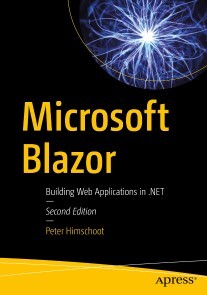
Microsoft Blazor
Build web applications in C# and Microsoft .NET that run in any modern browser. This second edition is updated to work with the release version of Blazor and covers Blazor’s use in creating both server-side and WebAssembly Blazor applications. Developers are able to use all their experience in .NET along with thousands of existing libraries, right in the browser.There is important new coverage in this edition on the new and improved Razor syntax, how to easily validate user input with Blazor validation, and how to build complex interacting components with Cascading Properties and Templated Components. You will learn how to build user interfaces and present data to a user for display and modification, capturing the user’s changes via data binding. The book shows you how to access a rich library of .NET functionality such as a component model for building a composable user interface, including how to develop reusable components that can be used across many pages and websites. Also covered is data exchange with a server, giving you access to microservices and database services.Blazor provides a fresh take on web development by eliminating the need for you to learn different languages and frameworks for client- and server-side development. Blazor allows C# and .NET to be used on all sides, providing a robust feature set that is well suited toward scalable, enterprise-level applications. This book gets you started using this important new toolkit for web application development.WHAT YOU WILL LEARN* Build user interfaces and display data for users to edit* Capture the user’s changes via data binding* Transfer data back and forth between server and client* Communicate with microservices and database services* Develop reusable components and assemble them into bigger components* Use routing to build single-page applications (SPAs)* Build Blazor libraries that are reusable across applicationsWHO THIS BOOK IS FORExperienced .NET developers who want to apply their existing skills toward building professional-quality, client-side web applications that run in any browser. The book is for web developers who want to step away from JavaScript and its complexities, and instead use a proven technology (.NET) that is robust toward creating enterprise-quality applications that scale and are reliable, that provide good user experience.PETER HIMSCHOOT works as a lead trainer, architect, and strategist at U2U Training. He has a wide interest in software development that includes applications for the web, Windows, and mobile devices. He has trained thousands of developers, is a regular speaker at international conferences, and has been involved in many web and mobile development projects as a software architect. He has been a Microsoft Regional Director (from 2003 to 2019), which is a group of trusted advisors to developer and IT professional audiences, and to Microsoft.1. Your First Blazor Project2. Data Binding3. Components and Structure for Blazor Applications4. Services and Dependency Injection5. Data Storage and Microservices6. Communication with Microservices7. Single Page Applications and Routing8. JavaScript Interoperability

Internet, Cyber- und IT-Sicherheit von A-Z
Die wichtigsten Begriffe zu Internet, Cyber-Risiken, IT-Sicherheit und Datenschutz. Kurz, aktuell, prägnant und einfach zu verstehen. Finden Sie hier schnell und ohne lange Texte lesen zu müssen die Bedeutung von aktuellen und in Zukunft wichtig werdenden Begriffen wie Blockchain, GDPR, Quantencomputer, WannaCry, Hacking, Ransomware oder Künstlicher Intelligenz. Dieses Standardwerk ist schnell zur Hand und darf heutzutage auf keinem Schreibtisch fehlen.Dr. Ron Porath ist technischer Berater und Experte für Internet, Cyber- und IT-Sicherheit sowie Artificial Intelligence. Er unterstützt sowohl Privatpersonen, als auch kleine und großen Unternehmen bei der Auswahl und Implementation von IT-Sicherheitslösungen, bei der Wissensvermittlung und der Entwicklung von Software und Algorithmen.Lexikon mit mehr als 2600 aktuellen und in Zukunft wichtig werdenden Begriffen zu Internet, Cyber- und IT-Sicherheit .-Tipps zum eigenen Schutz vor Cyberattacken.-Häufig benötigte Tabellen, wie ASCII-Tabelle, RegEx-Übersicht, Markdown-Übersicht sowie HTTP Status Codes.

Beginning PyQt
Learn GUI application development from the ground up, taking a practical approach by building simple projects that teach the fundamentals of using PyQt. Each chapter gradually moves on to teach more advanced and diverse concepts to aid you in designing interesting applications using the latest version of PyQt.You’ll start by reviewing the beginning steps of GUI development from, using different projects in every chapter to teach new widgets or concepts that will help you to build better UIs. As you follow along, you will construct more elaborate GUIs, covering topics that include storing data using the clipboard, graphics and animation, support for SQL databases, and multithreading applications. Using this knowledge, you’ll be able to build a photo editor, games, a text editor, a working web browser and an assortment of other GUIs.Beginning PyQt will guide you through the process of creating UIs to help you bring your own ideas to life. Learn what is necessary to begin making your own applications and more with PyQt!WHAT YOU'LL LEARN* Create your own cross-platform GUIs with PyQt and Python* Use PyQt’s many widgets and apply them to building real applications* Build larger applications and break the steps into smaller parts for deeper understanding* Work with complex applications in PyQt, from animation to databases and moreWHO THIS BOOK IS FORIndividuals who already have a fundamental understanding of the Python programming language and are looking to either expand their skills in Python or have a project where they need to create a UI, but may have no prior experience or no idea how to begin.Joshua Willman began using Python in 2015, when his first task was to build neural networks using machine learning libraries, including Keras and Tensorflow, for image classification. While creating large image data sets for his research, he needed to build a GUI that would simplify the workload and labeling process, which introduced him to PyQt. He currently works as a Python Developer and Instructor, designing courses to help others learn about coding in Python for game development, AI and machine learning, and programming using microcontollers. More recently, he set up the site Red Huli to explore his and others’ interests in using Python and programming for creative purposes.BEGINNING PYQTChapter 1 - Charting the CourseChapter 2 - Getting StartedChapter 3 - Adding Functions Through ButtonsChapter 4 - Learning about LayoutChapter 5 - Menus, Toolbars,and MoreChapter 6 - Styling Your GUIsChapter 7 - Creating GUIs with Qt DesignerChapter 8 - Working with the ClipboardChapter 9 - Graphics and Animation in PyQtChapter 10 - Intro to Handling DatabasesChapter 11 - Asynchronous ProgrammingChapter 12 - Extra ProjectsAppendix A - Reference Guide for PyQtAppendix B - Python Refresher

Preisfindung und Konditionstechnik mit SAP
Geht nicht gibt’s nicht! In diesem Buch lernen Sie, wie Sie die Preisfindung in Ihrem Unternehmen einrichten und optimieren, um sowohl alltägliche als auch fortgeschrittene Anforderungen zu erfüllen. Das Autorenteam führt Sie von den Grundlagen der Konditionstechnik über das Standard-Customizing bis tief in die kundenindividuellen Anpassungen, die Ihnen das SAP-System ermöglicht. Sie erfahren, wie Sie mit Konditionssätzen, Kalkulationsschemata und Co. arbeiten. Nutzen Sie die detaillierten Informationen zu Formeln und Bedingungen, und setzen Sie auch die kniffligsten Wünsche der Vertriebskollegen in SD um. Aus dem Inhalt: Einsatzgebiete und Elemente der KonditionstechnikKonditionsstammdaten der PreisfindungAuswertungen und ArbeitsvorräteCustomizing der PreisfindungArbeiten mit KonditionssätzenPreisfindung im VertriebsbelegKalkulationsschemata und KonditionsartenWichtige Programme der PreisfindungTypische Praxisanforderungen an die PreisfindungBonusabwicklungKonditionssteckbriefe Einleitung ... 21 Teil I. Konditionstechnik ... 27 1. Einsatzgebiete und Elemente der Konditionstechnik ... 29 1.1 ... Eigenschaften von Konditionen ... 30 1.2 ... Einsatzgebiete der Konditionstechnik (Konditionsverwendung) ... 31 1.3 ... Ausgewählte Einsatzgebiete (Verwendungen) ... 33 1.4 ... Anwendungsbereiche der Konditionstechnik (Konditionsapplikation) ... 37 1.5 ... Elemente der Konditionstechnik im Überblick ... 40 1.6 ... Feldkatalog und Kommunikationsstrukturen ... 42 1.7 ... Konditionstabellen ... 43 1.8 ... Zugriffsfolgen ... 45 1.9 ... Konditionsarten ... 56 1.10 ... Konditionsstammdaten ... 57 1.11 ... Kalkulationsschemata ... 62 1.12 ... Findungsanalyse ... 63 1.13 ... Bedingungen ... 64 1.14 ... Gesamtablauf im Überblick ... 66 1.15 ... Fazit ... 67 2. Konditionsstammdaten der Preisfindung ... 69 2.1 ... Konditionspflege über die Konditionsart ... 69 2.2 ... Konditionspflege über Bereichsmenüs ... 74 2.3 ... Konditionspflege über den Index ... 78 2.4 ... Absprachen ... 79 2.5 ... Preisvereinbarungen ... 83 2.6 ... Fazit ... 84 3. Auswertungen und Arbeitsvorräte ... 85 3.1 ... Konditionslisten ... 85 3.2 ... Arbeitsvorräte in der Rolle »Vertriebsmitarbeiter im Innendienst« ... 92 3.3 ... Konditionsinfo ... 98 3.4 ... Nettopreisliste ... 99 3.5 ... Performanceoptimierte Preisliste ... 101 3.6 ... Fazit ... 129 Teil II. Preisfindung ... 131 4. Customizing der Preisfindung ... 133 4.1 ... Umsetzung eines ersten kundenindividuellen Preisfindungsszenarios ... 133 4.2 ... Elemente der Preisfindung im Detail ... 149 4.3 ... Kundenindividuelle Anpassungen und Kundennamensräume ... 168 4.4 ... Beispiel für die Umsetzung komplexerer Anforderungen ... 172 4.5 ... Konfigurierbare Formeln und Parameter ... 175 4.6 ... Anbindung an die Ergebnis- und Marktsegmentrechnung (COPA) ... 199 4.7 ... Fazit ... 200 5. Arbeiten mit Konditionssätzen ... 203 5.1 ... Freigabestatus ... 203 5.2 ... Massenänderungen/Anlegen mit Bezug ... 208 5.3 ... Kopieren von Konditionen ... 212 5.4 ... Konditionspflege mit Bereichsmenüs ... 216 5.5 ... Weitere Funktionen innerhalb der Konditionspflege ... 218 5.6 ... Fazit ... 223 6. Preisfindung im Vertriebsbeleg ... 225 6.1 ... Positionskonditionsbild ... 225 6.2 ... Kopfkonditionsbild ... 234 6.3 ... Vordefinierte Preiselemente in der Positionsübersicht ... 237 6.4 ... Preisvereinbarungen ... 238 6.5 ... Preisfindung beim Anlegen von Belegen mit Referenz ... 242 6.6 ... Preisfindung bei Miet- und Wartungsverträgen (periodischer Fakturierungsplan) ... 243 6.7 ... Preisfindung bei Festbetragverträgen (Meilensteinfakturierungsplan) ... 247 6.8 ... Preisfindung bei der Aufwandsabrechnung ... 252 6.9 ... Fazit ... 253 7. Spezielle Funktionen der Preisfindung ... 255 7.1 ... Gruppenkonditionen ... 255 7.2 ... Konditionsausschluss ... 258 7.3 ... Konditionsupdate ... 263 7.4 ... Steuerermittlung im Vertrieb ... 266 7.5 ... Naturalrabatt im Vertrieb ... 272 7.6 ... Kosten des Verkaufsvorgangs ... 275 7.7 ... Währungsumrechnungen im Vertrieb ... 279 7.8 ... Druckaufbereitung des Preisfindungsergebnisses ... 287 7.9 ... Fazit ... 292 Teil III. Weiterführende technische Grundlagen, Tipps und Tricks ... 293 8. Ausgewählte Kalkulationsschemata und Konditionsarten ... 295 8.1 ... Ausgewählte Kalkulationsschemata ... 297 8.2 ... Ausgewählte Konditionsarten des Standardschemas ... 313 8.3 ... Fazit ... 317 9. Besonderheiten der Konditionstechnik in der Preisfindung ... 319 9.1 ... Schnittstellen, Tabellen und Zusammenhänge ... 320 9.2 ... Datenermittlung über Konditionen ... 325 9.3 ... Felder mit Mehrfachbelegung ... 345 9.4 ... Fazit ... 349 10. Wichtige Programme der Preisfindung ... 351 10.1 ... Funktionsbaustein PRICING ... 352 10.2 ... Funktionsbaustein PRICING_COMPLETE ... 364 10.3 ... Funktionsbaustein PRICING_COPY ... 374 10.4 ... Datenablage des Preisfindungsergebnisses ... 375 10.5 ... Funktionsbaustein PRICING_REFRESH ... 376 10.6 ... Dialoganbindung/weitere Funktionsbausteine ... 377 10.7 ... Zusammenhang der Komponenten der Preisfindung ... 378 10.8 ... Fazit ... 379 11. Systemanpassungen mit Bedingungen, Formeln und User-Exits ... 381 11.1 ... Preisfindungsarten ... 383 11.2 ... Bedingungen ... 384 11.3 ... Ein Beispiel für den Einsatz der Formeln ... 388 11.4 ... Konditionsformeln ... 393 11.5 ... Sonderlogik der Preisfindungsart F in der Routine »xkomv_bewerten« ... 403 11.6 ... Preisfindungsergebnis in KOMP ... 405 11.7 ... Steuerungskennzeichen »xkomv-ksteu« ... 411 11.8 ... User-Exits ... 413 11.9 ... Erweiterungen der Tabelle KONV ... 420 11.10 ... Performanceaspekte ... 421 11.11 ... Fehlermeldungen/Fehlerbehandlung ... 422 11.12 ... Fazit ... 424 12. Typische Praxisanforderungen an die Preisfindung und ihre Lösung ... 425 12.1 ... Budgetierungsanforderungen ... 426 12.2 ... Konditionen wurden nicht gefunden -- woran liegt das? ... 436 12.3 ... Rundung ... 438 12.4 ... Preise mit mehr als zwei Nachkommastellen ... 439 12.5 ... Behandlung von Frachtzuschlägen ... 440 12.6 ... Berechtigungsabhängigkeit des Konditionsbildes ... 444 12.7 ... Aufnahme neuer Zwischensummenfelder ... 444 12.8 ... Stammdatenfelder datumsabhängig pflegen ... 444 12.9 ... Kopierte Konditionen und anschließende Mengenänderung ... 449 12.10 ... Gesteigerte Preise in Retouren und Gutschriften ... 455 12.11 ... Kennzahlen für Reporting und Analyse ... 457 12.12 ... Konditionssatzspezifische Bedingungen ... 473 12.13 ... Fazit ... 485 13. Preisfindung in ausgewählten Applikationen ... 487 13.1 ... Preisfindung im Kundenauftrag ... 488 13.2 ... Preisfindung in der Faktura ... 494 13.3 ... Preisfindung in der Bestellung ... 495 13.4 ... Preisfindung im Rechnungswesen ... 499 13.5 ... Steuerberechnung in der Finanzbuchhaltung ... 500 13.6 ... Preisfindung in der Transportabwicklung (Frachtkalkulation) ... 506 13.7 ... Fazit ... 507 14. Performance und Test ... 509 14.1 ... SAP-Tabellenpuffer ... 510 14.2 ... Konditions-Prestep und Zugriffsoptimierung ... 511 14.3 ... Reihenfolge der Felder in den Konditionstabellen ... 513 14.4 ... Einsatz von Bedingungen ... 514 14.5 ... Gruppenkonditionen und Formeln ... 514 14.6 ... Besonderheiten in Kundenauftrag und Faktura ... 515 14.7 ... Analyse-Tools ... 522 14.8 ... Testen ... 523 14.9 ... Fazit ... 526 15. Preisfindung in SAP S/4HANA ... 527 15.1 ... Überblick über SAP S/4HANA ... 527 15.2 ... Unterschiede und Gemeinsamkeiten von SAP ERP und SAP S/4HANA ... 530 15.3 ... Migration nach SAP S/4HANA ... 541 15.4 ... Preisfindung in SAP S/4HANA Cloud ... 545 15.5 ... Fazit ... 554 Teil IV. Bonusabwicklung im Vertrieb ... 555 16. Bonusabwicklung im Vertrieb ... 557 16.1 ... Übersicht über die Bonusabwicklung ... 557 16.2 ... Elemente der Bonusabwicklung im Detail ... 579 16.3 ... Erweiterte Bonusverarbeitung ... 599 16.4 ... Systemanpassungen im Bonusumfeld ... 610 16.5 ... Typische Praxisanforderungen ... 616 16.6 ... Fazit ... 619 Anhang ... 621 A. Konditionssteckbriefe ... 622 B. SAP-CRM-Anbindung ... 670 C. Die Autoren ... 674 Index ... 676

Einführung in Java
Mit diesem Buch steigen Sie ohne Vorkenntnisse in Java und die objektorientierte Programmierung ein. Schritt für Schritt machen Sie sich mit der Sprache und ihren Konzepten vertraut. Sie lernen, in Algorithmen zu denken und Java sowie die vielen Werkzeuge Ihrer Plattform geschickt zu nutzen. Immer praxisnah und mit Gefühl für mögliche Verständnishürden: So werden auch professionelle Themen wie Testabdeckung, Multithreading und Servletentwicklung einsteigergerecht vermittelt. Schließlich schreiben Sie zeitgemäßen Code, der auch komplexe Software trägt. Ideal für Ausbildung, Studium und Beruf! Aus dem Inhalt: Die Entwicklungsumgebung einrichten und kennenlernenGrundkonzepte glasklar vorgestelltSprachmittel gründlich verstehenNeue Features einsetzenUnit Tests und Test Driven DesignDatenbanken anbindenIn Servlet-Technologie einsteigenEvents einsetzen und asynchron programmierenGUIs entwickelnGuten Code schreibenMit Dateien und Streams arbeitenIn die Entwicklung von Android-Apps einsteigen Materialien zum Buch ... 19 1. Einführung ... 21 1.1 ... Was ist Java? ... 22 1.2 ... Die Arbeitsumgebung installieren ... 28 1.3 ... Erste Schritte in NetBeans ... 30 1.4 ... Das erste Programm ... 32 1.5 ... In Algorithmen denken, in Java schreiben ... 41 1.6 ... Die Java-Klassenbibliothek ... 47 1.7 ... Dokumentieren als Gewohnheit -- Javadoc ... 50 1.8 ... JARs erstellen und ausführen ... 56 1.9 ... Mit dem Debugger arbeiten ... 61 1.10 ... Das erste eigene Projekt ... 66 1.11 ... Zusammenfassung ... 68 2. Variablen und Datentypen ... 69 2.1 ... Variablen ... 69 2.2 ... Primitivtypen ... 73 2.3 ... Objekttypen ... 87 2.4 ... Objekt-Wrapper zu Primitiven ... 91 2.5 ... Array-Typen ... 94 2.6 ... Zusammenfassung ... 96 3. Entscheidungen ... 97 3.1 ... Entweder-oder-Entscheidungen ... 97 3.2 ... Logische Verknüpfungen ... 104 3.3 ... Mehrfach verzweigen mit »switch« ... 110 3.4 ... Zusammenfassung ... 116 4. Wiederholungen ... 117 4.1 ... Bedingte Wiederholungen mit »while« ... 117 4.2 ... Abgezählte Wiederholungen -- die »for«-Schleife ... 121 4.3 ... Abbrechen und überspringen ... 123 4.4 ... Zusammenfassung ... 126 5. Klassen und Objekte ... 127 5.1 ... Klassen und Objekte ... 128 5.2 ... Access-Modifier ... 130 5.3 ... Felder ... 132 5.4 ... Methoden ... 133 5.5 ... Warum Objektorientierung? ... 142 5.6 ... Konstruktoren ... 144 5.7 ... Statische Felder und Methoden ... 148 5.8 ... Unveränderliche Werte ... 151 5.9 ... Spezielle Objektmethoden ... 154 5.10 ... Zusammenfassung ... 156 6. Objektorientierung ... 157 6.1 ... Vererbung ... 158 6.2 ... Interfaces und abstrakte Datentypen ... 171 6.3 ... Übung: Objektorientierte Modellierung ... 179 6.4 ... Innere Klassen ... 180 6.5 ... Enumerationen ... 187 6.6 ... Zusammenfassung ... 190 7. Unit Testing ... 191 7.1 ... Das JUnit-Framework ... 193 7.2 ... Fortgeschrittene Unit Tests ... 199 7.3 ... Besseres Design durch Testfälle ... 205 7.4 ... Zusammenfassung ... 208 8. Die Standardbibliothek ... 209 8.1 ... Zahlen ... 209 8.2 ... Strings ... 214 8.3 ... Reguläre Ausdrücke ... 224 8.4 ... Zeit und Datum ... 231 8.5 ... Internationalisierung und Lokalisierung ... 236 8.6 ... Zusammenfassung ... 244 9. Fehler und Ausnahmen ... 245 9.1 ... Exceptions werfen und behandeln ... 245 9.2 ... Verschiedene Arten von Exceptions ... 252 9.3 ... Invarianten, Vor- und Nachbedingungen ... 258 9.4 ... Zusammenfassung ... 260 10. Arrays und Collections ... 261 10.1 ... Arrays ... 261 10.2 ... Die for-each-Schleife ... 271 10.3 ... Variable Parameterlisten ... 271 10.4 ... Collections ... 273 10.5 ... Typisierte Collections -- Generics ... 278 10.6 ... Maps ... 288 10.7 ... Zusammenfassung ... 290 11. Lambda-Ausdrücke ... 291 11.1 ... Was sind Lambda-Ausdrücke? ... 292 11.2 ... Die Stream-API ... 304 11.3 ... Un-Werte als Objekte -- »Optional« ... 321 11.4 ... Eine Warnung zum Schluss ... 324 11.5 ... Zusammenfassung ... 325 12. Dateien, Streams und Reader ... 327 12.1 ... Dateien und Verzeichnisse ... 328 12.2 ... Reader, Writer und die »anderen« Streams ... 334 12.3 ... Objekte lesen und schreiben ... 346 12.4 ... Netzwerkkommunikation ... 349 12.5 ... Zusammenfassung ... 352 13. Multithreading ... 353 13.1 ... Threads und Runnables ... 354 13.2 ... Atomare Datentypen ... 361 13.3 ... Synchronisation ... 362 13.4 ... Fortgeschrittene Koordination zwischen Threads ... 370 13.5 ... Die Zukunft -- wortwörtlich ... 376 13.6 ... Das Speichermodell von Threads ... 381 13.7 ... Zusammenfassung ... 383 14. Servlets -- Java im Web ... 385 14.1 ... Einen Servlet-Container installieren ... 386 14.2 ... Die erste Servlet-Anwendung ... 392 14.3 ... Servlets programmieren ... 403 14.4 ... Java Server Pages ... 410 14.5 ... Langlebige Daten im Servlet -- Ablage in Session und Application ... 416 14.6 ... Fortgeschrittene Servlet-Konzepte -- Listener und Initialisierung ... 419 14.7 ... Zusammenfassung ... 422 15. Datenbanken und Entitäten ... 423 15.1 ... Was ist eine Datenbank? ... 424 15.2 ... Mit einer Datenbank über die JPA verbinden ... 431 15.3 ... Anwendung und Entitäten ... 436 15.4 ... Entitäten laden ... 439 15.5 ... Entitäten löschen ... 444 15.6 ... Beziehungen zu anderen Entitäten ... 445 15.7 ... Zusammenfassung ... 452 16. GUIs mit JavaFX ... 453 16.1 ... Einführung ... 453 16.2 ... Installation ... 454 16.3 ... Architektur von JavaFX ... 454 16.4 ... GUI-Komponenten ... 457 16.5 ... Layouts ... 468 16.6 ... GUI mit Java-API -- Urlaubsverwaltung ... 478 16.7 ... Event-Handling ... 482 16.8 ... JavaFX-Properties und Binding ... 489 16.9 ... Deklarative GUIs mit FXML ... 495 16.10 ... Layout mit CSS ... 501 16.11 ... Transformationen, Animationen und Effekte ... 505 16.12 ... Übungen ... 512 16.13 ... Zusammenfassung ... 513 17. Android ... 515 17.1 ... Einstieg in die Android-Entwicklung ... 515 17.2 ... Eine Benutzeroberfläche designen ... 528 17.3 ... Anwendungen mit mehreren Activities ... 535 17.4 ... Permissions und SystemServices ... 542 17.5 ... Apps im Play Store veröffentlichen ... 546 17.6 ... Zusammenfassung ... 546 18. Hinter den Kulissen ... 549 18.1 ... Klassenpfade und Classloading ... 549 18.2 ... Garbage Collection ... 556 18.3 ... Flexibel codieren mit der Reflection-API ... 563 18.4 ... Blick in die Zukunft ... 569 18.5 ... Zusammenfassung ... 572 19. Und dann? ... 573 19.1 ... Jakarta EE ... 574 19.2 ... Open-Source-Software ... 579 19.3 ... Ergänzende Technologien ... 580 19.4 ... Andere Sprachen ... 583 19.5 ... Programmieren Sie! ... 585 Anhang ... 587 A ... Java-Bibliotheken ... 589 B ... Lösungen zu den Übungsaufgaben ... 597 C ... Glossar ... 707 D ... Kommandozeilenparameter ... 723 Index ... 731

Windows 10
Windows 10 sicher beherrschen! Jörg Hähnle zeigt Ihnen in diesem kompakten Handbuch den Weg. In wenigen Schritten installieren Sie das Betriebssystem, nutzen Apps und Programme, verwalten Ihre Daten, stellen eine Internetverbindung her und genießen Fotos, Musik und Videos an Ihrem Rechner. Sie lernen auch, wie Sie Ihre Daten schützen und was bei Problemen zu tun ist. Farbige Abbildungen, zahlreiche Tipps und ein ausführliches Stichwortverzeichnis machen dieses Buch zu einer praktischen Bedienungsanleitung für Einsteiger und Fortgeschrittene. Aus dem Inhalt: Windows 10 installierenBei Windows anmeldenWo finde ich was in Windows 10?Programme und AppsDatei- und Ordnerverwaltung mit dem ExplorerDateien und Ordner suchenIns Internet mit Windows 10Surfen mit Microsoft EdgeSicherheit im InternetKontakte speichern und verwaltenDie Kalender-App verwendenMit OneDrive Daten online in der Cloud speichernWindows 10 individuell anpassenDie Bildschirmeinstellungen ändernDen Desktop einrichtenBenutzerkonten erstellen, verwenden und verwaltenGeräte anschließenDrucken mit Windows 10USB-Sticks und -Festplatten anschließenBilder, Musik und VideosEin Netzwerk einrichtenEine Netzwerkverbindung herstellenFernsteuerung und Fernwartung: Remotezugriff mit Windows 10Warten, pflegen, absichernDie Festplatte defragmentierenProgramme deinstallierenWindows-UpdatesAntivirenprogramm und FirewallBackup: Sichern und wiederherstellenDer DateiversionsverlaufDatenschutz und PrivatsphäreProbleme lösenAbgestürzte Programme beendenÄltere Programme unter Windows 10 nutzenTastenkürzel, Fehlermeldungen und Hilfe 1. Herzlich willkommen! ... 11 Vorwort ... 12 Was ist neu in Windows 10? ... 14 Wo finde ich was? ... 18 2. Schnelleinstieg in Windows 10 ... 23 Ist Ihr Computer bereit für Windows 10? ... 24 Welche Editionen von Windows 10 gibt es? ... 25 Windows 10 installieren und einrichten ... 26 Bei Windows anmelden ... 30 Das Startmenü auf einen Blick ... 32 Das »Hamburger-Menü« aufrufen ... 34 Die App-Leiste einblenden ... 35 Der Desktop in der Übersicht ... 36 Zwischen Desktop und Startmenü wechseln ... 38 Eine Desktop-Verknüpfung erstellen ... 39 Die Programmübersicht aufrufen ... 40 Der Task-Manager im Überblick -- 1 ... 41 Der Task-Manager im Überblick -- 2 ... 42 Den Computer starten ... 43 Den Computer ausschalten ... 45 So gehen Sie mit der Maus um ... 47 So bedienen Sie die Tastatur ... 50 Windows 10 auf einem Touchscreen bedienen ... 52 Hilfe erhalten ... 56 Die Windows-Einstellungen ... 57 Das Info-Center ... 58 Programmsymbole auf dem Desktop anordnen ... 60 3. Programme und Apps ... 61 Hier finden und starten Sie Programme und Apps ... 62 Apps -- die modernen Windows-Anwendungen ... 63 Der Microsoft Store -- Marktplatz für neue Apps ... 72 Eine App wieder deinstallieren ... 77 Programme in der Desktop-Ansicht ... 78 Programme beenden ... 85 Programme entfernen ... 87 Ein Programm von DVD installieren ... 90 Nach Systemeinstellungen suchen ... 92 Mit mehreren Desktops arbeiten ... 93 Die erweiterte Zwischenablage ... 95 4. Dateien, Ordner, Bibliotheken ... 97 Dateien und Ordner ... 98 Verknüpfte Dateien und virtuelle Ordner ... 100 Den Explorer öffnen ... 101 So ist der Explorer aufgebaut ... 102 Die Symbolleiste des Explorers ... 104 Dateien anzeigen und sortieren ... 109 Dateien und Ordner verschieben, kopieren oder löschen ... 121 Mit komprimierten Dateien arbeiten ... 125 Mit Datenträgern und Wechselmedien arbeiten ... 129 Dateien und Ordner suchen ... 132 Ein Dokument ausdrucken ... 138 PDFs mit Windows 10 ... 139 Bibliotheken ... 141 5. Internet ... 145 Ins Internet mit Windows 10 ... 146 Per WLAN ins Internet ... 147 Surfen mit Microsoft Edge ... 148 Sicherheit im Internet ... 160 6. E-Mails, Adressen und Termine im Griff ... 175 Die Mail-App nutzen ... 176 Kontakte speichern und verwalten ... 186 Alle Termine im Griff mit der Kalender-App ... 192 Mit OneDrive Daten in der »Wolke« sichern ... 196 7. Windows 10 individuell anpassen ... 203 Startmenü und Sperrbildschirm einrichten ... 204 Die Bildschirmeinstellungen ändern ... 211 Das Startmenü anpassen ... 213 PC-Einstellungen individuell anpassen ... 221 Den Desktop einrichten ... 226 Neue Designs für Ihr Windows 10 ... 227 Benutzerkonten erstellen, verwenden und verwalten ... 229 Erleichterte Bedienung ... 236 8. Geräte anschließen ... 239 Drucker ... 240 Bilder von einem Fotoapparat importieren ... 244 Lautsprecher ... 245 USB-Festplatte oder USB-Stick ... 247 Smartphones und andere mobile Geräte ... 248 Der Geräte-Manager im Überblick ... 252 Gerätetreiber installieren und aktualisieren -- 1 ... 253 Gerätetreiber installieren und aktualisieren -- 2 ... 254 9. Bilder, Musik und Videos ... 255 Die Fotos-App ... 256 Die Kamera-App ... 270 Musik mit Windows 10 ... 273 Die App »Filme & TV« ... 276 Der Windows Media Player ... 280 Die Windows-Spracherkennung ... 284 10. Netzwerke und Umgebungsfreigaben ... 287 Einen Netzwerkspeicher mit der Fritz!Box nutzen ... 288 Dateien mit Computern in Ihrer Nähe teilen ... 292 Fernsteuerung und Fernwartung ... 294 11. Warten, pflegen, absichern ... 299 Windows 10 regelmäßig aktualisieren ... 300 Die Festplatte optimieren ... 302 Die Datenträgerbereinigung ... 304 Die Windows-Speicheroptimierung ... 305 Windows zusätzlich schützen ... 306 Daten mithilfe eines Systemabbilds sichern ... 310 BitLocker -- Laufwerke und Daten verschlüsseln ... 314 Das Windows-Gedächtnis -- der Dateiversionsverlauf ... 318 App-Einstellungen für Datenschutz und Privatsphäre ... 320 12. Probleme lösen ... 323 Schwierigkeiten beim Start oder mit der Leistung? ... 324 Wiederherstellen, auffrischen, zurücksetzen ... 330 Hilfreiche Tastenkombinationen ... 339 Glossar ... 345 Stichwortverzeichnis ... 353

Windows 10
Das große Standardwerk zu Windows 10 – aktuell zu allen Updates! In diesem umfassenden Handbuch erfahren Einsteiger und schon versiertere Nutzer alles, um das neue Betriebssystem sicher und effektiv zu handhaben. Die Windows-Expertin Mareile Heiting hat das geballte Wissen zu Windows 10 für eine reibungslose Anwendung in der Praxis aufbereitet und hält dabei eine Fülle an Insidertipps für Sie parat. So beherrschen Sie alles schnell und mühelos – von der Dateiverwaltung über die Systemwartung bis zum Einrichten von Netzwerken. Aus dem Inhalt: Windows 10 installieren und upgradenBenutzerkonten einrichtenDateien und Einstellungen von anderen Computern übertragenStartmenü und Taskleiste richtig nutzenDen Explorer ausführlich kennenlernenProgramme und Apps installieren und verwaltenNach Dateien und Apps suchenIns Internet mit Microsoft EdgeSo nutzen Sie OneDriveMehrere Computer miteinander verbindenE-Mails schreiben und organisierenTermine und Kontakte verwaltenFotos laden, sortieren und bearbeitenMusik, Filme, SpieleGeräte anschließen und verwendenDie Systemwiederherstellung einsetzenDaten sichern und wiederherstellenDie neue Timeline und Aktivitäten-HistorieDaten vor fremdem Zugriff schützenCortana und SpracherkennungDie Windows Registry nutzenVirtuelle Systeme einrichtenWindows 10 SetsTipps und Tricks für die tägliche Arbeit TEIL I. Start mit Windows 10 ... 19 1. Windows 10 installieren und upgraden ... 21 1.1 ... Die Systemanforderungen prüfen ... 21 1.2 ... Windows-10-Varianten ... 23 1.3 ... Ein Installationsmedium mit dem Medienerstellungstool erstellen ... 25 1.4 ... Von null auf Windows 10 ... 30 1.5 ... Windows 10 nachträglich aktivieren ... 46 1.6 ... Von einer älteren Windows-Version umsteigen ... 49 2. Ein erster Rundgang über die Oberfläche von Windows 10 ... 53 2.1 ... Am Computer anmelden ... 53 2.2 ... Die Desktopoberfläche im Überblick ... 55 2.3 ... Die Taskleiste ... 56 2.4 ... Das Startmenü ... 61 2.5 ... Den Computer herunterfahren ... 65 2.6 ... Die Oberfläche per Tastatur steuern ... 68 3. Erste wichtige Einstellungen vornehmen ... 71 3.1 ... Einstellungen und Systemsteuerung im Überblick ... 71 3.2 ... Eine Netzwerkverbindung herstellen ... 74 3.3 ... Die Energieeinstellungen kontrollieren und optimieren ... 75 3.4 ... Sicherheitseinstellungen überprüfen ... 79 3.5 ... Die Synchronisierungseinstellungen individuell anpassen ... 86 3.6 ... Anmeldung per PIN oder Bildcode aktivieren ... 87 3.7 ... Eingabehilfen einrichten ... 92 3.8 ... Datenschutz: Das »Nach-Hause-Telefonieren« unterbinden ... 98 4. Benutzerkonten anlegen und verwalten ... 103 4.1 ... Sicherheitsaspekte: Administrator versus Standardbenutzer ... 103 4.2 ... Ein neues Benutzerkonto anlegen ... 106 4.3 ... Kennwörter verwalten ... 116 4.4 ... Die automatische Anmeldung einrichten ... 120 4.5 ... Konten für Familienmitglieder verwalten ... 121 4.6 ... Benutzerkonten wieder entfernen ... 130 4.7 ... Die Benutzerkontensteuerung ... 132 4.8 ... Das Microsoft-Konto verwalten ... 134 4.9 ... Den Computernamen ändern ... 136 TEIL II. Die Oberfläche kennenlernen ... 139 5. Windows 10 anpassen und personalisieren ... 141 5.1 ... Den Sperrbildschirm individuell einstellen ... 141 5.2 ... Ein Profilbild ergänzen und anpassen ... 148 5.3 ... Das Aussehen des Desktops anpassen ... 152 5.4 ... Das Startmenü anpassen ... 168 5.5 ... Die Taskleiste anpassen ... 184 5.6 ... Das Info-Center anpassen ... 192 5.7 ... Windows 10 und die Uhrzeit ... 202 5.8 ... Weitere Sprachen installieren ... 206 6. Nützliche Funktionen des Desktops ... 217 6.1 ... Verknüpfungen auf dem Desktop anlegen ... 217 6.2 ... Programme und Dateien über die Taskleiste öffnen ... 226 6.3 ... Die Timeline-Funktion als Gedächtnisstütze ... 232 6.4 ... Mit virtuellen Desktops arbeiten ... 234 7. Windows 10 auf dem Tablet ... 243 7.1 ... Wissenswertes rund um den Tabletmodus ... 243 7.2 ... Windows 10 auf dem Touchscreen bedienen ... 255 7.3 ... Texteingabe per Bildschirmtastatur ... 262 TEIL III. Programme und Dateien ... 269 8. Dateien und Ordner verwalten mit dem Explorer ... 271 8.1 ... Den Explorer öffnen ... 271 8.2 ... Navigieren mit dem Explorer ... 277 8.3 ... Den Explorer individuell anpassen ... 285 8.4 ... Arbeiten mit Dateien und Ordnern ... 291 8.5 ... Bibliotheken anlegen, verwalten und löschen ... 299 8.6 ... Den Onlinespeicher OneDrive nutzen ... 307 8.7 ... ZIP-Archive erstellen ... 316 8.8 ... Gelöschte Daten über den Papierkorb wiederherstellen ... 319 8.9 ... Dateien mit Markierungen versehen ... 321 8.10 ... Zugriffsrechte auf Dateien und Ordner verwalten ... 323 8.11 ... Die Zwischenablage von Windows 10 mit neuer Funktionalität ... 326 8.12 ... Nützliche Tastaturkürzel für den Explorer ... 336 9. Programme und Apps verwalten ... 337 9.1 ... Alles rund um den Umgang mit den Programmfenstern ... 337 9.2 ... Apps aus dem Microsoft Store installieren ... 349 9.3 ... Beliebige Programme installieren ... 360 9.4 ... Apps und Programme deinstallieren ... 367 9.5 ... Standardprogramme festlegen ... 370 10. In Windows 10 erfolgreich auf die Suche gehen ... 375 10.1 ... Suchanfragen über das Suchfeld der Taskleiste starten ... 375 10.2 ... In Programmen und Apps suchen ... 380 10.3 ... Mithilfe des Explorers nach Dateien und Ordnern suchen ... 382 10.4 ... Den Suchindex für Suchanfragen nutzen ... 391 11. Nützliche Apps und Programme unter Windows 10 ... 401 11.1 ... Ihr persönlicher Wecker: die App Alarm & Uhr ... 401 11.2 ... Von Ort zu Ort mit der Karten-App ... 403 11.3 ... Der Taschenrechner von Windows 10: die Rechner-App ... 406 11.4 ... Ausschneiden und skizzieren mit Windows 10 ... 407 11.5 ... Das Zeichenprogramm Paint 3D nutzen ... 414 11.6 ... Der Sprachrekorder von Windows 10 ... 417 11.7 ... Die Wetteraussichten mit Windows 10 ... 420 12. Gute Unterhaltung - Fotos, Videos, Musik und Spiele ... 425 12.1 ... Fotos verwalten und bearbeiten mit der Fotos-App ... 425 12.2 ... Fotos präsentieren und mit anderen teilen ... 446 12.3 ... Die Kamera-App von Windows 10 im Einsatz ... 457 12.4 ... Musik hören mit der Groove-Musik-App ... 463 12.5 ... Musik genießen mit dem Windows Media Player ... 470 12.6 ... Spiele unter Windows 10 ... 476 TEIL IV. Netzwerken mit Windows 10 ... 479 13. Mit dem Browser Microsoft Edge im Internet surfen ... 481 13.1 ... Ein erster Überblick über Microsoft Edge ... 482 13.2 ... Mit Microsoft Edge im Internet suchen ... 486 13.3 ... Webseiten noch schneller erreichen ... 491 13.4 ... Microsoft Edge mit Add-Ons erweitern ... 501 13.5 ... Webseiten drucken ... 505 13.6 ... Microsoft Edge und die Sicherheit ... 506 13.7 ... PDFs und E-Books lesen mit Microsoft Edge ... 520 13.8 ... Mobilgerät und PC im Team ... 523 13.9 ... Nützliche Tastenkürzel zur Bedienung von Microsoft Edge ... 529 14. Internetverbindung herstellen und PCs vernetzen ... 531 14.1 ... Eine Netzwerkverbindung einrichten ... 531 14.2 ... Dateien, Ordner und Geräte im Netzwerk freigeben ... 542 15. Mail, Kontakte, Kalender und Skype nutzen ... 551 15.1 ... E-Mails lesen und schreiben mit der Mail-App ... 551 15.2 ... Adressen verwalten mit der Kontakte-App ... 569 15.3 ... Termine im Blick mit der Kalender-App ... 577 15.4 ... Mit Skype telefonieren und chatten ... 583 TEIL V. Geräte, Wartung und Sicherheit ... 589 16. Geräte anschließen und konfigurieren ... 591 16.1 ... Einen Drucker oder Scanner anschließen ... 591 16.2 ... Einen Monitor anschließen ... 596 16.3 ... Smartphone oder Wechseldatenträger per USB-Kabel mit dem PC verbinden ... 600 16.4 ... Treiber im Griff ... 606 16.5 ... Bluetooth-Hardware anschließen und nutzen ... 610 16.6 ... Die richtigen Einstellungen zum Energiesparen ... 613 16.7 ... Die Datenträgerverwaltung ... 617 17. Wartung: Das System aktuell halten und sichern ... 629 17.1 ... Windows Updates im Griff ... 629 17.2 ... Vorabversionen von Windows 10 testen ... 644 17.3 ... Mit der Systemwiederherstellung zurück zu einem stabilen System ... 649 17.4 ... Datensicherung mithilfe des Dateiversionsverlaufs ... 654 17.5 ... Ein Systemabbild erstellen und zurückspielen ... 659 17.6 ... Den Computer zurücksetzen ... 664 18. Schutz vor Schadsoftware ... 667 18.1 ... Aktuelle Bedrohungen ... 667 18.2 ... Das Windows-Sicherheit-Center ... 668 18.3 ... Der Viren- & Bedrohungsschutz ... 671 18.4 ... Die Windows-Firewall ... 678 18.5 ... Sicherheitslösungen von Drittanbietern verwenden ... 683 18.6 ... Sichere Zugänge zu Konten und Websites ... 688 18.7 ... Dateien, Ordner und Laufwerke verschlüsseln ... 693 19. Probleme aufspüren und lösen ... 705 19.1 ... Softwareprobleme beheben ... 705 19.2 ... Hardwareprobleme lösen ... 714 19.3 ... Startprobleme beheben ... 720 19.4 ... Systemproblemen von Windows 10 auf der Spur ... 727 19.5 ... Wichtige Hilfsforen im Internet ... 734 TEIL VI. Windows 10 für geübte Anwender ... 737 20. Die Registrierungsdatenbank von Windows 10 ... 739 20.1 ... Das sollten Sie über die Registry wissen ... 739 20.2 ... Sichern und Wiederherstellen der Registry ... 743 20.3 ... Nützliche Tipps für den Umgang mit der Registry ... 747 20.4 ... Ausgewählte Registry-Hacks ... 754 21. Spracherkennung und Cortana ... 767 21.1 ... Erste Schritte bei der Einrichtung der Spracherkennung ... 767 21.2 ... Die Windows-Spracherkennung nutzen ... 775 21.3 ... Cortana - die sprachgesteuerte Assistentin ... 782 22. Hyper-V und Virtualisierung ... 793 22.1 ... Was ist Virtualisierung? ... 793 22.2 ... Hyper-V einrichten ... 794 22.3 ... Ein Betriebssystem auf einem virtuellen Computer per Hyper-V installieren ... 796 22.4 ... VirtualBox als Alternative ... 809 22.5 ... Programme testen in der Windows-Sandbox ... 815 23. Hilfe aus der Ferne per Remotezugriff ... 819 23.1 ... Die Remoteunterstützung in der Praxis ... 819 23.2 ... Der TeamViewer als Alternative ... 826 24. Eingabeaufforderung und Windows PowerShell ... 831 24.1 ... Ein paar Grundlagen vorweg ... 831 24.2 ... Die Eingabeaufforderung in der Praxis ... 835 24.3 ... Die Windows PowerShell in der Praxis ... 843 Stichwortverzeichnis ... 851

Excel Spezial - Daten abrufen, aufbereiten & mit Pivot-Tabellen auswerten
Die praktische Anleitung für den Umgang mit großen Datenmengen:- Stets aktuelle Auswertungen umfangreicher externer Daten- Anschauliche Anleitungen mit Beispielen zum DownloadSie benötigen laufend aktuelle Daten aus externen Quellen? Mit Excel können Sie regelmäßig wiederkehrende Auswertungen umfangreicher Daten schnell und einfach vornehmen. Wie das geht, erfahren Sie Schritt für Schritt in diesem Buch.Die Autorin erklärt systematisch, wie Sie eine Verbindung zu externen Datenquellen herstellen, diese gezielt für Ihre weiteren Auswertungen aufbereiten und später mit nur einem Mausklick aktualisieren. Für daran anschließende zusammenfassende Auswertungen sind Pivot-Tabellen das ideale Werkzeug – ihre zahlreichen Möglichkeiten werden ausführlich beschrieben. Als sinnvolle Ergänzung dazu lernen Sie Berechnungen und Datenmodelle mit Power Pivot kennen. Profitieren Sie von gut nachvollziehbaren Anleitungen, anschaulichen Beispielen zum kostenlosen Download und vielen hilfreichen Tipps, z. B. wie Sie den Speicherumfang von Arbeitsmappen reduzieren.Aus dem Inhalt:- Was Sie beim Anlegen von Excel-Tabellen als Ausgangsbasis beachten sollten- Daten aus verschiedenen externen Quellen abrufen, z. B. SQL, Textdateien, XML oder aus dem Web- Länderspezifische Zahlen konvertieren, weitere Spalten berechnen, Daten gruppieren- Daten mit Power Query abrufen und aufbereiten- Grundlegende Arbeitstechniken im Power Query-Editor- Daten aus zwei und mehr Tabellen zusammenführen- Pivot-Tabellen und Pivot-Diagramme erstellen und Felder anordnen- Berichtslayout, Teil- und Gesamtergebnisse darstellen- Spalten und Measures mit Power Pivot berechnen- Grundlagen der Datenmodellierung
Professional WordPress Plugin Development
EXTEND WORDPRESS WITH PLUGINS USING THIS ADVANCED WORDPRESS DEVELOPMENT BOOK, UPDATED FOR THE CURRENT VERSIONThis significantly updated edition of Professional WordPress Plugin Development addresses modern plugin development for WordPress, the highly popular content management system (CMS). If you’re using WordPress to create and manage websites, WordPress plugins are the software that can extend or enhance CMS functionality. This book offers guidance on writing plugins for WordPress sites to share or sell to other users.The second edition of Professional WordPress Plugin Development covers the building of advanced plugin development scenarios. It discusses the plugin framework and coding standards as well as dashboards, settings, menus, and related application programming interfaces (APIs). Additional topics include security, performance, data validation, and SQL statements.• Learn about the power of hooks in WordPress• Discover how JavaScript and Ajax will work in your site• Understand key technologies: Block Editor/Gutenberg, JS/React, PHP, and the REST API• Create and use custom post types and taxonomies.• Creating custom dashboard menus and plugin settings• Work with users and user data• Schedule tasks and utilizing Cron• Performance and security considerationsWritten by experienced plugin developers, Professional WordPress Plugin Development also helps you internationalize and localize your WordPress website. Find out about debugging systems and optimizing your site for speed. As WordPress use continues to increase, you can elevate your professional knowledge of how to extend WordPress through plugins.ABOUT THE AUTHORSBRAD WILLIAMS is CEO and cofounder of WebDevStudios, a WordPress design and development firm. He is coauthor of Professional WordPress Design and Development.JUSTIN TADLOCK is a plugin and theme developer with over a decade of professional experience. He currently writes for WP Tavern. JOHN JAMES JACOBY has authored dozens of popular WordPress plugins and leads the development of bbPress and BuddyPress. He has contributed to every major WordPress version since 2008. Introduction xxxiCHAPTER 1: AN INTRODUCTION TO PLUGINS 1What is a Plugin? 1How Plugins Interact with WordPress 2When are Plugins Loaded? 3Available Plugins 4Official Plugin Directory 4Popular Plugin Examples 4Popular Plugin Tags 5Advantages of Plugins 5Not Modifying Core 5Why Reinvent the Wheel? 5Separating Plugins and Themes 6Easy Updates 7Easier to Share and Reuse 7Plugin Sandbox 7Plugin Community 7Installing and Managing Plugins 8Installing a Plugin 8Managing Plugins 9Editing Plugins 9Plugin Directories 9Types of Plugins 10Summary 11CHAPTER 2: PLUGIN FRAMEWORK 13Requirements for Plugins 13Naming Your Plugin 14Using a Folder 14Best Practices 14Namespace Everything 14File Organization 15Folder Structure 16Plugin Header 17Creating the Header 17Plugin License 18Determining Paths 19Plugin Paths 19Local Paths 19URL Paths 20Activate/Deactivate Functions 22Plugin Activation Function 22Plugin Deactivation Function 23Deactivate is Not Uninstall 23Uninstall Methods 24Why Uninstall is Necessary 24Uninstall.php 24Uninstall Hook 25Coding Standards 25Document Your Code 26Naming Variables and Functions 27Naming Classes and Methods 27Naming Files 28Single and Double Quotes 28Indentation 28Brace Style 29Space Usage 29Shorthand PHP 30SQL Statements 30Summary 30CHAPTER 3: DASHBOARD AND SETTINGS 31Adding Menus and Submenus 31Creating a Top-Level Menu 32Adding a Submenu 33Adding a Menu Item to an Existing Menu 34Plugin Settings 36The Options API 36Saving Options 36Saving an Array of Options 37Updating Options 37Retrieving Options 38Loading an Array of Options 39Deleting Options 40The Autoload Parameter 40Segregating Plugin Options 41Toggling the Autoload Parameter 42The Settings API 42Benefits of the Settings API 42Settings API Functions 43Creating the Plugin Administration Page 43Registering New Settings 44Defining Sections and Settings 44Validating User Input 46Rendering the Form 47All Done! 48Wrapping It Up: A Complete Plugin Management Page 48Improving Feedback on Validation Errors 51Expanding with Additional Field Types 52Adding Fields to an Existing Page 59How It Works 59Adding a Section to an Existing Page 59Adding Only Fields 60WordPress’ Sections and Setting Fields 61User Interface Concerns 62Removing Settings 62Keeping It Consistent 63Using the WordPress UI 64Headings 64Dashicons 64Messages 65Buttons 66Form Fields 67Tables 68Pagination 69Summary 70CHAPTER 4: SECURITY AND PERFORMANCE 71Security Overview 72What Securing Your Plugin is 72What Securing Your Plugin is Not 72User Permissions 72How to Check current_user_can() 73Do Not Check Too Early 73Nonces 74Authority vs. Intention 74What is a Nonce? 75How to Create and Verify Nonces 75Creating a Nonce URL 76Creating a Nonce Field 76Creating and Verifying a Nonce in a Plugin 77Data Validation and Sanitization 78The Need for Data Validation and Sanitization 78Good Practice: Identifying Potentially Tainted Data 80Validating or Sanitizing Input? 81Validating and Sanitizing Cookbook 81Integers 81Arbitrary Text Strings 82Key and Identifier Strings 83Email Strings 84URLs 84HTML 86JavaScript 88Environment and Server Variables 88Arrays of Data 89Database Queries 89Formatting SQL Statements 90The $wpdb Object 90Why wpdb Methods are Superior 91All-in-One Methods 91$wpdb->update() 92$wpdb->insert() 92Common Methods 93Select a Variable 93Select a Row 94Select a Column 94Select Generic Results 95Generic Queries 96Protecting Queries against SQL Injections 96Security Good Habits 97Performance Overview 97Caching 98Saving Cached Data 98Loading and Using Cached Data 99Deleting Cached Data 99Caching Data within a Plugin 100Transients 101Saving an Expiring Option 102Retrieving an Expiring Option 102Deleting an Expiring Option 102A Practical Example Using Transients 102Technical Details 103Transient Ideas 103Summary 104CHAPTER 5: HOOKS 105Understanding Hooks 105Actions 106What is an Action? 107Action Hook Functions 108remove_action() 108remove_all_actions() 109do_action_ref_array 110has_action 111did_action() 112current_action 112register_activation_hook and register_deactivation_hook 113Commonly Used Action Hooks 113plugins_loaded 113init 114admin_menu 115save_post 116wp_head 116Filters 117What is a Filter? 118Filter Hook Functions 119remove_filter 119remove_all_filters 120apply_filters_ref_array 121has_filter 122current_filter 122Quick Return Functions 123Commonly Used Filter Hooks 124the_content 124template_include 125Using Hooks from within a Class 126Using Hooks with Anonymous Functions 127Creating Custom Hooks 128Benefits of Creating Custom Hooks 128Custom Action Hook Example 128Custom Filter Hook Example 129Finding Hooks 129Searching for Hooks in the Core Code 130Variable Hooks 130Hook Reference Lists 130Summary 131CHAPTER 6: JAVASCRIPT 133Registering Scripts 134Enqueueing Scripts 135Limiting Scope 136Localizing Scripts 136Inline Scripts 137Overview of Bundled Scripts 139jQuery UI and Other Scripts 139The WP Global 140a11y Speak 140Escaping 140i18n 140Heartbeat 141Polyfills 141Your Custom Scripts 141jQuery 142Benefits of Using jQuery 142jQuery Crash Course 142The jQuery Object 143Syntax and Chaining 143No-Conflict Mode in WordPress 144Launching Code on Document Ready 144Ajax 145Backbone/Underscore 146React 146Summary 147CHAPTER 7: BLOCKS AND GUTENBERG 149What is Gutenberg? 149Touring Gutenberg 151Practical Examples 155WooCommerce 156The Events Calendar 157Post Type Switcher 158Technology Stack of Gutenberg 159JavaScript 160PHP 161Node.js 162webpack 163Babel 163React 163JSX 163ES6 163“Hello World!” Block 164PHP 164JavaScript 164webpack 165Command Line 166Activation 167Wrap-Up 167WP-CLI Scaffolding 168Plugin 168Blocks 169Includes 169Activation 169Wrap-Up 169create-guten-block Toolkit 170Installation 171Activation 171Wrap-Up 173Block Directory 173Summary 174CHAPTER 8: CONTENT 175Creating Custom Post Types 176Post Type Possibilities 176Registering a Post Type 177register_post_type 177Registering the Book Collection Post Type 177Setting Post Type Labels 179Using Custom Capabilities 180Attaching Existing Taxonomies 182Post Metadata 183Registering Post Metadata 183Adding Post Metadata 184Retrieving Post Metadata 185Updating Post Metadata 186Deleting Post Metadata 186Meta Boxes 187What is a Meta Box? 187Adding a Custom Meta Box 188Saving Meta Box Data 190Creating Custom Taxonomies 191Understanding Taxonomies 192Registering a Custom Taxonomy 192register_taxonomy 193Registering the Genre Taxonomy 193Assigning a Taxonomy to a Post Type 194Using Custom Taxonomies 195Retrieving a Taxonomy 196Using a Taxonomy with Posts 196Taxonomy Conditional Tags 197taxonomy_exists 197is_taxonomy_hierarchical 198is_tax 198A Post Type, Post Metadata, and Taxonomy Plugin 199Summary 204CHAPTER 9: USERS AND USER DATA 205Working with Users 206User Functions 206is_user_logged_in() 206get_users() 207count_users 207Creating, Updating, and Deleting Users 208Creating a New User 209Updating an Existing User 211Deleting an Existing User 212User Data 213Getting a User Object and Data 213Getting the Current User Object 215Getting User Post Counts 215User Metadata 217Adding User Metadata 218Retrieving User Metadata 218Updating User Metadata 219Deleting User Metadata 220Creating a Plugin with User Metadata 220Roles and Capabilities 223What are Roles and Capabilities? 223Default Roles 224Custom Roles 224Limiting Access 225Checking User Permissions 225Is the User an Admin? 227Customizing Roles 228Creating a Role 228Deleting a Role 230Adding Capabilities to a Role 230Removing Capabilities from a Role 231A Custom Role and Capability Plugin 231Summary 233CHAPTER 10: SCHEDULED TASKS 235What is Cron? 235How is Cron Executed? 236Scheduling Cron Events 236Scheduling a Recurring Event 236Scheduling a Single Event 238Unscheduling an Event 240Specifying Your Own Cron Intervals 241Viewing Scheduled Cron Events 242True Cron 247Practical Use 247The Blog Pester Plugin 247Deleting Post Revisions Weekly 250The Delete Comments Plugin 253Summary 258CHAPTER 11: INTERNATIONALIZATION 259Internationalization and Localization 260Why Internationalize? 260Understanding Internationalization in Professional Work 261Getting Your Plugin Ready for Translation 261Echoing and Returning Strings 262The __() Function 262The _e() Function 263The esc_attr__() Function 263The esc_attr_e() Function 264The esc_html__() Function 264The esc_html_e() Function 264The _x() Function 264The _ex() Function 265The esc_attr_x() Function 266The esc_html_x() Function 266The _n() Function 267The _nx() Function 268The _n_noop() Function 269The _nx_noop() Function 270Using Placeholders 271Internationalizing JavaScript 273Developer Handbook Resource 275Creating Translation Files 275The MO and PO Files 276Translation Tools 276How to Create a POT File 277Command Line 278Where to Store Translation Files 278Summary 278CHAPTER 12: REST API 279What the REST API is 279What You Can Do with the REST API 280Accessing the WordPress REST API 281Default Endpoints 282REST API Clients 283Insomnia 283Postman 283Authentication 284Enhanced Authentication 285Custom Endpoints 286The HTTP API 289What is an HTTP Request? 289HTTP Request Concepts 289Dissecting an HTTP Transaction 289Some Caveats on Checking HTTP Responses 291Possibilities for Crafting HTTP Requests 292How to Make HTTP Requests in PHP 292Using the HTTP Extension 292Using fopen() Streams 293Using a Standard fopen() 293Using fsockopen() 293Using the CURL Extension 294Too Many Ways? 294WordPress’ HTTP Functions 294The wp_remote_ Functions 294wp_remote_* Input Parameters 295wp_remote_* Return Values 297wp_remote_ Companion Functions 302Advanced Configuration and Tips 303Proxy Support 303Filtering Requests and Responses 304Bringing It All Together 307Create 307Update 309Delete 309Resources 313Summary 313CHAPTER 13: MULTISITE 315Terminology 316Advantages of Multisite 317Enabling Multisite in WordPress 317Multisite Functions 319The Site ID 319Common Functions 319Switching and Restoring Sites 321Network Content Shortcode Examples 325A Network Content Widget Example 330Creating a New Site 336Site Options 342Network Options 342Site Meta 343Users and Roles 343Super Admin 348Checking the Site Owner 349Network Stats 350Database Schema 350Multisite-Specific Tables 350Site-Specific Tables 351Query Classes 351WP_Site_Query 351WP_Network_Query 352Object Classes 352WP_Site 352WP_Network 352Summary 352CHAPTER 14: THE KITCHEN SINK 353Querying and Displaying Posts 353Use Case for Displaying Posts 354WP_Query Overview 354The Loop 355Shortcodes 358What Shortcodes are 358Register Custom Shortcodes 359Building a Simple Shortcode 360Building a Shortcode with Parameters 362Building a Shortcode with Content 364Shortcode Tips 366Think Simplicity for the User 366Remember That Shortcodes are Dynamic 366Look under the Hood 367remove_shortcode() 367remove_all_shortcodes() 367strip_shortcodes() 367do_shortcode() 367Widgets 368Creating a Widget 368Dashboard Widgets 377Creating Dashboard Widgets 378Creating a Dashboard Widget with Options 380Rewrite Rules 384Why Rewrite URLs 384Permalink Principles 384Search Engine Friendly 384User Friendly 385Apache’s mod_rewrite 385URL Rewriting in WordPress 385How WordPress Handles Queries 386Overview of the Query Process 386The Rewrite Object 387The Query Object 388What Plugins Can Do 389Practical Uses 389Rewriting a URL to Create a List of Shops 389Creating a New Permalink Structure and Integrating Non-WordPress Pages 391The Heartbeat API 395What is the Heartbeat API? 395Using the Heartbeat API 395Sending Data 395Receiving and Responding to Data 395Processing the Response 396Full Heartbeat API Plugin 396Summary 398CHAPTER 15: DEBUGGING 399Compatibility 399Supporting Many WordPress Versions 400Playing Nicely with Other WordPress Plugins 401Keeping Current with WordPress Development 402Deprecation 404Dealing with Obsolete Client Installs 404Debugging 405Enabling Debugging 406Displaying Debug Output 406Understanding Debug Output 407Error Logging 410Enabling Error Logging 410Setting Log File Location 411Understanding the Log File 411Query Monitor 411Summary 414CHAPTER 16: THE DEVELOPER TOOLBOX 415Core as Reference 415PHP Inline Documentation 416JavaScript Inline Documentation 417Finding Functions 417Common Core Files 418formatting.php 418functions.php 418pluggable.php 419plugin.php 419post.php 419user.php 420Plugin Developer Handbook 420Navigating the Handbook 420Code Reference 420Codex 421Searching the Codex 421Function Reference 422Tool Websites 422PHPXref 422Hooks Database 423Community Resources 424Make WordPress 424Support Forums 424WordPress Slack 425WordPress Development Updates 425WordPress Ideas 426Community News Sites 426WordPress News 426WordPress Planet 426Post Status 426Know the Code 426LinkedIn Learning 427Twitter 427Local Events 427Tools 427Browser 427Editor 428NetBeans IDE 428PhpStorm 428Notepad++ 428TextMate 428Sublime Text 428Visual Studio Code 429Deploying Files with FTP, SFTP, and SSH 429phpMyAdmin 429Summary 430Index 431

The Definitive Guide to Masonite
Build fast and effective applications using Masonite, a Python-based framework. This book covers creating a digital home assistant application, but it’s certainly not the only kind of application you could build. By working on this kind of project, you’ll cover the broad range of topics and requirements you’re likely to find as you establish your own web empire.You’ll see how Masonite is a developer-centric Python framework, which provides all the tools you’ll need to build powerful and maintainable web applications. After reading and using this book, you'll have the tools to make and deploy your own web ecommerce application from scratch using the Masonite framework.WHAT YOU WILL LEARN* Customize your request and response cycle with middleware, route groups, and headers* Add security into your application and protect against possible vulnerabilities* Create and control your application’s maintenance features from a terminal* Manage a database, so your teammates and environments will always be in sync* Represent relational database data with object-oriented programming techniques* Read and write from the file system* Process large datasets and slow operations in the background* Add real-time features and recurring tasks to your applicationWHO THIS BOOK IS FORWeb developers new to the Masonite framework. Some prior Python experience is helpful but is not required.Christopher Pitt is a developer and writer, working at SilverStripe. He usually works on application architecture, though sometimes you’ll find him building compilers or robots. He is also the author of several web development books and is a contributor on various open source projects such as AdonisJs and Masonite.1. Getting started2. Routing3. The Service Container4. Accepting data through forms5. Using a database6. Security7. Authentication8. Middleware9. Helpers10. Doing Work in the Background11. Adding Websockets with Pusher12. Testing13. Deploying

SQL Server Big Data Clusters
Use this guide to one of SQL Server 2019’s most impactful features—Big Data Clusters. You will learn about data virtualization and data lakes for this complete artificial intelligence (AI) and machine learning (ML) platform within the SQL Server database engine. You will know how to use Big Data Clusters to combine large volumes of streaming data for analysis along with data stored in a traditional database. For example, you can stream large volumes of data from Apache Spark in real time while executing Transact-SQL queries to bring in relevant additional data from your corporate, SQL Server database.Filled with clear examples and use cases, this book provides everything necessary to get started working with Big Data Clusters in SQL Server 2019. You will learn about the architectural foundations that are made up from Kubernetes, Spark, HDFS, and SQL Server on Linux. You then are shown how to configure and deploy Big Data Clusters in on-premises environments or in the cloud. Next, you are taught about querying. You will learn to write queries in Transact-SQL—taking advantage of skills you have honed for years—and with those queries you will be able to examine and analyze data from a wide variety of sources such as Apache Spark.Through the theoretical foundation provided in this book and easy-to-follow example scripts and notebooks, you will be ready to use and unveil the full potential of SQL Server 2019: combining different types of data spread across widely disparate sources into a single view that is useful for business intelligence and machine learning analysis.WHAT YOU WILL LEARN* Install, manage, and troubleshoot Big Data Clusters in cloud or on-premise environments* Analyze large volumes of data directly from SQL Server and/or Apache Spark* Manage data stored in HDFS from SQL Server as if it were relational data* Implement advanced analytics solutions through machine learning and AI* Expose different data sources as a single logical source using data virtualizationWHO THIS BOOK IS FORData engineers, data scientists, data architects, and database administrators who want to employ data virtualization and big data analytics in their environmentsBEN WEISSMAN is the owner and founder of Solisyon, a consulting firm based in Germany and focused on business intelligence, business analytics, and data warehousing as well as forecasting and budgeting. He is a Microsoft Data Platform MVP, the first German BimlHero, and has been working with SQL Server since SQL Server 6.5. If he is not currently working with data, Ben is probably traveling and exploring the world, running, or enjoying delicious food. You can find Ben on Twitter at @bweissman.ENRICO VAN DE LAAR has been working with data in various formats and sizes for over 15 years. He is a data and advanced analytics consultant at Dataheroes where he helps organizations get the most out of their data. He has been a Microsoft Data Platform MVP since 2014 and a frequent speaker at various data-related events all over the world. He writes about a wide variety of Microsoft data-related technologies on his blog at enricovandelaar.com. You can reach Enrico on Twitter at @evdlaar.1. What Are Big Data Clusters?2. Big Data Cluster Architecture3. Deployment of Big Data Clusters4. Loading Data into Big Data Clusters5. Querying Big Data Clusters through T-SQL6. Working with Spark in Big Data Clusters7. Machine Learning on Big Data Clusters8. Create and Consume Big Data Cluster Apps9. Maintenance of Big Data Clusters

Datenvisualisierung - Grundlagen und Praxis
Professionelle Datenvisualisierung: So sprechen und überzeugen Ihre Daten* Herausragendes Grundlagenwerk zum Thema Datenvisualisierung * Einprägsam und anschaulich durch eine Vielzahl von guten und schlechten Beispielen* Hoher Praxisnutzen durch Tipps zu Diagrammtypen, dem Einsatz von Farben und Formen u.v.m.Wie wird Wissen, das in komplexen Datensätzen steckt, zugänglich? Durch professionelle Datenvisualisierung.Ob Data Scientist, Wissenschaftler, Analyst oder Berater oder einfach alle, die technische Dokumente oder Berichte erstellen müssen: Datenvisualisierung ist zu einer unverzichtbaren Kernkompetenz geworden.Claus O. Wilke bietet in seinem Grundlagenwerk eine systematische Einführung in die Prinzipien, Methoden und Konzepte der Datenvisualisierung - und das sehr praxisnah und anschaulich: durch solide Grundlagen und unzählige gute und schlechte Beispiele.Nach der Lektüre wissen Sie, was professionelle Abbildungen ausmacht:Welche Darstellungsmöglichkeiten gibt es? Wie entwickelt man ein aussagekräftiges Farbschema? Welcher Visualisierungstyp eignet sich am besten für die Geschichte, die Sie erzählen möchten?Wilkes Grundlagenwerk verzichtet bewusst auf Programmcode. Die beschriebenen Konzepte und Prinzipien können - ganz gleich mit welcher Visualisierungssoftware Sie arbeiten - angewendet werden. R-Nutzer finden den Code zu den Abbildungen auf GitHub.Claus O. Wilke ist Professor für Integrative Biology an der University of Texas in Austin, USA. Er hat an der Ruhr-Universität Bochum in theoretischer Physik promoviert. Claus ist Autor und Co-Autor von über 170 wissenschaftlichen Publikationen, die sich mit Themen aus den Bereichen Computational Biology, mathematische Modellierung, Bioinformatik, Evolutionsbiologie, Proteinbiochemie, Virologie und Statistik befassen. Er hat außerdem mehrere beliebte R-Pakete zur Datenvisualisierung wie cowplot und ggridges entwickelt und wirkt an der Entwicklung von ggplot2 mit.

Deep Learning - Grundlagen und Implementierung
Grundprinzipien und Konzepte neuronaler Netze systematisch und verständlich erklärt* Deep-Learning-Grundlagen für Data Scientists und Softwareentwickler mit Erfahrung im Machine Learning * Implementierung der Deep-Learning-Konzepte mit dem beliebten Framework PyTorch* Zahlreiche Codebeispiele in Python verdeutlichen die konkrete Umsetzung Dieses Buch vermittelt Ihnen das konzeptionelle und praktische Rüstzeug, um ein tiefes Verständnis für die Funktionsweise neuronaler Netze zu bekommen. Sie lernen die Grundprinzipien des Deep Learning kennen, zu deren Veranschaulichung Seth Weidman gut nachvollziehbare Konzeptmodelle entwickelt hat, die von Codebeispielen begleitet werden. Das Buch eignet sich für Data Scientists und Softwareentwickler mit Erfahrung im Machine Learning.Sie beginnen mit den Basics des Deep Learning und gelangen schnell zu den Details fortgeschrittener Architekturen, indem Sie deren Aufbau von Grund auf neu implementieren. Dabei lernen Sie mehrschichtige neuronale Netze wie Convolutional und Recurrent Neural Networks kennen. Diese neuronalen Netzwerkkonzepte setzen Sie dann mit dem beliebten Framework PyTorch praktisch um. Auf diese Weise bauen Sie ein fundiertes Wissen darüber auf, wie neuronale Netze mathematisch, rechnerisch und konzeptionell funktionieren.Seth Weidman ist Data Scientist. Er teilt seine Zeit auf zwischen der Lösung von Machine-Learning-Problemen bei Facebook und seinem Engagement für PyTorch. Zuvor war er im Bereich Machine Learning bei Trunk Club tätig und hat später Machine Learning und Deep Learning im Corporate Training Team von Metis unterrichtet. Seine Passion ist es, komplexe Konzepte einfach zu erklären.

Beginning PBR Texturing
Delve into the concepts of physically based rendering (PBR) using Allegorithmic’s Substance Painter. This book covers the integration of PBR textures with various 3D modeling and rendering packages as well as with the Unreal Engine 4 game engine.BEGINNING PBR TEXTURING covers all aspects of the software and guides you in implementing its incredible possibilities, including using materials, masks, and baking. Integration with both internal and popular external rendering engines is covered.This book teaches you the skills you need to use the texturing tool that is recognized by studios worldwide. You will know tips and tricks to implement the pipeline and speed up your workflow.WHAT YOU WILL LEARN* Know the fundamentals of PBR-based texturing from the ground up* Create production-ready textured models from scratch* Integrate PBR textures with standard 3D modeling and rendering applications* Create portfolio-ready renders using offline renderersWHO THIS BOOK IS FORBeginners in the fields of 3D animation, computer graphics, and game technologyDR. ABHISHEK KUMAR is Assistant Professor in the Department of Computer Science at the Institute of Science at Banaras Hindu University. He is an Apple Certified Associate, Adobe Education Trainer, and certified by Autodesk. He is actively involved in course development in animation and design engineering courses for various institutions and universities as they will be a future industry requirement.Dr. Kumar has published a number of research papers and covered a wide range of topics in various digital scientific areas (image analysis, visual identity, graphics, digital photography, motion graphics, 3D animation, visual effects, editing, composition). He holds two patents in the field of design and IoT and has created two inventions related to a pipeline inspection robot to help visually impaired people.Dr. Kumar has completed professional studies related to animation, computer graphics, virtual reality, stereoscopy, filmmaking, visual effects, and photography from Norwich University of Arts, University of Edinburg, and Wizcraft MIME & FXPHD, Australia. He is passionate about the media and entertainment industry, and has directed two animation short films.Dr. Kumar has trained more than 50,000 students across the globe from 153 countries (top five: India, Germany, United States, Spain, Australia). His alumni have worked for national and international movies such as Ra-One, Krissh, Dhoom, Life of Pi, the Avengers series, the Iron Man series, GI Joe 3D, 300, Alvin and the Chipmunks, Prince of Persia, Titanic 3D, the Transformers series, Bahubali 1 & 2, London Has Fallen, Warcraft, Aquaman 3D, Alita, and more.CHAPTER 1: INTRODUCTIONChapter Goal: This chapter introduces the reader to the layout of the book and how to best use the book in a practical way to develop their skills.Sub-Topics• What is our goal• A career as game developer• How to best use this bookCHAPTER 2: GRAPHICS IN THE GAME INDUSTRYChapter Goal: In this chapter, the readers will take a peek into the working of the video game industry. Also, software used in the Production pipeline are discussed.Sub-Topics• Concept of computer graphics• Visualization basics• What is PBR?• Game render engines or game enginesCHAPTER 3: WORKFLOW OF TEXTURINGChapter Goal: This chapter discusses the general workflows of preparing a model for texturing. The concept and importance of UV unwrapping are also considered as well as common problems that usually arise during work and how to handle them.Sub-Topics• Game texturing pipeline• What is UV mapping?• What are the different types of texture maps?CHAPTER 4: TEXTURING GAMES VS TEXTURING MOVIESChapter Goal: Here the reader will learn more about the major differences as well as the similarities between texturing assets for movies and texturing assets for games.Sub-Topics• Texture map fundamental• What are the major differences?• Common pipelines and similaritiesCHAPTER 5: PBR TEXTURING VS TRADITIONAL TEXTURINGChapter Goal: In this chapter, we discuss the various traditional and modern texturing methods and their pros and cons. This will help readers decide which method is best suited for them.Sub-Topics• Texturing using 2D painting applications• Texturing using 3D texture painting applications• PBR texturing examples• PBR vs traditional texturingCHAPTER 6: SUBSTANCE SUITEChapter Goal: The readers are introduced to the four softwares that come with the Substance Suite and the different functions of each of them and where they are used in the industry.Sub-Topics• What is Substance Painter?• Why should we use substances?• Uses of other Substance Suite applicationsCHAPTER 7: HARDWARE SPECIFICATIONChapter Goal: The recommended hardware configurations required to run Substance Painter properly are discussed.Sub-Topics• GPU vs CPU• Recommended hardwareCHAPTER 8: GRAPHICAL USER INTERFACEChapter Goal: All the essential shortcuts and the GUI for Substance Painter are listed in this chapter.Sub-Topics• Main menu• Sliders• Toolbars• Properties• Texture Set• Layer Stack• History• Shelf• Display SettingsCHAPTER 9: VIEWPORT NAVIGATIONChapter Goal: The readers are introduced to the Viewport and all the tools and shelves of Substance Painter.Sub-Topics• Common shortcuts• A detailed guide to commonly used toolsCHAPTER 10: PROJECT SETUPChapter Goal: How to setup a project in Substance Painter and what are the correct settings for the same? We will discuss all that in this chapter.Sub-Topics• Choosing a substance workflow• Import into Substance Painter• Project configuration in detailCHAPTER 11: BAKING AND IMPORTANCE OF MAPSChapter Goal: In this chapter, the readers will learn about the importance of baking maps and their uses.Sub-Topics• Introduction to the Baker• Baking parameters in Substance Painter• Uses of different maps created by BakerCHAPTER 12: WORKING WITH MATERIALS, LAYERS, AND MASKSChapter Goal: This chapter introduces the students to the materials and the robust layer-based workflow that allows the creation of complex materials using masks.Sub-Topics• Introduction to Materials and Smart Materials• Building up your material• Layers and MasksCHAPTER 13: WORKING WITH PROCEDURAL MAPSChapter Goal: Here, we discuss how to texture procedurally using various maps and filters and more advanced uses of masks.Sub-Topics• Detailed introduction of filters• Comprehensive introduction of generators• Uses of grunge and other procedural texturesCHAPTER 14: SUBSTANCE ANCHORSChapter Goal: The students will now learn about the anchor system of Substance Painter and how powerful they are.Sub-Topics• What is an anchor?• Anchor point as a reference• How to effectively use anchorCHAPTER 15: RENDERING WITH I-RAYChapter Goal: The internal of render engine of Substance Painter, the Nvidia I-Ray is discussed in this chapter and how to render an asset using it.Sub-Topics• What is I-Ray?• I-Ray Render settings• Exporting Painter filesCHAPTER 16: INTEGRATION WITH MARMOSET, MAYA, AND BLENDERChapter Goal: Here, we discuss the procedure for export of the created material from Substance Painter to other popular render engines.Sub-Topics• Exporting for Marmoset, Maya, and Blender• Importing into Marmoset, Maya, and Blender• Material setup in Marmoset, Maya, and BlenderCHAPTER 17: RENDERING A PORTFOLIOChapter Goal: Finally, we discuss the process of importing maps in the render engine of your choice and rendering a portfolio ready image. In our case, we will use Blender and Marmoset tool bag.Sub-Topics• Material setup in Blender• Rendering with Blender• Rendering with Marmoset tool bagCHAPTER 18: INTEGRATION WITH GAME ENGINE (UE4)Chapter Goal: In this chapter, readers will learn about the process of exporting materials for game engine (Unreal Engine 4 in our case) as well as setting up the material inside the game engine for use.Sub-Topics• Exporting to Unreal Engine 4• Importing into Unreal Engine 4• Material setupCHAPTER 19: TIPS AND TRICKS OF SUBSTANCE PAINTERChapter Goal: In this final chapter, we will discuss some tips and tricks that will help speed up your work-flow or help you in creating something interesting.Sub-Topics• Some general tips• Integration of substance painter with Designer• Some tricks with tools• Substance painter use in media and entertainment industry
Let´s Play: Bauen in Minecraft. Unter Wasser, auf dem Land und in der Luft
* ERSCHAFFE DEINE EIGENE MINECRAFT-WELT: TIPPS UND IDEEN FÜR KREATIVE BAUPROJEKTE* INNENEINRICHTUNG UND DEKORATION, BRÜCKEN UND BURGEN, VERTEIDIGUNGSANLAGEN, FALLEN UND KANONEN* ZAHLREICHE PROFI-TRICKS Z.B. ZUM BAUEN UNTER WASSER ODER IN DER LUFTIn Minecraft kannst du aus einfachen Blöcken die unterschiedlichsten Gebäude und Anlagen bauen. Deiner Kreativität sind dabei kaum Grenzen gesetzt.Egal ob du ein einfaches Haus, Straßen, Brücken, Gärten, Schiffe, eine Burg, ein Schloss oder vielleicht sogar einen Heißluftballon erstellen willst, hier lernst du, wie es geht. Und damit die Umsetzung deiner Ideen nicht an der fehlenden Technik scheitert, findest du in diesem Buch viele Tipps und Tricks, mit denen du deine eigenen Bauprojekte noch besser umsetzen kannst.Zahlreiche Beispiele für das Bauen auf dem Land, im und unter Wasser und sogar in der Luft geben dir außerdem Anregungen und jede Menge Ideen für deine eigenen Projekte.Mit diesem Buch wirst du ein professioneller Minecraft-Baumeister.Daniel Braun ist seit den ersten Tagen Minecraft-Anhänger und kennt als Profi alle Facetten des Spiels. Er hat bereits mehrere Bücher zu Minecraft geschrieben.

Microsoft Teams
* IN 8 SCHRITTEN ZUR ERFOLGREICHEN ARBEIT MIT MICROSOFT TEAMS* DETAILLIERTE ERLÄUTERUNGEN DER WICHTIGSTEN FUNKTIONEN MIT VIELEN ABBILDUNGEN* ZAHLREICHE PRAXIS-TIPPS FÜR DIE OPTIMALE ZUSAMMENARBEIT IM TEAM SOWIE FÜR EFFEKTIVES AUFGABEN- UND DATEIMANAGEMENTMicrosoft Teams ist ein chatbasierter Arbeitsraum für die effiziente Kommunikation und Zusammenarbeit im Team sowie für die praktische Verwaltung gemeinsamer Daten. Die Software ist cloudbasiert und kann von überall genutzt werden - egal ob Sie diese im Homeoffice oder im Büro einsetzen.Mit diesem Buch erhalten Sie eine praxisnahe Anleitung für die Arbeit mit Microsoft Teams. Der Autor zeigt Ihnen, wie Sie ganz einfach eine individuell angepasste und gut strukturierte Umgebung für die tägliche Zusammenarbeit mit Ihren Kollegen einrichten und die Plattform im Arbeitsalltag für Chats und Besprechungen nutzen können.Der Aufbau des Buches richtet sich nach der 8-Schritte-Methode des Autors, mit der er Ihnen zeigt, wie Sie organisatorisch beim Planen und Anlegen eines Teams vorgehen, sodass Sie von Grund auf die besten Voraussetzungen für effiziente Teamarbeit schaffen. Von der Konfiguration eines Teams über dessen sinnvolle Strukturierung mit Kanälen bis hin zum Datei- und Aufgabenmanagement lernen Sie, das volle Potenzial des Tools optimal auszuschöpfen.Außerdem erhalten Sie zahlreiche Tipps dazu, wie Sie Ihre Arbeit im Team besser organisieren können, z.B. indem Sie Teamregeln festlegen oder weitere Microsoft-Tools bzw. -Apps integrieren.AUS DEM INHALT:* Ein Team planen, erstellen, konfigurieren und mit Kanälen strukturieren* Dateien optimal ablegen und gemeinsam bearbeiten* Ordner und Dateien mit dem PC synchronisieren* Rollen und Berechtigungen* Teamchats und 1:1-Chats* Online-Besprechungen (Audio und Video)* Sofortbesprechungen und geplante Besprechungen* Aufgabenmanagement mit To-Do, Outlook, Planner und SharePoint Aufgaben* MS Teams ohne Office-365-Konto nutzen* Funktionalitäten mit Apps erweitern* OneNote-Notizbuch einbinden und produktiv nutzenbietet er unter anderem Unterstützung bei der produktiven Arbeit mit Office 365, in den Bereichen MS Teams und MS SharePoint Online.

Robotic Process Automation
Sie planen Robotic Process Automation (RPA) im Unternehmen einzuführen und ihre administrativen Prozesse ins digitale Zeitalter zu überführen? Dieser pragmatische Ratgeber, bietet Ihnen praxisgerecht, komprimiert und auf den Punkt zusammengefasst Erfahrungen aus deutschen Unternehmen. Neben der Erläuterung der Vorteile und notwendigen Schritte zur Einführung der innovativen RPA Technologie, werden mögliche Anwendungsfelder näher beleuchtet.Worauf muss man bei der Implementierung und dem Betrieb achten, welche Stolpersteine gilt es zu umgehen, wie setze ich den ersten Software-Robot um und was ist notwendig für einen flächendeckenden, störungsfreien Einsatz? Wie bringt man die eigene Mitarbeiterbelegschaft und die Gremien hinter sein Vorhaben? Welchen Compliance- und Sicherheitsanforderungen muss RPA genügen? All diese Fragestellung werden in diesem Buch mit Beispielen, Checklisten und Illustrationen praxisnah beantwortet.CHRISTINA KOCH hat in ihrer Rolle als Projektleiterin bei einem DAX-Konzern in über 10 Jahren vielzählige Großprojekte eigenverantwortlich geleitet und erfolgreich umgesetzt – zuletzt die konzernweite Einführung von RPA. Hierbei profitierte sievom Austausch mit RPA-Experten diverser deutschen Industriegrößen und greift somit auf einen breiten Erfahrungsschatz aus erster Hand zurück. Christina Koch als die Autorin dieses Buches hat, basierend auf ihrer mehrjährigen praktischen RPA-Erfahrung in der deutschen Industrie, den Text und die Grafiken erarbeitet.DR. STEPHEN FEDTKE ist CTO des auf IT-Sicherheit und -Compliance spezialisierten Lösungsanbieters Enterprise-IT-security.com. Er hat das Manuskript unter Einsatz seiner fundierten IT-Expertise qualitätsgesichert.Roboter gehören in die Fertigungshallen, nicht ins Büro! Oder doch nicht?.- Der Leuchtturm-Robot – welche Schritte sind notwendig zur Einführung des ersten Robots?.- Der Rollout – wie führe ich RPA flächendeckend im Unternehmen ein?.- Wo kann die Reise hingehen und wann werden die Zukunftsvisionen im Bereich Business Process Automation real?.