

Computer und IT
Requirements-Engineering und -Management
- Praktische und innovative Lösungen für die Anforderungsanalyse sichern den Know-how-Transfer in Ihrem Entwicklungsvorhaben.- Erlernen Sie das Ermitteln, Vermitteln, Herleiten und Verwalten von qualitativ hochwertigen Anforderungen.- Meistern Sie Ihre Anforderungen in agilen Frameworks sowie in klassischen Vorgehensweisen.- Tauchen Sie ein in die Welt der Smart Ecosystems.- Lernen Sie das Zusammenspiel von Anforderungen und Architektur im Systems-Engineering kennen.Der Erfolg von Systementwicklungen entscheidet sich bereits in der Anforderungsanalyse! Sie ist das Fundament für viele weitere Tätigkeiten.Dieses Buch liefert Ihnen Hintergründe, Strategien, klare Konzepte und umfangreiche Praxistipps zur pragmatischen Umsetzung Ihrer Anforderungen – von der Erhebung bis hin zur Verwaltung.Als neue Themen werden in der 7. Aufl age Requirements-Engineering im agilen Umfeld, Systems-Engineering und Smart Ecosystems betrachtet. Zusätzlich bietet diese Auflage Einblicke in den Einsatz von Videos im Requirements-Engineering, Crowd-RE und die Besonderheiten im Variantenmanagement.Durch die Buchkapitel begleiten Sie ein durchgehendes Beispiel mit einer eigenen Rahmenhandlung und eine von Kapitel zu Kapitel aufbauende Bauanleitung für einen Requirements-Engineering-Leitfaden.Im Internet finden Sie unter www.sophist.de/re7 zusätzliche Formulare, Checklisten, Hintergrundinformationen und vieles mehr.AUS DEM INHALT //Vorgehensweisen klassisch und agil/Anforderungsermittlung/SOPHIST-REgelwerk/Anforderungsschablonen/Anforderungsanalyse/Geschäftsprozesse/Systems-Engineering/Smart Ecosystems (Industrie 4.0)/Anforderungsdokumentation/klassisch und agil/Nichtfunktionale Anforderungen/Prüftechniken für Anforderungen/Anforderungskonsolidierung/Requirements-Management, Change- & Release-Management/Einführungsstrategien/Produktlinien undProduktfamilien/Videos im Requirements-Engineering/Requirements-Engineering mit der Crowd Chris Rupp & Die Sophisten sind Spezialisten für Requirements-Engineering und -Management. Als Berater und Trainer begleiten sie methodisch und operativ in klassischen und agilen Projekten von der Idee über gute Anforderungen bis hin zum passenden System. Die Erfindungen der SOPHISTen prägen die Welt der Anforderungsanalyse.
Wunder Informatik
'Ich habe aus Mangel an guten Alternativen mit dem Informatikstudium begonnen: Mir fiel nichts Besseres ein. Das war mein großes Glück.'Die Informatik ist das wichtigste Werkzeug des 21. Jahrhunderts. Die ganze Welt spricht in den Sprachen der Informatik. Das gilt für alle Bereiche der modernen Welt und zunehmend auch für unser privates Leben. Man kann die Welt ohne Informatik nicht mehr verstehen und nicht mehr verändern.Doch es gibt auch viele Missverständnisse über die Informatik. Das liegt daran, dass sie eine junge Wissenschaft ist, die sich permanent und schnell verändert: von ihren Anfängen in den 1940er-Jahren als Rechenmaschine für Chemiker und Physiker bis zum Smartphone und der Cloud.Dieses Buch ermöglicht eine intuitive Einführung in die Informatik. Es beschreibt die grundlegenden Konzepte und erläutert Teilbereiche wie Data Science, Big Data oder künstliche Intelligenz. Vor allem aber entmystifiziert es die Welt der Informatik anhand vieler Alltagsbeispiele. Es muss nicht jeder Informatik studieren oder ein Experte sein. Doch es soll jeder von ihren Ideen und Innovationen profitieren.Das Buch richtet sich vorwiegend an Jugendliche: Sie erhalten einen Einblick, was sie in einem Studium oder auf dem Berufsweg erwartet. Sie sollen weder zufällig Informatik studieren noch zufällig Informatik nicht studieren. Doch das Buch ist auch für Erwachsene relevant, die eine allgemeinverständliche Einführung suchen, in die auch viele persönliche Erfahrungen eingeflossen sind.
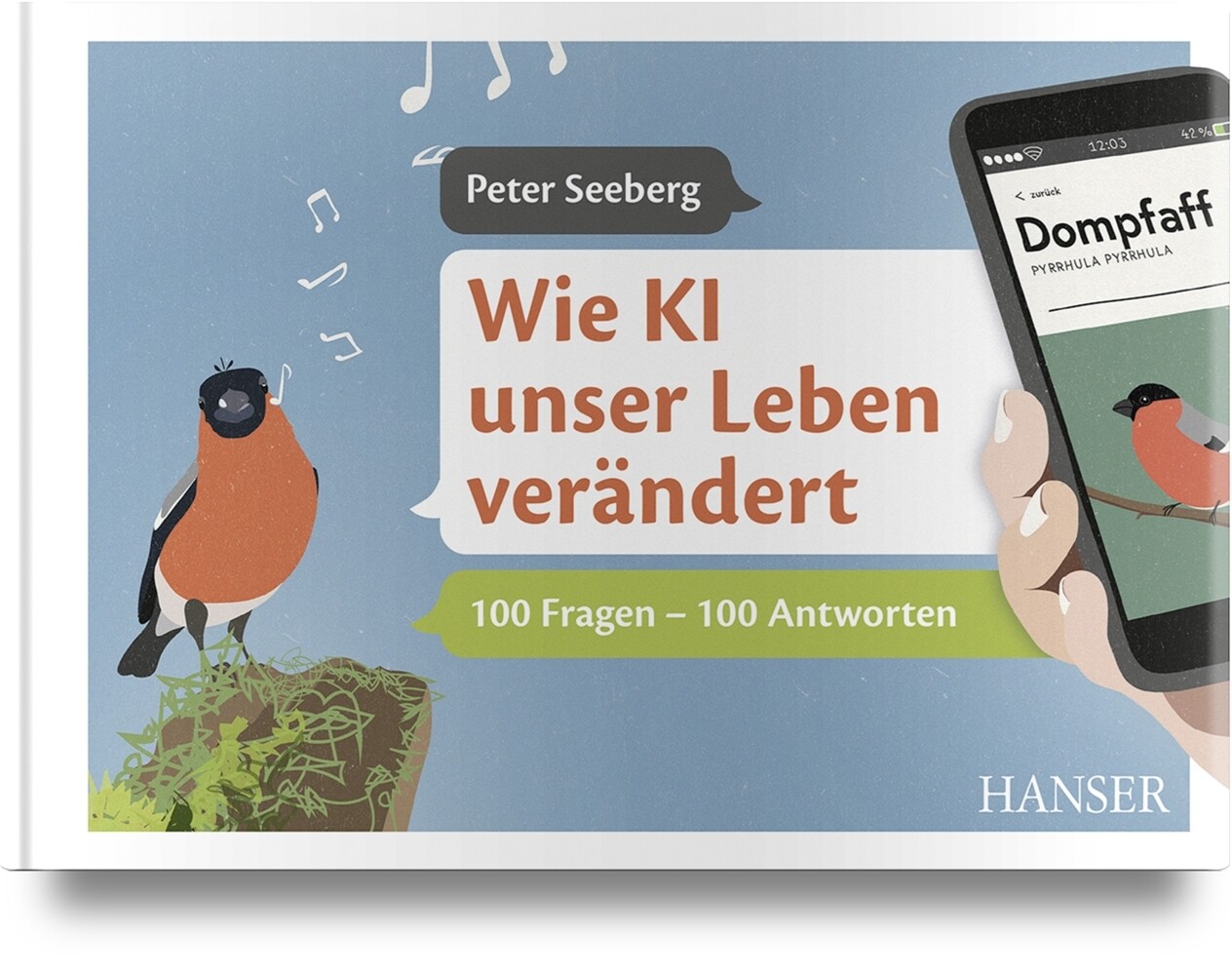
Wie KI unser Leben verändert
100 Fragen - 100 AntwortenSiri, Alexa oder Hey Google kennen die meisten von uns. Vom autonomen Fahren oder dass Sie Vögel mit Apps erkennen können – davon haben Sie sicher schon gehört. Aber inzwischen wird Künstliche Intelligenz in noch viel mehr Bereichen eingesetzt. Welche das sind, erfahren Sie in diesem Buch.Künstliche Intelligenz ist älter, als Sie vermuten! KI hat Vorteile, birgt aber auch Risiken – und sie ist nicht mehr wegzudenken. Deshalb sollte jeder von uns wissen, was KI für seinen Alltag, den Beruf und unser aller Zukunft bedeuten kann.Peter Seeberg hat aus unterschiedlichen Lebensbereichen die wichtigsten 100 Fragen zu KI gesammelt und beantwortet. Machen Sie sich schlau.Leseprobe (PDF-Link)
Beginning Game AI with Unity
Game developers will use this book to gain a basic knowledge of programming artificial intelligence using Unity and C#. You will not be bored learning the theory underpinning AI. Instead, you will learn by experience and practice, and complete an engaging project in each chapter.AI is the one of the most popular subjects in gaming today, ranging from controlling the behavior of non-player characters to procedural generated levels. This book starts with an introduction to AI and its use in games. Basic moving behaviors and pathfinding are covered, and then you move through more complex concepts of pathfinding and decision making.WHAT YOU WILL LEARN* Understand the fundamentals of AI* Create gameplay-based AI to address navigation and decision-making problems* Put into practice graph theory and behavior models* Address pathfinding problems* Use the A* algorithm, the deus ex machina of pathfinding algorithms* Create a mini stealth gameWHO THIS BOOK IS FORDevelopers and programming enthusiasts with a basic knowledge of Unity and C# who want to understand and master the foundations of artificial intelligence in gamesSEBASTIANO COSSU is a software engineer and game developer. He studied computer science at the University of Rome "La Sapienza". He is currently working as Game UI Developer at Feral Interactive Ltd. in London. He wrote the Apress book, Game Development with GameMaker Studio 2.CHAPTER 1: INTRODUCTIONChapter Goal: An introduction to the book where goals and main topics are introduced to the reader.Sub -Topics1. What is AI?2. AI in games3. Intelligent agents4. Knowledge representationCHAPTER 2: MOVEMENTSChapter Goal: Introducing the reader to steering and basic AI moving behaviors, in particular wandering and following the player.Sub - Topics1. Moving in a 2D world2. Moving in a 3D world3. Steering4. Moving behaviors (wandering vs following)5. A case study: car games6. Project: mini car traffic simulatorCHAPTER 3: PATHFINDINGChapter Goal: Introducing the reader to pathfinding algorithms and problem-solving approaches.Sub - Topics:1. Graphs2. Pathfinding algorithms: Dijkstra3. Pathfinding algorithms: A*4. World representation5. Constraint Satisfaction Problems (CSP)6. Improving on pathfinding7. A case study: Warcraft8. Project: LabyrinthCHAPTER 4: DECISION MAKINGChapter Goal: How does AI takes decisions? In this chapter, the reader will understand how to implement the ability to reason and plan actions using data structures to represent knowledge and search algorithms to find the best sequence of actions.Sub - Topics:1. Decision trees2. Finite-state machines (FSM)3. Behavior trees4. Fuzzy logic5. Goal-oriented behavior7. Rule-based systems9. A case study: Halo10. Project: Wumpus’ Cave ExplorerCHAPTER 5: TACTICS AND STRATEGYChapter Goal: Putting together all the knowledge acquired in the previous chapters to build intelligent agents that can perform well against the player.Sub - Topics:1. Putting things together: intelligent agents in action2. Strategy planning3. Tactical pathfinding4. Coordination and tactics in PVE: ambushing the player5. A case study: 007 Goldeneye6. Project: Chess with guns
Quick Guide for Obtaining Free Remote Desktop Protocol (RDP) Services
Remote Desktop Protocol (RDP) is a proprietary protocol developed by Microsoft which provides a user with a graphical interface to connect to another computer over a network connection. The user employs RDP client software for this purpose, while the other computer must run RDP server software.RDP refers to Remote Desktop protocol which connects your remotely connected computers or system over a RDP connected network. RDP gives a graphical interface to a client to be able to associate with another PC, system or network. RDP servers are built on Windows OS, but can be enabled to other OS as well. The major benefit of a remote desktop connection is being able to connect to your data from anywhere in the world. Your data is in one place that is easy to see and you no longer have to have software installed on your own computer.In Simple term RDP is a short form of Remote Desktop Protocol RDP specifies for home windows servers, it works as an icon to get in touch with an additional computer system, usually, it is utilized for attaching to a server organized in a data center to carry out jobs that typically do not need much user interaction and runs 24/7.Several of the extra usual uses of RDP servers are running bots, SEO devices, bitcoin mining, on-line video clip streaming, running forex trading software and so on.Most RDP servers providers that provide free services during trial period will request debit/credit card information, which is risky for us as they can claim any payment from the card. So that encouraged me to search for RDP services providers that can provide services during free trial period without requesting credit/debit card information. This report will investigate the possible ways to get free RDP server account or RDP server account at lowest cost. The report will consist from the following parts: 1.Some RDP Services Providers with free trials2.Some RDP servers providers that sell RDP with Credit Card, Debit Card, Bitcoin, PayPal or other E-wallets 3.Getting free RDP from freerdpserver.com4.Getting free RDP from Google Cloud5.Getting Google Cloud RDP/VPS for free for one month through Qwiklabs.com 6.Creating RDP through Alibabacloud.com7.Getting free RDP/VPS for seven days from CloudSigma.com8.Getting RDP/VPS through Microsoft Azure9.Getting Microsoft Azure RDP/VPS for free through Sandbox subscription10.How to get university email11.How to get RDP service for free through Microsoft Azure for students12.Getting free RDP from AWS Amazon13.How to get free RDP service with Amazon AWS Educate14.Some free websites that can be used to receive SMS online using numbers from some countries15.Generating virtual debit/credit cards using namso gold CC BIN generator for verification of some online services accountsI am Dr. Hidaia Mahmoud Mohamed Alassouli. I completed my PhD degree in Electrical Engineering from Czech Technical University by February 2003, and my M. Sc. degree in Electrical Engineering from Bahrain University by June 1995. I completed also one study year of most important courses in telecommunication and computer engineering courses in Islamic university in Gaza. So, I covered most important subjects in Electrical Engineering, Computer Engineering and Telecommunications Engineering during my study. My nationality is Palestinian from gaza strip.I obtained a lot of certified courses in MCSE, SPSS, Cisco (CCNA), A+, Linux.I worked as Electrical, Telecommunicating and Computer Engineer in a lot of institutions. I worked also as a computer networking administrator. I had considerable undergraduate teaching experience in several types of courses in many universities. I handled teaching the most important subjects in Electrical and Telecommunication and Computer Engineering. I could publish a lot of papers a top-tier journals and conference proceedings, besides I published a lot of books in Publishing and Distribution houses.I wrote a lot of important Arabic articles on online news websites. I also have my own magazine website that I publish on it all my articles: http:// www.anticorruption.000space.comMy personal website: www.hidaia-alassouli.000space.comEmail: hidaia_alassouli@hotmail.com
Eine kurze Geschichte vom Quantencomputer (2. Auflg.) - TELEPOLIS
Quantencomputer anschaulich erklärtDie Welt der Quanten ist total verrückt. Teilchen befinden sich gleichzeitig hier und dort. Sie verständigen sich über tausend Kilometer wie durch Telepathie. Forscher haben diese Phänomene inzwischen so gut im Griff, dass sie einen riesigen technologischen Schritt wagen: Den Bau des ersten Quantencomputers – eine ganz neue, überlegene Art von Rechner.Das Buch erklärt verständlich und unterhaltsam die magisch anmutenden Phänomene der Quantenphysik und wie sie für unbegreiflich schnell rechnende Computer genutzt werden können. Es zeigt, wie der Quantencomputer und andere Technologien, die auf der Quantenphysik basieren, den Alltag ähnlich umwälzen könnten wie einst die Dampfmaschine oder die Entdeckung der Elektronik. Werden Quantencomputer die gängigen Verschlüsselungsverfahren aushebeln? Werden sie eine blitzschnelle Entwicklung neuer Arzneien ermöglichen? Wird es einmal ein Quanteninternet geben und wenn ja, was bringt es? Werden es hyperempfindliche Quantensensoren erlauben, die Gedanken eines Menschen zu lesen? Neben Beispielen schon existierender Quantentechnologie (etwa Flash-Speicher oder Verschlüsselungsverfahren) gibt der Wissenschaftsjournalist Christian J. Meier einen Überblick über die wichtigsten Laborentwicklungen und zeigt auf, wohin sie führen könnten. Schließlich erfahren Sie, warum manche Physiker glauben, das Universum sei ein einziger Quantencomputer.Christian J. Meier (geb. 1968), promovierter Physiker und freier Journalist, beschäftigt sich seit mehreren Jahren mit den Themen Quantencomputer und Quantentechnologie und berichtet darüber für verschiedene Medien, unter anderem für die Neue Zürcher Zeitung, bild der wissenschaft, Berliner Zeitung, Frankfurter Rundschau, Spektrum.de und VDI nachrichten. Inhalt (PDF-Link)Leseprobe (PDF-Link)
Chatbots
Chatbots setzen sich in vielen Bereichen für die Kommunikation mit Kunden, Mitarbeitern und Bürgern durch. Sie beantworten automatisch Anfragen, entlasten Hotlines oder beraten Kunden. In diesem Buch werden die technischen wie auch die sprachlichen Grundlagen von Chatbots ausführlich vorgestellt und anhand von praxisnahen Beispielen erläutert. Weiterhin werden wichtige Aspekte wie Kosten, Akzeptanz und rechtliche Grundlagen beleuchtet. Abschließend wird anhand eines konkreten Beispiels ein Chatbot-Projekt exemplarisch beschrieben.ANDREAS KOHNE ist promovierter Informatiker und leitet den Bereich Business Development eines mittelständigen IT-Unternehmens in Dortmund.PHILIPP KLEINMANNS eitet eine Beratungsabteilung mit Schwerpunkten auf Internet of Things und Customer Service bei einem mittelständischen IT-Anbieter in Dortmund.CHRISTIAN ROLF ist Projektmanager für Digitalprojekte im Bereich Chatbots und Digital Signage bei einer Agentur in Witten.MORITZ BECK ist Gründer und Geschäftsführer einer Unternehmensberatung für Messenger-Kommunikation und Chatbots mit Sitz in Hamburg. Grundlagen.- Bekannte Bots.- Technik.-Anwendungsgebiete.- Design eines Chatbots.- Finanzen.- Recht.- zukünftige Anwendungen.
IT-Prüfung, Datenschutzaudit und Kennzahlen für die Sicherheit
Dieses Buch aus der Reihe „Neue Ansätze für die IT-Revision“ entwickelt aktuelle und neuartige Methoden für die Arbeit der Revision sowie für Prüfungen und Tests von IT-Systemen. Berücksichtigt werden dabei Aspekte des Datenschutzes, der Cybersicherheit, Effektivität und Funktionalität, und es werden Ansätze für Datenschutzbeauftragte, IT-Sicherheitsbeauftragte, CISOs, Compliance-Manager etc. vorgestellt.Die Schwerpunkte des Buches liegen auf Datenschutz, Kennzahlensystemen sowie Internet of Things und Künstlicher Intelligenz. Besondere Beachtung erfahren Themen wie Prüfung des Datenschutzmanagementsystems (DSMS), Prüfung der Auftragsverarbeitung sowie Meldepflichten gemäß DSGVO.Die präsentierten Ansätze zur Bewertung der Informationssicherheit mittels Kennzahlen, zu Tests für IoT-Geräte und zur Zertifizierung der Softwareentwicklung ermöglichen den Revisoren, diese Themen als systematische Prüfungen, Tests und Audits zu erfassen und umzusetzen.DR. ALEKSANDRA SOWA leitete zusammen mit dem deutschen Kryptologen Hans Dobbertin das Horst Görtz Institut für Sicherheit in der Informationstechnik. Sie ist zertifizierte Datenschutzbeauftragte und Datenschutzauditorin, IT-Compliance-Managerin (ITCM) und IT Information Security Practitioner (ITISP). Aleksandra ist Autorin diverser Bücher und Fachpublikationen, trat als Sachverständige für IT-Sicherheit im Innenausschuss des Bundestages auf, war u. a. für den Vorstand Datenschutz, Recht und Compliance (DRC) der Deutschen Telekom AG tätig und ist aktuell Senior Manager und Prokuristin in einer Wirtschaftsprüfungsgesellschaft.Prüfung des Datenschutzmanagementsystems (DSMS) - Prüfung der Auftragsverarbeiter gem. Art. 28 DSGVO - Meldepflichten für „Data Breaches“ gemäß Art. 33 DSGVO - Kennzahlensysteme für Bewertung der Informationssicherheit - Reife der Informationssicherheit - IoT-Penetrationstest - Zertifizierung der Softwareentwicklung
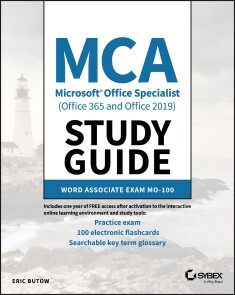
MCA Microsoft Office Specialist (Office 365 and Office 2019) Study Guide
LEARN THE REALITIES OF BEING A MICROSOFT OFFICE SPECIALIST AND EFFICIENTLY PREPARE FOR THE WORD ASSOCIATE MO-100 EXAM WITH A SINGLE, COMPREHENSIVE STUDY GUIDEMCA Microsoft Office Specialist Study Guide: Word Associate Exam MO-100 comprehensively prepares you for the MO-100 Exam. Accomplished and experienced author Eric Butow provides readers with a one-stop resource for learning the job responsibilities of a Microsoft Office Specialist and succeeding on the MO-100 Exam.The study guide is written in a straightforward and practical style which, when combined with the companion online Sybex resources, allows you to learn efficiently and effectively. The online resources include hundreds of practice questions, flashcards, and a glossary of key terms. In addition to preparing you for the realities of the Microsoft Office Specialist job role, this study guide covers all the subjects necessary to do well on the certifying exam, including:* Managing documents* Inserting and formatting text, paragraphs, and sections* Managing tables and lists* Creating and managing references* Inserting and formatting graphics* Managing document collaborationPerfect for anyone seeking to begin a new career as a Microsoft Office Specialist, or simply wondering what the job entails, the Study Guide also belongs on the bookshelf of currently practicing professionals who want to brush up on the fundamentals of their role.ERIC BUTOW is the author or coauthor of 35 books on multiple aspects of technology. He has also developed and taught networking, computing, and usability courses for Ed2Go, Virtual Training Company, California State University/Sacramento, and Udemy. Eric began using Word, Excel, and PowerPoint professionally in 1992. He has been a technical writer for large and small companies, and presently provides website development, online marketing, and technical writing services through his company, Butow Communications Group. Introduction xviiAssessment Test xxiiCHAPTER 1 WORKING WITH DOCUMENTS 1Navigating Within Documents 2Searching for Text 2Linking to Locations Within Documents 6Moving to Specific Locations and Objects in Documents 7Showing and Hiding Formatting Symbols and Hidden Text 8Formatting Documents 11Setting Up Document Pages 12Applying Style Settings 13Inserting and Modifying Headers and Footers 15Configuring Page Background Elements 16Saving and Sharing Documents 18Saving Documents in Alternative File Formatting 18Changing Basic Document Properties 19Modifying Print Settings 21Sharing Documents Electronically 22Inspecting Documents for Issues 24Locating and Removing Hidden Properties and Personal Information 24Finding and Fixing Accessibility Issues 26Locating and Correcting Compatibility Issues 27Summary 28Key Terms 29Exam Essentials 29Review Questions 31CHAPTER 2 INSERTING AND FORMATTING TEXT 33Adding and Replacing Text 34Finding and Replacing Text 34Inserting Symbols and Special Characters 38Formatting Text and Paragraphs 40Adding Text Effects 40Applying Formatting by Using Format Painter 41Setting Line and Paragraph Spacing and Indentation 41Applying Built-In Styles to Text 44Clearing Formatting 45Creating and Configuring Document Sections 48Formatting Text in Multiple Columns 48Inserting Page, Section, and Column Breaks 50Changing Page Setting Options for a Section 51Summary 54Key Terms 55Exam Essentials 55Review Questions 56CHAPTER 3 MANAGING TABLES AND LISTS 59Creating Tables 60Converting Text to Tables 62Switching Tables to Text 63Creating Tables by Specifying Rows and Columns 64Modifying Tables 66Sorting Table Data 66Configuring Cell Margins and Spacing 68Merging and Splitting Cells 71Resizing Tables, Rows, and Columns 73Splitting Tables 78Configuring a Repeating Row Header 80Creating and Formatting Lists 83Structuring Paragraphs as Numbered and Bulleted Lists 83Changing Bullet Characters and Number Formatting 84Defining Custom Bullet Characters and Number Formatting 86Increasing and Decreasing List Levels 89Restarting and Continuing List Numbering 90Setting Starting Number Values 92Summary 93Key Terms 94Exam Essentials 94Review Questions 95CHAPTER 4 BUILDING REFERENCES 97Creating and Managing Referencing Elements 98Inserting Footnotes and Endnotes 98Modifying Footnote and Endnote Properties 101Creating and Modifying Bibliography Citation Sources 102Inserting Citations for Bibliographies 105Working with Referencing Tables 107Inserting Tables of Contents 107Customizing Tables of Contents 108Adding Bibliographies 110Summary 111Key Terms 111Exam Essentials 112Review Questions 113CHAPTER 5 ADDING AND FORMATTING GRAPHIC ELEMENTS 115Inserting Illustrations and Text Boxes 116Adding Shapes 116Including Pictures 118Inserting 3D Models 119Adding SmartArt Graphics 120Placing Screenshots and Screen Clippings 121Inserting Text Boxes 123Formatting Illustrations and Text Boxes 125Applying Artistic Effects 125Adding Picture Effects and Picture Styles 126Removing Picture Backgrounds 129Formatting Graphic Elements 130Setting Up SmartArt Graphics 132Working with 3D Models 134Adding and Organizing Text 135Formatting Text in Text Boxes 135Adding Text in Shapes 137Changing SmartArt Graphic Content 139Modifying Graphic Elements 140Positioning Objects 140Wrapping Text Around Objects 141Adding Alt Text to Objects 144Summary 146Key Terms 146Exam Essentials 146Review Questions 147CHAPTER 6 WORKING WITH OTHER USERS ON YOUR DOCUMENT 149Adding Comments 150Inserting Comments 150Reviewing and Replying to Comments 151Resolving Comments 152Deleting Comments 153Tracking Your Changes 155Turning On Track Changes 155Reviewing Tracked Changes 156Accepting and Rejecting Tracked Changes 157Locking and Unlocking Change Tracking 160Summary 163Key Terms 163Exam Essentials 163Review Questions 164APPENDIX ANSWERS TO REVIEW QUESTIONS 167Chapter 1: Working with Documents 168Chapter 2: Inserting and Formatting Text 168Chapter 3: Managing Tables and Lists 169Chapter 4: Building References 170Chapter 5: Adding and Formatting Graphic Elements 170Chapter 6: Working with Other Users on Your Document 171Index 173

Machine Learning for Time Series Forecasting with Python
LEARN HOW TO APPLY THE PRINCIPLES OF MACHINE LEARNING TO TIME SERIES MODELING WITH THIS INDISPENSABLE RESOURCEMachine Learning for Time Series Forecasting with Python is an incisive and straightforward examination of one of the most crucial elements of decision-making in finance, marketing, education, and healthcare: time series modeling.Despite the centrality of time series forecasting, few business analysts are familiar with the power or utility of applying machine learning to time series modeling. Author Francesca Lazzeri, a distinguished machine learning scientist and economist, corrects that deficiency by providing readers with comprehensive and approachable explanation and treatment of the application of machine learning to time series forecasting.Written for readers who have little to no experience in time series forecasting or machine learning, the book comprehensively covers all the topics necessary to:* Understand time series forecasting concepts, such as stationarity, horizon, trend, and seasonality * Prepare time series data for modeling * Evaluate time series forecasting models’ performance and accuracy * Understand when to use neural networks instead of traditional time series models in time series forecasting Machine Learning for Time Series Forecasting with Python is full real-world examples, resources and concrete strategies to help readers explore and transform data and develop usable, practical time series forecasts.Perfect for entry-level data scientists, business analysts, developers, and researchers, this book is an invaluable and indispensable guide to the fundamental and advanced concepts of machine learning applied to time series modeling.FRANCESCA LAZZERI is an accomplished economist who works with machine learning, artificial intelligence, and applied econometrics. She works at Microsoft as a data scientist and machine learning scientist to develop a portfolio of machine learning services. She is a sought-after speaker and has given popular talks at AI conferences and academic seminars at Berkeley, Harvard, and MIT.Acknowledgments viiIntroduction xvCHAPTER 1 OVERVIEW OF TIME SERIES FORECASTING 1Flavors of Machine Learning for Time Series Forecasting 3Supervised Learning for Time Series Forecasting 14Python for Time Series Forecasting 21Experimental Setup for Time Series Forecasting 24Conclusion 26CHAPTER 2 HOW TO DESIGN AN END-TO-END TIME SERIES FORECASTING SOLUTION ON THE CLOUD 29Time Series Forecasting Template 31Business Understanding and Performance Metrics 33Data Ingestion 36Data Exploration and Understanding 39Data Pre-processing and Feature Engineering 40Modeling Building and Selection 42An Overview of Demand Forecasting Modeling Techniques 44Model Evaluation 46Model Deployment 48Forecasting Solution Acceptance 53Use Case: Demand Forecasting 54Conclusion 58CHAPTER 3 TIME SERIES DATA PREPARATION 61Python for Time Series Data 62Common Data Preparation Operations for Time Series 65Time stamps vs. Periods 66Converting to Timestamps 69Providing a Format Argument 70Indexing 71Time/Date Components 76Frequency Conversion 78Time Series Exploration and Understanding 79How to Get Started with Time Series Data Analysis 79Data Cleaning of Missing Values in the Time Series 84Time Series Data Normalization and Standardization 86Time Series Feature Engineering 89Date Time Features 90Lag Features and Window Features 92Rolling Window Statistics 95Expanding Window Statistics 97Conclusion 98CHAPTER 4 INTRODUCTION TO AUTOREGRESSIVE AND AUTOMATED METHODS FOR TIME SERIES FORECASTING 101Autoregression 102Moving Average 119Autoregressive Moving Average 120Autoregressive Integrated Moving Average 122Automated Machine Learning 129Conclusion 136CHAPTER 5 INTRODUCTION TO NEURAL NETWORKS FOR TIME SERIES FORECASTING 137Reasons to Add Deep Learning to Your Time Series Toolkit 138Deep Learning Neural Networks Are Capable of Automatically Learning and Extracting Features from Raw and Imperfect Data 140Deep Learning Supports Multiple Inputs and Outputs 142Recurrent Neural Networks Are Good at Extracting Patterns from Input Data 143Recurrent Neural Networks for Time Series Forecasting 144Recurrent Neural Networks 145Long Short-Term Memory 147Gated Recurrent Unit 148How to Prepare Time Series Data for LSTMs and GRUs 150How to Develop GRUs and LSTMs for Time Series Forecasting 154Keras 155TensorFlow 156Univariate Models 156Multivariate Models 160Conclusion 164CHAPTER 6 MODEL DEPLOYMENT FOR TIME SERIES FORECASTING 167Experimental Set Up and Introduction to Azure Machine Learning SDK for Python 168Workspace 169Experiment 169Run 169Model 170Compute Target, RunConfiguration, and ScriptRun Config 171Image and Webservice 172Machine Learning Model Deployment 173How to Select the Right Tools to Succeed with Model Deployment 175Solution Architecture for Time Series Forecasting with Deployment Examples 177Train and Deploy an ARIMA Model 179Configure the Workspace 182Create an Experiment 183Create or Attach a Compute Cluster 184Upload the Data to Azure 184Create an Estimator 188Submit the Job to the Remote Cluster 188Register the Model 189Deployment 189Define Your Entry Script and Dependencies 190Automatic Schema Generation 191Conclusion 196References 197Index 199
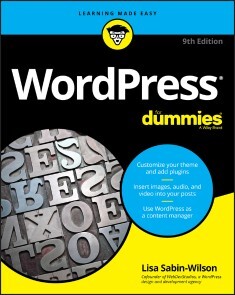
WordPress For Dummies
GET TO KNOW WORDPRESS WITH THIS SIMPLE AND APPROACHABLE REFERENCEWordPress For Dummies, 9th Edition helps readers discover the power of the WordPress web content building tool. Web builders have created 75 million websites using WordPress and this book will show you how to add your blogs and websites to that count.WordPress For Dummies, 9th Edition drops you right into the fast lane to publishing your first website or blog by teaching you to:· Customize a theme· Create your first post· Use WordPress as a content management system· Work with multimedia formats· Add plugins to your site· Establish a publishing routinePerfect for new bloggers, experienced bloggers converting to WordPress for the first time, and people accustomed to WordPress who want to learn more about the full potential of the technology, WordPress for Dummies, 9thEdition is an indispensable addition to the library of every blogger and webmaster.LISA SABIN-WILSON is cofounder of WebDevStudios, one of the largest WordPress design and development agencies in the world. She is a regular public speaker at national events on topics such as WordPress, development, design, CSS, and social media. Foreword xiiiINTRODUCTION 1About This Book 2Foolish Assumptions 2Icons Used in This Book 3Beyond the Book 4Where to Go from Here 4PART 1: INTRODUCING WORDPRESS 5CHAPTER 1: WHAT WORDPRESS CAN DO FOR YOU 7Discovering the Benefits of WordPress 8Getting set up the fast and easy way 9Extending WordPress’s capabilities 9Taking part in the community 11Choosing a WordPress Platform 12Choosing the hosted version from WordPress.com 13Self-hosting with WordPress.org 14CHAPTER 2: WORDPRESS BASICS 17Shining the Spotlight on WordPress 17Dipping Into WordPress Technologies 19Archiving your publishing history 19Interacting with your readers through comments 21Feeding your readers 22Tracking back 23Dealing with comment and trackback spam 24Using WordPress as a Content Management System 25Exploring the differences between a website and a blog 25Viewing examples of blogs and websites 26Moving On to the Business of Publishing 27PART 2: SETTING UP WORDPRESS 29CHAPTER 3: SETTING UP YOUR WORDPRESS BASE CAMP 31Establishing Your Domain 32Understanding domain name extensions 32Considering the cost of a domain name 33Registering your domain name 33Finding a Home for Your Website 34Getting help with hosting WordPress 35Dealing with disk space and bandwidth 36Understanding Secure File Transfer Concepts 38Setting up SFTP on your hosting account 39Connecting to the web server via SFTP 42Transferring files from point A to point B 46Editing files via SFTP 47Changing file permissions 48Installing WordPress 50Exploring Preinstalled WordPress 51Installing WordPress manually 53Setting up the MySQL database 53Uploading the WordPress files 55Last step: Running the installation script 57CHAPTER 4: UNDERSTANDING THE WORDPRESS.ORG DASHBOARD 65Logging In to the Dashboard 66Navigating the Dashboard 67Welcome to WordPress! 69Site Health 70At a Glance 71Activity 72Quick Draft 73WordPress Events and News 73Arranging the Dashboard to Your Tastes 74Finding Inline Documentation and Help 76Setting Options in the Dashboard 78Configuring the Settings 79General 79Writing 83Reading 85Discussion 86Media 93Permalinks 94Privacy 95Creating Your Personal Profile 97Setting Your Site’s Format 100Posts 100Media 101Pages 101Comments 102Appearance 102Plugins 104Users 104Tools 105CHAPTER 5: ESTABLISHING YOUR PUBLISHING ROUTINE 107Staying on Topic with Categories 107Changing the name of a category 108Creating new categories and deleting others 111Examining a Post’s Address: Permalinks 113Making your post links pretty 114Customizing your permalinks 115Making sure that your permalinks work with your server 117Discovering the Many WordPress RSS Options 119Writing Your First Entry 120Using the Block Editor 122Discovering available blocks 123Inserting new blocks 131Configuring block settings 134Refining Your Post Options 149Publishing Your Post 153Being Your Own Editor 154Look Who’s Talking on Your Site 155Managing comments and trackbacks 155Moderating comments and trackbacks 157Tackling spam with Akismet 158PART 3: FLEXING AND EXTENDING WORDPRESS 159CHAPTER 6: MEDIA MANAGEMENT: IMAGES, AUDIO, AND VIDEO 161Inserting Images into Your Content 162Uploading an image from your computer 163Inserting an image from the Media Library 165Using the Columns Block to Insert Multiple Images in a Row 166Inserting a Cover Image into a Post 169Inserting a Photo Gallery 174Inserting Video Files into Your Posts 179Adding a link to a video from the web 180Adding video from your computer 181Adding video using the Embed block 185Inserting Audio Files into Your Blog Posts 189Inserting Audio Using the Embed Block 191Podcasting with WordPress 192CHAPTER 7: MAKING THE MOST OF WORDPRESS PLUGINS 195Finding Out What Plugins Are 196Extending WordPress with plugins 197Distinguishing between plugins and themes 197Exploring the Plugins Page 199Identifying Core Plugins 202Incorporating Akismet 202Saying Hello Dolly 206Discovering the one-click plugin update 207Using Plugins: Just the Basics 210Installing Plugins Manually 211Finding and downloading the files 212Reading the instructions 214Uploading and Activating Plugins 215Uploading a new plugin 215Activating a plugin 216Setting Plugin Options 217Uninstalling Plugins 218Understanding the Open-Source Environment 219Finding Plugins Beyond WordPress.org 220Comparing Free and Commercial Plugins 222CHAPTER 8: FINDING AND INSTALLING WORDPRESS THEMES 225Getting Started with Free Themes 226Finding free themes 227Avoiding unsafe themes 227Previewing themes on the Themes page 230Installing a Theme 231Browsing the free themes 233Previewing and activating a theme 235Exploring Premium Theme Options 237Examining the Default Theme: Twenty Twenty 241Exploring the layout and structure 242Customizing the site identity 244Customizing colors 247Including custom navigation menus 248Enhancing Your Theme with Widgets 249Adding widgets to your website 250Using the Text widget 252Using the RSS widget 253PART 4: CUSTOMIZING WORDPRESS 257CHAPTER 9: UNDERSTANDING THEMES AND TEMPLATES 259Using WordPress Themes: The Basics 260Understanding theme structure 261Connecting templates 263Contemplating the Structure of a WordPress Website 263Examining the Anatomy of a Template Tag 265Getting Familiar with the Four Main Templates 266The Header template 266The Main Index template 271The Sidebar template 275The Footer template 276Other templates 276Putting a Theme Together 277Connecting the templates 277Using additional stylesheets 287Customizing Your Posts with Template Tags 287Using Tags with Parameters for Sidebars 287The calendar 289List pages 289Post archives 292Categories 293Getting widgetized 295CHAPTER 10: TWEAKING WORDPRESS THEMES 297Styling with CSS: The Basics 298CSS selectors 299Classes and IDs 299CSS properties and values 301Changing the Background Graphics with CSS 301Uploading an image for background use 304Positioning, repeating, and attaching images 304Using Your Own Header Image 306Customizing Colors in Twenty Twenty 308Creating Custom Navigation Menus 309Building custom navigation menus 309Displaying custom menus with widgets 314Changing Font Family, Color, and Size 315Changing font color 316Changing font size 317Adding borders 318Understanding Basic HTML Techniques 318Inserting images 320Inserting hyperlinks 320Inserting lists 321CHAPTER 11: UNDERSTANDING PARENT AND CHILD THEMES 325Customizing Theme Style with Child Themes 326Loading a parent theme’s style 328Customizing the parent theme’s styling 330Using images in child theme designs 330Modifying Theme Structure with Child Themes 334Overriding parent template files 335Adding new template files 336Removing template files 337Modifying the functions.php file 337Preparing a Parent Theme 339CHAPTER 12: WORDPRESS AS A CONTENT MANAGEMENT SYSTEM 341Creating Different Page Views Using WordPress Templates 342Uploading the template 343Assigning the template to a static page 345Creating a Template for Each Post Category 346Using Sidebar Templates 349Creating Custom Styles for Sticky, Category, and Tag Posts 350Working with Custom Post Types 353Adding Support for Taxonomies 360Adding Support for Post Thumbnails 361Adding the post thumbnails to a theme 362Adding custom image sizes for post thumbnails 364Optimizing Your WordPress Site 365Planting keywords on your website 366Optimizing your post titles for search engine success 366Writing content with readers in mind 367Creating categories that attract search engines 367Using the tag for images 368CHAPTER 13: HOSTING MULTIPLE SITES WITH WORDPRESS 371Deciding When to Use the Multisite Feature 372Understanding the Difference between Sites and Blogs 374Considering Web-Hosting Services 374Enabling the WordPress Network Feature 376DNS 377Apache mod_rewrite 378Virtual host 379PHP 381Installing the Network on Your Site 381Exploring the Network Admin Dashboard Menu 383Managing Your Network 386Settings 386Sites 392Users 395Themes 399Plugins 400Stopping Spam Signups and Splogs 401CHAPTER 14: UPGRADING, BACKING UP, AND MIGRATING 403Getting Notified of an Available Upgrade 404Backing Up Your Database 406Upgrading WordPress Automatically 407Upgrading WordPress Manually 408Migrating Your Existing Site to WordPress 411Movin’ on up 411Preparing for the big move 412Converting templates 413Moving your website to WordPress 414Importing from Blogger 415Importing from LiveJournal 417Importing from Movable Type and TypePad 418Importing from Tumblr 420Importing from WordPress 422Importing from an RSS feed 422Finding other import resources 423Moving Your Website to a Different Host 424Creating a backup and moving manually 425Using a plugin to back up and move to a new host 426PART 5: THE PART OF TENS 427CHAPTER 15: TEN POPULAR WORDPRESS PLUGINS 429Custom Post Type UI 429Jetpack 430Limit Login Attempts Reloaded 431Cookie Notice for GDPR & CCPA 432Yoast SEO 433BackupBuddy 433WP Super Cache 434WooCommerce 434Google XML Sitemaps 435Sucuri Security 436CHAPTER 16: TEN FREE WORDPRESS THEMES 437Hybrid Core 438Hestia 438Responsive 439Ashe 440Prefer Blog 440BlackBird 441Storefront 442Sinatra 443Nisarg 444Optics 444Index 447
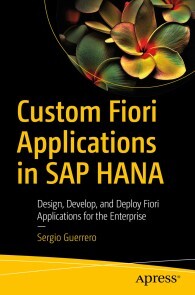
Custom Fiori Applications in SAP HANA
Get started building custom Fiori applications for your enterprise. This book teaches you how to design, build, and deploy enterprise-ready, custom Fiori applications in SAP HANA. Tips and tricks collected from projects using Fiori applications (built consuming OData models and REST APIs) and integrating third-party JS libraries are presented. Also included are examples using Fiori templates from different tools such as the SAP Web IDE and the new Visual Studio Code extensions.This book explains the 5 design principles that all Fiori applications are built upon: Role-based, Responsive, Coherent, Simple, and Delightful. The book expands on consuming OData services and REST APIs internal and external to SAP HANA. The Fiori application exercise demonstrates the use of the MVC pattern, JavaScript modularization, reuse of SAP UI5 controls, debugging, and the tools required for a complete scenario. The book closes with an exercise showcasing a finished single page application with multiple views and layouts, navigation between the views, and deployment of the application to AWS.This book is simple enough for entry-level developers getting started in web frameworks but also highlights integration points from the data models being consumed from the application, and shows how the application communicates with back-end services, resulting in a complete front-end custom Fiori application.WHAT YOU WILL LEARN* Know the 5 Fiori design principles* Understand how to consume OData and REST API models* Apply the MVC pattern using XML views and the SAP UI5 controls along with controller behavior in JavaScript* Debug and deploy the applicationWHO THIS BOOK IS FORWeb developers and application leads who have some experience in JavaScript frameworks and web development and understand web protocol communicationSERGIO GUERRERO is a passionate software engineer with 10+ years of experience in web and database development in various technology stacks such as .NET and SAP HANA. He is the author of Microservices on SAP HANA XSA (Apress). On non-working days, Sergio cheers for the Green Bay Packers and Tigres UANL (MX soccer), Chapter 1: Fiori Applications in SAP HANACHAPTER GOAL: The goal is to explain what Fiori is and how it is developed in SAP HANA. There are five design principles for Fiori applications.NO OF PAGES 30SUB -TOPICS1. What is Fiori?2. Five design principles of Fiori3. Getting your system ready for Fiori applications4. Understanding layouts and floor plansChapter 2: Consuming Data in Fiori ApplicationsCHAPTER GOAL: This chapter explains how to mock data, how to consume data, how to understand and prepare data for the Fiori application.NO OF PAGES:SUB - TOPICS1. Understanding data and mocking it when not available2. OData and JSON Models3. Consuming REST APIs4. Data driven design approachesChapter 3: Fiori Application following the MVCCHAPTER GOAL: the goal for this chapter is to understand the moving pieces to create a Fiori applicationNO OF PAGES : 30SUB - TOPICS:1. MVC2. Tools for developing and debugging Fiori applications3. Integrating external JS libraries into (SAPUI5) Fiori4. Browser differences, limitations, and features5. Fiori application on various devicesChapter 4: Unit Testing of Fiori ApplicationsCHAPTER GOAL: The goal of this chapter is to start with unit testing, comparing different unit test frameworks and finish with an automated testing scenarioNO OF PAGES: 30SUB - TOPICS:1. Unit testing frameworks2. Fiori app unit testing3. Improvements resulting from unit testingChapter 5: Deploying Fiori ApplicationCHAPTER GOAL: The goal of the chapter is to help the reader to complete the software development cycle and be able to deploy the Fiori application to a production environment.1. Preparing the deployment, software versioning2. Deploying to different platforms such as SAP Cloud and AWS3. Automating deployment
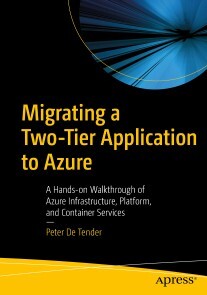
Migrating a Two-Tier Application to Azure
Understand and build a proof of concept by migrating a multi-tiered .NET Core web application to the Azure public cloud, leveraging different Azure Infrastructure as a Service (IAAS), Azure Platform as a Service (PaaS), and Azure Container offerings. These include Azure Container Instance (ACI), Azure Kubernetes Services (AKS), and CI/CD pipeline deployments using Azure DevOps.After a first chapter in which you set up the baseline for the lab scenarios, you will start with the basics of automating Azure resource deployments using Visual Studio and powerful Azure Resource Manager (ARM) templates. Next, you’ll learn about the importance of performing proper assessments and the tools Microsoft offers to help in this migration preparation phase. After that, you will validate the virtual machine deployment and learn about SQL Server database migration to SQL Azure PaaS, as well as deploying and migrating web applications to Azure Web Apps.After covering these foundational platform components, the next chapters focus on the core concepts and advantages of using containers for running business workloads. These labs are based on Docker, Azure Container Registry (ACR), ACI, and Web App for Containers, and show you how to enable container orchestration and cloud-scale using AKS.In the last part of the book, you will work with Azure DevOps, the Microsoft application lifecycle environment, building a CI/CD pipeline to publish workloads using the DevOps principles and concepts. You’ll see the integration with the rest of the Azure services, closing with a module on overall Azure monitoring and operations and what tools Azure has available to assist your IT teams in this challenge.WHAT YOU WILL LEARN* Use Azure to enable digital transformation* Carry out Azure automated deployments using ARM templates and Azure DevOps* Run VM-based workloads on Azure* Migrate VM-based workloads to Azure platform services * Monitor Azure running workloads with Azure Monitor and Log AnalyticsWHO THIS BOOK IS FORAnyone who wants to learn about different Azure architectures by going through hands-on exercises.Peter De Tender has more than 20 years’ experience in architecting and deploying Microsoft datacenter technologies. Since early 2012, he started shifting to cloud technologies (Office 365, Intune) and quickly jumped onto the Azure platform, working as cloud solution architect and trainer, out of his own company. Since September 2019, Peter moved into an FTE role within Microsoft Corp in the prestigious Azure Technical Trainer team, providing Azure readiness workshops to larger customers and partners across the globe.Peter was an Azure MVP for 5 years, a Microsoft Certified Trainer for more than 12 years, and is still actively involved in the community as speaker, technical writer, and author.You can follow Peter on twitter @pdtit and check his technical blog, 007ffflearning.CHAPTER 1: DIGITAL TRANSFORMATION OVERVIEWThis chapter provides an introduction to “digital transformation” and how public cloud environments like Azure can help with that. You learn about business benefits in moving to public cloud such as high availability, scalability, security, and governance.CHAPTER 2: AUTOMATING AZURE DEPLOYMENTS USING ARM TEMPLATESIn this chapter, you will learn the core concepts of automated deployments of Azure resources, using ARM Templates. Starting from a preconfigured set of templates allowing deploying the baseline of the hands-on exercises, you also learn about optimizing ARM templates for virtual machine (VM) configuration management using PowerShell Desired State Configuration and Azure VM custom script extensions.CHAPTER 3: PERFORMING AZURE ASSESSMENTSA successful cloud migration of existing on-premises workloads starts with performing proper assessments. Azure has several tools helping with this process, to identify virtual machine supportability, as well as web applications and SQL Server databases. This chapter guides readers through different assessment tools, reflecting in another hands-on exercise on how to effectively use them to prepare a lift-and-shift migration to Azure.Chapter 4: Deploying Azure SQL as a ServiceAfter performing the recommended assessments, this chapter will detail the aspects of deploying and running SQL Server database in an Azure SQL Platform as a service architecture. Starting from the different topologies available, such as Azure SQL Single Instance, Azure SQL Managed Instance, and Azure SQL Elastic Pools, we will also touch on the actual migration of a traditional VM-based SQL Server database to Azure SQL in this chapter.CHAPTER 5: DEPLOYING AND RUNNING WEB APPS IN AZURE APPLICATION SERVICESAzure App services is the overall service allowing for running web apps, mobile apps, API apps, and Azure Function apps. Going back to our original running web application, the goal of this chapter is migrating this workload to Azure Web Apps. Before performing the actual migration and deployment, you will learn about several core Web App capabilities and features, such as deployment slots, integrated backup, high availability architecture, and load balancing. The exercise in this chapter covers several situations, starting from a Visual Studio web deploy, simulating a greenfield deployment, as well as guiding you through a lift-and-shift migration process using Azure App Services Assessment tool.CHAPTER 6: CONTAINERIZING WEB APPLICATIONS USING DOCKERIn the previous chapters, you learned about running an existing two-tier workload to Azure Infrastructure as a Service (IaaS) as well as migrating to Platform as a Service (PaaS). In this chapter and the next, we reuse the same application architecture, but moving it into a containerized architecture. Starting from the basics of Docker, you will practice the base Docker commands, as well as get guided through the configuration parameters in a Dockerfile. Next, we will take you to the Azure services allowing for running Docker containers, such as Azure Container Registry, Azure WebApp for Containers, and Azure Container Instance.CHAPTER 7: DEPLOYING AND RUNNING CONTAINERIZED WORKLOADS IN AZURE KUBERNETES SERVICES (AKS)As you learned by now, Azure offers several container-supporting services. While they do a really good job in providing adequate performance, ease of use and nice integration with other Azure services, you might also consider running the containers in a Kubernetes environment for several reasons. Starting from the base characteristics of Kubernetes and how it differs from other Azure container-supporting services, you will learn how to deploy an AKS cluster, how to manage it with Kubectl, and how to run your containerized workloads. To experiment with the powers and intelligence of Kubernetes, you will also learn about the built-in scalability, high availability, and rolling upgrade features of AKS.CHAPTER 8: MANAGING AND MONITORING AKS USING AZURE MONITOR AND KUBERNETES DASHBOARDGiven the complexity of Azure Kubernetes Service’s architecture, having a monitoring tool available at hand is crucial for your business-critical workloads. Azure Kubernetes Service can be managed and monitored using the “Kubernetes” way, relying on the standard Kubernetes dashboard. This could be beneficial if you use Kubernetes in a multi-cloud environment. However, Azure also provides an extensive and powerful integration with Azure Monitor, using Azure Insights. This chapter will describe both methodologies, after which you will also deploy and use both of them in the practical in this chapter.CHAPTER 9: DEPLOYING AZURE WORKLOADS USING AZURE DEVOPS CI/CD PIPELINESThis chapter will take all covered deployment scenarios to the next level and introduce you to Azure DevOps. Building on the experiences from Visual Studio Team Services (VSTS) and Team Foundation Server (TFS), allowing developers and application management teams in deployment platform rollouts for +10 years, one can use Azure DevOps to build out an end-to-end deployment pipeline covering continuous integration (CI) and continuous deployment (CD). This chapter guides readers through the core components available in Azure DevOps, and reusing several of the earlier performed tasks, but now using a DevOps methodology.

Digitalisierung und Künstliche Intelligenz
Für jeden von uns ist heute die Frage wichtig, wie in Zukunft Menschen und Maschinen zum Wohle des Menschen zusammenarbeiten und welche Anforderungen an Menschen hierbei entstehen. Dieses essential bietet für Interessierte den Einstieg. Wenn wir die Entwicklung in geeignete Bahnen lenken, dürfen wir dieser auch gespannt entgegensehen: Dann wirken – verbunden mit KI – Achtsamkeit, Anstrengung, Aufklärung, Anleitung und auch ein Stück weit Abenteuer im positiven Sinne zusammen. Grundlagen zu Digitalisierung, Vernetzung und KI.- Anwendungsfelder und Herausforderungen beim Einsatz von KI.- Kompetenzanforderungen.

Introduction to Programming with C++ for Engineers
A complete reference for engineers to learn the fundamentals of C and C++ programming Introduction to Programming with C++ for Engineers is an original presentation teaching the fundamentals of both C and C++ to engineers and engineering students. With a focus on providing a quick but manageable learning curve for programming novices, this book provides comprehensive lessons in object-oriented programming in C and C++. Professor Cyganek, a highly regarded expert in his field, walks users through the basics of C and C++ programming simultaneously, showing with real world examples how to complete tasks in both languages. He also guides users through the installation process of the C and C++ programming environments in both Linux and Windows. Introduction to Programming with C++ for Engineers teaches novices how to program by: * Granting access to a complementary website that contains example code and useful links to resources that further improve the reader's coding ability * Minimizing text descriptions, opting instead for figures, tables, diagrams, and other explanatory material * Covering C++20 * Including test and exam questions for the reader's review at the end of each chapter Engineering students, students of other sciences who rely on computer programming, and professionals in various fields will find this book invaluable when first learning to program in C and C++. A complete textbook and reference for engineers to learn the fundamentals of computer programming with modern C++ Introduction to Programming with C++ for Engineers is an original presentation teaching the fundamentals of computer programming and modern C++ to engineers and engineering students. Professor Cyganek, a highly regarded expert in his field, walks users through basics of data structures and algorithms with the help of a core subset of C++ and the Standard Library, progressing to the object-oriented domain and advanced C++ features, computer arithmetic, memory management and essentials of parallel programming, showing with real world examples how to complete tasks. He also guides users through the software development process, good programming practices, not shunning from explaining low-level features and the programming tools. Being a textbook, with the summarizing tables and diagrams the book becomes a highly useful reference for C++ programmers at all levels. Introduction to Programming with C++ for Engineers teaches how to program by: * Guiding users from simple techniques with modern C++ and the Standard Library, to more advanced object-oriented design methods and language features * Providing meaningful examples that facilitate understanding of the programming techniques and the C++ language constructions * Fostering good programming practices which create better professional programmers * Minimizing text descriptions, opting instead for comprehensive figures, tables, diagrams, and other explanatory material * Granting access to a complementary website that contains example code and useful links to resources that further improve the reader’s coding ability * Including test and exam question for the reader’s review at the end of each chapter Engineering students, students of other sciences who rely on computer programming, and professionals in various fields will find this book invaluable when learning to program with C++. Prof. Boguslaw Cyganek, Department of Electronics, AGH, University of Science and Technology, Krakow, Poland. Boguslaw Cyganek obtained his Ph.D. degree cum laude in 2001 with a thesis on correlation of stereo images, and D.Sc. degree in 2011 with a thesis on methods and algorithms of object recognition in digital images. During recent years, Dr. Cyganek has been cooperating with many scientific centers in development of computer vision systems. He has also gained several years of practical experience working as a Software Development Manager and a Senior Software Engineer both in the USA and Poland. He is an author or a co-author of over ninety conference and journal papers and four books including "An Introduction to 3D Computer Vision Techniques and Algorithms", as well as "Object Detection and Recognition in Digital Images: Theory and Practice", published by Wiley. Dr. Cyganek is a member of the IEEE, SPIE, IAPR and SIAM. Preface xi Acknowledgments xiii Abbreviations xv About the Companion Website xvii 1 Introduction 1 1.1 Structure of the Book 5 1.2 Format Conventions 8 1.3 About the Code and Projects 9 2 Introduction to Programming 13 2.1 Hardware Model 13 2.2 Software Development Ecosystem 16 2.3 Software Development Steps 18 2.4 Representing and Running Algorithms 20 2.4.1 Representing Algorithms 21 2.4.2 Using Online Compilers 22 2.4.3 Structure of a C++ Program 24 2.4.4 Code Analysis 24 2.4.5 Building a Linux Executable 26 2.5 Example Project – Compound Interest Calculator 29 2.5.1 Compound Interest Analysis 29 2.5.2 Implementation of the Interest Calculator 30 2.5.3 Building and Running the Software 33 2.6 Example Project – Counting Occurrences of Characters in Text 34 2.6.1 Problem Analysis and Implementation 34 2.6.2 Running the C++ Code with the Online Compiler 35 2.6.3 Histogram Code, Explained 36 2.7 Summary 39 Questions and Exercises 39 3 C++ Basics 43 3.1 Constants and Variables – Built-In Data Types, Their Range, and Initialization 43 3.2 Example Project – Collecting Student Grades 53 3.3 Our Friend the Debugger 56 3.4 The Basic Data Structure – std::vector 59 3.5 Example Project – Implementing a Matrix as a Vector of Vectors 64 3.6 Special Vector to Store Text – std::string 67 3.7 Using the auto Keyword and decltype for Automatic Type Deduction 72 3.8 Common Standard Algorithms 75 3.9 Structures: Collecting Objects of Various Types 79 3.10 Fixed-Size Arrays 83 3.10.1 Multidimensional Fixed-Size Arrays 85 3.11 References 87 3.12 Pointers 90 3.12.1 Object Access with Pointers 90 3.13 Statements 95 3.13.1 Blocks of Statements and Access to Variables – The Role of Braces 95 3.13.2 C++ Statements 97 3.13.2.1 Conditional Statements 97 3.13.2.2 Loop Statements 103 3.13.2.3 Auxiliary Statements – continue and break 108 3.13.2.4 The goto Statement 110 3.13.2.5 Structural Exception Handling – The try-catch Statement 110 3.14 Functions 112 3.14.1 Anatomy of a Function in C++ 112 3.14.2 Passing Arguments to and from a Function 117 3.14.2.1 Argument Passing by Copy (Value Semantics) 118 3.14.2.2 Indirect Argument Passing by Reference 119 3.14.2.3 Passing by Pointer 121 3.14.3 Function Call Mechanism and Inline Functions 123 3.14.4 Recursive Functions and the Call Stack 125 3.14.5 Function Overloading – Resolving Visibility with Namespaces 126 3.14.6 Lambda Functions 128 3.14.7 More on Lambda Functions 132 3.14.8 Function Pointers 138 3.14.9 Functions in an Object-Oriented Framework 140 3.15 Example Project – Wrapping Objects in a Structure with a Constructor 142 3.15.1 EMatrix in an Object-Oriented Environment 145 3.15.2 Basic Operations with EMatrix 145 3.15.3 Input and Output Operations on EMatrix 147 3.15.4 Basic Mathematical Operations on EMatrix 148 3.15.5 Organizing the Project Files and Running the Application 150 3.15.6 Extending Matrix Initialization with a Simple Random Number Generator 153 3.16 Example Project – Representing Quadratic Equations 154 3.16.1 Definition of a Class to Represent Quadratic Polynomials 155 3.16.2 TQuadEq Member Implementation 162 3.16.3 TQuadEq in Action 165 3.17 Example Project – Tuples and Structured Bindings for Converting Roman Numerals 167 3.17.1 More on std::tuple and the Structured Binding 170 3.17.2 How to Write a Software Unit Test 173 3.17.3 Automating Unit Tests – Using the Standard Random Number Library 174 3.18 Example Project – Building a Currency Calculator Component 176 3.18.1 Currency Exchange Problem Analysis 177 3.18.2 CurrencyCalc Software Design 179 3.18.3 TCurrency Class Representing Currency Records 181 3.18.3.1 C++ Input/Output Manipulators 183 3.18.4 TCurrencyExchanger Class for Exchanging Currency 186 3.18.5 Putting It All Together – The Complete Currency Exchange Program 190 3.19 Operators 196 3.19.1 Summary of the C++ Operators 199 3.19.2 Further Notes on Operators 222 3.20 Summary 223 Questions and Exercises 224 4 Delving into Object-Oriented Programming 227 4.1 Basic Rules and Philosophy of Object-Oriented Design and Programming 227 4.2 Anatomy of a Class 231 4.2.1 Naming Conventions and Self-Documenting Code 233 4.3 Rules for Accessing Class Members 233 4.4 Example Project – TComplex Class for Operator Overloading 235 4.4.1 Definition of the TComplex Class 236 4.4.2 Definition of the TComplex Class Members 241 4.4.3 Test Functions for the TComplex Class 243 4.5 More on References 246 4.5.1 Right and Forward References 246 4.5.2 References vs. Pointers 251 4.5.3 Pitfalls with References 252 4.6 Example Project – Mastering Class Members with the TheCube Class 253 4.6.1 Automatic vs. Explicit Definition of the Constructors 254 4.6.2 TheCube Object Layout and Semantics 264 4.6.3 Shallow vs. Deep Copy Semantics 265 4.6.4 Move Constructor and Move Assignment Semantics 266 4.6.5 Implementation of the TheCube Streaming Operators 267 4.6.6 Validation of TheCube 269 4.7 Example Project – Moving EMatrix to the Class 272 4.7.1 Definition of the EMatrix Class 272 4.7.2 Implementation of the Class Streaming Operators 274 4.7.3 Implementation of the Arithmetic Operators 278 4.7.4 Testing Matrix Operations 279 4.8 Introduction to Templates and Generic Programming 281 4.8.1 Generalizing a Class with Templates 282 4.8.2 Template Specializations 286 4.8.3 Template Functions and Type Checking 287 4.8.4 Example Project – Designing Template Classes with TStack 289 4.8.4.1 Design and Implementation of the TStackFor Class 290 4.8.4.2 Testing TStack 293 4.8.5 Template Member Functions 294 4.9 Class Relations – “Know,” “Has-A,” and “Is-A” 297 4.10 Example Project – Extending Functionality Through Class Inheritance with TComplexQuadEq 304 4.11 Virtual Functions and Polymorphism 310 4.12 More on the Virtual Mechanism 316 4.13 The Curiously Recurring Template Pattern and Static Polymorphism 318 4.14 Mixin Classes 322 4.15 Example Project – The TLongNumberFor Class for Efficient Storage of Numbers of Any Length 323 4.15.1 Binary-Coded Decimal Representation 325 4.15.2 Endianness 326 4.15.3 Definition of the TLongNumberFor Class 326 4.15.3.1 Type-Converting Operations 329 4.15.3.2 TLongNumberFor Test Function 333 4.15.4 Designing Classes for PESEL IDs 335 4.15.4.1 Aggregating PESEL 336 4.15.4.2 Inherited PESEL 337 4.15.4.3 LongNumber Project Organization 338 4.15.5 Extending the Functionality of TLongNumberFor with the Proxy Pattern 340 4.15.5.1 Definition of the Proxy Class 341 4.15.5.2 Testing the Functionality of the TLongNumberFor Class with the Proxy Pattern 343 4.16 Strong Types 345 4.17 Summary 346 Questions and Exercises 346 5 Memory Management 349 5.1 Types of Data Storage 349 5.2 Dynamic Memory Allocation – How to Avoid Memory Leaks 349 5.2.1 Introduction to Smart Pointers and Resource Management 358 5.2.1.1 RAII and Stack Unwinding 359 5.3 Smart Pointers – An Overview with Examples 360 5.3.1 More on std::unique_ptr 360 5.3.1.1 Context for Using std::unique_ptr 360 5.3.1.2 Factory Method Design Pattern 374 5.3.1.3 Custom deletes for unique_ptr 376 5.3.1.4 Constructions to Avoid When Using unique_ptr 378 5.3.2 More on shared_ptr and weak_ptr 378 5.4 Summary 381 Questions and Exercises 381 6 Advanced Object-Oriented Programming 383 6.1 Functional Objects 383 6.2 Example Project – Extending the Currency Search in XML Files, and Using State Machine and Regular Expressions with the regex Library 389 6.2.1 Pattern Matching with the Regular Expression Library 390 6.2.2 State Machine Pattern 392 6.2.3 Implementing the Extended Class 393 6.2.4 Project Extension – Loading Currency Information from the Internet 399 6.2.5 Launching the Extended Version of CurrencyCalc 405 6.2.6 Building a Static Library and a Terminal Window Application 409 6.2.7 C++ Filesystem 410 6.2.8 User Interface 419 6.2.8.1 Definition of the CC_GUI Class 420 6.2.8.2 Definitions of Members of the CC_GUI Class and the Callback Mechanism 423 6.2.8.3 Launching the GUI-Based Application 430 6.3 System Clocks and Time Measurements 431 6.4 Time Measurement for Function Execution 435 6.5 Range Class 437 6.5.1 Functional Programming and the Ranges Library 442 6.6 Example Project – Parsing Expressions 443 6.6.1 Defining Language Expressions with Formal Grammar Rules 444 6.6.2 Design of the Expression-Processing Framework 446 6.6.3 The First Expression Interpreter 447 6.6.4 Building the Syntax Tree with the Composite Design Pattern 451 6.6.4.1 The Composite Design Pattern to Define the Nodes of a Tree 452 6.6.4.2 Implementation of the TNode Hierarchy and Cooperation with Visitors 453 6.6.4.3 Implementation of the ValueLeafNode Class 455 6.6.4.4 Implementation of the BinOperator Class 457 6.6.4.5 Implementation of the PlusOperator Class 458 6.6.4.6 Deep Copying Node Objects – The Prototyping Mechanism 459 6.6.5 Interpreter to Build a Syntax Tree 460 6.6.6 Stack for Smart Pointers 466 6.6.7 Traversing Trees with the Visitor Design Pattern 469 6.6.7.1 The Expression-Evaluating Visitor 472 6.6.7.2 The Expression-Printing Visitor 474 6.6.8 Testing the Interpreters 476 6.6.9 Representing Expressions on a Stack in Reverse Polish Notation 479 6.6.9.1 Reverse Polish Notation 479 6.6.9.2 Algorithm for Evaluating an RPN Expression 480 6.7 Summary 485 Questions and Exercises 485 7 Computer Arithmetic 489 7.1 Integer Value Representation 489 7.1.1 Base Conversion Algorithm 491 7.1.2 Hexadecimal and Octal Representations 492 7.1.3 Binary Addition 493 7.1.4 Negative Values and Subtraction 494 7.1.5 Arithmetic Control Flags 496 7.1.6 Representing Fractions 498 7.2 Binary Shift Operations 501 7.3 Example Project – Software Model for Fixed-Point Representations 503 7.3.1 Fixed-Point Numbers and Their Arithmetic 503 7.3.2 Definition of the FxFor Class 504 7.3.3 Selected Methods of the FxFor Class 510 7.3.4 Applications of FxFor 516 7.4 Floating-Point Representations 519 7.4.1 Number Representation in Floating-Point Format 520 7.4.2 Distribution of Floating-Point Numbers and the Computational Consequences 524 7.4.3 Real-Value Approximation Error with Floating-Point Representations 527 7.4.4 The IEEE 754 Standard for Floating-Point Arithmetic 530 7.4.5 The Standard FP Operation Model 537 7.4.6 Computations That Are Conscious of Numerical Errors 537 7.4.7 Example Project – Evaluating the Summation Algorithms 539 7.4.8 Example Project – The Newton Method of Finding the Roots of a Function 544 7.4.8.1 Function to Compute Square Roots Based on Newton’s Iteration 548 7.5 Summary 550 Questions and Exercises 551 8 Basics of Parallel Programming 553 8.1 Basic Concepts of Parallel Computations 553 8.2 Adding Parallelism to the Standard Algorithms 556 8.3 Launching Asynchronous Tasks 559 8.4 Parallelization with the OpenMP Library 561 8.4.1 Launching a Team of Threads and Providing Exclusive Access Protection 562 8.4.2 Loop Parallelization and Reduction Operations 564 8.4.3 Massive Data Parallelization 567 8.5 Summary 575 Questions and Exercises 575 Appendix 577 A.1 Preprocessor Directives 577 A.2 Short Introduction to C 582 A.2.1 Built‐in Arrays 583 A.2.1.1 Multidimensional Fixed-Size Arrays 585 A.2.2 Passing Arrays to Functions – The Main Function 586 A.2.3 C Structures 590 A.2.4 C Functions and Input/Output 591 A.2.5 Unions 592 A.2.6 Memory and String Operations 593 A.2.7 Binding C and C++ Code 599 A.3 Linking and Binary Organization of C/C++ Objects 599 A.4 Graphical User and Web Interfaces for C++ Projects 601 A.5 Converting Bin, Oct, Dec, and Hex Values with FixBinCalc 603 A.6 Programming Toolchain 604 A.6.1 Project-Generating Tool (CMake) 604 A.6.2 Source Version Control and Repositories 609 A.6.3 Profiler 610 A.7 Software Testing 612 A.8 Summary 616 Questions and Exercises 616 Bibliography 619 Index 623
AWS Certified Data Analytics Study Guide
MOVE YOUR CAREER FORWARD WITH AWS CERTIFICATION! PREPARE FOR THE AWS CERTIFIED DATA ANALYTICS SPECIALTY EXAM WITH THIS THOROUGH STUDY GUIDEThis comprehensive study guide will help assess your technical skills and prepare for the updated AWS Certified Data Analytics exam. Earning this AWS certification will confirm your expertise in designing and implementing AWS services to derive value from data. The AWS Certified Data Analytics Study Guide: Specialty (DAS-C01) Exam is designed for business analysts and IT professionals who perform complex Big Data analyses.This AWS Specialty Exam guide gets you ready for certification testing with expert content, real-world knowledge, key exam concepts, and topic reviews. Gain confidence by studying the subject areas and working through the practice questions. Big data concepts covered in the guide include:* Collection* Storage* Processing* Analysis* Visualization* Data securityAWS certifications allow professionals to demonstrate skills related to leading Amazon Web Services technology. The AWS Certified Data Analytics Specialty (DAS-C01) Exam specifically evaluates your ability to design and maintain Big Data, leverage tools to automate data analysis, and implement AWS Big Data services according to architectural best practices. An exam study guide can help you feel more prepared about taking an AWS certification test and advancing your professional career. In addition to the guide’s content, you’ll have access to an online learning environment and test bank that offers practice exams, a glossary, and electronic flashcards.ASIF ABBASI has over 20 years of experience working in various Data & Analytics engineering, consulting and advisory roles with some of the largest customers across the globe to help them in their quest to become more data driven. Asif is the author of Learning Apache Spark 2.0 and is an AWS Certified Data Analytics & Machine Learning Specialist, AWS Certified Solutions Architect (Professional), Hortonworks Certified Hadoop Professional and Administrator, Certified Spark Developer, SAS Certified Predictive Modeler, and Sun Certified Enterprise Architect. Asif is also a Project Management Professional.Introduction xxiAssessment Test xxxCHAPTER 1 HISTORY OF ANALYTICS AND BIG DATA 1Evolution of Analytics Architecture Over the Years 3The New World Order 5Analytics Pipeline 6Data Sources 7Collection 8Storage 8Processing and Analysis 9Visualization, Predictive and Prescriptive Analytics 9The Big Data Reference Architecture 10Data Characteristics: Hot, Warm, and Cold 11Collection/Ingest 12Storage 13Process/Analyze 14Consumption 15Data Lakes and Their Relevance in Analytics 16What is a Data Lake? 16Building a Data Lake on AWS 19Step 1: Choosing the Right Storage – Amazon S3Is the Base 19Step 2: Data Ingestion – Moving the Data intothe Data Lake 21Step 3: Cleanse, Prep, and Catalog the Data 22Step 4: Secure the Data and Metadata 23Step 5: Make Data Available for Analytics 23Using Lake Formation to Build a Data Lake on AWS 23Exam Objectives 24Objective Map 25Assessment Test 27References 29CHAPTER 2 DATA COLLECTION 31Exam Objectives 32AWS IoT 33Common Use Cases for AWS IoT 35How AWS IoT Works 36Amazon Kinesis 38Amazon Kinesis Introduction 40Amazon Kinesis Data Streams 40Amazon Kinesis Data Analytics 54Amazon Kinesis Video Streams 61AWS Glue 64Glue Data Catalog 66Glue Crawlers 68Authoring ETL Jobs 69Executing ETL Jobs 71Change Data Capture with Glue Bookmarks 71Use Cases for AWS Glue 72Amazon SQS 72Amazon Data Migration Service 74What is AWS DMS Anyway? 74What Does AWS DMS Support? 75AWS Data Pipeline 77Pipeline Definition 77Pipeline Schedules 78Task Runner 79Large-Scale Data Transfer Solutions 81AWS Snowcone 81AWS Snowball 82AWS Snowmobile 85AWS Direct Connect 86Summary 87Review Questions 88References 90Exercises & Workshops 91CHAPTER 3 DATA STORAGE 93Introduction 94Amazon S3 95Amazon S3 Data Consistency Model 96Data Lake and S3 97Data Replication in Amazon S3 100Server Access Logging in Amazon S3 101Partitioning, Compression, and File Formats on S3 101Amazon S3 Glacier 103Vault 103Archive 104Amazon DynamoDB 104Amazon DynamoDB Data Types 105Amazon DynamoDB Core Concepts 108Read/Write Capacity Mode in DynamoDB 108DynamoDB Auto Scaling and Reserved Capacity 111Read Consistency and Global Tables 111Amazon DynamoDB: Indexing and Partitioning 113Amazon DynamoDB Accelerator 114Amazon DynamoDB Streams 115Amazon DynamoDB Streams – Kinesis Adapter 116Amazon DocumentDB 117Why a Document Database? 117Amazon DocumentDB Overview 119Amazon Document DB Architecture 120Amazon DocumentDB Interfaces 120Graph Databases and Amazon Neptune 121Amazon Neptune Overview 122Amazon Neptune Use Cases 123Storage Gateway 123Hybrid Storage Requirements 123AWS Storage Gateway 125Amazon EFS 127Amazon EFS Use Cases 130Interacting with Amazon EFS 132Amazon EFS Security Model 132Backing Up Amazon EFS 132Amazon FSx for Lustre 133Key Benefits of Amazon FSx for Lustre 134Use Cases for Lustre 135AWS Transfer for SFTP 135Summary 136Exercises 137Review Questions 140Further Reading 142References 142CHAPTER 4 DATA PROCESSING AND ANALYSIS 143Introduction 144Types of Analytical Workloads 144Amazon Athena 146Apache Presto 147Apache Hive 148Amazon Athena Use Cases and Workloads 149Amazon Athena DDL, DML, and DCL 150Amazon Athena Workgroups 151Amazon Athena Federated Query 153Amazon Athena Custom UDFs 154Using Machine Learning with Amazon Athena 154Amazon EMR 155Apache Hadoop Overview 156Amazon EMR Overview 157Apache Hadoop on Amazon EMR 158EMRFS 166Bootstrap Actions and Custom AMI 167Security on EMR 167EMR Notebooks 168Apache Hive and Apache Pig on Amazon EMR 169Apache Spark on Amazon EMR 174Apache HBase on Amazon EMR 182Apache Flink, Apache Mahout, and Apache MXNet 184Choosing the Right Analytics Tool 186Amazon Elasticsearch Service 188When to Use Elasticsearch 188Elasticsearch Core Concepts (the ELK Stack) 189Amazon Elasticsearch Service 191Amazon Redshift 192What is Data Warehousing? 192What is Redshift? 193Redshift Architecture 195Redshift AQUA 198Redshift Scalability 199Data Modeling in Redshift 205Data Loading and Unloading 213Query Optimization in Redshift 217Security in Redshift 221Kinesis Data Analytics 225How Does It Work? 226What is Kinesis Data Analytics for Java? 228Comparing Batch Processing Services 229Comparing Orchestration Options on AWS 230AWS Step Functions 230Comparing Different ETL Orchestration Options 230Summary 231Exam Essentials 232Exercises 232Review Questions 235References 237Recommended Workshops 237Amazon Athena Blogs 238Amazon Redshift Blogs 240Amazon EMR Blogs 241Amazon Elasticsearch Blog 241Amazon Redshift References and Further Reading 242CHAPTER 5 DATA VISUALIZATION 243Introduction 244Data Consumers 245Data Visualization Options 246Amazon QuickSight 247Getting Started 248Working with Data 250Data Preparation 255Data Analysis 256Data Visualization 258Machine Learning Insights 261Building Dashboards 262Embedding QuickSight Objects into Other Applications 264Administration 265Security 266Other Visualization Options 267Predictive Analytics 270What is Predictive Analytics? 270The AWS ML Stack 271Summary 273Exam Essentials 273Exercises 274Review Questions 275References 276Additional Reading Material 276CHAPTER 6 DATA SECURITY 279Introduction 280Shared Responsibility Model 280Security Services on AWS 282AWS IAM Overview 285IAM User 285IAM Groups 286IAM Roles 287Amazon EMR Security 289Public Subnet 290Private Subnet 291Security Configurations 293Block Public Access 298VPC Subnets 298Security Options during Cluster Creation 299EMR Security Summary 300Amazon S3 Security 301Managing Access to Data in Amazon S3 301Data Protection in Amazon S3 305Logging and Monitoring with Amazon S3 306Best Practices for Security on Amazon S3 308Amazon Athena Security 308Managing Access to Amazon Athena 309Data Protection in Amazon Athena 310Data Encryption in Amazon Athena 311Amazon Athena and AWS Lake Formation 312Amazon Redshift Security 312Levels of Security within Amazon Redshift 313Data Protection in Amazon Redshift 315Redshift Auditing 316Redshift Logging 317Amazon Elasticsearch Security 317Elasticsearch Network Configuration 318VPC Access 318Accessing Amazon Elasticsearch and Kibana 319Data Protection in Amazon Elasticsearch 322Amazon Kinesis Security 325Managing Access to Amazon Kinesis 325Data Protection in Amazon Kinesis 326Amazon Kinesis Best Practices 326Amazon QuickSight Security 327Managing Data Access with Amazon QuickSight 327Data Protection 328Logging and Monitoring 329Security Best Practices 329Amazon DynamoDB Security 329Access Management in DynamoDB 329IAM Policy with Fine-Grained Access Control 330Identity Federation 331How to Access Amazon DynamoDB 332Data Protection with DynamoDB 332Monitoring and Logging with DynamoDB 333Summary 334Exam Essentials 334Exercises/Workshops 334Review Questions 336References and Further Reading 337APPENDIX ANSWERS TO REVIEW QUESTIONS 339Chapter 1: History of Analytics and Big Data 340Chapter 2: Data Collection 342Chapter 3: Data Storage 343Chapter 4: Data Processing and Analysis 344Chapter 5: Data Visualization 346Chapter 6: Data Security 346Index 349

Spiele programmieren mit Unity für Kids (2. Auflg.)
Mit Spaß 3D-Spiele selbst entwickeln.Unity ist eine sehr beliebte Spiele-Engine, mit der du eigene 3D-Spiele entwickeln kannst. Der erfahrene Kids-Autor Hans-Georg Schumann zeigt dir, wie du mit Unity und der Programmiersprache C# schnell zu beeindruckenden Ergebnissen kommst. Schritt für Schritt lernst du, wie du Figuren durch die Welt wandern und auch gegen gefährliche Gegner kämpfen lässt. Du erstellst Landschaften mit Bäumen und Seen, gestaltest und animierst eigene Charaktere, und lernst ganz nebenbei das Programmieren in C#. Das Unity-Partikelsystem erzeugt tolle Effekte mit Licht und Schatten, die dem Spiel das nötige Reality-Gefühl geben. Und alles, was du zum Programmieren deiner Spiele brauchst, findest du auch zum Download.Aus dem Inhalt: Unity starten und ein erstes kleines Kollisionsspiel erstellenIn die Script-Programmierung mit C# einsteigenEinen Charakter entwerfen und ihm Eigenschaften gebenEin Jump & Run-Spiel entwickelnDas Prinzip von 3D verstehen und die Spielfläche mit Bäumen und Wasser gestaltenGanze Bauwerke entstehen lassenDie Figur klettern, schwimmen und sogar tauchen lehrenEine Fantasie-Kreatur entwerfen und durch Animation lebendig werden lassenStrahlen, Partikel und Sound einbindenKünstliche Intelligenz nutzenEnergiekontrolle und andere Features aufrüstenInstallationshilfe und Fehlerbehebung Inhaltsverzeichnis & Leseprobe (PDF-Link)Kostenlose Downloads zum Buch (Zip-Link)
Soziale Medien
Bildeten noch vor wenigen Jahren Presse, Rundfunk und Fernsehen den primären Zugang der Gesellschaft zu sich selbst, sind heutige gesellschaftliche Debatten sowie das Phänomen der Öffentlichkeit in hohem Maße durch den Einfluss von Social Media geprägt. Das Neue der dortigen Kommunikation ist, dass sie durch algorithmische Selektionen vorgeformt wird, in hohem Maße personalisiert ist und Beiträge automatisierter Accounts enthalten kann. Diese Charakteristika stellen die Forschung in der Einordnung und Bewertung des gesellschaftlichen Einflusses von Social Media-Debatten immer noch vor Schwierigkeiten und verlangen nach transdisziplinären Ansätzen. Beiträge aus der Informatik und den Computational Humanities ergänzen deshalb die medien- und kommunikationswissenschaftlichen Perspektiven jeweils um eine Beschreibung der technischen Grundlagen ihrer Untersuchungsgegenstände und der möglichen Zugänge zum Objektbereich.SAMUEL BREIDENBACH, M.A., ist Stipendiat der Graduate Research School der Brandenburgischen Technischen UniversitätPETER KLIMCZAK, Dr. phil. et Dr. rer. nat. habil., ist Privatdozent an der MINT-Fakultät der Brandenburgischen Technischen Universität.CHRISTER PETERSEN, Dr. phil., ist Professor für Angewandte Medienwissenschaften an der Brandenburgischen Technischen Universität.Gesellschaftliche Funktionen von Social Media.-Aktualität und Relevanz in Social Media-Plattformen.-Strategien und Methoden des digitalen Protests.-Technische Dispositionen der Kommunikation in Social Media.-Algorithmische Selektion.-Automatisierte Kommunikation (Social Bots).- Social Media Analytics.
Practical Natural Language Processing with Python
Work with natural language tools and techniques to solve real-world problems. This book focuses on how natural language processing (NLP) is used in various industries. Each chapter describes the problem and solution strategy, then provides an intuitive explanation of how different algorithms work and a deeper dive on code and output in Python.Practical Natural Language Processing with Python follows a case study-based approach. Each chapter is devoted to an industry or a use case, where you address the real business problems in that industry and the various ways to solve them. You start with various types of text data before focusing on the customer service industry, the type of data available in that domain, and the common NLP problems encountered. Here you cover the bag-of-words model supervised learning technique as you try to solve the case studies. Similar depth is given to other use cases such as online reviews, bots, finance, and so on. As you cover the problems in these industries you’ll also cover sentiment analysis, named entity recognition, word2vec, word similarities, topic modeling, deep learning, and sequence to sequence modelling.By the end of the book, you will be able to handle all types of NLP problems independently. You will also be able to think in different ways to solve language problems. Code and techniques for all the problems are provided in the book.WHAT YOU WILL LEARN* Build an understanding of NLP problems in industry* Gain the know-how to solve a typical NLP problem using language-based models and machine learning* Discover the best methods to solve a business problem using NLP - the tried and tested ones* Understand the business problems that are tough to solve Who This Book Is ForAnalytics and data science professionals who want to kick start NLP, and NLP professionals who want to get new ideas to solve the problems at hand.Mathangi is a renowned data science leader in India. She has 11 patent grants and 20+ patents published in the area of intuitive customer experience, indoor positioning, and user profiles. She has 16+ years of proven track record in building world-class data science solutions and products. She is adept in machine learning, text mining, NLP technologies, and NLP tools. She has built data science teams across large organizations including Citibank, HSBC, and GE, and tech startups such as 247.ai, PhonePe, and Gojek. She advises start-ups, enterprises, and venture capitalists on data science strategy and roadmaps. She is an active contributor on machine learning to many premier institutes in India. She is recognized as one of “The Phenomenal SHE” by the Indian National Bar Association in 2019.Chapter 1: Text Data in Real WordChapter Goal: This chapter focuses on various types of text data. The information it offers and the commercial value that each of the data could potentially offer. Understanding of the data provides the reader the landscape that they are getting intoNo of pages: 10Sub -Topics* NLP* Search * Reviews* Tweets/FB Posts* Chat data* SMS data* Content data* IVR utterance dataChapter 2: NLP in Customer ServiceChapter Goal: Case studies for problems in customer service and how they could be solved.No of pages: 39Sub - Topics1. A quick overview of the customer service industry2. Voice Calls3. Chats.4. Tickets Data5. Email Data6. Voice of customer analysis7. Intent Mining8. NPS/CSAT drivers9. Insights in Sales Chats10. Reasons for non purchase11. Survey Comment Analysis12. Mining Voice transcriptsChapter 3: NLP in Online ReviewsChapter Goal: Case studies for problems in online reviews and how they could be solved.No of pages: 39Sub - Topics:1. Sentiment Analysis2. Emotion Mining3. Approach 1 :Lexicon based approach4. Approach 2 : Rules based approach5. Approach 3 - Machine Learning based approach (Neural Network)6. Attribute ExtractionChapter 4: NLP in BFSIChapter Goal: case studies for problems in the banking industrySub - Topics:1. NLP in Fraud2. Method 1 (For extracting NER, popular libraries)3. Method 2 (For extracting NER, rules based approach)4. Method 3 (Classifier based approach using word embeddings and neural networks)5. Other use cases of NLP in BFSI6. Natural Language Generation in banksNo of pages: 47Chapter 5: NLP in Virtual AssistantsChapter Goal: Case study in building state of the art natural language botsSub- Topics1. Overview2. Approach 1 : The “Classic” approach using LSTMs3. Approach 2 : Generating Responses4. BERT5. Further nuances in building conversational bots:No of pages: 43
AR and VR Using the WebXR API
Gain an in-depth knowledge in immersive web development to create augmented reality (AR) and virtual reality (VR) applications inside web browsers using WebXR API, WebGL, Three.js, and A-Frame. This project-based book will provide the practice and portfolio content to make the most of what the futures of spatial computing and immersive technology have to offer.Beginning with technical analysis of how web browsers function, the book covers programming languages such as WebGL, JavaScript, and HTML, with an eye on a complete understanding of the WebXR lifecycle. You'll then explore how contemporary web browsers work at the code level and see how to set up a local development server and use it with the Visual Studio Code IDE to create 3D animation in the WebGL programming language.With a familiarity of the web-rendering pipeline in place, you’ll venture on to WebGL abstractions such as the Three.js JavaScript library and Mozilla’s A-Frame XR Framework, which use WebXR to create high-end visual effects. In the final projects of the book, you’ll create an augmented reality web session for an Android phone device, and create a VR scene in A-Frame (built on Three.js) to demo essential components of the WebXR API pertaining to user positioning and interaction.Game engines have become common-place for the creation of mixed reality content. However, developers not interested in learning entirely new workflows may be better suited to work within a medium almost universally open to all—the web; AR and VR Using the WebXR API will show you the way.WHAT YOU'LL LEARN* Master the creation of virtual reality and augmented reality features for web page* Prepare to work as an immersive web developer with a portfolio of projects in sought-after technologies* Review the fundamentals of writing shaders in WebGL* Experience the unity between client, server, and cloud architecture as it applies to location-based ARWHO THIS BOOK IS FORAspiring immersive web developers and developers already familiar with the fundamentals of web development who want to further explore topics such as spatial computing, computer vision, spatial anchors, and cloud-computing for multi-user social experiences. Rakesh Baruah is a writer and creator with 15 years of experience in new media, film, and television in New York City. After completing an MFA in screenwriting and directing for film from Columbia University, Rakesh joined the writers’ room of a hit, primetime, network drama as an assistant. The experience opened his eyes to the limits of television and the opportunities promised by 3D, immersive content. In 2016 he began a self-guided journey toward mixed reality design that has taken him through startups, bootcamps, the Microsoft offices, and many, many hours in front of a computer. He is the author of one previous book on virtual reality and the Unity Game Engine and has received an Nvidia-certified nanodegree in Computer Vision. He shares what he’s learned with you in a style and format designed specifically for the person who, in high school, preferred English class to Trigonometry. Chapter 1: IntroductionSub-Topics:- The Components of WebXR• Pose tracking• Camera data• Scene understanding- Hit-Testing- Anchors- Point-clouds- Surfaces- light-estimation• The webXR API- WebGL 1 → WebGL 2 → WebGPU → WebVR → WebXR- Khronos Group and WC3• The webXR emulator• Industry Standard XR Guidelines (Microsoft, Google)Chapter 2: SetupSub-Topics:- Types of Browsers and Requirements- Chrome Canary- Firefox Reality- Oculus Browser• How to setup a local server for development- Node, Python, Servez• Local machine setup- Download and install Visual Studio Code- Create GitHub account• Playgrounds vs. Local development while executive the code in the bookChapter 3: Introduction to Web BrowsersSub-Topics:• The Workings of the World Wide Web- Client - Server relationship- HTML, CSS, and Javascript• The Workings of a Web Page- The Document Object Model- The Render Engine- HTML5 and Canvas• Toward Native Code in the Browser- WebAssemblyPhysics and the GPUChapter 4: A Brief Introduction to WebGLSub-Topics:• The Big Picture of WebGL- A Crash Course in 3D Graphics- The Graphics Rendering → Rasterizing Pipeline• The Difference Between WebGL and JavaScript- CPU vs GPU- Browser vs Native- The Value of Many Threads• The Components of a WebGL Application- Vertex and Fragment Shaders- Uniforms, Attributes, and Buffers- ViewMatrix, ProjectionMatrix, and the WebGL Matrix Math Library• The Cognitive Dissonance between WebGL and Web ProgrammersChapter 5: WebXR Libraries -- Three.jsSub-Topics:• An Overview of JavaScript Libraries• Introduction to Three.js, which Makes Programming WebGL Easier• Async and Await vs Promises in JavaScript• JavaScript and the GPUChapter 6: WebXR Frameworks: Mozilla’s A-FrameSub-Topics:• A-Frame makes Three.js easier• The Components of A-Frame:- Scenes, Cameras, Objects, Interactions- Light and Shadows- 3D Objects and the gLTF file formatChapter 7: WebXR Engines: Babylon.jsSub-Topics:• TypeScript vs JavaScript- Type safety- Parallel Processing• The Babylon.js Tools- Playground- Inspector- Node Creator• What Makes an Engine vs. a Framework?- The role of physics in XR creationChapter 8: Web Augmented Reality in Chrome CanarySub-Topics:• An Overview of the WebXR Features in the Chrome Canary XR API- Hit-Testing- Camera access• Accessing Developer Features in Chrome• The Browser and Hardware Connection- Final Project: Client-Server database connection for data persistence in ARChapter 9: The Future of WebXRSub-Topics:• Computer Vision and WebXR- Facial Recognition and Filters• Multi-user Interaction- Spatial / Cloud Anchors- Social XR• Hand Gestures and Voice Commands- Motion Tracking• Cloud-Computing and Privacy- The ethical responsibility of the Immersive Web developer

Kubernetes
Master all the concepts and tools necessary to start administering a Kubernetes cluster and deploying applications to production. You will cover the entire curricula of the two Kubernetes certifications (for application developers and administrators).The initial chapters guide you through deployment of a Kubernetes cluster on virtual machines and explore the different components of the control plane. Next, you will work with the kubectl command-line tool; namespaces, labels, selectors, and annotations—common resources used through the Kubernetes API. The following chapters describe the principle of controllers and detail how workload controllers work as well as the possibilities for configuring deployed applications.You will also learn how to deploy a scalable and self-healing application, how pods are scheduled to nodes, how parts of the application can communicate, and how the application is discoverable from the outside. Next, you will cover security concerns describing the different authentication methods, the RBAC authorization mode, security contexts, network policies, and how to secure container images. You will also cover using persistent volumes for your containers to store long-term data, monitoring your clusters and applications and implementing design patterns for multi-container pods. The concluding chapters guide you through the upgrade of your deployed cluster.After reading this book, you will have enough knowledge to deploy a complex application using a Kubernetes cluster and be ready for the certification exams.WHAT YOU WILL LEARN* Deploy a Kubernetes cluster with kubeadm and learn how the control plane works* Discover how the Kubernetes API is structured* Deploy secure, auto-scaled, and self-healing applications* Master the kubectl command-line toolWHO THIS BOOK IS FORAdministrators and application developers with good knowledge of micro-services development and deployment.Philippe Martin has been working with Kubernetes for three years, first by creating an operator to deploy video CDNs into the cloud, later helping companies deploy their applications into Kubernetes. Philippe passed the CKAD certification about a year ago and the CKA certification recently.He has long experience with distributed systems and open-source software: he started his career 20 years ago creating thin clients based on the Linux kernel and open source components.Philippe is active in the development of Kubernetes, especially its documentation, and participates in the translation of the official documentation into French, has edited two reference books about the Kubernetes API and kubectl, and is responsible for the French translation of the Kubernetes Dashboard.Chapter 1: Creating a Cluster with kubeadm• Provisioning Compute Resources• Install Docker on the hosts• Install kubeadm, kubelet, and kubectl on the hosts• Initialize the control plane node• Join the workersChapter 2: Control Plane Components• Explore the Control Plane servicesChapter 3: Accessing the Cluster• Install kubectl on your dev machine• Access the cluster from the dev machineChapter 4: Kubernetes Resources• Namespaces• Labels and selectors• AnnotationsChapter 5: The Workloads• Pod specs• Container specs• Pod controllers• ReplicaSet controller• Deployment controller• Update and rollback• Deployment strategiesChapter 6: Configuring Applications• Arguments to the command• Environment variables• Configuration file from ConfigMap• Configuration file from Secret• Configuration file from Pod fields• Configuration file from container resources fields• Configuration file from different sourcesChapter 7: Scaling an Application• Manual scaling• Auto-scalingChapter 8: Application Self-Healing• Controller to the rescue• Liveness probes• Resource limits and quality of service classesChapter 9: Scheduling Pods• Using label selectors to schedule pods on specific nodes• DaemonSets• Static pods• Resource requests• Running multiple schedulersChapter 10: Discovery and Load Balancing• Services• Services types• IngressChapter 11: Security• Authentication• Authorization• Security contexts• Network policies• Working with private Docker registriesChapter 12: Storage• Persistent volumes• Claiming a persistent volume• Using auto-provisioned persistent volumesChapter 13: Monitoring and Logging• Basic loggingChapter 14: Upgrading the Cluster• Upgrade the controller• Upgrade the workers• Upgrading the operating system• Backup a cluster• Restore a clusterChapter 15: kubectl• Managing kubeconfig file• Generic commands• Creating applications resources• Managing clusters• Getting documentationA. Curriculum CKAB. Curriculum CKAD

Foundation Gatsby Projects
Enhance your Gatsby skillset by building a series of ready-to-use web sites. With the aid of four projects, this book teaches you how to use Gatsby alongside the latest technologies, including Contentful, Twillio, and Stackbit.In the first project, you will create a simple agency site with a contact form and deploy it to Netlify. You'll then quickly be able to create other basic client sites. Next, you will learn to set up a blog site using Stackbit and Dev CMS. Other projects include a large site built with Contentful and a video chat using Twilio.Many Gatsby tutorials out there today only cover how to create blog sites – get ahead of the crowd using this book today.WHAT YOU'LL LEARN* Use Contentful CMS with Gatsby* Build sites quickly with Stackbit service* Develop a video chat site similar to Skype with Twilio services * Deploy all sites in Netlify* Add functionalities with the powerful Gatsby plugin ecosystem * Integrate advertisementsWHO THIS BOOK IS FORAnyone who wants to create a site using Gatsby. A little knowledge of React is expected but is not a necessity. You will need to be familiar with JavaScript concepts and be confident with basic web development.NABENDU BISWAS is a full stack JavaScript developer who has been working in the IT industry for the past 15 years and has worked for some of the world’s top development firms and investment banks. He is a passionate tech blogger who publishes on dev.to and medium.com and on thewebdev.tech. He is an all-round nerd, passionate about everything JavaScript, React and Gatsby. You can find him on Twitter @nabendu82.Chapter One-Agency SiteThe SetupBasic StylesSectionsWork and About PageDeploying SiteChapter Two-Blog Site using StackbitThe SetupDomain AddGatsby PluginsAdding AdvertisementsChapter Three-Tourism site with Contentful - Part OneThe SetupNavbar and FooterSimpleHero ComponentAbout SectionHot Tips SectionDeploy SiteImage OptimizationPage TransitionContact FormContentful SetupPlaces ComponentBlogComponentPhotos ComponentGatsby PluginsAdd AdvertisementsChapter Four-Tourism site with Contentful - Part TwoChapter Five-Tourism site with Contentful - Part ThreeChapter Six-Tourism site with Contentful - Part FourChapter Seven-Video Chat SiteThe SetupTwilio FunctionThe CodeVideo ImplementationCSS Changes

Systematische Steigerung der Energieeffizienz im Karosseriebau
Die vorliegende Dissertation präsentiert ein Konzept zur Steigerung der Energieeffizienz im Karosseriebau um durchschnittlich 10-15%. Die dafür benötigte Energietransparenz wird durch die strukturierte energetische Analyse bestehender Karosseriebauanlagen erreicht. Weiterhin besteht bereits im Karosseriebauplanungsprozess die Möglichkeit einer Energieprognose der zu planenden Arbeitsgruppen als auch des energetischen Lastprofils. In Abhängigkeit der energetischen Bewertung werden mit Hilfe eines Expertensystems entsprechend zu ergreifende Maßnahmen dem Planer zur Verfügung gestellt.Einleitung.- Grundlagen und Stand der Technik.- Stand der Forschung.- Konzeptentwicklung.- Anwendung des Gesamtkonzeptes am Beispiel des Karosseriebaus.- Zusammenfassung und Ausblick.
Applied Neural Networks with TensorFlow 2
Implement deep learning applications using TensorFlow while learning the “why” through in-depth conceptual explanations.You’ll start by learning what deep learning offers over other machine learning models. Then familiarize yourself with several technologies used to create deep learning models. While some of these technologies are complementary, such as Pandas, Scikit-Learn, and Numpy—others are competitors, such as PyTorch, Caffe, and Theano. This book clarifies the positions of deep learning and Tensorflow among their peers.You'll then work on supervised deep learning models to gain applied experience with the technology. A single-layer of multiple perceptrons will be used to build a shallow neural network before turning it into a deep neural network. After showing the structure of the ANNs, a real-life application will be created with Tensorflow 2.0 Keras API. Next, you’ll work on data augmentation and batch normalization methods. Then, the Fashion MNIST dataset will be used to train a CNN. CIFAR10 and Imagenet pre-trained models will be loaded to create already advanced CNNs.Finally, move into theoretical applications and unsupervised learning with auto-encoders and reinforcement learning with tf-agent models. With this book, you’ll delve into applied deep learning practical functions and build a wealth of knowledge about how to use TensorFlow effectively.WHAT YOU'LL LEARN* Compare competing technologies and see why TensorFlow is more popular* Generate text, image, or sound with GANs* Predict the rating or preference a user will give to an item* Sequence data with recurrent neural networksWHO THIS BOOK IS FORData scientists and programmers new to the fields of deep learning and machine learning APIs.ORHAN GAZI YALÇIN is a joint Ph.D. candidate at the University of Bologna & the Polytechnic University of Madrid. After completing his double major in business and law, he began his career in Istanbul, working for a city law firm, Allen & Overy, and a global entrepreneurship network, Endeavor. During his academic and professional career, he taught himself programming and excelled in machine learning. He currently conducts research on hotly debated law & AI topics such as explainable artificial intelligence and the right to explanation by combining his technical and legal skills. In his spare time, he enjoys free-diving, swimming, exercising as well as discovering new countries, cultures, and cuisines.Chapter 1: Introduction* How to Make the Most out of this Book* What is Tensorflow?* What’s New in Tensorflow 2.0* Google Colab and Jupyter Notebook* Installation and Environment SetupChapter 2: Machine Learning● What is Machine Learning?● Types of Machine Learninga. Supervised Learning: Regression, Classification (Binary or Multiclass)b. Unsupervised Learningc. Semi-Supervised Learningd. Reinforcement Learning● Machine Learning Terms:a. Data and Datasets: Train, Test, and Validationb. Cross-Validationc. Overfittingd. Bias & Variance,e. Fine-Tuningf. Performance Terms: Accuracy, Recall, Precision, F1 Score, Confusion Matrix● Introduction to and Comparison of ML Models:a. Regression (Linear and Logistic), Decision Trees, K-Nearest Neighbors, SupportVector Machines, K-Means Clustering, Principal Component Analysis● Steps of Machine Learning: Data Cleaning, Model Building, Dataset Split: Training, Testing,and Validation, and Performance EvaluationChapter 3: Deep Learning● Introduction to Deep Learning● Introduction to Perceptron● Activation Functions● Cost (Loss) Function● Gradient Descent Backpropagation● Normalization and Standardization● Loss Function and Optimization Functions● OptimizerChapter 4: Relevant Technologies Used for Machine Learning● Numpy● Matplotlib● Pandas● Scikit Learn● Deployment with FlaskChapter 5: TensorFlow 2.0● Tensorflow vs. Other Deep Learning Libraries● Keras API vs. Estimator● Keras API Syntax● Hardware Options and Performance Evaluation: CPUs vs. GPUs vs. TPUsChapter 6: Artificial Neural Networks (ANNs)● Introduction to ANNs● Perceptron Model● Linear (Shallow) Neural Networks● Deep Neural Networks● ANN Application Example with TF 2.0 Keras APIChapter 7: Convolutional Neural Networks (CNNs)● Introduction to CNN Architecture● CNN Basics: Strides and Filtering● Dealing with Image Data● Batch Normalization● Data Augmentation● CNN for Fashion MNIST with TF 2.0 Keras API● CNN for CIFAR10 with TF 2.0 Keras API (Pre-Trained Model)● CNN with Imagenet with TF 2.0 Keras API (Pre-Trained Model)Chapter 8: Recurrent Neural Networks (RNNs)● Introduction to RNN Architectures● Sequence Data (incl. Time Series)● Data Preparation● Simple RNN Architecture● Gated Recurrent Unit (GRU) Architecture● Long-Short Term Memory (LSTM) Architecture● Simple RNN, GRU, and LSTM ComparisonChapter 9: Natural Language Processing (RNN and CNN applications)● Introduction to Natural Language Processing● Text Processing● NLP Application with RNN● NLP Application with CNN● Text GenerationChapter 10: Recommender Systems● Introduction to Recommender Systems● Recommender System Using MovieLens Dataset● Recommender System Using Jester DatasetChapter 11: Auto-Encoders● Introduction to Auto-Encoders● Dimensionality Reduction● Noise Removal● Auto-Encoder for ImagesChapter 12: Generative Adversarial Networks (GANs)● Introduction to Generative Adversarial Networks● Generator and Discriminator Structures● Image Generation with GANs● Text Generation with GANsChapter 13: Conclusion