

Computer und IT

Nonlinear Dispersive Waves
Preface.- BOUNDARY VALUE PROBLEMS RELATED TO THE MUSKAT PROBLEM.- SOME FLOW CHARACTERISTICS OF STOKES WAVES VIA COMPLEX ANALYSIS.- RECOVERY OF TRAVELING WATER WAVES WITH SMOOTH VORTICITY FROM THE HORIZONTAL VELOCITY ON A LINE OF SYMMETRY FOR VARIOUS WAVE REGIMES.- NUMERICAL COMPUTATION OF STEADY ROTATIONAL WAVES AND RECOVERY OF THE SURFACE PROFILE FROM BOTTOM PRESSURE MEASUREMENTS.- Hamiltonian models for the propagation of long gravity waves, higher-order KdV-type equations and integrability.- An introduction to the Zakharov equation for modelling deep water waves.- Rotating convection and flows with horizontal kinetic energy backscatter.- Flexural-gravity waves under ice plates and related flows.- Nonlinear water waves and wave-current interactions at arbitrary latitude.- HOLLOW VORTICES AS NONLINEAR WAVES.- SPHERICAL COORDINATES FOR ARCTIC OCEAN FLOWS.

Prozessautomatisierung mit BPMN
Systeme zur Orchestrierung von Ende-zu-Ende-Geschäftsprozessen, auch bekannt als Workflow- oder Business-Process-Management-Systeme (BPMS), bilden das Herzstück der Prozessautomatisierung.Anhand zahlreicher Beispielprozesse lernen Sie, wie ein solches System funktioniert und wie man ausführbare Prozesse entwickelt. Dazu werden die folgenden Aspekte ausführlich dargestellt:- Modellierung des Ablaufs mit dem Modellierungsstandard BPMN- Verarbeitung und Speicherung von Daten in Prozessen- Festlegung und Zuordnung der Bearbeiterinnen und Bearbeiter- Gestaltung und Einbindung von Benutzungsdialogen- Zusammenspiel mehrerer Prozesse und Systeme- Einbindung von Entscheidungsregeln nach dem Standard DMN- Verknüpfung mit Robotic-Process-Automation (RPA)Die vorgestellten Beispiele können von der Webseite zum Buch heruntergeladen und mit der kostenlosen Open-Source-Version des Systems "Bonita" ausgeführt werden.Die im Buch vermittelten Grundlagen sind allgemeingültig und unabhängig von einem bestimmten Softwareprodukt anwendbar.Thomas Allweyer:Thomas Allweyer ist Professor für Unternehmensmodellierung an der Hochschule Kaiserslautern, Standort Zweibrücken. Zu seinen thematischen Schwerpunkten gehören Geschäftsprozessmanagement, IT-Management und Software-Engineering.

Mathematical Models Using Artificial Intelligence for Surveillance Systems
THIS BOOK GIVES COMPREHENSIVE INSIGHTS INTO THE APPLICATION OF AI, MACHINE LEARNING, AND DEEP LEARNING IN DEVELOPING EFFICIENT AND OPTIMAL SURVEILLANCE SYSTEMS FOR BOTH INDOOR AND OUTDOOR ENVIRONMENTS, ADDRESSING THE EVOLVING SECURITY CHALLENGES IN PUBLIC AND PRIVATE SPACES.Mathematical Models Using Artificial Intelligence for Surveillance Systems aims to collect and publish basic principles, algorithms, protocols, developing trends, and security challenges and their solutions for various indoor and outdoor surveillance applications using artificial intelligence (AI). The book addresses how AI technologies such as machine learning (ML), deep learning (DL), sensors, and other wireless devices could play a vital role in assisting various security agencies. Security and safety are the major concerns for public and private places in every country. Some places need indoor surveillance, some need outdoor surveillance, and, in some places, both are needed. The goal of this book is to provide an efficient and optimal surveillance system using AI, ML, and DL-based image processing. The blend of machine vision technology and AI provides a more efficient surveillance system compared to traditional systems. Leading scholars and industry practitioners are expected to make significant contributions to the chapters. Their deep conversations and knowledge, which are based on references and research, will result in a wonderful book and a valuable source of information. PADMESH TRIPATHI, PHD, completed his Ph.D. from Sharda University, Greater Noida, UP, India. Currently, Dr Tripathi is working as Professor of Mathematics in Department of AIDS at Delhi Technical Campus, Greater Noida, UP, India. He has more than 23 years of teaching experience, published 22 papers/book chapters in reputed journals/publishers and 4 Indian innovation patents. His research areas include Data Science, Machine Learning, Inverse Problems, Optimization, Signal/Image Processing, etc. Dr Tripathi has been listed in lifetime achievement by Marquis Who's Who and received the best academician of 2021 award from SEMS Foundation, Noida, India. Dr Tripathi has been associated with several reputed publishers like IGI Global, Wiley-Scrivener, Taylor & Francis, Elsevier, Springer, Inderscience, etc. in various roles like author, reviewer, editor, guest editor, etc. Dr Tripathi received grants from prestigious institutes like Cambridge University, UK; University of California at Los Angeles, USA; INRIA, Sophia Antipolis, France; University of Eastern Finland, Kuopio, Finland; RICAM, Linz, Austria, etc and visited these places.MRITUNJAY RAI, PHD, has completed his Ph.D. in Thermal imaging applications in the department of Electrical Engineering from IIT-ISM Dhanbad, Master of Engineering (with distinction) in Instrumentation and Control from Birla Institute of Technology-Mesra, Ranchi, and B.Tech in ECE from Shri Ramswaroop Memorial College of Engineering and Management, Lucknow. Currently, Dr. Rai is working as Assistant Professor in Shri Ramswaroop Memorial University, Barabanki, U.P., India. Dr. Rai has more than 12 years of working experience in research as well as academics. In addition, he has guided several UG and PG projects. He has published many research articles in reputed journals published by Springer, Elsevier, IEEE, Inderscience, and MECS. He has contributed many chapters to books published by Intech Open Access, CRC, IGI Global, and Elsevier. He is an editor of books (edited) published by reputed publishers Wiley, AAP, NOVA & IGI, He is an active reviewer and has reviewed many research papers in journals and at international and national conferences. His areas of interest lie in image processing, speech processing, artificial intelligence, machine learning, deep learning, Intelligent Traffic Monitoring System, the Internet of Things (IoT), and robotics and automation.NITENDRA KUMAR, PHD, an accomplished scholar with a PhD in Mathematics from Sharda University and a master’s degree in mathematics and Statistics from Dr. Ram Manohar Lohia Avadh University, boasts over a decade of expertise as an Assistant Professor at Amity Business School, Amity University, Noida. His diverse research interests encompass Wavelets and its Variants, Data Mining, Inverse Problems, Epidemic Modelling, Fractional Derivatives Business Analytics, and Statistical Methods, reflecting a profound commitment to advancing knowledge across multiple domains. Dr. Kumar's prolific contributions to academia are evidenced by his extensive publication record, comprising over 30 research papers in esteemed journals, 16 book chapters, and 12 authored books on engineering mathematics, computation, and Business Analytics and related topics. Notably, his scholarly impact extends beyond traditional research avenues, as evidenced by his involvement in patenting two innovative solutions. Beyond his individual achievements, Dr. Kumar actively engages with the academic community, serving as editor for two edited books and as Guest Editor for reputable journals like the Journal of Information and Optimization Sciences, Journal of Statistical and Management Sciences, and Environment and Social Psychology. His editorial roles underscore his dedication to fostering intellectual discourse and shaping the trajectory of scholarly inquiry. Dr Nitendra Kumar epitomizes academic excellence, blending profound expertise with a steadfast commitment to advancing mathematical knowledge and its interdisciplinary applications.SANTOSH KUMAR, PHD, is Assistant Professor in the Department of Mathematics, Sharda School of Basic Sciences and Research, Sharda University, Greater Noida, India. He obtained his Ph.D. degree from Aligarh Muslim University Aligarh, in 2016. He is actively involved in the research areas, namely nonlinear partial differential equations, diffusion models, wavelet transform, mathematical modeling, image processing, etc. He has taught undergraduate subjects such as linear algebra, differential equations, complex analysis, advanced calculus, and probability and statistics. He has taught real analysis, topology, functional analysis, partial differential equations, and many more at the post-graduation level. Besides attending, presenting scientific papers, delivering invited talks, and chairing sessions at national/international conferences and seminars, he has organized several workshops and conferences as an organizing secretary. He has published many research papers in reputed national and international journals and book chapters published in an edited book published by international publishers. He is also reviewer of many reputed journals.Preface xv1 Elevating Surveillance Integrity-Mathematical Insights into Background Subtraction in Image Processing 1S. Priyadharsini2 Machine Learning and Artificial Intelligence in the Detection of Moving Objects Using Image Processing 19K. Janagi, Devarajan Balaji, P. Renuka and S. Bhuvaneswari3 Machine Learning and Imaging-Based Vehicle Classification for Traffic Monitoring Systems 51Parthiban K. and Eshan Ratnesh Srivastava4 AI-Based Surveillance Systems for Effective Attendance Management: Challenges and Opportunities 69Pallavi Sharda Garg, Samarth Sharma, Archana Singh and Nitendra Kumar5 Enhancing Surveillance Systems through Mathematical Models and Artificial Intelligence: An Image Processing Approach 91Tarun Kumar Vashishth, Vikas Sharma, Bhupendra Kumar, Kewal Krishan Sharma, Sachin Chaudhary and Rajneesh Panwar6 A Study on Object Detection Using Artificial Intelligence and Image Processing—Based Methods 121Vidushi Nain, Hari Shankar Shyam, Nitendra Kumar, Padmesh Tripathi and Mritunjay Rai7 Application of Fuzzy Approximation Method in Pattern Recognition Using Deep Learning Neural Networks and Artificial Intelligence for Surveillance 149M. Geethalakshmi, Sriram V. and Vakkalagadda Drishti Rao8 A Deep Learning System for Deep Surveillance 169Aman Anand, Rajendra Kumar, Nikita Verma, Akash Bhasney and Namita Sharma9 Study of Traditional, Artificial Intelligence and Machine Learning Based Approaches for Moving Object Detection 187Apoorv Joshi, Amrita, Rohan Sahai Mathur, Nitendra Kumar and Padmesh Tripathi10 Arduino-Based Robotic Arm for Farm Security in Rural Areas 215Canute Sherwin, Shahid D. P., N. R. Hritish, Sujan Kumar S. N., Nikhil R. and K. Raju11 Graph Neural Network and Imaging Based Vehicle Classification for Traffic Monitoring System 241Shivam Sinha, Nilesh kumar Singh and Lidia Ghosh12 A Novel Zone Segmentation (ZS) Method for Dynamic Obstacle Detection and Flawless Trajectory Navigation of Mobile Robot 271Rapti Chaudhuri, Jashaswimalya Acharjee and Suman Deb13 Artificial Intelligence in Indoor or Outdoor Surveillance Systems: A Systematic View, Principles, Challenges and Applications 293Varun Gupta, Tushar Bansal, Vinay Kumar Yadav and Dhrubajyoti BhowmikReferences 330Index 335

Ubuntu 24.04 LTS Schnelleinstieg
Ubuntu 24.04. LTS SchnelleinstiegSteigen Sie mit Ubuntu ein in die Linux-Welt! Mit diesem Buch erhalten Sie eine leicht verständliche Schritt-für-Schritt-Anleitung für die Installation und den Einsatz von Ubuntu 24.04 LTS.Sie lernen die verschiedenen Installationsmöglichkeiten von Ubuntu kennen (Live-Version, Festinstallation, Ubuntu als einziges oder als zweites Betriebssystem parallel zu Windows). Darüber hinaus erfahren Sie, wie Sie Ubuntu einrichten und an Ihre individuellen Bedürfnisse anpassen. Sie erhalten eine detaillierte Einführung in die Arbeitsoberfläche GNOME sowie einen Überblick über vorinstallierte und weitere beliebte Linux-Software. So können Sie auch ohne Vorkenntnisse schnell und einfach auf Linux umsteigen. Darüber hinaus erfahren Sie, wie Sie auch Software, die eigentlich für den Betrieb unter Windows gedacht ist, installieren können.Eine Einführung in die wichtigsten Linux-Grundlagen wie die Datei- und Benutzerverwaltung, die Installation von Software (Paketverwaltung) sowie das Terminal runden diesen Praxiseinstieg ab. So sind Sie optimal darauf vorbereitet, alle im Alltag anfallenden Aufgaben problemlos mit Ubuntu zu meistern.AUS DEM INHALT:* Grundlagen zu Linux und Ubuntu* Installation und Live-Version* Die grafische Oberfläche GNOME* Anwendungen nachinstallieren* Windows-Programme mit Ubuntu nutzen* Linux-Alternativen zu gängigen Windows-Programmen* Backups und Sicherheit* Terminal und VerzeichnishierarchieÜber den Autor:Robert Gödl ist überzeugter Linux-Nutzer mit einer Vorliebe für das Testen von freien Betriebssystemen und freier Software. Nach über 20 Jahren ohne Microsoft Windows möchte er anderen zeigen, dass Linux heute einfach zu installieren, zu nutzen und zu verstehen ist. Ohne viele technische IT-Begriffe macht er Linux auch Benutzern ohne Vorkenntnisse schnell und einfach zugänglich.
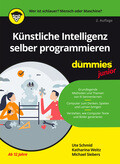
Künstliche Intelligenz selber programmieren für Dummies Junior (2. Auflg.)
WAS KÖNNEN INTELLIGENTE COMPUTER – UND WAS NICHT?Finde heraus, wie Künstliche Intelligenz funktioniert. Dieses Buch hilft dir dabei. Kapitel für Kapitel beantwortet es folgende Fragen: Was ist Künstliche Intelligenz? Wie denken Computer? Wie lernen Computer? Wie kannst du mit Computern sprechen? Wie generieren Computer Texte und Bilder? Spielen Computer auch? Und können Computer fühlen? Grundlegende Methoden und Anwendungsbereiche von Künstlicher Intelligenz werden anhand von anschaulichen Beispielen erklärt. Beispielprogramme in Python zeigen, wie KI-Methoden konkret umgesetzt werden können und es werden Anregungen für eigene Experimente gegeben. DU LERNST* GEMEINSAMKEITEN UND UNTERSCHIEDE ZWISCHEN MENSCHLICHEM DENKEN UND KI##SINGLE_LINE##* WIE PROGRAMME FUNKTIO-NIEREN, DIE LERNEN KÖNNEN##SINGLE_LINE##* WIE DU EINEN EIGENEN CHATBOT PROGRAMMIEREN KANNST##SINGLE_LINE##* WIE DU EINEM COMPUTER BEIBRINGEN KANNST, GEGEN DICH TIC-TAC-TOE ZU SPIELEN##SINGLE_LINE####SINGLE_LINE## UTE SCHMID, KATHARINA WEITZ UND MICHAEL SIEBERS haben alle drei Informatik und Psychologie studiert. Sie forschen in den Themenbereichen Künstliche Intelligenz und maschinelles Lernen und geben ihr Wissen in Vorträgen und Workshops an Kinder und Jugendliche weiter. Widmung 7EINFÜHRUNG 9Über Künstliche Intelligenz 9Über dieses Buch 11Über dich 11Über die Symbole, die wir in diesem Buch verwenden 12KAPITEL 1: DENKEN 13Wie denken eigentlich Menschen? 13Netze ohne Spinnen – dafür mit Knoten und Kanten 15Schlussfolgerndes Denken mit semantischen Netzen 17Wissensfragen 17Schlussfolgerungsfragen 18Komplizierte Schlussfolgerungsfragen 18Baue dein eigenes semantisches Netz 21Was heißt eigentlich »Denken«? 22Deduktives Denken 22Abduktives Denken 23Induktives Denken 24Denken mit Wahrscheinlichkeiten 25KAPITEL 2: LERNEN 27Warum Lernen so wichtig ist 27Wie lernen wir Menschen? 28Wie kann ein Computer lernen? 28Geschenke, Katzen und andere Konzepte 30Lernen mit Perzeptron 31Testen des Perzeptrons 35Schwierigere Paketprobleme 36Vom Perzeptron zum neuronalen Netz 37Vom neuronalen Netz zum tiefen Lernen 39Auswendiglernen vermeiden 41Lernen aus ganz wenigen Beispielen 42Lernen mit Bäumen 42Lernen und Vorurteile 48Und die Profis? 49Lösung: Welche Pakete enthalten ein Geschenk? 50KAPITEL 3: SPRECHEN UND SCHREIBEN 51Natürliche und künstliche Sprachen 51Sprachverarbeitung mit Künstlicher Intelligenz 52Muster suchen und erkennen 52Porzellankisten sind nicht immer Porzellankisten 52Computer, die Sprache verstehen – von SHRDLU, WATSON und ELIZA 53Hallo LILI 55Familiengespräche 55Schreiben statt sprechen 56Mensch oder Computer? 56Die Chatbots kommen 57Der Chatbot, der alle zum Staunen bringt 57Ein Blick hinter die Kulissen 58Sehr überzeugend – bei völliger Ahnungslosigkeit! 59Wo bleibt der Link zu ChatGPT? 60KAPITEL 4: BILDER GENERIEREN 61Ein Prompt, aber prompt! 61So malst du mit Generativer KI 62Tipps und Tricks für bessere Ergebnisse 65SDXL – kein Buchstabensalat, sondern eine KI, die Bilder generiert 66KAPITEL 5: SPIELEN 69Roboterfußball – Toooor 69Schlangen und ärgerliche Vögel 70Brett vorm Kopf? Nicht bei Brettspielen! 72Tic-Tac-Toe 73Die Regeln 73Tic-Tac-Toe mit einem Computer spielen 73Gute Spieler, schlechte Spieler 74Warum kann man nicht alle Züge ausprobieren? 76Schieben und rutschen 78KAPITEL 6: FÜHLEN 81Über die Emotionen 81Computer, die einen ärgern 82Kreise und Dreiecke mit Absichten 83Ein emotionaler Staubsauger? 84Erklären, was die Künstliche Intelligenz sieht 85KAPITEL 7: WAS DU JETZT ÜBER KI WEIẞT 87Wie unterscheiden sich KI-Systeme von Standard-Software? 88KI ist nicht immer korrekt, aber trotzdem nützlich 90Was unterscheidet menschliche und künstliche Intelligenz? 90Geschichte der KI 92KI vor der KI 92Von Informatik- und KI-Pionieren 94Wo steht KI jetzt? 95Ein Blick in die Glaskugel 96KAPITEL 8: KI SELBER PROGRAMMIEREN MIT PYTHON 97Schnelleinstieg Python 98Der Python-Editor IDLE 98Einfache Datentypen und Variablen 100Listen und Tupel 102Bedingte Anweisungen 104Schleifen 106Funktionen 109Module 110Klassen 112Denken 113Netze ohne Spinnen – dafür mit Knoten und Kanten 113Semantische Netze in Python 115Darf’s ein bisschen komplizierter werden? 119Lernen 120Pakete wahrnehmen 121Das Perzeptron lernt aus Fehlern 122Testen des Perzeptrons 124Schwierigere Paketprobleme 126Entscheidungsbäume in Python 128Testen des Entscheidungsbaums 131Sprechen und Schreiben 132Familiengespräche 134Schreiben statt Sprechen 135LILI spricht 139Spielen 140Tic-Tac-Toe in Python 140Der Minimax-Algorithmus 142Wer gewinnt? 145Zum Wiederfinden 147Über die Autoren 151Danksagung 153Was du jetzt denkst 155
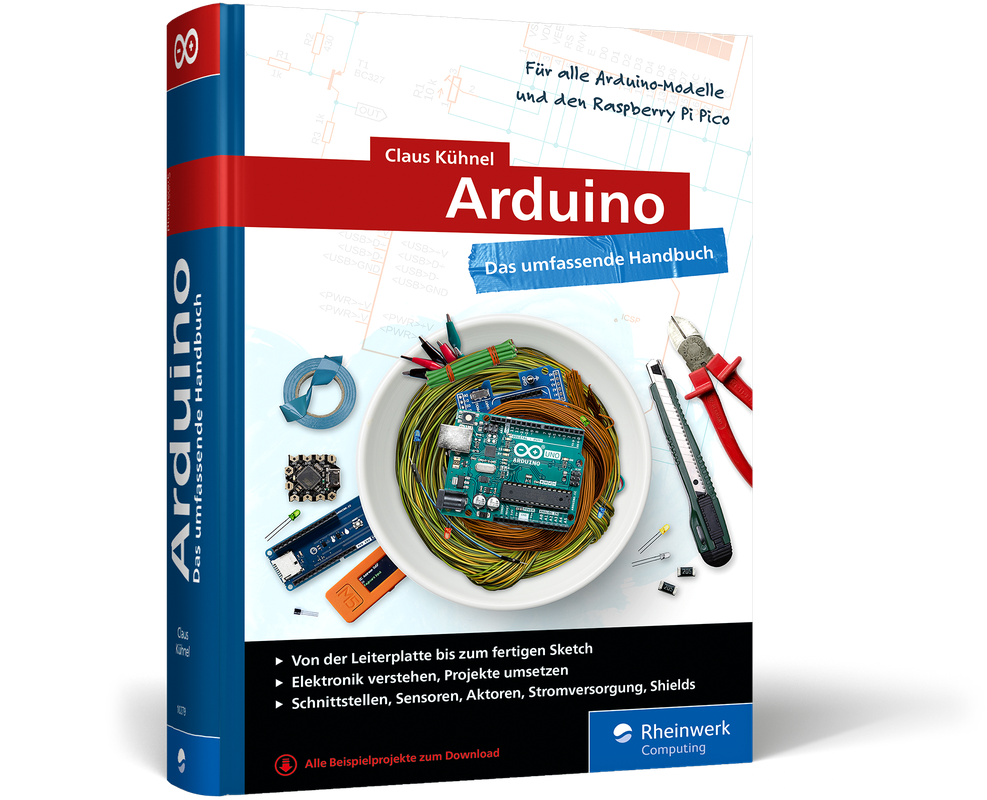
Arduino (3. Auflg.)
Die Arduino-Community stellt Makern eine ausgezeichnete Grundlage für eigene Projekte zur Verfügung. Die offene Mikrocontroller-Architektur und eine komfortable Entwicklungsumgebung machen den Arduino zum idealen Ausgangspunkt für eigene Bastelprojekte. Dass Sie mit dem Arduino aber noch viel mehr machen können als nur LEDs leuchten zu lassen, beweist dieses umfassende Handbuch: Von der Temperaturmessung bis zum maschinellen Lernen und der anspruchsvollen Auswertung von Daten finden Sie hier Beispiele und Erklärungen zu allen Fragen, die Elektronikbegeisterte interessieren.Alles Wichtige für Maker1. Programmier- und SchaltungsgrundlagenSie lernen die Arduino-Architektur bis ins Detail kennen und erfahren, wie sie programmiert und geschaltet wird. Crashkurs in C++ sowie in die Grundlagen der E-Technik inklusive.2. Die Arduino-FamilieDer Arduino Uno ist der verbreitetste Mikrocontroller der Arduino-Familie, die meisten Beispiele im Buch orientieren sich an ihm. Sie lernen aber auch leistungsfähigere Varianten und deren Einsatzmöglichkeiten kennen.3. Der Werkzeugkasten für Elektronik-MakerZahlreiche Schaltungsskizzen, kommentierte Codebeispiele und Datenblattauszüge zu den Boards und dem Zubehör helfen Ihnen genauso bei der Umsetzung eigener Projekte wie ein Überblick über die Werkstatt: Breadboards, Löten, Fritzing und mehr.Aus dem Inhalt:Modellübersicht: Mikrocontroller für MakerBreadboards, Löten, StromversorgungEntwicklungsumgebung und ProgrammierungSchaltungsdesign mit Fritzing und EagleSensoren: Temperatur, Feuchtigkeit, Bewegung, Ultraschall, Luftqualität u. v. m.Displays: LED, LCD, OLED, TouchscreensRelais, Motoren, SchaltaktorenSpeicher: EEPROM, FRAMWLAN, Bluetooth, BLE, GSM, LoRa, LoRaWAN, LTE-M, NB-IoTUART, SPI, I²C, 1-WireIoT-Anwendungen in der Cloud: WQTT, Thingspeak, Pushover, Dweet.ioProjektideen für Maker: von der Messung des Raumklimas und Radioaktivität bis zum Einsatz von KamerasÜber den Autor:Dr. Claus Kühnel studierte Informationstechnik an der Technischen Universität Dresden und hat über viele Jahre unter anderem Embedded Systems für die Labordiagnostik entwickelt. Seit langem ist er von der Maker-Bewegung fasziniert. Er hat zahlreiche Artikel und Bücher zu Hard- und Software von Mikrocontrollern im In- und Ausland veröffentlicht. Von der Zeitschrift Elektronik erhielt sein Beitrag „Arduino & Co“ die Auszeichnung „Artikel des Jahres 2011“. Mit Leidenschaft gibt er sein umfangreiches und fundiertes Wissen an interessierte Leserinnen und Leser weiter.

Mastering AI
An urgent book on generative artificial intelligence exploring the risk and benefits looming in this seminal moment'Easily the best exploration to date on the perils and promise of AI." —ASHLEE VANCE author of When the Heavens Went on Sale'Mastering AI is a must-read. It's hard to put down'. —BETHANY McLEAN, coauthor of The Smartest Guys in the Room and The Big Fail'A timely and urgent exploration of AI's dizzying acceleration' —BRAD STONE, author of The Everything StoreThe debut of ChatGPT on November 30th was a watershed moment in the history of technology. We stand on the threshold of a new age — one where content of all kinds, even software itself, will be conjured, seemingly from thin air, with simple conversation.In a culture fraught with misinformation, Mastering AI pierces through the thicket of exaggerated claims, explaining how we arrived at this moment and mapping the likely long-term impacts on business, economics, culture and society this potent technology will have.This book will serve as a guide to those dangers — as well as highlighting the technology's transformative potential — and will pinpoint concrete steps that should be taken to regulate generative AI.Jeremy Kahn is a veteran technology and business journalist who has covered artificial intelligence for more than seven years, first at Bloomberg and then at Fortune.

Produktionsplanung und -steuerung mit SAP S/4HANA
Flexibilität und Termintreue dank PP! Unser praxisorientiertes Handbuch führt Sie Schritt für Schritt durch die Prozesse der Produktionsplanung und -steuerung. Von der Verwaltung von Organisations- und Stammdaten bis hin zum Einsatz spezifischer PP-Funktionen in verschiedenen Fertigungsarten wie der Diskreten Fertigung, Serienfertigung und Prozessfertigung – dieses Buch lässt keine Fragen offen. Erlernen Sie anhand konkreter Beispiele, wie Sie wesentliche Transaktionen nutzen und die Möglichkeiten der SAP-Fiori-Apps voll ausschöpfen. Darüber hinaus bieten wir Ihnen detaillierte Einblicke in Planungstools wie das Sales and Operations Planning (SOP), das Material Requirements Planning (MRP) und PP/DS. In dieser 2. Auflage finden Sie ein brandneues Kapitel über die Produktionsbereitstellung. Aus dem Inhalt: Diskrete Fertigung, Serien- und ProzessfertigungAbsatz- und ProduktionsgrobplanungProgrammplanungLangfristplanungMaterialbedarfsplanung mit MRP LiveKapazitätsplanungProduktions- und Feinplanung mit PP/DSDemand-Driven ReplenishmentMonitoring und ReportingSAP-Fiori-Apps in der Produktion Einleitung ... 15 1. Produktionsplanung mit SAP S/4HANA ... 25 1.1 ... Das Systemumfeld ... 25 1.2 ... Produktionsplanung als End-to-End-Prozess ... 44 1.3 ... Fertigungsarten und Anwendungsgebiete der Produktionsplanung ... 47 1.4 ... Planungswerkzeuge der SAP-Produktionsplanung ... 63 2. Organisationsdaten in der Produktion ... 69 2.1 ... Organisationsebenen ... 69 2.2 ... Rollen ... 79 3. Stammdaten in der Produktion ... 87 3.1 ... Auftragsarten ... 89 3.2 ... Materialstamm ... 93 3.3 ... Produktionsversorgungsbereiche ... 110 3.4 ... Stücklisten ... 113 3.5 ... Arbeitsplätze und Ressourcen ... 126 3.6 ... Arbeitspläne und Planungsrezepte ... 136 3.7 ... Fertigungsversionen ... 145 3.8 ... Steuerungsprofile ... 147 4. Diskrete Fertigung ... 151 4.1 ... Spezielle Stammdaten der diskreten Fertigung ... 152 4.2 ... Prozesse der diskreten Fertigung ... 187 5. Serienfertigung ... 229 5.1 ... Spezielle Stammdaten der Serienfertigung ... 231 5.2 ... Prozesse der Serienfertigung ... 260 6. Prozessfertigung ... 291 6.1 ... Spezielle Elemente der Prozessfertigung ... 293 6.2 ... Prozesskoordination ... 319 6.3 ... Prozesse der Prozessfertigung ... 343 7. Absatz- und Produktionsgrobplanung ... 381 7.1 ... SAP Integrated Business Planning for Supply Chain ... 382 7.2 ... Konfiguration der Absatz- und Produktionsgrobplanung ... 385 7.3 ... Prozesse der Absatz- und Produktionsgrobplanung ... 397 8. Programmplanung ... 415 8.1 ... Planprimärbedarfe ... 416 8.2 ... Planungsstrategien ... 417 8.3 ... Abbau von Planprimärbedarfen ... 433 8.4 ... Verfügbarkeitsprüfung ... 434 9. Materialbedarfsplanung (MRP) ... 439 9.1 ... Dispositionsverfahren ... 440 9.2 ... Nettobedarfsrechnung und Sicherheitsbestandsplanung ... 442 9.3 ... Losgrößenrechnung ... 445 9.4 ... Bezugsquellenfindung ... 450 9.5 ... Terminierung ... 452 9.6 ... Durchführung des Planungslaufs ... 458 9.7 ... Optionale Planungsfunktionen ... 471 9.8 ... Predictive MRP ... 476 9.9 ... Steuerung der Werksparameter und Dispositionsgruppen ... 480 10. Kapazitätsplanung ... 485 10.1 ... Prozessübersicht ... 486 10.2 ... Konfiguration ... 487 10.3 ... Ausführung ... 514 11. Produktions- und Feinplanung (Detailed Scheduling, PP/DS) ... 531 11.1 ... Einführung ... 531 11.2 ... Materialstammdatenintegration und Core Interface ... 535 11.3 ... Ziele und Ablauf der Planung ... 538 11.4 ... Der PP/DS-Planungslauf und MRP Live ... 582 11.5 ... Reporting und Monitoring ... 590 12. Demand-Driven Replenishment (DDR) ... 595 12.1 ... Einführung ... 595 12.2 ... Buffer Positioning -- strategische Entkopplung des Materialflusses ... 600 12.3 ... Buffer Sizing -- dynamische Berechnung der Puffermengen ... 611 12.4 ... Replenishment Planning -- Nachschubplanung innerhalb der Entkopplungspunkte ... 614 12.5 ... Replenishment Execution -- Ausführung und Überprüfung des Nachschubs ... 616 13. Produktionsnahe Logistik ... 619 13.1 ... Synchrone Warenbewegungen (Integration mit Embedded EWM) ... 620 13.2 ... Produktionsmaterialanforderung ... 631 13.3 ... JIT-Produktionsversorgung der nächsten Generation ... 636 13.4 ... Kanban ... 645 14. Monitoring und Reporting ... 653 14.1 ... Grundlagen zu Reports ... 654 14.2 ... Informationssysteme ... 658 14.3 ... Frühwarnsystem ... 669 14.4 ... SAP-Fiori-Apps für das Monitoring ... 674 Die Autoren ... 683 Index ... 685
Mathematische Algorithmen mit Python
Tauchen Sie in die Welt der Algorithmen ein und erforschen Sie die Verbindung zwischen Programmierung und Mathematik. Dr. Veit Steinkamp löst mit Ihnen Aufgaben aus verschiedenen Bereichen und zeigt, wie Rechnungen in Code umgesetzt werden. Sie lernen die grundlegenden Programm- und Datenstrukturen Pythons kennen und erfahren, welche Module Ihnen viel Arbeit abnehmen können. Rasch programmieren Sie Algorithmen zum Lösen von Gleichungssystemen nach, automatisieren Kurvendiskussionen und berechnen Integrale. Abstrakte Zusammenhänge werden so deutlich, und ganz nebenbei verbessern Sie Ihre Python-Fähigkeiten und programmieren geschickter und gekonnter. Aus dem InhaltPython installieren und anwendenDaten- und ProgrammstrukturenModule: NumPy, SymPy, MatplotlibZahlenGleichungssystemeFolgen und ReihenFunktionenDifferenzial- und IntegralrechnungDifferenzialgleichungenAusgleichsrechnungenStatistikFraktale Geometrie Leseprobe (PDF-Link)Autor: Dr. Veit Steinkamp hat Elektrotechnik und Deutsch für das Lehramt studiert und dieses Wissen an beruflichen Schulen und Fachhochschulen weitergegeben.

Modern Workplace mit Microsoft 365
Modern Workplace bedeutet: Digitalisierung am Arbeitsplatz auf der Höhe der Zeit. Microsoft 365 bietet dafür mächtige Werkzeuge – allerdings in Form vieler Dienste, die ausgewählt und geschickt verknüpft werden müssen. Manchmal gilt es zwischen Alternativen zu wählen, manchmal bringt erst die geschickte Kombination mehrerer Dienste den gewünschten Effekt. Dieses Buch führt durch den Dschungel. Ob Online-Konferenzen, Teamarbeitsräume, Aufgabenmanagement oder Social Intranet: Modern-Workplace-Expertin Nicole Enders zeigt Ihnen relevanten Dienste und Features und gibt viele Tipps und Tricks für den gelungenen Einsatz in Ihrem Unternehmen. Inklusive SharePoint, Hybrid- und Übergangsszenarien von On-Premise in die Cloud. Aus dem Inhalt: Überblick und EinstiegTeamraum aufsetzen in 5 MinutenOnline-KonferenzenOrtsunabhängiges ArbeitenWie modernes Teamwork gelingtMicrosoft Teams, OneDrive, Yammer u. v. m.PowerAppsWord, PowerPoint, Excel und Co.Hybrid-Szenarien zwischen Cloud und On Premise Materialien zum Buch ... 15 Geleitwort ... 17 Vorwort ... 19 TEIL I. Grundlagen des modernen Arbeitsplatzes ... 23 1. Herausforderungen im Arbeitsalltag ... 25 1.1 ... Was ist das Ziel dieses Buches? ... 28 1.2 ... Anforderungen an moderne Teamarbeit in einer hybriden Arbeitswelt ... 32 1.3 ... Was bedeutet Collaboration im Vergleich zu Teamwork? ... 39 1.4 ... Digitalisierung als Motor von Collaboration ... 40 1.5 ... Wichtige Bereiche der Zusammenarbeit an einem modernen Arbeitsplatz ... 50 1.6 ... Allgemeine Einflussfaktoren hinsichtlich der Zusammenarbeit ... 70 1.7 ... Der Einfluss künstlicher Intelligenz auf den modernen Arbeitsplatz ... 80 2. Wie finde ich durch den Tool-Dschungel in Microsoft 365? ... 83 2.1 ... Microsoft Teams als Ihre persönliche Mitarbeiter-App ... 85 2.2 ... Aufgabenmanagement mit Planner und Microsoft-Listen ... 104 2.3 ... Informations- und Wissensmanagement mit Microsoft Viva ... 106 2.4 ... Die Mitarbeitenden einbeziehen -- mit Viva Pulse, Viva Glint, Viva Goals und Microsoft Forms ... 110 2.5 ... Dokumentenmanagement mit SharePoint und OneDrive ... 114 2.6 ... Prozessunterstützung mit der Power Platform und Dynamics 365 ... 117 2.7 ... Persönliche Assistenten mit Copilot, Copilot Studio & Co. ... 127 2.8 ... Auswahl des passenden Cloud-Angebots ... 131 2.9 ... Checkliste für die Auswahl Ihrer Microsoft-365-Tools ... 140 TEIL II. Verschiedene Formen der Zusammenarbeit in Teams ... 147 3. Zusammenarbeit beginnt bei jedem Einzelnen ... 149 3.1 ... Kommunikation via E-Mail oder mithilfe eines (Gruppen-)Chats ... 150 3.2 ... Ein Dokument gemeinsam bearbeiten ... 155 3.3 ... Microsoft Loop für den schnellen Informationsaustausch nutzen ... 162 3.4 ... Verwalten Sie Ihre persönlichen Aufgaben ... 172 3.5 ... Zeitliche Verfügbarkeiten über Bookings anbieten ... 182 3.6 ... An einer Besprechung teilnehmen ... 192 3.7 ... Mit Microsoft Places die Team-Zusammenkünfte unterstützen ... 197 3.8 ... Ihr persönliches Dashboard als zentrale Anlaufstelle mit Viva Insights ... 200 4. Mit Teamarbeitsräumen die Zusammenarbeit verbessern ... 211 4.1 ... Vom Gruppenchat zum virtuellen Teamraum ... 211 4.2 ... Teamarbeitsräume in 5 Minuten einrichten ... 212 4.3 ... Wie gehe ich damit um, wenn mein Team wächst? ... 236 4.4 ... Anpassungen zur Unterstützung geografisch verteilter Teams vornehmen ... 246 4.5 ... Aufgaben im Team gemeinsam bearbeiten ... 249 4.6 ... Wie kann ein Teamraum an die Bedürfnisse des Teams angepasst werden? ... 256 4.7 ... Mit Kunden, externen Mitarbeitenden und Partnern zusammenarbeiten ... 266 4.8 ... Netiquette für eine harmonische Zusammenarbeit am modernen Arbeitsplatz ... 283 5. Mit Online-Besprechungen den Informationsaustausch fördern ... 289 5.1 ... Grundlagen einer Besprechung anhand eines spontanen Anwendungsfalls ... 289 5.2 ... Eine Besprechung planen, durchführen und nachbereiten ... 311 5.3 ... Knigge für produktive Online-Besprechungen ... 330 5.4 ... Besondere Anwendungsfälle ... 332 6. Communitys im Unternehmen etablieren ... 357 6.1 ... Netzwerke zwischen Kollegen aufbauen ... 357 6.2 ... Eine Community gründen und Kollegen einladen ... 359 6.3 ... Kampagnen ... 374 6.4 ... Informationen auch außerhalb einer einzelnen Community teilen ... 382 6.5 ... Communitys teilen Ihr Wissen mithilfe von Videos ... 392 6.6 ... Teams für Communitys nutzen ... 409 TEIL III. Konzeption und Aufbau eines modernen Arbeitsplatzes ... 421 7. Collaboration meets Social Intranet ... 423 7.1 ... Aufbau eines Social Intranets und Integration in Microsoft Teams mit Viva Con nections ... 423 7.2 ... Informationsverteilung mit Viva Amplify ... 456 7.3 ... Aktives Lernmanagement mit Viva Learning ... 468 7.4 ... Umfragen und ein Quiz zur Einbindung der Mitarbeitenden ... 473 7.5 ... Ihre persönlichen Informationen verwalten ... 495 8. Ausgewählte Unternehmensprozesse unterstützen ... 507 8.1 ... Standard, Low-Code-Lösung oder Individuallösung? ... 508 8.2 ... Unternehmensweite Prozesse mit Dynamics 365 ... 510 8.3 ... Quick Wins mit der Power Platform erzielen ... 547 8.4 ... Mit SharePoint Premium und dem AI Builder Informationen extrahieren, verarbeiten oder generieren ... 564 8.5 ... Copilot und generative KI nutzen und so Informationen schneller finden und Prozesse steuern ... 571 9. Verwalten und Sichern von Informationen ... 577 9.1 ... Informationen suchen und untersuchen ... 578 9.2 ... Klassifizierung von Informationen ... 595 9.3 ... Datenschutz nach der DSGVO ... 602 9.4 ... Weitere Möglichkeiten zur Sicherung von Informationen ... 604 TEIL IV. Weiterführende Informationen ... 607 10. Hybride Einsatzmöglichkeiten von Microsoft 365 und SharePoint On-Premises ... 609 10.1 ... SharePoint On-Premises vs. Microsoft 365 ... 609 10.2 ... Eine hybride Umgebung einrichten ... 610 10.3 ... Inhalte in einer hybriden Umgebung suchen ... 612 10.4 ... Businessanwendungen in einer hybriden Umgebung ... 614 10.5 ... Entscheidungshilfe: Welche Inhalte kommen auf welche Plattform? ... 615 11. Einführung und Weiterentwicklung eines modernen Arbeitsplatzes mit Microsoft 365 ... 617 11.1 ... Eine Vision des modernen Arbeitsplatzes entwickeln ... 619 11.2 ... Stakeholder identifizieren und einbinden ... 625 11.3 ... Den Bedarf an einer Cloud-Transition klären ... 628 11.4 ... Themen für den Betriebsrat, das Datenschutz-Team sowie die IT-Abteilung ... 630 11.5 ... Roadmap entwerfen und kontinuierlich aktualisieren ... 632 11.6 ... Governance für Microsoft 365 allgemein sowie einzelne Dienste aufbauen ... 634 11.7 ... Eine Pilotgruppe für neue Funktionen und Preview-Funktionen bestimmen ... 639 11.8 ... Change Management und User Adoption ... 642 12. Kommen Sie gut durch den Dschungel ... 645 Index ... 647

Linux
Was haben alle Supercomputer der Welt, mehr als 75 % der Internet-Server und ein Großteil der Systeme in Microsofts Azure-Cloud gemeinsam? Sie alle nutzen Linux! Das offene Betriebssystem hält die IT-Welt zusammen und ist eine wichtige Grundlage in jedem IT-Beruf oder im Informatikstudium. Wie Linux genau funktioniert und wie Sie sich sicher im Linux-System bewegen, das erfahren Sie in diesem kompakten Grundkurs. Er zeigt Ihnen, wie Sie Linux-Tools richtig nutzen, effizient auf der Shell arbeiten, Rechner via SSH administrieren und sich in einem Linux-Netzwerk zurechtfinden. Aus dem Inhalt: Linux als Workstation: Installation und erste SchritteDer Kernel: So funktioniert LinuxMit der Shell arbeitenWerkzeuge für die KonsoleShell-Programmierung und VimNetzwerke: Grundlagen und ToolsSoftwareentwicklung mit LinuxLinux auf dem Raspberry Pi Vorwort ... 19 1. Einleitung ... 21 1.1 ... Warum Linux? ... 24 1.2 ... Grundbegriffe: Kernel, Distribution, Derivat ... 25 1.3 ... Die Entstehungsgeschichte von Linux ... 28 1.4 ... Zusammenfassung ... 41 1.5 ... Aufgaben ... 42 2. So funktioniert Linux ... 43 2.1 ... Grundlagen ... 44 2.2 ... Aufgaben eines Betriebssystems ... 61 2.3 ... Prozesse, Tasks und Threads ... 66 2.4 ... Speichermanagement ... 85 2.5 ... Eingabe und Ausgabe ... 102 2.6 ... Zusammenfassung ... 111 2.7 ... Aufgaben ... 112 3. Erste Schritte ... 113 3.1 ... Die Unix-Philosophie ... 113 3.2 ... Der erste Kontakt mit dem System ... 120 3.3 ... Bewegen in der Shell ... 133 3.4 ... Arbeiten mit Dateien ... 137 3.5 ... Der Systemstatus ... 140 3.6 ... Hilfe ... 142 3.7 ... Zusammenfassung ... 145 3.8 ... Aufgaben ... 146 4. Grundlagen der Shell ... 147 4.1 ... Einführung und Überblick ... 147 4.2 ... Konsolen ... 155 4.3 ... screen ... 156 4.4 ... Besseres Arbeiten mit Verzeichnissen ... 158 4.5 ... Die elementaren Programme ... 161 4.6 ... Programme für das Dateisystem ... 164 4.7 ... Ein- und Ausgabeumlenkung ... 168 4.8 ... Pipes ... 171 4.9 ... xargs ... 174 4.10 ... Zusammenfassung ... 175 4.11 ... Aufgaben ... 175 5. Prozesse in der Shell ... 177 5.1 ... Sessions und Prozessgruppen ... 177 5.2 ... Vorder- und Hintergrundprozesse ... 179 5.3 ... Das kill-Kommando und Signale ... 186 5.4 ... Prozessadministration ... 190 5.5 ... Zusammenfassung ... 199 5.6 ... Aufgaben ... 199 6. Reguläre Ausdrücke ... 201 6.1 ... Grundlagen und Aufbau regulärer Ausdrücke ... 201 6.2 ... grep ... 203 6.3 ... awk ... 207 6.4 ... sed ... 228 6.5 ... Zusammenfassung ... 238 6.6 ... Aufgaben ... 238 7. Werkzeuge für die Konsole ... 239 7.1 ... touch -- Zeitstempel von Dateien setzen ... 239 7.2 ... cut -- Dateiinhalte abschneiden ... 240 7.3 ... paste -- Dateien zusammenfügen ... 241 7.4 ... tac -- Dateiinhalt umdrehen ... 242 7.5 ... column -- Ausgaben tabellenartig formatieren ... 242 7.6 ... colrm -- Spalten entfernen ... 243 7.7 ... nl -- Zeilennummern für Dateien ... 245 7.8 ... wc -- Zählen von Zeichen, Zeilen und Wörtern ... 245 7.9 ... od -- Dateien zur Zahlenbasis x ausgeben ... 246 7.10 ... split -- Dateien aufspalten ... 247 7.11 ... script -- Terminal-Sessions aufzeichnen ... 248 7.12 ... bc -- der Rechner für die Konsole ... 249 7.13 ... Der Midnight Commander ... 251 7.14 ... Zusammenfassung ... 254 7.15 ... Aufgaben ... 255 8. Eigene Shellskripte entwickeln ... 257 8.1 ... Grundlagen der Shellskript-Programmierung ... 257 8.2 ... Variablen ... 260 8.3 ... Arrays ... 265 8.4 ... Kommandosubstitution und Schreibweisen ... 265 8.5 ... Argumentübergabe ... 267 8.6 ... Funktionen ... 268 8.7 ... Bedingte Anweisungen ... 273 8.8 ... Schleifen ... 278 8.9 ... Menüs bilden mit select ... 282 8.10 ... Temporäre Dateien ... 284 8.11 ... Syslog-Meldungen via Shell ... 286 8.12 ... Pausen in Shellskripte einbauen ... 286 8.13 ... Startskripte ... 287 8.14 ... Das Auge isst mit: der Schreibstil ... 288 8.15 ... Ein paar Tipps zum Schluss ... 289 8.16 ... Weitere Fähigkeiten der Shell ... 290 8.17 ... Zusammenfassung ... 291 8.18 ... Aufgaben ... 291 9. Der vi(m)-Editor ... 293 9.1 ... vi, vim, gvim und neovim ... 294 9.2 ... Erste Schritte ... 295 9.3 ... Kommando- und Eingabemodus ... 296 9.4 ... Dateien speichern ... 296 9.5 ... Arbeiten mit dem Eingabemodus ... 297 9.6 ... Navigation ... 298 9.7 ... Löschen von Textstellen ... 299 9.8 ... Textbereiche ersetzen ... 300 9.9 ... Kopieren von Textbereichen ... 301 9.10 ... Shiften ... 301 9.11 ... Die Suchfunktion ... 301 9.12 ... Konfiguration ... 302 9.13 ... Distributionen für Vim ... 303 9.14 ... Zusammenfassung ... 304 9.15 ... Aufgaben ... 304 10. Grundlegende Administration ... 305 10.1 ... Benutzerverwaltung ... 305 10.2 ... Installation neuer Software ... 311 10.3 ... Backups erstellen ... 327 10.4 ... Logdateien und dmesg ... 334 10.5 ... Weitere nützliche Programme ... 339 10.6 ... Grundlegende Systemdienste ... 344 10.7 ... Manpages ... 347 10.8 ... Dateien finden mit find ... 349 10.9 ... Zusammenfassung ... 354 10.10 ... Aufgaben ... 354 11. Netzwerke unter Linux ... 355 11.1 ... Etwas Theorie ... 355 11.2 ... Konfiguration einer Netzwerkschnittstelle ... 361 11.3 ... Routing ... 369 11.4 ... Netzwerke benutzerfreundlich -- DNS ... 372 11.5 ... Firewalls unter Linux ... 378 11.6 ... Secure Shell ... 383 11.7 ... Das World Wide Web ... 390 11.8 ... Windows-Netzwerkfreigaben ... 397 11.9 ... Weitere nützliche Netzwerktools ... 404 11.10 ... Zusammenfassung ... 410 11.11 ... Aufgaben ... 411 12. Softwareentwicklung ... 413 12.1 ... Interpreter und Compiler ... 413 12.2 ... Softwarebibliotheken (Shared Libraries) ... 421 12.3 ... Make ... 422 12.4 ... Die GNU-Autotools ... 430 12.5 ... Unix-Software veröffentlichen ... 434 12.6 ... Eigene Manpages erstellen ... 436 12.7 ... Versionsmanagement mit Git ... 440 12.8 ... Docker-Container erstellen ... 444 12.9 ... Zusammenfassung ... 451 12.10 ... Aufgaben ... 452 A. Die Installation planen und durchführen ... 455 A.1 ... Hardwareunterstützung ... 456 A.2 ... Festplatten und Partitionen ... 459 A.3 ... Die Installation durchführen ... 465 A.4 ... Eine typische Linux-Installation durchführen ... 469 A.5 ... Zusammenfassung ... 472 Index ... 473

Branding mit LinkedIn
Wenn es um Business-Kontakte geht, ist LinkedIn sicherlich DAS soziale Netzwerk. Egal ob Du Dich um B2C- oder B2B-Marketing kümmerst, der erfahrene Experte Tomas Herzberger hat immer den passenden Tipp, wie Du Dich, Deine Marke oder Dein Unternehmen bei LinkedIn sichtbarer machst. Du lernst, wie Du Dein Profil aufbaust und optimierst und erhältst praktische Anleitungen, wie Du dort relevante Inhalte und Content schaffst. So kannst du LinkedIn in die eigene Online-Marketing-Strategie einbauen und stärkst Deine Marke, Deine Leads und Dein Netzwerk. Inkl. vieler Tooltipps und praktischen Tutorials. Neu in dieser Auflage: Social Recruiting und der Einsatz von künstlicher Intelligenz für Deine Posts. Aus dem Inhalt: LinkedIn für den MarkenaufbauGrundlagen Social Media Marketing mit LinkedInContent Creation und Content MarketingFormate und Beiträge, die überzeugenStorytelling nutzenPersönliches Netzwerk erweiternMehr Reichweite durch (Corporate) InfluencerAufbau eines UnternehmensprofilsSocial Selling & Social RecruitingNoch mehr Power: Tools fürs NetworkingGruppen richtig nutzenWerben auf LinkedIn Geleitwort von Britta Behrens ... 15 Einleitung ... 17 1. Was kann LinkedIn leisten? ... 19 1.1 ... Aktuelle Nutzungsdaten von LinkedIn ... 19 1.2 ... Chancen und Möglichkeiten auf LinkedIn ... 23 1.3 ... Die verschiedenen Profilvarianten ... 29 1.4 ... Zusammenfassung ... 32 2. Markenbildung ... 35 2.1 ... Was ist eine Marke eigentlich? ... 36 2.2 ... Warum sind Marken wichtig? ... 37 2.3 ... Kannst du eine Marke allein auf LinkedIn aufbauen? ... 40 2.4 ... Wie viel ist eine Marke wert? ... 43 2.5 ... Wie funktioniert Branding? ... 48 2.6 ... Was macht eine gute Marke aus? ... 53 2.7 ... Zwischen Plan und Realität: Brand-Concept vs. Brand-Image ... 55 2.8 ... Erst durch die Mitarbeiter*innen wird eine Marke lebendig ... 65 2.9 ... Zusammenfassung ... 68 3. Social Media im Unternehmen ... 71 3.1 ... Die zentralen Unternehmenskanäle ... 73 3.2 ... Die individuellen Kanäle der Mitarbeitenden ... 77 4. Die eigene Positionierung: Deine Personal Brand ... 79 4.1 ... Deine Ziele ... 79 4.2 ... Deine Zielgruppen ... 82 4.3 ... Deine Superkräfte ... 85 4.4 ... Deine Themen und Botschaften ... 87 4.5 ... Dein Personal Branding Pitch ... 93 4.6 ... Zusammenfassung ... 100 5. So verbesserst du dein Profil und schärfst deine Marke ... 103 5.1 ... Grundlagen und Einstellungen ... 104 5.2 ... Kontoeinstellungen ... 108 5.3 ... Der erste Eindruck zählt: Das richtige Profilbild wählen ... 116 5.4 ... Geheimtipp: Der Profil-Slogan ... 120 5.5 ... Dein persönliches Plakat: Der Profil-Header ... 122 5.6 ... Deine Kontaktinformationen ... 126 5.7 ... Zeige Profil in deiner Info ... 128 5.8 ... Was steht bei dir im Fokus? ... 134 5.9 ... Deine Berufserfahrung ... 135 5.10 ... You never walk alone: Empfehlungen, Kenntnisse und Fähigkeiten ... 138 5.11 ... Für Freelancer & Solopreneure: Die Service-Seite ... 139 5.12 ... Unauffällig, aber nicht unwichtig: Profil-Details ... 140 5.13 ... Frequently Asked Questions ... 143 5.14 ... Zusammenfassung ... 145 6. Adieu Schreibblockade: Deine Inhalte ... 147 6.1 ... Wie du die richtigen Themen für deine Beiträge findest ... 148 6.2 ... Wie du deinen Ideenspeicher erstellst ... 163 6.3 ... Wie du mentale Schreibblockaden überwindest ... 168 6.4 ... Prozesse machen Profis: der LinkedIn-Workflow ... 169 6.5 ... Tools, Tipps und Tricks für besseres Social-Marketing ... 173 6.6 ... Zusammenfassung ... 176 7. Formate für deine Beiträge ... 179 7.1 ... Die Formate auf LinkedIn ... 179 7.2 ... So gestaltest du Texte, die auch gelesen werden ... 180 7.3 ... Für die Thought Leader: Artikel und Newsletter auf LinkedIn ... 187 7.4 ... Wie du Hashtags richtig nutzt ... 192 7.5 ... Bitte nur dosiert anwenden: Leute taggen ... 194 7.6 ... Der Eyecatcher für deinen Beitrag: Bilder ... 195 7.7 ... Einfach mal eine Frage stellen: Umfragen ... 200 7.8 ... Der Geheimtipp: PDF-Slider aka »Dokument« ... 201 7.9 ... Lohnen sich Videos bei LinkedIn? ... 203 7.10 ... Zusammenfassung ... 206 8. Strukturen für deine Beiträge ... 207 8.1 ... Wie du die Aufmerksamkeit deiner Leserschaft gewinnst ... 207 8.2 ... Listicles ... 209 8.3 ... Tutorials ... 210 8.4 ... Situation -- Konflikt -- Lösung ... 211 8.5 ... Storytelling ... 212 8.6 ... Warum erfolgreiche Marken (fast immer) gute Geschichten erzählen ... 212 8.7 ... Die Anatomie eines Storytelling-Beitrags ... 218 8.8 ... »Storytells« erwecken deine Beiträge zum Leben ... 220 8.9 ... Wie du mit Engagement-Trigger mehr Interaktion erzielst ... 221 8.10 ... Zusammenfassung ... 231 9. Networking ... 233 9.1 ... Die wichtigsten drei Netzwerke in deinem Leben ... 233 9.2 ... Wie du dein Netzwerk aufbaust ... 234 9.3 ... Die richtigen Menschen finden: Wie funktioniert die Suche? ... 235 9.4 ... Wie deine Kontaktanfragen bestätigt werden ... 242 9.5 ... Die Macht der Kommentare ... 246 9.6 ... Networking auf echten Business-Partys ... 248 9.7 ... Idioten gibt es überall: Wie du mit Trollen umgehst ... 249 9.8 ... Hatespeech auf Social Media ... 255 9.9 ... Zusammenfassung ... 257 10. Influencerinnen und Influencer ... 259 10.1 ... Wie man andere Menschen beeinflusst ... 259 10.2 ... Welche Rolle spielen Influencer*innen auf LinkedIn? ... 266 10.3 ... Zusammenfassung ... 274 11. Corporate Influencer: Die Botschafter*innen deiner Marke ... 275 11.1 ... Was sind Corporate Influencer? ... 275 11.2 ... Voraussetzungen für erfolgreiches Corporate-Influencer-Programm ... 279 11.3 ... Umsetzung ... 282 11.4 ... Einwände & FAQ ... 284 11.5 ... Checkliste: Corporate Influencer ... 288 11.6 ... Zusammenfassung ... 288 12. Unternehmensprofile ... 291 12.1 ... Für wen lohnt sich ein Unternehmensprofil? ... 291 12.2 ... Aus welchen Bestandteilen besteht ein Unternehmensprofil? ... 295 12.3 ... Verwaltung des Unternehmensprofils ... 301 12.4 ... Wie man mehr Follower*innen generiert ... 302 12.5 ... Die Rolle des Unternehmensprofils für Marketing, Vertrieb und HR ... 306 12.6 ... Checkliste: Unternehmensprofil ... 315 12.7 ... Zusammenfassung ... 315 13. Social Selling ... 317 13.1 ... Warum ist Social Selling wichtig? ... 317 13.2 ... Was ist Social Selling? ... 320 13.3 ... Wie funktioniert Social Selling? ... 321 13.4 ... Was sind die Voraussetzungen für Social Selling? ... 329 13.5 ... Der Social Selling Index: Was ist das und wie kann es mir helfen? ... 334 13.6 ... Social Selling implementieren ... 338 13.7 ... Social Selling Hacks ... 340 13.8 ... Zusammenfassung ... 342 14. Die 3 Säulen des Social Recruiting ... 343 14.1 ... Social-Media-Werbung ... 344 14.2 ... Active Sourcing ... 345 14.3 ... Die Kraft der Corporate Influencer: Mitarbeitende als Multiplikator*innen für dein Recruiting ... 349 14.4 ... Zusammenfassung ... 350 15. Werben auf LinkedIn ... 353 15.1 ... Die Grundlagen ... 353 15.2 ... Voraussetzungen ... 355 15.3 ... Rollen im Kampagnenmanager ... 355 15.4 ... Kampagnen auf LinkedIn schalten: Funktionen und Aufbau ... 356 15.5 ... Achtung, teuer! Nutze die richtige Kampagnenstrategie ... 358 15.6 ... Targeting: So findest du die richtigen Menschen ... 363 15.7 ... Welche Anzeigenformate lohnen sich -- und welche nicht? ... 367 15.8 ... Nach dem Klick ist vor dem Lead: Baue deinen Funnel auf! ... 383 15.9 ... Zusammenfassung ... 387 16. Wie man LinkedIn in den Arbeitsalltag integriert ... 389 16.1 ... Die magischen 5 Minuten: tägliches Networking ... 391 16.2 ... Die magischen 60 Minuten: deine Beiträge ... 392 16.3 ... Zusammenfassung ... 397 17. Tools ... 399 17.1 ... Tools für die Erstellung deiner Beiträge ... 399 17.2 ... Verkaufen wie ein Profi mit dem Sales Navigator ... 407 17.3 ... LinkedIn Learning: Die Lernplattform für Mitarbeiter*innen ... 410 17.4 ... Für Personaler*innen: Talent Solutions ... 412 17.5 ... Zeit und Nerven sparen mit diesen kleinen Helferlein ... 413 17.6 ... Zusammenfassung ... 415 Index ... 417
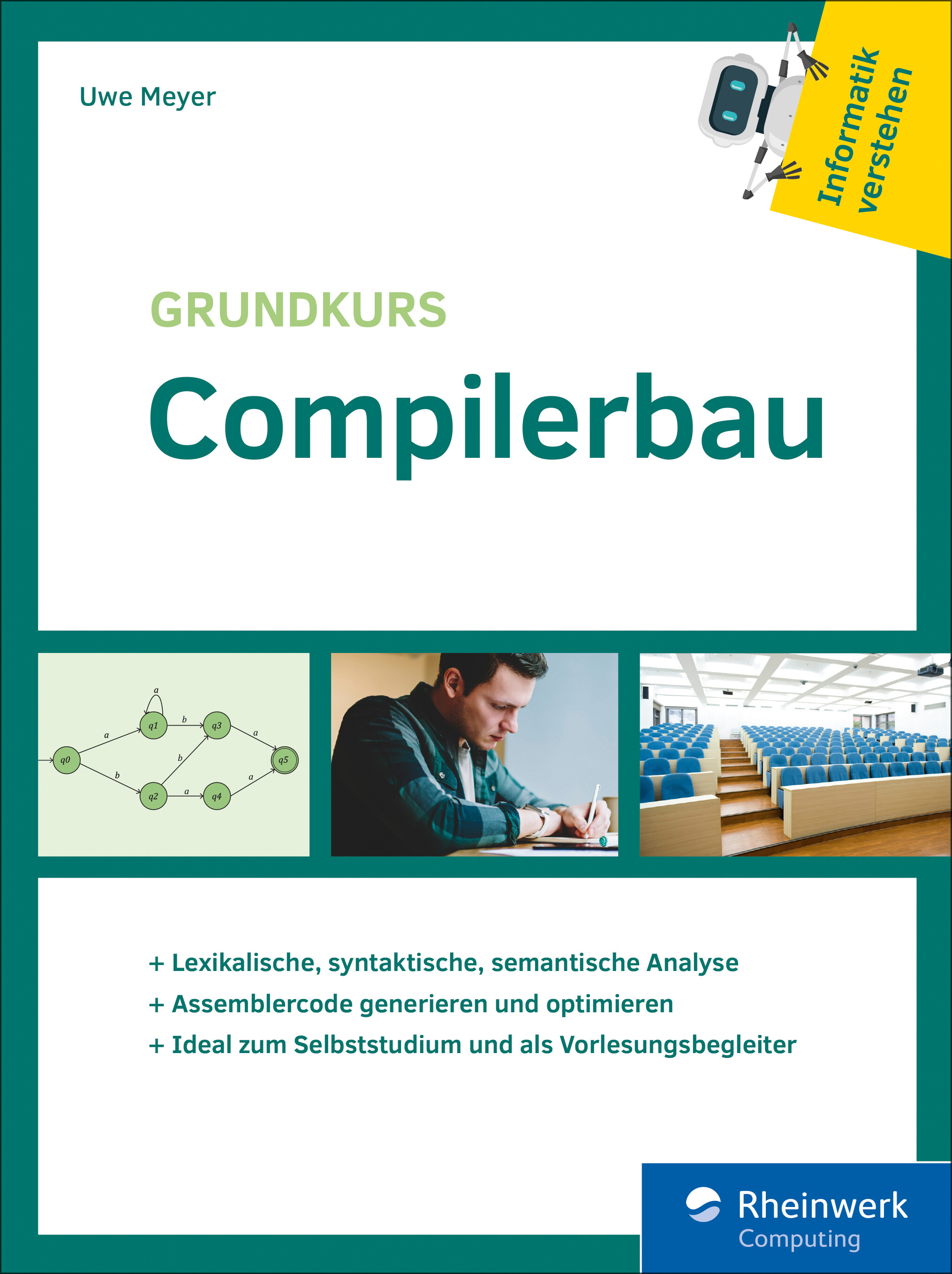
Grundkurs Compilerbau
Compiler anschaulich und gründlich erklärt.Wer programmiert, nutzt Compiler! Der Compilerbau ist eine der ältesten Disziplinen der Informatik, und ohne Compiler gäbe es gar keine Programmiersprachen, Frameworks oder Anwendungen. In diesem Grundkurs aus der Reihe »Informatik verstehen« lernen Sie, wie Compiler funktionieren, und machen sich Schritt für Schritt mit dem Fundament der Programmiersprachen vertraut.Prof. Uwe Meyer bereitet Ihnen die Grundlagen und die Funktionsweise des Compilerbaus modern und zeitgemäß auf. Er führt Sie von den Begriffsdefinitionen, Paradigmen und Konzepten der Programmiersprachen bis hin zur Generierung von Assemblercode und seiner Optimierung. Übungen und Codebeispiele helfen Ihnen dabei, das Gelernte schnell in die Praxis umzusetzen und Ihr Wissen zu vertiefen.Aus dem Inhalt:Sprache und CompilerKonzepte und Paradigmen von ProgrammiersprachenLexikalische AnalyseSyntaxanalyseSemantische Analyse VariablenallokationCode generierenCode optimierenAusblick und ForschungsfragenLeseprobe (PDF-Link)

SAP Gateway und OData
Sie wollen externe Programme an Ihre SAP-Systeme anbinden? Dieses Buch zeigt Ihnen, wie Sie SAP Gateway einsetzen, um mobile Apps, SAP-Fiori-Apps, Social-Media-Auftritte oder HTML5-Anwendungen mit SAP-Systemen zu verknüpfen. Sie lernen, Gateway-Services mit dem OData-Protokoll zu entwickeln und an das Backend anzubinden. Zahlreiche Programmierbeispiele verdeutlichen, wie die Services in den verschiedenen Anwendungstypen konsumiert werden. In dieser vierten Auflage finden Sie zudem aktuelle Informationen zum ABAP RESTful Application Programming Model und zur Anbindung neuer Lösungen wie SAP Build Apps. Aus dem Inhalt: OData und RESTInstallation und KonfigurationArchitektur und SchnittstellenintegrationEntwicklungswerkzeugeServiceerstellung und -registrierungABAP RESTful Application Programming ModelSAPUI5 und SAP FioriSAP Business Application StudioMobile AnwendungsentwicklungSocial-Media-AnwendungsentwicklungAnbindung von Microsoft-AnwendungenServiceerweiterungen für SAP S/4HANAAdministration und Sicherheit Vorwort ... 19 Einleitung ... 21 Danksagung ... 25 TEIL I. Einstieg ... 29 1. Einführung in SAP Gateway ... 31 1.1 ... Moderne Geschäftsanwendungen ... 32 1.2 ... SAP Gateway für moderne Geschäftsanwendungen ... 44 1.3 ... SAP Gateway in SAP S/4HANA ... 49 1.4 ... Installation und Deployment ... 51 1.5 ... SAP Gateway im Kontext anderer relevanter SAP-Produkte ... 57 1.6 ... Zusammenfassung ... 63 2. Einführung in OData ... 65 2.1 ... OData und REST ... 65 2.2 ... Struktur eines OData-Service ... 74 2.3 ... OData-Operationen ... 83 2.4 ... OData-Abfrageoptionen ... 87 2.5 ... OData in SAP-Lösungen ... 105 2.6 ... OData-Funktionen von SAP Gateway ... 114 2.7 ... Was ist anders in OData 4.0? ... 118 2.8 ... Zusammenfassung ... 122 3. Architektur und Integration ... 123 3.1 ... Gateway-Prinzipien ... 124 3.2 ... SAP-Gateway-Architektur ... 125 3.3 ... Integration mit anderen SAP-Technologien ... 137 3.4 ... ABAP-Programmiermodell für SAP Fiori ... 141 3.5 ... ABAP RESTful Application Programming Model ... 150 3.6 ... Zusammenfassung ... 159 4. Deployment-Optionen, Installation und Konfiguration ... 161 4.1 ... Einführung in das Deployment von SAP Gateway ... 161 4.2 ... Vorbereitung für Installation und Konfiguration ... 174 4.3 ... Schnellstartanleitung ... 176 4.4 ... Installation und Konfiguration im Detail ... 184 4.5 ... Zusammenfassung ... 197 TEIL II. Serviceerstellung ... 199 5. Einführung in die Erstellung von OData-Services mit SAP Gateway ... 201 5.1 ... Serviceerstellung -- Möglichkeiten ... 202 5.2 ... Prozess der Serviceerstellung ... 206 5.3 ... SAP Gateway -- Entwicklungswerkzeuge ... 210 5.4 ... Serviceerstellung -- Schritt für Schritt ... 221 5.5 ... OData-Channel ... 245 5.6 ... Zusammenfassung ... 251 6. Serviceentwicklung ... 253 6.1 ... Definition des Datenmodells ... 254 6.2 ... Serviceregistrierung im SAP-Backend-System ... 284 6.3 ... Service-Stub-Erzeugung ... 290 6.4 ... Serviceverwaltung ... 292 6.5 ... Iterative Serviceimplementierung und Modellerweiterung ... 297 6.6 ... Zusammenfassung ... 374 7. Servicegenerierung ... 377 7.1 ... Generierung auf Basis einer RFC-/BOR-Schnittstelle ... 380 7.2 ... Generierung über Suchhilfen ... 417 7.3 ... Generierung über Redefinition ... 419 7.4 ... Generierung auf Basis einer analytischen Query ... 428 7.5 ... Zusammenfassung ... 440 8. ABAP-Programmiermodell für SAP Fiori ... 441 8.1 ... Entwicklung von CDS Views ... 443 8.2 ... Modellierte Datenquellen ... 450 8.3 ... Referenzierte Datenquellen ... 456 8.4 ... OData-Services annotieren ... 461 8.5 ... ABAP-Programmiermodell für SAP Fiori mit klassischen Schnittstellen ... 465 8.6 ... ABAP-Programmiermodell für SAP Fiori mit BOPF ... 475 8.7 ... Zusammenfassung ... 489 9. ABAP RESTful Application Programming Model ... 491 9.1 ... Datenmodellierung ... 494 9.2 ... Business-Service-Provisionierung ... 506 9.3 ... Servicekonsumierung ... 519 9.4 ... Transaktionales Verhalten ... 523 9.5 ... Eine App mithilfe der ADT generieren ... 544 9.6 ... Entity Manipulation Language ... 549 9.7 ... Business-Objekt-Merkmale ... 554 9.8 ... Zusammenfassung ... 559 TEIL III. Anwendungsentwicklung ... 561 10. SAPUI5-Applikationsentwicklung ... 563 10.1 ... Entwicklung von Webapplikationen ... 564 10.2 ... Einführung in SAP Fiori und SAPUI5 ... 565 10.3 ... Erstellung einer SAPUI5-Anwendung ... 571 10.4 ... Zusammenfassung ... 574 11. SAP Business Application Studio ... 575 11.1 ... SAP Business Application Studio einrichten ... 576 11.2 ... Verbindung mit SAP Gateway einrichten ... 580 11.3 ... SAP Business Application Studio Dev Space erstellen ... 583 11.4 ... OData-Beispielservices ... 587 11.5 ... SAPUI5-Anwendungsentwicklung ... 589 11.6 ... Zusammenfassung ... 604 12. Erweiterbarkeit ... 605 12.1 ... Redefinition und Erweiterung von SAP Gateway OData-Services ... 606 12.2 ... Erweitern von OData-Services in SAP S/4HANA und SAP S/4HANA Cloud Public und Private Edition ... 637 12.3 ... Erweitern von SAP-Fiori-Apps mit SAPUI5-Flexibilität ... 660 12.4 ... Zusammenfassung ... 666 13. Entwicklung mobiler Apps ... 669 13.1 ... Übersicht über Entwicklungsansätze ... 671 13.2 ... SAP Mobile Development Kit (SAP MDK) ... 672 13.3 ... Native mobile Applikationen ... 690 13.4 ... Zusammenfassung ... 707 14. Social-Media-Applikationsentwicklung ... 709 14.1 ... PHP ... 710 14.2 ... Facebook/Meta ... 715 14.3 ... X ... 723 14.4 ... Sina Weibo ... 728 14.5 ... Zusammenfassung ... 738 15. Entwicklung von Unternehmensanwendungen ... 739 15.1 ... Microsoft Excel ... 740 15.2 ... Microsoft SharePoint/Office 365 ... 749 15.3 ... Microsoft Visual C# Windows Desktop ... 757 15.4 ... Microsoft Active Server Pages .NET ... 762 15.5 ... Zusammenfassung ... 762 16. Lifecycle Management: Qualitätssicherung, Service-Deployment und Operations ... 765 16.1 ... Testen ... 766 16.2 ... Service-Deployment ... 775 16.3 ... Operations ... 786 16.4 ... DevOps und Entwicklung mit SAP Gateway ... 795 16.5 ... Zusammenfassung ... 797 17. Sicherheit ... 799 17.1 ... Sicherheit von Netzwerk und Kommunikation ... 799 17.2 ... Benutzerverwaltung und Berechtigungen ... 810 17.3 ... Single Sign-on und Authentifizierungsmechanismen ... 812 17.4 ... Empfohlene Authentifizierungsmechanismen ... 822 17.5 ... Zusammenfassung ... 840 Anhang ... 841 A ... Weiterführende Konzepte ... 841 Die Autoren ... 865 Index ... 869

Google Ads
Gut gewählte Keywords garantieren dabei eine hohe Qualität der Werbeanzeigen. Unser Autor zeigt Ihnen alles, was Sie für die Planung einer effektiven Ads-Kampagne wissen müssen. Dabei werden Ihnen wichtige Prinzipien bereits zu Beginn vermittelt: Richtige Kontostruktur, optimale Gebotsstrategie oder die richtige Netzwerkwahl. Grafiken und Screenshots helfen Ihnen, sich auch im Live-AdWords-Konto zurechtzufinden. Da Google Ads mittlerweile im komplexen Zusammenspiel mit vielen weiteren Google-Produkten verwendet wird, berücksichtigt das Buch auch Performance Measure Tools (Analytics und Website Optimizer) und Google AdWords Express für den regionalen Markt. Zwei Schwerpunkte stellen Display-Marketing (Bannerwerbung) und Mobile-Marketing dar. Die aktuelle Auflage beinhaltet alle wichtigen Neuerungen vom Design bis hin zu Performance Max-Kampagnen und zeigt Ihnen die neuen Möglichkeiten durch den Einsatz von KI. Aus dem Inhalt: Suchmaschinen-Marketing (SEM)KeywordsNavigation im Ads-KontoDisplay-KampagnenGoogle Ads goes mobileGoogle-Ads-WerbestrategienGoogle-Ads-ToolsConversion-TrackingGoogle AnalyticsGoogle Ads optimierenDas Kundencenter – MCCPerformance Max-KampagnenEinsatz von KI Vorwort ... 23 1. Suchmaschinenmarketing (SEM) und Google ... 29 1.1 ... Warum benötigen wir Suchmaschinen? ... 30 1.2 ... Die Grundidee des Suchmaschinenmarketings ... 52 1.3 ... Die Google-Revolution ... 64 1.4 ... Die Grenzen des Suchmaschinenmarketings ... 78 1.5 ... Fazit ... 78 1.6 ... Checkliste ... 78 2. Google Ads -- die Vorbereitung ... 81 2.1 ... Vor dem Start -- die Vorbereitung ist wichtig ... 81 2.2 ... Der Google-Login als Basis für das Google-Ads-Konto ... 82 2.3 ... Der schnelle Einstieg in Google Ads ... 86 2.4 ... Hinweise zum Google-Ads-Login ... 93 2.5 ... Google Smart Campaign ist Teil von Google Ads ... 94 2.6 ... Was möchten Sie mit Google Ads erreichen? ... 114 2.7 ... So nutzen Sie Google Ads richtig ... 145 2.8 ... Checkliste zur Vorbereitung einer Google-Ads-Kampagne ... 164 2.9 ... Fazit ... 165 3. Keywords ... 167 3.1 ... Das optimale Keyword-Set ... 169 3.2 ... Die Keyword-Recherche ... 177 3.3 ... Die Keyword-Gruppierung ... 219 3.4 ... Fazit ... 227 3.5 ... Checkliste ... 228 4. Ihre erste Google-Ads-Kampagne ... 229 4.1 ... Bevor Sie beginnen ... 231 4.2 ... Grundlegende Einstellungen ... 235 4.3 ... Anzeigengruppen und Anzeigen ... 262 4.4 ... Budget ... 280 4.5 ... Überprüfung ... 282 4.6 ... Keywords ... 284 4.7 ... Fazit ... 303 4.8 ... Checkliste ... 305 5. Displaynetzwerk-Kampagnen ... 307 5.1 ... Das Google Displaynetzwerk (GDN) ... 307 5.2 ... Sollte man die Suchnetzwerk- und die Displaynetzwerk-Kampagne verbinden? ... 314 5.3 ... So legen Sie eine eigene Displaynetzwerk-Kampagne an ... 315 5.4 ... Spezielle Grundeinstellungen für Displaynetzwerk-Kampagnen festlegen ... 316 5.5 ... Targeting im Google Displaynetzwerk ... 321 5.6 ... Anzeigengruppen auf Zielsegmente ausrichten ... 324 5.7 ... Anzeigengruppen im GDN auf demografische Merkmale ausrichten ... 333 5.8 ... Anzeigengruppen im GDN auf Keywords ausrichten ... 334 5.9 ... Anzeigengruppen im GDN auf Themen ausrichten ... 336 5.10 ... Placements im GDN auswählen ... 337 5.11 ... Die optimierte Ausrichtung durch Google ... 338 5.12 ... Die Targeting-Möglichkeiten in der Kombination ... 339 5.13 ... Anzeigen für das Displaynetzwerk ... 340 5.14 ... Überprüfung der Einstellungen für Ihre Displaynetzwerk-Kampagne an ... 348 5.15 ... Anlage weiterer Anzeigengruppe für die Displaynetzwerk-Kampagne ... 351 5.16 ... Ausschlüsse für Kampagnen und Anzeigengruppen ... 353 5.17 ... Auswertungen zum Displaynetzwerk ... 354 5.18 ... Fazit ... 356 5.19 ... Checkliste ... 356 6. Google-Ads-Shopping-Kampagnen ... 359 6.1 ... Shopping-Anzeigen ... 359 6.2 ... Remarketing -- zeigen Sie Ihrer Zielgruppe die passenden Produkte ... 392 6.3 ... Checkliste ... 396 7. Google-Videokampagnen ... 397 7.1 ... Videos in der Ads-Asset-Bibliothek erstellen ... 398 7.2 ... YouTube-Kanal mit Google Ads verknüpfen ... 400 7.3 ... Videokampagne erstellen ... 402 7.4 ... Checkliste ... 417 8. Retargeting und Remarketing ... 419 8.1 ... Retargeting -- holen Sie sich Ihre Besucher zurück ... 419 8.2 ... Checkliste ... 441 9. Performance Max-Kampagnen ... 443 9.1 ... Besonderheiten der Performance Max-Kampagnen ... 443 9.2 ... Asset-Gruppe -- die Anzeigen der PMax-Kampagne ... 451 9.3 ... Signale für die Asset-Gruppe ... 453 9.4 ... Kampagne veröffentlichen ... 456 9.5 ... Optimierungsmöglichkeiten für PMax-Kampagnen ... 457 9.6 ... Analyse Ihrer PMax-Kampagne ... 460 9.7 ... Checkliste ... 462 10. Spezielle Google-Ads-Werbestrategien ... 465 10.1 ... Lokale Anzeigen bei Google Maps ... 465 10.2 ... Dynamische Suchnetzwerk-Anzeigen -- Google Ads ohne Keywords ... 471 10.3 ... Demand Gen-Kampagnen ... 479 10.4 ... Checkliste ... 494 11. Google Ads in der mobilen Welt ... 495 11.1 ... Mobiles Marketing wird immer wichtiger ... 497 11.2 ... Prozentuale Gebotsanpassungen -- Einführung ... 497 11.3 ... Ausrichtungsmöglichkeiten mit prozentualer Anpassung ... 499 11.4 ... Verschiedene Taktiken ... 507 11.5 ... Statistiken zur mobilen Nutzung ... 531 11.6 ... Checkliste ... 534 12. Navigation im Google-Ads-Konto ... 535 12.1 ... Die Google-Ads-Struktur ... 536 12.2 ... Empfehlungen: Google macht Vorschläge ... 543 12.3 ... Tools und die Verwaltung des Google-Ads-Kontos ... 547 12.4 ... Fazit ... 560 13. Google-Ads-Tools ... 561 13.1 ... Zusätzliche Google-Ads-Tools ... 561 13.2 ... Conversions und Attribution ... 567 13.3 ... Der Google Ads Editor -- ein Offline-Tool ... 573 13.4 ... Leistungsplaner ... 588 13.5 ... Reichweitenplaner ... 593 13.6 ... Google-Ads-Kampagnentests ... 593 13.7 ... Google-Ads-Shortcuts ... 593 13.8 ... Fazit ... 594 13.9 ... Checkliste ... 595 14. Reporting und Conversion-Tracking ... 597 14.1 ... Messen Sie Ihren Erfolg mit Conversion-Tracking ... 598 14.2 ... Conversion-Tracking in Google Ads einrichten ... 598 14.3 ... Weitere wichtige Kennzahlen ... 604 14.4 ... Gruppieren Sie Ihre Berichtsdaten mit Segmenten ... 616 14.5 ... Berichte erstellen ... 619 14.6 ... Keyword-Bericht: der wichtigste Bericht im Google-Ads-Konto ... 630 14.7 ... Fazit ... 636 14.8 ... Checkliste ... 637 15. Google Ads und Analytics (GA 4) ... 639 15.1 ... Webanalyse mit Google Analytics ... 641 15.2 ... Schlüsselereignisse (Conversions) ... 650 15.3 ... Google Ads und Google Analytics verknüpfen ... 654 15.4 ... Wichtige Analytics-Berichte ... 659 15.5 ... Zielgruppen erstellen ... 665 15.6 ... Alternativen zu Google Analytics ... 667 15.7 ... Fazit ... 668 16. Google Ads optimieren ... 669 16.1 ... Erste Schritte nach dem Kampagnenstart ... 670 16.2 ... Gebotsstrategien und Gebote anpassen ... 671 16.3 ... Manuelle Gebotsstrategie für Suchkampagnen ... 672 16.4 ... Gebotsstrategien optimieren ... 676 16.5 ... Der Qualitätsfaktor spart bares Geld ... 677 16.6 ... Optimierung Ihrer Keywords ... 682 16.7 ... Optimierung Ihrer Kampagnenstruktur ... 693 16.8 ... Optimierung Ihrer Kampagneneinstellungen ... 695 16.9 ... Optimierung Ihrer Anzeigen ... 703 16.10 ... Optimierung der Anzeigen mit Platzhaltern ... 708 16.11 ... Titel oder Beschreibungen anpinnen ... 717 16.12 ... Optimierung durch kreative Textanzeigen ... 720 16.13 ... Optimierung Ihrer Ziel-URLs ... 723 16.14 ... Assets -- Anzeigenerweiterungen als Qualitätsmerkmal ... 726 16.15 ... Optimierungen im Google Displaynetzwerk ... 758 16.16 ... Optimierungen für Videokampagnen ... 769 16.17 ... Optimierungen für PMax-Kampagnen ... 771 16.18 ... Testen im Ads-Konto ... 773 16.19 ... Fazit ... 779 16.20 ... Checkliste ... 779 17. Bearbeiten und Analysieren ... 781 17.1 ... Tricks, um Zeit zu sparen ... 781 17.2 ... Nutzen Sie Labels ... 794 17.3 ... Google Ads arbeiten lassen -- automatisierte Regeln ... 797 17.4 ... Kontoanalyse mit Auktionsdaten: Wo steht die Konkurrenz? ... 818 17.5 ... Fazit ... 826 18. Das Google-Ads-Verwaltungskonto ... 827 18.1 ... Aufbau eines Google-Ads-Verwaltungskontos ... 830 18.2 ... Ein neues Kundenkonto im Verwaltungskonto erstellen ... 834 18.3 ... Bestehende Konten oder Verwaltungskonten verknüpfen ... 837 18.4 ... Budgets im Verwaltungskonto ... 840 18.5 ... Benachrichtigungen im Verwaltungskonto ... 842 18.6 ... Automatisieren -- Zeit bei der Kundenverwaltung sparen ... 844 18.7 ... Conversions ... 850 18.8 ... Mit Labels arbeiten ... 852 18.9 ... Berichte im Verwaltungskonto ... 855 18.10 ... Fazit ... 859 19. Die größten Google-Ads-Fehler ... 861 19.1 ... Falsche Keyword-Vorgaben -- Ego-Keywords ... 861 19.2 ... Die Werbeausrichtung ist zu allgemein ... 863 19.3 ... Messen vergessen -- Google Ads im Blindflug ... 866 19.4 ... Das Ziel aus den Augen verloren? ... 868 19.5 ... Falsche Zielvorgaben: Besucher statt Kunden ... 869 19.6 ... Thema verfehlt -- die Wahl der richtigen Landingpage ... 869 19.7 ... Ist Design wichtiger als Usability? ... 870 19.8 ... Fazit ... 871 19.9 ... Checkliste zur Fehlervermeidung in Google Ads ... 872 20. Wichtige Fragen und Antworten rund um Google Ads ... 873 20.1 ... Warum sehe ich meine Anzeigen nicht? ... 873 20.2 ... Warum werden meine Anzeigen nicht angezeigt, obwohl ich genug Budget habe und meine Keywords relevant sind? ... 875 20.3 ... Wieso finde ich Anzeigentexte, die ich nicht erstellt habe? ... 875 20.4 ... Wieso sehe ich Anzeigen mit unbekannten Assets (früher Erweiterungen)? ... 876 20.5 ... Wie lande ich auf den oberen Positionen? ... 878 20.6 ... Soll ich mehrere Keyword-Optionen zum gleichen Keyword einstellen? ... 878 20.7 ... Wieso ist mein Tagesbudget höher als das von mir eingestellte Tagesbudget? ... 879 20.8 ... Wieso kann ich bestimmte Einstellungen, z. B. den Werbezeitplaner oder das CPC-Gebot, nicht mehr ändern? ... 880 20.9 ... Warum verändert sich mein »max. CPC« plötzlich automatisch? ... 880 20.10 ... Impressionen sind geringer bei gleichen bzw. besseren Klicks/Conversions -- warum? ... 881 20.11 ... Was ist der Unterschied zwischen Anzeigenrang und Anzeigenposition? ... 881 20.12 ... Warum sehe ich keine Google-Ads-Daten in Google Analytics? ... 882 20.13 ... Warum sehe ich meine Analytics-Daten nicht in den Google-Ads-Berichten? ... 883 20.14 ... Warum sehe ich unterschiedliche Daten in Google Ads und Analytics? ... 884 20.15 ... Warum sind manchmal die Daten aus den Berichten verschwunden? ... 885 20.16 ... Wie kann ich verhindern, dass meine Anzeigen auf Websites mit fragwürdigem Inhalt angezeigt werden? ... 885 20.17 ... Gibt es bewährte Methoden, um meine Unternehmen in den Google-Maps-Ergebnissen besser sichtbar zu machen? ... 886 20.18 ... Gibt es eine Möglichkeit, die Leistung meiner Google-Shopping-Anzeigen zu verbessern und mehr Käufe zu generieren? ... 886 20.19 ... Wie kann man bestehende Google-Ads-Kampagnen in ein neues Konto übernehmen? ... 887 20.20 ... Wie kann ich mehrere Google-Ads-Konten mit einem Login verwalten? ... 888 20.21 ... Warum werden meine Anzeigen von Google abgelehnt? ... 888 20.22 ... Wo finde ich meine Rechnung? ... 889 20.23 ... Kann ich das Abbuchungsintervall von 500 Euro ändern? ... 890 20.24 ... Wie erhalte ich eine Google-Ads-Zertifizierung? ... 890 20.25 ... Wie werde ich Google-Partner? ... 891 21. Was ist was? -- Buttons, Symbole und mehr im Google-Ads-Konto ... 893 21.1 ... Benachrichtigungen zu Google Ads ... 893 21.2 ... Auf den aktuellen Zeitraum achten ... 894 21.3 ... Filter: Alle -- Aktiviert -- Aktiviert, Pausiert ... 896 21.4 ... Die Suchfunktion im Google-Ads-Konto ... 899 21.5 ... Suche und Tastenkombinationen ... 901 21.6 ... Spalten aktivieren und sortieren ... 903 21.7 ... Wichtige Funktionen und Tools ... 904 21.8 ... Was bewirken Segmente? ... 915 21.9 ... Grafiken -- der schnelle Google-Ads-Überblick ... 917 21.10 ... Zeiträume vergleichen ... 919 21.11 ... Fazit ... 921 22. Optimierungstipps für Google-Ads-Kampagnen ... 923 22.1 ... Buchen Sie doch alle drei Keyword-Optionen ... 923 22.2 ... Spiegeln Sie Ihre Kampagnen ... 925 22.3 ... Eine eigene Suchkampagne -- nur für Smartphones ... 925 22.4 ... Trennen Sie die Kampagnen nach Geschlecht ... 926 22.5 ... Optimieren Sie auf Regionen und Uhrzeiten ... 927 22.6 ... Setzen Sie auf Smart-Bidding-Strategien ... 928 22.7 ... Schließen Sie konsequent aus ... 929 22.8 ... Kombinieren Sie Ausrichtungen im GDN ... 930 22.9 ... Schalten Sie nur für spezielle Placements im GDN ... 932 22.10 ... Schalten Sie Videoanzeigen auf speziellen YouTube-Kanälen ... 932 22.11 ... Nutzen Sie eigene Brand-Awareness-Kampagnen ... 933 22.12 ... Budgetmanagement ... 933 22.13 ... Wettbewerbsanalyse ... 933 22.14 ... Saisonale Kampagnen aufsetzen ... 934 22.15 ... Erstellen und testen Sie verschiedene Zielgruppen ... 934 22.16 ... Kombination von PMax- und Suchkampagnen ... 936 22.17 ... Lokale Werbekampagnen für lokale Unternehmen ... 936 22.18 ... App-Kampagnen nicht vergessen ... 937 22.19 ... Fazit ... 937 23. Die Zukunft von Google Ads -- wie geht es weiter? ... 939 23.1 ... Die mobile (standortungebundene) Nutzung wird weiter zunehmen ... 940 23.2 ... Videos in den Textanzeigen ... 941 23.3 ... Lokale Ergebnisse ... 943 23.4 ... Zusätzliche Assets in Textanzeigen ... 943 23.5 ... Vertrauen in die Werbung -- Bewertungen ... 944 23.6 ... Vergleichsportale in Google Ads ... 945 23.7 ... Dynamische und personalisierte Anzeigen ... 946 23.8 ... Automatisierte Anzeigenerstellung ... 948 23.9 ... Optimierung des Einkaufserlebnisses ... 948 23.10 ... Integration von Augmented Reality (AR) ... 949 23.11 ... Verschmelzung oder Kooperation von Suchmaschinenmarketing mit anderen Werbeformen im Online-Marketing ... 949 23.12 ... Video-Ads ... 950 23.13 ... Sprachsuche ... 951 23.14 ... Smart Bidding und KI ... 951 23.15 ... Fazit ... 951 Index ... 953

Mediengestaltung
Du bist Mediengestalter bzw. Mediengestalterin in der Ausbildung und suchst Hilfe bei der Vorbereitung auf die Zwischen- oder Abschlussprüfung? Dieses Handbuch ist übersichtlich gestaltet, gut zu lesen, auf dem aktuellen Stand und bringt die Themen auf den Punkt, die du beherrschen musst: Angefangen bei Kommunikationstechnologien über Typografie, Layout und Reinzeichnung bis hin zu Druckvorstufe und Druck und Webdesign, EDV-Wissen und Informationstechnik. Das geballte Mediengestalterwissen – so gehst du top vorbereitet in die Prüfung. Aus dem Inhalt: Das Berufsbild Mediengestalter*inEDV-GrundlagenGestaltungsgrundlagen, Layout, Typografie, Farbe, BilderGestaltungsprojekte (Plakat, Flyer, Broschüre, Buchgestaltung), Corporate Design, Logodesign, InfografikDigitale Druckvorstufe, Bildbearbeitung, Druck, Papier, WeiterverarbeitungApp-Design, E-Books, Video, Digitale FotografieSocial Media, Marketing für die MediengestaltungGrundlagen der Programmierung, Objektorientierte ProgrammierungInternet, Webprogrammierung, Programmiersprachen, Server-Technologien, DatenbankenResponsive Webdesign, User Experience, WebgestaltungInformationstechnik, Netzwerke, SicherheitMedienrecht TEIL I Grundwissen Printprodukte ... 29 1. Gestaltungsgrundlagen ... 31 1.1 ... Gestaltgesetze der Wahrnehmung ... 32 1.2 ... Grundelemente der Gestaltung ... 35 1.3 ... Gestaltungsparameter ... 37 2. Typografie ... 43 2.1 ... Grundbegriffe der Typografie ... 43 2.2 ... Wort und Zeile ... 52 2.3 ... Satzarten ... 58 2.4 ... Ziffern und Zahlen ... 60 2.5 ... Geschichte der Schrift ... 62 2.6 ... Schriftklassifikation ... 66 2.7 ... Schriftwahl und Schriftwirkung ... 71 2.8 ... Orthotypografie ... 78 2.9 ... Fonts -- OpenType, TrueType, PostScript, Web ... 80 3. Das Layout ... 83 3.1 ... Seitenformate und Seitenverhältnis ... 83 3.2 ... Satzspiegel ... 87 3.3 ... Gestaltungsraster ... 91 3.4 ... Hilfsmittel für ein gutes Layout ... 94 4. Farbgestaltung ... 99 4.1 ... Grundlagen ... 99 4.2 ... Farbgestaltung ... 105 5. Bildgestaltung ... 113 5.1 ... Die Bildauswahl ... 113 5.2 ... Bildmotive ... 114 5.3 ... Aspekte der Gestaltung von Bildern ... 117 5.4 ... Bilderstellung mit künstlicher Intelligenz ... 125 TEIL II Printprodukte konzipieren und gestalten ... 129 6. Technische Grundlagen für Printprodukte ... 131 6.1 ... Daten für den crossmedialen Einsatz vorbereiten ... 131 6.2 ... Eigenschaften von digitalen Bildern ... 132 6.3 ... Farbmodi ... 139 6.4 ... Farbtiefe bzw. Datentiefe ... 145 6.5 ... Dateiformate -- Ein Überblick ... 146 6.6 ... Welche Dateiformate und Farbräume wo einsetzen? ... 151 6.7 ... Bildgröße, Seitenverhältnis und Auflösung korrekt einstellen ... 157 6.8 ... Metadaten von Bildern ... 160 7. Bearbeiten von Bildern und Grafiken ... 165 7.1 ... Analoge Bilder scannen ... 165 7.2 ... Pixeldaten vektorisieren ... 168 7.3 ... Grundlegende Vorgehensweisen bei der Bildbearbeitung ... 169 7.4 ... Werkzeuge für Bildkorrekturen und Optimierungen ... 171 7.5 ... Künstliche Intelligenz bei der Bildverarbeitung ... 185 7.6 ... Bilderverwaltung und Stapelverarbeitung ... 185 8. Der Ablauf eines Designprojekts ... 187 8.1 ... Der Aufbau eines Designprojekts ... 187 8.2 ... Die Phasen eines Designprojekts ... 188 9. Corporate Identity und Corporate Design ... 201 9.1 ... Grundbegriffe ... 201 9.2 ... Corporate Design ... 203 9.3 ... Das Logo ... 205 9.4 ... Corporate Fonts ... 214 9.5 ... Corporate Colors ... 216 9.6 ... Bildsprache ... 218 9.7 ... Gestaltungsraster im Corporate Design ... 221 9.8 ... Corporate-Design-Manual ... 222 10. Gestaltungsprojekte ... 225 10.1 ... Geschäftsdrucksachen ... 225 10.2 ... Plakate ... 231 10.3 ... Flyer ... 235 10.4 ... Broschüren ... 237 10.5 ... Buchgestaltung ... 244 10.6 ... Infografik ... 249 TEIL III Printprodukte realisieren: Druckvorstufe und Druck ... 257 11. Digitale Druckvorstufe ... 259 11.1 ... Das Colormanagement ... 260 11.2 ... Farbräume für Fortgeschrittene ... 264 11.3 ... Sonderfarben ... 271 11.4 ... Separation: bunt oder unbunt? ... 274 11.5 ... Reinzeichnung ... 277 11.6 ... Der Preflight ... 284 11.7 ... PDF ... 288 12. In der Druckerei ... 295 12.1 ... Druckdaten proofen ... 295 12.2 ... Druckraster ... 298 12.3 ... Ausschießen ... 304 12.4 ... Druckformerstellung ... 308 12.5 ... Prüfen der Drucke in der Druckerei ... 310 13. Der Druck ... 315 13.1 ... Entstehung und Entwicklung des Drucks ... 315 13.2 ... Die verschiedenen Druckverfahren ... 317 14. Papier ... 333 14.1 ... Geschichte des Papiers ... 333 14.2 ... Papierherstellung ... 334 14.3 ... Papiereigenschaften ... 337 14.4 ... Papierberechnung ... 343 14.5 ... Papierveredelungen ... 347 14.6 ... Papierwahl ... 350 14.7 ... Andere Bedruckstoffe ... 351 15. Druckweiterverarbeitung ... 353 15.1 ... Arten der Weiterverarbeitung ... 353 15.2 ... Schneiden ... 354 15.3 ... Falzen ... 356 15.4 ... Nuten und Rillen ... 359 15.5 ... Einstecken und Zusammentragen ... 360 15.6 ... Binden und Heften ... 362 15.7 ... Produktionsprozess eines Buches im Überblick ... 365 15.8 ... Druckveredelung ... 367 16. Nachhaltigkeit im Druck ... 369 16.1 ... Eine nachhaltige Druckerei finden ... 369 16.2 ... Druckfarben und Umweltfreundlichkeit ... 371 16.3 ... Papier und Nachhaltigkeit ... 372 16.4 ... Nachhaltigkeit bei Veredelungen ... 376 TEIL IV Grundwissen Digitale Medienprodukte ... 377 17. EDV-Grundlagen ... 379 17.1 ... Daten ... 379 17.2 ... Datenbanken ... 385 17.3 ... Datenkompression ... 390 17.4 ... Verschlüsselung ... 393 18. Informationstechnik ... 401 18.1 ... Computerhardware ... 401 18.2 ... Betriebssysteme ... 407 18.3 ... Schnittstellen ... 409 18.4 ... Ausgabeeinheiten ... 415 18.5 ... Speichermedien ... 421 19. Netzwerke ... 431 19.1 ... Aufgaben von Netzen: ISO/OSI-Referenzmodell ... 431 19.2 ... Grundlegende Eigenschaften von Netzwerken ... 433 19.3 ... Netzwerkkomponenten ... 436 19.4 ... Netzwerktechnologien ... 437 19.5 ... Mobilfunknetze ... 448 20. Internet ... 451 20.1 ... TCP/IP ... 451 20.2 ... IP-Routing ... 454 20.3 ... URLs ... 460 20.4 ... DNS ... 461 20.5 ... World Wide Web ... 464 20.6 ... E-Mail ... 466 20.7 ... File Transfer Protocol ... 470 20.8 ... Suchhilfen im Internet ... 471 21. Sicherheit von Computern, Daten und Netzwerken ... 475 21.1 ... Malware ... 475 21.2 ... Passwörter ... 479 21.3 ... Spam ... 482 21.4 ... Entwenden von Datensätzen ... 483 22. Grundlagen der Programmierung ... 485 22.1 ... Konzepte der Programmierung ... 485 22.2 ... Objektorientierte Programmierung ... 490 22.3 ... Reguläre Ausdrücke ... 494 23. Webstandards ... 501 23.1 ... Kerntechnologien ... 501 23.2 ... HTML ... 503 23.3 ... CSS ... 512 23.4 ... JavaScript ... 524 23.5 ... Ajax ... 555 23.6 ... Die Fetch-API ... 557 24. Servertechnologien ... 563 24.1 ... XAMPP oder MAMP installieren ... 563 24.2 ... PHP ... 565 24.3 ... Cookies ... 582 24.4 ... Sessions ... 586 24.5 ... Apache-Server-Konfiguration mit .htaccess ... 593 25. Datenbanken und Datenpräsentationen ... 597 25.1 ... MySQL und MariaDB ... 597 25.2 ... Datenbank mit phpMyAdmin verwalten ... 599 25.3 ... Syntax von SQL ... 606 25.4 ... Mit PHP auf eine Datenbank zugreifen ... 613 25.5 ... Datenaustauschformate JSON und XML ... 616 TEIL V Digitale Medienprodukte konzipieren, gestalten und realisieren ... 627 26. Digitale Medienprodukte konzipieren ... 629 26.1 ... Konzeption und Ideengenerierung ... 629 26.2 ... Projektplanung ... 633 26.3 ... Der Designprozess ... 634 26.4 ... Modular gestalten: Designsysteme, Pattern Libraries und Styleguides ... 637 27. User Experience von Websites ... 639 27.1 ... Usability und User Experience ... 639 27.2 ... Accessibility ... 645 27.3 ... Nachhaltigkeit ... 648 27.4 ... Informationsarchitektur ... 649 27.5 ... Navigations- und Interaktionsdesign ... 651 28. Responsive Webdesign ... 663 28.1 ... Grundlagen ... 664 28.2 ... Meta-Viewport-Element ... 665 28.3 ... Media Queries und Breakpoints ... 665 28.4 ... Mobile First und Desktop First ... 667 29. Web-Layout ... 669 29.1 ... CSS Box Model ... 669 29.2 ... Layouttechnologien auf Basis von CSS ... 674 29.3 ... Layout im responsiven Web ... 688 29.4 ... Raster ... 689 30. Gestaltung im Web ... 693 30.1 ... Web-Typografie ... 693 30.2 ... Farben im Web ... 700 30.3 ... Bilder ... 705 30.4 ... Tabellen ... 723 30.5 ... Formulare ... 726 30.6 ... Video und Audio ... 732 30.7 ... Animationen ... 734 31. Die Bereitstellung von Websites ... 739 31.1 ... Webhosting ... 739 31.2 ... Domain-Registrierung ... 743 31.3 ... Content-Management-Systeme ... 744 31.4 ... Security ... 751 32. Entwicklung von Apps ... 755 32.1 ... Einführung in die smarte Welt ... 755 32.2 ... App-Nutzung und -Vermarktung ... 760 32.3 ... Entwicklung von Apps ... 766 32.4 ... User-Interface- und Interaktionsdesign für Apps ... 771 32.5 ... Informationsarchitektur, Navigation und Layout ... 778 32.6 ... User Interfaces auf iOS ... 784 32.7 ... User Interfaces auf Android ... 789 32.8 ... Touch-Bedienung ... 794 32.9 ... Icons für Apps ... 796 32.10 ... Gestaltung von Apps ... 799 32.11 ... Conversational User Interfaces ... 802 32.12 ... Virtual Reality und Augmented Reality ... 804 33. E-Books ... 807 33.1 ... Grundlagen und Nutzungsrecht ... 807 33.2 ... E-Book-Formate ... 809 33.3 ... Erstellen von E-Books im ePUB-Format ... 811 33.4 ... Technologie ... 816 33.5 ... Distribution von E-Books ... 818 34. Grundlagen der Foto- und Videotechnik ... 823 34.1 ... Fernsehtechnik ... 823 34.2 ... Hintergrundwissen: Videosignale ... 826 34.3 ... Video-Codecs und Videoformate ... 829 34.4 ... Streaming Media ... 833 34.5 ... Tonsysteme und Tonformate ... 835 34.6 ... Kameratechnik für Foto und Video ... 836 34.7 ... Grundlegende Einstellungen ... 844 34.8 ... Erstellen von Videos und Fotos ... 850 34.9 ... Videoschnitt ... 860 TEIL VI Marketing, Social Media und Medienrecht ... 863 35. Marketing ... 865 35.1 ... Marketing und Mediengestaltung als Dreamteam ... 865 35.2 ... Die vier Entwicklungsstufen des Marketings ... 866 35.3 ... Der Marketingprozess ... 867 35.4 ... Situationsanalyse ... 869 35.5 ... Marketingziele formulieren ... 871 35.6 ... Zielgruppenforschung ... 874 35.7 ... Marketingmaßnahmen ... 877 35.8 ... Marketinginstrumente -- der Marketingmix ... 881 35.9 ... Überwachung und Bewertung mit den Werbewirksamkeitsmodellen ... 883 36. Einführung in Social Media ... 887 36.1 ... Bedeutung von Social Media ... 888 36.2 ... Hauptplattformen und ihre Zielgruppen ... 890 36.3 ... Die Content-Erstellung ... 892 36.4 ... Storytelling für Social Media ... 897 36.5 ... Monitoring und Analytics ... 900 37. Medienrecht ... 905 37.1 ... Das Urheberrecht als Dreh- und Angelpunkt ... 906 37.2 ... Das Recht am eigenen Bild ... 916 37.3 ... Die zentralen Informationspflichten im World Wide Web ... 919 A Anhang ... 927 A.1 ... DIN-Formate (DIN Norm 476) ... 929 A.2 ... Korrekturzeichen nach DIN 16511 ... 930 A.3 ... Tastaturkürzel ... 930 A.4 ... Papierformate und Papierbezeichnung ... 933 A.5 ... Orthotypografie ... 936 A.6 ... Umrechnungstabellen ... 938 A.7 ... Glossar ... 939 Index ... 949 Die Autoren ... 978

Integrating Metaheuristics in Computer Vision for Real-World Optimization Problems
A COMPREHENSIVE BOOK PROVIDING HIGH-QUALITY RESEARCH ADDRESSING CHALLENGES IN THEORETICAL AND APPLICATION ASPECTS OF SOFT COMPUTING AND MACHINE LEARNING IN IMAGE PROCESSING AND COMPUTER VISION.Researchers are working to create new algorithms that combine the methods provided by CI approaches to solve the problems of image processing and computer vision such as image size, noise, illumination, and security. The 19 chapters in this book examine computational intelligence (CI) approaches as alternative solutions for automatic computer vision and image processing systems in a wide range of applications, using machine learning and soft computing. Applications highlighted in the book include:* diagnostic and therapeutic techniques for ischemic stroke, object detection, tracking face detection and recognition;* computational-based strategies for drug repositioning and improving performance with feature selection, extraction, and learning;* methods capable of retrieving photometric and geometric transformed images;* concepts of trading the cryptocurrency market based on smart price action strategies; comparative evaluation and prediction of exoplanets using machine learning methods; the risk of using failure rate with the help of MTTF and MTBF to calculate reliability; a detailed description of various techniques using edge detection algorithms;* machine learning in smart houses; the strengths and limitations of swarm intelligence and computation; how to use bidirectional LSTM for heart arrhythmia detection;* a comprehensive study of content-based image-retrieval techniques for feature extraction;* machine learning approaches to understanding angiogenesis;* handwritten image enhancement based on neutroscopic-fuzzy.AUDIENCEThe book has been designed for researchers, engineers, graduate, and post-graduate students wanting to learn more about the theoretical and application aspects of soft computing and machine learning in image processing and computer vision. SHUBHAM MAHAJAN, PHD, is an assistant professor in the School of Engineering at Ajeekya D Y Patil University, Pune, Maharashtra, India. He has eight Indian, one Australian, and one German patent to his credit in artificial intelligence and image processing. He has authored/co-authored more than 50 publications including peer-reviewed journals and conferences. His main research interests include image processing, video compression, image segmentation, fuzzy entropy, nature-inspired computing methods with applications in optimization, data mining, machine learning, robotics, and optical communication. KAPIL JOSHI, PHD, is an assistant professor in the Computer Science & Engineering Department, Uttaranchal Institute of Technology in Dehradun, India. His doctorate was on image quality enhancement using fusion techniques. He has 8 years of academic experience and has published patents, research papers, and two books. In 2021, he was awarded the ‘Best Young Researcher’ Award in Global Education and Corporate Leadership received by Life Way Tech India Pvt. Ltd. AMIT KANT PANDIT, PHD, is an associate professor in the School of Electronics & Communication Engineering Shri Mata Vaishno Devi University, India. He has authored/co-authored more than 60 publications including peer-reviewed journals and conferences. He has two Indian and one Australian patent to his credit in artificial intelligence and image processing. His main research interests are image processing, video compression, image segmentation, fuzzy entropy, and nature-inspired computing methods with applications in optimization. NITISH PATHAK, PHD, is an associate professor in the Department of Information Technology, Bhagwan Parshuram Institute of Technology, New Delhi, India. He has 17 years of engineering education experience and has published more than 80 journal articles, in peer-reviewed journals as well as book chapters, patents, and conference papers. His research areas include intelligent computing techniques, empirical software engineering, and artificial intelligence. Preface xv1 ADVANCEMENT IN DIAGNOSTIC AND THERAPEUTIC TECHNIQUES FOR ISCHEMIC STROKE 1Mukul Jain, Divya Patil, Shubham Gupta and Shubham Mahajan1.1 Introduction 21.2 Diagnostic Tools of Ischemic Stroke 41.3 Artificial Intelligence–Based Diagnostic Tools 71.4 Blood-Based Protein Biomarker for Stroke 81.5 Markers for Endothelial Damage 81.6 Markers of Brain Injury 91.7 Therapeutic Advances in Ischemic Stroke 91.8 Nanoparticles 111.9 Conclusion 132 OBJECT DETECTION AND TRACKING FACE DETECTION AND RECOGNITION 25Varsha K. Patil, Pawan Nawade, Rudra Nagarkar and Paresh Kadale2.1 Introduction 252.2 Motivation 302.3 The Basics of Computer Vision 312.4 Face Detection 342.5 Facial Expression 382.6 Object Detection 412.7 Face Detection and Identification in Practical Situations 442.8 Future Direction in Object Detection and Tracking 472.9 Conclusion 523 PRINTING ORGANS WITH 3D TECHNOLOGY 55Shaik Aminabee3.1 Introduction 553.2 Bioprinting in Three Dimensions (3D) 563.3 3D Printing Types 573.4 Applications for 3D Printing in Cells 603.5 New Developments 653.6 Progress in India 663.7 Limitation 673.8 A Future Point of View 673.9 Conclusion 684 COMPARATIVE EVALUATION OF MACHINE LEARNING ALGORITHMS FOR BANK FRAUD DETECTION 71Kiran Jot Singh, Divneet Singh Kapoor, Kunal Ranjan Singh, Chirag Kalucha, Gatik Alagh, Khushal Thakur and Anshul Sharma4.1 Introduction 714.2 Proposed Framework 734.3 Results 744.4 Concluding Remarks and Future Scope 775 AN OVERVIEW OF COMPUTATIONAL-BASED STRATEGIES FOR DRUG REPOSITIONING 81Shalu Verma, Nidhi Nainwal, Alka Singh, Gauree Kukreti and Kiran Dobhal5.1 Introduction 815.2 Drug Repositioning 825.3 Challenges and Opportunities for Drug Repurposing 935.4 Conclusion 946 IMPROVING PERFORMANCE WITH FEATURE SELECTION, EXTRACTION, AND LEARNING 99Varsha K. Patil, Vrinda Shinde, Ritika Singh and Vipul Singh6.1 Introduction 996.2 Feature Selection 1006.3 Feature Extraction 1106.4 Feature Learning 1156.5 Future Research and Development 1236.6 Future Scope 1246.7 Conclusion 1257 FUSION OF PHASE AND LOCAL FEATURES FOR CBIR 129Pooja Sharma7.1 Introduction 1297.2 Overview of the Proposed System 1327.3 Proposed Hybrid-Shape Descriptors 1327.4 Similarity Measurement 1377.5 Experimental Study and Performance Evaluation 1397.6 Conclusions 1478 TRADING BOT FOR CRYPTOCURRENCY MARKET BASED ON SMART PRICE ACTION STRATEGIES 151Divneet Singh Kapoor, Kiran Jot Singh, Anshoom Jain, Rhythm Chauhan, Khushal Thakur and Anshul Sharma8.1 Introduction 1518.2 Background 1548.3 Proposed Framework 1568.4 Results 1588.5 Conclusion and Future Scope 1619 COMPARATIVE EVALUATION AND PREDICTION OF EXOPLANETS USING MACHINE LEARNING METHODS 163Divneet Singh Kapoor, Kiran Jot Singh, Ashirvad Singh, Benarji Mulakala, Karan Singh, Prashant, Ramanjeet Singh and Shubham Mahajan9.1 Introduction 1649.2 Background 1679.3 Proposed Framework 1699.4 Results 1719.5 Conclusion and Future Scope 18210 THE RISK OF USING FAILURE RATE WITH THE HELP OF MTTF AND MTBF TO CALCULATE RELIABILITY 185Harpreet Kaur and Shiv Kumar Sharma10.1 Introduction 18510.2 Failure 18610.3 Conclusion 19111 A DETAILED DESCRIPTION ON VARIOUS TECHNIQUES OF EDGE DETECTION ALGORITHMS 193Pritha A. and G. Fathima11.1 Introduction 19311.2 Edge Detection Techniques 19411.3 Experimental Results 20311.4 Comparative Results 20311.5 Conclusion 20311.6 Future Work 20412 ADVANCEMENT OF ML IN SMART HOUSE 207Gokula Udhayan V., K. Mahaeshwari and N. Vinoth Kumar12.1 Objective 20712.2 Introduction 20712.3 Smart House System With IoT 20812.4 Future Scope 22312.5 Conclusion 22313 MULTI-ROBOT NAVIGATION: A BIOLOGICALLY INSPIRED FRAMEWORK 225Imran Mir and Faiza Gul13.1 Introduction 22513.2 Optimization Algorithms 22613.3 Algorithms and Self-Organization 23613.4 Future Research Directions 23813.5 Conclusion 23914 BIDIRECTIONAL LSTM FOR HEART ARRHYTHMIA DETECTION 243Nikhil M. Agrawal, H. D. Bhanu Cheitanya, Abhishek Kumar Rai and Shubham Mahajan14.1 Introduction 24314.2 About the Dataset 24514.3 Flow of the Model 24614.4 Results 24814.5 Conclusion 24815 STUDY ON CONTENT-BASED IMAGE RETRIEVAL 253Thanga Subha Devi M., R. Suji Pramila and Tibbie Pon Symon15.1 Introduction 25415.2 Related Works 25615.3 Extraction of Features 26115.4 User Interactions for CBIR System 26615.5 Conclusions 26916 MACHINE LEARNING AND ANGIOGENESIS IN CANCER 273Dharambir Kashyap, Riya Sharma, Neelam Goel and Vivek Kumar Garg16.1 Introduction 27316.2 History of Angiogenesis Discovery 27416.3 Overview of Angiogenesis 27416.4 Angiogenesis in Carcinogenesis 27516.5 Molecular Mechanisms of Angiogenesis Formation 27616.6 Angiogenesis as a Target in Cancer Therapy 27616.7 Machine Learning Approaches in Angiogenesis 27716.8 Conclusion 27817 HANDWRITTEN IMAGE ENHANCEMENT BASED ON NEUTROSCOPIC-FUZZY AND K-MEAN CLUSTERING 283Jaspreet Kaur, Divya Gupta, Simarjeet Kaur and Amrinder Singh17.1 Introduction 28417.2 Application of Image Processing 28617.3 Enhancement of Handwritten Document 28717.4 Clustering Techniques 28817.5 Performance Parameters 29017.6 Results and Discussion 29317.7 Conclusion 29518 A TEXTURE CLASSIFICATION SYSTEM BASED ON AN ADAPTIVE HISTOGRAM EQUALIZED SHEARLET TRANSFORM 299K. Gopalakrishnan, V. Karthikeyan and P.T. Vanathi18.1 Introduction 29918.2 Literature Survey 30318.3 Materials and Methods 30518.4 Proposed Methodology 30918.5 Result and Discussion 31118.6 Conclusion 32019 A THYROID NODULE DETECTION USING L1-NORM INCEPTION DEEP NEURAL NETWORK 323Saranya G.19.1 Introduction 32319.2 Related Work 32419.3 Methodology 32519.4 Results and Discussion 32919.5 Conclusion 336References 337Index 339

Machine Learning for Industrial Applications
THE MAIN GOAL OF THE BOOK IS TO PROVIDE A COMPREHENSIVE AND ACCESSIBLE GUIDE THAT EMPOWERS READERS TO UNDERSTAND, APPLY, AND LEVERAGE MACHINE LEARNING ALGORITHMS AND TECHNIQUES EFFECTIVELY IN REAL-WORLD SCENARIOS.Welcome to the exciting world of machine learning! In recent years, machine learning has rapidly transformed from a niche field within computer science to a fundamental technology shaping various aspects of our lives. Whether you realize it or not, machine learning algorithms are at work behind the scenes, powering recommendation systems, autonomous vehicles, virtual assistants, medical diagnostics, and much more. This book is designed to serve as your comprehensive guide to understanding the principles, algorithms, and applications of machine learning. Whether a student diving into this field for the first time, a seasoned professional looking to broaden your skillset, or an enthusiast eager to explore cutting-edge advancements, this book has something for you. The primary goal of Machine Learning for Industrial Applications is to demystify machine learning and make it accessible to a wide audience. It provides a solid foundation in the fundamental concepts of machine learning, covering both the theoretical underpinnings and practical applications. Whether you’re interested in supervised learning, unsupervised learning, reinforcement learning, or innovative techniques like deep learning, you’ll find comprehensive coverage here. Throughout the book, a hands-on approach is emphasized. As the best way to learn machine learning is by doing, the book includes numerous examples, exercises, and real-world case studies to reinforce your understanding and practical skills. AUDIENCEThe book will enjoy a wide readership as it will appeal to all researchers, students, and technology enthusiasts wanting a hands-on guide to the new advances in machine learning. KOLLA BHANU PRAKASH, PHD, is a professor and associate dean and R & D head for A.I. & Data Science Research Group at K L University, Vijayawada, Andhra Pradesh, India. He is also an adjunct professor at Taylors University, Malaysia. He has published 150+ research papers in international and national journals and conferences. He has authored two and edited 12 books as well as published 15 patents. His research interests include deep learning, data science, and quantum computing. He has received the ‘Best Researcher Award’ 4 times. Preface xix1 Overview of Machine Learning 12 Machine Learning Building Blocks 213 Multilayer Perceptron (in Neural Networks) 514 Kernel Machines 635 Linear and Rule-Based Models 736 Distance-Based Models 877 Model Ensembles 1038 Binary and Beyond Binary Classification 1179 Model Selection 12710 Support Vector Machines 14911 Clustering 17712 Reinforcement Learning 20513 Recommender Systems 22514 Advancements in Deep Learning 24515 Advanced Deep Learning Using Julia Programming 27716 Machine Learning for Industrial Applications 297Index 317

Salesforce Developer I Certification
This book is a comprehensive learning guide tailored for professionals who primarily work as non-coders within the Salesforce ecosystem. By providing clear and practical insights, it serves as a roadmap to inspire individuals, regardless of their coding background, to embark on a systematic journey towards acquiring programming skills while navigating the Salesforce platform.This understanding of programming fundamentals is not only valuable for professional growth but also to cover exam preparation for certification as a Salesforce Developer I. Because it includes materials and practical code examples specifically tailored to the exam preparation. In addition the book equips readers with the practical knowledge and confidence to leverage potential of Salesforce's capabilities.This book covers a range of important topics, including Salesforce platform fundamentals and architecture, automatization tools, Apex as a programming language with code examples like triggers, methods, SOQL, SOSL, testing, Lightning web components, deployment tools, and various other subjects, including declarative programming methods by using Flow. Many of these topics are interconnected with relevant code examples or explanations tailored for the Developer I exam as well.Due to retirement and replacement of Workflow and Process Builder with Flow as a more universally applicable declarative tool in recent releases, it is essential to offer an integrated understanding of this context in relation to Apex programmatic methods. It helps for a better understanding of choosing the right methods and tools in certain use cases. Additionally, it's important to provide code examples and explain the structure to help beginners grasp the new Lightning Web Components (LWC) framework as a separate part from the classic Apex methodology.WHAT YOU WILL LEARN* Valuable insights into Salesforce Apex programming and Lightning Web Components in a straightforward and structured manner.* Detailed explanations alongside numerous code examples tailored for non-coders.* Salesforce platform fundamentals, the structure of Apex and Lightning Components, and declarative programming, alongside an overview of the capabilities provided by native Salesforce and additional tools.WHO THIS BOOK IS FOR:Based on estimates, Salesforce Developer Edition (available for free) has a user base of approximately three million individuals. This diverse group includes not only developers but also a significant number of other users, such as certified Salesforce professionals who do not code. Included are administrators, consultants, marketers, and more. This audience is typically interested in various resources for preparing for the Developer I certification exam.Further, a substantial portion of additional user group comprises individuals who may not currently be assigned to Developer Edition but actively engaged with another Salesforce clouds and seeking additional guidance and information.Chapter 1. Salesforce Fundamentals and Architecture.- Chapter 2. Objects and data management.- Chapter 3. Salesforce Automatization Tools.- Chapter 4. Apex Programming.- Chapter 5. Triggers and Bulk Processing.- Chapter 6. SOQL and SOSL.- Chapter 7. Salesforce Lightning.- Chapter 8. Security vulnerabilities.- Chapter 9. Testing.- Chapter 10. Declarative programming with Flow.- Chapter 11. Debug and Deployment.

Blockchain, IoT, and AI Technologies for Supply Chain Management
Examine the synergistic possibilities of combining blockchain, IoT, and AI technologies in supply chain management. This book will address the difficulties and possibilities of integrating these technologies and offer helpful implementation advice.The current state of supply chain management involves several challenges, including lack of transparency, limited visibility into product movements, inefficient inventory management, and difficulty in tracking and tracing products. Blockchain, IoT, and AI can potentially address some of these challenges and improve supply chain management.To help illustrate this, case studies and actual instances of businesses implementing or experimenting with blockchain, IoT, and AI technology in their supply chains are included in the book. You’ll review helpful advice on implementation and highlight successful deployments, lessons learned, and the impact of these technologies on supply chain visibility, agility, sustainability, and customer experience. This book further elaborates the fundamental concepts of AI and ML algorithms and demonstrates how AI can process enormous volumes of supply chain data to produce actionable insights, improve inventory control, forecast demand, and increase forecasting precision.This collective work will serve as a comprehensive guide for supply chain professionals, researchers, and technology enthusiasts interested in understanding the potential of blockchain, IoT, and AI technologies in revolutionizing supply chain management practices.WHAT YOU WILL LEARN* Discuss the evolving landscape of technology, potential advancements, and how Blockchain, IoT, and AI can shape the future of supply chains* Gain Insight into upcoming developments and prepare for changing dynamics of the industry* Understand intricate details of blockchain, IoT, and AI Technologies in real-life scenariosWHO IS THIS BOOK FORIndustry Professionals working in the domain of supply chain management who would be interested in understanding how these technologies can enhance efficiency, transparency, and optimization in their supply chains.DR. VEENA GROVER is a Professor in Department of Management at Noida Institute of Engineering & Technology, India. Her interests include Micro Finance, Sustainability, Macro Economic Variables, and Innovation Strategy. She has published multiple articles in various journals and presented papers in various conferences. At present, she is guiding four research scholars and serves as an Editor of International Journal of Advanced Trends in Technology, Management & Applied Science.DR. BALAMURUGAN BALUSAMY is currently working as Associate Dean–Student Engagement in Shiv Nadar University, India. He has 15 years of experience in the field of computer science. His areas of interest are Internet of Things, Big data, Networking. He has published more than 100 papers and contributed multiple book chapters.PROF. SEIFEDINE KADRY focuses on Data Science, education using technology, system prognostics, stochastic systems, and applied mathematics. He is an ABET program evaluator for computing and ABET program evaluator for Engineering Tech. He is a Fellow of IET, Fellow of IETE, and Fellow of IACSIT. He is a distinguish speaker of IEEE Computer Society.DR. A. YOVAN FELIX has mentored students in the project areas of Big Data, Deep Learning, and Data Mining. He has published technical papers in national and international journals. He has over 17 years of experience and expertise in data analytics, smart prediction systems, and deep learning algorithms. He also coordinated in organizing several events at both national and international levels.Chapter 1: Supply Chain Management Strategy and Practices: Traditional Vs Advanced.- Chapter 2: Convergence of IoT, Artificial Intelligence and Blockchain Approaches for Applications in Supply Chain Management.- Chapter 3: Value Creation in Blockchain-Driven Supply Chain Financing Opportunities.- Chapter 4: Artificial Intelligence Applications for Demand Forecasting & Optimization.- Chapter 5: AI-Enabled Supply Chain Planning and Execution: A Pathway to Sustainability.- Chapter 6: Leveraging IOT In Supply Chain Sustainability: A Provenance Perspective.- Chapter 7: AI And Machine Learning in Supply Chain Optimization: Mapping the Territory.- Chapter 8: Blockchain and IoT Integration Based Transparency of Supply Chain Social Sustainability.- Chapter 9: Integration of Blockchain, IoT, And AI In Supply Chain Management: A New Paradigm for Supply Chain Integration and Collaboration.- Chapter 10: Challenges of Supply Chain Management Post COVID-19: Mitigation Strategies and Practical Lessons Learned.- Chapter 11: Supply Chain 4.0: Autonomous Vehicles and Delivery Robots in Supply Chain Management.- Chapter 12: Blockchain for the Future of Sustainable Supply Chain Management in Industry 4.0.- Chapter 13: Managing the Dynamics of New Technologies in The Global Supply Chain.- Chapter 14: Future Trends and Challenges in Supply Chain Technology.- Chapter 15: Real-World Applications of Generative AI for Data Augmentation.- Chapter 16: Case Studies and Best Practices in Supply Chain Management.

Practical GitLab Services
Learn all about GitLab administration, the open-source DevOps platform helping millions develop and deploy safe and secure software. This book__is designed to be your one-stop shop to get up and running with complete ease.Start with the basics like setting up a GitLab account and exploring user options before moving on to GitLab’s primary function as a source code management tool. From there, you’ll learn about one of the most unique features of GitLab: CI/CD configuration files. The next step on the journey is a discussion of how to organize code into projects and groups, along with defining access permissions using roles. You’ll also examine the various planning tools provided by GitLab.With the basic features out of the way, you’ll delve into more specialized services such as the built-in Docker image repository, the package registry, web page creation, and binary file storage. The book concludes with more advanced administrative topics such as working with GitLab’s REST and GraphQL APIs, setting up a proof-of-concept GitLab service using Amazon Web Services (AWS), and spinning up a production service that takes high availability and disaster recovery into account.With an abundance of information available for deploying secure software, selecting the right documentation can often be daunting. From planning to monitoring, _Practical GitLab Services_ eliminates the unknown in your DevOps lifecycle.WHAT YOU WILL LEARN* Use GitLab to manage source code files, track and plan issues, run builds and tests, and deploy software* See how administrators can support developers using GitLab* Set up your own standalone installation using AWSWHO THIS BOOK IS FORSoftware developers, potential GitLab administrators, supporting team members such as testers and project managers.JEFFREY PAINTER has spent the last 45 years in software development, working as a developer in various languages ranging from Fortran, C, C++, Java as well as Python and in a variety of roles from development to administration. The last seven years have been spent at Here Technologies as a system engineer first maintaining a farm of Jenkins servers for entire project teams and then prototyping and maintaining several self-managed GitLab servers.1. Only the Beginning.- 2. Just the Source.- 3. Working the Remote Life.- 4. Build, Test, Rinse and Repeat.- 5. Under One Condition.- 6. You Build It, You Keep It.- 7. Let's Get Organized.- 8. I Have an Issue with That.- 9. The Best Laid Plans.- 10. It's Nice to Share.- 11. There's an API for That.- 12. Well, Isn't That Special.- 13. I Can Do This on My Own.- 14. Things That Lurk in the Background.- 15. The Proof is in the Cloud.- 16. Working the Never-ending Queue.- 17. But Wait, There's More.- 18. It's an Admin's Life.- 19. Lights, Camera, Action.

Practical Cyber Intelligence
OVERVIEW OF THE LATEST TECHNIQUES AND PRACTICES USED IN DIGITAL FORENSICS AND HOW TO APPLY THEM TO THE INVESTIGATIVE PROCESSPractical Cyber Intelligence provides a thorough and practical introduction to the different tactics, techniques, and procedures that exist in the field of cyber investigation and cyber forensics to collect, preserve, and analyze digital evidence, enabling readers to understand the digital landscape and analyze legacy devices, current models, and models that may be created in the future. Readers will learn how to determine what evidence exists and how to find it on a device, as well as what story it tells about the activities on the device. Over 100 images and tables are included to aid in reader comprehension, and case studies are included at the end of the book to elucidate core concepts throughout the text. To get the most value from this book, readers should be familiar with how a computer operates (e.g., CPU, RAM, and disk), be comfortable interacting with both Windows and Linux operating systems as well as Bash and PowerShell commands and have a basic understanding of Python and how to execute Python scripts. Practical Cyber Intelligence includes detailed information on:* OSINT, the method of using a device’s information to find clues and link a digital avatar to a person, with information on search engines, profiling, and infrastructure mapping* Window forensics, covering the Windows registry, shell items, the event log and much more * Mobile forensics, understanding the difference between Android and iOS and where key evidence can be found on the device Focusing on methodology that is accessible to everyone without any special tools, Practical Cyber Intelligence is an essential introduction to the topic for all professionals looking to enter or advance in the field of cyber investigation, including cyber security practitioners and analysts and law enforcement agents who handle digital evidence. ADAM TILMAR JAKOBSEN works for the Danish National Police Agency’s special crime unit hunting down cyber criminals. Throughout his career he has worked on international cases with Europol and the FBI. Adam’s journey into cybersecurity and intelligence began in the Danish Army Intelligence, where he honed his skills in SIGINT, OSINT, HUMINT, and all-source intelligence. In this role, he executed a wide range of defense, intelligence, and attack missions. Transitioning to Bluewater Shipping, Adam initially served as a Solution Architect before pivoting towards information security, where he oversaw critical security operations. About the Author xviiiPreface xixAcknowledgments xxIntroduction xxi1 INTELLIGENCE ANALYSIS 11.1 Intelligence Life Cycle 11.2 Cyber Threat Intelligence Frameworks 101.3 Summary 132 DIGITAL FORENSICS 152.1 Device Collection 162.2 Preservation 172.3 Acquisition 182.4 Processing 192.5 Analysis 202.6 Documentation and Reporting 212.7 Summary 223 DISK FORENSICS 233.1 Acquisition 233.2 Preparation 253.3 Analysis 253.4 File and Data Carving 313.5 Summary 324 MEMORY FORENSICS 334.1 Acquisition 344.2 Analysis 354.3 Summary 385 SQLITE FORENSICS 395.1 Analyzing 405.2 Summary 436 WINDOWS FORENSICS 456.1 New Technology File System (NTFS) 456.2 Acquisition 516.3 Analysis 526.4 Evidence Location 606.5 Summary 937 MACOS FORENSICS 957.1 File System 957.2 Security 977.3 Acquisition 987.4 Analysis 1007.5 Evidence Location 1007.6 Summary 1048 LINUX FORENSICS 1058.1 File System 1058.2 Security 1078.3 Acquisition 1088.4 Analysis 1098.5 Evidence Location 1098.6 Summary 1159 IOS 1179.1 File System 1179.2 Security 1189.3 Applications 1199.4 Acquisition 1209.5 iCloud 1229.6 Analysis 1229.7 Evidence of Location 1249.8 Summary 13410 ANDROID 13710.1 File Systems 13710.2 Security 13710.3 Application 13810.4 Acquisition 13810.5 Analysis 14510.6 Evidence of Location 14611 NETWORK FORENSICS 15311.1 Acquisition 15311.2 Analysis 15811.3 Summary 16512 MALWARE ANALYSIS 16712.1 Acquiring Malware Samples 16812.2 Handling Malware Samples 16912.3 Analysis 17012.4 Summary 17413 OSINT 17713.1 Methodology 17813.2 Documentation 17913.3 Securing Yourself (OPSEC) 18013.4 Search Engines 18213.5 Profiling 18413.6 Hunt for Data 18913.7 Infrastructure Mapping 19413.8 Automation of OSINT Tasks 20813.9 Summary 20914 CASE STUDIES 21114.1 Case of “The Missing Author” 21114.2 The Insider Threat 21215 ENDING 21315.1 What’s the Next Step? 213Index 215

Meilensteine und Entwicklungen der KI
Dieses Buch bietet einen umfassenden Überblick über die Entstehung und den aktuellen Stand der KI. Der interdisziplinäre Ansatz erlaubt einen ganzheitlichen Blick auf das Thema. Die Autoren bilden die Entwicklung, die damit einhergehenden Schwierigkeiten und Erfolge sowie den Einfluss der technologischen Entwicklung auf die Realisierung von KI-Systemen ab. Im Fokus stehen nicht nur technologische Aspekte, sondern auch ethische, soziale und wirtschaftliche Fragestellungen rund um die KI. Die Leserinnen und Leser werden dazu angeregt, über diese Herausforderungen nachzudenken, um aktiv an der Diskussion über die Rolle der KI in unserer Gesellschaft teilnehmen zu können. Der Inhalt Aufbruch in die Welt der Künstlichen IntelligenzZeitleiste der Künstlichen IntelligenzTechnikKI-CommunityQuo vadis, KI? Die Autoren Prof. Dr. Markus H. Dahm ist Berater für Strategie, Digital Change & Transformation. Ferner lehrt und forscht er an der FOM Hochschule für Oekonomie & Management in den Themenfeldern Künstliche Intelligenz, Business Consulting und Digital Management. Carsten Hagemann ist selbständiger Unternehmensberater und Experte für Digitalisierung. Er beschäftigt sich regelmäßig mit dem Einsatz von KI-Systemen, deren Voraussetzungen und Auswirkungen. Dieses Buch bietet einen umfassenden Überblick über die Entstehung und den aktuellen Stand der KI. Der interdisziplinäre Ansatz erlaubt einen ganzheitlichen Blick auf das Thema. Die Autoren bilden die Entwicklung, die damit einhergehenden Schwierigkeiten und Erfolge sowie den Einfluss der technologischen Entwicklung auf die Realisierung von KI-Systemen ab. Im Fokus stehen nicht nur technologische Aspekte, sondern auch ethische, soziale und wirtschaftliche Fragestellungen rund um die KI. Die Leserinnen und Leser werden dazu angeregt, über diese Herausforderungen nachzudenken, um aktiv an der Diskussion über die Rolle der KI in unserer Gesellschaft teilnehmen zu können. Prof. Dr. Markus H. Dahm ist Berater für Strategie, Digital Change & Transformation. Ferner lehrt und forscht er an der FOM Hochschule für Oekonomie & Management in den Themenfeldern Künstliche Intelligenz, Business Consulting und Digital Management. Carsten Hagemann ist selbständiger Unternehmensberater und Experte für Digitalisierung. Er beschäftigt sich regelmäßig mit dem Einsatz von KI-Systemen, deren Voraussetzungen und Auswirkungen.
Modern Workplace mit Microsoft 365 (3. Auflage)
Modern Workplace mit Microsoft 365. Konzepte, Werkzeuge, Lösungen. In 3., aktualisierte Auflage 2024Modern Workplace leicht gemacht: Ob es um Online-Konferenzen geht, um Dokumentenmanagement mit Teams, Homeoffice oder den Übergang von On-Premise-Lösungen in die Cloud – Modern-Workplace-Expertin Nicole Enders führt Sie durch die relevanten Dienste und Features von Microsoft 365 und gibt viele Tipps und Tricks, mit denen der Einsatz in Ihrem Unternehmen gelingt.Modern Workplace1. Zügig einsteigenIdeal für alle, die Veränderungen im Unternehmen zügig bewältigen müssen: Mit dem systematischen Überblick über Themen und Werkzeuge haben Sie schon nach wenigen Kapiteln Ihr Grundlagenwissen beisammen.2. Konzepte verstehenBeim Modern Workplace geht es um mehr als die IT, die sie unterstützt. Verstehen Sie, welche Veränderungen im Teamwork anstehen und worauf es bei den Übergängen ankommt. Und, wie die Zusammenarbeit dauerhaft produktiv bleibt. Nicole Enders lässt Sie in vielen Beispielen und Tipps an ihren Praxiserfahrungen teilhaben.3. Informiert auswählenFür manche Anforderungen bietet Microsoft 365 mehrere Werkzeuge an. Die Gegenüberstellung aller Vor- und Nachteile hilft Ihnen, die beste Wahl zu treffen.4. Individuell anpassenCustomizing und mehr: Vergeben Sie Berechtigungen, passen Sie Layouts an und lernen Sie, z. B. Microsoft Teams um eigene Funktionen zu ergänzen. So entsteht Ihre passgenaue Plattform.Aus dem InhaltÜberblick und EinstiegTeamraum aufsetzen in 5 MinutenOnline-KonferenzenOrtsunabhängiges ArbeitenWie modernes Teamwork gelingtMS Teams, OneDrive, Yammer u. v. m.PowerAppsWord, PowerPoint, Excel und Co.Hybrid-Szenarien zwischen Cloud und On PremiseLeseprobe (PDF-LInk)Über die AutorinNicole Enders ist Microsoft Most Valuable Professional für Microsoft 365 und Managing Consultant für Microsoft-basierte Collaboration-Lösungen bei der CONET Solutions GmbH. Für ihre Kunden entwickelt sie erfolgreiche Collaboration-Arbeitsplätze.