

Computer und IT
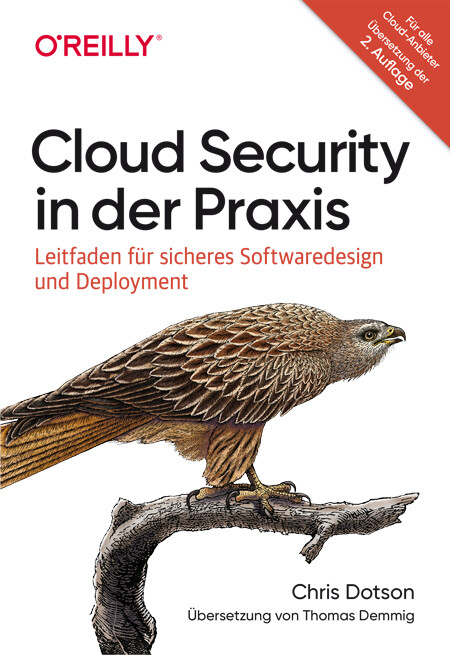
Cloud Security in der Praxis (2. Auflage)
Cloud Security in der Praxis. Leitfaden für sicheres Softwaredesign und Deployment. Übersetzung der 2. US-Auflage.In diesem Praxisbuch erfahren Sie alles Wichtige über bewährte Sicherheitsmethoden für die gängigen Multivendor-Cloud-Umgebungen – unabhängig davon, ob Ihr Unternehmen alte On-Premises-Projekte in die Cloud verlagern oder eine Infrastruktur von Grund auf neu aufbauen möchte.Entwicklerinnen, IT-Architekten und Sicherheitsexpertinnen lernen Cloud-spezifische Techniken zur sicheren Nutzung beliebter Plattformen wie Amazon Web Services, Microsoft Azure und IBM Cloud kennen. Sie erfahren, wie Sie Data Asset Management, Identity and Access Management (IAM), Vulnerability Management, Netzwerksicherheit und Incident Response effektiv in Ihrer Cloud-Umgebung umsetzen.Informieren Sie sich über neueste Herausforderungen und Bedrohungen im Bereich der Cloud-SicherheitManagen Sie Cloud-Anbieter, die Daten speichern und verarbeiten oder administrative Kontrolle bereitstellenLernen Sie, wie Sie grundlegende Prinzipien und Konzepte wie Least Privilege und Defense in Depth in der Cloud anwendenVerstehen Sie die entscheidende Rolle von IAM in der CloudMachen Sie sich mit bewährten Praktiken vertraut, um häufig auftretende Sicherheitszwischenfälle zu erkennen, zu bewältigen und den gewünschten Zustand wiederherzustellenErfahren Sie, wie Sie mit verschiedensten Sicherheitslücken, insbesondere solchen, die in Multi-Cloud- und Hybrid-Cloudarchitekturen auftreten, umgehenÜberwachen Sie PAM (Privileged Access Management) in Cloud-UmgebungenLeseprobe (PDF-Link)Über den Autor:Chris Dotson ist IBM Distinguished Engineer und leitender Sicherheitsarchitekt in der IBM CIO Organisation. Er verfügt über 11 professionelle Zertifizierungen, darunter die Open Group Distinguished IT Architect-Zertifizierung, und über 25 Jahre Erfahrung in der IT-Branche. Chris wurde bereits mehrfach auf der IBM-Homepage als Cloud-Innovator vorgestellt. Zu seinen Schwerpunkten gehören Cloud-Infrastruktur und -Sicherheit, Identitäts- und Zugriffsmanagement, Netzwerkinfrastruktur und -sicherheit und nicht zuletzt schlechte Wortspiele.
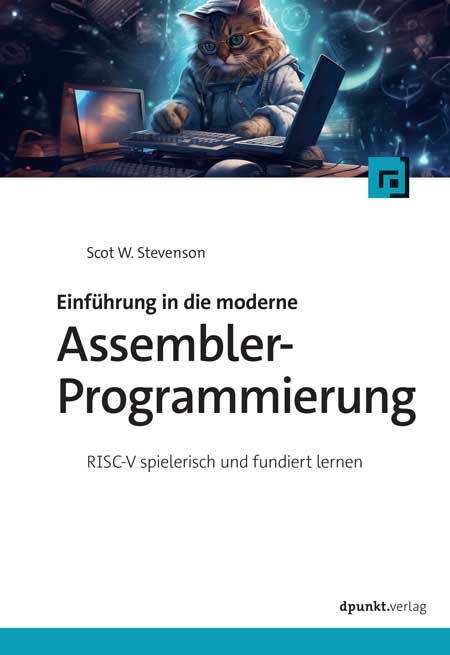
Einführung in die moderne Assembler-Programmierung
Einführung in die moderne Assembler-Programmierung. RISC-V spielerisch und fundiert lernen.Wir nutzen dabei den offenen Prozessor-Standard RISC-V, der auch gezielt für Forschung und Lehre entwickelt wurde. Das macht die Sache für alle einfacher, denn der Kern-Befehlssatz, den wir hier vorstellen, umfasst weniger als 50 Instruktionen. Noch besser: Wer RISC-V lernt, lernt fürs Leben, denn der Befehlssatz ist »eingefroren« und ändert sich nicht mehr.Leseprobe (PDF-Link)Über den Autor:Scot W. Stevenson programmiert seit den Tagen von Acht-Bit-Prozessoren, wie dem 6502 in Assembler. Vom Bytegeschiebe konnten ihn weder sein Medizinstudium, ein Graduiertenkolleg Journalismus, mehr als zwei Jahrzehnte als Nachrichtenredakteur noch ein Blog über die USA abbringen. Er behauptet trotzdem, jederzeit damit aufhören zu können.Für alle, die speziell RISC-V-Assembler-Programmierung lernen wollen, gehen wir im Mittelteil den Aufbau des Prozessors durch, wobei der Schwerpunkt auf der Software liegt. Wir stellen die einzelnen Befehle vor, warnen vor Fallstricken und verraten Tricks. Die Schwachstellen des Standards werden beleuchtet und der Einsatz von KI als Hilfsmittel besprochen. Als offener, freier Standard wird RISC-V auch zunehmend für Hobby- und Studentenprojekte eingesetzt, wo der Compiler nur schlecht oder gar nicht an die Hardware angepasst ist, falls es überhaupt einen gibt.Der letzte Teil zeigt, dass dieses Buch auch aus schierer Begeisterung für Assembler heraus entstand. Wer sich diebisch über jedes eingesparte Byte freut, wird es lieben.

Cloud Security in der Praxis
Cloud-typische Sicherheitsthemen verständlich und praxisnah erklärt - Strategien und Lösungsansätze für alle gängigen Cloud-Plattformen, u.a. AWS, Azure und IBM Cloud - Deckt das breite Spektrum der Security-Themen ab - Gezieltes Einarbeiten durch den modularen Aufbau; mithilfe von Übungen können Sie Ihren Wissensstand überprüfen - Experten-Autor: IBM Distinguished Engineer mit zahlreichen Zertifizierungen und 25 Jahren Branchenerfahrung In diesem Praxisbuch erfahren Sie alles Wichtige über bewährte Sicherheitsmethoden für die gängigen Multivendor-Cloud-Umgebungen – unabhängig davon, ob Ihr Unternehmen alte On-Premises-Projekte in die Cloud verlagern oder eine Infrastruktur von Grund auf neu aufbauen möchte. Entwicklerinnen, IT-Architekten und Sicherheitsexpertinnen lernen Cloud-spezifische Techniken zur sicheren Nutzung beliebter Plattformen wie Amazon Web Services, Microsoft Azure und IBM Cloud kennen. Sie erfahren, wie Sie Data Asset Management, Identity and Access Management (IAM), Vulnerability Management, Netzwerksicherheit und Incident Response effektiv in Ihrer Cloud-Umgebung umsetzen. - Informieren Sie sich über neueste Herausforderungen und Bedrohungen im Bereich der Cloud-Sicherheit - Managen Sie Cloud-Anbieter, die Daten speichern und verarbeiten oder administrative Kontrolle bereitstellen - Lernen Sie, wie Sie grundlegende Prinzipien und Konzepte wie Least Privilege und Defense in Depth in der Cloud anwenden - Verstehen Sie die entscheidende Rolle von IAM in der Cloud - Machen Sie sich mit bewährten Praktiken vertraut, um häufig auftretende Sicherheitszwischenfälle zu erkennen, zu bewältigen und den gewünschten Zustand wiederherzustellen - Erfahren Sie, wie Sie mit verschiedensten Sicherheitslücken, insbesondere solchen, die in Multi-Cloud- und Hybrid-Cloudarchitekturen auftreten, umgehen - Überwachen Sie PAM (Privileged Access Management) in Cloud-Umgebungen

Machine Learning - kurz & gut
Der kompakte Schnelleinstieg in Machine Learning und Deep Learning - Die 3. Auflage des Bestsellers wurde ergänzt durch Kapitel zu Large Language Models wie ChatGPT und zu MLOps - Anhand konkreter Datensätze lernst du einen typischen Workflow kennen: vom Datenimport über Datenbereinigung, Datenanalyse bis hin zur Datenvisualisierung - Nicht nur für zukünftige Data Scientists und ML-Profis geeignet, sondern durch seine durchdachte Didaktik auch für Interessierte, die nur am Rande mit ML zu tun haben, wie z.B. Softwareentwickler*innen Machine Learning beeinflusst heute beinahe alle Bereiche der Technik und der Gesellschaft. Dieses Buch bietet Interessierten, die einen technischen Hintergrund haben, die schnellstmögliche Einführung in das umfangreiche Themengebiet des maschinellen Lernens und der statistischen Datenanalyse. Dabei werden folgende Themen behandelt und mit praktischen Beispielen veranschaulicht: - Datenvorbereitung, Feature-Auswahl, Modellvalidierung - Supervised und Unsupervised Learning - Neuronale Netze und Deep Learning - Reinforcement Learning - LLMs – moderne Sprachmodelle - MLOps – Machine Learning für die Praxis Anhand von Beispieldatensätzen lernst du einen typischen Workflow kennen: vom Datenimport über Datenbereinigung, Datenanalyse bis hin zur Datenvisualisierung. Mit den Codebeispielen kannst du in Jupyter Notebooks experimentieren. Sie basieren auf Python und den Bibliotheken Scikit-Learn, Pandas, NumPy, TensorFlow und Keras. Nach der Lektüre dieses Buchs hast du einen Überblick über das gesamte Thema und kannst Ansätze einordnen und bewerten. Das Buch vermittelt dir eine solide Grundlage, um erste eigene Machine-Learning-Modelle zu trainieren und vertiefende Literatur zu verstehen.
High Performance with Java
Building high performance into your applications is key to creating an optimal user experience, although it is not the only consideration for the performant nature of your apps. High performance applications can lead to cost-effective resource utilization, especially when scalability and cloud computing are involved. They can also provide highly reliable systems that are easier to maintain.High Performance with Java begins by helping you explore the Java Virtual Machine (JVM) and understand how to push it to its limits to further optimize your programs. You’ll take a hands-on approach to go through memory optimization strategies, input/output operations, concurrency, networking, as well as frameworks and libraries focused on performance. You’ll also learn key strategies and best practices by using industry-relevant examples to architect scalable and resource-efficient applications. The concluding chapters provide valuable insights on optimizing your Java code when interacting with databases and show you how to leverage artificial intelligence (AI) for high performance Java applications.By the end of this book, you’ll grasp the importance of developing high performance Java applications and gain practical experience in implementing key strategies to help ensure your Java applications perform optimally.

Microsoft Power Automate
Von einfachen Routineaufgaben bis zu komplexen Geschäftsprozessen – Automatisierung ohne Programmierkenntnisse - Sich wiederholende Aufgaben ganz einfach automatisieren - Geschäftsprozesse ohne manuelle Eingaben abwickeln - Flows mit Templates erstellen oder komplett neu entwerfen Die effiziente Verarbeitung von Informationen ist für den erfolgreichen Betrieb moderner Unternehmen von entscheidender Bedeutung. Ein besonders hilfreiches Tool hierfür ist Microsoft Power Automate, eine Entwicklungsplattform, die keine Programmierkenntnisse erfordert und Ihnen dabei hilft, sich wiederholende, manuelle und zeitraubende Aufgaben zu automatisieren, um Prozesse zu optimieren und Ihre Arbeit zu erleichtern. Dieses praktische Buch liefert Ihnen einen prägnanten und dennoch umfassenden Überblick über die Möglichkeiten, die Microsoft Power Automate Ihnen bietet. Dabei lernen Sie nicht nur anhand vieler alltagsnaher Beispiele und Übungen die verschiedenen Arten von Flows kennen, Sie werden auch deren Logik verstehen, um selbst einfache bis komplexe Flows sowohl in der Cloud als auch auf dem Desktop zu erstellen. Aus dem Inhalt: - Entwerfen und Erstellen von Flows mit Templates oder von Grund auf - Auswählen von Triggern, Ausdrücken und Konnektoren - Hinzufügen von Aktionen, um Informationen abzurufen und zu verarbeiten - Verwendung von Funktionen zur Umwandlung von Informationen - Steuern der Logik eines Prozesses durch bedingte Aktionen, Schleifen oder parallele Verzweigungen - Implementierung von Fehlerprüfungen zur Vermeidung potenzieller Probleme

Introducing Microsoft Copilot for Managers
Embark on an exhilarating journey through the digital landscape with Microsoft Copilots, a suite of AI-powered tools that help you create, edit, and optimize content, code, and data across various Microsoft platforms. This book will be your indispensable guide to harnessing the power of generative AI within the Microsoft ecosystem, introducing you to various copilots and their impact on your business processes. The book will guide you as a manager to leverage Microsoft Copilot to improve your personal productivity, your team's productivity, and achieve your business goals with success.This book is organized into five parts. The first part introduces you to Microsoft Copilot and its features and benefits. In the second part, you will get an overview of the integration of Microsoft Copilot with M365 tools. The third part teaches you about the maker copilot in Power Platform services followed by the business expert copilot for Sales and Service for Business Applications such as Dynamics 365 and Salesforce. The book also introduces you to Copilot Studio to help you extend the copilots or build your own.By the end of this book, you will have a solid understanding of Microsoft Copilot and how to use copilots effectively and efficiently with various transformation platforms. You will also have a collection of tips, tricks, and best practices to help you get the most out of Microsoft Copilot.WHAT WILL YOU LEARN* Set up and activate Microsoft Copilot on various Microsoft platforms* Use Microsoft Copilot to generate and enhance content, code, and data with M365, Power Platform, and Business Applications tools* Understand tips, tricks, and best practices to get the most out of Microsoft Copilot* Build your own copilot using your own organization dataWHO THIS BOOK IS FORManagers, team leaders, and business practitioners who want to improve their and their team's productivity and creativity with Microsoft platformsMOHAMMAD ADEEL KHAN is a distinguished Senior Technical Specialist at Microsoft, renowned for his expertise in driving enterprise-grade digital transformations. His nearly two decades of experience encompass a deep understanding of Cloud Solutions, AI & ML, and data management solution architectures that have consistently delivered customer success and profitability. Adeel's global professional journey has taken him across Pakistan, UAE, Malaysia, and Singapore, enriching his perspective and enhancing his ability to navigate complex technological landscapes. Adeel's academic achievements are notable, with an MBA from Coventry University and an AI certification from MIT. His multilingual fluency in English, Urdu, and Arabic complements his global leadership role. As an author and speaker, Adeel has shared his thought leadership at various regional and global events, inspiring audiences with his insights into the future of technology. In his role at Microsoft Operations in Singapore, Adeel has been recognized as an AI-Copilot Champion and has achieved the remarkable feat, helping fortune 500 organizations adopt and transform future of work.Section: ChapterPart I- Part I: Chapter 1- Introduction.- Part II- Part II: Chapter 2- Microsoft Copilot in Word.- Part II: Chapter 3- Microsoft Copilot in Power Point.- Part II: Chapter 4- Microsoft Copilot in Excel .- Part II: Chapter 5- Microsoft Copilot in Communication and Collaboration.- Chapter 6: Microsoft Copilot Chat.- Part III- Part III: Chapter 7- Microsoft Copilot for Power Apps.- Part III: Chapter 8- Microsoft Copilot for Power Automate.- Part III: Chapter 9- Microsoft Copilot for Power Pages.- Part III: Chapter 10- Microsoft Copilot for Power BI.- Part IV-Part IV: Chapter 11 - Microsoft Copilot for Sales.- Part IV: Chapter 12- Microsoft Copilot For Sales with Salesforce.- Part IV: Chapter 13- Microsoft Copilot For Sales with Dynamics 365 Sales.- Part IV: Chapter 14- Microsoft Copilot for Service.- Part IV: Chapter 15 - Microsoft Copilot For Service with Cloud Solutions.- Part IV: Chapter 16 - Microsoft Copilot For Service with Dynamics 365 Customer Service.- Part V-Part V: Chapter 17 - Copilot Studio.- Chapter 18- Copilot , Generative AI and Future of work.- Annex - A: Annex – A.

Machine Learning Upgrade
A MUCH-NEEDED GUIDE TO IMPLEMENTING NEW TECHNOLOGY IN WORKSPACES From experts in the field comes Machine Learning Upgrade: A Data Scientist's Guide to MLOps, LLMs, and ML Infrastructure, a book that provides data scientists and managers with best practices at the intersection of management, large language models (LLMs), machine learning, and data science. This groundbreaking book will change the way that you view the pipeline of data science. The authors provide an introduction to modern machine learning, showing you how it can be viewed as a holistic, end-to-end system—not just shiny new gadget in an otherwise unchanged operational structure. By adopting a data-centric view of the world, you can begin to see unstructured data and LLMs as the foundation upon which you can build countless applications and business solutions. This book explores a whole world of decision making that hasn't been codified yet, enabling you to forge the future using emerging best practices.* Gain an understanding of the intersection between large language models and unstructured data* Follow the process of building an LLM-powered application while leveraging MLOps techniques such as data versioning and experiment tracking* Discover best practices for training, fine tuning, and evaluating LLMs* Integrate LLM applications within larger systems, monitor their performance, and retrain them on new dataThis book is indispensable for data professionals and business leaders looking to understand LLMs and the entire data science pipeline. KRISTEN KEHRER has been providing innovative and practical statistical modeling solutions since 2010. In 2018, she achieved recognition as a LinkedIn Top Voice in Data Science & Analytics. Kristen is also the founder of Data Moves Me, LLC. CALEB KAISER is a Full Stack Engineer at Comet. Caleb was previously on the Founding Team at Cortex Labs. Caleb also worked at Scribe Media on the Author Platform Team. Introduction ix1 A GENTLE INTRODUCTION TO MODERN MACHINE LEARNING 1Data Science Is Diverging from Business Intelligence 3From CRISP-DM to Modern, Multicomponent ml Systems 4The Emergence of LLMs Has Increased ML’s Power and Complexity 7What You Can Expect from This Book 92 AN END-TO-END APPROACH 11Components of a YouTube Search Agent 13Principles of a Production Machine Learning System 16Observability 19Reproducibility 19Interoperability 20Scalability 21Improvability 22A Note on Tools 233 A DATA-CENTRIC VIEW 25The Emergence of Foundation Models 25The Role of Off-the-Shelf Components 27The Data-Driven Approach 28A Note on Data Ethics 28Building the Dataset 30Working with Vector Databases 34Data Versioning and Management 50Getting Started with Data Versioning 53Knowing “Just Enough” Engineering 574 STANDING UP YOUR LLM 61Selecting Your LLM 61What Type of Inference Do I Need to Perform? 65How Open-Ended Is This Task? 66What Are the Privacy Concerns for This Data? 66How Much Will This Model Cost? 67Experiment Management with LLMs 68LLM Inference 74Basics of Prompt Engineering 74In-Context Learning 77Intermediary Computation 85Augmented Generation 89Agentic Techniques 94Optimizing LLM Inference with Experiment Management 102Fine-Tuning LLMs 111When to Fine-Tune an LLM 112Quantization, QLOrA, and Parameter Efficient Fine-Tuning 113Wrapping Things Up 1215 PUTTING TOGETHER AN APPLICATION 123Prototyping with Gradio 125Creating Graphics with Plotnine 128Adding the Author Selector 137Adding a Logo 138Adding a Tab 139Adding a Title and Subtitle 140Changing the Color of the Buttons 140Click to Download Button 141Putting It All Together 141Deploying Models as APIs 144Implementing an API with FastAPI 146Implementing Uvicorn 148Monitoring an LLM 149Dockerizing Your Service 151Deploying Your Own LLM 154Wrapping Things Up 1596 ROUNDING OUT THE ML LIFE CYCLE 161Deploying a Simple Random Forest Model 161An Introduction to Model Monitoring 167Model Monitoring with Evidently AI 175Building a Model Monitoring System 176Final Thoughts on Monitoring 1877 REVIEW OF BEST PRACTICES 189Step 1: Understand the Problem 189Step 2: Model Selection and Training 190Step 3: Deploy and Maintain 192Step 4: Collaborate and Communicate 196Emerging Trends in LLMs 197Next Steps in Learning 199Appendix: Additional LLM Example 201Index 209

Empowering the Public Sector with Generative AI
This is your guide book to Generative AI (GenAI) and its application in addressing real-world challenges within the public sector. The book addresses a range of topics from GenAI concepts and strategy to public sector use cases, architecture patterns, and implementation best practices. With a general background in technology and the public sector, you will be able to understand the concepts in this book.The book will help you develop a deeper understanding of GenAI and learn how GenAI differs from traditional AI. You will explore best practices such as prompt engineering, and fine-tuning, and architectural patterns such as Retrieval Augmented Generation (RAG). And you will discover specific nuances, considerations, and strategies for implementation in a public sector organization.You will understand how to apply these concepts in a public sector setting and address industry-specific challenges and problems by studying a variety of use cases included in the book in the areas of content generation, chatbots, summarization, and program management.WHAT YOU WILL LEARN* GenAI concepts and how GenAI differs from traditional AI/ML * Prompt engineering, fine-tuning, RAG, and customizing foundation models* Strategy, methodologies, and frameworks for the public sector* Public sector use cases in the areas of content generation, summarization, and chatbots, plus program management, analytics, business intelligence, and reporting* Architecture and design patterns * Implementation, operations, and maintenance of GenAI applicationsWHO THIS BOOK IS FORTechnology and business leaders in the public sector who are new to AI/ML and are keen on exploring and harnessing the potential of Generative AI in their respective organizations.SANJEEV PULAPAKA is Principal Solutions Architect at Amazon Web Services (AWS). He leads the development of AI/ML and Generative AI solutions for the US Federal Civilian team. Sanjeev has extensive experience in leading, architecting, and implementing high-impact technology solutions that address diverse business needs in multiple sectors (including commercial, federal, and state and local governments). He has published numerous blogs and white papers on AI/ML and is an active speaker and panelist at various industry conferences, including AWS Public Sector Summit and AWS re:Invent. Sanjeev has an undergraduate degree in engineering from the Indian Institute of Technology and an MBA degree from the University of Notre Dame.SRINATH GODAVARTHI has over 20 years of experience serving public sector customers and he held leadership positions with global technology and consulting companies ,including Amazon and Accenture. In his previous roles, Srinath led cloud strategy, architecture, and digital transformation efforts for a number of federal, state, and local agencies. Srinath specializes in AI/ML technologies and has published over a dozen white papers and blogs on various topics (including AI, ML, and Healthcare). He has been a speaker at various industry conferences, including the AWS Public Sector Summit, AWS re:Invent, and the American Public Human Services Association. He holds a master’s degree in computer science from Temple University and completed a Chief Technology Officer program from the University of California, Berkeley.SHERRY DING is an artificial intelligence and machine learning (AI/ML) technologist and evangelist with 20 years of experience in AI/ML research and applications. She currently works at Amazon Web Services as an AI/ML Specialist Solutions Architect, serving public sector customers on their AI/ML related business challenges, and guiding them to build highly reliable and scalable AI/ML applications on the cloud. Sherry holds a PhD in computer science from Korea University. She has authored more than 30 publications (including journal articles, book chapters, white papers, conference proceedings, and blogs) on different topics related to AI/ML. She is an active public speaker who has presented at various academia and industry conferences such as IEEE conferences, AWS re:Invent, and AWS Summits.Chapter 1: Introduction to Generative AI.- Chapter 2: Generative AI in the Public Sector.- Chapter 3: Gen AI Strategy: A Blueprint for Successful Adoption.- Chapter 4: Building a Generative AI Application.- Chapter 5: Content Generation.- Chapter 6: Chatbots and Enterprise Search.- Chapter 7: Summarization.- Chapter 8: Program Management, Business Intelligence, and Reporting.- Chapter 9: Implementation Considerations.- Chapter 10: Conclusion.- Appendix A.- Appendix B.- Appendix C.- Appendix D.- Appendix E.

Human Proxies in Cryptographic Networks
Human Proxies offer new directions to end-to-end encryption: End-A-to-End-Z encryption must be rethought when it turns out to be an End-B-to-End-Z encryption. And, Human Proxies raise questions that were neither answered by science, journalists nor the public. Regular Proxies on a network are forwarding Internet requests, e.g., to download a webpage. Also, in political and social settings a Proxy as an intermediate, deputy or representative with a similar function is given. Human Proxies now enable within the Encryption and Messenger Application Spot-On to choose a friend as a Human Proxy. The Spot-On program is a most modern and elaborated encryption suite available for several operation systems and provides many innovations in applied cryptography. It builds based on the Echo Protocol a cryptographic network, that is beyond Cryptographic Routing. With Human Proxies now a friend from the Messenger friends list sends out the chat message instead of the original sender. The construct of the "Inner Envelope" behind the Human Proxy function also creates new cryptographic challenges, provides plausible deniability to included nodes, and offers new perspectives in encryption, its analysis and decryption: As all messages in the network are encrypted, end-to-end encryption is new defined and gets with Human Proxies a potential second and plausible deniable start point. The essay in this book discusses some related aspects of Human Proxies and their referring's to encryption, networking, graph theory and comparable social and political processes of Proxies. This leads to a further general approach: Endpoints in Encryption are equipped by the application Spot-On with the vision of interoperability of endpoints in communications. | English & German language. Uni Nurf: Uni Nurf is author of the essay "Human Proxies in Cryptographic Networks - Establishing a new direction to end-to-end encryption with the introduction of the inner envelope in the echo protocol".

Automatisiertes Fahren 2024
Automatisiertes Fahren hilft Unfälle zu vermeiden. KI-unterstützte Roboterautos sind aber auch Grundlage für datengetriebene Geschäftsmodelle der OEMs. Konzepte zukünftiger Mobilitätslösungen müssen aus der Perspektive der Nutzer, der urbanen sowie der ländlichen Region und zielführender Geschäftsmodelle entwickelt werden, um erfolgreich zu sein. Im Fokus stehen dabei Verkehrssicherheit und Leistungsfähigkeit ebenso wie ökologische, ökonomische und soziale Nachhaltigkeit. Die internationale Konferenz „Automatisiertes Fahren“ widmet sich als Informations- und Kommunikationsplattform den zentralen Aspekten des Mobilitätswandels. Um die zentralen Herausforderungen künftiger ADAS-Systeme zu erfüllen, müssen Bereiche wie Sensorfusion, Rechnertechnik, KI oder V2X-Kommunikation optimiert werden, um die dafür notwendigen System-of-Systems-Architekturen entwickeln zu können. Die seit Jahren etablierte internationale ATZlive-Fachkonferenz "Automatisiertes Fahren" wird daher um die Themen DevOps, Tooling, Algorithmenentwicklung, Programmierung sowie SDW und E/E-Architektur erweitert. ADAS-Systeme werden fortlaufend weiterentwickelt, um Nutzerinnen und Nutzer nachhaltig zu unterstützen. Dabei ist es wichtig, sowohl die Verkehrssicherheit zu steigern als auch die Verfügbarkeit zu verbessern sowie die Akzeptanz der Systeme im Markt zu erreichen. Dafür müssen Bereiche wie Sensorfunktion, Umfeldmodellierung, Situationsprädiktion, Trajektorenplanung und Entscheidungsfindung auf der einen Seite und die Rechnertechnik und die V2X-Kommunikation auf der anderen Seite – unterstützt durch KI – optimiert werden, um die dafür notwendigen System-of-Systems-Architekturen entwickeln zu können. Die 9. Internationale ATZ-Tagung „Automatisiertes Fahren“ ist ein Forum für Entwicklungsmethodik, Technologiestacks und Security. Sie steht für Engineering AVF Level 2X und diskutiert Engineering und Technologien für das automatisierte Fahren ab Level 2+. Architekturen und Standardisierung.- Versicherungsthemen.- Manöverplanung.- Neue Fahrzeug- und Innenraumkonzepte.- Testverfahren und Absicherung.- Datengenerierung und Datensicherheit.- Verkehrsplanung und Geschäftsmodelle.- HMI und Fahrzeugmonitoring.
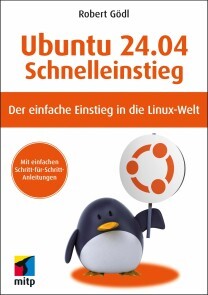
Ubuntu 24.04 LTS Schnelleinstieg
Ubuntu Linux ganz einfach und Schritt für Schritt installieren und einsetzenDie Benutzeroberfläche GNOME kennenlernen und an die eigenen Bedürfnisse anpassenWindows und Ubuntu parallel betreibenInklusive kostenlosem E-Book zum Download und Ubuntu 24.04 LTS auf DVD Steigen Sie mit Ubuntu ein in die Linux-Welt! Mit diesem Buch erhalten Sie eine leicht verständliche Schritt-für-Schritt-Anleitung für die Installation und den Einsatz von Ubuntu 24.04 LTS. Sie lernen die verschiedenen Installationsmöglichkeiten von Ubuntu kennen (Live-Version, Festinstallation, Ubuntu als einziges oder als zweites Betriebssystem parallel zu Windows). Darüber hinaus erfahren Sie, wie Sie Ubuntu einrichten und an Ihre individuellen Bedürfnisse anpassen. Sie erhalten eine detaillierte Einführung in die Arbeitsoberfläche GNOME sowie einen Überblick über vorinstallierte und weitere beliebte Linux-Software. So können Sie auch ohne Vorkenntnisse schnell und einfach auf Linux umsteigen. Darüber hinaus erfahren Sie, wie Sie auch Software, die eigentlich für den Betrieb unter Windows gedacht ist, installieren können. Eine Einführung in die wichtigsten Linux-Grundlagen wie die Datei- und Benutzerverwaltung, die Installation von Software (Paketverwaltung) sowie das Terminal runden diesen Praxiseinstieg ab. So sind Sie optimal darauf vorbereitet, alle im Alltag anfallenden Aufgaben problemlos mit Ubuntu zu meistern. Aus dem Inhalt: Grundlagen zu Linux und UbuntuInstallation und Live-VersionDie grafische Oberfläche GNOMEAnwendungen nachinstallierenWindows-Programme mit Ubuntu nutzenLinux-Alternativen zu gängigen Windows-ProgrammenBackups und SicherheitTerminal und Verzeichnishierarchie Auf der Buch-DVD: Ubuntu 24.04 LTS für PC Robert Gödl ist überzeugter Linux-Nutzer mit einer Vorliebe für das Testen von freien Betriebssystemen und freier Software. Nach über 20 Jahren ohne Microsoft Windows möchte er anderen zeigen, dass Linux heute einfach zu installieren, zu nutzen und zu verstehen ist. Ohne viele technische IT-Begriffe macht er Linux auch Benutzern ohne Vorkenntnisse schnell und einfach zugänglich.
Google Ads (4. Auflage)
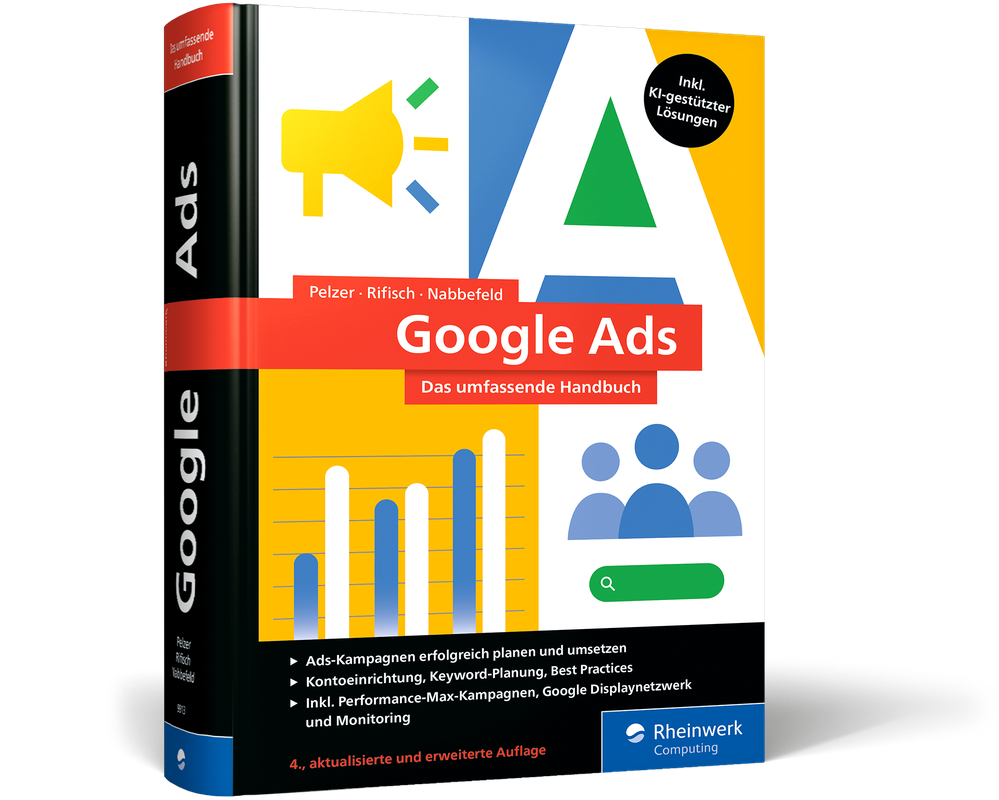
Google Ads. Das umfassende Handbuch. In 4., aktualisierte und erweiterte Auflage 2024Google Ads ist eines der wichtigsten Werkzeuge für eine erfolgreiche Online-Marketing-Strategie. Mit diesem Buch erschließen Sie sich Google Ads umfassend und praxisoritentiert, damit Sie Ads-Kampagnen sauber planen und strukturiert durchführen können. Lernen Sie Schritt für Schritt, wie Suchmaschinen-Marketing (SEM) funktioniert und wie Sie Google Ads sinnvoll in Ihre Marketing-Strategie integrieren. Angeleitet von den SEM-Experten Guido Pelzer, Jonas Rifisch und Marian Nabbefeld machen Sie sich mit den Grundlagen vertraut, richten ein Ads-Konto ein und optimieren Ihre Kampagnen im Sinne einer gelungenen Anzeigenstrategie. Das Monitoring mit unterschiedlichen Berichten und mit Google Analytics sorgt dafür, dass Sie Ihre Ads-Kampagnen zielgerichtet auswerten und an den richtigen Stellschrauben drehen können. Mit dabei: wertvolle Tipps für die richtige Kontostruktur, die optimale Gebotsstrategie und die Wahl des Google-Werbenetzwerks. Die aktuelle Auflage beinhaltet alle wichtigen Neuerungen vom Design bis hin zu Performance Max-Kampagnen und zeigt Ihnen die neuen Möglichkeiten durch den Einsatz von KI.Bringen Sie Ihr Unternehmen auf Erfolgskurs1. Richtig einsteigen in Google AdsSie lernen neben den Grundlagen die vielfältigen Möglichkeiten des Suchmaschinen-Marketings kennen. Schritt für Schritt richten Sie Ihr Google-Ads-Konto ein und erstellen sogleich Ihre erste Ads-Kampagne. Inklusive Keyword-Recherche und Conversion-Tracking.2. Passende Kampagnen bestimmenTextorientierte Suchkampagnen, Banner-Schaltungen im Google Displaynetzwerk, Videokampagnen auf YouTube – hier erfahren Sie, welche Werbeform Ihnen am meisten nützt. Profitieren Sie von den mobilen Werbemöglichkeiten für Smartphones und Tablets.3. SEA-Praxistipps direkt umsetzenDie Autoren zeigen Ihnen anhand praxisnaher Beispiele, wie Sie z. B. Kampagnenbudgets effizient einsetzen und wie Sie mehrere Google-Ads-Konten verwalten. Sparen Sie Zeit und Geld mit automatisierten Optimierungen, Regeln und Berichten.Aus dem InhaltSuchmaschinen-Marketing von A bis ZDas Google-Ads-KontoDie erste Google-Ads-KampagneEinsatz von KISpezielle Ads-WerbestrategienGoogle DisplaynetzwerkMobile KampagnenGoogle ShoppingIndividuelle Berichte, FunktionenRichtige Keyword-RecherchePerformance Max-KampagnenGoogle Analytics nutzenLeseprobe (PDF-Link)Über die AutorenGuido Pelzer ist Experte für Internetmarketing, Dozent, Autor und seit vielen Jahren zertifizierter Google-Partner. Beruflich beschäftigt er sich seit 2000 mit dem Internetmarketing, hat quasi den Erfolgsweg von Google in Deutschland begleitet und dabei als Unternehmer die Möglichkeiten der Suchmaschinenoptimierung (SEO) und der bezahlten Werbung in Google AdWords (SEA) live getestet. Eigene Erfolge im Internetmarketing führten zum Entschluss, dieses Wissen speziell kleinen und mittleren Unternehmen (KMU) sowie Existenzgründern zu vermitteln. Als die Firma Google Anfang 2008 externe Seminarleiter in Deutschland suchte, wurde er einer der ersten 5 Google-Seminarleiter in Deutschland und besuchte die Europäische Google-Zentrale in Dublin. Als zertifizierter Google-Partner berät er nun mittelständische Unternehmer und Marketingagenturen. Neben den Beratungsprojekten ist er als Dozent und Seminarleiter in ganz Deutschland und dem deutschsprachigen Raum unterwegs. Bei den Seminaren stehen vor allem Praxisbeispiele und Tricks aus der Welt des Suchmaschinen-Marketings im Vordergrund. Er gibt seine Erfahrungen als Manager und Online-Marketing-Experte auch als Dozent an Hochschulen (z. B. der TH Köln) an Studierende weiter. Weitere Informationen finden Sie unter www.pelzer-internet.de.Jonas Rifisch ist Mitinhaber einer Digital- und Werbeagentur sowie Experte für digitales Marketing. Nach seinem Studium lernte er bei einem IT-Dienstleister den großen Bedarf für verschiedenste Themen rund um das weite Feld der Digitalisierung kennen und entdeckte gleichzeitig seine Leidenschaft für den Mittelstand. 2020 gründete er gemeinsam mit Marian Nabbefeld die Digital- und Werbeagentur JAM digital, die sich als digitaler Partner für kleine und mittelständische Unternehmen versteht. Der Anspruch digitale Themen voranzubringen, wird durch die offizielle Listung als ein Partner im Bundesförderprogramm "Go digital" zusätzlich unterstrichen. Außerdem ist er Teil des Beraternetzwerks der Gründerregion Aachen und unterstützt auf diese Weise junge Unternehmen als Experte für digitales Marketing. Neben verschiedenen Themen wie Webdesign und Social-Media-Marketing liegt ein besonderer Fokus auf der Suchmaschinenoptimierung (SEO) und der Schaltung von Google-Ads-Kampagnen (SEA) für die eigenen Kunden. In seiner Rolle als Digital-Experte begleitet er somit jeden Tag Unternehmen dabei die Potenziale dieser spannenden Werkzeuge zielgerichtet auszuschöpfen, um deren regionale bis hin zur internationalen Reichweite aufzubauen. Dabei profitiert er von Erfahrungswerten aus den unterschiedlichsten Branchen. Weitere Informationen finden Sie unter www.jam-digital.de.Marian Nabbefeld verfügt über umfassende Kompetenzen im Bereich digitales Marketing, die er durch eine Kombination aus praktischer Erfahrung und akademischer Ausbildung erworben hat. Seit 2010 hat er sein Wissen in verschiedenen Bereichen des Marketings kontinuierlich erweitert. Angefangen im regionalen Marketing, hat er grundlegende Einblicke in lokale Marktmechanismen gewonnen und sich dann auf komplexe digitale Marketingstrategien spezialisiert. In Partnerschaft mit Jonas Rifisch gründete er 2020 die Digital- und Werbeagentur JAM digital, um kleinen und mittelständischen Unternehmen bei ihrem digitalen Erfolg zu helfen. Sein Hauptfokus liegt darauf, den Bekanntheitsgrad seiner Kunden zu steigern, Talente zu gewinnen und neue Kunden durch gezielte Digitalstrategien zu gewinnen. Zu seinen Kernkompetenzen gehören Dienstleistungen wie Webdesign, Social-Media-Marketing, Suchmaschinenoptimierung (SEO) und die Schaltung von Google-Ads-Kampagnen (SEA) für Kunden auf regionaler und internationaler Ebene. Darüber hinaus engagiert er sich im Beraternetzwerk der Gründerregion Aachen, wo er sein Fachwissen als Experte für digitales Marketing nutzt, um junge Unternehmen bei ihren Gründungs- oder Wachstumsprojekten zu unterstützen. Dank seiner branchenübergreifenden Erfahrung bietet er maßgeschneiderte Lösungen an, die auf die individuellen Bedürfnisse seiner Kunden zugeschnitten sind. Weitere Informationen finden Interessierte unter www.jam-digital.de.

Programming PIC Microcontrollers with XC8
Are you tired of copying and pasting code into your embedded projects? Do you want to write your own code from scratch for microcontrollers and understand what your code is doing without all the frills and math? This book uses a practical approach to show you how to develop embedded systems with 8-bit PIC microcontrollers using the XC8 compiler.Written for those who want more than an Arduino, but less than the more complex microcontrollers on the market, this new edition is fully updated and covers embedded design principles such as foreground-background loops and event driven programming. You’ll learn how to interface with things like Motors, PID loop control and writing a browser-based monitoring system! This book is heavy on code, schematics, and images and focuses less on the theoretical aspects of using microcontrollers.Coverage includes writing a display driver, using the DAC for a multitude of waveform generation techniques, and building 8-bit IoT systems, real time telemetry, a countdown timer, and new peripherals. These topics are important if you want to learn more about PIC microcontroller devices as a whole. You'll also see the advantage that MPLAB X offers by running on Windows, Mac and Linux environments. You don't need to be a command line expert to work with PIC microcontrollers, so you can focus less on setting up your environment and more on your application.If you want to move beyond the Arduino, _Programming PIC Microcontrollers with XC8 _is your complete guide to understanding modern PIC microcontrollers.WHAT YOU’LL LEARN* Set up the MPLAB X and XC8 compilers for microcontroller development* Use GPIO and PPS* Review EUSART and Software UART communications* Use the eXtreme Low Power (XLP) options of PIC microcontrollers* Explore wireless communications with WiFi and BluetoothWHO THIS BOOK IS FORThose with basic electronic device and electronic equipment experience and some knowledge of the C programming and digital electronics. Also targeted towards students wanting a practical overview of microcontrollers outside of the classroom.ARMSTRONG SUBERO began learning electronics at the age of 8. One of the happiest memories in his childhood was when he finally figured out how to make a light bulb. It took off from there as he taught himself more advanced topics in electronics, before delving into computer architecture, and eventually discovering the joys of microcontrollers and FPGAs. From there he honed his C programming skills and learned a myriad of languages and technologies.Armstong currently works for the Ministry of National Security in Trinidad and Tobago, and writes software, design circuits, courses, robots, and software for embedded systems at angelstemlabs.com. He is also a contributing author to Free Code Camp and has degrees in Computer Science and Liberal Arts and Sciences from Thomas Edison State University where he also studies Mathematics and Natural Science. He is the author of _Programming PIC Microcontrollers in XC8_, _Codeless Data Structures and Algorithms_, and _Programming Microcontrollers with Python_ published by Apress Media LLC.Chapter 1: Preparing For Development.- Chapter 2: The C Programming Language.- Chapter 3: Basic Electronics for Embedded Systems.- Chapter 4: PIC® Microcontrollers..- Chapter 5: Input and Output.- Chapter 6: Interfacing Actuators.- Chapter 7: Interrupts, Timers, Counters and PWM.- Chapter 8: USART, SPI and I2C.- Chapter 9: Interfacing Displays.- Chapter 10: ADC and DAC.- Chapter 11: CLC, NCO, Comparator and FVR.- Chapter 12: Wi-Fi and Bluetooth.- Chapter 13: Watchdog Timer and Low Power.- Chapter 14: PIC® Microcontroller Projects.

Getting Started with Salesforce CRM Analytics
Dive into the intricate world of salesforce CRM Analytics and harness the power of interactive and complex dashboards. This book will empower you to unlock the full potential of Salesforce CRM Analytics and enhance your ability to generate meaningful insights for strategic decision-making.Developed by Salesforce to transcend the limitations of standard reports and dashboards, CRM Analytics introduces a new platform that requires a fresh perspective for those familiar with the traditional Salesforce platform. Using a hands-on approach, this step-by-step book unravels the complexities of CRM Analytics, guiding you through the process of acquiring data from the Salesforce platform, importing external data like CSV files, and preparing the data for dashboard creation. You’ll also learn to build dashboards from scratch, explore lenses, and delve into the depths of SAQL (Salesforce Analytics Query Language) and binding.CRM Analytics has a steeper learning curve than standard Salesforce reporting. _Getting Started with Salesforce CRM Analytics_ will guide you through the journey of constructing dashboards, from data preparation to the final dashboard creation.WHAT YOU WILL LEARN* Understand CRM Analytics as a platform, including permission and licensing* Get data into the CRM Analytics platform and transform data loaded* Build dashboards using CRM Analytics* Explore and analyze data using CRM Analytics* Utilize SAQL and binding to create advance dashboardsWHO THIS BOOK IS FORIT users getting started with CRM Analytics, Salesforce consultants starting new CRM Analytics projects, and power users familiar with Salesforce reporting and dashboards who want to get up to speed on advanced analytics features.JOHAN YU has more than 20 years of experience working in the IT sector across multinational corporations (MNCs) and at a leading Salesforce consulting company in the Asia-Pacific region. He has spent more than 14 years working with Salesforce technology, starting his career as a developer, team leader, and technical manager, among many other challenging roles. Based in Singapore, Johan holds 19X active Salesforce certifications, ranging from Administrator to Architect/Designer certifications, and CRM Analytics & Discovery Consultant. In his spare time, he enjoys writing blogs and answering questions in the Salesforce Trailblazers Community. In May 2014, Johan became the first Salesforce MVP from Southeast Asia. He is also the leader of the Salesforce Singapore User Group and is keen to help members solve issues related to configuration, implementation, and adoption, until more technical issues arrive.Chapter 1: Introduction.- Chapter 2: Data Sources.- Chapter 3: Recipe.- Chapter 4: Dataset.- Chapter 5: Lens.- Chapter 6: Building the Dashboard .- Chapter 7: Exploring the Dashboard.- Chapter 8: Applying Security - Chapter 9: Advanced Topics.

Learning Analytics und Künstliche Intelligenz in Studium und Lehre
In dem Sammelband werden die Ergebnisse aus dem Projekt „KI:edu.nrw - Didaktik, Ethik und Technik von Learning Analytics und KI in der Hochschulbildung“ im Zeitraum 2020-2023 vorgestellt. Ziel des Projekts war es, sowohl an der im Schwerpunkt geförderten Ruhr-Universität Bochum als auch an der partnerschaftlich verbundenen RWTH Aachen exemplarisch zu erarbeiten, wie Regeln, Konzepte, Prozesse und Technik für den Einsatz von Learning Analytics und KI in Studium und Lehre ausgestaltet werden können. Die Besonderheit: Alle lehrbezogenen Akteurinnen und Akteure wurden in einem umfassenden Ansatz einbezogen, um zu verstehen, wie Hochschulen sich als Gesamtorganisationen auf die kommenden Herausforderungen in diesem Bereich einstellen müssen. Der Band zeigt damit Wege in eine zukünftige Hochschulwelt, die nicht mehr in allzu weiter Ferne liegt.

Online Machine Learning
Dieses Buch beschreibt Theorie und Anwendungen aus dem Bereich des Online Maschine Learnings (OML), wobei der Fokus auf Verfahren des überwachten Lernens liegt. Es werden Verfahren zur Drifterkennung und -behandlung beschrieben. Verfahren zur nachträglichen Aktualisierung der Modelle sowie Methoden zur Modellbewertung werden dargestellt. Besondere Anforderungen aus der amtlichen Statistik (unbalancierte Daten, Interpretierbarkeit, etc.) werden berücksichtigt. Aktuelle und mögliche Anwendungen werden aufgelistet. Ein Überblick über die verfügbaren Software-Tools wird gegeben. Anhand von zwei Studien (“simulierten Anwendungen”) werden Vor- und Nachteile des OML-Einsatz in der Praxis experimentell analysiert.PROF. DR. THOMAS BARTZ-BEIELSTEIN ist ein Experte für KI mit über 30 Jahren Erfahrung. Als Professor für Angewandte Mathematik an der TH Köln und Leiter des Instituts für Data Science, Engineering und Analytics (IDE+A) hat er sich auf die Forschung in den Bereichen KI, maschinelles Lernen, Simulation und Optimierung spezialisiert. Seine Arbeit umfasst eine Vielzahl von Themen aus der angewandten Mathematik und Statistik, Versuchsplanung, simulationsbasierter Optimierung und Anwendungen in Bereichen wie Wasserwirtschaft, Aufzugssteuerung und Maschinenbau.EVA BARTZ ist auf KI und Datenschutz spezialisierte Juristin. Seit 2014 führt sie die angesehene Unternehmensberatung Bartz & Bartz GmbH. Diese bietet KI-basierte Lösungen für die Praxis in industriellen Anwendungen an.Die herausragende Arbeit der Unternehmensberatung führte zur Erstellung einer Expertise für das Statistische Bundesamt, aus der schließlich dieses wegweisende Buch entstand.Einleitung: Theorie und Anwendungen von Online Machine Learning.-Supervised Learning: Klassifikation und Regression.- Drifterkennung und -behandlung.- Initiale Auswahl und nachträgliche Aktualisierung von OML-Modellen.- Evaluation, Performance-Messung.- Besondere Anforderungen.- Anwendungen.- Software.- Simulierte Anwendungen.- Zusammenfassung und Ausblick.

Xiaomi HyperOS
Die verständliche Anleitung für alle Xiaomi- und POCO-Smartphones mit HyperOS:- Alle Funktionen & Einstellungen auf einen Blick- Schritt für Schritt erklärt – mit praktischen TippsMit diesem smarten Praxisbuch gelingt Ihnen der schnelle Einstieg in Ihr Smartphone. Lernen Sie Ihr Xiaomi-Handy mit dem Betriebssystem HyperOS kennen und beherrschen! Anschauliche Anleitungen, Beispiele und Bilder zeigen Ihnen gut nachvollziehbar, wie Sie Ihr mobiles Gerät optimal handhaben – von der Ersteinrichtung und Personalisierung über die große Funktionsvielfalt bis zu den wichtigsten Anwendungen. Nutzen Sie darüber hinaus die übersichtlichen Spicker-Darstellungen: Damit können Sie jene Bedienungsschritte, die man am häufigsten braucht, aber immer wieder vergisst, auf einen Blick finden und umsetzen. Freuen Sie sich auf viele hilfreiche Tipps und legen Sie ganz einfach los!Aus dem Inhalt:- Alle Bedienelemente des Xiaomi-Betriebssystems HyperOS - Ersteinrichtung und Tipps zum Umzug- Google-Konto erstellen und verwalten- Die Benutzeroberfläche Ihres Smartphones personalisieren- Apps aus dem Play Store herunterladen- Kontakte anlegen und im Adressbuch verwalten- Anrufe tätigen und SMS austauschen - Nachrichten über Mail und WhatsApp versenden und empfangen- Uhr, Kalender, Maps und andere praktische Apps nutzen - Fotos sowie Videos aufnehmen, verwalten und teilen- Ins Internet gehen über WLAN und mobile Daten - Updates, Datenschutz und Sicherheit

Taming Your Dragon
Technical debt is an often-overlooked problem that the software industry needs to take more seriously. All organizations are impacted by it, most wish that they had less of it, but need help in understanding the nature of the beast. This book aims to clear up any misconceptions and show you how to implement a sound technical debt management program to suit your company’s needs.You’ll learn the greatest challenge in solving the technical debt dilemma is not to find solutions to it, but rather to find solutions to the human and organizational issues that lead to that debt. For example, convincing senior stakeholders of the importance of addressing technical debt, getting stakeholders to acknowledge how their actions lead to unintentional debt, and enabling teams to prioritize technical debt over short-term goals.Therefore, this book is divided into three parts: defining technical debt, understanding technical debt, and tackling technical debt. It begins by explaining why technical debt should not be considered a technical problem, but rather a problem of how trade-off decisions are made. You’ll then examine how making decisions using the affect heuristic, more commonly known as a “gut feeling,” can lead to unnecessary technical debt, followed by some techniques for combating your vulnerability to this trap.Reducing your organization’s level of technical debt is not easy. _Taming Your Dragon_ will show you how to implement a technical debt management program.WHAT YOU WILL LEARN* Review a new paradigm based on technical debt being a combination of trade-off problems and system problems* Understand the many ways that technical debt adversely affects an organization’s ability to deliver IT change* Create an effective process for addressing technical debt* See why analogies are importantWHO THIS BOOK IS FORSoftware teams supporting DevOps, managers, and other business stakeholderslooking to implement a technical debt management program.Andrew Richard Brown has worked in the software industry since 1999. He started as an SAP programmer fixing Y2K bugs, although he admits that he sometimes inadvertently replaced them with Y-2050 bugs. Later, he realized that the biggest problems in software development were not technical but human. What’s more, nobody had yet figured out what to do about them! Since then, he has helped teams improve their performance through understanding and addressing these problems.Andrew also coaches organizations on software development, quality engineering, and addressing issues driven by human factors. He is particularly active in addressing long-standing issues, like technical debt, risk in complex systems, and project underestimation. He investigates how software development problems are driven by cognitive biases, plus how to address them using behavioral science techniques.His research has led to new and counterintuitive insights into the true causes of software development problems, as well as fresh approaches to solving them. He is a regular speaker at international software conferences and has a growing YouTube channel dedicated to understanding these problems.Part 1: Exploring Technical Debt.- Chapter 1 What is technical debt?.- Chapter 2: Why you need to address technical debt.- Chapter 3: Why has technical debt proved so resistant to solutions?.- Part 2: Understanding the Technical Debt Problem.- Chapter 4: The broken analogy.- Chapter 5: Technical debt as a trade-off problem.- Chapter 6: Technical debt as a systems problem.- Chapter 7: Technical debt as an economics problem.- Chapter 8: Technical debt as a wicked problem.- Chapter 9: Common technical debt anti-patterns.- Part 3: Tackling Technical Debt.- Chapter 10: Convincing everyone.- Chapter 11: Modelling technical debt with system modelling tools.- Chapter 12: A program to address technical debt.- Chapter 13: Preliminary information gathering.- Chapter 14: Workshops for problem understanding.- Chapter 15: Additional information gathering.- Chapter 16: Workshops for solution development.- Chapter 17: Pilot solutions.- Chapter 18: Rollout and stabilization.- Appendix.

Mastering REST APIs
Embark on a transformative journey into the nuances of API design and implementation. This comprehensive guide will equip you with the prowess to craft APIs that exemplify excellence, optimize performance, fortify security, and elevate user experience.From grasping the core tenets of REST architecture to navigating diverse frameworks like Node.js with Express, Ruby on Rails, Django, Laravel with PHP, ASP.NET Core with C#, and Spring Boot with Java, this compendium empowers you to create APIs that set new industry benchmarks. In-depth tutorials will empower you to master data serialization, robust authentication protocols, and impervious security measures. This book also delves into the more advanced topics encompassing API governance, meticulous versioning strategies, cross-origin resource sharing (CORS) considerations, real-time capabilities, and microservices communication intricacies.You'll gain insights into vigilant monitoring, astute analytics, and optimization techniques that truly differentiate your APIs. Moreover, this book navigates the ever-evolving legal and privacy landscape confidently, ensuring compliance and upholding user trust, and provides the expertise needed to craft more efficient APIs that stand at the forefront of modern digital innovation.Presenting real-world case studies, comprehensive explanations, and practical illustrations, _Mastering REST APIs_ is your compass to navigate the complex world of web development.WHAT YOU'LL LEARN* REST architectures and how it shapes modern API development.* Effectively develop and build APIs using a diverse set of web development frameworks* Dive into advanced topics such as API governance, real-time features, microservices communication.* Review real-world case studies and hands-on examples, helping you to actively design, implement and optimize APIs.WHO THIS BOOK IS FORExperienced web developers, software engineers, and tech enthusiasts who are looking to supercharge their API development knowledge and take it to the next levelSIVA SELVARAJ work focuses on modern technologies and industry best practices. These topics include frontend development techniques using HTML5, CSS3, and JavaScript frameworks; implementing responsive web design and optimizing user experience across devices; building dynamic web applications with server-side languages such as PHP, WordPress, and Laravel; and Database management and integration using SQL and MySQL databases He loves to share his extensive knowledge and experience to empower readers to tackle complex challenges and create highly functional and visually appealing websites.1. Introduction to REST APIs.- 2. Building REST APIs with Node.js and Express.- 3. Building REST APIs with Ruby on Rails.- 4. Building REST APIs with Django.- 5. Building REST APIs with Laravel.- 6. Building REST APIs with ASP.NET Core.- 7. Building REST APIs with Spring Boot.- 8. Building REST APIs with Serverless Cloud Platforms.- 9. Advanced Topics and Case Studies.- 10. Advanced API Design Patterns and Future Trends.
Mastering GitHub Enterprise Management and Administration
This book is a comprehensive guide to GitHub Enterprise Cloud and provides a detailed overview of how to set up, manage, administer, and configure GitHub for organizations. In addition to this, you will also learn identity management and the CI/CD pipeline.The book starts with a thorough introduction to GitHub administration and its benefits. You will then learn how to set up and manage a GitHub Enterprise account and organization, guiding administrators through each step. Next, you will go through GitHub Repository Secure Management and Best Practices along with an understanding of how to manage access to GitHub using SAML SSO. GitHub enterprise support strategies and their usage and adoption are discussed next in detail. Moving ahead, you will learn about GitHub Action and Packages followed by GitHub Copilot management. How to automate repetitive tasks and workflows using GitHub Actions and enhancing productivity is discussed in detail with the help of case studies. Towards the end, you will demonstrate securing the software development lifecycle through advanced security and use GitHub Actions for automating business processes.After reading this book, you will be able to leverage the full potential of GitHub Enterprise Cloud for your software development needs.WHAT WILL YOU LEARN* How to set up and configure GitHub Enterprise for optimal collaboration, security, and scalability in an enterprise environment.* Best practices for managing organizations, repositories, and user access permissions effectively to foster efficient teamwork and code collaboration.* Strategies to implement robust CI/CD pipelines using GitHub Actions, automating build, testing, and deployment processes for faster and more reliable software delivery.* Proven techniques for ensuring top-notch security and compliance, including authentication methods, access controls, and vulnerability scanning, to protect code repositories and sensitive data.WHO IS THIS BOOK FORSoftware Development teams, DevOps engineers, and IT professionals who are looking to use GitHub Enterprise Cloud for code collaboration, management, and deployment.BALU ILAG is a Microsoft Certified Trainer (MCT), Microsoft 365 Certified Teams Administrator Associate, and Microsoft Certified Solutions Expert (MCSE) for communication and productivity. He has written several blog posts on unified communication and collaboration technologies including subjects ranging from a how-to guide to best practices and troubleshooting.He is currently working as an Office 365 and collaboration specialist at Juniper networks. Balu has over 13 years' experience in messaging, telecom and unified communications and collaboration and is focused on Microsoft Teams and Microsoft Office 365 collaboration. His role is a combination of product administration, product development, and strategic guidance for enterprise customers.Chapter 1: Introduction to GitHub Administration.- Chapter 2: GitHub Enterprise Account and Organization Setup and Administration.- Chapter 3: GitHub Repository Secure Management and Best Practices.- Chapter 4: GitHub Identity Access Management (SAML SSO and Enterprise Managed User) with User Onboarding and Offboarding.- Chapter 5: GitHub Enterprise Support and Adoption.- Chapter 6: GitHub Usage and Adoption.- Chapter 7: GitHub Action and GitHub Packages Management.- Chapter 8: GitHub Copilot Management.- Chapter 9: GitHub Monitoring and Reporting.- Chapter 10: Automate Development Tasks and Workflows with GitHub Actions.- Chapter 11: Secure Software Development Lifecycle through GitHub Advanced Security.- Chapter 12: Use GitHub Actions for Automating Business Processes.

CompTIA DataX Study Guide
DEMONSTRATE YOUR DATA SCIENCE SKILLS BY EARNING THE BRAND-NEW COMPTIA DATAX CREDENTIALIn CompTIA DataX Study Guide: Exam DY0-001, data scientist and analytics professor, Fred Nwanganga, delivers a practical, hands-on guide to establishing your credentials as a data science practitioner and succeeding on the CompTIA DataX certification exam. In this book, you'll explore all the domains covered by the new credential, which include key concepts in mathematics and statistics; techniques for modeling, analysis and evaluating outcomes; foundations of machine learning; data science operations and processes; and specialized applications of data science. This up-to-date Study Guide walks you through the new, advanced-level data science certification offered by CompTIA and includes hundreds of practice questions and electronic flashcards that help you to retain and remember the knowledge you need to succeed on the exam and at your next (or current) professional data science role. You'll find:* Chapter review questions that validate and measure your readiness for the challenging certification exam* Complimentary access to the intuitive Sybex online learning environment, complete with practice questions and a glossary of frequently used industry terminology* Material you need to learn and shore up job-critical skills, like data processing and cleaning, machine learning model-selection, and foundational math and modeling conceptsPerfect for aspiring and current data science professionals, CompTIA DataX Study Guide is a must-have resource for anyone preparing for the DataX certification exam (DY0-001) and seeking a better, more reliable, and faster way to succeed on the test. ABOUT THE AUTHORFRED NWANGANGA is a technology professional and professor in the IT, Analytics, and Operations Department within the University of Notre Dame – Mendoza College of Business. He teaches undergraduate and graduate courses in Python for Data Analytics, Machine Learning, and Unstructured Data Analytics. He has over 20 years of experience in technology management and analytics. He is the author of several LinkedIn Learning machine learning courses and the founder of the Early Bridges to Data Science Program in the Notre Dame Lucy Family Institute for Data & Society. Introduction xxiiiChapter 1 What Is Data Science? 1Chapter 2 Mathematics and Statistical Methods 25Chapter 3 Data Collection and Storage 63Chapter 4 Data Exploration and Analysis 97Chapter 5 Data Processing and Preparation 131Chapter 6 Modeling and Evaluation 167Chapter 7 Model Validation and Deployment 195Chapter 8 Unsupervised Machine Learning 225Chapter 9 Supervised Machine Learning 249Chapter 10 Neural Networks and Deep Learning 271Chapter 11 Natural Language Processing 293Chapter 12 Specialized Applications of Data Science 315APPENDIX ANSWERS TO REVIEW QUESTIONS 337Chapter 1: What Is Data Science? 338Chapter 2: Mathematics and Statistical Methods 339Chapter 3: Data Collection and Storage 341Chapter 4: Data Exploration and Analysis 343Chapter 5: Data Processing and Preparation 345Chapter 6: Modeling and Evaluation 346Chapter 7: Model Validation and Deployment 347Chapter 8: Unsupervised Machine Learning 349Chapter 9: Supervised Machine Learning 350Chapter 10: Neural Networks and Deep Learning 352Chapter 11: Natural Language Processing 353Chapter 12: Specialized Applications of Data Science 355Index 357

Next Generation Digital: Digitalisierung & KI strategisch einsetzen
Information, Anfragen, Daten, Kommunikation, Krisen werden rasch weiter zunehmen. Bei stark steigenden Anforderungen und gleichzeitigem Arbeitskräftemangel reicht es nicht, wenn wir jedes Jahr einfach nur schneller arbeiten. Wir müssen anders arbeiten.Zum InhaltEin Buch für Executives und IT-Professionals, die Digitalisierung und KI strategisch einsetzen wollen.Übersicht der für digitale Tools und KI relevanten Compliance, mit der wiederum digitale Tools und KI helfen können: NIS 2, EU AI Act, Digital Services Act, Product Liability Directive u.v.m.Scouting einer Auswahl der für betrieblichen Einsatz relevantesten Technologien und Bewertung von Nutzen und Einsatzmöglichkeiten.Strategie, wie sie sein soll, legt fest, WIE wir gewinnen werden. Das Buch führt von der systematischen Bedarfsfeststellung zur Toolwahl.Best Practice Cases runden das Werk ab.Die Abkehr von der Beliebigkeit.Die für ihre konsequent systematischen Konzepte und Strategien be-kannte Autorin wurde bereits als Top CIO des Jahres ausgezeichnet und ist in einer Reihe von nationalen und internationalen Digitalisierungs- und KI-Beiräten im Einsatz. Isabella Mader lehrt seit 15 Jahren IT-Strategie. Sie legt mit diesem Werk ein praktisches Arbeitsbuch vor, das entlang aktueller Herausforderungen zu einer rasch umsetzbaren Strategie führt.

Master Vue.js in 6 Days
Prepare for an exciting journey into the world of Vue.js. Organized into six days of learning Vue.js, this book will guide you through the key concepts needed to become a proficient developer with this versatile framework.Backed by clear explanations, concrete examples, hands-on exercises, and development tips, you’ll examine the main ingredients needed to build web user interfaces. From creating components to handling events, delving into HTTP requests, and custom directives, each day promises a new skill and practical knowledge that you can immediately apply to your projects.Whether it's for creating professional web applications or simply expanding your horizons in web development, this book will equip you with the necessary skills to excel in with Vue.js. So, dive into this adventure and become a Vue.js master in just six days!WHAT YOU’LL LEARN* Understand key Vue.js principles and concepts. * Create Reactive user interfaces.* Acquire a comprehensive understanding of the Vue.js framework.WHO THIS BOOK IS FORWeb Developers, programmers, students, and teachers who are looking to learn or brush up on Vue.jsERIC SARRION is a trainer, web developer, and an independent consultant. He has been involved in all kinds of IT projects for over 30 years. He is also a long-time author of web development technologies and is renowned for the clarity of his explanations and examples. He resides in Paris, France. Some of his recent publications include _Master React in 5 Days_ (Apress), _ChatGPT for Beginners_ (Apress), and _JavaScript from Frontend to Backend _(Packt)Chapter 1. Day 1: Mastering Components in Vue.js.- Chapter 2. Day 2: Mastering Directives in Vue.js.- Chapter 3. Day 3: Mastering Events in Vue.js.- Chapter 4. Day 4: Mastering HTTP Requests in Vue.js.- Chapter 5. Day 5: Mastering the Creation of Directives in Vue.js.- Chapter 6. Day 6: Mastering the Creation of Composables in Vue.js.- Chapter 7. JavaScript Reminders.- Chapter 8. Book Summary.