

Computer und IT

Shippo Integration in Angular
Welcome to the book “Shippo Integration in Angular: A Step-by-Step Guide to Creating Shipping Functionality”. In this book, I explain how to integrate Shippo into your Angular application. Shippo is a multi-carrier shipping solution designed to streamline the shipping process for businesses of all sizes. By integrating shipping into your application, you can create better types of e-commerce applications. You will learn how to create the labels, calculate shipping costs, and get the fastest, cheapest, and best rates. By the end of this book, you will be able to enable shipping in your Angular application and handle all kinds of scenarios. Let us get started. Hello, I am Abdelfattah Ragab, a professional software developer with more than 20 years of experience. I am an expert in Angular, CSS, graphic design and all web related technologies. I have published numerous books on modern CSS layouts and Angular as well as complete business solutions for e-commerce and the like. I hope you enjoy my books. With kind regards.

Ultimate LEGO Worldbuilding and Architecture
While most see LEGO as a toy, in reality it is much more than just that; it is a way to build a world from the brick up. Although LEGO might have playsets, it is the LEGO enthusiasts that can really make miniature worlds of wonder. This book is for those that want to create something massive and learn how to replicate the real (or imagined) world in LEGO.You’ll start with an introductory view of LEGO and review a collection of projects that can be built with a small budget. You’ll then decide what to build so the dream can be given form and apply the techniques used to create something that can stand strong. Once the basic model is built, instructions are given on how to bring it to life with details._Ultimate LEGO Worldbuilding and Architecture_ will allow Lego enthusiasts and amateurs to take their dreams, whatever they may be, and bring them to life in the easiest and most cost-effective way.WHAT YOU'LL LEARN* Grasp LEGO basics * Create your instructions for big builds* Construct a solid architectural foundation* Build expediently on a budgetWHO THIS BOOK IS FORBeginner Lego enthusiasts.Mark has been an established writer for two decades, delving into tech and gadget blogging twenty years ago, contributing to various consumer electronics-related websites. Over the last fifteen years, he has successfully managed TheGeekChurch.com, boasting a tech website, a YouTube channel (500+ subscribers), and a TikTok channel (20,000+ followers). Mark recently collaborated with Pullman Marketing, showcasing his skills. As a seasoned author, Mark has published six books with Apress, covering Android Marketing, LEGO, Kindle Fire, and UBTECH/Jimu Robots, displaying a diverse and comprehensive writing portfolio.Chapter 1: LEGO: Past, Present, and FutureChapter 2: Planning in LEGO Virtually with Architecture: The Model Before the ModelChapter 3: How to Build a Strong LEGO Base that is Ready for ExpansionChapter 4: Creating a LEGO House and Any Other Multi-Story BuildingChapter 5: Smaller Scale: Creating LEGO Furniture and MoreChapter 6: Cars and Trains, Designing Anything with Wheels in LEGOChapter 7: LEGO Planes, Helicopters, and BoatsChapter 8: Setting Sights for the Stars: Building LEGO SpaceshipsChapter 9: Going Giant with LEGO Robots and AnimalsChapter 10: Detailing a LEGO Creation and Final Thoughts

Testing the Creditcoin Blockchain
Follow the quality engineering journey of the Creditcoin blockchain across four distinct implementation versions and a myriad of technologies. Through the eyes of a test engineer, this book discusses testing implementations with the Hyperledger Sawtooth and Substrate frameworks, testing switch from proof-of-work to proof-of-stake consensus algorithm, and testing an Ethereum Virtual Machine compatibility layer.You’ll traverse several years of fast-paced multiple blockchain implementations and technological changes including an explanation of all major components involved, and the approach taken. You’ll also look at examples of test automation approaches and tools, interesting bugs, and testing challenges.Most everything discussed in _Testing the Creditcoin Blockchain_ is open source, ensuring easy access, and multiple references to source code and GitHub are included throughout.WHO THIS BOOK IS FORSoftware testers and quality engineers with limited experience working on a blockchain implementation.WHAT YOU WILL LEARN* Study the many of the components of a distributed blockchain network. * See how components work and where testing can be plugged into a distributed blockchain network environment.* Glimpse into the daily blockchain testing activities of a principal test engineer.* Become familiar with a fast-paced technical software development project.Alex is quality assurance engineer and ISTQB and Red Hat Certified professional with two decades of industry experience as an open source hacker with thousands of contributions, a Python instructor, and co-organizer of FOSDEM’s Testing and Continuous Delivery devroom. He’s also tested multiple components of Red Hat Enterprise Linux, was a test lead for the entire lifecycle of its version 5 family, and later tested various components of the Creditcoin blockchain.Alex holds a Master’s degree in Computer Engineering from the Technical University of Sofia, Bulgaria and loves public speaking and riding fast motorcycles. In his spare time, he’s the lead engineer behind Kiwi TCMS, a popular open source test management system.You can find Alex on LinkedIn, www.linkedin.com/in/alextodorov/ and follow his work directly on GitHub via www.github.com/atodorov.PART 1 INTRODUCTION TO BLOCKCHAIN.- Chapter 1: Introduction to blockchain.- Chapter 2: Blockchain development frameworks.- PART 2 THE CREDITCOIN BLOCKCHAIN – AIMS AND OBJECTIVES.- Chapter 3: The Creditcoin Blockchain.- PART 3 TESTING THE CREDITCOIN BLOCKCHAIN.- Chapter 4: Creditcoin 1.x.- Chapter 5: Creditcoin 2.0.- Chapter 6: Creditcoin 2.3.- Chapter 7: Creditcoin 3.0.- PART 4 BLOCKCHAIN TESTING APPROACHES.- Chapter 8: My blockchain testing approach.- Chapter 9: Conclusions.

Stripe Integration in Angular
Welcome to the book “Stripe Integration in Angular: A Step-by-Step Guide to Creating Payment Functionality”. In this book, I explain how to integrate Stripe into your Angular application. Stripe is a leading payment processing platform that enables businesses to accept online payments. By integrating payment processing into your application, you can create all kinds of e-commerce applications. You will learn how to create the checkout session, how to use webhooks events and finally how to go live. By the end of this book, you will be able to process payments in your Angular application and handle all kinds of scenarios. Let us get started. Hello, I am Abdelfattah Ragab, a professional software developer with more than 20 years of experience. I am an expert in Angular, CSS, graphic design and all web related technologies. I have published numerous books on modern CSS layouts and Angular as well as complete business solutions for e-commerce and the like. I hope you enjoy my books. With kind regards.

Azure SQL Revealed
Access detailed content and examples on Azure SQL, a set of cloud services that allows for SQL Server to be deployed in the cloud. This book teaches the fundamentals of deployment, configuration, security, performance, and availability of Azure SQL from the perspective of these same tasks and capabilities in SQL Server. This distinct approach makes this book an ideal learning platform for readers familiar with SQL Server on-premises who want to migrate their skills toward providing cloud solutions to an enterprise market that is increasingly cloud-focused.If you know SQL Server, you will love this book. You will be able to take your existing knowledge of SQL Server and translate that knowledge into the world of cloud services from the Microsoft Azure platform, and in particular into Azure SQL. This book provides information never seen before about the history and architecture of Azure SQL. Author Bob Ward is a leading expert with access to and support from the Microsoft engineering team that built Azure SQL and related database cloud services. He presents powerful, behind-the-scenes insights into the workings of one of the most popular database cloud services in the industry. This book also brings you the latest innovations for Azure SQL including Azure Arc, Hyperscale, generative AI applications, Microsoft Copilots, and integration with the Microsoft Fabric.WHAT YOU WILL LEARN* Know the history of Azure SQL* Deploy, configure, and connect to Azure SQL* Choose the correct way to deploy SQL Server in Azure* Migrate existing SQL Server instances to Azure SQL* Monitor and tune Azure SQL’s performance to meet your needs* Ensure your data and application are highly available* Secure your data from attack and theft* Learn the latest innovations for Azure SQL including Hyperscale* Learn how to harness the power of AI for generative data-driven applications and Microsoft Copilots for assistance* Learn how to integrate Azure SQL with the unified data platform, the Microsoft FabricWHO THIS BOOK IS FORThis book is designed to teach SQL Server in the Azure cloud to the SQL Server professional. Anyone who operates, manages, or develops applications for SQL Server will benefit from this book. Readers will be able to translate their current knowledge of SQL Server—especially of SQL Server 2019 and 2022—directly to Azure. This book is ideal for database professionals looking to remain relevant as their customer base moves into the cloud.BOB WARD is a Principal Architect for the Microsoft Azure Data team, which owns the development for Microsoft SQL Edge to Cloud. Bob has worked for Microsoft for 30+ years on every version of SQL Server shipped from OS/2 1.1 to SQL Server 2022, including Azure SQL. Bob is a well-known speaker on SQL Server and Azure SQL, often presenting talks on new releases, internals, and specialized topics at events such as SQLBits, Microsoft Build, Microsoft Ignite, PASS Summit, DevIntersection, and VS Live. You can also learn Azure SQL from him on the popular series aka.ms/azuresql4beginners. You can follow him at @bobwardms. Bob is the author of the books _Pro SQL Server on Linux_, _SQL Server 2019 Revealed_, _Azure SQL Revealed_ 1st and 2nd Editions, and _SQL Server 2022 Revealed_ (available from Apress Media).1. SQL Server Rises to the Clouds.- 2. What is Azure SQL?.- 3. SQL Server on Azure Virtual Machine.- 4. Deploying Azure SQL.- 5. Configuring Azure SQL.- 6. Securing Azure SQL.- 7. Monitoring and Tuning Performance for Azure SQL.- 8. Availability for Azure SQL.- 9. Using the power of AI with Azure SQL.- 10. Completing Your Knowledge of Azure SQL.- 11. Go Big with the Cloud.

Internet of Things in Bioelectronics
THIS BOOK PROVIDES A COMPREHENSIVE EXPLORATION OF THE EXCITING INTERSECTION BETWEEN TECHNOLOGY AND BIOLOGY AND DELVES INTO THE PRINCIPLES, APPLICATIONS, AND FUTURE DIRECTIONS OF IOT IN THE REALM OF BIOELECTRONICS; IT SERVES AS BOTH AN INTRODUCTION FOR THOSE NEW TO THE FIELD AND AS A DETAILED REFERENCE FOR EXPERIENCED PROFESSIONALS SEEKING TO DEEPEN THEIR KNOWLEDGE.The rapid convergence of technology and biology heralds a new era of evolution in the Internet of Things (IoT), a transformative force enabling interconnected devices to communicate and operate with unparalleled synergy. This is particularly true in the groundbreaking field of bioelectronics, where the fusion of biological systems with electronic devices and IoT is reshaping the landscape of bioelectronics, promising to open up new frontiers in healthcare, diagnostics, and personalized medicine. This timely book explores the numerous ways in which IoT-enabled bioelectronic devices are used to monitor and enhance human health, from wearable sensors that track vital signs to implantable devices that can communicate with healthcare providers in real time. One central theme of this book is the transformative impact of IoT on healthcare. By enabling continuous, remote monitoring of patients, IoT technologies are not only improving the accuracy of diagnostics but also making healthcare more accessible and personalized. The book also addresses the critical issues of securing health records on the internet, which are of paramount importance as we increasingly rely on interconnected devices to collect and transmit sensitive health information. Additional attention is paid to the future directions of IoT in bioelectronics and the integration of innovative areas, such as artificial intelligence, machine learning, and big data analytics, in driving the development of ever more sophisticated and capable bioelectronic systems. AUDIENCEThe target audience includes professionals, researchers, academics, and students involved in various fields related to bioelectronics, IoT, healthcare, biotechnology, engineering, and related disciplines. HARI MURTHY, PHD, is a faculty member in the Department of Electronics and Communication Engineering, CHRIST (Deemed to be University), Bengaluru, India. His doctoral thesis from the University of Canterbury, New Zealand was on novel anticorrosion materials. He has published several articles in international journals and conferences as well as edited “Novel Anti-Corrosion and Anti-Fouling Coatings and Thin Films” with the Wiley-Scrivener imprint (2024). MARTA ZUREK-MORTKA, PHD, is a senior specialist in the Department of Control Systems, Lukasiewics Research Network, Institute for Sustainable Technologies, Radom, Poland. She obtained her doctorate in electrical engineering from the University of Technology and Humanities Kazimierz Pulaski in 2020. She is an author and co-author of more than 30 publications in SCI journals, as well as a co-author of four patent applications. Her research interests include electromobility, renewable energy, power electronic converters for electromobility, and renewable energy sources. VINAY JHA PILLAI, PHD, is an assistant professor in the Department of Electronics and Communication Engineering, CHRIST (Deemed to be University), Kengeri Campus, Bangalore, India. His primary research is in the early detection of breast cancer using optical imaging and holds two patents related to the subject. He is also exploring the domain of sensors for extracting coating parameters, especially for thermal barrier coatings which have a wide application in the field of corrosion and biofouling inhibitors. KUKATLAPALLI PRADEEP KUMAR, PHD, is an associate professor and data science program coordinator at Christ University, Bangalore, India. He has published multiple publications in journals and conferences. His areas of interest include data science, information security, data provenance, and multiparty secret sharing.
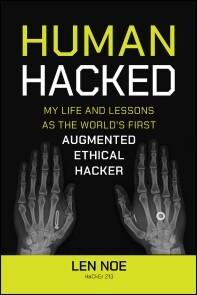
Human Hacked
DISCOVER THE FUTURE OF CYBERSECURITY THROUGH THE EYES OF THE WORLD'S FIRST AUGMENTED ETHICAL HACKERIn Human Hacked: My Life and Lessons as the World's First Augmented Ethical Hacker by Len Noe, a pioneering cyborg with ten microchips implanted in his body, you'll find a startlingly insightful take on the fusion of biology and technology. The author provides a groundbreaking discussion of bio-implants, cybersecurity threats, and defenses. Human Hacked offers a comprehensive guide to understanding an existing threat that is virtually unknown. How to implement personal and enterprise cybersecurity measures in an age where technology transcends human limits and any person you meet might be augmented. The book provides:* Exposure of a subculture of augmented humans hiding in plain sight* Explorations of the frontier of bio-Implants, showing you the latest advancements in the tech and how it paves the way for access to highly restricted technology areas* Discussions of cybersecurity tactics, allowing you to gain in-depth knowledge of phishing, social engineering, MDM restrictions, endpoint management, and more to shield yourself and your organization from unseen threats* A deep understanding of the legal and ethical landscape of bio-implants as it dives into the complexities of protections for augmented humans and the ethics of employing such technologies in the corporate and government sectorsWhether you're a security professional in the private or government sector, or simply fascinated by the intertwining of biology and technology, Human Hacked is an indispensable resource. This book stands alone in its category, providing not just a glimpse into the life of the world's first augmented ethical hacker, but also offering actionable insights and lessons on navigating the evolving landscape of cybersecurity. Don't miss this essential read on the cutting edge of technology and security. LEN NOE is a technical evangelist, white hat hacker, and biohacker for CyberArk Software. He’s an international cybersecurity speaker with 10 digital devices implanted in his body. As a global thought leader in the Transhuman/Human+ movement, he uses his microchip implants to advance cybersecurity and the human experience. Foreword xiiiIntroduction xix1 THE HUMAN YEARS 1The Odyssey 2 2The Commodore 64 4Newb Before It Was a Thing 5Windows into the Corporate World 7A Hacker Is Born 8A Life Divided 9Flesh Is Stronger Than Steel 102 A CHANGE IN DIRECTION 15Into the Light 17Road Warrior 173 SYMBIOTIC ATTACK VECTOR 21Tap-to-Pwn 22My First Attack: Dinner and a Show 284 TRANSHUMANISM: WE WHO ARE NOT AS OTHERS 31A Brief History of Transhumanism 33I, Cyborg 38Bad Intentions 39Notes 425 USING THEIR LAWS AGAINST THEM 43Prepare for Takeoff Seat Backs and Tray Tables 45Obfuscation by Law 476 A TECHNOLOGICAL REBIRTH 51Finding My Techno-shaman 55Honey, We Need to Talk 587 MY FIRST INSTALLS 61Human MFA 63Touching Digital 65Cyberpunk in Downtown Austin 66I Am Machine 71Physical Meets Biological 72Digital Lockpicks 73Magnetic Vision 75My Tools 78Note 808 I AM THE CYBER THREAT 81Mobile Devices 81L3pr@cy Attack 81Fl3$h-H00k Attack 82Implant a Man-in-the-Middle Attack 84Implant Phishing/Smishing Attack 95Implant Automation Attack 99Physical Access 100H@nd-$h@k 3 102Magnetic Tracing 104Notes 1079 LIVING THE TRANSHUMAN LIFE 109VivoKey Chips 109VivoKey Spark 2 109VivoKey Apex 111Cheeseburger Use Cases 112Walletmor 115NeXT Chip and BioMagnet 11610 I’M HACKABLE 119Identity Evolution 120Cultural Significance 121What Is “Acceptable”? 123Am I an Abomination? 124Note 12611 HERE THERE BE GRINDERS 127The PirateBox and PegLeg 127The HakLeg 129HakLeg Antenna 130A Grinder After All 131Why Me? 131Note 13212 CURRENT LIMITATIONS OF TRANSHUMAN TECHNOLOGY 133Cyber Defense Against Humans 135Technological Identification and Mitigation 136Phishing Attack Defense 138Smishing Attack Defense 139MitM Defense 139Technological Work-Life Balance 141Physical Access Attacks 141Specialized K9 Detection 143Notes 14513 THE FUTURE OF TRANSHUMAN TECHNOLOGY 147Brain–Computer Interfaces 148Invasive BCIs 148Early Issues in the Neuralink BCI 149Neuro Rights 150Partially Invasive BCIs 151Noninvasive BCIs 152Smart Devices 153Internal Power 154Sound Power 155Glucose-Powered Metabolic Fuel Cell 155Kinetic Power 156Thermal Power 156Batteries 157AI: A Necessary Evil 158Military Defense/Espionage 159Haptics 161Notes 16214 TRANSHUMAN RIGHTS ARE HUMAN RIGHTS 165Transhuman Discrimination 168The Hypocritic Oath 172Transhuman, but Still Human 173Notes 17515 MY FUTURE AS A TRANSHUMAN 177Final Thoughts 180Notes 182A My Hardware 183NExT 183VivoKey Spark 2 (Cryptobionic) 183flexNExT 184flexM1 “Magic” 1k 185flexEM T 5577 186Titan-Sensing Biomagnet 186Walletmor 187flexDF2 DESFire 188VivoKey Apex 188flexClass (HID iClass) 189B FAQs 191C Resources 195My Body Mechanics 195Organizations, Clubs, and Information Hubs 195Implant Distributors 197GitHub Repos 197Open-Source Tools 197Acknowledgments 199About the Author 201Index 203

The Embedded Project Cookbook
Learn how to create and release an embedded system in a fast and reliable manner. This book will help you build and release a commercially viable product that meets industry standards for quality. The book is not just about code: it covers non-code artifacts such as software processes, requirements, software documentation, continuous integration, design reviews, and code reviews.While specifically targeting microcontroller applications, the processes in this book can be applied to most software projects, big or small. Additionally, the book provides an open-source C++ framework that can be used to quick start any embedded project. This framework has an OSAL (OS Abstraction Layer) and essential middleware that is needed for many embedded systems. Using a hands-on approach of building-and-testing the software application first allows you to develop a significant amount of production quality code even before the hardware is available, dramatically reducing the start-to-release duration for a project.As you follow the recipes in this book, you will learn essential software development processes, perform just in time design, create testable modules, and incorporate continuous integration (CI) into your day-to-day developer workflow. The end-result is quality code that is maintainable and extensible, and can be reused for other projects, even when presented with changing or new requirements._The Embedded Project Cookbook _is focused on the _how_ of developing embedded software. For a discussion of the _why_, readers are invited to refer to the optional companion book _Patterns in the Machine: A Software Engineering Guide to Embedded Development_.WHAT YOU WILL LEARN* Separate software architecture from software design* Write software documents that are intrinsically resistant to going out-of-date.* Identify the processes, workflows, and best practices for the team to follow.* Initiate code reviews before code is checked intoa stable branch.* Design testable modules and implement automated unit testing that doesn’t require hardware.* Incorporate continuous integration into the day-to-day developer workflow, including automated integration testing.* Create a code base that can be reused on other projects.WHO THIS BOOK IS FORMid-level developers and software leads who are looking to get up and running without all the underlying theories. This book is also for professionals looking to learn how to productize a concept or technology and sell the results to a customer.JOHN TAYLOR has been an embedded developer for over 30 years. He has worked as a firmware engineer, technical lead, system engineer, software architect, and software development manager for companies such as Ingersoll Rand, Carrier, Allen-Bradley, Hitachi Telecom, Emerson, and several start-up companies. He has developed firmware for products that include HVAC control systems, telecom SONET nodes, IoT devices, micro code for communication chips, and medical devices. He is the co-author of five US patents and holds a bachelor’s degree in mathematics and computer science.WAYNE TAYLOR has been a technical writer for 27 years. He has worked with companies such as IBM, Novell, Compaq, HP, EMC, SanDisk, and Western Digital. He has documented compilers, LAN driver development, storage system deployment and maintenance, and dozens of low-level and system-management APIs. He also has ten years of experience asa software development manager. He is the co-author of two US patents and holds master’s degrees in English and human factors. He is a co-author of _OS/2 and NetWare Programming_ (Van Nostrand Reinhold, 1995).Chapter 1: Introduction.- Chapter 2: Requirements.- Chapter 3: Analysis.- Chapter 4: Software Development Plan.- Chapter 5: Preparation.- Chapter 6: Foundation.- Chapter 7: Building Applications with the Main Pattern.- Chapter 8: Continuous Integration Builds.- Chapter 9: Requirements Revisited.- Chapter 10: Tasks.- Chapter 11: Just in Time Detailed Design.- Chapter 12: Coding, Unit Tests, and Pull Requests.- Chapter 13: Integration Testing.- Chapter 14: Broad Support Package.- Chapter 15: Drivers.- Chapter 16: Release.- Appendix A: Getting started with the Source Code.- Appendix B: Running the Example Code.- Appendix C: Introduction to the Data Model Architecture.- Appendix D: LHeader and LConfig Patterns.- Appendix E: CPL C++ framework.- Appendix F: LHeader and LConfig Patterns.- Appendix G: Ratt.- Appendix H: GM6000 Requirements.- Appendix I: GM6000 System Architecture.- Appendix J: GM6000 Software Architecture.- Appendix K: GM6000 Software Development Plan.- Appendix L: GM6000 Software Detailed Design.- Appendix M: GM6000 Software Detailed Design.- Appendix N: GM6000 Fuzzy Logic Temperature Control.- Appendix O: Software C/C++ Embedded Coding Standard.- Appendix P: GM6000 Software Requirements Trace Matrix.- Appendix Q: GM6000 Software Bill of Materials.- Appendix R: GM6000 Software Release Notes.
Future Networking Essentials
Explore virtualized networking environments through the Cloud, Edge, and 5G core networks, and their applications. This book covers the primary approaches related to setting up and experimenting with related cloud and networking environments using virtual networks, and virtual network functions.You’ll start by experimenting with future networking environments and learn a variety of Docker basics and essential networking skills. Specifically, containers, networking, volumes, iptables (for Docker environment security) and default orchestration features are discussed to help set up custom cloud, edge, and 5G core networking environments. Hands-on activities related to Docker networking and services features for publishing, scaling, and monitoring of services are also provided. By the end of Part 1, you’ll be able to set up a variety of custom networking environments easily using Docker compose features and secure the set-up using iptables.Part 2 introduces Network Function Virtualization (NFV) architecture, and its roles in Cloud and 5G core networks. You’ll learn to deploy an open source 5G core platform from OpenAirInterface (OAI) using Docker. Then, you’ll set up and evaluate Virtual Network Functions (VNF) over suitable virtual networks. Hands-on activities are featured to guide you through the process of setting up and deploying VNFs such as DHCP, DNS, and proxy servers.Finally, Part 3 discusses key virtual networks such as IP VLANs, MAC VLANs, and overlay networks using Docker cluster setups. You’ll use interesting hands-on activities to easily experiment and learn cloud and 5G core network set-up related virtual networks, overlay networks, and network slicing. When done, you’ll be able to set up a variety of VNFs, carefully deploying VNFs, and conducting slicing activities over Docker cluster setups.WHAT YOU’LL LEARN* Explore Cloud, Edge, and 5G core networking using Docker networking features.* Build and evaluate a variety of virtual networks and deploy Virtual Network Functions (VNFs) and Network Slices using Docker swarm setups.* Set up and deploy an open source 5G core network using Docker for experimenting.* Enhance cloud environment and applications security using linux security features such as Capabilities, Seccomp, and AppArmors.* Develop and evaluate network security experiments using Scapy and Docker networks.WHO THIS BOOK IS FORNetwork engineers, cloud engineers, students, faculty, and cloud and networking researchers.Dr Anil Kumar Rangisetti received his PhD in the field of computer science and engineering from IIT Hyderabad. He has nearly 10 years of teaching and research experience in computer science and engineering. During his career, he worked at prestigious Indian institutions such as IIIT Dharwad, SRM-AP, and GMR, and worked at MNC such as ARICENT, IRL-Delhi. Currently he is working as Assistant Professor in the Department of CSE, IIITDM Kurnool.Broadly his research interests include Wi-Fi, Next Generation Mobile Networks, SDN, NFV, and Cloud computing. He published a number of novel research publications with IEEE, Springer, Elsevier, Wiley in the field of a variety of networking technologie such as Wi-Fi, 4G/5G, SDN , NFV and Cloud technologies. He guided a significant number of undergraduate and postgraduate students for project works. Besides research activities, he is interested in writing books on computer science technologies and programming languages.Part 1: Docker Basics and Networking.- Chapter 1: Getting started with Future Networking Environments.- Chapter 2: Exploring Docker Networking features.- Chapter 3: Setting up realistic networking scenarios.- Part 2: Network Function Virtualization and Virtual Networks Basics.- Chapter 4: Virtualizing network functions in cloud and telecom core networks.- Chapter 5: Experiment with VNFs over Docker Containers.- Chapter 6: Importance of virtual networks in cloud and telecom networks.- Part 3: Cloud and Networking Security.- Chapter 7: Learning Docker Security for experimenting with Cloud Security.- Chapter 8: Explore Scapy for experimenting with networking environments security.- Chapter 9: Recreating and analyzing realistic network security scenarios.

Software Testing for Managers
Software leaders, directors, and managers of all types need to know about software testing. It can be a tough climb up the mountain of technical jargon. Engineers seem to be speaking a language all their own sometimes. Most books on testing are deep in the weeds with technical terms and techniques that simply aren’t applicable even to technical managers.This book provides a high-level perspective on broad topics in a friendly, easy-to-absorb style. Get started and up to speed quickly with immediately useful, actionable guidance. Guidance on team structure, best practices and even common pitfalls will save you time and money, while automation and code reuse will provide exponential value.There’s a gap of knowledge between engineers and their managers; they are almost speaking different languages and the jargon can be confusing. There’s a lot to know about the world of testing. Test from the Top delivers quick, concise guidance to bridge the gap! It offers clear, actionable steps and is a must have for busy leaders who need quick answers.WHAT YOU WILL LEARN:* How and where to integrate testing in the software development lifecycle* Testing terminology and concepts from a management perspective* Common pitfalls of testing, how to avoid wasted time* How to hire test-aware teams* The value in reusing test code for more generalized automationWHO THIS BOOK IS FOR:Software managers, Lead Software Engineers, Tech Directors, CTOs, Project Managers, software leaders of all kinds. These leaders understand the value of testing, but have not yet built out extensive automation or team structure. Either new to testing concepts or modernizing systems or looking to improve software quality. Assumed to have a working knowledge of the Software Development Lifecycle and basic project management (no specific methodology required).Ross Radford is the founder of TestfromtheTop.com and is on a mission to bring test awareness to leadership. He has spent a career developing and testing enterprise level software for huge projects serving millions of users. No matter the size of the organization, if you’re building software, testing is crucial. Leaders are in a unique position to unblock and prioritize quality assurance at every level. Personally, as a software professional, testing has been a deep interest motivated by improving craft and quality. Radford developed knowledge sharing presentations for peers and conference talks, with the common feedback from software engineers: “This is great. Now convince my boss!” He set out to do just that.Chapter 1: Test Awareness.- Chapter 2: Test Driven Development vs. Test During Development.- Chapter 3: Quality _and _Assurance.- Chapter 4: Specification.- Chapter 5: Automation Reuse.- Chapter 6: Coverage.- Chapter 7: Security.- Chapter 8: Conclusion.- Chapter 9: Pitfalls.

Security and Privacy for Modern Networks
This book reviews how to safeguard digital network infrastructures, emphasizing on the latest trends in cybersecurity. It addresses the evolution of network systems, AI-driven threat detection, and defense mechanisms, while also preparing readers for future technological impacts on security. This concise resource is essential to understanding and implementing advanced cyber defense strategies in an AI-integrated world.Readers are provided with methods and tips on how to evaluate the efficacy, suitability, and success of cybersecurity methods and AI/machine learning applications to safeguard their networks. Case studies are included; with examples of how security gaps have led to security breaches and how the methods discussed in the book would help combat these.This book is intended for those who wish to understand the latest trends in network security. It provides an exploration of how AI is revolutionizing cyber defense, offering readers from various fields including insights into strengthening security strategies. With its detailed content, the book empowers its audience to navigate complex regulations and effectively protect against a landscape of evolving cyber threats, ensuring they are well-equipped to maintain robust security postures within their respective sectors.WHAT YOU WILL LEARN:* The transformative role AI plays in enhancing network security, including threat detection, pattern recognition, and automated response strategies.* Cutting-edge security protocols, encryption techniques, and the deployment of multi-layered defense systems for robust network protection.* Insights into vulnerability assessments, risk analysis, and proactive measures to prevent and mitigate cyber threats in modern network environments.WHO THIS BOOK IS FOR:IT professionals and network administrators, cybersecurity specialists and analysts, students and researchers in computer science or cybersecurity programs, corporate decision-makers and C-level executives responsible for overseeing their organizations' security posture. Also security architects and engineers designing secure network infrastructures, government and defense agency personnel tasked with protecting national and organizational cyber assets. Finally technology enthusiasts and hobbyists with a keen interest in cybersecurity trends and AI developments and professionals in regulatory and compliance roles requiring an understanding of cybersecurity challenges and solutions.SESHAGIRIRAO LEKKALA, A seasoned Cloud and Network Security expert, brings a potent combination of an Electrical and Electronics Engineering degree with 16 years of robust experience in architecting software solutions for the telecommunications industry. Renowned for his expertise in engineering highly scalable, distributed networking solutions tailored for Cloud and AI technologies, his strategic insights and architectural ingenuity have been critical in generating multi-billion-dollar revenue for industry giants. His groundbreaking inventions in SD-WAN and adaptive traffic engineering established him as a leading figure in the field.His commitment extends beyond technical mastery; he actively fosters the professional development of emerging talent through mentorship and contributes to the industry's body of knowledge through his scholarly articles. His influence is recognized in both academic and professional circles, as he regularly serves as a judge at various national and international events, including startup pitches and hackathons, which affirms his reputation as a reliable and prominent leader in Network SecurityPRIYANKA GURIJALA, with over a decade of experience, is a recognized expert in designing robust Cloud Networking Solutions. Holding a Master’s degree in Electrical and Computer Engineering from the University of Maryland, College Park, she has played pivotal roles in driving product success and fostering organizational growth at industry-leading companies. Currently at the forefront of innovation, she applies her expertise in Networking and Artificial Intelligence to advance Azure cloud infrastructure capabilities. She has made significant contributions in the fields of secure network configuration and remote management. She excels in translating visionary concepts into practical solutions, rigorously evaluating functionality, and refining technologies to align with industry standards, demonstrating her steadfast commitment to technological progress.Chapter 1: Introduction to Modern network Systems.- Chapter 2: Building Blocks of Network Security.- Chapter 3: Navigating the Cyber Threat Landscape.- Chapter 4: Cryptography: The Backbone of Secure Communications.

Autonomous Data Security
This book focuses on analyzing the foundational requirements necessary to construct an autonomous data protection solution for enterprise businesses. It navigates readers through various options and tools, outlining the advantages and disadvantages of each. Covering diverse deployment environments including cloud, on-premises, and hybrid setups, as well as different deployment scales and comprehensive channel coverages, it encourages readers to break away from conventional norms in their approach.By exploring the factors that should be taken into account, the book highlights the significant gap in existing data safeguarding solutions, which often rely solely on configured security policies. It proposes a forward-thinking security approach designed to endure over time, surpassing traditional policies and urging readers to consider proactive autonomous data security solutions. Additionally, it delves into the system's ability to adapt to deployed environments, learn from feedback, and autonomously safeguard data while adhering to security policies.More than just a set of guidelines, this book serves as a catalyst for the future of the cybersecurity industry. Its focus on autonomous data security and its relevance in the era of advancing AI make it particularly timely and essential.WHAT YOU WILL LEARN:* Understand why data security is important for enterprise businesses.* How data protection solutions work and how to evaluate a solution in the market.* How to start thinking and evaluating requirements when building a solution for small, medium, and large enterprises.* Understand the pros and cons of security policy configurations defined by administrators and why can’t they provide comprehensive protection.* How to safeguard data via adaptive learning from the deployed environment – providing autonomous data security with or without policies.* How to leverage AI to provide data security with comprehensive proactive protection.* What factors to consider when they have to protect and safeguard data.WHO THIS BOOK IS FOR:The primary audience is cybersecurity professionals, security enthusiasts, C-level executives in organizations (all verticals), and security analysts and IT administrators. Secondary audience includes professors and teachers, channel integrators, professional services, and hackers.PRIYANKA NEELAKRISHNAN is a distinguished data security expert with over a decade of experience in building world-class data protection solutions. Her illustrious career includes pivotal roles at renowned cybersecurity firms such as Palo Alto Networks and Symantec, where she has consistently driven innovation and excellence.As the Product Line Manager at Palo Alto Networks, Priyanka has been instrumental in conceptualizing, designing, and launching transformative cybersecurity products. Her efforts have led to the widespread adoption of advanced information protection solutions, significantly enhancing enterprise security. During her tenure at Symantec (now Broadcom), Priyanka spearheaded initiatives in on-prem, cloud, and hybrid data protection, notably developing the industry's first cloud data protection solution tailored for large enterprise customers. This groundbreaking solution encompassed all major cloud channels, including Email, Web, and Applications, and featured patented content detection technologies.Recognized as a go-to authority in the field of data protection, Priyanka is highly regarded for her mentoring capabilities and expertise across a wide range of data security topics. She is also a renowned speaker and independent researcher, contributing extensively to the advancement of the cybersecurity field. Her innovative products and strategic insights have earned her leadership and excellence awards, underscoring her significant contributions to the cybersecurity landscape.Chapter 1: Introduction, Data Security, and Fundamental Requirements.- Chapter 2: Tradition Data Security.- Chapter 3: Thinking Outside Norms.- Chapter 4: Policy-Less Data Security.- Chapter 5: AI Driven Data Security.- Chapter 6: Conclusion and Design For the Future.- Chapter 7: Future Ready Data Security.

Computers For Seniors For Dummies
BECOME A TECH-SAVVY COMPUTER USER, THE BEGINNER-FRIENDLY WAYComputers For Seniors For Dummies gives you the confidence you need to connect with friends and explore the internet all from the comfort of your couch. This step-by-step guide walks you through the basics of buying and setting up a computer, working with Windows or Mac, and getting online. With large print and clear figures, you'll learn essential tasks like emailing, browsing the internet, creating and viewing digital photos, and staying safe from hackers and viruses. In no time you'll be shopping online and video calling family from across the country.* Get advice on purchasing a reliable, budget-friendly computer, along with accessories like printers* Create formatted documents and spreadsheets and share them with others* Organize and share family photos* Watch movies and listen to music online* Stay safe online, with tips to avoid hackers, scammers, and identity theft* Shop online for everything from groceries to life insuranceThose older and wiser who need help getting started with computers will love this no-nonsense For Seniors For Dummies guide. FAITHE WEMPEN, M.A., CompTIA A+, has spent the last 35+ years as an information technology instructor and learning designer. She designs and creates technology courses for online universities, and is the author of over 160 books, including Office for Seniors for Dummies and Outlook for Dummies. Introduction 1PART 1: GET GOING! 5Chapter 1: Buying a Computer 7Chapter 2: Setting Up Your Computer 37Chapter 3: Buying and Setting Up a Printer 65PART 2: GETTING UP TO SPEED WITH WINDOWS 79Chapter 4: Working with Apps in Windows 81Chapter 5: Managing Your Personal Files 109Chapter 6: Making Windows Your Own 133PART 3: GOING ONLINE 151Chapter 7: Getting Connected to the Internet 153Chapter 8: Browsing the Web 167Chapter 9: Staying Safe While Online 189Chapter 10: Keeping in Touch with Email 209Chapter 11: Working in the Cloud 229Chapter 12: Connecting with People Online 247Chapter 13: Exploring Artificial Intelligence 263PART 4: HAVING FUN 273Chapter 14: Let’s Play a Game! 275Chapter 15: Viewing and Creating Digital Photos and Videos 289Chapter 16: Listening to Music on Your PC 309PART 5: WINDOWS TOOLKIT 323Chapter 17: Working with Networks 325Chapter 18: Protecting Windows 341Chapter 19: Maintaining Windows 353Index 369

Ritsch + Renn. Die besten IT-Cartoons aus 25 Jahren
Ritsch + Renn. Die besten IT-Cartoons aus 25 Jahren.Die IT-Welt steckt voller Absurditäten: Computer, die mehr Arbeit machen, als sie uns abnehmen, Technik, die nervt, anstatt zu begeistern, und dann noch Smartphones, die fragen, ob man ein Roboter ist. Ritsch und Renn bieten eine kurze Pause vom alltäglichen IT-Wahnsinn und nehmen die Welt der Technik auf humorvolle Weise unter die Lupe. Ob selbstfahrende Autos, die ihre Insassen an der Raststätte vergessen haben, Sticheleien gegen die Verschlimmbesserungen der neuesten Windows-Version oder sogar Gott beim Online-Shopping, all das haben Ritsch und Renn in den „Schlagseiten“ des Computermagazins c't festgehalten. Mal kurios, mal völlig absurd, mal nah an der Realität, aber immer lustig. In diesem Buch finden Sie eine Sammlung der besten Cartoons aus 25 Jahren „Schlagseiten“ mit exklusivem, unveröffentlichtem Material, Skizzen und Hintergrundinfos.Abschalten und loslachen1. Witzig, absurd, einfach zum LachenVon Admins, Windows und überhitzten PCs bis zu Smartphones, Social Media und KI, gibt es kein Thema, zu dem Ritsch und Renn keine Pointe haben.2. 25 Jahre SchlagseitenDie Schlagseiten haben mehr zu bieten als nur witzige Pointen. Die Cartoons von Ritsch und Renn sind auch ein Abbild von 25 Jahren IT-Geschichte.3. Neues unveröffentlichtes MaterialMit Skizzen und Hintergrundinfos geben die beiden Cartoonisten einen spannenden Einblick in ihre Arbeit.25 Jahre Ritsch und RennEine Auswahl der lustigsten WerkeÜber 150 CartoonsZeitreise durch 25 Jahre IT-HumorEin Blick in die WerkstattFür IT-Profis, Nerds und alle, die am digitalen Alltag Spaß habenÜber die Autoren: Harald Ritsch ist ein international erfolgreicher Illustrator. Begonnen hat er mit dem Zeichnen von Comics und Cartoons, einer Leidenschaft, die er heute noch mit seinem Kompagnon Marcus Renn, einem Texter und Konzeptentwickler, begeistert auslebt.Marcus Renn ist ein leidenschaftlicher Ideenentwickler, Texter, Mediendesigner, Humorist und Universitätslektor in Wien.
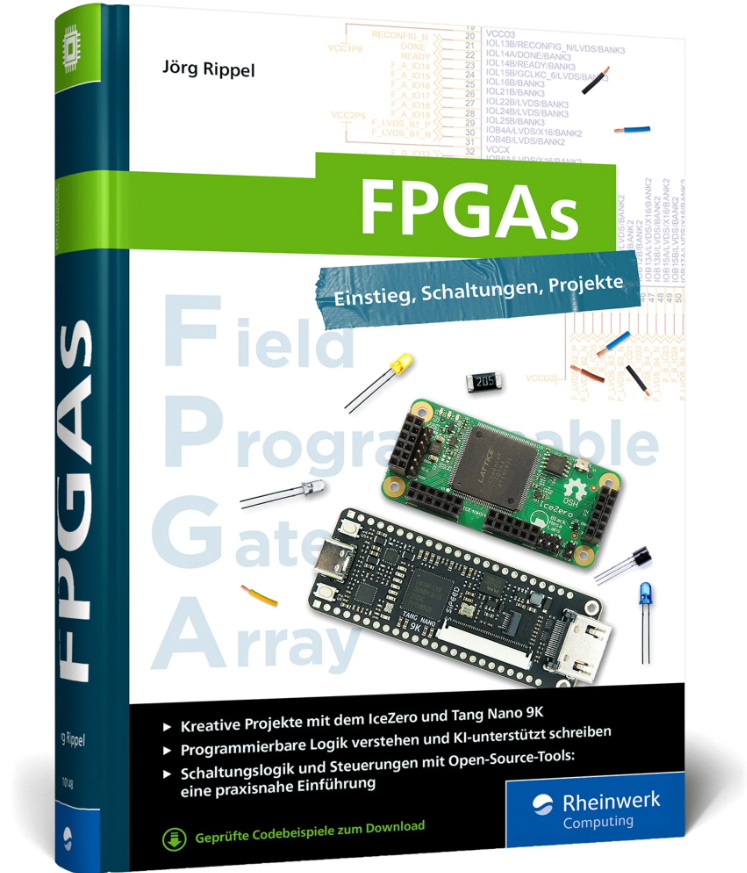
FPGAs - Einstieg, Schaltungen, Projekte
FPGAs. Einstieg, Schaltungen, Projekte.Field Programmable Gate Arrays – kurz FPGAs – sind die ideale Basis für anspruchsvolle Maker-Projekte. Dank effizienter Parallelverarbeitung und hoher Flexibilität lassen sich mit diesen frei programmierbaren Logikbausteinen komplexe digitale Schaltungen mühelos realisieren.In diesem Praxisbuch zeigt Ihnen Jörg Rippel anhand kreativer Beispielprojekte mit den benutzerfreundlichen FPGAs von Lattice und Gowin Semiconductor, wie Sie Ideen schnell umsetzen. Durch den Einsatz einer Chat-KI generieren Sie ohne Vorkenntnisse den benötigten Verilog-Code. Im Handumdrehen basteln Sie Lichteffekte oder Animationsanzeigen, verarbeiten Sensordaten und realisieren Ihr persönliches Traumprojekt.FPGAs für Maker und Kreative1. Alles für den EinstiegDieser Leitfaden stellt Ihnen das IceZero-Board mit dem iCE40HX FPGA von Lattice Semiconductor sowie das Sipeed Tang Nano 9K Board mit dem Gowin GW1NR-9C FPGA im Detail vor. Sie richten sich eine passende Raspberry-Pi-Entwicklungsumgebung mit Open-Source-Toolchain ein und lernen alle Grundlagen für die Arbeit mit programmierbarer Logik.2. Programmieren mit KIDie Hardwarebeschreibungssprache Verilog können Sie in 50 bis 100 Stunden erlernen – oder Sie lassen sich von ChatGPT oder GitHub Copilot für den Einstieg unterstützen. Jörg Rippel zeigt Ihnen, wie Sie künstliche Intelligenz nutzen, um blitzschnell Code zu erstellen, der Ihrem FPGA-Design Leben einhaucht.3. Setzen Sie Ihr Traumprojekt umMit FPGAs können Sie viel mehr machen als nur LEDs blinken lassen. Die vielen Beispielprojekte, Anleitungen, Praxishinweise und Verilog-Codebeispiele helfen Ihnen, um Ihr ganz persönliches Traumprojekt umzusetzen. Mit dabei: Zugriff auf Displays, Sensoren, SPI- und I2C-Schnittstellen, die Arbeit mit Zufallszahlen, Testbenches und Simulationen und einer lizenzfreien Entwicklungsumgebung .Aus dem InhaltGrundlagen der FPGAs und hardwarenahen ProgrammierungEffizientes Pairprogramming mit künstlicher Intelligenz wie ChatGPTPraxisnaher Einstieg: FPGAs programmieren und die Toolchain beherrschenAnbindung und Verarbeitung von Sensordaten über gängige SchnittstellenInteraktive Steuerung und Kommunikation über serielle VerbindungenSteuern von Displays, RGB-LEDs und vielfältigen AusgabenTestbenchsysteme entwickeln zum Simulieren und DebuggenEinrichten der Open-Source-Entwicklungsumgebung auf dem Raspberry PiLeseprobe (PDF-Link)Über den AutorDas Basteln mit elektronischen Geräten gehörte schon immer zu Jörg Rippels Hobbys. Privat beschäftigt er sich gerne mit Mikrocontroller- und Mikrocomputing-Projekten, beruflich hat er mehr als 20 Jahre in verschiedenen IT-Unternehmen und in der Luft- und Raumfahrtindustrie gearbeitet.Als Systemingenieur lag sein Schwerpunkt auf der Zusammenführung und Pflege komplexer Systeme, die aus vielen verschiedenen technischen Bereichen bestehen. Heute lebt er mit seiner Frau im Grünen und schraubt gerne an kreativen Projekten, wobei es auch immer mal wieder Probleme gibt und nicht immer alles beim ersten Versuch funktioniert. Trotzdem – oder gerade deswegen – macht ihm die Arbeit mit Elektronik immer Spaß. Sein Wissen teilt er in Fachbüchern und Beiträgen. Ausbildungen und Studiengänge in Elektronik, Funktechnik und Informatik haben dafür gesorgt, dass er ein breites Wissen zu allerlei elektrischen Geräten hat. Dazu gehören die Erstellung von analogen und digitalen Robotern, der Bau von Computern, das Betreiben von Amateurfunk und Satellitenfunk, das Design von Schaltungen und Platinenlayouts, die Arbeit mit 8- und 32-Bit-Mikrocontrollern und die Programmierung in verschiedenen Sprachen.
Home Assistant (2. Auflg.)
Home Assistant ist Ihr Begleiter auf dem Weg zum eigenen Smart Home. Im Handumdrehen integrieren Sie Geräte und Dienste in Ihr System und automatisieren Schaltungen und Szenen ganz nach Ihren Bedürfnissen. Udo Brandes beschreibt alle Schritte, die Sie für Ihr eigenes Smart Home benötigen, von der Einrichtung über die Verwaltung bis hin zur Automatisierung. So erfahren Sie in übersichtlichen Kapiteln zum Nachschlagen, wie Sie den Home Assistant um Datenbank- und Programmiermöglichkeiten erweitern, mit ESPHome eigene Schalter und Sensoren einbinden und daraus ein Komplettpaket für die Heimautomation schnüren.Neu in der 2. Auflage: Ein Ausblick auf den neue Matter-Standard zur Heimautomation und die Einrichtung einer Home-Assistant-Installation auf Proxmox.Aus dem InhaltDas Setup und der erste Start: das Webinterface von Home AssistantHome Assistant administrierenGeräte, Dienste, EntitätenAutomatisierungen mit Szenen, Skripten und VorlagenDashboards, Apps und externer ZugriffMedien und SprachdiensteBereiche und ZonenWerkzeuge und HelferDatenspeicherung mit MariaDB und InfluxDBSonoff, Tasmota, Shelly, Matter und Tuya integrierenProgrammierung mit Node-REDEigene Geräte mit ESPHome Leseprobe (PDF)Über den Autor:Udo Brandes ist selbständiger Programmierer, IT-Entwickler und Autor. Die Möglichkeiten der Mikrocontrollerprogrammierung sind Zukunftsthemen, die ihn faszinieren und mit deren Chancen und Risiken er sich seit langem intensiv befasst.
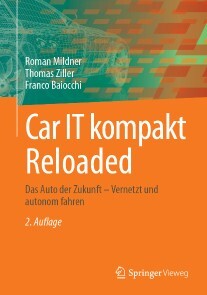
Car IT kompakt Reloaded
Die vielen neuen Funktionen, die im vernetzten Auto Realität werden, finden Sie in diesem Buch übersichtlich beschrieben. Dabei geht es von der Einbindung von Google und Facebook bis hin zu Diensten, die Ihnen helfen Ihren Parkplatz wiederzufinden, per App Ihr Auto einzuparken oder das Sonnendach aus der Ferne zu schließen, wenn es regnet.Als Ziel dieser Entwicklung wird das autonome Fahren definiert inklusive aktueller Entwicklungen, Implementierungsvarianten und den wesentlichen Herausforderungen bezüglich der Sicherheit und Rechtslage. Das Buch gibt darüber hinaus Auskunft zu notwendigen Qualitätsstandards in der Entwicklung komplexer Fahrzeug-IT-Systeme.Zum Abschluss werden die Auswirkungen auf Wirtschaft, Gesellschaft und Politik beschrieben. Dabei werden speziell Fahrzeugnutzer sowie Fahrzeughersteller und ihre Lieferanten berücksichtigt.ROMAN MILDNER ist Berater, Projektmanager und Buchautor für die Themen Projektorganisation und Prozessqualität in der Automobilindustrie.THOMAS ZILLER ist Projektmanager, der zudem sein umfassendes Wissen als Dozent an der Fachhochschule Heilbronn weitergibt.FRANCO BAIOCCHI ist ein Intacs™-zertifizierter Competent Assessor und Projektmanager, der seit 2021 als selbstständiger Berater wirkt.Fahrzeugindustrie zwischen Tradition und Innovation.- Das autonome Fahren.- Das vernetzte Fahrzeug.- Automobile Qualität.- Herausforderung automobiles Projektmanagement.- CORE SPICE.- Automobile Strategie im Fokus.- Automobile Zukunft.

Angular for Kids
Welcome to the book “Angular for Kids: Start your Coding Adventure”. This book is your introduction to the world of Angular. It's your first step towards developing websites and mobile applications. With Angular, you can turn your ideas into reality. Learning should be fun, so you will feel like you are reading a story. By the end of this book, you will have a good understanding of Angular. You will have taken the first steps in your modern web programming adventure. Have fun programming! Hello, I am Abdelfattah Ragab, a professional software developer with more than 20 years of experience. I am an expert in Angular, CSS, graphic design and all web related technologies. I have published numerous books on modern CSS layouts and Angular as well as complete business solutions for e-commerce and the like. I hope you enjoy my books. With kind regards.
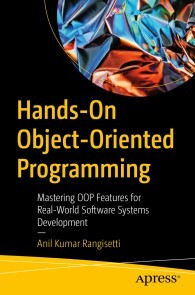
Hands-On Object-Oriented Programming
Learn how to easily design and implement a software system using object-oriented programming. Through hands-on activities, this book equips you with the real-world practice needed to master OOP skills that can be applied universally across any programming language.This book is dedicated to bridging the gap between theoretical concepts and practical implementation in software development using OOP. Readers will first understand the importance of OOP in handling software complexities before learning how to model real-world problems through access control, extendible object design, and object relationships. Specifically, the author discusses how to use inheritance, association, and polymorphism concepts for implementing reusable and easy-to-use complex software. More importantly, this book covers design patterns and event-driven programming for learning how to model complex interactions among various objects of the software system to implement various use cases.Unlike existing books on OOP which teach syntax and semantics through standard examples, this book leverages an immersive learning experience through a variety of real-world use cases, applications, games, and system software. While written in C++, the skills can be applied to any OOP language of the reader's preference. The book's last chapters will quickly introduce Python and Solidity languages for learning advanced technologies. By the end, novice and seasoned developers will know how to implement practical and reusable software systems with confidence.WHAT YOU WILL LEARN* Apply OOP concepts through real-time use cases: games, applications software (online shopping, reservations, etc.), system software (protocols, simulators, etc.), and modeling and implementation using C+* Design and implement reusable and extendible software with OOP* Understand the importance of design patterns and learn how to use them for solving real-time issues* Use event-driven programming for implementing complete interactions of complex application software, system software, and simulators* Implement OOP using C++ features and discover Python and Solidity constructs for OOPWHO THIS BOOK IS FORBeginners and intermediate software developers with basic programming knowledge to quickly learn OOP concepts with C++. Advanced users will find it useful for quickly exploring best-design principles, patterns, and event-driven programming for implementing complex software systems.DR. ANIL KUMAR RANGISETTI received his PhD in the field of computer science and engineering from IIT Hyderabad. He has 10 years of teaching and research experience in computer science and engineering. During his career, he worked at prestigious Indian institutions such as IIIT Dharwad, SRM-AP, and GMR, and worked at software development and research labs such as ARICENT, IRL-Delhi. Currently he is working as Assistant Professor in the Department of CSE, IIITDM Kurnool. He trained the students in OOP languages, and how to use advanced simulators (NS-3), Docker, and Networking tools for researching and developing applications at his work places. He guided a significant number of undergraduate and postgraduate students for project works.Broadly, his research interests include Wi-Fi technologies, Next Generation Mobile Networks, SDN, NFV, and Cloud Computing. Besides research activities, he is interested in writing and reviewing books on computer science technologies and programming languages. He published a number of novel research publications with IEEE, Springer, Elsevier, and Wiley in the field of a variety of networking technologies such as LTE, SDN and NFV, and Wi-Fi technologies. He authored a book titled _Advanced Network Simulations Simplified._Chapter 1: Importance of Object Oriented Programming.- Chapter 2: Start Learning OOP Using C++.- Chapter 3: Systematically Starting and Stopping Software Objects.- Chapter 4: Exploring Important C++ Features.- Chapter 5: Quickly and Systematically Model Real-World Problems into Software.- Chapter 6: Quick Software Development using OOP.- Chapter 7: Easy to Use Software Development Using OOP.- Chapter 8: Learning the Design Patterns.- Chapter 9: Learning Event Driven Programming.- Chapter 10: Quick Introduction to Python and Solidity Ways of OOP.

Advanced ASP.NET Core 8 Security
Most .NET developers do not incorporate security best practices when creating websites. The problem? Even if you use all of the best practices that the ASP.NET team recommends, you are still falling short in several key areas due to issues within the framework itself. And most developers don’t use all of the best practices that are recommended.If you are interested in truly top-notch security, available sources don’t give you the information you need. Most blogs and other books simply state how to use the configurations within ASP.NET, but do not teach you security as understood by security professionals. Online code samples aren't much help because they are usually written by developers who aren’t incorporating security practices.This book solves those issues by teaching you security first, going over software best practices as understood by security professionals, not developers. Then it teaches you how security is implemented in ASP.NET. With that foundation, it dives into specific security-related functionality and discusses how to improve upon the default functionality with working code samples. And you will learn how security professionals build software security programs so you can continue building software security best practices into your own Secure Software Development Life Cycle (SSDLC).WHAT YOU’LL LEARN* Know how both attackers and professional defenders approach web security* Establish a baseline of security for understanding how to design more secure software* Discern which attacks are easy to prevent, and which are more challenging, in ASP.NET* Dig into ASP.NET source code to understand how the security services work* Know how the new logging system in ASP.NET falls short of security needs* Incorporate security into your software development processWHO THIS BOOK IS FORSoftware developers who have experience creating websites in ASP.NET and want to know how to make their websites secure from hackers and security professionals who work with a development team that uses ASP.NET. To get the most out of this book, you should already have a basic understanding of web programming and ASP.NET, including creating new projects, creating pages, and using JavaScript.TOPICS THAT ARE NEW TO THIS EDITIONThis edition has been updated with the following changes:* Best practices and code samples updated to reflect security-related changes in ASP.NET 8* Improved examples, including a fully-functional website incorporating security suggestions* Best practices for securely using Large Language Models (LLMs) and AI* Expansions and clarifications throughoutSCOTT NORBERG is a web security specialist with almost 20 years of experience in various technology and programming roles, specializing in web development and web security using Microsoft technologies. He has a wide range of experiences in security, from working with development teams on secure code techniques, to software security assessments, and application security program building. He also has an interest in building plug-and-play software libraries that developers can use to secure their sites with little-to-no extra effort.Scott holds several certifications, including Microsoft Certified Technology Specialist (MCTS), and certifications for ASP.NET and SQL Server. He also holds two certifications from ISC2, (Certified Information Systems Security Professional (CISSP) and Cloud Certified Security Professional (CCSP)) and an MBA from Indiana University.Scott is the Founder and President of Opperis Technologies LLC, a firm dedicated to helping small- to mid-sized businesses write more secure software. His latest project is CodeSheriff.NET, an open-source security scanner for ASP.NET Core, which can be found on GitHub at ScottNorberg-NCG/CodeSheriff.NET.Chapter 1: Intro to Security.- Chapter 2: Software Security Overview.- Chapter 3: Web Security.- Chapter 4: Thinking Like a Hacker.- Chapter 5: Introduction to ASP.NET Core Security.- Chapter 6: Cryptography.- Chapter 7: Processing User Input.- Chapter 8: Data Access and Storage.- Chapter 9: Authentication and Authorization.- Chapter 10: Advanced Web Security.- Chapter 11: Logging and Error Handling. Chapter 12: Setup and Configuration. - Chapter 13: Secure Software Development Life Cycle. (SSDLC).

Advanced interactive interfaces with Access
Explore and learn advanced techniques for working with graphical, interactive interfaces that can be built in Access.This book starts with best practices and tips to write code using VBA, and covers how to implement them in a real-world scenario. You will learn how to create and use VBA classes. An introduction to the binary code and the "bit vector" technique is discussed, followed by the implementation of a drag-and-drop engine. You also will learn how to design a timeline, and make it scrollable.WHAT YOU WILL LEARN* Write readable, easy-to-maintain code* Add a drag-and-drop engine to an Access application* Apply variations to the drag-and-drop technique to create different graphical effects* Embed a scrollable timeline in an Access application, on which objects can be dynamically placedWHO THIS BOOK IS FORVBA developersALESSANDRO GRIMALDI was born in Rome, Italy, where he first approached the computer world in 1982. He has been a professional VBA developer since 1998. For several years Alessandro consulted for the World Food Programme (WFP), a major United Nations agency for which he worked in Afghanistan, North Korea, Ethiopia, and Italy. He has also worked in Vienna, Austria for the CTBTO, another UN agency. Since 2014 he has lived in Frankfurt, Germany, and where he worked for the European Central Bank for about five years. In all these places he has developed VBA tools, ranging from simple automation tools to complex, multi-user, distributed, enterprise-level applications.In recent years, Alessandro has produced several videos about the drag-and-drop and the scrolling timeline, and delivered live workshops and presentations explaining these techniques. He has an online VBA shop (AlessandroGrimaldi.com/Shop) where he sells VBA tutorials, workshops, and tools. He also has a YouTube channel (@AlxGrim) where he publishes VBA-related videos.Introduction.- Chapter 1 - Writing code: good practices and tips.- Chapter 2 - VBA classes.- Chapter 3 - The presence vector technique.- Chapter 4 - Advanced interfaces: Drag and Drop.- Chapter 5 - Advanced interfaces: Scrollable timeline.- Conclusion.

Deep Reinforcement Learning and Its Industrial Use Cases
THIS BOOK SERVES AS A BRIDGE CONNECTING THE THEORETICAL FOUNDATIONS OF DRL WITH PRACTICAL, ACTIONABLE INSIGHTS FOR IMPLEMENTING THESE TECHNOLOGIES IN A VARIETY OF INDUSTRIAL CONTEXTS, MAKING IT A VALUABLE RESOURCE FOR PROFESSIONALS AND ENTHUSIASTS AT THE FOREFRONT OF TECHNOLOGICAL INNOVATION.Deep Reinforcement Learning (DRL) represents one of the most dynamic and impactful areas of research and development in the field of artificial intelligence. Bridging the gap between decision-making theory and powerful deep learning models, DRL has evolved from academic curiosity to a cornerstone technology driving innovation across numerous industries. Its core premise—enabling machines to learn optimal actions within complex environments through trial and error—has broad implications, from automating intricate decision processes to optimizing operations that were previously beyond the reach of traditional AI techniques. “Deep Reinforcement Learning and Its Industrial Use Cases: AI for Real-World Applications” is an essential guide for anyone eager to understand the nexus between cutting-edge artificial intelligence techniques and practical industrial applications. This book not only demystifies the complex theory behind deep reinforcement learning (DRL) but also provides a clear roadmap for implementing these advanced algorithms in a variety of industries to solve real-world problems. Through a careful blend of theoretical foundations, practical insights, and diverse case studies, the book offers a comprehensive look into how DRL is revolutionizing fields such as finance, healthcare, manufacturing, and more, by optimizing decisions in dynamic and uncertain environments. This book distills years of research and practical experience into accessible and actionable knowledge. Whether you’re an AI professional seeking to expand your toolkit, a business leader aiming to leverage AI for competitive advantage, or a student or academic researching the latest in AI applications, this book provides valuable insights and guidance. Beyond just exploring the successes of DRL, it critically examines challenges, pitfalls, and ethical considerations, preparing readers to not only implement DRL solutions but to do so responsibly and effectively. AUDIENCEThe book will be read by researchers, postgraduate students, and industry engineers in machine learning and artificial intelligence, as well as those in business and industry seeking to understand how DRL can be applied to solve complex industry-specific challenges and improve operational efficiency. SHUBHAM MAHAJAN, PHD, is an assistant professor in the School of Engineering at Ajeekya D Y Patil University, Pune, Maharashtra, India. He has eight Indian, one Australian, and one German patent to his credit in artificial intelligence and image processing. He has authored/co-authored more than 50 publications including peer-reviewed journals and conferences. His main research interests include image processing, video compression, image segmentation, fuzzy entropy, and nature-inspired computing methods with applications in optimization, data mining, machine learning, robotics, and optical communication. PETHURU RAJ, PHD, is chief architect and vice president at Reliance Jio Platforms Ltd in Bangalore, India. He has a PhD in computer science and automation from the Indian Institute of Science in Bangalore, India. His areas of interest focus on artificial intelligence, model optimization, and reliability engineering. He has published thirty research papers and edited forty-two books. AMIT KANT PANDIT, PHD, is an associate professor in the School of Electronics & Communication Engineering Shri Mata Vaishno Devi University, India. He has authored/co-authored more than 60 publications including peer-reviewed journals and conferences. He has two Indian and one Australian patent to his credit in artificial intelligence and image processing. His main research interests are image processing, video compression, image segmentation, fuzzy entropy, and nature-inspired computing methods with applications in optimization. Preface 1. Deep Reinforcement Learning Applications in Real-World Scenarios: Challenges and OpportunitiesSunilkumar Ketineni and Sheela J.2. Deep Reinforcement Learning: A Key to Unlocking the Potential of Robotics and Autonomous SystemsSaksham and Chhavi Rana3. Deep Reinforcement Learning Algorithms: A Comprehensive OverviewShweta V. Bondre, Bhakti Thakre, Uma Yadav and Vipin D. Bondre4. Deep Reinforcement Learning in Healthcare and Biomedical ApplicationsBalakrishnan D., Aarthy C., Nandhagopal Subramani, Venkatesan R. and Logesh T. R.5. Application of Deep Reinforcement Learning in Adversarial Malware DetectionManju and Chhavi Rana6. Artificial Intelligence in Blockchain and Smart Contracts for Disruptive InnovationEashwar Sivakumar, Kiran Jot Singh and Paras Chawla7. Clinical Intelligence: Deep Reinforcement Learning for Healthcare and Biomedical AdvancementsKeerthika K., Kannan M. and T. Saravanan8. Cultivating Expertise in Deep and Reinforcement Learning PrinciplesChilakalapudi Malathi and J. Sheela9. . Deep Reinforcement Learning in Healthcare and Biomedical ResearchShruti Agrawal and Pralay Mitra10. Deep Reinforcement Learning in Robotics and Autonomous SystemsUma Yadav, Shweta V. Bondre and Bhakti Tha11. Diabetic Retinopathy Detection and Classification Using Deep Reinforcement LearningH.R. Manjunatha and P. Sathish12. Early Brain Stroke Detection Based on Optimized Cuckoo Search Using LSTM‑Gated Multi-Perceptron Neural NetworkAnita Venaik, Asha A., Dhiyanesh B., Kiruthiga G., Shakkeera L. and Vinodkumar Jacob13. Hybrid Approaches: Combining Deep Reinforcement Learning with Other TechniquesM. T. Vasumathi, Manju Sadasivan and Aurangjeb Khan14. Predictive Modeling of Rheumatoid Arthritis Symptoms: A High-Performance Approach Using HSFO-SVM and UNET-CNNAnusuya V., Baseera A., Dhiyanesh B., Parveen Begam Abdul Kareem and Shanmugaraja P.15. Using Reinforcement Learning in Unity Environments for Training AI AgentGeetika Munjal and Monika Lamba16. Emerging Technologies in Healthcare SystemsRavi Kumar Sachdeva, Priyanka Bathla, Samriti Vij, Dishika, Madhur Jain, Lokesh Kumar, G. S. Pradeep Ghantasala and Rakesh AhujaReferencesIndex
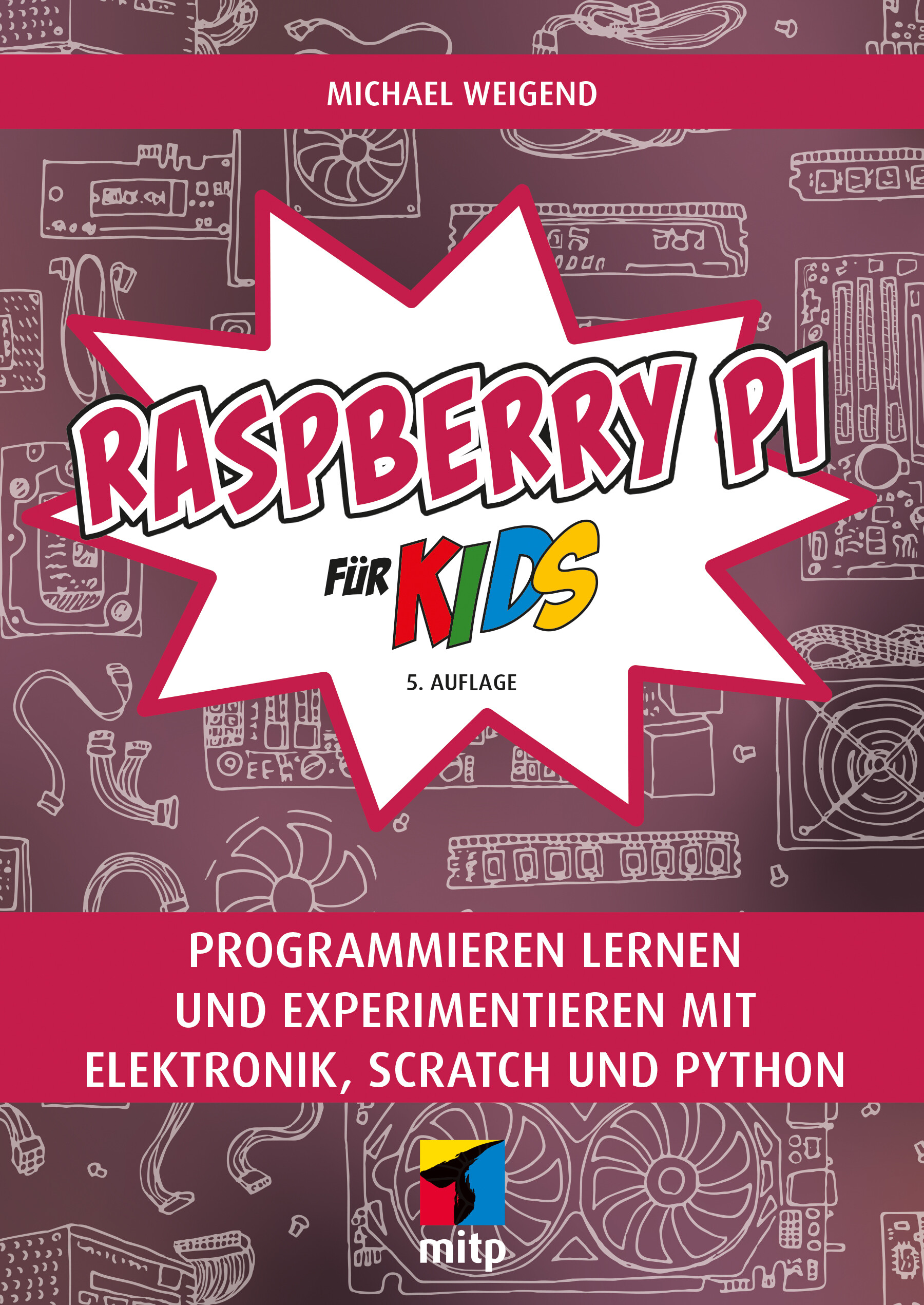
Raspberry Pi für Kids (5. Auflg.)
Raspberry Pi von Grund auf kennenlernenDu lernst, wie du deinen Raspberry Pi zum Laufen bringst, Software installierst und sogar deine eigenen Spiele programmierst! Außerdem gibt es jede Menge spannende Projekte mit Sensoren und anderen Gadgets. Dafür eignet sich selbst das günstige Modell Raspberry Pi Zero. Mit dabei ist auch eine Liste der benötigten Hardware inklusive Sensoren.Programmieren ohne VorkenntnisseDu musst kein Technik-Nerd sein, um loszulegen! Mit der visuellen Programmiersprache Scratch erstellst du kinderleicht deine eigenen Spiele, Animationen und sogar einen Autosimulator. Für coole Experimente mit Sensoren, Kameras und Co. tauchen wir in die Welt von Python ein. Am Ende jedes Kapitels warten spannende Aufgaben mit Lösungen auf dich, damit du dein Wissen testen und vertiefen kannst.Spannende Projekte und Elektronik-ExperimenteSei bereit für zahlreiche Elektronik-Projekte mit einfachen Schritt-für-Schritt-Anleitungen! Du lernst, wie du Programme schreibst, die Blinkmuster erzeugen, LED-Strips steuern und sogar Hindernisse im Dunkeln mit Ultraschall erkennen. Außerdem kannst du Morsezeichen senden, Temperaturen messen, mit einer Kamera den Garten beobachten und das Livebild automatisch auswerten.Aus dem Inhalt:Einführung in Scratch und Programmierung kleiner SpieleGrundlagen von PythonLeuchtdioden steuernSteuerung mit SchalternDatensammlungen verarbeitenProjekte mit dem UltraschallsensorTemperaturmessungGrafische Benutzungsoberflächen und AnimationProjekte mit der KameraLeseprobe (PDF-Link)Zum Download: Zwei Bonuskapitel und der Code für alle ProjekteSystemvoraussetzungen: Windows, Linux oder macOSÜber den Autor:Michael Weigend hat an der Universität Potsdam in Informatik promoviert. Er war für mehr als 30 Jahre als Lehrer tätig und hat 20 Jahre lang an der FernUniversität Hagen Seminare zur Didaktik der Informatik gegeben. An der Universität Münster hält er im Rahmen eines Lehrauftrags Vorlesungen zur Python-Programmierung. Michael Weigend engagiert sich in mehreren nationalen und internationalen Communities für den Computer-Einsatz in der Bildung, darunter Constructionism, International Federation for Information Processing (TC 3 Computers in Education) , Bebras – International Contest on Informatics and Computational Thinking. Er hat über 60 wissenschaftliche Artikel veröffentlicht und mehrere Bücher zu den Themen Programmierung, Web Development und visuelle Modellierung geschrieben.

PCs & Laptops For Dummies
A ONE-STOP GUIDE TO MAKING THE MOST OF YOUR DESKTOP PC OR LAPTOP COMPUTERPCs and Laptops For Dummies is the essential user's guide to the features your PC or laptop has to offer—and how to use them successfully. With this book as your coach, you can jump over technological hurdles with ease, navigating the hardware and software of your personal computer. Regardless of what brand of computer you use, you'll learn to navigate the latest version of Windows. You'll also explore how PCs, laptops, and other mobile devices can be used together, and how to keep your data secure. This Dummies guide is your first step toward computer-whiz status, saving you time and energy with everything in one place.* Learn about Microsoft Windows, the operating system for PC and laptop* Discover PC and laptop features you never knew about, and get your devices to play nicely together* Identify the specs and features you need, so you can purchase a computer that's a fit for you* Get easy-to-understand information, advice, and tricks at your fingertipsThis is the perfect Dummies guide for PC or laptop users at home or at work who need a go-to guide for their hardware and software questions. DAN GOOKIN wrote the very first For Dummies book in 1991. The author of several bestsellers, Dan enjoys worldwide success with books that have been translated into 32 languages and have more than 11 million copies in print. Dan is also author of Word For Dummies and C Programming For Dummies.