

Allgemein

Microsoft Copilot for Power Apps
This book is a comprehensive guide that aims to revolutionize how developers approach app creation using Microsoft PowerApps, with a special emphasis on harnessing Copilot, an AI-powered coding assistant. The book is an essential resource for both novice and experienced developers, offering an in-depth exploration of integrating artificial intelligence in app development.The integration of AI in app development, particularly through tools such as Copilot, is more relevant now than ever before due to the rapid evolution of technology and the increasing demand for efficient, innovative, and user-friendly applications. Copilot for PowerApps represents a significant advance in this direction, offering developers a unique combination of AI-powered efficiency and the versatility of PowerApps.WHAT YOU WILL LEARN* Understand complex AI concepts and AI-assisted development* Know how to use Copilot effectively and create sophisticated and reliable apps faster* Stay abreast of the latest tools and techniques so you remain competitive and relevant in the ever-changing landscape of app development* Benefit from case studies and real-world examples that demonstrate the practical application and benefits of using Copilot in PowerAppsWHO THIS BOOK IS FORAnyone interested in the intersection of AI and app development. It will not only educate but also inspire and prepare readers for the future of this dynamic field.REZWANUR RAHMAN the CEO and Managing Director of Backend Emerging Business Limited (Backend EBL), stands at the forefront of the tech world as an expert Cloud Solution Architect. His accolades include being a Microsoft MVP in Microsoft Copilot & Microsoft 365 Development and a Microsoft Certified Trainer (MCT), reflecting his deep-seated passion for innovation and software development.Chapter 1: Unveiling Copilot: A New Era in PowerApps.- Chapter 2: Embarking on the Copilot Journey.- Chapter 3: Mastering the Core: Copilot's Engine Room.- Chapter 4: Crafting PowerApps with Copilot: The Essentials.- Chapter 5: Elevating Your Craft: Intermediate Copilot Strategies.- Chapter 6: The Pinnacle of Copilot: Advanced AI Builder Techniques.- Chapter 7: Navigating the Demo: A Comprehensive Project.- Chapter 8: Visions of the Future: Copilot's Evolving Landscape.- Chapter 9: Copilot Success Stories: Lessons from the Field.- Chapter 10: Comprehensive Resources.

Generative AI, Cybersecurity, and Ethics
“Generative AI, Cybersecurity, and Ethics’ is an essential guide for students, providing clear explanations and practical insights into the integration of generative AI in cybersecurity. This book is a valuable resource for anyone looking to build a strong foundation in these interconnected fields.”—DR. PETER SANDBORN, Professor, Department of Mechanical Engineering, University of Maryland, College Park “Unchecked cyber-warfare made exponentially more disruptive by Generative AI is nightmare fuel for this and future generations. Dr. Islam plumbs the depth of Generative AI and ethics through the lens of a technology practitioner and recognized AI academician, energized by the moral conscience of an ethical man and a caring humanitarian. This book is a timely primer and required reading for all those concerned about accountability and establishing guardrails for the rapidly developing field of AI.”—DAVID PERE, (Retired Colonel, United States Marine Corps) CEO & President, Blue Force Cyber Inc. EQUIPS READERS WITH THE SKILLS AND INSIGHTS NECESSARY TO SUCCEED IN THE RAPIDLY EVOLVING LANDSCAPE OF GENERATIVE AI AND CYBER THREATSGenerative AI (GenAI) is driving unprecedented advances in threat detection, risk analysis, and response strategies. However, GenAI technologies such as ChatGPT and advanced deepfake creation also pose unique challenges. As GenAI continues to evolve, governments and private organizations around the world need to implement ethical and regulatory policies tailored to AI and cybersecurity. Generative AI, Cybersecurity, and Ethics provides concise yet thorough insights into the dual role artificial intelligence plays in both enabling and safeguarding against cyber threats. Presented in an engaging and approachable style, this timely book explores critical aspects of the intersection of AI and cybersecurity while emphasizing responsible development and application. Reader-friendly chapters explain the principles, advancements, and challenges of specific domains within AI, such as machine learning (ML), deep learning (DL), generative AI, data privacy and protection, the need for ethical and responsible human oversight in AI systems, and more. Incorporating numerous real-world examples and case studies that connect theoretical concepts with practical applications, Generative AI, Cybersecurity, and Ethics:* Explains the various types of cybersecurity and describes how GenAI concepts are implemented to safeguard data and systems* Highlights the ethical challenges encountered in cybersecurity and the importance of human intervention and judgment in GenAI* Describes key aspects of human-centric AI design, including purpose limitation, impact assessment, societal and cultural sensitivity, and interdisciplinary research* Covers the financial, legal, and regulatory implications of maintaining robust security measures* Discusses the future trajectory of GenAI and emerging challenges such as data privacy, consent, and accountabilityBlending theoretical explanations, practical illustrations, and industry perspectives, Generative AI, Cybersecurity, and Ethics is a must-read guide for professionals and policymakers, advanced undergraduate and graduate students, and AI enthusiasts interested in the subject. DR. RAY ISLAM (MOHAMMAD RUBYET ISLAM) has served as a Lecturer in Cyber Security at ACES Honors College, University of Maryland, College Park, and as an Adjunct Professor in Natural Language Processing at George Mason University. He has held strategic and leadership roles in Generative AI and Cyber Security at esteemed firms like Deloitte, Lockheed Martin, Booz Allen, Raytheon, and the American Institutes for Research. He has published numerous journal articles and papers on Artificial Intelligence and Generative AI and has presented at prestigious conferences. He actively contributes to the academic community as a reviewer for the journal Reliability Engineering & System Safety and serves as Associate Editor for the Journal of Prognostics and Health Management.
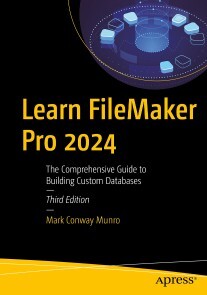
Learn FileMaker Pro 2024
FileMaker Pro is a development platform from Claris International Inc., a subsidiary of Apple Inc. The software makes it easy for everyone to create powerful, multi-user, cross-platform, relational database applications.This book navigates the reader through the software in a clear and logical manner, with each chapter building on the previous one. After an initial review of the user environment and application basics, the book delves into a deep exploration of the integrated development environment, which seamlessly combines the full stack of schema, business logic, and interface layers into a unified visual programming experience. Everything beginners need to get started is covered, along with advanced material that seasoned professionals will appreciate.Written by a professional developer with decades of real-world experience, "Learn FileMaker Pro 2024" is a comprehensive learning and reference guide. Join millions of users and developers worldwide in achieving a new level of workflow efficiency with FileMaker.FOR THIS NEW EDITIONThis third edition includes clearer lessons and more examples, making it easier than ever to start planning, building, and deploying a custom database solution. It covers dozens of new and modified features introduced in versions 19.1 to 19.6, as well as the more recent 2023 (v20) and 2024 (v21) releases. Whatever your level of experience, this book has something new for you!WHAT YOU’LL LEARN· Plan and create custom tables, fields, and relationships· Write calculations using built-in and custom functions· Build layouts with dynamic objects, themes, and custom menus· Automate tasks with scripts and link them to objects and interface events· Keep database files secure and healthy· Integrate with external systems using ODBC, cURL, and the FM API· Deploy solutions to share with desktop, iOS, and web clients· Learn about summary reports, dynamic object references, and transactions· Delve into artificial intelligence with CoreML, OpenAI, and Semantic FindsWHO THIS BOOK IS FORHobbyist developers, professional consultants, IT staffMark Conway Munro is an author and software developer. After being introduced to FileMaker in 1988, Mark began using AppleScript and FileMaker for information management and process automation tasks. In 1994, he founded Write Track Media, a computer consultancy firm that develops custom database and workflow automation solutions. With an unwavering commitment to freeing human focus from repetitive tasks, Mark designs time-saving systems that allow his clients to pursue higher levels of productivity. Among his many accomplishments, Mark is recognized for writing AppleScript: Developer Reference (2010, Wiley) and the widely acclaimed Learn FileMaker Pro series (2017, 2021, 2024, Apress).Part 1 - Using FileMaker.- Chapter 1 Introducing FileMaker.- Chapter 2 Launching the Application.- Chapter 3 Exploring a Database Window.- Chapter 4 Working with Records.- Chapter 5 Transferring Data.- Part 2 Defining Database Structure.- Chapter 6 Creating a Database File.- Chapter 7 Building Tables.- Chapter 8 Defining Fields.- Chapter 9 Forming Relationships.- Chapter 10 Managing Containers.- Chapter 11 Defining Value Lists.- Part 3: Writing Formulas and Using Functions.- Chapter 12 Writing Formulas.- Chapter 13 Exploring Built-in Functions .- Chapter 14 Using JSON.- Chapter 15 Creating Custom Functions.- Chapter 16 Introducing ExecuteSQL- Part 4 Designing User Interfaces.- Chapter 17 Introducing Layouts.- Chapter 18 Getting Started with Layouts.- Chapter 19 Surveying Layout Panes.- Chapter 20 Creating Layout Objects.- Chapter 21 Manipulating Objects.- Chapter 22 Using Themes and Styles.- Chapter 23 Customizing Menus.- Part 5 Automating with Scripts.- Chapter 24 Introduction to Scripting.- Chapter 25 Common Scripting Tasks.- Chapter 26 Debugging Scripts.- Chapter 27 Using Script Triggers.- Chapter 28 Extending Features with Plugins.- Part 6 Deploying and Maintaining Solutions.- Chapter 29 Managing Database Security.- Chapter 30 using Developer Tools.- Chapter 31 Maintaining Healthy Files.- Chapter 32 Deploying a Solution.- Chapter 33 Interfacing External Systems.- Part 7 Exploring Advanced Topics.- Chapter 34 Building a Summary Report.- Chapter 35 Keeping Object References Dynamic.- Chapter 36 Using Transactions.- Chapter 37 Using Machine Learning.- Chapter 38 Leveraging Artificial Intelligence.

Beginning ChatGPT for Python
Unlock the future of software development and empower yourself to elevate your Python applications by harnessing the power of AI as this field continues to grow and evolve. Perfect for beginner to intermediate Python programmers, this book breaks down the essentials of using ChatGPT and OpenAI APIs.You'll start with the basics, learning to authenticate, send prompts, generate responses, test in the Playground, and handle errors with ease. Each chapter includes hands-on exercises that bring concepts to life, demonstrating different API functionalities and practical applications. You'll master models like GPT-4o, GPT-4, GPT-3.5, Whisper, and DALL-E, enabling you to enhance your applications with cutting-edge AI.Discover how generative AI tools like ChatGPT can automate tedious tasks rather than replace jobs. Leverage ChatGPT’s powerful Natural Language Processing (NLP) capabilities to handle various formats of unstructured text within your Python apps. Quickly see how easy it is to use ChatGPT as your AI-pair programmer, boosting your productivity and speed.This step-by-step guide will have you creating intelligent chatbots that can automatically process messages from Slack or Discord. With _Beginning ChatGPT for Python_, you'll master the ChatGPT and OpenAI APIs, building intelligent applications that offer a personalized and engaging user experience.WHAT YOU’LL LEARN* Connect with the ChatGPT and OpenAI APIs and send effective prompts.* Harness parameters like temperature and top_p to create unique and engaging responses from ChatGPT.* Create an intelligent assistant bot for Slack that automates tasks and enhances productivity.* Develop a bot that can moderate conversations and manage communities on Discord.* Add context to your prompts to get more accurate and relevant responses.WHO THIS BOOK IS FORPython developers and enthusiasts who aspire to employ OpenAI and ChatGPT in the creation of intelligent applications to enhance productivity.LYDIA EVELYN is a proficient technical writer and a skilled Python developer with a professional background in ChatGPT. She has effectively utilized ChatGPT, coupled with prompt engineering, in multiple client projects within the realm of technical publishing. Lydia boasts extensive programming expertise in both Python and Java.BRUCE HOPKINS is an accomplished author and technical writer. Bruce’s focus has been on pioneering research in natural language processing (NLP) and artificial intelligence (AI), particularly in the domain of speech and chatbot applications. He holds the distinguished title of an Intel Innovator for AI and IoT.Chapter 1: Introducing ChatGPT for Python Developers.- Chapter 2: Using ChatGPT as Your Pair-Programmer.- Chapter 3: Creating a Basic ChatGPT Client in Python.- Chapter 4: Using AI in the Enterprise! Creating a Text Summarizer for Slack Messages.- Chapter 5: Multimodal AI: Creating a Podcast Visualizer with Whisper and DALL·E 3.- Chapter 6: Creating an Automated Community Manager Bot with Discord and Python.- Chapter 7: Adding Intelligence to our Discord Bots, Part 1: Using the Chat Model for Q&A.- Chapter 8: Adding Intelligence to our Discord Bots, Part 2: Using the Chat and Moderation Models for Moderation.

Die Gouvernementalität von Algorithmen
„Die digitale Transformation ist eine Einbahnstraße in ein kybernetisches Zeitalter. Intelligente Maschinen nehmen den Menschen dort als steuernde Kraft allmählich das Zepter aus der Hand.“ Der Einzug prädiktiver Learning Analytics-Systeme in Schulen und Hochschulen könnte das Bildungswesen verändern und zur Transformation hochkomplexer gesellschaftlicher wie organisationaler Kontrolldynamiken der (Selbst-)Führung beitragen, die im konturierten Gegenstandsbereich noch wenig erforscht sind. Christina Berns rekonstruiert anhand der gouvernementalen Dispositivanalyse die produktiven, regulativen wie repressiven Dimensionen ubiquitärer, multimedialer, interaktiver und hyperkonnektiver Predictive Learning Analytics in der digitalisierten Studienberatung im Spannungsfeld zwischen Heteronomie und Autonomie aus machtanalytischer Perspektive. Die Analyse identifiziert Subjektivierungspraktiken und gesellschaftlich-politische wie ökonomisch-technische Rationalitäten, die einen Aufschluss über aktuelle technisch-mediale Lösungsversuche von Problemstellungen im Bildungswesen geben.

KI für Anwälte und Juristinnen
KI für Anwälte und Juristinnen von Marco Candinas ist Ihr Ratgeber für den praktischen Einsatz von Künstlicher Intelligenz im juristischen Alltag. Anhand konkreter Beispiele und praktischer Anleitungen zeigt Candinas, wie Sie KI-Tools wie ChatGPT und Microsoft Copilot effizient einsetzen, um Ihre Produktivität zu steigern und Routineaufgaben zu automatisieren. Ob es um das Erstellen von Verträgen, das Verfassen von Mandantenkorrespondenz und Klageschriften oder um das Vorbereiten von Gerichtsverhandlungen geht, dieses Buch vermittelt Ihnen das Wissen und die Werkzeuge, um die Vorteile von KI voll auszuschöpfen und Ihre juristische Arbeit auf die nächste Stufe zu heben. Perfekt für alle, die ihre juristische Praxis zukunftssicher machen wollen.Marco Candinas:Marco Candinas hat Rechtswissenschaften studiert. Nach Praktika in einer Anwaltskanzlei und bei der Strafjustiz erwarb er im Juni 2022 das Anwaltspatent. Er arbeitet als Gerichtsschreiber am Kantonsgericht Luzern. Daneben unterrichtet er Lerntechniken und Strafrecht und bietet Coaching für Masterarbeiten an. Zudem gibt er Webinare zum Thema KI. Sein Erfolgsrezept: Er arbeitet nach den Prinzipien und Methoden von Nobelpreisträger Richard Feynman.

Generative AI for Web Development
Explore the world of Generative AI and understand why it matters. This book is divided into two parts, introducing tools such as ChatGPT, DALL-E, and will show you how to use them to build AI-powered web apps.The first part of the book describes Generative AI and covers the essential models and APIs from OpenAI. Legal, ethical, and security considerations are discussed to help you decide whether it is an appropriate tool for your projects. You’ll then review ChatGPT and see how to use it effectively for generating code. This is followed by a review of best practices, and tips and techniques for getting around the limitations of ChatGPT and other OpenAI APIs.The second part of the book provides practical guide to building a series of web apps with Next.js that showcase how to use the OpenAI APIs. For example, you’ll learn how to build a Story/Poetry generator, a language learning app, and a blog site with a custom Chatbot widget. The code for the web apps is generated using ChatGPT.When done with this book, you’ll have a clear understanding of Generative AI and be well on your way to building web applications powered by OpenAI APIs and Next.js.WHAT YOU WILL LEARN* Assess the legal, ethical, and security concerns with using Generative AI in web applications * Review the latest APIs provided by OpenAI for generating text and image* Use ChatGPT to generate code for web projects, as well as tips and tricks to working around the limitations.WHO THIS BOOK IS FORExperienced web developers and software engineers who know their way around HTML, CSS, and JavaScript, but have limited or no experience using Generative AI to build web applications.TOM AUGER is a senior software engineer with extensive experience in building web APIs and web applications for both startups and large enterprises. As an increasing number of breakthroughs were made in AI, Tom decided to take a sabbatical in 2020 and obtained a Master’s degree in Computer Science at Edinburgh University researching AI, machine learning and computer security in greater depth. Tom regularly teaches workshops and bootcamps on Generative AI. He currently leads the development of AI in education at the Tumo Center for Creative Technologies to build an AI powered learning coach.EMMA SAROYAN graduated with a BS in Computer Science from the American University of Armenia and is currently a developer advocate with a focus on developer products, platforms, and APIs. Before that, she worked at startups at the intersection of technology and education. Emma regularly speaks at international open-source conferences and is an active advocate for women in tech serving on the DISC Committee of NumFOCUS, an organization dedicated to supporting and advancing open-source scientific computing projects. She believes we are at one of the biggest inflection points in human history, given the disruption that Generative AI is creating.PART I- GENERATIVE AI.- Chapter 1: What is Generative AI.- Chapter 2: Legal, Ethical, and Security Considerations.- Chapter 3: Introduction to ChatGPT.- Chapter 4: ChatGPT for Web Development.- Chapter 5: Introduction to DALL-E.- Chapter 6: Overview of OpenAI APIs.- Chapter 7: Alternative Models.- PART II - BUILDING GENERATIVE AI POWERED WEB APPS.- Chapter 8: Building a Story/Poetry Generator.- Chapter 9: Building a Language Learning App.- Chapter 10: Building a Blog Site with a Custom Chatbot Widget.- Chapter 11: Conclusion and Further Reading.

Building Modern Active Directory
Break the vicious circle of designs perpetuating the errors of the past and “just click next and accept the defaults” implementations preventing a secure and reliable future. This book looks at the typical patterns and antipatterns in Active Directory (AD) design, deployment, and operations and provides an approach to building and operating AD that is based on engineering (analyzing and fulfilling requirements) rather than design (formulating requirements).The book starts with an historical overview of AD and its future 25 years later. You then learn about the challenges that organizations running AD are facing today followed by understanding how to avoid them while learning modern requirements for more efficient and effective AD performance. After that, you go through business requirements influencing the AD topology along with ways to engineer information lookup to protect high-value objects. The book looks at two main protocols and the many dialects that AD offers to engineer an authentication service that fulfills modern requirements while leaving insecure legacy configurations behind. Managing AD from both the security and usability perspectives is discussed next in the book. Building, operating, and transitioning to a modern AD is demonstrated in detail. The book guides you with the next steps of your journey to achieve a secure and reliable AD.After reading this book, you will be able to bridge the gap between the two approaches by analyzing real-world business requirements, explaining the decision-making process in both design and engineering, and ultimately providing concrete engineering guidelines for typical implementation scenarios.WHAT WILL YOU LEARN* Build a modern Active Directory (AD), leaving behind design antipatterns that are not valid anymore* Build a “secure by design” AD and accommodate legacy technology without compromising the overall security* Understand advanced AD functionality such as controlling object visibility and partitioning Kerberos authentication by Authentication Policies* Operate a modern AD, react to changing business requirements, and respond to ever-evolving security threatsWHO THIS BOOK IS FORActive Directory (AD) architects and consultants who need to provide design and engineering advice to customers; AD administrators tasked with modernizing and securing AD in their organizations; security architects wishing to learn the AD design patterns to watch out forEVGENIJ SMIRNOV has 30 years of experience in IT and IT security consulting. Besides directory services and groupware, he has been, and is still active in, the virtualization and platform management space. One of his greatest passions is PowerShell, where he is a regular community contributor and Microsoft Most Valuable Professional (MVP). After leaving consulting to assume a position with Semperis, again in the Active Directory space, he decided to share his AD-related experience, valued by so many customers over the years, and author this book. You can reach him via: @cj_berlin on Twitter and evgenijsmirnov on LinkedIn.Ch 1: Problems with AD.- Ch 2:. Modern AD.- Ch 3: Engineering Topology.- Ch 4: Engineering Lookup.- Ch 5. Engineering Authentication.- Ch 6: Engineering Authorization.- Ch 7: Engineering Configuration.- Ch 8: Engineering Administration.- Ch 9: Building a Modern AD.- Ch 10: Operating a Modern AD.- Ch 11: Transitioning to a Modern AD.- Ch 12: Conclusion.

Crafting Clean Code with JavaScript and React
Understand the guiding principles of “clean code” and how it applies to modern front-end development, accessibility (a11y), semantics, performance, and the Green Web. Highlighting key topics ranging from the foundations of JavaScript and HTML to popular frameworks like React, this book provides best practices to ensure code and applications are easier, more efficient and cost effective to run.Using a web-based application as an example, you’ll begin by cleaning and improving its code base by dividing the JavaScript into smaller, reusable and composable functions without side effects. Then, you’ll improve the HTML code base by applying "Disability Driven Design" patterns, focusing on semantics before moving on to improving the architecture with a functional style (immutable, modular and composable).Because the web today needs to be green with reduced loading time and energy consumption, you’ll apply some tips and tricks to improve code performance and see how to best monitor it in a continuous and scalable way.WHAT YOU’LL LEARN* See how the JavaScript engine works and memory management.* Explore in greater detail key focus areas of accessibility and green computing* Make applications easier and more cost-effective to run* Look closely at clean and sustainable development using JavaScript and ReactWHO THIS BOOK IS FORProgrammers, developers, engineers and product managers who are looking at cost-efficient ways to make their applications run more smoothly and efficiently.HÉLA BEN KHALFALLAH is a highly accomplished frontend expert with nearly 15 years of experience in the technology sector. Throughout her career, she has taken on diverse roles, including expert, architect, lead developer, software engineer developer, and manager. Her passion for software engineering and coding extends beyond specific languages, though she is particularly interested in JavaScript, functional programming, React, clean code, and performance optimization.An active contributor to the tech community, Héla frequently shares her knowledge on Medium and in publications like _Better Programming_ and _IT Next_. She is also a speaker, having given conferences in both 2023 and 2024. Additionally, she leads meetups where she shares her expertise and enthusiasm with others.Chapter 1. Getting Started: Presenting the Context.- Chapter 2. Functional Programming: Blueprint for Pure Code.- Chapter 3. SAGE(S) Driven Design: An Inclusive and Eco-Friendly Website.- Chapter 4. HOFA: The Path Towards Clean Architecture.- Chapter 5. MOME: Befriend User Execution Capabilities.- Chapter 6. CRISP: Clean Reliable Integrated Software Process.
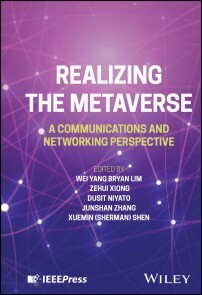
Realizing the Metaverse
A GUIDE TO THE CHALLENGES IN MAKING VIRTUAL REALITY, REALITYThe Metaverse, a version of the internet in which online interactions take place in real time within fully realized virtual spaces, has been promised as the next frontier in wireless communication. It has drawn huge investment from Silicon Valley and widespread media attention. However, the technologies required to make the Metaverse a reality are still in their infancy, and significant barriers must be overcome if this massive step is to be taken. Realizing the Metaverse provides a systematic overview of these challenges and their likely solutions. Focusing on five key areas—infrastructure, access, intelligence, security, and future developments—it offers one of the first comprehensive, formalized treatments of the Metaverse as a nascent reality. It promises to be an integral contribution to the future development of Metaverse technologies. Realizing the Metaverse readers will also find:* An editorial team with extensive research experience in the field* Detailed discussion of topics such as augmented reality (AR) adaptation, haptic feedback, artificial intelligence, and more* Enlightening discussion of open questions and future prospects for researchRealizing the Metaverse is ideal for graduate and advanced undergraduate students in wireless technology, network communications, and related fields, as well as for researchers and industry professionals involved with the Metaverse or adjacent technologies. WEI YANG BRYAN LIM, PHD, is a Wallenberg-NTU Presidential Postdoctoral Fellow, Nanyang Technological University, Singapore. He has received Best Paper Awards from the IEEE Wireless Communications and Networking Conference and the IEEE SPCC Technical Committee, and regularly serves as a reviewer for leading journals. ZEHUI XIONG, PHD, is an Assistant Professor at Singapore University of Technology and Design. He has published extensively, won many prestigious career/paper awards, and served as the editor for many leading journals in the areas of Internet of Things, edge computing and intelligence. He serves as the Associate Director of Future Communications R&D Programme. He was featured on the list of Forbes Asia 30 under 30 in 2023. DUSIT NIYATO, PHD, is a Professor in the School of Computer and Engineering, Nanyang Technological University, Singapore. He is an IEEE Fellow and serves as editor of numerous prestigious journals, including as editor-in-chief of IEEE Communications Surveys and Tutorials. JUNSHAN ZHANG, PHD, is a Professor in the Electrical and Computer Engineering Department at the University of California, Davis, USA. He has researched and published extensively on information networks, data science, 5g, wireless communications, and related subjects, and currently serves as editor-in-chief for IEEE Transactions on Wireless Communication. XUEMIN (SHERMAN) SHEN, PHD, is a University Professor in the Department of Electrical and Computer Engineering, University of Waterloo, Canada. He has published extensively on network resource management, wireless network security, Internet of Things, 5G, and more. He is a Fellow of the Engineering Institute of Canada, the Canadian Academy of Engineering, and the Royal Society of Canada, among others.

AI and the Boardroom
Develop and implement AI strategies aligned with business goals, including operating models and partnership strategies. This book is practical guide for chief experience officers and other corporate board members faced with the complex issues of AI governance, data privacy, AI regulations, AI copyright, AI strategy, and more. Executives are eager to hear from other executives, peers, and authority figures regarding AI matters, and how to approach them quickly, correctly and meaningfully. The cost of missing out or messing up in AI transformation is easy so it’s imperative that C-suite and board members have the right mental framework to ask the right questions for their organizations. Throughout this book, you’ll see how to develop and execute AI strategies that align with your organizational goals and ethical standards. You’ll navigate the complex landscape of AI regulation and governance, applying best practices to ensure compliance and protect stakeholder interests. You’ll also, understand how to innovate and adapt AI technologies within your operations. AI and the Boardroom provides all the right tools to guide decision-making, foster partnerships, and enhance customer experiences What You Will Learn Master AI governance, regulations, and ethical considerations, including privacy and intellectual property issues. Optimize AI investments, budgets, and ROI through effective KPIs, OKRs, and risk management.Navigate organizational changes brought by AI, including executive compensation, team structures, and change management.Leverage AI for board-level decision-making while advancing organizational AI maturity and staying ahead of emerging trends. Who This Book Is For Suite executives and corporate board members; technology and innovation leaders; risk management and compliance professionals; corporate strategists and business unit leaders; AI program managers and data scientists

Data Science Solutions on Azure
This revamped and updated book focuses on the latest in AI technology—Generative AI. It builds on the first edition by moving away from traditional data science into the area of applied AI using the latest breakthroughs in Generative AI.Based on real-world projects, this edition takes a deep look into new concepts and approaches such as Prompt Engineering, testing and grounding of Large Language Models, fine tuning, and implementing new solution architectures such as Retrieval Augmented Generation (RAG). You will learn about new embedded AI technologies in Search, such as Semantic and Vector Search.Written with a view on how to implement Generative AI in software, this book contains examples and sample code.In addition to traditional Data Science experimentation in Azure Machine Learning (AML) that was covered in the first edition, the authors cover new tools such as Azure AI Studio, specifically for testing and experimentation with Generative AI models.WHAT'S NEW IN THIS BOOK* Provides new concepts, tools, and technologies such as Large and Small Language Models, Semantic Kernel, and Automatic Function Calling* Takes a deeper dive into using Azure AI Studio for RAG and Prompt Engineering design* Includes new and updated case studies for Azure OpenAI* Teaches about Copilots, plugins, and agentsWHAT YOU'LL LEARN* Get up to date on the important technical aspects of Large Language Models, based on Azure OpenAI as the reference platform* Know about the different types of models: GPT3.5 Turbo, GPT4, GPT4o, Codex, DALL-E, and Small Language Models such as Phi-3* Develop new skills such as Prompt Engineering and fine tuning of Large/Small Language Models* Understand and implement new architectures such as RAG and Automatic Function Calling* Understand approaches for implementing Generative AI using LangChain and Semantic Kernel* See how real-world projects help you identify great candidates for Applied AI projects, including Large/Small Language ModelsWHO THIS BOOK IS FORSoftware engineers and architects looking to deploy end-to-end Generative AI solutions on Azure with the latest tools and techniques.JULIAN SOH is a software engineer and a cloud architect with Microsoft, focusing in the areas of artificial intelligence and advanced analytics for independent software vendors(ISVs) who develop software solutions based on the Microsoft technology stack. Prior to his current role, Julian worked extensively in major public cloud initiatives, such asSaaS (Microsoft 365), IaaS/PaaS (Microsoft Azure), and hybrid private-public cloud implementations.PRIYANSHI SINGH is a senior artificial intelligence and machine learning technical specialist at Microsoft, specializing in designing end-to-end cloud solutions that leverage generative AI models and AI implementation best practices. She holds a master’s degree in data science from New York University and has a robust background as a data scientist, focusing on machine learning techniques for predictive analytics, computer vision, and natural language processing. Priyanshi is dedicated to helping the publicsector and independent software vendors (ISVs) transform citizen services through artificial intelligence. She has been recognized as Microsoft's FY24 State and LocalGovernment Pinnacle Winner for her exceptional contributions to AI adoption and the growth of Azure business. Additionally, Priyanshi is a sports enthusiast, excelling inbadminton and enjoying golf and billiards.Chapter 1: Introduction and Update of AI in the Modern Enterprise.- Chapter 2: Generative AI and Large Language Models.- Chapter 3: Deploy and Explore Azure OpenAI.- Chapter 4: Designing a Generative AI Solution.- Chapter 5: Implementing a Generative AI Solution.- Chapter 6: Prompt Engineering Techniques, Small Language Models, and Fine Tuning.- Chapter 7: Semantic Kernel.- Chapter 8: Structured Data, Codex, Agents, and DBCopilot.- Chapter 9: Azure AI Services.

Optimizing Generative AI Workloads for Sustainability
This comprehensive guide provides practical strategies for optimizing Generative AI systems to be more sustainable and responsible. As advances in Generative AI such as large language models accelerate, optimizing these resource-intensive workloads for efficiency and alignment with human values grows increasingly urgent.The book starts with the concept of Generative AI and its wide-ranging applications, while also delving into the environmental impact of AI workloads and the growing importance of adopting sustainable AI practices. It then delves into the fundamentals of efficient AI workload management, providing insights into understanding AI workload characteristics, measuring performance, and identifying bottlenecks and inefficiencies. Hardware optimization strategies are explored in detail, covering the selection of energy-efficient hardware, leveraging specialized AI accelerators, and optimizing hardware utilization and scheduling for sustainable operations. You are also guided through software optimization techniques tailored for Generative AI, including efficient model architecture, compression, and quantization methods, and optimization of software libraries and frameworks. Data management and preprocessing strategies are also addressed, emphasizing efficient data storage, cleaning, preprocessing, and augmentation techniques to enhance sustainability throughout the data life cycle. The book further explores model training and inference optimization, cloud and edge computing strategies for Generative AI, energy-efficient deployment and scaling techniques, and sustainable AI life cycle management practices, and concludes with real-world case studies and best practicesBy the end of this book, you will take away a toolkit of impactful steps you can implement to minimize the environmental harms and ethical risks of Generative AI. For organizations deploying any type of generative model at scale, this essential guide provides a blueprint for developing responsible AI systems that benefit society.WHAT YOU WILL LEARN* Understand how Generative AI can be more energy-efficient through improvements such as model compression, efficient architecture, hardware optimization, and carbon footprint tracking* Know the techniques to minimize data usage, including evaluation, filtering, synthesis, few-shot learning, and monitoring data demands over time* Understand spanning efficiency, data minimization, and alignment for comprehensive responsibility* Know the methods for detecting, understanding, and mitigating algorithmic biases, ensuring diversity in data collection, and monitoring model fairnessWHO THIS BOOK IS FORProfessionals seeking to adopt responsible and sustainable practices in their Generative AI work; leaders and practitioners who need actionable strategies and recommendations that can be implemented directly in real-world systems and organizational workflows; ML engineers and data scientists building and deploying Generative AI systems in industry settings; and researchers developing new generative AI techniques, such as at technology companies or universitiesISHNEET KAUR DUA is an experienced solutions architect specializing in generative artificial intelligence, machine learning, environmental sustainability, and cloud computing. With years of hands-on experience, she excels in designing resource efficient, cost-effective, resilient systems on leading cloud platforms such as AWS, GCP, and Azure. Ishneet started her career at CDK Global where she worked as a DevOps engineer and focused on building highly available Kubernetes environments on AWS cloud and on-prem. Passionate about leveraging AI and ML for innovation, Ishneet has expertise in diverse areas, including low code no code ML, computer vision, NLP, recommendation engines, and predictive analytics. She advocates for ethical AI practices, ensuring fairness and transparency in AI systems while making them accessible through open-source initiatives.As a thought leader, Ishneet shares her insights at global tech conferences, focusing on AI/ML, cloud architecture, and sustainability. She actively mentors women in tech, aiming to inspire and empower the next generation of STEM professionals. Driven by a vision of harnessing technology for positive change, Ishneet is dedicated to building a future where AI creates opportunities for all and addresses complex real-world challenges.PARTH GIRISH PATEL is a seasoned architect with a wealth of experience spanning over 17 years, encompassing management consulting and cloud computing. Currently, at Amazon Web Services (AWS), he specializes in artificial intelligence/machine learning, generative AI, sustainability, application modernization, and cloud-native patterns to deliver resilient, high-performance solutions optimized for cost and operational efficiency.Starting his career as a software engineer, Parth transitioned into consulting at Deloitte, where he provided strategic guidance to Fortune companies on their cloud implementation and led intricate enterprise transformations. This diverse background equipped him with a unique blend of business acumen and technical expertise, enabling him to navigate complex digital transformations effectively. As an AWS solutions architect, Parth plays a pivotal role in guiding customers through their cloud journey and AI adoption, offering insights into scalable architectures and implementing end-to-end machine learning solutions. With specialization across leading cloud providers like AWS, Azure, and GCP, as well as proficiency in Machine Learning skills like Natural Language Processing, Computer Vision, and predictive analytics, Parth is well-equipped to tackle diverse technical challenges.Passionate about sustainable AI, Parth advocates for the responsible and ethical use of AI, emphasizing transparency and environmental consciousness. He leverages his leadership skills to mentor teams and individuals, fostering a collaborative and innovative environment aimed at driving a positive impact across organizations and society as a whole.Chapter 1: Introduction to Generative AI and Sustainability.- Chapter 2: Fundamentals of Efficient AI Workload Management.- Chapter 3: Hardware Optimization for Generative AI.- Chapter 4: Software Optimization for Generative AI.- Chapter 5: Data Management and Preprocessing.- Chapter 6: Model Training and Inference Optimization.- Chapter 7: Cloud and Edge Computing for Generative AI.- Chapter 8: Energy-efficient AI Deployment and Scaling.- Chapter 9: Sustainable AI Life Cycle Management.- Chapter 10: Case Studies and Best Practices.

Building Secure PHP Applications
Learn how to protect PHP applications from potential vulnerabilities and attacks. As cyberattacks and data breaches continue to rise, it's crucial for developers and organizations to prioritize security in their PHP applications. The book offers an all-encompassing guide to securing PHP applications, covering topics ranging from PHP core security to web security, framework security (with a focus on Laravel), security standards, and protocol security.After examining PHP core security and essential topics, such as input validation, output encoding, secure session management, and secure file handling, you’ll move on to common security risks in PHP applications and provides practical examples to demonstrate effective security measures. From there, you’ll delve into web security, addressing XSS, SQL injection, and CSRF, reviewing in-depth explanations and mitigation techniques.A significant portion of the book focuses on Laravel's built-in security features, guiding readers to avoid common pitfalls. Industry-standard security protocols like HTTP, OAuth, and JSON Web Tokens are explained with demonstrations for how to effectively use them to ensure integrity, confidentiality, and authenticity in web applications. Additionally, protocol security is discussed, including secure communication, file transfer protocols (SFTP), and email handling. Security in cloud and hybrid environments is also discussed.This book's comprehensive and inclusive approach spans a wide range of security topics related to PHP and ensures that no critical areas are overlooked. It goes beyond theoretical concepts by providing practical guidance and actionable steps. It includes code snippets, real-world examples, case studies, and hands-on exercises, enabling you to apply the knowledge gained in practical scenarios. _Building Secure PHP Applications_ provides a holistic approach to security, empowering you to build robust and resilient PHP applications.WHAT YOU WILL LEARN* Understand industry-recognized security standards and compliance requirements for data protection regulations.* Learn the intricacies of Laravel and how to leverage its security features.* Integrate security practices throughout the development lifecycle, conducting security testing and reviews and adopting secure deployment and DevOps practices.* Conduct forensic analysis and perform post-incident analysis for continuous improvement.* Look to the future and discover emerging security threats and techniques to anticipate and mitigate potential security risks.WHO THIS BOOK IS FORPrimarily written for developers, security professionals, and webmasters involved in PHP application development. Additionally, this book may be used as a reference for students studying web development, PHP programming or cybersecurityAs an experienced software developer, architect and security enthusiast with over a decade of industry experience, Satej Kumar Sahu has dedicated his career to building robust and secure applications. Throughout his journey, he has encountered numerous challenges and witnesses the evolving landscape of PHP application security. With a passion for sharing knowledge and empowering fellow developers, he has decided to write this book as a comprehensive guide to PHP application security. Drawing from practical experiences, industry best practices, and a deep understanding of PHP development, his goal is to equip readers with the skills and insights needed to build secure and resilient PHP applications in today's threat landscape. He is excited to contribute to the community and help developers create secure software that withstands the ever-present risks of the digital world.Chapter 1: Introduction to PHP Application Security.- Chapter 2: PHP Core Security.- Chapter 3: Web Security for PHP Applications.- Chapter 4: Framework Security. Chapter 5: Security Standards and Best Practices.- Chapter 6: Protocol Security.- Chapter 7: Incident Response and Security Monitoring.- Chapter 8: Future Trends in PHP Application.

Deep Dive into the Power Platform in the Age of Generative AI
Understand the full potential of Microsoft Power Platform with this comprehensive guide, designed to provide you with the knowledge and tools needed to create intelligent business applications, automate workflows, and drive data-driven insights for business growth. Whether you're a novice or an experienced professional, this book offers a step-by-step approach to mastering the Power Platform.This book comes with an extensive array of essential concepts, architectural patterns and techniques. It will also guide you with practical insights to navigate the Power Platform effortlessly while integrating on Azure. Starting with exploring Power Apps for building enterprise applications, the book delves into Dataverse, Copilot Studio, AI Builder, managing platforms and Application life cycle management. You will then demonstrate testing strategy followed by a detailed examination of Dataverse and intelligent AI-powered Applications. Additionally, you will cover Power pages for external websites and AI-infused solutions. Each section is meticulously structured, offering step-by-step guidance, hands-on exercises, and real-world scenarios to reinforce learning.After reading the book, you will be able to optimize your utilization of the Power Platform for creating effective business solutions.WHAT YOU WILL LEARN:* Understand the core components and capabilities of Power Platform* Explore how Power Platform integrates with Azure services* Understand the key features and benefits of using Power Platform for business applications* Discover best practices for governance to ensure compliance and efficient management* Explore techniques for optimizing the performance of data integration and export processes on AzureWHO THIS BOOK IS FOR:Application developers, Enterprise Architects and business decision-makers.Biswa Pujarini Mohapatra is a seasoned technology leader with over 18 years of IT experience. She is currently serving as the Principal Engineering Manager at Microsoft. She leads a global team in designing and implementing scalable solutions using the Power Platform and Azure. Her expertise spans in artificial intelligence, low code/power platform, cloud computing, leadership, management, and enterprise architecture. She has authored a book on Microservices using .NET core and has reviewed books across technology.Gaurav Kumar Arora is a Tech-enthusiast with over 27 years of industry experience, encompassing a wide range of technologies. He has achieved notable accomplishments throughout his career, including being a recipient of the Microsoft MVP award, a MuleSoft Mentor, and serving as a Mentor of Change with AIM NITI Aayog, Govt. of India. Gaurav is also a Business Coach with Business Blaster, Govt. of NCT of Delhi. He holds a lifetime membership with the Computer Society of India (CSI) and serves as an advisory member and Senior Mentor at India Mentor. He is certified as a Scrum trainer and Coach, ITIL-F certified, and holds PRINCE-F and PRINCE-P certifications. Additionally, he is a Certified Microsoft Azure Architect and has authored books on various technologies.Gaurav recently achieved the distinction of being recognized as a World Record Holder for his exceptional book writing in disciplined technologies. He holds 15 patents in disciplined technologies. Gaurav is passionate about sharing his knowledge and believes in the principle of "sharing is caring". He actively mentors underprivileged students and is associated with the NGO SHIKSHA एक पहल.Some of his most appreciated books with Apress are:* Hands-on Azure Cognitive Services: Applying AI and Machine Learning for Richer applications* Cloud Debugging and Profiling in Microsoft Azure: Application performance management in the CloudYash Agarwal is a Power Platform solution architect with experience working on Microsoft Power Apps, Power Automate and Power Virtual agents. He is a 5X Microsoft MVP and MCT for business applications. He has experience working in healthcare, banking and finance, education, automotive, etc. domains.Part I: Getting started, Security, Governance and Compliance- Chapter 1: Power Platform Overview.- Chapter 2: Power Platform Administration and Governance.- Chapter 3: Dataverse Capabilities in Power Platform.- Chapter 4: Data Integration, Data Export and Analytics in Dataverse.- Chapter 5: Dataverse Connectors & Gateway.- Part 2: Power Platform Components and Real-world User cases.- Chapter 6: Modern App Design with Power Apps.- Chapter 7: Microsoft Copilot Studio.- Chapter 8: Workflow Automation using Power Automate.- Chapter 9: Unleashing Intelligence with AI Builder.- Chapter 10: Solutions Overview and ALM Strategy.- Chapter 11: Power Pages for External Websites.- Chapter 12: Real World Use Cases and Success Stories.

Learn Data Science Using Python
Harness the capabilities of Python and gain the expertise need to master data science techniques. This step-by-step book guides you through using Python to achieve tasks related to data cleaning, statistics, and visualization.You’ll start by reviewing the foundational aspects of the data science process. This includes an extensive overview of research points and practical applications, such as the insightful analysis of presidential elections. The journey continues by navigating through installation procedures and providing valuable insights into Python, data types, typecasting, and essential libraries like Pandas and NumPy. You’ll then delve into the captivating world of data visualization. Concepts such as scatter plots, histograms, and bubble charts come alive through detailed discussions and practical code examples, unraveling the complexities of creating compelling visualizations for enhanced data understanding.Statistical analysis, linear models, and advanced data preprocessing techniques are also discussed before moving on to preparing data for analysis, including renaming variables, variable rearrangement, and conditional statements. Finally, you’ll be introduced to regression techniques, demystifying the intricacies of simple and multiple linear regression, as well as logistic regression.WHAT YOU’LL LEARN* Understand installation procedures and valuable insights into Python, data types, typecasting* Examine the fundamental statistical analysis required in most data science and analytics reports* Clean the most common data set problems* Use linear progression for data predictionWHO THIS BOOK IS FORData Analysts, data scientists, Python programmers, and software developers new to data science.Engy Fouda is an adjunct lecturer at SUNY New Paltz teaching Intro to Data Science using SAS Studio and Introduction to Machine Learning using Python. She is an Apress and Packt Publishing author. Currently, she teaches SAS Fundamentals, Intermediate SAS, Advanced SAS, SAS SQL, Introduction to Python, Python for Data Science, Docker Fundamentals, Docker Enterprise for Developers, Docker Enterprise for Operations, Kubernetes, and DCA and SAS exams test-prep courses tracks at several venues as a freelance instructor.She also works as a freelance writer for Geek Culture, Towards Data Science, and Medium Partner Program. She holds two master’s degrees: one in journalism from Harvard University, the Extension School, and the other in computer engineering from Cairo University. Moreover, she earned a Data Science Graduate Professional Certificate from Harvard University, the Extension School. She volunteers as the chair of Egypt Scholars board and is former executive manager and former Momken team leader (Engineering for the Blind). She is the author of the books _Learn Data Science Using SAS Studio _and _A Complete Guide to Docker for Operations and Development _published by Apress and a co-author of _The Docker Workshop_ published by Packt.Chapter 1: Data Science in Action.- Chapter 2: Getting Started.- Chapter 3: Data Visualization.- Chapter 4: Statistical Analysis and Linear Models.- Chapter 5: Advanced Data Pre-processing and Feature Engineering.- Chapter 6: Preparing Data for Analysis.- Chapter 7: Regression.

Das Standard-Datenschutzmodell (SDM) (2. Auflg.)
Das Standard-Datenschutzmodell (SDM) gilt spätestens seit 2020 deutschlandweit als etabliert, um normative Anforderungen der DSGVO in funktionale Anforderungen an die Praxis der Datenverarbeitungen zu transformieren.Wenn die Juristin zum Beispiel sagt: Diese Daten sind unverzüglich zu löschen! Dann ist aus juristischer Sicht alles Erforderliche gesagt. Für Praktiker*innen, die diese vermeintlich leichte Anforderung umzusetzen haben, können sich Unmengen an komplizierten Fragen stellen: Wie gesichert muss gelöscht werden? Kann man den installierten Löschprogrammen trauen? Wie muss das Löschen von Daten in welcher Auflösung dokumentiert und protokolliert werden? Wer ist eigentlich befugt, zu löschen, auch in den Backup-Dateien?Das SDM hilft, bei solchen Fragestellungen der Umsetzung zu begründeten Entscheidungen zu gelangen, um an ein vollständiges Set von aufeinander abgestimmten, wirksamen Schutzmaßnahmen zu gelangen. Dies ist von zentraler Bedeutung bei der Durchführung von Datenschutz-Prüfungen und -Beratungen, Datenschutz-Folgenabschätzungen und dem Betrieb eines Datenschutz-Managements.Die 2. Auflage wurde umfassend für das SDM in der Version 3.1 aktualisiert und erweitert. Neu hinzugekommen sind u.a. Kapitel über SDM-Tools und -Schulungen sowie über SDM-Konformität. Was meint „Datenschutz“? Überblick Verarbeitung Recht Gewährleistungsziele Datenschutzrisiken Technisch-organisatorische Maßnahmen SDM anwenden SDM im Kontext anderer Methoden und Standards Anstelle einer Zusammenfassung: SDM-Konformität Nachwort Anhang MARTIN ROST ist Mitarbeiter des Unabhängigen Landeszentrums für Datenschutz in Schleswig-Holstein und Leiter des „Unterarbeitskreis Standard-Datenschutzmodell“ des „Arbeitskreis Technik“ der Konferenz der Datenschutzbeauftragten des Bundes und der Länder.

Supply Chain Software Security
Delve deep into the forefront of technological advancements shaping the future of supply chain safety and resilience. In an era where software supply chains are the backbone of global technology ecosystems, securing them against evolving threats has become mission critical. This book offers a comprehensive guide to understanding and implementing next-generation strategies that protect these intricate networks from most pressing risks.This book begins by laying the foundation of modern software supply chain security, exploring the shifting threat landscape and key technologies driving the future. Delve into the heart of how AI and IoT are transforming supply chain protection through advanced predictive analytics, real-time monitoring, and intelligent automation. Discover how integrating application security practices within your supply chain can safeguard critical systems and data.Through real-world case studies and practical insights, learn how to build resilient supply chains equipped to defend against sophisticated attacks like dependency confusion, backdoor injection, and adversarial manipulation. Whether you’re managing a global software operation or integrating DevSecOps into your CI/CD pipelines, this book offers actionable advice for fortifying your supply chain end-to-end.YOU WILL:* Learn the role of AI and machine learning in enhancing supply chain threat detection* Find out the best practices for embedding application security within the supply chain lifecycle* Understand how to leverage IoT for secure, real-time supply chain monitoring and controlWHO IS THIS BOOK FORThe target audience for a book would typically include professionals and individuals with an interest or involvement in cloud-native application development and DevOps practices. It will cover fundamentals of cloud-native architecture, DevOps principles, and provide practical guidance for building and maintaining scalable and reliable applications in a cloud-native environment. The book's content will cater to beginner to intermediate level professionals seeking in-depth insights.Aamiruddin Syed is a seasoned security professional specializing in DevSecOps, cloud security, supply chain security, and penetration testing. With dual master’s degrees in Cybersecurity from Northeastern University and Jadavpur University, he excels in automating security within CI/CD pipelines and embedding security practices in cloud infrastructure.A recognized security advocate, Aamiruddin is a frequent speaker at industry conferences, including DEFCON and chairs technical conferences like ICCTICT. His work focuses on integrating security seamlessly into engineering processes, securing products across diverse industries, including manufacturing. He is also an author on supply chain security and a judge for the Globee Cybersecurity Awards.Beyond his professional endeavours, Aamiruddin contributes to open-source security tools and actively shares knowledge through his podcast, _CyberGPT Pulse_, and hands-on engagements like TryHackMe challenges.PART I: FOUNDATION OF NEXT-GEN SUPPLY CHAIN SECURITY.- Chapter 1: The New Era of Supply Chain Security.- Chapter 2: Key Technologies Shaping the Future.- PART II: APPLICATION SECURITY IN THE SUPPLY CHAIN.- Chapter 3: The Anatomy of Supply Chain Applications.- Chapter 4: Application Security Best Practices.- Chapter 5: DevSecOps in Supply Chain Management.- PART III: LEVERAGING AI AND IOT FOR SECURITY.- Chapter 6: AI-Powered Threat Detection and Response.- Chapter 7: IoT Security and Monitoring.- PART IV: CASE STUDIES AND PRACTICAL IMPLEMENTATION.- Chapter 8: Case Studies in Next-Gen Supply Chain Security.- Chapter 9: Implementing Next-Gen Security in Your Supply Chain.- PART V: FUTURE TRENDS AND CHALLENGES.- Chapter 10: Future Trends in Supply Chain Security.- Chapter 11: Navigating Emerging Challenges.

CCNA Certification Practice Tests
THE BEST PRACTICE AND PREPARATION FOR THE UPDATED CCNA CERTIFICATION EXAMCCNA Certification Practice Tests, Second Edition, is the perfect way to practice for updated certification Exam 200-301 v1.1 as you prepare to take your IT career to the next level. The book includes 1,200 domain-by-domain practice questions, so you can hone your test-taking skill and succeed in obtaining your certification. The CCNA certification has been revised and redesigned, and this updated second edition covers the latest exam objectives, including network fundamentals, network access, IP connectivity, IP services, security fundamentals, and automation and programmability. You also get one year of FREE access to the online text bank, so you can work through practice questions from anywhere, reinforcing your skills and knowledge. The CCNA certification proves your skill in a broad range of fundamentals, helping you progress in any IT career. And after you work through these test questions, you'll be thoroughly ready to pass the exam!* Study 100% of the topics covered on the Cisco CCNA certification exam* Get access to 1,200 practice questions, in the book and online* Gain familiarity with the wording of test questions so you're prepared on test day* Identify the test objectives you need the most work in so you can maximize your study timeThis Sybex collection of practice questions is perfect for anyone wanting to earn their CCNA certification, and it pairs well with the CCNA Certification Study Guide: Exam 200-301 v1.1, Second Edition.ABOUT THE AUTHORJON BUHAGIAR, CCNA, MCSA, MCSE, N+, A+, BS/ITM, is an information technology professional with over two decades of experience in higher education. Currently he is a director of information technology for RareMed Solutions. Over the past two decades, he served as an instructor where he has taught courses for Microsoft and Cisco certification. He has avidly pursued certifications and taught in the Pittsburgh area since 1998. Some of his certifications are Windows Server Microsoft Certified Solutions Expert (MCSE), Cisco Certified Network Associate (CCNA), CompTIA Network+, CompTIA A+, and CompTIA Project+, in addition to many other IT certifications. Introduction xiiiChapter 1 Network Fundamentals (Domain 1) 1Chapter 2 Network Access (Domain 2) 43Chapter 3 IP Connectivity (Domain 3) 85Chapter 4 IP Services (Domain 4) 137Chapter 5 Security Fundamentals (Domain 5) 159Chapter 6 Automation and Programmability (Domain 6) 189Chapter 7 Practice Exam 1 207Chapter 8 Practice Exam 2 229Appendix Answers to Review Questions 249Chapter 1: Network Fundamentals (Domain 1) 250Chapter 2: Network Access (Domain 2) 277Chapter 3: IP Connectivity (Domain 3) 301Chapter 4: IP Services (Domain 4) 332Chapter 5: Security Fundamentals (Domain 5) 344Chapter 6: Automation and Programmability (Domain 6) 363Chapter 7: Practice Exam 1 377Chapter 8: Practice Exam 2 389Index 403

OCP Oracle Certified Professional Java SE 21 Developer Study Guide
UNLOCK YOUR JAVA POTENTIAL AND MASTER THE OCP JAVA SE 21 DEVELOPER EXAM WITH CONFIDENCEDive into the OCP Oracle Certified Professional Java SE 21 Developer Study Guide: Exam 1Z0-830 for a comprehensive journey through the Java SE 21 Developer certification exam. Crafted by a team of seasoned Java professionals, this guide not only prepares you for the 1Z0-830 exam but also equips you with essential skills for both new and existing Java development roles. Enhance your knowledge, refine your skills, and discover new techniques with this expertly written roadmap. Explore the depths of Java development, from writing methods that utilize pattern matching to building applications with virtual threads. This guide covers all you need to ace the certification and excel in your Java development career. Additionally, it provides exclusive access to Sybex's online learning environment and test bank, featuring a wealth of practice questions, electronic flashcards, and a glossary to ensure you're fully prepared for exam day. You'll also:* Gain a solid understanding of Java SE 21 features and how to apply them effectively in your development projects* Boost your preparation with hundreds of practice questions and valuable online resources from the Sybex online learning environment* Quickly reference key concepts thanks to a searchable glossary, making it an indispensable tool for both junior and senior Java developersWhether you're gearing up for the OCP Java SE 21 Developer exam or seeking to solidify your Java expertise, this study guide is an essential resource. It not only serves as a comprehensive preparatory material for the certification but also as a go-to reference for your daily programming needs. Embrace this opportunity to reduce test anxiety, enhance your Java skills, and step confidently into your role as a Java developer. Make this book your coding companion today and set the stage for a thriving career in Java development. ABOUT THE AUTHORSJEANNE BOYARSKY is a Java Champion and has worked as a Java developer for a major bank for more than 22 years. She is a senior moderator at CodeRanch, and trains and mentors students of all levels. SCOTT SELIKOFF has been a professional Java Enterprise architect for almost 25 years. He currently works as a Staff Software Engineer at Google, specializing in Architecture and Cloud Services. He is a Leader of the Garden State Java User Group, helping to facilitate discussions and exchange of ideas within the community.

CCNA Certification Study Guide Volume 2
YOUR UPDATED GUIDE TO SUCCESS ON THE CCNA CERTIFICATION EXAMIn the newly revised second edition of the CCNA Certification Study Guide – Volume 2: Exam 200-301 v1.1, renowned Cisco educator and network engineer Todd Lammle and Donald Robb deliver a practical and effective test prep and roadmap to the challenging CCNA Certification exam. Volume 2 of the updated Study Guide covers objectives for network fundamentals and access, IP connectivity and services, security fundamentals, automation, programmability, artificial intelligence, and more. You'll also learn about topics like network device security, IPv6, QoS, wireless technologies, wireless controllers, automation, and REST APIs. The CCNA Certification Study Guide comes with one year of free access after activation to a robust set of online study tools designed to assess and advance your exam readiness. You'll find:* Up-to-date information relevant to the latest Cisco technologies and job roles* An interactive online test bank, including hundreds of practice test questions, flashcards, and a glossary of key terms and definitions* Discussions of everything from enhanced switching and ACLs to FHRP, SDN, configuration management, and morePerfect for anyone preparing to pursue the updated CCNA Certification, the CCNA Certification Study Guide – Volume 2 is a must-read for practicing IT professionals looking for a refresher on Cisco networking fundamentals. ABOUT THE AUTHORS TODD LAMMLE, Cisco certified in almost every category, is the authority on Cisco networking and certification. His three decades of real-world experience is prevalent in his writing. He is an experienced networking engineer with very practical experience working on the largest bounded and unbounded networks in the world at such companies as Xerox, Hughes Aircraft, Texaco, AAA, Cisco, and Toshiba, among many others. Todd has published over 60 books, including the very popular and bestselling CCNA Cisco Certified Network Associate Study Guide and Cisco Firepower NGIPS. Todd runs an international training company from Texas, and a large-scale consulting business out of Colorado. You can reach Todd through his forum and blog at www.lammle.com/ccna. DONALD ROBB has over 15 years of experience with most areas of IT, including networking, security, collaboration, data center, cloud, SDN, and automation/devops. He’s earned many advanced certifications and specializations. Currently he’s a SDN/Cloud/DevOps SME. Visit his blog at https://www.the-packet-thrower.com and YouTube channel at https://www.youtube.com/c/ThePacketThrower.

Model Optimization Methods for Efficient and Edge AI
COMPREHENSIVE OVERVIEW OF THE FLEDGLING DOMAIN OF FEDERATED LEARNING (FL), EXPLAINING EMERGING FL METHODS, ARCHITECTURAL APPROACHES, ENABLING FRAMEWORKS, AND APPLICATIONSModel Optimization Methods for Efficient and Edge AI explores AI model engineering, evaluation, refinement, optimization, and deployment across multiple cloud environments (public, private, edge, and hybrid). It presents key applications of the AI paradigm, including computer vision (CV) and Natural Language Processing (NLP), explaining the nitty-gritty of federated learning (FL) and how the FL method is helping to fulfill AI model optimization needs. The book also describes tools that vendors have created, including FL frameworks and platforms such as PySyft, Tensor Flow Federated (TFF), FATE (Federated AI Technology Enabler), Tensor/IO, and more. The first part of the text covers popular AI and ML methods, platforms, and applications, describing leading AI frameworks and libraries in order to clearly articulate how these tools can help with visualizing and implementing highly flexible AI models quickly. The second part focuses on federated learning, discussing its basic concepts, applications, platforms, and its potential in edge systems (such as IoT). Other topics covered include:* Building AI models that are destined to solve several problems, with a focus on widely articulated classification, regression, association, clustering, and other prediction problems* Generating actionable insights through a variety of AI algorithms, platforms, parallel processing, and other enablers* Compressing AI models so that computational, memory, storage, and network requirements can be substantially reduced* Addressing crucial issues such as data confidentiality, data access rights, data protection, and access to heterogeneous data* Overcoming cyberattacks on mission-critical software systems by leveraging federated learningWritten in an accessible manner and containing a helpful mix of both theoretical concepts and practical applications, Model Optimization Methods for Efficient and Edge AI is an essential reference on the subject for graduate and postgraduate students, researchers, IT professionals, and business leaders. PETHURU RAJ CHELLIAH, PHD, is the Chief Architect of the Edge AI division of Reliance Jio Platforms Ltd. (JPL), Bangalore, India. AMIR MASOUD RAHMANI, PHD, is an artificial intelligence faculty member at the National Yunlin University of Science and Technology, Taiwan. ROBERT COLBY is a Principal Engineer in IT Infrastructure responsible for Manufacturing Network Architecture and IoT Infrastructure at Intel Corporation. GAYATHRI NAGASUBRAMANIAN, PHD, is an Assistant Professor with the Department of Computer Science and Engineering at GITAM University in Bengaluru, India. SUNKU RANGANATH is a Principal Product Manager for Edge Infrastructure Services at Equinix.

Computational Intelligence for Autonomous Finance
THE BOOK SERVES AS AN ESSENTIAL GUIDE AND A DEEP DIVE INTO THE INTERSECTION OF AI AND FINANCE, PROVIDING READERS WITH A THOROUGH UNDERSTANDING OF THE CURRENT STATE, CHALLENGES, AND FUTURE POSSIBILITIES OF AUTONOMOUS FINANCIAL SYSTEMS.In the rapidly evolving domain of autonomous finance, the convergence of computational intelligence techniques and financial technologies has paved the way for a new era of financial services. This transformation is driven by the integration of artificial intelligence (AI), machine learning (ML), blockchain, and big data analytics into financial systems, leading to the development of more responsive, efficient, and personalized financial products and services. Computational Intelligence for Autonomous Finance delves into the heart of this technological revolution, offering a comprehensive exploration of the theoretical foundations, practical applications, and future prospects of computational intelligence in the financial sector. The backbone of autonomous finance is a complex, interconnected ecosystem that leverages computational intelligence to automate decision-making processes, optimize financial operations, and enhance customer experiences. The book introduces the concept of an Intelligent Autonomous Financial Network (IAFN), which integrates various computational intelligence techniques with cutting-edge financial technologies to create a self-organizing, adaptive, and scalable financial system. The IAFN framework facilitates seamless interactions between diverse financial entities, enabling the provision of innovative financial services such as automated trading, real-time risk management, personalized financial planning, and fraud detection. The book meticulously analyzes the key challenges including data security and privacy concerns, algorithmic biases, regulatory compliance, and the need for interoperable standards. It also presents state-of-the-art solutions and best practices for overcoming these challenges, emphasizing the importance of ethical AI, robust data protection mechanisms, transparent algorithms, and collaborative regulatory frameworks. It discusses emerging trends such as quantum computing, edge computing, and decentralized finance (DeFi), highlighting their potential to further transform the financial landscape. The book also addresses the societal implications of autonomous finance, including its impact on employment, wealth distribution, and financial inclusion, advocating for a balanced approach that maximizes benefits while minimizing negative outcomes. AUDIENCEThis book is aimed at researchers, industry professionals, policymakers, and graduate students in finance, computational intelligence, and related fields. DEEPA GUPTA, PHD, is the Dean at GL Bajaj Institute of Management, Greater Noida, India. Her expertise extends to organized development, corporate relations, and international collaborations. Dr. Gupta is an active researcher who has published 15 national/international patents and has contributed more than 45 research papers to various international and national conferences and journals. MUKUL GUPTA, PHD, is a principal at GL Bajaj Institute of Management, Greater Noida, India. His research focuses on consumer behavior to help understand the human-centric aspects of autonomous finance systems. He has published 12 national/international patents, more than 40 research papers, and authored books. RAJESH KUMAR DHANARAJ, PHD, is a professor at the School of Computing Science and Engineering at Galgotias University in India. He has authored/edited more than 25 books on various technologies, 21 patents, and 50+ articles and papers in various refereed journals and international conferences. BALAMURUGAN BALUSAMY, PHD, is an associate dean of students at Shiv Nadar University at the Delhi-NCR Campus in Noida, India. He has authored/edited more than 80 books and more than 200 contributions to international journals and conferences. PARTH MUKUL GUPTA, is an innovative entrepreneur and the director at Zarthcorp Tech Pvt. Ltd. and of the Shri Sai Memorial Foundation, Greater Noida, India. He has experience in brand building, organizational development, and global collaborations and spearheads advancements in autonomous finance through technological innovation and strategic growth initiatives. Preface xvii1 THE ROLE OF AUTONOMOUS FINANCE IN THE ERA OF AUTOMATIC CIVILIZATION 1Sanjeet Singh, Geetika Madaan and Jaskiran Kaur1.1 Introduction 21.2 The Concept of Autonomous Finance 21.3 Autonomous Finance: Prospects and Developments 91.4 Key Considerations for Implementing Autonomous Finance 141.5 Conclusion 152 ANALYZING THE LATEST TOOLS AND TECHNIQUES FOR STOCK MARKET ANALYSIS 21Ochin Sharma, Raj Gaurang Tiwari, Suvarna Sharma and Annu Priya2.1 Introduction 212.2 Need for Trading Softwares 232.3 How Software for Technical Analysis of the Indian Stock Market Operates 232.4 Helpful Tools to Analyze Stock Market 242.5 Conclusion 393 CHALLENGES AND SECURITY ISSUES IN AUTONOMOUS FINANCE 43Mukul Gupta, Deepa Gupta, Nitin Agrawal and Parth Mukul Gupta3.1 Introduction 443.2 A Review of the Literature 453.3 Concerns Regarding the Protection of Identity and Privacy in Autonomous Finance 463.4 Using Algorithms to Make Decisions Can be Biased 493.5 Ensuring Fairness in Autonomous Finance 503.6 Compliance with Regulations in the Field of Autonomous Finance 513.7 Gaining an Understanding of the Fundamentals of Operational Risk 543.8 Risks Encountered in the Operation of Autonomous Finance 553.9 Concerns Regarding Ethical Issues in Autonomous Finance 573.10 Consumer Trust in Autonomous Finance 594 INVOLVEMENT OF ARTIFICIAL INTELLIGENCE IN EMERGING FINTECH INDUSTRY 4.0: A TCCM FRAMEWORK 65Annu and Ravindra Tripathi4.1 Introduction 664.2 Data and Methodology 694.3 Results and Discussion 704.4 Finding, Conclusion, and Research Directions 764.5 Summary 775 ROBOTIC PROCESS AUTOMATION IN THE FINANCIAL SECTOR 81Neha Sonik, Deepa Gupta and Parul Gupta5.1 Introduction 815.2 How are Financial Institutions Making Use of Robotics and Automation? 835.3 Major Use Cases of Robotic Process Automation in Banking and Finance 845.4 Minding Gaps in Financial Process Automation 915.5 The Key Benefits of Finance Automation 925.6 A List of Accounting and Financial Services Companies That are Using RPA 955.7 Steps to Deploy RPA in Banking and Finance 975.8 Conclusion 996 INTEGRATION OF FINTECH WITH DATA SCIENCE (DS) AND ARTIFICIAL INTELLIGENCE (AI): A CHALLENGING FOOTSTEP 101Ankur Goel, Monisha Awasthi, Anamika Rana and Sushma Malik6.1 Introduction 1026.2 Historical Background of Fintech 1026.3 Advantages of Fintech 1046.4 Role of Data Science and AI 1086.5 Data Science and AI (DSAI) Making Smart Fintech 1116.6 Use Cases of Data Science in Fintech 1166.7 Conclusion 1197 EVALUATION OF FINTECH: THE TECHNO-FUNCTIONAL APPLICATION IN DIGITAL BANKING 123Priyanka Verma, Rajesh Kumar Dhanaraj, Deepa Gupta and Mukul Gupta7.1 Introduction 1237.2 Overview of Fintech 1247.3 Theoretical Overview 1367.4 Measurement of the Success Factor of Fintech in Digital Banking 1377.5 Summary 1398 REAL-TIME DATA VISUALIZATION AND AUTONOMOUS FINANCE: USES OF EMERGING TECHNOLOGIES 143Govind Singh, Lokesh Verma and Anshika Baliyan8.1 Introduction 1448.2 Thriving in the Tech Age: How Businesses Adapt to Emerging Technologies 1488.3 The Future of Work and Innovation: Emerging Technologies Transforming Businesses 1518.4 Major Emerging Technologies in Finance 1598.5 Risk Associated with Emerging Technologies 1648.6 Conclusion 1659 AI AND ML MODELING AND AUTONOMOUS FINANCE IN MICROFINANCE: AN OVERVIEW 167D. N. Rao and Maheswaran Mahalingam9.1 Understanding Autonomous Finance and Microfinance 1689.2 Readiness of MFIs for Autonomous Finance Transformation 1709.3 Solution Drivers in the Life Cycle Journey of an MFI Customer 1739.4 Readiness of MFIs for Autonomous Finance Operations 1779.5 Technology and AI and ML Enablers of Autonomous Finance for MFIs 1809.6 Critical Business Needs of Autonomous Finance 1829.7 AI and ML Analytical Models for MFIs 1829.8 Overall Deployment and Suitability 1889.9 Roadmap for Autonomous Finance in MFIs 1889.10 Stage-1: Operation Moonwalk 1909.11 Stage 2—Operation Sun Shine 1929.12 Stage 3 Operation Bloomsdale 1939.13 Improvement Opportunities of Autonomous Finance for MFIs 1939.14 Embracing Future AI Agents and Robotics of Autonomous Finance 19510 APPLICATION OF MACHINE LEARNING MODELS IN THE FIELD OF AUTONOMOUS FINANCE 199Umesh Gupta, Shriyash Saxena, Sachin Kumar Yadav and Aditya Bhardwaj10.1 Overview 19910.2 Introduction 20110.3 Reinforcement Learning 20310.4 Neural Network Basics 20910.5 Management of Information for Credit Risk 21310.6 Sentiment Analysis with Data Mining Approach 21510.7 Conclusion 21611 MACHINE LEARNING ALGORITHM IN INDIAN STOCK MARKET FOR REVISING AND REFINING THE EQUITY VALUATION MODELS 221Nitha K. P., Suraj E. S. and Ranjith Karat11.1 Introduction 22111.2 Objectives of the Study 22311.3 Methodology 22311.4 Review of Literature 22511.5 Machine Learning for Equity Valuation Models 22811.6 Architecture of Refined Equity Models 23211.7 Analysis—Checking the Valuation Accuracy of Revised and Refined Models Using Machine Learning Approach 23411.8 Conclusion 24012 HYPER AUTOMATION AND ITS APPLICABILITY IN AUTOMATION FINANCE 243Pushpendra Pal Singh, Rakesh Kumar Dixit and Rajesh Kumar Dhanaraj12.1 Introduction 24412.2 Background 24512.3 Hyper Automation: Evolution, Technologies, and Impact in the Digital Era 24712.4 Automation-(2)-Hyper Automation: Gartner 24912.5 Could Hyper Automation be a Name for AI Plus RPA? 25012.6 Sophistication of the Automation 25212.7 Hyper Automation Process Flow 25412.8 Banking and Finance Applications 26012.9 Conclusions 26413 PRE- AND POST-COVID AUTONOMOUS FINANCE: GLOBAL PERSPECTIVE 269Shikha Singh, Deepa Gupta, Roshan Kumar and Balamurugan Balusamy13.1 Introduction 27013.2 Literature Review 27113.3 Factors Behind the Digitalization of Financial Services During the COVID Pandemic 27313.4 Challenges/Barriers for FinTech 27913.5 Advantages and Disadvantages of Market Structure Modifications Towards the Digitalization of FinTech Services 28013.6 Conclusion 28314 EMERGING TRENDS AND FUTURE DIRECTIONS IN ARTIFICIAL INTELLIGENCE FOR NEXT-GENERATION COMPUTING 289Rafael Vargas-Bernal14.1 Introduction 29014.2 Concepts of Neuromorphic Computing, Artificial Intelligence, and Memristor 29114.3 Advantages of Two-Dimensional Materials Used in Neuromorphic Computing 29414.4 Devices Implemented with Two-Dimensional Materials to Evolve Artificial Intelligence 29814.5 Future Research Directions 30814.6 Summary 309Acknowledgments 310References 310Index 313
Data Science Essentials For Dummies
FEEL CONFIDENT NAVIGATING THE FUNDAMENTALS OF DATA SCIENCEData Science Essentials For Dummies is a quick reference on the core concepts of the exploding and in-demand data science field, which involves data collection and working on dataset cleaning, processing, and visualization. This direct and accessible resource helps you brush up on key topics and is right to the point—eliminating review material, wordy explanations, and fluff—so you get what you need, fast.* Strengthen your understanding of data science basics* Review what you've already learned or pick up key skills* Effectively work with data and provide accessible materials to others* Jog your memory on the essentials as you work and get clear answers to your questionsPerfect for supplementing classroom learning, reviewing for a certification, or staying knowledgeable on the job, Data Science Essentials For Dummies is a reliable reference that's great to keep on hand as an everyday desk reference. LILLIAN PIERSON, PE, is the founder and fractional CMO at Data-Mania, as well as a globally recognized growth leader in technology. To date, she has helped educate approximately 2 million professionals on how to leverage AI, data strategy, and data science to drive business growth.