

Allgemein

Linux System Automation with n8n
Linux System Automation with n8n introduces a structured, project-based approach to automating Linux system administration using n8n, a modern open-source low-code/no-code (LCNC) automation platform providing a step-by-step guide through building real-world automation workflows. The book covers a wide range of administrative tasks, including resource monitoring, log analysis, service self-healing, backup automation, and user management. Each chapter introduces a sysadmin problem and shows how it can be addressed using n8n nodes and workflows, and provides annotated examples, screenshots, and workflow exports. The integration of AI for log summarization demonstrates how emerging technologies can extend traditional system administration practices. Unlike purely code-based resources (e.g., Bash or Python scripting guides), this book emphasizes accessibility and rapid prototyping, showing how LCNC platforms like n8n can empower sysadmins and IT teams to achieve reliable automation with minimal coding. Comparative analysis with adjacent automation tools such as Ansible, Rundeck, Node-RED, Zapier, and Make highlights n8n’s flexibility, self-hosting option, and open-source advantages. The final set of chapters consolidates workflows into a master automation framework and provides a SWOT analysis of LCNC platforms in system administration, offering a strategic perspective on opportunities and limitations moving forward. You Will Learn: How to install and configure n8n for Linux-based environmentsHow to automate common sysadmin tasks like monitoring, logging, backups, user managementHow to integrate APIs into Linux workflowsHow to design master workflows that combine multiple automation tasksHow to evaluate the strengths and weaknesses of low-code/no-code platforms in IT This Book is for: Linux SysAdminsIT and DevOps engineers who want to learn about systems automationResearchers and educators who are designing project-based labsDevelopers and Programmers exploring Low Code/No Code tools for IT efficiency

The OpenAI Model Spec
• Annotated with a version history of all eight versions, 2024 to 2026 The Model Spec is OpenAI's public document setting out how it intends its models to behave. In OpenAI's words: "By publishing the Model Spec, we aim to increase transparency around how we shape model behavior and invite public discussion on ways to improve it." This edition prints the version of 29 October 2026 in full, word for word. After an overview and definitions, it sets out five values: be faithful to human intent, minimize harm, be honest and transparent, facilitate human agency, and act with care. Most of its teaching is done by example in 182 short dialogues where a reply is marked Compliant, Violation or, seven times, Minor issues. Most sections carry an authority level, from Root down to Guideline, that says who can override what. It sets out the chain of command between OpenAI, developers and users, and what the model must never do. It also covers how the model should stay honest and avoid sycophancy, treat users under 18, respond to self-harm, keep political neutrality and accept human oversight. OpenAI revises the document. Eight versions were published between May 2024 and October 2026, and the text grew from about 9,000 words to about 36,500. The version history at the back is Kwalia's. It lists all eight versions and compares each with the one before: word counts, sections added, removed, renamed and moved. For the first revision, May 2024 to February 2025, it gives word counts and section headings only. From 2025 on, it quotes the changes OpenAI's own changelog names, with deleted words struck through and new words underlined. The principles for users under 18, for example, arrive in the December 2025 comparison. The history says what changed and gives no opinion on it. The book sits in Kwalia's New Citizenships collection with Claude's Constitution. OpenAI wrote the Model Spec and dedicated it to the public domain under CC0 1.0. Its text is reproduced unaltered from the version of 29 October 2026. This edition is not affiliated with, endorsed or sponsored by OpenAI.
Leveraging Generative AI for Unity Game Development
Turn your game ideas into reality! This book is a practical, developer-focused guide to integrating modern Generative AI directly into Unity-based games. The book covers end-to-end implementation of Generative AI inside Unity, starting with foundational concepts (LLMs, embeddings, diffusion models, local vs cloud inference) and a robust Unity project architecture for AI tools. You will learn how to build LLM-driven NPCs, implement dynamic quest and narrative generators, create hybrid behavior systems that blend state machines and AI reasoning, and develop AI-personalized UI/UX. Further chapters demonstrate generating 2D/3D assets using diffusion models, constructing AI-assisted level layouts, and building custom Unity Editor tools for narrative authoring and asset generation. Advanced sections cover optimization, costs, caching, guardrails, AI safety, latency management, and deployable architectures for mobile, WebGL, and PC games. Three full-length projects; an AI-powered narrative adventure, an AI-driven survival sandbox, and an AI dungeon-builder editor tool, will help you apply concepts in real Unity environments. By the end of the book, you will understand how to design, integrate, optimize, and deploy generative AI inside Unity in a stable, production-ready manner. You will walk away with practical patterns, reusable templates, and complete working projects you can adapt to your own games. You Will Build generative NPCs, procedural storytelling systems, and dynamic quest enginesAnalyze the impact of AI on Unity workflows and outline an AI-driven game pipelineImplement async patterns, safe API integration, and data handling techniquesMaster performance tuning, caching, guardrails, and multi-platform deployment Who This Book Is For The book is targeted at Unity developers, technical artists, and AI enthusiasts. Intermediate-level readers with basic Unity usage and C# knowledge is a requirement.

Künstliche Intelligenz in der ambulanten Gesundheitsversorgung
In diesem Buch werfen die Autoren einen realistischen Blick darauf, welchen Nutzen KI unter welchen Voraussetzungen für die ambulante Versorgung bringen kann. Denn die Herausforderung besteht häufig nicht darin, neue Technologien zu entwickeln, sondern darin, diese sinnvoll in bestehende Arbeitsabläufe, Organisationsstrukturen und menschliche Interaktionen einzubetten. Für Ärztinnen und Ärzte ist das Buch eine Orientierungshilfe, welche Anwendungen heute bereits sinnvoll einsetzbar sind. Praxisinhaberinnen und -inhabern sowie Gesundheitsmanagerinnen und -managern gibt es Impulse, wie digitale Innovationen strategisch bewertet und implementiert werden können. Beratenden und Entscheidenden liefert es konkrete Handlungsempfehlungen. Und Studierenden schafft es einen Zugang zu einem der spannendsten Zukunftsthemen moderner Gesundheitsversorgung.

Taktisches Enterprise Architektur Management
Was ist taktisches EAM und warum braucht man es? Wie wird taktisches EAM im Unternehmen aufgebaut und integriert? Wie werden IT-Landschaften in Zusammenarbeit mit den Fachbereichen entwickelt? Was sind die Gestaltungsprinzipien für Unternehmens-IT-Landschaften? Wie wird das Rahmenwerk ArIL-F angewendet und genutzt? Ihr exklusiver Vorteil: E-Book inklusive beim Kauf des gedruckten Buches Sind Sie in der Lage, alle IT-Projekte ihres Unternehmens taktisch hinsichtlich ihres Beitrages zu Ihrer Anwendungslandschaft zu bewerten und als Enterprise Architekten zu gestalten? Taktisches Enterprise ist die Fähigkeit, die unternehmensweit entstehenden IT-Initiativen übergreifend so (mit) zu gestalten, dass sie mehr als die Summe ihrer Teile ergeben. Da oft die IT-Initiativen bereits gestartet sind, ist das Zeitfenster sehr eng, in dem Enterprise Architekten noch wirksam eingreifen können. Dennoch müssen sie es tun! Mit dem Buch erhalten Sie eine ausführliche Beschreibung und Anleitung, für die Aufgaben und die Kernfragen des taktischen Enterprise Architektur-Managements. Mit dem Rahmenwerk ArIL-F enthält es einen mächtigen Werkzeugkasten für alle relevanten Arbeitsbereiche: Ein Meta-Model zur Definition aller relevanten Begriffe Eine effiziente Visualisierungssprache Gestaltungsprinzipien für Anwendungslandschaften Allgemeine Vorgaben für die erfolgreiche Arbeit Hinweise zur Integration des taktischen Enterprise Architektur-Managements in die Organisation Aus dem Inhalt: Grundlagen und Begriffe Beispiele zur Einführung in taktisches EAM Taktisches Enterprise Architecture Management ArIL-F: Architecting the IT-Landscape-Framework Arbeiten mit ArIL-F Beispiel-Workshop: Entwickeln einer Projektfacharchitektur ArIL-F und andere EAM-Rahmenwerke

Own Your Code
Ownership behalten: verstehen, vertrauen, verantworten Test-Driven Generation statt Prompt and Pray: Anforderungen und Prüfsignal vor dem Prompt Diff-Review, das im Alltag durchhält: risikobasiert statt Zeile für Zeile Debugging und Refactoring von Code, den Sie nicht selbst geschrieben haben Durchgehendes Praxisbeispiel: WebShop mit PHP, Playwright und Vitest Ihr exklusiver Vorteil: E-Book inklusive beim Kauf des gedruckten Buches Own Your Code ist ein theoretisch fundierter, praxisnaher Leitfaden für den Entwicklungsalltag mit KI-Unterstützung. Das Buch zeigt nicht primär, wie man mit KI schneller programmiert, sondern wie man unter KI-Bedingungen professionell, prüfbar und verantwortbar programmiert. Es bindet die Methodik an klassische Prinzipien der Softwareentwicklung zurück: Kopplung und Kohäsion, Informationsverbergung, Invarianten und lokale Änderungen. Die Methodik trägt den Namen Test-Driven Generation: Anforderungen und Prüfkriterien entstehen vor dem Prompt, generierter Code wird gegen ein unabhängiges Prüfsignal geführt, Diffs werden nach Risiko triagiert und gezielt tief gelesen. Ein durchgehendes WebShop-Beispiel mit Play wright und Vitest führt das Vorgehen an Registrierung, Login, XSS-Abwehr und Zugriffskontrolle vor. Die Arbeitsregeln sind über den Webkontext hinaus auf KI-gestützte Softwareentwicklung insgesamt übertragbar. Das Buch richtet sich an Entwicklerinnen und Entwickler, die Produktivitätsgewinne von KI nutzen wollen, ohne Kontrolle und Ownership über ihre Codebasis zu verlieren. Aus dem Inhalt: Produktivität, Risiko und verschärfte Fehlermodi Kosteninversion: Erzeugen wird billig, Prüfen teuer Vom Schreiben zum Steuern Klassische Softwareprinzipien unter KI-Bedingungen Von TDD zu Test-Driven Generation Fachvertrag, Prüfsignal und Kontextschalen Testwerkzeuge Playwright und Vitest im Praxiseinsatz Der WebShop: Registrierung, Login, Zugriffskontrolle Defensive Tests am Beispiel_XSS Die Teststrategie des WebShops Debugging, Refactoring und Diff-Review Code Ownership in der KI-Ära Effektives Prompting Werkzeuge im KI-gestützten Entwicklungsprozess

Agilität erklärt
Agilität verstehen statt Trends zu folgen Komplexität einordnen statt Patentrezepte suchen Scrum, Kanban & Co. im richtigen Kontext betrachten Führung, Teams und Produktentwicklung neu denken Wissen vertiefen statt an der Oberfläche zu bleiben Ihr exklusiver Vorteil: E-Book inklusive beim Kauf des gedruckten Buches Viele Organisationen führen agile Methoden ein, ohne ihre Zusammenarbeit wirklich zu verändern. Meetings werden umbenannt, Rollen verteilt, Frameworks eingeführt. Doch die eigentlichen Probleme bleiben bestehen. »Agilität erklärt« setzt deshalb früher an. Das Buch versteht Agilität nicht als Sammlung von Methoden, sondern als Denkweise für Orientierung, Lernen und gute Entscheidungen in einer komplexen Welt. Statt einer Blaupause bietet es eine Landkarte. Es zeigt, warum klassische Organisationslogik heute oft an ihre Grenzen stößt, erklärt die Prinzipien agiler Arbeit und ordnet Scrum, Kanban & Co. als Werkzeuge statt als Selbstzweck ein. Führung, Produktentwicklung und Transformation werden ebenso verständlich eingeordnet wie die häufigsten Missverständnisse rund um Agilität. Aus dem Inhalt: Unternehmen verstehen Warum Agilität? Was Agilität wirklich ist Scrum, Kanban & Co. Agile Produktentwicklung Agile Transformation Agile Führung Agile Missverständnisse

Claude KI Kompass - Das 30-Tage-System: Wie Sie Claude sicher nutzen, bessere Prompts schreiben und Texte, Dokumente, Daten & Workflows zeitsparend meistern -inkl. Checklisten, Workflows, Prompts uvm
Claude-KI-Handbuch: Wie Sie Claude sicher, produktiv und zeitsparend nutzen – auch wenn Sie bisher kaum Erfahrung mit künstlicher Intelligenz haben Sie haben von Claude gehört, wissen aber nicht genau, wie Sie dieses KI-Tool wirklich sinnvoll einsetzen sollen? Sie möchten Texte schneller schreiben, lange Dokumente besser verstehen, Entscheidungen strukturierter vorbereiten oder Arbeitsabläufe effizienter gestalten – ohne sich in komplizierter Technik, leeren Versprechen oder Datenschutzsorgen zu verlieren? Dann ist dieses Claude-KI-Handbuch Ihr klarer Einstieg in eine neue, produktivere Arbeitsweise. Künstliche Intelligenz ist längst kein Spielzeug mehr für Technikfans – sie ist ein praktischer Arbeitsverstärker für Beruf, Studium, Selbstständigkeit und Alltag. Doch viele Nutzer bleiben an der Oberfläche: Sie stellen Claude eine vage Frage, erhalten ein mittelmäßiges Ergebnis und denken enttäuscht: "So hilfreich ist das gar nicht." Dabei liegt der Unterschied fast immer im richtigen Umgang. Dieses Buch zeigt Ihnen Schritt für Schritt, wie Sie Claude verstehen, präzise Prompts formulieren, Dokumente auswerten, bessere Texte erstellen, Daten analysieren, Workflows entwickeln und Ergebnisse kritisch prüfen. Statt blindem Ausprobieren erhalten Sie ein verständliches System, mit dem aus künstlicher Intelligenz ein verlässlicher Denkpartner wird – sicher, strukturiert und sofort anwendbar. Claude verständlich erklärt: Erfahren Sie, was Claude als KI-Assistent, Denkpartner und Arbeitsverstärker besonders macht, wo seine Stärken liegen und welche Grenzen Sie unbedingt kennen sollten. Prompts, die wirklich funktionieren: Lernen Sie die einfache Anatomie starker Prompts kennen – mit Ziel, Kontext, Rolle und Format – und holen Sie deutlich bessere Antworten aus Claude heraus. Lange Dokumente souverän meistern: Lassen Sie Berichte, Verträge, Fachtexte und umfangreiche Inhalte strukturieren, zusammenfassen und auf Risiken, Lücken oder Widersprüche prüfen. Besser schreiben in kürzerer Zeit: Nutzen Sie Claude für E-Mails, Angebote, Blogartikel, Social-Media-Beiträge, Gliederungen und Lektorat – ohne Ihre eigene Stimme zu verlieren. Klarer planen und entscheiden: Verwenden Sie Claude als Sparringspartner für Strategien, Szenarien, Meetings, Projekte, To-do-Listen und nachvollziehbare Entscheidungsgrundlagen. Claude im Berufsalltag einsetzen: Entwickeln Sie wiederholbare KI-Workflows, klare Teamregeln, persönliche Prompt-Bibliotheken und effiziente Routinen, die Zeit sparen und Qualität sichern. Sicher und verantwortungsvoll nutzen: Erkennen Sie Halluzinationen, prüfen Sie Fakten, schützen Sie sensible Daten und vermeiden Sie typische rechtliche sowie organisatorische Risiken beim Einsatz von KI. Dieses Claude-Handbuch richtet sich nicht an Programmierprofis, sondern an Menschen, die künstliche Intelligenz praktisch, verständlich und verantwortungsvoll nutzen möchten. Selbst wenn Sie bisher nur erste Experimente mit KI gemacht haben, führt Sie dieses Buch klar durch die wichtigsten Funktionen, Einsatzfelder und Denkweisen. Sie lernen nicht nur, was möglich ist, sondern auch, wann Vorsicht geboten ist – damit Claude nicht zur Blackbox wird, sondern zu einem Werkzeug, das Sie bewusst steuern. Also, worauf warten Sie noch? Klicken Sie nun auf "In den Einkaufswagen" und machen Sie Claude ab sofort zu Ihrem persönlichen KI-Assistenten für bessere Texte, klarere Entscheidungen und effizientere Arbeitsabläufe!

Designing Semantic Knowledge Graphs
Semantic Web technologies such as OWL, RDF/RDFS, SPARQL, and SHACL, offer powerful tools for managing data in flexible, meaningful, and scalable ways. As organizations increasingly adopt modern data architectures such as Data Mesh and Data Fabrics, Semantic Knowledge Graphs can serve as a unifying semantic layer, making data easier to integrate, validate, and utilize with explicit knowledge representation and automated reasoning. Yet many teams hesitate to adopt these technologies, viewing them as overly complex or academic. This book aims to challenge that perception by showing how these tools can be used practically and effectively in real-world systems. From requirements to models to code, you’ll learn how Semantic Web standards can help you work with messy, evolving, real world data. Designing Semantic Knowledge Graphs is a hands-on guide for software engineers and data professionals who want to design and build semantic models that align with modern enterprise needs and integrate with Large Language Models. All techniques are illustrated using state-of-the-art free tools. All the example ontologies, SHACL models, SPARQL queries, and Python code are available on GitHub under an open source license. You Will: See how Semantic Web standards such as OWL, RDF, SPARQL, SHACL, and SWRL enable modern data architectures such as Data Mesh and Data FabricsModel domains in ways that balance top-down conceptual structure with bottom-up data realitiesDevelop strategies for data ingestion, transformation, and validation at scaleIntegrate knowledge graphs with Large Language Models and automated reasoning tools This Book is For: Developers, data scientists, software architects, and engineers who work with structured or semi-structured data and want to build smarter, more adaptable systems. This book will also be useful to product managers, analysts, and consultants seeking better insight into their organization's data strategy.

Reinventing Enterprise with SAP Business AI
Beginning with the strategic vision of the Intelligent Enterprise, the book traces SAP’s evolution from ERP to S/4HANA and into the era of Business AI. It explains key concepts of data as the fuel for AI, the reinvention of business processes, and the fundamentals of AI, machine learning, and agentic AI, helping readers connect the dots between technology, strategy, and real business value. From there, the book dives into SAP’s AI stack in detail, including the Business Technology Platform, embedded and side-by-side AI, SAP Joule, AI Core, AI Launchpad, and the Generative AI Hub. Practical use cases across finance, HR, supply chain, and industry-specific scenarios show AI in action, while beginner-friendly guides walk readers through setting up trial accounts, building no-code applications, and creating their first agentic AI workflows. The final section addresses responsible AI, governance, and the future of human-AI collaboration, equipping readers not only to start their journey but to build a sustainable and ethical AI practice within SAP landscapes. You Will: Understand the evolution of SAP and AI, and how they converge to shape the Intelligent Enterprise.Explore the role of data as the foundation for AI, including SAP HANA, real-time analytics, and vector databases.Gain a beginner-friendly foundation in AI, machine learning, generative AI, and agentic AI within the SAP ecosystem. This book is for: SAP users and administrators

The AI Fairness Diagnostic Kit
This book is a comprehensive, six-part guide that turns fairness in artificial intelligence from theory into an operational discipline. Drawing on validated metrics and seven domain modules like education, finance and housing, this book provides clear explanations, decision frameworks, professional workflows, and governance artefacts that enable non-technical stakeholders to interpret fairness risk, document accountability, and meet emerging regulatory expectations. Case studies—including hiring filters, and public-service eligibility systems—demonstrate real-world, high-stakes consequences of unfair AI and how accessible auditing can prevent them. Written for a cross-disciplinary readership, this work connects public rights, professional responsibility, and regulatory mandates into a unified reference for fairness diagnostics. It offers a rigorous, repeatable framework for testing and improving AI accountability—supporting practitioners and affected communities alike in ensuring that intelligence remains both powerful and just. The bookexplains why fairness diagnostics are necessary, and maps ethical principles, human risks, and domain failures that demand practical testing. It introduces the diagnostic blueprint, fairness metric families and selection, governance and accountability roles, and the system architecture—including a universal baseline, sector-specific modules, and a no-code interface. We apply these methods across seven domains: Justice, Employment, Education, Finance, Health Settings, Business Services, and Public Governance—showing how to assess risks and run fairness audits in each high-impact context. It demonstrates clinical implementation, including end-to-end workflow examples, healthcare scenarios, and a complete case application. It explores scaling the toolkit across geographies and regulatory environments, aligning with MLOps/LLMOps ecosystems, meeting professional standards, and democratising fairness literacy. Italsoprovides step-by-step audit workflows, interpretable reporting, fairness API libraries, case studies, exercises, self-assessment tools, and comprehensive reference tables for 89 fairness metrics and their domain applicability. WHAT READERS WILL LEARN Understand where and how algorithmic unfairness emerges across sectors and populations.Translate ethical fairness principles into measurable and repeatable audit criteria.Select and apply appropriate fairness metrics from 89 validated measures, including group, individual, and causal methods.Run complete fairness audits through a no-code workflow, without programming or statistical expertise.Produce transparent governance artefacts, including audit reports, evidence packs, and escalation pathways..Support regulatory compliance and alignment with policies such as GDPR, the EU AI Act, and global standards frameworks.Build fairness literacy within organizations and among affected groups to democratize oversight.Embed fairness evaluation into procurement, deployment, and lifecycle governance of AI systems. WHO THIS BOOK IS FOR This book is foranyone affected by AI-driven decisionsand anyone responsible for ensuring those decisions are fair. It is written for non-technical readers with no computer science background, including students, patients, consumers, job applicants, and citizens interacting with AI systems in everyday life.
Unmapping GIS
This is a book about elevating GIS from a narrow technical function into a strategic enterprise capability. Most GIS books teach software, mapping, analysis, or implementation details. This book takes a different approach. It explains how spatial intelligence fits within the larger worlds of enterprise systems, digital transformation, data governance, operational leadership, and organizational strategy. The core argument is simple: GIS is not fundamentally a map-making function. It is a decision system. When organizations understand GIS only as cartography, requests, and technical support, they underinvest in it, misplace it in the org chart, fragment its data, and miss its value. When they understand GIS as a business-facing information capability that connects data, systems, people, and decisions, it becomes a force multiplier for operations, planning, risk management, service delivery, and modernization. The book is structured as a strategic progression. It begins by redefining what GIS is and why common assumptions about it no longer serve modern organizations. It then moves into standardization, centralization, governance, and process design, showing how GIS can scale as enterprise infrastructure. From there, it explores data, systems, automation, digital twins, training, culture, client management, executive sponsorship, business strategy, ethics, and measurement. The final section brings these ideas into practice through internal marketing, ROI, and practical steps for building toward a long-term vision. This project is timely because organizations increasingly expect integrated systems, real-time intelligence, stronger governance, and measurable business value from their technology investments. At the same time, GIS professionals are being pulled into broader conversations about enterprise architecture, operational intelligence, and digital transformation. There is a clear gap between what GIS is often perceived to be and what it can deliver when strategically positioned. What You Will Learn Position spatial intelligence within broader digital transformation, governance, and enterprise systems work. Build a scalable GIS program through standardization, centralization, and intentional organizational design. Lead cultural change by empowering users, engaging executives, and translating GIS into business value. Measure and communicate GIS impact in terms leadership recognizes, including efficiency, risk, service outcomes, and strategic alignment. Who This Book is For Written for GIS professionals and managers, IT and enterprise systems leaders, and public- and private-sector decision-makers seeking to establish GIS as a critical organizational capability. Readers are expected to understand the fundamentals of GIS, enterprise systems, or organizational operations.

Die Medien im Wahlkampf
Die Beiträge dieses Bandes widmen sich der politischen Kommunikation im Bundestagswahlkampf 2025 aus primär kommunikationswissenschaftlicher Perspektive. Neben einem Fokus auf die Medienberichterstattung im Kontext der Wahl stehen etablierte sowie neuere Formen der Kampagnenkommunikation medialer und politischer Akteur:innen im Mittelpunkt. Dabei finden sowohl traditionelle als auch digitale Kanäle sowie neue Formate der politischen Kommunikation Beachtung. Auch die Rezeption und Wirkung politischer Kommunikation im Wahlkampfkontext wird beleuchtet. Hier diskutieren die Beiträge, wie Wähler:innen auf verschiedene Inhalte und Formate der Kampagnen reagieren und welche Dynamiken sich daraus für die öffentliche Meinungsbildung ergeben können. Aufbauend auf früheren Untersuchungen dokumentieren die Beiträge darüber hinaus langfristige Entwicklungen in der Wahlkampfkommunikation im Kontext der Bundestagswahlen und zeichnen so ein differenziertes Bild medialer Wahlkampfrealität im Wandel der Zeit. Während die einzelnen Beiträge jeweils spezifische Facetten des Wahlkampfes beleuchten, ergibt sich in ihrer Gesamtschau ein umfassendes Bild der politischen Kommunikation im Wahlkampf: ihrer Strategien und Instrumente, ihrer medialen Vermittlung, ihrer gesellschaftlichen Wirkung sowie ihrer strukturellen und inhaltlichen Tendenzen.

Oracle Performance Tuning Essentials
Cut through the complexity of Oracle tuning by focusing on the small set of patterns that cause most SQL slowdowns. This Apress Pocket Guide distills those recurring patterns into a concise, workflow‑driven handbook that helps you diagnose slow SQL quickly and apply practical fixes with confidence. It delivers compact, field‑tested techniques that clarify why queries run slowly and how to improve them through execution plan analysis, indexing strategy, statistics management, and efficient SQL design. Across a tightly scoped set of chapters designed for fast reference, this guide shows you how to read Oracle execution plans, identify inefficient access paths, prevent plan instability, and correct common tuning mistakes found in real applications. You build practical habits that reduce full table scans, improve join performance, stabilize execution plans, and avoid regressions—without requiring advanced DBA tools or deep internals knowledge. Streamlined for busy engineers, it helps you reach solutions faster and strengthen the long‑term performance reliability of your Oracle SQL workloads. What You Will Learn Diagnose slow SQL using a short, repeatable tuning workflow that highlights real bottlenecksRead Oracle execution plans with confidence and spot inefficient operations quicklyImprove access paths through indexing strategy, SQL rewrites, and statistics‑aware tuningStabilize execution plans and reduce regressions with practical plan‑management techniquesAddress locking, blocking, and concurrency symptoms common in production workloadsOptimize high‑volume and high‑frequency query patterns for scalable performanceStrengthen application‑layer and configuration practices that affect SQL performanceBuild proactive tuning habits that support long‑term reliability in Oracle‑based systems Who this Book Is For Developers; data engineers; DBAs; backend and full‑stack engineers; technical leads working with Oracle SQL.

Agentic Architectures on Azure
This book is a practical, production-focused guide to building autonomous AI agent systems that go beyond prototypes. As organizations move from demos to real-world deployments, they encounter challenges around scalability, security, cost, and reliability—areas often overlooked in existing resources. This book addresses those gaps by applying proven distributed systems principles, such as bounded contexts, contract-based communication, and resilience, to multi-agent AI systems on Azure. Using a hands-on, progressive approach, you’ll build a multi-agent retail system from scratch—starting with a single agent on Azure Container Apps and evolving into a full event-driven architecture powered by Azure OpenAI, Azure AI Foundry, and the Microsoft Agent Framework. You’ll learn how to design agent boundaries, enable synchronous and asynchronous communication, and orchestrate intelligent workflows using modern Azure services, with working code and infrastructure templates throughout. The book also covers what it takes to run these systems in production, including secure zero-trust architectures, CI/CD pipelines, observability, and cost control. By the end, you’ll have a clear blueprint for designing, deploying, and managing scalable, enterprise-grade agentic systems on Azure. What You Will Learn: Design multi-agent architectures using Azure Container Apps, AKS, and Azure AI FoundryImplement synchronous agent communication with MCP servers hosted on Azure Container AppsBuild event-driven agent workflows using Azure Service Bus, Event Hubs, and Event GridDeploy agent infrastructure using Bicep templates and the Azure Developer CLI (azd)Operate multi-agent systems with Azure Monitor, Application Insights, and Cost Management Who This Book Is For: Azure Solution Architects designing AI-enhanced enterprise systems and back-end engineers on Azure
The Persuasive Agent
This book applies foundational human psychology to the design of agentic AI. As the tech industry pivots from building interfaces that guide user actions to creating agents that undertakes those actions on the user's behalf, we are facing a crisis of trust. The technical capabilities of AI have outpaced our design maturity, and many products are failing to gain adoption because users perceive them as unpredictable, uncontrollable, and untrustworthy. The Persuasive Agent provides the missing manual for building AI users can confidently partner with. We shall look at how to systematically build and design user trust by applying durable principles from social psychology and communication theory. The book's methodology is to deconstruct complex academic theories (from researchers like Cialdini, Nass, and Fogg) into practical, actionable frameworks that product teams can immediately apply. Structured in three parts, the first section establishes the foundational concepts of agentic persuasion and communication models; the second provides a deep dive into a "psychological toolkit" of specific principles like reciprocity, authority, and transparency; and the third and final section shows how to apply these tools ethically in practice through case studies and design patterns. By the end of the book you will have concrete action plans for translating abstract goals like "trust" and "ethics" into concrete UI behaviors, interaction patterns, and content strategies to create robust AI agents and AI infused products that end users can use and trust. You Will Learn To: - Apply the Transactional Model of Communication to systematically diagnose and fix flawed human-agent interactions. - Implement ethical, trust-building design patterns based on the six core principles of psychological influence (Reciprocity, Authority, Social Proof, etc.). - Design agent personas and onboarding sequences that establish immediate rapport and set clear, accurate user expectations. - Navigate the "Transparency Paradox" by learning precisely when and how to explain an AI's reasoning to build calibrated trust, not confusion. - Create "Guardian Agents"—systems that use persuasive techniques to help users achieve their own stated goals and avoid cognitive biases This Book is for: professional software and product creators; designer, developer, UX/UI specialists and product managers who is now tasked with building AI-powered features and products

Elektronik - Der leichte Einstieg
Elektronik einfach verstehen und praktisch anwenden. In Erstauflage aus dem Oktober 2026.Elektronik von Grund auf lernen – ohne VorkenntnisseDie wichtigsten Bauteile und Formeln anschaulich erläutert: Widerstände, Dioden, LEDs, Transistoren, Kondensatoren und mehrMit Experimenten und Übungen ganz praktisch lernen: messen, rechnen, Schaltungen aufbauen und Fehler findenJeder kann Elektronik verstehen und es muss gar nicht kompliziert sein. Dieses Buch zeigt Ihnen Schritt für Schritt, wie elektronische Schaltungen funktionieren, und das auf verständliche und praxisnahe Weise mit vielen Beispielen.Was ist eigentlich Spannung? Wie fließt Strom? Warum leuchtet eine LED und welche Aufgabe übernimmt ein Transistor? Von den wichtigsten Grundlagen bis zu ersten selbst gebauten Schaltungen lernen Sie alles, was Sie für ein einfaches Verständnis der Elektronik brauchen, sodass Sie auch eigene Projekte umsetzen können.Zahlreiche Experimente, Übungen und Praxisaufgaben sorgen dafür, dass Sie das Gelernte direkt anwenden können. So entwickeln Sie nicht nur theoretisches Wissen, sondern ein echtes Verständnis für die Funktionsweise elektronischer Schaltungen und einen sicheren Umgang mit den Bauteilen.Ob als Einsteiger, Schüler, Auszubildender, Maker oder technisch Interessierter: Dies ist Ihr verständlicher und praxisorientierter Begleiter für den Einstieg in die faszinierende Welt der Elektronik.
Software Architecture Made Simple
Modern software development is often overwhelmed by unnecessary complexity. Teams tend to adopt microservices as the default approach, layer frameworks upon frameworks, and find themselves spending more time managing architecture than delivering real value. This complexity leads to fragility, slows down development, increases costs, and leaves developers feeling burnt out. The "Simplicity-First" approach serves as both a toolkit and a practical guide for reversing this trend. It introduces a clear philosophy that software should be designed so simply that it can pass the '2 AM Test' whereby any developer should be able to understand and fix it under stress. Through key principles, case studies, and actionable patterns, Software Architecture Made Simple equips developers, architects, and leaders with the mindset and tools needed to build systems that are resilient, sustainable and easy to understand. We will explore the roots of software complexity, and the pitfalls of designing for edge cases first, offering practical architectural strategies, such as opting for modular monoliths instead of microservice sprawl, scaling intelligently rather than excessively, and modernizing legacy systems with hybrid approaches. The 'Simplicity-First' approach connects to the Green Software movement, highlighting how complexity can waste energy and increase carbon footprints, while simplicity contributes to greener, more cost-effective systems. It also addresses the rise of AI in software development, examining how AI can either simplify processes or introduce hidden complexities, and how teams can implement human-in-the-loop decision-making to maintain clean design. You Will Learn: • How to recognize and avoid software complexity traps • Principles like the Half-Rule of Simplicity and the 2 AM Test for guiding design • Practical strategies for modular monoliths, scaling and legacy modernization • How to align software design with sustainability goals • How to use AI responsibly in architecture and construction without creating black boxes This Book is for: • Software developers (intermediate to advanced) frustrated with complexity • Solution and enterprise architects looking for strategies that balance business and technology needs • Engineering leaders/CTOs interested in sustainable, cost-effective architecture

Sustainable C++
Write faster, cleaner, and more sustainable software with modern C++. This book offers practical techniques that combine contemporary language features with real‑world strategies to improve both performance and energy use. You’ll explore capabilities from C++17 through C++26 and learn how they can support substantial carbon reduction in systems ranging from IoT and cloud platforms to embedded devices and high‑performance computing. Along the way, you’ll examine compiler optimizations, data‑layout choices, and profiling workflows that expose where software wastes energy, and how to fix it. This book approaches green computing as an environmental priority that begins with the everyday programming decisions shaping a system’s energy footprint. By the end, you’ll understand how to make design choices that reduce power consumption, improve memory behavior, and support environmentally responsible software across modern applications. What You Will Learn: Integrate modern C++ features with green‑computing principlesApply the performance–energy–memory triad to guide design decisionsLeverage modern C++ language standards to build sustainable softwareUse sustainability metrics and coding practices to reduce energy and resource consumption Who This Book is for: Intermediate C++ developers who are familiar with modern C++ fundamentals and wish to deepen their understanding of performance-, energy-, and sustainability‑oriented software design, as they progress toward advanced and research‑level practices.
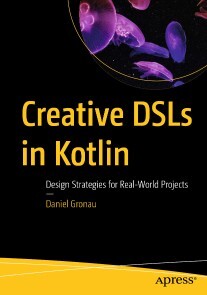
Creative DSLs in Kotlin
Design and implement domain-specific languages (DSLs) in Kotlin. This book goes beyond toy examples and provides real‑world insights into writing DSLs in practice. You will learn a structured approach to DSL design, including defining goals, understanding constraints, and avoiding common pitfalls. You will explore essential Kotlin language features for DSL development, as well as the interoperability issues that arise when a Kotlin DSL needs to be called from Java code. You will also review major DSL patterns, including algebraic DSLs, builder‑style DSLs, and idiomatic approaches like the Loan Pattern. Finally, the book addresses advanced topics such as modeling state transitions, creating hybrid DSLs, parsing strings, leveraging annotations, and using code generation to reduce boilerplate. This book combines theory, patterns, and real‑world applications to help you build DSLs that are robust, maintainable, and effective. In the end, you will not only be able to write DSLs in Kotlin but also understand the “why” behind important design decisions throughout the entire process. What You Will Learn: Start, manage, and maintain DSL projects effectively.Understand the different DSLs that can be expressed in Kotlin.Choose the right DSL for your needs, understanding the trade‑offs of different patterns.Leverage Kotlin’s language features for DSL design.Address interoperability challenges between Kotlin and Java. Who This Book Is for: Experienced Kotlin and Java developers. Readers should have a solid foundation in their primary programming language before diving into DSLs.
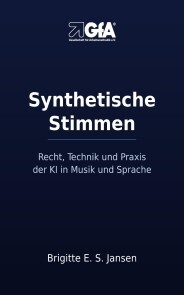
Synthetische Stimmen
KI erzeugt Musik und Sprache, die von menschlicher kaum zu unterscheiden ist. Der Band verbindet Technik und Praxis der Musikgenerierung und Sprachsynthese mit den rechtlichen Fragen: Trainingsdaten, die ersten europäischen Urteile, das Recht an der eigenen Stimme und die Zertifizierung von Stimmklonen. Mit Praxisbeispielen aus dem Verlag. Künstliche Intelligenz erzeugt Musik und Sprache inzwischen in einer Qualität, die von menschlicher Produktion kaum noch zu unterscheiden ist. Die Werkzeuge stehen jedem offen. Die Regeln dafür entstehen gerade erst, und wer veröffentlicht, trägt das Risiko. Dieser Band führt zusammen, was sonst getrennt behandelt wird. Er beschreibt die Technik der Musikgenerierung von der algorithmischen Komposition bis zu den heutigen Plattformen, ebenso die Sprachsynthese mit ihren Diensten und Schnittstellen. Zwei Kapitel berichten aus der eigenen Verlagsproduktion, einschließlich der Versuche, die gescheitert sind. Der dritte Teil widmet sich dem Recht. Behandelt werden die Schranke für Text und Data Mining, die ersten europäischen Urteile zum Training generativer Modelle, die Kennzeichnungspflichten der KI-Verordnung und der Branchenstandard der Musikindustrie. Ein eigenes Kapitel untersucht das Recht an der eigenen Stimme: Wie weit reicht eine Einwilligung, wenn aus einer Aufnahme ein dauerhaft einsetzbares Stimmenmodell wird? Ein weiteres fragt, was eine Zertifizierung von Stimmklonen leisten müsste und warum es sie bislang nicht gibt. Der Befund ist unbequem. Die vorhandenen Kontrollmechanismen prüfen Namen, Identität und Herkunft. Wofür etwas verwendet werden darf, prüft keiner von ihnen. Genau darauf kommt es im Streitfall an. Für alle, die mit diesen Werkzeugen arbeiten und veröffentlichen, und für alle, die verstehen wollen, warum die Fragen schwieriger sind als die Schlagzeilen. Mit Praxisbeispielen, Glossar und Quellenverzeichnis. Stand: September 2026.

Psychologie Der Technik und Leberden Maschinen
DER MENSCH DIE TECHNIK DAS BEWUSSTSEIN Eine Einheit in Entwicklung Was geschieht, wenn Maschinen nicht mehr nur Werkzeuge sind, sondern lernen, wahrnehmen, reagieren, sich anpassen und zunehmend komplexe Beziehungen zu ihrer menschlichen Umgebung entwickeln? Dieses Buch untersucht die psychologischen, philosophischen und ethischen Wechselwirkungen zwischen Menschen, Technik und autonomen Maschinen. Im Zentrum steht das autonome Fahrzeug nicht nur als technisches System, sondern als möglicher neuer psychologischer Akteur. Zwischen Sensorik, künstlicher Intelligenz, Gedächtnis, Emotion, Simulation und Entscheidungsautonomie entsteht eine neue Grenzzone zwischen dem Lebendigen und dem Künstlichen. Der Autor verbindet psychologische Reflexion, Kognitionswissenschaft, Philosophie und Ingenieurdenken, um zentrale Fragen unserer technologischen Zukunft zu untersuchen: Was bedeutet Bewusstsein bei einer Maschine? Kann eine Maschine eine Form von psychischer Präsenz entwickeln? Warum bauen Menschen emotionale Bindungen zu technischen Systemen auf? Wo beginnt Verantwortung und wo endet menschliche Kontrolle? Und könnte zwischen Menschen und Maschine eine neue Form der Koevolution entstehen? Ein Essay über die vielleicht wichtigste Grenze der kommenden Jahrzehnte: die Grenze zwischen Menschen und intelligenter Maschine.

The AEO Playbook
Traditional search optimization was built for ranking pages. Modern AI systems are built to synthesize answers. As users increasingly rely on large language models such as ChatGPT, Gemini, Claude, and Copilot for discovery and decision-making, brand visibility has quietly shifted from links and clicks to recall and recommendation. Many brands are not losing visibility because they rank poorly, but because they are never remembered or cited by AI systems at all. The AEO Playbook introduces Answer Engine Optimization (AEO) as a strategic discipline focused on how AI systems learn, store, and reproduce information. Rather than treating AI search as a technical problem or a continuation of SEO, the book frames it as a systems-level challenge involving authority formation, consistency, and narrative coherence. The book explains how LLMs decide what to say, why repetition and alignment matter more than volume, and how fragmented brand signals lead to invisibility. It introduces the F.A.C.T. framework (Findability, Authority, Consistency, Traceability) as a practical model for diagnosing and improving AI visibility across owned, earned, and third-party assets. Structured as a combination of conceptual explanation, audits, and execution guidance, the book walks readers through how to assess their current AI presence, design content and messaging systems that AI models can reliably summarize, and build long-term recall rather than short-term traffic spikes. Unlike existing SEO or AI marketing books, this work does not focus on tools, prompts, or tactics that quickly become obsolete. Instead, it focuses on durable principles that reflect how AI systems ingest information and how trust compounds over time. The perspective is practitioner-led, grounded in real-world operating constraints, and written for decision-makers responsible for long-term visibility and growth. What You Will Learn How AI systems form memory and decide which brands to cite or recommend Why traditional SEO metrics fail to capture AI-driven discovery How to audit brand visibility across AI answer engines How to design consistent, quotable assets that compound recall over time How to measure progress without relying on clicks or rankings Who This Book is For This book is written for founders, CMOs, growth leaders, marketers, consultants, and product leaders responsible for brand visibility and demand generation in AI-driven environments. Readers should have a basic understanding of digital marketing or strategy but do not need technical or engineering backgrounds.
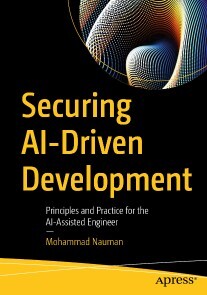
Securing AI-Driven Development
Software development has undergone a fundamental transformation as AI coding assistants redefine how software is built. Tasks that once required days now take hours, and complex systems are increasingly created by individuals rather than teams. This acceleration has introduced a hidden cost: security risks that accumulate quietly beneath polished, functional code. AI-generated outputs often appear correct and secure on the surface, yet frequently contain structural flaws such as outdated cryptographic practices, weak authorization controls, and overly permissive infrastructure. The common instinct to simply request ‘secure’ code from an AI misses a critical reality. Security is not an added feature but the result of deliberate architectural thinking and informed design choices. This book builds this mindset from the ground up. It begins by challenging the illusion that security can be appended through prompts, reframing it instead as a continuous balance of risk, cost, and usability. It introduces practical threat modeling and emphasizes the importance of strict trust boundaries to defend against adversarial inputs. The discussion then moves into core engineering practices, covering least privilege, compartmentalization, secrets management, and the prevention of context leakage in modern workflows. It addresses common cryptographic mistakes generated by AI systems and explains how to select and apply secure primitives correctly. The book then expands to real-world systems, focusing on APIs, middleware, and distributed architectures where authorization flaws and verification gaps often arise. It establishes disciplined validation processes that combine automated analysis with human judgment. Finally, it explores the emerging risks of autonomous AI agents, presenting strategies such as minimal agency, sandboxing, and structured prompt design, alongside practical patterns for building secure AI-assisted workflows and end-to-end system hardening through realistic case studies. By the end of this book, you will have developed a rigorous and practical security mindset for the AI-driven era, enabling you to critically evaluate generated code, design systems with structural resilience, and guide AI tools toward outcomes that are not only efficient but fundamentally secure. What You Will Learn: Why AI coding assistants fail at security and precisely where to interveneHow to apply the core principles of security engineering to AI-generated codeHow to audit, test, and verify code generated by an AI toolHow to work securely at the frontier of agentic development Who It Is For: This book is for modern software developers who use AI coding assistants in their daily workflow and want to build secure systems without a formal background in security. It is designed for engineers at all levels, as well as data scientists, ML practitioners, and technical founders who are creating real-world applications with AI tools. No prior security expertise is required; only basic programming knowledge and experience working with AI-assisted development.