

Allgemein

MATLAB® meets MicroPython
Dieses kompakte Lehrbuch behandelt die Verknüpfung von MicroPython betriebenen Mikrocontrollern mit MATLAB®. Anhand konkreter Beispiele werden der Entwicklungsprozess in Form von Analyse, elektronische Umsetzung und Programmierung in MicroPython, sowie die Programmierung in MATLAB® und die Erstellung einer graphischen Oberfläche behandelt. Die vorliegende zweite Auflage wurde umstrukturiert und um Varianten der Spannungsmessung, Displayfunktionen und serieller Kommunikation deutlich erweitert.

Godot 4 Best Practices
Many Godot projects start as quick prototypes but become difficult to maintain as they grow. Deep node hierarchies, tightly coupled scripts, and expanding gameplay systems can slow development and make it harder to add features, fix bugs, and ship with confidence. Godot 4 Best Practices addresses those challenges by focusing on architectural practices that help projects stay scalable and maintainable. You’ll start by applying the SOLID principles to Godot’s node and script model, learning when to choose scenes or scripts, how to keep hierarchies shallow, and when data-driven Resources are a better fit than extra nodes. Next, you’ll implement core design patterns, including signals and notifications for decoupling, state machines, strategy-based AI, and swapping deep inheritance for modular components. You’ll also apply Factories, Builders, Commands, and Services with clear Godot examples, so systems stay flexible and testable. Finally, you’ll structure larger projects with data-driven saves and preferences, as well as layered gameplay architecture to avoid God classes. By the end, you’ll write cleaner GDScript, organize large scenes with confidence, and build systems that are easier to test, maintain, and extend. No hype—just proven practices for building Godot projects that scale. *Email sign-up and proof of purchase required

Mastering SIMD with Java Vector API
Learn how to write Java code faster by using the Vector API for SIMD operations. This book shows you how to apply data-level parallelism to common algorithms without leaving the Java ecosystem, making modern CPU capabilities accessible to everyday developers. The book uses a problem-first approach. Each chapter starts with a familiar coding task—such as array summation or prefix sums—and then reworks the solution using vectorization. You’ll move from simple element-wise operations to advanced techniques like parallel scans, bitonic sorting, and sliding window optimizations. Extensive code examples, performance benchmarks, diagrams, and assembly analysis ensure you understand both the “how” and the “why” behind every optimization. Today, the rise of computer-heavy applications in finance, scientific computing, machine learning and real-time analytics makes understanding vectorization an essential skill for developers. Modern processors dedicate significant silicon to vector units, yet most Java code never uses them. By mastering the Vector API, you’ll learn to recognize patterns that benefit from SIMD, write production-ready vector algorithms, and make informed architectural decisions. This is your guide to writing faster, smarter Java code that fully leverages today’s hardware. What You Will Learn: Master Java Vector API and SIMD across x86 and ARM architecturesBuild vector-length-agnostic algorithms for any hardware platformSpot patterns for vectorization and use masked ops for conditional logicOptimize vertical vs. horizontal ops and avoid instruction-level hazardsEnsure numerical stability and verify vectorization via assembly analysis Who This Book is for: Intermediate to advanced Java developers who are familiar with core language features, OOP, arrays, loops, and basic algorithms and are comfortable with Big-O notation and concurrency concepts; multi-threading knowledge helpful but not required. No prior SIMD or low-level optimization experience needed.
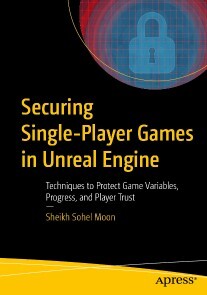
Securing Single-Player Games in Unreal Engine
Master practical, code-driven techniques to safeguard gameplay integrity—without relying on online infrastructure or third-party anti-cheat tools. In a world where even offline games are vulnerable to tampering and exploits, this book is a hands-on guide to defending your Unreal Engine projects from cheats, hacks, and manipulation. Through real-world examples and game-ready implementations, you’ll learn how to encrypt sensitive variables, detect runtime tampering, secure saved files, and prevent rollback exploits. Each chapter walks you through structured solutions, including honeypot traps, debugger detection, and DLL injection prevention—backed by insights from titles like The Witcher 3 and Assassin’s Creed Odyssey. You will learn to build a tamper-proof health system, lock down stat-based mechanics, protect player progress to ensure a fair experience for every user. Learn To: Encrypt and validate in-game variables at runtime Secure saved files against edits and rollbacks Detect memory editing and cheat tools Implement honeypots and behavior-based cheat detection Apply anti-tampering strategies without online systems Who Is This Book For With a focus on Blueprints and C++, this book is tailored for beginner-to-intermediate level Unreal Engine developers who want to build secure single-player games that earn long-term player trust.

LLMs for Modern Software Delivery and DevOps
If you work in DevOps, SRE, platform engineering, software delivery, operations, testing, or security, this book shows how large language models (LLMs) can reduce delivery friction, improve operational visibility, and support more reliable engineering workflows. Written by enterprise digital transformation and delivery specialists, it focuses on moving LLMs beyond isolated experiments into practical software delivery systems. You will build the LLM foundations needed to understand modern AI systems, including language model evolution, Transformer architecture, GPT-style generation, and efficient fine-tuning techniques such as LoRA and QLoRA. The book then connects these foundations to enterprise-ready patterns such as retrieval-augmented generation (RAG), multi-agent systems, and platform-based AI assistance. Through operations, testing, coding, project management, and cybersecurity scenarios, you will see how LLMs can support log analysis, ticket handling, root cause analysis, test generation, code generation, risk management, and security workflows. By the end of the book, you will understand how to move from model experimentation to practical AI-assisted delivery, evaluate where LLMs create measurable value across DevOps, SRE, and platform engineering workflows, and recognize the constraints, risks, and governance considerations involved.

Post-Quanten-Kryptografie
Schon in ein bis zwei Jahrzehnten könnte es Quantencomputer geben, die die derzeit verwendeten Verschlüsselungen knacken können. Milliarden von Sicherheitslücken in Web-Browsern, E-Mail-Programmen, VPNs und Smartphones wären die Folge. Es ist daher dringend notwendig, auf Krypto-Algorithmen umzusteigen, die gegenüber Quantencomputern nicht anfällig sind – also auf Post-Quanten-Kryptografie. Die Post-Quanten-Kryptografie ist mathematisch äußerst anspruchsvoll. Wer sich damit beschäftigt, muss sich durch Forschungsarbeiten und Spezifikationen arbeiten, die meist schwer zu verstehen sind. Anschauliche Beschreibungen sind dagegen selten, viele Interessierte sind überfordert. Dieses Buch schließt diese Lücke. Es erklärt die Verfahren der Post-Quanten-Kryptografie so, dass auch ein Leser ohne abgeschlossenes Mathematik-Studium sie verstehen kann, und behandelt auch nichtmathematische Themen wie die Post-Quanten-Migration. Es spricht dadurch eine breite Zielgruppe an. Neben Lehrerenden und Studierenden gehören dazu Berater, Produktmanager und Führungskräfte – also diejenigen Personen, die die Post-Quanten-Kryptografie in die Praxis umsetzen sollen.

Observability for Large Language Models
This book is a comprehensive guide designed to equip engineers, data scientists, and AI practitioners with the principles, tools, and strategies needed to ensure reliability, performance, and accountability in Large Language Models (LLMs). The book begins by laying the groundwork with the foundations of observability, introducing LLMs, their significance in modern AI, and the critical role observability plays in maintaining robust systems. It then explores SRE principles, service level objectives, and incident response, while distinguishing the unique observability challenges that arise in AI and ML systems. Building on this foundation, the book dives into measuring performance, from defining SLOs tailored for LLMs to monitoring computational and token-level metrics. Readers gain practical insights into structured logging, debugging, and distributed tracing methods that provide visibility into complex LLM workflows. Scaling challenges are addressed through strategies for cross-model observability, autoscaling, latency reduction, and fault-tolerant infrastructure design. The book further explores chaos engineering, guiding readers through resilience testing in LLMs and the automation of chaos experiments in CI/CD pipelines. Finally, it highlights monitoring, retraining, and ethical considerations in AI observability, including governance, privacy, and accountability. In conclusion, this book provides a holistic roadmap to building reliable, transparent, and future-ready LLM systems. What you will learn: How to design observability pipelines for LLMs, including token-level logging, prompt tracing, and latency analysis. Techniques for applying chaos engineering principles to test LLM robustness under stress and failure scenarios. Methods for building SLOs, SLAs, and dashboards tailored to inference quality and model reliability. Strategies for monitoring hallucinations, drift, bias, and ethical failures in real-time. Who this book is for: This book is for AI infrastructure engineers, SREs, machine learning platform teams, and applied AI practitioners deploying or maintaining LLM-based applications.

Matter - Der Smart Home-Standard
Dieses Buch bietet eine umfassende Einführung in den Smart Home-Standard Matter und beleuchtet dessen Spezifikationen, Sicherheitsaspekte und Anwendungen. Es richtet sich an Forscher und Entwickler, die ein tiefes Verständnis für die Integration und Entwicklung von Smart Home-Technologien gewinnen möchten. In den Kapiteln werden zentrale Konzepte wie die Matter-Spezifikationen (Versionen 1.0 bis 1.4) und deren Sicherheitsaspekte detailliert behandelt. Das Buch bietet einen Überblick über Funk- und Smart Home-Standards wie Zigbee, Homematic IP und Z-Wave und erklärt die Grundlagen von WLAN, BLE und Thread. Leser erfahren, wie Matter-Systeme mit Hubs, Bridges und Routern funktionieren und wie sie mit Plattformen wie Google Nest und Apple Home interagieren. Ein besonderes Augenmerk liegt auf der Entwicklung von Matter-Geräten, einschließlich der Nutzung von Evaluation Systems und der Implementierung eines Open Thread Border Routers. Dieses Buch ist ein unverzichtbares Werkzeug für Ingenieure, Entwickler und Forscher im Bereich der Smart Home-Technologie. Es bietet nicht nur theoretisches Wissen, sondern auch praktische Anleitungen zur Implementierung und Entwicklung von Matter-Geräten. Leser mit einem Hintergrund in Elektrotechnik, Informatik oder verwandten Disziplinen werden von den detaillierten Anleitungen und den praxisnahen Beispielen profitieren. Durch die Lektüre dieses Buches erlangen sie die Fähigkeit, innovative Smart Home-Lösungen zu entwickeln und die Interoperabilität zwischen verschiedenen Geräten und Plattformen zu gewährleisten.

Learning Spring Boot 4
Spring Boot 4 brings more than just the powerful ability to build secure web apps on top of a rock-solid database. It delivers Jackson integration, support for JSpecify, an enhanced retry mechanism, and updated actuator defaults, along with ways to squeeze out more efficient usage of existing resources. This fourth edition of the bestseller starts off by helping you build a simple app, and then shows you how to secure, test, bundle, and deploy it to production. Then, you’ll familiarize yourself with the ability to go “native” and release using the latest version of GraalVM. As you advance, you’ll explore reactive programming and get a taste of scalable web controllers and data operations. Additionally, this edition includes brand-new topics, including virtual threads, concurrency, and observability, as well as building intelligent applications with Spring AI. If you want to gain a thorough understanding of building robust, modern applications using the core functionality of Spring Boot, then this is the book for you. By the end, you’ll be able to build an entire suite of web applications using Spring Boot and deploy them to any platform you need.

Microsoft Security Operations Analyst Exam Ref SC-200 Guide
As cyber threats continue to evolve, the demand for security analysts who can effectively detect, investigate, and respond effectively is higher than ever. Earning the SC-200 certification validates these in-demand skills—but preparing for the exam can be overwhelming without structured guidance. This exam guide simplifies complex security concepts to help you master Microsoft security technologies and take the SC-200 exam with confidence. Through real-world scenarios, hands-on labs, and expert insights, this book provides a practical, exam-focused approach to learning. You’ll explore threat detection, incident response, and proactive threat hunting while gaining in-depth knowledge of Microsoft Defender XDR’s integrated security capabilities, Sentinel’s SIEM and SOAR functionalities, and Defender for Cloud’s proactive protection measures. What’s more, it includes mock exams, practice questions, and exam tips to reinforce learning and enhance your exam readiness. By the end of this book, you’ll be able to apply Microsoft security best practices in real-world environments, analyze security incidents, implement detection strategies, and enhance security operations using Microsoft’s cutting-edge security tools—everything you need to become a certified Microsoft Security Operations Analyst.

Leitfaden für Vorstellungsgespräche
"Der ultimative Leitfaden für dein Lead DevOps Engineer-Vorstellungsgespräch! Meistere GCP, Terraform, Kubernetes, ArgoCD, CI/CD, Python und Security mit praxisnahen Szenarien, Code-Beispielen und strategischen Antworten. Ideal für DevOps-Profis, die sich auf Führungsrollen vorbereiten. Interview-Ready in kürzester Zeit!" Meistern Sie das Vorstellungsgespräch als Lead DevOps Engineer souverän Bereiten Sie sich auf eine Position als Lead DevOps Engineer vor und benötigen einen strukturierten, praxiserprobten Ansatz, um im Vorstellungsgespräch zu überzeugen? Dieser umfassende Leitfaden ist Ihr Wegweiser zum Erfolg – entwickelt von einem Experten mit praktischer Erfahrung in GCP, Terraform, Kubernetes, ArgoCD, CI/CD, Python und Sicherheit. Das erwartet Sie: Strategische Darstellung – Lernen Sie, wirkungsvoll zu führen, indem Sie Probleme, Lösungen und messbare Ergebnisse präzise formulieren – genau das, was Interviewer hören wollen. Detaillierte Einblicke in Kernkompetenzen – Von der Gestaltung von CI/CD-Pipelines bis hin zu sicheren Multi-Environment-GCP-Infrastrukturen: Jedes Kapitel behandelt praxisnahe Szenarien, produktionsreifen Code und Antworten, die im Gespräch überzeugen. Produktionsszenarien – Bewältigen Sie Herausforderungen wie GitOps-basierte Multi-Tenant-Plattformen, Disaster Recovery und Security Hardening anhand konkreter Beispiele. Einblicke in Verhalten und Führung – Nutzen Sie die STAR-Methode, um überzeugende Beispiele aus den Bereichen Incident Management, Einführung neuer Tools und Team-Mentoring zu formulieren. Fragen an den Interviewer – Zeigen Sie strategisches Denken und echtes Interesse mit wirkungsvollen Fragen, die speziell auf Führungspositionen zugeschnitten sind. Ob Sie Terraform-Module verfeinern, Kubernetes-Deployments mit ArgoCD optimieren oder GCP-Umgebungen absichern: Dieser Leitfaden sorgt dafür, dass Sie selbstbewusst, klar und fundiert in das Vorstellungsgespräch gehen. Ideal für: DevOps Engineers, die Führungspositionen anstreben Cloud-Experten mit Schwerpunkt auf GCP, Kubernetes und IaC Fachkräfte, die sich auf anspruchsvolle technische Vorstellungsgespräche vorbereiten

Richtlinien als Code
Automatisiere Compliance und Sicherheit in deiner Infrastruktur! Dieser kompakte Feldführer zeigt dir, wie du mit Policy-as-Code (Richtlinien als Code) Kubernetes, Terraform und CI/CD-Pipelines absicherst – von der Installation bis zur produktionsreifen Umsetzung. Mit praktischen Beispielen für OPA, Kyverno, Conftest und Sentinel lernst du, wie du Tauchen Sie mit diesem praxisorientierten, schnörkellosen Leitfaden in die Welt von Policy-as-Code (PaC) ein – konzipiert für DevOps- und Platform-Engineers sowie SREs. Ob Sie mit Compliance-Herausforderungen kämpfen, Sicherheitsaspekte in frühe Entwicklungsphasen verlagern („Shift Left“) oder Leitplanken für Kubernetes, Terraform oder CI/CD-Pipelines automatisieren wollen: Dieses Buch liefert Ihnen praxisnahe Szenarien, produktionsreife Code-Snippets und Entscheidungsmodelle, mit denen Sie PaC souverän implementieren können. Lernen Sie die vier führenden Tools – OPA (Open Policy Agent), Kyverno, Conftest und HashiCorp Sentinel – anhand konkreter Beispiele kennen: OPA & Gatekeeper: Meistern Sie Rego für die Kubernetes-Admission-Control und komplexe Policy-Logik. Kyverno: Schreiben Sie Policies für Validierung, Mutation und Generierung in reinem YAML – ohne eine neue Sprache lernen zu müssen. Conftest: Erkennen Sie Fehlkonfigurationen in Dockerfiles, Terraform-Plänen und Kubernetes-Manifesten, noch bevor diese in die Produktion gelangen. Sentinel: Setzen Sie Kosten-, Sicherheits- und Compliance-Regeln in Terraform Cloud durch – dank enger Pipeline-Integration. Von der Installation bis zur Härtung für den Produktivbetrieb – erfahren Sie, wie Sie: Sicherheits- und Compliance-Prüfungen durch Pre-Commit-Hooks, CI-Checks und GitOps-Workflows in frühe Phasen verlagern („Shift Left“). Standards für Container, Registries, Labels und Cloud-Ressourcen durchsetzen. Systeme mittels Logging, Ausnahme-Workflows und Continuous Compliance prüfen und absichern. Mithilfe einer Entscheidungsmatrix und hybrider Muster das passende Tool für Ihren Tech-Stack auswählen. Diese Ausgabe von 2025 ist vollgepackt mit Code-Snippets, Architekturdiagrammen und praxiserprobten Ratschlägen. Sie ist Ihr Wegweiser zu skalierbarem, wartbarem und revisionssicherem Policy-as-Code – damit Sie ruhig schlafen können, während Ihre Policies die Schwerstarbeit leisten. Ideal für: Teams, die Kubernetes, Terraform oder GitOps einsetzen und Compliance automatisieren, menschliche Fehler reduzieren sowie Vertrauen in ihre Infrastruktur schaffen wollen.

A Leaders Guide to Data & AI Culture Activate Sustainable Business Value
Playbook on Data & AI Culture acceleration with a proven framework and real world case studies. “The companies that win the AI era will not be those with the most models. They will be the ones where every employee—from the boardroom to the shop floor—trusts the data, asks the right questions, and is brave enough to act on the answer.”

Spaß mit CP/M
Wenn Sie den Reiz verspüren, sich mit einer etwas älteren, aber nach wie vor faszinierenden Technik auseinanderzusetzen, sind Sie hier genau richtig. Dieses Buch ist für jene geschrieben, die Spaß daran haben, sich tief in die Materie zu graben – und das ohne produktive Zwänge, einfach nur zum Spaß. Dieses Handbuch ist kein trockener Theorieband, sondern ein praktisches Kompendium für den Einstieg in die Welt von CP/M. Es zeigt Ihnen nicht nur, wie das Betriebssystem von innen funktioniert – von BIOS, BDOS und CCP bis zum Umgang mit Bits und Bytes – sondern auch, wie Sie es auf moderner Hardware zum Leben erwecken. RunCPM – der perfekte Einstieg ohne teure Hardware Der Autor zeigt, dass man für den Anfang kein spezielles CP/M-System braucht. Mit dem Open-Source-Projekt RunCPM lässt sich CP/M auf preiswerten Mikrocontroller-Boards wie Arduino Due, Teensy oder Raspberry Pi Pico nutzen. Das Buch liefert die genaue Anleitung, um diese Systeme einzurichten und von den Vorteilen des Projekts zu profitieren, wie der einfachen Datenverwaltung über das Host-Dateisystem. Programmierung für Enthusiasten Das Buch widmet sich ausführlich den damaligen Programmiersprachen und liefert konkrete, umsetzbare Beispiele, anstatt nur die Grundlagen zu erklären. • Z80-Assembler • C-Basic und Turbo Pascal Dieses Buch richtet sich an diejenigen, die wissen, warum sie sich mit CP/M befassen wollen. Es ist ein ehrliches, technisches Werk, das die Freude am Entdecken und am Umgang mit echter Technik in den Vordergrund stellt. Tauchen Sie ein und erleben Sie, warum dieses Betriebssystem immer noch so relevant ist.

Mathematische Algorithmen im Unterricht
Dieses Buch bietet einen elementaren und anschaulichen Einstieg in die Programmierung für mathematische Zwecke sowie die damit verbundenen Kompetenzen. Es konzentriert sich auf wenige grundlegende Konzepte und verwendet zur Umsetzung die leicht zugängliche Programmiersprache Python; dadurch wird ohne großen technischen Ballast eine große Vielfalt mathematischer Anwendungen erschlossen – von der Zahlentheorie und klassischen Numerik über Optimierung, Differentialgleichungen und Simulationen hin zur 3D-Computergrafik, Clusteranalyse und Computeralgebra. Die einzelnen Kapitel beinhalten Übungsaufgaben, die von und einfachen technischen Übungen bis zu Miniprojekten reichen. Das Buch richtet sich insbesondere an Lehramtsstudierende und bietet bei Bedarf die Möglichkeit zum Einsatz in der Schule: Viele der vorgestellten Themen und Projekte können bereits ab der späten Sekundarstufe I und der Sekundarstufe II bearbeitet werden. Für die vorliegende 2. Auflage wurden etliche Überarbeitungen vorgenommen: Die Inhalte wurden aktualisiert, teilweise gestrafft, einige Themen wurden ausgebaut bzw. neu aufgenommen – etwa Computational Thinking und KI. Die Beispieldateien und Lösungen der Aufgaben werden nun online als Jupyter-Notebooks bereitgestellt, so dass direkt damit gearbeitet werden kann. Neu sind außerdem kurze Fragen, die zum Innehalten, Reflektieren sowie ggf. eigenen Ausprobieren einladen.

Der C64 (Teil 1)
Tauche ein in die Welt der Maschinesprache des C64 und erwecke den legendären 6502/6510-Prozessor zum Leben!Dieses Buch ist eine Zeitreise zurück zu den Wurzeln des Heimcomputing – und gleichzeitig ein moderner Leitfaden für alle, die die faszinierende Welt der 8-Bit-Programmierung erkunden möchten. Vom ersten Byte bis zum kompletten Maschinenprogramm führt dich dieses Werk durch alle Geheimnisse des Commodore 64. Ein durchdachter didaktischer Aufbau – vom Prozessor-Grundverständnis bis zur Hardware-Programmierung Praktische Anwendung mit dem SMON-Monitor: Assemblieren, Speichern, Laden und Ausführen Tiefes Verständnis der C64-Speicherarchitektur und der 6502/6510-Register Von grundlegenden arithmetischen Operationen bis hin zu komplexen Bit-Manipulationen Echte Hardwareprogrammierung: Tastaturzugriff über den CIA-Baustein Einblicke in die Speicherstruktur von BASIC-Programmen und Variablen Für wen ist dieses Buch? Retro-Computing-Enthusiasten C64-Fans, die mehr aus ihrer Hardware herausholen wollen Programmierer, die die Grundlagen moderner Computerarchitektur verstehen möchten Liebhaber der 8-Bit-Ära, die das Gefühl echter Hardware-Kontrolle erleben wollen Tauche ein in die Welt, in der jedes Bit zählt und in der du den Computer vollständig kontrollierst – Byte für Byte, Zyklus für Zyklus. Dieser erste Teil deiner Reise in die Tiefen des C64 ist erst der Anfang eines faszinierenden Abenteuers in der Welt der Maschinensprache.

Noch mehr Spaß mit der 6502-CPU und 6522
Im zweiten Teil seiner 6502-Reihe geht der Autor Erik Bartmann verstärkt auf die Assembler-Programmierung ein. Ging es in seinem ersten Buch "Spaß haben mit der 6502-CPU" (ISBN 978-3946496-33-5) vor allem um die Realisierung der Hardware, widmet er sich nun der 6502-Maschinensprache. Auch wenn der Spaß am Programmieren mit Assembler im Vordergrund steht, so vermittelt das Buch an den passenden Stellen dennoch auch brauchbares Grundlagenwissen über Programmierung sowie Elektronikbauteilkunde. In "Noch mehr Spaß mit der 6502-CPU und 6522 – Die Welt der Maschinensprache" verwendet der Autor die Komponenten aus dem ersten Buch und lässt alle Ein- und Ausgaben über den VIA-Baustein 65C22 laufen. Alles was zum Verständnis erforderlich ist, wird mit Tastern, LEDs und einem LC-Display realisiert. In dem Buch werden u.a. ein Roulette, ein Lauflicht mit LEDs und ein elektronischer Würfel gebaut und programmiert, ebenso wird ein Schrittmotor angesteuert.

Arbeitsbuch Statistik
Dieses Arbeitsbuch bietet 227 Aufgaben mit vollständigen Lösungen – ideal zum Üben, Wiederholen und zur Klausurvorbereitung. Viele der Aufgaben sind als Übungen mit dem Statistikprogramm R konzipiert und nutzen digital bereitgestellte Datensätze. Abgedeckte Themen sind insbesondere: Grundlagen der Stochastik, deskriptive und explorative Datenanalyse, induktive Statistik, Regressions- und Varianzanalyse sowie Zeitreihenanalyse. Das Arbeitsbuch ist dabei inhaltlich und strukturell auf das Lehrbuch Statistik – Der Weg zur Datenanalyse von Fahrmeir/Heumann/Künstler/Pigeot/Tutz in der 9. Auflage abgestimmt: Alle 99 Aufgaben aus dem Lehrbuch werden hier ausführlich gelöst und durch Verweise eng mit diesem verknüpft. Beide Bücher sind aber auch unabhängig voneinander nutzbar. Für die vorliegende 6. Auflage des Arbeitsbuchs wurden etliche Aufgaben neu aufgenommen bzw. bisherige Aufgaben durch aktuellere ersetzt.

Photonics in Industrial IoT: Transforming Manufacturing and Beyond
Manufacturing is undergoing a profound digital transformation, and two technologies are at the forefront of this shift: photonics and the Industrial Internet of Things (IIoT). This book offers a comprehensive perspective on how these technologies intersect to create smarter, safer, and more productive industrial environments. By bridging the science of light generation, manipulation, and detection with intelligent, interconnected industrial systems, this work highlights how photonics-enabled IIoT can deliver unprecedented accuracy, efficiency, and automation. Beginning with clear introductions to the foundational principles of photonics and IoT, the book builds toward their practical integration in industrial environments. It explores how photonic technologies support precision measurement, quality assurance, and process optimization, and it explains the communication protocols and standards that enable secure and reliable machine-to-machine interaction. You’ll gain insight into how data gathered from photonic sensors can be processed using machine learning for enhanced analytics, predictive maintenance, and informed decision-making. Real-world case studies illustrate both the tangible benefits and implementation challenges of photonics-based IIoT systems across manufacturing sectors. The book concludes with a forward-looking analysis of emerging trends, research directions, and expected advancements in photonics and industrial connectivity. As global demand for smart manufacturing accelerates, this timely work underscores the pivotal role of photonics in enabling high-speed, high-precision, and cost-efficient industrial operations—ultimately driving productivity, safety, and competitiveness in the era of intelligent automation. What You Will Learn Gain an understanding of photonics technology and its application within the IIoT ecosystemDelve into the methods of integrating photonics with existing industrial processesReview the latest innovations in manufacturing that have been made possible through photonics and IIoTFind out the critical aspects of security and safety in photonics-integrated IIoT systems, providing readers with strategies to mitigate risks Who This Book Is For Individuals with a foundational understanding of industrial processes and a keen interest in IoT technological advancements in IoT looking to integrate it with photonics into their operations
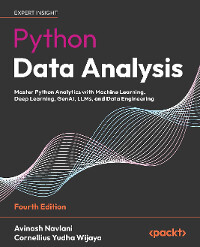
Python Data Analysis
Modern data analysis goes beyond cleaning and visualizing data. Today's practitioners need to build scalable data pipelines, apply machine learning, work with text and image data, and understand emerging AI techniques such as Generative AI and Large Language Models (LLMs). This guide shows you how to tackle these challenges using Python's modern data ecosystem. Unlike books focused on a single library or technique, this book provides an end-to-end approach to Python data analysis. You'll learn how to move from data preparation and exploratory analysis to machine learning, NLP, image analytics, scalable processing, and AI-powered workflows. Starting with statistical foundations, you'll learn how to clean, transform, wrangle, and visualize data. You'll then explore time series analysis, signal processing, forecasting, and predictive analytics before applying machine learning techniques such as regression, classification, clustering, PCA, probabilistic methods, and Bayesian approaches. The book also covers graph analytics, sentiment analysis, NLP, image analytics, Generative AI, and LLMs. Finally, you'll learn to scale analytics workflows using Dask, Modin, Ray, and PySpark. By the end of the book, you'll be able to build end-to-end data analysis pipelines and apply modern data science and AI techniques to solve real-world challenges.

Spaß haben mit der 6502-CPU
Der Mikroprozessor MOS-6502 kam 1975 auf den Markt. Aufgrund seines einfachen Aufbaus sowie seines günstigen Preises bei gleichzeitig hoher Leistungsfähigkeit wurde er in zahlreichen Heimcomputern der damaligen Zeit verbaut, unter anderem im Commodore C64, dem Atari 800 und dem Apple I und Apple II. Wer sich heute noch mit der Programmierung der 6502-CPU beschäftigen möchte, den erwartet in Erik Bartmanns Buch "Spaß haben mit der 6502-CPU – Die Welt der Maschinensprache" jede Menge Wissen über das Zusammenspiel von Bits und Bytes auf unterster Ebene in einer CPU. Dabei wird dem Leser auch die Maschinensprache Assembler nahegebracht. Das Buch spricht Leser an, die Spaß am Basteln haben und gleichzeitig etwas vertiefend verstehen wollen. Dabei wird historische Technik erforscht, deren exemplarischer Aufbau aber auch dabei hilft zu verstehen, wie moderne Mikrocontroller funktionieren. Das Arduino-Board verbindet diese alte Technikwelt mit der modernen Zeit und findet im Buch häufig Verwendung.

Digitalisierung & Nachhaltigkeit
Die Themen Digitalisierung und Nachhaltigkeit dominieren die Zukunft von Unternehmen und unserer Gesellschaft in den nächsten Jahrzehnten. Wenn Unternehmen die Digitalisierung aktiv umsetzen, müssen sie folglich ökonomische, ökologische und soziale Aspekte im Sinne der Nachhaltigkeit berücksichtigen. Genau hier setzt Michael Jacob an: Der Autor geht im ersten Teil des Buches auf die Grundlagen der Digitalisierung und Nachhaltigkeit anhand der wichtigsten Modelle ein. Im zweiten Teil wird der Fokus auf die Frage gelegt, wie Unternehmen den Digitalisierungsprozess nachhaltig gestalten können. Ein kurzes Fazit rundet die beiden Hauptteile ab. Damit ist das Buch ein wichtiges Hilfsmittel, um Zielkonflikte zwischen den Bereichen Digitalisierung und Nachhaltigkeit zunächst zu erkennen und dann entsprechend entscheiden zu können. Somit können Unternehmen ihrer gesellschaftlichen Verantwortung (Corporate Social Responsibility) nachkommen. Ein Buch für alle, die eine kompakte Einführung in die beiden großen Themen unserer Zeit suchen.

Arduino Nano ESP32 entdecken
Die Entwicklung des Arduino Nano ESP32-Board bedeutet einen Meilenstein für die Hobby-Elektronikwelt, so wie damals der Arduino UNO. Der Arduino Nano ESP32 ist doppelt so leistungsstark wie der Arduino UNO und kostet nur die Hälfte. Und dabei verfügt er auch noch über Bluetooth- und Wifi-Fähigkeiten. Als ein Arduino-Autor der ersten Stunde nimmt Erik Bartmann den Leser mit auf seine Entdeckungsreise, um Leistungsfähigkeit und Praxistauglichkeit des neuen Boards zu erforschen. Dabei kommen – wie immer in seinen Büchern – die Elektronik- und die Programmiergrundlagen nicht zu kurz. Wie das Buch aufgebaut ist Das Buch besteht aus drei Abschnitten: Zunächst beschreibt der Autor die Basics vom Nano ESP32 und von der Arduino-IDE 2 und gibt für Newbies eine knappe Einführung in die Arduino-Programmierung. Im zweiten Abschnitt entwickelt er Projekte mit dem Nano ESP 32. Das sind zunächst ganz einfache Projekte, die sich dann aber in ihrer Komplexität steigern: von einfachen Projekten zur analogen und digitalen Pin-Belegung über den Betrieb eines virtuellen Synthesizers via BLE (Bluetooth) bis hin zur Temperaturmessung und Datenvisualisierung mithilfe von Wifi. Im dritten Teil des Buches führt Erik Bartmann in die Programmiersprache MicroPython ein und beschreibt dabei interessante Projekte zum Verstehen und Nachbauen. Interessante Grundlagenthemen Der Autor erklärt an praktischen Projekten bedeutsame Grundlagenthemen: die serielle Schnittstelle, die Bus-Systeme 1-Wire, SPI und I²C, die Kommunikationsprotokolle BLE (Bluetooth) und Wifi, aber auch ESP-NOW. Node-RED wird als flow-basierte Entwicklungsplattform mit einem praktischen Projekt vorgestellt und ThingSpeak als cloud-basierte IoT-Plattform. MicroPython-Workshop MicroPython bietet eine benutzerfreundliche Programmierumgebung für Mikrocontroller, ohne dabei die Flexibilität und Einfachheit von Python zu beeinträchtigen. Der Autor führt mit einem ausführlichen Workshop in die MicroPython-Programmierung ein.

Kundenzufriedenheit durch agile Softwareentwicklung
Dieses Buch untersucht, wie agile Softwareentwicklung die verschiedenen Dimensionen der Kundenzufriedenheit im Business‑to‑Business‑Kontext beeinflusst. Auf Basis einer umfassenden Analyse des bestehenden Forschungsstandes wird ein Kausalmodell entwickelt, das die direkten, indirekten und moderierenden Effekte agiler Softwareentwicklung auf diese Zufriedenheitsdimensionen systematisch abbildet. Das Modell wird empirisch validiert und zeigt, welche Bereiche der Kundenzufriedenheit besonders durch agile Softwareentwicklung geprägt werden und wie Unternehmen ihre Entwicklungsprozesse darauf ausrichten können. Die Arbeit schließt mit praxisorientierten Empfehlungen.