

Allgemein
Einfache & effektive strategische IT-Planung
- Strategische IT-Planung einfach & effektiv meistern - Liefert Best-Practices für eine lean und systematische strategische IT-Planung und Planung der digitalen Transformation - Basiert auf erprobten Methoden und Vorgehensweisen - Strukturiert das Thema für die Praxis mit einer konsistenten Begriffswelt - Neu in der 2. Auflage: Handhabbare strategische IT-Planung lean & systematisch mit allen Methoden und Leitfäden, die dafür erforderlich sind – mit Erfolgsgarantie; Methoden für Erstellung und Pflege einer Business Capability Map - Ihr exklusiver Vorteil: E-Book inside beim Kauf des gedruckten Buches Veränderungen in den Geschäftsmodellen durch den digitalen Wandel und die fundamentalen Umbrüche infolge von z.B. Energiekrise und Pandemie sowie kürzer werdende Innovations- und Produktlebenszyklen stellen neben einem zuverlässigen Geschäftsbetrieb hohe Anforderungen an IT-Verantwortliche. Effizienz und Qualität in der Leistungserbringung, Time-to-market, Flexibilität und Innovationsfähigkeit sind die zentralen Herausforderungen, die gleichzeitig mit zunehmender IT-Komplexität bewältigt werden müssen. Die IT muss strategisch ausgerichtet und auf Veränderungen vorbereitet werden, um ihren Wertbeitrag signifikant zu erhöhen. Best-Practice-Bausteine und Schritt-für-Schritt-Leitfäden geben Ihnen Hilfestellungen für die individuelle Gestaltung Ihres Ziel-Bilds für einen erfolgreichen digitalen Wandel. AUS DEM INHALT // - Strategische IT-Planung - Business Architecture 4 Digitalization - Gestaltung des fachlichen Ziel-Bilds - Ableitung des IT-Ziel-Bilds - Operationalisierung der strategischen IT-Planung - IT-Governance Best-Practices - Herausforderungen der Digitalisierung und deren Einbezug in der strategischen Planung
Business-Analyse - einfach und effektiv (3. Auflg.)
- Systematische und durchgängige Darstellung der Tätigkeit der Business-Analyse und der Disziplin Demand Management- Strategische, taktische und operative Planungsebene in ihrem Zusammenspiel- Durchgängiges Praxisbeispiel- Sammlung von Best-Practices für die Business-Analyse und die Werkzeugunterstützung sowie organisatorische Verankerung des Demand Management- Ausführliche Beschreibung der Ergebnistypen der Business-Analyse mit Tipps und Tricks für die Nutzung inklusive Business-Case-Betrachtung- Schritt-für-Schritt-Anleitung für die Ableitung von Business-ServicesUnternehmen müssen in der Lage sein, sich zu verändern und an die jeweiligen Markt- und Wirtschaftsbedingungen schnell anzupassen. Die Tätigkeit der Business-Analyse und deren organisatorische Verankerung im Demand Management sind wesentliche Erfolgsfaktoren dafür. Die erforderlichen Veränderungen werden erkannt, fachlich gestaltet und umgesetzt. Das Projektportfolio sowie die einzelnen Projekte und Wartungsmaßnahmen werden an den Geschäftserfordernissen ausgerichtet und die Produktivität bei der Umsetzung wird gesteigert. Anzahl und Umfang von Geschäftsanforderungen werden durch frühzeitige Prüfung auf Nutzen, Konsistenz und Wichtigkeit deutlich reduziert. Unnötige Doppelarbeiten und wertvernichtende Projekte werden vermieden. So entstehen Freiräume für strategische Vorhaben.Wir stellen in diesem Buch Grundlagen und Best-Practices zur Durchführung der Business-Analyse bereit und helfen Ihnen, das Demand-Management bei klassischem und agilem Vorgehen mit Leben zu füllen.AUS DEM INHALT //Einleitung/Einführung in die Business-Analyse/Von der Geschäftsanforderung zum IT-Projekt/Best-Practices der Business-Analyse/Ergebnistypen der Business-Analyse/Business Capability Management & Business-Services Inge Hanschke, Dipl.-Inf., ist Expertin in der digitalen Transformation, Datenmanagement, Organisation 4.0, Enterprise Architecture Management, Business-Analyse & Demand Management, Lean Management, Informationssicherheit und Datenschutz. In über 30 Berufsjahren hat sie als Innovator, IT-Managerin bei Anwenderunternehmen, in einem ERP-Produkthaus und als IT-Dienstleister konsequent die Brücke zwischen Business und IT geschlagen. Sie hat in vielen Unternehmen deren Geschäftsmodell sowie die IT digitalisiert, die IT an Geschäftsanforderungen ausgerichtet, das IT-Management professionalisiert und damit die Unternehmen für den digitalen Wandel vorbereitet.Daniel Goetze arbeitet als Senior Business Analyst. In mehr als 27 Berufsjahren hat er Unternehmen erfolgreich dabei unterstützt, fachliche Anforderungen in angemessene IT-Lösungen zu überführen. Er lebt in Hallbergmoos.
Storytelling: Digital - Multimedial - Artificial
- Experten von u.a. Adobe, Microsoft, Storymaker berichten aus der Praxis ihrer täglichen Arbeit- Praktisches Know-how zur sofortigen Umsetzung- Viele Tipps aus der langjährigen Praxiserfahrung der Autorin- Die Webseite zum Buch: www.story-baukasten.de- Ihr exklusiver Vorteil: E-Book inside beim Kauf des gedruckten BuchesMittlerweile haben alle Kommunikationsbereiche erkannt, dass Storytelling das mächtigste Mittel zur authentischen Zielgruppenansprache ist. Geschichten bewegen uns, wecken Emotionen und gute Storys bleiben langfristig in Erinnerung.Dieses Buch regt zum Nachdenken an, liefert Lösungen und lässt Storytelling-Praktiker zu Wort kommen, die bereits erfolgreich umgesetzte Storys präsentieren. Experten erläutern aus der Praxis ihres Berufsalltags heraus, was Storytelling bedeutet und wie sie es als Methode ein- und umsetzen:Rufus Deuchler, Adobe // Mariano Mailos, Microsoft // Carsten Rossi, Kammann Rossi GmbH // Björn Eichstädt, Storymaker // Michael Katzlberger, https://katzlberger.ai // Markus Kaiser, TH Nürnberg und CGI Deutschland // Amelie Reigl, https://diewissenschaftlerin.de // Kai Heddergott, https://www.heddergott.de // Thomas Riedel, https://www.droid-boy.deAUS DEM INHALT //Storytelling in Unternehmen/Sustainable Storytelling/Grundelemente/Story-Baukasten/Visual Storytelling/Multimedial, Digital, Crossmedial, Transmedial/Storytelling-Kanäle/Streaming/Storytelling im Metaverse/Artificial Storytelling/New Experience Storytelling/Tools und Checklisten Pia Kleine Wieskamp studierte Kunst, Kunstgeschichte, Pädagogik und Germanistik in Deutschland und Italien. Die Kommunikationsexpertin und Autorin trainiert und coacht seit einigen Jahren Firmen sowie Fach- und Führungskräfte in den Themen Digitale Kommunikation und Marketing. Ihre Schwerpunkte liegen in den Bereichen Storytelling, Visual Storytelling und Social Media in PR und Marketing. Einen großen Erfahrungsschatz erlangte Pia Kleine Wieskamp in ihren Tätigkeiten als PR- und Marketingmanagerin, Bloggerin, Journalistin und Redakteurin für TV, Magazine und Verlage.
Scalable AI and Design Patterns
Understand and apply the design patterns outlined in this book to design, develop, and deploy scalable AI solutions that meet your organization's needs and drive innovation in the era of intelligent automation.This book begins with an overview of scalable AI systems and the importance of design patterns in creating robust intelligent solutions. It covers fundamental concepts and techniques for achieving scalability in AI systems, including data engineering practices and strategies. The book also addresses scalable algorithms, models, infrastructure, and architecture considerations. Additionally, it discusses deployment, productionization, real-time and streaming data, edge computing, governance, and ethics in scalable AI. Real-world case studies and best practices are presented, along with insights into future trends and emerging technologies.The book focuses on scalable AI and design patterns, providing an understanding of the challenges involved in developing AI systems that can handle large amounts of data, complex algorithms, and real-time processing. By exploring scalability, you will be empowered to design and implement AI solutions that can adapt to changing data requirements.WHAT YOU WILL LEARN* Develop scalable AI systems that can handle large volumes of data, complex algorithms, and real-time processing* Know the significance of design patterns in creating robust intelligent solutions* Understand scalable algorithms and models to handle extensive data and computing requirements and build scalable AI systems* Be aware of the ethical implications of scalable AI systemsWHO THIS BOOK IS FORAI practitioners, data scientists, and software engineers with intermediate-level AI knowledge and experienceABHISHEK MISHRA is a seasoned data science and analytics professional with extensive expertise in information technology services and products. With a remarkable 15-year track record, Abhishek has leveraged his data science knowledge and engineering skills to analyze vast datasets, interpret findings, and communicate actionable insights to drive effective business decision making. He has successfully led global analytics teams, developed cutting-edge machine learning solutions, and formulated data analytics strategies for esteemed organizations such as Marsh and McLennan, Fiserv India Pvt Ltd, and Deloitte Inc.Chapter 1: Introduction to Scalable AI Systems.- Chapter 2: Fundamentals of Scalability in AI.- Chapter 3: Data Engineering for Scalable AI.- Chapter 4: Scalable AI Algorithms and Models.- Chapter 5: Scalable AI Infrastructure and Architecture.- Chapter 6: Scalable AI Deployment and Productionization.- Chapter 7: Scalable AI for Real-time and Streaming Data.- Chapter 8: Scalable AI for Edge Computing.- Chapter 9: Scalable AI Governance and Ethics.- Chapter 10: Case Studies and Best Practices.- Chapter 11: Future Trends and Emerging Technologies.- Chapter 12: Conclusion and Final Thoughts.
An Introduction to PHP
Use PHP to enhance your web pages. This book shows you how PHP programming works, and how to write and organize PHP code.The book starts with steps to download and install a setup for a sample website that will form the basis for upcoming chapters. You start by writing PHP code and learn how to mix it with HTML and manage the code. From there, you will learn about dynamic content, along with a deep dive into form processing and sending email. Saving uploaded data and uploading files is discussed next. You will learn how to configure your PHP project and develop a library. You will then learn how to create an image catalog and manage data on your web page. By the end of the book, you will understand how to work with cookies, sessions, and logging in, followed by an example of creating a simple blog that reiterates the concepts developed in the previous chapters.After reading this book, you will be able to configure, create, and manage your dynamic website.WHAT WILL YOU LEARN* Know the basics of programming with the PHP language* Use PHP to generate dynamic web pages* Work with SQL databases* Work with forms to upload text data and binary files* Use tips and tricks to write clean and maintainable codeWHO THIS BOOK IS FORWeb developers and students learning to develop and maintain PHP code on their websiteMARK SIMON has been involved in training and education since the beginning of his career. He started as a teacher of mathematics and moved into IT consultancy and training. He has worked with and trained in several programming and coding languages, and currently focuses on web development and database languages. When not involved in work, Mark can be found listening to or playing music, reading, or just wandering about.1: Introduction and Setting Up.- 2: Working with PHP.- 3: Email and Form Processing.- 4: Uploading Data and Files.- 5: Working with a Database.- 6: Adding Data to the Database.- 7: File Handling.- 8: The Image Gallery.- 9: Managing Data.- 10: Sessions and Logging In.- 11: A Configuration System.- 12: A Content Management System.- Appendix 1: Adding Markdown to Your Blog Articles.- Appendix 2: Non-PHP Tricks.- Appendix 3: PHP Versions.- Appendix 4: Default Library Functions.
DevOps
Wie IT-Projekte mit einem modernen Toolset und der richtigen Kultur gelingen. DevOps bedeutet nicht, dass Entwickler und Admins nun die gleichen Jobs erledigen.DevOps bedeutet auch nicht, dass man beim Programmieren tägliche neue Tools einsetzen muss, es keine geplanten Deployments mehr gibt und Software nur noch in Containern läuft.DevOps ist viel größer: Es verspricht eine neue Kultur der Zusammenarbeit sowie bessere Prozesse und Workflows. So liefern Sie Änderungen schneller aus und sorgen für kürzere Feedback-Schleifen zwischen Development und Operations.In zahlreichen Projekten hat Sujeevan Vijayakumaran gelernt, was in der Entwicklung und im Betrieb moderner Software gut funktioniert. Mit vielen Beispielen und Praxistipps zeigt er Ihnen, wie Sie eine moderne und zeitgemäße Arbeitsumgebung für Ihre IT-Projekte schaffen und die DevOps-Transformation in Ihrem Team gelingt.Aus dem Inhalt:Effizientes Zusammenarbeiten beim ProgrammierenSchlanke Build-ProzesseFrühe, schnelle und automatisierte QualitätssicherungSchnellere Releases erstellen und deployenDen Dienst betreiben und überwachenSicherheit und Compliance unter einen Hut bringenContinuous Integration: Tools richtig einsetzenContinuous Delivery praktisch umsetzenMonitoring und Observability für mehr DurchsichtMit DevOps-Plattformen die Tool-Landschaft vereinfachenJenseits von Kultur und ToolsLeseprobe (PDF-Link)Zum Autor:Sujeevan Vijayakumaran arbeitet als Senior Solutions Architect bei GitLab. Seit einigen Jahren unterstützt er große Konzerne aus Deutschland, Österreich und der Schweiz beim Ein- und Umstieg in die DevOps-Welt.
The Secrets of AI Value Creation
UNLOCK UNPRECEDENTED LEVELS OF VALUE AT YOUR FIRM BY IMPLEMENTING ARTIFICIAL INTELLIGENCEIn The Secrets of AI Value Creation: Practical Guide to Business Value Creation with Artificial Intelligence from Strategy to Execution, a team of renowned artificial intelligence leaders and experts delivers an insightful blueprint for unlocking the value of AI in your company. This book presents a comprehensive framework that can be applied to your organisation, exploring the value drivers and challenges you might face throughout your AI journey. You will uncover effective strategies and tactics utilised by successful artificial intelligence (AI) achievers to propel business growth. In the book, you’ll explore critical value drivers and key capabilities that will determine the success or failure of your company’s AI initiatives. The authors examine the subject from multiple perspectives, including business, technology, data, algorithmics, and psychology.Organized into four parts and fourteen insightful chapters, the book includes:* Concrete examples and real-world case studies illustrating the practical impact of the ideas discussed within* Best practices used and common challenges encountered when first incorporating AI into your company’s operations* A comprehensive framework you can use to navigate the complexities of AI implementation and value creationAn indispensable blueprint for artificial intelligence implementation at your organisation, The Secrets of AI Value Creation is a can’t-miss resource for managers, executives, directors, entrepreneurs, founders, data analysts, and business- and tech-side professionals looking for ways to unlock new forms of value in their company.The authors, who are industry leaders, assemble the puzzle pieces into a comprehensive framework for AI value creation:Michael Proksch is an expert on the subject of AI strategy and value creation. He worked with various Fortune 2000 organisations and focuses on optimising business operations building customised AI solutions, and driving organisational adoption of AI through the creation of value and trust.Nisha Paliwal is a senior technology executive. She is known for her expertise in various technology services, focusing on the importance of bringing AI technology, computing resources, data, and talent together in a synchronous and organic way.Wilhelm Bielert is a seasoned senior executive with an extensive of experience in digital transformation, program and project management, and corporate restructuring. With a proven track record, he has successfully led transformative initiatives in multinational corporations, specialising in harnessing the power of AI and other cutting-edge technologies to drive substantial value creation.MICHAEL PROKSCH is an expert on the subject of AI strategy and value creation. He worked with various Fortune 2000 organizations and focuses on optimizing business operations, building customized AI solutions, and driving organizational adoption of AI through the creation of value and trust. NISHA PALIWAL is a senior technology executive. She is known for her expertise in various technology services, focusing on the importance of bringing AI technology, computing resources, data, and talent together in a synchronous and organic way.WILHELM BIELERT is a seasoned senior executive with extensive experience in digital transformation, program and project management, and corporate restructuring. With a proven track record, he has successfully led transformative initiatives in multinational corporations, specializing in harnessing the power of AI and other cutting-edge technologies to drive substantial value creation. Introduction ixThree Authors, Three Perspectives, One Framework xvPART I VALUE CREATION POTENTIAL 11 The Journey of AI Achievers 32 Three Factors of AI Business Value Creation 193 Four Types of AI Value Creation 43PART II OVERCOMING VALUE CHALLENGES 654 AI-Centric Elements 675 Collecting Valuable Data 916 Creating Actionable Insights 1097 Building Stakeholder Trust 1318 Managing AI’s Decision- Making 153PART III ENTERPRISE INTEGRATION 1799 CRAFTING AN AI STRATEGY 18110 Leading Successful Projects 19911 Cultivating an AI-Friendly Culture 229PART IV REQUIRED CAPABILITIES 25512 Technology 25713 Data Management 27714 Talent 305Conclusion 335About the Authors 337About the Contributors 341References 343Index 373
MATLAB Machine Learning Recipes
Harness the power of MATLAB to resolve a wide range of machine learning challenges. This new and updated third edition provides examples of technologies critical to machine learning. Each example solves a real-world problem, and all code provided is executable. You can easily look up a particular problem and follow the steps in the solution.This book has something for everyone interested in machine learning. It also has material that will allow those with an interest in other technology areas to see how machine learning and MATLAB can help them solve problems in their areas of expertise. The chapter on data representation and MATLAB graphics includes new data types and additional graphics. Chapters on fuzzy logic, simple neural nets, and autonomous driving have new examples added. And there is a new chapter on spacecraft attitude determination using neural nets. Authors Michael Paluszek and Stephanie Thomas show how all of these technologies allow you to build sophisticated applications to solve problems with pattern recognition, autonomous driving, expert systems, and much more.WHAT YOU WILL LEARN* Write code for machine learning, adaptive control, and estimation using MATLAB* Use MATLAB graphics and visualization tools for machine learning* Become familiar with neural nets* Build expert systems* Understand adaptive control* Gain knowledge of Kalman FiltersWHO THIS BOOK IS FORSoftware engineers, control engineers, university faculty, undergraduate and graduate students, hobbyists.MICHAEL PALUSZEK is President of Princeton Satellite Systems, Inc. (PSS) in Plainsboro, New Jersey. Mr. Paluszek founded PSS in 1992 to provide aerospace consulting services. He used MATLAB to develop the control system and simulations for the Indostar-1 geosynchronous communications satellite. This led to the launch of Princeton Satellite Systems’ first commercial MATLAB toolbox, the Spacecraft Control Toolbox, in 1995. Since then he has developed toolboxes and software packages for aircraft, submarines, robotics, and nuclear fusion propulsion, resulting in Princeton Satellite Systems’ current extensive product line. He is working with the Princeton Plasma Physics Laboratory on a compact nuclear fusion reactor for energy generation and space. Mr. Paluszek is a lecturer at the Massachusetts Institute of Technology.propulsion. He is also leading the development of new power electronics for fusion power systems and working on heat-engine-based auxiliary power systems for spacecraft.Prior to founding PSS, Mr. Paluszek was an engineer at GE Astro Space in East Windsor, NJ. At GE he designed the Global Geospace Science Polar despun platform control system and led the design of the GPS IIR attitude control system, the Inmarsat-3 attitude control systems, and the Mars Observer delta-V control system, leveraging MATLAB for control design. Mr. Paluszek also worked on the attitude determination system for the DMSP meteorological satellites. Mr. Paluszek flew communication satellites on over twelve satellite launches, including the GSTAR III recovery, the first transfer of a satellite to an operational orbit using electric thrusters.At Draper Laboratory Mr. Paluszek worked on the Space Shuttle, Space Station, and submarine naviga- tion. His Space Station work included designing Control Moment Gyro-based control systems for attitude control.Mr. Paluszek received his bachelor’s degree in Electrical Engineering, and master’s and engineer’s degrees in Aeronautics and Astronautics from the Massachusetts Institute of Technology. He is the author of numerous papers and has over a dozen U.S. Patents. Mr. Paluszek is the author of “MATLAB Recipes”, “MATLAB Machine Learning,” “Practical MATLAB Deep Learning, A Projects-Based Approach, Second Edition,” all published by Apress, and ”ADCS: Spacecraft Attitude Determination and Control Systems by Elsevier.”STEPHANIE THOMAS is Vice President of Princeton Satellite Systems, Inc. in Plainsboro, New Jersey. She received her bachelor’s and master’s degrees in Aeronautics and Astronautics from the Massachusetts Institute of Technology in 1999 and 2001. Ms. Thomas was introduced to the PSS Spacecraft Control Toolbox for MATLAB during a summer internship in 1996 and has been using MATLAB for aerospace analysis ever since. In her nearly 20 years of MATLAB experience, she has developed many software tools including the Solar Sail Module for the Spacecraft Control Toolbox; a proximity satellite operations toolbox for the Air Force; collision monitoring Simulink blocks for the Prisma satellite mission; and launch vehicle analysis tools in MATLAB and Java, She has developed novel methods for space situation assessment such asa numeric approach to assessing the general rendezvous problem between any two satellites implemented in both MATLAB and C++. Ms. Thomas has contributed to PSS’ Attitude and Orbit Control textbook, featuring examples using the Spacecraft Control Toolbox, and written many software User’s Guides. She has conducted SCT training for engineers from diverse locales such as Australia, Canada, Brazil, and Thailand and has performed MATLAB consulting for NASA, the Air Force, and the European Space Agency. Ms. Thomas is the author of “MATLAB Recipes” and “MATLAB Machine Learning” and “Practical MATLAB Deep Learning Projects” and ‘Practical MATLAB Deep Learning Projects Version 2” published by Apress. In 2016, Ms. Thomas was named a NASA NIAC Fellow for the project “Fusion-Enabled Pluto Orbiter and Lander”. Stephanie is an Associate Fellow of the AIAA and a member of the AIAA Propulsion and Energy Group.
Beginning Spring 6
This book will teach you how to use the Spring Framework to build Java-based applications, web applications, and microservices. Aimed at beginners, it has been revised and expanded to reflect the latest features and best practices for Spring 6.Authors JOSEPH OTTINGER and ANDREW LOMBARDI will get you started using Spring Framework 6 and its ecosystem, walking you through all the best practices in modern application development. You’ll see how Spring has drastically and positively affected the way applications are designed and programmed in Java, and how to build apps with the Spring mindset. Along the way, you will learn many aspects of the Spring ecosystem with easy-to-understand applications designed to teach you not only the technology, but also the practices that benefit the most from Spring. Starting with the basics, you’ll learn gradually, including topics such as the configuration and declaration of beans, the application lifecycle, how to deploy a Spring application into a Java EE application, Spring Reactive, Spring Web, Spring Boot, and Spring Cloud.After completing this book, you’ll be prepared to develop your own scalable, modular Spring-based applications.WHAT YOU WILL LEARN* Discover the most common use cases encountered in the real world* Learn the proper way of testing with the Spring framework* Create reliable, modular software* Build skills that will translate well across all languages and environments* Integrate and use data access and persistence frameworks such as Hibernate, JPA, and MongoDB* Get started with the most common, most-used Spring featuresWHO THIS BOOK IS FORThose who are new to Spring or for those who have experience with Spring but want to learn what's new in Spring 6. This book assumes you have some prior coding experience in Java, but many core concepts in Java are discussed as they’re encountered.JOSEPH B. OTTINGER is a distributed systems architect with experience in many cloud platforms. He was the editor-in-chief of both Java Developer Journal and TheServerSide.com, and has also contributed to many, many publications, open source projects, and commercial projects over the years, using many different languages (but primarily Java, Python, and JavaScript). He’s also a previously published author online (with too many publications to note individually) and in print, through Apress.ANDREW LOMBARDI is a veteran entrepreneur and software developer. His parents taught him to code while barely able to read on an Apple ][ he still wishes he had. He invented the Internet (suck it Al Gore) while drinking straight coffee and staring off into space. He’s been running the consulting firm Mystic Coders for 24 years, authored a kick-ass book on Spring for Apress and WebSocket for O'Reilly, coding, speaking internationally and offering technical guidance to companies as large as Walmart and companies with problems as interesting as helicopter simulation and social media. He firmly believes that the best thing he’s done so far is being a great dad.
MicroPython for the Internet of Things
This book will help you quickly learn to program for microcontrollers and IoT devices without a lot of study and expense. MicroPython and controllers that support it eliminate the need for programming in a C-like language, making the creation of IoT applications and devices easier and more accessible than ever.MicroPython for the Internet of Things is ideal for readers new to electronics and the world of IoT. Specific examples are provided covering a range of supported devices, sensors, and MicroPython boards such as the Raspberry Pi Pico and the Arduino Nano Connect RP2040 board. Programming for microcontrollers has never been easier.The book takes a practical and hands-on approach without a lot of detours into the depths of theory. It’ll show you a faster and easier way to program microcontrollers and IoT devices, teach you MicroPython, a variant of one of the most widely used scripting languages, and is written to be accessible to those new to electronics. After completing this book, and its fun example projects, you’ll be ready to ready to use MicroPython to develop your own IoT applications.WHAT YOU WILL LEARNProgram in MicroPython * Understand sensors and basic electronics* Develop your own IoT projectsBuild applications for popular boards such as Raspberry Pi Pico and Arduino Nano Connect RP2040 * Load MicroPython on compatible boards* Interface with hardware breakout boardsConnect hardware to software through MicroPython * Explore connecting your microcontroller to the cloud* Develop IoT projects for the cloudWHO THIS BOOK IS FORAnyone interested in building IoT solutions without the heavy burden of programming in C++ or C. The book also appeals to those wanting an easier way to work with hardware than is provided by platforms that require more complex programming environments.CHARLES BELL conducts research in emerging technologies. He is a member of the Oracle MySQL Development team as a senior developer assisting in the development of MySQL high availability and backup solutions for the MySQL Heatwave services available in the Oracle Cloud Infrastructure. He lives in a small town in rural Virginia with his loving wife. Dr. Bell received his doctorate degree in engineering from Virginia Commonwealth University in 2005. His research interests include database systems, software engineering, sensor networks, and 3D printing. He spends his limited free time as a practicing Maker, focusing on microcontroller and 3D printers and printing projects. 1. What Is the Internet of Things?2. Introducing MicroPython3. MicroPython Hardware4. How to Program in MicroPython5. MicroPython Libraries6. Low-Level Hardware Support7. Electronics for Beginners8. Project 1: Hello, World! MicroPython Style9. Project 2: Stoplight Simulator10. Project 3: Plant Monitoring11. Project 4: Using Weather Sensors12. Where to Go from Here13. Appendix
Prototyping Python Dashboards for Scientists and Engineers
Create interactive and data-driven dashboards using Python. This hands-on guide is a practical resource for those (with modest programming skills) in scientific and engineering fields looking to leverage Python's power for data visualization and analysis in a user-friendly dashboard format.You’ll begin by gaining a fundamental understanding of Python programming, including data types, lists, dictionaries, and data structures. The book then delves into the world of reactive programming with Plotly and Dash, offering a hands-on approach to building interactive web-based dashboards. Next, you’ll see how to work with online data, how to scrape and clean datasets, and keep files up-to-date.The book also guides you through planning a dashboard prototype, outlining project tasks, trends, forecasts, spectra, and other design considerations. It concludes with a discussion of how the dashboard can be used for data visualization of real data, explaining the usefulness of tools such as spectra.By providing detailed examples for download and customization, Prototyping Python Dashboards for Scientists and Engineers will equip you with the skills needed to jumpstart your own development efforts.WHAT YOU’LL LEARN* Design a dashboard with Python* Convert and filter Excel formatted files to produce CSV files* Create browser-served graphics with PLOTLY* Generate polynomial trend lines for forecasting* Build a Unix service to share your dashboardWHO THIS BOOK IS FORScientists, engineers, students, programmers, and data enthusiasts who aspire to harness Python's potential for data visualization and analysis through the creation of interactive dashboards. Many will be pragmatic programmers with modest skills and limited resources who mainly want to see a working solution they could emulate.Padraig Houlahan has a diverse career, spanning research, teaching, and I.T. management. He has worn multiple hats over the years, functioning as a scientist, software developer, college professor, flight instructor, and I.T. director. Throughout his journey, he has maintained an enduring fascination with the art of uncovering patterns within data. His Ph.D. research introduced an innovative pattern recognition approach for dissecting the structure of astronomical nebulae. In parallel, his M.A. endeavor involved the endeavor of identifying gravitational waves within Lunar Laser Ranging data.In recent times, his focus has pivoted toward aviation-centric software projects. These ventures involve real-time tracking and visualization of aircraft to aid in traffic flow analysis. Furthermore, he has played a pivotal role in rendering extensive datasets accessible to both students and faculty, benefiting airline and airport operators alike. Teaching has always held a special place in his heart, driven by the joy of witnessing students derive satisfaction from acquiring new knowledge and insights.PROTOTYPING PYTHON DASHBOARDS FOR SCIENTISTS AND ENGINEERSCHAPTER 1 WORKING WITH PYTHON* Coding design, Python, and OOD* Python Data Types* Sets* Lists* Dictionaries* Series* DataframesCHAPTER 2 REACTIVE PROGRAMMING WITH PLOTLY AND DASH* Getting Started with PLOTLY* Getting Started with DASHCHAPTER 3 WORKING WITH ONLINE DATA* About the ATADS dataset* Screen-scraping* Converting Excel to CSV with Data Cleanup* Managing and keeping our files up to dateCHAPTER 4 PLANNING THE DASHBOARD PROTOTYPE* Overview* Project Tasks* Trends and Forecasts* Other Design ConsiderationsCHAPTER 5 OUR FIRST DASHBOARD* The atads.py file* The atads_layout Class* The atads_figures Class* Fine Tuning with CSSCHAPTER 6 DASHBOARD ENHANCEMENTS* Adding the banner and the instruction panels* Monthly and Weekday Histogram panels* The Spectrum Panel* The final ads dashboardCHAPTER 7 HOSTING THE PROTOTYPE ON A UNIX SERVER* Creating the Python environment* Running a Flask service* Adding Nginx* Using GUNICORN* Creating a system service* Securing your server with Fail2BanCHAPTER 8 CREATING A WEB PORTAL* Installing MYSQL* Working with WordPressCHAPTER 9 WORKING WITH OTHER DATASETS

Microsoft Unified XDR and SIEM Solution Handbook
Tired of dealing with fragmented security tools and navigating endless threat escalations? Take charge of your cyber defenses with the power of Microsoft's unified XDR and SIEM solution. This comprehensive guide offers an actionable roadmap to implementing, managing, and leveraging the full potential of the powerful unified XDR + SIEM solution, starting with an overview of Zero Trust principles and the necessity of XDR + SIEM solutions in modern cybersecurity. From understanding concepts like EDR, MDR, and NDR and the benefits of the unified XDR + SIEM solution for SOC modernization to threat scenarios and response, you’ll gain real-world insights and strategies for addressing security vulnerabilities. Additionally, the book will show you how to enhance Secure Score, outline implementation strategies and best practices, and emphasize the value of managed XDR and SIEM solutions. That’s not all; you’ll also find resources for staying updated in the dynamic cybersecurity landscape. By the end of this insightful guide, you'll have a comprehensive understanding of XDR, SIEM, and Microsoft's unified solution to elevate your overall security posture and protect your organization more effectively.
Advances in Fuzzy-Based Internet of Medical Things (IoMT)
ADVANCES IN FUZZY-BASED INTERNET OF MEDICAL THINGS (IOMT)THIS BOOK EXPLORES THE LATEST TRENDS, TRANSITIONS, AND ADVANCEMENTS OF THE INTERNET OF MEDICAL THINGS WHOSE INTEGRATION THROUGH CLOUD-HOSTED SOFTWARE APPLICATIONS ADDS REQUIRED INTELLIGENCE FROM TOOLS SUCH AS MEDICAL INSTRUMENTS, SCANNERS, AND APPLIANCES, ENABLING FUZZY LOGIC TO HELP MEDICAL PROFESSIONALS ESTABLISH LINGUISTIC CONCEPTS IN DECIDING DIAGNOSIS AND PROGNOSIS. The main goal of the book is to strengthen medical professionals and caregivers by providing methods for achieving fuzzy logic-based health diagnosis and medication. The health condition and various physical parameters of humans, such as heartbeat rate, sugar level, blood pressure, temperature, and oxygen quality, are captured through a host of multifaceted sensors. Additionally, remote health monitoring, medication, and management are being facilitated through a host of ingestible sensors, 5G communication, networked embedded systems, AI models running on cloud servers and edge devices, etc. Furthermore, chronic disease management is another vital domain getting increased attention. The distinct advancements in the fuzzy logic field are useful in various advanced medical care functionalities and facilities. The readers will discover:* new and innovative features of health care by using fuzzy logic that raises economic efficiency at macro and micro levels;* expounds on fuzzy logic techniques used in medical science;* describes the evolution of the fuzzy logic paradigm and how it helps physicians decide on diagnosis and prognosis;* uncovers how trust management is dealt with between patients and medical officials to help advance the fuzzy logic field;* provides case studies, various technology advancements, and practical aspects on the impacts and challenges of fuzzy-based Internet of Medical Things.AUDIENCE The book will be read and used by researchers in artificial intelligence, fuzzy logic, medical professionals, caregivers, health administrators, and policymakers. SATYA PRAKASH YADAV is an associate professor at GL Bajaj Institute of Technology & Management in Uttar Pradesh, India. He completed a PhD in science and technology from the Dr. A.P.J. Abdul Kalam Technical University, Lucknow, India. He has 17 years of education experience, 4 published books, and has two patents. Yadav is the chief editor of the Journal of Cyber Security in Computer Systems Science and Engineering. SUDESH YADAV is an assistant professor at Government College in Haryana, India. She has a PhD in computer science from Guru Gobind Singh Indraprastha University, Delhi, India. Her main areas of interest are artificial intelligence, digital image processing, and soft computing. Along with publishing research papers, Yadav has also reviewed research papers from international journals and conferences. PETHURA RAJ is chief architect and vice president at Reliance Jio Platforms Ltd in Bangalore, India. He has a PhD in computer science and automation from the Indian Institute of Science in Bangalore, India. His areas of interest focus on artificial intelligence, model optimization, and reliability engineering. He has published thirty research papers and edited forty-two books. VICTOR HUGO C. DE ALBUQUERQUE works in the Department of Teleinformatics Engineering at the Federal University of Ceara, Brazil. He has a PhD in mechanical engineering from the Federal University of Paraiba. His research concentrates on applied computing, Intelligent systems, and artificial intelligence. He is Editor-in-Chief of the Journal of Artificial Intelligence and Systems.

Git - kurz & gut
Das Versionierungstool Git verstehen und typische Aufgaben des Programmieralltags lösen - Verständliche Einführung in das beliebte Versionierungswerkzeug; v.a. für Einsteiger*innen und Entwickler*innen, die Git von Zeit zu Zeit nutzen - Wesentliche Begriffe und Arbeitsschritte kompakt erklärt - Praxistipps für den Programmieralltag - Neu in der 2. Auflage: Weitere Workflows, Anleitungen zu GitHub und GitLab sowie Einblicke, wie Git intern funktioniert Wer heute Software entwickelt, kommt um Git nicht herum, denn Git hat sich als Werkzeug zur Versionskontrolle durchgesetzt. Es ist ein mächtiges Tool, gilt aber nicht gerade als intuitiv. Dieser Kompakteinstieg unterstützt bei den ersten Schritten mit Git und erklärt praxisnah alles Wesentliche — ob es darum geht, eigene Projekte zu versionieren, an Open-Source-Software mitzuarbeiten oder im Team zu entwickeln. Verständlich bringt das Taschenbuch zentrale Begriffe, technische Konzepte, gängige Workflows und das notwendige Wissen für den Programmieralltag auf den Punkt. Darüber hinaus inspiriert es durch Good Practices und wertvolle Tipps. Aus dem Inhalt - Versionskontrolle und die technischen Konzepte von Git - Git installieren und konfigurieren - Mit Git arbeiten: typische Arbeitsschritte und Workflows - Git-Onlinedienste wie GitHub, GitLab u.a. - Good Practices für den Programmieralltag - Häufige Fehler und Probleme - Fortgeschrittenere Kommandos, Tipps und Tricks - Git als Baustein moderner und agiler Softwareentwicklung - Git unter der Haube: die Funktionsweise von Git besser verstehen

Artificial Intelligence for Autonomous Vehicles
With the advent of advanced technologies in AI, driverless vehicles have elevated curiosity among various sectors of society. The automotive industry is in a technological boom with autonomous vehicle concepts. Autonomous driving is one of the crucial application areas of Artificial Intelligence (AI). Autonomous vehicles are armed with sensors, radars, and cameras. This made driverless technology possible in many parts of the world. In short, our traditional vehicle driving may swing to driverless technology. Many researchers are trying to come out with novel AI algorithms that are capable of handling driverless technology. The current existing algorithms are not able to support and elevate the concept of autonomous vehicles. This addresses the necessity of novel methods and tools focused to design and develop frameworks for autonomous vehicles.There is a great demand for energy-efficient solutions for managing the data collected with the help of sensors. These operations are exclusively focused on non-traditional programming approaches and depend on machine learning techniques, which are part of AI. There are multiple issues that AI needs to resolve for us to achieve a reliable and safe driverless technology.The purpose of this book is to find effective solutions to make autonomous vehicles a reality, presenting their challenges and endeavors. The major contribution of this book is to provide a bundle of AI solutions for driverless technology that can offer a safe, clean, and more convenient riskless mode of transportation.SATHIYARAJ RAJENDRAN, PHD, is an assistant professor in the School of Engineering & Technology at the Chikka Muniyappa Reddy University, Bangalore. He completed his PhD at Anna University, Chennai. He has more than nine years of experience and has collaborated actively with researchers in several other disciplines of computer science, particularly traffic prediction systems and intelligent systems. Additionally, he has authored more than 25 publications and filed five patents.MUNISH SABHARWAL, PHD, is a professor and dean in the School of Computing Science & Engineering, Galgotias University, Greater Noida, India, as well as an adjunct professor in the department of Applied Mathematics and IT at Samarkand State University, Samarkand, Uzbekistan. He has contributed over 21 years in teaching, education management, research, and software development. Additionally, he has published more than 55 research papers in conferences and journals and three books.YU-CHEN HU, PHD, is a professor in the Department of Computer Science and Information Management, Providence University, Sha-Lu, Taiwan. He is a senior member of Institute of Electrical and Electronics Engineers. He is also a member of Computer Vision, Graphics, and Image Processing (CVGIP), the Chinese Cryptology and Information Security Association (CCISA), Computer Science and Information Management (CSIM), and the Phi Tau Phi Society of the Republic of China. His research interests include digital forensics, information hiding, image and signal processing, data compression, information security, and data engineering.RAJESH KUMAR DHANARAJ, PHD, is an associate professor in the School of Computing Science and Engineering at Galgotias University, Greater Noida, Uttar Pradesh, India. He has published over 35 articles in various journals and conference proceedings and contributed chapters to many books. In addition to his teaching role, he is also an Expert Advisory Panel Member of Texas Instruments Inc., USA.BALAMURUGAN BALUSAMY is a professor at Galgotias University, Greater Noida, Uttar Pradesh, India with over 14 years of experience. He has published close to 30 books on various technologies, as well as over 150 quality journal, conference, and book chapters combined, visiting over 15 countries for his technical discourse. He serves on the advisory committee for several startups and forums and does consultancy work for the industry on Industrial Internet of Things.Preface xi1 Artificial Intelligence in Autonomous Vehicles—A Survey of Trends and Challenges 1Umamaheswari Rajasekaran, A. Malini and Mahalakshmi Murugan2 Age of Computational AI for Autonomous Vehicles 25Akash Mohanty, U. Rahamathunnisa, K. Sudhakar and R. Sathiyaraj3 State of the Art of Artificial Intelligence Approaches Toward Driverless Technology 55Sriram G. K., A. Malini and Santhosh K.M.R.4 A Survey on Architecture of Autonomous Vehicles 75Ramyavarshini P., A. Malini and Mahalakshmi S.5 Autonomous Car Driver Assistance System 105R. Annamalai, S. Sudha Mercy, J. M. Mathana, N. Banupriya, Rajalakshmi S. and S. D. Lalitha6 AI-Powered Drones for Healthcare Applications 131M. Nalini7 An Approach for Avoiding Collisions with Obstacles in Order to Enable Autonomous Cars to Travel Through Both Static and Moving Environments 151T. Sivadharshan, K. Kalaivani, N. Golden Stepha, Rajitha Jasmine R., A. Jasmine Gilda and S. Godfrey8 Drivers' Emotions' Recognition Using Facial Expression from Live Video Clips in Autonomous Vehicles 173Tumaati Rameshtrh, Anusha Sanampudi, S. Srijayanthis, S. Vijayakumarsvk, Vijayabhaskar and S. Gomathigomathi9 Models for the Driver Assistance System 193B. Shanthini, K. Cornelius, M. Charumathy, Lekshmy P., P. Kavitha and T. Sethukarasi10 Control of Autonomous Underwater Vehicles 209M. P. Karthikeyan, S. Anitha Jebamani, P. Umaeswari, K. Chitti Babu, C. Geetha and Kirupavathi S.11 Security and Privacy Issues of AI in Autonomous Vehicles 229K. Ramalakshmi, Sankar Ganesh and L. KrishnaKumariReferences 245Index 247
Basiswissen KI-Testen
Qualitätssicherung in KI-basierten System – damit KI-Projekte nicht scheitern Zahlreiche Beispiele aus verschiedenen Branchen Viele praktische Übungen mit Beispiellösungen Mit Exkursen auf Basis industrieller Projekterfahrungen Umfragen in der Industrie zeigen deutlich: KI-Projekte scheitern häufiger als angenommen. Eine kontinuierliche Qualitätssicherung für KI-basierte Systeme ist daher unabdingbar. Das Autorenteam bietet einen fundierten Überblick und einen praxisnahen Einstieg in die Konzepte, Best Practices, Problemstellungen und Lösungsansätze rund um die Qualitätssicherung von und mit KI-basierten Systemen. Im Einzelnen werden behandelt: Einführung in KI Qualitätsmerkmale KI-basierter Systeme Maschinelles Lernen (ML) ML-Daten Funktionale Leistungsmetriken Neuronale Netze und Testen Testen KI-basierter Systeme Testen KI-spezifischer Qualitätsmerkmale Methoden und Verfahren für das Testen KI-basierter Systeme Testumgebungen für KI-basierte Systeme Einsatz von KI beim Testen Das Buch enthält mehrere Exkurse, z.B. »ChatGPT als Teammitglied?«, Praxisbeispiele und zu vielen Kapiteln auch praktische Übungen, wobei die Lerninhalte durch Codebeispiele und Programmierübungen in Python veranschaulicht werden. Die Aufgaben und Lösungen sind als Jupyter Notebooks auf GitHub verfügbar. Das Buch orientiert sich am ISTQB®-Syllabus »Certified Tester AI Testing« (CT-AI) und eignet sich daher nicht nur bestens zur Prüfungsvorbereitung, sondern dient gleichzeitig als kompaktes Grundlagenwerk zu diesen Themen in der Praxis und an Hochschulen.
Compilerbau - Grundlagen und Anwendungen
Compilerbau praxisnah erklärt: Grundlagen und Anwendungen.Das Buch behandelt die praxisrelevanten Grundlagen des Compilerbaus, von der lexikalischen Analyse über die Syntaxanalyse bis zur Semantikverarbeitung und zur Codeerzeugung. Weitere Themen sind die systematische Beschreibung von Übersetzungsprozessen durch attributierte Grammatiken sowie der Einsatz eines Compilergenerators zur automatischen Erzeugung der Kernteile eines Compilers.Als durchgängiges Beispiel wird ein Compiler für MicroJava – eine einfache Java-ähnliche Programmiersprache – entwickelt, der ausführbaren Bytecode – ähnlich dem Java-Bytecode – erzeugt.Das Buch kann als Begleitliteratur zu einer einführenden Compilerbau-Vorlesung oder zum Selbststudium verwendet werden, um die Arbeitsweise von Compilern zu verstehen und Compiler oder compilerähnliche Werkzeuge zu implementieren, wie sie in der Praxis der Softwareentwicklung häufig vorkommen. Die im Buch behandelten Techniken können immer dann angewendet werden, wenn eine strukturierte Eingabe vorliegt, die durch eine Grammatik beschrieben werden kann.Die einzelnen Kapitel enthalten über 70 Übungsaufgaben, mit denen das Gelernte vertieft werden kann.Webseite zum Buch: http://ssw.jku.at/CompilerBuch mitMusterlösungen zu den ÜbungsaufgabenFolien einer zweistündigen VorlesungQuellcode des MicroJava-CompilersWeitere MaterialienLeseprobe (PDF-Link)Zum Autor:Hanspeter Mössenböck ist Professor für Informatik an der Johannes Kepler Universität Linz und beschäftigt sich seit vielen Jahren mit Programmiersprachen und Compilern. Er war Mitarbeiter von Professor Niklaus Wirth an der ETH Zürich, einem der Pioniere des Compilerbaus, der unter anderem die Programmiersprache Pascal entwickelt hat. Seit über 20 Jahren kooperiert er mit Oracle Labs auf dem Gebiet der dynamischen Compileroptimierung für Java und andere Programmiersprachen. Viele der an seinem Institut entwickelten Techniken werden heute weltweit in Java-Systemen eingesetzt. Hanspeter Mössenböck ist Autor von Büchern über Java, C#, .NET sowie über compilererzeugende Systeme.

Coding with AI For Dummies
BOOST YOUR CODING OUTPUT AND ACCURACY WITH ARTIFICIAL INTELLIGENCE TOOLSCoding with AI For Dummies introduces you to the many ways that artificial intelligence can make your life as a coder easier. Even if you’re brand new to using AI, this book will show you around the new tools that can produce, examine, and fix code for you. With AI, you can automate processes like code documentation, debugging, updating, and optimization. The time saved thanks to AI lets you focus on the core development tasks that make you even more valuable. Learn the secrets behind coding assistant platforms and get step-by-step instructions on how to implement them to make coding a smoother process. Thanks to AI and this Dummies guide, you’ll be coding faster and better in no time.* Discover all the core coding tasks boosted by artificial intelligence* Meet the top AI coding assistance platforms currently on the market* Learn how to generate documentation with AI and use AI to keep your code up to date* Use predictive tools to help speed up the coding process and eliminate bugsThis is a great Dummies guide for new and experienced programmers alike. Get started with AI coding and expand your programming toolkit with Coding with AI For Dummies.CHRIS MINNICK is an accomplished author, teacher, and programmer. Minnick authored or co-authored over 20 books, including titles in the For Dummies series. He has developed video courses for top online training platforms and he teaches programming and machine learning to professional developers at some of the largest global companies.

Geographical Data Imperfection 2
Geographical data often contains imperfections associated with insufficient precision, errors or incompleteness. If these imperfections are not identified, taken into account and controlled when using the data, the potential for errors may arise, leading to significant consequences with unforeseeable effects, particularly in a decisionmaking context. It is then necessary to characterize and model this imperfection, and take it into account throughout the process.In the previous volume, we introduced different approaches for defining, representing and processing imperfections in geographic data. Volume 2 will now present a number of concrete applications in a variety of fields, demonstrating the practical application of the methodology to use cases such as agriculture, natural disaster management, mountain hazards, land management and assistance for the visually impaired.François Pinet is a researcher at the French National Research Institute for Agriculture, Food and the Environment.Mireille Batton-Hubert is a professor at the École Nationale Supérieure des Mines de Saint- Étienne, France.Eric Desjardin is a lecturer at the University of Reims ChampagneArdenne within the STIC Research Center (CReSTIC), France.

Artificial Intelligence in Health
Undeniable, inescapable, exhilarating and breaking free from the exclusive domain of science, artificial intelligence has become our main preoccupation.A major generator of new mathematical thinking, AI is the result of easy access to information and data, as facilitated by computer technology. Big Data has come to be seen as an unlimited source of knowledge, the use of which is still being fully explored, but its industrialization has swiftly followed in the footsteps of mathematicians; today's tools are increasingly designed to replace human beings, which comes with social and philosophical consequences.Drawing on examples of scientific work and the insights of experts, this book offers food for thought on the consequences and future of AI technology in education, health, the workplace and aging.MARIANNE SARAZIN is a public health doctor with a doctorate in Life Sciences from the Engineering and Health Center (CIS) of the École nationale supérieure des mines de Saint-Étienne, France. She is the Head of the Medical Information department of the Mutualiste Sanitary Group of Saint-Étienne (Aesio group) and a CIS collaborator in the Optimization of Healthcare Systems department as well as UMRS 1136 Inserm, specializing in the modeling of epidemics.
Mastering Microsoft Fabric
Learn and explore the capabilities of Microsoft Fabric, the latest evolution in cloud analytics suites. This book will help you understand how users can leverage Microsoft Office equivalent experience for performing data management and advanced analytics activity.The book starts with an overview of the analytics evolution from on premises to cloud infrastructure as a service (IaaS), platform as a service (PaaS), and now software as a service (SaaS version) and provides an introduction to Microsoft Fabric. You will learn how to provision Microsoft Fabric in your tenant along with the key capabilities of SaaS analytics products and the advantage of using Fabric in the enterprise analytics platform. OneLake and Lakehouse for data engineering is discussed as well as OneLake for data science. Author Ghosh teaches you about data warehouse offerings inside Microsoft Fabric and the new data integration experience which brings Azure Data Factory and Power Query Editor of Power BI together in a single platform. Also demonstrated is Real-Time Analytics in Fabric, including capabilities such as Kusto query and database. You will understand how the new event stream feature integrates with OneLake and other computations. You also will know how to configure the real-time alert capability in a zero code manner and go through the Power BI experience in the Fabric workspace. Fabric pricing and its licensing is also covered.After reading this book, you will understand the capabilities of Microsoft Fabric and its Integration with current and upcoming Azure OpenAI capabilities.WHAT YOU WILL LEARN* Build OneLake for all data like OneDrive for Microsoft Office* Leverage shortcuts for cross-cloud data virtualization in Azure and AWS* Understand upcoming OpenAI integration* Discover new event streaming and Kusto query inside Fabric real-time analytics* Utilize seamless tooling for machine learning and data scienceWHO THIS BOOK IS FORCitizen users and experts in the data engineering and data science fields, along with chief AI officersDEBANANDA GHOSH is a Data and AI specialist and has been working in the Data and AI field for the past 18 years in Singapore. His expertise includes data warehouse, database admin, data engineering, big data and AI, data architecture, and related cloud analytics practice. Prior to Microsoft he worked in the Rolls Royce Singapore Data lab developing aviation analytics products in cloud, big data, and AI platforms. He completed his graduation from Jadavpur University, Kolkata and a Post Graduate Program in Data Science and Business Analytics from McCombs School of Business at the University of Texas at Austin. Deb has worked with customers across multiple industries such as finance, manufacturing, utilities, telecom, retail, ecommerce, and aviation. He is currently working with Microsoft cloud analytics products and helping industry partners achieve their digital transformation journey using advanced analytics and AI capability.

Beginning C
Learn how to program using C, beginning from first principles and progressing through step-by-step examples. This seventh edition is fully updated to reflect new features of C23, and addresses deprecated functions and features that are no longer supported.You’ll discover that C is a foundation language that every programmer ought to know. Beginning C is written by renowned author Ivor Horton and expert programmer German Gonzalez-Morris. This book increases your programming expertise by guiding you through the development of fully working C applications that use what you've learned in a practical context. Examples of how to use deprecated functions are also provided, along with new examples for replacing them when a simple solution is possible.By the end of the book you'll be confident in your skills with all facets of the widely-used and powerful C language and be able to strike out on your own by trying the exercises included at the end of each chapter. All you need are this book and any of the widely available C compilers, and you'll soon be writing real C programs.WHAT YOU WILL LEARN* Discover the C programming language* Program using C starting with first steps, then making decisions* Use loops, arrays, strings, text, pointers, functions, I/O, and more* Code applications with strings and text* Structure your programs efficiently* Work with data, files, facilities, and moreWHO THIS BOOK IS FORThose new to C programming who may or may not have some prior programming experience.GERMAN GONZALEZ-MORRIS is a software architect/engineer working with C/C++, Java, and different application containers, in particular, with WebLogic Server. He has developed different applications including JEE/Spring/Python. His areas of expertise also include OOP, design patterns, Spring Core/MVC, and microservices.IVOR HORTON is self-employed in consultancy and writes programming tutorials. He worked for IBM for many years and holds a bachelor's degree, with honors, in mathematics. Horton's experience at IBM includes programming in most languages (such as assembler and high-level languages on a variety of machines), real-time programming, and designing and implementing real-time closed-loop industrial control systems. He has extensive experience teaching programming to engineers and scientists (Fortran, PL/1, APL, etc.). Horton is an expert in mechanical, process, and electronic CAD systems; mechanical CAM systems; and DNC/CNC systems.1. Programming in C2. First Steps in Programming3. Making Decisions4. Loops5. Arrays6. Applications with Strings and Text7. Pointers8. Structuring Your Programs9. More on Functions10. Essential Input and Output Operations11. Structuring Data12. Working with Files13. Supporting Facilities14. Advanced and Specialized TopicsA. Computer ArithmeticB. ASCII Character Code DefinitionsC. Reserved Words in CD. Input and Output Format SpecificationsE. Standard Library Headers
Speed Metrics Guide
Faster websites offer a better user experience and typically have higher conversion rates. It can be challenging to know where to invest to meaningfully improve a website's speed. Investing correctly to improve speed starts with understanding how to correctly measure speed and knowing how to use those measurements to identify the biggest opportunities.Speed Metrics Guide helps marketers, SEOs, business leaders, designers, and everybody else involved in website performance select the right metrics to use to optimize their website's speed. Each chapter examines a specific metric, discusses what it measures, why the metric matters and what tactics will help improve that metric.WHAT YOU'LL LEARN* The best metrics and tools to help you measure website speed, including Google's Core Web Vitals* How and when to best use each metric* Where each metric fits within the website loading process* How to use each metric to find different ways of improving website speedWHO THIS BOOK IS FORNon-technical audience, including marketers, SEOs, designers, and UX professionals.MATTHEW EDGAR is a partner at Colorado-based Elementive (www.elementive.com), a consulting firm specializing in technical SEO. Author of Elements of a Successful Website and Tech SEO Guide, Matthew has worked in the web performance field since 2001. He has been interviewed by Forbes, American Express, and other publications about analytics, CRO, UX, and SEO. He regularly speaks at conferences and teaches workshops, including speaking at MozCon, SMX, MarTech and teaching courses with O’Reilly Media. Matthew holds a Master’s in Information and Communications Technology from the University of Denver. Learn more and connect at MatthewEdgar.net.Part 1. Initial Connection* DNS Lookup Time* Time to First Byte (TTFB)Part 2. Displaying the Page* DOMContentLoaded Time (DCL Time)* Total Requests and Transfer Size* First Contentful Paint (FCP)Part 3. Completing the Website Load* Chapter 6 - Time to Interactive (TTI) and Total Blocking Time (TBT)* Total Load Time Part 4. Core Web Vitals* Largest Contentful Paint (LCP)* Cumulative Layout Shift (CLS)* Interaction to Next Paint (INP)* Conclusion: Choosing Website Speed Metrics
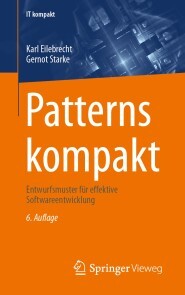
Patterns kompakt
Patterns kompakt fasst die wichtigsten Entwurfsmuster zusammen, die Sie für Softwareentwicklung benötigen. Sie finden praxisnahe und effektiv anwendbare Lösungen für typische Entwurfsprobleme.Das Buch gliedert Patterns anhand typischer Aspekte des Softwareentwurfs:Basismuster für mehr Flexibilität und WartbarkeitPräsentationKommunikation und VerteilungIntegrationPersistenzDie sechste aktualisierte und erweiterte Auflage erklärt darüber hinaus weitere Musterkategorien.Patterns kompakt unterstützt mit praktischen Tipps zur Softwareentwicklung und -architektur und gibt einen praxisorientierten Überblick zu wesentlichen Entwurfsmustern.DR. GERNOT STARKE (INNOQ-Fellow) arbeitet als Berater für Softwarearchitekturen, Entwicklungsprozesse und methodisches Software-Engineering. Nach seinem Informatikstudium promovierte er über Software-Entwicklungsprozesse. Dr. Starke besitzt mehr als 25 Jahre Erfahrung in komplexen IT-Projekten und ist Autor mehrerer erfolgreicher Fachbücher.DIPL.-INFORM. KARL EILEBRECHT verfügt über mehr als 20 Jahre praktische Erfahrung in Entwicklung und Consulting moderner E-Business-Systeme. Er war in IT-Projekten unterschiedlicher Branchen als Software-Architekt und -Entwickler tätig. Heute leitet er agile Entwicklungsteams im AdTech-Umfeld.Basismuster für mehr Flexibilität und Wartbarkeit - Präsentation - Kommunikation und Verteilung - Integration - Persistenz