

Allgemein
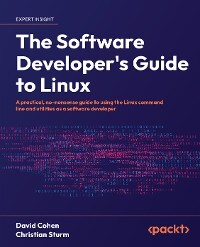
The Software Developer's Guide to Linux
Developers are always looking to raise their game to the next level, yet most are completely lost when it comes to the Linux command line.This book is the bridge that will take you to the next level in your software development career. Most of the skills in the book can be immediately put to work to make you a more efficient developer. It’s written specifically for software engineers, not Linux system administrators, so each chapter will equip you with just enough theory to understand what you’re doing before diving into practical commands that you can use in your day-to-day work as a software developer.As you work through the book, you’ll quickly absorb the basics of how Linux works while you get comfortable moving around the command line. Once you’ve got the core skills, you’ll see how to apply them in different contexts that you’ll come across as a software developer: building and working with Docker images, automating boring build tasks with shell scripts, and troubleshooting issues in production environments.By the end of the book, you’ll be able to use Linux and the command line comfortably and apply your newfound skills in your day-to-day work to save time, troubleshoot issues, and be the command-line wizard that your team turns to.
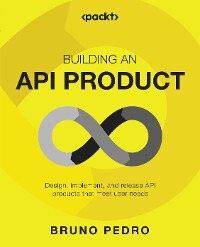
Building an API Product
The exponential increase in the number of APIs is evidence of their widespread adoption by companies seeking to deliver value to users across diverse industries, making the art of building successful APIs an invaluable skill for anyone involved in product development. With this comprehensive guide, you’ll walk through the entire process of planning, designing, implementing, releasing, and maintaining successful API products.You’ll start by exploring all aspects of APIs, including their types, technologies, protocols, and lifecycle stages. Next, you’ll learn how to define an API strategy and identify business objectives, user personas, and jobs-to-be-done (JTBD). With these skills, you’ll delve into designing and validating API capabilities to create a machine-readable API definition. As you advance, the book helps you understand how to choose the right language and framework for securely releasing an API server and offers insights into analyzing API usage metrics, improving performance, and creating compelling documentation that users love. Finally, you’ll discover ways to support users, manage versions, and communicate changes or the retirement of an API.By the end of this API development book, you’ll have the confidence and skills to create API products that truly stand out in the market.
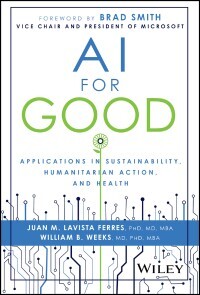
AI for Good
DISCOVER HOW AI LEADERS AND RESEARCHERS ARE USING AI TO TRANSFORM THE WORLD FOR THE BETTERIn AI for Good: Applications in Sustainability, Humanitarian Action, and Health, a team of veteran Microsoft AI researchers delivers an insightful and fascinating discussion of how one of the world’s most recognizable software companies is tacking intractable social problems with the power of artificial intelligence (AI). In the book, you’ll learn about how climate change, illness and disease, and challenges to fundamental human rights are all being fought using replicable methods and reusable AI code.The authors also provide:* Easy-to-follow, non-technical explanations of what AI is and how it works* Examinations of how healthcare is being improved, climate change is being addressed, and humanitarian aid is being facilitated around the world with AI* Discussions of the future of AI in the realm of social benefit organizations and effortsAn essential guide to impactful social change with artificial intelligence, AI for Good is a must-read resource for technical and non-technical professionals interested in AI’s social potential, as well as policymakers, regulators, NGO professionals, and, and non-profit volunteers.

KI als Zukunftsmotor für Verlage
Generative KI ist ein Game Changer für Verlage. Wie aber sollten Verlage darauf reagieren? Da in der Publishing-Branche Daten eine wichtige Rolle spielen, können KI-Technologien auch hier wertvolle Beiträge leisten. Diese Innovationen sichern gleichzeitig die Zukunft der Verlagsbranche gegenüber globalen Tech-Konzernen ab, die selbst Publishing anbieten. Ziel des Bandes ist es daher, über konkrete Potenziale in Verlagen zu sprechen, seien es z. B. Manuskriptarbeit, Marketingkommunikation oder Nachauflagen. Mit einer Einführung in KI, drei konkreten Fallbeispielen und einer Potenzialanalyse zu ChatGPT.
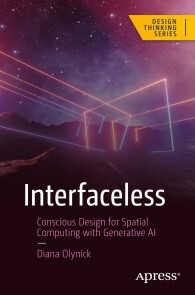
Interfaceless
Explore the possibilities spatial computing and its integration with AI can provide beyond the confines of a traditional user interface. Spatial computing brings together physical and virtual worlds and systems. This book offers an insightful journey into harmonizing user-centered design with the vast potential of AI in spatial computing.You'll start by exploring key concepts and processes in relation to conscious design and traditional computer interfaces. You'll then be introduced to the Mindful Spatial Design Framework (MSDF) and the rapidly evolving world of generative AI and its potential to transform design processes.Once the key concepts are mastered, you'll start to put them into practice and see how to design, prototype, and test interfaceless systems and environments that are seamless and user-friendly. In doing so you'll consider topics such as functionality and aesthetics, as well as how AI can improve automation and testing. The book concludes by looking at ethical AI considerations and best practices as well as looking at next steps and future developments of spatial computing and interfaceless design.As these invisible interfaces become more prevalent, understanding the key principles of conscious design is pivotal. Interfaceless will expand your knowledge base in these areas.WHAT YOU'LL LEARN* Incorporate conscious design principles in spatial computing projects.* Leverage AI to enhance UX in spatial contexts.* Develop strategies to address design challenges as we move beyond physical interfaces.* See how VR/XR apps, devices, and generative AI are rapidly changing how we perceive and interact with the digital realm.WHO THIS BOOK IS FORUX/UI designers, developers, and tech enthusiasts eager to grasp the future of HCI.Diana Olynick stands at the crossroads of design, engineering and spatial computing innovation. As a registered Professional Engineer, she brings a blend of technical acumen and design creativity to the XR field with over a decade of experience. Beyond academia, Diana's voice has resonated globally, with invitations to speak at several esteemed international conferences. She has dedicated herself to educating the next generation, guiding them through the intricacies of spatial computing and conscious design. Her ability to deconstruct and demystify complex XR topics for a wide audience sets her apart. In a rapidly evolving digital landscape, Diana is a leader fostering the transformative potential of interfaceless design.Diana’s educational contributions can be found at: https://www.dianaolynick.comChapter 1: Setting the Stage for the 'Interfaceless' Future.- Chapter 2: Exploring Generative AI and Its Transformative Power.- Chapter 3: Principles of Mindful and Conscious Design.- Chapter 4: The Evolving Role of AI: Automation and Beyond.- Chapter 5: Complexity, Simplicity, and True Minimalism.- Chapter 6: A Deep Dive into Interfaceless Environments.- Chapter 7: From Theory to Practice: Implementing 'Interfaceless' Designs.- Chapter 8: Ethical Design in an AI-Driven World.- Chapter 9: The Road Ahead: Predictions and Preparations.- Chapter 10: Concluding Thoughts and the Future Vision.- Appendix A: Resources and Tools for 'Interfaceless' Design.- Appendix B: Glossary of AI, Design and Key Terms.- Appendix C: Resources for Further Learning.- Appendix B: References.
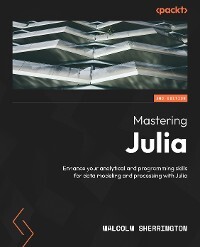
Mastering Julia
Julia is a well-constructed programming language which was designed for fast execution speed by using just-in-time LLVM compilation techniques, thus eliminating the classic problem of performing analysis in one language and translating it for performance in a second.This book is a primer on Julia’s approach to a wide variety of topics such as scientific computing, statistics, machine learning, simulation, graphics, and distributed computing.Starting off with a refresher on installing and running Julia on different platforms, you’ll quickly get to grips with the core concepts and delve into a discussion on how to use Julia with various code editors and interactive development environments (IDEs).As you progress, you’ll see how data works through simple statistics and analytics and discover Julia's speed, its real strength, which makes it particularly useful in highly intensive computing tasks. You’ll also and observe how Julia can cooperate with external processes to enhance graphics and data visualization. Finally, you will explore metaprogramming and learn how it adds great power to the language and establish networking and distributed computing with Julia.By the end of this book, you’ll be confident in using Julia as part of your existing skill set.
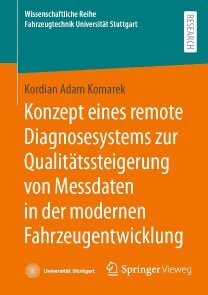
Konzept eines remote Diagnosesystems zur Qualitätssteigerung von Messdaten in der modernen Fahrzeugentwicklung
Kordian Adam Komarek stellt einen neuen grundlegenden Ansatz vor, die Qualität von diagnostischen Messdaten in verteilten Systemen signifikant zu erhöhen. Kern dieses Verfahrens ist eine neue Methode, strukturelle und inhaltlichen Ähnlichkeiten von heterogenen Fahrzeugdiagnosedaten (ODX) inkrementell zu clustern (XCXS – XML document clustering with XEdge and weighted structure and content similarity). Am Beispiel eines prototypischen Remote-Diagnosesystems, mit dem Fokus auf die Fahrzeugentwicklung, werden diagnostische Fehler erstmalig identifizierbar gemacht. Analyse datengetriebener Off-Board-Diagnose-Systeme in der Entwicklung.- Verteilte Diagnosedaten im System.- Steuergeräteübergreifende multivariante Diagnosecluster mit Änderungsinformationen (XCXS Verfahren).- Grundlegender Ansatz zur Qualitätssteigerung der remote Fahrzeugdiagnose.

Retrospektive Diagnose von Fehlerursachen an Antriebsstrangprüfständen mithilfe künstlicher Intelligenz
Antriebsstrangprüfstände leisten einen signifikanten Beitrag im Fahrzeugentwicklungsprozess. Um diesen Vorteil weiter auszubauen, ist es notwendig, mit geeigneten Maßnahmen die Effektivität und Effizienz stetig zu steigern. Eine Maßnahme ist hierbei, die Abhängigkeit des Faktors Mensch bei Auftreten eines Fehlers am Prüfstand zu reduzieren. Um diesem Ziel einen großen Schritt näher zu kommen, wurde vorliegend eine KI-basierte Methodik entwickelt, mit deren Hilfe es möglich ist, die fehlerverursachende Komponente und den zugehörigen Fehlerzeitpunkt trotz der Wechselwirkung aufgrund der mechanischen Kopplung des Systems zu detektieren. Erhebung eines repräsentativen Forschungsdatensatzes.- Methoden zur Datenvorverarbeitung uni- und multivariater Zeitreihendaten.- Modellierung und Auswertung durch künstliche Intelligenz.- Anwendung und praktischer Nachweis.

Artificial Intelligence for Bone Disorder
ARTIFICIAL INTELLIGENCE FOR BONE DISORDERTHE AUTHORS HAVE PRODUCED AN INVALUABLE RESOURCE THAT CONNECTS THE FIELDS OF AI AND BONE TREATMENT BY PROVIDING ESSENTIAL INSIGHTS INTO THE CURRENT STATE AND FUTURE OF AI IN BONE CONDITION DIAGNOSIS AND THERAPY, AS WELL AS A METHODICAL EXAMINATION OF MACHINE LEARNING ALGORITHMS, DEEP LEARNING APPROACHES, AND THEIR REAL-WORLD USES.The book explores the use of artificial intelligence (AI) in the diagnosis and treatment of various bone illnesses. The integration of AI approaches in the fields of orthopedics, radiography, tissue engineering, and other areas related to bone are discussed in detail. It covers tissue engineering methods for bone regeneration and investigates the use of AI tools in this area, emphasizing the value of deep learning and how to use AI in tissue engineering efficiently. The book also covers diagnostic and prognostic uses of AI in orthopedics, such as the diagnosis of disorders involving the hip and knee as well as prognoses for therapies. Chapters also look at MRI, trabecular biomechanical strength, and other methods for diagnosing osteoporosis. Other issues the book examines include several uses of AI in pediatric orthopedics, 3D modeling, digital X-ray radiogrammetry, convolutional neural networks for customized care, and digital tomography. With information on the most recent developments and potential future applications, each chapter of the book advances our understanding of how AI might be used to diagnose and treat bone problems. AUDIENCEThis book will serve as a guide for orthopedic experts, biomedical engineers, faculty members, research scholars, IT specialists, healthcare workers, and hospital administrators. RISHABHA MALVIYA, PHD, is an associate professor in the Department of Pharmacy, School of Medical and Allied Sciences, Galgotias University. He has authored more than 150 research/review papers for national/international journals. He has been granted more than 10 patents from different countries while a further 40 patents are published/under evaluation. He has edited multiple volumes for Wiley-Scrivener. SHIVAM RAJPUT completed his MPharm. at Galgotias University, Greater Noida, India. He is currently an assistant professor at IITM College of Pharmacy, Sonipat, Hariyana, India. His areas of research include nanoformulations, cancer nanomedicine, and green nanotechnology for therapeutic applications. MAKARAND VAIDYA completed his Master of Surgery in Orthopaedics from Hindu Rao Hospital, Delhi where he is currently a faculty member. He has had a distinguished academic career and has published many research papers and books. Foreword xiPreface xiii1 ARTIFICIAL INTELLIGENCE AND BONE FRACTURE DETECTION: AN UNEXPECTED ALLIANCE 11.1 Introduction 11.2 Bone Fracture 31.3 Deep Learning and Its Significance in Radiology 41.4 Role of AI in Bone Fracture Detection and Its Application 61.5 Primary Machine Learning-Based Algorithm in Bone Fracture Detection 91.6 Deep Learning-Based Techniques for Fracture Detection 131.7 Conclusion 182 INTEGRATING AI WITH TISSUE ENGINEERING: THE NEXT STEP IN BONE REGENERATION 252.1 Introduction 252.2 Anatomy and Biology of Bone 262.3 Bone Regeneration Mechanism 282.4 Understanding AI 352.5 Current AI Integration 392.6 Applying Deep Learning 422.7 Conclusion 463 DEEP SUPERVISED LEARNING ON RADIOLOGICAL IMAGES TO CLASSIFY BONE FRACTURES: A NOVEL APPROACH 593.1 Introduction 593.2 Common Bone Disorder 623.3 Deep Supervised Learning's Importance in Orthopedics and Radiology 633.4 Perspective From the Past 633.5 Essential Deep Learning Methods for Bone Imaging 653.6 Strategies for Effective Annotation 693.7 Application of Deep Learning to the Detection of Fractures 693.8 Conclusion 734 TREATMENT OF OSTEOPOROSIS AND THE USE OF DIGITAL HEALTH INTERVENTION 794.1 Introduction 794.2 Opportunistic Diagnosis of Osteoporosis 824.3 Predictive Models 854.4 Assessment of Fracture Risk and Osteoporosis Diagnosis by Digital Health 904.5 Clinical Decision Support Tools, Reminders, and Prompts for Spotting Osteoporosis in Digital Health Settings 914.6 The Role of Digital Health in Facilitating Patient Education, Decision, and Conversation 934.7 Conclusion 955 UTILIZING AI TO IMPROVE ORTHOPEDIC CARE 1055.1 Introduction 1055.2 What is AI? 1065.3 Introduction to Machine Learning: Algorithms and Applications 1095.4 Natural Language Processing 1145.5 The Internet of Things 1155.6 Prospective AI Advantages in Orthopedics 1165.7 Diagnostic Application of AI 1185.8 Prediction Application With AI 1215.9 Conclusion 1246 SIGNIFICANCE OF ARTIFICIAL INTELLIGENCE IN SPINAL DISORDER TREATMENT 1336.1 Introduction 1336.2 Machine Learning 1356.3 Methods Derived From Statistics 1376.4 Applications of Machine Learning in Spine Surgery 1436.5 Application of AI and ML in Spine Research 1476.6 Conclusion 1567 OSTEOPOROSIS BIOMARKER IDENTIFICATION AND USE OF MACHINE LEARNING IN OSTEOPOROSIS TREATMENT 1697.1 Introduction 1697.2 Biomarkers of Bone Development 1727.3 Biomarkers for Bone Resorption 1757.4 Regulators of Bone Turnover 1797.5 Methods to Identify Osteoporosis 1807.6 Conclusion 1878 THE ROLE OF AI IN PEDIATRIC ORTHOPEDICS 1978.1 Introduction 1978.2 Strategy Based on Artificial Intelligence 2008.3 Several Applications of Artificial Intelligence 2078.4 Conclusion 2129 USE OF ARTIFICIAL INTELLIGENCE IN IMAGING FOR BONE CANCER 2199.1 Introduction 2199.2 Applications of Machine Learning to Cancer Diagnosis 2239.3 Artificial Intelligence Methods for Diagnosing Bone Cancer 2269.4 Methodologies for Constructing Deep Learning Model 2279.5 Clinical Image Applications of Deep Learning for Bone Tumors 2299.6 Conclusion 236References 236Index 245

Tobias on Locks and Insecurity Engineering
A detailed analysis of how locks and physical security become vulnerable to attack Tobias on Locks and Insecurity Engineering: Understanding and Preventing Design Vulnerabilities in Locks, Safes, and Security Hardware is an essential roadmap for lock design and security personnel, and a must-read for design engineers, risk managers, law enforcement personnel, intelligence agencies, investigators, crime labs, and security and IT professionals. “Marc Weber Tobias is one of the rare minds in our industry who evaluates locks and consumer product security with the same meticulous philosophy that he applies to high-security government applications. Marc distills an encyclopedic understanding of access control into pragmatic advice for creating functional, secure devices. With decades of experience, Marc brings a comprehensive perspective that isn’t easily replicated for lock manufacturers. His expertise has been invaluable to our company for many years in increasing the security designs of our products.” —Tammy Davis, CEO, Videx, Inc. Corvallis, Oregon “Marc Tobias is a world-class security expert for locks. In my FBI career in foreign counterintelligence, every aspect of security was essential to understand and deal with. Marc and I have worked on many international cases, and his extensive knowledge of locks and security was crucial to our success. Our side needed the best security, but also to figure out how to defeat the opposition’s security measures. This book should be an invaluable asset for government agencies to understand the insecurity of locks and their vulnerabilities.” —Wayne A. Barnes, FBI Special Agent (Retired) 1971-2000. “What is made clear in Marc’s work is that he points out the methods and techniques to raise the integrity of our first line of defense: locks. Our specialty for those in a career in security protective engineering is to identify and apply the highest-grade containment to protect our companies. For security professionals who rely on high-security locks and allied systems, this is a valuable reference source for security and risk managers.” —Ted P. Barron, CPP Former ASIS Chapter Chair (San Francisco), Vice President of Wells Fargo Bank, and member of the UL Standards Technical Panel on Locks and Safes. “I have known Marc Tobias now for over 20 years and it is always fascinating to have intense discussions with him about lock security and lock design. I do not know any other person with such a high degree of expertise and knowledge, always keen to ensure that today’s locks are designed to state-of-the-art technology. I am looking forward to this new compendium of centenaries of lock engineering.” —Stefan Ehrlich-Adam, CEO EVVA-Group, Vienna, Austria A must-read exploration of lock and physical security from a renowned author and expert In Tobias on Locks and Insecurity Engineering, renowned investigative attorney and physical security expert Marc Weber Tobias delivers a comprehensive and insightful exploration of how locks are designed, built, and — ultimately — defeated by criminals, spies, hackers, and even lockpickers. In the book, you'll discover the myriad ways that security experts and bad actors have compromised physical locks using everything from the newest 3D printers to 99-cent ballpoint pens. The book explores the origins of different lock designs and the mistakes that design engineers make when they create new locks. It explains the countless ways that locks remain at risk for attack. The author explains the latest lock designs and technology, as well as how to assess whether a specific solution will work for you depending on your individual security requirements and use case. You'll also find: Ways to differentiate between fatally flawed locks and solid, secure optionsSeveral relevant and real-world case examples of catastrophic lock design failures that led to monetary loss, property damage, or bodily harmExaminations of lock security from the perspectives of forced entry, covert entry, and key-control An instructive and indispensable roadmap to locks and physical security, Tobias on Locks and Insecurity Engineering is the perfect guide for security and information technology professionals, design engineers, risk managers, law enforcement personnel, intelligence agents, regulators, policymakers, investigators, lawyers, and more. Foreword xxxiii Introduction xxxv Part I Locks, Safes, and Insecurity Engineering 1 Chapter 1 Insecurity Engineering and the Design of Locks 3 Chapter 2 Insecurity Engineering: A Lack of Expertise and Imagination 25 Chapter 3 Vulnerability Assessment in Lock Designs 49 Chapter 4 The 3T2R Rule for Assessing the Security of a Lock 67 Part II Legal and Regulatory Issues in Locks, Safes, and Security Systems 87 Chapter 5 Security Is All About Liability 89 Chapter 6 Legal Liability and Insecurity Engineering 103 Chapter 7 Standards for Locks and Safes 131 Chapter 8 Patents, Security, and the Protection of Intellectual Property 163 Chapter 9 Notification of Defects in Product Design 187 Chapter 10 Legal and Security Issues in Keying Systems 209 Part III Basic Designs and Technologies for Mechanical and Electronic Locks 231 Chapter 11 A Brief History of Lock Design and Development 233 Chapter 12 Industry Definitions 257 Chapter 13 Modern Locking Mechanisms: A Merging of Old and New Technology 279 Chapter 14 A Comparison of High-Security Lock Designs 317 Part IV Design and Insecure Engineering of Locks 339 Chapter 15 Attacks Against Locks: Then and Now 341 Chapter 16 An Overview: Vulnerability Analysis in Designs and Testing 379 Chapter 17 Destructive Attacks Against Locks and Related Hardware 395 Chapter 18 Covert Methods of Entry 417 Chapter 19 Attacks Against Electronic Locks 445 Chapter 20 Advanced Attacks Against High-Security Locks 459 Part V Attacks on Key Control and Special Keying Systems 475 Chapter 21 Attacking Keys and Keying Systems 477 Chapter 22 Advanced Attacks on Key Control: 3D Printers and Special Software 507 Chapter 23 Digital Fingerprints of Locks: Electronic Decoding Systems 523 Chapter 24 Code-Setting Keys: A Case Study of an Attack on High-Security Key Control 537 Part VI Specific Case Examples 545 Chapter 25 Case Examples from Part VII Rules 547 Chapter 26 Case Examples By Category 571 Part VII Design Rules, Axioms, and Principles 597 Chapter 27 Design Rules, Axioms, and Guidelines 599 Epilogue 625 Appendix A Patents Issued 627 Appendix B Trademark Listing 629 Index 633 MARC WEBER TOBIAS, J.D., is the author of eight law enforcement and security textbooks, including Locks, Safes, and Security: An International Police Reference. He has lectured extensively, worked for government agencies as an investigator and prosecutor involved in major crimes, and has consulted with the world’s largest lock manufacturers. He has been issued 30 U.S. patents.

Finden, Auswählen und Zuordnen
Filter, Datenbankfunktionen, SVerweis, XVerweis: Werkzeuge zum Finden und Weiterverarbeiten von Inhalten in Excel. Excel-Mappen enthalten oft sehr viele Informationen. Um sie auszuwerten, müssen die Datenbestände gefiltert und manchmal überhaupt erst passend gemacht werden.Dazu gibt es verschiedene Möglichkeiten, sowohl den bekannten Autofilter, der selten ganz ausgereizt wird, als auch den weniger bekannten Spezialfilter und die ganz neue Funktion FILTER(), deren Ergebnisse auch gleich sortiert ausgegeben werden können. Dazu Datenbankfunktionen und natürlich den SVERWEIS() mit seinem deutlich verbesserten Nachfolger XVERWEIS(), der die alten Grenzen praktisch pulverisiert. Alles wird an Beispieldateien besprochen und mit Vor- und Nachteilen erklärt.

Scrum Think big (2. Auflg.)
SCRUM THINK B!G //- Vor welchen Herausforderungen steht das Management großer Projekte?- Wie sinnvoll sind agile Skalierungsschablonen?- Welche Voraussetzungen sollten für eine erfolgreiche Skalierung erfüllt sein?- Welche Skills brauchen Mitarbeitende in agilen Projekten?- Wie wird aus einem Projekt eine fraktal skalierte Organisation?- Neu in der 2. Auflage: wie Sie den passenden Rahmen für die agile Skalierung in Ihrer Organisation abstecken, mögliche Entwicklungspfade sowie neue Beispiele und Aktualisierungen.In kleinen Teams hat sich Scrum als Weg für die erfolgreiche Produktentwicklung längst etabliert. Doch jetzt geht es um andere Dimensionen: Unter dem Druck der Digitalisierung wollen Unternehmen die Erfahrungen aus agilen Pilotprojekten auf immer größere Teile der Organisation übertragen. Agile Skalierungsframeworks versprechen schnelle und einfache Lösungen, doch diese vorgefertigten Strukturen führen nicht zum eigentlichen Ziel: dem agilen Unternehmen.Boris Gloger und Carsten Rasche beschreiben in diesem Buch einen anderen Weg, der auf Praxiserfahrungen basiert. Bei der Skalierung von Scrum geht es nicht um die Multiplikation einer Methode, sondern um einen neuen Blick auf das große Projekt als fraktal skalierte Organisation. Gefragt sind entkoppelte Produktarchitekturen, das konsequente Denken aus Sicht der Kunden, das Projektmanagement- Office als umsichtiger Scrum Master, die Lust auf frische Skills, gestützt durch moderne Infrastrukturen. Und schließlich braucht es eine Führung, die ihre wichtigste Aufgabe darin sieht, Zusammenarbeit über alle Ebenen hinweg zu ermöglichen.AUS DEM INHALT //- Die Umfeldbedingungen des Skalierens- Kommunikations- und Produktarchitektur- Die passende Infrastruktur- Skills und Professionalität- Produktentwicklung- myScaled Agile – Toolbox für die individuelle Skalierung- Führung und Werte als Grundlage der fraktal skalierten Organisation- Der Weg zur fraktal skalierten Organisation Boris Gloger ist in der DACH-Region der bekannteste Proponent von Agilität. Mit seinem Team der borisgloger consulting GmbH bringt er Agilität in namhafte nationale und internationale Unternehmen.Carsten Rasche ist Berater bei der borisgloger consulting GmbH und begleitet Business-Transformationen von der strategischen Planung bis zur praktischen Umsetzung.

Mensch und Informationssicherheit
- Den Menschen als wichtigen Sicherheitsfaktor in Unternehmen und Organisationen verstehen - Verhalten nachvollziehen und durch psychologisches Verständnis beeinflussen - Security Awareness-Kampagnen gestalten und Mitarbeitende effektiv sensibilisieren - Gefahren von Human Hacking (er)kennen - Informationssicherheitsmaßnehmen für (und nicht gegen) Menschen entwickeln - Ihr exklusiver Vorteil: E-Book inside beim Kauf des gedruckten Buches Der Mensch ist das größte Risiko für die Informationssicherheit in Unternehmen!“ Diese Aussage ist schädlich, wenn Mitarbeitende für Informationssicherheit sensibilisiert werden sollen. Tatsächlich sind Menschen ein wichtiger Sicherheitsfaktor. Sie sind Teil der Lösung und kein Problem! Das Buch stellt den Menschen in den Mittelpunkt und hilft zu verstehen, warum diese sich nicht immer „richtig“ verhalten. Häufig liegt es an zu starren Regeln, die nicht zu ihrem Arbeitsalltag passen – oder an der geschickten Manipulation durch Social Engineers. Um Mitarbeitende effektiv für Informationssicherheit zu sensibilisieren, hilft ein Blick in die Verhaltenspsychologie. Ein komplexes Zusammenspiel verschiedener Faktoren beeinflusst menschliches Handeln. Sind diese Faktoren bekannt, können sie zielgerichtet gefördert und beeinflusst werden: Mitarbeitende ändern ihre Einstellungen, sie erhöhen ihr Wissen, stärken ihr Selbstvertrauen, verbessern ihre Fähigkeiten, sie entwickeln sichere Gewohnheiten und sie erinnern sich im entscheidenden Moment an das „richtige“ Verhalten. Das Buch vermittelt Hintergrundwissen und zeigt anhand zahlreicher Beispiele, wie informationssichere Verhaltensweisen gefördert und gemessen werden können. AUS DEM INHALT // - Der Faktor Mensch in der Informationssicherheit: vom „Problem“ zur „Lösung“ - Der Mensch als Bedrohung: Insider Threats - Der Mensch als Opfer von Human Hacking - Verhaltensabsicht, Wissen, Gewohnheit und Salienz als Faktoren von Information Security Awareness - Information Security Awareness zielgerichtet fördern - Information Security Awareness bewerten und messen

Data Science Management
Data Science Management. Vom ersten Konzept bis zur Governance datengetriebener Organisation. (Januar 2024)Viele Data-Science-Vorhaben scheitern an organisatorischen Hürden: Oftmals ist die Rolle des Managements in diesen Projekten nicht klar definiert, zudem gibt es unterschiedliche Vorstellungen, wie gutes Projektmanagement für Data-Science-Produkte aussehen muss.Dieser praxisorientierte Leitfaden unterstützt Sie beim erfolgreichen Management von Data-Science-Projekten jeder Größe. Sie erfahren zunächst, wie Datenanalysen durchgeführt werden und welche Tools hierfür infrage kommen. Marcel Hebing und Martin Manhembué zeigen dann Wege auf, wie Sie Projekte entlang des Data-Science-Lifecycles planen und eine datengetriebene Organisationskultur implementieren. Dabei wird die Rolle von Data-Science-Managerinnen und -Managern im Kontext eines modernen Leaderships beleuchtet und der Aufbau von Datenanalyse-Teams beschrieben. Jeder Themenbereich wird ergänzt durch Hands-on-Kapitel, die Toolsets und Checklisten für die Umsetzung in die Praxis enthalten.Themen des Buchs:Data-Science-Grundlagen: Designen von Projekten, Datenformate und Datenbanken, Datenaufbereitung, Analysemethoden aus Statistik und Machine LearningManagement von Data-Science-Projekten: Grundlagen des Projektmanagements, typische Fallstricke, Rolle und Aufgaben des Managements, Data-Science-Teams, Servant und Agile Leadership, Kommunikation mit StakeholdernInfrastruktur und Architektur: Automatisierung, IT-Infrastruktur, Data-Science-Architekturen, DevOps und MLOpsGovernance und Data-driven Culture: Digitale Transformation, Implementierung von Data Science im Unternehmen, Sicherheit und Datenschutz, New Work, RecruitingLeseprobe (PDF-Link)

See Yourself in Cyber
A ONE-OF-A-KIND DISCUSSION OF HOW TO INTEGRATE CYBERSECURITY INTO EVERY FACET OF YOUR ORGANIZATIONIn See Yourself in Cyber: Security Careers Beyond Hacking, information security strategist and educator Ed Adams delivers a unique and insightful discussion of the many different ways the people in your organization—inhabiting a variety of roles not traditionally associated with cybersecurity—can contribute to improving its cybersecurity backbone. You’ll discover how developers, DevOps professionals, managers, and others can strengthen your cybersecurity. You’ll also find out how improving your firm’s diversity and inclusion can have dramatically positive effects on your team’s talent. Using the familiar analogy of the color wheel, the author explains the modern roles and responsibilities of practitioners who operate within each “slice.” He also includes:* Real-world examples and case studies that demonstrate the application of the ideas discussed in the book* Many interviews with established industry leaders in a variety of disciplines explaining what non-security professionals can do to improve cybersecurity* Actionable strategies and specific methodologies for professionals working in several different fields interested in meeting their cybersecurity obligationsPerfect for managers, directors, executives, and other business leaders, See Yourself in Cyber: Security Careers Beyond Hacking is also an ideal resource for policymakers, regulators, and compliance professionals. ED ADAMS is the founder and CEO of Security Innovation, an application security training and services company. He has been qualified as an expert witness on cybersecurity in court proceedings and has been a speaker at both major and regional cybersecurity events. He is a member of the Board of Directors for Cyversity, a nonprofit dedicated to improving the lives of underrepresented minorities in the field of cybersecurity.

Internet Kill Switch
The "Internet Kill Switch", as it is known worldwide, is a protective "countermeasure". It is the ability of governments to restrict or directly block access to the Internet: turn off all servers and connections. Considering all that the Internet entails in our daily lives, it is an extremely powerful weapon. Some consider it as a key tool for national security, allowing governments to respond immediately in times of crisis or cyber-attacks. Others fear a potential abuse of authority, claiming that it infringes on civil liberties and democratic values. Is it possible to implement this measure as a global reconfiguration, and why would it be done? Catherine Dumont is an author and historian. Named as Distinguished Professor of American Studies and History, her research interests include the construction of racial identity and class structures. 1.WWW Reloaded 2.The Button 3.Cloud Backup 4.Internet and Democratization 5.Kill Switch at the Service of Censorship 6.Kill Switch to Stop a Revolution 7.Internet Blackout within the Laws 8.From the Pandemic to the Cyberpandemic 9.Kill Switch for a Great Reset 10.The National Security Perspective
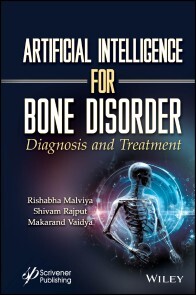
Artificial Intelligence for Bone Disorder
ARTIFICIAL INTELLIGENCE FOR BONE DISORDERTHE AUTHORS HAVE PRODUCED AN INVALUABLE RESOURCE THAT CONNECTS THE FIELDS OF AI AND BONE TREATMENT BY PROVIDING ESSENTIAL INSIGHTS INTO THE CURRENT STATE AND FUTURE OF AI IN BONE CONDITION DIAGNOSIS AND THERAPY, AS WELL AS A METHODICAL EXAMINATION OF MACHINE LEARNING ALGORITHMS, DEEP LEARNING APPROACHES, AND THEIR REAL-WORLD USES.The book explores the use of artificial intelligence (AI) in the diagnosis and treatment of various bone illnesses. The integration of AI approaches in the fields of orthopedics, radiography, tissue engineering, and other areas related to bone are discussed in detail. It covers tissue engineering methods for bone regeneration and investigates the use of AI tools in this area, emphasizing the value of deep learning and how to use AI in tissue engineering efficiently. The book also covers diagnostic and prognostic uses of AI in orthopedics, such as the diagnosis of disorders involving the hip and knee as well as prognoses for therapies. Chapters also look at MRI, trabecular biomechanical strength, and other methods for diagnosing osteoporosis. Other issues the book examines include several uses of AI in pediatric orthopedics, 3D modeling, digital X-ray radiogrammetry, convolutional neural networks for customized care, and digital tomography. With information on the most recent developments and potential future applications, each chapter of the book advances our understanding of how AI might be used to diagnose and treat bone problems. AUDIENCEThis book will serve as a guide for orthopedic experts, biomedical engineers, faculty members, research scholars, IT specialists, healthcare workers, and hospital administrators. RISHABHA MALVIYA, PHD, is an associate professor in the Department of Pharmacy, School of Medical and Allied Sciences, Galgotias University. He has authored more than 150 research/review papers for national/international journals. He has been granted more than 10 patents from different countries while a further 40 patents are published/under evaluation. He has edited multiple volumes for Wiley-Scrivener. SHIVAM RAJPUT, completed his MPharm. at Galgotias University, Greater Noida, India. He is currently an assistant professor at IITM College of Pharmacy, Sonipat, Hariyana, India. His areas of research include nanoformulations, cancer nanomedicine, and green nanotechnology for therapeutic applications. PRAMOD KUMAR SHARMA, MPHARM, PHD, from Jadavpur University, Kolkata, India. He has around 27 years of teaching and research experience and is the Dean, School of Medical and Allied Sciences, Galgotias University, Greater Noida, India. He has more than 150 national and international publications in prestigious journals. He has 8 patents in his credit. He has authored 8 books and 6 book chapters.
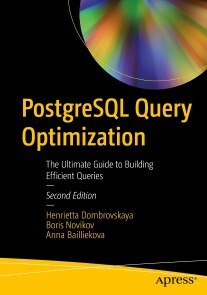
PostgreSQL Query Optimization
Write optimized queries. This book helps you write queries that perform fast and deliver results on time. You will learn that query optimization is not a dark art practiced by a small, secretive cabal of sorcerers. Any motivated professional can learn to write efficient queries from the get-go and capably optimize existing queries. You will learn to look at the process of writing a query from the database engine’s point of view, and know how to think like the database optimizer.The book begins with a discussion of what a performant system is and progresses to measuring performance and setting performance goals. It introduces different classes of queries and optimization techniques suitable to each, such as the use of indexes and specific join algorithms. You will learn to read and understand query execution plans along with techniques for influencing those plans for better performance. The book also covers advanced topics such as the use of functions and procedures, dynamic SQL, and generated queries. All of these techniques are then used together to produce performant applications, avoiding the pitfalls of object-relational mappers.This second edition includes new examples using Postgres 15 and the newest version of the PostgresAir database. It includes additional details and clarifications about advanced topics, and covers configuration parameters in greater depth. Finally, it makes use of advancements in NORM, using automatically generated functions.WHAT YOU WILL LEARN* Identify optimization goals in OLTP and OLAP systems* Read and understand PostgreSQL execution plans* Distinguish between short queries and long queries* Choose the right optimization technique for each query type* Identify indexes that will improve query performance* Optimize full table scans* Avoid the pitfalls of object-relational mapping systems* Optimize the entire application rather than just database queriesWHO THIS BOOK IS FORIT professionals working in PostgreSQL who want to develop performant and scalable applications, anyone whose job title contains the words “database developer” or “database administrator" or who is a backend developer charged with programming database calls, and system architects involved in the overall design of application systems running against a PostgreSQL databaseHENRIETTA DOMBROVSKAYA is a database researcher and developer with over 40 years of academic and industrial experience. She holds a PhD in Computer Science from the University of Saint Petersburg, Russia. At present, she is a Database Architect at DRW Holdings, Chicago, Illinois. She is an active member of the PostgreSQL community, a frequent speaker at the PostgreSQL conference, and the local organizer of the Chicago PostgreSQL User Group. Her research interests are tightly coupled with practice and are focused on developing efficient interactions between applications and databases.BORIS NOVIKOV'S experience includes leading post-graduate research groups and advising dozens of PhD students, while partnering and collaborating with industrial clients. His research interests are in the broad area of information management and include design, development, and tuning of databases, applications, and database management systems (DBMSs). He also has interests in distributed scalable systems for stream processing and analytics..ANNA BAILLIEKOVA is Senior Data Engineer at UrbanFootprint, where she works on data platform tools and cloud ops for geospatial applications. Previously, she worked in data engineering at Zendesk, and held a variety of DBA and BI roles at Epic. Her writing can be found in the newsletter Better Streets MKE. She received her undergraduate degree with College Honors in Political Science and Computer Science from Knox College in Galesburg, Illinois.1. Why Optimize?2. Theory - Yes, We Need It!3. Even More Theory Algorithms4. Understanding Execution Plans5. Short Queries and Indexes6. Long Queries and Full Scans7. Long Queries: Additional Techniques8. Optimizing Data Modification9. Design Matters10. Application Development and Performance11. Functions12. Dynamic SQL13. Avoiding the Pitfalls of Object-Relational Mapping14. More Complex Filtering and Search15. Ultimate Optimization Algorithm16. Conclusion
Blockchain Essentials
This book will teach you the core concepts of blockchain technology in a concise manner through straightforward, concrete examples using a range of programming languages, including Python and Solidity. The 50 programs presented in this book are all you need to gain a firm understanding of blockchain and how to implement it.The book begins with an introduction to the fundamentals of blockchain technology, followed by a review of its types, framework, applications and challenges. Moving ahead, you will learn basic blockchain programming with hash functions, authentication code, and Merkle trees. You will then dive into the basics of bitcoin, including wallets, digital keys, transactions, digital signatures, and more. This is followed by a crash course on Ethereum programming, its network, and ecosystem. As you progress through the book, you will also learn about Hyperledger and put your newly-gained knowledge to work through case studies and example applications.After reading this book, you will understand blockchain’s underlying concepts and its common implementations.WHAT YOU WILL LEARN* Master theoretical and practical implementations of various blockchain components using Python* Implement hashing, Merkel trees, and smart contracts using the Solidity programming language for various applications* Grasp the internal structure of EVM and its implementation in smart contracts* Understand why blockchain plays an essential role in cryptocurrencies and identify possible applications beyond cryptocurrencies* Investigate and apply alternative blockchain solutions using Hyperledger, including its integration and deployment* Explore research opportunities through case studies and gain an overview of implementation using various languagesWHO IS THIS BOOK FOR:Anyone who is new to blockchain and wants to gain an an understanding of how it works and can be implemented.DR. RAMCHANDRA SHARAD MANGRULKAR is a Professor in the Department of Information Technology at Dwarkadas J. Sanghvi College of Engineering in Mumbai, India. He holds various memberships in professional organizations such as IEEE, ISTE, ACM, and IACSIT. He completed his Doctor of Philosophy (Ph.D.) in Computer Science and Engineering from S.G.B. Amravati University in Maharashtra, and Master of Technology (MTech) degree in Computer Science and Engineering from the National Institute of Technology, Rourkela. Dr. Mangrulkar is proficient in several technologies and tools, including Microsoft's Power BI, Power Automate, Power Query, Power Virtual Agents, Google's Dialog Flow, and Overleaf. With over 23 years of combined teaching and administrative experience, Dr. Mangrulkar has established himself as a knowledgeable and skilled professional in his field. He has also obtained certifications such as Certified Network Security Specialist (ICSI - CNSS) from ICSI, UK. Dr. Mangrulkar has a strong publication record with 95 publications including refereed/peer-reviewed international journal publications, book chapters with international publishers (including Scopus indexed ones), and international conference publications.DR. PALLAVI VIJAY CHAVAN is an Associate Professor in the Department of Information Technology at Ramrao Adik Institute of Technology, D Y Patil Deemed to be University, Navi Mumbai, MH, India. She has been in academics since the past 17 years and has worked in the areas of computing theory, data science, and network security. In her academic journey, she has published research work in the data science and security domains with reputed publishers including Springer, Elsevier, CRC Press, and Inderscience. She has published 2 books, 7+ book chapters, 10+ international journal papers and 30+ international conference papers. She is currently guiding 5 Ph.D. research scholars. She completed her Ph.D. from Rashtrasant Tukadoji Maharaj Nagpur University, Nagpur, MH, India in 2017. She secured the first merit position in Nagpur University for the degree of B.E. in Computer Engineering in 2003. She is recipient of research grants from UGC, CSIR, and University of Mumbai. She is an active reviewer for Elsevier and Inderscience journals. Her firm belief is "Teaching is a mission.”Chapter 1: Introduction to Blockchain.- Chapter 2: Essentials of Blockchain Programming.- Chapter 3: The Bitcoin.- Chapter 4: Ethereum Blockchain.- Chapter 5: Hyperledger.- Chapter 6: Case Studies using Blockchain.- Chapter 7: Beyond Blockchain.
The Cloud Computing Journey
As the need for digital transformation and remote work surges, so does the demand for cloud computing. However, the complexity of cloud architecture and the abundance of vendors and tools can be overwhelming for businesses. This book addresses the need for skilled professionals capable of designing, building, and managing scalable and resilient cloud systems to navigate the complex landscape of cloud computing through practical tips and strategies.This comprehensive cloud computing guide offers the expertise and best practices for evaluating different cloud vendors and tools. The first part will help you gain a thorough understanding of cloud computing basics before delving deeper into cloud architecture, its design, and implementation. Armed with this expert insight, you'll be able to avoid costly mistakes, ensure that your cloud systems are secure and compliant, and build cloud systems that can adapt and grow with the business.By the end of this book, you’ll be proficient in leveraging different vendors and tools to build robust and secure cloud systems to achieve specific goals and meet business requirements.
React Anti-Patterns
Take your React development skills to the next level by examining common anti-patterns with expert insights and practical solutions, to refine your codebases into sophisticated and scalable creations. Through this easy-to-follow guide, React Anti-Patterns serves as a roadmap to elevating the efficiency and maintainability of your React projects.You’ll begin by familiarizing yourself with the essential aspects of React before exploring strategies for structuring React applications and creating well-organized, modular, and easy-to-maintain codebases. From identifying and addressing common anti-patterns using refactoring techniques to harnessing the power of test-driven development (TDD), you’ll learn about the tools and techniques necessary to create reliable and robust tests. As you advance, you’ll get to grips with business logic and design patterns that offer solutions to prevalent challenges faced in React development. The book also offers insights into using composition patterns, such as code splitting and multiple entry points, to enhance the flexibility and modularity of your React applications, guiding you through end-to-end project implementation.By the end of this React book, you’ll be able to overcome common challenges and pitfalls to transform your React projects into elegant, efficient, and maintainable codebases.

Das DDR-Chiffriergerät T-310
Dieses Buch beschreibt, unter welchen Bedingungen das in der DDR am weitesten verbreitete Fernschreibchiffriergerät sowie der dazugehörige Algorithmus vor etwa 50 Jahren zum Schutz von Staatsgeheimnissen entwickelt wurden. So können die damaligen Methoden und Ergebnisse mit den aktuellen Möglichkeiten der kryptologischen Analyse verglichen werden – insbesondere unter dem Aspekt der heute zur Verfügung stehenden Computertechnik. Es wird herausgearbeitet, dass die konsequente Anwendung von Methoden der Gruppen- und Automatentheorie in der Analyse eine zentrale Rolle spielte. Dieser algebraische Analyseansatz aus der sowjetischen Schule wird bis heute unterschätzt – die Betrachtungsweisen können auch für Nichtkryptologen von Nutzen sein. Darüber hinaus werden die Unterschiede dargestellt zwischen der Analyse des Chiffrieralgorithmus, der Sicherheitsanalyse des Geräts und der Chiffrierverfahren, in denen es zum Einsatz kommt. Die Ergänzungen in der zweiten Auflage beruhen auf Informationen früherer Mitarbeiter und auf Dokumenten aus den 80er Jahren, die erst nach Erscheinen der Erstauflage zugänglich wurden: Auf der Basis von Originaldokumenten wird nun die Historie der T-310-Entwicklung ausgehend vom Vorläuferalgorithmus SKS genauer dargestellt. Außerdem gelang es den Autoren, einige zuvor nicht lösbare Probleme mit der heute zur Verfügung stehenden Computertechnik zu bearbeiten – daran wird deutlich, wie begrenzt die Rechenkapazität in den 70er und 80er Jahren war. Schließlich wird der letzte Einsatz der T-310 zur Realisierung von gesicherten Fernschreibverbindungen zwischen Ministerien der BRD und der DDR rekonstruiert.
Beginning C++ Compilers
This book focuses on how to install C/C++ compilers on Linux and Windows platforms in a timely and efficient way. Installing C/C++ compilers, especially Microsoft compilers, typically takes quite a lot of time because it comes with Microsoft Visual Studio for the vast majority of users. Installing Visual Studio requires usually about 40 GB of disk space and a large amount of RAM, so it is impossible to use weak hardware.The authors provide an easy way to deploy Microsoft C/C++ compiler: with no disk space headache and hardware resources lack. The method described saves significant time since software can even be deployed on removable devices, such as flash sticks, in an easy and portable way.It is achieved by using Enterprise Windows Driver Kit (EWDK), single big ISO image, which can be mounted as virtual device and used directly without any installation. EWDK contains everything from Visual Studio except IDE. EWDK also allows to use MASM64 (Microsoft Macro-Assembly) and C# compilers.With the aid of the MSBuild System, one can compile Visual Studio Projects (.vcxproj) and Solutions (.sln) without even using Visual Studio! Similarly, MinGW compilers can be deployed from 7z/zip archives, simply by unpacking into appropriate location. Both Microsoft C/C++ and MinGW compilers can be used as portable software—an approach that does not require administrative privileges at all.WHAT YOU’LL LEARN* Rapid installation of modern Microsoft C/C++ and MinGW compilers.* How to prepare reusable and portable Microsoft C/C++ and MinGW compilers suite on removable media (flash stick, CD/DVD).* How to use Microsoft C/C++ and MinGW compilers even on old/slow computers without standard installation.* How to build under Windows the libraries originally designed for Unix-systems.* Learn to run multiple versions of these compilers at the same time.WHO THIS BOOK IS FORReader of all skills who wants to save time and efforts to start to work with C++. Also useful for scientists who are not familiar with software installation.BERIK TULEUOV is a Senior Lecturer at L. N. Gumilyov Eurasian National University, Nur-Sultan, Kazakhstan. He’s a researcher and mathematician who uses computers for scientific computations and designing algorithms. He runs a topic on The AIFC Tech Hub (a meeting point for global startups, entrepreneurs, investors, industry’s top experts and talent pool) about Microsoft C/C++ compilers. This forum has more than two million registered participants. He regularly takes part in academic and industry conferences, mainly on computer science topics. Interests include programming languages, algorithms and data structures, concurrent (parallel) programming, scientific programming, (La)TeX Typesetting System, and data visualization.Ademi B. Ospanova is an Associate Professor in the Department of Information Security at L. N. Gumilyev Eurasian National University. She is the author of many courses in the field of IT technologies. She is developer of educational programmes of all levels of the university on information security. In the educational process and projects she uses her own software and libraries in C/C++, C#, Java, Prolog, R, Python, Solidity, works in Mathematica, Maple, Sage packages. She also has her own website, including hosting on her own server. She manages grant and initiative research projects, and her Masters and PhD students are winners of national scientific competitions. Ademi also gives courses and consultations on cryptography and programming to specialists from various companies."Part I. Operating Systems and PlatformsIntroductionChapter 1. Files and DevicesChapter Goal: General Information on Files and DevicesFile types and formatsExecutable and batch filesSystem commandsMounting DevicesVirtual DevicesChapter 2. Software InstallationChapter Goal: Description of Software Installation WaysInstallation packages (msi)Installing with archivesInstalling from sourcesPortable InstallationOverview of Installation MethodsBest Software Installation Practices for Windows systemsChapter 3. Programming Languages and SoftwareChapter Goal: Overview of Programming LanguagesProgramming LanguagesC/C++FortranAssemblyPart II. Programming EnvironmentsChapter 4. General Build InformationChapter Goal: Description of Software Building on Various Platforms with Various CompilersUnix systemsGNU Autotools (GNU Build System)Windows systemsnmake UtilityVisual Studio .vcxproj and .sln filesMSBuild Build SystemCygwinCross-platform topicsChapter 5. Some Useful Open Source UtilitiesChapter Goal: Overview of Handy ToolsFar ManagerDefault InstallationEasy InstallationUsage7zDefault InstallationEasy InstallationUsageNotepad++Default InstallationEasy InstallationUsagelessmsiEasy InstallationUsageWinCDEmuEasy InstallationUsageChapter 6. Command-Line InterfaceChapter Goal: Description of Important Shell EnvironmentCommand InterpreterEnvironment VariablesAccess managementChapter 7. Integrated Development Environments and EditorsChapter Goal: Various Visual Development ToolsMicrosoft Visual StudioQt CreatorCode::BlocksGeanyKateChapter 8. Minimal SystemsChapter Goal: Overview of Handy Build SubsystemsMSYSEasy InstallationSome TipsMSYS2Default InstallationEasy InstallationCMakeDefault InstallationEasy InstallationChapter 9. CompilersChapter Goal: Various Ways of Compilers InstallationsGCC/MinGWDefault InstallationBuilding from the sourcesEasy InstallationMicrosoft C/C++Default InstallationEasy Installation (without Visual Studio) with EWDKIntel C/C++Part III. Building and Using Libraries (A. B. Ospanova, co-author)Chapter 10. LibrariesChapter Goal: Libraries, How to Treat ThemDynamic and Static LibrariesBuilding LibrariesCreating User LibrariesChapter 11. Using LibrariesChapter Goal: Overview of Using LibrariesLinking with Static LibrariesLinking with Dynamic LibrariesUsing Libraries from Source CodeChapter 12. GMP (GNU Multiprecision Library)Chapter Goal: Using GMP LibraryBuildingExample: Computation of 10 000 000!Chapter 13. Crypto++Chapter Goal: Using Crypto++ LibraryBuilding with MinGWBuilding with Microsoft C/C++ CompilerExample: AES ImplementationChapter 14. Process HackerChapter Goal: Using Process Hacker UtilityBuilding with Microsoft C/C++ CompilerBuilding DriverBuilding Utility
Design für Testbarkeit, Fehlersuche und Zuverlässigkeit
In diesem Buch werden mehrere neue Ansätze vorgestellt, die den Weg für die nächste Generation integrierter Schaltungen ebnen, die auch in sicherheitskritischen Anwendungen erfolgreich und zuverlässig integriert werden können. Die Autoren beschreiben neue Maßnahmen zur Bewältigung der steigenden Herausforderungen im Bereich des Designs für Testbarkeit, Fehlersuche und Zuverlässigkeit, die für moderne Schaltungsentwürfe unbedingt erforderlich sind. Insbesondere werden in diesem Buch formale Techniken wie das Satisfiability (SAT)-Problem und das Bounded Model Checking (BMC) kombiniert, um die entstehenden Herausforderungen in Bezug auf die Zunahme des Testdatenvolumens, die Testanwendungszeit und die erforderliche Zuverlässigkeit zu bewältigen. Alle Methoden werden detailliert diskutiert und unter Berücksichtigung von industrie-relevanten Benchmark-Kandidaten ausführlich evaluiert. Alle Maßnahmen wurden in ein gemeinsames Framework integriert, das standardisierte Software/Hardware-Schnittstellen implementiert. Einführung.- Integrierte Schaltungen.- Formale Techniken.- Eingebettete Kompressionsarchitektur für Testzugriffsports.- Optimiertes SAT-basiertes Retargeting für eingebettete Kompression.- Rekonfigurierbare TAP-Controller mit eingebetteter Kompression.- Eingebettete mehrkanalige Testkompression für Tests mit geringer Pin-Anzahl.- Erhöhte Zuverlässigkeit durch formale Techniken.- Fazit und Ausblick.