

Netzpolitik & Belletristik
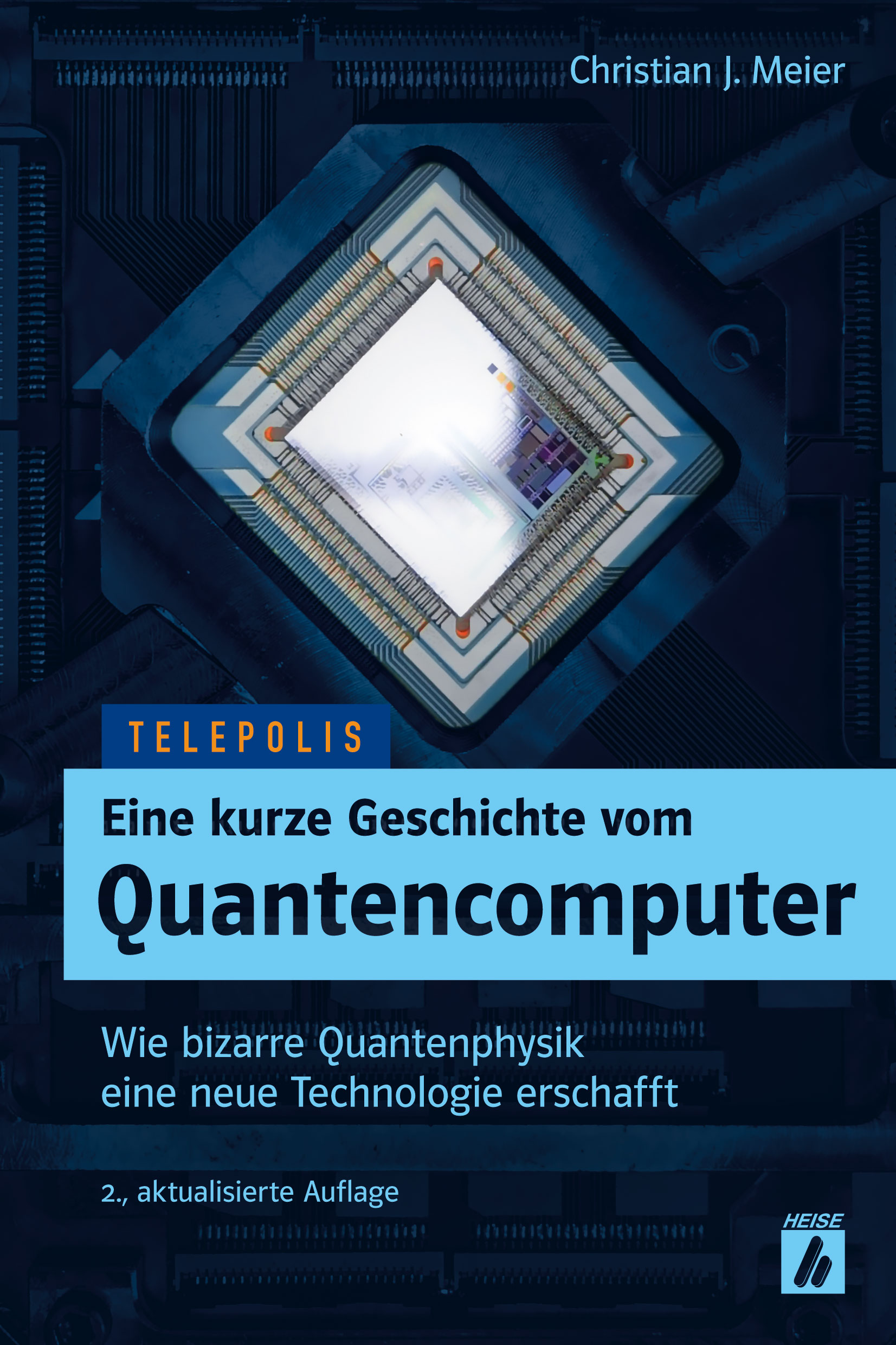
Eine kurze Geschichte vom Quantencomputer (2. Auflg.) - TELEPOLIS
Quantencomputer anschaulich erklärtDie Welt der Quanten ist total verrückt. Teilchen befinden sich gleichzeitig hier und dort. Sie verständigen sich über tausend Kilometer wie durch Telepathie. Forscher haben diese Phänomene inzwischen so gut im Griff, dass sie einen riesigen technologischen Schritt wagen: Den Bau des ersten Quantencomputers – eine ganz neue, überlegene Art von Rechner.Das Buch erklärt verständlich und unterhaltsam die magisch anmutenden Phänomene der Quantenphysik und wie sie für unbegreiflich schnell rechnende Computer genutzt werden können. Es zeigt, wie der Quantencomputer und andere Technologien, die auf der Quantenphysik basieren, den Alltag ähnlich umwälzen könnten wie einst die Dampfmaschine oder die Entdeckung der Elektronik. Werden Quantencomputer die gängigen Verschlüsselungsverfahren aushebeln? Werden sie eine blitzschnelle Entwicklung neuer Arzneien ermöglichen? Wird es einmal ein Quanteninternet geben und wenn ja, was bringt es? Werden es hyperempfindliche Quantensensoren erlauben, die Gedanken eines Menschen zu lesen? Neben Beispielen schon existierender Quantentechnologie (etwa Flash-Speicher oder Verschlüsselungsverfahren) gibt der Wissenschaftsjournalist Christian J. Meier einen Überblick über die wichtigsten Laborentwicklungen und zeigt auf, wohin sie führen könnten. Schließlich erfahren Sie, warum manche Physiker glauben, das Universum sei ein einziger Quantencomputer.Christian J. Meier (geb. 1968), promovierter Physiker und freier Journalist, beschäftigt sich seit mehreren Jahren mit den Themen Quantencomputer und Quantentechnologie und berichtet darüber für verschiedene Medien, unter anderem für die Neue Zürcher Zeitung, bild der wissenschaft, Berliner Zeitung, Frankfurter Rundschau, Spektrum.de und VDI nachrichten. Inhalt (PDF-Link)Leseprobe (PDF-Link)

WordPress For Dummies
GET TO KNOW WORDPRESS WITH THIS SIMPLE AND APPROACHABLE REFERENCEWordPress For Dummies, 9th Edition helps readers discover the power of the WordPress web content building tool. Web builders have created 75 million websites using WordPress and this book will show you how to add your blogs and websites to that count.WordPress For Dummies, 9th Edition drops you right into the fast lane to publishing your first website or blog by teaching you to:· Customize a theme· Create your first post· Use WordPress as a content management system· Work with multimedia formats· Add plugins to your site· Establish a publishing routinePerfect for new bloggers, experienced bloggers converting to WordPress for the first time, and people accustomed to WordPress who want to learn more about the full potential of the technology, WordPress for Dummies, 9thEdition is an indispensable addition to the library of every blogger and webmaster.LISA SABIN-WILSON is cofounder of WebDevStudios, one of the largest WordPress design and development agencies in the world. She is a regular public speaker at national events on topics such as WordPress, development, design, CSS, and social media. Foreword xiiiINTRODUCTION 1About This Book 2Foolish Assumptions 2Icons Used in This Book 3Beyond the Book 4Where to Go from Here 4PART 1: INTRODUCING WORDPRESS 5CHAPTER 1: WHAT WORDPRESS CAN DO FOR YOU 7Discovering the Benefits of WordPress 8Getting set up the fast and easy way 9Extending WordPress’s capabilities 9Taking part in the community 11Choosing a WordPress Platform 12Choosing the hosted version from WordPress.com 13Self-hosting with WordPress.org 14CHAPTER 2: WORDPRESS BASICS 17Shining the Spotlight on WordPress 17Dipping Into WordPress Technologies 19Archiving your publishing history 19Interacting with your readers through comments 21Feeding your readers 22Tracking back 23Dealing with comment and trackback spam 24Using WordPress as a Content Management System 25Exploring the differences between a website and a blog 25Viewing examples of blogs and websites 26Moving On to the Business of Publishing 27PART 2: SETTING UP WORDPRESS 29CHAPTER 3: SETTING UP YOUR WORDPRESS BASE CAMP 31Establishing Your Domain 32Understanding domain name extensions 32Considering the cost of a domain name 33Registering your domain name 33Finding a Home for Your Website 34Getting help with hosting WordPress 35Dealing with disk space and bandwidth 36Understanding Secure File Transfer Concepts 38Setting up SFTP on your hosting account 39Connecting to the web server via SFTP 42Transferring files from point A to point B 46Editing files via SFTP 47Changing file permissions 48Installing WordPress 50Exploring Preinstalled WordPress 51Installing WordPress manually 53Setting up the MySQL database 53Uploading the WordPress files 55Last step: Running the installation script 57CHAPTER 4: UNDERSTANDING THE WORDPRESS.ORG DASHBOARD 65Logging In to the Dashboard 66Navigating the Dashboard 67Welcome to WordPress! 69Site Health 70At a Glance 71Activity 72Quick Draft 73WordPress Events and News 73Arranging the Dashboard to Your Tastes 74Finding Inline Documentation and Help 76Setting Options in the Dashboard 78Configuring the Settings 79General 79Writing 83Reading 85Discussion 86Media 93Permalinks 94Privacy 95Creating Your Personal Profile 97Setting Your Site’s Format 100Posts 100Media 101Pages 101Comments 102Appearance 102Plugins 104Users 104Tools 105CHAPTER 5: ESTABLISHING YOUR PUBLISHING ROUTINE 107Staying on Topic with Categories 107Changing the name of a category 108Creating new categories and deleting others 111Examining a Post’s Address: Permalinks 113Making your post links pretty 114Customizing your permalinks 115Making sure that your permalinks work with your server 117Discovering the Many WordPress RSS Options 119Writing Your First Entry 120Using the Block Editor 122Discovering available blocks 123Inserting new blocks 131Configuring block settings 134Refining Your Post Options 149Publishing Your Post 153Being Your Own Editor 154Look Who’s Talking on Your Site 155Managing comments and trackbacks 155Moderating comments and trackbacks 157Tackling spam with Akismet 158PART 3: FLEXING AND EXTENDING WORDPRESS 159CHAPTER 6: MEDIA MANAGEMENT: IMAGES, AUDIO, AND VIDEO 161Inserting Images into Your Content 162Uploading an image from your computer 163Inserting an image from the Media Library 165Using the Columns Block to Insert Multiple Images in a Row 166Inserting a Cover Image into a Post 169Inserting a Photo Gallery 174Inserting Video Files into Your Posts 179Adding a link to a video from the web 180Adding video from your computer 181Adding video using the Embed block 185Inserting Audio Files into Your Blog Posts 189Inserting Audio Using the Embed Block 191Podcasting with WordPress 192CHAPTER 7: MAKING THE MOST OF WORDPRESS PLUGINS 195Finding Out What Plugins Are 196Extending WordPress with plugins 197Distinguishing between plugins and themes 197Exploring the Plugins Page 199Identifying Core Plugins 202Incorporating Akismet 202Saying Hello Dolly 206Discovering the one-click plugin update 207Using Plugins: Just the Basics 210Installing Plugins Manually 211Finding and downloading the files 212Reading the instructions 214Uploading and Activating Plugins 215Uploading a new plugin 215Activating a plugin 216Setting Plugin Options 217Uninstalling Plugins 218Understanding the Open-Source Environment 219Finding Plugins Beyond WordPress.org 220Comparing Free and Commercial Plugins 222CHAPTER 8: FINDING AND INSTALLING WORDPRESS THEMES 225Getting Started with Free Themes 226Finding free themes 227Avoiding unsafe themes 227Previewing themes on the Themes page 230Installing a Theme 231Browsing the free themes 233Previewing and activating a theme 235Exploring Premium Theme Options 237Examining the Default Theme: Twenty Twenty 241Exploring the layout and structure 242Customizing the site identity 244Customizing colors 247Including custom navigation menus 248Enhancing Your Theme with Widgets 249Adding widgets to your website 250Using the Text widget 252Using the RSS widget 253PART 4: CUSTOMIZING WORDPRESS 257CHAPTER 9: UNDERSTANDING THEMES AND TEMPLATES 259Using WordPress Themes: The Basics 260Understanding theme structure 261Connecting templates 263Contemplating the Structure of a WordPress Website 263Examining the Anatomy of a Template Tag 265Getting Familiar with the Four Main Templates 266The Header template 266The Main Index template 271The Sidebar template 275The Footer template 276Other templates 276Putting a Theme Together 277Connecting the templates 277Using additional stylesheets 287Customizing Your Posts with Template Tags 287Using Tags with Parameters for Sidebars 287The calendar 289List pages 289Post archives 292Categories 293Getting widgetized 295CHAPTER 10: TWEAKING WORDPRESS THEMES 297Styling with CSS: The Basics 298CSS selectors 299Classes and IDs 299CSS properties and values 301Changing the Background Graphics with CSS 301Uploading an image for background use 304Positioning, repeating, and attaching images 304Using Your Own Header Image 306Customizing Colors in Twenty Twenty 308Creating Custom Navigation Menus 309Building custom navigation menus 309Displaying custom menus with widgets 314Changing Font Family, Color, and Size 315Changing font color 316Changing font size 317Adding borders 318Understanding Basic HTML Techniques 318Inserting images 320Inserting hyperlinks 320Inserting lists 321CHAPTER 11: UNDERSTANDING PARENT AND CHILD THEMES 325Customizing Theme Style with Child Themes 326Loading a parent theme’s style 328Customizing the parent theme’s styling 330Using images in child theme designs 330Modifying Theme Structure with Child Themes 334Overriding parent template files 335Adding new template files 336Removing template files 337Modifying the functions.php file 337Preparing a Parent Theme 339CHAPTER 12: WORDPRESS AS A CONTENT MANAGEMENT SYSTEM 341Creating Different Page Views Using WordPress Templates 342Uploading the template 343Assigning the template to a static page 345Creating a Template for Each Post Category 346Using Sidebar Templates 349Creating Custom Styles for Sticky, Category, and Tag Posts 350Working with Custom Post Types 353Adding Support for Taxonomies 360Adding Support for Post Thumbnails 361Adding the post thumbnails to a theme 362Adding custom image sizes for post thumbnails 364Optimizing Your WordPress Site 365Planting keywords on your website 366Optimizing your post titles for search engine success 366Writing content with readers in mind 367Creating categories that attract search engines 367Using the tag for images 368CHAPTER 13: HOSTING MULTIPLE SITES WITH WORDPRESS 371Deciding When to Use the Multisite Feature 372Understanding the Difference between Sites and Blogs 374Considering Web-Hosting Services 374Enabling the WordPress Network Feature 376DNS 377Apache mod_rewrite 378Virtual host 379PHP 381Installing the Network on Your Site 381Exploring the Network Admin Dashboard Menu 383Managing Your Network 386Settings 386Sites 392Users 395Themes 399Plugins 400Stopping Spam Signups and Splogs 401CHAPTER 14: UPGRADING, BACKING UP, AND MIGRATING 403Getting Notified of an Available Upgrade 404Backing Up Your Database 406Upgrading WordPress Automatically 407Upgrading WordPress Manually 408Migrating Your Existing Site to WordPress 411Movin’ on up 411Preparing for the big move 412Converting templates 413Moving your website to WordPress 414Importing from Blogger 415Importing from LiveJournal 417Importing from Movable Type and TypePad 418Importing from Tumblr 420Importing from WordPress 422Importing from an RSS feed 422Finding other import resources 423Moving Your Website to a Different Host 424Creating a backup and moving manually 425Using a plugin to back up and move to a new host 426PART 5: THE PART OF TENS 427CHAPTER 15: TEN POPULAR WORDPRESS PLUGINS 429Custom Post Type UI 429Jetpack 430Limit Login Attempts Reloaded 431Cookie Notice for GDPR & CCPA 432Yoast SEO 433BackupBuddy 433WP Super Cache 434WooCommerce 434Google XML Sitemaps 435Sucuri Security 436CHAPTER 16: TEN FREE WORDPRESS THEMES 437Hybrid Core 438Hestia 438Responsive 439Ashe 440Prefer Blog 440BlackBird 441Storefront 442Sinatra 443Nisarg 444Optics 444Index 447
Building Versatile Mobile Apps with Python and REST
Develop versatile iOS and Android apps using Python withRESTful web services. Dive into full-stack development with Django, a powerfulPython framework, and React Native, the most in-demand JavaScript library.Begin by building a mobile app using the RESTful APIs andReact Native. Starting from scratch, create a database and serialize the datawith Django REST to serve APIs. Then build the front-end with React and mobileapps for iOS and Android with React Native.By the end of the book, you’ll have developed three appspowered by Django—a desktop React app, an iOS app, and an Android app. Discoverthe whole process of developing apps from inception to distribution of an iOSapp in the Apple store and an Android app in the Google Play store.You will:* Develop using the Model-View-Controller pattern* Facilitate the communications between the back-end andfront-end of web apps with HTTP* Design a robust front-end for an app with React* Create one back-end solution for both iOS and Androiddevices with DjangoART YUDIN is a FinTech enthusiast who has a great passion for coding and teaching. He earned a Master of Science in Banking and Finance from Adelphi University, Garden City, New York. Mr. Yudin previously held asset management positions with international financial institutions such as Merrill Lynch and Allianz Investments. Currently, Art Yudin develops financial services software and leads classes and workshops in Python at Practical Programming in New York and Chicago.CHAPTER 1. STARTING WITH DJANGO- How modern websites work- Python and Virtual environment- Install Django and Django REST- Initial setup- Understanding the MVC pattern in Django- Starting new Django project and creating appsCHAPTER 2. LET’S BUILD OUR WEB API APP- Models- Admin- Views- URLsCHAPTER 3. CREATING RESTFUL API- Serializers- API Views- Browsable APICHAPTER 4. HOW IOS WORKS- Xcode interface- Intro to SwiftCHAPTER 5. DESIGNING OUR FRONT-END IOS APP- Setting up the structure of our App- Designing layoutChapter 6. CONNECTING BACK-END API WITH IOS APP- Creating an API Manager- Displaying data- List View- Detail View- Update ViewCHAPTER 7. ADDITIONAL FEATURES- User authentication- Adding reviews and displaying ratings- Adding places to favoritesChapter 8. LAUNCHING APP- Deploying back-end to a live server- Adding our App to App Store
Tweak Your Mac Terminal
Look beyond the basics of Mac programming and development to become a Mac power user. When most people think about the Mac, they think about the amazing graphical user interface macOS is known for. However, there is a whole world to explore beneath the hood. This book approaches working directly in the terminal with fun projects and ideas to help turn you into an advanced Mac user.You'll work with Brew (HomeBrew), which gives you the ability to install applications from Linux (and Unix) that can make the terminal more useful. This is important, because a lot of applications have been stripped out of macOS or deprecated. For example, Apple's built-in PHP is usually a major release behind. You'll also customize your terminal to change everything about it, making it your own. The whole world is about personalizing. Why put up with the Apple defaults?Once you have your terminal set up and ready to rock, you'll review the basics of programming on the Mac terminal. This will allow you to get a taste of power scripting. You'll discover the power of bash, PHP, and Python. And then you'll apply those tools to web development.Tweak Your Mac Terminal takes you on a journey into a world of the terminal and its hidden applications.WHAT YOU'LL LEARN* Customize the terminal to make it perfect for your needs* Develop web applications using basic coding skills in the terminal* Install HomeBrew and by extension Linux and Unix applicationsWHO THIS BOOK IS FORMac users who are already very familiar with the GUI and want to go further. This book will especially help starting IT professionals and beginning programmers.DANIEL PLATT is a software developer and system admin. Much of his time is spent writing code and setting up computers. He is a Senior Software Engineer at Comparison Technologies Ltd. and has spent a lifetime working with computers keeping on the bleeding edge of technology.Chapter 1: System Setup and Requirements· Introduction· Requirements· Installing XCode· ResourcesChapter 2: Basics of the Terminal· Where is the terminal· What is the terminal· Built-in manual· Text editor· What is a shell?· Moving around· The filesystemo Pwdo Cd· PermissionsChapter 3: Customizing Your Terminal· Customising the look (background/foreground colour)· Aliases· Paths· Ln – Aliases / shortcuts· PromptChapter 4: Built in Commands Provided by macOS· Lsof – Eject a drive with an open file· Which – where is your command?· Open· Say· Sysctl for system state· Compression – gz, zip· Finding content in files· Find a file name· Search and replace - Sed· Spot the difference in text files – Diff· Copy and paste· Built-in Psychotherapist (emacs)· Downloading files· Scheduling with launchd· Running processes· Sudo· Pretending website is somewhere else· Remote shellChapter 5: Brew· What brew is· Why use brew· Installing brew· Finding applications in brew· Installing applications from brew· Brew maintenance· When things go wrongChapter 6: Extra Applications· Tmux· Cowsay· Figlet· Lolcat· Archey· Linux utilities missing from macOS· head, tail· formatting xml, json files· grepChapter 7: Services· Using terminal to access content· Weather· Star WarsChapter 8: Oh My Zsh· What is oh My Zsh· Installation· Themes· PluginsChapter 9: Programming Languages· Bash· PHP· Python· Build a few simple terminal games in different languagesChapter 10: Web Development· Why· Nginx· MySQL· WordPress· Putting it liveChapter 11: Version Control· What is version control· Getting started· Using other repository· Publishing your repository· Using applicationChapter 12: Going Further· Replace terminal with iTerm2· Ideas for customising the terminal· Programming Languages

Designing Digital Products for Kids
Childhood learning is now more screen-based than ever before, and app developers are flocking in droves to this lucrative and exciting market. The younger generation deserves the best, and growing up in a digital world has made them discerning and demanding customers. Creating a valuable user experience for a child is as complex and involved as when designing a typical app for an adult, if not more, and Designing Digital Products for Kids is here to be your guide.Author and designer Rubens Cantuni recognizes the societal importance of a high-quality and ethical app experience for children. There is room for significant improvement in this space, and Cantuni helps you optimize it. Designing Digital Products for Kids walks hopeful developers through digital product design—including research, concept, design, release, marketing, testing, analyzing, and iterating—all while aiming to build specifically for children.Industry experts and their real-world advice are showcased in this book, along with careful advice for the ethics that go along with this unique market. These tips include complex needs regarding mental development, accessibility, conscious screen time limits, and content sensitivity. Children, parents, and teachers alike are hungry for more thoughtful players in the kids’ app space, and Designing Digital Products for Kids is your ticket to successfully developing and educating for the future.WHAT YOU WILL LEARN* Design platforms specifically for children, to entertain and educate them* Work with a complex audience of parents, teachers and kids* Understand how different monetization strategies work in this industry and why WHO THIS BOOK IS FORUser experience designers, UI designers, product owners, teachers and educators, startup founders. The range of topics is so wide that anyone interested or involved in digital products could find something interesting to learn.RUBENS CANTUNI is an Italian digital product designer with 15 years of experience across two continents. Winner of an EMMY AWARD in the “Outstanding Interactive” category, a WEBBY AWARD nomination, and several PARENTS' CHOICE AWARDS and TEACHERS’ CHOICE AWARDS with his work on digital products for children. His experience spans from agencies to startups to big corporations, covering multiple design roles for a wide variety of clients in different industries. He also writes about design on Medium and Builtin.com and has past experience as a character designer and illustrator, freelancing for many companies worldwide.1. Why Design Apps for Kids?2. Before You Start, Know the Industry3. Know Your Target Audience4. Concept5. Gamification6. Safety Measures.7. Interaction Design8. UI Design9. User Testing with Kids10. Market Your Product11. Beyond the Screen12. Conclusion

Evaluation of Some SMS Verification Services and Virtual Credit Cards Services for Online Accounts Verifications
Today a lot of sites require SMS verification code for registration account. If you do not want to use your personal phone number to verify or activate account, use virtual phone number. Thus, there is no need for a SIM card in your mobile phone, only need access to the Internet. You can receive text messages via WEB interface or API. There are a lot of websites that offer temporary free, as well as private numbers from around the world to receive activation codes and SMS confirmations online.Their private numbers are intended for two types of SMS reception: disposable virtual numbers and numbers for rent. You can receive SMS online and use the numbers to sign up or verify for any services like Telegram, Facebook, Google, Gmail, WhatsApp, Viber, Line, WeChat, KakaoTalk etc.In the first part of the book I will mention the best websites that offer virtual phone numbers from around the world to receive activation codes and SMS confirmations online..The VCC is a short form of Virtual Credit Card that can be used for online verification, PayPal, EBay, Amazon and Google Adwords account verification. The second part of the book will guide you to how to obtain virtual debit/credit cards for sake of online accounts verification. There are bulk numbers of banks and debit/credit cards issuers that offer virtual or physical debit/credit card. But I will not go through any of them as I covered them in a book I published previously. I will only concentrate on some quick methods to obtain debit/credit cards for sake of online account verification. I will briefly talk about generating virtual debit/credit cards namso gold CC BIN generator for verification of some online services. Then I will talk about paypalvccs.com website that offers Virtual Visa Card for sake of online accounts verification. At the end I will mention how to get USA shipment address through Viabox.com website, and I will list some of the free VPN Services I commonly useThe book consists from the following parts:1. Some free websites that can be used to receive SMS online using numbers from some countries.2. Some paid (not free) websites that can be used to receive SMS online using numbers from some countries.3. Getting free phone number in US or Canada and Other Countries:4. Best websites that offer SMS verification, sending SMS and renting number services.5. Generating some virtual debit/credit cards through BIN Codes for verification of some online services.6. Paypalvccs.com website that offer Virtual Visa Card for sake of account verifications.7. Getting USA shipment address through Viabox.com.8. Some of the free VPN Services I commonly use.I am Dr. Hidaia Mahmoud Mohamed Alassouli. I completed my PhD degree in Electrical Engineering from Czech Technical University by February 2003, and my M. Sc. degree in Electrical Engineering from Bahrain University by June 1995. I completed also one study year of most important courses in telecommunication and computer engineering courses in Islamic university in Gaza. So, I covered most important subjects in Electrical Engineering, Computer Engineering and Telecommunications Engineering during my study. My nationality is Palestinian from gaza strip.I obtained a lot of certified courses in MCSE, SPSS, Cisco (CCNA), A+, Linux.I worked as Electrical, Telecommunicating and Computer Engineer in a lot of institutions. I worked also as a computer networking administrator. I had considerable undergraduate teaching experience in several types of courses in many universities. I handled teaching the most important subjects in Electrical and Telecommunication and Computer Engineering. I could publish a lot of papers a top-tier journals and conference proceedings, besides I published a lot of books in Publishing and Distribution houses.I wrote a lot of important Arabic articles on online news websites. I also have my own magazine website that I publish on it all my articles: http:// www.anticorruption.000space.comMy personal website: www.hidaia-alassouli.000space.comEmail: hidaia_alassouli@hotmail.com

Erfolgreicher Online-Handel für Dummies
Erfolgreicher Online-Handel: ein Fachbuch aus der bekannten "... für Dummies"-Reihe. Als ePub im heise Shop erhältlich.Sie möchten Produkte über das Internet verkaufen? Dann sollten Sie Ihre Online-Strategie sorgfältig planen. Dieses Buch verschafft Ihnen einen guten Überblick über die gängigen Verkaufs- und Marketingkanäle. Vom eigenen Shop über Amazon und andere Marktplätze bis hin zu Social Media. Damit erleichtert Ihnen das Buch die Auswahl der richtigen Kanäle. Gleichzeitig verrät es Ihnen wichtige Tipps, Tricks und Tools, um auf den jeweiligen Kanälen erfolgreich zu sein. Profitieren Sie vom Praxiswissen zweier sehr erfahrener Autoren!►►► Für dieses ePub E-Book hat der herausgebende Verlag Wiley einen DRM-Schutz verfügt. Wie Sie E-Books mit DRM-Schutz öffnen können, erfahren Sie in unseren heise Shop-FAQ.Über die Autoren:GIL LANG ist ein gefragter Speaker und E-Commerce-Experte. Viel Herzblut steckt er in seine Direct-to-Consumer-Health-Marke InnoNature.STEFFEN OTTEN hat sich nach seiner Zeit als Unternehmensberater auf den Onlinehandel spezialisiert. Steffen ist Gründer der Sportmarke runamics.Zum Inhalt: Einführung: 27 Teil I E-Commerce – das Ökosystem verstehen: 33 Teil II Vertriebskanäle: 63 Teil III Marketing-Kanäle: 89 Teil IV Hybride Kanäle: 227 Teil V Strategie und Controlling: 263 Teil VI Operatives Geschäft – schlauer verkaufen: 291 Teil VII Die Zukunft des E-Commerce: 345 Teil VIII Der Top-Ten-Teil: 357 Leseprobe (PDF-Link)Inhaltsverzeichnis (PDF-Link)Index (PDF-Link)

Creating EPUB E-books Using EPUB Editors and Converters
Creating E-books in epub format is very important to sell E-books in electronic book stores. Most publishing and distribution E-book stores will not accept the epub format document for E-book if it includes any warnings or errors when validated and that is a very big challenge to all authors.I devoted this book to evaluate some tools that can be used for creating, validating and editing E-books to be in proper Epub format without errors.Personally, I suggest the following guidelines for preparing E-book in Epub format.• Write the document in Microsoft word as .docx file. Make sure to properly setup the h1headings and h2 headings and h3 headings on each section of the document as these data are the most important data used by the Epub management software to convert the document to epub format.• Convert the Microsoft document to Epub format using Calibre E-book management software. Add all required metadata and the cover and also create a table of contents when converting the file.• Using any Epub reader, check if the layout of epub document according to the headings you made on the word document is good and comfortable to any reader.• Validate the epub document to see if it has errors and warnings using the website http://validator.idpf.org.• Then try to troubleshoot and identify the exact location of the errors detected by the epub validator on the epub document by tracing the code view of the epub document using Sigil epub editor. Then, modify the word document to eliminate the errors. And reconvert the word document to epub format using Calibre E-book management software. Validate the updated epub document for any errors again.This book contains the following sections:1. Some online publishing and distribution stores2. Epub Validators3. Creation Epub file through online websites4. Common software's to convert a file to Epub format5. Converting document to Epub format using Calibre software6. Editing Epub documents using Sigil Epub Editor
Windows 10 Portable Genius
YOUR NO-FLUFF, FAST-PACED GUIDE TO EVERYTHING WINDOWS 10This handy, jargon-free guide is designed to help you quickly learn whatever you need to know about Windows 10. Perfect for novices and experienced users alike, you'll get tips, tricks, and savvy advice on how to install programs, set up user accounts, play music and other media files, download photos from your digital camera, go online, set up and secure an email account, and much, much more.* Shows how to perform more than 150 Windows tasks, including working with files, digital images, and media; customizing Windows; optimizing performance; and sharing a computer with multiple users* Covers installing and repairing applications, system maintenance, setting up password-protected accounts, downloading photos to your computer, and staying safe onlineWith concise, easy-to-follow instructions, and its small, portable size, this is the ideal, on-the-go guide for Windows 10 users everywhere.PAUL MCFEDRIES is the president of Logophilia Limited, a technical writing company. He has written more than four dozen books that have sold more than four million copies.Fun, hip, and straightforward, the Portable Genius series gives forward-thinking computer users useful information in handy, compact books that are easy to navigate and don't skimp on the essentials. Collect the whole series and make the most of your digital lifestyle.Acknowledgments iiiIntroduction xCHAPTER 1 HOW DO I CUSTOMIZE WINDOWS? 2Working with Settings 4Opening the Settings app 4Synchronizing settingsbetween PCs 6Accessing an app’s settings 6Customizing the Start Menu 7Pinning an app to the Start menu 7Arranging and sizing Start menu tiles 8Customizing Start menu settings 9Customizing the Taskbar 10Pinning an app to the taskbar 10Customizing taskbar settings 11Customizing the taskbar’s notification area 13Customizing the Lock Screen 15Changing the Lock screen background 16Adding an app to the Lock screen 17Extending Your Desktop with Multiple Monitors 18Setting Up Multiple Desktops 20Adding a new desktop 20Switching to another desktop 21Moving an app to a different desktop 22CHAPTER 2 HOW CAN I MAKE THE MOST OF SURFING THE WEB? 24Taking Advantage of Tabs 26Opening a link in a new tab 26Creating a new tab 26Customizing the new tab page 26Navigating tabs 28Duplicating a tab 28Pinning a tab 28Controlling which tabs appear at startup 28Closing tabs 30Saving Your Favorite Pages 30Adding a page to the Favorites list 30Working with the Favorites bar 31Opening a page from the Favorites list 33Maintaining favorites 33Customizing Edge 34Changing the Edge search engine 34Changing the theme 35Setting the default zoom level 36Customizing the toolbar 37Customizing the font 39CHAPTER 3 HOW DO I MAXIMIZE SENDING AND RECEIVING EMAIL? 42Managing Mail Accounts 44Adding an account 44Changing the account name 46Deleting an account 47Setting Options for Incoming Messages 47Customizing account sync settings 48Combining the Focused and Other tabs 49Grouping messages individually 49Controlling notifications 50Switching between accounts 51Setting Send Options 51Creating a signature 51Setting the default message font 52Changing your message priority 54Running the spell-checker to eliminate message errors 55CHAPTER 4 CAN I USE WINDOWS TO MANAGE CONTACTS AND APPOINTMENTS? 58Managing Your Contacts 60Adding contacts from an existing account 60Creating a contact 62Viewing contacts 64Editing a contact 65Assigning a photo to a contact 65Creating a new contact from an electronic business card 67Filtering your contacts 68Linking multiple profiles to a contact 69Deleting a contact 70Tracking Your Events 71Viewing your calendar 71Adding an event to your calendar 72Creating a recurring event 73Adding an event reminder 74Setting up an online meeting 74Customizing your calendar 76CHAPTER 5 WHAT OTHER DAY-TO-DAY TASKS CAN I PERFORM? 78Finding Stuff on Your PC 80Viewing your timeline 80Searching your PC 80Configuring the Cortana Voice Assistant 83Controlling your PC with Cortana 84Making Video Calls 85Configuring Skype 85Calling someone using Skype 86Dealing with an incoming Skype call 86Working with Maps 87Giving Maps access to your location 87Displaying a location on a map 88Getting directions to a location 90Checking the Weather 93Checking your weather forecast 93Checking another city’s weather forecast 95CHAPTER 6 HOW DO I MAX OUT THE WINDOWS IMAGE TOOLS? 96Getting Images into Your PC 98Importing images from a smartphone or digital camera 98Scanning an image 99Taking a picture or video with your PC camera 101Viewing Your Images 103Using File Explorer to view your images 103Using the Photos app to view your images 104Starting a slide show 106Enhancing Your Images 107Cropping an image 107Applying a filter 108Adding a vignette effect 110Repairing Your Images 111Rotating an image 111Straightening an image 111Adjusting the light 112Adjusting the colors 114Enhancing image clarity 115Getting rid of red eye 115Fixing small flaws 116CHAPTER 7 CAN I SHARE MY COMPUTER? 118Sharing Your PC via User Accounts 120Creating a user account 120Switching between accounts 122Changing your user account picture 125Changing the account type 126Deleting an account 127Sharing Your PC with a Child 127Adding a child to your PC 128Setting restrictions on a child’s account 128Sharing PC Resources 132Sharing a document or folder 132Switching to advanced sharing 134Sharing a folder with other users on the network 135Protect your shared folders with advanced file permissions 136CHAPTER 8 HOW CAN I GET MORE FROM A TABLET PC? 138Working in Tablet Mode 140Controlling Windows with Gestures 141Understanding gestures 142Using gestures to control Windows 142Inputting Text with the Touch Keyboard 143Displaying the touch keyboard 143Selecting a touch keyboard type 144Using the touch keyboard 145Entering text using the handwriting panel 147Configuring the touch keyboard 149Setting Power and Battery Options 149Monitoring battery life 150Setting the power mode 150Adjusting screen brightness 151Switching to Battery Saver mode 151Creating a custom power plan to improve battery life 152Checking out more ways to save energy 153CHAPTER 9 HOW DO I WORK WITH DOCUMENTS? 156Editing Documents 158Creating a new document 158Saving a document 158Opening a document 159Changing the text font 160Finding text 162Replacing text 164Inserting special symbols 165Saving a copy of a document 167Taking Notes with OneNote 168Creating a OneNote notebook 168Adding pages and sections to a notebook 168Adding and working with text notes 170Adding an image to a notebook page 172Working with notebook lists 173Working with Files 175Selecting a file 175Changing the file view 176Previewing a file 176Copying a file 178Moving a file 178Renaming a document 179Creating a new file 180Deleting a document 181Extracting files from a compressed folder 183Specifying a different app when opening a document 185CHAPTER 10 WHAT ARE SOME WAYS TO ENHANCE PC SECURITY? 188Enhancing Sign-In Security 190Creating a strong password 190Updating your account password 191Creating a picture password 192Signing in with a PIN 193Setting up a fingerprint sign-in 194Locking Your PC to Prevent Others from Using It 195Locking your computer 196Configuring your PC to lock automatically 196Enhancing Your Privacy 198Making the Start menu more private 198Controlling your private information 199Stopping an app’s notifications 201Clearing your activity history 201Resetting your computer to preserve privacy 202CHAPTER 11 HOW DO I INCREASE INTERNET PRIVACY AND SECURITY? 204Making the Web More Secure 206Avoiding viruses 206Opting to never save a site’s password 208Deleting a saved website password 208Making the Web More Private 209Deleting your browsing data to ensure privacy 209Turning on private browsing 211Preventing ad sites from tracking you online 211Enabling strict tracking prevention 212Preventing sites from requesting your location 213Enhancing Email Security and Privacy 215Avoiding viruses in email 215Preventing messages from opening automatically 216Thwarting web bugs by blocking images in messages 216Avoiding phishing scams 217CHAPTER 12 HOW DO I MAINTAIN WINDOWS? 220Performing a Few Maintenance Chores 222Scheduling automatic maintenance 222Checking hard drive free space 223Deleting unnecessary files 225Safeguarding Your Files 226Keeping a history of your files 226Restoring a file from your history 227Creating a system image backup 228Using the Windows Recovery Environment 229Understanding the Recovery Environment’s tools 229Accessing the Recovery Environment 230Working with a Recovery Drive 233Creating the recovery drive 233Booting your PC using the recovery drive 234Working with Restore Points 235Creating a system restore point 235Reverting to an earlier restore point 235Index 238

Die UNIX-Story
Ein Betriebssystem, das die IT-Welt am Laufen hält. Die faszinierende Geschichte, wie Unix begann und wie es die Computerwelt eroberte.Brian W. Kernighan war in der Entwicklung von UNIX beteiligt. In diesem kurzen Band erzählt er eine umfassende Geschichte des äußerst einflussreichen und weit verbreiteten Betriebssystems und erzählt aus einer persönlichen Perspektive von den Anfängen. Unix war in seinen frühen Tagen weitgehend das Produkt von Kernighans Kollegen Ken Thompson und Dennis Ritchie von den Bell Labs. Aber Kernighan leistete fast von Anfang an aktive Beiträge. Sein persönliches Wissen verleiht dem Buch einen großen Wert. Kernighan schafft eine gelungene Balance zwischen »offizieller Geschichte« und seinem eigenen Engagement während der Entwicklung von UNIX. Die Konzepte, die mit UNIX und seinem Ökosystem zusammenhängen, erklärt er klar und methodisch. »Die UNIX-History« ist ein kurzweiliges Buch für alle, die mehr über die Geschichte hinter der Geschichte von UNIX erfahren wollen. Mit Insider-Storys und technischen Erklärungen bekommt man einen ganz neuen Blick auf UNIX und auf die Entwicklung von Betriebssystemen.Leseprobe (PDF-Link)
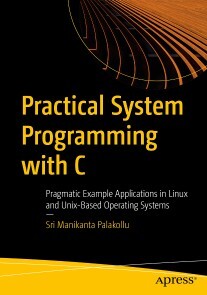
Practical System Programming with C
This book teaches system programming with the latest versions of C through a set of practical examples and problems. It covers the development of a handful of programs, implementing efficient coding examples.Practical System Programming with C contains three main parts: getting your hands dirty with multithreaded C programming; practical system programming using concepts such as processes, signals, and inter-process communication; and advanced socket-based programming which consists of developing a network application for reliable communication.You will be introduced to a marvelous ecosystem of system programming with C, from handling basic system utility commands to communicating through socket programming. With the help of socket programming you will be able to build client-server applications in no time.The “secret sauce” of this book is its curated list of topics and solutions, which fit together through a set of different pragmatic examples; each topic is covered from scratch in an easy-to-learn way. On that journey, you’ll focus on practical implementations and an outline of best practices and potential pitfalls. The book also includes a bonus chapter with a list of advanced topics and directions to grow your skills.WHAT YOU WILL LEARN* Program with operating systems using the latest version of C * Work with Linux* Carry out multithreading with C Examine the POSIX standards* Work with files, directories, processes, and signals* Explore IPC and how to work with itWHO THIS BOOK IS FORProgrammers who have an exposure to C programming and want to learn system programming. This book will help them to learn about core concepts of operating systems with the help of C programming..Sri Manikanta Palakollu is a programmer and software developer with experience in C, C++, Java, and Python as well as Linux, POSIX, and other operating system-level programming. He is a tech reviewer for various tech book publishers. Sri also contributes to various open source projects.1. Introduction to Linux Environment• Getting familiar with Linux Kernel• Linux Kernel V/S Other OS Kernels.• File Handling Utilities• Process Utilities• Network Utilities• Backup Utilities.2. Implementation of Multithreading with C• Introduction to Threads• Threads V/S process• Introduction to Multithreading.• Importance of Multithreading.• Support of Multithreading in C• Creation of threads.• Practical Examples of Multithreading.• Use cases of Multithreading.3. Getting Started with System Programming• Understanding the POSIX Standard.• Introduction to API’s• Importance of API’s• Inbuilt API’s in C4. Files and Directories• Basic concepts in files• Files meta i-nodes• System Calls for Files• I/O Operations for Files• File Permissions.• Soft and Hard Links• System call for Directories.5. Processes and Signals• Introduction to process Environment• Environment Variables• Kernel Support for Processes• Process Creation• Concept of the Zombie process• Concept of Orphan Process• System Calls for Process management• Introduction to Signals• System calls for signals• Types of Signals6. Inter process Communication (IPC)• Introduction to IPC• Types of IPC• Creation of Named PIPES• Creation of UN-Named PIPES• Concept of Message Queues• Implementation of Message Queues• Concept of Semaphore• Implementation of Semaphore.• API for Named and unnamed PIPES• API for Message Queues• API for Semaphore.7. Shared Memory• Introduction to Shared Memory.• Kernel Support for Shared Memory.• Implementation of Shared Memory.• API for Shared Memory.8. Socket Programming• Introduction to Sockets• IPC Over Networks• API for Socket Programming• OSI Layer Protocol• TCP/IP Protocol• Client Server Architecture.• System calls for Socket Programming.• Implementation of Single Client Server Architecture.• Implementation of Multiple Client Server Architecture.9. Advanced Topics and Directions.

Exposed
DISCOVER WHY PRIVACY IS A COUNTERPRODUCTIVE, IF NOT OBSOLETE, CONCEPT IN THIS STARTLING NEW BOOKIt's only a matter of time-- the modern notion of privacy is quickly evaporating because of technological advancement and social engagement. Whether we like it or not, all our actions and communications are going to be revealed for everyone to see. Exposed: How Revealing Your Data and Eliminating Privacy Increases Trust and Liberates Humanity takes a controversial and insightful look at the concept of privacy and persuasively argues that preparing for a post-private future is better than exacerbating the painful transition by attempting to delay the inevitable. Security expert and author Ben Malisow systematically dismantles common notions of privacy and explains how:* Most arguments in favor of increased privacy are wrong* Privacy in our personal lives leaves us more susceptible to being bullied or blackmailed* Governmental and military privacy leads to an imbalance of power between citizen and state* Military supremacy based on privacy is an obsolete conceptPerfect for anyone interested in the currently raging debates about governmental, institutional, corporate, and personal privacy, and the proper balance between the public and the private, Exposed also belongs on the shelves of security practitioners and policymakers everywhere.BEN MALISOW has been involved in information security and education for over two decades. He designed and delivered the Carnegie Mellon University CISSP prep course, served as a US Air Force officer, and was Information Security System Manager for the Federal Bureau of Investigation's most highly classified counterterror intelligence-sharing network. Introduction xvii1 PRIVACY CASES: BEING SUBORNED 1Security Through Trust 1The Historic Trust Model Creates Oppression 2Privately Trustful 2Disarmed Forces 4Missed Application 5Harmfully Ever After 7Open Air 8Artifice Exemplar 92 PRIVACY CASES: GOVERNMENT/NATIONAL INTELLIGENCE/MILITARY CONFIDENTIALITY 11National Security vs Governmental Security 12A Government is Not a Nation 14Rationales 15Rationale: Direct Advantage 15Rationale: Overcome Other Secrecy 19Rationale: Military Advantage 25Rationale: Hidden Diplomacy 30Rationale: Protecting Personal Privacy 31Rationale: Emergency Powers 31No Net Benefit; Possible Net Negative 33Citizenry at Risk 33Bad Public Policy 35The Secret Police State 363 PRIVACY AND PERSONAL PROTECTION 39Your Exposure 40Check Yourself 42Take Your Medicine 44The Scene of the Crime 46You’re a Celebrity 494 A CASE AGAINST PRIVACY: AN END TO SHAME 51Cultural Shame 54Location, Location, Location 55Beneficial Shame, Which Might Be Harmful 57Hypocrisy for Thee 595 A CASE AGAINST PRIVACY: BETTER POLICY/PRACTICES 61Policy Based on Bad Data: US Police and Dogs 61Policy Based on Bad Data: The DSM 64Bad Data Derived from Concern for Privacy: Suicide 68Counting Suicides 69Motivation and Reaction 72Famous Suicide 74Jumping on Guns and Bandwagons 766 A (BAD) SOLUTION: REGULATION 81Regulation = Destruction 83Legitimate Fear of the Private Sector 88Exceptions to the Rules 90Chill Out 92Power Outage 98Top Cover 104Now You See It 110The Government Would Never Lie to Its Overseers, Right? 112Stressing It 1127 A GOOD SOLUTION: UBIQUITY OF ACCESS 115If Everybody Knows Everything, Nobody Has an Advantage 116Atomicity, Again 118An End to Crime? 119First Fatal Flaw 121Other Fatal Flaws 122Final Fatal Flaw 123An End to the Need for Crime? 124De-Corrupting Dis-Corrupting? Anti-Corruption? Something Like That 127An End to Sabotage? 129Power Imbalance 130An End to Laws? 132Lower Costs 133An End to Hypocrisy 134An End to Bad Policy 135Speaking of Accurate Portrayals of Humanity 140Vestigial Shame 142Vestiges in Action 1448 THE UPSHOT 149Science Fiction 150Public Perception 153Other Visions 155Molecular Level 160Busting My Hump 162Style Over Substance 162The Added Value of the Long Reach 163Unchill 164Troll Toll? 165The Threat of Erasure 169Get Out 170On the Genetic Level 171Still Scared 173Index 175
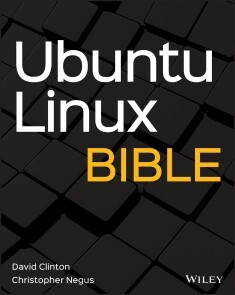
Ubuntu Linux Bible
QUICKLY LEARN HOW TO USE UBUNTU, THE FASTEST GROWING LINUX DISTRIBUTION, IN A PERSONAL OR ENTERPRISE ENVIRONMENTWhether you're a newcomer to Linux or an experienced system administrator, the Ubuntu Linux Bible provides what you need to get the most out of one the world's top Linux distributions. Clear, step-by-step instructions cover everything from installing Ubuntu and creating your desktop, to writing shell scripts and setting up file sharing on your network. This up-to-date guide covers the latest Ubuntu release with long-term support (version 20.04) as well as the previous version. Throughout the book, numerous examples, figures, and review questions with answers ensure that you will fully understand each key topic.Organized into four parts, the book offers you the flexibility to master the basics in the "Getting Started with Ubuntu Linux" section, or to skip directly to more advanced tasks. "Ubuntu for Desktop Users" shows you how to setup email, surf the web, play games, and create and publish documents, spreadsheets, and presentations. "Ubuntu for System Administrators" covers user administration, system backup, device management, network configuration, and other fundamentals of Linux administration. The book's final section, "Configuring Servers on Ubuntu," teaches you to use Ubuntu to support network servers for the web, e-mail, print services, networked file sharing, DHCP (network address management), and DNS (network name/address resolution). This comprehensive, easy-to-use guide will help you:* Install Ubuntu and create the perfect Linux desktop* Use the wide variety of software included with Ubuntu Linux* Stay up to date on recent changes and new versions of Ubuntu* Create and edit graphics, and work with consumer IoT electronic devices* Add printers, disks, and other devices to your system* Configure core network services and administer Ubuntu systemsUbuntu Linux Bible is a must-have for anyone looking for an accessible, step-by-step tutorial on this hugely popular Linux operating system.DAVID CLINTON is a Linux server administrator who has worked with IT infrastructure in academic and enterprise environments. He has taught video courses for Amazon Web Services, as well as other technologies. He is a co-author of AWS Certified Solutions Architect Study Guide: Associate (SAA-C01) Exam and AWS Certified Cloud Practitioner Study Guide: Foundational (CLF-C01) Exam. CHRISTOPHER NEGUS is a senior open source technical writer at Amazon Web Services. He has written dozens of books on Linux, including Red Hat Linux Bible, Linux Troubleshooting Bible and Linux Toys. Acknowledgments ixIntroduction xxixPART I: GETTING STARTED 1CHAPTER 1: STARTING WITH LINUX 3Understanding What Linux is 4Understanding How Linux Differs from Other Operating Systems 6Exploring Linux History 7Free-flowing UNIX culture at Bell Labs 7Commercial UNIX 9Berkeley Software Distribution arrives 9UNIX Laboratory and commercialization 10GNU transitions UNIX to freedom 11BSD loses some steam 13Linus builds the missing piece 13OSI open source definition 14Understanding How Linux Distributions Emerged 16Understanding Red Hat 17Understanding Ubuntu and other Debian distributions 17Finding Professional Opportunities with Linux Today 18Understanding how companies make money with Linux 19Summary 20CHAPTER 2: CREATING THE PERFECT LINUX DESKTOP 21Understanding Linux Desktop Technology 22Starting with the GNOME 3 Desktop Live Image 24Using the GNOME 3 Desktop 25After the computer boots up 25Navigating with the mouse 25Navigating with the keyboard 30Setting up the GNOME 3 desktop 31Extending the GNOME 3 desktop 31Using GNOME shell extensions 32Using the GNOME Tweak Tool 33Starting with desktop applications 33Managing files and folders with Nautilus 33Installing and managing additional software 35Playing music with Rhythmbox 37Stopping the GNOME 3 desktop 37Using the Unity Graphical Shell with the GNOME Desktop 37Using the Metacity window manager 38Changing GNOME’s appearance 40Using the panels 40Adding a drawer 41Changing panel properties 41Summary 42Exercises 42PART II: BECOMING A LINUX POWER USER 43CHAPTER 3: USING THE SHELL 45About Shells and Terminal Windows 46Using the shell prompt 47Using a Terminal window 48Using virtual consoles 49Choosing Your Shell 49Running Commands 50Understanding command syntax 51Locating commands 53Recalling Commands Using Command History 56Command-line editing 56Command-line completion 58Command-line recall 59Connecting and Expanding Commands 61Piping between commands 62Sequential commands 62Background commands 63Expanding commands 63Expanding arithmetic expressions 63Expanding variables 64Using Shell Variables 64Creating and using aliases 66Exiting the shell 67Creating Your Shell Environment 67Configuring your shell 67Setting your prompt 68Adding environment variables 70Getting Information about Commands 71Summary 74Exercises 74CHAPTER 4: MOVING AROUND THE FILESYSTEM 77Using Basic Filesystem Commands 80Using Metacharacters and Operators 82Using fi le-matching metacharacters 82Using fi le-redirection metacharacters 84Using brace expansion characters 85Listing Files and Directories 86Understanding File Permissions and Ownership 90Changing permissions with chmod (numbers) 91Changing permissions with chmod (letters) 92Setting default file permission with umask 93Changing file ownership 93Moving, Copying, and Removing Files 94Summary 95Exercises 96CHAPTER 5: WORKING WITH TEXT FILES 97Editing Files with vim and vi 97Starting with vi 99Adding text 99Moving around in the text 100Deleting, copying, and changing text 101Pasting (putting) text 102Repeating commands 102Exiting vi 102Skipping around in the file 103Searching for text 103Using ex mode 104Learning more about vi and vim 104Finding Files 105Using locate to find files by name 105Searching for files with find 107Finding files by name 108Finding files by size 108Finding files by user 109Finding files by permission 109Finding files by date and time 110Using “not” and “or” when finding files 111Finding files and executing commands 112Searching in files with grep 113Summary 115Exercises 115CHAPTER 6: MANAGING RUNNING PROCESSES 117Understanding Processes 117Listing Processes 118Listing processes with ps 118Listing and changing processes with top 120Listing processes with System Monitor 122Managing Background and Foreground Processes 124Starting background processes 124Using foreground and background commands 125Killing and Renicing Processes 126Killing processes with kill and killall 126Using kill to signal processes by PID 127Using killall to signal processes by name 128Setting processor priority with nice and renice 128Limiting Processes with cgroups 129Summary 131Exercises 131CHAPTER 7: WRITING SIMPLE SHELL SCRIPTS 133Understanding Shell Scripts 133Executing and debugging shell scripts 134Understanding shell variables 135Special shell positional parameters 136Reading in parameters 137Parameter expansion in bash 137Performing arithmetic in shell scripts 138Using programming constructs in shell scripts 139The “if then” statements 139The case command 142The “for do” loop 143The “while do” and “until do” loops 144Trying some useful text manipulation programs 145The global regular expression print 145Remove sections of lines of text (cut) 145Translate or delete characters (tr) 146The stream editor (sed) 146Using simple shell scripts 147Telephone list 147Backup script 148Summary 149Exercises 149PART III: BECOMING A LINUX SYSTEM ADMINISTRATOR 151CHAPTER 8: LEARNING SYSTEM ADMINISTRATION 153Understanding System Administration 153Using Graphical Administration Tools 155Using Cockpit browser-based administration 155Using other browser-based admin tools 157Invoking Administration Privileges 158Becoming root from the shell 158Gaining temporary admin access with sudo 159Exploring Administrative Commands, Configuration Files, and Log Files 161Administrative commands 161Administrative configuration files 162Administrative log files and systemd journal 165Using journalctl to view the systemd journal 165Managing log messages with rsyslogd 166Using Other Administrative Accounts 167Checking and Configuring Hardware 167Checking your hardware 168Managing removable hardware 171Working with loadable modules 172Listing loaded modules 172Loading modules 173Removing modules 174Summary 174Exercises 175CHAPTER 9: INSTALLING LINUX 177Choosing a Computer 178Installing Ubuntu Desktop 180Installing Ubuntu Server 185Understanding Cloud-Based Installations 188Installing Linux in the Enterprise 189Exploring Common Installation Topics 189Upgrading or installing from scratch 189Dual booting 190Installing Linux to run virtually 191Using installation boot options 192Boot options for disabling features 192Boot options for video problems 193Boot options for special installation types 193Using specialized storage 194Partitioning hard drives 195Understanding different partition types 196Tips for creating partitions 196Using the GRUB 2 boot loader 198Summary 199Exercises 199CHAPTER 10: GETTING AND MANAGING SOFTWARE 201Managing Software on the Desktop 201Going Beyond the Software Window 203Understanding Linux Software Packaging 204Working with Debian Packaging 205APT basics 205Working with APT repositories 209Working with dpkg 211Summary 214Exercises 214CHAPTER 11: MANAGING USER ACCOUNTS 215Creating User Accounts 215Adding users with adduser 218Setting user defaults 220Modifying users with usermod 222Deleting users with deluser 223Understanding Group Accounts 223Using group accounts 224Creating group accounts 225Managing Users in the Enterprise 225Setting permissions with Access Control Lists 226Setting ACLs with setfacl 227Setting default ACLs 228Enabling ACLs 229Adding directories for users to collaborate 231Creating group collaboration directories (set GID bit) 231Creating restricted deletion directories (sticky bit) 233Centralizing User Accounts 233Summary 234Exercises 234CHAPTER 12: MANAGING DISKS AND FILESYSTEMS 237Understanding Disk Storage 237Partitioning Hard Disks 239Understanding partition tables 239Viewing disk partitions 240Creating a single-partition disk 241Creating a multiple-partition disk 245Using Logical Volume Manager Partitions 249Checking an existing LVM 249Creating LVM logical volumes 252Growing LVM logical volumes 254Mounting Filesystems 254Supported filesystems 255Enabling swap areas 257Disabling swap area 258Using the fstab file to define mountable filesystems 258Using the mount command to mount filesystems 261Mounting a disk image in loopback 262Using the umount command 262Using the mkfs Command to Create a Filesystem 263Managing Storage with Cockpit 264Summary 265Exercises 266PART IV: BECOMING A LINUX SERVER ADMINISTRATOR 267CHAPTER 13: UNDERSTANDING SERVER ADMINISTRATION 269Getting Started with Server Administration 270Step 1: Install the server 270Step 2: Configure the server 272Using configuration files 272Checking the default configuration 272Step 3: Start the server 272Step 4: Secure the server 274Password protection 274Firewalls 274TCP Wrappers 274AppArmor 275Security settings in configuration files 275Step 5: Monitor the server 275Configure logging 275Run system activity reports 276Watch activity live with Cockpit 276Keep system software up to date 277Check the filesystem for signs of crackers 277Checking and Setting Servers 277Managing Remote Access with the Secure Shell Service 277Starting the openssh-server service 278Using SSH client tools 278Using ssh for remote login 279Using SSH for remote execution 280Copying files between systems with scp and rsync 281Interactive copying with sftp 284Using key-based (passwordless) authentication 285Configuring System Logging 286Enabling system logging with rsyslog 287Understanding the rsyslog.conf file 287Understanding log messages 289Setting up and using a loghost with rsyslogd 289Watching logs with logwatch 290Checking System Resources with sar 291Checking System Space 293Displaying system space with df 293Checking disk usage with du 294Finding disk consumption with find 294Managing Servers in the Enterprise 295Summary 296Exercises 296CHAPTER 14: ADMINISTERING NETWORKING 299Configuring Networking for Desktops 300Checking your network interfaces 302Checking your network from NetworkManager 302Checking your network from Cockpit 303Checking your network from the command line 304Configuring network interfaces 308Setting IP addresses manually 308Setting IP address aliases 309Setting routes 310Configuring a network proxy connection 311Configuring Networking from the Command Line 312Configure networking with nmtui 312Editing a NetworkManager TUI connection 313Understanding networking configuration files 314Other networking files 315Setting alias network interfaces 318Setting up Ethernet channel bonding 319Setting custom routes 320Configuring Networking in the Enterprise 321Configuring Linux as a router 321Configuring Linux as a DHCP server 322Configuring Linux as a DNS server 322Configuring Linux as a proxy server 323Summary 323Exercises 324CHAPTER 15: STARTING AND STOPPING SERVICES 327Understanding the Initialization Daemon (init or systemd) 328Understanding the classic init daemons 329Understanding systemd initialization 335Learning systemd basics 335Learning systemd’s backward compatibility to SysVinit 341Checking the Status of Services 343Checking services for SysVinit systems 343Stopping and Starting Services 346Stopping and starting SysVinit services 346Stopping a service with systemd 347Starting a service with systemd 348Restarting a service with systemd 348Reloading a service with systemd 349Enabling Persistent Services 350Configuring persistent services for SysVinit 350Enabling a service with systemd 351Disabling a service with systemd 352Configuring a Default Runlevel or Target Unit 353Configuring the SysVinit default runlevel 353Adding New or Customized Services 354Adding new services to SysVinit 355Step 1: Create a new or customized service script file 355Step 2: Add the service script to /etc/rc.d/init.d 356Step 3: Set appropriate permission on the script 357Step 4: Add the service to runlevel directories 357Adding new services to systemd 357Step 1: Create a new or customized service configuration unit file 358Step 2: Move the service configuration unit file 358Step 3: Add the service to the Wants directory 359Summary 360Exercises 360CHAPTER 16: CONFIGURING A PRINT SERVER 363Common UNIX Printing System 363Setting Up Printers 365Adding a printer automatically 365Using web-based CUPS administration 366Allow remote printing administration 367Add a printer not automatically detected 367Using the Print Settings window 368Configuring local printers with the Print Settings window 369Configuring remote printers 372Adding a remote CUPS printer 373Adding a remote UNIX (LDP/LPR) printer 373Adding a Windows (SMB) printer 374Working with CUPS Printing 375Configuring the CUPS server (cupsd.conf) 375Starting the CUPS server 376Configuring CUPS printer options manually 377Using Printing Commands 378Printing with lp 378Listing status with lpstat -t 379Removing print jobs with cancel 379Configuring Print Servers 380Configuring a shared CUPS printer 380Configuring a shared Samba printer 381Understanding smb.conf for printing 382Setting up SMB clients 382Summary 383Exercises 383CHAPTER 17: CONFIGURING A WEB SERVER R 385Understanding the Apache Web Server 385Getting and Installing Your Apache Web Server 386Controlling Apache 389Securing Apache 389Apache file permissions and ownership 389Apache and firewalls 390Apache and AppArmor 390Understanding the Apache configuration files 393Using directives 393Understanding default settings 395Adding a virtual host to Apache 398Allowing users to publish their own web content 400Securing your web traffic with TLS 401Understanding how SSL is configured 402Generating an SSL key and self-signed certificate 403Generating a certificate signing request 405Troubleshooting Your Web Server 406Checking for configuration errors 406Access forbidden and server internal errors 408Summary 410Exercises 410CHAPTER 18: CONFIGURING AN FTP SERVER 413Understanding FTP 413Installing the vsftpd FTP Server 415Controlling the vsftpd Service 416Securing your FTP server 417Integrating Linux file permissions with vsftpd 418Configuring Your FTP Server 418Setting up user access 418Allowing uploading 419Setting up vsftpd for the Internet 420Using FTP Clients to Connect to Your Server 422Accessing an FTP server from a browser 422Accessing an FTP server with the lftp command 423Using the gFTP client 425Summary 426Exercises 426CHAPTER 19: CONFIGURING A WINDOWS FILE SHARING (SAMBA) SERVER R 429Understanding Samba 429Installing Samba 430Controlling Samba 431Viewing Samba processes 431Configuring Samba 435Configuring the [global] section 435Configuring the [homes] section 437Configuring the [printers] section 437Creating a Samba shared folder 438Checking the Samba share 438Accessing Samba Shares 441Accessing Samba shares in Linux 442Accessing Samba shares from a Linux file manager 442Mounting a Samba share from a Linux command line 442Accessing Samba shares in Windows 444Using Samba in the Enterprise 444Summary 444Exercises 445CHAPTER 20: CONFIGURING AN NFS FILE SERVER 447Installing an NFS Server 448Starting the NFS Service 449Sharing NFS Filesystems 450Configuring the /etc/exports file 450Hostnames in /etc/exports 451Access options in /etc/exports 452User mapping options in /etc/exports 453Exporting the shared filesystems 454Securing Your NFS Server 454Using NFS Filesystems 455Viewing NFS shares 456Manually mounting an NFS filesystem 456Mounting an NFS filesystem at boot time 457Mounting noauto filesystems 458Using mount options 458Using autofs to mount NFS filesystems on demand 460Automounting to the /net directory 460Automounting home directories 461Unmounting NFS Filesystems 463Summary 464Exercises 464CHAPTER 21: TROUBLESHOOTING LINUX 467Boot-Up Troubleshooting 467Understanding startup 468Starting from the firmware (BIOS or UEFI) 469Troubleshooting BIOS setup 470Troubleshooting boot order 471GRUB 2 boot loader 471Starting the kernel 472Troubleshooting the initialization system 474Troubleshooting Software Packages 476Troubleshooting Networking 479Troubleshooting outgoing connections 479View network interfaces 480Check physical connections 480Check routes 481Check hostname resolution 482Troubleshooting incoming connections 483Check if the client can reach your system at all 483Check if the service is available to the client 484Check the service on the server 485Troubleshooting Memory 485Uncovering memory issues 486Checking for memory problems 488Dealing with memory problems 489Summary 490Exercises 490PART V: LEARNING LINUX SECURITY TECHNIQUES 493CHAPTER 22: UNDERSTANDING BASIC LINUX SECURITY Y 495Implementing Physical Security 495Implementing disaster recovery 496Securing user accounts 496One user per user account 497Limiting access to the root user account 497Setting expiration dates on temporary accounts 497Removing unused user accounts 498Securing passwords 500Choosing good passwords 500Setting and changing passwords 501Enforcing best password practices 502Understanding the password files and password hashes 504Securing the filesystem 506Managing dangerous filesystem permissions 506Securing the password files 507Locking down the filesystem 508Managing software and services 509Updating software packages 509Keeping up with security advisories 509Advanced implementation 510Monitoring Your Systems 510Monitoring log files 510Monitoring user accounts 512Detecting counterfeit accounts and privileges 512Detecting bad account passwords 514Monitoring the filesystem 516Verifying software packages 516Scanning the filesystem 516Detecting viruses and rootkits 518Auditing and Reviewing Linux 521Conducting compliance reviews 521Conducting security reviews 522Summary 522Exercises 523CHAPTER 23: UNDERSTANDING ADVANCED LINUX SECURITY Y 525Implementing Linux Security with Cryptography 525Understanding hashing 526Understanding encryption/decryption 527Understanding cryptographic ciphers 527Understanding cryptographic cipher keys 527Understanding digital signatures 533Implementing Linux cryptography 535Ensuring file integrity 535Encrypting a Linux filesystem at installation 536Encrypting a Linux directory 537Encrypting a Linux file 540Encrypting Linux with miscellaneous tools 540Using Encryption from the Desktop 541Implementing Linux Security with PAM 541Understanding the PAM authentication process 542Understanding PAM contexts 543Understanding PAM control flags 544Understanding PAM modules 545Understanding PAM system event configuration files 545Administering PAM on your Linux system 546Managing PAM-aware application configuration files 546Implementing resources limits with PAM 547Implementing time restrictions with PAM 549Enforcing good passwords with PAM 550Encouraging sudo use with PAM 551Obtaining more information on PAM 551Summary 552Exercises 552CHAPTER 24: ENHANCING LINUX SECURITY WITH APPARMOR 553Understanding AppArmor 553Working with AppArmor 556Summary 559Exercises 560CHAPTER 25: SECURING LINUX ON A NETWORK 561Auditing Network Services 561Evaluating access to network services with nmap 563Using nmap to audit your network services’ advertisements 566Working with Firewalls 570Understanding firewalls 571Implementing firewalls 572Starting with UFW 572Understanding the iptables utility 574Using the iptables utility 576Summary 583Exercises 583PART VI: ENGAGING WITH CLOUD COMPUTING 585CHAPTER 26: SHIFTING TO CLOUDS AND CONTAINERS 587Understanding Linux Containers 588Namespaces 589Container registries 589Base images and layers 590Working with Linux Containers 590Deploying LXD containers 590Deploying Docker containers 593Using containers in the enterprise 600Summary 600Exercises 600CHAPTER 27: DEPLOYING LINUX TO THE PUBLIC CLOUD 601Running Linux in the Cloud Using cloud-init 601Creating LXD Linux Images for Cloud Deployments 604Working with LXD profiles 604Working with LXD images 607Using OpenStack to deploy cloud images 608Using Amazon EC2 to Deploy Cloud Images 610Installing the AWS CLI 611Provisioning and launching an EC2 instance 613Summary 618Exercises 618CHAPTER 28: AUTOMATING APPS AND INFRASTRUCTURE WITH ANSIBLE 619Understanding Ansible 620Exploring Ansible Components 621Inventories 621Playbooks 622Plays 622Tasks 622Modules 622Roles, imports, and includes 623Stepping Through an Ansible Deployment 623Prerequisites 624Setting up SSH keys to each node 624Installing Ansible 626Creating an inventory 626Authenticating to the hosts 626Creating a playbook 627Run the playbook 628Running Ad-Hoc Ansible Commands 629Trying ad-hoc commands 629Summary 631Exercises 631CHAPTER 29 DEPLOYING APPLICATIONS AS CONTAINERS WITH KUBERNETES 633Understanding Kubernetes 634Kubernetes masters 634Kubernetes workers 635Kubernetes applications 635Kubernetes interfaces 636Trying Kubernetes 636Getting Kubernetes up and running 637Deploying a Kubernetes application 638Getting information on the deployment’s pods 639Exposing applications with services 643Scaling up an application 644Checking the load balancer 645Scaling down an application 646Deleting a service 646Summary 647Exercises 647Appendix: Exercise Answers 649Index 701

Pro iOS Testing
Discover what tools there are for unit testing in iOS, and how to work in a test-driven environment. This book reveals how testing is a crucial capability in any iOS developer’s toolset, and a minimum requirement in iOS interviews.A few years ago, tests on mobile platforms were not very popular. It wasn’t a technical constraint, more a cultural one. But these days it’s a crucial skill set, especially when projects become big and hard to maintain. This book shows you how to set up a testing target in XCode unit tests. You'll learn how to write unit tests properly and incorporate concepts like spies and mocks and code coverage. You'll also learn the philosophy behind the architecture of UI tests, and how to mock network and DB layers in testing. Write unbreakable UI tests performance tests, as well. And learn the difference between integration tests and snapshot testing.This book will show you how to maintain code that's not only bug-free but will also remain high quality over time and maintainable while you make changes and refactors during an app's life. Testing in all its aspects is the best way of maintaining iOS projects to run fast and reliably long after you've released them.Many iOS developers working today lack an understanding of the advantages of testing, and might be unfamiliar with tools that make the job easier, such as XCTest framework. With Pro iOS Testing you'll see how to develop and test apps that work and stay working for a long time.WHAT YOU'LL LEARN* Set up a stable testing system* Extend an app's lifetime with testing before release* Incorporate testing into your everyday development routine* Write unbreakable UI tests performance tests* Understand the difference between integration tests and snapshot testingWHO THIS BOOK IS FORProfessional iOS developers with extensive experience in the basics of building apps.AVI TSADOK is an accomplished iOS Developer with almost a decade of experience. He currently heads mobile developemnt at Any.do, a leading productivity app. He's also a regular contributor to "Better Programming" and has an active presence on Medium. Having written many iOS articles, he's decided to combine his passion for writing and developing by writing his first book.* CHAPTER 1 - INTRODUCTION TO TESTING1. Testing - Doing the same thing over and over again expecting the same results 2. Where Testing meets us and why it’s important3. Different Types of Testing Methods4. Say hello to XCTest Framework * CHAPTER 2 - SETUP A TESTING INFRASTRUCTURE 1. All About testing targets2. Testing Code Organization * CHAPTER 3 - PREPARE YOUR CODE FOR TESTING 1. Using interactors and entities2. Mark private methods3. Mocks and Spies * CHAPTER 4 - UNIT TESTS1. What are unit tests?2. What functions should be covered?3. Write our first unit test4. Code Coverage5. Write several tests for the same function 6. Testing A-Sync functions7. Best Practices * CHAPTER 5 - PERFORMANCE TESTS 1. IMPORTANCE OF PERFORMANCE TESTS 2. WHAT METRICS CAN WE MEASURE? 3. MEET XCTMETRIC PROTOCOL4. WRITE OUR FIRST PERFORMANCE TEST 5. SET BASELINE6. BEST PRACTICES* CHAPTER 6 - INTEGRATION TESTS 1. WHAT ARE THE DIFFERENCES BETWEEN UNIT TESTS AND INTEGRATION TESTS 2. HOW TO SET THE GROUND FOR INTEGRATION TESTS3. WE STILL HAVE MOCKS4. WHAT INTEGRATIONS ARE COMMON TO TEST?* CHAPTER 7 - UI TESTS 1. WHAT ARE UI TESTS2. IT ALL STARTS WITH ACCESSIBILITY 3. UI TESTING CHALLENGES4. Simulate your backend 5. Meet Page Object Model 6. UI Testing Best Practices* CHAPTER 8 - SNAPSHOT TESTING 1. SNAPSHOT TESTING - CLOSEST TO REAL QA MANUAL REGRESSION 2. IOS-SNAPSHOT-TEST-CASE - FACEBOOK AND UBER SOLUTION3. HOW TO USE IT?4. PROS AND CONS* CHAPTER 9 - SHARE TESTS BETWEEN IOS AND ANDROID 1. SHARED CODE - OUT, SHARED TESTS - IN. 2. IT ALL STARTS WITH CONSISTENT API3. PREPARE YOUR UNIT TESTS FOR THAT4. SETUP A DEDICATED REPOSITORY5. BEST PRACTICES10. CHAPTER 10 - TEST-DRIVEN DEVELOPMENT (TDD)1. In short - what is TDD?2. TDD Advantages3. TDD is not a type of test, it’s a development method 4. TDD Process

macOS Big Sur For Dummies
YOUR "GET-STARTED" GUIDE TO THE WORLD OF MACOS BIG SURWherever you like to Mac—at home in front of your trusty iMac or over a coffee with your portable MacBook Air—macOS provides you with the seamless, efficient, and reliable user experience that makes these devices so famously a pleasure to use. macOS Big Sur For Dummies is here to heighten the experience for new users and upgraders alike by providing the very latest on the ways macOS Big Sur can enhance how you work and play.Written in a no-jargon style by Bob LeVitus—the Houston Chronicle’s much-loved "Dr. Mac" since 1996—this guide starts with the basics, like getting set up, and explains more advanced uses, like making music and movies, exploring the expanding universe of apps and giving tips on how to save time and enhance productivity along the way. With this book, you'll learn to* Set up and connect your Mac* Get friendly with Siri* Enhance your world with apps* Work better and fasterUse the comprehensive capabilities of macOS Big Sur to do anything and everything you would like to do—and do it even better. For beginners and experts alike, macOS Big Sur For Dummies is the best way to step into the magical world of getting things done with Mac.BOB “DR. MAC” LEVITUS has written the “Dr. Mac” column for the Houston Chronicle since 1996. A devoted Mac enthusiast, he has written or cowritten a long list of how-to books about macOS, iPhone, iPad, Office for the Mac, and GarageBand. He’s also a regular contributor to various tech publications.INTRODUCTION 1About This Book 1Foolish Assumptions 3Icons Used in This Book 3Beyond the Book 4Where to Go from Here 4PART 1: MACOS BASICS 5CHAPTER 1: MACOS BIG SUR 101 (PREREQUISITES: NONE) 7Gnawing to the Core of macOS 8A Safety Net for the Absolute Beginner (or Any User) 10Turning the dang thing on 10What you should see on startup 11Shutting down properly 15A few things you should definitely not do with your Mac 16Point-and-click 101 17Not Just a Beatles Movie: Help and the Help Menu 19CHAPTER 2: DESKTOP AND WINDOWS AND MENUS (OH MY!) 23Touring Finder and Its Desktop 24Anatomy of a Window 25Top o’ the window to ya! 27A scroll new world 29(Hyper)active windows 30Dialog Dealie-Boppers 32Working with Windows 34Opening and closing windows 34Resizing windows and window panes 35Moving windows 35Shuffling windows 36Menu Basics 38The ever-changing menu bar 38Contextual (shortcut) menus: They’re sooo contextual! 39Recognizing disabled options 41Navigating submenus 41Under the Apple menu tree 42Using keyboard shortcut commands 44CHAPTER 3: WHAT’S UP, DOCK? 45A Quick Introduction to Your Dock 46The default icons of the dock 47Trash talkin’ 48Opening application menus on the dock 51Reading dock icon body language 53Opening files from the dock 54Customizing Your Dock 54Adding dock icons 54Removing an icon from the dock 57Resizing the dock 58What should you put on your dock? 58Setting your dock preferences 60CHAPTER 4: GETTING TO KNOW FINDER AND ITS DESKTOP 65Introducing Finder and Its Minions: The Desktop and Icons 66Introducing the desktop 66Bellying up to the toolbar 68Figuring out what an icon is 71Identifying your Finder icons in the wild 72Aliases Are Awesome! 73Creating aliases 74Deleting aliases 75Hunting down an alias’s parent 75The View(s) from a Window 76Moving through folders fast in Column view 76Perusing in Icon view 78Listless? Try touring folders in List view 78Hangin’ in the Gallery (view) 80What’s next on the (View) menu? 81Finder on the Menu 83The actual Finder menu 83Like a road map: The current folder’s pop-up menu 86Going places with the Go menu 86Customizing Finder Windows 89Adding folders to the sidebar 89Setting Finder preferences 90Digging for Icon Data in the Info Window 93CHAPTER 5: DELVING EVEN DEEPER INTO BIG SUR’S DESKTOP AND FINDER 97Cleaning Up Your Desktop Automatically with Stacks 97Managing your Stacks 100Quick Actions: Now Playing All Over Big Sur 101Getting the most out of Markup 101Trimming video without launching an app 104Do It Quicker with Finder Quick Actions 105Creating PDFs without launching an app 105Creating custom Finder Quick Actions 106Four More Cool Big Sur Tricks 107Shooting screens 107Dynamic desktop images 109Recently used apps in the dock 109Mentions of Gallery view 110PART 2: HOW STUFF WORKS 111CHAPTER 6: HAVING IT YOUR WAY 113Introducing System Preferences 113The Desktop & Screen Saver System Preferences Pane 116The Desktop tab 117The Screen Saver tab 118The General System Preferences Pane 119Adjusting the Keyboard, Mouse, Trackpad, and Other Hardware 122The Keyboard System Preferences pane 122The Mouse System Preferences pane 128The Bluetooth System Preferences pane 129The Trackpad System Preferences pane 129The Sound System Preferences Pane 131Changing sound effects 132Choosing output and input options 132CHAPTER 7: OPENING AND SAVING FILES 133A Quick Primer on Finding Files 134Understanding the macOS Folder Structure 134Understanding nested folders 136From the top: The Computer folder 137Peeking into the Applications folder 138Visiting the Library folders 138Let it be: The System folder 139There’s no place like Home 140Your personal library card 141Saving Your Document Before It’s Too Late 143Stepping through a basic save 145Save As versus Duplicate: Different names for the same result 151Open, Sez Me 153With drag-and-drop 154With a Quick Look 155When your Mac can’t open a file 155With the application of your choice 156CHAPTER 8: FILE AND FOLDER MANAGEMENT MADE EASY 159Organizing Your Stuff in Folders 159Files versus folders 160Organizing your stuff with subfolders 160Creating new folders 163Navigating with spring-loaded folders 163Smart folders 164Shuffling Files and Folders 167Moving files and folders 167Selecting multiple icons 169Playing the icon name game: Renaming icons 170Renaming multiple icons at once 171Compressing files 171Getting rid of icons 172The Incredible iCloud Drive 172CHAPTER 9: COMPREHENDING THE MACOS CLIPBOARD 175Introducing the Clipboard 175Copying Files and Folders 177Pasting from the Clipboard 179Big Sur’s Universal Clipboard 179PART 3: GETTING THINGS DONE 181CHAPTER 10: FIVE TERRIFIC TIME-SAVING TOOLS 183With a Quick Look 184Share and share alike with the Share menu 185Slide into Slideshow (full-screen) mode 186Spotlight on Finding Files and Folders Faster 187Using the Find command 187Using the Spotlight menu and its keyboard shortcut 190Blast Off with Mission Control 191The Mission Control pane: It’s painless 191Hot corners are hot stuff! 194Mission Control’s Spaces from 30,000 feet (an overview) 194Getting around in space(s) 197Taking Control of Essential Settings 198Launchpad: The Place for Applications 200CHAPTER 11: ORGANIZING YOUR LIFE 203Keeping Track with Calendar 204Navigating Calendar views 204Creating calendars 205Deleting a calendar 206Creating and managing events 207Reminders: Protection Against Forgetting 210Getting started with Reminders 210To do or not to do: Setting reminders 211Sharing lists and assigning reminders 213Everything You Need to Know about Notification Center 213Tweaking Notification settings 214Widget management 101 216Using Notification Center 217Use Notes for Making Notes 218Tracking Productivity with Screen Time 221CHAPTER 12: ARE YOU SIRI-OUS? 223What Siri Can Do for You 224Working with Siri 226Making Siri Your Own 226CHAPTER 13: MAPS ARE WHERE IT’S AT 229Finding Your Current Location with Maps 229Finding a Person, Place, or Thing 230Views, Zooms, and Pans 231Maps and Contacts 233Time-saving Map Tools: Favorites, Guides, and Recents 234Favorites 234Guides 235Recents 235Smart Map Tricks 236Get route maps and driving directions 236Get walking directions 237Get directions for public transportation 237Get traffic info in real time 238Flyovers and look arounds 238Do more on the Info sheet 240CHAPTER 14: APPS BORN IN IOS 241Taking Stock of the Market with Stocks 241Adding and deleting stocks, funds, and indexes 243Details, details, details 244Charting a course 244Read All about It in News 245What are your interests? 246How News works 247Managing your news 247Recording Memos with Voice Memos 248Recording a voice memo 248Listening to a voice memo 249Naming a voice memo 249Trimming a voice memo 250Controlling Lights, Locks, and More with Home 251PART 4: GETTING ALONG WITH OTHERS 253CHAPTER 15: (INTER)NETWORKING 255Getting Connected to the Internet 256Your Internet service provider and you 257Plugging in your Internet-connection settings 258Browsing the Web with Safari 259Owning your toolbar 261Using the Safari sidebar 263Searching with Google 267Protect yourself from malice (and ads) 269Checking out Help Center 270Audio and Video Calls with FaceTime 270CHAPTER 16: DEALING WITH PEOPLE 273Collecting Your Contacts 273Adding contacts 274Importing contacts from other programs 276Creating a basic group 276Setting up a smart group (based on contact criteria) 277Deleting a group or smart group 279Sync + Contacts = your contacts everywhere 279CHAPTER 17: COMMUNICATING WITH MAIL AND MESSAGES 281Sending and Receiving Email with Mail 281Setting up Mail 282A quick overview of the toolbar 283Composing a new message 284Sending email from the Contacts app 286Checking your mail 288Dealing with spam 289Mailboxes smart and plain 289Changing your preferences 292Sign here, please 293Mail rules rule 294Take a (Quick) look and (Slide) show me some photos 296Markup and Mail Drop 297Communicating with Messages 299Chit-chatting with Messages 300CHAPTER 18: SHARING YOUR MAC AND LIKING IT 303Introducing Networks and File Sharing 304Portrait of home office networking 305Three ways to build a network 307Setting Up File Sharing 309Access and Permissions: Who Can Do What 311Users and groups and guests 311Creating users 312macOS knows best: Folders shared by default 317Sharing a folder or disk by setting permissions 318Useful settings for permissions 322Unsharing a folder 324Connecting to a Shared Disk or Folder on a Remote Mac 325Changing Your Password 328Changing your account password on your Mac 329Changing the password of any account but your own on your Mac 329More Types of Sharing 330Sharing a screen 330Sharing the Internet 331And yet more ways to share 332PART 5: GETTING CREATIVE 333CHAPTER 19: THE MUSICAL MAC 335Apple Music and iTunes Match Rock! 336Introducing Music (the App Formerly Known as iTunes) 337Working with Media 340Adding songs 341Listening to Radio 343All about Playlists 344Creating a regular playlist 344Filtering your library 346Working with smart playlists 347Burning a playlist to CD 348Looking at the Genius playlist 348CHAPTER 20: THE MULTIMEDIA MAC 351Playing Movies and Music in QuickTime Player 351Watching TV 353Using the Books App 354Buying an e-book or audiobook 355Shopping for e-books without Apple 357Reading an e-book 358Finding and Listening to Podcasts with the Podcasts App 360You’re the Star with Photo Booth 361Viewing and Converting Images and PDFs in Preview 363Importing Media from a Camera or Camcorder 365CHAPTER 21: WORDS AND LETTERS 369Processing Words with TextEdit 370Creating and composing a document 370Working with text 371Adding graphics to documents 374Font Mania 375Types of fonts 376Managing your fonts with Font Book 376CHAPTER 22: PUBLISH OR PERISH: THE FAIL-SAFE GUIDE TO PRINTING 379Before Diving In 380Ready: Connecting and Adding Your Printer 380Connecting your printer 381Setting up a printer for the first time 381One last thing: Printer sharing 383Set: Setting Up Your Document with Page Setup 384Print: Printing with the Print Sheet 386Printing a document 386Choosing among different printers 387Choosing custom settings 387Saving custom settings 390Preview and PDF Options 390PART 6: CARE AND FEEDING 393CHAPTER 23: FEATURES FOR THE WAY YOU WORK 395Finally, a Dark Mode 396App Shopping, Improved 397Using Your iPhone as Your Mac’s Camera or Scanner 399Talking and Listening to Your Mac 402Keyboard System Preferences pane: You talk and your Mac types 402Commanding your Mac by voice 404Listening to your Mac read for you 406Automatic Automation 409Script Editor app: Write and edit AppleScripts 409Automator app: Automate almost anything 410A Few More Useful Goodies 413Accessibility System Preferences pane: Make your Mac more accessible 413Battery and Energy Saver System Preferences panes: For energy conservation and sleep 415Bluetooth System Preferences pane: Where Bluetooth lives 416Ink System Preferences pane: Visible to pen-input tablet users only 417Automatic Login in the Users & Groups System Preferences pane: Don’t bother with the login screen 417Allow your Apple Watch to unlock your Mac 418Boot Camp Assistant app: Run Windows on your Mac really 418AirPlay Mirroring 419Handoff 420CHAPTER 24: SAFETY FIRST: BACKUPS AND OTHER SECURITY ISSUES 421Backing Up is (Not) Hard to Do 422Backing up with Big Sur’s excellent Time Machine 422Backing up by using the manual, brute-force method 426Backing up by using commercial backup software 427Why You Need Two Sets of Backups 428Non-Backup Security Concerns 429About viruses and other malware 429Firewall: Yea or nay? 431Install recommended software updates 433Protecting Your Data from Prying Eyes 434Blocking or limiting connections 434Locking down files with FileVault 434Setting other options for security 435CHAPTER 25: UTILITY CHEST 439In the Applications and Utilities Folders 439Calculator 439Activity Monitor 441Disk Utility 442Grapher 447Keychain Access 447Migration Assistant 449System Information 450Terminal 450Capturing Your Screen 451Big Sur screen-shooting 101 452Big Sur screen-shooting options 453Big Sur screen recording 454CHAPTER 26: TROUBLESHOOTING MACOS 457About Startup Disks and Booting 457Finding or creating a startup disk 458They call it a prohibitory sign for a reason 458Recovering with Recovery HD 460Step 1: Run First Aid 460Step 2: Safe boot into Safe mode 461Step 3: Zapping the PRAM/NVRAM 462Step 4: Reinstalling macOS 463Step 5: Things to try before taking your Mac in for repair 463If Your Mac Crashes at Startup 464Optimizing Storage 465PART 7: THE PART OF TENS 467CHAPTER 27: TEN WAYS TO SPEED UP YOUR MAC EXPERIENCE 469Use Those Keyboard Shortcuts 470Improve Your Typing Skills 471Change Your Resolution 471Purchase a Faster Mac 473Add RAM 473Add a Second Display 474Use Your iPad as a Second Display 474Upgrade to a Solid-State Drive (SSD) 475Get More Storage 476Subscribe to My Free Newsletter 477CHAPTER 28: TEN GREAT WEBSITES FOR MAC FREAKS 479The Mac Observer 480Macworld 480TidBITS 480iMore 481AppleWorld.Today 481The Wirecutter 481Apple Support 482Other World Computing 482dealmac/dealnews 483Working Smarter for Mac Users 483Index 485
Linux Security Fundamentals
Linux Security Fundamentals provides basic foundational concepts of securing a Linux environment. The focus is the digital self-defense of an individual user. This includes a general understanding of major threats against individual computing systems, networks, services and identity as well as approaches to prevent and mitigate them.This book is useful for anyone considering a career as a Linux administrator or for those administrators who need to learn more about Linux security issues. Topics include:* Security Concepts* Encryption* Node, Device and Storage Security* Network and Service Security* Identity and PrivacyReaders will also have access to Sybex's superior online interactive learning environment and test bank, including chapter tests, a practice exam, electronic flashcards, a glossary of key terms.DAVID CLINTON is a Linux server admin and Amazon Web Services solutions architect who has worked with IT infrastructure in both academic and enterprise environments. He has created video courses teaching AWS and Linux administration, server virtualization, and IT security for Pluralsight. He has also written or cowritten a dozen technology books, including AWS Certified Solutions Architect Study Guide: Associate (SAA-C01) Exam, Second Edition, and AWS Certified Cloud Practitioner Study Guide: Foundational (CLF-C01) Exam.Introduction xiiiCHAPTER 1 USING DIGITAL RESOURCES RESPONSIBLY 1Protecting Personal Rights 2Protecting Digital Privacy 4What is Personal Data? 4Where Might My Personal Data Be Hanging Out? 4What Are My Responsibilities as a Site Administrator? 6Can Escaped Genies Be Forced Back into Their Bottles? 6What Can I Do as a User? 7Establishing Authenticity 7Think About the Source 8Be Aware of Common Threat Categories 8Summary 9Back to the Basics 10Review Questions 11CHAPTER 2 WHAT ARE VULNERABILITIES AND THREATS? 15The Basics: What Are We Trying to Accomplish Here? 16What Are Vulnerabilities and Threats? 17What Can Be Exploited? 17Who’s Doing the Exploiting? 18Why Do They Attack? 19Common Vulnerabilities 20Software Vulnerabilities 20Hardware Vulnerabilities 21Bioware Vulnerabilities 21Digital Espionage 21USB Devices 21Backdoors 22Wireless Entry Points 22Stolen Credentials 23Data Breaches 23Identity Theft (Besides Breaches) 24Malware 24Network-Based Attacks 25Man-in-the-Middle Attacks 25Denial-of-Service and Distributed Denial-of-Service Attacks 26Network Routing Attacks 26Summary 26Back to the Basics 27Review Questions 28CHAPTER 3 CONTROLLING ACCESS TO YOUR ASSETS 33Controlling Physical Access 34Understanding Your Devices 34Protecting Your Devices 36Managing Authentication Through Effective Password Use 38Managing Authorization Through Permissions 44Controlling Network Access 45Firewalls 45Virus and Malware Protection 48Educating Your Users 49Controlling Software Sources 50PC Software Repositories 51Mobile Package Management 51Summary 52Back to the Basics 52Review Questions 54CHAPTER 4 CONTROLLING NETWORK CONNECTIONS 59Understanding Network Architecture 60The Transmission Control Protocol 60The Internet Protocol 61Understanding the Domain Name System 64Auditing Networks 65Network Auditing Tools 66Automating Audits 70Securing Networks 71Patch Your Software 71Physically Secure Your Infrastructure 73Secure Your Network Behavior 73Other Stuff 74Summary 74Back to the Basics 75Review Questions 76CHAPTER 5 ENCRYPTING YOUR DATA AT REST 81What is Encryption? 82Encryption Usage Patterns 85What Should You Encrypt? 85Understanding Hashing vs. Encryption 86What Are Blockchains? 86Encryption Technologies 87Summary 89Back to the Basics 89Review Questions 90CHAPTER 6 ENCRYPTING YOUR MOVING DATA 93Website Encryption 94Why You Should Use Encryption 95How Website Encryption Works 96Generating Certificates 98Email Encryption 99GNU Privacy Guard 100Does Gmail Encrypt Your Emails? 100Working with VPN Connections and Software Repositories 100Securing Your Actions Using VPNs 101Securing Transfers from Software Repositories 104Summary 105Back to the Basics 105Review Questions 106CHAPTER 7 RISK ASSESSMENT 109Conducting Open Source Intelligence Gathering 111Accessing Public Vulnerability Databases 112Vulnerability Data Frameworks 112Vulnerability Data Formats 113Vulnerability Data Metrics 114Vulnerability Data Management Tools 114Conducting Vulnerability Scans 115Conducting Penetration Tests 117Attack Vectors 118Tooling Frameworks 118Follow-Up 119Summary 119Back to the Basics 120Review Questions 121CHAPTER 8 CONFIGURING SYSTEM BACKUPS AND MONITORING 125Why You Need to Get Backups Right the First Time 127Appreciating the Risks 128Spreading Your Backups Across Multiple Sites 129Testing Your Backups 130Meeting Regulatory Compliance 131Backup Types 132Incremental Backups 132Differential Backups 133Backup Life Cycles 133Multitier Backups 133Multisite Storage Solutions 134Disaster Recovery Planning 134Configuring Monitoring and Alerts 135Working with System Logs 135Intrusion Detection 136Summary 137Back to the Basics 138Review Questions 139CHAPTER 9 RESOURCE ISOLATION DESIGN PATTERNS 143Configuring Network Firewalling 145Balancing Public and Private Networks 145Building Isolated Development Environments 147Working with Sandbox Environments 148Use Cases for Sandboxes 148Sandbox Designs 149Controlling Local System Access 150Configuring Mandatory Access Controls 150Setting Usage Quotas 151Summary 152Back to the Basics 152Review Questions 153APPENDIX ANSWERS TO REVIEW QUESTIONS 155Chapter 1: Using Digital Resources Responsibly 156Chapter 2: What are Vulnerabilities and Threats? 157Chapter 3: Controlling Access to Your Assets 158Chapter 4: Controlling Network Connections 160Chapter 5: Encrypting Your Data at Rest 161Chapter 6: Encrypting Your Moving Data 162Chapter 7: Risk Assessment 163Chapter 8: Configuring System Backups and Monitoring 165Chapter 9: Resource Isolation Design Patterns 166Index 167

Podcasting For Dummies
ADD YOUR VOICE TO THE PODCASTING REVOLUTION!The world is tuning into podcasts in larger and larger numbers. When you’re ready to add your own voice to the mix, this book will help you find your niche. Featuring top tech information, production insight, and promotional tips, this best-selling podcasting reference shares the latest on podcasting trends and new audience demographics.Written by a pair of podcasting pioneers, Podcasting For Dummies will help you refine your podcast idea, identify your audience, and get the scoop on how to record, edit, and share your work. You’ll also learn how to apply the methods top podcasters monetize and market their work.* Record your voice and conduct high-quality interviews for your new or existing podcast * Edit, upload, and share podcast episodes online—and find people who will listen * Learn how to make money as a podcaster or live streamer * Discover interesting and original podcasts to inspire your own work Podcasting for Dummies is your friendly tutor in the art of audio content creation. So start talking!TEE MORRIS is an award-winning podcaster and the author of Twitch For Dummies and Discord For Dummies.CHUCK TOMASI is a Developer Advocate who has created thousands of hours of content for work and fun. Foreword xvINTRODUCTION 1About This Book 1How to Use This Book 2Conventions Used in This Book 3Bold Assumptions 4How This Book is Organized 5Part 1: Podcasting on a Worldwide Frequency 5Part 2: The Hills Are Alive with the Sound of Podcasting 5Part 3: So You’ve Got This Great Recording of Your Voice: Now What? 5Part 4: Start Spreadin’ the News about Your Podcast 6Part 5: Pod-sibilities to Consider for Your Show 6Part 6: The Part of Tens 6Icons Used in This Book 7Beyond the Book 7Where to Go from Here 8PART 1: PODCASTING ON A WORLDWIDE FREQUENCY 9CHAPTER 1: GETTING THE SCOOP ON PODCASTING 11Deciding Whether Podcasting is for You 12You want to deliver media on a regular basis 13You want to reach beyond the boundaries of broadcast media 14You have something to say 14You want to hear from your listeners 15Creating a Podcast 15Looking for the bare necessities 16Recording your first podcast 17Compressing your audio files 18Uploading your audio to the web 18Grabbing listeners 20There’s an App for That 21The old-timer: Apple Podcasts 22Podcasting on the go: Stitcher 23Welcome the game-changer: Overcast 25Podcasting with the G-man: Google Play Music 27A new 800-pound gorilla: Spotify 28Other Podcast Resources 30CHAPTER 2: GETTING THE GADGETS TO PRODUCE A PODCAST 31Finding the Right Mic 32A Beginner’s Guide to Mics 33Investing in a high-end mic 35Podcasts Well with Others: The Mixing Board 40The anatomy of a mixing board 41Hooking up a mixer to your computer 43Accessorize! Accessorize! Accessorize! 45CHAPTER 3: BUILDING YOUR PODCAST’S DIGITAL WORKSTATION 51Budget-Friendly (a.k.a Free) Software 52Audacity: The risk-free option for all 52Cakewalk by Bandlab for Windows: A complementary Step in Running with the Pros 53GarageBand: Moby in your Mac! 54The Sky’s the Limit: Big-Budget Software 57Adobe Audition 57Apple Logic Pro X 58Gluing It Together with RSS 59Keep it simple and get a blog! 61Doing it by hand 63Podcast Management 101 64Size does matter 64Bandwidth demystified 65CHAPTER 4: GO, GO, POWER PODCASTERS! 67Podcasting with Your Laptop 68Mackie Onyx Blackjack 68Shure MVi 69Podcasting with Your Mobile Devices 70A Shure Thing: The MV5 and MV51 71Two for the Røde: The VideoMic Me and smartLav+ 72Podcasting with Portable Recorders 74Zoom-Zoom-Zoom: The Handy Recorder line 74From Cloud to Computer: Portable Audio Workflow 78Getting audio from your portable recorder 78Getting audio from your portable device 80PART 2: THE HILLS ARE ALIVE WITH THE SOUND OF PODCASTING 83CHAPTER 5: BEFORE YOU HIT THE RECORD BUTTON 85Choosing a Unique Topic for Your Podcast 86Finding Your Voice 87What if I hear more than one voice? 89Deciding Whether You Need an Outline or Script 92Determining a Length for Your Show 94The hidden value of the short podcast 94A little length won’t kill you 95Finding that happy medium 96Mark Your Calendar: Posting Schedule 97Posting daily 97Posting weekly 98Posting biweekly (or fortnightly for our friends in the Commonwealth) 98Posting monthly 99I Hear Music (and It Sounds Like Police Sirens!) 100The powers that be 100I can name that tune I wrote it! 105I’ll take the First: Free speech versus slander 106CHAPTER 6: INTERVIEW-FU: TALK TO ME, GRASSHOPPER 107I’ll Have My People Call Your People: Interview Requests 108Preparing for Interviews 110Asking really great questions 110Avoiding really bad questions 113Feelin’ the synergy 114Recording Interviews 116Recording using Skype 116Recording using OBS 118Recording using hardware 121Prepping Your Green Room for Guests 122Welcoming in-studio guests 123Meeting guests on their own turf 123Ensuring Trouble-Free Recordings 125CHAPTER 7: SO WHAT ARE YOU WAITING FOR? RECORD, ALREADY! 127Did Your Sound Check Clear the Bank? 128Understanding dB levels 128Setting your levels 130Noises Off: Capturing Ambient Noise 133Identifying ambient noise 133Minimizing ambient noise 134Now Take Your Time and Hurry Up: Pacing and Clock Management 136Take the potato out of your mouth and enunciate 137And now let’s take a break for station identification 138Concerning Tangents and Their Val — Oh, Look, a Butterfly! 140“Say, that reminds me of something ” 140“But getting back to what I was saying earlier ” 141Time to Push the Big Red Button! 142Getting started with GarageBand 143Getting started with Audacity 144CHAPTER 8: CLEANUP, PODCAST AISLE 8! 147A Few Reasons to Consider Editing 148The Art of Editing 149Editing with GarageBand 150Editing with Audacity 152Making Your Musical Bed and Lying in It: Background Music 154Finding the right balance 155Applying bed music the right way 156Setting volume levels for bed music 157Making an Entrance: Intros 161Theme music 162Intro greeting 162Exit, Stage Left: Outros 163Leave the audience wanting more 164Catch phrase sign off 164Credits roll 165Coming soon to a media player near you 165PART 3: SO YOU’VE GOT THIS GREAT RECORDING OF YOUR VOICE: NOW WHAT? 167CHAPTER 9: SHRINK THAT PUPPY AND SLAP A LABEL ON IT 169A Kilobit of Me, and a Whole Lot of You: Understanding Kbps 170Care for a Sample, Sir? (Audio Sample Rates) 173ID3 Tags: The 411 of Podcasting 176Tell me about yourself: All about ID3 tags 176IDentity crisis: Making ID3 tags work for podcasting 177Creating and editing ID3 tags 179CHAPTER 10: MOVE IT ON UP (TO YOUR WEB SERVER) 183Show Art: Getting Graphic with Your Podcast 184Adopting an Effective File Naming Convention 186Understanding How FTP Works 188Making Your Connection with an FTP Application 189Step by step (or quack by quack) setup for Cyberduck 190Step by step setup for FileZilla 191A place on your web server for your stuff 192Uploading your files 193Uploading to a Podcast-Specific Host 195CHAPTER 11: PROVIDING SHOW NOTES 197Show Note Etiquette 197Planning the Post 199It’s all in the details 200A picture is worth a thousand words 201Posting Your Show Notes 203Posting in WordPress 203Posting on LibSyn 207Boosting Search Engine Rankings with Good Show Notes 209Loading up your titles 210Soliciting backlinks 211PART 4: START SPREADIN’ THE NEWS ABOUT YOUR PODCAST 213CHAPTER 12: SPEAKING DIRECTLY TO YOUR PEEPS 215Gathering Listener Feedback 216Fostering Comments on Your Blog 217Focusing on Online Forums 218Social Media 221Facebook 221Twitter 222Pinterest 222YouTube? For audio?! 223Instagram 224Discord: The Lava Lamp of Online Communications 226Using Voicemail 229Seeking Out the Comments of Others 231Trying a general search 232Searching within a site, blog, or social media platform 232When the Comments Are Less than Good 233CHAPTER 13: FISHING FOR LISTENERS 237Getting Your Podcast Ready for Promotion 237Polishing your presentation 238Checking your bandwidth 238Figuring out your USP 239Exploring Various Advertising Options 240Give me a boost, Facebook 241Insta-traffic with Instagram 244Writing press releases 247Promoting Your Podcast 250Optimizing your site for search engines 250Submitting promos to other podcasts 250Recording your promo 251Giving interviews 253Generating buzz 254PART 5: POD-SIBILITIES TO CONSIDER FOR YOUR SHOW 255CHAPTER 14: SHOW ME THE MONEY 257How Much Money Can You Make? 258Convincing Advertisers to Give You Money 261Developing a media kit 262Establishing a rate sheet 267Getting a Sponsor 267Asking Your Listeners for Money 270Gathering listener donations with PayPal 270Building patrons with Patreon 272Selling stuff 275CHAPTER 15: PODCASTING FOR PUBLICITY 277Podcasting and Politics 278Telling the World a Story, One Podcast at a Time 281Keeping Good Company: Community Podcasts 285Creating a podcast to encourage testimony 285Podcasting for fun (while promoting in the process) 286CHAPTER 16: PODCASTING FOR PASSION 291The Philosophical Question for All Podcasters: Why Do We Do It? 292Gaining perspective on passion 292Podcasting passion with a purpose 294Sharing your passion with friends 294A passionate love for the podcast 296Holding Interest: Keeping a Podcast’s Passion Alive 298Podcasting on puree: Mixing it up 299Starting a second (or third) podcast 300Moving forward with a plan 304When Podcasting, Be Like Bruce Lee 306CHAPTER 17: ONE GIANT LEAP FOR PODCASTING: STREAMING CONTENT 309In the Beginning: The Early Days of Video Podcasting and Live Broadcasts 310Light, cameras, and say what: The unexpected demands of video podcasting 310Going live (if you’re lucky): Early attempts at live podcasting 313Streaming Media: Podcasting Evolved 313Going Live for Realz This Time: Streaming Your Podcast 316The first step: Setting up a streaming account 316Setting the stage: Working with Streamlabs OBS 318And we’re live! Podcasting in the moment 322It’s a stream, it’s a podcast It’s a stream and a podcast! 323PART 6: THE PART OF TENS 327CHAPTER 18: TEN TYPES OF PODCASTS TO CHECK OUT 329Tech Podcasts 330Independent Media Podcasts 331Science Podcasts 333Self-Development Podcasts 335Comedy Podcasts 338Slice-of-Life Podcasts 339Gaming Podcasts 340Podcasts of the Pen 342Geek Podcasts 343Podcasts about Podcasting 345CHAPTER 19: TOP TEN REASONS TO PODCAST 347You Are Considered a Subject Matter Expert 348You Are Passionate about the Subject 349You’ve Got a Creative Itch to Scratch 350You Like Playing with Tech Toys 352Bring Your Friends Together 353All the Cool Kids Are Doing It 354I Can Do More 354Bring Out the Best in You 356Talk to Interesting People 357The Ultimate Thrill Ride 358CHAPTER 20: TEN ORIGINAL PODCASTERS 361Mignon Fogarty 362Adam Curry 363Mur Lafferty 363Steve Boyett 364Adam Christianson 365Dave Slusher 366Scott Sigler 367Michael Butler 368Dr Pamela Gay 369Brian Ibbott 370Authors’ Footnote 371Index 373

Linux Mint 20
* GANZ EINFACH UND SCHRITT FÜR SCHRITT AUF LINUX MINT UMSTEIGEN* DIE BENUTZEROBERFLÄCHE VON LINUX MINT KENNENLERNEN UND AN DIE EIGENEN BEDÜRFNISSE ANPASSEN* WINDOWS UND LINUX MINT PARALLEL BETREIBENSteigen Sie mit Mint ein in die Linux-Welt!Egal, ob Sie Linux Mint parallel zu einem anderen Betriebssystem einsetzen oder ausschließlich damit arbeiten wollen: Dieses Buch nimmt Sie an die Hand und ermöglicht Ihnen einen problemlosen Start mit Linux Mint 20 (Ulyana).Christoph Troche erläutert Ihnen leicht nachvollziehbar die verschiedenen Installationsmöglichkeiten von Linux Mint (Live-Version, Festinstallation, allein oder parallel zu Windows). Er zeigt Ihnen Schritt für Schritt, wie Sie Mint einrichten, und stellt die Standard-Arbeitsoberfläche Cinnamon ausführlich vor, so dass Sie direkt loslegen können.Sie erfahren außerdem, wie Sie Software, die ursprünglich für den Betrieb unter Windows gedacht ist, trotzdem installieren können. Für einen kompletten Umstieg empfiehlt der Autor Ihnen aber auch geeignete Linux-Alternativen. Darüber hinaus erhalten Sie wertvolle Informationen und Tipps zur Sicherheit Ihres Systems.So hilft Ihnen dieses Praxisbuch optimal dabei, alle im Alltag anfallenden Aufgaben problemlos mit Linux Mint zu meistern.AUS DEM INHALT:* Die Vorteile von Linux Mint* Live-Version und vollständige Installation* Finetuning – Linux Mint einrichten* Was finde ich wo? Der Aufbau des Desktops* Windows-Programme mit Linux Mint nutzen* Linux-Alternativen für bekannte Windows-Programme* Linux Mint als Mehrbenutzersystem* Sicherheit und Datenschutz* Der Linux-VerzeichnisbaumChristoph Troche ist Fachbuchautor und Linux-User der ersten Stunde. Er legt besonders großen Wert auf die praktische Anwendbarkeit und Benutzerfreundlichkeit seiner Anleitungen.

Projekt Unicorn
Mit Spannung erwarteter Folgeband zum Bestseller "Projekt Phoenix" - Roman, der "Projekt Phoenix" um die Perspektive der Entwickler ergänzt - Wall Street Journal-Bestseller in den USA - fesselnde Story über die Herausforderungen moderner Softwareentwicklung in Zeiten der digitalen Transformation Parts Unlimited – ein milliardenschweres Unternehmen der Automobilbranche – steht kurz davor, aus dem Markt verdrängt zu werden. Nach einer folgenschweren Panne bei der Lohn- und Gehaltsabrechnung wird Maxine, eine leitende Softwareentwicklerin, unverschuldet in das berüchtigte Projekt Phoenix strafversetzt. Dort verzweifelt sie fast an einem bürokratischen Monsterapparat mit endlosen Meetings und hochkomplizierten Regeln – bis sie von firmeninternen Rebellen angeworben wird, die die bestehende Ordnung umstürzen wollen: Damit Entwicklerinnen und Entwickler wieder echte Freude an ihrer Arbeit haben. Die kluge und kämpferische Maxine und ihre rebellischen Kolleginnen und Kollegen rufen Projekt Unicorn ins Leben und setzen dabei auf die "Fünf Ideale". Damit verändern sie grundlegend, wie die Business- und Technologiebereiche des Unternehmens zusammenarbeiten – und geraten in das Fadenkreuz einflussreicher und gefährlicher Gegner. Gelingt es ihnen, das Überleben von Parts Unlimited in einem Wettrennen gegen die Zeit zu sichern? Packend beschreibt Gene Kim, Autor des Bestsellers "Projekt Phoenix", die Herausforderungen, denen sich Unternehmen – und alle, die in ihnen arbeiten – im Zeitalter von Digital Disruption stellen müssen: in der Softwareentwicklung und als lernende Organisation. Sie werden sich in diesem Roman wiederfinden – und die fesselnde Story wird Sie unterhalten und Ihnen viele Denkanstöße geben.
Windows 10 für Senioren
Windows 10 mühelos Bild für Bild und Schritt für Schritt erlernen! Das wünschen sich sicher nicht nur Einsteiger der sogenannten Generation 50 plus. Diese Anleitung zum aktuellen Windows ist dabei nicht nur sehr verständlich geschrieben – zahlreiche Kurzzusammenfassungen, komfortable Merkhilfen und wichtige Hinweise zur Sicherheit sowie zu möglichen Stolperfallen machen diesen Lernkurs in extra großer Schrift zu einem Vergnügen für alle, die sich Windows und seine tollen Möglichkeiten ohne weitere Hilfe aneignen möchten. Natürlich in Farbe! Aus dem Inhalt: Neu einsteigen oder ganz einfach von Windows 7 oder 8 wechselnDen Computer mit Windows 10 startenSperrbildschirm, Desktop und Startmenü kennenlernenMaus, Tastatur und Touchdisplay bedienenWichtige Einstellungen vornehmenEine Verbindung zum Internet herstellenIm Internet surfenE-Mails schreiben und versendenMit Windows 10 Texte schreibenFotos auf den Computer übertragenFotos mit Windows 10 verschönernDateien in Ordnern sortierenVideos in Windows 10 ansehenMusik hören auf dem ComputerKontakte, Termine und das Wetter im BlickBildtelefonie auf dem Computer mit SkypeApps suchen und findenProgramme installierenGeräte anschließenDrucken mit Windows 10Daten schützenHilfe bei Problemen 1. Bevor wir den Computer starten ... 11 Der Computer -- Ihre ganz persönliche »Firma« ... 12 Welcher Computer darf es sein? -- Vom Kleinunternehmen bis zur Aktiengesellschaft ... 17 Sicher und ohne Sorge am Computer ... 22 Es gibt immer einen Weg zurück ... 23 Den Computer mit Maus, Tastatur, Touchpad und Touchscreen bedienen ... 23 Von Windows 7 oder Windows 8 umsteigen ... 31 2. Den Computer mit Windows 10 starten ... 39 Der allererste Start von Windows 10 ... 40 Das Microsoft-Konto -- es geht auch ohne ... 48 Das lokale Benutzerkonto einrichten ... 49 Datenschutzeinstellungen und Freigaben ... 53 Der Sperrbildschirm -- der Pförtner für Ihr Windows ... 59 Windows 10 entdecken -- Desktop und Startmenü ... 62 Praktische Übung im Startmenü -- den Computer abschalten ... 64 Das Startmenü im Überblick ... 68 Ein Programm über das Startmenü starten ... 70 Ein Programm beenden oder schließen ... 72 Das Programmfenster im Griff ... 72 Suchen und finden in der Taskleiste ... 77 Cortana -- Ihre intelligente Sprachassistentin ... 79 Die Taskleiste -- Schnellstart und mehr ... 85 Mehrere Programme öffnen ... 86 Der Infobereich -- Wissenswertes in Kurzform ... 90 Das Info-Center ... 93 3. Mit Windows 10 einen Brief schreiben und Dokumente gestalten ... 97 So starten Sie die App WordPad ... 97 Funktionen in WordPad -- ein Überblick ... 99 Einen Text in WordPad eingeben ... 102 Einen Text in WordPad formatieren ... 107 Das WordPad-Dokument abspeichern und wieder aufrufen ... 112 Weitere Gestaltungsmöglichkeiten in WordPad ... 116 Ein Dokument ausdrucken ... 121 Besser sehen -- der Cursor im Wunschformat ... 128 4. Das Internet entdecken ... 131 Das Internet -- ein Heer freier Mitarbeiter ... 131 Startklar für das Internet -- das sind die Voraussetzungen ... 133 So stellen Sie eine Internetverbindung her ... 136 Internetseiten öffnen ... 140 Das Internet durchsuchen mit Google ... 145 Mehrere Webseiten parallel öffnen und Online-Lexika nutzen ... 150 Die praktischen Tabs im Internetprogramm Edge ... 154 Das Internet vorlesen lassen -- so klappt's auch ohne Lesebrille ... 156 Internetseiten merken und Spuren verwischen ... 158 Einkaufen im Internet ... 168 Online-Banking am Computer ... 170 Webseiten drucken ... 175 Webseite digital als PDF sichern ... 179 5. In Kontakt bleiben -- Videotelefonie gratis in die ganze Welt ... 181 Die App Skype starten und einrichten ... 182 So ist die App Skype aufgebaut ... 187 Kontakt suchen und hinzufügen ... 190 Chatten -- Unterhaltung per Tastatur ... 193 Telefonieren mit Skype -- klassisch und mit Video ... 196 6. Windows 10 als digitales Fotoalbum ... 203 Die Fotos-App im Überblick ... 203 Fotos auf den Computer übertragen ... 205 Bilder in der App Fotos sichten ... 209 Ein digitales Album erstellen ... 210 Fotos präsentieren ... 216 Fotos bearbeiten -- Klick für Klick zum Bilderglück ... 218 7. E-Mails schreiben und versenden ... 223 E-Mail-Adresse und Microsoft-Konto anlegen ... 224 Postfach und E-Mail verifzieren ... 229 Die E-Mail-App kurz vorgestellt ... 232 Eine E-Mail öffnen ... 235 Eine E-Mail verfassen und beantworten ... 236 E-Mails löschen ... 241 Eine E-Mail mit Anhang verschicken ... 243 Einen Anhang öffnen und abspeichern ... 245 Werbe-Mails und Spam-Mails -- so reagieren Sie richtig ... 247 Eine E-Mail-Signatur anlegen oder ändern ... 250 E-Mails zu Papier bringen ... 252 Kontakte anlegen -- das digitale Adressbuch ... 254 8. Dateien, Ordner und der Explorer ... 259 Die Datei im Detail ... 259 Der Explorer -- der Meister aller Dateien ... 261 Dateien öffnen im Explorer ... 265 Ordner anlegen und umbenennen ... 267 Dateien aus einem Programm in einem Ordner im Explorer abspeichern ... 271 Dateien verschieben, kopieren oder löschen ... 273 Dateien auf einen USB-Stick kopieren ... 278 Eine CD oder DVD brennen ... 284 Microsoft OneDrive -- der Datenspeicher im Internet ... 288 Der Papierkorb -- Dateien löschen ... 293 9. Musik hören mit Windows 10 ... 297 Eine CD abspielen und auf den Computer kopieren ... 297 Groove-Musik starten und bedienen ... 304 Musiktitel mit Groove-Musik wiedergeben ... 307 Wiedergabeliste in Groove-Musik erstellen ... 309 10. Nützliche Apps für viele Gelegenheiten ... 313 Mit der Kalender-App keinen Termin mehr vergessen ... 314 Nie mehr ohne Schirm dank Wetter-App ... 322 Die Rechner-App -- der handliche Taschenrechner ... 327 Eine kostenlose App aus dem Microsoft Store installieren ... 331 11. Windows 10 anpassen ... 337 Desktop-Hintergrund mit Fotos und Farben verändern ... 337 Maustasten und Mausklick einstellen ... 341 Mausgeschwindigkeit einstellen ... 343 Mauszeiger größer darstellen ... 344 Die Größe von Schrift und Bildschirmelementen einstellen ... 345 Programme im Startmenü als Kacheln anlegen ... 348 Kacheln im Startmenü löschen ... 350 Programme in der Taskleiste ablegen ... 352 12. Daten auf dem Computer sichern ... 355 Verlorene Dateien wiederfinden ... 356 Sachen über die Taskansicht wiederfinden ... 359 Datensicherung vollautomatisch via OneDrive ... 362 Datensicherung auf eine Festplatte ... 368 Daten wiederherstellen mit dem Dateiversionsverlauf ... 371 13. Daten schützen & Sicherheit am Computer ... 375 Von Viren, Hackern und Datenspionen ... 376 Schutz nach außen: die Windows-Sicherheit ... 378 Windows Update -- immer aktuell ... 383 Ein weiteres Benutzerkonto anlegen ... 385 Zwischen Benutzern wechseln ... 390 14. Probleme beheben ... 393 Erste Hilfe mit Reset und dem Task-Manager ... 393 Wenn nichts mehr geht: Windows 10 auffrischen ... 397 Mit allen Dateien und Windows 10 auf einen neuen Computer umziehen ... 402 Stichwortverzeichnis ... 410

WordPress 5
WORDPRESS 5 // - Zeigt das Anpassen und Erweitern von WordPress 5 an Ihre Bedürfnisse - Erklärt detailliert das Arbeiten mit dem neuen Block-Editor (Gutenberg) - Behandelt ausführlich die Benutzerverwaltung - Bietet Lösungsansätze für mehrsprachige Websites - Ist auch für EinsteigerInnen ohne Programmierkenntnisse geeignet WordPress 5 – Block-Editor, (Child-)Themes und Plugins auf dem eigenen Server« führt Sie vom Installieren von WordPress ab Version 5.2 auf dem eigenen Server als CMS-Basis für eine dynamische Website bis hin zum Erstellen eines site-spezifischen Plugins sowie Definieren und Anwenden von Menüs und Widgets. Neben dem individuellen Anpassen eines bestehenden Themes mit dem Customizer und dem Arbeiten mit Child-Themes wird auch das Entwickeln eines neuen responsiven Themes (u. a. mit One-Page-Layout) nach dem Mobile-first-Ansatz lokal auf XAMPP thematisiert. Weitere Themen sind die Erreichbarkeit der Website über die Domain bei Installation von WordPress in einem Unterordner, die Migration eines Blogs bzw. einer Website von WordPress.com auf den eigenen Server, SEO sowie Problematik und Optionen bei mehrsprachigen Websites. Auch der neue Block-Editor (Gutenberg) wird detailliert vorgestellt und individuell angepasst. Dadurch ist das Buch sowohl für den Einsteiger interessant als auch für den Hobby-Programmierer und den Profi, der tiefer in die WordPress-Welt der Widgets, Themes, Template Tags, Loops, Menüs und Blöcke eintauchen und ein eigenes Theme entwickeln möchte. AUS DEM INHALT // Anpassen des Themes mit dem Customizer/Arbeiten mit Child-Themes/Grundlegende Einstellungen/ Migration von WordPress.com auf den eigenen Server/Navigationsmenüs und Menüpositionen/Neues Responsive Theme entwickeln (One-Page-Layout)/Site-spezifisches Plugin erstellen/Umstellung von HTTP auf HTTPS/Widgets und Widgetbereiche

Implementing Effective Code Reviews
The ideal code review process differs from organization to organization, but the needs all boil down to the same foundational factors. A software development team cannot properly grow if its code reviews are not consistent, straightforward, and aspire to hit several company goals at once, such as security, performance, longevity, and more. Implementing Effective Code Reviews is the manual your team has been seeking.Author Giuliana Carullo uses her expert background to guide you through the basics of building and maintaining clean code, and she is known for distilling complex concepts into entertaining and easy-to-grasp lessons. Healthy code requires incremental improvements, and knowing how to execute this is essential for conducting effective reviews on your team. While complex and fancy code can be interesting to work with, it will not always achieve business goals or solve urgent problems. Good coding practices are at the heart of a high-performing team, and Carullo instills these core values in a simple, straight-forward way in Implementing Effective Code Reviews.Whether you are a passionate programmer looking to go the extra mile at the office, or an experienced software engineer seeking a guide to how to improve your leadership and code review process, this book covers it all. With each chapter wrapped up in a handy checklist of crucial takeaways, Carullo has created an essential handbook for coders everywhere. There are a lot of myths that dominate the programming landscape, and Implementing Effective Code Reviews grounds the process and gets to the heart of the matter.WHAT YOU WILL LEARN* Understand how to work with your team to implement effective code reviews* Master good programming practices that will build healthy code* Discover how you should tackle different complex areas during code review like, security and performance WHO THIS BOOK IS FORPassionate programmers willing to go the extra mile to be better at their jobs, new programmers looking to strengthen their programming skills, and experienced software engineers looking for a quick guide on how to review codeGiuliana Carullo, CCSK, PSM certified, is a Research Engineering Manager at Tenable. With over 15 years of engineering experience, she has grown her expertise mainly in the networking, security, cloud computing, telecommunications, and Internet of Things (IoT) industries. Through her career, she's has worn many hats, including researcher, engineer, project manager, and engineering manager. Giuliana has been doing research in a number of application fields for over 7 years, 5 of which in the InfoSec area. She dealt with research in a number of application fields, from academia to industrial research, within SMEs (small and mid-size enterprises) and corporations, including Intel and Ericsson. As the author of 15 research papers and several books, Giuliana loves to make even difficult concepts entertaining and easy to grasp.

Zoom
Mit Zoom, der umfangreichen Videokonferenz-Software, können Sie sich mit Kollegen per Online-Meetings abstimmen und produktiv arbeiten. Christine Peyton und Andre Möller zeigen Ihnen Schritt für Schritt die vielfältigen Funktionen, die sichere Verwendung und alle Einsatzmöglichkeiten: vom ersten Videochat und der gemeinsamen Arbeit im Team bis zu hilfreichen Tipps für effizientes Homeoffice. Aus dem Inhalt: Versionen und AngeboteDie Funktionen im ÜberblickVoraussetzungen und ProblemeVideokonferenzen, aber richtig!Teamwork: gemeinsam an Dokumenten arbeitenPräsentieren Sie Ihr ProjektAls Moderator ein Meeting leitenEin Seminar für viele: WebinareZoom auf dem Smartphone Über dieses Buch ... 9 1. Was ist Zoom? ... 11 Wann wird Zoom eingesetzt? ... 13 2. Die verschiedenen Versionen und Angebote ... 15 Die Basic-Variante ... 16 Die Pro-Variante ... 17 Die Business-Variante ... 18 Die Enterprise-Variante ... 19 Zoom-Webinare ... 19 Die Leistungen im Überblick ... 19 3. Die Funktionen im Überblick ... 21 Die Funktionen für den Teilnehmer ... 21 Zusammenarbeit über das Whiteboard ... 23 Die Funktionen zur Freigabe ... 24 Die Funktionen und Optionen des Hosts ... 25 Mehr Funktionen mit einem Pro-Abo ... 28 Zoom als Chat und Kontaktbörse ... 30 Webinare ... 30 Zoom erweitern ... 31 4. Hardware-Voraussetzungen und Hardware-Probleme ... 33 Computer/Laptop ... 33 Smartphones und Tablets ... 34 Zusätzliche Lautsprecher/Mikrofon -- ja, bitte! ... 34 Kamera ... 35 Kontrollieren und testen ... 35 5. Sich bei einer Videokonferenz richtig verhalten ... 45 6. So nehmen Sie aktiv an einer Konferenz teil ... 51 Sie erhalten eine Einladung zu einer Konferenz ... 51 Die Einladung als Terminanfrage ... 59 Per Link oder über die Meeting-ID in die Konferenz gehen ... 62 Die verschiedenen Ansichten ausprobieren ... 66 In der Konferenz: sprechen, sehen und gesehen werden ... 74 Geben Sie Feedback ... 82 Noch kein Alteisen: der gute alte Chat ... 84 Arbeit in Kleingruppen: Breakout-Rooms ... 90 Ein flottes Hintergrundbild für Ihre Videoaufnahme ... 93 Laden Sie zum Meeting ein ... 100 7. Teamwork für Dokumente ... 103 Die Tools zum Annotieren auf dem Whiteboard ... 104 So nutzen Sie die Tools ... 106 Die komplexe Fenstersteuerung bei der Bildschirmfreigabe ... 111 Excel und Co. in der Bildschirmfreigabe ... 116 Sie sind am Zug: die Bearbeitung eines Dokuments übernehmen ... 119 8. So präsentieren Sie Ihr Projekt ... 125 Den eigenen Bildschirm freigeben ... 126 Bildschirmelemente und Funktionen bei der Bildschirmfreigabe ... 129 Annotierungen während Ihrer Freigabe ... 133 Die Bildschirmsteuerung pausieren, abgeben und zurückholen ... 138 Mehrere Bildschirmfreigaben gleichzeitig ... 140 So wird's professionell: eine PowerPoint-Bildschirmpräsentation ... 142 Zur Erinnerung: das Meeting als Video aufzeichnen ... 152 Weitere Freigabemöglichkeiten ... 158 9. Als Moderator eine Konferenz starten und leiten ... 161 Bei Zoom registrieren und die Software downloaden ... 161 Einladung zu einem Ad-hoc-Meeting ... 168 Wer darf was: die Rechte der Teilnehmer kontrollieren ... 174 Breakout-Room erstellen ... 183 So planen Sie eine zukünftige Konferenz ... 188 Meetings im Webportal planen und starten ... 195 Zusammenspiel zwischen Outlook und Zoom ... 201 Ihr Zoom-Profil mit einem individuellen Bild ... 204 10. Werden Sie ein Pro ... 207 Ein Upgrade durchführen ... 207 Pro kündigen -- wieder Amateur werden ... 212 Die Benutzerverwaltung: Wer gehört zu Ihnen? ... 214 So akzeptieren Sie die Einladung zu einem Zoom-Konto ... 223 Cloud-Aufzeichnungen ... 227 Die persönliche Meeting-ID und persönliche Meetingräume ... 234 Veranstaltungen mit registrierten Benutzern ... 242 11. Kontakte pflegen und chatten mit Zoom ... 253 Kontaktanfragen beantworten ... 258 Chatten mit Pfiff ... 259 Ihr persönlicher Chat-Bereich ... 265 Verfügbarkeiten ... 266 Keine Ingenieurskunst -- Kanäle anlegen ... 269 Meetings mit Kontakten oder Gruppen starten ... 272 12. Die Zoom-Einstellungen ... 275 Die Einladung zum Meeting ... 275 Wie beginnt das Meeting? ... 276 Welche Rechte haben die Teilnehmer im Meeting? ... 277 Wer darf aufzeichnen? ... 279 Sonstige wichtige Einstellungen ... 279 Sicherheit ... 280 Einstellungen in der Software ... 281 13. Zoom als App ... 283 Sie sind eingeladen ... 287 Ein Chat in der App ... 294 Stichwortverzeichnis ... 299
Windows 10 für Dummies (3. Auflg.)
Windows 10 hält Ihren PC am Laufen: Es verwaltet Ihre Dateien und bietet eine Plattform für alle wichtigen Programme und Anwendungen. Kurz gesagt, es ist die Schaltstelle Ihres Computers. Mit diesem Buch lernen Sie Windows 10 richtig kennen, aktuell zum 2004 Update aus 2020. Mit den leicht nachvollziehbaren Schritt-für-Schritt-Anleitungen und vielen wertvollen Tipps richten Sie Ihren Computer so ein, wie es für Sie am besten passt. Andy Rathbone informiert Sie umfassend. Und auch wenn mal etwas nicht so läuft wie erhofft, finden Sie in diesem Buch eine schnelle und verständliche Lösung. Es werden keine Vorkenntnisse vorausgesetzt.Andy Rathbone ist einer der Urväter der "... für Dummies"-Reihe und hat zahlreiche Bücher für PC-Anwender geschrieben. Er versteht es, komplexe Themen leicht verständlich zu erklären und seine Bücher mit der richtigen Dosis Humor zu würzen.ÜBER DEN AUTOR9Danksagung 9EINFÜHRUNG21Über dieses Buch 21Wie Sie mit diesem Buch arbeiten 22Tablet-PCs bleiben nicht außen vor 23Törichte Annahmen über den Leser 24Wie dieses Buch aufgebaut ist 24Teil I: Windows-10-Grundlagen 24Teil II: Apps, Programme und Dateien 24Teil III: Ab ins Internet 24Teil IV: Die Windows-Werkstatt 25Teil V: Musik, Fotos und Filme 25Teil VI: Hilfe! 25Teil VII: Der Top-Ten-Teil 25Symbole, die in diesem Buch verwendet werden 26Wie es weitergeht 26TEIL I: WINDOWS-10-GRUNDLAGEN 27KAPITEL 1 WAS GENAU IST WINDOWS 10?29Was ist Windows und warum benutzen Sie es? 29Was ist neu in Windows 10? 32Was ist nun wirklich dran an Windows 10? 35Warum verändert sich Windows 10 ständig? 36Läuft Windows 10 auf Ihrem Computer? 37Die verschiedenen Varianten von Windows 10 38KAPITEL 2 WIR STARTEN MIT DEM STARTMENÜ39Willkommen in der Welt von Windows 40Benutzerkonten verstehen 42Ihr Konto schützen 42Mit einem Microsoft-Konto anmelden 45Das Startmenü erforschen 46Zwischen Tablet- und Desktopmodus hin- und herschalten 50Eine App über das Startmenü starten 51Geöffnete Apps anzeigen und schließen 52Eine App im Startmenü ausfindig machen 54Apps »für umsonst« 55Kacheln im Startmenü hinzufügen oder daraus entfernen 58Das Startmenü passend machen 59Windows beenden 64Eine kurze Pause einlegen 65Den Computer ausschalten 66KAPITEL 3 DER TRADITIONELLE DESKTOP 69Desktop und Startmenü entdecken 70Mit dem Desktop arbeiten 71Apps über das Startmenü aufrufen 73Den Desktop aufpeppen 74Den Tabletmodus ein- und ausschalten 76Mit der Taskleiste arbeiten 79Fenster zu einem Symbol in der Taskleiste schrumpfen 81Die Sprunglisten der Taskleiste als Sprungbrett verwenden 82Auf die sensiblen Stellen der Taskleiste klicken 82Das Info-Center einblenden 85Die Taskleiste an Ihre Anforderungen anpassen 87Virtuelle Desktops einrichten 90Programme leichter ausfindig machen 93KAPITEL 4 DIE VIELFALT DER FENSTERTECHNIKEN95Ein typisches Desktopfenster in seine Bestandteile zerlegen 96Fenster am Kragen packen 97Mit der Adressleiste in Ordnerfenstern navigieren 99Befehle im Menüband ausfindig machen 100Mit der Bildlaufleiste im Ordnerfenster blättern 104Alles im Rahmen 106Fenster auf dem Desktop arrangieren 107Ein Fenster oben auf dem Stapel ablegen 107Ein Fenster von hier nach da verschieben 107Die Fenstergröße maximieren 108Ein Fenster vergrößern oder verkleinern 109Zwei Fenster nebeneinander positionieren 109Bitte stets dieselbe Fenstergröße! 110KAPITEL 5 SPEICHERORTE – INTERN, EXTERN UND ÜBER DEN WOLKEN111Der digitale Aktenschrank 112Was es mit den Ordnern auf sich hat 116Einen Blick auf Laufwerke, in Ordner und andere Speichermedien riskieren 117Was tummelt sich auf einem Laufwerk? 117Einen neuen Ordner anlegen 121Dateien und Ordner umbenennen 123Mehrere Dateien oder Ordner auswählen 124Dateien oder Ordner loswerden 125Dateien und Ordner kopieren oder verschieben 126Details zu Dateien und Ordnern anzeigen 128Auf CDs und DVDs schreiben 131Die richtigen Rohlinge verwenden 132Dateien auf oder von CDs oder DVDs kopieren 133Mit Speichersticks und Speicherkarten hantieren 136OneDrive – Ihre Ablage in den Wolken 137OneDrive einrichten 138Die OneDrive-Einstellungen ändern 141Dateien in OneDrive öffnen und speichern 143Die Funktion »Dateien bei Bedarf« einrichten 144Vom Webbrowser aus auf OneDrive-Dateien zugreifen 147TEIL II: APPS, PROGRAMME UND DATEIEN 149KAPITEL 6 MIT PROGRAMMEN, APPS UND DOKUMENTEN JONGLIEREN151Apps oder Programme starten 152Dokumente öffnen 154Dokumente speichern 156Welches Programm öffnet welche Datei? 158Im Microsoft Store shoppen 161Neue Apps aus dem Store downloaden 162Apps deinstallieren 165Apps aktualisieren 165Der bequeme Weg der Verknüpfungen 166Alles, was Sie über Ausschneiden, Kopieren und Einfügen wissen müssen 167Auf die Schnelle ausschneiden, kopieren und einfügen 168Elemente zum Ausschneiden oder Kopieren auswählen 168Ausgewählte Elemente ausschneiden oder kopieren 170Ausgeschnittene oder kopierte Elemente einfügen 172KAPITEL 7 GESUCHT UND GEFUNDEN175Aktuell geöffnete Apps und Programme aufstöbern 175Aktuell geöffnete Fenster aufspüren 177Nach Apps, Programmen, Einstellungen oder Dateien suchen 178Mit Cortana suchen 181Cortana Fragen stellen 181Nach einer Datei in einem Ordner suchen 183Verloren geglaubte Bilder aufspüren 186Andere Computer im Netzwerk aufspüren 186KAPITEL 8 IHRE ARBEIT DRUCKEN UND SCANNEN189In Apps drucken 189Vom Desktop aus drucken 191Druckseiten einrichten 193Druckereinstellungen anpassen 195Einen Druckauftrag abbrechen 197Eine Webseite drucken 198Druckerprobleme beheben 199Die Scanner-App verwenden 201TEIL III: AB INS INTERNET 205KAPITEL 9 UNTERWEGS IM WEB207Sinn und Zweck von ISPs 208Eine drahtlose Verbindung zum Internet herstellen 209Mit Microsoft Edge im Web surfen 212Von Webseite zu Webseite springen 214Eine Startseite für Microsoft Edge festlegen 215Lieblingssites erneut besuchen 217Im Internet fündig werden 218Mehr Infos auf einer Website aufspüren 219Informationen aus dem Internet speichern 220Eine Webseite speichern 220Text speichern 220Ein Bild speichern 220Ein Programm, einen Song oder einen anderen Dateityp herunterladen 221KAPITEL 10 SOZIALE KONTAKTE PFLEGEN223Ihre Konten in Windows einbinden 223Die Mail-App kennenlernen 225Die Ansichten, Menüs und Konten der Mail-App erkunden 226Eine E-Mail-Nachricht schreiben und senden 229Eine empfangene Mail lesen 231Dateien per Mail senden und empfangen 233Kontakte in der Kontakte-App pflegen 236Kontakte hinzufügen 237Kontakte löschen oder bearbeiten 239Termine in der Kalender-App verwalten 239KAPITEL 11 SICHERES ARBEITEN AM COMPUTER UND IM INTERNET243Die Sicherheitsabfragen verstehen 243Auf der sicheren Seite mit Windows-Sicherheit 244Viren meiden und entfernen 247Phishing unterbinden 249Mit den Familienoptionen den elektronischen Jugendschutz einrichten 251TEIL IV: DIE WINDOWS-WERKSTATT 255KAPITEL 12 WINDOWS ANPASSEN257Den richtigen Schalter finden 258Die Einstellungen-App 259System 260Geräte 267Telefon 271Netzwerk und Internet 272Personalisierung 273Apps 277Konten 280Zeit und Sprache 281Spielen 281Erleichterte Bedienung 281Suche 283Datenschutz 283Update und Sicherheit 284KAPITEL 13 WINDOWS HEGEN UND PFLEGEN285Daten mit dem Dateiversionsverlauf retten 286Technische Daten über Ihren Computer anzeigen 290Platz auf der Festplatte freiräumen 292Mit Gerätetreibern hantieren 294KAPITEL 14 EINEN RECHNER MIT ANDEREN TEILEN297Benutzerkonten verstehen lernen 298Ein Benutzerkonto ändern oder ein neues erstellen 299Schnell zwischen verschiedenen Benutzern wechseln 305Mit dem Profilbild Profil zeigen 307Kennwörter und sonstige Sicherheitsvorkehrungen 309Mit Windows Hello anmelden 310KAPITEL 15 COMPUTER IN EINEM NETZWERK VERBINDEN313Die Netzwerkkomponenten kennenlernen 314Ein kleines Netzwerk einrichten 316Netzwerkkomponenten besorgen 316Einen drahtlosen Router einrichten 317Windows für eine Verbindung mit einem Netzwerk einrichten 318Dateien in einem Netzwerk freigeben 320Ein privates Heimnetzwerk einrichten 321Dateien und Ordner im privaten Netzwerk teilen 324Auf das zugreifen, was andere teilen 326Einen Drucker im Netzwerk teilen 328Mit Umgebungsfreigabe teilen 328TEIL V: MUSIK, FOTOS UND FILME 333KAPITEL 16 MUSIK ABSPIELEN UND KOPIEREN 335Musik mit der Groove-Musik-App abspielen 335Musik mit Windows Media Player abspielen 339Die Medienbibliothek von Windows Media Player auffüllen 341Die Medienbibliothek von Windows Media Player erkunden 345Musikdateien abspielen 348Die aktuelle Wiedergabe steuern 349CDs abspielen 351DVDs abspielen 351Videos und TV-Aufzeichnungen wiedergeben 352Mit Wiedergabelisten arbeiten 353CDs auf Ihren Computer rippen 355Musik-CDs brennen 356KAPITEL 17 DIGITALE FOTOSCHÄTZE359Ihr Computer – der digitale Schuhkarton 360Fotos mit der Kamera-App aufnehmen 363Ihr Smartphone mit Ihrem PC koppeln 365Fotos in der Fotos-App anschauen und bearbeiten 366Fotosammlungen anzeigen 367Fotoalben anzeigen 370Eine Diashow präsentieren 373Fotos auf CD oder DVD kopieren 373TEIL VI: HILFE! 375KAPITEL 18 WENN GAR NICHTS MEHR GEHT … 377Zwischen Tablet- und Desktopmodus hin- und herschalten 378Die magischen Wartungsfunktionen von Windows 379Den PC wiederherstellen 379Daten aus dem Dateiversionsverlauf wiederherstellen 383Windows fragt ständig nach Berechtigungen 388Gelöschte Dateien aus dem Papierkorb fischen 389Kaputte Apps reparieren 390Chaos in den Einstellungen 391Kennwort vergessen 393Rechner eingefroren 394KAPITEL 19 SELTSAME FEHLERMELDUNGEN397Microsoft-Konto hinzufügen 397Wählen Sie eine Aktion für … 398Wollten Sie die App wechseln? 399Möchten Sie zulassen, dass durch diese App Änderungen an Ihrem Gerät vorgenommen werden? 400Möchten Sie die Änderungen an Unbenannt speichern? 401Wie soll dieses Element geöffnet werden? 401Bedrohungen gefunden 402Wie soll diese Datei geöffnet werden? 403Positionseinstellungen sind deaktiviert 404Schließen Sie das Laufwerk wieder an. 404Zugriff auf den Zielordner nicht möglich 405KAPITEL 20 VON EINEM ALTEN RECHNER AUF EINEN WINDOWS-10-COMPUTER UMZIEHEN407Eine externe Firma für den Umzug engagieren 408PCmover von Laplink 408Eine Werkstatt besuchen 409Den Umzug selbst durchführen 410KAPITEL 21 HILFE BEIM WINDOWS-HILFESYSTEM ANFORDERN415Tipps von Windows 10 415Support kontaktieren 416Kostenloser Microsoft-Support 418TEIL VII: DER TOP-TEN-TEIL 421KAPITEL 22 DIE TOP TEN DER NERVIGSTEN WINDOWS-FUNKTIONEN (UND WAS SIE DAGEGEN TUN KÖNNEN)423Windows 10 verändert sich laufend 423Weg mit den Apps 424Apps aus dem Startmenü und vom Rechner entfernen 424Desktop-Programme statt Apps für das Öffnen von Dateien bestimmen 426Weg mit dem Desktop 426Ich will kein Microsoft-Konto 427Weg mit der Kennworteingabe beim Sperrbildschirm 428Die Taskleiste soll nicht verschwinden 429Fenster nebeneinander ausrichten 429Die lästigen Berechtigungsanfragen 430Welche Windows-Version hab’ ich denn? 430Die Taste »Druck« will nicht 431Stichwortverzeichnis 435