

Security

IT-Management
Dieses Buch befasst sich mit der Kunst des IT-Managements. Es wird ein einfacher und robuster Rahmen vorgeschlagen, um die wesentlichen Elemente des IT-Managements zu beschreiben und zu strukturieren. Die Autoren legen besonderes Augenmerk auf didaktische Aspekte, um das Behalten der vorgestellten Modelle zu erleichtern und das Nachdenken über die vorgestellten Themen zu fördern. Dank eines Konzentrats an bewährten Praktiken wird jedes Unternehmen schnell in der Lage sein, sein eigenes IT-Ökosystem aufzubauen.DR. LIONEL PILORGET war in verschiedenen IT-Managementpositionen in der Industrie und im Finanzsektor tätig. Zu seinen vielfältigen Aufgaben gehörten die Umsetzung von Richtlinien und Strategien sowie die Leitung von komplexen, strategischen IT-Projekten. Derzeit ist er Leiter Business Analysen und Projektmanagement bei einer Privatbank in der Schweiz. Ausserdem ist er Dozent für den Masterstudiengang "Wirtschaftsinformatik" an der Fachhochschule Nordwestschweiz FHNW.THOMAS SCHELL hat Informatik studiert und sich auf den Bereich Management von IT-Prozessen, -Services und -Organisationen spezialisiert. Dreimal in seiner Karriere hat er klassische IT-Organisationen zu kundenorientierten IT-Dienstleistern umgestaltet. Nach 25 Jahren in der Schweizer Pharma- und Chemieindustrie ist er heute Dozent für IT Service Management an Fachhochschulen in der Schweiz und in Deutschland. Er unterstützt IT-Organisationen als Berater und Trainer für Best-Practice-Frameworks.

Pro .NET on Amazon Web Services
This book provides in-depth guidance and best practices for .NET developers new to working with Amazon Web Services. AWS is the world’s most comprehensive and broadly adopted cloud platform, and this book will help you choose from, and use, its extensive collection of cloud services when developing and hosting your .NET applications in the cloud.Pro .NET on Amazon Web Services focuses on the building and deployment of .NET applications on AWS. It demonstrates best practices and provides prescriptive guidance around moving existing .NET Framework, .NET Core, and .NET 5+ applications to AWS. It also offers directions on building new, distributed, and reliable cloud-native applications. You will learn how to take advantage of the various tools available from AWS to build and deploy .NET-based applications. You will also be shown how to take advantage of different AWS services, including various execution platforms and databases that can help your .NET applications to achieve the reliability and scalability that AWS is known for.WHAT YOU WILL LEARN* Develop and deploy Microsoft .NET applications on the Amazon Web Services platform* Take advantage of the various free tools AWS offers for developing and deploying cloud applications* Choose the correct compute service on which to host your application* Choose the right database from the many options that AWS offers* Make AWS service calls from within .NET applications* Secure .NET applications using best practices around AWS Identity and Access Management (IAM)* Migrate existing .NET applications to the AWS platform and take advantage of the services offered* Build modern .NET applications using advanced AWS servicesWHO THIS BOOK IS FOR.NET developers seeking to take advantage of the breadth and depth of functionality in the AWS cloud, as well as developers who, whether new to cloud applications or experienced in the cloud, face challenges in understanding and applying the breadth and depth of services available from AWS when choosing to develop and host their applications. It will also be useful for those interested in extending their application’s functionality through calling AWS services from within their applications, and who want to apply best practices for building and securing modern distributed .NET applications in the Amazon Web Services cloud.BILL PENBERTHY has over 25 years in software development (almost 15 of which is .NET), and brings a pragmatic approach to software development . With much of that time spent in consulting, he has worked on many different projects and used many different designs and approaches. In 2019, he switched to the dark side where he puts his development experience towards being a .NET developer advocate with AWS.STEVE ROBERTS is a Developer Advocate for .NET and PowerShell development at AWS. Based in Seattle, Washington, Steve worked for 8 years as a Senior Development Engineer on the AWS tools for .NET. He was the development lead for the AWS Tools for PowerShell and the AWS Tools for Azure DevOps and contributed to the AWS Toolkits for Visual Studio, and Visual Studio Code, and the AWS SDK for .NET. Prior to joining AWS, Steve had over 20 years’ experience as a developer focused on IDE tools and integrations.PART I. GETTING STARTED1. The Core Essentials2. AWS Tools for .NET3. Additional ToolsPART II. HOSTING YOUR APPLICATIONS4. Virtual Machines5. Containers6. ServerlessPART III. STORING YOUR DATA7. S3 Object Storage8. Microsoft SQL Server9. Other RDS Databases10. NoSQL Databases and AWS11. Purpose-built DatabasesPART IV. MOVING EXISTING APPS TO AWS12. Moving to Virtual Machines.13. Containerizing14. Migrating your Data15. Re-platforming and RefactoringPART V. BUILDING CLOUD NATIVE APPLICATIONS16. Events and Messaging17. Monitoring and Observability

MySQL Database Service Revealed
Access all the information you need to begin using the MySQL Database Service (MDS) in the Oracle Cloud Infrastructure (OCI). MDS is Oracle’s new platform as a service (PAAS) offering for open-source database users. This book covers getting started with an account in OCI, gives a brief overview of OCI services available, and provides a short tutorial on MDS. Reading this book helps you take advantage of the powerful OCI features by building your own MySQL database in the cloud.Examples in this book center around running MDS in OCI, and include several of the popular use cases as well as advice on how to implement them. In addition, you will learn more about the related MDS OCI features, such as the high availability features currently available. Finally, you will learn how to back up and restore your data as well as how to get your data into and out of the cloud. The skills you learn in this book will help you get started using MDS and letting Oracle do the heavy lifting of managing MDS operations and implementation.WHAT YOU WILL LEARN* Use Oracle Cloud Infrastructure (OCI)* Deploy MySQL Database Service (MDS) systems in the cloud* Connect your applications to MDS* Back up and recover using the data recovery features of MDS* Employ the newest high availability features of MDSWHO THIS BOOK IS FORSystems engineers, developers, and database professionals who want to learn about the powerful features of the MySQL Database Service (MDS) and how to incorporate cloud-based database storage into their infrastructure and applications. Readers who are new to MySQL will appreciate the tutorial chapter, and those familiar with MySQL will learn the latest features of MDS as well as how to build inexpensive, powerful MySQL database servers in the Oracle Cloud Infrastructure (OCI).CHARLES BELL conducts research in emerging technologies. He is a member of the Oracle MySQL Development team and is one of the principal developers for the MySQL Database Service (MDS) team supporting MySQL as a service in the Oracle Cloud Infrastructure (OCI). He received his Doctor of Philosophy in Engineering from Virginia Commonwealth University in 2005.Dr. Bell is an expert in the database field and has extensive knowledge and experience in software development and systems engineering. His research interests include 3D printers, microcontrollers, database systems, cloud systems, software engineering, Internet of Things, and sensor networks.Dr. Bell lives in a small town in rural Virginia with his loving wife. He spends his limited free time as a practicing Maker, focusing on microcontroller projects and refinement of 3D printers. 1. Getting Started with MySQL in the Cloud2. Oracle Cloud Infrastructure3. A Brief Tutorial of MySQL4. MySQL Database Service5. Backup and Restore6. Point-in-Time Recovery7. Data Import and Export8. High Availability9. OCI Command-Line Interface and Application Programming Interfaces10. Migrating to MDS

Hacking & Security - Das umfassende Handbuch (3. Auflage)
Nur wenn Sie verstehen, wie ein Angreifer denkt, können Sie Ihre IT-Systeme auch wirklich absichern. Dieses umfassende Handbuch ist der Schlüssel dazu. Die Security-Profis rund um Bestseller-Autor Michael Kofler vermitteln Ihnen das ganze Know-how, um Ihre Infrastrukturen vor Angriffen zu schützen – Praxisbeispiele und konkrete Szenarien inklusive. Von der Absicherung des Active Directory bis zum Einsatz von Kali Linux, von der Suche nach Exploits bis zur Härtung von Webservern: Hier werden Sie zum Security-Experten!Aus dem Inhalt: Kali LinuxHacking-Tools (nmap, hydra, mimikatz, Metasploit, OpenVas)Externe Sicherheitsüberprüfung & Pen-Tests auf Client und ServerIT-Forensik: Spuren sichern und analysierenWLAN, Bluetooth und Funk abhören, USB-Hacking-DevicesBasisabsicherung: Linux und Windows, Active Directory und SambaCloud-Sicherheit: Microsoft 365, AWS, NextCloudHacking und Security von SmartphonesIntrusion Detection mit SnortWeb-Anwendungen absichern und angreifenExploits: Buffer Overflows, Fuzzing, Heap Spraying und mehr; Inkl. Spectre & MeltdownIoT-Security: Angriffe und sichere EntwicklungLeseprobe (PDF-Link)

Rechnernetze
Wie Daten zwischen Rechnern ausgetauscht werden, ist absolutes Grundlagenwissen im Informatikstudium: Das OSI-Modell und die Grundlagen der paketbasierten Kommunikation müssen Sie kennen, wenn Sie professionell mit Computern arbeiten. Dazu finden Sie in diesem umfassenden Lehrbuch den vollständigen Überblick über moderne Netzwerkthemen: Von der technischen Umsetzung über Algorithmen und Protokolle bis zur Planung und Konzeption von Netzwerkarchitekturen. Aus dem Inhalt: Netzwerke im ÜberblickEthernet und WLANPackete, Verbindungen und RoutingRouting-Algorithmen und Large Scale IP-RoutingBorder Gateway Protocol (BGP)IPv4 und IPv6 und Ihre Begleiter: DNS, ARP, DHCP, SLAACTransportprotokolle: UDP und TCPQueuing und SchedulingQuality of ServiceNetzwerkmanagement mit SNMPSicherheit und praktische Anwendung Materialien zum Buch ... 25 Geleitwort des Fachgutachters ... 27 1. Netzwerke im Überblick ... 29 1.1 ... Schichten ... 29 1.2 ... Datenrate, Durchsatz und Bandbreite ... 30 1.3 ... Pakete ... 31 1.4 ... Datagrammweiterleitung ... 33 1.5 ... Topologie ... 37 1.6 ... Routing-Schleifen ... 38 1.7 ... Überlast ... 40 1.8 ... Mehr über Pakete ... 41 1.9 ... LANs und Ethernet ... 42 1.10 ... IP -- Internet Protocol ... 45 1.11 ... DNS ... 54 1.12 ... Transport ... 55 1.13 ... Firewalls ... 61 1.14 ... Einige nützliche Dienstprogramme ... 63 1.15 ... IETF und OSI ... 65 1.16 ... Berkeley Unix ... 69 1.17 ... Epilog ... 70 1.18 ... Übungen ... 70 2. Ethernet-Grundlagen ... 75 2.1 ... Klassisches 10-Mbit/s-Ethernet ... 76 2.2 ... 100 Mbit/s (Fast) Ethernet ... 93 2.3 ... Gigabit-Ethernet ... 95 2.4 ... Ethernet-Switches ... 96 2.5 ... Epilog ... 101 2.6 ... Übungen ... 102 3. Weiterführende Ethernet-Themen ... 107 3.1 ... Spanning-Tree-Algorithmus und Redundanz ... 108 3.2 ... Virtuelles LAN (VLAN) ... 114 3.3 ... TRILL und SPB ... 119 3.4 ... Software-Defined Networking ... 122 3.5 ... Epilog ... 132 3.6 ... Übungen ... 132 4. Drahtlose LANs ... 137 4.1 ... Abenteuer im Funkland ... 137 4.2 ... Wi-Fi ... 143 4.3 ... WiMAX und LTE ... 182 4.4 ... Ortsfeste Drahtlosnetzwerke ... 188 4.5 ... Epilog ... 190 4.6 ... Übungen ... 191 5. Sonstige LAN-Technologien ... 195 5.1 ... Virtuelle private Netzwerke ... 195 5.2 ... Carrier-Ethernet ... 197 5.3 ... Token Ring ... 198 5.4 ... Virtuelle Verbindungen ... 200 5.5 ... Asynchronous Transfer Mode: ATM ... 204 5.6 ... Epilog ... 208 5.7 ... Übungen ... 208 6. Verbindungen ... 213 6.1 ... Kodierung und Frames ... 213 6.2 ... Zeitmultiplexverfahren ... 220 6.3 ... Epilog ... 227 6.4 ... Übungen ... 227 7. Pakete ... 229 7.1 ... Paketverzögerung ... 229 7.2 ... Schwankungen der Paketverzögerung ... 233 7.3 ... Paketgröße ... 234 7.4 ... Fehlererkennung ... 237 7.5 ... Epilog ... 245 7.6 ... Übungen ... 245 8. Sliding Windows ... 251 8.1 ... Zuverlässige Datenübertragung: Stop-and-Wait ... 251 8.2 ... Die Sliding-Windows-Strategie ... 256 8.3 ... Lineare Flaschenhälse ... 261 8.4 ... Epilog ... 271 8.5 ... Übungen ... 271 9. IP Version 4 ... 277 9.1 ... Der IPv4-Header ... 279 9.2 ... Schnittstellen ... 282 9.3 ... Spezielle Adressen ... 284 9.4 ... Fragmentierung ... 287 9.5 ... Der klassenlose IP-Delivery-Algorithmus ... 290 9.6 ... IPv4-Subnetze ... 294 9.7 ... Netzwerkadressübersetzung ... 302 9.8 ... Unnummerierte Schnittstellen ... 309 9.9 ... Mobile IP ... 311 9.10 ... Epilog ... 313 9.11 ... Übungen ... 313 10. IPv4-Begleitprotokolle ... 317 10.1 ... DNS ... 317 10.2 ... Address Resolution Protocol: ARP ... 336 10.3 ... Dynamic Host Configuration Protocol (DHCP) ... 341 10.4 ... Internet Control Message Protocol ... 343 10.5 ... Epilog ... 349 10.6 ... Übungen ... 349 11. IPv6 ... 351 11.1 ... Der IPv6-Header ... 352 11.2 ... IPv6-Adressen ... 353 11.3 ... Netzwerkpräfixe ... 358 11.4 ... IPv6-Multicast ... 359 11.5 ... IPv6-Erweiterungsheader ... 360 11.6 ... Nachbarschaftserkennung (Neighbor Discovery) ... 364 11.7 ... Zuweisung von IPv6-Hostadressen ... 371 11.8 ... Epilog ... 378 11.9 ... Übungen ... 378 12. Weitere IPv6-Funktionen ... 381 12.1 ... Weltweit sichtbare Adressen ... 381 12.2 ... ICMPv6 ... 382 12.3 ... IPv6-Subnetze ... 384 12.4 ... IPv6 und IPv4 gemeinsam benutzen ... 386 12.5 ... IPv6-Beispiele ohne Router ... 392 12.6 ... IPv6-Konnektivität über Tunneling ... 395 12.7 ... Konnektivität von IPv6 nach IPv4 ... 400 12.8 ... Epilog ... 402 12.9 ... Übungen ... 402 13. Routing-Update-Algorithmen ... 405 13.1 ... Distanzvektor-Routing-Update-Algorithmus ... 406 13.2 ... Langsames Konvergenzproblem bei Distanzvektoren ... 413 13.3 ... Minimierung der Streckenkosten ... 415 13.4 ... Schleifenfreie Distanzvektor-Algorithmen ... 418 13.5 ... Link-State-Routing-Update-Algorithmus ... 427 13.6 ... Routing nach anderen Attributen ... 432 13.7 ... ECMP ... 434 13.8 ... Epilog ... 435 13.9 ... Übungen ... 436 14. IP-Routing im großen Maßstab ... 445 14.1 ... Classless Internet Domain Routing: CIDR ... 446 14.2 ... Hierarchisches Routing ... 449 14.3 ... Routing in früherer Zeit ... 450 14.4 ... Providerbasiertes Routing ... 451 14.5 ... Geografisches Routing ... 458 14.6 ... Epilog ... 459 14.7 ... Übungen ... 459 15. Border Gateway Protocol (BGP) ... 465 15.1 ... AS-Pfade ... 467 15.2 ... AS-Pfade und Routenaggregation ... 469 15.3 ... Transit-Traffic ... 471 15.4 ... BGP-Filterung und Routing-Policies ... 471 15.5 ... BGP-Tabellengröße ... 474 15.6 ... BGP-Pfadattribute ... 475 15.7 ... BGP und Traffic-Engineering ... 480 15.8 ... BGP und Anycast ... 484 15.9 ... BGP für internes Routing ... 485 15.10 ... BGP-Beziehungen ... 486 15.11 ... Beispiele für BGP-Instabilität ... 492 15.12 ... BGP-Sicherheit und Route Registrys ... 494 15.13 ... Epilog ... 500 15.14 ... Übungen ... 500 16. UDP-Übertragung ... 503 16.1 ... User Datagram Protocol -- UDP ... 503 16.2 ... Trivial File Transport Protocol, TFTP ... 520 16.3 ... Grundlegende Übertragungsprobleme ... 523 16.4 ... Weitere Anmerkungen zu TFTP ... 531 16.5 ... Remote Procedure Call (RPC) ... 534 16.6 ... Epilog ... 539 16.7 ... Übungen ... 539 17. Grundlagen des TCP-Transports ... 545 17.1 ... Das Ende-zu-Ende-Prinzip ... 547 17.2 ... TCP-Header ... 547 17.3 ... Aufbau einer TCP-Verbindung ... 549 17.4 ... TCP und WireShark ... 555 17.5 ... TCP-Offloading ... 557 17.6 ... TCP-Simplex-Talk ... 558 17.7 ... TCP und bind() ... 563 17.8 ... TCP-Zustandsdiagramm ... 565 17.9 ... Epilog ... 572 17.10 ... Übungen ... 572 18. TCP -- Probleme und Alternativen ... 577 18.1 ... Alte Duplikate bei TCP ... 577 18.2 ... TIMEWAIT ... 578 18.3 ... Der dreifache Handshake -- erneut betrachtet ... 580 18.4 ... Anomale TCP-Szenarien ... 583 18.5 ... Schnelleres Öffnen von TCP-Verbindungen ... 584 18.6 ... Path MTU Discovery ... 587 18.7 ... Sliding Windows bei TCP ... 587 18.8 ... Verzögerte ACKs bei TCP ... 588 18.9 ... Nagle-Algorithmus ... 589 18.10 ... Flusssteuerung bei TCP ... 590 18.11 ... Silly-Window-Syndrom ... 591 18.12 ... Zeitüberschreitung und Neuübertragung bei TCP ... 592 18.13 ... KeepAlive ... 594 18.14 ... TCP-Timer ... 594 18.15 ... Varianten und Alternativen ... 595 18.16 ... Epilog ... 608 18.17 ... Übungen ... 608 19. TCP Reno und Überlastmanagement ... 611 19.1 ... Grundlagen des TCP-Überlastmanagements ... 612 19.2 ... Slow Start ... 618 19.3 ... TCP Tahoe und Fast-Retransmit ... 624 19.4 ... TCP Reno und Fast-Recovery ... 626 19.5 ... TCP NewReno ... 630 19.6 ... Selektive Bestätigungen (SACK) ... 632 19.7 ... TCP und Auslastung der Flaschenhalsverbindung ... 633 19.8 ... Verluste einzelner Pakete ... 638 19.9 ... Annahmen zu TCP und Skalierbarkeit ... 639 19.10 ... TCP-Parameter ... 640 19.11 ... Epilog ... 641 19.12 ... Übungen ... 641 20. TCP-Dynamik ... 647 20.1 ... Ein erster Blick auf das Queuing ... 647 20.2 ... Flaschenhalsverbindungen mit konkurrierendem Datenverkehr ... 649 20.3 ... TCP Reno -- Fairness mit synchronisierten Verlusten ... 659 20.4 ... Epilog ... 669 20.5 ... Übungen ... 669 21. Weitere TCP-Dynamiken ... 675 21.1 ... Begriffe der Fairness ... 675 21.2 ... TCP-Reno-Verlustrate und cwnd ... 677 21.3 ... TCP-Freundlichkeit ... 680 21.4 ... Noch einmal AIMD ... 684 21.5 ... Aktives Warteschlangenmanagement ... 686 21.6 ... Das TCP-Problem der hohen Bandbreiten ... 694 21.7 ... Das Problem der verlustbehafteten Verbindungen ... 696 21.8 ... Das Problem der Satelliten-TCP-Verbindungen ... 697 21.9 ... Epilog ... 697 21.10 ... Übungen ... 698 22. Queuing und Scheduling ... 705 22.1 ... Queuing und Echtzeitdatenverkehr ... 706 22.2 ... Traffic-Management ... 707 22.3 ... Priority Queuing ... 708 22.4 ... Warteschlangenverfahren ... 708 22.5 ... Fair Queuing ... 710 22.6 ... Anwendungen von Fair Queuing ... 730 22.7 ... Hierarchisches Queuing ... 733 22.8 ... Hierarchical Weighted Fair Queuing ... 737 22.9 ... Epilog ... 744 22.10 ... Übungen ... 745 23. Token-Bucket ... 749 23.1 ... Token-Bucket -- Definition ... 750 23.2 ... Token-Bucket -- Beispiele ... 753 23.3 ... Mehrere Token-Buckets ... 754 23.4 ... GCRA ... 755 23.5 ... Gewährleistung der VoIP-Bandbreite ... 757 23.6 ... Verzögerung begrenzen ... 758 23.7 ... Token-Bucket durch einen Router ... 760 23.8 ... Token-Bucket durch mehrere Router ... 761 23.9 ... Verzögerungsbedingungen ... 762 23.10 ... CBQ ... 765 23.11 ... Linux HTB ... 765 23.12 ... Parekh-Gallager Theorem ... 767 23.13 ... Epilog ... 768 23.14 ... Übungen ... 768 24. Quality of Service ... 773 24.1 ... Netzneutralität ... 775 24.2 ... Wo die wilden Warteschlangen wohnen ... 775 24.3 ... Echtzeit-Datenverkehr ... 776 24.4 ... Integrated Services/RSVP ... 780 24.5 ... Globales IP-Multicast ... 781 24.6 ... RSVP ... 788 24.7 ... Differentiated Services ... 794 24.8 ... RED with In and Out ... 801 24.9 ... NSIS ... 801 24.10 ... Comcast-System zu Überlaststeuerung ... 802 24.11 ... Real-time Transport Protocol (RTP) ... 804 24.12 ... Multi-Protocol Label Switching (MPLS) ... 810 24.13 ... Epilog ... 814 24.14 ... Übungen ... 814 25. Netzwerkverwaltung und SNMP ... 817 25.1 ... Netzwerkarchitektur ... 820 25.2 ... SNMP-Grundlagen ... 820 25.3 ... Namen und OIDs unter SNMP ... 823 25.4 ... MIBs ... 825 25.5 ... SNMPv1-Datentypen ... 827 25.6 ... ASN.1-Syntax und SNMP ... 828 25.7 ... SNMP-Tabellen ... 829 25.8 ... SNMP-Operationen ... 835 25.9 ... MIB-Browsing ... 841 25.10 ... MIB-2 ... 842 25.11 ... SNMPv1-Communitys und -Sicherheit ... 853 25.12 ... SNMP und die ASN.1-Kodierung ... 855 25.13 ... Übungen ... 859 26. Die SNMP-Versionen 2 und 3 ... 863 26.1 ... SNMPv2 ... 863 26.2 ... Erstellung von Tabellenzeilen ... 879 26.3 ... SNMPv3 ... 890 26.4 ... Übungen ... 905 27. Sicherheit ... 907 27.1 ... Einbruch mit Ausführung von Code ... 909 27.2 ... Stapelüberlauf ... 911 27.3 ... Heap-Überlauf ... 923 27.4 ... Network Intrusion Detection ... 930 27.5 ... Ziele der Kryptografie ... 932 27.6 ... Sichere Hashes ... 934 27.7 ... Verschlüsselung mit gemeinsamem Schlüssel ... 940 27.8 ... Diffie-Hellman-Merkle-Schlüsselaustausch ... 954 27.9 ... Übungen ... 959 28. Verschlüsselung mit öffentlichem Schlüssel ... 963 28.1 ... RSA ... 963 28.2 ... Vorwärts gerichtete Geheimhaltung ... 967 28.3 ... Vertrauen und der Mann in der Mitte ... 969 28.4 ... Ende-zu-Ende-Verschlüsselung ... 970 28.5 ... SSH und TLS ... 971 28.6 ... IPsec ... 998 28.7 ... DNSSEC ... 1002 28.8 ... Beispiele mit RSA-Schlüssel ... 1016 28.9 ... Übungen ... 1020 Bibliografie ... 1023 Index ... 1033

Applikationsdesign mit SAP Analytics Cloud
Lernen Sie, wie Sie mit dem Analytics Designer maßgeschneiderte und flexible analytische Applikationen in SAP Analytics Cloud entwickeln, bereitstellen und überwachen. Die Autoren führen Sie durch die einzelnen Schritte der Anwendungsentwicklung und zeigen Ihnen, wie Sie die Applikationen an die Bedürfnisse der Anwender*innen anpassen. Aus dem Inhalt: ArchitekturDatenmodellierung und -anbindungEntwicklungsumgebungSkripte und WizardsBI-ApplikationenPlanungsapplikationenPredictive AnalysisStandard- und Custom Widgets Materialien zum Buch ... 25 Geleitwort des Fachgutachters ... 27 1. Netzwerke im Überblick ... 29 1.1 ... Schichten ... 29 1.2 ... Datenrate, Durchsatz und Bandbreite ... 30 1.3 ... Pakete ... 31 1.4 ... Datagrammweiterleitung ... 33 1.5 ... Topologie ... 37 1.6 ... Routing-Schleifen ... 38 1.7 ... Überlast ... 40 1.8 ... Mehr über Pakete ... 41 1.9 ... LANs und Ethernet ... 42 1.10 ... IP -- Internet Protocol ... 45 1.11 ... DNS ... 54 1.12 ... Transport ... 55 1.13 ... Firewalls ... 61 1.14 ... Einige nützliche Dienstprogramme ... 63 1.15 ... IETF und OSI ... 65 1.16 ... Berkeley Unix ... 69 1.17 ... Epilog ... 70 1.18 ... Übungen ... 70 2. Ethernet-Grundlagen ... 75 2.1 ... Klassisches 10-Mbit/s-Ethernet ... 76 2.2 ... 100 Mbit/s (Fast) Ethernet ... 93 2.3 ... Gigabit-Ethernet ... 95 2.4 ... Ethernet-Switches ... 96 2.5 ... Epilog ... 101 2.6 ... Übungen ... 102 3. Weiterführende Ethernet-Themen ... 107 3.1 ... Spanning-Tree-Algorithmus und Redundanz ... 108 3.2 ... Virtuelles LAN (VLAN) ... 114 3.3 ... TRILL und SPB ... 119 3.4 ... Software-Defined Networking ... 122 3.5 ... Epilog ... 132 3.6 ... Übungen ... 132 4. Drahtlose LANs ... 137 4.1 ... Abenteuer im Funkland ... 137 4.2 ... Wi-Fi ... 143 4.3 ... WiMAX und LTE ... 182 4.4 ... Ortsfeste Drahtlosnetzwerke ... 188 4.5 ... Epilog ... 190 4.6 ... Übungen ... 191 5. Sonstige LAN-Technologien ... 195 5.1 ... Virtuelle private Netzwerke ... 195 5.2 ... Carrier-Ethernet ... 197 5.3 ... Token Ring ... 198 5.4 ... Virtuelle Verbindungen ... 200 5.5 ... Asynchronous Transfer Mode: ATM ... 204 5.6 ... Epilog ... 208 5.7 ... Übungen ... 208 6. Verbindungen ... 213 6.1 ... Kodierung und Frames ... 213 6.2 ... Zeitmultiplexverfahren ... 220 6.3 ... Epilog ... 227 6.4 ... Übungen ... 227 7. Pakete ... 229 7.1 ... Paketverzögerung ... 229 7.2 ... Schwankungen der Paketverzögerung ... 233 7.3 ... Paketgröße ... 234 7.4 ... Fehlererkennung ... 237 7.5 ... Epilog ... 245 7.6 ... Übungen ... 245 8. Sliding Windows ... 251 8.1 ... Zuverlässige Datenübertragung: Stop-and-Wait ... 251 8.2 ... Die Sliding-Windows-Strategie ... 256 8.3 ... Lineare Flaschenhälse ... 261 8.4 ... Epilog ... 271 8.5 ... Übungen ... 271 9. IP Version 4 ... 277 9.1 ... Der IPv4-Header ... 279 9.2 ... Schnittstellen ... 282 9.3 ... Spezielle Adressen ... 284 9.4 ... Fragmentierung ... 287 9.5 ... Der klassenlose IP-Delivery-Algorithmus ... 290 9.6 ... IPv4-Subnetze ... 294 9.7 ... Netzwerkadressübersetzung ... 302 9.8 ... Unnummerierte Schnittstellen ... 309 9.9 ... Mobile IP ... 311 9.10 ... Epilog ... 313 9.11 ... Übungen ... 313 10. IPv4-Begleitprotokolle ... 317 10.1 ... DNS ... 317 10.2 ... Address Resolution Protocol: ARP ... 336 10.3 ... Dynamic Host Configuration Protocol (DHCP) ... 341 10.4 ... Internet Control Message Protocol ... 343 10.5 ... Epilog ... 349 10.6 ... Übungen ... 349 11. IPv6 ... 351 11.1 ... Der IPv6-Header ... 352 11.2 ... IPv6-Adressen ... 353 11.3 ... Netzwerkpräfixe ... 358 11.4 ... IPv6-Multicast ... 359 11.5 ... IPv6-Erweiterungsheader ... 360 11.6 ... Nachbarschaftserkennung (Neighbor Discovery) ... 364 11.7 ... Zuweisung von IPv6-Hostadressen ... 371 11.8 ... Epilog ... 378 11.9 ... Übungen ... 378 12. Weitere IPv6-Funktionen ... 381 12.1 ... Weltweit sichtbare Adressen ... 381 12.2 ... ICMPv6 ... 382 12.3 ... IPv6-Subnetze ... 384 12.4 ... IPv6 und IPv4 gemeinsam benutzen ... 386 12.5 ... IPv6-Beispiele ohne Router ... 392 12.6 ... IPv6-Konnektivität über Tunneling ... 395 12.7 ... Konnektivität von IPv6 nach IPv4 ... 400 12.8 ... Epilog ... 402 12.9 ... Übungen ... 402 13. Routing-Update-Algorithmen ... 405 13.1 ... Distanzvektor-Routing-Update-Algorithmus ... 406 13.2 ... Langsames Konvergenzproblem bei Distanzvektoren ... 413 13.3 ... Minimierung der Streckenkosten ... 415 13.4 ... Schleifenfreie Distanzvektor-Algorithmen ... 418 13.5 ... Link-State-Routing-Update-Algorithmus ... 427 13.6 ... Routing nach anderen Attributen ... 432 13.7 ... ECMP ... 434 13.8 ... Epilog ... 435 13.9 ... Übungen ... 436 14. IP-Routing im großen Maßstab ... 445 14.1 ... Classless Internet Domain Routing: CIDR ... 446 14.2 ... Hierarchisches Routing ... 449 14.3 ... Routing in früherer Zeit ... 450 14.4 ... Providerbasiertes Routing ... 451 14.5 ... Geografisches Routing ... 458 14.6 ... Epilog ... 459 14.7 ... Übungen ... 459 15. Border Gateway Protocol (BGP) ... 465 15.1 ... AS-Pfade ... 467 15.2 ... AS-Pfade und Routenaggregation ... 469 15.3 ... Transit-Traffic ... 471 15.4 ... BGP-Filterung und Routing-Policies ... 471 15.5 ... BGP-Tabellengröße ... 474 15.6 ... BGP-Pfadattribute ... 475 15.7 ... BGP und Traffic-Engineering ... 480 15.8 ... BGP und Anycast ... 484 15.9 ... BGP für internes Routing ... 485 15.10 ... BGP-Beziehungen ... 486 15.11 ... Beispiele für BGP-Instabilität ... 492 15.12 ... BGP-Sicherheit und Route Registrys ... 494 15.13 ... Epilog ... 500 15.14 ... Übungen ... 500 16. UDP-Übertragung ... 503 16.1 ... User Datagram Protocol -- UDP ... 503 16.2 ... Trivial File Transport Protocol, TFTP ... 520 16.3 ... Grundlegende Übertragungsprobleme ... 523 16.4 ... Weitere Anmerkungen zu TFTP ... 531 16.5 ... Remote Procedure Call (RPC) ... 534 16.6 ... Epilog ... 539 16.7 ... Übungen ... 539 17. Grundlagen des TCP-Transports ... 545 17.1 ... Das Ende-zu-Ende-Prinzip ... 547 17.2 ... TCP-Header ... 547 17.3 ... Aufbau einer TCP-Verbindung ... 549 17.4 ... TCP und WireShark ... 555 17.5 ... TCP-Offloading ... 557 17.6 ... TCP-Simplex-Talk ... 558 17.7 ... TCP und bind() ... 563 17.8 ... TCP-Zustandsdiagramm ... 565 17.9 ... Epilog ... 572 17.10 ... Übungen ... 572 18. TCP -- Probleme und Alternativen ... 577 18.1 ... Alte Duplikate bei TCP ... 577 18.2 ... TIMEWAIT ... 578 18.3 ... Der dreifache Handshake -- erneut betrachtet ... 580 18.4 ... Anomale TCP-Szenarien ... 583 18.5 ... Schnelleres Öffnen von TCP-Verbindungen ... 584 18.6 ... Path MTU Discovery ... 587 18.7 ... Sliding Windows bei TCP ... 587 18.8 ... Verzögerte ACKs bei TCP ... 588 18.9 ... Nagle-Algorithmus ... 589 18.10 ... Flusssteuerung bei TCP ... 590 18.11 ... Silly-Window-Syndrom ... 591 18.12 ... Zeitüberschreitung und Neuübertragung bei TCP ... 592 18.13 ... KeepAlive ... 594 18.14 ... TCP-Timer ... 594 18.15 ... Varianten und Alternativen ... 595 18.16 ... Epilog ... 608 18.17 ... Übungen ... 608 19. TCP Reno und Überlastmanagement ... 611 19.1 ... Grundlagen des TCP-Überlastmanagements ... 612 19.2 ... Slow Start ... 618 19.3 ... TCP Tahoe und Fast-Retransmit ... 624 19.4 ... TCP Reno und Fast-Recovery ... 626 19.5 ... TCP NewReno ... 630 19.6 ... Selektive Bestätigungen (SACK) ... 632 19.7 ... TCP und Auslastung der Flaschenhalsverbindung ... 633 19.8 ... Verluste einzelner Pakete ... 638 19.9 ... Annahmen zu TCP und Skalierbarkeit ... 639 19.10 ... TCP-Parameter ... 640 19.11 ... Epilog ... 641 19.12 ... Übungen ... 641 20. TCP-Dynamik ... 647 20.1 ... Ein erster Blick auf das Queuing ... 647 20.2 ... Flaschenhalsverbindungen mit konkurrierendem Datenverkehr ... 649 20.3 ... TCP Reno -- Fairness mit synchronisierten Verlusten ... 659 20.4 ... Epilog ... 669 20.5 ... Übungen ... 669 21. Weitere TCP-Dynamiken ... 675 21.1 ... Begriffe der Fairness ... 675 21.2 ... TCP-Reno-Verlustrate und cwnd ... 677 21.3 ... TCP-Freundlichkeit ... 680 21.4 ... Noch einmal AIMD ... 684 21.5 ... Aktives Warteschlangenmanagement ... 686 21.6 ... Das TCP-Problem der hohen Bandbreiten ... 694 21.7 ... Das Problem der verlustbehafteten Verbindungen ... 696 21.8 ... Das Problem der Satelliten-TCP-Verbindungen ... 697 21.9 ... Epilog ... 697 21.10 ... Übungen ... 698 22. Queuing und Scheduling ... 705 22.1 ... Queuing und Echtzeitdatenverkehr ... 706 22.2 ... Traffic-Management ... 707 22.3 ... Priority Queuing ... 708 22.4 ... Warteschlangenverfahren ... 708 22.5 ... Fair Queuing ... 710 22.6 ... Anwendungen von Fair Queuing ... 730 22.7 ... Hierarchisches Queuing ... 733 22.8 ... Hierarchical Weighted Fair Queuing ... 737 22.9 ... Epilog ... 744 22.10 ... Übungen ... 745 23. Token-Bucket ... 749 23.1 ... Token-Bucket -- Definition ... 750 23.2 ... Token-Bucket -- Beispiele ... 753 23.3 ... Mehrere Token-Buckets ... 754 23.4 ... GCRA ... 755 23.5 ... Gewährleistung der VoIP-Bandbreite ... 757 23.6 ... Verzögerung begrenzen ... 758 23.7 ... Token-Bucket durch einen Router ... 760 23.8 ... Token-Bucket durch mehrere Router ... 761 23.9 ... Verzögerungsbedingungen ... 762 23.10 ... CBQ ... 765 23.11 ... Linux HTB ... 765 23.12 ... Parekh-Gallager Theorem ... 767 23.13 ... Epilog ... 768 23.14 ... Übungen ... 768 24. Quality of Service ... 773 24.1 ... Netzneutralität ... 775 24.2 ... Wo die wilden Warteschlangen wohnen ... 775 24.3 ... Echtzeit-Datenverkehr ... 776 24.4 ... Integrated Services/RSVP ... 780 24.5 ... Globales IP-Multicast ... 781 24.6 ... RSVP ... 788 24.7 ... Differentiated Services ... 794 24.8 ... RED with In and Out ... 801 24.9 ... NSIS ... 801 24.10 ... Comcast-System zu Überlaststeuerung ... 802 24.11 ... Real-time Transport Protocol (RTP) ... 804 24.12 ... Multi-Protocol Label Switching (MPLS) ... 810 24.13 ... Epilog ... 814 24.14 ... Übungen ... 814 25. Netzwerkverwaltung und SNMP ... 817 25.1 ... Netzwerkarchitektur ... 820 25.2 ... SNMP-Grundlagen ... 820 25.3 ... Namen und OIDs unter SNMP ... 823 25.4 ... MIBs ... 825 25.5 ... SNMPv1-Datentypen ... 827 25.6 ... ASN.1-Syntax und SNMP ... 828 25.7 ... SNMP-Tabellen ... 829 25.8 ... SNMP-Operationen ... 835 25.9 ... MIB-Browsing ... 841 25.10 ... MIB-2 ... 842 25.11 ... SNMPv1-Communitys und -Sicherheit ... 853 25.12 ... SNMP und die ASN.1-Kodierung ... 855 25.13 ... Übungen ... 859 26. Die SNMP-Versionen 2 und 3 ... 863 26.1 ... SNMPv2 ... 863 26.2 ... Erstellung von Tabellenzeilen ... 879 26.3 ... SNMPv3 ... 890 26.4 ... Übungen ... 905 27. Sicherheit ... 907 27.1 ... Einbruch mit Ausführung von Code ... 909 27.2 ... Stapelüberlauf ... 911 27.3 ... Heap-Überlauf ... 923 27.4 ... Network Intrusion Detection ... 930 27.5 ... Ziele der Kryptografie ... 932 27.6 ... Sichere Hashes ... 934 27.7 ... Verschlüsselung mit gemeinsamem Schlüssel ... 940 27.8 ... Diffie-Hellman-Merkle-Schlüsselaustausch ... 954 27.9 ... Übungen ... 959 28. Verschlüsselung mit öffentlichem Schlüssel ... 963 28.1 ... RSA ... 963 28.2 ... Vorwärts gerichtete Geheimhaltung ... 967 28.3 ... Vertrauen und der Mann in der Mitte ... 969 28.4 ... Ende-zu-Ende-Verschlüsselung ... 970 28.5 ... SSH und TLS ... 971 28.6 ... IPsec ... 998 28.7 ... DNSSEC ... 1002 28.8 ... Beispiele mit RSA-Schlüssel ... 1016 28.9 ... Übungen ... 1020 Bibliografie ... 1023 Index ... 1033

Getting Started with Visual Studio 2022
Learn how to use the features of Visual Studio 2022 and utilize the IDE correctly to make it your one-stop solution for creating quality code. Learn what's new in VS 2022 and explore the existing features of Visual Studio so you can become a more efficient programmer.This revised edition covers the latest features of Visual Studio 2022 and how to use them. The book includes new topics like Subword Navigation, Multi-caret Editing, how to enable Code Cleanup on Save, using breakpoints, and new debugging features such as temporary breakpoints and dependent breakpoints. The book also looks at some of the new Git features such as Multi-repo Support, Comparing Branches, Checkout Commit, and line Staging.Getting Started with Visual Studio 2022 begins with an overview of Visual Studio and explores features such as Visual Studio Live Share, Visual Studio Search, Solution Filters, and Intellicode. The author also provides a look at the different Visual Studio project templates and shows you how to create code snippets, as well as how to manage NuGet and nmp packages. You will also see how to create a cross-platform MAUI application as well as how to use SQLite in an MAUI application. Moving ahead, you will learn how to debug your code using breakpoints to step into specific methods, use data tips, and utilize the Debugger Display attribute. You will then move on to learn unit testing and explore the tools provided by Visual Studio to create and run unit tests. The book also covers source control integration in Visual Studio and how to use GitHub to implement a source control strategy for your projects.WHAT YOU WILL LEARN* Create and use code snippets in Visual Studio 2022* Use the new debugging features in Visual Studio* Utilize diagnostic tools and the Immediate window for code debugging* Generate unit tests with IntelliTest* Harness the new Git features in Visual Studio to make managing source code easier* Work with MAUI appsWHO THIS BOOK IS FORBeginners and software developers working on the .NET stack.DIRK STRAUSS has over 17 years of experience programming with C# and Visual Studio. Working for various companies throughout his career, he has been privileged to work with and learn from some of the most brilliant developers in the industry. He has authored several books on topics ranging from Visual Studio and C# to ASP.NET Core. Passionate about writing code, he loves learning new tech and imparting what he learns to others.CHAPTER 1: GETTING TO KNOW VISUAL STUDIO 2022- Installing Visual Studio- Visual Studio 2022 System Requirements- Visual Studio is 64-bit- Full .NET 6.0 Support- Using Workloads- Exploring the IDE- The Solution Explorer- Toolbox- The Code Editor- New Razor Editor- Hot Reload- Navigating Code- Navigate Forward and Backward Commands- Navigation Bar- Find All References- Find Files Faster- Reference Highlighting- Go To Commands- Go To Definition- Peek Definition- Subword Navigation- Features and Productivity Tips- Track Active Item in Solution Explorer- Hidden Editor Context Menu- Open in File Explorer- Finding Keyboard Shortcut Mappings- Clipboard History- Go To Window- Navigate to Last Edit Location- Multi-caret Editing- Sync Namespaces to Match Your Folder Structure- Paste JSON as Classes- Enable Code Cleanup on Save- Add Missing Using on Paste- Features in Visual Studio 2022- Visual Studio Search- Solution Filters- Visual Studio IntelliCode- Whole Line Completions- Quick Actions- Visual Studio Live ShareCHAPTER 2: WORKING WITH VISUAL STUDIO 2022- Visual Studio Project Types- Various Project Templates - MAUI- Creating a MAUI Application- Consuming REST Services in MAUI- Using SQLite in a MAUI app- Managing NuGet Packages- Using NuGet in Visual Studio- Hosting Your Own NuGet Feeds- Managing nmp Packages- Creating Project Templates- Creating and Using Code Snippets- Creating Code Snippets- Using Bookmarks and Code Shortcuts- Bookmarks- Code Shortcuts- Adding Custom Tokens- The Server Explorer- Running SQL Queries- Visual Studio Windows- C# Interactive- Code Metrics Results- Send Feedback- Personalising Visual Studio- Document Management Customisations- Visual Studio ThemesCHAPTER 3: DEBUGGING YOUR CODE- Working with Breakpoints- Setting a Breakpoint- Conditional Breakpoints and Actions- Temporary Breakpoints- Dependant Breakpoints- Dragging Breakpoints- Force Run to Cursor- Manage Breakpoints with Labels- Exporting Breakpoints- Using DataTips- Visualizing Complex Data Types- Using the Watch Window- The DebuggerDisplay Attribute- Evaluate Functions Without Side Effects- Format Specifiers- Diagnostic Tools- CPU Usage- Memory Usage- The Events View- The Right Tool for the Right Project Type- Immediate Window- Attaching to a Running Process- Attach to a Remote Process- Reattaching to a Process- Remote Debugging- System Requirements- Download and Install Remote Tools- Running Remote Tools- Start Remote DebuggingCHAPTER 4: UNIT TESTING- Creating and Running Unit Tests- Create and Run a Test Playlist- Testing Timeouts- Using Live Unit Tests- Using IntelliTest to Generate Unit Tests- Focus IntelliTest Code Exploration- How to Measure Code Coverage in Visual StudioCHAPTER 5: SOURCE CONTROL- Create a GitHub Account- Create and Clone a Repository- Cloning a Repository- Create a Branch from Your Code- Creating and Handling Pull Requests- Working with Stashes- Multi-repo Support- Git Commit Graph- Compare Branches- Checkout Commit- Multi-repo Branching- Line Staging

Technik der IP-Netze
- Umfassende Informationen – das lückenlose Standardwerk zu den Prinzipien der Kommunikation im Internet mit über 700 Bildern.- Ausgewogenheit von Theorie und Praxis – technische Aspekte der IP-Netze werden detailliert und zugleich praxisorientiert dargestellt.- Aktuell und zukunftsweisend – die präsentierten Themen vertiefen die aktuellen Trends der Internettechnik und -sicherheit sowie zukünftige Anforderungen.- Neu in der 5. Auflage: Zeitsynchronisation in Netzen und Überblick über das QUIC-Protokoll- Ihr exklusiver Vorteil: E-Book inside beim Kauf des gedruckten BuchesIn IP-Netzen laufen komplexe Vorgänge bei der Übermittlung von Daten in Form von IP-Paketen ab. Das massive Internet-Wachstum und die dabei entstandenen Anforderungen haben zu zahlreichen Weiterentwicklungen geführt – hervorzuheben sind u. a. das Internetprotokoll IPv6, die Techniken MPLS und GMPLS, mehrere Arten von Virtual Networks, Distributed Layer 2 / 3 Switching und Internet of Things.Dieses Buch enthält eine systematische Darstellung der TCP / IP-Protokollfamilie sowie von Routing-Prinzipien in klassischen IP- wie auch in IPv6-Netzen.Es erläutert außerdem die Konzepte zum Aufbau von IP-Netzen auf Basis unterschiedlicher Netztechnologien (speziell Virtual Networks) sowie zur Unterstützung der Mobilität. Zudem enthält es eine umfangreiche Darstellung der technologischen Grundlagen des Internet of Things.Das Buch eignet sich nicht nur als Lehrbuch für Studierende unterschiedlicher Fachrichtungen und für Neueinsteiger:innen, sondern auch als Nachschlagewerk für Praktiker:innen. Im Buch sind die relevanten Quellen ins Internet verlinkt, sodass es sich auch als »Informations-Hub« für das Selbststudium einsetzen lässt.AUS DEM INHALT //- Netzwerkgrundlagen und IT-Security; Protokolle: IPv4, ICMP, IGMP, TCP, UDP, SCTP, QUIC- Netzdienst-Protokolle: DNS, DHCP, NAT, IPsec, TLS (1.3)- Protokolle für die Echtzeitkommunikation: RTP, RTCP, SIP, SDP, NTP, PTP- IPv6-Support-Protokolle: ICMPv6, NDP, DHCPv6- Migration zu IPv6: 6to4, 6rd, ISATAP, NAT64 und Translation IPv4 IPv6- Routing-Protokolle: RIP, OSPF und BGP-4; Multicast-Routing nach PIM und MSDP- IP-Netze mit MPLS, GMPLS und Traffic Engineering- VPNs, Mobility Support und Distributed Layer 2/3 Switching- Internet of Things mit 6loWPAN, RPL und CoAP Prof. Dr.-Ing. Anatol Badach ist ehemaliger Professor im FB Angewandte Informatik der Hochschule Fulda. Seine Schwerpunkte sind Netzwerktechnologien und -protokolle, VoIP, Next Generation Networking sowie Internet of Things.Prof. Dr. Erwin Hoffmann ist Vertretungs-Professor für Informatik an der Frankfurt University of Applied Sciences. Schwerpunkte sind Netzwerke, verteilte Systeme sowie IT-Security und ihre Implementierung.

Ansible for VMware by Examples
Learn to use the Ansible open source IT automation tool to automate your VMware infrastructure. This book contains all of the obvious and not-so-obvious best practices of Ansible automation. Each lesson summarizes a specific use case for the modern VMware infrastructure and is focused on a single module from the most important parameter, including live demo of code and real-life usage.You'll configure the Ansible Controller to interact with VMware infrastructure using the “community.VMware” Ansible documentation collection and the appropriate Python libraries. Next, learn how to automate the creation of a virtual machine manually and from a template, start and stop using the shutdown and forced-power off a Virtual Machine, take and delete and snapshot, add a new hard disk and expand a currently attached hard disk, as well as gather information for data centers, clusters, host systems, and virtual machines.By the end of this book, you'll be well-versed in efficiently maintaining a VMware infrastructure with Ansible Automation. You'll also be able to save time and reduce manual errors using simple human-readable automation technology.WHAT YOU'LL LEARN* Automate your VMware infrastructure using Ansible code* Install Ansible in operating systems such as RedHat, Ubuntu, Fedora, etc.* Write and execute your first Ansible Playbook code * Troubleshoot the most common error messagesWHO THIS BOOK IS FORIT professionals of every industry who would like a jargon-free understanding of Ansible technology, including VMware, Linux, and Windows Systems Administrators, DevOps professionals, thought leaders, and infrastructure-as-code enthusiasts.Luca Berton is an Ansible Automation Engineer of Red Hat, based in Brno - Czech Republic. With more than 15 years of experience as a System Administrator, he has strong expertise in Infrastructure Hardening and Automation. Enthusiast of the Open Source supports the community sharing his knowledge in different events of public access. Geek by nature, Linux by choice, Fedora of course.Chapter 1: Ansible For Beginners With ExamplesCHAPTER GOAL: Description of the Ansible Technology and how to write and execute your first Ansible Playbook code.NO OF PAGES: 5 0SUB - TOPICS* What is AnsibleGetting Started * Inventory* Playbook* Variables, Fact and Magic Variables* Vault* Conditional and LoopHandler * Role* Ansible Best PracticesChapter 2: Install AnsibleCHAPTER GOAL: How to install Ansible in the most common Operating System step by stepNO OF PAGES : 20SUB - TOPICS:* ansible community vs ansible-core packages * Ansible installation in RedHat Enterprise Linux (RHEL) 8 * Ansible installation in Ubuntu 22.04 LTS * Ansible installation in Fedora 36 * Ansible installation in CentOS 9 Stream * Ansible installation in Windows * Ansible installation in SUSE SLES (Linux Enterprise Server) 15 Ansible installation with PIPAnsible installation in RedHat Enterprise Linux (RHEL) 9* Ansible installation in Amazon Linux 2 (AWS EC2) * Ansible installation in Debian 11 Chapter 3: Ansible For VMwareCHAPTER GOAL: How to automate your VMware infrastructure using Ansible code and troubleshoot the most common error messagesNO OF PAGES: 70SUB - TOPICS:* Configure Ansible For VMware Configure a Python Virtual Environment for Ansible VMwareAnsible troubleshooting - VMware f ailed to Import PyVmomi * Ansible troubleshooting - VMware Unknown error while connecting to vCenter or ESXi * Ansible troubleshooting - VMware certificate verify failed connecting to vCenter or ESXi* Create a VMware virtual machine * Deploy a VMware virtual machine from a template * Start a VMware virtual machine * Stop a VMware virtual machine * Take a VMware virtual machine snapshot * Delete a VMware virtual machine snapshot * Add a new hard disk to VMware virtual machine * Expand a virtual disk in VMware virtual machine * Gather VMware Hosts information of a cluster* Get VMware virtual machine UUID* Ansible Dynamic Inventory For VMware* Get VMware vSphere Virtual Machine Running Host* Get VMware datastore status* Upload a file to the VMware datastore* Get VMware Guest Tools status* Upgrade VMware Guest Tools* Live Migration of a VMware Virtual Machine using vMotion* Change the boot devices order of a VMware virtual machineChapter 4: Conclusion

Beyond Accessibility Compliance
Take a deep look at accessibility as it applies to mobile and wearables. This book covers topics within the accessibility domain that are rarely covered or understood, despite the fact that nearly half of the world’s population uses smartphones. Moreover, by 2025, 72% of smartphone users are expected to only use smartphones to access the internet. And yet, accessibility is often an afterthought instead of a core principle of product development. This book changes that.You will begin by exploring the current landscape and policy frameworks, looking at the software product lifecycle and how to embed inclusion from the start. You’ll learn the nuances of mobile accessibility as it applies to mobile devices, wearables, and IoT. From there you’ll move onto automated testing, accessibility and inclusion, and the next frontiers of emerging technology including AR and VR. There will be notes at the end of programming examples to help those in orthogonal roles, such as project management, understand the basics and the language to better communicate with their engineering counterparts.Over 1 billion people in the world live with some form of disability so it's imperative you devise a comprehensive game plan to make your digital products accessible for all. Beyond Accessibility Compliance is your guide to understanding the current landscape of assistive technology and how emerging techniques are changing the way we think about personalization and accessibility.WHAT YOU'LL LEARN* See how people with the most common forms of disabilities use digital products* Review the basics of the product development lifecycle and how to embed accessibility * Explore tangible answers as to how accessibility pertains to unique roles* Understand the difference between compliance and usability* Make data visualizations accessible for blind users* Implement code-level changes to address gaps in accessibility * Build a campus programs and course material inclusive for people with disabilitiesWHO THIS BOOK IS FORCurrent developers, designers, and others building technology products with basic knowledge of front-end development. This book is also suitable for students in computer science, engineering, HCI, and related fields. Sections that are not engineering-specific are applicable to design, user research, communication, and business students who are looking to pursue careers in technology.Sukriti Chadha is a mobile developer turned product manager who currently works at Spotify. She is the only product manager responsible for accessibility across all platforms. Additionally, she works on scalable mobile infrastructure to enable reliable shipping of Spotify’s mobile apps to its over 300 million users globally.Sukriti started as a mobile developer at Yahoo Finance in 2016. When her father lost vision in one of his eyes due to complications from diabetes, it inspired her to patent, launch and open source technology that allows people with visual impairments to use charts and interpret data using music, haptics, and voice synthesis. She also developed a system for haptic navigation for people with hearing impairments.Sukriti is an invited expert at W3C with WCAG (Web Content Accessibility Guidelines), as well as the Mobile Accessibility Task Force, the industry working group that sets the guidelines that are the ISO standard for accessibility and the basis for the Americans with Disabilities Act (ADA). Her work has been presented at several conferences including CSUN (the largest annual accessibility conference), A Future Date Conference, Product-Led Festival, Mobile Growth by Branch.io, and MProduct Con. Her project on automated mobile testing for accessibility also won the Product-Led Alliance award for the most impactful project.Sukriti is an active member of Teach Access, a collaboration of accessibility experts, industry leaders and academics with companies such as Google, Microsoft, Facebook and Wal-Mart to further the understanding of inclusion and accessibility among high-school and college students. As part of this initiative, she regularly collaborates with university professors who have expressed a desire to have a book like this as foundation for their design and CS courses.She has been invited as a judge for innovation awards at CES (Consumer Electronics Show); Remarkable Accelerator, Australia; and Pursuit Hackathon. She also regularly peer reviews academic papers for HCI and accessibility journals including ICETM, Web4All and the 32nd Annual Australian HCI Conference.Sukriti has a Bachelor of Science degree in Electrical Engineering and certificate in Finance from Princeton University. She is also a private pilot and certified yoga instructor.Chapter 1: Introduction - The Billion People Question Motivation, terminology, current landscape and laying the groundwork for positive action 1.1 Motivation 1.2 What is a disability 1.3 What is accessibility? What is inclusion? What is the difference? 1.4 Power in numbers 1.5 The rich history of innovation because of people with disabilities 1.6 Policy and Regulations 1.7 Challenges and Opportunities Chapter 2: Measuring Impact How can we measure the impact of something we haven’t built and vice versa? 2.1 Measuring impact 2.2 Functional needs by type of disability and examples of assistive technologiesChapter 3: Roles and Responsibilities Understanding roles and responsibilities and nuances of non-web platforms 3.1 The Software Product Lifecycle: Embedding inclusion from the start (WIP) ○ User Experience ○ Design ○ Engineering ○ Product Management ○ Customer Experience ○ Data Science ○ Quality Assurance ○ Business stakeholders ○ Legal, Privacy and Security 3.2 Nuances of mobile accessibility 3.2.2 Mobile devices 3.2.3 Wearables 3.2.4 IoT 3.3 The IDE experience 3.4 Incorporation in code reviews 3.5 Web implementation resources Chapter 4: Automated and Manual Testing How automated and manual testing closes the loop on sustainable accessibility efforts ○ 4.1 Automated testing on mobile ○ 4.2 Automated testing on web ○ 4.3 Manual testing checklists and frameworks ○ 4.4 Customer service: How to help customers and escalate critical issues ○ 4.5 Marketing, social media and inclusion Chapter 5: Compliance vs Inclusion Compliance vs inclusion 5.1 Unpacking WCAG guidelines 5.2 When it is okay to deviate from guidelines 5.3 Case study: Accessible Data Visualization for Blind Users Chapter 6: Emerging Technologies ○ 6.1 AI and personalization for accessibility ○ 6.3 Multimodal, multisensory I/O case studies ○ 6.2 How XR (AR, VR and MR) can solve some of the biggest challenges ○ 6.4 Conferences, open source projects and other avenues for innovation Chapter 7 Teaching Accessibility and Inclusion ○ 7.1 Building inclusive course content: leading by example ○ 7.2 UDL (Universal Design for Learning) and applications ○ 7.3 VPATs and what should one look for ○ 7.4 Remote learning practices

Introducing Cisco Unified Computing System
The Cisco Unified Computing System (UCS) can be found in the majority of data centers across the world. However, getting hands-on practice to learn this infrastructure can be difficult, as many companies will push to have it production-ready as soon as possible. Home-labs are also cost-prohibitive, cumbersome, electricity-hungry, and noisy.So, how do you get hands-on experience? With Unified Computing System Platform Emulator (UCSPE) and this book. UCSPE is free and can run on a laptop. Using it along with this book, you will learn how to set up, manage and troubleshoot a UCS, including the fabric interconnects, chassis and IOMs, and servers through the GUI and the CLI. All from the comfort of your own home. Introducing Cisco Unified Computing System will show you how to set up a UCS (comparing the UCSPE to a real-world deployment), customize the hardware, configure the UCS system, and secure it.You'll start by creating an organization and then the policies to control storage, networking, boot options, maintenance policies, and server pools. Once you have the required policies you'll use them to create service profiles (using the policies) and templates and assign these to the blade and rack-mount servers in the virtual environment. You'll also be looking at real-life scenarios such as upgrades (and downgrades), northbound networking, and Storage Area Networking (SAN) connectivity. Using the GUI and the CLI you'll look at real-world examples that data center engineers may encounter.WHAT YOU'LL LEARN* Set up the Cisco UCSPE on VMWare* Create UCS service profiles* Secure the UCS system* Troubleshoot the UCSWHO THIS BOOK IS FORDatacenter and network engineers and individuals studying for the CCNA and CCNP Cisco data center qualification.STUART FORDHAM, CCIE 49337, is the Network Manager and Infrastructure Team Leader for SmartCommunications SC Ltd, which is the only provider of a cloud-based, next-generation customer communications platform. Stuart has written a series of books on SD-WAN, BGP, MPLS, VPNs, and NAT, as well as a CCNA study guide and a Cisco ACI Cookbook. He lives in the UK with his wife and twin sons.Chapter 1: Setting up UCSPE ( Cisco UCS Platform Emulator)CHAPTER GOAL: TO SET UP UCSPENO OF PAGES 20SUB -TOPICS1. Downloading UCSPE2. Importing UCSPE into VMWare3. Starting UCSPE4. Real-world UCS setupChapter 2: The hardware chapterCHAPTER GOAL: AN EXPLANATION OF THE DIFFERENT HARDWARE THAT MAKES UP A UCS (Cisco Unified Computing System)NO OF PAGES: 20SUB - TOPICS1. The Fabric Interconnect2. Chassis and IOMs3. FEX4. Blade servers5. Rackmount serversChapter 3: Northbound Networking and SANCHAPTER GOAL: TO UNDERSTAND THE UCS IN RELATION TO THE REST OF THE NETWORKNO OF PAGES: 10SUB - TOPICS1. Physical connectivity and port-channels2. VLANsChapter 4: PoliciesCHAPTER GOAL: TO CREATE THE POLICIES WE NEED FOR CHAPTER 4NO OF PAGES : 20SUB - TOPICS:1. Policies2. Storage Policies3. Dynamic vNIC connection policies3. vNIC/vHBA Placementpolicies4. vMedia policies5. Server boot policies6. Maintenance Policies7. Server Pool policies8. Operation policiesChapter 5: Service Profiles and TemplatesCHAPTER GOAL: TO USE THE POLICIES WE HAVE TO CREATE SERVICE PROFILES AND ASSIGN THEM TO OUR SERVERSNO OF PAGES: 30SUB - TOPICS:1. Creating an Organization2. Creating a Service Profile Template3. Creating a Service Profile from a template4. Assigning templatesChapter 6: UCS SecurityCHAPTER GOAL: TO SECURE OUR UCS ENVIRONMENTNO OF PAGES: 20SUB - TOPICS1. AAA2. Hardening the web interface3. Hardening SSHChapter 7: TroubleshootingCHAPTER GOAL: TO SECURE OUR UCS ENVIRONMENTNO OF PAGES: 20SUB - TOPICS1. Error messages2. SNMP3. Call-home

Creating Business Applications with Microsoft 365
Learn how to automate processes, visualize your data, and improve productivity using Power Apps, Power Automate, Power BI, SharePoint, Forms, Teams, and more. This book will help you build complete solutions that often involve storing data in SharePoint, creating a front-end application in Power Apps or Forms, adding additional functionality with Power Automate, and effective reports and dashboards in Power BI.This new edition greatly expands the focus on Power Apps, Power BI, Power Automate, and Teams, along with SharePoint and Microsoft Forms. It starts with the basics of programming and shows how to build a simple email application in .NET, HTML/JavaScript, Power Apps on its own, and Power Apps and Power Automate in combination. It then covers how to connect Power Apps to SharePoint, create an approval process in Power Automate, visualize surveys in Power BI, and create your own survey solution with the combination of a number of Microsoft 365 tools. You’ll work with an extended example that shows how to use Power Apps and SharePoint together to create your own help ticketing system.This book offers a deep dive into Power BI, including working with JSON, XML, and Yes/No data, as well as visualizing learning data and using it to detect inconsistencies between Excel files. You’ll also see how to connect to Remedy and to the help system you will have created. Under author Jeffrey Rhodes’s guidance, you’ll delve into the Power Apps collection to learn how to avoid dreaded "delegation" issues with larger data sets. Back on applications, you will create a training class sign-up solution to only allow users to choose classes with available seats. Digging deeper into Teams, you’ll learn how to send chats, posts, and "adaptive cards" from Power Automate. Rounding things out, you’ll save Forms attachments to SharePoint with Power Automate, create your own "Employee Recognition" app with all of the Power Platform and Teams, add or edit weekly status reports, and learn how to create reservation and scoring applications.After reading the book, you will be able to build powerful applications using Power Apps, Power Automate, Power BI, SharePoint, Forms, and Teams.WHAT YOU WILL LEARN* Create productivity-enhancing applications with Power Apps, Power Automate, SharePoint, Forms, and/or Teams* Transform and visualize data with Power BI to include custom columns, measures, and pivots* Avoid delegation issues and tackle complicated Power Apps issues like complex columns, filtering, and ForAll loops* Build scheduled or triggered Power Automate flows to schedule Teams Meetings, send emails, launch approvals, and much moreWHO THIS BOOK IS FORBusiness and application developers. JEFFREY RHODES is a founder and Chief Technical Officer of Platte Canyon Multimedia Software Corporation, a leader in developing commercial e-learning software. He graduated at the top of his class at the Air Force Academy, where he earned a bachelor's degree in electrical engineering. Jeff received a master’s degree in economics from the London School of Economics, which he attended under a British Marshall Scholarship. He is the author of Creating Business Applications with Office 365: Techniques in SharePoint, PowerApps, Power BI, and More, Programming for e-Learning Developers: ToolBook, Flash, JavaScript, and Silverlight, VBTrain.Net: Creating Computer and Web Based Training with Visual Basic .NET. He also co-wrote The ToolBook Companion. He lives in Colorado Springs with his wife Sue and is the proud father of his sons Derek and Michael.CHAPTER 1. PROGRAMMING IN THE POWER PLATFORMIn this chapter, we will cover the basics of programming: properties, methods, and events. We will then look at how their implementation differs between in each of the Power Platform applications compared with traditional environments like .NET (Windows Forms and ASP.NET) and JavaScript. For Power Apps, we will see how you can set the properties of other objects directly but instead need to make the value of what you want to change (such as the text of a button) a variable and then change the value of that variable elsewhere in the application. We will also explore its Visual Basic-like syntax. In Power Automate, we will look at the different types of actions (variables, loop, parallel branches, conditions, etc.). Finally, in Power BI we will look at the Power Query M formula language.CHAPTER 2. UPDATING A SHAREPOINT LIST USING POWER APPSCHAPTER 3. CREATING AN APPROVAL PROCESS WITH POWER AUTOMATECHAPTER 4. CREATING A SURVEY RESPONSE DASHBOARD WITH MICROSOFT POWER BICHAPTER 5. CREATING A SURVEY SOLUTION WITH MICROSOFT FORMS, FLOW, SHAREPOINT, AND POWER BICHAPTER 6. POWER BI CHALLENGES WITH JSON, XML, AND YES/NO DATACHAPTER 7. POWER BI CASE STUDY: MONITORING BMC REMEDY HELP TICKETSCHAPTER 8. BUILDING A HELP TICKETING SYSTEM IN POWERAPPS AND SHAREPOINT – NEW TICKET FORMCHAPTER 9. CONTINUING THE HELP TICKETING SYSTEM – TECHNICIAN FORMCHAPTER 10. USING POWER BI FOR THE HELP TICKETING SYSTEMCHAPTER 11. OVERCOMING POWER APPS DELEGATION ISSUES WITH SHAREPOINT DATA SOURCESIn this chapter, we look at how to use the technique described in https://tinyurl.com/twzvbgl to overcome delegation limits in Power Apps using a SharePoint data source. We also implement a corresponding Power Automate Flow to copy the ID value to a numeric column each time we create a record.CHAPTER 12. CREATING A CLASS SIGN-UP SOLUTION IN SHAREPOINT AND POWER APPSCHAPTER 13. VISUALIZING LEARNING MANAGEMENT DATA FROM SQL SERVER USING POWER BIThis chapter gives several examples of connecting to multiple tables in a SQL Server database in order to visualize test score, completion, assignments and similar learning management data. It demonstrates custom columns, merging tables, slicers, and much more.CHAPTER 14. DYNAMIC INFORMATION IN POWER APPS AND SENDING AN ADAPTIVE CARD TO TEAMS USING POWER AUTOMATEIn this chapter, we create linked SharePoint lists that display status levels, colors, and associated steps. We then read these lists from PowerApps to create a status display that we display in a tab in Teams. Finally, we create a Power Automate flow so that each time the status changes, we automatically post that to our Teams channel.CHAPTER 15. DYNAMICALLY SETTING OBJECT PROPERTIES IN POWER APPS BASED ON A SHAREPOINT LISTIn this chapter, we explore how to approximate dynamic object references/reflection in Power Apps. We take an "Actions" list in SharePoint and use it to set Text, Tooltip, and Visible properties of each corresponding button in Power Apps.CHAPTER 16. UPLOADING FILES FROM POWERAPPS TO SHAREPOINT AND EMAILING LINKS USING POWER AUTOMATEIn this chapter, we see how to upload multiple attachments from Power Apps to a SharePoint document library using Power Automate. While we are in Power Automate, we create an email of links to these documents and email it to the designated recipient.CHAPTER 17. WORKING WITH SHAREPOINT LOOKUP COLUMNS IN POWER BIIn this chapter, we explore how to use the FieldValuesAsText functionality in Power BI to get the data from within a SharePoint Lookup column. We also explore creating custom columns and filtering by Content Type.CHAPTER 18. JOINING SHAREPOINT/EXCEL TABLES IN POWER BIThis chapter shows two different examples on how to join data in Power BI to make effective visualizations. The first example shows how to access lookup columns in SharePoint lists by doing a join on the lists once you bring them into Power BI. The second one is an extended example on how to verify data between two Excel spreadsheets that share a common value. We first show how to accomplish the task with Microsoft Access with a join query and a set of custom columns that reflect whether columns between the two spreadsheets actually match. We then show how it is easier and more reproducible with later data to do the same thing with Power BI using a merge query.CHAPTER 19. COPYING MICROSOFT FORMS ANSWERS TO SHAREPOINT USING POWER AUTOMATE AND THEN SHOWING THE MOST CURRENT SUBMISSION IN POWER BIIn this chapter, we take a simple Microsoft Form, copy each entry to SharePoint with Power Automate, and then visualize the data in Power BI. The main insight on the Power BI side is to show only the most recent form submission by grouping within Power BI, creating a MaxDate column, and then filtering.CHAPTER 20. COPYING MICROSOFT FORMS ATTACHMENTS TO A SHAREPOINT LIST ITEM USING POWER AUTOMATEIn this chapter, we see how to create a group form in Microsoft Forms, create an associated SharePoint List to hold the data, use Power Automate to copy the form responses to the list, and, most importantly, copy each file uploaded with the form and attach it to the corresponding list item.CHAPTER 21. CREATING AN EMPLOYEE RECOGNITION APP IN POWER APPS, POWER AUTOMATE, POWER BI, TEAMS, AND SHAREPOINTIn this chapter, we demonstrate how to create a Power Apps and Power Automate employee recognition solution that can post the recognition to a Teams channel, send a Teams chat, and/or send via email. We try to make it optional for submitters to include their information, finding it works for chats and email but not posts. We store the information in SharePoint and then use Power BI to visualize the values demonstrated and other data.CHAPTER 22. CREATING A RESERVATIONS BOOKING SOLUTION IN POWER APPS AND SHAREPOINTIn this chapter, we demonstrate how to create a SharePoint list of available appointments and then use Power Apps to allow users to select an available appointment and make that not available to anyone else. It also shows how to allow users to edit or delete their appointments (or those created on their behalf).CHAPTER 23. CREATING A SCORING APPLICATION IN POWER APPS AND SHAREPOINTIn this chapter, we create a scoring application where we patch three different SharePoint records at the same time. Along the way, we use cascading drop-down lists, collections, data tables, and variables.

Workload Automation Using HWA
Apply best practices for deploying and administering HCL Workload automation (HWA) to meet the automation requirements of the digitally transformed platform. This book will provide detailed architecture and deployment options to achieve this goal.Workload automation focuses on real-time processing, predefined event-driven triggers, and situational dependencies. It offers centralized control of managing multiple tasks, making it possible to schedule enterprise-wide tasks. You'll see how it supports the timely completion of tasks and is beneficial for processes that need to happen at a specific time or need to occur as a result of another event.HWA increases efficiency, reduces the turnaround time for workflows, and reduces errors along with delays in end-to-end processes. You'll review proven ways to deliver batch optimization and modernization requirements, and see how solutions can be aligned with the DevSecOps delivery model. Workload Automation Using HWA presents information on how to use the tool and has numerous use cases and implementation procedures to guide every workload automation deployment requirement.WHAT YOU'LL LEARN* Automate and integrate your complex workload, workflow, and business processes across automation platforms, ERP systems, and business applications* Understand event-driven batch automation* Practice alignment of the workload automation solution with the DevSecOps principlesWHO THIS BOOK IS FORSolution Architects, Infrastructure Architects, Technical Architects, Enterprise Architects, Workload Automation Tool Administrators or SME’s, Schedulers, Application owners, Automation Specialists, Service Delivery ManagersNAVIN SABHARWAL, currently is the Chief Architect and Head of Strategy for Autonomics, named ‘DRYiCE’ at HCL Technologies. He is responsible for innovation, presales, and delivery of award-winning autonomics platforms for HCL Technologies. Navin is an innovator, thought leader, author and a consultant in areas of AI and Machine Learning, Cloud Computing, Big Data Analytics, Software Product Development, Engineering and R&D. He is responsible for IP Development & Service Delivery in the Areas of AI and Machine Learning, Automation products, Cloud Computing, Public Cloud AWS, Microsoft Azure, VMWare Private Cloud, Microsoft Private Cloud, Data Center Automation, Analytics for IT Operations, IT Service Management.SUBRAMANI KASIVISWANATHAN is the Solution architect for Application Performance Management and Workload Automation Solutions, also leading the Engineering and R&D function, having overall 16 years of IT experience and 6 years of experience in Academics, currently working as Practice Lead in HCL DRYiCE, responsible for creating solutions catering to APM and Workload Automation, responsible and accountable for the Research and Development in autonomics platform.Chapter 1: Introduction to Workload AutomationSub –Topics1. Workload Automation Concepts2. Introduction to HCL Workload Automation3. HCL Workload Automation strengths4. Common HCL Workload Automation terminologyChapter 2: HCL Workload Automation ArchitectureSub –Topics1. HWA components2. HWA communication path3. Architecture TypesChapter 3: HCL Workload Automation DeploymentsSub - Topics1. Deployment Options4. Planning Deployments5. Stand-Alone Architecture6. High Availability Architecture7. Disaster Recovery Architecture8. Containerized deployments9. Deployment on Kubernetes clusters10. Workload Automation on HCL SofyChapter 4: Workload Design and Monitoring using DWC and CLIChapter 5: Use Case: HWA for managed file transfersChapter 6: Use Case: HWA integration with SAPChapter 7: Use Case: Automate job executions on Microsoft SQL serverChapter 8: Use Case: Working with RESTful Web ServicesChapter 9: Use Case: Submit, orchestrate and monitor jobs on a Kubernetes clusterChapter 10: Use Case: HWA Integration with Hadoop Distributed File SystemChapter 11: Use Case: HWA Integration with Apache SparkChapter 12: Use Case 1: HWA Integration with ServiceNow Use Case 2: Auto Remediation of Job failuresChapter 13: Tool Administration and best practicesChapter 14: Alerting and Troubleshooting issuesChapter 15: HWA ReportingChapter 16: HWA SecurityChapter 17: HWA tuning for best performanceChapter 18: Alignment of HWA with DevSecOps Delivery model.

Data Science mit SAP HANA
Mit SAP HANA und SAP HANA Cloud ist viel mehr möglich, als Sie denken! In diesem Buch erfahren Sie, wie Sie APL und PAL einsetzen können, um komplexe Auswertungen vorzunehmen und Vorhersagen zu treffen. Praktische Beispiele zu Klassifizierung, Regression u.v.m. zeigen Ihnen die vielfältigen Möglichkeiten auf und lassen sich direkt auf Ihre Anwendungsfälle übertragen. Aus dem Inhalt: Was ist Data Science?SAP HANA, SAP HANA Cloud und SAP Data Warehouse CloudPython, R und SQLUnivariate und Multivariate AnalyseAutomated Predictive Library Predictive Analytics LibraryGeodaten-, Graph- und TextanalyseTrainieren und Anwenden von Data-Science-ModellenIntegration in Geschäftsprozesse und Geschäftsanwendungen Vorworte ... 11 Einleitung ... 15 1. Einführung ... 19 1.1 ... Themenabgrenzung ... 20 1.2 ... Data Science in der SAP-Welt ... 27 2. SAP HANA als Data-Science-Umgebung ... 37 2.1 ... SAP HANA ... 38 2.2 ... SAP HANA Client ... 64 2.3 ... Python-Entwicklungsumgebung ... 64 3. Erste Schritte ... 71 3.1 ... Python ... 71 3.2 ... Die R-Programmiersprache ... 84 3.3 ... Die SQL-Sprache für SAP HANA ... 89 4. Explorative Datenanalyse und Datenvorbereitung ... 99 4.1 ... Analyse einer Tabelle ... 100 4.2 ... Analyse einzelner Variablen ... 105 4.3 ... Analyse mehrerer Variablen ... 111 4.4 ... Datenvorbereitung ... 114 5. Automated Predictive Library ... 129 5.1 ... Einführung in die APL ... 131 5.2 ... Klassifizierung mit der APL ... 133 5.3 ... Regression mit der APL ... 173 5.4 ... Zeitreihen mit der APL ... 186 5.5 ... Weitere Informationen ... 211 6. Predictive Analysis Library ... 213 6.1 ... Einführung in die PAL ... 214 6.2 ... Klassifizierung mit der PAL ... 216 6.3 ... Regression mit der PAL ... 229 6.4 ... Zeitreihen mit der PAL ... 236 6.5 ... Cluster-Analyse ... 253 6.6 ... Survival Analysis ... 260 6.7 ... Ausreißeranalyse ... 282 6.8 ... Automated Machine Learning ... 289 6.9 ... State-enabled Deployment ... 299 7. Spezialisierte Analyse-Engines ... 301 7.1 ... Geodatenanalyse ... 302 7.2 ... Graphanalyse ... 317 7.3 ... Textanalyse ... 328 8. Deployment-Optionen ... 341 8.1 ... SAP Data Intelligence ... 342 8.2 ... Cloud Foundry ... 357 8.3 ... Kyma ... 363 9. Tipps und Tricks ... 377 Anhang ... 397 A. Checkliste ... 397 Die Autoren ... 401 Index ... 403

QNAP NAS
Mit diesem umfassenden Handbuch richten Sie Ihr NAS genau nach Ihren Bedürfnissen ein. Wollen Sie Dokumente oder Fotos über Ihre persönliche Cloud teilen, Medien in Ihrem Netzwerk streamen oder einfach sicheren Netzwerkspeicher auf allen Ihren Geräten nutzen? Kein Problem mit den Geräten von QNAP und dem Fachwissen unseres Autorenteams. In zahlreichen konkreten Anwendungsszenarien zeigen sie Ihnen, wie Sie Ihr NAS ideal nutzen und sicher administrieren. Aus dem Inhalt: Alles für den sicheren StartRAID-KonfigurationenSingle-Sign-on über VerzeichnisdiensteZugriff aus dem InternetSynchronisation mit QsyncSichere Backups von Windows und macOSDaten suchen, finden und katalogisierenMultimedia von A-Z: Fotos, Videos, MusikVPN-Konfigurationen: klassisch mit openVPN oder modern mit WireGuardCollaboration und Dienste fürs TeamDie eigene Cloud mit NextCloud einrichtenVirtuelle Maschinen und Docker-Container Vorwort ... 17 1. Einrichtung des Geräts ... 21 1.1 ... Ersteinrichtung des NAS ... 21 1.2 ... Die Einrichtung des Speicherplatzes ... 35 1.3 ... Das Bedienkonzept des QTS ... 47 1.4 ... Benutzerkonten erstellen ... 57 2. Grundlegende Funktionen ... 63 2.1 ... Die Systemsteuerung ... 63 2.2 ... File Station und der Umgang mit Dateien ... 76 2.3 ... Freigabeordner erstellen und benutzen ... 82 2.4 ... Die persönlichen Home-Verzeichnisse aktivieren ... 87 2.5 ... Die Dateidienste für den Dateizugriff über eine Netzwerkverbindung ... 89 2.6 ... Das App Center ... 119 3. Das NAS sicher betreiben ... 127 3.1 ... Die Optionen des Moduls »Sicherheit« ... 127 3.2 ... Die Servicebindung ... 133 3.3 ... Der Malware Remover ... 134 3.4 ... Die QuFirewall ... 137 3.5 ... Der Security Counselor ... 144 3.6 ... Die Zwei-Schritt-Verifizierung verwenden ... 148 3.7 ... Den Zustand der Festplatten überprüfen ... 151 4. Über das Internet auf das NAS zugreifen ... 155 4.1 ... Generelles zum Zugriff über das Internet ... 155 4.2 ... Der Dienst myQNAPcloud ... 161 4.3 ... Eigene SSL-Zertifikate verwenden ... 189 5. Software für Clients ... 193 5.1 ... Allgemeines ... 193 5.2 ... Desktop-Apps ... 195 5.3 ... Mobile Apps ... 210 6. Nützliche Dienste von Drittanbietern ... 221 6.1 ... Das Content-Management-System WordPress installieren und benutzen ... 221 6.2 ... MariaDB und phpMyAdmin ... 229 6.3 ... VirtualHere USB Server ... 236 7. Alles auf Anfang ... 245 7.1 ... Backup der Einstellungen und Wiederherstellung ... 245 7.2 ... Einstellungen zurücksetzen ... 248 8. Alles synchron ... 253 8.1 ... Qsync - PC und NAS synchronisieren ... 253 8.2 ... HybridMount - Externe Quelle und NAS synchronisieren ... 270 9. Sicher ist sicher: Backups ... 287 9.1 ... Backupkonzept erstellen ... 287 9.2 ... Windows-Rechner auf NAS sichern mit NetBak Replicator ... 293 9.3 ... Macs auf NAS sichern mit Time Machine ... 310 9.4 ... NAS sichern mit Hybrid Backup Sync ... 321 9.5 ... Hyper Data Protector: Virtuelle Maschinen sichern ... 332 9.6 ... Boxafe - Sicherung von Google und Microsoft 365 ... 347 9.7 ... Zusammenfassung ... 363 10. Hardware-Upgrades und Performance-Gewinn ... 365 10.1 ... Ein NAS-Gehäuse ersetzen ... 365 10.2 ... Umzug - von klein nach groß! ... 369 10.3 ... Performance-Gewinn durch 10-GbE-Netzwerkkarte ... 375 10.4 ... Performance-Gewinn durch Cache-Beschleunigung (SSD-Cache) ... 382 11. Multimedia von A bis Z ... 391 11.1 ... Zentrale Steuerung: Die Multimedia Console ... 391 11.2 ... Einen Ordner für die Medien anlegen und einbinden ... 399 11.3 ... Streaming mit dem DLNA-/UPnP-Medienserver ... 402 11.4 ... Photo Station ... 409 11.5 ... Music Station ... 436 11.6 ... Video Station ... 455 11.7 ... Plex Media Server ... 477 12. QVR Pro: Videoüberwachung mit dem NAS ... 485 12.1 ... Surveillance Station vs. QVR Pro ... 485 12.2 ... Funktionsweise von QVR Pro ... 486 12.3 ... Lizenzierung ... 488 12.4 ... Installation ... 489 12.5 ... Einen Aufnahmespeicher einrichten ... 490 12.6 ... Einbindung von Kameras ... 492 12.7 ... Aufnahmezeitpläne festlegen ... 497 12.8 ... Aufnahmen und Livebilder mit QVR Pro Client ... 499 12.9 ... Bewegungen erkennen und auf Ereignisse reagieren ... 506 12.10 ... Fazit ... 510 13. Dateiserver und Verzeichnisdienste ... 511 13.1 ... Qsync im Unternehmensumfeld ... 511 13.2 ... Verzeichnisdienst und Domänencontroller ... 530 13.3 ... Dateiserver ... 553 14. Mit Dateien und Dokumenten arbeiten ... 561 14.1 ... Dateien suchen und finden mit Qsirch ... 561 14.2 ... Dateikategorisierung und -bearbeitung mit Qfiling ... 568 14.3 ... Texterkennung für gescannte Dokumente ... 577 15. Collaboration - Dienste für Ihr Team ... 583 15.1 ... ownCloud - File Sharing ... 583 15.2 ... Mattermost - Chat-System ... 596 15.3 ... Notes Station 3.0 - Notizen ... 612 16. Virtuell und sicher ... 619 16.1 ... Virtualisierung verstehen: Virtuelle Maschinen und Docker-Container ... 619 16.2 ... Virtualization Station ... 624 16.3 ... Container Station ... 640 17. Alles unter Kontrolle - Überwachung mit QRM+ ... 653 17.1 ... Was heißt Überwachung bzw. System-Monitoring? ... 653 17.2 ... Funktionsumfang von QRM+ ... 654 17.3 ... Systemvoraussetzungen ... 655 17.4 ... Installation der App auf dem NAS ... 655 17.5 ... Start und Orientierung ... 656 17.6 ... Einbinden von Clients ... 658 17.7 ... Geräteverwaltung ... 664 17.8 ... Alarme definieren ... 670 17.9 ... Einstellungen ... 674 17.10 ... Fazit ... 675 18. VPN ... 677 18.1 ... Wozu Sie VPN benötigen ... 677 18.2 ... So funktionieren VPN-Verbindungen ... 678 18.3 ... VPN-Protokolle ... 683 18.4 ... QVPN Service installieren ... 683 18.5 ... Ihr NAS als WireGuard-VPN-Server ... 684 18.6 ... Ihr NAS als OpenVPN-Server ... 695 18.7 ... NAS als VPN-Client einrichten ... 700 Index ... 702

SAP-Geschäftspartner und Customer-Vendor-Integration
Lernen Sie das Geschäftspartner-Konzept von SAP S/4HANA kennen, und meistern Sie die Customer-Vendor-Integration. Sie erfahren, welche Einstellungen Sie vor der Integration treffen müssen und wie Sie Ihre Geschäftspartnerdaten erfolgreich synchronisieren. Ob Migrations- oder Greenfieldprojekt – Antje Diekhoff und Mathias Cararo zeigen Ihnen, wie es geht. Aus dem Inhalt: GrundkonzeptIntegration von Kunden und Lieferanten (CVI)Customizing und ErweiterungGP-Rollen und -ArtenNummernkreise und GruppierungenDatenstrukturTransaktionenErweiterung des GeschäftspartnersStammdatensynchronisationBerechtigungskonzeptGreenfield- und Migrationsprojekte Einleitung ... 19 I. Grundlagen ... 27 1. Grundkonzept des SAP-Geschäftspartners ... 29 1.1 ... Der Geschäftspartner in SAP S/4HANA ... 29 1.2 ... Grundlegende Begriffe ... 34 1.3 ... Fazit ... 42 2. Mögliche Fragestellungen im Vorfeld einer Customer-Vendor-Integration ... 43 2.1 ... Grundlagen der Customer-Vendor-Integration ... 43 2.2 ... Zusammenführung von Kunden und Lieferanten ... 47 2.3 ... Nummernvergabe ... 49 2.4 ... Ansprechpartner ... 56 2.5 ... Mögliche Vorabvalidierung ... 61 2.6 ... Fazit ... 78 3. Ablauf der Customer-Vendor-Integration ... 81 3.1 ... Grundlagen der Stammdatensynchronisation ... 82 3.2 ... Vorbereitung ... 84 3.3 ... Synchronisation ... 95 3.4 ... Das Synchronisationscockpit (Transaktion MDS_LOAD_COCKPIT) ... 107 3.5 ... Nacharbeiten mit Transaktion MDS_PPO2 ... 111 3.6 ... Umsetzungsoptionen im SAP-System ... 113 3.7 ... Fazit ... 116 II. Customizing und Erweiterung des Geschäftspartners ... 117 4. Customizing des Geschäftspartners im Rahmen der Customer-Vendor-Integration ... 119 4.1 ... Aktivierung von Business Functions ... 120 4.2 ... Aktivierung zusätzlicher Geschäftspartner-Funktionen ... 122 4.3 ... Grundeinstellungen ... 124 4.4 ... Anlage von Geschäftspartner-Rollen im kundenspezifischen Namensraum ... 135 4.5 ... Geschäftspartner-Rollengruppierung ... 142 4.6 ... Geschäftspartner-Rollenausschlussgruppen ... 145 4.7 ... Nummernkreise und Gruppierungen ... 145 4.8 ... Feldmodifikation ... 151 4.9 ... Adressfindung ... 153 4.10 ... Anreden ... 156 4.11 ... Steuernummer ... 159 4.12 ... Personen ... 164 4.13 ... Organisation ... 165 4.14 ... Geschäftspartner-Beziehung ... 172 4.15 ... Ansprechpartner ... 175 4.16 ... Aktive Verwendung des Geschäftspartners in einem SAP-ERP-System ... 180 4.17 ... Fazit ... 184 5. Customizing des Geschäftspartners in SAP S/4HANA ... 185 5.1 ... Aktivierungsstatus für Funktionen ... 187 5.2 ... Geschäftspartner-Rollen ... 188 5.3 ... Anwendungstransaktionen ... 200 5.4 ... Notizen ... 205 5.5 ... Nummernkreise und Gruppierungen ... 209 5.6 ... Geschäftspartner-Art ... 213 5.7 ... Feldmodifikation ... 215 5.8 ... Berechtigungsverwaltung ... 228 5.9 ... Adressfindung ... 232 5.10 ... Weitere Customizing-Einstellungen ... 241 5.11 ... Geschäftspartner-Beziehungen ... 262 5.12 ... Datenverteilung ... 268 5.13 ... Fazit ... 269 6. Datenstrukturen des Geschäftspartners ... 271 6.1 ... Übersicht der Tabellen im Paket S_BUPA_GENERAL ... 273 6.2 ... Geschäftspartner-Tabellen ... 274 6.3 ... Massenänderung von Geschäftspartnern ... 282 6.4 ... Standardfelder, die in einem SAP-ERP-System nicht zur Verfügung stehen ... 289 6.5 ... Fazit ... 294 7. Mit Geschäftspartnern arbeiten ... 295 7.1 ... Prüfen synchronisierter Stammdaten in einem SAP-ERP-System ... 295 7.2 ... Anlage und Änderung von Stammdaten in einem SAP-S/4HANA-System ... 306 7.3 ... Fazit ... 322 8. Erweiterung des Geschäftspartners per Business Data Toolset ... 325 8.1 ... Das BDT im Detail ... 326 8.2 ... Aufnahme eines kundenspezifischen Feldes in den Geschäftspartner ... 334 8.3 ... Fazit ... 354 III. Vorbereitung und Durchführung der Stammdatensynchronisation ... 355 9. Customizing der Stammdatensynchronisation für die Customer-Vendor-Integration ... 357 9.1 ... Synchronisationssteuerung und vorbereitende Schritte ... 358 9.2 ... Customizing zur Customer-Vendor-Integration ... 367 9.3 ... Fazit ... 393 10. Customizing der Stammdatensynchronisation bei Nutzung des Geschäftspartners ... 395 10.1 ... Synchronisationssteuerung und vorbereitende Schritte ... 396 10.2 ... Customizing der Customer-Vendor-Integration ... 399 10.3 ... Fazit ... 411 11. Durchführung der Stammdatensynchronisation ... 413 11.1 ... Finale Prüfung der CVI-Voraussetzungen ... 414 11.2 ... Arbeiten mit der Transaktion MDS_LOAD_COCKPIT ... 420 11.3 ... Ablauf der Synchronisation ... 425 11.4 ... Handhabung des PPO und Nachsynchronisation ... 435 11.5 ... Fazit ... 446 12. Fehlerbehandlung und Besonderheiten bei der Synchronisation ... 449 12.1 ... Fehlermeldung aufgrund des CVI-Customizings ... 449 12.2 ... Fehlermeldung aufgrund von inkonsistenten Stammdaten ... 452 12.3 ... Fehlermeldung aufgrund unterschiedlicher Ursachen ... 461 12.4 ... Fehlermeldungen bei Zusammenführung von Debitor und Kreditor in einen gemeinsamen Geschäftspartner ... 464 12.5 ... Nutzung des PPO nach Abschluss der CVI ... 466 12.6 ... Fazit ... 468 13. Der Geschäftspartner bei einer Neueinführung von SAP S/4HANA ... 469 13.1 ... Nummernvergabe bei einer Neueinführung ... 469 13.2 ... Geschäftspartner für das SAP Credit Management ... 482 13.3 ... Migration der Geschäftspartner-Daten ... 488 13.4 ... Fazit ... 498 IV. Weitere Einstellungen und Empfehlungen ... 501 14. Berechtigungen und Schnittstellen ... 503 14.1 ... Berechtigungskonzept ... 503 14.2 ... Berechtigungen für SAP-Fiori-Apps ... 516 14.3 ... Fazit ... 523 15. Besonderheiten weiterer SAP-Systeme im Rahmen der Customer-Vendor-Integration ... 525 15.1 ... Betriebsstämme in SAP Retail ... 525 15.2 ... CVI beim Einsatz von HCM-Systemen ... 530 15.3 ... CVI bei der Live-Integration von SAP Customer Relationship Management ... 533 15.4 ... Fazit ... 534 16. Projektplan für ein CVI-Projekt ... 537 16.1 ... Vorbereitung ... 538 16.2 ... Aufbau des Sandbox-Systems ... 539 16.3 ... Prüfung und Integrationstest ... 543 16.4 ... Synchronisation des Produktivsystems ... 543 16.5 ... Nachbearbeitung ... 544 16.6 ... Fazit ... 545 A. Übersichtstabellen ... 547 Das Autorenteam ... 561 Index ... 563

Bestandsoptimierung mit SAP
Behalten Sie Ihre Lagerkosten im Griff, ohne die Lieferfähigkeit zu gefährden: Marc Hoppe zeigt Ihnen, wie Sie Ihr SAP-System einsetzen, um Ihre Bestände in den Griff zu bekommen. Von der Bestandsanalyse über Disposition bis zum Bestandscontrolling werden alle Stellschrauben für ein optimales Bestandsmanagement behandelt. Aus dem Inhalt: StammdatenSAP FioriABC-/XYZ-AnalyseBestandsanalyseAbsatzplanungMRP LiveLosgrößenRückstands- und FehlteilemanagementLagerfertigungsstrategienVerfügbarkeitsprüfung (ATP und aATP)LieferserviceSicherheitsbestände Einleitung ... 19 1. Warum sind Bestände notwendig? ... 29 1.1 ... Unterschiedliche Bestandsphilosophien ... 29 1.2 ... Bestand als Stellschraube gegen Unsicherheiten ... 36 1.3 ... Was tun gegen Unsicherheiten? ... 39 2. Einfluss der Stammdaten auf die Bestände ... 45 2.1 ... Stammdaten in SAP-ERP-Systemen ... 47 2.2 ... Fehlerhafte Stammdaten in SAP-ERP-Systemen ... 50 2.3 ... Stammdatenqualität analysieren ... 55 2.4 ... Stammdatenqualität verbessern ... 62 3. Materialklassifizierung/Materialsegmentierung ... 69 3.1 ... Analyse- bzw. Klassifizierungsmethoden ... 69 3.2 ... Multidimensionale Kombination der Analysemethoden ... 97 3.3 ... Multidimensionale Analysen mit dem MRP Monitor ... 104 3.4 ... Fazit ... 158 4. Absatzplanung und Prognose ... 159 4.1 ... Einfluss der Absatzplanung auf Bestände ... 159 4.2 ... Einflussparameter auf die Prognose ... 163 4.3 ... Auswahl der Prognoseverfahren ... 191 4.4 ... Prognoseverfahren im Detail ... 206 4.5 ... Prognoseprozess ... 226 4.6 ... Prognosegenauigkeit/Prognosefehler ... 235 4.7 ... Forecasting & Monitoring Tool ... 255 4.8 ... Fazit ... 273 5. Disposition ... 275 5.1 ... Dispositionslogik ... 275 5.2 ... Verbrauchsgesteuerte Disposition ... 355 5.3 ... Demand-Driven Planning mit SAP-Add-ons für SAP S/4HANA und SAP ERP ... 365 5.4 ... Demand-Driven Planning mit der bedarfsorientierten Wiederbeschaffung (BWB) für SAP S/4HANA ... 388 5.5 ... Werksübergreifende Disposition mit dem CPP-Verfahren ... 415 5.6 ... Disposition mit dem Kanban-Verfahren ... 436 5.7 ... Ein- und Auslaufsteuerung von Materialien ... 447 5.8 ... Optimierungspotenziale in der Disposition ... 462 5.9 ... Strategische versus operative Disposition ... 479 5.10 ... Operative Disposition mit dem SAP-Add-on MRP Exception Monitor (ERM) und Advanced MD04 (aMD04) ... 487 5.11 ... Fazit ... 504 6. Lieferservice und Sicherheitsbestände ... 505 6.1 ... Zusammenhang zwischen Bestand und Servicegrad ... 505 6.2 ... Lieferbereitschaft ... 508 6.3 ... SAP-Add-on Service Level Monitor (SLC Monitor) ... 522 6.4 ... Verfügbarkeitsprüfung (ATP) mit SAP ... 527 6.5 ... Wiederbeschaffungszeit ... 534 6.6 ... SAP-Add-on Wiederbeschaffungszeit-Monitor (WBZ-Monitor) ... 539 6.7 ... Sicherheitsbestand ... 550 6.8 ... SAP-Add-on Simulation Sicherheitsbestände ... 581 6.9 ... SAP-Add-on Dynamic Safety Stock Consideration ... 595 6.10 ... Fazit ... 603 7. Losgrößen ... 605 7.1 ... Wie beeinflussen die Losgrößen die Bestände? ... 605 7.2 ... Statische Losgrößenverfahren in SAP ERP und SAP S/4HANA ... 607 7.3 ... Periodische Losgrößenverfahren in SAP ERP und SAP S/4HANA ... 617 7.4 ... Wirtschaftliche Losgrößenverfahren in SAP ERP und SAP S/4HANA ... 627 7.5 ... Restriktionen in der Losgrößenberechnung ... 646 7.6 ... Auswahl von Losgrößenverfahren ... 648 7.7 ... Berechnung der Ausschussmenge im Rahmen der Losgrößenberechnung ... 651 7.8 ... Bestellmengenoptimierung mit dem SAP-Add-on Simulation von Losgrößen ... 652 7.9 ... Fazit ... 659 8. Rückstands- und Fehlteilemanagement in der Produktion ... 661 8.1 ... Wie beeinflussen Rückstände in der Produktion die Bestände? ... 662 8.2 ... Warum entstehen Rückstände in der Produktionsplanung? ... 668 8.3 ... Reduzierung von Rückständen - First-come-first-served-Steuerung (FCFS) ... 676 8.4 ... Rückstandsanalyse mit dem SAP-Add-on Capacity Requirements Planning Cockpit ... 702 8.5 ... Kapazitätsabgleich mit dem SAP-Add-on Lean Manufacturing Planning and Control ... 710 8.6 ... Fehlteilemanagement in der Produktion mit dem SAP-Add-on MRP Exception Monitor (ERM) ... 725 8.7 ... Fazit ... 746 9. Bestandscontrolling ... 747 9.1 ... Warum Bestandsüberwachung? ... 747 9.2 ... Einführung in das Logistikcontrolling ... 748 9.3 ... Kennzahlensystem des Supply Chain Councils ... 750 9.4 ... Wichtige Kennzahlen aus der Sicht des Einkaufs ... 755 9.5 ... Einkaufscontrolling mit der SAP-Beratungslösung Einkaufsmonitor und SAP Analytics Cloud ... 767 9.6 ... Wichtige Kennzahlen aus Sicht der Disposition ... 778 9.7 ... Bestandscontrolling mit dem SAP-Add-on Bestandscontrollingcockpit und SAP Analytics Cloud ... 800 9.8 ... Wichtige Kennzahlen aus Sicht der Produktion ... 821 9.9 ... Kalkulation von Bestandspotenzialen ... 837 9.10 ... Fazit ... 838 Anhang ... 839 A ... Literaturverzeichnis ... 839 B ... Add-ons zu SAP ERP und SAP S/4HANA ... 845 Der Autor ... 859 Index ... 861

Arduino-Workshops (2. Auflg.)
Eine praktische Einführung mit 65 Projekten in aktualisierter 2. Auflage.In »Arduino-Workshops« erfahren Sie, wie diese Add-ons funktionieren und wie man sie einsetzt. Sie starten mit einem Überblick über das Arduino-System und gehen dann rasch zu den verschiedenen elektronischen Komponenten und Konzepten über. Zahlreiche Beispielprojekte vertiefen das Gelernte Schritt für Schritt und helfen Ihnen, dieses Wissen anzuwenden. Je tiefer Sie in die Materie eindringen, desto raffinierter und anspruchsvoller werden die Projekte.Unter den 65 Projekten des Buches finden sich nützliche Dinge wie:ein digitales Thermometer mit LCD-Anzeigeein GPS-Logger, der Daten Ihrer Reise für Google Maps aufzeichnetein handliches Testgerät zum Messen von Batteriespannungeneine Tastatursperre, die nur mit Geheimcode aufgehoben werden kannAußerdem lernen Sie, Spielzeug und Spiele zu entwickeln, beispielsweise:eine elektronische Version des klassischen sechsseitigen Würfelsein binäres Quiz, das Ihre Fähigkeiten zur Umwandlung von Zahlen testetein Fahrzeug mit Fernbedienung und Kollisionserkennung»Arduino-Workshops« führt Sie in die Welt der Mikroelektronik ein und lehrt Sie die Tricks und Design-Prinzipien eines erfahrenen Profis.Über den Autor:John Boxall ist seit über 26 Jahren in den Bereichen Elektronikdesign, Vertrieb und E-Commerce tätig. In seiner Freizeit schreibt er Arduino-Tutorials und veröffentlicht regelmäßig Reviews zu Arduino-Projekten und -Zubehör bei www.tronixstuff.com.

Cybersecurity in Intelligent Networking Systems
CYBERSECURITY IN INTELLIGENT NETWORKING SYSTEMSHELP PROTECT YOUR NETWORK SYSTEM WITH THIS IMPORTANT REFERENCE WORK ON CYBERSECURITY Cybersecurity and privacy are critical to modern network systems. As various malicious threats have been launched that target critical online services—such as e-commerce, e-health, social networks, and other major cyber applications—it has become more critical to protect important information from being accessed. Data-driven network intelligence is a crucial development in protecting the security of modern network systems and ensuring information privacy. Cybersecurity in Intelligent Networking Systems provides a background introduction to data-driven cybersecurity, privacy preservation, and adversarial machine learning. It offers a comprehensive introduction to exploring technologies, applications, and issues in data-driven cyber infrastructure. It describes a proposed novel, data-driven network intelligence system that helps provide robust and trustworthy safeguards with edge-enabled cyber infrastructure, edge-enabled artificial intelligence (AI) engines, and threat intelligence. Focusing on encryption-based security protocol, this book also highlights the capability of a network intelligence system in helping target and identify unauthorized access, malicious interactions, and the destruction of critical information and communication technology. Cybersecurity in Intelligent Networking Systems readers will also find:* Fundamentals in AI for cybersecurity, including artificial intelligence, machine learning, and security threats* Latest technologies in data-driven privacy preservation, including differential privacy, federated learning, and homomorphic encryption* Key areas in adversarial machine learning, from both offense and defense perspectives* Descriptions of network anomalies and cyber threats* Background information on data-driven network intelligence for cybersecurity* Robust and secure edge intelligence for network anomaly detection against cyber intrusions* Detailed descriptions of the design of privacy-preserving security protocolsCybersecurity in Intelligent Networking Systems is an essential reference for all professional computer engineers and researchers in cybersecurity and artificial intelligence, as well as graduate students in these fields. SHENGJIE XU, PHD, is an IEEE member and is an Assistant Professor in the Management Information Systems Department at San Diego State University, USA. YI QIAN, PHD, is an IEEE Fellow and is a Professor in the Department of Electrical and Computer Engineering at the University of Nebraska-Lincoln, USA. ROSE QINGYANG HU, PHD, is an IEEE Fellow. She is also a Professor with the Electrical and Computer Engineering Department and the Associate Dean for Research of the College of Engineering, Utah State University, USA. ContentsPreface xiiiAcknowledgments xviiAcronyms xix1 Cybersecurity in the Era of Artificial Intelligence 11.1 Artificial Intelligence for Cybersecurity . 21.1.1 Artificial Intelligence 21.1.2 Machine Learning 41.1.3 Data-Driven Workflow for Cybersecurity . 61.2 Key Areas and Challenges 71.2.1 Anomaly Detection . 81.2.2 Trustworthy Artificial Intelligence . 101.2.3 Privacy Preservation . 101.3 Toolbox to Build Secure and Intelligent Systems . 111.3.1 Machine Learning and Deep Learning . 121.3.2 Privacy-Preserving Machine Learning . 141.3.3 Adversarial Machine Learning . 151.4 Data Repositories for Cybersecurity Research . 161.4.1 NSL-KDD . 171.4.2 UNSW-NB15 . 17v1.4.3 EMBER 181.5 Summary 182 Cyber Threats and Gateway Defense 192.1 Cyber Threats . 192.1.1 Cyber Intrusions . 202.1.2 Distributed Denial of Services Attack . 222.1.3 Malware and Shellcode . 232.2 Gateway Defense Approaches 232.2.1 Network Access Control 242.2.2 Anomaly Isolation 242.2.3 Collaborative Learning . 242.2.4 Secure Local Data Learning 252.3 Emerging Data-Driven Methods for Gateway Defense 262.3.1 Semi-Supervised Learning for Intrusion Detection 262.3.2 Transfer Learning for Intrusion Detection 272.3.3 Federated Learning for Privacy Preservation . 282.3.4 Reinforcement Learning for Penetration Test 292.4 Case Study: Reinforcement Learning for Automated Post-BreachPenetration Test . 302.4.1 Literature Review 302.4.2 Research Idea 312.4.3 Training Agent using Deep Q-Learning 322.5 Summary 34vi3 Edge Computing and Secure Edge Intelligence 353.1 Edge Computing . 353.2 Key Advances in Edge Computing . 383.2.1 Security 383.2.2 Reliability . 413.2.3 Survivability . 423.3 Secure Edge Intelligence . 433.3.1 Background and Motivation 443.3.2 Design of Detection Module 453.3.3 Challenges against Poisoning Attacks . 483.4 Summary 494 Edge Intelligence for Intrusion Detection 514.1 Edge Cyberinfrastructure . 514.2 Edge AI Engine 534.2.1 Feature Engineering . 534.2.2 Model Learning . 544.2.3 Model Update 564.2.4 Predictive Analytics . 564.3 Threat Intelligence 574.4 Preliminary Study . 574.4.1 Dataset 574.4.2 Environment Setup . 594.4.3 Performance Evaluation . 59vii4.5 Summary 635 Robust Intrusion Detection 655.1 Preliminaries 655.1.1 Median Absolute Deviation . 655.1.2 Mahalanobis Distance 665.2 Robust Intrusion Detection . 675.2.1 Problem Formulation 675.2.2 Step 1: Robust Data Preprocessing 685.2.3 Step 2: Bagging for Labeled Anomalies 695.2.4 Step 3: One-Class SVM for Unlabeled Samples . 705.2.5 Step 4: Final Classifier . 745.3 Experiment and Evaluation . 765.3.1 Experiment Setup 765.3.2 Performance Evaluation . 815.4 Summary 926 Efficient Preprocessing Scheme for Anomaly Detection 936.1 Efficient Anomaly Detection . 936.1.1 Related Work . 956.1.2 Principal Component Analysis . 976.2 Efficient Preprocessing Scheme for Anomaly Detection . 986.2.1 Robust Preprocessing Scheme . 996.2.2 Real-Time Processing 103viii6.2.3 Discussions 1036.3 Case Study . 1046.3.1 Description of the Raw Data 1056.3.2 Experiment 1066.3.3 Results 1086.4 Summary 1097 Privacy Preservation in the Era of Big Data 1117.1 Privacy Preservation Approaches 1117.1.1 Anonymization 1117.1.2 Differential Privacy . 1127.1.3 Federated Learning . 1147.1.4 Homomorphic Encryption 1167.1.5 Secure Multi-Party Computation . 1177.1.6 Discussions 1187.2 Privacy-Preserving Anomaly Detection . 1207.2.1 Literature Review 1217.2.2 Preliminaries . 1237.2.3 System Model and Security Model 1247.3 Objectives and Workflow . 1267.3.1 Objectives . 1267.3.2 Workflow . 1287.4 Predicate Encryption based Anomaly Detection . 1297.4.1 Procedures 129ix7.4.2 Development of Predicate . 1317.4.3 Deployment of Anomaly Detection 1327.5 Case Study and Evaluation . 1347.5.1 Overhead . 1347.5.2 Detection . 1367.6 Summary 1378 Adversarial Examples: Challenges and Solutions 1398.1 Adversarial Examples . 1398.1.1 Problem Formulation in Machine Learning 1408.1.2 Creation of Adversarial Examples . 1418.1.3 Targeted and Non-Targeted Attacks . 1418.1.4 Black-Box and White-Box Attacks 1428.1.5 Defenses against Adversarial Examples 1428.2 Adversarial Attacks in Security Applications 1438.2.1 Malware 1438.2.2 Cyber Intrusions . 1438.3 Case Study: Improving Adversarial Attacks Against MalwareDetectors 1448.3.1 Background 1448.3.2 Adversarial Attacks on Malware Detectors 1458.3.3 MalConv Architecture 1478.3.4 Research Idea 1488.4 Case Study: A Metric for Machine Learning Vulnerability toAdversarial Examples . 1498.4.1 Background 1498.4.2 Research Idea 1508.5 Case Study: Protecting Smart Speakers from Adversarial VoiceCommands . 1538.5.1 Background 1538.5.2 Challenges 1548.5.3 Directions and Tasks 1558.6 Summary 157xi

AI and Machine Learning for Network and Security Management
AI AND MACHINE LEARNING FOR NETWORK AND SECURITY MANAGEMENTEXTENSIVE RESOURCE FOR UNDERSTANDING KEY TASKS OF NETWORK AND SECURITY MANAGEMENTAI and Machine Learning for Network and Security Management covers a range of key topics of network automation for network and security management, including resource allocation and scheduling, network planning and routing, encrypted traffic classification, anomaly detection, and security operations. In addition, the authors introduce their large-scale intelligent network management and operation system and elaborate on how the aforementioned areas can be integrated into this system, plus how the network service can benefit. Sample ideas covered in this thought-provoking work include:* How cognitive means, e.g., knowledge transfer, can help with network and security management* How different advanced AI and machine learning techniques can be useful and helpful to facilitate network automation* How the introduced techniques can be applied to many other related network and security management tasksNetwork engineers, content service providers, and cybersecurity service providers can use AI and Machine Learning for Network and Security Management to make better and more informed decisions in their areas of specialization. Students in a variety of related study programs will also derive value from the work by gaining a base understanding of historical foundational knowledge and seeing the key recent developments that have been made in the field. YULEI WU, is a Senior Lecturer with the Department of Computer Science, Faculty of Environment, Science and Economy, University of Exeter, UK. His research focuses on networking, Internet of Things, edge intelligence, information security, and ethical AI. He serves as an Associate Editor for IEEE Transactions on Network and Service Management, and IEEE Transactions on Network Science and Engineering, as well as an Editorial Board Member of Computer Networks, Future Generation Computer Systems, and Nature Scientific Reports at Nature Portfolio. He is a Senior Member of the IEEE and the ACM, and a Fellow of the HEA (Higher Education Academy). JINGGUO GE, is currently a Professor of the Institute of Information Engineering, Chinese Academy of Sciences (CAS), and also a Professor of School of Cyber Security, University of Chinese Academy of Sciences. His research focuses on Future Network Architecture, 5G/6G, Software-defined networking (SDN), Cloud Native networking, Zero Trust Architecture. He has published more than 60 research papers and is the holder of 28 patents. He participated in the formulation of 3 ITU standards on IMT2020. TONG LI, is currently a Senior Engineer of Institute of Information Engineering at the Chinese Academy of Sciences (CAS). His research and engineering focus on Computer Networks, Cloud Computing, Software-Defined Networking (SDN), and Distributed Network and Security Management. He participated 2 ITU standards on IMT2020 and developed many large-scale software systems on SDN, network management and orchestration. Author Biographies xiiiPreface xvAcknowledgments xviiAcronyms xix1 INTRODUCTION 11.1 Introduction 11.2 Organization of the Book 31.3 Conclusion 6References 62 WHEN NETWORK AND SECURITY MANAGEMENT MEETS AI AND MACHINE LEARNING 92.1 Introduction 92.2 Architecture of Machine Learning-Empowered Network and Security Management 102.3 Supervised Learning 122.3.1 Classification 122.3.2 Regression 152.4 Semisupervised and Unsupervised Learning 152.4.1 Clustering 172.4.2 Dimension Reduction 172.4.3 Semisupervised Learning 182.5 Reinforcement Learning 182.5.1 Policy-Based 212.5.2 Value-Based 222.6 Industry Products on Network and Security Management 242.6.1 Network Management 242.6.1.1 Cisco DNA Center 242.6.1.2 Sophie 252.6.1.3 Juniper EX4400 Switch 252.6.1.4 Juniper SRX Series Services Gateway 252.6.1.5 H3C SeerAnalyzer 262.6.2 Security Management 272.6.2.1 SIEM, IBM QRadar Advisor with Watson 272.6.2.2 FortiSandbox 272.6.2.3 FortiSIEM 282.6.2.4 FortiEDR 282.6.2.5 FortiClient 292.6.2.6 H3C SecCenter CSAP 292.7 Standards on Network and Security Management 292.7.1 Network Management 292.7.1.1 Cognitive Network Management 302.7.1.2 End-to-End 5G and Beyond 302.7.1.3 Software-Defined Radio Access Network 322.7.1.4 Architectural Framework for ML in Future Networks 322.7.2 Security Management 332.7.2.1 Securing AI 332.8 Projects on Network and Security Management 342.8.1 Poseidon 342.8.2 NetworkML 352.8.3 Credential-Digger 362.8.4 Adversarial Robustness Toolbox 372.9 Proof-of-Concepts on Network and Security Management 382.9.1 Classification 382.9.1.1 Phishing URL Classification 382.9.1.2 Intrusion Detection 392.9.2 Active Learning 392.9.3 Concept Drift Detection 402.10 Conclusion 41References 423 LEARNING NETWORK INTENTS FOR AUTONOMOUS NETWORK MANAGEMENT 493.1 Introduction 493.2 Motivation 523.3 The Hierarchical Representation and Learning Framework for Intention Symbols Inference 533.3.1 Symbolic Semantic Learning (SSL) 533.3.1.1 Connectivity Intention 553.3.1.2 Deadlock Free Intention 563.3.1.3 Performance Intention 573.3.1.4 Discussion 573.3.2 Symbolic Structure Inferring (SSI) 573.4 Experiments 593.4.1 Datasets 593.4.2 Experiments on Symbolic Semantic Learning 603.4.3 Experiments on Symbolic Structure Inferring 623.4.4 Experiments on Symbolic Structure Transferring 643.5 Conclusion 66References 664 VIRTUAL NETWORK EMBEDDING VIA HIERARCHICAL REINFORCEMENT LEARNING 694.1 Introduction 694.2 Motivation 704.3 Preliminaries and Notations 724.3.1 Virtual Network Embedding 724.3.1.1 Substrate Network and Virtual Network 724.3.1.2 The VNE Problem 724.3.1.3 Evaluation Metrics 734.3.2 Reinforcement Learning 744.3.3 Hierarchical Reinforcement Learning 754.4 The Framework of VNE-HRL 754.4.1 Overview 754.4.2 The High-level Agent 774.4.2.1 State Encoder for HEA 774.4.2.2 Estimated Long-term Cumulative Reward 784.4.2.3 Short-term High-level Reward 784.4.3 The Low-level Agent 784.4.3.1 State Encoder for LEA 794.4.3.2 Estimated Long-term Cumulative Reward 794.4.3.3 Short-term Low-level Reward 804.4.4 The Training Method 804.5 Case Study 804.5.1 Experiment Setup 804.5.2 Comparison Methods 814.5.3 Evaluation Results 814.5.3.1 Performance Over Time 814.5.3.2 Performance of Various VNRs with Diverse Resource Requirements 824.6 Related Work 844.6.1 Traditional Methods 844.6.2 ML-based Algorithms 844.7 Conclusion 85References 855 CONCEPT DRIFT DETECTION FOR NETWORK TRAFFIC CLASSIFICATION 915.1 Related Concepts of Machine Learning in Data Stream Processing 915.1.1 Assumptions and Limitations 915.1.1.1 Availability of Learning Examples 915.1.1.2 Availability of the Model 925.1.1.3 Concept to be Learned 925.1.2 Concept Drift and Its Solution 925.2 Using an Active Approach to Solve Concept Drift in the Intrusion Detection Field 945.2.1 Application Background 945.2.2 System Workflow 955.3 Concept Drift Detector Based on CVAE 965.3.1 CVAE-based Drift Indicator 965.3.2 Drift Analyzer 975.3.3 The Performance of CVAE-based Concept Drift Detector 985.3.3.1 Comparison Drift Detectors 995.3.3.2 Experiment Settings 995.4 Deployment and Experiment in Real Networks 1015.4.1 Data Collection and Feature Extraction 1015.4.2 Data Analysis and Parameter Setting 1035.4.3 Result Analysis 1035.5 Future Research Challenges and Open Issues 1055.5.1 Adaptive Threshold m 1055.5.2 Computational Cost of Drift Detectors 1055.5.3 Active Learning 1055.6 Conclusion 105References 1066 ONLINE ENCRYPTED TRAFFIC CLASSIFICATION BASED ON LIGHTWEIGHT NEURAL NETWORKS 1096.1 Introduction 1096.2 Motivation 1096.3 Preliminaries 1106.3.1 Problem Definition 1106.3.2 Packet Interaction 1116.4 The Proposed Lightweight Model 1116.4.1 Preprocessing 1126.4.2 Feature Extraction 1126.4.2.1 Embedding 1126.4.2.2 Attention Encoder 1136.4.2.3 Fully Connected Layer 1156.5 Case Study 1156.5.1 Evaluation Metrics 1156.5.2 Baselines 1166.5.3 Datasets 1176.5.4 Evaluation on Datasets 1186.5.4.1 Evaluation on Dataset A 1186.5.4.2 Evaluation on Dataset B 1206.6 Related Work 1216.6.1 Encrypted Traffic Classification 1226.6.2 Packet-Based Methods 1226.6.3 Flow-Based Methods 1226.6.3.1 Traditional Machine Learning-Based Methods 1236.6.3.2 Deep Learning-Based Methods 1246.7 Conclusion 124References 1257 CONTEXT-AWARE LEARNING FOR ROBUST ANOMALY DETECTION 1297.1 Introduction 1297.2 Pronouns 1337.3 The Proposed Method – AllRobust 1357.3.1 Problem Statement 1357.3.2 Log Parsing 1357.3.3 Log Vectorization 1387.3.4 Anomaly Detection 1427.3.4.1 Implementation of SSL 1437.4 Experiments 1457.4.1 Datasets 1457.4.1.1 HDFS Dataset 1457.4.1.2 BGL Dataset 1467.4.1.3 Thunderbird Dataset 1467.4.2 Model Evaluation Indicators 1477.4.3 Supervised Deep Learning-based Log Anomaly Detection on Imbalanced Log Data 1487.4.3.1 Data Preprocessing 1487.4.3.2 Hyperparameters and Environmental Settings 1497.4.3.3 Training on Multiclass Imbalanced Log Data 1497.4.3.4 Training on Binary Imbalanced Log Data 1507.4.4 Semisupervised Deep Learning-based Log Anomaly Detection on Imbalanced Log Data 1527.4.4.1 The Methods of Enhancing Log Data 1527.4.4.2 Anomaly Detection with a Single Log 1537.4.4.3 Anomaly Detection with a Log-based Sequence 1567.5 Discussion 1577.6 Conclusion 158References 1598 ANOMALY CLASSIFICATION WITH UNKNOWN, IMBALANCED AND FEW LABELED LOG DATA 1658.1 Introduction 1658.2 Examples 1678.2.1 The Feature Extraction of Log Analysis 1678.2.1.1 Statistical Feature Extraction 1688.2.1.2 Semantic Feature Extraction 1708.2.2 Few-Shot Problem 1708.3 Methodology 1728.3.1 Data Preprocessing 1728.3.1.1 Log Parsing 1728.3.1.2 Log Enhancement 1738.3.1.3 Log Vectorization 1748.3.2 The Architecture of OpenLog 1748.3.2.1 Encoder Module 1748.3.2.2 Prototypical Module 1778.3.2.3 Relation Module 1788.3.3 Training Procedure 1798.3.4 Objective Function 1808.4 Experimental Results and Analysis 1808.4.1 Experimental Design 1818.4.1.1 Baseline 1818.4.1.2 Evaluation Metrics 1818.4.2 Datasets 1838.4.2.1 Data Processing 1848.4.3 Experiments on the Unknown Class Data 1858.4.4 Experiments on the Imbalanced Data 1888.4.5 Experiments on the Few-shot Data 1888.5 Discussion 1908.6 Conclusion 191References 1929 ZERO TRUST NETWORKS 1999.1 Introduction to Zero-Trust Networks 1999.1.1 Background 1999.1.2 Zero-Trust Networks 2009.2 Zero-Trust Network Solutions 2019.2.1 Zero-Trust Networks Based on Access Proxy 2019.2.2 Zero Trust Networks Based on SDP 2039.2.3 Zero-Trust Networks Based on Micro-Segmentation 2049.3 Machine Learning Powered Zero Trust Networks 2069.3.1 Information Fusion 2089.3.2 Decision Making 2109.4 Conclusion 212References 21210 INTELLIGENT NETWORK MANAGEMENT AND OPERATION SYSTEMS 21510.1 Introduction 21510.2 Traditional Operation and Maintenance Systems 21510.2.1 Development of Operation and Maintenance Systems 21510.2.1.1 Manual Operation and Maintenance 21610.2.1.2 Tool-Based Operation and Maintenance 21610.2.1.3 Platform Operation and Maintenance 21710.2.1.4 DevOps 21710.2.1.5 AIOps 21810.2.2 Open-Source Operation and Maintenance Systems 21810.2.2.1 Nagios 21910.2.2.2 Zabbix 22110.2.2.3 Prometheus 22310.2.3 Summary 22410.3 Security Operation and Maintenance 22510.3.1 Introduction 22510.3.2 Open-Source Security Tools 22610.3.2.1 Access Control 22610.3.2.2 Security Audit and Intrusion Detection 22710.3.2.3 Penetration Testing 22710.3.2.4 Vulnerability Scanning 23110.3.2.5 CI/CD Security 23410.3.2.6 Deception 23410.3.2.7 Data Security 23410.3.3 Summary 23710.4 AIOps 23810.4.1 Introduction 23810.4.2 Open-Source AIOps and Algorithms 23910.4.2.1 Research Progress of Anomaly Detection 23910.4.2.2 Metis 24210.4.2.3 UAVStack 24410.4.2.4 Skyline 24410.4.3 Summary 24710.5 Machine Learning-Based Network Security Monitoring and Management Systems 24810.5.1 Architecture 24810.5.2 Physical Facility Layer 24810.5.3 Virtual Resource Layer 24910.5.4 Orchestrate Layer 25010.5.5 Policy Layer 25010.5.6 Semantic Description Layer 25110.5.7 Application Layer 25110.5.8 Center for Intelligent Analytics of Big Data 25110.5.9 Programmable Measurement and Auditing 25210.5.10 Overall Process 25210.5.11 Summary 25310.6 Conclusion 253References 25411 CONCLUSIONS, AND RESEARCH CHALLENGES AND OPEN ISSUES 25711.1 Conclusions 25711.2 Research Challenges and Open Issues 25811.2.1 Autonomous Networks 25811.2.2 Reinforcement Learning Powered Solutions 25911.2.3 Traffic Classification 25911.2.4 Anomaly Detection 26011.2.5 Zero-Trust Networks 261References 262Index 263

SQL Server 2022 Revealed
Know how to use the new capabilities and cloud integrations in SQL Server 2022. This book covers the many innovative integrations with the Azure Cloud that make SQL Server 2022 the most cloud-connected edition ever. The book covers cutting-edge features such as the blockchain-based Ledger for creating a tamper-evident record of changes to data over time that you can rely on to be correct and reliable. You'll learn about built-in Query Intelligence capabilities to help you to upgrade with confidence that your applications will perform at least as fast after the upgrade than before. In fact, you'll probably see an increase in performance from the upgrade, with no code changes needed. Also covered are innovations such as contained availability groups and data virtualization with S3 object storage.New cloud integrations covered in this book include Microsoft Azure Purview and the use of Azure SQL for high availability and disaster recovery. The book covers Azure Synapse Link with its built-in capabilities to take changes and put them into Synapse automatically.Anyone building their career around SQL Server will want this book for the valuable information it provides on building SQL skills from edge to the cloud.WHAT YOU WILL LEARN* Know how to use all of the new capabilities and cloud integrations in SQL Server 2022* Connect to Azure for disaster recovery, near real-time analytics, and security* Leverage the Ledger to create a tamper-evident record of data changes over time* Upgrade from prior releases and achieve faster and more consistent performance with no code changes* Access data and storage in different and new formats, such as Parquet and S3, without moving the data and using your existing T-SQL skills* Explore new application scenarios using innovations with T-SQL in areas such as JSON and time seriesWHO THIS BOOK IS FORSQL Server professionals who want to upgrade their skills to the latest edition of SQL Server; those wishing to take advantage of new integrations with Microsoft Azure Purview (governance), Azure Synapse (analytics), and Azure SQL (HA and DR); and those in need of the increased performance and security offered by Query Intelligence and the new Ledger BOB WARD is a Principal Architect for the Microsoft Azure Data team, which owns the development for all SQL Server versions. Bob has worked for Microsoft for 28+ years on every version of SQL Server shipped from OS/2 1.1 to SQL Server 2012, including Azure SQL. He is a well-known speaker on SQL Server and Azure SQL, often presenting talks on new releases, internals, and specialized topics at events such as PASS Summit, SQLBits, SQL Server and Azure SQL Conference, Microsoft Inspire, Microsoft Ignite, and many different virtual events. You can follow him at @bobwardms. Bob is the author of Apress books: Pro SQL Server on Linux, SQL Server 2019 Revealed, and Azure SQL Revealed. 1. Project Dallas Becomes SQL Server 20222. Install and Upgrade3. Connect Your Database to the Cloud4. Built-in Query Intelligence5. Built-in Query Intelligence Gets Even Better6. The Meat and Potatoes of SQL Server7.Data Virtualization and Object Storage8. New Application Scenarios with T-SQL9. SQL Server 2022 on Linux, Containers, and Kubernetes10. SQL Server 2022 on Azure Virtual Machines11. SQL Edge to Cloud

Cybersecurity in Intelligent Networking Systems
CYBERSECURITY IN INTELLIGENT NETWORKING SYSTEMSHELP PROTECT YOUR NETWORK SYSTEM WITH THIS IMPORTANT REFERENCE WORK ON CYBERSECURITY Cybersecurity and privacy are critical to modern network systems. As various malicious threats have been launched that target critical online services—such as e-commerce, e-health, social networks, and other major cyber applications—it has become more critical to protect important information from being accessed. Data-driven network intelligence is a crucial development in protecting the security of modern network systems and ensuring information privacy. Cybersecurity in Intelligent Networking Systems provides a background introduction to data-driven cybersecurity, privacy preservation, and adversarial machine learning. It offers a comprehensive introduction to exploring technologies, applications, and issues in data-driven cyber infrastructure. It describes a proposed novel, data-driven network intelligence system that helps provide robust and trustworthy safeguards with edge-enabled cyber infrastructure, edge-enabled artificial intelligence (AI) engines, and threat intelligence. Focusing on encryption-based security protocol, this book also highlights the capability of a network intelligence system in helping target and identify unauthorized access, malicious interactions, and the destruction of critical information and communication technology. Cybersecurity in Intelligent Networking Systems readers will also find:* Fundamentals in AI for cybersecurity, including artificial intelligence, machine learning, and security threats* Latest technologies in data-driven privacy preservation, including differential privacy, federated learning, and homomorphic encryption* Key areas in adversarial machine learning, from both offense and defense perspectives* Descriptions of network anomalies and cyber threats* Background information on data-driven network intelligence for cybersecurity* Robust and secure edge intelligence for network anomaly detection against cyber intrusions* Detailed descriptions of the design of privacy-preserving security protocolsCybersecurity in Intelligent Networking Systems is an essential reference for all professional computer engineers and researchers in cybersecurity and artificial intelligence, as well as graduate students in these fields. SHENGJIE XU, PHD, is an IEEE member and is an Assistant Professor in the Management Information Systems Department at San Diego State University, USA. YI QIAN, PHD, is an IEEE Fellow and is a Professor in the Department of Electrical and Computer Engineering at the University of Nebraska-Lincoln, USA. ROSE QINGYANG HU, PHD, is an IEEE Fellow. She is also a Professor with the Electrical and Computer Engineering Department and the Associate Dean for Research of the College of Engineering, Utah State University, USA. ContentsPreface xiiiAcknowledgments xviiAcronyms xix1 Cybersecurity in the Era of Artificial Intelligence 11.1 Artificial Intelligence for Cybersecurity . 21.1.1 Artificial Intelligence 21.1.2 Machine Learning 41.1.3 Data-Driven Workflow for Cybersecurity . 61.2 Key Areas and Challenges 71.2.1 Anomaly Detection . 81.2.2 Trustworthy Artificial Intelligence . 101.2.3 Privacy Preservation . 101.3 Toolbox to Build Secure and Intelligent Systems . 111.3.1 Machine Learning and Deep Learning . 121.3.2 Privacy-Preserving Machine Learning . 141.3.3 Adversarial Machine Learning . 151.4 Data Repositories for Cybersecurity Research . 161.4.1 NSL-KDD . 171.4.2 UNSW-NB15 . 17v1.4.3 EMBER 181.5 Summary 182 Cyber Threats and Gateway Defense 192.1 Cyber Threats . 192.1.1 Cyber Intrusions . 202.1.2 Distributed Denial of Services Attack . 222.1.3 Malware and Shellcode . 232.2 Gateway Defense Approaches 232.2.1 Network Access Control 242.2.2 Anomaly Isolation 242.2.3 Collaborative Learning . 242.2.4 Secure Local Data Learning 252.3 Emerging Data-Driven Methods for Gateway Defense 262.3.1 Semi-Supervised Learning for Intrusion Detection 262.3.2 Transfer Learning for Intrusion Detection 272.3.3 Federated Learning for Privacy Preservation . 282.3.4 Reinforcement Learning for Penetration Test 292.4 Case Study: Reinforcement Learning for Automated Post-BreachPenetration Test . 302.4.1 Literature Review 302.4.2 Research Idea 312.4.3 Training Agent using Deep Q-Learning 322.5 Summary 34vi3 Edge Computing and Secure Edge Intelligence 353.1 Edge Computing . 353.2 Key Advances in Edge Computing . 383.2.1 Security 383.2.2 Reliability . 413.2.3 Survivability . 423.3 Secure Edge Intelligence . 433.3.1 Background and Motivation 443.3.2 Design of Detection Module 453.3.3 Challenges against Poisoning Attacks . 483.4 Summary 494 Edge Intelligence for Intrusion Detection 514.1 Edge Cyberinfrastructure . 514.2 Edge AI Engine 534.2.1 Feature Engineering . 534.2.2 Model Learning . 544.2.3 Model Update 564.2.4 Predictive Analytics . 564.3 Threat Intelligence 574.4 Preliminary Study . 574.4.1 Dataset 574.4.2 Environment Setup . 594.4.3 Performance Evaluation . 59vii4.5 Summary 635 Robust Intrusion Detection 655.1 Preliminaries 655.1.1 Median Absolute Deviation . 655.1.2 Mahalanobis Distance 665.2 Robust Intrusion Detection . 675.2.1 Problem Formulation 675.2.2 Step 1: Robust Data Preprocessing 685.2.3 Step 2: Bagging for Labeled Anomalies 695.2.4 Step 3: One-Class SVM for Unlabeled Samples . 705.2.5 Step 4: Final Classifier . 745.3 Experiment and Evaluation . 765.3.1 Experiment Setup 765.3.2 Performance Evaluation . 815.4 Summary 926 Efficient Preprocessing Scheme for Anomaly Detection 936.1 Efficient Anomaly Detection . 936.1.1 Related Work . 956.1.2 Principal Component Analysis . 976.2 Efficient Preprocessing Scheme for Anomaly Detection . 986.2.1 Robust Preprocessing Scheme . 996.2.2 Real-Time Processing 103viii6.2.3 Discussions 1036.3 Case Study . 1046.3.1 Description of the Raw Data 1056.3.2 Experiment 1066.3.3 Results 1086.4 Summary 1097 Privacy Preservation in the Era of Big Data 1117.1 Privacy Preservation Approaches 1117.1.1 Anonymization 1117.1.2 Differential Privacy . 1127.1.3 Federated Learning . 1147.1.4 Homomorphic Encryption 1167.1.5 Secure Multi-Party Computation . 1177.1.6 Discussions 1187.2 Privacy-Preserving Anomaly Detection . 1207.2.1 Literature Review 1217.2.2 Preliminaries . 1237.2.3 System Model and Security Model 1247.3 Objectives and Workflow . 1267.3.1 Objectives . 1267.3.2 Workflow . 1287.4 Predicate Encryption based Anomaly Detection . 1297.4.1 Procedures 129ix7.4.2 Development of Predicate . 1317.4.3 Deployment of Anomaly Detection 1327.5 Case Study and Evaluation . 1347.5.1 Overhead . 1347.5.2 Detection . 1367.6 Summary 1378 Adversarial Examples: Challenges and Solutions 1398.1 Adversarial Examples . 1398.1.1 Problem Formulation in Machine Learning 1408.1.2 Creation of Adversarial Examples . 1418.1.3 Targeted and Non-Targeted Attacks . 1418.1.4 Black-Box and White-Box Attacks 1428.1.5 Defenses against Adversarial Examples 1428.2 Adversarial Attacks in Security Applications 1438.2.1 Malware 1438.2.2 Cyber Intrusions . 1438.3 Case Study: Improving Adversarial Attacks Against MalwareDetectors 1448.3.1 Background 1448.3.2 Adversarial Attacks on Malware Detectors 1458.3.3 MalConv Architecture 1478.3.4 Research Idea 1488.4 Case Study: A Metric for Machine Learning Vulnerability toAdversarial Examples . 1498.4.1 Background 1498.4.2 Research Idea 1508.5 Case Study: Protecting Smart Speakers from Adversarial VoiceCommands . 1538.5.1 Background 1538.5.2 Challenges 1548.5.3 Directions and Tasks 1558.6 Summary 157xi
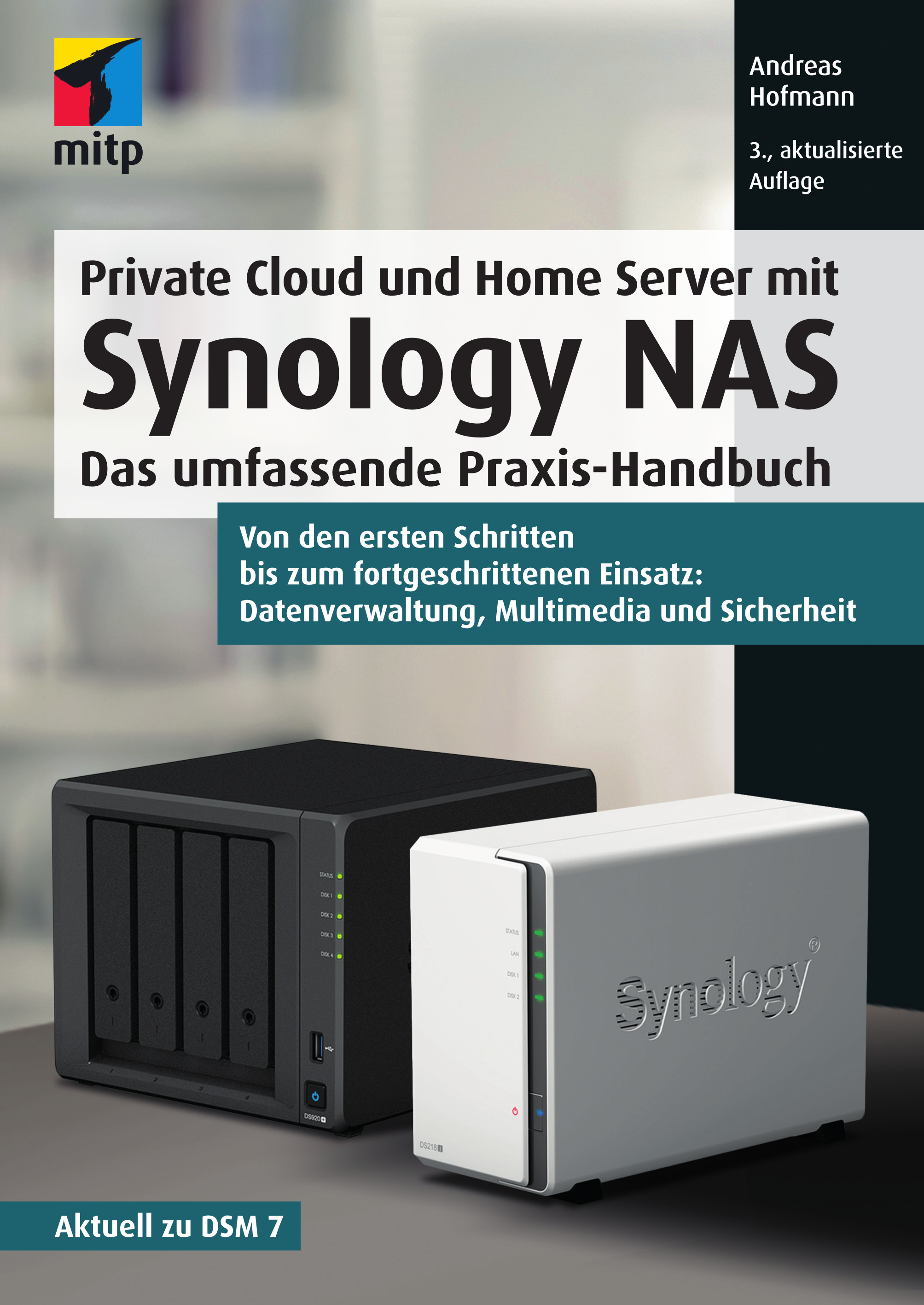
Private Cloud und Home Server mit Synology NAS (3. Auflg.)
Von den ersten Schritten bis zum fortgeschrittenen Einsatz: Datenverwaltung, Multimedia, Sicherheit. Jetzt in komplett aktualisierter 3. Auflage von Oktober 2022. Aktuell zu DSM 7.Mit diesem Buch lernen Sie umfassend alles, was Sie brauchen, um Ihr Synology NAS an Ihre persönlichen Bedürfnisse anzupassen und das Potenzial Ihres Geräts voll auszuschöpfen. Dabei gibt der Autor Ihnen zahlreiche praktische Tipps an die Hand. So können Sie all Ihre Dateien wie Musik, Videos und Fotos zentral sichern und effektiv verwalten.Andreas Hofmann stellt die verschiedenen NAS-Modelle vor, so dass Sie wissen, welches für Sie am besten geeignet ist. In leicht nachvollziehbaren Schritten erläutert er detailliert, wie Sie Ihr NAS in Betrieb nehmen und mit dem DiskStation Manager (DSM 7) konfigurieren.Anhand einfacher Schritt-für-Schritt-Anleitungen zeigt er Ihnen, wie Sie Ihr NAS als Private Cloud und Home Server optimal einrichten: Dateien sichern, verwalten und mit anderen teilen, Benutzer verwalten, Fernzugriff einrichten, automatische Backups erstellen sowie Office-Dokumente und Multimedia-Dateien freigeben und mit dem SmartTV und anderen Geräten wiedergeben.Für alle, die noch mehr aus ihrem Synology NAS herausholen möchten, geht der Autor auf weiterführende Themen wie Datensicherheit und die Überwachung und Optimierung des Betriebs ein und zeigt Ihnen die Konfiguration abseits der grafischen Benutzeroberfläche für die Einrichtung eines eigenen Webservers und der beliebten Cloud-Lösung Nextcloud.Aus dem Inhalt:Kaufberatung und InbetriebnahmeDiskStation Manager (DSM) im DetailDateien zentral verwalten mit der File StationRAID-Konfiguration und automatische BackupsDateifreigabe und Fernzugriff via App, FTP u.v.m.Datensicherheit, Virenschutz und FirewallFotos organisieren und teilen mit Synology PhotosMusik zentral verwalten mit der Audio StationFilme katalogisieren und streamen mit der Video Station und PlexOffice-Dokumente, Kalender, Adressbuch und Notizen verwaltenE-Mail-Server einrichtenZentrales Download-ManagementVideoüberwachung mit der Surveillance StationZugriff per KommandozeileWebserver und DatenbankenNextcloudAnwendungsvirtualisierung mit DockerÜber den Autor:Andreas Hofmann ist Softwareentwickler für serverbasierte Multimedia-Anwendungen. Sein Blog blog.viking-studios.net ist eine der wichtigsten Anlaufstellen, wenn es um den Betrieb von Nextcloud auf NAS-Geräten von Synology geht.Leseprobe (PDF-Link)

Third Generation Internet Revealed
This book covers the inexorable exhaustion of the IPv4 address space, the interim fix to this based on Network Address Translation (NAT) and Private Addresses, and the differences between IPv4 and IPv6. It will help you understand the limitations and problems introduced by the use of NAT and introduce you to the far simpler network and software designs possible, using a larger, unified address space.IPv6, a mature and viable replacement for IPv4, is currently used by more than 36% of all global Internet traffic. Wireless telephone service providers in many countries have migrated their networks to IPv6 with great success. The elimination of NAT and Private Addresses has vastly simplified network design and implementation. Further, there are now enough public addresses allocated to accommodate all anticipated uses for the foreseeable future.Most networking products and software, especially open-source software, are already fully IPv6 compliant. Today, no businessshould purchase obsolete products that support only IPv4. The global IPv6 Forum estimates that there are millions of networking professionals still needing to learn the fundamentals of IPv6 technologies to move forward. This book is for them. With plans in place for a shutdown of IPv4 on global networks (“Sunset IPv4”) the time to learn is now. If you want a job in IT, especially network hardware or software, and you don’t know IPv6, you are already obsolete.WHAT YOU WILL LEARN* This book serves as a guide to all relevant Internet Engineering Task Force (IETF) standards Request for Comments (RFCs), organized by topic and discussed in plain language* Understand how IPv6 makes viable technologies such as multicast (for efficient global audio/video streaming), IPsec VPNs (for better security), and simpler VoIP* Take “edge computing” to the limit by eliminating intermediary servers made necessary by IPv4 NAT–for example, making connections directly from my node to yours* Discover how organizations can introduce IPv6 into existing IPv4 networks (“Dual Stack”), and then eliminate the legacy IPv4 aspects going forward (“Pure IPv6”) for the mandates going into place now (for example, US DoD requirements to move all networks to Pure IPv6)* Recognize that 5G networking (the Grand Convergence of conventional networks and wireless service) depends heavily on the advanced features IPv6 WHO THIS BOOK IS FORNetworking professionals. Readers should have at least some familiarity with the precursor protocol (IPv4) and legacy TCP/IP based networks. Some knowledge of network models, such as DoD four-layer model or OSI 7-layer model, is helpful to understand where the Internet Protocol fits into the larger picture. For network software developers using the Sockets API (in UNIX, Windows, etc.), this book will help you to understand the extensions to that API needed to work with IPv6.LAWRENCE E. HUGHES is a renowned expert in IPv6 and PKI. He has spoken at numerous IPv6 Summits worldwide. He created and ran one of the IPv6 Ready product certification centers for many years. He is an IPv6 Forum Gold Certified Trainer and was inducted into the IPv6 Hall of Fame in 2019. He co-founded Sixscape Communications in Singapore where he built their dual stack networks and was responsible for creating much of their technology. He is a security author and most recently published Pro Active Directory Certificate Services with Apress.Chapter 1: Introduction.- Chapter 2: History of Computer Networks up to IPv4.- Chapter 3: Review of IPv4.- Chapter 4: The Depletion of the IPv4 Address Space.- Chapter 5: IPv6 Deployment Progress.- Chapter 6: IPv6 Core Protocols.- Chapter 7: IPSec and IKEv2.- Chapter 8: Transition Mechanisms.- Chapter 9: IPv6 on Mobile Devices.- Chapter 10: DNS.- Chapter 11: The Future of Messaging with No NAT.- Chapter 12: IPv6 Related Organizations.- Chapter 13: IPv6 Projects.