

Security

Google Cloud Platform (GCP) Professional Cloud Network Engineer Certification Companion
While many guides exist to help software engineers learn cloud networking design and architecture concepts, and even prepare for cloud network certifications on AWS and Azure, far fewer resources are available covering the Google Cloud Platform (GCP) Professional Cloud Network Engineer certification exam. Well, look no further! This self-paced guide book is designed to help engineers learn cloud networking best practices on GCP, and prepare for the GCP Professional Cloud Network Engineer certification exam.You will waste no time when you use this study companion. It lets you dive in and learn how GCP differs from other public cloud providers (AWS and Microsoft Azure). You will understand GCP's unique ability to allow virtual private clouds (VPCs) that span across multiple regions. You will know how to leverage GCP as a competitive advantage in the IT engineering community. Key concepts covered on the exam are called out and applied in each chapter of this book, giving you both practice and reinforcement, a far more effective learning tool than rote learning or similar approaches typically enlisted in exam preparation.Enterprises are looking for developers with Google networking skills. Now is the time to skill up! This book shows you how to leverage GCP’s developer-focused, user-friendly approach to understand how the networking components enabling the popular 1B-user Google products (e.g., Gmail, Google Search, YouTube, Google Workspace (formerly G-Suite), Google Maps, Google Photos, and many others) work behind the scenes.WHAT YOU WILL LEARNIn addition to preparing for the GCP Professional Cloud Network Engineer certification exam, you will learn how to:* Architect and design a virtual private cloud* Implement a virtual private cloud* Configure network services* Implement hybrid connectivity* Implement network security* Manage network operations* Optimize network resourcesWHO THIS BOOK IS FORSoftware engineers (network, DevOps, SecOps, DataOps, engineers skilled with SDLC), software architects (solution, security, data, infrastructure, cloud, those skilled with TOGAF), and IT professionals. Prerequisites: While this study companion is intended to be self-contained, a basic knowledge of cloud computing along with hands-on experience with a minimum of two modern programming languages (Java, C#) is beneficial in order for readers to fully achieve the objectives of the book.DARIO CABIANCA is a computer scientist (PhD, University of Milan), author, and Cloud Architect. He has worked with a variety of global enterprises for more than two decades and possesses more than 11 cloud certifications. He used his own fail-proof techniques to prepare and pass GCP, Azure, and AWS exams. He is excited to share his knowledge to help readers of his study companion book prepare for the GCP Professional Cloud Network Engineer certification exam, and also come away equipped with the necessary tools and knowledge to be confident and successful on the job.1. Exam Overview1.1. Exam Subject Areas1.2. Exam Format1.3. Supplemental Study Materials1.4. Sign up for a Free Tier1.5. Register for the Exam1.5.1. Schedule the Exam1.5.2. Rescheduling and Cancellation Policy1.5.3. Exam Results1.5.4. Retake Policy1.6. Summary2. Designing, planning, and prototyping a Google Cloud network2.1. Designing an overall network architecture2.1.1. High availability, failover, and disaster recovery strategies2.1.2. DNS strategy (e.g., on-premises, Cloud DNS)2.1.3. Security and data exfiltration requirements2.1.4. Load balancing2.1.5. Applying quotas per project and per VPC2.1.6. Hybrid connectivity (e.g., Google private access for hybrid connectivity)2.1.7. Container networking2.1.8. SaaS, PaaS, and IaaS services2.2. Designing Virtual Private Cloud (VPC) instances2.2.1. VPC Specifications2.2.2. Subnets2.2.3. IP address management and brin your own IP (BYOIP)2.2.4. Standalone vs. Shared VPC2.2.5. Multiple vs. single2.2.6. Regional vs. multi-regional2.2.7. VPC Network Peering2.2.8. Firewalls (e.g., service account-based, tag-based)2.2.9. Custom routes2.3. Designing a hybrid and multi-cloud network2.3.1. Drivers for Hybrid and Multi-cloud strategy2.3.2. Overall goals2.3.3. Designing a Hybrid and Multi-cloud strategy2.3.4. Dedicated Interconnect vs. Partner Interconnect2.3.5. Direct vs. Carrier Peering2.3.6. IPsec VPN2.3.7. Bandwidth and constraints provided by hybrid connectivity solutions2.3.8. Cloud Router2.3.9. Multi-cloud and Hybrid topologies2.3.10. Regional vs. global VPC routing mode2.3.11. Failover and Disaster Recovery strategy2.3.12. Accessing Google Services/APIs privately from on-premises locations2.3.13. IP address management across on-premises locations and cloud2.4. Designing an IP addressing plan for Google Kubernetes Engine2.4.1. GKE VPC-native clusters2.4.2. Optimizing GKE IP ranges2.4.3. Expanding GKE IP ranges2.4.4. Public and private cluster nodes2.4.5. Control plane public vs. private endpoints2.5. Summary2.6. Exam questions3. Implementing Virtual Private Cloud (VPC) instances3.1. Configuring VPC resources3.1.1. Creating VPCs3.1.2. Creating subnets3.1.3. Listing subnets3.1.4. Listing VPCs3.1.5. Deleting VPCs3.2. Configuring VPC Network Peering3.3. Creating a Shared VPC network and sharing subnets with other projects3.3.1. Host and service project concepts3.3.2. Shared VPC deep dive3.3.3. Assigning roles to principals3.3.4. Creating the shared VPC3.3.5. Creating the service projects3.3.6. Enabling Compute API for service and host projects3.3.7. Enabling host project3.3.8. Attaching service projects3.3.9. Assigning individual subnet-level roles to service projects3.4. Using a Shared VPC3.4.1. Listing usable subnets3.4.2. Creating VMs3.4.3. Verifying VMs connectivity3.4.4. Deleting VMs3.5. Sharing subnets using folders3.6. Configuring API access to Google services (e.g., Private Google Access, public interfaces)3.6.1. Configuring Private Google Access (PGA)3.6.2. Configuring Private Service Connect (PSC)3.7. Expanding VPC subnet ranges after creation3.8. Configuring routing3.8.1. Static vs. dynamic routing3.8.2. Global vs. regional dynamic routing3.8.3. Routing policies using tags and priority3.8.4. Internal load balancer as a next hop3.8.5. Custom route import/export over VPC Network Peering3.9. Configuring and maintaining Google Kubernetes Engine clusters. Considerations include:3.9.1. VPC-native clusters using alias IPs3.9.2. Clusters with Shared VPC3.9.3. Creating Cluster Network Policies3.9.4. Private clusters and private control plane endpoints3.9.5. Adding authorized networks for cluster control plane endpoints3.10. Configuring and managing firewall rules. Considerations include:3.10.1. Target network tags and service accounts3.10.2. Rule priority3.10.3. Protocols and Ports3.10.4. Direction3.10.5. Firewall rule logs3.10.6. Summary4. Implementing VPC Service Controls4.1. Creating and configuring access levels and service perimeters4.2. Service perimeter deep dive4.3. VPC accessible services4.4. Perimeter bridges4.5. Audit logging4.6. Dry run mode4.7. Dry-run perimeter deep dive4.8. Exam questions5. Configuring load balancing5.1. Google Cloud load balancers family5.2. Backend services and network endpoint groups (NEGs)5.3. Firewall rules to allow traffic and health checks to backend services5.4. Health checks for backend services and target instance groups5.5. Configuring backends and backend services with balancing method (e.g., RPS, CPU, Custom), session affinity, and capacity scaling/scaler5.6. TCP and SSL proxy load balancers5.7. Load balancers (e.g., External TCP/UDP Network Load Balancing, Internal TCP/UDP Load Balancing, External HTTP(S) Load Balancing, Internal HTTP(S) Load Balancing)5.8. Protocol forwarding5.9. Accommodating workload increases using autoscaling vs. manual scaling5.10. Configuring Google Cloud Armor policies. Considerations include:5.11. Security policies5.12. Web application firewall (WAF) rules (e.g., SQL injection, cross-site scripting, remote file inclusion)5.13. Attaching security policies to load balancer backends5.14. Configuring Cloud CDN. Considerations include:5.15. Enabling and disabling5.16. Cloud CDN5.17. Cache keys5.18. Invalidating cached objects5.19. Signed URLs5.20. Custom origins6. Configuring advanced networking services6.1. Configuring and maintaining Cloud DNS6.1.1. Managing zones and records6.1.2. Migrating to Cloud DNS6.1.3. DNS Security Extensions (DNSSEC)6.1.4. Forwarding and DNS server policies6.1.5. Integrating on-premises DNS with Google Cloud6.1.6. Split-horizon DNS6.1.7. DNS peering6.1.8. Private DNS logging6.2. Configuring Cloud NAT6.2.1. Addressing6.2.2. Port allocations6.2.3. Customizing timeouts6.2.4. Logging and monitoring6.2.5. Restrictions per organization policy constraints6.3. Configuring network packet inspection6.3.1. Packet Mirroring in single and multi-VPC topologies6.3.2. Capturing relevant traffic using Packet Mirroring source and traffic filters6.3.3. Routing and inspecting inter-VPC traffic using multi-NIC VMs (e.g., next-generation firewall appliances)6.3.4. Configuring an internal load balancer as a next hop for highly available multi-NIC VM routing7. Implementing hybrid interconnectivity7.1. Configuring Cloud Interconnect7.1.1. Dedicated Interconnect connections and VLAN attachments7.1.2. Partner Interconnect connections and VLAN attachments7.2. Configuring a site-to-site IPsec VPN7.2.1. High availability VPN (dynamic routing)7.2.2. Classic VPN (e.g., route-based routing, policy-based routing)7.3. Configuring Cloud Router7.3.1. Border Gateway Protocol (BGP) attributes (e.g., ASN, route priority/MED, link-local addresses)7.3.2. Custom route advertisements via BGP7.3.3. Deploying reliable and redundant Cloud Routers8. Managing network operations8.1. Logging and monitoring with Google Cloud’s operations suite8.1.1. Reviewing logs for networking components (e.g., VPN, Cloud Router, VPC Service Controls)8.2. Monitoring networking components (e.g., VPN, Cloud Interconnect connections and interconnect attachments, Cloud Router, load balancers, Google Cloud Armor, Cloud NAT)8.3. Managing and maintaining security8.4. Firewalls (e.g., cloud-based, private)8.5. Diagnosing and resolving IAM issues (e.g., Shared VPC, security/network admin)8.6. Maintaining and troubleshooting connectivity issues8.6.1. Draining and redirecting traffic flows with HTTP(S) Load Balancing8.6.2. Monitoring ingress and egress traffic using VPC Flow Logs8.6.3. Monitoring firewall logs and Firewall Insights8.6.4. Managing and troubleshooting VPNs8.6.5. Troubleshooting Cloud Router BGP peering issues8.7. Monitoring, maintaining, and troubleshooting latency and traffic flow8.8. Testing network throughput and latency8.9. Diagnosing routing issues8.10. Using Network Intelligence Center to visualize topology, test connectivity, and monitor performance

Machine Learning visuell lernen - von StatQuest
* NACH DER ERFOLGREICHEN VISUELLEN METHODE DES YOUTUBE-KANALS »STATQUEST WITH JOSH STARMER« MIT FAST 900.000 ABONNENTEN* BILD FÜR BILD LERNEN: VOLLSTÄNDIG ILLUSTRIERTER GUIDE ZU DEN WICHTIGSTEN MACHINE-LEARNING-KONZEPTEN* ALLE GRUNDLAGEN VON STATISTIK ÜBER ALGORITHMEN BIS HIN ZU NEURONALEN NETZENMachine Learning ist ein mächtiges Werkzeug, kann aber auch unheimlich kompliziert erscheinen. Genau hier setzt dieses Buch an. Jedes Konzept wird anschaulich anhand von einfachen Bildern erläutert. Egal wie schwierig ein Machine-Learning-Algorithmus ist, der Autor zerlegt ihn in kleine, leicht verständliche Häppchen. So erhältst du ein grundlegendes Verständnis für die einzelnen Methoden, das über die bloßen Formeln hinausgeht.Dieses Buch hat nicht zum Ziel, die Konzepte zu vereinfachen. Vielmehr bekommst du mit verständlichen und unterhaltsamen Erläuterungen alles Notwendige an die Hand, um ein grundlegendes und zugleich tiefes Verständnis für Machine Learning aufzubauen.Das Buch setzt keine Vorkenntnisse voraus und erläutert alle Grundlagen Bild für Bild. Es zeigt dir, was Machine Learning ist und auf welchen Konzepten selbstfahrende Autos und Gesichtserkennung beruhen.AUS DEM INHALT:* Grundlegende Konzepte des Machine Learnings* Klassifikation und Kreuzvalidierung* Statistik-Grundlagen* Lineare und logistische Regression* Gradientenabstiegsverfahren* Naive Bayes* Überanpassung vermeiden durch Regularisierung* Entscheidungsbäume* Support Vector Machines (SVMs)* Neuronale NetzeJosh Starmer ist das Gesicht hinter dem bekannten YouTube-Kanal »StatQuest with Josh Starmer« mit mittlerweile fast 900.000 Abonnenten. Seit 2016 erklärt er allen Interessierten mit seinem innovativen und einzigartigen visuellen Stil Konzepte aus den Bereichen Statistik, Data Science, Machine Learning und Algorithmen. StatQuest hilft Menschen auf der ganzen Welt dabei, Wettbewerbe zu gewinnen, Prüfungen zu bestehen, neue Berufe zu ergreifen und befördert zu werden.

Designing Applications for Google Cloud Platform
Learn how to use Google Cloud Platform (GCP) and its services to design, build, and deploy applications. This book includes best practices, practical examples, and code snippets written in Java, making it a key resource for developers seeking hands-on experience with GCP.You'll begin with an introduction to GCP services and a review of what Java offers while developing applications for GCP. Next, you'll be walked through how to set up Google App Engine, Google Storage Cloud, and Google Cloud SQL with use cases, as well as application development and deployment. As the book progresses, you'll be exposed to advanced GCP services, deploying and scaling applications on GCP services, and troubleshooting and optimization of Java applications on GCP. The book uses real-world examples to help you understand how GCP services can solve everyday problems.After completing this book, you will understand Google Cloud Platform and its services, and will have the knowledge needed to design, build, and deploy your own applications on GCP using Java.WHAT YOU'LL LEARN* Create a GCP project, configure authentication and authorization, and deploy a sample application.* Use GCP services to solve common problems and apply them to real-world scenarios* Implement GCP services such as Datastore, SQL, and Spanner* Leverage GCP tools such as the SDK and Cloud ShellWHO THIS BOOK IS FORSoftware developers, Cloud architects, and managers looking to design and build applications for Google Cloud Platform. This book is for those with software development experience who are familiar with Java programming. It is also suitable for those new to GCP who have a basic understanding of cloud computing concepts.ASHUTOSH SHASHI is a TOGAF 9 certified enterprise architect, a seasoned software engineer, and a cloud architect with over 18 years of experience in the industry. He has worked on multiple projects using various technologies and platforms, from small startups to large enterprise systems. He has helped many organizations design and build robust and scalable applications on GCP. Apart from GCP, he has extensive experience and expertise in AWS and Azure cloud platforms. Ashutosh lives in Duluth, Georgia, US. In his free time, he enjoys hiking and spending time with his family. He also loves to travel and explore different cultures.Chapter 1: Introduction to Google Cloud Platform.- Chapter 2: Setting up the Development Environment.- Chapter 3: Google App Engine.- Chapter 4: Data Storage in Google Cloud.- 5: Google Cloud SQL.- Chapter 6: Advanced GCP Services.- Chapter 7: Deployment and Scaling.- Chapter 8: Troubleshooting and Optimization.- Chapter 9: Conclusion.

Kryptografie in der Praxis
Eine Einführung in die bewährten Tools, Frameworks und Protokolle. Moderne Kryptografie kompetent vermittelt.Die Kryptografie ist die wesentliche Grundlage der IT-Sicherheit. Um den Angreifern auf Ihre Systeme einen Schritt voraus zu sein, müssen Sie die Tools, Frameworks und Protokolle verstehen, die Ihre Netzwerke und Anwendungen schützen.Dieses Buch führt in einfacher Sprache und mit anschaulichen Illustrationen in Authentifizierung, Verschlüsselung, Signaturen, Geheimhaltung und andere Kryptografiekonzepte ein. Es enthüllt die kryptografischen Techniken, die die Sicherheit von Web-APIs, die Registrierung und Anmeldung von Benutzern und sogar die Blockchain bestimmen. Sie erfahren, wie diese Techniken moderne Sicherheit ermöglichen und wie Sie sie in Ihren eigenen Projekten anwenden können. Neben den modernen Methoden nimmt das Buch auch die Zukunft der Kryptografie vorweg und geht auf neue und innovative Entwicklungen wie Kryptowährungen und Post-Quantum-Kryptografie ein. Alle Techniken sind vollständig mit Diagrammen und Beispielen illustriert, sodass Sie leicht erkennen können, wie sie in die Praxis umgesetzt werden können.»Mit der richtigen Balance aus Theorie und Praxis vermittelt der Autor genau das, was Softwareschaffende über Kryptografie wissen müssen. Viele kleine Übungen helfen ihnen, von der durchaus anspruchsvollen Lektüre zu profitieren.« - Maik Schmidt, c't 17/23Über den Autor:David Wong ist leitender Kryptografie-Ingenieur bei O(1) Labs und arbeitet an der Kryptowährung Mina. Davor war er Sicherheitsverantwortlicher für die Kryptowährung Diem (vormals bekannt als Libra) bei Novi, Facebook, und davor Sicherheitsberater bei der NCC Group im Bereich Kryptografiedienste.Im Laufe seiner Karriere hat David Wong an mehreren öffentlich finanzierten Open-Source-Audits teilgenommen, beispielsweise an OpenSSL und Let’s Encrypt. Er war Sprecher auf verschiedenen Konferenzen, einschließlich Black Hat und DEF CON, und hat in einem regelmäßig stattfindenden Kryptografiekurs bei Black Hat unterrichtet. Hervorzuheben sind seine Beiträge zu Standards wie TLS 1.3 und zum Noise Protocol Framework. Er hat Schwachstellen in vielen Systemen gefunden, einschließlich CVE-2016-3959 in der Golang-Standardbibliothek, CVE-2018-12404, CVE-2018-19608, CVE-2018-16868, CVE-2018-16869 und CVE-2018-16870 in verschiedenen TLS-Bibliotheken.Unter anderem ist er Autor des Disco-Protokolls (www.discocrypto.com und www.embeddeddisco.com) und des Decentralized Application Security Project für Smart Contracts (www.dasp.co). Zu seinen Forschungen gehören Cache-Angriffe auf RSA (http://cat.eyalro.net), ein auf QUIC basierendes Protokoll (https://eprint.iacr.org/2019/028), Timing-Angriffe auf ECDSA (https://eprint.iacr.org/2015/839) oder Hintertüren in Diffie-Hellman (https://eprint.iacr.org/2016/644). Aktuell finden Sie ihn in seinem Blog unter www.cryptologie.net.

A Complete Guide to DevOps with AWS
Gain a thorough understanding of DevOps concepts and learn to deploy AWS DevOps services in an organization. This book covers AWS DevOps deployment and building applications and services for enhanced performance.A Complete Guide to DevOps with AWS will show you how to use AWS DevOps to launch and scale services using AWS tools. It demonstrates how to handle infrastructure as code such as AWS CodeCommit, AWS CodeBuild, and AWS CodeArtifact, and how to adapt your software with familiar tools such as terraform and cloud formation. This practice also helps in the continuous integration and deployment of pipelines such as AWS CodeDeploy and AWS CodePipeline with different deployment strategies. You will also learn how to find bugs quicker, enhance software quality, reduce your time to market, and how to build, test, and prepare for a release with frequent code changes. You will also see how to scale your applications to provide maximum performance for users with high traffic. The book also covers monitoring and logging applications, giving an overall picture of the ecosystem of product development. It also explains Kubernetes in depth with AWS EKS. It concludes by walking you through how to build projects with AWS DevOps tools and technologies.After completing this book, you will have gained a solid understanding of the concepts of AWS DevOps through examples, including building projects with integration of software tools.WHAT YOU WILL LEARN* Automate processes with AWS tools* Understand AWS Services for Continuous deployment, and how to use them* Use infrastructure as code with AWS in different formats* Integrate AWS security into DevOpsWHO THIS BOOK IS FORDevOps professionals and cloud engineers.Osama Mustafa is the founder of Gurus Solutions Company, the first Oracle ACE Director in the middle east, and the first Alibaba MVP, creator/director of Jordan Amman Oracle User Group, the first group in Jordan related to Oracle technology, author of two technology books, Osama is one of the leaders for Cloud Technology working with different Cloud Vendor Such as AWS, Google, and Oracle. He has experience in automation, Implementing various projects globally, and knowledge of various databases. Osama is a speaker and authored more than 100 articles published in different magazines such as IOUG and UKOUG. He is the author of the book "Oracle Database Application Security" published by Apress. Chapter 1: - Overview of Amazon Web Services• Introduction• AWS documentation• AWS Architect frameworkChapter 2: - Understand DevOps Concepts• Continuous Integration/Continuous Delivery.• Infrastructure automation.• Infrastructure as Code.• Monitoring and logging.• Communication and collaboration.Chapter 3: - AWS Services for Continuous Integration• Continuous Integration• AWS CodeCommit• AWS CodeBuild• AWS CodeArtifactChapter 4: AWS Services for Continuous Deployment• Continuous deployment• AWS CodeDeploy• AWS CodePipelineChapter 5: - AWS Deployment Strategies• In-Place deployments• Blue/Green deployments• Canary deployments• Linear deployments• All-at-once deploymentsChapter 6: Infrastructure as a Code with AWS• Infrastructure as code• CloudFormation• Terraform• AWS cloud development kit• ComparisonChapter 7: - Monitoring and Troubleshooting AWS DevOps Services• AWS monitoring and logging for DevOps.• CloudWatch• CloudWatch alarms• CloudWatch logs.• Cloudwatch events.• Cloudwatch trail.• Chapter 8: - DevOps with AWS Security• Secure AWS environment.• IAM• VPC• EC2 security• Security auditing• Others AWS services.• Chapter 9: Manage Kubernetes Service* AWS EKS.* AWS Fargate* AWS EC2* AWS EKS dashboard• Chapter 10 : DevOps with AWS Projects* Project 1* Project 2

Effective Software Development for the Enterprise
It’s a jungle out there.Delivering software solutions with predictable costs, time, scope, and quality has become more complicated than ever. Developers need to account for multiple moving targets, including often avoided but always relevant factors such as culture, people, and leadership. To effectively deal with these challenges, it’s necessary to rethink the entire delivery chain of modern software development.This book addresses all these topics, putting everything in perspective, from the potential awkwardness created by cultural differences to connecting code with business outcomes to make delivering quality solutions possible. As a software engineer who strives to be his best and challenge the status quo when building IT systems, author Tengiz Tutisani always wanted a book that would cover all of these elements from a developer’s perspective — so he wrote one.Effective Software Development for the Enterprise builds on advanced disciplines, methodologies, and techniques derived from domain-driven design, software architecture, and extreme programming. Its objective is to aid modern software engineers and solution architects in building and delivering high-quality solutions for an enterprise while meeting ambitious criteria:* Meet users' expectations* Deliver solutions on time with no defects* Create products that can scale-out horizontally* Solutions should not require a dedicated production support team* Accelerate development pace* Double ROI per developer, team, and softwareYou will learn how to achieve these objectives in any engineering environment by developing solid strategies based on the industry's well-known, recognized, and proven patterns and principles. After reading this book, you will be ready to effectively deal with any and all challenges posed by today’s hyper-competitive, globally-diverse, fast-moving enterprise environment.WHO THIS BOOK IS FORProfessional software engineers and solution architects, as well as those aspiring to become one. Additionally, software engineering leaders will benefit from reading it, as it will help them maximize their impact via successful software project deliveries.TENGIZ TUTISANI has been in the software development industry for over 19 years. His experience ranges from startups to Fortune-500 corporations. He held roles with a mix of people and technology leadership (software engineer, technical lead, development manager, application architect, solutions architect, enterprise architect, and chief architect). Tengiz's broad experience and frequent recognition for outstanding quality and performance have convinced him to teach others unique engineering and architecture techniques. He authored this book to describe advanced techniques for professional software development and architecture disciplines.Chapter 1: IntroductionCHAPTER GOAL: GIVE USERSTHE OVERVIEW OF CURRENT CHALLENGES IN SOFTWARE DEVELOPMENT; PREPARE MINDSET TODEVELOP BETTER SOFTWARE AND LEARN HOW TO.NO OF PAGES 11SUB -TOPICS0.History Behind Inefficient Monoliths1.Why People Avoid Building Effective Software2.Software Development Perfectionism As A State OfMind3.Six Pillars Of Effective SoftwareChapter 2: Crosscutting ConcernsCHAPTER GOAL: OVERVIEW OFSOFTWARE DEVELOPMENT-RELATED BUT NON-TECHNICAL CHALLENGES, SUCH AS LEADERSHIP,FORMING ORGANIZATIONS, ETC. THE GOAL IS BROADEN THE READERS’ VIEW ANDUNDERSTAND THAT SOFTWARE DEVELOPMENT CANNOT SUCCEED IN SILO – IT NEEDS SUPPORTFROM OUTSIDE AS WELL.NO OF PAGES: 36SUB - TOPICS0.Execution, Leadership, Management1.Organizational Structure2.Processes, Ongoing Efforts, Teams3.Culture4.RecruitmentChapter 3: From Customer Insights To InternalRequirementsCHAPTER GOAL: CONNECTINGTHE DOTS BETWEEN CUSTOMERS’ EXPECTATIONS AND THE REQUIREMENTS THAT THE SOFTWAREENGINEERS FULFILL; THIS CHAPTER WILL ENHANCE THE READERS WITH EXTERNAL VIEW TOTHE REQUIREMENTS – THE BUSINESS VALUE BEHIND DELIVERIESNO OF PAGES: 35SUB - TOPICS:0.Understanding Customers' Needs1.Organization's Response To Customers' Needs2.Requirements And Story Writing3.Planning Work4.Carrying Out WorkChapter 4: Design and ArchitectureCHAPTER GOAL:ARCHITECTURE KNOWLEDGE AND WORK RELATED TO BUILDING EFFECTIVE SOFTWARESOLUTIONS; LEARN HOW ARCHITECTURE SUPPORTS ALL OTHER ASPECTS OF SOFTWAREDELIVERY PROCESSNO OF PAGES: 61SUB - TOPICS:1.Architecture As A Crosscutting Concern2.Architecture In Analysis And Requirements Gathering3.Architecture Body Of Knowledge4.Architecture And Implementation5.Architecture For Testable Systems6.Architecture For Deployable Systems7.Architecture For Maintainable SystemsChapter 5: Implementation and CodingCHAPTER GOAL: DIVE DEEPINTO THE IMPLEMENTATION SIDE OF THINGS; NOT MUCH CODE HERE BUT INSTEADCONNECTING THE CODING ACTIVITIES BACK TO THE ARCHITECTURE’S GUARDRAILS, ANDFORWARD WITH QUALITY ENGINEERINGNO OF PAGES: 52SUB - TOPICS:1.Crosscutting Concerns Related To Coding2.Designing Code3.Implementing Code4.Testing Code5.Code Deployment And MaintenanceChapter 6: Testing and Quality AssuranceCHAPTER GOAL: OFTENOVERLOOKED BUT A VITAL ASPECT OF SOFTWARE DELIVERY – QUALITY ASSURANCE ISDISCUSSED IN THIS TOPIC; HOW TO OPTIMIZE VALUE BY COMBINING THE ARCHITECTUREAND DEVELOPMENT WITH TESTING, AND APPLY THE BEST OF THESE WORLDS FOR QUALITYSOFTWARE DELIVERY – THAT IS WHAT THE READERS WILL LEARNNO OF PAGES: 30SUB - TOPICS:1.Testing Processes And Principles2.Test Design And Architecture3.Implementing Automated Tests4.Enhancing Deployments With Test AutomationChapter 7: DeploymentCHAPTER GOAL: HOW TOEFFECTIVELY DEPLOY MODERN, EFFECTIVE SOFTWARE SOLUTIONS? HOW THESE QUESTIONSIMPACT ARCHITECTURE, DEVELOPMENT, OR OTHER PHASES? WE WILL FIND OUT IN THISCHAPTER.NO OF PAGES: 8SUB - TOPICS:1.Culture Of Releases2.CI/CD - Deployment Foundation3.Building Deployment-Ready ApplicationsChapter 7: Maintenance and SupportCHAPTER GOAL: MAINTENANCESEEMS TO BE ON THE OTHER SIDE OF THE FENCE FROM THE DEVELOPMENT. THIS CHAPTERWILL HELP THE READERS CONNECT IT BACK TO DEVELOPMENT FOR DECREASING COSTS ANDELIMINATING THE NEED FOR DEDICATED PRODUCTION SUPPORT TEAMS.NO OF PAGES: 5SUB - TOPICS:1.Maintenance-Free Mindset2.Maintenance-Aware Mindset

Data Exfiltration Threats and Prevention Techniques
DATA EXFILTRATION THREATS AND PREVENTION TECHNIQUESCOMPREHENSIVE RESOURCE COVERING THREAT PREVENTION TECHNIQUES FOR DATA EXFILTRATION AND APPLYING MACHINE LEARNING APPLICATIONS TO AID IN IDENTIFICATION AND PREVENTIONData Exfiltration Threats and Prevention Techniques provides readers the knowledge needed to prevent and protect from malware attacks by introducing existing and recently developed methods in malware protection using AI, memory forensic, and pattern matching, presenting various data exfiltration attack vectors and advanced memory-based data leakage detection, and discussing ways in which machine learning methods have a positive impact on malware detection. Providing detailed descriptions of the recent advances in data exfiltration detection methods and technologies, the authors also discuss details of data breach countermeasures and attack scenarios to show how the reader may identify a potential cyber attack in the real world. Composed of eight chapters, this book presents a better understanding of the core issues related to the cyber-attacks as well as the recent methods that have been developed in the field. In Data Exfiltration Threats and Prevention Techniques, readers can expect to find detailed information on:* Sensitive data classification, covering text pre-processing, supervised text classification, automated text clustering, and other sensitive text detection approaches* Supervised machine learning technologies for intrusion detection systems, covering taxonomy and benchmarking of supervised machine learning techniques* Behavior-based malware detection using API-call sequences, covering API-call extraction techniques and detecting data stealing behavior based on API-call sequences* Memory-based sensitive data monitoring for real-time data exfiltration detection and advanced time delay data exfiltration attack and detectionAimed at professionals and students alike, Data Exfiltration Threats and Prevention Techniques highlights a range of machine learning methods that can be used to detect potential data theft and identifies research gaps and the potential to make change in the future as technology continues to grow. ZAHIR TARI is Professor at RMIT and Research Director of the RMIT Centre of Cyber Security Research and Innovation. NASRIN SOHRABI received a PhD in Computer Science from RMIT University, Australia. She is a Postdoctoral Research Fellow in Cloud, Systems and Security discipline, School of Computing Technologies, RMIT University and a core member of the RMIT Centre of Cyber Security Research and Innovation (CCSRI). She has several publications in highly ranked conferences and journals, including ICDE, IEEE Transactions on Services Computings, ACM Computing surveys, IEEE Transactions on Transportation systems, IEEE Transactions on Smart Grids. YASAMAN SAMADI is a PhD student in Computer Science at RMIT University, Australia and a researcher in Quantum Cybersecurity. Yasaman has a Master’s in Computer Architecture and worked as a quantum engineer at QBee. JAKAPAN SUABOOT received his PhD in Cybersecurity from RMIT, Australia. He previously worked as a Lecturer for the Department of Computer Engineering from Prince of Songkla University, Phuket, Thailand. About the Authors xvAcknowledgments xviiAcronyms xixAbstract xxi1 INTRODUCTION 11.1 Data Exfiltration Methods 31.2 Important Questions 71.3 Book Scope 91.4 Book Summary 111.5 Book Structure 152 BACKGROUND192.1 Hidden Markov Model 192.2 Memory Forensics 242.3 Bag-of-Words Model 272.4 Sparse Distributed Representation 282.5 Summary 293 DATA SECURITY THREATS 313.1 Data Security 323.2 Security vs. Protection vs. Privacy 353.3 Advanced Persistent Threats Attacks 363.4 Cybersecurity Threats 383.5 Conclusion 594 USE CASES DATA LEAKAGE ATTACKS 634.1 Most Significant Attacks 634.2 Top Infection Vectors 684.3 Top Threats of Recent Years 704.4 Malware Development Trends 714.5 Geographic Trends 754.6 Industry Trends 784.7 Conclusion 805 SURVEY ON BUILDING BLOCK TECHNOLOGIES 835.1 Motivation 835.2 Background 875.3 Taxonomy 965.4 Supervised Learning Methods 985.5 Systematic Literature Review 1075.6 Evaluation of Supervised Learning Methods 1085.7 Key Open Problems 1255.8 Summary 1276 BEHAVIOR-BASED DATA EXFILTRATION DETECTION METHODS 1416.1 Motivation 1416.2 Existing Methods 1446.3 Sub-Curve HMM Method 1486.4 Evaluation 1596.5 Experimental Results 1646.6 Discussion 1726.7 Summary 1737 MEMORY-BASED DATA EXFILTRATION DETECTION METHODS 1817.1 Motivation 1817.2 Existing Methods 1837.3 Concepts 1867.4 Fast Lookup Bag-of-Words (FBoW) 1917.5 Evaluation 1997.6 Summary 2158 TEMPORAL-BASED DATA EXFILTRATION DETECTION METHODS 2218.1 Motivation 2218.2 Existing Methods 2238.3 Definitions 2258.4 Temporary Memory Bag-of-Words (TMBoW) 2298.5 Experimental Results 2348.6 Summary 2459 CONCLUSION 2499.1 Summary 2499.2 What Is Innovative in the Described Methods? 2519.3 What Is Next? 253Index 255

Cloud Computing with AWS
Embark on a ground-up journey to cloud computing and the Amazon Web Services (AWS) eco-system, including all the other systems, services, and the security associated with it. This book provides you with the practical know-how to become an AWS Cloud practitioner.Your exploration will take you from key fundamentals of identity and access, storage, networking, architectures, databases, security and compute services all the way through to more advanced topics. The book is organized into easy-to-follow and engaging chapters with simple examples to make complex concepts very easy to understand followed by simple step-by-step demonstrations and case studies to make you proficient in every area of AWS.You'll manage databases in your on-prem data centers and set up, operate, and scale relational database in the cloud. All the services and resources taught in this book come from the AWS Free Tier, so you will not have to pay anything to use and learn from this book.WHAT YOU'LL LEARN* Understand key concepts and benefits of cloud computing* Employ key cloud computing models and services * Review the concept of virtual machines in a cloud computing context* Study compute services that meet your requirementsWHO THIS BOOK IS FORIT professionals looking to change their domain to cloud computing as well as those who are looking to utilize AWS for their systems and projects.PRAVIN MISHRA has more than 12 years of experience in IT and 8 years as a course trainer. He specializes in designing and implementing multi-Cloud based solutions. As an AWS trainer, Pravin help students and IT professionals switch careers in AWS Cloud. With a strong belief in "learning by doing", he helps his students grow their cloud-based skills and realize their their full potential from basic concepts and methodologies to getting ready to pursue AWS certification. 1. Introduction to Cloud Computing2. Getting Started with AWS3. AWS Identity and Access Management4. AWS Storage Services5. Virtual Private Cloud (VPC)6. Elastic Compute Cloud (EC2)7. High-Level Architecture8. Databases9. Advanced AWS Services10. AWS Security and Management Services11. AWS Billing and Pricing
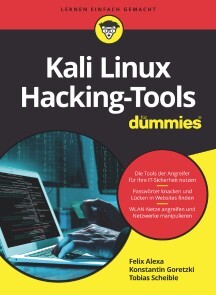
Kali Linux Hacking-Tools für Dummies
Sie möchten testen, wie sicher Ihr IT-System ist? Dann hilft Ihnen dieses Buch! Es zeigt Ihnen Schritt für Schritt, wie Sie Ihre Systeme mit Kali Linux auf Herz und Nieren prüfen. Sie lernen, wie Passwörter geknackt werden, wie Sie Schwachstellen von Websites finden, die Konfigurationen von Webservern überprüfen und vieles mehr. Außerdem führen die Autoren Sie in Wireless Attacks, Sniffing, Spoofing und IT-Forensik-Analysen ein. Endlose Theorie? Fehlanzeige! Unter Anleitung ausgewiesener IT-Security-Experten lernen Sie aus der Sicht von Hackern zu denken und Ihre IT-Infrastruktur entsprechend zu sichern. Felix Alexa befasst sich mit der frühzeitigen Erkennung und Abwehr von Angriffen in komplexen Systemen.Konstantin Goretzki engagiert sich im Bereich der offensiven IT-Sicherheit und ist Experte im Bereich WLAN.Tobias Scheible ist Dozent für Cyber Security und IT-Forensik und Autor des Blogs scheible.it.

Ansible for Kubernetes by Example
Learn how to automate your Kubernetes infrastructure using Ansible. This book will enable you to automate more tasks and save time with this human-readable platform.Containerized microservices deployed via Kubernetes allows you to save time, reduce human interaction and errors, and create applications that are more robust. You’ll learn how to automate the most redundant activities such as reports, services, the launch of a pod, adding permanent storage, configuring load balancing, and adding or modifying any Kubernetes parameter. You'll also gain an understanding of end-to-end use cases and how advanced cluster automation, such as Helm packages and node states, are evolving.Each lesson utilizes a specific use-case for the modern Kubernetes cluster and focuses on a single module from the most crucial parameter, complete with code demonstrations. Each code example is battle-proven in real-life with console interaction and verification.WHAT YOU'LL LEARN* Automate Kubernetes cluster management, cloud services, pods, and storage with Ansible* Configure your Ansible controller node* Write and execute Ansible Playbook code that follows best practices* Augment your productivity by applying Infrastructure as Code (IaC)* Troubleshoot Ansible WHO THIS BOOK IS FORIT professionals who would like a jargon-free understanding of Ansible technology, Windows Systems Administrators, DevOps professionals, thought leaders, and infrastructure-as-code enthusiasts.Luca Berton is an Ansible Automation Expert who has been working with Red Hat Ansible Engineer Team for three years. With more than 15 years of experience as a System Administrator, he has strong expertise in Infrastructure hardening and automation. Enthusiast of the Open Source supports the community by sharing his knowledge in different public access events. Geek by nature, Linux by choice, Fedora, of course.Chapter 1: Modern IT Infrastructure and Hello AppCHAPTER GOAL: The tools to handle a modern enterprise IT Infrastructure that enables Infrastructure as Code following DevOps methodologiesSUB -TOPICSModern IT Infrastructure (DevOps & IaC)The move to containersAnsible by Red HatKubernetes and the CNCFKubernetes distributions - OpenShift by Red Hat, Rancher, EKS, AKS, GCPContainers & PodCreating a ‘Hello’ appBuilding Hello AppRunning Hello in DockerDeploying Hello in KubernetesHello OperatorCHAPTER 2: ANSIBLE LANGUAGE CODECHAPTER GOAL: Description of the Ansible Platform and how to write and execute Ansible Playbook code that follows the best practicesSUB - TOPICSAnsible Architecture and Getting StartedAnsible InstallationAnsible Code LanguageCHAPTER 3: ANSIBLE FOR CONTAINERSCHAPTER GOAL: How to automate container management using Ansible (Docker and podman)SUB - TOPICSAnsible For ContainersInstall Docker in Linux and WindowsInstall and Update flatpak in LinuxInstall a snap in LinuxDeploy Web Server in a Container for Linux (Docker and Podman)CHAPTER 4: ANSIBLE FOR K8S TASKSCHAPTER GOAL: How to configure your Ansible controller node to interact with a k8s clusterSUB - TOPICS:Why Kubernetes & How it works.Set up your laboratory (cluster of VMs, Kubespray, Raspberry Pis, OpenShift local)Minikube to Create a ClusterCreate a cluster with KOPS - ( Cloud )Configure Ansible For KubernetesAnsible troubleshooting - Kubernetes K8s 401 UnauthorizedConfigure a Python Virtual EnvironmentConfigure an Ansible Execution EnvironmentReport a list of namespacesReport all deployments in namespaceCreate Kubernetes K8s namespaceCreate Kubernetes K8s podCreate Kubernetes K8s secretUsing a Service to Expose Your AppScale Your AppUpdate Your AppAssign CPU Resources to Kubernetes K8s Containers and PodsAssign Memory Resources to Kubernetes K8s Containers and PodsConfigure a Pod to Use a Volume for StorageApply Multiple YAML Files at Once on Kubernetes K8sCHAPTER 5: ANSIBLE FOR K8S USE-CASESCHAPTER GOAL: Some end-to-end examples about Ansible for Kubernetes usageSUB - TOPICS:Configuring a Java MicroserviceStateless - Deploying PHP Guestbook application with RedisStateful Deploying WordPress and MySQL with Persistent VolumesApply Pod Security Standards at the Namespace LevelRestrict a Container's Access to Resources with AppArmorRestrict a Container's Syscalls with seccompCHAPTER 6: ANSIBLE FOR K8S MANAGEMENTCHAPTER GOAL: How to automate system administration tasks for your K8s cluster using Ansible automationSUB - TOPICS:Report Helm package deployed inside the clusterReport Helm plugins deployed inside clusterDeploy a monitoring tool inside clusterManage Helm repositoriesRemove Helm package deployed inside clusterInstall Helm pluginRemove Helm pluginFetch logs from Kubernetes resourcesApply JSON patch operations to existing objectsCopy files and directories to and from podManage Services on KubernetesTaint a node in a Kubernetes/OpenShift clusterDrain, Cordon, or Uncordon node in k8s clusterKubernetes (K8s) dynamic inventoryRollback Kubernetes (K8S) Deployments and DaemonSetsSet a new size for a Deployment, ReplicaSet, Replication Controller, or JobCHAPTER 7: ANSIBLE FOR K8S CLOUD PROVIDERSCHAPTER GOAL:Some specific examples that automate Kubernetes with the major cloud providers using Ansible automationSUB - TOPICS:Amazon Elastic Kubernetes Service (EKS)Google Kubernetes Engine (GKE)Azure Kubernetes Service (AKS)

Warehouse Management mit SAP S/4HANA
Mehr als 1.000 Seiten geballtes EWM-Wissen! Vom Wareneingang über die Qualitätsprüfung und Fertigungsintegration bis hin zum Warenausgang und der nahtlosen Integration in weitere SAP-Lösungen: Lernen Sie Prozesse und Funktionen der Lagerverwaltung mit SAP EWM im Detail kennen. Dieses topaktuelle Buch vermittelt Ihnen praxistaugliches Expertenwissen zu den EWM-Funktionen in SAP S/4HANA (Embedded und Decentralized). Aus dem Inhalt: Organisationsstrukturen und Stammdaten BestandsverwaltungLieferabwicklungObjekte und Elemente der ProzesssteuerungWareneingang und WarenausgangProduktionsintegrationLagerinterne ProzesseQualitätsmanagement (SAP QM)Radio Frequency und MobileBereichsübergreifende Prozesse und FunktionenMonitoring und ReportingAnbindung einer MaterialflusssteuerungMigration auf SAP EWM in SAP S/4HANA Vorwort ... 23 1. Einleitung ... 27 1.1 ... An wen richtet sich dieses Buch? ... 28 1.2 ... Orientierungshilfen in diesem Buch ... 29 1.3 ... Der Inhalt dieses Buches ... 30 1.4 ... Danksagung ... 32 2. Einführung in SAP Extended Warehouse Management ... 35 2.1 ... Lagerverwaltung mit SAP ... 36 2.2 ... SAP EWM ... 39 2.3 ... SAP EWM und SAP S/4HANA ... 45 2.4 ... SAP EWM in SAP S/4HANA ... 56 2.5 ... Dezentrales SAP S/4HANA EWM ... 64 2.6 ... Zusammenfassung ... 70 3. Organisationsstruktur ... 71 3.1 ... Grundlagen ... 72 3.2 ... Organisationsstruktur in SAP S/4HANA ... 74 3.3 ... Organisationsstruktur in SAP S/4HANA EWM ... 83 3.4 ... Zusammenfassung ... 121 4. Stammdaten in SAP S/4HANA EWM ... 123 4.1 ... Evolution der Stammdaten in SAP EWM ... 125 4.2 ... Stammdatenverwendung und Replikation in SAP EWM ... 127 4.3 ... SAP-EWM-Produktstamm ... 132 4.4 ... Verpackungsmaterialien ... 151 4.5 ... Geschäftspartner ... 152 4.6 ... Supply Chain Unit ... 156 4.7 ... Packvorschrift und Packspezifikationen ... 158 4.8 ... Unified Package Builder ... 165 4.9 ... Zusammenfassung ... 169 5. Bestandsverwaltung ... 171 5.1 ... Quants ... 172 5.2 ... Bestandsarten und Verfügbarkeitsgruppen ... 182 5.3 ... Besitzer, Verfügungsberechtigter und Eigentümer ... 188 5.4 ... Chargenverwaltung ... 196 5.5 ... Serialnummern ... 207 5.6 ... Handling Unit Management ... 226 5.7 ... Bestand in Transporteinheiten ... 234 5.8 ... Bestandsidentifikation (Stock ID) ... 234 5.9 ... Mindesthaltbarkeits- und Verfallsdatum verwalten ... 239 5.10 ... Catch Weight Management ... 244 5.11 ... Bestandsspezifische Mengeneinheiten ... 254 5.12 ... Verwaltung von Herkunftslandinformationen ... 259 5.13 ... Bestandsfindung und -bewertung ... 261 5.14 ... Sonderbestände ... 265 5.15 ... Zusammenfassung ... 268 6. Lieferabwicklung ... 269 6.1 ... Aufbau der Lieferung ... 270 6.2 ... Lieferbelege in SAP EWM ... 277 6.3 ... Lieferschnittstelle ... 281 6.4 ... Allgemeine Einstellung der Lieferabwicklung ... 300 6.5 ... Zusammenfassung ... 308 7. Objekte und Elemente der Prozesssteuerung ... 309 7.1 ... Wellenmanagement ... 310 7.2 ... Lageraufgaben und Lagerprozessart ... 328 7.3 ... Lagerauftragserstellung ... 333 7.4 ... Lagerungssteuerung ... 346 7.5 ... Zusammenfassung ... 360 8. Wareneingangsprozess ... 361 8.1 ... Einleitung und Grundlagen ... 361 8.2 ... Wareneingangsankündigung ... 365 8.3 ... Ankunft des Lkws ... 416 8.4 ... Wareneingangsvorbereitung ... 421 8.5 ... Entladung und Wareneingangsbuchung ... 431 8.6 ... Wareneingangssteuerung ... 441 8.7 ... Einlagerung ... 456 8.8 ... Sonderfälle im Wareneingangsprozess ... 469 8.9 ... Wareneingangsprozess im Szenario »Advanced Shipping & Receiving« ... 494 8.10 ... Zusammenfassung ... 512 9. Warenausgangsprozess ... 513 9.1 ... Einführung in den Warenausgangsprozess ... 515 9.2 ... Zusätzliche Tätigkeiten im Warenausgangsprozess ... 519 9.3 ... Warenausgangsprozess in SAP EWM ... 557 9.4 ... Zusammenfassung ... 628 10. Produktionsintegration ... 629 10.1 ... Szenarien und Optionen ... 630 10.2 ... Materialbereitstellung ... 640 10.3 ... Produktionsintegration mit einem externen Manufacturing Execution System ... 669 10.4 ... Wareneingang aus der Produktion ... 682 10.5 ... Intralogistik zur Produktionsversorgung ... 693 10.6 ... Zusammenfassung ... 702 11. Lagerinterne Prozesse ... 703 11.1 ... Nachschub ... 703 11.2 ... ABC-Analyse ... 718 11.3 ... Lager-Reorganisation ... 722 11.4 ... Bestandskonsolidierung ... 731 11.5 ... Ad-hoc-Bewegungen im Lager ... 735 11.6 ... Umbuchungen ... 737 11.7 ... Inventur ... 738 11.8 ... Ungeplanter Warenausgang ... 760 11.9 ... Warenausgang auf die Kostenstelle ... 761 11.10 ... Zusammenfassung ... 763 12. Qualitätsprüfung ... 765 12.1 ... Quality Inspection Engine ... 766 12.2 ... Qualitätsprüfung im Wareneingang ... 782 12.3 ... Lagerinterne Qualitätsprüfungen ... 838 12.4 ... Zusammenfassung ... 842 13. Radio Frequency und Mobile ... 843 13.1 ... Ressourcenmanagement ... 844 13.2 ... Radio-Frequency-Framework ... 871 13.3 ... Datenfunk, Pick-by-Voice und RFID ... 883 13.4 ... Zusammenfassung ... 917 14. Bereichsübergreifende Prozesse und Funktionen ... 919 14.1 ... Erweiterte Retourenabwicklung ... 920 14.2 ... Logistische Zusatzleistungen ... 936 14.3 ... Kit-Bildung ... 951 14.4 ... Integration von SAP EWM mit weiteren SAP-Produkten ... 968 14.5 ... Yard Management ... 993 14.6 ... Transitlagerung ... 1006 14.7 ... Ausnahmebehandlung ... 1015 14.8 ... Cross-Docking ... 1030 14.9 ... Post Processing Framework und Formulardruck ... 1053 14.10 ... Berechtigungen ... 1065 14.11 ... Archivierung ... 1070 14.12 ... Zusammenfassung ... 1072 15. Monitoring und Reporting ... 1073 15.1 ... Monitoring und Reporting im Überblick ... 1073 15.2 ... Lagerverwaltungsmonitor ... 1077 15.3 ... Lagercockpit ... 1097 15.4 ... Grafisches Lagerlayout ... 1105 15.5 ... SAP S/4HANA Embedded Analytics ... 1107 15.6 ... SAP-EWM-spezifisches Reporting in SAP BW/4HANA ... 1128 15.7 ... SAP Analysis for Microsoft Office ... 1136 15.8 ... SAP Analytics Cloud ... 1138 15.9 ... Zusammenfassung ... 1154 16. Anbindung einer Materialflusssteuerung ... 1155 16.1 ... Grundbegriffe und Aufbau eines Materialflusssystems ... 1156 16.2 ... Einrichtung und Simulation eines Materialflusssystems ... 1166 16.3 ... Lagerlayout definieren ... 1171 16.4 ... Verschicken von Telegrammen ... 1178 16.5 ... Routing im Materialflusssystem ... 1180 16.6 ... Überwachung des Materialflusssystems ... 1187 16.7 ... Ausnahmebehandlungen in EWM-MFS ... 1191 16.8 ... Anbindung von Behälterfördertechnik ... 1194 16.9 ... Anbindung über die Lagersteuerrechner-Schnittstelle ... 1207 16.10 ... Zusammenfassung ... 1207 17. Migration auf SAP EWM in SAP S/4HANA ... 1209 17.1 ... Migrationsszenarien und Systeme ... 1210 17.2 ... Umstieg von SAP EWM auf SAP EWM in SAP S/4HANA (dezentral) ... 1212 17.3 ... Umstieg von WM auf Embedded SAP EWM in SAP S/4HANA ... 1229 17.4 ... Zusammenfassung ... 1240 Anhang ... 1243 A ... Abkürzungsverzeichnis ... 1245 B ... Literaturverzeichnis ... 1255 Die Autoren ... 1259 Index ... 1261

Datenmigration in SAP-Systeme
Dieser detaillierte Leitfaden erklärt verständlich, wie eine erfolgreiche Datenübertragung in neue SAP-Systeme ohne Programmieraufwand gelingt. Dabei werden die Grundlagen, alle notwendigen Vorbereitungen und die verschiedenen Ansätze für die Datenmigration in SAP S/4HANA ausführlich beschrieben. Aus dem Inhalt: GrundlagenwissenSAP S/4HANA Migration CockpitSAP Cloud IntegrationSAP SuccessFactorsSAP AribaSAP Business ByDesignLegacy System Migration WorkbenchBeispieldaten zum Download Einleitung ... 17 TEIL I. Grundlagen ... 23 1. Grundlagen der Datenmigration ... 25 1.1 ... Implementierungsansätze ... 25 1.2 ... Migrationsstrategien und Migrationsszenarien ... 30 1.3 ... Exkurs: Historische Daten ... 35 2. Planung von Datenmigrationsprojekten ... 41 2.1 ... Phasen eines Datenmigrationsprojekts ... 41 2.2 ... Arbeitspakete in Datenmigrationspaketen ... 49 2.3 ... Planung und Aufwandsschätzung ... 78 2.4 ... Fazit ... 87 TEIL II. Datenmigration in SAP-Lösungen ... 89 3. Datenmigration in SAP S/4HANA ... 91 3.1 ... Überblick über das SAP S/4HANA Migration Cockpit ... 92 3.2 ... Migration mittels Staging-Tabellen ... 97 3.3 ... Direkter Transfer von Daten aus einem SAP-System ... 154 3.4 ... SAP S/4HANA Migration Object Modeler ... 178 3.5 ... Modellierung für die Datenmigration mit Staging-Tabellen ... 184 3.6 ... Modellierung für die Datenmigration mit Staging-Tabellen in der SAP S/4HANA Cloud, public edition ... 196 3.7 ... Modellierung für den direkten Transfer von Daten aus SAP-Systemen ... 197 3.8 ... Fazit und weitere nützliche Informationsquellen ... 203 4. Datenmigration in SAP SuccessFactors ... 207 4.1 ... Grundsätzliche Vorüberlegungen zur Employee-Central-Datenmigration ... 208 4.2 ... SAP Successfactors Employee Central - Grundlagen ... 214 4.3 ... Infoporter für SAP-ERP-HCM-Daten ... 220 4.4 ... Migration der SAP-Kostenstellen nach Employee Central ... 227 4.5 ... Datenimport in SAP SuccessFactors ... 229 4.6 ... Tipps und Tricks ... 244 4.7 ... Fazit ... 254 5. Datenmigration in SAP Ariba ... 255 5.1 ... Herausforderungen und Komplexitätsfelder ... 256 5.2 ... Migration von Stammdaten ... 258 5.3 ... Migration von Lieferantendaten ... 267 5.4 ... Migration von Bewegungsdaten ... 272 5.5 ... Migration der Benutzerdaten ... 274 5.6 ... Fazit ... 275 6. Datenmigration in SAP Business ByDesign ... 277 6.1 ... Migrationsvorlagen ... 278 6.2 ... Migrationstool ... 290 6.3 ... Hauptschritte der Migration ... 312 6.4 ... Migration von Buchhaltungsdaten ... 336 6.5 ... Änderungsmigration ... 352 6.6 ... Migration als Teilprojekt ... 364 6.7 ... Tipps aus der Praxis ... 370 6.8 ... Fazit ... 374 TEIL III. Alternative Verfahren ... 375 7. Batch-Input ... 377 7.1 ... Was ist Batch-Input? ... 378 7.2 ... Wie funktioniert Batch-Input? ... 378 7.3 ... Vor- und Nachteile des Batch-Input-Verfahrens ... 387 7.4 ... Fazit ... 390 8. IDoc und ALE-Verteilung ... 391 8.1 ... Einführung in die Intermediate Documents (IDocs) ... 391 8.2 ... Stammdatenverteilung ... 401 8.3 ... Vor- und Nachteile des Verfahrens ... 406 8.4 ... Fazit ... 408 9. Legacy System Migration Workbench ... 409 9.1 ... Überblick über die Legacy System Migration Workbench ... 410 9.2 ... Datenmigration mit der Legacy System Migration Workbench ... 413 9.3 ... Aufzeichnungen ... 471 9.4 ... Projekte transportieren ... 481 9.5 ... Vorbereitende Maßnahmen zur Nutzung der IDoc-Eingangsverarbeitung ... 483 9.6 ... LSMW-Umsetzungsprogramm ... 487 9.7 ... Funktionen für Fortgeschrittene ... 491 9.8 ... Anwendungsbeispiele für Fortgeschrittene ... 496 9.9 ... Langtexte ... 511 9.10 ... Fazit ... 516 10. Vorbereitung der Datenmigration mit SAP Cloud Integration ... 519 10.1 ... SAP Cloud Integration im Kontext der Datenmigration ... 520 10.2 ... Wahl des File-to-File-Ansatzes ... 520 10.3 ... Vorbereitung ... 521 10.4 ... Implementierung der Schnittstelle ... 529 10.5 ... Handlungsoptionen für Key-User ... 552 10.6 ... Fazit ... 556 11. Techniken zur Vermeidung von Programmierung ... 559 11.1 ... Kritische Stelle: Datenkonvertierung ... 559 11.2 ... Techniken im Rahmen der Datenkonvertierung ... 560 11.3 ... Fazit ... 571 12. Angrenzende Gebiete ... 573 12.1 ... Datenbankmigration ... 573 12.2 ... Systemkonvertierung ... 578 12.3 ... Fazit ... 581 Anhang ... 583 A ... Glossar ... 583 Das Autorenteam ... 591 Index ... 595

Softwarelizenzmanagement kompakt
DIESES BUCH SETZT SICH MIT DEN VERÄNDERUNGEN IM SOFTWARELIZENZMANAGEMENT AUSEINANDERDie Autoren geben einen Überblick über Neuerungen und Veränderungen im Softwarelizenzmanagement und zeigen, wie sie sich auf das Management von Unternehmen auswirken. Dazu präsentieren sie praxisnahe Ansätze und Handlungsempfehlungen, die auf theoretischen Erkenntnissen basieren.Bisher hat sich die Fachliteratur diesem Thema, wenn überhaupt, nur aus operativer Sicht genähert. Das möchte dieses Werk ändern. Deshalb zielt dieses Buch darauf ab, fachliche Zusammenhänge im Bereich des Softwarelizenzmanagements für Sie nachvollziehbar darzustellen. Daneben gehen Stefan Brassel und Andreas Gadatsch auf aktuelle Marktveränderungen ein und geben konkrete Impulse für das (IT-)Management. Durch diese Herangehensweise gelingt den Autoren ein Brückenschlag zwischen der Theorie und Anwendbarkeit ihrer Feststellungen. Neben zentralen Grundlagen enthält das Buch viele Praxisbeispiele aus dem Softwarelizenzmanagement. Ein wichtiger Schwerpunkt dieses Werks ist außerdem die Transformation von Softwarelizenzen hin zu Public Cloud Services.VON DER THEORIE ZUM FOKUS AUF DIE PRAXISZunächst liegt der Fokus dieses Werks auf der Theorie, doch hier halten sich die Autoren nur kurz auf. Sie erfahren z. B. mehr über die klare Abgrenzung zentraler Begriffe wie „Softwarelizenz“ und „Softwarelizenzmanagement“. Auch die Problematik immaterieller Wirtschaftsgüter sowie deren Nutzungsrechte werden behandelt. Anschließend geht das Buch „Softwarelizenzmanagement kompakt” stärker in die Tiefe und erläutert Themen wie:· Praxis der Softwarelizenzierung am Beispiel Microsoft· Transformation: Von der Software Lizenz zu Public Cloud Services· IT-Assetmanagement von Software und Public Cloud-DienstenAbschließend erhalten Sie Handlungsempfehlungen für das Management sowie für eine evtl. notwendige strategische Neuausrichtung von Unternehmen. Erschienen in der Reihe „IT kompakt“, ermöglicht Ihnen dieses Buch über Softwarelizenzmanagement einen schnellen und vor allen Dingen praxisorientierten Einstieg in die Thematik. Daher eignet es sich optimal für Selbststudium und Lehre. Durch den grundlegenden Fokus auf Veränderungen im Softwaremarkt wurde dieses Werk speziell für diese Zielgruppen verfasst:a) Fachverantwortliche des IT-Lizenzmanagementsb) Führungskräfte in der Unternehmensleitung oder in IT-Abteilungenc) Verantwortliche des Geschäftsprozessmanagementsd) Masterstudierende der BWL, Informatik oder WirtschaftsinformatikDIPL.-KFM. STEFAN BRASSEL, M.A. ist Leiter des Bereiches ‚License & Cloud Technology Consulting’ des zur Bechtle AG gehörenden IT-Systemhauses in Aachen, welches für den Bereich Lizenzberatung, Software Asset Management sowie Public Cloud Technology, als interner Dienstleister für die Bechtle Systemhäuser in Nordrhein Westfalen auftritt.DR. ANDREAS GADATSCH ist Inhaber der Professur für Betriebswirtschaftslehre, insbesondere Wirtschaftsinformatik und Leiter des Masterstudienganges Innovations- und Informationsmanagement im Fachbereich Wirtschaftswissenschaften der Hochschule Bonn-Rhein-Sieg in Sankt Augustin.
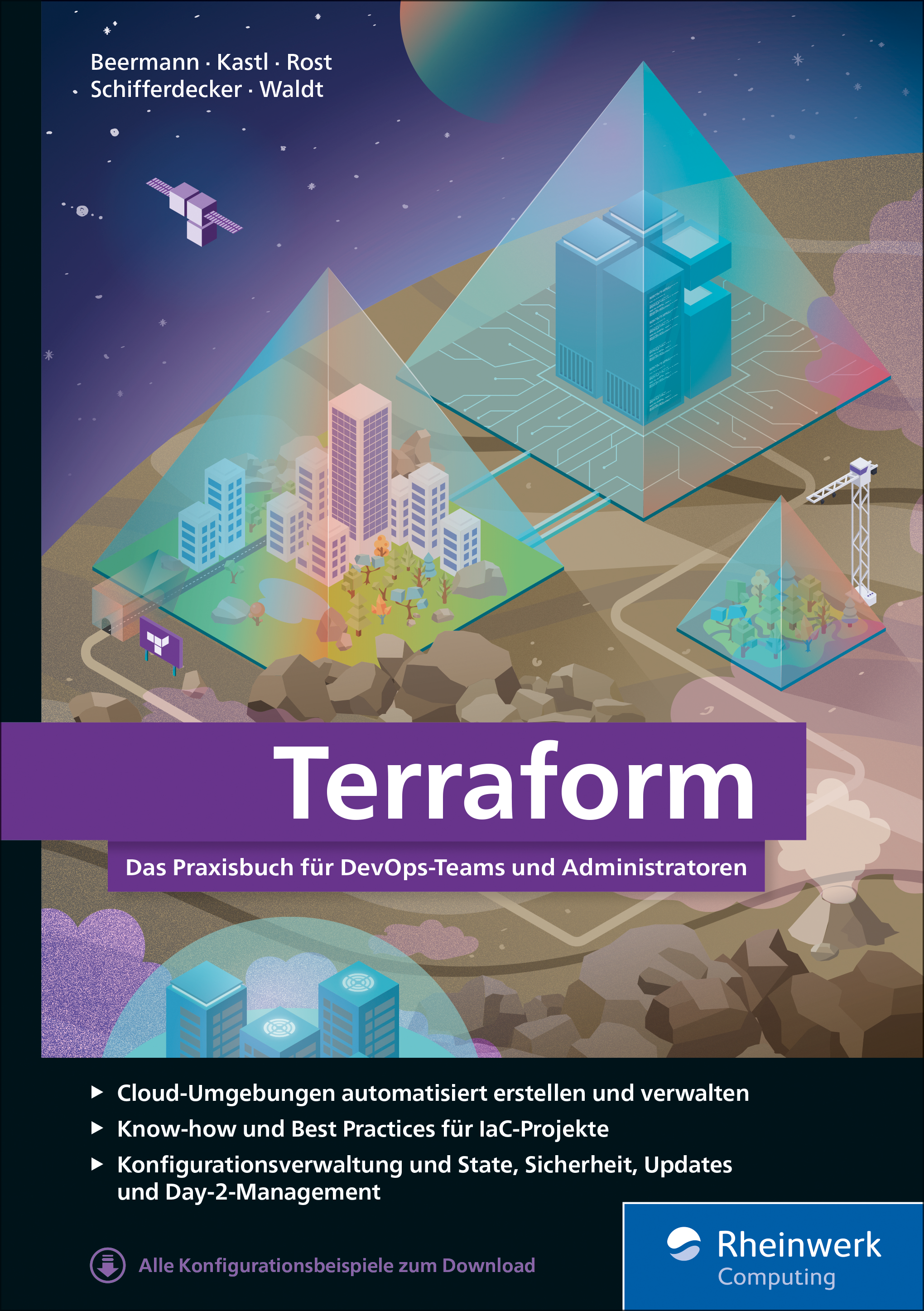
Terraform
Das Praxisbuch für DevOps-Teams und Administratoren. »Infrastructure as Code« richtig umgesetzt.Mit Terraform errichten Sie komplexe Infrastrukturen automatisiert in der Cloud und orchestrieren Deployments, die genau Ihren Anforderungen entsprechen. Tim Beermann, Johannes Kastl, Christian Rost, Thorsten Schifferdecker und Eike Waldt zeigen Ihnen, wie Sie Deployments verwalten, Ressourcen mit HCL skripten und den State Ihres Setups verwalten. So gerüstet entwerfen Sie wiederverwendbaren Code, vermeiden Fallstricke und schaffen einen komfortablen Arbeitsweg zur Verwaltung Ihrer Cloud-Landschaften.Inkl. umfassender Kommandoreferenz und Best Practices für den alltäglichen Betrieb.Aus dem Inhalt:Infrastructure as CodeWas ist Terraform? Installation und alle GrundlagenProvider: Konfiguration und Beispiel-SetupsState – Der Zustand der UmgebungVariablen und DatenquellenHCL: Terraform programmierenUpdates und Day-2-OperationsTerragrunt und weitere ToolsBest Practices: Terraform richtig nutzenMulti-Cloud-DeploymentsLeseprobe (PDF-Link)Zu den Autoren: Tim Beermann ist seit frühester Jugend begeisterter Linuxadministrator. Während seiner Laufbahn hat er ein ERP-System mitentwickelt und Serverlandschaften sowie Cloudumgebungen betreut.Johannes Kastl ist seit frühen SUSE-Tagen begeisterter Linuxnutzer. Er war mehrere Jahre in der Administration einer großen privaten Cloud-Landschaft tätig, unter anderem als Administrator, technischer Product Owner, Scrum Master und Teamkoordinator.Christian Rost begleitet und verantwortet große und kleine Projekte im Container- und Kubernetesumfeld, plant und baut Logging- und Monitoringlösungen mit Elasticstack und steht für das ein oder andere ownCloud-Projekt zur Verfügung.Thorsten Schifferdecker ist seit mehr als 20 Jahren begeisterter Linuxnutzer und in der IT als Architekt tätig.Eike Waldt hat während seiner Laufbahn viele SUSE- und SAP-Projekte begleitet und geleitet. Innerhalb dieser Projekte entwarf er komplexe Mechanismen zur Verwaltung von gewachsenen Landschaften und strukturierte gewachsene Code-Sammlungen mittels DevOps und CI.
Beginning Azure DevOps
THE PERFECT DEVOPS GUIDE FOR BEGINNING AZURE USERSIn Beginning Azure DevOps: Planning, Building, Testing and Releasing Software Applications on Azure, award-winning software engineer Adora Nwodo delivers a beginner's guide to DevOps on the Microsoft-powered Azure cloud platform. In the book, you'll learn to deploy Azure's built-in DevOps tools required to plan, build, test, and ship applications.The author explains how to use Azure's functionality for project management, version control, code testing, and continuous integration and continuous delivery (CI/CD). She discusses how to plan software development projects from start to finish using Agile and Scrum techniques. Readers will also find:* Updated source code repositories on GitHub with instructive practice exercises* Strategies for improving collaboration and automating your code-to-cloud workflows* Techniques for securing your code with advanced capabilitiesAn essential resource for Azure novices who hope to learn about the myriad possibilities unlocked by Azure DevOps tools, Beginning Azure DevOps will also earn a place in the libraries of software professionals familiar with other cloud platforms who hope to gain a foothold in the Azure cloud environment.ADORA NWODO is an award-winning software engineer who develops mixed-reality products on the Azure cloud at Microsoft. She regularly publishes tech and career content on her blog and YouTube channel, where she teaches her community about software, infrastructure, and cloud engineering. She is a sought-after public speaker, tech community leader, and is the author of the self-published, Cloud Engineering for Beginners.

Praxisbuch Infografik
* DIAGRAMME, PROZESSE, VERGLEICHE ODER KARTEN KORREKT UND GUT VERSTÄNDLICH DARSTELLEN* ÜBER 100 DOS UND DON'TS, DIE SIE BEIM ERSTELLEN VON INFOGRAFIKEN BEACHTEN SOLLTEN* PRAKTISCHES NACHSCHLAGEN VON DESIGN-ELEMENTEN, INFOGRAFIK-TYPEN, INHALTLICHEN UND FORMALEN KRITERIEN SOWIE GÄNGIGEN DARSTELLUNGSPROBLEMEN UND DEREN LÖSUNGSANSÄTZEN* SCHRITT-FÜR-SCHRITT-VORGEHEN FÜR DAS ERSTELLEN VON INFOGRAFIKENDer Übersetzungsprozess von Daten in passende Visualisierungen unterliegt vielen Herausforderungen. Dabei geht es nicht nur darum, Informationen übersichtlich und gut verständlich zu visualisieren, sondern auch darum, dass sie korrekt und unverfälscht dargestellt werden.Dieses Buch zeigt Ihnen Schritt für Schritt, wie Sie bei der Erstellung von Infografiken vorgehen. Dazu hat der Autor eine leicht verständliche grafische Bildsprache entwickelt, um Probleme und Lösungsmöglichkeiten anhand zahlreicher Grafikbeispiele visuell zu erläutern.Der Autor behandelt alle Aspekte, die beim Erstellen von guten Infografiken zu beachten sind:* Der Einsatz und die Verwendung von Design-Elementen wie Flächen, Pfeile, Piktogramme oder Farben* Die Auswahlkriterien unterschiedlicher Infografik-Typen wie Diagramme, Vergleiche oder Abläufe* Die Inhaltlichen Kriterien zur richtigen Interpretation der Daten und Ausgangsinformationen* Wie formale Kriterien wie Diagramme und Visualisierungen richtig und vollständig angewendet werden müssen* Die Vermeidung gängiger Darstellungsfehler, durch die Daten visuell falsch kommuniziert werden* Eine Anleitung zum strukturierten Vorgehen bei der Erstellung von Infografiken von der Ideenfindung bis zum EinsatzDas Buch ist als praktische Arbeitshilfe gedacht und in Doppelseiten organisiert, die jeweils eine einzelne Aufgabenstellung übersichtlich abdecken.Stefan Fichtel hat Illustration studiert und ist Gründer und Kreativdirektor der Agentur ixtract, die sich auf visuelle Wissensvermittlung spezialisiert hat. Daneben vermittelt er sein Wissen auch mit Lehrtätigkeiten und Workshops und war bereits Mitherausgeber eines Buches über animierte Infografiken. Seine Agentur hat einige internationale Auszeichnungen mit verschiedensten Visualisierungen gewonnen, u.a. auch Goldmedaillen durch die Society for News Design (SND) für die Mitwirkung an herausragenden journalistischen Arbeiten für das National Geographic Magazine und das Investigativportal Pro Publica.
Handbuch IT-Management (8. Auflg.)
Konzepte, Methoden, Lösungen und Arbeitshilfen für die PraxisIT-Management ist einer der wichtigsten Erfolgsfaktoren für alle Unternehmen und Dienstleistungsorganisationen. Deshalb nehmen IT-Verantwortliche eine zunehmend zentrale Rolle ein. Gestützt durch leistungsfähige Technologien wie Big Data und Data Analytics, Cloud Computing, durch mobile Endgeräte und neue Formen der Vernetzung (IoT u. a.) sowie weitere digitale Innovationen (KI, AR u. a.) werden völlig neue Geschäftsmodelle, Produkte und Prozesse entwickelt und erfolgreich realisiert bzw. implementiert.Damit Sie als IT-Manager für die Praxis gerüstet sind, bietet Ihnen dieses Handbuch umfassendes und unverzichtbares Wissen zu allen wichtigen Handlungsfeldern der IT sowie Unterstützung für die erfolgreiche Nutzung bewährter Methoden und Instrumente.Diese Auflage wurde umfassend aktualisiert und durch innovative Managementthemen, wie z.B. IT-Sourcing, IT-Relationship-Management oder Digitale Transformation erweitert.Mit Beiträgen von Robert Bergmann, Matthias Farwick, Vanessa Greger, Torsten Groll, Norbert Gronau, Christiana Klingenberg, Michael Klotz, Dietmar Kopperger, Helmut Krcmar, Jörg Kunsmann, Klaus Schmidt, Tobias Schmidt, Ernst Tiemeyer, Thomas Trojer, Kristin Weber, Anette Weisbecker, Walter Wintersteiger und Helmut ZsifkovitsInhalt:Strategisches IT-ManagementDigitalisierung managenEnterprise Architecture ManagementDaten- und InformationsmanagementGeschäftsprozessorientierte SoftwaresystemeCloud ComputingIT-SourcingIT-AnforderungsmanagementIT-System- und IT-ServicemanagementDigital Workplace ManagementIT-OrganisationPersonalmanagement im IT-BereichIT-ControllingLizenzmanagement in der ITEnterprise IT-GovernanceInformation Security ManagementIT-CompliancePartnermanagement in der ITEnterprise IT-ProjektmanagementDigitale TransformationAutor:Dipl.-Hdl. Ernst Tiemeyer ist seit mehr als 25 Jahren in leitenden Projektfunktionen sowie als IT-Consultant und im Bildungsbereich bzw. Managementtraining tätig. Schwerpunktmäßig befasst er sich in der Praxis mit Projektmanagement, strategischem IT-Management, Enterprise IT-Architekturmanagement, Enterprise IT-Governance, IT-Controlling sowie BPM. Seine Lehrtätigkeit führt er unter anderem an der EU-FH in Hamburg, am FH Joanneum Kapfenberg/Graz sowie an der FOM (Hochschule für Berufstätige) in verschiedenen Bachelor- und Masterstudiengängen aus.

Penetration Testing of Computer Networks Using Burpsuite and Various Penetration Testing Tools
Burp Suite is an integrated platform/graphical tool for performing security testing of web applications. Burp suite is a java application that can be used to secure or crack web applications. The suite consists of different tools, like a proxy server, a web spider an intruder and a so-called repeater, with which requests can be automated. You can use Burp's automated and manual tools to obtain detailed information about your target applications.Damn Vulnerable Web App (DVWA) is a PHP/MySQL web application that is damn vulnerable. Its main goals are to be an aid for security professionals to test their skills and tools in a legal environment, help web developers better understand the processes of securing web applications and aid teachers/students to teach/learn web application security in a class room environment.In this report I am using a combination of Burp tools to detect and exploit vulnerabilities in Damn Vulnerable Web App (DVWA) with low security. By default, Burp Scanner scans all requests and responses that pass through the proxy. Burp lists any issues that it identifies under Issue activity on the Dashboard. You can also use Burp Scanner to actively audit for vulnerabilities. Scanner sends additional requests and analyzes the application's traffic and behavior to identify issues.Various examples are outlined in this report for different types of vulnerabilities such as: SQL injection, Cross Site Request Forgery (CSRF), Cross-site scripting, File upload, Local and Remote File Inclusion. I tested various types of penetration testing tools in order to exploit different types of vulnerabilities. The report consists from the following parts:1. Installing and Configuring BurpSuite2. BurpSuite Intruder.3. Installing XMAPP and DVWA App in Windows System.4. Installing PHP, MySQL, Apache2, Python and DVWA App in Kali Linux.5. Scanning Kali-Linux and Windows Using .6. Understanding Netcat, Reverse Shells and Bind Shells.7. Adding Burps Certificate to Browser.8. Setting up Target Scope in BurpSuite.9. Scanning Using BurpSuite.10. Scan results for SQL Injection Vulnerability with BurpSuite and Using SQLMAP to Exploit the SQL injection.11. Scan Results for Operating System Command Injection Vulnerability with BurpSuite and Using Commix to Exploit the OS Command Injection.12. Scan Results for Cross Side Scripting (XSS) Vulnerability with BurpSuite, Using Xserve to exploit XSS Injection and Stealing Web Login Session Cookies through the XSS Injection.13. Exploiting File Upload Vulnerability.14: Exploiting Cross Site Request Forgery (CSRF) Vulnerability.15. Exploiting File Inclusion Vulnerability.16. References.I am Dr. Hidaia Mahmood Mohamed Alassouli. I completed my PhD degree in Electrical Engineering from Czech Technical University by February 2003, and my M. Sc. degree in Electrical Engineering from Bahrain University by June 1995. I completed also one study year of most important courses in telecommunication and computer engineering courses in Islamic university in Gaza. So, I covered most important subjects in Electrical Engineering, Computer Engineering and Telecommunications Engineering during my study. My nationality is Palestinian from Gaza Strip.I obtained a lot of certified courses in MCSE, SPSS, Cisco (CCNA), A+, Linux.I worked as Electrical, Telecommunicating and Computer Engineer in a lot of institutions. I worked also as a computer networking administrator.I had considerable undergraduate teaching experience in several types of courses in many universities. I handled teaching the most important subjects in Electrical and Telecommunication and Computer Engineering.I could publish a lot of papers a top-tier journals and conference proceedings, besides I published a lot of books in Publishing and Distribution houses.I wrote a lot of important Arabic articles on online news websites. I also have my own magazine website that I publish on it all my articles: http://www.anticorruption.000space.comI am an Author publishing books on kdp.amazon.comand many other book stores such as Google, Apple.com, writinglife.kobo.com, Lulu.com, feiyr.com, blurb.com, bookrix.com, barnesandnoble.com, notionpress.com, ingramspark.com and others .My personal website: http://www.hidaia-alassouli.000space.comMy Amazon Author Central: https://www.amazon.com/-/e/B07BH5HS7LEmail: hidaia_alassouli@hotmail.com

Zeitwirtschaft mit SAP
Erfassen Sie die Arbeitszeit Ihrer Mitarbeitenden schnell und rechtssicher in Ihrem SAP-System! Dieses Buch zeigt Ihnen, wie Sie das Customizing und die einzelnen Prozessschritte der Zeitwirtschaft in SAP ERP und SAP S/4HANA am besten durchlaufen. Mit vielen Beispielen, Anleitungen und Tipps für die Anpassung an Ihr Unternehmen. Aus dem Inhalt: Arbeitszeitpläne und InfotypenZeitbindung und KollisionsprüfungZeitereignissePaarbildung und TageszuordnungToleranzen und FehlerprüfungenZeitlohnarten und ZeitkontenSoll- und MehrarbeitszeitZeitnachweisSelf-Services mit SAP FioriSystem Landscape Optimization (SLO)SAP SuccessFactors Employee Central Time Management (inkl. Time Tracking)User-Exits und BAdIs Einleitung ... 19 1. Customizing der Arbeitszeitpläne ... 25 1.1 ... Grundlagen ... 25 1.2 ... Personalteilbereiche gruppieren ... 29 1.3 ... Arbeitspausenpläne ... 29 1.4 ... Tagesarbeitszeitpläne ... 32 1.5 ... Periodenarbeitszeitpläne ... 38 1.6 ... Regeln für Tagestypen ... 41 1.7 ... Arbeitszeitplanregeln ... 42 1.8 ... Arbeitszeitplanregeln generieren ... 46 1.9 ... Fazit ... 48 2. Customizing der Infotypen der Zeitwirtschaft ... 49 2.1 ... Infotyp 2001 (Abwesenheiten) ... 49 2.2 ... Infotyp 2002 (Anwesenheiten) ... 64 2.3 ... Infotyp 2003 (Vertretungen) ... 67 2.4 ... Infotyp 2004 (Bereitschaften) ... 71 2.5 ... Infotyp 2005 (Mehrarbeiten) ... 75 2.6 ... Infotyp 2006 (Abwesenheitskontingente) ... 77 2.7 ... Infotyp 2007 (Anwesenheitskontingente) ... 97 2.8 ... Infotyp 2010 (Entgeltbelege) ... 102 2.9 ... Infotyp 2011 (Zeitereignisse) ... 106 2.10 ... Infotyp 2012 (Zeitumbuchungsvorgaben) ... 106 2.11 ... Infotyp 2013 (Kontingentkorrekturen) ... 112 2.12 ... Fazit ... 113 3. Zeitbindung und Kollisionsprüfungen ... 115 3.1 ... Einführung ... 115 3.2 ... Beispiel: Zeitbindung in der Zeitwirtschaft ... 117 3.3 ... Customizing der Zeitbindungsklassen der Abwesenheiten ... 119 3.4 ... Customizing der Zeitbindungsklassen bei Vertretungsarten ... 121 3.5 ... Customizing der Zeitbindungsklassen bei Anwesenheiten ... 123 3.6 ... Customizing der Zeitbindungsklassen bei Abwesenheitskontingenten ... 124 3.7 ... Customizing der Zeitbindungsklassen bei Bereitschaftsarten ... 125 3.8 ... Customizing der Zeitbindungsklassen bei Anwesenheitskontingenten ... 126 3.9 ... Zeitbindungsreaktionen ... 127 3.10 ... Fazit ... 128 4. Customizing der Personalzeitereignisse ... 131 4.1 ... Personalzeitereignisarten ... 131 4.2 ... Gruppierungen für Personalzeitereignisarten ... 134 4.3 ... Schnittstellen ... 135 4.4 ... Die Tabelle TEVEN und ihre Besonderheiten ... 147 4.5 ... Weitere Funktionen der HR-PDC-Schnittstelle ... 148 4.6 ... Fazit ... 151 5. User Interfaces ... 153 5.1 ... Arbeitsvorrat ... 154 5.2 ... Time Manager's Workplace ... 157 5.3 ... Kundeneigene User Interfaces ... 163 5.4 ... Zeiterfassung mit FLOW ... 172 5.5 ... Fazit ... 177 6. Schemen der Zeitwirtschaft ... 179 6.1 ... Schema TM00 ... 179 6.2 ... Schema TM01 ... 181 6.3 ... Schema TM02 ... 181 6.4 ... Schema TM04 ... 182 6.5 ... Der Schemeneditor ... 183 6.6 ... Arbeiten mit dem Schemeneditor ... 184 6.7 ... Fazit ... 198 7. Initialisierung der Zeitauswertung ... 201 7.1 ... Der Initialisierungsblock ... 202 7.2 ... Die Personalrechenregel MODT ... 203 7.3 ... Verarbeitung des Initialisierungsblocks ... 206 7.4 ... Fazit ... 207 8. Paarbildung, Tageszuordnung und Verarbeitungszustände ... 209 8.1 ... Verarbeitungszustände ... 210 8.2 ... Fehler aus der Paarbildung/Tageszuordnung ... 222 8.3 ... Fazit ... 224 9. Zeitdaten bereitstellen ... 225 9.1 ... Arbeitszeitplan und Zeitereignisse ... 225 9.2 ... Abwesenheiten ... 236 9.3 ... Anwesenheiten ... 239 9.4 ... Kurzarbeit ... 241 9.5 ... Zeitdaten prüfen ... 244 9.6 ... Fazit ... 246 10. Toleranzen und Fehlerprüfungen ... 247 10.1 ... Abwesenheiten ausrichten ... 247 10.2 ... Auf fehlerhaften Tag prüfen ... 250 10.3 ... Paare auf Fehler überprüfen ... 251 10.4 ... Toleranzen aus dem Tagesarbeitszeitplan verarbeiten ... 253 10.5 ... Fazit ... 253 11. Sollarbeitszeiten ermitteln ... 255 11.1 ... Tabelle TZP (Tageszeitpunkte) ... 255 11.2 ... Zeitpaare runden ... 257 11.3 ... Funktion DYNBR (Bestimme dynamische Pausen) ... 260 11.4 ... Funktion TIMTP (Zuordnung der Zeitarten) ... 264 11.5 ... Funktion PBRKS (Pausen einbauen) ... 266 11.6 ... Funktion DEFTP (Sollpaarermittlung) ... 267 11.7 ... Abwesenheiten kürzen ... 270 11.8 ... Abwesenheiten mit Zeitkompensation ... 274 11.9 ... Dienstgänge kürzen ... 275 11.10 ... Fallbeispiele ... 278 11.11 ... Fazit ... 288 12. Mehrarbeitszeiten ermitteln ... 291 12.1 ... Mehrarbeitsermittlung im Schema TM00 ... 292 12.2 ... Mehrarbeitsberechnung mit Kontingenten ... 293 12.3 ... Mehrarbeitsberechnung nach dem Infotyp 0050 (Zeiterfassungsinformationen) ... 299 12.4 ... Mehrarbeitsberechnung mit Genehmigung TAZP ... 300 12.5 ... Mehrarbeitsberechnung ohne Genehmigung ... 301 12.6 ... Mehrarbeitsermittlung mit Rundung ... 301 12.7 ... Mehrarbeitsermittlung auf Wochenbasis ... 305 12.8 ... Sonderanforderungen ... 320 12.9 ... Vereinfachtes Genehmigungsverfahren im Time Manager's Workplace ... 324 12.10 ... Bestimmung der Kernnachtarbeitskennzeichen ... 327 12.11 ... Fazit ... 330 13. Zeitlohnartengenerierung ... 333 13.1 ... Organisatorische Voraussetzungen ... 333 13.2 ... Einfluss von Bewertungsklassen ... 335 13.3 ... Einstieg in die Lohnartengenerierung ... 337 13.4 ... Fazit ... 351 14. Zeitkonten führen ... 353 14.1 ... Tagessalden bilden ... 354 14.2 ... Zeitzuschläge/Zeitabzüge gewähren ... 356 14.3 ... Gleitzeitsaldo, Mehrarbeits- und Produktivstunden ... 359 14.4 ... Zeitsalden durch Abwesenheiten abbauen ... 360 14.5 ... Abwesenheitskontingente führen ... 361 14.6 ... Kumulierte Salden fortschreiben ... 363 14.7 ... Fazit ... 366 15. Endeverarbeitung ... 367 15.1 ... Der Block »Endeverarbeitung« ... 367 15.2 ... Gleitzeitsaldoüberschuss in Mehrarbeit ... 369 15.3 ... Funktion LIMIT (Grenzwerte für Zeitsalden) ... 370 15.4 ... Funktion EXPRT (Export der Abrechnungsergebnisse) ... 381 15.5 ... Fazit ... 381 16. Funktionen der Zeitauswertung ... 383 16.1 ... Einführung ... 383 16.2 ... Verzeichnis der Funktionen in der Zeitauswertung ... 387 16.3 ... Beschreibung der wichtigsten Funktionen in der Zeitauswertung ... 394 16.4 ... Fazit ... 402 17. Operationen der Zeitwirtschaft ... 403 17.1 ... Entscheidungsoperationen ... 403 17.2 ... Operationen, die eine oder mehrere Aktionen einleiten ... 418 17.3 ... Verzweigungsoperationen ... 436 17.4 ... Zusammenhang von Funktionen, Operationen und Tabellen ... 439 17.5 ... Fazit ... 439 18. Kundeneigene Funktionen und Operationen ... 441 18.1 ... Kundeneigene Operationen anlegen ... 441 18.2 ... Kundeneigene Funktionen anlegen ... 448 18.3 ... Fazit ... 454 19. Integration in die Personalabrechnung ... 455 19.1 ... Zeitauswertung im Rahmen der Personalabrechnung ... 455 19.2 ... Verarbeitung der Zeitlohnarten ... 461 19.3 ... Verarbeitung von Kurzarbeit aus Zeitwirtschaftssicht ... 462 19.4 ... Entgeltumwandlung in ein Zeitkonto ... 463 19.5 ... Fazit ... 464 20. Zeitnachweis ... 465 20.1 ... Übersicht der Technologien ... 465 20.2 ... Neuen Zeitnachweis einrichten ... 469 20.3 ... Erweiterungen und Use Cases ... 472 20.4 ... Fazit ... 478 21. SAP-Fiori-Self-Services in der Zeitwirtschaft ... 479 21.1 ... Einführung in SAP Fiori ... 479 21.2 ... Übersicht der SAP-Fiori-Self-Services ... 481 21.3 ... Technische Einrichtung und Konfiguration ... 482 21.4 ... Erweiterungen und Use Cases ... 496 21.5 ... Fazit ... 500 22. Zeitwirtschaft in SAP SuccessFactors ... 501 22.1 ... Unterschiede zwischen SAP ERP HCM und SAP SuccessFactors Employee Central -- Time Management ... 502 22.2 ... SAP SuccessFactors Employee Central Time Management ... 503 22.3 ... Objekte in SAP SuccessFactors Employee Central Time Management ... 509 22.4 ... SAP SuccessFactors Employee Central Time Tracking ... 511 22.5 ... Geplante Funktionserweiterungen ... 516 22.6 ... Fazit ... 517 Anhang ... 519 A ... User-Exits und BAdIs ... 521 B ... Tabellen ... 635 C ... Personalrechenregeln ... 643 D ... Operationen ... 661 E ... Funktionen ... 683 F ... Merkmale ... 705 G ... Schemen ... 707 H ... Transaktionen ... 711 Die Autoren ... 715 Index ... 717

TCP/IP - Grundlagen und Praxis (3. Auflg.)
Seit vielen Jahren das unverzichtbare Standardwerk. Jetzt in 3., aktualisierter und überarbeiteter Auflage aus Februar 2023. TCP/IP gilt als Standard für die Kommunikation in Netzwerken – sowohl im lokalen Bereich als auch im weltumspannenden Internet. Wie jede Protokollfamilie so setzt sich auch TCP/IP aus verschiedenen Komponenten zusammen. Sie werden im Rahmen dieses Buches mit folgenden Schwerpunktthemen umfassend erläutert:Entwicklung und Funktion von NetzwerkenSwitching und RoutingProtokolle der TCP/IP-FamilieAdressierung im Netzwerk (statisch, dynamisch per DHCP)Namensauflösung im IP-Netzwerk (Domain Name Service)Routing-Protokolle im IP-Netzwerk und deren FunktionSpezielle Dienste auf Basis von TCP/IPTCP/IP in kabellosen Netzwerken (WLAN, Bluetooth, DSL-Vectoring usw.)Sicherheit im IP-Netzwerk (IPsec, VPN, SSL)Weiterentwicklungen auf Basis von IPv6Internet der Dinge (IoT)Implementierung von TCP/IP in BetriebssystemenNeben den Grundlagen werden auch praktische Aspekte beleuchtet, die für die tägliche Arbeit von Relevanz sein können. So wird beispielsweise der Analyse von Netzwerkstörungen ein ganzes Kapitel gewidmet. Außerdem wird beispielhaft im Anhang die TCP/IP-Konfiguration auf verschiedenen Betriebssystemplattformen dargestellt oder zum Thema »Sicherheit« ein datenzentrisch abgesicherter »Sicherheitsschild« vorgestellt.Zum Autor:Gerhard Lienemann arbeitete ab 1991 für etwa 12 Jahre als Netzwerkadministrator in einem produzierenden Betrieb, bevor er ins technische Management wechselte. Seitdem war er zunächst zuständig für operative Kommunikationssicherheit und übernahm dann zusätzlich die Betreuung eines europäischen Netzwerkteams. Nur kurze Zeit später erweiterte er seine Verantwortung auf ein globales Netzwerkteam in Asien, Nord- und Südamerika. Seiner Leidenschaft „IT-Kommunikation“ ist er auch nach dem Ausscheiden aus dem aktiven Berufsleben treu geblieben.
IT-Governance
Ordnungsrahmen und Handlungsfelder für eine erfolgreiche Steuerung der Unternehmens-ITDas Werk behandelt sowohl Grundsätzliches zu IT-Governance als auch die einzelnen Handlungsfelder der IT-Governance im Detail. Dabei geht die Darstellung insbesondere über die weit verbreitete GRC-Fokussierung hinaus. Dies führt dazu, dass die Gebiete der IT-Governance integriert dargestellt werden, so wie dies in der Praxis auch erforderlich ist. Insofern befasst sich das Buch neben der grundlegenden Darstellung der IT-Governance mit den Stakeholdern der IT-Governance und der Governance-Verantwortung in den Bereichen der Organisation der Unternehmens-IT, der IT-Risiken, der IT-Compliance, der Data Governance, des Wertbeitrags der IT, dem Business/IT-Alignment und der IT-Sicherheit. Auch auf für IT-Governance relevante Normen und Standards (ISO 38500, COBIT etc.) wird kontinuierlich Bezug genommen. Vor allem wird immer wieder die Schnittstelle zwischen IT-Governance und IT-Management dargestellt, sodass klar zwischen Governance- und Managementverantwortung unterschieden wird.Autoren:Prof. Dr. Michael Klotz ist seit 1999 Professor für Betriebswirtschaftslehre, insb. Informationsmanagement, Organisation und Datenverarbeitung an der Hochschule Stralsund. Davor war er 15 Jahre in der IT-Branche als Berater, Projektmanager und Geschäftsführer tätig. Seine fachliche Arbeit dokumentiert sich in über 100 Publikationen zu IT-Governance, IT-Compliance und Projektmanagement.Prof. Dr. Matthias Goeken ist Professor für Wirtschaftsinformatik an der Hochschule der Deutschen Bundesbank. Zuvor war er Juniorprofessor an der Frankfurt School of Finance & Management und dort Mitbegründer und Leiter einer Forschungsgruppe zum Themengebiet IT-Governance. Zu seinen weiteren Forschungsgebieten zählen Business Intelligence und Machine Learning. Im ISACA Germany Chapter ist er Vizepräsident für Publikationen.Dr. Martin Fröhlich ist selbstständiger IT-Berater mit den Schwerpunkten Strategie-, IKS-Beratung und IT-Compliance. Davor war er 30 Jahre bei einer Big-Four-Wirtschaftsprüfungsgesellschaft tätig, davon knapp 20 Jahre als Partner verantwortlich für IT-Prüfung und Beratung im Finanzdienstleistungssektor. Dr. Fröhlich ist Mitglied des FAIT beim IDW und Vizepräsident des ISACA Germany Chapter.Die Autoren sind Mitherausgeber der Zeitschrift „IT-Governance“.Zielgruppe:IT-Governance-VerantwortlicheIT-Compliance-OfficerRisk-Manager*innenIT-Manager*innen, CIOsIT-Berater*innenIT-Auditor*innenStudierende

Nextcloud Schnelleinstieg
Ein Überblick über die wichtigsten Einstellungen wie das Erstellen von Benutzern und Gruppen, ein Kapitel zum Thema Sicherheit sowie praktische Tipps für die optimale Strukturierung der eigenen Cloud runden diesen praktischen Einstieg ab. So sind Sie bestens vorbereitet, das Potenzial Ihrer Cloud voll auszuschöpfen.Ein Kapitel über die optimale Strukturierung der eigenen Cloud rundet diesen praktischen Einstieg ab. So sind Sie bestens vorbereitet, das Potenzial Ihrer Cloud voll auszuschöpfen.Herbert Hertramph publiziert neben seiner Tätigkeit als Sozialwissenschaftler an der Universität Ulm Artikel zu Themen der Selbstorganisation und des digitalen Informationsmanagements. Im mitp-Verlag sind von ihm mehrere Bücher zu Evernote, Raspberry Pi und zur Dateiorganisation erschienen.

AWS for Public and Private Sectors
Assess, plan, develop, implement, and manage AWS EC2 Instances, Cloud Formation using JSON Template with Bash programming language, and Cloud Watch monitoring. This book helps the public and private sectors comprehend how to assess and evaluate AWS cloud software as a service (SaaS), infrastructure as a service (IaaS), and platform as a service (PaaS).Government and business sector entities are looking for strategies to upgrade on-premises information systems to virtual cloud infrastructure orchestration and automation. You'll gain a step-by-step approach to planning, developing, implementing, and managing cloud infrastructure, services, and platforms that help reduce cost increases, scalability, and improves security. Outline your strategy to research how cloud infrastructure is planned and developed before being deployed and managed by on-premises IT team members. This book also supports cloud services for AWS and helps you understand why supporting and using AWS for cloud services is beneficial both short and long-term.Once you complete this book, you'll be able to make logical decisions regarding AWS use cases for public and private sector entities, including disaster recovery and backup, IT self-service, Web applications, and messaging.WHAT YOU'LL LEARN* Assess different cloud services provided by Amazon* Look at Cloud as a Service (CAAS)* Understand internet protocol, packet switching, authoritative, recursive, and open-flow* Review cloud infrastructure planning methods* Examine Cloud orchestration and automation* Work with the AWS total cost of ownership calculatorWHO THIS BOOK IS FORThis book is aimed at business, government, non-profit organizations, academic institutions, and financial institutions interested in upgrading to AWS cloud architect infrastructure as a primary mode of data transmission, storage, and security at a scalable and economical annual cost.BRADLEY FOWLER has worked in the technology industry since 2012, when he became Webmaster for the American Alliance of Paralegals, Inc. In 2015, Bradley became co-owner of Construction eMarketing a Web site development and eMarketing company that provides services remotely, including Cybersecurity Analysis, Web Page security integration, and cloud computing architecture consulting.Bradley earned a Master of Science in Cloud Computing Architecture from the University of Maryland Global Campus-Cum Laude, where he began working with BalletOnline as the Intern Cloud Architect, and climbed up to become Chief Cloud Architect. Bradley also earned a Master of Public Policy in Cybersecurity Policy from American Public University System-Summa Cum Laude, a Master of Science in Cybersecurity, and a Master of Science in Managing Information Systems in Information Security Management, both from Bellevue University, both Summa Cum Laude. Bradley acquired his Bachelor of Arts in eMarketing from the University of Arizona Global Campus. He is currently completing a Master of Science in Technology Management at University of Arizona Global Campus as well as a Doctor of Management in Information Systems & Technology at University of Phoenix.Chapter I Cloud Services and TechnologiesChapter goal: This chapter enables readers to understand the value of assessing and evaluating cloud services provided by Amazon Web Services (AWS) and Microsoft Azure, prior to making an executive decision to partner with either service provider. Readers will comprehend how to calculate the total cost of ownership for usage of cloud services rendered by both service providers, and acquire knowledge of the advantages and disadvantage of services rendered by both services providers. Readers will also acquire knowledge of applicable laws regarding usage of cloud services in alignment with federal laws and guidelines as well as gain knowledge regarding policy enforcement mechanisms, system monitoring and audit mechanisms, and finally complete discussion questions that help readers comprehend their study of this chapter and the valued components that should be remembered.Sub-topics:1. Total Cost of Ownership2. Functional requirements3. Nonfunctional requirements4. Risk analysis and management guidelines5. Six components of GDPR6. Understand physical security issues7. Critical IT requirements related to data storage8. Potential privacy issues and migration strategiesChapter 2: Network EngineeringChapter goal: This chapter helps readers gain knowledge about Internet protocol and its impact in cloud architecture. Readers will also learn about packet switching, IP addressing, DNS, IP subnetting, IP address classes, CIDR Notation, multiple subnets in a LAN, subnetting proposal, Transport Control Protocol (TCP), transport reliability, TCP sliding windows, software defined networking, networking in the cloud, cloud command line interfaces, and cloud APIs. Having this knowledge helps improve decision making regarding what strategies best serve the needs of an enterprise migrating from an on-premises legacy information system to a cloud infrastructure. By the time readers conclude this chapter, they will understand the meaning of internet protocol, packet switching, authoritative, recursive, and what makes open-flow so popular. Most importantly, readers acquire knowledge about subnetting proposals and their role in supporting enterprises.Subtopics:1. TCP Connections2. SDN Enables BalletOnline Cloud Deployment3. Declarative resource definitions4. AWS Migration Environment and Configure Web ServicesChapter 3: Infrastructure Planning and MigrationChapter goal: This chapter will educate readers about cloud infrastructure planning methods that increase organizational structure that aligns with business acumen and helps readers understand migration prerequisites. This enables a reduction of setbacks arises during the migration from on-premises to cloud infrastructure. Furthermore, readers will be able to effectively assess migration tools and comprehend AWS Application Discovery. Most important, readers will acquire methods that have proven beneficial and provides a return on the initial investment.Sub-topics:1. Cloud premigration considerations2. Cloud migration tool assessment3. AWS Application Discovery Services4. Agentbase options5. Agentless options6. Evaluation of discovery application and infrastructure data7. Migration recommendationsChapter 4: Computing Development and ManagementChapter goal: Readers will gain knowledge about cloud service offering for email and how AWS services help reduce concerns of vulnerability. Readers will also learn about AWS Cloud Watch and how this tool helps capture metrics and reports statistics regarding the consumption for backup and archiving. Additionally, readers will learn about AWS backup and archiving as well as AWS virtual private cloud and the value of relying on VPN (Virtual Private Networks). Furthermore, readers will attain information about AWS S3 buckets and cloud synchronization services.Subtopics:1. Data Backups and Archiving to Cloud Using Cloud Sync Services2. AWS Cloud Watch Monitoring3. AWS Service Catalog4. Cloud operations end-users’ guides5. Cloud operations administrative guides6. LimitationsChapter V Cloud Computing Orchestration and AutomationChapter goals: This chapters prepares readers for the orchestration and automation of AWS cloud services. Readers will also learn about cloud advanced features as well as advanced data solutions in the cloud. Most importantly, readers will acquire knowledge about Symantec Cloud Workload Protection for Storage Overview. Attaining this knowledge will increase readers trust with AWS services and the ability to effectively manage their cloud virtual private infrastructure with security strategies that are impenetrable.Subtopics:1. Monthly cost analysis2. Total costs of ownership analysis3. Use casesa. Web applicationsb. Messagingc. Disaster recovery and backupd. IT service planning4. Return on investment analysisGlossaryIndex

Dokumenten-Management
Informationen im Unternehmen effizient nutzenDas umfassende Kompendium zum Dokumenten-ManagementDieses Kompendium behandelt alle wesentlichen Fragen des Dokumenten-Managements ganzheitlich und umfassend. Dabei werden Fragen der Projektplanung und der Einführung von Dokumenten-Management-Lösungen ebenso behandelt wie organisatorische, wirtschaftliche und technische Aspekte. Außerdem werden die rechtlichen Rahmenbedingungen für Deutschland, die Europäische Union – soweit die entsprechenden Vorschriften einheitlich in der ganzen EU gültig sind – und für die Schweiz ausführlich dargestellt.Die Beschreibung von Funktion, Anwendung und Nutzen von Dokumenten-Management-Systemen (DMS) bildet auch in der vorliegenden Auflage einen Schwerpunkt. Sie werden sowohl mit dem für eine erfolgreiche Lösungsimplementierung erforderlichen Wissen ausgestattet, als auch in die Lage versetzt, die Funktionsweise von DMS zu verstehen und Systemalternativen zu beurteilen. Durch mehrere Anwenderberichte werden unterschiedliche Projektschwerpunkte und -ansätze veranschaulicht.Um den aktuellen Entwicklungen und Schwerpunkten besser gerecht zu werden, wurde das Buch vollständig neu strukturiert und umfassend überarbeitet. In der sechsten Auflage dieses Standardwerks werden aktuelle IT-Trends mit Relevanz für die Dokumentenverwaltung detailliert beschrieben. Neben den etablierten Cloud-Technologien werden auch neue Ansätze aus dem Bereich der Künstlichen Intelligenz oder Blockchains diskutiert und bewertet. Das Rechtskapitel wurde aufgrund der Änderungen im Bereich des Datenschutz-, IT- und Steuerrechts vollständig überarbeitet und ausgebaut. Neu eingeführt wurde ein Kapitel zum Thema Anforderungsanalyse. Die vorgestellten Anwendungsfälle wurden aktualisiert.Autoren:Klaus Götzer, Patrick Maué, Ulrich EmmertKlaus Götzer studierte Betriebswirtschaftslehre an der Universität München. Anschließend war er für mehrere Jahre in einem Unternehmen der Luft- und Raumfahrtindustrie in einer Organisationsabteilung als Organisator, Projektleiter und stellvertretender Hauptabteilungsleiter tätig. An der Universität des Saarlandes (Prof. Scheer) promovierte er mit dem Thema „Optimale Wirtschaftlichkeit und Durchlaufzeit im Büro“. Anschließend war er in einer Unternehmensberatung für den Bereich „Prozessoptimierung“ zuständig und leitete eine Geschäftsstelle. Seit 1993 ist er selbstständig und führt IT- und Organisationsprojekte vor allem im Öffentlichen Dienst, in Industrie- und Versicherungsunternehmen durch. Hierbei beschäftigt er sich vor allem mit den Themen Geschäftsprozessmanagement, Workflow und Dokumenten-Management.Dr. Patrick Maué hat für Studium und Promotion an der WWU Münster den Schwerpunkt Geoinformatik für sich entdeckt. In seinen Forschungsarbeiten und wissenschaftlichen Veröffentlichungen hat er sich mit der Semantik von Geodaten auseinandergesetzt. In den darauffolgenden Jahren hat er im Namen verschiedener Unternehmen Digitalisierungsprojekte im deutschen Behördenumfeld technisch und fachlich unterstützt und als Software Architekt die Umsetzung vieler Anwendungen begleitet. In den meisten Projekten stand dabei die Einführung oder Modernisierung von DMS Lösungen im Mittelpunkt. Als begeisterter Programmierer hat er aber stets die Nähe zur praktischen Umsetzung gesucht und arbeitet aktiv in Open Source Projekten mit. Heute leitet er ein Team von Software Entwicklern, die Produkte im DMS-Umfeld mit Fokus auf Sprachverständnis mit Hilfe maschinellen Lernens entwickeln.Ulrich Emmert ist seit 1996 Rechtsanwalt mit Schwerpunkt IT- und Datenschutzrecht, stellvertretender Vorstandsvorsitzender des ECM-Branchenverbandes VOI e. V., Geschäftsführer der esb data GmbH, die externe Datenschutzmandate übernimmt und Vorstand der Reviscan AG, die Signatursoftware und Datenbanksoftware herstellt und vertreibt. Daneben ist er im Aufsichtsrat von mehreren IT-Unternehmen vertreten.Zielgruppen:ManagementProjektleitungSachbearbeitende und Anwender*innenHochschullehrkräfteTrainer*innenStudierende