

Security

Understanding Microsoft Teams Administration
This book provides solutions, best practices, tips, and workarounds to plan, design, customize, implement, and manage Microsoft Teams in any environment. This revised edition has been updated to reflect all the latest techniques and products, including migration from Skype for Business On-Prem to Microsoft Teams, along with Teams for Education, which includes a range of features and tools that enable teachers and students to collaborate, communicate, and learn in a virtual environment.The book begins with an overview of Microsoft Teams, including its architecture, teams/channels, audio/video meetings, and the phone system. The authors then take you deeper into deployment and management of teams, clients, guests and external access, and live events, followed by a walk-through of network assessment and bandwidth planning for Teams. Here, you will learn about deployment of quality of service and how to configure your phone systems using direct routing and calling plans. Moving forward, you will learn Microsoft Teams administration and policy management along with the migration process of Skype from Business On-Prem to Microsoft Teams. To wrap things up, the authors demonstrate some troubleshooting techniques for call quality issues in Teams, and walk you through various features of Teams for Education and how to utilize them.By the time you turn the last page of Understanding Microsoft Teams Administration, you'll be fully equipped to configure, customize, and control Teams with confidence. Don't just adapt to the future of collaboration—lead it.WHAT YOU WILL LEARN* Kickstart your journey: Get acquainted with the Teams architecture, from teams and channels to audio/video conferencing and beyond* Master the mechanics: Dive deep into deployment, including crucial aspects like guest access, such as events, and network assessment* Elevate call quality: Learn the nuts and bolts of Quality of Service (QoS) and phone systems, including direct routing and calling plans* Admin like a pro: Gain insights into robust policy management, and understand how to navigate the Teams admin portal with finesse* Get a grip on network assessment and bandwidth planning tailored specifically for Teams* Unlock secrets of quality of service, direct routing, and customized calling plans* Migration simplified: Seamlessly shift from Skype for Business On-Prem to Teams without missing a beat* Edu-tech unveiled: Explore Teams for Education and how its myriad features can enrich virtual learning experiences for teachers and students alike* What's new: A dedicated chapter exclusively covering Microsoft Teams for Education, focusing on empowering both educators and studentsWHO THIS BOOK IS FORAdministrators and technical consultants focused on Microsoft Teams. This book serves as an invaluable resource for those looking to optimize team collaboration and communication within their organizations.Balu Ilag is a luminary in the realm of unified communications and collaboration technologies. With an impressive career spanning over 17 years, Balu has carved a niche for himself in messaging, telecom, and modern workplace collaboration. He currently serves as an Office 365 and Collaboration Specialist at Juniper Networks, where he wears multiple hats—from product administration and development to strategic guidance for enterprise customers.Balu holds a plethora of distinguished certifications which reinforce his expertise in the field. He is a Microsoft Certified Trainer (MCT), Microsoft 365 Certified Teams Administrator Associate, and a Microsoft Certified Solutions Expert (MCSE) in communication and productivity. These credentials not only highlight his grasp over Microsoft technologies but also signify his commitment to continuous learning and excellence.An avid writer, Balu has authored an array of blog posts on his blog site www.bloguc.com that serve as a treasure trove of insights on unified communication and collaboration technologies. Whether you're looking for a comprehensive how-to guide or best practices for troubleshooting, chances are Balu has penned a blog post about it. His writings reflect his deep understanding of the complexities involved in modern workplace technologies, making them an invaluable resource for professionals and enthusiasts alike.VIJAY IREDDY is a highly skilled technology professional passionate about innovation and digital transformation. He has extensive experience and expertise with a range of Microsoft and UC Certifications, including being certified as a Teams Administrator Associate, Support Specialist, and Collaboration Communication System engineer.As a Modern Communications Architect at Cyclotron, Vijay works with organizations to evaluate their existing communication and collaboration platforms and helps them transition to the modern Microsoft Teams platform. He has a proven track record of implementing Microsoft Teams with industry-specific best practices while ensuring governance and security. He is dedicated to delivering effective solutions that meet each organization's unique needs and staying up-to-date with the latest technological advancements to help his clients achieve their business goals.Chapter 1: Microsoft Teams Overview.- Chapter 2: Managing and controlling Microsoft Teams.- Chapter 3: Organization Readiness for Microsoft Teams.- Chapter 4: Teams Audio Conferencing and Phone system management.- Chapter 5: Microsoft Teams Governance and lifecycle management.- Chapter 6: Migration from Skype for Business (Lync) on-prem and online to Microsoft Teams.- Chapter 7: Microsoft Teams troubleshooting approaches.- Chapter 8: Teams Reporting and Monitoring. – Chapter 9: Microsoft Teams for Education. - Chapter 10: Microsoft Teams Learning to the Next Level and Get Certified.

Python Debugging for AI, Machine Learning, and Cloud Computing
This book is for those who wish to understand how Python debugging is and can be used to develop robust and reliable AI, machine learning, and cloud computing software. It will teach you a novel pattern-oriented approach to diagnose and debug abnormal software structure and behavior.The book begins with an introduction to the pattern-oriented software diagnostics and debugging process that, before performing Python debugging, diagnoses problems in various software artifacts such as memory dumps, traces, and logs. Next, you’ll learn to use various debugging patterns through Python case studies that model abnormal software behavior. You’ll also be exposed to Python debugging techniques specific to cloud native and machine learning environments and explore how recent advances in AI/ML can help in Python debugging. Over the course of the book, case studies will show you how to resolve issues around environmental problems, crashes, hangs, resource spikes, leaks, and performance degradation. This includes tracing, logging, and analyziing memory dumps using native WinDbg and GDB debuggers.Upon completing this book, you will have the knowledge and tools needed to employ Python debugging in the development of AI, machine learning, and cloud computing applications.WHAT YOU WILL LEARN* Employ a pattern-oriented approach to Python debugging that starts with diagnostics of common software problems* Use tips and tricks to get the most out of popular IDEs, notebooks, and command-line Python debugging* Understand Python internals for interfacing with operating systems and external modules* Perform Python memory dump analysis, tracing, and loggingWHO THIS BOOK IS FORSoftware developers, AI/ML engineers, researchers, data engineers, as well as MLOps and DevOps professionals. DMITRY VOSTOKOV is an internationally recognized expert, speaker, educator, scientist, inventor, and author. He founded the pattern-oriented software diagnostics, forensics, and prognostics discipline (Systematic Software Diagnostics) and Software Diagnostics Institute (DA+TA: DumpAnalysis.org + TraceAnalysis.org). Vostokov has also authored multiple books on software diagnostics, anomaly detection and analysis, software, and memory forensics, root cause analysis and problem-solving, memory dump analysis, debugging, software trace and log analysis, reverse engineering, and malware analysis. He has over thirty years of experience in software architecture, design, development, and maintenance in various industries, including leadership, technical, and people management roles. In his spare time, he presents multiple topics on Debugging.TV and explores Software Narratology and its further development as Narratology of Things and Diagnostics of Things (DoT), Software Pathology, and Quantum Software Diagnostics. His current interest areas are theoretical software diagnostics and its mathematical and computer science foundations, application of formal logic, artificial intelligence, machine learning, and data mining to diagnostics and anomaly detection, software diagnostics engineering and diagnostics-driven development, diagnostics workflow, and interaction. Recent interest areas also include cloud native computing, security, automation, functional programming, applications of category theory to software development and big data, and artificial intelligence diagnostics. Chapter 1: Fundamental Vocabulary.- Chapter 2: Pattern-Oriented Debugging.- Chapter 3: Elementary Diagnostics Patterns.- Chapter 4: Debugging Analysis Patterns.- Chapter 5: Debugging Implementation Patterns.- Chapter 6: IDE Debugging in Cloud.- Chapter 7: Debugging Presentation Patterns.- Chapter 8: Debugging Architecture Patterns.- Chapter 9: Debugging Design Patterns.- Chapter 10: Debugging Usage Patterns.- Chapter 11: Case Study: Resource Leaks.- Chapter 12: Case Study: Deadlock.- Chapter 13: Challenges of Python Debugging in Cloud Computing.- Chapter 14: Challenges of Python Debugging in AI and Machine Learning.- Chapter 15: What AI and Machine Learning Can Do for Python Debugging.- Chapter 16: The List of Debugging Patterns.

Learning VMware Workstation for Windows
Master VMware Workstation to create and run virtual machines, containers, and Kubernetes clusters simultaneously on physical devices without having to reformat or dual boot the underlying device. This book provides a practical, step-by-step guide to creating and managing virtual machines using VMware Workstation, a software solution that provides a type-2 hypervisor, or desktop hypervisor, that runs on x64 Windows and Linux-based operating systems. This book focuses on the Windows version.You’ll start with an overview of hypervisors and desktop hypervisors. You'll then look at resources, such as CPU, memory, and networking, and how they are configured in a virtual environment. In the final chapters, you’ll learn how to configure Workstation Pro to run and manage virtual machines before going on to build example virtual machines, including how to build a nested vSphere environment. Once built you’ll see how to manage these virtual machines, before finally upgrading your VMware Workstation Pro environment.In the end, you’ll learn how to build and manage different virtual machines running on different operating systems and build an ESXi lab environment with VMware Workstation.WHAT YOU'LL LEARN* Examine hypervisors and desktop hypervisors* Understand how to install and configure VMware Workstation* Gain practical knowledge on building and managing virtual machines on different OSs* Support and troubleshoot VMware Workstation environments.WHO THIS BOOK IS FORDevelopers, IT professionals that remote, home, and BYODPeter von Oven is an experienced technical consultant working closely with customers, partners, and vendors in designing technology solutions, to meet business needs and deliver outcomes. During his career, Peter has presented at key IT events such as VMworld, IP EXPO, and various VMUGs and CCUG events across the UK. He has also worked in senior presales roles and presales management roles for Fujitsu, HP, Citrix, and VMware, and has been awarded VMware vExpert for the last nine years in a row and vExpert EUC for the last three consecutive years. In 2021, Peter added the vExpert Desktop Hypervisor award to his portfolio of awards. In 2016, Peter founded his own company specializing in application delivery. Today he works with partners and vendors helping drive and deliver innovative technology solutions. He is also an avid author, having now written 18 books and made videos about VMware end-user computing solutions. In his spare time, Peter volunteers as a STEM Ambassador, working with schools and colleges, helping the next generation develop the skills and confidence in building careers in technology. He is also a serving Royal Air Force Reservist working as an instructor with the Air Cadet organization.1. Introduction to hypervisors2. Introduction to VMware Workstation3. Configuring CPU resources4. Configuring Storage Resources5. Configuring Network Resources6. Virtual hardware7. Installing VMware Workstation8. A guided tour of the UI9. Creating a Windows VM10. Installing VMware vSphere11. Configuring VM options12. Managing and working with existing VMs13. Upgrading to a new version of Workstation

Microsoft Windows Server 2022 Essentials - Das Praxisbuch
Microsoft Windows Server 2022 Essentials. Active Directory, Dateifreigabe, VPN, Microsoft 365 und Home Office in kleinen und mittleren Unternehmen. Dezember 2023.Dieses Buch hilft kleinen und mittleren Unternehmen, das Beste aus Windows Server 2022 Essentials herauszuholen, auch bei kleinerem Budget. Mit vielen Praxisbeispielen und detaillierten Anleitungen lernen Sie alles, was Sie über Windows Server wissen müssen, von der Installation über Administration und Konfiguration, Hyper V und Active Directory, Freigaben und Berechtigungen, Datensicherung und Troubleshooting, Hochverfügbarkeit und Sicherheit bis zur Anbindung an die Cloud und Microsoft 365. Außerdem gibt IT-Experte Thomas Joos Ihnen praktische Tipps zum Betrieb eines eigenen VPNs, damit im Homeoffice alles glatt läuft, und zeigt Ihnen, wie Sie auch mithilfe von vorinstallierten oder kostenlosen Tools wie Veeam Backup und Open-Source-Software ein stabiles und sicheres Netzwerk betreiben.Aus dem Inhalt:Die Grundlagen und ersten Schritte in Windows Server 2022 Essentials Der Windows Admin CenterServer mit Azure Arc remote verwaltenVPNs mit Open Source einrichten- Active Directory, DNS und DomänencontrollerBenutzer und Gruppen verwaltenDatenträger partitionieren, verkleinern und erweiternOrdnerfreigaben und Berechtigungen verwaltenDatensicherung und Schutz vor Ransom- und Malware Gruppenrichtlinien erstellen Windows-Update automatisieren Überwachung und Fehlerbehebung Netzwerke, DHCP und InfrastrukturProblemlösung mit PowerShellÜber den Autor:Thomas Joos ist selbstständiger IT-Consultant und seit über 20 Jahren in der IT-Branche tätig. Er schreibt Fachbücher und berät Unternehmen in den Bereichen Active Directory, Exchange Server und IT-Sicherheit. Durch seinen praxisorientierten und verständlichen Schreibstil sind seine Fachbücher für viele IT-Spezialisten eine wichtige Informationsquelle geworden. Neben vielen erfolgreichen Büchern schreibt er für zahlreiche IT-Publikationen wie z. B. c't, Computerwoche und IT-Administrator sowie LinkedIn. Seinen Blog finden Sie auf http://thomasjoos.wordpress.com.Leseprobe (PDF-Link)

AWS IoT With Edge ML and Cybersecurity
In an era where the fusion of connectivity and technology is redefining industries, this book is a must-have guide for aspiring technologists and seasoned professionals alike. This meticulously crafted handbook guides you through every aspect of AWS IoT, touching upon vital spheres such as edge computing, machine learning, and industrial IoT, with a distinct spotlight on cybersecurity.Over the course of this book, industry veteran Syed Rehad unveils the secrets to setting up your AWS IoT environment and walks you through advanced concepts such as leveraging MQTT, mastering Digital Twin implementation, and plumbing the depths of edge machine learning. Whether you're experimenting with virtual devices or hands-on with Raspberry Pi setups, this book will steer you towards innovation and a transformative journey where technology meets intelligence and security, all under the expansive umbrella of AWS IoT.WHAT YOU WILL LEARN* AWS MASTERY: Dive deep into AWS IoT essentials, from setup to hands-on SDK tools* ADVANCED CONNECTIVITY: Explore advanced MQTT features and the potential of AWS IoT Core MQTT clients* DEVICE INTEGRATION: Master AWS IoT device creation, connection, and deployment, blending the digital and physical* DIGITAL TWIN: Unleash IoT's future with AWS IoT device shadow, capitalizing on digital twin technology* DEVICE MANAGEMENT: Transform remote oversight using secure IoT tunnelling and innovative actions* EDGE DEVELOPMENT: Merge IoT and Machine Learning via AWS IoT Greengrass, spotlighting image classification* DATA TO INSIGHTS: Swiftly move from raw data to actionable insights leveraging Amazon Timestream* IOT CYBERSECURITY: Strengthen your defenses using AWS IoT Device Defender, Zero Trust principles, and Machine Learning (ML) Detect to prepare for and counter threatsWHO THIS BOOK IS FORIoT developers and enthusiasts, professionals who want to implement IoT solutions in industrial scenarios, system architects and designers interested in edge machine learning, business intelligence analysts, and cybersecurity professionals.SYED REHAN has established himself as a luminary in the world of cloud technologies over the course of a career spanning 18+ years in the fields of development, IoT, and cybersecurity. Having joined AWS in 2017, Syed has been at the forefront of their initiatives, consistently driving innovation and contributing to the platform's evolution. His rich portfolio includes numerous insightful blogs, workshops and authoritative whitepapers for AWS, showcasing his deep expertise and thought leadership in the industry.Syed has graced the main stage as a speaker at AWS re:Invent and numerous global conferences, shedding light on the rapidly evolving landscapes of cybersecurity, IoT, and cloud technologies.Presently, Syed serves as a Senior Global Cybersecurity Specialist in the AWS IoT Core Security Foundation team. His collaborative spirit has been reflected in his instrumental role with the product teams in launching pivotal services like AWS IoT Device Defender and AWS IoT Greengrass.Syed's trailblazing journey is marked with several firsts. He was among the initial cohort of specialist solution architects for AWS IoT in EMEA, and he also earned the honor of being the first specialist Solution Architect for Amazon Connect.Syed's legacy in AWS and the cloud domain is a blend of vast experience, innovation, unwavering passion and leadership, a legacy that continues to inspire and guide the next generation of tech enthusiasts.

Skalierbare Container-Infrastrukturen
Kubernetes-basierte Container-Cluster und die über sie bereitgestellten Microservices sind längst zum Standard in aktuellen IT-Landschaften geworden. Sie ermöglichen flexible und resiliente Infrastrukturen mit einem extrem hohen Automationsgrad und können selbst komplexeste Applikations-Stacks effizient orchestrieren, verwalten und skalieren, egal ob in der Cloud oder On-Premises. Damit bilden sie in vielen Unternehmen die Foundation für autoskalierbare Infrastrukturen, beispielsweise für vollautomatisierte CI/CD- und GitOps-Systeme oder für GPU-beschleunigte KI/ML-Modelle Die vierte, komplett überarbeitete Auflage der seit vielen Jahren bewährten Container-Referenz liefert Ihnen praxiserprobte Anleitungen und tiefes, fundiertes Profi-Know-how, um strategisch wichtige Architekturentscheidungen mit solidem Background-Wissen zu treffen. Aus dem Inhalt: Container: Einsatzgebiete, Planungsstrategien, Kubernetes in Multi-/ Hybrid-Cloud-UmgebungenKubernetes-Architektur im Detail, LTS-Betrachtungen, Produkte und KostenTrusted Registries, Security-Konzepte, automatisiertes Zertifikatsmanagement, Backup und Disaster RecoveryIntegration von IDM-Backends per Keycloak via OperatorMaximale Infrastruktur-Automation, Air-gapped/Offline-Installation und BetriebFinOps/Kostenkontrolle, Wirtschaftlichkeitsaspekte, SustainabilityPlanung, Installation und fortgeschrittene Orchestrierung hochverfügbarer Kubernetes- und OpenShift-Cluster, On-Premises und in der CloudMetrics, Monitoring und LoggingServices, Ingress, Cloud-native API-Gateways und Service MeshesMaximale In-Cluster Automation: Operatoren für hunderte Applikationsstacks, eigene Operatoren und Operator-Bundles erstellen und bereitstellenAutoskalierbare KI/ML-taugliche Kubernetes Cluster mit Datacenter-GPUs von NVIDIAEnterprise-taugliche CI/CD-Pipelines und GitOps, Progressive Delivery mit Analysis 1. Catch-22 ... 39 1.1 ... Vorbemerkungen ... 43 1.2 ... Kernziele und rote Fäden ... 45 1.3 ... Was dieses Buch sein soll und was nicht ... 46 1.4 ... Wie dieses Buch zu lesen ist ... 46 1.5 ... Docker-Replacement-Tools ... 48 Teil I. Strategische Vorbetrachtungen, Foundations und Preflights ... 51 2. Grundsätzliche strategische Fragen ... 53 2.1 ... Worum geht es? ... 53 2.2 ... Überblick: Container- und Infrastruktur-Konzepte ... 54 2.3 ... Generelle Infrastruktur-Fragen: Cloud vs. On-Prem, Managed Kubernetes, Managed Server, hybrider Mischbetrieb ... 58 2.4 ... Maximale Vollautomation -- IaC, Operatoren, GitOps ... 66 2.5 ... Registries ... 73 2.6 ... Ganzheitliche Security -- High-Level View ... 76 Teil II. Kubernetes-Architektur, Core-Concepts, Workloads und Day 1 Operations ... 87 3. Kubernetes ... 89 3.1 ... Kubernetes im Überblick ... 89 3.2 ... Vanilla Kubernetes und das traurige Thema LTS ... 91 3.3 ... Kubernetes-Komponenten ... 100 3.4 ... Dienste auf allen Node-Typen: Kubelet, Container-Engine, Overlay-Netze, Proxies ... 103 3.5 ... Dienste auf den Kubernetes-Master-/Controlplane-Nodes ... 106 3.6 ... Etcd als Key/Value-Store in Kubernetes-basierten Clustern ... 112 3.7 ... Networking in Kubernetes ... 118 3.8 ... Windows-Nodes in Kubernetes-Clustern? ... 121 3.9 ... Container-Engines für Kubernetes ... 126 4. Kubernetes-Setup-Varianten im kompakten Überblick ... 131 4.1 ... Optionen und Grad der Verwaltbarkeit ... 131 4.2 ... Setup-Ansätze (Auszüge) ... 133 4.3 ... Zeitsynchronisation ... 137 4.4 ... Instance Sizing ... 137 5. Kubernetes-Cluster-Setups (Cloud) ... 141 5.1 ... GKE ... 142 5.2 ... EKS ... 158 5.3 ... AKS ... 160 5.4 ... Vergleichstabelle für Managed-Kubernetes-Angebote ... 164 6. Kubernetes: Deployment-Tools und -Konzepte, API-Foundations, Manifest- und CLI-Handling ... 165 6.1 ... Überblick: Tools zum Deployment von Kubernetes-Ressourcen ... 165 6.2 ... Helm und Kustomize -- the Big Short ... 167 6.3 ... Editoren und Tools: VI(M), Visual Studio Code und K9s ... 172 6.4 ... Grundlegende Verfahren zum Erstellen von Workloads ... 176 6.5 ... Grundlagen zu kubectl ... 178 6.6 ... kubectl-Operations ... 188 6.7 ... Debugging von Kubernetes-Ressourcen ... 198 7. Kubernetes-Cluster: Day 1 Operations -- Core-Workloads ... 201 7.1 ... Namespaces: Foundations ... 201 7.2 ... Namespaces: Multi-Tenancy- und Security-Aspekte ... 207 7.3 ... Pods und Container ... 210 7.4 ... Pod-Sidecar-Patterns und das Applikations-Design ... 220 7.5 ... Pods und Init-Container ... 222 7.6 ... Pod- und Container-Security ... 225 7.7 ... Pod-/Container-Attribute über Umgebungsvariablen nutzen ... 231 7.8 ... Überblick: ConfigMaps, ServiceAccounts und Secrets ... 233 7.9 ... ConfigMaps ... 234 7.10 ... ServiceAccounts ... 245 7.11 ... Secrets ... 249 7.12 ... Jobs ... 255 7.13 ... Label, Selektoren und Annotations ... 260 7.14 ... Deployments ... 265 7.15 ... DaemonSets ... 275 7.16 ... StatefulSets ... 279 7.17 ... Entscheidungshilfe: Wann Deployment, wann DaemonSet, wann StatefulSet? ... 282 7.18 ... Update-Strategien für Pods im Überblick ... 284 7.19 ... Kubernetes: Autorisierung/RBAC ... 289 7.20 ... Kubernetes-Volumes und dynamische Storage-Provisionierung ... 296 7.21 ... Storage für cloudbasiertes Kubernetes: GKE, EKS und AKS ... 323 7.22 ... Services ... 327 7.23 ... Ingress ... 358 Teil III. Skalierbare Container-Cluster mit Kubernetes: Day 2 Operations ... 365 8. Day 2 Operations: In-Cluster-Vollautomation mit Operatoren -- Foundations ... 367 8.1 ... Vorbetrachtungen: Zwei Operator-spezifische Hauptkapitel ... 367 8.2 ... CustomResourceDefinitions ... 368 8.3 ... Operatoren unter Kubernetes ... 382 8.4 ... Operator-Typen und Maturitäts-Level: Helm vs. Ansible vs. Go ... 387 8.5 ... Operator-Typen im funktionalen Vergleich: Ansible vs. Go ... 391 8.6 ... Operator-Preflights: OLM -- wer überwacht die Wächter? ... 392 8.7 ... Operator-Management ... 396 8.8 ... Hands on: PostgreSQL-Operator (Level 5) ... 401 9. Kubernetes-Cluster: Day 2 Operations -- Pod-Lifecycle, De-Scheduling, Tenancy und Limits ... 411 9.1 ... Pod-Lifecycle und Health-Checks ... 411 9.2 ... (De-)Scheduling: Überblick ... 429 9.3 ... (De-)Scheduling: Constraints -- Node-Selektoren, Pod Topology Spread Constraints ... 438 9.4 ... (De-)Scheduling: (Anti-)Affinity, Taints und Tolerations ... 443 9.5 ... (De-)Scheduling: QoS-Classes, Compute Resource Requests und Limits ... 450 9.6 ... (De-)Scheduling: Pod-Priorities ... 469 9.7 ... (De-)Scheduling: PodDisruptionBudgets ... 474 9.8 ... (De-)Scheduling: Node-Kapazitäten ... 483 9.9 ... De-Scheduling und HA-Abstinenz: Descheduler und Re-Balancing ... 485 9.10 ... Namespaces und (Compute-)Resource-Limits ... 490 9.11 ... Namespaces und NetworkPolicies ... 501 10. Kubernetes-Cluster: Day 2 Operations -- DNS, Certificates, API-Gateways ... 513 10.1 ... ExternalDNS für externe Hostnamenauflösung ... 513 10.2 ... Automatisierte Zertifikatserzeugung (alle Plattformen): Cert-Manager ... 519 10.3 ... Gateway-API ... 536 10.4 ... API-Gateway: Foundations ... 541 10.5 ... API-Gateway: Beispiel-Setup (GKE) ... 543 10.6 ... API-Gateway: Beispiel-Setup mit Kong (alle Plattformen) ... 551 11. Kubernetes-Cluster: Day 2 Operations -- Metrics, Monitoring, Logging, APM/Observability, Autoscaler ... 563 11.1 ... Kubernetes-Standard-Metriken: Metrics Server und kube-metrics ... 563 11.2 ... Log-Erfassung und mehr unter Kubernetes: Elastic ... 566 11.3 ... Log-Erfassung und mehr unter Kubernetes: Loki -- Grafana-Logging ... 584 11.4 ... Cluster-Monitoring mit Prometheus ... 589 11.5 ... Federated Prometheus mit Thanos ... 615 11.6 ... Tracing mit Jaeger ... 625 11.7 ... Full-Stack-Monitoring: APM und Observability ... 627 11.8 ... HPA -- Horizontaler Pod-Autoscaler ... 640 11.9 ... Custom-Metrics-Autoscaling mit KEDA und HPA ... 650 11.10 ... Vertical Pod Autoscaler ... 665 11.11 ... Multidimensionales Pod-AutoScaling (GKE) ... 678 11.12 ... Cluster-Autoscaling ... 678 12. Kubernetes-Cluster: Day 2 Operations -- Meshes, Authentication, Debugging, Backup/Recovery ... 681 12.1 ... Service-Meshes ... 681 12.2 ... Kubernetes: Authentifizierung und Autorisierung (Keycloak-basiert) ... 692 12.3 ... Debugging und Troubleshooting ... 709 12.4 ... Backup und Disaster-Recovery ... 710 Teil IV. Vollautomation und Resilienz mit eigenen Operatoren ... 721 13. Day 3 Operations: In-Cluster-Vollautomation mit Operatoren -- Advanced Concepts ... 723 13.1 ... Operator-SDK, OLM und weitere Konzepte ... 723 13.2 ... Ansible oder Go? ... 727 13.3 ... Operator-Build-Demo: Level-5-Operator in Go ... 733 13.4 ... Operator-Bundle für den L5-Operator erzeugen ... 745 13.5 ... Index/Catalog (für L5-Operator und andere) erzeugen ... 749 13.6 ... Hands-On: Memcached-Operator mit Ansible ... 756 13.7 ... Diverses ... 760 Teil V. High-Level-Setup- und Orchestrierungs-Tools für Kubernetes-basierte Container-Infrastrukturen ... 763 14. Red Hat OpenShift ... 765 14.1 ... Vorbetrachtungen und Historisches ... 765 14.2 ... Lizenzierung und Lifecycle ... 767 14.3 ... OpenShift, das Enterprise-Kubernetes in »ready to use« ... 773 15. OpenShift-Setup ... 775 15.1 ... Generelle Vorbetrachtungen und Vorbereitungen ... 775 15.2 ... Setup von OpenShift 4.12 (IPI) auf AWS ... 789 15.3 ... Setup von OpenShift 4.12 (IPI) auf GCP ... 795 15.4 ... Setup von OpenShift 4.13 (IPI) auf vSphere ... 798 15.5 ... Post-install Tasks und Day 2 Operations für OpenShift ... 808 15.6 ... Disconnected/Air-Gapped-Installation und der Betrieb ... 813 16. OpenShift-Administration ... 819 16.1 ... CLI-Tools ... 819 16.2 ... Administration per GUI ... 823 16.3 ... OpenShifts Cluster-Operatoren ... 824 16.4 ... OpenShift-Networking im Überblick ... 826 16.5 ... Authentifizierung und Autorisierung unter OpenShift ... 830 16.6 ... Authentifizierung und Autorisierung: Security Context Constraints ... 834 16.7 ... Imagestreams ... 841 16.8 ... OpenShift-Router ... 845 16.9 ... OpenShift-Router: Ingress-Operator und Ingress-Controller ... 847 16.10 ... Egress-Limitierung und Priorisierung ... 864 16.11 ... DNS-Customizing ... 870 16.12 ... MachineConfigs, Machines, MachineSets und Scaling ... 871 16.13 ... Cluster-Autoscaler und Machine-Autoscaler ... 879 16.14 ... Customisierte MachineSets für spezielle Instanztypen -- (z. B. GPU- oder Storage-Nodes) erzeugen ... 884 16.15 ... Infrastructure-Nodes in OpenShift ... 890 16.16 ... HA für das OpenShift-Controlplane mit ControlPlaneMachineSets ... 894 16.17 ... OpenShift-Upgrades: Foundations ... 897 16.18 ... OpenShift-Upgrades: EUS Upgrades ... 899 16.19 ... Interaktive OpenShift-Workshops ... 903 Teil VI. Day 3 Operations: Cluster-Federation, Security, CI/CD-GitOps-Systeme, SDS und mehr ... 905 17. Day 3 Operations: Multi-Cluster-Management und Federated Cluster ... 907 17.1 ... Historisches ... 907 17.2 ... Multi-Cluster-Management mit Red Hat Advanced Cluster Management ... 909 17.3 ... Setup und grundlegende Cluster-Verwaltung per RHACM ... 914 17.4 ... Services, Ingress und Gateways in Multi-Cluster-Umgebungen ... 927 Teil VII. Virtualisierung, Security und GitOps ... 933 18. Day 3 Operations: VMs in Kubernetes/OpenShift-Cluster einbinden ... 935 18.1 ... KubeVirt -- VMs als Container ... 936 19. Day 3 Operations: Container-Security -- Full-Featured Security-Stacks ... 947 19.1 ... Vorbetrachtungen zu Security-Lösungen ... 948 19.2 ... NeuVector ... 950 19.3 ... RHACS -- Red Hat Advanced Cluster Security für OpenShift ... 956 20. Day 3 Operations: Container-Security -- Advanced Secret Management ... 961 20.1 ... EncryptionConfiguration für Secrets und andere Objekte ... 962 20.2 ... Secret Encryption unter GKE und EKS ... 963 20.3 ... HashiCorp Vault ... 964 20.4 ... Setup des Vault Clusters ... 973 20.5 ... Vault PKI Secrets Engine ... 995 20.6 ... Sealed Secrets (Bitnami) ... 998 Teil VIII. Vollautomatisierte CI/CD-GitOps-Pipelines ... 1003 21. Day 3 Operations: CI/CD-Pipelines und GitOps ... 1005 21.1 ... GitOps ... 1005 21.2 ... GitOps mit Tekton (CI-Fokus) ... 1009 21.3 ... Tekton-Setup ... 1017 21.4 ... Beispiele für Tekton Pipeline (Pi-Calculator, Build, Push & Deploy) ... 1022 21.5 ... Tekton Pipelines unter OpenShift (OpenShift Pipelines) ... 1026 21.6 ... GitOps mit Argo CD (CD-Fokus) ... 1033 21.7 ... Argo Rollouts ... 1042 Teil IX. Software-Defined Storage für verteilte Container-Infrastrukturen ... 1059 22. Day 3 Operations: Software-Defined Storage für Container-Cluster ... 1061 22.1 ... SDS-Funktionsprinzipien ... 1061 22.2 ... Ceph ... 1064 22.3 ... Ceph: Storage-Bereitstellungsverfahren für Container-Cluster ... 1067 22.4 ... Containerized SDS -- Ceph per Rook ... 1068 22.5 ... Setup von Rook ... 1072 22.6 ... Rook-Administration ... 1084 23. Day 3 Operations: Kostenkontrolle in Kubernetes/OpenShift-Clustern (FinOps) ... 1105 23.1 ... FinOps ... 1106 24. Day 3 Operations: GPU-beschleunigte KI/ML-Container-Infrastrukturen ... 1113 24.1 ... GPUs und autoskalierbare KI/ML-Stacks ... 1113 24.2 ... Konkrete Einsatzszenarien und Kosten ... 1115 24.3 ... NVIDIAs GPU-Operator ... 1118 24.4 ... GKE-Cluster mit NVIDIA-A100-Instanzen und MIG-Partitionierung ... 1121 24.5 ... OpenShift-Cluster mit NVIDIA-A100-GPUs in der GCP ... 1128 24.6 ... AKS- und EKS-Cluster mit NVIDIA-GPUs ... 1131 25. The Road ahead ... 1133 Index ... 1135

Wärmepumpen - Grundlagen, Planung, Betrieb
Modernes Heizen für die Zukunft. Jetzt erhältlich im heise shop, Dezember 2023.Muss Ihre Gas- oder Öl-Heizung ersetzt werden? Was tun bei einem Neubau? Und brauchen Sie unbedingt eine PV-Anlage auf dem Dach, die den nötigen Strom produziert? Wenn Sie ein Haus besitzen oder einen Neubau planen, müssen Sie sich mit diesen Fragen beschäftigen – oder der nächste Winter wird ziemlich kalt. Fachleute sind sich einig: der Wärmepumpe gehört die Zukunft. Michael Kofler und Tobias Otta geben Ihnen einen Überblick zu allen Fragen rund um das Heizen mit einer Wärmepumpe. Sie erläutern verständlich, worauf Sie bei der Planung achten müssen. So verstehen Sie die Technik und können anhand von zahlreichen Beispielszenarien die richtige Entscheidung für Ihr Zuhause treffen. Aus dem Inhalt:Von der fossilen Heizung zur WärmepumpeGrundlagen und FunktionsweiseIntegration in die HeizungsanlageBrauchwasserwärmepumpenKühlen mit der WärmepumpeFörderungen, Gesetze, BetriebPhotovoltaikBeispielszenarien mit Kosten-/NutzenrechnungenDie Autoren:Michael Kofler hat Elektrotechnik studiert und beschäftigt sich seit Jahren intensiv mit allen Themen rund um die private Energie- und Wärmewende.Ob privat mit dem Lastenrad zum Kindergarten oder seit 15 Jahren als Ingenieur in der Heizungsbranche: Tobias Otta steht für die Energiewende und einen nachhaltigen Lebensstil.

CCSP For Dummies
GET CCSP CERTIFIED AND ELEVATE YOUR CAREER INTO THE WORLD OF CLOUD SECURITY CCSP For Dummies is a valuable resource for anyone seeking to gain their Certified Cloud Security Professional (CCSP) certification and advance their cloud security career. This book offers a thorough review of subject knowledge in all six domains, with real-world examples and scenarios, so you can be sure that you’re heading into test day with the most current understanding of cloud security. You’ll also get tips on setting up a study plan and getting ready for exam day, along with digital flashcards and access to two updated online practice tests. . Review all content covered on the CCSP exam with clear explanations* Prepare for test day with expert test-taking strategies, practice tests, and digital flashcards* Get the certification you need to launch a lucrative career in cloud security* Set up a study plan so you can comfortably work your way through all subject matter before test dayThis Dummies study guide is excellent for anyone taking the CCSP exam for the first time, as well as those who need to brush up on their skills to renew their credentials. ARTHUR J. DEANE, CISSP, CCSP is a Chief Information Security Officer with nearly 20 years of experience building security teams and programs at multiple global organizations, including Amazon, Google, and Capital One. Arthur is an Adjunct Professor at American University and a member of the Computer Science Advisory Board at Howard University.

Kafka Troubleshooting in Production
This book provides Kafka administrators, site reliability engineers, and DataOps and DevOps practitioners with a list of real production issues that can occur in Kafka clusters and how to solve them. The production issues covered are assembled into a comprehensive troubleshooting guide for those engineers who are responsible for the stability and performance of Kafka clusters in production, whether those clusters are deployed in the cloud or on-premises. This book teaches you how to detect and troubleshoot the issues, and eventually how to prevent them.Kafka stability is hard to achieve, especially in high throughput environments, and the purpose of this book is not only to make troubleshooting easier, but also to prevent production issues from occurring in the first place. The guidance in this book is drawn from the author's years of experience in helping clients and internal customers diagnose and resolve knotty production problems and stabilize their Kafka environments. The book is organized into recipe-style troubleshooting checklists that field engineers can easily follow when under pressure to fix an unstable cluster. This is the book you will want by your side when the stakes are high, and your job is on the line.WHAT YOU WILL LEARN* Monitor and resolve production issues in your Kafka clusters* Provision Kafka clusters with the lowest costs and still handle the required loads* Perform root cause analyses of issues affecting your Kafka clusters* Know the ways in which your Kafka cluster can affect its consumers and producers* Prevent or minimize data loss and delays in data streaming* Forestall production issues through an understanding of common failure points* Create checklists for troubleshooting your Kafka clusters when problems occurWHO THIS BOOK IS FORSite reliability engineers tasked with maintaining stability of Kafka clusters, Kafka administrators who troubleshoot production issues around Kafka, DevOps and DataOps experts who are involved with provisioning Kafka (whether on-premises or in the cloud), developers of Kafka consumers and producers who wish to learn more about KafkaELAD ELDOR is a DataOps team leader in the Grow division of Unity (formerly ironSource), working on handling stability issues, improving performance, and reducing the cost of high-scale Kafka, Druid, Presto, and Spark clusters on AWS. He has 12 years of experience as a backend software engineer and six years handling DataOps of big data Linux-based clusters.Prior to working at Unity, Elad was a Site Reliability Engineer (SRE) at Cognyte, where he developed big data applications and handled the reliability and scalability of Spark and Kafka clusters in production. His main interests are performance tuning and cost reduction of big data clusters.

Microsoft Azure Security
Microsoft Azure Security. Bewährte Methoden, Prozesse und Grundprinzipien für das Entwerfen und Entwickeln sicherer Anwendungen in der Cloud. November 2023. Wenn wichtige Anwendungen und Workloads eines Unternehmens in die Microsoft Azure-Cloud verlagert werden, müssen sie gegen eine Vielzahl von ebenso unterschiedlichen wie gefährlichen Bedrohungen gewappnet werden. Um ihre Sicherheit zu optimieren, ist es erforderlich, dass Sie diese bereits zuverlässig in Ihre Entwürfe einbauen, bewährte Best Practices über die gesamte Entwicklung hinweg anwenden und verschiedene Azure-Dienste kombinieren.In diesem Buch zeigen Ihnen drei führende Azure-Sicherheitsexperten, wie Sie genau das tun. Auf der Grundlage ihrer umfangreichen Erfahrungen mit der Absicherung von Azure-Workloads geben die Autoren Ihnen eine praktische Anleitung zur Bewältigung unmittelbarer Sicherheitsherausforderungen an die Hand sowie eine umfassende Referenz, auf die Sie sich über Jahre hinweg verlassen können. Egal ob Softwarearchitektin, Softwareentwickler oder beim Testen: Integrieren Sie die wichtigsten Azure-Sicherheitstechnologien – von Entwurf und Entwicklung über Tests und Bereitstellung bis hin zu Governance und Compliance.In diesem Buch werden folgende Themen behandelt:Verbesserung der Anwendungs-/Workload-Sicherheit, Verringerung der Angriffsflächen und Implementierung von Zero Trust im Cloud-CodeAnwendung von Sicherheitsmustern zur einfacheren Lösung gängiger ProblemeFrühzeitige Modellierung von Bedrohungen, um wirksame Abhilfemaßnahmen zu planenImplementierung moderner Identitätslösungen mit OpenID Connect und OAuth2Azure-Monitoring, Protokollierung und Kusto-Abfragen optimal nutzenAbsicherung von Workloads mit den Best Practices von Azure Security Benchmark (ASB)Prinzipien für sicheren Code, defensiven Code schreiben, unsicheren Code reparieren und Codesicherheit testenNutzung von Azure-Kryptographie und Technologien für verschlüsselte DatenverarbeitungVerstehen von Compliance- und RisikoprogrammenSichere automatisierte CI/CD-Workflows und -PipelinesVerstärkung der Container- und NetzwerksicherheitMichael Howard ist Principal Security Program Manager im Bereich Security Engineering. Er ist einer der Architekten des Microsoft Security Development Lifecycle und hat einer Vielzahl von unterschiedlichen Kunden dabei geholfen, ihre Azure-Workloads zu sichern. Heinrich Gantenbein ist Senior Principal Consultant für Cybersicherheit bei Microsofts Industry Solutions Delivery. Mit über 30 Jahren Erfahrung im Softwareengineering und in der Beratung bringt er jede Menge praktisches Know-how in seine Rolle ein. Er ist auf Azure-Sicherheit, Bedrohungsmodellierung und DevSecOps spezialisiert.Simone Curzi ist Principal Consultant bei Microsofts Industry Solutions Delivery. Als anerkannter Experte für Bedrohungsmodellierung und den Microsoft Security Development Lifecycle tritt er regelmäßig als Speaker auf internationalen Konferenzen auf.Leseprobe (PDF-Link)

Principles of Soft Computing Using Python Programming
PRINCIPLES OF SOFT COMPUTING USING PYTHON PROGRAMMINGAN ACCESSIBLE GUIDE TO THE REVOLUTIONARY TECHNIQUES OF SOFT COMPUTINGSoft computing is a computing approach designed to replicate the human mind’s unique capacity to integrate uncertainty and imprecision into its reasoning. It is uniquely suited to computing operations where rigid analytical models will fail to account for the variety and ambiguity of possible solutions. As machine learning and artificial intelligence become more and more prominent in the computing landscape, the potential for soft computing techniques to revolutionize computing has never been greater. Principles of Soft Computing Using Python Programming provides readers with the knowledge required to apply soft computing models and techniques to real computational problems. Beginning with a foundational discussion of soft or fuzzy computing and its differences from hard computing, it describes different models for soft computing and their many applications, both demonstrated and theoretical. The result is a set of tools with the potential to produce new solutions to the thorniest computing problems. Readers of Principles of Soft Computing Using Python Programming will also find:* Each chapter accompanied with Python codes and step-by-step comments to illustrate applications* Detailed discussion of topics including artificial neural networks, rough set theory, genetic algorithms, and more* Exercises at the end of each chapter including both short- and long-answer questions to reinforce learningPrinciples of Soft Computing Using Python Programming is ideal for researchers and engineers in a variety of fields looking for new solutions to computing problems, as well as for advanced students in programming or the computer sciences. GYPSY NANDI, PHD, is an Assistant Professor in the Department of Computer Applications at Assam Don Bosco University, Guwahati, India, and Coordinator of VanitAgrata, an empowerment cell of Assam Don Bosco University that teaches rural women digital awareness skills. She has authored two books on data science and soft computing and has also published extensively on machine learning and related subjects.

Principles of Soft Computing Using Python Programming
PRINCIPLES OF SOFT COMPUTING USING PYTHON PROGRAMMINGAN ACCESSIBLE GUIDE TO THE REVOLUTIONARY TECHNIQUES OF SOFT COMPUTINGSoft computing is a computing approach designed to replicate the human mind’s unique capacity to integrate uncertainty and imprecision into its reasoning. It is uniquely suited to computing operations where rigid analytical models will fail to account for the variety and ambiguity of possible solutions. As machine learning and artificial intelligence become more and more prominent in the computing landscape, the potential for soft computing techniques to revolutionize computing has never been greater. Principles of Soft Computing Using Python Programming provides readers with the knowledge required to apply soft computing models and techniques to real computational problems. Beginning with a foundational discussion of soft or fuzzy computing and its differences from hard computing, it describes different models for soft computing and their many applications, both demonstrated and theoretical. The result is a set of tools with the potential to produce new solutions to the thorniest computing problems. Readers of Principles of Soft Computing Using Python Programming will also find:* Each chapter accompanied with Python codes and step-by-step comments to illustrate applications* Detailed discussion of topics including artificial neural networks, rough set theory, genetic algorithms, and more* Exercises at the end of each chapter including both short- and long-answer questions to reinforce learningPrinciples of Soft Computing Using Python Programming is ideal for researchers and engineers in a variety of fields looking for new solutions to computing problems, as well as for advanced students in programming or the computer sciences. GYPSY NANDI, PHD, is an Assistant Professor in the Department of Computer Applications at Assam Don Bosco University, Guwahati, India, and Coordinator of VanitAgrata, an empowerment cell of Assam Don Bosco University that teaches rural women digital awareness skills. She has authored two books on data science and soft computing and has also published extensively on machine learning and related subjects. About the Author xiPreface xiii1 FUNDAMENTALS OF SOFT COMPUTING 11.1 Introduction to Soft Computing 11.2 Soft Computing versus Hard Computing 21.3 Characteristics of Soft Computing 41.4 Components of Soft Computing 71.4.1 Fuzzy Computing 71.4.2 Neural Network 101.4.3 Evolutionary Computing 121.4.4 Machine Learning 191.4.5 Other Techniques of Soft Computing 292 FUZZY COMPUTING 352.1 Fuzzy Sets 372.1.1 Features of Fuzzy Membership Functions 382.2 Fuzzy Set Operations 412.3 Fuzzy Set Properties 422.4 Binary Fuzzy Relation 452.5 Fuzzy Membership Functions 462.6 Methods of Membership Value Assignments 492.7 Fuzzification vs. Defuzzification 582.8 Fuzzy c-Means 623 ARTIFICIAL NEURAL NETWORK 753.1 Fundamentals of Artificial Neural Network (ANN) 763.2 Standard Activation Functions in Neural Networks 813.2.1 Binary Step Activation Function 813.2.2 Linear Activation Function 833.2.3 Sigmoid/Logistic Activation Function 843.2.4 ReLU Activation Function 853.2.5 Tanh Activation Function 873.2.6 Leaky ReLU Activation Function 883.2.7 SoftMax Activation Function 903.3 Basic Learning Rules in ANN 913.3.1 Hebbian Learning Rule 933.3.2 Perceptron Learning Rule 933.3.3 Delta Learning Rule 943.3.4 Correlation Learning Rule 943.3.5 Competitive Learning Rule 953.3.6 Outstar Learning Rule 953.4 McCulloch–Pitts ANN Model 963.5 Feed-Forward Neural Network 983.5.1 Single-Layer Perceptron 993.5.2 Multilayer Perceptron 1033.5.3 Radial Basis Function Network 1073.6 Feedback Neural Network 1113.6.1 Self-Organizing Map (SOM) 1113.6.2 Hopfield Neural Network (HNN) 1164 DEEP LEARNING 1234.1 Introduction to Deep Learning 1234.2 Classification of Deep Learning Techniques 1254.2.1 Convolutional Neural Networks 1254.2.2 Recurrent Neural Network (RNN) 1374.2.3 Generative Adversarial Network (GAN) 1444.2.4 Autoencoders 1495 PROBABILISTIC REASONING 1595.1 Introduction to Probabilistic Reasoning 1595.1.1 Random Experiment 1605.1.2 Random Variables 1605.1.3 Independence 1615.1.4 Sample Space 1625.1.5 Odds and Risks 1625.1.6 Expected Values 1655.2 Four Perspectives on Probability 1655.2.1 The Classical Approach 1665.2.2 The Empirical Approach 1665.2.3 The Subjective Approach 1675.2.4 The Axiomatic Approach 1675.3 The Principles of Bayesian Inference 1685.4 Belief Network and Markovian Network 1715.4.1 Syntax and Semantics 1725.4.1.1 Belief Network 1725.4.1.2 Markovian Network 1725.4.2 Conditional Independence 1725.4.3 Learning Methods of the Networks 1775.5 Hidden Markov Model 1785.6 Markov Decision Processes 1865.7 Machine Learning and Probabilistic Models 1916 POPULATION-BASED ALGORITHMS 1976.1 Introduction to Genetic Algorithms 1976.2 Five Phases of Genetic Algorithms 1986.2.1 Population Initialization 1986.2.2 Fitness Function Calculation (Evaluation) 1996.2.3 Parent Selection 2006.2.4 Crossover 2046.2.5 Mutation 2056.3 How Genetic AlgorithmWorks? 2076.4 Application Areas of Genetic Algorithms 2126.4.1 Using GA in Travelling Salesman Problem 2126.4.2 Using GA in Vehicle Routing Problem 2166.5 Python Code for Implementing a Simple Genetic Algorithm 2216.6 Introduction to Swarm Intelligence 2256.7 Few Important Aspects of Swarm Intelligence 2276.7.1 Collective Sorting 2286.7.2 Foraging Behavior 2286.7.3 Stigmergy 2296.7.4 Division of Labor 2296.7.5 Collective Transport 2306.7.6 Self-Organization 2316.8 Swarm Intelligence Techniques 2336.8.1 Ant Colony Optimization 2336.8.1.1 How ACO TechniqueWorks? 2336.8.1.2 Applying ACO to Optimization Problems 2356.8.1.3 Using ACO in Travelling Salesman Problem 2366.8.1.4 Python Code for Implementing ACO in TSP 2396.8.2 Particle Swarm Optimization 2416.8.2.1 How PSO TechniqueWorks? 2426.8.2.2 Applying PSO to Optimization Problems 2436.8.2.3 Using PSO in Job-Shop Scheduling Problem 2466.8.2.4 Python Code for Implementing PSO 2477 ROUGH SET THEORY 2557.1 The Pawlak Rough Set Model 2557.1.1 Basic Terms in Pawlak Rough Set Model 2567.1.2 Measures of Rough Set Approximations 2607.2 Using Rough Sets for Information System 2627.3 Decision Rules and Decision Tables 2637.3.1 Parameters of Decision Tables 2647.3.1.1 Consistency Factor 2647.3.1.2 Support and Strength 2657.3.1.3 Certainty Factor 2657.3.1.4 Coverage Factor 2667.3.2 Probabilistic Properties of Decision Tables 2667.4 Application Areas of Rough Set Theory 2687.4.1 Classification 2687.4.2 Clustering 2717.4.3 Medical Diagnosis 2737.4.4 Image Processing 2767.4.5 Speech Analysis 2787.5 Using ROSE Tool for RST Operations 2807.5.1 Attribute Discretization 2807.5.2 Finding Lower and Upper Approximations 2818 HYBRID SYSTEMS 2898.1 Introduction to Hybrid Systems 2898.2 Neurogenetic Systems 2918.2.1 GA-based Weight Determination of Multilayer Feed-forward Net 2928.2.2 Neuroevolution of Augmenting Topologies (NEAT) 2988.3 Fuzzy-Neural Systems 3028.3.1 Fuzzy Neurons 3038.3.2 Adaptive Neuro-fuzzy Inference System (ANFIS) 3078.4 Fuzzy-Genetic Systems 3118.5 Hybrid Systems in Medical Devices 315Exercises 322Index 327
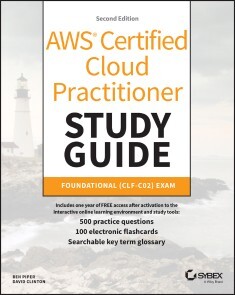
AWS Certified Cloud Practitioner Study Guide With 500 Practice Test Questions
DISTINGUISH YOURSELF BY BECOMING A CERTIFIED AWS CLOUD PRACTITIONERIn the newly revised second edition of AWS Certified Cloud Practitioner Study Guide: Foundational (CLF-C02) Exam, a team of veteran IT professionals and educators delivers an up-to-date and easy-to-follow introduction to Amazon’s industry-leading cloud technology and the introductory certification exam that demonstrates your understanding of it. Used by thousands of companies across the globe, Amazon Web Services (AWS) is an integral part of business IT operations at firms in virtually every industry and sector. In this book, you’ll prepare to pass the recently updated AWS Certification Exam and prove your knowledge of critical AWS cloud technologies and capabilities. You’ll find complete and thorough coverage of every topic included on the exam, from infrastructure to architecture and cybersecurity. You’ll also discover comprehensive discussions of the AWS Cloud value proposition, as well as billing, account management, and pricing models. After reading and completing the practice questions provided by this book, you’ll be able to:* Distinguish yourself as an AWS expert by obtaining a highly sought-after certification in a popular cloud platform* Hone your skills and gain new insights on AWS Cloud you can use in your own profession, whether you work in a technical, managerial, sales, purchasing, or financial role* Fully prepare for and succeed on the new exam using expert content based on real-world knowledge, key exam essentials, and chapter review questions* Access the Sybex online interactive learning environment and test bank, including hundreds of practice questions, a key term glossary, and electronic flashcardsThe AWS Certified AWS Certified Cloud Practitioner Study Guide is an essential resource for any IT professional that works directly with Amazon Web Services, as well as students in IT fields, and non-technical professionals who work with and alongside technical experts. BEN PIPER is an IT consultant who has created more than 30 educational courses covering Amazon Web Services, networking, and automation. Learn more about Ben from his website at www.benpiper.com. DAVID CLINTON is a system administrator, teacher, and writer. He has created training material for subjects including Linux systems, cloud computing (AWS in particular), and virtualization. David has written books on AWS, Linux administration, and data analytics. Access more of David’s technology content at bootstrap-it.com.

The Language of Deception
A PENETRATING LOOK AT THE DARK SIDE OF EMERGING AI TECHNOLOGIESIn The Language of Deception: Weaponizing Next Generation AI, artificial intelligence and cybersecurity veteran Justin Hutchens delivers an incisive and penetrating look at how contemporary and future AI can and will be weaponized for malicious and adversarial purposes. In the book, you will explore multiple foundational concepts to include the history of social engineering and social robotics, the psychology of deception, considerations of machine sentience and consciousness, and the history of how technology has been weaponized in the past. From these foundations, the author examines topics related to the emerging risks of advanced AI technologies, to include:* The use of Large Language Models (LLMs) for social manipulation, disinformation, psychological operations, deception and fraud* The implementation of LLMs to construct fully autonomous social engineering systems for targeted attacks or for mass manipulation at scale* The technical use of LLMs and the underlying transformer architecture for use in technical weapons systems to include advanced next-generation malware, physical robotics, and even autonomous munition systems* Speculative future risks such as the alignment problem, disembodiment attacks, and flash wars.Perfect for tech enthusiasts, cybersecurity specialists, and AI and machine learning professionals, The Language of Deception is an insightful and timely take on an increasingly essential subject. JUSTIN HUTCHENS is a leading voice in the fields of cybersecurity, risk management, and artificial intelligence. He has studied the adversarial misuse of Natural Language Processing (NLP) technology for over a decade. He's a veteran of the United States Air Force and holds a master's degree in information systems.Introduction xi1 Artificial Social Intelligence 12 Social Engineering and Psychological Exploitation 193 A History of Technology and Social Engineering 534 A History of Language Modeling 835 Consciousness, Sentience, and Understanding 1276 The Imitation Game 1517 Weaponizing Social Intelligence 1758 Weaponizing Technical Intelligence 2159 Multimodal Manipulation 23910 The Future 25711 The Quest for Resolution 283Appendix A: Bot Automation 295Appendix B: LLM Pretext Engineering 303Appendix C: CAPTCHA Bypass 317Appendix D: Context Manipulation Attacks 321Appendix E: Attack Optimization with Monte Carlo Simulations 333Appendix F: Autonomous C2 Operations with LLMs 349Appendix G: Disembodiment Attacks 353Bibliography 357Acknowledgments 373About the Author 375Index 377

The Language of Deception
A PENETRATING LOOK AT THE DARK SIDE OF EMERGING AI TECHNOLOGIESIn The Language of Deception: Weaponizing Next Generation AI, artificial intelligence and cybersecurity veteran Justin Hutchens delivers an incisive and penetrating look at how contemporary and future AI can and will be weaponized for malicious and adversarial purposes. In the book, you will explore multiple foundational concepts to include the history of social engineering and social robotics, the psychology of deception, considerations of machine sentience and consciousness, and the history of how technology has been weaponized in the past. From these foundations, the author examines topics related to the emerging risks of advanced AI technologies, to include:* The use of Large Language Models (LLMs) for social manipulation, disinformation, psychological operations, deception and fraud* The implementation of LLMs to construct fully autonomous social engineering systems for targeted attacks or for mass manipulation at scale* The technical use of LLMs and the underlying transformer architecture for use in technical weapons systems to include advanced next-generation malware, physical robotics, and even autonomous munition systems* Speculative future risks such as the alignment problem, disembodiment attacks, and flash wars.Perfect for tech enthusiasts, cybersecurity specialists, and AI and machine learning professionals, The Language of Deception is an insightful and timely take on an increasingly essential subject. JUSTIN HUTCHENS is a leading voice in the fields of cybersecurity, risk management, and artificial intelligence. He has studied the adversarial misuse of Natural Language Processing (NLP) technology for over a decade. He’s a veteran of the United States Air Force and holds a master’s degree in information systems.

Google Cloud Platform for Data Science
This book is your practical and comprehensive guide to learning Google Cloud Platform (GCP) for data science, using only the free tier services offered by the platform.Data science and machine learning are increasingly becoming critical to businesses of all sizes, and the cloud provides a powerful platform for these applications. GCP offers a range of data science services that can be used to store, process, and analyze large datasets, and train and deploy machine learning models.The book is organized into seven chapters covering various topics such as GCP account setup, Google Colaboratory, Big Data and Machine Learning, Data Visualization and Business Intelligence, Data Processing and Transformation, Data Analytics and Storage, and Advanced Topics. Each chapter provides step-by-step instructions and examples illustrating how to use GCP services for data science and big data projects.Readers will learn how to set up a Google Colaboratory account and run Jupyter notebooks, access GCP services and data from Colaboratory, use BigQuery for data analytics, and deploy machine learning models using Vertex AI. The book also covers how to visualize data using Looker Data Studio, run data processing pipelines using Google Cloud Dataflow and Dataprep, and store data using Google Cloud Storage and SQL.WHAT YOU WILL LEARN* Set up a GCP account and project* Explore BigQuery and its use cases, including machine learning* Understand Google Cloud AI Platform and its capabilities * Use Vertex AI for training and deploying machine learning models* Explore Google Cloud Dataproc and its use cases for big data processing* Create and share data visualizations and reports with Looker Data Studio* Explore Google Cloud Dataflow and its use cases for batch and stream data processing * Run data processing pipelines on Cloud Dataflow* Explore Google Cloud Storage and its use cases for data storage * Get an introduction to Google Cloud SQL and its use cases for relational databases * Get an introduction to Google Cloud Pub/Sub and its use cases for real-time data streamingWHO THIS BOOK IS FORData scientists, machine learning engineers, and analysts who want to learn how to use Google Cloud Platform (GCP) for their data science and big data projectsSHITALKUMAR R. SUKHDEVE is an experienced senior data scientist with a strong track record of developing and deploying transformative data science and machine learning solutions to solve complex business problems in the telecom industry. He has notable achievements in developing a machine learning-driven customer churn prediction and root cause exploration solution, a customer credit scoring system, and a product recommendation engine.Shitalkumar is skilled in enterprise data science and research ecosystem development, dedicated to optimizing key business indicators, and adding revenue streams for companies. He is pursuing a doctorate in business administration from SSBM, Switzerland, and an M.Tech in computer science and engineering from VNIT Nagpur.Shitalkumar has authored a book titled Step Up for Leadership in Enterprise Data Science and Artificial Intelligence with Big Data: Illustrations with R and Python and co-authored a book titled Web Application Development with R Using Shiny, 3rd edition. He is a speaker at various technology and business events such as WorldAI Show Jakarta 2021, 2022, and 2023, NXT CX Jakarta 2022, Global Cloud Native Open Source Summit 2022, Cyber Security Summit 2022, and ASEAN Conversational Automation Webinar. You can find him on LinkedIn.SANDIKA S. SUKHDEVE is an expert in Data Visualization and Google-certified Project Management. She previously served as Assistant Professor in a Mechanical Engineering Department and has authored Amazon bestseller titles across diverse markets such as the USA, Germany, Canada, and more. She has a background in Human Resources and a wealth of experience in Branding.As an Assistant Professor, she successfully guided more than 2,000 students and delivered 1,000+ lectures, and mentored numerous projects (including Computational Fluid Dynamics). She excels in managing both people and multiple projects, ensuring timely completion. Her areas of specialization encompass Thermodynamics, Applied Thermodynamics, Industrial Engineering, Product Design and Development, Theory of Machine, Numerical Methods and Optimization, and Fluid Mechanics. She holds a master's degree in Technology (with a Specialization in Heat-Power), and she possesses exceptional skills in visualizing, analyzing, and constructing classification and prediction models using R and MATLAB. You can find her on LinkedIn.Chapter 1: Introduction to GCP.- Chapter 2: Google Colaboratory.- Chapter 3: Big Data and Machine Learning.- Chapter 4: Data Visualization and Business Intelligence.- Chapter 5: Data Processing and Transformation.- Chapter 6: Data Analytics and Storage.- Chapter 7: Advanced Topics.

The Composable Enterprise: Agile, Flexible, Innovative
The benefits of digitalisation do not lie in the use of new technologies for existing processes, but in organisational changes and new business models. The book highlights the composable enterprise as the guiding principle for successful digital transformation and associated cost reductions and revenue increases. What does it mean? A composable enterprise is organised in a decentralised process-oriented way. This allows the enterprise to react quickly to new situations, develop or change processes and business models. The information systems are based on platform architectures. A paradigm shift to monolithic applications.Sector concepts for industry, consulting and universities show how organisation and application architectures interlock in the composable enterprise.The reader receives inspiration, a foundation and a compass for the digital transformation of a company to the composable enterprise.PROF. DR. DR. H.C. MULT. AUGUST-WILHELM SCHEER is one of the most influential figures and entrepreneurs in German computing. The ARIS method he developed for enterprise architecture and process management is used internationally.His books on business informatics have been highly influential and have been translated into several languages. His research focuses on information, innovation and business process management. In addition, Scheer is the publisher of the trade journal IM+io.He has founded several successful IT companies. He has been the sole shareholder of IDS Scheer Holding GmbH since 2010. The company network with over 1,300 employees includes the larger companies Scheer GmbH, imc AG and Scheer PAS GmbH. The company network also has holdings in several start-up companies. In 2014, he founded the non-profit research institute August-Wilhelm Scheer Institute for digital products and processes gGmbH (AWSi).He was a member of the SAP AG supervisory board for 20 years. From 2007 to 2011, he was President of Bitkom e. V. As an IT innovator and entrepreneur, he also works as an independent political consultant.Scheer is also an experienced and respected jazz baritone saxophonist and promotes culture and science with the help of the August-Wilhelm Scheer Foundation for Science and Art, which he founded in 2001. He is the holder of numerous national and international accolades. In 2017, he was inducted into the Hall of Fame of German Research.His interpretation of the composable enterprise is his vision for designing future-oriented digitised companies, one which he also implements in his own companies.

Kubernetes Fundamentals
Explore the world of Kubernetes and learn the concepts needed to develop, deploy, and manage applications on this container orchestrator. This step-by-step development guide is designed for application developers and support members aiming to learn Kubernetes and/or prepare for interviews. All the concepts in the book are presented in Q&A format, with questions framed exactly the way they are asked in an interview, giving you a distinctive edge in interviews.You’ll start by understanding how application development and deployment have evolved over the decades leading up to containerization. You’ll then dive deep into core Kubernetes concepts, learning Kubernetes architecture, Kubernetes objects and workload resources, and how to exploit them to their full potential. You’ll also learn Kubernetes deployment strategies and concepts related to rollout and rollback.Moving on, you’ll look at two very important aspects of any computing ecosystem: networking and storage. You will gain an understanding of access control in Kubernetes and how to manage a Kubernetes cluster using probes, resource quotas, taints, and tolerations. You will also get an overview of Docker and review Docker and Kubernetes best practices. Finally, you will learn about the kubectl command line tool.WHAT YOU WILL LEARN* Learn about basic and advanced Kubernetes objects and workload resources* Master important concepts such as namespaces, selectors, annotations, and access control* Understand the Kubernetes networking and storage system* Manage a Kubernetes cluster with the help of probes, resource quotas, limits, and taintsWHO THIS BOOK IS FORApplication developers and technical managers—both on the development and support sides, beginner and intermediate Kubernetes practitioners and aspirants, and those preparing for Kubernetes interviews.HIMANSHU AGRAWAL is a distinguished IT professional with 13+ years of experience in designing and implementing solutions in JEE technologies. He is currently working as Associate Consultant with CGI, for 13+ years. Himanshu specializes in some niche technical areas like JVM, Multithreading, TLS, Apache, and Kubernetes to name a few, and is a Technical Reviewer of published books. Himanshu has earned certifications from some of the top universities like Harvard and MIT. He is an Oracle Certified Java Dev, Oracle Certified Web Component Dev, and certified by Google Cloud in Architecting with Google Kubernetes Engine. Apart from technical areas, he is a Certified SAFe 5 Practitioner. Himanshu extends his technical expertise to teams primarily in BFSI and Telecom sectors.Chapter 1: Welcome to the World of Containers.- Chapter 2: Kubernetes- Deep Dive Begins.- Chapter 3: Essential Objects in Kubernetes Cluster.- CHAPTER 4: Objects Important for Secure Kubernetes Cluster.- CHAPTER 5: Networking in Kubernetes.- CHAPTER 6: Kubernetes Storage System.- CHAPTER 7: Manage Your Kubernetes Cluster Efficiently.- CHAPTER 8: Best Practices – Kubernetes and Docker.- CHAPTER 9: kubectl – The Command Line Tool

Geheimakte Computer
Der Informatikunterricht ist dir zu trocken? Du bist auf der Suche nach den wirklich spannenden Themen? Halt! Psssst! Dann wirf doch einen Blick in die „Geheimakte Computer“. Sie ist dein Einstieg in die große weite IT-Welt. Hier erfährst du alles, was dich rund um den Computer wirklich interessiert: Bastelprojekte, Computerspiele, Programmierung und nützliches Wissen zu spannenden Themen wie Hacking, Digitalisierung und Sicherheit, künstliche Intelligenz und interessante Persönlichkeiten der Branche. Aus dem Inhalt: Der Computer: das kreativste Werkzeug der WeltKomplex, aber im Prinzip einfach: So funktioniert ein ComputerAlte Technik neu entdeckenGames – besser als ihr RufEine Spielkonsole mit dem Raspberry PiDie dunkle Seite: Hacker-Tricks und wie man sich davor schütztWie gefährlich ist KI?Digitalisierung: Propheten gegen ApokalyptikerDie fiesen Tricks der Tech-IndustrieVision: Die Zukunft des Computers Über dieses Buch ... 11 1. Das kreativste Werkzeug aller Zeiten ... 15 1.1 ... So ist das Buch aufgebaut ... 17 1.2 ... Vom Konsumenten zum Produzenten ... 18 1.3 ... Game Over ... 21 1.4 ... Computerspiele -- mehr als nur Zeitvertreib ... 22 1.5 ... Don't believe the hype! ... 24 1.6 ... Programming-Challenge: Scratch ... 26 1.7 ... Im Porträt: Mitchel Resnick ... 31 1.8 ... Maker-Challenge: Marshmallow-Challenge ... 35 Komplex, aber im Prinzip einfach: So funktioniert ein Computer ... 37 2.1 ... Der Computer für die Jugend ... 38 2.2 ... So funktioniert der Binärcode ... 40 2.3 ... Binärcode -- eine uralte Idee ... 42 2.4 ... Im Porträt: Konrad Zuse ... 45 2.5 ... Die wichtigste Erfindung der letzten 100 Jahre ... 47 2.6 ... Wie Transistoren rechnen ... 48 2.7 ... Von NAND zu Tetris ... 53 2.8 ... Maker-Challenge: ein Logikgatter bauen ... 54 2.9 ... Computer ohne Strom ... 59 2.10 ... Coding-Challenge ... 62 4. Games -- besser als ihr Ruf ... 97 4.1 ... Vom Spiel zum Musikinstrument ... 98 4.2 ... Toshio Iwai und Tod Machover -- die Games-Musiker ... 100 4.3 ... Die Geburt der Spieleindustrie ... 103 4.4 ... Rollenspiele, aber analog statt digital ... 105 4.5 ... Meilensteine der Ultima-Serie ... 106 4.6 ... Gaming-Challenge: Ultima IV spielen ... 109 4.7 ... Interview mit Richard Garriott de Cayeux ... 113 4.8 ... Coding-Challenge: Zeichnen mit Vektoren ... 117 4.9 ... Maker-Challenge: ein Flexahedron bauen ... 119 4.10 ... Schule als Computerspiel ... 125 4.11 ... Was Schulen von Games lernen können ... 126 5. Just for fun: Gaming-Basteleien ... 129 5.1 ... Die Raspberry-Pi-Konsole ... 129 5.2 ... Der Ich-mach-alles-zum-Controller-Controller ... 132 5.3 ... Der One-Button-Ü-Ei-Controller ... 134 5.4 ... Programming-Challenge ... 137 5.5 ... Der IKEA-Joystick ... 140 5.6 ... Deine eigene (tragbare) Konsole ... 145 5.7 ... Bonus-Tipp: alte Konsolen lackieren und umbauen ... 150 Die dunkle Seite: Hackertricks und wie man sich davor schützt ... 155 6.1 ... Die Anfänge des Hackings -- noch ohne Computer ... 157 6.2 ... Hacker als Superhelden ... 159 6.3 ... Die Tools der Hacker ... 161 6.4 ... Fiese Hacking-Hardware für die USB-Schnittstelle ... 163 6.5 ... Maker-Challenge: Setz dem TV-Terror ein Ende ... 166 6.6 ... Den Raspberry in den besten Hacking-Computer (oder den besten zu hackenden Computer) verwandeln ... 169 6.7 ... Erste Schritte in Kali Linux auf dem Raspberry Pi (oder VirtualBox) ... 170 6.8 ... Dein erster Hack ... 172 6.9 ... Die unsichtbaren Daten in der Luft ... 174 6.10 ... Social Engineering -- Menschen hacken ... 176 6.11 ... Interview mit dem IT-Security-Experten Friedhelm Düsterhöft ... 177 6.12 ... Coding-Challenge: Minecraft auf dem Raspberry Pi hacken ... 180 The end of the world as we know it! Wie gefährlich ist künstliche Intelligenz? ... 185 7.1 ... Der Traum vom künstlichen Menschen ... 187 7.2 ... Coding-Challenge: einen einfachen Chatbot programmieren ... 188 7.3 ... Die Anfänge der KI-Forschung ... 189 7.4 ... Was ist Intelligenz? ... 191 7.5 ... Künstliche Intelligenz -- anders, als viele denken ... 193 7.6 ... KI verstehen ... 194 7.7 ... Überwachtes Lernen ... 196 7.8 ... Unüberwachtes Lernen ... 197 7.9 ... Verstärkendes Lernen ... 199 7.10 ... Maker-Challenge: ein selbstfahrendes Auto bauen ... 200 7.11 ... Interview mit der KI-Expertin Viktoriya Olari ... 202 7.12 ... KI-Spielzeug ... 206 7.13 ... KI-Ethik ... 211 8. Computerpropheten: Evangelisten und Apokalyptiker ... 215 8.1 ... Das Ende ist nah ... 215 8.2 ... Manfred Spitzer ... 217 8.3 ... Das ist nachgewiesen. Dazu gibt es gute Untersuchungen ... 218 8.4 ... Ja, aber ... ... 219 8.5 ... Auf anderem Gebiet wesentlich kompetenter ... 220 8.6 ... Joseph Weizenbaum ... 221 8.7 ... Maker-Challenge: einen besseren Chatbot programmieren ... 223 8.8 ... Vom Priester der Informatik zum Ketzer ... 226 8.9 ... Ray Kurzweil ... 228 8.10 ... Erfinder der Zukunft ... 229 8.11 ... Ewiges Leben ... 230 8.12 ... Eine neue Religion ... 231 8.13 ... Was ist der Mensch? ... 232 8.14 ... Und jetzt? ... 233 8.15 ... Maker-Challenge ... 234 8.16 ... Idee Nr. 1: einen LED-Throwie bauen ... 235 8.17 ... Idee Nr. 2: ein LEGO-Set beleuchten ... 237 9. Die fiesen Tricks der Tech-Industrie ... 239 9.1 ... Die Zerstörung einer ganzen Generation? ... 240 9.2 ... Das Handbuch der fiesen Tricks ... 243 9.3 ... Maker-Challenge ... 247 9.4 ... Das Gegengift ... 248 9.5 ... FIFA und die Lootbox ... 249 9.6 ... Illegales Glücksspiel? ... 251 9.7 ... Das unmoralische Diablo ... 254 9.8 ... Die ersten zehn Minuten ... 256 9.9 ... Willkommen an Board! ... 257 9.10 ... Keine Lootboxen? ... 259 9.11 ... Programming-Challenge: ein eigenes Spiel programmieren ... 260 10. Die Zukunft des Computers ... 265 10.1 ... Die Rückkehr des Analogen ... 267 10.2 ... Ungewöhnliche Rechner ... 269 10.3 ... Ein Quantensprung in der Computertechnik ... 270 10.4 ... Quantencomputer ... 273 10.5 ... Wie funktioniert ein Quantencomputer? ... 274 10.6 ... Die Welt als Simulation ... 276 10.7 ... Virtual Reality ... 277 10.8 ... Deine eigene Coding-Challenge ... 280 10.9 ... Dein eigenes Making-Projekt ... 283 Anhang ... 287 A ... Der kleine Raspberry-Pi-Guide ... 287 B ... Einstieg in Python ... 307 Index ... 311

SQL (5. Auflage)
SQL. Der Grundkurs für Ausbildung und Praxis. Mit Beispielen in MySQL/MariaDB, PostgreSQL und T-SQL. In 5., aktualisierter Auflage, November 2023. Lernen Sie SQL ohne Datenbank-VorkenntnisseAls Einsteiger:in werden Sie in diesem Buch Schritt für Schritt an die Arbeit mit SQL herangeführt. Vom Aufbau über das Ändern einer Datenbank und die Auswertung der Daten bis hin zur Administration und zum Verteilen der Datenbank auf verschiedene Server lernen Sie alle wesentlichen Aufgabenstellungen kennen. Die Beispiele sind für MySQL/MariaDB, PostgreSQL und T-SQL getestet.Grundlagen und praktischer EinsatzSie erhalten eine kurze Einführung in die wichtigsten Grundbegriffe und Designregeln für relationale Datenbanken wie ER-Modell, Schlüssel, referenzielle Integrität und Normalformen. Anhand einer Beispieldatenbank, die unter MySQL/MariaDB, PostgreSQL und T-SQL verwendet werden kann, erfahren Sie dann, wie Sie SQL sinnvoll anwenden.Kenntnisse mit Übungsaufgaben festigenJedes Kapitel enthält Übungen, mit denen Sie Ihr frisch erworbenes Wissen testen können. Wenn Sie SQL-Befehle einfach nachschlagen wollen, hilft Ihnen der MySQL-Befehlsindex am Ende des Buches. Darüber hinaus geht der Autor auch auf weiterführendeThemen wie NoSQL und SQL Injection ein, die Lust machen, sich über den Grundkurs hinaus vertiefend mit SQL zu beschäftigen.Unter plus.hanser-fachbuch.de finden Sie die Beispieldatenbank mit rund 1.170 SQL-Anweisungen und die Lösungen zu den Übungsaufgaben zum Download.Ihr exklusiver Vorteil: E-Book inside beim Kauf des gedruckten Buches Ralf Adams, Diplom-Informatiker, ist Lehrer für Informatik (Schwerpunkt Anwendungsentwicklung) am Technischen Berufskolleg 1 der Stadt Bochum. Von 2003 bis 2016 war er Mitglied des IHK-Prüfungsausschusses für Fachinformatiker/Anwendungsentwicklung in Bochum. Seine Erfahrungen im Schulbetrieb und im Prüfungsausschuss sind in das Buch mit eingeflossen.Leseprobe (PDF-Link)

Salesforce Field Service
Salesforce Field Service (formerly Field Service Lightning) connects customers, workforce, and products on a single platform to deliver exceptional on-site services. This book guides Field Service enthusiasts in creating, managing, and automating support with use cases and real-time examples. You will learn Salesforce Field Service which will help you better manage your customers, internal users, and field technicians. As you advance, you’ll learn the whole end-to-end life cycle of creating work orders, associating service appointments to work orders, scheduling and dispatching service appointments to field technicians, and completing the work orders. By the end of this book, you’ll be able to implement, test and deploy Salesforce Field Service for both Desktop and Mobile apps. What you’ll learn · Basics of Field Service · Field Service objects and data model · Field Service schedulingand optimization · Configuring Salesforce Field Service · Managing Salesforce Field Service capabilities · Configuring and using the Field Service Mobile App · Deploying and testing Salesforce Field Service · Salesforce Field Service KPIs and Reporting Who This Book Is for This book is for Salesforce admins, developers, and consultants who are looking to learn and implement Salesforce Field Service. A basic understanding of Salesforce is assumed. Coding or programming experience is not required. Chapter 1: Introducing Salesforce Field Service.- Chapter 2: Salesforce Field Service Objects and Data Model.- Chapter 3: Step by Step Field Service Implementation.- Chapter 4: Scheduling and Optimization.- Chapter 5: Managing Field Service Capabilities.- Chapter 6: Inventory Management.- Chapter 7: Extending Field Service to Mobile.- Chapter 8: Field Service Deployment, Testing, and Analytics.
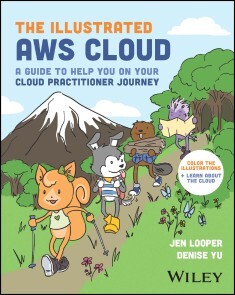
The Illustrated AWS Cloud
AN INTUITIVE, FULLY ILLUSTRATED GUIDE TO AMAZON WEB SERVICES FOR THE VISUALLY ORIENTEDIn The Illustrated AWS Cloud: A Guide to Help You On Your Cloud Practitioner Journey, a team of veteran tech educators delivers a visual and entertaining guide to Amazon Web Services cloud concepts. The authors focus on the job role and responsibilities of an AWS cloud practitioner, guiding readers through choosing the best AWS services for specific use cases. In addition to general cloud concepts, security and compliance, technology, and billing and pricing topics, you’ll find:* High-resolution, black-and-white illustrations clearly explaining critical technical concepts* Comprehensive coverage of working with an AWS account and understanding the AWS environment* Complete chapters on each of the main categories of AWS services, including Compute, Storage, Database, and NetworkingThe authors also provide bonus content on their companion website at https://illustratedaws.cloud/. Perfect for anyone looking for an easy-to-follow and visual introduction to the Amazon Web Services cloud, including those considering a career as a cloud administrator or technical support person, The Illustrated AWS Cloud is an effective resource for business, finance, sales, and marketing professionals who support and collaborate with AWS tech professionals. ABOUT THE AUTHORSJEN LOOPER is the Head of Academic Advocacy at AWS with over 23 years of experience as a web and mobile developer, specializing in creating cross-platform mobile and web apps. A published author, Jen has written Computer Science for Kids (Wiley, 2023), a book aligned to CSTA standards for grades 6-8. Visit www.cs4kids.club for more information. Jen’s area of focus is curriculum development and the application of sound pedagogy to technical topics. Visit Jen’s personal site at WWW.JENLOOPER.COM.DENISE YU is a software engineering manager and occasional illustrator. She has spoken at conferences around the world on topics ranging from distributed computing to competitive debating. She holds an MSc in Social Policy from the London School of Economics and a BA in Economics from Columbia University. You can learn more about Denise at HTTPS://DENISEYU.IO.

The Illustrated AWS Cloud
AN INTUITIVE, FULLY ILLUSTRATED GUIDE TO AMAZON WEB SERVICES FOR THE VISUALLY ORIENTEDIn The Illustrated AWS Cloud: A Guide to Help You On Your Cloud Practitioner Journey, a team of veteran tech educators delivers a visual and entertaining guide to Amazon Web Services cloud concepts. The authors focus on the job role and responsibilities of an AWS cloud practitioner, guiding readers through choosing the best AWS services for specific use cases. In addition to general cloud concepts, security and compliance, technology, and billing and pricing topics, you’ll find:* High-resolution, black-and-white illustrations clearly explaining critical technical concepts* Comprehensive coverage of working with an AWS account and understanding the AWS environment* Complete chapters on each of the main categories of AWS services, including Compute, Storage, Database, and NetworkingThe authors also provide bonus content on their companion website at https://illustratedaws.cloud/. Perfect for anyone looking for an easy-to-follow and visual introduction to the Amazon Web Services cloud, including those considering a career as a cloud administrator or technical support person, The Illustrated AWS Cloud is an effective resource for business, finance, sales, and marketing professionals who support and collaborate with AWS tech professionals. ABOUT THE AUTHORSJEN LOOPER is the Head of Academic Advocacy at AWS with over 23 years of experience as a web and mobile developer, specializing in creating cross-platform mobile and web apps. A published author, Jen has written Computer Science for Kids (Wiley, 2023), a book aligned to CSTA standards for grades 6-8. Visit www.cs4kids.club for more information. Jen’s area of focus is curriculum development and the application of sound pedagogy to technical topics. Visit Jen’s personal site at WWW.JENLOOPER.COM.DENISE YU is a software engineering manager and occasional illustrator. She has spoken at conferences around the world on topics ranging from distributed computing to competitive debating. She holds an MSc in Social Policy from the London School of Economics and a BA in Economics from Columbia University. You can learn more about Denise at HTTPS://DENISEYU.IO.
Datenschutz und IT-Compliance
Das Handbuch für Admins und IT-Leiter: Pflichtlektüre für alle IT-Verantwortlichen von Heise-Justiziar Joerg Heidrich.Als IT-Administrator bewegen Sie sich bei Ihrer täglichen Arbeit regelmäßig in einem juristischen Minenfeld. Welche Daten müssen Sie im Rahmen eines Auskunftsbegehrens herausgeben? Welche Daten gehören in Backups und Logfiles und wann müssen Sie diese löschen? Was ist beim Betrieb von Websites zu beachten und bei der Datenverarbeitung in der Cloud? Wann drohen Ihnen Bußgelder? Dürfen Sie Ihre Kollegen überwachen oder darf der Chef dies anordnen? Die Autoren kennen diese Fragen aus der Praxis und können auf Basis ihrer langjährigen Erfahrung belastbare Antworten darauf geben. Mit unserem Leitfaden erhalten Sie Grundlagenwissen, Entscheidungshilfen und Praxishinweise an die Hand. Aus dem Inhalt:Was sind personenbezogene Daten?Grundsätze der Datenverarbeitung und des technischen DatenschutzSystemprotokolle, Weblogs, Backups, ArchivierungLöschpflichten und LöschkonzepteDatenverarbeitung in der CloudAnforderungen Arbeit im Home OfficeTechnische Gestaltung von Websites, Umgang mit CookiesVerarbeitungsverzeichnisse erstellen, und auf AuftragsverarbeitungAuskunftspflichten nachkommenUmgang mit Daten der Mitarbeiter*innenCompliance-Vorschriften beachten und Umgang mit RegelverstößenStrafrechtliche Risiken für AdminsLeseprobe (PDF-Link)Über die Autoren:Joerg Heidrich ist Justiziar und Datenschutzbeauftragter von Heise Medien und als Fachanwalt für IT-Recht in Hannover mit den rechtlichen Fragen rund um das Internet und neuen technischen Entwicklungen beschäftigt.Christoph Wegener ist promovierter Physiker und seit 1999 als freiberuflicher Berater mit der wecon.it-consulting in den Bereichen Informationssicherheit, Datenschutz und Open Source aktiv.Dennis Werner ist als Fachanwalt für IT-Recht in der Kanzlei Bergfeld & Partner aktiv. Er berät zudem seit 2015 Unternehmen umfassend als TÜV-zertifizierter Datenschutzbeauftragter und ist in dieser Tätigkeit auch in der Praxis tätig.