

Software

Introductory Guideline for Using Twilio Programmable Messaging and Programmable Voice Services
Twilio.com is an American cloud communications platform. Twilio allows software developers to programmatically make and receive phone calls, send and receive text messages, and perform other communication functions using its web service APIs.Twilio uses Amazon Web Services to host telephony infrastructure and provide connectivity between HTTP and the public switched telephone network (PSTN) through its APIsTwilio has very complicated system to understand and use. Its services mainly provided for qualified software developers. But in this report, I will provide introductory guideline for using the Twilio Programmable Messages and Programmable Voices services for simple use without the need to have deep knowledge in Programming. The report consists from the following sections:1.Opening a Twilio Account and get a Twilio Trial Number2.Upgrading the Twilio account 3.Twilio guideline for sending and receiving SMS 4.TwiML for Programmable SMS 5.TwiML for Programmable Voice 6.Basic steps to build Programmable Voice7.Using TwiML Bins functions8.Xampp and Ngrok web server setup for Twilio development 9.Sending messages from the dashboard of the Twilio account 10.Auto Dialer for Twilio Platform11.Summary of testing Programmable Voice using different options12.Summary of testing Programmable Messaging through different options13.Creating free website to save the files on it14.Making voice call using Twilio in browserI am Dr. Hidaia Mahmoud Mohamed Alassouli. I completed my PhD degree in Electrical Engineering from Czech Technical University by February 2003, and my M. Sc. degree in Electrical Engineering from Bahrain University by June 1995. I completed also one study year of most important courses in telecommunication and computer engineering courses in Islamic university in Gaza. So, I covered most important subjects in Electrical Engineering, Computer Engineering and Telecommunications Engineering during my study. My nationality is Palestinian from gaza strip.I obtained a lot of certified courses in MCSE, SPSS, Cisco (CCNA), A+, Linux.I worked as Electrical, Telecommunicating and Computer Engineer in a lot of institutions. I worked also as a computer networking administrator. I had considerable undergraduate teaching experience in several types of courses in many universities. I handled teaching the most important subjects in Electrical and Telecommunication and Computer Engineering. I could publish a lot of papers a top-tier journals and conference proceedings, besides I published a lot of books in Publishing and Distribution houses.I wrote a lot of important Arabic articles on online news websites. I also have my own magazine website that I publish on it all my articles: http:// www.anticorruption.000space.comMy personal website: www.hidaia-alassouli.000space.comEmail: hidaia_alassouli@hotmail.com

Datenvisualisierung mit Excel
Zu jeder Datenanalyse gehört eine klare Visualisierung. Werden Datensätze als Grafiken und Diagramme dargestellt, erleichtert dies das Verständnis von Zusammenhängen und Auffälligkeiten. Excel bietet vielfältige Möglichkeiten, um auch komplexere Daten zu visualisieren. Jedoch ist die richtige Umsetzung ansprechender Diagramme alles andere als einfach. Sie müssen nicht nur die Möglichkeiten der Software kennen. Vielmehr gilt es auch die richtige Darstellungsform für den jeweiligen Zweck zu identifizieren. Welche Daten einer umfangreichen Tabelle sind relevant, wie müssen sie strukturiert und aufbereitet werden, welche Diagrammform ist für diesen Fall besonders geeignet? Dirk Siegmann zeigt in seinem Praxisbuch, wie Sie mit Excel Daten visuell richtig und sicher aufbereiten. Sie erhalten aufeinander aufbauende und verständliche Erklärungen anhand vieler Beispiele. So lernen Sie, wie Sie Daten aus den unterschiedlichen Bereichen anschaulich nur mit den Bordmitteln von Excel visualisieren können. Die Beispiele erlauben Ihnen eine leichte Überführung des Gezeigten auf Ihre eigenen Anwendungszwecke. Der Autor gibt Ihnen hilfreiche Tipps, die Ihnen bei der erfolgreichen Arbeit mit Excel direkt helfen. Aus dem Inhalt: Informationen mit Excel anschaulich machenÜbersicht über die Diagramme von ExcelDaten richtig verarbeitenTabellenstrukturen, Datenreihe, Zahlenformate, ListenEin erstes Diagramm erstellenStandard-Diagramme: Säulen, Balken, Kreise und mehrVarianten und Kombinationen von DiagrammenBedingte FormatierungenErweiterte Diagramm-TypenDie Könisgklasse: individuelle Diagramme mit Excel erstellenDiagramme und VBA 1. Einführung ... 17 1.1 ... Datenvisualisierung -- Informationen anschaulich machen ... 17 1.2 ... Beispieldaten und Aufbau dieses Buches -- der rote Faden ... 19 1.3 ... Diagrammtypen -- eine Übersicht der Excel-Diagramme ... 20 1.4 ... Möglichkeiten und Grenzen von Excel ... 38 2. Daten -- Basis für Diagramme ... 41 2.1 ... Excel-Tabellenblätter -- Daten manuell erfassen ... 41 2.2 ... Textdateien -- Inhalte von CSV- und TXT-Dateien einfügen ... 48 2.3 ... Externe Quellen -- Abfrage von Daten ... 55 2.4 ... Verbund von Daten -- Bereiche als Tabelle formatieren ... 62 2.5 ... Zahlenformate -- Ansichten von Daten anpassen ... 67 2.6 ... Daten berechnen und aggregieren -- Einsatz von Formeln ... 72 3. Das erste Diagramm ... 83 3.1 ... Erstellung eines Diagramms -- verschiedene Wege zum Ziel ... 83 3.2 ... Hinzufügen und Entfernen von Elementen eines Diagramms ... 90 3.3 ... Die Elemente im Einzelnen ... 92 3.4 ... Gestaltung und Formatierung -- das Erscheinungsbild individuell anpassen ... 104 3.5 ... Achsen eines Diagramms -- ein Rahmen für die Visualisierung ... 128 3.6 ... Datenbasis modifizieren -- Erweitern, Reduzieren und Verändern der Diagrammdaten ... 145 4. Standarddiagramme ... 151 4.1 ... Säulen -- Vergleich von Werten zwischen Rubriken ... 151 4.2 ... Balken -- Rangfolgen darstellen ... 155 4.3 ... Linien -- Entwicklung und Trends über Zeiträume visualisieren ... 159 4.4 ... Kreise -- Werte als Proportion anzeigen ... 165 4.5 ... Netze -- Werte relativ zu einem Mittelpunkt darstellen ... 167 4.6 ... Punkte (XY) -- Wertepaare als Basis für neue Darstellungsformen ... 169 4.7 ... Flächen -- Vergleich von Mengen ... 175 4.8 ... Trichter -- Darstellung von Reduktionen ... 178 4.9 ... Sparklines -- Miniaturdiagramme in Zellen ... 179 5. Varianten und Kombinationen von Diagrammen ... 185 5.1 ... Farbpaletten -- Ändern der Standardfarben ... 185 5.2 ... Änderung eines Diagramms -- Ort und Typ neu festlegen ... 190 5.3 ... Kombidiagramme -- unterschiedliche Typen in einem Diagramm kombinieren ... 194 5.4 ... Kreisdiagramm -- kleine Anteile als separaten Kreis oder Säule anzeigen ... 202 5.5 ... 3D-Formatierungen -- optische Effekt hinzufügen ... 204 5.6 ... 3D-Diagramme -- zusätzliche Informationen mit einer Tiefenachse ... 213 5.7 ... Blasendiagramme -- eine dritte Information einem Punkt hinzufügen ... 219 6. Bedingte Formatierungen ... 225 6.1 ... Prinzip der bedingten Formatierung ... 225 6.2 ... Regeltypen -- alle Zellen oder nur bestimmte Zellen formatieren ... 227 6.3 ... Vorgefertigte Regeln für alle Zellen -- Balken, Farben und Symbole ... 231 6.4 ... Vorgefertigte Regeln für bestimmte Zellen -- Wertevergleich ... 235 6.5 ... Neue Regeln erstellen -- individuelle Anpassungen der Vergleichs- und Schwellenwerte und der Formate ... 240 6.6 ... Regeln verwalten -- bedingte Formate auffinden und Gültigkeitsbereiche modifizieren ... 253 6.7 ... Formeln in Regeln -- eigene Berechnungen für logische Vergleiche nutzen ... 258 7. Spezielle Diagramme ... 265 7.1 ... Wasserfalldiagramme -- positive und negative Veränderungen als Säulen darstellen ... 265 7.2 ... Statistische Diagramme ... 268 7.3 ... Hierarchische Diagramme ... 279 7.4 ... Kursdiagramme -- charakteristische Werte eines Finanzprodukts an der Börse ... 286 7.5 ... Flächenkartogramme -- geografische Daten visualisieren ... 290 7.6 ... 3D-Karten ... 294 8. Pivot-Tabellen und -Diagramme ... 303 8.1 ... Daten für Pivot-Analysen ... 303 8.2 ... Erstellen einer Pivot-Tabelle -- Daten aggregieren ... 306 8.3 ... Pivot-Diagramm -- Visualisierung einer Pivot-Tabelle ... 316 8.4 ... Datenanalyse ... 323 9. Individuelle Diagramme ... 337 9.1 ... Veränderungsdiagramme -- prozentuale Änderung zweier Werte visualisieren ... 337 9.2 ... Punktposition -- Prozentwert auf einer Linie positionieren ... 341 9.3 ... Statusanzeige -- einen Wert auf einer Grün-Gelb-Rot-Skala anzeigen ... 344 9.4 ... Tachometer -- Wertungen mittels Ring- und Punktdiagramm darstellen ... 347 9.5 ... Gestapelte Kästchen -- Säulen in kleine Einheiten aufteilen ... 351 9.6 ... Flächenvergleich -- Relation zweier Werte als Quadratflächen anzeigen ... 356 9.7 ... Muster hervorheben -- unterschiedliche Punktgrößen in einem Raster ... 359 9.8 ... Stufendiagramm -- Veränderungen als senkrechte Sprünge einer Linie aufzeigen ... 364 9.9 ... Strichliste -- Werte als Blöcke aus fünf Strichen anzeigen ... 366 9.10 ... Pegelanzeige -- Werte in Form einer fünfteiligen Säule darstellen ... 370 9.11 ... Stabdiagramm -- sehr schmale Säulen in einem Diagramm ... 374 9.12 ... Abweichungen zweier Linien -- farbliche Unterscheidung mit Fehlerindikatoren ... 376 9.13 ... Gantt-Diagramm -- zeitliche Verläufe von Aktivitäten darstellen ... 379 9.14 ... Grafische Elemente in Diagrammen -- Bilder in Säulen ... 386 9.15 ... Diagrammvorlagen -- eigene Formatierungen mehrfach nutzen ... 388 Danksagung ... 391 Index ... 393

Besser coden
Guter Code ist essenziell für gute Software. Und die Schwierigkeiten sind vielfältig: Code glänzt mit schlechter Testbarkeit oder die Wartung lässt das Budget komplett aus dem Rahmen laufen. Uwe Post packt die Praxisprobleme mit zeitlosen Best Practices und aktuellen Tipps aus seinem Erfahrungsschatz an. Punkten Sie mit besserem Code: performant, verständlich, wartbar. Uwe Post hat bereits einige Bugs in seinem Trophäenschrank. Mit einer ordentlichen Prise Humor und viel Projekterfahrung zeigt er, worauf es bei erfolgreichen Software-Projekten wirklich ankommt. Seine Insider-Tipps und Anekdoten aus der Softwareentwicklung helfen Ihnen, stetig an der Qualität Ihres Codes zu arbeiten. Sie werden sehen: Clean Code geht jeden an, der besser programmieren möchte, ob in Java, C++ oder Python. Aus dem Inhalt: GrundregelnCode ReviewTest Driven DesignContinuous IntegrationReibungsloses TeamworkAutomatisierte Build- und VersionskontrollsystemeEntwurfsmusterAutomatisierte UI-TestsDependency InjectionISO 25010Build ToolsUmgang mit Legacy Code 1. Verhindern Sie den Weltuntergang! ... 13 1.1 ... Vorwort ... 13 1.2 ... Schöne neue Welt ... 14 1.3 ... Was läuft falsch? ... 16 1.4 ... Weltuntergang verhindern - aber wie? ... 17 2. Konventionen ... 21 2.1 ... Vereinbarungen im Team ... 21 2.2 ... Wenn die Variable »a« sagt (und sonst nichts) ... 26 2.3 ... Code-Fokus ... 34 2.4 ... Checkliste ... 36 3. Willkommen im Team! ... 39 3.1 ... Check this out: Subversion ... 40 3.2 ... Teamwork integriert: Git ... 51 3.3 ... »Guckstu!« ... 58 3.4 ... Doppelt hält besser: Pair Programming ... 63 3.5 ... Wer macht wann was? ... 66 4. Gut, besser, 91,2 %: Software-Qualität messen ... 75 4.1 ... Muss funktionieren! ... 76 4.2 ... Muss schön sein! ... 81 4.3 ... ISO 25010 und andere Buzzword-Sammlungen ... 101 5. Jeder ist Architekt ... 107 5.1 ... Normalisierte Daten ... 107 5.2 ... Alles ist ein Objekt, aber welches? ... 117 5.3 ... Entwurfsmuster ... 120 5.4 ... Was ist eigentlich ein »Item«? ... 141 5.5 ... Effiziente Software ... 151 5.6 ... Do- und Don't-Merksatz-Akronyme ... 158 5.7 ... Neue Räder extra teuer! ... 163 5.8 ... Meins! (Wirklich?) ... 168 6. Erst mal testen ... 173 6.1 ... Gute und schlechte Unit-Tests ... 174 6.2 ... Testbar und nicht so gut testbar ... 187 6.3 ... Umgekehrt wird ein Schuh draus ... 194 6.4 ... Alles einzeln testen ... 199 6.5 ... Millionen Mausklicks ... 204 7. Continuous Integration ... 211 7.1 ... Digitaler Bauunternehmer ... 211 7.2 ... Java-Builds mit Maven ... 213 7.3 ... Gradle en vogue ... 227 7.4 ... Jenkins, stets zu Ihren Diensten! ... 234 7.5 ... Continuous Integration in der Cloud ... 239 7.6 ... Nicht nur eine Frage des Stils ... 244 7.7 ... NuGet für .NET und MS Azure ... 248 8. Dokumentation, Kommentare & Tools ... 257 8.1 ... Kommentare sind wie Tooltipps ... 257 8.2 ... Dokumentiert sich von allein ... 262 8.3 ... Teamwork online ... 269 9. Betriebssicherheit ... 283 9.1 ... »Es ist ein Fehler aufgetreten. Versuchen Sie es noch einmal.« ... 284 9.2 ... Festplattenweise Protokolle ... 296 9.3 ... Ungebetene Besucher ... 306 10. Schrottcode pimpen ... 323 10.1 ... Was macht der da? ... 323 10.2 ... Refactoring mit Tools ... 328 10.3 ... Who sprech Svenska? ... 340 10.4 ... Endlich: Tests ... 343 11. Trollfütterung ... 349 11.1 ... Umsteiger und Ahnungslose im kalten Wasser ... 349 11.2 ... Früher war alles besser, auch die Betonköpfe ... 352 11.3 ... Das Patchwork-Team ... 354 11.4 ... Billig im Osten ... 357 11.5 ... Der Hase der Produktmanagerin ... 361 11.6 ... Arbeiten wie die Profis ... 364 11.7 ... Leuchtendes Beispiel ... 366 12. Parallelwelten ... 369 12.1 ... Parallel arbeiten ... 369 12.2 ... Losgelöst ... 381 12.3 ... .NET async ... 385 Anhang ... 389 A ... Quizfragen ... 389 B ... Lösungen der Quizfragen ... 395 Index ... 399

Adobe Photoshop
Sie sind begeistert von den Möglichkeiten der Bildbearbeitung und wollen nun Photoshop von Grund auf kennenlernen? Dann werden Sie dieses Buch lieben, denn hier erhalten Sie in über 120 Workshops ein wahres Feuerwerk an Tricks und Kniffen, um das Beste aus Ihren Bildern herauszuholen. Markus Wäger, Photoshop-Profi und Adobe Certified Instructor, hat attraktive Beispiele aus den unterschiedlichsten Gebieten der Photoshop-Welt ausgewählt, die Sie leicht auf Ihre eigenen Bilder übertragen können. Sie korrigieren Farben und Kontraste, ändern Bildausschnitte, erstellen Montagen und Collagen, nutzen Masken, Filter u.v.m. So tauchen Sie immer tiefer in die Welt von Photoshop ein und haben die Software sicher im Griff! Aus dem Inhalt: Photoshop-GrundlagenAuflösung und BildgrößeArbeiten mit Farbe: malen und färbenBelichtungskorrektur: Helligkeit und KontrastFarbkorrektur und SchwarzweißFreistellen und isolierenMontage und CompositingFotografische AufgabenRetuschieren und verbessernFilter und EffekteRaw und HDRAusgabe für Druck, Web und Automatisierung Der Download zum Buch ... 12 Über dieses Buch ... 13 1. Grundlagen ... 14 Einstellungen zurücksetzen ... 16 Voreinstellungen ... 17 Arbeitsbereich einrichten ... 18 Ansicht ändern ... 22 Ein neues Dokument erstellen ... 25 Ein Bild platzieren ... 27 Auf Hintergrundebene reduzieren ... 29 Photoshop-Dokument speichern ... 30 Als TIFF speichern ... 31 Als JPEG speichern ... 32 Als PNG speichern ... 33 2. Bildgröße und Auflösung ... 34 Grundlagenexkurs: Bildgröße und Auflösung ... 36 Druckformat ermitteln ... 46 Bilder verkleinern ... 48 Bilder vergrößern ... 49 Bilder zuschneiden ... 50 Freistellen und Auflösung anpassen ... 53 Arbeitsfläche erweitern ... 55 Ebene skalieren ... 56 Ein Smartobjekt skalieren ... 58 Perspektive korrigieren ... 60 Bilder nachschärfen ... 63 Maskiertes Schärfen ... 65 Drucken ... 68 3. Farbe einstellen und auftragen ... 70 Grundlagenexkurs: Farbe ... 72 Farben definieren ... 82 Fläche füllen ... 85 Farbmischung festlegen ... 88 Eine Füllebene erstellen ... 90 Pinsel einstellen und anwenden ... 92 Mit dem Pinsel arbeiten ... 96 Eine Füllebene bearbeiten ... 100 Mit dem Pinsel umfärben ... 102 Bearbeitung ausradieren ... 104 Nicht-destruktiv umfärben ... 106 Pixel ausradieren ... 108 4. Fläche, Text und Stil ... 110 Eine Ebene mit Verlauf füllen ... 112 Mit Formebenen arbeiten ... 114 Flächentext setzen ... 118 Punkttext setzen ... 122 Texteffekt und Deckkraft ... 124 Eine Vignette hinzufügen ... 128 Ebenen zuschneiden ... 130 Eine Verlaufsebene erstellen ... 132 Gebogenen Text setzen ... 136 Muster erstellen ... 140 Bluttriefende Texte gestalten ... 144 Ein Bild in ein Wort legen ... 148 5. Auswählen und maskieren ... 152 Rund und weich zuschneiden ... 154 Einen Hintergrund umfärben ... 156 Einen Himmel vergrößern ... 159 Farbe und Schwarzweiß mischen ... 162 Einen Filter selektiv anwenden ... 164 Objekte umfärben ... 166 Farbe zu Weiß ... 171 Ein pelziges Tier freistellen ... 174 Hintergrund einer Person tauschen ... 178 Unscharfe Kanten freistellen ... 184 Text hinter Landschaft montieren ... 188 Komplexe Objekte umfärben ... 191 6. Freistellen ... 196 Eine Box mit Pfad freistellen ... 198 Vom Pfad zu Auswahl und Maske ... 201 Schattenwurf simulieren ... 205 Pfade mit Kurven und Ecken ... 210 Freistellen mit Alphakanälen ... 216 Freistellen mit Vektormaske ... 220 Bilder identisch zuschneiden ... 223 7. Bildmontage ... 228 Ein Bild in ein Display montieren ... 230 Weiches Überblenden ... 232 Einen Hintergrund austauschen ... 234 Tag- und Nachtaufnahme vereinen ... 239 Himmel austauschen ... 244 Spiegeln und weich ausblenden ... 248 Zoomeffekt ... 252 Speed-Effekt ... 254 Montage aus zwei Belichtungen ... 258 Einsetzen und Form anpassen ... 260 Ein Logo auf ein Shirt montieren ... 264 Text perspektivisch einfügen ... 268 8. Helligkeit und Kontrast ... 272 Grundlagenexkurs: Tonwertkorrektur ... 274 Automatische Tonwertkorrektur ... 286 Manuelle Tonwertkorrektur ... 289 Kontrast erhöhen ... 292 Kontrast reduzieren ... 296 Dunst entfernen ... 298 Gegenlichtaufnahme verbessern ... 300 RAW-Grundeinstellungen ... 303 RAW-Entwicklung ... 308 Korrektur mit Verlaufsmaske ... 314 Mit Luminanzmasken arbeiten ... 318 Dodge and Burn ... 321 Spiegelungen entfernen ... 324 9. Farbkorrektur ... 326 Grundlagenexkurs: Grundlagen der Farbkorrektur ... 328 Farbkorrektur per Pipette ... 332 Farb- und Tonwertkorrektur ... 335 Weiß, Schwarz und Grau per Klick ... 337 Manuelle Korrektur ... 340 Farbkorrektur mit Messpunkten ... 343 Farbkorrektur beim Porträt ... 347 Weißabgleich in Camera Raw ... 351 Weißabgleich mit Graukarte ... 353 Camera Raw für JPEG & Co ... 355 Farbton und Sättigung ... 358 Einstellungen synchronisieren ... 361 Digitales Zähnebleichen ... 364 Farbtöne gezielt beeinflussen ... 366 10. Retusche ... 370 Elemente duplizieren ... 372 Gespiegelt kopieren ... 375 Ein altes Bild restaurieren ... 378 Störende Elemente entfernen ... 381 Gezielt ausbessern ... 384 Person aus Landschaft entfernen ... 386 Inhaltsbasierte Füllung ... 388 Perspektivisch retuschieren ... 391 Ein Kabel entfernen ... 394 Hautretusche ... 396 Haut glätten ... 398 Augen retuschieren ... 400 Manuelle Hautglättung ... 404 11. Spezielle Aufgaben ... 408 Bildbereiche modellieren ... 410 Schwarzweiß entwickeln ... 414 Volltonfarbe ... 417 Gescannte Unterschrift verbessern ... 420 Pixelige Grafik verbessern ... 422 Aktionen aufzeichnen ... 424 Aktionen bearbeiten ... 430 Aktionen anpassen ... 432 Stapelverarbeitung ... 434 Bilder im Stapel kleiner rechnen ... 437 Animation ... 438 Index ... 442
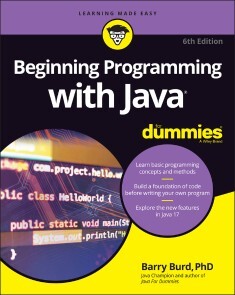
Beginning Programming with Java For Dummies
BECOME A JAVA WIZARD WITH THIS POPULAR PROGRAMMING GUIDEConsider Beginning Programming with Java For Dummies your indispensable guide to learning how to program in one of the most popular programming languages—Java! Java is an invaluable language to master, as it's widely used for application development, including Android, desktop, and server-side applications.Beginning Programming with Java For Dummies is written specifically for newbies to programming. The book starts with an overview of computer programming and builds from there; it explains the software you need, walks you through writing your own programs, and introduces you to a few of the more-complex aspects of programming in Java. It also includes step-by-step examples you can try on your own (and email the author if you need help). As you work through the book, you'll get smart about these Java features:* Object-oriented programming (OOP), a Java mainstay* IntelliJ IDEA, an integrated development environment (IDE), that gives you one place to do all your programming, including debugging code* Loops, branches, and collections* Variables and operators* Expressions, statements, and blocksBeginning Programming with Java For Dummies translates all this foreign programming and computer syntax into plain English, along with plenty of helpful examples and tips. Learning a new language—and coding is definitely its own language—should be a fun endeavor. With this book as your handy interpreter, you’ll be on your way to fluency, speaking the language of coders everywhere!BARRY BURD, PHD holds an MS in Computer Science from Rutgers University and a PhD in Mathematics from the University of Illinois. Barry is the author of numerous For Dummies books, including Java For Dummies and Beginning Programming with Java For Dummies.Introduction 1PART 1: GETTING STARTED WITH JAVA PROGRAMMING 5Chapter 1: The Big Picture 7Chapter 2: Setting Up Your Computer 21Chapter 3: Running Programs 47PART 2: WRITING YOUR OWN JAVA PROGRAMS 71Chapter 4: Exploring the Parts of a Program 73Chapter 5: Composing a Program 95Chapter 6: Using the Building Blocks: Variables, Values, and Types 127Chapter 7: Numbers and Types 149Chapter 8: Numbers? Who Needs Numbers? 173PART 3: CONTROLLING THE FLOW 197Chapter 9: Forks in the Road 199Chapter 10: Which Way Did He Go? 219Chapter 11: Around and Around It Goes 251Chapter 12: Circling Back to Java Loops 275PART 4: THE INSIDE SCOOP 293Chapter 13: Programming with Objects and Classes 295Chapter 14: Using Methods and Fields from a Java Class 315Chapter 15: Creating New Java Methods 347PART 5: SMART JAVA TECHNIQUES 375Chapter 16: Piles of Files: Dealing with Information Overload 377Chapter 17: How to Flick a Virtual Switch 401Chapter 18: Creating Loops within Loops 423Chapter 19: Out of Many, One 443Chapter 20: Oooey-GUI Was a Worm 477PART 6: THE PART OF TENS 503Chapter 21: Ten Useful Classes in the Java API 505Chapter 22: Ten Bits of Advice for New Software Developers 511Index 517
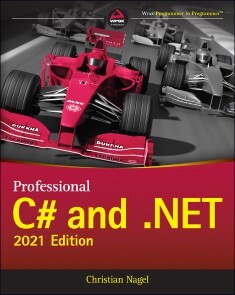
Professional C# and .NET
GET THE LATEST COVERAGE OF THE NEWEST FEATURES IN C#9 AND .NET 5In Professional C# and .NET: 2021 Edition, Microsoft MVP for Visual Studio and Development Technologies and veteran developer, Christian Nagel, delivers a comprehensive tour of the new features and capabilities of C#9 and .NET 5.Experienced programmers making the transition to C# will benefit from the author’s in-depth explorations to create Web- and Windows applications using ASP.NET Core, Blazor, and WinUI using modern application patterns and new features offered by .NET including Microservices deployed to Docker images, GRPC, localization, asynchronous streaming, and much more.The book also offers:* Discussions of the extension of .NET to non-Microsoft platforms like OSX and Linux* Explanations of the newest features in C#9, including support for record types, and enhanced support for tuples, pattern matching, and nullable reference types* Integrating .NET applications with Microsoft Azure services such as Azure App* Configuration, Azure Key Vault, Azure Functions, the Azure Active Directory, and others Downloadable code examples from wrox.com and github.com with online updates for C# 10 and .NET 6Perfect for programmers with a background in C#, Visual Basic, Java, or C/C++, Professional C# and .NET: 2021 Edition will also earn a place in the libraries of software architects seeking an up-to-date and fulsome treatment of the latest C# and .NET releases.CHRISTIAN NAGEL is a Microsoft MVP for Visual Studio and Development Technologies, software architect, and veteran developer who has been building solutions with .NET technologies since 2000. He has authored many acclaimed .NET books, and he also speaks at such international conferences as Ignite (formerly TechEd) and Tech Days. A supporter of .NET user groups, Christian is a Microsoft Certified Trainer and Professional Developer for WinUI and .NET MAUI Apps, ASP.NET Core, and Microsoft Azure.Introduction xxxixPART I: THE C# LANGUAGEChapter 1: .Net Applications And Tools 3Chapter 2: Core C# 24Chapter 3: Classes, Records, Structs, And Tuples 59Chapter 4: Object-Oriented Programming In C# 95Chapter 5: Operators And Casts 119Chapter 6: Arrays 153Chapter 7: Delegates, Lambdas, And Events 177Chapter 8: Collections 193Chapter 9: Language Integrated Query 226Chapter 10: Errors And Exceptions 263Chapter 11: Tasks And Asynchronous Programming 288Chapter 12: Reflection, Metadata, And Source Generators 307Chapter 13: Managed And Unmanaged Memory 335PART II: LIBRARIESChapter 14: Libraries, Assemblies, Packages, And Nuget 377Chapter 15: Dependency Injection And Configuration 392Chapter 16: Diagnostics And Metrics 419Chapter 17: Parallel Programming 440Chapter 18: Files And Streams 485Chapter 19: Networking 52Chapter 20: Security 558Chapter 21: Entity Framework Core 582Chapter 22: Localization 644Chapter 23: Tests 668PART III: WEB APPLICATIONS AND SERVICESChapter 24: Asp.Net Core 687Chapter 25: Services 714Chapter 26: Razor Pages And Mvc 752Chapter 27: Blazor 779Chapter 28: Signalr 801PART IV: APPSChapter 29: Windows Apps 819Chapter 30: Patterns With Xaml Apps 876Chapter 31: Styling Windows Apps 899Index 933
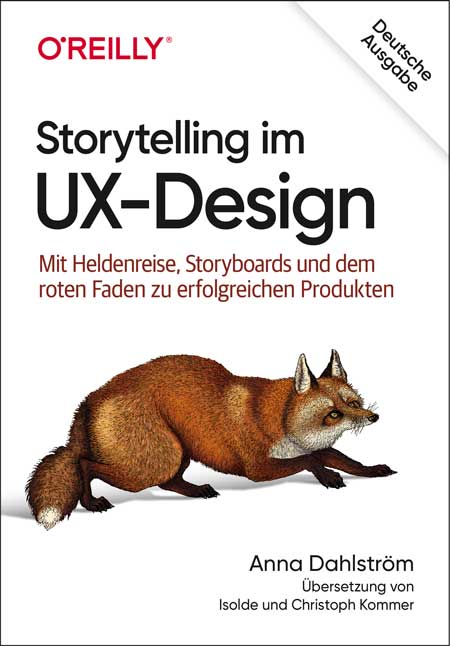
Storytelling im UX-Design
Ideen, Inspirationen und Erkenntnisse aus dem traditionellen Storytelling für next-level UX-DesignAngesichts der Vielfalt der Geräte, Schnittstellen und Kanäle haben Sie heutzutage immer weniger Kontrolle darüber, wie Nutzer:innen Ihre sorgfältig konzipierten Produkte erleben. Trotzdem ist es für Sie sehr wichtig zu verstehen, an welchen Punkten der User Journey Ihre Kund:innen sich befinden, damit Sie die passenden Inhalte und interaktiven Elemente zur richtigen Zeit und auf dem richtigen Gerät bereitstellen können.Mit diesem praktischen Leitfaden lernen Sie, welchen positiven Einfluss Storytelling auf Ihr Produktdesign haben kann und wie es Ihnen dabei hilft, die UX Ihrer Produkte entscheidend zu verbessern. Anna Dahlström zeigt anhand zahlreicher spannender Beispiele, wie Sie Storytelling einsetzen und bewährte Prinzipien aus Film und Literatur wie Heldenreise und Storyboards anwenden, um großartige Produkterfahrungen zu erzeugen. Aus dem Inhalt:Erfahren Sie, wie die Anatomie einer guten Geschichte Ihr Produktdesign maßgeblich verbessern kann.Entdecken Sie, wie sich traditionelle Prinzipien, Werkzeuge und Techniken des Storytellings auf wichtige Faktoren des Produktdesigns auswirken.Lernen Sie, wie Sie mit zielgerichtetem Storytelling die richtige Geschichte erzählen und Menschen zum Handeln motivieren.Nutzen Sie die Regeln des Storytellings, um Ihre Produkte vorzustellen, zu präsentieren und zu verkaufen.»Anna Dahlström leistet großartige Arbeit bei der Anwendung von UX- und Designprinzipien auf Storytelling und Kommunikation. Sie greift auf Theater sowie historisches und modernes Storytelling zurück, um eine fesselnde Erzählung zu schaffen. Ich empfehle dieses Buch allen Designern, die ihre internen und externen Kommunikationsfähigkeiten verbessern wollen, insbesondere denjenigen, die in Führungspositionen aufsteigen wollen.«— Ellen Chisa, Mitbegründerin und CEO, Dark

High-Quality Illumination of Virtual Objects Based on an Environment Estimation in Mixed Reality Applications
Visualizations of virtual objects in the real environment is often done by a simplified representation with simple surfaces and without reference to the surrounding environment. The seamless fusion of the virtual and real environment is, however, an essential factor in many areas, which is of particular importance when calculating lighting in mixed realities on mobile devices. Current approaches focus on approximations, which allow the calculation of diffuse lighting, whereby the rendering of glossy reflection properties is often neglected. The aim of this book is to enable the visualization of mirror-like reflective surfaces in mixed reality. In order to achieve this goal, various approaches are explored enabling high-quality visualization of virtual objects in realtime with a focus on the use of common hardware such as cameras, sensors in mobile devices, and partially depth sensors. Complete ambient lighting can be estimated, which enables detailed reflections. The results provide a novel way to embed complex and simple geometric shapes with glossy surfaces in the real world which offers a higher level of detail in the reflections without using additional hardware.TOBIAS SCHWANDT´S professional and personal focus at the TU Ilmenau is the area of Mixed-Reality (MR). Within his dissertation, he particularly concerned himself with the topic of illumination of virtual content in AR, its influence on the real environment, the reconstruction of the environment light, and the manipulation of real geometry by virtual content.Introduction.- Fundamentals & State of the Art.- Illumination in Mixed Reality.- Realization.- Results.- Discussion & Limitations.- Conclusion & Outlook.
MLOps - Kernkonzepte im Überblick
ERFOLGREICHE ML-PIPELINES ENTWICKELN UND MIT MLOPS ORGANISATORISCHE HERAUSFORDERUNGEN MEISTERN * Stellt DevOps-Konzepte vor, die die speziellen Anforderungen von ML-Anwendungen berücksichtigen * Umfasst die Verwaltung, Bereitstellung, Skalierung und Überwachung von ML-Modellen im Unternehmensumfeld * Für Data Scientists und Data Engineers, die nach besseren Strategien für den produktiven Einsatz ihrer ML-Modelle suchen Viele Machine-Learning-Modelle, die in Unternehmen entwickelt werden, schaffen es aufgrund von organisatorischen und technischen Hürden nicht in den produktiven Betrieb. Dieses Buch zeigt Ihnen, wie Sie erprobte MLOps-Strategien einsetzen, um eine erfolgreiche DevOps-Umgebung für Ihre ML-Modelle aufzubauen, sie kontinuierlich zu verbessern und langfristig zu warten. Das Buch erläutert MLOps-Schlüsselkonzepte, mit denen Data Scientists und Data Engineers ihre ML-Pipelines und -Workflows optimieren können. Anhand von Fallbeispielen, die auf zahlreichen MLOps-Anwendungen auf der ganzen Welt basieren, geben neun ML-Experten wertvolle Einblicke in die fünf Schritte des Modelllebenszyklus - Build, Preproduction, Deployment, Monitoring und Governance. Sie erfahren auf diese Weise, wie robuste MLOps-Prozesse umfassend in den ML-Produktworkflow integriert werden können.
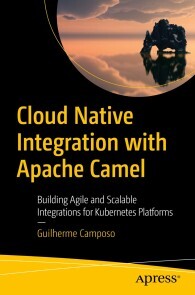
Cloud Native Integration with Apache Camel
Address the most common integration challenges, by understanding the ins and outs of the choices and exemplifying the solutions with practical examples on how to create cloud native applications using Apache Camel. Camel will be our main tool, but we will also see some complementary tools and plugins that can make our development and testing easier, such as Quarkus, and tools for more specific use cases, such as Apache Kafka and Keycloak.You will learn to connect with databases, create REST APIs, transform data, connect with message oriented software (MOMs), secure your services, and test using Camel. You will also learn software architecture patterns for integration and how to leverage container platforms, such as Kubernetes. This book is suitable for those who are eager to learn an integration tool that fits the Kubernetes world, and who want to explore the integration challenges that can be solved using containers.WHAT YOU WILL LEARN* Focus on how to solve integration challenges* Understand the basics of the Quarkus as it’s the foundation for the application* Acquire a comprehensive view on Apache Camel* Deploy an application in Kubernetes * Follow good practices WHO THIS BOOK IS FORJava developers looking to learn Apache Camel; Apache Camel developers looking to learn more about Kubernetes deployments; software architects looking to study integration patterns for Kubernetes based systems; system administrators (operations teams) looking to get a better understand of how technologies are integrated.GUILHERME CAMPOSO is a solution architect. He started to use open source projects and completely fell in love with the OSS philosophy and potential, leading him to start working with an open source company in 2018. Throughout his more than 12-year career, starting as a Java developer, becoming a consultant and then an architect, Guilherme was able to acquire a vast experience helping customers from a great variety of business sectors, giving him a broad view on how integration and good software practices can help businesses to grow. Chapter 1: Welcome to Apache CamelCHAPTER GOAL: Introduce readers to Apache Camel, it's basic concepts and contextualize everything with integration patterns. Also introduce other base tools as Quarkus and Maven.NO OF PAGES Approximately 30 pagesSUB -TOPICS1. Apache Camel basics2. Quarkus basics3. Introduction to Enterprise Integration Patterns4. Hello World application (First Application)Chapter 2: Developing REST IntegrationsCHAPTER GOAL: Introduces the conversation on web services applications using REST, how to expose and how to consume those services. Also gives the first examples of unit testing.NO OF PAGES: Approximately 35 pagesSUB - TOPICS1. Web Services with REST2. Camel REST DSL3. Camel HTTP components4. Unit test with QuarkusChapter 3: Securing Web Services with KeycloakCHAPTER GOAL: Introduces the reader to Keycloak, an Open Source product that provides IAM(Identity and Access Management). Focus on OpenID Connect protocol and how important security isNO OF PAGES : Approximately 35 pagesSUB - TOPICS:1. Keycloak basics2. OpenId Connect Protocol3. Quarkus and Camel securityChapter 4: Access Databases with Apache CamelCHAPTER GOAL: Approaches a very common need in programming: access databases. Here we are going to show how to use two of the most used open source databases: H2 and PostgreSQL.NO OF PAGES: Approximately 40 pagesSUB - TOPICS:1. Camel database components2. Database integration patterns3. In-memory database with H24. Transaction controlChapter 5: Messaging with Apache KafkaCHAPTER GOAL: Introduces the reader to Message Oriented Middleware(MOM), which is a very common integration used. We dive into the architecture aspect of this kind of implementation, getting practical examples using Apache Kafka, another very popular Open Source project.NO OF PAGES: Approximately 40 pagesSUB - TOPICS:1. Message Oriented Middleware2. Apache Kafka3. Asynchronous integrationChapter 6: Deploying application into KubernetesCHAPTER GOAL: Here we discuss the architectural aspects of deploying applications into Kubernetes, discussing micro services architecture, scalability, configuration and patterns as The Twelve-Factor Apps. We also learn how to configure the application and plugins to allow us to test and deploy the application in Kubernetes.NO OF PAGES: Approximately 50 pagesSUB - TOPICS:1. The Twelve-Factor Apps2. Quarkus and Camel properties configuration3. Quarkus plugins for Kubernetes Deployments4. The main Kubernetes aspects to take into consideration for your architecture

Pro Java Microservices with Quarkus and Kubernetes
Build and design microservices using Java and the Red Hat Quarkus Framework. This book will help you quickly get started with the features and concerns of a microservices architecture. It will introduce Docker and Kubernetes to help you deploy your microservices.You will be guided on how to install the appropriate tools to work properly. For those who are new to enterprise development using Quarkus, you will be introduced to its core principles and main features through a deep step-by-step tutorial. For experts, this book offers some recipes that illustrate how to split monoliths and implement microservices and deploy them as containers to Kubernetes.By the end of reading this book, you will have practical hands-on experience of building microservices using Quarkus and you will master deploying them to Kubernetes.WHAT YOU WILL LEARN* Work with Quarkus and GraalVM* Split a monolith using the domain-driven design approach* Implement the cloud and microservices patterns* Rethink the deployment process* Introduce containerization, Docker, and Kubernetes to your toolkit* Boost microservices efficiency and performance with Azure* Play with Quarkus and distributed application runtimesWHO THIS BOOK IS FORJava developers who want to build microservices using Red Hat Quarkus and who want to deploy them in Kubernetes.Nebrass Lamouchi is a senior software engineer at Microsoft, addicted to Java and cloud technologies. He was a NetBeans Dream Team member until December 2017. Nebrass was one of the happy four winners of the Oracle Groundbreaker Awards in May 2019. Since March 2013 he has also worked as a project leader at the OWASP Foundation on the Barbarus Project.Table of ContentsDedication . . . . . . . . . . . . . . . . . . . . . . . . . . . . . . . . . . . . . . . . . . . . . . . . . . . . . . . . . . . . . . . . . . . . . . . . . . . . . . . . . . . . . . . . . . 2Acknowledgements . . . . . . . . . . . . . . . . . . . . . . . . . . . . . . . . . . . . . . . . . . . . . . . . . . . . . . . . . . . . . . . . . . . . . . . . . . . . . . . . . . 3Preface . . . . . . . . . . . . . . . . . . . . . . . . . . . . . . . . . . . . . . . . . . . . . . . . . . . . . . . . . . . . . . . . . . . . . . . . . . . . . . . . . . . . . . . . . . . . . 4What this book covers. . . . . . . . . . . . . . . . . . . . . . . . . . . . . . . . . . . . . . . . . . . . . . . . . . . . . . . . . . . . . . . . . . . . . . . . . . . . . . 5Reader feedback . . . . . . . . . . . . . . . . . . . . . . . . . . . . . . . . . . . . . . . . . . . . . . . . . . . . . . . . . . . . . . . . . . . . . . . . . . . . . . . . . . 6Introduction . . . . . . . . . . . . . . . . . . . . . . . . . . . . . . . . . . . . . . . . . . . . . . . . . . . . . . . . . . . . . . . . . . . . . . . . . . . . . . . . . . . . . . . . . 7Getting started with Containerization. . . . . . . . . . . . . . . . . . . . . . . . . . . . . . . . . . . . . . . . . . . . . . . . . . . . . . . . . . . . . . . . . . 9Introduction to containerization . . . . . . . . . . . . . . . . . . . . . . . . . . . . . . . . . . . . . . . . . . . . . . . . . . . . . . . . . . . . . . . . . . . 10Introducing Docker . . . . . . . . . . . . . . . . . . . . . . . . . . . . . . . . . . . . . . . . . . . . . . . . . . . . . . . . . . . . . . . . . . . . . . . . . . . . . . . 11Installation and first hands-on . . . . . . . . . . . . . . . . . . . . . . . . . . . . . . . . . . . . . . . . . . . . . . . . . . . . . . . . . . . . . . . . . . . . 12Docker Architecture . . . . . . . . . . . . . . . . . . . . . . . . . . . . . . . . . . . . . . . . . . . . . . . . . . . . . . . . . . . . . . . . . . . . . . . . . . . . . . 16Diving into Docker Containers . . . . . . . . . . . . . . . . . . . . . . . . . . . . . . . . . . . . . . . . . . . . . . . . . . . . . . . . . . . . . . . . . . . . . 19Meeting the Docker Services . . . . . . . . . . . . . . . . . . . . . . . . . . . . . . . . . . . . . . . . . . . . . . . . . . . . . . . . . . . . . . . . . . . . . . 31Achieving more with Docker . . . . . . . . . . . . . . . . . . . . . . . . . . . . . . . . . . . . . . . . . . . . . . . . . . . . . . . . . . . . . . . . . . . . . . . 34Containerization is not Docker only . . . . . . . . . . . . . . . . . . . . . . . . . . . . . . . . . . . . . . . . . . . . . . . . . . . . . . . . . . . . . . . . 39Conclusion. . . . . . . . . . . . . . . . . . . . . . . . . . . . . . . . . . . . . . . . . . . . . . . . . . . . . . . . . . . . . . . . . . . . . . . . . . . . . . . . . . . . . . . 42Introduction to the Monolithic architecture . . . . . . . . . . . . . . . . . . . . . . . . . . . . . . . . . . . . . . . . . . . . . . . . . . . . . . . . . . . 43Introduction to an actual situation . . . . . . . . . . . . . . . . . . . . . . . . . . . . . . . . . . . . . . . . . . . . . . . . . . . . . . . . . . . . . . . . . 44Presenting the context. . . . . . . . . . . . . . . . . . . . . . . . . . . . . . . . . . . . . . . . . . . . . . . . . . . . . . . . . . . . . . . . . . . . . . . . . . . . 45How to solve these issues ? . . . . . . . . . . . . . . . . . . . . . . . . . . . . . . . . . . . . . . . . . . . . . . . . . . . . . . . . . . . . . . . . . . . . . . . 45Coding the Monolithic application. . . . . . . . . . . . . . . . . . . . . . . . . . . . . . . . . . . . . . . . . . . . . . . . . . . . . . . . . . . . . . . . . . . . 46Presenting our domain. . . . . . . . . . . . . . . . . . . . . . . . . . . . . . . . . . . . . . . . . . . . . . . . . . . . . . . . . . . . . . . . . . . . . . . . . . . . 47Coding the application . . . . . . . . . . . . . . . . . . . . . . . . . . . . . . . . . . . . . . . . . . . . . . . . . . . . . . . . . . . . . . . . . . . . . . . . . . . . 49Conclusion . . . . . . . . . . . . . . . . . . . . . . . . . . . . . . . . . . . . . . . . . . . . . . . . . . . . . . . . . . . . . . . . . . . . . . . . . . . . . . . . . . . . . 106Upgrading the Monolithic application . . . . . . . . . . . . . . . . . . . . . . . . . . . . . . . . . . . . . . . . . . . . . . . . . . . . . . . . . . . . . . . 107Implementing QuarkuShop Tests . . . . . . . . . . . . . . . . . . . . . . . . . . . . . . . . . . . . . . . . . . . . . . . . . . . . . . . . . . . . . . . . . 108Building and Running QuarkuShop . . . . . . . . . . . . . . . . . . . . . . . . . . . . . . . . . . . . . . . . . . . . . . . . . . . . . . . . . . . . . . . 130Conclusion . . . . . . . . . . . . . . . . . . . . . . . . . . . . . . . . . . . . . . . . . . . . . . . . . . . . . . . . . . . . . . . . . . . . . . . . . . . . . . . . . . . . . 145Building & Deploying the Monolithic application. . . . . . . . . . . . . . . . . . . . . . . . . . . . . . . . . . . . . . . . . . . . . . . . . . . . . . 146Introduction . . . . . . . . . . . . . . . . . . . . . . . . . . . . . . . . . . . . . . . . . . . . . . . . . . . . . . . . . . . . . . . . . . . . . . . . . . . . . . . . . . . . 147Importing the Project in Azure DevOps . . . . . . . . . . . . . . . . . . . . . . . . . . . . . . . . . . . . . . . . . . . . . . . . . . . . . . . . . . . . 147Creating the CI/CD pipelines . . . . . . . . . . . . . . . . . . . . . . . . . . . . . . . . . . . . . . . . . . . . . . . . . . . . . . . . . . . . . . . . . . . . . 150Conclusion . . . . . . . . . . . . . . . . . . . . . . . . . . . . . . . . . . . . . . . . . . . . . . . . . . . . . . . . . . . . . . . . . . . . . . . . . . . . . . . . . . . . . 171Adding the anti-disasters layers . . . . . . . . . . . . . . . . . . . . . . . . . . . . . . . . . . . . . . . . . . . . . . . . . . . . . . . . . . . . . . . . . . . . 172Introduction . . . . . . . . . . . . . . . . . . . . . . . . . . . . . . . . . . . . . . . . . . . . . . . . . . . . . . . . . . . . . . . . . . . . . . . . . . . . . . . . . . . . 173Implementing the Security Layer . . . . . . . . . . . . . . . . . . . . . . . . . . . . . . . . . . . . . . . . . . . . . . . . . . . . . . . . . . . . . . . . . 173Implementing the Monitoring Layer. . . . . . . . . . . . . . . . . . . . . . . . . . . . . . . . . . . . . . . . . . . . . . . . . . . . . . . . . . . . . . . 216Conclusion . . . . . . . . . . . . . . . . . . . . . . . . . . . . . . . . . . . . . . . . . . . . . . . . . . . . . . . . . . . . . . . . . . . . . . . . . . . . . . . . . . . . . 226Microservices Architecture Pattern . . . . . . . . . . . . . . . . . . . . . . . . . . . . . . . . . . . . . . . . . . . . . . . . . . . . . . . . . . . . . . . . . 227Introduction . . . . . . . . . . . . . . . . . . . . . . . . . . . . . . . . . . . . . . . . . . . . . . . . . . . . . . . . . . . . . . . . . . . . . . . . . . . . . . . . . . . . 228Microservices Architecture. . . . . . . . . . . . . . . . . . . . . . . . . . . . . . . . . . . . . . . . . . . . . . . . . . . . . . . . . . . . . . . . . . . . . . . 229Making the Switch . . . . . . . . . . . . . . . . . . . . . . . . . . . . . . . . . . . . . . . . . . . . . . . . . . . . . . . . . . . . . . . . . . . . . . . . . . . . . . 230Splitting the Monolith: Bombarding the domain . . . . . . . . . . . . . . . . . . . . . . . . . . . . . . . . . . . . . . . . . . . . . . . . . . . . . . 231Introduction . . . . . . . . . . . . . . . . . . . . . . . . . . . . . . . . . . . . . . . . . . . . . . . . . . . . . . . . . . . . . . . . . . . . . . . . . . . . . . . . . . . . 232What is Domain-Driven Design ? . . . . . . . . . . . . . . . . . . . . . . . . . . . . . . . . . . . . . . . . . . . . . . . . . . . . . . . . . . . . . . . . . . 232Bombarding QuarkuShop . . . . . . . . . . . . . . . . . . . . . . . . . . . . . . . . . . . . . . . . . . . . . . . . . . . . . . . . . . . . . . . . . . . . . . . . 234Dependencies and Commons . . . . . . . . . . . . . . . . . . . . . . . . . . . . . . . . . . . . . . . . . . . . . . . . . . . . . . . . . . . . . . . . . . . . 234Entities. . . . . . . . . . . . . . . . . . . . . . . . . . . . . . . . . . . . . . . . . . . . . . . . . . . . . . . . . . . . . . . . . . . . . . . . . . . . . . . . . . . . . . . . . 234Refactoring Databases . . . . . . . . . . . . . . . . . . . . . . . . . . . . . . . . . . . . . . . . . . . . . . . . . . . . . . . . . . . . . . . . . . . . . . . . . . 236Transactional Boundaries. . . . . . . . . . . . . . . . . . . . . . . . . . . . . . . . . . . . . . . . . . . . . . . . . . . . . . . . . . . . . . . . . . . . . . . . 236Summary . . . . . . . . . . . . . . . . . . . . . . . . . . . . . . . . . . . . . . . . . . . . . . . . . . . . . . . . . . . . . . . . . . . . . . . . . . . . . . . . . . . . . . . 238Applying DDD to the code. . . . . . . . . . . . . . . . . . . . . . . . . . . . . . . . . . . . . . . . . . . . . . . . . . . . . . . . . . . . . . . . . . . . . . . . . . . 239Introduction . . . . . . . . . . . . . . . . . . . . . . . . . . . . . . . . . . . . . . . . . . . . . . . . . . . . . . . . . . . . . . . . . . . . . . . . . . . . . . . . . . . . 240Applying Bounded Contexts to Java Packages . . . . . . . . . . . . . . . . . . . . . . . . . . . . . . . . . . . . . . . . . . . . . . . . . . . . . 240Locating & breaking the BC Relationships . . . . . . . . . . . . . . . . . . . . . . . . . . . . . . . . . . . . . . . . . . . . . . . . . . . . . . . . . 242Meeting the microservices concerns and patterns. . . . . . . . . . . . . . . . . . . . . . . . . . . . . . . . . . . . . . . . . . . . . . . . . . . . 249Introduction . . . . . . . . . . . . . . . . . . . . . . . . . . . . . . . . . . . . . . . . . . . . . . . . . . . . . . . . . . . . . . . . . . . . . . . . . . . . . . . . . . . . 250Cloud Patterns . . . . . . . . . . . . . . . . . . . . . . . . . . . . . . . . . . . . . . . . . . . . . . . . . . . . . . . . . . . . . . . . . . . . . . . . . . . . . . . . . . 250What’s next? . . . . . . . . . . . . . . . . . . . . . . . . . . . . . . . . . . . . . . . . . . . . . . . . . . . . . . . . . . . . . . . . . . . . . . . . . . . . . . . . . . . . 257Getting started with Kubernetes . . . . . . . . . . . . . . . . . . . . . . . . . . . . . . . . . . . . . . . . . . . . . . . . . . . . . . . . . . . . . . . . . . . . 258Introduction . . . . . . . . . . . . . . . . . . . . . . . . . . . . . . . . . . . . . . . . . . . . . . . . . . . . . . . . . . . . . . . . . . . . . . . . . . . . . . . . . . . . 259What is Kubernetes ? . . . . . . . . . . . . . . . . . . . . . . . . . . . . . . . . . . . . . . . . . . . . . . . . . . . . . . . . . . . . . . . . . . . . . . . . . . . . 259Run Kubernetes locally . . . . . . . . . . . . . . . . . . . . . . . . . . . . . . . . . . . . . . . . . . . . . . . . . . . . . . . . . . . . . . . . . . . . . . . . . . 269Practical Summary & Conclusion . . . . . . . . . . . . . . . . . . . . . . . . . . . . . . . . . . . . . . . . . . . . . . . . . . . . . . . . . . . . . . . . . 271Additional reading. . . . . . . . . . . . . . . . . . . . . . . . . . . . . . . . . . . . . . . . . . . . . . . . . . . . . . . . . . . . . . . . . . . . . . . . . . . . . . . 272Implementing the Cloud Patterns . . . . . . . . . . . . . . . . . . . . . . . . . . . . . . . . . . . . . . . . . . . . . . . . . . . . . . . . . . . . . . . . . . . 274Introduction . . . . . . . . . . . . . . . . . . . . . . . . . . . . . . . . . . . . . . . . . . . . . . . . . . . . . . . . . . . . . . . . . . . . . . . . . . . . . . . . . . . . 275Bringing the Monolithic Universe to Kubernetes . . . . . . . . . . . . . . . . . . . . . . . . . . . . . . . . . . . . . . . . . . . . . . . . . . . 275Conclusion . . . . . . . . . . . . . . . . . . . . . . . . . . . . . . . . . . . . . . . . . . . . . . . . . . . . . . . . . . . . . . . . . . . . . . . . . . . . . . . . . . . . . 293Building the Kubernetized Microservices . . . . . . . . . . . . . . . . . . . . . . . . . . . . . . . . . . . . . . . . . . . . . . . . . . . . . . . . . . . . 294Introduction . . . . . . . . . . . . . . . . . . . . . . . . . . . . . . . . . . . . . . . . . . . . . . . . . . . . . . . . . . . . . . . . . . . . . . . . . . . . . . . . . . . . 295Creating the Commons Library . . . . . . . . . . . . . . . . . . . . . . . . . . . . . . . . . . . . . . . . . . . . . . . . . . . . . . . . . . . . . . . . . . . 295Implementing the Product µservice . . . . . . . . . . . . . . . . . . . . . . . . . . . . . . . . . . . . . . . . . . . . . . . . . . . . . . . . . . . . . . . 299Implementing the Order µservice . . . . . . . . . . . . . . . . . . . . . . . . . . . . . . . . . . . . . . . . . . . . . . . . . . . . . . . . . . . . . . . . . 306Implementing the Customer µservice . . . . . . . . . . . . . . . . . . . . . . . . . . . . . . . . . . . . . . . . . . . . . . . . . . . . . . . . . . . . . 315Implementing the User µservice . . . . . . . . . . . . . . . . . . . . . . . . . . . . . . . . . . . . . . . . . . . . . . . . . . . . . . . . . . . . . . . . . . 317Conclusion . . . . . . . . . . . . . . . . . . . . . . . . . . . . . . . . . . . . . . . . . . . . . . . . . . . . . . . . . . . . . . . . . . . . . . . . . . . . . . . . . . . . . 318Flying all over the Sky with Quarkus and Kubernetes . . . . . . . . . . . . . . . . . . . . . . . . . . . . . . . . . . . . . . . . . . . . . . . . . 319Introduction . . . . . . . . . . . . . . . . . . . . . . . . . . . . . . . . . . . . . . . . . . . . . . . . . . . . . . . . . . . . . . . . . . . . . . . . . . . . . . . . . . . . 320Implementing the Circuit Breaker pattern . . . . . . . . . . . . . . . . . . . . . . . . . . . . . . . . . . . . . . . . . . . . . . . . . . . . . . . . . 320Implementing the Log Aggregation pattern . . . . . . . . . . . . . . . . . . . . . . . . . . . . . . . . . . . . . . . . . . . . . . . . . . . . . . . . 324Implementing the Distributed Tracing pattern . . . . . . . . . . . . . . . . . . . . . . . . . . . . . . . . . . . . . . . . . . . . . . . . . . . . . 334Implementing the API Gateway pattern . . . . . . . . . . . . . . . . . . . . . . . . . . . . . . . . . . . . . . . . . . . . . . . . . . . . . . . . . . . 343Conclusion . . . . . . . . . . . . . . . . . . . . . . . . . . . . . . . . . . . . . . . . . . . . . . . . . . . . . . . . . . . . . . . . . . . . . . . . . . . . . . . . . . . . . 346Playing with Quarkus in Azure . . . . . . . . . . . . . . . . . . . . . . . . . . . . . . . . . . . . . . . . . . . . . . . . . . . . . . . . . . . . . . . . . . . . . . 347Bringing Dapr into the game . . . . . . . . . . . . . . . . . . . . . . . . . . . . . . . . . . . . . . . . . . . . . . . . . . . . . . . . . . . . . . . . . . . . . . . . 349Final words & thoughts . . . . . . . . . . . . . . . . . . . . . . . . . . . . . . . . . . . . . . . . . . . . . . . . . . . . . . . . . . . . . . . . . . . . . . . . . . . . 351About the author . . . . . . . . . . . . . . . . . . . . . . . . . . . . . . . . . . . . . . . . . . . . . . . . . . . . . . . . . . . . . . . . . . . . . . . . . . . . . . . . . . 352

Infrastructure-as-Code Automation Using Terraform, Packer, Vault, Nomad and Consul
Discover the methodologies and best practices for getting started with HashiCorp tools, including Terraform, Vault, and Packer. The book begins with an introduction to the infrastructure-as-code concept while establishing the need for automation and management technologies. You’ll go over hands-on deployment, configuration, and best practices for Terraform, Packer, Vault, Nomad, and Consul. You’ll then delve deeper into developing automation code using Terraform for automating AWS/Azure/GCP public cloud tasks; advanced topics include leveraging Vault for secrets management and Packer for image management.Along the way you will also look at Nomad and Consul for managing application orchestration along with network interconnectivity. In each chapter you will cover automated infrastructure and application deployment on the VM/container base ecosystem. The book provides sample code and best-practice guidance for developers and architects to look at infrastructure-as-code adoption from a holistic viewpoint.All the code presented in the book is available in the form of scripts, which allow you to try out the examples and extend them in interesting ways.WHAT YOU WILL LEARN* Get an overview of the architecture of Terraform, Vault, Packer, Nomad, and Consul* Follow hands-on steps for enabling Terraform, Vault, Packer, Nomad, and Consul* Automate various services on the public cloud, including AWS, Azure, and GCP WHO THIS BOOK IS FORDevelopers, architects, and administrators who want to learn about infrastructure-as-code automation.Navin Sabharwal is an innovator, thought leader, author, and consultant in the areas of AI, machine learning, cloud computing, big data analytics, and software product development. He is responsible for IP development and service delivery in the areas of AI and machine learning, automation products, GCP, cloud computing, public cloud AWS, and Microsoft Azure. Navin has created niche award-winning products and solutions and has filed numerous patents in diverse fields such as IT services, assessment engines, ranking algorithms, capacity planning engines, and knowledge management.Sarvesh Pandey is an innovator and thought leader in the area of hybrid cloud lifecycle automation covering technologies such as cloud management automation, and infrastructure-as-code and runbook automation with overall 15 years of IT experience. He currently works as associate director and practice head for cloud management automation in the HCL DRYiCE practice focusing on planning, designing, and managing multiple infrastructure automation projects of strategic importance to the cloud journey and the IAC framework. He possesses excellent experience of working with highly engineered systems which require deep understanding of cutting-edge technology and their key drivers in multiple markets.Piyush is a solution architect for automation, DevOps, and cloud services with overall ten years of IT experience. Piyush is currently working as a deputy general manager at HCL DRYiCE practice focusing on creating solutions catering to cloud adoption (including cloud landing zone, migration, and operations), automation, orchestration, and cloud lifecycle management.Chapter 1- Introduction to Hashicorp Terraform,Packer and Vault• Infrastructure as Code introduction• Introduction to Terraform• Introduction to Vault• Introduction to PackerChapter 2- Setting Up Hashicorp Terraform• Introduction to Terraform Cli,cloud and enterprise• Setting up Terraform CliChapter 3- Setting Up Hashicorp Vault• Introduction to Vault opensource and enterprise• Understanding Vault architecture• Using Vault security model• Installing Vault CliChapter 4 – Programming with Terraform• Understanding programming components• Setting up first use case for automation for AWS• Setting up first use case for automation for AZURE• Setting up first use case for automation for GCPChapter 5 - Setting up Hashicorp Packer• Understanding Packer components• Installing Packer• Setting up automated AWS image management• Setting up automated Azure image management• Setting up automated GCP image managementChapter 6 - DevSecOps Automation Using Terraform,Packer and Vault• Introduction to DevSecOps automation• Continuous integration and delivery automationChapter 7- Self Service Automation Using Terraform,Packer and Vault• Approaches for self service automation• Setting up self service automation using vRealize automation

Excel Formeln und Funktionen
- Für die Versionen Microsoft 365 und Office 2019 + 2016- Mit Beispieldateien zum DownloadDie Funktionen SUMME und MITTELWERT dürften allen Excel-Anwendern bekannt sein. Darüber hinaus stellt das Programm einen umfangreichen Katalog an Funktionen, der mit neuen Versionen stetig erweitert wird, für (fast) jeden Einsatzzweck bereit. Dieses Handbuch vermittelt Ihnen anhand zahlreicher Abbildungen das geballte Profiwissen in Excel. Lernen Sie die Datums- und Textfunktionen, Logik-, Nachschlage-, Verweis- und Auswertungsfunktionen sowie ausgewählte Funktionen aus den Bereichen Statistik, Finanzmathematik und Mathematik sowie ihre Einsatzmöglichkeiten kennen und beherrschen. Zudem behandelt die Autorin Themen wie die bedingte Formatierung, die Visualisierung mit Diagrammen, die Fehlerbehandlung in Formeln und den viel zu wenig beachteten Solver. Mit seinen praktischen Beispielen dient das Buch nicht nur als reines Nachschlagewerk, sondern gibt Ihnen auch Tipps, wie Sie die passende Funktion finden.Aus dem Inhalt:- Grundlegende Techniken rund um Formeln und Funktionen- Nützliche Werkzeuge, z. B. Steuerelemente und bedingte Formatierung- Datums-, Uhrzeit- und Textfunktionen- Logische Funktionen und ihre Verwendung (WENN, WENNS, UND, ODER usw.)- SVERWEIS & Co., die Nachschlage- und Verweisfunktionen- Summen, Mittelwerte und Rangfolgen berechnen- Statistische Maßzahlen und Analysen (Verteilungen, Prognosen und Korrelationen)- Werte im Diagramm darstellen- Zahlen runden und wichtige mathematische Funktionen einsetzen- Verzinsung und Abschreibungen ermitteln- Lösungen mit dem Solver optimieren

Creating Wordpress Online Store and Wordpress Online Magazine
The objective of this work is to develop a Word Press Online Store with Different Ecommerce Plugins and Themes and Word Press Online Magazine with MH Magazine ThemeThe work consists of three parts:i. Part I: Building Personal Websie with online shop the sell Ebooks:The objective of this part is to develop a Ecommerce word press website with all commonly used Plug-ins.First I registered in some free webhost my domain http://hidaia-alassouli.000space.comThen I created the database and installed the word press package.I installed after that all important Plugins for my website. I tested different ecommerce plugin to sell ebooks .The report includes:1- Changing the wordpress theme.2- Creating the frontpage post and the other pages.3- Adding Gallery Plugin.4- Adding yoast.5- Submission the Site to Search Engine and Analyze your Website6- Adding Contact Form Plugin7- Using easyfiledownloads Plugin to sell ebooks8- Using WP-Ecommerce Plugin to sell ebooks9- Using WP Shopping Cart Plugin10- Using Woocommerce Plugin to sell my EbooksI ended up to build my ecommerce shop with woocommerce as it was the most efficient and comfortable.ii. Part II: Building Ecomerce website with mystile theme and woocommerce pluginThe objective of this part is to develop a Ecommerce website with mystyle theme and woocommerce plugin and other commonly used Plug-ins.First I registered in some free webhost my domain http://hedaya-alasooly.000space.comThen I created the database and installed the word press package.I installed after that all important Plugins for my website. The second part of report includes:1- Installing mystyle theme.2- Installing woocommerce plugin Plugin.3- Adding yoast seo Plugin.4- Submission the Site to Search Engine and Analyze your Websiteiii. Part III: Building Online magazine website with MH-Magazine themeThe objective of this part is to develop an online magazine website with MH Magazine theme and other commonly used Plug-ins.First I registered in some free webhost my domain http://anticorruption.000space.com.Then I created the database and installed the word press package.I installed after that all important Plugins for my website. The third part of report includes:1- Installing MH Magazine theme.2- Configuring MH Magazine theme.3- Adding yoast seo Plugin.4- Submission the Site to Search Engine and Analyze your WebsiteI am Dr. Hidaia Mahmoud Mohamed Alassouli. I completed my PhD degree in Electrical Engineering from Czech Technical University by February 2003, and my M. Sc. degree in Electrical Engineering from Bahrain University by June 1995. I completed also one study year of most important courses in telecommunication and computer engineering courses in Islamic university in Gaza. So, I covered most important subjects in Electrical Engineering, Computer Engineering and Telecommunications Engineering during my study. My nationality is Palestinian from gaza strip.I obtained a lot of certified courses in MCSE, SPSS, Cisco (CCNA), A+, Linux.I worked as Electrical, Telecommunicating and Computer Engineer in a lot of institutions. I worked also as a computer networking administrator.I had considerable undergraduate teaching experience in several types of courses in many universities. I handled teaching the most important subjects in Electrical and Telecommunication and Computer Engineering.I could publish a lot of papers a top-tier journals and conference proceedings, besides I published a lot of books in Publishing and Distribution houses.I wrote a lot of important Arabic articles on online news websites. I also have my own magazine website that I publish on it all my articles: http:// www.anticorruption.000space.comMy personal website: www.hidaia-alassouli.000space.comEmail: hidaia_alassouli@hotmail.com

Einführung in die Elektrotechnik (2. Auflage)
Die Elektrotechnik ist vielfältig, spannend – und sehr anspruchsvoll. Damit Sie Ihr Studium meistern, vermittelt Ihnen dieser umfassende Einstieg alles, was Sie für die Prüfungen benötigen: Von den physikalischen und mathematischen Grundlagen über Gleich- und Wechselstromkreise, Drehstrom, Elektromagnetismus bis hin zu Netzwerken und Schaltungen wird der gesamte Stoff des Grundstudiums abgedeckt. Merksätze, Schaltungsdiagramme, Übungen und Musterlösungen helfen Ihnen beim Lernen. Für E-Techniker und alle, die es werden wollen.Aus dem Inhalt:Elektronische GrundbegriffeElektrostatikGleichstromkreiseNetzwerkberechnungenMagnetische FelderWechselstromkreiseFilter und PassschaltungenDrehstromLeseprobe (PDF-Link)Zur Autorin:Marika Höwing (Dipl.-Math.) ist seit vielen Jahren Dozentin für Elektrotechnik, Physik und Mathematik sowie Mitglied des Prüfungsausschuss Industrieelektriker – Geräte und Systeme der IHK Köln.

S3D Dashboard
Over the last decades, the interior of cars has been constantly changing. A promising, yet unexplored, modality are large stereoscopic 3D (S3D) dashboards. Replacing the traditional car dashboard with a large display and applying binocular depth cues, such a user interface (UI) could provide novel possibilities for research and industry. In this book, the author introduces a development environment for such a user interface. With it, he performed several driving simulator experiments and shows that S3D can be used across the dashboard to support menu navigation and to highlight elements without impairing driving performance. The author demonstrates that S3D has the potential to promote safe driving when used in combination with virtual agents during conditional automated driving. Further, he present results indicating that S3D navigational cues improve take-over maneuvers in conditional automated vehicles. Finally, investigating the domain of highly automated driving, he studied how users would interact with and manipulate S3D content on such dashboards and present a user-defined gesture set. Introduction.- Background.- Related Work.- Prototyping S3D Automotive UIs.- Design Space for S3D Dashboards.- S3D for Change Detection and System Control.- Using S3D for Trust and Social Presence.- Urgent Cues While Driving: S3D Take-over Requests.- A User-elicited Gesture Set.- Discussion: On the Potential of S3D Dashboards.- Conclusion & Future Work.

Samba 4 (2. Auflg.)
Das Handbuch für Administratoren in aktualisierter 2. Auflage. Aktuell zu Samba 4.14.Dieses Buch gibt Ihnen eine umfangreiche Anleitung für die Einrichtung und den Betrieb einer Samba-4-Umgebung.Ein Schwerpunkt liegt auf der Verwendung von Samba 4 als Active Directory-Domaincontroller. Dabei werden alle Schritte zu deren Verwaltung beschrieben bis hin zur Behebung eines Ausfalls von Domaincontrollern.Ein weiterer Schwerpunkt ist die Verwaltung von Fileservern in einer Netzwerkumgebung, sei es als einzelner Server oder als Cluster. Bei der Einrichtung des Clusters wird dabei komplett auf Open-Source-Software gesetzt. Auch die Einbindung von Clients – von Windows, Linux und (neu) macOS – kommt nicht zu kurz. Zudem wird die neue Möglichkeit der GPOs für Linux-Clients erklärt. Die Einrichtung von zwei DHCP-Servern für die ausfallsichere DDNS-Umgebung wird mit allen Schritten und Skripten beschrieben.Gerade als Linux-Administrator ist man es gewohnt, alles möglichst über Skripte auf der Kommandozeile durchführen zu können. Deshalb gibt es zu diesem Bereich ein eigenes Kapitel.Auch die Durchführung der Migration von Samba 3 auf Samba 4 oder von einem Windows Active Directory auf ein Samba 4 Active Directory wird ausführlich erläutert. Das Buch ist somit eine gute Grundlage für Einsteiger und erfahrene Administratoren.Aus dem Inhalt:Installation aus verschiedenen Repositories und DistributionenEinrichten und Testen von DomaincontrollernBenutzerverwaltungGrundlagen zu GruppenrichtlinienEinrichtung servergespeicherter Profile und Ordnerumleitung via GPOsEinrichtung von RODC (Read Only Domain Controller)Ausfallsichere DDNS-InfrastrukturFileserver in der DomäneFreigaben einrichten und verwaltenEinrichtung des VirusfiltersClients in der DomäneCluster mit CTDB und GlusterFSSchemaerweiterungEinrichten von VertrauensstellungenMigrationSamba 4 als PrintserverHilfe zur FehlersucheInstallation mit Ansible Leseprobe (PDF-Link)
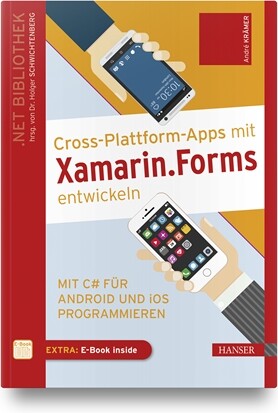
Cross-Plattform-Apps mit Xamarin.Forms entwickeln
Mit C# für Android und iOS programmieren, Cross-Plattform-Apps mit Xamarin.Forms entwickelnSie möchten Apps entwickeln, die sowohl auf iOS als auch auf Android nativ lauffähig sind? Schritt für Schritt führt André Krämer (Microsoft MVP) Sie in die Welt der Cross-Plattform-Entwicklung mit Xamarin.Forms und C# ein. Von der einheitlichen Codebasis über die Oberflächengestaltung und Datenbankanbindung bis zum Zugriff auf Geräte-APIs lernen Sie hier alles, um plattformübergreifende Apps zu entwickeln.Im Laufe der Lektüre dieses Buches programmieren Sie eine Beispiel-App für ein fiktives Restaurant und vertiefen dabei das in den Kapiteln erworbene Wissen.Das Buch setzt Grundkenntnisse in der Programmierung mit C# voraus. Erfahrung mit XAML ist von Vorteil, jedoch nicht erforderlich.Sämtliche Beispiele des Buchs finden Sie im zugehörigen GitHub-Repository.Aus dem Inhalt:XamarinAndroid, Xamarin.iOS und Xamarin.FormsArchitektur von Cross-Plattform-Apps/Oberflächendesign mit LayoutcontainernEingabeformulare anlegenNavigation und die Xamarin.FormsShellListenBilder Icons und SchriftartenStylesThemes in Xamarin.FormsAufruf von WebservicesLokale DatenhaltungXamarin.EssentialsLeseprobe (PDF Link)

Grundlagen der Mediengestaltung
- Kompakt und verständlich: Die Grundlagen guten Designs- Mit vielen Beispielen, Übungen und Checklisten- Ideal für Studium und PraxisDieses bewährte Lehrbuch vermittelt die Basics guter Mediengestaltung mit Schwerpunkt auf Grundidee und Konzept. Es enthält viele praktische Übungen und Checklisten und eignet sich für alle, die in Ausbildung oder Job mit Design zu tun haben.Von Neu-Sehen-Lernen über Konzeption und Ideenfindung bis hin zur perfekten Präsentation: Hier erhalten Studentinnen und Studenten sowie alle, die in der Grafik, im Web-Design, in der Werbung oder PR arbeiten, das Handwerkszeug der Mediengestaltung. Viele praktische Übungen und Checklisten schaffen die Basis für erste eigene Schritte und motivieren zum Ausprobieren.Mit seinem verständlichen und gut lesbaren Stil bietet dieses Standardwerk in der 6., überarbeiteten und aktualisierten Auflage:• aktuelles Basiswissen• viele Beispiele aus der Praxis• Übungen zum Ausprobieren• Checklisten und Paragraphen zum Lernen• Tipps vom Profi• eine Liste mit weiterführender LiteraturMit diesem Buch werden Mediengestalterinnen und -gestalter fit für alle Herausforderungen, bei denen ideenreiche Allrounder für Online- und Offline-Medien gefordert sind.AUS DEM INHALT //Kreativität und gestalterisches Arbeiten/Bildaufbau/Interaktivität/Ideenentwicklung/Konzeption/Visualisierung/Bewertung von Gestaltung/Richtig präsentieren Christian Fries ist Professor für Mediendesign an der Hochschule Furtwangen.

Mein SMART Board
Sie suchen nach Ideen, Tipps & Tricks und Notebook-Software für das Arbeiten mit SMART Board? Dann lesen Sie sich schlau mit Mein SMART Board. Das Buch begleitet Sie in den folgenden Unterrichtsphasen:Vorbereiten und Material erstellenAktivieren und motivierenInformationen sammeln und Strukturen erarbeitenKompetenzen üben und anwendenIdeen entwickeln und gestaltenFeedback geben und Ergebnisse sichernDas Buch enthält über 40 Unterrichtsmethoden mit Erläuterungen zur didaktischen Zielsetzung und möglichen Stolpersteinen sowie über 200 Unterrichtsideen zur erfolgreichen Einbindung des SMART Boards in den Unterricht. In einem gesonderten Kapitel geht es um das Thema Distanz-Lernen und die Produktion von Online-Videos am SMART Board.Aus dem Inhalt:SchnelleinstiegSMART Notebook zum NachschlagenKreativität und gestalterisches ArbeitenVorbereiten und Material erstellenAktivieren und MotivierenInformationen sammeln und Strukturen erarbeitenÜben und AnwendenIdeen entwickeln und gestalten/Online-Videos zum Vor- und NachbereitenLeseprobe (PDF-Link)

Concepts and Semantics of Programming Languages 2
This book – composed of two volumes – explores the syntactical constructs of the most common programming languages, and sheds a mathematical light on their semantics, providing also an accurate presentation of the material aspects that interfere with coding.Concepts and Semantics of Programming Languages 2 presents an original semantic model, collectively taking into account all of the constructs and operations of modules and classes: visibility, import, export, delayed definitions, parameterization by types and values, extensions, etc. The model serves for the study of Ada and OCaml modules, as well as C header files. It can be deployed to model object and class features, and is thus used to describe Java, C++, OCaml and Python classes.This book is intended not only for computer science students and teachers but also seasoned programmers, who will find a guide to reading reference manuals and the foundations of program verification.THERESE HARDIN is Professor Emeritus at the Laboratoire d'Informatique de Paris 6 (LIP6), Sorbonne University, France.MATHIEU JAUME is a lecturer at the Laboratoire d'Informatique de Paris 6 (LIP6), Sorbonne University, France.FRANÇOIS PESSAUX is Associate Professor in the Computer Science and Systems Engineering Unit (U2IS) of ENSTA Paris, France.VERONIQUE VIGUIE DONZEAU-GOUGE is Professor Emeritus at the Centre d'études et de recherche en informatique (CEDRIC) of the Conservatoire national des arts et métiers (Cnam Paris), France.Foreword ixPreface xiCHAPTER 1. NAMESPACES: MODEL AND OPERATIONS 11.1. Reusing, dividing, confining 21.1.1. Analysis of some developer needs 21.1.2. Meeting developer needs 31.2. Namespaces 51.2.1. Namespaces definition 61.2.2. Extending notions of environment and binding 81.3. kit development 121.3.1. Namespace of a kit 141.3.2. Order of fields introduction 151.3.3. Typing kits 151.3.4. kit values 181.3.5. kit export, confining fields 221.3.6. kits import 281.3.7. Stages of kit development 321.4. Incomplete kits 331.4.1. Type and value of an incomplete kit 341.4.2. Completion of an incomplete kit 341.4.3. Confining an incomplete kit 361.5. Parameterized kits 361.5.1. kits parameterized by a type 361.5.2. kits parameterized by types and values 411.5.3. Confinement, parametrization, incomplete kits and export 451.6. Functors of kits 461.7. kit extension 491.7.1. Presentation of extension 491.7.2. Confinement and extension 551.8. Conclusion 59CHAPTER 2. MODULES 612.1. Modules in Ada 622.1.1. Developing modules 622.1.2. Export and confinement 652.1.3. Nesting modules 662.1.4. Importing a module 662.1.5. Flattening an import 672.1.6. Generic modules 682.1.7. Modules and separate compilation 712.2. Modules in OCaml 712.2.1. Module definition 722.2.2. Export and confinement 732.2.3. Confinement of type definitions 782.2.4. Functors 822.3. Modularity, namespaces and W-kit 852.3.1. Declaration interfaces 852.3.2. W-kits 862.3.3. Modularity and header files in C 86CHAPTER 3. CLASS AND OBJECT FEATURES 933.1. Object-oriented features 933.1.1. Objects 943.1.2. Classes 953.2. kits and object features 1043.2.1. Modeling classes 1043.2.2. Modeling objects 1073.2.3. Inheritance, redefinition and late binding 1093.2.4. Incomplete C-kits, parameterized C-kits 1133.2.5. Subclassing, subtyping 1153.2.6. Type languages, classes and objects 119CHAPTER 4. CLASSES IN SELECTED LANGUAGES 1234.1. Classes in Java 1234.1.1. General presentation 1234.1.2. Modules and packages 1244.1.3. Classes 1254.1.4. Marks 1314.1.5. Developing classes 1344.2. Classes in C++ 1444.2.1. Header files, namespaces, confinement 1454.2.2. Classes 1484.2.3. Inheritance and confinement 1554.2.4. Overloading in C++ 1654.2.5. Parameterized classes 1684.3. Classes in OCaml 1744.3.1. Presentation 1744.3.2. An overview of classes 1744.3.3. Marks, incomplete classes, parametrization 1814.3.4. Objects 1864.3.5. Class signatures: confinement and inheritance 1924.3.6. Multiple inheritance 1954.3.7. Other features 1974.4. Presentation of Python 1974.4.1. Getting started 1984.4.2. An overview of classes, modules and types 1994.4.3. Names and assignment 2084.4.4. Assignment and typechecking 2114.4.5. Overloading 2134.4.6. Modules and packages 2174.4.7. Confinement 2184.4.8. Inheritance 2194.4.9. Incomplete C-kits and abstract classes 2214.4.10. Other features 222Appendix: Questions to Guide Learning 225List of Notations 229References 231Index 233

Practical Vaadin
Implement web applications in Java using the open-source Vaadin framework version 20 and later. This easy-to-follow book covers all the key concepts and steps to become competent with modern versions of Vaadin. The book covers everything from setting up the development environment to implementing advanced features such as Server Push and database connectivity. The book helps you become proficient in the Vaadin framework, prepare for Vaadin certifications, and shows you how to apply the power of the Java programming language in developing applications for the web.Author Alejandro Duarte starts with an introduction to web development and its key technologies. He then describes and demonstrates how Vaadin simplifies web development by allowing you to implement web graphical user interfaces using the Java programming language without having to code in JavaScript or HTML. Once a solid foundation on the key web and Vaadin concepts is established, Duarte digs deeper into explaining layouts and user interface components such as combo boxes, dialogs, upload fields, and data grids. He also covers topics such as styling with CSS, data binding, client-side views implementation with TypeScript, and integration with Spring Boot and Jakarta EE.WHAT YOU WILL LEARN* Build web applications in Java using Servlet technology and Vaadin* Combine layouts and user interface components to create views in Java* Connect values in UI components to Java objects in the server through data binding* Customize display styles and add responsive capabilities using CSS* Display tabular data using the Grid component* Implement client-side views using TypeScript* Integrate Vaadin applications with Spring Boot and Jakarta EE* Connect Vaadin applications to SQL databasesWHO THIS BOOK IS FORDevelopers with a basic or higher knowledge of Java programming who want to build on their Java skills to create web graphical user interfaces, Java developers who want to create web applications without having to code in JavaScript, and developers who are preparing to take and pass Vaadin certification examsALEJANDRO DUARTE is a Software Engineer currently working for Vaadin Ltd as their Developer Relations Manager. This is his third book on Vaadin. Alejandro started to code at age 13 using the BASIC programming language on a black screen with a blinking cursor serving as the IDE. He quickly moved to the C and C++ languages—which he still loves and enjoys—and then to Java during his Computer Science studies at the National University of Colombia from where he graduated. Alejandro moved to the UK and later to Finland to foster his career in the open-source software industry. He became one of the well-known faces in the Vaadin and Java communities, having published articles and videos with hundreds of thousands of views in official Vaadin channels and other content portals, and presented technical topics at international Java conferences and Java User Groups. Alejandro splits his free time between his passion for the electric guitar and the photography world. PART I. GETTING STARTED1. The World of Vaadin2. Setting Up the Development EnvironmentPART II. THE FUNDAMENTALS OF VAADIN3. Layouts4. UI Components5. Data Binding6. The Grid ComponentPART III. ADVANCED FEATURES7. Multi-view Navigation and Routing8. Server Push9. The Element API10. Custom Styles and Responsiveness11. Client-side Views with TypeScriptPART IV. INTEGRATIONS AND DATABASE CONNECTIVITY12. Spring Boot13. Jakarta EE

Methoden zur durchgängigen virtuellen Eigenschaftsentwicklung von Fahrzeugen mit Bremsregelsystem
Fabian Fontana zeigt einen durchgängigen virtuellen Entwicklungsprozess zur Eigenschaftsentwicklung von Fahrzeugen mit Bremsregelsystem mitsamt den erforderlichen Methoden. Dabei baut der Autor eine Simulationsumgebung auf und validiert diese nach objektiven Maßstäben. Darüber hinaus wird ein Vorgehen zur Definition objektiver Bewertungskennwerte für Fahrzeugeigenschaften formuliert und auf ein Spurwechselmanöver angewendet, wobei Kriterien für die Stabilität und die Agilität des Fahrzeugs identifiziert werden. Weiterhin wird ein mehrstufiges Verfahren zur Sensitivitätsanalyse definiert und dieses für statische Fahrzeug- und Applikationsparameter des Bremsregelsystems eingesetzt. Abschließend zeigt er den Praxisnutzen der Methoden in einem Anwendungsbeispiel auf. Virtueller Entwicklungsprozess für Fahrzeuge mit Bremsregelsystem.- Objektive Bewertung der Fahrzeugeigenschaften.- Sensitivitätsanalysen und Robustheitsuntersuchung.- Exemplarische Methodenanwendung auf ein Fahrzeugprojekt.
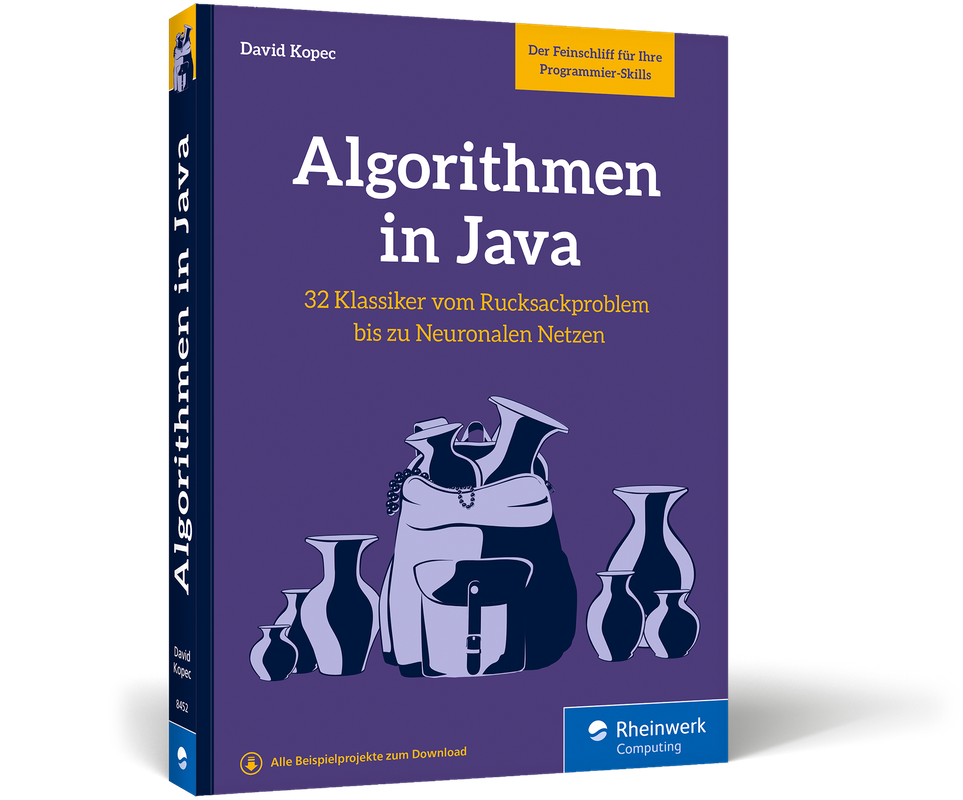
Algorithmen in Java
Programmieren will trainiert werden, und Algorithmen gehören zum Rüstzeug hinzu. Schlagen Sie zwei Fliegen mit einer Klappe und verbessern Sie Ihre Java-Skills anhand klassischer Algorithmen, von der Suche im Binärbaum über k-Means bis zum Rucksackproblem. Dieses Buch ist Grundausbildung und Fundgrube für Coding Workouts zugleich. Profitieren Sie von der Lehr- und Praxiserfahrung des Autors: David Kopec hat 32 Klassiker der Informatik für Sie herausgesucht, die Ihnen wichtige Lösungsstrategien aufzeigen und einen starken Trainingseffekt versprechen.Ideal für alle, die ihre ersten Schritte in der Programmierung hinter sich haben und jetzt voll durchstarten wollen!Aus dem Inhalt:Zum Einstieg: Unknackbare Verschlüsselung, Fibonacci-Folge, die Türme von HanoiSuchalgorithmen: DNS-Suche, Labyrinthe u.v.m.Bedingungserfüllung: Wortsuchrätsel, Acht-Damen-Problem u.v.m.Grafen, kürzeste Wegek-Means-ClusteringEinfache neuronale NetzeMinimax: Tic-tac-toe, Vier gewinntLeseprobe (PDF)