

Computer und IT

Concepts and Semantics of Programming Languages 2
This book – composed of two volumes – explores the syntactical constructs of the most common programming languages, and sheds a mathematical light on their semantics, providing also an accurate presentation of the material aspects that interfere with coding.Concepts and Semantics of Programming Languages 2 presents an original semantic model, collectively taking into account all of the constructs and operations of modules and classes: visibility, import, export, delayed definitions, parameterization by types and values, extensions, etc. The model serves for the study of Ada and OCaml modules, as well as C header files. It can be deployed to model object and class features, and is thus used to describe Java, C++, OCaml and Python classes.This book is intended not only for computer science students and teachers but also seasoned programmers, who will find a guide to reading reference manuals and the foundations of program verification.THERESE HARDIN is Professor Emeritus at the Laboratoire d'Informatique de Paris 6 (LIP6), Sorbonne University, France.MATHIEU JAUME is a lecturer at the Laboratoire d'Informatique de Paris 6 (LIP6), Sorbonne University, France.FRANÇOIS PESSAUX is Associate Professor in the Computer Science and Systems Engineering Unit (U2IS) of ENSTA Paris, France.VERONIQUE VIGUIE DONZEAU-GOUGE is Professor Emeritus at the Centre d'études et de recherche en informatique (CEDRIC) of the Conservatoire national des arts et métiers (Cnam Paris), France.Foreword ixPreface xiCHAPTER 1. NAMESPACES: MODEL AND OPERATIONS 11.1. Reusing, dividing, confining 21.1.1. Analysis of some developer needs 21.1.2. Meeting developer needs 31.2. Namespaces 51.2.1. Namespaces definition 61.2.2. Extending notions of environment and binding 81.3. kit development 121.3.1. Namespace of a kit 141.3.2. Order of fields introduction 151.3.3. Typing kits 151.3.4. kit values 181.3.5. kit export, confining fields 221.3.6. kits import 281.3.7. Stages of kit development 321.4. Incomplete kits 331.4.1. Type and value of an incomplete kit 341.4.2. Completion of an incomplete kit 341.4.3. Confining an incomplete kit 361.5. Parameterized kits 361.5.1. kits parameterized by a type 361.5.2. kits parameterized by types and values 411.5.3. Confinement, parametrization, incomplete kits and export 451.6. Functors of kits 461.7. kit extension 491.7.1. Presentation of extension 491.7.2. Confinement and extension 551.8. Conclusion 59CHAPTER 2. MODULES 612.1. Modules in Ada 622.1.1. Developing modules 622.1.2. Export and confinement 652.1.3. Nesting modules 662.1.4. Importing a module 662.1.5. Flattening an import 672.1.6. Generic modules 682.1.7. Modules and separate compilation 712.2. Modules in OCaml 712.2.1. Module definition 722.2.2. Export and confinement 732.2.3. Confinement of type definitions 782.2.4. Functors 822.3. Modularity, namespaces and W-kit 852.3.1. Declaration interfaces 852.3.2. W-kits 862.3.3. Modularity and header files in C 86CHAPTER 3. CLASS AND OBJECT FEATURES 933.1. Object-oriented features 933.1.1. Objects 943.1.2. Classes 953.2. kits and object features 1043.2.1. Modeling classes 1043.2.2. Modeling objects 1073.2.3. Inheritance, redefinition and late binding 1093.2.4. Incomplete C-kits, parameterized C-kits 1133.2.5. Subclassing, subtyping 1153.2.6. Type languages, classes and objects 119CHAPTER 4. CLASSES IN SELECTED LANGUAGES 1234.1. Classes in Java 1234.1.1. General presentation 1234.1.2. Modules and packages 1244.1.3. Classes 1254.1.4. Marks 1314.1.5. Developing classes 1344.2. Classes in C++ 1444.2.1. Header files, namespaces, confinement 1454.2.2. Classes 1484.2.3. Inheritance and confinement 1554.2.4. Overloading in C++ 1654.2.5. Parameterized classes 1684.3. Classes in OCaml 1744.3.1. Presentation 1744.3.2. An overview of classes 1744.3.3. Marks, incomplete classes, parametrization 1814.3.4. Objects 1864.3.5. Class signatures: confinement and inheritance 1924.3.6. Multiple inheritance 1954.3.7. Other features 1974.4. Presentation of Python 1974.4.1. Getting started 1984.4.2. An overview of classes, modules and types 1994.4.3. Names and assignment 2084.4.4. Assignment and typechecking 2114.4.5. Overloading 2134.4.6. Modules and packages 2174.4.7. Confinement 2184.4.8. Inheritance 2194.4.9. Incomplete C-kits and abstract classes 2214.4.10. Other features 222Appendix: Questions to Guide Learning 225List of Notations 229References 231Index 233

The Trouble With Sharing
PEER-TO-PEER EXCHANGE IS A TYPE OF SHARING THAT INVOLVES THE TRANSFER OF VALUED RESOURCES, SUCH AS GOODS AND SERVICES, AMONG MEMBERS OF A LOCAL COMMUNITY AND/OR BETWEEN PARTIES WHO HAVE NOT MET BEFORE THE EXCHANGE ENCOUNTER. It involves online systems that allow strangers to exchange in ways that were previously confined to the realm of kinship and friendship. Through the examples in this book, we encounter attempts to foster the sharing of goods and services in local communities and consider the intricacies of sharing homes temporarily with strangers (also referred to as hospitality exchange or network hospitality). Some of the exchange arrangements discussed involve money while others explicitly ban participants from using it. All rely on digital technologies, but the trickiest challenges have more to do with social interaction than technical features. This book explores what makes peer-to-peer exchange challenging, with an emphasis on reciprocity, closeness, and participation: How should we reciprocate? How might we manage interactions with those we encounter to attain some closeness but not too much? What keeps people from getting involved or draws them into exchange activities that they would rather avoid?This book adds to the growing body of research on exchange platforms and the sharing economy. It provides empirical examples and conceptual grounding for thinking about interpersonal challenges in peer-to-peer exchange and the efforts that are required for exchange arrangements to flourish. It offers inspiration for how we might think and design differently to better understand and support the efforts of those involved in peer-to-peer exchange. While the issues cannot be simply “solved” by technology, it matters which digital tools an exchange arrangement relies on, and even seemingly small design decisions can have a significant impact on what it is like to participate in exchange processes. The technologies that support exchange arrangements—often platforms of some sort—can be driven by differing sets of values and commitments. This book invites students and scholars in the Human–Computer Interaction community, and beyond, to envision and design alternative exchange arrangements and future economies.* Preface* Acknowledgments* Introduction* Situating the Sharing Economy* What Do We Talk About When We Talk About the Sharing Economy?* Reciprocity and Indebtedness* Closeness and Intimacy* Participation and Inclusion* Future Direction* Epilogue* References* Author Biography

Spektrum Kompakt- Algorithmen im Alltag
Algorithmen, die unser Leben beeinfussen, sind längst keine Zukunftsmusik mehr, sondern stecken überall tief in unserem Alltag. Sie unterstützen Ärztinnen und Ärzte bei der Diagnose, lassen die Vergangenheit bunt werden und Personen in Kinoflmen auftauchen, die gar nicht am Dreh waren. Im Hochleistungssport verraten sie, ob und warum sich Athleten und Athletinnen verletzen könnten und leiten uns mehr oder weniger offen durch digitale Welten - was entsprechende Sorgen vor unbewusster Manipulation weckt. Ein Kompakt rund um programmierte Helfer im Hintergrund.

Designing and Building Enterprise Knowledge Graphs
This book is a guide to designing and building knowledge graphs from enterprise relational databases in practice. It presents a principled framework centered on mapping patterns to connect relational databases with knowledge graphs, the roles within an organization responsible for the knowledge graph, and the process that combines data and people. The content of this book is applicable to knowledge graphs being built either with property graph or RDF graph technologies. Knowledge graphs are fulfilling the vision of creating intelligent systems that integrate knowledge and data at large scale. Tech giants have adopted knowledge graphs for the foundation of next-generation enterprise data and metadata management, search, recommendation, analytics, intelligent agents, and more. We are now observing an increasing number of enterprises that seek to adopt knowledge graphs to develop a competitive edge. In order for enterprises to design and build knowledge graphs, they need to understand the critical data stored in relational databases. How can enterprises successfully adopt knowledge graphs to integrate data and knowledge, without boiling the ocean? This book provides the answers. * Preface * Foreword by an Anonymous CDO * Foreword by Tom Plasterer * Acknowledgments * Disclaimer * Introduction * Designing Enterprise Knowledge Graphs * Mapping Design Patterns * Building Enterprise Knowledge Graphs * What's Next? * Conclusions * Bibliography * Authors' Biographies

Practical Vaadin
Implement web applications in Java using the open-source Vaadin framework version 20 and later. This easy-to-follow book covers all the key concepts and steps to become competent with modern versions of Vaadin. The book covers everything from setting up the development environment to implementing advanced features such as Server Push and database connectivity. The book helps you become proficient in the Vaadin framework, prepare for Vaadin certifications, and shows you how to apply the power of the Java programming language in developing applications for the web.Author Alejandro Duarte starts with an introduction to web development and its key technologies. He then describes and demonstrates how Vaadin simplifies web development by allowing you to implement web graphical user interfaces using the Java programming language without having to code in JavaScript or HTML. Once a solid foundation on the key web and Vaadin concepts is established, Duarte digs deeper into explaining layouts and user interface components such as combo boxes, dialogs, upload fields, and data grids. He also covers topics such as styling with CSS, data binding, client-side views implementation with TypeScript, and integration with Spring Boot and Jakarta EE.WHAT YOU WILL LEARN* Build web applications in Java using Servlet technology and Vaadin* Combine layouts and user interface components to create views in Java* Connect values in UI components to Java objects in the server through data binding* Customize display styles and add responsive capabilities using CSS* Display tabular data using the Grid component* Implement client-side views using TypeScript* Integrate Vaadin applications with Spring Boot and Jakarta EE* Connect Vaadin applications to SQL databasesWHO THIS BOOK IS FORDevelopers with a basic or higher knowledge of Java programming who want to build on their Java skills to create web graphical user interfaces, Java developers who want to create web applications without having to code in JavaScript, and developers who are preparing to take and pass Vaadin certification examsALEJANDRO DUARTE is a Software Engineer currently working for Vaadin Ltd as their Developer Relations Manager. This is his third book on Vaadin. Alejandro started to code at age 13 using the BASIC programming language on a black screen with a blinking cursor serving as the IDE. He quickly moved to the C and C++ languages—which he still loves and enjoys—and then to Java during his Computer Science studies at the National University of Colombia from where he graduated. Alejandro moved to the UK and later to Finland to foster his career in the open-source software industry. He became one of the well-known faces in the Vaadin and Java communities, having published articles and videos with hundreds of thousands of views in official Vaadin channels and other content portals, and presented technical topics at international Java conferences and Java User Groups. Alejandro splits his free time between his passion for the electric guitar and the photography world. PART I. GETTING STARTED1. The World of Vaadin2. Setting Up the Development EnvironmentPART II. THE FUNDAMENTALS OF VAADIN3. Layouts4. UI Components5. Data Binding6. The Grid ComponentPART III. ADVANCED FEATURES7. Multi-view Navigation and Routing8. Server Push9. The Element API10. Custom Styles and Responsiveness11. Client-side Views with TypeScriptPART IV. INTEGRATIONS AND DATABASE CONNECTIVITY12. Spring Boot13. Jakarta EE

POCO M3
Die verständliche Anleitung für Ihr Smartphone:- Alle Funktionen & Einstellungen auf einen Blick- Schritt für Schritt erklärt – mit praktischen TippsMit diesem smarten Praxisbuch gelingt Ihnen der schnelle und sichere Einstieg in Ihr Smartphone. Lernen Sie Ihr Poco M3 von Grund auf kennen und beherrschen! Anschauliche Anleitungen, Beispiele und Bilder zeigen Ihnen gut nachvollziehbar, wie Sie Ihr mobiles Gerät optimal handhaben – von der Ersteinrichtung und Personalisierung über die große Funktionsvielfalt bis zu den wichtigsten Anwendungen. Nutzen Sie darüber hinaus die übersichtlichen Spicker-Darstellungen: Damit können Sie jene Bedienungsschritte, die man am häufigsten braucht, aber immer wieder vergisst, auf einen Blick finden und umsetzen. Freuen Sie sich auf viele hilfreiche Tipps und legen Sie ganz einfach los!Aus dem Inhalt:- Alle Bedienelemente des Smartphones auf einen Blick- Ersteinrichtung und Tipps zum Umzug- Google-Konto erstellen und verwalten- Die Benutzeroberfläche Ihres Smartphones personalisieren- Apps aus dem Play Store herunterladen- Kontakte anlegen und im Adressbuch verwalten- Anrufe tätigen und SMS austauschen - Nachrichten über Mail und WhatsApp versenden und empfangen- Uhr, Kalender, Maps und andere praktische Apps nutzen - Fotos sowie Videos aufnehmen, verwalten und teilen- Ins Internet gehen über WLAN und mobile Daten - Updates, Datenschutz und Sicherheit
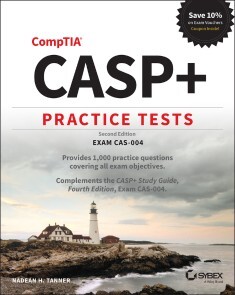
CASP+ CompTIA Advanced Security Practitioner Practice Tests
PREPARE FOR SUCCESS ON THE CHALLENGING CASP+ CAS-004 EXAMIn the newly updated Second Edition of CASP+ CompTIA Advanced Security Practitioner Practice Tests Exam CAS-004, accomplished cybersecurity expert Nadean Tanner delivers an extensive collection of CASP+ preparation materials, including hundreds of domain-by-domain test questions and two additional practice exams.Prepare for the new CAS-004 exam, as well as a new career in advanced cybersecurity, with Sybex’s proven approach to certification success. You’ll get ready for the exam, to impress your next interviewer, and excel at your first cybersecurity job.This book includes:* Comprehensive coverage of all exam CAS-004 objective domains, including security architecture, operations, engineering, cryptography, and governance, risk, and compliance * In-depth preparation for test success with 1000 practice exam questions * Access to the Sybex interactive learning environment and online test bank Perfect for anyone studying for the CASP+ Exam CAS-004, CASP+ CompTIA Advanced Security Practitioner Practice Tests Exam CAS-004 is also an ideal resource for anyone with IT security experience who seeks to brush up on their skillset or seek a valuable new CASP+ certification.NADEAN H. TANNER, CASP+, CISSP, MCSA, ITILV3, has worked in technology for more than 20 years, learning about every aspect of the field as a marketer, trainer, web developer, and hardware technician. She has served as an IT director and technology instructor at the postgraduate level, and has been a cybersecurity trainer and consultant for Fortune 500 companies as well as for the U.S. Department of Defense.Introduction xixChapter 1 Security Architecture 1Chapter 2 Security Operations 61Chapter 3 Security Engineering and Cryptography 123Chapter 4 Governance, Risk, and Compliance 175Chapter 5 Practice Test 1 207Chapter 6 Practice Test 2 227Appendix Answers to Review Questions 247Chapter 1: Security Architecture 248Chapter 2: Security Operations 278Chapter 3: Security Engineering and Cryptography 308Chapter 4: Governance, Risk, and Compliance 333Chapter 5: Practice Test 1 346Chapter 6: Practice Test 2 353Index 363
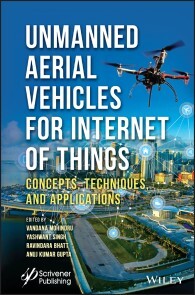
Unmanned Aerial Vehicles for Internet of Things (IoT)
UNMANNED AERIAL VEHICLES FOR INTERNET OF THINGSTHIS COMPREHENSIVE BOOK DEEPLY DISCUSSES THE THEORETICAL AND TECHNICAL ISSUES OF UNMANNED AERIAL VEHICLES FOR DEPLOYMENT BY INDUSTRIES AND CIVIL AUTHORITIES IN INTERNET OF THINGS (IOT) SYSTEMS. Unmanned aerial vehicles (UAVs) has become one of the rapidly growing areas of technology, with widespread applications covering various domains. UAVs play a very important role in delivering Internet of Things (IoT) services in small and low-power devices such as sensors, cameras, GPS receivers, etc. These devices are energy-constrained and are unable to communicate over long distances. The UAVs work dynamically for IoT applications in which they collect data and transmit it to other devices that are out of communication range. Furthermore, the benefits of the UAV include deployment at remote locations, the ability to carry flexible payloads, reprogrammability during tasks, and the ability to sense for anything from anywhere. Using IoT technologies, a UAV may be observed as a terminal device connected with the ubiquitous network, where many other UAVs are communicating, navigating, controlling, and surveilling in real time and beyond line-of-sight. The aim of the 15 chapters in this book help to realize the full potential of UAVs for the IoT by addressing its numerous concepts, issues and challenges, and develops conceptual and technological solutions for handling them. Applications include such fields as disaster management, structural inspection, goods delivery, transportation, localization, mapping, pollution and radiation monitoring, search and rescue, farming, etc. In addition, the book covers:* Efficient energy management systems in UAV-based IoT networks* IoE enabled UAVs* Mind-controlled UAV using Brain-Computer Interface (BCI)* The importance of AI in realizing autonomous and intelligent flying IoT* Blockchain-based solutions for various security issues in UAV-enabled IoT* The challenges and threats of UAVs such as hijacking, privacy, cyber-security, and physical safety.AUDIENCE: Researchers in computer science, Internet of Things (IoT), electronics engineering, as well as industries that use and deploy drones and other unmanned aerial vehicles. VANDANA MOHINDRU PhD is an assistant professor in the Department of Computer Science and Engineering, Chandigarh Group of Colleges, Mohali, Punjab, India. Her research interests are in the areas of Internet of Things, wireless sensor networks, security, blockchain and cryptography, unmanned aerial vehicles. She has published more than 20 technical research papers in leading journals and conferences.YASHWANT SINGH PhD is an associate professor & Head in the Department of Computer Science & Information Technology at the Central University of Jammu. His research interests lie in the area of Internet of Things, wireless sensor networks, unmanned aerial vehicles, cybersecurity. He has published more than 70 research articles in the international journals and conferences. RAVINDARA BHATT PhD is an assistant professor at Jaypee University of Information Technology, Solan, H.P., India. He has over 20 years of experience in academics and industry in India. He has published more than 30 research papers in leading journals and conferences. His areas of research include sensor networks, deployment modeling, communication, and energy-efficient algorithms, security and unmanned aerial vehicles. ANUJ KUMAR GUPTA PhD is professor & Head in CSE at Chandigarh Group of Colleges, Mohali, Punjab, India. He has published 100+ research papers in reputed journals. Preface xvii1 UNMANNED AERIAL VEHICLE (UAV): A COMPREHENSIVE SURVEY 1Rohit Chaurasia and Vandana Mohindru1.1 Introduction 21.2 Related Work 21.3 UAV Technology 31.3.1 UAV Platforms 31.3.1.1 Fixed-Wing Drones 31.3.1.2 Multi-Rotor Drones 41.3.1.3 Single-Rotor Drones 51.3.1.4 Fixed-Wing Hybrid VTOL 61.3.2 Categories of the Military Drones 61.3.3 How Drones Work 81.3.3.1 Firmware—Platform Construction and Design 91.3.4 Comparison of Various Technologies 101.3.4.1 Drone Types & Sizes 101.3.4.2 Radar Positioning and Return to Home 101.3.4.3 GNSS on Ground Control Station 111.3.4.4 Collision Avoidance Technology and Obstacle Detection 111.3.4.5 Gyroscopic Stabilization, Flight Controllers and IMU 121.3.4.6 UAV Drone Propulsion System 121.3.4.7 Flight Parameters Through Telemetry 131.3.4.8 Drone Security & Hacking 131.3.4.9 3D Maps and Models With Drone Sensors 131.3.5 UAV Communication Network 151.3.5.1 Classification on the Basis of Spectrum Perspective 151.3.5.2 Various Types of Radio communication Links 161.3.5.3 VLOS (Visual Line-of-Sight) and BLOS (Beyond Line-of-Sight) Communication in Unmanned Aircraft System 181.3.5.4 Frequency Bands for the Operation of UAS 191.3.5.5 Cellular Technology for UAS Operation 191.4 Application of UAV 211.4.1 In Military 211.4.2 In Geomorphological Mapping and Other Similar Sectors 221.4.3 In Agriculture 221.5 UAV Challenges 231.6 Conclusion and Future Scope 24References 242 UNMANNED AERIAL VEHICLES: STATE-OF-THE-ART, CHALLENGES AND FUTURE SCOPE 29Jolly Parikh and Anuradha Basu2.1 Introduction 302.2 Technical Challenges 302.2.1 Variations in Channel Characteristics 322.2.2 UAV-Assisted Cellular Network Planning and Provisioning 332.2.3 Millimeter Wave Cellular Connected UAVs 342.2.4 Deployment of UAV 352.2.5 Trajectory Optimization 362.2.6 On-Board Energy 372.3 Conclusion 37References 373 BATTERY AND ENERGY MANAGEMENT IN UAV-BASED NETWORKS 43Santosh Kumar, Amol Vasudeva and Manu Sood3.1 Introduction 433.2 The Need for Energy Management in UAV-Based Communication Networks 453.2.1 Unpredictable Trajectories of UAVs in Cellular UAV Networks 463.2.2 Non-Homogeneous Power Consumption 473.2.3 High Bandwidth Requirement/Low Spectrum Availability/Spectrum Scarcity 473.2.4 Short-Range Line-of-Sight Communication 483.2.5 Time Constraint (Time-Limited Spectrum Access) 483.2.6 Energy Constraint 493.2.7 The Joint Design for the Sensor Nodes’ Wake-Up Schedule and the UAV’s Trajectory (Data Collection) 493.3 Efficient Battery and Energy Management Proposed Techniques in Literature 503.3.1 Cognitive Radio (CR)-Based UAV Communication to Solve Spectrum Congestion 513.3.2 Compressed Sensing 523.3.3 Power Allocation and Position Optimization 533.3.4 Non-Orthogonal Multiple Access (NOMA) 533.3.5 Wireless Charging/Power Transfer (WPT) 543.3.6 UAV Trajectory Design Using a Reinforcement Learning Framework in a Decentralized Manner 553.3.7 Efficient Deployment and Movement of UAVs 553.3.8 3D Position Optimization Mixed With Resource Allocation to Overcome Spectrum Scarcity and Limited Energy Constraint 563.3.9 UAV-Enabled WSN: Energy-Efficient Data Collection 573.3.10 Trust Management 573.3.11 Self-Organization-Based Clustering 583.3.12 Bandwidth/Spectrum-Sharing Between UAVs 593.3.13 Using Millimeter Wave With SWIPT 593.3.14 Energy Harvesting 603.4 Conclusion 61References 674 ENERGY EFFICIENT COMMUNICATION METHODS FOR UNMANNED ARIEL VEHICLES (UAVS): LAST FIVE YEARS’ STUDY 73Nagesh Kumar4.1 Introduction 734.1.1 Introduction to UAV 744.1.2 Communication in UAV 754.2 Literature Survey Process 774.2.1 Research Questions 774.2.2 Information Source 774.3 Routing in UAV 784.3.1 Communication Methods in UAV 784.3.1.1 Single-Hop Communication 794.3.1.2 Multi-Hop Communication 804.4 Challenges and Issues 824.4.1 Energy Consumption 824.4.2 Mobility of Devices 824.4.3 Density of UAVs 824.4.4 Changes in Topology 854.4.5 Propagation Models 854.4.6 Security in Routing 854.5 Conclusion 85References 865 A REVIEW ON CHALLENGES AND THREATS TO UNMANNED AERIAL VEHICLES (UAVS) 89Shaik Johny Basha and Jagan Mohan Reddy Danda5.1 Introduction 895.2 Applications of UAVs and Their Market Opportunity 905.2.1 Applications 905.2.2 Market Opportunity 925.3 Attacks and Solutions to Unmanned Aerial Vehicles (UAVs) 925.3.1 Confidentiality Attacks 935.3.2 Integrity Attacks 955.3.3 Availability Attacks 965.3.4 Authenticity Attacks 975.4 Research Challenges 995.4.1 Security Concerns 995.4.2 Safety Concerns 995.4.3 Privacy Concerns 1005.4.4 Scalability Issues 1005.4.5 Limited Resources 1005.5 Conclusion 101References 1016 INTERNET OF THINGS AND UAV: AN INTEROPERABILITY PERSPECTIVE 105Bharti Rana and Yashwant Singh6.1 Introduction 1066.2 Background 1086.2.1 Issues, Controversies, and Problems 1096.3 Internet of Things (IoT) and UAV 1106.4 Applications of UAV-Enabled IoT 1136.5 Research Issues in UAV-Enabled IoT 1146.6 High-Level UAV-Based IoT Architecture 1176.6.1 UAV Overview 1176.6.2 Enabling IoT Scalability 1196.6.3 Enabling IoT Intelligence 1206.6.4 Enabling Diverse IoT Applications 1216.7 Interoperability Issues in UAV-Based IoT 1216.8 Conclusion 123References 1247 PRACTICES OF UNMANNED AERIAL VEHICLE (UAV) FOR SECURITY INTELLIGENCE 129Swarnjeet Kaur, Kulwant Singh and Amanpreet Singh7.1 Introduction 1307.2 Military 1327.3 Attack 1337.4 Journalism 1347.5 Search and Rescue 1367.6 Disaster Relief 1387.7 Conclusion 139References 1398 BLOCKCHAIN-BASED SOLUTIONS FOR VARIOUS SECURITY ISSUES IN UAV-ENABLED IOT 143Madhuri S. Wakode and Rajesh B. Ingle8.1 Introduction 1448.1.1 Organization of the Work 1458.2 Introduction to UAV and IoT 1458.2.1 UAV 1458.2.2 IoT 1468.2.3 UAV-Enabled IoT 1478.2.4 Blockchain 1508.3 Security and Privacy Issues in UAV-Enabled IoT 1518.4 Blockchain-Based Solutions to Various Security Issues 1538.5 Research Directions 1548.6 Conclusion 1548.7 Future Work 155References 1559 EFFICIENT ENERGY MANAGEMENT SYSTEMS IN UAV-BASED IOT NETWORKS 159V. Mounika Reddy, Neelima K. and G. Naresh9.1 Introduction 1609.2 Energy Harvesting Methods 1619.2.1 Basic Energy Harvesting Mechanisms 1629.2.2 Markov Decision Process-Based Energy Harvesting Mechanisms 1639.2.3 mm Wave Energy Harvesting Mechanism 1649.2.4 Full Duplex Wireless Energy Harvesting Mechanism 1659.3 Energy Recharge Methods 1659.4 Efficient Energy Utilization Methods 1669.4.1 GLRM Method 1669.4.2 DRL Mechanism 1679.4.3 Onboard Double Q-Learning Mechanism 1689.4.4 Collision-Free Scheduling Mechanism 1689.5 Conclusion 170References 17010 A SURVEY ON IOE-ENABLED UNMANNED AERIAL VEHICLES 173K. Siddharthraju, R. Dhivyadevi, M. Supriya, B. Jaishankar and Shanmugaraja T.10.1 Introduction 17410.2 Overview of Internet of Everything 17610.2.1 Emergence of IoE 17610.2.2 Expectation of IoE 17710.2.2.1 Scalability 17710.2.2.2 Intelligence 17810.2.2.3 Diversity 17810.2.3 Possible Technologies 17910.2.3.1 Enabling Scalability 17910.2.3.2 Enabling Intelligence 18010.2.3.3 Enabling Diversity 18010.2.4 Challenges of IoE 18110.2.4.1 Coverage Constraint 18110.2.4.2 Battery Constraint 18110.2.4.3 Computing Constraint 18110.2.4.4 Security Constraint 18210.3 Overview of Unmanned Aerial Vehicle (UAV) 18210.3.1 Unmanned Aircraft System (UAS) 18310.3.2 UAV Communication Networks 18310.3.2.1 Ad Hoc Multi-UAV Networks 18310.3.2.2 UAV-Aided Communication Networks 18410.4 UAV and IoE Integration 18410.4.1 Possibilities to Carry UAVs 18410.4.1.1 Widespread Connectivity 18510.4.1.2 Environmentally Aware 18510.4.1.3 Peer-Maintenance of Communications 18510.4.1.4 Detector Control and Reusing 18510.4.2 UAV-Enabled IoE 18610.4.3 Vehicle Detection Enabled IoE Optimization 18610.4.3.1 Weak-Connected Locations 18610.4.3.2 Regions with Low Network Support 18610.5 Open Research Issues 18710.6 Discussion 18710.6.1 Resource Allocation 18710.6.2 Universal Standard Design 18810.6.3 Security Mechanism 18810.7 Conclusion 189References 18911 ROLE OF AI AND BIG DATA ANALYTICS IN UAV-ENABLED IOT APPLICATIONS FOR SMART CITIES 193Madhuri S. Wakode11.1 Introduction 19411.1.1 Related Work 19511.1.2 Contributions 19511.1.3 Organization of the Work 19511.2 Overview of UAV-Enabled IoT Systems 19611.2.1 UAV-Enabled IoT Systems for Smart Cities 19711.3 Overview of Big Data Analytics 19711.4 Big Data Analytics Requirements in UAV-Enabled IoT Systems 19811.4.1 Big Data Analytics in UAV-Enabled IoT Applications 19911.4.2 Big Data Analytics for Governance of UAV-Enabled IoT Systems 20111.5 Challenges 20211.6 Conclusion 20211.7 Future Work 203References 20312 DESIGN AND DEVELOPMENT OF MODULAR AND MULTIFUNCTIONAL UAV WITH AMPHIBIOUS LANDING, PROCESSING AND SURROUND SENSE MODULE 207Lakshit Kohli, Manglesh Saurabh, Ishaan Bhatia, Nidhi Sindhwani and Manjula Vijh12.1 Introduction 20812.2 Existing System 20812.3 Proposed System 21012.4 IoT Sensors and Architecture 21212.4.1 Sensors and Theory 21212.4.2 Architectures Available 21312.4.2.1 3-Layer IoT Architecture 21312.4.2.2 5-Layer IoT Architecture 21412.4.2.3 Architecture & Supporting Modules 21512.4.2.4 Integration Approach 21512.4.2.5 System of Modules 21612.5 Advantages of the Proposed System 21712.6 Design 21812.6.1 System Design 21912.6.2 Auto-Leveling 21912.6.3 Amphibious Landing Module 22112.6.4 Processing Module 22312.6.5 Surround Sense Module 22312.7 Results 22412.8 Conclusion 22712.9 Future Scope 228References 22813 MIND CONTROLLED UNMANNED AERIAL VEHICLE (UAV) USING BRAIN–COMPUTER INTERFACE (BCI) 231Prasath M.S., Naveen R. and Sivaraj G.13.1 Introduction 23213.1.1 Classification of UAVs 23213.1.2 Drone Controlling 23213.2 Mind-Controlled UAV With BCI Technology 23313.3 Layout and Architecture of BCI Technology 23413.4 Hardware Components 23513.4.1 Neurosky Mindwave Headset 23513.4.2 Microcontroller Board—Arduino 23613.4.3 A Computer 23713.4.4 Drone for Quadcopter 23813.5 Software Components 23913.5.1 Processing P3 Software 23913.5.2 Arduino IDE Software 24013.5.3 ThinkGear Connector 24013.6 Hardware and Software Integration 24113.7 Conclusion 243References 24414 PRECISION AGRICULTURE WITH TECHNOLOGIES FOR SMART FARMING TOWARDS AGRICULTURE 5.0 247Dhirendra Siddharth, Dilip Kumar Saini and Ajay Kumar14.1 Introduction 24714.2 Drone Technology as an Instrument for Increasing Farm Productivity 24814.3 Mapping and Tracking of Rice Farm Areas With Information and Communication Technology (ICT) and Remote Sensing Technology 24914.3.1 Methodology and Development of ICT 25014.4 Strong Intelligence From UAV to the Agricultural Sector 25214.4.1 Latest Agricultural Drone History 25214.4.2 The Challenges 25414.4.3 SAP’s Next Wave of Drone Technologies 25414.4.4 SAP Connected Agriculture 25614.4.5 Cases of Real-World Use 25714.4.5.1 Crop Surveying 25714.4.5.2 Capture the Plantation 25814.4.5.3 Image Processing 25814.4.5.4 Working to Create GeoTiles and an Image Pyramid 25914.5 Drones-Based Sensor Platforms 26014.5.1 Context and Challenges 26014.5.2 Stakeholder and End Consumer Benefits 26114.5.3 The Technology 26214.5.3.1 Provisions of the Unmanned Aerial Vehicles 26214.6 Jobs of Space Technology in Crop Insurance 26314.7 The Institutionalization of Drone Imaging Technologies in Agriculture for Disaster Managing Risk 26714.7.1 A Modern Working 26714.7.2 Discovering Drone Mapping Technology 26814.7.3 From Lowland to Uplands, Drone Mapping Technology 26914.7.4 Institutionalization of Drone Monitoring Systems and Farming Capability 26914.8 Usage of Internet of Things in Agriculture and Use of Unmanned Aerial Vehicles 27014.8.1 System and Application Based on UAV-WSN 27014.8.2 Using a Complex Comprehensive System 27114.8.3 Benefits Assessment of Conventional System and the UAV-Based System 27114.8.3.1 Merit 27214.8.3.2 Saving Expenses 27214.8.3.3 Traditional Agriculture 27314.8.3.4 UAV-WSN System-Based Agriculture 27314.9 Conclusion 273References 27315 IOT-BASED UAV PLATFORM REVOLUTIONIZED IN SMART HEALTHCARE 277Umesh Kumar Gera, Dilip Kumar Saini, Preeti Singh and Dhirendra Siddharth15.1 Introduction 27815.2 IoT-Based UAV Platform for Emergency Services 27915.3 Healthcare Internet of Things: Technologies, Advantages 28115.3.1 Advantage 28115.3.1.1 Concurrent Surveillance and Tracking 28115.3.1.2 From End-To-End Networking and Availability 28215.3.1.3 Information and Review Assortment 28215.3.1.4 Warnings and Recording 28215.3.1.5 Wellbeing Remote Assistance 28315.3.1.6 Research 28315.3.2 Complications 28315.3.2.1 Privacy and Data Security 28315.3.2.2 Integration: Various Protocols and Services 28415.3.2.3 Overload and Accuracy of Data 28415.3.2.4 Expenditure 28415.4 Healthcare’s IoT Applications: Surgical and Medical Applications of Drones 28515.4.1 Hearables 28515.4.2 Ingestible Sensors 28515.4.3 Moodables 28515.4.4 Technology of Computer Vision 28615.4.5 Charting for Healthcare 28615.5 Drones That Will Revolutionize Healthcare 28615.5.1 Integrated Enhancement in Efficiency 28615.5.2 Offering Personalized Healthcare 28715.5.3 The Big Data Manipulation 28715.5.4 Safety and Privacy Optimization 28715.5.5 Enabling M2M Communication 28815.6 Healthcare Revolutionizing Drones 28815.6.1 Google Drones 28815.6.2 Healthcare Integrated Rescue Operations (HiRO) 28915.6.3 EHang 28915.6.4 TU Delft 28915.6.5 Project Wing 28915.6.6 Flirtey 28915.6.7 Seattle’s VillageReach 29015.6.8 ZipLine 29015.7 Conclusion 290References 290Index 295

Security Issues and Privacy Concerns in Industry 4.0 Applications
SECURITY ISSUES AND PRIVACY CONCERNS IN INDUSTRY 4.0 APPLICATIONSWRITTEN AND EDITED BY A TEAM OF INTERNATIONAL EXPERTS, THIS IS THE MOST COMPREHENSIVE AND UP-TO-DATE COVERAGE OF THE SECURITY AND PRIVACY ISSUES SURROUNDING INDUSTRY 4.0 APPLICATIONS, A MUST-HAVE FOR ANY LIBRARY.The scope of Security Issues and Privacy Concerns in Industry 4.0 Applications is to envision the need for security in Industry 4.0 applications and the research opportunities for the future. This book discusses the security issues in Industry 4.0 applications for research development. It will also enable the reader to develop solutions for the security threats and attacks that prevail in the industry. The chapters will be framed on par with advancements in the industry in the area of Industry 4.0 with its applications in additive manufacturing, cloud computing, IoT (Internet of Things), and many others. This book helps a researcher and an industrial specialist to reflect on the latest trends and the need for technological change in Industry 4.0. Smart water management using IoT, cloud security issues with network forensics, regional language recognition for industry 4.0, IoT-based health care management systems, artificial intelligence for fake profile detection, and packet drop detection in agriculture-based IoT are covered in this outstanding new volume. Leading innovations such as smart drone for railway track cleaning, everyday life-supporting blockchain and big data, effective prediction using machine learning, classification of dog breed based on CNN, load balancing using the SPE approach and cyber culture impact on media consumers are also addressed. Whether a reference for the veteran engineer or an introduction to the technologies covered in the book for the student, this is a must-have for any library. SHIBIN DAVID is an assistant professor in the Department of Computer Science and Engineering at Karunya Institute of Technology and Sciences, India. His research interest includes cryptography, network security and mobile computing. He has an industry certification from Oracle, several awards, and a number of publications to his credit.R. S. ANAND is a researcher in the field of mechanical engineering at the Karunya Institute of Technology and Sciences, India, after being an assistant professor at the Narayana Guru College of Engineering from 2014 to 2016. He has numerous papers and presentations to his credit. V. JEYAKRISHNAN, PhD, is an assistant professor at Saintgits College of Engineering, Kottayam, India. His research area includes wireless networks, cloud computing and its applications. He has a number of publications in his research area. M. NIRANJANAMURTHY, PhD, is an assistant professor in the Department of Computer Applications, M S Ramaiah Institute of Technology, Bangalore, Karnataka. He received his doctorate in computer science from JJTU, Rajasthan. He has over ten years of teaching experience and two years of industry experience as a software engineer. He has published four books, 70 papers, and has filed for 17 Patents with three so far granted. He is a reviewer for 22 international academic journals and has twice won Best Research Journal Reviewer award. He has numerous other awards and in is active in research associations. Preface xiii1 INDUSTRY 4.0: SMART WATER MANAGEMENT SYSTEM USING IOT 1S. Saravanan, N. Renugadevi, C.M. Naga Sudha and Parul Tripathi1.1 Introduction 21.1.1 Industry 4.0 21.1.2 IoT 21.1.3 Smart City 31.1.4 Smart Water Management 31.2 Preliminaries 41.2.1 Internet World to Intelligent World 41.2.2 Architecture of IoT System 41.2.3 Architecture of Smart City 61.3 Literature Review on SWMS 71.3.1 Water Quality Parameters Related to SWMS 81.3.2 SWMS in Agriculture 81.3.3 SWMS Using Smart Grids 91.3.4 Machine Learning Models in SWMS 101.3.5 IoT-Based SWMS 111.4 Conclusion 11References 122 FOURTH INDUSTRIAL REVOLUTION APPLICATION: NETWORK FORENSICS CLOUD SECURITY ISSUES 15Abdullah Ayub Khan, Asif Ali Laghari, Shafique Awan and Awais Khan Jumani2.1 Introduction 162.1.1 Network Forensics 162.1.2 The Fourth Industrial Revolution 172.1.2.1 Machine-to-Machine (M2M) Communication 182.1.3 Cloud Computing 182.1.3.1 Infrastructure-as-a-Service (IaaS) 192.1.3.2 Challenges of Cloud Security in Fourth Industrial Revolution 192.2 Generic Model Architecture 202.3 Model Implementation 242.3.1 OpenNebula (Hypervisor) Implementation Platform 242.3.2 NetworkMiner Analysis Tool 252.3.3 Performance Matrix Evaluation & Result Discussion 272.4 Cloud Security Impact on M2M Communication 282.4.1 Cloud Computing Security Application in the Fourth Industrial Revolution (4.0) 292.5 Conclusion 30References 313 REGIONAL LANGUAGE RECOGNITION SYSTEM FOR INDUSTRY 4.0 35Bharathi V, N. Renugadevi, J. Padmapriya and M. Vijayprakash3.1 Introduction 363.2 Automatic Speech Recognition System 393.2.1 Preprocessing 413.2.2 Feature Extraction 423.2.2.1 Linear Predictive Coding (LPC) 423.2.2.2 Linear Predictive Cepstral Coefficient (LPCC) 443.2.2.3 Perceptual Linear Predictive (PLP) 443.2.2.4 Power Spectral Analysis 443.2.2.5 Mel Frequency Cepstral Coefficients 453.2.2.6 Wavelet Transform 463.2.3 Implementation of Deep Learning Technique 463.2.3.1 Recurrent Neural Network 473.2.3.2 Long Short-Term Memory Network 473.2.3.3 Hidden Markov Models (HMM) 473.2.3.4 Hidden Markov Models - Long Short-Term Memory Network (HMM-LSTM) 483.2.3.5 Evaluation Metrics 493.3 Literature Survey on Existing TSRS 493.4 Conclusion 52References 524 APPROXIMATION ALGORITHM AND LINEAR CONGRUENCE: AN APPROACH FOR OPTIMIZING THE SECURITY OF IOT-BASED HEALTHCARE MANAGEMENT SYSTEM 55Anirban Bhowmik and Sunil Karforma4.1 Introduction 564.1.1 IoT in Medical Devices 564.1.2 Importance of Security and Privacy Protection in IoT-Based Healthcare System 574.1.3 Cryptography and Secret Keys 584.1.4 RSA 584.1.5 Approximation Algorithm and Subset Sum Problem 584.1.6 Significance of Use of Subset Sum Problem in Our Scheme 594.1.7 Linear Congruence 604.1.8 Linear and Non-Linear Functions 614.1.9 Pell’s Equation 614.2 Literature Survey 624.3 Problem Domain 634.4 Solution Domain and Objectives 644.5 Proposed Work 654.5.1 Methodology 654.5.2 Session Key Generation 654.5.3 Intermediate Key Generation 674.5.4 Encryption Process 694.5.5 Generation of Authentication Code and Transmission File 704.5.6 Decryption Phase 714.6 Results and Discussion 714.6.1 Statistical Analysis 724.6.2 Randomness Analysis of Key 734.6.3 Key Sensitivity Analysis 754.6.4 Security Analysis 764.6.4.1 Key Space Analysis 764.6.4.2 Brute-Force Attack 774.6.4.3 Dictionary Attack 774.6.4.4 Impersonation Attack 784.6.4.5 Replay Attack 784.6.4.6 Tampering Attack 784.6.5 Comparative Analysis 794.6.5.1 Comparative Analysis Related to IoT Attacks 794.6.6 Significance of Authentication in Our Proposed Scheme 854.7 Conclusion 85References 865 A HYBRID METHOD FOR FAKE PROFILE DETECTION IN SOCIAL NETWORK USING ARTIFICIAL INTELLIGENCE 89Ajesh F, Aswathy S U, Felix M Philip and Jeyakrishnan V5.1 Introduction 905.2 Literature Survey 915.3 Methodology 945.3.1 Datasets 945.3.2 Detection of Fake Account 945.3.3 Suggested Framework 955.3.3.1 Pre-Processing 975.3.3.2 Principal Component Analysis (PCA) 985.3.3.3 Learning Algorithms 995.3.3.4 Feature or Attribute Selection 1025.4 Result Analysis 1035.4.1 Cross-Validation 1035.4.2 Analysis of Metrics 1045.4.3 Performance Evaluation of Proposed Model 1055.4.4 Performance Analysis of Classifiers 1055.5 Conclusion 109References 1096 PACKET DROP DETECTION IN AGRICULTURAL-BASED INTERNET OF THINGS PLATFORM 113Sebastian Terence and Geethanjali Purushothaman6.1 Introduction 1136.2 Problem Statement and Related Work 1146.3 Implementation of Packet Dropping Detection in IoT Platform 1156.4 Performance Analysis 1206.5 Conclusion 129References 1297 SMART DRONE WITH OPEN CV TO CLEAN THE RAILWAY TRACK 131Sujaritha M and Sujatha R7.1 Introduction 1327.2 Related Work 1327.3 Problem Definition 1347.4 The Proposed System 1347.4.1 Drones with Human Intervention 1347.4.2 Drones without Human Intervention 1357.4.3 Working Model 1377.5 Experimental Results 1377.6 Conclusion 139References 1398 BLOCKCHAIN AND BIG DATA: SUPPORTIVE AID FOR DAILY LIFE 141Awais Khan Jumani, Asif Ali Laghari and Abdullah Ayub Khan8.1 Introduction 1428.1.1 Steps of Blockchain Technology Works 1448.1.2 Blockchain Private 1448.1.3 Blockchain Security 1458.2 Blockchain vs. Bitcoin 1458.2.1 Blockchain Applications 1468.2.2 Next Level of Blockchain 1468.2.3 Blockchain Architecture’s Basic Components 1498.2.4 Blockchain Architecture 1508.2.5 Blockchain Characteristics 1508.3 Blockchain Components 1518.3.1 Cryptography 1528.3.2 Distributed Ledger 1538.3.3 Smart Contracts 1538.3.4 Consensus Mechanism 1548.3.4.1 Proof of Work (PoW) 1558.3.4.2 Proof of Stake (PoS) 1558.4 Categories of Blockchain 1558.4.1 Public Blockchain 1568.4.2 Private Blockchain 1568.4.3 Consortium Blockchain 1568.4.4 Hybrid Blockchain 1568.5 Blockchain Applications 1588.5.1 Financial Application 1588.5.1.1 Bitcoin 1588.5.1.2 Ripple 1588.5.2 Non-Financial Applications 1598.5.2.1 Ethereum 1598.5.2.2 Hyperledger 1598.6 Blockchain in Different Sectors 1608.7 Blockchain Implementation Challenges 1608.8 Revolutionized Challenges in Industries 1638.9 Conclusion 170References 1729 A NOVEL FRAMEWORK TO DETECT EFFECTIVE PREDICTION USING MACHINE LEARNING 179Shenbaga Priya, Revadi, Sebastian Terence and Jude Immaculate9.1 Introduction 1809.2 ML-Based Prediction 1809.3 Prediction in Agriculture 1829.4 Prediction in Healthcare 1839.5 Prediction in Economics 1849.6 Prediction in Mammals 1859.7 Prediction in Weather 1869.8 Discussion 1869.9 Proposed Framework 1879.9.1 Problem Analysis 1879.9.2 Preprocessing 1889.9.3 Algorithm Selection 1889.9.4 Training the Machine 1889.9.5 Model Evaluation and Prediction 1889.9.6 Expert Suggestion 1889.9.7 Parameter Tuning 1899.10 Implementation 1899.10.1 Farmers and Sellers 1899.10.2 Products 1899.10.3 Price Prediction 1909.11 Conclusion 192References 19210 DOG BREED CLASSIFICATION USING CNN 195Sandra Varghese and Remya S10.1 Introduction 19510.2 Related Work 19610.3 Methodology 19810.4 Results and Discussions 20110.4.1 Training 20110.4.2 Testing 20110.5 Conclusions 203References 20311 METHODOLOGY FOR LOAD BALANCING IN MULTI-AGENT SYSTEM USING SPE APPROACH 207S. Ajitha11.1 Introduction 20711.2 Methodology for Load Balancing 20811.3 Results and Discussion 21311.3.1 Proposed Algorithm in JADE Tool 21311.3.1.1 Sensitivity Analysis 21811.3.2 Proposed Algorithm in NetLogo 21811.4 Algorithms Used 21911.5 Results and Discussion 21911.6 Summary 226References 22612 THE IMPACT OF CYBER CULTURE ON NEW MEDIA CONSUMERS 229Durmuş KoÇak12.1 Introduction 22912.2 The Rise of the Term of Cyber Culture 23112.2.1 Cyber Culture in the 21st Century 23112.2.1.1 Socio-Economic Results of Cyber Culture 23212.2.1.2 Psychological Outcomes of Cyber Culture 23312.2.1.3 Political Outcomes of Cyber Culture 23412.3 The Birth and Outcome of New Media Applications 23412.3.1 New Media Environments 23612.3.1.1 Social Sharing Networks 23712.3.1.2 Network Logs (Blog, Weblog) 24012.3.1.3 Computer Games 24012.3.1.4 Digital News Sites and Mobile Media 24012.3.1.5 Multimedia Media 24112.3.1.6 What Affects the New Media Consumers’ Tendencies? 24212.4 Result 244References 245Index 251

Datenschutz für Softwareentwicklung und IT
Dieses Buch beschreibt das Thema Datenschutz aus der Sicht von Softwareentwicklung und IT. Die Verantwortlichen in diesen Bereichen gestalten die praktische Umsetzung des Datenschutzes zu erheblichen Teilen mit, benötigen dafür aber entsprechende Kenntnisse über die rechtlichen Rahmenbedingungen und Möglichkeiten zu deren Umsetzung. Der Fokus dieses Buchs liegt daher auf den Aspekten des Datenschutzes, die durch Softwareentwicklung stark beeinflusst werden, wie z.B. Privacy by Design, Privacy by Default, Datenminimierung, Umsetzung von Auskunftsrechten sowie Datenlöschung. RALF KNEUPER ist Professor für Wirtschaftsinformatik und Informatik an der IUBH Internationale Hochschule im Bereich Fernstudium. Daneben arbeitet er als Berater für Softwarequalitätsmanagement und Prozessverbesserung sowie als externer Datenschutzbeauftragter bei mehreren IT-Unternehmen.Einführung - Allgemeine Grundlagen des Datenschutzes nach DSGVO - Grundsätze des Datenschutzes und deren Umsetzung - Rechte der Betroffenen und deren Umsetzung - Austausch von Daten zwischen Beteiligten - Technische und organisatorische Gestaltung des Datenschutzes - Grundbegriffe der IT-Sicherheit - Datenschutz innerhalb einer IT-Organisation

Methoden zur durchgängigen virtuellen Eigenschaftsentwicklung von Fahrzeugen mit Bremsregelsystem
Fabian Fontana zeigt einen durchgängigen virtuellen Entwicklungsprozess zur Eigenschaftsentwicklung von Fahrzeugen mit Bremsregelsystem mitsamt den erforderlichen Methoden. Dabei baut der Autor eine Simulationsumgebung auf und validiert diese nach objektiven Maßstäben. Darüber hinaus wird ein Vorgehen zur Definition objektiver Bewertungskennwerte für Fahrzeugeigenschaften formuliert und auf ein Spurwechselmanöver angewendet, wobei Kriterien für die Stabilität und die Agilität des Fahrzeugs identifiziert werden. Weiterhin wird ein mehrstufiges Verfahren zur Sensitivitätsanalyse definiert und dieses für statische Fahrzeug- und Applikationsparameter des Bremsregelsystems eingesetzt. Abschließend zeigt er den Praxisnutzen der Methoden in einem Anwendungsbeispiel auf. Virtueller Entwicklungsprozess für Fahrzeuge mit Bremsregelsystem.- Objektive Bewertung der Fahrzeugeigenschaften.- Sensitivitätsanalysen und Robustheitsuntersuchung.- Exemplarische Methodenanwendung auf ein Fahrzeugprojekt.
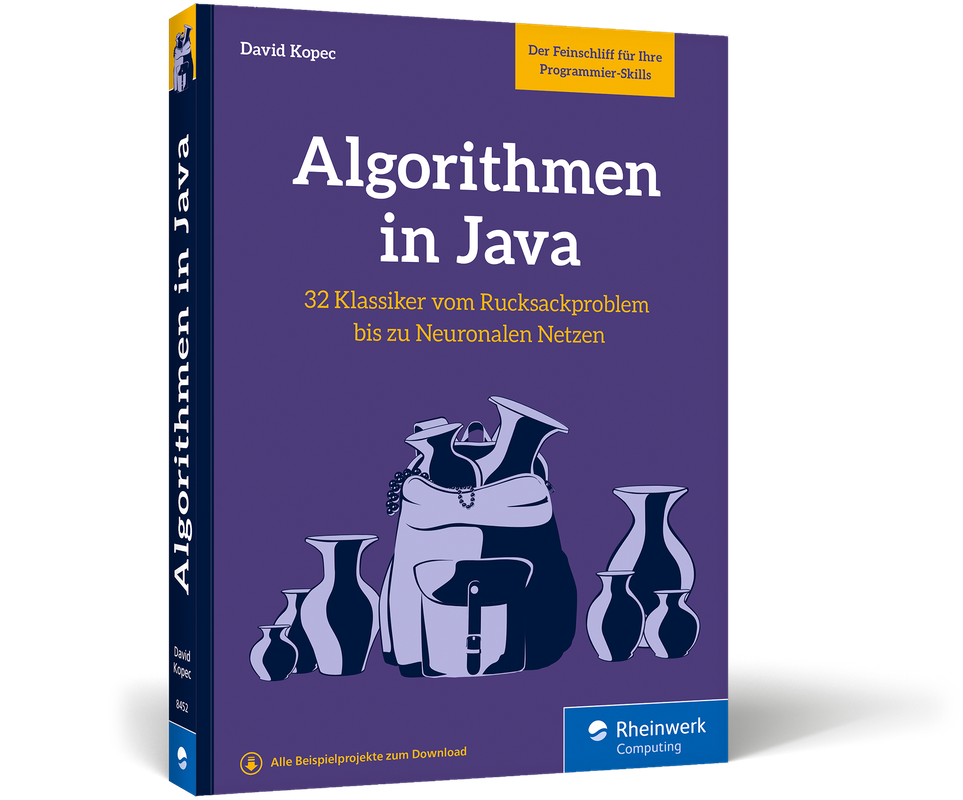
Algorithmen in Java
Programmieren will trainiert werden, und Algorithmen gehören zum Rüstzeug hinzu. Schlagen Sie zwei Fliegen mit einer Klappe und verbessern Sie Ihre Java-Skills anhand klassischer Algorithmen, von der Suche im Binärbaum über k-Means bis zum Rucksackproblem. Dieses Buch ist Grundausbildung und Fundgrube für Coding Workouts zugleich. Profitieren Sie von der Lehr- und Praxiserfahrung des Autors: David Kopec hat 32 Klassiker der Informatik für Sie herausgesucht, die Ihnen wichtige Lösungsstrategien aufzeigen und einen starken Trainingseffekt versprechen.Ideal für alle, die ihre ersten Schritte in der Programmierung hinter sich haben und jetzt voll durchstarten wollen!Aus dem Inhalt:Zum Einstieg: Unknackbare Verschlüsselung, Fibonacci-Folge, die Türme von HanoiSuchalgorithmen: DNS-Suche, Labyrinthe u.v.m.Bedingungserfüllung: Wortsuchrätsel, Acht-Damen-Problem u.v.m.Grafen, kürzeste Wegek-Means-ClusteringEinfache neuronale NetzeMinimax: Tic-tac-toe, Vier gewinntLeseprobe (PDF)

AutoCAD 2022 und LT 2022 für Architekten und Ingenieure
Dieses Grundlagen- und Lehrbuch zeigt Ihnen anhand konkreter Praxisbeispiele aus Architektur, Handwerk und Technik die Möglichkeiten von AutoCAD 2022 und AutoCAD LT 2022 und bietet insbesondere AutoCAD-Neulingen einen gründlichen und praxisnahen Einstieg in CAD.Mit dem Buch und der 30-Tage-Testversion von der Autodesk-Webseite können Sie sofort beginnen und Ihre ersten Zeichnungen erstellen. Sie arbeiten von Anfang an mit typischen Konstruktionsaufgaben aus Studium und Praxis. Zu jedem Kapitel finden Sie Übungsaufgaben, Testfragen und Lösungen.Zahlreiche Befehle werden detailliert erläutert, wie zum Beispiel:Zeichnen mit LINIE, KREIS, BOGEN, Polylinie, Schraffur und weitereBearbeiten (VERSETZ, STUTZEN, DEHNEN, STRECKEN, Skalieren und weitere), Anordnungen rechteckig, polar oder entlang Pfaden, Griffe, Eigenschaften-ManagerKomplexe Objekte: BLOCK, Palette, Editor, Attribute, externe Referenzen3D-Volumenkörper, Netzkörper und NURBS-Flächen (Freiformmodellierung), neue 3D-Grafik (Vorschau)Vergleichsfunktion für Zeichnungen und externe ReferenzenBenutzeroberfläche anpassen, Makro-Aufzeichnung, AutoLISP-ProgrammieranleitungDeutsche Beschreibung der englischen ExpresstoolsAus dem Inhalt:Allgemeine Bedienung mit Multifunktionsleisten, Registern und PalettenSchnelleinstieg ins Zeichnen mit RasterfangExaktes Zeichnen mit Koordinaten, Objektfang und SpurlinienZeichnungsorganisation mit Layern, Vorlagen und StandardsTexte, Schriftfelder und Tabellen, Verbindung zu ExcelBemaßungsbefehle und Bemaßungsstile, SpezialfälleParametrische Variantenkonstruktionen, dynamische BlöckeZusammenarbeit über Web- und Mobil-App, AblaufverfolgungMaßstäbliches Plotten, auch bei verschiedenen Einheiten (mm, cm, m)Neue Funktionen für Web und MobileZahlreiche Übungsfragen mit AntwortenLeseprobe (PDF-Link)
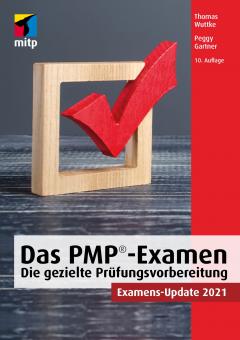
Das PMP-Examen (10. Auflg.)
Die gezielte PrüfungsvorbereitungExamens-Update 2021Beispielfragen zum Download, ein umfangreiches Stichwortverzeichnis sowie eine Formelsammlung machen dieses Buch zu einem perfekten Begleiter auf Ihrem Weg zum zertifizierten PMP.Das PMP-Zertifikat des Project Management Institutes (PMI®) gilt als der international anerkannte Nachweis für Projektmanagementkompetenz. Wenn Sie Ihren Kenntnisstand in diesem Bereich durch ein Zertifikat nachweisen und ein Project Management Professional (PMP) werden wollen, bereitet Sie dieses Buch effektiv auf Ihre Prüfung vor.Die Autoren bieten eine übersichtliche Darstellung der prüfungsrelevanten Inhalte und vermitteln das Wissen, das Sie brauchen, um PMP zu werden. Bereiten Sie sich mit dieser aktualisierten Auflage gezielt auf das Zertifikat vor und erkennen Sie Ihre Schwachstellen. Außerdem erhalten Sie wertvolle Tipps zum Ablauf des Examens selbst.Aus dem Inhalt:Der Ablauf der PrüfungEthik und Maßstäbe für professionelles VerhaltenGrundstrukturen im ProjektmanagementIntegrationsmanagementInhalts- und UmfangsmanagementTerminmanagementKostenmanagementQualitätsmanagementPersonalmanagementKommunikationsmanagementRisikomanagementBeschaffungsmanagementStakeholdermanagementFormelsammlungZugriff auf exemplarische Prüfungsfragent den Mobile AppsLeseprobe (PDF-Link)
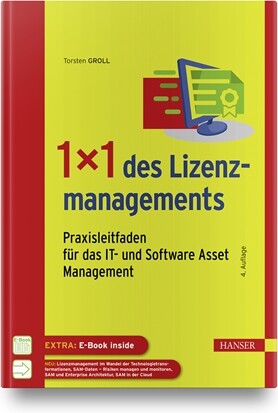
1x1 des Lizenzmanagements (4. Auflg.)
Unter dem Leitsatz »Lizenzmanagement im Wandel der Technologietransformation« wurde die 4. Auflage ausführlich überarbeitet und aktualisiert.Die Transparenz der IT-Assets, ist ein wesentlicher Bestandteil für die Sicherstellung eines wirtschaftlichen und risikoarmen IT-Betriebs in Hybrid-Umgebungen. Die verstärkte Migration der lokalen IT in die Cloud erhöht die Komplexität im Verwalten von Softwarelizenzbedarfen.Zudem sind Cyberrisiken der Software Assets sowie DSGVO-Schwachstellen im IT-Betrieb risikoarm zu managen. Dadurch unterliegt das heutige SAM enormen Veränderungen. Der neue Fokus auf einen lizenzkonformen und wirtschaftlich optimierten SAM-Betrieb bewegt sich weg vom »Zählen, Messen, Wiegen« hin zu Abonnement und Verbrauchsabrechnungsmodellen. Die neuen Herausforderungen, lokale IT-Assets mit Cloud-Services im Hybrid-Modus zu verwalten und zu steuern, bedingen verstärkt ein Nutzungsmanagement statt eines Lizenzmanagements.Althergebrachte Lizenzmodelle werden immer mehr durch Sourcing- und Servicemodelle ersetzt, die eine Berücksichtigung vielfältiger Parameter im SAM-Betrieb erfordern.Aus dem Inhalt:Grundlagen des LizenzmanagementsDer SAM-Lifecycle-Prozess als SteuerungsinstrumentDie technische und kaufmännische Bestandsaufnahme durchführenDie Lizenznachweise erfassen: Best-Practice-VorgehensweiseDas SAM-Projekt planen und umsetzen/Ein SAM-Tool evaluieren, implementieren, betreibenDie SAM-Daten: Berichte erstellen und monitorenDie SAM-Daten: Cyberrisiken monitoren sowie DSGVO und PII-Daten managenDie SAM-Transformationen in Server- und Cloud-UmgebungenDer operative SAM-Betrieb: die wichtigsten AspekteDas Software-Audit: mögliche Risiken erkennen und managenLeseprobe (PDF-Link)
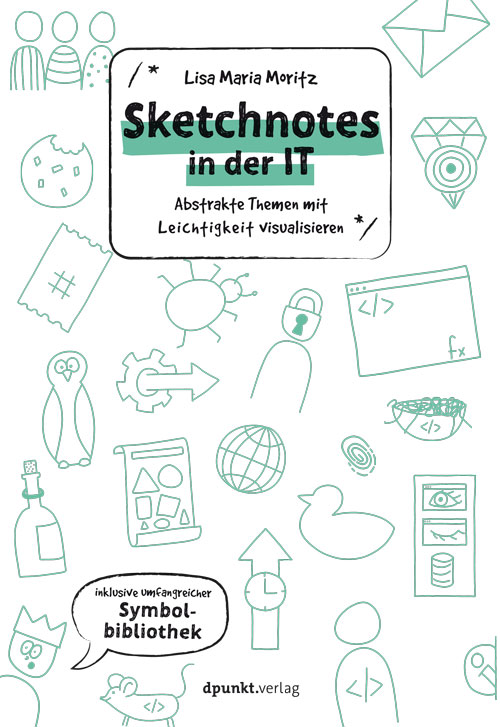
Sketchnotes in der IT
Abstrakte Themen mit Leichtigkeit visualisieren. Die praktische Einführung mit Tipps, Tricks und Symbolen.Im IT-Berufsalltag sammeln sich unzählige Notizen – zu Vorträgen, Meetings, Aufzeichnungen zu komplexen Aufgaben … Häufig sind sie hässlich, lang, unleserlich – und landen schnell im Altpapier. Sketchnotes dagegen sehen nicht nur schick aus, sie helfen auch dabei, sich an die wichtigsten Dinge zu erinnern, und erfreuen Kolleginnen und Kollegen.Dieses Buch gibt eine praktische Einführung in die Welt der Sketchnotes. Schon auf den ersten Seiten erstellst du deine erste Sketchnote – unabhängig von Vorwissen oder Talent. Nach einem Grundlagenkapitel, das Hilfen für den Einstieg bietet, zeigt die Softwareentwicklerin Lisa-Maria Moritz, in welchen Bereichen deines Arbeitsalltags in der IT du Sketchnotes einsetzen kannst. Um dabei die passende Visualisierung zu finden, hat sie eine umfangreiche Bibliothek mit zahlreichen Symbolideen zu abstrakten Begriffen der IT zusammengestellt, deren Erstellung sie in Schritt-für-Schritt-Anleitungen zeigt.

HTML und CSS - Das umfassende Handbuch (4. Auflage)
Moderne Web-Technologien für moderne Websites! In diesem Standardwerk gibt Ihnen Jürgen Wolf alle Werkzeuge an die Hand, die Sie für einen starken Auftritt im Web benötigen. Lernen Sie alle Grundlagen von HTML, CSS und JavaScript kennen und erweitern Sie Ihr Wissen mit diesem umfassenden Lern- und Nachschlagewerk: vom Aufbau eines HTML-Dokuments über die Gestaltung mit CSS bis hin zur Web-Programmierung mit JavaScript. Inkl. einer Einführung in die wichtigen JavaScript-Frameworks React und Angular. Aus dem Inhalt:Syntax und Aufbau von HTML-DokumentenTabellen und HyperlinksBilder, Audio und VideoHTML-Formulare und interaktive ElementeDie Selektoren von CSSVererbung und KaskadeDas Box-ModellResponsive Layouts erstellenEinführung in JavaScript-APIsAjax und jQueryReact und Angular kennenlernenAutor: Jürgen Wolf ist Web- und Softwareentwickler sowie Autor mehrerer Standardwerke zu Programmierung und Fotografie. Ihm gelingt es auf hervorragende Weise, Theorie verständlich zu machen und mit Beispielen aus der Programmierpraxis zu verbinden.

Adobe InDesign: Das umfassende Handbuch
Umfassend, detailliert und auf dem neuesten Stand – mit diesem Bestseller beherrschen Sie Adobe InDesign! Auf 1.200 Seiten erhalten Sie fundiertes Profiwissen zu allen Themen rund um Ihre Software. Die Informationen sind klar gegliedert, sodass sich das Buch gut zum schnellen Nachschlagen eignet. Leicht verständlich erläutert Hans Peter Schneeberger alles, was Sie wissen müssen: von der ersten Layoutarbeit über das Anlegen komplexer Dokumente bis hin zu den modernen Techniken wie EPUB, barrierefreie PDFs, PDF-Formulare und kollaboratives Zusammenarbeiten. Auch Profis kommen voll auf ihre Kosten: Tiefgehende Infos zu Skripten, GREP, zum XML-Publishing und zur Automatisierung lassen die Arbeit schnell von der Hand gehen. Aus dem Inhalt: InDesign einrichtenLayouts anlegen und organisierenRahmen, Ebenen, Hilfsmittel, RasterInhalte für das Layout: Bilder, Text, Farben, Effekte, VektorenText professionell: Tabellen, Formate, Formensatz, Zeichen, AbsätzeLange Dokumente: Musterseiten, Buch, Inhaltsverzeichnis, Index, Listen, Variablen, Bibliotheken, SnippetsDie Print-Produktion: Preflight, PDF-Export, FarbmanagementVariables Layout, interaktive Dokumente, AnimationenEPUB und E-Books: Was geht?PDF-Formulare, barrierefreies PDFAutomatisieren: GREP, Skripte, XMLRedaktionelle Aufgaben, ReviewsHier geht's zur Leserprobe

That’s me!
Wie Sie Purpose als Kompass zum Erfolg nutzenWarum und wozu tun wir, was wir tun? Wer sich mit Purpose beschäftigt, bekommt ein Gefühl für Dinge, die wirklich etwas bedeuten. Für sinnvolle, erfüllende Berufe, die Spaß machen. Für Nachhaltigkeit mit Blick auf Gemeinschaft und Natur. Mit »That’s me!« finden Sie den roten Faden zum Erfolg – als Individuum, als Team, als Führungskraft, im Unternehmen.Purpose, das ist mehr als eine lebendige und zeitgemäße Formulierung von Sinn, Zweck oder Bestimmung eines Menschen oder eines Unternehmens. Der echte Purpose, der sich in Geschichten und Entscheidungen und Gründerpersönlichkeiten manifestiert, macht den Unterschied. Nicht umsonst bezeichnen sich in den USA immer mehr Unternehmen als purpose-driven, verändern ihre Kultur und ihre Haltung und sind, wie Studien zeigen, deutlich erfolgreicher als ihre Marktbegleiter.Warum also tun wir, was wir tun? »That’s Me!« inspiriert dazu, sich dieser Frage zuzuwenden. Systematisch, doch zugleich kreativ-spielerisch.AutorThomas Pyczak ist Autor, Consultant, Purpose Coach und Trainer. Er ist Verfasser von Romanen, Sachbüchern und eines Blogs über Storytelling. Zuvor war er CEO und Chefredakteur der Computerfachzeitschrift CHIP. Die Themen Purpose und Storytelling kennt Thomas aus verschiedenen Perspektiven. Warum und wozu tun wir, was wir tun? Und was ist unsere Story? Die Story unseres Teams? Unseres Unternehmens?Thomas ist davon überzeugt, dass wir alle, privat oder im Business, in den nächsten Jahren mit wachsender Intensität mit den Themen Storytelling und Purpose konfrontiert werden. Er möchte seine Leser dazu inspirieren, sich schon jetzt diesen Fragen zuzuwenden, systematisch, doch zugleich spielerisch-kreativ.

Essential Java for AP CompSci
Gain the essential skills for computer science using one of today's most popular programming languages, Java. This book will prepare you for AP CompSci Complete, but you don’t need to be sitting that class to benefit. Computer science has become a basic life skill that everyone is going to need to learn. Whether you are going into a career or side hustle in business, technology, creativity, architecture, or almost any other field, you will find coding and computer science play a role.So when we learn programming we are going to focus on three things: what is the process; what is the syntax; and what is the flow. The process is represented as a flowchart. We will learn how to make these to help you plan out what you are going to do before you write a line of code. At first, the flowcharts will be pretty simple, but then they will get more complex. The syntax is the code: this is what you write that translates the process you create in a flowchart to the instructions that the computer can understand. Finally, there is the flow. This is where you trace through the code and see how the data and information it stores along the way changes. You can see how the operation of the program cascades from line to line. You will be building charts that will capture the programming flow so you can better understand how the computer processes code to make your next program easier to conceive and code.Along the way to aid in the learning of the essential Java skills, there will be three kinds of project types throughout this book: business software projects for applications where you work for a company and need to complete an internal project for a team such as the sales, marketing, or data science teams; social good projects where you are working for non-profits or for agencies that are trying to research and provide solutions to economic, environmental, medical, or humanitarian projects; and game development projects for games based on player input, random chance, or other mechanics for the use of entertainment.What is unique about computer science is how it has become a skill, and not just a career. While there are jobs and titles of “computer scientist”, the skill of computer science, and specifically programming, are almost everywhere. After reading and using this book, you'll have the essential skills to think like a computer scientist, even if you are not. As a result you’ll be of greater value to your clients, your company, and yourself.WHAT YOU WILL LEARNDiscover the primary building blocks of programming using the Java programming language * See terminology and best practices of software development* Work with object-oriented programming concepts* Use common-language definitions and examples to help drive understanding and comprehension of computer science fundamentalsWHO THIS BOOK IS FORThose who want to learn programming and want to think like a computer scientist. Ideal for anyone taking AP CompSci Complete.Doug Winnie is director of learning experience at H&R Block, responsible for learning and development platforms supporting associates across the organization. Previously, Doug was principal program manager at Microsoft and LinkedIn leading the LinkedIn Learning instructor community, curriculum strategy for technology learning content, and as a member the Windows Insider team supporting educational and career growth for millions of Windows Insiders worldwide.Throughout his career and consulting with companies such as Adobe, PG&E, Safeway, HP, and the US Army, Doug has worked to help developers and designers through education, product management, and interactive development. Doug was honored with two Webby award nominations with projects for Industrial Light and Magic and has written multiple publications to teach beginners how to code. He is also an AP Computer Science teacher, teaching the next generation of developers. Doug lives in the Kansas City metro area and Palm Springs, California.1. WELCOME TO COMPUTER SCIENCE2. SPRINT 01: INTRODUCTION3. SPRINT 02: SETTING UP THE JAVA JDK AND INTELLIJ4. SPRINT 03: SETTING UP GITHUBa. QUIZ 01b. QUIZ 025. SPRINT 04: PROGRAMMING LANGUAGES6. SPRINT 05: HISTORY AND USES OF JAVA7. SPRINT 06: HOW JAVA WORKSa. QUIZ 038. SPRINT 07: FLOWCHARTINGa. ASSIGNMENT 01: PBJ’Db. QUIZ 049. SPRINT 08: HELLO, WORLDa. QUIZ 0510. SPRINT 09: SIMPLE JAVA PROGRAM STRUCTURE11. SPRINT 10: TEXT LITERALS AND OUTPUTa. ASSIGNMENT 02: EE’D12. SPRINT 11: VALUE LITERALS13. SPRINT 12: OUTPUT FORMATTING14. SPRINT 13: COMMENTS AND WHITESPACE15. SPRINT 14: ABSTRACTION OF NUMBERS16. SPRINT 15: BINARYa. QUIZ 0617. SPRINT 16: UNICODE18. SPRINT 17: VARIABLES19. SPRINT 18: MATH. UGH.a. QUIZ 07b. ASSIGNMENT 03: SILO’D20. SPRINT 19: MATH FUNCTIONS21. SPRINT 20: MANAGING TYPEa. ASSIGNMENT 04: SPACE’Db. QUIZ 08c. QUIZ 09d. QUIZ 10e. QUIZ 1122. SPRINT 21: RANDOM NUMBERS23. SPRINT 22: CAPTURE INPUT24. SPRINT 23: CREATING TRACE TABLES25. SPRINT 24: FUNCTIONSa. ASSIGNMENT 05: ORC’D26. SPRINT 25: NESTED FUNCTIONS27. SPRINT 26: FUNCTIONS AND VALUESa. QUIZ 1228. SPRINT 27: FUNCTIONS AND SCOPEa. QUIZ 13b. QUIZ 14c. QUIZ 15d. ASSIGNMENT 06: ULTIMA’De. ASSIGNMENT 07: CYCLONE’D29. SPRINT 28: BOOLEAN VALUES AND EQUALITYa. QUIZ 16b. ASSIGNMENT 08: SPRINT’Dc. USER STORY: 52-PICKUP30. SPRINT 29: SIMPLE CONDITIONAL STATEMENTSa. USER STORY: YAHTZEEb. USER STORY: YAHTZEE TESTINGc. QUIZ 17d. QUIZ 18e. QUIZ 1931. SPRINT 30: MATCHING CONDITIONS WITH THE SWITCH STATEMENT32. SPRINT 31: THE TERNARY OPERATOR33. SPRINT 32: THE STACK AND THE HEAP34. SPRINT 33: TESTING EQUALITY WITH STRINGSa. ASSIGNMENT 09: ESCAPE’Db. USER STORY: ESCAPE’D WHITE BOX35. SPRINT 34: DEALING WITH ERRORS36. SPRINT 35: DOCUMENTING WITH JAVADOC37. SPRINT 36: FORMATTED STRINGS38. SPRINT 37: THE WHILE LOOPa. QUIZ 20b. QUIZ 21c. QUIZ 2239. SPRINT 38: AUTOMATIC PROGRAM LOOPS40. SPRINT 39: THE DO/WHILE LOOPa. ASSIGNMENT 10: SEQUENCE’Db. USER STORY: DICEYc. USER STORY SOLUTION: DICEYd. USER STORY: CONVERTERe. USER STORY SOLUTION: CONVERTER41. SPRINT 40: PROBABILITY42. SPRINT 41: SIMPLIFIED ASSIGNMENT OPERATORS43. SPRINT 42: THE FOR LOOPa. QUIZ 23b. ASSIGNMENT 11: ODDS’D44. SPRINT 43: NESTING LOOPSa. USER STORY: MAP BUILDER45. SPRINT 44: STRINGS AS COLLECTIONSa. ASSIGNMENT 12: PALINDROME’Db. QUIZ 2446. SPRINT 45: MAKE COLLECTIONS USING ARRAYSa. QUIZ 2547. SPRINT 46: CREATING ARRAYS FROM STRINGSa. ASSIGNMENT 13: ELECTION’Db. QUIZ 2648. SPRINT 47: MULTIDIMENSIONAL ARRAYS49. SPRINT 48: LOOPING THROUGH MULTIDIMENSIONAL ARRAYSa. QUIZ 27b. QUIZ 2850. SPRINT 49: BEYOND ARRAYS WITH ARRAYLISTS51. SPRINT 50: INTRODUCING GENERICS52. SPRINT 51: LOOPING WITH ARRAYLISTSa. ASSIGNMENT 14: LIST’D53. SPRINT 52: USING FOR…EACH LOOPSa. ASSIGNMENT 15: NUMBER’Db. QUIZ 29c. QUIZ 3054. SPRINT 53: THE ROLE-PLAYING GAME CHARACTERa. ASSIGNMENT 16: ROLL’D55. SPRINT 54: POLYMORPHISMa. ASSIGNMENT 17: EXTEN’D56. SPRINT 55: MAKE ALL THE THINGS…CLASSES57. SPRINT 56: CLASS, EXTEND THYSELF!a. QUIZ 3158. SPRINT 57: I DON'T COLLECT THOSE; TOO ABSTRACT.59. SPRINT 58: ACCESS DENIED: PROTECTED AND PRIVATEa. QUIZ 32b. QUIZ 3360. SPRINT 59: INTERFACING WITH INTERFACESa. QUIZ 34b. QUIZ 35c. QUIZ 36d. QUIZ 37e. ASSIGNMENT 18: STARSHIP’D61. SPRINT 60: ALL I'M GETTING IS STATIC62. SPRINT 61: AN ALL-STAR CAST, FEATURING NULL63. ANSWER KEY

Digitale Transformation, Arbeit und Gesundheit
Die digitale Transformation verändert die Arbeitswelt. Wie wird die Digitalisierung gesundheitsgerecht in kleinen und mittleren Unternehmen umgesetzt? Der aktuelle Wissensstand wird zusammengefasst, mit detaillierten Einblicken in die Praxis und Werkzeugen zur Bewältigung betrieblicher Digitalisierungsprojekte.THOMAS ENGEL, Leiter ZeTT – Zentrum Digitale Transformation Thüringen, Friedrich-Schiller-Universität Jena, forscht zum Wandel von Arbeit und Beschäftigung in der Digitalisierung.CHRISTIAN ERFURTH, Professor für Informatik, Ernst-Abbe-Hochschule Jena, beschäftigt sich mit den technologischen und organisatorischen Gestaltungsmöglichkeiten der digitalen Arbeitswelt.STEPHANIE DRÖSSLER arbeitet am Institut und Poliklinik für Arbeits- und Sozialmedizin der Medizinischen Fakultät der TU Dresden zu gesundheitlichen Belastungen und Prävention im digitalen Wandel.SANDRA LEMANSKI arbeitet am Lehrstuhl Gesundheit und Prävention der Universität Greifswald zu Stress im Arbeitskontext und den Gestaltungsmöglichkeiten von Arbeit in der und durch die digitale Transformation.

SQL Server on Kubernetes
Build a modern data platform by deploying SQL Server in Kubernetes. Modern application deployment needs to be fast and consistent to keep up with business objectives and Kubernetes is quickly becoming the standard for deploying container-based applications, fast. This book introduces Kubernetes and its core concepts. Then it shows you how to build and interact with a Kubernetes cluster. Next, it goes deep into deploying and operationalizing SQL Server in Kubernetes, both on premises and in cloud environments such as the Azure Cloud.You will begin with container-based application fundamentals and then go into an architectural overview of a Kubernetes container and how it manages application state. Then you will learn the hands-on skill of building a production-ready cluster. With your cluster up and running, you will learn how to interact with your cluster and perform common administrative tasks. Once you can admin the cluster, you will learn how to deploy applications and SQL Server in Kubernetes. You will learn about high-availability options, and about using Azure Arc-enabled Data Services. By the end of this book, you will know how to set up a Kubernetes cluster, manage a cluster, deploy applications and databases, and keep everything up and running.WHAT YOU WILL LEARN* Understand Kubernetes architecture and cluster components* Deploy your applications into Kubernetes clusters* Manage your containers programmatically through API objects and controllers* Deploy and operationalize SQL Server in Kubernetes* Implement high-availability SQL Server scenarios on Kubernetes using Azure Arc-enabled Data Services* Make use of Kubernetes deployments for Big Data ClustersWHO THIS BOOK IS FORDBAs and IT architects who are ready to begin planning their next-generation data platform and want to understand what it takes to run SQL Server in a container in Kubernetes. SQL Server on Kubernetes is an excellent choice for those who want to understand the big picture of why Kubernetes is the next-generation deployment method for SQL Server but also want to understand the internals, or the how, of deploying SQL Server in Kubernetes. When finished with this book, you will have the vision and skills to successfully architect, build and maintain a modern data platform deploying SQL Server on Kubernetes.ANTHONY E. NOCENTINO is the Founder and President of Centino Systems as well as a Pluralsight author, a Microsoft Data Platform MVP, and an industry-recognized Kubernetes, SQL Server, and Linux expert. In his consulting practice, Anthony designs solutions, deploys the technology, and provides expertise on system performance, architecture, and security. He has bachelor's and master's degrees in computer science, with research publications in machine virtualization, high performance/low latency data access algorithms, and spatial database systems.BEN WEISSMAN is the owner and founder of Solisyon, a consulting firm based in Germany and focused on business intelligence (BI), business analytics, and data warehousing. He is a Microsoft Data Platform MVP, the first German BimlHero, and has been working with SQL Server since SQL Server 6.5. Ben is also an MCSE, Charter Member of the Microsoft Professional Program for Big Data, Artificial Intelligence and Data Science, and he is a Certified Data Vault Data Modeler. If he is not currently working with data, he is probably travelling to explore the world. You can find him online at @bweissman on Twitter.PART I. CONTAINER AND KUBERNETES FOUNDATIONS1. Getting Started2. Container Fundamentals3. Kubernetes ArchitecturePART II. KUBERNETES IN PRACTICE4. Installing Kubernetes5. Interacting with your Kubernetes Cluster6. Storing Persistent Data in KubernetesPART III. SQL SERVER IN KUBERNETES7. Deploying SQL Server in Kubernetes8. Monitoring SQL Server in Kubernetes9. Azure Arc-enabled Data Services and High Availability for SQL Server in Kubernetes10. Big Data Clusters

Towards Sustainable Artificial Intelligence
So far, little effort has been devoted to developing practical approaches on how to develop and deploy AI systems that meet certain standards and principles. This is despite the importance of principles such as privacy, fairness, and social equality taking centre stage in discussions around AI. However, for an organization, failing to meet those standards can give rise to significant lost opportunities. It may further lead to an organization’s demise, as the example of Cambridge Analytica demonstrates. It is, however, possible to pursue a practical approach for the design, development, and deployment of sustainable AI systems that incorporates both business and human values and principles.This book discusses the concept of sustainability in the context of artificial intelligence. In order to help businesses achieve this objective, the author introduces the sustainable artificial intelligence framework (SAIF), designed as a reference guide in the development and deployment of AI systems.The SAIF developed in the book is designed to help decision makers such as policy makers, boards, C-suites, managers, and data scientists create AI systems that meet ethical principles. By focusing on four pillars related to the socio-economic and political impact of AI, the SAIF creates an environment through which an organization learns to understand its risk and exposure to any undesired consequences of AI, and the impact of AI on its ability to create value in the short, medium, and long term.WHAT YOU WILL LEARN* See the relevance of ethics to the practice of data science and AI* Examine the elements that enable AI within an organization* Discover the challenges of developing AI systems that meet certain human or specific standards* Explore the challenges of AI governance* Absorb the key factors to consider when evaluating AI systemsWHO THIS BOOK IS FORDecision makers such as government officials, members of the C-suite and other business managers, and data scientists as well as any technology expert aspiring to a data-related leadership role.GHISLAIN TSAFACK is Head of Data Science at Elemental Concept 2016 LTD (EC), where he leads the organization’s AI strategy. As part of this, he leads the company’s work in leveraging the latest advances in AI to help clients create value from their data and auditing AI systems developed by third parties on behalf of potential investors.Ghislain’s work in the healthcare industry at EC involves supporting the development of data related healthcare products for his clients. This made him appreciate the challenges and the complexity of developing AI systems that people trust to make the right decision for them and stimulated him to write this book.Before joining EC Ghislain held positions as data scientist in the telecommunications and energy sectors. Prior to this, Ghislain worked as an academic at the French National Institute for Research and Automation (INRIA) and the University of Lyon 1. His work primarily focused on analyzing the behaviors of high performance systems to improve their energy efficiency and gave him the opportunity to co-author several scientific books presenting methodologies for improving the energy efficiency for large scale computing infrastructures. He holds a PhD in computer science from Ecole Normale Supérieure of Lyon, France.● Chapter 1: AI in our Society● Chapter goal: Reviews the place of AI within our society, discuss the various challenges that it AI faces, and introduces the foundational concepts of our sustainable AI framework○ 1.1 The Need for Artificial Intelligence○ 1.2 Challenges of Artificial Intelligence○ 1.3 Sustainable Artificial Intelligence● Chapter 2 Ethics of the Data Science Practice● Chapter goal: Reviews the human factor pillar of artificial intelligence, the relevance of ethics in AI and the source of ethical hazards in AI○ 2.1 Introduction○ 2.2 Ethics and their relevance to AI○ 2.3 Ethical nature of AI inferencing capability○ 2.4 Data – The business asset○ 2.5 AI regulatory outlook○ 2.6 Conclusion● Chapter 3 Overview of the Sustainable Artificial Intelligence Framework (SAIF)● Chapter goal: Summarises the SAIF framework for the development and deployment of AI applications● Chapter 4 Intra-organizational understanding of AI: Towards Transparency● Chapter goal: Discusses the need for understanding AI at the organization’s level and introduces concepts of AI governance○ 4.1 Introduction○ 4.2 Data Science Development Process○ 4.3 AI development process Controls○ 4.4 Governance■ 4.4.1 Expectations from AI governance■ 4.4.2 People and Values■ 4.4.3 Assessment of AI governance arrangements○ 4.5 Conclusion● Chapter 5 AI Performance Measurement: Think business values and objectives● Chapter goal: Summarises performance metrics for evaluating AI systems and introduces a framework to account for the human factor of AI○ 5.1 Introduction○ 5.2 AI performance metrics overview■ 5.2.1 Supervised problems■ 5.2.2 Unsupervised problems○ 5.3 Beyond traditional AI performance metrics■ 5.3.1 Soft performance metrics■ 5.3.2 From AI performance metrics to business objectives○ 5.4 Conclusion● Chapter 6 SAIF in Action● Chapter goal: This chapter illustrates how SAIF would work in practice through use cases● Chapter 7 Alternatives avenues for regulating AI systems● Chapter goal: Draws from experiences in academic, Telecom/Utility, and healthcare sectors to explore and examine the need for industry specific regulations.● Chapter 8 AI decision-making – from expectations to reality: The use case of healthcare● Chapter goal: Explores the use of artificial intelligence in the healthcare, its practical limitations an implications● Chapter 9 Conclusions and discussion● Chapter goal: Presents concluding remarks and discuss current lack of standards○ 9.1 Conclusions○ 9.2 Need for standards and definitions

That's me!
Purpose, das ist mehr als eine lebendige und zeitgemäße Formulierung von Sinn, Zweck oder Bestimmung eines Menschen oder eines Unternehmens. Der echte Purpose, der sich in Geschichten und Entscheidungen und Gründerpersönlichkeiten manifestiert, macht den Unterschied. Warum also tun wir, was wir tun? That’s Me! inspiriert dazu, sich dieser Frage zuzuwenden. Systematisch, doch zugleich kreativ-spielerisch. Sie erfahren, welche Kräfte ein Purpose freisetzen kann – in ihrem Leben und in den Unternehmen, in denen sie gemäß ihrem Purpose wirken. Aus dem Inhalt: Erfolgreiches MatchingPurpose und Passion verbinden Authentische Werte und Work-Life-Balance findenHeldenreisen und FieberkurvenDer erweiterte Golden CircleGeneration YDie Weichen stellen auf Growth Mindset und ImpactVon den besten Unternehmen lernenMit System über sich hinauswachsenIhr Purpose-Puzzle zusammenfügenLernen, mutig die Welt zu verändern Danke ... 12 Einleitung ... 13 FENSTER - Hinsehen, staunen, wirken lassen! Warum Purpose in Zukunft immer wichtiger wird ... 17 Purpose, Sinn, Zweck, Vision - Raus aus dem Dschungel der Begriffe ... 19 Eine Frage des Matchings - Purpose und Passion ... 22 Das wohlige Schnurren der Katze - Resonanz, Purpose, Spitzenleistungen ... 29 Purpose, Profit, Planet - Der neue Dreiklang ... 34 Vorausschauende Rückblicke - Purpose und das langfristige Denken ... 38 Es gibt kein richtiges Leben im falschen - Erfüllung und das Ende der Work-Life-Balance ... 42 Von Status zu Sinn - Die Babyboomer und die Generationen X, Y und Z ... 47 Der Tanz mit dem Purpose - Ein neues Paradigma für Organisationen ... 52 Hallo, wer bist du? - Geschichten, die erzählen, wer und warum wir sind ... 60 Martin Luther und die Tierpfleger - Die helle und die dunkle Seite der Bestimmung ... 66 Gefährliche Kindermädchen - Purpose und die Mechanik des Vertrauens ... 71 Etwas anderes als Listen abhaken - Die psychologische Vermessung des Sinns ... 77 Wofür eine Marke steht - Branding im Zeichen von Purpose ... 83 Wettbewerber wegblasen - Die Neurowissenschaft von Purpose ... 88 Trailblazer und Blacktocats - Von überall arbeiten, um die Welt zu verbessern ... 90 Keine Ausreden mehr - Viktor Frankl und das große Ja zum Leben ... 93 Die Suche nach der Mitte - Aristoteles' Konzept vom guten Leben ... 98 Sind wir schon wieder auf einem Maskenball? - Guter Purpose, schlechter Purpose, gar kein Purpose ... 103 Wie frisch gefallener Schnee - Das Ikigai und die japanische Lebenskunst ... 107 Alles fügt sich - Biografien und Unternehmen als Kunstwerke ... 112 Ist Purpose etwas Rationales oder Emotionales? - Zwölf essenzielle Fragen ... 115 MEDITATION I - Lauschen und Empathie ... 123 SPIEGEL - Erkennen, strukturieren, machen! Wie Sie Purpose finden, formulieren und verankern ... 131 Von Toyota lernen, in die Tiefe zu fragen - Die 5-Why-Methode zur spielerischen Annäherung an Purpose ... 133 Mit dem Why beginnen - Der klassische Golden Circle ... 137 Nicht beim Why aufhören - Der erweiterte Golden Circle ... 147 Ketchup in den Venen - Die eigenen Werte finden und formulieren ... 152 Ein Mindset, das alle anderen schlägt - So wachsen Sie mit System über sich hinaus ... 166 Zu tausend Dingen nein sagen - Purpose und das Igelprinzip ... 170 Liebende und Rebellen - Der archetypische Zugang zu Purpose ... 174 Das 1-1-1-Prinzip - Ein Framework für Philanthropie ... 181 Wirtschaftsprüfer bekämpfen Terrorismus - Machen Sie ein Poster von Ihrem Purpose ... 185 So einfach wie Malen nach Zahlen - Mit dem Purpose-Rad zum ersten Draft navigieren ... 188 Die Baumeister von morgen inspirieren - Die Kunst, ein authentisches Purpose Statement zu verfassen ... 192 Von sozialen Bewegungen lernen - Ihre starke Purpose Story à la Barack Obama erzählen ... 201 Ich werde danach streben, weltweit nachhaltigen Wohlstand zu schaffen - Wir schreiben ein Manifest ... 209 Was wäre, wenn ...? - Wie Sie sich zum Erfolg träumen ... 214 Ein inneres Navigationssystem entwickeln - Das persönliche Purpose-Logbuch ... 218 Von Purpose zu Impact - Das Logbuch für Leader ... 226 Ich, Rolle, Team, Organisation - Das Purpose-Puzzle zusammenfügen ... 234 That's me! - Ihr persönliches Purpose-Canvas ... 238 That's us! - Das Purpose-Canvas für Organisationen ... 239 MEDITATION II - Spüren und Achtsamkeit ... 243 TÜR - Rausgehen, folgen, lernen! So mächtig ist Purpose in der praktischen Anwendung ... 251 Wir sind im Business, um unseren Heimatplaneten zu retten - Purpose und Aktivismus bei Patagonia ... 253 Powerfrauen der jungen Generation - Purpose und Story bei Amanda Gorman, Greta Thunberg und Mai Thi Nguyen-Kim ... 260 Purpose programmieren - Holokratie als neues Betriebssystem für Unternehmen ... 270 Lernen, mutig die Welt zu verändern - Der Spirit der Evangelischen Schule Berlin Zentrum ... 280 Im Reich des Super Purpose - SpaceX, Virgin Galactic und Blue Origin ... 288 Gesellschaftliche Probleme marktorientiert und skalierbar lösen - Wann hat ein Start-up Impact? ... 296 Ein mächtiger Gedanke, aber ... - Die Lücke zwischen Purpose und Praxis bei der Bill & Melinda Gates Foundation ... 300 Besessen von Kundenzufriedenheit - Purpose mit Differenz bei Amazon und Zappos ... 303 Wenn du einen Dollar in der Tasche hast ... oder auch 60 Milliarden - Spenden und Purpose bei Rihanna, Toms Schuhe und MacKenzie Scott ... 310 Den Kopf freihaben, träumen - Von der Managerin zur Professorin zur Malerin ... 317 Du brauchst mehr Empathie, Mann! - Die Bedeutung von Purpose und Mindset für den Change-Prozess von Microsoft ... 320 Erweiterte Diversität - Bei auticon sind alle Consultants Autisten ... 326 Dem Purpose ein Gesicht geben - Fünf Dinge, die Volkswagen von Tesla lernen könnte ... 332 Vom Kostenträger zum Gesundheitslotsen - Purpose mit Bodenhaftung bei der AOK PLUS ... 337 Bella ciao, bella ciao, bella ciao, ciao, ciao - »Haus des Geldes« und die Symbolik des Purpose ... 342 Mut zu mehr gesundem Menschenverstand - Vaude, Pionier im zukunftsweisenden Wirtschaften ... 345 Anhang ... 353 Index ... 361