

Computer und IT

Data & AI Imperative
UNLOCK PREDICTABLE BOTTOM LINE GROWTH THROUGH TAILORED DATA AND AI STRATEGIES.In The Data & AI Imperative: Designing Strategies for Exponential Growth, celebrated data-driven growth leader, Lillian Pierson, delivers a masterclass in developing custom strategies to harness the full potential of data and AI within your organization. This book offers a clear, actionable roadmap for leveraging your company's data and technology assets to drive significant, reliable growth. With over two decades of experience, Pierson unveils her proprietary STAR framework through which you'll learn to survey, take stock of, and assess your company's current state. Finally, you'll be guided on how to recommend strategies that drive growth via the execution of optimally positioned data- and AI- intensive projects or products that directly improve your business bottom line. From conception to execution, learn to:* Identify high-impact opportunities for data or AI interventions within your business.* Assess your organization's readiness and data literacy to ensure successful outcomes.* Implement practical, effective tactics for overseeing your data-intensive projects, from strategic plans to profitable realities.* Develop and deploy AI and data strategies that exceed your business goals.While ideal for executives, managers, and other leaders of data- or AI-intensive companies, The Data & AI Imperative is also invaluable to data and technical professionals who aspire to elevate their impact by turning technical expertise into strategic leadership success. LILLIAN PIERSON, P.E., is an industry-renowned data- and AI-driven growth strategist, advisor and fractional CMO for B2B technology companies. She’s also a licensed professional engineer who’s supported the expansion of 10% of the Fortune 100 whilst educating over 2 million learners on topics of data strategy, data science, AI, and growth marketing. Acknowledgments ixAbout the Author xiIntroduction xiiiPART I THE DATA & AI ADVANTAGE IN MODERN BUSINESS 1Chapter 1 Leveling the Playing Field with Data and AI 3Chapter 2 Introduction to Data Strategy 17Chapter 3 Types of Data-Intensive Use Cases Based on Business Objectives 32Chapter 4 Data- and AI-Driven Product-Led Growth 49Chapter 5 Amplifying Growth Marketing Outcomes with Data and AI 66Chapter 6 Validating Product-Market Fit for Commercial Data and AI Products and Services 83PART II THE DATA & AI TRIFECTA: ETHICAL CONSIDERATIONS, DEPLOYMENT TACTICS, AND COMPETITIVE ANALYSIS 105Chapter 7 Complying with Regulatory and Ethical Standards 107Chapter 8 Practical Tactics for Successful AI Deployments 121PART III THE TECHNICAL FOUNDATION FOR GROWTH 139Chapter 9 Surveying Your Industry and Organization 141Chapter 10 Perform a Technical Assessment 160Chapter 11 Stakeholder Engagement and Data Literacy 176Chapter 12 Assessing Your Current State Organization 193Chapter 13 Assessing Your Current State AI Ethics and Data Privacy 215PART IV FORMULATING AND IMPLEMENTING AN AI STRATEGY 235Chapter 14 Selecting and Scoping a Winning Use Case 237Chapter 15 Evaluating All Relevant Resources 249Chapter 16 Data Strategy Recommendations for Reaching Future State Goals 277Chapter 17 Finalizing Your Strategic Plan 299Index 320

IAPP CIPP / US Certified Information Privacy Professional Study Guide
PREPARE FOR SUCCESS ON THE IAPP CIPP/US EXAM AND FURTHER YOUR CAREER IN PRIVACY WITH THIS EFFECTIVE STUDY GUIDE - NOW INCLUDES A DOWNLOADABLE SUPPLEMENT TO GET YOU UP TO DATE ON THE CURRENT CIPP EXAM FOR 2024-2025!Information privacy has become a critical and central concern for small and large businesses across the United States. At the same time, the demand for talented professionals able to navigate the increasingly complex web of legislation and regulation regarding privacy continues to increase. Written from the ground up to prepare you for the United States version of the Certified Information Privacy Professional (CIPP) exam, Sybex's IAPP CIPP/US Certified Information Privacy Professional Study Guide also readies you for success in the rapidly growing privacy field. You'll efficiently and effectively prepare for the exam with online practice tests and flashcards as well as a digital glossary. The concise and easy-to-follow instruction contained in the IAPP/CIPP Study Guide covers every aspect of the CIPP/US exam, including the legal environment, regulatory enforcement, information management, private sector data collection, law enforcement and national security, workplace privacy and state privacy law, and international privacy regulation.* Provides the information you need to gain a unique and sought-after certification that allows you to fully understand the privacy framework in the US* Fully updated to prepare you to advise organizations on the current legal limits of public and private sector data collection and use* Includes 1 year free access to the Sybex online learning center, with chapter review questions, full-length practice exams, hundreds of electronic flashcards, and a glossary of key terms, all supported by Wiley's support agents who are available 24x7 via email or live chat to assist with access and login questionsPerfect for anyone considering a career in privacy or preparing to tackle the challenging IAPP CIPP exam as the next step to advance an existing privacy role, the IAPP CIPP/US Certified Information Privacy Professional Study Guide offers you an invaluable head start for success on the exam and in your career as an in-demand privacy professional. ABOUT THE AUTHORSMIKE CHAPPLE, PHD, CIPP/US, is Teaching Professor of Information Technology, Analytics, and Operations at Notre Dame’s Mendoza College of Business. He is the bestselling author of over 25 technical books. He is also the Academic Director of the University’s Master of Science in Business Analytics program. JOE SHELLEY, CIPP/US, is the Vice President for Libraries and Information Technology at Hamilton College in New York. He oversees the information security and privacy programs, IT risk management, business intelligence and analytics, and data governance. ContentsIntroduction xixAssessment Test xxixChapter 1 Privacy in the Modern Era 1Introduction to Privacy 2What Is Privacy? 3What Is Personal Information? 4What Isn’t Personal Information? 5Why Should We Care About Privacy? 7Generally Accepted Privacy Principles 8Management 9Notice 9Choice and Consent 10Collection 10Use, Retention, and Disposal 11Access 11Disclosure to Third Parties 12Security for Privacy 12Quality 14Monitoring and Enforcement 14Developing a Privacy Program 15Crafting Strategy, Goals, and Objectives 15Appointing a Privacy Official 16Privacy Roles 17Building Inventories 18Conducting a Privacy Assessment 18Implementing Privacy Controls 20Ongoing Operation and Monitoring 20Online Privacy 20Privacy Notices 21Privacy and Cybersecurity 21Cybersecurity Goals 22Relationship Between Privacy and Cybersecurity 23Privacy by Design 24Summary 25Exam Essentials 25Review Questions 27Chapter 2 Legal Environment 31Branches of Government 32Legislative Branch 32Executive Branch 33Judicial Branch 34Understanding Laws 36Sources of Law 36Analyzing a Law 41Legal Concepts 43Legal Liability 44Torts and Negligence 45Summary 46Exam Essentials 46Review Questions 48Chapter 3 Regulatory Enforcement 53Federal Regulatory Authorities 54Federal Trade Commission 54Federal Communications Commission 60Department of Commerce 61Department of Health and Human Services 61Banking Regulators 62Department of Education 63State Regulatory Authorities 63Self-Regulatory Programs 64Payment Card Industry 65Advertising 65Trust Marks 66Safe Harbors 66Summary 67Exam Essentials 68Review Questions 69Chapter 4 Information Management 73Data Governance 74Building a Data Inventory 74Data Classification 75Data Flow Mapping 77Data Lifecycle Management 78Workforce Training 79Cybersecurity Threats 80Threat Actors 81Incident Response 86Phases of Incident Response 86Preparation 87Detection and Analysis 88Containment, Eradication, and Recovery 88Post-incident Activity 88Building an Incident Response Plan 90Data Breach Notification 92Vendor Management 93Summary 94Exam Essentials 95Review Questions 97Chapter 5 Private Sector Data Collection 101FTC Privacy Protection 103General FTC Privacy Protection 103The Children’s Online Privacy Protection Act (COPPA) 104Future of Federal Enforcement 107Medical Privacy 110The Health Insurance Portability and AccountabilityAct (HIPAA) 111The Health Information Technology for Economic andClinical Health Act 119The 21st Century Cures Act 120Confidentiality of Substance Use Disorder PatientRecords Rule 121Financial Privacy 122Privacy in Credit Reporting 122Gramm–Leach–Bliley Act (GLBA) 125Red Flags Rule 129Consumer Financial Protection Bureau 130Educational Privacy 131Family Educational Rights and Privacy Act (FERPA) 131Telecommunications and Marketing Privacy 132Telephone Consumer Protection Act (TCPA) andTelemarketing Sales Rule (TSR) 133The Junk Fax Prevention Act (JFPA) 136Controlling the Assault of Non-solicited Pornographyand Marketing (CAN-SPAM) Act 136Telecommunications Act and Customer ProprietaryNetwork Information 138Cable Communications Policy Act 139Video Privacy Protection Act (VPPA) of 1988 140Driver’s Privacy Protection Act (DPPA) 141Digital Advertising and Data Ethics 142Web Scraping 143Summary 143Exam Essentials 144Review Questions 146Chapter 6 Government and Court Access to Private SectorInformation 151Law Enforcement and Privacy 152Access to Financial Data 153Access to Communications 157National Security and Privacy 162Foreign Intelligence Surveillance Act (FISA) of 1978 162FISA Amendments Act Section 702 164USA-PATRIOT Act 165The USA Freedom Act of 2015 167The Cybersecurity Information Sharing Act of 2015 168Civil Litigation and Privacy 169Compelled Disclosure of Media Information 170Electronic Discovery 171Summary 173Exam Essentials 173Review Questions 175Chapter 7 Workplace Privacy 179Introduction to Workplace Privacy 180Workplace Privacy Concepts 180U.S. Agencies Regulating Workplace Privacy Issues 181U.S. Antidiscrimination Laws 182Privacy Before, During, and After Employment 185Automated Employment Decision Tools 186Employee Background Screening 186Employee Monitoring 190Investigation of Employee Misconduct 194Termination of the Employment Relationship 196Summary 197Exam Essentials 198Review Questions 200Chapter 8 State Privacy Laws 205Federal vs. State Authority 206Elements of State Privacy Laws 207Applicability 207Data Subject Rights 208Privacy Notice Requirements 209Data Protection 209Enforcement 211Data Breach Notification 212Elements of State Data Breach Notification Laws 212Key Differences Among States 214Significant Developments 215Other Recent Updates to State Breach Notification Laws 218Comprehensive State Privacy Laws 220California Consumer Privacy Act (2018) andCalifornia Privacy Rights Act (2020) 220Virginia Consumer Data Protection Act 223Colorado Privacy Act 226Connecticut Data Privacy Act 229Utah 231Florida 232Oregon 234Texas 237Montana 239Subject-Specific State Privacy Laws 241Health and Genetic Information 241Online Privacy 243Biometric Information Privacy Regulations 247AI and Automated Decision-Making 249Data Brokers 250Financial Privacy 251California Financial Information Privacy Act 252Recent Developments 253Marketing Laws 254Summary 255Exam Essentials 256Review Questions 258Chapter 9 International Privacy Regulation 263International Data Transfers 264European Union General Data Protection Regulation 265Adequacy Decisions 268Binding Corporate Rules 272Standard Contractual Clauses 273Other Approved Transfer Mechanisms 273APEC Privacy Framework 274Cross-Border Enforcement Issues 276Global Privacy Enforcement Network 276Resolving Multinational Compliance Conflicts 276Summary 277Exam Essentials 277Review Questions 279Appendix Answers to Review Questions 283Chapter 1: Privacy in the Modern Era 284Chapter 2: Legal Environment 285Chapter 3: Regulatory Enforcement 287Chapter 4: Information Management 289Chapter 5: Private Sector Data Collection 291Chapter 6: Government and Court Access to Private SectorInformation 293Chapter 7: Workplace Privacy 294Chapter 8: State Privacy Laws 296Chapter 9: International Privacy Regulation 298Index 301

CyberDynamX
This book simplifies the process of formalizing your cybersecurity program into something you can easily understand. Breaking down complex concepts into clear, manageable steps, the concepts are accessible even to those without a deep technical background. It ensures that more individuals within your organization can effectively contribute to building and maintaining a robust cybersecurity program. The book's structured framework focuses on the four key areas essential for any successful cybersecurity initiative, allowing you to prioritize efforts and transition from a reactive to a proactive stance."CyberDynamX" addresses the common challenge of developing efficient and comprehensive cybersecurity programs. Many tasked with this responsibility are not dedicated cybersecurity professionals, often juggling these duties alongside their primary roles. This can lead to fragmented efforts and incomplete solutions. The book provides clear, concise guidance that is easy to follow, ensuring meaningful progress even for those new to cybersecurity. By offering practical, actionable advice, "CyberDynamX" helps streamline the development process, enabling you to build an effective cybersecurity program that meets your organization's needs swiftly and efficiently.WHAT YOU WILL LEARN:* The four things to radically focus on in building a functional cybersecurity program.* The importance of Risk Management and the means to get started performing this function.* The significant difference between Policy, Standards, Procedures, Guidance and Baselines; when to use each and how to build them.WHO THIS BOOK IS FOR:The market includes a wide range of professionals such as Chief Information Security Officers (CISOs), IT managers, cybersecurity analysts, compliance officers, and risk management professionals who are tasked with developing, implementing and even reviewing effective security programs. Additionally, senior executives and board members seek guidance to ensure that their organizations are not only compliant with regulatory requirements but also resilient against cyber threats.Curtis L. Blais is a distinguished IT professional with nearly 35 years of experience in the industry. He holds multiple certifications including CCNA, CCNP, GCIA, GCFW, WCSP, CISSP, CRISC, and CCSK, and is cleared to Secret in Canada. Throughout his career, Curtis has excelled in a wide range of IT disciplines, encompassing application development, design and operations of internetworking environments, and the construction and maintenance of information security architectures. His expertise extends to governance, risk, and compliance consulting, enterprise risk management, and strategic security leadership as a shared Chief Information Security Officer.Curtis has served every level of government and held significant positions in the private sector, including Board of Director roles for privately held corporations and a non-profit organization. He complements his certifications with a master’s degree in leadership and organizational change from Royal Roads University. Curtis is the author and creator of a Risk-based Information Security Model and has completed Harvard’s Cyber Risk Management program at the top of his cohort. He is also the principal author of the National Cybersecurity Assessment Report on the state of cybersecurity in higher learning in Canada for the years 2022 and 2023.An active voice in the industry, Curtis has spoken at multiple conferences and participated in numerous security industry panels. His dedication to service is demonstrated through his leadership of humanitarian aid teams in Central America. Born and raised in Edmonton, Alberta, Curtis is married to his wife Laureen of over 30 years. Together, they have three grown sons, Nathanial, Zachary, and Timothy, and two beloved grandchildren.Chapter 1. Risk.- Chapter 2. Class.- Chapter 3. Design.- Chapter 4. Control.- Chapter 5: Implementation.

Hacking MySQL
Your MySQL instances are probably broken. Many developers face slow-running queries, issues related to database architecture, replication, or database security—and that’s only the beginning. This book will deliver answers to your most pressing MySQL database questions related to performance, availability, or security by uncovering what causes databases to break in the first place.At its core, this book provides you with the knowledge necessary for you to break your database instances so you can better optimize it for performance and secure it from data breaches. In other words, you’ll discover the sorts of actions, minor and major, that degrade databases so you can fix and ultimately preempt them. MySQL sometimes acts according to its own rules, and this book will help you keep it working on your terms. At the same time, you will learn to optimize your backup and recovery procedures, determine when and which data to index to achieve maximum performance, and choose the best MySQL configurations, among other essential skills.Most MySQL books focus exclusively on optimization, but this book argues that it’s just as important to pay attention to the ways databases break. Indeed, after reading this book, you will be able to safely break your database instances to expose and overcome the nuanced issues that affect performance, availability, and security.WHAT YOU WILL LEARN* Know the basics of MySQL and the storage engines innoDB and MyISAM* Spot the ways you are harming your database’s performance, availability and security without even realizing it* Fix minor bugs and issues that have surprisingly serious impact* Optimize schema, data types, queries, indexes, and partitions to head off issues* Understand key MySQL security strategiesWHO THIS BOOK IS FORDatabase administrators, web developers, systems administrators, and security professionals with an intermediary knowledge of database management systems and building applications in MySQLLukas Vileikis is an ethical hacker, a MySQL database administrator, and a frequent conference speaker. He has worked on MySQL since late 2013, and since 2014, has found and responsibly disclosed security flaws in some of the most visited websites in Lithuania and abroad. Lukas honed his database administration skills while building and administering one of the biggest data breach search engines in the world: BreachDirectory.com, which is used by cyber security companies, individuals, as well as prominent universities worldwide. The website allows people to check whether they’re at risk of identity theft and then protect themselves on the web, and protects more and more people from all walks of life every single day. BreachDirectory has been running on MySQL ever since its inception and has been at the center of numerous awards, including at World Summit Awards 2020, where BreachDirectory was a national nominee nominated by the Lithuanian government to represent Lithuania against an international jury evaluating the best digital innovations in the world; and at Technorama 2021, a tech product-based event organized by Kaunas University of Technology (KTU), where BreachDirectory was nominated as the best product in the security space by Bentley Systems.Outside of BreachDirectory, Lukas produces content situated around database management systems. He has written articles for Severalnines, Redgate, DbVisualizer, Arctype (now part of ClickHouse), dbWatch, and other companies, as well as managed writers in some of those companies (DbVisualizer, Arctype.) Some of his content has been also replicated by MySQL, MariaDB, and Percona. He also runs a YouTube channel under the moniker “Database Dive,” where he distills complex database topics into relatable explanations in video format. Lukas also talks and runs workshops at conferences like Percona LIVE, MariaDB Server Fest and MariaDB Unconferences, DevTalks Romania in Bucharest, Big Data Conference Europe and Build Stuff in Vilnius, he has taken part in “Dirty AI” and other software events in Spain, as well as spoken remotely at events like Nerdearla, Conf42, Software Architecture Conference, and others.Lukas also runs his own blog at lukasvileikis.com and can be reached by email at lukas@lukasvileikis.comPart 1 The Basics of MySQL.- Chapter 1: The World of MySQL.- Chapter 2: Individual Storage Engines.- Part 2 Breaking MySQL.- Chapter 3: What Breaks MySQL?.- Chapter 4: How You Broke Your Queries.- Chapter 5: Understanding Query Components.- Chapter 6: Understanding Your Server.- Part 3 Optimizing MySQL.- Chapter 7: Optimizing MySQL for Your Server.- 8: Optimizing Specific Storage Engines, Schemas, and Data Types.- Chapter 9: Optimizing Queries.- Chapter 10: Optimizing MySQL or Big Data.- Chapter 11: Indexing MySQL.- Chapter 12: Optimizing Partitions.- Chapter 13: Optimizing Backups and Recovery.- Chapter 14: Optimizing Replication.- Chapter 15: Optimizing for Security.- Part 4 Securing MySQL.- Chapter 16: The World of Security in MySQL.- Chapter 17: Securing Your Database Instance.- Chapter 18.- Security and Big Data.- Chapter 19: Appendices: Things You Wish You Knew, but Don’t.- 19.1 Schrodinger’s Tables in MySQL.- 19.2 Having Fun with ibdata1.- 19.3 Having Fun with Indexes.- 19.4 Query that Breaks MySQL 5.7.- 19.5 Reliably Using MyISAM.- 19.6 Building APIs and Interacting with Big Data.- 1.7 Preparing for the Future.- 19.8 Summary.

Strategic Software Engineering
The role of a software engineer goes well beyond writing code. In many companies, large or small, engineers often need to understand unfamiliar business rules, and then coordinate with multiple groups to ship software within a tight schedule. Although the skills required to perform this job effectively can be hidden within one's years of experience, learning from mistakes, peer guidance, and available resources, are critical to success.This book summarizes the skills and practices effective engineers should leverage to excel at their job. A chapter is dedicated to each of the four main pillars that form a successful engineering career: Self-Management, Technical Discipline, Risk Management, and Strategic Teamwork. Topics covered within each pillar include insights and tips on how to enhance your career simply by making small changes in the way you work.Based on a collection of mentorship sessions from author Filipe Ximenes, _Strategic Software Engineering_ will empower you to maximize the impact of your work.WHAT YOU WILL LEARN* Master skills beyond writing code to achieve career goals.* Make your day-to day work more impactful through meaningful changes.* Identify, mitigate, and manage risk.* Leverage teamwork and collaboration to build successful products.WHO THIS BOOK IS FORMid-level engineers looking to make the jump to senior roles, as well as experienced engineers and managers who are looking to bolster their careersFILIPE XIMENES is the CTO and Co-Founder of Vinta, a software consultancy he has worked and grown over the past 10 years. During that time, he managed teams and built products in the most varying states of maturity, from writing the first commit as solo engineer of the project to seamlessly integrating a new team to an ongoing mature product. As a consultant Filipe matured the process of understanding business needs and translating it into working software that delivers value to users early and often.Chapter 1. Self Management.- Chapter 2. Technical Discipline.- Chapter 3, Risk Management.- Chapter 4, Strategic Teamwork.

DevOps Simplified: Zero-Maintenance Strategies for AWS EKS
Gain the knowledge and practical skills needed to deploy a fully functional, secure, and scalable application in AWS EKS. This book is a hands-on guide designed to help you navigate and manage infrastructure in the AWS EKS environment.The book starts by reviewing the concept of DevOps flexibility, emphasizing adaptability to manage changes effectively. It covers foundational elements like IAM basics, user management, and the use of Terraform for infrastructure as code, highlighting the importance of version stability and unique CIDR blocks. Moving forward, you’ll explore Kubernetes, and its initial set-up steps, such as configuration management, access control, and storage. You’ll also see how to bridge Kubernetes with AWS resources, touching upon service accounts, identity federation, and policy assignment.In the final chapters, the book guides you through the complete setup of a fully working application using Terraform. The book culminates with a step-by-step walkthrough of deploying a complete application environment where you’ll generate and distribute access credentials, configure persistent storage, and manage RBAC for users, all using Terraform._Zero-Maintenance Strategies for AWS EKS_ will provide you with a solid foundation and a toolkit of proven strategies for managing cloud infrastructure.WHAT YOU WILL LEARN* Understand the concept of DevOps flexibility and its practical applications* Acquire foundational knowledge in IAM basics and user management.* Manage external access to your applications while consolidating load balancing through a single, entry point.* Securely configure DNS and SSL, ensuring your application is both accessible and protected.WHO THIS BOOK IS FORDevOps professionals, IT managers, and software developers who are looking to adopt or improve their DevOps practices, and students and educators in IT-related fields.Dmytro Kozhevin is an accomplished DevOps Engineer and Educator with over 18 years of experience, now channeling his expertise into building a DevOps practicing platform. His professional journey has been marked by a commitment to innovation and excellence in DevOps, particularly within cloud environments like AWS. He aims to demystify complex DevOps challenges and present accessible, scalable solutions. Dmytro is currently employed with Luxoft in Ukraine as a DevOps Trainer specializing in CI/CD, Kubernetes, and cloud infrastructure, focusing on AWS EKS.Chapter 1: Setting Our Sights.- Chapter 2: Starting from Scratch.- Chapter 3: Building the Infrastructure Base.- Chapter 4: Sculpting Kubernetes: The Initial Steps.- Chapter 5: Bridging Kubernetes and AWS Resources.- Chapter 6. The Structure of Application.- Chapter 7. Be a Good Kubernetes Citizen.- Chapter 8: The Intricacies of Helm.- Chapter 9: Choosing the Right CI/CD Platform.- Chapter 10: Wrapping Up.

Intelligente Produktions- und Fertigungsoptimierung - Der Bienenalgorithmus-Ansatz
Dieses Buch ist das erste Werk, das sich mit dem Bienenalgorithmus beschäftigt. Nach einer sanften Einführung in die wichtigsten Ideen, die dem Algorithmus zugrunde liegen, stellt das Buch aktuelle Ergebnisse und Entwicklungen im Zusammenhang mit dem Algorithmus und seiner Anwendung auf Optimierungsprobleme in Produktion und Fertigung vor. Mit dem Beginn der vierten industriellen Revolution sind Produktions- und Fertigungsprozesse und -systeme immer komplexer geworden. Um die beste Leistung aus ihnen herauszuholen, sind effiziente und effektive Optimierungstechniken erforderlich, die nicht von der Verfügbarkeit von Prozess- oder Systemmodellen abhängen. Solche Modelle sind in der Regel entweder nicht verfügbar oder aufgrund des hohen Grades an Nichtlinearität und Unsicherheiten in den darzustellenden Prozessen und Systemen mathematisch schwer zu lösen. Der Bienenalgorithmus ist eine leistungsstarke, schwarmbasierte, intelligente Optimierungs-Metaheuristik, die vom Suchverhalten der Honigbienen inspiriert ist. Der Algorithmus ist konzeptionell elegant und extrem einfach anzuwenden. Alles, was er zur Lösung eines Optimierungsproblems benötigt, ist ein Mittel zur Bewertung der Qualität potenzieller Lösungen. Dieses Buch zeigt die Einfachheit, Effektivität und Vielseitigkeit des Algorithmus und ermutigt Ingenieure und Forscher auf der ganzen Welt, ihn weiter einzusetzen, um eine intelligente und nachhaltige Fertigung und Produktion im Zeitalter von Industrie 4.0 und darüber hinaus zu realisieren. Kapitel 1. Der Bienenalgorithmus Einführung - Teil 1: Prozesse.- Kapitel 2. Minimierung der Bestückungszeit von Leiterplatten.- Kapitel 3. Ein digitaler Zwilling zur Optimierung des Drahterodierens.- Kapitel 4. Fallstudie mit BEE-miner.- Kapitel 5. Anwendung auf das pulsierende Hydroforming.- TEIL 2: Ausrüstung.- Kapitel 6. Formerkennung für Robotermanipulation.- Kapitel 7. Identifizierung und Messung von Werkzeugverschleiß - Kapitel 8. Punktwolkenregistrierung.- Kapitel 9. Toolkit für die PID-Abstimmung.- Kapitel 10. Effekt der Harmony Memory Integration - Kapitel 11. Multilevel Image Thresholding - Kapitel 12. Roboterbahnplanung.- Teil 3. Produktionspläne.- Kapitel 13. Produktionsplanung und Terminierung einer flexiblen Fertigungsanlage - Kapitel 14. Paralleles Maschinenplanungsproblem.- Kapitel 15. Cloud-Edge Collaborative Manufacturing Task Scheduling.- Teil 4. Logistik und Lieferkette - Kapitel 16. Bienen-Traplining-Metaphern für Fahrzeug-Routing.- Kapitel 17. Gestaltung der Lieferkette - Teil 5. Wiederaufbereitung.- Kapitel 18. Planung der robotergestützten Demontage.- Kapitel 19. Multi-Objektive Optimierung von Roboter-Demontageplänen.- Kapitel 20. Aufgabenoptimierung für ein modernes Cloud Remanufacturing System - Kapitel 21. Vorhersage der Restnutzungsdauer von Motoren.

PHP 8 Objects, Patterns, and Practice: Volume 1
Develop elegant and rock-solid systems using PHP, aided by three key elements: object fundamentals, design principles, and best practices. Now in its 7th edition, this book has been fully updated for PHP 8.3 and split into two volumes to better accommodate its wealth of new content. Volume 1 covers objects and patterns, while Volume 2 focuses on tools and best practices. You’ll begin this volume by reviewing PHP's object-oriented features including key topics such as class declarations, inheritance, and reflection. The second part of the book is devoted to design patterns. It explains the principles that make patterns powerful and covers many of the classic design patterns, as well as enterprise and database patterns. This volume provides a solid grounding in PHP's support for objects and builds on this foundation to apply the core principles of software design. New topics covered include read only classes, enumerations, typed class constants, as well as various additions to argument and return types. The knowledge gained from this book will help you master the object-oriented enhancements and the design patterns available for PHP 8, paving the way for developing best practices in Volume 2. You will: * Master advanced object-oriented features, including static methods and properties. * Manage error conditions with exceptions and create abstract classes and interfaces. * Use design principles to deploy objects and classes effectively in your projects. * Discover a set of powerful patterns that you can implement in your own projects. Develop elegant and rock-solid systems using PHP, aided by three key elements: object fundamentals, design principles, and best practices. Now in its 7th edition, this book has been fully updated for PHP 8.3 and split into two volumes to better accommodate its wealth of new content. Volume 1 covers objects and patterns, while Volume 2 focuses on tools and best practices. You’ll begin this volume by reviewing PHP's object-oriented features including key topics such as class declarations, inheritance, and reflection. The second part of the book is devoted to design patterns. It explains the principles that make patterns powerful and covers many of the classic design patterns, as well as enterprise and database patterns. This volume provides a solid grounding in PHP's support for objects and builds on this foundation to apply the core principles of software design. New topics covered include read only classes, enumerations, typed class constants, as well as various additions to argument and return types. The knowledge gained from this book will help you master the object-oriented enhancements and the design patterns available for PHP 8, paving the way for developing best practices in Volume 2. What You Will Learn * Work with object fundamentals. * Write classes and methods, instantiate objects, and create powerful class hierarchies using inheritance. * Master advanced object-oriented features, including static methods and properties. * Manage error conditions with exceptions and create abstract classes and interfaces. * Use design principles to deploy objects and classes effectively in your projects. * Discover a set of powerful patterns that you can implement in your own projects. Who This Book Is For Anyone with at least a basic knowledge of PHP who wants to use its object-oriented features in their projects. Matt Zandstra has worked as a web programmer, consultant, and writer for over two decades. In addition to this book, he is the author of SAMS Teach Yourself PHP in 24 Hours (three editions) and is a contributor to DHTML Unleashed. He has written articles for Linux Magazine, Zend, IBM DeveloperWorks, and php|architect Magazine, and also writes fiction. Matt was a senior developer/tech lead at Yahoo and API tech lead at LoveCrafts. He now runs an agency that advises companies on their architectures and system management, and develops systems primarily with PHP, Python, and Java. Part I. Objects.- 1. PHP: Design and Management.- 2. PHP and Objects.- 3. Object Basics.- 4. Advanced Features.- 5. Object Tools.- 6. Objects and Design.- Part II. Patterns.- 7. What Are Design Patterns? Why Use Them?.- 8. Some Pattern Principles.- 9. Generating Objects.- 10. Patterns for Flexible Object Programming.- 11. Performing and Representing Tasks.- 12. Enterprise Patterns.- 13. Database Patterns.
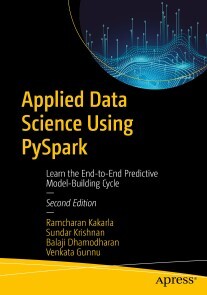
Applied Data Science Using PySpark
This comprehensive guide, featuring hand-picked examples of daily use cases, will walk you through the end-to-end predictive model-building cycle using the latest techniques and industry tricks. In Chapters 1, 2, and 3, we will begin by setting up the environment and covering the basics of PySpark, focusing on data manipulation. Chapter 4 delves into the art of variable selection, demonstrating various techniques available in PySpark. In Chapters 5, 6, and 7, we explore machine learning algorithms, their implementations, and fine-tuning techniques. Chapters 8 and 9 will guide you through machine learning pipelines and various methods to operationalize and serve models using Docker/API. Chapter 10 will demonstrate how to unlock the power of predictive models to create a meaningful impact on your business. Chapter 11 introduces some of the most widely used and powerful modeling frameworks to unlock real value from data.In this new edition, you will learn predictive modeling frameworks that can quantify customer lifetime values and estimate the return on your predictive modeling investments. This edition also includes methods to measure engagement and identify actionable populations for effective churn treatments. Additionally, a dedicated chapter on experimentation design has been added, covering steps to efficiently design, conduct, test, and measure the results of your models. All code examples have been updated to reflect the latest stable version of Spark.You will:* Gain an overview of end-to-end predictive model building* Understand multiple variable selection techniques and their implementations* Learn how to operationalize models* Perform data science experiments and learn useful tipsRAMCHARAN KAKARLA is currently Principal ML at Altice USA. He is a passionate data science and artificial intelligence advocate with 10 years of experience. He holds a master’s degree from Oklahoma State University with specialization in data mining. He is currently pursuing masters in management from University of California, LA. Prior to UCLA and OSU, he received his bachelor’s in electrical and electronics engineering from Sastra University in India. He was born and raised in the coastal town of Kakinada, India. He started his career working as a performance engineer with several Fortune 500 clients including State Farm, British Airways, Comcast and JP Morgan Chase. In his current role he is focused on building data science solutions and frameworks leveraging big data. He has published several papers and posters in the field of predictive analytics. He served as SAS Global Ambassador for the year 2015.SUNDAR KRISHNAN is a Senior Data Science Manager at CVS Health. He has 12+ years of extensive experience leading cross-functional Data Science teams and is an AI, ML, and cloud platform expert. He has a proven track record of building high-performing teams and implementing innovative AI strategies to optimize operational costs and generate substantial revenue. Expert in 0 to 1 product development, successfully led teams from conception to market-ready products in Gen AI & data science. Sundar was born and raised in Tamil Nadu, India, and has a bachelor's degree from the Government College of Technology, Coimbatore. He completed his master's at Oklahoma State University, Stillwater. He blogs about his data science works on Medium in his spare time.BALAJI DHAMODHARAN isanaward winning global Data Science leader, guiding teams to develop and implement innovative, scalable ML solutions. He currently leads the AI/ML and MLOps strategy initiatives with NXP Semiconductors. He has over a decade of experience delivering large-scale technology solutions across diverse industries. His expertise spans Software Engineering, Enterprise AI platforms, AutoML, MLOps, and Generative AI technologies. Balaji holds Masters degrees in Management Information Systems and Data Science from Oklahoma State University and Indiana University. Originally from Chennai, India, Balaji currently resides in Austin, TX, USA.VENKATA GUNNU is a Senior Executive Director of Knowledge Management and Innovation atJPM Chase. He is an executive with a successful background crafting enterprise-wide data anddata science solutions, GenAI, process improvements, and data and data science-centricproducts. Concept to implementation strategist with demonstrated success controlling multipleprojects that elevate organizational efficiency while optimizing resources. Data-focused andanalytical with a track record of automating functions, standardizing data management protocol,and introducing new business intelligence solutions.Chapter 1: Setting up the Pyspark Environment.- Chapter 2: PySpark Basics .- Chapter 3: Variable Selection.- Chapter 4: Variable Selection.- Chapter 5: Supervised Learning Algorithms.- Chapter 6: Model Evaluation.- Chapter 7: Unsupervised Learning and Recommendation Algorithms.- Chapter 8: Machine Learning Flow and Automated Pipelines.- Chapter 9: Deploying machine learning models.- Chapter 10: Experimentation.- Chapter 11: Modeling Frameworks.

Master Photo and Video Editing with Metal
Delve into the nuances of photo and video editing with Metal, a framework from Next Generation GPU APIs. Right now, the demand for media editors is growing exponentially, with multiple applications needing some form of image processing, including messengers, social networks, marketplace, and banking applications. This book provides detailed guidelines for reimplementation instruments from one of the more popular photo and video editors. Begin your journey by reviewing the rationale for using Metal, and an overview of the reasons why this this is the best performance solution. Rasterization is then covered to provide a basis for understanding how image editing in Metal works. You’ll look at aspects of image processing such as rendering, image transformations, and working with textures. This knowledge then leads you to image editing, where it is applied to make basic color adjustments, shadows, blur, vignette, and color correction with LUT filters. These are fundamental aspects of any media editing software. Layers make up the final section of the book, including different compositions and blend modes, both essential tools for any image editor. You’ll conclude the journey with a look at video editing with Metal. Through hands-on projects in each chapter, you will learn how to apply these techniques directly in real-world scenarios, giving a great starting point to implement any kind of media processing in your own applications. You will: * Understand fundamental concepts of GPU rendering to complex image and video processing techniques * See how shaders are accessed in the rendering pipeline * Create and import textures * Review image and video editing techniques, from simple color adjustment to complex filters, layer composition, and real-time video effects Delve into the nuances of photo and video editing with Metal, a framework from Next Generation GPU APIs. Right now, the demand for media editors is growing exponentially, with multiple applications needing some form of image processing, including messengers, social networks, marketplace, and banking applications. This book provides detailed guidelines for reimplementation instruments from one of the more popular photo and video editors. Begin your journey by reviewing the rationale for using Metal, and an overview of the reasons why this this is the best performance solution. Rasterization is then covered to provide a basis for understanding how image editing in Metal works. You’ll look at aspects of image processing such as rendering, image transformations, and working with textures. This knowledge then leads you to image editing, where it is applied to make basic color adjustments, shadows, blur, vignette, and color correction with LUT filters. These are fundamental aspects of any media editing software. Layers make up the final section of the book, including different compositions and blend modes, both essential tools for any image editor. You’ll conclude the journey with a look at video editing with Metal. Through hands-on projects in each chapter, you will learn how to apply these techniques directly in real-world scenarios, giving a great starting point to implement any kind of media processing in your own applications. What You Will Learn * Understand fundamental concepts of GPU rendering to complex image and video processing techniques * See how shaders are accessed in the rendering pipeline * Create and import textures * Review image and video editing techniques, from simple color adjustment to complex filters, layer composition, and real-time video effects Who This Book Is For Intermediate Swift developers interested in photo and video editing or diving deeper into understanding how GPU media processing works. Bogdan Redkin is an iOS Developer with over 10 years of experience in creating top-notch iOS applications. As a founder of Fancy Tech, he launched multiple photo-editing solutions, achieving leading positions in AppStore. Having written many articles on Medium about drawing using Metal he’s decided to combine his passion for writing and GPU image processing by writing his first book. Victor Yaskevich is an experienced GPU programmer specializing in Vulkan, Metal, and shaders. With a strong focus on low-level graphics and system programming, he contributes his expertise to guide readers in mastering GPU programming and architecture patterns throughout this book. Part 1: Rasterization.- Chapter 1: Getting Started with Apple Metal.- Chapter 2: Metal Fundamentals Overview. Rendering and Displaying Content.- Chapter 3: Understanding the Rendering Pipeline.- Chapter 4: Vertex Shader Function, Primitive Assembly.- Chapter 5: Transformations.- Chapter 6: Perspective Transformations.- Chapter 7: Working with Textures and Images.- Part 2: Image Editing with Metal.- Chapter 8: Basic color adjustments.- Chapter 9: Vignette.- Chapter 10: Blur.- Chapter 11: Lookup Table.- Chapter 12: Twirl.- Part 3: Multilayer rendering.- Chapter 13: Introduction to layer composition.- Chapter 14: Blend Modes.- Chapter 15: Layer Effects.-Part 4: Video Editing with Metal.- Chapter 16 - Video Editing with Metal.- Chapter 17 - Video Layers.- Appendix: Common Metal functions.
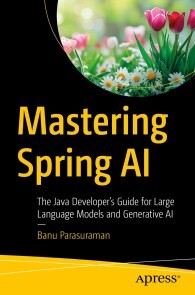
Mastering Spring AI
Dive into the future of programming with this comprehensive guide for Java developers to integrate large language models (LLMs) and Generative AI using the Spring Framework. This book comes at a revolutionary time when AI technology is transforming how we implement solutions in various fields, including natural language processing, content generation, and predictive analytics. With its widespread use in the Java community, the Spring Framework is a logical choice for this integration.By focusing on integrating LLMs and GenAI with Spring, this book bridges a significant gap between cutting-edge AI technologies and traditional Java development practices. The author uses a hands-on approach, guiding you through practical implementation to effectively show how to apply theory in real-world situations. Basic introductions of topics—Spring AI, Spring Framework, and other related AI technologies—evolve into advanced integrations to ensure that you find valuable insights regardless of your starting level. Additionally, this book dedicates sections to security and ethical considerations, addressing the pressing issues associated with AI.With a look at emerging trends and future developments, this book prepares you for what's next, ensuring that you are not just catching up with the current state of technology but are also ready for future advancements.WHAT YOU WILL LEARN• Master the integration of LLMs and GenAI with the Spring Framework• Develop practical skills in developing AI-driven applications using Java• Gain insights into handling data, security, and ethical considerations in AI applications• Apply strategies for optimizing performance and scalability in AI-enabled applications• Prepare for future AI trends and technologiesWHO THIS BOOK IS FORIntermediate to advanced Java developers who are familiar with the Spring Framework, including concepts such as dependency injection, Spring Boot, and building RESTful services. This foundational knowledge will help developers grasp the more advanced topics of integrating AI technologies with Spring. Prior knowledge of basic AI concepts and machine learning is helpful but not essential as the book covers these topics from the ground up.BANU PARASURAMAN is a distinguished AI-Enabled Cloud Solution Architect with over 30 years of experience in the IT industry, specializing in Generative AI, Machine Learning, and Large Language Models (LLMs) within cloud-native environments. As a trusted advisor to numerous companies across diverse sectors globally, he guides clients in transitioning to cloud platforms and implementing cutting-edge solutions such as Kubernetes and Cloud Foundry. His expertise spans major cloud platforms, and he's a passionate advocate for integrating AI and ML into cloud-native architectures. A frequent speaker at tech conferences and a prolific blogger, Banu bridges the gap between technical implementation and business strategy, helping organizations leverage the power of cloud computing enhanced by AI technologies. His comprehensive experience and forward-thinking approach make him a valuable asset in navigating the complex landscape of modern IT, particularly in harnessing the potential of Generative AI and LLMs in cloud-native solutions.1: Introduction to Generative AI and Large Language Models (LLMs).- 2; Exploring Spring.io, Spring Components for Gen AI: The Developer's Backbone .- 3: Spring AI and LLMs.- 4: Spring AI and RAG.- 5: Conversational AI with Spring AI.- 6: Function Calling with Spring AI.- 7: Productionizing Spring AI.- 8: Real-world Case Studies.

Redefining Cross-Border Financial Flows
Analyse how AI and other cutting-edge technologies affect the complex web of international financial transactions. The global remittance sector and artificial intelligence (AI) work together in a way that is testament to the revolutionary force of innovation in the always changing financial and technology landscape. As we stand at the threshold of a new age, this book aims to explore the layers of complexity underlying the confluence of AI and remittances.Your investigation will go beyond the current state of affairs and into the future, whereby predictive analytics and autonomous financial transactions will fundamentally alter the way that we send and receive money internationally. This process's incorporation of AI technology represents a revolution rather than a simple progression, one that might improve millions of people's lives by streamlining, securing, and lowering the cost of financial transactions. This book breaks down the complex workings of AI prediction models, reveals how blockchain integration may be used to facilitate safe and transparent transactions, and examines how biometric authentication can strengthen the security of financial transactions. It dives into the complexities of regulatory compliance, understanding the difficult balance between innovation and conformity to existing standards.When machines carry out transactions based on complex algorithms and current market circumstances, what does it entail for people and economies? What effect does this change have on how people make financial decisions? This book is an invitation to imagine a future in which financial systems are not just efficient but also naturally intelligent. It is a call to reflect on the moral ramifications, the effects on society, and the obligations that accompany the dawn of a new era of financial opportunity. Remittances are about to undergo a revolution, and you have a crucial role to play in determining how this will play out.WHAT YOU’LL LEARN* Understand the integration of AI and other technology in remittances to enhance efficiency, security, and cost-effectiveness of cross-border financial transactions.* Examine the impact of AI-driven cross border flows on global economic development, particularly in communities heavily reliant on remittances.* Investigate the social benefits and potential challenges posed by AI in maintaining or altering familial and community ties through remittance flows* Critically evaluate regulatory and ethical challenges while fostering innovation and adhering to existing financial laws and standards.* Explore future scenarios where AI governs autonomous financial transactions and the role of humans in an AI-driven financial ecosystem.* Debate how such changes might redefine personal and communal financial interactions.WHO THIS BOOK IS FORFinTech practitioners, Finance students, professionals in working in Payments and/or RemittancesHari Prasad Josyula is a FinTech product transformation expert with over 15 years’ experience in delivering innovative customer-centric solutions. He is currently product analyst at Dow Jones. He is a functional solution architect across banking, asset and wealth management, financial services, regulatory compliance and reporting, logistics and supply chains. He is also a certified scrum product owner, ITIL service manager, and scrum master with a strong background in data analytics, business analysis, and agile methodologies.His research interests including artificial intelligence (AI) in banking (anti-money laundering, fraud and risk management), generative AI for operational efficiency in financial services, open banking, blockchain and cryptocurrencies, central bank digital currencies. Embedded payments, programmable payments, financial risk management, product, program and portfolio management.Josyula has a MBA in Finance from Suffolk University, Boston, MA and a MS in Physical Sciences from Andhra University, India.www.linkedin.com/in/harijscholar.google.com/citations?user=n88bVlgAAAAJ&hl=enwww.researchgate.net/profile/Hari-Prasad-JosyulaChapter 1: Remittance Revolution.- Chapter 2: Understanding Remittance Challenges.- Chapter 3: The Role of AI in Financial Technology.- Chapter 4: Innovations in Remittance Platforms.- Chapter 5: Enhancing Security and Compliance.- Chapter 6: Impact on Financial Inclusion.- Chapter 7: AI and Cryptocurrencies in Remittances.- Chapter 8: Overcoming Ethical and Social Challenges.- Chapter 9: AI-Powered Market Insights and Global Remittance Trends.- Chapter 10: Future Trends and Predictions.- Chapter 11: Recommendations and Strategies.- Chapter 12: Conclusion.

Generative Künstliche Intelligenz in Marketing und Sales
Dieses Buch beleuchtet die neuesten Entwicklungen in der Generativen KI und zeigt auf, wie Marketing und Vertrieb sie für sich nutzen können. KI verändert nicht nur einzelne Werkzeuge und Arbeitsweisen, sondern leitet einen grundlegenden Paradigmenwechsel in beiden Bereichen ein. Die Autor:innen bieten in ihren Beiträgen einen fundierten und umfassenden Einblick in aktuelle Anwendungsbereiche und Forschungsansätze zu Generativer KI im Marketing und Vertrieb. Thematisiert werden zahlreiche erfolgskritische Handlungsfelder, u. a. datenschutzrechtliche Herausforderungen, Social-Media- und Content-Marketing mit KI, Chatbots in der Employee-Journey, hyperpersonalisierte B2C-Kommunikation, KI-generierte Produkt- und SEO-Texte, bis hin zu Generativer KI in der Marketingforschung und die Rolle von KI in Start-ups. Das Werk richtet sich sowohl an Praktiker:innen und Entscheidungsträger:innen als auch an Forschende sowie Studierende und trägt dazu bei, das Verständnis für dieses dynamische und vielversprechende Feld zu vertiefen. Mit Beiträgen von: Prof. Dr. Petra BeenkenLuise-Sophie BleckmannProf. Dr. Benny Björn BriesemeisterProf. Dr. Marc EbelSusanne FittkauCaroline GrauelProf. Dr. Maik GüntherDoris HanwayProf. Dr. Claudia HeßHeiko HolzIsabel HörmannProf Dr. rer. pol. Kurt JeschkeProf. Dr. Tobias KestingProf. Dr. Sonja KloseProf. Dr. Ralf KneuperProf. Dr. Ralf T. KreutzerProf. Dr. Nicolai KrügerProf. Dr. Sibylle KunzProf. Dr. Visieu LacChristina Lagodka Prof. Dr. Alexander LawallProf. Dr. Damian LeschikProf. Dr. Vera Lenz-KesekampProf. Dr. Nikolaj LunzeProf. Dr. Jan-Paul LüdtkeElisabeth L’ OrangeSebastian MertensManuel MuthProf. Dr. Gerd NuferProf. Dr. Miriam O’SheaBan PahlawanFlorian PerstMarc PeterProf. Dr. Jan PieperLavinia Celina RahmawatiProf. Dr. Katharina-Maria RehfeldMarie SalkowskiProf. Dr. Philipp SchmidAnnkristin SchürhausFreddy SikouonmeuNeal WesslingProf. Dr. Klaus WildhirtProf. Dr. Atilla WohllebeCansu Rosa YildirimProf. Dr. Tanja Marlen Zweigle

Autodesk Revit 2025
Autodesk Revit 2025 (1. Auflage)Dieses Grundlagen- und Lehrbuch zeigt Ihnen die typischen Befehle der Architektursoftware Revit 2025 anhand einer vollständigen Beispielkonstruktion sowie einzelner Demonstrationsbeispiele. Der Autor richtet sich insbesondere an Revit-Neulinge, die einen fundierten, praxisnahen Einstieg suchen. Mit dem Buch und einer 30-Tage-Revit-Testversion von der Autodesk-Webseite können Sie sofort beginnen und in Kürze Ihre ersten Grundrisse und Häuser erstellen. Die wichtigsten Vorgehensweisen werden sowohl mit einem vollständigen Projektbeispiel als auch anhand vieler einzelner Detailbeispiele erklärt und geübt. Bei Revit ist es besonders wichtig, die verschiedenen Befehlsoptionen und Bedienelemente über Beispiele kennenzulernen, weil bei deren Anwendung stets die Element-Eigenschaften und Typvorgaben sowie die Einstellungen der Optionsleiste und der Eingabeaufforderungen beachtet werden müssen, was viel praktische Übung erfordert. Am Ende jedes Kapitels finden Sie Testfragen mit dazugehörigen Lösungen im Anhang. Neben der traditionellen Konstruktionsweise für einzelne Stockwerke mit Wänden, Türen, Fenstern, Geschossdecken, Treppen und Dächern wird auch das konzeptionelle Design vorgestellt, bei dem zunächst als Basis die Gebäudeform als Volumenkörper entworfen wird. Schließlich führt ein Beispiel in den Familieneditor ein, der die Erstellung eigener Architekturkomponenten erlaubt. Abschließend wird auch die Vorgehensweise bei der Gebäudetechnik an einem Beispiel aus dem Sanitärbereich gezeigt. Aus dem Inhalt:Installation und BenutzeroberflächeDokumentiertes Beispielprojekt (Download)Elemente in andere Geschosse kopierenBearbeitungsfunktionen zum Ändern und AnpassenBemaßung und Beschriftung im Grundriss und im SchnittAusrichtung des Projekts: Gelände, Himmelsrichtung, HöheAußen-, Innen-, Detail- und SchnittansichtenStützen, Träger, Streben sowie Einführung in den StahlbauVerschiedene DachformenFotorealistische Darstellungen mit RendernAuswertungen mit Raumstempeln und ElementlistenWege über Routen-Analyse bestimmenAusgabe mehrerer Pläne und Ansichten als PDFAlternatives konzeptionelles DesignEinführung in den FamilieneditorBIM-Austausch von und zu InventorArbeiten mit Gebäudetechnik-KomponentenAutoreninfo:Detlef Ridder hat langjährige Erfahrung im Bereich CAD und bereits zahlreiche Bücher zu AutoCAD, Inventor, Revit und Archicad veröffentlicht. Er gibt Schulungen zu diesen Programmen und zu CNC und weiß daher, welche Themen für Einsteiger besonders wichtig sind.

Unity Cookbook
Master the intricacies of Unity’s character controllers with a deep dive into Unity's Starter Assets. This book is an essential resource for game developers looking to elevate their skills in Unity game development, offering detailed insights and practical examples to help you create complete, sophisticated, high-performance systems.Part of the Apress cookbook series, the recipes in this book provide a comprehensive guide to creating dynamic and immersive character interactions, equipping developers with the skills necessary to build responsive character controllers for both first-person and third-person perspectives. By leveraging pre-configured assets, developers can streamline the creation process, ensuring optimized performance and enhanced player experiences.Explore Unity's New Input System, a revolutionary framework designed to enhance control and flexibility in game development. Delve into the art of architecting enemy AI using Finite State Machines (FSMs) to create intelligent and responsive behaviors. Build a sophisticated melee combat system inspired by top-tier action games. Unlock the potential of advanced player movement with a focus on parkour mechanics. Implement a robust shooter weapon system that enhances gameplay through strategic weapon interactions. Optimize game performance through efficient object pooling techniques.WHAT YOU WILL LEARN* Implement re-bindable controls and create sophisticated input schemes that elevate gameplay interactions.* Set up navigation and pathfinding, creating AI that can dynamically navigate, pursue, and interact with players.* Craft a melee combat system that offers a dynamic and engaging player experience* Create fluid and responsive parkour mechanics that enhance the realism and excitement of your game.* Build a comprehensive shooter weapon system* Develop object pooling systems that enhance performance and resource management, ensuring a seamless and immersive gaming experience.WHO THIS BOOK IS FORGame developers with a foundational understanding of game development concepts, the Unity 3D engine, and C# programming. Ideal readers should have a basic grasp of Unity's interface and primary functionalities to fully benefit from the content.Christopher Coutinho is a seasoned Unity tools and game developer with over seven years of expertise in Unity 3D and Virtual Reality (VR) development. As the visionary founder of GameWorks, a premier game development studio based in Mumbai, Christopher has mastered the art of creating immersive VR experiences. His influence extends beyond commercial endeavors; he has significantly impacted the next generation of game developers through his educational efforts.Christopher has been a key educator in Video Game Development, sharing his extensive knowledge on platforms such as iDTech, a division of Emeritus. His instructional focus encompasses popular game engines like Unity and Roblox. Additionally, he has taught a specialized Augmented/Virtual Reality (AR/VR) Design program, created by the NYU – Tandon School of Engineering, for iDTech. His blend of practical experience and educational excellence positions him as a leading figure in the contemporary gaming industry.Christopher is also an accomplished author and content creator, with a portfolio that includes two books and numerous instructional videos published by Apress. In conjunction with the FIFA World Cup 2022, he developed and released a free mobile game on the Google Playstore, further showcasing his diverse talents and contributions to the gaming community.Chapter 1: Unity’s Character Controllers.- Chapter 2: Unity's New Input System.- Chapter 3: Architecting Enemy AI with Finite State Machines.- Chapter 4: Architecting Melee Combat: Building the Core Framework.- Chapter 5: Architecting Player Parkour Movement.- Chapter 6: Implementing a Robust Weapon System.- Chapter 7: Implementing Efficient Object Pooling.

Learning VMware Workstation Pro for Windows: Volume 2
VMware Workstation is a software solution that provides a type-2 hypervisor, or desktop hypervisor, that runs on x64 Windows and Linux-based operating systems. It enables users to create and run virtual machines, containers, and Kubernetes clusters simultaneously on their physical devices without having to reformat or dual-boot the underlying device. There are several use cases for VMware Workstation. For IT pros, it allows them to test applications and operating system builds, as well as enable remote control of vSphere datacenter infrastructure. Developers can run multiple different operating systems or different versions of operating systems on a single device giving them the platform flexibility to test, develop, and troubleshoot applications cost-effectively. Finally, for the greater workforce, VMware Workstation can enable BYOD device initiatives allowing employees to run a full corporate environment on their device without deleting or reformatting it. Learning VMware Workstation Pro for Windows – Part 2 provides the reader with a practical, step-by-step guide to creating and managing virtual machines using VMware Workstation, starting with an overview of hypervisors and desktop hypervisors. Next, it talks about each resource, such as CPU, memory, and networking, and how these are configured in a virtual environment. After that, it demonstrates the installation of VMware Workstation, configuration, and then building and managing different virtual machines running on different operating systems such as ChromeOS, and Linux, and building an ESXi lab environment. Towards the end, readers will learn how to use command line tools, such as the REST API, and vmrun, before going on to discuss upgrading and troubleshooting your VMware Workstation environment. By the end of this book, readers will have full knowledge of VMware Workstation Pro. This book is a continuation of " Learning VMware Workstation Pro for Windows – Part 1 " where readers learn how to build and manage different virtual machines running on different operating systems and build an ESXi lab environment with VMware Workstation. You Will: * Learn how to run containers on a VMware workstation * Understand how to use the command line to configure and control Workstation Pro and virtual machines * Practice the use of REST API for Workstation Pro VMware Workstation is a software solution that provides a type-2 hypervisor, or desktop hypervisor, that runs on x64 Windows and Linux-based operating systems. It enables users to create and run virtual machines, containers, and Kubernetes clusters simultaneously on their physical devices without having to reformat or dual-boot the underlying device. There are several use cases for VMware Workstation. For IT pros, it allows them to test applications and operating system builds, as well as enable remote control of vSphere datacenter infrastructure. Developers can run multiple different operating systems or different versions of operating systems on a single device giving them the platform flexibility to test, develop, and troubleshoot applications cost-effectively. Finally, for the greater workforce, VMware Workstation can enable BYOD device initiatives allowing employees to run a full corporate environment on their device without deleting or reformatting it. Learning VMware Workstation Pro for Windows – Part 2 provides the reader with a practical, step-by-step guide to creating and managing virtual machines using VMware Workstation, starting with an overview of hypervisors and desktop hypervisors. Next, it talks about each resource, such as CPU, memory, and networking, and how these are configured in a virtual environment. After that, it demonstrates the installation of VMware Workstation, configuration, and then building and managing different virtual machines running on different operating systems such as ChromeOS, and Linux, and building an ESXi lab environment. Towards the end, readers will learn how to use command line tools, such as the REST API, and vmrun, before going on to discuss upgrading and troubleshooting your VMware Workstation environment. By the end of this book, readers will have full knowledge of VMware Workstation Pro. This book is a continuation of " Learning VMware Workstation Pro for Windows – Part 1 " where readers learn how to build and manage different virtual machines running on different operating systems and build an ESXi lab environment with VMware Workstation. You Will: * Learn how to run containers on a VMware workstation * Understand how to use the command line to configure and control Workstation Pro and virtual machines * Practice the use of REST API for Workstation Pro This book is for: Developers, IT professionals, VMware certified professionals both remote and Bring your device (BYOD). Peter von Oven is an experienced technical consultant working closely with customers, partners, and vendors in designing technology solutions, to meet business needs and deliver outcomes. During his career, Peter has presented at key IT events such as VMworld, IP EXPO, and various VMUGs and CCUG events across the UK. He has also worked in senior presales roles and presales management roles for Fujitsu, HP, Citrix, and VMware, and has been awarded VMware vExpert for the last nine years in a row and vExpert EUC for the last three consecutive years. In 2021, Peter added the vExpert Desktop Hypervisor award to his portfolio of awards. In 2016, Peter founded his own company specializing in application delivery. Today he works with partners and vendors helping drive and deliver innovative technology solutions. He is also an avid author, having now written 19 books and made numerous videos about VMware end-user computing solutions. In his spare time, Peter volunteers as a STEM Ambassador, working with schools and colleges, helping the next generation develop the skills and confidence in building careers in technology. He is also a serving Royal Air Force Reservist currently working as an instructor with the Air Cadet organization. Chapter 1: Working with containers.- Chapter 2: Working with the command line.- Chapter 3: Using the vmrun Command to Control Virtual Machines.- Chapter 4: RESTAPI.- Chapter 5: Support and Troubleshooting.- Chapter 6: Workstation Player.- Chapter 7: Installing additional operating systems.- Chapter 8: Unattended installation.- Chapter 9: What's New?.

Blender 4 - Das Praxisbuch
Blender 4 - Das Praxisbuch für Ein- und Umsteiger. In Erstauflage aus November 2024.Praxisnaher Einstieg anhand von WorkshopsMit diesem Buch erhalten Sie einen leichten und umfassenden Einstieg in Blender. Anhand von Workshops lernen Sie Schritt für Schritt, die einzelnen Funktionen direkt in der Praxis einzusetzen. Zahlreiche Tipps und Tricks helfen Ihnen dabei, schnell eigene Projekte umzusetzen.Alle Bereiche der 3D-Grafik detailliert erläutertDie fünf Teilbereiche der 3D-Grafik, d.h. Modellierung, Texturierung, Animation, Szenenaufbau und Rendern werden im Detail behandelt und in einem einzigen Filmprojekt zusammengeführt.Für Einsteiger und Umsteiger geeignetDie dem Buch zugrunde liegende Lernmethode basiert auf der jahrelangen Erfahrung des Autors als professioneller Trainer für 3D-Software. So sind alle Erläuterungen sehr gut für Einsteiger ohne Vorkenntnisse nachvollziehbar und ebenfalls für Umsteiger von anderen 3D-Applikationen geeignet.Aus dem Inhalt:Alle Arten der Modellierung, inkl. Character-ModelingSculptingTexturierung, inklusive UV-Bearbeitung und PaintCharacter-RiggingSzenenaufbau mit Kamera, Licht und Umgebung3D-Animation und Simulation2D-AnimationDie beiden Render-Engines EEVEE und CyclesCompositingFilmschnitt inklusive SoundZum Download (als .zip vom mitp-Server):Alle Blender-Dateien der Projekte und WorkshopsAlle benötigten Materialien wie Bild- und Sound-DateienDie fertigen Projekte zum VergleichInhalt und Leseprobe (PDF-Link)Über den Autor:Maik Eckardt ist selbstständiger 3D-Grafiker und Cinema 4D-Trainer u.a. am SAE-Institute, am Institute of Design (IN.D), an der Berliner Technischen Kunsthochschule (BTK) und an der HTK Acadamy Berlin.

Building Applications with Large Language Models
This book delves into a broad spectrum of topics, covering the foundational aspects of Large Language Models (LLMs) such as PaLM, LLaMA, BERT, and GPT, among others.The book takes you through the complexities involved in creating and deploying applications based on LLMs, providing you with an in-depth understanding of the model architecture. You will explore techniques such as fine-tuning, prompt engineering, and retrieval augmented generation (RAG). The book also addresses different ways to evaluate LLM outputs and discusses the benefits and limitations of large models. The book focuses on the tools, techniques, and methods essential for developing Large Language Models. It includes hands-on examples and tips to guide you in building applications using the latest technology in Natural Language Processing (NLP). It presents a roadmap to assist you in navigating challenges related to constructing and deploying LLM-based applications.By the end of the book, you will understand LLMs and build applications with use cases that align with emerging business needs and address various problems in the realm of language processing.WHAT YOU WILL LEARN* Be able to answer the question: What are Large Language Models?* Understand techniques such as prompt engineering, fine-tuning, RAG, and vector databases* Know the best practices for effective implementation* Know the metrics and frameworks essential for evaluating the performance of Large Language ModelsWHO THIS BOOK IS FORAn essential resource for AI-ML developers and enthusiasts eager to acquire practical, hands-on experience in this domain; also applies to individuals seeking a technical understanding of Large Language Models (LLMs) and those aiming to build applications using LLMsBHAWNA SINGH, a Data Scientist at CeADAR (UCD), holds both a bachelor and master degree in computer science. During her master’s program, she conducted research focused on identifying gender bias in Energy Policy data across the European Union. With prior experience as a Data Scientist at Brightflag in Ireland and a Machine Learning Engineer at AISmartz in India, Bhawna brings a wealth of expertise from both industry and academia. Her current research interests center on exploring diverse applications of Large Language Models. Over the course of her career, Bhawna has built models on extensive datasets, contributing to the development of intelligent systems addressing challenges such as customer churn, propensity prediction, sales forecasting, recommendation engines, customer segmentation, pdf validation, and more. She is dedicated to creating AI systems that are accessible to everyone, promoting inclusivity regardless of race, gender, social status, or language.Chapter 1: Introduction to Large Language Models.- Chapter 2: Understanding Foundation Models.- Chapter 3: Adapt with Fine-tuning.- Chapter 4: The Magic of Prompt Engineering.- Chapter 5: Stop Hallucination with RAG.- Chapter 6: Evaluation of LLM.- Chapter 7: Tools and Frameworks for Development.- Chapter 8: Run in Production.-Chapter 9: The Ethical Dilemma.- Chapter 10: Future of AI.

Record Weather Data with Arduino and Solar Power
Make a stand-alone weather data recorder to collect air pressure, air temperature, and humidity data using only an Arduino, SD-card, LCD display, and solar power. Start with that base data. Then easily extend your project to include more such as an XBee radio and sensors for air quality and radiation. Chunyin has years of experience as a researcher in meteorology and oceanography. The projects in this book are based on actual deployable weather data recorders used for collegiate and professional applications. These weather recorders were deployed over coastal water and lands including the Arctic. And you can deploy your own finished model in your backyard, school yard, roof top, or even in the field to collect data at programmed intervals.Don’t worry about powering all that tech. You’ll learn about solar controller, solar panels, and step-down DC transformers. You’ll also make a 30-60 W solor powered battery charger for a 12-VDC battery. Find out whathappens when you combine a simple Arduino with sensors one at a time toward a final model capable of multiple measurements and a longlife of use without recharging or requiring external power. Then add a GPS module so that you constantly have accurate time and position information to pair with your data.Everything you need to know to integrate component and house them in an enclosure is covered. Photos of actual working units are provided, showing you exactly what your data collection station can look like. You’ll even go a step beyond to understanding meteorology information and how to use the collected data, as well as some data analysis. Build a station capable of real meteorological research and then go beyond to add more sensors and capabilities for your own projects and experiments!WHAT YOU'LL LEARN* Measure air pressure, temperature, humidity and more!* Add an XBee radio and LCD display to a data recording project for interactivity and communication* Work with basic meteorological principles to understand how your data can be usedWHO THIS BOOK IS FORMeteorological hobbyists, Makers, and students interested in learning how to collect and analyze data with low-cost hardware.CHUNYAN LI is a professor teaching in oceanography and meteorology at Louisiana State University. He has made dozens of weather recorder units powered by battery or solar panels for research projects and student projects. He has published more than 120 scientific research papers, coauthored a book titled Meteorology for Coastal Scientists and authored another book titled Time Series Analysis for Oceanography. He is also the director of an offshore meteorology oceanography observation system for weather, wave, tide, currents, and storm surges. His research includes theories of coastal and estuarine dynamics under the influence of tide, river, and weather, as well as impacts of climate change to the Arctic coastal ocean.Chapter 1: Introduction.- Chapter 2: Working with Solar Power.- Chapter 3: Micro-Controller and Software.- Chapter 4: Working with GPS.- Chapter 5: Display Information Using LCD.- Chapter 6: Save the Data to a SD-Card.- Chapter 7: Adding Air Pressure and Humidity Sesnors.- Chapter 8: Integration.- Chapter 9: Optional Components.

CompTIA A+ Certification Companion
This book covers all topics and requirements of the CompTIA A+ certification exam. It will allow readers to easily understand the concepts, information, and skills needed to obtain the associated certification.CompTIA A+ certification is at its core an entry-level certification to the information technology world, including cybersecurity. It is comprised of a set of two exams (Exams 220-1101 & 220-1102) created by IT industry professionals that validate skills needed for entry-level IT jobs, including cybersecurity. This certification stands as baseline proof of knowledge of these topics and is largely sought by recruiters.Main exam topics include hardware, networking, mobile devices, security, Windows operating system, other IOS technologies, software troubleshooting and operations procedures. This book has been designed to follow the core requirements for the full scope of the CompTIA A+ certification, covering both examination test requirements. It has been formatted to follow a logical and easy to follow order to allow a foundational level of understanding prior to moving onto more advanced topics.The book will provide all readers with the appropriate knowledge and information to have a foundational level of many Information Technology components. It will primarily serve the newer entrants to the field but will also support more experienced individuals that are looking towards certifications.WHAT YOU WILL LEARN:* Effective communication with clients and colleagues and interpersonal skills for collaboration in team environments.* Understanding of motherboard components and architecture.* Knowledge of CPU types and socket compatibility.* Installation and configuration of operating systems.* Software troubleshooting techniques.* Installation and configuration of Windows, Linux, and macOS.* Management of system settings and user accounts.* Identification of laptop components and peripherals.* Maintenance procedures for laptops, including cleaning and battery management.* Configuration of mobile device settings and preferences.* Understanding of mobile operating systems and app installation procedures.* Troubleshooting common printer hardware and software issues.* Basic networking concepts, including IP addressing and subnetting.* Configuration of network devices such as routers and switches.* Configuration and management of wireless access points.* Implementation of wireless security protocols such as WPA2 and WPA3.* Understanding of cloud service models (IaaS, PaaS, SaaS).* Deployment and management of virtual machines in the cloud.* Recognition of common security threats and vulnerabilities.* Implementation of security best practices for data protection.WHO THIS BOOK IS FOR:Anyone that is looking to get into the information technology or cybersecurity fields. This would also include academics looking to pursue bachelor’s or master’s degrees, as often programs include the A+ certification. There is no necessary prior skill experience or knowledge needed.Kodi Cochran is highly invested in the field of cybersecurity, something he has followed as a hobbyist for the past decade and expanded to make it his field of study and work. He has a Bachelors and Masters in Cybersecurity and Information Assurance, in addition to working as an Information Systems Manager for the Networking and Infrastructure team of the Department of Human and Health Resources under the agency of the Office of Management of Information Services at the state of West Virginia.He’s responsible for networking administration, project management, system support, and site support for the state of West Virginia in all state-owned health care facilities, hospitals, and labs. In addition, Kodi holds the following certifications: CompTIA A+, Network+, Security+, Project+, CySA+, and Pentest+. He’s currently working on the CompTIA CASP+.Chapter 1: Introduction and Purpose.- Chapter 2: Laptops.- Chapter 3: Networking.- Chapter 4: Wi-Fi.- Chapter 5: Cloud Computing.- Chapter 6: Mobile Devices.- Chapter 7: Printers.- Chapter 8: Hardware.- Chapter 9: Operating Systems.- Chapter 10: Software and Software Support.- Chapter 11: Security.
Guidebook für Software Engineers
Guidebook für Software EngineersDas Guidebook für Software Engineers aller Karriere-Level, die einen guten Job machen und Erfolg haben wollenVom Autor von »The Pragmatic Engineer Newsletter«, dem meistgelesenen Technologie-Newsletter auf Substack.Beschreibt die typischen Karrierestufen vom Softwareentwickler über Positionen eines Senior oder Lead bis hin zum Staff, Principle oder Distinguished Level (Achtung: die Jobtitel variieren von Unternehmen zu Unternehmen).Deckt Softskill-Themen, technische Konzepte, aber auch Fragen zu Selbstmanagement und Produktivität ab.Interessante Branchen-Insights des Autors, der exzellent vernetzt ist und bei Uber, Skyscanner, Microsoft, Skype und JP Morgan gearbeitet hat.Software-Engineers sollten ihre berufliche Entwicklung unbedingt selbst in die Hand nehmen – eine Erkenntnis, die Gergely Orosz schon zu Beginn seiner Karriere gewonnen hat. In diesem Buch unterstützt er Software-Engineers bei ihrer Karriereplanung und teilt seine Erfahrungen und tiefgehenden Branchenkenntnisse. Das Guidebook orientiert sich dabei am »typischen« Karriereweg eines Software-Engineers: vom Junior-Entwickler über die Rolle des Senior-Engineers mit Vorbildfunktion bis hin zu Führungspositionen wie Staff-Engineer oder Principal-Engineer. Gergely Orosz beschreibt, welche Schlüsselkompetenzen unverzichtbar sind, und gibt zahlreiche Impulse und Anregungen.Das Buch erläutert u.a.:Grundlagen der EntwicklerkarriereTypische Karrierepfade, die eigene Karriere steuern, Leistungsbeurteilungen, Beförderungen, JobwechselDer kompetente SoftwareentwicklerDinge anpacken, die eigenen Programmierfähigkeiten vertiefen und hochwertigen Code schreiben, die Werkzeuge produktiver Entwickler*innenDer vielseitige Senior-EngineerAufgaben erfolgreich abschließen, durch Code-Reviews und Mentoring besser zusammenarbeiten, technische Schulden abbauen, eine hohe Testabdeckung sicherstellen, tragfähige Architekturentscheidungen treffenDer pragmatische Tech-LeadZiele, Phasen und Risiken beim Managen von Projekten, Software für den Produktivbetrieb bereitstellen, Stakeholder-Management betreiben, Fokus und Dynamik eines Teams verbessernStaff- und Principal-Engineers mit VorbildfunktionDurch KPIs und OKRs das Geschäft verstehen, hilfreiche Engineering-Prozesse etablieren, geschäftliche Ziele durch zukunftsfähige IT-Lösungen unterstützen

OKR wirkungsvoll einführen und nutzen
OKR wirkungsvoll einführen und nutzenUnternehmen aller Größen und Branchen kämpfen mit der Umsetzung ihrer strategischen Pläne. Es fehlt an Koordination, Fokus und Entscheidungsfähigkeit. Prozesse und Tagesgeschäft dominieren, die Strategie bleibt ein Mythos. OKR (Objectives and Key Results) und das OKR-Framework ermöglichen strategiekonformes Handeln auf allen Unternehmensebenen.Dieses Buch gibt eine fundierte, praxisorientierte Einführung in die Grundlagen, die Bausteine der Methode und deren Zusammenspiel sowie in die Arbeit mit OKR. Dabei wird auf eine Vielzahl organisatorischer und kultureller Besonderheiten eingegangen und wie OKR diese unterstützen kann.Das Buch gliedert sich in drei Teile: − Im ersten Teil wird das Was und Warum von OKR erläutert, die wichtigsten Begriffe und Zusammenhänge erklärt und der grundsätzliche Ablauf eines OKR-Zyklus dargestellt.− Der zweite Teil beschreibt die Objectives und die Key Results – die beiden zentralen Bestandteile von OKR – im Detail und zeigt, wie Objectives entwickelt und Key Results dazu gestaltet werden.− Im dritten Teil schließlich geht es um die Einführung und Anwendung von OKR. Du wirst mitgenommen auf eine Reise von den ersten Schritten über den zweiten OKR-Zyklus bis hin zum Zyklusende. Das Buch richtet sich an Führungskräfte, Organisationsentwickler und Coaches, die ihre Organisation strategisch weiterentwickeln wollen, und bietet eine umfassende Hilfestellung, um mit OKR zu arbeiten und die Herausforderungen bei der Umsetzung im Kleinen wie im Großen zu meistern.

Künstliche Intelligenz im Marketing
Das Buch zeigt, wie Marketing durch KI effizienter und erfolgreicher gestaltet werden kann. Die Autoren vermitteln nicht nur theoretisches Wissen, sondern geben auch praxisnahe Einblicke, Anwendungsbeispiele und konkrete Handlungsempfehlungen. Sie verdeutlichen die leise Disruption durch KI im Marketing und bieten Orientierung in Zeiten des Wandels. Mit einem klaren „act now“ werden Sie dazu aufgerufen, die Chance im Marketing der Zukunft zu ergreifen und die eigene Position zu festigen. Der Inhalt KI – die leise Disruption im MarketingMarketingorganisationen in Zeiten von KIHandlungsempfehlungen – act now! Die Autoren Markus H. Dahm ist Marketingexperte und Berater für Strategie, Digital Change & Transformation. Ferner lehrt und forscht er an der FOM Hochschule für Oekonomie & Management in den Themenfeldern Künstliche Intelligenz, Marketing-Kommunikation und Digital Management. Meik Vogler beschäftigt sich intensiv mit den Themen Kommunikation & Digitalisierung, u. a. bei Agenturen wie Ogilvy, Serviceplan und Jung von Matt. Heute ist er Vice President Business Development bei JAKALA, dem führenden Unternehmen für Data, AI und Experiences in Europa. Das Buch zeigt, wie Marketing durch KI effizienter und erfolgreicher gestaltet werden kann. Die Autoren vermitteln nicht nur theoretisches Wissen, sondern geben auch praxisnahe Einblicke, Anwendungsbeispiele und konkrete Handlungsempfehlungen. Sie verdeutlichen die leise Disruption durch KI im Marketing und bieten Orientierung in Zeiten des Wandels. Mit einem klaren „act now“ werden Sie dazu aufgerufen, die Chance im Marketing der Zukunft zu ergreifen und die eigene Position zu festigen. Markus H. Dahm ist Marketingexperte und Berater für Strategie, Digital Change & Transformation. Ferner lehrt und forscht er an der FOM Hochschule für Oekonomie & Management in den Themenfeldern Künstliche Intelligenz, Marketing-Kommunikation und Digital Management. Meik Vogler beschäftigt sich intensiv mit den Themen Kommunikation & Digitalisierung, u. a. bei Agenturen wie Ogilvy, Serviceplan und Jung von Matt. Heute ist er Vice President Business Development bei JAKALA, dem führenden Unternehmen für Data, AI und Experiences in Europa.

Das Spinnennetz
CYBER-RISIKEN stehen in Deutschland und weltweit mit Abstand an der Spitze sämtlicher Geschäftsrisiken.Die regulatorischen Vorschriften, wie die NIS-2, nehmen von Jahr zu Jahr zu. Auf dem Weg zu einer starken Cyber-Resilienz machen die Haltung und Handlungen des Top-Management den Unterschied. Wie Ihnen das gelingen kann, beschreibt Kevin Palinkas in einem fesselnden Krimi. DAS SPINNENNETZ VERPACKT ESSENZIELLES WISSEN IN DEN ERSTEN, SPANNENDEN BUSINESSROMAN ZUR CYBER-RESILIENZ UND DIGITALEN VERTEIDIGUNG.SIE SIND UNTERNEHMER, GESCHÄFTSFÜHRER, IT-VERANTWORTLICH ODER IT-SPEZIALIST IN EINEM KLEINEN ODER MITTLEREN UNTERNEHMEN?In diesem Businessroman finden Sie ganzheitliche Antworten auf die brennenden Fragen der Cyber-Resilienz und Strategien zur digitalen Verteidigung: vom Grundlagenwissen, über die persönliche Haltung, bis hin zu konkret umsetzbaren Schritten.»Ihr habt es in der Hand, ob sich ein Hacker bei euch wohlfühlt und bleibt. Oder ob er wieder umdreht und geht!«- Robin im BusinessromanLERNEN, WIE EIN HACKER ZU DENKEN:Der Krimi beginnt aus der Perspektive des Angreifers: Der Spinne. Sie ist verantwortlich für eine kriminelle, »mittelständische« Hacker-Organisation aus dem Osten. Aus deren Sicht lernen Sie wie ein Hacker zu denken und das Geschäftsmodell der organisierten, digitalen Kriminalität zu verstehen. Am Ende gelingt es der Spinne die Cyber-Infrastruktur der NovumSpace lahmzulegen.DER WIEDERAUFBAU:Jens ist IT-Manager bei der NovumSpace und steht nach dem Angriff vor der Aufgabe den Wiederaufbau der IT zu koordinieren. Bei dieser emotionalen Achter-bahnfahrt unterstützt ihn sein befreundeter IT-Manager Max. Dort kommen die Beiden mit Robin in Kontakt.RESILIENZ UND VERTEIDIGUNG:Max ist von dem Angriff bei der NovumSpace zutiefst beeindruckt. Max ist CIO bei der ME Light und erneuert zusammen mit Robin die Cyber-Resilienz der ME Light systematisch und proaktiv.Die Mission von Kevin Palinkas ist es mit innovativer Technik für Cyber-Resilienz zu sorgen und damit zum Gemeinwohl beizutragen. Mit palinkas.digital veredelt er langfristig den Reifegrad der Cyber-Resilienz des tech-orientierten Mittelstands. Kevin Palinkas ist seit 2008 beruflich in der IT zu Hause. Seit 2015 war er im IT-Management tätig. Zuletzt als CIO. Der Schwerpunkt Sicherheit schlägt die Brücke zu seiner ehrenamtlichen Tätigkeit: Dort ist er Gruppenführer der Freiwilligen Feuerwehr.