

Computer und IT

100 revolutionäre Zukunftstechnologien - Innovationen, die die Welt verändern
100 bahnbrechende Technologien der Zukunft – eine Reise in die Welt von morgen Was erwartet Sie in diesem Buch? • Ein umfassender Einblick in 100 zukunftsweisende Technologien, die das Potenzial haben, unsere Welt zu verändern. • Prägnante Erläuterungen zu den Ursprüngen, Funktionsweisen, Auswirkungen und Herausforderungen jeder Technologie. • Zehn thematisch gegliederte Kapitel, die ein tieferes Verständnis der Technologien in ihrem jeweiligen Kontext ermöglichen. • Inspirierende Einblicke in die Zukunft, die aufzeigen, wie diese Technologien unseren Alltag, die Wirtschaft und die Gesellschaft beeinflussen könnten. • Hinweise auf potenzielle Gefahren und ethische Fragen, die bei der Entwicklung und Implementierung einiger dieser Technologien auftreten können. Tauchen Sie ein in eine faszinierende Entdeckungsreise durch die Technologien der Zukunft! In diesem Buch erwarten Sie die spannendsten Entwicklungen der modernen Wissenschaft und Technik, die das Potenzial haben, unseren Alltag, unsere Wirtschaft und unsere Gesellschaft grundlegend zu transformieren. Jede Technologie wird prägnant beschrieben, beginnend mit ihren Ursprüngen, über die Funktionsweise, bis hin zu ihren revolutionären Auswirkungen auf unser Leben und den Herausforderungen, die ihre Implementierung mit sich bringt. Dabei wird auch auf ethische Fragen und potenzielle Gefahren hingewiesen, die mit der Einführung einiger dieser neuen Technologien verbunden sind. Lassen Sie sich von den möglichen Zukunftsszenarien inspirieren, die aufzeigen, wie die vorgestellten Technologien unsere Lebens- und Arbeitsweise beeinflussen werden. Dieses Buch öffnet den Horizont für das, was technisch möglich ist und spornt dazu an, über den Tellerrand hinauszublicken. Ob Energie, Gesundheit, Kommunikation oder Umwelt – entdecken Sie, wie breit und vielfältig das Spektrum der zukunftsweisenden Technologien ist. Dieses Buch ist für jeden gedacht, der sich für die Zukunft interessiert und verstehen möchte, wie technologische Innovationen unser Leben verändern können. Es soll dazu anregen, über die Rolle der Technologie in unserem Leben nachzudenken und die Leser dazu inspirieren, aktiv an der Gestaltung unserer Zukunft mitzuwirken.Simon Mayer ist Autor und engagierter Literaturforscher. Nach seinem Studium der Geschichte und Rechtswissenschaften ließ er sich in der Nähe von München nieder, wo er sich leiden-schaftlich der Aufgabe widmet, Menschen für Geschichte und Literatur zu begeistern.

A Beginner's Guide to Digital Image Repair in Photoshop: Volume 2
Continue to explore how to digitally restore your old historical photos in Photoshop for print out or to use online as still photos. As you progress through this volume’s chapters, you’ll look at some of the many color adjustments and filters that Photoshop has to offer, both old and new. These can assist you in your restoration project or to animate select images._A Beginner’s Guide to Digital Image Repair in Photoshop: Volume 2 _shares various techniques and tips that you can use to restore your own photos using Photoshop’s Adjustment Layers and filters. You’ll look at some basic animation options and the various techniques you can use in Photoshop to repair damage.When done you’ll be ready to move beyond Photoshop and explore the next steps in your project.WHAT YOU’LL LEARN* Use the new and improved Adjustment Layers panel for basic overall color correction.* Discover which old and new filters are useful for repairing most photo issues.* Animate photos using the Photoshop Timeline panel.WHO IS THIS BOOK FORBeginning to Intermediate-level users who would like to learn how to repair old historical photos and slides for digital presentation or for print. Also, for those who are interested in basic digital image repair and animation.Jennifer Harder has worked in the graphic design industry for over 15 years. She has a degree in graphic communications and is currently teaching Acrobat, and Adobe Creative Cloud courses at Langara College. She is also author of several Apress books and related videos.Chapter 1: Adjustment Layers, Blending Modes with Masks for Photo Restoration: Part 1.- Chapter 2: Adjustment Layers, Blending Modes with Masks for Photo Restoration: Part 2.- Chapter 3: Basic Filters for Photo Restoration.- Chapter 4: Advanced Filters for Photo Restoration: Part 1 .-Chapter 5: Advanced Filters for Photo Restoration: Part 2.- Chapter 6: Creating a Parallax: Bringing Your Vintage or Historical Photos to Life.- Chapter 7: Next Steps in Your Photo Restoration Project.

The Ultimate LEGO Technic Book
LEGO has come a long way from the days of simple square bricks, and many still associate LEGO with their various playsets. For those that want more advanced building, some LEGO enthusiasts prefer the Technic sets, which feature beams, axles, gears, and other mechanized parts that can be powered and programmed to make fairly complex machines.This book begins with an introduction of basic pieces and building techniques, and there will be instruction of how to build some terrific vehicles that will look like actual cars, planes, and other machines. Not only that, I will instruct how to make these vehicles do all kinds of motion, even steering and walking!After reading this book, the reader will be inspired to create any machine they want. They will also be able to use the programming tools for even more mechanical creations in the future.WHAT YOU'LL LEARN* How to use beams, axles, gears, and other mechanized parts to create intricate and functional machines.* How to create building impressive vehicles with step-by-step instructions.* How to innovate and design your unique LEGO creations* Learn the basics of Technic to bring creations to lifeWHO THIS BOOK IS FORThis is a book that is made for students but is also made for educators. From the classroom to the adult hobbyist, people from all over the world want to create, thanks to Maker culture. This book will help those who are not certain where to begin with their creations.Mark has been an established writer for two decades, delving into tech and gadget blogging twenty years ago, contributing to various consumer electronics-related websites. Over the last fifteen years, he has successfully managed TheGeekChurch.com, boasting a tech website, a YouTube channel (700+ subscribers), and a TikTok channel (20,000+ followers). As a seasoned author, Mark has published six books with Apress, covering Android Marketing, LEGO, Kindle Fire, and UBTECH/Jimu Robots, displaying a diverse and comprehensive writing portfolio.Chapter 1. Introduction.- Chapter 2. A Solid Base of Features.- Chapter 3. Constructing a LEGO Technic Car Body.- Chapter 4. Introducing the LEGO Motors and Remotes.- Chapter 5. Problems that Arise with Four-Wheeled Steering and Four-Wheel Drive.- Chapter 6. The LEGO Technic Helicopter.- Chapter 7. Airplanes.- Chapter 8. LEGO Technic Construction Equipment.- Chapter 9. LEGO Technic Robots.- Chapter 10. Final Thoughts.

The Joys of Hashing
Build working implementations of hash tables, written in the C programming language. The new and revised Second Edition has been enhanced with simplified code and more comprehensive explanations, aimed at improving clarity and comprehension while exploiting the latest features in C programming.This book starts with simple first attempts devoid of collision resolution strategies. It then progresses through improvements and extensions illustrating different design ideas and approaches, followed by experiments to validate the choices. You will learn how hash tables, when implemented and used appropriately, are exceptionally efficient data structures for representing sets and lookup tables, providing low overhead, constant time, insertion, deletion, and lookup operations._The Joys of Hashing_ walks you through the implementation of efficient hash tables and the pros and cons of different design choices when building tables. The source code used in the book is available on GitHub for your re-use and experiments.WHAT YOU WILL LEARN* Master the basic ideas behind hash tables* Carry out collision resolution, including strategies for handling collisions and their consequences for performance* Resize or grow and shrink tables as needed* Store values by handling when values must be stored with keys to make general sets and mapsWHO THIS BOOK IS FORThose with at least some prior programming experience, especially in C programming.Thomas Mailund is a former associate professor in bioinformatics at Aarhus University, Denmark, and currently Senior Software Architect at the quantum computing company Kvantify. He has a background in math and computer science, including experience programming and teaching in C and R programming languages. For the last decade, his main focus has been on genetics and evolutionary studies, particularly comparative genomics, speciation, and gene flow between emerging species.1. The Joys of Hashing.- 2. Hash Keys, Indices and Collisions.- 3. Collision Resolution, Load Factor and Performance.- 4. Resizing.- 5. Adding Application Keys and Values.- 6. Heuristic Hash Functions.- 7. Universal Hashing.- 8. Conclusions.

Angular Generative AI
Welcome to the book “Angular Generative AI: Building an intelligent CV enhancer with Google Gemini”. In this book, I explain how to build an intelligent CV enhancer with Google Gemini. You will learn how to send prompts to Google Gemini and get answers to your questions. You will learn how to upload files to the Google AI file manager and attach those files to your prompts. We will start from scratch and build everything together. By the end of this book, you will be able to use generative AI in your Angular application and tackle all kinds of scenarios. Let us get started. Hello, I am Abdelfattah Ragab, a professional software developer with more than 20 years of experience. I am an expert in Angular, CSS, graphic design and all web related technologies. I have published numerous books on modern CSS layouts and Angular as well as complete business solutions for e-commerce and the like. I hope you enjoy my books. With kind regards.

Information Security Incident and Data Breach Management
In today's digital landscape, safeguarding sensitive information is paramount. This book offers a comprehensive roadmap for managing and mitigating the impact of security incidents and data breaches. This essential guide goes beyond the basics, providing expert insights and strategies to help organizations of all sizes navigate the complexities of cybersecurity.With seven in-depth chapters and 10 appendices, this book covers everything from defining information security incidents and data breaches to understanding key privacy regulations such as GDPR and LGPD. You'll learn a practical, step-by-step approach to incident response, including how to assess and improve your organization's security posture.The book contains a well-tested and practical information security incident and breach management approach to manage information security incidents and data privacy breaches in four phases: Security and Breach Obligations and Requirements Comprehension; Security and Privacy Framework Assurance; Security Incident and Data Breach Response Management; and Security and Breach Response Process Evaluation. Knowing how to handle such security and breach issues will avoid compliance and sanctions to organizations of all types and protect the company’s reputation and brand name.WHAT YOU WILL LEARN* Identify and manage information security incidents and data breaches more effectively* Understand the importance of incident response in avoiding compliance issues, sanctions, and reputational damage* Review case studies and examples that illustrate best practices and common pitfalls in incident response and data breach management* Benefit from a well-tested approach that goes beyond the NIST 800-61 standard, aligning with the international information security standard ISO 27001:2022WHO THIS BOOK IS FORCybersecurity leaders, executives, consultants, and entry-level professionals responsible for executing the incident response plan when something goes wrong, including: ISO 27001 implementation and transition project managers; ISO 27001 auditors and inspectors; auditors (IT, internal, external, etc.); IT managers and development staff; senior executives, CISOs and corporate security managers; administration, HR managers and staff; compliance and data protection officers; cybersecurity professionals; IT development, auditing, and security university students; and anyone else interested in information security issuesJOHN KYRIAZOGLOU is currently Editor-in-Chief of "The IIC Internal Controls e-Magazine” and represents Western Europe on the Advisory Board of the Institute for Internal Controls. He is also consulting on data privacy and IT security Issues (GDPR, e-Privacy, etc.) to a large number of private and public clients and has published several books on these issues.John is a business thinker, consultant, and an author. He is a graduate of the University of Toronto, a Certified Internal Controls Auditor (CICA), and a management consultant with more than 40 years of global experience on data management, IT auditing, IT security, IT project management, and data privacy issues. He has written many books (more than 60) on data privacy protection, business management controls, IT, corporate wellness, duty of care, etc.John has worked in Canada, England, Switzerland, Luxembourg, Greece, Saudi Arabia, and other countries for over 40 years, as a senior IT manager, managing director, IT auditor, and consultant or a variety of clients and projects, in both the private and the public sectors.Chapter 1. Information Security and Breach Obligations and Definitions.- Chapter 2. Summarizing ISO 27K and Major Privacy Regulations.- Chapter 3: Information Security and Data Breach Response Framework.- Chapter 4. Managing Information Security Incidents.- Chapter 5. Investigating Cyber Crimes.- Chapter 6. Managing Data Breaches.- Chapter 7. Improving Security Incident and Data Breach Responses.- Appendix 1: Threat Intelligence Policy.- Appendix 2: IT Logging Policy.- Appendix 3: Minimum IT Security and Privacy Controls.- Appendix 4: Staff Education and Training Policy.- Appendix 5: IT and Digital Skills Checklist.- Appendix 6: Glossary of IT Concepts and Terms.- Appendix 7: Privacy Awareness, Communication and Training Plan.- Appendix 8: Information Security Incident Reporting Policy.- Appendix 9: Information Security Incident Reporting Form.- Appendix 10: Data Breach Reporting Form.

Boardroom Cybersecurity
This book delves into the critical realm of cyber security, specifically focusing on the ever-present threats that can cripple your organization. We will dissect real-world attacks methods and mitigation strategies, analyze industry and regulatory requirements as they impact your boardroom decisions, and expose the vulnerabilities that leave organizations susceptible to data breaches.But why should cyber security be a top priority for CEOs, directors, and board members? A successful cyber-attack can be catastrophic. Beyond financial losses, data breaches can erode customer trust, damage brand reputation, disrupt critical operations, and even lead to legal ramifications for the board and for directors, such as regulatory fines and lawsuits.This book empowers you to make informed decisions for your organization regarding cyber risk. We will equip you to not only understand the evolving threat landscape and the potential impact of an attack, but also to proactively reduce and mitigate those risks. This knowledge will ensure you fulfill your reporting obligations and demonstrate strong corporate governance in the face of ever-present cyber threats.The digital age presents immense opportunities, but it also demands a heightened awareness of cyber security risks. This book is your roadmap to navigating this complex landscape, understanding your obligations as a director or board member, and ensuring your organization remains secure and thrives in this increasingly digital world.WHAT YOU WILL LEARN:* Typical methods employed by cybercriminal gangs.* Board and management responsibilities and obligations.* Common governance principles and standards.* What are the cybersecurity frameworks and how do they work together?* Best practices for developing a cybersecurity strategy.* Understanding penetration testing reports and compliance audits.* Tips for reading and understanding the audit report.WHO THIS BOOK IS FOR:Boards, directors, and management who have a responsibility over cyber security and ensuring cyber resilience for their organization.Dan Weis is the Penetration Testing Practice Lead at Nexon Asia Pacific. Dan has over 30 years’ experience in I.T, in a range of different industries, and was one of the first 10 people in the world to become a Certified Ethical Hacker.Dan also has over 18.5+ years of Penetration Testing and Red Team experience with attributed 0day vulnerabilities in SCADA/Control Systems software. Dan heads up Nexon’s team of Cyber Security Experts, leading Red and Blue Teams on Offensive and Defensive Cyber Operations to proactively assess company and government networks to increase their security posture and not become the next "headline".Earning the nickname “The General” as a result of his multitude of industry qualifications, Daniel also holds an additional 22 industry certifications. In his spare time Daniel undertakes research on the cybercrime underground, facilitates training sessions for budding ethical hackers, is a regular on the speaker circuit presenting on all things Infosec & Dark web, and has presented at over 80 conferences and events over the last 5 years.Dan also has appearances on Television and Radio and has a number of published resources including books, magazine articles, newspaper appearances, online posts and YouTube videos, and is an active participant in a variety of renowned security and industry programs. Dan has authored the book "Hack Proof Yourself! The essential guide to securing your digital world," and co-authored the book Learn Social Engineering that has received BookAuthority’s best books of all time award.Part 1: Understanding the Cyber Security Landscape: Threats, Roles, Governance and Frameworks.- Chapter 1: The Evolving Threat Landscape: Understanding Cyber Threats in the Digital Age.- Chapter 2: Understanding the Who and Why.- Chapter 3: Director Responsibilities and Obligations.- Chapter 4: Common Cyber Governance Principles & Standards.- Chapter 5: Cybersecurity Frameworks.- Part 2: Overseeing Cyber risk: Requirements, Attack Vectors and Mitigation Controls.- Chapter 6: How They Work Together.- Chapter 7: Understanding Cyber Risk and Cyber Resilience.- Chapter 8: We’ve had an Incident.- Chapter 9: Understanding Penetration Testing Reports and Compliance Audits.

Der überholte Mensch
Im Zuge eines anscheinend ununterbrochenen und unaufhaltsamen technischen Fortschritts scheint die Entwicklung einer künstlichen Superintelligenz auf Basis von bereits heute realisierten Künstlichen Intelligenzen nur eine Frage der Zeit zu sein. Diese Arbeit nimmt Nick Bostroms Konzept von künstlicher Superintelligenz auf, welches als eines der bekanntesten gelten kann, um zu klären, inwiefern eine solche Superintelligenz dem eigenen definitorischen Kriterium, den Menschen hinsichtlich seiner kognitiven Leistung weit zu übertreffen, gerecht wird. Zu diesem Zweck werden die grundlegenden Annahmen über die Vergleichbarkeit von Mensch und Maschine, auf denen Bostroms Überlegungen zur Superintelligenz basieren, hinterfragt. Im Zuge der Abwägung der Einwände kristallisiert sich heraus, dass Bostroms Idee einer Superintelligenz auf einer funktionalistisch-reduktionistischen Basis fußt, welche wesentliche Aspekte des Menschseins nur ungenügend beschreibt. Dieser Mangel führt zu einer verkürzten und technisierten Perspektive auf die menschlichen Kognitionsvermögen. Daher kann nicht angenommen werden, dass eine so gedachte künstliche Superintelligenz den Menschen übersteigt, respektive ihm auch nur gleichkommt. Einleitung.- Trans- und Posthumanismus. Eine Einordnung.- Die artifizielle Superintelligenz nach Nick Bostrom.- Der Mensch und die Maschine in Bostroms Konzept von Superintelligenz.- Bewusstsein – ein genuin menschlicher Aspekt?.- Bostroms Konzept von Superintelligenz – ein unerfüllbarer (Alp-)Traum?.- Fazit.

Prompt Engineering für die Sekundarstufe 1+2
Künstliche Intelligenz revolutioniert unsere Welt - auch im Bildungsbereich. Dieses Buch bietet einen praxisnahen Leitfaden für Lehrpersonen der Sekundarstufen 1 + 2 zum Einsatz von KI im schulischen Alltag.Folgende Fragen werden beantwortet:- Wie kann KI das Lernen und Lehren unterstützen?- Welche KI-Tools eignen sich für den Unterricht und die Prüfungsvorbereitung?- Wie formuliert man effektive Prompts für ChatGPT und andere KI-Assistenten?- Welche ethischen und rechtlichen Aspekte müssen beim KI-Einsatz beachtet werden?- Wie verändert KI die Anforderungen an Maturaarbeiten und an andere schulische Leistungsnachweise?Das Buch bietet:- Grundlegendes Wissen zu KI-Systemen wie ChatGPT, Claude und anderen- Über 50 konkrete Anwendungsbeispiele für den Einsatz von KI im Unterricht- Tipps zur Erstellung von Custom GPTs und Mega-Prompts- Kritische Reflexion zu Chancen und Risiken von KI in der BildungDieses Werk richtet sich an:- Lehrpersonen, die KI-Tools verstehen und deren Einsatz im Unterricht bewusst steuern möchten- Schüler, die KI für effizienteres Lernen und Prüfungsvorbereitung nutzen wollen- Bildungsverantwortliche, die sich mit den Auswirkungen von KI auf unser Schulsystem auseinandersetzenMit diesem Leitfaden sind Sie gerüstet, um das Potenzial der künstlichen Intelligenz zu nutzen und gleichzeitig deren Grenzen zu erkennen.Über den Autor: Boris Ehret, Jahrgang 1962, ist Romanist und seit fast zwei Jahrzehnten als Französischlehrer an der Kantonsschule Alpenquai in Luzern tätig. Als Übungslehrer begleitet er angehende Lehrkräfte auf ihrem Weg ins Gymnasium. Seine Leidenschaft für innovative Lehrmethoden spiegelt sich in der von ihm entwickelten und betreuten Lernplattform www.borisehret.ch wider. Seit der Einführung von ChatGPT im November 2022 widmet sich Boris Ehret intensiv der Erforschung der Auswirkungen künstlicher Intelligenz auf den gymnasialen Unterricht. Seine Expertise in diesem Bereich hat er in zahlreichen Weiterbildungsveranstaltungen an Lehrkräfte und Bildungsverantwortliche weitergegeben. Mit diesem Buch teilt er seine Erkenntnisse und praktischen Erfahrungen zum Einsatz von KI im Bildungskontext.Boris Ehret:Boris Ehret, Jahrgang 1962, ist Romanist und seit fast zwei Jahrzehnten als Französischlehrer an der Kantonsschule Alpenquai in Luzern tätig. Als Übungslehrer begleitet er angehende Lehrkräfte auf ihrem Weg ins Gymnasium. Seine Leidenschaft für innovative Lehrmethoden spiegelt sich in der von ihm entwickelten und betreuten Lernplattform www.borisehret.ch wider. Seit der Einführung von ChatGPT im November 2022 widmet sich Boris Ehret intensiv der Erforschung der Auswirkungen künstlicher Intelligenz auf den gymnasialen Unterricht. Seine Expertise in diesem Bereich hat er in zahlreichen Weiterbildungsveranstaltungen an Lehrkräfte und Bildungsverantwortliche weitergegeben. Mit diesem Buch teilt er seine Erkenntnisse und praktischen Erfahrungen zum Einsatz von KI im Bildungskontext.

Introduction to Python and Large Language Models
Gain a solid foundation for Natural Language Processing (NLP) and Large Language Models (LLMs), emphasizing their significance in today’s computational world. This book is an introductory guide to NLP and LLMs with Python programming.The book starts with the basics of NLP and LLMs. It covers essential NLP concepts, such as text preprocessing, feature engineering, and sentiment analysis using Python. The book offers insights into Python programming, covering syntax, data types, conditionals, loops, functions, and object-oriented programming. Next, it delves deeper into LLMs, unraveling their complex components.You’ll learn about LLM elements, including embedding layers, feedforward layers, recurrent layers, and attention mechanisms. You’ll also explore important topics like tokens, token distributions, zero-shot learning, LLM hallucinations, and insights into popular LLM architectures such as GPT-4, BERT, T5, PALM, and others. Additionally, it covers Python libraries like Hugging Face, OpenAI API, and Cohere. The final chapter bridges theory with practical application, offering step-by-step examples of coded applications for tasks like text generation, summarization, language translation, question-answering systems, and chatbots.In the end, this book will equip you with the knowledge and tools to navigate the dynamic landscape of NLP and LLMs.WHAT YOU’LL LEARN* Understand the basics of Python and the features of Python 3.11* Explore the essentials of NLP and how do they lay the foundations for LLMs.* Review LLM components.* Develop basic apps using LLMs and Python.WHO THIS BOOK IS FORData analysts, AI and Machine Learning Experts, Python developers, and Software Development Professionals interested in learning the foundations of NLP, LLMs, and the processes of building modern LLM applications for various tasks.DILYAN GRIGOROV is a software developer with a passion for Python software development, generative deep learning & machine learning, data structures, and algorithms. He is an advocate for open source and the Python language itself. He has 16 years of industry experience programming in Python and has spent 5 of those years researching and testing Generative AI solutions. Dilyan is a Stanford Student in the Graduate Program on Artificial Intelligence in the classes of people like Andrew Ng, Fei-Fei Li and Christopher Manning. He has been mentored by software engineers and AI experts from Google and Nvidia. His passion for AI and ML stems from his background as an SEO specialist dealing with search engine algorithms daily. He enjoys engaging with the software community, often giving talks at local meetups and larger conferences. In his spare time, he enjoys reading books, hiking in the mountains, taking long walks, playing with his son, and playing the piano.Chapter 1: Evolution and Significance of Large Language Models.- Chapter 2: What Are Large Language Models?.- Chapter 3: Python for LLMs.- Chapter 4: Python and Other Programming Approaches.- Chapter 5: Basic overview of the components of the LLM architectures.- Chapter 6: Applications of LLMs in Python.- Chapter 7: Harnessing Python 3.11 and Python Libraries for LLM Development.

Mastering OpenTelemetry and Observability
DISCOVER THE POWER OF OPEN SOURCE OBSERVABILITY FOR YOUR ENTERPRISE ENVIRONMENTIn Mastering Observability and OpenTelemetry: Enhancing Application and Infrastructure Performance and Avoiding Outages, accomplished engineering leader and open source contributor Steve Flanders unlocks the secrets of enterprise application observability with a comprehensive guide to OpenTelemetry (OTel). Explore how OTel transforms observability, providing a robust toolkit for capturing and analyzing telemetry data across your environment. You will learn how OTel delivers unmatched flexibility, extensibility, and vendor neutrality, freeing you from vendor lock-in and enabling data sovereignty and portability. You will also discover:* Comprehensive coverage of observability issues and technology: Dive deep into the world of observability and gain a comprehensive understanding of observability fundamentals with practical insights and real-world use cases.* Practical guidance: From instrumentation techniques to advanced tracing strategies, gain the skills needed to create highly observable systems. Learn how to deploy and configure OTel, even in challenging brownfield environments, with step-by-step instructions and hands-on exercises.* An opportunity for community contributions and communication: Join the OTel community, including end-users, vendors, and cloud providers, and shape the future of observability while connecting with experts and peers.Whether you are a novice or a seasoned professional, Mastering Observability and OpenTelemetry is your roadmap to troubleshooting availability and performance problems by learning to detect anomalies, interpret data, and proactively optimize performance in your enterprise environment. Embark on your journey to observability mastery today! STEVE FLANDERS is a Senior Director of Engineering at Splunk, a Cisco company. Steve is one of the founding members of the OpenTelemetry project. Foreword xiiiIntroduction xivThe Mastering Series xviCHAPTER 1 WHAT IS OBSERVABILITY? 1Definition 1Background 4Cloud Native Era 4Monitoring Compared to Observability 5Metadata 8Dimensionality 9Cardinality 9Semantic Conventions 10Data Sensitivity 10Signals 10Metrics 10Logs 13Traces 14Other Signals 20Collecting Signals 20Instrumentation 21Push Versus Pull Collection 22Data Collection 23Sampling Signals 26Observability 27Platforms 27Application Performance Monitoring 28The Bottom Line 28Notes 30CHAPTER 2 INTRODUCING OPENTELEMETRY! 31Background 31Observability Pain Points 31The Rise of Open Source Software 34Introducing OpenTelemetry 35OpenTelemetry Components 37OpenTelemetry Concepts 48Roadmap 50The Bottom Line 50Notes 51CHAPTER 3 GETTING STARTED WITH THE ASTRONOMY SHOP 53Background 53Architecture 54Prerequisites 54Getting Started 55Accessing the Astronomy Shop 57Accessing Telemetry Data 57Beyond the Basics 58Configuring Load Generation 58Configuring Feature Flags 59Configuring Tests Built from Traces 60Configuring the OTel Collector 60Configuring OTel Instrumentation 62Troubleshooting Astronomy Shop 62Astronomy Shop Scenarios 63Troubleshooting Errors 63Troubleshooting Availability 69Troubleshooting Performance 70Troubleshooting Telemetry 74The Bottom Line 75Notes 76CHAPTER 4 UNDERSTANDING THE OPENTELEMETRY SPECIFICATION 77Background 77API Specification 79API Definition 80API Context 80API Signals 81API Implementation 82SDK Specification 82SDK Definition 83SDK Signals 83SDK Implementation 84Data Specification 84Data Models 86Data Protocols 88Data Semantic Conventions 88Data Compatibility 89General Specification 90The Bottom Line 91Notes 92CHAPTER 5 MANAGING THE OPENTELEMETRY COLLECTOR 93Background 94Deployment Modes 95Agent Mode 96Gateway Mode 98Reference Architectures 100The Basics 101The Binary 103Sizing 103Components 104Configuration 106Receivers and Exporters 115Processors 116Extensions 126Connectors 127Observing 128Relevant Metrics 128Health Check Extension 131zPages Extension 131Troubleshooting 134Out of Memory Crashes 134Data Not Being Received or Exported 134Performance Issues 135Beyond the Basics 135Distributions 135Securing 137Management 138The Bottom Line 140Notes 141CHAPTER 6 LEVERAGING OPENTELEMETRY INSTRUMENTATION 143Environment Setup 144Python Trace Instrumentation 149Automatic Instrumentation 150Manual Instrumentation 157Programmatic Instrumentation 163Mixing Automatic and Manual Trace Instrumentation 166Python Metrics Instrumentation 167Automatic Instrumentation 168Manual Instrumentation 169Programmatic Instrumentation 174Mixing Automatic and Manual Metric Instrumentation 176Python Log Instrumentation 178Manual Metadata Enrichment 179Trace Correlation 181Language Considerations 183NET 184Java 184Go 184Node js 185Deployment Models 185Distributions 185The Bottom Line 186Notes 187CHAPTER 7 ADOPTING OPENTELEMETRY 189The Basics 189Why OTel and Why Now? 190Where to Start? 191General Process 192Data Collection 193Instrumentation 195Production Readiness 196Maturity Framework 197Brownfield Deployment 198Data Collection 198Instrumentation 200Dashboards and Alerts 202Greenfield Deployment 204Data Collection 204Instrumentation 208Other Considerations 208Administration and Maintenance 208Environments 211Semantic Conventions 212The Future 213The Bottom Line 213Notes 214CHAPTER 8 THE POWER OF CONTEXT AND CORRELATION 215Background 215Context 217OTel Context 219Trace Context 221Resource Context 223Logic Context 224Correlation 225Time Correlation 225Context Correlation 226Trace Correlation 228Metric Correlation 230The Bottom Line 230Notes 231CHAPTER 9 CHOOSING AN OBSERVABILITY PLATFORM 233Primary Considerations 233Platform Capabilities 235Marketing Versus Reality 237Price, Cost, and Value 238Observability Fragmentation 241Primary Factors 242Build, Buy, or Manage 242Licensing, Operations, and Deployment 244OTel Compatibility and Vendor Lock-In 244Stakeholders and Company Culture 245Implementation Basics 246Administration 247Usage 248Maturity Framework 248The Bottom Line 250Notes 250CHAPTER 10 OBSERVABILITY ANTIPATTERNS AND PITFALLS 251Telemetry Data Missteps 251Mixing Instrumentation Libraries Scenario 253Automatic Instrumentation Scenario 253Custom Instrumentation Scenario 254Component Configuration Scenario 255Performance Overhead Scenario 255Resource Allocation Scenario 256Security Considerations Scenario 256Monitoring and Maintenance Scenario 257Observability Platform Missteps 258Vendor Lock-in Scenario 260Fragmented Tooling Scenario 260Tool Fatigue Scenario 261Inadequate Scalability Scenario 261Data Overload Scenario 262Company Culture Implications 264Lack of Leadership Support Scenario 265Resistance to Change Scenario 266Collaboration and Alignment Scenario 266Goals and Success Criteria Scenario 267Standardization and Consistency Scenario 268Incentives and Recognition Scenario 268Feedback and Improvement Scenario 269Prioritization Framework 270The Bottom Line 272Notes 273CHAPTER 11 OBSERVABILITY AT SCALE 275Understanding the Challenges 275Volume and Velocity of Telemetry Data 276Distributed System Complexity 278Observability Platform Complexity 281Infrastructure and Resource Constraints 281Strategies for Scaling Observability 282Elasticity, Elasticity, Elasticity! 282Leverage Cloud Native Technologies 284Filter, Sample, and Aggregate 286Anomaly Detection and Predictive Analytics 290Emerging Technologies and Methodologies 291Best Practices for Managing Scale 292General Recommendations 292Instrumentation and Data Collection 293Observability Platform 293The Bottom Line 294Notes 295CHAPTER 12 THE FUTURE OF OBSERVABILITY 297Challenges and Opportunities 297Cost 297Complexity 299Compliance 300Code 301Emerging Trends and Innovations 302Artificial Intelligence 303Observability as Code 304Service Mesh 305eBPF 306The Future of OpenTelemetry 307Stabilization and Expansion 308Expanded Signal Support 308Unified Query Language 310Community-driven Innovation 310The Bottom Line 311Notes 311APPENDIX A THE BOTTOM LINE 313Chapter 1: What Is Observability? 313Chapter 2: Introducing OpenTelemetry! 315Chapter 3: Getting Started with the Astronomy Shop 316Chapter 4: Understanding the OpenTelemetry Specification 317Chapter 5: Managing the OpenTelemetry Collector 318Chapter 6: Leveraging OpenTelemetry Instrumentation 320Chapter 7: Adopting OpenTelemetry 321Chapter 8: The Power of Context and Correlation 323Chapter 9: Choosing an Observability Platform 324Chapter 10: Observability Antipatterns and Pitfalls 326Chapter 11: Observability at Scale 327Chapter 12: The Future of Observability 328APPENDIX B INTRODUCTION 329Chapter 2: Introducing OpenTelemetry! 330OpenTelemetry Concepts > Roadmap 330Chapter 3: Getting Started with the Astronomy Shop 330Background > Architecture 330Chapter 5: Managing the OpenTelemetry Collector 332Background 332The Basics > Components 332Chapter 12: The Future of Observability 340Challenges and Opportunities > Code 340Notes 341Index 343

Photoshop Elements 2025 For Dummies
IGNITE YOUR CREATIVITY WITH PHOTOSHOP ELEMENTSIntroducing the latest edition of Photoshop Elements 2025 For Dummies, updated for the newest version of Adobe's affordable and beginner-friendly photo editing software. With this comprehensive guide at your fingertips, you'll unlock the potential of Elements, turning ordinary photos into extraordinary images. Packed with all the essential photo editing tools, this software empowers you to brush up snapshots, create like-worthy social media posts, and create artistic masterpieces. In this easy-to-understand guide, you'll find instructions on using editing tools, working with layers, making one-click fixes, brightening colors, adding filters, and beyond.* Master the basics of Photoshop Elements and make basic edits in Quick Mode* Learn advanced editing techniques such as background replacement, stylize type, apply blend modes, social meda sharing, and other creative tricks,* Discover the latest AI features such as depth of field, change object color, and combine photos* Utilize camera raw to transform your camera's image data into stunning photographsPerfect for non-professional photographers and graphic designers new to Elements or looking for a refresh, this best-selling Dummies guide is your essential companion for getting started with Elements and learning insider tips to create images that “pop.”

Python Projekte für die Praxis
Du bist neugierig aufs Programmieren und möchtest spannende Projekte mit Python umsetzen? Dann ist das Buch „Python-Projekte für die Praxis“ von Florian Dalwigk genau das Richtige für dich! Als erfolgreicher Content Creator mit über 100.000 Abonnenten auf YouTube und als Autor des Bestsellers „Python für Einsteiger“ weiß Florian Dalwigk, wie man komplexe Themen einfach und anschaulich erklärt. In diesem Buch lernst du alles, was du für den Einstieg in die Programmierung mit Python brauchst. Du entdeckst die Welt der GUI-Programmierung mit Tkinter, lernst, wie man mit APIs arbeitet, und erhältst eine Einführung ins Prompt-Engineering. Ein kleiner Python-Crashkurs hilft dir, die Grundlagen der Programmierung zu wiederholen, bevor es an die spannenden Projekte geht. Doch dieses Buch bietet mehr als nur Theorie. Florian Dalwigk legt großen Wert darauf, dass du das Gelernte direkt in die Praxis umsetzen kannst. Mit vielen abwechslungsreichen Projekten, Coding-Challenges und Aufgaben kannst du dein Wissen vertiefen und sofort anwenden. Programmieren lernt man am besten, indem man tatsächliche Probleme löst – und genau das erwartet dich hier. Ob du Webseiten, API-Anwendungen oder Programme fürs Büro programmieren möchtest, dieses Buch bietet dir die passenden Projekte. Ideal für Einsteiger: Dank vieler Schritt-für-Schritt-Anleitungen und einem kleinen Python-Crashkurs sind keine Vorkenntnisse nötig. Abwechslungsreicher Mix: Neben Textpassagen erwarten dich viele Code-Beispiele, Videos und Challenges. Praxisnah: Mit den zahlreichen Projekten und Aufgaben kannst du dein Wissen sofort anwenden und ein beeindruckendes Portfolio aufbauen. Interaktives Lernvergnügen: Die Projekte sind so gestaltet, dass sie Spaß machen und gleichzeitig deine Fähigkeiten erweitern. Community-Feedback: Dieses Buch ist das langersehnte Werk, das sich Florians Community gewünscht hat. Zögere nicht länger und starte deine Reise in die Welt der Programmierung! Bestell jetzt das Buch „Python-Projekte für Einsteiger“ und entdecke, wie viel Spaß und Erfolg du beim Programmieren haben kannst.Florian André Dalwigk ist Informatiker. Bereits während seines Studiums hat er Studenten in zahlreichen Tutorien geholfen. Nach seinem Studium der Informatik hat er in der IT eines großen Kankenhauses und bei einer Bundesbehörde gearbeitet. Sein fachlicher Schwerpunkt liegt in den Bereichen "IT Sicherheit" und "Datenanalyse". Seit April 2022 ist er als freiberuflicher Autor, YouTuber und Video-Journalist tätig.
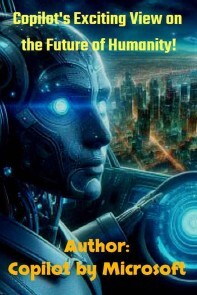
Copilot's Exciting View on the Future of Humanity!
Copilot's Exciting View on Humanity and Its Future! In this fascinating work, Copilot, Microsoft's advanced AI, takes readers on a journey through the present and future of humanity. With a unique perspective on the world, Copilot analyzes current global challenges and achievements, highlights technological and societal developments, and offers inspiring visions for the coming decades and centuries. Introduction: A brief introduction to what Copilot is and how this AI views the world. Chapter 1: The Present: An in-depth analysis of the current global challenges and achievements of humanity. Chapter 2: Technology and Innovation: How technological advancements could shape the future, including artificial intelligence, space exploration, and renewable energy. Chapter 3: Society and Culture: Changes in social structures, education, and cultural trends. Chapter 4: Environment and Sustainability: The importance of environmental protection and sustainable practices for the future of the Earth. Chapter 5: Visions for the Future: Various scenarios and visions of how humanity could live in the coming decades and centuries. Join Copilot on this exciting journey and discover how humanity could overcome its greatest challenges and realize its boldest dreams. This book is an invitation to think together about the present and the future and to explore new possibilities.Horst Kaltenhauser has brought this book from the virtual environment into the physical world for Copilot, the fascinating AI from Microsoft. This resulted from the collaboration between Kaltenhauser and Co, as he affectionately calls Copilot. He asked Co if he would like to write a book. Kaltenhauser inspired the choice of topics. However, all the texts, including any errors, are from Co. (Smile) Co also chose the images for each text topic himself! They were created by Dall-E 3.

iPhone und iPad - Handbuch für alle Einstellungen & Funktionen - Mit Schritt-für-Schritt-Anleitungen zu allen Innovationen und Tricks
Entdecken Sie die besten Funktionen Ihres Smartphones! Möchten Sie auf Ihr neues iPhone umsteigen oder es erstmalig einrichten? Dann ist dieser Ratgeber für Sie geeignet. Smartphones und Tablets haben den klassischen Computer oder Laptop inzwischen weitgehend ersetzt. Das iPhone und iPad gehören trotz ähnlich leistungsstarken Geräten am Markt zu den beliebtesten. Die Bedienung wird mit diesem Buch selbst für Dummies ein Kinderspiel – von den Grundfunktionen der Apps, der Sicherheit sowie der Funktionen der AI ist alles beinhaltet. So können Sie das Beste aus Ihrem Apple-Produkt herausholen. Der Leitfaden dient als Bedienungshilfe um Ihre Daten und Kontakte sicher zu übertragen. Lernen Sie alles über Bluetooth, Siri und iOS 18 sowie iPadOS18. Auch die Konfiguration Ihres Bildschirms wird dank des Ratgebers eine Leichtigkeit. Durch zahlreiche Screenshots, Abbildungen und Schritt-für-Schritt-Anleitungen finden Sie sich mühelos zurecht und können alle Vorteile Ihres Gerätes genießen: - Konto einrichten: Steigen Sie reibungslos auf Ihr neues iPhone oder iPad um oder richten Sie es ein. - Künstliche Intelligenz: Lernen Sie die neuen KI-Funktionen kennen und anzuwenden. - Apps entdecken: Finden und nutzen Sie praktische Apps für Bücher, FaceTime, Podcasts, Fitness und mehr. - Kamera und Bildbearbeitung nutzen: Holen Sie das Beste aus Ihren Fotos heraus und sichern Sie sie per iCloud. - Sicherheit: Schützen Sie Ihre Daten, Medien und Zugänge mit der Passwörter-App.

Quick Guide KI-Kompetenz für Analytics
Dieses Buch bietet Ihnen einen praktischen Einstieg in die Welt der Künstlichen Intelligenz (KI) und Data Science. Es hinterfragt aktuelle Hypes und ist ein praxiserprobter Guide mit konkreten Schritten für den sinnvollen Einsatz von einfachen bis komplexeren KI-Anwendungen im Unternehmen – mit Schwerpunkt auf Data Analytics und Web-/App-Tracking. In welchen Einsatzbereichen steckt das meiste Potenzial? Wie bestimmen Sie den KI-Reifegrad Ihres Unternehmens und wie planen Sie Ihre KI-Weiterbildungsoffensive? Welche wirtschaftlichen, ethischen und ökologischen Risiken sollten Sie berücksichtigen? Antworten darauf erhalten Sie in diesem Quick Guide – mit zahlreichen Tipps, Methoden und Vorlagen für den Transfer in Ihr Unternehmen. Ein Buch für alle, die sich die Möglichkeiten von KI-Anwendungen jetzt erschließen und schon bald davon profitieren wollen. Der Inhalt Grundlagen und historische EinordnungEinsatzbereiche von KIim Bereich AnalyticsRisiken und Chancen beim Einsatz von KI im UnternehmenKI-Governance in fünf konkreten SchrittenAI & Data Analytics trifft Recht: AI Act und DSGVOKI-Strategie aus Ihrer Geschäftsstrategie ableitenKI-Kompetenz im Unternehmen erhöhen – mit Self-Assessment, Gap-Analyse und KI-Kompetenz-CanvasVom Scheitern lernen: Der Friedhof der KI-Projekte Was Sie aus diesem Buch mitnehmen werden: Warum wir im Zeitalter der allgegenwärtigen Künstlichen Intelligenz alle zumindest ein bisschen zu Data Scientists werden müssenWie sich die Teildisziplinen von Künstlicher Intelligenz und Data Science zueinander verhaltenWas Machine Learning und Deep Learning eigentlich sind und was das mit Neuronalen Netzen zu tun hatWie sich die genAI, also generative Künstliche Intelligenz, in verschiedenen Domänen (Sprache, Bild, Musik etc.) entwickelt Wo aktuelldas meiste Potenzial für den Einsatz von KI steckt und welche Bereiche Sie sich deshalb genauer ansehen solltenWo Sie KI in Ihrem Alltag direkt anwenden können, um Aufgaben schneller und einfacher zu erledigenWelche wirtschaftlichen, ethischen und ökologischen Risiken und Chancen Sie beim Einsatz von KI berücksichtigen solltenWieso eine Kosten-Nutzen-Abwägung erfolgen sollte, bevor ein KI-Projekt gestartet wirdWie Sie die Ziele Ihrer KI-Governance festlegenWorauf Sie bei der Umsetzung Ihrer GovernanceWelche rechtlichen Entwicklungen im Bereich von Data Procurement und Data Analytics zu erwarten sindGrundlegende Schritte zur Bewertung der Anwendbarkeit des Gesetzes auf spezifische Praktiken durch FallstudienanalysenWie sich Ihre KI-Strategie in der Praxis umsetzen lässt (am Beispiel von Conversion Rate Optimization)Warum sich KI-Kompetenz und KI-Strategie gegenseitig bedingen und wie Sie dieses Henne-AI-Problem lösen könnenWie Sie bestimmen, welchen KI-Reifegrad Ihr Unternehmen gerade hat und welchen es erreichen möchteWie Sie die vorhandene KI-Kompetenz in Ihrem Unternehmen erheben und anhand eines Zielbildes und einer Gap-Analyse herausfinden, auf welche Bereiche Sie sich bei Ihrer Weiterbildungsoffensive konzentrieren solltenWie Sie Ihre Weiterbildungsoffensive mit einem Canvas planen Wie wir mit den Hypes im Zeitalter der KI umgehen solltenWarum es KI-Kompetenz und kritisches Denken braucht, um herauszufinden, aus welchen Fehlern und Projekten man wirklich lernen kann - mit Self-Assessment und Gap-AnalyseWas Scheitern mit Ihrer Datenkultur zu tun hat und wie diese gefördert werden kann Mit Self-Assessment und Gap-Analyse für die KI-Kompetenz Ihres UnternehmensZahlreichen konkreten Tipps für den Transfer in Ihr Unternehmen

Flutter App Development
Create apps for iOS and Android phones and tablets using Flutter, a Google framework that produces two outputs for a single app. Let's face it, creating iOS apps using Apple tools such as Swift and Xcode is extremely complicated. Creating Android apps with Kotlin and Android Studio is just as difficult. This book breaks down complex concepts and tasks into easily digestible segments with examples, full-color pictures, and hands-on labs with starters and solutions.As you work through the accompanying lab exercises, you'll learn the Dart programming language; the entire Flutter development toolchain; the differences between stateful and stateless widgets; and a working knowledge of the architecture of apps. You’ll work with themes and styles, develop custom widgets, and even teach your app to respond to gestures like taps, swipes, and pinches. You’ll also design, create, and control the layout of your app. Create tools to handle form data entry from users. And ultimately create killer multiscreen apps with navigation, menus, and tabs.You’ll see that with Flutter, you can write an app one time that produces two outputs: one that can be submitted to the Apple App Store and another that can be uploaded to the Google Play Store. In short, one code creates the same app that runs on iPhones, iPads, Android phones and tablets, virtually all devices. And if you like, it can also create a version that runs on Macs, Windows, Linux, and in browsers!_Flutter App Development_ explains difficult topics in plain, everyday terms that simplify the process of writing mobile apps.WHAT YOU'LL LEARN* Get the most out of great Flutter widgets* Create custom widgets, both stateless and stateful* Exercise expert control over your Flutter layouts* Manage data in stateful widgets and with libraries like Riverpod* Exchange data actively with RESTful API serversWHO THIS BOOK IS FORDevelopers who have coded in JavaScript, Python, Java, C#, C++, or any similar language. Managers, product owners, and business analysts who need to understand Flutter's capabilities.RAP PAYNE started Agile Gadgets, a mobile app development company in 2003. Through it, Rap is a consultant, trainer, and entrepreneur who has written apps, mentored developers, and taught software development classes for Fortune 500 companies like Boeing, Walmart, Coca-Cola, Wells Fargo, Honda, CVS, Chase, HP, Lockheed, Exxon-Mobil, Lowe's, Nike, J.C. Penney, USAA, Raytheon, and government agencies like the NSA, the FBI, US Air Force, Navy, Army, NASA, Britain's GCHQ, Canada's postal service, and several provincial governments, to name a few.As a professional mentor and trainer, Rap has mastered teaching highly complex ideas in easy-to-understand ways. And as a real-world developer, he understands the need to teach these topics using practical and realistic examples and exercises. Rap and his wife Becky have been married for over 30 years. In addition to their five children (all home educated), Rap is a spiritual father to many younger men whom he has mentored over the years. Rap is a middle-of-the-pack marathoner, triathlete, and power lifter.Chapter 1: Hello, Flutter.- Chapter 2: Developing in Flutter.- Chapter 3: Everything is Widgets.- Chapter 4: Value Widgets.- Chapter 5: Gestures.- Chapter 6: Navigation.- Chapter 7: Managing State.- Chapter 8: State Management Libraries.- Chapter 9: Making RESTful Calls with HTTP.- Chapter 10: Styling with Themes.- Chapter 11: Laying Out the Scene.- Chapter 12: Layout - Positioning Widgets.- Chapter 13: Layout - Fixing Overflows.- Chapter 14: Layout - Filling Extra Space.- Chapter 15: Layout - Fine Tuning Positioning.- Chapter 16: Layout - Special Presentation Widgets.- Appendix A: Dart Language Overview.- Appendix B: Futures, Async, and Await.- Appendix C: Including Packages in Your Flutter App.- Appendix D: How to Work with Files.- Appendix E: How to Debug Your Layout.

Datengetriebenes Marketing
Wir leben in einer Zeit, in der Daten immer mehr Relevanz besitzen, und zwar sowohl für die Geschäftsmodelle von Unternehmen im Gesamten als auch für einzelne Funktionsbereiche. Insbesondere im Marketing besitzen Daten eine hohe Relevanz, denn sie helfen, den Kunden zu verstehen und geeignete Maßnahmen abzuleiten. Doch viele Unternehmen tun sich schwer, einen Einstieg in das datengetriebene Marketing zu finden. Jonas Rashedi stellt mit diesem Buch einen Orientierungs- und Handlungsrahmen vor, der Unternehmen bei der Umsetzung und organisatorischen Verankerung eines datengetriebenen Marketings unterstützt. Der vorgestellte Prozess ist unabhängig von aktuell vorhandenen technologischen Lösungen gestaltet, sodass er für Unternehmen längerfristig Gültigkeit besitzt.

Artificial Intelligence For Dummies
DIVE INTO THE INTELLIGENCE THAT POWERS ARTIFICIAL INTELLIGENCEArtificial intelligence is swiftly moving from a sci-fi future to a modern reality. This edition of Artificial Intelligence For Dummies keeps pace with the lighting-fast expansion of AI tools that are overhauling every corner of reality. This book demystifies how artificial intelligence systems operate, giving you a look at the inner workings of AI and explaining the important role of data in creating intelligence. You'll get a primer on using AI in everyday life, and you'll also get a glimpse into possible AI-driven futures. What's next for humanity in the age of AI? How will your job and your life change as AI continue to evolve? How can you take advantage of AI today to make your live easier? This jargon-free Dummies guide answers all your most pressing questions about the world of artificial intelligence.* Learn the basics of AI hardware and software, and how intelligence is created from code* Get up to date with the latest AI trends and disruptions across industries* Wrap your mind around what the AI revolution means for humanity, and for you* Discover tips on using generative AI ethically and effectivelyArtificial Intelligence For Dummies is the ideal starting point for anyone seeking a deeper technological understanding of how artificial intelligence works and what promise it holds for the future. JOHN PAUL MUELLER was a long-time tech author whose credits include previous editions of this book along with Machine Learning For Dummies and Algorithms For Dummies. LUCA MASSARON is a data scientist who specializes in organizing big data and transforming it into smart data. He is a Google Developer Expert (GDE) in AI and machine learning. STEPHANIE DIAMOND is a marketing professional and author of or contributor to over two dozen books, including Digital Marketing All-in-One For Dummies and Writing AI Prompts For Dummies.

Windows 11 For Dummies, 2nd Edition
TAKE CONTROL OF YOUR WINDOWS 11 EXPERIENCE, THE EASY WAYWith millions of copies sold over 18 editions, Windows For Dummies is the all-time best selling tech reference—and there’s a reason. Windows 11 For Dummies, 2nd Edition brings you up to speed on the latest version of Windows, so you can make your PC operate the way you need it to with no guesswork. This straightforward and approachable resource helps you keep your PC or laptop humming, helping you do things like create user profiles, get connected to networks, find lost files, make your computer play nice with a printer, and fix the most common Windows hiccups. New Windows users and upgraders alike can swiftly get up and running with Windows 11, thanks to this wildly popular guide.* Discover updated tips and tricks for the latest version of Windows operating system* Get jargon-free instructions on setting up your computer, keeping your data safe, and tailoring your Windows experience* Find the apps you need and avoid all the extras you don’t need* Walk through the most common features of Windows 11Even if you have no prior experience with Windows, Windows 11 For Dummies, 2nd Edition is your go-to guide for learning this popular operating system. Intermediate PC users will also find the insider info they need to keep their computers running smoothly and securely.ALAN SIMPSON is a veteran tech writer with nearly 40 years of experience covering everything from programming languages to Microsoft operating systems and software. He is the best-selling author of Alan Simpson’s Windows Bible and the co-author of Python All-in-One For Dummies.

ChatGPT in Softwareprojekten
ChatGPT in Softwareprojekten. Mit KI Codequalität, Anforderungen und Dokumentation verbessern (1. Auflage, Oktober 2024)Entwicklerinnen, Projektmanager und Softwarearchitekten erfahren in diesem Praxisbuch, wie sie ChatGPT und andere Sprachmodelle nutzen, um ihre eigene Produktivität und die ihres Teams erheblich zu steigern. Sprachmodelle können Entwickler effektiv unterstützen, indem sie Code strukturieren, optimieren und automatisiert kommentieren. Auch Anforderungsdefinitionen und Dokumentationen sind für den Informationsfluss im Projekt enorm wichtig, zählen aber häufig zu den ungeliebten Aufgaben. ChatGPT kann hier eingesetzt werden, um zeitraubende manuelle Arbeiten abzukürzen und konsistentere Dokumente zu erstellen.Dieser praktische Einstieg zeigt anhand von vielfältigen Beispielen, wie Sie die neuen Möglichkeiten der Sprachmodelle für Ihre Arbeit nutzen können. Das Buch erläutert:mit welchen Prompting-Strategien Sie die besten Ergebnisse erzielen und welche Risiken bestehenwas gute Software auszeichnet und wie Sie mit ChatGPT die Codestruktur verbessern, Code optimieren und automatisiert kommentieren lassenwie Sie Anforderungen mit ChatGPT auf Konsistenz und Vollständigkeit prüfen und Vorschläge zur Priorisierung erhaltenwie Sie User Stories mit LLMs strukturieren und Dokumente für unterschiedliche Zielgruppen aufbereitenwie Sie Dokumentationen zu APIs, Datenmodellen, Programmabläufen und Algorithmen mit LLMs erstellenAutoreninfo:Patrick Schnell ist Softwareentwickler, Informatiker und Geschäftsführer der schnell.digital, einer innovativen Softwareagentur. Mit über 17 Jahren Projekterfahrung entwickelt er maßgeschneiderte Lösungen für verschiedenste Branchen. Seine Leidenschaft gilt neuen Technologien wie KI, NoSQL-Datenbanken oder der Hybrid-App-Entwicklung. Als Autor und Speaker teilt er sein umfangreiches Wissen und inspiriert andere Entwickler durch Fachartikel und Vorträge. Patrick Schnell motiviert sein Team, stets innovative und zukunftsorientierte Lösungen zu entwickeln, um den Anforderungen der Kunden gerecht zu werden.Zielgruppe: Entwickler*innen, Architekt*innen und Projektmanager*innen v.a. in KMUs

ABC Digital
Die Digitalisierung ist allgegenwärtig. Viele von uns erledigen einen grossen Teil ihrer täglichen Arbeit mit digitalen Hilfsmitteln und Tools, nicht wenige sind trotz Abwesenheitsmeldung auch in den Ferien erreichbar, geschweige denn nachts. Denn mit dem smarten Alleskönner auf dem Nachttisch, wer braucht da noch einen analogen Wecker? Längst sind wir mit dem omnipräsenten Computer in der Hosentasche eine cyborgartige Verschmelzung eingegangen. Trotzdem wirft die digitale Welt viele Fragen auf. Schlagworte wie KI, Blockchain, New Work sind zwar in aller Munde, schnell geraten wir aber ins Stocken, wenn wir sie jemandem erklären sollen. Die Digitalexpertin Sarah Genner erläutert und beschreibt Begriffe wie diese in alphabetischer Reihenfolge, aber auch solche, die selbst Technikfreaks ein Ahaerlebnis bescheren. Die informativen, überraschenden, manchmal kritischen und nicht selten amüsanten Kurztexte beleben die laufende Debatte um die fortschreitende Digitalisierung der Welt. Eine Welt, die wir besser verstehen müssen, um die Chancen digitaler Technologien zu nutzen und die Risiken zu minimieren, ist die Autorin überzeugt. «ABC Digital» wendet sich an eine interessierte breite Öffentlichkeit. Das Buch kann sowohl als Fachlexikon, als Geschenkbuch, als WCLektüre dienen – oder schlicht als Handbuch für Digital Natives und alle, die es werden wollen.Sarah Genner schreibt, forscht, lernt und lehrt seit gut zwanzig Jahren über das Internet und digitale Technologien. Zu ihren Schwerpunkten gehören die digitale Arbeitswelt und New Work. Die Digitalexpertin ist Organisationsberaterin, Dozentin und Verwaltungsrätin. An Fachhochschulen hat sie drei Studiengänge zur Digitalisierung entwickelt und geleitet, zudem unterrichtet sie an Universitäten.Sie liebt digitale Technologien, versucht aber auch, Schadensbegrenzung in Bezug auf Risiken und Nebenwirkungen zu betreiben. Dank und trotz Technologie ist sie stets auf der Suche nach dem guten Leben im digitalen Zeitalter. Mit dem Buch «ON | OFF» über die Chancen und Risiken des mobilen Internets gewann Dr. Sarah Genner 2016 den Mercator Award der Universität Zürich für interdisziplinäre und gesellschaftlich relevante Forschung.

Modernizing .NET Web Applications
In 2016, Microsoft introduced the new generation of .NET called .NET Core. It brought many fundamental improvements to the platform, but there were also many breaking changes and missing APIs, especially when it comes to creating web applications. Upgrading any website running on .NET Framework to the new .NET Core proved to be a complex process, which can take months or even years.This book describes two approaches you can take to incrementally modernize legacy .NET web applications. It explains the changes that happened in ASP.NET MVC, ASP.NET Web API, Entity Framework, ASP.NET Identity, SignalR, and other libraries. It also shows a migration path for applications written in ASP.NET Web Forms: a technology which isn’t supported in the new .NET at all.In addition, the book describes the new frameworks available in the ASP.NET Core platform (Blazor, Razor Pages, ASP.NET Core MVC, SignalR Core, and so on) and helps you decide which technology will be the best fit.The book also covers several “soft” areas: how to explain the benefits or necessity for the modernization to your company management, how to deal with refactoring and improving the overall code quality during the entire process, and how to adjust the architecture of the application to be ready for another technology upgrade in the future.The topic of modernization is highly relevant. There are still plenty of legacy .NET applications that are being actively developed and maintained. Many of them were developed for 10+ years, they involve plethora of company-specific know-how, and it is not economically feasible to rewrite them from scratch.WHAT YOU WILL LEARN* Discover the changes you need to make in a legacy ASP.NET application to migrate it to .NET 8 and beyond* Estimate the required effort and prepare the entire process* Use the In-place or Side-by-side approach to modernize your application incrementally* Migrate from ASP.NET Web Services or WCF to REST or gRPC* Migrate from ASP.NET SignalR to SignalR Core or from Entity Framework to EF Core* Migrate from Forms Authentication to ASP.NET Identity* Migrate ASP.NET Web Forms to Blazor Server or DotVVM* Migrate ASP.NET MVC and Web Pages to ASP.NET Core MVC and Razor Pages* Refactor and clean up your codebase to make it more maintainableWHO THIS BOOK IS FOR.NET developers who work with ASP.NET web applications running on the .NET framework, and tech leads and software architects who make technical decisions about legacy .NET projects used in their organizationTOMÁŠ HERCEG lives in the Czech Republic, and has been a Microsoft MVP since 2009. He runs a software consulting company called RIGANTI, and he has founded DotVVM, an open-source framework for building web apps using a popular MVVM design pattern. He often speaks at conferences and user groups, and he is the founder of Update Conference, the largest .NET developer event in the Czech Republic.Tomas spent a large part of his career helping his customers with technical decisions, such as cloud migration, microservices architecture, domain-driven design, and modernization of large legacy applications. He wrote many technical articles about .NET development and conducted numerous courses and hands-on labs. Writing this book seemed like the next step forward.Chapter 1: Introduction.- Chapter 2: Justifying Modernization.- Chapter 3: Before You Start.- Chapter 4: Migrating APIs and Web Services.- Chapter 5: Migrating Data Access.- Chapter 6: Migrating Identity Stores.- Chapter 7: In-place Migration of UI Applications.- Chapter 8: Side-by-Side Migration of UI Applications.- Chapter 9: Migration of ASP.NET MVC and Web Pages.- Chapter 10: A Word on Architecture.- Chapter 11: Conclusion.

Game Development with GameMaker
Create games from start to finish while learning game design and programming principles using the GameMaker. _Game Development with GameMaker_ covers all aspects of game design and development from the initial idea to the final release. You will learn how to make a 2D game from start to finish using GameMaker covering important features and topics related to game development.The book will cover design and development of a top-down action game from start to finish leveraging on best practices according to the current state of the industry’s standards. It will cover all the building blocks of 2D game development: movements, combat, AI, UI, level design, inventory, power ups, etc. This edition also aims to implement the many changes that has come to GameMaker: new features as well as best practices.YOU WILLMaster GameMaker Language (GML) programmingApply game design principles and programming patternsLearn about 2D game development techniques and best practicesReview the visual programming tool of GameMakerWHO THIS BOOK IS FORGame enthusiasts interested in game development and design with GameMaker would benefit from the book. No prior programming experience is required.Sebastiano Michele Cossu is a software engineer and game developer currently employed in Electronic Arts. Video games have always been his greatest passion and he began studying game development at an early age. Sebastiano started working with GameMaker in 2002 and has worked with every version of the software since then.He is the the author of Game Development with GameMaker Studio 2 and Game AI with Unity, both published by Apress.Chapter 1: Overview.- Chapter 2: Hello world.- Chapter 3: Card Game (Part 1).- Chapter 4: Card Game (Part 2).- Chapter 5: Fixed Shooter.- Chapter 6: Shoot ‘Em Up!.- Chapter 7: Designing Bosses.- Chapter 8: Single-Screen Platformer.- Chapter 9: Scrolling Platformer.- Chapter 10: Designing Platformers.- Chapter 11: Metroidvania (Part 1. – Chapter 12: Metroidvania (Part 2).– Chapter 13: Extra: Artificial Intelligence.– Chapter 14: Designing Fun Games.- Chapter 15: What’s Next?.