

Computer und IT

Generative AI in Education
As artificial intelligence (AI) rapidly transforms education, tools like ChatGPT and Claude are revolutionizing the way we teach and learn. This book is a groundbreaking book that empowers parents and students to navigate this exciting new frontier, filling a critical gap in the current literature.As the first comprehensive guide to generative AI in education designed for parents and students, _Generative AI in Education_ is positioned to become an indispensable resource. It provides the knowledge and strategies needed to effectively integrate AI into their learning journeys, transforming educational outcomes and preparing students for success in a rapidly changing world. You’ll gain a deep understanding of how tools like ChatGPT and Claude work, and how they can be leveraged to support learning across various subjects and grade levels.You’ll then see how to create clear, specific, and engaging prompts that elicit valuable responses from AI-powered tools. This book contains all the techniques for tailoring prompts to different learning objectives, styles, and contexts, and how they can use AI tools to support reading comprehension, writing skills, problem-solving, and creative thinking.WHAT YOU WILL LEARN* Apply generative AI in education* Craft effective prompts for personalized learning experiences* Utilize AI tools to support learning, creativity, and problem-solving WHO THIS BOOK IS FORParents and students who are eager to harness the power of generative AI to enhance learning experiences and prepare for success in an AI-driven futurePaolo Narciso is the founder of Core Immersive Academy, a Maryland Institute College of Art finalist for Creative Entrepreneurship in 2022. He was the former head of Product and Program Development at AARP Foundation, a Washington, DC based national non-profit. He holds a Doctorate in Education from Creighton University and sits on multiple 2 Confidential // Paolo Narcico // 05/31/2024 technology boards, advising on the use of artificial intelligence, and blockchain in healthcare and to secure property rights for marginalized populationsChapter 1. Getting to Know Your AI Education Partner.- Chapter 2. Staying Safe and Smart with AI.- Chapter 3. The Magic of Prompts: Unleashing AI's Potential 3.- Chapter 4. Your AI Toolkit: ChatGPT, Claude, and Gemini.- Chapter 5. Bringing AI Home: Enhancing Learning Outside the Classroom.- Chapter 6. Teaming Up with Teachers: AI in the Classroom.- Chapter 7. Tracking Your AI Adventure: Progress and Impact.- Chapter 8. The Future of Learning with AI.- Chapter 9. Wrapping Up Your AI Journey.- Appendix A: Exploring Generative AI for Art, Graphics, and Videos in Education.

App Development Using iOS iCloud
Create a professional looking app from start to finish that takes advantageof iCloud technology. Rather than working with Storyboarding for buildingyour UI, you’ll use code to build professional looking screens. Using code isstandard for professional developers to fit form factor alignment acrossmultiple screen sizes and other design constraints.First, you’ll build a basic, functional UX screen. Then you’ll incorporateiCloud with CloudKit for data persistence and private, public, and shareddatabases. Here your code-drive UI design will expand out to developingprofessional looking screens with animation. You’ll also learn to workwith reminder and notification boxes, sharing data between your users, andadding functionally for interaction with other Apps. Finally, you’ll tackletesting and using Test Flight before publishing your app to the App Store.This book offers a practical guide for coders at any level who want to learnand create professional looking iOS apps leveraging the database featuresof iCloud and the numerous extensions that Apple provides in the Xcodeenvironment. Create professional looking apps that are secure and yourusers will love!This is the second version of App Development using iOS iCloud, which offers comprehensive coverage of iOS 17's changes, empowering you to create efficient, user-friendly applications. Build cutting-edge iOS apps with the latest iCloud features!WHAT YOU'LL LEARN·Build a real-world chat app to solidify your learning and discover the power of push notifications·Leverage iOS 17's new features·Master iCloud database operationsWHO THIS BOOK IS FORiOS developers familiar with the basics of Swift coding who want to work with iCloud databases or move into more advanced fields, such as using extensions or designing UX in code.SHANTANU BARUAH is an Executive Vice President leading new business acquisition in the Life Sciences and Healthcare business at HCL Technologies. With over 21+ years of experience across multiple disciplines, Shantanu has been a pioneer in the fields of healthcare, life sciences, digital, and information technology at HCL Technologies. His leadership has guided delivery, practice building, and development of market-leading solutions to reach new heights. A leader with global exposure, Shantanu has successfully led teams across India, Singapore, France, and the U.S. His technological expertise and innovative leadership qualities have placed him at the forefront of important business acquisitions. Shantanu is an active in the app development community and has an approved app on Apple App Store. He has been recognized as one of the top 25 Healthcare IT Executives of 2020 by The IT Services Report. Shantanu lives in New Jersey. His philanthropic outreach includes education for children in developing nations.SHAURYA BARUAH has many interests in a variety of subjects – specifically, he has an interest in Math, Physics, and Computer Science. In his freshman year, he took AP Computer Science A and scored a 4 on the AP exam. Currently, in his sophomore year, he is taking Pre-Calculus Honors, a highly demanding course that is designed in a Problem Based Learning teaching method. He is also taking AP Physics 1, an algebra-based physics course, and Algorithms & Data Structures, a project-based course where students work on large programming projects as a team.Chapter 1: Introduction.- Chapter 2: Block Methods.- Chapter 3: Class Extensions.- Chapter 4: Modal View Controller Design Framework.- Chapter 5: Image Management.- Chapter 6: Drop Down List.- Chapter 7: Create an Expanding Text View UI Object.- Chapter 8: Animated View.- Chapter 9: Savings Records to multiple tables.- Chapter 10: Push Notification.- Chapter 11: Conversation between Users Meta Data.- Chapter 12: Conversation between Users - Modal Definition.- Chapter 13: Conversation between Users – View Definition.- Chapter 14: Conversation between Users – Table Cell Definition.- Chapter 15: Conversation between Users – Controller Definition.

Computational Intelligence for Autonomous Finance
Computational Intelligence for Autonomous Finance recognizes a new age of automatic civilization. The book is a seminal exploration of the dynamic domain of finances and banking. Designed to navigate the intricate interplay between emerging technologies and financial services, this book addresses both the profound opportunities and the intricate challenges that lie ahead. The genesis of this book lies in recognizing the new age of automatic civilization. Not only does it suit academic needs, but this book aims to inspire a new generation of practitioners to embrace the challenges and opportunities presented by autonomous finance.Each chapter provides a unique lens for the potential of computational intelligence to revolutionize the market. The first section of this book talks about the transformative potential of computational intelligence in finance. The book systematically unfolds the multifaceted aspects of the revolution and provides insights into cutting-edge technologies that shape stock market strategies. In subsequent chapters, the book expands on its exploration of AI and the fintech industry. Delve into discussions of the ongoing evolution of financial technologies. The narrative then shifts towards more specialized applications of AI and ML in finance, with chapters dedicated to autonomous finance in microfinance along with the use of machine learning algorithms.

SQL Essentials For Dummies
A RIGHT-TO-THE-POINT GUIDE ON ALL THE KEY TOPICS OF SQL PROGRAMMINGSQL Essentials For Dummies is your quick reference to all the core concepts of SQL—a valuable common standard language used in relational databases. This useful guide is straightforward—with no excess review, wordy explanations, or fluff—so you get what you need, fast. Great for a brush-up on the basics or as an everyday desk reference, this book is one you can rely on.* Strengthen your understanding of the basics of SQL* Review what you've already learned or pick up key skills* Use SQL to create, manipulate, and control relational databases* Jog your memory on the essentials as you work and get clear answers to your questionsPerfect for supplementing classroom learning, reviewing for a certification, and staying knowledgeable on the job, SQL Essentials For Dummies is the convenient, direct, and digestible reference you've been looking for.RICHARD BLUM is a network and systems administrator. He has worked with database systems such as Microsoft SQL Server, PostgreSQL, and MySQL. Rich also teaches online courses in programming. ALLEN G. TAYLOR is author of more than 40 books, including SQL For Dummies. He also teaches database development through a leading online education provider.

Java Essentials For Dummies
SWIFTLY BRUSH UP ON THE FOUNDATIONS OF JAVA PROGRAMMINGJava Essentials For Dummies is a reliable and succinct reference on the core components of Java—the multifaceted general-purpose language used for desktop, mobile, and web applications. This straightforward book gets right to the point—eliminating review material and wordy explanations—so you get what you need, fast.* Strengthen your understanding of the basics of coding with Java* Review what you've already learned or pick up key skills* Use Java to build a variety of applications and more* Jog your memory on the essentials as you work and get clear answers to your questionsPerfect for supplementing classroom learning, reviewing for a certification, or staying knowledgeable on the job, Java Essentials For Dummies is a direct reference that's great to keep on hand as an everyday desk reference. DOUG LOWE is a computer programming guru and author of more than 30 tech books, including Java All-in-One For Dummies. PAUL MCFEDRIES is a long-time technical author with more than 100 published titles, including Web Coding & Development All-in-One For Dummies.

Data Science Essentials For Dummies
FEEL CONFIDENT NAVIGATING THE FUNDAMENTALS OF DATA SCIENCEData Science Essentials For Dummies is a quick reference on the core concepts of the exploding and in-demand data science field, which involves data collection and working on dataset cleaning, processing, and visualization. This direct and accessible resource helps you brush up on key topics and is right to the point—eliminating review material, wordy explanations, and fluff—so you get what you need, fast.* Strengthen your understanding of data science basics* Review what you've already learned or pick up key skills* Effectively work with data and provide accessible materials to others* Jog your memory on the essentials as you work and get clear answers to your questionsPerfect for supplementing classroom learning, reviewing for a certification, or staying knowledgeable on the job, Data Science Essentials For Dummies is a reliable reference that's great to keep on hand as an everyday desk reference. LILLIAN PIERSON, PE, is the founder and fractional CMO at Data-Mania, as well as a globally recognized growth leader in technology. To date, she has helped educate approximately 2 million professionals on how to leverage AI, data strategy, and data science to drive business growth.
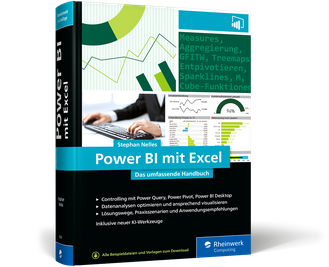
Power BI mit Excel (4. Auflage)
Power BI mit Excel (4. Auflage)So bekommen Sie die Datenflut in den Griff! Mit Power BI und Excel lassen sich große Datenmengen analysieren und aufbereiten. In diesem Buch erfahren Sie alles, was Sie für den Arbeitsalltag benötigen: umfassende und verständliche Erklärungen anhand anschaulicher Szenarien aus der Praxis. Stephan Nelles zeigt Ihnen den Umgang mit Rohdaten aus vielfältigen Datenquellen und deren Bereinigung, Verknüpfung, Analyse und Visualisierung. Sie erfahren, wie Ihnen das Zusammenspiel von Excel mit Power Query, Power Pivot und Power BI Desktop effizient gelingt.Leseprobe (PDF)Aus dem Inhalt:Was ist Self-BI? Was leisten die Tools?Power Query-GrundlagenPower Query statt TextfunktionenPower Query Formula Language: MPower Pivot-GrundlagenBedingte Kalkulationen: CALCULATE()Kalendertabellen einbindenSparklines und bedingte FormatePower BI Desktop-GrundlagenDatenvisualisierungDashboards veröffentlichenPower BI Service – effizientes TeamworkÜber den Autor:Stephan Nelles ist Experte für Excel im Controlling und Finanzwesen. Er schult Anwender und berät Unternehmen, vor allem zum Thema Business Intelligence, Reporting und Controlling.
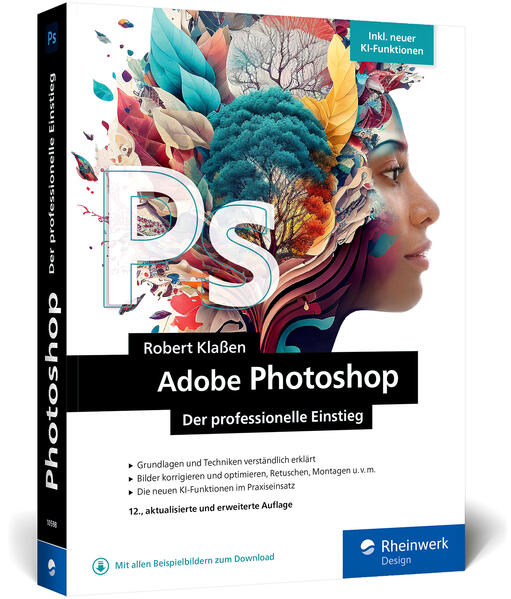
Adobe Photoshop (12. Auflg.)
Adobe Photoshop, 12. Auflage aus November 2024Dieses Buch ist perfekt für Einsteiger und Einsteigerinnen, die sich eine solide Basis in Photoshop erarbeiten wollen. Mit klar strukturierten Kapiteln und verständlichen Erklärungen erleichtert es den Einstieg in die Welt von Photoshop. Über 60 Schritt-für-Schritt-Anleitungen helfen Ihnen, grundlegende Arbeitsweisen zu erlernen und sofort anzuwenden. Darauf aufbauend erhalten Sie auch eine Einführung in alle Werkzeuge und Funktionen und in fortgeschrittene Techniken wie Farbkorrekturen, Freistellungen, Text- und Vektorgrafik-Werkzeuge, Effekte, Filter u. v. m. Besonders interessant: Erleben Sie die neuen KI-Funktionen wie Text-zu-Bild-Prompts, Generatives Füllen und Erweitern im Praxiseinsatz. So werden Sie zum Photoshop-Profi!Leseprobe (PDF)Aus dem Inhalt:Die ArbeitsoberflächeEbenen, Auswahlen, Freistellungen, MaskenFachwissen wie Auflösung und BildgrößeTonwertkorrektur, Histogramm, FarbkorrekturenRetusche, Reparatur, MontageLicht und Schatten korrigieren, Schärfen und weichzeichnenPanoramen, Effekte, Text, Formen und PfadeArbeiten mit Camera RawKI in Adobe Photoshop: Prompten, Text-zu-Bild, Generatives Füllen, Generatives Erweitern u. v. m.Ausgabe für Print und WebÜber den Autor:Robert Klaßen ist passionierter Digitalfotograf und als freiberuflicher Print- und Video-Designer hauptsächlich in den Bereichen Bildbearbeitung, Screendesign und non-linearer Videoschnitt tätig.

Das große Mac-Buch für Einsteiger und Umsteiger (12. Auflage)
Das große Mac-Buch für Einsteiger und Umsteiger (12. Auflage)Sie sind ganz neu in der Mac-Welt oder waren bisher ein Windows-Anwender? Mit dieser Anleitung steigen Sie direkt ein! Jörg Rieger Espindola und Markus Menschhorn navigieren Sie sicher und unterhaltsam durch die Benutzeroberfläche und alle Anwendungen des Macs: Sie erfahren, wie Sie Ihre Bilder mit der Fotos-App bearbeiten und Musik abspielen – ob in Apples Musik-App, als Streaming oder im Radio. Bald schon schreiben Sie E-Mails, surfen im Internet, und behalten in der iCloud jederzeit den Überblick über Ihre Dateien und Kontakte.Leseprobe (PDF)Aus dem Inhalt:Ihren Mac in Betrieb nehmenTastatur, Trackpad und Maus bedienenSchreibtisch, Finder und Fenster im ÜberblickProgramme installieren und öffnen – die Apps am MacDateien, Ordner und Laufwerke verwaltenTexte schreiben und gestaltenAdressbuch, Kalender und Notizen im Griff – auch geräteübergreifendiCloud, Siri und das KontrollzentrumSicher und schnell im Internet surfenE-Mails, Videotelefonie und ChatFotos, Musik und FilmeUpdates, Problemlösungen, DatensicherungÜber die Autoren:Markus Menschhorns Leidenschaft gilt der Vermittlung von Wissen und Kompetenzen. Der promovierte Germanist arbeitet seit mehr als zehn Jahren als Lehrer und ist auch in der Erwachsenenbildung tätig.»Kompliziertes ganz einfach« – so lautet das Motto von Jörg Rieger Espindola. Der freiberufliche Redakteur ist seit Jahren für verschiedene Online- und Printmedien tätig und hat bereits mehrere Bücher für Computereinsteiger veröffentlicht.
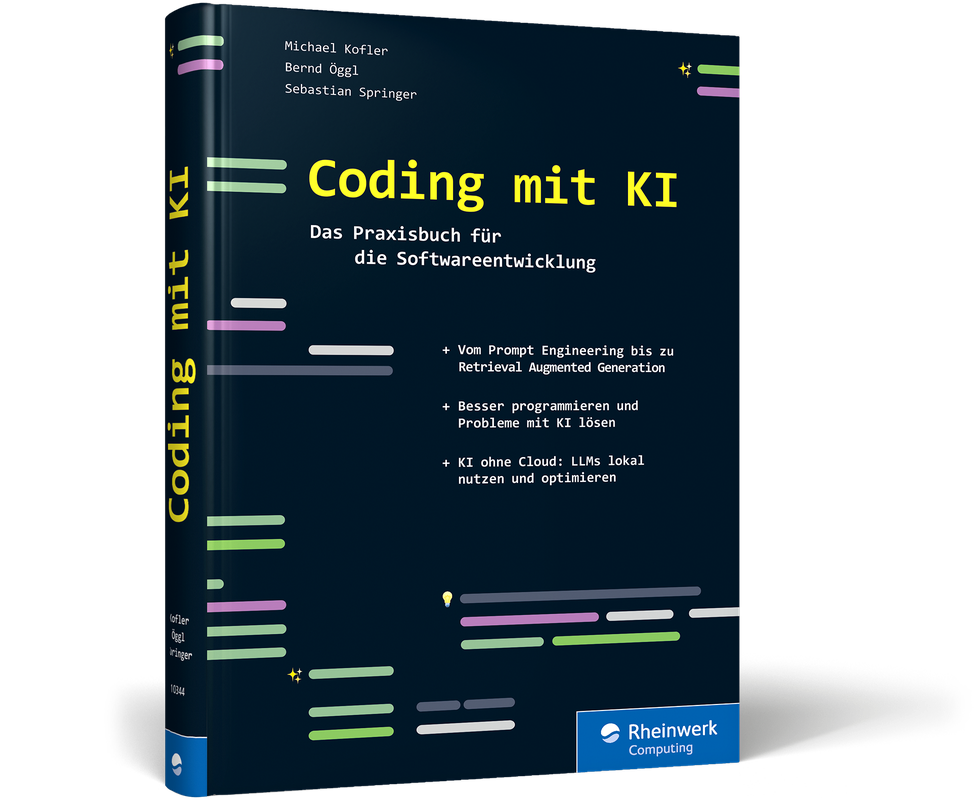
Coding mit KI
Wird in wenigen Jahren niemand mehr Code schreiben, wie es NVIDIA-Chef Jensen Huang prophezeit? Werden intelligente Systeme Bugs jagen, Apps erstellen und Menschen überflüssig machen?Wahrscheinlich nicht. Aber sicher ist, dass KI verändert, wie wir Software entwickeln. Wer die neuen KI-Helfer nicht nutzt, macht sich das Leben unnötig schwer und läuft Gefahr, den Anschluss zu verlieren. In diesem Buch erfahren Sie, was Tools wie ChatGPT oder GitHub Copilot bereits leisten können und wo ihre Grenzen liegen. Praxisnahe Beispiele zeigen Ihnen, wie Sie heute schon mit KI-Unterstützung schneller, effizienter und fehlerfreier programmieren können. Ein pragmatischer Leitfaden für alle, die wissen wollen, wie künstliche Intelligenz die Softwareentwicklung verändert.Aus dem Inhalt:Wie funktioniert Künstliche Intelligenz?Pair Programming mit KIDebugging, Refactoring und Unit-TestsDokumentation automatisiert erstellenDatenbankentwicklung und -designScripting und AdministrationLokale LLMs ausführenLevel-3-Tools: OpenHands und AiderAutomation mit APIsRAGs und SQL-to-TextRisiken, Grenzen und AusblickÜber die Autoren:Michael Kofler ist der renommierteste Fachbuchautor im deutschsprachigen Raum und behandelt von Linux über Swift bis zur IT-Security alle wichtigen Fachthemen.Bernd Öggl wurde durch GitHub Copilot auf die Möglichkeiten von KI in der Softwareentwicklung aufmerksam.Sebastian Springer ist als JavaScript Engineer bei MaibornWolff tätig. Neben der Entwicklung und Konzeption von Applikationen liegt sein Fokus auf der Vermittlung von Wissen.
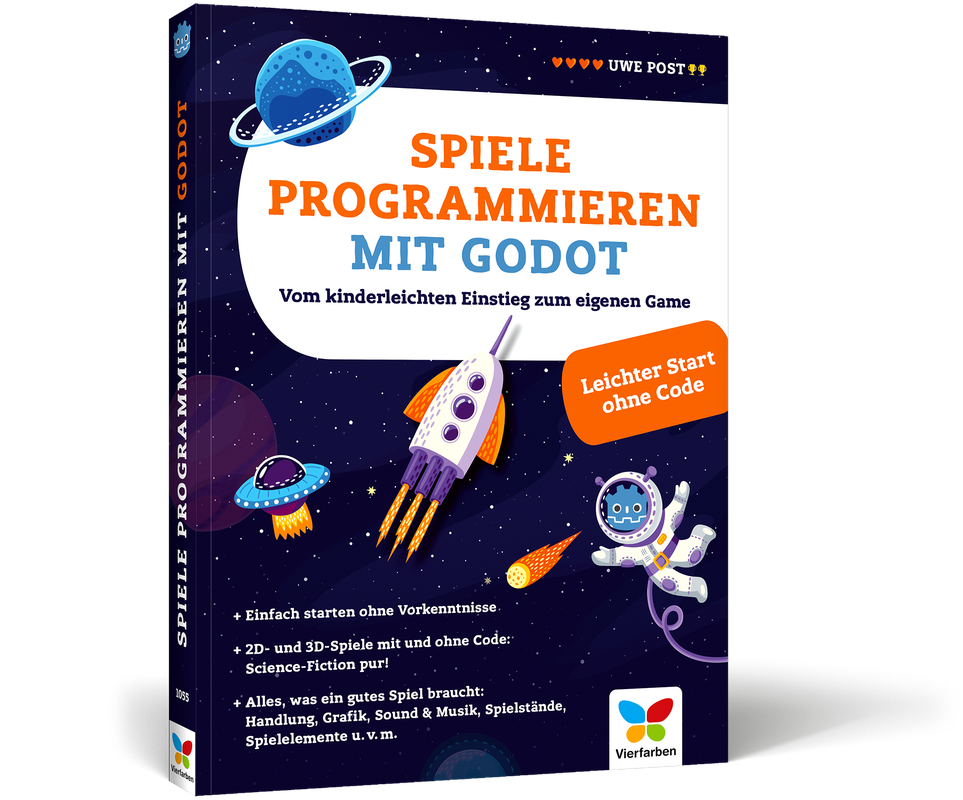
Spiele programmieren mit Godot
Spiele programmieren mit GodotKreiere deine eigenen Spiele mit Godot – ganz einfach! In diesem Buch lernst du Schritt für Schritt, wie du mit Godot coole Games programmiert, auch wenn du noch keinerlei Vorkenntnisse hast. Zu Beginn startest du mit bunten Beispielen in Scratch und lernst so spielerisch die Grundlagen der Programmierung kennen. Dann geht's weiter mit richtigen Projekten in Godot: Entwirf eine spannende Story, erschaffe deine Spielwelt mit Grafik und Sound, und programmiere Gegenstände und Charaktere. So entwickelst du nach und nach dein eigenes Jump-and-Run-Game. Lass deiner Kreativität freien Lauf und teile deine Spiele mit Freunden!Leseprobe (PDF)Aus dem Inhalt:Erste Schritte mit Scratch: ganz ohne Code zu deinen ersten SpielenDie Entwicklungsumgebung von Godot kennenlernenDein erstes Godot-Spiel: ein WeltraumabenteuerEine spannende Geschichte überlegen und grafisch umsetzenSchleichen, Sammeln und Türme bauen in deinem selbst kreierten RaumschiffGegenstände, Gegner und Spielmechaniken programmierenMenüs, Spielstände und eine packende Soundkulisse erschaffenHindernisparcours in 3D bauen und mit Freunden im Splitscreen spielenIdeen und Anleitungen für noch mehr eigene SpieleÜber den Autor:Uwe Post hat ein Diplom in Physik und Astronomie und entwickelt Smartphone-Apps und -Spiele. Er schreibt Fachartikel in Computerzeitschriften, allerdings deutlich mehr Science-Fiction-Geschichten.

Design and Deploy IoT Network & Security with Microsoft Azure
Unlock the potential of IoT with Microsoft Azure through this comprehensive guide, designed to elevate your understanding and implementation of cutting-edge IoT network and security solutions. Whether you are a beginner or a seasoned professional, this book offers clear, actionable insights to help you master the intricacies of IoT with Azure. This book equips you with the expertise to design and deploy secure, efficient, and scalable IoT networks using Microsoft Azure. It is your key to becoming a proficient IoT architect and security specialist.WHAT YOU WILL LEARN* Know the fundamentals of IoT networks and security, including key concepts, terminologies, and the importance of securing IoT deployments* Dive into Azure Edge Services to design and deploy edge solutions that bring computation and data storage closer to the data source, enhancing speed and efficiency* Explore the architecture and deployment of Azure IoT networks to gain practical knowledge on setting up scalable, reliable, and secure IoT networks tailored to your needs* Study best practices and strategies for securing your IoT environment and ensuring robust protection against emerging threats* Monitor and manage your IoT solutions effectively via tools and techniques for maintaining optimal performance, diagnosing issues, and ensuring seamless operation of your IoT networksWHO THIS BOOK IS FORIoT network and security engineers, architects, and Azure IoT developersPUTHIYAVAN UDAYAKUMAR is a seasoned infrastructure architect and senior infrastructure consultant with over 15 years of experience in the IT industry. He is a Master Certified Architect by OpenGroup and holds numerous IT certifications. Throughout his career, he has excelled as an infrastructure solution architect and senior engineer, specializing in designing, deploying, and rolling out advanced on-premises, cloud, IoT, and cybersecurity solutions. He possesses robust expertise in on-premises, cloud, IoT, and cybersecurity, including project management and Agile delivery services. He has also authored more than ten books on various topics related to information technology.DR. R. ANANDAN completed his undergraduate degree, doctorate in Computer Science and Engineering, and post-doctoral degree (D.Sc.) in Computer Science and Engineering in Mexico. He is an IBMS/390 Mainframe professional and a Chartered Engineer from the Institution of Engineers in India and received a fellowship from Bose Science Society, India. He completed seven certification courses (mainly from CISCO). He has published more than 140 research papers in various international journals such as Scopus and SCI. He has presented 90 papers at various international conferences. He received 18 awards from national and international agencies He authored and edited 27 books. He is also an editor for companies such as Springer, Wiley, World Scientific Press, and Nova Publishers.Chapter 1: Get Started with IoT Network and Security.- Chapter 2: Design and Deploy Azure Edge Services.- Chapter 3 : Design and Deploy Azure IoT Networks.- Chapter 4 - Design and Deploy Azure IoT Security.- Chapter 5: Design and Deploy Azure IoT Monitoring and Management.- Additional Resources.- Glossary of Terms.

AI Essentials Guide
This is a comprehensive exploration into the world of Artificial Intelligence, designed to bridge the gap between theoretical concepts and practical, real-world applications.This book unravels the mystique of AI, breaking down its components into understandable elements. From the early dawn of AI's inception to its current state of rapid evolution, we cover the essential building blocks necessary for leveraging AI in business, and personal development, and understanding its broader impacts on society. Through an engaging conversational format, readers are guided through the intricacies of AI, covering topics such as machine learning, AI governance,, data security, and the ethical challenges facing AI today. This book is an invaluable resource for those looking to understand the fundamentals of AI, its practical applications, and its significant implications for the future.After reading this book, you will be able to integrate AI into your business strategies and learn the intricacies of AI advancements.WHAT YOU WILL LEARN:* Key concepts and definitions within AI, including types of AI, machine learning, and neural networks and how they are utilized in AI apps like M365 Copilot* Practical applications of AI for personal and business growth, focusing on the pillars of using AI to evolve these fronts effectively and sustainably* How AI is transforming businesses and what organizational shifts must be made to realize the value* Navigating the challenges and ethical considerations in AI to ensure informed and responsible usageWHO THIS BOOK IS FOR:Professionals looking to integrate AI into their business strategies or organizations.As an AI Engineer and Data Scientist, Will's career has been a testament to the transformative power of technology. Starting as an econometrician using machine learning to solve academic problems, his journey from a citizen developer to an influential AI Specialist in the Microsoft community is a story of passion, perseverance, and the pursuit of excellence.Will's professional odyssey is marked by a series of groundbreaking achievements in the realm of Data & AI. From using convolutional neural networks to value online commodities to building custom Copilots across the Microsoft stack, his work stands as a paragon of innovation.His ventures into Digital Twins, Reinforcement Learning, Microsoft Fabric and the Onelake data model highlight his ability to transcend conventional boundaries, integrating IoT, AI, and various analytical tools to drive business transformation.Will embodies the spirit of responsible AI engineering, underpinned by his credentials as a 5x Microsoft Certified professional. His holistic approach to technology, emphasizing ethical application and accessibility, makes him not just an expert but a visionary leader aiming to democratize AI’s evolving role in our world.Chapter 1: The Break of Dawn.- Chapter 2: Glimpses of a Digital Mind.- Chapter 3: Illuminating the Enigma: Deciphering the Basics of AI.- Chapter 4: Radiant Ascension: AI's Role in Personal Elevation.- Chapter 5: Guided by the Constellation: Navigating the Business Galaxy with AI.- Chapter 6: Navigating the Shadows: The Ethical Maze of AI.- Chapter 7: Guardians of Intelligence: Building A Robust AI Governance Framework.- Chapter 8: Charting the Course: Equipping Your Knowledge and Skills for the AI Horizon.- Chapter 9: Dawn of Tomorrow: Embracing AI's Transformative Journey.

Qualitätsmanagement mit SAP S/4HANA
In diesem Buch lernen Sie Schritt für Schritt, wie Sie Ihre QM-Prozesse in SAP S/4HANA abbilden und die notwendigen Customizing-Einstellungen vornehmen. Das erfahrene Autorenteam erklärt Ihnen die zentralen Stammdaten und Steuerinstrumente in QM. Sie erfahren außerdem, welche neuen Funktionen SAP Extended Warehouse Management bereitstellt. Aus dem Inhalt: Quality Issue ResolutionBeschaffung, Wareneingang, Produktion und LieferungChargen und MHD-ÜberwachungWiederkehrende und zeitgesteuerte PrüfungenZeugnis, Qualitätsmeldung und Nonconformance ManagementPrüfmittelverwaltungQualitätskostenAuswertungenAudit-Management, FMEA und PLPQualitätslenkungIntegration mit SAP EWMSAP S/4HANA und SAP Fiori Einleitung ... 23 1. QM-Funktionen in SAP S/4HANA -- Überblick und Einordnung ... 31 1.1 ... Was ist SAP S/4HANA? ... 32 1.2 ... Optionen zur Nutzung von SAP S/4HANA ... 33 1.3 ... Release- und Wartungsstrategie von SAP S/4HANA ... 37 1.4 ... Benutzeroberflächen in SAP S/4HANA ... 40 1.5 ... Wichtige technische Veränderungen und Neuerungen ... 61 1.6 ... Weiterführende Informationen zu QM in SAP S/4HANA ... 68 2. Überblick über die Qualitätsprozesse ... 71 2.1 ... Prüfungen in der logistischen Kette ... 71 2.2 ... Reklamationsbearbeitung ... 75 2.3 ... Zeugnisabwicklung ... 79 2.4 ... Prüfmittelverwaltung ... 80 2.5 ... Qualitätskosten ... 80 2.6 ... Audit-Management ... 81 2.7 ... FMEA/Produktionslenkungsplan ... 82 2.8 ... Stabilitätsstudie ... 83 2.9 ... Wiederkehrende Prüfung ... 83 3. Grundeinstellungen im Customizing ... 85 3.1 ... Voreinstellung auf Mandantenebene ... 85 3.2 ... Voreinstellungen auf Werksebene ... 88 4. Grunddaten ... 95 4.1 ... Vorüberlegung ... 95 4.2 ... Stichprobenplan ... 96 4.3 ... Stichprobenverfahren ... 99 4.4 ... Dynamisierungsregel ... 106 4.5 ... Prüfmethode ... 111 4.6 ... Prüfmerkmal/Klassenmerkmal ... 118 4.7 ... Katalog ... 127 4.8 ... Arbeitsplatz ... 134 5. Logistik-Stammdaten ... 137 5.1 ... Materialstamm ... 137 5.2 ... Q-Infosatz Beschaffung ... 149 5.3 ... Q-Infosatz Vertrieb ... 153 6. Prüfplanung ... 157 6.1 ... Plantypen ... 157 6.2 ... Prüfplan ... 159 6.3 ... Standardplan ... 178 6.4 ... Arbeitsplan/Linienplan ... 180 6.5 ... Prüfpunkt aktivieren ... 181 6.6 ... Planungsrezept ... 185 6.7 ... Materialspezifikation ... 187 6.8 ... Engineering Workbench ... 188 6.9 ... Allgemeine Funktionen zum Prüfplan ... 194 6.10 ... Änderungsdienst ... 198 6.11 ... Customizing der Prüfplanung ... 200 6.12 ... SAP 3D Visual Enterprise ... 203 7. Dokumentenverwaltung ... 209 7.1 ... Dokumenten-Infosatz ... 210 7.2 ... Materialstamm ... 212 7.3 ... Prüfmethode ... 214 7.4 ... Lieferbedingung ... 214 7.5 ... Lieferantenvereinbarung ... 216 7.6 ... Kundenvereinbarung ... 216 7.7 ... Qualitätsmeldung ... 218 7.8 ... Kataloge ... 219 7.9 ... Prüflos ... 220 7.10 ... Customizing der Dokumentarten ... 220 7.11 ... Objekte zum Dienst ... 222 8. Prüfablauf ... 227 8.1 ... Übersicht über den Prüfablauf ... 227 8.2 ... Ereignis der Prüfloserzeugung ... 229 8.3 ... Funktionen im Prüflos ... 240 8.4 ... Ergebniserfassung ... 244 8.5 ... Fehlererfassung ... 269 8.6 ... Verwendungsentscheid ... 276 8.7 ... Langzeitprüfung ... 286 8.8 ... Serialnummer ... 288 9. Prüfung zum Wareneingang in EWM ... 291 9.1 ... Vorüberlegung ... 291 9.2 ... Customizing-Einstellungen ... 295 9.3 ... Prüfregel in EWM ... 303 9.4 ... Prüfloserzeugung in einem EWM-verwalteten Lager ... 306 9.5 ... Verwendungsentscheid mit Folgeaktion ... 315 10. Qualitätsmanagement in der Beschaffung ... 319 10.1 ... Voraussetzung ... 319 10.2 ... Sperrfunktionen ... 325 10.3 ... An-/Abnahmeprüfung ... 327 10.4 ... Zeugnis zum Lieferanten ... 330 10.5 ... QM-System ... 334 11. Qualitätsmanagement in der Produktion ... 341 11.1 ... Vorüberlegung ... 342 11.2 ... Produktionsbegleitende Prüfung ... 342 11.3 ... Prüfung beim Wareneingang aus der Produktion ... 358 11.4 ... Prüfung zum Serienauftrag ... 363 12. Arbeit mit Chargen im Qualitätsmanagement ... 367 12.1 ... Chargen anlegen ... 368 12.2 ... Chargeneigenschaften ... 369 12.3 ... Chargenklasse im Qualitätsmanagement ... 372 12.4 ... Wiederkehrende Prüfung/MHD-Überwachung von Chargen ... 379 12.5 ... Auswertungen ... 384 13. Zeitgesteuerte Prüfung/Prüfmittelverwaltung ... 393 13.1 ... Stammdaten/Voraussetzung ... 394 13.2 ... Ablauf der Prüfung ... 408 13.3 ... Arbeitslisten ... 413 13.4 ... Customizing ... 414 14. Stabilitätsstudie ... 417 14.1 ... Stammdaten ... 418 14.2 ... Customizing der Stabilitätsstudie ... 421 14.3 ... Ablauf der Stabilitätsstudie ... 423 14.4 ... Auswertung ... 434 15. Prüfungen bei Kundenretouren ... 437 15.1 ... Retourenauftrag aus der Meldung anlegen ... 437 15.2 ... Retourenauftrag bearbeiten ... 439 15.3 ... Materialinspektion ohne Prüflos ... 442 15.4 ... Materialinspektion mit Prüflos ... 446 15.5 ... Customizing der erweiterten Retourenabwicklung ... 447 16. Weitere Funktionen in der Prüfabwicklung ... 453 16.1 ... Probenverwaltung ... 454 16.2 ... Dynamisierungen/Qualitätslage ... 467 16.3 ... Multiple Spezifikation ... 476 16.4 ... Subsystem -- Schnittstelle QM-IDI ... 482 16.5 ... Formulare ... 488 16.6 ... Ergebniskopie ... 490 16.7 ... Digitale Signatur im Prüfablauf ... 493 16.8 ... Genehmigungen ... 497 17. Zeugnis ... 499 17.1 ... Zeugnisvorlage ... 500 17.2 ... Manuelle Ausgabe ... 510 17.3 ... Zeugnis zur Lieferung ... 515 17.4 ... Archivanzeige ... 519 18. Nonconformance Management (Abweichungsmanagement) ... 521 18.1 ... Was hat sich mit SAP S/4HANA geändert? ... 522 18.2 ... Das Konzept des »unabhängigen« Fehlers ... 524 18.3 ... Fehlererfassung ... 524 18.4 ... Fehlerbearbeitung ... 535 18.5 ... Qualitätsmaßnahmen ... 538 18.6 ... Problemlösungsprozess ... 543 18.7 ... Bestandsbuchung über Folgeaktion durchführen ... 554 18.8 ... Fehler in eine Meldung übertragen ... 557 18.9 ... Auswertungen ... 566 18.10 ... Customizing des Nonconformance Managements ... 571 19. SAP Quality Issue Resolution ... 583 19.1 ... Problemlösungsprozesse anlegen ... 585 19.2 ... Einordnung in das SAP-Produktportfolio ... 586 19.3 ... Konfiguration von SAP Quality Issue Resolution ... 587 19.4 ... Problemlösungsprozesse bearbeiten ... 593 19.5 ... Technische Informationen ... 609 20. Qualitätsmeldungen ... 613 20.1 ... Allgemeine Funktionen ... 614 20.2 ... Arbeit mit Arbeitsvorräten ... 642 20.3 ... Beispiele: Meldungsablauf ... 652 20.4 ... Customizing von Qualitätsmeldungen ... 680 20.5 ... Genehmigungspflicht/Signaturstrategie ... 699 20.6 ... Übersicht über Formulare der Meldung ... 703 21. Qualitätskosten ... 705 21.1 ... Prüfkosten ... 705 21.2 ... Fehlerkosten ... 719 22. Audit-Management, FMEA und Produktionslenkungsplan ... 723 22.1 ... Audit-Management ... 723 22.2 ... Fehlermöglichkeits- und -einflussanalyse (FMEA) ... 735 22.3 ... Produktionslenkungsplan ... 769 23. Qualitätslenkung/Auswertung ... 777 23.1 ... Allgemeine Einstellmöglichkeiten ... 777 23.2 ... Zentrale Dashboards ... 779 23.3 ... Auswertungen in Arbeitsplätzen ... 782 23.4 ... Weitere Auswertungen ... 784 23.5 ... Auswertung aus Originalbelegen im SAP GUI bzw. SAP-Fiori-Apps ... 790 23.6 ... Lieferantenbeurteilung ... 797 23.7 ... Auswertungen zu Kundenretouren ... 799 24. Systemanpassungen ... 801 24.1 ... SAP-Erweiterungspakete ... 801 24.2 ... Aktivierung QM-Funktionen ... 802 24.3 ... Erweiterbarkeit von SAP-Fiori-Apps ... 804 24.4 ... SAP-Erweiterungen/User-Exits ... 805 24.5 ... Business Add-ins ... 807 Anhang ... 809 A ... Transaktionen und Menüpfade ... 809 Das Autorenteam ... 821 Index ... 823

SAP Fiori - Administration und Konfiguration
Das neue Standardwerk für die SAP-Fiori-Administration! Hier finden Sie praxisnahe Anleitungen für die effiziente Verwaltung Ihrer Fiori-Implementierung. Von Installation bis Benutzerverwaltung werden alle Aspekte behandelt. Inklusive der Anbindung an die Services SAP Mobile Start, SAP Build Work Zone und UI Flexibility Service. Aus dem Inhalt: Systemlandschaft und KomponentenBenutzerverwaltungRollenzuweisungInstallation und KonfigurationFiori in SAP S/4HANAMit SAP BTP hybride Szenarien umsetzenCloud ConnectorSAP Build Work ZoneSAP Mobile StartUI Flexibility Service Einleitung ... 13 1. Einführung in SAP Fiori ... 19 1.1 ... Vereinfachung von Geschäftsanwendungen durch nutzerzentrierte Ansätze ... 20 1.2 ... User Centered Design ... 21 1.3 ... SAP Fiori ... 25 1.4 ... SAP Fiori Launchpad ... 33 1.5 ... Technologien ... 41 1.6 ... SAP-Fiori-Anwendungstypen ... 68 1.7 ... SAP Fiori in Unternehmen einführen ... 72 1.8 ... SAP Fiori Apps Reference Library ... 75 2. Systemlandschaft und deren Komponenten ... 87 2.1 ... Komponenten einer SAP-Fiori-Infrastruktur ... 87 2.2 ... System aufsetzen ... 100 2.3 ... SAP-Fiori-Komponenten aufsetzen ... 116 2.4 ... Monitoring und Troubleshooting ... 142 2.5 ... Entwicklungsinfrastruktur ... 152 2.6 ... Weiterführende Informationen ... 157 3. Objektmodell ... 161 3.1 ... Semantische Objekte und Aktionen ... 161 3.2 ... SAP-Fiori-Kataloge ... 165 3.3 ... Rollen ... 167 3.4 ... Gruppen ... 168 3.5 ... Pages and Spaces ... 169 3.6 ... Common Data Model (CDM) ... 172 4. SAP-Fiori-Inhalte on-premise bereitstellen ... 177 4.1 ... Vorgehen und Tools für die Content-Bereitstellung ... 178 4.2 ... Schnelle Aktivierung von Benutzerrollen ... 183 4.3 ... Launchpad-Bereiche und -Seiten verwalten ... 190 4.4 ... Launchpad-App-Manager ... 203 4.5 ... Launchpad-Content-Manager ... 211 4.6 ... SAPUI5-Anwendungen bereitstellen ... 225 4.7 ... Klassische UIs bereitstellen ... 235 4.8 ... Troubleshooting ... 239 5. SAP Business Technology Platform ... 243 5.1 ... Einführung ... 243 5.2 ... Arbeiten mit SAP-BTP-Accounts ... 246 5.3 ... SAP-BTP-Services ... 255 5.4 ... Berechtigungen und User Management ... 257 6. SAP BTP -- Cloud und on-premise ... 269 6.1 ... Einführung des Cloud Connectors ... 269 6.2 ... Installation und Konfiguration des Cloud Connectors ... 271 6.3 ... Konfiguration von Verbindungen ... 288 6.4 ... Principal Propagation konfigurieren ... 300 7. Konfiguration von SAP Build Work Zone ... 319 7.1 ... Mit SAP Build Work Zone starten ... 320 7.2 ... SAP Build Work Zone aufsetzen ... 325 7.3 ... SAP Build Work Zone konfigurieren ... 329 7.4 ... Mit lokalen Inhalten arbeiten ... 346 7.5 ... Integration von On-Premise-SAP-Fiori-Anwendungen ... 366 7.6 ... Integration von Cloud-Anwendungen ... 386 7.7 ... Kurzüberblick über Themes ... 391 8. SAP Mobile Start ... 405 8.1 ... Onboarding ... 406 8.2 ... Admin Cockpit ... 412 9. SAPUI5 Flexibility ... 429 9.1 ... Einführung ... 430 9.2 ... Perspektive der Endanwenderinnen und Endanwender ... 435 9.3 ... Perspektive der Key User ... 441 9.4 ... Verwalten von Varianten ... 452 9.5 ... Konfiguration von SAP-Fiori-Launchpad-Content ... 456 9.6 ... Ausblick: Entwicklerperspektive ... 460 Die Autoren ... 467 Index ... 469

Power BI mit Excel
Dank Power BI lassen sich mit Excel auch große Datenmengen analysieren und aufbereiten. Mit diesem Buch erhalten Sie alles, was Sie für den Arbeitsalltag benötigen: umfassende und verständliche Erklärungen anhand anschaulicher Praxisszenarien. Stephan Nelles zeigt Ihnen den Umgang mit Rohdaten aus unterschiedlichen Datenquellen und deren Bereinigung, Verknüpfung, Analyse und Visualisierung. Sie erfahren, wie Ihnen das Zusammenspiel von Excel mit Power Query, Power Pivot und Power BI Desktop effizient gelingt. Aus dem Inhalt: Was ist Self-BI? Welche Tools leisten was?Power Query – Grundlagen der BedienungPower Query statt TextfunktionenAbfragen zusammenführen/anhängenPower Query Formula Language: M für FortgeschrittenePower Pivot – Grundlagen der BedienungBedingte Kalkulationen: CALCULATE()Berechnungen über mehrere Tabellen erstellenKalendertabelle einbindenSparklines und bedingte Formate benutzenPower BI Desktop – Grundlagen der BedienungGrundlagen der DatenvisualisierungStandarddiagrammeInteraktionen & SlicerDashboards veröffentlichenPower BI Service – effizienteres Teamwork Vorwort ... 19 1. Self-Service Business Intelligence -- die Tools und ihre Versionen ... 30 1.1 ... Drei Tools zur Optimierung des Reportings ... 31 1.2 ... Vom Add-in zur Menüintegration -- welche Excel-Version enthält was? ... 39 1.3 ... Power BI und der Power BI Service ... 42 2. Power Query -- Daten aus unterschiedlichen Quellen importieren ... 46 2.1 ... Daten abrufen und transformieren -- Excel- und Power-BI-Desktop-Versionen ... 47 2.2 ... Mit Datenbanken verbinden ... 48 2.3 ... Zugriff mit Power BI Desktop auf Datenbankdateien ... 64 2.4 ... Import von CSV- und TXT-Dateien ... 66 2.5 ... Excel als Datenquelle für einen Power-Query-Import nutzen ... 72 2.6 ... Programmeinstellungen von Power Query anpassen ... 95 2.7 ... Mit Power Query erstellte Abfragen im Team nutzen ... 96 2.8 ... Mehrere Excel- oder CSV-Dateien aus einem Ordner konsolidieren ... 101 2.9 ... SharePoint-Listen mit Power Query abfragen und bereinigen ... 107 2.10 ... Zugriff mit Power Query auf Internetseiten ... 110 3. Daten mit Power Query transformieren und kombinieren ... 115 3.1 ... Zugriff auf Textdateien ... 116 3.2 ... Spalten und Zeilen entfernen ... 117 3.3 ... Spalten teilen und neue Spalten erzeugen ... 128 3.4 ... Basisbereinigung und Zellbereiche füllen ... 136 3.5 ... Datumsformate anpassen und zusätzliche Datumsspalten erzeugen ... 140 3.6 ... Berechnete Spalten erstellen ... 155 4. Tabellenstrukturen mit Power Query anpassen ... 176 4.1 ... Daten gruppieren ... 177 4.2 ... Mit strukturierten Spalten individuelle Datentypen erstellen ... 184 4.3 ... Transformation von gestapelten, kategorisierten und pivotierten Daten ... 190 5. Erweiterte Funktionen mit Power Query ... 216 5.1 ... Eine kleine Reise durch M ... 217 6. Power Pivot -- Grundlagen der Datenmodellierung ... 266 6.1 ... Tabellentypen eines Datenmodells ... 267 6.2 ... Transaktionstabellen ... 267 6.3 ... Dimensions- oder Suchtabellen ... 269 6.4 ... Typen von Beziehungen zwischen Tabellen ... 271 6.5 ... Excel-Jargon vs. Datenbank-Termini ... 273 6.6 ... Unterschiede zwischen logischen Beziehungen und Verweisfunktionen ... 279 6.7 ... Datenmodellierung in Excel oder in Power BI Desktop ... 279 6.8 ... Importieren weiterer Daten und logische Verknüpfung in Power Pivot ... 283 6.9 ... Überprüfung des Datenmodells mit einem impliziten Measure ... 289 6.10 ... Best Practice für die Berechnung von Kennzahlen -- das explizite Measure ... 293 6.11 ... Den Filterkontext einer Berechnung verstehen ... 300 6.12 ... Typische Fehler bei Berechnungen ... 306 6.13 ... Berechnete Spalten vs. Measures (berechnete Felder) ... 309 6.14 ... Fallbeispiele für die Verwendung von berechneten Spalten ... 327 6.15 ... Anpassungen an den Elementen eines Datenmodells vornehmen ... 339 7. Absolute und prozentuale Abweichungen sowie Anteile mit DAX-Funktionen berechnen ... 353 7.1 ... Basisaggregierungen für eine Kundenanalyse erstellen ... 354 7.2 ... Die Datenqualität mithilfe von Basisaggregierungen überprüfen ... 358 7.3 ... Vergleich zweier Werte und Ratio-Berechnung ... 364 7.4 ... Bedingte Kalkulationen mit CALCULATE() erstellen ... 371 7.5 ... Anteile am Gesamtergebnis (Shares) mit ALL() berechnen ... 389 7.6 ... Die ALL-Varianten ALLEXCEPT() und ALLSELECTED() ... 394 8. Variable Werte in DAX-Measures einbinden ... 401 8.1 ... Das Datenmodell und Basisaggregierungen der Budgetvarianten ... 402 8.2 ... Measures für die variable Auswahl des Budgets erstellen ... 404 8.3 ... Sortieren von Power-Pivot-Tabellen per Datenschnitt ... 413 9. Zeitliche Analyse von Daten (Time Intelligence) ... 419 9.1 ... Anforderungen an eine Kalendertabelle ... 421 9.2 ... Year-over-Year- und Year-to-date-Berechnungen mit einem Standardkalender ... 431 9.3 ... Zeitliche Datenanalyse bei Verwendung von ISO-8601- und 445-Kalendern ... 440 9.4 ... Glättung von Zeitreihen auf Basis des gleitenden Mittelwertes ... 455 9.5 ... Manuell erfasste Schätzwerte in den Forecast einbinden ... 462 9.6 ... Eine saisonale Kurve in den Forecast einbinden ... 466 10. Rangfolgen und Top-N-Darstellungen ... 478 10.1 ... Bedingte Kalkulation mit SUMX() ... 479 10.2 ... Iteratoren in virtuellen Tabellen ... 481 10.3 ... Produkte des aktuellen Produktkatalogs mit COUNTX() zählen ... 483 10.4 ... Die Gesamtmarge und den prozentualen Anteil der Produktionskosten ermitteln ... 484 10.5 ... Fehlerhafte Ergebnisanzeigen vermeiden mit SUMX() ... 486 10.6 ... Rangfolgen mithilfe von RANKX() berechnen ... 489 10.7 ... Top-10-Darstellung im Power-Pivot-Report ... 494 10.8 ... Berechnung der Top-3-Werte in einer Power-Pivot-Tabelle ... 500 10.9 ... Den Kunden- und Umsatzanteil der letzten Bestellungen ermitteln ... 503 11. Klassifizierungen und ABC-Analyse ... 507 11.1 ... Preisklassen mit einer berechneten Spalte bilden ... 509 11.2 ... Berechnung klassifizierter Produkte mit einem Measure ... 512 11.3 ... Kundenklassifizierung al italiano ... 513 11.4 ... ABC-Analyse auf Basis berechneter Spalten ... 521 11.5 ... ABC-Analyse mit berechnetem Feld ... 526 12. Patterns für Korrelationen, rollierende Auswertungen, asynchrones Reporting und Allokation von Werten ... 529 12.1 ... Korrelationskoeffizienten mit DAX-Funktionen berechnen ... 529 12.2 ... Rollierende Summen und Mittelwerte berechnen ... 544 12.3 ... Die tabellarische Reportstruktur mithilfe von Cube-Funktionen aufbrechen ... 548 12.4 ... Granularität und asynchrone Reportingstruktur ... 554 12.5 ... Mit zwei Datumswerten in einer Tabelle arbeiten ... 566 12.6 ... Einen Betrag auf einen Gesamtzeitraum verteilen ... 570 12.7 ... Virtuelle Tabellen und gewichteter Durchschnittspreis ... 575 13. Power BI Desktop -- vom Datenmodell zum interaktiven Onlinereport ... 579 13.1 ... Die Benutzeroberfläche von Power BI Desktop ... 581 13.2 ... Measures -- auch in Power BI Desktop das Maß aller Dinge ... 588 13.3 ... Visualisierungen auf Basis eines Datenmodells erstellen ... 602 13.4 ... Das Prinzip der Interaktion ... 613 13.5 ... Das Prinzip der Hierarchien ... 618 13.6 ... Das Prinzip der künstlichen Intelligenz ... 621 14. Gestaltungsregeln für Reports und Dashboards ... 626 14.1 ... Regeln der Wahrnehmung ... 626 14.2 ... Das Erscheinungsbild von Reports durch Vorlagen steuern ... 630 14.3 ... Aufbau von Reportseiten ... 633 14.4 ... Darstellung der sechs grundlegenden Datenrelationen ... 636 15. Power-BI-Reports -- Die zeitliche Analyse von Daten ... 639 15.1 ... Zeitliche Analyse von Unternehmensdaten ... 640 15.2 ... Die jährliche Wachstumsrate im Bericht darstellen ... 677 16. Dynamische Steuerung -- Parameterfelder, Datenschnitte, Kalkulationsgruppen und Eingabefelder ... 680 16.1 ... Variablen in Power-BI-Desktop-Berichten ... 680 16.2 ... Die Datenauswahl durch Parameterfelder flexibler gestalten ... 685 16.3 ... Eingabe von veränderlichen Werten über Parameter ... 691 16.4 ... Mit Kalkulationsgruppen die Anzahl der Measures reduzieren ... 694 16.5 ... Mehrere Spalten mit einem Datenschnitt filtern ... 699 17. Optimierung von Datenmodellen und DAX-Berechnungen ... 705 17.1 ... Das Datenmodell in Power BI Desktop optimieren ... 705 17.2 ... DAX-Abfragen prüfen und optimieren ... 709 17.3 ... Die Performance von Visualisierungen mit DAX-Abfragen analysieren ... 718 18. Power-BI-Reports -- die Analyse von Performance-Kennzahlen ... 721 18.1 ... Analyse der Performance ... 721 19. Power-BI-Reports -- die geografische und statistische Analyse ... 763 19.1 ... Geografische Auswertungen in Power BI Desktop ... 763 19.2 ... Statistische Auswertungen in Power BI Desktop ... 776 20. Erweiterte Datenanalyse und KI in Power BI ... 798 20.1 ... Was geht, KI? ... 798 20.2 ... Erweiterte Datenanalysefunktionen ... 804 20.3 ... Daten mit Q&A erkunden ... 821 21. Zielgruppenorientiertes Reporting -- Quickinfos, Drillthroughs, Bookmarks und interne Seitennavigation ... 828 21.1 ... Zusätzliche Informationen über Quickinfos in eine Visualisierung einbinden ... 829 21.2 ... Mit Drillthrough von Übersichts- zu Detailseiten wechseln ... 830 21.3 ... Lesezeichen für eine Präsentation erstellen ... 834 21.4 ... In einem Bericht eine Navigation erstellen ... 840 21.5 ... Quickmeasures erstellen ... 848 22. Reports teilen, aktualisieren und Zugriffsrechte auf Daten organisieren ... 852 22.1 ... Die Datenhierarchie auf Power BI Service ... 852 22.2 ... Die Lizenztypen von Power BI ... 853 22.3 ... Daten freigeben und Mitglieder zu Arbeitsbereichen hinzufügen ... 856 22.4 ... Die Sicherheitsarchitektur von Power BI ... 857 22.5 ... Datasets aktualisieren ... 863 22.6 ... Zusätzliche Funktionen der Onlinereports von Power BI ... 868 22.7 ... Endgeräte für die Nutzung von Berichten und Dashboards ... 872 Über den Autor ... 875 Index ... 877

Warum Kunden (nicht) kaufen
Sind Sie bereit, das Verhalten Ihrer Kunden wirklich zu verstehen? Dann ist diese Buch genau das richtige für Sie. Katharina Stapel, eine erfahrene Verhaltensökonomin mit über 20 Jahren Erfahrung, teilt in diesem Werk ihre wertvollen Erkenntnisse und Strategien. Sie zeigt Ihnen, wie Sie die Feinheiten des Kundenkaufverhaltens entschlüsseln und erfolgreich anwenden. Ganz nebenbei lernen Sie die Grundlagen der Verhaltensökonomie kennen und verstehen die grundlegenden Konzepte und Theorien, die das Verhalten Ihrer Kunden beeinflussen. So tauchen Sie tief in die Psychologie des Kaufens ein und entdecken, wie Emotionen, Wahrnehmungen und kognitive Verzerrungen Kaufentscheidungen prägen. Viele spannende Fallstudien und Realweltbeispiele zeigen, welche Verkaufsstrategien und Marketingkampagnen funktionieren (und welche nicht). Praxisnahe Tipps helfen Ihnen, Ihre Websites und Online-Plattformen zu optimieren und so die Kundenbindung und Conversion zu verbessern. Aus dem Inhalt: Irrtümer über menschliches VerhaltenVom Autoritäts-Bias bis zum Tellerand-BiasBedarf und BedürfnisEinwände und KaufmotiveKäuferpersönlichkeitenGrundlagen des VerkaufprozessesAquise und LeadgenerierungEinwandbehandlungDatenanalyseConversion und UpsellOptimierungenArbeitshilfen Geleitwort ... 8 Kontext -- wichtig! ... 10 Reflexion -- Warum Sie (nicht) verkaufen ... 15 Irrtümer über menschliches Verhalten: ein großes Missverständnis ... 17 Wie das Marketing plötzlich (nicht) verkauft hat ... 23 Shoppingtour: ein ganz normaler Tag im Leben eines Käufers ... 31 Statistik-Bias: wie man im Durchschnitt nicht verkauft ... 42 Tellerrand-Bias: wie man Kunden dazu bringt, nicht zu kaufen ... 48 Prioritäts-Bias: wie man den Kunden beim Verkaufen vergisst ... 51 First-Mover-Bias: wie man den Paradigmenwechsel verschläft ... 56 Lust-Bias: wie man am besten nur intern verkauft ... 62 Autoritäts-Bias: wie man Daten ohne Verantwortung fälschen kann ... 66 Beschäftigungs-Bias: wie man viel macht, ohne etwas zu machen ... 72 Benchmark-Bias: wie man sich täuschen lassen kann ... 78 Misunderstanding -- Warum Kunden (nicht) kaufen ... 85 Was Kahnemann nicht gesagt hat ... 88 Kunden kaufen leichter als gedacht ... 95 Image: Der erste Eindruck zählt ... 100 Bedarf und Bedürfnis: die Sprache der Kunden ... 107 Auf der Suche nach dem Match ... 113 Einwände: Ein Nein ist manchmal nur ein Aber ... 118 Kaufmotive: Charakter lässt sich nicht retuschieren ... 125 Analysis -- Einmal Fleissarbeit bitte ... 139 Multiple Käuferpersönlichkeiten: die fünf Gesichter ... 141 Create Conversio -- Interessenten zu Kunden machen ... 175 Grundlagen des Verkaufsprozesses ... 177 Akquise oder Leadgenerierung ... 182 Bedarfsanalyse oder Data Analytics ... 190 Einwandbehandlung -- das Nein des Kunden ... 197 Abschluss oder Conversion ... 206 Service oder smarter Upsell ... 216 Wunderschön und datengetrieben ... 225 Optimierung -- Immer besser werden ... 239 Die richtigen Fragen stellen ... 241 Clarity Compass ... 244 Die gemeinsame Sprache ... 247 Die Richtigen fragen ... 259 An den richtigen Stellen fragen ... 265 Mut und Tapferkeit ... 271 Austausch und Lernen ... 278 Performance-Faktoren: Was sind sie und wie können sie genutzt werden? ... 286 Praxishilfen -- Wie Sie digital profitabel verkaufen ... 291 Aller Anfang ist leicht, wenn man Kekse hat ... 293 Wer ist dieser Kunde, von dem alle immer reden? ... 296 Professionalisieren Sie Ihr Wissen über den Kunden ... 304 Wie möchte der Kunde Ihr Produkt kaufen? ... 305 Die gute Zusammenarbeit ... 314 Zur Erinnerung: Warum es entscheidend ist, alle Arbeitshilfen im System zu nutzen und nicht nur einzelne herauszupicken ... 321 Anhang: Sharing ... 325 Arbeitshilfen ... 326 E-Commerce für KMU ... 341 Index ... 345

Grundkurs C
Die kompakte und aktuelle Einführung im praktischen Taschenbuch-Format. Alle Sprachgrundlagen werden kurz und übersichtlich dargestellt; viele Codebeispiele und Tabellen sowie eine Funktionsreferenz machen das Buch zum nützlichen Begleiter. Das lernen Sie mit diesem Buch: 1. Basiswissen C Das Buch ist ideal geeignet für alle, die Basiswissen zu C erwerben oder ihre Kenntnisse auffrischen wollen. Das Buch ist so aufgebaut, dass Sie von den grundlegenden Sprachelementen hin zu den komplexeren Strukturen in C geführt werden. 2. Überblick über Programmierthemen Jedes Thema, seien es Schleifen, Funktionen, Arrays oder Zeiger, wird in einem eigenen Kapitel behandelt. So können Sie schnell nachschlagen, was Sie an Informationen benötigen. Wenn Sie bislang noch nicht in C programmiert haben und die Sprache lernen wollen, gehen Sie einfach das Buch vom Anfang bis zum Ende durch. 3. C im Selbststudium lernen Ideal für Selbstlerner: Die Inhalte bauen stets aufeinander auf und werden durch viele kurze Codebeispiele verdeutlicht. Zu jedem Kapitel laden Aufgaben Sie ein, selbst Hand anzulegen und sich zu vergewissern, dass Sie alles verstanden haben.

Wie funktioniert eigentlich KI?
KI Verstehen leicht gemacht! Hinter den Kulissen von ChatGPT und Co. läuft eine Vielzahl mathematischer Prozesse ab, die Künstliche Intelligenz aus eingespeisten Daten ihre Schlüsse ziehen lässt. Aber wie genau findet die KI Antworten auf unsere Fragen? Was kann sie leisten und was nicht? Paul Wilmott ist langjähriger Spezialist für mathematische Modelle und Autor des Buches „Grundkurs Machine Learning“. Er erklärt Ihnen ganz einfach, mit vielen Beispielen und praktischen Projekten zum Ausprobieren, wie Künstliche Intelligenz eigentlich funktioniert. So verstehen Sie KI von einer kleinen Einführung in die Geschichte der Künstlichen Intelligenz über Regression bis zum maschinellen Lernen! Aus dem Inhalt: Eine kleine Geschichte der KIJargon und GrundlegendesNächste NachbarnRegressionClusteringEntscheidungsbäumeNeuronale NetzeReinforcement Learning Vorwort ... 9 1. Einleitung ... 17 1.1 ... Definitionssache ... 17 1.2 ... Sorry, das hier ist ein Mathematikbuch! ... 18 1.3 ... ChatGPT ... 19 2. Eine kleine Geschichte der KI ... 21 2.1 ... Psychohistorie ... 21 2.2 ... Der Turing-Test und die Geburtsstunde der KI ... 22 2.3 ... Michie und die Streichholzschachteln ... 22 2.4 ... Deep Blue ... 26 2.5 ... DeepMind ... 27 2.6 ... Gute Nachrichten! ... 28 2.7 ... Schlechte Nachrichten ... ... 31 2.8 ... Die »Drei Gesetze der Robotik« ... 37 3. Etwas Fachjargon, mathematische und technische Grundlagen ... 39 3.1 ... Fachjargon und mathematische Konzepte ... 39 3.2 ... Technische Grundlagen ... 56 4. Mehr zu: K-Nearest-Neighbours ... 61 4.1 ... Wofür K-Nearest-Neighbours eingesetzt werden ... 61 4.2 ... Im Detail ... 62 4.3 ... Aus dem Leben gegriffen: Ein Beispiel ... 66 4.4 ... Dein Projekt ... 70 5. Mehr zu: Regression ... 73 5.1 ... Wofür Regression eingesetzt wird ... 74 5.2 ... Im Detail ... 75 5.3 ... Aus dem Leben gegriffen: Ein Beispiel ... 78 5.4 ... Dein Projekt ... 84 6. Mehr zu: Clustering ... 89 6.1 ... Wofür Clustering eingesetzt wird ... 90 6.2 ... Im Detail ... 91 6.3 ... Aus dem Leben gegriffen: Ein Beispiel ... 93 6.4 ... Dein Projekt ... 96 7. Mehr zu: Entscheidungsbäumen ... 99 7.1 ... Wofür Entscheidungsbäume eingesetzt werden ... 100 7.2 ... Im Detail ... 101 7.3 ... Aus dem Leben gegriffen: Ein Beispiel ... 103 7.4 ... Dein Projekt ... 105 8. Mehr zu: Neuronalen Netzen ... 111 8.1 ... Wofür neuronale Netze eingesetzt werden ... 111 8.2 ... Im Detail ... 112 8.3 ... Aus dem Leben gegriffen: Ein Beispiel ... 115 8.4 ... Dein Projekt ... 118 9. Mehr zu: Reinforcement Learning ... 121 9.1 ... Wofür Reinforcement Learning eingesetzt wird ... 122 9.2 ... Im Detail ... 123 9.3 ... Aus dem Leben gegriffen: Ein Beispiel ... 125 9.4 ... Dein Projekt ... 131 Anhang ... 137 Nachwort ... 137 Datensammlung ... 137 Danksagung ... 139 Über Paul Wilmott ... 140 Index ... 141

Photoshop Elements 2025 (16. Auflage)
Photoshop Elements 2025Eingescannte alte Familienfotos, die Bilder vom letzten Urlaub oder kreative Experimente mit der Kamera – Ihre fotografischen Schätze sind viel zu schade, um sie einfach nur auf der Festplatte zu lagern. In diesem umfassenden Handbuch erklärt Ihnen der passionierte Digitalfotograf Jürgen Wolf verständlich und praxisnah, wie Sie mit Photoshop Elements 2025 mehr aus Ihren Fotos herausholen.Mit dem Organizer bringen Sie Ordnung in Ihre Sammlung, mit dem Fotoeditor und Camera Raw korrigieren Sie Bildfehler und die Belichtung. Erfahren Sie außerdem, was es mit den KI-basierten Funktionen der Software auf sich hat und wie Sie diese optimal nutzen. Eine eigene Grußkarte mit Ihrem liebsten Naturmotiv gestalten? Auch das ist kein Problem! Zahlreiche Workshops und Profi-Tipps helfen Ihnen auch bei kniffligen Aufgaben. Damit Sie alle Schritte anschaulich nachvollziehen können, stehen Ihnen Beispielbilder zum Download zur Verfügung. Was auch immer Sie mit Photoshop Elements 2025 machen wollen – in diesem Buch erfahren Sie, wie es geht.Leseprobe (PDF)Aus dem Inhalt:Organizer und Fotoeditor kennenlernenDie KI-Funktionen verstehen und nutzenLokal und via Cloud mit der App und im Web arbeitenTiefen, Lichter, Kontraste und Farben korrigierenAuswahlen erstellen und Objekte freistellenMit Ebenen gezielt und kreativ arbeitenPorträts perfekt retuschierenTexte und Formen einsetzenReels, Collagen, Montagen und Panoramen erstellenBilder wirkungsvoll präsentierenFarbprofile, Plug-ins und Tastenkürzel nutzenMit vielen Beispielbildern zum DownloadÜber den Autor:Jürgen Wolf ist passionierter Digitalfotograf und weiß, worauf es in der Bildbearbeitung ankommt. Er arbeitet seit der ersten Version mit Adobe Photoshop Elements und zeigt Ihnen, was Version 2025 kann.

Dynamics 365 Business Central Developer Certification Companion
Embark on a journey into Dynamics 365 Business Central development with this comprehensive guide to the MB-820 certification exam. This book will help you prepare for the examination and also help you understand Dynamics 365 Business Central better with real-world examples, exercises, and tips.The book starts with an introduction to the Exam pattern to help you understand the overall requirements. Next, you will delve into the fundamentals of Dynamics 365 Business Central Development, exploring its development tools and environment. After that, you will explore the installation, development, and deployment processes for Dynamics 365 Business Central. AL objects for Dynamics 365 Business Central are discussed next and you will go through creating and modifying AL objects along with their best practices. Further coverage is given to development tools essential for Dynamics 365 Business Central, followed by their integration with other applications. To end your journey, you will be guided with practice tests and exercises to help you prepare for the exam.After reading this book, you will be able to prepare yourself for the MB-820 Exam and be equipped with the basics of Dynamics 365 Business Central.WHAT YOU WILL LEARN* Understand application life cycle management principles and techniques* Gain proficiency in debugging and troubleshooting Dynamics 365 Business Central solutions* Apply advanced development techniques and concepts in real-world scenarios* Understand AL language syntax and best practicesWHO THIS BOOK IS FORNew Dynamics 365 Business Central developers and Individuals preparing for the MB-820 certification examDR. GOMATHI S. is a Microsoft MVP, MCT, and Microsoft Learn Expert with more than 13 years of experience as a technical trainer. She is passionate about educating urban students and specializes in Power BI, Business Central, and Azure AI. Known for her engaging webinars and training sessions, Dr. Gomathi covers a range of topics, including Azure AI Vision, Power BI, Tableau, Python, Power Apps, and Business Central. She authored the Apress book _Mastering Microsoft Dynamics 365 Business Central: A Comprehensive Guide to Successful Implementation_ and mentors through the Code Without Barriers program. Her educational content, including video series such as _AL Coding Carnival_ and _Business Central Chronicles_, aims to advance knowledge in emerging technologies and tools.Chapter 1: Introduction to Dynamics 365 Business Central Development.- Chapter 2: Installation, Development, and Deployment for Business Central.- Chapter 3: AL Objects Development in Business Central.- Chapter 4: Working with Development Tools in Business Central.- Chapter 5: Integration of Business Central with Other Applications.- Chapter 6: Exam Preparation and Practice.

Model Optimization Methods for Efficient and Edge AI
Comprehensive overview of the fledgling domain of federated learning (FL), explaining emerging FL methods, architectural approaches, enabling frameworks, and applications Model Optimization Methods for Efficient and Edge AI explores AI model engineering, evaluation, refinement, optimization, and deployment across multiple cloud environments (public, private, edge, and hybrid). It presents key applications of the AI paradigm, including computer vision (CV) and Natural Language Processing (NLP), explaining the nitty-gritty of federated learning (FL) and how the FL method is helping to fulfill AI model optimization needs. The book also describes tools that vendors have created, including FL frameworks and platforms such as PySyft, Tensor Flow Federated (TFF), FATE (Federated AI Technology Enabler), Tensor/IO, and more. The first part of the text covers popular AI and ML methods, platforms, and applications, describing leading AI frameworks and libraries in order to clearly articulate how these tools can help with visualizing and implementing highly flexible AI models quickly. The second part focuses on federated learning, discussing its basic concepts, applications, platforms, and its potential in edge systems (such as IoT). Other topics covered include: Building AI models that are destined to solve several problems, with a focus on widely articulated classification, regression, association, clustering, and other prediction problemsGenerating actionable insights through a variety of AI algorithms, platforms, parallel processing, and other enablersCompressing AI models so that computational, memory, storage, and network requirements can be substantially reducedAddressing crucial issues such as data confidentiality, data access rights, data protection, and access to heterogeneous dataOvercoming cyberattacks on mission-critical software systems by leveraging federated learning Written in an accessible manner and containing a helpful mix of both theoretical concepts and practical applications, Model Optimization Methods for Efficient and Edge AI is an essential reference on the subject for graduate and postgraduate students, researchers, IT professionals, and business leaders. Pethuru Raj Chelliah, PhD, is the Chief Architect of the Edge AI division of Reliance Jio Platforms Ltd. (JPL), Bangalore, India. Amir Masoud Rahmani, PhD, is an artificial intelligence faculty member at the National Yunlin University of Science and Technology, Taiwan. Robert Colby is a Principal Engineer in IT Infrastructure responsible for Manufacturing Network Architecture and IoT Infrastructure at Intel Corporation. Gayathri Nagasubramanian, PhD, is an Assistant Professor with the Department of Computer Science and Engineering at GITAM University in Bengaluru, India. Sunku Ranganath is a Principal Product Manager for Edge Infrastructure Services at Equinix. About the Editors xxi List of Contributors xxiii 1 Fundamentals of Edge AI and Federated Learning 1 Atefeh Hemmati, Hanieh Mohammadi Arzanagh, and Amir Masoud Rahmani 2 AI Applications – Computer Vision and Natural Language Processing 25 Balakrishnan Chinnaiyan, Sundaravadivazhagan Balasubaramanian, Mahalakshmi Jeyabalu, and Gayathry S. Warrier 3 An Overview of AI Platforms, Frameworks, Libraries, and Processors 43 Pavan Kumar Akkisetty 4 Model Optimization Techniques for Edge Devices 57 Yamini Nimmagadda 5 AI Model Optimization Techniques 87 G. Victor Daniel, M. Trupthi, G. Sridhar Reddy, A. Mallikarjuna Reddy, and K. Hemanth Sai 6 Federated Learning: Introduction, Evolution, Working, Advantages, and Its Application in Various Domains 109 Manoj Kumar Pandey, Naresh Kumar Kar, and Priyanka Gupta 7 Application Domains of Federated Learning 127 S. Annamalai, N. Sangeetha, M. Kumaresan, Dommaraju Tejavarma, Gandhodi Harsha Vardhan, and A. Suresh Kumar 8 Advanced Architectures and Innovative Platforms for Federated Learning: A Comprehensive Exploration 145 Neha Bhati and Narayan Vyas 9 Federated Learning: Bridging Data Privacy and AI Advancements 157 D. Sumathi, Likitha Chowdary Botta, Mure Sai Jaideep Reddy, and Avi Das 10 Securing Edge Learning: The Convergence of Block Chain and Edge Intelligence 169 Rakhi Mutha 11 Training on Edge 197 Yamini Nimmagadda 12 Architectural Patterns for the Design of Federated Learning Systems 223 Vijay Anand Rajasekaran, Jayalakshmi Periyasamy, Madala Guru Brahmam, and Balamurugan Baluswamy 13 Federated Learning for Intelligent IoT Systems: Background, Frameworks, and Optimization Techniques 241 Partha Pratim Ray 14 Enhancing Cybersecurity Through Federated Learning: A Critical Evaluation of Strategies and Implications 281 M. Ashok Kumar, Aliyu Mohammed, S. Sumanth, and V. Sivanantham 15 Blockchain for Securing Federated Learning Systems: Enhancing Privacy and Trust 299 Tarun Kumar Vashishth, Vikas Sharma, Bhupendra Kumar, Kewal Krishan Sharma, Sachin Chaudhary, and Rajneesh Panwar 16 Blockchain-Enabled Secure Federated Learning Systems for Advancing Privacy and Trust in Decentralized AI 321 Pawan Whig, Rattan Sharma, Nikhitha Yathiraju, Anupriya Jain, and Seema Sharma 17 An Edge Artificial Intelligence Federated Recommender System for Virtual Classrooms 341 M. Sirish Kumar, T. Rupa Rani, U. Rakesh, Dyavarashetty Sunitha, and G. Sunil Kumar 18 Federated Learning in Smart Cities 351 Seyedeh Yasaman Hosseini Mirmahaleh and Amir Masoud Rahmani Index 391

Machine Learning and Metaheuristic Computation
LEARN TO BRIDGE THE GAP BETWEEN MACHINE LEARNING AND METAHEURISTIC METHODS TO SOLVE PROBLEMS IN OPTIMIZATION APPROACHESFew areas of technology have greater potential to revolutionize the globe than artificial intelligence. Two key areas of artificial intelligence, machine learning and metaheuristic computation, have an enormous range of individual and combined applications in computer science and technology. To date, these two complementary paradigms have not always been treated together, despite the potential of a combined approach which maximizes the utility and minimizes the drawbacks of both. Machine Learning and Metaheuristic Computation offers an introduction to both of these approaches and their joint applications. Both a reference text and a course, it is built around the popular Python programming language to maximize utility. It guides the reader gradually from an initial understanding of these crucial methods to an advanced understanding of cutting-edge artificial intelligence tools. The text also provides:* Treatment suitable for readers with only basic mathematical training* Detailed discussion of topics including dimensionality reduction, clustering methods, differential evolution, and more* A rigorous but accessible vision of machine learning algorithms and the most popular approaches of metaheuristic optimizationMachine Learning and Metaheuristic Computation is ideal for students, researchers, and professionals looking to combine these vital methods to solve problems in optimization approaches. ERIK CUEVAS, PHD, is a Full Professor in the Department of Electronics at the University of Guadalajara. He is a Member of the Mexican Academy of Sciences and the National System of Researchers. He has provided editorial services on several specialized journals. JORGE GALVEZ, PHD, is a Full Professor in the Department of Innovation Based on Information and Knowledge at the University of Guadalajara. He is a Member of the Mexican Academy of Sciences and the National System of Researchers. OMAR AVALOS, PHD, is a Professor in the Electronics and Computing Division of the University Center for Exact Sciences and Engineering at the University of Guadalajara. He is a Member of the Mexican Academy of Sciences and the National System of Researchers. FERNANDO WARIO, PHD, is a Professor at the University of Guadalajara and an Associate Researcher at the Institute of Cognitive Sciences and Technologies (ISTC) in Rome, Italy. He is a Member of the Mexican Academy of Sciences and the National System of Researchers.

Comprehensive Hypertext Markup Language (HTML).
This course is intended for aspiring web designers and developers who need to comprehend HTML thoroughly as well as its straightforward overview and useful examples. You'll have all the tools you need from this course to get started using HTML and advance to a greater degree of proficiency. This book, written in the author's approachable and simple-to-read style, covers all the most recent innovations and advancements in responsive web design, such as strategies for greater accessibility, changeable fonts and font loading, and the most recent color manipulation features reaching browsers.Additionally, the author has written a book on JavaScript. A Comprehensive manual for creating dynamic, responsive websites and applications. This book shows off JavaScript's potential for developing web applications by mixing in-depth theory instruction with enjoyable assignments that will push your limits. To gain a thorough knowledge of the ideas, you can experiment with them in your own editor or browser console as you learn them.