

Computer und IT

Information Systems Management
Information Systems Management is intended to sensitize the heads of organizations to the issues raised by information systems (IS). Through its pedagogical presentation, this book ensures that issues related to IS are not left solely to the experts in the field.This book combines and analyzes three key concepts in IS science: governance, urbanization and alignment. While governance implies the implementation of a certain number of means, bodies and procedures to manage IS more effectively, urbanization involves visualization methods to enable the manager to take into account the different levels of the organization of an IS and their coherence. Finally, alignment assesses the ability of the IS to make a significant contribution to the organization's strategy.DANIEL ALBAN is former Senior Lecturer in Management Sciences and Information Systems at Paris Descartes University (2005-2017), France.PHILIPPE EYNAUD is Professor of Management Sciences at Sorbonne Business School, University of Paris 1 Panthéon-Sorbonne, France.JEAN-LOUP RICHET is Associate Professor in Information Systems at the IAE Paris-Sorbonne, University of Paris 1 Panthéon-Sorbonne, France.CLAUDIO VITARI is Professor of Management Sciences at Aix-Marseille University, France.Foreword to the 2nd Edition xiSerge AMABILE and Régis MEISSONIERForeword to the 1st Edition xvLaurent BIBARDIntroduction xixPART 1 GOVERNING THE STAKEHOLDERS 1Introduction to Part 1 3CHAPTER 1 IS STAKEHOLDERS 51.1 The technological environment of IS stakeholders, and its development 61.2 Impact of the developing technologies on organizational management 81.3 Understanding and categorizing the human stakeholders in IS 11CHAPTER 2 FROM GLOBAL GOVERNANCE TO IS GOVERNANCE 212.1 From organizational governance to IS governance 222.2 Defining IS governance 252.3 IS governance in an outsourcing strategy 282.4 IS governance in a resource pooling strategy 322.5 IS governance in a co-management strategy with stakeholders 372.6 Open innovation-type software 422.7 Exercise: PingPongApp 42CHAPTER 3 IS GOVERNANCE IN PRACTICE 453.1 IS governance organizational models 463.2 IS governance benchmarks 503.3 Implement a best practice benchmark 573.4 Exercise: GreenNRJ 59PART 2 URBANIZING THE TERRITORIES 63Introduction to Part 2 65CHAPTER 4 THE IS TERRITORY 674.1 The territory 674.2 Organizational and microeconomic territory 694.3 Organizational territory and mesoeconomics 774.4 The IS territory 804.5 The IS territory and the organization's territory 834.6 The IS territory and process systems engineering 874.7 Alignment between the firm's territory and the IS territory 914.8 Representing the IS territory 964.9 Unified modeling language (UML) 984.10 Exercise: Linky and Enedis' IS territory 103CHAPTER 5 TERRITORIAL URBANIZATION 1075.1 Urbanization 1075.2 Urbanization of ISs 1105.3 Urbanization: approaches and objectives 1125.4 The planner's job 1185.5 The limits 1195.6 IS urbanization and the ecological transition 1205.7 Exercise: urbanization of France's government IS 122CHAPTER 6 URBANIZING THE INTER-ORGANIZATIONAL IS 1256.1 Inter-organizational territory 1256.2 Inter-organizational territory of the IS 1316.3 Alignment and representation of the inter-organizational IS territory 1396.4 Urbanization of an inter-organizational IS 1396.5 Exercise: AGK 149PART 3 PROJECT ALIGNMENT 153Introduction to Part 3 155CHAPTER 7 IS PROJECT MANAGEMENT 1577.1 Strategy of IS projects 1577.2 Roll-out of a traditional IS project 1607.3 Agile IS projects: a development methodology, a process and a philosophy 1637.4 DevOps: making the link between IS developments and IS department procedures 1687.5 Security in IS projects 1707.6 Exercise: cybersecurity in projects, managing tomorrow's threats 174CHAPTER 8 TECHNOLOGY, ALIGNMENT AND STRATEGIC TRANSFORMATION 1778.1 The alignment of stakeholders, territories and projects 1788.2 Strategic alignment 1798.3 Competition, technological revolutions and new strategies 1818.4 Strategic transformation linked to ISs and new technologies 1858.5 Towards a dynamic perspective of strategic transformation linked to the IS 1888.6 Exercise: TechOne: Big Data and the Cloud 189CHAPTER 9 AUDITING ISS 1919.1 What is an audit? 1919.2 The IS and auditing 1959.3 The audit process 1989.4 Scope of the audit 2019.5 Audit repositories 2039.6 Towards an approach via the risks of strategic alignment? 2049.7 Conclusion 2069.8 Exercise: an auditor's view 206Conclusion 209Glossary 219References 227Index 237

Artificial Intelligence for Risk Mitigation in the Financial Industry
ARTIFICIAL INTELLIGENCE FOR RISK MITIGATION IN THE FINANCIAL INDUSTRYTHIS BOOK EXTENSIVELY EXPLORES THE IMPLEMENTATION OF AI IN THE RISK MITIGATION PROCESS AND PROVIDES INFORMATION FOR AUDITING, BANKING, AND FINANCIAL SECTORS ON HOW TO REDUCE RISK AND ENHANCE EFFECTIVE RELIABILITY. The applications of the financial industry incorporate vast volumes of structured and unstructured data to gain insight into the financial and non-financial performance of companies. As a result of exponentially increasing data, auditors and management professionals need to enhance processing capabilities while maintaining the effectiveness and reliability of the risk mitigation process. The risk mitigation and audit procedures are processes involving the progression of activities to “transform inputs into output.” As AI systems continue to grow mainstream, it is difficult to imagine an aspect of risk mitigation in the financial industry that will not require AI-related assurance or AI-assisted advisory services. AI can be used as a strong tool in many ways, like the prevention of fraud, money laundering, and cybercrime, detection of risks and probability of NPAs at early stages, sound lending, etc. AUDIENCEThis is an introductory book that provides insights into the advantages of risk mitigation by the adoption of AI in the financial industry. The subject is not only restricted to individuals like researchers, auditors, and management professionals, but also includes decision-making authorities like the government. This book is a valuable guide to the utilization of AI for risk mitigation and will serve as an important standalone reference for years to come. AMBRISH KUMAR MISHRA, PHD, is a scholar in the School of Management at Gautam Buddha University in Greater Noida, Uttar Pradesh, India. He obtained his Master’s in banking services from Amity University Noida, India in 2014, and has spent six years in the banking industry teaching and as a mutual fund and GST trainer with the BFSI sector skill council in India. He has published research papers and received various awards in his field of research. SHWETA ANAND, PHD, is the dean of the School of Management at Gautam Buddha University in Greater Noida, Uttar Pradesh, India. She earned a PhD in Wealth Management and has 30+ years of experience of which 14 years were in industry. She has won several awards and accolades and has published numerous papers in international and national journals and conferences. NARAYAN C. DEBNATH, PHD, is the Founding Dean of the School of Computing and Information Technology at Eastern International University (EIU), Vietnam where he also serves as the Head of the Department of Software Engineering. He has been the Director of the International Society for Computers and their Applications (ISCA), USA since 2014 as well as serving as a Full Professor of Computer Science at Winona State University, Minnesota, USA for 28 years. He is the author or co-author of more than 500 publications in numerous refereed journals and conference proceedings as well as the editor of several books. PURVI POKHARIYAL, PHD, is the Campus Director at the National Forensic Sciences University of the Delhi Campus, India. She has more than 25 years of academic and industry experience in the field of law and justice administration. She has published about 50 papers in national and international journals and conferences. ARCHANA PATEL, PHD, is an assistant professor at the National Forensic Sciences University, Delhi, India. She completed her PhD in Computer Applications and a PG degree from the National Institute on Technology in Kurukshetra, India in 2020 and 2016, respectively. Dr. Patel has received various awards for her presentation of research work, and published more than 40 papers in peer-reviewed journals and conferences, as well as edited 10 books. Her research interests are in ontological engineering, semantic web, big data, expert systems, and knowledge warehouses. Preface xvii1 Artificial Intelligence in Risk Management 1Pankaj Yadav, Priya Gupta, Rajeev Sijariya and Yogesh Sharma2 Application of Artificial Intelligence in Risk Assessment and Mitigation in Banks 27Ankita Srivastava, Bhartrihari Pandiya and Navtika Singh Nautiyal3 Artificial Intelligence and Financial Risk Mitigation 53Raja Rehan, Auwal Adam Sa'ad and Razali Haron4 Artificial Intelligence Adoption in the Indian Banking and Financial Industry: Current Status and Future Opportunities 81Deepthi B. and Vikram Bansal5 Impact of AI Adoption in Current Trends of the Financial Industry 103S. C. Vetrivel, T. Mohanasundaram, T. P. Saravanan and R. Maheswari6 Artificial Intelligence Applications in the Indian Financial Ecosystem 133Vijaya Kittu Manda and Khaliq Lubza Nihar7 The Extraction of Features That Characterize Financial Fraud Behavior by Machine Learning Algorithms 159George X. Yuan, Yuanlei Luo, Lan Di, Yunpeng Zhou, Wen Chen, Yiming Liu and Yudi Gu8 A New Surge of Interest in the Cybersecurity of VIP Clients is the First Step Toward the Return of the Previously Used Positioning Practice in Domestic Private Banking 187Gusev Alexey9 Determinants of Financial Distress in Select Indian Asset Reconstruction Companies Using Artificial Neural Networks 209Shashank Sharma and Ajay Kumar Kansal10 The Framework of Feature Extraction for Financial Fraud Behavior and Applications 229George X. Yuan, Shanshan Yang, Lan Di, Yunpeng Zhou, Wen Chen and Yuanlei Luo11 Real-Time Analysis of Banking Data with AI Technologies 261S. C. Vetrivel, T. Mohanasundaram, T. P. Saravanan and R. Maheswari12 Risks in Amalgamation of Artificial Intelligence with Other Recent Technologies 289K. Sathya and A. Hency Juliet13 Exploring the Role of ChatGPT in the Law Enforcement and Banking Sectors 327Shubham Pandey, Archana Patel and Purvi PokhariyalReferences 345Index 349

Python von Kopf bis Fuß
Python so richtig lernen: fundiert und auch noch mit Spaß - Was? Alles, was relevant ist: von den Python-Grundlagen, dem Umgang mit komplexen Datenstrukturen, JSON, Webtechnologien wie Templating und Web-Scraping bis hin zu Pythons Bibliothek Panda zur Datenanalyse u.v.a.m. - Wie? Mit der gehirnfreundlichen Von-Kopf-bis-Fuß-Didaktik: einer spielerischen und visuell anregenden Wissensvermittlung rund um einen Schwimmcoach, der Klemmbrett und Stoppuhr gegen eine automatisch aktualisierte Web-App mit Datenanbindung tauscht - Wer? Alle, die Python richtig lernen wollen und erste Programmierkenntnisse mitbringen Sie wollen professionell Python programmieren, ohne öde Anleitungen und Manuals durchackern zu müssen? Mit »Python von Kopf bis Fuß« klappt das garantiert: Schnell verstehen Sie wichtige Grundlagen wie Datenstrukturen und Funktionen und schreiben lauffähigen Python-Code. Sie entwickeln Ihre eigene Webanwendung und stellen sie abschließend in der Cloud bereit. Sie lernen, wie Sie mit Python Daten verarbeiten, aus dem Web auslesen, an Pandas übergeben und mit Datenbanken interagieren. Die dritte Ausgabe von »Python von Kopf bis Fuß« ist ein komplettes Trainingsprogramm: In kürzester Zeit werden Sie souverän Python programmieren und einsetzen – nicht zuletzt im Data-Science-Umfeld. Was ist das Besondere an diesem Buch? Wenn Sie schon einmal ein »Von Kopf bis Fuß« gelesen haben, wissen Sie, was Sie erwartet: eine visuell ansprechende Darstellung, die auf die Arbeitsweise Ihres Gehirns abgestimmt ist. Wenn Sie die Reihe noch nicht kennen, werden Sie begeistert sein: keine einschläfernden Bleiwüsten, sondern abwechslungsreiche Elemente, die eine multisensorische Lernerfahrung ermöglichen und Kopf und Hirn auf Trab bringen. So wird Lernen zum Vergnügen.

React Portfolio App Development
Create a portfolio application with React and show the world your talent. Create your personal brand, increase your online presence and impress your potential employers. An online portfolio is important for your career to show the world your skills and impress your future employers. Hello, I am Abdelfattah Ragab, a professional software developer with more than 20 years of experience. I am an expert in Angular, CSS, graphic design and all web related technologies. I have published numerous books on modern CSS layouts and Angular as well as complete business solutions for e-commerce and the like. I hope you enjoy my books. With kind regards.

The Art of Immutable Architecture
This book teaches you how to evaluate a distributed system from the perspective of immutable objects. You will understand the problems in existing designs, know how to make small modifications to correct those problems, and learn to apply the principles of immutable architecture to your tools.Most software components focus on the state of objects. They store the current state of a row in a relational database. They track changes to state over time, making several basic assumptions: there is a single latest version of each object, the state of an object changes sequentially, and a system of record exists.This is a challenge when it comes to building distributed systems. Whether dealing with autonomous microservices or disconnected mobile apps, many of the problems we try to solve come down to synchronizing an ever-changing state between isolated components. Distributed systems would be a lot easier to build if objects could not change.After reading THE ART OF IMMUTABLE ARCHITECTURE, you will come away with an understanding of the benefits of using immutable objects in your own distributed systems. You will learn a set of rules for identifying and exchanging immutable objects, and see a collection of useful theorems that emerges and ensures that the distributed systems you build are eventually consistent. Using patterns, you will find where the truth converges, see how changes are associative, rather than sequential, and come to feel comfortable understanding that there is no longer a single source of truth. Practical hands-on examples reinforce how to build software using the described patterns, techniques, and tools. By the end of the book, you will possess the language and resources needed to analyze and construct distributed systems with confidence.The assumptions of the past were sufficient for building single-user, single-computer systems. But aswe expand to multiple devices, shared experiences, and cloud computing, they work against us. It is time for a new set of assumptions. Start with immutable objects, and build better distributed systems.WHAT YOU WILL LEARN* Evaluate a distributed system from the perspective of immutable objects * Recognize the problems in existing designs, and make small modifications to correct them* Start a new system from scratch, applying patterns* Apply the principles of immutable architecture to your tools, including SQL databases, message queues, and the network protocols that you already use * Discover new tools that natively apply these principles WHO THIS BOOK IS FORSoftware architects and senior developers. It contains examples in SQL and languages such as JavaScript and C#. Past experience with distributed computing, data modeling, or business analysis is helpful.MICHAEL L. PERRY is Director of Consulting at Improving, where he applies his love of software mathematics to benefit his clients. He has built upon the works of mathematicians such as Marc Shapiro, Pat Helland, and Leslie Lamport to develop a mathematical system for software development. He has captured this system in the Jinaga open source project. Michael often presents on math and software at events and online. You can find out more at michaelperry.net.PART I: DEFINITION.- Chapter 1: Why Immutable Architecture?.- Chapter 2: Forms of Immutable Architecture.- Chapter 3: How to Read an Historical Model.- PART II: APPLICATION.- Chapter 4: Analysis.- Chapter 5: Location Independence.- Chapter 6: Immutable Runtimes.- Chapter 7: Structural Patterns.- Chapter 8: State Transitions.- Chapter 9: Security.- PART III: IMPLEMENTATION.- Chapter 10: SQL Databases.- Chapter 11: Communication.- Chapter 12: Feeds.- Chapter13: Inversion.

Tuning the Snowflake Data Cloud
This project-oriented book presents a hands-on approach to identifying migration and performance issues with experience drawn from real-world examples. As you work through the book, you will develop skills, knowledge, and deep understanding of Snowflake tuning options and capabilities while preparing for later incorporation of additional Snowflake features as they become available. Your Snowflake platform will cost less to run and will improve your customer experience. Written by a seasoned Snowflake practitioner, this book is full of practical, hands-on guidance and advice specifically designed to further accelerate your Snowflake journey._Tuning the Snowflake Data Cloud_ provides you a pathway to success by equipping you with the skills, knowledge, and expertise needed to elevate your Snowflake experience. The book shows you how to leverage what you already know, adds what you don’t, and helps you apply it toward delivering for your Snowflake accounts. Read this book to embark on a voyage of advancement and equip your organization to deliver consistent Snowflake performance.What You Will Learn* Recognize and understand the root cause of performance bottlenecks* Know how to resolve performance issues* Develop a deep understanding of Snowflake performance tuning options* Reduce expensive mistakes, remediate poorly performing code* Manage Snowflake costsAndrew Carruthers is the Director for Snowflake Distribution at the London Stock Exchange Group (LSEG). Andrew’s new role is to deliver several Snowflake accounts supporting Refinitiv “final mile” data product content delivery via Snowflake Marketplace, Private Listings and Data Shares.Previously responsible for the Snowflake Corporate Data Cloud, Andrew was responsible for both ingestion data lake and consumption analytics hub, the Corporate Data Cloud services a growing customer base of over 7,000 end users. He also leads both the Centre for Enablement developing tooling, best practice and training, also the Snowflake Landing Zone provisioning Snowflake Accounts conforming to both internal standards and best practice.Andrew has almost 30 years hands-on Relational Database design, development and implementation experience starting out with Oracle in 1993. Until joining LSEG, Andrew operated as an independent IT consultant, his experience has been gained through predominantly working at major European financial institutions. Andrew is considered a visionary and thought leader within his domain with tight focus on delivery. Successfully bridging the gap between Snowflake technological capability and business usage of technology, Andrew often develops proof of concepts to showcase benefits leading to successful business outcomes.Since 2020 Andrew has immersed himself in Snowflake and is considered a Subject Matter Expert, he is CorePro certified, contributes to online forums and speaking at Snowflake events on behalf of LSEG. In recognition of his contribution to implementing Snowflake at LSEG, Andrew received the Snowflake Data Driver award, this category recognizes a technology trailblazer who has pioneered the Data Cloud into their organization.Andrew has two daughters, 20 and 22, both elite figure skaters. He has a passion for Jaguar cars having both designed and implemented modifications, and has published articles for both the Jaguar Enthusiast Magazine and Jaguar Drivers Club. Andrew enjoys 3D printing and has a mechanical engineering workshop with lathe, milling machine, TIG welder to name but a few tools, and enjoys developing his workshop skills.1. Tuning the Snowflake Data Cloud.- 2. The Query Optimizer.- 3. The Query Profiler.- 4. Micro-Partitions.- 5. Cluster Keys.- 6. Warehouses.- 7. Search Optimization Service.- 8. Parallelization.- 9. Client Expectations.- 10. Optimizing Performance.- Appendix.
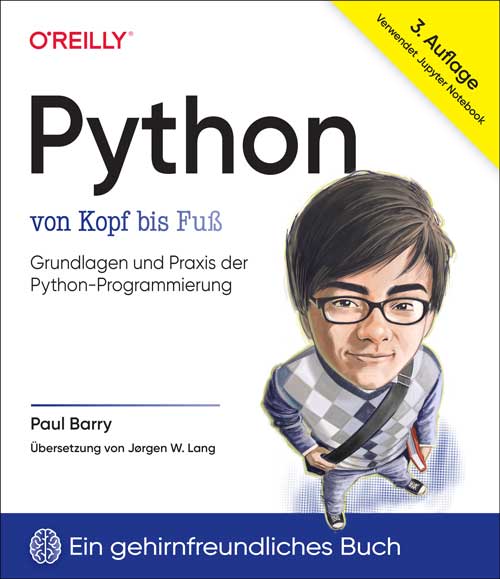
Python von Kopf bis Fuß (3. Auflage)
Python von Kopf bis Fuß - Grundlagen und Praxis der Python-Programmierung. In 3., erweiterter und aktualisierter Auflage aus dem Mai 2024.Python so richtig lernen: fundiert und auch noch mit SpaßWas? Alles, was relevant ist: von den Python-Grundlagen, dem Umgang mit komplexen Datenstrukturen, JSON, Webtechnologien wie Templating und Web-Scraping bis hin zu Pythons Bibliothek Panda zur Datenanalyse u.v.a.m.Wie? Mit der gehirnfreundlichen Von-Kopf-bis-Fuß-Didaktik: einer spielerischen und visuell anregenden Wissensvermittlung rund um einen Schwimmcoach, der Klemmbrett und Stoppuhr gegen eine automatisch aktualisierte Web-App mit Datenanbindung tauschtWer? Alle, die Python richtig lernen wollen und erste Programmierkenntnisse mitbringenSie wollen Python richtig lernen, ohne öde Anleitungen und Manuals durchackern zu müssen? Mit »Python von Kopf bis Fuß« klappt das garantiert: Schnell verstehen Sie wichtige Python-Grundlagen wie Datenstrukturen und Funktionen und schreiben funktionierenden Python-Code. Sie entwickeln Ihre eigene Webanwendung, die - sobald sie einsatzbereit ist -, in der Cloud läuft. Sie lernen, wie Sie mit Python Daten verarbeiten, Daten aus dem Web auslesen, an Pandas übergeben und mit Datenbanken interagieren.Die dritte Ausgabe von »Python von Kopf bis Fuß« ist ein komplettes Trainingsprogramm: In kürzester Zeit werden Sie souverän Python programmieren und einsetzen – nicht zuletzt im Data-Science-Umfeld.Zielgruppe: Python-Einsteiger*innen mit Grundkenntnissen in einer anderen ProgrammierspracheÜber den Autor: Paul Barry lebt mit seiner Frau Deirdre in der irischen Kleinstadt Carlow etwa 80 Kilometer von der Hauptstadt Dublin entfernt. Ihre drei Kinder (Joseph, Aaron und Aideen) sind mittlerweile erwachsen und „flügge geworden“.Paul arbeitet an der South East Technological University (SETU). Sein Hauptarbeitsplatz ist der Kilkenny Road Campus Carlow, wo er als Mitarbeiter der Informatikabteilung der Universität seine Vorlesungen hält. Paul unterrichtet schon seit langer Zeit. Dabei setzt er seit fast 15 Jahren Python in allen Klassengruppen ein.Paul besitzt einen Master- und einen Bachelor-Abschluss in Informatik sowie Zusatzqualifikationen im Bereich Learning & Teaching. Er ist nie dazu gekommen, seinen Doktor zu machen, daher sollte man ihn auch nicht als „Professor“ bezeichnen (obwohl er sich darüber freut, wenn das trotzdem geschieht).Den größten Teil der 1980er- und 1990er-Jahre arbeitete Paul im IT-Sektor, und zwar hauptsächlich im kanadischen Gesundheitswesen. Er hat darüber hinaus weitere Bücher und – vor langer Zeit – Artikel für das Linux Journal geschrieben.All das bedeutet, dass Paul (leider) etwas in die Jahre gekommen ist. Bitte sagen Sie’s nicht weiter.

African Artificial Intelligence
Artificial intelligence (AI) is upending life, work, and play as we know it, and it's only just getting started. The rise of AI is a milestone on par with the discovery of fire, the invention of the wheel, and the creation of the internet. In short, AI is going to change everything. For some, that's an exciting prospect. For others, it's terrifying. However you feel about AI, there's no escaping it, whether you're in a global metropolis or a farmer in rural KwaZulu-Natal.Dr Mark Nasila has been watching AI's ascent for over a decade, studying its effects on everything from agriculture and aviation to healthcare, education, entertainment, crime prevention, energy management, policy creation, finance, and anything in between, and applying them to his role at one of South Africa's most successful financial institutions, First National Bank, a division of FirstRand Group.African Artificial Intelligence is a comprehensive and fascinating journey, tracing the rise of AI and its evolution into the emerging technology underpinning all others – from connected devices and smart chatbots to the metaverse. Mark combines unexpected use cases and tales of cutting-edge innovation with a unique and potent argument: harnessing AI to solve Africa's problems requires embracing it from an African perspective.African nations can't afford to simply import AI solutions from afar. Instead, Mark contends, they need to rework, remix, and refine AI so it's able to meet uniquely African challenges in uniquely African ways, and to take advantage of the once-in-a-generation opportunity AI represents for every industry, sector, and person, everywhere.

ChatGPT Travel Planner
ChatGPT Travel Planner: Creating Memorable Vacations by Bill Vincent is your ultimate guide to crafting unforgettable travel experiences. Leveraging the power of AI, this book provides travelers with personalized recommendations, travel plans, and cost estimates, ensuring every adventure is unique and enriching. By integrating the innovative Time Capsule framework, each aspect of your journey-from understanding your goals to refining your itinerary-becomes a tailored, seamless process. Whether you dream of breathtaking landscapes, cultural encounters, or simply want a hassle-free vacation, this book is your trusted companion. Dive into the world of smart travel planning and transform your travel dreams into reality.

Referenzmodell zur Digitalisierung des strategischen Einkaufs
Dieses Buch beschreibt einen anforderungsorientierten Handlungsrahmen zur Gestaltung digitaler Einkaufsprozesse. Das dafür entworfene Referenzmodell dient dabei als Ausgangspunkt mehrerer Ableitungen und ermöglicht ein grundlegendes Verständnis über die prozessualen Aufgaben im strategischen Einkauf, um die Ziele der Einkaufsorganisation zu unterstützen. Neben Lieferantenqualifikation oder Kostenmanagement werden auch Prozesse beschrieben, die erst durch eine Digitalisierung möglich sind. Damit kann die Überführung der Prozesse in Anforderungen an IT-Systeme vollzogen und auch der Frage nachgegangen werden, inwiefern die einzelnen Kernprozesse zu integrierten Prozessnetzwerken verbunden werden sollten.

Samsung Galaxy S24 und S24+
Die verständliche Anleitung für Ihr Smartphone:- Alle Funktionen & Einstellungen auf einen Blick.- Schritt für Schritt erklärt – mit praktischen Tipps.Mit diesem smarten Praxisbuch gelingt Ihnen der schnelle und sichere Einstieg in Ihr Smartphone. Lernen Sie das Samsung Galaxy S24 bzw. S24+ kennen und beherrschen!Anschauliche Anleitungen, Beispiele und Bilder zeigen Ihnen gut nachvollziehbar, wie Sie Ihr mobiles Gerät optimal handhaben – von der Ersteinrichtung und Personalisierung über die große Funktionsvielfalt bis zu den wichtigsten Anwendungen. Nutzen Sie darüber hinaus die übersichtlichen Spicker-Darstellungen: Damit können Sie jene Bedienungsschritte, die man am häufigsten braucht, aber immer wieder vergisst, auf einen Blick finden und umsetzen. Freuen Sie sich auf viele hilfreiche Tipps und legen Sie ganz einfach los.Aus dem Inhalt:- Alle Bedienelemente des Samsung Galaxy S24 / S24+ auf einen Blick- Ersteinrichtung und Tipps zum Umzug- Die Benutzeroberfläche Ihres Smartphones personalisieren- Apps aus dem Play Store herunterladen- Kontakte anlegen und im Adressbuch verwalten- Anrufe tätigen und SMS austauschen - Nachrichten über Mail und WhatsApp versenden und empfangen- Fotos sowie Videos aufnehmen, verwalten und teilen- Bilder verbessern, Texte übersetzen und neue Suchoptionen dank KI- Uhr, Kalender, Maps und andere praktische Apps nutzen- Updates, Datenschutz und SicherheitAuch für S23 / S23+ / S22 / S22+ / S23 FE, sofern ein Update auf One UI 6.1 oder höher durchgeführt wurde.

ISC2 CISSP Certified Information Systems Security Professional Official Study Guide
CISSP STUDY GUIDE - FULLY UPDATED FOR THE 2024 CISSP BODY OF KNOWLEDGEISC2 Certified Information Systems Security Professional (CISSP) Official Study Guide, 10th Edition has been completely updated based on the latest 2024 CISSP Detailed Content Outline. This bestselling Sybex Study Guide covers 100% of the CISSP objectives. You'll prepare smarter and faster with Sybex thanks to expert content, knowledge from our real-world experience, access to the Sybex online interactive learning environment, and much more. Reinforce what you've learned with key topic Study Essentials and chapter review questions.The book’s co-authors bring decades of experience as cybersecurity practitioners and educators, integrating real-world expertise with the practical knowledge you'll need to successfully prove your CISSP mastery. Combined, they've taught cybersecurity concepts to millions of students through their books, video courses, and live training programs.Along with the book, you also get access to Sybex's superior online interactive learning environment that includes:* Over 900 practice test questions with complete answer explanations. This includes all of the questions from the book plus four additional online-only practice exams, each with 125 unique questions. You can use the online-only practice exams as full exam simulations. Our questions will help you identify where you need to study more.* More than 1000 Electronic Flashcards to reinforce your learning and give you last-minute test prep * A searchable glossary in PDF to give you instant access to the key terms you need to know * AUDIO REVIEW. Author Mike Chapple reads the Study Essentials for each chapter providing you with more than 2 hours of up-to-date audio review for yet another way to reinforce your knowledge as you prepare.Coverage of all of the CISSP topics in the book means you'll be ready for:* Security and Risk Management* Asset Security* Security Architecture and Engineering* Communication and Network Security* Identity and Access Management (IAM)* Security Assessment and Testing* Security Operations* Software Development SecurityIntroduction xxxvAssessment Test lxCHAPTER 1 SECURITY GOVERNANCE THROUGH PRINCIPLES AND POLICIES 1Security 101 3Understand and Apply Security Concepts 4Security Boundaries 13Evaluate and Apply Security Governance Principles 14Manage the Security Function 16Security Policy, Standards, Procedures, and Guidelines 27Threat Modeling 29Supply Chain Risk Management 35Summary 38Study Essentials 39Written Lab 41Review Questions 42CHAPTER 2 PERSONNEL SECURITY AND RISK MANAGEMENT CONCEPTS 49Personnel Security Policies and Procedures 51Understand and Apply Risk Management Concepts 60Social Engineering 90Establish and Maintain a Security Awareness, Education, and Training Program 106Summary 110Study Essentials 111Written Lab 114Review Questions 115CHAPTER 3 BUSINESS CONTINUITY PLANNING 121Planning for Business Continuity 122Project Scope and Planning 123Business Impact Analysis 131Continuity Planning 137Plan Approval and Implementation 140Summary 145Study Essentials 145Written Lab 146Review Questions 147CHAPTER 4 LAWS, REGULATIONS, AND COMPLIANCE 151Categories of Laws 152Laws 155State Privacy Laws 179Compliance 179Contracting and Procurement 181Summary 182Study Essentials 182Written Lab 184Review Questions 185CHAPTER 5 PROTECTING SECURITY OF ASSETS 189Identifying and Classifying Information and Assets 190Establishing Information and Asset Handling Requirements 198Data Protection Methods 208Understanding Data Roles 214Using Security Baselines 216Summary 219Study Essentials 220Written Lab 221Review Questions 222CHAPTER 6 CRYPTOGRAPHY AND SYMMETRIC KEY ALGORITHMS 227Cryptographic Foundations 228Modern Cryptography 246Symmetric Cryptography 253Cryptographic Life Cycle 263Summary 264Study Essentials 264Written Lab 266Review Questions 267CHAPTER 7 PKI AND CRYPTOGRAPHIC APPLICATIONS 271Asymmetric Cryptography 272Hash Functions 279Digital Signatures 283Public Key Infrastructure 286Asymmetric Key Management 292Hybrid Cryptography 293Applied Cryptography 294Cryptographic Attacks 306Summary 309Study Essentials 310Written Lab 311Review Questions 312CHAPTER 8 PRINCIPLES OF SECURITY MODELS, DESIGN, AND CAPABILITIES 317Secure Design Principles 319Techniques for Ensuring CIA 330Understand the Fundamental Concepts of Security Models 332Select Controls Based on Systems Security Requirements 345Understand Security Capabilities of Information Systems 349Summary 352Study Essentials 353Written Lab 354Review Questions 355CHAPTER 9 SECURITY VULNERABILITIES, THREATS, AND COUNTERMEASURES 359Shared Responsibility 360Data Localization and Data Sovereignty 362Assess and Mitigate the Vulnerabilities of Security Architectures, Designs, and Solution Elements 363Client‐Based Systems 378Server‐Based Systems 381Industrial Control Systems 384Distributed Systems 386High‐Performance Computing (HPC) Systems 387Real‐Time Operating Systems 388Internet of Things 389Edge and Fog Computing 390Embedded Devices and Cyber‐Physical Systems 391Microservices 396Infrastructure as Code 397Immutable Architecture 398Virtualized Systems 399Containerization 406Mobile Devices 407Essential Security Protection Mechanisms 424Common Security Architecture Flaws and Issues 427Summary 431Study Essentials 432Written Lab 436Review Questions 437CHAPTER 10 PHYSICAL SECURITY REQUIREMENTS 443Apply Security Principles to Site and Facility Design 444Implement Site and Facility Security Controls 449Implement and Manage Physical Security 473Summary 480Study Essentials 481Written Lab 484Review Questions 485CHAPTER 11 SECURE NETWORK ARCHITECTURE AND COMPONENTS 491OSI Model 493TCP/IP Model 501Analyzing Network Traffic 502Common Application Layer Protocols 503Transport Layer Protocols 504Domain Name System 506Internet Protocol (IP) Networking 512ARP Concerns 516Secure Communication Protocols 517Implications of Multilayer Protocols 518Segmentation 523Edge Networks 526Wireless Networks 527Satellite Communications 543Cellular Networks 544Content Distribution Networks (CDNs) 544Secure Network Components 545Summary 572Study Essentials 573Written Lab 575Review Questions 576CHAPTER 12 SECURE COMMUNICATIONS AND NETWORK ATTACKS 581Protocol Security Mechanisms 582Secure Voice Communications 587Remote Access Security Management 591Multimedia Collaboration 595Monitoring and Management 597Load Balancing 597Manage Email Security 600Virtual Private Network 606Switching and Virtual LANs 613Network Address Translation 617Third‐Party Connectivity 622Switching Technologies 624WAN Technologies 626Fiber‐Optic Links 629Prevent or Mitigate Network Attacks 630Summary 631Study Essentials 632Written Lab 635Review Questions 636CHAPTER 13 MANAGING IDENTITY AND AUTHENTICATION 641Controlling Access to Assets 643The AAA Model 645Implementing Identity Management 662Managing the Identity and Access Provisioning Life Cycle 668Summary 672Study Essentials 672Written Lab 675Review Questions 676CHAPTER 14 CONTROLLING AND MONITORING ACCESS 681Comparing Access Control Models 682Implementing Authentication Systems 694Zero‐Trust Access Policy Enforcement 702Understanding Access Control Attacks 703Summary 719Study Essentials 720Written Lab 721Review Questions 722CHAPTER 15 SECURITY ASSESSMENT AND TESTING 727Building a Security Assessment and Testing Program 729Performing Vulnerability Assessments 735Testing Your Software 750Training and Exercises 758Implementing Security Management Processes and Collecting Security Process Data 759Summary 762Exam Essentials 763Written Lab 764Review Questions 765CHAPTER 16 MANAGING SECURITY OPERATIONS 769Apply Foundational Security Operations Concepts 771Address Personnel Safety and Security 778Provision Information and Assets Securely 780Managed Services in the Cloud 786Perform Configuration Management (CM) 790Manage Change 793Manage Patches and Reduce Vulnerabilities 797Summary 801Study Essentials 802Written Lab 804Review Questions 805CHAPTER 17 PREVENTING AND RESPONDING TO INCIDENTS 809Conducting Incident Management 811Implementing Detection and Preventive Measures 818Logging and Monitoring 842Automating Incident Response 854Summary 860Study Essentials 860Written Lab 863Review Questions 864CHAPTER 18 DISASTER RECOVERY PLANNING 869The Nature of Disaster 871Understand System Resilience, High Availability, and Fault Tolerance 883Recovery Strategy 888Recovery Plan Development 898Training, Awareness, and Documentation 906Testing and Maintenance 907Summary 911Study Essentials 912Written Lab 913Review Questions 914CHAPTER 19 INVESTIGATIONS AND ETHICS 919Investigations 920Major Categories of Computer Crime 934Ethics 940Summary 944Study Essentials 945Written Lab 946Review Questions 947CHAPTER 20 SOFTWARE DEVELOPMENT SECURITY 951Introducing Systems Development Controls 953Establishing Databases and Data Warehousing 984Storage Threats 994Understanding Knowledge‐ Based Systems 995Summary 998Study Essentials 998Written Lab 1000Review Questions 1001CHAPTER 21 MALICIOUS CODE AND APPLICATION ATTACKS 1005Malware 1006Malware Prevention 1018Application Attacks 1021Injection Vulnerabilities 1024Exploiting Authorization Vulnerabilities 1030Exploiting Web Application Vulnerabilities 1033Application Security Controls 1038Secure Coding Practices 1044Summary 1048Study Essentials 1048Written Lab 1049Review Questions 1050APPENDIX A ANSWERS TO REVIEW QUESTIONS 1055Chapter 1: Security Governance Through Principles and Policies 1056Chapter 2: Personnel Security and Risk Management Concepts 1059Chapter 3: Business Continuity Planning 1063Chapter 4: Laws, Regulations, and Compliance 1065Chapter 5: Protecting Security of Assets 1068Chapter 6: Cryptography and Symmetric Key Algorithms 1070Chapter 7: PKI and Cryptographic Applications 1072Chapter 8: Principles of Security Models, Design, and Capabilities 1074Chapter 9: Security Vulnerabilities, Threats, and Countermeasures 1077Chapter 10: Physical Security Requirements 1082Chapter 11: Secure Network Architecture and Components 1085Chapter 12: Secure Communications and Network Attacks 1089Chapter 13: Managing Identity and Authentication 1092Chapter 14: Controlling and Monitoring Access 1095Chapter 15: Security Assessment and Testing 1097Chapter 16: Managing Security Operations 1099Chapter 17: Preventing and Responding to Incidents 1102Chapter 18: Disaster Recovery Planning 1104Chapter 19: Investigations and Ethics 1106Chapter 20: Software Development Security 1108Chapter 21: Malicious Code and Application Attacks 1111APPENDIX B ANSWERS TO WRITTEN LABS 1115Chapter 1: Security Governance Through Principles and Policies 1116Chapter 2: Personnel Security and Risk Management Concepts 1116Chapter 3: Business Continuity Planning 1117Chapter 4: Laws, Regulations, and Compliance 1118Chapter 5: Protecting Security of Assets 1119Chapter 6: Cryptography and Symmetric Key Algorithms 1119Chapter 7: PKI and Cryptographic Applications 1120Chapter 8: Principles of Security Models, Design, and Capabilities 1121Chapter 9: Security Vulnerabilities, Threats, and Countermeasures 1121Chapter 10: Physical Security Requirements 1123Chapter 11: Secure Network Architecture and Components 1124Chapter 12: Secure Communications and Network Attacks 1125Chapter 13: Managing Identity and Authentication 1126Chapter 14: Controlling and Monitoring Access 1127Chapter 15: Security Assessment and Testing 1127Chapter 16: Managing Security Operations 1128Chapter 17: Preventing and Responding to Incidents 1129Chapter 18: Disaster Recovery Planning 1130Chapter 19: Investigations and Ethics 1131Chapter 20: Software Development Security 1131Chapter 21: Malicious Code and Application Attacks 1131Index 1133

Clean Architecture Praxisbuch
Best Practices für die Entwicklung von anpassungsfähiger Software Lernen Sie neue Konzepte kennen und verbinden Sie diese mit Ihrem eigenen Softwareentwicklungsstil Entwickeln Sie ein Mindset für bewusste Architekturentscheidungen Der Weg zu wartbarer Software Eine wartungsfreundliche Architektur ist der Schlüssel, um Entwicklungsaufwand und -kosten niedrig zu halten. Dieses Buch vermittelt Ihnen alle notwendigen Fähigkeiten und Kenntnisse, um wartbare und langlebige Software zu entwickeln, ohne Vorkenntnisse vorauszusetzen. Domänen-zentrierte Architektur in der Praxis Dieser umfassende Leitfaden zeigt die Vorteile domänen-zentrierter Softwarearchitektur auf - angelehnt an Robert C. Martins Clean Architecture und Alistair Cockburns hexagonale Architektur. Anhand zahlreicher Beispiele erfahren Sie, wie Sie eine hexagonale Architektur in Ihrem Code abbilden können. Sie lernen verschiedene Strategien für das Mapping zwischen den Schichten einer hexagonalen Architektur kennen und erfahren, wie Sie die Architekturelemente zu einer Anwendung zusammensetzen. Komplexe Konzepte leicht verständlich erklärt Mit anschaulichen Erläuterungen und anhand zahlreicher Codebeispiele schafft dieses Buch ein tiefes und praxistaugliches Verständnis des hexagonalen Architekturstils. So sind Sie perfekt darauf vorbereitet, wartbare Anwendungen zu erstellen, die Zeit und Geld sparen. Aus dem Inhalt: Wartbare Software entwickeln Schwachstellen der herkömmlichen Schichtenarchitektur identifizieren Code sauber strukturieren Umkehren von Abhängigkeiten (Dependency Inversion) SOLID-Prinzipien für die hexagonale Architektur Use Cases implementieren Testmethoden für einzelne Architekturelemente Mapping-Strategien Architekturgrenzen durchsetzen Zahlreiche Codebeispiele in JavaTOM HOMBERGS ist Softwareentwickler, Autor, und Simplicity Nerd, der es liebt, Dinge zu vereinfachen. Aktuell arbeitet er bei Atlassian in Sydney, Australien, wo er für die Developer Experience der dort genutzten Technologie-Stacks verantwortlich ist.

Moral und künstliche Intelligenz im Marketing
Konsumentendaten lassen sich zunehmend effektiv mit künstlicher Intelligenz (KI) kombinieren, um die Online Journey kalkuliert zu beeinflussen. Dieses Buch befasst sich anhand dreier Forschungsarbeiten mit den Fragen wann Marketing-KI Konsumentenentscheidungen vielmehr manipuliert als bereichert und wie Marketing-KI infolgedessen moralischer gestaltet werden kann. Die erste Forschungsarbeit untersucht, inwieweit Manipulationswahrnehmungen vom Menschenbild des Konsumenten abhängen. Hierfür werden zwei Studien mit 1.151 Teilnehmern durchgeführt. Daran anknüpfend stellt sich die Frage, ob Manager Konsumentenbilder auf opportunistische Weise instrumentalisieren, um Marketingaktivitäten zu legitimieren. Die zweite Forschungsarbeit kombiniert daher Methoden der Ökonometrie und des Natural Language Processing, um Menschenbilder von Managern aus Textdaten (33.407 Earnings Call Transkripte) zu analysieren. Die dritte Forschungsarbeit möchte Marketing-KI moralischer gestalten. Hierfür werden neuronale Netze mithilfe psychografischer Daten von 762 Teilnehmern trainiert, um faire personalisierte Preise anzubieten und Reaktionen mittels Laborexperiment (203 Probanden) zu untersuchen.

Homeland and territorial security with AI
This book explores the innovative concept of a knowledge cartridge dedicated to internal and territorial security, employing the Aitek platform - a cutting-edge AI and Big Data framework enriched by 25,000 man-days of research and development. It delves into the foundational principles of the knowledge cartridge system and subsequently addresses the critical challenges inherent in homeland and territorial security, with a particular focus on counter-terrorism efforts. Through a detailed examination, the thesis presents how artificial intelligence can be strategically applied to these challenges, offering a novel approach to enhancing security measures and operational efficiency within the domain of internal and territorial security. This work not only contributes to the academic discourse on AI's role in security but also proposes practical AI-driven solutions to complex security problems, thereby bridging the gap between theoretical research and real-world application.Bruno Ciroussel:Bruno Ciroussel, born in Lyon in 1964, is a french and swiss businessman. He is an engineer and author of the "Aitek methodology" dedicated to Auto-ML, now in its 6th edition, and has implemented his methodology in an universal Auto-ML platform: the "Aitek Engine", applicable in multiple functional domains such as banking, insurance, healthcare, logistics and telecom. He has also adapted his Aitek platform for deployment in the territorial surveillance, Homeland, and customs security sectors and delivered.Bruno Ciroussel is also author, lecturer and speaker on various issues encompassing Artificial Intelligence, Machine Learning as well as the impact of these and other technologies on business, security, gover-nment, and the democratic system.

Understanding Generative AI Business Applications
This guide covers the fundamental technical principles and various business applications of Generative AI for planning, developing, and evaluating AI-driven products. It equips you with the knowledge you need to harness the potential of Generative AI for enhancing business creativity and productivity.The book is organized into three sections: text-based, senses-based, and rationale-based. Each section provides an in-depth exploration of the specific methods and applications of Generative AI. In the text-based section, you will find detailed discussions on designing algorithms to automate and enhance written communication, including insights into the technical aspects of transformer-based Natural Language Processing (NLP) and chatbot architecture, such as GPT-4, Claude 2, Google Bard, and others. The senses-based section offers a glimpse into the algorithms and data structures that underpin visual, auditory, and multisensory experiences, including NeRF, 3D Gaussian Splatting,Stable Diffusion, AR and VR technologies, and more. The rationale-based section illuminates the decision-making capabilities of AI, with a focus on machine learning and data analytics techniques that empower applications such as simulation models, agents, and autonomous systems.In summary, this book serves as a guide for those seeking to navigate the dynamic landscape of Generative AI. Whether you’re a seasoned AI professional or a business leader looking to harness the power of creative automation, these pages offer a roadmap to leverage Generative AI for your organization’s success.WHAT YOU WILL LEARN* What are the technical elements that constitute the makeup of Generative AI products?* What are the practical applications of Generative AI?* How can algorithms be designed to automate and improve written communication?* What are the latest Generative AI architectures and algorithms?WHO THIS BOOK IS FORData scientists, data analysts, decision makers, and business executives interested in gaining an understanding of Generative AI productsIRENA CRONIN is SVP of Product for DADOS Technology, which is making an app for the Apple Vision Pro that does data analytics and visualization. She is also the CEO of Infinite Retina, which provides research to help companies develop and implement AI, AR and other new technologies for their businesses. Prior to this, she worked for several years as an equity research analyst and gained extensive experience in evaluating both public and private companies.Irena has a joint MBA/MA from the University of Southern California and an MS with Distinction in Management and Systems from New York University. She graduated with a BA from the University of Pennsylvania with a major in Economics (summa cum laude).Chapter 1: Introduction to the World of Generative AI.- Chapter 2: Core Technical Concepts.- Chapter 3: The Business Case for Generative AI.- Chapter 4: The World of Text-based Generative AI.- Chapter 5: Unpacking Transformer-based NLP.- Chapter 6: Exploring Chatbot Technologies.- Chapter 7: Advanced Applications of Text-based AI.- Chapter 8: Senses-based Generative AI Demystified.- Chapter 9: In-depth Look at Supportive Visual Algorithms and Computer Vision.- Chapter 10: The Auditory and Multisensory Experience.- Chapter 11: Autonomous AI Agents: Decision Making, Data, and Algorithms.- Chapter 12: Text-based Generative Intelligent Agents: Beyond Traditional Chatbots and Virtual Assistants.- Chapter 13: Applications and Real-world Case Studies.- Chapter 14: Summarizing Key Insights.- Chapter 15: The Evolving World of Generative AI.

Living with the Algorithm: Servant or Master?
An authoritative guide to what is needed for AI governance and regulation from expert authors internationally involved in the practical world of AI. This book tackles the question of why AI is a distinct challenge from other technologies and how we should seek to implement innovation-friendly approaches to regulation. It sets out many of the risks to be considered, why regulation is needed, and the form this should take to promote international convergence on AI governance and the responsible deployment of AI.This is a highly readable prescription for AI governance and regulation designed to encourage the technological goals of humanity whilst ensuring that potential risks are mitigated or prevented and, most importantly, that AI remains our servant and does not become our master.

Eco-responsible web design
In the vast world of the web, the notion of sustainable development is becoming increasingly important. Beyond simply reducing environmental impact, it also encompasses social and economic aspects, seeking to strike a balance between present needs and long-term imperatives.This book aims to become a tool for those seeking to harmonise the imperatives of web development with the requirements of preserving our planet and the well-being of its inhabitants.Grégory Clément:Born in 1971, Grégory Clément has been an entrepreneur, author, and speaker in the world of digital communications for over twenty years. After working for major accounts in the automotive, retail and e-commerce sectors, the sustainable and eco-responsible aspects of his job have become increas- ingly important to him. He now wants to pass on the knowledge and experience he has acquired over the years.

Fortschritte in der nicht-invasiven biomedizinischen Signalverarbeitung mit ML
Dieses Buch präsentiert Fortschritte in der biomedizinischen Technologie. IoT und Machine Learning haben neue Ansätze im mobilen Gesundheitswesen ermöglicht, mit Fokus auf kontinuierlicher Überwachung kritischer Gesundheitssituationen. Intelligente Hybridisierung von IoT, drahtlosen Implantaten und Cloud-Computing wird derzeit von verschiedenen Einrichtungen entwickelt und getestet. Biomedizinische Signale und Bildmodalitäten werden nicht-invasiv erfasst und erfordern eine mehrkanalige Erfassung für wirksame Überwachung. Automatisierte Gesundheitssysteme basieren auf Signal- und Bildaufnahme, Vorverarbeitung, Merkmalsextraktion und Klassifikation. Das Buch beschreibt zeitgenössische Ansätze in der biomedizinischen Signalerfassung und -verarbeitung mit maschinellem und tiefem Lernen. Jedes Kapitel ist eigenständig und bietet eine umfassende Übersicht über Theorien, Algorithmen und Herausforderungen im Bereich moderner Gesundheitssysteme.SAEED MIAN QAISAR erlangte seinen M.S. und Ph.D. in Elektro- und Informationstechnik an der Universität Grenoble Alpes, Frankreich, 2005 bzw. 2009. Danach absolvierte er einen Postdoc-Aufenthalt an der Universität Bordeaux, Frankreich, und arbeitete in verschiedenen F&E-Positionen in Frankreich. Derzeit ist er Associate Professor und Forscher am Fachbereich Elektro- und Informationstechnik an der Effat University, Jeddah, Saudi-Arabien. Er wurde mit dem Queen Effat Award für hervorragende Lehre im Mai 2016 ausgezeichnet, besitzt zwei Patente und hat über 200 veröffentlichte Artikel in Fachzeitschriften, Buchkapiteln und Konferenzbeiträgen. Er ist Herausgeber mehrerer internationaler Zeitschriften und Mitglied technischer und Überprüfungskomitees mehrerer internationaler Zeitschriften und Konferenzen.HUMAIRA NISAR hat einen B.Sc. (mit Auszeichnung) in Elektrotechnik von der University of Engineering and Technology, Lahore, Pakistan, einen M.Sc. in Kernenergie von der Quaid-i-Azam University, Islamabad, Pakistan, einen weiteren M.Sc. in Mechatronik und einen Ph.D. in Information und Mechatronik vom Gwangju Institute of Science and Technology, Gwangju, Südkorea. Mit über zwanzig Jahren Forschungserfahrung ist sie derzeit als Full Professor am Fachbereich Elektrotechnik an der Universiti Tunku Abdul Rahman, Kampar, Malaysia, tätig. Ihre Forschungsinteressen umfassen Signal- und Bildverarbeitung, biomedizinische Bildgebung, Neuro-Signalverarbeitung und -analyse, Brain-Computer Interface und Neurofeedback. Sie hat über 200 internationale Zeitschriften- und Konferenzartikel veröffentlicht und ist Senior-Mitglied der IEEE.ABDULHAMIT SUBASI ist auf künstliche Intelligenz, maschinelles Lernen, biomedizinische Signal- und Bildanalyse spezialisiert. Er schrieb über 30 Buchkapitel und über 200 veröffentlichte Artikel in Zeitschriften und Konferenzen zu verschiedenen Anwendungen von maschinellem Lernen. Er ist auch Autor der Bücher "Practical Guide for Biomedical Signals Analysis Using Machine Learning Techniques" und "Practical Machine Learning for Data Analysis Using Python". Darüber hinaus ist er Herausgeber des Buches "Applications of Artificial Intelligence in Medical Imaging". Er arbeitete an verschiedenen Institutionen als Akademiker und am Georgia Institute of Technology, Georgia, USA, als Forscher. Im Mai 2018 wurde er mit dem Queen Effat Award für hervorragende Forschung ausgezeichnet. Zwischen 2015 und 2020 arbeitete er als Professor für Informatik an der Effat University, Jeddah, Saudi-Arabien. Seit 2020 ist er als Professor an der Medizinischen Fakultät der Universität Turku, Turku, Finnland, tätig.1. Einführung in nicht-invasive biomedizinische Signale für das Gesundheitswesen.- 2. Signalerfassung Vorverarbeitung und Feature-Extraktion Techniken für biomedizinische Signale.- 3. Die Rolle von EEG als Neuro-Marker für Patienten mit Depressionen: Ein systematischer Überblick.- 4. Brain-Computer Interface (BCI) basierend auf der EEG-Signal-Zerlegung Butterfly-Optimierung und maschinelles Lernen.- 5. Fortschritte bei der Analyse des Elektrokardiogramms im Rahmen des Massenscreenings: technologische Trends und Anwendung der Erkennung von Anomalien durch künstliche Intelligenz.- 6. Anwendung der Wavelet-Zerlegung und des maschinellen Lernens für die sEMG-Signal-basierte Gestenerkennung.- 7. Überblick über die Klassifizierung von EEG-Signalen mit Hilfe von maschinellem Lernen und Deep-Learning-Techniken.- 8. "Biomedizinische Signalverarbeitung und künstliche Intelligenz in EOG-Signalen".- 9. Segmentierung und Klassifizierung von Phonokardiogrammsignalen auf der Grundlage von Peak-Spektrogrammen und neuronalen Faltungsnetzwerken .- 10. Segmentierung von Ekzem-Hautläsionen mit Hilfe eines tiefen neuronalen Netzes (U-Netz) .- 11. Biomedizinische Signalverarbeitung für die automatische Erkennung von Schlaf-Arousals auf der Basis von Multi-Physiologischen Signalen mit Ensemble-Lernmethoden.- 12. Deep Learning Assisted Biofeedback.- 13. Schätzung von emotionalen Synchronisationsindizes für Hirnregionen mittels Elektroenzephalogrammsignalanalyse.- 14. Recognition Enhancement of Dementia Patients' Working Memory using Entropy-based Features and Local Tangent Space Alignment Algorithm.

Die Struktur des Spieledesigns
Die Struktur des Spieledesigns soll angehenden und erfahrenen Spieleentwicklern helfen, ihre Ideen in funktionierende Spiele umzusetzen. Die Erstellung eines Spiels erfordert das Verständnis der grundlegenden Elemente aller Arten von Spielen, angefangen von papierbasierten Spielen bis hin zu den neuesten Videospielen. Durch das Verständnis, wie diese grundlegenden Prinzipien in allen Arten von Spielen funktionieren, können Sie dieselben Prinzipien anwenden, um Ihr eigenes Spiel zu entwerfen.Spiele handeln von Zielen, Struktur, Spiel und Spaß. Während jeder seine eigene Vorstellung davon haben wird, was "Spaß" sein könnte, kann jeder Spieleentwickler die Freude der Spieler maximieren, indem er bedeutungsvolle Entscheidungen anbietet, die verschiedene Risiken und Belohnungen mit sich bringen. Solche Herausforderungen, kombiniert mit Regeln und Einschränkungen, zwingen die Spieler, Hindernisse und Probleme mit verschiedenen Fähigkeiten wie Geschicklichkeit, Rätsellösung,Intelligenz und Strategie zu überwinden. Im Wesentlichen ermöglichen Spiele den Spielern, in neuen Welten voranzukommen und Probleme in einer sicheren, aber aufregenden Umgebung zu überwinden, die es ihnen ermöglicht, am Ende zu triumphieren.Genau wie das Spielen von Spielen weltweit bei allen Altersgruppen, Geschlechtern und Kulturen beliebt ist, erfreut sich auch das Game Design gleichermaßen großer Beliebtheit. Spiele können die Spieler herausfordern, den besten Zug zu machen, Rätsel zu lösen, sich im Kampf zu engagieren, Ressourcen zu verwalten und Geschichten zu erzählen. Indem man versteht, wie Zufall, Psychologie und Balance die Art und Weise beeinflussen können, wie Spiele gespielt werden, können die Leser entscheiden, welche Spielelemente am besten für ihre eigene Spielkreation geeignet sind.Ob Ihr Ziel darin besteht, Geld zu verdienen, etwas Neues zu lernen, eine soziale Aussage zu machen, eine bestehende Spielidee zu verbessern oder Ihre künstlerischen, programmierenden oder gestalterischen Fähigkeiten zu testen, kann das Game Design genauso viel Spaß machen wie das Spielen von Spielen. Indem Sie die Teile eines Spiels kennen, wie sie funktionieren, wie sie interagieren und warum sie Spaß machen, können Sie Ihr Wissen nutzen, um jede Idee in ein Spiel zu verwandeln, das andere spielen und genießen können.Wallace Wang ist der Autor von über 40 Büchern, darunter "Steal This Computer Book", "Microsoft Office For Dummies" und "Beginning iPhone Development with SwiftUI". Als begeisterter Spieleenthusiast hat er "Orbit War" entworfen, das von Steve Jackson Games veröffentlicht wurde und ein Brettspiel ist, das Satellitenkriege in der erdnahen Umlaufbahn simuliert. Er hat auch Stand-up-Comedy im Riviera Hotel & Casino in Las Vegas aufgeführt, trat in "A&E's Evening at the Improv" und dem "SiTV's Latino Laugh Festival" auf. Darüber hinaus hat er mehrere Radiosendungen in San Diego moderiert, die sich auf Politik, Comedy und Esports konzentrierten. Derzeit unterrichtet er iOS-Programmierung und Game Engine-Programmierung an der UCSD Extended Studies in San Diego.Die Erstellung einer Spielidee.- Definition einer Spielidee.- Die Anziehungskraft von Spielen.- Spielelemente des Game Designs.- Verständnis von Spielzyklen.- Zufälligkeit in Spielen.- Psychologie in Spielen.- Spielbalance.- Verständnis von Spaß.- Spaß in der Bewegung.- Spaß in Rätseln.- Spaß im Kampf.- Spaß in der Strategie.- Spaß in der Wirtschaft.- Spaß im Geschichtenerzählen.- Eine Spielidee in ein echtes Spiel umwandeln.- Prototyping.- Prototypen für Kartenspiele.- Verständnis von Spiele-Engines.- Prototypen für Spielfelder.- Prototypen für Level-Design.- Prototypen für Bewegung.- Prototypen für Kampf.- Prototypen für Ressourcenmanagement.- Prototypen für Rätsel.- Ein Spiel auf dem Markt verkaufen.
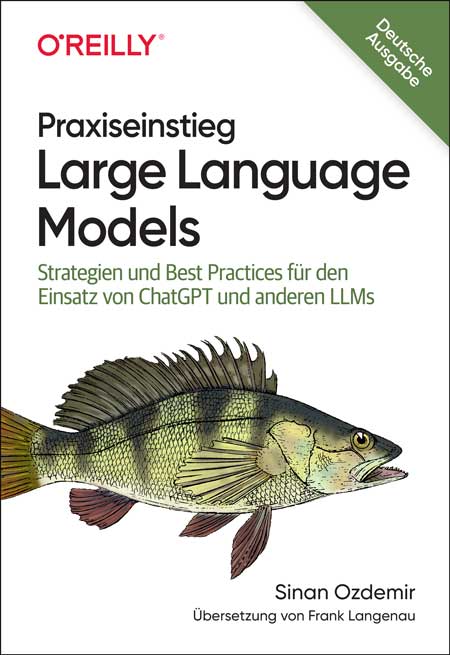
Praxiseinstieg Large Language Models
Praxiseinstieg Large Language Models - Strategien und Best Practices für den Einsatz von ChatGPT und anderen LLMs, erscheint am 16.05.2024Large Language Models (LLMs) wie ChatGPT sind enorm leistungsfähig, aber auch sehr komplex. Praktikerinnen und Praktiker stehen daher vor vielfältigen Herausforderungen, wenn sie LLMs in ihre eigenen Anwendungen integrieren wollen. In dieser Einführung räumt Data Scientist und KI-Unternehmer Sinan Ozdemir diese Hürden aus dem Weg und bietet einen Leitfaden für den Einsatz von LLMs zur Lösung praktischer Probleme des Natural Language Processings.Sinan Ozdemir hat alles zusammengestellt, was Sie für den Einstieg benötigen: Schritt-für-Schritt-Anleitungen, Best Practices, Fallstudien aus der Praxis, Übungen und vieles mehr. Er stellt die Funktionsweise von LLMs vor und unterstützt Sie so dabei, das für Ihre Anwendung passende Modell und geeignete Datenformate und Parameter auszuwählen. Dabei zeigt er das Potenzial sowohl von Closed-Source- als auch von Open-Source-LLMs wie GPT-3, GPT-4 und ChatGPT, BERT und T5, GPT-J und GPT-Neo, Cohere sowie BART.Lernen Sie die Schlüsselkonzepte kennen: Transfer Learning, Feintuning, Attention, Embeddings, Tokenisierung und mehrNutzen Sie APIs und Python, um LLMs an Ihre Anforderungen anzupassenBeherrschen Sie Prompt-Engineering-Techniken wie Ausgabe-Strukturierung, Gedankenketten und Few-Shot-PromptingPassen Sie LLM-Embeddings an, um eine Empfehlungsengine mit eigenen Benutzerdaten neu zu erstellenKonstruieren Sie multimodale Transformer-Architekturen mithilfe von Open-Source-LLMsOptimieren Sie LLMs mit Reinforcement Learning from Human and AI Feedback (RLHF/RLAIF)Deployen Sie Prompts und benutzerdefinierte, feingetunte LLMs in die Cloud

Die digitale Transformation der Automobilindustrie
Dieses Buch gibt umfassende und pragmatische Handlungsempfehlungen für die sich gerade in den letzten Jahren immer rasanter verändernde Automobil- und Zulieferindustrie. China hat sich zum Leitmarkt für E-Mobilität und für die Nutzung von autonom fahrenden Robtaxis, KI und Daten entwickelt. Die etablierten Hersteller müssen sich auf Basis klarer Zielsetzungen noch viel schneller verändern, um nicht den Anschluss zu verlieren und um die Pariser Klimaziele noch erreichen zu können. Die Industrie wandelt sich umfassend von einem fahrzeugfokussierten hin zu einem mobilitätsorientierten Geschäftsmodell. Mehr und mehr Prozesse, sogar ganze Geschäftsfelder werden KI-basiert automatisch ablaufen und mit neuen Technologien verändern sich Vertriebs- und Aftersales-Strukturen. Es entstehen immer mehr Daten, die auch neue, profitable Produkte ermöglichen. Die Umstellung auf E-Fahrzeuge mit entsprechendem Lade-Umfeld, die Nutzung von Mobilitätsservices anstelle Autobesitz, klimaneutralen Produktion und auch die Kreislaufwirtschaft sind beschleunigt anzugehen. Zu den weiterhin zwingend erforderlichen digitalen Transformationen und unter Beachtung der neuesten Entwicklungen gibt das Buch in der nun dritten vollständig überarbeiteten Auflage umfassende und pragmatische Antworten auf aktuelle Fragen: Wie sind neue Technologien strukturiert einzusetzen und wo wird KI zu erheblichen Änderungen führen? Wie ist die Transformation mit welchen Schwerpunktthemen anzugehen? Der Ausblick über das Jahr 2040 hinaus am Ende des Buches wurde erweitert und es werden die zu erwartenden Veränderungen der Arbeitswelt, gerade unter KI-Aspekten, betrachtet.

Design and Deploy Microsoft Defender for IoT
Microsoft Defender for IoT helps organizations identify and respond to threats aimed at IoT devices, increasingly becoming targets for cyberattacks. This book discusses planning, deploying, and managing your Defender for IoT system. The book is a comprehensive guide to IoT security, addressing the challenges and best practices for securing IoT ecosystems. The book starts with an introduction and overview of IoT in Azure. It then discusses IoT architecture and gives you an overview of Microsoft Defender. You also will learn how to plan and work with Microsoft Defender for IoT, followed by deploying OT Monitoring. You will go through air-gapped OT sensor management and enterprise IoT monitoring. You also will learn how to manage and monitor your Defender for IoT systems with network alerts and data. After reading this book, you will be able to enhance your skills with a broader understanding of IoT and Microsoft Defender for IoT-integrated best practices to design, deploy, and manage a secure enterprise IoT environment using Azure. What You Will Learn * Understand Microsoft security services for IoT * Get started with Microsoft Defender for IoT * Plan and design a security operations strategy for the IoT environment * Deploy security operations for the IoT environment * Manage and monitor your Defender for IoT System Who This Book Is For Cybersecurity architects and IoT engineers Chapter 1: Get Started with IoT.- Chapter 2: Develop Architecture and Strategy for IoT.- Chapter 3: Plan Microsoft Defender for IoT.- Chapter 4: Deploy Microsoft Defender for IoT.- Chapter 5: Manage and Monitor your Defender for IoT System.

Samsung Galaxy A35 5G
Die verständliche Anleitung für Ihr Smartphone:- Alle Funktionen & Einstellungen auf einen Blick- Schritt für Schritt erklärt – mit praktischen TippsMit diesem smarten Praxisbuch gelingt Ihnen der schnelle und sichere Einstieg in Ihr Smartphone. Lernen Sie das Samsung Galaxy A35 5G von Grund auf kennen und beherrschen!Anschauliche Anleitungen, Beispiele und Bilder zeigen Ihnen gut nachvollziehbar, wie Sie Ihr mobiles Gerät optimal handhaben – von der Ersteinrichtung und Personalisierung über die große Funktionsvielfalt bis zu den wichtigsten Anwendungen. Nutzen Sie darüber hinaus die übersichtlichen Spicker-Darstellungen: Damit können Sie jene Bedienungsschritte, die man am häufigsten braucht, aber immer wieder vergisst, auf einen Blick finden und umsetzen. Freuen Sie sich auf viele hilfreiche Tipps und legen Sie ganz einfach los!Aus dem Inhalt:- Alle Bedienelemente des Samsung Galaxy A35 5G auf einen Blick- Ersteinrichtung und Tipps zum Umzug- Die Benutzeroberfläche Ihres Smartphones personalisieren- Apps aus dem Play Store herunterladen- Kontakte anlegen und im Adressbuch verwalten- Anrufe tätigen und SMS austauschen - Nachrichten über Mail und WhatsApp versenden und empfangen- Uhr, Kalender, Maps und andere praktische Apps nutzen - Fotos sowie Videos aufnehmen, verwalten und teilen- Ins Internet gehen über WLAN und mobile Daten - Updates, Datenschutz und SicherheitAuch geeignet für Ihr A34 und A33, sofern ein Update auf One UI 6.1 oder höher durchgeführt wurde.