

Computer und IT

CompTIA Linux+ Certification Companion
The CompTIA Linux+ Certification" book – the ultimate guide to mastering Linux system administration in preparation for the COMPTIA LINUX+ CERTIFICATION. Whether you're a beginner or an experienced professional, this comprehensive resource is designed to equip you with the knowledge and skills needed to excel in the world of Linux.With its comprehensive coverage, this book delves into essential Linux concepts, commands, and techniques, providing you with a complete reference guide. You'll review how to customize and navigate the shell environment, write powerful scripts, configure user interfaces, perform administrative tasks, configure system services, establish network connections, and secure your system. No stone is left unturned in this in-depth exploration of Linux administration.What sets this book apart is its practical approach. Real-world scenarios and practical applications take center stage, ensuring that you not only understand the theory but also know how to apply it effectively.Troubleshooting common issues becomes second nature as you gain the skills to diagnose and resolve system problems with ease. You'll discover industry best practices and standards, enabling you to optimize systems, implement robust security measures, and adhere to compliance regulations.WHAT YOU WILL LEARN:* Linux operating systems, including installation, configuration, and management of Linux-based servers and systems. * Essential administrative tasks, such as user and group management, file system administration, network configuration, and security implementation.* Insights into troubleshooting common Linux issues, enabling readers to diagnose and resolve system problems effectively. * Practical techniques for identifying and addressing system errors, performance bottlenecks, network connectivity issues, and other challenges that may arise in a Linux environment.* Industry best practices and standards in Linux administration. * System optimization, backup and recovery strategies, security practices, and adherence to compliance regulations.WHO THIS BOOK IS FOR:ADMINISTRATORS: This book serves as an excellent resource for individuals who are new to Linux administration and wish to develop a strong foundation in this field. They may have basic knowledge of Linux concepts or come from related IT roles and seek to expand their skills to include Linux system management.IT PROFESSIONALS TRANSITIONING TO LINUX: Professionals already working in the IT industry, such as system administrators or network engineers, who want to enhance their skill set and broaden their knowledge by incorporating Linux administration into their repertoire. They may have experience with other operating systems and are seeking to acquire Linux-specific skills.EXPERIENCED LINUX ADMINISTRATORS: Seasoned Linux administrators can benefit from this book as well. It serves as a comprehensive reference guide, offering advanced topics, best practices, and insights into the latest trends and developments in the Linux ecosystem. It can be a valuable resource for expanding their expertise and staying up-to-date with industry standards.Secondary or tertiary audiences may include IT managers, system architects, or developers who work closely with Linux systems and wish to gain a deeper understanding of Linux administration. Additionally, students pursuing computer science or IT-related degrees may find the book beneficial for their coursework and career advancement.AHMED SHEIKH is a Fulbright alumnus and has earned a master's degree in electrical engineering from Kansas State University, USA. He is a seasoned IT expert with a specialty in network security planning and skills in cloud computing. Currently, he is a Research Fellow at Energy Systems Research Laboratory.As an experienced IT professional with a passion for Linux, Ahmed Sheikh has spent several years working in various roles, including system administration and network engineering. Throughout his career, he has witnessed the growing demand for Linux expertise and the need for comprehensive resources in the field. This has motivated him to share his knowledge and experience through writing this book.Ahmed's goal is to provide readers with a practical and accessible guide that covers essential concepts, best practices, and real-world examples to help them succeed in their Linux journey. He is excited to contribute to the Linux community and empower individuals with the skills they need to excel in this ever-evolving field.Chapter 1. Introduction to Ethical Hacking.- Chapter 2. Footprinting and Reconnaissance & Scanning Networks.- Chapter 3. Enumeration.- Chapter 4. System Hacking.- Chapter 5. Trojans and Backdoors Viruses and Worms.- Chapter 6. Sniffers & Social Engineering.- Chapter 7. Denial of Service.- Chapter 8. Session Hijacking.- Chapter 9. Hacking Webservers.- Chapter 10. Hacking Web Applications.- Chapter 11. SQL Injection.- Chapter 12. Hacking Wireless Networks.- Chapter 13. Evading IDS, Firewalls, and Honeypots.- Chapter 14. Buffer Overflow.- Chapter 15. Cryptography.- Chapter 16. Penetration Testing.

ISC2 CISSP Certified Information Systems Security Professional Official Practice Tests
FULL-LENGTH PRACTICE TESTS COVERING ALL CISSP DOMAINS FOR THE ULTIMATE CISSP PREPThe ISC2 CISSP Official Practice Tests is a major resource for ISC2 Certified Information Systems Security Professional (CISSP) candidates, providing 1300 unique practice questions. The first part of the book provides 100 questions per domain. You also have access to four unique 125-question practice exams to help you master the material. As the only official practice tests endorsed by ISC2, this book gives you the advantage of full and complete preparation. These practice tests align with the 2024 version of the CISSP Detailed Content Outline to ensure up-to-date preparation, and are designed to cover what you will see on exam day. Coverage includes: Security and Risk Management, Asset Security, Security Architecture and Engineering, Communication and Network Security, Identity and Access Management (IAM), Security Assessment and Testing, Security Operations, and Software Development Security.The CISSP credential signifies a body of knowledge and a set of guaranteed skills that put you in demand in the marketplace. This book is your ticket to achieving this prestigious certification, by helping you test what you know against what you need to know.* Test your knowledge of the 2024 CISSP domains* Identify areas in need of further study* Gauge your progress throughout your study and preparation* Practice test taking with Sybex’s online test environment containing the questions from the bookThe CISSP objectives are refreshed every few years to ensure that candidates are up-to-date on the latest security topics and trends. Currently-aligned preparation resources are critical, and periodic practice tests are one of the best ways to truly measure your level of understanding.ABOUT THE AUTHORS MIKE CHAPPLE, PHD, CISSP, CCSP, is a teaching professor of IT, analytics, and operations at the University of Notre Dame. He is a cybersecurity professional and educator with over 25 years experience including as chief information officer of Brand Institute and an information security researcher with the National Security Agency and the U.S. Air Force. Mike is the author of more than 200 books and video courses and provides cybersecurity certification resources at CertMike.com. DAVID SEIDL, CISSP, is Vice President for Information Technology and CIO at Miami University. During his IT career, he has served in a variety of technical and information security roles including serving at the Senior Director for Campus Technology Services at the University of Notre Dame where he co-led Notre Dame’s move to the cloud. He holds multiple additional technical certifications including CySA+, Pentest+, GPEN, and GCIH. David has written numerous books on security certification and cyberwarfare. Introduction xiiiChapter 1 Security and Risk Management (Domain 1) 1Chapter 2 Asset Security (Domain 2) 25Chapter 3 Security Architecture and Engineering (Domain 3) 51Chapter 4 Communication and Network Security (Domain 4) 75Chapter 5 Identity and Access Management (Domain 5) 99Chapter 6 Security Assessment and Testing (Domain 6) 123Chapter 7 Security Operations (Domain 7) 147Chapter 8 Software Development Security (Domain 8) 171Chapter 9 Practice Test 1 197Chapter 10 Practice Test 2 231Chapter 11 Practice Test 3 257Chapter 12 Practice Test 4 287Appendix Answers to Review Questions 315Index 475

SAP Business Technology Platform - Administration
Vereinheitlichen Sie Ihre SAP-Landschaft auf einer zentralen Plattform! Dieser praktische Leitfaden beinhaltet alles, was Sie für die Administration der BTP wissen müssen: von der neuen Account-Struktur über die Benutzerverwaltung und die Lizenzmodelle der SAP BTP bis hin zum Cloud Connector. Aus dem Inhalt: Cloud ConnectorGlobal Accounts und Subaccounts administrierenSAP BuildSAP Business Application Studio SAP Integration SuiteCloud Transport ManagementIdentity AuthenticationSAP Discovery CenterOpen ID ConnectSAP BTP BoostersSAML Einleitung ... 13 1. Einführung in die SAP BTP ... 17 1.1 ... Historie und Positionierung ... 18 1.2 ... SAP-BTP-Lizenzmodelle, Service Level Agreements und wichtige Dokumente ... 22 1.3 ... Global Accounts und Subaccounts ... 26 1.4 ... SAP Discovery Center ... 28 1.5 ... Entitlements und Servicepläne ... 36 1.6 ... Best Practices ... 39 1.7 ... Troubleshooting ... 53 1.8 ... Ressourcen ... 56 2. Benutzerverwaltung ... 57 2.1 ... Sicherheit und Berechtigungen ... 58 2.2 ... SAP Cloud Identity Services ... 73 3. Fortgeschrittene Identity-Authentication-Service-Themen ... 115 3.1 ... SAML 2.0 ... 116 3.2 ... OpenID Connect ... 119 3.3 ... Praxisbeispiel: SAP Identity Authentication Service als Proxy zu Microsoft Entra ID ... 123 3.4 ... Praxisbeispiel: Zwei-Faktor Authentifizierung/risikobasierte Authentifizierung ... 151 3.5 ... Praxisbeispiel: Conditional Authentication ... 158 4. Global Accounts administrieren ... 163 4.1 ... Zugang zum Global Account ... 164 4.2 ... Authentication und Authorization Management ... 165 4.3 ... Verzeichnisse ... 187 4.4 ... SAP-BTP-Booster ... 194 4.5 ... Systemlandschaft ... 200 4.6 ... Resource Provider ... 202 4.7 ... Entitlements ... 204 4.8 ... Usage Monitoring ... 206 5. Subaccounts administrieren ... 209 5.1 ... Einen Subaccount anlegen ... 210 5.2 ... Authentifizierung und Autorisierung ... 215 5.3 ... Organizations, Spaces und Quotas ... 255 5.4 ... Subscriptions und Services ... 261 5.5 ... Audit Log Viewer Service ... 263 6. Cloud Connector ... 265 6.1 ... Installation und Konfiguration des Cloud Connectors ... 265 6.2 ... Hochverfügbarkeit sicherstellen ... 289 6.3 ... Connectivity ... 299 7. SAP Business Application Studio aktivieren und einrichten ... 309 7.1 ... SAP Business Application Studio einrichten ... 310 7.2 ... Berechtigungen erteilen ... 316 7.3 ... Mit Dev Spaces arbeiten ... 316 7.4 ... Externe Systeme in SAP Business Application Studio nutzen ... 318 7.5 ... Versionierung mit Git Repositorys ... 323 8. Die SAP Integration Suite aktivieren und einrichten ... 333 8.1 ... Funktionen und Historie der SAP Integration Suite ... 334 8.2 ... Subaccount anlegen und Entitlements zuordnen ... 335 8.3 ... Subscription erstellen ... 340 8.4 ... Capabilities aktivieren ... 345 8.5 ... Process Integration Runtime instanziieren ... 352 8.6 ... Service Key anlegen ... 356 9. SAP Cloud Transport Management für die SAP Integration Suite aktivieren und einrichten ... 359 9.1 ... SAP Cloud Transport Management aktivieren ... 360 9.2 ... SAP Cloud Transport Management in der Test- und Produktivinstanz bereitstellen ... 367 9.3 ... Systemlandschaft in SAP Cloud Transport Management anlegen ... 369 9.4 ... SAP Content Agent Service im Subaccount bereitstellen ... 373 9.5 ... SAP Cloud Transport Management in der SAP Integration Suite konfigurieren ... 385 10. SAP Build aktivieren und einrichten ... 393 10.1 ... SAP Build Apps ... 394 10.2 ... SAP Build Process Automation ... 407 10.3 ... SAP Build Work Zone ... 415 Die Autoren ... 451 Index ... 453

EWM mit SAP S/4HANA - Architektur und Programmierung
EWM anpassen und erweitern, ganz nach Ihren Vorstellungen! Anhand praxisnaher Beispiele aus der Lagerverwaltung spielen Sie Lösungswege für Ihre Eigenentwicklungen durch – mit kommentiertem Code aus der Entwickler- und Beraterpraxis. Nutzen Sie Funktionsbausteine und BAdIs, um Benutzeroberflächen anzupassen, Prozesse zu automatisieren und Standardabläufe auf Ihre Anforderungen zuzuschneiden. Aktuell zu Embedded und Decentralized EWM in SAP S/4HANA! Aus dem Inhalt: Flexible LagerverwaltungLieferabwicklungLagerlogistikBestandsverwaltungQualitätsprüfungFrameworks und EntwicklungswerkzeugeIntegration mit ERP-SystemenFunktionsbausteine, Methoden und APIs Nützliche Business Add-insMigration Geleitwort ... 13 Einleitung ... 15 1. Flexible Lagerverwaltung mit Extended Warehouse Management ... 21 1.1 ... Lagerverwaltung mit standardisierter Software -- Deployment, Konfiguration und Erweiterung ... 22 1.2 ... Flexibilität von EWM ... 23 1.3 ... Zusammenfassung ... 28 2. Architektur ... 29 2.1 ... Lieferabwicklung ... 30 2.2 ... Lagerlogistik ... 53 2.3 ... Bestandsverwaltung ... 75 2.4 ... Qualitätsprüfung ... 86 2.5 ... Integration mit ERP-Systemen ... 109 2.6 ... Zusammenfassung ... 156 3. Frameworks und Entwicklungswerkzeuge in EWM ... 159 3.1 ... Lagerverwaltungsmonitor ... 159 3.2 ... Easy Graphics Framework und Kennzahlenservices ... 170 3.3 ... Radio Frequency Framework ... 189 3.4 ... Post Processing Framework ... 237 3.5 ... Key-User-Erweiterbarkeit für benutzerdefinierte Felder ... 250 3.6 ... Arbeitsplatz ... 260 3.7 ... Zusammenfassung ... 281 4. Erweiterungen der SAP Best Practices für Embedded EWM ... 283 4.1 ... Einführung in die SAP Best Practices für Embedded EWM ... 284 4.2 ... Einfacher Wareneingang vom Lieferanten: 1FS ... 292 4.3 ... Wareneingang vom Lieferanten mit Chargenverwaltung: 1V5 ... 310 4.4 ... Einfacher Warenausgang zum Kunden (Kommissionier-Handling-Units als Versand-Handling-Units): 1G2 ... 347 4.5 ... Erweiterter Warenausgang zum Kunden (Wellen, Kommissionier-Handling-Units, Verpacken, Bereitstellen und Verladen): 1V7 ... 374 4.6 ... Permanente Inventur: 1FW ... 401 4.7 ... Zusammenfassung ... 409 5. Funktionsbausteine, Methoden und APIs für EWM ... 411 5.1 ... Transaction Manager für eine Logical Unit of Work in EWM ... 412 5.2 ... API-Konzept für EWM ... 415 5.3 ... Externe APIs ... 416 5.4 ... Serviceklasse zum Füllen von Bestandsfeldern ... 417 5.5 ... Datum und Uhrzeit für die Zeitzone der Lagernummer ... 418 5.6 ... Anwendungsübergreifende Konstanten ... 419 5.7 ... Anwendungsprotokoll anlegen und erweitern ... 420 5.8 ... EWM-Lieferungen und -Lageranforderungen lesen ... 422 5.9 ... EWM-Lieferungen und -Lageranforderungen bearbeiten ... 424 5.10 ... Lagerproduktstamm lesen ... 426 5.11 ... Lagerproduktstamm anlegen/ändern ... 428 5.12 ... Serviceklasse für Chargenverwaltung ... 430 5.13 ... Lageraufgabe lesen ... 432 5.14 ... Lageraufgabe anlegen, quittieren und stornieren ... 432 5.15 ... Handling Units von der Datenbank selektieren ... 434 5.16 ... Handling Units lesen, anlegen und ändern ... 436 5.17 ... Bestand lesen ... 438 5.18 ... Bestand umbuchen ... 440 5.19 ... Wellen lesen, freigeben, splitten und zusammenführen ... 443 5.20 ... Transporteinheit lesen ... 447 5.21 ... Transporteinheit ändern ... 449 5.22 ... Packspezifikationen finden und lesen ... 450 5.23 ... Packspezifikationen anlegen, ändern, kopieren und löschen ... 451 5.24 ... Serviceklasse für RF-Framework ... 452 5.25 ... Zusammenfassung ... 453 6. Nützliche Business Add-ins in EWM ... 455 6.1 ... Lieferabwicklung ... 457 6.2 ... Wellenmanagement ... 467 6.3 ... Lageraufgaben ... 476 6.4 ... Lagerauftragserstellung ... 500 6.5 ... Ausnahmebehandlung ... 509 6.6 ... Zusammenfassung ... 510 Anhang ... 511 A ... Programmierrichtlinien für Erweiterungen in EWM ... 511 B ... Migration von SAP EWM nach EWM in SAP S/4HANA ... 519 Das Autorenteam ... 529 Index ... 531

Linux Kommandoreferenz
Mit der Kommandoreferenz nutzen Sie die Shell voll aus. Sie liefert Ihnen einen strukturierten Überblick über alle Linux-Befehle, erklärt ihre Verwendung und zeigt Ihnen Praxisbeispiele zu den wichtigsten Anwendungsfälle. Einsteiger finden verständliche Erklärungen zu allen Werkzeugen, fortgeschrittene Linux-User profitieren von Hinweisen zu distributionsspezifischen Abweichungen und kommentierten Konfigurationsdateien. Aus dem Inhalt: SyntaxreferenzReferenz der TastenkürzelDateisystem- und Netzwerk-AdministrationSELinux, AppArmor, iptables und nftPaketverwaltung, Snap, FlatpackDrucker-, Datenbank- und Server-AdministrationCloud und Virtualisierung: aws, Docker, kvm, virshZertifikate: acme.sh, certbot, opensslWLAN, Bluetooth und weitere HardwareSystemstart/-stopp, Init-System, GRUBÜber 500 Kommandos Thematische Kommandoübersicht ... 5 Einleitung ... 23 Kommandos von A bis Z ... 25 A ... 25 B ... 53 C ... 64 D ... 91 E ... 118 F ... 128 G ... 153 H ... 180 I ... 189 J ... 205 K ... 211 L ... 214 M ... 239 N ... 278 O ... 298 P ... 302 Q ... 338 R ... 345 S ... 367 T ... 408 U ... 427 V ... 438 W ... 452 X ... 463 Y ... 470 Z ... 470 Konfigurationsdateien ... 479 adduser.conf ... 479 aliases ... 481 bashrc ... 482 config.txt ... 482 crontab ... 484 deluser.conf ... 487 dnf.conf ... 488 fstab ... 490 group ... 491 grub ... 492 grub.cfg ... 495 gshadow ... 495 host.conf ... 496 hostname ... 496 hosts ... 497 interfaces ... 497 journald.conf ... 501 locale.conf ... 502 login.defs ... 503 mailname ... 505 mdadm.conf ... 506 modules ... 507 netplan.yaml ... 507 networkd.network ... 508 nmconnection ... 510 nsswitch.conf ... 512 os-release ... 513 passwd ... 514 profile ... 515 rc.local ... 515 resolv.conf ... 516 rsyslog.conf ... 517 services ... 520 shadow ... 520 sources.list ... 522 sudoers ... 523 sysctl.conf ... 525 systemd.service ... 525 systemd.timer ... 529 vconsole.conf ... 531 wpasupplicant.conf ... 532 Tastenkürzel ... 533 bash ... 533 emacs ... 533 gnome-terminal ... 536 grub ... 537 info ... 537 joe ... 538 konsole ... 539 less ... 539 man ... 540 mutt ... 540 nano ... 541 screen ... 541 Textkonsole ... 542 vi/vim ... 542

Rust
Werden Sie Rust-Profi und entwickeln Sie moderne, sichere Software! Rust ist für sein cleveres Speichermanagement, hervorrangende Sicherheit und viele beliebte Features bekannt. Nutzen Sie das hervorrangende Design dieser Sprache, um moderne und robuste Software auf professionellem Niveau zu entwickeln! Dieses Handbuch begleitet Sie beim Einstieg und stellt Rust dann detailliert vor – sowohl für systemnahe Prorammierung als auch für Enterprise- und Cloud-Anwendungen. Mit vielen gut kommentierten Codebeispielen, Best Practices und einer durchgehenden Demo-Anwendung. Zugleich lassen sich alle Kapitel gut einzeln lesen und zum Nachschlagen verwenden. Der ideale Weg zu fundierten und umfassenden Kenntnissen! Aus dem Inhalt: Rust installieren, Toolchain aufsetzenFundierter EinstiegSpeichermanagementTraits und ClosuresCollections und IteratorenAsynchrone ProgrammierungMultithreadingArbeiten mit TextDokumentation und Test automatisierenSchnittstellen zu anderen Sprachen Materialien zum Buch ... 18 1. Über dieses Buch ... 19 1.1 ... Was Sie in diesem Buch lernen werden ... 20 1.2 ... Was dieses Buch Ihnen zeigen möchte ... 21 1.3 ... Noch mehr Informationen und Guides ... 22 1.4 ... Danksagung ... 24 2. Die Installation, die IDE und »Hallo Rust« ... 25 2.1 ... Wie Sie Rust installieren ... 25 2.2 ... Eine Entwicklungsumgebung wählen ... 28 2.3 ... Das erste Programm ... 30 2.4 ... Wie es weitergeht ... 33 3. Variablen und Datentypen ... 35 3.1 ... Prelude: Die Standardimporte ... 35 3.2 ... Variablen ... 36 3.3 ... Konstanten ... 56 3.4 ... Skalare Datentypen ... 60 3.5 ... Wie Rust mit »Option« auf null verzichtet ... 81 3.6 ... Zusammenfassung ... 84 4. Speichernutzung und Referenzen ... 87 4.1 ... Wichtige Speicherbereiche ... 87 4.2 ... Eigentumsverhältnisse im Speicher ... 89 4.3 ... Referenzen und der leihweise Zugriff ... 98 4.4 ... Mit Box Objekte im Heap ablegen ... 111 4.5 ... Zusammenfassung ... 121 5. Strings ... 123 5.1 ... Der String-Slice ... 123 5.2 ... Der String ... 134 5.3 ... Wie Sie Strings formatieren ... 147 5.4 ... Zusammenfassung ... 154 6. Collections ... 157 6.1 ... Tupel ... 157 6.2 ... Arrays ... 166 6.3 ... Elementbereiche ... 173 6.4 ... Vektoren ... 182 6.5 ... Slices ... 214 6.6 ... HashMap und BTreeMap ... 231 6.7 ... Hashes ... 245 6.8 ... Mengen verwalten ... 248 6.9 ... Die Entry API ... 251 6.10 ... Elemente verschiedener Datentypen in eine Collection einfügen ... 257 6.11 ... Zusammenfassung ... 260 7. Funktionen ... 263 7.1 ... Der Aufbau einer Funktion ... 264 7.2 ... Funktionszeiger ... 268 7.3 ... Referenzen und Lebenszeiten in Funktionen ... 271 7.4 ... Konstante Funktionen ... 280 7.5 ... Anonyme Funktionen und Closures ... 285 7.6 ... Funktions-Traits ... 302 7.7 ... Zusammenfassung ... 311 8. Anweisungen, Ausdrücke und Muster ... 313 8.1 ... Von der Anweisung zum Ausdruck und Muster ... 313 8.2 ... Die Zuweisung im Detail ... 316 8.3 ... Speicherausdrücke ... 319 8.4 ... Operatoren ... 325 8.5 ... Konditionale Ausdrücke ... 330 8.6 ... Schleifen ... 342 8.7 ... Muster ... 350 8.8 ... Zusammenfassung ... 364 9. Fehlerbehandlung ... 367 9.1 ... Fehler, von denen sich das Programm nicht erholen kann ... 367 9.2 ... Erwartbare Fehler behandeln ... 381 9.3 ... Zusammenfassung ... 418 10. Strukturen ... 421 10.1 ... Daten zusammenhängend ablegen ... 422 10.2 ... Records: Der Struktur-Urtyp ... 423 10.3 ... Strukturen und Instanzen ... 426 10.4 ... Lebenszeiten: Wenn Felder Referenzen enthalten ... 441 10.5 ... Wie Sie dem Compiler mit PhantomData wichtige Typinformationen übergeben ... 449 10.6 ... Eine Datenstruktur ohne feste Größe ... 460 10.7 ... Die drei Strukturen ... 462 10.8 ... Muster ... 466 10.9 ... Daten und Verhalten sind getrennt ... 468 10.10 ... Strukturen in der Praxis: Das Bestellsystem überarbeiten ... 475 10.11 ... Assoziierte Funktionen und die new-Konvention ... 480 10.12 ... Methoden ... 486 10.13 ... Referenzen in assoziierten Funktionen und Methoden ... 501 10.14 ... Praxisbeispiel: Simulationsfähigkeiten im Restaurant-System ... 503 10.15 ... Rekursion in Strukturen ... 507 10.16 ... Typ-Aliasse ... 510 10.17 ... Zusammenfassung ... 512 11. Traits ... 515 11.1 ... Marker-Traits ... 516 11.2 ... Trait-Implementierungsblöcke ... 517 11.3 ... Sie können ein Trait jeweils für T und &T implementieren ... 541 11.4 ... Super-Traits ... 546 11.5 ... Trait-Objekte ... 549 11.6 ... Beispielprojekt: Trait-Objekte von »Form« ... 564 11.7 ... Undurchsichtige Datentypen zurückgeben ... 574 11.8 ... Traits in der Praxis ... 578 11.9 ... Zusammenfassung ... 627 12. Enumerationen ... 631 12.1 ... Die Eigenschaften einer Enumeration ... 632 12.2 ... Verschiedene Variant-Typen ... 644 12.3 ... Enumerationen und Muster ... 656 12.4 ... Implementierungsblöcke und Verhalten ... 660 12.5 ... Zusammenfassung ... 667 13. Module, Pfade und Crates ... 669 13.1 ... Das Modul ... 669 13.2 ... Pfade ... 697 13.3 ... Vom Crate zum Paket, vom Paket zum Workspace ... 721 13.4 ... Zusammenfassung ... 777 14. Generische Programmierung ... 781 14.1 ... Von der Vorlage zur Konkretisierung: Monomorphisierung ... 781 14.2 ... Typparameter, generische Konstanten und Lebenszeiten ... 783 14.3 ... Syntaktische Elemente, die generisch sein können ... 785 14.4 ... Mehr zu Trait-Grenzen ... 789 14.5 ... Zusammenfassung ... 794 15. Iteratoren ... 797 15.1 ... Wie Sie einen Iterator beziehen ... 798 15.2 ... Iterator-Adapter ... 805 15.3 ... Einen Iterator konsumieren ... 816 15.4 ... Zusammenfassung ... 822 16. Nebenläufige und asynchrone Programmierung ... 823 16.1 ... Nebenläufige Programmierung ... 824 16.2 ... Smart Pointer ... 876 16.3 ... Asynchrone Programmierung ... 893 16.4 ... Zusammenfassung ... 915 17. Makros ... 917 17.1 ... Deklarative Makros ... 917 17.2 ... Prozedurale Makros ... 939 17.3 ... Zusammenfassung ... 950 18. Automatische Tests und Dokumentation ... 953 18.1 ... Tests ... 954 18.2 ... Rust-Projekte dokumentieren ... 966 18.3 ... Zusammenfassung ... 979 19. Unsafe Rust und das Foreign Function Interface ... 981 19.1 ... Unsafe Rust ... 981 19.2 ... Primitive Zeiger ... 987 19.3 ... Union ... 998 19.4 ... Foreign Function Interface ... 1001 19.5 ... Zusammenfassung ... 1005 Index ... 1007

PKI und CA in Windows-Netzwerken
Wie der Aufbau einer sicheren Public Key Infrastructure mit dem Windows Server gelingt, zeigt Ihnen dieses Handbuch mit umfassenden Anleitungen, Hintergrundinformationen und Tipps aus der Praxis. Es liefert Ihnen alle Schritte von der Planung der CA bis zum Ablauf oder Widerruf der Zertifikate und betrachtet damit die gesamte Lebenszeit der Infrastruktur. Lernen Sie, wie Sie für Sicherheit in Ihrem Netzwerk sorgen, indem Sie WLAN- und VPN-Zugangspunkte schützen, BitLocker, S/MIME sowie IPSec einsetzen und Zertifizierungsstellen für Mail- und Webserver konfigurieren. Aus dem Inhalt: Grundlagen: Public Key Infrastructure und Certificate AuthorityWas ist eine PKI, wozu wird sie verwendet, aus welchen Komponenten besteht sie?Verschlüsselung vs. Signatur, Algorithmen, Gültigkeit eines Zertifikats prüfenAufbau und Planung der Infrastruktur einer Windows-Zertifizierungsstelle: notwendige Parameter und Rahmenbedingungen für eine CA-InstallationInstallation und Konfiguration einer mehrstufigen Windows CA-InfrastrukturVerwalten von Zertifikatsvorlagen, Konfiguration der Schlüsselarchivierung, FunktionstestsEinsatz einer Windows CA-Infrastruktur im UnternehmenZertifikate für Domaincontroller, WLAN- und VPN-Zugriff, BitLocker, IPSec, Web- und Mailserver, S/MIME, Codesignaturen, RegistrierungsagentenSmartCards zur Zweifaktor-AuthentifizierungWartung einer Windows-Zertifizierungsstellen-Infrastruktur: Erneuern eines CA-ZertifikatesBackup und RecoveryMigration und Monitoring der Zertifizierungsstelle Materialien zum Buch ... 11 Vorwort ... 13 Geleitwort des Fachgutachters ... 15 1. Public Key Infrastructure und Certificate Authority ... 17 1.1 ... Was ist ein Zertifikat? ... 19 1.2 ... Zertifizierungsstellen ... 65 1.3 ... Aufbau einer Infrastruktur für öffentliche Schlüssel ... 73 1.4 ... Protokolle und Algorithmen ... 75 2. Aufbau einer Windows-CA-Infrastruktur ... 87 2.1 ... Notwendige Parameter und Rahmenbedingungen für eine CA-Installation ... 88 2.2 ... Installationsvoraussetzungen für eine CA ... 98 2.3 ... Notwendige Rechte für die Installation einer Zertifizierungsstelle ... 105 2.4 ... Installation der AD CS-Rolle ... 113 2.5 ... Konfiguration einer einfachen CA-Infrastruktur ... 136 2.6 ... Installation einer mehrstufigen CA-Infrastruktur ... 160 2.7 ... Die Funktionsweise der installierten Umgebung prüfen ... 223 2.8 ... Installation einer Zertifizierungsstelle auf einem Windows Server Core ... 226 2.9 ... Zertifikatrichtlinie und Zertifikatverwendungsrichtlinie ... 233 2.10 ... Verwendung von Hardware-Security-Modulen (HSMs) ... 240 2.11 ... Installation der zusätzlichen AD CS-Rollendienste ... 248 2.12 ... Hochverfügbarkeit ... 276 2.13 ... PowerShell-Skripte für die Installation ... 285 2.14 ... Schritt-für-Schritt-Installationsanleitung ... 294 3. Anpassung der Zertifizierungsstelle und Verteilen von Zertifikaten ... 307 3.1 ... Konfiguration einer Zertifizierungsstelle ... 307 3.2 ... Zertifikatvorlagen verwalten ... 350 3.3 ... Zertifikate an Clients verteilen ... 372 4. Eine Windows-CA-Infrastruktur verwenden ... 403 4.1 ... Zertifikate für Webserver ... 403 4.2 ... Clientzertifikate zur Authentifizierung an einem Webserver ... 440 4.3 ... Zertifikate für Domänencontroller ... 446 4.4 ... EFS verwenden ... 460 4.5 ... BitLocker und die Netzwerkentsperrung ... 473 4.6 ... Smartcard-Zertifikate verwenden ... 522 4.7 ... Den WLAN-Zugriff mit Zertifikaten absichern ... 551 4.8 ... Verwendung von 802.1x für LAN-Verbindungen ... 577 4.9 ... Den VPN-Zugang mit Zertifikaten absichern ... 583 4.10 ... Zertifikate zur Absicherung von Netzwerkkommunikation mit IPSec verwenden ... 599 4.11 ... Zertifikate für Exchange verwenden ... 613 4.12 ... S/MIME verwenden ... 621 4.13 ... Die Codesignatur verwenden ... 642 4.14 ... Zertifikate bei den Remotedesktopdiensten verwenden ... 654 4.15 ... Zertifikate für Hyper-V ... 671 4.16 ... Zertifikate für das Windows Admin Center ... 674 4.17 ... CEP und CES ... 675 4.18 ... Zertifikate für die Active Directory-Verbunddienste (AD FS) ... 680 4.19 ... Zertifikatverteilung über Intune ... 682 4.20 ... Zertifikate für VMware ... 682 5. Betrieb und Wartung einer Windows-CA-Infrastruktur ... 689 5.1 ... Überwachung der Zertifizierungsstelle ... 689 5.2 ... Ein CA-Zertifikat erneuern ... 695 5.3 ... Sicherung und Wiederherstellung ... 702 5.4 ... Eine Zertifizierungsstelle migrieren ... 711 5.5 ... Eine Zertifizierungsstelle entfernen ... 712 5.6 ... Wartungsaufgaben an der Datenbank ... 715 5.7 ... Zertifikatmanagement mit dem Microsoft Identity Manager (MIM) ... 717 5.8 ... Sicherheit rund um die Zertifizierungsstelle ... 718 Glossar ... 747 Index ... 759

C++
Dieses Standardwerk führt Sie in die moderne C++-Entwicklung ein. Entwickeln Sie Software mit hohen Ansprüchen an Funktionalität, Effizienz und Sicherheit. Ausführlich werden der Sprachkern, die objektorientierte Programmierung und die Standardbibliothek behandelt. Sie lernen zum Beispiel, mit Streams umzugehen, Containertypen zu nutzen und nebenläufige Anwendungen zu entwicklen. Nicht zuletzt geht es dem Autor um das Wie: Freuen Sie sich auf ein Lehrbuch über die Konzepte des Modern C++, die C++ Core Guidelines, Sprachversionen und vor allem über guten Code. Aus dem Inhalt: SprachgrundlagenFehlerbehandlungObjektorientierte ProgrammierungZeigerSchnittstelle zu CTemplatesContainerStandardbibliothekC++ Core GuidelinesExtra: Tutorials zum Thema „guter Code“ Vorwort ... 25 TEIL I. Grundlagen ... 29 1. Das C++-Handbuch ... 31 1.1 ... Neu und modern ... 32 1.2 ... »Dan«-Kapitel ... 32 1.3 ... Darstellung in diesem Buch ... 33 1.4 ... Verwendete Formatierungen ... 33 1.5 ... Sorry for my Denglish ... 34 2. Programmieren in C++ ... 37 2.1 ... Übersetzen ... 38 2.2 ... Übersetzungsphasen ... 39 2.3 ... Aktuelle Compiler ... 40 2.4 ... Entwicklungsumgebungen ... 41 2.5 ... Die Kommandozeile unter Ubuntu ... 43 2.6 ... Die IDE »Visual Studio Code« unter Windows ... 47 2.7 ... Das Beispielprogramm beschleunigen ... 54 3. C++ für Umsteiger ... 55 4. Die Grundbausteine von C++ ... 63 4.1 ... Ein schneller Überblick ... 66 4.2 ... Ohne Eile erklärt ... 71 4.3 ... Operatoren ... 100 4.4 ... Eingebaute Datentypen ... 116 4.5 ... Undefiniertes und unspezifiziertes Verhalten ... 157 5. Guter Code, 1. Dan: Lesbar programmieren ... 159 5.1 ... Kommentare ... 160 5.2 ... Dokumentation ... 160 5.3 ... Einrückungen und Zeilenlänge ... 161 5.4 ... Zeilen pro Funktion und Datei ... 162 5.5 ... Klammern und Leerzeichen ... 163 5.6 ... Namen ... 164 6. Höhere Datentypen ... 167 6.1 ... Der Zeichenkettentyp »string« ... 168 6.2 ... Streams ... 174 6.3 ... Behälter und Zeiger ... 181 6.4 ... Die einfachen Sequenzcontainer ... 183 6.5 ... Algorithmen ... 189 6.6 ... Zeiger und C-Arrays ... 189 7. Funktionen ... 191 7.1 ... Deklaration und Definition einer Funktion ... 192 7.2 ... Funktionstyp ... 193 7.3 ... Funktionen verwenden ... 194 7.4 ... Eine Funktion definieren ... 195 7.5 ... Mehr zu Parametern ... 197 7.6 ... Funktionskörper ... 201 7.7 ... Parameter umwandeln ... 203 7.8 ... Funktionen überladen ... 205 7.9 ... Defaultparameter ... 208 7.10 ... Beliebig viele Argumente ... 209 7.11 ... Alternative Schreibweise zur Funktionsdeklaration ... 210 7.12 ... Spezialitäten ... 211 8. Anweisungen im Detail ... 215 8.1 ... Der Anweisungsblock ... 218 8.2 ... Die leere Anweisung ... 221 8.3 ... Deklarationsanweisung ... 221 8.4 ... Die Ausdrucksanweisung ... 224 8.5 ... Die »if«-Anweisung ... 224 8.6 ... Die »while«-Schleife ... 229 8.7 ... Die »do-while«-Schleife ... 231 8.8 ... Die »for«-Schleife ... 232 8.9 ... Die bereichsbasierte »for«-Schleife ... 234 8.10 ... Die »switch«-Verzweigung ... 236 8.11 ... Die »break«-Anweisung ... 240 8.12 ... Die »continue«-Anweisung ... 241 8.13 ... Die »return«-Anweisung ... 242 8.14 ... Die »goto«-Anweisung ... 243 8.15 ... Der »try-catch«-Block und »throw« ... 245 8.16 ... Zusammenfassung ... 247 9. Ausdrücke im Detail ... 249 9.1 ... Berechnungen und Seiteneffekte ... 250 9.2 ... Arten von Ausdrücken ... 251 9.3 ... Literale ... 253 9.4 ... Bezeichner ... 253 9.5 ... Klammern ... 254 9.6 ... Funktionsaufruf und Indexzugriff ... 254 9.7 ... Zuweisung ... 255 9.8 ... Typumwandlung ... 257 10. Fehlerbehandlung ... 259 10.1 ... Fehlerbehandlung mit Fehlercodes ... 261 10.2 ... Was ist eine Ausnahme? ... 264 10.3 ... Kleinere Fehlerbehandlungen ... 267 10.4 ... Weiterwerfen -- »rethrow« ... 268 10.5 ... Die Reihenfolge im »catch« ... 268 10.6 ... Typen für Exceptions ... 271 10.7 ... Wenn eine Exception aus »main« herausfällt ... 272 11. Guter Code, 2. Dan: Modularisierung ... 273 11.1 ... Programm, Bibliothek, Objektdatei ... 273 11.2 ... Bausteine ... 274 11.3 ... Trennen der Funktionalitäten ... 275 11.4 ... Ein modulares Beispielprojekt ... 277 TEIL II. Objektorientierte Programmierung und mehr ... 289 12. Von der Struktur zur Klasse ... 291 12.1 ... Initialisierung ... 294 12.2 ... Rückgabe eigener Typen ... 295 12.3 ... Methoden statt Funktionen ... 297 12.4 ... Das bessere »drucke« ... 300 12.5 ... Eine Ausgabe wie jede andere ... 302 12.6 ... Methoden inline definieren ... 303 12.7 ... Implementierung und Definition trennen ... 304 12.8 ... Initialisierung per Konstruktor ... 305 12.9 ... Struktur oder Klasse? ... 313 12.10 ... Zwischenergebnis ... 318 12.11 ... Eigene Datentypen verwenden ... 318 12.12 ... Typinferenz mit »auto« ... 335 12.13 ... Eigene Klassen in Standardcontainern ... 339 13. Namensräume und Qualifizierer ... 343 13.1 ... Der Namensraum »std« ... 344 13.2 ... Anonymer Namensraum ... 347 13.3 ... »static« macht lokal ... 349 13.4 ... »static« teilt gern ... 350 13.5 ... Ferne Initialisierung oder »static inline«-Datenfelder ... 353 13.6 ... Garantiert zur Compilezeit initialisiert mit »constinit« ... 354 13.7 ... »static« macht dauerhaft ... 354 13.8 ... »inline namespace« ... 356 13.9 ... Zusammenfassung ... 358 13.10 ... »const« ... 358 13.11 ... Flüchtig mit »volatile« ... 380 14. Guter Code, 3. Dan: Testen ... 383 14.1 ... Arten des Tests ... 383 14.2 ... Frameworks ... 391 14.3 ... Boost.Test ... 396 14.4 ... Hilfsmakros für Assertions ... 400 14.5 ... Ein Beispielprojekt mit Unittests ... 403 15. Vererbung ... 417 15.1 ... Beziehungen ... 418 15.2 ... Vererbung in C++ ... 421 15.3 ... Hat-ein versus ist-ein ... 422 15.4 ... Gemeinsamkeiten finden ... 422 15.5 ... Abgeleitete Typen erweitern ... 425 15.6 ... Methoden überschreiben ... 426 15.7 ... Wie Methoden funktionieren ... 427 15.8 ... Virtuelle Methoden ... 429 15.9 ... Konstruktoren in Klassenhierarchien ... 431 15.10 ... Typumwandlung in Klassenhierarchien ... 433 15.11 ... Wann virtuell? ... 434 15.12 ... Andere Designs zur Erweiterbarkeit ... 436 16. Der Lebenszyklus von Klassen ... 439 16.1 ... Erzeugung und Zerstörung ... 440 16.2 ... Temporary: kurzlebige Werte ... 442 16.3 ... Der Destruktor zum Konstruktor ... 444 16.4 ... Yoda-Bedingung ... 449 16.5 ... Konstruktion, Destruktion und Exceptions ... 450 16.6 ... Kopieren ... 452 16.7 ... Zuweisungsoperator ... 455 16.8 ... Streichen von Methoden ... 459 16.9 ... Verschiebeoperationen ... 461 16.10 ... Operatoren ... 466 16.11 ... Eigene Operatoren in einem Datentyp ... 470 16.12 ... Besondere Klassenformen ... 478 17. Guter Code, 4. Dan: Sicherheit, Qualität und Nachhaltigkeit ... 483 17.1 ... Die Nullerregel ... 483 17.2 ... RAII -- Resource Acquisition Is Initialization ... 489 18. Spezielles für Klassen ... 499 18.1 ... Dürfen alles sehen -- »friend«-Klassen ... 499 18.2 ... Non-public-Vererbung ... 504 18.3 ... Signaturklassen als Interfaces ... 510 18.4 ... Multiple Vererbung ... 514 18.5 ... Rautenförmige multiple Vererbung -- »virtual« für Klassenhierarchien ... 524 18.6 ... Literale Datentypen -- »constexpr« für Konstruktoren ... 528 19. Guter Code, 5. Dan: Klassisches objektorientiertes Design ... 531 19.1 ... Objekte in C++ ... 533 19.2 ... Objektorientiert designen ... 534 TEIL III. Fortgeschrittene Themen ... 555 20. Zeiger ... 557 20.1 ... Adressen ... 558 20.2 ... Zeiger ... 560 20.3 ... Gefahren von Aliasing ... 562 20.4 ... Heapspeicher und Stapelspeicher ... 563 20.5 ... Smarte Pointer ... 567 20.6 ... Rohe Zeiger ... 576 20.7 ... C-Arrays ... 582 20.8 ... Iteratoren ... 588 20.9 ... Zeiger als Iteratoren ... 590 20.10 ... Zeiger im Container ... 590 20.11 ... Die Ausnahme: wann das Wegräumen nicht nötig ist ... 591 21. Makros ... 595 21.1 ... Der Präprozessor ... 596 21.2 ... Vorsicht vor fehlenden Klammern ... 600 21.3 ... Featuremakros ... 601 21.4 ... Information über den Quelltext ... 602 21.5 ... Warnung vor Mehrfachausführung ... 603 21.6 ... Typvariabilität von Makros ... 604 21.7 ... Zusammenfassung ... 607 22. Schnittstelle zu C ... 609 22.1 ... Mit Bibliotheken arbeiten ... 610 22.2 ... C-Header ... 611 22.3 ... C-Ressourcen ... 614 22.4 ... »void«-Pointer ... 615 22.5 ... Daten lesen ... 616 22.6 ... Das Hauptprogramm ... 617 22.7 ... Zusammenfassung ... 618 23. Templates ... 619 23.1 ... Funktionstemplates ... 621 23.2 ... Funktionstemplates in der Standardbibliothek ... 631 23.3 ... Eine Klasse als Funktion ... 637 23.4 ... C++ Concepts ... 654 23.5 ... Templateklassen ... 662 23.6 ... Templates mit variabler Argumentanzahl ... 677 23.7 ... Eigene Literale ... 681 TEIL IV. Die Standardbibliothek ... 693 24. Container ... 695 24.1 ... Grundlagen ... 696 24.2 ... Iteratoren-Grundlagen ... 709 24.3 ... Allokatoren: Speicherfragen ... 714 24.4 ... Containergemeinsamkeiten ... 717 24.5 ... Ein Überblick über die Standardcontainerklassen ... 719 24.6 ... Die sequenziellen Containerklassen ... 723 24.7 ... Assoziativ und geordnet ... 769 24.8 ... Nur assoziativ und nicht garantiert ... 805 24.9 ... Containeradapter ... 837 24.10 ... Sonderfälle: »string«, »basic_string« und »vector« ... 840 24.11 ... Sonderfälle: »vector«, »array« und »bitset« ... 842 24.12 ... Sonderfall: Value-Array mit »valarray<>« ... 845 25. Containerunterstützung ... 855 25.1 ... Algorithmen ... 857 25.2 ... Iteratoren und Ranges ... 858 25.3 ... Iteratoradapter ... 860 25.4 ... Algorithmen der Standardbibliothek ... 861 25.5 ... Parallele Ausführung ... 863 25.6 ... Liste der Algorithmusfunktionen und Range-Adapter ... 866 25.7 ... Elemente verknüpfende Algorithmen aus »« und »« ... 892 25.8 ... Kopie statt Zuweisung -- Werte in uninitialisierten Speicherbereichen ... 899 25.9 ... Eigene Algorithmen ... 901 25.10 ... Eigene Views und Range-Adapter schreiben ... 903 26. Guter Code, 6. Dan: Für jede Aufgabe der richtige Container ... 907 26.1 ... Alle Container nach Aspekten sortiert ... 907 26.2 ... Rezepte für Container ... 913 26.3 ... Algorithmen je nach Container unterschiedlich implementieren ... 919 27. Streams, Dateien und Formatierung ... 921 27.1 ... Ein- und Ausgabekonzept mit Streams ... 922 27.2 ... Globale, vordefinierte Standardstreams ... 922 27.3 ... Methoden für die Aus- und Eingabe von Streams ... 925 27.4 ... Fehlerbehandlung und Zustand von Streams ... 929 27.5 ... Streams manipulieren und formatieren ... 933 27.6 ... Streams für die Dateiein- und Dateiausgabe ... 945 27.7 ... Streams für Strings ... 961 27.8 ... Streampuffer ... 966 27.9 ... »filesystem« ... 969 27.10 ... Formatieren ... 971 28. Standardbibliothek -- Extras ... 979 28.1 ... »pair« und »tuple« ... 979 28.2 ... Reguläre Ausdrücke ... 987 28.3 ... Zufall ... 997 28.4 ... Mathematisches ... 1006 28.5 ... Systemfehlerbehandlung mit »system_error« ... 1033 28.6 ... Laufzeittypinformationen -- »« und »« ... 1043 28.7 ... Hilfsklassen rund um Funktoren -- »« ... 1047 28.8 ... »optional« für einen oder keinen Wert ... 1055 28.9 ... »variant« für einen von mehreren Typen ... 1056 28.10 ... »any« hält jeden Typ ... 1058 28.11 ... Spezielle mathematische Funktionen ... 1059 28.12 ... Schnelle Umwandlung mit »« ... 1060 29. Threads -- Programmieren mit Mehrläufigkeit ... 1063 29.1 ... C++-Threading-Grundlagen ... 1064 29.2 ... Gemeinsame Daten ... 1082 29.3 ... Andere Möglichkeiten zur Synchronisation ... 1100 29.4 ... Im eigenen Speicher mit »thread_local« ... 1104 29.5 ... Mit »condition_variable« auf Ereignisse warten ... 1105 29.6 ... Einmal warten mit »future« ... 1110 29.7 ... Atomics ... 1122 29.8 ... Koroutinen ... 1127 29.9 ... Zusammenfassung ... 1133 A. Guter Code, 7. Dan: Richtlinien ... 1137 A.1 ... Guideline Support Library ... 1138 A.2 ... C++ Core Guidelines ... 1139 B. Cheat Sheet ... 1153 Index ... 1157
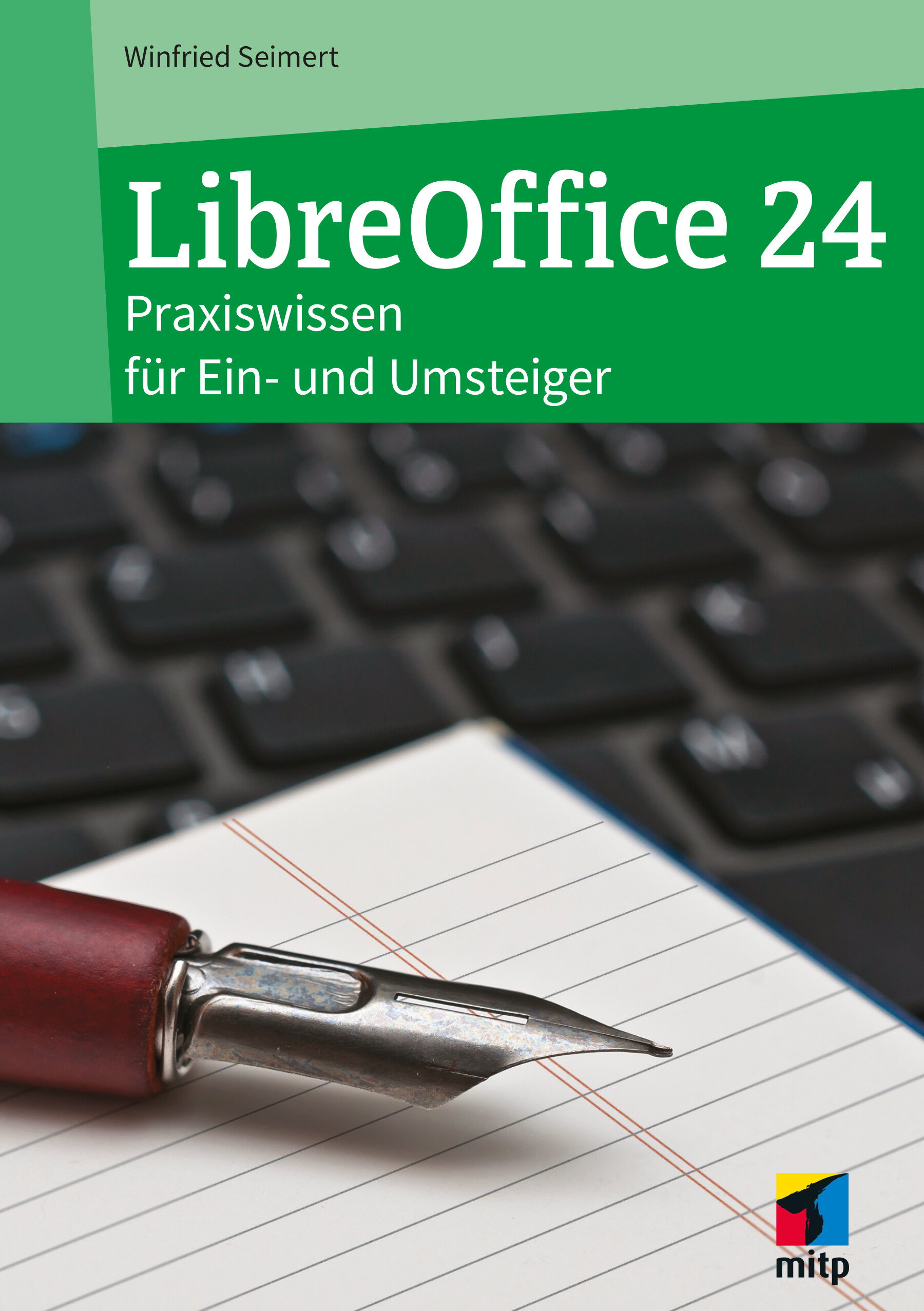
LibreOffice 24 - Praxiswissen für Ein- und Umsteiger
LibreOffice 24 - Praxiswissen für Ein- und Umsteiger.Alle wichtigen FunktionenDas freie und kostenlose Bürosoftware-Paket LibreOffice 24 bietet Ihnen alles, was Sie auch mit anderen gängigen Office-Paketen machen können. Mit diesem Buch erhalten Sie als Ein- oder Umsteiger einen umfassenden Überblick über alle wichtigen und praxisrelevanten Programmfunktionen. Selbst mit Dateien aus Word, Excel und Co. können Sie in LibreOffice problemlos arbeiten.Einfacher Einstieg in alle ProgrammeDer Autor Winfried Seimert zeigt Ihnen anhand vieler Beispiele die verschiedenartigen Anwendungsmöglichkeiten aller LibreOffice-Programme: Textdokumente mit Writer verfassen, Tabellenkalkulationen mit Calc, Präsentationen mit Impress, Zeichnungen mit Draw und Datenverwaltung mithilfe von Base.Zahlreiche PraxisbeispieleSo lernen Sie zum Beispiel, wie Sie Briefe formatieren, Formeln darstellen, Diagramme und Präsentationsfolien erstellen sowie eine Adress-Datenbank füttern und abfragen.Mit dem Wissen aus diesem Buch wird Ihnen die tägliche Arbeit mit LibreOffice leichtfallen.Aus dem Inhalt:BasiswissenLibreOfficeTextdokumente mit WriterTabellenkalkulationen mit CalcPräsentationen mit ImpressFormeln mit MathZeichnungen mit DrawDatenbanken mit BaseÜber den Autor:Winfried Seimert ist IT-Dozent, Consultant und Autor zahlreicher Fachbücher insbesondere zu den Themen Software und Betriebssysteme. Dabei hat er immer den Komfort des Anwenders im Blick und erklärt entsprechend praxisnah. So erfreuen sich seine Bücher aufgrund ihrer durchdachten Struktur bereits seit Mitte der neunziger Jahre großer Beliebtheit.

T-SQL-Abfragen für Microsoft SQL-Server 2022
T-SQL-ABFRAGEN SCHRITT FÜR SCHRITTDer Datenbank-Experte Dirk Angermann zeigt Ihnen, wie Sie über das SQL Server Management Studio Ihre ersten T-SQL-Datenbankabfragen vornehmen. Als Grundlage dient eine einfach strukturierte Datenbank, damit Sie immer den Überblick behalten.PRAKTISCHE ANLEITUNGAnhand vieler praktischer Beispiele führt Sie der Autor in die Verwendung der verschiedenen Sprachelemente wie Funktionen, Variablen, Operatoren und Ausdrücke ein. Sie lernen unter anderem, wie Sie SELECT-Abfragen vornehmen, Daten filtern und sortieren, mit den verschiedenen SQL-Server-Datentypen arbeiten sowie Unterabfragen schreiben. So erfahren Sie, wie effizienter und präziser T-SQL-Code geschrieben wird, um die abzurufende Datenmenge ordnungsgemäß zu beschreiben.BESSERE ABFRAGELEISTUNG UND UMGANG MIT FEHLERMELDUNGENSie erhalten aber nicht nur praktische Hilfe für Ihre Datenauswertungen, sondern lernen zudem, die Abfrageleistung zu verbessern und mit Fehlerinformationen umzugehen.AUS DEM INHALT:* Schreiben von SELECT-Abfragen und Unterabfragen* Arbeiten mit SQL-Server-Datentypen* Gruppieren und Aggregieren von Daten* Verwenden von integrierten Funktionen* Pivotieren und Groupingsets* Verwenden von Fensterrangfolge- und Aggregatfunktionen* Ausführen von gespeicherten Prozeduren* Programmieren mit T-SQL* Implementieren von Transaktionen* Fehlerbehandlung und Verbesserung der AbfrageDIRK ANGERMANN arbeitet seit über 20 Jahren als Microsoft Certified Trainer und unterrichtet europaweit alle Themen rund um SQL Server. Zudem ist er als Berater in vielen Unternehmen, Behörden und Institutionen tätig.

The Engineering Leadership Playbook
In today's business landscape, software engineering teams must deliver innovation faster than ever. However, outdated management approaches centered on tools and metrics rather than people strangle velocity and creativity. Legacy leaders cling to rigid structures mismatched with market dynamics, draining effort and morale from burnt-out teams.The Engineering Leadership Playbook provides a modern framework to unlock your team's potential through empathy, clarity, and empowerment. Unlike traditional leadership books fixated on delivery metrics, Raphael Neves offers a refreshing people-oriented leadership model tailored to nuances of engineering culture.With 15+ years leading high-growth tech teams, Raphael demystifies how to balance autonomy with alignment, reconstruct feedback models on psychological safety, and sustain excellence amidst uncertainty. You'll learn his proven conflict resolution blueprint for defusing clashes through mutual understanding while tangibly tracking progress. Additionally, his continuous feedback system grounded in evidence spotlights gaps early while accelerating strengths.This playbook moves systematically from foundational concepts like emotional intelligence and leading by example into team development frameworks around high-impact coaching, mentorship, and performance reviews. The method is brought full circle through innovation catalysts that maintain creative momentum at scale.Step-by-step, Raphael unpacks human-centered leadership aligned with accelerating market realities. Apply his engineering management playbook, and your teams will thrive fuelled by vision, trust, and care.WHAT YOU'LL LEARN* A modern, human-centered framework to empower engineering teams through clarity, trust, and purpose.* Techniques to match coaching and mentoring styles to individual motivations and development needs.* A customizable 9-box talent assessment model grounded in objective competency evidence.* Conflict resolution blueprint focused on mutual understanding and win-win integrative solutions.* Methodologies to sustain growth mindsets, celebrate experimentation, and extract learnings from setbacks.* Systems to provide caring yet candid career feedback tailored to team members' personalities.* Frameworks to secure executive buy-in, influence without authority, and craft compelling narratives.* Engineering hiring practices focused on competencies over credentials to diversify innovation perspectives.* Approaches for compassionate yet accountable performance management grounded in structure.* Processes to create mentorship programs for individual learning styles and career ambitions.WHO THIS BOOK IS FORAspiring engineering leaders seeking management fundamentals, new managers transitioning into people leadership, and experienced executives refreshing approaches to performance and innovation. Its practical takeaways scale across software teams from lean startups to large enterprises.Chapter 1: Principles to Become an Effective Engineering Leader.- Chapter 2: Leadership Styles and Situational Leadership.- Chapter 3: Collaboration and Team Dynamics.- Chapter 4: The Art of Mentoring.- Chapter 5: Fostering Growth and Innovation.- Chapter 6: Evaluating and Developing Your Team.

Fog Computing for Intelligent Cloud IoT Systems
FOG COMPUTING FOR INTELLIGENT CLOUD IOT SYSTEMSTHIS BOOK IS A COMPREHENSIVE GUIDE ON FOG COMPUTING AND HOW IT FACILITATES COMPUTING, STORAGE, AND NETWORKING SERVICESFog computing is a decentralized computing structure that connects data, devices, and the cloud. It is an extension of cloud computing and is an essential concept in IoT (Internet of Things), as it reduces the burden of processing in cloud computing. It brings intelligence and processing closer to where the data is created and transmitted to other sources. Fog computing has many benefits, such as reduced latency in processing data, better response time that helps the user’s experience, and security and privacy compliance that assures protecting the vital data in the cloud. It also reduces the cost of bandwidth, because the processing is achieved in the cloud, which reduces network bandwidth usage and increases efficiency as user devices share data in the local processing infrastructure rather than the cloud service. Fog computing has various applications across industries, such as agriculture and farming, the healthcare industry, smart cities, education, and entertainment. For example, in the agriculture industry, a very prominent example is the SWAMP project, which stands for Smart Water Management Platform. With fog computing’s help, SWAMP develops a precision-based smart irrigation system concept used in agriculture, minimizing water wastage. This book is divided into three sections. The first section studies fog computing and machine learning, covering fog computing architecture, application perspective, computational offloading in mobile cloud computing, intelligent Cloud-IoT systems, machine learning fundamentals, and data visualization. The second section focuses on applications and analytics, spanning various applications of fog computing, such as in healthcare, Industry 4.0, cancer cell detection systems, smart farming, and precision farming. This section also covers analytics in fog computing using big data and patient monitoring systems, and the emergence of fog computing concerning applications and potentialities in traditional and digital educational systems. Security aspects in fog computing through blockchain and IoT, and fine-grained access through attribute-based encryption for fog computing are also covered. AUDIENCEThe book will be read by researchers and engineers in computer science, information technology, electronics, and communication specializing in machine learning, deep learning, the cyber world, IoT, and security systems. CHANDAN BANERJEE, PHD, is a professor in the Department of Information Technology, Netaji Subhash Engineering College, West Bengal, India. His research interests include cloud computing, computer networks, fog computing, data structure, and algorithms. With about 35 publications in referred international journals, he serves as a reviewer for many peer-reviewed international journals and international conferences. Banerjee is the recipient of several awards including the top-performing mentor award and the Silver Partner Faculty Recognition award. ANUPAM GHOSH, PHD, is a professor in the Department of Computer Science and Engineering, Netaji Subhash Engineering College, Kolkata, India. He has published more than 100 international papers in reputed international journals and conferences. His fields of interest are mainly AI, machine learning, deep learning, image processing, soft computing, bioinformatics, IoT, and data mining. RAJDEEP CHAKRABORTY, PHD, is an assistant professor in the Department of Computer Science and Engineering, Netaji Subhash Engineering College, Kolkata, India. His fields of interest are mainly in cryptography and computer security. He was awarded the Adarsh Vidya Saraswati Rashtriya Puraskar, National Award of Excellence 2019 conferred by Glacier Journal Research Foundation, AHMED A. ELNGAR, PHD, is an associate professor in the Department of Computer Science and Engineering, University Institute of Engineering, Chandigarh University, Punjab, India. His field of interest focuses on cryptology and computer security. He has several publications in reputed journals along with a book on hardware cryptography. In 2019, Elngar was awarded the Adarsh Vidya Sarawati Rashtriya Puraskar, National Award of Excellence. Preface xviiPART I: STUDY OF FOG COMPUTING AND MACHINE LEARNING 11 Fog Computing: Architecture and Application 3Soumen Swarnakar2 A Comparative Review on Different Techniques of Computation Offloading in Mobile Cloud Computing 33Priyajit Sen, Tamanna Islam, Rajat Pandit and Debabrata Sarddar3 Fog Computing for Intelligent Cloud–IoT System: Optimization of Fog Computing in Industry 4.0 45Mayank Patel, Monika Bhatt and Ankush Patel4 Machine Learning Integration in Agriculture Domain: Concepts and Applications 71Ankur Biswas and Rita Banik5 Role of Intelligent IoT Applications in Fog Computing 99Pawan Whig, Dhaya Sindhu Battina, Srinivas Venkata, Ashima Bhatnagar Bhatia and Yusuf Jibrin Alkali6 SaaS-Based Data Visualization Platform—A Study in COVID-19 Perspective 119S. Majumder, A. Shaw, R. Keshri and A. Chakraborty7 A Complete Study on Machine Learning Algorithms for Medical Data Analysis Inderdeep 137Kaur and Aleem AliPART II: APPLICATIONS AND ANALYTICS 1738 Fog Computing in Healthcare: Application Taxonomy, Challenges and Opportunities 175Subrata Datta and Priyanka Datta9 IoT-Driven Predictive Maintenance Approach in Industry 4.0: A Fiber Bragg Grating (FBG) Sensor Application 203Dipak Ranjan Nayak, Pramod Sharma, Ambarish G. Mohapatra, Narayan Nayak, Bright Keswani and Ashish Khanna10 Fog Computing-Enabled Cancer Cell Detection System Using Convolution Neural Network in Internet of Medical Things 229Soumen Santra, Dipankar Majumdar and Surajit Mandal11 Application of IoT in Smart Farming and Precision Farming: A Review 245Suparna Biswas and Soumik Podder12 Big IoT Data Analytics in Fog Computing 279Manash Kumar Mondal, Riman Mandal and Utpal Biswas13 IOT-Based Patient Monitoring System in Real Time 309Suparna Biswas, Tirtha Chakraborty, Souvik Mitra, Shubham Banerjee, Tuhin Sarkar and Sourav Paul14 Fog Computing and Its Emergence with Reference to Applications and Potentialities in Traditional and Digital Educational Systems: A Scientific Review 331P. K. PaulPART III: SECURITY IN FOG COMPUTING 35515 Blockchain Security for Fog Computing 357Saiyam Varshney and Gur Mauj Saran Srivastava16 Blockchain Security for Fog Computing and Internet of Things 379Awais Khan Jumani, Waqas Ahmed Siddique, Muhammad Farhan Siddiqui and Kanwal17 Fine-Grained Access Through Attribute-Based Encryption for Fog Computing 405Malabika DasReferences 421Index 425
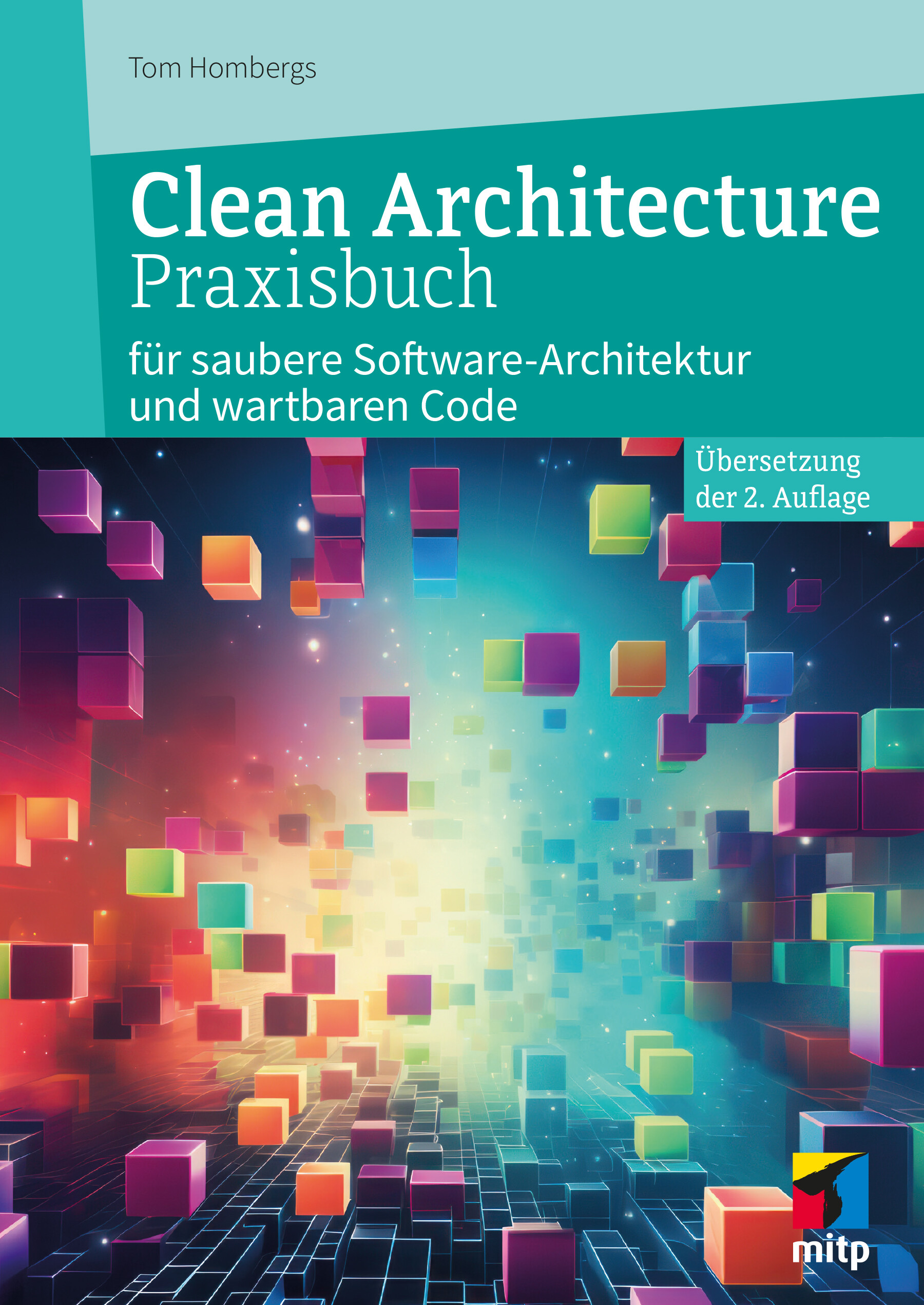
Clean Architecture Praxisbuch
Clean Architecture. Praxisbuch für saubere Software-Architektur und wartbaren Code. Übersetzung der 2. Auflage aus dem Juni 2024. Der Weg zu wartbarer SoftwareUm die Entwicklungskosten niedrig zu halten (und die Entwickler zufrieden zu stellen), ist eine wartungsfreundliche Architektur der Schlüssel zum Erfolg. Dieses Buch vermittelt Ihnen alle notwendigen Fähigkeiten und Kenntnisse, um wartbare und langlebige Software zu entwickeln, unabhängig davon, ob Sie ein erfahrener Entwickler oder neu auf diesem Gebiet sind.Domänen-zentrierte Architektur in der PraxisDieser umfassende Leitfaden zeigt die Vorteile domänen-zentrierter Softwarearchitektur auf – angelehnt an Robert C. Martins Clean Architecture und Alistair Cockburns hexagonaler Architektur. Anhand zahlreicher Beispiele erfahren Sie, wie Sie eine hexagonale Architektur in ihrem Code abbilden können. Sie lernen verschiedene Mapping-Strategien zwischen den Schichten einer hexagonalen Architektur kennen und erfahren, wie Sie die Architekturelemente zu einer Anwendung zusammensetzen.Komplexe Konzepte leicht verständlich erklärtMit anschaulichen Erläuterungen und anhand zahlreicher Codebeispiele schafft dieses Buch ein tiefes und praxistaugliches Verständnis des hexagonalen Architekturstils. So sind Sie perfekt darauf vorbereitet, wartbare Webanwendungen zu erstellen, die Geld und Zeit sparen.Über den Autor:Tom ist Softwareentwickler, Autor, und Simplicity Nerd. Er vereinfacht Code sowie Text und schreibt Artikel, Bücher, und Entwicklerdokumentationen, die begeistern. Aktuell arbeitet er bei Atlassian in Sydney, Australien, wo er für die Developer Experience der dort genutzten Technologie-Stacks verantwortlich ist.Leseprobe (PDF-Link)

Jump-start Your SOC Analyst Career
The frontlines of cybersecurity operations include many unfilled jobs and exciting career opportunities.A transition to a security operations center (SOC) analyst position could be the start of a new path for you. Learn to actively analyze threats, protect your enterprise from harm, and kick-start your road to cybersecurity success with this one-of-a-kind book.Authors _Tyler E. Wall _and _Jarrett W. Rodrick _carefully and expertly share real-world insights and practical tips in _Jump-start Your SOC Analyst Career_. The lessons revealed equip you for interview preparation, tackling day one on the job, and setting long-term development goals.This book highlights personal stories from five SOC professionals at various career levels with keen advice that is immediately applicable to your own journey. The gems of knowledge shared in this book provide you with a notable advantage for entering this dynamic field of work.The recent surplus in demand for SOC analysts makes _Jump-start Your SOC Analyst Career _a must-have for aspiring tech professionals and long-time veterans alike. Recent industry developments such as using the cloud and security automation are broken down in concise,understandable ways, to name a few. The rapidly changing world of cybersecurity requires innovation and fresh eyes, and this book is your roadmap to success.NEW TO THIS EDITION:This revised edition includes three entirely new chapters: Roadmap to Cybersecurity Success, The SOC Analyst Method, and ChatGPT for SOC Analysts. In addition, new material includes a substantially revised Cloud chapter, revised pre-requisite skills, and minor revisions to all chapters to update data.WHAT YOU WILL LEARN• Understand the demand for SOC analysts• Know how to find a SOC analyst job fast• Be aware of the people you will interact with as a SOC analyst• Be clear on the prerequisite skills needed to be a SOC analyst and what to study• Be familiar with the day-to-day life of a SOC analyst, including the toolsand language used• Discover the rapidly emerging areas of a SOC analyst job: the cloud• and security automation• Explore the career paths of a SOC analyst• Discover background-specific tips for your roadmap to cybersecurity success• Know how to analyze a security event• Know how to apply ChatGPT as a SOC analystWHO THIS BOOK IS FORAnyone interested in starting a career in cybersecurity: recent graduates, IT professionals transitioning into security, veterans, and those who are self-taught.TYLER WALL is CEO of Cyber NOW Education, which specializes in global cybersecurity training and certification that’s accessible and affordable. He is an accomplished security professional with a decade of experience in security operations at some of the world’s largest corporations. Tyler’s education includes: Master of Science in Cybersecurity Management from Purdue University, CISSP, CEH, CSSK, Terraform Associate, CFSR, LRPA, Security+, Network+, and A+. He enjoys spending time with his son and being creative.JARRETT W. RODRICK is the Senior Manager of Security Operations at Omnissa and was formerly the Senior Manager of the Security Operation Center at VMware. He is a retired Cyber Network Defender and Cyber Warfare Specialist from the US Army and has over eleven years of Defensive Cyber Operations experience between US Army Cyber Command and leading world-class security programs at Fortune 100 companies. Jarrett’s education includes a Bachelor of Science in Applied Cybersecurity from SANS Technology Institute and 17 GIAC cyber security certifications. Jarrett lives in Melissa, Texas, and enjoys golfing with his son and board games with his family.Chapter 1: The Demand for Cybersecurity and SOC Analysts.- Chapter 2: Areas of Expertise in Cybersecurity.- Chapter 3: Job Hunting.- Chapter 4: Prerequisite Skills.- Chapter 5: The SOC Analyst.- Chapter 6: SOC in the Clouds.- Chapter 7: SOC Automation.- Chapter 8:ChatGPT for SOC Analysts.- Chapter 9: The SOC Analyst Method.- Chapter 10: Roadmap to Success.- Chapter 11: Real SOC Analyst Stories.

Bitcoin Development Philosophy
Bitcoin Development Philosophy is a comprehensive guide aimed at developers who have a foundational understanding of Bitcoin concepts and processes such as Proof-of-Work, block building, and the transaction life cycle. This book delves into the intricacies of Bitcoin's design trade-offs and philosophy, offering insights and context that help developers absorb over a decade of development lessons and debates.The book is organized into several chapters, each focusing on pivotal topics within Bitcoin, such as decentralization, trustlessness, privacy, finite supply, and scaling, among others. Every chapter is enriched with links and QR codes leading to recommended articles or videos, written by seasoned Bitcoin developers. It not only provides practical insights but also encourages independent exploration and critical thinking about contradictory ideas prevalent in the Bitcoin community.Kalle Rosenbaum, the main author, is a seasoned software developer with extensive experience in Bitcoin‐related development since 2015. He isthe author of Grokking Bitcoin and has been a pivotal figure in educating developers about Bitcoin.Linnéa Rosenbaum, the co‐author, holds a Ph.D. in Electronic Systems and has a rich background in firmware and software development. Sheis the Swedish translator of The Little Bitcoin Book and co‐translator of The Bitcoin Standard, contributing significantly to the dissemination ofknowledge about Bitcoin in Sweden. Their combined expertise and passion for Bitcoin have been instrumental in creating a guide that is insightful, comprehensive, and enlightening.
Projektmanagement mit Microsoft 365 für Dummies
SCHRITT FÜR SCHRITT ZUM ERFOLGREICHEN PROJEKTIn diesem Buch erfahren Sie, wie die Funktionen von Excel und weiteren Microsoft-365-Programmen Sie beim Initiieren, Planen und Überwachen von Projekten unterstützen. Von der Risikoanalyse bis zu Prognoserechnungen: Lernen Sie typische Projektmanagement-Methoden kennen und erfahren Sie insbesondere, wie Sie Informationen und Daten mit Excel aufbereiten, ansprechend visualisieren und anschließend vor Auftraggeber und Team präsentieren. Auch die Verwaltung von Aufgaben sowie die digitale Zusammenarbeit mithilfe von OneDrive und Microsoft Teams kommen nicht zu kurz. SIE ERFAHREN* Wie Sie Termine, Ressourcen und Kosten planen* Wie Sie Fortschritte messen, Berichte erstellen und den Projektabschluss gestalten* Welche Microsoft-365-Tools die Zusammenarbeit bei Projekten erleichtern* Wie Sie Daten ansprechend visualisierenANDREA WINDOLPH und ALEXANDER BLUMENAU betreiben projekte-leicht-gemacht.de – den Anlaufpunkt für pragmatische Lösungen und leicht verständliche Anleitungen. PHILIP KIEFER ist seit über 20 Jahren als freiberuflicher Autor tätig und hat mehrere Hundert Bücher veröffentlicht, darunter viele zu Computer-und Office-Themen. Einleitung 21 Teil I: Grundlagen 29Kapitel 1: Grundlegendes zu Microsoft 365 im Projektmanagement 31Kapitel 2: Excel-Basics – unabdingbares Wissen für den Einstieg 47Kapitel 3: Mit Daten zaubern – effektive Darstellung und Auswertung 91Kapitel 4: Internet, Cloud, Datenaustausch – die Möglichkeiten ausloten 123Kapitel 5: Teams, Planner und Co: Projektmanagement mit weiteren mächtigen Microsoft-Tools 167Teil II: Projektinitiierung und Planung 205Kapitel 6: Es geht los – ein Projekt wird initiiert 207Kapitel 7: Ein erster Überblick: Die Grobplanung als Ausgangsbasis 263Kapitel 8: Vom Groben zum Feinen: Jetzt wird es konkret 293Kapitel 9: Der optimale Start: Ein Kick-off-Meeting vorbereiten 339Teil III: Projektüberwachung, -steuerung, -abschluss 367Kapitel 10: Wo stehen wir? Projekte effektiv überwachen 369Kapitel 11: Berichte und Reporting: Mit ausgefeilten Übersichten Eindruck schinden 391Kapitel 12: Alles auf einen Blick: Mit Dashboards überzeugen 423Kapitel 13: Abrechnung und Abschluss 441Teil IV: Nützliche Hilfen im Arbeitsalltag 461Kapitel 14: Dauerbrenner: Was Sie sonst noch brauchen 463Kapitel 15: Der Blick von oben: Portfolios, Analysen und Entscheidungshilfen 491Teil V: Der Top-Ten-Teil 509Kapitel 16: Die zehn hilfreichsten Excel-Funktionalitäten und -Formatierungstricks 511Kapitel 17: Die zehn besten Funktionen rund um Microsoft 365 527Stichwortverzeichnis 537

Responsive Layouts
Welcome to the book “Responsive Layouts: Flex, Grid and Multi-Column” In this book I explain the three best-known responsive layouts: the Flexbox, the Grid and the Multi-Column layout. Flexbox is a one-dimensional layout that only works in one dimension at a time, either horizontally or vertically. The grid layout is a two-dimensional layout that distributes the elements horizontally and vertically at the same time. The multi-column layout is a special layout for magazines and newspapers, where the text should flow in columns with spacing, rules, etc. I'll explain all the properties and their values and how they affect the distribution of elements on the screen. So let's get started. Hello, I am Abdelfattah Ragab, a professional software developer with more than 20 years of experience. I am an expert in Angular, CSS, graphic design and all web related technologies. I have published numerous books on modern CSS layouts and Angular as well as complete business solutions for e-commerce and the like. I hope you enjoy my books. With kind regards.

Angular Shopping Store
In this book, you'll learn how to create an online shopping store using the Angular framework. To get your store up and running, you need more than Angular. You need a backend, a database, payment and shipping gateways and much more. This book is only about the frontend part. The goal of this book is to show you in detail how to create the frontend part of your online store. You will create everything from scratch and end up with a complete frontend shopping store. To make things even more interesting, I've created a small Nodejs application to help you with Stripe payments so you can sell items in your store. However, in reality, you need to use webhooks to make sure the money has landed in your Stripe account before you release the product to the customer. All these details are part of full-stack development. Also in this book, we will focus only on the front-end part of the application to strengthen your Angular skills and prepare you for full-stack projects. Hello, I am Abdelfattah Ragab, a professional software developer with more than 20 years of experience. I am an expert in Angular, CSS, graphic design and all web related technologies. I have published numerous books on modern CSS layouts and Angular as well as complete business solutions for e-commerce and the like. I hope you enjoy my books. With kind regards.

Angular Portfolio App Development
In this book you'll learn how to create an online portfolio application with Angular. Building a personal brand is important for your online growth and career. In this book, you'll learn how to create an online portfolio application to showcase your talent to the world and impress your potential employers. We start from scratch and build everything together. By the end of this book, you'll be confident working with Angular and creating an elegant and impressive portfolio to showcase yourself online. We will use the latest Angular technology v19.2, NgRx SignalStore and Modern CSS Layouts. Hello, I am Abdelfattah Ragab, a professional software developer with more than 20 years of experience. I am an expert in Angular, CSS, graphic design and all web related technologies. I have published numerous books on modern CSS layouts and Angular as well as complete business solutions for e-commerce and the like. I hope you enjoy my books. With kind regards.
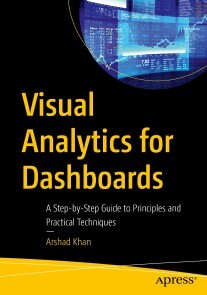
Visual Analytics for Dashboards
This book covers the key principles, best practices, and practical techniques for designing and implementing visually compelling dashboards. It explores the various stages of the dashboard development process, from understanding user needs and defining goals, to selecting appropriate visual encodings, designing effective layouts, and employing interactive elements. It also addresses the critical aspect of data storytelling, examining how narratives and context can be woven into dashboards to deliver impactful insights and engage audiences._Visual Analytics for Dashboards _is designed to cater to a wide range of readers, from beginners looking to grasp the fundamentals of visual analytics, to seasoned professionals seeking to enhance their dashboard design skills. For different types of readers, such as a data analyst, BI professional, data scientist, or simply someone interested in data visualization, this book aims to equip them with the knowledge and tools necessary to create impactful dashboards.WHAT YOU’LL LEARNThe principles of data visualizationHow to create effective dashboardsMeet all the requirements for visual analytics/data visualization/dashboard coursesDeepen understanding of data presentation and analysisHow to use different kinds of tools for data analysis, such as scorecards and key performance indicatorsWHO THIS BOOK IS FORBusiness analysts, data analysts, BI professionals, end-users, executives, developers, as well as students in dashboards, data visualizations, and visual analytics courses.Arshad Khan is a versatile business intelligence/analytics and training professional, with 35+ years of experience, who has led many Tableau and SAP projects. He has consulted for Accenture, PwC, Deloitte, Chevron, Bose Corporation, Daimler Chrysler, Genentech, PepsiCo, Hitachi-America, and many other blue-chip companies.Khan has authored 17 books including six on business intelligence. He has taught many data visualization, dashboards, data analysis, BI, and SAP courses at 9 universities including Golden Gate University, Santa Clara University, and the University of California (Berkeley, Santa Cruz/Silicon Valley, and San Diego Extensions). Mr. Khan has a graduate degree in chemical engineering and an MBA.Chapter 1: Dashboards.- Chapter 2: Scorecards.- Chapter 3: Key performance indicators.- Chapter 4: Dashboard requirements.- Chapter 5: Dashboard design.- Chapter 6: Data visualization.- Chapter 7: Visualization principles.- Chapter 8: Visual communication.- Chapter 9: Understanding and using charts.- Chapter 10: Selecting charts.- Chapter 11: Best Practices and Tips.

Windows Forensics
This book is your comprehensive guide to Windows forensics. It covers the process of conducting or performing a forensic investigation of systems that run on Windows operating systems. It also includes analysis of incident response, recovery, and auditing of equipment used in executing any criminal activity.The book covers Windows registry, architecture, and systems as well as forensic techniques, along with coverage of how to write reports, legal standards, and how to testify. It starts with an introduction to Windows followed by forensic concepts and methods of creating forensic images. You will learn Windows file artefacts along with Windows Registry and Windows Memory forensics. And you will learn to work with PowerShell scripting for forensic applications and Windows email forensics. Microsoft Azure and cloud forensics are discussed and you will learn how to extract from the cloud. By the end of the book you will know data-hiding techniques in Windows and learn about volatility and a Windows Registry cheat sheet.WHAT WILL YOU LEARN* Understand Windows architecture* Recover deleted files from Windows and the recycle bin* Use volatility and PassMark volatility workbench* Utilize Windows PowerShell scripting for forensic applicationsWHO THIS BOOK IS FORWindows administrators, forensics practitioners, and those wanting to enter the field of digital forensicsDR. CHUCK EASTTOM is the author of 39 books, including several on computer security, forensics, and cryptography. He is also an inventor with 25 patents and the author of over 70 research papers. He holds a Doctor of Science in cyber security, a Ph.D. in Nanotechnology, a Ph.D. in computer science, and three master’s degrees.DR. WILLIAM BUTLER is Vice President of Academic Affairs and Executive Director of the Center for Cybersecurity Research and Analysis (CCRA) at Capitol Technology University (Located in Laurel, Maryland). Before this appointment, Bill served as the Chair of Cybersecurity programs for eight years.JESSICA PHELAN is a computer science graduate student at Vanderbilt University. She is currently doing research in natural language processing at the University of Texas at Austin.RAMYA SAI BHAGAVATULA is a Cybersecurity enthusiast and holds a Security+ Certification from CompTIA. She is currently working as an AI Engineer for a medical organization, Baylor Genetics, where she is using her AI expertise to work with genomic data to bring out valuable insights and predictions. She has previously worked for NASA as a Deep Learning Research Intern, where she developed deep learning models to effectively predict severe climate patterns. She was also a lead Data Analyst Intern at an arts organization, Houston Arts Alliance, where she was involved in analyzing in-depth patterns and providing recommendations for their future art grants. Through her dedication to continuous learning and professional development, she pursued her Master's in Data Analytics at UH and is currently pursuing her second Master's in Computer Science at Vanderbilt University. She is also 3x Microsoft Certified in AI and Data Engineering. She aspires for her future career path to involve Cybersecurity, Quantum Computing, and AI. In her free time, she loves to volunteer at local organizationsto raise awareness about Computer Science among underprivileged school students. She has also received the Presidential Volunteer Service Award for her volunteer services.SEAN STEUBER has a BS in Engineering from University of Alabama, an MS in Computer Science from Vanderbilt University, and eight years of professional computer science experience.KARELY RODRIGUEZ is a first-generation DACA recipient and a woman pursuing STEM. She earned a Bachelor’s of Science in Computer Science and minored in Mathematics at the University of Washington and has continued her education in achieving a Masters of Computer Science from Vanderbilt University.VICTORIA INDY BALKISSOON is working in the Naval Enterprise Research Data Science (N.E.R.D.S.) team at NAWCTSD Orlando where she currently works on developing software applications and data science solutions for the US NAVY. She is also currently pursuing a Master’s degree inComputer Science at Vanderbilt University.ZEHRA NASEER has an MS in Ccmputer Science from Vanderbilt University.Chapter 1: Introduction to Windows.- Chapter 2: Forensics Concepts.- Chapter 3: Creating Forensic Images Using OSForensics, FTK Imager, and Autopsy.- Chapter 4: Windows File Artifacts.- Chapter 5: Windows Registry Part 1.- Chapter 6: Windows Registry Part 2.- Chapter 7: Windows Shadow Copy.- Chapter 8: Windows Memory Forensics.- Chapter 9: PowerShell Forensics.- Chapter 10: Web Browser Forensics.- Chapter 11: Windows Email Forensics.- Chapter 12: Microsoft Azure and Cloud Forensics.- Chapter 13: Data-Hiding Techniques in Windows.- Appendix A: Volatility Cheat Sheet.- Appendix B: Windows Registry Cheat Sheet.

Mastering Knowledge Management Using Microsoft Technologies
For companies and individuals already using Microsoft365 and other Microsoft technologies, this book is designed to reveal how to fully utilize these platforms for effective Knowledge Management without needing to rely on additional third-party tools. It addresses a common issue where organizations find themselves with overlapping technology capabilities for managing knowledge. This situation arises because many companies are not fully aware of the capabilities they already possess within their existing Microsoft tools. Knowledge management firms capitalize on this gap by offering white-labeled, branded applications with user-friendly interfaces, selling them to companies that could achieve the same results with what they already own, if only they knew how to use them properly. By mastering the use of Microsoft technologies for Knowledge Management, organizations can save significant amounts of money that would otherwise be spent on unnecessary external solutions.Whether your objective is to optimize Knowledge Management processes or align these tools with your organization's business processes, this book is designed to serve as a valuable resource, offering practical guidance and strategies to empower your endeavors. By the end of this book, readers will be equipped with the knowledge and skills necessary to make informed decisions regarding the utilization of Microsoft technologies for Knowledge Management and organizational design.WHAT YOU WILL LEARN* The components of a Microsoft Knowledge Base* How PowerPlatfom can support Knowledge Management activities* How Microsoft tools fit into the Knowledge Management Landscape* How to integrate AI using Microsoft Co-PilotWHO THIS BOOK IS FORChief Technology Officers, Chief Information Officers, Chief Knowledge Officers, Chief Digital Officers, Directors of Knowledge Management, Knowledge Managers, SharePoint Administrators, Digital Transformation ConsultantsTori Reddy Dodla, Ph.D., a distinguished professional with the title of Knowledge Collaborative Engineer Principal, brings a wealth of expertise and academic rigor to knowledge management. Holding a Ph.D. in Technology, Dr. Dodla has dedicated her career to unraveling the complexities of knowledge management systems. Her research, centered on navigating the risks, rewards, and implementation challenges of knowledge management including Microsoft products has not only advanced the theoretical underpinnings of the field but has also contributed practical insights that have guided organizations toward more effective knowledge strategies.Chapter 1: Microsoft is Good for Knowledge Management.- Chapter 2: The Importance of a Knowledge Base.- Chapter 3: PowerApps for Knowledge Sharing.- Chapter 4: PowerBi for Gamification.- Chapter 5: Integrate AI on PowerPlatform.- Chapter 6: Knowledge Management for Document Management.- Chapter 7: Designing a SharePoint Newsletter.- Chapter 8: Knowledge Management Metrics and Analytics.- Chapter 9: Knowledge Management Challenges and Solutions.

The Reign of Botnets
A TOP-TO-BOTTOM DISCUSSION OF WEBSITE BOT ATTACKS AND HOW TO DEFEND AGAINST THEMIn The Reign of Botnets: Defending Against Abuses, Bots and Fraud on the Internet, fraud and bot detection expert David Senecal delivers a timely and incisive presentation of the contemporary bot threat landscape and the latest defense strategies used by leading companies to protect themselves. The author uses plain language to lift the veil on bots and fraud, making a topic critical to your website's security easy to understand and even easier to implement. You'll learn how attackers think, what motivates them, how their strategies have evolved over time, and how website owners have changed their own behaviors to keep up with their adversaries. You'll also discover how you can best respond to patterns and incidents that pose a threat to your site, your business, and your customers. The book includes:* A description of common bot detection techniques exploring the difference between positive and negative security strategies and other key concepts* A method for assessing and analyzing bot activity, to evaluate the accuracy of the detection and understand the botnet sophistication* A discussion about the challenge of data collection for the purpose of providing security and balancing the ever-present needs for user privacyIdeal for web security practitioners and website administrators, The Reign of Botnets is the perfect resource for anyone interested in learning more about web security. It's a can't-miss book for experienced professionals and total novices alike. DAVID SÉNÉCAL is a Principal Product Architect at Akamai Technologies, leading a team of researchers, developers, and data scientists to build the next generation of fraud and abuse products. He has over twenty years of experience in network and web security and has dedicated the last 14 years to building bot management products. He’s a regular blogger and speaker at events like the OWASP Global Appsec conference. He was integrally involved in the development and maturation of the bot management concept in the cybersecurity industry. Introduction xvii CHAPTER 1 A SHORT HISTORY OF THE INTERNET 1From ARPANET to the Metaverse 2The Different Layers of the Web 7The Emergence of New Types of Abuses 9The Proliferation of Botnets 11Quantifying the Bot Traffic Volume on the Internet 14Botnets Are Unpredictable 16Bot Activity and Law Enforcement 18Summary 19CHAPTER 2 THE MOST COMMON ATTACKS USING BOTNETS 21Account Takeover 22Data Harvesting 23Credential Harvesting 26Account Takeover 31Targeted ATO Attacks 34A Credential Stuffing Attack Example 35Account Opening Abuse 38The Tree Hiding the Forest 39Fraud Ring 41Web Scraping 48The Intent Behind Scraping by Industry 49Good Bot Scraping 51Inventory Hoarding 53Business Intelligence 55Scalping: Hype Events 58Online Sales Events Mania and Scalping 58The Retailer Botnet Market 59Anatomy of a Hype Event 61Carding Attacks 64Gift Cards 65Credit Card Stuffing 66Spam and Abusive Language 66Summary 67CHAPTER 3 THE EVOLUTION OF BOTNET ATTACKS 69Incentive vs. Botnet Sophistication 70HTTP Headers 101 71Common HTTP Headers 71Legitimate Browser Signatures 74Header Signatures from Bot Requests 75The Six Stages of a Botnet Evolution 77Stage 1: Deploy the Botnet on a Handful of Nodes Running a Simple Script 77Stage 2: Scale the Botnet and Impersonate the Browsers' Header Signatures 79Stage 3: Reverse Engineer JavaScript and Replay Fingerprints 80Stage 4: Force the Web Security Product to Fail Open 81Stage 5: Upgrade the Botnet to a Headless Browser 82Stage 6: Resort to Human/Manual Attack 84Botnets with CAPTCHA-Solving Capabilities 85Human-Assisted CAPTCHA Solver 85Computer Vision 88The CAPTCHA Solver Workflow 88AI Botnets 89The Botnet Market 91Summary 93CHAPTER 4 DETECTION STRATEGY 95Data Collection Strategy 96Positive vs. Negative Security 98The Evolution of the Internet Ecosystem 99The Evolution of Detection Methods 100Interactive Detection 100Transparent Detection 103The State of the Art 106Transparent Detection Methods 108Good Bot Detection 109Good Bot Categories 111IP Intelligence 115Cookie Handling 118JavaScript Execution Handling 119Device Intelligence 120Proof of Work 123Behavioral Biometric Detection 125Headless Browser Detection 128User-Behavior Anomaly Detection 130Email Intelligence 135Advanced PII Data Assessment 140Risk Scoring 142Formula 143Consuming the Risk Score 144Summary 145CHAPTER 5 ASSESSING DETECTION ACCURACY 147Prerequisites 148High-Level Assessment 149Website Structure 150Website Audience 151Types of Clients 151Assessing the Shape of the Traffic 152Quantitative Assessment (Volume) 155Feedback Loop 156Response Strategy Assessment 158Low-Level Assessment 158IP Intelligence 159Device Intelligence 163Assessment Guidelines 168Identifying Botnets 170Botnet Case Study 173The Evening Crawler 174The Sprint Scraper 175The Night Crawler 176The Cloud Scraper 177Summary 177CHAPTER 6 DEFENSE AND RESPONSE STRATEGY 179Developing a Defense Strategy 180Do-It-Yourself 180Buying a Bot Management Product from a Vendor 182Defense in Depth 184Technology Stack to Defend Against Bots and Fraud 186Detection Layer to Protect Against Bot Attacks 186Detection Layer to Protect Against Online Fraud 188Response Strategies 189Simple Response Strategies 190Advanced Response Strategies 191Operationalization 193Mapping a Response Strategy to a Risk Category 193Preparing for Special Events 195Defending Against CAPTCHA Farms 196Summary 197CHAPTER 7 INTERNET USER PRIVACY 199The Privacy vs. Security Conundrum 199The State of Privacy and Its Effect on Web Security 201IP Privacy 201Cookie Tracking Prevention 204Anti-fingerprinting Technology 206The Private Access Token Approach 213The High-Level Architecture 214The PAT Workflow 214PAT Adoption 216Summary 218References 219Index 223

Linking with Nature in the Digital Age
The use of digital technology in our societies is growing to meet the ever-increasing challenges of data collection, raising awareness, education and understanding nature. Artificial intelligence, for example, appears to be the answer to collecting massive amounts of data on biodiversity at a global scale and facilitating citizen participation in such data collection.Linking with Nature in the Digital Age explores the reconfiguration of our relationship with nature within this digital framework. This book examines this mediated linking from three angles. Firstly, it shows how digital technology can foster the development of links to nature. Then, it describes in greater detail the materiality of these links and how they have evolved with the developments in information technology. Finally, it questions the belief in the digital as a facilitator and opens up new perspectives on our relationship with nature and the living worldÉMILIE KOHLMANN is a lecturer in information and communication sciences at Université Grenoble Alpes, France. As part of the GRESEC laboratory, she works on nature mediation systems.Acknowledgments xi Introduction xiiiÉmilie KOHLMANNPART 1 EXTENDING LINKS THROUGH DIGITAL DEVICES 1Chapter 1 Benchmarks: Biodiversity, Participation and Digital Technology 3Émilie KOHLMANN and Catherine GAUTHIERChapter 2 The Documentary Links of Herbarium Collections and Their Communicative Stakes 15Lisa CHUPINChapter 3 Investigating the Relationship with Nature in the Animation of Wineries' Facebook Pages 35Marie-Caroline HEÏD and Catherine DE LAVERGNEChapter 4 Forms of Linking with Nature and with Others through a Digital Device: "Let Them Know and Participate" 53Émilie KOHLMANNPART 2 LINK MATERIALITY AND STRUCTURE: GENERATING DATA ON NATURE 73Chapter 5 Explainable Artificial Intelligence for a Better Understanding of Naturalist Data 75Ikram CHRAIBI KAADOUDChapter 6 Pooling Biodiversity Databases: Linking Data, Linking Actors 103Camille BERNARDChapter 7 The Challenges and Implementation of the LPO Auvergne-Rhône-Alpes Naturalist Information System 127Daniel THONONPART 3 GAINS AND LOSSES: QUESTIONING THE LINK TO NATURE 149Chapter 8 Complementarity of Big Data and Citizen Participation in Monitoring Plant Biodiversity 151Pierre BONNET, Alexis JOLY and François MUNOZChapter 9 New Automatic Identification Tools: An Aid for Botanists and Nature Managers? 161François MUNOZ and Pierre BONNETChapter 10 The Contribution of New Technologies to Our Experiences of Nature 177Minh-Xuan TRUONGChapter 11 Belonging to the World to Think of the Link: The Relationship with the Natural Environment as a Crucible of Relatedness 191Amélie COULBAUT-LAZZARINIConclusion 209Émilie KOHLMANNList of Authors 215Index 217