

Computer und IT
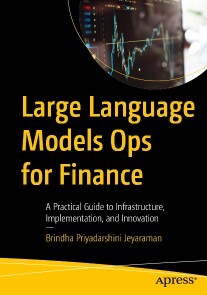
Large Language Models Ops for Finance
Explore emerging technologies and the evolving role of AI in finance. Geared toward finance professionals, this book will equip you with the knowledge and tools to harness the power of Large Language Models (LLMs), ensuring you stay ahead in an increasingly AI-driven industry. Highlighting the benefits and challenges of LLMs in financial contexts, the book starts with the necessary infrastructure setup, covering both hardware and software requirements. It offers a balanced discussion on cloud versus on-premises solutions, enabling you to make informed decisions based on their specific needs. Training and fine-tuning LLMs are critical components of effective deployment, and this book offers best practices, from data preparation to advanced fine-tuning techniques. It also delves into deployment strategies, with practical advice on building deployment pipelines, monitoring performance, and optimizing operations. Ensuring data privacy and security is paramount in finance, so you’ll take a close look at maintaining compliance with regulations while safeguarding sensitive information. You’ll also examine the integration of LLMs into existing financial systems, with real-world case studies and strategies for API development and real-time data processing. Monitoring and maintenance are crucial for long-term success, and the book outlines how to manage performance metrics, handle model drift, and ensure regular updates. Large Language Models Ops for Finance is your essential guide to discovering the transformative potential of LLMs in the finance industry. What You Will Learn ● Review LLMs and their applications in finance. ● Set up the infrastructure for training and deploying LLMs. ● Apply best practices for fine-tuning and maintaining LLMs. ● Employ techniques for integrating LLMs into existing financial systems Who This Book Is For AI and ML engineers, data scientists, and finance professionals interested in implementing and managing large language models within the finance industry. Chapter 1: Introduction to Large Language Models in Finance.- Chapter 2: Infrastructure Setup for LLMs.- Chapter 3: Training and Fine-Tuning LLMs.- Chapter 4: Deployment Strategies for LLMs.- Chapter 5: Ensuring Data Privacy and Security.- Chapter 6: Integrating LLMs into Financial Systems.- Chapter 7: Monitoring and Maintenance of LLMs.- Chapter 8: Future Trends in LLM Ops for Finance.

Nanobiotechnology
Explore the integration of nanotechnology with artificial intelligence (AI) and the Internet of Things (IoT), focusing on advancements, applications, and future prospects in the field. This book highlights the fusion of cutting-edge technologies with biological and nanomaterials, emphasizing their role in transforming industries such as medicine, environmental science, and manufacturing. This book delves into the fundamentals of Nano-Biotechnology, starting with its historical evolution and foundational concepts. It explores the various types of nanomaterials, such as quantum dots, polymeric nanoparticles, and metal nanoparticles, detailing their properties and applications in fields such as drug delivery, diagnostics, and catalysis. Cellular nanostructures, biomolecular motors, and bio-inspired nanostructures are discussed, alongside methods for nanomaterial synthesis, including physical, chemical, and biological approaches. A focus on AI and IoT integration is woven throughout, highlighting their roles in optimizing nanomaterial properties, synthesis processes, and applications. The book further explores nanomaterial characterization techniques, nanomedicine, water remediation, MEMS/NEMS, and nanocatalysis, while also addressing crucial topics such as environmental impact, ecotoxicology, and regulatory frameworks. Each chapter presents advanced technological insights, from nanobiocatalysts to thin films and self-assembled nanostructures, all within the context of AI and IoT-driven advancements. You will gain a deep understanding of the interdisciplinary nature of Nano-Biotechnology, the implications of AI and IoT integration, and the ethical, environmental, and societal considerations shaping the future of this rapidly evolving field. The book offers valuable perspectives on emerging trends and equips readers with insights necessary for both academic and practical applications of Nano-Biotechnology. You Will Understand the key concepts, classification, properties, and applications of various nanomaterials in fields like medicine, diagnostics, and catalysis Gain insights into the physical, chemical, and biological methods of nanomaterial synthesis as well as advanced techniques Discover how Nano-Biotechnology is being applied to multiple sectors and MEMS/NEMS systems, and learn about the challenges and future trends Who Is This Book For Readers with a basic to intermediate understanding of nanotechnology, biotechnology, or related fields will benefit from this book. A general familiarity with concepts like AI, IoT, and their applications in scientific disciplines will also be helpful. Chapter 1: Introduction to Nano-Biotechnology.- Chapter 2: Types of Nanomaterials and Their Properties.- Chapter 3: Cellular Nanostructures and Biomolecular Motors.- Chapter 4: Synthesis of Nanomaterials.- Chapter 5: Characterization of Nanomaterials.- Chapter 6: Thin Films and Colloidal Nanostructures.- Chapter 7: Self-Assembly and Nanovesicles.- Chapter 8: Nanoparticles for Drug Delivery.- Chapter 9: Nanoparticles for Diagnostics and Imaging.- Chapter 10: Nanobiocatalysts and Their Applications.- Chapter 11: Environmental and Health Impacts of Nanomaterials.- Chapter 12: Ecotoxicology and Life Cycle Assessment.- Chapter 13: Nanomaterials in Catalysis.- Chapter 14: Nanotechnology in Medicine.- Chapter 15: Nanotechnology in Food Science.- Chapter 16: Nanotechnology for Water Remediation and Purification.- Chapter 17: MEMS and NEMS Based on Nanomaterials.- Chapter 18: Safety and Regulation of Nanomaterials.- Chapter 19: Genotoxicity and Cytotoxicity of Nanomaterials.- Chapter 20: Future Directions in Nano-Biotechnology.

GovOps with Microsoft Power Platform and Copilot
In an era of tightening budgets and rising citizen expectations, government agencies must modernize or risk obsolescence. This book provides a comprehensive, hands‑on roadmap for public sector leaders, architects, and developers to harness Microsoft Power Platform’s low‑code and AI capabilities with Power Apps, Power Automate, Power BI, Power Pages, AI Builder, Copilot, and Dataverse. This book lays out the case for low‑code modernization, demonstrates how to assess organizational readiness, and introduces governance and CoE best practices. Readers will walk away with repeatable frameworks, proven templates, and scripts to accelerate digital transformation in any government setting to foster transparency, efficiency, and citizen‑first service delivery. What You Will Learn Core Platform Deep Dive: Unpacks each Power Platform component with architecture patterns, step‑by‑step tutorials, and design guidelines using official Microsoft icons. Sector‑Specific Use Cases: Shares rich, real‑world examples from licensing and permitting to emergency response coordination, complete with workflows, code samples, and architecture diagrams. Advanced AI & Copilot Integrations: Shows how to train custom AI models, implement Copilot–powered natural‑language generation, and embed responsible AI with human‑in‑the‑loop designs. Operational Excellence, ALM & the Road Ahead: Covers CI/CD pipelines, environment management, security/DLP policy enforcement, accessibility, and next‑gen Copilot trends. Who This Book is For This book is for IT leaders, solution architects, citizen developers, line‑of‑business analysts, and public sector project managers looking to modernize government services. Readers should have some familiarity with Microsoft 365 or basic low-code. Chapter 1: Introduction to Government Modernization.- Chapter 2: Overview of Microsoft Power Platform.- Chapter 3: Planning a Government Low‑Code Strategy.- Chapter 4: Building End‑to‑End Solutions.- Chapter 5: Integrating AI and Co-Pilot.- Chapter 6: Deployment & Governance.- Chapter 7: Facilitating Government Modernization through Use Cases.- Chapter 8: Best Practices & Frameworks.- Chapter 9: The Road Ahead.- Chapter 10: Resources & Templates.- Chapter 11: Azure AI + AI Builder High-Level AI Model Development.- Chapter 12: Copilot Studio In-Depth Tutorial – Bots, Prompts & Custom Skills.- Chapter 13: Low-Code + Pro-Code Fusion – When to Extend with Azure Functions.- Chapter 14: Secure External API Integrations in Government Applications.- Chapter 15: Data Governance & Sovereignty with Dataverse and Azure.- Chapter 16: Making Power Platform Solutions Run Better.- Chapter 17: Monitoring & Logging with Azure Monitor and Power Platform Admin Center.- Chapter 18: Disaster Recovery & Business Continuity Planning.- Chapter 19: The Future of Digital Government – Trends to Watch.- Chapter 20: Developing a Culture of Low-Code Innovation in Government Sector.

Integration of Federated Learning and Blockchain for Smart Cities
Stay ahead of the curve in urban innovation with this essential guide that provides a comprehensive roadmap for federated learning and blockchain to build secure, intelligent, and efficient smart city ecosystems. As cities grow smarter, the demand for secure, decentralized, and privacy-preserving technologies is greater than ever. This book explores how federated learning and blockchain are transforming urban landscapes by enabling intelligent, secure, and efficient systems. By combining the power of decentralized machine learning with the transparency and security of blockchain, this book provides a roadmap for tackling challenges in urban mobility, energy management, public safety, and healthcare, delving into theoretical frameworks, architectural designs, security considerations, and real-world case studies to illustrate the impact of these technologies. This book serves as a comprehensive guide for researchers, industry professionals, and policymakers seeking to understand, implement, and innovate within smart city ecosystems. Readers will find the volume: Explores the synergy between federated learning and blockchain, offering cutting-edge solutions for smart city challenges;Addresses critical issues of data privacy, decentralized AI, and secure digital infrastructure in urban environments;Features practical case studies on smart transportation, energy management, healthcare, and governance;Provides a forward-looking perspective on how emerging technologies will shape the cities of tomorrow. Audience Academics, researchers, industry professionals, and policymakers working in the fields of artificial intelligence, machine learning, blockchain, IoT, cybersecurity, smart city planning, and urban technology development. Krishna Kant Singh, PhD is the Director at the Delhi Technical Campus, Greater Noida, India. He has authored 25 books and over 160 research papers in international journals. He is an associate editor of IEEE Transactions on Computational Social Systems, and Senior editor of IEEE Access. His research interests include machine vision, remote sensing, deep learning, and generative AI. Akansha Singh, PhD is a professor in the School of Computer Science, Engineering, and Technology at Bennett University, Greater Noida, India, with over 18 years of teaching and research experience. She has published over 100 research papers and authored over 30 books in advanced areas of computer science. Her expertise spans image processing, deep learning, machine learning, remote sensing, and IoT, with a strong focus on AI-driven solutions for healthcare and environmental sustainability. Mahesh T.R., PhD is the Program Head of the Department of Computer Science and Engineering in the School of Engineering and Technology, at Jain (Deemed-to-be University), Bengaluru, India. He has published over 180 research articles in international and edited several books. His research interests include image processing, machine learning, deep learning, artificial intelligence, IoT, and data science.

The AI Product Playbook
A comprehensive guide for aspiring and practicing AI product managers The AI Product Playbook: Strategies, Skills, and Frameworks for the AI-Driven Product Manager, by Dr. Marily Nika and Diego Granados, is a practical guide designed to empower product managers to effectively build, launch, and manage successful AI-powered products. This playbook bridges the gap between complex AI concepts and real-world product management, offering actionable frameworks and strategic insights tailored to non-technical professionals. Drawing on their extensive industry experience, the authors guide you in understanding the three essential AI Product Manager personas: AI Experiences PM, AI Builder PM, and AI-Enhanced PM. This framework empowers you to identify your own strengths, focus your skill development, and chart a clear career path in the evolving AI job market. The AI Product Playbook demystifies the full spectrum of AI product development, with a special focus on today’s most transformative technologies like Generative AI and Large Language Models (LLMs). Alongside this modern focus, you will build a strong foundation in the core paradigms of traditional machine learning, understand the complete data science lifecycle, and grasp the operational realities of MLOps. The book also provides actionable frameworks for ethical AI implementation, grounding these concepts in real-world case studies and practical examples. An essential, strategic guide for aspiring and experienced product managers, The AI Product Playbook delivers an effective roadmap to AI-driven product management and career advancement in the AI era. A comprehensive guide for aspiring and current AI product managers The AI Product Playbook: Strategies, Skills, and Frameworks for the AI-Driven Product Manager, by Dr. Marily Nika and Diego Granados, is a practical resource designed to empower product managers to effectively build, launch, and manage successful AI-powered products. This playbook bridges the gap between artificial intelligence theory and real-world product management, offering actionable learnings tailored to non-technical professionals. Drawing from extensive industry experience, Dr. Nika and Granados introduce the three essential AI product manager roles: AI Experiences PM, AI Builder PM, and AI-Enhanced PM. They offer guidance on developing skills crucial for each role and navigating common challenges in the workplace. Readers will also find valuable strategies for career growth, lifelong learning, and crafting a distinctive AI portfolio. Inside the book: Practical frameworks for discovering AI opportunities and aligning AI capabilities with business goalsA deep technical dive with clear explanations of foundational AI and machine learning concepts, including supervised learning, unsupervised learning, reinforcement learning, and generative AIGuidelines for ethical AI implementation, addressing bias, fairness, and compliance with AI regulationsStrategies for effective collaboration with cross-functional teams and enhancing productivity through AIInteractive exercises, action plans, checklists, templates, and quizzes designed to reinforce learning and build real-world skills Essential reading for aspiring and experienced product managers alike, The AI Product Playbook provides a roadmap to mastering AI-driven product management and advancing your career in the dynamic field of artificial intelligence. Dr. Marily Nika is an award-winning GenAI Product Leader at Google and one of the world's foremost AI educators, with over 13 years of experience building AI products at Google and Meta. She holds a PhD in machine learning and is an author, TED AI speaker, Harvard Business School fellow and co-founder of the AI Product Hub (www.aiproduct.com) which offers AI product management certifications. Diego Granados is a Product Leader with more than 6 years of experience bringing AI products to life in top tech companies in Silicon Valley. He holds an MBA from Duke University and an M.S. in C.S. focused on AI & ML from Georgia Tech and is co-founder of the AI Product Hub (www.aiproduct.com) which offers AI product management certifications.

Adaptive Artificial Intelligence
Master the next frontier of technology with this book, which provides an in-depth guide to adaptive artificial intelligence and its ability to create flexible, self-governed systems in dynamic industries. Adaptive artificial intelligence represents a significant advancement in the development of AI systems, particularly within various industries that require robust, flexible, and responsive technologies. Unlike traditional AI, which operates based on pre-defined models and static data, adaptive AI is designed to learn and evolve in real time, making it particularly valuable in dynamic and unpredictable environments. This capability is increasingly important in disciplines such as autonomous systems, healthcare, finance, and industrial automation, where the ability to adapt to new information and changing conditions is crucial. In industry development, adaptive AI drives innovation by enabling systems that can continuously improve their performance and decision-making processes without the need for constant human intervention. This leads to more efficient operations, reduced downtime, and enhanced outcomes across sectors. As industries increasingly rely on AI for critical functions, the adaptive capability of these systems becomes a cornerstone for achieving higher levels of automation, reliability, and intelligence in technological solutions. Readers will find the book: Introduces the emerging concept of adaptive artificial intelligence;Explores the many applications of adaptive artificial intelligence across various industries;Provides comprehensive coverage of reinforcement learning for different domains. Audience Research scholars, IT professionals, engineering students, network administrators, artificial intelligence and deep learning experts, and government research agencies looking to innovate with the power of artificial intelligence. P. Pavan Kumar, PhD is an associate professor in the Department of Artificial Intelligence and Data Science at the ICFAI Foundation for Higher Education, Hyderabad, Telangana, India. He has published more than 20 scholarly peer-reviewed research articles in international journals and two Indian patents. His research interests include real-time systems, multi-core systems, high-performance systems, and computer vision. Grandhi Suresh Kumar, PhD is an associate professor and Associate Dean of Academics in the School of Science and Technology at the ICFAI Foundation for Higher Education, Hyderabad, Telangana, India with more than ten years of experience. He has published one authored book, one edited book, one book chapter, and more than 15 articles. His research interests include intelligent manufacturing, robotics, sustainable energy solutions, CO2 capture, and applications of AI in mechanical engineering. Ajay Kumar Jena, PhD is an assistant professor and Associate Dean in the School of Computer Engineering at the Kalinga Institute of Industrial Technology, Bhubaneswar, Odisha, India. He has published three books, seven book chapters, and 61 research papers in various international journals and conferences. His research interests include blockchain, object-oriented software testing, software engineering, data science, soft computing, and machine learning. Sandeep Kumar Panda, PhD is a professor and an Associate Dean in the School of Science and Technology at the ICFAI Foundation for Higher Education, Hyderabad, Telangana, India. He has published six books, several book chapters, and 80 articles in international journals and conferences. His research interests include blockchain technology, W3, metaverse, the Internet of Things, AI, and cloud computing. S. Balamurugan, PhD is the Director of Research, iRCS, an Indian technological research and consulting firm. He has published more than 100 books, 300 papers in international journals and conferences, and 300 patents. With 20 years of research experience using various cutting-edge technologies, he provides expert guidance in technology forecasting and decision-making for leading companies and startups.

Protecting Artificial Intelligence-generated Works in Indonesia
This book examines the legal challenges posed by generative artificial intelligence (AI) in copyright law, focusing on Indonesia while using the European Union (EU) as a benchmark. It explores whether AI-generated works should qualify for copyright protection, how rights over these works should be allocated, and which stakeholders should be recognised in the process. By addressing these critical issues, the book provides a framework for balancing legal protection with public interests, offering insights for policymakers, legal scholars, and intellectual property practitioners. Adopting a comparative and socio-legal approach, this book analyses Indonesia’s evolving copyright landscape alongside the EU’s response to AI-generated works. While Indonesia prioritizes AI development, its copyright law remains rooted in human authorship, creating legal uncertainties for AI-generated works, despite the significant human contributions involved. This book offers a novel perspective on how middle-income countries can adapt their copyright systems in response to technological advancements. To address the gap in existing copyright law, potential protection models, including sui generis rights and neighbouring rights, are examined. These alternatives advocate for a balanced approach that fosters innovation while safeguarding human contributors. Through the comparative analysis and policy-driven recommendations, the book is an essential resource for academics, legal professionals, and policymakers seeking to navigate the evolving intersection of AI and copyright law. Laurensia Andrini is a Lecturer at the Business Law Department, Faculty of Law of the Universitas Gadjah Mada in Yogyakarta, Indonesia.

The Microsoft AI Human Resources Handbook
The world of HR is rapidly transforming, and Microsoft technologies are leading the charge. This book equips both HR professionals and IT specialists with a comprehensive guide to implementing and utilizing the Microsoft HR tech stack. We'll delve into the core solution, Dynamics 365 Human Resources, exploring its capabilities, and how to leverage it with Copilot. The book goes beyond Dynamics 365, exploring the powerful tools within the Microsoft 365 suite, Power Platform (apps, bots, reports, and automations), Microsoft Teams for seamless collaboration, and Viva Learning for fostering a culture of continuous learning. Additionally, we'll touch upon the strategic integration of LinkedIn for talent sourcing and employer branding. What Readers Will Learn HR Professionals: HR Solution Architecture: Understand the core components of the Microsoft HR tech stack and how they work together to support HR processes.Implementation Strategies: Learn best practices for implementing Microsoft HR solutions, including configuration, data migration, and user adoption strategies.In-Depth Knowledge of Specific Products: Gain expertise in utilizing Dynamics 365 Human Resources for talent management, performance management, and more.Leveraging Power Platform: Develop basic skills in building automated workflows, reports, and dashboards within Power Platform to enhance HR processes.Optimizing Communication & Collaboration: Learn how to leverage Microsoft Teams and Viva Learning to foster a more engaged and connected workforce.Strategic Use of LinkedIn: Understand how to integrate LinkedIn with Microsoft HR solutions for effective talent sourcing and employer branding. IT Professionals: Implementation & Management: Learn how to install, configure, and manage Microsoft HR solutions, including security and access controls.System Integration: Gain skills in integrating Microsoft HR solutions with existing HRIS systems and other enterprise applications.Data Management & Security: Understand best practices for data security, governance, and compliance within the Microsoft HR tech stack.Supporting HR Professionals: Gain insights into HR workflows and how to effectively support HR users in utilizing the solutions.Customization & Automation: Learn how to customize Microsoft HR solutions using Power Platform to meet specific organizational needs.

Low-Code Development with Xomega.NET
Quickly build robust, data-driven .NET applications in Visual Studio using Xomega, an extensible low-code platform. Use simple but flexible Xomega model structures to model your application domain entities, services, UI objects, and views. Instead of spending your time writing boilerplate plumbing code, this platform enables you to stay focused on big-picture issues like your business domain and the structure of your application. Once you define your application models, Xomega allows you to generate all layers of your application, producing high-quality, customizable source code organized as per the best-practice architectures for multi-tier, enterprise-grade applications. Your application will leverage our powerful open-source Xomega Framework, which helps you write clean, reusable, and testable code. Coupled with code generation, it will guarantee consistent behavior and look-and-feel across your entire app, which can also reduce maintenance costs later on. What You Will Learn Create a Blazor solution pre-configured for the selected architecture and frameworks using industry best practices.Import initial domain model from a database and enrich it with static data, services and presentation models.Iteratively model services and UI views for a powerful list screen with flexible search criteria.Iteratively model CRUD services and presentation for a complex full-fledged details screen.Continuously generate application code from the models for all layers and add custom code as needed.Implement password authentication and multi-layer claims-based security for accessing app data and functionality. Who This Book Is For This book is for .NET developers who are looking to quickly and efficiently build .NET apps using low code.

Administering Microsoft Azure SQL Solutions
Ace the DP-300 Exam with this essential study companion, chock-full of insights and tips you cannot find online. This book will help you build a comprehensive understanding of Azure SQL systems and their role in supporting business solutions, and it will equip you with the mental models and technical knowledge needed to confidently answer exam questions. Structured to align with Microsoft’s published study guide, the book spans five major sections that correspond to the skills measured by the exam, covering topics vital to modern cloud operations and including HA/DR, security, compliance, performance, and scalability. You’ll also learn about the ways cloud operations have changed the focus of operating database systems from task execution to platform configuration—and how to configure your data platforms to meet this new reality. By the end of this book, you’ll be prepared to navigate exam scenarios with finesse, pass the exam with confidence, and advance in your career with a solid foundation of knowledge. What You Will Learn Maximize your ability to benefit from the online learning tools for Exam DP-300Gain depth and context for Azure SQL technical solutions relevant to Exam DP-300Boost your confidence in Azure SQL Database skillsExtend your on-premises SQL Server skill set into the Azure SQL cloudEnhance your overall understanding of Azure SQL administration and operationsDevelop your Azure SQL skill set to increase your value as an employee or contractorAdopt a new mindset for cloud-based solutions versus on-premises solutions Who This Book Is For Anyone planning to take the DP-300: Administering Microsoft Azure SQL Solutions exam, and those who wish to understand Azure SQL and how to successfully migrate and manage SQL solutions using all Azure SQL Technologies

Unlocking dbt
Master the art of data transformation with the second edition of this trusted guide to dbt. Building on the foundation of the first edition, this updated volume offers a deeper, more comprehensive exploration of dbt’s capabilities—whether you're new to the tool or looking to sharpen your skills. It dives into the latest features and techniques, equipping you with the tools to create scalable, maintainable, and production-ready data transformation pipelines. Unlocking dbt, Second Edition introduces key advancements, including the semantic layer, which allows you to define and manage metrics at scale, and dbt Mesh, empowering organizations to orchestrate decentralized data workflows with confidence. You’ll also explore more advanced testing capabilities, expanded CI/CD and deployment strategies, and enhancements in documentation—such as the newly introduced dbt Catalog. As in the first edition, you’ll learn how to harness dbt’s power to transform raw data into actionable insights, while incorporating software engineering best practices like code reusability, version control, and automated testing. From configuring projects with the dbt Platform or open source dbt to mastering advanced transformations using SQL and Jinja, this book provides everything you need to tackle real-world challenges effectively. What You Will Learn Understand dbt and its role in the modern data stackSet up projects using both the cloud-hosted dbt Platform and open source projectConnect dbt projects to cloud data warehousesBuild scalable models in SQL and PythonConfigure development, testing, and production environmentsCapture reusable logic with Jinja macrosIncorporate version control with your data transformation codeSeamlessly connect your projects using dbt MeshBuild and manage a semantic layer using dbtDeploy dbt using CI/CD best practices Who This Book Is For Current and aspiring data professionals, including architects, developers, analysts, engineers, data scientists, and consultants who are beginning the journey of using dbt as part of their data pipeline’s transformation layer. Readers should have a foundational knowledge of writing basic SQL statements, development best practices, and working with data in an analytical context such as a data warehouse.

Mastering PostgreSQL Administration
This book is your one-stop resource on PostgreSQL system architecture, installation, management, maintenance, and migration. It will help you address the critical needs driving successful database management today: reliability and availability, performance and scalability, security and compliance, cost-effectiveness and flexibility, disaster recovery, and real-time analytics—all in one volume. Each topic in the book is thoroughly explained by industry experts and includes step-by-step instructions for configuring the features, a discussion of common issues and their solutions, and an exploration of real-world scenarios and case studies that illustrate how concepts work in practice. You won't find the book's comprehensive coverage of advanced topics, including migration from Oracle to PostgreSQL, heterogeneous replication, and backup & recovery, in one place—online or anywhere else. What You Will Learn Install PostgreSQL using source code and yum installationBack up and recoverMigrate from Oracle database to PostgreSQL using ora2pg utilityReplicate from PostgreSQL to Oracle database and vice versa using Oracle GoldenGateMonitor using Grafana, PGAdmin, and command line toolsMaintain with VACUUM, REINDEX, etc. Who This Book Is For Intermediate and advanced PostgreSQL users, including PostgreSQL administrators, architects, developers, analysts, disaster recovery system engineers, high availability engineers, and migration engineers
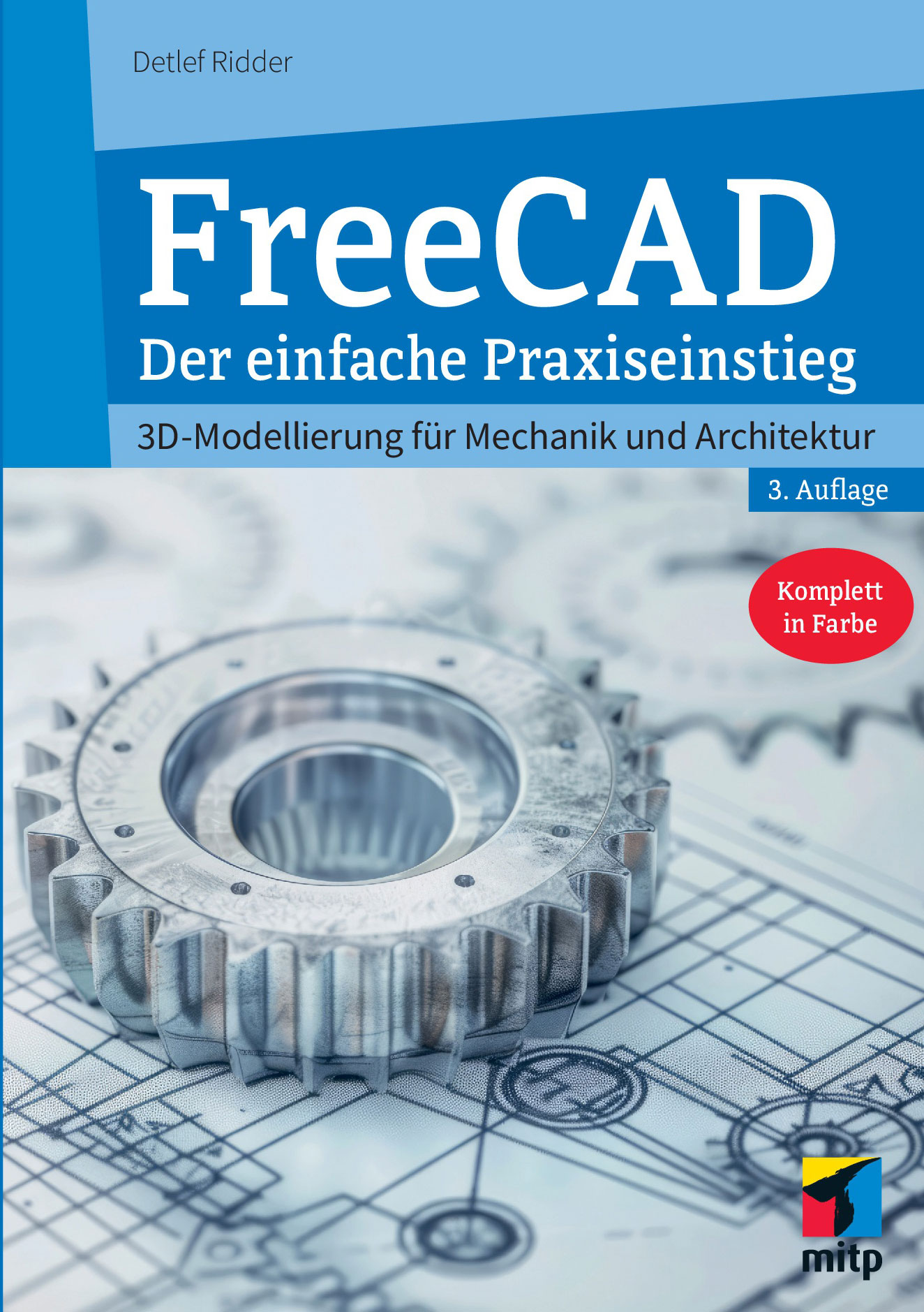
FreeCAD 1.0 (3. Auflage)
3D-Konstruktionen mit FreeCAD für Ein- und UmsteigerFreeCAD ist eine leistungsstarke Open-Source-Alternative zu professionellen CAD-Programmen. In diesem Buch lernen Sie alle wichtigen Funktionen für die 3D-Modellierung in Mechanik und Architektur von Grund auf kennen. Es eignet sich sowohl für CAD-Neulinge als auch für Umsteiger von anderen Programmen.Oberfläche und Arbeitsabläufe anschaulich erklärtSie erhalten eine umfassende Einführung in die Benutzeroberfläche, die Menüstruktur und die typischen Workflows von FreeCAD. Alle Arbeitsschritte – von der Modellierung über die Ableitung technischer Zeichnungen bis zur Ausgabe von Fertigungsdaten – werden anhand praktischer Beispiele leicht verständlich erklärt. Für einige einfache Teile wird die Generierung der Daten für NC-Fertigung und 3D-Druck gezeigt.Vollständige Beispiele für Mechanik und ArchitekturZwei durchgängige Beispiele zeigen Ihnen Schritt für Schritt das Vorgehen bei der Mechanikkonstruktion. In einem Bonus-Kapitel zum Download finden Sie ergänzend ein Architekturbeispiel für ein kleines Haus inklusive aller Details. So gewinnen Sie Sicherheit im Umgang mit FreeCAD und können künftig eigene Projekte umsetzen.Aus dem Inhalt:Einführung in die Benutzeroberfläche Handhabung der diversen Dialogfenster und Ansichten Arbeitsbereiche und Symbolleisten: Part Design (Mechanik) Volumenmodellierung BIM (Architektur, früher: Draft und Arch) TechDraw (Zeichnungsableitung, Bemaßung) Assembly (Zusammenbau von Baugruppen mit Abhängigkeiten) FEM (Festigkeitsberechnung) CAM (Fertigungsdaten erzeugen) Ausgabe für 3D-Druck und extern: Slic3r u.v.m. Vollständige Praxisbeispiele (Schreibtischschale, Schraubenschlüssel) Glossar für englische Bezeichnungen in der Programmoberfläche Für FreeCAD ab Version 1.0.0 für Windows, Linux und macOS.Leseprobe & Inhalt (PDF-Link) / Bonuskapitel (PDF-Link) / Downloads (zip-Link)Über den Autor:Detlef Ridder hat langjährige Erfahrung im Bereich CAD und bereits zahlreiche Bücher zu AutoCAD, Fusion 360, Inventor, Revit und ArchiCAD veröffentlicht. Er gibt Schulungen zu diesen Programmen und zu CNC und weiß daher, welche Themen für Einsteiger besonders wichtig sind.

Security-System Engineering
Das Anliegen des Buches ist es, das Wechselspiel zwischen geschäftlichen Anforderungen, geschäftlichen IT-Systemen und notwendigen Sicherheitsfunktionen strukturierter und methodischer zu erfassen. Hierzu wird die Herangehensweise verfolgt, etablierte System-Engineering Ansätze - wie etwa der ISO 15288 - auf das Ökosystem der Informationssicherheit zu übertragen. Informationssicherheit aus dem Kochbuch.- Security-System - Security und System.- Security-Systems-Engineering.- Business Kontext.- Security Kontext.- Security-Requirements.- Security-System Model.- Sicherheitsarchitektur.- Security Controls Management.- Security-Systems Management.

Datenschutzrechtliche Rollenzuweisungen
Die Arbeit evaluiert die praktische Effektivität und Schlüssigkeit des europäischen Datenschutzrechts in Bezug auf unterschiedliche Rollenzuweisungen. Um auf allgegenwärtige Strukturverschiebungen bei der Verarbeitung personenbezogener Daten und drohende Beeinträchtigungen für die Rechte Betroffener durch differenzierte Rollenzuweisungen zu reagieren, kommt der ganzheitlichen Fortentwicklung des Verantwortlichkeits- und Beteiligungsgefüges eine zentrale Bedeutung zu. Voraussetzung für vereinheitlichte Rollenzuweisungen auf europäischer Ebene ist die Entwicklung eines kohärenten Gesamtkonzepts, das sowohl die rechtlichen Voraussetzungen und Grenzen klar umreißt als auch allgemeingültige Regulierungsprinzipien festlegt. Nur ein im Kern harmonisierter Regelungsrahmen kann beteiligten Akteuren als Orientierungshilfe dienen, die – vorgeschaltet zur konkreten Einzelfallbetrachtung – dazu beiträgt, dass grundlegende Wertungen des europäischen Datenschutzrechts gewahrt werden. Einleitung.- Verarbeitung personenbezogener Daten im Strukturwandel.- Dimensionen des europäischen Datenschutzes.- Die gesetzlichen Grundlagen des die Rollenbilder betreffenden Normengefüges.- Einzelfallbezogene Rollenzuweisungen durch den EuGH.- Kritische Analyse der EuGH-Rechtsprechung.- Korrekturansätze und Gestaltungsspielräume unter dem bestehenden Regelungsgefüge.- Grundstrukturen und Musterfälle künftiger Rollenzuweisungen.- Schlussbetrachtung.
API Development with Laravel
API Development with Laravel is your quick start guide to understanding and developing APIs in Laravel. Concepts are presented in an easy-to-follow and digestable manner. The concepts are not only clearly explained but practical examples are used to show how they are implemented. During the course of this book, you’ll learn how to build a RESTful Payment Processing API of your own. The book is written in a straight-forward manner ensuring your time is not wasted. We will start with an a general introduction to APIs before focusing on RESTful APIs in particular. We then look at setting up our development environments after which, we will look at why Laravel is a tool of choice for API development, exploring Laravel concepts for API development. We'll then start the implementation of our project using concepts we have learned. Finally, we'll look at how to deploy our project. You Will Learn To: * Develop Laravel-powered RESTful APIs * Build a Payment Processing API * Test your APIs * Deploy your APIs * Document and version control your APIs * Make APIs secure with security best practices This Book Is For: Anyone interested in acquiring knowledge about API development. The ideal reader should possess the ability to navigate a computer's file system, as well as the skills to create, open, and manage files and folders. Additionally, familiarity with web browsers and the capability to navigate between different websites is essential. A willingness to use the command line and an understanding of basic programming concepts, particularly in PHP, is also recommended. Part I: Fundamentals of Lavavel APIs.- Chapter 1. Introduction To APIs.-Chapter 2. Laravel, Development And Test Tools Installation.- Chapter 3. Laravel For API Development.- Chapter 4. Laravel For API Development: Further Steps.- Part II: Payment Processor API Development.- Chapter 5. Magic Link and Dashboard Implementation.- Chapter 6. Endpoints Implementation and Documentation.- Chapter 7. Automated Functional Testing with EchoAPI.- Chapter 8. Webhook and Asynchronous Notifications Implementation.- Chapter 9. Deploying And Scaling Your API Using CapRover.
Securing the Enterprise
Cybersecurity is no longer just an IT issue; it is a business-critical function requiring executive oversight and strategic implementation. This book offers a practical approach to cybersecurity leadership, risk management, and frameworks such as NIST, MITRE ATT&CK, and Zero Trust. The book blends executive strategy with hands-on cybersecurity methodologies, providing a holistic understanding for CXOs, CISOs, and IT security professionals. By exploring real-world case studies and breaches, such as SolarWinds and Colonial Pipeline, this book equips you with proactive defense strategies, governance insights, and the technical knowledge required to secure enterprise infrastructures effectively. What You Will Learn * Align cybersecurity with business strategy and executive decision making * Cover practical implementation of frameworks such as NIST CSF, ISO 27001, and Zero Trust * Respond to cyber incidents and build a resilient security culture * Understand key cybersecurity principles, including threat intelligence and risk management * Study advanced cybersecurity topics, including AI-driven threats, ransomware, and cloud security Who This Book Is For Cybersecurity professionals, CISOs, CIOs, IT security architects, and risk managers; plus business executives, Chief Experience Officers (CXOs), board members, compliance officers, graduate students in cybersecurity Part 1: Foundations of Cybersecurity.- Chapter 1: Introduction to Cybersecurity.- Chapter 2: Core Cybersecurity Concepts.- Chapter 3: The Threat Landscape.- Part 2: The Role of Leaders in Cybersecurity.- Chapter 4: The Role of CXOs & Executive Leaders.- Chapter 5: The Role of the Board of Directors.- Chapter 6: The CISO Role & Responsibilities.- Chapter 7: Leadership & Communication.- Chapter 8: CISO Skills & Competencies.- Part 3: Cybersecurity Frameworks & Regulations.- Chapter 9: Key Cybersecurity Frameworks.- Chapter 10: Compliance & Regulations.- Chapter 11: Implementing a Security Program.- Part 4: Advanced Topics in Cybersecurity.- Chapter 12: Cloud Security.- Chapter 13: Security Information & Event Management (SIEM).- Chapter 14: AI & Machine Learning in Cybersecurity.- Chapter 15: IoT Security.- Chapter 16: Blockchain & Cryptocurrency Security.- Chapter 17: Zero Trust Architecture (ZTA).- Part 5: Cybersecurity Tabletop Exercises (TTXs) & Case Studies.- Chapter 18: Cybersecurity Tabletop Exercises (TTXs).- Chapter 19: Notable Cybersecurity Incidents & Lessons Learned.- Chapter 20: Future of Cybersecurity.- Chapter 21: Tabletop Exercise - A Critical Tool for Incident Preparedness.- Chapter 22: David vs. Goliath: Cybersecurity's Constant Struggle.
The Low-Code AI Maturity Model
Written from the perspective of an experienced IT expert, this book leverages a maturity model framework to guide organizations through each stage of adopting, securing, scaling, and tracking the value of low-code AI responsibly and efficiently. Unlike other works that focus only on AI’s technical aspects, this book boasts a practical roadmap for responsible AI adoption and provides a clear, structured maturity model that guides organizations from foundational steps to advanced, responsible AI practices. In a world where organizations are under pressure to innovate quickly and responsibly, this book provides a structured approach, addressing essential elements such as data management, governance, ethics and compliance in low-code AI environments. Each chapter represents a maturity level, from foundational to optimized, offering readers insights, practical steps and examples to support their journey. The Low-Code AI Maturity Model takes a comprehensive look into the transformative potential of low-code and AI. What You Will Learn * Identify, assess and mitigate risks to ensure stable and reliable AI deployments * Implement robust governance, aligning with compliance standards and ethical principles at each maturity stage * Evaluate the real business value and ROI of AI projects, empowering data-driven decision-making Who This Book Is For IT leaders, decision-makers, and technology enthusiasts interested in the transformative potential of low-code and AI Part 1: Leadership and Culture.- Chapter 1: Foundational: Leadership and Culture.- Chapter 2: Emerging: Leadership and Culture.- Chapter 3: Operationalized: Leadership and culture.- Chapter 4: Integrated Excellence: Leadership and Culture.- Part 2: Establishing Trust and Governance.- Chapter 5: Foundational: EstablishingTrust and Governance.- Chapter 6: Emerging: Establishing Trust and Governance.- Chapter 7: Operationalized: Establishing Trust and Governance.- Chapter 8: Integrated Excellence:Establishing Trust and Governance.- Part 3: Data Readiness and Security.- Chapter 9: Foundational: Data Readiness and Security.- Chapter 10: Emerging: Data Readiness and Security- Chapter 11: Data Readiness and Security: Operationalized Stage.- Chapter 12: Data Readiness and Security: Integrated Excellence Stage.- Chapter 13: The Journey Forward: Leadership in the Age of Low-Code AI.

IoT Product Development Using ESP32 Microcontrollers
Develop a comprehensive understanding of IoT product development using ESP32 microcontrollers. This book takes readers on a journey from sensor interface example to an ESP32-based product example where we discuss all aspects of a product including rapid prototyping, cloud interface, product provision, and device fleet management. We will start with an introduction to the ESP32 microcontroller series and discuss programming language options for the ESP32 platform. Next, we explore publishing sensor data to the cloud using the ESP32. This is followed by a review of using the ESP32 to pull data from a public source and display it using a visual aid. The next few chapters demonstrate the construction of a low-cost Bluetooth sensor node using the ESP32, data aggregation with the ESP32, where collect and publish data aggregated from low-power radio networks, and the development of edge devices using the ESP32. The final chapter shows how to build an ESP32-enabled product that publishes data to the cloud, giving you confidence to start building on your own. What You Will Learn · Learn about the rich and powerful features of the ESP32 family of microcontrollers · Get a thorough idea of rapid prototyping tools and techniques for IoT product development · Understand the various communication protocols and standards available for IoT product development Who Is This Book For Readers with some experience with electronics and at least one programming language will be able to make the most of this book. Chapter 1. Introduction to the ESP32 Platform.- Chapter 2. Building a Weather Station.- Chapter 3. Visual Aid for Air Quality.- Chapter 4. Building Bluetooth Products using ESP32.- Chapter 5. Low Power & Long Range Radios with ESP32.- Chapter 6. Building TinyML Products.- Chapter 7. Let’s Build a Product!.
AI Strategy and Security
AI will fundamentally change the way business is conducted across most industries. Organizations that excel at leveraging secure, responsible AI to advance their strategic objectives will have a distinct advantage. Those that do not may see their market share erode. This book provides a guide for organizations to integrate AI in alignment with the organization's strategic goals. The framework provides a roadmap for adopting secure, responsible, and resilient AI, from initial strategy development to ongoing operations that will help advance market leadership. Part one of the book discusses laying a solid foundation to ensure successful AI integration, beginning with developing an AI strategy aligned with strategic business objectives, such as product and service differentiation, market expansion, and process optimization. Part Two takes a deep dive into ensuring secure and safe AI adoption. It proposes a secure-by-design approach to AI development that considers AI-specific attack vectors and associated security practices throughout the AI lifecycle. Developing and deploying secure, responsible, and resilient AI is not a one-time effort. Therefore, Part Three discusses operationalizing AI and integrating it throughout the enterprise to ensure continued success. This section focuses on scaling AI applications and continuous improvement, including establishing metrics and conducting a post-deployment ROI evaluation. Finally, it discusses how to foster a culture of AI innovation and excellence, ensuring that AI becomes a way of doing business. What You Will Learn: * Develop an AI integration strategy aligned with the organization's strategic goals and objectives. * Incorporate a secure-by-design approach to AI integration that considers AI-specific attack vectors and applies traditional and AI-specific defense methods, such as adversarial development, model behavior monitoring, drift analysis, input validation and filtering, and output filtering. * Establish an AI governance and risk management framework to ensure ongoing compliance with applicable legislation, industry standards, organizational policies, and responsible AI principles. * Operationalize and scale AI applications to ensure resilient production usage and facilitate continuous improvement. * Foster a culture of AI innovation and excellence, ensuring that AI becomes a way of doing business. Who This Book is for: The primary audience includes business leaders, AI practitioners, AI executives, AI governance professionals, and cybersecurity leaders looking to integrate AI as a strategic differentiator and to enhance business operations. Higher education would be a secondary audience. Chapter 1, Strategy Development.- Chapter 2, Assess AI Readiness.- Chapter 3, The Team.- Chapter 4, Securing AI.- Chapter 5, Governance and Risks.- Chapter 6, Ensuring Responsible AI.- Chapter 7, Regulations and Standards.- Chapter 8, Operationalizing AI.- Chapter 9, Continuous Improvement.- Chapter 10, AI as a Way of Doing Business.- Chapter 11, The AI Adoption and Management Framework.

GitHub Copilot and AI Coding Tools in Practice
Learn the current state of generative AI coding tools like GitHub Copilot, what the underlying models mean, and how to use them across the full development life-cycle. Look ahead to the near future of AI-generated software and understand how software developers can stay relevant in the industry. Many companies have predicted that human coders will soon be redundant due to AI-generated code, but there is a big gap between the expectations and what is actually happening on the ground. A closer look at the current state of the tools and research in this area will offer realism and guidance to developers worried regarding redundancy. Close the gap between hype and practical applications by receiving context and clear technical information on usage, understanding, and deployment of these tools. What You Will Learn: * How to use coding and software AI tools * How software AI tools work * How software AI tools fit in an industry context * How to use AI tools across the SDLC – it's more than just faster coding Who This Book is For All software industry participants interested in mastering AI-generated code. Chapter 1: Current State of Play - The High Level View.- Chapter 2: Using an AI Coding Agent.- Chapter 3: Large Language Models - Under the Hood.- Chapter 4: Prompt Engineering with AI Coding Agents.- Chapter 5: Customizing and Extending Copilot.- Chapter 6: Security in the Time of Copilot.- Chapter 7: Designing Applications with Copilot.- Chapter 8: Infrastructure, DevOps and Monitoring with Copilot and AI.- Chapter 9: Databases and AI.- Chapter 10: Copilot and Data Science.- Chapter 11: Code Migrations and Refactoring.- Chapter 12: Testing Augmentation with AI.- Chapter 13: Management Challenges Introducing AI.- Chapter 14: Surviving as a Software Engineer.- Chapter 15: Introducing and Integrating Copilot in an Organization.

Creative Machines
Praise for Creative Machines “Creative Machines challenges the illusion of either/or—inviting us to embrace the transformative power of and. It’s a visionary call to dissolve the artificial boundaries between art and technology, the physical and digital, prose and code. This isn’t about machines becoming human— it’s about humans fully realizing our potential.” —HANNAH GELLER, Emmy-nominated Producer “This book hits at exactly the right moment. In an industry flooded with fast tech, Creative Machines asks the deeper questions: about artistry, AI, and where we actually want this to go.” —DANIEL ROWLAND, Oscar-winning, Grammy-nominated Audio Engineer and Producer “Creative Machines opens up a critical and often overlooked part of the AI conversation: how these tools are actually used by real people in creative workflows.” —MATEI ZAHARIA, CTO of Databricks and Professor at the University of California, Berkeley A BOLD AND EYE-OPENING JOURNEY INTO AI’S POWER TO TRANSFORM HUMAN CREATIVITY Creative Machines: AI, Art & Us, by renowned generative AI researcher and pioneer, Maya Ackerman, is an exciting and original new discussion of the rise of creative artificial intelligence. She takes you on a journey that begins with the earliest AI trailblazers and concludes with examinations of the contemporary, cutting-edge tools shaping music, art, and human imagination today. Ackerman demolishes the hype and misinformation that surrounds generative AI to reveal the opportunities and dangers that the technology actually presents. She draws on psychology, neuroscience, and her own data-driven research to explain how generative artificial intelligence can enhance the brilliance and expose the blind spots in human creativity. Creative Machines is an exciting and practical walk-through of the creative and imaginative dimensions of our humanity—our ingenuity, biases, intelligence, and identities—and how we can build on them using AI. It’s a must-read for developers, founders, ethicists, artists, business leaders, and anyone else interested in harnessing the latest developments in tech to discover new ways of doing business, creating art, and explaining the world around us. A bold and thought-provoking journey into AI's power to transform human creativity In Creative Machines: AI, Art & Us, world-renowned AI researcher and generative AI pioneer, Maya Ackerman, takes you on a thrilling journey into the rise of creative AI, from its earliest pioneers to the cutting-edge tools shaping music, art, and human imagination today. Ackerman cuts through the hype, revealing the true capabilities and limitations of generative AI while championing its potential to amplify human creativity rather than replace it. Drawing on psychology, philosophy, and her own cutting-edge research, she reveals how generative AI exposes both the brilliance and the blind spots of human society—our ingenuity, our biases, our assumptions about intelligence and identity. The book contains: The hidden history and explosive growth of AI-generated creativityExplorations of the true capabilities and limitations of creative AIA visionary framework for using AI as a tool to enhance, rather than hinder, human creativityA bold new perspective on AI ethics and why fixing AI is not enough Perfect for entrepreneurs, tech leaders, developers, ethicists, and creative professionals, Creative Machines offers deep insights, compelling stories, and a visionary perspective on AI's impact on human society. An essential read for anyone doing their best to navigate the rapidly evolving landscape of generative AI. MAYA ACKERMAN, PHD, is an internationally renowned leader in generative AI, pioneering the next chapter of creativity. As CEO and Co-Founder of WaveAI, one of the earliest generative AI startups, she has enabled millions to explore new frontiers in creative expression through AI. An Associate Professor at Santa Clara University, Dr. Ackerman is widely known for her research on AI and creativity. Dr. Ackerman’s insights have been featured in NBC News, NPR, Forbes, and more. Her work champions the role of AI in amplifying—rather than replacing—human creativity.

Language Models kompakt
Sie möchten in die Welt der Large Language Models eintauchen? Dieses handliche Buch hilft Ihnen, das nötige Grundlagenwissen aufzubauen, um das Innenleben von LLMs zu verstehen und erste praktische Erfahrungen zu sammeln. Es führt Schritt für Schritt in die Sprachmodellierung ein, beginnend mit Machine Learning und neuronalen Netzen über RNNs und Transformern bis zu aktuellen LLM-Architekturen. Das Buch unterstützt Sie dabei:die mathematischen Grundlagen des Machine Learnings und der neuronalen Netze zu verstehen und zu beherrschendrei Architekturen von Language Models in Python zu erstellen und zu trainierenein Transformer-Sprachmodell von Grund auf in PyTorch zu programmierenmit LLMs zu arbeiten und effektive Prompt-Engineering- und Feinetuning-Techniken kennenzulernenHalluzinationen zu vermeiden und Modelle zu bewertenÜber den Autor:Andriy Burkov hat einen Doktortitel in Künstlicher Intelligenz und ist ein anerkannter Experte für Machine Learning und Natural Language Processing. Bei Fujitsu und Gartner hat er zahlreiche produktionsreife KI-Projekte in verschiedenen Geschäftsbereichen erfolgreich geleitet. Seine Bücher wurden in zwölf Sprachen übersetzt und werden als Lehrbücher an vielen Universitäten weltweit verwendet. Seine Arbeit hat Millionen von Praktikern und Forschern im Bereich Machine Learning weltweit beeinflusst.
Language Models kompakt
Der schnellste Weg, um die Mechanismen von LLMs zu verstehen - Dieses Buch ist eine sehr komprimierte und gleichzeitig gut verständliche Einführung in die Entwicklung von Large Language Models - Ideal für alle, die sich schnell und fundiert in die Grundlagen von LLMs einarbeiten wollen - Vom Bestseller-Autor Andriy Burkov, der in seiner renommierten »Hundred-Page«-Reihe zu Machine-Learning-Themen Konzepte besonders klar und knapp erklärt Sie möchten in die Welt der Large Language Models eintauchen? Dieses handliche Buch hilft Ihnen, das nötige Grundlagenwissen aufzubauen, um das Innenleben von LLMs zu verstehen und erste praktische Erfahrungen zu sammeln. Es führt Schritt für Schritt in die Sprachmodellierung ein, beginnend mit Machine Learning und neuronalen Netzen über RNNs und Transformern bis zu aktuellen LLM-Architekturen. Bestseller-Autor Andriy Burkov – bekannt für seine »Hundred-Page«-Reihe zu Machine-Learning-Themen – macht die komplexen Ideen leicht zugänglich, indem er gut verständliche Erklärungen der Mathematik, zahlreiche Illustrationen und den Python-Code ausgewogen einsetzt. Auf der Website zum Buch finden Sie direkt ausführbare Codeschnipsel und PyTorch-Implementierungen in Jupyter Notebooks, die die Konzepte perfekt veranschaulichen. Das Buch unterstützt Sie dabei: - die mathematischen Grundlagen des Machine Learnings und der neuronalen Netze zu verstehen und zu beherrschen - drei Architekturen von Language Models in Python zu erstellen und zu trainieren - ein Transformer-Sprachmodell von Grund auf in PyTorch zu programmieren - mit LLMs zu arbeiten und effektive Prompt-Engineering- und Feinetuning-Techniken kennenzulernen - Halluzinationen zu vermeiden und Modelle zu bewerten