

Computer und IT
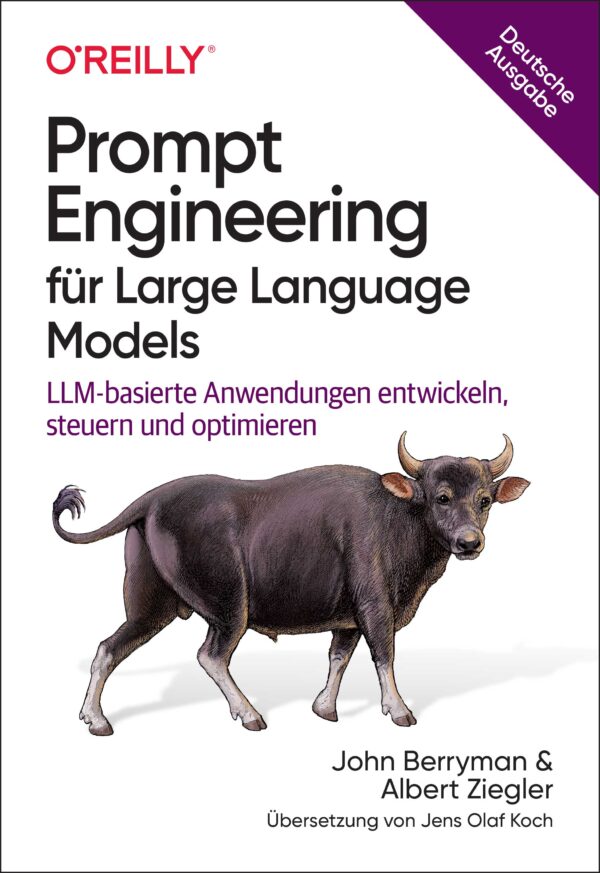
Prompt Engineering für Large Language Models
LLM-Anwendungen effektiv steuern: von der Prompt-Optimierung bis zur Workflow-IntegrationLLMs als leistungsstarke Bausteine für Anwendungen nutzenDen richtigen Prompt und Kontext für nützliche Ergebnisse gestaltenVon der Erfahrung der GitHub-Copilot-Entwickler profitierenFortgeschrittene Konzepte wie Conversational Agency und Workflow-Steuerung meisternLarge Language Models (LLMs) revolutionieren die Welt. Sie bieten die Möglichkeit, Aufgaben zu automatisieren und komplexe Probleme zu lösen. Eine neue Generation von Softwareanwendungen nutzt diese Modelle als zentrale Bausteine und erschließt in praktisch allen Bereichen völlig neues Potenzial. Um zuverlässig auf diese Funktionen zugreifen zu können, sind jedoch neue Fähigkeiten erforderlich.Mit diesem Buch eignen Sie sich die Kunst und die Techniken des Prompt Engineering an und schöpfen die Möglichkeiten von LLMs voll aus.Die Branchenexperten John Berryman und Albert Ziegler erklären, wie man effektiv mit KI kommuniziert und Ideen in ein sprachmodellfreundliches Format umwandelt. Durch das Erlernen der konzeptionellen Grundlagen und der praktischen Techniken erwerben Sie das Wissen und die nötige Sicherheit, um die nächste Generation von LLM-basierten Anwendungen zu entwickeln.Aus dem Inhalt:Verstehen Sie die LLM-Architektur und erfahren Sie, wie Sie am besten mit ihr interagieren können.Entwerfen Sie eine umfassende Strategie zur Erstellung von Prompts für eine Anwendung.Sammeln, sortieren und präsentieren Sie Kontextelemente, um eine effiziente Eingabeaufforderung zu erstellen.Erlernen Sie spezifische Techniken, um Prompts zu erstellen, wie Few-Shot-Prompting, Chain-of-Thought-Prompting und RAG.Leseprobe (PDF-Link)Über die Autoren: John Berryman ist Gründer von Arcturus Labs, einem Unternehmen, das sich auf die Entwicklung von LLM-basierten Anwendungen spezialisiert hat. Er war einer der ersten Entwickler bei GitHub Copilot und arbeitete dort an Chat- und Code-Vervollständigungsfunktionen. John ist außerdem Suchmaschinenexperte und Autor des Fachbuchs „Relevant Search“ (Manning).Albert Ziegler ist Head of AI beim KI-Cybersicherheitsunternehmen XBOW. Als einer der Gründungsentwickler von GitHub Copilot, dem ersten erfolgreichen LLM-Produkt im industriellen Maßstab, entwarf er dessen Systeme für die Modellinteraktion und das Prompt Engineering.

Becoming Quantum Safe
“The book Becoming Quantum Safe is a timely and essential guide for business and technology leaders. As quantum computing accelerates, the risks to today’s cryptographic systems are no longer theoretical. This book offers practical strategies and a clear roadmap to help organizations navigate the quantum era with confidence and build a secure digital future.” —ARVIND KRISHNA, CEO and Chairman, IBM A practical guide to navigating cryptographic challenges in the era of quantum computing. Becoming Quantum Safe: Protect Your Business and Mitigate Risks with Post-Quantum Cryptography and Crypto-Agility is a definitive, pragmatic guide designed for CISOs, CTOs, CIOs, CROs, CCOs, CDOs, DPOs, security leaders, and technology executives who need to understand and act on the quantum computing threat to current cryptography. This comprehensive playbook delivers step-by-step strategies to transition to Post-Quantum Cryptography (PQC)—ensuring your organization remains secure, compliant, and resilient in the quantum era. Authored by leading experts in cybersecurity, cryptography, and quantum technologies, this book demystifies the quantum threat, explains the vulnerabilities in today’s encryption, and provides a clear, actionable roadmap to achieve crypto-agility and implement quantum safe cryptography. What You Will Learn: How Quantum Computing Threatens Current Encryption Understand the real risks quantum computing poses to RSA, ECC, and other widely used encryption. Gain explanations of Shor’s Algorithm, Grover’s Algorithm, and how they impact classical cryptography.Practical Crypto-Agility Strategies Learn how to build a crypto-agile enterprise—one that can rapidly adopt, test, deploy, and manage new cryptographic standards without disrupting business operations.A Roadmap to Post-Quantum Cryptography (PQC) Adoption Follow a proven, step-by-step framework to transition from classical to quantum safe cryptography. Identify key milestones, address operational challenges, and implement solutions that safeguard data, operations, and digital trust.Learning from Real-World Enterprises Across Industries Insights from global enterprises in banking, financial services, government, telecommunications, healthcare, and retail embarking on their journey to quantum safe. A practical guide to navigating cryptographic challenges in the era of quantum computing. Becoming Quantum Safe: Implementing Post-Quantum Cryptography to Mitigate Risks and Protect Your Business is a is a definitive, pragmatic guide designed for CISOs, CTOs, CIOs, CROs, CCOs, CDOs, DPOs, security leaders, and technology executives who need to understand and act on the challenge posed by quantum computing to current cryptography. This comprehensive playbook delivers step-by-step strategies for transitioning to Post-Quantum Cryptography (PQC)—ensuring your organization remains secure, compliant, and resilient in the quantum era. Authored by leading experts in cybersecurity, cryptography, and quantum technologies, this book demystifies the quantum threat, explains the vulnerabilities in today's encryption, and provides clear, actionable guidance to achieve crypto-agility and implement quantum-safe cryptography. What You Will Learn: What is Quantum Computing and how it Threatens Current Encryption Understand the basics of quantum computing and the challenges it poses to RSA, ECC, and other widely used encryption. Gain explanations of Shor's Algorithm, Grover's Algorithm, and how they impact classical cryptography.Practical Crypto-Agility Strategies Learn how to build a crypto-agile enterprise—one that can rapidly adopt, test, deploy, and manage new cryptographic standards without disrupting business operations.A Roadmap to Post-Quantum Cryptography (PQC) Adoption Follow a proven, step-by-step framework to transition from classical to quantum-safe cryptography. Identify key milestones, address operational challenges, and implement solutions that safeguard data, operations, and digital trust. Learn about the consortia work that brings together players in the ecosystem and how one can leverage the work being done to accelerate the quantum safe journey.Case Studies Across Industries See how global leaders in banking, financial services, government, telecommunications, healthcare, and retail are adopting post-quantum cryptography to mitigate risks, achieve compliance, and future-proof their security infrastructure. Why This Book Matters Now: The quantum threat to encryption is real and time-sensitive. Quantum computers will render today's encryption obsolete, exposing sensitive data, customer trust, and business continuity. Regulatory pressures are rising. Governments and standards bodies across the globe are mandating quantum-safe transitions.Organizations that embrace crypto-agility today will lead the future, maintaining a secure competitive edge in a quantum-powered world. JAI SINGH ARUN spearheads global business strategy, product management, engineering, and go-to-market execution for IBM Quantum Safe. RAY HARISHANKAR is an IBM Fellow in the Quantum team. He leads business and technical strategy for IBM Quantum Safe. WALID RJAIBI is a Distinguished Engineer and Chief Architect for Quantum Safe at IBM Research. He leads innovations to make the world quantum safe.
The Ethics of Artificial Intelligence
The Ethics of Artificial Intelligence discusses the need for ethics accompanying developments in artificial intelligence, from the point of view of different disciplinary fields and sectors of activity. Artificial intelligence is profoundly restructuring our practices, creating new methods and significantly influencing the way we think and interact, at the level of individuals, organizations and societies, whether in our private, public or professional lives. This book begins with a rather conceptual approach, particularly focusing on the possible future of AI. It then highlights the urgent need to establish an ethical framework for the uses associated with AI, illustrating two booming sectors of activity. Finally, it discusses the ethics of AI in professional sectors that are undergoing major changes because of the digitization of their activities. Franck Debos is a lecturer in SIC at the Université de Nice Côte d'Azur, France. His research interests include issues associated with the ethics of AI, smart cities and digital uses.

Show AI--Don't Tell It
Praise forSHOW AI—DON’T TELL IT “Finally, a playbook that shows how to unlock AI’s power with business leaders, not just engineers, and demystifies the path from vision to real value.” —MARY SHEA, PHD, Former Principal Analyst at Forrester, Co-Founder & Chief Growth Officer at Meerkat “Her step-by-step methodology is the essential AI guide for driving collaborative, secure innovation, fast.” —ROB BENCE, VP of Technology & Cybersecurity at Tepper Sports and Entertainment, Owners of the Carolina Panthers “Critical resource for business leaders—this book fills in all the gaps between LLMs and making money!” —CHRIS GERMANN, Advisor to CMOs, Independent Consultant, Former Gartner VP, CIO Research Program “If you want to turn skeptics into champions, show them exactly how AI changes the game for your business.” —GREG NICHOLS, President of Technology Partners, AI Investor “Dr. Lisa delivers the field guide for leaders ready to secure the future by pairing advanced technology with courageous human leadership.” —JULIE VIDA, Retired Naval Commander, Cybersecurity Board Director, Former Splunk Chief Strategy Advisor “Every services partner chasing AI deals needs a blueprint like this for turning strategy into action and pipeline into revenue.” —JUSTIN SLAGLE, Former Microsoft Director, Global Systems Integrators, Founder & CEO of The Partner Masters The secret to AI adoption? Stop explaining the tech—help your organization visualize business success. Stakeholders don't invest in AI because they understand the tech—they invest when its business impact is clear and undeniable. In Show AI—Don't Tell It, AI executive and business strategist Dr. Lisa Palmer reveals how to use visual storytelling to make AI's value tangible, turning complex ideas into clear business outcomes that drive buy-in, adoption, and scale. Instead of vague theories and hype, this book provides clear frameworks, practical tools, and proven visualization techniques to help leaders secure funding, accelerate implementation, and maximize AI's impact. Applying her Bold AI Leadership Model, Dr. Palmer lays out a structured approach to AI success: Mindset: The four Applied AI Guiding Principles—Business Value, Speed with Rigor, Simplicity, and Human-Centricity—keep AI initiatives focused, efficient, and impactful.Strategic Priorities: The five AI Success Pillars—Value Creation, Customer-Centricity, Collaborative Teams, Cultural Shifts, and Data as a Strategic Asset—ensure AI drives measurable business results.Practical Tools: The Visualization Tool Decision Framework, featuring over 20 strategic visualization tools, helps leaders simplify complexity, overcome resistance, and communicate AI's impact with clarity and confidence. A must-read for executives, business leaders, and AI practitioners, Show AI—Don't Tell It provides the mindset, strategy, and tools needed to translate AI's potential into tangible value. Whether you're seeking stakeholder buy-in, funding approval, or faster adoption, this book shows you exactly how to use visual storytelling to accelerate business success with AI. DR. LISA PALMER is an Applied AI Executive Advisor, global keynote speaker, and the founder of an AI venture blending cutting-edge AI software with human expertise. Her unique value lies in having been a technology buyer, seller, advisor, and researcher—giving her a 360-degree perspective on how to turn AI into practical, profitable, people-friendly results.

Rechnernetze (8. Auflg.)
Ein einführendes Lehrbuch in 8. Auflage aus dem September 2025.Dieses einführende Lehrbuch für Studierende der Informatik und ingenieurwissenschaftlicher Studiengänge an Hochschulen und Berufsakademien vermittelt praxisnah und leicht verständlich die Grundlagen der Netzwerktechnik und der Netzwerkarchitektur. Es erläutert die Voraussetzungen, die Funktionsweise und die technischen Hintergründe von Computernetzwerken.Das Buch befähigt nicht nur zur Beurteilung der Technik, sondern hilft auch, praktische Abwägungen und Entscheidungen bei der Netzwerkplanung zu treffen. Es zeigt neben den Basiskomponenten, Übertragungsverfahren und Verbindungskomponenten auch strategische Aspekte, Trends und zukünftige Entwicklungslinien und vermittelt die Grundlagen zu Strategien und Methoden der Computervernetzung.Neu in der achten Auflage:Neue Transportprotokolle und Sicherheit in Transportkontrollen: Transport Layer Security (TLS), QUIC; Erweiterung Routing-Protokolle: Border Gateway Protocol (BGP); Sicherheit bei der Namensauflösung: DNS über HTTPS; neuer WLAN-Standard: Wifi7; Trends im Ethernet: automotive Ethernet, Time Sensitive Networking; Standards im und Organisation des Internets.Auf plus.hanser-fachbuch.de finden Sie zu diesem Titel digitales Zusatzmaterial: Lehrvideos, Quizzes zur Lernkontrolle, Mind-Maps der wichtigsten Konfigurationsbefehle für Cisco Router/Switches und die Lösungen zu den Aufgaben.

The Hypermodernity Factory
The digital regime and its bio-anthropotechnology, characteristic of hypermodernity, are giving rise to unprecedented living and working conditions. Relational, inter-individual and exchange systems are being transformed. Technologies bring new ways of communicating, speaking, writing, organizing and controlling tasks. They are explicit, but their reticularities also operate invisibly, underground. However, they define powerful norms for work. Beyond the digital object, at the heart of the computerization process of the last fifty years in France, a progressive transformation of the work regime has taken place. As our social ecologies adapt, adopt, conform and metamorphose, conflict, polemics and sometimes creative resistance emerge. The Hypermodernity Factory is based on an investigation carried out within an administrative department of Inria (the French public institute for research into information technology and techniques) – then in the midst of a social crisis – to discern psychic and collective individuation processes, in a context of instability and specific communication difficulties. Immersed in these almost disruptive anthropotechnical conditions, and subject to unavoidable processes of subjectivation, the subject of office life, from manager to employee, finds themselves in a confused situation; they are constantly living a complex experience of their own in the hybrid, dynamic evolution of the digital regime. Anaïs Djouad, after various assignments in the public and private sectors, became a game designer during the serious games boom. In 2022, she defended her sociology thesis at the EHESS; she is now a sociologist and teacher.

Driving Innovation through AI and Digital Twin for 6G Powered Sustainable Ultra Smart Cities
This book presents the 6G powered integration of Artificial Intelligence (AI) and Digital Twin (DT) technology for sustainable smart cities. In the context of smart cities, 6G, AI and DT hold enormous potential for transformation by boosting city infrastructure and planning, streamlining healthcare facilities, and improving transportation. 6G offers high speed and low latency seamless transfer of vast amounts of data which, when analysed with sophisticated AI models, enhance the decision-making capabilities for smart city infrastructure and urban planning. DT technology, through continuous monitoring and virtual modeling of urban ecosystems, enables predictive maintenance for energy distribution, water management and waste management in a smart city landscape for environmental sustainability. Driving Innovation through AI and Digital Twin for 6G Powered Sustainable Ultra Smart Cities covers the 6G technological innovations, trends and concerns, as well as practical challenges encountered in the implementation of AI and DT for transforming smart cities for a sustainable future. Ashu Taneja is Associate Professor at the Centre for Research Impact and Outcome (CRIO), Chitkara University, India. Abhishek Kumar is a Senior Member of IEEE and works as Assistant Director and Professor in the Computer Science & Engineering Department at Chandigarh University, India. Suresh Vishnudas Limkar is Assistant Professor at the Department of Computer Science and Engineering at the Central University of Jammu, India. Mariya Ouaissa is Professor of Cybersecurity and Networks at the Faculty of Sciences Semlalia, Cadi Ayyad University, Morocco. Mariyam Ouaissa is Assistant Professor of Networks and Systems at ENSA, Chouaib Doukkali University, Morocco.


Fit fürs Studium - Informatik (3. Auflg.)
Informatik – das Studium ist spannend und der Abschluss ist gefragt, aber gerade der Beginn hält einige Herausforderungen bereit. Programmierung ist dabei nicht alles. Mit Rechnerarchitektur, Komplexitätsberechnungen, formalen Kalkülen und nicht zuletzt einer guten Portion Mathematik tut sich leichter, wer vorbereitet an den Start geht.Dieses Buch ist der ideale Brückenkurs für alle, die einen besonders gut verständlichen Einstieg in die komplexen Themen der Informatik suchen. Die Autoren kennen typische Einstiegsprobleme und gehen auch schwierige Themen mit Schwung und didaktischem Feingefühl an. Diagramme, Beispiele und Aufgaben mit Musterlösungen helfen Ihnen, alles zu verstehen. So gehen Sie gut vorbereitet ins Studium.Aus dem Inhalt:Algorithmen und ihre KomplexitätFormale SprachenDatenstrukturen und CodierungBetriebssysteme und CompilerVerschlüsselungSoftwareentwicklung im TeamWichtiges aus der MathematikProgrammierung in PythonKünstliche IntelligenzWie werde ich Informatiker?Über die Autoren:Arne Boockmeyer ist Doktorand an der Professur für Betriebssysteme und Middleware am Hasso-Plattner-Institut in Potsdam.Philipp Fischbeck kennt typische Hürden beim Lernen aus seiner Arbeit mit Jugendlichen in Schüler*innen-Workshops und mit Studierenden als Tutor und Dozent am Hasso-Plattner-Institut.Stefan Neubert hat zahlreiche Informatik-Workshops und -Camps für Schüler*innen entwickelt und durchgeführt.

Künstliche Intelligenz für Alltag und Beruf
Künstliche Intelligenz für Alltag und BerufFür alle, die KI nicht nur verstehen, sondern sinnvoll nutzen und mitgestalten wollen!Die Künstliche Intelligenz verändert unsere Welt in rasantem Tempo – im privaten Alltag ebenso wie im Berufsleben. Dieses Buch bietet eine umfassende Einführung in die transformative Kraft der KI und zeigt, wie sie Lebensqualität, Produktivität und Entscheidungsprozesse neu definiert. Gleichzeitig beleuchtet es kritisch die ethischen, gesellschaftlichen und technologischen Herausforderungen, die mit dieser Entwicklung einhergehen.Ob im Management, im Ingenieurwesen oder im täglichen Leben – anhand zahlreicher praxisnaher Beispiele und fundierter Analysen erhalten Leserinnen und Leser einen vielschichtigen Einblick in die Wirkweise und Auswirkungen moderner KI-Systeme.Beschrieben werden u. a. private bzw. berufliche Anwendungen wie Spracherkennung, Finanzprognosen, maschinelles Sehen, medizinische Diagnosesysteme und Mensch-Maschine-Interaktionen. Ethische Herausforderungen und Fairnessprobleme werden aufgezeigt, um eine Vertrauenskrise zu vermeiden.Dieses Buch ist nicht nur ein informativer Leitfaden, sondern auch ein Denkanstoß: Es lädt dazu ein, die Rolle der KI in einer global vernetzten Welt zu hinterfragen, neue Kompetenzprofile zu entdecken und sich aktiv an der Gestaltung einer fairen, inklusiven und nachhaltigen Technologiezukunft zu beteiligen.Leseprobe (Link)Prof. Dr. Günter Hofbauer lehrt und forscht an der Technischen Hochschule Ingolstadt. Seine Schwerpunkte liegen im Innovations- und Technologiemanagement im internationalen Kontext. Der Forschungsschwerpunkt fokussiert sich auf die Anwendung der künstlichen Intelligenz in der Industrie, aber auch im Alltag. Er forscht als Gastprofessor an der Shenzhen Technology University in China.Dr. Ruimei Zhou ist Dekanin an der L.K. Group Industrial Technology Empowerment Akademie in Shenzhen, an der KI-Anwendungen gelehrt werden. Davor war sie tätig im Management der Shenzhen Artificial Intelligence Industry Association und des Standing Committee of the All-China Federation of Industry and Commerce Artificial Intelligence Committee. Sie hat mehr als 20 Jahre Management-Erfahrung in der Industrie und drei Jahre Lehrtätigkeit an einer Universität.

Rechnernetze (8. Auflg.)
Dieses einführende Lehrbuch für Studierende der Informatik und ingenieurwissenschaftlicher Studiengänge an Hochschulen und Berufsakademien vermittelt praxisnah und leicht verständlich die Grundlagen der Netzwerktechnik und der Netzwerkarchitektur. Es erläutert die Voraussetzungen, die Funktionsweise und die technischen Hintergründe von Computernetzwerken. Das Buch befähigt nicht nur zur Beurteilung der Technik, sondern hilft auch, praktische Abwägungen und Entscheidungen bei der Netzwerkplanung zu treffen. Es zeigt neben den Basiskomponenten, Übertragungsverfahren und Verbindungskomponenten auch strategische Aspekte, Trends und zukünftige Entwicklungslinien und vermittelt die Grundlagen zu Strategien und Methoden der Computervernetzung. Neu in der achten Auflage: Neue Transportprotokolle und Sicherheit in Transportkontrollen: Transport Layer Security (TLS), QUIC; Erweiterung Routing-Protokolle: Border Gateway Protocol (BGP); Sicherheit bei der Namensauflösung: DNS über HTTPS; neuer WLAN-Standard: Wifi7; Trends im Ethernet: automotive Ethernet, Time Sensitive Networking; Standards im und Organisation des Internets. Auf plus.hanser-fachbuch.de finden Sie zu diesem Titel digitales Zusatzmaterial: Lehrvideos, Quizzes zur Lernkontrolle, Mind-Maps der wichtigsten Konfigurationsbefehle für Cisco Router/Switches und die Lösungen zu den Aufgaben.

Programmieren mit PHP
Programmieren mit PHP: Einstieg in die serverseitige Webprogrammierung. Erstauflage aus Oktober 2025.Dieses Einsteigerbuch zu PHP vermittelt grundlegende Konzepte und Techniken der Programmiersprache PHP. Leser lernen, wie man einfache Webanwendungen entwickelt, HTML mit PHP dynamisch kombiniert und Formulardaten verarbeitet. Quasi nebenbei wird damit auch ein grundlegender Einstieg in die allgemeinen Konzepte der Programmierung vermittelt.Das Buch führt durch grundlegende Syntax, Variablen, Kontrollstrukturen (wie Schleifen und Bedingungen), Funktionen sowie den Umgang mit Datenbanken (meist mit MySQL). Es bietet praktische Übungen, um Leser Schritt für Schritt in die Erstellung interaktiver Webseiten und die Verarbeitung von Benutzereingaben einzuführen. Am Ende ist der Leser in der Lage, einfache, datenbankgestützte Webanwendungen zu programmieren.Aus dem Inhalt: Voraussetzungen Einführung in PHP Was ist PHP? Das Konzept von PHP Historie und die verschiedenen Versionen Die aktuelle Version 8 Informationen zu PHP Notwendige Software Installation und Konfiguration Editoren und IDEs Webserver direkt installieren und verwalten PHP direkt installieren PEAR MySQL/MariaDB direkt installieren und verwalten XAMPP – ein Rundumsorglospaket Mit XAMPP arbeiten PHP-Code in Webseiten HTML-Grundlagen Grundgerüst einer Webseite Ressourcen in eine Webseite einbinden Webseiten über den Webserver aufrufen SSI und PHP-Skripte über den Webserver aufrufen und ausführen Webseiten mit PHP generieren bzw. PHP in HTML einbinden Aufruf von PHP-Dateien über den Browser Daten im Browser ausgeben Übungen und Praxis CGI und die Datenübergabe zum Client Grundlagen des Datenverkehrs im WWW CGI GET und POST Übungen und Praxis Grundlegende Sprachelemente in PHP Codieren von PHP-Skripten Anweisungsarten und Techniken Kommentare Literale und Token Interpretation und andere Varianten der Übersetzung Grundlagen zur Fehlersuche in PHP-Skripten Übungen und Praxis Datentypen, Variablen und Operatoren Datentypen Variablen Konstanten Vordefinierte Variablen und Konstanten Die verfügbaren Operatoren in PHP Übungen und Praxis Kontrollstrukturen Kontrollstrukturen einsetzen Die verschiedenen Arbeiten Entscheidungsanweisungen Schleifen Sprunganweisungen Übungen und Praxis Funktionen Was sind Funktionen bzw. allgemein Unterprogramme? Standardfunktionen in PHP Funktionen erstellen und aufrufen Mit Funktionen arbeiten Der Gültigkeitsbereich von Variablen PHP-Dateien einbinden mit include() und require() Übungen und Praxis Arrays Grundlagen zu Arrays Indizierte eindimensionale Arrays Assoziative eindimensionale Arrays Arrays mit der Kurzschreibweise erstellen Mehrdimensionale indizierte Arrays Mehrdimensionale assoziative Arrays Array-Funktionen Arrays und Schleifen (foreach und Iterationsfunktionen) Superglobale Arrays Übungen und Praxis Mit Formularen arbeiten Interaktion mit PHP Formulare mit PHP auswerten Übungen und Praxis Externe Dateien Externe Dateien nutzen Dateien öffnen, lesen und schließen Verschiedene Datei-Funktionen Allgemeine Datei- und Verzeichnisoperationen Übungen und Praxis Zeichenketten-Funktionen Unterschiedliche Aktionen bei Zeichenketten Arrays und Zeichenketten Reguläre Ausdrücke nutzen Übungen und Praxis Umgang mit Datum und Uhrzeit Datum und Zeit ermitteln Datum und Zeit formatieren Datumsangabe anpassen Verschiedene Datum- und Zeitfunktionen Übungen und Praxis Umgang mit Sessions Was sind Sessions? Cookies & Co. Mit Sessions arbeiten Session starten bzw. fortsetzen Daten in einer Session speichern Daten einer Session abrufen Session-Daten und Session löschen Übungen und Praxis Kurzeinblick in OOP Was ist OOP? Das Verhältnis von PHP zu OOP Objekte in PHP verwenden Übungen und Praxis Grundlagen des Datenbankzugriffs mit MySQL/MariaDB Was ist ein DBMS? Die Datenbanken MySQL und MariaDB Zugriff mit dem DB-Client auf Konsolenebene MySQL-Datenbanken mit phpMyAdmin verwalten PHP und der Zugriff auf MySQL/MariaDB mysql vs mysqli vs PDO MySQL-Abfragen Rückgabe aus MySQL-Abfrage auswerten Formulardaten in einer MySQL-Datenbank speichern Übungen und Praxis Quellen Stichwortverzeichnis

Observability For Legacy Systems
Become an expert in implementing observability methods for legacy technologies and discover how to use AIOps and OpenTelemetry to analyze root causes and solve problems in banking and telecommunications. Through this book, you will engage with issues that occur in kernels, networks, CPU, and IO by developing skills to handle traces and logs, as well as Profiles (eBPF) and debugging. The real-world examples in the book will enable you to analyze and aggregate observability data, helping you gain competence in automating systems and resolving business-critical issues rapidly and efficiently.The book will introduce you to new observability approaches, describe different types of errors, and explain how observability addresses them. It will provide training on how to develop dashboards and charts and design a root cause analysis process. Emphasizing trace-centric observability, you will gain expertise in using EAI servers to integrate legacy tech and using extensions to complement the OpenTelemetry Agent. You will also understand the varied practical uses of OpenTelemetry through examples from multiple industries, as well as an OpenTelemetry demo application.The book then takes you through infrastructure observability and infrastructure anomaly detection, enabling you to visualize and trace problems, and helping you identify and proactively respond to anomalies in system resources. In the final chapters, you will learn how to aggregate and analyze observability data using Presto and Druid. Finally, you will familiarize yourself with AIOps and learn how to implement it with Langchain and RAGs.By the end of this book, you will be fully trained in the practical implementation of observability and using observability data to identify, analyze, and solve problems for large industries like finance and telecommunications.WHAT YOU WILL LEARN* Integrate observability with legacy technology* Perform root cause analysis using observability platforms like OpenTelemetry* Analyze and aggregate observability data to solve business problems* Use AIOps and anomaly detection tools to automate operations and reduce costsWHO THIS BOOK IS FORSystem developers, data engineers, SREs, infrastructure engineers, system architects, Java developers, and DevOps engineers who are enthusiastic about observability and want to implement it with legacy technology.Chapter 1: Root Cause Analysis.- Chapter 2: The Observability Approach.- Chapter 3: Trace-centric Observability.- Chapter 4: Observability Examples by Industry.- Chapter 5: OpenTelemetry Demo Application.- Chapter 6: Infrastructure Observability.- Chapter 7: Infrastructure Anomaly Detection.- Chapter 8: Analyze Observability Data.- Chapter 9: Aggregate Observability Data.- Chapter 10: AIOps.

Implementing Identity Management on GCP
"Identity Management on GCP" is a detailed step-by-step guide that helps readers through Identity Management within the Google Cloud Platform (GCP). Even though it is a comprehensive guide to GCP IAM, it provides precise definitions of the main concepts, practical recommendations, and best practices for identity management in cloud environments.The topics described in the book, with the help of clear explanations and examples, include connecting on-premise identity systems to GCP, managing admin and workforce identities, and securing applications running on GCP. It also considers issues of integrating IAM with the business environment and compliance, providing the readers with information on implementing IAM solutions that are effective and can be scaled easily.At the end of the book, the readers will have effectively gained knowledge on GCP IAM and can implement improved security measures and manage and optimize identity processes in their cloud environments effectively. Cloud security specialists, identity engineers, and IT administrators are the primary target audience of this book.YOU WILL:* Understand the core concepts and principles of Identity and Access Management (IAM) in Google Cloud Platform (GCP)* Learn to manage administrative and workforce identities effectively* Implement IAM solutions that align with business needs and regulatory compliance requirementsTHIS BOOK IS FOR: Cloud Security Specialists, Identity Engineers and Compliance Engineers, Site Reliability Engineers, Cloud Architects, Cloud Ops EngineersChapter 1: Introduction to Identity and Access Management on Google Cloud Platform.- Chapter 2: Managing Roles, Policies and Permissions.- Chapter 3: Advanced IAM Features.- Chapter 4: Service Accounts and Workload Identity.- Chapter 5: Securing APIs and Workloads.- Chapter 6: Automating IAM Policies.- Chapter 7: Auditing and Monitoring IAM Policies.- Chapter 8 : Managing Multi-Cloud and Hybrid IAM.- Chapter 9:Securing Sensitive Data with IAM.- Chapter 10: AI-Driven Identity and Access Management.
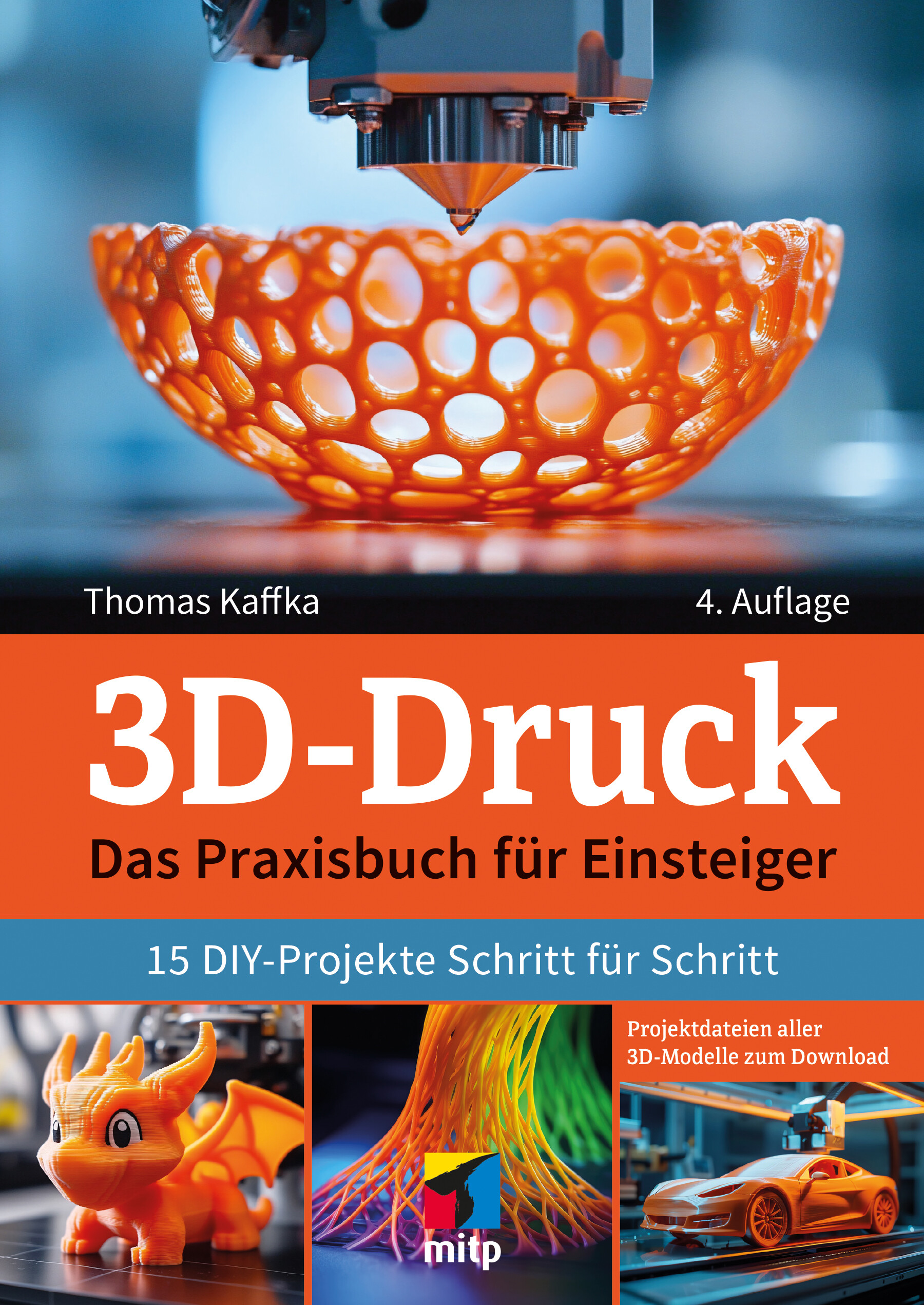
3D-Druck - Praxisbuch für Einsteiger (4. Auflg.)
Mit diesem Buch entdecken Sie die nahezu unbegrenzten Möglichkeiten des 3D-Drucks – egal, ob Sie einen eigenen 3D-Drucker besitzen, öffentlich zugängliche Geräte nutzen oder auf Online-Druckservices zurückgreifen. Sie werden Schritt für Schritt an die Technik herangeführt und lernen, wie Sie Ihre eigenen 3D-Objekte gestalten und Druckprojekte realisieren.15 kreative Projekte – direkt zum Nachmachen Das Herzstück des Buchs ist der umfangreiche Praxisteil: 15 vollständige 3D-Druck-Projekte zeigen Ihnen konkret, wie Sie eigene Ideen umsetzen können. Dabei lernen Sie verschiedene Modellierungstechniken, den Umgang mit unterschiedlichen Filamenten sowie Methoden zur Nachbearbeitung und Veredelung kennen.Modelle selbst gestalten oder herunterladen Sie lernen, wie Sie mit kostenloser Software wie Fusion, Blender oder SketchUp eigene Modelle entwerfen und reale Objekte 3D-scannen. Darüber hinaus erhalten Sie viele Tipps, wie und wo Sie fertige Vorlagen finden. Alle im Buch vorgestellten 3D-Modelle stehen zusätzlich auf der Webseite zum Buch zum kostenlosen Download bereit. Aus dem Inhalt: Aufbau und Funktionsweise des 3D-Druckers Schmelzschicht-Druckverfahren im Detail (FDM/FFF) Öffentliche Drucker verwenden 3D-Druckservices Einführung in die 3D-Modellierung 3D-Scan (Infrarot, Fotogrammetrie) Slicer-Programme und Druckparameter 3D-Druck mit und ohne Druckbettheizung Verschiedene Filamente verwenden: PLA, PLA Compound, ABS und mehr Objekte veredeln Troubleshooting und nützliche Tipps Rechtliche Fragen Über den Autor: Thomas Kaffka hat als Softwareingenieur sowie Projektleiter in Softwarehäusern und Wirtschaftsprüfungs- und Beratungsgesellschaften gearbeitet. Er ist ein echter Maker und beschäftigt sich mit verschiedenen Themen wie etwa dem Bau von LEGO®-Robotern, künstlicher Intelligenzforschung sowie dem 3D-Druck.

Design for Reliability und Lebensdauerabsicherung
Die zuverlässige, robuste Gestaltung und Absicherung von mechanischen, mechatronischen und elektronischen Systemen wird in diesem Lehrbuch besprochen. Dabei wird dem Leser anhand eines dem entwicklungsorientiertem V-Diagramm zu jedem Handlungsschritt entsprechende Methoden in einer ausreichenden Tiefe vorgestellt, mit dessen er in die Lage versetzt wird, praxisorientierte Fragestellungen zu beantworten. Schwerpunkte sind dabei wie die kundenspezifischen Anforderungen in die Lastableitung (Mission Profile) systematisch einzubinden sind, bis hin zu Wirkmechanismen. Hierfür werden entsprechend aktuelle Methoden wie Data-Mining, künstliche Intelligenz oder Statistische Versuchsplanung anwendungsnah vorgestellt. Entsprechend den potentiellen Ausfallmechanismen werden passenden Umweltprüfungen auf Basis beschleunigender Testverfahren mit Praxisbeispielen aufgezeigt und durch die Bauteil- und Prozessfreigabe bis hin zur Verarbeitung und der Interpretation von Felddaten abgerundet. Zieldieses Buches ist es, den Einstieg oder den Umstieg in das Themenfeld der Zuverlässigkeitsgestaltung elektronischer Systeme handhabbar sowie praxisorientiert zu ermöglichen.Einführung und Motivation.- Besonderheiten im Entwicklungsablauf elektronischer Systeme.- Grundlagen und Methoden der Zuverlässigkeitstechnik.- Data-Science im Entwicklungsbereich.- Anforderungen und Mission Profile.- Denkbare Szenarien zur Vorgehensweise.- Beschleunigungsgesetze.- Beschleunigte Testverfahren.- Umweltsimulation.- Elektromagnetische Verträglichkeit und Elektrostatische Entladung.- Screening.- Methoden zur Freigabe und Überwachung in der Praxis.

GitHub Copilot Certification Study Guide
A hands-on guide to preparing for the GitHub Copilot certification exam The GitHub Copilot Certification Study Guide is a complete resource for accurate coverage of the challenging GitHub Copilot certification exam. This Sybex Study Guide covers all of the exam’s domain competencies. You’ll prepare smarter and faster with Sybex thanks to efficient and accurate content including, assessment tests that validate test readiness, objective maps, real-world examples and scenarios, practical exercises, and challenging chapter review questions. Retain what you’ve learned with the Sybex online learning environment and test bank, accessible across multiple devices. Get prepared for the GitHub Copilot certification exam with Sybex. Coverage of 100% of all exam objectives in this Study Guide means you’ll be ready for: Responsible AIGitHub Copilot® plans and featuresHow GitHub Copilot works and handles dataPrompt crafting and Prompt engineeringDeveloper use cases for AITesting with GitHub CopilotPrivacy fundamentals and context exclusions ABOUT THE GitHub COPILOT CERTIFICATION EXAM The GitHub Copilot certification exam is designed for individuals in the field of software development who are proficient in using GitHub, including software developers, administrators, and project managers. This certification is intended for individuals who have a foundational understanding of GitHub Copilot as a product and its available features, along with hands-on experience in optimizing software development workflows using GitHub Copilot. Interactive learning environment Take your exam prep to the next level with Sybex’s superior interactive online study tools. To access our learning environment, simply visit www.wiley.com/go/sybextestprep, register your book to receive your unique PIN, and instantly gain one year of FREE access after activation to: Interactive test bank with a practice exam to help you identify areas where further review is needed. Get more than 90% of the answers correct, and you’re ready to take the certification exam.100 electronic flashcards to reinforce learning and last-minute prep before the examComprehensive glossary in PDF format gives you instant access to the key terms so you are fully prepared The fastest, most effective way to prepare for the GitHub Copilot certification exam and hone your skills with the popular AI-powered programming tool In the GitHub Copilot Certification Study Guide, tech entrepreneur and Pluralsight trainer, Tom Taulli, delivers a concise and accurate walkthrough of the AI-powered programming tool. Perfect for everyone preparing to take the new GitHub Copilot Certification exam, as well as programmers who regularly use the tool in their day-to-day work, this Study Guide helps you optimize your software development workflows, understand the structure of the test, and learn the material covered by it. This book explains every topic covered by the GitHub Copilot Certification exam, including: Responsible AIGitHub Copilot plans and featuresThe inner workings of GitHub Copilot and how it handles dataPrompt crafting and prompt engineeringDeveloper use casesTesting workflows with GitHub CopilotPrivacy fundamentals and context exclusions From step-by-step tutorials of the GitHub Copilot installation process to proven exam-taking techniques from the experts at Sybex, the GitHub Copilot Certification Guide explores everything you need to understand to succeed on the test and improve your on-the-job coding performance. It offers: Job-ready strategies and techniques for avoiding common generative AI-enhanced programming pitfalls and making use of its many benefitsUp-to-date descriptions of the most useful features and functions of GitHub Copilot, including Copilot EditsComplimentary access to a practice Assessment Test, a Practice Exam, 100 digital flashcards, and a glossary of key terms on the Sybex online learning environment Generative AI tools, like GitHub Copilot, have transformed the software engineering and programming landscapes. If you're preparing for the certification exam, or you wish to expand your AI coding skillset, grab a copy of the GitHub Copilot Certification Study Guide today. ABOUT THE AUTHOR TOM TAULLI is an author, speaker, Pluralsight trainer, and startup advisor. He is the author of AI-Assisted Programming: Better Planning, Coding, Testing, and Deployment, as well as other AI-focused technology books.

Data Product Management in the AI Age
“_An outstanding companion for any data professional seeking to deepen their expertise and grow in the field of Data Product Management_.” (Eduardo Juremeira, Data Engineering Manager, Adyen)“_This book is a valuable resource for data professionals, offering clear concepts and practical tools_.” (Luis Oliveira, Analytics Engineering Tech Manager, Nubank)A PRACTICAL GUIDE TO MASTERING DATA PRODUCT MANAGEMENT—BRIDGING STRATEGY, ARCHITECTURE, AND EXECUTION FOR THE AI ERA.We have firmly entered the age of artificial intelligence (AI). Data, the backbone of this technology, is more crucial than ever. If the algorithm is the brain, data is the content that feeds it. This book argues that to succeed in this era, organizations should adopt a holistic approach to data—one that uses product management principles to inform how data is sourced, designed, managed, maintained, optimized, and leveraged.This book is divided into two sections, moving from fundamentals to practical applications. In the first part, you’ll learn about the concepts that underlie product theory, the data architecture journey, and the essential knowledge needed to manage data products. The second part focuses on putting everything into practice, with particular attention to designing solutions, ongoing maintenance, and optimization.Additionally, the book introduces the Golden Data Platform and the Data Product Management Canvas, important tools and frameworks coined by author Jessika Milhomem. These resources will help you begin transforming your organization’s data strategy, empowering you to stay ahead of the competition and thrive in the AI age.WHAT YOU WILL LEARN* Explore the evolution of data architecture and strategies* Understand the fundamentals of data product management* Differentiate between Data Product and Data as a Product* Know what the Golden Data Platform is and how to use it* Utilize the Data Product Management Canvas effectively* Reorient your data strategy with product management principles* Examine the concepts of products and data architecture evolution in relation to leadership* Evaluate how to solve data architecture without bias by technology* Design and implement Data as a Product and Data Products through a project* Maintain and enhance Data Products once launchedWHO THIS BOOK IS FORData leaders and managers responsible for designing and delivering data products, as well as product managers who want to collaborate more effectively with data teams. Analytics engineers, data engineers, data scientists, and machine learning engineers will find practical guidance for building impactful data solutions. Developers and data professionals aiming to move into leadership or product roles will also find valuable insights throughout.Part I: Fundamentals for Data Product Management.- Chapter 1: Data Product Management Introduction.- Chapter 2: Data Analytical Architecture - Traditional Architecture.- Chapter 3 : Data Analytical Architecture - Big Data Architecture.- Chapter 4: Consolidating the Analytics Journey Knowledge.- Part II: Data Product Management in Practice.- Chapter 5: Golden Data Platform to Manage Data as a Product.- Chapter 6: Data Product Management.- Chapter 7: Designing the Product of Data - Understanding Phase.- Chapter 8: Designing the Product of Data - Exploring Phase.- Chapter 9: Designing the Data Product - Materializing Phase.- Chapter 10: Ownership process - Recurrent Cycle - Ongoing.

Cybersecurity Law
Comprehensive textbook covering the latest developments in the field of cybersecurity law Cybersecurity Law offers an authoritative guide to the key statutes, regulations, and court rulings that pertain to cybersecurity, reflecting the latest legal developments for this constantly evolving subject since the previous edition was released in 2022. This comprehensive text deals with all aspects of cybersecurity law, including data security and enforcement actions, anti-hacking laws, surveillance and privacy laws, and national and international cybersecurity law. In this new edition, readers will find insights on revisions to regulations and guidance concerning cybersecurity from federal agencies, such as 2023 SEC cybersecurity regulations for all publicly traded companies, and the Cyber Incident Reporting for Critical Infrastructure Act and its impact on the obligations of companies across the United States. Other recent developments discussed in this book include litigation from customers against companies after data breaches and the resulting legal articulation of companies’ duties to secure personal information, the increased focus from lawmakers and regulators on the Internet of Things (IoT), and the FDA’s guidelines for medical device cyber security. Readers of Cybersecurity Law will also find new information on: Litigation cases where courts ruled on whether plaintiffs stated viable causes of action in data breach cases, including the Eleventh Circuit’s opinion in Ramirez v. Paradies Shops Fourth Amendment opinions involving geofence warrants and keyword search warrants Courts’ applications of the Supreme Court’s first Computer Fraud and Abuse Act opinion, Van Buren v. United States NIST’s 2024 revisions to its popular Cybersecurity Framework Version 2 of the Cybersecurity Maturity Model Certification Cybersecurity Law is an ideal textbook for undergraduate and graduate level courses in cybersecurity, cyber operations, management-oriented information technology (IT), and computer science. It is also a useful reference for IT professionals, government personnel, business managers, auditors, cybersecurity insurance agents, and academics in these fields. Jeff Kosseff, JD, MPP, is a cybersecurity and privacy lawyer. He frequently speaks and writes about cybersecurity and was a journalist covering technology and politics at The Oregonian, a finalist for the Pulitzer Prize, and a recipient of the George Polk Award for national reporting.

Quantitative Prognosen in der externen Unternehmensrechnung
Barwertkalküle erfordern Prognosen künftiger Zahlungsströme oder Gewinne, haben sich zur vorherrschenden Bewertungsmethodik entwickelt und kommen immer häufiger zur Anwendung. In dieser Arbeit werden ausgewählte quantitative Prognoseverfahren aufgezeigt, empirisch evaluiert und daraus Empfehlungen für die Anwendung innerhalb der Rechnungslegung sowie für die Unternehmensbewertung abgeleitet. Betrachtet werden etablierte sowie neuere Methoden aus dem Bereich des maschinellen Lernens. Darüber hinaus werden die Prognosefelder der handelsrechtlichen und internationalen Rechnungslegung sowie die Auswirkungen von Rechnungslegungspolitik evaluiert. Die Untersuchungen liefern wichtige Erkenntnisse für die Unternehmensanalyse auf Basis von Daten der Finanzberichterstattung und die Ermittlung von Unternehmenswerten. Der Autor empfiehlt zudem methodische Vorgaben für Prognosen in der externen Unternehmensrechnung. Quantitative Prognosen in der Rechnungslegung.- Zukunftsorientierung der Rechnungslegung.- Methodik und Datenbasis.- Cashflow- und Erfolgsprognosen.- Rechnungslegungspolitik als begrenzender Faktor quantitativer Modellierungen.- Modellgestützte Erfolgsprognosen für die Unternehmensbewertung.- Schlussbetrachtung und Fazit.

Künstliche Intelligenz und politischer Extremismus
Dieses essential bietet einen Überblick über die Nutzung von KI durch Extremist*innen. Es werden Beispiele für die Nutzung von KI durch Extremist*innen angeführt. Zudem wird diskutiert, wie diese dadurch gezielt etwa Propaganda, Hass und Hetze verbreiten. Ferner werden Chancen und Möglichkeiten für (Sicherheits-)Behörden und andere Institutionen für den Umgang mit der Nutzung von KI durch Extremist*innen sowohl in der Bekämpfung von Extremismus als auch der Prävention thematisiert. Relevant ist der Band somit für Vertreter*innen von (Sicherheits-)Behörden, für Mitarbeitende bei Trägern der Extremismusprävention, für Wissenschaftler*innen, aber auch etwa für die IT-Branche. Begriffsklärungen und Einordnung.- Wofür Extremist*innen KI nutzen (können).- Gründe für die Nutzung von KI durch Extremist*innen.- Die Nutzung von KI gegen Extremismus.- Herausforderungen für die Nutzung von KI gegen Extremismus.- Wie KI die Entwicklung weiter beeinflussen wird.

Science MashUp: Games und schulische Bildung
Spielen in der Schule? Spielen und schulische Bildung schlossen sich lange Zeit aus: Spiel fand in der Freizeit statt, Schule bereitete auf den Arbeitsprozess vor. Doch die Integration von digitalen Spielen in den schulischen Bildungsbereich hat in den letzten Jahren zunehmend an Bedeutung gewonnen.Der Band _Science MashUp: Games und schulische Bildung_ versammelt die Beiträge zur gleichnamigen Tagung im April 2024 in Leipzig. Die Perspektiven von Lehrkräften, Eltern und Schülern stehen dabei im Fokus von drei Themenbereichen: 1. Standpunkte: Games in der Schule, 2. Best Practices: Games im Unterricht, 3. Spiele, Technik und Wissen: Digitale Bildungskultur im Wandel.Grußwort.- Einleitung.- Standpunkte: Games in der Schule.- Best Practice: Games im Unterricht.- Spiele, Wissen und Technik: Digitale Bildungskultur im Wandel.- Podiuumsdiskussion.
Deep Learning in Textual Low-Data Regimes for Cybersecurity
In today's fast-paced cybersecurity landscape, professionals are increasingly challenged by the vast volumes of cyber threat data, making it difficult to identify and mitigate threats effectively. Traditional clustering methods help in broadly categorizing threats but fall short when it comes to the fine-grained analysis necessary for precise threat management. Supervised machine learning offers a potential solution, but the rapidly changing nature of cyber threats renders static models ineffective and the creation of new models too labor-intensive. This book addresses these challenges by introducing innovative low-data regime methods that enhance the machine learning process with minimal labeled data. The proposed approach spans four key stages:Data Acquisition: Leveraging active learning with advanced models like GPT-4 to optimize data labeling.Preprocessing: Utilizing GPT-2 and GPT-3 for data augmentation to enrich and diversify datasets.Model Selection: Developing a specialized cybersecurity language model and using multi-level transfer learning.Prediction: Introducing a novel adversarial example generation method, grounded in explainable AI, to improve model accuracy and resilience.Introduction.- Research Design.- Findings.- Discussion.- Conclusion.- Information Overload in Crisis Management: Bilingual Evaluation of Embedding Models for Clustering Social Media Posts in Emergencies.- ActiveLLM: Large Language Model-based Active Learning for Textual Few-Shot Scenarios.- A Survey on Data Augmentation for Text Classification.- Data Augmentation in Natural Language Processing: A Novel Text Generation Approach for Long and Short Text Classifiers.- Design and Evaluation of Deep Learning Models for Real-Time Credibility Assessment in Twitter.- CySecBERT: A Domain-Adapted Language Model for the Cybersecurity Domain.- Multi-Level Fine-Tuning, Data Augmentation, and Few-Shot Learning for Specialized Cyber Threat Intelligence.- XAI-Attack: Utilizing Explainable AI to Find Incorrectly Learned Patterns for Black-Box Adversarial Example Creation.

Datenmodellierung in Data-Warehouse-Systemen
Dieses Buch bietet wertvolle Unterstützung beim Aufbau und bei der Modellierung eines Data Warehouse (DW). Es führt praxisnah durch alle Phasen eines DW-Projekts – von der Anforderungsanalyse über die Datenmodellierung und Architektur bis hin zur praktischen Umsetzung. Leserinnen und Leser gewinnen ein tiefes Verständnis für bewährte Modellierungstechniken, die einen entscheidenden Faktor für die Struktur und den Erfolg eines DW darstellen. Ein besonderer Schwerpunkt liegt dabei auf der Definition von Regelwerken zur effektiven Erstellung semantischer und logischer Datenmodelle. Zudem werden nicht nur theoretische Grundlagen vermittelt, sondern auch praktisches Wissen zur Umsetzung – abgerundet durch eine realistische Fallstudie.ZIELGRUPPE* Praktiker*innenEinleitung.- Aufbau und Komponenten klassischer DW-Architekturen.- Anforderungsanalyse.- Klassische relationale Datenmodelle.- Multidimensionale Datenmodelle.- Data Vault.- Konzepte und Techniken der Historisierung.- Fallstudie zur Gestaltung einer Data-Warehouse-Anwendung.- Zusammenfassung.- Glossar.- Literatur.