

Computer und IT

Modern REST API Development in Go
Modern REST API Development in Go is a hands-on guide to understanding and applying REST principles using Go’s powerful standard library. In an era where interconnected systems demand robust and performant APIs, Go offers the perfect combination of simplicity, performance, and tooling to build modern backend services. This book is centered around a complete, real-world REST API project and guides you through every stage of the development process, from building HTTP handlers to applying authentication and generating OpenAPI documentation. You’ll learn to structure your application, handle persistence with common libraries like GORM and Squirrel, apply observability patterns through logging and tracing, and ensure code quality through unit and integration tests. Each concept is grounded in REST theory and backed by idiomatic Go practices, enabling you to build APIs that are not only functional but production-ready. By the end of the book, you’ll be ready to design, build, and maintain REST APIs in Go.

CompTIA A+ CertMike: Prepare. Practice. Pass the Test! Get Certified!
Prepare faster and smarter with CertMike Get Certified! for passing the CompTIA A+ Core 1 certification exam! In CompTIA® A+® CertMike: Prepare. Practice. Pass the Test! Get Certified! Core 1 Exam 220-1201, Second Edition, experienced IT expert and tech educator Mike Chapple delivers a focused, no-nonsense guide for anyone preparing for the CompTIA A+ Core 1 exam. Take advantage of the proven CertMike approach to: Prepare—As your personal study coach, CertMike guides you through all the exam objectives, helping you gain an understanding of how they apply to on-the-job tasks!Practice—Each chapter includes two multiple choice practice questions. Work through the detailed explanations to evaluate each answer option and understand the reason for the best answer.Pass the Test—On exam day, take the critical knowledge you’ve learned into the test. You’ll feel ready and confident to pass the exam and earn your certification! This book skips the fluff and helps you validate you have the knowledge and skills to install, configure, and maintain computer equipment, mobile devices, and software for end users. You’ll also demonstrate your competency in networking basics and essential cybersecurity methods and properly and safely diagnose, resolve, and document common hardware and software issues. Interactive learning environment Take your exam prep to the next level with Sybex’s superior interactive online study tools. To access our interactive learning environment, simply visit www.wiley.com/go/sybextestprep, register your book to receive your unique PIN, and instantly gain one year of FREE access after activation to: Interactive test bank with a practice exam to help you identify areas where further review is needed. Get more than 90% of the answers correct, and you’re ready to take the certification exam.Audio recordings of the book’s CertMike Exam Essentials to help you review for the exam. Skip the fluff and quickly master the essentials with this accurate CompTIA A+ certification test prep In the second edition of CompTIA A+ CertMike: Prepare. Practice. Pass the Test! Get Certified! Core 1 Exam 220-1201, tech educator and expert Mike Chapple delivers a hands-on guide to efficiently and effectively preparing for the CompTIA A+ Core 1 exam. The book contains concise discussions of the mobile devices, networking technologies, hardware components, virtualization and cloud computing services, and troubleshooting techniques you'll need for the updated test and on a day-to-day basis at your job. Chapple covers all relevant technological advances in mobile, cloud, networking, and security that have taken place since publication of the first edition of this book. He also walks you through the material you need to know to succeed on the newly created 220-1201 exam. You'll use the proven CertMike approach to: Prepare—CertMike is your personal study coach, guiding you through all the exam objectives and helping you gain an understanding of how they apply to on-the-job tasks!Practice—Each chapter includes two multiple choice practice questions. Work through the detailed explanations to evaluate each answer option and understand the reason for the best answer!Pass—On exam day, use the critical knowledge you've learned when you're ready to take the test. You'll feel ready and confident to pass the exam and earn your certification! Laser-focused on starting and accelerating your IT technician career and ensuring your success on the A+ certification Core 1 exam, the book skips the fluff and familiarizes you with IT basics you'll use on the test and every day in your work. It also offers complimentary access to helpful online study tools, like a bonus practice exam and audio recordings of the CertMike Exam Essentials. The second edition of CompTIA A+ CertMike is perfect for anyone preparing for their A+ certification who wants to reduce test anxiety, boost their confidence, and get up to speed quickly and efficiently. It's also a great resource for hardware and PC technicians who want to reinforce foundational skills and upgrade their professional knowledge. ABOUT THE AUTHOR Mike Chapple, PhD, CISSP, CISM, CIPP/US, CIPM, CCSP, is Teaching Professor of Information Technology, Analytics, and Operations at Notre Dame’s Mendoza College of Business. He is the bestselling author of over 50 technical books. He is also the Faculty Director of the University’s Business/Computer Science program.

CompTIA A+ CertMike: Prepare. Practice. Pass the Test! Get Certified!
Prepare faster and smarter with CertMike Get Certified! for passing the CompTIA A+ Core 2 certification exam! In CompTIA® A+® CertMike: Prepare. Practice. Pass the Test! Get Certified! Core 2 Exam 220-1202, Second Edition, experienced IT expert and tech educator Mike Chapple delivers a focused, no-nonsense guide for anyone preparing for the CompTIA A+ Core 2 exam. Take advantage of the proven CertMike approach to: Prepare—As your personal study coach, CertMike guides you through all the exam objectives, helping you gain an understanding of how they apply to on-the-job tasks!Practice—Each chapter includes two multiple choice practice questions. Work through the detailed explanations to evaluate each answer option and understand the reason for the best answer.Pass the Test—On exam day, take the critical knowledge you’ve learned into the test. You’ll feel ready and confident to pass the exam and earn your certification! This book skips the fluff and helps you validate you have the knowledge and skills to install, configure, and maintain computer equipment, mobile devices, and software for end users. You’ll also demonstrate your competency in networking basics and essential cybersecurity methods and properly and safely diagnose, resolve, and document common hardware and software issues. Interactive learning environment Take your exam prep to the next level with Sybex’s superior interactive online study tools. To access our interactive learning environment, simply visit www.wiley.com/go/sybextestprep, register your book to receive your unique PIN, and instantly gain one year of FREE access after activation to: Interactive test bank with a practice exam to help you identify areas where further review is needed. Get more than 90% of the answers correct, and you’re ready to take the certification exam.Audio recordings of the book’s CertMike Exam Essentials to help you review for the exam. Skip the fluff and quickly master the essentials with this accurate CompTIA A+ certification test prep In the second edition of CompTIA A+ CertMike: Prepare. Practice. Pass the Test! Get Certified! Core 2 Exam 220-1202, tech educator and expert Mike Chapple delivers a hands-on guide to efficiently and effectively preparing for the CompTIA A+ Core 2 exam. The book contains concise discussions of the operating systems, security practices, software troubleshooting techniques, and operational procedures you'll need for the updated test and on a day-to-day basis at your job. Chapple covers all relevant technological advances in mobile, cloud, networking, and security that have taken place since publication of the first edition of this book. He also walks you through the material you need to know to succeed on the newly created 220-1202 exam. You'll use the proven CertMike approach to: Prepare—CertMike is your personal study coach, guiding you through all the exam objectives and helping you gain an understanding of how they apply to on-the-job tasks!Practice—Each chapter includes two multiple choice practice questions. Work through the detailed explanations to evaluate each answer option and understand the reason for the best answer!Pass—On exam day, use the critical knowledge you've learned when you're ready to take the test. You'll feel ready and confident to pass the exam and earn your certification! Laser-focused on starting and accelerating your IT technician career and ensuring your success on the A+ certification Core 2 exam, the book skips the fluff and familiarizes you with IT basics you'll use on the test and every day in your work. It also offers complimentary access to helpful online study tools, like a bonus practice exam and audio recordings of the CertMike Exam Essentials. The second edition of CompTIA A+ CertMike is perfect for anyone preparing for their A+ certification who wants to reduce test anxiety, boost their confidence, and get up to speed quickly and efficiently. It's also a great resource for hardware and PC technicians who want to reinforce foundational skills and upgrade their professional knowledge. ABOUT THE AUTHOR Mike Chapple, PhD, CISSP, CISM, CIPP/US, CIPM, CCSP, is Teaching Professor of Information Technology, Analytics, and Operations at Notre Dame’s Mendoza College of Business. He is the bestselling author of over 50 technical books. He is also the Faculty Director of the University’s Business/Computer Science program.

Revenue Management in the Age of Artificial Intelligence
Today, Revenue Management is a key practice in the air transport, tourism and hotel industries. Originally known as Yield Management, Revenue Management has gradually evolved into an integral revenue optimization strategy for businesses characterized by capacity constraints and fluctuating demand. Revenue Management in the Age of Artificial Intelligence explores, through numerous case studies and concrete examples, the principles, models and applications of Revenue Management, while addressing the ethical challenges and prospects offered by digital technology and artificial intelligence. This book is aimed at professionals, students, researchers and anyone wishing to understand the dynamics of price management in a constantly changing economic environment. It highlights the importance of transparency and fairness in maintaining consumer confidence, while demonstrating that Revenue Management is much more than a simple pricing technique: it is an essential strategic tool for many service companies. Sourou Meatchi is Senior Lecturer in Management Sciences at the University of Angers, within the ESTHUA National Institute of Tourism, France. As a member of the Economics and Management Research Laboratory (GRANEM), his scientific research focuses on Revenue Management, the digital transformation of VSEs and SMEs, and the economics of tourism in emerging countries.

Sustainable Resource Management in Next-Generation Computational Constrained Networks
The book provides essential insights into cutting-edge networking technologies that not only enhance performance and efficiency but also address critical sustainability challenges in an increasingly connected world. The landscape of networking and computational technologies is rapidly evolving, driven by the increasing demand for efficient and sustainable resource management. The advent of next-generation technologies such as 5G and 6G has marked a significant leap in enabling high-capacity, low-latency communication and massive connectivity. These advancements are crucial for supporting the growing number of connected devices and complex applications they run, particularly in environments with limited processing, memory, and energy capabilities. Sustainable Resource Management in Next-Generation Computational Constrained Networks provides insight into the advancements of recent cutting-edge networking technologies that cater to society’s needs more efficiently, meeting the expectations of sustainable resource management in computationally constrained networks. By exploring the practical applications of various next-generation technologies, the book addresses critical challenges such as scalability, interoperability, energy efficiency, and security. This knowledge equips professionals with the tools to enhance network performance, optimize resource management, and develop innovative solutions for sustainable and efficient computational networks, ultimately contributing to the advancement of technology and societal well-being. Readers will find this book: Provides thorough reviews on a wide range of cutting-edge network technologies contributing to resource management in computationally constrained networks;Explores the role of various network technologies for the development of sustainable applications;Details architectural viewpoints of integrating emerging network technologies with real-world applications to manage network resources efficiently;Highlights challenges in integrating the latest network technologies with sustainable real-world applications;Discusses real-world case studies of various network technologies in leveraging sustainable resource management for the fulfillment of different industrial and societal needs. Audience Software engineers, electronic engineers, and policymakers in the networking and security domain. Subhasis Dash, PhD is an assistant professor in the School of Computer Engineering at the Kalinga Institute of Industrial Technology with over 22 years of teaching experience. His research interests include wireless sensor networks, distributed computing, and operating systems. Manas Ranjan Lenka, PhD is an assistant professor in the School of Computer Engineering, at the Kalinga Institute of Industrial Technology with over 18 years of experience. His current research focuses on wireless sensor networks, mobile wireless networks, Internet of Things, and blockchain. S. Balamurugan, PhD is the Director of Intelligent Research Consultancy Services and serves as a consultant for many other companies and start-ups. He has published over 70 books, 300 articles in national and international journals and conferences, and 300 patents. His research interests include artificial intelligence, machine learning, soft computing algorithms, and robotics and automation. Ambika Prasad Tripathy is a senior technical leader with Cisco’s Network Security Business Unit with over 17 years of experience. He has worked in the network industry to standardize Yang-based subscription mechanisms and their applications. He specializes in Sigtran, 3G, 4G core networks, switching and routing, telemetry, and datacenter, network, and cloud security. Amarendra Mohanty is a senior engineer at the Intel Corporation in India with over 17 years of research experience. He has worked for a number of leading companies in the computer science field, including Intel, VMWare, TCS, and Aricent. His specializations include network security, network virtualization, data center networking, routing and switching, and 3G wireless networks in the development and QA fields.

The Gen AI Manufacturing Revolution
Reduce downtime, navigate disruptions, and improve the efficiency of your manufacturing organization The Gen AI Manufacturing Revolution: Smarter Factories, Enhanced Products, and Reduced Costs is a practical roadmap to reshaping your manufacturing organization with generative artificial intelligence. Author and innovator, Matthew Alberts, explains how to take advantage of the latest advances in Gen AI. Using tailored strategies and hands-on use cases, he demonstrates how to automate routine tasks, enable data-driven decision making, build an AI-capable workforce, address AI adoption challenges and obstacles, and create enduring competitive advantage in any industry. Alberts walks you through techniques and strategies you can implement immediately to streamline product design, improve creativity, innovate, manage workflows, monitor performance, and more. He also offers a set of tools and ideas you can use to manage the significant ethical, cultural, and operational problems that are generated by AI adoption. Perfect for executives and managers at manufacturing firms, The Gen AI Manufacturing Revolution is also a must-read guide for AI and tech professionals, consultants, and anyone else with a stake in the coming transformation of industry and manufacturing. Transformative insights and advice to reduce downtime, navigate disruptions, and improve efficiency The Gen AI Manufacturing Revolution highlights how generative and agentic artificial intelligence are transforming manufacturing processes, driving innovation, and reshaping the way we work. Implementing AI in manufacturing comes with unique challenges, such as integrating AI with physical machinery, managing intricate supply chains, and ensuring regulatory compliance. This book addresses these challenges, helping you harness AI's potential while navigating its complexities. With tailored strategies and use cases, the book demonstrates how to unlock the power of Gen AI, from automating routine tasks to enabling better decision-making. You'll learn to build an AI-ready workforce, overcome common challenges in adoption, drive value across the organization, and maintain accountability. Leverage generative AI to streamline product design, boost creativity, and accelerate innovationDeploy agentic AI systems to autonomously manage workflows, monitor performance, and support complex decision-makingBuild an AI-ready workforce capable of collaborating with intelligent systemsAddress ethical, operational, and cultural challenges in AI adoptionDrive enterprise-wide value while maintaining transparency and accountability Whether you're looking to reduce downtime, enhance efficiency, or stay ahead of disruptive change, this book is your essential guide to leading the next wave of industrial transformation through AI. MATTHEW ALBERTS, PhD, is a technology strategist, engineer, and thought leader. With over 15 years of experience driving digital transformation across the manufacturing, energy, and industrial sectors, he has led the adoption of cutting-edge solutions such as AI, robotics, IoT, and predictive analytics for Fortune 500 companies and high-growth startups alike.

journey 2 shared understanding
Das «journey 2 shared understanding» richtet sich an alle, die Freude an guter Software haben und etwas dazu beitragen möchten. Es bietet dir einen Leitfaden, wie du durch dein eigenes Engagement einen spürbaren Mehrwert erzielen kannst - unabhängig davon, ob du im 1st-, 2nd- oder 3rd-Level arbeitest, ob als Supporter, Kundenbetreuer, Business-Analyst, Fachvertreter, Manager, Applikationsmanager, Product-Owner, Scrum-Master, Projektleiter, Entwickler oder in einer anderen Rolle.Mit dem «j2su-Manifest» ist es dir möglich, in komplexen Arbeitsumgebungen ein gemeinsames Verständnis zu erlangen und dadurch leistungsstark zusammenzuarbeiten. Es geht darum, die typischen Probleme in der Software-Entwicklung gezielt in den Griff zu bekommen. Software-Anforderungen müssen «good enough» sein, um effizient entwickelt werden zu können.Das «j2su-Manifest» basiert auf Tools, die im Projektmanagement, im Applikationsmanagement und in der Software-Entwicklung bewährt sind. Aufgrund eigener Praxiserfahrungen werden weitere Aspekte wie der Reifegrad der Mitarbeitenden und die Kommunikation von Software-Anforderungen berücksichtigt.Anhand verschiedener praxisnaher Anwendungsfälle werden Lösungen zu den typischen Problemen aufgezeigt. Eine Auswahl an bekannten Tools unterstützt dabei das «j2su-Manifest», das aus den folgenden drei Bestandteilen besteht:Denken / Analysieren / TransformierenDer erste Bestandteil des j2su-Manifests ist «Denken». Denken ist in diesem Zusammenhang vor allem als Mindset zu verstehen. Es bezieht sich darauf, was unsere Werte sind, wie wir uns mit Neuem auseinandersetzen, wie Anforderungen angepackt werden und wie wir miteinander umgehen. Dies definiert und beeinflusst unsere grundlegendsten Handlungsweisen.Eine individuelle Analyse bringt für die Vollständigkeit einer Anforderung einen grossen Mehrwert. Dies ist insbesondere dann der Fall, wenn Mitarbeitende aus verschiedenen Teams, Abteilungen oder Firmen das jeweilige fachliche Know-how zu einer Anforderung beitragen können.Die Transformation der Anforderung besteht aus sechs Phasen, die nacheinander durchlaufen werden. Die Phasen können von allen beteiligten Mitarbeitenden individuell oder als Team durchlaufen werden. Das «j2su-Manifest» kann dabei aus einer persönlichen Perspektive oder als Unternehmen bzw. als Team oder Abteilung angewandt werden.

Building Effective Privacy Programs
Presents a structured approach to privacy management, an indispensable resource for safeguarding data in an ever-evolving digital landscape In today’s data-driven world, protecting personal information has become a critical priority for organizations of all sizes. Building Effective Privacy Programs: Cybersecurity from Principles to Practice equips professionals with the tools and knowledge to design, implement, and sustain robust privacy programs. Seamlessly integrating foundational principles, advanced privacy concepts, and actionable strategies, this practical guide serves as a detailed roadmap for navigating the complex landscape of data privacy. Bridging the gap between theoretical concepts and practical implementation, Building Effective Privacy Programs combines in-depth analysis with practical insights, offering step-by-step instructions on building privacy-by-design frameworks, conducting privacy impact assessments, and managing compliance with global regulations. In-depth chapters feature real-world case studies and examples that illustrate the application of privacy practices in a variety of scenarios, complemented by discussions of emerging trends such as artificial intelligence, blockchain, IoT, and more. Providing timely and comprehensive coverage of privacy principles, regulatory compliance, and actionable strategies, Building Effective Privacy Programs: Addresses all essential areas of cyberprivacy, from foundational principles to advanced topicsPresents detailed analysis of major laws, such as GDPR, CCPA, and HIPAA, and their practical implicationsOffers strategies to integrate privacy principles into business processes and IT systemsCovers industry-specific applications for healthcare, finance, and technology sectorsHighlights successful privacy program implementations and lessons learned from enforcement actionsIncludes glossaries, comparison charts, sample policies, and additional resources for quick reference Written by seasoned professionals with deep expertise in privacy law, cybersecurity, and data protection, Building Effective Privacy Programs: Cybersecurity from Principles to Practice is a vital reference for privacy officers, legal advisors, IT professionals, and business executives responsible for data governance and regulatory compliance. It is also an excellent textbook for advanced courses in cybersecurity, information systems, business law, and business management. Jason Edwards, DM, CISSP, is an accomplished cybersecurity leader with extensive experience in the technology, finance, insurance, and energy sectors. Holding a Doctorate in Management, Information Systems, and Technology, Jason specializes in guiding large public and private companies through complex cybersecurity challenges. His career includes leadership roles across the military, insurance, finance, energy, and technology industries. He is a husband, father, former military cyber officer, adjunct professor, avid reader, dog dad, and popular on LinkedIn. Griffin Weaver is the Managing Legal Director (Privacy, Cybersecurity, and Technology) at Dell Technologies. He holds a Juris Doctorate and is a Fellow of Information Privacy (FIP). Weaver specializes in digital law, privacy governance, and cybersecurity policy. He is a sought-after speaker and educator who has taught privacy and cybersecurity law at leading institutions, regularly contributes to industry publications, and presents at global conferences on privacy, data protection, and digital rights.

CompTIA Linux+ Study Guide
Your easy-to-follow guide to preparing for the CompTIA Linux+ certification exam The CompTIA® Linux+® Study Guide, Sixth Edition, is your comprehensive resource for full coverage of the newly updated XK0-006 exam. This Sybex Study Guide covers 100% of the XK0-006 objectives. Prepare for the exam faster and smarter with Sybex thanks to efficient and authoritative content, including an assessment test that validates and measures exam readiness, objective map, real-world examples and scenarios, practical exercises, and challenging chapter review questions. Reinforce and remember what you’ve learned with the Sybex online learning environment and test bank, accessible across almost any device. Get ready for the CompTIA® Linux+ exam with Sybex. Coverage of 100% of all exam objectives in this Study Guide means you’ll be ready for: System ManagementServices and User ManagementSecurityAutomation, Orchestration, and ScriptingTroubleshooting ABOUT THE COMPTIA LINUX+ CERTIFICATION The CompTIA Linux+ certification validates your ability to perform the tasks required of an early-career systems administrator supporting Linux systems. You’ll demonstrate your abilities with the foundational skills demanded by hiring managers. Interactive learning environment Take your exam prep to the next level with Sybex’s superior interactive online study tools. To access our learning environment, simply visit www.wiley.com/go/sybextestprep, register your book to receive your unique PIN, and instantly gain one year of FREE access after activation to: Interactive test bank with a practice exam to help you identify areas where further review is needed. Get more than 90% of the answers correct, and you’re ready to take the certification exam.100 electronic flashcards to reinforce learning and last-minute prep before the examComprehensive glossary in PDF format gives you instant access to the key terms so you are fully prepared The latest edition of the gold standard in Linux+ certification exam prep and skills reinforcement In the newly revised sixth edition of the CompTIA Linux+ Study Guide: Exam XK0-006, veteran system and network administrator Richard Blum delivers a fully up-to-date guide to the challenging CompTIA Linux+ certification exam, as well as a concise discussion of the skills and knowledge you'll need to succeed in the real world as a Linux systems professional. The book contains clear and straightforward information on all Linux administration topics, including system management, services and user management, security, automation, orchestration, scripting, and troubleshooting. You'll also find: Coverage of every subject tested by the newly updated XK0-006 Linux+ certification examNew material for DevOps engineers seeking to understand how to deploy applications on different Linux distributions and cloud platformsIntuitively organized quick-reference information perfect for newly minted system and network administrators working with Linux operating systemsComplimentary access to the Sybex online learning environment, including the online test bank, a practice assessment test, chapter review questions, flashcards, and a searchable key term glossary Perfect for network and system admins studying for the new Linux+ certification exam, the CompTIA Linux+ Study Guide is also a must-read for Linux admins and IT professionals looking to update their skillset, as well as certification candidates seeking a roadmap to attaining further Linux certifications. ABOUT THE AUTHOR RICHARD BLUM has over 35 years of experience working as a system and network administrator. He teaches online courses in Linux and Web programming and is co-author with Christine Bresnahan of several Linux titles, including CompTIA Linux+ Study Guide, Linux Essentials, Mastering Linux System Administration, and the Linux Command Line and Shell Scripting Bible.

Chefsache Business Transformation
Das Kumar-de-Brabandt-Modell bietet ein umfassendes Rahmenwerk für Organisationen, die eine KI-gesteuerte Geschäftstransformation anstreben. Durch die Demokratisierung des Datenzugangs und die Etablierung von Monetarisierungsmodellen befähigt dieses Modell Unternehmen, Daten und künstliche Intelligenz effektiv zu nutzen und dabei ethische Standards einzuhalten. Der integrierte Ansatz fördert eine Kultur der datengetriebenen Innovation und ermöglicht Unternehmen, nachhaltige Wettbewerbsvorteile zu erzielen.DER INHALT* Kumar-de-Brabandt-Modell* Generative KI und ethische KI für Geschäftstransformationen* Demokratisierung und Monetarisierung von DatenKI und Textgenerierung.- Bedeutung der KI Datenverarbeitung in der neuen, digitalen Welt.- KI Datenwirtschaft.- Verständnis der Datendemokratisierung.- Die Macht der Generativen KI.- Data Monetization im Kumar-de-Brabandt KI Datenwirtschaftsmodell.- Geschäftsmodelle.- Ethical AI im Kumar-de-Brabandt KI Datenwirtschaftsmodell.- Das Kumar-de-Brabandt KI Datenwirtschaftsmodells.- Umsetzung der Datenmonetarisierung.

Planung und Reporting im BI-gestützten Controlling
Planungs- und Reportinglösungen leiden in vielen Unternehmen immer noch unter mangelnder Datenqualität, sind unzureichend integriert und häufig zeit- und kostenintensiv. Dieses praxisorientierte Buch zeigt Schritt für Schritt, wie es anders geht. Es wird systematisch gezeigt, wie moderne Planungs- und Reportingsysteme im BI-gestützten Controlling mit dem Einsatz von Data-Warehouse- und Big-Data-Technologie aufgebaut und sinnvoll um KI-gestützte Features ergänzt werden können. Einführung.- Grundlagen.- Fachliche inhaltliche Ausgestaltung.- Organisation und Prozesse.- IT-Unterstützung.- Zusammenfassung und Ausblick.

Let Us Go!
This book is a comprehensive guide designed to introduce newcomers to Go (Golang). It covers the essential topics that you would need to build a solid foundation in Golang, including basic syntax, data types, control structures, functions, and packages. Along with the basics of the language, you will also learn how to set up a development environment, integrate Visual Studio Code, and use Git and GitHub for version control.Learn the language through practical, hands-on interactive exercises using Go Playground and real-world projects. In the book you can work through detailed, step-by-step instructions from environment setup to project deployment, and easily follow along without prior experience. Each chapter builds progressively, guiding you from writing simple programs to developing a useful CLI tool and a basic web service. By treating each example as a GitHub project, the book ensures you gain experience in project management and collaborative development.Topics such as error handling, testing, and concurrency are covered in depth, providing you with the skills needed to write efficient and reliable Go code. The appendix includes valuable resources like quick reference guides and best practices for Go programming.This book is an indispensable resource for you in Go due to its highly practical, hands-on approach with detailed, step-by-step instructions, comprehensive integration with modern development tools, and real-world project examples.WHAT YOU'LL LEARN:* Basic Go Programming Concepts like variables, data types, control structures, functions, and packages* Setting up a Go development environment and configuring Visual Studio Code for Go projects* Building, deploying, and maintaining a useful Command-Line Interface (CLI) tool in Go* Applying Go programming concepts through hands-on projects and real-world examplesWHO THIS BOOK IS FOR:Software architects and engineers, students, hobbyists, educators and trainersChapter 1 - Let Us Go on the Playground.- Chapter 2 - Setting Up the Go Workspace and VSCode IDE.- Chapter 3 - Setting Up and Maintaining Local and Remote GitHub Repository.- Chapter 4 - Deep Dive into Golang Concepts with Programming Examples.- Chapter 5 - Building and Deploying a Useful CLI Tool.- Chapter 6 - Building and Deploying a Simple Web Service.- Appendix.

Bibliometric Analyses in Data-Driven Decision-Making
The book provides essential insights and practical tools needed to effectively navigate the evolving landscape of scholarly research, helping enhance the understanding of publication trends, citation impacts, and collaboration networks across multiple fields. Bibliometric Analyses in Data-Driven Decision-Making offers a comprehensive guide to researchers, academics, and practitioners interested in utilizing bibliometric analysis to understand and navigate the dynamic landscape of the increasingly vital field of data-driven decision-making and its applications across many areas. It provides insights into growth, impact, and trends within the field, using bibliometric tools and methodologies. This volume adopts a pragmatic approach, balancing theoretical concepts with practical applications of data-driven decision-making models through the perspectives of bibliometric analyses using real-world examples, case studies, and step-by-step guides. The reader will find the book: Gives practical guidance on conducting bibliometric analyses across a range of applications for data-driven decision-making;Illustrates the application of bibliometric tools in the field with real-world case studies;Provides in-depth coverage of various bibliometric indicators and metrics;Explores emerging trends and challenges in bibliometric analysis;Provides a comprehensive overview of software and tools available for bibliometric research. Audience Librarians and Information professionals involved in research management, knowledge discovery, and the evaluation of scholarly communication, as well as professionals in industries reliant on cutting-edge research and development, technology assessment, and innovation. Also, a range of researchers and scholars seeking how to apply bibliometric analysis to assess the impact of their work, and advanced insights into bibliometric metrics, collaboration networks, and research trends. Prasenjit Chatterjee, PhD is a post-doctoral fellow in the Department of Applied Data Science, Noroff University College, and a professor of mechanical engineering and Dean of Research and Consultancy at the MCKV Institute of Engineering, India. He has published over 135 research papers in various international journals and conferences, authored and edited more than 43 books on intelligent decision-making, fuzzy computing, supply chain management, optimization techniques, risk management, and sustainability modelling. Abhijit Saha, PhD is an assistant professor in the Department of Computing Technologies at SRM Institute of Science and Technology, Tamil Nadu, India with over ten years of teaching and research experience. He has published over 50 research articles in international journals and serves on the editorial boards of three international journals. His research interests encompass fuzzy set theory, soft set theory, aggregation operators, optimization, and decision-making. Seifedine Kadry, PhD is a professor in the Department of Computer Science and Mathematics at the Lebanese American University and the Department of Applied Data Science at Noroff University College. He has published over 100 peer-reviewed papers and authored several books. His research interests include data science, system prognostics, stochastic systems, smart learning, social network analysis, and e-systems. Gülay Demir, PhD is affiliated with Sivas Cumhuriyet University Vocational School of Health Services. She has over 75 publications, primarily in graduate-level textbooks. Her research interests include fuzzy logic, multi-criteria analysis, mathematical statistics, statistical analysis, data analysis, non-parametric statistics, statistical calculation, and parametric statistics.

Azure Data Fundamentals Certification Companion
Transform your understanding of data and take your career to the next level. This book not only helps you prepare for an exam, but also helps you build a foundation for a future in the ever-expanding world of data and cloud computing.The book starts with an exam overview to take you through the structure and format of the exam. You will go through the foundational knowledge in core data concepts, explaining how structured, semi-structured, and unstructured data are stored and managed, as well as the roles of key data professionals. The journey continues with relational data on Azure, covering database normalization, SQL fundamentals, and Azure’s relational database offerings, including SQL Server, MySQL, and PostgreSQL. The book then delves into non-relational data, exploring Azure Blob Storage, Table Storage, and Cosmos DB, providing insights into their use cases and applications. The book also covers analytics workloads, focusing on large-scale data processing, real-time analytics, and data visualization using Power BI.The book concludes with an exam preparation guide, offering structured study plans, practice questions, and a full-length mock test to help you gain confidence and excel on the DP-900 certification exam.WHAT YOU WILL LEARN* Understand structured, semi-structured, and unstructured data, and the difference between transactional and analytical workloads* Understand relational databases and Azure services such as Azure SQL Database and Managed Instance* Explore storage solutions such as Azure Blob Storage and Azure Cosmos DB for handling diverse data types* Discover tools such as Azure Synapse Analytics, Azure Databricks, and Power BI for analyzing and visualizing dataWHO THIS BOOK IS FORAzure data engineers, data analysts, and database administratorsChapter 1: Exam Overview and Structure.- Chapter 2: Understanding Core Data Concepts.- Chapter 3: Working with Relational Data on Azure.- Chapter 4: Exploring Non-Relational Data on Azure.- Chapter 5: Analytics Workloads on Azure.- Chapter 6: Exam Preparation and Practice.

Digital Twins and ESG
Digital Twins and ESG provides essential insight on how integrating cutting-edge Digital Twin technology with ESG practices can transform the understanding of sustainability and propel businesses towards a more transparent, accountable, and responsible future. Digital Twins and ESG introduces the dynamic world of ESG practices, emphasizing the pivotal role technology plays in shaping and advancing sustainability goals. It introduces readers to the multifaceted world of Digital Twin technology, offering a comprehensive understanding of its historical development and diverse applications across industries. This volume will intricately examine the integration of Digital Twins in ESG metrics and reporting frameworks. Artificial intelligence, machine learning, and blockchain technologies are also discussed as key enablers for achieving ESG goals, providing readers with a glimpse into the potential advancements and breakthroughs that lie ahead. Through detailed analyses and case studies, readers will gain insights into how Digital Twins enhance data collection, monitoring, and reporting, elevating transparency and accountability. Digital Twins and ESG serves as a rallying call, urging businesses to embrace Digital Twins as an integral component of their ESG strategies, ultimately paving the way for a more sustainable and responsible future. Surajit Mondal, PhD is teaching at the University of Petroleum and Energy Studies. He has published eight books, over 50 international research articles as an author or co-author, and 85 patents, 20 of which were granted. His research interests include optimization of renewable energy, biofuels, and solar thermal technologies. Adesh Kumar, PhD is an associate professor in the Department of Electrical and Electronics Engineering at the University of Petroleum and Energy Studies with over 15 years of experience. He has published five books and over 100 research papers in international journals and conferences in addition to chairing over 200 conference sessions. His research interests include embedded systems, digital image processing, and telecommunications. Mudassir Khan, PhD is a postdoctoral fellow at Multimedia University and a co-supervisor for Postgraduate Studies at Lincoln University College with over 13 years of experience. He has published over 80 research articles and more than 10 editorial books and authored four books, inspiring many in technology and education. His research interests include big data, deep learning, and AI, particularly in medical imaging.

Barrierefreie Webseiten
Schritt für Schritt zu mehr Barrierefreiheit: Grundlagen, Anwendung, Praxis in Zeiten des Barrierefreiheitsstärkungsgesetzes.Wie steht es auf Ihrer Website um die Anforderungen der digitalen Barrierefreiheit? Eine verbesserte Zugänglichkeit, Nutzerführung und Inklusion sind für alle von Vorteil. Mit dem am 28. Juni 2025 in Kraft getretenen Barrierefreiheitsstärkungsgesetz (BFSG), stehen viele Webentwicklerinnen und Webentwicker vor der Herausforderung, barrierefreie Websites zu gestalten, die für jede und jeden zugänglich sind. Dieses Buch von Tobias Aubele und Detlef Girke ist ein unverzichtbarer Leitfaden für die Entwicklung und Gestaltung, um auch die Anforderungen des Gesetzes zu erfüllen. Von den grundlegenden Prinzipien der Barrierefreiheit bis hin zu fortgeschrittenen Techniken und Tools, um Barrieren für Menschen mit Behinderungen zu überwinden, finden Sie in diesem Buch alle wichtigen Themen und bereiten sich optimal vor. Welche Regeln und Normen gelten überhaupt und wovon bin ich selbst betroffen? Lernen Sie, Anforderungen, Behinderungen und Nutzerbedürfnisse zu verstehen. HTML, CSS, JavaScript und Web ARIA zugänglich umsetzen Lernen Sie, wie Sie semantische Elemente wie <header> einsetzen, wie Sie ARIA-Rollen und -Attribute verwenden und sicherstellen, dass Interaktionen über die Tastatur zugänglich sind. Gestalten Sie barrierefreie Websites Wie Sie Textalternativen für Bilder, Grafiken und Videos schaffen, auf gute Kontrastverhältnisse achten und eine gute Skalierbarkeit und Flexibilität erreichen, zeigen Ihnen Tobias Aubele und Detlef Girke. Führen Sie Menschen sicher zum Ziel Auch PDF-Dateien, Formulare, Texte, Audio und Video sowie die Navigation müssen barrierefrei sein. Beispiele und Checklisten zeigen Ihnen, worauf Sie achten müssen. Aus dem Inhalt: Grundlagen der digitalen Barrierefreiheit Barrierefreiheit testen und prüfen Technische Grundlagen: HTML, CSS, JavaScript, WAI ARIA Barrierefreie Webseiten gestalten Content: Texte, Audio und Video barrierefrei umsetzen Bedienbarkeit: Menschen zum Ziel führen Leichte Sprache Formulare und Eingabefelder Barrierefreie PDF erstellen und einsetzen Apps barrierefrei umsetzen Testing Leseprobe (PDF-Link) Über die Autoren:Tobias Aubele ist Professor für Usability und Conversion-Optimierung an der Hochschule Würzburg-Schweinfurt und hier für den Studiengang E-Commerce verantwortlich.Detlef Girke ist als Experte für barrierefreie IT seit über 20 Jahren in diesem Bereich tätig. Seine Erfahrungen umfassen die Entwicklung von Prüfverfahren, Workshops, die Durchführung von Tests, Projektmanagement sowie begleitende Beratung.

Adobe Acrobat (Rheinwerk)
Das umfassende Handbuch zu Acrobat Standard und Acrobat Pro in Version 2025.Mit diesem Handbuch von Frank Treichler lernen Sie Adobe Acrobat endlich in all seinen Facetten kennen. Von der PDF-Erstellung aus Microsoft Office und Wissenswertem rund um PDF in der Druckvorstufe über die PDF-Bearbeitung bis hin zu PDF-Formularen und barrierefreien PDF-Dateien: Hier finden Sie Praxisworkshops und Hintergrundwissen zu allen wichtigen Themen. Acrobat ist nicht immer zugänglich und logisch, umso mehr wird Ihnen dieses Lern- und Nachschlagewerk bei der täglichen Arbeit zur Seite stehen. Für Einsteiger*innen und Fortgeschrittene Sie stehen auch verloren vor den ständigen Änderungen in Adobes Software Acrobat? Dieses Handbuch bietet eine umfassende Einführung in die vielseitigen Funktionen und zeigt, wie Sie effizienter und produktiver mit der Software arbeiten. Mit leicht verständlichen Erklärungen, praktischen Tipps und anschaulichen Beispielen ist dieses Buch sowohl für den Einstieg als auch für fortgeschrittene Nutzer und Nutzerinnen von Adobe Acrobat ein unverzichtbarer Begleiter. Interaktive PDF-Formulare Frank Treichler zeigt, wie Sie mit Acrobat benutzerfreundliche Formulare gestalten. Sie lernen die Grundlagen der Formularerstellung wie die verschiedenen Arten von Formularfeldern kennen. Auch die Automatisierung und Validierung von Formularfeldern werden behandelt. Praxistipps helfen Ihnen, die Benutzerfreundlichkeit Ihrer Formulare zu erhöhen und die automatische Datenverarbeitung zu integrieren. Das Kapitel enthält auch eine Einführung in Acrobat JavaScript. Mit Infos zu Sicherheit und digitalen Signaturen. Barrierefreie PDFs erstellen Gestalten Sie Ihre PDF-Dokumente entsprechend den WCAG-Richtlinien und dem BFSG (Barrierefreiheitsstärkungsgesetz): Sie lernen, wie Sie Tags und Alternativtexte verwenden, um sicherzustellen, dass Ihre PDFs mit Screenreaders kompatibel sind, und gestalten Farben und Kontraste barrierefrei. So erfüllen Sie nicht nur die rechtlichen Anforderungen, sondern machen Ihre Inhalte für alle Menschen zugänglich. PDF in der Druckvorstufe Adobe Acrobat bietet eine Vielzahl von Funktionen, die speziell für die Anforderungen der Druckvorstufe entwickelt wurden. Sie lernen die verschiedenen PDF-Standards kennen, erstellen optimale Druck-PDFs aus den Adobe-Tools und beheben mit den Preflight-Tools potenzielle Fehler in Ihren Dokumenten. Aus dem Inhalt: Die Benutzeroberfläche kennenlernen und einrichten Erstellen von PDF-Dateien aus Microsoft Office PDF-Erstellung für den Druck aus den Adobe-Programmen: Überwachte Ordner, Aktionen, Schriftprobleme lösen Bearbeiten von PDF-Dateien: Änderungen am Dokument vornehmen, Wasserzeichen, Voreinstellungen, Automatisierung wiederkehrender Aufgaben, Einsatz von künstlicher Intelligenz, Nutzung von Adobe Express PDFs kommentieren und teilen und die Arbeit im Team Digitale PDFs erstellen: Hyperlinks, Aktionen, Buttons, Video- und Sound, Seitenübergänge, Ebenen einsetzen Sicherheit und digitale Signaturen Acrobat und PDF in der Druckvorstufe: PDF-Standards kennen: PDF/X-1a, PDF/X-3, PDF/X-4, PDF/A, Ausgabevorschau, Reduzierungsvorschau, Farben konvertieren, PostScript, Druckermarken, Preflight-Profile u. v. m. Interaktive PDF-Formulare erstellen: Formularfelder, Aktionsschaltflächen, Digitale Signaturen, Formulardaten Im- und Export u. a. Barrierefreie PDFs erstellen nach WCAG und BFSG Speichern, exportieren und drucken, Apps rund um Acrobat nutzen Aktionen und Skripte, Einführung in Acrobat JavaScript Leseprobe (PDF-Link)

IT-Handbuch für Fachinformatiker*innen (12. Auflg.)
Mit diesem bewährten Klassiker in 12. Auflage haben Sie das ganze Wissen zur Hand, das Fachinformatikerinnen und Fachinformatiker in ihrer Ausbildung benötigen: Hardware, Betriebssysteme, Programmiergrundlagen, Daten- und Prozessanalyse, Netzwerke, Datenbanken und Multimedia. Aktuell und natürlich geeignet für alle vier Bereiche: Anwendungsentwicklung, Systemintegration, Daten- und Prozessanalyse, Digitale Vernetzung. Die zahlreichen Prüfungsfragen und Praxisübungen unterstützen Sie beim Lernen und bei der Vorbereitung auf die Abschluss- oder Zwischenprüfung.

Affinity Photo (8. Auflage)
Mit diesem Handbuch haben Sie die neue Version Affinity Photo 2.6 fest im Griff! Ob professionelle Bildretusche, punktgenaue Bildoptimierung, komplexe Fotomontage oder die neuen KI-gestützten Funktonen – egal, was Sie mit Affinity Photo vorhaben, hier lernen Sie, wie es geht: Sie korrigieren Farbstiche, verschönern Porträts, erstellen Schwarzweißfotos und retuschieren Fehler auf Ihren Bildern. Die zahlreichen Workshops und Profi-Tricks helfen Ihnen dabei, das Beste aus Ihren Fotos herauszuholen. Dabei werden alle Funktionen der Software ausführlich und verständlich erklärt. Sehen Sie, was alles mit der Photoshop-Alternative möglich ist! Aus dem Inhalt: Arbeitsoberfläche und BedienungUnterschiede zu Adobe PhotoshopArbeiten mit Ebenen, Formen und EffektenAuswahlen, freistellenHelligkeit und Kontrast anpassen, SchwarzweißbilderGesichts- und BeautyretuscheHDR und Panoramen, Liquify-StudioRAW-Bilder bearbeitenBild- und Objektivfehler behebenMalen, färben und kolorieren, TextwerkzeugeAusgabe für Print und WebMit einem Kapitel zum Arbeiten auf dem iPad
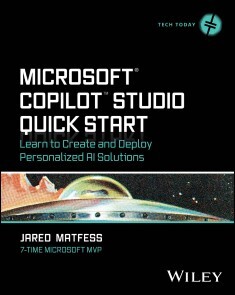
Microsoft Copilot Studio Quick Start
A step-by-step and hands-on guide to developing AI tools with Microsoft’s Copilot Studio In Microsoft® Copilot™ Studio Quick Start: Learn to Create and Deploy Personalized AI Solutions, 7-time Microsoft MVP and AI Architect Jared Matfess delivers an intuitive and hands-on guide to working with Microsoft’s newest generative AI platform. The author introduces you to the Copilot ecosystem and Copilot Studio before walking you through exactly how to build your first custom AI agent, publish it across a variety of environments, measure its results, and optimize its impact. Matfess offers a step-by-step roadmap to Copilot’s extensive functionality, providing you with coverage on everything from knowledge agents to semi-autonomous agents that can perform actions on your behalf. You’ll learn how to implement solutions across several common use-cases and industries, including healthcare, finance, retail, and government. You’ll also benefit from an extensive discussion of Microsoft’s AI development tools and Copilot Studio. Perfect for tech-savvy professionals in both technical and tech-adjacent roles, Microsoft® Copilot™ Studio Quick Start is a must-read book for everyone interested in building effective software solutions powered by generative AI in the Microsoft ecosystem. A practical and accessible guide to Microsoft's Copilot Studio In Microsoft Copilot Studio Quick Start, author Jared Matfess delivers an easy-to-read and hands-on guide to navigating Microsoft's newest generative AI platform. From introductions to the Copilot ecosystem and Copilot Studio to building your first custom agent, publishing it across different environments, and measuring its results so you can optimize its impact, this book walks you through the steps you need to take to use this powerful new tool. You'll learn to extend your Copilot's functionality from knowledge agents to semi-autonomous agents that can perform actions on your behalf, by integrating with third-party APIs and other Microsoft services via Power Platform connectors. Microsoft Copilot Studio Quick Start provides: Industry use cases from healthcare, finance, retail, and government that include a problem statement, solution overview and business outcomesStrategies for enhancing Copilot with agents, complete with an introduction to the agent architecture and tips for debugging and testing your agentsA comprehensive discussion of the future of Copilot Studio and AI development Perfect for tech-savvy professionals interested in unlocking the full potential of Microsoft's Copilot Studio, Microsoft Copilot Studio Quick Start is also a must-read resource for everyone who wants to build exciting new software tools driven by generative AI in the Microsoft ecosystem. JARED MATFESS is an AI Architect at AvePoint who partners with a diverse portfolio of clients, including Fortune 500 companies and State & Local Government agencies. He is a 7-time Microsoft MVP and has more than 20 years’ experience working in the Microsoft ecosystem and is an expert at assisting organizations in their digital transformations by leveraging advanced technologies, including AI.

CMS Auswahl und Einführung
Die digitale Präsenz entscheidet heute über Sichtbarkeit, Kundenbindung und Wettbewerbsfähigkeit. Für mittelständische Unternehmen ist ein leistungsfähiges Content-Management-System daher längst keine Kür mehr, sondern strategische Notwendigkeit. Doch die Auswahl und Einführung eines CMS ist komplex, technische Anforderungen, interne Ressourcen und strategische Ziele müssen aufeinander abgestimmt werden.Dieses Buch bietet mittelständischen Unternehmen eine fundierte und praxisorientierte Anleitung, um genau diese Herausforderung zu meistern. Schritt für Schritt führt es durch den gesamten Auswahl- und Einführungsprozess: verständlich, methodisch fundiert und mit einem klaren Blick für die besonderen Bedingungen im Mittelstand. Es zeigt, wie digitale Strukturen entstehen, die nicht nur heute funktionieren, sondern auch morgen noch tragen und dass für Websites, Kundenportale oder interne Plattformen gleichermaßen.Wenn Sie Klarheit und Struktur bei der Einführung Ihrer CMS-Software suchen, laden wir Sie herzlich ein, den DIGITAL BUSINESS NAVIGATOR, kostenfrei zu nutzen. Der Entry-Tarif ist für Leser kostenfrei enthalten.

Personalsoftware für den Mittelstand
Die Digitalisierung stellt das Personalwesen mittelständischer Unternehmen vor eine doppelte Herausforderung: Einerseits steigen die Erwartungen an moderne, effiziente HR-Prozesse und andererseits sind Zeit, Budget und IT-Ressourcen oft knapp bemessen. Genau hier setzt dieses Buch an.Andreas Pörtner, erfahrener Berater und Begleiter zahlreicher Digitalisierungsprojekte im Mittelstand, gibt in diesem Werk eine fundierte, systematische und leicht verständliche Anleitung zur Auswahl und Einführung der passenden Personalsoftware. Dabei geht es nicht um technische Details oder Produktvergleiche allein, sondern um die Frage, wie Unternehmen ihre HR-Prozesse ganzheitlich digital denken, gestalten und nachhaltig umsetzen können.Der Autor führt durch alle Projektphasen, von der Zieldefinition über die Anforderungsanalyse, Anbieterauswahl und Software-Demos bis hin zu Change Management, Datenschutz und langfristiger Systempflege. Zahlreiche Praxistipps, Checklisten und Beispiele aus echten Projekten machen das Buch zu einem unverzichtbaren Arbeitsmittel für Geschäftsführer, Personalleiter, IT-Verantwortliche und Projektteams in Unternehmen.Ob Sie gerade erst mit der Digitalisierung im HR-Bereich starten oder Ihre bestehende Lösung weiterentwickeln wollen, dieses Buch hilft Ihnen, fundierte Entscheidungen zu treffen, Fehler zu vermeiden und Ihre Personalabteilung zukunftsfähig aufzustellen.Wenn Sie Klarheit und Struktur bei der Nutzung und Einführung Ihrer Personalsoftware suchen, laden wir Sie herzlich ein, den DIGITAL BUSINESS NAVIGATOR, kostenfrei zu nutzen. Der Entry-Tarif ist für Leser kostenfrei enthalten.
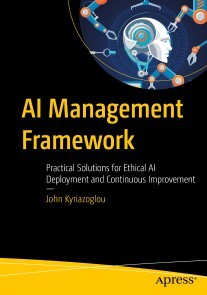
AI Management Framework
In today’s rapidly evolving technological landscape, managing artificial intelligence effectively is crucial for both private-sector companies and public-sector organizations. This book provides a robust and ethical framework to guide you through the complexities of AI deployment and management.This book is your ultimate guide to preparing your organization for AI, developing and operating AI systems, and continuously assessing and improving your AI ecosystem. It introduces a well-tested, practical management system that emphasizes ethical principles and practical solutions.Designed with practicality in mind, this book offers ready-to-use examples and customizable approaches to fit your organization’s unique needs. Whether you are looking to enhance decision-making, improve customer support, or ensure ethical AI practices, this book provides the tools and insights needed to develop, operate, and assess AI systems effectively, regardless of compliance with the ISO AI standard.WHAT YOU WILL LEARN:* A philosophical framework to ground your AI initiatives.* Guidance on navigating AI laws and regulations.* A five-phase AI implementation approach covering preparation, management, development, operation, and assessment.* Over 31 support tools, including policies, procedures, and ready-made examples of AI plans.WHO THIS BOOK IS FOR:The audience of this book includes CIOs, IT Managers and AI Project Managers, IT development staff, AI and data science professionals, cybersecurity professionals, auditors (IT, Internal, External, etc.), CISOs and corporate security managers, HR managers and staff, compliance and data protection officers, and anyone else interested in using or operating AI systems.Part 1: Foundation.- Chapter 1: AI Management System.- Part 2: AI Ethics Framework.- Chapter 2. The Seven Ancient Greek Wisdom Principles.- Chapter 3: Corporate Philosophy Statements and Policies.- Part 3: AI Regulations and Standards.- Chapter 4: AI Global Standards and Guidelines .- Chapter 5: Major Data Protection Laws and Privacy by Design Framework Principles .- Chapter 6: Digital and Secure AI System Development Guidelines.- Part 4: AI Infrastructure Management.- Chapter 7: Prepare the Organization for AI.- Chapter 8: Establish AI Governance Framework.- Chapter 9: Establish Data Governance Framework.- Chapter 10: Manage IT Governance & Privacy Controls.- Part 5: AI Systems Development and Operations.- Chapter 11: Develop AI Systems.- Chapter 12: Operate AI Systems.- Part 6: AI Infrastructure and Systems Assessment.- Chapter 13: Develop AI Infrastructure and Systems audit process.- Chapter 14: Assess Corporate Governance and HR Management Issues.- Chapter 15: Assess AI Governance and AI Data Management Issues .- Chapter 16: Assess AI Models and AI System Development Issues.- Chapter 17: Assess AI System Operation Issues.- Chapter 18: Assess IT Governance Issues.

Building Browser Extensions
This book is the definitive guide to building modern browser extensions, covering everything from fundamental concepts to advanced techniques.Developing a browser extension is more like building a mobile app than a traditional website. Extensions operate within a unique environment with their own security model, lifecycle, and APIs. This book demystifies the process, guiding you through every stage—from planning and development to publishing and maintaining your extension.You'll gain a deep understanding of how browser extensions function, their core architectural components, and best practices for structuring your code. The book also uncovers the nuances of extension development that many developers only discover through trial and error. By the end, you'll be equipped with the knowledge to confidently build, deploy, and scale a high-quality browser extension.YOU WILL LEARN:* The fundamental building blocks of browser extensions and how they interact with the browser* How to avoid common pitfalls that can lead to security vulnerabilities, performance issues, and rejections from extension marketplaces* To master the entire development lifecycle, from writing your first extension to publishing and maintaining it in the Chrome Web Store, Firefox Add-ons, and other repositories* How to build browser extensions using modern tools, languages, and frameworks* Best practices for extension networking, authentication, storage, and managementNEW FOR THIS EDITION:* Coverage of the latest browser extension APIs, including the side panel, offscreen documents, user scripts, and vendor-specifc APIs like the Chrome Prompt API.* Hands-on tutorials for building real-world extensions, including monetization strategies, AI assistants, password managers, ad blockers, and DevTools integrations* The latest tooling and frameworks for browser extension development, such as Vite, Extension.js, and WXTTHIS BOOK IS FOR:This book is ideal for developers looking to expand their expertise by building a browser extension—whether as a standalone product or as an extension to an existing web service. It’s also a great resource for teams integrating extension-based functionality into their SaaS platforms. Readers should have at least a basic understanding of HTML, CSS, and JavaScript.Chapter 1: What Are Browser Extensions?.- Chapter 2: Fundamental Elements of Browser Extensions.- Chapter 3: Browser Extension Crash Course.- Chapter 4: Browser Extension Architecture.- Chapter 5: The Extension Manifest.- Chapter 6: Background Scripts.- Chapter 7: Extension UIs.- Chapter 8: Content Scripts.- Chapter 9: Extension and Browser APIs.- Chapter 10: Permissions.- Chapter 11: Networking and Authentication.- Chapter 12: Tutorials.- Chapter 13: Extension Development and Deployment.- Chapter 14: Cross-Browser Extensions.- Chapter 15: Tooling and Frameworks.