

Computer und IT

The Quiet Crypto Revolution
Crypto is going to change the world, and for those tired of confusing financial jargon and complicated technical terminology, look no further. This book demystifies the world of cryptocurrencies and blockchain technology and explains in accessible language how it will affect your daily life.In The Quiet Crypto Revolution, Klaas Jung dives beneath the surface of Bitcoin to explore the engine that powers it - blockchain. Far surpassing the confines of cryptocurrencies, blockchain's potential for wide-ranging applications is enormous. It's crucial to understand that cryptocurrencies are merely a single manifestation of blockchain's capabilities. This book casts light on the broader spectrum of blockchain applications and the exciting future of this groundbreaking technology.With a focus on real-world applications, you'll gain a deeper understanding of the key concepts behind the innovative technology of blockchain, equipping you to make informed decisions. Whether you're a tech-savvy individual or a complete newcomer to the world of crypto and finance, this book will arm you with the knowledge and insights you need to understand the impact cryptocurrency and blockchain will have on your future.YOU WILL* Look at the future of blockchain technology* Review potential use cases for blockchain beyond cryptocurrency* Study security strategies to avoid scams in the crypto spaceWHO THIS BOOK IS FORBeginners who would like to gain a better understanding of cryptocurrency and the technology that supports it.Klaas Jung is a seasoned IT management professional and writer who brings a unique perspective to the ever-evolving world of blockchain and cryptocurrency. With over 20 years of experience in the IT industry, he has a wealth of knowledge and understanding of the technical and practical aspects of this revolutionary technology. His first book, "100% Successful IT Projects," was a practical guide to managing IT projects and achieving success.1. Introduction to The Crypto Revolution.- 2. Understanding the Blockchain.- 3. The future of blockchain technology.- 4. Cryptocurrency in Practice.- 5. The Future of Decentralized Finance.- 6. Security and Scams.- 7. Crypto Pioneers: Exploring Entrepreneurial Opportunities.- 8. Final Thoughts: The Future of Crypto.
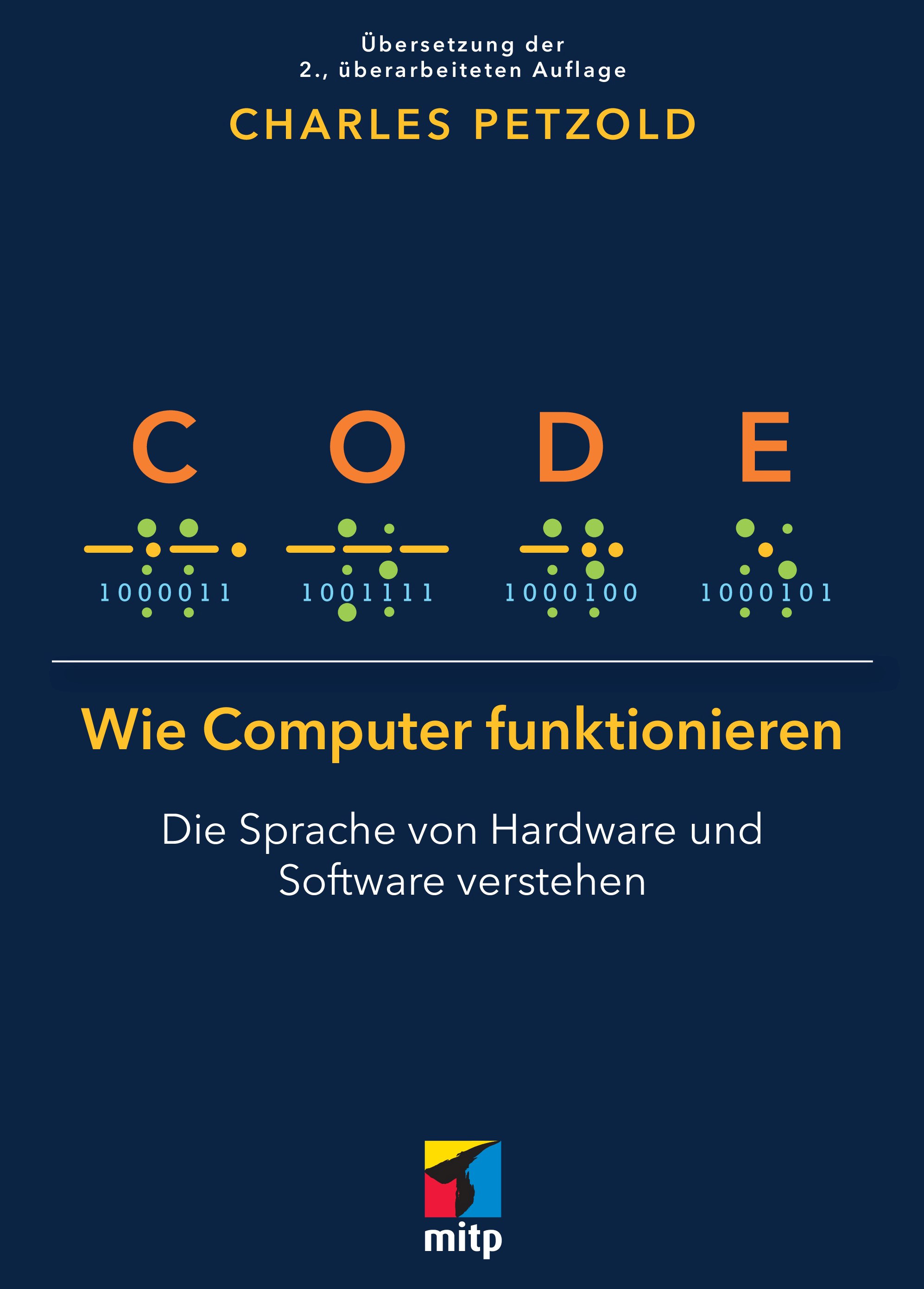
Code - Wie Computer funktionieren
Die Sprache von Hardware und Software verstehen. Die Erstauflage von Charles Petzold aus August 2023.Computer sind überall, am sichtbarsten in PCs und Smartphones, aber sie finden sich auch in Autos, Fernsehern, Mikrowellen, Staubsaugerrobotern und anderen smarten Geräten. Haben Sie sich jemals gefragt, was in diesen Geräten vor sich geht?Charles Petzold begeistert seine Leserinnen und Leser seit mehr als 20 Jahren mit seinem Buch und lüftet das Geheimnis über das verborgene Innenleben und die grundlegende Funktionsweise von Computern – von der Hardware bis zur Software. Nun hat er sein beliebtes Standardwerk für das neue Computerzeitalter überarbeitet. Alle Erläuterungen sind anschaulich illustriert und werden am Beispiel von alltäglichen Gegenständen wie Taschenlampen und bekannten Systemen wie Morsecode oder Brailleschrift leicht verständlich beschrieben.Dieses Buch schafft eine tiefe Ebene des Verständnisses für die Funktionsweise von Computern, die weit über den Code von höheren Programmiersprachen hinausgeht. Jeder, der sich für Informatik interessiert, sollte dieses Buch gelesen haben."Für mich war Code eine Offenbarung. Es war das erste Buch, das wirklich zu mir sprach. Es begann mit einer Geschichte und baute Schicht für Schicht, Analogie für Analogie darauf auf, bis ich nicht nur den Code, sondern auch das System dahinter verstand. Code ist ein Buch, in dem es in gleichem Maße um Systemisches Denken und Abstraktionen geht wie um Code und Programmierung. Code zeigt uns, wie viele unsichtbare Schichten zwischen den Computersystemen, die wir als Benutzer täglich zu Gesicht bekommen, und den magischen Siliziumkristallen liegen, denen wir mit Blitzenergie beigebracht haben zu denken."- Scott Hanselman, Partner Program Director bei Microsoft und Moderator von HanselminutesLeseprobe (PDF-Link)

Essentials of Arduino™ Boards Programming
Learn to use the Arduino boards to do big jobs in a simple way. This book is full of real-world examples for Arduino enthusiasts of all experience levels. All of the examples in this book use Arduino UNO, which is an excellent option for educational purposes.You'll start with an introduction to Arduino and see firsthand how its free multi-platform integrated development environment (IDE) makes coding easier. In many cases, you can edit the given codes to solve your own problems. Arduino boards use a variety of microcontrollers and each board is suitable for a specific application. The Arduino IDE is also preloaded with a broad library of codes that you can modify and practice with. So instead of coding from scratch you can adjust the codes for similar projects. More experienced users will save time by simply copying nuggets of code from the various libraries.You'll also learn about digital input/output (I/O), analog-to-digital and digital-to-analog converters, LCDs and EEPROM. The book then moves on to serial communication, mathematical functions, and pulse width modulation (PWM), all important features when encoding in telecommunications. Finally, you'll see how to control different types of motors, review interrupts, internal comparators, and timers, and read different sensors with Arduino.WHAT YOU WILL LEARN* Turn on/off a device using a relay* Generate analog/digital output* Read an analog/digital input* Control motors with a parallel virtual machine (PVM) and serial communication* Display text with LCDs* Read sensors with Arduino and use the interrupts* Write more efficient codes with interrupts and timersWHO THIS BOOK IS FOREngineering (electrical/computer/biomedical/robotic/mechatronics/aerospace) and science (math/physic/chemistry) students, makers, and hobbyists. Being familiar with a programming language (especially C) is an advantage, however, it is not necessary.Farzin Asadi received his B.Sc. in Electronics Engineering, his M.Sc. in Control Engineering, and his Ph.D. in Mechatronics Engineering. Currently, he is with the Department of Electrical and Electronics Engineering at the Maltepe University, Istanbul, Turkey. Dr. Asadi has published over 40 international papers and 19 books. He is on the editorial board of seven scientific journals as well. His research interests include switching converters, control theory, robust control of power electronics converters, and robotics.Chapter 1: Introduction to Arduino Boards.- Chapter 2: Digital Input Output (I/O).- Chapter 3: Analog to Digital Converter (ADC) and Digital to Analog Converter (DAC).- Chapter 4: LCD and EEPROM.- Chapter 5: Serial Communication.- Chapter 6: Mathematical Functions.- Chapter 7: Pulse Width Modulation (PWM).- Chapter 8: Control of Different Type of Motors.- Chapter 9: Interrupts and Internal Comparator.- Chapter 10: Timers.- Chapter 11: Reading Different Sensors with Arduino.

MCA Microsoft Certified Associate Azure Data Engineer Study Guide
PREPARE FOR THE AZURE DATA ENGINEERING CERTIFICATION—AND AN EXCITING NEW CAREER IN ANALYTICS—WITH THIS MUST-HAVE STUDY AIDEIn the MCA Microsoft Certified Associate Azure Data Engineer Study Guide: Exam DP-203, accomplished data engineer and tech educator Benjamin Perkins delivers a hands-on, practical guide to preparing for the challenging Azure Data Engineer certification and for a new career in an exciting and growing field of tech.In the book, you’ll explore all the objectives covered on the DP-203 exam while learning the job roles and responsibilities of a newly minted Azure data engineer. From integrating, transforming, and consolidating data from various structured and unstructured data systems into a structure that is suitable for building analytics solutions, you’ll get up to speed quickly and efficiently with Sybex’s easy-to-use study aids and tools.This Study Guide also offers:* Career-ready advice for anyone hoping to ace their first data engineering job interview and excel in their first day in the field* Indispensable tips and tricks to familiarize yourself with the DP-203 exam structure and help reduce test anxiety* Complimentary access to Sybex’s expansive online study tools, accessible across multiple devices, and offering access to hundreds of bonus practice questions, electronic flashcards, and a searchable, digital glossary of key termsA one-of-a-kind study aid designed to help you get straight to the crucial material you need to succeed on the exam and on the job, the MCA Microsoft Certified Associate Azure Data Engineer Study Guide: Exam DP-203 belongs on the bookshelves of anyone hoping to increase their data analytics skills, advance their data engineering career with an in-demand certification, or hoping to make a career change into a popular new area of tech.ABOUT THE AUTHORBENJAMIN PERKINS is currently employed at Microsoft in Munich, Germany, as a Senior Escalation Engineer on the Azure team. He is a C# programming expert and cloud engineer who has been working professionally in the IT industry for almost three decades. His roles in IT have spanned the entire spectrum including programmer, system architect, technical support engineer, team leader, and mid-level management. While employed at Hewlett-Packard and Compaq Computer Corporation, he received numerous awards, degrees, and certifications.
Handbuch Data Engineering
Der praxisnahe Überblick über die gesamte Data-Engineering-Landschaft.Data Engineering hat sich in den letzten zehn Jahren rasant entwickelt, sodass viele Software Engineers, Datenanalystinnen und Data Scientists nach einer zusammenfassenden Darstellung der grundlegenden Techniken suchen. Dieses praxisorientierte Buch gibt Ihnen mit dem Data Engineering Lifecycle ein Framework an die Hand, das die Evaluierung und Auswahl der besten Technologien für reale Geschäftsprobleme erleichtert. Sie erfahren, wie Sie Systeme so planen und entwickeln, dass sie den Anforderungen Ihres Unternehmens und Ihrer Kunden optimal gerecht werden.Joe Reis und Matt Housley führen Sie durch den Data Engineering Lifecycle und zeigen Ihnen, wie Sie eine Vielzahl von Cloud-Technologien kombinieren können, um die Bedürfnisse von Datenkonsumenten zu erfüllen. Sie lernen, die Konzepte der Generierung, Ingestion, Orchestrierung, Transformation, Speicherung und Bereitstellung von Daten anzuwenden, die in jeder Datenumgebung – unabhängig von der konkret verwendeten Technologie – von entscheidender Bedeutung sind.Aus dem Inhalt:Erhalten Sie einen kompakten Überblick über die gesamte Praxis des Data EngineeringBeurteilen Sie Problemstellungen im Data Engineering anhand eines umfassenden Frameworks von Best PracticesWählen Sie geeignete Datentechnologien, -architekturen und -prozesse jenseits des Marketing-Hypes ausNutzen Sie den Data Engineering Lifecycle, um eine robuste Infrastruktur zu entwerfen und aufzubauenErfahren Sie, wie Sie Data Governance und Sicherheit in den gesamten Lebenszyklus Ihrer Daten integrierenInhaltsverzeichnis (PDF-Link)Zu den Autoren:Joe Reis ist ein businessorientierter Daten-Nerd, der seit 20 Jahren in der Datenbranche tätig ist. Seine Tätigkeitsbereiche umfassen statistische Modellierung, Prognosen, Machine Learning, Data Engineering, Datenarchitektur und fast alles, was dazwischen liegt. Joe Reis ist der CEO und Mitbegründer von Ternary Data, einem Beratungsunternehmen für Data Engineering und Datenarchitektur mit Sitz in Salt Lake City, Utah. Er engagiert sich ehrenamtlich in verschiedenen Technologiegruppen und unterrichtet an der University of Utah. In seiner Freizeit geht Joe gerne klettern, produziert elektronische Musik und unternimmt mit seinen Kindern verrückte Abenteuer.Matt Housley ist Consultant für Data Engineering und ein Experte für die Cloud. Nach ersten Programmiererfahrungen mit Logo, Basic und 6502-Assembler hat er an der University of Utah in Mathematik promoviert. Danach begann Matt Housley im Bereich der Data Science zu arbeiten und spezialisierte sich schließlich auf Cloud-basiertes Data Engineering. Zusammen mit Joe Reis gründete er Ternary Data, wo er seine Lehrerfahrung nutzt, um künftige Data Engineers auszubilden und Teams zu einer robusten Datenarchitektur zu beraten. Matt und Joe referieren außerdem im „The Monday Morning Data Chat“ über alles, was mit Daten zu tun hat.

Künstliche Intelligenz, Verkörperung und Autonomie
Was wissen Maschinen? Können sie wirklich mit uns sprechen? Haben sie Bewusstsein? Was ist gemeint, wenn Roboter als „verkörperte KI“ oder als „autonom“ bezeichnet werden? Vorliegendes Buch stellt sich diesen und weiteren Fragen. Denn Technikethik ist eng mit theoretischen Herausforderungen verbunden. Vor diesem Hintergrund wird in die Erkenntnislehre, Sprachanalyse, Körper-Geist-Verhältnisse sowie die Philosophie des Geistes systematisch eingeführt. Manches, das wir Maschinen vorschnell zuschreiben, entpuppt sich bei genauer Betrachtung als Schein. Warum ist das so? Mit Beispielen, Tabellen und Übersichten werden Antworten eingängig und strukturiert erarbeitet. Das Buch richtet sich an Ingenieurwissenschaftler*innen, Informatiker*innen und Geisteswissenschaftler*innen im Berufsalltag, aber auch an interessierte Lai*innen, die Möglichkeiten und Grenzen der KI kritisch hinterfragen wollen. Es bildet den vierten, in sich abgerundeten Teil der Buchreihe Grundlagen der Technikethik. Haben Maschinen den Geist, den wir brauchen, und brauchen wir den Geist, in dem wir Maschinen designen? Der Inhalt * Sprache und Wissen * Sprachen und Techniken * Körper-Geist-Verhältnisse * Haben Maschinen Bewusstsein? * Autonomie Die Zielgruppen * Entwickler*innen in den Bereichen Informatik und Robotics * Wissenschaftler*innen und Studierende der Informatik/IT, Philosophie, Sozial- und Rechtswissenschaften * Interessierte Lai*innen aller Fachbereiche Der Autor Michael Funk forscht und lehrt an der Universität Wien in den Bereichen Medien- und Technikphilosophie (Institut für Philosophie) sowie Cooperative Systems (Fakultät für Informatik). Was wissen Maschinen? Können sie wirklich mit uns sprechen? Haben sie Bewusstsein? Was ist gemeint, wenn Roboter als „verkörperte KI“ oder als „autonom“ bezeichnet werden? Vorliegendes Buch stellt sich diesen und weiteren Fragen. Denn Technikethik ist eng mit theoretischen Herausforderungen verbunden. Vor diesem Hintergrund wird in die Erkenntnislehre, Sprachanalyse, Körper-Geist-Verhältnisse sowie die Philosophie des Geistes systematisch eingeführt. Manches, das wir Maschinen vorschnell zuschreiben, entpuppt sich bei genauer Betrachtung als Schein. Warum ist das so? Mit Beispielen, Tabellen und Übersichten werden Antworten eingängig und strukturiert erarbeitet. Das Buch richtet sich an Ingenieurwissenschaftler*innen, Informatiker*innen und Geisteswissenschaftler*innen im Berufsalltag, aber auch an interessierte Lai*innen, die Möglichkeiten und Grenzen der KI kritisch hinterfragen wollen. Es bildet den vierten, in sich abgerundeten Teil der Buchreihe Grundlagen der Technikethik. Haben Maschinen den Geist, den wir brauchen, und brauchen wir den Geist, in dem wir Maschinen designen? Michael Funk forscht und lehrt an der Universität Wien in den Bereichen Medien- und Technikphilosophie (Institut für Philosophie) sowie Cooperative Systems (Fakultät für Informatik). Sprache und Wissen.- Sprachen und Techniken.- Körper-Geist-Verhältnisse.- Haben Maschinen Bewusstsein?.- Autonomie.

Serverless Web Applications with AWS Amplify
Learn the fundamentals of serverless applications and how to take advantage of time-tested Amazon Web Services (AWS) to build scalable apps. This book shows you how to work with the key features of your applications with minimum code, simple CLI commands and one-click deployments.You'll see how to manage authentication, standard UI components, database storage, filesystem, CI/CD pipeline and more. You'll also examine the architecture, strengths, scalability, and limitations of serverless, and how to use AWS Amplify effectively. You will use tools including React, Cognito, GraphQL, DynamoDB, Kinesis, and Sagemaker.AWS Amplify is the fastest and easiest way to build serverless web and mobile apps at scale, comprising tools and services that work independently and can be wired together to build scalable apps.WHAT YOU'LL LEARN* Build GraphQL and REST APIs* Model data with Amplify Datastores* Set up a CI/CD pipeline with Amplify* Record and make sense of user data analytics with Kinesis* Boost your application with AI/ML capability using Sagemaker WHO THIS BOOK IS FORDevelopers who have worked on web technologies and want to learn how to build serverless applications and developers interested in making powerful applications using AWS that can then be wired using AWS Amplify.AKSHAT PAUL is a technology leader and author of four books on React Native, Ruby, and Rubymotion. He has extensive experience of mobile and web development and has delivered many enterprise and consumer applications over the years. In other avatars, Akshat frequently speaks at conferences and meetups on various technologies. He has given talks at React Native EU, Crossplatform mobile summit, Devops@scale Amsterdam, DevTheory Conference India, RubyConfIndia, #inspect-RubyMotion Conference brussels and was KeyNote speaker at technology leadership events at bkk and kl. Besides writing code Akshat spends time with his family, is an avid reader, and is obsessive about healthy eating.MAHESH HALDAR is a developer, blogger and industry speaker who loves the JavaScript ecosystem, Flutter, cloud technologies and builds efficient software products to help businesses grow and improve their customers experience. As a principal software engineer, he currently architects and builds software solutions for the e-commerce platform Carrefour.He speaks at tech community meetups and actively writes blogs on medium and has had research published in IJCA. Haldar has designed and developed complex large-scale systems for start-ups and large enterprises like Jago Bank and McKinsey & Company.Chapter 1: Introduction to Serverless* What is Serverless – History, present and beyond* Architecture, strengths, scalability and limitations* What is AWS AmplifyChapter 2: UI Component & Authentication* Amplify UI component introduction* React UI component* What is AWS Cognito * How it works * Setting up authentication with Cognito * UI forms and implementation for sign in, signup, signout, confirm and forget Chapter 3 : API request and database* Quick introduction to GraphQL and REST* Make HTTP requests with GraphQL using Amplify* Getting and displaying data from public sources * Making HTTP requests with REST using Amplify and API gateway* Getting and displaying data from public sources Chapter 4 : Lambda Functions* What is AWS Lambdas?* Invocation types and event sources* Creating new REST API and trigger lambda function* Deploying lambda functions * Using lambda layers Chapter 5 : Storage and Data stores* Setting up a database (DynamoDB)* CRUD functions with UI to API to interact with Database* Amplifying Datastores* Modeling the datastore* Storing and retrieving data from Amplify datastores* Storing and retrieving objects like photos, videos using S3 Chapter 6 : Analytics* Recording events* Tracking session* Making sense of data and analyze with Kinesis Chapter 7 : CI/CD* Deployment via CLI* Deployment via Git* Feature branch deployment* Hosting static apps * Adding password protection for non-production releasesChapter 8 : Amplify Supplements* Building engaging apps having interactive bots with lex* Boosting your application with AI/ML capability using Sagemaker * Amplify beyond react web apps
Creative Prototyping with Generative AI
Reimagine different generative AI as useful creative prototyping tools that can be used to augment your own creative process and projects. Gain a deeper understanding of how generative AI can elevate your creative future.You will acquire a comprehensive understanding of how AI works, uncover tools that can enhance your AI interactions, learn how to extract maximum potential from AI-produced content, and experiment with methods for assessing, refining, and boosting the content to transform your creative projects. You'll also explore how creative professionals from varied disciplines are employing generative AI in their workflows to produce distinctive contributions to the world.Each chapter provides examples of how designers and other creative individuals can utilize these technological wonders, adopting various prototyping techniques to fast-track and optimize design processes and workflows. Creators from all disciplines can tap into the vast capabilities and benefits of generative AI, enabling them to rapidly experiment and prototype their ideas.YOU WILL LEARN:* Understand how generative AI can support your own creative process* Learn tools to get the most out of text-text, text-image, and text-video generative AI* Augment your design practices using generative AI* Draw inspiration from AI generated content to create unique creative work* Improve and streamline creatives processes and workflowsWHO THIS BOOK IS FOR* Digital media professionals who want to access off-the shelf creative tools to improve and accelerate their creativity and workflow.* Designers and engineers who are looking at novel ways to improve their prototyping and testing processes.* Students who want to use AI to rapidly generate ideas to support them in prototyping assignments.* Instructors interested in pointing their students to a variety of accessible AI resources to manage their own creativity.PATRICK PARRA PENNEFATHER is an Assistant Professor and Researcher at the University of British Columbia within the Faculty of Arts and the Emerging Media Lab. His research is focused on Collaborative Learning Practices, Digital Media, XR and Agile Software Development. Patrick also works with learning organizations and technology companies around the world to design learning courses that meets the needs of diverse communities to aid the development of the next generation of technology designers and developers. Teaching has focused on Creativity, Collaboration, Sound Design, xR development, Agile with a focus on developing critical 21st Century competencies.RAPID PROTOTYPING WITH GENERATIVE AI1. Introduction: Your AI Best Friend2. AI as a Creative Muse3. Prototyping with AI4. Creative Tools and Processes5. AI Structures6. The Master of Mash-Up: Leveraging AI for Prototyping7. Uncanny by Nature8. Layering AI Generation9. The Art of the Prompt10. Five Dilemmas Using AI11. AI Curator for Hire

IT-Service-Security in Begriffen und Zusammenhängen
Für die IT- oder Cybersecurity von IT-Dienstleistungen (IT-Services) zu sorgen, kann ein komplexes Unterfangen sein. Als Anwender das erreichte Maß an IT-Sicherheit adäquat einzuschätzen nicht minder.Dieses Buch bringt Ordnung in das Dickicht von Prozessen, Aktivitäten und Informationen, indem neue Begriffe eingeführt sowie existierende geschärft und in den Zusammenhang gesetzt werden. Es liefert konkrete Anleitungen und ein Gesamtkonzept für das Management der IT-Service-Sicherheit im Sinne von Organisieren, Orchestrieren und Optimieren. Es zeigt, wie man die vielen Themen gleichzeitig bearbeiten und erfolgreich am internen oder externen Markt bestehen kann. Die Methoden und Konzeptionen sind die Essenz aus mehr als fünfzehn Jahren Forschung und Lehre und aus mehr als zwölf Jahren in zentraler Verantwortlichkeit in einem der großen international tätigen IT-Dienstleister. Die Aufteilung der an sich komplexen Materie in einzelne Begriffe ermöglicht es dem Leser, sich jeweils auf eine Fragestellung zu konzentrieren. Das Buch richtet sich an Anwender (Anwenderorganisationen) und an IT-Dienstleister (IT-Abteilungen und Firmen in der IT-Industrie) und ist hilfreich für Hersteller, die beide Parteien zufriedenstellen müssen.EBERHARD VON FABER arbeitet als Chief Security Advisor, IT Services bei T-Systems. Er verfügt über mehr als 30 Jahre Industrieerfahrung auf dem Gebiet der IT-Sicherheit und ist Professor für IT-Sicherheit. Seine Spezialthemen sind Sicherheitsarchitekturen, Prozesse und die Interaktion in industriellen Liefernetzwerken für mehr Effizienz und bessere Informationssicherheit. Er hat vier Bücher bei Springer veröffentlicht und ist für mehr als 150 Fachartikel und öffentliche Vorträge verantwortlich.Geschäftsmodelle und Technik - Produktion und Bereitstellung - Das Managementsystem - Die Teilaufgaben - Assurance Management: Informationen über die IT-Sicherheit beschaffen, kommunizieren und bewerten - Taxonomie: Themen verstehen, Verantwortlichkeiten zuweisen, Tätigkeiten orchestrieren - Dokumentation: Unterbau und Arbeitsmittel für Qualität und EffizienzSecured by Definition: IT-Sicherheit, Qualitätsmanagement und die Konsequenzen - Wahrnehmung, Wissen, Kompetenzen: der Faktor Mensch und wie wir urteilen

Analyzing Non-Textual Content Elements to Detect Academic Plagiarism
Identifying plagiarism is a pressing problem for research institutions, publishers, and funding bodies. Current detection methods focus on textual analysis and find copied, moderately reworded, or translated content. However, detecting more subtle forms of plagiarism, including strong paraphrasing, sense-for-sense translations, or the reuse of non-textual content and ideas, remains a challenge. This book presents a novel approach to address this problem—analyzing non-textual elements in academic documents, such as citations, images, and mathematical content. The proposed detection techniques are validated in five evaluations using confirmed plagiarism cases and exploratory searches for new instances. The results show that non-textual elements contain much semantic information, are language-independent, and resilient to typical tactics for concealing plagiarism. Incorporating non-textual content analysis complements text-based detection approaches and increases the detection effectiveness, particularly for disguised forms of plagiarism. The book introduces the first integrated plagiarism detection system that combines citation, image, math, and text similarity analysis. Its user interface features visual aids that significantly reduce the time and effort users must invest in examining content similarity.Norman Meuschke is a Senior Researcher for Information Retrieval and Natural Language Processing at the University of Göttingen, Germany.Introduction.- Academic Plagiarism Detection.- Citation-based Plagiarism Detection.- Image-based Plagiarism Detection.- Math-based Plagiarism Detection.- Hybrid Plagiarism Detection System.- Conclusion and Future Work.- References.

How to Be OT Cybersecurity Professional
It's a bitter truth that we live in an age of vulnerable systems, where our existence is completely dependent on them. Cyber attacks can cause greater damage than actual war losses for a country that is unprepared for them. After several incidents that impacted social order, governments have realized this fact.During a cyber attack, the city will be paralyzed, food supply will be interrupted, and medical care will be disrupted. There would be human casualties and the worst of the people would emerge if fuel or electricity were unavailable.The age of cyber missiles has arrived, and as Dale Peterson pointed out, our infrastructure systems are insecure by design. We need to learn how to secure all operational technology, it's crucial, and it can only be done by understanding the bits and bytes of these operations. In this book, you'll learn Cybersecurity for Operational Technology, how to secure all types of Operational Technology, and how to save lives!

Wissenschaftliche Arbeiten schreiben (3. Auflg.)
* ALLE GRUNDLAGEN ZUM SCHREIBEN WISSENSCHAFTLICHER ARBEITEN* METHODEN ZUR SELBSTORGANISATION UND ZEITPLANUNG SOWIE STRATEGIEN FÜR UNTERSCHIEDLICHE SCHREIBTYPEN* LITERATURVERWALTUNG, -RECHERCHE UND -AUSWERTUNG, INHALTE SAMMELN, STRUKTURIEREN, SCHREIBEN UND EFFEKTIV ÜBERARBEITEN* SOFTWARE ALS HILFREICHE UNTERSTÜTZUNG FÜR ALLE PHASEN DER ARBEITDieser Ratgeber ist eine umfassende und motivierende Anleitung für das erfolgreiche Schreiben wissenschaftlicher Arbeiten und richtet sich an Studierende aller Fachrichtungen.Die Autorin legt einen besonderen Fokus auf den Einsatz von Software als sinnvolle Unterstützung und Arbeitserleichterung in allen Phasen des wissenschaftlichen Arbeitens. Dazu beschreibt sie über 100 verschiedene Einsatzmöglichkeiten von Software von Citavi über Zotero bis hin zu vielen kleinen hilfreichen Programmen. Ein separates Kapitel erläutert konkrete Entscheidungskriterien und enthält eine ausführliche Checkliste, im Anhang finden Sie übersichtliche Tabellen mit Hinweisen zu Kosten, Betriebssystem u.v.m.In Teil I »Orientieren und Planen« geht es zum einen ausführlich um das Thema Selbstorganisation. Hier lernen Sie verschiedene Strategien zur Motivation und zum effektiven Erreichen Ihres Ziels kennen. Zum anderen geht die Autorin praxisnah auf verschiedene Methoden der Zeitplanung ein und hilft Ihnen, die für Sie beste Vorgehensweise für Ihre individuelle Planung zu finden.Außerdem gibt Ihnen die Autorin Hilfsmittel an die Hand, um sowohl ein Thema als auch eine sinnvolle Fragestellung für Ihre wissenschaftliche Arbeit zu finden.Teil II hat das Sammeln und Strukturieren von Inhalten zum Thema. Hierzu gehört der gesamte Umgang mit Literatur von der Verwaltung über die Recherche und Auswertung bis hin zum effektiven Lesen und Verarbeiten der Inhalte. Darüber hinaus zeigt Ihnen die Autorin, wie Sie Ihre Arbeit formal und inhaltlich richtig aufbauen.Teil III behandelt den Schreibprozess. Die Autorin beschreibt verschiedene Schreibtypen und -strategien mit ihren Stärken und Schwächen. So finden Sie den Einstieg ins Schreiben und halten auch bis zum Ende durch.Sie lernen hier auch, was Sie beachten müssen, damit Ihre Texte überzeugen und Ihre Abbildungen aussagekräftig sind. Und zu guter Letzt erfahren Sie, wie Sie die Überarbeitung optimal organisieren, konstruktiv mit Feedback umgehen und wie Ihnen die letzten Schritte zur Fertigstellung Ihrer Arbeit gelingen.AUS DEM INHALT:* TEIL I: ORIENTIEREN UND PLANEN* Selbstorganisation, Motivation und Zielerreichung* Methoden zur Zeitplanung und Tagesstruktur* Einsatzbereiche von Software* Anforderungen an eine wissenschaftliche Arbeit* Inhaltlicher Einstieg: Thema und Fragestellung finden sowie Methoden für die Orientierungsphase* TEIL II: SAMMELN UND STRUKTURIEREN* Literaturverwaltung, -recherche und -auswertung* Effektives Lesen sowie Verarbeiten der Inhalte* Einsatz empirischer Methoden* Gliederung und Aufbau der Arbeit* TEIL III: SCHREIBEN UND ÜBERARBEITEN* Schreibtechniken* Verschiedene Schreibstrategien* Überzeugende Vermittlung von Inhalten* Korrektes Zitieren* Überarbeiten: Feedback einholen und verarbeitenANHANG:Übersichtliche Tabellen zur beschriebenen SoftwareAMAZON-REZENSION ZUR VORAUFLAGE:»Auf geniale Weise werden hier 'Wissenschaftlich Arbeiten' und 'Wissenschaftlich Schreiben' miteinander vereint. Checklisten, tolle Praxis-Tipps und Software-Empfehlungen runden die Teil-Aspekte des Schreib-, Lese- und Forschungsprozesses ab, die alle Schritt für Schritt behandelt werden! Warum gibt es das erst jetzt? :-)«Dr. Andrea Klein - Dozentin, Coach und Autorin - lehrt seit vielen Jahren an Universitäten, Fachhochschulen und Berufsakademien die Grundlagen wissenschaftlichen Arbeitens. Sie weiß daher, welche Informationen für Studierende beim Verfassen wissenschaftlicher Arbeiten wichtig sind und welche Impulse ihnen weiterhelfen. Sie studierte Anglistik, Politikwissenschaft und Psychologie an der Universität Heidelberg und promovierte an der Universität Mannheim in Betriebswirtschaftslehre.
Action in Uncertainty
DESPITE UNCERTAINTY, PEOPLE ARE BORN TO ACT. FACED WITH ENVIRONMENTAL AGGRESSION AND UPHEAVAL, INACTION IS MORE STRESSFUL THAN ACTION.What choices, strategies or methods need to be implemented so that action is as effective as possible in terms of the objectives to be achieved? We should not delude ourselves about the term "good decision", which does not have much meaning when we act in an uncertain environment and when we know the weakness of forecasts. However, we must know how to act and be capable of taking the most appropriate action.Action in Uncertainty is a real guide to taking effective action when nothing is certain. According to the different types of uncertainty, what are the respective good uses of expertise and intuition? How do we motivate teams and avoid cognitive bias and manipulation? These themes are dealt with in clear and accessible terms to help decision-makers make the right choices in a world that is more uncertain than ever.JEAN-CHARLES POMEROL is a specialist in decision support systems and a pioneer in the teaching of artificial intelligence. He headed the Pierre and Marie Curie University (UPMC), France, for several years and has since been president of several foundations and of AGORANOV, the most renowned incubator in Paris.

MLOps Lifecycle Toolkit
This book is aimed at practitioners of data science, with consideration for bespoke problems, standards, and tech stacks between industries. It will guide you through the fundamentals of technical decision making, including planning, building, optimizing, packaging, and deploying end-to-end, reliable, and robust stochastic workflows using the language of data science.MLOps Lifecycle Toolkit walks you through the principles of software engineering, assuming no prior experience. It addresses the perennial “why” of MLOps early, along with insight into the unique challenges of engineering stochastic systems. Next, you’ll discover resources to learn software craftsmanship, data-driven testing frameworks, and computer science. Additionally, you will see how to transition from Jupyter notebooks to code editors, and leverage infrastructure and cloud services to take control of the entire machine learning lifecycle. You’ll gain insight into the technical and architectural decisions you’re likely to encounter, as well as best practices for deploying accurate, extensible, scalable, and reliable models. Through hands-on labs, you will build your own MLOps “toolkit” that you can use to accelerate your own projects. In later chapters, author Dayne Sorvisto takes a thoughtful, bottom-up approach to machine learning engineering by considering the hard problems unique to industries such as high finance, energy, healthcare, and tech as case studies, along with the ethical and technical constraints that shape decision making.After reading this book, whether you are a data scientist, product manager, or industry decision maker, you will be equipped to deploy models to production, understand the nuances of MLOps in the domain language of your industry, and have the resources for continuous delivery and learning.WHAT YOU WILL LEARN* Understand the principles of software engineering and MLOps* Design an end-to-end machine learning system* Balance technical decisions and architectural trade-offs* Gain insight into the fundamental problems unique to each industry and how to solve themWHO THIS BOOK IS FORData scientists, machine learning engineers, and software professionals.DAYNE SORVISTO has a Master of Science degree in Mathematics and Statistics and became an expert in MLOps. He started his career in data science before becoming a software engineer. He has worked for tech start-ups and has consulted for Fortune 500 companies in diverse industries including energy and finance. Dayne has previously won awards for his research including Industry Track Best Paper Award. Dayne has also written about security in MLOps systems for Dell EMC’s Proven Professional Knowledge Sharing platform and has contributed to many of the open-source projects he uses regularly.Chapter 1: Introduction to Machine Learning Engineering.- Chapter 2: Developing Stochastic Systems.- Chapter 3: Tools for Data Science Developers.- Chapter 4: Infrastructure for MLOps.- Chapter 5, Building Training Pipelines.- Chapter 6: Building Inference Pipelines.- Chapter 7: Deploying Stochastic Systems.- Chapter 8: Data Ethics.- Chapter 9: Case Studies By Industry.

Knowledge Science - Fallstudien
Der Arbeitsplatz der Zukunft wird immer stärker durch die Wissensarbeit geprägt. Knowledge Science beschäftigt sich mit Konzepten, Methoden und Prozessen zur systematischen Erzeugung, Extraktion, Speicherung und Bereitstellung von Wissen zur Lösung von Problemen und lässt sich somit dem Wissensmanagement zuordnen. Kognitive Assistenten sorgen dafür, das richtige Wissen zur richtigen Zeit in der richtigen Art und Weise seinen Anwendern und Anwenderinnen bereitzustellen. Damit dies gelingen kann, kommen inzwischen zahlreiche Methoden der Künstlichen Intelligenz (KI) zur Unterstützung unterschiedlicher Aufgaben des Wissensmanagements zum Einsatz.DER INHALTWie lassen sich mit KI-Methoden die Wissenssicherung und Wissensnutzung in Unternehmen unterstützen? Dieses Buch charakterisiert den Arbeitsplatz der Zukunft und stellt die Bedeutung der Ressource Wissen und deren Management in den Vordergrund. Ziel ist es nicht, mittels KI den Menschen zu ersetzen, sondern ihn mittels kognitiver Assistenten bestmöglich bei seiner Arbeit zu unterstützen.Welche Bereiche des Unternehmens können mit Methoden der Künstlichen Intelligenz optimiert oder gänzlich transformiert werden? Welche Schritte sind sowohl organisatorisch als auch technisch notwendig und wie werden einzelne Methoden in den Bereichen tatsächlich durchgeführt? In diesem Buch werden die Methoden der KI anhand konkreter Fallstudien mit einer großen Bandbreite erläutert und entmystifiziert:* Assistenzsysteme, die wie ein Mensch lernen* Wissenssicherung durch Smart Expert Debriefings * Kognitive Assistenzsysteme für die Trendanalyse * Kognitive Assistenzsysteme im Projektmanagement* Methoden der KI in industriellen AnwendungenDIE ZIELGRUPPEN* Unternehmer, Prozessverantwortliche und Fachanwender, die Methoden der KI in ihrem Unternehmen oder ihren Fachbereichen nutzen wollen.* IT-Manager, IT-Experten und Data Scientists, die KI-basierte Lösungen im Wissensmanagement umsetzen * Studierende im Bereich KI und Data ScienceCARSTEN LANQUILLON beantwortet seit mehr als 25 Jahren unternehmerische Fragestellungen erfolgreich mit Hilfe maschineller Lernverfahren. Er ist seit 2008 Professor an der Hochschule Heilbronn und forscht im Bereich ressourceneffizienter KI in industriellen Anwendungen sowie im Bereich der Sprachtechnologien und kognitiven Assistenzsysteme zur Unterstützung der Wissensarbeit.SIGURD SCHACHT beschäftigt sich seit mehr als 15 Jahren in Theorie und Praxis mit betriebswirtschaftlichen Datenanalysen. Er ist seit 2012 Professor und forscht auf dem Gebiet der Sprachtechnologie und kognitiven Assistenzsysteme mit Schwerpunkt auf dem Trainieren und Anwenden großer Sprachmodelle sowie dem Prompt-Engineering.Das Unternehmen – Kurz Vorgestellt.- Methoden der KI in der Beschaffung.- Methoden der KI im Vertrieb.- Methoden der KI in der Produktion.- Methoden der KI im Finanzwesen inklusive Analgen, Rechnungslegung und Finanzen.-Methoden der KI in Unterstützenden Prozessen des Unternehmens.-Nachlagewerk Theoretische Methoden der KI.

3D-Konstruktionen mit Autodesk Inventor 2024
* 3D-MODELLIEREN VON DER SKIZZE ÜBER BAUTEILE UND BAUGRUPPEN BIS ZUR WERKZEICHNUNG UND ANIMATION* PRAXISNAHE ERLÄUTERUNG GRUNDLEGENDER BEFEHLE MIT VIELEN VERSCHIEDENEN KONSTRUKTIONSBEISPIELEN ZUM NACHBAUEN* ZWEI BONUS-KAPITEL MIT ZUSÄTZLICHEN THEMEN SOWIE ALLE BEISPIELPROJEKTE ALS DOWNLOADDieses Grundlagen- und Lehrbuch zeigt Ihnen anhand vieler einzelner Konstruktionsbeispiele die Möglichkeiten von Inventor 2024 und richtet sich insbesondere an Inventor-Neulinge, die Wert auf einen gründlichen praxisnahen Einstieg legen.Mit der Inventor-Testversion von der Autodesk-Webseite können Sie zügig eigene dreidimensionale Konstruktionen erstellen. Die wichtigsten Vorgehensweisen werden mit vielen einzelnen Beispielen erklärt. Für jedes Kapitel finden Sie Testfragen mit Lösungen im Anhang.Alle Befehle werden umfangreich vorgestellt und können daher leicht für eigene Projekte eingesetzt werden.ZUM DOWNLOAD:* Die vollständigen Projekte der 3D-Beispiele inklusive der Bauteile, Baugruppen und Zeichnungen* Bonus-Kapitel zu den Spezialthemen 'iLogic-Programmierung' und 'Module für Blech, Gestell, Welle, Schweißen, BIM-Export, Elektronik'ZAHLREICHE BEFEHLE WERDEN DETAILLIERT ERLÄUTERT, Z.B.:* 2D-Skizzen mit Linie, Bogen, Kreis, Rechteck, Langloch, Polygon* Abhängigkeiten und Bemaßungen in der Skizze* Volumenkörper über Extrusion, Rotation, Sweeping und Lofting (Erhebung)* Spezielle Modellierung mit Spirale, Prägen, Ableiten, Rippe und Aufkleben* Import für AutoCAD-2D-Zeichnungen mit assoziativer Zuordnung* 3D-Modellierung mit Grundkörpern wie Quader, Zylinder, Kugel und Torus* Volumenkörper durch Features ergänzen: Bohrung, Fase, Rundung, Gewinde, Wandstärke, Flächenverjüngung, Markierungen, Oberflächenbeschaffenheit etc.* Baugruppen durch Platzieren der Bauteile mit geometrischen Abhängigkeiten* Zeichnungsableitung mit Ansichten, Bemaßungen und Beschriftungen* Erstellen von Stücklisten und Positionsnummern* Gestaltung verschiedener Modellzustände in Bauteilen oder Baugruppen* Animierte Präsentationen, fotorealistische Bilder mit verschiedenen StilenAUS DEM INHALT:* Installation und Benutzeroberfläche* Skizzenerstellung in 2D und 3D* 3D-Modellierung* Abhängigkeiten und Bemaßungen* AutoCAD-2D-Import* 3D-Modellierung* iFeatures, iMates, iParts, iAssemblies* Baugruppenerstellung und Gestaltung von Modellzuständen* Zeichnungsableitung* Bemaßungen und Stile* PräsentationenDetlef Ridder hat bereits zahlreiche Bücher zu AutoCAD, Inventor, Revit und ArchiCAD veröffentlicht. Er gibt Schulungen zu diesen Programmen und zu CNC und weiß daher, welche Themen für Einsteiger besonders wichtig sind.
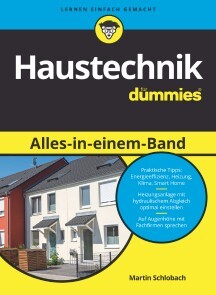
Haustechnik für Dummies Alles-in-einem-Band
Wollen oder müssen Sie wissen, wie die ganze Technik in Ihrem Haus funktioniert? Martin Schlobach erklärt Ihnen, wie Sie energiesparend bauen und sanieren, was es mit der Heizungs- und Kältetechnik auf sich hat, wie Lüftungen funktionieren, was Sie bei der Elektrotechnik in Ihrem Haus beachten sollten und vieles mehr. Er erläutert die Möglichkeiten von Smart Homes und weist Sie darauf hin, was Sie bei Wasser und Abwasser bedenken sollten. Außerdem erhalten Sie noch viele praktische Tipps: eine kleine Werkzeugkunde, eine Anleitung Strom- und Heizkostenabrechnungen zu verstehen, Hinweise um die Heizung zu optimieren und viele weitere. So werden Sie Ihr Haus besser verstehen und erfahren, wie Sie richtig Geld sparen können.Martin Schlobach studierte in Berlin Technisches Gebäudemanagement und ist seit 2016 am Universitätsklinikum Bonn in der Bauabteilung tätig und betreut vielseitige Projekte als Projektleiter und Fachplaner für die Technische Gebäudeausrüstung. Außerdem betreibt er seit 2013 den Weblog haustechnikverstehen.de.

Demystifying Intelligent Multimode Security Systems
Use this practical guide to understand the concepts behind Intelligent Multi-modal Security Systems (IMSS) and how to implement security within an IMSS system to improve the robustness of the devices and of the end-to-end solution.There are nearly half a million active IMSS cameras globally, with over 100 million added annually. These cameras are used across enterprises (companies, traffic monitoring, driver enforcement, etc.), in peoples’ homes, on mobile devices (drones, on-vehicle, etc.), and are worn on the body.IMSS systems with a camera and network video recorder for storage are becoming the normal infrastructure for capturing, storing, and transmitting video content (sometimes up to 100 streams) in a secure manner and while protecting privacy.Military, aerospace, and government entities are also embracing digital security and surveillance. IMSS content serves as evidence in courts of law.Security within all of these types of IMSS systems needs to be bolstered by leveraging Intel hardware and software as the last line of defense, and this book provides you with best practices and solutions for maximizing security in your system implementation.WHAT YOU WILL LEARN* Review the relevant technologies in a surveillance system* Define and dissect the data pipeline with a focus on key criteria and understand the mapping of this pipeline to Intel hardware blocks* Optimize the partition and future-proof it with security and manageability* Understand threat modeling terminology, the assets pertinent to DSS, and emerging threats, and learn how to mitigate these threats using Intel hardware and software* Understand the unique risks and threats to the intelligence in IMSS (machine learning training and inferencing, regulations, and standards) and explore the solution space for mitigations to these threats* Sample applications illustrate how to design in security for several types of IMSS.—* Explore ways to keep both yourself and your systems up to date in a rapidly changing technology and threat environmentWHO THIS BOOK IS FORSurveillance system designers, integrators, and consultants; professional systems, hardware, and software designers who design, recommend, or integrate surveillance systems; security system integrators; video analytics engineers; agencies that write RFPs and/or RFIs; government, police, and security agencies; and corporate security divisionsLAWRENCE BOOTH has been a systems architect and a systems-on-silicon architect focused on imaging and media-related processing for more than 30 years. After three years in secure video gateway cybersecurity architecture, he joined Intel’s Internet of Things group, returning to his greatest interest—vision systems.DR. WERNER METZ is a system architect with over 30 years of experience in architecting, developing, and implementing digital imaging systems. He has contributed at the level of image sensor architecture and design, conventional and deep learning imaging algorithms, digital image processor architecture, and analog image signal processor design. He has architected a wide range of consumer, commercial, and industrial imaging systems spanning visible, IR, thermal, and UV wavelengths for both human viewing and computer vision. He is currently responsible for the E2E video architecture at Intel, spanning camera to gateway to data center, with an emphasis on edge devices.DR. ANAHIT TARKHANYAN PhD is a security architect who leads the security definitions for Intel’s broad IoT/Edge products portfolio. Anahit has 20+ years of vast industry experience delivering end-to-end security solutions to the market. Her deep expertise includes hardware and software systems security applied to IoT/OT/ICS and AI/ML cybersecurity risks, principles, and practices. Anahit is a technical expert at ISO/IEC/ JTC1 and a senior member of IEEE. She holds a Ph.D. in Distributed Computer Systems and Networks and authored several patents and publications in diverse areas of security technologies.SUNIL CHERUVU is Chief IoT Security Architect in the Internet of Things group at Intel Corporation. He has over 27 years of experience in architecting complex systems involving HW/FW/SW on multiple architectures, including Intel, ARM, and MIPS/PowerPC. At Intel, he leads security across all of the IoT vertical domains and he was the Content Protection and Trusted Data Path System Architect (end-to-end premium content protection within an SoC). He is the subject matter expert for IoT security across Intel and outside of Intel. At Microsoft, as a SW design engineer, he was the tech lead for vehicle bus networking stacks, threat modeling, and mitigations in the Windows Mobile for Automotive (WMfA) platform. At 3com and Conexant, he implemented the code for baseline privacy security in DOCSIS-compliant cable modems.INTRODUCTIONCHAPTER 1: INTRODUCTIONGoal: Inform the reader why the security of a security system is important. Set the context and grab the interest of reader.CHAPTER 2: DSS SYSTEM LEVEL VIEWGoal: describe the essential components in a video surveillance system· System Topology· Principle Components· End to End SecurityCHAPTER 3: COMPLEMENTARY TECHNOLOGIESGoal: Provide an overview of the relevant technologies in a surveillance system.· Basic Image Synthesis and Video Processing· Computer Vision and Machine Learning· CybersecurityCHAPTER 4: DISSECTING A E2E DSS DATA PIPELINEGoal: Define and dissect the data pipeline with focus on key criteria and enable the reader to understand the mapping of this pipeline to Intel hardware blocks. With this knowledge, the reader will also be equipped with knowledge to optimize the partition and future-proof with security and manageability.· What does it take?· Defining the data pipeline· Key criteria – Accuracy, Throughput, power, efficiency· Partitioning the data pipeline across and E2E system architecture· Key criteria at each stage of the E2E system architecture· Mapping the data pipeline to real hardware· Optimizing the partition – further criteria – security, maintainability, future proofingCHAPTER 5: SECURING THE DSS ASSETSGoal: Introduce Threat Modeling terminology, outline the assets pertinent to DSS, emerging threats, and explain how to mitigate these threats using Intel HW and SW technologies.· Threat Modeling Terminology· DSS Assets· Emerging Threats· Mitigations with IA technologiesCHAPTER 6: SAMPLE DSS APPLICATIONSGoal: Enumerate some of the key applications of DSS, while cataloging the security assets from Intel.· Scene detection· Pedestrian/driver identificationCHAPTER 7: VISION—FUTURE WORKGoal: Inform the reader about where to go next and to monitor megatrends, align with them and also comply with upcoming standards.· Surveillance system megatrends – sensor fusion, scene understanding, designing for a low trust/no trust environment,· What to look for on the horizon – surviving in a disruptive environment, quantum computing,· Standards impact – metadata exchange, parsing the workload, telemetry, next generation video codecs – AV1 and beyond

Der Artificial Intelligence Act als neuer Maßstab für künstliche Intelligenz
Dieses Buch betrachtet das Spannungsfeld zwischen regulatorischen Anforderungen des Artificial Intelligence Acts (AIA) der Europäischen Union auf das Ökosystem von Unternehmen. Insbesondere die Auswirkungen auf Prozesse, Governance-Strukturen und Systeme in einem Unternehmen werden beleuchtet. Hierzu werden Grundlagen der künstlichen Intelligenz und Anforderungen aus dem Verordnungsentwurf erläutert. Außerdem werden die Dimensionen Prozesse, Governance-Strukturen und Systeme eines Unternehmens beschrieben. Abschließend werden Handlungsfelder und Handlungsempfehlungen aufgezeigt, die sich für Unternehmen aus der Einführung des AIA ergeben. Der Inhalt Grundlagen der künstlichen Intelligenz Grundlagen zum KI-Act der europäischen Union Chancen und Risiken für Unternehmen durch den KI-ActHandlungsempfehlungen für Unternehmen im Kontext des KI-Acts

Practical Rust Projects
Go beyond the basics and build complete applications using the Rust programming language, updated for Rust 2021 edition. The applications you'll build over the course of this book include a high-performance web client, an embedded computer (for a robot, for example), a game, a serverless web app, and an application that incorporates AI and machine learning.Each chapter is organized in the following format: what the kind of should application look like; requirements and user stories of our example program; an introduction to the Rust libraries used; the actual implementation of the example program, including common pitfalls and their solutions; and a brief comparison of libraries for building each application, if there is no clear preference.Practical Rust Projects, Second Edition will open your eyes to how Rust can be put to practical, real-world use. After reading this book, you will be able to use Rust to build a variety of your own projects.WHAT YOU WILL LEARN* Explore practical Rust programming language-based projects, examples and case studies* Create a GUI* Build a high performance web Front-end using WebAssembly* Develop REST APIs using Rust* Go serverless to develop a cloud application using the Amazon AWS Rust SDK* Create a game using Rust, along with AI and machine learning appsWHO THIS BOOK IS FORThose with basic Rust knowledge who want to learn more about how to apply Rust in real-world scenarios.SHING LYU is a software engineer who is passionate about open source software. He's worked on Rust professionally at Mozilla, on the Firefox (Gecko) and Servo browser engine project. Currently he works at AWS as a Solutions Architect. Previously Shing worked at DAZN, a sports streaming platform as a backend developer, with a focus on AWS and serverless technology. Shing has worked for other world famous brands such as Intel. He is also active in the open source community. Being one of the founders of the Taiwan Rust community, he loves to share his enthusiasm for Rust with people.ANDREW RZEZNIK is a Software Development Engineer at AWS Cryptography with interests in distributed systems, languages, tooling, IoT, and low-level programming. His primary working language is Rust but he considers himself a polyglot, having worked in C, C++, Python, Java, C#, and many others. Before AWS Andrew worked in various software positions, with a primary focus in factory automation. He developed robust yet accessible distributed machine control frameworks to bring advanced software patterns and techniques to manufacturing. He also served as a consultant where he debugged manufacturing issues at various firms. Andrew received his PhD in Mathematics from MIT, where he wrote simulations for ocean mining plumes and tested them aboard a research vessel at sea.1. Welcome to the World of Rust2. Building a Command-Line Program3. Creating Graphical User Interfaces (GUIs)4. High-performance Web Frontend using WebAssembly5. Building REST APIs6. Going Serverless with Amazon AWS Rust SDK7. Building a Game8. Physical Computing in Rust9. Artificial Intelligence and Machine Learning10. What else can you do with Rust?---------------------------------------------------------1. Welcome to the World of Rust* Add a note on what's changed in the 2nd edition. * Add a note on Rust 20212. Building a Command-Line Program3. Creating Graphical User Interfaces (GUIs) * Upgrade to GTK 4?4. High-performance Web Frontend using WebAssembly5. Building REST APIs 6. 6. Going Serverless with Amazon AWS Rust SDK* Using the new AWS SDK for Rust and Rust runtime for AWS Lambda7. Building a Game * Use a different game engine because the one used in the 1st edition seized development8. Physical Computing in Rust* Maybe add a section on using WebAssembly on RPi9. Artificial Intelligence and Machine Learning* Maybe add a section on deep learning10. What else can you do with Rust? * Remove the web part that is included in 2nd edition


Pro Power BI Architecture
This book provides detailed guidance around architecting and deploying Power BI reporting solutions, including help and best practices for sharing and security. You’ll find chapters on dataflows, shared datasets, composite model and DirectQuery connections to Power BI datasets, deployment pipelines, XMLA endpoints, and many other important features related to the overall Power BI architecture that are new since the first edition.You will gain an understanding of what functionality each of the Power BI components provide (such as Dataflow, Shared Dataset, Datamart, thin reports, and paginated reports), so that you can make an informed decision about what components to use in your solution. You will get to know the pros and cons of each component, and how they all work together within the larger Power BI architecture.Commonly encountered problems you will learn to handle include content unexpectedly changing while users are in the process of creating reports and building analyses, methods of sharing analyses that don’t cover all the requirements of your business or organization, and inconsistent security models. Detailed examples help you to understand and choose from among the different methods available for sharing and securing Power BI content so that only intended recipients can see it.The knowledge provided in this book will allow you to choose an architecture and deployment model that suits the needs of your organization. It will also help ensure that you do not spend your time maintaining your solution, but on using it for its intended purpose: gaining business value from mining and analyzing your organization’s data.WHAT YOU WILL LEARN* Architect Power BI solutions that are reliable and easy to maintain * Create development templates and structures in support of reusability* Set up and configure the Power BI gateway as a bridge between on-premises data sources and the Power BI cloud service* Select a suitable connection type—Live Connection, DirectQuery, Scheduled Refresh, or Composite Model—for your use case* Choose the right sharing method for how you are using Power BI in your organization* Create and manage environments for development, testing, and production* Secure your data using row-level and object-level security * Save money by choosing the right licensing planWHO THIS BOOK IS FORData analysts and developers who are building reporting solutions around Power BI, as well as architects and managers who are responsible for the big picture of how Power BI meshes with an organization’s other systems, including database and data warehouse systems.REZA RAD is a Microsoft Regional Director, an Author, Trainer, Speaker, and Consultant. He has a BSc in Computer engineering and has more than 20 years of experience in data analysis, BI, databases, programming, and development mostly on Microsoft technologies. He has been a Microsoft Data Platform MVP for 12 continuous years (from 2011-present) for his dedication to Microsoft BI. Reza is an active blogger and co-founder of RADACAD. Reza is also co-founder and co-organizer of the Difinity conference in New Zealand, the Power BI Summit (the biggest Power BI conference), and Data Insight Summit (Chicago, USA).His articles on different aspects of technologies, especially on BI, can be found on his blog, which you can find at radacad-dot-com/blog.He has written books on Microsoft BI and also is currently writing others. He has also been an active member on online technical forums such as MSDN and Experts-Exchange, and was a moderator of MSDN SQL Server forums, and is an MCP, MCSE, and MCITP of BI. He is the leader of the New Zealand Business Intelligence users group. He is also the author of very popular book Power BI from Rookie to Rock Star, which is free with more than 1700 pages of content.He is an International Speaker in Microsoft Ignite, Microsoft Business Applications Summit, Data Insight Summit, PASS Summit, SQL Saturday and user groups. And He is a Microsoft Certified Trainer.IntroductionPART I. GETTING STARTED1. Power BI Ecosystem and Components2. Tools and PreparationPART II. DEVELOPMENT3. Import Data or Schedule Refresh4. DirectQuery5. Live Connection6. Composite Mode7. Choosing the Right Connection Type8. Dataflows9. Shared Datasets10. Multi-Developer Architecture11. Hybrid Architecture using other Microsoft Services12. DirectQuery to Power BI Dataset13. Dataflow Development Architecture14. Analyze in Excel15. Development Tools16. Power BI Helper for Developers17. Dataset Types18. Realtime Power BI Solution19. Paginated Reports20. Power BI Templates21. Power BI Desktop Development Templates22. Incremental Refresh23. Big Data Considerations, Hybrid Tables, and PerformancePART III. DEPLOYMENT24. Power BI Service Content25. Power BI Report Server26. Gateway27. Power BI Licensing Guide28. Power BI Premium29. Premium Per User30. Premium Settings and Configuration31. Tenant Settings32. Administrator Reports and Metrics33. Workspace Structure and Architecture34. Workspace Rules35. Deployment Pipeines36. REST API for Deployment and Architecture37. Power BI Helper for Deployment and Administration38. XMLA EndpointPART IV. SHARING AND SECURITY39. Governance40. Dashboard and Report Sharing41. Workspaces as Collaborative Environments42. Power BI Apps43. Embed Code and Publish to Web44. Embed in SharePoint Online45. Microsoft Teams Integration46. Power BI Embedded47. SharePoint Online Integration48. Microsoft Office49. Comparing Power BI Sharing Methods50. Usage Metrics Reports51. Usage Metrics using REST API52. Usage Metrics using Power BI Helper53. Row Level Security54. Dynamic Row Level Security55. Object-Level Security

Beginning Helidon
Learn how to build cloud-native microservices with Helidon - an open-source Java framework from Oracle. This book will show you how to take full advantage of the cloud by optimizing applications with fast start times, low memory consumption, and a small disk footprint.The open-source Helidon framework provides all that, and more. It’s based on Java 17, giving you full access to new code features. This book reveals how Helidon also supports modern enterprise Java standards such as MicroProfile. Plus, you'll see how Helidon lets you use GraalVM to build lightning-fast native executables, and its unique reactive layer allows you to develop efficient low-level APIs.Each chapter in the book teaches a new Helidon concept through practical examples based on real-life use-cases. You’ll learn how to add observability and security to your microservices, how to work with databases, and call other services. You'll also look at all MicroProfile 5.0 platform specifications as well as some stand-alone specs such as Messaging and Long Running Actions. Best of all, everything covered in this book makes it a great study guide for the upcoming Oracle Helidon certification - the perfect way to prove your new skills to a prospective employer!WHAT YOU'LL LEARN* Package microservices using JLink and GraalVM* Deploy microservices to Kubernetes * Review MicroProfile 5.0 specifications in detail* Understand the basics of Helidon Reactive APIsWHO THIS BOOK IS FORDevelopers and architects who want to start developing cloud-native applications; developers who already use different Java framework and want to learn about Helidon; those interested in developing portable applications using MicroProfile and Jakarta EEDMITRY KORNILOV is the Director of Software Development at Oracle. He is leading the project Helidon and actively participating in Jakarta EE and MicroProfile communities. Dmitry is an open-source enthusiast and speaker who has earned the "Star Spec Lead" and "Outstanding Spec Lead" awards.DANIEL KEC is a Java Developer at Oracle working on the Helidon project.DMITRY ALEKSANDROV is a software developer at Oracle, Java Champion, and Oracle Groundbreaker. He is currently working on Project Helidon. He is a co-lead of the Bulgarian Java User Group and co-organizer of jPrime Conf.1:Introduction.- 2: Your First Application.- 3: Configuration.- 4: Observability.- 5: Communicating with other Services.- 6: Accessing Data.- 7: Resiliency.- 8:Security.- 9: Using Open API.- 10: Testing Your Application.- 11: Scheduling Tasks.- 12: Integration with other Technologies.- 13: Going Reactive.- 14: Long Running Actions.- 15: Helidon SE.
Handbook of Computational Sciences
THE HANDBOOK OF COMPUTATIONAL SCIENCES IS A COMPREHENSIVE COLLECTION OF RESEARCH CHAPTERS THAT BRINGS TOGETHER THE LATEST ADVANCES AND TRENDS IN COMPUTATIONAL SCIENCES AND ADDRESSES THE INTERDISCIPLINARY NATURE OF COMPUTATIONAL SCIENCES, WHICHREQUIRE EXPERTISE FROM MULTIPLE DISCIPLINES TO SOLVE COMPLEX PROBLEMS.This edited volume covers a broad range of topics, including computational physics, chemistry, biology, engineering, finance, and social sciences. Each chapter provides an in-depth discussion of the state-of-the-art techniques and methodologies used in the respective field. The book also highlights the challenges and opportunities for future research in these areas. The volume pertains to applications in the areas of imaging, medical imaging, wireless and WS networks, IoT with applied areas, big data for various applicable solutions, etc. This text delves deeply into the core subject and then broadens to encompass the interlinking, interdisciplinary, and cross-disciplinary sections of other relevant areas. Those areas include applied, simulation, modeling, real-time, research applications, and more. AUDIENCEBecause of the book’s multidisciplinary approach, it will be of value to many researchers and engineers in different fields including computational biologists, computational chemists, and physicists, as well as those in life sciences, neuroscience, mathematics, and software engineering. AHMED A. ELNGAR, PHD, is the founder and head of Scientific Innovation Research Group (SIRG) and assistant professor of Computer Science at the Faculty of Computers and Information, Beni-Suef University, Egypt. VIGNESHWAR. M., is head of R & D and Academic Initiatives, Cybase Technologies, Coimbatore, Tamil Nadu, India. He has around 9 years in industry & research and 8 years in academia. He has an M.E., degree in computer science and engineering, and has published more than 110 international/national conference and journal publications as well as numerous awards. KRISHNA KANT SINGH, PHD, is an associate professor in the Faculty of Engineering & Technology, Jain (Deemed-to-be University), Bengaluru, India. Dr. Singh has acquired BTech, MTech, and PhD (IIT Roorkee) in the area of machine learning and remote sensing. He has authored more than 50 technical books and research papers in international conferences and SCIE journals. ZDZISLAW POLKOWSKI, PHD, is a professor in the Faculty of Technical Sciences, Jan Wyzykowski University, Polkowice, Poland. He has published more than 75 research articles in peer-reviewed journals.