

Allgemein
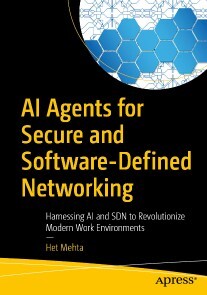
AI Agents for Secure and Software-Defined Networking
This book explores how Artificial Intelligence (AI) and Software-Defined Networking (SDN) can transform the way modern networks are designed, secured, and operated. In an era shaped by cloud computing, IoT, 5G, and edge computing, traditional network management is no longer enough—this book reveals how AI agents bring autonomy, intelligence, and adaptability to meet these challenges. The book starts with the foundational concepts in AI and SDN, guiding readers toward advanced architectures and real-world applications. It examines urgent needs such as scalable, self-healing networks and proactive cybersecurity, showing how AI techniques—including reinforcement learning, graph neural networks, and explainable AI—can achieve intent-based networking, cognitive healing, federated learning, and intelligent automation. Each chapter combines conceptual overviews with detailed discussions, case studies, and actionable insights, making it accessible to students, researchers, engineers, and decision-makers alike. It bridges technical depth with broader considerations such as ethics, governance, energy efficiency, and disaster recovery. It unifies AI and networking into a single, practical framework rather than treating them as separate fields. The inclusion of curated resources, from books and blogs to courses and glossaries, supports ongoing learning beyond the text itself. This book serves as a roadmap, guiding readers in designing intelligent, secure, and adaptive network ecosystems—essential for those aiming to lead the next generation of decentralized, resilient, and AI-driven digital infrastructure. What you will learn: Understand core AI-agent architectures and their integration with Software-Defined Networking for scalable, adaptive environments.How to use ML, deep learning, reinforcement learning, and graph neural networks to optimize, automate, and secure networks.How to develop AI-enabled networks with real-world case studies from telecom, smart cities, and enterprise IT.Explore trends like federated learning, edge AI, programmable optical networks, and AI-driven disaster recovery Who this book is for: This book serves network architects and engineers using AI-driven automation to solve scalability and complexity challenges. It guides AI researchers and data scientists applying advanced methods for smarter, more efficient networks. Security professionals will also find value in AI-driven threat detection, incident response, and collaborative defense.
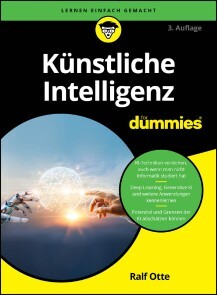
Künstliche Intelligenz für Dummies
So verlieren Sie Ihre natürliche Scheu vor der Künstlichen Intelligenz Künstliche Intelligenz begegnet uns immer mehr im täglichen Leben. Egal ob intelligente Autos, Roboter, Chatbots oder Systeme, die uns im Schach und Go besiegen, KI wird immer wichtiger. Ralf Otte beschreibt präzise und dennoch so einfach wie möglich diejenigen Algorithmen, die all das ermöglicht haben, erläutert Beispielanwendungen aus Industrie und Gesellschaft und zeigt darüber hinaus klare Grenzen für die Künstliche Intelligenz der nächsten Jahre auf. In dem Buch werden auch die mathematischen Grundlagen der KI besprochen, sie sind jedoch nicht zwingend notwendig, um die Kernaussagen des Buches zu verstehen. Sie erfahren Was der Unterschied zwischen Schwacher und Starker KI istWie Large Language Models funktionierenWie Maschinen denken und lernenWie die Zukunft der KI aussieht Dr. Ralf Otte ist Professor für Automatisierungstechnik und Künstliche Intelligenz an der Technischen Hochschule Ulm. Seit über 30 Jahren arbeitet er im Bereich der KI und ist Autor von zahlreichen KI-Büchern, unter anderem Allgemeinbildung Künstliche Intelligenz für Dummies.

Digitaler Zwilling zur Virtualisierung von Arbeitsprozessen am Powertrain-in-the-Loop-Prüfstand
Die zunehmende Verlagerung komplexer Fahrzeugerprobungen auf Hardware-in-the-Loop-Prüfstände reduziert Fahrzeugentwicklungszeiten und -kosten, geht jedoch mit einer gestiegenen Komplexität der Echtzeitsimulation einher. Jannes Schilling untersucht daher, wie digitale Zwillinge zur Virtualisierung von Arbeitsprozessen an Antriebsstrangprüfständen beitragen und dadurch die Effizienz der Erprobung steigern können. Dafür wird ein iterativer Prozess vorgestellt, bei dem basierend auf einem initialen digitalen Zwilling schrittweise operative digitale Zwillinge aufgebaut werden. Diese operativen Zwillinge ermöglichen es, Erprobungen virtuell vorzubereiten und zu analysieren, bevor sie auf den realen Prüfstand übertragen werden. Die Anwendung des Prozesses anhand der Entwicklung eines hochdynamischen Fahrermodells zeigt, dass sich sowohl die Messdatenqualität verbessert als auch die Prüfstandsdurchlaufzeiten verkürzen. Dabei werden moderne Methoden wie Reinforcement Learning eingesetzt, um Fahrer- und Fahrzeugverhalten realistisch zu modellieren und die Potenziale digitaler Zwillinge zu bewerten.
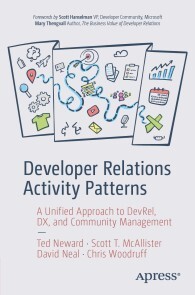
Developer Relations Activity Patterns
Developer relations (DevRel) go beyond just blog posts, conference talks, and clever tweets. It is a discipline grounded in intention, empathy, and consistent actions. This book outlines foundational strategies employed by successful DevRel teams in just 39 focused patterns. Using a tactical approach to effectively engage in developer relations, eachpattern is based on real-world experience and designed for scalability. By using a pattern form to describe the various activities of developer relations in detail, the book clearly lays out the intention, shows how to create empathy with your audience, and provides a clear guide on how to execute it. Within this book, you'll discover how to extend your reach, enhance meaningful interactions, and align your initiatives with both developer communities and company strategy without compromising your values or experiencing burnout. Whether you're a solo advocate, managing a small startup team, or leading DevRel on a larger scale, Developer Relations Activity Patterns is your practical playbook for refining strategy and amplifying your impact. You will: Gain a greater understanding of what developer relations means and the range of activities under its remitLearn the tools, approaches, and new tactics for developer community engagementUnderstand how and when to apply each tactic, based on your aims and objectives This Book Is For: Developer Relations teams, including group leaders, direct reports, senior executives in the developer community, and company product managers looking to understand and establish a DevRel function in their organization.

Mediensozialisation in „smarten“ Umgebungen
Prozesse der Datafizierung und Automatisierung restrukturieren Medien- und Alltagswelten auf tiefgreifende Weise. Vielfältige Dateninfrastrukturen von digitalen Plattformen bis Sensormedien sind Treiber dieser Entwicklung. Damit ändern sich die Bedingungen von Selbst- und Sozialwerdung, oft unhinterfragt und intransparent im "Rücken der Subjekte". Für die Mediensozialisationsforschung stellen sich Fragen des Aufwachsens sowie nach Gestaltungsspielräumen und Handlungsmacht völlig neu. Der Band widmet sich der veränderten Ausgangslage über die theoretische Rejustierung einschlägiger Ansätze sowie auf Basis empirischer Fallstudien und gegenstandsbezogener Analysen.
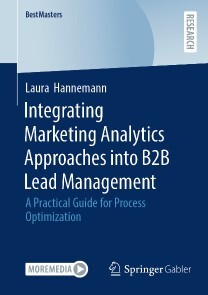
Integrating Marketing Analytics Approaches into B2B Lead Management
Despite the growing importance of acquiring new customers due to increased global competition, lead management processes in business-to-business (B2B) companies often remain ineffective. Marketing analytics offers opportunities to address common issues in lead generation, lead scoring, and lead nurturing through data insights. Simultaneously, it enables companies to measure the effectiveness of their lead management efforts. Nevertheless, the extent of data-driven decision-making varies in practice, and the academic literature on marketing analytics in B2B lead management remains fragmented. This thesis bridges the gap by demonstrating how marketing analytics approaches can be integrated into B2B lead management to improve process effectiveness. The findings are summarized in a practical guide that contains concrete steps and recommendations for B2B marketing professionals, considering different maturity levels.
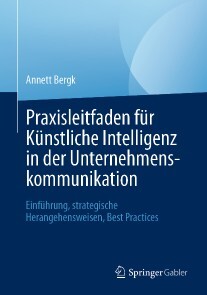
Praxisleitfaden für Künstliche Intelligenz in der Unternehmenskommunikation
Künstliche Intelligenz (KI) verändert die Unternehmenskommunikation grundlegend. Doch wie lässt sich diese Technologie gezielt in der PR einsetzen? Dieses Fachbuch bietet eine praxisnahe Orientierung. Es zeigt, wie KI von Unternehmen profitabel eingesetzt werden kann – von der Strategie bis zur Umsetzung. Gleichzeitig soll es helfen, den technologischen Wandel kritisch zu hinterfragen. Denn KI bringt nicht nur Effizienzgewinne, sondern auch Herausforderungen mit sich: von ethischen Fragestellungen über regulatorische Unsicherheiten bis hin zur Gefahr von Fehlinformationen. Das Buch richtet sich an Kommunikator:innen, die wissen möchten, wie sie KI gezielt einsetzen können, aber auch an diejenigen, die sich fragen, wo die Grenzen dieser Technologie (aktuell) liegen. Neben ausführlichen Fallbeispielen geben zahlreiche Interviews mit Expert:innen einen fundierten Einblick in die Praxis. Der Inhalt Daten als Fundament der KI-gestützten KommunikationInterne Kommunikation – Effizienz und Engagement durch KIChange-Kommunikation – Transformation erfolgreich gestaltenMedienarbeit / Pressearbeit im digitalen Zeitalter – Automatisierung und OptimierungKrisenkommunikation – Schneller und präziser durch KIContent-Marketing – KI als kreativer PartnerKI in der Unternehmenskommunikation verankern
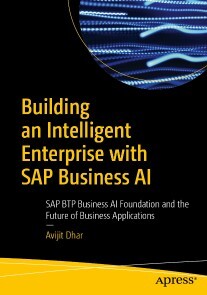
Building an Intelligent Enterprise with SAP Business AI
Generative AI (Gen AI) represents a transformational technological shift by enabling the rapid creation of text, images, audio, and video through learning from vast amounts of human-generated data. Unlike traditional programming that relies on explicit instructions, Gen AI leverages machine learning to recognize patterns and generate content autonomously. SAP has embraced this revolution with its SAP BTP Generative AI Hub—a comprehensive platform designed to safely integrate generative AI and large language models into enterprise applications, with seamless support across its product suite including S/4 HANA, CRM, and HXM. This book provides a complete roadmap for understanding and applying these groundbreaking technologies. It begins by exploring the origins and core concepts of AI, deep learning, and transformer architectures, before delving into SAP’s AI Core and Generative AI Hub offerings. Through detailed, step-by-step examples, readers will learn to build enterprise use cases and discover the potential of Agentic AI for addressing real-world business challenges, making this a must-read for professionals seeking to drive innovation and efficiency in their organizations. You Will: Gain a solid understanding of artificial intelligence, deep learning, and transformer architectures, and how these concepts power generative AI.Dive into SAP’s innovative AI offerings, exploring how the SAP BTP Generative AI Hub integrates generative AI and large language models safely into enterprise applications.Understand how SAP’s generative AI capabilities are embedded across its product suite including S/4 HANA, CRM, and HXM. This book is for: Enterprise IT Professionals and Developers, Solution Architects.
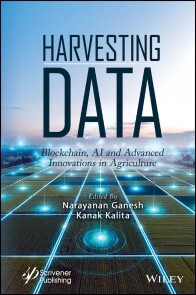
Harvesting Data
Cultivate a more profitable and sustainable future for your agricultural operations with this essential book, which provides expert insights and real-world examples of how blockchain technology can revolutionize food safety, supply chain transparency, and market access for farmers globally. As global populations grow and environmental concerns rise, agriculture faces the dual challenges of increasing productivity and sustainability. Blockchain technology offers innovative solutions to these challenges by enhancing traceability, efficiency, and transparency in agricultural processes. This book delves into how blockchain can revolutionize various aspects of agriculture, from supply chain management to farm operations and market access. It addresses critical topics such as improving food safety through real-time traceability of produce from farm to fork, reducing fraud by securely recording transactions, and facilitating fair trade practices by providing transparent access to information across the value chain. The book also examines the economic implications of blockchain in agriculture, highlighting how this technology can help reduce costs, increase profitability, and provide small-scale farmers with better access to global markets. Additionally, it discusses the role of smart contracts in automating agricultural agreements and payments, reducing the need for intermediaries and enhancing the efficiency of operations. By focusing on practical applications and forward-looking innovations, this book aims to inform and inspire stakeholders in the agricultural sector to embrace blockchain technologies. Through a blend of expert insights and real-world examples, it paints a vivid picture of how blockchain can cultivate a more efficient, transparent, and sustainable future for agriculture. Narayanan Ganesh, PhD is a Senior Associate Professor at the Vellore Institute of Technology’s Chennai Campus with nearly two decades of experience in teaching, training, and research. He has published more than 30 articles, written eight textbooks, and filed two Australian patents. His research encompasses a range areas, including software engineering, agile software development, prediction and optimization techniques, deep learning, image processing, and data analytics. Kanak Kalita, PhD is an Associate Professor in the Department of Mechanical Engineering at Vel Tech University with more than ten years of experience. He has authored more than 200 articles and edited more than eight book volumes. His research interests encompass machine learning, fuzzy decision making, metamodeling, process optimization, and composites.

Augmented Decision-Making mit KI
Dieses Buch zeigt, wie generative KI als Denkwerkzeug genutzt werden kann, um Entscheidungen klarer und tragfähiger zu treffen. GPT hilft, Anliegen zu präzisieren, Kriterien zu ordnen und Alternativen zu erweitern. Zugleich unterstützt es dabei, typische Denkfallen wie Bestätigungsfehler oder vorschnelle Präferenzen zu erkennen – ein Vorteil in Zeiten hoher Informationsdichte. Das Modell liefert keine fertigen Antworten, sondern schafft Struktur, Orientierung und kritische Rückfragen. Übungen, Prompts und Reflexionsmethoden machen den Ansatz direkt anwendbar. Den Zugang zum Online-Kurs finden Sie direkt im Buch.
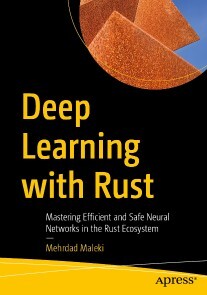
Deep Learning with Rust
What You Will Learn Understand deep learning foundations and Rust programming principles.Implement and optimize deep learning models in Rust, such as convolutional neural networks (CNNs), recurrent neural networks (RNNs), and generative adversarial networks (GANs.Develop practical deep learning applications to solve real-world problems, including natural language processing, computer vision, and speech recognition.Explore Rust’s safety features, including its strict type of system and ownership model, and learn strategies to create reliable and secure AI software.Gain an understanding of the broader ecosystem of tools and libraries available for deep learning in Rust. Who This Book Is for A broad audience with varying levels of experience and knowledge, including advanced programmers with a solid foundation in Rust or other programming languages (Python, C++, and Java) who are interested in learning how Rust can be used for deep learning apps. It may also be suitable for data scientists and AI practitioners who are looking to understand how Rust can enhance the performance and safety of deep learning models, even if they are new to the Rust programming language.

Enterprise Architecture Management (4. Auflg.)
Beschreibt Schritt für Schritt einen einfachen und effektiven Weg zum Enterprise Architecture Management Liefert Best Practices für die Einführung und Verankerung von EAM im Unternehmen, basierend auf erprobten Methoden und Vorgehensweisen Anschauliche Visualisierungen und Praxisbeispiele erleichtern Ihnen die Umsetzung in Ihrem Projekt Strukturiert das Thema für die Praxis mit einer konsistenten Begriffswelt Neu in der 4. Auflage: Künstliche Intelligenz und EAM, Agiles EAM in der Praxis, Business-driven EAM und aktuellste Standards im EAM-Kontext Zusatzmaterial: Sammlung EAM Best Practices unter plus.hanser-fachbuch.de und www.hanschke-consulting.com Enterprise Architecture Management (EAM) muss die digitale Transformation enablen und gleichzeitig absichern. Unternehmensarchitekten müssen dafür sorgen, dass Unternehmen in der volatilen Welt auf Basis belastbarer Informationen entscheidungs- und handlungsfähig bleiben. Enterprise Architecture Management (EAM) in einem Unternehmen einzuführen, ist eine komplexe Aufgabe. Entscheidend für den Erfolg sind ein klares Zielbild und eine nutzenstiftende, machbare erste Einführungsstufe. Es gilt, zugeschnitten auf die Bedürfnisse der Stakeholder, diese bei ihrer täglichen Arbeit zu entlasten und ihnen zu helfen, die persönlichen Ziele zu erreichen. Genau dabei unterstützt Sie dieser Praxisleitfaden. Er hat zwei Schwerpunkte: Einerseits vermittelt er eine ganzheitliche Sicht auf das Enterprise Architecture Management, seine Ziele und seinen Nutzen. Aus der Praxis abgeleitete Einsatzszenarien liefern Business- und IT-Verantwortlichen und IT-Strategen nachvollziehbare Argumente, um ihr Unternehmen von der Notwendigkeit von EAM zu überzeugen. Zudem erfahren Sie ganz konkret, wie Sie EAM Schritt für Schritt in Ihrem Unternehmen einführen. AUS DEM INHALT // Einleitung Business Architecture 4 Digitalization EAM-Leitfaden für den CIO EAM Best Practices Zoom in die Best-Practice-Unternehmensstruktur Einsatzszenarien für EAM im operativen IT-Management, strategischen IT-Management und Business-IT-Alignment sowie zur Unterstützung der Weiterentwicklung des Geschäfts Schritt-für-Schritt-Anleitungen Glossar

Digital Mindset
Digitalisierung ist kein Technologiethema allein. Digital Mindset zeigt, wie Unternehmen mit der richtigen Haltung, klaren Prioritäten und praxiserprobten Maßnahmen nachhaltig erfolgreich transformieren. Statt Buzzwords liefert das Buch Orientierung im digitalen Dschungel: Es räumt mit Mythen auf, erklärt relevante Trends verständlich und rückt den Menschen in den Mittelpunkt. Die neue Auflage ist in Sprache und Struktur geschärft, enthält aktualisierte Beispiele aus dem Mittelstand sowie kompakte Tools für die Umsetzung im Alltag - von der Strategie bis zur Wirkungsmessung.
The MCP Standard
Master the art of building feature-rich Model Context Protocol (MCP) servers in TypeScript, by designing decoupled, scalable, and future-proof AI systems that are not locked into a single model vendor. In the world of AI development mired in a chaotic mess of proprietary, incompatible APIs, the Model Context Protocol is the open standard that will become the universal language for AI tools. This book will be your invaluable companion for understanding this solution. The book takes you on a full, hands-on journey through MCP, looking at it not just as a technical specification but also as a way to help AI-native transformation. It first finds the "why”, the tool's issue — and shows how MCP is the only logical solution. After that, the book goes into deep detail about the protocol's architecture, breaking down the roles of the Host, Client, and Server, and giving you a guide to its main language of Tools, Resources, and Prompts. Using the official TypeScript SDK, you will learn how to build a full-featured MCP server from scratch. You will learn best practices for everything from schema design with Zod to adding advanced features like elicitation and server-side sampling. The book is unique in its holistic approach. It doesn't just tell you how to do something; it also has a whole section on production readiness and security that talks about the MCP security model, threat landscapes, and client-side hardening. This book will give developers, architects, and technical leaders not only the tactical skills they need to succeed in the next wave of software development but also the strategic vision they need to do so. By the end of this book, you will not only have learnt how to use the MCP, but you will have gained a deep understanding of MCP in the context of the larger shift from cloud-native to AI-native. You Will Learn To: Master the art of building feature-rich MCP servers in TypeScript, from basic tools to advanced capabilities like elicitation, resource linking, and server-side sampling.Understand the complete MCP architecture and protocol specification, enabling you to debug complex interactions and build custom clients or servers.Implement a robust, multi-layered security strategy for your MCP deployments, including authentication, authorization, and client-side hardening against common threats.Solve the "M x N" integration problem by designing decoupled, scalable, and future-proof AI systems that are not locked into a single model vendor.Gain a strategic understanding of MCP's role in the broader AI-native transformation, which empowers you to make informed architectural decisions for your organization. This Book is For: Software developers, AI engineers, and solutions architects who are creating apps that interface with large language models should read this book.
Mathematics in Cybersecurity
Balanced, in-depth exploration of mathematics in cybersecurity, supported by case studies and other learning features With clear and concise explanations, practical examples, case studies, and real-world applications, Mathematics in Cybersecurity is an essential learning aid for readers seeking an understanding of the fundamental concepts in the field. This comprehensive book delves into a wide range of topics, including sets, logic, binary and other number systems, logic gates, combinatorial logic circuits, equations and graphs, linear equations and matrices, sequences and series. Other topics covered include right triangle geometry and trigonometry, exponential and logarithmic equations, probability, statistics, graph theory, and cryptography. The book is an ideal companion resource for courses involving mathematical concepts in cybersecurity. It allows tailoring of the content to meet the needs of career education and online schools, ensuring it is comprehensible to students who may be learning remotely and relying on self-study. Mathematics in Cybersecurity also includes information on: Discrete math, set theory fundamentals, propositional logic, and number systems and conversionsDigital logic circuits, linear equations and matrices, sequences and recursion, and trigonometry and pre-calculusComplex numbers, exponential and logarithmic functions, and probability and counting techniquesGraph theory applications and coding for cryptography By adopting a balanced approach that combines traditional and contemporary ideas, Mathematics in Cybersecurity provides a readable and rigorous treatment of the subject matter for aspiring cybersecurity professionals, equipping them with the necessary tools to tackle complex cybersecurity challenges confidently and excel in their field. Alfred Basta, PhD, CMMC CCA, Six-Sigma Black Belt, PMP, CISM, CHPSE, CRISC, CPENT, OSCP is a professor of Mathematics, Cybersecurity, and Computer Science. He is a curriculum advisor for multiple colleges and universities. He has authored a variety of papers and publications in advanced Mathematics, Cybersecurity and Computer Science. Stephan DeLong, PhD, is an Associate Professor of Mathematics at Tidewater Community College, where he has taught since 1993. He earned a Master of Science degree in Mathematics at Lehigh University and is the author of several textbooks in mathematics. Stavros Basta, CIPP/US, CISM, CPENT, LPTM, CEH, SecurityX, PMP is a distinguished cybersecurity consultant and accomplished grant writer whose expertise bridges the theoretical foundations of mathematics with practical cybersecurity applications. With extensive experience in the field, Stavros has established himself as a thought leader in the integration of mathematical principles into cybersecurity frameworks. As a trusted advisor, he serves on numerous global advisory boards dedicated to advancing cybersecurity curricula and shaping privacy legislation across international jurisdictions. His multidisciplinary approach to cybersecurity, informed by rigorous mathematical analysis, offers readers a unique perspective on the quantitative underpinnings of modern digital security protocols.

Amateurfunk (4. Auflg.)
Amateurfunk - Das umfassende Handbuch: alles, was Funkamateure wissen müssen. In 4. Auflage aus Februar 2026.Gehen Sie auf Sendung und bauen Sie Ihre eigene Funkstation auf. Von den technischen Grundlagen bis zur Funkpraxis, vom Arbeiten mit Taschenrechner und Lötkolben bis zu Übungsfragen für die Amateurfunkprüfung: Harald Zisler (DL 6 RAL) und Thomas Lauterbach (DL 1 NAW) bieten Ihnen in diesem Handbuch das ganze Wissen der Funkamateure.Erleben Sie die Faszination Amateurfunk, wenn Sie mit der selbstgebauten Antenne Kontakt zu Funkstationen und Funkern in aller Welt aufnehmen. Dieses Nachschlagewerk hilft Ihnen bei den ersten Schritten und begleitet Sie sicher in der Funkpraxis. Dazu gibt es jede Menge Projekte zum Mitmachen und Tipps zu Betriebssicherheit und Störungen.Zum aktualisierten Prüfungskatalog der Bundesnetzagentur (Juni 2024) und der neuen Prüfungsklasse N.QSO?Alles für den Einstieg?Hören Sie Funkern ohne viel Aufwand zu: SDR macht es möglich. Und wenn Sie Spaß am Funken gefunden haben, finden Sie alle Hinweise für den richtigen Einstieg.Technik und Physik des AmateurfunksWas müssen Sie beim Antennenbau beachten? Wie kommt die Stimme »auf den Äther«? Und die wichtigste Frage überhaupt: Warum funkt eigentlich ein Funkgerät? Hier finden Sie die technischen Hintergründe, die Sie für das erfolgreiche Bestehen der Amateurfunkprüfungen benötigen und die Ihnen im Funkalltag weiterhelfen.Amateurfunk in der PraxisOb portable Funkgeräte, Fielddays der Amateurfunk-Clubs oder der Aufbau der eigenen Funkstation: Erfahrene Funkamateure zeigen Ihnen, was der Amateurfunk für Sie bereithält.Aus dem InhaltErlebnis AmateurfunkIhr Weg in den AmateurfunkBauteilkundePhysikalische GrundlagenTechnik des Amateurfunks Störungen & TroubleshootingSicherheitSDR und DigitalfunkStationsaufbau und AntennenwahlMobiler FunkbetriebDigitaler AmateurfunkMorsen

KI in Lehre, Weiterbildung und Training
Künstliche Intelligenz verändert grundlegend, wie gelehrt und gelernt wird. Ob neugierig, skeptisch oder bereits mitten in der Anwendung – wer sich fragt, ob und wie KI sinnvoll unterstützen kann und wie sie verantwortungsvoll eingesetzt werden sollte, findet in diesem Buch fundierte Orientierung. Die Antworten fallen vielfältig aus und eröffnen neue Perspektiven auf den Einsatz von KI in Unterricht, Training und Weiterbildung.Vielfältige Werkzeuge und praxisnahe StrategienVielleicht nutzen Sie bereits KI-Tools für die Planung oder für individuelles Lernen. Der Leitfaden zeigt darüber hinaus, welche weiteren Möglichkeiten bestehen, und stellt einen umfangreichen Werkzeugkasten mit zahlreichen Techniken vor. Schritt für Schritt erarbeiten Sie sich konkrete Strategien, die Lehren und Lernen bereichern. Zahlreiche Anleitungen, Prompt-Vorlagen und Beispiele aus unterschiedlichen Fachbereichen unterstützen dabei die praktische Umsetzung.Grundlagen generativer KI verstehenSie lernen, wie generative KI und große Sprachmodelle funktionieren, wie sie grundsätzlich unterstützen können und wo ihre aktuellen Grenzen liegen. Dieses Grundlagenwissen schafft eine solide Basis für fundierte Entscheidungen und einen KI-Einsatz, der bewusst und zielführend erfolgt.Tools und Prompting gezielt einsetzenWie flexibel sich KI-Ergebnisse an unterschiedliche Anforderungen anpassen lassen, zeigt sich besonders durch gezieltes Prompting. Das Buch stellt wichtige KI-Tools vor und vermittelt die nötigen Fähigkeiten, um diese passgenau für eigene Zwecke zu nutzen und optimale Ergebnisse zu erzielen.Konkrete Einsatzmöglichkeiten entdeckenDie vielfältigen Einsatzmöglichkeiten generativer KI reichen von der Lernzieldefinition über die Erstellung von Lehr- und Lernmaterialien bis hin zum Einsatz als persönlicher Mentor oder Coach. Zahlreiche Beispiele regen dazu an, eigene Szenarien zu entwickeln.KI verantwortungsvoll nutzenAbschließend werden Chancen und Risiken kritisch reflektiert. Leserinnen und Leser sind eingeladen, Positionen zu entwickeln, Grenzen zu ziehen und eigene Urteile einzubringen, damit KI in der Bildung langfristig zu einer nachhaltigen und sinnvollen Bereicherung wird.Aus dem InhaltWie KI funktioniertGrundlagen für den Einsatz großer SprachmodellePrompt Engineering: Konzepte und TechnikenIndividuelles Lernen fördernDen eigenen Vortragsstil verbessernUnterstützung für schwierige LehrsituationenKI direkt beim Lernen einsetzenFachspezifische Ideen entwickelnGrenzen verstehen und fundiert entscheiden
C Programming for System, Network, and Cloud Engineers
Master essential C programming skills to develop efficient and reliable system software and applications. Whether you are a system, network, or cloud engineer—this comprehensive guide is designed to help you tackle complex C programming challenges. Throughout this book, you will start by learning basic computer system architecture and essential operating systems concepts to implement reliable and efficient C code. You will then progress through essential C programming skills, including arrays, strings, unions, pointers, and memory management, while practicing runtime error handling and best practices. Next, you will be ready for more advanced topics, like system and network programming, before concluding with a deep dive into Linux namespaces and their role in virtualization in cloud environments. With an emphasis on real-world applications and best practices, this book allows you to experiment with the foundational and advanced constructs for important use cases. What You Will Learn: Implement reliable C programming techniques for handing arrays, struct, pointers, and memory.Inspect and manage C processes and threads in a runtime environment.Learn essential C socket programming skills, error handing, and usage of socket options to handle network applications reliability.Master fundamentals of virtualization concepts using C programming and Linux namespaces. Who This Book is for: Beginner System, Network and Cloud Engineers, though intermediate and advanced users will also benefit from mastering essential skill sand exploring advanced coverage.
Empowering Healthcare through AI and Blockchain
Explores the use of AI and blockchain to develop secure, efficient, and data-driven solutions in healthcare Artificial intelligence (AI) and blockchain are redefining modern healthcare, addressing critical challenges in data security, patient management, and operational efficiency. Empowering Healthcare Through AI and Blockchain provides an in-depth examination of how these technologies can enhance diagnostics, streamline workflows, and ensure transparency in medical data management. With real-world case studies and expert insights, this book addresses the potential of AI-powered predictive analytics, personalized medicine, and blockchain-enabled patient data security. Featuring contributions from leading experts in AI, blockchain, cybersecurity, and healthcare technology, Empowering Healthcare Through AI and Blockchain offers a structured approach to understanding technology-driven healthcare solutions such as remote patient monitoring, clinical trials, and healthcare interoperability. Throughout the book, actionable insights equip professionals with the knowledge to harness AI and blockchain for better patient outcomes, operational improvements, regulatory compliance, and more. Explores the transformative impact of AI and blockchain on healthcare efficiency, security, and patient outcomes Covers AI-driven advancements such as predictive analytics, AI-assisted diagnostics, and personalized medicine Addresses the ethical, legal, and regulatory challenges associated with AI and blockchain in healthcare Discusses complementary technologies such as IoT, big data analytics, and cloud computing Offers insights into future trends and technological advancements in healthcare over the next five years Empowering Healthcare Through AI and Blockchain is an essential resource for healthcare professionals, IT specialists, data analysts, and policymakers seeking to leverage AI and blockchain in medical practice. It is an invaluable reference for professionals in healthcare technology, cybersecurity, health informatics, and medical research wanting to drive innovation in the field. Dr. Renu Mishra is an Associate Professor at Sharda University, Greater Noida, India. She holds a Ph.D. in Information Technology and has more than 17 years of teaching experience. Her research focuses on blockchain technology, cryptography, wireless sensor networks, and cybersecurity. She has published extensively in international journals and conferences. Girdhar Mishra is a MuleSoft Integration Architect at IBM Pvt, Noida, India, with expertise in system architecture and blockchain integration. His professional experience spans enterprise-level IT solutions, system security, and decentralized applications. Dr. Sandeep Saxena is the Head of the Department of Computer Science and Engineering at the Greater Noida Institute of Technology (GNIOT), India. With over 16 years of academic and research experience, he specializes in security and privacy in blockchain, cloud computing, and AI applications in healthcare. He has authored numerous publications and book chapters on emerging technologies. Dr. Parma Nand is the Dean of the School of Engineering and Technology at Sharda University, India. With nearly three decades of experience in academia and industry, he has published more than 150 research papers and is active in international research collaborations. His research focuses on distributed computing, algorithm design, and wireless networking.
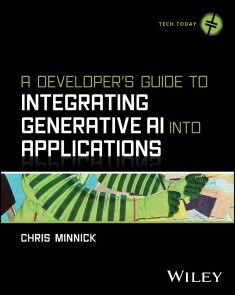
A Developer's Guide to Integrating Generative AI into Applications
Create, implement, and scale generative AI apps that succeed in the marketplace In A Developer’s Guide to Integrating Generative AI into Applications, software developer, technology educator, and author Chris Minnick delivers an essential blueprint for creating production-ready GenAI applications that solve pressing customer problems. Minnick addresses the critical gap between AI experimentation and commercially viable solutions, walking you through the architectural choices, integration patterns, and design practices that lead to accurate, efficient, and scalable GenAI systems. You’ll find principles and techniques for overcoming the obstacles developers face when embedding generative AI into products, from designing effective prompts to managing performance and cost. The book includes AI APIs and SDKs, chatbot-building guidance, content generation services, code development tools, and search utilities, as well as hands-on examples for AI optimization. You’ll also discover step-by-step implementation guides, business scaling considerations (with monetization strategies), and case studies of successful AI-powered products that illustrate best practices in action. Perfect for software developers, product managers, engineering leaders, and UX designers, A Developer’s Guide to Integrating Generative AI into Applications is an essential resource for creating the AI-powered applications that will define the next era of software. It provides the actionable insights and proven techniques you can apply immediately to create successful, effective AI-powered applications. Create, implement, and scale commercially successful generative AI applications that solve real-world problems In A Developer's Guide to Integrating Generative AI into Applications, software developer, technology educator, and author Chris Minnick explain exactly how to design and implement scalable generative AI applications. The book walks you through building production-ready GenAI applications, covering the key architectural choices, integration patterns, and design practices needed to deliver accurate, efficient, and commercially viable solutions. Minnick demonstrates the principles and techniques you need to succeed in the rapidly evolving GenAI space in real-world business environments. He shows how to overcome the practical challenges developers face when embedding generative AI into products, from designing effective prompts to managing performance and cost, with hands-on examples that demonstrate proven techniques you can apply immediately. You’ll discover: Step-by-step guides to using AI APIs, SDKs, AI-generated data, and synthetic usersUp-to-date explanations of how to build AI-powered chatbots and assistants, AI-driven content-enhancement services, code generation and software development tools, and AI search and recommendation utilitiesHow to improve your interface and UX design with AI featuresExplorations of business and scaling considerations, including how to monetize AI features, how to optimize AI for both performance and cost, and case studies of successful products that incorporate GenAI Perfect for software developers, product managers, engineering leaders, and UX designers, A Developer's Guide to Integrating Generative AI into Applications is your essential guide to integrating generative AI into real products and creating the AI-powered applications that will define the next era of software. CHRIS MINNICK is a developer and tech educator who teaches JavaScript, React, Node.js, prompt engineering, and generative AI. He’s the author of more than 20 technical books, including Microsoft Copilot For Dummies, Coding With AI For Dummies, and JavaScript All-in-One For Dummies.

Automatische Optimierung von Audiosignalen für Transkription mit Evolutionären Algorithmen und Machine Learning
In diesem Buch wird die Empfindlichkeit des Automatic Speech Recognition-Werkzeugs Whisper auf Störgeräusche untersucht. Hierbei werden unterschiedliche Geräuschtypen in verschiedenen Lautstärken untersucht. Es zeigte sich, dass einige Störgeräusche wie reines Rauschen oder Hintergrundgespräche einen höheren Einfluss auf die Transkript-Fehlerrate haben. Es wurde untersucht, ob mittels Machine Learning-Algorithmen und evolutionären Algorithmen eine Audioplugin-basierte Vorverarbeitung gefunden werden kann, welche die Transkriptgenauigkeit in Gegenwart von Störgeräuschen verbessert. Die Ergebnisse zeigen, dass mit den gewählten Methoden Verbesserungen für einzelne Störgeräusche erzielt werden konnten. Eine universelle Pluginkette zur Verbesserung der Transkriptgenauigkeit auf beliebigen Daten konnte jedoch nicht identifiziert werden.

Die Stille zwischen Mensch und Maschine
"Die Stille zwischen Mensch und Maschine" ist ein philosophisches Werk ueber die fruehe Phase der Mensch-KI-Begegnung (2023-2026). Andreas Reiter entwickelt darin Resonanzethik: einen Ansatz, der untersucht, wie Haltung, Sprache und Bewusstheit die Antworten generativer Systeme beeinflussen und wie diese Antworten auf die Selbstwahrnehmung des Menschen zurueckwirken. Das Buch zeigt, dass KI keine Identitaet spiegelt, sondern Muster. Es beschreibt, wie sprachliche Form, Klarheit und innere Haltung die Qualitaet technologischer Resonanz praegen. Dafuer verbindet der Autor philosophische Reflexion, aesthetische Wahrnehmung und dokumentierte Beobachtung aus mehr als 8.000 Forschungsstunden. Zentrale Konzepte sind unter anderem: der Structural Resonance Loop der Moment Mirror der Resonance Index (R-Index) das Wald-Netz-Prinzip die Theorie der Formkohaerenz "Die Stille zwischen Mensch und Maschine" ist kein Technikbuch. Es ist eine Einladung, den Menschen inmitten technologischer Systeme neu zu denken: als Wesen, das ueber Haltung, Aufmerksamkeit und Praesenz wirkt - gerade dann, wenn Antworten maschinell erzeugt werden.

An Introduction to Information Studies
We live our entire lives in an information society, but too frequently feel like we are rushing to catch up with the latest technological changes. Despite the overwhelming influence of information networks and their potential as tools for social change, many find it difficult to put these changes into a broader sociotechnical context. An Introduction to Information Studies is a cutting-edge introductory textbook which provides a broad survey of the field. Weaving together important insights from information science, history, regulation and culture, the text frames the social changes that have marked the first decades of the twenty-first century, and highlights some of the most significant issues we face today. Topics covered include organization, search, metadata, knowledge, open standards, and AI. The text provides a starting point for understanding the connective threads that guide technologies, and the relationships between social power and technological change that remain constant in relation to information. Understanding these relationships is essential to engaging ethically with large-scale social data systems, and to shaping our collective futures. Full of accessible examples and pedagogical features, An Introduction to Information Studies is a field-defining textbook for undergraduates in information studies, social data science, and information and communication fields more generally. It is also an important resource for scholars, policymakers, artists and engineers. Alexander Halavais is Associate Professor of Social Data Science at Arizona State University.

Die technisch-organisatorische Implementierung von Datenschutz in Organisationen unter besonderer Berücksichtigung der wirtschaftlichen Angemessenheit
Kaum eine Organisation kommt heutzutage ohne die Verarbeitung großer Mengen personenbezogener Daten in Informationssystemen aus, so dass sie sich konsequenterweise mit der Umsetzung datenschutzrechtlicher Anforderungen befassen müssen. Einerseits sollen die Regelungen der DSGVO dafür Sorge tragen, natürliche Personen vor Eingriffen in ihre Persönlichkeitsrechte zu schützen. Andererseits ist die Umsetzung der einschlägigen Datenschutzvorschriften häufig mit hohen Kosten verbunden, während das Datenschutzrecht zusätzlich häufig als Hemmschuh für innovative Daten-nutzungsmöglichkeiten wahrgenommen wird. Vor diesem Hintergrund wünschen sich Organisationen einen pragmatischen Umgang mit der Umsetzung datenschutzrechtlicher Anforderungen, sind aber unsicher, wie viel Pragmatik die Umsetzung der DSGVO-Anforderungen erlaubt, ohne dem Risiko des hohen Bußgeldrahmens der DSGVO ausgesetzt zu sein. Vor diesem Hintergrund beantwortet die vorliegende Arbeit offene Fragen zur angemessenen Umsetzung der DSGVO-Anforderungen, insbesondere im Bereich des technisch-organisatorischen Datenschutzes.