

Allgemein

Introduction to Programming for Researchers
Enhance your computational and programming skills using Bash and Python to improve productivity and efficiency in research projects. This book is an essential guide for STEM researchers. Structured into several parts, each builds on the previous ones to ensure a solid foundation in programming. You’ll begin with the basics of digital computation and operating systems, then write pipelines and scripts in Bash, focusing on tools for working with datasets in text files. After introducing algorithms and floating-point numbers, the book transitions to Python, emphasizing SciPy libraries and built-in features like type hints and f-strings. IPython and Jupyter notebooks are integrated into the lessons throughout. Programming best practices are taught, alongside programming basics. These include documentation and unit testing. As the target audience is STEM students and professionals, examples make heavy use of datasets and the SciPy software stack, especially NumPy, Matplotlib, Pandas, and SymPy. Introduction to Programming for Researchers will foster a deeper understanding of computational tools and critical programming skills, empowering you to tackle complex datasets and enhance their research capabilities. What You Will Learn Apply programming skills to enhance research productivity and efficiency.Write Bash pipelines and executable scripts.Implement basic algorithms in Python, focusing on time efficiency and structured programming. Who This Book Is For Experienced researchers looking to improve their computational skills; students in the natural sciences and engineering; scientists and engineers from various fields, seeking to integrate programming skills into their research methodologies.

GameMaker Programming Challenges
Upgrade your GameMaker programming skills with 500 programming challenges. The book is a collection of programming challenges, covering a range from simple to advanced concepts. GameMaker is a hugely popular tool and is regarded one of the best approaches for 2D games. GameMaker allows both visual and code-based approach for game development and has been used for multiple hit titles. Each chapter covers a certain programming element, such as Sprite Fonts, Projectiles, Mechanics, etc. The book is designed in a manner where each challenge provides an outline of the problems, useful functions, hints on tackling the challenge, and an example solution. On completion, you will take away new knowledge of GameMaker functions, an ability to think logically when developing code, and a better understanding of game design and planning. What You Will Learn Study the new GML, from basic functions to more evolved concepts.Gain ability to view example solutions when necessary.Increase your understanding of game design concepts. Who Is This Book For Beginners to intermediate level readers with basic understanding of GameMaker’s IDE, including creating object, sprite, and sound assets will benefit from this book.

Regenerative Zukünfte und künstliche Intelligenz
Dieses Buchprojekt erscheint in drei Teilen mit jeweils einem inhaltlichen Schwerpunkt – PLANET, PEOPLE, PROFIT – und beschäftigt sich übergreifend mit den Nachhaltigkeitszielen der Vereinten Nationen (Sustainable Development Goals, SDGs). Dieser dritte Band behandelt die ökonomische Dimension der Nachhaltigkeit und umfasst Beiträge, die explizit oder implizit SDGs mit Wirtschaftsbezug thematisieren. Die Beiträge und Grußworte international renommierter Expert:innen aus Wissenschaft und Praxis werden durch Begleittexte der Herausgebenden ergänzt. „KI hilft uns dabei, die Natur besser zu verstehen und die Maßnahmen zu ihrem Schutz und ihre Wiederherstellung auf ein stabiles Fundament zu stellen. Das wird nicht nur helfen, unsere Lebensgrundlage zu sichern, sondern auch zur Entwicklung neuer Geschäfts- und Finanzierungsmodelle beitragen“, aus dem Grußwort von Dr. Frauke Fischer.

AI in Legal Tech
Explore the risks, opportunities, and practicalities of generative AI in legal practice In AI in Legal Tech: How Generative AI Is Transforming Legal Technology and the Practice of Law, legal-tech pioneer and guru, Catherine Casey, walks you through the risks and opportunities presented by generative AI in the legal industry. She offers a comprehensive and accessible discussion of generative AI’s immediate and near-future impact on legal practices, ethics, and careers in law. The book translates and simplifies the complexities of generative AI and presents practical advice for anyone interested in harnessing its potential to dramatically redefine legal practice. It balances engaging narrative with expert analysis and is tailored specifically for non-technical legal professionals doing their best to navigate a new—and rapidly evolving—technological frontier. The author has also included a “Prompt Primer: Lawyered Edition” for practicing lawyers. Perfect for practicing lawyers, law students, legal technologists, and law practice managers, AI in Legal Tech is also a must-read resource for everyone who finds themselves at the intersection of law and technology. Explore the potential and risks of generative AI in the legal industry In AI in Legal Tech: How Generative AI Is Transforming Legal Technology and the Practice of Law, legal-tech pioneer and guru Catherine Casey—aka, TechnoCat—delivers a startlingly insightful and up-to-date discussion of the risks and opportunities presented by generative AI in the legal sector. The author walks you through generative AI's impact on the practice of law, legal ethics, and legal careers, offering guidance and clarity on a rapidly evolving technology. Balancing engaging narrative with expert analysis, AI in Legal Tech is written specifically for non-technical legal professionals and students doing their best to navigate the intersection of technology and law. You'll find: Explanations of how AI is shaping new legal careers and what you can do to find success in your ownA “Legal Tech Survival Kit,” complete with a comprehensive Legal AI glossary and must-try tools for tech-savvy lawyersInsights from the “front lines” of legal AI and the people designing the technologies shaping tomorrow's legal industry Perfect for practicing lawyers, law students, and law practice managers, AI in Legal Tech will also prove invaluable to legal technologists, paralegals, and anyone else interested in the application of the latest tech to the legal field. CAT CASEY is the defining voice at the intersection of AI and legal technology. A twenty-year veteran of the field and CEO of The Technocat LLC, she’s led technology and innovation at multiple legal tech Unicorns, the Big Four, and AmLaw 10 firms. Known for her sharp insight, deep technical fluency, and signature irreverence, Cat has helped shape how the legal profession navigates the age of intelligent machines.

AI in Business For Dummies
Unlock productivity and profit with AI AI is suddenly a must-have in today’s business world. AI in Business For Dummies shows you what AI can do for your organization. This practical, jargon-free guide explains how AI works and how you can use it to boost your competitive edge. With step-by-step guidance, you’ll learn to harness AI wins—better decision-making, quicker content generation, more personalized customer interactions, and beyond—without sacrificing the human element. Get on the AI train and future-proof your business with this easy-to-use Dummies guide. Inside… Grasping AI basicsWinning customers with AISpeeding up innovationGetting your team on boardStaying legal and ethicalAvoiding common pitfallsPreparing for the next wave of new AI technologies Create an AI strategy that best fits your business You've heard about how artificial intelligence will revolutionize business, but maybe you're not sure how it will revolutionize your business. In AI in Business For Dummies, AI researcher and consultant Jeffrey Allan delivers clear insight into the capabilities of AI, the AI tools that get the job done, and how to best put artificial intelligence to work in your company. Using the book's step-by-step instructions, you'll learn how to build the latest AI tech in your business strategies. You'll also discover real-world examples of effective AI implementations in tasks like workflow automation, closing sales, handling data analytics, and driving innovation. The book also dives into ideas on how to get your staff and colleagues on board as well as how to use AI in an ethical manner. AI in Business For Dummies also includes: A breakdown of the essentials of AI technology and how each intersects with business useWays to avoid common business AI mistakes and pitfallsTips on future-proofing your AI investment Perfect for managers, executives, entrepreneurs, founders, and other business leaders, AI in Business For Dummies is a must-read resource for anyone with an interest in taking advantage of the newest, most exciting technologies in business. Dr. Jeffrey Allan directs the Institute for Responsible Technology and Artificial Intelligence at Nazareth University, developing AI-focused degree programs. An expert in AI and psychology, he’s advised Fortune 500 firms and Silicon Valley startups, and he coauthored Writing AI Prompts For Dummies.

AI ChatBots For Dummies
Easy and effective strategies for using AI chatbots Turn your business into a 24/7 customer service powerhouse with AI chatbots that work around the clock! Perfect for anyone drowning in customer emails or missing sales opportunities while they sleep, AI Chatbots For Dummies explains how to build intelligent chatbots from scratch — no coding required. You’ll discover how major companies use chatbots to boost efficiency and customer satisfaction and learn to create your own automated assistants for customer service, lead generation, and marketing campaigns that practically run themselves. Inside …Build no-code solutionsCreate 24/7 customer supportAccelerate lead generationConvert leads into customersReduce overhead and workloadImprove customer satisfactionScale your companyIntegrate the newest tools A handbook for professionals implementing or upgrading chatbots In AI Chatbots For Dummies, chatbot expert Kelly Mirabella and veteran tech educator Eric Butow deliver a from-scratch guide to deploying AI-powered chatbots that keep your business' customers happy. The book offers step-by-step instructions to building your bot and putting it into use — even if you don't know how to code. You'll learn how to reduce your workload, improve your company's efficiency, increase customer satisfaction, and accomplish a ton of other useful business goals, like creating automated marketing campaigns and new sales strategies. The authors walk you through exactly how you can use chatbots in a variety of use cases, from generating leads and sales to gathering audience and customer data and growing an audience. You'll also learn how to: Automate customer service and support, ensuring your customers remain loyal and satisfiedMeasure the success of your chatbots and expand their capabilities over timeConnect your chatbots to other systems and tools, including email, CRMs, calendars, and more AI Chatbots For Dummies is the perfect how-to guide for business owners, entrepreneurs, and other business leaders interested in using chatbots to upgrade their company's abilities, improve its efficiency, and grow its bottom line. Kelly Noble Mirabella is a chatbot expert specializing in AI-powered customer engagement solutions. Eric Butow is a 54x business and technology author who has co-authored multiple For Dummies titles including Instagram For Business For Dummies and Digital Etiquette For Dummies.

Scrum - verstehen und erfolgreich einsetzen (4. Auflg.)
Das ultimative Scrum-Handbuch Didaktisch sehr gut aufgebautes Grundlagenbuch Mit Empfehlungen der Autoren aus der Praxis für die Praxis Geeignet auch für Scrum-Zertifizierungskurse: Scrum Basics, Certified Scrum Master Scrum dient dem agilen Management innovativer Produktentwicklung mit selbstorganisierten Teams. Mit seinem iterativ-inkrementellen Ansatz führt Scrum zu mehr Transparenz und Flexibilität als klassische sequenzielle Entwicklungsmethoden. Die Autoren beschreiben in kompakter Form die Scrum-Grundlagen sowie die hinter Scrum stehenden Werte und Prinzipien. Dabei unterscheiden sie zwischen produktbezogenen Aspekten, entwicklungsbezogenen Aspekten und dem kontinuierlichen Verbesserungsprozess. Im Einzelnen werden behandelt: Scrum-Historie sowie Vorteile und Eignung von Scrum Scrum-Flow und die Verantwortlichkeiten in Scrum (Product Owner, Entwickler:innen, Scrum Master, Scrum-Team) Scrum-Meetings: Sprint Planning, Daily Scrum, Sprint Review, Sprint Retrospektive Artefakte: Product Backlog, Sprint Backlog, lieferbares Produktinkrement Releasemanagement und Schätzverfahren Einführung von Scrum im Unternehmen, Scrum-Skalierung und verteiltes Scrum Vertragsgestaltung für agile Entwicklung und Leadership Im Anhang werden die Elemente des Scrum-Frameworks sowie einige häufig anzutreffende Praktiken noch einmal in Kurzform dargestellt. Die 4. Auflage wurde mit weiteren Praxistipps ergänzt und in vielen einzelnen Aspekten erweitert.

Standardising Carbon Markets
Carbon markets are expected to grow from 10-20 billion USD per year to more than 200 billion USD by 2035. How can you take part in this ecosystem? How can your business benefit by incorporating blockchain solutions in a broader way? This book will explore solutions that utilize blockchain technology and tokenization to deliver efficient, transparent, trustworthy and interoperable carbon offsetting solutions for small and medium-sized businesses and consumers. Software and hardware developers will be provided with an introduction to key players in the carbon offsetting universe and associated markets and industries globally. Readers will learn how to: · Outline how the technology that supports carbon markets is driving genuine climate change · Describe the complexity and different players in the carbon offsetting ecosystem including developers of carbon-offsetting projects, infrastructure providers, buyers, and financiers · Describe blockchain technology and its benefits to carbon markets – transparency, traceability, accountability · Provide a complex discussion on regulatory initiatives and standards that drive positive change in carbon markets, beginning with those that apply to the physical domain (e.g., energy, agriculture), how data is collected, processed, validated and verified right up to financing/trading projects · Analyze how blockchain will help your carbon offsets business · Apply Web 3 technology to overcome data quality challenges in carbon markets Target audience This book is for project developers (those involved in reducing green house gas emissions), computer software developers working in Web 2 or Web 3 environments, others in the tech community, educated professionals, business managers and owners who are interested in buying or selling carbon credits, NGOs and Non-profits, Academic Institutions.

Hyper-Intelligent Networks
Prepare for the next technological frontier with this essential, multidisciplinary guide that delves into hyper-intelligent networks, providing a comprehensive overview of how AI and machine learning are revolutionizing telecommunications, healthcare, and other vital sectors with cognitive, autonomous connectivity. As we stand on the brink of a new technological frontier, the convergence of artificial intelligence, machine learning, and network infrastructure promises to revolutionize the way we harness the power of digital ecosystems. The vision of a hyper-intelligent network transcends conventional notions of connectivity and represents a paradigm shift where networks evolve from mere conduits of data to dynamic entities with cognitive capabilities, adaptability, and autonomous decision-making abilities. This book delves into the emerging field of hyper-intelligent networks, exploring how these networks are poised to revolutionize various sectors, including telecommunications, healthcare, finance, and transportation. It provides a comprehensive overview of the theoretical foundations, practical applications, and future implications of hyper-intelligent networks, offering a deeper understanding of this cutting-edge technology. Written by leading experts in the fields of artificial intelligence and networking, the book has a multidisciplinary approach that combines theoretical insights with real-world case studies and practical examples. It is suitable for both technical professionals seeking to deepen their understanding of hyper-intelligent networks and non-technical readers interested in the potential impact of these technologies on society. Readers will find the book: Discusses different applications of hyper-intelligent networks in various industries;Introduces the innovative potential of hyper-intelligent networks;Presents state-of-the-art analyses and real-world case studies demonstrating hyper-intelligent networks;Provides a comprehensive look at applications of hyper-intelligent networks across a number of industries. Audience Research scholars, IT professionals, network administrators, cybersecurity experts, government research agencies, and engineering students. Pradosh Kumar Gantayat, PhD is an Assistant Professor at the Department of Artificial Intelligence and Data Science, Faculty of Science and Technology (IcfaiTech), ICFAI Foundation for Higher Education (IFHE), Deemed to be University, Hyderabad, Telangana, India. He has published more than 25 papers in international journals, conferences, and book chapters and holds three Indian patents. His research focuses on security issues in computer networks, soft computing, AI, and optimization algorithms. Sandeep Kumar Panda, PhD is a Professor Department of Artificial Intelligence and Data Science, Faculty of Science and Technology (IcfaiTech), ICFAI Foundation for Higher Education (IFHE), Deemed to be University, Hyderabad, Telangana, India. He has published more than 70 articles in and international journals and conferences and edited six books. His research interests include blockchain technology, W3, Metaverse, the Internet of Things, AI, and cloud computing. S. Balamurugan, PhD is the Director of Research and Development at Intelligent Research Consultancy Services. He has published 48 books, more than 300 articles in international journals and conferences, and 55 patents. His research interests include artificial intelligence, augmented reality, Internet of Things, big data, and cloud and wearable Computing. Sheng-Lung Peng, PhD is a Professor and the Director of the Department of Creative Technologies and Product Design at the National Taipei University of Business, Taiwan. He has edited several special issues of journals and published more than 100 research papers. His research interests focus on designing and analyzing algorithms for bioinformatics, combinatorics, data mining, and other network areas.

Behind the AI Mask
A hands-on guide to mitigating the risks posed by deepfake technologies In Behind the AI Mask: Protecting Your Business from Deepfakes, experienced technologist and founder of the viral platform, Myster Giraffe, Carl Bogan, walks you through the risks and benefits presented by deepfake technologies. He explains how to stay ahead of the curve on this rapidly evolving tech, showing you how to manage and mitigate the harms caused by maliciously deployed deepfakes. The book demonstrates how deepfake technology has changed recently, the current state of the phenomenon, and the practical steps you can take now to detect deepfakes in real time and catch scammers in the act. You’ll discover early detection strategies that can prevent attacks before they start, as well as simple techniques that permit you to embrace AI technology without experiencing the pitfalls associated with it. Behind the AI Mask is a must-read for managers, executives, and other business leaders who are ready to set up effective defenses against the reputational and financial harms caused by deepfakes. It’s packed with tangible, practical strategies you can implement immediately in any industry. A practical, hands-on guide to navigating deepfake technology and reducing the risks it poses to your business In Behind the AI Mask: Protecting Your Business From Deepfakes, technologist and founder of viral platform, Myster Giraffe, Carl Bogan, explains the dangers, benefits, and potential of deepfake technology. He walks you through how to stay ahead of the risks that businesses face from maliciously deployed deepfake technology, showing you exactly how the tech has evolved and the practical steps you need to take to detect deepfakes in real time and catch scammers in the act. You'll find practical strategies that will save your company time and money and protect against long-lasting reputational harms. You'll also discover early detection strategies that stop incidents before they even begin. Inside the book: The future of artificial intelligence and deepfake tech — learn what's coming next in AI innovationTechniques for embracing AI technology without running afoul of the pitfalls that come along with itStraightforward and accurate explainers of what exactly deepfakes are, how they're used (both legitimately and maliciously), and how they can harm your company An essential and timely resource for managers, executives, and business leaders, Behind the AI Mask is a must-read for everyone worried about the reputational and financial risks posed by deepfakes and those looking for tangible, practical ways to mitigate those risks. CARL BOGAN pioneered viral deepfake technology as creator of Myster Giraffe, generating hundreds of millions of views across social media. With over 20 years in visual effects for Disney, Paramount, Apple, Google, and Sony, he brings a unique perspective to deepfake defense—understanding how these illusions are crafted from the artist’s side, not the IT department. He has taught workshops internationally, including at Cisco, helping organizations see deepfake threats through the eyes of the creators who build them.

AI in Business For Dummies
Unlock productivity and profit with AI AI is suddenly a must-have in today’s business world. AI in Business For Dummies shows you what AI can do for your organization. This practical, jargon-free guide explains how AI works and how you can use it to boost your competitive edge. With step-by-step guidance, you’ll learn to harness AI wins—better decision-making, quicker content generation, more personalized customer interactions, and beyond—without sacrificing the human element. Get on the AI train and future-proof your business with this easy-to-use Dummies guide. Inside… Grasping AI basicsWinning customers with AISpeeding up innovationGetting your team on boardStaying legal and ethicalAvoiding common pitfallsPreparing for the next wave of new AI technologies Create an AI strategy that best fits your business You've heard about how artificial intelligence will revolutionize business, but maybe you're not sure how it will revolutionize your business. In AI in Business For Dummies, AI researcher and consultant Jeffrey Allan delivers clear insight into the capabilities of AI, the AI tools that get the job done, and how to best put artificial intelligence to work in your company. Using the book's step-by-step instructions, you'll learn how to build the latest AI tech in your business strategies. You'll also discover real-world examples of effective AI implementations in tasks like workflow automation, closing sales, handling data analytics, and driving innovation. The book also dives into ideas on how to get your staff and colleagues on board as well as how to use AI in an ethical manner. AI in Business For Dummies also includes: A breakdown of the essentials of AI technology and how each intersects with business useWays to avoid common business AI mistakes and pitfallsTips on future-proofing your AI investment Perfect for managers, executives, entrepreneurs, founders, and other business leaders, AI in Business For Dummies is a must-read resource for anyone with an interest in taking advantage of the newest, most exciting technologies in business. Dr. Jeffrey Allan directs the Institute for Responsible Technology and Artificial Intelligence at Nazareth University, developing AI-focused degree programs. An expert in AI and psychology, he’s advised Fortune 500 firms and Silicon Valley startups, and he coauthored Writing AI Prompts For Dummies.

Agentic AI For Dummies
Implement autonomous AI that thinks for itself Ready to discover AI that doesn’t just respond but thinks, plans, and acts independently? Agentic AI represents the next evolutionary leap in artificial intelligence – systems that plan their own path, make strategic decisions, learn as they go, and solve complex problems without constant human guidance. This book shows you how agentic systems work, where they’re effective, and how they’ll transform your business and daily life. From autonomous healthcare diagnostics to self-managing business operations, you’ll explore the exciting possibilities that come with truly autonomous AI. Inside… Separate Agentic AI hype from realityExplore underlying architecture, models, and protocolsDiscover Agentic AI use casesOptimize your business operationsNavigate ethical and governance issuesDesign agentic systems responsiblyUpgrade your AI-engagement skillsPrepare for changes to your business An easy-to-follow guide to demystifying Agentic AI, the next step in the evolution of artificial intelligence Agentic AI is the next big leap in artificial intelligence. Agentic systems don't just respond to commands. They set goals, make decisions, and take initiative without direct human interaction. Sound like a lot to wrap your head around? Fortunately Agentic AI For Dummies is here to help you gain understanding of this advancing technology. Written by the author of ChatGPT For Dummies and Generative AI For Dummies, this easy-to-understand tech guide helps you take your first steps into Agentic AI. Get insight into the technologies driving Agentic AI, a road map for shifting from legacy systems to Agentic systems, and a tour of real-world use cases for Agentic AI. This books arms you with an understanding to make better decisions about how and when to use Agentic AI technologies. Inside the book: Discussions of the technological foundations of agentic AIExplorations of the wide variety of applications of the AI agents, including in scientific research, innovation, business operations, healthcare, and moreInsightful examinations of the ethical considerations and hurdles you'll need to navigate when it's time to deploy agentic AI in your company Perfect for business owners, entrepreneurs, managers, executives, professionals and team leaders in the private sector, Agentic AI For Dummies is a hands-on toolkit and strategy guide for using autonomous AI solutions to solve hard problems in your organization. Pam Baker has nearly two decades of experience as a tech journalist, consultant, and trainer. She’s the author of ChatGPT For Dummies and Generative AI For Dummies. Based in metro Atlanta, she helps readers navigate emerging technologies with clarity and practical insights.

Lessons from the Frontlines
“Reading this book feels like sitting down with a trusted mentor who has lived through every security challenge you can imagine. Assaf writes with the simplicity and authenticity of someone who’s been in the trenches, made hard calls, and learned from both wins and setbacks.” —ROSS HALELIUK, Security Industry Expert “Building and sustaining security in major enterprises is much more than a technical discipline. Rather, it’s an intense leadership challenge balancing influence, grit and team building. Assaf’s personal journey revealed in this book contains lessons for all security professionals—whether you are starting out or an established leader you will love this.” —PHIL VENABLES, Former CISO at Goldman Sachs and Google Cloud, and a VC Partner Master the human skills that effective cybersecurity leaders need with actionable advice from a 25+ year veteran of the industry In Lessons from the Frontlines: Insights from a Cybersecurity Career, Chief Security Officer at Qualtrics, Assaf Keren, draws on over 25 years’ experience in cybersecurity to offer clear, actionable guidance for leading cybersecurity teams. Keren tackles the most pressing problems security leaders face, including execution under pressure, burnout, organizational resistance, and the gap between technical rigor and business reality. He shows you how to address these challenges by replacing permission-seeking with intent-based action, communicating risk with realistic hope, and building teams that thrive amid nonstop change. The book develops personal foundations (curiosity, grit, optimism), core leadership competencies (execution, change management, business and finance acumen, diplomacy, and communication), the human side of leadership (mental health, self- care, community), and strategic scale (leading diverse organizations, product thinking in security). Real-world stories—from incident command to rebuilding global security operations, and a case study on generative AI adoption—pair with frameworks you can apply immediately. Perfect for current and aspiring CISOs, security directors, and team leads, Lessons from the Frontlines is also a must-read for all technical and business professionals interested in achieving or understanding cybersecurity leadership roles. Transform your approach to cybersecurity leadership with specific, actionable techniques from a 25+ year veteran of the industry In Lessons from the Frontlines: Insights from a Cybersecurity Career, a 25+ year veteran of cybersecurity leadership, Assaf Keren, delivers an essential new approach to leading cybersecurity teams. Keren combines engaging, real-life stories drawn from decades spent in the industry – including his current role as Chief Security Officer at Qualtrics and former Chief Information Security Officer in PayPal – with hands-on, specific frameworks for implementing effective solutions in an environment that doesn’t tolerate error. Lessons from the Frontlines goes beyond generic theory and high-level concepts. It dives deep into practical strategies for working cybersecurity professionals, explaining how to develop the personal characteristics you’ll need to succeed, build leadership competencies your teams will expect from you, address your own mental and physical health needs so you can deal with the challenges you’ll face, and apply all these lessons at scale in organizations of any size. The author walks you through: How to move from permission-seeking approaches to intent-based action that allows you to execute solutions in dynamic environments in real timeStrategies for maintaining optimism and a healthy outlook that permits you to endure difficult periods and excel in adversityTechniques for building proactive, forward-thinking, and creative solutions that achieve more than reactive and defensive responses to threats Perfect for practicing and aspiring cybersecurity executives, Lessons from the Frontlines is a must-read strategy guide for all cybersecurity practitioners and professionals interested in rising to – or excelling in – cybersecurity leadership roles. ASSAF KEREN is the Chief Security Officer at Qualtrics and the former Chief Information Security Officer at PayPal. He has more than 25 years’ experience working in the cybersecurity industry as a practitioner and leader and has been involved in military intelligence, startups, Fortune 500 companies, and boards of directors.

The Practical Guide to Large Language Models
This book is a practical guide to harnessing Hugging Face's powerful transformers library, unlocking access to the largest open-source LLMs. By simplifying complex NLP concepts and emphasizing practical application, it empowers data scientists, machine learning engineers, and NLP practitioners to build robust solutions without delving into theoretical complexities. The book is structured into three parts to facilitate a step-by-step learning journey. Part One covers building production-ready LLM solutions introduces the Hugging Face library and equips readers to solve most of the common NLP challenges without requiring deep knowledge of transformer internals. Part Two focuses on empowering LLMs with RAG and intelligent agents exploring Retrieval-Augmented Generation (RAG) models, demonstrating how to enhance answer quality and develop intelligent agents. Part Three covers LLM advances focusing on expert topics such as model training, principles of transformer architecture and other cutting-edge techniques related to the practical application of language models. Each chapter includes practical examples, code snippets, and hands-on projects to ensure applicability to real-world scenarios. This book bridges the gap between theory and practice, providing professionals with the tools and insights to develop practical and efficient LLM solutions. What you will learn: What are the different types of tasks modern LLMs can solveHow to select the most suitable pre-trained LLM for specific tasksHow to enrich LLM with a custom knowledge base and build intelligent systemsWhat are the core principles of Language Models, and how to tune themHow to build robust LLM-based AI Applications Who this book is for: Data scientists, machine learning engineers, and NLP specialists with basic Python skills, introductory PyTorch knowledge, and a primary understanding of deep learning concepts, ready to start applying Large Language Models in practice.

Generative KI-Systeme entwickeln
Von der Idee zur KI-Anwendung – praxisnah und fundiert Ein Leitfaden für alle wesentlichen Aspekte der Entwicklung generativer KI-Systeme, inklusive Prompt Engineering, RAG, Finetuning und Agenten Das Buch bietet ein Framework für den Einsatz von KI in realen Anwendungen Es deckt den kompletten Entwicklungszyklus von KI-Systemen ab, von der Modellentwicklung bis zum produktiven Betrieb In diesem Praxishandbuch beschreibt Bestsellerautorin Chip Huyen die Werkzeuge des KI-Engineerings und den Prozess der Erstellung von KI-Anwendungen mithilfe generativer Foundation Models. Das Buch deckt den kompletten Entwicklungszyklus von KI-Systemen ab, von der Modellentwicklung bis zum produktiven Betrieb. Entwickler und Entwicklerinnen von KI-Anwendungen erfahren, wie sie sich in der KI-Landschaft zurechtfinden – bei Modellen, Datensätzen, Bewertungs-Benchmarks und der scheinbar unendlichen Zahl von möglichen Anwendungsmustern. Das Buch bietet damit einen praxisorientierten Rahmen für die Entwicklung produktionsreifer generativer KI-Systeme – mit klarem Fokus auf aktuellen Tools, Herausforderungen und Potenzialen im KI-Engineering. Erfahren Sie, was KI-Engineering ist und wie es sich vom traditionellen Machine-Learning-Engineering unterscheidet Machen Sie sich mit dem Prozess der KI-Anwendungsentwicklung vertraut und lernen Sie die typischen Herausforderungen sowie mögliche Lösungsansätze kennen Erkunden Sie verschiedene Techniken zur Modellanpassung wie Prompt Engineering, RAG, Finetuning, Agenten und Dataset Engineering und verstehen Sie deren Funktionsweise Untersuchen Sie die Engpässe hinsichtlich Latenz und Kosten bei der Bereitstellung von Foundation Models und lernen Sie, wie Sie diese überwinden können Wählen Sie das passende Modell und die richtigen Metriken, Daten und Entwicklungsmuster für Ihre Anforderungen aus
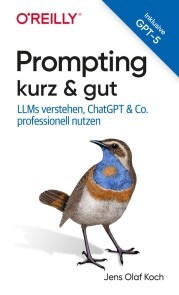
Prompting kurz & gut
Kompakte und intelligente Einführung ins Prompting und in LLMs Verstehen, wie Large Language Models »denken« und sprechen Mit Best Practices und grundlegenden Strategien effektiv prompten Mit fortgeschrittenen Prompting-Techniken wie Systemprompts, benutzerdefinierten GPTs und Meta-Prompting zum Profi werden Mit externen Tools Prompts schneller schreiben und besser verwalten Praxis-Beispiele aus der IT: vom Codieren über Architekturüberlegungen bis zur automatisierten Dokumentation Prompting – klingt einfach, hat es aber in sich. Wer Large Language Models wie ChatGPT, Claude oder Gemini treffsicher und effizient einsetzen will, braucht mehr als nur gute Fragen. Dieses kompakte Buch erklärt, wie Sprachmodelle »denken«, wie Prompts aufgebaut sein sollten – und wie sich mit Strategie, praktischem Know-how und den passenden Tools deutlich bessere Ergebnisse erzielen lassen. Ob Sie neu einsteigen oder Ihr Prompting verbessern möchten: Hier finden Sie fundiertes Wissen, klare Anleitungen und zahlreiche Praxistipps. Verstehen, wie Sprachmodelle funktionieren und wie man mit ihnen kommuniziert Best Practices für wirksame Prompts – praxisnah, präzise und auf den Anwendungsfall zugeschnitten Tools, Workflows und Chatbot-Features für produktiveres Arbeiten Praxisbeispiele aus der IT: von Code über Dokumentation bis Architektur Fortgeschrittene Techniken: Systemprompts, benutzerdefinierte GPTs, Meta-Prompting Rechtliches: Datenschutz, Urheber- und Nutzungsrechte im Blick behalten Mit umfangreichen Cheatsheets

Artificial Intelligence and IoT in Online Education Systems
Design the future of digital education with this essential book that provides a comprehensive guide to leveraging AI and IoT to create dynamic, inclusive virtual learning environments and effectively implement advanced online proctoring solutions. The rapid development of online learning environments and virtual classrooms, coupled with the need for scalable, personalized education systems, has positioned AI as a key enabler of modern education. The advent of these technologies promises to reshape how we deliver, monitor, assess, and evaluate online learning. This book explores these critical intersections of technology and education, emphasizing the potential of AI and IoT not only to optimize outcomes but also to create more dynamic, responsive, and inclusive virtual learning environments. Focusing on problems that can be solved through computer vision, video and audio streaming, class imbalance data, audio-to-text processes, multi-modal and bi-modal aspects, hand-written strokes, text similarity, biomedical ethics, and advancements in machine and deep learning algorithms, this book comprehensively explores the effectiveness of these technologies in online proctoring. This essential guide will equip educators, technologists, administrators, and policymakers with the knowledge and perspective necessary to leverage these technologies effectively. Readers will find the book: Explores various AI tools and techniques adopted for online proctoring examination systems;Covers critical analytical aspects of AI-assisted systems;Describes a variety of experiments leading to uni- and multi-modal systems and IoT-based architecture using computer vision, machine learning, and deep learning algorithms;Discusses the quality assurance and psychological aspects to preserve ethics during examinations. Audience Educational researchers and policymakers, as well as computer scientists working in AI, machine learning, data science, deep learning, computer vision, and statistics. Ramanujam E., PhD is an Assistant Professor in the Department of Computer Science and Engineering at the National Institute of Technology Silchar, Assam, India. He has contributed significantly to human activity recognition, especially online education and examinations, spam detection, and feature engineering across various domains. His areas of expertise include artificial intelligence, machine learning, deep learning, and ambient intelligence. Chandan Chakraborty, PhD is a Professor in the Department of Computer Science and Engineering at the National Institute of Technical Teachers’ Training and Research, Kolkata, West Bengal, India. He has more than 100 peer-reviewed publications in top journals and holds several patents. He specializes in artificial intelligence, machine learning, deep learning, and biomedical engineering.

Computernetzwerke (9. Auflg.)
Das Standardwerk für Einsteiger:innen und (künftige) Administrator:innen von Computersystemen und -netzwerken Vermittelt das nötige Know-how, um Netzwerke – ob in großen Umgebungen oder zu Hause – von Grund auf zu verstehen und zu betreiben Fundiert, kompakt und verständlich erklärt Mit vertiefenden Exkursen, Beispielszenarien und Fehleranalysen Mit Übungen und Repetitorien Dieses erfolgreiche Standardwerk in der mittlerweile 9. Auflage bietet Ihnen einen fundierten Einstieg in die Grundlagen moderner Computernetzwerke. Nach der Lektüre werden Sie wissen, wie Netzwerke tatsächlich funktionieren, und Sie werden Ihre neu erworbenen Kenntnisse direkt in der Praxis anwenden können. Das Konzept des Buches basiert auf der jahrelangen Erfahrung der Autoren in der Entwicklung und dem Betrieb von Netzwerken. Das Buch vermittelt das nötige Grundwissen, um sich in diesem komplexen Gebiet zurechtzufinden, Fehler zu analysieren und auf dieser Basis ein eigenes Computernetzwerk aufzubauen und zu verwalten. Im Vordergrund steht daher nicht das So sondern das Wie. Diese Neuauflage wurde durchgehend aktualisiert und formal überarbeitet. AUS DEM INHALT // Grundlagen der Netzwerktechnik Geräte und Medien, Glasfaser, Signale OSI-Modell, Netzwerkschichten, Zugriffsverfahren, Sicherheit ARP, VLAN, VPN, virtuelle Geräte, SDN LAN, MAN, WAN, Internet Routing, Uni-, Broadund Multicast Szenarien, Planung, WLAN NAT, PAT, DHCP, TCP/IP, DNS IPv4 und IPv6 Ports, Sockets, Router, Firewall, Verschlüsselung, Netzzugang, Ethernet

Optimierung und Applikation des Lenkungs-Feedbacks in der Fahrsimulation unter Anwendung von künstlicher Intelligenz
In Fahrsimulatoren kommen zur generischen Erzeugung des Lenkradmoments voranging physikalische Modelle zum Einsatz, die nur mit großem Aufwand parametriert werden können und zudem eine hohe Rechenleistung benötigen. Mit Hilfe der hybriden Modellierung werden die Vorteile von physikalischer und Black-Box-Modellierung vereint, so dass künftig Lenksysteme von virtuellen oder existenten Fahrzeugen schnell und einfach erstellt werden können. Vor allem im für das Lenkgefühl relevanten On-Center-Bereich kann ein latenzarmes hybrides Open-Loop-Lenkungsmodell ein authentisches Lenkgefühl für Fahrsimulatoren mit Force-Feedback-System generieren.

Artificial Intelligence Technologies for Smart and Sustainable Urban Transportation
Explores the future of transportation and provides a comprehensive guide to leveraging cutting-edge digital technologies and AI-powered platforms for creating smart, energy-efficient, and sustainable urban transportation systems. As urbanization accelerates globally, transportation has become a major contributor to environmental degradation and climate change. Rising greenhouse gas (GHG) emissions—including carbon dioxide (CO2), methane, ozone, nitrous oxide, and chlorofluorocarbons—pose a serious threat to air quality and environmental sustainability. To counteract these challenges, nations advocate smart, eco-friendly urban mobility solutions. This book presents the latest advancements and transformative trends in urban transportation, emphasizing emerging digital technologies that foster sustainability. The integration of artificial intelligence, 5G and 6G, cybersecurity, the Internet of Things, blockchain, edge computing, and cloud-native infrastructures enhances intelligent and energy-efficient transportation systems. Experts and environmental advocates champion innovative software platforms and solutions essential for modernizing mobility. This book examines the foundational technologies driving this transformation and explores AI-powered platforms and management solutions shaping the future of urban transportation, making it an essential resource for beginners and seasoned professionals alike. Uncovers the innovative features of artificial intelligence in urban transportation, illustrating how integrated platforms enhance operational efficiency and sustainability at both macro and micro levels; Delves into the most common AI techniques and algorithms used in modern urban mobility systems; Focuses on how the evolution of AI paradigms supports real-time decision-making, transforming urban transportation planning and management; Examines the integration of trust management and advanced cybersecurity measures within AI-powered transportation systems; Provides a collection of case studies and detailed analyses of AI-based integrated platforms, offering theoretical perspectives and practical examples of technological advancements and their challenges. Pethuru Raj, PhD is the Chief Architect in the Edge AI division of Reliance Jio Platforms Ltd. He has published more than thirty research papers in peer-reviewed journals, authored and edited forty-two books, and contributed fifty-four book chapters. He focuses on emerging technologies such as the Internet of Things, artificial intelligence model optimization, big and streaming data analytics, and blockchain. Sudesh Yadav, PhD is an Assistant Professor in the Govt. College, Ateli, Distt-Mahendergarh, Haryana, India. She has published and reviewed many research papers in refereed international journals and conferences. Her areas of interest include artificial intelligence, IoT, digital image processing, soft computing and pattern recognition, and natural language processing. Manas Kumar Mishra, PhD is a Professor at the IMS Engineering College, Ghaziabad, Uttar Pradesh, India. He has published more than 80 book chapters and research articles in international journals of repute. His research interests include distributed systems, mobile computing, artificial intelligence, and wireless sensor networks. Satya Prakash Yadav, PhD is an Associate Professor in the Department of Computer Science and Engineering at the Madan Mohan Malaviya University of Technology, Gorakhpur, U.P., India with more than 17 years of experience. He has published four books, two patents, and many research papers in international journals. His research focuses on image processing, information retrieval, digital image processing, feature extraction, information retrieval, C++, C#, and Java. Victor Hugo C. de Albuquerque, PhD is a Professor and Senior Researcher in the Department of Teleinformatics Engineering at the Federal University of Ceará, Brazil. He is a member of the Brazilian Society of Biomedical Engineering. He has experience in biomedical science and engineering, with a focus on applied computing, intelligent systems, visualization and interaction, artificial intelligence, and image processing and analysis.

Microsoft Power BI (2. Auflg.)
Visuelle Datenanalyse leicht gemacht: Von den ersten Balkendiagrammen über Cluster und Trendlinien zu geografischen Analysen auf LandkartenErhalten Sie aussagefähige Prognosen durch vorausschauende ZukunftsanalysenErstellen und teilen Sie interaktive Dashboards und übersichtliche Infografiken Visualisieren Sie Ihre Daten schnell, intelligent und ausdrucksstark mit Power BI, um praktisch umsetzbare Ergebnisse zu erhalten. Alexander Loth und Peter Vogel zeigen Ihnen Schritt für Schritt, wie Sie ganz einfach visuelle Analysen erstellen und so selbst komplexe Datenstrukturen verstehen sowie gewonnene Erkenntnisse effektiv kommunizieren können. Das Buch richtet sich an die folgenden Zielgruppen: Alle, die Zugang zu Daten haben und diese verstehen möchtenFührungskräfte, die Entscheidungen auf Grundlage von Daten treffenAnalysten und Entwickler, die Visualisierungen und Dashboards erstellenangehende Data Scientists Zum Verständnis dieses Buches und dem Erwerb von Power BI-Kenntnissen sind weder besondere mathematische Fähigkeiten noch Programmiererfahrung nötig. Durch die Integration von Copilot wird der Einstieg sogar noch einfacher, da Sie viele Aufgaben durch einfache Anweisungen in natürlicher Sprache erledigen können. Es eignet sich daher auch für Einsteiger und Anwender, die sich dem Thema Datenvisualisierung und -analyse praxisbezogen nähern möchten, ohne ausschweifende theoretische Abhandlungen. Die grundlegenden Funktionen von Power BI werden Schritt für Schritt erläutert und Sie lernen, welche Visualisierungsmöglichkeiten wann sinnvoll sind. Die Autoren zeigen Fallbeispiele auf, die weit über eine »Standardanalyse« hinausreichen und gehen auf Funktionen ein, die selbst erfahrenen Nutzern oft nicht hinlänglich bekannt sind. Sie geben Ihnen außerdem wertvolle Hinweise und Tipps, die das Arbeiten mit Power BI merklich erleichtern. So können Sie zukünftig Ihre eigenen Daten bestmöglich visualisieren und analysieren. Aus dem Inhalt: Einführung und erste Schritte in Power BIDatenquellen in Power BI anlegenVisualisierungen erstellenAggregationen, Berechnungen und ParameterDimensionsübergreifende Berechnungen mit DAX-AusdrückenMit Karten zu weitreichenden ErkenntnissenTiefgehende Analysen mit Trends, Prognosen, Clustern und VerteilungAnalyse auf Autopilot: Berichte und DAX-Formeln mit Copilot erstellenInteraktive DashboardsPower BI als Teil von Microsoft Fabric: das große Ganze verstehenTeilen und Zusammenarbeiten in der Cloud Alexander Loth kommt aus der datenintensiven Kernforschung und arbeitet für Microsoft. Er hat unter anderem einen MBA von der Frankfurt School of Finance & Management und war als Data Scientist am CERN, sowie in der Software-Entwicklung bei SAP tätig. In den letzten Jahren hat er sich auf die Bereiche Digital Transformation, Big Data, Machine Learning und Business Analytics im Umfeld Finanzen und Crypto Assets spezialisiert und berät Unternehmen beim Aufbau von datenzentrischen Strategien. Alexander Loth wurde von der BNN als "der Daten-Verarbeiter" bezeichnet. Er gehört laut Brandwatch zu den einflussreichsten Autoren "rund um das Thema Digitale Transformation". Peter Vogel kommt aus der Experimentalphysik und ist seit 2017 als Berater für Digitalisierung und Daten tätigt. Hierbei unterstützt er Konzerne aus verschiedenen Branchen bei dem Aufbau ihrer Datenstrategie und der Nutzung moderner Analyse-Plattformen für Big Data und Visualisierung.

Cognitive Cyber Crimes in the Era of Artificial Intelligence
Protect your organization from next-generation threats with this comprehensive analysis of cognitive cybercrimes, addressing future legal, ethical, and policy challenges in the age of AI. Cognitive Cyber Crimes in the Era of Artificial Intelligence explores the emerging dimension of cybercrime where artificial intelligence, neuroscience, and cryptography intersect. It introduces the concept of neurocryptic forensics, a novel framework for investigating AI-driven psychological manipulations, deepfake-induced fraud, cognitive hacking, and brainwave-targeted cyber-attacks. As digital threats evolve, cybercriminals are shifting from traditional hacking methods to exploiting human cognition. This book provides a comprehensive analysis of cognitive cybercrime techniques and equips readers with methodologies to detect, prevent, and mitigate such threats. It serves as a guide for researchers, cybersecurity professionals, forensic analysts, policymakers, and AI developers who aim to secure both digital infrastructures and human perception against next-generation cyber threats. Rajesh Kumar Chakrawarti, PhD is a Professor and the Director at the Sushila Devi Bansal College of Technology in the Bansal Group of Institutes, Indore with more than 21 years of academic and industry experience. He has attended more than 100 conferences and published more than 100 research papers, book chapters, and abstracts in national and international journals and conferences. His research areas include compiler design, natural language processing, computational linguistics, machine translation, and word-sense disambiguation. Romil Rawat is a researcher at the Research Laboratory in Geomatics and Information Systems, part of the National Research Council in Rome and a Professor at Shri Vaishnav Vidyapeeth Vishwavidyalaya. He has published more than 15 research papers in international journals and conferences and more than ten books. His work focuses on the development of state-of-the-art machine learning algorithms aimed at detecting, predicting, and mitigating criminal activities across social networks. Kriti Bhaswar Singh, PhD is an Associate Professor in the Department of Commerce and Financial Studies in the School of Management Sciences at the Central University of Jharkhand with more than 20 years of teaching and corporate experience. He has published four books and 36 research papers and book chapters on various areas of finance in refereed journals and presented 23 papers in various conferences. His research focuses on the capital market, corporate finance, and valuations. A. Samson Arun Raj, PhD is an Assistant Professor and Internal Placement Coordinator in the Division of Computer Science and Engineering in the School of Computer Science and Technology at the Karunya Institute of Technology and Sciences. He has published more than 25 articles in international journals and conferences of repute. He is engaged in cutting-edge research for smart city development, focusing on drone networks and energy grid applications. Abhishek Singh, PhD is the Director of the Rajiv Academy for Technology and Management with more than 22 years of teaching experience. He has published more 22 research papers in international journals and presented an additional 30 at international conferences. His teachings focus on accounting and finance. Hitesh Rawat is a PhD Research scholar at Shri Vaishnav Vidyapeeth Vishwavidyalaya University with more that eight years of experience. He has chaired international conferences and hosted several research events, including national and international research schools, PhD colloquia, workshops, and training programs. His work focuses on business frameworks for secure communication and cybersecurity. Anjali Rawat is a PhD Research scholar at Shri Vaishnav Vidyapeeth Vishwavidyalaya University with more than eight years of experience. She has chaired international conferences and hosted several research events, including national and international research schools, PhD colloquia, workshops, and training programs. Her research focuses on cyberthreats in online social networks.

AI Agents at work
AI Agents are coming, and it may happen faster than you think. This book explains what AI Agents are, what the risks are, and what opportunities they bring. We show you how to prepare yourself and your organization for the arrival of AI Agents. We, Maurits and Joris, first met in 2008 at Stanford University, where we were both working on our PhDs in AI. In recent years, we have once again immersed ourselves in AI Agents—reading, experimenting, and building our own. And yes, the hype is big. But behind the hype lies a future that will fundamentally change how we think about work. And of course, this book itself is also a collaboration with several AI Agents. In this book, you'll learn: How AI Agents really work (without the buzzwords) Which risks you need to manage (hallucinations, privacy, regulation) How your organization can develop AI maturity Successful real-world cases and future scenarios

Advanced Forecasting with Python
Advanced Forecasting with Python, Second Edition, is a comprehensive and practical guide to mastering modern forecasting techniques using Python. Designed for data scientists, analysts, and machine learning practitioners, this updated edition bridges the gap between classical forecasting models and cutting-edge, AI-powered techniques that are reshaping the field. The book begins with foundational models like AR, MA, ARIMA, and SARIMA, offering intuitive and mathematical explanations alongside hands-on Python implementations. It then expands into multivariate models (VAR, VARMAX), supervised machine learning (Random Forests, XGBoost, LightGBM, CatBoost), and deep learning architectures such as LSTMs, NBEATS, and Transformers. Each chapter not only teaches the theory and code but also tracks model performance using MLflow, enabling efficient benchmarking and experimentation management. The second edition stands out for its extensive new content. Readers will now explore Orbit by Uber, AutoGluon by AWS, Prophet by Meta, Microsoft Azure AutoML, Google GCP AutoML, and TimeGPT by Nixtla, equipping them with the latest tools from top cloud providers. These additions make sure that readers stay current in an ever-evolving landscape. Moreover, the new chapters highlight practical deployment strategies and trade-offs between performance, explainability, and scalability. Whether you are just beginning your forecasting journey or seeking to enhance your expertise with state-of-the-art tools and cloud-based solutions, this book offers a rich, hands-on learning experience. With step-by-step Python examples, detailed model insights, and modern forecasting workflows, it is an indispensable resource for staying ahead in the realm of predictive analytics. You Will: Build robust forecasting solutions using PythonGain both intuitive and mathematical insights into traditional and cutting-edge forecasting models Master model evaluation through cross-validation, backtesting, and MLflow-based trackingLeverage cloud-based platforms and Model-as-a-Service tools for scalable forecasting deployments Who this book is for: This book is ideal for data scientists, analysts, and ML practitioners working on real-world forecasting problems. It suits both intermediate learners and experienced professionals looking to master state-of-the-art forecasting techniques. PART I: Machine Learning for Forecasting.- Chapter 1: Models for Forecasting.- Chapter 2: Model Evaluation for Forecasting.- Chapter 3: Model Management and Benchmarking using MLflow.- PART II: Univariate Time Series Models.- Chapter 4: The AR model.- Chapter 5: The MA model.- Chapter 6: The ARMA model.- Chapter 7: The ARIMA model.- Chapter 8: The SARIMA model.- PART III: Multivariate Time Series Models.- Chapter 9: The SARIMAX model.- Chapter 10: The VAR model.- Chapter 11: The VARMAX model.- PART IV: Supervised Models.- Chapter 12: The Linear Regression.- Chapter 13: The Decision Tree Model.- Chapter 14: The kNN model.- Chapter 15: The Random Forest.- Chapter 16: Gradient Boosting with XGBoost, LightGBM, and CatBoost.- Chapter 17: Bayesian Models with pyBATS.- PART V: Neural Networks.- Chapter 18: Neural Networks.- Chapter 19: RNNs using SimpleRNN and GRU.- Chapter 20: LSTM RNNs.- PART VI: Black Box and Cloud Based Models.- Chapter 21: The NBEATS model with Darts.- Chapter 22: The Transformer model with Darts.- Chapter 23: The NeuralProphet model.- Chapter 24: The DeepAR model and AWS Sagemaker AI.- Chapter 25: Uber's Orbit Model.- Chapter 26: AutoML with Microsoft Azure.- Chapter 27: AutoML with Vertex AI on Google Cloud Platform.- Chapter 28: Nixtla Suite and TimeGPT.- Chapter 29: Model Selection.