

Allgemein
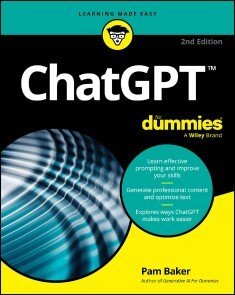
ChatGPT For Dummies
UPDATED TO PROVIDE A DEEPER AND CLOSER LOOK AT CHATGPTExpanded and extended, this new edition of ChatGPT For Dummies covers the latest tools, models, and options available on the popular generative AI platform. You'll learn best practices for using ChatGPT as a text and media generation tool, research assistant, and content reviewer. If you're new to the world of AI, you'll get all the basic know-how needed to add ChatGPT to your professional toolbox. And if you've been doing the genAI thing for a while already, this book will sharpen your skills as you apply AI to real-world projects in an ethical manner. You'll get insight on the best practice for using ChatGPT to make your life and work easier and how to write prompts that result in high-quality output.* Understand what generative AI is and how ChatGPT produces human-like responses* Get tips on writing effective prompts and using ChatGPT to generate sound and images* Apply ChatGPT to your daily work or personal life* Discover the best way to fact-check AI-generated content to avoid errors and hallucinationsAnyone using ChatGPT to enhance their work—whether for professional or personal use—will get better results with ChatGPT For Dummies.PAM BAKER is an author and a trainer with over two decades of experience as a journalist focused on the tech industry. She recently won an AZBEE award from the American Society of Business Publication Editors for B2B writing. She is author of the first edition of ChatGPT For Dummies and Generative AI For Dummies.

Visualisierung in der Medizin
Dieses Buch fasst die jüngsten Fortschritte in der visualisierten Medizin zusammen, sowohl hinsichtlich der grundlegenden Prinzipien als auch der Entwicklung neuer Techniken und deren Grenzen. Besonders in Kombination mit künstlicher Intelligenz (KI), medizinischen Bildgebungsverfahren und medizinischen Robotern wurden intelligente Medizintechnologien entwickelt und klinisch angewendet, um die Diagnose, Behandlung, Prognose und Datenanalyse von lebensbedrohlichen Krankheiten zu verbessern. Diese Philosophie revolutioniert umfassend die Behandlungsstrategie im Gesundheitswesen und wird die Präzisionsmedizin und Präzisionschirurgie weiter intuitiv erfassbar, intelligent analysierbar und präzise umsetzbar machen. Das Buch beinhaltet folgende Themen und fasst sie zusammen: 1. Die hochmoderne Definition der visualisierten Medizin. 2. Fortschrittliche Techniken und klinische Anwendungen der visualisierten Medizin im vergangenen Jahrzehnt. 3. Neue Grenzen und brandneue Technologien, z.B. künstliche Intelligenz (KI), chirurgische Roboter, etc. 4. Revolutionäre Auswirkungen auf Diagnose, Behandlung und Prognose von Krankheiten. 5. Zukünftige Herausforderungen und Perspektiven.

The Art of Decoding Microservices
Stay competitive in today’s software industry by mastering microservices. As microservices architecture becomes the modern standard, this book demystifies the transition from monoliths to microservices with clear guidance and practical examples for easier adoption and implementation.The book starts with the basics, explaining what microservices are, their benefits, and how they compare to monolithic architectures. From there, you will explore a wide range of topics including service discovery, load balancing, authentication and authorization, resilience, fault tolerance, and much more as well as practical Java examples throughout. Each chapter is meticulously crafted to offer a balance of theory and hands-on application, ensuring you not only understand the concepts but also apply them effectively in real-world scenarios.By the end of the book, you will be ready to design, implement, and manage scalable and efficient microservices-based systems. Additionally, you will gain a forward-looking perspective on emerging trends and the integration of microservices in AI and IoT.WHAT YOU WILL LEARN* Compare microservices and monolithic systems, understanding the basics, benefits and key differences* Understand key principles for decomposing monoliths and designing for failure* Master synchronous vs. asynchronous communication and when to use each* Explore containerization, orchestration with Kubernetes, and scaling strategies* Secure microservices and monitor health and performance in distributed systemsWHO THIS BOOK IS FORNovice and experienced developers who are new to microservices and want to master the topic to drive successful software projects. The book is programming language-agnostic, and can be understood by developers of any language, but those with some familiarity with Java will benefit more from the specific examples provided.SUMIT BHATNAGAR has nearly two decades of hands-on experience in the IT industry, serving as a visionary leader and a respected authority in the realm of modern software architecture. Specializing in J2EE, microservices, and cloud-based applications, Sumit has a proven track record of delivering cutting-edge solutions in the financial domain.An accomplished project leader, Sumit combines deep technical expertise with strategic insight, seamlessly bridging the gap between innovation and implementation. His contributions to the industry have earned prestigious accolades at a global platform. As a distinguished member of the Forbes Technology Council, and IEEE, Sumit is at the forefront of technological advancement, continually shaping the future of software development. His extensive portfolio of published research papers and thought leadership in renowned journals underscores his commitment to pushing the boundaries of what’s possible.In this book Sumit leverages his vast experience and deep understanding to provide readers with a comprehensive guide to mastering microservices. Whether you’re a seasoned developer or an aspiring architect, this book is your gateway to understanding and implementing robust, scalable, and resilient software solutions.ROSHAN MAHANT is a seasoned expert in strategizing and designing IT solutions, with a strong emphasis on successful execution. As a Senior Technical Consultant at Launch IT Corp, he specializes in e-governance platform enhancements, particularly in public sector IT modernization using the Microservices Architecture, and Amanda e-governance licensing platform. Over his 15-year career, Roshan has mastered holistic analysis, systems integration, architecture design, and strategic consulting, enabling the transformation of critical governance functions across various state agencies. His work has significantly impacted several government boards, including the Iowa Board of Nursing and the Michigan Gaming Control Board.Before joining LaunchIT Corp, Roshan served as the Director of Access Technologies, where he developed innovative mentoring techniques and software products. With a master’s degree in CAD/CAM from Nagpur University, Roshan continues to contribute to the field through research papers, conference reviews, and technical book critiques, earning him various esteemed memberships and awards.Chapter 1: Evolution of Software Architecture.- Chapter 2: Overview of Microservices.- Chapter 3: Designing Microservices.- Chapter 4: Developing Microservices.- Chapter 5: Testing, Deploying, and Scaling Microservices.- Chapter 6: Microservices Security, Monitoring, and Maintenance.- Chapter 7: Lessons from Case Studies, Avoiding Pitfalls, and Shaping the Future.- Chapter 8: Conclusion and Quick Recap.- Appendix A: Glossary.- Appendix B: Closure and Final Thoughts.

AWS Certified Advanced Networking - Specialty (ANS-C01) Certification Guide
The AWS Certified Advanced Networking – Specialty certification exam focuses on leveraging AWS services alongside industry standards to create secure, resilient, and scalable cloud networks.Written by industry experts with decades of experience in the field, this comprehensive exam guide will enable you to transform into an AWS networking expert, going beyond the ANS-C01 exam blueprint to maximize your impact in the field. You’ll learn all about intricate AWS networking options and services with clear explanations, detailed diagrams, and practice questions in each chapter. The chapters help you gain hands-on experience with essential components, such as VPC networking, AWS Direct Connect, Route 53, security frameworks, and infrastructure as code. With access to mock exams, interactive flashcards, and invaluable exam tips, you have everything you need to excel in the AWS ANS-C01 exam.This book not only prepares you to confidently take the exam, but also deepens your understanding and provides practical insights that are vital for a successful career in AWS cloud networking.By the end of this exam guide, you’ll be thoroughly trained to take the AWS ANS-C01 exam and efficiently design and maintain network architectures across a wide range of AWS services.

MuleSoft for Salesforce Developers
Salesforce developers often need help with complex integrations to manage multi-cloud environments, data mapping, data security, API scalability, and real-time integration issues. Written by industry veterans with 20+ years of experience, this revised edition will help you overcome these challenges and unlock data with MuleSoft.In this second edition, you’ll learn about MuleSoft’s newest IDE (aka Anypoint Code Builder) and its tools and capabilities. The chapters will show you how to use AI-enabled APIs to maximize productivity, integration of Data Cloud with MuleSoft, Mule APIs with AI agents, and Mule AI Chain connectors. You’ll grasp the fundamentals of APIs and integration and confidently design your APIs, while also utilizing a no-code visual editor for API design to build your Mule applications using MuleSoft’s Anypoint Code Builder. The chapters will teach you about data transformation, API management, deployment models, and MuleSoft’s security features. Progressively, you’ll leverage MuleSoft connectors to integrate with Salesforce, Data Cloud, and other systems. You’ll explore AI-driven integrations and automation, and get practical tips to ace MuleSoft interviews and achieve MCD Level 1 certification.By the end of this book, you’ll be able to implement the entire API lifecycle and manage complex integrations with MuleSoft like a pro.

The Infinite Retina
What is Spatial Computing, and why are companies like Tesla, Apple, and Meta investing billions into it? In The Infinite Retina, Irena Cronin and Robert Scoble explore how spatial computing—where humans and machines interact in a digital–physical space—has progressed beyond theory into real-world applications.This second edition has many substantial updates, including two new chapters on the relevance of Generative AI in Spatial Computing and a new chapter on the impact of Apple Vision Pro. Each existing chapter has been updated to have the most current information and commentary. The book offers a fresh look at seven major industries, including healthcare and retail, featuring updated case studies, expert commentary, and real-world examples. Additionally, it addresses crucial risks and challenges, such as data privacy, automation's impact on employment, and ethical concerns. This edition moves beyond speculation to critically analyze what Spatial Computing means for businesses and individuals today.

Mastering AutoCAD 2025
AutoCAD helps you communicate your design intent by plotting your designs to drawings, in both paper and electronic format. But using AutoCAD can be daunting, even for an experienced user who wants to get their designs into the AutoCAD native DWG file format.Written by an Autodesk Certified Instructor at Platinum level with 30+ years of industry experience, this book will guide you on how to use new and existing AutoCAD tools to work smarter, not harder, and it will familiarize you with the processes needed to use AutoCAD much more effectively. As you work through the chapters, you’ll get used to these new methodologies in AutoCAD and build up "muscle memory" so that these skills become second nature. You’ll also take advantage of the author's expertise and experience, learning some highly effective AutoCAD tips and tricks along the way.By the end of this AutoCAD book, you’ll have gained valuable insights into the knowledge needed to confidently prepare for your Autodesk AutoCAD certification.

Unmanned Aerial Vehicles Swarm for Protecting Smart Cities
Explore the intersection between unmanned aerial vehicles (UAVs) and the evolving landscape of smart cities. With the increasing integration of technology into urban environments, there is a growing need to understand how UAV swarms can contribute to the safety, efficiency, and resilience of these complex urban ecosystems. The book aims to provide a technical understanding of UAV swarms and their applications within the context of smart cities.It begins by laying the groundwork with an introduction to UAV swarms and smart cities, establishing the foundational concepts and motivations behind their integration. As the book progresses, it delves into various aspects of smart cities, exploring concepts, technologies, and challenges inherent in their development and operation. This includes discussions on cloud computing, cybersecurity, machine learning applications, surveillance and monitoring systems, urban planning, and infrastructure management. It also examines the integration of IoT devices with UAV swarms, highlighting the synergies between these emerging technologies and their potential impact on urban environments.The book examines cutting-edge topics such as edge computing, blockchain applications, 5G integration, and augmented reality/virtual reality (AR/VR) visualization techniques in the context of UAV swarm operations. It concludes with reflections on innovations and future directions, offering insights into the evolving landscape of UAV swarm technologies and their implications for the protection and advancement of smart cities.The book serves as a comprehensive guide for researchers, practitioners, and policymakers interested in understanding the technical, social, and economic dimensions of UAV swarm technology within the context of smart city development and management.WHAT YOU WILL LEARNIdentify practical applications of UAV swarms in surveillance monitoring, urban planning, disaster management, and infrastructure resilienceGain comprehensive understanding of UAV swarms by exploring diverse disciplinesApply insights from emerging technologies like cloud computing, machine learning, blockchain, IoT devices, and so on to UAV swarm technologyWHO IS THIS BOOK FORThis book appeals to a wide range of readers with different interests and backgrounds, including researchers, policymakers, industry stakeholders, practitioners, experts, and general fans who are curious in the confluence of smart cities with UAV swarm technologies with little to no experience or knowledge of UAV swarms.OROOS ARSHI is a Research Scientist at AI-EYS and was awarded the Young Researcher award at the International Conference on Emerging Trends and Innovations (ICETI) 2024 held in Pakistan. She is a dedicated Research Scholar at the University of Petroleum and Energy Studies in Dehradun, India. She was the speaker at the International Conference on Emerging Trends and Innovations held in Pakistan. She has contributed significantly to the technological discourse with some Scopus, SCI, and a noteworthy publication with Springer. Since then, Oroos has embarked on an intricate exploration of diverse technological realms, displaying a profound interest in the Natural Processing Language (NLP), Computer Vision, Internet of Things (IoT), Artificial Intelligence (AI), Cybersecurity, and Cloud Computing.DR. INAM ULLAH KHAN is the Founder of AI-EYS. He was a visiting researcher at King’s College London, UK and was a faculty member at different universities in Pakistan including the Center for Emerging Sciences Engineering & Technology (CESET), Islamabad, Abdul Wali Khan University, Garden Campus, Timergara Campus, University of Swat & Shaheed Zulfikar Ali Bhutto Institute of Science and Technology (SZABIST), Islamabad Campus. He has authored/co-authored more than 30 research articles in reputable journals, conferences, and book chapters. His research interests include Network System Security, Intrusion Detection, Intrusion Prevention, cryptography, Optimisation techniques, WSN, IoT, Mobile Ad Hoc Networks (MANETS), Flying Ad Hoc Networks, and Machine Learning. He was a technical program committee member at an international workshop on intelligent systems for sustainable smart cities, New Delhi, India, February 19–20, 2022.KESHAV KAUSHIK is an experienced educator with around ten years of teaching and research experience in Cybersecurity, Digital Forensics, and the Internet of Things. He is working as an Assistant Professor (Senior Scale) in the systemic cluster under the School of Computer Science at the University of Petroleum and Energy Studies, Dehradun, India. He has published 100+ research papers in International Journals and has presented at reputed International Conferences. Currently, he is also serving as à Vice Chairperson of the Meerut ACM Professional Chapter and is also a brand ambassador for Bentham Science.NADEEM IQBAL (Senior Member IEEE) received a Ph.D. degree in bio and brain engineering from the Korea Advanced Institute of Science and Technology (KAIST), Daejeon, South Korea, in 2013. He has completed a Fulbright Fellowship at St. John’s University in New York, USA. Dr. Iqbal was a postdoctoral fellow at the School of Mechanical Engineering, University of Leeds, UK. He is currently working as an Associate Professor with the Department of Computer Science, Abdul Wali Khan University Mardan, Pakistan. His research interests include biological information processing mechanisms in the brain, Natural Language Processing, the Internet of Things, and Pattern recognition.INAM ULLAH received a B.Sc. degree in Electrical Engineering (Telecommunication) from the Department of Electrical Engineering, University of Science and Technology Bannu (USTB), KPK, Pakistan, in 2016 and a Master's and Ph.D. degree in Information and Communication Engineering from the College of Internet of Things (IoT) Engineering, Hohai University (HHU), China, in 2018 and 2022, respectively. He is currently an Assistant Professor at the Department of Computer Engineering, Gachon University, S Korea. His research interests include Robotics, Internet of Things (IoT), Wireless Sensor Networks (WSNs), Underwater Communication and Localization, Underwater Sensor Networks (USNs), Artificial Intelligence (AI), Big data, Deep learning, etc. He has authored more than 70 peer-reviewed articles on various research topics.DR. KHADIJA SLIMANI completed her PhD, which was jointly supervised by the University of Ibn Tofail in Morocco and the University of Technology of Belfort Montbeliard (UTBM) in France. This collaborative international effort showcased her commitment to academic excellence and cross-cultural research. For her doctoral studies, Dr. Slimani delved into the realms of machine learning, deep learning, pattern recognition, and computer vision, with a specific focus on academic emotion recognition. This interdisciplinary approach, spanning both Moroccan and French academic environments, enriched her research experience and contributed to the global perspective of her work. Dr. Slimani's academic contributions extended to various engineering schools in Paris, France, where she took on teaching responsibilities across multiple modules, including data science, deep learning, machine learning, data bases, and computer vision. She currently holds the title of Associate Professor at the Graduate School of Automatic Electronic Computing in Paris, France. Through her diverse roles, Dr. Slimani consistently inspires and contributes to shaping the next generation of researchers.Chapter 1: Introduction to UAV Swarms and Smart Cities.- Chapter 2: Fundamentals of UAV Swarms.- Chapter 3: Smart Cities: Concepts and Technologies.- Chapter 4: Cloud Computing for UAV Swarms.- Chapter 5: Cybersecurity in UAV Swarm Operations.- Chapter 6: Machine Learning Applications in UAV Swarms.- Chapter 7: Surveillance and Monitoring in Smart Cities.- Chapter 8: Urban Planning and Infrastructure Management.- Chapter 9: Public Perception and Acceptance.- Chapter 10: Infrastructure Resilience and Disaster Management.- Chapter 11: International Perspectives on UAV Swarms.- Chapter 12: Real-world Deployments of UAV Swarms.- Chapter 13: Integration of IoT Devices with UAV Swarms.- Chapter 14: Smart Infrastructure for IoT and UAV Swarms.- Chapter 15: Economic Analysis of IoT and UAV Swarm Integration.- Chapter 16: Edge Computing for UAV Swarm Operations.- Chapter 17: Blockchain Applications in UAV Swarm Security.- Chapter 18: 5G Integration for Enhanced UAV Swarm Connectivity.- Chapter 19: Augmented Reality (AR) and Virtual Reality (VR) for UAV Swarm Visualization.- Chapter 20: Innovations and Future Directions in UAV Swarm for Protecting Smart Cities.

TypeScript 5 Design Patterns and Best Practices
Design patterns are the backbone of many world-renowned software applications, both commercial and open source. Written by a well-known author and accomplished software developer, this in-depth guide will empower you to build robust and scalable TypeScript apps with design patterns in TypeScript 5, making it your go-to resource for mastering TypeScript and leveraging design patterns effectively.This second edition has been updated with TypeScript 5 features, such as improved type inference, union enums, and decorators to write clean and maintainable code that can adapt to future changes. The chapters teach you the classic Gang of Four design patterns, providing traditional and modern real-world implementations. You’ll also get a clear understanding of the power of functional and reactive programming patterns that have been specifically designed for idiomatic TypeScript development.By the end of this book, you’ll be a design pattern pro, capable of confidently identifying and applying the right pattern for any scenario, as well as crafting well-structured, maintainable, and testable TypeScript code.

Introducing Microsoft Purview
Microsoft Purview is an integrated Information governance platform that provides organizations with the tools needed to manage, discover, and protect their information assets across on-premises, multi-cloud, and software-as-a-service (SaaS) environments. This book will offer you a comprehensive understanding of Microsoft Purview, its features, and its capabilities.This book begins with an introduction to the groundbreaking features and architecture of Microsoft Purview, highlighting its potential impact on organizational dynamics. You further, delve into the fundamentals of information governance, understanding its critical importance and the principles that drive effective data management in today's enterprises. Moving ahead, you will explore the intricacies of information cataloging and metadata management, learning how to create and manage centralized information catalogs, enrich metadata, and much more. Next, you will gain a deep understanding of data lineage and mapping, mastering the visualization of data flows and conducting comprehensive impact analyses. You will learn how to leverage the powerful analytics tools within Microsoft Purview to generate insightful reports and dashboards, transforming raw data into actionable insights.Further, you will navigate the complexities of policy management and compliance, establishing robust frameworks to meet regulatory requirements like GDPR and CCPA followed by industry best practices and real-world case studies, optimizing your data management strategies and overcoming common challenges. Finally, peer into the future of information governance, exploring emerging technologies and trends, and understanding the pivotal role of AI and machine learning in shaping the landscape.WHAT YOU WILL LEARN:* Understanding and apply information Governance best practices in the organization.* Discovering automated information discovery capabilities* Understanding the role of AI, machine learning, and automation in enhancing information governance practices* How to comply with various information privacy regulations (e.g., GDPR, CCPA, HIPAA)WHO THIS BOOK IS FOR:Information engineers and Information Governance OfficersCharles Waghmare works for a global energy leader since 2019 as a Business Analyst in the Microsoft 365 space. Before that, he worked at Capgemini for eight years in various roles, including Yammer Community Manager and manager of the Drupal-based Enterprise Knowledge Management system. He also developed a knowledge management platform for the Digital Customer Experience (DCX) organization using SharePoint Online to manage Client references and knowledge assets related to Artificial Intelligence and customer experience (CX), using Microsoft Azure Chatbots to automate processes, develop proactive conversations with users, and create new use cases.Charles also worked for ATOS (erstwhile SIEMENS Information Systems limited) for five years. During his tenure there, he was Community Manager of SAP-based communities, where he utilized Technoweb 2.0 – a Yammer-like platform and on-premises SharePoint. Also, Charles was global rollout manager for a structured document-management system built in on-premises SharePoint.Chapter 1: Introduction to Microsoft Purview: Understanding the Platform.-Chapter 2: Introduction to Information Governance.- Chapter 3: Information Catalog and Metadata Management.- Chapter 4: Information Discovery and Classification.- Chapter 5: Data Lineage and Mapping.- Chapter 6: Data Insights and Analytics.- Chapter 7: Policy Management and Compliance.- Chapter 8: Information Security and Privacy.- Chapter 9: Best Practices for Effective Information Governance.- Chapter 10: Future Trends in information Governance.

Generative Artificial Intelligence
THIS BOOK IS A COMPREHENSIVE OVERVIEW OF AI FUNDAMENTALS AND APPLICATIONS TO DRIVE CREATIVITY, INNOVATION, AND INDUSTRY TRANSFORMATION.Generative AI stands at the forefront of artificial intelligence innovation, redefining the capabilities of machines to create, imagine, and innovate. GAI explores the domain of creative production with new and original content across various forms, including images, text, music, and more. In essence, generative AI stands as evidence of the boundless potential of artificial intelligence, transforming industries, sparking creativity, and challenging conventional paradigms. It represents not just a technological advancement but a catalyst for reimagining how machines and humans collaborate, innovate, and shape the future. The book examines real-world examples of how generative AI is being used in a variety of industries. The first section explores the fundamental concepts and ethical considerations of generative AI. In addition, the section also introduces machine learning algorithms and natural language processing. The second section introduces novel neural network designs and convolutional neural networks, providing dependable and precise methods. The third section explores the latest learning-based methodologies to help researchers and farmers choose optimal algorithms for specific crop and hardware needs. Furthermore, this section evaluates significant advancements in revolutionizing online content analysis, offering real-time insights into content creation for more interactive processes. AUDIENCEThe book will be read by researchers, engineers, and students working in artificial intelligence, computer science, and electronics and communication engineering as well as industry application areas. R. NIDHYA, PHD, is an assistant professor in the Department of Computer Science & Engineering, Madanapalle Institute of Technology & Science, affiliated with Jawaharlal Nehru Technical University, Anantapuram, India. She has published many research papers in international journals and her research interests include wireless body area networks, network security, and data mining. D. PAVITHRA, PHD, is an assistant professor at Dr. NGP Institute of Technology, Coimbatore, Tamil Nadu, India. Her current research interests include autism, machine learning, and deep learning. MANISH KUMAR, PHD, is an assistant professor at The School of Computer Science & Engineering, VIT, Chennai, India. His research interests include soft computing applications for bioinformatics problems and computational intelligence. A. DINESH KUMAR, PHD, is an associate professor at KL (Deemed to be University), Vijayawada, Andhra Pradesh, India. His current research interests include wireless body area networks, wireless sensor networks, network security, and artificial intelligence. S. BALAMURUGAN, PHD, is the Director of Research and Development, Intelligent Research Consultancy Services (iRCS), Coimbatore, Tamil Nadu, India. He is also Director of the Albert Einstein Engineering and Research Labs (AEER Labs), as well as Vice-Chairman of the Renewable Energy Society of India (RESI), India. He has published 50+ books, 200+ international journals/conferences, and 35 patents.

Securing the Digital Frontier
SECURE YOUR UNDERSTANDING OF VITAL SECURITY AND FORENSIC STRATEGIES BY PURCHASING SECURING THE DIGITAL FRONTIER: THREATS AND ADVANCED TECHNIQUES IN SECURITY AND FORENSICS, A DEFINITIVE GUIDE THAT EMPOWERS YOU TO PROTECT SENSITIVE INFORMATION AND TACKLE CYBER THREATS WITH INSIGHTS FROM LEADING EXPERTS AND REAL-WORLD CASE STUDIES.In the field of security and forensics, it’s crucial to implement strong security measures to protect sensitive data and effectively respond to cyber incidents. Digital forensics is vital for analyzing cyber threats, where experts use advanced techniques to scrutinize digital artifacts, system logs, and network traffic. This approach helps reconstruct incidents, pinpoint vulnerabilities, and support legal actions, ensuring the confidentiality, integrity, and availability of crucial data in our rapidly evolving digital world. This book provides an in-depth look at security and forensics, pooling knowledge from top experts across various cybersecurity domains. It focuses on real-world applications and case studies, offering valuable insights for protecting information and responding to digital crimes. Designed for cybersecurity professionals, digital forensics investigators, legal teams, and academics, this comprehensive guide is a key resource for anyone looking to deepen their understanding of modern digital forensics and cybersecurity challenges. KAVITA SHARMA, PHD, is a professor in the Department of Computer Science and Engineering at Galgotias College of Engineering and Technology, Greater Noida, India with over 12 years of research and academic experience. She has also been awarded a research fellowship from the Ministry of Electronics and Information Technology from the Government of India. Additionally, she has four patents (one granted and three published) and one granted design and has published seven books and 45 research articles in international journals and conferences of high repute. VISHNU SHARMA, PHD, is the Head of Department and a professor in the Department of Computer Science and Engineering at Galgotias College of Engineering and Technology, Greater Noida, India with over 21 years of teaching experience. He has published over 50 research papers on mobile ad-hoc networks and mobile computing in national and international conferences and journals, as well as two books on mobile computing and advanced mobile computing. Additionally, he has organized several national and international conferences and workshops and serves as the editor of IEEE Conference ICCCA proceedings. PARMA NAND, PHD, is the Dean of Academics at Sharda University, Greater Noida, India. He has over 26 years of teaching, industry, and research experience, emphasizing bridging the gap between academics and industry keeping in mind the growing IT industry in terms of futuristic technologies. Through his work, he has provided consultancy on a number of projects for industries and has delivered many invited and keynote talks at national and international conferences, workshops, and seminars in India and abroad. He has published more than 85 papers in peer-reviewed national and international journals and conferences, as well as two filed patents. ANIL KUMAR SAGAR, PHD, is a professor in the Department of Computer Science and Engineering in the School of Engineering and Technology, Sharda University, India with over 20 years of experience in teaching, guiding ten Master’s of Technology and five doctoral candidates in computer science. He also serves as a member of the editorial boards and review committees for many national and international journals and has served as a program and organizing committee member for several conferences. GULSHAN SHRIVASTAVA, PHD, is an associate professor in the Department of Computer Science and Engineering at Galgotias University, Greater Noida, India. He has five patents (four granted, one published) and 55 articles, books, and editorials in international journals and conferences of high repute. He also serves many reputed journals as a guest editor, editorial board member, international advisory board member, and reviewer board member and has delivered expert talks and guest lectures at numerous international conferences.

Cyber Resilience Index
Imagine quantifying and visualizing your organization's cyber resilience as precisely as a stock market index. This book introduces that reality through the innovative Cyber Resilience Index, a unified metric that helps master threat-informed defense, transform cybersecurity strategy, and achieve efficient and effective threat management and communication.Through an engaging dialogue between a seasoned CISO Sophia and an innovative security leader Alex, you are taken on a journey from traditional, reactive defense to a proactive, resilience-focused strategy. The book masterfully blends technical depth with strategic insights, explaining the paradigm shift from asset-driven to threat-intelligence-driven security. You will learn how and why compliance is very important, but not enough to be truly cyber resilient; how to construct and leverage interoperable cyber value chains; how to go beyond continuous threat exposure management programs and truly master the threat-informed defense concepts; how to articulate value, and manage your cyber defense through a unified metric (much like traders use stock market charts to make successful trading decisions); and, lastly, what the evolution of cybersecurity leadership looks like ahead.Whether you're a cybersecurity professional, a subject matter expert (SME), a business leader, a security leader, or an expert in the field looking for battle-tested ways to sharpen or develop your leadership skills, this book provides a new lens through which to view the future of cybersecurity and leadership. Are you ready to reshape the chessboard of cyber defense?WHAT YOU WILL LEARN* Quantify and visualize your organization's cyber resilience using a unified metric* Transition from reactive defense to proactive, threat-informed strategy* Build and optimize interoperable cyber value chains* Articulate cybersecurity value to boards and executives* Evolve beyond compliance-driven security to true cyber resilience* Make data-driven cybersecurity decisions using the Cyber Resilience Index* Anticipate and counter emerging cyber threats* Transform your security operations into a well-oiled, efficient machine* Engage in hands-on experience through practical exercises at the end of each chapter, laying groundwork for mastering threat-informed defense* Develop essential soft skills for cybersecurity leaders, illustrated through philosophical quotes and real-world experiences* Communicate strategies crucial for successful cybersecurity transformation* Obtain leadership skills necessary to drive change in complex organizational environments* Gain career development insights for SMEs aspiring to become the next generation of cybersecurity leaders* Measure and manage defenses more efficiently than traditional risk management, and outdated risk matrices and risk registers* Balance technical expertise with a strategic business mindset in cybersecurity leadership* Strategize for what lies ahead in the development of the cyber resilience index, namely, integrating AI and machine learning towards the formation of an AI-driven cyber value chainWHO THIS BOOK IS FORCISOs and emerging leaders who want to sharpen their strategic edge; technical experts looking to grow into the leadership ladder; board members and executives who need to grasp cybersecurity at a strategic level; IT and security managers searching for fresh, data-driven and threat-informed approaches to fortify their defenses; and consultants who wish to gain cutting-edge insights to elevate their client offerings. Whether you're a veteran in the field, a curious academic, or a student of cybersecurity, this book provides a transformative view on the future of cyber defense, threat management, and cybersecurity leadership.DR. LAMPIS ALEVIZOS, a consistent thinker and doer, is the Head of Cyber Defense Innovation at Volvo Group. With two decades of experience in cybersecurity and a PhD, he combines academic rigor with practical expertise to empower leadership in adopting proactive and innovative strategies, and leading with cyber foresight.Chapter 1: The Chess Game of Cybersecurity.- Chapter 2: Setting Up the Board.- Chapter 3: Playing the Game Differently.- Chapter 4: Check and Countercheck.- Chapter 5: Endgame.

Developing Web Components with Svelte
Leverage the power of Svelte to quickly produce the foundations of a framework-agnostic component library that can extend and develop over time. This is a project-oriented book that simplifies setting up the skeleton of the library and adding components, using little more than a text editor or free software.You'll gain a starting baseline that can be used to develop future projects or incorporated into an existing workflow. You'll take development to the next level and can use this knowledge to create components with any framework, such as React, Angular or Vue.js, not just Svelte. _Developing Web Components with Svelte_ is an excellent resource for getting acquainted with creating and maintaining a component library using a phased approach. It takes the view that you don't have to create something complex and unwieldy. Instead, you can start building something quickly, then extend it as needs dictate over time, without sacrificing speed or features.You'll see how to develop cleaner components in a quick, clear and straightforward way. The components you create from this book can be made available for use in other frameworks such as React, Vue or Angular, making them genuinely reusable. In short, Svelte offers plenty of opportunities as it is based on Node.js and JavaScript, which makes it a powerful package to use.THIS NEW EDITION INCLUDES:* New chapters covering animation components, accessibility concerns and Theming* Extensively updated content and documentation to support changes in Storybook * Updated to the latest spec of Svelte * Reworked content and installation process for Storybook YOU'LL LEARN:* To use the Svelte framework to rapidly create and deploy the foundation of a web component library that is versatile and performant* To review developing and customizing components based on our needs* To work through a real-world project to help solidify skills learned from the book and put them into practiceWHO THIS BOOK IS FOR:* Website developers, familiar with JavaScript, who are keen to learn how to leverage the Svelte framework fast* Agile development teams, where time is of the essence, and the pressure is on to deliver results quickly* Developers who want to focus on simplicity, to produce efficient and optimized content in modern browsers using tools readily availableALEX LIBBY is a front-end engineer and seasoned book author who hails from England. His passion for all things Open Source dates back to the days of his degree studies, where he first came across web development and has been hooked ever since. His daily work involves extensive use of React, NodeJS, JavaScript, HTML, and CSS; Alex enjoys tinkering with different open source libraries to see how they work. He has spent a stint maintaining the jQuery Tools library and enjoys writing about Open Source technologies, principally for front-end UI development.1: Getting Started.- 2: Creating Basic Components.- 3: Building Action Components.- 4: Building the Navigation Components.- 5: Creating Notification Components.- 6: Creating Grid Components.- 7: Creating Animation Components.- 8: Writing Documentation.- 9. Testing Components.- 10: Accessibility and Theming.- 11: Deploying into Production.- 12: Taking Things Further.

ChatGPT For Dummies
UPDATED TO PROVIDE A DEEPER AND CLOSER LOOK AT CHATGPTExpanded and extended, this new edition of ChatGPT For Dummies covers the latest tools, models, and options available on the popular generative AI platform. You'll learn best practices for using ChatGPT as a text and media generation tool, research assistant, and content reviewer. If you're new to the world of AI, you'll get all the basic know-how needed to add ChatGPT to your professional toolbox. And if you've been doing the genAI thing for a while already, this book will sharpen your skills as you apply AI to real-world projects in an ethical manner. You'll get insight on the best practice for using ChatGPT to make your life and work easier and how to write prompts that result in high-quality output.* Understand what generative AI is and how ChatGPT produces human-like responses* Get tips on writing effective prompts and using ChatGPT to generate sound and images* Apply ChatGPT to your daily work or personal life* Discover the best way to fact-check AI-generated content to avoid errors and hallucinationsAnyone using ChatGPT to enhance their work—whether for professional or personal use—will get better results with ChatGPT For Dummies.PAM BAKER is an author and a trainer with over two decades of experience as a journalist focused on the tech industry. She recently won an AZBEE award from the American Society of Business Publication Editors for B2B writing. She is author of the first edition of ChatGPT For Dummies and Generative AI For Dummies.

Disconnected
DISCONNECTED: EXPLORING THE DECLINE OF SOCIAL NETWORKS EXAMINES THE FUTURE OF SOCIAL NETWORKS, HIGHLIGHTING THEIR TRANSFORMATION FROM COMMUNITY BUILDERS TO SOURCES OF MISINFORMATION AND FRUSTRATION. Using interdisciplinary insights, it uncovers the complex interplay of technological, social, and cultural factors behind this shift. It discusses the impact on individuals, businesses, and society, proposing pathways to a healthier digital environment.The book delves into the fascinating journey of social networks, tracing their evolution from tools that fostered community building to platforms that can sometimes spread misinformation. It explores how privacy issues are crucial in shaping user experiences and trust. Disconnected also examines the phenomenon of algorithmic polarization, where algorithms create echo chambers and contribute to the spread of disinformation.The author explores the social and cultural factors that influence social networks. Additionally, he includes case studies that highlight the real-world impacts of social networks on individuals, businesses, and society as a whole.Readers will discover practical solutions that offer pathways to creating a healthier digital environment, enable recognition of misinformation and privacy issues more effectively as well as gain strategic insights that will help navigate and influence the future of social networks.

Quantum Security
In a world where cybersecurity threats evolve daily, it’s time to leave traditional, flawed security models behind. This book introduces a groundbreaking approach that applies the quantum principle of superposition to user authentication. Just as a particle exists in multiple states until observed, a user’s presence on a network remains undefined until their Digital ID is verified. Once verified, their identity collapses into a single truth—eliminating any risk of impersonation or fraud.This book demonstrates how Digital IDs transform the very foundation of network security. Unlike conventional methods, where user identity is indirectly represented through data, this model ties a user’s existence directly to their Digital ID. By securing user presence—and absence—this new authentication model offers unparalleled protection from unauthorized access and common cyber threats like stolen credentials or malicious impersonation.It equips cybersecurity professionals, C-suite executives, and decision-makers with practical, actionable steps for seamlessly integrating this new technology into existing infrastructures. Readers will explore how Digital IDs create a secure, private interface when connected to the network, and how they prevent unauthorized actions when the user is absent. This innovative shift moves security from reactive mitigation strategies to proactive solutions that ensure both trust and control.WHAT YOU WILL LEARN:* The difference between indirect and direct authentication and how the current cybersecurity approach is fundamentally flawed.* Practical steps for implementing digital IDs and direct user interaction to eliminate common cyber threats.* How to shift from reactive mitigation strategies to proactive, long-term security solutions that significantly reduce vulnerabilities.* Straightforward, actionable insights on how to transform current cybersecurity infrastructures for more robust protection.WHO THIS BOOK IS FOR:This book is written primarily for cybersecurity professionals such as CISOs, CTOs, CIOs, network architects, and IT security managers. These readers have a deep understanding of current cybersecurity challenges but are seeking innovative, more effective solutions to overcome systemic flaws in today’s network security models.Secondary audiences include business leaders and decision-makers in organizations, who need to understand the strategic importance of cybersecurity innovations like Digital IDs and Direct User Interaction. Tertiary audiences might include students or researchers in cybersecurity who want to explore alternative security models.Chris Murphy is a cybersecurity expert and pioneer in digital identity and secure network interaction. With over 25 years of experience in the field, Chris has worked with private organizations and government agencies, developing innovative solutions to eliminate vulnerabilities in network security. He is the inventor of EAID technology, a groundbreaking approach to direct user interaction, and has dedicated his career to addressing cybersecurity's most persistent challenges. This book is his effort to share these insights with a broader audience and offer actionable solutions to a broken system.Chapter 1. The Origins of Cybersecurity.- Chapter 2. The Devil is in the Details.- Chapter 3. The Science of Authentication.- Chapter 4. The Failure of Indirect Interaction.- Chapter 5. Digital IDs: The Solution That Was Ignored.- Chapter 6. Direct User Interaction: The Game Changer.- Chapter 7. Digital Superposition: A New Layer in Network Security.- Chapter 8. Rethinking Security: Insights from Einstein and Hawking.- Chapter 9. Pre-Authentication vs. Post-Authentication in Network Security.- Chapter 10. The Illusion of MFA Compliance.- Chapter 11. Pre-Authentication vs. Post-Authentication in Network Security.- Chapter 12. Digital ID: Transforming Key Industries.- Chapter 13. The Mitigations That No Longer Matter.- Chapter 14. The Battle for Integrity in Security.- Chapter 15. Big Data Vs. Network Security.- Chapter 16. The Future of Network Security.- Chapter 17. Implementing the Change.- Chapter 18. Digital ID as the New Endpoint.- Chapter 19. The Inescapable Conflict: Public vs. Private in Cybersecurity.- Chapter 20. The Unified Quantum Security Model:A New Approach to Cybersecurity.- Chapter 21. The Urgency of Action.

Design and Forecasting Models for Disease Management
THE BOOK PROVIDES AN ESSENTIAL OVERVIEW OF AI TECHNIQUES IN DISEASE MANAGEMENT AND HOW THESE COMPUTATIONAL METHODS CAN LEAD TO FURTHER INNOVATIONS IN HEALTHCARE.Design and Forecasting Models for Disease Management is a resourceful volume of 13 chapters that elaborates on computational methods and how AI techniques can aid in smart disease management. It contains several statistical and AI techniques that can be used to acquire data on many different diseases. The main objective of this book is to demonstrate how AI techniques work for early disease detection and forecasting useful information for medical experts. As such, this volume intends to serve as a resource to elicit and elaborate on possible intelligent mechanisms for helping detect early signs of diseases. Additionally, the book examines numerous machine learning and data analysis techniques in the biomedical field that are used for detecting and forecasting disease management at the cellular level. It discusses various applications of image segmentation, data analysis techniques, and hybrid machine learning techniques for illnesses, and encompasses modeling, prediction, and diagnosis of disease data. AUDIENCEResearchers, engineers and graduate students in the fields of computational biology, information technology, bioinformatics, and epidemiology. PIJUSH DUTTA, PHD, is an assistant professor and head of the Department of Electronics and Communication Engineering at Greater Kolkata College of Engineering and Management, West Bengal, India, with over 11 years of teaching and over seven years of research experience. He has published eight books, as well as 14 patents and over 100 research articles in national and international journals and conferences. His research interests include sensors and transducers, nonlinear process control systems, the Internet of Things (IoT), and machine and deep learning. SUDIP MANDAL, PHD, is an assistant professor in the Electronics and Communication Engineering Department at Jalpaiguri Government Engineering College, India. He has over 50 publications in national and international peer-reviewed journals and conferences, as well as two Indian patents and two books. He is a member of the Institute of Electrical and Electronics Engineers’ Computational Intelligence Society. KORHAN CENGIZ, PHD, is an associate professor in the Department of Computer Engineering at Istinye University, Istanbul, Turkey. He has published over 40 articles in international peer-reviewed journals, five international patents, and edited over ten books. His research interests include wireless sensor networks, wireless communications, and statistical signal processing. ARINDAM SADHU, PHD, is an assistant professor in the Electronics and Communication Engineering Department at Swami Vivekananda University, West Bengal, India, with over five years of teaching and over three years of research experience. He has published two international patents and over ten articles in national and international journals and conferences. His research interests include post-complementary metal-oxide-semiconductor transistors, quantum computing, and quantum dot cellular automata. GOUR GOPAL JANA is an assistant professor in the Electronics and Communication Engineering Department at Greater Kolkata College of Engineering and Management, West Bengal, India, with over 13 years of teaching and over three years of research experience. He has published two international patents and over ten research articles in national and international journals and conference proceedings. His research interests include metal thin film sensors, biosensors, nanobiosensors, and nanocomposites.

Artificial Intelligence and Cybersecurity in Healthcare
ARTIFICIAL INTELLIGENCE AND CYBERSECURITY IN HEALTHCARE PROVIDES A CRUCIAL EXPLORATION OF AI AND CYBERSECURITY WITHIN HEALTHCARE CYBER PHYSICAL SYSTEMS (CPS), OFFERING INSIGHTS INTO THE COMPLEX TECHNOLOGICAL LANDSCAPE SHAPING MODERN PATIENT CARE AND DATA PROTECTION.As technology advances, healthcare has transformed, particularly through the implementation of CPS that integrate the digital and physical worlds, enhancing system efficiency and effectiveness. This increased reliance on technology raises significant security concerns. The book addresses the integration of AI and cybersecurity in healthcare CPS, detailing technological advancements, applications, and the challenges they present. AI applications in healthcare CPS include remote patient monitoring, AI chatbots for patient assistance, and biometric authentication for data security. AI not only improves patient care and clinical decision-making by analyzing extensive data and optimizing treatment plans, but also enhances CPS security by detecting and responding to cyber threats. Nonetheless, AI systems are susceptible to attacks, emphasizing the need for robust cybersecurity. Significant issues include the privacy and security of sensitive healthcare data, potential identity theft, and medical fraud from data breaches, alongside ethical concerns such as algorithmic bias. As the healthcare industry becomes increasingly digital and data-driven, integrating AI and cybersecurity measures into CPS is essential. This requires collaboration among healthcare providers, tech vendors, regulatory bodies, and cybersecurity experts to develop best practices and standards. This book aims to provide a comprehensive understanding of AI, cybersecurity, and healthcare CPS. It explores technologies like augmented reality, blockchain, and the Internet of Things, addressing associated challenges like cybersecurity threats and ethical dilemmas. RASHMI AGRAWAL, PHD, is a professor and the Head of the Department of Computer Applications, Manav Rachna International Institute of Research and Studies, Faridabad, India with 20 years of experience in teaching and research. She is a lifetime member of the Computer Society of India, a senior member of the Institute of Electrical and Electronics Engineers, and a chapter chair and professional member of the Association for Computing Machinery. Alongside her affiliations, she is a series editor, has authored and co-authored over 80 research papers in peer-reviewed national and international journals and conferences, and has four patents to her credit as well as a copyright. Additionally, she has contributed as a keynote speaker at IEEE international conferences, an expert lecturer at professional development events, and a session chair for various international conferences. PRAMOD SINGH RATHORE, PHD, is an assistant professor in the computer science and engineering department at the Aryabhatta Engineering College and Research Centre, Ajmer, Rajasthan, India and is also visiting faculty at the Government University, MDS Ajmer. He has over eight years of teaching experience and more than 45 publications in peer-reviewed journals, books, and conferences. He has also co-authored and edited numerous books with a variety of global publishers, such as the imprint, Wiley-Scrivener. GANESH GOPAL DEVARAJAN, PHD, is a professor in the Department of Computer Science and Engineering, SRM Institute of Science and Technology, India with more than 17 years of research and teaching experience in computer science and engineering. He has edited many special issues in reputed journals and is a member of the Institute of Electrical and Electronics Engineers, Association for Computing Machinery, and Computer Society of India. His research interests include Internet of Things (IoT), wireless communication, vehicular communication, and big data. RAJIVA RANJAN DIVIVEDI is an assistant professor in the Computer Science and Engineering Department at SRM Institute of Science and Technology, Delhi, India with over six years of teaching and research experience. He holds a Master’s Degree in Computer Science and Engineering and has qualified under both the National Testing Agency’s National Eligibility Test and the Graduate Aptitude Test in Engineering. His research interests include machine learning, data analytics, and Internet of Things.

Migrating from Xamarin.Forms to .NET MAUI
This guide walks you through the process of updating a Xamarin.Forms application to .NET MAUI, using a fitness app as a case study for a real-world example of a migration. The book lays out a comprehensive roadmap for a migration, shining a light on both the strategic moves and the technical leaps required to embrace the latest in .NET MAUI. It covers topics such as:* The evolution of Xamarin.Forms to MAUI* Significant differences* Features, enhancements, and alternatives* Preparing for a migration* A migration inventory* Planning and executing a migration* Testing, debugging, and optimization* Staying up to dateBy using a practical case study, the author cuts through the complexity with hands-on examples while covering the nitty-gritty details and common questions and problems. You are exposed to new capabilities, app performance, best practices, and design patterns for MAUI, and other relevant topics.With .NET MAUI stepping up as Microsoft's beacon for unifying the app development process across the board, and Xamarin.Forms nearing its "end of life," getting a handle on MAUI isn't just nice—it's necessary. For anyone in the app-making game aiming to stay relevant, stepping into MAUI means getting a hold of the latest tech enhancements, boosting app performance, and delivering top-notch user experiences.WHAT YOU WILL LEARN* Know the best practices for migrating Xamarin.Forms applications to .NET MAUI* Refactor UI, application logic, and data models to take advantage of .NET MAUI's features* Create strategies for handling platform-specific code and integrating new MAUI capabilities* Test and optimize .NET MAUI applications for performance and reliabilityWHO THIS BOOK IS FORMobile and cross-platform developers with experience in Xamarin.Forms and looking to migrate their applications to .NET MAUIIRIS CLASSON isn't new to the XAML tech scene. Having navigated the waters of Silverlight, Windows Phone, Windows Store, Xamarin, and now MAUI, her expertise is broad and deep. Currently, she's in the trenches, part of a team steering a large-scale, complex application over a million users, from Xamarin.Forms to MAUI. This not only fuels her insights in this book, but also ensures that the guidance comes from someone who's well-versed in making the leap from theory to action in the world of app migration.Iris has held the title of Microsoft MVP for 12 years and has authored half a dozen technical books on .NET. Additionally, she has produced a wide array of Pluralsight and YouTube tutorials, along with Microsoft Learn tutorials and numerous hands-on workshops catering to a range from beginners to advanced users. She frequently speaks at conferences and user groups and keeps an active blog. Her entire professional life is dedicated to teaching, learning, and disseminating information about .NET, her platform of choice. Writing is a particular passion of hers; having published 13 books, some of which have been translated into several languages, it's clear that writing is not only her preferred way to share knowledge, but also something she deeply enjoys.Chapter 1: The Evolution from Xamarin.Forms.- Chapter 2: .NET MAUI: Features, Alternatives, and Future.- Chapter 3: Introducing the Case Study: A Fitness Application.- Chapter 4: Preparing for Migration.- Chapter 5: Planning Your Migration.- Chapter 6: Executing the Migration.- Chapter 7: Migrating Platform Projects.- Chapter 8: Migrating the UI and Navigation.- Chapter 9: Cleaning Up, Testing, and Optimization.- Appendix A: Resources and Further Reading.- Appendix B: Common Errors and Problems.

Die KI-Revolution
Das Buch Die KI-Revolution – Wie Künstliche Intelligenz unsere Zukunft verändert – und wie du davon profitierst bietet eine tiefgehende und fundierte Auseinandersetzung mit den technologischen, wirtschaftlichen und gesellschaftlichen Entwicklungen, die durch den Fortschritt der Künstlichen Intelligenz vorangetrieben werden. Es beleuchtet, wie KI nicht nur bestehende Industrien transformiert, sondern auch völlig neue Geschäftsfelder erschließt und gesellschaftliche Strukturen nachhaltig verändert. Ein zentraler Fokus liegt auf der praktischen Anwendung dieser Technologie in verschiedenen Branchen. KI hat längst Einzug in die Wirtschaft gehalten, automatisiert Prozesse, optimiert Entscheidungsstrukturen und eröffnet innovative Geschäftsmodelle, die bislang nicht denkbar waren. Besonders in den Bereichen Industrie, Bauwesen, Medizin, Raumfahrt und Klimaforschung zeigt das Buch auf, wie intelligente Systeme Abläufe effizienter gestalten, präzisere Diagnosen ermöglichen, neue Materialien entwickeln und sogar komplexe Umweltveränderungen vorhersagen können. Neben der technologischen Perspektive werden auch wirtschaftliche Chancen beleuchtet. Das Buch gibt Einblicke in die Geschäftsmodelle der Zukunft und zeigt auf, wie Unternehmen und Unternehmer KI gewinnbringend einsetzen können, um sich im globalen Wettbewerb nachhaltig zu positionieren. Auch die Chemie- und Materialwissenschaften erleben durch KI eine Revolution, die weitreichende Auswirkungen auf Produktion, Energieeffizienz und Ressourcenschonung hat. Ein weiteres bedeutendes Thema ist der Einfluss der KI auf kreative Prozesse. Kunst, Musik und Medien werden zunehmend von Algorithmen beeinflusst, die nicht nur Inhalte generieren, sondern auch völlig neue Formen der künstlerischen Gestaltung ermöglichen. Dabei stellt sich die Frage, wie diese Entwicklung die Rolle menschlicher Kreativität verändert und welche Herausforderungen sich im Hinblick auf Urheberrecht, Authentizität und künstlerische Originalität ergeben. Doch die KI-Revolution bringt nicht nur Fortschritte, sondern wirft auch tiefgreifende gesellschaftliche und ethische Fragen auf. Der Einfluss auf den Arbeitsmarkt, die Regulierung von Algorithmen, Datenschutz, Transparenz und die Verantwortung von Unternehmen und Politik stehen im Mittelpunkt der Diskussion. Das Buch beleuchtet, wie KI sinnvoll reguliert und ethisch vertretbar genutzt werden kann, um das Gleichgewicht zwischen technologischer Innovation und gesellschaftlicher Verantwortung zu wahren. Diese umfassende Analyse richtet sich an alle, die den technologischen Wandel nicht nur verstehen, sondern aktiv mitgestalten möchten – sei es als Unternehmer, Fachkraft, Entscheider oder einfach als Interessierter, der die Zukunft mit fundiertem Wissen und einer strategischen Perspektive angehen will.

Generative AI with SAP and Amazon Bedrock
Explore Generative AI and understand its key concepts, architecture, and tangible business use cases. This book will help you develop the skills needed to use SAP AI Core service features available in the SAP Business Technology Platform.You’ll examine large language model (LLM) concepts and gain the practical knowledge to unleash the best use of Gen AI. As you progress, you’ll learn how to get started with your own LLM models and work with Generative AI use cases. Additionally, you’ll see how to take advantage Amazon Bedrock stack using AWS SDK for ABAP.To fully leverage your knowledge, _Generative AI with SAP and Amazon Bedrock_ offers practical step-by-step instructions for how to establish a cloud SAP BTP account model and create your first GenAIartifacts. This work is an important prerequisite for those who want to take full advantage of generative AI with SAP.WHAT YOU WILL LEARN* Master the concepts and terminology of artificial intelligence and GenAI* Understand opportunities and impacts for different industries with GenAI* Become familiar with SAP AI Core, Amazon Bedrock, AWS SDK for ABAP and develop your firsts GenAI projects* Accelerate your development skills* Gain more productivity and time implementing GenAI use casesWHO THIS BOOK IS FORAnyone who wants to learn about Generative AI for Enterprise and SAP practitioners who want to take advantage of AI within the SAP ecosystem to support their systems and workflows.MIGUEL FIGUEIREDO is a passionate software professional with more than 30 years of experience in technical solution architecture. He has a degree in information systems and an MBA from Mackenzie University, as well as an international MBA in business administration from FIA Business School in partnership with Vanderbilt University. Miguel gained his experience delivering business intelligence solutions for a number of Fortune 500 companies and multiple global corporations. As the SAP HANA Services Center of Excellence leader, he was responsible for the evangelization and best-practice adoption of data management and business intelligence in his region.Currently, Miguel advises companies to maximize value realization in their digital transformation journeys and move to cloud initiatives. Miguel is dedicated to supporting his family and encouraging the development of good habits for health of body and mind.Chapter 1: Introduction to Artificial Intelligence.- Chapter 2: Generative AI in the spotlight.- Chapter 3: Opportunities and Impacts of Generative AI.- Chapter 4: Building Applications with SAP AI Core.- Chapter 5: Building Applications with Amazon Bedrock.- Chapter 6: Building ABAP Programs with Amazon Bedrock.- Chapter 7: What to Expect Going Forward.

Artificial Intelligence and Cybersecurity in Healthcare
ARTIFICIAL INTELLIGENCE AND CYBERSECURITY IN HEALTHCARE PROVIDES A CRUCIAL EXPLORATION OF AI AND CYBERSECURITY WITHIN HEALTHCARE CYBER PHYSICAL SYSTEMS (CPS), OFFERING INSIGHTS INTO THE COMPLEX TECHNOLOGICAL LANDSCAPE SHAPING MODERN PATIENT CARE AND DATA PROTECTION.As technology advances, healthcare has transformed, particularly through the implementation of CPS that integrate the digital and physical worlds, enhancing system efficiency and effectiveness. This increased reliance on technology raises significant security concerns. The book addresses the integration of AI and cybersecurity in healthcare CPS, detailing technological advancements, applications, and the challenges they present. AI applications in healthcare CPS include remote patient monitoring, AI chatbots for patient assistance, and biometric authentication for data security. AI not only improves patient care and clinical decision-making by analyzing extensive data and optimizing treatment plans, but also enhances CPS security by detecting and responding to cyber threats. Nonetheless, AI systems are susceptible to attacks, emphasizing the need for robust cybersecurity. Significant issues include the privacy and security of sensitive healthcare data, potential identity theft, and medical fraud from data breaches, alongside ethical concerns such as algorithmic bias. As the healthcare industry becomes increasingly digital and data-driven, integrating AI and cybersecurity measures into CPS is essential. This requires collaboration among healthcare providers, tech vendors, regulatory bodies, and cybersecurity experts to develop best practices and standards. This book aims to provide a comprehensive understanding of AI, cybersecurity, and healthcare CPS. It explores technologies like augmented reality, blockchain, and the Internet of Things, addressing associated challenges like cybersecurity threats and ethical dilemmas. RASHMI AGRAWAL, PHD, is a professor and the Head of the Department of Computer Applications, Manav Rachna International Institute of Research and Studies, Faridabad, India with 20 years of experience in teaching and research. She is a lifetime member of the Computer Society of India, a senior member of the Institute of Electrical and Electronics Engineers, and a chapter chair and professional member of the Association for Computing Machinery. Alongside her affiliations, she is a series editor, has authored and co-authored over 80 research papers in peer-reviewed national and international journals and conferences, and has four patents to her credit as well as a copyright. Additionally, she has contributed as a keynote speaker at IEEE international conferences, an expert lecturer at professional development events, and a session chair for various international conferences. PRAMOD SINGH RATHORE, PHD, is an assistant professor in the computer science and engineering department at the Aryabhatta Engineering College and Research Centre, Ajmer, Rajasthan, India and is also visiting faculty at the Government University, MDS Ajmer. He has over eight years of teaching experience and more than 45 publications in peer-reviewed journals, books, and conferences. He has also co-authored and edited numerous books with a variety of global publishers, such as the imprint, Wiley-Scrivener. GANESH GOPAL DEVARAJAN, PHD, is a professor in the Department of Computer Science and Engineering, SRM Institute of Science and Technology, India with more than 17 years of research and teaching experience in computer science and engineering. He has edited many special issues in reputed journals and is a member of the Institute of Electrical and Electronics Engineers, Association for Computing Machinery, and Computer Society of India. His research interests include Internet of Things (IoT), wireless communication, vehicular communication, and big data. RAJIVA RANJAN DIVIVEDI is an assistant professor in the Computer Science and Engineering Department at SRM Institute of Science and Technology, Delhi, India with over six years of teaching and research experience. He holds a Master’s Degree in Computer Science and Engineering and has qualified under both the National Testing Agency’s National Eligibility Test and the Graduate Aptitude Test in Engineering. His research interests include machine learning, data analytics, and Internet of Things.

Explainable Artificial Intelligence in the Healthcare Industry
DISCOVER THE ESSENTIAL INSIGHTS AND PRACTICAL APPLICATIONS OF EXPLAINABLE AI IN HEALTHCARE THAT WILL EMPOWER PROFESSIONALS AND ENHANCE PATIENT TRUST WITH EXPLAINABLE AI IN THE HEALTHCARE INDUSTRY, A MUST-HAVE RESOURCE.Explainable AI (XAI) has significant implications for the healthcare industry, where trust, accountability, and interpretability are crucial factors for the adoption of artificial intelligence. XAI techniques in healthcare aim to provide clear and understandable explanations for AI-driven decisions, helping healthcare professionals, patients, and regulatory bodies to better comprehend and trust the AI models’ outputs. Explainable AI in the Healthcare Industry presents a comprehensive exploration of the critical role of explainable AI in revolutionizing the healthcare industry. With the rapid integration of AI-driven solutions in medical practice, understanding how these models arrive at their decisions is of paramount importance. The book delves into the principles, methodologies, and practical applications of XAI techniques specifically tailored for healthcare settings. ABHISHEK KUMAR, PHD, is an Assistant Director and associate professor in the Computer Science and Engineering Department at Chandigarh University, India with over 11 years of teaching experience. He has over 100 publications in reputed, peer-reviewed national and international journals, books, and conferences, six internationally published book, and has edited over 27 books. Additionally, he has been a session chair and keynote speaker for many international conferences and webinars in India and abroad. T. ANANTH KUMAR, PHD, is an associate professor at the Indo-French Educational Trust College of Engineering. He has presented papers in various national and international conferences and journals, as well as published many book chapters. His fields of interest include networks on chips, computer architecture, and application-specific integrated circuit design. PRASENJIT DAS, PHD, is a professor in the Department of Computer Science and Engineering at Chandigarh University, Punja, India with over 19 years of experience in academics and the IT industry. He has more than 20 research papers and two books to his credit and has filed more than 25 patents, three of which have been granted. Apart from data mining, his other areas of research include machine learning, image processing, and natural language processing. CHETAN SHARMA is a program manager at the upGrad Campus, upGradEducation Private Limited, India with more than 15 years of experience in academics, administration, and EdTech. He has published more than 42 research manuscripts in various national and international journals and conferences and presented papers at several national and international conferences. In addition to this, he serves as a reviewer for various journals and conferences and filed more than 30 patents, eight of which have been granted by the Indian Patent Office. ASHUTOSH KUMAR DUBEY, PHD, is an associate professor in the Department of Computer Science, School of Engineering and Technology, Chitkara University, India with more than 14 years of teaching experience. He is also a postdoctoral fellow for the Ingenium Research Group Lab, Universidad de Castilla-La Mancha, Ciudad Real, Spain. He has authored and edited ten books and published over 50 articles in peer-reviewed international journals and conference proceedings. Additionally, he is a senior member of the Institute for Electronics and Electrical Engineers and Association for Computing Machinery, as well as an editor editorial board member, and reviewer for many peer-reviewed journals.