

Allgemein

GenAI on AWS
THE DEFINITIVE GUIDE TO LEVERAGING AWS FOR GENERATIVE AIGenAI on AWS: A Practical Approach to Building Generative AI Applications on AWS is an essential guide for anyone looking to dive into the world of generative AI with the power of Amazon Web Services (AWS). Crafted by a team of experienced cloud and software engineers, this book offers a direct path to developing innovative AI applications. It lays down a hands-on roadmap filled with actionable strategies, enabling you to write secure, efficient, and reliable generative AI applications utilizing the latest AI capabilities on AWS.This comprehensive guide starts with the basics, making it accessible to both novices and seasoned professionals. You'll explore the history of artificial intelligence, understand the fundamentals of machine learning, and get acquainted with deep learning concepts. It also demonstrates how to harness AWS's extensive suite of generative AI tools effectively. Through practical examples and detailed explanations, the book empowers you to bring your generative AI projects to life on the AWS platform.In the book, you'll:* Gain invaluable insights from practicing cloud and software engineers on developing cutting-edge generative AI applications using AWS* Discover beginner-friendly introductions to AI and machine learning, coupled with advanced techniques for leveraging AWS's AI tools* Learn from a resource that's ideal for a broad audience, from technical professionals like cloud engineers and software developers to non-technical business leaders looking to innovate with AIWhether you're a cloud engineer, software developer, business leader, or simply an AI enthusiast, Gen AI on AWS is your gateway to mastering generative AI development on AWS. Seize this opportunity for an enduring competitive advantage in the rapidly evolving field of AI. Embark on your journey to building practical, impactful AI applications by grabbing a copy today.OLIVIER BERGERET is a technical leader at Amazon Web Services (AWS), working on database and analytics services. He has over 25 years of experience in data engineering and analytics. Since joining AWS in 2015, he’s supported the launch of most of AWS AI services including Amazon SageMaker and AWS DeepRacer. He is a regular speaker and presenter at various data, AI and cloud events such as AWS re:Invent, AWS Summits and third-party conferences. ASIF ABBASI is a Principal Solutions Architect at AWS and has spent the last 20 years working in various roles with focus around Data Analytics, AI/ML, DWH Strategic and Technical Implementations, J2EE Enterprise applications design/development and Project Management. Asif is an Amazon Certified SA, Hortonworks Certified Hadoop professional and Administrator, Certified Spark Developer, SAS Certified Predictive Modeler, along with being a Sun Certified Enterprise Architect and a Teradata Certified Master. JOEL FARVAULT is a Principal Solutions Architect Analytics at Amazon Web Services. He has 25 years’ experience working on enterprise architecture, data strategy, and analytics, mainly in the financial services industry. Joel has led data transformation projects on fraud analytics, business intelligence, and data governance. He is also a lecturer on Data Analytics at IA School, at Neoma Business School and at Ecole Superieure de Genie Informatique (ESGI). Joel holds several associate and specialty certifications on AWS. Acknowledgments xvAbout the Authors xviiForeword xixIntroduction xxiChapter 1: A Brief History of AI 1The Precursors of the Mechanical or “Formal” Reasoning 2The Digital Computer Era 4Cybernetics and the Beginning of the Robotic Era 6Birth of AI and Symbolic AI (1955–1985) 10Subsymbolic AI Era (1985–2010) 14Deep Learning and LLM (2010–Present) 16Key Takeaways 17Chapter 2: Machine Learning 19What Is Machine Learning? 19Types of Machine Learning 20Supervised Learning 21Unsupervised and Semi-Supervised Learning 22Reinforcement Learning 23Methodology for Machine Learning 24Implementation of Machine Learning 26Machine Learning Applications 27Natural Language Processing (NLP) 27Computer Vision 27Recommender System 27Predictive Analytics 28Fraud Detection 28Machine Learning Frameworks and Libraries 28TensorFlow 28PyTorch 31Scikit-learn 34Keras 35Apache Spark MLlib 37Future Trends in Machine Learning 40Rise of Edge Computing and Edge AI 40Convergence with Emerging Technologies 40Advancements in Unsupervised Learning,Reinforcement Learning, and Generative Models 41Increased Specialization and Customization 41Explainable and Trustworthy AI 42Key Takeaways 42References 43Chapter 3: Deep Learning 45Deep Learning vs. Machine Learning 45Computer Vision Example 46Natural Language Processing Example 47The History of Deep Learning 47Understanding Deep Learning 52Neurons 52Weights and Biases 54Layers 54Activation Function(s) 55An Introduction to the Perceptron 58Overcoming Perceptron Limitations 59FeedForward Neural Networks 60Backpropagation 60Parameters vs. Hyperparameters 60Hyperparameters in Artificial Neural Networks 64Loss Functions – a Measure of Success of a Neural Network 64Optimization Algorithms 64Neural Network Architectures 68Putting It All Together 71Deep Learning on AWS 71Chipsets and EC2 Instances 71AWS P5 Instances 72AWS Inferentia 72Amazon Elastic Inference 73Prebuilt Containers: Deep Learning AMIs and Containers 74Deep Learning AMIs 74Deep Learning Containers 74Managed Services for Building, Training, and Deployment 74Pre-trained Services 75Key Takeaways 77References 77Chapter 4: Introduction to Generative AI 79Generative AI Core Technologies 80Neural Networks 80Generative Adversarial Networks (GANs) 80Variational Autoencoders (VAEs) 81Recurrent Neural Networks (RNNs) andLong Short-Term Memory Networks (LSTMs) 82Limitations of Recurrent Neural Networks 84Transformer Models 85Self-Attention 86Parallelism 86Diffusion Models 86Autoregressive Models 87Reinforcement Learning (RL) 87Transfer Learning and Fine-Tuning 87Optimization Algorithms 87Transformer Architecture: Deep Dive 87Deep Dive 89Step 1: Tokenization (Preprocessing) 89Step 2: Embedding 89Step 3: Encoder 92Step 4: Encoder Output to Decoder Input 97Step 5: Decoder 98Step 6: Translation Generation 99Step 7: Detokenization 99Terminology in Generative AI 99Prompt 104Inference 105Context Window 106Prompt Engineering 106In-Context Learning (ICL) 107Zero-Shot/One-Shot/Few-Shot Inference 108Inference Configuration 109Maximum Length 110Diversity (Top P/Nucleus Sampling) 111Top K 111Randomness (Temperature) 112System Prompts 112Prompt Engineering 113Key Elements of a Prompt 113Designing Effective Prompts 114Prompting Techniques 115Zero-Shot Prompting 115Few-Shot Prompting 115Chain-Of-Thought Prompting 116Advanced Prompting Techniques 117Self-Consistency 118Tree of Thoughts (ToT) 119Retrieval-Augmented Generation (RAG) 120Automatic Reasoning and Tool-Use (ART) 122ReAct Prompting 123Coherence Enhancement 124Progressive Prompting 126Handling Prompt Misuse 127Prompt Injection 127Prompt Leaking 128Mitigating Bias 129Mitigating Bias in Prompt Engineering 130Generative AI Business Value 133Building Value Within Your Enterprises 135Technology: Creating a Flexible and Strong System 135People: Training and Adapting the Team 135Processes: Good Management and Fair Use of AI 136Why a Solid Foundation Is Crucial 136References 137Chapter 5: Introduction to Foundation Models 139Definition and Overview of Foundation Models 139Characteristics of Foundation Models 142Examples of Foundation Models 144Types of Foundation Models 147The Large Language Model (LLM) 154Natural Language Processing 155Early Approaches to NLP 156Evolution toward Text-Based Foundation Model 160Applications of Foundation Models 162Challenges and Considerations 163Infrastructure 163Ethics 164Areas of Evolution 165Key Takeaways 167References 168Chapter 6: Introduction to Amazon SageMaker 169Data Preparation and Processing 172Data Preparation 172Data Processing 173Model Development 174Model Training and Tuning 175Model Deployment 177Model Management 178Security 179Compliance and Governance 180Model Explainability and Responsible AI 181MLOps with Amazon SageMaker 181Boost Your Generative AI Development withSageMaker JumpStart 182No-Code ML with Amazon SageMaker Canvas 182Amazon Bedrock 184Choosing the Right Strategy for the Development ofYour Generative AI Application with Amazon SageMaker 186Conclusion 187References 188Chapter 7: Generative AI on AWS 191AWS Services for Generative AI 192Generative AI Trade-Off Triangle 192How AWS Solves the Generative AI Trade-Off Triangle 192Generative AI on AWS: The Fundamentals 193Infrastructure for FM Training and Inference 194Models and tools to build Generative AI Apps 194Applications to boost productivity 195Amazon Bedrock 196Foundation Models with Bedrock 197AI21 Labs – Jurassic 197Amazon Titan 198Anthropic’s Claude 3 199Cohere’s Family of Models 201Key Features of Cohere 201Cohere Models on Amazon Bedrock 203Meta’s Family of Models – Llama 204When to Use Which Model 207Mistral’s Family of Models 208When to Use Which Model 209Stability.ai’s Family of Models – Stable Diffusion XL 1.0 209Poolside Family of Models 210Luma’s Family of Models 211Amazon’s Nova Family of Models 212Model Evaluation in Amazon Bedrock 213Common Approaches to Customizing Your FMs 214Amazon Bedrock Prompt Management 214Amazon Bedrock Flows 216Data Automation in Amazon Bedrock 219GraphRAG in Amazon Bedrock 220Knowledge Bases in Amazon Bedrock 222How Knowledge Bases Work 223Pre-Processing Data 224Runtime Execution 224Creating a Knowledge Base in Amazon Bedrock 225Agents for Amazon Bedrock 225How Agents Work 226Components of an Agent at Build Time 226Components of an Agent at Runtime 228Guardrails for Amazon Bedrock 230Security in Amazon Bedrock 231Amazon Q 232Amazon Q Business 232Amazon Q in QuickSight 235Amazon Q Developer 237Amazon Q Connect 239Amazon Q in AWS Supply Chain 240Summary 241Chapter 8: Customization of Your Foundation Model 243Introduction to LLM Customization 244Continued Pre-Training (Domain Adaptation Fine-Tuning) 244Fine-Tuning 245Prompt Engineering 245Retrieval Augmented Generation (RAG) 246Choosing Between These Customization Techniques 246Cost of Customization 249Customizing Foundation Models with AWS 250Continuous Pre-Training with Amazon Bedrock 250Creation of a Training and a Validation Dataset 250Launch of a Continued Pre-Training Job 251Analysis of Our Results and Adjustment ofOur Hyperparameters 252Deployment of Our Model 254Use Your Customized Model 255Instruction Fine-Tuning with Amazon Bedrock 257Instruction Fine-Tuning with Amazon SageMaker JumpStart 257Conclusion 260Chapter 9: Retrieval-Augmented Generation 263What Is RAG? 263Background and Motivation 264Overview of RAG 266Building a RAG Solution 269Design Considerations 269Best Practices 270Common Patterns 271Performance Optimization 271Scaling Considerations 272The Future of RAG Implementations 273Retrieval Module 274Retrieval Techniques and Algorithms 276Augmentation Module 278Generation Module 280RAG on AWS 282Custom Data Pipeline to Build RAG 284Core Components of a RAG Pipeline 284Implementation Approaches 286Basic Solution: LangChain Implementation 286Advanced Solution: Spark-Based Pipeline 287Data Ingestion (Examples) 288Parallel Processing (example) 289Case Studies and Applications 290Question-Answering Systems 290Dialogue Systems 290Knowledge-Intensive Tasks 291Implementation Considerations and Best Practices 291Challenges and Future Directions 292Example Notebooks 293References 293Chapter 10: Generative AI on AWS Labs 295Lab 1: Introduction to Generative AI with Bedrock 295Option 1: PartyRock Prompt Engineering Guide(for Non-Technical and Technical Audiences) 297Option 2: Amazon Bedrock Labs (for Technical Audiences) 298Overview of Amazon Bedrock and Streamlit 298Supported Regions 298Costs When Running from Your Own Account 298Quotas When Running from Your Own Account 299Time to Complete 299Lab 2: Dive Deep into Gen AI with Amazon Bedrock 299Lab 3: Building an Agentic LLM Assistant on AWS 300What Is an Agentic LLM Assistant? 300Why Build an Agentic LLM Assistant? 301About This Workshop 301Architecture 301Labs 302Lab 4: Retrieval-Augmented Generation Workshop 303Managed RAG Workshop 304Naive RAG Workshop 304Advance RAG Workshop 304Audience 304Lab 5: Amazon Q for Business 304Next Steps 307Lab 6: Building a Natural Language Query Engine for Data Lakes 308Reference 310Chapter 11: Next Steps 311The Future of Generative AI: Key Dimensions andStaying Informed 311Technical Evolution and Capabilities 312The Evolution of Scale and Architecture 312The Multimodal Revolution 312The Efficiency Breakthrough 313The Context Window Revolution 313Real-time Processing and Generation 313The Future Technological Landscape 314Application Domains 314Enterprise Applications: The Quiet Revolution 315The Scientific Frontier: Accelerating Discovery 315Healthcare: Personalized Medicine and Diagnosis 315Education and Training: Personalizing Learning 316Environmental Applications: Tackling Global Challenges 316The Future of Applications 317Ethical and Societal Implications 317Digital Identity and Deep Fakes: The Crisis of Trust 318Labor Markets and Economic Disruption 318Privacy and Data Rights in the Age of AI 318Bias and Fairness: The Hidden Challenges 319Democratic Access and Digital Divides 319Environmental and Sustainability Concerns 319The Path Forward: Governance and Responsibility 319Looking to the Future 320Staying Current in the Rapidly Evolving AI Landscape 320Glossary 323Index
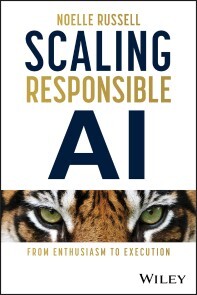
Scaling Responsible AI
IMPLEMENT AI IN YOUR ORGANIZATION WITH CONFIDENCE WHILE MITIGATING RISK WITH RESPONSIBLE, ETHICAL GUARDRAILSMuch like a baby tiger in the wild, artificial intelligence is almost irresistibly alluring. But, just as those tiger cubs inevitably grow up into formidable and fierce adults, the dangers and risks of AI make it a force unto itself. Useful and profitable, yes, but also inherently powerful and risky. In Scaling Responsible AI: From Enthusiasm to Execution, celebrated speaker, AI strategist, and tech visionary Noelle Russell delivers an exciting and fascinating new discussion of how to implement artificial intelligence responsibly, ethically, and profitably at your organization. Responsible AI promises immense opportunity, but unguided enthusiasm can unleash serious risks. Learn how to implement AI ethically and profitably at your company with Scaling Responsible AI. In this groundbreaking book, Noelle Russell reveals an executable framework to:* Harness AI's full potential while safeguarding your firm's reputation* Mitigate bias, accuracy, privacy, and cybersecurity risks from the start* Make informed choices by seeing through the hype and identifying true AI value* Develop an ethical AI culture across teams and leadershipScaling Responsible AI equips executives, managers, and board members with the knowledge and responsibility to make smart AI decisions. Avoid compliance disasters, brand damage, or wasted resources on AI that fails to deliver. Implement artificial intelligence that drives profits, innovation, and competitive edge—the responsible way. NOELLE RUSSELL has extensive experience at the forefront of artificial intelligence innovation, having worked with companies including Microsoft, IBM, Red Hat, Accenture, AWS, and Amazon Alexa. She has worked across industries and remains a staunch advocate for inclusive AI engineering and data practices. Russell is a top-rated keynote speaker and is an expert on how to harness the power of mindful leadership to inspire others. Introduction xiiiPART I: DAY ONE: THE HYPE CYCLE 1Chapter 1: LEAD AI: A Framework for Building Responsible AI 3Chapter 2: The Hype of AI: Capturing the Excitement 23Chapter 3: Building the AI Sandbox: Safe, Responsible Spaces for Innovation 37Chapter 4: From Ideation to Action: Setting Up for Successful Business Outcomes 55PART II: DAY TWO: THE ROAD TO REALITY 79Chapter 5: From Playground to Production: Embracing the Challenges 81Chapter 6: Beyond the Prototype: What Happens After POC? 99Chapter 7: SECURE AI: A Framework for Deploying Responsible AI 125Chapter 8: Architecting AI: Designing for Scale and Security 151PART III: THE AI JOURNEY: NAVIGATING CHALLENGES AND EMBRACING CHANGE 173Chapter 9: Why Change Is the Only Constant in AI 175Chapter 10: Model Evaluation and Selection: Ensuring Accuracy and Performance 191Chapter 11: Bias and Fairness: Building AI That Serves Everyone 211Chapter 12: Responsible AI at Scale: Growth, Governance, and Resilience 233PART IV: THE VISION REALIZED: LEADING AI INTO THE FUTURE 251Chapter 13: Looking Back: Lessons Learned and Insights Gained 253Chapter 14: The Future of AI Leadership: Transforming Potential into Power 271Chapter 15: AI’s Impact and Intention: Envisioning a World Transformed 289Index 311

Softwaretesting kompakt
Softwaretests sind unverzichtbar für jede robuste Software. Dies zeigt sich durch nahezu wöchentliche Bugbedingte Ausfälle. Doch wie lassen sich diese effektiver verhindern? Nach dem Lesen dieses Buches sind Sie in der Lage, eigene Softwaretests in den unterschiedlichsten Industriebereichen mit Java umzusetzen.Dieses Buch richtet sich an alle, die in die Disziplin des Testens eintauchen möchten. Es nimmt Sie direkt an die Hand und führt Sie Schritt für Schritt durch die unterschiedlichen Bereiche, es sind keine Vorkenntnisse im Testing oder Programmierung notwendig. Lernen Sie essenzielle Testtheorie kennen und wie Sie in der Praxis verschiedene Testarten einsetzen.Die notwendigen Java-Grundkenntnisse zur Testimplementierung werden Ihnen anhand von Beispielen immer aus der Sicht eines Testers praxisnah vermittelt. Erfahren Sie mehr über Testautomatisierung mit JUnit, Oberflächentests mit Selenium und Mocking von APIs mit WireMock. Lernen Sie die Anwendung von Behaviour Driven Development mit Cucumber kennen sowie exploratives Testen.PASCAL MOLL ist freiberuflicher Berater. 2021 wurde er Zweiter beim „Freelancer des Jahres“-Wettbewerb. Seine Schwerpunkte liegen im Bereich der Java-Entwicklung, des Testmanagements und der Testautomatisierung von Web- und Desktopapplikationen, insbesondere SAP. Er ist „ISTQB Certified Tester, Full Advanced“ sowie zertifizierter Softwarearchitekt. Sein Wissen teilt er regelmäßig in Podcasts, Webinaren, Artikeln und Blogposts. Seit 2024 ist er zudem Dozent an der Technische Hochschule Würzburg-Schweinfurt (THWS) für die Vorlesung Software Testing.DANIEL SONNET ist Hochschullehrer für Data Science an der Fresenius University of Applied Sciences und IT-Unternehmer mit einem Faible für den nachhaltigen Einsatz von IT inkl. Softwaretesting. Grundlagen des Softwaretestings. Java Grundlagen für Softwaretesting. Welcome to Apache Maven. Grundlagen der Testautomatisierung. Mocking & API Testing. Oberflächen und deren automatisierte Tests mit Selenium. Behaviour Driven Development mit Cucumber.

CCST Cisco Certified Support Technician Study Guide
THE IDEAL PREP GUIDE FOR EARNING YOUR CCST CYBERSECURITY CERTIFICATIONCCST Cisco Certified Support Technician Study Guide: Cybersecurity Exam is the perfect way to study for your certification as you prepare to start or upskill your IT career. Written by industry expert and Cisco guru Todd Lammle, this Sybex Study Guide uses the trusted Sybex approach, providing 100% coverage of CCST Cybersecurity exam objectives. You’ll find detailed information and examples for must-know Cisco cybersecurity topics, as well as practical insights drawn from real-world scenarios. This study guide provides authoritative coverage of key exam topics, including essential security principles, basic network security concepts, endpoint security concepts, vulnerability assessment and risk management, and incident handling. You also get one year of FREE access to a robust set of online learning tools, including a test bank with hundreds of questions, a practice exam, a set of flashcards, and a glossary of important terminology. The CCST Cybersecurity certification is an entry point into the Cisco certification program, and a pathway to the higher-level CyberOps. It’s a great place to start as you build a rewarding IT career!* Study 100% of the topics covered on the Cisco CCST Cybersecurity certification exam* Get access to flashcards, practice questions, and more great resources online* Master difficult concepts with real-world examples and clear explanations* Learn about the career paths you can follow and what comes next after the CCSTThis Sybex study guide is perfect for anyone wanting to earn their CCST Cybersecurity certification, including entry-level cybersecurity technicians, IT students, interns, and IT professionals. ABOUT THE AUTHORSTODD LAMMLE is the authority on Cisco certification and internetworking, and is Cisco certified in most Cisco certification categories. He is a world-renowned author, speaker, trainer, and consultant. Todd has published over 130 books, including the very popular CCNA Cisco Certified Network Associate Study Guide. You can reach Todd through his website at www.lammle.com. JON BUHAGIAR, CCNA, is an information technology professional with over two decades of experience in higher education. Currently, he is a director of information technology for RareMed Solutions. DONALD ROBB has over 15 years of experience with most areas of IT, including networking, security, collaboration, data center, cloud, SDN, and automation/devops. Visit his blog at https://www.the-packet-thrower.com and YouTube channel at https://www.youtube.com/c/ThePacketThrower. TODD MONTGOMERY is a Network Automation Engineer for a Fortune 500 company. He is involved with network design and implementation of emerging datacenter technologies, as well as software defined networking design plans, cloud design, and implementation.Acknowledgments xxiAbout the Authors xxiiiIntroduction xxvAssessment Test xxxvAnswer to Assessment Test xlChapter 1 Security Concepts 1Technology-Based Attacks 2Denial of Service (DoS)/Distributed Denial of Service (DDoS) 3The Ping of Death 3Distributed DoS (DDoS) 3Botnet/Command and Control 3Traffic Spike 4Coordinated Attack 4Friendly/Unintentional DoS 4Physical Attack 5Permanent DoS 5Smurf 5Acknowledgments xxiAbout the Authors xxiiiIntroduction xxvAssessment Test xxxvAnswer to Assessment Test xlChapter 1 Security Concepts 1Technology-Based Attacks 2Denial of Service (DoS)/Distributed Denial of Service (DDoS) 3The Ping of Death 3Distributed DoS (DDoS) 3Botnet/Command and Control 3Traffic Spike 4Coordinated Attack 4Friendly/Unintentional DoS 4Physical Attack 5Permanent DoS 5Smurf 5SYN Flood 5Reflective/Amplified Attacks 7On-Path Attack (Previously Knownas Man-in-the-Middle Attack) 8DNS Poisoning 8VLAN Hopping 9ARP Spoofing 10Rogue DHCP 10IoT Vulnerabilities 11Rogue Access Point (AP) 11Evil Twin 12Ransomware 12Password Attacks 12Brute-Force 13Dictionary 13Advanced Persistent Threat 13Hardening Techniques 13Changing Default Credentials 14Avoiding Common Passwords 14DHCP Snooping 14Change Native VLAN 15Patching and Updates 15Upgrading Firmware 16Defense in Depth 16Social-Based Attacks 17Social Engineering 17Insider Threats 17Phishing 18Vishing 19Smishing 20Spear Phishing 20Environmental 20Tailgating 20Piggybacking 21Shoulder Surfing 21Malware 21Ransomware 21Summary 22Exam Essentials 23Review Questions 24Chapter 2 Network Security Devices 27Confidentiality, Integrity, Availability (CIA) 28Confidentiality 29Integrity 29Availability 29Threats 29Internal 29External 30Network Access Control 30Posture Assessment 30Guest Network 30Persistent vs. Nonpersistent Agents 30Honeypot 31Wireless Networks 31Wireless Personal Area Networks 31Wireless Local Area Networks 32Wireless Metro Area Networks 33Wireless Wide Area Networks 33Basic Wireless Devices 34Wireless Access Points 34Wireless Network Interface Card 36Wireless Antennas 36Wireless Principles 37Independent Basic Service Set (Ad Hoc) 37Basic Service Set 38Infrastructure Basic Service Set 39Service Set ID 40Extended Service Set 40Nonoverlapping Wi-Fi channels 422.4 GHz Band 425 GHz Band (802.11ac) 432.4 GHz / 5GHz (802.11n) 43Wi-Fi 6 (802.11ax) 45Interference 45Range and Speed Comparisons 46Wireless Security 46Authentication and Encryption 46WEP 48WPA and WPA2: An Overview 48Wi-Fi Protected Access 49WPA2 Enterprise 49802.11i 50WPA3 50WPA3-Personal 51WPA3-Enterprise 51Summary 52Exam Essentials 53Review Questions 54Chapter 3 IP, IPv6, and NAT 57TCP/IP and the DoD Model 58The Process/Application Layer Protocols 60Telnet 61Secure Shell (SSH) 61File Transfer Protocol (FTP) 62Secure File Transfer Protocol 63Trivial File Transfer Protocol (TFTP) 63Simple Network Management Protocol (SNMP) 63Hypertext Transfer Protocol (HTTP) 64Hypertext Transfer Protocol Secure (HTTPS) 65Network Time Protocol (NTP) 65Domain Name Service (DNS) 65Dynamic Host Configuration Protocol(DHCP)/Bootstrap Protocol (BootP) 66Automatic Private IP Addressing (APIPA) 69The Host-to-Host or Transport Layer Protocols 69Transmission Control Protocol (TCP) 70User Datagram Protocol (UDP) 72Key Concepts of Host-to-Host Protocols 74Port Numbers 74The Internet Layer Protocols 78Internet Protocol (IP) 79Internet Control Message Protocol (ICMP) 82Address Resolution Protocol (ARP) 85IP Addressing 86IP Terminology 86The Hierarchical IP Addressing Scheme 87Network Addressing 88Class A Addresses 90Class B Addresses 91Class C Addresses 92Private IP Addresses (RFC 1918) 92IPv4 Address Types 93Layer 2 Broadcasts 94Layer 3 Broadcasts 94Unicast Address 94Multicast Address 95When Do We Use NAT? 96Types of Network Address Translation 98NAT Names 99How NAT Works 100Why Do We Need IPv6? 101IPv6 Addressing and Expressions 102Shortened Expression 103Address Types 104Special Addresses 105Summary 106Exam Essentials 107Review Questions 110Chapter 4 Network Device Access 115Local Authentication 116AAA Model 118Authentication 119Multifactor Authentication 119Multifactor Authentication Methods 121IPsec Transforms 165Security Protocols 165Encryption 167GRE Tunnels 168GRE over IPsec 169Cisco DMVPN (Cisco Proprietary) 169Cisco IPsec VTI 169Public Key Infrastructure 170Certification Authorities 170Certificate Templates 172Certificates 173Summary 174Exam Essentials 175Review Questions 176Chapter 6 OS Basics and Security 179Operating System Security 180Windows 180Windows Defender Firewall 180Scripting 184Security Considerations 190NTFS vs. Share Permissions 191Shared Files and Folders 195User Account Control 198Windows Update 202Application Patching 203Device Drivers 204macOS/Linux 204System Updates/App Store 206Patch Management 206Firewall 207Permissions 211Driver/Firmware Updates 213Operating Systems Life Cycle 214System Logs 214Event Viewer 214Audit Logs 215Syslog 216Syslog Collector 216Syslog Messages 217Logging Levels/Severity Levels 218Identifying Anomalies 218SIEM 220Summary 221Exam Essentials 221Review Questions 223Chapter 7 Endpoint Security 225Endpoint Tools 226Command-Line Tools 226netstat 227nslookup 227dig 228ping 229tracert 229tcpdump 230nmap 231gpresult 232Software Tools 232Port Scanner 232iPerf 233IP Scanner 234Endpoint Security and Compliance 234Hardware Inventory 235Asset Management Systems 235Asset Tags 236Software Inventory 236Remediation 237Considerations 238Destruction and Disposal 238Low-Level Format vs. Standard Format 239Hard Drive Sanitation and Sanitation Methods 239Overwrite 240Drive Wipe 240Physical Destruction 241Data Backups 241Regulatory Compliance 243BYOD vs. Organization-Owned 243Mobile Device Management (MDM) 244Configuration Management 244App Distribution 245Data Encryption 245Endpoint Recovery 248Endpoint Protection 248Cloud-Based Protection 250Reviewing Scan Logs 250Malware Remediation 254Identify and Verify Malware Symptoms 254Quarantine Infected Systems 254Disable System Restore in Windows 255Remediate Infected Systems 256Schedule Scans and Run Updates 258Enable System Restore and Create aRestore Point in Windows 260Educate the End User 261Summary 261Exam Essentials 261Review Questions 263Chapter 8 Risk Management 265Risk Management 266Elements of Risk 267Vulnerabilities 269Threats 270Exploits 270Assets 270Risk Analysis 271Risk Levels 272Risk Matrix 272Risk Prioritization 274Data Classifications 275Risk Mitigation 277Introduction 278Strategic Response 279Action Plan 279Implementation and Tracking 280Security Assessments 281Vulnerability Assessment 281Penetration Testing 282Posture Assessment 282Change Management Best Practices 283Documented Business Processes 284Change Rollback Plan (Backout Plan) 284Sandbox Testing 284Responsible Staff Member 285Request Forms 285Purpose of Change 286Scope of Change 286Risk Review 287Plan for Change 287Change Board 288User Acceptance 289Summary 289Exam Essentials 290Review Questions 291Chapter 9 Vulnerability Management 293Vulnerabilities 294Vulnerability Identification 294Management 295Mitigation 297Active and Passive Reconnaissance 298Port Scanning 298Vulnerability Scanning 299Packet Sniffing/Network Traffic Analysis 300Brute-Force Attacks 301Open-Source Intelligence (OSINT) 302DNS Enumeration 302Social Engineering 303Testing 304Port Scanning 304Automation 304Threat Intelligence 305Vulnerability Databases 308Limitations 309Assessment Tools 310Recommendations 312Reports 314Security Reports 314Cybersecurity News 314Subscription-based 315Documentation 316Updating Documentation 316Security Incident Documentation 317Documenting the Incident 318Following the Right Chain of Custody 319Securing and Sharing of Documentation 319Reporting the Incident 320Recovering from the Incident 321Documenting the Incident 321Reviewing the Incident 321Documentation Best Practices for Incident Response 322Summary 322Exam Essentials 323Review Questions 324Chapter 10 Disaster Recovery 327Disaster Prevention and Recovery 328Data Loss 329File Level Backups 329Image-Based Backups 332Critical Applications 332Network Device Backup/Restore 332Data Restoration Characteristics 333Backup Media 333Backup Methods 335Backup Testing 336Account Recovery Options 336Online Accounts 336Local Accounts 336Domain Accounts 337Facilities and Infrastructure Support 338Battery Backup/UPS 338Power Generators 339Surge Protection 339HVAC 340Fire Suppression 342Redundancy and High AvailabilityConcepts 343Switch Clustering 343Routers 344Firewalls 345Servers 345Disaster Recovery Sites 345Cold Site 345Warm Site 346Hot Site 346Cloud Site 346Active/Active vs. Active/Passive 346Multiple Internet Service Providers/Diverse Paths 347Testing 348Tabletop Exercises 349Validation Tests 349Disaster Recovery Plan 350Business Continuity Plan 352Summary 352Exam Essentials 353Review Questions 354Chapter 11 Incident Handling 357Security Monitoring 358Security Information and Event Management (SIEM) 359Hosting Model 359Detection Methods 359Integration 360Cost 360Security Orchestration, Automation, and Response (SOAR) 361Orchestration vs. Automation 362Regulations and Compliance 362Common Regulations 363Data locality 363Family Educational Rights and Privacy Act (FERPA) 364Federal Information Security Modernization Act (FISMA) 365Gramm–Leach–Bliley Act 366General Data Protection Regulation (GDPR) 368Health Insurance Portability and Accountability Act 369Payment Card Industry Data Security Standards (PCI-DSS) 370Reporting 371Notifications 372Summary 372Exam Essentials 373Review Questions 374Chapter 12 Digital Forensics 377Introduction 378Forensic Incident Response 378Attack Attribution 379Cyber Kill Chain 380MITRE ATT&CK Matrix 381Diamond Model 382Tactics, Techniques, and Procedures 383Artifacts and Sources of Evidence 383Evidence Handling 384Preserving Digital Evidence 384Chain of Custody 385Summary 385Exam Essentials 387Review Questions 388Chapter 13 Incident Response 391Incident Handling 392What Are Security Incidents? 393Ransomware 393Social Engineering 393Phishing 393DDoS Attacks 394Supply Chain Attacks 394Insider Threats 394Incident Response Planning 394Incident Response Plans 394Incident Response Frameworks 395Incident Preparation 396Risk Assessments 397Detection and Analysis 397Containment 397Eradication 397Recovery 398Post-incident Review 398Lessons Learned 398Creating an Incident Response Policy 399Document How You Plan to Share Information withOutside Parties 400Interfacing with Law Enforcement 401Incident Reporting Organizations 401Handling an Incident 401Preparation 401Preventing Incidents 403Detection and Analysis 404Attack Vectors 404Signs of an Incident 405Precursors and Indicators Sources 406Containment, Eradication, and Recovery 406Choosing a Containment Strategy 406Evidence Gathering and Handling 407Attack Sources 409Eradication and Recovery 409Post-incident Activity 410Using Collected Incident Data 411Evidence Retention 412Summary 412Exam Essentials 412Review Questions 414Appendix A Answers to Review Questions 417Chapter 1: Security Concepts 418Chapter 2: Network Security Devices 419Chapter 3: IP, IPv6, and NAT 420Chapter 4: Network Device Access 422Chapter 5: Secure Access Technology 424Chapter 6: OS Basics and Security 425Chapter 7: Endpoint Security 426Chapter 8: Risk Management 428Chapter 9: Vulnerability Management 429Chapter 10: Disaster Recovery 431Chapter 11: Incident Handling 432Chapter 12: Digital Forensics 434Chapter 13: Incident Response 435Glossary 439Index 497

Scaling Responsible AI
IMPLEMENT AI IN YOUR ORGANIZATION WITH CONFIDENCE WHILE MITIGATING RISK WITH RESPONSIBLE, ETHICAL GUARDRAILSMuch like a baby tiger in the wild, artificial intelligence is almost irresistibly alluring. But, just as those tiger cubs inevitably grow up into formidable and fierce adults, the dangers and risks of AI make it a force unto itself. Useful and profitable, yes, but also inherently powerful and risky. In Scaling Responsible AI: From Enthusiasm to Execution, celebrated speaker, AI strategist, and tech visionary Noelle Russell delivers an exciting and fascinating new discussion of how to implement artificial intelligence responsibly, ethically, and profitably at your organization. Responsible AI promises immense opportunity, but unguided enthusiasm can unleash serious risks. Learn how to implement AI ethically and profitably at your company with Scaling Responsible AI. In this groundbreaking book, Noelle Russell reveals an executable framework to:* Harness AI's full potential while safeguarding your firm's reputation* Mitigate bias, accuracy, privacy, and cybersecurity risks from the start* Make informed choices by seeing through the hype and identifying true AI value* Develop an ethical AI culture across teams and leadershipScaling Responsible AI equips executives, managers, and board members with the knowledge and responsibility to make smart AI decisions. Avoid compliance disasters, brand damage, or wasted resources on AI that fails to deliver. Implement artificial intelligence that drives profits, innovation, and competitive edge—the responsible way. NOELLE RUSSELL has extensive experience at the forefront of artificial intelligence innovation, having worked with companies including Microsoft, IBM, Red Hat, Accenture, AWS, and Amazon Alexa. She has worked across industries and remains a staunch advocate for inclusive AI engineering and data practices. Russell is a top-rated keynote speaker and is an expert on how to harness the power of mindful leadership to inspire others. Introduction xiiiPART I: DAY ONE: THE HYPE CYCLE 1Chapter 1: LEAD AI: A Framework for Building Responsible AI 3Chapter 2: The Hype of AI: Capturing the Excitement 23Chapter 3: Building the AI Sandbox: Safe, Responsible Spaces for Innovation 37Chapter 4: From Ideation to Action: Setting Up for Successful Business Outcomes 55PART II: DAY TWO: THE ROAD TO REALITY 79Chapter 5: From Playground to Production: Embracing the Challenges 81Chapter 6: Beyond the Prototype: What Happens After POC? 99Chapter 7: SECURE AI: A Framework for Deploying Responsible AI 125Chapter 8: Architecting AI: Designing for Scale and Security 151PART III: THE AI JOURNEY: NAVIGATING CHALLENGES AND EMBRACING CHANGE 173Chapter 9: Why Change Is the Only Constant in AI 175Chapter 10: Model Evaluation and Selection: Ensuring Accuracy and Performance 191Chapter 11: Bias and Fairness: Building AI That Serves Everyone 211Chapter 12: Responsible AI at Scale: Growth, Governance, and Resilience 233PART IV: THE VISION REALIZED: LEADING AI INTO THE FUTURE 251Chapter 13: Looking Back: Lessons Learned and Insights Gained 253Chapter 14: The Future of AI Leadership: Transforming Potential into Power 271Chapter 15: AI’s Impact and Intention: Envisioning a World Transformed 289Index 311

aPHR and aPHRi Associate in Human Resources Certification Study Guide
PREPARE FOR THE APHR AND APHRI EXAMS—AS WELL AS A NEW CAREER IN HR—SMARTER AND FASTERIn the aPHR and aPHRi Associate Professional Human Resources Certification Study Guide: 2024 Exams, a team of dedicated human resources professionals and educators delivers a must-read roadmap to obtaining the entry-level Associate in Professional Human Resources and Associate in Professional Human Resources (International) credentials. Unique certifications in the industry, the aPHR and aPHRi do not require any prior work experience or education and are perfect for non-HR professionals and newcomers to the field interested in exploring the industry or upgrading their skillset to include core human resources concepts, including talent acquisition, learning and development, compensation and benefits, employee relations, and compliance and risk management. aPHR and aPHRi Associate Professional Human Resources Certification Study Guide walks you through its comprehensive coverage of every functional area on the exams and offers complimentary access to an interactive online learning environment and test bank. IN THE BOOK:* Access to electronic flashcards, a glossary of key terms, a practice exam, and an assessment test prepare you for the exam* Discussions of brand-new diversity, equity, and inclusion concepts and the differences between the international and domestic versions of the exam* The knowledge you'll need to hit the ground running in an entry-level position in human resourcesAn essential read for experienced professionals looking to expand their knowledge base into human resources and aspiring human resources professionals seeking to begin a new and rewarding career in the industry, the aPHR and aPHRi Associate Professional Human Resources Certification Study Guide: 2024 Exams will help you prepare for the exam—and a new job in HR—smarter and faster. ABOUT THE AUTHORSSANDRA M. REED, SPHR, SHRM-SCP, is a Human Resources advisor specializing in processes, including EEO compliance, compensation strategies, rewards and discipline, safety, staffing, coaching, and development. She is the bestselling author of the PHR and SPHR Professional in Human Resources Certification Complete Study Guide. JAMES J. GALLUZZO III, SPHR is a Human Resources strategic professional and leader with 25 years’ experience in the field. Prior to his retirement from military service in 2014, he served as Chief of Leader Development of the Adjutant General School supporting 40,000 US Army HR professionals. He has worked in the corporate, government, and military HR career fields. Acknowledgments xviiAbout the Authors xviiiAbout the Technical Editor xixIntroduction xxaPHR and aPHRi Exam Objectives xxviaPHR and aPHRi Assessment Exams xxviiChapter 1 Human Resource Certification 1PART I ASSOCIATE PROFESSIONAL IN HUMAN RESOURCES (APHR) 19Chapter 2 aPHR Talent Acquisition 21Chapter 3 aPHR Learning and Development 50Chapter 4 aPHR Compensation and Benefits 76Chapter 5 aPHR Employee Relations 102Chapter 6 aPHR Compliance and Risk Management 133PART II ASSOCIATE PROFESSIONAL IN HUMAN RESOURCES, INTERNATIONAL (APHRI) 171Chapter 7 aPHRi HR Operations 173Chapter 8 aPHRi Recruitment and Selection 200Chapter 9 aPHRi Compensation and Benefits 224Chapter 10 aPHRi Human Resource Development and Retention 243Chapter 11 aPHRi Employee Relations, Health, and Safety 268Appendix A Answers to Review Questions 303Appendix B Case Studies 335Appendix C Federal Employment Legislation and Case Law 341Index 425

Künstliche Intelligenz (FAZ-Dossier Spezial)
Künstliche Intelligenz denkt schneller als je zuvor – doch echte Durchbrüche erfordern mehr als nur Rechenleistung. Experten setzen nun auf „langsames Denken“, um KI präziser und effizienter zu machen. Ein chinesisches Unternehmen sorgt dabei für Aufsehen. Steht eine neue Ära bevor?Die Künstliche Intelligenz ist in eine kritische Phase eingetreten – wieder einmal. Wie kompetent derzeit angesagte KI-Modelle mit Sprache umgehen können, wie ausführlich sie auf verschiedenste Anfragen Antworten ausformulieren und in der Lage sind, ein Fachgespräch zu führen, davon haben sich Milliarden Menschen rund um den Globus überzeugt. Doch wie geht es weiter? Hilfreich ist eine bahnbrechende Unterscheidung, die der verstorbene Wirtschaftsnobelpreisträger Daniel Kahneman einmal anstellte, und die auch die Diskussion über die Künstliche Intelligenz inspiriert: Er beschrieb zwei verschiedene Systeme, in denen Menschen denken. Als "schnelles Denken" bezeichnete er spontane Antworten, intuitive, zeitnahe Reaktionen. Nicht immer ist das durchdacht oder korrekt – aber ohne diese Fertigkeit gelingen der Alltag und viel Zwischenmenschliches nicht. Davon grenzte Kahneman das "langsame Denken" ab, die Fähigkeit, etwas tiefer zu durchdringen, zu analysieren, rational zu planen, zu berechnen, abzuwägen. Ohne diese Fähigkeit sind erfolgversprechende Entscheidungen kaum denkbar.Die Entwickler großer KI-Sprachmodelle von führenden Anbietern wie Open AI, Google, Meta oder Anthropic rekonstruierten zunächst vornehmlich das "schnelle Denken". Sie setzten auf immer weiter wachsende Datenmengen und noch mächtigere Rechner, auf einen möglichst großen Wort- und Textschatz, um Nutzern schnell sinnvolle und ausführliche Ergebnisse zu präsentieren. Besonders ausgeklügelt waren und sind diese Antworten aber nicht, denn das ist in diesen KI-Modellen so gar nicht angelegt. Inzwischen ändert sich das. KI-Fachleute konzentrieren sich zunehmen darauf, ihre KI-Modelle zu verbessern, indem sie ihnen mehr Zeit geben, sozusagen um zuerst länger nachzudenken und dann zu antworten. Sie haben Instrumente gefunden und integriert, mit denen die KI-Modelle herausfinden sollen, welcher der beste Lösungsweg ist – auch indem sie Zwischenschritte darlegen und klären, wie komplex eine ihnen gestellte Aufgabe überhaupt ist. Danach wählen sie dann aus, wie viel Aufwand sie hineinstecken. Das macht die Antworten besser und die Modelle effizienter. Und durchaus auch menschenähnlicher in einem gewissen Sinne. Der Fokus richtet sich so zunehmend auf Kahnemans "langsames Denken", um weiter voranzukommen.Genau in diesem Bereich hat das chinesische Unternehmen Deepseek einen enormen Erfolg erzielt. Das ist der Grund, warum dieses bis dahin hierzulande weitgehend unbekannte Unternehmen für Furore und neue Hoffnung sorgte. Indem die Tüftler die benannten Methoden geschickt kombinierten und vermutlich auch besser ausgewählte und aufbereitete Daten verwendeten, ist es ihnen nach eigenem Bekunden gelungen, mit älterer Hardware eine KI zu erfinden, die mit den Spitzenmodellen aus Amerika mithalten kann – für einen Bruchteil der Kosten. Das ist eine großartige Ingenieurleistung.Damit wächst die Zuversicht, viel mehr Unternehmen, Behörden oder Universitäten als bisher könnten dank geringerer Kosten in der Lage sein, in der KI doch mitzuhalten, nicht zuletzt in Deutschland und Europa. Künftig sind vielleicht nicht immer und überall Milliardensummen für riesige Rechenzentren und moderne Hochleistungschips aus dem Hause Nvidia nötig, die speziell auf die Mathematikanforderungen der KI zugeschnitten sind. Gerade deutsche Fachleute propagieren, dass der Weg zum künstlichen Gehirn nicht über immer mehr Daten, Rechenleistung und Modellgröße führen müsse, sondern noch ganz andere Ansätze erforderlich seien. Sie versuchen, auf dem Lernen basierende KI-Systeme mit solchen zu verschmelzen, die auf Logik und fest einprogrammiertem Wissen fußen. Sie wollen den ganzen Kahneman in die Künstliche Intelligenz einbringen, das schnelle Denken und das langsame Denken.Inhalt: 3 Editorial von Alexander Armbruster 4 Ein Mysterium namens Deepseek 7 Das Jahr der KI-Agenten 10 Der harte Kampf um die KI-Hoheit 13 Smartere Screenings 16 Der Chatarzt 20 ChatGPT, mein Anlageberater 23 KI verwaltet Vermögen 26 Ich spreche jeden Tag mit ChatGPT 29 Wie Künstliche Intelligenz den Büroalltag erleichtert 34 "KI-Agenten werden den Charakter der Arbeit verändern" 38 Abgehängt 43 Regelmäßige KI-Nutzung

ChatGPT und Large Language Models? Frag doch einfach!
Hinter die Kulissen der KI schauen!In diesem Band werden unter anderem Antworten auf diese Fragen zu lesen sein: Was sind eigentlich die Grundlagen einer generativen Künstlichen Intelligenz? Und wo liegen deren Stärken und Schwächen? Was versteht man unter Prompt Engineering? Was sind typische Anwendungsfelder von ChatGPT und Large Language Models? Gibt es inzwischen Regulierungen rund um ChatGPT? Welche Auswirkungen wird die Anwendung mit sich bringen?Frag doch einfach! Die utb-Reihe geht zahlreichen spannenden Themen im Frage-Antwort-Stil auf den Grund. Ein Must-have für alle, die mehr wissen und verstehen wollen.Statt eines VorwortsWas die verwendeten Symbole bedeutenZahlen und FaktenGrundlagen generativer künstlicher Intelligenz zur SprachverarbeitungWas ist generative KI?Was hat maschinelles Lernen als Klassifizierungaufgabe mit generativer KI zu tun?Was sind Token?Was ist Sprachverständnis?Wie erwerben Computer Sprachverständnis?Was sind Foundation Models?Wie funktioniert die Texterzeugung in Chat-Bots?Was sind Halluzinationen?Wie erzieht man ein Sprachmodell oder: was sind Instruction-Tuned Models?Was hat das alles mit uns zu tun?Prompt EngineeringWie starte ich mit Prompting?Was ist ein Prompt?Was ist Prompt Engineering?Wie beeinflussen LLM Einstellungen das Prompting?Wie stellt man die Qualität der Prompts sicher?Datenschutz: Kann ich vertrauliche Daten in Prompts einsetzen?Transparenz: Lässt sich die Herleitung einer Antwort erklären?Wahrheit: Kann ein LLM lügen oder betrügen?Inwieweit unterscheidet sich Prompting vom persönlichen Gespräch?Was sind die typischen Herausforderungen beim Prompting?Was ist ein einfacher Prompt?Was ist die Rolle in einem Prompt?Was ist der Tonfall eines Prompts?Wie kann die Länge der Ausgabe beschränkt werden?Wie kann das Format der Ausgabe beschrieben werden?Gibt es ein effektives Schema zum Schreiben von Prompts?Wie können aus Prompts Programmcode generiert werden?Was ist Zero Shot / One Shot / Few Shot Prompting?Was bedeutet Chain of Thoughts (CoT)?Wie hängen Tree of Thoughts und Chain of Thoughts zusammen?Wofür ist Retrieval Augmented Generation (RAG) sinnvoll?Typische Anwendungsfelder von KI in Wirtschaft und UnternehmenWo sind typische Anwendungsbereiche?Welche generellen Wirkungen weist der Einsatz generativer KI auf?Wie können geeignete Einsatzfelder für generative KI erkannt werden?Wie ist das Bewertungsmodell aufgebaut?Wie kann das Bewertungsmodell operationalisiert werden?Eignet sich generative KI für beratungsintensive Berufe?Was sind typischen Aufgaben eines Consultants und welche können durch generative KI unterstützt werden?Wie kann die Akquisitionsphase im Consulting durch generative KI unterstützt werden?Kann die generative KI auch in der Analysephase unterstützen?Wie sieht es in der Problemlösungs- und Implementierungsphase aus?Wie lassen sich die Aufgaben eines Consultants in das Bewertungsmodell einordnen?Welche Beratungsleistungen können durch generative KI unterstützt werden?Für welche Branchen eignet sich generative KI noch?Eignet sich generative KI für die Personalwirtschaft in einem Unternehmen?Was sind typischen Aufgaben in der Personalwirtschaft und welche können durch generative KI unterstützt werden?Für welche Funktionsbereiche eines Unternehmens eignet sich generative KI noch?Stärken und Schwächen von LLMsWas sind Stärken von LLMs?Was sind die typischen Stärken bei der Verarbeitung von Texten?Wie groß ist das abgedeckte Wissensspektrum?Wie einfach ist die Interaktion?Wie werden Dokumente in anderen Sprachen verarbeitet?Was sind Schwächen von LLMs?Können Sprachmodelle rechnen?Können richtige Schlussfolgerungen gezogen werden?Versteht das Sprachmodell das Problem?Ist dies Kreativität oder nur Wiedergabe?Kann man alles nachvollziehen?Warum sind Offenheit und Schnittstellen wichtig?Warum liegt der Fokus auf Text?Wie sind Stärken und Schwächen gegeneinander abzuwägen?RegulierungSoll KI auch in kritischen Szenarien angewendet werden?Muss KI reguliert werden?Was versteht die EU unter einem KI-System?Was sind Hochrisiko-KI-Systeme?Was sind keine Hochrisiko-KI-Systeme?Welche Anwendungen werden kategorisch ausgeschlossen?Wieso ist generative KI von Regulierung betroffen?Auswirkungen generativer KIWelche Auswirkungen hat generative KI auf die Arbeitswelt?Wird generative KI meine Arbeitstätigkeit ersetzen oder ergänzen?Wird generative KI das Lernen verändern?Wie beeinflusst generative KI digitale Artefakte?Wie können wir ohne Wasserzeichen „echte“ von generierten Inhalten unterscheiden?Was sind nun vertrauenswürdige und unabhängige Quellen?Welchen Einfluss hat generative KI auf das Vertrauen in digitale Artefakte?Was bedeutet generative KI für unsere Demokratie?Wie beeinflusst generative KI die Definition von Kreativität und Kunst? 158 Wie verändert generative KI meinen persönlichen Alltag?Ausblick in die ZukunftWohin entwickelt sich generative KI weiter?Wie sieht das Leben der nächsten Generationen aus?Glossar – Wichtige Begriffe kurz erklärtWo sich welches Stichwort befindetAbbildungsverzeichnisTabellenverzeichnis

AI-Based Advanced Optimization Techniques for Edge Computing
THE BOOK OFFERS CUTTING-EDGE INSIGHTS INTO AI-DRIVEN OPTIMIZATION ALGORITHMS AND THEIR CRUCIAL ROLE IN ENHANCING REAL-TIME APPLICATIONS WITHIN FOG AND EDGE IOT NETWORKS AND ADDRESSES CURRENT CHALLENGES AND FUTURE OPPORTUNITIES IN THIS RAPIDLY EVOLVING FIELD.This book focuses on artificial intelligence-induced adaptive optimization algorithms in fog and Edge IoT networks. Artificial intelligence, fog, and edge computing, together with IoT, are the next generation of paradigms offering services to people to improve existing services for real-time applications. Over the past few years, there has been rigorous growth in AI-based optimization algorithms and Edge and IoT paradigms. However, despite several applications and advancements, there are still some limitations and challenges to address including security, adaptive, complex, and heterogeneous IoT networks, protocols, intelligent offloading decisions, latency, energy consumption, service allocation, and network lifetime. This volume aims to encourage industry professionals to initiate a set of architectural strategies to solve open research computation challenges. The authors achieve this by defining and exploring emerging trends in advanced optimization algorithms, AI techniques, and fog and Edge technologies for IoT applications. Solutions are also proposed to reduce the latency of real-time applications and improve other quality of service parameters using adaptive optimization algorithms in fog and Edge paradigms. The book provides information on the full potential of IoT-based intelligent computing paradigms for the development of suitable conceptual and technological solutions using adaptive optimization techniques when faced with challenges. Additionally, it presents in-depth discussions in emerging interdisciplinary themes and applications reflecting the advancements in optimization algorithms and their usage in computing paradigms. AUDIENCEResearchers, industrial engineers, and graduate/post-graduate students in software engineering, computer science, electronic and electrical engineering, data analysts, and security professionals working in the fields of intelligent computing paradigms and similar areas. MOHIT KUMAR, PHD, is an assistant professor in the Department of Information Technology at Dr. B.R. Ambedkar National Institute of Technology, Jalandhar, India. He has published more than 60 research articles in reputed international journals and conferences and served as a session chair and keynote speaker for many international conferences and webinars in India. His research interests include cloud computing, soft computing, fog and edge computing, optimization algorithms, artificial Intelligence, and Internet of Things. GAUTAM SRIVASTAVA, PHD, is a professor at Brandon University, Manitoba, Canada with over eight years of academic experience. He has published more than 150 papers in various international journals and conferences and serves as an editor for several international journals. In addition to his written work, he has delivered guest lectures in Taiwan and the Czech Republic. His research interests include data mining, big data, cloud computing, Internet of Things, and cryptography. ASHUTOSH KUMAR SINGH, PHD, is an assistant professor in the Department of Computer Science and Engineering, United College of Engineering and Research Allahabad, India. He has published over 25 papers in reputed international journals and conferences and is a reviewer for various reputed journals, conferences, and books. His research interests include network optimization, software-defined networking, machine learning, Internet of Things, and edge computing. KALKA DUBEY, PHD, is an assistant professor in the Department of Computer Science and Engineering, Rajiv Gandhi Institute of Petroleum Technology, Amethi, India. He has published more than 20 articles in international journals and conferences. His research interests include task scheduling, virtual machine placement and allocation in cloud-based systems, quantification and monitoring of security metrics, soft computing, and enforcing security in cloud environments.
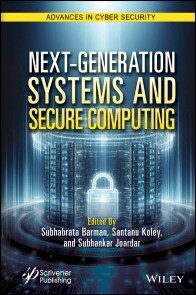
Next-Generation Systems and Secure Computing
NEXT-GENERATION SYSTEMS AND SECURE COMPUTING IS ESSENTIAL FOR ANYONE LOOKING TO STAY AHEAD IN THE RAPIDLY EVOLVING LANDSCAPE OF TECHNOLOGY. IT OFFERS CRUCIAL INSIGHTS INTO ADVANCED COMPUTING MODELS AND THEIR SECURITY IMPLICATIONS, EQUIPPING READERS WITH THE KNOWLEDGE NEEDED TO NAVIGATE THE COMPLEX CHALLENGES OF TODAY’S DIGITAL WORLD.The development of technology in recent years has produced a number of scientific advancements in sectors like computer science. The advent of new computing models has been one particular development within this sector. New paradigms are always being invented, greatly expanding cloud computing technology. Fog, edge, and serverless computing are examples of these revolutionary advanced technologies. Nevertheless, these new approaches create new security difficulties and are forcing experts to reassess their current security procedures. Devices for edge computing aren’t designed with the same IT hardware protocols in mind. There are several application cases for edge computing and the Internet of Things (IoT) in remote locations. Yet, cybersecurity settings and software upgrades are commonly disregarded when it comes to preventing cybercrime and guaranteeing data privacy. Next-Generation Systems and Secure Computing compiles cutting-edge studies on the development of cutting-edge computing technologies and their role in enhancing current security practices. The book will highlight topics like fault tolerance, federated cloud security, and serverless computing, as well as security issues surrounding edge computing in this context, offering a thorough discussion of the guiding principles, operating procedures, applications, and unexplored areas of study. Next-Generation Systems and Secure Computing is a one-stop resource for learning about the technology, procedures, and individuals involved in next-generation security and computing. SUBHABRATA BARMAN is an assistant professor in the Department of Computer Science and Engineering, Haldia Institute of Technology, West Bengal, India, with over 19 years of teaching and research experience. He has edited a number of internationally published books and journals. Additionally, he is a professional member of the Computer Society of India, the Institute for Electrical and Electronics Engineers, the International Association of Computer Science and Information Technology, and the International Association of Engineers. His research interests include wireless networks, computational intelligence, remote sensing and geoinformatics, precision agriculture, and parallel and grid computing. SANTANU KOLEY, PHD, is a professor in the Computer Science and Engineering Department at Haldia Institute of Technology, West Bengal, India, with more than 19 years of teaching experience and more than eighteen years of research experience. He has published over 50 research publications in numerous national and international journals, conferences, books, and book chapters. His main areas of research include machine learning, cloud computing, digital image processing, and artificial intelligence. SUBHANKAR JOARDAR, PHD, is a professor and head of the Department of Computer Science and Engineering, Haldia Institute of Technology, India. He has published over 20 technical papers in referred journals and conferences. Additionally, he has served as an organizing chair and program committee member for several international conferences and is a member of the Computer Society of India. His current research interests include swarm intelligence, routing in mobile ad hoc networks, and machine learning.

Machine Learning and AI with Simple Python and Matlab Scripts
A PRACTICAL GUIDE TO AI APPLICATIONS FOR SIMPLE PYTHON AND MATLAB SCRIPTSMachine Learning and AI with Simple Python and Matlab Scripts: Courseware for Non-computing Majors introduces basic concepts and principles of machine learning and artificial intelligence to help readers develop skills applicable to many popular topics in engineering and science. Step-by-step instructions for simple Python and Matlab scripts mimicking real-life applications will enter the readers into the magical world of AI, without requiring them to have advanced math and computational skills. The book is supported by instructor only lecture slides and sample exams with multiple-choice questions. Machine Learning and AI with Simple Python and Matlab Scripts includes information on:* Artificial neural networks applied to real-world problems such as algorithmic trading of financial assets, Alzheimer’s disease prognosis* Convolution neural networks for speech recognition and optical character recognition* Recurrent neural networks for chatbots and natural language translators* Typical AI tasks including flight control for autonomous drones, dietary menu planning, and route planning* Advanced AI tasks including particle swarm optimization and differential and grammatical evolution as well as the current state of the art in AI toolsMachine Learning and AI with Simple Python and Matlab Scripts is an accessible, thorough, and practical learning resource for undergraduate and graduate students in engineering and science programs along with professionals in related industries seeking to expand their skill sets. M. ÜMIT UYAR is a Professor at the City College of the City University of New York, USA. Dr. Uyar is an IEEE Fellow, author, co-author and co-editor of seven books, holder of seven U.S. patents, and developer of AI and game theory-based algorithms for applications in topology control in mobile networks and personalized cancer treatment. About the Author xiiiPreface xvAcknowledgments xviiAbout the Companion Website xix1 INTRODUCTION 11.1 Artificial Intelligence 11.2 A Historical Perspective 11.3 Principles of AI 21.4 Applications That Are Impossible Without AI 21.5 Organization of This Book 32 ARTIFICIAL NEURAL NETWORKS 72.1 Introduction 72.2 Applications of ANNs 72.3 Components of ANNs 82.3.1 Neurons 82.3.2 Sigmoid Activation Function 92.3.3 Rectilinear Activation Function 92.3.4 Weights of Synapses 102.4 Training an ANN 112.5 Forward Propagation 122.5.1 Forward Propagation from Input to Hidden Layer 132.6 Back Propagation 132.6.1 Back Propagation for a Neuron 132.6.2 Back Propagation – from Output to Hidden Layer 152.6.3 Back Propagation – from Hidden Layer to Input 162.7 Updating Weights 172.8 ANN with Input Bias 172.9 A Simple Algorithm for ANN Training 182.10 Computational Complexity of ANN Training 182.11 Normalization of ANN Inputs and Outputs 192.12 Concluding Remarks 202.13 Exercises for Chapter 2 203 ANNS FOR OPTIMIZED PREDICTION 233.1 Introduction 233.2 Selection of ANN Inputs 243.3 Selection of ANN Outputs 243.4 Construction of Hidden Layers 253.5 Case Study 1: Sleep-Study Example 253.5.1 Using Matrices for ANN Training 263.5.2 Forward Propagation 283.5.3 Back Propagation 283.5.4 Updating Weights 293.5.5 Forward Propagation with New Weights 293.5.6 Back Propagation with New Weights 303.5.7 Using Normalized Input and Output Values 313.5.8 Reducing Errors During Training 343.5.9 Implementation of Sleep-Study ANN in Python 343.5.10 Implementation of Sleep-Study ANN in Matlab 373.6 Case Study 2: Prediction of Bike Rentals 413.6.1 Python Script for Bike Rentals Using an ANN 413.6.2 Matlab Script for Bike Rentals Using an ANN 463.7 Concluding Remarks 483.8 Exercises for Chapter 3 484 ANNS FOR FINANCIAL STOCK TRADING 514.1 Introduction 514.2 Programs that Buy and Sell Stocks 514.3 Technical Indicators 514.3.1 Simple Moving Average 524.3.2 Momentum 534.3.3 Exponential Moving Average 544.3.4 Bollinger Bands 544.4 A Simple Algorithmic Trading Policy 554.5 A Simple ANN for Algorithmic Stock Trading 574.5.1 ANN Inputs and Outputs 574.5.2 ANN Architecture 584.6 Python Script for Stock Trading Using an ANN 594.7 Matlab Script for Stock Trading Using an ANN 634.8 Concluding Remarks 654.9 Exercises for Chapter 4 655 ANNS FOR ALZHEIMER’S DISEASE PROGNOSIS 675.1 Introduction 675.2 Alzheimer’s Disease 675.3 A Simple ANN for AD Prognosis 685.4 Python Script for AD Prognosis Using an ANN 715.5 Matlab Script for AD Prognosis Using an ANN 755.6 Concluding Remarks 805.7 Exercises for Chapter 5 816 ANNS FOR NATURAL LANGUAGE PROCESSING 836.1 Introduction 836.2 Impact of Text Messages on Stock Markets 846.3 A Simple ANN for NLP 856.3.1 ANN Inputs and Outputs 856.3.2 Keywords 856.3.3 Formation of Training Data 866.3.4 ANN Architecture 886.4 Python Script for NLP Using an ANN 896.5 Matlab Script for NLP Using an ANN 926.6 Concluding Remarks 966.7 Exercises for Chapter 6 977 CONVOLUTIONAL NEURAL NETWORKS 997.1 Introduction 997.1.1 Training CNNs 1007.2 Variations of CNNs 1017.3 Applications of CNNs 1017.4 CNN Components 1027.5 A Numerical Example of a CNN 1027.6 Computational Cost of CNN Training 1087.7 Concluding Remarks 1127.8 Exercises for Chapter 7 1128 CNNS FOR OPTICAL CHARACTER RECOGNITION 1158.1 Introduction 1158.2 A Simple CNN for OCR 1158.3 Organization of Training and Reference Files 1178.4 Python Script for OCR Using a CNN 1198.5 Matlab Script for OCR Using a CNN 1248.6 Concluding Remarks 1308.7 Exercises for Chapter 8 1309 CNNS FOR SPEECH RECOGNITION 1339.1 Introduction 1339.2 A Simple CNN for Speech Recognition 1349.3 Organization of Training and Reference Files 1369.4 Python Script for Speech Recognition Using a CNN 1389.5 Matlab Script for Speech Recognition Using a CNN 1449.6 Concluding Remarks 1509.7 Exercises for Chapter 9 15010 RECURRENT NEURAL NETWORKS 15110.1 Introduction 15110.2 One-to-One Single RNN Cell 15310.2.1 A Simple Alphabet and One-Hot Encoding 15610.2.2 Forward and Back Propagation 15710.3 A Numerical Example 15810.4 Multiple Hidden Layers 16310.5 Embedding Layer 16510.5.1 Forward and Back Propagation with Embedding 16710.5.2 A Numerical Example with Embedding 16810.6 Concluding Remarks 17210.7 Exercises for Chapter 10 17211 RNNS FOR CHATBOT IMPLEMENTATION 17511.1 Introduction 17511.2 Many-to-Many RNN Architecture 17511.3 A Simple Chatbot 17611.4 Python Script for a Chatbot Using an RNN 17911.5 Matlab Script for a Chatbot Using an RNN 18311.6 Concluding Remarks 18811.7 Exercises for Chapter 11 18912 RNNS WITH ATTENTION 19112.1 Introduction 19112.2 One-to-One RNN Cell with Attention 19112.3 Forward and Back Propagation 19312.4 A Numerical Example 19512.5 Embedding Layer 20012.6 A Numerical Example with Embedding 20212.7 Concluding Remarks 20712.8 Exercises for Chapter 12 20713 RNNS WITH ATTENTION FOR MACHINE TRANSLATION 20913.1 Introduction 20913.2 Many-to-Many Architecture 21013.3 Python Script for Machine Translation by an RNN-Att 21113.4 Matlab Script for Machine Translation by an RNN-Att 21613.5 Concluding Remarks 22313.6 Exercises for Chapter 13 22314 GENETIC ALGORITHMS 22514.1 Introduction 22514.2 Genetic Algorithm Elements 22614.3 A Simple Algorithm for a GA 22714.4 An Example of a GA 23014.5 Convergence in GAs 23114.6 Concluding Remarks 23214.7 Exercises for Chapter 14 23215 GAS FOR DIETARY MENU SELECTION 23515.1 Introduction 23515.2 Definition of the KP 23615.3 A Simple Algorithm for the KP 23815.4 Variations of the KP 23915.5 GAs for KP Solution 24015.6 Python Script for Dietary Menu Selection Using a GA 24215.7 Matlab Script for Dietary Menu Selection Using a GA 24515.8 Concluding Remarks 24815.9 Exercises for Chapter 15 24816 GAS FOR DRONE FLIGHT CONTROL 25116.1 Introduction 25116.2 UAV Swarms 25116.3 UAV Flight Control 25216.4 A Simple GA for UAV Flight Control 25316.4.1 Virtual Force-Based Fitness Function 25416.4.2 FGA Progression 25516.4.3 Chromosome for FGA 25716.5 Python Script for UAV Flight Control Using a GA 26016.6 Matlab Script for UAV Flight Control Using a GA 26416.7 Concluding Remarks 27016.8 Exercises for Chapter 16 27117 GAS FOR ROUTE OPTIMIZATION 27317.1 Introduction 27317.2 Definition of the TSP 27417.3 A Simple Algorithm for the TSP 27617.4 Variations of the TSP 27717.5 GA Solution for the TSP 27717.6 Python Script for Route Optimization Using a GA 27917.7 Matlab Script for Route Optimization Using a GA 28417.8 Concluding Remarks 28717.9 Exercises for Chapter 17 28918 EVOLUTIONARY METHODS 29118.1 Introduction 29118.2 Particle Swarm Optimization 29118.2.1 Applications of PSO 29218.2.2 PSO Operation 29318.2.3 Remarks for PSO 29818.3 Differential Evolution 29818.3.1 Different Versions of DE 29918.3.2 Applications of DE 29918.3.3 A Simple Algorithm for DE 29918.3.4 Numerical Example: Maximum of sinc by DE 30218.3.5 Remarks for DE 30518.4 Grammatical Evolution 30618.4.1 A Simple Algorithm for GE 30618.4.2 Definition of GE 30718.4.3 A Simple GA to Implement GE 31418.4.4 Remarks on GE 315Appendix A ANNs with Bias 317A.1 Introduction 317A.2 Training with Bias Input 317A.3 Forward Propagation 318A.3.1 Forward Propagation from Input to Hidden Layer 319A.3.2 Neuron Back Propagation with Bias Input 319Appendix B Sleep Study ANN with Bias 321B.1 Inclusion of Bias Term in ANN 321B.1.1 Inclusion of Bias in Matrices 321B.1.2 Forward Propagation with Biases 322Appendix C Back Propagation in a CNN 327Appendix D Back Propagation Through Time in an RNN 331D.1 Back Propagation in an RNN 331D.2 Embedding Layer 335Appendix E Back Propagation Through Time in an RNN with Attention 337E.1 Back Propagation in an RNN-Att 337E.2 Embedding Layer 340Bibliography 343Index 353

AWS Certified Data Engineer Study Guide
YOUR COMPLETE GUIDE TO PREPARING FOR THE AWS® CERTIFIED DATA ENGINEER: ASSOCIATE EXAMThe AWS® Certified Data Engineer Study Guide is your one-stop resource for complete coverage of the challenging DEA-C01 Associate exam. This Sybex Study Guide covers 100% of the DEA-C01 objectives. Prepare for the exam faster and smarter with Sybex thanks to accurate content including, an assessment test that validates and measures exam readiness, real-world examples and scenarios, practical exercises, and challenging chapter review questions. Reinforce and retain what you’ve learned with the Sybex online learning environment and test bank, accessible across multiple devices. Get ready for the AWS Certified Data Engineer exam – quickly and efficiently – with Sybex. COVERAGE OF 100% OF ALL EXAM OBJECTIVES IN THIS STUDY GUIDE MEANS YOU’LL BE READY FOR:* Data Ingestion and Transformation* Data Store Management* Data Operations and Support* Data Security and GovernanceABOUT THE AWS DATA ENGINEER – ASSOCIATE CERTIFICATIONThe AWS Data Engineer – Associate certification validates skills and knowledge in core data-related Amazon Web Services. It recognizes your ability to implement data pipelines and to monitor, troubleshoot, and optimize cost and performance issues in accordance with best practices INTERACTIVE LEARNING ENVIRONMENTTake your exam prep to the next level with Sybex’s superior interactive online study tools. To access our learning environment, simply visit WWW.WILEY.COM/GO/SYBEXTESTPREP, register your book to receive your unique PIN, and instantly gain one year of FREE access after activation to: • INTERACTIVE TEST BANK with 5 practice exams to help you identify areas where further review is needed. Get more than 90% of the answers correct, and you’re ready to take the certification exam. • 100 ELECTRONIC FLASHCARDS to reinforce learning and last-minute prep before the exam • COMPREHENSIVE GLOSSARY in PDF format gives you instant access to the key terms so you are fully prepared ABOUT THE AUTHORSSYED HUMAIR is a Senior Specialist Solutions Architect (Data Analytics) at Amazon Web Services. CHENJERAI GUMBO is an AWS Solutions Architect Leader – Analytics for the EMEA region. ADAM GATT is a Senior Specialist Solution Architect – Analytics at AWS. He has over 20 years’ experience in data and data warehousing. ASIF ABBASI is a Principal Specialist Solutions Architect at AWS, a published author on various data related topics, and has over 20 years of experience working in various data roles, leading the engineering to executive conversations at various enterprises. LAKSHMI NAIR is a Senior Analytics Solutions Architect at Amazon Web Services with experience of over 14 years, spanning across different enterprise architecture areas, data strategy and analytics. Introduction xxiiiAssessment Test xxxChapter 1 Streaming and Batch Data Ingestion 1Chapter 2 Building Automated Data Pipelines 79Chapter 3 Data Transformation 143Chapter 4 Storage Services 243Chapter 5 Databases and Data Warehouses on AWS 289Chapter 6 Data Catalogs 351Chapter 7 Visualizing Your Data 371Chapter 8 Monitoring and Auditing Data 417Chapter 9 Maintaining and Troubleshooting Data Operations 435Chapter 10 Authentication and Authorization 453Chapter 11 Data Encryption and Masking 509Chapter 12 Data Privacy and Governance 529Appendix A Answers to Review Questions 565Appendix B References 591Index 593

Cyber-Physical Systems for Innovating and Transforming Society 5.0
THE BOOK PRESENTS A SUITE OF INNOVATIVE TOOLS TO RESHAPE SOCIETY INTO AN INTERCONNECTED FUTURE WHERE TECHNOLOGY EMPOWERS HUMANS TO EFFICIENTLY RESOLVE PRESSING SOCIO-ECONOMIC ISSUES WHILE FOSTERING INCLUSIVE GROWTH.This book introduces a spectrum of pioneering advancements across various sectors within Society 5.0, all underpinned by cutting-edge technological innovations. It aims to deliver an exhaustive collection of contemporary concepts, practical applications, and groundbreaking implementations that have the potential to enhance diverse areas of society. Society 5.0 signifies human advancement and is distinguished by its unique synthesis of cyberspace with physical space. This integration harnesses data gathered via environmental sensors, processed by artificial intelligence, to enhance real-world interactions. This volume encompasses an extensive array of scholarly works with detailed insights into fields such as image processing, natural language processing, computer vision, sentiment analysis, and analyses based on voice and gestures. The content presented will be beneficial to multiple disciplines, including the legal system, medical systems, intelligent societal constructs, integrated cyber-physical systems, and innovative agricultural practices. In summary, Cyber-Physical Systems for Innovating and Transforming Society 5.0 presents a suite of innovative tools to reshape society into an interconnected future where technology empowers humans to efficiently resolve pressing socio-economic issues while fostering inclusive growth. AUDIENCEThe book will be beneficial to researchers, engineers, and students in multiple disciplines, including the legal system, medical systems, intelligent societal constructs, integrated cyber-physical systems, and innovative agricultural practices. TANUPRIYA CHOUDHURY, PHD, is a professor and Associate Dean of Research at Graphic Era University, Dehradun, India, and a visiting professor at Daffodil International University, Bangladesh, with 15 years of research and teaching experience. He has published hundreds of papers in national and international journals and conferences, and more than 30 books and book chapters. He has also filed 25 patents and secured copyrights for 16 software programs for India’s Ministry of Human Resource Development. ABHIJIT KUMAR, PHD, is an assistant professor in the School of Computer Science, University of Petroleum and Energy Sciences, Dehradun, India, with more than 13 years of academic and industry experience. He has published two patents and many research papers in international peer-reviewed journals and conferences. He is also a seasoned speaker and is a member of several professional bodies, including the International Association of Computer Science and Information Technology, Singapore; the International Association of Engineers, Hong Kong; and the Universal Association of Computer and Electronics Engineers. RAVI TOMAR, PHD, is a Senior Architect for Persistent Systems, India, with a history as an experienced academician in the higher education industry. He has trained numerous national and international corporations, including Confluent Apache Kafka, KeyBank, Accenture, and the Union Bank of the Philippines. He is skilled in programming, computer networking, stream processing, Python, Oracle database, C++, core Java, and CorDApp. S. BALAMURUGAN, PHD, is the Director of Research and Development, Intelligent Research Consultancy Services (iRCS), Coimbatore, Tamil Nadu, India. He is also Director of the Albert Einstein Engineering and Research Labs (AEER Labs), as well as Vice-Chairman of the Renewable Energy Society of India (RESI), India. He has published 50+ books, 200+ international journals/conferences, and 35 patents. ANKIT VISHNOI, PHD, is an associate professor at Graphic Era University, Dehradun, India, with over 19 years of comprehensive experience in academia and industry. He has published 20 research articles in esteemed journals and conferences, and holds two patents. Notably, he was involved in a Department of Science and Technology project during his tenure at the University of Petroleum and Energy Sciences, Dehradun.

Machine Learning and AI with Simple Python and Matlab Scripts
A PRACTICAL GUIDE TO AI APPLICATIONS FOR SIMPLE PYTHON AND MATLAB SCRIPTSMachine Learning and AI with Simple Python and Matlab Scripts: Courseware for Non-computing Majors introduces basic concepts and principles of machine learning and artificial intelligence to help readers develop skills applicable to many popular topics in engineering and science. Step-by-step instructions for simple Python and Matlab scripts mimicking real-life applications will enter the readers into the magical world of AI, without requiring them to have advanced math and computational skills. The book is supported by instructor only lecture slides and sample exams with multiple-choice questions. Machine Learning and AI with Simple Python and Matlab Scripts includes information on:* Artificial neural networks applied to real-world problems such as algorithmic trading of financial assets, Alzheimer’s disease prognosis* Convolution neural networks for speech recognition and optical character recognition* Recurrent neural networks for chatbots and natural language translators* Typical AI tasks including flight control for autonomous drones, dietary menu planning, and route planning* Advanced AI tasks including particle swarm optimization and differential and grammatical evolution as well as the current state of the art in AI toolsMachine Learning and AI with Simple Python and Matlab Scripts is an accessible, thorough, and practical learning resource for undergraduate and graduate students in engineering and science programs along with professionals in related industries seeking to expand their skill sets. M. ÜMIT UYAR is a Professor at the City College of the City University of New York, USA. Dr. Uyar is an IEEE Fellow, author, co-author and co-editor of seven books, holder of seven U.S. patents, and developer of AI and game theory-based algorithms for applications in topology control in mobile networks and personalized cancer treatment. About the Author xiiiPreface xvAcknowledgments xviiAbout the Companion Website xix1 INTRODUCTION 11.1 Artificial Intelligence 11.2 A Historical Perspective 11.3 Principles of AI 21.4 Applications That Are Impossible Without AI 21.5 Organization of This Book 32 ARTIFICIAL NEURAL NETWORKS 72.1 Introduction 72.2 Applications of ANNs 72.3 Components of ANNs 82.3.1 Neurons 82.3.2 Sigmoid Activation Function 92.3.3 Rectilinear Activation Function 92.3.4 Weights of Synapses 102.4 Training an ANN 112.5 Forward Propagation 122.5.1 Forward Propagation from Input to Hidden Layer 132.6 Back Propagation 132.6.1 Back Propagation for a Neuron 132.6.2 Back Propagation – from Output to Hidden Layer 152.6.3 Back Propagation – from Hidden Layer to Input 162.7 Updating Weights 172.8 ANN with Input Bias 172.9 A Simple Algorithm for ANN Training 182.10 Computational Complexity of ANN Training 182.11 Normalization of ANN Inputs and Outputs 192.12 Concluding Remarks 202.13 Exercises for Chapter 2 203 ANNS FOR OPTIMIZED PREDICTION 233.1 Introduction 233.2 Selection of ANN Inputs 243.3 Selection of ANN Outputs 243.4 Construction of Hidden Layers 253.5 Case Study 1: Sleep-Study Example 253.5.1 Using Matrices for ANN Training 263.5.2 Forward Propagation 283.5.3 Back Propagation 283.5.4 Updating Weights 293.5.5 Forward Propagation with New Weights 293.5.6 Back Propagation with New Weights 303.5.7 Using Normalized Input and Output Values 313.5.8 Reducing Errors During Training 343.5.9 Implementation of Sleep-Study ANN in Python 343.5.10 Implementation of Sleep-Study ANN in Matlab 373.6 Case Study 2: Prediction of Bike Rentals 413.6.1 Python Script for Bike Rentals Using an ANN 413.6.2 Matlab Script for Bike Rentals Using an ANN 463.7 Concluding Remarks 483.8 Exercises for Chapter 3 484 ANNS FOR FINANCIAL STOCK TRADING 514.1 Introduction 514.2 Programs that Buy and Sell Stocks 514.3 Technical Indicators 514.3.1 Simple Moving Average 524.3.2 Momentum 534.3.3 Exponential Moving Average 544.3.4 Bollinger Bands 544.4 A Simple Algorithmic Trading Policy 554.5 A Simple ANN for Algorithmic Stock Trading 574.5.1 ANN Inputs and Outputs 574.5.2 ANN Architecture 584.6 Python Script for Stock Trading Using an ANN 594.7 Matlab Script for Stock Trading Using an ANN 634.8 Concluding Remarks 654.9 Exercises for Chapter 4 655 ANNS FOR ALZHEIMER’S DISEASE PROGNOSIS 675.1 Introduction 675.2 Alzheimer’s Disease 675.3 A Simple ANN for AD Prognosis 685.4 Python Script for AD Prognosis Using an ANN 715.5 Matlab Script for AD Prognosis Using an ANN 755.6 Concluding Remarks 805.7 Exercises for Chapter 5 816 ANNS FOR NATURAL LANGUAGE PROCESSING 836.1 Introduction 836.2 Impact of Text Messages on Stock Markets 846.3 A Simple ANN for NLP 856.3.1 ANN Inputs and Outputs 856.3.2 Keywords 856.3.3 Formation of Training Data 866.3.4 ANN Architecture 886.4 Python Script for NLP Using an ANN 896.5 Matlab Script for NLP Using an ANN 926.6 Concluding Remarks 966.7 Exercises for Chapter 6 977 CONVOLUTIONAL NEURAL NETWORKS 997.1 Introduction 997.1.1 Training CNNs 1007.2 Variations of CNNs 1017.3 Applications of CNNs 1017.4 CNN Components 1027.5 A Numerical Example of a CNN 1027.6 Computational Cost of CNN Training 1087.7 Concluding Remarks 1127.8 Exercises for Chapter 7 1128 CNNS FOR OPTICAL CHARACTER RECOGNITION 1158.1 Introduction 1158.2 A Simple CNN for OCR 1158.3 Organization of Training and Reference Files 1178.4 Python Script for OCR Using a CNN 1198.5 Matlab Script for OCR Using a CNN 1248.6 Concluding Remarks 1308.7 Exercises for Chapter 8 1309 CNNS FOR SPEECH RECOGNITION 1339.1 Introduction 1339.2 A Simple CNN for Speech Recognition 1349.3 Organization of Training and Reference Files 1369.4 Python Script for Speech Recognition Using a CNN 1389.5 Matlab Script for Speech Recognition Using a CNN 1449.6 Concluding Remarks 1509.7 Exercises for Chapter 9 15010 RECURRENT NEURAL NETWORKS 15110.1 Introduction 15110.2 One-to-One Single RNN Cell 15310.2.1 A Simple Alphabet and One-Hot Encoding 15610.2.2 Forward and Back Propagation 15710.3 A Numerical Example 15810.4 Multiple Hidden Layers 16310.5 Embedding Layer 16510.5.1 Forward and Back Propagation with Embedding 16710.5.2 A Numerical Example with Embedding 16810.6 Concluding Remarks 17210.7 Exercises for Chapter 10 17211 RNNS FOR CHATBOT IMPLEMENTATION 17511.1 Introduction 17511.2 Many-to-Many RNN Architecture 17511.3 A Simple Chatbot 17611.4 Python Script for a Chatbot Using an RNN 17911.5 Matlab Script for a Chatbot Using an RNN 18311.6 Concluding Remarks 18811.7 Exercises for Chapter 11 18912 RNNS WITH ATTENTION 19112.1 Introduction 19112.2 One-to-One RNN Cell with Attention 19112.3 Forward and Back Propagation 19312.4 A Numerical Example 19512.5 Embedding Layer 20012.6 A Numerical Example with Embedding 20212.7 Concluding Remarks 20712.8 Exercises for Chapter 12 20713 RNNS WITH ATTENTION FOR MACHINE TRANSLATION 20913.1 Introduction 20913.2 Many-to-Many Architecture 21013.3 Python Script for Machine Translation by an RNN-Att 21113.4 Matlab Script for Machine Translation by an RNN-Att 21613.5 Concluding Remarks 22313.6 Exercises for Chapter 13 22314 GENETIC ALGORITHMS 22514.1 Introduction 22514.2 Genetic Algorithm Elements 22614.3 A Simple Algorithm for a GA 22714.4 An Example of a GA 23014.5 Convergence in GAs 23114.6 Concluding Remarks 23214.7 Exercises for Chapter 14 23215 GAS FOR DIETARY MENU SELECTION 23515.1 Introduction 23515.2 Definition of the KP 23615.3 A Simple Algorithm for the KP 23815.4 Variations of the KP 23915.5 GAs for KP Solution 24015.6 Python Script for Dietary Menu Selection Using a GA 24215.7 Matlab Script for Dietary Menu Selection Using a GA 24515.8 Concluding Remarks 24815.9 Exercises for Chapter 15 24816 GAS FOR DRONE FLIGHT CONTROL 25116.1 Introduction 25116.2 UAV Swarms 25116.3 UAV Flight Control 25216.4 A Simple GA for UAV Flight Control 25316.4.1 Virtual Force-Based Fitness Function 25416.4.2 FGA Progression 25516.4.3 Chromosome for FGA 25716.5 Python Script for UAV Flight Control Using a GA 26016.6 Matlab Script for UAV Flight Control Using a GA 26416.7 Concluding Remarks 27016.8 Exercises for Chapter 16 27117 GAS FOR ROUTE OPTIMIZATION 27317.1 Introduction 27317.2 Definition of the TSP 27417.3 A Simple Algorithm for the TSP 27617.4 Variations of the TSP 27717.5 GA Solution for the TSP 27717.6 Python Script for Route Optimization Using a GA 27917.7 Matlab Script for Route Optimization Using a GA 28417.8 Concluding Remarks 28717.9 Exercises for Chapter 17 28918 EVOLUTIONARY METHODS 29118.1 Introduction 29118.2 Particle Swarm Optimization 29118.2.1 Applications of PSO 29218.2.2 PSO Operation 29318.2.3 Remarks for PSO 29818.3 Differential Evolution 29818.3.1 Different Versions of DE 29918.3.2 Applications of DE 29918.3.3 A Simple Algorithm for DE 29918.3.4 Numerical Example: Maximum of sinc by DE 30218.3.5 Remarks for DE 30518.4 Grammatical Evolution 30618.4.1 A Simple Algorithm for GE 30618.4.2 Definition of GE 30718.4.3 A Simple GA to Implement GE 31418.4.4 Remarks on GE 315Appendix A ANNs with Bias 317A.1 Introduction 317A.2 Training with Bias Input 317A.3 Forward Propagation 318A.3.1 Forward Propagation from Input to Hidden Layer 319A.3.2 Neuron Back Propagation with Bias Input 319Appendix B Sleep Study ANN with Bias 321B.1 Inclusion of Bias Term in ANN 321B.1.1 Inclusion of Bias in Matrices 321B.1.2 Forward Propagation with Biases 322Appendix C Back Propagation in a CNN 327Appendix D Back Propagation Through Time in an RNN 331D.1 Back Propagation in an RNN 331D.2 Embedding Layer 335Appendix E Back Propagation Through Time in an RNN with Attention 337E.1 Back Propagation in an RNN-Att 337E.2 Embedding Layer 340Bibliography 343Index 353

Data Governance
- Setzt den Rahmen für erfolgreiches Datenmanagement und sorgt für die umsatzsteigernde Nutzung der Organisationsdaten - Konzipiert ein qualitätsorientiertes Datenmanagement für die gesamte Organisation - Hat die Entstehungs- und Verarbeitungsprozesse von Organisationsdaten im Blick - Liefert Standards, Methoden und Instrumente für eine hohe Datenqualität - Neu in der 2. Auflage: umfangreiche Aktualisierung aller Kapitel und Ergänzung von u. a. Data-Governance-Formen, Datenprinzipien, Datendomänen, Data Office sowie einer Vielzahl von Tools und neuen Anwendungsfällen. - Ihr exklusiver Vorteil: E-Book inside beim Kauf des gedruckten Buches Daten sind eine wichtige strategische Ressource im digitalen Wettbewerb. Damit sie gewinnbringend genutzt werden können, muss ein Rahmen in Organisationen geschaffen werden. Diesen Rahmen bietet Data Governance. Doch welchen Mehrwert bietet Data Governance für Organisationen und wie lässt es sich in die Praxis umsetzen? Dieses Buch zeigt Ihnen, was wirklich funktioniert. Profitieren Sie von den Ergebnissen intensiver praxisnaher Forschung und der jahrelangen Projekterfahrung der Autorinnen in Organisationen unterschiedlicher Größe und Branchen. Das qualitätsorientierte Data Governance Framework adressiert unterschiedliche Handlungsebenen und unterscheidet nicht zwischen verschiedenen Datendomänen. Die Autorinnen geben einen wertvollen Überblick zum Thema Datenqualität und dessen Relevanz für Organisationen. Konkrete Handlungsempfehlungen ermöglichen Ihnen, die ersten Data-Governance-Aktivitäten in Ihrer Organisation schnell vorzubereiten und umzusetzen. AUS DEM INHALT // - Begriffe und Grundlagen, Überblick über Data Governance Frameworks - Das qualitätsorientierte Data Governance Framework - Rollen und Gremien - Bedeutung von Datenqualität in der Praxis - Instrumente, Techniken und Tools zur Umsetzung in Unternehmen - Anwendungsbeispiele aus über fünfzehn Jahren Erfahrung

Task Programming in C# and .NET
At a high level, to understand asynchronous programming, you need to be familiar with task programming, efficient use of the async and await keywords, and a few more important topics. However, task programming is the first major step towards modern-day asynchronous programming. This book tries to simplify the topic with simple examples, Q&A sessions, and exercisesThe book starts with an introduction to asynchronous programming and covers task creation and execution. Next, you will learn how to work with continuing and nested tasks. Next, it demonstrates exception handling with different scenarios. Towards the end, you will understand how to manage task cancellations through examples and case studies. After reading this book, you can write efficient codes for multithreaded, asynchronous, and parallel development in C#.WHAT YOU WILL LEARN:* Dig deep into task programming which is an essential part of the concurrent and multithreaded developments.* Learn modern-day C# features that are foundations of asynchronous programming* How the advanced features in C# such as delegates, lambdas, generics, etc. can be used in concurrencyWHO THIS BOOK IS FOR:C# and .NET developersVaskaran Sarcar obtained his Master of Engineering in Software Engineering from Jadavpur University, Kolkata (India), and an MCA from Vidyasagar University, Midnapore (India). He was a National Gate Scholar (2007-2009) and has over 12 years of experience in Education and the IT industry. He devoted his early years (2005-2007) to the teaching profession at various engineering colleges, and later he joined HP India PPS R&D Hub Bangalore. He worked there until August 2019. At the time of his retirement from HP, he was a Senior Software Engineer and Team Lead at HP. To follow his dream and passion, Vaskaran is now an independent full-time author.Chapter 1: Asynchronous Programming and Tasks.- Chapter 2: Tasks Creation and Execution.- Chapter 3: Continuation and Nested Tasks.- Chapter 4: Exception Handling.- Chapter 5: Managing Cancellations.- Chapter 6: Bonus.- App A & App B.

Secure RESTful APIs
Secure your RESTful APIs with confidence and efficiency. This straightforward guide outlines the essential strategies and best practices for protecting sensitive data when developing RESTful APIs for your applications.Inside, you’ll explore the fundamental functionalities to implement industry-standard authentication authorization mechanisms for Java applications. With chapters covering key security concerns, data protection, and designing and testing secure APIs, this book provides a hands-on approach to protecting user data, validating inputs, and implementing security mechanisms such as JSON Web Tokens (JWT) and OAuth2 authentication.This book offers a focused introduction without unnecessary complexity. Whether you are a beginner or busy professional, this is the only book designed to help you secure your RESTful APIs in no time.WHAT YOU WILL LEARN* Understand the fundamentals of RESTful APIs and why it is critical to secure them* Identify common security risks concerning RESTful APIs and explore effective protection techniques* Know how to design and test RESTful APIs, including with input and response data validation* Review examples of how to secure JSON Web Token (JWT) and OAuth3 with RestFUL APIsWHO THIS BOOK IS FORWeb developer beginners who want to learn how to develop Security RESTful APIs applicationsMASSIMO NARDONE has more than 29 years of experience in information and cybersecurity for IT/OT/IoT/IIoT, web/mobile development, cloud, and IT architecture. His true IT passions are security and Android. He holds an MSc degree in computing science from the University of Salerno, Italy. Throughout his working career, he has held various positions, starting as a programming developer, and then security teacher, PCI QSA, auditor, assessor, lead IT/OT/SCADA/SCADA/cloud architect, CISO, BISO, executive, program director, OT/IoT/IIoT security competence leader, VP OT security, etc. In his last working engagement, he worked as a seasoned cyber and information security executive, CISO and OT, IoT and IIoT security competence leader helping many clients to develop and implement cyber, information, OT, IoT security activities. He is currently working as Vice President of OT Security for SSH Communications Security. He is an Apress co-author of numerous books, including _Pro Spring Security_, _Pro JPA 2 in Java EE 8_ ,_Pro Android Games_, and has reviewed more than 70 titles.1. Introduction of RESTful APIs.- 2. Key Security Concerns and Risks for RESTFUL APIs.- 3. Data Protection and Validation for RESTful APIS.- 4. Securing JSON Web Token (JWT).- 5. Securing OAtuh2 Authentication Flow.

Next-Generation Systems and Secure Computing
NEXT-GENERATION SYSTEMS AND SECURE COMPUTING IS ESSENTIAL FOR ANYONE LOOKING TO STAY AHEAD IN THE RAPIDLY EVOLVING LANDSCAPE OF TECHNOLOGY. IT OFFERS CRUCIAL INSIGHTS INTO ADVANCED COMPUTING MODELS AND THEIR SECURITY IMPLICATIONS, EQUIPPING READERS WITH THE KNOWLEDGE NEEDED TO NAVIGATE THE COMPLEX CHALLENGES OF TODAY’S DIGITAL WORLD.The development of technology in recent years has produced a number of scientific advancements in sectors like computer science. The advent of new computing models has been one particular development within this sector. New paradigms are always being invented, greatly expanding cloud computing technology. Fog, edge, and serverless computing are examples of these revolutionary advanced technologies. Nevertheless, these new approaches create new security difficulties and are forcing experts to reassess their current security procedures. Devices for edge computing aren’t designed with the same IT hardware protocols in mind. There are several application cases for edge computing and the Internet of Things (IoT) in remote locations. Yet, cybersecurity settings and software upgrades are commonly disregarded when it comes to preventing cybercrime and guaranteeing data privacy. Next-Generation Systems and Secure Computing compiles cutting-edge studies on the development of cutting-edge computing technologies and their role in enhancing current security practices. The book will highlight topics like fault tolerance, federated cloud security, and serverless computing, as well as security issues surrounding edge computing in this context, offering a thorough discussion of the guiding principles, operating procedures, applications, and unexplored areas of study. Next-Generation Systems and Secure Computing is a one-stop resource for learning about the technology, procedures, and individuals involved in next-generation security and computing. SUBHABRATA BARMAN is an assistant professor in the Department of Computer Science and Engineering, Haldia Institute of Technology, West Bengal, India, with over 19 years of teaching and research experience. He has edited a number of internationally published books and journals. Additionally, he is a professional member of the Computer Society of India, the Institute for Electrical and Electronics Engineers, the International Association of Computer Science and Information Technology, and the International Association of Engineers. His research interests include wireless networks, computational intelligence, remote sensing and geoinformatics, precision agriculture, and parallel and grid computing. SANTANU KOLEY, PHD, is a professor in the Computer Science and Engineering Department at Haldia Institute of Technology, West Bengal, India, with more than 19 years of teaching experience and more than eighteen years of research experience. He has published over 50 research publications in numerous national and international journals, conferences, books, and book chapters. His main areas of research include machine learning, cloud computing, digital image processing, and artificial intelligence. SUBHANKAR JOARDAR, PHD, is a professor and head of the Department of Computer Science and Engineering, Haldia Institute of Technology, India. He has published over 20 technical papers in referred journals and conferences. Additionally, he has served as an organizing chair and program committee member for several international conferences and is a member of the Computer Society of India. His current research interests include swarm intelligence, routing in mobile ad hoc networks, and machine learning.

Design and Forecasting Models for Disease Management
THE BOOK PROVIDES AN ESSENTIAL OVERVIEW OF AI TECHNIQUES IN DISEASE MANAGEMENT AND HOW THESE COMPUTATIONAL METHODS CAN LEAD TO FURTHER INNOVATIONS IN HEALTHCARE.Design and Forecasting Models for Disease Management is a resourceful volume of 13 chapters that elaborates on computational methods and how AI techniques can aid in smart disease management. It contains several statistical and AI techniques that can be used to acquire data on many different diseases. The main objective of this book is to demonstrate how AI techniques work for early disease detection and forecasting useful information for medical experts. As such, this volume intends to serve as a resource to elicit and elaborate on possible intelligent mechanisms for helping detect early signs of diseases. Additionally, the book examines numerous machine learning and data analysis techniques in the biomedical field that are used for detecting and forecasting disease management at the cellular level. It discusses various applications of image segmentation, data analysis techniques, and hybrid machine learning techniques for illnesses, and encompasses modeling, prediction, and diagnosis of disease data. AUDIENCEResearchers, engineers and graduate students in the fields of computational biology, information technology, bioinformatics, and epidemiology. PIJUSH DUTTA, PHD, is an assistant professor and head of the Department of Electronics and Communication Engineering at Greater Kolkata College of Engineering and Management, West Bengal, India, with over 11 years of teaching and over seven years of research experience. He has published eight books, as well as 14 patents and over 100 research articles in national and international journals and conferences. His research interests include sensors and transducers, nonlinear process control systems, the Internet of Things (IoT), and machine and deep learning. SUDIP MANDAL, PHD, is an assistant professor in the Electronics and Communication Engineering Department at Jalpaiguri Government Engineering College, India. He has over 50 publications in national and international peer-reviewed journals and conferences, as well as two Indian patents and two books. He is a member of the Institute of Electrical and Electronics Engineers’ Computational Intelligence Society. KORHAN CENGIZ, PHD, is an associate professor in the Department of Computer Engineering at Istinye University, Istanbul, Turkey. He has published over 40 articles in international peer-reviewed journals, five international patents, and edited over ten books. His research interests include wireless sensor networks, wireless communications, and statistical signal processing. ARINDAM SADHU, PHD, is an assistant professor in the Electronics and Communication Engineering Department at Swami Vivekananda University, West Bengal, India, with over five years of teaching and over three years of research experience. He has published two international patents and over ten articles in national and international journals and conferences. His research interests include post-complementary metal-oxide-semiconductor transistors, quantum computing, and quantum dot cellular automata. GOUR GOPAL JANA is an assistant professor in the Electronics and Communication Engineering Department at Greater Kolkata College of Engineering and Management, West Bengal, India, with over 13 years of teaching and over three years of research experience. He has published two international patents and over ten research articles in national and international journals and conference proceedings. His research interests include metal thin film sensors, biosensors, nanobiosensors, and nanocomposites.

Computer-Netzwerke (8. Auflg.)
Wissen für Ausbildung und Beruf. In 8. Auflage vom Rheinwerk Verlag aus März 2025.Für Informatikerinnen und Informatiker in Studium, Beruf und Ausbildung ist solides Grundlagenwissen zur Arbeit mit moderner Netzwerktechnik essenziell. In diesem Buch finden Sie Antworten auf Ihre Fragen und praxisnahe Lösungen für gängige Anwendungsfälle. Harald Zisler vermittelt Ihnen die wichtigen Grundlagen zu Planung, Aufbau und Betrieb von Netzwerken mithilfe vieler anschaulicher Beispiele, Anleitungen und Fehlertafeln. Mit umfangreichem Netzwerk-Glossar und Übersicht über alle relevanten RFCs.Alle Grundlagen und Praxistipps: Netzwerktechnik: Theorie und Praxis verstehen Von MAC-, IPv4- und IPv6-Adressen über Netzmasken, DNS und Adressumsetzungen bis zu Datentransport mit TCP und UDP, Protokollen, Ports oder Sockets: Gehen Sie das OSI-Modell schrittweise durch und lernen Sie alle Grundlagen. Netzwerk planen, aufbauen und betreiben Welche Hardware ist für welche Anforderung am besten geeignet? Wie konfigurieren Sie benötigte Switches oder Router? Was müssen Sie bei der Planung von Kabeltrassen beachten und wie sorgen Sie umfassend für Sicherheit in Ihrem Netzwerk? Dieses Buch liefert konkrete Lösungen! Ihr Begleiter für die Praxis Praxisbeispiele, Anleitungen, Fehlertafeln, Netzwerk-Glossar oder Prüfungsfragen mit Lösungen: Zahlreiche Hilfsmittel unterstützen Sie gezielt im beruflichen Alltag oder bei der Prüfungsvorbereitung. Aus dem Inhalt: Netzwerkplanung und -aufbau TCP/IP, MAC-Adressen, IPv4- und IPv6-Adressen DHCP, Routing, Adressierung Datei-, Druck- und Nachrichtendienste, PAT/NAT Switches, Bridges, Hubs Lichtwellenleiter, Funktechniken, PLC Netzwerksicherheit, Firewalls, Proxies Leseprobe (PDF-Link)Über die Autoren:Tobias Aubele ist Professor für Usability und Conversion-Optimierung an der Hochschule Würzburg-Schweinfurt und hier für den Studiengang E-Commerce verantwortlich. Er ist aber auch in der Praxis tätig und seit vielen Jahren Berater für Usability, Conversion-Optimierung sowie Webanalyse. Barrierefreiheit spielt eine große Rolle in seiner Beratung und im Studiengang, da er in den Prinzipien grundsätzlich einen Gewinn sieht – für Benutzerführung und Verständlichkeit. Und für jeden Menschen.Detlef Girke ist als Experte für barrierefreie IT seit über 20 Jahren in diesem Bereich tätig. Seine Erfahrungen umfassen die Entwicklung von Prüfverfahren, Workshops, die Durchführung von Tests, Projektmanagement sowie begleitende Beratung. Zu seinen Hauptinteressen gehören Musik, Soziales, Kommunikation, vernetztes Arbeiten, Webtechnologien – und Menschen.

Data Structures in Depth Using C++
Understand and implement data structures and bridge the gap between theory and application. This book covers a wide range of data structures, from basic arrays and linked lists to advanced trees and graphs, providing readers with in-depth insights into their implementation and optimization in C++.You’ll explore crucial topics to optimize performance and enhance their careers in software development. In today's environment of growing complexity and problem scale, a profound grasp of C++ data structures, including efficient data handling and storage, is more relevant than ever. This book introduces fundamental principles of data structures and design, progressing to essential concepts for high-performance application.Finally, you’ll explore the application of data structures in real-world scenarios, including case studies and use in machine learning and big data. This practical, step-by-step approach, featuring numerous code examples, performance analysis and best practices, is written with a wide range of C++ programmers in mind. So, if you’re looking to solve complex data structure problems using C++, this book is your complete guide.WHAT YOU WILL LEARN* Write robust and efficient C++ code.* Apply data structures in real-world scenarios.* Transition from basic to advanced data structures* Understand best practices and performance analysis.* Design a flexible and efficient data structure library.WHO THIS BOOK IS FORSoftware developers and engineers seeking to deepen their knowledge of data structures and enhanced coding efficiency, and ideal for those with a foundational understanding of C++ syntax. Secondary audiences include entry-level programmers seeking deeper dive into data structures, enhancing their skills, and preparing them for more advanced programming tasks. Finally, computer science students or programmers aiming to transition to C++ may find value in this book.MAHMMOUD A. MAHDI is a computer science professional with over 18 years of experience in the field, specializing in machine learning, natural language processing, and programming languages, including C++. As an Assistant Professor in the Computer Science Department at Zagazig University, he has a deep understanding of both the theoretical and practical aspects of computer science, which he brings to his writing. His decision to write "Data Structures in Depth Using C++" stems from a desire to share his knowledge and experience in a way that bridges the gap between theory and practical application. This book aims to provide readers with a thorough understanding of data structures, optimizing performance, and applying them in real-world scenarios, making it a valuable resource for both students and professionals. This book is the culmination of his years of teaching, research, and hands-on experience in the field.Chapter 1: Introduction.- Chapter 2: Primary Building Blocks.- Chapter 3: Arrays and Dynamic Arrays.- Chapter 4: Linked List.- Chapter 5: Stack and Queue.- Chapter 6: Hash Tables.- Chapter 7: Trees.- Chapter 8: Graphs.- Chapter 9: Specialized Data Structures and Techniques.- Chapter 10: Applications and Real-World Examples.

Information Visualization for Intelligent Systems
INFORMATION VISUALIZATION FOR INTELLIGENT SYSTEMS PROVIDES READERS WITH ESSENTIAL INSIGHTS INTO CUTTING-EDGE ADVANCEMENTS IN MACHINE INTELLIGENCE AND EXPLORES HOW THESE TRANSFORMATIVE TECHNOLOGIES ARE REVOLUTIONIZING DATA ANALYSIS AND DECISION-MAKING IN AN INCREASINGLY COMPLEX WORLD.The book explores advanced computing, or machine intelligence, which enables technology—machines, devices, or algorithms—to interact intelligently with their surroundings, make decisions, and take actions to achieve objectives. Unlike natural human intelligence, artificial intelligence (AI) is demonstrated by machines. Modern advancements in high-speed computing drive paradigm shifts, enabling complex machine intelligence systems and novel cyber systems that utilize data to perform specific tasks. While standalone cyber systems are common, integrating multiple systems into cohesive, intelligent structures interacting deeply with physical systems remains underexplored and primarily philosophical in existing literature. These technological breakthroughs have revolutionized data generation, cloud storage, global information exchange, and rapid computing. For example, machine intelligence models analyze video surveillance to identify threats, support early infection detection in healthcare, and enhance chemical industry processes. While promising, these advancements remain in their infancy, offering significant potential for further development. PREMANAND SINGH CHAUHAN, PHD, is a director at the Sushila Devi Bansal College of Technology, Indore, India with seven years of industry experience and 20 years of teaching experience. He has edited one book, authored two books and 55 research articles, and has published three patents, one of which was granted. He is the editor of the proceedings of many reputed international conferences, technical adviser for many industries working in the field of manufacturing, and also a member of many professional bodies. RAJESH ARYA, PHD, is a principal at the Sushila Devi Bansal College of Engineering, Indore, India. He has more than 15 years of experience teaching courses related to electrical and computer engineering. He has published more than 45 research papers in the journals and conferences of repute publishers and is an Associate Member of the Institution of Engineers. RAJESH KUMAR CHAKRAWARTI, PHD, is a professor and dean at the Department of Computer Science and Engineering/Information Technology, Sushila Devi Bansal College, Indore, India with over 21 years of experience in academia and industry. He is actively involved in teaching courses at both the undergraduate and postgraduate levels and is eagerly involved in teaching, training, research and development, and department, institution, and university development activities. He has organized and attended over 100 seminars, workshops, conferences, and certifications and has presented and published over 100 research papers, chapters in books, and abstracts in national and international conferences and journals. ELAMMARAN JAYAMANI, PHD, is an associate professor in the Mechanical Engineering program in the Faculty of Engineering, Computing, and Science at the Swinburne University of Technology, Sarawak Campus. Dr. Elammaran has been a creative educator for over 23 years, promoting sustainable materials research and development and is well-versed in training and mentoring students, research scholars, and educators. He is a member of the Institution of Mechanical Engineers as a Chartered Engineer. NEELAM SHARMA, PHD, is an associate professor and the head of Electronics and Communication Engineering at Sushila Devi Bansal College of Technology, Indore, India with over 18 years of teaching experience. She has been published in various SCI and Scopus journals and IEEE conferences and is a life member of the International Society for Technology in Education. ROMIL RAWAT has attended several research programs and received research grants from the United States, Germany, Italy, and the United Kingdom. He has chaired international conferences and hosted several research events, in addition to publishing several research patents. His research interests include cyber security, Internet of Things, dark web crime analysis and investigation techniques, and working towards tracing illicit anonymous contents of cyber terrorism and criminal activities.

Edge of Intelligence
THE BOOK OFFERS CUTTING-EDGE INSIGHTS AND PRACTICAL APPLICATIONS FOR EDGE AI, MAKING IT ESSENTIAL FOR ANYONE LOOKING TO STAY AHEAD IN THE RAPIDLY EVOLVING LANDSCAPE OF ARTIFICIAL INTELLIGENCE AND EDGE COMPUTING.Edge of Intelligence: Exploring the Frontiers of AI at the Edge examines the transformative potential of edge AI, showcasing how artificial intelligence is being seamlessly integrated with Edge computing to revolutionize various industries. This book offers a comprehensive overview of the latest research, trends, and practical applications of Edge AI, providing readers with valuable insights into how this cutting-edge technology is enhancing efficiency, reducing latency, and enabling real-time decision-making. From optimizing vehicular networks in the era of 6G to the innovative use of AI in crop monitoring and educational technology, this book covers a broad spectrum of topics, making it an essential read for anyone interested in the future of AI and Edge computing. Featuring contributions from leading experts and researchers, Edge of Intelligence highlights real-world examples and case studies that demonstrate the practical implementation of edge AI in diverse sectors such as smart cities, recruitment, and nano-process optimization. The book also addresses critical issues related to privacy, security, and the fusion of blockchain with edge computing, providing a holistic view of the challenges and opportunities in this rapidly evolving field. AUDIENCEEngineers, data scientists, IT professionals, researchers, and academics in the fields of artificial intelligence, computer science, and telecommunications, as well as industry professionals in sectors such as the automotive, agriculture, education, and urban planning industries. SHUBHAM MAHAJAN, PHD, is an assistant professor at Amity University, Haryana with a remarkable track record in the field of artificial intelligence and image processing. He has published over 77 articles in peer-reviewed journals and conferences, as well as eleven Indian, one Australian, and one German patent. His research includes video compression, image segmentation, fuzzy entropy, nature-inspired computing methods, optimization, data mining, machine learning, robotics, and optical communication. SATHYAN MUNIRATHINAM, PHD, is a senior manager on the Customer Service Data and Diagnostics team for the ASML Corporation with over 24 years of experience in business intelligence and 17 years in the semiconductor industry. His responsibilities involve developing and executing a roadmap for data and diagnostics innovation for customer service engineers, aiming to transition equipment from unscheduled downtime to scheduled maintenance. In addition to this role, he has authored numerous papers and participated in numerous international conferences. PETHURU RAJ, PHD, is a chief architect in the Edge AI division of Reliance Jio Platforms Ltd., Bangalore. with over 23 years of IT industry and 9 years of research experience. He has been granted two international research fellowships from the Japan Society for the Promotion of Science and the Japan Science and Technology Agency. His research interests include the industrial Internet of Things (IIoT), efficient, explainable, and Edge AI, blockchain, digital twins, cloud-native and edge computing, green and generative AI, and quantum computing.
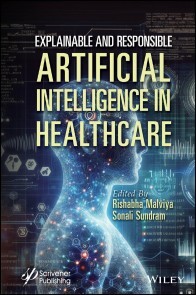
Explainable and Responsible Artificial Intelligence in Healthcare
THIS BOOK PRESENTS THE FUNDAMENTALS OF EXPLAINABLE ARTIFICIAL INTELLIGENCE (XAI) AND RESPONSIBLE ARTIFICIAL INTELLIGENCE (RAI), DISCUSSING THEIR POTENTIAL TO ENHANCE DIAGNOSIS, TREATMENT, AND PATIENT OUTCOMES.This book explores the transformative potential of explainable artificial intelligence (XAI) and responsible AI (RAI) in healthcare. It provides a roadmap for navigating the complexities of healthcare-based AI while prioritizing patient safety and well-being. The content is structured to highlight topics on smart health systems, neuroscience, diagnostic imaging, and telehealth. The book emphasizes personalized treatment and improved patient outcomes in various medical fields. In addition, this book discusses osteoporosis risk, neurological treatment, and bone metastases. Each chapter provides a distinct viewpoint on how XAI and RAI approaches can help healthcare practitioners increase diagnosis accuracy, optimize treatment plans, and improve patient outcomes. Readers will find the book:* explains recent XAI and RAI breakthroughs in the healthcare system;* discusses essential architecture with computational advances ranging from medical imaging to disease diagnosis;* covers the latest developments and applications of XAI and RAI-based disease management applications; * demonstrates how XAI and RAI can be utilized in healthcare and what problems the technology faces in the future. AUDIENCEThe main audience for this book is targeted to scientists, healthcare professionals, biomedical industries, hospital management, engineers, and IT professionals interested in using AI to improve human health. RISHABHA MALVIYA, PHD, is an associate professor in the Department of Pharmacy, School of Medical and Allied Sciences, Galgotias University. He has authored more than 150 research/review papers for national/international journals of repute. He has been granted more than 10 patents from different countries while a further 40 patents have either been published or under evaluation. His areas of interest include formulation optimization, nanoformulation, targeted drug delivery, localized drug delivery, and characterization of natural polymers as pharmaceutical excipients. SONALI SUNDRAM, PHD AND MPHARM, completed her doctorate in pharmacy and is an assistant professor at Galgotias University, Greater Noida. Her areas of interest are neurodegeneration, clinical research, and artificial intelligence. She has edited four books.