

Allgemein

The Chief AI Officer's Handbook
Chief Artificial Intelligence Officers (CAIOs) are now imperative for businesses, enabling organizations to achieve strategic goals and unlock transformative opportunities through the power of AI. By building intelligent systems, training models to drive impactful decisions, and creating innovative applications, they empower organizations to thrive in an AI-driven world. Written by Jarrod Anderson, Chief AI Officer at SYRV.AI, this book bridges the gap between visionary leadership and practical execution.This handbook reimagines AI leadership for today’s fast-paced environment, leveraging predictive, deterministic, generative, and agentic AI to address complex challenges and foster innovation. It provides CAIOs with the strategies to develop transformative AI initiatives, build and lead elite teams, and adopt AI responsibly while maintaining compliance. From shaping impactful solutions to achieving measurable business outcomes, this guide offers a roadmap for making AI your organization’s competitive edge.By the end of this book, you’ll have the knowledge and tools to excel as a Chief AI Officer, driving innovation, strategic growth, and lasting success for your organization.

Introduction to Extended Reality (XR) Technologies
THIS BOOK IS A COMPREHENSIVE OVERVIEW OF THE FUNDAMENTALS AND APPLICATIONS OF EXTENDED REALITY (XR) WITH PRACTICAL INSIGHTS AND REAL-WORLD EXAMPLES.Introduction to Extended Reality (XR) Technologies is a thorough guide to understanding the fundamentals, concepts, and key aspects of XR technology, including augmented reality (AR), virtual reality (VR), and mixed reality (MR). The book explores how extended reality blends the physical and virtual worlds, transforming industries such as education, healthcare, and entertainment. Each chapter covers key aspects, from foundational principles to practical applications, with real-world examples illustrating the technologies’ potential. By addressing current trends, challenges, and future directions, the book serves as an essential resource to explore the evolving world of these technologies. This book comprises 12 chapters, each presenting an in-depth overview of extended reality (XR) technologies. The first section details an introduction to extended reality technologies, covering augmented reality (AR), virtual reality (VR), and mixed reality (MR), and how they’re rapidly growing across various industries. The second section examines the potential of these technologies and how they’ll revolutionize different sectors, like aviation and tourism. The section also includes discussions on specific applications of XR technologies and the development advantages for each sector. The third section discusses how augmented reality and virtual reality play a pivotal role in healthcare sectors, allowing for disease diagnosis and treatment planning. AUDIENCEThis book is intended for engineers, IT industry professionals, healthcare industry professionals, computer engineering and the electronics sector. MANISHA VOHRA has a Master of Engineering in electronics and telecommunication and is an independent researcher. She has published various papers in international journals, including IEEE Xplore. She has also published various book chapters, authored two books, and edited six books.

Quantum Cybersecurity Program Management
QUANTUM TECHNOLOGY INTEREST IS ACCELERATING FOR TWO KEY REASONS: FIRST, QUANTUM TECHNOLOGIES PROMISE TRANSFORMATIVE CAPABILITIES. Indeed, quantum computing is seen as a strategic necessity by the world’s leading economies. Second, experts unanimously agree that a cryptographically-relevant quantum computer will have the capability to break classical encryption that keeps our data and transactions private. Thus, organizations are challenged to protect their most sensitive information data and systems before a cryptographically-relevant quantum computer is accessible to hackers despite already over-burdened cybersecurity teams.Quantum Cybersecurity Program Management by Dr Greg Skulmoski and Dr Ashkan Memari is part of a series of books: Shields Up: Cybersecurity Project Management outlines a risk-based approach to cybersecurity project management including technology and process improvement projects. Cybersecurity Training: A Pathway to Readiness outlines best practices in training and instructional design to upskill the organization’s people. Quantum Cybersecurity builds upon Shields Up (technology and process) and Cybersecurity Training (people) to provide a program approach to deliver the diversity of quantum projects and initiatives organizations encounter.The authors of Quantum Cybersecurity bring together best practices found in standards and frameworks in a risk-based approach to implementing a quantum program of projects. Tailored for quantum champions, IT security architects, business leaders, project managers, digital leadership, and board members, Quantum Cybersecurity offers actionable guidance. Urgent and early adopters will find a practical guide for a quick start to their quantum projects.

Predictive Analytics with SAS and R
Gain practical knowledge of application implementation using various programming approaches in predictive analytics. This book serves as a comprehensive guide for both beginners and professionals in the field of predictive analytics, offering core principles and practical insights without requiring an extensive mathematics or statistics background.The book starts with an introduction to analytics in decision making, protective analytics basics, and implementation in various industries. The book then takes you through types of regression, and simple linear regression in detail, followed by a demonstration of R Studio and SAS. Multiple Linear Regression is discussed next along with MLR model diagnostics. The book covers Multivariate Analysis and teaches you how to work with Principal Components Analysis, Factor Analysis, and much more. You also learn Time series Analysis with an understanding of Autoregressive Moving Average (ARMA) Models.After reading the book, you will be able to put predictive analytics principles into practice.WHAT YOU WILL LEARN* Understand modeling, estimating, and evaluating models for forecasting* Implement Partial F-Test and Variable Selection Method* Demonstrate each analysis model in R Studio and SAS* Understand SLR and MLR Analysis modelsWHO THIS BOOK IS FORStudents and professionals in the field of data analysis and intelligence applicationsDR. RAMCHANDRA SHARAD MANGRULKAR is a Professor in the Department of Information Technology at Dwarkadas J. Sanghvi College of Engineering in Mumbai, India. He holds various memberships in professional organizations such as IEEE, ISTE, ACM, and IACSIT. He has established himself as a knowledgeable and skilled professional in his field. He has also obtained certifications such as Certified Network Security Specialist (ICSI - CNSS) from ICSI, UK.He has a strong publication record with 126 publications.Dr. Mangrulkar is proficient in several technologies and tools, including Microsoft's Power BI, Power Automate, Power Query, Power Virtual Agents, Google's Dialog Flow, Data Analytics Models and Overleaf.DR. PALLAVI VIJAY CHAVAN is an Associate Professor in the Department of Information Technology at Ramrao Adik Institute of Technology, D Y Patil Deemed to be University, Navi Mumbai, MH, India. She has been in academics for the past 17 years and has worked in the areas of computing theory, data science, data analytics, and network security. In her academic journey, she has published research work in the data science and security domains with reputed publishers including Springer, Elsevier, CRC Press, and Inderscience.Chapter 1 Introduction to Analytics_.- _Chapter 2 Simple Linear Regression.- Chapter 3 Multiple Linear Regression.- Chapter 4 Multivariate Analysis and Prediction.- Chapter 5 Time Series Analysis.

CI/CD Unleashed
The ability to deliver software quickly and efficiently is paramount to a company’s success. This book is a comprehensive guide to continuous integration (CI) and continuous delivery (CD), providing insights and practical strategies for streamlining the software delivery pipeline for speedy and efficient deployments.You’ll start by reviewing the fundamentals of CI/CD, and how it enables teams to automate the building, testing, and deployment of software, for faster and more reliable releases. The book then examines CI/CD pipelines, tooling, caching, and how to leverage these tools to expedite delivery workflows, before highlighting the increased importance of testing and monitoring during that process. You’ll also gain insights into various testing methodologies and learn how to implement them effectively within your CI/CD pipelines.However, the journey towards accelerated software delivery is not just about technology. It also requires a cultural shift within your software development team. The book accomplishes this by delving into strategies for getting apprehensive team members on board. _CI/CD Unleashed_ provides the tools and techniques you need to ensure the quality and reliability of your software, while staying relatively agnostic regarding things like language and framework choices.YOU WILL* Understand the advantages continuous integration and continuous delivery provide.* Explore how to automate the building, testing, and deployment of software for faster releases.* See how CI/CD can aid a cultural shift within software development teams.* Implement CI/CD best practices to deliver streamlined and more cost-effective deployments for your organization.* Review WIP limits, small batch releases, and the importance of fostering a blame-free culture.* Apply various testing methodologies such as unit testing, integration testing, and end-to-end testing.WHO THIS BOOK IS FORSenior software engineers, technical leaders, and business managers who are looking to deliver change for their customers, and make their business quicker.TOMMY CLARK has over 10 years of experience in software development as a principal developer, solutions designer, and technical team lead. He has worked in industries as diverse as music, oil, e-commerce and the charity sector, for organisations like Sainsbury’s, Deloitte, and Cancer Research UK. Tommy’s career so far has been dedicated to the transformative impact of working smarter and faster. Currently serving as a Principal Engineer at MoneySupermarket Group, he is passionate about championing improvements to CI/CD processes both within the company as well as in the broader tech community, including sharing his knowledge at local tech conferences.Chapter 1: Introduction to Continuous Integration and Continuous Deployment (CI/CD) .- Chapter 2: The Fundamentals of CI/CD.- Chapter 3: Cultural Shifts.- Chapter 4: Implementing CI/CD Safely.- Chapter 5: The Future of CI/CD.

Responsible AI in Practice
This book is the first practical book on AI risk assessment and management. It will enable you to evaluate and implement safe and accurate AI models and applications. The book features risk assessment frameworks, statistical metrics and code, a risk taxonomy curated from real-world case studies, and insights into AI regulation and policy, and is an essential tool for AI governance teams, AI auditors, AI ethicists, machine learning (ML) practitioners, Responsible AI practitioners, and computer science and data science students building safe and trustworthy AI systems across businesses, organizations, and universities.The centerpiece of this book is a risk management and assessment framework titled “Safe Human-centered AI (SAFE-HAI),” which highlights AI risks across the following Responsible AI principles: accuracy, sustainability and robustness, explainability, transparency and accountability, fairness, privacy and human rights, human-centered AI, and AI governance. Using several statistical metrics such as Area Under Curve (AUC), Rank Graduation Accuracy, and Shapley values, you will learn to apply Lorenz curves to measure risk and inequality across the different principles and will be equipped with a taxonomy/scoring rubric to identify and mitigate identified risks.This book is a true practical guide and covers a real-world case study using the proposed SAFE-HAI framework. The book will help you adopt standards and voluntary codes of conduct in compliance with AI risk and safety policies and regulations, including those from the NIST (National Institute of Standards and Technology) and EU AI Act (European Commission).WHAT YOU WILL LEARN* Know the key principles behind Responsible AI and associated risks* Become familiar with risk assessment frameworks, statistical metrics, and mitigation measures for identified risks* Be aware of the fundamentals of AI regulations and policies and how to adopt them* Understand AI governance basics and implementation guidelinesWHO THIS BOOK IS FORAI governance teams, AI auditors, AI ethicists, machine learning (ML) practitioners, Responsible AI practitioners, and computer science and data science students building safe and trustworthy AI systems across businesses, organizations, and universitiesTOJU DUKE has more than 18 years of experience spanning across advertising, retail, not-for profit, and tech, She is a popular speaker, author, thought leader, and advisor on Responsible AI. Toju worked at Google for 10 years where she spent the last three years as Program Manager on Responsible AI, leading various Responsible AI programs across Google’s product and research teams, and with a primary focus on large-scale models and Responsible AI processes. She is also the founder of Diverse AI, a community interest organization with a mission to support and champion under-represented groups to build a diverse and inclusive AI future. In 2023, she published _Building Responsible AI Algorithms: A Framework for Transparency, Fairness, Safety, Privacy, and Robustness_ (Apress). She provides consultation and advice on Responsible AI practices worldwide.Part I: Introduction.- Chapter 1: Responsible AI and AI Governance.- Part II: Technical risks (Internal to an organisation).- Chapter 2. Accuracy.- Chapter 3. Robustness and Security.- Chapter 4: Explainability.- Part III: Ethical risks (External).- Chapter 5. Fairness and Human Rights.- Chapter 6: Privacy.- Chapter 7: Sustainability.- Chapter 8: Human-Centered AI.- Part IV: Governance and Case studies.- Chapter 9: Governance Processes.- Chapters 10: Case Study.

Introduction to Extended Reality (XR) Technologies
THIS BOOK IS A COMPREHENSIVE OVERVIEW OF THE FUNDAMENTALS AND APPLICATIONS OF EXTENDED REALITY (XR) WITH PRACTICAL INSIGHTS AND REAL-WORLD EXAMPLES.Introduction to Extended Reality (XR) Technologies is a thorough guide to understanding the fundamentals, concepts, and key aspects of XR technology, including augmented reality (AR), virtual reality (VR), and mixed reality (MR). The book explores how extended reality blends the physical and virtual worlds, transforming industries such as education, healthcare, and entertainment. Each chapter covers key aspects, from foundational principles to practical applications, with real-world examples illustrating the technologies’ potential. By addressing current trends, challenges, and future directions, the book serves as an essential resource to explore the evolving world of these technologies. This book comprises 12 chapters, each presenting an in-depth overview of extended reality (XR) technologies. The first section details an introduction to extended reality technologies, covering augmented reality (AR), virtual reality (VR), and mixed reality (MR), and how they’re rapidly growing across various industries. The second section examines the potential of these technologies and how they’ll revolutionize different sectors, like aviation and tourism. The section also includes discussions on specific applications of XR technologies and the development advantages for each sector. The third section discusses how augmented reality and virtual reality play a pivotal role in healthcare sectors, allowing for disease diagnosis and treatment planning. AUDIENCEThis book is intended for engineers, IT industry professionals, healthcare industry professionals, computer engineering and the electronics sector. MANISHA VOHRA has a Master of Engineering in electronics and telecommunication and is an independent researcher. She has published various papers in international journals, including IEEE Xplore. She has also published various book chapters, authored two books, and edited six books.

Einführung in das Metaverse
Dieses Buch bietet eine fundierte Einführung in die Grundlagen, Prinzipien und Anwendungen des Metaverse. Es beleuchtet die wesentlichen Aspekte erweiterter Realitäten und virtueller Welten und legt besonderen Wert auf die Verknüpfung mit dem dezentralen Web3 und Distributed-Ledger-Technologien. Diese Verbindung schafft neue Möglichkeiten für zukunftsweisende Geschäftsmodelle im Metaverse.Neben den theoretischen Grundlagen präsentiert das Buch praxisnahe Fallstudien, die reale Anwendungsbeispiele aus verschiedenen Branchen beleuchten und wertvolle Einblicke für Strateg:innen und Innovator:innen bieten. Es widmet sich auch den technologischen, rechtlichen und sozialen Herausforderungen und liefert einen interdisziplinären Ausblick auf die Zukunft und Entwicklung des Metaverse – jenseits des Hypes.Mit umfassenden Erklärungen, praxisorientierten Einordnungen und über 100 anschaulichen Abbildungen richtet sich dieses Buch an Innovations- und Digitalmanager:innen, Studierende sowie alle, die verstehen möchten, wie das Metaverse die Wirtschaft und Gesellschaft transformieren könnte. Was ist das Metaverse. Erweiterte Realitäten und virtuelle Welten. Distributed Ledger und Web3. Betriebliche Anwendungsbeispiele. Herausforderungen. Markt, Zukunft und Schlussbetrachtung. PROF. DR. FABIAN LANG ist Professor für Betriebswirtschaftslehre an der Hochschule Hannover und forscht zu digitaler Transformation, Analytics und Künstlicher Intelligenz sowie unternehmerischer Entscheidungsunterstützung. Vor seiner Ernennung war er als Management Consultant, Vorstandsassistent und Data Product Manager im Bank- und Versicherungswesen tätig.

Augmented Reality Development with Unity
This book provides a comprehensive guide to developing augmented reality applications. Starting with an introduction to AR concepts, it explores key tools and platforms, emphasizing Unity as a core development tool. Readers will gain hands-on experience creating marker-based and marker-less AR apps using Vuforia, ARKit, and ARCore.The book takes a practical approach, covering the creation of custom components, C# programming for Unity, and building mobile AR apps. Advanced topics include world-scale AR with Niantic Lightship and optimization strategies for AR app performance. Each chapter builds skills progressively, ensuring a thorough understanding of the subject.By the end, readers will have the confidence and skills to design and develop innovative AR applications, understanding the best practices and challenges of AR app development.

Deep Learning and AI Superhero
Dive into the world of deep learning with this comprehensive guide that bridges theory and practice. From foundational neural networks to advanced architectures like CNNs, RNNs, and Transformers, this book equips you with the tools to build, train, and optimize AI models using TensorFlow, Keras, and PyTorch. Clear explanations of key concepts such as gradient descent, loss functions, and backpropagation are combined with hands-on exercises to ensure practical understanding.Explore cutting-edge AI frameworks, including generative adversarial networks (GANs) and autoencoders, while mastering real-world applications like image classification, text generation, and natural language processing. Detailed chapters cover transfer learning, fine-tuning pretrained models, and deployment strategies for cloud and edge computing. Practical exercises and projects further solidify your skills as you implement AI solutions for diverse challenges.Whether you're deploying AI models on cloud platforms like AWS or optimizing them for edge devices with TensorFlow Lite, this book provides step-by-step guidance. Designed for developers, AI enthusiasts, and data scientists, it balances theoretical depth with actionable insights, making it the ultimate resource for mastering modern deep learning frameworks and advancing your career in AI

Pro Spring Boot 3 with Kotlin
Quickly and productively build complex Kotlin-based Spring applications and microservices out of the box, with minimal concern over things such as configurations. This revised edition will show you how to fully leverage the Spring Boot 3 micro-framework and apply it to create enterprise-ready Kotlin-based cloud-native applications, microservices, and web applications that just work.The book covers what has been added to the new Spring Boot 3 release, including improved support for the Kotlin programming language, changes to Stream Editor UI, Maven Preemptive Authentication, building Docker images using cloud-native build packs, building layered jars for optimized Docker images, E2E traceability for configuration properties, many dependency upgrades, support for Spring Data, and much more.This book is your in-depth pragmatic guide for increasing your enterprise Kotlin and cloud application productivity while decreasing development time. It is a no-nonsense guide with case studies of increasing complexity throughout the book. The main author, a senior solutions architect and Principal Technical instructor at Pivotal, the company behind the Spring Framework, shares his experience, insights, and first-hand knowledge about how Spring Boot technology works, and best practices.This is an essential book for your Kotlin-based Spring learning and reference library.WHAT YOU WILL LEARN* Build cloud-native apps and microservices with the Spring Boot 3 framework* Persist and access your data using and integrating with Spring Data* Message with Kafka, RabbitMQ, and WebSockets* Explore Spring Cloud projects* Extend Spring Boot by creating your own Spring Boot Starter and @Enable feature* Test and deploy Spring Boot with best practices* Effectively use Kotlin as a programming language for Spring applicationsWHO THIS BOOK IS FORExperienced Spring, Java, and Kotlin developers seeking increased productivity gains and decreased complexity and development time in their applications and software servicesPETER SPÄTH graduated in 2002 as a physicist and soon afterward became an IT consultant, mainly for Java-related projects. In 2016, he decided to concentrate on writing books on various aspects, but with the main focus on software development. With two books about graphics and sound processing, three books on Android app development, and a beginner’s book on Jakarta EE development, the author continues his effort in writing software development-related literature.FELIPE GUTIERREZ is a Senior Platform Architect at Pivotal, the creators of Spring Boot and Spring Framework, where he serves as a senior consultant with the Spring team. He has more than 20 years of IT experience, during which time he developed programs for companies in multiple vertical industries such as government, retail, healthcare, education, and banking. He also develops in Groovy, RabbitMQ, and other technologies. Previously he has consulted for companies such as Nokia, Apple, Redbox, and Qualcomm, among others. He received his bachelor and master degrees in computer science from Instituto Tecnologico y de Estudios Superiores de Monterrey Campus Ciudad de Mexico.Part I: Introduction.- Chapter 1: Spring Boot Quick Start.- Chapter 2: Spring Boot Internals.- Chapter 3: Spring Boot Web Development.- Chapter 4: Spring Boot SQL Data Access.- Chapter 5: Spring Data with Spring Boot.- Chapter 6: Spring Data NoSQL with Spring Boot.- Chapter 7: Spring Boot Reactive.- Chapter 8: Spring Boot Testing.- Part II. Spring Cloud Data Flow: Internals.- Chapter 9: Spring Boot Security.- Chapter 10: Messaging with Spring Boot.- Chapter 11: Spring Boot Actuator.- Chapter 12: Spring Boot Native and AOT.- Chapter 13: Spring Cloud with Spring Boot.- Chapter 14: Extending Spring Boot.- Chapter 15: Spring Boot New Projects.

Mathematics for Digital Science, Volume 1
Over the past century, advancements in computer science have consistently resulted from extensive mathematical work. Even today, innovations in the digital domain continue to be grounded in a strong mathematical foundation. To succeed in this profession, both today's students and tomorrow’s computer engineers need a solid mathematical background.The goal of this book series is to offer a solid foundation of the knowledge essential to working in the digital sector. Across three volumes, it explores fundamental principles, digital information, data analysis, and optimization. Whether the reader is pursuing initial training or looking to deepen their expertise, the Mathematics for Digital Science series revisits familiar concepts, helping them refresh and expand their knowledge while also introducing equally essential, newer topics.GÉRARD-MICHEL COCHARD is Professor Emeritus at Université de Picardie Jules Verne, France, where he has held various senior positions. He has also served at the French Ministry of Education and the CNAM (Conservatoire National des Arts et Métiers). His research is conducted at the Eco-PRocédés, Optimisation et Aide à la Décision (EPROAD) laboratory, France.MHAND HIFI is Professor of Computer Science at Université de Picardie Jules Verne, France, where he heads the EPROAD UR 4669 laboratory and manages the ROD team. As an expert in operations research and NP-hard problem-solving, he actively contributes to numerous international conferences and journals in the field.

From teaching to learning
- Nutzen Sie Scrum als transformative Lehrmethode für Ihren Unterricht- Steigern Sie mit Scrum4Schools die Selbstständigkeit und Kreativität Ihrer Schüler:innen- Mit konkreten Umsetzungsbeispielen aus dem deutschen und österreichischen SchulalltagSchüler:innen und Lehrkräfte haben an ihren ersten Schultagen eines gemeinsam: die Begeisterung für das Lernen. Doch die Freude hält oft nur kurz. Während die Lehrenden in Bürokratie versinken und gesellschaftlichen Verwerfungen abfedern sollen, lernen Kinder und Jugendliche vor allem eines: Ihre individuellen Fähigkeiten und Bedürfnisse haben in der Schule nur wenig Platz, denn das System pocht auf Standards. Was unter den Tisch fällt, ist die Ausbildung von Kompetenzen für eine komplexe Welt: die Fähigkeit zur Zusammenarbeit, zur Kommunikation, zum kritischen und kreativen Denken.In der Wirtschaft werden agile Arbeitsmethoden wie „Scrum“ eingesetzt, um genau diese Fähigkeiten zu fördern. Mit Scrum4Schools haben Boris Gloger und sein Team diesen Ansatz für den Klassenraum adaptiert: Durch selbstgesteuertes Lernen erfahren die Schüler:innen ihre Selbstwirksamkeit, während die Lehrkräfte entlastet werden und mehr Zeit für individuelle Unterstützung haben. Sie werden zu Begleitern von jungen Menschen, die mit Scrum4Schools endlich aktive Teilnehmer:innen in ihrem Lernprozess werden können.Boris Gloger zeigt, wie Scrum4Schools das System Schule von innen modernisieren kann. Vorgestellt wird nicht nur die Methode selbst, sondern auch die praktische Anwendung in Schulen in Deutschland und Österreich.AUS DEM INHALT //- Neues Denken für ein neues Bildungssystem- Wie Unterricht gelingen kann- Die agile Lernmethode Scrum4Schools- Planung und Umsetzung des Unterrichts mit Scrum4Schools- Epilog- Projektbeispiele- Glossar Boris Gloger ist in der DACH-Region der bekannteste Proponent von Agilität. Mit seinem Team der borisgloger consulting GmbH unterstützt er namhafte nationale und internationale Unternehmen dabei, mit agilen Arbeitsmethoden die Selbstwirksamkeit der Mitarbeiter:innen und die Resilienz der Organisation zu stärken.

Praxishandbuch BPMN
- Starten Sie mit diesem topaktuellen Führer in die Welt der strukturierten Prozesse mit BPMN und profitieren Sie von der Praxiserfahrung der Autoren - Mit Einführung in den DMN- Standard für Entscheidungen - Lernen Sie nicht nur die Notationen kennen, sondern auch alles, was damit zusammenhängt: fachliche Prozessmodellierung, Prozessautomatisierung, Prozessorchestrierung und Business-IT-Alignment - Zum Heraustrennen: eine praktische Übersicht über die wichtigsten Symbole der BPMN und ihre Bedeutung - Im Internet finden Sie ein kostenloses BPMN-Modellierungswerkzeug - Neu in der 7. Auflage: Marktentwicklungen in der Prozessautomatisierung - Ihr exklusiver Vorteil: E-Book inklusive beim Kauf des gedruckten Buches In diesem Praxisbuch lernen Sie alles kennen, was Sie für den erfolgreichen Einsatz der BPMN in Ihren Projekten wissen müssen. Ausführlich stellen die Autoren die Kernelemente der Notation sowie die grundlegenden Modellierungsprinzipien vor. Doch alleine damit ist es noch nicht getan, denn obwohl BPMN auf den ersten Blick so einfach aussieht, verbergen sich in der Anwendung doch einige Fallstricke. Daher zeigen die Autoren einerseits, worauf es bei der fachlichen Prozessmodellierung ankommt, und gehen andererseits auf die Perspektive der Prozessautomatisierung und -orchestrierung ein. Zusätzlich kommt auch die Zusammenführung von fachlichen und technischen Modellen, das sogenannte Business-IT-Alignment, nicht zu kurz. Das alles wird Ihnen mithilfe von Fallbeispielen anschaulich vermittelt. Best Practices, Modellierungskonventionen, Guidelines und "Dos and Don'ts" bieten Ihnen konkrete Hilfestellung für den Einsatz von BPMN in der Praxis. AUS DEM INHALT // Einführung/Die BPMN im Detail/Einführung in DMN/Methodisches Vorgehen mit strategischen und operativen Prozessmodellen/Automatisierung mit Workflow Engines/BPMN im Unternehmen einführen/Tipps für den Einstieg

Augmented Reality in der Industrie
In der Verwendung von Augmented Reality in der Industrie steckt enormes Potenzial. Besonders der Einsatz von Datenbrillen bietet den Vorteil, dass beide Hände frei für die Arbeitsaufgabe sind. Informationen stehen jederzeit optisch zur Verfügung. Perspektivisch werden Akteure in der Industrie virtuelle mit realen Bauteilen kombinieren und am virtuellen Objekt trainieren können. Besonders schwierige Aufgaben können ebenfalls zunächst virtuell ausprobiert werden. Dies sind nur einige der vielen Einsatzmöglichkeiten, die entwickelt werden.Dem praktischen Einsatz von Datenbrillen stehen neben Herausforderungen in der Softwareentwicklung aber auch ganz handfeste Probleme entgegen, über die man sich Gedanken machen sollte, bevor in Augmented Reality investiert wird. So sind z. B. Gleitsichtbrillen, die immerhin ein Viertel aller in Deutschland getragenen Brillen ausmachen, derzeit nicht immer mit Datenbrillen kompatibel. Welche Genauigkeit erfordert eine Anwendung? Auch Fragen des Arbeitsschutzes und des Datenschutzes müssen beachtet werden. Da Datenbrillen mit einer Kamera ausgestattet sind, muss z. B. geklärt werden, unter welchen Bedingungen diese überhaupt auf dem Shopfloor gewünscht sind.Prof. Dr.-Ing. Werner Schreiber, der 15 Jahre lang in der Konzernforschung der Volkswagen AG das Forschungsfeld Virtuelle Techniken leitete, trägt mit diesem Buch dazu bei, die Beurteilungskompetenz für den Einsatz von Datenbrillen zu stärken, damit ein durchdachter und nachhaltiger Einsatz in der Industrie zukünftig möglich sein wird. Prof. Dr.-Ing. Werner Schreiber leitete 15 Jahre lang in der Konzernforschung der Volkswagen AG das Forschungsfeld Virtuelle Techniken. Er ist Berater sowie Honorarprofessor an der Otto-von-Guericke-Universität und an der Steinbeis-Hochschule, beide in Magdeburg, und hält Vorlesungen zu VR/AR in der Produktion.

Zero to Engineer
A STRAIGHTFORWARD, HANDS-ON STARTER KIT FOR YOUR EXCITING NEW CAREER IN ITZero to Engineer: The Unconventional Blueprint to Securing a 6-Figure IT Career is an intensely practical, no-nonsense guide to starting or rebooting your career in technology. Author and IT industry veteran Terry Kim gives you a first-person view of how to conquer the tech and cybersecurity realms, drawing on his own two decades' experience in the field. You'll learn how to get job-ready in less than four months, regardless of your educational background, and enjoy complimentary NGT Academy bonuses, including unlimited access to the CompTIA Network+ Certification Course, a free one-on-one career strategy session with trained IT career specialists, and membership in the Zero to Engineer Community Group. The book offers:* Common and intuitive IT career pathways, showing you how to get from A-to-Z in the most direct way possible* IT employment contract negotiation tips that make it easier to get your first six-figure job offer* A comprehensive collection of worksheets you can use in your own journey from IT-beginner to subject-matter expertPerfect for anyone interested in starting a brand-new and exciting career in technology, Zero to Engineer is also a must-read for career changers and professionals interested in pivoting to a new job in tech. Whether or not you have a college degree, it's the insider's guide to IT and cybersecurity that you've been waiting for. TERRY KIM has over twenty years’ experience in the IT industry, having worked for prominent tech giants, including Cisco Systems and Arista Networks. He is a veteran of the United States Air Force and is passionate about revolutionizing IT learning as he combines mentorship and rapid, practical skills development.

Alice and Bob Learn Secure Coding
UNLOCK THE POWER OF SECURE CODING WITH THIS STRAIGHTFORWARD AND APPROACHABLE GUIDE!Discover a game-changing resource that caters to developers of all levels with Alice and Bob Learn Secure Coding. With a refreshing approach, the book offers analogies, stories of the characters Alice and Bob, real-life examples, technical explanations and diagrams to break down intricate security concepts into digestible insights that you can apply right away. Explore secure coding in popular languages like Python, Java, JavaScript, and more, while gaining expertise in safeguarding frameworks such as Angular, .Net, and React. Uncover the secrets to combatting vulnerabilities by securing your code from the ground up!Topics include:* Secure coding in Python, Java, Javascript, C/C++, SQL, C#, PHP, and more* Security for popular frameworks, including Angular, Express, React, .Net, and Spring* Security Best Practices for APIs, Mobile, Web Sockets, Serverless, IOT, and Service Mesh* Major vulnerability categories, how they happen, the risks, and how to avoid them* The Secure System Development Life Cycle, in depth* Threat modeling, testing, and code review* The agnostic fundamentals of creating secure code that apply to any language or frameworkAlice and Bob Learn Secure Coding is designed for a diverse audience, including software developers of all levels, budding security engineers, software architects, and application security professionals. Immerse yourself in practical examples and concrete applications that will deepen your understanding and retention of critical security principles.Alice and Bob Learn Secure Coding illustrates all the included concepts with easy-to-understand examples and concrete practical applications, furthering the reader’s ability to grasp and retain the foundational and advanced topics contained within. Don't miss this opportunity to strengthen your knowledge; let Alice and Bob guide you to a secure and successful coding future.

Mathematics for Digital Science, Volume 1
Over the past century, advancements in computer science have consistently resulted from extensive mathematical work. Even today, innovations in the digital domain continue to be grounded in a strong mathematical foundation. To succeed in this profession, both today's students and tomorrow’s computer engineers need a solid mathematical background.The goal of this book series is to offer a solid foundation of the knowledge essential to working in the digital sector. Across three volumes, it explores fundamental principles, digital information, data analysis, and optimization. Whether the reader is pursuing initial training or looking to deepen their expertise, the Mathematics for Digital Science series revisits familiar concepts, helping them refresh and expand their knowledge while also introducing equally essential, newer topics.GÉRARD-MICHEL COCHARD is Professor Emeritus at Université de Picardie Jules Verne, France, where he has held various senior positions. He has also served at the French Ministry of Education and the CNAM (Conservatoire National des Arts et Métiers). His research is conducted at the Eco-PRocédés, Optimisation et Aide à la Décision (EPROAD) laboratory, France.MHAND HIFI is Professor of Computer Science at Université de Picardie Jules Verne, France, where he heads the EPROAD UR 4669 laboratory and manages the ROD team. As an expert in operations research and NP-hard problem-solving, he actively contributes to numerous international conferences and journals in the field.

Space Piracy
COMPREHENSIVE EXPLORATION OF HUMANITY'S POTENTIAL FOR CRIMINAL ACTIVITIES IN OUTER SPACESpace Piracy: Preparing for a Criminal Crisis in Orbit is a forward-thinking resource that considers, analyzes, and provides solutions to the influence of the ignoble side of humanity in the realm of outer space, where potential for crime, corruption, piracy, and war increases as the exploitation of space as a commercial resource continues to develop. This book blends the authors' knowledge with that of subject matter experts to deliver a holistic understanding of criminality in space and help readers broaden their horizons beyond their own area of specialization. Some of the topics explored in this insightful book include:* Space hacking, from software, data, network, and hardware risks to existing cybersecurity standards and practices in space* Criminal organizations that might pursue criminal activities in space, including cartels, kidnappers and devicenappers, and governments* Laws and treaties relevant to space crime, such as the Communications Satellite Act and the Outer Space Treaty of 1967Filled with practical, thought-provoking knowledge and guidance, Space Piracy: Preparing for a Criminal Crisis in Orbit earns a well-deserved spot on the bookshelves of professionals working in the best of humanity's institutions, including law and intelligence services, finance, insurance and risk management, corporations, and the sciences, who seek to combat what the worst of us may be dreaming up. MARC FELDMAN is Managing Partner at Eonia Capital, an aerospace and defense-based venture capital fund. He has led teams across a variety of industries, including space, life sciences, telecommunications, and more. HUGH TAYLOR is Executive Editor of The Journal of Cyber Policy. He is a Certified Information Security Manager (CSIM) who has worked in cybersecurity and enterprise technology for over twenty years.

Zero to Engineer
A STRAIGHTFORWARD, HANDS-ON STARTER KIT FOR YOUR EXCITING NEW CAREER IN ITZero to Engineer: The Unconventional Blueprint to Securing a 6-Figure IT Career is an intensely practical, no-nonsense guide to starting or rebooting your career in technology. Author and IT industry veteran Terry Kim gives you a first-person view of how to conquer the tech and cybersecurity realms, drawing on his own two decades' experience in the field. You'll learn how to get job-ready in less than four months, regardless of your educational background, and enjoy complimentary NGT Academy bonuses, including unlimited access to the CompTIA Network+ Certification Course, a free one-on-one career strategy session with trained IT career specialists, and membership in the Zero to Engineer Community Group. The book offers:* Common and intuitive IT career pathways, showing you how to get from A-to-Z in the most direct way possible* IT employment contract negotiation tips that make it easier to get your first six-figure job offer* A comprehensive collection of worksheets you can use in your own journey from IT-beginner to subject-matter expertPerfect for anyone interested in starting a brand-new and exciting career in technology, Zero to Engineer is also a must-read for career changers and professionals interested in pivoting to a new job in tech. Whether or not you have a college degree, it's the insider's guide to IT and cybersecurity that you've been waiting for. TERRY KIM has over twenty years’ experience in the IT industry, having worked for prominent tech giants, including Cisco Systems and Arista Networks. He is a veteran of the United States Air Force and is passionate about revolutionizing IT learning as he combines mentorship and rapid, practical skills development.
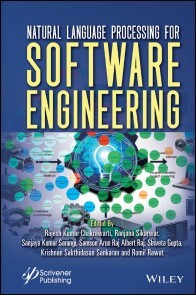
Natural Language Processing for Software Engineering
DISCOVER HOW NATURAL LANGUAGE PROCESSING FOR SOFTWARE ENGINEERING CAN TRANSFORM YOUR UNDERSTANDING OF AGILE DEVELOPMENT, EQUIPPING YOU WITH ESSENTIAL TOOLS AND INSIGHTS TO ENHANCE SOFTWARE QUALITY AND RESPONSIVENESS IN TODAY’S RAPIDLY CHANGING TECHNOLOGICAL LANDSCAPE.Agile development enhances business responsiveness through continuous software delivery, emphasizing iterative methodologies that produce incremental, usable software. Working software is the main measure of progress, and ongoing customer collaboration is essential. Approaches like Scrum, eXtreme Programming (XP), and Crystal share these principles but differ in focus: Scrum reduces documentation, XP improves software quality and adaptability to changing requirements, and Crystal emphasizes people and interactions while retaining key artifacts. Modifying software systems designed with Object-Oriented Analysis and Design can be costly and time-consuming in rapidly changing environments requiring frequent updates. This book explores how natural language processing can enhance agile methodologies, particularly in requirements engineering. It introduces tools that help developers create, organize, and update documentation throughout the agile project process. RAJESH KUMAR CHAKRAWARTI, PHD, is a dean and professor in the Department of Computer Science and Engineering at Sushila Devi Bansal College, Bansal Group of Institutions, India. He has over 20 years of professional experience in academia and industry. Additionally, he has organized and attended over 200 seminars, workshops, and conferences and has published over 100 research papers and book chapters in nationally and internationally revered publications. RANJANA SIKARWAR is currently pursuing a PhD from Amity University, Gwalior. She completed her Bachelor of Engineering in 2006 and Master of Technology in Computer Science and Engineering in 2015. Her research interests include social network analysis, graph mining, machine learning, Internet of Things, and deep learning. SANJAYA KUMAR SARANGI, PHD, is an adjunct professor and coordinator at Utkal University with over 23 years of experience in the academic, research, and industry sectors. He has a number of publications in journals and conferences, has authored many textbooks and book chapters, and has more than 30 national and international patents. He is an active member and life member of many associations, as well as an editor, technical program committee member, and reviewer in reputed journals and conferences. He has dedicated his career to advancing information and communication technology to enhance and optimize worldwide research and information dissemination, leading to improved student learning and teaching methods. SAMSON ARUN RAJ ALBERT RAJ, PHD, is an assistant professor and placement coordinator in the Division of Computer Science and Engineering, School of Computer Science and Technology, Karunya Institute of Technology and Sciences, Tamil Nadu, India. His research is focused on smart city development using drone networks and energy grids with various applications, and his areas of expertise include wireless sensor networks, vehicular ad-hoc networks, and intelligent transportation systems. SHWETA GUPTA is an assistant professor in the Computer Science and Engineering Department at Medicaps University, Indore (M.P.), India. She focuses on natural language processing, data mining, and machine learning. She aims to close the knowledge gap between theory and real-world applications in the tech sector through her passion for research and teaching. Her approach centers on encouraging creativity and motivating students to strive for technological excellence. KRISHNAN SAKTHIDASAN SANKARAN, PHD, is a professor in the Department of Electronics and Communication Engineering at Hindustan Institute of Technology and Science, India. He has been a senior member of the Institute of Electrical and Electronics Engineers for the past ten years and has published more than 70 papers in refereed journals and international conferences. He has also published three books to his credit. His research interests include image processing, wireless networks, cloud computing, and antenna design. ROMIL RAWAT has attended several research programs and received research grants from the United States, Germany, Italy, and the United Kingdom. He has chaired international conferences and hosted several research events, in addition to publishing several research patents. His research interests include cybersecurity, Internet of Things, dark web crime analysis and investigation techniques, and working towards tracing illicit anonymous contents of cyber terrorism and criminal activities.

AWS Certified Developer Study Guide
THE AWS CERTIFIED DEVELOPER EXAM HAS BEEN UPDATED. YOUR STUDY GUIDE SHOULD BE, TOO.The AWS Certified Developer Study Guide–Associate (DVA-C02) Exam is your ultimate preparation resource for the latest exam! Covering the exam objectives, this invaluable resource provides expert guidance, clear explanations, and the wisdom of experience with AWS best practices. You’ll master core services and basic architecture, and equip yourself to develop, deploy, and debug cloud-based applications using AWS.The AWS Developer certification is earned by those who demonstrate the technical knowledge and skill associated with best practices for building secure, reliable cloud-based applications using AWS technology. This book is your exam prep companion, providing everything you need to know to pass with flying colors.* Study the AWS Certified Developer Exam objectives* Gain expert insight on core AWS services and best practices* Test your understanding of key concepts with challenging chapter questions* Access online study tools including practice questions, electronic flashcards, a searchable glossary, and moreWhen you’re ready to get serious about your cloud credentials, the AWS Certified Developer Study Guide–Associate Exam is the resource you need to pass the exam with flying colors.

AWS Certified Developer Study Guide
THE AWS CERTIFIED DEVELOPER EXAM HAS BEEN UPDATED. YOUR STUDY GUIDE SHOULD BE, TOO.The AWS Certified Developer Study Guide–Associate (DVA-C02) Exam is your ultimate preparation resource for the latest exam! Covering the exam objectives, this invaluable resource provides expert guidance, clear explanations, and the wisdom of experience with AWS best practices. You’ll master core services and basic architecture, and equip yourself to develop, deploy, and debug cloud-based applications using AWS.The AWS Developer certification is earned by those who demonstrate the technical knowledge and skill associated with best practices for building secure, reliable cloud-based applications using AWS technology. This book is your exam prep companion, providing everything you need to know to pass with flying colors.* Study the AWS Certified Developer Exam objectives* Gain expert insight on core AWS services and best practices* Test your understanding of key concepts with challenging chapter questions* Access online study tools including practice questions, electronic flashcards, a searchable glossary, and moreWhen you’re ready to get serious about your cloud credentials, the AWS Certified Developer Study Guide–Associate Exam is the resource you need to pass the exam with flying colors.

Julia Quick Syntax Reference
Learn the Julia programming language as quickly as possible. This book is a must-have reference guide that presents the essential Julia syntax in a well-organized format, updated with the latest features of Julia’s APIs, libraries, and packages.This book provides an introduction that reveals basic Julia structures and syntax; discusses data types, control flow, functions, input/output, exceptions, metaprogramming, performance, and more. Additionally, you'll learn to interface Julia with other programming languages such as R for statistics or Python. At a more applied level, you will learn how to use Julia packages for data analysis, numerical optimization, symbolic computation, and machine learning, and how to present your results in dynamic documents.The Second Edition delves deeper into modules, environments, and parallelism in Julia. It covers random numbers, reproducibility in stochastic computations, and adds a section on probabilistic analysis. Finally, it provides forward-thinking introductions to AI and machine learning workflows using BetaML, including regression, classification, clustering, and more, with practical exercises and solutions for self-learners.WHAT YOU WILL LEARN* Work with Julia types and the different containers for rapid development* Use vectorized, classical loop-based code, logical operators, and blocks* Explore Julia functions: arguments, return values, polymorphism, parameters, anonymous functions, and broadcasts* Build custom structures in Julia* Use C/C++, Python or R libraries in Julia and embed Julia in other code.* Optimize performance with GPU programming, profiling and more.* Manage, prepare, analyse and visualise your data with DataFrames and Plots* Implement complete ML workflows with BetaML, from data coding to model evaluation, and more.WHO THIS BOOK IS FORExperienced programmers who are new to Julia, as well as data scientists who want to improve their analysis or try out machine learning algorithms with Julia.Antonello Lobianco, PhD is a research engineer employed by a French Grande É cole (polytechnic university). He works on the biophysical and economic modelling of the forest sector and is responsible for the lab models portfolio. He does programming in C++, Perl, PHP, Visual Basic, Python, and Julia. He teaches environmental and forest economics at undergraduate and graduate levels and modelling at PhD level. For a few years, he has followed the development of Julia as it fits his modelling needs. He is the author of a few Julia packages, particularly on data analysis and machine learning (search sylvaticus on GitHub).Part 1. Language Core.- 1. Getting Started.- 2. Data Types and Structures.- 3. Control Flow and Functions.- 4. Custom Types.- E1: Shelling Segregation Model - 5. Input – Output.- 6. Metaprogramming and Macros.- 7. Interfacing Julia with Other Languages.- 8. Efficiently Write Efficient Code. - 9 Parallel Computing in Julia - Part 2. Packages Ecosystem.- 10. Working with Data.- 11. Scientific Libraries.- E2: Fitting a forest growth model - 12 – AI with Julia – E3. Predict house values - 13. Utilities. Appendix: Solutions to the exercises.