

Software

Pro RESTful APIs with Micronaut
Discover the RESTful technologies, including REST, JSON, XML, JAX-RS web services, SOAP and more, for building today's Java-based microservices, big data applications, and web service applications using the Micronaut framework. This book is based on a course the Oracle-based author is teaching for UC Santa Cruz Silicon Valley which covers architecture, design best practices and coding labs.Pro RESTful APIs with Micronaut (Second Edition) gives you all the fundamentals from the top down: from the top (architecture) through the middle (design) to the bottom (coding). This book is a must have for any microservices or web services application programmer or developer building applications and services for today's enterprises.After reading and using this book, you'll be competent in using Micronaut and RESTful APIs for building today's microservices. Source code for the examples and case studies are free and available on Apress' GitHub page for this book.WHAT YOU'LL LEARN* Discover the key RESTful APIs, including REST, JSON, XML, JAX, SOAP and more* Explore the Micronaut framework* Use these for microservices for today's modern web services and data exchanges* Harness Java, XML, JSON, REST, and JAX-RS in examples and case studies* Apply best practices to your solutions’ architecture and moreWHO THIS BOOK IS FORExperienced Java and web programmers and developers who may be new to microservices and even cloud-native applications development.Sanjay Patni is a software applications and web services engineer. He develops, programs Java web applications, services, and microservices. He works with Micronaut and other frameworks as well. Sanjay is also a Technical Instructor for UC Santa Cruz in Silicon Valley. He is a former applications engineer with Oracle, Inc. He currently is located in/around the SF Bay Area.1. Fundamentals of RESTful APIs2. Introducing Micronaut Framework3. API Design and Modeling4. Introduction to XML and JSON5. Introduction to JAX-RS6. API Portfolio and Framework - Services7. API Platform and Data Handler8. API Management and API Client9. API Security and Caching.

Build Your Own Test Framework
Learn to write better automated tests that will dramatically increase your productivity and have fun while doing so. This book is a build-your-own adventure designed for individual reading and for collaborative workshops.You will build an xUnit automated test framework using JavaScript: initially a clone of Jest, but adding a couple of neat features borrowed from RSpec, the genre-defining tool for behavior-driven development (BDD). Along the way, you will explore the philosophy behind automated testing best practices. The automated test runner is one of the most important innovations within software engineering. But for many programmers, automated testing remains a mystery, and knowing how to write good tests is akin to sorcery.As the chapters of this book unfold, you will see how the humble test runner is an elegant and simple piece of software. Each chapter picks a single feature to build, like the "it" function or the "beforeEach" block. It picks apart the theory of why the feature needs to exist, and how to use it effectively in your own test suites. Every chapter ends with a set of ideas for extension points should you wish to explore further, alone or in groups. The book culminates in an implementation of test doubles and mocks—one of the most difficult and misunderstood concepts within automated testing.By the end of the book, you will have gained a solid understanding of automated testing principles that you can immediately apply to your work projects.WHAT YOU'LL LEARN* Build an xUnit automated test framework* See how an automated test runner works* Understand the best practices for automated unit testing* Effectively use test doubles and mocksWHO THIS BOOK IS FORSoftware developers with JavaScript experience who are seeking to master the art of automated testing.Daniel Irvine is a freelance software developer based in London. He works with a variety of languages including C#, Clojure, JavaScript, and Ruby. When he’s not working, he spends time cooking, gardening and practicing yoga. He co-founded the Queer Code London meetup and is an active member of the European software craft community. PART 1: BUILDING THE CORE OF A TEST FRAMEWORKIn this part we build a barebones implementation of a test runner.CHAPTER 1: CREATING AN NPM PACKAGE OF MY VERY OWN,You will create a new NPM package for concise-test, including an entry-point for the test runner.CHAPTER 2: BUILDING IT TO DEFINE A TESTwe’ll implement the it function for defining tests, and start printing out some useful test run information on screen.CHAPTER 3: GROUPING TESTS WITH DESCRIBE,we’ll add support for grouping tests with the describe function, and we’ll continue to build out test reporting on screen.CHAPTER 4: PROMOTING CONCISENESS WITH BEFOREEACH AND AFTEREACHWe continue our quest for concise testing facilities with the addition of beforeEach and afterEach functions.CHAPTER 5: IMPROVING LEGIBILITY WITH EXPECT,We finish off the core of our API by building an abstraction over throw new Error.PART 2: CONSTRUCTING A USABLE FRAMEWORKIn this part we add features that you’ll use on a daily basis.CHAPTER 6: FORMATTING EXPECTATION ERRORSWe write a formatter for stack traces to help pinpoint failures quickly.CHAPTER 7. AUTOMATICALLY DISCOVERING TEST FILESWe’ll add test file discovery to our test runner, and add support for running a single file through a command line argument.CHAPTER 8: FOCUSING ON TESTS WITH IT.ONLY AND DESCRIBE.ONLY,We split out runner into two phases: a discovery phase and an execution phase. In between them, we insert a filter phase to support running only a subset of phases.CHAPTER 9: SUPPORTING ASYNCHRONOUS TESTS,We add the ability to wait on tests that return Promise objects, and timing out tests with it.timesOutAfter.CHAPTER 10: REPORTINGwe use a pub-sub model to build a plug-in system for reporters.PART 3: EXTENDING FOR POWER USERSIn this part we continue to add advanced features.CHAPTER 11: SHARING BEHAVIOR WITH IT.BEHAVESLIKE,We borrow an important feature from Ruby: inheritance for describe blocks, which gives us a flexible mechanism for removing duplication between test groups.CHAPTER 12: TAGGING TESTSWe create a mechanism for running a group of tests based on their tag.CHAPTER 13 : SKIPPING TESTSwe introduce a number of ways to skip tests, including tests without bodies, and it.skip plus describe.skip functions.CHAPTER 14 : RANDOMIZING TESTSWe add a runtime flag for randomizing the order of tests, which is a useful technique for catching invisible dependencies between tests.PART 4: TEST DOUBLES AND MOCKSChapter 15. Understanding test doubleswe create a function that can be used as a test spy and stub.CHAPTER 16. MODULE MOCKSWe create a system for mocking out entire modules, which is a useful technique when creating component doubles when testing React.

Das Computerlexikon für Einsteiger
Ihr Computer oder Mobiltelefon meldet sich ständig mit unverständlichen Forderungen zu Wort, der Besuch im Elektronikfachmarkt ist regelrechter Stress, und die Gespräche der Kinder und Enkelkinder klingen oft nach Kauderwelsch? Wenn Sie endlich wissen möchten, ob Sie wirklich einen 4.0-GHz-Quad-Core-Prozessor benötigen, ein Add-on im Internet installieren sollen, oder einfach neugierig sind, was hinter Bitcoin, Streaming, Smart Home & Co. steckt – dieses Wörterbuch spricht Ihre Sprache und hilft Ihnen über alle Verständnishürden im digitalen Alltag hinweg. Aus dem Inhalt:- Über 1.800 Fachbegriffe aus dem digitalen Alltag- Neu mit ausführlichen Infos zu Smart Home, Künstliche Intelligenz, Bitcoin u.v.m.- Alle Abkürzungen zum schnellen Nachschlagen- Über 600 Abbildungen zu Geräten, Anschlüssen und Programmen- Basiswissen: Tastatur, Maus und Touchscreen- Grundwortschatz und Computerbedienung Englisch-Deutsch- Tipps zum Computer- und Tabletkauf- Mit Aussprachehinweisen für Fachbegriffe und Fremdwörter im Anhang

Interaction Design
A DELIGHTFUL, ENGAGING, AND COMPREHENSIVE OVERVIEW OF INTERACTION DESIGNEffective and engaging design is a critical component of any digital product, from virtual reality software to chatbots, smartphone apps, and more. In the newly updated sixth edition of Interaction Design: Beyond Human-Computer Interaction, a team of accomplished technology, design, and computing professors delivers an intuitive and instructive discussion of the principles underlying the design of effective interactive technologies. The authors discuss how to design and apply digital technologies in the real world, illustrated with numerous examples. The book explores the interdisciplinary foundations of interaction design, including skills from product design, computer science, human and social psychology, and others. The book builds on the highly successful fifth edition and draws on extensive new research and interviews with accomplished professionals and researchers in the field that reflect a rapidly-changing landscape. It is supported by a website hosting digital resources that add to and complement the material contained within. Readers will also find:* Explorations of the social and emotional components of interacting with apps, digital devices and computers* Descriptions about how to design, prototype, evaluate and construct technologies that support human-computer interaction* Discussions of the cognitive aspects of interaction design, as well as design and evaluation, including usability testing and expert reviews. An essential text for undergraduate and graduate students of human-computer interaction, interaction design, software engineering, web design, and information studies, Interaction Design will also prove to be indispensable for interaction design and user experience professionals. YVONNE ROGERS is the Director of the Interaction Centre at University College London as well as a Professor of Interaction Design. HELEN SHARP is Professor of Software Engineering at the Open University, UK. JENNIFER PREECE is Professor and Dean Emerita in the College of Information, Maryland’s iSchool – at the University of Maryland.

Practical OpenTelemetry
Learn the value that OpenTelemetry can bring to organizations that aim to implement observability best practices, and gain a deeper understanding of how different building blocks interact with each other to bring out-of-the-box, vendor-neutral instrumentation to your stack. With examples in Java, this book shows how to use OpenTelemetry APIs and configure plugins and SDKs to instrument services and produce valuable telemetry data. You’ll learn how to maximize adoption of OpenTelemetry and encourage the change needed in debugging workflows to reduce cognitive load for engineers troubleshooting production workloads.Adopting observability best practices across an organization is challenging. This book begins with a discussion of how operational monitoring processes widely followed for decades fall short at providing the insights needed for debugging cloud-native, distributed systems in production. The book goes on to show how the Cloud Native Computing Foundation’s OpenTelemetry project helps you standardize instrumentation and transport of telemetry signals, providing a common language for all observability tooling.YOU WILL LEARN* Why observability is a necessity in modern distributed systems* The value of OpenTelemetry for engineers and organizations * OpenTelemetry component specification and general design* Tracing, metrics, and logs APIs and SDKs, with examples in Java* OpenTelemetry Collectors and recommended transport and processing pipelines* How to adopt observability standards across an organizationWHO THIS BOOK IS FORSoftware engineers familiar with cloud-native technologies and operational monitoring who want to instrument and export telemetry data from their services; observability leads who want to roll out OpenTelemetry standards and best practices across their organizations; and Java developers who want a book with OpenTelemetry examples in that languageDANIEL GOMEZ BLANCO is a Principal Engineer at Skyscanner, leading their observability transformation across hundreds of services to ensure that travelers get a reliable and performant experience when booking their next holiday. He is an advocate of open standards and CNCF projects such as OpenTelemetry to back the instrumentation and collection of operational data. Daniel has experience working in organizations of all sizes, from international institutions such as CERN in Geneva, to London startups such as SKIPJAQ. His main focus has always been building software and adopting solutions to minimize the cognitive load required for engineers to support and operate production services. PART I. THE NEED FOR OBSERVABILITY WITH OPENTELEMETRY1. The Need for Observabilitya. Why Observability Mattersb. Context and Correlation2. How OpenTelemetry Enables Observabilitya. OpenTelemetry’s Missionb. The Power of Open Standardsc. The Shift In Vendor Added ValuePART II. OPENTELEMETRY COMPONENTS AND BEST PRACTICES3. OpenTelemetry Fundamentalsa. OpenTelemetry Specificationb. Semantic Conventions4. Auto-Instrumentationa. Resource SDKb. Instrumentation Libraries5. Context, Baggage, and Propagatorsa. Telemetry Context and the Context APIb. Baggage APIc. Cross-Service Context and the Propagators API6. Tracinga. What is a Distributed Trace?b. Tracing APIc. Tracing SDKd. Trace Context Propagation7. Metricsa. Measurements, Metrics and Time Seriesb. Metrics APIc. Metrics SDK8. Logginga. The Purpose of Logs for Observabilityb. Logging APIc. Logging SDKd. Integrations with Logging Frameworks9. Protocol and Collectora. Protocolb. Collector10. Sampling and Common Deployment Modelsa. Common Deployment Modelsb. Trace SamplingPART III. ROLLING OUT OPENTELEMETRY ACROSS YOUR ORGANISATION11. Maximizing Adoption by Minimizing Frictiona. Investing in Telemetry Enablementb. Adopting OpenTelemetry12. Adopting Observabilitya. Shifting Debugging Workflowsb. Expanding Contextc. Keeping Telemetry Valuable

Coding und Making mit Scratch und MakeyMakey
Scratch ist eine visuelle Programmiersprache, sie wurde von der Lifelong Kindergarten Group am MIT entwickelt. Viele neuere erziehungsorientierte Programmiersprachen nehmen sich das Design von Scratch als Vorbild (Snap!, Ozoblockly, Touchdevelop).Scratch ist so einfach in der Bedienung, dass bereits Volksschulkinder damit erste Erfahrungen im Programmieren machen können. Scratch läuft ab Version 2 im Browser, eine Installation ist nicht nötig. Die einzelnen Befehle werden per Drag & Drop zu Sequenzen verbunden, eine kindgerechte Bedienung steht im Vordergrund. Die Projekte werden online gespeichert und können veröffentlicht werden, so sind erste Ergebnisse schnell online verfügbar, aber auch ein lokales Speichern ist möglich.Mit Beiträgen von Bernhard Abfalter, Sabine Apfler, Moritz Brinnich, Elieser Grill, Duy Ho David Tran, Natalie Traxler und Andreas Weiner.Gerhard Brandhofer:HS-Prof. Mag. Dr. Gerhard Brandhofer, BEd hat eine Hochschulprofessur für Mediendidaktik und informatische Bildung an der PH Niederösterreich inne. Zu den Arbeitsschwerpunkten gehören die Planung, Lehre und Forschung im Bereich des Einsatzes von digitalen Medien im Unterricht der Primar- und Sekundarstufe Forschungsaktivitäten und Veröffentlichungen umfassen die Themenfelder der Nutzung digitaler Medien in der Schule wie auch in der Hochschule, die Bedingungen für gelingende informatische Bildung, die Implementierung visueller Programmiersprachen in der Schulbildung.

TCP/IP - Grundlagen und Praxis (3. Auflg.)
Seit vielen Jahren das unverzichtbare Standardwerk. Jetzt in 3., aktualisierter und überarbeiteter Auflage aus Februar 2023. TCP/IP gilt als Standard für die Kommunikation in Netzwerken – sowohl im lokalen Bereich als auch im weltumspannenden Internet. Wie jede Protokollfamilie so setzt sich auch TCP/IP aus verschiedenen Komponenten zusammen. Sie werden im Rahmen dieses Buches mit folgenden Schwerpunktthemen umfassend erläutert:Entwicklung und Funktion von NetzwerkenSwitching und RoutingProtokolle der TCP/IP-FamilieAdressierung im Netzwerk (statisch, dynamisch per DHCP)Namensauflösung im IP-Netzwerk (Domain Name Service)Routing-Protokolle im IP-Netzwerk und deren FunktionSpezielle Dienste auf Basis von TCP/IPTCP/IP in kabellosen Netzwerken (WLAN, Bluetooth, DSL-Vectoring usw.)Sicherheit im IP-Netzwerk (IPsec, VPN, SSL)Weiterentwicklungen auf Basis von IPv6Internet der Dinge (IoT)Implementierung von TCP/IP in BetriebssystemenNeben den Grundlagen werden auch praktische Aspekte beleuchtet, die für die tägliche Arbeit von Relevanz sein können. So wird beispielsweise der Analyse von Netzwerkstörungen ein ganzes Kapitel gewidmet. Außerdem wird beispielhaft im Anhang die TCP/IP-Konfiguration auf verschiedenen Betriebssystemplattformen dargestellt oder zum Thema »Sicherheit« ein datenzentrisch abgesicherter »Sicherheitsschild« vorgestellt.Zum Autor:Gerhard Lienemann arbeitete ab 1991 für etwa 12 Jahre als Netzwerkadministrator in einem produzierenden Betrieb, bevor er ins technische Management wechselte. Seitdem war er zunächst zuständig für operative Kommunikationssicherheit und übernahm dann zusätzlich die Betreuung eines europäischen Netzwerkteams. Nur kurze Zeit später erweiterte er seine Verantwortung auf ein globales Netzwerkteam in Asien, Nord- und Südamerika. Seiner Leidenschaft „IT-Kommunikation“ ist er auch nach dem Ausscheiden aus dem aktiven Berufsleben treu geblieben.
Angular (4. Auflg.)
Grundlagen, fortgeschrittene Themen und Best Practices. Inkl. RxJS, NgRx und a11y in aktueller 4. Auflage aus Februar 2023.Das große Praxisbuch zu Angular!Mit einem anspruchsvollen Beispielprojekt führen die Autoren Sie durch die Welt von Angular. Entwickeln Sie Schritt für Schritt eine umfangreiche modulare Single-Page-Anwendung und üben Sie Angular im praktischen Einsatz. Mit seinen umfangreichen Theorieteilen ist dieses Buch außerdem Ihr praktischer Begleiter im Entwicklungsalltag.Die Autoren sind erfahrene Workshopleiter, Entwickler und internationale Konferenzsprecher. In dieser vollständig überarbeiteten Auflage vermitteln sie die Best Practices aus ihrer täglichen Arbeit mit Angular. Aufgrund ihres Engagements rund um das Buch und Angular wurden Ferdinand und Johannes als Google Developer Experts (GDE) ausgezeichnet.Aus dem Inhalt:Reaktive Programmierung mit RxJSState Management mit Redux und NgRxTesting mit Jasmine, Karma, Jest und CypressModule und Standalone ComponentsRouting und GuardsHTTP und InterceptorsFormularverarbeitungDependency Injection und ServicesBarrierefreiheit (a11y)Internationalisierung (i18n)Progressive Web Apps (PWA)Erste Kenntnisse in JavaScript und HTML sind von Vorteil, aber keine Voraussetzung. Wer nicht mit TypeScript vertraut ist, findet im Buch eine fundierte Einführung.Auf der Website zum Buch werden außerdem regelmäßig Aktualisierungen und Neuigkeiten rund um Angular veröffentlicht.Über die Autoren:Ferdinand Malcher ist Google Developer Expert (GDE) und arbeitet als selbständiger Entwickler, Berater und Mediengestalter mit Schwerpunkt auf Angular, RxJS und TypeScript. Gemeinsam mit Johannes Hoppe hat er die Angular.Schule gegründet und bietet Schulungen zu Angular an.Danny Koppenhagen arbeitet als Softwarearchitekt und Entwickler. Sein Schwerpunkt liegt in der Frontend-Architektur und der Entwicklung von Enterprise Webanwendungen auf Basis von Node.js, TypeScript, Angular und Vue. Neben der beruflichen Tätigkeit ist Danny als Autor mehrerer Open-Source-Projekte aktiv.Johannes Hoppe ist Google Developer Expert (GDE) und arbeitet als selbständiger Trainer und Berater für Angular, .NET und Node.js. Zusammen mit Ferdinand Malcher hat er die Angular.Schule gegründet und bietet Workshops und Beratung zu Angular an. Johannes ist Organisator des Angular Heidelberg Meetup.Sie erreichen das Autorenteam auf Twitter unter @angular_buch.Mehr Infos und Kontaktmöglichkeiten finden Sie unter https://angular-buch.com/autoren.Zielgruppe: Webentwickler*innenJavaScript-Entwickler*innenApp-Entwickler*innen

Reinventing ITIL® and DevOps with Digital Transformation
The second edition of this book has been fully updated to show how the DevOps way of working has continued to adapt to changing technologies. The ITIL processes which were an integral part of the DevOps world have been merged with the DevOps framework, reflecting the current emphasis on product models rather than viewing project and support models separately.This book starts with the basics of digital transformation before exploring how this works in practice: that is, people, processes and technology, and org structures. It delves into value streams that are the basis for ITIL and DevOps, highlighting the differences between the methods of the past and new methodologies needed to ensure products to meet contemporary expectations. This updated edition includes new chapters that discuss digital transformation for business success, introduce the battle tank framework, leading people in the digital world, managing work in a remote working model, and the product-led transformation model. These new chapters provide the guidance necessary to move beyond DevOps into a holistic digital transformation exercise.The ideas, recommendations, and solutions you'll learn over the course of this book can be applied to develop solutions or create proposals for clients, and to deliver seamless services for DevOps projects.WHAT YOU WILL LEARN* Understand digital transformation* Leverage the battle tank framework for digital transformation* Gain insight into the confluence of DevOps and ITIL* Adapt ITIL processes in DevOps projects* Move organizations from a project to a product-led model * Lead teams in a digital world* Manage the work of remote teamsWHO THIS BOOK IS FORIT consultants and IT professionals who are looking for guidance to strategize, plan and implement digital transformation initiatives; design and redesign ITIL processes to adapt to the digital ways of working; moving organizations to product-led business; and leading people and managing work in the digital age.ABHINAV KRISHNA KAISER works as a consulting partner in a leading consulting firm. He has led several digital transformation programmes across customers from various sectors. He consults with clients on various transformation initiatives that can be undertaken to come ahead of the curve.Abhinav has worked in past as DevOps architect, Agile coach, service architect and programme manager among other roles. He has conducted several trainings in multiple geographies on DevOps, Agile and ITIL in classroom and remote setting. His achievements include successfully transforming customers into digital ways of working, modernizing applications, implementing DevOps and automation, developing customized service frameworks for specific customer needs among others.In 2004, Abhinav started to write technical blogs and was one of the few leading bloggers at the time. He has written on several leading blogs such as Tech Republic, Train Signal and Plural Sight. He has written four books on ITIL and DevOps topics - Become ITIL Foundation Certified in 7 Days, Become ITIL 4 Foundation Certified in 7 Days, Reinventing ITIL® in the Age of DevOps, and Workshop in a Box: Communication Skills for IT Professionals.CHAPTER 1: DIGITAL TRANSFORMATION: THE DRIVER FOR BUSINESS SUCCESSChapter Goal: Introduction chapter where I bring in a common understanding of digital transformation, and some of the big pieces that make it upNo of pages : 25 pagesSub -Topics• Disrupting Business Models• Connected Systems• Digital Competition• Digital Principles• Rethinking Value• Voice of the CustomerCHAPTER 2: ITIL 4, VALUE STREAMS AND ITS EVOLUTION FROM ITIL 2011Chapter Goal: ITIL 4 is introduced from the perspective of value streams. The importance of looking from a value stream perspective is brought forth and compared against the previous versions of ITILNo of pages : 30 pagesSub -Topics• ITIL 4 in a Snippet• ITIL 2011 vs ITIL 4• Value Streams• Measuring and Assessing Value StreamsCHAPTER 3: DEVOPS OVERVIEWChapter Goal: A DevOps 101 for context settingNo of pages : 25 pagesSub -Topics• What is DevOps?• DevOps Benefits• Principles and MethodologiesCHAPTER 4: DEVOPS TEAMSChapter Goal: A look at the DevOps teams and the inclusion of ITIL rolesNo of pages: 20Sub – Topics:• Introduction to DevOps teams• Role definitions• DevOps, ITIL and Other Roles• Finding synergyChapter 5: DEVOPS VS ITILChapter Goal: Current setting of ITIL in DevOps projectsNo of pages : 25 pagesSub -Topics• DevOps vs ITIL Conflicts• Misalignment of goals and objectives• How DevOps is assumed to have replaced ITIL• Obsolete Processes• Future of ITILChapter 6: MANAGING INCIDENTS AND OTHER SUPPORT RELATED PROCESSESChapter Goal: The objectives around incident resolution remains the same, however, in the age of digital transformation, going about resolving incidents is a different game altogether.No of pages : 35 pagesSub - Topics:• Incident management objectives• Lean version of incident management• Incident management tools• DevOps fitmentChapter 7: THE FUTURE OF CHANGE AND RELEASE MANAGEMENTChapter Goal: Change management was once a bureaucratic process involving multiple approvals. The chapter discusses the modifications required for this process to be effectiveNo of pages: 40Sub – Topics:• Continuous Delivery vs Continuous Deployment• Change and Release Management Scope• Release cycles• change and release toolsCHAPTER 8: CONFIGURATION MANAGEMENT ADAPTATIONChapter Goal: Adapt the ITIL configuration management process to fit into a DevOps modelNo of pages: 35Sub - Topics:• Comprehensive configuration management• Management of CCM• Configuration management tools• DevOps fitmentCHAPTER 9: PRODUCT MODELChapter Goal: In the new ways of working, we move away from working on projects and start to center around a product. This chapter delves into how this is done and why this is required.No of pages: 25 pagesSub - Topics• Project to Product Model Shift• Operating models• Leveraging CrowdCHAPTER 10: PEOPLE AND LEADERSHIPChapter Goal: This chapter is on people and how people drive digital transformation more than the technology. I further talk about the leadership aspects of the digital ageNo of pages : 25 pagesSub -Topics• Digital Transformation is from People• Digital Leadership• People and Talent
Software Engineering
Das Handbuch fürs Selbststudium, für den Job oder vorlesungsbegleitend* erfahrungsbasierter Über- und Einblick ins Software Engineering, der sowohl die Theorie als auch die Praxis abdeckt* umfassend, verständlich und praxiserprobtDas Buch vermittelt die Grundlagen, Erfahrungen und Techniken, die den Kern des Software Engineerings bilden. Es ist als Material zu Vorlesungen über Software Engineering konzipiert. Auch für Praktiker, die mit der Softwareentwicklung und -bearbeitung und den dabei auftretenden Problemen vertraut sind, ist das Buch sehr gut geeignet, um die Kenntnisse im Selbststudium zu ergänzen und zu vertiefen. Der Inhalt des Buches ist in fünf Hauptteile gegliedert:- Grundlagen- Menschen und Prozesse- Daueraufgaben im Softwareprojekt- Techniken der Softwarebearbeitung- Verwaltung und Erhaltung von SoftwareAuch auf die Ausbildung zukünftiger Software Engineers wird eingegangen. Ergänzende Informationen sind auf der Webseite der Autoren verfügbar: https://se-buch.de.Prof. Dr. rer. nat. Jochen Ludewig geboren 1947 in Hannover. Studium der Elektrotechnik (TU Hannover) und Informatik (TU München); Promotion 1981. 1975 bis 1980 Gesellschaft für Kernforschung, Karlsruhe, dann Brown Boveri Forschungszentrum in Baden/Schweiz. 1986 Assistenzprofessor an der ETH Zürich, 1988 Ruf auf den neuen Lehrstuhl Software Engineering an der Universität Stuttgart. Arbeitsgebiete: Softwareprojekt-Management, Software-Prüfung und Software-Qualität, Software-Wartung. Ab 1996 Konzeption und Aufbau des Diplomstudiengangs Softwaretechnik, der inzwischen in einen Bachelor- und einen Masterstudiengang umgewandelt wurde. Seit 2009 Fellow der Gesellschaft für Informatik (GI). Prof. Dr. rer. nat. Horst Lichter geboren 1960 in Trier. Studium der Informatik und Betriebswirtschaftslehr (TU Kaiserslautern). Wissenschaftlicher Mitarbeiter (ETH Zürich und Universität Stuttgart), Promotion 1993. Anschließend Schweizerische Bankgesellschaft Zürich und ABB Forschungszentrum Heidelberg. 1998 Ruf an die RWTH Aachen University, Leiter des Lehr- und Forschungsgebiets Software-Konstruktion. Arbeitsgebiete: Software-Architektur, Qualitätssicherung, Software-Evolution. Seit 2005 Lecturer an der Thai German Graduate School of Engineering (TGGS) in Bangkok. Von 2018-2021 Adjunct Lecturer an der Universiti Teknologi Petronas (UTP) Malaysia.

Excel Power Pivot und Power Query für Dummies
Wie Sie mit Microsoft Power Pivot und Power Query große Datenmengen in Excel zusammenführen, untersuchen und weiterführende Erkenntnisse daraus gewinnen, zeigt Ihnen dieses Buch. Angefangen bei der Anbindung an Datenbanken bis hin zur Verwendung eigener Formeln und Funktionen: Sie erfahren, wie Sie Daten aus verschiedenen Datenquellen in einem einheitlichen Datenmodell verarbeiten, interpretieren und übersichtlich in Berichten darstellen. Schritt-für-Schritt-Anleitungen und wertvolle Praxistipps unterstützen Sie dabei, Analysen und Geschäftsprozesse weiter zu optimieren. Michael Alexander ist Microsoft Certified Application Developer und hat mehrere Bücher zu Access und Excel geschrieben.Über den Autor 9Einführung 19TEIL I: FORTGESCHRITTENES REPORTING MIT POWER PIVOT 23Kapitel 1: Denken wie eine Datenbank 25Kapitel 2: Einführung in Power Pivot 35Kapitel 3: Die grundlegende Pivot- Tabelle 49Kapitel 4: Verwendung externer Daten mit Power Pivot 85Kapitel 5: Direkt mit dem internen Datenmodell arbeiten 113Kapitel 6: Hinzufügen von Formeln zu Power Pivot 127Kapitel 7: Dax 147TEIL II: DATEN MIT POWER QUERY VERARBEITEN 165Kapitel 8: Einführung in Power Query 167Kapitel 9: Power- Query- Verbindungstypen 185Kapitel 10: Bessere Daten durch Transformation 201Kapitel 11: Abfragen miteinander verknüpfen 233Kapitel 12: Power Query mit benutzerdefinierten Funktionen erweitern 251TEIL III: DER TOP-TEN-TEIL 271Kapitel 13: Zehn Wege zur Verbesserung der Power- Pivot- Leistung 273Kapitel 14: Zehn Tipps für die Arbeit mit Power Query 281Abbildungsverzeichnis 293Stichwortverzeichnis 303

AutoCAD 2023 und AutoCAD LT 2023 für Architekten und Ingenieure
* Einführung in die wichtigsten Bedienelemente * Konstruktionsbeispiele aus Architektur, Handwerk und Technik * Zahlreiche Praxisbeispiele und Übungen Dieses Grundlagen- und Lehrbuch zeigt Ihnen anhand konkreter Praxisbeispiele aus Architektur, Handwerk und Technik die Möglichkeiten von AutoCAD 2023 und AutoCAD LT 2023 und bietet insbesondere AutoCAD-Neulingen einen gründlichen und praxisnahen Einstieg in CAD. Mit dem Buch und der 30-Tage-Testversion von der Autodesk-Webseite können Sie sofort beginnen und Ihre ersten Zeichnungen erstellen. Sie arbeiten von Anfang an mit typischen Konstruktionsaufgaben aus Studium und Praxis. Zu jedem Kapitel finden Sie Übungsaufgaben, Testfragen und Lösungen. Zahlreiche Befehle werden detailliert erläutert, wie zum Beispiel: * Zeichnen mit LINIE, KREIS, BOGEN, Polylinie, Schraffur und weitere * Bearbeiten (VERSETZ, STUTZEN, DEHNEN, STRECKEN, Skalieren und weitere), Anordnungen rechteckig, polar oder entlang Pfaden, Griffe, Eigenschaften-Manager * Komplexe Objekte: BLOCK, Palette, Editor, Attribute, externe Referenzen * Einführung in 3D-Volumenkörper, Netzkörper und NURBS-Flächen (Freiformmodellierung) * Vergleichsfunktion für Zeichnungen und externe Referenzen * Benutzeroberfläche anpassen, Makro-Aufzeichnung * Deutsche Beschreibung der englischen Expresstools Aus dem Inhalt: * Allgemeine Bedienung mit Multifunktionsleisten, Registern und Paletten * Schnelleinstieg ins Zeichnen mit Rasterfang * Exaktes Zeichnen mit Koordinaten, Objektfang und Spurlinien * Zeichnungsorganisation mit Layern, Vorlagen und Standards * Texte, Schriftfelder und Tabellen, Verbindung zu Excel * Bemaßungsbefehle und Bemaßungsstile, Spezialfälle * Parametrische Variantenkonstruktionen, dynamische Blöcke * Zusammenarbeit über Web- und Mobil-App, Ablaufverfolgung mit BAND-Funktion * Maßstäbliches Plotten, auch bei verschiedenen Einheiten (mm, cm, m) * Neue Funktionen für Web und Mobile * Zahlreiche Übungsfragen mit Antworten Zum Download: * Alle Beispiele * zusätzliche Übungen, 3D-Beispiele und AutoLISP-Anleitung * Video-Tutorials * Vorlagen * Mac-spezifische Bedienung Für PC und Mac: Alle Funktionen werden anhand der PC-Versionen ausführlich beschrieben. Auch die grundlegenden Abweichungen in der Benutzeroberfläche der Mac-Versionen werden vorgestellt. Detlef Ridder hat bereits zahlreiche Bücher zu AutoCAD, Inventor, Revit und ArchiCAD veröffentlicht und gibt Schulungen zu diesen Programmen und im Bereich CNC.

Outlook professionell nutzen für Dummies
Ein überquellendes Postfach, zu viele Meetings, nie genügend Zeit? Nutzen Sie Outlook richtig - nicht nur zum Mailen, sondern auch und vor allem zur Organisation Ihrer Kontakte, Termine und Aufgaben. Christine Peyton und Andre Möller zeigen Ihnen, wie Ihnen Outlook hilft, sich zu organisieren, Prioritäten zu setzen und vieles mehr. Planen Sie Besprechungen mit mehreren Teilnehmern und nutzen Sie die Funktionen von Microsoft 365 für die Zusammenarbeit. Halten Sie Ihren Posteingang aufgeräumt, finden Sie Mails und Unterlagen schnell wieder, lassen Sie sich Terminüberschneidungen anzeigen, reservieren Sie Räume und Geräte und archivieren Sie mit System. Beherrschen Sie das Chaos! Christine Peyton schreibt seit fast 20 Jahren EDV-Fachbücher für namhafte Verlage. Ihr Schwerpunkt liegt im Office-Bereich, sie hat aber auch Bücher zu Windows, zur Fotobearbeitung und zum Internet veröffentlicht. Außerdem arbeitet sie als Dozentin in der Erwachsenenbildung. Sie unterrichtet neben EDV-Themen auch Englisch sowie Business-Englisch.Andre Möller ist ein langjähriger EDV-Fachbuchautor, außerdem arbeitet er als Trainer und Programmierer. Als Programmierer liegt sein Schwerpunkt auf Datenbanken und Web-Entwicklung.Über die Autoren 9Einleitung 19TEIL I: OUTLOOK KENNENLERNEN: DIE GRUNDLAGEN 23Kapitel 1: Outlook als Alleskönner – die Module im Überblick 25Kapitel 2: Outlook als E- Mail- Programm 33Kapitel 3: E- Mails mit und ohne Anhang verschicken 65Kapitel 4: E- Mails mit Pfiff 83Kapitel 5: Nachrichten empfangen 101TEIL II: DATEN VERWALTEN, ARCHIVIEREN UND VERSCHLÜSSELN 139Kapitel 6: PST- Dateien, mehrere Konten und Mails archivieren 141Kapitel 7: Sicherheit und Sicherheitsrisiken 161TEIL III: SO ORGANISIEREN SIE IHREN ARBEITSALLTAG MIT OUTLOOK 189Kapitel 8: Termine in Outlook 191Kapitel 9: Termine eingeben, bearbeiten und verwalten 213Kapitel 10: Aufgaben erstellen 265Kapitel 11: Kontakte managen 281Kapitel 12: Outlook- Kontakte für den Serienbrief nutzen 305Kapitel 13: Praktische Gedächtnisstützen – Notizen 319Kapitel 14: Importieren, exportieren und synchronisieren 325Kapitel 15: Kollaboration in einer Organisation 357TEIL IV: TOP-TEN-TEIL 373Kapitel 16: Zehn Tipps für den geschickten Umgang mit Outlook 375Abbildungsverzeichnis 385Stichwortverzeichnis 399
Software Architect
A STRATEGIC STATE-OF-THE-ART SOFTWARE ARCHITECTURE MANUAL FOR ALL SKILL LEVELSIn Software Architect, veteran enterprise and solution architect Michael Bell delivers a hands-on playbook of best practices for aspiring and practicing software architects, seeking to improve their software design, integration, communication, presentation, and knowledge acquisition skills. He explores the career enablement, career planning, self-training, and self-improvement topics you’ll need to increase your ability to offer powerful and effective business and technological solutions. In the book, you’ll learn how to help companies promote business and technological transformation by implementing modern and first-class software design, deployment, integration, and operations. Software Architect also includes:* A modern software architect’s toolbox that includes best practices for multi-dimensional software design and integration in an enterprise quantum computing ecosystem * A breakdown of the various types of software architects, as well as useful self-assessments for aspiring and practicing professionals* Skill acquisition strategies for software architects along with strategic approaches to ace software architecture interviews An indispensable manual for aspiring to be architects, software architects-in-training, and practicing software architects. Software Architect is an essential read for anyone hoping to improve their ability to deliver robust business and technical solutions to enterprises everywhere. MICHAEL BELL is an enterprise and solution architect with hands-on experience in business and software architecture modeling. He has consulted for organizations including J.P. Morgan Chase, Citibank, Bank One, UBS-Paine Webber, American Express, AIG, and the US government. He is the best-selling author of software architecture books, and he offers a variety of enterprise integration solutions for back-end and customer-facing systems. Introduction xxiiiPART 1 SOFTWARE ARCHITECT CAPABILITY MODEL 1CHAPTER 1 SOFTWARE ARCHITECT CAPABILITY MODEL 3Software Architect Capability Model: Benefits 4How Should Organizations Utilize the Software Architect Capability Model? 4Why Create a Personal Software Architect Capability Model? 5Rudimentary Guiding Principles 6Software Architect Capability Model Creation Process 6Requirements Drive Architecture Solutions 7Requirements Issued by Problem and Solution Domain Entities 7How Do the Problem and Solution Domains Collaborate? 7Important Facts to Remember 9Create a Software Architect Capability Model in Five Steps 9Step 1: Provide Requirements and Specifications 10Business Requirements 10Technical Specifications 11Ensure Clear Requirements 11Step 2: Identify Software Architecture Practices 12Establish Architecture Practices 12Step 3: Establish Software Architecture Disciplines 13Apply Architecture Disciplines to Architecture Practices 14Applying Disciplines to the Application Architecture Practice 14Applying Disciplines for the Data Architecture Practice 16Step 4: Add Software Architecture Deliverables 17About Software Architecture Deliverables 17Add the Deliverables Section 18Step 5: Quantify Skill Competencies 21Quantifying Architecture Skills 22Measuring the Application Architect Skill Levels 22Measuring Data Architect Skill Levels 24Skill Competency Patterns for Architects 25How Can Organizations Utilize the Skill Competency Pattern? 26How an Individual Can Utilize the Skill Competency Pattern 27Interview Questions 28PART 2 SOFTWARE ARCHITECTURE CAREER PLANNING 29CHAPTER 2 TYPES OF SOFTWARE ARCHITECTS 31Business Needs for Technological Solutions 32Business Needs for Software Architecture: Strategic Collaboration 32How Does Software Architecture Respond to Business Needs? 33Business Needs for Software Architecture: Technological Mediation 33How Could Technological Mediation Efforts Be Utilized? 34Business Needs for Software Architecture: Technological Implementation 34How Does the Implementation of Software Products Meet Business Needs? 34Organizational Leading Software Architect Levels 35Ranking Leading Software Architects 35Collaboration Hierarchy of Leading Software Architects 36Level I: Enterprise Architect Responsibilities 38Enterprise Architect Summary of Responsibilities 38Enterprise Architect Responsibility Table 39Level II: Solution Architect Responsibilities 40Solution Architect Summary of Responsibilities 41Solution Architect Responsibility Table 42Level III: Application Architect Responsibilities 44Application Architect Summary of Responsibilities 44Application Architect Responsibilities Table 46Comparing Responsibilities of Leading Software Architects 48Types of Domain Software Architects 49Data Architect 49Data Architect Summary of Responsibilities 50Data Architect Responsibilities Table 51Cloud Architect 51Cloud Architect Summary of Responsibilities 54Cloud Architect Responsibilities Table 55Security Architect 57Security Architect Summary of Responsibilities 58Security Architect Responsibilities Table 60Business Architect 62Business Architect Summary of Responsibilities 62Business Architect Responsibilities Table 63Collaboration Between Leading Software Architects and Domain Software Architects 65Use Case I: Collaboration Between an Application Architect and a Data Architect 66Application Architect and Data Architect Collaboration Table 66Use Case II: Solution Architect and Security Architect 68Solution Architect and Security Architect Collaboration Table 68Use Case III: Business Architect and Enterprise Architect Collaboration 70Business Architect and Enterprise Architect Collaboration Table 70CHAPTER 3 CAREER PLANNING FOR SOFTWARE ARCHITECTS: A WINNING STRATEGY 73Software Architecture Career Planning Process 74Career Planning Step 1: Conduct Self- Discovery 75Discovery of Technological and Social Talents 75Career Planning Self- Discovery Subjects 76Career Planning Step 2: Pursue Research 76Formal Education, Training, and Certification 77Employment Opportunities and Interviews 77Subjects of Research 77Career Planning Step 3: Devise an Approach 78Setting Software Architecture Career Goals 78Setting Software Architecture Career Milestones 80Decision- Making 81Action Planning 82Career Planning Step 4: Plan Career Execution 85Use Case I: A Software Architecture Career Execution Plan with Alternative Tasks 85Use Case II: Optimized Software Architecture Execution Plan 88Self- Discovery Process: The Six Ws 89The “Why” 90The “Who” 91The “What” 92Self- Discovery Questions for Software Architecture Candidates 93Self- Discovery Queries for Software Architects 93The “Where” 94The “When” 95The “How” 96“How” Self- Queries for Software Architecture Applicants 97“How” Self- Questions for Practicing Software Architects 97Carving a Software Architecture Career Path 98The 4D Software Architecture Career Perspectives 99Social- Driven Career Perspective 100Social- Driven Career Chart 100Carve Out a Social- Driven Career Chart 101Social- Driven Career Path 102Create a Social- Driven Career Path 102Technology- Driven Career Perspective 103Technology- Driven Career Chart 104Create a Technology- Driven Career Chart 105Technical- Driven Career Path 106Develop a Technical- Driven Career Path 106Leadership- Driven Career Perspective 107Leadership- Driven Career Chart 108Create a Leadership- Driven Career Chart 109Leadership- Driven Career Path 110Develop a Leadership- Driven Career Path 110Strategy- Driven Career Perspective 112Strategy- Driven Career Chart 112Create a Strategy- Driven Career Chart 114Strategy- Driven Career Path 114Develop a Strategy- Driven Career Path 115CHAPTER 4 SELF- ASSESSMENT FOR SOFTWARE ARCHITECTS 117Social Intelligence 118Teamwork 118Partnership 119Self- consciousness 119Communication 120Networking 120Soft Skills 120Trust Building 121Learning from Others 121Negotiation 122Self- presentation 122Teleworking 123Fellowship 123Self- sufficiency 124Handling Customer Relationships 124Social Intelligence Skill Assessment 124Software Architecture Practice 126Software Architecture Strategy 126Software Architecture Vision 127Software Architecture Role 127System Integration 128Interoperability 128Software Reuse 129Distributed Architecture Model 129Federated Architecture Model 129Architecture Styles 130Architecture and Design Patterns 130Componentization 130Software Architecture Frameworks 131Software Development 131Software Architecture Practice Skill Assessment 132Leadership 133Managing Time 134Decision- Making 134Problem-solving 134Diversity, Equity, and Inclusion 135Responsibility and Accountability 135Hiring Preferences 136Creative Thinking 136Critical Thinking 136Being Proactive 137Establishment of Trust 137Administrative Duties 138Coaching and Training 138Team Building 139Resolving Conflicts 139Assessment of Leadership Competencies 140Strategy 141Software Architecture Strategy 142Strategic Thinking 142Problem Identification 142Problem-solving 143Abstraction 143Generalization 144Visualization 144Software Design Approaches 145Simplification 145Analytical Capabilities 145Influencing 146Promoting Culture 146Strategy Execution Plan 147Assessment of Strategic Competencies 147PART 3 SOFTWARE ARCHITECTURE TOOLBOX 149CHAPTER 5 EMPLOYING INNATE TALENTS TO PROVIDE POTENT ORGANIZATIONAL SOLUTIONS 151Innate Skills Promote Software Architecture Effectiveness 152Remember: Survival, Survival, Survival 152Consequences of Failing to Invoke Innate Talents 153Employ Chief Innate Talents to Become an Effective Software Architect 154The Power of Creativity 154The Benefits of Unleashing Software Architecture Creativity 155Unleash the Power of Software Architecture Creativity 155The Potency of Imagination 157The Benefits of Harnessing Imagination 158Unleash the Power of Imagination 159Software Design Aesthetic 162Technical Proficiency and Aesthetic Talents Drive Software Design 162The Chief Contribution of Design Aesthetic Talents to Software Architecture 163Curiosity Attributes 167The Contribution of Curiosity to Software Architecture 167The Influencing Facets of Curiosity on Software Architecture Practices 168CHAPTER 6 SOFTWARE ARCHITECTURE ENVIRONMENT CONSTRUCTION 173Benefits of the Software Architecture Environment Construction Discipline 174Must Haves: Problem Statements and Requirements 174Never Start a Software Design Project Without Understanding the Problems 175Never Start a Software Design Project Without Requirements 176Software Architecture Structures 176Micro Level: Multidimensional Structures of Software Implementations 176Macro Level: 3D Software Architecture Environment Structure 177Software Architecture Environment: Driven by an Uncontrolled Quantum Landscape Behavior 178Software Architecture Environment: An Intelligent Topological Space 179Deformation Aspects of a Multidimensional Software Architecture Environment 181Entanglement Effects in a Software Architecture Environment 182Software Architecture Environment Forces Drive Software Behavior 183Probability Assessment of Software Operations and Behavior 184Software Architecture Environment Positive and Negative Forces 184Software Architecture Environment Gravitational Forces 185The Impetus for Granting Software Architecture Gravitational Powers to Software Implementations 186Software Architecture Gravitational Force Intensity 187The Cost of Unbalanced Software Architecture Environment Gravitational Forces 187Competing Software Architecture Environment Forces 188Software Architecture Environment: A Survival Game Space 188Maintaining a Pragmatic Balance Between Competing Software Architecture Forces 189Mitigating the Competing Forces Challenge 190Software Architecture Environment Harmonizing and Disharmonizing Forces 190Chief Properties of Harmonizing Forces in a Software Architecture Environment 191Chief Properties of Disharmonizing Forces in a Software Architecture Environment 193Genetic Encoding of a Software Architecture Environment 194Difficulties of Restructuring a Software Architecture Environment 194Encoding a Software Architecture Environment 195Influences on Social, Behavioral, and Business Goals 195Software Architecture Environment Construction Life Cycle 196Software Architecture Environment Construction Process 197Creating a Software Architecture Environment Construction Balance Table 197Software Architecture Environment Construction Design Activities 199Use Case I: Software Architecture Environment Composition and Decomposition Design Activities 201Design- Time vs. Runtime Environment Composition and Decomposition Design Activities 201Composition and Decomposition Design Methods 202Composition and Decomposition Process Outline 203Use Case II: Software Architecture Environment Integration and Disintegration Design Activities 204When to Apply Integration and Disintegration Design Activities 205Integration and Disintegration Design Methods 205Integration and Disintegration Process Outline 206Use Case III: Software Architecture Environment Centralization and Decentralization Design Activities 208When to Employ the Software Environment Centralization and Decentralization Design Activities 208Centralization and Decentralization Design Methods 209Software Architecture Environment Centralization and Decentralization Process Outline 210Use Case IV: Software Architecture Environment Elasticity and Inelasticity Design Activities 211CHAPTER 7 WHEN TO EMPLOY ELASTICITY AND INELASTICITY DESIGN ACTIVITIES 212Elasticity and Inelasticity Design Methods 213Software Architecture Elasticity and Inelasticity Design Process Outline 214Use Case V: Software Architecture Environment Synchronization and Desynchronization Design Activities 215When to Employ Environment Synchronization and Desynchronization Design Activities 216Environment Synchronization and Desynchronization Design Methods 216Software Architecture Environment Synchronization and Desynchronization Design Process Outline 218Construction Laws of a Software Architecture Environment 219Best Practices for Software Architecture Environment Construction 220Structural Construction of Software Implementations in Multidimensional Environments 223Software Architecture Solids: Rudimentary Geometrical Design Structures 224Atomic Solid 225Composite Solid 227Monolithic Solid 228Interface Solid 229Pipe Solid 230Inclusive Utilization of Pipe Solids 231Exclusive Utilization of Pipe Solids 232Internal Utilization of Pipe Solids 233Data Solid 234Software Architecture Solids’ Attribute Summary 236Software Architecture Dimensional Model 237Software Architecture: Zero Dimension 238Software Architecture: One Dimension 239Software Architecture: Two Dimensions 240What Impacts the Length and Width Dimensions of a2D Software Structure? 241Software Architecture: Three Dimensions 242Volumes of 3D Software Structures 242Increase in Software Architecture Level of Specificity in a3D Computing World 243Software Population Sustainability in an Architecture Environment Space: A Capacity Planning Challenge 245Comparative Perspectives in a Software Architecture Space 2463D Software Structures in a Software Architecture Computing Space 247The Impetus for Establishing a 3D Software Architecture Space 247Chief Features of Software Architecture Computing Space 249Influences of Software Structures on Software Architecture Computing Space 250Relative Positions in a 3D Software Architecture Computing Space 250Coordinate Axes: Skeleton of a Software Architecture Computing Space 251Software Architecture Computing Space Logical Coordinate System 252Cardinal and Intercardinal Physical Directions in Software Architecture Computing Space 253Applying Cardinal and Intercardinal Directions to Software Architecture Computing Space 254Marrying a Logical Coordinate System with Cardinal and Intercardinal Physical Directions System 255Leveraging the Z- Axis to Create Floors in a Software Architecture Computing Space 256Distribution Styles of 3D Software Implementations in an Architecture Computing Space 257Federated Distribution Style 258Flooring Distribution Style 260Symmetrical and Asymmetrical Distribution Styles 261Symmetrical Distribution Style 261Asymmetrical Distribution Style 263Construction Life Cycle of Software Implementations 264Software Construction Process 265Creating a Software Construction Balance Table 265Software Construction Design Activities 266Use Case I: Thicken and Contract Design Activities 267When to Apply Thicken and Contract Design Activities 268Thicken and Contract Design Methods 269Software Structure Thickening and Contracting Process Outline 270Use Case II: Lengthen and Shorten Design Activities 272When to Apply the Lengthen and Shorten Design Activities 273Lengthen and Shorten Design Methods 273Software Structure Lengthening and Shortening Process Outline 275Use Case III: Layer and Delayer Design Activities 277When to Apply Layer and Delayer Design Activities 277Layer and Delayer Design Methods 278Layer and Delayer Process Outline 279Governing Laws for Software Construction in a 3D Computing World 281Best Practices for Constructing Software Implementations 282PART 4 SOFTWARE ARCHITECTURE INTERVIEW PREPARATIONS 285CHAPTER 8 PREPARING FOR A SOFTWARE ARCHITECTURE INTERVIEW: A WINNING STRATEGY 287Software Architecture Job Interview Strategy 288Preparing a Job Interview Defense Plan 288Preparing a Job Interview Attack Plan 289Software Architecture Job Interview Preparation Model 290Software Architecture Job Interview Defense Plan 291Study and Analyze the Job Description 291Start with Identifying the Scope of the Software Architecture Job Requirements 292Dive Deep into the Software Architect Job Description 293Start with Analyzing the Summary Portion of the Job Requirements 294Create a Findings Table Version I for the Job Description 295Next, Analyze the Responsibilities Portion of the Job Requirements 296Then, Update the Findings Table Version II of the Job Description 296Last, Analyze the Software Architect Skills Portion of the Job Requirements 297Do Not Forget to Update the Findings Table of the Job Description 298Create a Software Architect Skill Competency Model for the Job Description 299Skill Competency Model’s Requirements and Practices 300Skill Competency Model’s Disciplines 301Design Discipline’s Deliverables 301Cybersecurity Discipline Deliverables 301Products Selection and Evaluation Discipline’s Deliverables 302SDLC Discipline’s Deliverables 302The Competency Part of the Skill Competency Model 303Discover the Personal Knowledge Gap Before Attending a Job Interview 303Assess Whether the Next Software Architecture Job Is a Strategic Career Move 304Conduct a Software Architecture Mock Interview 305Prepare a Software Architecture Interview Cheat Sheet 306Prepare for Possible Software Architecture Interview Questions 307Software Architecture Job Interview Attack Plan 308Study the Hiring Organization’s Business 309Start by Finding Information About the Hiring Organization 309CHAPTER 9 LEVERAGING BUSINESS KNOWLEDGE DURING AN INTERVIEW 311Understand the Business Model 312Get Familiar with the Hiring Company’s Culture 314Conduct a Quick SWOT Analysis 315Understand the Hiring Organization’s Technology 316Technological Information Sources 316Discover the Environment’s Technology Stack 318Learn About the Development Technology Stack 319Study the Applications 320Identify Specific IT Projects 321Demonstrate Enterprise Architecture Knowledge of the Hiring Organization 321Adopt Software Architecture Lingo 323Use Design Patterns Vocabulary 323Use the Software Architecture Guidelines Lingo to Communicate Solutions 324Remember Software Architecture Tools 328Classification of Software Architecture Tools 329Especially Prepare for Architecture Visualization Tools Questions 332Get Familiar with Software Architecture Analysis and Evaluation Methods 333Be Aware of Early Architecture Evaluation Methods 334Be Aware of Late Architecture Evaluation Methods 335Talk About Software Architecture Analysis Standards 335An Outline for Software Architecture Job Interview Questions 337Behavioral Questions 338Communication 339Interpersonal Relationships 340Software Architecture Leadership 340Skill Assessment Questions 341Software Architecture Attributes Questions 342Software Architecture LifeCycle Questions 343Software Architecture Concepts Questions 346Design Building Blocks Concepts 347Employ Design Building Blocks Concepts to Depict Solutions 347Prepare for the “How to Design” Interview Questions 348Software Architecture Environment Concepts 349Business Concepts 351Consumer Concepts 352Architecture Style, Architecture Pattern, and Design Pattern Questions 353Architecture Patterns vs. Design Patterns 353Understand Architecture Styles 355Remember Contextual Hierarchy of Patterns 355Why Interviewers Ask Architecture and Design Pattern Questions 356Prepare for Architecture and Design Pattern Questions 357Problem-solving and decision- making Questions 358Embrace the Software Architecture Problem- Solving and Decision- Making Process 358Identifying Business Problems 358Attend to the Problem- Solving and Decision- Making Process 359Prepare for Problem- Solving and Decision- Making Questions 360Data- Related Questions 360Focus on Data Aspects Related to Software Architecture 361More Data- Related Interview Questions 361Production Environment Questions 362Characteristics of Software Architecture Environment Hosted in Production 363Production Environment-Related Questions 364Software Architecture Framework Questions 365Focus on Array of Framework Contributions 365Software Architecture Framework Questions 367Index 369

Building With Ethereum
Build products on top of Ethereum's new and expansive technological stack.Writing any good web application requires planning, care, and deft technical skills, but Ethereum's execution model presents its own challenges for engineers wishing to build applications on top of its smart contract layer. Building performant and engaging product experiences is one of the most important – and often underappreciated – roles in any company.This book looks at the full product stack needed to build such experiences on top of Ethereum smart contracts, weaving tutorials and case studies through more conversational discussions of the various constraints, trade-offs, and complexities involved in doing so. You’ll learn about the fundamentals of Ethereum from a new perspective, developing a strong understanding of how the Ethereum Virtual Machine (EVM) works and how it affects product engineering, as well as all the pieces of technology that go into decentralized apps (dapps) behind the front end: RPC nodes, wallets, indexers, application hosts, and more. You’ll be exposed to plenty of UI, JavaScript code, and idiomatic ways to bring on-chain data into your front ends. And you’ll be given up-to-date knowledge of the best practices and future possibilities that decentralized computation might offer the product engineer.WHAT YOU WILL LEARN* Understand the EVM and how it works* Gain insight into smart contracts and how apps connect to them* Understand the difference between live data and indexed data* How decentralization affects the UI of applications* Build engaging, tasteful product experiences on top of EthereumWHO THIS BOOK IS FORA confident – mid-level or senior – software engineer or web developer who hasn’t properly branched out into Ethereum; someone who might have scratched the surface, but wants a deeper understanding of the principles behind dapps, and who wants a head start on the hurdles faced while building them.JAMIE RUMBELOW is a software engineer and writer based in London, U.K. Until recently, he was a product engineer at Fei Labs, a major Ethereum protocol, where he built technologies and products at the intersection between the web2 and web3 stacks. He worked as a Founding Engineer and Senior Software Engineer in startups, responsible for training and mentoring as well as writing code. He has worked in the tech industry for over a decade, seeing organizations at varying levels of scale and the ways that teams and technologies get shaped by product decisions. He has also studied philosophy at the graduate level, which has given him the tools to think about computing in a deeper way. Over the past few years, he has built up a set of principles and opinions on what makes for great software and a great engineering culture.CHAPTER 1. INTRODUCTIONWe introduce the core concepts discussed in the book, and situate them with respect to the foundational principles of cryptocurrencies and web3. We discuss decentralisation. We describe the key design decisions of the EVM (Ethereum Virtual Machine) and how they raise some problems for product engineers. We describe the book ahead and what will be covered, chapter by chapter.CHAPTER 2. THE LIFECYCLE OF AN ETHEREUM TRANSACTIONWe discuss the lifecycle of a request on Ethereum, guiding the user through: how is a request initiated by a UI and confirmed by a user; sent to a node, validated, how can UIs display its status, when is a transaction confirmed. We ask: what is a smart contract? We frame smart contracts as APIs. We also set up the following three chapters with the tripartite structure of write, read, and side-effect.CHAPTER 3. WALLETSWe discuss the role of wallets as both stores and signers. We discuss the popular MetaMask model for wallet injection, WalletConnect, EIP-1193, and other attempts to standardise the wallet interface. We explore wallets as identities, and describe approaches to 'logging in' with Ethereum. We explore different attack vectors that integrating wallets might raise.CHAPTER 4. NODES AND INDEXESWe talk about nodes – the programmatic gateway to the blockchain – in more detail: how to connect to them and use them to retrieve information. We discuss the difference between live data and indexed data. We discuss how external RPC nodes allow external function calls with and friends. We discuss ABIs and contract interfaces.CHAPTER 5. EVENTSWe investigate Ethereum's event model, and how to reconstruct a contract's state from the event log. We talk about Bloom filters and how to process many events efficiently.CHAPTER 6. TRANSACTIONSThis chapter builds more on the first chapter, diving into detail about the implementation of transactions. We discuss interfaces for creating, signing, and viewing transactions. We frame transactions theoretically and practically. We discuss the RPC call and its interface. We break down the minutiae of cryptographic signing and nonces, and consider how it affects the UI of applications. We discuss transaction statuses and estimation.CHAPTER 7. ERROR HANDLINGIn this chapter, we discuss the various failure modes of smart contracts and how to build rich, useful user interfaces around them. We consider gas, nonces, and transaction synchronisation. We talk about ways of building error-resilience into your product with input validation. We talk about standardising error messages at the smart contract level.CHAPTER 8. TOOLINGIn this chapter, we investigate the sorts of tools available to the product engineer, drawing on problems faced in the previous chapters. We discuss running manual tests, declarative provisioning of infrastructure, and keeping private keys safe. We also discuss current lacunas and places where existing tooling could be improved.CHAPTER 9. DATA-FIRST APPLICATIONSWe wrap-up the preceding discussion with a more opinionated chapter on a data-first approach to application design. In particular, I'll make the case for single-page applications backed by a data scraper as a strong model for building application infrastructure around smart contracts, tying together the themes of the preceding few chapters.CHAPTER 10. CONCLUSION: SMART CONTRACTS, SMARTER PRODUCTSWe discuss the ways that the surface area of smart contracts rubs against the surface area of web applications, with an emphasis on the more commercial and conceptual. We explore how detaching state from interface allows for more decentralised and censorship-resistant protocols – and how product engineers can profit from this split. We talk about the many ways that thoughtful product engineering can improve the user experience of crypto, and ruminate on the future direction of the ecosystem.Appendix 1: A Common-Sense Crypto-Native ChecklistWe provide a summary of the main questions and action points found in the book, with an easy reference checklist for engineers to work through when building their crypto-native applications.Appendix 2: Resources and BibliographyWe provide one or two pages of QR codes, with links to relevant resources. We provide a more comprehensive, traditional bibliography.
Natural Language Processing mit Transformern
Sprachanwendungen mit Hugging Face erstellenTransformer liefern hervorragende Ergebnisse bei der maschinellen Sprachverarbeitung und haben sich in den letzten Jahren zur vorherrschenden Architektur im Natural Language Processing (NLP) entwickelt. Dieses Praxisbuch zeigt Data Scientists und Programmierer*innen, wie sie NLP-Modelle mit Hugging Face Transformers, einer Python-basierten Deep-Learning-Bibliothek, trainieren und skalieren. Transformer kommen beispielsweise beim maschinellen Schreiben von Nachrichtenartikeln, bei der Verbesserung von Google-Suchanfragen oder bei Chatbots zum Einsatz.Lewis Tunstall, Leandro von Werra und Thomas Wolf, die die Transformers-Bibliothek von Hugging Face mitentwickelt haben, erklären in diesem Buch, wie Transformer-basierte Modelle funktionieren und wie Sie sie in Ihre Anwendungen integrieren. Sie erfahren, wie Transformer für eine Vielzahl von Aufgaben erfolgreich eingesetzt werden können.Erstellen, debuggen und optimieren Sie Transformer-Modelle für zentrale NLP-Aufgaben wie Textklassifizierung, Named Entity Recognition oder Question AnsweringLernen Sie, wie Transformer für sprachenübergreifendes Transfer Learning verwendet werdenWenden Sie Transformer auf reale Anwendungsfälle an, bei denen nur auf wenige gelabelte Daten zurückgegriffen werden kannOptimieren Sie Transformer-Modelle für das Deployment mit Techniken wie Distillation, Pruning und QuantisierungTrainieren Sie Transformer von Grund auf und lernen Sie, wie sie auf mehreren GPUs und verteilten Umgebungen skalierenÜber die Autoren:Lewis Tunstall ist Machine Learning Engineer bei Hugging Face. Der Schwerpunkt seiner Arbeit liegt derzeit auf der Entwicklung von Tools für die NLP-Community und darauf, Menschen zu schulen, diese effektiv zu nutzen.Leandro von Werra ist Machine Learning Engineer im Open-Source-Team von Hugging Face. Er konzentriert sich hauptsächlich auf Modelle, die Code generieren können, und auf die Zusammenarbeit mit der Community.Thomas Wolf ist Chief Science Officer und Mitgründer von Hugging Face. Sein Team hat sich der Aufgabe verschrieben, die KI-Forschung voranzutreiben und sie weiter zu demokratisieren.

Java von Kopf bis Fuß (3. Auflage)
Eine abwechslungsreiche Entdeckungsreise durch die objektorientierte Programmierung, jetzt in aktualisierter 3. Auflage aus Februar 2023.»Java von Kopf bis Fuß« – jetzt vollständig überarbeitet und aktualisiert – ist eine umfassende Entdeckungsreise durch Java und die objektorientierte Programmierung. Mit diesem Buch lernen Sie die Sprache mit einer einzigartigen Methode: Sie knacken Rätsel, puzzeln und lösen Kriminalfälle, schreiben aber auch Unmengen von Java-Code. So lernen Sie schnell die Grundlagen von Java und fortgeschrittene Themen wie Lambdas, Streams, Generics, Threading, Networking und erkunden die gefürchtete Desktop-GUI. Wenn Sie bereits Erfahrung mit einer anderen Programmiersprache haben, wird dieses Buch Ihrem Gehirn modernere Ansätze der Programmierung präsentieren – das schlankere, schnellere und leichter zu wartende Java von heute.Dieses Workbook ist inhaltlich und visuell ein Feuerwerk. Es macht Spaß und bringt Ihr Gehirn auf Trab: Statt einschläfernder Bleiwüsten werden verschiedenste Textformen und Selbstlernkontrollen verwendet, die Ihnen das Wissen direkt ins Hirn spielen. Spätestens, wenn es heißt »Spitzen Sie Ihren Bleistift«, wird klar, dass hier Mitmachen gefragt ist.Autoren:Kathy Sierra interessiert sich für Lerntheorie seit ihrer Zeit als Spieleentwicklerin für Virgin, MGM und Amblin’ und als Dozentin für New Media Authoring an der UCLA. Sie war Master-Java-Trainerin für Sun Microsystems, und sie gründete JavaRanch.com (jetzt CodeRanch.com), das in den Jahren 2003 und 2004 den Jolt Cola Productivity Award gewann. Im Jahr 2015 erhielt sie den Electronic Frontier Foundation’s Pioneer Award für ihre Arbeit zur Schaffung kompetenter Nutzer und den Aufbau nachhaltiger Gemeinschaften.In jüngster Zeit konzentriert sich Kathy auf modernste Bewegungswissenschaften und das Coaching zum Erwerb von Fähigkeiten, bekannt als Ecological Dynamics oder „Eco-D“. Ihre Arbeit, bei der sie Eco-D für das Training von Pferden einsetzt, führt zu einem weitaus humaneren Ansatz in der Reitkunst, was die einen erfreut (und die anderen, traurigerweise, verwirrt). Die Pferde, die das Glück haben, dass ihre Besitzer Kathys Ansatz anwenden, sind zufriedener, autonomer, gesünder und sportlicher als ihre traditionell trainierten Artgenossen.Bevor Bert Bates Autor wurde, war er Entwickler, spezialisiert auf KI der alten Schule (hauptsächlich Expertensysteme), Echtzeit-Betriebssysteme und komplexe Planungssysteme. Im Jahr 2003 schrieben Bert und Kathy „Head First Java“ und starteten die Head-First-Reihe. Seitdem hat er weitere Java-Bücher geschrieben und Sun Microsystems und Oracle bei vielen ihrer Java-Zertifizierungen beraten. Außerdem hat er Hunderte von Autor:innen und Lektor:innen darin geschult, Bücher zu schreiben, die gute Lerninhalte bieten.Bert ist Go-Spieler und hat 2016 mit Entsetzen und Faszination zugesehen, wie AlphaGo Lee Sedol besiegt hat. In letzter Zeit nutzt er Eco-D (Ecological Dynamics), um sein Golfspiel zu verbessern und seinen Papagei Bokeh zu trainieren. - Bert hat das Privileg, Trisha Gee seit mehr als acht Jahren zu kennen, und die Head-First-Reihe hat das große Glück, sie zu den Auto:innen zu zählen.Trisha Gee arbeitet seit 1997 mit Java, als ihre Universität zukunftsorientiert genug war, diese „strahlend neue“ Sprache für den Informatikunterricht einzuführen. Seitdem hat sie als Entwicklerin und Consultant Java-Anwendungen für eine Reihe von Branchen entwickelt, darunter das Bankwesen, die Fertigung und gemeinnützige Organisationen. Trisha möchte all das weitergeben, was sie in diesen Jahren als Entwicklerin auf die harte Tour gelernt hat. Deshalb wurde sie Developer Advocate, schreibt Blogbeiträge, spricht auf Konferenzen und erstellt Videos, um ihr Wissen weiterzugeben. Sie verbrachte fünf Jahre als Java Developer Advocate bei JetBrains und weitere zwei Jahre als Leiterin des Teams „JetBrains Java Advocacy“. Während dieser Zeit hat sie viel über die Probleme gelernt, mit denen Java-Entwickler konfrontiert sind. Trisha hat in den letzten acht Jahren immer wieder mit Bert über die Aktualisierung von Head First Java gesprochen! Sie erinnert sich gerne an die wöchentlichen Telefongespräche mit Bert; der regelmäßige Kontakt mit einem sachkundigen und warmherzigen Menschen wie Bert half ihr, bei gesundem Verstand zu bleiben. Der Ansatz von Bert und Kathy, das Lernen zu fördern, ist der Kern dessen, was sie seit fast zehn Jahren zu tun versucht.Zielgruppe:Java-Einsteiger*innen mit Grundkenntnissen in einer anderen Sprache
Dokumenten-Management
Informationen im Unternehmen effizient nutzenDas umfassende Kompendium zum Dokumenten-ManagementDieses Kompendium behandelt alle wesentlichen Fragen des Dokumenten-Managements ganzheitlich und umfassend. Dabei werden Fragen der Projektplanung und der Einführung von Dokumenten-Management-Lösungen ebenso behandelt wie organisatorische, wirtschaftliche und technische Aspekte. Außerdem werden die rechtlichen Rahmenbedingungen für Deutschland, die Europäische Union – soweit die entsprechenden Vorschriften einheitlich in der ganzen EU gültig sind – und für die Schweiz ausführlich dargestellt.Die Beschreibung von Funktion, Anwendung und Nutzen von Dokumenten-Management-Systemen (DMS) bildet auch in der vorliegenden Auflage einen Schwerpunkt. Sie werden sowohl mit dem für eine erfolgreiche Lösungsimplementierung erforderlichen Wissen ausgestattet, als auch in die Lage versetzt, die Funktionsweise von DMS zu verstehen und Systemalternativen zu beurteilen. Durch mehrere Anwenderberichte werden unterschiedliche Projektschwerpunkte und -ansätze veranschaulicht.Um den aktuellen Entwicklungen und Schwerpunkten besser gerecht zu werden, wurde das Buch vollständig neu strukturiert und umfassend überarbeitet. In der sechsten Auflage dieses Standardwerks werden aktuelle IT-Trends mit Relevanz für die Dokumentenverwaltung detailliert beschrieben. Neben den etablierten Cloud-Technologien werden auch neue Ansätze aus dem Bereich der Künstlichen Intelligenz oder Blockchains diskutiert und bewertet. Das Rechtskapitel wurde aufgrund der Änderungen im Bereich des Datenschutz-, IT- und Steuerrechts vollständig überarbeitet und ausgebaut. Neu eingeführt wurde ein Kapitel zum Thema Anforderungsanalyse. Die vorgestellten Anwendungsfälle wurden aktualisiert.Autoren:Klaus Götzer, Patrick Maué, Ulrich EmmertKlaus Götzer studierte Betriebswirtschaftslehre an der Universität München. Anschließend war er für mehrere Jahre in einem Unternehmen der Luft- und Raumfahrtindustrie in einer Organisationsabteilung als Organisator, Projektleiter und stellvertretender Hauptabteilungsleiter tätig. An der Universität des Saarlandes (Prof. Scheer) promovierte er mit dem Thema „Optimale Wirtschaftlichkeit und Durchlaufzeit im Büro“. Anschließend war er in einer Unternehmensberatung für den Bereich „Prozessoptimierung“ zuständig und leitete eine Geschäftsstelle. Seit 1993 ist er selbstständig und führt IT- und Organisationsprojekte vor allem im Öffentlichen Dienst, in Industrie- und Versicherungsunternehmen durch. Hierbei beschäftigt er sich vor allem mit den Themen Geschäftsprozessmanagement, Workflow und Dokumenten-Management.Dr. Patrick Maué hat für Studium und Promotion an der WWU Münster den Schwerpunkt Geoinformatik für sich entdeckt. In seinen Forschungsarbeiten und wissenschaftlichen Veröffentlichungen hat er sich mit der Semantik von Geodaten auseinandergesetzt. In den darauffolgenden Jahren hat er im Namen verschiedener Unternehmen Digitalisierungsprojekte im deutschen Behördenumfeld technisch und fachlich unterstützt und als Software Architekt die Umsetzung vieler Anwendungen begleitet. In den meisten Projekten stand dabei die Einführung oder Modernisierung von DMS Lösungen im Mittelpunkt. Als begeisterter Programmierer hat er aber stets die Nähe zur praktischen Umsetzung gesucht und arbeitet aktiv in Open Source Projekten mit. Heute leitet er ein Team von Software Entwicklern, die Produkte im DMS-Umfeld mit Fokus auf Sprachverständnis mit Hilfe maschinellen Lernens entwickeln.Ulrich Emmert ist seit 1996 Rechtsanwalt mit Schwerpunkt IT- und Datenschutzrecht, stellvertretender Vorstandsvorsitzender des ECM-Branchenverbandes VOI e. V., Geschäftsführer der esb data GmbH, die externe Datenschutzmandate übernimmt und Vorstand der Reviscan AG, die Signatursoftware und Datenbanksoftware herstellt und vertreibt. Daneben ist er im Aufsichtsrat von mehreren IT-Unternehmen vertreten.Zielgruppen:ManagementProjektleitungSachbearbeitende und Anwender*innenHochschullehrkräfteTrainer*innenStudierende

Einführung in das Lightning Netzwerk
Das Second-Layer-Blockchain-Protokoll für effiziente Bitcoin-Zahlungen verstehen und nutzenDas Lightning-Netzwerk (LN) ist ein schnell wachsendes Second-Layer-Zahlungsprotokoll, das auf Bitcoin aufsetzt, um nahezu sofortige Transaktionen zwischen zwei Parteien zu ermöglichen. In diesem Praxisbuch erklären die Autoren Andreas M. Antonopoulos, Olaoluwa Osuntokun und René Pickhardt, wie diese Weiterentwicklung die nächste Stufe der Skalierung von Bitcoin ermöglicht, die Geschwindigkeit und den Datenschutz erhöht und gleichzeitig die Gebühren reduziert.Dieses Buch ist ideal für Entwickler*innen, Systemarchitekt*innen, Investor*innen und Unternehmer*innen, die ein besseres Verständnis von LN anstreben. Es zeigt, warum Expertinnen und Experten das LN als entscheidende Lösung für das Skalierbarkeitsproblem von Bitcoin sehen. Nach der Lektüre werden Sie verstehen, warum LN in der Lage ist, weit mehr Transaktionen zu verarbeiten als die heutigen Finanznetzwerke.Dieses Buch behandelt:wie das Lightning-Netzwerk die Herausforderung der Blockchain-Skalierung angehtdie BOLT-Standarddokumente (Basis of Lightning Technology)die fünf Schichten der Lightning-Network-ProtokollsuiteLN-Grundlagen, einschließlich Wallets, Nodes und wie man sie betreibtLightning-Zahlungskanäle, Onion-Routing und das Gossip-Protokolldie Wegfindung über Zahlungskanäle, um Bitcoin off-chain vom Absender zum Empfänger zu sendenAutoren:Andreas M. Antonopoulos ist ein Bestsellerautor, Speaker, Pädagoge und gefragter Experte für Bitcoin und offene Blockchain-Technologien. Er ist dafür bekannt, komplexe Themen leicht verständlich zu erklären und sowohl die positiven als auch die negativen Auswirkungen, die diese Technologien auf unsere globale Gesellschaft haben können, zu verdeutlichen.Andreas hat zwei weitere technische Bestseller für Programmierer bei O’Reilly geschrieben, Mastering Bitcoin (in deutscher Übersetzung: Bitcoin & Blockchain – Grundlagen und Programmierung) und Mastering Ethereum (in deutscher Übersetzung: Ethereum – Grundlagen und Programmierung). Andreas produziert wöchentlich kostenlose Bildungsinhalte auf seinem YouTube-Kanal und hält virtuelle Workshops auf seiner Website. Erfahren Sie mehr unter aantonop.com.Olaoluwa Osuntokun ist Mitbegründer und CTO von Lightning Labs und außerdem der leitende Entwickler von lnd, einer der wichtigsten Implementierungen von Lightning. Er erwarb seinen BS und MS in Informatik an der University of California, Santa Barbara und war Mitglied der Forbes „30-Under-30-Klasse“ von 2019.Während seines Studiums konzentrierte er sich auf den Bereich der angewandten Kryptographie, insbesondere auf die verschlüsselte Suche. Er ist seit über fünf Jahren aktiver Bitcoin-Entwickler und Autor mehrerer Bitcoin-Verbesserungsvorschläge (BIP-157 und 158). Derzeit liegt sein Hauptaugenmerk auf dem Aufbau, dem Design und der Weiterentwicklung von privaten, skalierbaren Off-Chain-Blockchain-Protokollen wie Lightning.René Pickhardt ist ein ausgebildeter Mathematiker und Data Science Consultant, der sein Wissen nutzt, um mit der Norwegian University of Science and Technology über Pfadfindung, Datenschutz, Zuverlässigkeit von Zahlungen und Service Level Agreements des Lightning-Netzwerks zu forschen. René unterhält einen technischen und entwicklerorientierten YouTube-Kanal (https://www.youtube.com/renepickhardt) zum Lightning-Netzwerk und hat etwa die Hälfte der Fragen zum Lightning-Netzwerk auf Bitcoin Stack Exchange beantwortet, was ihn zur Anlaufstelle für fast alle neuen Entwicklerinnen und Entwickler macht, die sich in diesem Bereich engagieren wollen. René hat zahlreiche öffentliche und private Workshops zum Lightning-Netzwerk gehalten, unter anderem für die Studenten der Chaincode Labs Residency 2019 zusammen mit anderen Lightning-Entwicklern.Zielgruppe:Enwickler*innenSoftwarearchitekt*innenInvestor*innen & Unternehmer*innen

Microsoft Flight Simulator For Dummies
TAKE TO THE (VIRTUAL) SKIES WITH HELP FROM MICROSOFT FLIGHT SIMULATORMicrosoft Flight Simulator has offered a great way to fly aircraft of all sizes without ever leaving the ground for nearly 40 years. With help from Microsoft Flight Simulator For Dummies, you'll take to the skies in everything from tiny two-seaters to huge commercial airliners. Plot your course and deal with realistic wind and weather as you fly pond hoppers, 747s, and everything in between all around the world. In this book, you'll learn how to:* Start with getting a feel for the controls of a small plane before moving on to larger airliners* Get familiar with the instrument panels of all sorts of planes* Deal with virtual emergencies, dynamic weather, Maydays, and more!Great for anyone just getting started with Microsoft Flight Simulator, Microsoft Flight Simulator For Dummies is also the perfect book for existing players looking to get the most out of their time with this awesome game. BRITTANY VINCENT is a journalist specializing in the video game industry, with nearly a decade and a half of experience reviewing games, reporting on the industry, and aiding manufacturers in research. Her work has appeared on CNET, CNN.com, and numerous other publications. She is also a frequent guest at gaming conventions and events.Introduction 1PART 1: GETTING STARTED WITH MICROSOFT FLIGHT SIMULATOR 7Chapter 1: Taking to the Virtual Skies 9Chapter 2: Taking Control with (or without) a Custom Setup 19Chapter 3: Heading to Flight School 35Chapter 4: Virtual Planes, Real Pilot: Flight Simulator in VR 49Chapter 5: Takeoff in Tandem: Flights with Friends 63PART 2: THE ART OF SINGLE-ENGINE NAVIGATION 77Chapter 6: Loving Flight Fundamentals 79Chapter 7: Learning Those Instruments 93Chapter 8: Pulling Off a Successful Start-Up 101Chapter 9: Departing from and Returning to the Runway 113PART 3: AIRPORT OPERATIONS 127Chapter 10: Knowing Your Way Around the Airport 129Chapter 11: Talking Your Way Into (and Through) the Air 145PART 4: CHOOSING AND FLYING YOUR AIRCRAFT 157Chapter 12: Airplane! (Not the Movie, the Craft) 159Chapter 13: Knowing the Nitty-Gritty of Flight Planning and Navigation 169Chapter 14: Working the Radio in Single or Multiplayer Mode 187Chapter 15: Rules, Rules, Rules — So Many Rules! 193PART 5: WHAT TO DO IN CASE OF AN EMERGENCY 199Chapter 16: Mayday! Recognizing and Responding to Emergencies 201Chapter 17: Making an Emergency Landing 213PART 6: THE PART OF TENS 221Chapter 18: Ten Flight Simulator Tricks You Should Know 223Chapter 19: Ten Cool Airports to Visit Virtually 235PART 7: APPENDIXES: EXAMPLE FLIGHTS 247Appendix A: Example Cessna Flight 249Appendix B: Example Baron G58 Twin-Engine Flight 257Appendix C: Example 787 Dreamliner Flight 263Index 269
Agile Software Development
AGILE SOFTWARE DEVELOPMENTA UNIQUE TITLE THAT INTRODUCES THE WHOLE RANGE OF AGILE SOFTWARE DEVELOPMENT PROCESSES FROM THE FUNDAMENTAL CONCEPTS TO THE HIGHEST LEVELS OF APPLICATIONS SUCH AS REQUIREMENT ANALYSIS, SOFTWARE TESTING, QUALITY ASSURANCE, AND RISK MANAGEMENT. Agile Software Development (ASD) has become a popular technology because its methods apply to any programming paradigm. It is important in the software development process because it emphasizes incremental delivery, team collaboration, continuous planning, and learning over delivering everything at once near the end. Agile has gained popularity as a result of its use of various frameworks, methods, and techniques to improve software quality. Scrum is a major agile framework that has been widely adopted by the software development community. Metaheuristic techniques have been used in the agile software development process to improve software quality and reliability. These techniques not only improve quality and reliability but also test cases, resulting in cost-effective and time-effective software. However, many significant research challenges must be addressed to put such ASD capabilities into practice. With the use of diverse techniques, guiding principles, artificial intelligence, soft computing, and machine learning, this book seeks to study theoretical and technological research findings on all facets of ASD. Also, it sheds light on the latest trends, challenges, and applications in the area of ASD. This book explores the theoretical as well as the technical research outcomes on all the aspects of Agile Software Development by using various methods, principles, artificial intelligence, soft computing, and machine learning. AUDIENCEThe book is designed for computer scientists and software engineers both in research and industry. Graduate and postgraduate students will find the book accessible as well. SUSHEELA HOODA,PHD, is an assistant professor in the Department of Computer Science & Engineering, Chitkara University Institute of Engineering & Technology, Punjab, India. VANDANA MOHINDRU SOOD,PHD, is an assistant professor in the Department of Computer Science & Engineering, Chitkara University Institute of Engineering & Technology, Punjab, India. YASHWANT SINGH, PHD, is an associate professor & Head of the Department of Computer Science and Information Technology, Central University of Jammu, J&K, India. SANDEEP DALAL,PHD, is an assistant professor in the Department of Computer Science & Applications, Maharshi Dayanand University, Rohtak, Haryana, India. MANU SOOD,PHD. is a professor in the Department of Computer Science, Himachal Pradesh University, Shimla, India.

Explainable AI Recipes
Understand how to use Explainable AI (XAI) libraries and build trust in AI and machine learning models. This book utilizes a problem-solution approach to explaining machine learning models and their algorithms.The book starts with model interpretation for supervised learning linear models, which includes feature importance, partial dependency analysis, and influential data point analysis for both classification and regression models. Next, it explains supervised learning using non-linear models and state-of-the-art frameworks such as SHAP values/scores and LIME for local interpretation. Explainability for time series models is covered using LIME and SHAP, as are natural language processing-related tasks such as text classification, and sentiment analysis with ELI5, and ALIBI. The book concludes with complex model classification and regression-like neural networks and deep learning models using the CAPTUM framework that shows feature attribution, neuron attribution, and activation attribution.After reading this book, you will understand AI and machine learning models and be able to put that knowledge into practice to bring more accuracy and transparency to your analyses.WHAT YOU WILL LEARN* Create code snippets and explain machine learning models using Python* Leverage deep learning models using the latest code with agile implementations* Build, train, and explain neural network models designed to scale* Understand the different variants of neural network models WHO THIS BOOK IS FORAI engineers, data scientists, and software developers interested in XAIPRADEEPTA MISHRA is the Director of AI, Fosfor at L&T Infotech (LTI). He leads a large group of data scientists, computational linguistics experts, and machine learning and deep learning experts in building the next-generation product—Leni—which is the world’s first virtual data scientist. He has expertise across core branches of artificial intelligence, including autonomous ML and deep learning pipelines, ML ops, image processing, audio processing, natural language processing (NLP), natural language generation (NLG), design and implementation of expert systems, and personal digital assistants (PDAs). In 2019 and 2020, he was named one of "India's Top 40 Under 40 Data Scientists" by Analytics India magazine. Two of his books have been translated into Chinese and Spanish, based on popular demand.Pradeepa delivered a keynote session at the Global Data Science Conference 2018, USA. He delivered a TEDx talk on "Can Machines Think?", available on the official TEDx YouTube channel. He has mentored more than 2,000 data scientists globally. He has delivered 200+ tech talks on data science, ML, DL, NLP, and AI at various universities, meetups, technical institutions, and community-arranged forums. He is a visiting faculty member to more than 10 universities, where he teaches deep learning and machine learning to professionals, and mentors them in pursuing a rewarding career in artificial intelligence.Chapter 1: Introduction to Explainability Library InstallationsChapter Goal: This chapter is to understand various XAI library installations process and initialization of libraries to set up the explainability environment.No of pages: 15-20 pagesChapter 2: Linear Supervised Model ExplainabilityChapter Goal: This chapter aims at explaining the supervised linear models as regression and classification and related issues.No of pages: 20-25Chapter 3: Non-Linear Supervised Learning Model ExplainabilityChapter Goal: This chapter explains the use of XAI libraries to explain the decisions made by non-linear models for regression and classification.No of pages : 20-25Chapter 4: Ensemble Model for Supervised Learning ExplainabilityChapter Goal: This chapter explains the use of XAI to explain the decisions made by ensemble models in regression and classification scenarios.No of pages: 20-25Chapter 5: Explainability for Natural Language ModelingChapter Goal: In this chapter, we are going to use XAI for natural language processing, pre-processing, and feature engineering.No of pages: 15-20Chapter 6: Time Series Model ExplainabilityGoal: The objective of this chapter is to explain the forecast using XAI librariesNo of Pages: 10-15Chapter 7: Deep Neural Network Model ExplainabilityGoal: Using XAI libraries to explain the decisions made by Deep Learning modelsNo of Pages: 20-25
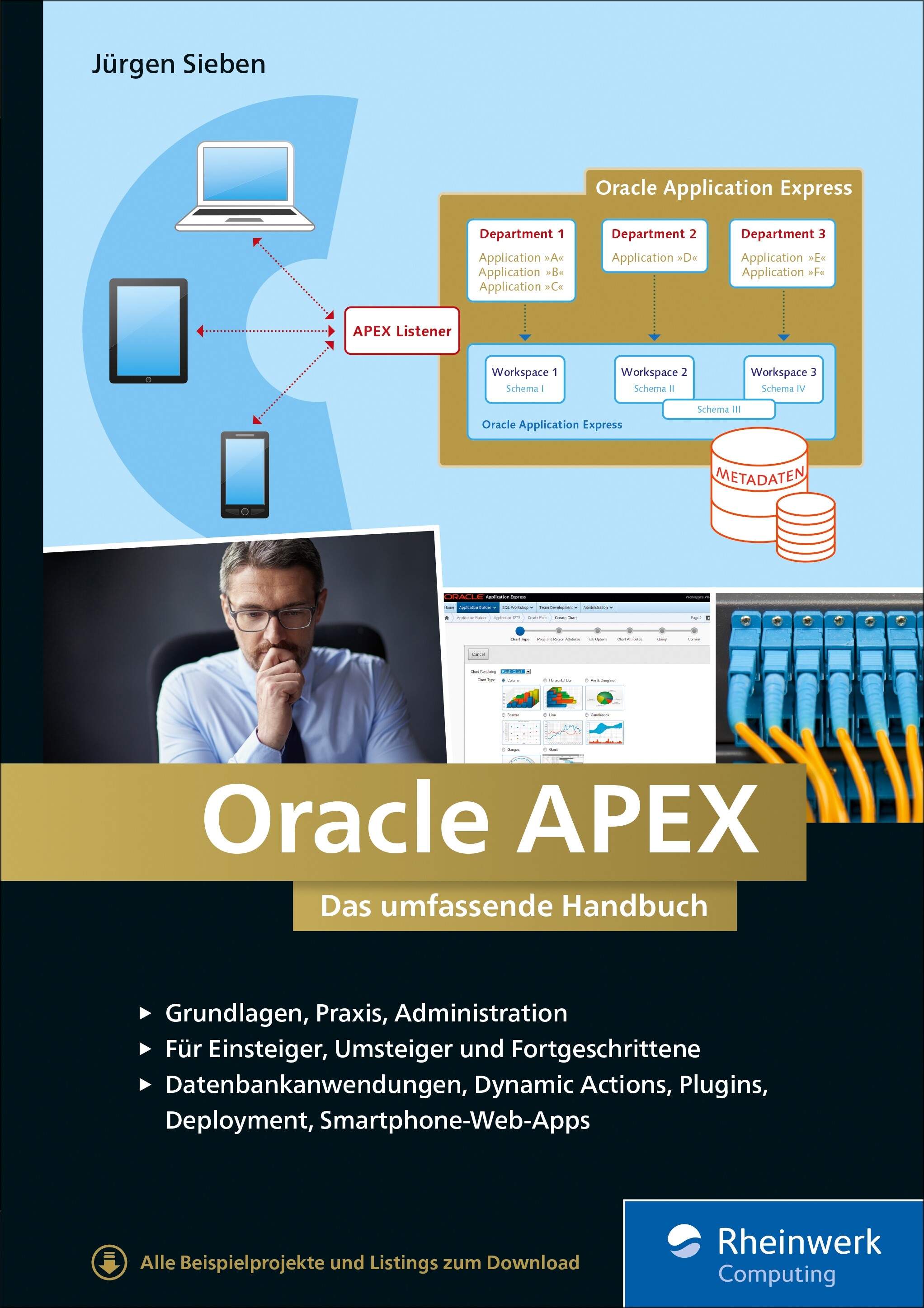
Oracle APEX
Das umfassende Handbuch Jürgen Sieben macht Sie in diesem Handbuch mit Oracle APEX vertraut und zeigt Ihnen ausführlich, wie Sie darin unternehmenstaugliche, webbasierte Datenbankanwendungen entwickeln – fachlich anspruchsvoll und didaktisch routiniert. Kenntnisse in SQL und PL/SQL werden vorausgesetzt. Inkl. Installations- und Upgrade-Anleitung.

Suchmaschinen-Optimierung
Das umfassende Handbuch Dieses Buch sichert Ihnen ein Top-Ranking bei Google und Co. Einsteiger und Fortgeschrittene finden gleichermaßen fundierte Informationen zu allen relevanten Bereichen der Suchmaschinen-Optimierung. Die 9. Auflage wurde ergänzt um viele neue Themen: SEO-freundliche Relaunches, Google Search Console und alternative Suchmaschinen. Neben ausführlichen Details zur Planung und Erfolgsmessung reicht das Themenspektrum von der Keyword-Recherche und Onpage-Optimierung über erfolgreiche Methoden des Linkbuildings bis hin zu Ranktracking und Monitoring mit Google Analytics. Anschauliche Beispiele ermöglichen Ihnen die schnelle Umsetzung in der Praxis, z. B. im Bereich Ladezeitoptimierung und Responsive Webdesign.