

Software

App-Entwicklung mit Flutter für Dummies
Wie Sie mit dem Flutter-Framework Android- und iOS-Apps mit nur einer Code Base und ohne Qualitätsverlust entwickeln, das erfahren Sie hier! Nach einer Einführung in die Programmiersprache Dart lernen Sie das User Interface Design, die Anbindung an Schnittstellen oder Datenbanken, State-Management und Routing in der App kennen, bevor Sie die App auf Fehler testen und in den Stores von Google und Apple veröffentlichen. Alle Schritte vollziehen Sie im Buch an einer durchgängigen Beispiel-App nach. Cross-Plattform-App-Entwicklung? Mit diesem Buch echt einfach! Mira Jago ist Quereinsteigerin in die Programmierung, Tech-Mentorin für Startups und Unternehmerin mit eigener Flutter-Agentur in Hannover. Außerdem gibt sie Kurse zu Flutter. Die Nachfrage ist so hoch, dass sie sich am liebsten klonen würde.Verena Zaiser baute mit 11 Jahren ihre erste eigene Website. Schon in der Schulzeit programmierte sie für Kunden. Sie studierte Informatik und ist heute freiberufliche Mobile-App-Entwicklerin in Stuttgart - natürlich immer mit Flutter.

Nachhaltiges Qualitätsdatenmanagement
Die Gesellschaft für Qualitätswissenschaften e. V. verfolgt seit Ihrer Gründung im Jahre 1994 das Ziel, Qualitätswissenschaft in Lehre und Forschung zu fördern und den Wissenstransfer in die industrielle Anwendung zu unterstützen. Hierzu werden im Rahmen der Jahrestagungen die aktuellen Ergebnisse aus Forschung und Entwicklung vorgestellt und zukünftige Trends in diesem Bereich thematisiert und diskutiert. Die GQW Jahrestagung 2022 fand unter Leitung von Prof. Dr.-Ing. habil. Sophie Gröger in Chemnitz statt. Unter dem Leitthema „Nachhaltiges Qualitätsdatenmanagement“ wurden zahlreiche Beiträge aus Forschung und Industrie vorgestellt. Diese thematisierten dabei beispielsweise die Integration des ISO GPS-Systems in kleine und mittelständische Unternehmen (KMU), eine Vorgehensweise zur fertigungsprozessorientierten Prüfplanung, aber auch die Verknüpfung von Messdaten und Datenbanken zur Vergleichbarkeit von Messergebnissen. Ebenso wurden die Anwendung von Methoden des maschinellen Lernens und die intelligente Qualitätssicherung durch Bildverarbeitung vorgestellt. Es konnte aufgezeigt werden, wie mit der Verknüpfung von Daten im Bereich der Problemlösung eine Verbesserung aktueller Ansätze (8D-Report) erreicht werden kann. Ein Reifegradmodell zur Bewertung der Datenqualität in Industrie 4.0 und eine Informationsbedarfsanalyse für Verbesserungen im Fehlermanagement in der manuellen Montage ergänzten das Tagungsprogramm. Nicht zuletzt wurden neue digitale Möglichkeiten zum Kompetenznachweis sowohl in der Agrar- und Ernährungswirtschaft als auch im Automotive Bereich diskutiert. Freuen Sie sich also auf ein inhaltlich breites Spektrum interessanter Beiträge aus Forschung und Industrie im Bereich der Qualitätswissenschaften.

Spektrum Kompakt - Künstliche Gespräche
Bis vor wenigen Jahren waren Unterhaltungen mit Maschinen mühselig: Häufig musste man das richtige Schlagwort treffen, um verstanden zu werden – und selbst dann war der Erfolg nicht garantiert. Ganz andere Erfahrungen macht man hingegen mit dem im November 2022 erschienenen KI-Chat-bot »ChatGPT«. Nur allzu schnell kann man vergessen, dass es sich dabei um einen Algorithmus handelt. Auch wenn das System gelegentlich Fehler macht, ertappe ich mich häufg dabei, dass ein Gespräch in mir Emotionen wie Dankbarkeit (wenn ChatGPT mir weiterhelfen konnte) oder Ärger (wenn die KI mich doch missversteht) hervorruft. Aber wie viel können wir von den künstlichen Gesprächspartnern erwarten? In dieser Ausgabe ergründen wir die Funktionsweise der neuen Technologien und zeigen ihre Potenziale und ihre Grenzen auf. Dieses Editorial habe ich übrigens selbst geschrieben – keine KI. Viel Spaß bei der Lektüre wünscht Ihnen Manon Bischoff, Redaktion Spektrum der Wissenschaft

Visual Studio Code Distilled
Use Visual Studio Code to write and debug code quickly and efficiently on any platform, for any device, using any programming language, and on the operating system of your choice.Visual Studio Code is an open source and cross-platform development tool that focuses on code editing across a variety of development scenarios, including web, mobile, and cloud development. This third edition has been updated to match the latest releases of the environment. Additional updates relate to .NET 7 and explain how to consume AI services from code you write in Visual Studio Code. This new edition is also refreshed with the latest updates, such as enhanced merge editor, creating extensions, support for the Julia language, and much more.The book teaches you how to be immediately productive with Visual Studio Code, from the basics to some of the more complex topics. You will learn how to work on individual code files, complete projects, and come away with an understanding of advanced code-editing features that will help you focus on productivity, and source code collaboration with Git.WHAT YOU WILL LEARN* Get started with practical guidance on Visual Studio Code, including expansive guidance on writing apps with C# and Python* Understand how to edit individual files and how to work with folders by working on the latest workspace trust and multi-root workspaces* Debug code on multiple platforms through real-world guidance, such as working under corporate networks* Package code into Docker containers and deploy these to Azure* Acquire valuable tips, tricks, and suggestions from hard-earned, real-world experience to be more productiveWHO THIS BOOK IS FORAll developers (including JavaScript, Java, NodeJS), not just those with a Microsoft background, who will benefit from learning and using VS code as a cross-platform and cross-language toolALESSANDRO DEL SOLE is Senior Software Engineer for a healthcare company, building mobile apps for doctors and dialysis patients. He has been in the software industry for more than 20 years, focusing on Microsoft technologies such as .NET, C#, Visual Studio, and Xamarin. He has been a trainer, consultant, and a Microsoft MVP since 2008 and is the author of many technical books. He is a Xamarin Certified Mobile Developer, Microsoft Certified Professional, and a Microsoft Programming Specialist in C#.Chapter 1: Introducing Visual Studio CodeChapter Goal: this chapter will introduce Visual Studio Code as a development tool from Microsoft, discussing its open source and cross-platform nature, its goals and most typical usage scenarios, explaining how it works on Windows, macOS and Linux distributions.Chapter 2: Getting to know the WorkspaceChapter Goal: this chapter will explain the VS Code workspace, its menus, commands, toolbars, shortcuts and areas in the user interface the developer must know to get familiar with the environment.Chapter 3: Language support and code editing featuresChapter Goal: this chapter will explain what languages are supported out of the box and which are instead supported through extensibility and, more important, it will cover all the powerful code editing features that represent the core of this tool. This is definitely the most important chapter. This is updated according to the latest releases (e.g. support for Julia language).Chapter 4: Working with files and foldersChapter Goal: this chapter explains how to edit individual files and how to work with folders that contain multiple files (or projects) in a structured way, making the natural step forward after learning about code editing features. This is updated according to the releases of the latest 15 months (e.g. workspace trust, multi-root workspaces).Chapter 5: Customizing VS CodeChapter Goal: this chapter will talk about customizing preferences in the VS Code environment, such as themes, keyboard shortcuts, the code editor, network preferences and much more. This is updated according to the releases of the latest 15 monthsChapter 6: Managing extensionsChapter Goal: this chapter will explain how to extend Visual Studio Code by installing extensions such as additional languages, debuggers, code snippets and team collaboration tools. It will also provide a list of must-have extensions and it will explain how to customize extension settings. As a new topic, guidance on how to create extensions will be provided (this is also the reason why this chapter has been renamed).Chapter 7: Source control with GitChapter Goal: this chapter will discuss source control with Git, which is about how people in the development team can collaborate over the code. Common features such as committing changes, merging and branching will be discussed. As a bonus, this chapter will also discuss how to leverage the integrated Git support against Microsoft Azure DevOps and GitHub via an extension. This is updated according to the releases of the latest 15 months (e.g. enhanced merge editor)Chapter 8: Automating tasksChapter Goal: this chapter will discuss how to execute external tools and commands from VS Code (such as compilers), explaining how this goes beyond being a simple code editor. This is updated according to the releases of the latest 15 monthsChapter 9: Building and debugging codeChapter Goal: this is another key chapter, as it explains how powerful VS Code is as a development tool and not as a simple code editor, due to its capability of running and debugging code with integrated debuggers for .NET and Node.JS and with debuggers that can be installed as extensions. Examples of running and debugging code will be provided for .NET (C#), Node.JS (Java) and Docker. This has been renamed to appear less specific, but it will be updated to target .NET 7.Chapter 10: Writing applications with PythonChapter Goal: this chapter explains how VS Code can be used to build apps with the popular Python language, leveraging all the enhanced editing features described in Chapter 3 and the task automation features described in Chapter 8. It comes with fully working code examples.Chapter 11: Building applications for the CloudChapter Goal: this chapter explains how to set up VS Code to work with Microsoft Azure, installing the appropriate extensions and with practical examples about writing and deploying Azure functions. As a new topic, this chapter also describes how to package code into Docker containers and deploy these to Azure.Chapter 12: Consuming AI Services with VS CodeChapter Goal: this is a brand new chapter that wants to address a trending topic of these days: consuming AI services. In this chapter, code examples will be provided about consuming some of the AI services offered by MS Azure (e.g. Computer Vision API).

Word 2021 - Stufe 1: Grundlagen
- Gut nachvollziehbare Anleitungen mit vielen Bildern.- Übungen mit Lösungen zum Download.- Von einer Dozentin geschrieben - mit Tipps für die Praxis.Ob beruflich, privat oder im Studium: Die Office-Anwendung Word gehört einfach zum Alltag. Sind Sie Einsteiger ohne Vorkenntnisse und möchten den sicheren Umgang mit Word 2021 von Grund auf erlernen? Dann ist dieses Handbuch Ihr optimaler Begleiter, denn es führt Sie mit anschaulichen Beispielen, leicht nachvollziehbaren Anleitungen und Übungen in die Textverarbeitung ein. Allen, die bereits über erste Word-Kenntnisse verfügen, dient es als praktisches Nachschlagewerk. Das Buch ist wie ein Kurs aufgebaut. Schritt für Schritt zeigt Ihnen die Autorin die unzähligen Möglichkeiten von Word. Erfahren Sie, wie Sie z. B. die Rechtschreibprüfung und Silbentrennung nutzen, Text und Seitenlayout gestalten, Formatvorlagen gezielt einsetzen, Bilder einfügen, Serienbriefe erstellen und vieles mehr. Durch ihre langjährige Erfahrung als Dozentin kennt Inge Baumeister die typischen Fragen und Fehler von Anfängern und gibt wertvolle Tipps, die auch Ihre Arbeit spürbar erleichtern!Aus dem Inhalt:- Eingabe-, Bearbeitungs- und Korrekturtechniken- Text mit Schriften, Farben, Einrückungen usw. versehen- Aufzählungen, Nummerierungen und Rahmenlinien- Tabellen verwenden- Bilder und grafische Elemente einfügen- Individuelle Seitenlayouts gestalten- Seitenzahlen sowie Kopf- und Fußzeilen hinzufügen- Dokumente drucken und als PDF speichern- Die Vorteile von Serienbriefen nutzen- Effiziente Gestaltung mit Formatvorlagen- Dokumente überarbeiten und gemeinsam verwenden- Eigene Dokumentvorlagen erstellen

Content 360 Grad
Guter Content ist viel mehr als Text und Bild - er ist auch Video, Sound, Design, Podcast usw. Er ist technisch und kreativ, strategisch und spontan, kurzweilig und weitblickend zugleich. Diese Komplexität schlüsselt dieses Praxisbuch für Sie mit wertvollen Erfahrungsberichten vieler Spezialistinnen auf. So erhalten Sie einen fundierten Überblick über die verschiedenen Content-Disziplinen - alles in einem Werk! Mit Beiträgen von Kathi Grelck, Robert Weller, Christine Henning & Hendrik Unger, Katrin Schüler-Springorum, Jennifer Fritz, Anna Turnerm Caroline Hof und Ute Klingelhöfer. Aus dem Inhalt: Grundlagen des Content-MarketingsDas Königsformat TextGutes Design, guter Content?King Video gekonnt in Szene gesetztDie Renaissance des Audio ContentsWie Sie mit Wissen Kunden begeisternContent auf Speed: Social MediaContent im B2BDer Umsatz-Rockstar: Shop-ContentAus- und Weiterbildungsmöglichkeiten 1. Content 360 Grad - Rundumblick auf die Praxis der Content-Arbeit ... 13 1.1 ... Endlich! Die Content-Qualitätssicherung rückt immer mehr in den Fokus ... 17 1.2 ... Meine Top 10 der Content-Stolperfallen ... 22 1.3 ... Content der Zukunft - auf Kollaborationskurs mit der KI? ... 28 1.4 ... In a nutshell - Sie sind die richtige Buchzielgruppe, wenn . ... 40 1.5 ... Was Sie in diesem Buch erwartet ... 41 1.6 ... Abschließend: Content-Strategie = Mach einfach das Richtige! ... 43 2. Das Königsformat Text heute - und auch in der Zukunft? ... 45 2.1 ... Text ist nicht gleich Text? Ein Blick auf die Formatvielfalt ... 46 2.2 ... Be a pro! Tipps für das Verfassen von (digitalen) Inhalten ... 51 2.3 ... Messbar, evaluierbar, testbar? Kann Text überhaupt was? ... 54 2.4 ... Text und SEO - Suchmaschinenoptimierung ist mehr als Keywords ... 59 2.5 ... Text als Vertriebsprofi - Tipps für das Schreiben überzeugender Produkttexte ... 63 2.6 ... Storytelling - mit Emotionen Kunden begeistern ... 68 2.7 ... Diversität und Inklusion im Text - Gendern, Leichte Sprache, Barrierefreiheit ... 72 2.8 ... Automatisierung, künstliche Intelligenz, die Ära des Bewegtbildes - ist Text ein Auslaufmodell? ... 80 3. Gutes Design, guter Content? ... 87 3.1 ... Das CUBI UX-Modell als Framework für die zielgerichtete Gestaltung von Content ... 88 3.2 ... Content Designer*innen als Bindeglied für ganzheitliche Prozesse ... 102 3.3 ... Nützliche Tools fürs Content Design ... 111 3.4 ... Fazit: Guter Content braucht gutes Design ... 117 4. Video ist King! Setzen Sie Bewegtbild gezielt für Ihr Marketing ein ... 119 4.1 ... Warum Bewegtbilder das Web rocken ... 119 4.2 ... Tipps für die Einbettung von Videos ... 122 4.3 ... Pimpen Sie Ihr Video SEO-fit! ... 128 4.4 ... Hochwertige Videos können nur die Großen? Nicht unbedingt ... 132 4.5 ... Ausrüstung und Toolempfehlungen ... 136 5. Schon gehört? Audio-Content ist der Nachwuchsstar am Content-Himmel ... 145 5.1 ... Audio? Worum geht es? ... 145 5.2 ... Erheben Sie die Content-Stimme für Ihre User ... 155 5.3 ... High End Studio oder Smartphone, egal - ein Podcast soll es sein ... 167 6. Mehrwert trumpft klassisches Marketing - wie Sie mit Wissen begeistern ... 181 6.1 ... Was Sie bedenken sollten, bevor Sie loslegen ... 184 6.2 ... Das richtige Thema finden ... 187 6.3 ... Sinnvolle Lernziele setzen ... 191 6.4 ... Ein erstes Konzept erstellen ... 192 6.5 ... Spaß und Abwechslung ins Lernen bringen ... 202 6.6 ... Den Zeitrahmen richtig schätzen und die Rollen im Team festlegen ... 212 6.7 ... Mit gutem Design für Klarheit sorgen ... 215 6.8 ... Einmal testen, bitte! ... 217 6.9 ... Die Aufmerksamkeit der Zielgruppe gewinnen ... 218 6.10 ... Auswerten, verbessern, in die Zukunft denken ... 219 7. Content auf Speed - Inhalte für Social Media ... 221 7.1 ... Einführung: Content für immer mehr abgelenkte Zielgruppen ... 222 7.2 ... Social-Media-Content-Management - nur nebenbei geht meist an den Bedürfnissen vorbei ... 230 7.3 ... Content, der begeistert - Tipps und Beispiele für die gängigsten Social-Media-Formate ... 241 7.4 ... Social sells - Verkaufen über Social Media ... 258 8. Content im B2B - da geht noch einiges! ... 261 8.1 ... Dreamteam - Content Marketing und B2B ... 261 8.2 ... Das B2B-Marketing und seine Herausforderungen ... 262 8.3 ... Ein B2B-Kunde ist auch nur ein Mensch ... 263 8.4 ... Customer Journey im B2B - Ihre Inhalte als Reisebegleiter ... 273 8.5 ... Erfolgsfaktor Storytelling ... 281 8.6 ... Mit Content sichtbar auf Social Media ... 283 8.7 ... Mit Content sichtbar auf LinkedIn ... 290 8.8 ... Und die Kennzahlen? So überzeugen Sie die Geschäftsleitung ... 294 8.9 ... Fazit ... 297 9. Der Umsatz-Rockstar - Shop-Content ... 299 9.1 ... Die drei Grundgesetze eines jeden erfolgreichen Shops - warum der Fokus auf die Zielgruppe so entscheidend ist ... 301 9.2 ... Ab in den Spam-Ordner? Wie Sie Newsletter sinnvoll im E-Commerce einsetzen ... 326 9.3 ... Textautomation - wann guter Content auf Knopfdruck funktioniert ... 334 9.4 ... Safety first - wie Sie E-Commerce rechtssicher gestalten ... 340 9.5 ... Ein Blick in die Content-Glaskugel - wie Onlineshopping auch in der Zukunft funktioniert ... 341 10. Content-Profi werden und bleiben - Aus- und Weiterbildungsmöglichkeiten ... 343 10.1 ... Einmal Content-Profi, immer Content-Profi? Gründe, nicht stehen zu bleiben ... 343 10.2 ... So gehen Sie Weiterbildung strategisch an - Durchführung von Team-Audits ... 348 10.3 ... Der Weiterbildungsmarkt im Überblick - viele Wege führen nach Rom, doch welcher ist meiner? ... 352 10.4 ... Weiterbildung - was will der Markt? ... 355 10.5 ... Weiterbildungsangebote ... 360 10.6 ... Wie Sie das meiste aus einer Weiterbildung herausholen ... 365 10.7 ... Mit Netzwerken am Ball bleiben - wie Content-Profis ihr Wissen up to date halten ... 371 10.8 ... Was darf Weiterbildung kosten? ... 378 10.9 ... 5 Thesen zur Weiterbildung der Zukunft - wo geht die Reise hin? ... 379 10.10 ... Fazit ... 381 Die Beiträger*innen in diesem Buch ... 383 Index ... 395

Access
Wie Sie in Access 2021 Datenbanken grundlegend richtig konzipieren und schrittweise aufbauen, erfahren Sie als Anwender oder Entwickler in diesem Buch! Nach einer umfassenden Einführung in gutes Datenbankdesign macht es Sie mit der Erstellung von Tabellen, Abfragen, Formularen und Berichten vertraut. Außerdem lernen Sie alle wichtigen fortgeschrittenen Techniken kennen: Von Abfrageoptimierung und VBA- oder DAO-Programmierung über SQL-Server-Anbindung bis zur Entwicklung von Desktopanwendungen ist einfach alles für Sie drin! Aus dem Inhalt: Grundlagen zu Access: Installation und Konfiguration, relationale Datenbanken, BeziehungenDatenbank-Design: Normalisierung, Namenskonventionen, referentielle Integrität, häufige Fehler, Best Practice Tabellen erstellen und ändern; Felddatentypen, Beziehungen erstellen, Primär- und Fremdschlüssel, Alternativschlüssel und IndizesAbfragen erstellen inkl. WorkshopsDatenverbindungen, Import und Export von Daten, Einbinden von SharePoint-Listen; Server-DatenbankenSQL lernen: Daten abfragen und auswerten, Unterabfragen, Aktionsabfragen, Union- und SQL-Pass-Through-AbfragenFormulare erstellen: Formular-Typen, Entwurf, Steuerelemente, Layout, Ansichten, Arbeiten mit mehreren FormularenÜbersichtliche Berichte: Entwurf, Ansichten, Bereiche, Etiketten und mehrspaltige BerichteProgrammierung mit Makros und VBA: Formulare bereichern, auf Ereignisse reagieren, Entwicklungsumgebung, Daten im Speicher verarbeiten, Fallunterscheidungen und Schleifen, Module, Klassenmodule, FehlerbehandlungDAO-Klassenbibliothek: Aktionsabfragen erstellen und ausführen, Datensätze bearbeiten, TransaktionenAnwendungsprogramme erstellen: Desktop-Datenbanken Vorwort ... 17 1. Einleitung ... 21 1.1 ... Was ist Access? ... 21 1.2 ... Wie kann eine Datenbank meine Arbeitsprozesse unterstützen? ... 27 2. Access als Datenbank: Tabellen ... 39 2.1 ... Ein Schnelleinstieg in relationale Datenbanken ... 39 2.2 ... Datenbankdesign ... 45 2.3 ... Erstellen von Tabellen ... 56 2.4 ... Ändern von Tabellen ... 99 2.5 ... Daten in Tabellen ... 105 2.6 ... Formatierungen in Tabellen ... 128 2.7 ... Beziehungen zwischen Tabellen ... 155 2.8 ... Durch die Normalformen das Datenbankdesign verbessern ... 186 2.9 ... Indizes ... 211 2.10 ... Besondere Tabellen ... 221 3. Daten filtern, sortieren und zusammenfassen: Abfragen ... 225 3.1 ... Einfache Abfragen ... 225 3.2 ... Auswerten von Daten eines Datensatzes: Berechnete Felder ... 251 3.3 ... Zusammenfassen von Datensätzen: Gruppierung und Aggregieren ... 272 3.4 ... Abfragen von Daten aus mehreren Tabellen ... 288 3.5 ... Aktionsabfragen ... 305 3.6 ... Workshops zum Normalisieren von Daten ... 320 4. Access und die Verbindungen zur Außenwelt ... 333 4.1 ... Wann braucht man Datenverbindungen? ... 333 4.2 ... Export von Daten ... 343 4.3 ... Zugriff auf eine Access-Desktop-Datenbank aus anderen Programmen ... 376 4.4 ... Import von Daten ... 393 4.5 ... Workshops zum Import von Daten ... 411 4.6 ... Anbindung externer Datenquellen: Verknüpfen von Tabellen ... 461 4.7 ... Was sind Server-Datenbanken? ... 471 4.8 ... Workshops zum SQL Server ... 489 5. SQL -- die Programmiersprache für Datenbanken ... 511 5.1 ... Warum SQL lernen? ... 511 5.2 ... Daten abfragen: SELECT ... 512 5.3 ... Gruppierung und Aggregieren ... 531 5.4 ... Unterabfragen ... 535 5.5 ... Aktionsabfragen: Data Manipulation Language (DML) ... 545 5.6 ... Datenbankobjekte verändern: Data Definition Language (DDL) ... 553 5.7 ... Besondere Abfragen ... 556 6. Formulare ... 563 6.1 ... Formulare entwerfen ... 563 6.2 ... Arbeiten mit Steuerelementen ... 574 6.3 ... Die verschiedenen Steuerelemente ... 601 6.4 ... Mit Layouts in Formularen arbeiten ... 668 6.5 ... Formulartypen ... 681 6.6 ... Arbeiten mit mehreren Formularen ... 692 6.7 ... Formulare aus einer Vorlage erstellen ... 715 6.8 ... Workshops zu Formularen ... 718 7. Berichte ... 749 7.1 ... Berichte entwerfen ... 749 7.2 ... Arbeiten mit Layouts in Berichten ... 763 7.3 ... Ansichten eines Berichts ... 764 7.4 ... Bereiche in Berichten ... 771 7.5 ... Berichte mit mehreren Spalten ... 796 7.6 ... Workshops zu Berichten ... 804 8. Einfache Programmierung mit Makros ... 819 8.1 ... Makros ... 819 8.2 ... Auf Ereignisse reagieren ... 837 8.3 ... Besondere Makros ... 847 9. Visual Basic for Applications (VBA), die Programmiersprache für Microsoft-Office-Anwendungen ... 855 9.1 ... Warum VBA lernen? ... 855 9.2 ... Formulare bereichern ... 857 9.3 ... Die integrierte Entwicklungsumgebung ... 867 9.4 ... Daten im Speicher verarbeiten ... 877 9.5 ... Kontrollstrukturen: Verzweigungen und Wiederholungen ... 891 9.6 ... Module ... 899 9.7 ... Klassenmodule ... 927 9.8 ... Fehlerbehandlung ... 956 10. Die Data-Access-Objects-(DAO-)Klassenbibliothek ... 965 10.1 ... Daten abfragen: »Recordset«-Objekte ... 966 10.2 ... Aktionsabfragen ausführen ... 978 10.3 ... Transaktionen ... 980 10.4 ... Andere Klassenbibliotheken ... 984 11. Anwendungsprogramme mit Access erstellen ... 993 11.1 ... Wichtige Elemente eines Anwendungsprogramms ... 994 11.2 ... Zugriffsberechtigungen ... 1005 11.3 ... Ohne Access mit Datenbank-Dateien arbeiten: Die Access Runtime ... 1016 11.4 ... Die Grenzen der Möglichkeiten in Access -- Beyond the Limits ... 1030 Anhang ... 1035 A.1 ... Microsoft SQL Server ... 1035 Index ... 1077

Fokus!
Du bist Product Owner. Die Aufgabe könnte kaum komplexer sein: Die Qualität eures Produkts hängt von deiner Arbeit ebenso ab wie ein wertschätzendes Miteinander. Auch Infrastruktur, Stakeholder und Terminpläne brauchen deine Aufmerksamkeit. Ihr liefert häufig und du musst stets wissen, wie es um den Fortschritt bestellt ist. Dieses Handbuch hilft dir, die Rolle in allen Facetten gut auszufüllen. Es bietet einen Überblick über Prinzipien, Aufgaben und Artefakte in Scrum, lehrt Grundlagen gelungener Kommunikation und eine Fülle ganz konkreter Vorgehensweisen. Du profitierst von der vielseitigen Erfahrung der Autor*innen im Coaching und in der Produktentwicklung. Lerne pfiffige Abläufe und robuste Methoden für verschiedene Projektsituationen kennen. Für den Einstieg und als Begleiter in der Praxis. Aus dem Inhalt: Weshalb Unternehmen agil arbeitenAufgaben in der Product-Owner-RolleMeetings und Retrospektiven gestaltenProduktstrategie und ZieleStory Mapping und ReleaseplanungKommunikation: POs als VermittlerGekonnt priorisierenDesign Thinking: Nutzer*innen beobachten und verstehenDatengetriebene ProduktentwicklungRisiken erkennenAgilität für ganze Unternehmen Vorwort ... 17 1. Gesucht: Product Owner (m/w/d) ... 19 1.1 ... Scrum - eine agile Allzweckmethode? ... 20 1.2 ... Product Owner*in - was ist das eigentlich? ... 25 1.3 ... Fünf Dinge, um die du dich wirklich kümmern musst ... 31 1.4 ... Was ist NICHT dein Job?! ... 40 2. Alles im Blick: die Produktübersicht ... 43 2.1 ... Viele verschiedene Perspektiven einbeziehen ... 44 2.2 ... Alles auf einem Blatt ... 45 2.3 ... Deine Vision zählt ... 48 2.4 ... Die Bedürfnisse der Kundschaft kennenlernen ... 50 2.5 ... Die Produktstruktur entwickeln ... 52 2.6 ... Der Return muss stimmen: Nutzen und wirtschaftliche Anreize ... 58 2.7 ... Unwägbarkeiten und Risiken konstruktiv wenden ... 60 2.8 ... Rechtliche Rahmenbedingungen einbeziehen ... 65 2.9 ... Die Abhängigkeiten ermitteln ... 66 2.10 ... Die Kommunikation mit den Stakeholder*innen aufbauen ... 70 2.11 ... Experimentiere dich an den Auftrag ran ... 73 2.12 ... Deine persönliche Überblicksroutine ... 75 3. Das Fundament: Projektmanagement ... 77 3.1 ... Meilensteine, Iterationen und das Produkt-Ziel ... 78 3.2 ... Deine Vorgehensstrategie entwickeln ... 83 3.3 ... Wie sag ich es den anderen? ... 88 3.4 ... Vom ersten Meilenstein zum Product Backlog ... 90 3.5 ... Produktarten und ihre Herausforderungen ... 93 4. Zeit für Feedback ... 99 4.1 ... Die Wissensspirale ... 100 4.2 ... Feedback: ehrliche Rückmeldungen für die Weiterentwicklung nutzen ... 102 4.3 ... Voraussetzungen für gute Feedback-Gespräche ... 104 4.4 ... Feedback-Regeln ... 107 4.5 ... Der Feedback-Canvas ... 108 4.6 ... Vom Umgang mit Feedback und Fehlern ... 110 4.7 ... Lernmomente gestalten ... 111 4.8 ... Impulse im Entwicklungsalltag aufgreifen ... 111 5. Product Discovery: Raten oder Daten? ... 123 5.1 ... Was ist Product Discovery? ... 124 5.2 ... Immer ist ein guter Zeitpunkt ... 126 5.3 ... Die Haltung entscheidet ... 126 5.4 ... Methoden zur Product Discovery ... 128 5.5 ... Design Thinking ... 139 5.6 ... Serendipität ... 141 5.7 ... Vorsicht vor Denkfehlern! ... 142 5.8 ... Hypothesen bilden und testen ... 143 5.9 ... Wie weiter? ... 144 6. Zuhören, verstehen, ansprechen: dein Kommunikationsjob ... 147 6.1 ... Verständlichkeit und Verständigung herstellen ... 149 6.2 ... Zusammenarbeit durch angemessene Kommunikation initiieren ... 154 6.3 ... Agil kommunizieren ... 159 6.4 ... Gesprächsführung übernehmen in alltäglichen und herausfordernden Situationen ... 161 6.5 ... Kreative Prozesse moderieren ... 171 6.6 ... Schneller entscheiden, statt immer zu warten ... 175 7. Frisch sortiert ist halb gewonnen: das Refinement ... 187 7.1 ... Hol dein Team zusammen ... 188 7.2 ... Stories und Backlog-Einträge schreiben ... 188 7.3 ... Geschickt schneiden ... 195 7.4 ... Akzeptanzkriterien finden ... 200 7.5 ... Definition of Done ... 204 7.6 ... Gut geschätzt: Story Points & Co. ... 207 7.7 ... Sortieren und priorisieren (und mal Nein sagen können) ... 214 7.8 ... Das Refinement ritualisieren: Wie machen wir das regelmäßig? ... 217 8. Interview: Auf einen Kaffee mit Product Ownerin Jil ... 221 8.1 ... Die Product-Owner-Rolle in der Praxis ... 222 8.2 ... Mit Daten arbeiten ... 223 8.3 ... Kommunikation ist das A und O ... 223 8.4 ... Fragen sind »The Only Way«! ... 225 8.5 ... Dein allerbester Freund aus dem Tech-Team ... 226 8.6 ... Geh mit dem Problem ins Team, nicht mit der Lösung ... 226 8.7 ... Tools helfen, den Überblick zu behalten ... 227 8.8 ... Der Blick ins Product Backlog ... 228 8.9 ... Scrum? Kanban? Scrumban! ... 230 8.10 ... Ein gutes Reporting-Tool ist Pflicht ... 231 9. Was liegt an? Planning und Daily ... 233 9.1 ... Das Sprint Planning vorbereiten ... 235 9.2 ... Das Sprint-Ziel formulieren ... 239 9.3 ... Aushandeln: Was kommt in den Sprint? ... 243 9.4 ... Daily zur Information nutzen ... 246 9.5 ... Dem Team Orientierung geben ... 248 9.6 ... Sind wir done done? Die Definition of Done nutzen ... 249 9.7 ... Wertvoll und nützlich? Features abnehmen ... 249 9.8 ... Refinement: Anforderungen erkennen ... 250 9.9 ... Sprint-Wechsel vorbereiten ... 252 9.10 ... Den Sprint abbrechen ... 252 9.11 ... Dann machen wir eben was anderes: der Pivot ... 256 10. Gemeinsam führen ... 259 10.1 ... Wer macht was? ... 260 10.2 ... Die Grundlagen im Agilen Manifest ... 261 10.3 ... Führen und Managen ... 262 10.4 ... Cynefin Framework ... 265 10.5 ... Dich selbst führen ... 268 10.6 ... Mit anderen führen ... 273 11. Tech für Anfänger*innen ... 281 11.1 ... Zuverlässig und mit hoher Qualität entwickeln und liefern ... 282 11.2 ... Anwendungen professionell betreiben ... 294 11.3 ... Rechtliche und Sicherheitsanforderungen sicherstellen ... 298 11.4 ... Aus- und Weiterbildung ... 303 12. Kurs anpassen: das Review ... 305 12.1 ... Das Sprint Review ... 306 12.2 ... Das Review Meeting vorbereiten ... 307 12.3 ... Zum Start ... 314 12.4 ... Der Stand der Dinge ... 317 12.5 ... Die Entwicklungen im Umfeld ... 322 12.6 ... Wie weiter? ... 325 12.7 ... Was nicht ins Review gehört ... 327 13. Auf eine gute Zusammenarbeit! Die Retrospektive ... 329 13.1 ... Wie wird's gemacht? ... 330 13.2 ... Die richtigen Rahmenbedingungen ... 331 13.3 ... Psychologische Sicherheit ... 331 13.4 ... Lass uns über Gefühle sprechen ... 333 13.5 ... Die Retrospektive für kritisches Feedback nutzen ... 334 13.6 ... Ein typischer Ablauf ... 335 13.7 ... Nach der Retro ist vor der Retro ... 337 14. Guter Rat von Lennart ... 339 14.1 ... Was macht ein Agile Coach? ... 339 14.2 ... Der Unterschied zur Scrum-Master-Rolle ... 340 14.3 ... Wie ein agiler Coach unterstützt ... 340 14.4 ... Tipps für das Stakeholder-Management ... 341 14.5 ... Es gibt keine schlechten Nachrichten ... 342 14.6 ... Wenn Führung fordert ... 343 14.7 ... Der Weg zum Agile Coach ... 344 15. Heiße Konflikte willkommen! ... 347 15.1 ... Konflikte für Innovationen nutzen ... 348 15.2 ... Die Basis für Austausch schaffen ... 353 15.3 ... Höflich miteinander umgehen ... 363 15.4 ... Das Kritische ansprechen: der Elefant im Raum ... 365 15.5 ... Nein sagen (können/dürfen/müssen) ... 370 15.6 ... Grenzen der Kommunikation anerkennen und für sich selbst sorgen ... 372 16. Liefern mit Stil ... 377 16.1 ... Wie oft liefern? ... 379 16.2 ... Was ist alles zu tun? ... 381 16.3 ... Liefern ist kein Endpunkt ... 390 17. Umfeld und Unterstützung: die Sicht aufs Unternehmen ... 391 17.1 ... Warum Organisationsentwicklung? ... 392 17.2 ... Vom ersten Scrum Team zum agilen Unternehmen ... 399 17.3 ... Hypothesengeleitete Entwicklung ... 415 18. Gut gemacht! ... 421 18.1 ... Probiere es einfach aus! ... 421 18.2 ... Danke ... 422 Anhang ... 423 A ... Elefanten-Carpaccio (Beispiellösung) ... 423 B ... Literaturverzeichnis ... 427 Das Team, das dieses Buch geschrieben hat ... 437 Index ... 439
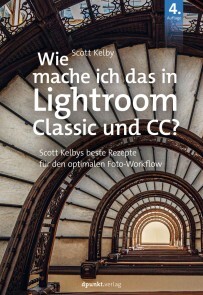
Wie mache ich das in Lightroom Classic und CC? (4. Auflage)
300 Rezepte vom weltweit meistgelesenen Lightroom-AutorWenn Sie nicht so gern dicke Bücher über Lightroom wälzen, sondern lieber nur das Nötige lernen, um Ihre Bilder trotzdem optimal entwickeln und verwalten zu können – dann schauen Sie doch mal in dieses Buch.Hier finden Sie 300 Antworten auf alle wichtigen Fragen zu allen wesentlichen Lightroom- Funktionen für die Versionen Classic und CC – vom Import Ihrer Bilder über ihre Organisation und Entwicklung bis zum Druck.Sie kommen an einer Stelle nicht weiter? Dann schlagen Sie einfach kurz hier nach. Wenn Sie Fragen haben zur effizienten Verwaltung Ihrer Bilder – im Kapitel über Bildorganisation finden Sie garantiert die richtigen Antworten. Sie wollen mit Lightrooms mächtigen, KI-basierten Maskierungsfunktionen arbeiten? Dann hat das Kapitel über Masken die für Sie passenden Rezepte. So verbringen Sie weniger Zeit mit dem Erlernen von Lightroom und mehr Zeit mit der Bearbeitung Ihrer Bilder. Lightroom erlernen Sie so trotzdem – ganz praktisch und fast nebenbei.Ob Sie dieses Buch zum Nachschlagen nutzen, es durchstöbern oder in einem Rutsch durchlesen: Scott Kelby bringt Sie immer auf dem kürzesten Weg ans Ziel, mit so viel Information, wie Sie benötigen, und so verständlich und unterhaltsam, als würde Ihnen ein guter Bekannter Lightroom erklären.
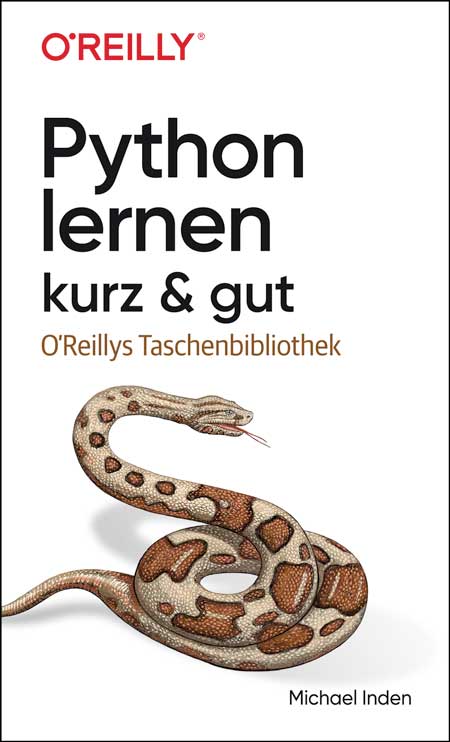
Python lernen - kurz & gut
Der praktische Schnelleinstieg in die Python-Programmierung- Kompakt und verständlich vermittelt dieses Buch den Umgang mit Python 3- Ein interaktiver Einstieg erlaubt direktes Ausprobieren und verschafft schnelle Erfolgserlebnisse- Sie lernen die Python-Grundlagen und einen guten Stil beim Entwickeln- Der Sourcecode, die Beispiele und ergänzende umfangreiche Praxisprojekte sind als Download verfügbar und erleichtern das VerständnisDieses Buch ist für vielbeschäftigte Programmierer:innen, die eine knappe und dennoch gut verständliche Einführung in Python als immer populärer werdende Programmiersprache suchen. Python lernen – kurz & gut bietet einen unterhaltsamen Einstieg und informiert Sie über viele Python-Bestandteile, die Ihnen helfen werden, schnell durchzustarten:- Installation von Python- Schnelleinstieg in die wichtigsten Aspekte- Basisbausteine wie Strings, Enums, Zufallszahlen, Fallunterscheidungen und Schleifen- Klassen und objektorientierte Programmierung- Datencontainer wie Listen, Mengen und Tupel- Fortgeschrittene Themen zu Collections wie Iteratoren, Generatoren, Slicing, Sortierungen und Comprehensions- Datumsverarbeitung inklusive Berechnungen- Dateiverarbeitung und JSON sowie Behandlung von FehlernTrotz seines kompakten Formats liefert dieses Buch eine fundierte Einführung und eine Fülle an leicht nachvollziehbaren Beispielen, die zum Experimentieren einladen. Es unterstützt Sie optimal dabei, Ihre Python-Kenntnisse auf- und auszubauen. Insbesondere wenn Sie bereits ein wenig mit z.B. Java oder C++ vertraut sind, ist dieses Buch die ideale Wahl, um solide in Python einzusteigen.Zum Autor:Michael Inden ist Java- und Python-Enthusiast mit über zwanzig Jahren Berufserfahrung. Nach seinem Studium in Oldenburg hat er bei diversen internationalen Firmen in verschiedenen Rollen etwa als Softwareentwickler, -architekt, Consultant, Teamleiter, CTO sowie Leiter Academy gearbeitet. Seit Anfang 2022 ist er als Head of Development in Zürich tätig. Sein besonderes Interesse gilt dem Design qualitativ hochwertiger Applikationen sowie dem Coaching. Sein Wissen gibt er gerne als Trainer in internen sowie externen Schulungen und auf Konferenzen weiter, etwa bei der JAX/W-JAX, JAX London, Oracle Code One, ch.open sowie bei der Java User Group Switzerland. Zudem hält er Vorlesungen zum Thema Einstieg in Python im Rahmen eines CAS Machine Learning for Software Engineers.
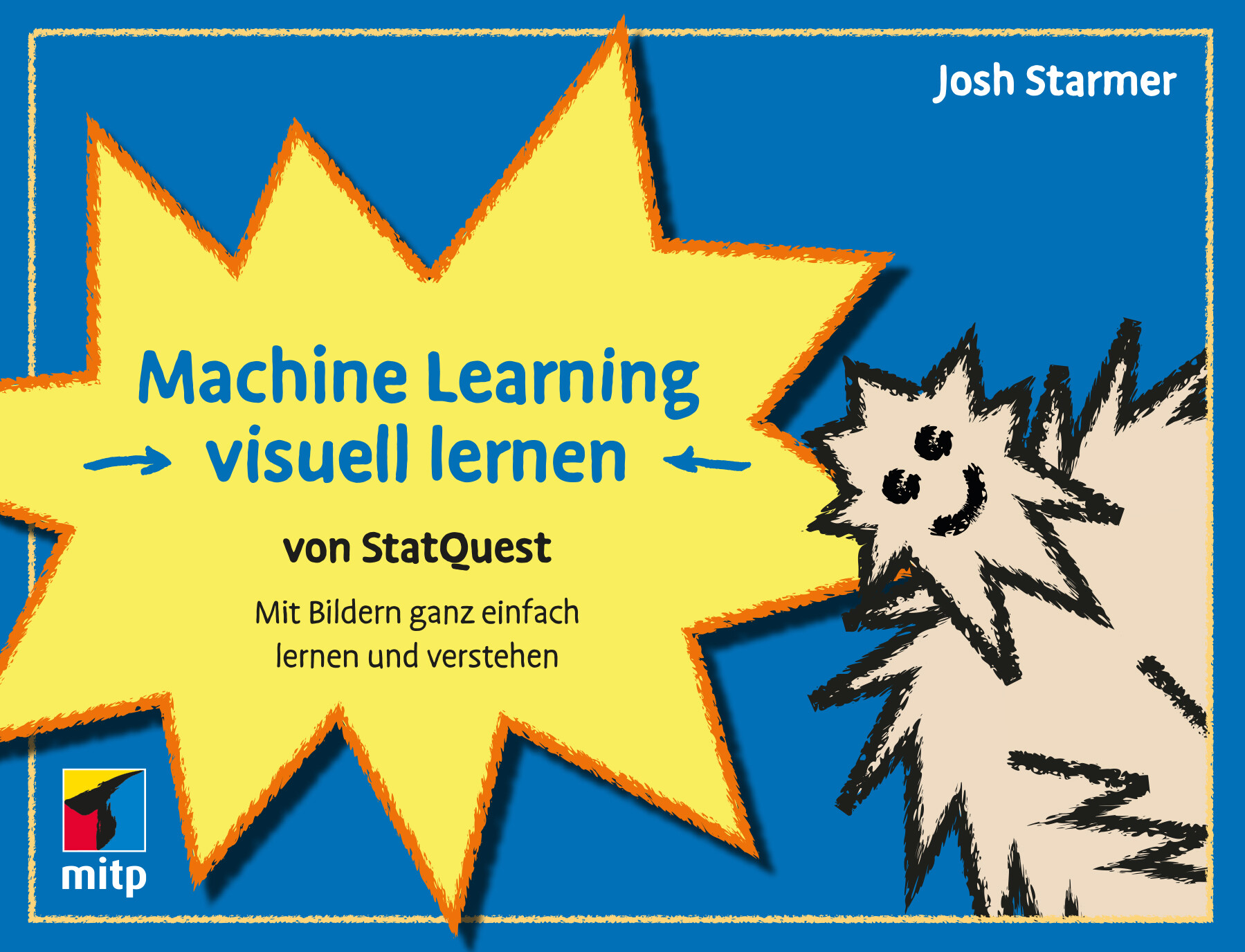
StatQuest - Der illustrierte Machine Learning Guide
Das Buch zum beliebten YouTube-Kanal: StatQuest with Josh Starmer.Machine Learning ist ein mächtiges Werkzeug, kann aber auch unheimlich kompliziert erscheinen. Genau hier setzt dieses Buch an. Egal wie schwierig ein Machine-Learning-Algorithmus auch ist, dieses Buch bricht ihn herunter in kleine, leicht verständliche Häppchen, die einfach nachzuvollziehen sind. Jedes Konzept wird anschaulich illustriert. So erhältst du ein über die bloßen Formeln hinausgehendes Verständnis dafür, wie die einzelnen Methoden funktionieren. Dieses Buch hat nicht zum Ziel, die Konzepte zu vereinfachen. Stattdessen bekommst du mit leicht verständlichen Erläuterungen alles Notwendige an die Hand, um ein tieferes Verständnis für Machine Learning aufzubauen.Das Buch beginnt mit den Grundlagen und setzt keine Vorkenntnisse voraus. Es zeigt dir, was Machine Learning ist und worauf es abzielt, und baut Bild für Bild auf diesem Wissen auf, bis du die Konzepte hinter selbstfahrenden Autos und Gesichtserkennung meisterst.Aus dem Inhalt:Grundlegende Konzepte des Machine LearningsKlassifikation und KreuzvalidierungStatistik-GrundlagenLineare und logistische RegressionGradientenabstiegsverfahrenNaive BayesÜberanpassung vermeiden durch RegularisierungEntscheidungsbäumeSupport Vector Machines (SVMs)Neuronale NetzeÜber den Autor:Josh Starmer ist das Gesicht hinter dem bekannten Youtube-Kanal »StatQuest with Josh Starmer«. Seit 2016 erklärt er allen Interessierten mit seinem innovativen und einzigartigen visuellen Stil Konzepte aus den Bereichen Statistik, Data Science, Machine Learning und Algorithmen. StatQuest hilft Menschen auf der ganzen Welt dabei, Wettbewerbe zu gewinnen, Prüfungen zu bestehen, neue Berufe zu ergreifen und befördert zu werden.

ERP-Software: Funktionalität und Konzepte
Enterprise Resource Planning (ERP) ist eine Software Lösung, die alle Prozesse eines Unternehmens digitalisiert, mit dem Ziel den Automatisierungsgrad zu erhöhen. SAP bietet mit SAP S/4HANA die nächste Generation eines intelligenten ERP-Systems. Das Buch erläutert den Funktionsumfang, das Datenmodell, die Architektur, die zugrundeliegenden Engineering Konzepte und das Programmiermodell von ERP-Systemen basierend auf SAP S/4HANA.Im ersten Teil lernen interessierte Leser*innen die Marktsicht von ERP kennen. Der zweite Teil behandelt die ERP-Geschäftsprozesse für Vertrieb, Marketing, Finanzwesen, Lieferketten, Fertigung, Dienstleistungen, Beschaffung und Personalwesen. Im dritten Teil werden die zugrundeliegenden Konzepte beschrieben, z. B. In-Memory Datenbanken, Analytics und Reporting, Künstliche Intelligenz, Prozess- und Datenintegration, Sicherheit und Compliance, Lebenszyklusmanagement, Performanz und Skalierbarkeit, Konfiguration und Implementierung. Das Buch schliesstmit der Beschreibung und einer Testzugangs-Möglichkeit zur SAP Cloud Appliance Library, mit dem die Leserschaft das SAP S/4HANA System selbst erkunden kann.DER AUTORDR. SIAR SARFERAZ ist seit 20 Jahren leitender Softwarearchitekt bei SAP. In dieser Rolle treibt er die digitale Transformation voran, indem er die Architektur für die ERP-Lösung SAP S/4HANA definiert. Im Kontext von ERP-Software verfügt er über mehr als 30 Patente. Darüber hinaus ist er Autor zahlreicher ERP-Bücher. Er studierte Informatik und Philosophie und promovierte in Informatik.ERP-SOFTWARE: FUNKTIONALITÄT UND KONZEPTEHerausforderungen und Merkmale von ERP-Systemen.- ERP-Marktanalyse.- ERP Zukunftstrends.- Funktionale Abteilungen und Unternehmensdomänen.- Stammdaten des Geschäftspartners.- Stammdaten des Produkts.- Stammdaten der Stückliste.- Geschäftsprozess „Von der Idee bis zur Markteinführung“.- Geschäftsprozess „Von der Bezugsquellenfindung bis zur Zahlung“.- Geschäftsprozess „Von der Planung bis zur Auftragserfüllung“.- Geschäftsprozess „Vom Auftrag bis zum Zahlungseingang“.- Geschäftsprozess „Von der Rekrutierung bis zum Ruhestand“.- Geschäftsprozess „Vom Erwerb bis zur Stilllegung“.- Geschäftsprozess „Unternehmensführung“.- Geschäftsprozess „Finanzwesen“.- Industrielösungen.- ERP-Produktqualitäten: Kundensicht.- ERP-Produktqualitäten: Anbietersicht.- In-Memory Persistenz.- Virtuelles Datenmodell.- Transaktionales Programmiermodell.- Berichtswesen.- Enterprise Suche.- Künstliche Intelligenz.- Internet der Dinge.- Prozessintegration.- Datenintegration.- Erweiterbarkeit: In-App.- Erweiterbarkeit: Side-by-Side.- Benutzeroberflächen.- Identitäts- und Zugriffsverwaltung.- Datenschutz.- Sichere Entwicklung und sicherer Betrieb.- Globalisierung und Lokalisierung.- Skalierbarkeit und Performanz.- Lebenszyklusmanagement.- Konfiguration.- Implementierung.- SAP S/4HANA System erkunden.

Digitalisierung des Bauschaffens
Dieses Fachbuch gibt Planern, Ingenieuren und Entscheidern im Baugeschehen einen verständlichen Leitfaden an die Hand, wie die Möglichkeiten der Digitalisierung im Bausektor souverän und sinnvoll genutzt werden können. Dabei werden sowohl die Chancen als auch die Herausforderungen und Risiken aufgezeigt. Die IT-Grundlagen wie auch relevanten Techniken werden zusammengefasst und deren Anwendung anhand von Praxisbeispielen erläutert. Um die damit verbundenen Methoden als Bauschaffender sofort einsetzen zu können und digitale Kenntnisse auszubauen, werden nachvollziehbare Anwendungsszenarien und die Gestaltung digitaler Maßnahmen im Kontext unterschiedlicher Anwender vertieft. Dies ermöglicht dem Einzelnen als auch Organisationen die schnelle Adaption offener Technologien, um im europäischen und internationalen Vergleich bestehen zu können.

Spring 6 Recipes
This in-depth Spring-based Java developer code reference has been updated and now solves many of your Spring Framework 6 problems using reusable, complete and real-world working code examples. SPRING 6 RECIPES (5th Edition) now includes Spring Native which speeds up your Java-based Spring Framework built enterprise, native cloud, web applications and microservices. It also has been updated to now include Spring R2DBC for Reactive Relational Database Connectivity, a specification to integrate SQL databases, like PostgreSQL, MySQL and more, using reactive drivers.Furthermore, this book includes additional coverage of WebFlux for more reactive Spring web applications. Reactive programming allows you to build systems that are resilient to high load, especially common in the more complex enterprise, native cloud applications that Spring Framework lets you build. This updated edition also uses code snippets and examples based on newest available standard long term support release of Java. When you start a new project, you’ll be able to copy the code and configuration files from this book, and then modify them for your specific Spring Framework-based application needs. This can save you a great deal of work over creating a project from scratch.This powerful code reference is a "must have" for your print or digital library. This developer cookbook comes with accompanying source code that is freely available on GitHub under latest Creative Commons open source licensing.WHAT YOU'LL LEARN* Get re-usable code recipes and snippets for core Spring, annotations and other development tools* Dive into Spring Native which merges the popular Spring and GraalVM for increased performance, speed and reliability of your Spring Framework 6 applications* Explore Spring R2BC for reactive relational database connectivity with SQL* Build reactive Spring MVC-based web applications and microservices using WebFlux* Enhance your enterprise or native cloud applications using Spring Transaction Management* Test, secure and deploy your Spring applications using reusable code templates availableWHO THIS BOOK IS FORThis book is for experienced Java programmers, software developers with experience using the Spring Framework.Marten Deinum is a submitter on the open source Spring Framework project. He is also a Java/software consultant working for Conspect. He has developed and architected software, primarily in Java, for small and large companies. He is an enthusiastic open source user and longtime fan, user and advocate of the Spring Framework. He has held a number of positions including Software Engineer, Development Lead, Coach, and also as a Java and Spring Trainer.Daniel Rubio is an independent consultant with over 10 years of experience in enterprise and web-based software. More recently, Daniel is founder and technical lead at MashupSoft.com. He has co-authored the best selling Spring Recipes as well as other books for Apress Media, LLC. Daniel's expertise lies in Java, Spring, Python, Django, JavaScript/CSS and HTML.Josh Long is the Spring Developer Advocate at Pivotal. Josh is a Java Champion, author of 5 books (including O'Reilly's upcoming "Cloud Native Java: Designing Resilient Systems with Spring Boot, Spring Cloud, and Cloud Foundry") and 3 best-selling video trainings (including "Building Microservices with Spring Boot Livelessons" w/ Phil Webb), and an open-source contributor (Spring Boot, Spring Integration, Spring Cloud, Activiti and Vaadin).1. Spring Development Tools2. Spring Core Tasks3. Spring Native: Spring + GraalVM4. Spring MVC5. Spring REST6. Spring MVC - Async Processing7. Spring WebFlux8. Spring Security9. Data Access10. Spring R2DBC11. Spring Transaction Management12. Spring Batch13. Spring with NoSQL14. Spring Java Enterprise Services and Remoting Technologies15. Spring Messaging16. Spring Integration17. Spring TestingA. Spring Deployment to the CloudB. Caching.

Introduction to SparxSystems Enterprise Architect
SparxSystems Enterprise Architect (EA) is a logical choice for many companies and organizations: it combines a broad feature set with an affordable price. However, the robust range of features makes starting to use this fantastic tool a bit intimidating.Enter Michael, a fictional consultant and experienced enterprise architect featured throughout the book to show you how to populate a model with elements and connectors, and how to create diagrams that speak to the audience: management, project managers, internal audit, business stakeholders and IT representatives. As the book progresses Michael's duties continue with more advanced topics including the use of workflow tools such as Kanban boards. You'll even see how to present directly from Enterprise Architect so that latest information can be shown straight from the source!The last days of Michael’s mission are devoted to fine-tuning the enterprise architecture model with the help of tagged values. And to leave the model in the hands of the customer by creating a custom toolbox.WHAT YOU'LL LEARN* Setup EA and populate a model with elements, connectors and diagrams* Review the Big Five of enterprise architect: Model, Packages, Diagrams, Elements, Connectors* Implement evidence-based best practice strategies aligned with overall goalsWHO THIS BOOK IS FORNon-technical users who use EA mainly to document entire landscapes.Peter Doomen has been working as an architect, analyst, consultant, and teacher. He has been using Enterprise Architect since version 4. He has written two other books about the same subject. In daily life, he is fond of champagne and likes to teach about that subject as well. INTRODUCTION TO SPARXSYSTEMS ENTERPRISE ARCHITECTPart I: Getting StartedChapter 1: Setting Up Enterprise Architect* Comparing the different versions of EA* Downloading and setting up EA. * The Big Five of Enterprise Architect: Model, Packages, Diagrams, Elements, ConnectorsChapter 1A: The First Model: Document the Systemplar Enterprise Architecture* Repositories and projects* The model wizard* Case: Two weeks towards a documented enterprise architecture Chapter 2: Working With Elements* Elements and what they represent* Different ways to add elements to the model: one by one, several of the same type, importing* Case: importing the project list into the enterprise architecture* Finding elements in the model and on diagrams. Finding orphans* Deleting elements* Nesting, locking, bookmarking* Element default appearance and auto name counters Chapter 3: Connecting Elements With Connectors* Case: adding business capabilities to the value chain* Quickly adding links with the quick linker and repeat connector* Other ways to add links* Putting elements on the diagram based on links* Styling and hiding connectors* Adding information to connectors: notes, information flows* The relationship matrix and the gap matrixChapter 4: Using Diagrams To Present Information* Case: a business capability model* Manual and autolayout* Copying diagrams* Legends and status colors* Case: a heat map for the software model* Adding elements to the same diagram twice* Showing alternative info and notes* Filtering diagrams* Different views: list, gantt, specification* Special diagrams (packages, graphs)Part II: Presenting and Improving the ModelChapter 5: Workflow Management* Different ways of handling ‘work to do’: bookmarking elements, adding #todo to elements, and setting up a Kanban diagram* Discussions in the EA model* Case: a Kanban diagram for the enterprise architectureChapter 6: Creating Reports and Slideshows* Diagram exports* RTF Reports* Excel exports* A website* Case: a website for the enterprise architecture* Slideshows in the EA user interfaceChapter 7: Tagged Values and Stereotypes* Tagged values: adding, exporting, inheriting applying to multiple items, defining tagged value types* Stereotypes: defining and visualizing them* General types: status, constraint, constraint status, difficulty, priority, test status, requirement, scenario* Case: adding custom information to the enterprise architecture modelChapter 8: Create Your Own Toolbox* Toolbox visibility* A first attempt at creating a toolbox* Adding icons* The order of elements in the toolbox* Default size* Working with metatypes* Adding diagram properties* Shapescripting: the canvas, the structure of a shapescript, some useful commands, limitations* Case: leaving the enterprise architecture model for the architects of the company

Coding Alles-in-einem-Band für Dummies
Wenn Sie Webseiten oder mobile Apps entwickeln möchten, dann ist dieses Buch für Sie gemacht! Auch ganz ohne Vorkenntnisse steigen Sie einfach ein und lernen die einzelnen Programmiersprachen und Technologien jeweils für sich und im Zusammenspiel kennen und einsetzen. Angefangen beim grundlegenden Aufbau einer Webseite mit HTML, CSS und JavaScript über die Entwicklung mobiler Apps für iOS- und Android-Geräte mit Flutter bis hin zur Verarbeitung der Daten mit Python: Hier ist einfach mehr für Sie drin! Wenn Sie sich einen breiten Überblick über die Webentwicklung und Programmierung verschaffen wollen, dann werfen Sie am besten gleich einen Blick in dieses Buch ...Die inhaltliche Breite dieses Werkes ist nur möglich durch die Zusammenarbeit verschiedener erfahrener Programmiererinnen und Programmierlehrer. Unter der Federführung von Chris Minnick, Autor zahlreicher IT-Fachbücher haben Eva Holland, Nikhil Abraham, John Paul Mueller, Luca Massaron und Barry Burd - allesamt Autoren anderer Dummies-Bücher - dieses Handbuch für angehende und fortgeschrittene Webentwicklerinnen geschrieben.
Handbook of Software Fault Localization
Handbook of Software Fault LocalizationA COMPREHENSIVE ANALYSIS OF FAULT LOCALIZATION TECHNIQUES AND STRATEGIES In Handbook of Software Fault Localization: Foundations and Advances, distinguished computer scientists Prof. W. Eric Wong and Prof. T.H. Tse deliver a robust treatment of up-to-date techniques, tools, and essential issues in software fault localization. The authors offer collective discussions of fault localization strategies with an emphasis on the most important features of each approach. The book also explores critical aspects of software fault localization, like multiple bugs, successful and failed test cases, coincidental correctness, faults introduced by missing code, the combination of several fault localization techniques, ties within fault localization rankings, concurrency bugs, spreadsheet fault localization, and theoretical studies on fault localization. Readers will benefit from the authors’ straightforward discussions of how to apply cost-effective techniques to a variety of specific environments common in the real world. They will also enjoy the in-depth explorations of recent research directions on this topic. Handbook of Software Fault Localization also includes:* A thorough introduction to the concepts of software testing and debugging, their importance, typical challenges, and the consequences of poor efforts * Comprehensive explorations of traditional fault localization techniques, including program logging, assertions, and breakpoints * Practical discussions of slicing-based, program spectrum-based, and statistics-based techniques * In-depth examinations of machine learning-, data mining-, and model-based techniques for software fault localization Perfect for researchers, professors, and students studying and working in the field, Handbook of Software Fault Localization: Foundations and Advances is also an indispensable resource for software engineers, managers, and software project decision makers responsible for schedule and budget control. W. ERIC WONG, PHD, is a Full Professor, Director of Software Engineering Program, and the Founding Director of Advanced Research Center for Software Testing and Quality Assurance in Computer Science at the University of Texas at Dallas. He is also a Guest Researcher with the US National Institute of Standards and Technology. Professor Wong was the award recipient of the 2014 IEEE Reliability Society Engineer of the Year. In addition, he was the Editor-in-Chief of the IEEE Transactions on Reliability from June 2016 to May 2022. He received his MS and PhD in Computer Science from Purdue University. T.H. TSE received his PhD from London School of Economics, and was a Visiting Fellow at University of Oxford. He is an Honorary Professor in Computer Science with The University of Hong Kong after retiring from full professorship. He is a Steering Committee Chair of the IEEE International Conference on Software Quality, Reliability, and Security; and an Associate Editor of IEEE Transactions on Reliability. He has over 270 publications, including a book with Cambridge University Press. He ranks internationally as no. 2 in metamorphic testing. He was awarded an MBE by Queen Elizabeth II of the United Kingdom. Chapter 1: Software Fault Localization: An Overview of Research, Techniques, and ToolsChapter 2: Traditional Techniques for Software Fault LocalizationChapter 3: Slicing-Based Techniques for Software Fault LocalizationChapter 4: Spectrum-Based Techniques for Software Fault LocalizationChapter 5: Statistics-Based Techniques for Software Fault LocalizationChapter 6: Machine Learning-Based Techniques for Software Fault LocalizationChapter 7: Data Mining-Based Techniques for Software Fault LocalizationChapter 8: Information Retrieval-Based Techniques for Software Fault LocalizationChapter 9: Model-Based Techniques for Software Fault LocalizationChapter 10: Software Fault Localization in SpreadsheetsChapter 11: Theoretical Aspects of Software Fault LocalizationChapter 12: Software Fault Localization for Programs with Multiple BugsChapter 13: Emerging Aspects of Software Fault Localization
Job Ready SQL
LEARN THE MOST IMPORTANT SQL SKILLS AND APPLY THEM IN YOUR JOB—QUICKLY AND EFFICIENTLY!SQL (Structured Query Language) is the modern language that almost every relational database system supports for adding data, retrieving data, and modifying data in a database. Although basic visual tools are available to help end-users input common commands, data scientists, business intelligence analysts, Cloud engineers, Machine Learning programmers, and other professionals routinely need to query a database using SQL. Job Ready SQL provides you with the foundational skills necessary to work with data of any kind. Offering a straightforward ‘learn-by-doing’ approach, this concise and highly practical guide teaches you all the basics of SQL so you can apply your knowledge in real-world environments immediately. Throughout the book, each lesson includes clear explanations of key concepts and hands-on exercises that mirror real-world SQL tasks.* Teaches the basics of SQL database creation and management using easy-to-understand language* Helps readers develop an understanding of fundamental concepts and more advanced applications such as data engineering and data science* Discusses the key types of SQL commands, including Data Definition Language (DDL) commands and Data Manipulation Language (DML) commands* Includes useful reference information on querying SQL-based databasesJob Ready SQL is a must-have resource for students and working professionals looking to quickly get up to speed with SQL and take their relational database skills to the next level. KIMBERLY A. WEISS is Senior Manager of Curriculum Operations for Wiley Edge. She has extensive experience developing interactive instructional content for a wide variety of learners. HAYTHEM BALTI, PHD, is Associate Dean at Wiley Edge (formerly mthree), a software development and data science education platform.

Mach was mit 3D-Druck! (2. Auflg.)
Entwickle, drucke und baue deine DIY-Objekte Hast du bereits 3D-Druck-Vorlagen nachgedruckt und willst nun selbst kreativ werden? Dann weißt du: Dazu braucht es eine gute Idee – und um diese in die Tat umzusetzen, musst du mehr können als einen 3D-Drucker zu bedienen. Dieses Buch vermittelt dir Fertigkeiten, die echte Erfinder:innen ausmachen. Du erfährst alles, was du wissen musst, um mithilfe von 3D-Druck deine Produktidee zu realisieren.In mehr als 15 Projekten erhältst du Anregungen für originelle 3D-Druck-Kreationen – sei es ein Ventilator, eine Hamburgerpresse oder eine Geige. Die 2. Auflage berücksichtigt den aktuellen Stand der Verbindungstechnik, wie Helicoils und Inserts, und enthält neue Anwendungsbeispiele, zu denen unter anderem ein Nussknacker, ein Brillengestell und ein Gyro-Uhrenbeweger gehören. Zur Weiterbearbeitung der CAD-Modelle sowie zur Erstellung der Druckdaten stehen auf plus.hanser-fachbuch.de die STEP- und STL-Dateien aller Projekte zum Download bereit.Wenn du darauf brennst, mithilfe von 3D-Druck deine eigenen Produktideen zu verwirklichen, dann liefert dir dieses Buch eine Fülle von Inspirationen, die deine Kreativität beflügeln werden, und alle notwendigen Skills, um dein Wunschobjekt zu entwickeln, zu drucken und zu bauen. Autor:Dipl.-Ing. Stephan Regele war sechs Jahre Konstrukteur bei der MAN Druckmaschinen AG. Seit 2002 ist er Inhaber eines Ingenieurbüros in der Nähe von Madrid (www.inotec-sl.net). Zu den Hauptgeschäftsfeldern des Unternehmens zählen Entwicklungsprojekte auf den Gebieten des Betriebsmittel- und Prüfvorrichtungsbaus für die Luftfahr- und Transportindustrie. In seiner Freizeit tüftelt stets an neuen Produktideen, die er mit seinem 3D-Drucker realisieren kann.

Snowflake SnowPro™ Advanced Architect Certification Companion
Master the intricacies of Snowflake and prepare for the SnowPro Advanced Architect Certification exam with this comprehensive study companion. This book provides robust and effective study tools to help you prepare for the exam and is also designed for those who are interested in learning the advanced features of Snowflake. The practical examples and in-depth background on theory in this book help you unleash the power of Snowflake in building a high-performance system. The best practices demonstrated in the book help you use Snowflake more powerfully and effectively as a data warehousing and analytics platform.Reading this book and reviewing the concepts will help you gain the knowledge you need to take the exam. The book guides you through a study of the different domains covered on the exam: Accounts and Security, Snowflake Architecture, Data Engineering, and Performance Optimization. You’ll also be well positioned to apply your newly acquired practical skills to real-world Snowflake solutions. You will have a deep understanding of Snowflake to help you take full advantage of Snowflake’s architecture to deliver value analytics insight to your business.WHAT YOU WILL LEARN* Gain the knowledge you need to prepare for the exam* Review in-depth theory on Snowflake to help you build high-performance systems* Broaden your skills as a data warehouse designer to cover the Snowflake ecosystem* Optimize performance and costs associated with your use of the Snowflake data platform* Share data securely both inside your organization and with external partners* Apply your practical skills to real-world Snowflake solutionsWHO THIS BOOK IS FORAnyone who is planning to take the SnowPro Advanced Architect Certification exam, those who want to move beyond traditional database technologies and build their skills to design and architect solutions using Snowflake services, and veteran database professionals seeking an on-the-job reference to understand one of the newest and fastest-growing technologies in dataRUCHI SONI is a technology leader and multi-cloud enterprise architect. She helps customers accelerate their digital transformation journey to the cloud and build next-generation apps on forward-looking platforms. She is a people person at heart and has the deep industry knowledge and business expertise in architecting, building, and scaling future-ready platforms that are highly available and agile.Ruchi’s name is included in the Snowflake Data Superhero 2023 list (an elite group of only 73 Snowflake experts around the world). She leads the Snowflake Growth Market Practice in a Global Fortune 500 company and spearheads training and certifications, incubates the development of different accelerators, and operationalizes resilient migration factory solutions. She is a TOGAF 9 certified Architect and has completed 15+ vendor certifications, including SnowPro Core and Advance Architect along with different cloud certifications. Outside of work, she is an avid reader and likes to travel and meditate.1. Introduction & Exam Overview2. Snowflake Architecture & Overview3. Kafka Connectors & Client Drivers4. Loading Data into Snowflake5. Unloading Data from Snowflake6. Tables and Views7. Micro-partitions & Clustering8. Cloning9. Secure Data Sharing10. Semi Structured Data11. Time Travel & Fail Safe12. Continuous Data Pipeline13. Data Replication & Failover14. Managing Account & Security15. Query Profile & Tuning16. Performance & Resource Optimization17. Best Practices
Kubernetes (3. Auflg.)
Eine kompakte EinführungKubernetes hat radikal die Art und Weise verändert, wie Softwareentwicklung und Systemadministration Anwendungen in der Cloud bauen, deployen und warten. Die aktualisierte dritte Auflage dieses Buches zeigt Ihnen, wie dieser beliebte Container-Orchestrierer dabei helfen kann, in Bezug auf Schnelligkeit, Agilität, Zuverlässigkeit und Effizienz in ganz neue Bereiche vorzudringen – egal ob Ihnen verteilte Systeme neu sind oder ob Sie schon längere Zeit Cloud-native Anwendungen deployen.Die Kubernetes-Veteranen Brendan Burns, Joe Beda, Kelsey Hightower und Lachlan Evenson erklären Ihnen, wie sich dieses System in den Lebenszyklus einer verteilten Anwendung einfügt. Sind Sie aus der Softwareentwicklung, Architektur oder Administration, erfahren Sie, wie Sie Tools und APIs einsetzen, um skalierbare, verteilte Systeme zu automatisieren.Erstellen Sie ein einfaches Cluster, um zu lernen, wie Kubernetes funktioniert.Tauchen Sie in die Details des Deployments mit Kubernetes ein.Arbeiten Sie mit den spezialisierten Objekten in Kubernetes wie zum Beispiel DaemonSets, Jobs, ConfigMaps und Secrets.Erfahren Sie mehr über Deployments, die den Lebenszyklus einer vollständigen Anwendung zusammenhalten.Sichern Sie Ihre Deployments ab.Deployen Sie Anwendungen auf mehrere Cluster und greifen Sie auf Kubernetes über Programmiersprachen zu.Autoren:Brendan Burns, Distinguished Engineer in Microsoft Azure, hat zusammen mit Joe Beda und Craig McLuckie das Kubernetes-Projekt bei Google mitbegründet. Aktuell ist er Director of Engineering bei Microsoft Azure.Joe Beda ist CTO von Heptio, einem Start-up, das er zusammen mit Craig McLuckie gegründet hat. Zuvor hat er bei Google die Google Compute Engine aus der Taufe gehoben und zusammen mit Brendan Burns und Craig McLuckie Kubernetes geschaffen.Kelsey Hightower ist Staff Developer Advocate für die Google Cloud Platform. Er ist ein großer Freund von Open Source und sein Schwerpunkt liegt darin, einfache Werkzeuge zu bauen, die die Menschen glücklich machen.Lachlan Evenson ist leitender Produktmanager des Container Compute Teams bei Microsoft Azure. Er hat durch praktische Trainings vielen Leuten dabei geholfen, Kubernetes zu integrieren.Inhaltsverzeichnis (PDF-Link)
Beginning Java Objects
Learning to design objects effectively with Java is the goal of Beginning Java Objects: From Concepts to Code, Second Edition. Plenty of titles dig into the Java language in massive detail, but this one takes the unique approach of stepping back and looking at fundamental object concepts first. Mastery of Java—from understanding the basic language features to building complete industrial-strength Java applications—emerges only after a thorough tour of thinking in objects.The first edition of _Beginning Java Objects_ has been a bestseller; this second edition includes material on the key features of J2SE 5, conceptual introductions to JDBC and J2EE, and an in-depth treatment of the critical design principles of model-data layer separation and model-view separation.Despite the plethora of beginning Java titles on the market, this book is truly unique in its coverage of three critical topic—sobject concepts, UML modeling, and Java programming—within a single cover. It’s ideal for both individual self-study and as a university-level textbook. Let Beginning Java Objects, Second Edition be your guide!JACQUIE BARKER is a professional software engineer, author, and former adjunct faculty member at both George Mason University in Fairfax, VA and The George Washington University in Washington, DC. With over 30 years of experience as a software developer and project manager, Jacquie has spent the past 15 years focused on object technology, and is proficient as an object modeler and Sun Microsystems Certified Java programmer.Jacquie earned a bachelor of science degree in computer engineering with highest honors from Case Institute of Technology/Case Western Reserve University in Cleveland, Ohio, and a master of science degree in computer science, emphasizing software systems engineering, from the University of California, Los Angeles. She has subsequently pursued postgraduate studies in information technology at George Mason University in Fairfax, VA. Jacquie’s winning formula for teaching object fundamentals continues to receive praise from readers around the world, and her Apress book Beginning Java Objects: From Concepts to Code has been adopted by many universities as a key textbook in their core IT curricula.On a personal note, Jacquie’s passions include her husband Steve and their three cats Walter, Rocky, and Tanner; serving as founder and executive director of Pets Bring Joy, a 501(c)(3) non-profit animal rescue organization (pbj.org); and her recent launch of a pro bono IT consulting service for start-up non profits (probonoit.org).Part I: The ABCs of ObjectsChapter 1: Abstraction and ModelingChapter Goal: Introducing the mechanism of abstraction as a natural way for humans to interpret the world, and how this relates to object modeling in the software realm.Subtopics:• Simplification through abstraction• Generalization through abstraction• Reusing abstractionsChapter 2: Some Java BasicsChapter Goal: Provide the reader with an immediate introduction to Java language fundamentals so that object concepts can be illustrated using Java code examples as soon as we begin introducing them in chapter 3.Subtopics:• Strengths of the Java language• Primitive Java types• The anatomy of a Java program• Mechanics of compiling and running a Java program• Java’s block structured nature• Elements of Java programming styleChapter 3: Objects and ClassesChapter Goal: Explain the basic building blocks of an OO application – classes as mini-abstractions aka templates for creating object instances.Subtopics:• Advantages of an OO approach to software development over a non-OO approach• How classes are used to specify a type of object’s data• How objects are created (instantiated) at run time• The use of reference variables to refer to objects symbolicallyChapter 4: Object InteractionsChapter Goal: Explain how object behaviors are defined as methods within classes, and how objects collaborate by invoking one another’s methods to accomplish the overall mission of the system.Subtopics:• How methods are used to specify an object’s behaviors• The anatomy of a Java method• How objects send messages to one another to accomplish collaboration• How classes use public and private visibility to publicize what services a type of object can perform while hiding both the logic for how the service is accomplished and the internal data structure needed to support the service• The use of constructors to instantiate the state of an object when first instantiatedChapter 5: Relationships Between ObjectsChapter Goal: Explains the notion of a structural relationship between two objects, wherein the data structures of the classes to which they belong are designed to maintain lasting relationships between objects once instantiated. The two main approaches to accomplishing this are (a) encoding associations between two classes of objects as reference variables within their data structures, (b) having one class inherit and extend the capabilities of another.Subtopics:• Types of structural relationships maintained by objects: associations, aggregations, inheritance• The inheritance mechanism, and guidelines for what we can and cannot achieve when deriving new classes via inheritance• Revisiting constructors regarding some complexities that must be understood when inheritance is involvedChapter 6: Collections of ObjectsChapter Goal: Introduce a special category of objects (classes) known as collections, to be used for efficiently managing an indefinite number of objects of the same type.Subtopics:• The properties of three generic collection types: ordered lists, sets, and dictionaries• The specifics of several different commonly-used built-in Java collection types• The concept of Java packages as logical groupings of classes, and the use of import statements• The power of collections in modeling very sophisticated real-world scenarios• Design techniques for programmer-defined collection typesChapter 7: Some Final Object ConceptsChapter Goal: Covers several key but often misunderstood advanced language features that are essential to taking full advantage of Java’s object-oriented nature: polymorphism (how a single line of code representing a method invocation can exhibit a variety of different behaviors at run time); abstract methods, classes, and interfaces; and static features (data/methods belonging to an entire class of objects versus objects individually).Subtopics:• The runtime mechanism of polymorphism• Abstract classes and methods• The incredible power of interfaces in streamlining Java code• Static featuresPart II: Object Modeling 101Chapter 8: The Object Modeling Process in a NutshellChapter Goal: A high-level overview of how to approach the requirements of a system so as to structure it from the ground up to take advantage of all of the strengths of an OO language like Java.Subtopics:• The goals of and philosophy begin object modeling• Flexibility in terms of selecting or devising a modeling methodology• The pros and cons of using object modeling software toolsChapter 9: Formalizing Requirements Through Use CasesChapter Goal: Explains the importance of developing use cases when establishing requirements for an application, to ensure that (a) all categories of intended user are identified, (b) all of the services that each user category will expect the system to provide, and (c) what their expectations are of the desired outcome for each of the service types.Subtopics:• Introduction to use cases• The notion of actors• Involving users in defining use cases• Approaches to documenting/diagramming use casesChapter 10: Modeling the Data Aspects of the SystemChapter Goal: Illustrate the process by which the types of classes, their respective data structures, and their interrelationships can be discovered and rendered graphically using UML notation.Subtopics:• Technique for identifying the appropriate classes and their respective attributes• Technique for determining the structural relationships that exist among these classes• How to graphically portray this information in proper UML notationChapter 11: Modeling the Behavioral Aspects of the SystemChapter Goal: Revisiting the evolving object model of chapter 10 to reflect the services/behaviors/methods required of each identified class to ensure that the overall requirements of the application will be satisfied.Subtopics:• How the behaviors (method execution) of an object affects its state (data)• Developing scenarios for how use cases (defined in chapter 9) might play out• Creating sequence diagrams based on scenarios• Using sequence diagrams to determine methodsChapter 12: Wrapping Up Our Modeling EffortsChapter Goal: This chapter focuses on ways to test a model before coding begins, as well asSubtopics:• Testing the model• Revisiting requirements and adapting the model as necessary• Reusing models in the form of design patternsPart III: Translating an Object Blueprint into Java CodeChapter 13: A Few More Key Java Details (retitled from 2nd edition)Chapter Goal: Covering a variety of important Java topics that were not essential to illustrating the object concepts of Part I per se, but which are nonetheless key to a rounding out a beginning level Java programmer’s facility with the language. I plan on eliminating a few sections from this chapter if I determine that any of the topics covered are *not* essential to understanding the Student Registration System (SRS) code of chapter 14.Subtopics:• Java application architecture, revisited• Nature and purpose of Java Archive (JAR) files• Java documentation comments• Object nature of Strings• Java enums (enumerations)• Object self-referencing via the “this” keyword• The nature of run-time exceptions, how to handle them, and how to define and use custom exception types• Important features of the built-in Object class• Techniques for command line input• Remove: discussion of inner classes (no longer needed since we are eliminating the chapter on the Swing API)• Remove: narrative regarding Java version 5 language enhancementsChapter 14: Transforming Your Model into Java CodeChapter Goal: In this chapter, I pull together all that we’ve covered in Part I of the book to render the UML model created in Part II of the book into a complete, fully functioning model layer for the Student Registration System. This code can be run from the command line, and will be downloadable from the Apress website.Subtopics: How to code …• … associations of varying multiplicities (one-to-one, one-to-many, many-to-many)• … inheritance relationships• … association classes• … reflexive associations• … abstract classes• … metadata• … static attributes and methodsChapter 15: Three Tier Architectures: Considerations for Adding a User Interface and Data Layer to Your ApplicationChapter Goal: Conceptually introduce the notion of model – presentation layer – data layer separation, using pseudocode examples to illustrate how these layers interact with the model layer code of chapter 14.Subtopics:• Overview of the power of model – presentation layer – data layer separation• Concept of operations for the Student Registration System user interface• Detailed walk-through of pseudocode illustrating (a) how the data layer is used to validate and persist model layer logic, (b) how the user interface/presentation layer is used to receive data and operational requests from a user

Kubernetes
Kubernetes einfach und schnell erklärt Alles, was Sie über Kubernetes wissen müssen Für Einsteiger und Admins ohne Kubernetes-Vorkenntnisse Mit zahlreichen Beispielen aus der Praxis Kubernetes hat radikal die Art und Weise verändert, wie Softwareentwicklung und Systemadministration Anwendungen in der Cloud bauen, deployen und warten. Die aktualisierte dritte Auflage dieses Buches zeigt Ihnen, wie dieser beliebte Container-Orchestrierer dabei helfen kann, in Bezug auf Schnelligkeit, Agilität, Zuverlässigkeit und Effizienz in ganz neue Bereiche vorzudringen – egal ob Ihnen verteilte Systeme neu sind oder ob Sie schon längere Zeit Cloud-native Anwendungen deployen. Die Kubernetes-Veteranen Brendan Burns, Joe Beda, Kelsey Hightower und Lachlan Evenson erklären Ihnen, wie sich dieses System in den Lebenszyklus einer verteilten Anwendung einfügt. Sind Sie aus der Softwareentwicklung, Architektur oder Administration, erfahren Sie, wie Sie Tools und APIs einsetzen, um skalierbare, verteilte Systeme zu automatisieren. Aus dem Inhalt: Erstellen Sie ein einfaches Cluster, um zu lernen, wie Kubernetes funktioniert. Tauchen Sie in die Details des Deployments mit Kubernetes ein. Arbeiten Sie mit den spezialisierten Objekten in Kubernetes, wie zum Beispiel DaemonSets, Jobs, ConfigMaps und Secrets. Erfahren Sie mehr über Deployments, die den Lebenszyklus einer vollständigen Anwendung zusammenhalten. Sichern Sie Ihre Deployments ab. Deployen Sie Anwendungen auf mehrere Cluster und greifen Sie auf Kubernetes über Programmiersprachen zu. "Geschrieben von vier der weltweit angesehensten Experten für Cloud-native Systeme, ist ›Kubernetes‹ das Buch der Wahl, um eine solide Grundlage für Kubernetes-Konzepte zu schaffen, mit Beispielen, die Sie dabei unterstützen, Kubernetes selbst zu erkunden." — Liz Rice, Isovalent

Microsoft Power BI
Die praktische Einführung in die Datenanalyse und -visualisierungMicrosoft Power BI ist ein leistungsstarkes Datenanalyse- und Visualisierungstool, das den Anforderungen von anspruchsvollen Datenwissenschaftler*innen entspricht, gleichzeitig aber auch von jeder Person genutzt werden kann, die mehr aus ihren Daten herausholen möchte. Diese kompakte Einführung in Power BI ist für diejenigen, die sich selbst in das Tool einarbeiten möchten.Das Buch deckt alle Grundlagen ab, die Sie benötigen, um Ihre Daten zu analysieren und visualisieren. Egal ob Sie mit großen, komplexen Datensätzen und Datenbanken oder mit Microsoft Excel arbeiten, Jeremey Arnold zeigt Ihnen, wie Sie sich Power BI selbst beibringen und es als Datenanalyse- und Berichtstool nutzen können.Erfahren Sie, wie Sie:Daten in Power BI importieren, bearbeiten, visualisieren und analysierenLösungen für Self-Service- und Unternehmens-BI angehenPower BI im Rahmen der Business-Intelligence-Strategie Ihres Unternehmens einsetzeneffektive Berichte und Dashboards erstellenUmgebungen für die gemeinsame Nutzung von Berichten und die Verwaltung des Datenzugriffs mit Ihrem Team erstellendie richtige Lösung für die Nutzung von Power BI-Angeboten auf der Grundlage von Größe, Sicherheit und Rechenanforderungen bestimmenÜber den Autor:Jeremey Arnold ist Senior Analytics Architect bei Onebridge, einem großen Beratungsunternehmen für Data Analytics in Indianapolis, Indiana. Jeremey Arnold arbeitet seit mehr als zehn Jahren im Bereich Data Analytics und setzt Microsoft Power BI seit dem Release im Jahre 2013 ein. Er hat in und für unterschiedliche Branchen gearbeitet, darunter im Gesundheitswesen, im Finanzwesen, im Bereich Produktion und Fertigung sowie im öffentlichen Sektor. Sein Arbeitsschwerpunkt besteht darin, Daten in Erkenntnisse und Einsichten zu transformieren und wirklich datengesteuerte Umgebungen zu ermöglichen.Zielgruppe:Einsteiger*innen in Power BIFortgeschrittene Excel-User*innenDatenanalyst*innenBI-Profis